EP2364808B1 - Verfahren zur vorzugsweisen Formung einer Schweißverbindung - Google Patents
Verfahren zur vorzugsweisen Formung einer Schweißverbindung Download PDFInfo
- Publication number
- EP2364808B1 EP2364808B1 EP20110157514 EP11157514A EP2364808B1 EP 2364808 B1 EP2364808 B1 EP 2364808B1 EP 20110157514 EP20110157514 EP 20110157514 EP 11157514 A EP11157514 A EP 11157514A EP 2364808 B1 EP2364808 B1 EP 2364808B1
- Authority
- EP
- European Patent Office
- Prior art keywords
- piece
- weld
- welding
- nailhead
- flange
- Prior art date
- Legal status (The legal status is an assumption and is not a legal conclusion. Google has not performed a legal analysis and makes no representation as to the accuracy of the status listed.)
- Active
Links
Images


Classifications
-
- B—PERFORMING OPERATIONS; TRANSPORTING
- B23—MACHINE TOOLS; METAL-WORKING NOT OTHERWISE PROVIDED FOR
- B23K—SOLDERING OR UNSOLDERING; WELDING; CLADDING OR PLATING BY SOLDERING OR WELDING; CUTTING BY APPLYING HEAT LOCALLY, e.g. FLAME CUTTING; WORKING BY LASER BEAM
- B23K15/00—Electron-beam welding or cutting
- B23K15/0046—Welding
- B23K15/0053—Seam welding
-
- Y—GENERAL TAGGING OF NEW TECHNOLOGICAL DEVELOPMENTS; GENERAL TAGGING OF CROSS-SECTIONAL TECHNOLOGIES SPANNING OVER SEVERAL SECTIONS OF THE IPC; TECHNICAL SUBJECTS COVERED BY FORMER USPC CROSS-REFERENCE ART COLLECTIONS [XRACs] AND DIGESTS
- Y10—TECHNICAL SUBJECTS COVERED BY FORMER USPC
- Y10T—TECHNICAL SUBJECTS COVERED BY FORMER US CLASSIFICATION
- Y10T29/00—Metal working
- Y10T29/49—Method of mechanical manufacture
- Y10T29/49316—Impeller making
-
- Y—GENERAL TAGGING OF NEW TECHNOLOGICAL DEVELOPMENTS; GENERAL TAGGING OF CROSS-SECTIONAL TECHNOLOGIES SPANNING OVER SEVERAL SECTIONS OF THE IPC; TECHNICAL SUBJECTS COVERED BY FORMER USPC CROSS-REFERENCE ART COLLECTIONS [XRACs] AND DIGESTS
- Y10—TECHNICAL SUBJECTS COVERED BY FORMER USPC
- Y10T—TECHNICAL SUBJECTS COVERED BY FORMER US CLASSIFICATION
- Y10T428/00—Stock material or miscellaneous articles
- Y10T428/12—All metal or with adjacent metals
- Y10T428/12493—Composite; i.e., plural, adjacent, spatially distinct metal components [e.g., layers, joint, etc.]
- Y10T428/12771—Transition metal-base component
- Y10T428/12861—Group VIII or IB metal-base component
- Y10T428/12944—Ni-base component
Definitions
- the present invention relates generally to welding, and more particularly, to embodiments of a weld set-up and welding process that may form a weld joint with preferential geometry that alleviates micro-cracking among the pieces adjoined by the weld joint.
- weld joints and their associated features can also have undesirable defects, which may be detrimental to the strength, reliability, or overall longevity of the weld joint and the resulting welded structure. These defects may cause problems within the welded structure, and more particularly, such defects may include micro-cracks and other deviations in the welded structure adjoined by the weld joint. Micro-cracks may further propagate to a point that results in failure of the weld joint and/or other more catastrophic failure events.
- US-A-4063062 discloses an electron beam welding technique for joining two workpieces together, wherein the workpieces are constituted by rotationally symmetrical thick-walled hollow bodies, which upon welding together form a closed cavity. Fusion lips are provided at the place where the lower welding bead forms. The workpieces are also provided with an arrangement in form of an extension for centering the fusion lips.
- This preferential geometry may, in one embodiment, locate in selective regions of the welded pieces features such as nailheads particular to the weld joint and/or the welding technique. These selective regions may be removed from the resulting welded structure in a manner that may substantially remove defects associated generally with the weld joint, and in particular examples, the regions that are removed may include micro-cracks associated with the nailheads.
- a method for reducing micro-cracks induced by an electron welding beam can comprise steps for providing a first part having a surface facing the welding beam, and abutting a second part to the first part to form a weld joint, the second part including a flange extending over the surface.
- the method can be further described where the first part and the second part form a work-piece that includes a sacrificial portion and a working portion separated from the sacrificial portion by a post-processing zone.
- the method can be yet further described where the second part receives the electron welding beam with welding parameters that cause a first nailhead to form exclusively in the first part.
- the apparatus can comprise a first part having a surface facing the electron welding beam, and a second part abutting the first part to form a weld joint, the second part including a flange extending away from the weld joint over the surface of the first part.
- the apparatus can be further described where the first part and the second part form a work-piece that includes a sacrificial portion and a working portion separated from the sacrificial portion by a post-processing zone.
- the apparatus can be further described where the sacrificial portion includes the flange.
- embodiments of the present invention are directed to welding methods implemented in a manner that controls certain characteristics of a weld.
- welding methodology in which the geometry of the weld is manipulated so that particular features (e.g., nailheads) of the weld are situated in preferential locations as between two welded pieces.
- This preferential location permits implementation of post-weld processes to remove these preferentially located features without disturbing the functionality of the remaining welded work-piece.
- This manipulation of the weld and/or weld joint is particularly beneficial to electron beam welding techniques and related implementations because the preferential location of the nailhead permits removal of imperfections and defects such as areas of micro-cracking associated with, and in the vicinity of, the nailhead.
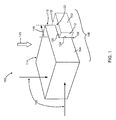
- the welding set-up 100 comprises a primary piece 102 and a secondary piece 104 secured to the primary piece 102 by a weld joint 106 to form a welded work-piece 108.
- the primary piece 102 comprises an upper surface 110 and a primary abutment surface 112 that in the present example is illustrated as being substantially perpendicular to the upper surface 110.
- the secondary piece 104 comprises a flange portion 114 with an end surface 116, the flange portion 114 being configured to extend over the upper surface 110 a relative distance 118 as measured between the weld joint 106 and the end surface 116.
- the flange portion 114 also comprises a bottom flange surface 120 that forms an interface 122 with the upper surface 110 of the primary piece 102.
- the interface 122 is a gap or void between the upper surface 110 and the bottom flange surface 120.
- the secondary piece 104 may also comprise a secondary abutment surface 124 configured to abut with the primary abutment surface 112 in a manner that permits formation of the weld joint 106 upon application of a welding beam 126.
- the welding set-up 100 and related welding methods discussed below may be applied to a variety of materials and part production techniques.
- Combinations of cast and wrought metals, for example, are compatible with the concepts disclosed herein so as to permit construction of the welded work-piece 108 with formation of one or more nailheads in locations that permit substantial removal of micro-cracking associated with the nailhead.
- More particular configurations are contemplated in which one or more of the primary piece 102 and the secondary piece 104 (collectively "the welded pieces”) are cast, forged, drawn, rolled, or produced using similarly suitable production techniques.
- Each of the welded pieces 102, 104 may likewise comprise materials with varying composition such as may be found in metal alloys and similar composite materials. At a relatively high level, these alloys and composites may comprise one or more of nickel, aluminum, titanium, chromium, cobalt, and molybdenum, among many others. More particular implementations of the concepts disclosed herein may be used in connection with certain "superalloys," which may comprise one or more of these materials (and their composites and derivations) in varying weight percentages.
- the welded pieces may comprise WASPALOY® manufactured by United Technologies Corporation of Harford, CT.
- the secondary piece 104 may be formed monolithically to incorporate the flange portion 114 and other structural features unilaterally with the remainder of the secondary piece 104. This construction may be accomplished using various machining techniques that may, for example, for from a single piece of material the flange portion 114 and the secondary abutment surface 124. These techniques may also be used to prepare the secondary abutment surface 124 and/or the primary abutment surface 112 so that each is configured to maximize effectiveness of the weld joint 106. Moreover, material thickness of the flange portion 114 may vary based on, for example, properties of the weld beam 126, which may influence the size and location of, e.g., the nailheads.
- the flange portion 114 may have a relative thickness from about 2 mm to about 6 mm.
- the overall thickness of the welded pieces may also vary, with one or more of the welded pieces having a material thickness from about 7 mm to about 25 mm. In one example, the material thickness may be at least about 12 mm for at least one of the primary piece 102 and the secondary piece 104.
- the weld set-up 100 may also comprise means for clamping, which is illustrated generally in Fig. 1 as a plurality of loading vectors 128.
- the means may be used to secure together the primary piece 102 and the secondary piece 104 prior to and during the application of weld beam 126 to form the weld joint 106.
- the loading vectors 128 designate by example certain possible directions upon which the means for clamping can be implemented to secure the welding set-up 100.
- the load vectors 128 may be orthogonal to the welded pieces 102, 104. Clamps, vices, vice grips, as well as customized rigging, forms, and fixtures are contemplated as suitable for applying and maintaining one or more of the loads 128.
- the configuration, orientation, and association of the welded pieces can likewise be manipulated such as by thermal expansion and/or contraction of the welded pieces to apply and maintain forces exemplified by one or more of the load vectors 128.
- the loads 128 may be so applied to minimize the interface 122, and in one particular construction, contact may occur between the upper surface 110 and the bottom flange surface 120.
- Fig. 2 there is provided a cross-section of another exemplary embodiment of a weld set-up 200 that is made in accordance with the present invention.
- Like numerals are used to identify like components as between Figs. 1 and 2 , except that the numerals have been increased by 100 (e.g., 100 is now 200 in Fig. 2 ).
- the weld set-up 200 of Fig. 2 may comprise a primary part 202, a secondary part 204, and a weld joint 206.
- the weld set-up 200 may also comprise a sacrificial portion 230, a working portion 232, and a post-processing portion 234 with a post-processing machining line 236 that separates the sacrificial portion 230 from the working portion 232.
- the weld set-up 200 may comprise a weld zone 238 that may incorporate portions of both the primary piece 202 and the secondary piece 204 such as defined by the HAZ resulting from application of the welding beam 226.
- the weld zone 238 may also comprise weld features 240 such as nailheads 242 that are formations typically associated with application of the weld beam 226 (e.g., an electron beam), and in one particular construction the nailheads 242 may comprise a primary nailhead 244 and a preferential nailhead 246, both of which may form in response to the selected welding technique for use as the welding beam 226.
- the welding technique may be conventional electron beam welding.
- the primary nailhead 244 and the preferential nailhead 246 may comprise one or more nailhead portions 248.
- the formation of the nailhead portions 248 is generally understood by those artisans knowledgeable in the welding arts, and thus additional details are not necessary.
- configurations of the welding pieces may promote preferential location of the nailheads 242.
- This preferential location may define, in one example, the location of the primary nailhead 244, the preferential nailhead 246, as well as the distribution, location, and/or size of the nailhead portions 248.
- the configuration of the welding pieces 202, 204 may facilitate formation in the secondary piece 204 of the primary nailhead 244 with a pair of primary nailhead portions 250.
- this configuration promotes formation in the primary piece 202 of the preferential nailhead 246 with a preferential nailhead portion 252.
- the location of the preferential nailhead portion 252 exclusively in the primary piece 202, in combination with the lack of any complementary nailhead portion of the preferential nailhead 246 co-located in the secondary piece 204, is beneficial because the resulting preferential geometry effectively re-locates areas of micro-cracking to desired portions of the weld set-up 200.
- the preferential geometry may locate an area of micro-cracking 254 outside of the working portion 232 such as in the sacrificial portion 230.
- Post-process techniques such as machining along the post-processing machining line 236 are employed to separate the sacrificial portion 230 from the working portion 232. This separation removes the area of micro-cracking 254 that may effectively leave the working portion 232, and more particularly the secondary piece 204, free from, e.g., micro-cracks, which would normally originate at or around the preferential nailhead 246.
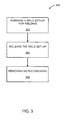
- Weld set-ups of the type contemplated by the weld set-up 100 and 200 discussed above may be implemented as part of, or in conjunction with, one or more welding processes such as the welding process illustrated in Figs. 3 and 4 and described below.
- these welding processes may be implemented using an electron beam welding apparatus.
- relevant knowledge about the design, operation, and process parameters of such electron beam welders may be readily understood by those artisans skilled in the welding arts.
- the welding method 300 may comprise, at step 302, forming a weld set-up for welding. This weld set-up may be constructed as discussed in connection with the weld set-up 200 discussed above.
- the welding method 300 may also comprise, at step 304, welding the weld set-up 200, which may be accomplished by imparting the electron beam onto the secondary piece 204. Process parameters for the electron beam may be determined based on properties of the primary piece 202 and/or the secondary piece 204, including but not limited to material composition, thickness, depth of weld (e.g., depth of weld joint 206), among many others.
- the welding method 300 may further comprise, at step 306, removing micro-cracking near the weld joint 206, which in one example may be achieved by removing at least the primary nailhead 244 from the secondary piece 204 of the weld set-up 200.
- the welding method 400 may comprise, at step 402, forming a weld set-up 200 for welding, at step 404, welding the weld set-up 200, and at step 406, performing a post-weld operation. More particular to the embodiment of welding method 400 of Fig.
- welding method 400 that comprises, at step 408, fitting-up the secondary piece 204 with the primary piece 202, at step 410, preparing the surface 212, 224 of each of the secondary piece 204 and the primary piece 202, and at step 412, securing the secondary piece 204 to the primary piece 202.
- Each of the steps 410-412 may be implemented in any one of a variety of ways. Fitting-up of the two pieces of the weld set-up 200 may be accomplished by way of machining techniques that are used to form one or both of the welded pieces 202, 204. When the secondary piece 204 is, for example, a replacement or add on part to the primary piece 202, then machining may be used to remove any formerly attached piece from the primary piece 202 so as to make room for the secondary piece 204 that is to be attached thereon.
- machining techniques may be used as or in conjunction with surface preparation techniques such as deburring to prepare portions the welded pieces 202, 204, such as the abutting surfaces 212, 224 of the welded pieces 202, 204. These techniques may provide uniform, clean, and unadulterated mating surfaces about which to form the weld joint 206. Once properly fit and prepared for welding, the welded pieces 202, 204 may be secured together such as by fixture so that the welding process may be applied to the resulting weld set-up 200.
- surface preparation techniques such as deburring to prepare portions the welded pieces 202, 204, such as the abutting surfaces 212, 224 of the welded pieces 202, 204.
- embodiments of the welding method 400 may also comprise, at step 414, applying treatment to the weld set-up 200, and also, at step 416, selecting parameters for the welding beam 226.
- One or more of the steps 414 and 416 may utilize treatments to modify, either permanently or temporarily, the material morphology of one or more of the welded pieces 202, 204 such as, for example, treatments that raise and/or lower the temperature of one or more of the welded pieces 202, 204.
- each of the welded pieces 202, 204 may be heated to provide a softened material morphology or structure.
- the material in one construction may be softened to a point consistent with the various weld parameters of the welding process, e.g., the electron welding process.
- the weld parameters may likewise be determined and/or selected as required to achieve the desired joining properties of the welded pieces 202, 204.
- Certain parameters of electron beam welders while not discussed in detail herein, may be selected based on, for example, the incorporation of WASPALOY in the welded pieces 202, 204 of the weld set-up 206.
- Embodiments of the welding method 400 may further comprise additional steps such as at steps 418, applying post-welding treatment to the weld set-up 200, and at step 420, performing post weld-operations to separate the sacrificial portion 230 and the working portion 232.
- Suitable post-weld operations may comprise machining the work-piece 208 along the post-processing machining line 236.
- These operations may further comprise other operations related to the welding process and/or other polishing, sanding, and deburring techniques that may be used to separate and or make useful the material of the working portion 232.
Landscapes
- Engineering & Computer Science (AREA)
- Mechanical Engineering (AREA)
- Welding Or Cutting Using Electron Beams (AREA)
Claims (14)
- Verfahren zum Reduzieren von Mikrorissen, die durch einen Elektronenschweißstrahl (226) verursacht werden, wobei das Verfahren Folgendes umfasst:Bereitstellen eines ersten Stücks (202) mit einer primären Anlagefläche (212) und einer Fläche (210), die dem Schweißstrahl (226) zugewandt ist;Bereitstellen eines zweiten Stücks (204) mit einer sekundären Anlagefläche (224) und einem Flansch (214);Anlegen der primären Anlagefläche (212) an die sekundäre Anlagefläche (224) entlang einer Grenzfläche, derart, dass sich der Flansch (214) über die Fläche (210) des ersten Stücks erstreckt und dem Schweißstrahl zugewandt ist, und das erste Stück (202) und das zweite Stück (204) ein Werkstück bilden, das einen Opferabschnitt (230) und einen Arbeitsabschnitt (232) aufweist, der durch eine Nachverarbeitungszone (234) von dem Opferabschnitt (230) getrennt ist;Lenken des Schweißstrahls (226) durch das zweite Stück (204) an der Grenzfläche zwischen der primären Anlagefläche (212) und der sekundären Anlagefläche (224) entlang, um eine Schweißnaht (206) an der Grenzfläche zu bilden, wobei das zweite Stück (204) den Schweißstrahl (226) mit Schweißparametern aufnimmt, die bewirken, dass sich ein erster Nagelkopf (252) ausschließlich am ersten Stück (202) bildet; undTrennen des Opferabschnitts (230) vom Arbeitsabschnitt (232) entlang einer Nachverarbeitungsbearbeitungslinie (236) in der Nachverarbeitungszone (234).
- Verfahren nach Anspruch 1, wobei der Flansch (214) monolithisch mit dem zweiten Stück (204) gebildet ist.
- Verfahren nach Anspruch 1 oder 2, ferner umfassend Einspannen des ersten Stücks (202) und des zweiten Stücks (204).
- Verfahren nach Anspruch 1, 2 oder 3, ferner umfassend Durchführen einer Schweißvorbehandlung an jeweils dem ersten Stück (202) und dem zweiten Stück (204), wobei die Schweißvorbehandlung die Materialmorphologie des ersten Stücks (202) und des zweiten Stücks (204) verändert.
- Verfahren nach einem der Ansprüche 1 bis 4, wobei die Nachverarbeitungsbearbeitungslinie (236) jeweils den Opferabschnitt (230) und den Arbeitsabschnitt (232) begrenzt, und wobei der Opferabschnitt (230) ferner einen Abschnitt des ersten Nagelkopfes (244) aufweist.
- Verfahren nach einem der Ansprüche 1 bis 5, wobei das erste Stück (202) und das zweite Stück (204) eine Superlegierung umfassen, die wenigstens etwa 50 % Nickel aufweist, wobei die Superlegierung beispielsweise etwa 19 % Chrom, etwa 13 % Kobalt, etwa 4 % Molybdän, etwa 3 % Titan und etwa 1,4 % Aluminium aufweist.
- Verfahren nach Anspruch 6, wobei das erste Stück (202) durch Gießen gebildet wird und das zweite Stück (204) durch Schmieden gebildet wird.
- Verfahren nach einem der Ansprüche 1 bis 7, wobei die Schweißparameter bewirken, dass ein zweiter Nagelkopf (246) benachbart zum Flansch (214) gebildet wird.
- Verfahren nach einem der Ansprüche 1 bis 8, ferner umfassend Erwärmen des Werkstücks nach dem Bilden des ersten Nagelkopfs (244).
- Verfahren nach Anspruch 1 oder 2, wobei das erste Stück (202) und das zweite Stück (204) wenigstens 50 % Nickel umfassen, wobei beispielsweise das erste Stück (202) und das zweite Stück (204) etwa 58 % Nickel, etwa 19 % Chrom, etwa 13 % Kobalt, etwa 4 % Molybdän, etwa 3 % Titan und etwa 1,4 % Aluminium umfassen.
- Verfahren nach Anspruch 1, 2 oder 10, wobei das erste Stück (202) ein Gussmaterial und das zweite Stück (204) ein geschmiedetes Material aufweist, und wobei das Gussmaterial und das geschmiedete Material jeweils eine Superlegierung umfassen.
- Verfahren nach einem der Ansprüche 1, 2, 10 oder 11, ferner umfassend Einspannen des ersten Stücks (202) und des zweiten Stücks (204) durch Anwenden einer Einspannkraft (228), die den Flansch (214) und die Fläche (210) des ersten Stücks (202) zueinander vorspannt.
- Verfahren nach einem der Ansprüche 1, 2 oder 10 bis 12, wobei der Flansch (214) eine Endfläche (216) aufweist, die in einem relativen Abstand (218) von der Schweißnaht (206) angeordnet ist, und wobei der relative Abstand (218) größer als eine Schweißzone (238) ist, die durch den Elektronenschweißstrahl (226) im Flansch (214) gebildet wird.
- Verfahren nach Anspruch 13, wobei die Schweißzone (238) eine Mehrzahl von Nagelköpfen (242) aufweist, die sich aus dem Anwenden des Elektronenschweißstrahls (226) auf das zweite Stück (204) ergeben, und wobei die Nagelköpfe (242) einen ersten Nagelkopf (252) umfassen, der ausschließlich am ersten Stück (202) gebildet wird.
Applications Claiming Priority (1)
| Application Number | Priority Date | Filing Date | Title |
|---|---|---|---|
| US12/720,370 US8304093B2 (en) | 2010-03-09 | 2010-03-09 | Apparatus and method for preferential formation of weld joint |
Publications (2)
| Publication Number | Publication Date |
|---|---|
| EP2364808A1 EP2364808A1 (de) | 2011-09-14 |
| EP2364808B1 true EP2364808B1 (de) | 2015-04-22 |
Family
ID=44201087
Family Applications (1)
| Application Number | Title | Priority Date | Filing Date |
|---|---|---|---|
| EP20110157514 Active EP2364808B1 (de) | 2010-03-09 | 2011-03-09 | Verfahren zur vorzugsweisen Formung einer Schweißverbindung |
Country Status (2)
| Country | Link |
|---|---|
| US (1) | US8304093B2 (de) |
| EP (1) | EP2364808B1 (de) |
Families Citing this family (2)
| Publication number | Priority date | Publication date | Assignee | Title |
|---|---|---|---|---|
| US20130266818A1 (en) | 2012-04-10 | 2013-10-10 | Hamilton Sundstrand Corporation | Article including a weld joint |
| CN112958899B (zh) * | 2021-03-17 | 2022-11-29 | 中国航发动力股份有限公司 | 一种消除电子束焊缝根部缩孔缺陷的方法 |
Family Cites Families (18)
| Publication number | Priority date | Publication date | Assignee | Title |
|---|---|---|---|---|
| CH563833A5 (de) * | 1974-10-28 | 1975-07-15 | Bbc Brown Boveri & Cie | |
| US4376886A (en) * | 1981-01-02 | 1983-03-15 | Sciaky Bros., Inc. | Method for electron beam welding |
| US4850802A (en) * | 1983-04-21 | 1989-07-25 | Allied-Signal Inc. | Composite compressor wheel for turbochargers |
| JPS61296971A (ja) * | 1985-06-26 | 1986-12-27 | Mitsubishi Heavy Ind Ltd | スクリ−ンシリンダの電子ビ−ム溶接法 |
| DE3738492A1 (de) * | 1987-11-12 | 1989-05-24 | Wagner Maschf Gustav | Verfahren zum befestigen von hss-schneiden oder dgl. an einem werkzeug-tragelement, sowie nach diesem verfahren hergestellte werkzeuge |
| US4903888A (en) * | 1988-05-05 | 1990-02-27 | Westinghouse Electric Corp. | Turbine system having more failure resistant rotors and repair welding of low alloy ferrous turbine components by controlled weld build-up |
| GB9205178D0 (en) * | 1992-03-10 | 1992-04-22 | Otter Controls Ltd | Improvements relating to controls for electrically heated water boiling vessels |
| EP0574290B1 (de) * | 1992-06-05 | 1996-04-17 | Gec Alsthom Electromecanique Sa | Verfahren zum Anbringen von Schutzüberzügen bildenden Einsätzen auf Gegenständen aus martensitischens Stahl oder aus Titanlegierungen |
| US5351395A (en) * | 1992-12-30 | 1994-10-04 | General Electric Company | Process for producing turbine bucket with water droplet erosion protection |
| GB9522332D0 (en) * | 1995-11-01 | 1996-01-03 | Biocompatibles Ltd | Braided stent |
| US6568077B1 (en) * | 2000-05-11 | 2003-05-27 | General Electric Company | Blisk weld repair |
| JP3883103B2 (ja) * | 2001-08-06 | 2007-02-21 | 兼房株式会社 | フィンガカッタ |
| US6838190B2 (en) * | 2001-12-20 | 2005-01-04 | General Electric Company | Article with intermediate layer and protective layer, and its fabrication |
| DE102004032461A1 (de) * | 2004-06-30 | 2006-02-02 | Rolls-Royce Deutschland Ltd & Co Kg | Verfahren und Reparatur-Schaufelteil zur BLISK-Reparatur oder zur Neuherstellung von BLISKs |
| US20070045260A1 (en) * | 2005-08-30 | 2007-03-01 | Frank Feng | Welded aluminum sheets and process therefore |
| US20070189894A1 (en) * | 2006-02-15 | 2007-08-16 | Thamboo Samuel V | Methods and apparatus for turbine engine rotors |
| JP2008018436A (ja) * | 2006-07-11 | 2008-01-31 | Yorozu Corp | 溶接方法および溶接物 |
| SG143087A1 (en) * | 2006-11-21 | 2008-06-27 | Turbine Overhaul Services Pte | Laser fillet welding |
-
2010
- 2010-03-09 US US12/720,370 patent/US8304093B2/en active Active
-
2011
- 2011-03-09 EP EP20110157514 patent/EP2364808B1/de active Active
Also Published As
| Publication number | Publication date |
|---|---|
| US8304093B2 (en) | 2012-11-06 |
| US20110220622A1 (en) | 2011-09-15 |
| EP2364808A1 (de) | 2011-09-14 |
Similar Documents
| Publication | Publication Date | Title |
|---|---|---|
| JP4573108B2 (ja) | 溶接方法 | |
| EP1916051B1 (de) | Verfahren zum Reparieren einer Öffnung und eines Risses in einem Teil durch Schweissen unter Verwendung eines Einsatzes mit Oben- und Seitenplatten und einem Unterlageelement | |
| US10682723B2 (en) | Resistance spot welding steel and aluminum workpieces with electrode having insert | |
| US7802350B2 (en) | Flange hole repair | |
| EP2698223B1 (de) | Verfahren zum Schweissen zur Reparatur von dicken Abschnitten unter Verwendung von zwei Lichtbogenschweissgeräten und einem Laserstrahlgerät | |
| US2615236A (en) | Blade edge welding technique | |
| CN113210869A (zh) | 一种高效的钛合金激光-电弧复合热源管道焊接工艺 | |
| KR20120131592A (ko) | 티타늄 금속관의 용접 방법 | |
| CN113275711A (zh) | 使用直径1.4mm焊丝进行液压支架结构件焊接的方法 | |
| US9085042B2 (en) | Stud welding repair of superalloy components | |
| EP2364808B1 (de) | Verfahren zur vorzugsweisen Formung einer Schweißverbindung | |
| CN105008087A (zh) | 机动车部件中的焊缝的激光金属沉积熔覆 | |
| KR101276334B1 (ko) | 하이브리드 마찰교반에 의한 알루미늄 합금과 티타늄 합금의 접합방법 | |
| CN109202268A (zh) | 线性摩擦焊接方法、飞机框梁焊接方法及其设备 | |
| CN108788432B (zh) | 一种航空同种ic10单晶高温合金焊接方法 | |
| CN109128506B (zh) | 一种不加保护气的铝合金激光自熔焊接工艺 | |
| KR20140016268A (ko) | 2 단계 용접을 이용한 분산강화형 백금계 합금의 용접 물품 제조 방법 | |
| JP5015443B2 (ja) | 金属工作物の穴を修理する方法 | |
| JP2012030237A (ja) | 構造部材の溶接継手構造及びその溶接方法 | |
| KR102046957B1 (ko) | 취성균열 전파 정지 성능이 우수한 고능률 용접 이음부 및 이의 제조방법 | |
| RU2505385C1 (ru) | Способ аргонодуговой сварки неплавящимся электродом | |
| CN105171228A (zh) | 动车组车钩座组成焊接工艺方法 | |
| JPH0191993A (ja) | 変動応力下にある鋼構造物のき裂補修方法 | |
| JPH071143A (ja) | アルミニウム又はアルミニウム合金製品の溶接方法 | |
| EP2687316A2 (de) | Verfahren zur Herstellung feuerfester Türen aus zinkbeschichteten Profilen |
Legal Events
| Date | Code | Title | Description |
|---|---|---|---|
| PUAI | Public reference made under article 153(3) epc to a published international application that has entered the european phase |
Free format text: ORIGINAL CODE: 0009012 |
|
| AK | Designated contracting states |
Kind code of ref document: A1 Designated state(s): AL AT BE BG CH CY CZ DE DK EE ES FI FR GB GR HR HU IE IS IT LI LT LU LV MC MK MT NL NO PL PT RO RS SE SI SK SM TR |
|
| AX | Request for extension of the european patent |
Extension state: BA ME |
|
| 17P | Request for examination filed |
Effective date: 20120314 |
|
| 17Q | First examination report despatched |
Effective date: 20131015 |
|
| GRAP | Despatch of communication of intention to grant a patent |
Free format text: ORIGINAL CODE: EPIDOSNIGR1 |
|
| INTG | Intention to grant announced |
Effective date: 20140918 |
|
| GRAS | Grant fee paid |
Free format text: ORIGINAL CODE: EPIDOSNIGR3 |
|
| GRAA | (expected) grant |
Free format text: ORIGINAL CODE: 0009210 |
|
| AK | Designated contracting states |
Kind code of ref document: B1 Designated state(s): AL AT BE BG CH CY CZ DE DK EE ES FI FR GB GR HR HU IE IS IT LI LT LU LV MC MK MT NL NO PL PT RO RS SE SI SK SM TR |
|
| REG | Reference to a national code |
Ref country code: GB Ref legal event code: FG4D |
|
| REG | Reference to a national code |
Ref country code: CH Ref legal event code: EP |
|
| REG | Reference to a national code |
Ref country code: AT Ref legal event code: REF Ref document number: 722915 Country of ref document: AT Kind code of ref document: T Effective date: 20150515 |
|
| REG | Reference to a national code |
Ref country code: IE Ref legal event code: FG4D |
|
| REG | Reference to a national code |
Ref country code: DE Ref legal event code: R096 Ref document number: 602011015812 Country of ref document: DE Effective date: 20150603 |
|
| REG | Reference to a national code |
Ref country code: NL Ref legal event code: VDEP Effective date: 20150422 |
|
| REG | Reference to a national code |
Ref country code: AT Ref legal event code: MK05 Ref document number: 722915 Country of ref document: AT Kind code of ref document: T Effective date: 20150422 |
|
| REG | Reference to a national code |
Ref country code: LT Ref legal event code: MG4D |
|
| PG25 | Lapsed in a contracting state [announced via postgrant information from national office to epo] |
Ref country code: NL Free format text: LAPSE BECAUSE OF FAILURE TO SUBMIT A TRANSLATION OF THE DESCRIPTION OR TO PAY THE FEE WITHIN THE PRESCRIBED TIME-LIMIT Effective date: 20150422 |
|
| PG25 | Lapsed in a contracting state [announced via postgrant information from national office to epo] |
Ref country code: PT Free format text: LAPSE BECAUSE OF FAILURE TO SUBMIT A TRANSLATION OF THE DESCRIPTION OR TO PAY THE FEE WITHIN THE PRESCRIBED TIME-LIMIT Effective date: 20150824 Ref country code: FI Free format text: LAPSE BECAUSE OF FAILURE TO SUBMIT A TRANSLATION OF THE DESCRIPTION OR TO PAY THE FEE WITHIN THE PRESCRIBED TIME-LIMIT Effective date: 20150422 Ref country code: ES Free format text: LAPSE BECAUSE OF FAILURE TO SUBMIT A TRANSLATION OF THE DESCRIPTION OR TO PAY THE FEE WITHIN THE PRESCRIBED TIME-LIMIT Effective date: 20150422 Ref country code: HR Free format text: LAPSE BECAUSE OF FAILURE TO SUBMIT A TRANSLATION OF THE DESCRIPTION OR TO PAY THE FEE WITHIN THE PRESCRIBED TIME-LIMIT Effective date: 20150422 Ref country code: LT Free format text: LAPSE BECAUSE OF FAILURE TO SUBMIT A TRANSLATION OF THE DESCRIPTION OR TO PAY THE FEE WITHIN THE PRESCRIBED TIME-LIMIT Effective date: 20150422 Ref country code: NO Free format text: LAPSE BECAUSE OF FAILURE TO SUBMIT A TRANSLATION OF THE DESCRIPTION OR TO PAY THE FEE WITHIN THE PRESCRIBED TIME-LIMIT Effective date: 20150722 |
|
| PG25 | Lapsed in a contracting state [announced via postgrant information from national office to epo] |
Ref country code: RS Free format text: LAPSE BECAUSE OF FAILURE TO SUBMIT A TRANSLATION OF THE DESCRIPTION OR TO PAY THE FEE WITHIN THE PRESCRIBED TIME-LIMIT Effective date: 20150422 Ref country code: LV Free format text: LAPSE BECAUSE OF FAILURE TO SUBMIT A TRANSLATION OF THE DESCRIPTION OR TO PAY THE FEE WITHIN THE PRESCRIBED TIME-LIMIT Effective date: 20150422 Ref country code: GR Free format text: LAPSE BECAUSE OF FAILURE TO SUBMIT A TRANSLATION OF THE DESCRIPTION OR TO PAY THE FEE WITHIN THE PRESCRIBED TIME-LIMIT Effective date: 20150723 Ref country code: AT Free format text: LAPSE BECAUSE OF FAILURE TO SUBMIT A TRANSLATION OF THE DESCRIPTION OR TO PAY THE FEE WITHIN THE PRESCRIBED TIME-LIMIT Effective date: 20150422 Ref country code: IS Free format text: LAPSE BECAUSE OF FAILURE TO SUBMIT A TRANSLATION OF THE DESCRIPTION OR TO PAY THE FEE WITHIN THE PRESCRIBED TIME-LIMIT Effective date: 20150822 |
|
| REG | Reference to a national code |
Ref country code: DE Ref legal event code: R097 Ref document number: 602011015812 Country of ref document: DE |
|
| PG25 | Lapsed in a contracting state [announced via postgrant information from national office to epo] |
Ref country code: DK Free format text: LAPSE BECAUSE OF FAILURE TO SUBMIT A TRANSLATION OF THE DESCRIPTION OR TO PAY THE FEE WITHIN THE PRESCRIBED TIME-LIMIT Effective date: 20150422 Ref country code: EE Free format text: LAPSE BECAUSE OF FAILURE TO SUBMIT A TRANSLATION OF THE DESCRIPTION OR TO PAY THE FEE WITHIN THE PRESCRIBED TIME-LIMIT Effective date: 20150422 |
|
| PLBE | No opposition filed within time limit |
Free format text: ORIGINAL CODE: 0009261 |
|
| STAA | Information on the status of an ep patent application or granted ep patent |
Free format text: STATUS: NO OPPOSITION FILED WITHIN TIME LIMIT |
|
| PG25 | Lapsed in a contracting state [announced via postgrant information from national office to epo] |
Ref country code: PL Free format text: LAPSE BECAUSE OF FAILURE TO SUBMIT A TRANSLATION OF THE DESCRIPTION OR TO PAY THE FEE WITHIN THE PRESCRIBED TIME-LIMIT Effective date: 20150422 Ref country code: RO Free format text: LAPSE BECAUSE OF NON-PAYMENT OF DUE FEES Effective date: 20150422 Ref country code: CZ Free format text: LAPSE BECAUSE OF FAILURE TO SUBMIT A TRANSLATION OF THE DESCRIPTION OR TO PAY THE FEE WITHIN THE PRESCRIBED TIME-LIMIT Effective date: 20150422 Ref country code: SK Free format text: LAPSE BECAUSE OF FAILURE TO SUBMIT A TRANSLATION OF THE DESCRIPTION OR TO PAY THE FEE WITHIN THE PRESCRIBED TIME-LIMIT Effective date: 20150422 |
|
| 26N | No opposition filed |
Effective date: 20160125 |
|
| PG25 | Lapsed in a contracting state [announced via postgrant information from national office to epo] |
Ref country code: IT Free format text: LAPSE BECAUSE OF FAILURE TO SUBMIT A TRANSLATION OF THE DESCRIPTION OR TO PAY THE FEE WITHIN THE PRESCRIBED TIME-LIMIT Effective date: 20150422 |
|
| PG25 | Lapsed in a contracting state [announced via postgrant information from national office to epo] |
Ref country code: SI Free format text: LAPSE BECAUSE OF FAILURE TO SUBMIT A TRANSLATION OF THE DESCRIPTION OR TO PAY THE FEE WITHIN THE PRESCRIBED TIME-LIMIT Effective date: 20150422 |
|
| PG25 | Lapsed in a contracting state [announced via postgrant information from national office to epo] |
Ref country code: BE Free format text: LAPSE BECAUSE OF FAILURE TO SUBMIT A TRANSLATION OF THE DESCRIPTION OR TO PAY THE FEE WITHIN THE PRESCRIBED TIME-LIMIT Effective date: 20150422 |
|
| PG25 | Lapsed in a contracting state [announced via postgrant information from national office to epo] |
Ref country code: MC Free format text: LAPSE BECAUSE OF FAILURE TO SUBMIT A TRANSLATION OF THE DESCRIPTION OR TO PAY THE FEE WITHIN THE PRESCRIBED TIME-LIMIT Effective date: 20150422 Ref country code: LU Free format text: LAPSE BECAUSE OF FAILURE TO SUBMIT A TRANSLATION OF THE DESCRIPTION OR TO PAY THE FEE WITHIN THE PRESCRIBED TIME-LIMIT Effective date: 20160309 |
|
| REG | Reference to a national code |
Ref country code: CH Ref legal event code: PL |
|
| REG | Reference to a national code |
Ref country code: IE Ref legal event code: MM4A |
|
| REG | Reference to a national code |
Ref country code: FR Ref legal event code: ST Effective date: 20161130 |
|
| PG25 | Lapsed in a contracting state [announced via postgrant information from national office to epo] |
Ref country code: FR Free format text: LAPSE BECAUSE OF NON-PAYMENT OF DUE FEES Effective date: 20160331 Ref country code: CH Free format text: LAPSE BECAUSE OF NON-PAYMENT OF DUE FEES Effective date: 20160331 Ref country code: IE Free format text: LAPSE BECAUSE OF NON-PAYMENT OF DUE FEES Effective date: 20160309 Ref country code: LI Free format text: LAPSE BECAUSE OF NON-PAYMENT OF DUE FEES Effective date: 20160331 |
|
| PG25 | Lapsed in a contracting state [announced via postgrant information from national office to epo] |
Ref country code: SE Free format text: LAPSE BECAUSE OF FAILURE TO SUBMIT A TRANSLATION OF THE DESCRIPTION OR TO PAY THE FEE WITHIN THE PRESCRIBED TIME-LIMIT Effective date: 20150422 |
|
| REG | Reference to a national code |
Ref country code: DE Ref legal event code: R082 Ref document number: 602011015812 Country of ref document: DE Representative=s name: SCHMITT-NILSON SCHRAUD WAIBEL WOHLFROM PATENTA, DE |
|
| REG | Reference to a national code |
Ref country code: DE Ref legal event code: R082 Ref document number: 602011015812 Country of ref document: DE Representative=s name: SCHMITT-NILSON SCHRAUD WAIBEL WOHLFROM PATENTA, DE Ref country code: DE Ref legal event code: R081 Ref document number: 602011015812 Country of ref document: DE Owner name: UNITED TECHNOLOGIES CORP. (N.D.GES.D. STAATES , US Free format text: FORMER OWNER: UNITED TECHNOLOGIES CORPORATION, HARTFORD, CONN., US |
|
| PG25 | Lapsed in a contracting state [announced via postgrant information from national office to epo] |
Ref country code: MT Free format text: LAPSE BECAUSE OF FAILURE TO SUBMIT A TRANSLATION OF THE DESCRIPTION OR TO PAY THE FEE WITHIN THE PRESCRIBED TIME-LIMIT Effective date: 20150422 |
|
| PG25 | Lapsed in a contracting state [announced via postgrant information from national office to epo] |
Ref country code: SM Free format text: LAPSE BECAUSE OF FAILURE TO SUBMIT A TRANSLATION OF THE DESCRIPTION OR TO PAY THE FEE WITHIN THE PRESCRIBED TIME-LIMIT Effective date: 20150422 Ref country code: CY Free format text: LAPSE BECAUSE OF FAILURE TO SUBMIT A TRANSLATION OF THE DESCRIPTION OR TO PAY THE FEE WITHIN THE PRESCRIBED TIME-LIMIT Effective date: 20150422 Ref country code: HU Free format text: LAPSE BECAUSE OF FAILURE TO SUBMIT A TRANSLATION OF THE DESCRIPTION OR TO PAY THE FEE WITHIN THE PRESCRIBED TIME-LIMIT; INVALID AB INITIO Effective date: 20110309 |
|
| PG25 | Lapsed in a contracting state [announced via postgrant information from national office to epo] |
Ref country code: MT Free format text: LAPSE BECAUSE OF FAILURE TO SUBMIT A TRANSLATION OF THE DESCRIPTION OR TO PAY THE FEE WITHIN THE PRESCRIBED TIME-LIMIT Effective date: 20160331 Ref country code: TR Free format text: LAPSE BECAUSE OF FAILURE TO SUBMIT A TRANSLATION OF THE DESCRIPTION OR TO PAY THE FEE WITHIN THE PRESCRIBED TIME-LIMIT Effective date: 20150422 Ref country code: MK Free format text: LAPSE BECAUSE OF FAILURE TO SUBMIT A TRANSLATION OF THE DESCRIPTION OR TO PAY THE FEE WITHIN THE PRESCRIBED TIME-LIMIT Effective date: 20150422 |
|
| PG25 | Lapsed in a contracting state [announced via postgrant information from national office to epo] |
Ref country code: BG Free format text: LAPSE BECAUSE OF FAILURE TO SUBMIT A TRANSLATION OF THE DESCRIPTION OR TO PAY THE FEE WITHIN THE PRESCRIBED TIME-LIMIT Effective date: 20150422 |
|
| PG25 | Lapsed in a contracting state [announced via postgrant information from national office to epo] |
Ref country code: AL Free format text: LAPSE BECAUSE OF FAILURE TO SUBMIT A TRANSLATION OF THE DESCRIPTION OR TO PAY THE FEE WITHIN THE PRESCRIBED TIME-LIMIT Effective date: 20150422 |
|
| REG | Reference to a national code |
Ref country code: DE Ref legal event code: R081 Ref document number: 602011015812 Country of ref document: DE Owner name: RAYTHEON TECHNOLOGIES CORPORATION (N.D.GES.D.S, US Free format text: FORMER OWNER: UNITED TECHNOLOGIES CORP. (N.D.GES.D. STAATES DELAWARE), FARMINGTON, CONN., US Ref country code: DE Ref legal event code: R081 Ref document number: 602011015812 Country of ref document: DE Owner name: RTX CORPORATION (N.D.GES.D. STAATES DELAWARE),, US Free format text: FORMER OWNER: UNITED TECHNOLOGIES CORP. (N.D.GES.D. STAATES DELAWARE), FARMINGTON, CONN., US |
|
| P01 | Opt-out of the competence of the unified patent court (upc) registered |
Effective date: 20230519 |
|
| REG | Reference to a national code |
Ref country code: DE Ref legal event code: R081 Ref document number: 602011015812 Country of ref document: DE Owner name: RTX CORPORATION (N.D.GES.D. STAATES DELAWARE),, US Free format text: FORMER OWNER: RAYTHEON TECHNOLOGIES CORPORATION (N.D.GES.D.STAATES DELAWARE), ARLINGTON, VA, US |
|
| PGFP | Annual fee paid to national office [announced via postgrant information from national office to epo] |
Ref country code: GB Payment date: 20260219 Year of fee payment: 16 |
|
| PGFP | Annual fee paid to national office [announced via postgrant information from national office to epo] |
Ref country code: DE Payment date: 20260219 Year of fee payment: 16 |