EP2361979A2 - Zusammensetzungen und Verfahren im Zusammenhang mit orthogonalen Ribosom-mRNA-Paaren - Google Patents
Zusammensetzungen und Verfahren im Zusammenhang mit orthogonalen Ribosom-mRNA-Paaren Download PDFInfo
- Publication number
- EP2361979A2 EP2361979A2 EP10013148A EP10013148A EP2361979A2 EP 2361979 A2 EP2361979 A2 EP 2361979A2 EP 10013148 A EP10013148 A EP 10013148A EP 10013148 A EP10013148 A EP 10013148A EP 2361979 A2 EP2361979 A2 EP 2361979A2
- Authority
- EP
- European Patent Office
- Prior art keywords
- seq
- orthogonal
- mrna
- rrna
- pair
- Prior art date
- Legal status (The legal status is an assumption and is not a legal conclusion. Google has not performed a legal analysis and makes no representation as to the accuracy of the status listed.)
- Withdrawn
Links
- 108020004999 messenger RNA Proteins 0.000 title claims abstract description 240
- 238000000034 method Methods 0.000 title claims description 49
- 239000000203 mixture Substances 0.000 title description 4
- 230000014509 gene expression Effects 0.000 claims abstract description 24
- 230000001413 cellular effect Effects 0.000 claims abstract description 22
- 230000000694 effects Effects 0.000 claims abstract description 20
- 231100000331 toxic Toxicity 0.000 claims abstract description 8
- 230000002588 toxic effect Effects 0.000 claims abstract description 8
- 108090000765 processed proteins & peptides Proteins 0.000 claims description 55
- 102000004196 processed proteins & peptides Human genes 0.000 claims description 53
- 229920001184 polypeptide Polymers 0.000 claims description 52
- 108020004465 16S ribosomal RNA Proteins 0.000 claims description 47
- 238000013519 translation Methods 0.000 claims description 43
- 241000588724 Escherichia coli Species 0.000 claims description 32
- 239000002773 nucleotide Substances 0.000 claims description 31
- 125000003729 nucleotide group Chemical group 0.000 claims description 31
- 108091081024 Start codon Proteins 0.000 claims description 19
- 239000003795 chemical substances by application Substances 0.000 claims description 15
- 102000039446 nucleic acids Human genes 0.000 claims description 13
- 108020004707 nucleic acids Proteins 0.000 claims description 13
- 150000007523 nucleic acids Chemical class 0.000 claims description 13
- 238000012217 deletion Methods 0.000 claims description 8
- 230000037430 deletion Effects 0.000 claims description 8
- 238000004519 manufacturing process Methods 0.000 claims description 8
- 210000004027 cell Anatomy 0.000 description 153
- 210000003705 ribosome Anatomy 0.000 description 79
- 230000004927 fusion Effects 0.000 description 50
- 230000014616 translation Effects 0.000 description 47
- 239000003550 marker Substances 0.000 description 44
- 108090000623 proteins and genes Proteins 0.000 description 38
- 239000013612 plasmid Substances 0.000 description 37
- 230000006870 function Effects 0.000 description 36
- 229940024606 amino acid Drugs 0.000 description 35
- 235000001014 amino acid Nutrition 0.000 description 35
- 239000012634 fragment Substances 0.000 description 33
- 230000003993 interaction Effects 0.000 description 30
- 241000894007 species Species 0.000 description 29
- 150000001413 amino acids Chemical class 0.000 description 27
- 230000035772 mutation Effects 0.000 description 27
- 108091000036 uracil phosphoribosyltransferase Proteins 0.000 description 26
- 229960005091 chloramphenicol Drugs 0.000 description 25
- WIIZWVCIJKGZOK-RKDXNWHRSA-N chloramphenicol Chemical compound ClC(Cl)C(=O)N[C@H](CO)[C@H](O)C1=CC=C([N+]([O-])=O)C=C1 WIIZWVCIJKGZOK-RKDXNWHRSA-N 0.000 description 25
- GHASVSINZRGABV-UHFFFAOYSA-N Fluorouracil Chemical compound FC1=CNC(=O)NC1=O GHASVSINZRGABV-UHFFFAOYSA-N 0.000 description 22
- 239000000758 substrate Substances 0.000 description 21
- 229960002949 fluorouracil Drugs 0.000 description 19
- 238000013459 approach Methods 0.000 description 17
- 230000015572 biosynthetic process Effects 0.000 description 17
- 238000003786 synthesis reaction Methods 0.000 description 17
- 108010035563 Chloramphenicol O-acetyltransferase Proteins 0.000 description 15
- 102000005936 beta-Galactosidase Human genes 0.000 description 15
- 108010005774 beta-Galactosidase Proteins 0.000 description 15
- 239000013598 vector Substances 0.000 description 15
- 239000004098 Tetracycline Substances 0.000 description 12
- -1 riboregulators Proteins 0.000 description 12
- 229930101283 tetracycline Natural products 0.000 description 12
- 229960002180 tetracycline Drugs 0.000 description 12
- 235000019364 tetracycline Nutrition 0.000 description 12
- 150000003522 tetracyclines Chemical class 0.000 description 12
- 229960000723 ampicillin Drugs 0.000 description 11
- AVKUERGKIZMTKX-NJBDSQKTSA-N ampicillin Chemical compound C1([C@@H](N)C(=O)N[C@H]2[C@H]3SC([C@@H](N3C2=O)C(O)=O)(C)C)=CC=CC=C1 AVKUERGKIZMTKX-NJBDSQKTSA-N 0.000 description 11
- 230000003115 biocidal effect Effects 0.000 description 11
- 101150066555 lacZ gene Proteins 0.000 description 11
- 235000018102 proteins Nutrition 0.000 description 11
- 102000004169 proteins and genes Human genes 0.000 description 11
- 241000894006 Bacteria Species 0.000 description 9
- 230000001580 bacterial effect Effects 0.000 description 9
- 230000000977 initiatory effect Effects 0.000 description 9
- 230000004083 survival effect Effects 0.000 description 9
- 108020004414 DNA Proteins 0.000 description 8
- WQZGKKKJIJFFOK-GASJEMHNSA-N Glucose Natural products OC[C@H]1OC(O)[C@H](O)[C@@H](O)[C@@H]1O WQZGKKKJIJFFOK-GASJEMHNSA-N 0.000 description 8
- 108091023040 Transcription factor Proteins 0.000 description 8
- 102000040945 Transcription factor Human genes 0.000 description 8
- 238000002474 experimental method Methods 0.000 description 8
- 239000008103 glucose Substances 0.000 description 8
- 108020004422 Riboswitch Proteins 0.000 description 7
- 239000003242 anti bacterial agent Substances 0.000 description 7
- 238000010276 construction Methods 0.000 description 7
- 230000008569 process Effects 0.000 description 7
- 150000003384 small molecules Chemical class 0.000 description 7
- 108091032973 (ribonucleotides)n+m Proteins 0.000 description 6
- 229920001817 Agar Polymers 0.000 description 6
- 108091034117 Oligonucleotide Proteins 0.000 description 6
- 229930006000 Sucrose Natural products 0.000 description 6
- CZMRCDWAGMRECN-UGDNZRGBSA-N Sucrose Chemical compound O[C@H]1[C@H](O)[C@@H](CO)O[C@@]1(CO)O[C@@H]1[C@H](O)[C@@H](O)[C@H](O)[C@@H](CO)O1 CZMRCDWAGMRECN-UGDNZRGBSA-N 0.000 description 6
- JLCPHMBAVCMARE-UHFFFAOYSA-N [3-[[3-[[3-[[3-[[3-[[3-[[3-[[3-[[3-[[3-[[3-[[5-(2-amino-6-oxo-1H-purin-9-yl)-3-[[3-[[3-[[3-[[3-[[3-[[5-(2-amino-6-oxo-1H-purin-9-yl)-3-[[5-(2-amino-6-oxo-1H-purin-9-yl)-3-hydroxyoxolan-2-yl]methoxy-hydroxyphosphoryl]oxyoxolan-2-yl]methoxy-hydroxyphosphoryl]oxy-5-(5-methyl-2,4-dioxopyrimidin-1-yl)oxolan-2-yl]methoxy-hydroxyphosphoryl]oxy-5-(6-aminopurin-9-yl)oxolan-2-yl]methoxy-hydroxyphosphoryl]oxy-5-(6-aminopurin-9-yl)oxolan-2-yl]methoxy-hydroxyphosphoryl]oxy-5-(6-aminopurin-9-yl)oxolan-2-yl]methoxy-hydroxyphosphoryl]oxy-5-(6-aminopurin-9-yl)oxolan-2-yl]methoxy-hydroxyphosphoryl]oxyoxolan-2-yl]methoxy-hydroxyphosphoryl]oxy-5-(5-methyl-2,4-dioxopyrimidin-1-yl)oxolan-2-yl]methoxy-hydroxyphosphoryl]oxy-5-(4-amino-2-oxopyrimidin-1-yl)oxolan-2-yl]methoxy-hydroxyphosphoryl]oxy-5-(5-methyl-2,4-dioxopyrimidin-1-yl)oxolan-2-yl]methoxy-hydroxyphosphoryl]oxy-5-(5-methyl-2,4-dioxopyrimidin-1-yl)oxolan-2-yl]methoxy-hydroxyphosphoryl]oxy-5-(6-aminopurin-9-yl)oxolan-2-yl]methoxy-hydroxyphosphoryl]oxy-5-(6-aminopurin-9-yl)oxolan-2-yl]methoxy-hydroxyphosphoryl]oxy-5-(4-amino-2-oxopyrimidin-1-yl)oxolan-2-yl]methoxy-hydroxyphosphoryl]oxy-5-(4-amino-2-oxopyrimidin-1-yl)oxolan-2-yl]methoxy-hydroxyphosphoryl]oxy-5-(4-amino-2-oxopyrimidin-1-yl)oxolan-2-yl]methoxy-hydroxyphosphoryl]oxy-5-(6-aminopurin-9-yl)oxolan-2-yl]methoxy-hydroxyphosphoryl]oxy-5-(4-amino-2-oxopyrimidin-1-yl)oxolan-2-yl]methyl [5-(6-aminopurin-9-yl)-2-(hydroxymethyl)oxolan-3-yl] hydrogen phosphate Polymers Cc1cn(C2CC(OP(O)(=O)OCC3OC(CC3OP(O)(=O)OCC3OC(CC3O)n3cnc4c3nc(N)[nH]c4=O)n3cnc4c3nc(N)[nH]c4=O)C(COP(O)(=O)OC3CC(OC3COP(O)(=O)OC3CC(OC3COP(O)(=O)OC3CC(OC3COP(O)(=O)OC3CC(OC3COP(O)(=O)OC3CC(OC3COP(O)(=O)OC3CC(OC3COP(O)(=O)OC3CC(OC3COP(O)(=O)OC3CC(OC3COP(O)(=O)OC3CC(OC3COP(O)(=O)OC3CC(OC3COP(O)(=O)OC3CC(OC3COP(O)(=O)OC3CC(OC3COP(O)(=O)OC3CC(OC3COP(O)(=O)OC3CC(OC3COP(O)(=O)OC3CC(OC3COP(O)(=O)OC3CC(OC3COP(O)(=O)OC3CC(OC3CO)n3cnc4c(N)ncnc34)n3ccc(N)nc3=O)n3cnc4c(N)ncnc34)n3ccc(N)nc3=O)n3ccc(N)nc3=O)n3ccc(N)nc3=O)n3cnc4c(N)ncnc34)n3cnc4c(N)ncnc34)n3cc(C)c(=O)[nH]c3=O)n3cc(C)c(=O)[nH]c3=O)n3ccc(N)nc3=O)n3cc(C)c(=O)[nH]c3=O)n3cnc4c3nc(N)[nH]c4=O)n3cnc4c(N)ncnc34)n3cnc4c(N)ncnc34)n3cnc4c(N)ncnc34)n3cnc4c(N)ncnc34)O2)c(=O)[nH]c1=O JLCPHMBAVCMARE-UHFFFAOYSA-N 0.000 description 6
- 239000008272 agar Substances 0.000 description 6
- 238000005119 centrifugation Methods 0.000 description 6
- 229930027917 kanamycin Natural products 0.000 description 6
- 229960000318 kanamycin Drugs 0.000 description 6
- SBUJHOSQTJFQJX-NOAMYHISSA-N kanamycin Chemical compound O[C@@H]1[C@@H](O)[C@H](O)[C@@H](CN)O[C@@H]1O[C@H]1[C@H](O)[C@@H](O[C@@H]2[C@@H]([C@@H](N)[C@H](O)[C@@H](CO)O2)O)[C@H](N)C[C@@H]1N SBUJHOSQTJFQJX-NOAMYHISSA-N 0.000 description 6
- 229930182823 kanamycin A Natural products 0.000 description 6
- 230000001124 posttranscriptional effect Effects 0.000 description 6
- 229960004793 sucrose Drugs 0.000 description 6
- 101150076274 upp gene Proteins 0.000 description 6
- 108091026890 Coding region Proteins 0.000 description 5
- 206010053759 Growth retardation Diseases 0.000 description 5
- 230000002255 enzymatic effect Effects 0.000 description 5
- 230000012010 growth Effects 0.000 description 5
- 238000011534 incubation Methods 0.000 description 5
- 238000007852 inverse PCR Methods 0.000 description 5
- 230000001105 regulatory effect Effects 0.000 description 5
- 108020004418 ribosomal RNA Proteins 0.000 description 5
- 229960000268 spectinomycin Drugs 0.000 description 5
- UNFWWIHTNXNPBV-WXKVUWSESA-N spectinomycin Chemical compound O([C@@H]1[C@@H](NC)[C@@H](O)[C@H]([C@@H]([C@H]1O1)O)NC)[C@]2(O)[C@H]1O[C@H](C)CC2=O UNFWWIHTNXNPBV-WXKVUWSESA-N 0.000 description 5
- 239000005720 sucrose Substances 0.000 description 5
- 230000009466 transformation Effects 0.000 description 5
- ZTOBILYWTYHOJB-WBCGDKOGSA-N 3',6'-bis[[(2s,3r,4s,5r,6r)-3,4,5-trihydroxy-6-(hydroxymethyl)oxan-2-yl]oxy]spiro[2-benzofuran-3,9'-xanthene]-1-one Chemical compound O[C@@H]1[C@@H](O)[C@@H](O)[C@@H](CO)O[C@H]1OC1=CC=C2C3(C4=CC=CC=C4C(=O)O3)C3=CC=C(O[C@H]4[C@@H]([C@@H](O)[C@@H](O)[C@@H](CO)O4)O)C=C3OC2=C1 ZTOBILYWTYHOJB-WBCGDKOGSA-N 0.000 description 4
- 102000004190 Enzymes Human genes 0.000 description 4
- 108090000790 Enzymes Proteins 0.000 description 4
- 108010026552 Proteome Proteins 0.000 description 4
- ISAKRJDGNUQOIC-UHFFFAOYSA-N Uracil Chemical compound O=C1C=CNC(=O)N1 ISAKRJDGNUQOIC-UHFFFAOYSA-N 0.000 description 4
- 238000004364 calculation method Methods 0.000 description 4
- 229910052799 carbon Inorganic materials 0.000 description 4
- 230000030833 cell death Effects 0.000 description 4
- 230000010261 cell growth Effects 0.000 description 4
- 238000006243 chemical reaction Methods 0.000 description 4
- 230000000295 complement effect Effects 0.000 description 4
- 238000004520 electroporation Methods 0.000 description 4
- BPHPUYQFMNQIOC-NXRLNHOXSA-N isopropyl beta-D-thiogalactopyranoside Chemical compound CC(C)S[C@@H]1O[C@H](CO)[C@H](O)[C@H](O)[C@H]1O BPHPUYQFMNQIOC-NXRLNHOXSA-N 0.000 description 4
- 239000002207 metabolite Substances 0.000 description 4
- 238000001243 protein synthesis Methods 0.000 description 4
- 238000012163 sequencing technique Methods 0.000 description 4
- 238000013518 transcription Methods 0.000 description 4
- 230000035897 transcription Effects 0.000 description 4
- 230000002103 transcriptional effect Effects 0.000 description 4
- 229960004441 tyrosine Drugs 0.000 description 4
- 108020004705 Codon Proteins 0.000 description 3
- LFQSCWFLJHTTHZ-UHFFFAOYSA-N Ethanol Chemical compound CCO LFQSCWFLJHTTHZ-UHFFFAOYSA-N 0.000 description 3
- 241000282326 Felis catus Species 0.000 description 3
- PEDCQBHIVMGVHV-UHFFFAOYSA-N Glycerine Chemical compound OCC(O)CO PEDCQBHIVMGVHV-UHFFFAOYSA-N 0.000 description 3
- FFEARJCKVFRZRR-BYPYZUCNSA-N L-methionine Chemical compound CSCC[C@H](N)C(O)=O FFEARJCKVFRZRR-BYPYZUCNSA-N 0.000 description 3
- 108091028736 Riboregulator Proteins 0.000 description 3
- 241000607142 Salmonella Species 0.000 description 3
- 238000003556 assay Methods 0.000 description 3
- 210000004899 c-terminal region Anatomy 0.000 description 3
- 230000029087 digestion Effects 0.000 description 3
- 239000013613 expression plasmid Substances 0.000 description 3
- 239000000499 gel Substances 0.000 description 3
- 230000002068 genetic effect Effects 0.000 description 3
- 231100000001 growth retardation Toxicity 0.000 description 3
- 238000002955 isolation Methods 0.000 description 3
- 239000002609 medium Substances 0.000 description 3
- 229930182817 methionine Natural products 0.000 description 3
- 230000004001 molecular interaction Effects 0.000 description 3
- 238000012545 processing Methods 0.000 description 3
- 239000000047 product Substances 0.000 description 3
- 150000003230 pyrimidines Chemical class 0.000 description 3
- 230000010076 replication Effects 0.000 description 3
- 101150025220 sacB gene Proteins 0.000 description 3
- 238000010187 selection method Methods 0.000 description 3
- 230000035945 sensitivity Effects 0.000 description 3
- 238000001228 spectrum Methods 0.000 description 3
- 230000014621 translational initiation Effects 0.000 description 3
- 239000013638 trimer Substances 0.000 description 3
- YBJHBAHKTGYVGT-ZKWXMUAHSA-N (+)-Biotin Chemical compound N1C(=O)N[C@@H]2[C@H](CCCCC(=O)O)SC[C@@H]21 YBJHBAHKTGYVGT-ZKWXMUAHSA-N 0.000 description 2
- BUAQBZPEZUPDRF-RHQZKXFESA-N (2r,3r,4r,5r,6s)-2-(hydroxymethyl)-6-[(2-hydroxy-7,8,9,10-tetrahydro-6h-benzo[c]chromen-3-yl)oxy]oxane-3,4,5-triol Chemical compound O[C@@H]1[C@H](O)[C@@H](O)[C@@H](CO)O[C@H]1OC(C(=C1)O)=CC2=C1C(CCCC1)=C1CO2 BUAQBZPEZUPDRF-RHQZKXFESA-N 0.000 description 2
- 108010016529 Bacillus amyloliquefaciens ribonuclease Proteins 0.000 description 2
- 235000014469 Bacillus subtilis Nutrition 0.000 description 2
- UXVMQQNJUSDDNG-UHFFFAOYSA-L Calcium chloride Chemical compound [Cl-].[Cl-].[Ca+2] UXVMQQNJUSDDNG-UHFFFAOYSA-L 0.000 description 2
- 206010061764 Chromosomal deletion Diseases 0.000 description 2
- 108090000626 DNA-directed RNA polymerases Proteins 0.000 description 2
- 102000004163 DNA-directed RNA polymerases Human genes 0.000 description 2
- RTZKZFJDLAIYFH-UHFFFAOYSA-N Diethyl ether Chemical compound CCOCC RTZKZFJDLAIYFH-UHFFFAOYSA-N 0.000 description 2
- 241000194032 Enterococcus faecalis Species 0.000 description 2
- 241000192125 Firmicutes Species 0.000 description 2
- OAKJQQAXSVQMHS-UHFFFAOYSA-N Hydrazine Chemical compound NN OAKJQQAXSVQMHS-UHFFFAOYSA-N 0.000 description 2
- 229930194542 Keto Natural products 0.000 description 2
- 239000006137 Luria-Bertani broth Substances 0.000 description 2
- CSNNHWWHGAXBCP-UHFFFAOYSA-L Magnesium sulfate Chemical compound [Mg+2].[O-][S+2]([O-])([O-])[O-] CSNNHWWHGAXBCP-UHFFFAOYSA-L 0.000 description 2
- 101710163270 Nuclease Proteins 0.000 description 2
- 239000002202 Polyethylene glycol Substances 0.000 description 2
- 101100309436 Streptococcus mutans serotype c (strain ATCC 700610 / UA159) ftf gene Proteins 0.000 description 2
- 102000006601 Thymidine Kinase Human genes 0.000 description 2
- 108020004440 Thymidine kinase Proteins 0.000 description 2
- DJJCXFVJDGTHFX-UHFFFAOYSA-N Uridinemonophosphate Natural products OC1C(O)C(COP(O)(O)=O)OC1N1C(=O)NC(=O)C=C1 DJJCXFVJDGTHFX-UHFFFAOYSA-N 0.000 description 2
- 230000021736 acetylation Effects 0.000 description 2
- 238000006640 acetylation reaction Methods 0.000 description 2
- 239000002253 acid Substances 0.000 description 2
- 238000004458 analytical method Methods 0.000 description 2
- 244000052616 bacterial pathogen Species 0.000 description 2
- 230000010310 bacterial transformation Effects 0.000 description 2
- 230000033228 biological regulation Effects 0.000 description 2
- 239000000872 buffer Substances 0.000 description 2
- 239000001110 calcium chloride Substances 0.000 description 2
- 229910001628 calcium chloride Inorganic materials 0.000 description 2
- 230000008568 cell cell communication Effects 0.000 description 2
- 230000003915 cell function Effects 0.000 description 2
- 230000003833 cell viability Effects 0.000 description 2
- 238000012512 characterization method Methods 0.000 description 2
- 238000013461 design Methods 0.000 description 2
- 238000010790 dilution Methods 0.000 description 2
- 239000012895 dilution Substances 0.000 description 2
- GNBHRKFJIUUOQI-UHFFFAOYSA-N fluorescein Chemical compound O1C(=O)C2=CC=CC=C2C21C1=CC=C(O)C=C1OC1=CC(O)=CC=C21 GNBHRKFJIUUOQI-UHFFFAOYSA-N 0.000 description 2
- IRSCQMHQWWYFCW-UHFFFAOYSA-N ganciclovir Chemical compound O=C1NC(N)=NC2=C1N=CN2COC(CO)CO IRSCQMHQWWYFCW-UHFFFAOYSA-N 0.000 description 2
- 229960002963 ganciclovir Drugs 0.000 description 2
- 125000000468 ketone group Chemical group 0.000 description 2
- 239000011159 matrix material Substances 0.000 description 2
- 230000007246 mechanism Effects 0.000 description 2
- 229910052751 metal Inorganic materials 0.000 description 2
- 239000002184 metal Substances 0.000 description 2
- 230000037361 pathway Effects 0.000 description 2
- COLNVLDHVKWLRT-UHFFFAOYSA-N phenylalanine Natural products OC(=O)C(N)CC1=CC=CC=C1 COLNVLDHVKWLRT-UHFFFAOYSA-N 0.000 description 2
- 229960005190 phenylalanine Drugs 0.000 description 2
- BZQFBWGGLXLEPQ-REOHCLBHSA-N phosphoserine Chemical compound OC(=O)[C@@H](N)COP(O)(O)=O BZQFBWGGLXLEPQ-REOHCLBHSA-N 0.000 description 2
- 229920001223 polyethylene glycol Polymers 0.000 description 2
- 210000001938 protoplast Anatomy 0.000 description 2
- 238000000746 purification Methods 0.000 description 2
- 150000003212 purines Chemical class 0.000 description 2
- 238000009877 rendering Methods 0.000 description 2
- FGDZQCVHDSGLHJ-UHFFFAOYSA-M rubidium chloride Chemical compound [Cl-].[Rb+] FGDZQCVHDSGLHJ-UHFFFAOYSA-M 0.000 description 2
- 238000005070 sampling Methods 0.000 description 2
- 210000001812 small ribosome subunit Anatomy 0.000 description 2
- 238000002415 sodium dodecyl sulfate polyacrylamide gel electrophoresis Methods 0.000 description 2
- UCSJYZPVAKXKNQ-HZYVHMACSA-N streptomycin Chemical compound CN[C@H]1[C@H](O)[C@@H](O)[C@H](CO)O[C@H]1O[C@@H]1[C@](C=O)(O)[C@H](C)O[C@H]1O[C@@H]1[C@@H](NC(N)=N)[C@H](O)[C@@H](NC(N)=N)[C@H](O)[C@H]1O UCSJYZPVAKXKNQ-HZYVHMACSA-N 0.000 description 2
- 235000000346 sugar Nutrition 0.000 description 2
- OUYCCCASQSFEME-UHFFFAOYSA-N tyrosine Natural products OC(=O)C(N)CC1=CC=C(O)C=C1 OUYCCCASQSFEME-UHFFFAOYSA-N 0.000 description 2
- 238000011144 upstream manufacturing Methods 0.000 description 2
- 229940035893 uracil Drugs 0.000 description 2
- DJJCXFVJDGTHFX-XVFCMESISA-N uridine 5'-monophosphate Chemical compound O[C@@H]1[C@H](O)[C@@H](COP(O)(O)=O)O[C@H]1N1C(=O)NC(=O)C=C1 DJJCXFVJDGTHFX-XVFCMESISA-N 0.000 description 2
- 239000002023 wood Substances 0.000 description 2
- YYTDJPUFAVPHQA-VKHMYHEASA-N (2s)-2-amino-3-(2,3,4,5,6-pentafluorophenyl)propanoic acid Chemical compound OC(=O)[C@@H](N)CC1=C(F)C(F)=C(F)C(F)=C1F YYTDJPUFAVPHQA-VKHMYHEASA-N 0.000 description 1
- PEMUHKUIQHFMTH-QMMMGPOBSA-N (2s)-2-amino-3-(4-bromophenyl)propanoic acid Chemical compound OC(=O)[C@@H](N)CC1=CC=C(Br)C=C1 PEMUHKUIQHFMTH-QMMMGPOBSA-N 0.000 description 1
- JSXMFBNJRFXRCX-NSHDSACASA-N (2s)-2-amino-3-(4-prop-2-ynoxyphenyl)propanoic acid Chemical compound OC(=O)[C@@H](N)CC1=CC=C(OCC#C)C=C1 JSXMFBNJRFXRCX-NSHDSACASA-N 0.000 description 1
- BJOQKIKXKGJLIJ-NSHDSACASA-N (2s)-2-amino-3-(4-prop-2-ynylphenyl)propanoic acid Chemical compound OC(=O)[C@@H](N)CC1=CC=C(CC#C)C=C1 BJOQKIKXKGJLIJ-NSHDSACASA-N 0.000 description 1
- NEMHIKRLROONTL-QMMMGPOBSA-N (2s)-2-azaniumyl-3-(4-azidophenyl)propanoate Chemical compound OC(=O)[C@@H](N)CC1=CC=C(N=[N+]=[N-])C=C1 NEMHIKRLROONTL-QMMMGPOBSA-N 0.000 description 1
- ZXSBHXZKWRIEIA-JTQLQIEISA-N (2s)-3-(4-acetylphenyl)-2-azaniumylpropanoate Chemical compound CC(=O)C1=CC=C(C[C@H](N)C(O)=O)C=C1 ZXSBHXZKWRIEIA-JTQLQIEISA-N 0.000 description 1
- MIAKOEWBCMPCQR-YBXAARCKSA-N (2s,3r,4s,5r,6r)-2-(4-aminophenoxy)-6-(hydroxymethyl)oxane-3,4,5-triol Chemical compound C1=CC(N)=CC=C1O[C@H]1[C@H](O)[C@@H](O)[C@@H](O)[C@@H](CO)O1 MIAKOEWBCMPCQR-YBXAARCKSA-N 0.000 description 1
- HDJJDRXZHJRVGA-DIKXUDHVSA-N 2-hydroxy-3-[(2s,3r,4s,5r,6r)-3,4,5-trihydroxy-6-(hydroxymethyl)oxan-2-yl]oxy-7,8,9,10-tetrahydrobenzo[c]chromen-6-one Chemical compound O[C@@H]1[C@@H](O)[C@@H](O)[C@@H](CO)O[C@H]1OC(C(=C1)O)=CC2=C1C(CCCC1)=C1C(=O)O2 HDJJDRXZHJRVGA-DIKXUDHVSA-N 0.000 description 1
- JZRBSTONIYRNRI-VIFPVBQESA-N 3-methylphenylalanine Chemical compound CC1=CC=CC(C[C@H](N)C(O)=O)=C1 JZRBSTONIYRNRI-VIFPVBQESA-N 0.000 description 1
- IRZQDMYEJPNDEN-UHFFFAOYSA-N 3-phenyl-2-aminobutanoic acid Natural products OC(=O)C(N)C(C)C1=CC=CC=C1 IRZQDMYEJPNDEN-UHFFFAOYSA-N 0.000 description 1
- FWMNVWWHGCHHJJ-SKKKGAJSSA-N 4-amino-1-[(2r)-6-amino-2-[[(2r)-2-[[(2r)-2-[[(2r)-2-amino-3-phenylpropanoyl]amino]-3-phenylpropanoyl]amino]-4-methylpentanoyl]amino]hexanoyl]piperidine-4-carboxylic acid Chemical compound C([C@H](C(=O)N[C@H](CC(C)C)C(=O)N[C@H](CCCCN)C(=O)N1CCC(N)(CC1)C(O)=O)NC(=O)[C@H](N)CC=1C=CC=CC=1)C1=CC=CC=C1 FWMNVWWHGCHHJJ-SKKKGAJSSA-N 0.000 description 1
- CMUHFUGDYMFHEI-QMMMGPOBSA-N 4-amino-L-phenylalanine Chemical compound OC(=O)[C@@H](N)CC1=CC=C(N)C=C1 CMUHFUGDYMFHEI-QMMMGPOBSA-N 0.000 description 1
- PZNQZSRPDOEBMS-QMMMGPOBSA-N 4-iodo-L-phenylalanine Chemical compound OC(=O)[C@@H](N)CC1=CC=C(I)C=C1 PZNQZSRPDOEBMS-QMMMGPOBSA-N 0.000 description 1
- HFEKDTCAMMOLQP-RRKCRQDMSA-N 5-fluorodeoxyuridine monophosphate Chemical compound O1[C@H](COP(O)(O)=O)[C@@H](O)C[C@@H]1N1C(=O)NC(=O)C(F)=C1 HFEKDTCAMMOLQP-RRKCRQDMSA-N 0.000 description 1
- 108020005075 5S Ribosomal RNA Proteins 0.000 description 1
- 102000007469 Actins Human genes 0.000 description 1
- 108010085238 Actins Proteins 0.000 description 1
- 241000607534 Aeromonas Species 0.000 description 1
- 241000607528 Aeromonas hydrophila Species 0.000 description 1
- 108700028369 Alleles Proteins 0.000 description 1
- 229930091051 Arenine Natural products 0.000 description 1
- 241000193755 Bacillus cereus Species 0.000 description 1
- 244000063299 Bacillus subtilis Species 0.000 description 1
- 108700003860 Bacterial Genes Proteins 0.000 description 1
- 108091032955 Bacterial small RNA Proteins 0.000 description 1
- 108020004256 Beta-lactamase Proteins 0.000 description 1
- BTBUEUYNUDRHOZ-UHFFFAOYSA-N Borate Chemical compound [O-]B([O-])[O-] BTBUEUYNUDRHOZ-UHFFFAOYSA-N 0.000 description 1
- 241000588807 Bordetella Species 0.000 description 1
- 241000588832 Bordetella pertussis Species 0.000 description 1
- 241000589876 Campylobacter Species 0.000 description 1
- 241000589875 Campylobacter jejuni Species 0.000 description 1
- OKTJSMMVPCPJKN-UHFFFAOYSA-N Carbon Chemical compound [C] OKTJSMMVPCPJKN-UHFFFAOYSA-N 0.000 description 1
- 108020004638 Circular DNA Proteins 0.000 description 1
- 241000588923 Citrobacter Species 0.000 description 1
- 241000193403 Clostridium Species 0.000 description 1
- 241000193155 Clostridium botulinum Species 0.000 description 1
- 241000193468 Clostridium perfringens Species 0.000 description 1
- 238000002883 ClustalW sequence alignment Methods 0.000 description 1
- 108091035707 Consensus sequence Proteins 0.000 description 1
- 239000004971 Cross linker Substances 0.000 description 1
- 102000012410 DNA Ligases Human genes 0.000 description 1
- 108010061982 DNA Ligases Proteins 0.000 description 1
- 102000016928 DNA-directed DNA polymerase Human genes 0.000 description 1
- 108010014303 DNA-directed DNA polymerase Proteins 0.000 description 1
- 108090000204 Dipeptidase 1 Proteins 0.000 description 1
- 241000588914 Enterobacter Species 0.000 description 1
- 241000588921 Enterobacteriaceae Species 0.000 description 1
- 241001468179 Enterococcus avium Species 0.000 description 1
- 241000520130 Enterococcus durans Species 0.000 description 1
- 241000194031 Enterococcus faecium Species 0.000 description 1
- 241001646719 Escherichia coli O157:H7 Species 0.000 description 1
- 241000606768 Haemophilus influenzae Species 0.000 description 1
- 241000589989 Helicobacter Species 0.000 description 1
- 241000590002 Helicobacter pylori Species 0.000 description 1
- AVXURJPOCDRRFD-UHFFFAOYSA-N Hydroxylamine Chemical compound ON AVXURJPOCDRRFD-UHFFFAOYSA-N 0.000 description 1
- 206010061217 Infestation Diseases 0.000 description 1
- 108020005350 Initiator Codon Proteins 0.000 description 1
- 241000588748 Klebsiella Species 0.000 description 1
- WTDRDQBEARUVNC-LURJTMIESA-N L-DOPA Chemical compound OC(=O)[C@@H](N)CC1=CC=C(O)C(O)=C1 WTDRDQBEARUVNC-LURJTMIESA-N 0.000 description 1
- WTDRDQBEARUVNC-UHFFFAOYSA-N L-Dopa Natural products OC(=O)C(N)CC1=CC=C(O)C(O)=C1 WTDRDQBEARUVNC-UHFFFAOYSA-N 0.000 description 1
- ONIBWKKTOPOVIA-BYPYZUCNSA-N L-Proline Chemical compound OC(=O)[C@@H]1CCCN1 ONIBWKKTOPOVIA-BYPYZUCNSA-N 0.000 description 1
- HNDVDQJCIGZPNO-YFKPBYRVSA-N L-histidine Chemical compound OC(=O)[C@@H](N)CC1=CN=CN1 HNDVDQJCIGZPNO-YFKPBYRVSA-N 0.000 description 1
- COLNVLDHVKWLRT-QMMMGPOBSA-N L-phenylalanine Chemical compound OC(=O)[C@@H](N)CC1=CC=CC=C1 COLNVLDHVKWLRT-QMMMGPOBSA-N 0.000 description 1
- QIVBCDIJIAJPQS-VIFPVBQESA-N L-tryptophane Chemical compound C1=CC=C2C(C[C@H](N)C(O)=O)=CNC2=C1 QIVBCDIJIAJPQS-VIFPVBQESA-N 0.000 description 1
- OUYCCCASQSFEME-QMMMGPOBSA-N L-tyrosine Chemical compound OC(=O)[C@@H](N)CC1=CC=C(O)C=C1 OUYCCCASQSFEME-QMMMGPOBSA-N 0.000 description 1
- 108010036940 Levansucrase Proteins 0.000 description 1
- 241000186781 Listeria Species 0.000 description 1
- 241000186779 Listeria monocytogenes Species 0.000 description 1
- 239000006142 Luria-Bertani Agar Substances 0.000 description 1
- 241001465754 Metazoa Species 0.000 description 1
- MSFSPUZXLOGKHJ-UHFFFAOYSA-N Muraminsaeure Natural products OC(=O)C(C)OC1C(N)C(O)OC(CO)C1O MSFSPUZXLOGKHJ-UHFFFAOYSA-N 0.000 description 1
- 241000187479 Mycobacterium tuberculosis Species 0.000 description 1
- 101100301239 Myxococcus xanthus recA1 gene Proteins 0.000 description 1
- 241000588653 Neisseria Species 0.000 description 1
- 241000588652 Neisseria gonorrhoeae Species 0.000 description 1
- 241000588650 Neisseria meningitidis Species 0.000 description 1
- 108091028043 Nucleic acid sequence Proteins 0.000 description 1
- GEYBMYRBIABFTA-VIFPVBQESA-N O-methyl-L-tyrosine Chemical compound COC1=CC=C(C[C@H](N)C(O)=O)C=C1 GEYBMYRBIABFTA-VIFPVBQESA-N 0.000 description 1
- 108010013639 Peptidoglycan Proteins 0.000 description 1
- 239000004721 Polyphenylene oxide Substances 0.000 description 1
- ONIBWKKTOPOVIA-UHFFFAOYSA-N Proline Natural products OC(=O)C1CCCN1 ONIBWKKTOPOVIA-UHFFFAOYSA-N 0.000 description 1
- 241000588769 Proteus <enterobacteria> Species 0.000 description 1
- 241000588768 Providencia Species 0.000 description 1
- 102000002278 Ribosomal Proteins Human genes 0.000 description 1
- 108010000605 Ribosomal Proteins Proteins 0.000 description 1
- MTCFGRXMJLQNBG-UHFFFAOYSA-N Serine Natural products OCC(N)C(O)=O MTCFGRXMJLQNBG-UHFFFAOYSA-N 0.000 description 1
- 241000607720 Serratia Species 0.000 description 1
- 241000607768 Shigella Species 0.000 description 1
- 241000191967 Staphylococcus aureus Species 0.000 description 1
- 241001147693 Staphylococcus sp. Species 0.000 description 1
- 241000194017 Streptococcus Species 0.000 description 1
- 241000193998 Streptococcus pneumoniae Species 0.000 description 1
- 241000193996 Streptococcus pyogenes Species 0.000 description 1
- AYFVYJQAPQTCCC-UHFFFAOYSA-N Threonine Natural products CC(O)C(N)C(O)=O AYFVYJQAPQTCCC-UHFFFAOYSA-N 0.000 description 1
- 239000004473 Threonine Substances 0.000 description 1
- 108010022394 Threonine synthase Proteins 0.000 description 1
- 102000005497 Thymidylate Synthase Human genes 0.000 description 1
- QIVBCDIJIAJPQS-UHFFFAOYSA-N Tryptophan Natural products C1=CC=C2C(CC(N)C(O)=O)=CNC2=C1 QIVBCDIJIAJPQS-UHFFFAOYSA-N 0.000 description 1
- 241000607598 Vibrio Species 0.000 description 1
- 241000607626 Vibrio cholerae Species 0.000 description 1
- 241000607272 Vibrio parahaemolyticus Species 0.000 description 1
- 241000607265 Vibrio vulnificus Species 0.000 description 1
- 241000607734 Yersinia <bacteria> Species 0.000 description 1
- 241000607447 Yersinia enterocolitica Species 0.000 description 1
- 241000607479 Yersinia pestis Species 0.000 description 1
- 241000607477 Yersinia pseudotuberculosis Species 0.000 description 1
- 230000004913 activation Effects 0.000 description 1
- 125000002252 acyl group Chemical group 0.000 description 1
- 150000001299 aldehydes Chemical class 0.000 description 1
- 125000003342 alkenyl group Chemical group 0.000 description 1
- 125000000217 alkyl group Chemical group 0.000 description 1
- 230000008860 allosteric change Effects 0.000 description 1
- 230000004075 alteration Effects 0.000 description 1
- FRHBOQMZUOWXQL-UHFFFAOYSA-L ammonium ferric citrate Chemical compound [NH4+].[Fe+3].[O-]C(=O)CC(O)(CC([O-])=O)C([O-])=O FRHBOQMZUOWXQL-UHFFFAOYSA-L 0.000 description 1
- 230000003321 amplification Effects 0.000 description 1
- 229940088710 antibiotic agent Drugs 0.000 description 1
- 125000003118 aryl group Chemical group 0.000 description 1
- 125000004429 atom Chemical group 0.000 description 1
- 125000000852 azido group Chemical group *N=[N+]=[N-] 0.000 description 1
- 230000008901 benefit Effects 0.000 description 1
- 150000001576 beta-amino acids Chemical class 0.000 description 1
- 102000006635 beta-lactamase Human genes 0.000 description 1
- 229960002685 biotin Drugs 0.000 description 1
- 235000020958 biotin Nutrition 0.000 description 1
- 239000011616 biotin Substances 0.000 description 1
- 238000009835 boiling Methods 0.000 description 1
- ZADPBFCGQRWHPN-UHFFFAOYSA-N boronic acid Chemical compound OBO ZADPBFCGQRWHPN-UHFFFAOYSA-N 0.000 description 1
- 101150055766 cat gene Proteins 0.000 description 1
- 230000015556 catabolic process Effects 0.000 description 1
- 125000002091 cationic group Chemical group 0.000 description 1
- 230000007910 cell fusion Effects 0.000 description 1
- 230000022534 cell killing Effects 0.000 description 1
- 230000006037 cell lysis Effects 0.000 description 1
- 230000008859 change Effects 0.000 description 1
- 230000001332 colony forming effect Effects 0.000 description 1
- 230000001447 compensatory effect Effects 0.000 description 1
- 230000002153 concerted effect Effects 0.000 description 1
- 108091036078 conserved sequence Proteins 0.000 description 1
- 239000000470 constituent Substances 0.000 description 1
- 125000004093 cyano group Chemical group *C#N 0.000 description 1
- 230000007812 deficiency Effects 0.000 description 1
- 230000002950 deficient Effects 0.000 description 1
- 238000006731 degradation reaction Methods 0.000 description 1
- 230000003413 degradative effect Effects 0.000 description 1
- 230000001419 dependent effect Effects 0.000 description 1
- 230000000368 destabilizing effect Effects 0.000 description 1
- 238000001514 detection method Methods 0.000 description 1
- 229950006137 dexfosfoserine Drugs 0.000 description 1
- 235000013681 dietary sucrose Nutrition 0.000 description 1
- BNIILDVGGAEEIG-UHFFFAOYSA-L disodium hydrogen phosphate Chemical compound [Na+].[Na+].OP([O-])([O-])=O BNIILDVGGAEEIG-UHFFFAOYSA-L 0.000 description 1
- 229910000397 disodium phosphate Inorganic materials 0.000 description 1
- 238000009826 distribution Methods 0.000 description 1
- 229940032049 enterococcus faecalis Drugs 0.000 description 1
- 230000000369 enteropathogenic effect Effects 0.000 description 1
- 230000000688 enterotoxigenic effect Effects 0.000 description 1
- 150000002148 esters Chemical class 0.000 description 1
- 210000003527 eukaryotic cell Anatomy 0.000 description 1
- 230000005284 excitation Effects 0.000 description 1
- 229960004642 ferric ammonium citrate Drugs 0.000 description 1
- 108020001507 fusion proteins Proteins 0.000 description 1
- 102000037865 fusion proteins Human genes 0.000 description 1
- 101150045500 galK gene Proteins 0.000 description 1
- 101150041954 galU gene Proteins 0.000 description 1
- 230000004545 gene duplication Effects 0.000 description 1
- 238000003209 gene knockout Methods 0.000 description 1
- ZDXPYRJPNDTMRX-UHFFFAOYSA-N glutamine Natural products OC(=O)C(N)CCC(N)=O ZDXPYRJPNDTMRX-UHFFFAOYSA-N 0.000 description 1
- 101150096208 gtaB gene Proteins 0.000 description 1
- 229940047650 haemophilus influenzae Drugs 0.000 description 1
- 125000001475 halogen functional group Chemical group 0.000 description 1
- 229940037467 helicobacter pylori Drugs 0.000 description 1
- 125000000623 heterocyclic group Chemical group 0.000 description 1
- HNDVDQJCIGZPNO-UHFFFAOYSA-N histidine Natural products OC(=O)C(N)CC1=CN=CN1 HNDVDQJCIGZPNO-UHFFFAOYSA-N 0.000 description 1
- 125000002887 hydroxy group Chemical group [H]O* 0.000 description 1
- 150000002466 imines Chemical class 0.000 description 1
- 230000002452 interceptive effect Effects 0.000 description 1
- 150000002500 ions Chemical class 0.000 description 1
- 239000004313 iron ammonium citrate Substances 0.000 description 1
- 235000000011 iron ammonium citrate Nutrition 0.000 description 1
- 101150109249 lacI gene Proteins 0.000 description 1
- 231100000518 lethal Toxicity 0.000 description 1
- 230000001665 lethal effect Effects 0.000 description 1
- 239000012160 loading buffer Substances 0.000 description 1
- 239000006166 lysate Substances 0.000 description 1
- 229910052943 magnesium sulfate Inorganic materials 0.000 description 1
- 101150023497 mcrA gene Proteins 0.000 description 1
- 238000005259 measurement Methods 0.000 description 1
- 230000001404 mediated effect Effects 0.000 description 1
- 230000004060 metabolic process Effects 0.000 description 1
- 244000005700 microbiome Species 0.000 description 1
- 230000003278 mimic effect Effects 0.000 description 1
- 239000006151 minimal media Substances 0.000 description 1
- 238000002156 mixing Methods 0.000 description 1
- 239000003068 molecular probe Substances 0.000 description 1
- 238000002703 mutagenesis Methods 0.000 description 1
- 231100000350 mutagenesis Toxicity 0.000 description 1
- 238000011392 neighbor-joining method Methods 0.000 description 1
- 108091027963 non-coding RNA Proteins 0.000 description 1
- 102000042567 non-coding RNA Human genes 0.000 description 1
- 231100000252 nontoxic Toxicity 0.000 description 1
- 230000003000 nontoxic effect Effects 0.000 description 1
- 238000003199 nucleic acid amplification method Methods 0.000 description 1
- 239000002777 nucleoside Substances 0.000 description 1
- 125000003835 nucleoside group Chemical group 0.000 description 1
- 230000004145 nucleotide salvage Effects 0.000 description 1
- 101150012154 nupG gene Proteins 0.000 description 1
- 230000002018 overexpression Effects 0.000 description 1
- PSWJVKKJYCAPTI-UHFFFAOYSA-N oxido-oxo-phosphonophosphanylphosphanium Chemical compound OP(O)(=O)PP(=O)=O PSWJVKKJYCAPTI-UHFFFAOYSA-N 0.000 description 1
- TVIDEEHSOPHZBR-AWEZNQCLSA-N para-(benzoyl)-phenylalanine Chemical compound C1=CC(C[C@H](N)C(O)=O)=CC=C1C(=O)C1=CC=CC=C1 TVIDEEHSOPHZBR-AWEZNQCLSA-N 0.000 description 1
- 244000052769 pathogen Species 0.000 description 1
- 239000008188 pellet Substances 0.000 description 1
- 238000002823 phage display Methods 0.000 description 1
- DCWXELXMIBXGTH-QMMMGPOBSA-N phosphonotyrosine Chemical compound OC(=O)[C@@H](N)CC1=CC=C(OP(O)(O)=O)C=C1 DCWXELXMIBXGTH-QMMMGPOBSA-N 0.000 description 1
- 230000026731 phosphorylation Effects 0.000 description 1
- 238000006366 phosphorylation reaction Methods 0.000 description 1
- 231100000572 poisoning Toxicity 0.000 description 1
- 230000000607 poisoning effect Effects 0.000 description 1
- 229920000570 polyether Polymers 0.000 description 1
- 230000007859 posttranscriptional regulation of gene expression Effects 0.000 description 1
- 239000002718 pyrimidine nucleoside Substances 0.000 description 1
- 230000002285 radioactive effect Effects 0.000 description 1
- 230000007420 reactivation Effects 0.000 description 1
- 230000007261 regionalization Effects 0.000 description 1
- 230000004044 response Effects 0.000 description 1
- 108091008146 restriction endonucleases Proteins 0.000 description 1
- 230000028710 ribosome assembly Effects 0.000 description 1
- 101150098466 rpsL gene Proteins 0.000 description 1
- 229940102127 rubidium chloride Drugs 0.000 description 1
- 239000000523 sample Substances 0.000 description 1
- 239000006152 selective media Substances 0.000 description 1
- 238000000926 separation method Methods 0.000 description 1
- 238000002864 sequence alignment Methods 0.000 description 1
- 230000035939 shock Effects 0.000 description 1
- AJPJDKMHJJGVTQ-UHFFFAOYSA-M sodium dihydrogen phosphate Chemical compound [Na+].OP(O)([O-])=O AJPJDKMHJJGVTQ-UHFFFAOYSA-M 0.000 description 1
- 229910000162 sodium phosphate Inorganic materials 0.000 description 1
- 239000000243 solution Substances 0.000 description 1
- 238000010561 standard procedure Methods 0.000 description 1
- 239000007858 starting material Substances 0.000 description 1
- 229940031000 streptococcus pneumoniae Drugs 0.000 description 1
- 229960005322 streptomycin Drugs 0.000 description 1
- 125000000472 sulfonyl group Chemical group *S(*)(=O)=O 0.000 description 1
- 239000006228 supernatant Substances 0.000 description 1
- 230000002194 synthesizing effect Effects 0.000 description 1
- 230000009897 systematic effect Effects 0.000 description 1
- 238000012360 testing method Methods 0.000 description 1
- 150000003573 thiols Chemical class 0.000 description 1
- 238000007862 touchdown PCR Methods 0.000 description 1
- 231100000419 toxicity Toxicity 0.000 description 1
- 230000001988 toxicity Effects 0.000 description 1
- 108091008023 transcriptional regulators Proteins 0.000 description 1
- 238000012546 transfer Methods 0.000 description 1
- 239000001226 triphosphate Substances 0.000 description 1
- 235000011178 triphosphate Nutrition 0.000 description 1
- 125000002264 triphosphate group Chemical class [H]OP(=O)(O[H])OP(=O)(O[H])OP(=O)(O[H])O* 0.000 description 1
- 229960004799 tryptophan Drugs 0.000 description 1
- 229940118696 vibrio cholerae Drugs 0.000 description 1
- 229940098232 yersinia enterocolitica Drugs 0.000 description 1
- JPZXHKDZASGCLU-LBPRGKRZSA-N β-(2-naphthyl)-alanine Chemical compound C1=CC=CC2=CC(C[C@H](N)C(O)=O)=CC=C21 JPZXHKDZASGCLU-LBPRGKRZSA-N 0.000 description 1
- DGVVWUTYPXICAM-UHFFFAOYSA-N β‐Mercaptoethanol Chemical compound OCCS DGVVWUTYPXICAM-UHFFFAOYSA-N 0.000 description 1
Images




Classifications
-
- C—CHEMISTRY; METALLURGY
- C12—BIOCHEMISTRY; BEER; SPIRITS; WINE; VINEGAR; MICROBIOLOGY; ENZYMOLOGY; MUTATION OR GENETIC ENGINEERING
- C12N—MICROORGANISMS OR ENZYMES; COMPOSITIONS THEREOF; PROPAGATING, PRESERVING, OR MAINTAINING MICROORGANISMS; MUTATION OR GENETIC ENGINEERING; CULTURE MEDIA
- C12N15/00—Mutation or genetic engineering; DNA or RNA concerning genetic engineering, vectors, e.g. plasmids, or their isolation, preparation or purification; Use of hosts therefor
- C12N15/09—Recombinant DNA-technology
- C12N15/63—Introduction of foreign genetic material using vectors; Vectors; Use of hosts therefor; Regulation of expression
- C12N15/67—General methods for enhancing the expression
-
- C—CHEMISTRY; METALLURGY
- C12—BIOCHEMISTRY; BEER; SPIRITS; WINE; VINEGAR; MICROBIOLOGY; ENZYMOLOGY; MUTATION OR GENETIC ENGINEERING
- C12N—MICROORGANISMS OR ENZYMES; COMPOSITIONS THEREOF; PROPAGATING, PRESERVING, OR MAINTAINING MICROORGANISMS; MUTATION OR GENETIC ENGINEERING; CULTURE MEDIA
- C12N15/00—Mutation or genetic engineering; DNA or RNA concerning genetic engineering, vectors, e.g. plasmids, or their isolation, preparation or purification; Use of hosts therefor
- C12N15/09—Recombinant DNA-technology
- C12N15/10—Processes for the isolation, preparation or purification of DNA or RNA
- C12N15/1034—Isolating an individual clone by screening libraries
-
- C—CHEMISTRY; METALLURGY
- C12—BIOCHEMISTRY; BEER; SPIRITS; WINE; VINEGAR; MICROBIOLOGY; ENZYMOLOGY; MUTATION OR GENETIC ENGINEERING
- C12N—MICROORGANISMS OR ENZYMES; COMPOSITIONS THEREOF; PROPAGATING, PRESERVING, OR MAINTAINING MICROORGANISMS; MUTATION OR GENETIC ENGINEERING; CULTURE MEDIA
- C12N15/00—Mutation or genetic engineering; DNA or RNA concerning genetic engineering, vectors, e.g. plasmids, or their isolation, preparation or purification; Use of hosts therefor
- C12N15/09—Recombinant DNA-technology
- C12N15/10—Processes for the isolation, preparation or purification of DNA or RNA
- C12N15/1034—Isolating an individual clone by screening libraries
- C12N15/1089—Design, preparation, screening or analysis of libraries using computer algorithms
-
- C—CHEMISTRY; METALLURGY
- C12—BIOCHEMISTRY; BEER; SPIRITS; WINE; VINEGAR; MICROBIOLOGY; ENZYMOLOGY; MUTATION OR GENETIC ENGINEERING
- C12N—MICROORGANISMS OR ENZYMES; COMPOSITIONS THEREOF; PROPAGATING, PRESERVING, OR MAINTAINING MICROORGANISMS; MUTATION OR GENETIC ENGINEERING; CULTURE MEDIA
- C12N15/00—Mutation or genetic engineering; DNA or RNA concerning genetic engineering, vectors, e.g. plasmids, or their isolation, preparation or purification; Use of hosts therefor
- C12N15/09—Recombinant DNA-technology
- C12N15/11—DNA or RNA fragments; Modified forms thereof; Non-coding nucleic acids having a biological activity
Definitions
- the invention relates to the field of protein translation biochemistry. More specifically, the invention relates to orthogonal ribosome orthogonal mRNA pairs, methods of selecting them and their use.
- Orthogonal ribosome orthogonal mRNA pairs are provided, as are methods for their selection involving a novel positive-negative selection approach. Also provided are cellular logic circuits involving orthogonal ribosomes.
- the positive-negative selection approach uses a fusion polypeptide comprising a positive selectable marker polypeptide fused to a negative selectable marker in a manner that permits each constituent of the fusion polypeptide to retain its selectable marker function.
- a library of mRNAs having diversified or mutated ribosome binding sites operably linked to the positive-negative selectable marker fusion polypeptide is selected using the negative selectable marker to remove mRNAs that are substrates for the wild-type ribosome, thereby enriching for mutant mRNAs that are not substrates for the wild-type ribosome.
- Cells expressing mutant mRNAs enriched by the negative selection are then transformed with a second library encoding small subunit rRNA molecules that are mutated in a region comprising sequence that interacts with mRNA at the ribosome binding site.
- the cells are then selected for expression of the positive selectable marker, which enriches for ribosomes comprising mutant small subunit rRNAs that are able to efficiently translate the mutant mRNAs selected in the negative selection.
- Resulting mRNA rRNA/ribosome pairs are orthogonal.
- the orthogonal ribosome members of the pairs are not toxic when expressed in a cell and only efficiently translate a cognate orthogonal mRNA.
- the orthogonal pairs can, for example, provide sensitively regulated novel operators to regulate cell function.
- fusion polypeptides comprising a positive selectable marker polypeptide and a negative selectable marker polypeptide.
- the expression of the fusion polypeptide permits cell survival in the presence of a positive selectable marker and renders cells sensitive to killing by the negative selectable marker.
- Vectors encoding such fusion polypeptides including, but not limited to vectors in which the coding sequences for the fusion polypeptide are operably linked to diversified ribosome binding sites are also provided, as are host cells comprising and/or expressing such vectors.
- the positive-negative selection approach can be applied to the selection of additional control elements, including, for example, altered transcriptional or translational control elements, such as riboswitches, riboregulators, transcriptional regulators, transcription factors, RNA polymerases and promoter sequences.
- altered transcriptional or translational control elements such as riboswitches, riboregulators, transcriptional regulators, transcription factors, RNA polymerases and promoter sequences.
- Polypeptides produced in cells encoding orthogonal mRNA ⁇ orthogonal ribosome pairs can include unnatural amino acids.
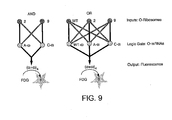
- Boolean logic circuits programmed in cells using one or more orthogonal ribosome orthogonal mRNA pairs such as those described herein.
- orthogonal refers to an mRNA rRNA pair (or an mRNA ribosome-comprising-an-rRNA pair) in which the mRNA is efficiently translated by a ribosome comprising the rRNA of the pair, but not by an endogenous ribosome, and in which the ribosome comprising the rRNA efficiently translates the mRNA of the pair, but not endogenous mRNAs.
- an "orthogonal mRNA orthogonal rRNA pair" or “O-mRNA O-rRNA pair” is one in which the mRNA is efficiently translated by a ribosome containing the rRNA of the pair but not by an endogenous ribosome, and in which a ribosome comprising the rRNA efficiently translates the mRNA of the pair but not endogenous mRNA.
- the members of the O-mRNA O-rRNA pair are said to be "cognate" to each other.
- a ribosome comprising an orthogonal rRNA is referred to herein as an "orthogonal ribosome," and an orthogonal ribosome will efficiently translate only a cognate orthogonal mRNA.
- mRNA when used in the context of an O-mRNA O-ribosome pair refers to an mRNA that comprises a ribosome binding site (particularly the sequence from the AUG initiation codon upstream to -13 relative to the AUG) that efficiently mediates the initiation of translation by the O-ribosome, but not by a wild-type ribosome.
- the remainder of the mRNA can vary, such that placing the coding sequence for any protein downstream of that ribosome binding site will result in an mRNA that is translated efficiently by the orthogonal ribosome, but not by an endogenous ribosome.
- rRNA when used in the context of an O-mRNA O-ribosome pair refers to a small ribosomal subunit rRNA mutated in the 3' sequences that interact with mRNA during the initiation of translation.
- the mutation(s) is/are such that the rRNA is an orthogonal rRNA, and a ribosome containing it is an orthogonal ribosome, i.e., it efficiently translates only a cognate orthogonal mRNA.
- the primary, secondary and tertiary structures of wild-type small ribosomal subunit rRNAs are very well known, as are the functions of the various conserved structures (stems-loops, hairpins, hinges, etc.).
- Mutations outside the 3' sequences that interact with the mRNA during the initiation of translation are permissible in an O-rRNA as described herein to the extent that the O-rRNA remains orthogonal and that the mutation(s) maintain(s) the function of the ribosome in translation (translation function is maintained if the ribosome has at least 80%, and preferably at least 90%, 95% or even more preferably 100% of the activity of a corresponding ribosome with wild-type sequences outside of the 3' sequences that interact with the mRNA during the initiation of translation).
- mutations outside the 3' sequences that interact with mRNA during translation initiation should generally be conservative or compensatory mutations that maintain the secondary and tertiary structure of the rRNA within the ribosome and maintain the function of the rRNA and the ribosome containing it.
- O-rRNA in a cell, as the term is used herein, is not toxic to the cell. Toxicity is measured by cell death, or alternatively, by a slowing in the growth rate by 80% or more relative to a cell that does not express the "O-mRNA.” Expression of an O-rRNA will preferably slow growth by less than 50%, preferably less than 25%, more preferably less than 10%, and more preferably still, not at all, relative to the growth of similar cells lacking the O-rRNA.
- the terms “efficiently translates” and “efficiently mediates translation” mean that a given O-mRNA is translated by a cognate O-ribosome at least 80% as efficiently, and preferably at least 90%, 95% or even 100% as efficiently as an mRNA comprising a wild-type ribosome binding sequence is translated by a wild-type ribosome in the same cell or cell type.
- a gauge for example, in E . coli one may evaluate translation efficiency relative to the translation of an mRNA having a wild-type E. coli ⁇ -galactosidase ribosome binding sequence. In eukaryotic cells, one may use as a gauge, for example, an mRNA having a wild-type ⁇ -actin ribosome binding sequence.
- corresponding to when used in reference to nucleotide sequence means that a given sequence in one molecule, e.g., in a 16S rRNA, is in the same position in another molecule, e.g., a 16S rRNA from another species.
- in the same position is meant that the "corresponding" sequences are aligned with each other when aligned using the BLAST sequence alignment algorithm "BLAST 2 Sequences” described by Tatusova and Madden (1999, “Blast 2 sequences - a new tool for comparing protein and nucleotide sequences", FEMS Microbiol. Lett. 174:247-250 ) and available from the U.S. National Center for Biotechnology Information (NCBI).
- BLAST version 2.2.11 available for use on the NCBI website or, alternatively, available for download from that site
- program, blastn reward for a match, 1
- penalty for a mismatch - 2
- open gap and extend gap penalties 5 and 2 respectively
- gap x dropoff 50; expect 10.0
- word size 11 word size 11; and filter on.
- selectable marker refers to a gene sequence that permits selection for cells in a population that encode and express that gene sequence by the addition of a corresponding selection agent.
- a "positive selectable marker” is a selectable marker in which the expression of the marker is necessary for the survival of a cell in the presence of a selection agent.
- a non-limiting example of a positive selectable marker is antibiotic resistance, in which the expression of a resistance gene in a cell renders the cell insensitive to specific growth retardation or killing with an antibiotic.
- a "corresponding" positive selection agent is an agent that kills cells or severely retards growth of cells lacking the positive selectable marker but does not kill cells expressing the positive selectable marker.
- a non-limiting example of a "corresponding" positive selectable agent is an antibiotic, e.g., ampicillin or chloramphenicol where the positive selectable marker is an antibiotic resistance gene, e.g., ⁇ -lactamase or chloramphenicol acetyltransferase, respectively.
- a "negative selectable marker” is a selectable marker in which the expression of the marker renders a cell susceptible to killing or growth retardation with a selection agent.
- Negative selectable markers include thymidine kinase (selectable with gancyclovir), B. subtilis sacB (selectable with sucrose), and uracil phosphoribosyltransferase (selectable with 5-fluorouracil).
- a “corresponding” negative selection agent is an agent to which cells expressing the negative selectable marker become sensitive; thus, for example, gancyclovir "corresponds” to thymidine kinase, sucrose “corresponds” to sacB, and 5-fluorouracil “corresponds” to uracil phosphoribosyltransferase in the preceding examples.
- chloramphenicol acetyltransferase refers to an enzyme that catalyzes the acetylation of chloramphenicol which renders the chloramphenicol inactive for translation blockade and inactive for cell killing. Assays for measuring acetylation of chloramphenicol by chloramphenicol acetyltransferase are well known in the art.
- the term "growth retardation" means that in cells sensitive to such retardation, the doubling time of bacteria is at least two times as long as in insensitive bacteria, preferably at least three, four or five times or more longer, relative to cells that are not sensitive to the retardation. Over the time course of multiple doublings for an insensitive cell, the proportion of the population of insensitive cells will rapidly become dominant, e.g., 95%, 99% or more, relative to sensitive cells.
- uracil phosphoribosyltransferase refers to an enzyme that catalyzes the phosphorylation of uracil to uridine monophosphate.
- survival in the presence of chloramphenicol means that a cell expressing chloramphenicol acetyltransferase will survive in medium containing chloramphenicol at a concentration in which 100% of cells that do not express chloramphenicol acetyltransferase are killed or severely growth retarded.
- "Severely” growth retarded means an increase in doubling time of 5 times or more relative to non-retarded growth.
- sensitive to killing with 5-fluorouracil means that all cells in a population expressing a CAT/UPRT fusion as described herein are killed at a concentration of 5-FU greater than or equal to 0.1 ⁇ g/ml.
- region comprising sequence that interacts with mRNA at the ribosome binding site refers to a region of sequence comprising the nucleotides near the 3' terminus of 16S rRNA that physically interact, e.g., by base pairing or other interaction, with mRNA during the initiation of translation.
- the "region” includes nucleotides that base pair or otherwise physically interact with nucleotides in mRNA at the ribosome binding site, and nucleotides within five nucleotides 5' or 3' of such nucleotides.
- the term "diversified” means that individual members of a library will vary in sequence at a given site. Methods of introducing diversity are well known to those skilled in the art, and can introduce random or less than fully random diversity at a given site.
- a given nucleotide can be any of G, A, T, or C (or in RNA, any of G, A, U and C).
- less than fully random is meant that a given site can be occupied by more than one different nucleotide, but not all of G, A, T (U in RNA) or C, for example where diversity permits either G or A, but not U or C, or permits G, A, or U but not C at a given site.
- ribosome binding site refers to the region of an mRNA that is bound by the ribosome at the initiation of translation.
- the "ribosome binding site” of prokaryotic mRNAs includes the Shine-Dalgarno consensus sequence and nucleotides - 13 to +1 relative to the AUG initiation codon.
- the term "unnatural amino acid” refers to an amino acid other than the 20 amino acids that occur naturally in protein.
- Non-limiting examples include: a p-acetyl-L-phenylalanine, a p-iodo-L-phenylalanine, an O-methyl-L-tyrosine, a p-propargyloxyphenylalanine, a p-propargyl-phenylalanine, an L-3-(2-naphthyl)alanine, a 3-methyl-phenylalanine, an O-4-allyl-L-tyrosine, a 4-propyl-L-tyrosine, a tri-O-acetyl-GlcNAc ⁇ -serine, an L-Dopa, a fluorinated phenylalanine, an isopropyl-L-phenylalanine, a p-azido-L-phenylalanine, a p-acy
- logic circuit refers to a set of interacting parameters with a read out that announces the state of the interacting parameters.
- a "Boolean AND circuit” refers to a set of two entities or conditions, A and B, that must be present or satisfied to give read-out C. Read-out C is only given when conditions A AND B are satisfied.
- a "Boolean OR circuit” refers to a set of two entities or conditions A and B, and a read-out D. In the OR circuit, read-out D is given, for example, when A OR B are satisfied. Thus, if A OR B is satisfied, read-out D is given in the OR circuit.
- a "cellular” logic circuit is a logic circuit as defined herein in which the entities of the logic circuit necessary to provide a read-out are expressed in a living cell.
- cascade refers to a series of logic circuits in which the result of one circuit is required as an element in a second circuit.
- Synthetic biology aims for the ability to program cells with new functions. Simple oscillators, switches, logic functions, cell-cell communication and pattern forming circuits have been created, by the connection of a small set of natural transcription factors and their binding sites in different ways to create different networks of molecular interactions. However, the controlled synthesis of more complex synthetic networks and functions requires an expanded set of functional molecules with known molecular specificities.
- Described herein are processes that artificially mimic the natural process to produce orthogonal molecules: that is, molecules that can process information in parallel with their progenitors without cross-talk between the progenitors and the duplicated molecules.
- This is exemplified herein by the generation of orthogonal ribosome orthogonal mRNA pairs that can process information in parallel with wild-type ribosomes and mRNA but that do not engage in cross-talk between the wild-type and orthogonal molecules.
- the bacterial ribosome is a 2.5 MDa complex of rRNA and protein responsible for translation of mRNA into protein ( The Ribosome, Vol. LXVI. (Cold Spring Harbor Laboratory Press, Cold Spring Harbor, New York; 2001 ).
- the interaction between the mRNA and the 30S subunit of the ribosome is an early event in translation ( Laursen, B.S., Sorensen, H.P., Mortensen, K.K.
- SD Shine Dalgarno
- mRNA sequences believed to bind the 3' end of 16S rRNA are referred to as SD sequences and to the specific sequence GGAGG (SEQ ID NO: 1) is referred to as the classic SD sequence.
- Finding orthogonal ribosome orthogonal mRNA pairs requires the discovery of ribosome variants that specify the translation of the orthogonal mRNA with high efficiency. These ribosome variants must not interfere with ribosome assembly, rRNA processing or cellular viability, and must not significantly or detrimentally translate any of the thousands of endogenous transcripts. In addition it requires the discovery of an orthogonal mRNA that is robustly translated by only the orthogonal ribosome, but is not a substrate for the endogenous ribosome.
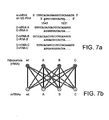
- a selection approach for the discovery of orthogonal ribosome mRNA pairs can permit the interrogation of up to 10 9 times more sequence space than has previously been considered by small screens or designed mutants. Described herein is a new tuneable positive and negative selection for evolution of orthogonal translational machinery. The selection methods are applied to evolving multiple orthogonal ribosome mRNA pairs (O-ribosome O-mRNA). Also described is the successful prediction of the network of interactions between cognate and non-cognate O-ribosomes and O-mRNAs. Knowledge of the specificity of these molecular interactions permits programming of post-transcriptional Boolean logic in cells.
- a selection approach for the identification of orthogonal ribosome orthogonal mRNA pairs, or other pairs of orthogonal molecules entails a concerted use of positive and negative selection.
- negative selection is used to remove from a library of mRNA sequences those members that are substrates for wild-type ribosomes
- positive selection is used to select from a library of mutated ribosomes those that efficiently translate the remaining mRNAs that are not translated by the wild-type ribosomes.
- a number of different positive and negative selection agents can be used. Ideal positive and negative selections in, for example, E . coli would be tuneable in response to two small molecules (one for each selection) over a large dynamic range.
- Several positive selections have been used in E . coli, the most common of which involve conditional survival on antibiotics. Of these positive selections, the chloramphenicol acetyl-transferase gene in combination with the antibiotic chloramphenicol has proved one of the most useful.
- Others as known in the art, such as ampicillin, kanamycin, tetracycline or streptomycin resistance, among others, can also be used.
- Negative selections in, for example, E . coli have used the ribonuclease barnase.
- barnase is both extremely toxic and constitutively active, which limits its utility in tuneable selections for the isolation of a range of activities.
- Perhaps the most widely used negative selection in, for example, gram negative bacteria uses the Bacillus subtilis sacB gene, which converts saccharose into levan sucrase and confers sucrose sensitivity on the cell. The selection, however, requires the forced uptake of sucrose by the addition of huge extracellular concentrations (5 % or more).
- This enzyme operates in the nucleotide salvage pathway to convert uracil into uridine monophosphate, the source of all pyrimidine nucleoside triphosphates in the cell. If 5-fluorouracil is added to cells, it is converted to 5fluoro-dUMP by UPRT which strongly inhibits thymidylate synthase ( Neuhard, J. in Metabolism ofNucleotides, Nucleosides, and Nucleobases in Microorganisms. (ed. O. Munch-Petersen) 95-148 (Academic Press, New York, NY, New York; 1983 )), and leads to cell death.
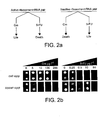
- O-ribosome O-mRNA pairs are facilitated by a single transcript that can respond to either a positive or a negative selection depending on the identity and dose of a small molecule added to the media ( Fig. 2a ) .
- One way to do this is to generate a single construct encoding a fusion polypeptide that comprises both the positive and negative selectable marker activities.
- the generation of fusion constructs is well known in the art.
- Positive and negative selectable markers as known in the art can be used in such a construct. As discussed above with respect to the markers themselves, the selectable markers will ideally each have a dynamic range that permits tuning the stringency of the selection to obtain a broader spectrum of selected mutant activity.
- the dynamic range for selectable markers is preferably at least two fold, more preferably at least 5-fold, 10-fold, 50-fold, 100-fold, 500-fold or more.
- One of skill in the art can determine the dynamic range of a given selectable marker and its corresponding selection agent using, for example, an approach as described in the Examples herein.
- the decision of which selectable marker polypeptide to place N-terminal and which to place C-terminal in the construct can be empirical because there are only two choices for a given combination of two markers. However, where aspects of the structures and, for example, their sensitivities to alteration or steric hindrances, are known, those considerations can dictate which of the two orientations is most likely to work.
- short peptide linkers as known in the art can be used to space the two fused selectable markers apart sufficiently to preserve both selectable functionalities. Further, the Examples below describe methods useful to ascertain the function of both selectable marker polypeptides in the context of a fusion protein.
- the methods described herein and exemplified in the Examples below permit the evolution of highly active and highly specific orthogonal ribosome mRNA pairs by gene duplication followed by a novel positive and negative selection. These pairs can be used, for example, to produce a transcript in a host cell that can only be translated by the cognate orthogonal ribosome, thereby permitting extremely sensitive control of the expression of a polypeptide encoded by the transcript.
- the pairs can thus be used to produce a polypeptide of interest by, for example, introducing nucleic acid encoding such a pair to a cell, where the orthogonal mRNA encodes the polypeptide of interest.
- the translation of the orthogonal mRNA by the orthogonal ribosome results in production of the polypeptide of interest. It is contemplated that polypeptides produced in cells encoding orthogonal mRNA ⁇ orthogonal ribosome pairs can include unnatural amino acids.
- orthogonal ribosomes are not responsible for synthesizing the proteome, and it will therefore be possible to further diverge their function.
- it may be possible to produce ribosomes that decode extended codons Magliery, T.J., Anderson, J.C. & Schultz, P.G., J Mol Biol 307, 755-769 (2001 ), Anderson, J.C., Magliery, T.J. & Schultz, P.G., Chem Biol 9, 237-244 (2002 )
- decode extended codons Magliery, T.J., Anderson, J.C. & Schultz, P.G., J Mol Biol 307, 755-769 (2001 )
- Each of these ribosomes would have applications for further expanding or altering the genetic code.
- the methods described herein are applicable to the selection of orthogonal mRNA orthogonal rRNA pairs in species in which base pairing between ribosomal RNA and a ribosome binding sequence on mRNA occurs during the initiation of translation.
- the methods are broadly applicable across bacterial species, in which this mechanism is conserved.
- the sequence of 16S rRNA is known for a large number of bacterial species and has itself been used to generate phylogenetic trees defining the evolutionary relationships between the bacterial species (reviewed, for example, by Ludwig & Schleifer, 1994, FEMS Microbiol. Rev. 15: 155-73 ; see also Bergey's Manual of Systematic Bacteriology Volumes 1 and 2, Springer, George M. Garrity, ed.).
- the Ribosomal Database Project II ( Cole JR, Chai B, Farris RJ, Wang Q, Kulam SA, McGarrell DM, Garrity GM, Tiedje JM, Nucleic Acids Res, (2005) 33(Database Issue):D294-D296. doi: 10.1093/nar/gki038 ) provides, in release 9.28 (6/17/05), 155,708 aligned and annotated 16S rRNA sequences, along with online analysis tools.
- Phylogenetic trees such as that shown in Figure 6 are constructed using, for example, 16S rRNA sequences and the neighbor joining method in the ClustalW sequence alignment algorithm. Using a phylogenetic tree, one can approximate the likelihood that a given set of mutations (on 16S rRNA and corresponding translation control sequence on an mRNA) that render the set orthogonal with respect to each other in one species will have a similar effect in another species.
- the mutations rendering mRNA/16S rRNA pairs orthogonal with respect to each other in one member of, for example, the Enterobacteriaceae Family (e.g., E . coli ) would be more likely to result in orthogonal mRNA/ orthogonal ribosome pairs in another member of the same Family (e.g., Salmonella) than in a member of a different Family on the phylogenetic tree.
- bacterial species are very closely related, it may be possible to introduce corresponding 16S rRNA and mRNA mutations that result in orthogonal molecules in one species into the closely related species to generate an orthogonal mRNA orthogonal rRNA pair in the related species. Also where bacterial species very are closely related (e.g., for E . coli and Salmonella species), it may be possible to introduce orthogonal 16S rRNA and orthogonal mRNA from one species directly to the closely related species to obtain a functional orthogonal mRNA orthogonal ribosome pair in the related species.
- orthogonal mRNA orthogonal ribosome pairs are not closely related (e.g., where they are not in the same phylogenetic Family) to a species in which a set of pairs has already been selected
- positive-negative selection methods as described herein to generate orthogonal mRNA orthogonal ribosome pairs in the desired species. Briefly, one can prepare a library of mutated ribosome binding sequences linked to a sequence encoding a positive-negative selection fusion polypeptide as described herein (the bacterial species must be sensitive to the activity of the selection agents, a matter easily determined by one of skill in the art).
- the library can then be introduced to the chosen species, with selection against mRNAs that are substrates for wild-type ribosomes.
- a library of 16S rRNA sequences can be generated by mutating the 16S rRNA of the chosen species.
- the mutant 16S rRNA library can then be introduced to cells comprising the mRNAs that are not substrates for wild-type ribosomes, followed by positive selection for those cells expressing the positive selectable marker in order to identify orthogonal ribosomes that pair with the mRNAs selected in the first selection.
- Ribosome binding sequences can and do differ in different species, although a region of complementarity to a region of corresponding 16S rRNA is maintained. Two approaches can be taken where there is not necessarily a known consensus ribosome binding sequence for a given species.
- the sequences surrounding or adjacent to the translation start codon of a model transcript in that species can be used to generate the first library of mutated mRNA sequences - that is, the translation-regulatory sequences of a single transcript can be used to generate a mutated library of translation regulatory sequence linked to a positive-negative reporter as described herein.
- Negative and positive selection along with a library of mutant 16S rRNA sequences as described above will permit the isolation of orthogonal mRNA orthogonal ribosome pairs based on the members of the mutant translation regulatory sequence.
- mRNA sequences from the chosen species can be aligned with each other and with the region of 16S rRNA expected (based on similarities to E. coli 16S rRNA or other 16S rRNA for which the mRNA-interacting sequences are known) to base pair with the ribosome binding site using any of a number of different algorithms.
- the alignment permits the identification of conserved sequences most likely to interact with the 16S rRNA, thereby permitting the selection of a consensus for that species.
- An mRNA library diversified in that consensus region can then be generated to provide starting material for selection of orthogonal mRNA orthogonal ribosome pairs functional in that species as described herein.
- Pathogenic bacteria are well known to those of skill in the art, and sequence information, including not only 16S rRNA sequence, but also numerous mRNA coding sequences, are available in public databases, such as GenBank.
- Common, but non-limiting examples include, e.g., Salmonella species, Clostridium species, e.g., Clostridium botulinum and Clostridium perfringens, Staphylococcus sp., e.g, Staphylococcus aureus; Campylobacter species, e.g., Campylobacter jejuni, Yersinia species, e.g., Yersinia pestis, Yersinia enterocolitica and Yersinia pseudotuberculosis, Listeria species, e.g., Listeria monocytogenes, Vibrio species, e.g., Vibrio cholerae, Vibrio parahaemolyticus and Vibrio vulnificus, Bacillus cereus, Aeromonas species, e.g., Aeromonas hydrophila, Shigella species, Streptococcus species, e.g., Streptococcus
- the methods described herein rely upon the introduction of foreign or exogenous nucleic acids into bacteria.
- Methods for bacterial transformation with exogenous nucleic acid, and particularly for rendering cells competent to take up exogenous nucleic acid is well known in the art.
- Gram negative bacteria such as E. coli are rendered transformation competent by treatment with multivalent cationic agents such as calcium chloride or rubidium chloride.
- Gram positive bacteria can be incubated with degradative enzymes to remove the peptidoglycan layer and thus form protoplasts. When the protoplasts are incubated with DNA and polyethylene glycol, one obtains cell fusion and concomitant DNA uptake.
- nuclease-deficient cells can be used to improve transformation.
- Electroporation is also well known for the introduction of nucleic acid to bacterial cells. Methods are well known, for example, for electroporation of Gram negative bacteria such as E . coli, but are also well known for the electroporation of Gram positive bacteria, such as Enterococcus faecalis, among others, as described, e.g., by Dunny et al., 1991, Appl. Environ: Microbiol. 57: 1194-1201 .
- the positive-negative selection approach described herein for the selection of orthogonal ribosome orthogonal mRNA pairs can be applied to the selection of additional pairs of orthogonal molecules.
- orthogonal promoter/polymerase pairs can be identified by application of the positive-negative selection approach described herein.
- negative selection e.g., 5-FU/UPRT selection
- the result is a mutant promoter that is not recognized by wild-type polymerases and a polymerase that specifically recognizes that mutant promoter. Together they constitute a very specific means of gene regulation.
- riboswitches are an mRNA structure that can fold in the presence of a metabolite or other small molecule or ion to regulate translation by altering mRNA conformation.
- riboswitches are structured domains in the non-coding portions of some mRNAs that sense the presence of a metabolite. Metabolite binding causes allosteric changes in the mRNA that result in changes in processes such as translation initiation or translation termination. Riboswitches are further described in Mandal & Breaker, 2004, Nat. Rev. Mol. Cell. Biol. 5:451-63 .
- a positive-negative selection approach as described herein, one can, for example, select from an mRNA library those sequences able to bind small molecules and up- or down-regulate gene expression. This can be accomplished, for example, by placing a library of mRNA sequences 5' of the SD sequence and identifying those sequences that inactivate translation for the SD sequence (5-FU/UPRT selection). The small molecule is then added, with selection for re-activation of translation by positive selection. A reciprocal approach can be taken to provide small molecule repressors of gene expression.
- riboregulator is a small RNA that regulates gene expression.
- Raboregulators are described in, for example, Eddy, 1999, Curr. Opin. Genet. Dev. 1999 9:695-9 and Lease et al., 1998, Proc. Natl. Acad. Sci U.S.A. 95:12456-61 .
- By replacing the small molecule in the riboswitch example above with the expression of a small non-coding RNA one can identify riboregulator RNAs that activate or repress mRNA translation.
- Positive-negative selection can also be used to identify modified transcription factor/transcription factor binding site pairs.
- a known transcription factor binding site can be altered, in the most extreme cases to completely random sequence. Sequences that do not lead to transcription with the wild-type factor are selected by negative selection with 5-FU/UPRT. A library of mutant transcription factors is then introduced, with positive selection for the activation of transcription from the active site that leads to expression f the positive selectable marker, e.g., CAT.
- the positive selectable marker e.g., CAT.
- Example 1 Generation and Testing of a Positive-Negative Selectable Marker Fusion Construct.
- a genetic fusion was generated between the chloramphenicol acetyl-transferase (cat) gene and the uracil phosphoribosyltransferase (upp) gene, downstream of a constitutive promoter and wild type ribosome-binding site, on a p15A derived vector (maintained at 10-15 copies per cell).
- Both CAT and UPRT function as trimers, but whereas the CAT trimer has been crystallized ( Leslie, A.G., J Mol Biol 213, 167-186 (1990 )), the UPRT trimer has an unknown structure and symmetry ( Rasmussen, U.B., Mygind, B.
- P21 a vector expressing a CAT-UPRT fusion
- All Bsa I restriction sites have been removed to allow enzymatic inverse PCR mutagenesis ( Yusupova, G.Z., Yusupov, M.M., Cate, J.H. & Noller, H.F., Cell 106, 233-241 (2001 )) or library construction with the vector as a template.
- the plasmid was created in several steps using standard molecular biology methods (plasmid map available below).
- Enzymatic inverse PCR (as described in detail for library construction) was used to construct P23, the promoterless cat-upp fusion, and P24, a start codon deleted cat-upp fusion using p21 as a template.
- the complete sequence of the oligonucleotides used to construct these vectors can be found below.
- Model enrichment studies were performed to examine the potential of the system for selecting orthogonal SD sequences that are not substrates for the endogenous ribosome, and for selecting complementary ribosomes. These model selections are summarized in Table 1, below. Table 1. Model Selections A.
- the mRNAlib was created by enzymatic inverse PCR using the primers 5'- GGAGTAGGTCTCAAGCGGCCGCTTCCACACATTAAACTAGTTC-3' (SEQ ID NO: 4) and p21 as template. Reactions contained: 20 pmol forward primer, 20 pmol reverse primer, 10 ng template plasmid, 40 pmol dNTPs, 1 x Expand buffer 2 (Roche), in a total volume of 49.5 ⁇ l. 1.75 U Expand High Fidelity DNA polymerase (Roche, 3.5 U ⁇ l -1 ) was added to the reaction at 80 °C.
- Reactions were cycled in touchdown PCR (94 °C, 20 s; 65 °C, 20 s (-1 °C cycle -1 ); 68 °C, 8 min) for 20 cycles, followed by amplification (94 °C, 20 s; 50 °C, 20 s; 68 °C, 8 min) for 20 cycles.
- the resulting PCR product (5 ⁇ g) was purified (Qiagen PCR purification), digested ( Dpn I (40 U, 6h); Bsa I (50 U, 6h), re-purified (Qiagen PCR purification), ligated (T4 DNA ligase (16 °C, 12 h), ethanol precipitated, and transformed by electroporation into DH10B electrocompetent cells. Plasmid DNA was isolated and retransformed into GH371 cells for selections. This strain (a generous gift from J. Christopher Anderson, UCSF) is a derivative of GeneHogs E . coli in which the upp ORF is completely deleted.
- upp mutants can be selected as necessary, for example, by exposing E . coli strains to low doses of 5-FU and selecting for surviving cells that spontaneously down-regulate the upp gene.
- the mRNAlib library realizes greater than 10 7 independent transformants, providing greater than 99.99 % confidence, as determined from a Poisson distribution ( Ladner, R.C. in Phage Display of Peptides and Proteins. (eds. B.K. Kay, J. Winter & J. McCafferty) 151-194 (Academic Press, San Diego; 1996 )), that the library is complete.
- a Poisson distribution Ladner, R.C. in Phage Display of Peptides and Proteins. (eds. B.K. Kay, J. Winter & J. McCafferty) 151-194 (Academic Press, San Diego; 1996 )
- ribosomal RNA library eight nucleotides in the 16S rRNA (Fig 3a,b) were mutated. Six of these nucleotides are in the region from 1536-1541 at the 3' end of the 16S rRNA. Five of these bases pair with the mRNA in the classic SD ASD ( Yusupova, G.Z., Yusupov, M.M., Cate, J.H. & Noller, H.F., Cell 106, 233-241 (2001 )), interaction and are clearly important determinants of translational efficiency on endogenous mRNAs, whereas the sixth allows additional flexibility in the spacing between the SD and the ribosomal A site.
- SD ASD Yusupova, G.Z., Yusupov, M.M., Cate, J.H. & Noller, H.F., Cell 106, 233-241 (2001 )
- the final two mutated bases, 722 and 723, form a bulge proximal to the minor groove of the SD helix formed between the ribosome and mRNA (Yusupova, G.Z., et al., Supra).
- 722 forms a non-canonical G-G base pair with nucleotide 767.
- 723 is unpaired and comes close to the minor groove of the SD helix, but in the 5 ⁇ structure showing the path of the mRNA through the ribosome (Yusupova, G.Z., et al., Supra), the molecular details of any interaction between the 723 bulge and the SD helix are undefined.
- These mutations acknowledge the possibility that the 723 bulge might monitor the geometry of the minor groove of the SD helix, and explore the possibility that mutations at these positions might allow access to an expanded set of functional SD ASD sequences.
- the plasmids for rRNA library construction are derivatives of pSP72 and pSP73 (Promega), from which Bsa I and Pst I sites were removed, and new Pst I and Ngo M IV sites engineered in the ß-lactamase gene.
- the E. coli rrnB 23S-containing fragment was subcloned into the pSP73 derivative as an Xba I, Bam H I fragment from pSTL102 (A generous gift from Professor Harry Noller, University of California, Santa Cruz) yielding the plasmid pJC23S.
- coli rrnB 16S fragment was amplified from pSTL102 with Cla I and Xba I flanking sequence and cloned into the pSP72 derivative using Cla I and Xba I, yielding pJC16S. Plasmid maps of pJC23S and pJC16S are available below.
- pTrcHis2 A Invitrogen
- pTrc ⁇ Kan A plasmid map of pTrc ⁇ Kan can be found below.
- the rRNAlib library of 16S rRNA mutants was generated by two rounds of enzymatic inverse PCR each followed by Dpn I, Bsa I digestion, ligation and transformation, as described for the construction of mRNAlib. This was followed by operon assembly with the 23S/5S fragment from pJC23S and transfer of the complete operon to a promoter.
- pJC16S was used as a template with oligonucleotides 5'-GGAAAGGTCTCAGGTTGGATCANNNNNNTACCTTAAAGAAGCGTACTTTGTAG-3' (SEQ ID NO: 5) and 5'-GAGTAGGTCTCAAACCGCAGGTTCCCCTACG-3' (SEQ ID NO: 6).
- the resulting library was used as a template for the randomization of the nucleotides at positions 722 and 723 using the oligonucleotides 5'-GGAAAGGTCTCAGAATACCGNNGGCGAAGGCGGCCCCCTGGACGAA-3' (SEQ ID NO: 7) and 5'-GAGTAGGTCTCAATTCCTCCAGATCTCTACGCATTTCAC-3' (SEQ ID NO: 8).
- 16S rRNA mutant libraries in the pJC16S backbone were assembled with the 23S and 5S rRNA containing fragment in pJC23S by Pst I, Xba I subcloning of gel purified DNA fragments.
- the resulting pJC16S23S plasmid contains the library of rrnB rRNA operons. These were transferred to the pTrc ⁇ expression plasmid by Bam H I, Nde I and Xho I digestion of pJC 16S23S, and Bam H I , Stu I, and Xho I digestion of pTrc ⁇ Kan. The resulting BamH I, Xho I fragments were gel purified and subcloned to create rRNAlib.
- RNA sequences that are not translated by endogenous ribosomes were screened for.
- a negative selection was performed by growing the ribosome binding site library in the presence of 5-FU. Active ribosome binding sites direct the synthesis of the cat-upp fusion, and UPRT protein converts 5FU to a toxic product, poisoning the cell.
- ribosome-binding sites that are not substrates for the endogenous ribosome do not direct the synthesis of UPRT and survive the selection.
- the library is therefore selectively enriched in O-mRNAs.
- ribosomes were screened for that translate the selected orthogonal mRNAs.
- Cells containing the selected ribosome binding sites were transformed with the library of mutant ribosomes, yielding 10 11 transformants, over-sampling the total theoretical diversity of ribosome mRNA combinations by two orders of magnitude.
- the library was grown in the presence of chloramphenicol, and active ribosome O-mRNA pairs selected. In this selection only for pairs with comparable activity to the wild-type pair were sought. Under less stringent conditions it may be possible to isolate less highly active, but still active ribosome mRNA pairs.
- GH371 E. coli were transformed with mRNAlib, then recovered for 1h in SOC.
- the library was then plated on selective media (M9 agar containing 0.4 % glucose, 0.2 % casaminoacids, 25 ⁇ g ml -1 tetracycline, 0.5 ⁇ g ml -1 5-FU). After 24 h, surviving cells were pooled and used to prepare electrocompetent GH371/mRNAlib(-)cells.
- GH371/mRNAlib(-) cells were transformed with the rRNAlib library, and recovered for 1 h in SOB containing 2 % glucose. The recovered cells were used to inoculate 200 ml of LB-GAT (LB media supplemented with 2 % v/v glucose, 100 ⁇ g ml -1 ampicillin, 25 ⁇ g ml -1 tetracycline), grown to saturation, and pelleted by centrifugation at 3000g.
- LB-GAT LB media supplemented with 2 % v/v glucose, 100 ⁇ g ml -1 ampicillin, 25 ⁇ g ml -1 tetracycline
- the cells were resuspended in LB-AT ((LB media supplemented with 100 ⁇ g ml -1 ampicillin, 25 ⁇ g ml -1 tetracycline) and incubated (37 °C, 300 rpm, 1h) before pelleting at 3000g.
- Cells were resuspended in an equal volume of LB-ATI (LB medium containing 25 ⁇ g ml -1 ampicillin and 7.5 ⁇ g ml -1 tetracycline, 1mM isopropyl-D-thiogalactopyranoside (IPTG)) and incubated (37°C, 300 rpm, 3.5 h).
- Total plasmid DNA was isolated from selected clones. To purify rRNAlib members from their cognate mRNAlib members and vice versa a fraction of each plasmid sample was digested with restriction enzymes that recognize sites found only in rRNAlib ( Bsa I) or in the mRNAlib ( Not I) and the digests re-transformed into GH371. Individual transformants were replica plated on ampicillin and tetracycline to confirm the separation. Plasmid DNA was isolated and sequenced by standard methods.
- Competent GH371/mRNAlib clones were transformed in parallel with either pTrc-WT (encoding rRNA from the rrnB operon) or the corresponding rRNAlib member.
- Cells were recovered in SOB with 2 % glucose and transferred to LB GAT and grown overnight at 200 rpm. Cells (100 ⁇ l) were transferred to each well of a 96 well culture block and pelleted by centrifugation at 3000g. Cells were resuspended in 1 ml LB AT, incubated (37 °C, 300 rpm, 1h) and then pelleted at 3000g.
- Each mRNA has an IC 50 of 10 ⁇ g ml -1 or less on chloramphenicol in the absence of its cognate ribosome, and is therefore orthogonal (O-mRNA) with respect to the endogenous ribosome.
- Addition of the co-selected ribosome increases the IC 50 to greater than or equal to 150 ⁇ g ml -1 in all cases.
- the co-selected ribosomes are therefore highly active, and translate the message from the O-mRNA as well or better than the endogenous ribosome translates the same message from a classic SD sequence.
- the ten pairs fall into three classes on the basis of predicted SD ASD base pairing, with each class forming a SD ASD interaction over exactly 5 base pairs.
- the first class of pairs contains the bases ACCAC - 6 (SEQ ID NO: 9; numbering refers to position of 3' base) to AUG in the mRNA. This is complemented by four distinct ribosomes that can Watson-Crick pair with the mRNA over five bases.
- Two distinct registers of the 16S rRNA with respect to the SD sequence are observed. In the first register, exemplified by rRNA-1, bases 1536 to 1540 of the 16S rRNA Watson-Crick pair with mRNA-A.
- bases 1537 to 1541 of the 16S rRNA Watson-Crick pair with the cognate mRNAs are favored in the selected sequences at the two positions immediately 5' to the region of the rRNA that Watson-Crick base pairs with the mRNA.
- a second class of pairs (B5, B6, B7, B8) contain the sequence ACUGC -7 (SEQ ID NO: 10) to AUG in the O-mRNA.
- Positions 1535 and 1536 in these clones are dominated by pyrimidines.
- a third class of pairs (C9, D10) contains the sequence AUCCC -6 (SEQ ID NO: 11) to AUG in the O-mRNA.
- the selected rRNA sequences have between 5 and 8 mutations with respect to the wild-type rRNA sequence, making it likely that they will discriminate against the translation of endogenous transcripts. Moreover, since cells have been grown for many generations in the presence of the mutant ribosomes, it is likely that the selected mutant ribosomes do not mis-regulate proteome synthesis. Indeed, negative selection against proteome mis-regulation may be responsible for the strong convergence of residues 1535 and 1536 which lie outside the Watson-Crick paired region of the selected ribosome mRNA interactions, but form key G-C base pairs in the classic SD ASD helix.
- ribosomes do not detrimentally mis-regulate the translation of transcripts that affect cell viability ribosome synthesis was induced and cell growth was monitored over ten hours ( FIG. 4c ).
- the selected ribosomes do not lyse cells, and cells transformed with these ribosomes double at the same rate as cells containing wild-type ribosomes.
- the selected rRNA sequences have been transferred to the constitutive and strong P1P2 promoter (from which wild-type rRNA is synthesized) without significantly affecting cell growth.
- mutant ribosomes were inactivated using spectinomycin and translation was measured from mutant ribosomes, which are spectinomycin-resistant by virtue of a C1192U mutation in 16S rRNA ( Sigmund, C.D., Ettayebi, M. & Morgan, E.A., Nucleic Acids Res 12, 4653-4663 (1984 )), ( Fig. 4d ).
- the methods used are described briefly as follows. GH371/rRNAlib/mRNAlib clones were grown to saturation in LB GAT.
- Cells were incubated (37°C, 300 rpm, 1h), and then pelleted before resuspension in an equal volume of identical medium, with the addition of 1 mM IPTG. After incubation (37°C, 300 rpm, 1h), spectinomycin (500 ⁇ g ml -1 ) was added to the media to inhibit endogenous protein synthesis.
- a plasmid expressing ⁇ -galactosidase ⁇ -fragment was constructed by replacing the cat-upp fusion gene in p21 with a PCR fragment of the E. coli lacZ gene downstream of an mRNA-C or mRNA-A SD sequence.
- rRNA-9 or rRNA-2 was transformed with or without a p21-derivative, containing the ⁇ complementing fragment of lacZ downstream of the cognate RBS, into DH10B or BW26444 cells (a generous gift of B. L. Wanner, Purdue University, West Lafayette).
- DH10B cells produce the ⁇ fragment of ⁇ -galactosidase due to a chromosomal deletion within lacZ corresponding to amino acids 11- 41.
- lacZ is completely deleted from BW26444 ( ⁇ (araD-araB)567, ⁇ ( lacA-lacZ ) 519 (:: FRT ), lacIp-4000(lacI Q ), ⁇ - , rpoS396(Am), rph-1, ⁇ (rhaD-rhaB)568, hsdR514).
- Cells were recovered in SOB with 2 % glucose and transferred to LB GAT and grown overnight at 200 rpm. Cells (100 ⁇ l) were transferred to each well of a 96 well culture block and pelleted by centrifugation at 3000g.
- Cells were resuspended in 1 ml LB AT, incubated (37 °C, 300 rpm, 1h) and then pelleted at 3000g. Cell pellets were resuspended in an equal volume of LB ATI and incubated (37°C, 300 rpm, 3.5 h), before being arrayed using a 96 well pin tool on LB ATI agar containing 30 ⁇ g ml -1 3,4-cyclohexenoesculetin- ⁇ -D-galactopyranoside (S-gal) and 50 ⁇ g ml -1 ferric ammonium citrate.
- S-gal 3,4-cyclohexenoesculetin- ⁇ -D-galactopyranoside
- these components form an AND function in which the assembly of functional ⁇ -galactosidase is dependent on the presence of the each of the three components ( Fig. 5a ).
- Boolean logic can come from the simultaneous use of multiple (e.g., 2 or more, 3 or more, 5 or more, 10 or more, 20 or more, etc.) orthogonal ribosome orthogonal-mRNA pairs in a single cell.
- multiple orthogonal ribosome orthogonal-mRNA pairs e.g., 2 or more, 3 or more, 5 or more, 10 or more, 20 or more, etc.
- mRNA-C and mRNA-A were placed upstream of two otherwise identical ⁇ fragment genes in a strain of E . coli expressing the ⁇ fragment in excess.
- Cells were transformed with plasmid DNA encoding both rRNA-9 and rRNA-2, or one or the other mutant rRNA and a wild type rRNA. Cells were processed as described above.
- the network of molecular specificites of each O-ribosome, with respect to both cognate and non-cognate orthogonal ribosome binding sites on mRNA, has been defined by considering each pairwise O-ribosome•O-mRNA interaction in isolation. Pairs of o-ribosome•O-mRNA pairs have the molecular specificities that define mutual orthogonality. For example, O-ribosome-A translates its cognate O-mRNA-A, but not the non-cognate O-mRNA-C, and O-ribosome-C translates its cognate O-mRNA-C, but not the non-cognate O-mRNA-A.
- O-ribosome-B•O-mRNA-B and O-ribosome-C•O-mRNA-C are mutually orthogonal ( Fig. 7 ).
- Fig. 7 See also Rackham & Chin, 2005, J. Am. Chem Soc. 127(50):17584-5 , which is incorporated herein by reference in its entirety).
- subnetworks of this network graph can be physically realized in a single cell and allow combinatorial cellular programming of entirely post-transcriptional Boolean logic functions.
- O-rRNAs were produced from plasmids of distinct compatibility groups and the resulting ribosomes assayed for function.
- the RSF rRNA expression plasmid was derived from the previously described Col E 1 expression plasmid (pTrc16S23S; Rackham & Chin, 2005, Nature Chem. Biol. 1: 159-166 ).
- the RSF1030 replicon, containing a kanamycin resistance gene was amplified by PCR from pRSFDuet-1 (Novagen) using the oligonucleotides 5'-AACTAGGGTACCGAATTCGGGCCTCTAAACGGGTCTTGAGG-3' (SEQ ID NO: 120) and 5'-ATTGCAGCATGCCATATGGTAACGGAATAGCTGTTCGTTGAC-3' (SEQ ID NO: 121 ).
- the resulting PCR product was digested with Kpn I and Sph I and used to replace the Kpn I, Sph I replicon-containing portion of pTrc 16S23S ribosome plasmids.
- CAT activity assays for orthogonal ribosome activity were performed as described in Rackham & Chin, 2005, supra).
- p21 a p15A plasmid containing a cat-upp fusion was used to create the logic gate plasmids.
- An ⁇ allele of lacZ (M15, deletion of amino acids 11-41) was created by performing enzymatic inverse PCR on pTrcHis2/ lacZ (Invitrogen), using the following oligonucleotides 5'-GCGAGGAAAGGTCTCATCGTCGCCCTTCCCAACAGTTGCGCAGCCTG-3' (SEQ ID NO: 122) and 5'-AGGGAGTAGGTCTCAACGACGTTGTAAAACGACGGGATCTATC-3' (SEQ ID NO: 123).
- ⁇ fragments containing mutant ribosome binding sites were generated by PCR using this ⁇ derivative of pTrcHis2/ lacZ as a template and oligonucleotides flanking the gene.
- ⁇ fragment genes with altered ribosome binding sites were created by PCR with pTrcHis2/ lacZ as a template.
- AND logic gate plasmids the p21 backbone, and ⁇ fragments containing two distinct ribosome binding sites were digested and combined in a three-way ligation.
- OR logic gates one ⁇ fragment gene was replaced by an ⁇ fragment gene in the ligation.
- the plasmid maps of each resulting logic gate plasmid are included below (See “Supplementary Plasmid Maps").
- BW26444 cells which are deleted in lacZ .
- Their genotype is ( ⁇ ( araD-araB ) 567 , ⁇ ( lacA-lacZ ) 519 (:: FRT ), laclp-4000(lacl Q ), ⁇ - , rpoS396(Am), rph-1, ⁇ (rhaD-rhaB)568, hsdR514).
- Heat shock competent BW26444 cells containing the logic gate plasmid were prepared by standard CaCl 2 treatment, and combinations of rRNA inputs accessed by double transformation.
- Transformed cells were recovered in SOB with 2 % glucose and transferred to LB agar containing 2% glucose, 50 ⁇ g ml -1 ampicillin, 25 ⁇ g ml -1 kanamycin, 12.5 ⁇ gml -1 tetracycline and incubated (16 h, 37°C). Individual colonies were transferred to each well of a 96 well culture block containing 100 ⁇ l of media (LB containing 2% glucose, 50 ⁇ g ml 1 ampicillin, 25 ⁇ g ml -1 kanamycin, 12.5 ⁇ g ml -1 tetracycline) and grown overnight.
- media LB containing 2% glucose, 50 ⁇ g ml 1 ampicillin, 25 ⁇ g ml -1 kanamycin, 12.5 ⁇ g ml -1 tetracycline
- Cells were pelleted by centrifugation (3000g, 5 min) and resuspended in 1 ml of LB containing 50 ⁇ g ml -1 ampicillin, 25 ⁇ g ml -1 kanamycin, 12.5 ⁇ g ml -1 tetracycline. After a futher 1h incubation (37 °C, 250 rpm) cells were supplemented with isopropyl- ⁇ -D-thiogalactopyranoside (to 1mM), and incubated (37 °C, 250 rpm, 4h) and the OD 600 measured.
- Fluorescence 1000 ⁇ x raw fluorescence 450 nm / t . V . OD 600 Where (t) is time of incubation in seconds and (V) is the volume of culture used.
- the OR function was created in DH10B E. coli, which produce the ⁇ fragment of ⁇ -galactosidase due to a chromosomal deletion corresponding to amino acids 11-41 within the lacZ gene .
- This strain has the following genotype: (F-, mcrA, ⁇ (mrr-hsdRMS-mcrBC), ⁇ ( lacZ )M15, ⁇ lacX74, recA1, araD139, ⁇ (ara-leu)7697, gal U , galK, rpsL(StrR), endA1, nupG).
- the other experimental procedures were as described above for the AND function.
- One vector for rRNA production has a ColEl origin of replication and an ampicillin resistance gene and is present at about 50 copies per cell.
- a second vector for rRNA production has an RSF origin of replication and a kanamycin resistance gene, and is present at about 100 copies per cell. The inventors have previously observed that the production of functional ribosomes incorporating plasmid-encoded rRNA can be strongly modulated by the sequences flanking the rRNA transcriptional cassette.
- O-mRNA-A ⁇ directs the synthesis of the ⁇ fragment of ( ⁇ -galactosidase
- O-mRNA-C ⁇ directs the synthesis of the ⁇ fragment of ⁇ -galactosidase
- Cells containing a plasmid encoding both O-mRNA-C ⁇ and O-mRNA-A ⁇ were programmed with either wild-type rRNA, rRNA-A, rRNA-C or rRNA-C and rRNA-A together, and the conversion of FDG to fluorescein measured.
- Cells programmed with wild-type rRNA produce low fluorescence, which is comparable to background. This confirms that the orthogonal ribosome binding sites A and C - developed on the cat gene - are portable, and can confer orthogonality to a variety of genes.
- Cells programmed with rRNA-A also produce low fluorescence, as do cells programmed with rRNA-C.
- the OR gate is composed of two O-mRNAs (O-mRNA-A ⁇ and O-mRNA-C ⁇ ) each of which directs the synthesis of the ⁇ fragment of ⁇ -galactosidase ( Fig. 8 c, d ).
- the ⁇ fragment is constitutively produced from a wild-type ribosome binding site.
- Cells programmed with wild-type ribosomes produce a fluorescence comparable to that observed in the absence of plasmid-encoded ⁇ fragment.
- Cells programmed with rRNA-A produce a fluorescence signal 10-fold above background, while cells programmed with rRNA-C produce a level of fluorescence 15-fold above background.
- O-ribosomes and O-mRNAs can be used to create entirely post-transcriptional combinatorial logic in living cells.
- the Boolean gates described require multiple distinct orthogonal ribosomes as inputs and could not be assembled using the wild-type ribosome, since its removal from the cell is lethal, precluding a value of zero for its input.
- Demonstrated herein is how unnatural, orthogonal, modular components and a knowledge of the non-covalent interactions between components can be used to synthesize unnatural network architectures and logical functions in living matter.
- the O-mRNAs described herein have a region of variable sequence surrounded by common flanking sequence, and it was reasoned that this may make their translation by O-ribosomes even more predictable.
- the ⁇ G of association was calculated for the most stable base-pairing alignment of the 3' end of mutant rRNAs and cognate and non-cognate O-mRNAs using Turner's rules. This produced calculated free energies for O-ribosome O-mRNA pairs of between 0 and 10 kcal mol -1 ( Table 2 ). Table 2 .
- Table 2 The predicted and measured specificities of orthogonal ribosomes on cognate- and non-cognate- orthogonal ribosome binding sites.
- the C9 ribosome mRNA pair is mutually orthogonal with the A2 ribosome mRNA pair, and mutually orthogonal with the B8 ribosome mRNA pair.
- Ribosomes bearing rRNA-8 are orthogonal to the mRNA-A, but ribosomes bearing rRNA-2 function with mRNA-B.
- comparison of the aligned sequences of rRNA-2 mRNA-B and rRNA-8 mRNA-A pairs provides a molecular basis for their different behavior.
- the rRNA-2 mRNA-B pair contains two G-U base-pairs, that stabilize the interaction. However the corresponding A-C mismatches in the rRNA-8 mRNA-A pair are destabilizing.
- the stability of the G-U pair breaks the symmetry of interactions predicted based on Watson-Crick base pair interactions and provides a mechanism by which functional connections between ribosomes and mRNAs in a synthetic network can become asymmetric.
- Paragraph 1 A method of selecting an orthogonal mRNA orthogonal rRNA pair, the method comprising:
Landscapes
- Health & Medical Sciences (AREA)
- Genetics & Genomics (AREA)
- Life Sciences & Earth Sciences (AREA)
- Engineering & Computer Science (AREA)
- Chemical & Material Sciences (AREA)
- Biomedical Technology (AREA)
- General Engineering & Computer Science (AREA)
- Organic Chemistry (AREA)
- Wood Science & Technology (AREA)
- Biotechnology (AREA)
- Bioinformatics & Cheminformatics (AREA)
- Zoology (AREA)
- Molecular Biology (AREA)
- Biophysics (AREA)
- Microbiology (AREA)
- Plant Pathology (AREA)
- Biochemistry (AREA)
- General Health & Medical Sciences (AREA)
- Physics & Mathematics (AREA)
- Crystallography & Structural Chemistry (AREA)
- Analytical Chemistry (AREA)
- Bioinformatics & Computational Biology (AREA)
- Micro-Organisms Or Cultivation Processes Thereof (AREA)
- Preparation Of Compounds By Using Micro-Organisms (AREA)
- Measuring Or Testing Involving Enzymes Or Micro-Organisms (AREA)
- Enzymes And Modification Thereof (AREA)
Applications Claiming Priority (2)
| Application Number | Priority Date | Filing Date | Title |
|---|---|---|---|
| US69993605P | 2005-07-15 | 2005-07-15 | |
| EP06764979A EP1907545B1 (de) | 2005-07-15 | 2006-07-14 | Zusammensetzungen und verfahren in verbindung mit orthogonalen ribosomen-mrna-paaren |
Related Parent Applications (1)
| Application Number | Title | Priority Date | Filing Date |
|---|---|---|---|
| EP06764979.8 Division | 2006-07-14 |
Publications (2)
| Publication Number | Publication Date |
|---|---|
| EP2361979A2 true EP2361979A2 (de) | 2011-08-31 |
| EP2361979A3 EP2361979A3 (de) | 2011-11-09 |
Family
ID=37517116
Family Applications (2)
| Application Number | Title | Priority Date | Filing Date |
|---|---|---|---|
| EP06764979A Not-in-force EP1907545B1 (de) | 2005-07-15 | 2006-07-14 | Zusammensetzungen und verfahren in verbindung mit orthogonalen ribosomen-mrna-paaren |
| EP10013148A Withdrawn EP2361979A3 (de) | 2005-07-15 | 2006-07-14 | Zusammensetzungen und Verfahren im Zusammenhang mit orthogonalen Ribosom-mRNA-Paaren |
Family Applications Before (1)
| Application Number | Title | Priority Date | Filing Date |
|---|---|---|---|
| EP06764979A Not-in-force EP1907545B1 (de) | 2005-07-15 | 2006-07-14 | Zusammensetzungen und verfahren in verbindung mit orthogonalen ribosomen-mrna-paaren |
Country Status (9)
| Country | Link |
|---|---|
| US (2) | US7888293B2 (de) |
| EP (2) | EP1907545B1 (de) |
| JP (1) | JP5213706B2 (de) |
| AT (1) | ATE485376T1 (de) |
| AU (1) | AU2006271503B2 (de) |
| CA (2) | CA2782619A1 (de) |
| DE (1) | DE602006017703D1 (de) |
| DK (1) | DK1907545T3 (de) |
| WO (1) | WO2007010221A2 (de) |
Families Citing this family (7)
| Publication number | Priority date | Publication date | Assignee | Title |
|---|---|---|---|---|
| CA2782619A1 (en) * | 2005-07-15 | 2007-01-25 | Medical Research Council | Compositions and methods relating to orthogonal ribosome mrna pairs |
| GB0623974D0 (en) | 2006-11-30 | 2007-01-10 | Medical Res Council | Evolved orthogonal ribosomes |
| US20220315934A1 (en) * | 2019-07-14 | 2022-10-06 | The Broad Institute, Inc. | Heterologous ribosome generation, assessment and compositions thereof |
| WO2024033444A1 (en) * | 2022-08-09 | 2024-02-15 | Geg Tech | Transient expression system for rna, for cosmetic uses |
| WO2024033446A1 (en) * | 2022-08-09 | 2024-02-15 | Geg Tech | Transient expression system for rna, for gene editing |
| WO2024033441A1 (en) * | 2022-08-09 | 2024-02-15 | Geg Tech | Transient expression system for rna |
| WO2024033448A1 (en) * | 2022-08-09 | 2024-02-15 | Geg Tech | Transient expression system for rna, for vaccination |
Family Cites Families (3)
| Publication number | Priority date | Publication date | Assignee | Title |
|---|---|---|---|---|
| CA2163427A1 (en) * | 1993-05-21 | 1994-12-08 | Stephen D. Lupton | Bifunctional selectable fusion genes based on the cytosine deaminase (cd) gene |
| DK1456360T3 (en) * | 2001-04-19 | 2015-08-31 | Scripps Research Inst | Methods and Composition for Preparation of Orthogonal TRNA-Aminoacyl-TRNA Synthetase Pairs |
| CA2782619A1 (en) * | 2005-07-15 | 2007-01-25 | Medical Research Council | Compositions and methods relating to orthogonal ribosome mrna pairs |
-
2006
- 2006-07-14 CA CA2782619A patent/CA2782619A1/en not_active Abandoned
- 2006-07-14 AT AT06764979T patent/ATE485376T1/de not_active IP Right Cessation
- 2006-07-14 WO PCT/GB2006/002637 patent/WO2007010221A2/en not_active Ceased
- 2006-07-14 JP JP2008520960A patent/JP5213706B2/ja not_active Expired - Fee Related
- 2006-07-14 AU AU2006271503A patent/AU2006271503B2/en not_active Ceased
- 2006-07-14 DK DK06764979.8T patent/DK1907545T3/da active
- 2006-07-14 CA CA2614326A patent/CA2614326C/en not_active Expired - Fee Related
- 2006-07-14 EP EP06764979A patent/EP1907545B1/de not_active Not-in-force
- 2006-07-14 DE DE602006017703T patent/DE602006017703D1/de active Active
- 2006-07-14 EP EP10013148A patent/EP2361979A3/de not_active Withdrawn
-
2007
- 2007-11-06 US US11/982,877 patent/US7888293B2/en not_active Expired - Fee Related
-
2010
- 2010-12-08 US US12/963,572 patent/US20110143418A1/en not_active Abandoned
Non-Patent Citations (58)
| Title |
|---|
| "Bergey's Manual of Systematic Bacteriology", vol. 1, 2, SPRINGER |
| "The Ribosome", 2001, COLD SPRING HARBOR LABORATORY PRESS |
| ANDERSON, J.C.; MAGLIERY, T.J.; SCHULTZ, P.G., CHEM BIOL, vol. 9, 2002, pages 237 - 244 |
| BASU, S.; GERCHMAN, Y.; COLLINS, C.H.; ARNOLD, F.H.; WEISS, R., NATURE, vol. 434, 2005, pages 1130 - 1134 |
| BRENT, R, NAT BIOTECHNOL, vol. 22, 2004, pages 1211 - 1214 |
| CHEN, H.; BJERKNES, M.; KUMAR, R.; JAY, E., NUCLEIC ACIDS RES, vol. 22, 1994, pages 4953 - 4957 |
| COLE JR; CHAI B; FARRIS RJ; WANG Q; KULAM SA; MCGARRELL DM; GARRITY GM; TIEDJE JM, NUCLEIC ACIDS RES, vol. 33, 2005, pages D294 - D296 |
| DUNNY ET AL., APPL. ENVIRON: MICROBIOL., vol. 57, 1991, pages 1194 - 1201 |
| EDDY, CURR. OPIN. GENET. DEV., vol. 9, 1999, pages 695 - 9 |
| ELOWITZ, M.B.; LEIBLER, S., NATURE, vol. 403, 2000, pages 335 - 338 |
| FREIER, S.M. ET AL., PROC NATL ACAD SCI USA, vol. 83, 1986, pages 9373 - 9377 |
| FREIER, S.M.; KIERZEK, R.; CARUTHERS, M.H.; NEILSON, T.; TURNER, D.H., BIOCHEMISTRY, vol. 25, 1986, pages 3209 - 3213 |
| GALVAO, T.C.; DE LORENZO, V., APPL ENVIRON MICROBIOL, vol. 71, 2005, pages 883 - 892 |
| GALVAO, T.C.; LORENZO, V., APPL ENVIRON MICROBIOL, vol. 71, 2005, pages 883 - 892 |
| GARDNER, T.S.; CANTOR, C.R.; COLLINS, J.J., NATURE, vol. 403, 2000, pages 339 - 342 |
| GIBBS, W.W., SCI AM, vol. 290, 2004, pages 74 - 81 |
| GOTTESMAN, S. ET AL.: "The Ribosome", vol. LXVI, 2001, COLD SPRING HARBOR LABORATORY PRESS |
| GUET, C.C.; ELOWITZ, M.B.; HSING, W.; LEIBLER, S., SCIENCE, vol. 296, 2002, pages 1466 - 1470 |
| HUI, A.; DE BOER, H.A., PROC NATL ACAD SCI U S A, vol. 84, 1987, pages 4762 - 4766 |
| HUI, A.; JHURANI, P.; DE BOER, H.A., METHODS ENRYMOL, vol. 153, 1987, pages 432 - 452 |
| HUI, A.S.; EATON, D.H.; DE BOER, H.A., EMBOJ7, 1988, pages 4383 - 4388 |
| JACOB, W.F.; SANTER, M.; DAHLBERG, A.E., PROC NATL ACAD SCI USA, vol. 84, 1987, pages 4757 - 4761 |
| KAERN, M.; BLAKE, W.J.; COLLINS, J.J., ANNU REVBIOMED ENG, vol. 5, 2003, pages 179 - 206 |
| KOBAYASHI, H. ET AL., PROC NATL ACAD SCI USA, vol. 101, 2004, pages 8414 - 8419 |
| LADNER, R.C.: "Phage Display of Peptides and Proteins.", 1996, ACADEMIC PRESS, pages: 151 - 194 |
| LAURSEN, B.S.; SORENSEN, H.P.; MORTENSEN, K.K.; SPERLING-PETERSEN, H.U., MICROBIOL MOL BIOL REV, vol. 69, 2005, pages 101 - 123 |
| LAURSEN, B.S.; SORENSEN, H.P.; MORTENSEN, K.K.; SPERLING-PETERSEN, H.U.: "Initiation of protein synthesis in bacteria", MICROBIOL MOL BIOL REV, vol. 69, 2005, pages 101 - 123, XP055234766, DOI: doi:10.1128/MMBR.69.1.101-123.2005 |
| LEASE ET AL., PROC. NATL. ACAD. SCI U.S.A., vol. 95, 1998, pages 12456 - 61 |
| LEE ET AL., RNA, vol. 2, 1996, pages 1270 - 1285 |
| LEE, K.; HOLLAND-STALEY, C.A.; CUNNINGHAM, P.R., RNA, vol. 2, 1996, pages 1270 - 1285 |
| LESLIE, A.G., JMOL BIOL, vol. 213, 1990, pages 167 - 186 |
| LIEBHABER, S.A.; CASH, F.; ESHLEMAN, S.S., J MOL BIOL, vol. 226, 1992, pages 609 - 621 |
| LOOMAN, A.C.; BODLAENDER, J; DE GRUYTER, M.; VOGELAAR, A.; VAN KNIPPENBERG, P.H., NUCLEIC ACIDS RES, vol. 14, 1986, pages 5481 - 5497 |
| LUDWIG; SCHLEIFER, FEMS MICROBIOL. REV., vol. 15, 1994, pages 155 - 73 |
| MAGLIERY, T.J.; ANDERSON, J.C.; SCHULTZ, P.G., JMOL BIOL, vol. 307, 2001, pages 755 - 769 |
| MANDAL; BREAKER, NAT. REV. MOL. CELL. BIOL., vol. 5, 2004, pages 451 - 63 |
| NEUHARD, J.: "Metabolism ofNucleotides, Nucleosides, and Nucleobases in Microorganisms.", 1983, ACADEMIC PRESS, pages: 95 - 148 |
| OSADA, Y.; SAITO, R.; TOMITA, M., BIOINFORMATICS, vol. 15, 1999, pages 578 - 581 |
| RACKHAM; CHIN, J. AM. CHEM SOC., vol. 127, no. 50, 2005, pages 17584 - 5 |
| RACKHAM; CHIN, NATURE CHEM. BIOL., vol. 1, 2005, pages 159 - 166 |
| RASMUSSEN, U.B.; MYGIND, B.; NYGAARD, P., BIOCHIM BIOPHYS ACTA, vol. 881, 1986, pages 268 - 275 |
| SCHURR, T.; NADIR, E.; MARGALIT, H., NUCLEIC ACIDS RES, vol. 21, 1993, pages 4019 - 4023 |
| SHINE, J.; DALGARNO, L., BIOCHEM J, vol. 141, 1974, pages 609 - 615 |
| SHULTZABERGER, R.K.; BUCHEIMER, R.E.; RUDD, K.E.; SCHNEIDER, T.D., J MOL BIOL, vol. 313, 2001, pages 215 - 228 |
| SHULTZABERGER, R.K.; BUCHEIMER, R.E.; RUDD, K.E.; SCHNEIDER, T.D., JMOL BIOL, vol. 313, 2001, pages 215 - 228 |
| SIGMUND, C.D.; ETTAYEBI, M.; MORGAN, E.A, NUCLEIC ACIDS RES, vol. 12, 1984, pages 4653 - 4663 |
| STEITZ, J.A.; JAKES, K., PROC NATL ACAD SCI USA, vol. 72, 1975, pages 4734 - 4738 |
| TATUSOVA; MADDEN: "Blast 2 sequences - a new tool for comparing protein and nucleotide sequences", FEMS MICROBIOL. LETT., vol. 174, 1999, pages 247 - 250 |
| TAYLOR, J.S.; RAES, J., ANNU REV GENET, vol. 38, 2004, pages 615 - 643 |
| TEICHMANN, S.A.; BABU, M.M., NAT GENET, vol. 36, 2004, pages 492 - 496 |
| ULLMANN, A.; JACOB, F.; MONOD, J., JMOL BIOL, vol. 24, 1967, pages 339 - 343 |
| WIKSTROM, P.M.; LIND, L.K.; BERG, D.E.; BJORK, G.R., J MOL BIOL, vol. 224, 1992, pages 949 - 966 |
| WINKLER, W.; NAHVI, A.; BREAKER, R.R., NATURE, vol. 419, 2002, pages 952 - 956 |
| WOOD, T.K.; PERETTI, S.W., BIOTECHNOL. BIOENG, vol. 38, 1991, pages 891 - 906 |
| YOKOBAYASHI, Y.; WEISS, R.; ARNOLD, F.H., PROC NATL ACAD SCI US A, vol. 99, 2002, pages 16587 - 16591 |
| YOU, L.; COX, R.S., 3RD; WEISS, R.; ARNOLD, F.H., NATURE, vol. 428, 2004, pages 868 - 871 |
| YUSUPOVA, G.Z.; YUSUPOV, M.M.; CATE, J.H.; NOLLER, H.F., CELL, vol. 1, no. 06, 2001, pages 233 - 241 |
| YUSUPOVA, G.Z.; YUSUPOV, M.M.; CATE, J.H.; NOLLER, H.F., CELL, vol. 106, 2001, pages 233 - 241 |
Also Published As
| Publication number | Publication date |
|---|---|
| AU2006271503A1 (en) | 2007-01-25 |
| EP2361979A3 (de) | 2011-11-09 |
| WO2007010221A3 (en) | 2007-06-07 |
| AU2006271503B2 (en) | 2012-06-07 |
| US7888293B2 (en) | 2011-02-15 |
| EP1907545B1 (de) | 2010-10-20 |
| DK1907545T3 (da) | 2011-02-07 |
| CA2614326C (en) | 2012-09-18 |
| US20090048434A1 (en) | 2009-02-19 |
| ATE485376T1 (de) | 2010-11-15 |
| US20110143418A1 (en) | 2011-06-16 |
| JP2009501019A (ja) | 2009-01-15 |
| WO2007010221A2 (en) | 2007-01-25 |
| JP5213706B2 (ja) | 2013-06-19 |
| CA2782619A1 (en) | 2007-01-25 |
| DE602006017703D1 (de) | 2010-12-02 |
| CA2614326A1 (en) | 2007-01-25 |
| EP1907545A2 (de) | 2008-04-09 |
Similar Documents
| Publication | Publication Date | Title |
|---|---|---|
| Gerdes et al. | Antisense RNA-regulated programmed cell death | |
| KR102647294B1 (ko) | 유형 VI-E 및 유형 VI-F CRISPR-Cas 시스템 및 이의 용도 | |
| Rackham et al. | A network of orthogonal ribosome· mRNA pairs | |
| US20110143418A1 (en) | Compositions and methods relating to orthogonal mrna pairs | |
| Magliery et al. | Expanding the genetic code: selection of efficient suppressors of four-base codons and identification of “shifty” four-base codons with a library approach in Escherichia coli | |
| Babski et al. | Genome-wide identification of transcriptional start sites in the haloarchaeon Haloferax volcanii based on differential RNA-Seq (dRNA-Seq) | |
| Laursen et al. | Initiation of protein synthesis in bacteria | |
| US9957509B2 (en) | Synthetic gene clusters | |
| González-Delgado et al. | Prokaryotic reverse transcriptases: from retroelements to specialized defense systems | |
| US20150315576A1 (en) | Genetic device for the controlled destruction of dna | |
| US20050260655A1 (en) | Directed evolution of proteins | |
| JP2005532053A (ja) | 抗生物質耐性を起こしやすくない抗生物質の同定のための方法および組成物 | |
| Gobert et al. | Involvement of PIN‐like domain nucleases in tRNA processing and translation regulation | |
| Yao et al. | A direct RNA-to-RNA replication system for enhanced gene expression in bacteria | |
| JP2006526985A (ja) | dsRNAを大量産生するための方法およびキット | |
| Prostova et al. | Mutational robustness and resilience of a replicative cis-element of RNA virus: Promiscuity, limitations, relevance | |
| Fabret et al. | Life without the essential bacterial tRNAIle2–lysidine synthetase TilS: a case of tRNA gene recruitment in Bacillus subtilis | |
| AU2012202656A1 (en) | Compositions and methods relating to orthogonal ribosome mRNA pairs | |
| US8497231B2 (en) | Evolved orthogonal ribosomes | |
| Lambérioux et al. | Unraveling the prevalence and multifaceted roles of accessory peptide deformylases in bacterial adaptation and resistance | |
| Chetverin | Recombination in Bacteriophage Qβ and Its Satellite RNAs: Thein Vivoandin VitroStudies | |
| Nakamura et al. | Phage defense and genome editing using novel retrons sourced from isolated environmental bacteria | |
| Widner | Novel functions for large noncoding nucleic acids in bacteria | |
| Plebanek | Understanding and Improving Protein Function via High-Throughput Screening of Deletion Libraries | |
| Plebanek et al. | Exploring the deletion landscape of S. aureus Cas9 with SABER |
Legal Events
| Date | Code | Title | Description |
|---|---|---|---|
| PUAI | Public reference made under article 153(3) epc to a published international application that has entered the european phase |
Free format text: ORIGINAL CODE: 0009012 |
|
| AC | Divisional application: reference to earlier application |
Ref document number: 1907545 Country of ref document: EP Kind code of ref document: P |
|
| AK | Designated contracting states |
Kind code of ref document: A2 Designated state(s): AT BE BG CH CY CZ DE DK EE ES FI FR GB GR HU IE IS IT LI LT LU LV MC NL PL PT RO SE SI SK TR |
|
| PUAL | Search report despatched |
Free format text: ORIGINAL CODE: 0009013 |
|
| AK | Designated contracting states |
Kind code of ref document: A3 Designated state(s): AT BE BG CH CY CZ DE DK EE ES FI FR GB GR HU IE IS IT LI LT LU LV MC NL PL PT RO SE SI SK TR |
|
| RIC1 | Information provided on ipc code assigned before grant |
Ipc: C12N 15/62 20060101ALI20111004BHEP Ipc: C12N 15/11 20060101AFI20111004BHEP |
|
| 17P | Request for examination filed |
Effective date: 20120503 |
|
| RAP1 | Party data changed (applicant data changed or rights of an application transferred) |
Owner name: MEDICAL RESEARCH COUNCIL |
|
| 17Q | First examination report despatched |
Effective date: 20121011 |
|
| STAA | Information on the status of an ep patent application or granted ep patent |
Free format text: STATUS: THE APPLICATION IS DEEMED TO BE WITHDRAWN |
|
| 18D | Application deemed to be withdrawn |
Effective date: 20141125 |