EP2359945A1 - Milled electronic appliance - Google Patents
Milled electronic appliance Download PDFInfo
- Publication number
- EP2359945A1 EP2359945A1 EP09826152A EP09826152A EP2359945A1 EP 2359945 A1 EP2359945 A1 EP 2359945A1 EP 09826152 A EP09826152 A EP 09826152A EP 09826152 A EP09826152 A EP 09826152A EP 2359945 A1 EP2359945 A1 EP 2359945A1
- Authority
- EP
- European Patent Office
- Prior art keywords
- crushed
- electronic device
- showing
- size
- board
- Prior art date
- Legal status (The legal status is an assumption and is not a legal conclusion. Google has not performed a legal analysis and makes no representation as to the accuracy of the status listed.)
- Withdrawn
Links
Images











Classifications
-
- B—PERFORMING OPERATIONS; TRANSPORTING
- B02—CRUSHING, PULVERISING, OR DISINTEGRATING; PREPARATORY TREATMENT OF GRAIN FOR MILLING
- B02C—CRUSHING, PULVERISING, OR DISINTEGRATING IN GENERAL; MILLING GRAIN
- B02C17/00—Disintegrating by tumbling mills, i.e. mills having a container charged with the material to be disintegrated with or without special disintegrating members such as pebbles or balls
- B02C17/18—Details
- B02C17/20—Disintegrating members
-
- B—PERFORMING OPERATIONS; TRANSPORTING
- B09—DISPOSAL OF SOLID WASTE; RECLAMATION OF CONTAMINATED SOIL
- B09B—DISPOSAL OF SOLID WASTE NOT OTHERWISE PROVIDED FOR
- B09B3/00—Destroying solid waste or transforming solid waste into something useful or harmless
- B09B3/30—Destroying solid waste or transforming solid waste into something useful or harmless involving mechanical treatment
- B09B3/35—Shredding, crushing or cutting
-
- B—PERFORMING OPERATIONS; TRANSPORTING
- B02—CRUSHING, PULVERISING, OR DISINTEGRATING; PREPARATORY TREATMENT OF GRAIN FOR MILLING
- B02C—CRUSHING, PULVERISING, OR DISINTEGRATING IN GENERAL; MILLING GRAIN
- B02C17/00—Disintegrating by tumbling mills, i.e. mills having a container charged with the material to be disintegrated with or without special disintegrating members such as pebbles or balls
- B02C17/007—Disintegrating by tumbling mills, i.e. mills having a container charged with the material to be disintegrated with or without special disintegrating members such as pebbles or balls specially adapted for disintegrating refuse
-
- B—PERFORMING OPERATIONS; TRANSPORTING
- B03—SEPARATION OF SOLID MATERIALS USING LIQUIDS OR USING PNEUMATIC TABLES OR JIGS; MAGNETIC OR ELECTROSTATIC SEPARATION OF SOLID MATERIALS FROM SOLID MATERIALS OR FLUIDS; SEPARATION BY HIGH-VOLTAGE ELECTRIC FIELDS
- B03B—SEPARATING SOLID MATERIALS USING LIQUIDS OR USING PNEUMATIC TABLES OR JIGS
- B03B9/00—General arrangement of separating plant, e.g. flow sheets
- B03B9/06—General arrangement of separating plant, e.g. flow sheets specially adapted for refuse
- B03B9/061—General arrangement of separating plant, e.g. flow sheets specially adapted for refuse the refuse being industrial
-
- Y—GENERAL TAGGING OF NEW TECHNOLOGICAL DEVELOPMENTS; GENERAL TAGGING OF CROSS-SECTIONAL TECHNOLOGIES SPANNING OVER SEVERAL SECTIONS OF THE IPC; TECHNICAL SUBJECTS COVERED BY FORMER USPC CROSS-REFERENCE ART COLLECTIONS [XRACs] AND DIGESTS
- Y02—TECHNOLOGIES OR APPLICATIONS FOR MITIGATION OR ADAPTATION AGAINST CLIMATE CHANGE
- Y02W—CLIMATE CHANGE MITIGATION TECHNOLOGIES RELATED TO WASTEWATER TREATMENT OR WASTE MANAGEMENT
- Y02W30/00—Technologies for solid waste management
- Y02W30/50—Reuse, recycling or recovery technologies
- Y02W30/52—Mechanical processing of waste for the recovery of materials, e.g. crushing, shredding, separation or disassembly
-
- Y—GENERAL TAGGING OF NEW TECHNOLOGICAL DEVELOPMENTS; GENERAL TAGGING OF CROSS-SECTIONAL TECHNOLOGIES SPANNING OVER SEVERAL SECTIONS OF THE IPC; TECHNICAL SUBJECTS COVERED BY FORMER USPC CROSS-REFERENCE ART COLLECTIONS [XRACs] AND DIGESTS
- Y02—TECHNOLOGIES OR APPLICATIONS FOR MITIGATION OR ADAPTATION AGAINST CLIMATE CHANGE
- Y02W—CLIMATE CHANGE MITIGATION TECHNOLOGIES RELATED TO WASTEWATER TREATMENT OR WASTE MANAGEMENT
- Y02W30/00—Technologies for solid waste management
- Y02W30/50—Reuse, recycling or recovery technologies
- Y02W30/82—Recycling of waste of electrical or electronic equipment [WEEE]
Definitions
- the present invention relates to a crushed object that is obtained by crushing waste including an electronic device using a mill, and more particularly to a technique of increasing recovery efficiency of a rare element contained in the electronic device.
- the electronic devices contain rare elements such as noble metal like gold, silver or platinum, or rare-earth elements.
- the mixed-material treatment process is based on processing of natural ores. Natural ores contain target elements and many other elements as byproducts. Current smelting technology is superior in separating and removing the elements, and particularly Japan has cutting-edge technology in the world. Thus, the inventor decided to develop a technique for a low-cost process that allows production of materials containing a large amount of rare metal, so-called "urban ores" that can be easily smelted.
- the present invention has an object to substantially eliminate the need for or significantly reduce disassembling and selecting operations of an electronic device into components.
- the invention 1 provides a crushed object of an electronic device that is obtained by crushing waste including an electronic device using a mill, including: crushed particles having a particle size less than a predetermined size; and crushed pieces having a size equal to or more than the predetermined size, wherein a TMR index of the crushed particle is twice or more a TMR index of the waste.
- the invention 2 provides the crushed object of an electronic device in the invention 1, wherein among the crushed pieces, 90% or more of all the crushed pieces have a size twice or more the predetermined size.
- the invention 3 provides the crushed object of an electronic device in the invention 2, wherein among the crushed pieces, 70% or more of all the crushed pieces have a size for times or more the predetermined size.
- the invention 4 provides the crushed object of an electronic device in any one of the inventions 1 to 3, wherein the predetermined size is 1 mm.
- the invention 5 provides a selected and recovered object that is obtained by selecting, according to sizes, a crushed object obtained by crushing an electronic device using a mill, wherein the selected and recovered object is obtained by selecting and recovering crushed particles having a size equal to or less than a predetermined size from a crushed object of an electronic device according to any one of the inventions 1 to 4.
- crushed particles having a higher TMR index can be easily obtained as compared to a manual disassembling operation.
- the inorganic material is generally hard and easily crushed as compared to the organic material, and further, the crystallized inorganic material is more easily crushed, it is supposed that the inorganic material is more quickly crushed and fined than the organic material by crushing using a mill.
- the present invention allows "urban ores” to be produced by a simple method of a ball mill method, and shows that there is still enough room for development of an inexpensive process technique for producing "urban ores”.
- a simple crushing process for crushing waste to a size that can be fed may be provided in a previous stage, and the process can be conveniently introduced.
- the crushed particles can be increased in concentration or separated by floatation or winnowing, and be directly wet-dissolved in a post process, and thus rare metal other than copper-based rare metal can be separated and recovered by a byproduct.
- this process by itself does not require heat, water or a solvent, thereby significantly reducing cost for consideration for surrounding environment, and allowing location near urban areas from which used products are often generated.
- a scale of an apparatus may be set in accordance with a scale of recovery, thereby allowing distributed processing in various areas.
- powder crushed particles and plate-like objects are both increased in bulk density, thereby providing an advantage in transportation or subsequent processing.
- the present invention has such merits, and is advantageous for the development of "urban miners" of used products, and is useful for producing a small distributed type system.
- Table 2 shows an example thereof, and it is apparent from an analysis value of particular metal, for example, gold (Au) that a gold content in an electronic mounting board of a mobile phone before processing is 6.8 mg in 21g and 0.33%, while a gold content in a crushed object by the present invention is 1.4% and a degree of concentration increases several times.
- metal in electronic device waste is not limited to particular metal, and sometimes include tantalum, cobalt, or platinum group metal. In such a case, it is insufficient to evaluate a degree of concentration from a content of particular metal such as gold.
- a TMR (Total Material Requirement) coefficient is also referred to as an ecological rucksack indicating an amount (kg) of natural resource required for obtaining metal of 1 kg, and reflects a degree of rareness of each metal.
- An amount of component of contained metal is weighted by the TMR coefficient to allow determination of a degree of concentration of metal with high degree of rareness without limited to particular metal.
- a TMR index is 122, while for crushed powder in an example, a TMR index is 1044, and it is apparent that a high degree of concentration of rare metal is obtained.
- a TMR index of a component of the virtual natural ore weighted by the TMR coefficient is 69 per gram. If the TMR index exceeds 500 per gram, it is regarded that a concentration of "urban ores (urban concentrates)" is obtained exceeding natural ores with high quality.
- crushed particles concentrated twice the TMR index of waste is obtained to eliminate trouble in a crushing process that has been a conventional problem and use the crushing process for concentration of the waste, thereby allowing concentration of useful atoms by crushing to be performed in the crushing process.
- the crushed particles are mainly obtained by crushing inorganic material components, while the crushed pieces are organic material components such as resin, thereby obtaining crushed objects with a large difference in size.
- the crushed particles and the crushed pieces may have sizes less and more than 1 mm, respectively, but because of differences in materials of waste, the numerical value may be adjusted within a range of 0.5 to 2 mm depending on shapes or the numbers of crushers used, a rotational speed or a crushing time in crushing, or the like.
- the crushed pieces have a different size from the crushed particles, and both can be easily selected.
- a conventionally known ball mill or gear mill is basically used to crush an electronic device.
- a stirring mill, a vibration mill or the like similarly have a mechanism of crushing an object by mutual motions of crushers, and the same advantage is expected.
- Such mills are conventionally used for obtaining crushed pieces (particles) all having a predetermined size or less.
- processing is completed when crushed particles (hereinafter referred to as high-content particles) are obtained having a twofold concentration of rare elements contained in crushed waste (TMR index: Index of Total Materials Requirement (TMR). Total materials requirement of a material of 1 g).
- shapes of the crushers are not limited to a spherical shape, but it is effective to change shapes of crushers used such as partially use deformed or rectangular crushers.
- a method of calculating an optimum crushing time is illustrated by an attempt.
- An object to be crushed is not limited to a portable phone, an electronic medium such as a USB memory or an SD card, or a small electronic device such as a liquid crystal camera or a portable audio device, but a home TV set, a DVD recorder, a personal computer, and related devices thereof may be processed by being coarsely crushed to a size that can be inserted into a mill.
- the crusher and a ball mill pot may be made of metals such as stainless, high-chrome steel, other iron alloys or carbide alloy, also ceramics such as alumina or zirconia, combinations thereof, and further, compound particles having a high crushing property such as silicon carbide may be used in a small diameter crusher.
- a shown deformed crusher having a corner can be used as a crusher to efficiently obtain high-content particles, and quickly produce the crushed object of the present invention.
- the deformed crusher may have various shapes such as an echinulate shape or an angular shape that can apply an irregular impact unlike a spherical shape.
- One or both of large and small spherical crushers may be deformed crushers.
- This experiment was performed using a planetary mill (pot diameter of 100 mm) with a current of 6.1 A for confirmation as an example.
- a real portable phone was cut to about 10 mm 2 pieces so as to be insertable into a pot and crushed.
- a processing time was five hours maximum, and the ball mill was opened midstream for observation and measurement.
- Weights for sizes of obtained samples are as shown in Table 1. Selection of size was performed by dry shaking sieving. [Table 1] Crushing time 0h 1h 2h 5h Size (mm) g wt% g wt% g wt% Less than 0.25 0.021 0.04% 0.005 0,01% 0.011 0.02% 0.25 to less than 0.5 0.376 0.73% 0.325 0.64% 0.906 1.77% 0.5 to less than 1.0 5.128 10.01% 8.792 17.23% 13.845 27.03% Less than 1.0 total 10.79% 17.88% 28.82% 1.0 to less than 2.0 2.547 4.97% 3.349 6.56% 3.641 7.11% 2.0 or more total 84.24% 75.56% 64.07% 2.0 to less than 4.0 5.021 9.81% 5.172 10.14% 7.152 13.96% 4.0 or more 38.114 74.43% 33.378 65.42% 25.666 50.11% Total 51.225 51.207 100.00% 51.021 100.00% 51.221 100.00%
- a structure material portion and a board material of aluminum or plastic remain substantially in unchanged shape, chips or the like mounted to a surface of the board material are disengaged from the board material and further crushed into particles less than 1 mm.
- Figure 4 shows time changes of particle size distribution of 4 mm or less. As the processing progresses, powder becomes finer, and disengaged chips are crushed and about 30% of the total chips have a size of 1 mm or less. The chips are not only disengaged and crushed but also powdered by an effect of the ball mill. This facilitates extraction of rare metal in powder in a post processing process.
- Table 2 shows a TMR index relating to particles (high-content particles) of 1 mm or less in two-hour crushing in Table 1, TMR coefficients relating to a portable phone A (portable A) fed in the crushing experiment shown in Table 1 and a portable phone B (portable B) and natural ores, and contents and TMR indexes of rare elements.
- Table 3 shows a list of TMR coefficients.
- TMR One lower limit Portable phone A Portable phone B High-content particle Content TMR index Content TMR index Content TMR index Content TMR index Element TMR coefficient 89 462 176 1102 Mg 70 0 0 337 ⁇ 10 -4 2359 ⁇ 10 -3 16 ⁇ 10 -3 11 ⁇ 10 -1 Al 48 15 ⁇ 10 -2 72 ⁇ 10 -1 9 ⁇ 10 -2 432 ⁇ 10 -2 34 ⁇ 10 -4 1632 ⁇ 10 -4 38 ⁇ 10 -3 18 ⁇ 10 -1 Si 34 0 0 0 127 ⁇ 10 -3 42 ⁇ 10 -1 p 220 0 0 0 8 ⁇ 10 -3 2 ⁇ 10 -0 Ca 90 0 0 0 13 ⁇ 10 -3 12 ⁇ 10 -1 Ti 36 2 ⁇ 10 -2 7207 ⁇ 10 -4 2 ⁇ 10 -3 7207 ⁇ 10 -3 0 2 ⁇ 10 -2 7 ⁇ 10 -1 V 1,500 0 0 0 24 ⁇ 10 -5 4 ⁇ 10 -3 Cr 26 2 ⁇ 10 -1 52 ⁇
- Figure 5 shows the results thereof, and the chips are disengaged in one-hour processing and recognized as solids separated from the board. As time further passes, the chips are crushed and reduced in weight and finally fully powdered although there is a slight change in weight by wear of the board portion.
- a non-spherical deformed crusher can apply an irregular impact to an object in collision of a ball.
- chips mounted in a joined state to a board can be also broken from other than a joined portion to facilitate disengagement from the board.
- a chip-mounted board was processed using a combination of large spherical crushers, deformed crushers (having the shape shown in the middle in Figure 1 ) , and small spherical crushers (ratio of the number of crushers: 1:12:25, the number of crushers used: 302), and a combination of all spherical crushers of three types including large spherical crushers, small spherical crushers, and middle spherical crushers (diameter: 12 mm ⁇ ) (ratio of the number of crushers: 1:5.4:25, the number of crushers used: 251) instead of the deformed crushers at electric power of 670 W, and disengagement states of the chips were compared.
- FIG 7 shows the results thereof, and the chips are crushed by the combination of the large, deformed, and small crushers and disengaged from the board and effectively powdered.
- the chips are effectively crushed and disengaged.
- the chips are powdered after disengagement and can be easily separated from the remaining board material.
- USB memory Even if a USB memory is processed by a rolling ball mill, the USB memory is disassembled in the mill and chips and plating are disengaged from a board and powdered.
- the ribs on the surface apply an impact to an electronic component on a board.
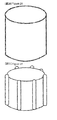
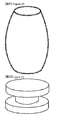
- 12 Generally barrel shape with opposite ends of c3 cylindrical body having small diameters Figure 22 Fabricated using a casting mold having ain inner surface of the shape in the left. column Irregular section is provided to a ball.
- 13 Structure with upper and lower disks connected by a shaft having a small diameter 14
- Generally conical shape A truncated conical shape in Figure 25 to 27 Figure 23 Figures 24 , 25 , 26 and 27 Same as the above Corners of the disks apply an impact to an electronic component on a board. Irregular motion is provided to other balls.
- a vertex of a cone and a corner or a bottom apply an impact to an electronic component on electronic component on a board, irregular motion is provided to a ball.
- the truncated conical shape reduces wear
- 15 Bullet shape with a partially spherical top and a cylindrical lower portion Figure 28 Same as the above Irregular motion is provided to a ball.
- 17 Mushroom shape Figure 30 Same as the above Irregular motion is provided to a ball.
- Fabrication method 1 Fabricated using a casting mold having an inner surface of the shape in the left column
- Fabrication method 2 Circular bar materials having different diameters are cut and joined by welding. Irregular motion, is provided to a ball.
- Figure 32 Fabricated using a casting mold having an inner surface of the shape in the left column Irregular motion is provided to a ball.
- Figure 33 Fabricate using a casting mold having an inner surface of the shape in the left column Irregular motion is provided to a ball.
- Buckled cylindrical shape Figure 34 Fabricated by cutting, axially pressurizing and compressing a circular bar material Irregular, motion is provided to a ball.
- Structure with disks stacked so as to have gradually decreasing diameters Figure 35 Fabricated using a casting mold having an inner surface of the shape in the left column Irregular motion is provided to a ball.
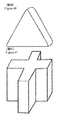
- Prism shape Figures 36 , 38 and 39 A prism bar steel material having each sectional shape is cut. Corners apply an impact to an electronic component on a board. Irregular motion is provided to other balls. [Table 6] No.
- Truncated polyhedron Figure 41 Truncated octahedron Figure 42 : Truncated hexahedron Figure 41, 42 and 44 Fabricated using a casting mold having an inner surface of the shape in the left column Corners apply an impact to an electronic component on a board. Irregular motion is provided to a ball.
- Cross shape Figures 45 and 47 fabrication method 1 Fabricated by tutting a steel bar having a cross-shaped section
- Fabrication method 2 Fabricated using a casting mold having an inner surface of the shape in the left column Corners apply an impact to an electronic component on a board. Irregular motion is provided to a ball.
- Fabrication method 1 Fabricated by cutting a triangular steel bar
- Fabrication method 2 Fabricated using a casting mold having an inner surface of the shape in the left column Corners apply an impact to an electronic component an a board. Irregular motion is provided to a ball.
- Y shape Figures 48 Fabrication method 1: Fabricated by cutting a steel bar having a y-shaped section
- Fabrication method 2 Fabricated using a casting mold having an inner surface of the shape in the left: column Corners apply an impact to an electronic component on a board. Irregular motion is provided to a ball.
- Fabrication method 1 Fabricated by cutting a steel bar having a V-shaped section Fabrication method 2; Fabricated, using a casting mold having an inner surface of the shape in the left Column Corners apply an impact to an electronic component on a board. Irregular motion is provided to a ball.
- Fabrication method 1 Fabricated, by cutting a steel bar having a corrugated section Fabrication method 2: Fabricated using a casting mold having an inner surface of the shape in the left column Corners apply an impact to an electronic component on a board. Irregular motion is provided to a ball.
- Comma shape Figures 51 Fabricated using a cashing mold having an inner surface of the shape in the left column Irregular motion is provided to a ball.
- Gourd shape Figures 52 Same as the above Rounded corners apply an impact to an electronic component on a board. Irregular motion is provided to a ball.
- Green bean shape Figures 53 Fabrication method 1: Fabricated using a casting mold having an inner surface of the shape in the left column Fabrication method 2: Fabricated by stretching and irregularly cutting a heated material Irregular motion is provided to a ball.
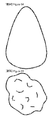
- 33 Egg shape Figure 54 Fabricated using a Casting mold having an inner surface of the shape in the loft column Irregular motion is provided to a ball.
Landscapes
- Engineering & Computer Science (AREA)
- Environmental & Geological Engineering (AREA)
- Food Science & Technology (AREA)
- Processing Of Solid Wastes (AREA)
- Crushing And Grinding (AREA)
- Manufacture And Refinement Of Metals (AREA)
Abstract
Description
- The present invention relates to a crushed object that is obtained by crushing waste including an electronic device using a mill, and more particularly to a technique of increasing recovery efficiency of a rare element contained in the electronic device.
- Conventionally, almost all waste of automobiles, mobile phones, automatic dispensers, Japanese pinball machines, personal computers, TV sets, video game machines, and other devices having automatic functions include electronic devices. The electronic devices contain rare elements such as noble metal like gold, silver or platinum, or rare-earth elements.
- Since the rare elements are rare and collected only in a limited amount from natural mines, an attempt has been made to use the waste as urban mines for recovering rare elements and recover and recycle rare elements such as noble metal like gold, silver or platinum, or rare-earth elements (
Patent Literatures 1 and 4). - From a TMR index (an index indicating a concentration of a contained element shown in Table 3) indicating a concentration of a contained rare element, urban mines provide rare elements with a higher concentration than natural mines. Thus, it seems to be much more efficient to obtain rare elements from urban mines than natural mines.
- In increasing resource risks, significance of using "urban mine" accumulation potential in Japan has been increasingly recognized. However, although there is a possibility of "urban mines", we have not found "veins" thereof, and many used products are still scattered as scattered stocks that are not recycled and cannot be recovered.
- Efforts for rare metal recycling from products have been enhanced at national, government, and corporate levels and further an individual level, but a connected chain state as resource recycling has not yet been formed.
- One reason for the difficulty is that rare metal recycling from products generate a much larger amount of waste to be treated than an amount of rare metal obtained by the recycling. In order to establish a business model such that economies that form a recycling chain divide gains obtained by recovery of rare metal while bearing treatment cost of the waste, a recycling chain needs to be formed by a connection of considerably inexpensive processes.
- For example, for price of bullion of rare metal contained in a used electronic device board, gains by rare metal recovery for one board are much lower than those generally expected, and it is apparent that minimizing process cost is significant.
- In current recycling system development, many pinpoint selection and extraction techniques of preferentially removing valuables have been developed rather than considering a reduction in the entire process cost. Although the development of this technique is significant, it is actually difficult to surpass an option of "manual selection by cheap labor" in selection and extraction.
-
Patent Document 1 Japanese Patent No.3878996 -
Patent Document 2 Japanese Patent Application No.2003- 412660 - Patent Document 3 Japanese Patent Laid-Open No.
2004- 216287 -
Patent Document 4 Japanese Patent Laid-Open No.2000- 294919 - The inventor, Harada had an idea that in order to surpass the "manual selection by cheap labor", there is no choice other than that dismantling-oriented design that finally allows dismantling of a machine is made by product design and the design is managed as a recycling chain like a supply chain, and conceived that in current used product recycling in Japan where the design is incomplete, it is necessary to prepare a mixed-material processing process instead of a selection and extraction process.
- The mixed-material treatment process is based on processing of natural ores. Natural ores contain target elements and many other elements as byproducts. Current smelting technology is superior in separating and removing the elements, and particularly Japan has cutting-edge technology in the world. Thus, the inventor decided to develop a technique for a low-cost process that allows production of materials containing a large amount of rare metal, so-called "urban ores" that can be easily smelted.
- Specifically, with the following objects of development:
- 1) use of human cognitive ability and separation ability is minimized;
- 2) processing from a recovered state is easy;
- 3) operating cost is low and environmental cost is low to allow urban location; and
- 4) processing of a product in a subsequent stage is easy,
- In view of such circumstances, the present invention has an object to substantially eliminate the need for or significantly reduce disassembling and selecting operations of an electronic device into components.
- The
invention 1 provides a crushed object of an electronic device that is obtained by crushing waste including an electronic device using a mill, including: crushed particles having a particle size less than a predetermined size; and crushed pieces having a size equal to or more than the predetermined size, wherein a TMR index of the crushed particle is twice or more a TMR index of the waste. - The
invention 2 provides the crushed object of an electronic device in theinvention 1, wherein among the crushed pieces, 90% or more of all the crushed pieces have a size twice or more the predetermined size. - The invention 3 provides the crushed object of an electronic device in the
invention 2, wherein among the crushed pieces, 70% or more of all the crushed pieces have a size for times or more the predetermined size. - The
invention 4 provides the crushed object of an electronic device in any one of theinventions 1 to 3, wherein the predetermined size is 1 mm. - The
invention 5 provides a selected and recovered object that is obtained by selecting, according to sizes, a crushed object obtained by crushing an electronic device using a mill, wherein the selected and recovered object is obtained by selecting and recovering crushed particles having a size equal to or less than a predetermined size from a crushed object of an electronic device according to any one of theinventions 1 to 4. - According to the present invention, even if waste including an electronic device is crushed without being disassembled into components, crushed particles having a higher TMR index can be easily obtained as compared to a manual disassembling operation.
- Thus, a recovery operation of urban mines can be performed without requiring a disassembling operation of waste that has been conventionally required, thereby significantly increasing operational efficiency.
- In particular, as in the
inventions - It is not clear why the crushed object is generated, but this seems to be related to the fact that most of the rare elements contained in the electronic device are contained in a crystallized inorganic material, and other portions are made of an organic material such as plastic.
- Since the inorganic material is generally hard and easily crushed as compared to the organic material, and further, the crystallized inorganic material is more easily crushed, it is supposed that the inorganic material is more quickly crushed and fined than the organic material by crushing using a mill.
- The present invention allows "urban ores" to be produced by a simple method of a ball mill method, and shows that there is still enough room for development of an inexpensive process technique for producing "urban ores".
- Only for the method of the present invention, a simple crushing process for crushing waste to a size that can be fed may be provided in a previous stage, and the process can be conveniently introduced. Also, the crushed particles can be increased in concentration or separated by floatation or winnowing, and be directly wet-dissolved in a post process, and thus rare metal other than copper-based rare metal can be separated and recovered by a byproduct.
- Further, this process by itself does not require heat, water or a solvent, thereby significantly reducing cost for consideration for surrounding environment, and allowing location near urban areas from which used products are often generated.
- Also, in terms of a feature of a ball mill, a scale of an apparatus may be set in accordance with a scale of recovery, thereby allowing distributed processing in various areas. Further, for products, powder crushed particles and plate-like objects are both increased in bulk density, thereby providing an advantage in transportation or subsequent processing. The present invention has such merits, and is advantageous for the development of "urban miners" of used products, and is useful for producing a small distributed type system.
- Although general metal concentration criteria of "urban ore urban concentrates" have not been determined, chemical analysis values of contained metal components and TMR coefficients indicating a degree of rareness of each metal can be used for numerical indication.
- Table 2 shows an example thereof, and it is apparent from an analysis value of particular metal, for example, gold (Au) that a gold content in an electronic mounting board of a mobile phone before processing is 6.8 mg in 21g and 0.33%, while a gold content in a crushed object by the present invention is 1.4% and a degree of concentration increases several times. On the other hand, metal in electronic device waste is not limited to particular metal, and sometimes include tantalum, cobalt, or platinum group metal. In such a case, it is insufficient to evaluate a degree of concentration from a content of particular metal such as gold.
- A TMR (Total Material Requirement) coefficient is also referred to as an ecological rucksack indicating an amount (kg) of natural resource required for obtaining metal of 1 kg, and reflects a degree of rareness of each metal. An amount of component of contained metal is weighted by the TMR coefficient to allow determination of a degree of concentration of metal with high degree of rareness without limited to particular metal.
- For an unprocessed mobile phone as waste, a TMR index is 122, while for crushed powder in an example, a TMR index is 1044, and it is apparent that a high degree of concentration of rare metal is obtained.
- As shown in Table 2, assuming virtual natural ore having an extraction lower limit concentration of natural ore, a TMR index of a component of the virtual natural ore weighted by the TMR coefficient is 69 per gram. If the TMR index exceeds 500 per gram, it is regarded that a concentration of "urban ores (urban concentrates)" is obtained exceeding natural ores with high quality.
- In the present invention, crushed particles concentrated twice the TMR index of waste is obtained to eliminate trouble in a crushing process that has been a conventional problem and use the crushing process for concentration of the waste, thereby allowing concentration of useful atoms by crushing to be performed in the crushing process.
- Further, the crushed particles are mainly obtained by crushing inorganic material components, while the crushed pieces are organic material components such as resin, thereby obtaining crushed objects with a large difference in size.
- The crushed particles and the crushed pieces may have sizes less and more than 1 mm, respectively, but because of differences in materials of waste, the numerical value may be adjusted within a range of 0.5 to 2 mm depending on shapes or the numbers of crushers used, a rotational speed or a crushing time in crushing, or the like.
- The crushed pieces have a different size from the crushed particles, and both can be easily selected.
- In particular, when 90% or more of the crushed pieces have a size twice or more a maximum size of the crushed particles, or 70% or more of the crushed pieces have a size four times or more thereof, almost 100% of recovery efficiency of crushed particles in the crushed object is obtained.
- As a mill used in the present invention, a conventionally known ball mill or gear mill is basically used to crush an electronic device. As the ball mill, besides a planetary mill and a rolling mill, a stirring mill, a vibration mill or the like similarly have a mechanism of crushing an object by mutual motions of crushers, and the same advantage is expected.
- Such mills are conventionally used for obtaining crushed pieces (particles) all having a predetermined size or less. In the present invention, processing is completed when crushed particles (hereinafter referred to as high-content particles) are obtained having a twofold concentration of rare elements contained in crushed waste (TMR index: Index of Total Materials Requirement (TMR). Total materials requirement of a material of 1 g).
- In carrying out the present invention, using crushers having different sizes is effective for changing sizes of crushed objects containing useful atoms and others.
- In an example below, three types of crushers are used, but four or five types of crushers may be used.
- Also, shapes of the crushers are not limited to a spherical shape, but it is effective to change shapes of crushers used such as partially use deformed or rectangular crushers.
- A method of calculating an optimum crushing time is illustrated by an attempt.
- An object to be crushed is not limited to a portable phone, an electronic medium such as a USB memory or an SD card, or a small electronic device such as a liquid crystal camera or a portable audio device, but a home TV set, a DVD recorder, a personal computer, and related devices thereof may be processed by being coarsely crushed to a size that can be inserted into a mill.
- Since both crushing and peeling of a joined portion occur besides powdering, a separation effect from a secured portion of different types of materials is expected for devices with a low content of rare metal such as an AC adaptor or a drier, thereby further simplifying a dismantling operation.
- In the ball mill, the crusher and a ball mill pot may be made of metals such as stainless, high-chrome steel, other iron alloys or carbide alloy, also ceramics such as alumina or zirconia, combinations thereof, and further, compound particles having a high crushing property such as silicon carbide may be used in a small diameter crusher.
- A shown deformed crusher having a corner can be used as a crusher to efficiently obtain high-content particles, and quickly produce the crushed object of the present invention.
- Besides the shape shown in
Figure 1 , the deformed crusher may have various shapes such as an echinulate shape or an angular shape that can apply an irregular impact unlike a spherical shape. One or both of large and small spherical crushers may be deformed crushers. - The following mills are used in the examples below.
-
- Manufacturer: FRITSCH
- Model number: 05.20.1
- Rated voltage: 110 V
- Maximum electric power: 0.55 KW (without load)
- Current in use: 4.3 A (5 turns), 6.1 A (7 turns)
- The number of turns: 0 to 360 turns
- Turning ratio: revolution (table) 1: rotation (pot) 2
-
- Manufacturer: TERAOKA
- Model number: 8KFD-203
- Rated voltage: 200 V
- Power consumption: 750 W
- Electric power in use: 0.88 A
- Turning frequency: 0 to 60 Hz
- This experiment was performed using a planetary mill (pot diameter of 100 mm) with a current of 6.1 A for confirmation as an example.
- For crushers (balls), 908 balls including large balls (18 mmφ) and small balls (4.7 mmφ) were used with a volume ratio of 1:2.
- As a sample, a real portable phone was cut to about 10 mm2 pieces so as to be insertable into a pot and crushed.
- A processing time was five hours maximum, and the ball mill was opened midstream for observation and measurement.
- Weights for sizes of obtained samples are as shown in Table 1. Selection of size was performed by dry shaking sieving.
[Table 1] Crushing time 0h 1h 2h 5h Size (mm) g wt% g wt% g wt% Less than 0.25 0.021 0.04% 0.005 0,01% 0.011 0.02% 0.25 to less than 0.5 0.376 0.73% 0.325 0.64% 0.906 1.77% 0.5 to less than 1.0 5.128 10.01% 8.792 17.23% 13.845 27.03% Less than 1.0 total 10.79% 17.88% 28.82% 1.0 to less than 2.0 2.547 4.97% 3.349 6.56% 3.641 7.11% 2.0 or more total 84.24% 75.56% 64.07% 2.0 to less than 4.0 5.021 9.81% 5.172 10.14% 7.152 13.96% 4.0 or more 38.114 74.43% 33.378 65.42% 25.666 50.11% Total 51.225 51.207 100.00% 51.021 100.00% 51.221 100.00% - For the processed mobile phone, as shown in
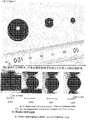
Figure 2 , a structure material portion and a board material of aluminum or plastic remain substantially in unchanged shape, chips or the like mounted to a surface of the board material are disengaged from the board material and further crushed into particles less than 1 mm. - In the residues of the mounting board and the structure material portion, as shown in
Figure 3 , electronic components such as chips on the board are separated and plating is also disengaged. On the other hand, the board or aluminum or plastic having a structure material property somewhat wear but basically remain in unchanged shapes. Thus, it is effective for separating a structure material such as aluminum, plastic, or a board material and functional rare metal such as golds silver, palladium, or tantalum contained in the chips or plating from an electronic device such as a portable phone. - In an intermediate process (2h), chips crushed before disengagement were confirmed as in the lower left in
Figure 3 , and it is confirmed that preferential crushing of chips or the like may be used, besides in a joined portion, -
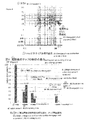
Figure 4 shows time changes of particle size distribution of 4 mm or less. As the processing progresses, powder becomes finer, and disengaged chips are crushed and about 30% of the total chips have a size of 1 mm or less. The chips are not only disengaged and crushed but also powdered by an effect of the ball mill. This facilitates extraction of rare metal in powder in a post processing process. - Table 2 shows a TMR index relating to particles (high-content particles) of 1 mm or less in two-hour crushing in Table 1, TMR coefficients relating to a portable phone A (portable A) fed in the crushing experiment shown in Table 1 and a portable phone B (portable B) and natural ores, and contents and TMR indexes of rare elements.
- Table 3 shows a list of TMR coefficients.
[Table 2] TMR One lower limit Portable phone A Portable phone B High-content particle Content TMR index Content TMR index Content TMR index Content TMR index Element TMR coefficient 89 462 176 1102 Mg 70 0 0 337×10-4 2359×10-3 16×10-3 11×10-1 Al 48 15×10-2 72×10-1 9×10⁻² 432×10-2 34×10-4 1632×10-4 38×10-3 18×10-1 Si 34 0 0 0 127×10-3 42×10-1 p 220 0 0 0 8×10⁻³ 2×10-0 Ca 90 0 0 0 13×10-3 12×10-1 Ti 36 2×10⁻² 7207×10-4 2×10⁻³ 7207×10-3 0 2×10⁻² 7×10⁻¹ V 1,500 0 0 0 24×10-5 4×10⁻³ Cr 26 2×10⁻¹ 52×10-1 9×10⁻³ 234×10-3 62×104 1612×10-4 2×10⁻² 5×10⁻³ Mn 14 3×10⁻¹ 4163×10-3 0 4×10⁻⁴ 5551×10-6 8×10⁻⁴ 1×10⁻² Fe 8 25×10-2 2045×10-3 8×10⁻² 6544×10-4 666×100-4 5447×10-4 106×10-3 85×10-2 Co 600 0 0 0 9×10⁻⁴ 55×10-2 Ni 260 1×10⁻² 26×10-1 1×10⁻² 26×10-1 74×10-4 1924×10-3 33×10-3 85×10-1 Cu 360 4×10⁻³ 1438×10-3 19×10-2 6835×10-2 1178×10-4 4237×10-2 67×10-3 241×10-1 Zn 36 3×10⁻² 1079×10-3 7×10⁻³ 2519×10-4 4×10⁻⁴ 1439×10-5 27×10-4 1×10⁻⁴ Ga 14,000 0 0 4×10⁻⁴ 56×10-1 58×10-6 8×10⁻¹ As 29 0 0 0 92×10-4 26×10-2 Br 1,500 0 0 0 48×10-4 72×10-1 Sr 500 0 0 0 67×10-4 38×10-1 Y 2,700 0 0 0 38×10-5 89×10-2 Zr 550 0 0 0 9×10⁻⁴ 5×10⁻⁴ Nb 640 0 0 0 4×10⁻⁵ 25×10-3 Mo 750 1×10⁻³ 75×10-2 0 0 25×10-5 19×10-2 Pd 810,000 0 0 423×10-7 3426×10-2 16×10-6 133×10-1 Ag 4,800 1×10⁻⁴ 48×10-2 2×10⁻³ 96×10-1 114×10-6 5472×10-4 14×10-4 68×10-1 Sn 2,500 2×10⁻³ 5 1×10⁻² 25×10-0 0 48×10-4 12×10-0 [Table 3] Element TMR coefficient Element TMR coefficient Element TMR coefficient Element TMR coefficient Li 1,500 Co 600 In 4,500 Yb 34.000 Be 2,500 Ni 260 Sn 2,500 Lu 220,000 B 140 Cu 360 Sb 42 Hf 10,000 F2 210 Zn 36 Te 270,000 Ta 6,800 Na 50 Ga 14,000 12 45,000 W 190 Mg 70 Ge 120,000 Cs 11 Re 20,000 A1 48 As 29 Ba 510 Os 540,000 Si 34 Se 70 La 3,500 lr 400,000 P2 220 Br2 1,500 Ce 1,700 Pt 520,000 S 520 Rb 130 Pr 12,000 Au 1,100,000 C12 52 Sr 500 Nd 3,000 Hg 2,000 K 54 Y 2,700 Sm 14,000 TI 450 Ca 90 Zr 550 Eu 54,000 Pb 28 Sc 2,000 Mo 750 Gd 15,000 Bi 180 Ti 36 Ru 80.000 Tb 100,000 Ra 280,000,000 V 1.500 Rh 2,300,000 Dy 19,000 Th 9,000 Cr 26 Pd 810,000 Ho 80,000 U 22,000 Mn 14 Ag 4,800 Er 30,000 Fe 8 Cd 7 Tm 240,000 - Details of TMR will be apparent from the reference below.
- Estimated total materials requirement of metal: HARADA Kohmei, IJIMA Kiyoshi, KATAGIRI Nozomu, and OKURA Takahiko: Journal of Japan Institute of Metals, vol. 65, No. 7 (2001), 564-570 Element strategy outlook "Material and fully alternative strategy": National Institute for Materials Science
- Only a board to which chips are mounted was processed and changes in an intermediate process were checked to confirm states of disengagement and crushing of the chips.
- A simple object including only one IC chip mounted to a board and only a board material and only an aluminum plate were fed into a rolling mill to confirm that the chips can be disengaged and crushed without the board being crushed.
-
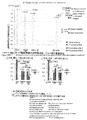
Figure 5 shows the results thereof, and the chips are disengaged in one-hour processing and recognized as solids separated from the board. As time further passes, the chips are crushed and reduced in weight and finally fully powdered although there is a slight change in weight by wear of the board portion. - As shown in
Figure 6 , a board material to which no chips are mounted and an aluminum plate were processed under the same condition. However, there was a slight change in weight, and the board material and the aluminum plate were not crushed in the processing and merely reduced in weight by wear, and it was confirmed that most of the board material and the aluminum plate can remain as solids. - Simultaneously with the processing described above (
Figure 5 ), only a board material to which no chips were mounted and only an aluminum plate were fed to check changes in weight. Damage and powdering rates thereof were low, and mixing of powder into the board material and the structure material could be minimized. - Using a non-spherical deformed crusher can apply an irregular impact to an object in collision of a ball. Thus, chips mounted in a joined state to a board can be also broken from other than a joined portion to facilitate disengagement from the board. As an example thereof, a chip-mounted board was processed using a combination of large spherical crushers, deformed crushers (having the shape shown in the middle in
Figure 1 ) , and small spherical crushers (ratio of the number of crushers: 1:12:25, the number of crushers used: 302), and a combination of all spherical crushers of three types including large spherical crushers, small spherical crushers, and middle spherical crushers (diameter: 12 mmΦ) (ratio of the number of crushers: 1:5.4:25, the number of crushers used: 251) instead of the deformed crushers at electric power of 670 W, and disengagement states of the chips were compared. -
Figure 7 shows the results thereof, and the chips are crushed by the combination of the large, deformed, and small crushers and disengaged from the board and effectively powdered. The chips are effectively crushed and disengaged. Thus, it is apparent that the chips are powdered after disengagement and can be easily separated from the remaining board material. - Even if a USB memory is processed by a rolling ball mill, the USB memory is disassembled in the mill and chips and plating are disengaged from a board and powdered.
- In a rolling ball mill (electric power: 176 W, the number of balls used: 216) that can process a larger number of electronic components than a planetary ball mill, does not require high speed rotation and can minimise input of electric power, it was confirmed that electronic components such as chips mounted to a board were separated and powdered using the combination of the large, middle, and deformed crushers shown in Example 3. A USB memory device was used as a sample, and fed in a state in using (right in
Figure 8). Figure 8 shows a state after 12-hour processing, and a rigid USB memory device was dismantled and a mounting board portion is exposed. From a mounting board, electronic components such as chips were disengaged and powdered. This shows that the technique is also effective for the rolling mill. - For the deformed crusher, the one shown in
Figure 1 and also those shown in Tables 4 to 6 can be used.[Table 4] No. Feature of deformed crusher Figure Fabrication method of crusher described in left Column Function in crushing by use 1 Structure with fine abrasive powder on an entire surface of a sphere Figure 9 Fabrication method 1: Abrasive powder is placed in a spherical metal mold, compression molded, and then sintered, Fabrication method 2: Abrasive power and an adhesive are mixed and placed in a spherical Mold, solidified and molded. (The metal mold is a split mold) An electronic component on a surface of a board is worn and powdered. 2 Structure with many cylindrical projections on a surface of a sphere, the projection having a smaller diameter than the sphere Figure 10 A casting mold having an inner surface of the shape in the left column is used for casting The cylindrical projections on the surface provide irregular motion of a ball to promote motion of other balls. An impact is applied to a board electronic component to promote a breaking effect. 3 Structure with semicircular projections wrapping a surface of a sphere Figure 11 Same as the above The projections on the surface provide irregular motion of a ball to promote motion of other balls. An impact is applied to a board electronic component to promote a breaking affect. 4 Structure with two spheres integrated on one side Figure 12 Same as the above As compared with a single ball, the crusher has more points in contact with a board to increase the number of impacts applied to an electronic component, Change in curvature on the surface provides irregular motion of a ball to promote motion of other balls. 5 Structure with many strip steps formed in a surface of a sphere Figure 13 Saute is the above The steps provide irregular motion of other balls. Corners of a ball apply an impact to an electronic component on a surface of a board. 6 Structure with a plurality of ribs formed on surface of a sphere so as to surround the surface Figure 14 Same as the above The ribs on the surface provide irregular motion of a ball 7 With many conical projections on a surface of a sphere Figure 15 Same as the above The projections provide irregular motion of a ball, and apply an impact to an electronic component on a board. 8 Semispherical shape Figure 16 Fabrication method 1: Fabricated using a casting mold having an inner surface of the shape in the left column Fabrication methode 2: A sphere is cut into two pieces Irregular motion is provided to a ball. 9 Structure with one or more belt-like protrusions on a surface of a sphere so as to surround the surface Figures 17, 18 and 19 Fabricated using a casting mold having an inner- surface of the shape in the left column irregular motion is provided to a ball. Corners of the belt-like protrusion (s) cut an electronic component on a board [Table 5] No. Feature of deformed crusher Figure Fabrication method of crusher described in left column Function in crushing buy use 11 wich ribs having parallel central lines on an arcuate surface of a cylindrical body Figure 21 Fabrication method 1: Fabricated by cutting a circular bar iron and steel material to a desired length Fabrication method 2: Fabricated using a casting mold having an inner surface of the shape in the left column Irregular motion is provided to a ball. The ribs on the surface apply an impact to an electronic component on a board. 12 Generally barrel shape with opposite ends of c3 cylindrical body having small diameters Figure 22 Fabricated using a casting mold having ain inner surface of the shape in the left. column Irregular section is provided to a ball. 13 Structure with upper and lower disks connected by a shaft having a small diameter 14 Generally conical shape A truncated conical shape in Figure 25 to 27 Figure 23 Figures 24 ,25 ,26 and 27 Same as the above Corners of the disks apply an impact to an electronic component on a board. Irregular motion is provided to other balls. A vertex of a cone and a corner or a bottom apply an impact to an electronic component on electronic component on a board, irregular motion is provided to a ball. The truncated conical shape reduces wear, 15 Bullet shape with a partially spherical top and a cylindrical lower portion Figure 28 Same as the above Irregular motion is provided to a ball. 16 Shape with a sphere and a cylinder having a smaller diameter than the sphere, the cylinder being connected to one side of the sphere Figure 29 Same as the above Irregular motion is provider to a ball. 17 Mushroom shape Figure 30 Same as the above Irregular motion is provided to a ball. 18 To one end of a cylinder, a cylinder having a smaller diameter than that is concentrically joined. Figure 31 Fabrication method 1: Fabricated using a casting mold having an inner surface of the shape in the left column Fabrication method 2: Circular bar materials having different diameters are cut and joined by welding. Irregular motion, is provided to a ball. 19 Cymbal shape with disks stacked with raised centers directed upward and downward Figure 32 Fabricated using a casting mold having an inner surface of the shape in the left column Irregular motion is provided to a ball. 20 Football shape Figure 33 Fabricate using a casting mold having an inner surface of the shape in the left column Irregular motion is provided to a ball. 21 Buckled cylindrical shape Figure 34 Fabricated by cutting, axially pressurizing and compressing a circular bar material Irregular, motion is provided to a ball. 22 Structure with disks stacked so as to have gradually decreasing diameters Figure 35 Fabricated using a casting mold having an inner surface of the shape in the left column Irregular motion is provided to a ball. 23 Prism shape Figures 36 ,38 and 39 A prism bar steel material having each sectional shape is cut. Corners apply an impact to an electronic component on a board. Irregular motion is provided to other balls. [Table 6] No. Feature of deformed crusher Figure Fabrication method of crusher described in left column Function in crushing by use 25 Truncated polyhedron
Figure 41 : Truncated octahedron
Figure 42 : Truncated hexahedronFigure 41, 42 and44 Fabricated using a casting mold having an inner surface of the shape in the left column Corners apply an impact to an electronic component on a board. Irregular motion is provided to a ball. 26 Cross shape Figures 45 and47 fabrication method 1: Fabricated by tutting a steel bar having a cross-shaped section Fabrication method 2: Fabricated using a casting mold having an inner surface of the shape in the left column Corners apply an impact to an electronic component on a board. Irregular motion is provided to a ball. 2'7 Rounded triangular shape Figures 46 Fabrication method 1: Fabricated by cutting a triangular steel bar Fabrication method 2: Fabricated using a casting mold having an inner surface of the shape in the left column Corners apply an impact to an electronic component an a board. Irregular motion is provided to a ball. 28 Y shape Figures 48 Fabrication method 1: Fabricated by cutting a steel bar having a y-shaped section Fabrication method 2: Fabricated using a casting mold having an inner surface of the shape in the left: column Corners apply an impact to an electronic component on a board. Irregular motion is provided to a ball. 29 V shape Figures 49 Fabrication method 1: Fabricated by cutting a steel bar having a V-shaped section Fabrication method 2; Fabricated, using a casting mold having an inner surface of the shape in the left ColumnCorners apply an impact to an electronic component on a board. Irregular motion is provided to a ball. 30 Corrugated shape Figures 50 Fabrication method 1: Fabricated, by cutting a steel bar having a corrugated section Fabrication method 2: Fabricated using a casting mold having an inner surface of the shape in the left column Corners apply an impact to an electronic component on a board. Irregular motion is provided to a ball. 31 Comma shape Figures 51 Fabricated using a cashing mold having an inner surface of the shape in the left column Irregular motion is provided to a ball. 32 Gourd shape Figures 52 Same as the above Rounded corners apply an impact to an electronic component on a board. Irregular motion is provided to a ball. 33 Green bean shape Figures 53 Fabrication method 1: Fabricated using a casting mold having an inner surface of the shape in the left column Fabrication method 2: Fabricated by stretching and irregularly cutting a heated material Irregular motion is provided to a ball. 34 Egg shape Figure 54 Fabricated using a Casting mold having an inner surface of the shape in the loft column Irregular motion is provided to a ball. 35 Block shape with uneven surface Figures 55 Same as the above An uneven surface applies an impact to an electronic component on a board. Irregular motion is provided to a ball. 36 Doughnut shape figures 56 Fabrication method 1: Fabricated using a casting mold having an inner surface of the shape in the left column Irregular motion is provided to a ball, -
-
Figure 1 is a photograph showing a combination example of balls (crushers) in Example 1; -
Figure 2 is a photograph showing a result of processing, crushing and sizing a mobile phone in Example 1; -
Figure 3 is a photograph showing residuals of a board portion and a structure portion in an intermediate process in Example 1; -
Figure 4 is a graph showing a progress of crushing of disengaged chips in Example 1; -
Figure 5 is a graph showing weight changes of residual solid in a chip disengagement experiment (chip mounting board) in Example 2; -
Figure 6 is a graph showing weight changes of a reference board material and an aluminum plate in a chip disengagement experiment in Example 3; -
Figure 7 is a graph showing an effect of a deformed crusher in Example 3; -
Figure 8 is a photograph showing a result of an USB memory processing experiment by a rolling ball mill in Example 4; -
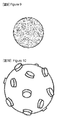
Figure 9 is a front, view showing 1 in Example 5; -
Figure 10 is a front view showing 2 in Example 5; -
Figure 11 is a front view showing 3 in Example 5; -
Figure 12 is a perspective view showing 4 in Example 5; -
Figure 13 is a front view showing 5 in Example 5; -
Figure 14 is a perspective view showing 6 in Example 5; -
Figure 15 is a front view showing 7 in Example 5; -
Figure 16 is a perspective view showing 8 in Example 5; -
Figure 17 is a front view showing 8 in Example 5; -
Figure 18 is a front view showing 8 in Example 5; -
Figure 19 is a front view showing 9 in Example 5; -
Figure 20 is a perspective view showing 10 in Example 5; -
Figure 21 is a perspective view showing 11 in Example 5; -
Figure 22 is a perspective view showing 12 in Example 5; -
Figure 23 is a perspective view showing 13 in Example 5; -
Figure 24 is a perspective view showing 13 in Example 5; -
Figure 25 is a perspective view showing 13 in Example 5; -
Figure 26 is a perspective view showing 13 in Example 5; -
Figure 27 is a perspective view showing 14 in Example 5; -
Figure 28 is a perspective view showing 15 in Example 5; -
Figure 29 is a perspective view showing 16 in Example 5; -
Figure 30 is a perspective view showing 17 in Example 5; -
Figure 31 is a front view showing 18 in Example 5; -
Figure 32 is a perspective view showing 19 in Example 5; -
Figure 33 is a perspective view showing 20 in Example 5; -
Figure 34 is a perspective view showing 21 in Example 5; -
Figure 35 is a perspective view showing 22 in Example 5; -
Figure 36 is a perspective view showing 22 in Example 5; -
Figure 37 is a perspective view showing 23 in Example 5; -
Figure 38 is a perspective view showing 22 in Example 5; -
Figure 39 is a perspective view showing 23 in Example 5; -
Figure 40 is a perspective view showing 23 in Example 5; -
Figure 41 is a perspective view showing 24 in Example 5; -
Figure 42 is a perspective view showing 24 in Example 5; -
Figure 43 is a perspective view showing 24 in Example 5; -
Figure 44 is a perspective view showing 25 in Example 5; -
Figure 45 is a perspective view showing 25 in Example 5; -
Figure 46 is a perspective view showing 27 in Example 5; -
Figure 47 is a perspective view showing 26 in Example 5; -
Figure 48 is a perspective view showing 28 in Example 5; -
Figure 49 is a perspective view showing 29 in Example 5; -
Figure 50 is a front view showing 30 in Example 5; -
Figure 51 is a front view showing 31 in Example 5; -
Figure 52 is a front view showing 32 in Example 5; -
Figure 53 is a front view showing 33 in Example 5; -
Figure 54 is a front view showing 34 in Example 5; -
Figure 55 is a front view showing 35 in Example 5; -
Figure 56 is a front view showing 36 in Example 5; and -
Figure 57 is a perspective view showing 37 in Example 5.
Claims (5)
- A crushed object of an electronic device that is obtained by crushing waste including an electronic device using a mill, including:crushed particles having a particle size less than a predetermined size; andcrushed pieces having a size equal to or more than the predetermined size,wherein a TMR index of the crushed particle is twice or more a TOR index of the waste.
- The crushed object of an electronic device according to claim 1, wherein among the crushed pieces, 90% or more of all the crushed pieces have a size twice or more the predetermined size.
- The crushed object of an electronic device according to claim 2, wherein among the crushed pieces, 70% or more of all the crushed pieces have a size four times or more the predetermined size.
- The crushed object of an electronic device according to any one of claims 1 to 3, wherein the predetermined size is 1 mm.
- A selected and recovered object that is obtained by selecting, according to sizes, a crushed object obtained by crushing an electronic device using a mill,
wherein the selected and recovered object is obtained by selecting and recovering crushed particles having a size equal to or less than a predetermined size from a crushed object of an electronic device according to any one of claims 1 to 4.
Applications Claiming Priority (2)
| Application Number | Priority Date | Filing Date | Title |
|---|---|---|---|
| JP2008293284A JP2010119906A (en) | 2008-11-17 | 2008-11-17 | Crushed mass of electronic equipment |
| PCT/JP2009/069323 WO2010055906A1 (en) | 2008-11-17 | 2009-11-13 | Milled electronic appliance |
Publications (2)
| Publication Number | Publication Date |
|---|---|
| EP2359945A1 true EP2359945A1 (en) | 2011-08-24 |
| EP2359945A4 EP2359945A4 (en) | 2017-06-21 |
Family
ID=42170036
Family Applications (1)
| Application Number | Title | Priority Date | Filing Date |
|---|---|---|---|
| EP09826152.2A Withdrawn EP2359945A4 (en) | 2008-11-17 | 2009-11-13 | Milled electronic appliance |
Country Status (4)
| Country | Link |
|---|---|
| EP (1) | EP2359945A4 (en) |
| JP (1) | JP2010119906A (en) |
| CN (1) | CN102215988A (en) |
| WO (1) | WO2010055906A1 (en) |
Cited By (1)
| Publication number | Priority date | Publication date | Assignee | Title |
|---|---|---|---|---|
| EP4563227A1 (en) * | 2023-11-28 | 2025-06-04 | Freie Universität Berlin | Bead for use in a milling device |
Families Citing this family (4)
| Publication number | Priority date | Publication date | Assignee | Title |
|---|---|---|---|---|
| FR3025806B1 (en) * | 2014-09-15 | 2019-09-06 | Bigarren Bizi | PROCESS FOR PROCESSING AND EXTRACTING ELECTRONIC WASTE FOR RECOVERING COMPONENTS INCLUDED IN SUCH WASTE |
| CN108283972B (en) * | 2018-04-12 | 2020-01-17 | 福州及时雨云信息科技有限公司 | An electronic device recycling bin |
| CN109876919B (en) * | 2019-04-02 | 2020-08-04 | 中国科学院过程工程研究所 | Method for separating metal and nonmetal from electronic waste by utilizing low-temperature heat treatment shaping |
| CN115463717B (en) * | 2022-09-02 | 2023-08-04 | 马鞍山市恒达冶金材料有限公司 | High-strength high-toughness wear-resistant steel ball for mine |
Family Cites Families (10)
| Publication number | Priority date | Publication date | Assignee | Title |
|---|---|---|---|---|
| DE3923910A1 (en) * | 1989-06-19 | 1990-12-20 | Kamal Alavi | METHOD AND APPARATUS FOR RECYCLING DEVICE SCRAP |
| JP3378996B2 (en) | 1992-05-23 | 2003-02-17 | 株式会社トプコン | Waveform evaluation device using neural network |
| JPH06228667A (en) * | 1992-10-19 | 1994-08-16 | Nec Corp | Method for separating and recovering valuable materials from printed circuit boards |
| US5829694A (en) * | 1996-01-04 | 1998-11-03 | Resource Concepts, Inc. | Apparatus and systems that separate and isolate precious and semi-precious metals from electronic circuit boards |
| JP2000135450A (en) * | 1998-10-30 | 2000-05-16 | Mitsubishi Electric Corp | Crushing device, sorting device, crushing method and sorting method |
| JP2000294919A (en) * | 1999-04-06 | 2000-10-20 | Matsushita Electric Ind Co Ltd | Method of separating electronic components from waste printed circuit boards |
| JP2001046975A (en) * | 1999-08-17 | 2001-02-20 | Matsushita Electric Ind Co Ltd | Compound waste treatment method and treatment device |
| JP4355072B2 (en) * | 1999-12-22 | 2009-10-28 | Dowaホールディングス株式会社 | Separation and collection method and apparatus for communication equipment |
| JP4643059B2 (en) * | 2001-05-31 | 2011-03-02 | Jx日鉱日石金属株式会社 | Method of recovering metal from electronic / electric parts with resin |
| JP2004216287A (en) | 2003-01-15 | 2004-08-05 | Enseki Aojiru Kk | Ball mill |
-
2008
- 2008-11-17 JP JP2008293284A patent/JP2010119906A/en active Pending
-
2009
- 2009-11-13 EP EP09826152.2A patent/EP2359945A4/en not_active Withdrawn
- 2009-11-13 CN CN2009801458599A patent/CN102215988A/en active Pending
- 2009-11-13 WO PCT/JP2009/069323 patent/WO2010055906A1/en not_active Ceased
Non-Patent Citations (1)
| Title |
|---|
| See references of WO2010055906A1 * |
Cited By (1)
| Publication number | Priority date | Publication date | Assignee | Title |
|---|---|---|---|---|
| EP4563227A1 (en) * | 2023-11-28 | 2025-06-04 | Freie Universität Berlin | Bead for use in a milling device |
Also Published As
| Publication number | Publication date |
|---|---|
| WO2010055906A1 (en) | 2010-05-20 |
| EP2359945A4 (en) | 2017-06-21 |
| JP2010119906A (en) | 2010-06-03 |
| CN102215988A (en) | 2011-10-12 |
Similar Documents
| Publication | Publication Date | Title |
|---|---|---|
| Yoo et al. | Enrichment of the metallic components from waste printed circuit boards by a mechanical separation process using a stamp mill | |
| EP2359945A1 (en) | Milled electronic appliance | |
| US20130263699A1 (en) | Magnet Recycling | |
| Tanısalı et al. | Precious metals recovery from waste printed circuit boards by gravity separation and leaching | |
| JP5651462B2 (en) | Method of recovering valuable material from lithium ion secondary battery and recovered material containing valuable material | |
| WO2012072989A1 (en) | Magnet recycling | |
| SA517382119B1 (en) | System and Process for Dry Recovery of Iron Oxide Fines from Iron Bearing Compact and Semicompact Rocks | |
| JP6650806B2 (en) | Method of recovering valuable resources from lithium ion secondary batteries | |
| Havlik et al. | The effect of mechanical–physical pretreatment on hydrometallurgical extraction of copper and tin in residue from printed circuit boards from used consumer equipment | |
| KR101426518B1 (en) | Method for Recovering Precious Metals from Printed Circuit Boards Scrap of End-of-Life Mobile Phones | |
| CN101474675A (en) | Method for recycle of copper alloy from waste circuit board and cyclic reconstruction of powder metallurgical product as well as device system thereof | |
| JP3056476B1 (en) | Method for producing recycled W—Co raw material powder from cemented carbide scrap and method for producing tungsten-based sintered heavy alloy using the same | |
| CN103831435B (en) | The manufacturing method of magnet alloy powder and its magnet | |
| WO2006022212A1 (en) | Process for producing alloy containing dispersed oxide | |
| Liu et al. | Surface-grinding kinetics for the concentration of PGMs from spent automobile catalysts by attritor surface grinding | |
| JP2019153561A (en) | Method for processing lithium ion battery waste | |
| US11549155B2 (en) | Reduced iron production method and production apparatus | |
| JP7318539B2 (en) | Method for producing nickel chloride solution and method for producing nickel sulfide | |
| CN113293298B (en) | Method for recycling gold and silver in clay graphite crucible | |
| JP5570334B2 (en) | Tantalum recovery method | |
| JP2003106962A (en) | Analytical sample of recycled material and its preparation method | |
| JP3400280B2 (en) | Granulated slag processing method and granulated slag processing apparatus | |
| JP2744469B2 (en) | Powder manufacturing method by multi-stage grinding | |
| TWI753376B (en) | Disposal method of electronic and electrical machine parts scraps | |
| KR100939727B1 (en) | Manufacturing method of high melting point metal powder and manufacturing method of target material |
Legal Events
| Date | Code | Title | Description |
|---|---|---|---|
| PUAI | Public reference made under article 153(3) epc to a published international application that has entered the european phase |
Free format text: ORIGINAL CODE: 0009012 |
|
| 17P | Request for examination filed |
Effective date: 20110615 |
|
| AK | Designated contracting states |
Kind code of ref document: A1 Designated state(s): AT BE BG CH CY CZ DE DK EE ES FI FR GB GR HR HU IE IS IT LI LT LU LV MC MK MT NL NO PL PT RO SE SI SK SM TR |
|
| DAX | Request for extension of the european patent (deleted) | ||
| RA4 | Supplementary search report drawn up and despatched (corrected) |
Effective date: 20170522 |
|
| RIC1 | Information provided on ipc code assigned before grant |
Ipc: B02C 17/00 20060101ALI20170516BHEP Ipc: B09B 5/00 20060101ALI20170516BHEP Ipc: B09B 3/00 20060101ALI20170516BHEP Ipc: B03B 9/06 20060101AFI20170516BHEP Ipc: B02C 17/20 20060101ALI20170516BHEP |
|
| STAA | Information on the status of an ep patent application or granted ep patent |
Free format text: STATUS: THE APPLICATION IS DEEMED TO BE WITHDRAWN |
|
| 18D | Application deemed to be withdrawn |
Effective date: 20171220 |