EP2355163A1 - Solar cell sealing film and solar cell using same - Google Patents
Solar cell sealing film and solar cell using same Download PDFInfo
- Publication number
- EP2355163A1 EP2355163A1 EP09826087A EP09826087A EP2355163A1 EP 2355163 A1 EP2355163 A1 EP 2355163A1 EP 09826087 A EP09826087 A EP 09826087A EP 09826087 A EP09826087 A EP 09826087A EP 2355163 A1 EP2355163 A1 EP 2355163A1
- Authority
- EP
- European Patent Office
- Prior art keywords
- solar cell
- sealing film
- cell sealing
- silane
- vinyl acetate
- Prior art date
- Legal status (The legal status is an assumption and is not a legal conclusion. Google has not performed a legal analysis and makes no representation as to the accuracy of the status listed.)
- Granted
Links
Images
Classifications
-
- H—ELECTRICITY
- H10—SEMICONDUCTOR DEVICES; ELECTRIC SOLID-STATE DEVICES NOT OTHERWISE PROVIDED FOR
- H10F—INORGANIC SEMICONDUCTOR DEVICES SENSITIVE TO INFRARED RADIATION, LIGHT, ELECTROMAGNETIC RADIATION OF SHORTER WAVELENGTH OR CORPUSCULAR RADIATION
- H10F19/00—Integrated devices, or assemblies of multiple devices, comprising at least one photovoltaic cell covered by group H10F10/00, e.g. photovoltaic modules
- H10F19/80—Encapsulations or containers for integrated devices, or assemblies of multiple devices, having photovoltaic cells
- H10F19/804—Materials of encapsulations
-
- B—PERFORMING OPERATIONS; TRANSPORTING
- B32—LAYERED PRODUCTS
- B32B—LAYERED PRODUCTS, i.e. PRODUCTS BUILT-UP OF STRATA OF FLAT OR NON-FLAT, e.g. CELLULAR OR HONEYCOMB, FORM
- B32B17/00—Layered products essentially comprising sheet glass, or glass, slag, or like fibres
- B32B17/06—Layered products essentially comprising sheet glass, or glass, slag, or like fibres comprising glass as the main or only constituent of a layer, next to another layer of a specific material
- B32B17/10—Layered products essentially comprising sheet glass, or glass, slag, or like fibres comprising glass as the main or only constituent of a layer, next to another layer of a specific material of synthetic resin
- B32B17/10005—Layered products essentially comprising sheet glass, or glass, slag, or like fibres comprising glass as the main or only constituent of a layer, next to another layer of a specific material of synthetic resin laminated safety glass or glazing
- B32B17/1055—Layered products essentially comprising sheet glass, or glass, slag, or like fibres comprising glass as the main or only constituent of a layer, next to another layer of a specific material of synthetic resin laminated safety glass or glazing characterized by the resin layer, i.e. interlayer
- B32B17/10678—Layered products essentially comprising sheet glass, or glass, slag, or like fibres comprising glass as the main or only constituent of a layer, next to another layer of a specific material of synthetic resin laminated safety glass or glazing characterized by the resin layer, i.e. interlayer comprising UV absorbers or stabilizers, e.g. antioxidants
-
- B—PERFORMING OPERATIONS; TRANSPORTING
- B32—LAYERED PRODUCTS
- B32B—LAYERED PRODUCTS, i.e. PRODUCTS BUILT-UP OF STRATA OF FLAT OR NON-FLAT, e.g. CELLULAR OR HONEYCOMB, FORM
- B32B17/00—Layered products essentially comprising sheet glass, or glass, slag, or like fibres
- B32B17/06—Layered products essentially comprising sheet glass, or glass, slag, or like fibres comprising glass as the main or only constituent of a layer, next to another layer of a specific material
- B32B17/10—Layered products essentially comprising sheet glass, or glass, slag, or like fibres comprising glass as the main or only constituent of a layer, next to another layer of a specific material of synthetic resin
- B32B17/10005—Layered products essentially comprising sheet glass, or glass, slag, or like fibres comprising glass as the main or only constituent of a layer, next to another layer of a specific material of synthetic resin laminated safety glass or glazing
- B32B17/1055—Layered products essentially comprising sheet glass, or glass, slag, or like fibres comprising glass as the main or only constituent of a layer, next to another layer of a specific material of synthetic resin laminated safety glass or glazing characterized by the resin layer, i.e. interlayer
- B32B17/10788—Layered products essentially comprising sheet glass, or glass, slag, or like fibres comprising glass as the main or only constituent of a layer, next to another layer of a specific material of synthetic resin laminated safety glass or glazing characterized by the resin layer, i.e. interlayer containing ethylene vinylacetate
-
- C—CHEMISTRY; METALLURGY
- C08—ORGANIC MACROMOLECULAR COMPOUNDS; THEIR PREPARATION OR CHEMICAL WORKING-UP; COMPOSITIONS BASED THEREON
- C08K—Use of inorganic or non-macromolecular organic substances as compounding ingredients
- C08K5/00—Use of organic ingredients
- C08K5/49—Phosphorus-containing compounds
- C08K5/51—Phosphorus bound to oxygen
- C08K5/52—Phosphorus bound to oxygen only
- C08K5/524—Esters of phosphorous acids, e.g. of H3PO3
-
- C—CHEMISTRY; METALLURGY
- C08—ORGANIC MACROMOLECULAR COMPOUNDS; THEIR PREPARATION OR CHEMICAL WORKING-UP; COMPOSITIONS BASED THEREON
- C08L—COMPOSITIONS OF MACROMOLECULAR COMPOUNDS
- C08L23/00—Compositions of homopolymers or copolymers of unsaturated aliphatic hydrocarbons having only one carbon-to-carbon double bond; Compositions of derivatives of such polymers
- C08L23/02—Compositions of homopolymers or copolymers of unsaturated aliphatic hydrocarbons having only one carbon-to-carbon double bond; Compositions of derivatives of such polymers not modified by chemical after-treatment
- C08L23/04—Homopolymers or copolymers of ethene
- C08L23/08—Copolymers of ethene
- C08L23/0846—Copolymers of ethene with unsaturated hydrocarbons containing atoms other than carbon or hydrogen
- C08L23/0853—Ethylene vinyl acetate copolymers
-
- H—ELECTRICITY
- H10—SEMICONDUCTOR DEVICES; ELECTRIC SOLID-STATE DEVICES NOT OTHERWISE PROVIDED FOR
- H10F—INORGANIC SEMICONDUCTOR DEVICES SENSITIVE TO INFRARED RADIATION, LIGHT, ELECTROMAGNETIC RADIATION OF SHORTER WAVELENGTH OR CORPUSCULAR RADIATION
- H10F19/00—Integrated devices, or assemblies of multiple devices, comprising at least one photovoltaic cell covered by group H10F10/00, e.g. photovoltaic modules
- H10F19/80—Encapsulations or containers for integrated devices, or assemblies of multiple devices, having photovoltaic cells
-
- C—CHEMISTRY; METALLURGY
- C08—ORGANIC MACROMOLECULAR COMPOUNDS; THEIR PREPARATION OR CHEMICAL WORKING-UP; COMPOSITIONS BASED THEREON
- C08K—Use of inorganic or non-macromolecular organic substances as compounding ingredients
- C08K5/00—Use of organic ingredients
- C08K5/0008—Organic ingredients according to more than one of the "one dot" groups of C08K5/01 - C08K5/59
- C08K5/0025—Crosslinking or vulcanising agents; including accelerators
-
- C—CHEMISTRY; METALLURGY
- C08—ORGANIC MACROMOLECULAR COMPOUNDS; THEIR PREPARATION OR CHEMICAL WORKING-UP; COMPOSITIONS BASED THEREON
- C08K—Use of inorganic or non-macromolecular organic substances as compounding ingredients
- C08K5/00—Use of organic ingredients
- C08K5/04—Oxygen-containing compounds
- C08K5/14—Peroxides
-
- C—CHEMISTRY; METALLURGY
- C08—ORGANIC MACROMOLECULAR COMPOUNDS; THEIR PREPARATION OR CHEMICAL WORKING-UP; COMPOSITIONS BASED THEREON
- C08K—Use of inorganic or non-macromolecular organic substances as compounding ingredients
- C08K5/00—Use of organic ingredients
- C08K5/54—Silicon-containing compounds
- C08K5/541—Silicon-containing compounds containing oxygen
- C08K5/5415—Silicon-containing compounds containing oxygen containing at least one Si—O bond
- C08K5/5419—Silicon-containing compounds containing oxygen containing at least one Si—O bond containing at least one Si—C bond
-
- Y—GENERAL TAGGING OF NEW TECHNOLOGICAL DEVELOPMENTS; GENERAL TAGGING OF CROSS-SECTIONAL TECHNOLOGIES SPANNING OVER SEVERAL SECTIONS OF THE IPC; TECHNICAL SUBJECTS COVERED BY FORMER USPC CROSS-REFERENCE ART COLLECTIONS [XRACs] AND DIGESTS
- Y02—TECHNOLOGIES OR APPLICATIONS FOR MITIGATION OR ADAPTATION AGAINST CLIMATE CHANGE
- Y02E—REDUCTION OF GREENHOUSE GAS [GHG] EMISSIONS, RELATED TO ENERGY GENERATION, TRANSMISSION OR DISTRIBUTION
- Y02E10/00—Energy generation through renewable energy sources
- Y02E10/50—Photovoltaic [PV] energy
Definitions
- the present invention relates to a solar cell sealing film comprising chiefly ethylene-vinyl acetate copolymer, particularly a solar cell sealing film, which comprises organic peroxides and silane-coupling agents, and has superior productivity. Furthermore, it relates to a solar cell using the sealing film.
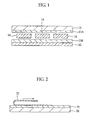
- a solar cell generally includes a transparent front side protection material 11 (e.g., glass plate), a front side sealing film 13A, plural photovoltaic elements 14 (e.g., photovoltaic elements made of silicon), a backside sealing film 13B and a backside protection material 12 (backside covering member).
- a transparent front side protection material 11 e.g., glass plate
- a front side sealing film 13A plural photovoltaic elements 14 (e.g., photovoltaic elements made of silicon), a backside sealing film 13B and a backside protection material 12 (backside covering member).
- the foregoing members are successively laminated in this order. Then, the laminated body is subjected to vacuum degassing, subsequently, heating under pressure for adhesively combining the laminated body by croslinking or curing a front side sealing film 13A and a backside sealing film 13B.
- a conventional solar cell has connected plural photovoltaic elements 14 for generating a large electrical output.
- EVA films made of ethylene-vinyl acetate (EVA) are used as sealing films in conventional solar cell because of low cost and high transparency. Furthermore, it is required that an EVA film used in sealing films is combined with members of a solar cell with keeping high adhesive strength, in order to ensure mechanical durability of the solar cell, and prevent internal electrical leads and electrodes from rust caused by humidity or permeated water.
- Patent Document 1 JP(TOKKAI) 2000-183382 A
- an object of the present invention to provide a solar cell sealing film comprising chiefly ethylene-vinyl acetate copolymer, organic peroxides for giving crosslinked structure, which suppresses occurrence of blister without reduction of crosslink rate, even if the film contains silane-coupling agents for improving adhesive strength. Furthermore, an object of the present invention is to provide a solar cell using the sealing film.
- a solar cell sealing film comprising, ethylene-vinyl acetate copolymer, an organic peroxide, a silane-coupling agent, and a phosphite compound represented by formula (I): [Formula 1] P(OR 1 )3 (I) wherein, R 1 is a branched-chain aliphatic alkyl group having 8 to 14 carbon atoms, and three R 1 s are the same as or different from each other.
- R 1 is a branched-chain aliphatic alkyl group having 8 to 14 carbon atoms
- three R 1 s are the same as or different from each other.
- the addition of a specific phosphite compound enables to suppress reduction of closslink rate caused by silane-coupling agents. Furthermore, it is possible to prevent occurrence of blister by suppressing the additive amount of organic peroxides.
- the above object is attained by a solar cell obtained by use of the solar cell sealing film of the present invention.
- the solar cell sealing film comprising chiefly ethylene-vinyl acetate copolymer, organic peroxides for giving crosslinked structure, and silane-coupling agents for improving adhesive strength, it is possible to suppress occurrence of blister without reduction of crosslink rate.
- the sealing film of the present invention having high productivity and suppression of transparency reduction can be ensured. Therefore, the use of the solar cell sealing film of present invention bring about a solar cell which is combined by high adhesive strength, and which prevents reduction of generating efficiency, and has high productivity.
- a solar cell sealing film of the present invention comprises a specific phosphite compound as a crosslink promoter, in addition to an ethylene-vinyl acetate copolymer, an organic peroxide as a crosslinker, and a silane-coupling agent as an adhesion improver.
- the phosphite compound is capable of promoting the crosslink of ethylene-vinyl acetate copolymer by organic peroxide.
- the phosphite compound has a phosphorus atom and three hydrocarbon groups connected to the phosphorus atom via an oxygen atom.
- the compound represented by formula (I) is used:
- secondary phosphite compounds represented by (OH)P(OR 2 ) 2 , wherein R 2 is a hydrocarbon group having 1 to 20 carbon atoms
- R 2 is a hydrocarbon group having 1 to 20 carbon atoms
- the secondary phosphite compound is easily hydrolyzed to form phosphonic acid, or the like. Namely, the secondary phosphite compound does not show the crosslink promoting effect as the tertiary phosphite compound of the invention represented by formula (I).
- the branched-chain trialkyl phosphite of formula (I) has high ultraviolet stability. Therefore, the phosphite compound is preferably used for a solar cell sealing film.
- the branched-chain trialkyl phosphite is more resistant to yellow discoloration by ultraviolet compared with a phosphite compound having aromatic hydrocarbon group, and hence the solar cell sealing film comprising the trialkyl phosphite, preferably maintains high transparency.
- an iso-octyl group an iso-nonyl group, an iso- decyl group, an iso-dodecyl group, an iso-tridecyl group, an iso-tetradecyl group can be used.
- Examples of the phosphite compound of formula (I) include trialkyl phosphite such as triisooctyl phosphite, triisononyl phosphite, triisodecyl phosphite, triisododecyl phosphite, or tris(isotridecyl) phosphite.
- trialkyl phosphite such as triisooctyl phosphite, triisononyl phosphite, triisodecyl phosphite, triisododecyl phosphite, or tris(isotridecyl) phosphite.
- trialkyl phosphite it is preferable to use triisodecyl phosphite, triisododecyl phosphite, tris(isotridecyl) phosphite.
- triisodecyl phosphite is preferably used, because it is effective as crosslink promoter, and does not correspond to an environmental hormone material to show high safety.
- the content of the phosphite compound as described above in the sealing film of the invention is preferably in the range of 0.01 to 5 parts by weight, more preferably in the range of 0.05 to 1 part by weight, and particularly preferably in the range of 0.1 to 0.5 parts by weight, based on 100 parts by weight of ethylene-vinyl acetate copolymer. Accordingly, the crosslink promoting effect in the crosslink of ethylene-vinyl acetate copolymer by organic peroxide can be ensured.
- silane-coupling agent enable to improve adhesive strength of ethylene-vinyl acetate copolymer.
- Silane-coupling agents include ⁇ -chloropropylmethoxysilane, vinylethoxysilane, vinyltris( ⁇ -methoxyethoxy)silane, ⁇ -methacryloxypropyltrimethoxysilane, vinyltriacetoxysilane, ⁇ -glycidoxypropyltrimethoxysilane, ⁇ -glycidoxypropyltriethoxysilane, ⁇ -(3,4-epoxycyclohexyl)ethyltrimethoxysilane, vinyltrichlorosilane, ⁇ -mercaptopropyltrimethoxysilane, ⁇ -aminopropyltriethoxysilane and N- ⁇ -(aminoethyl)- ⁇ -aminopropyltrimethoxysilane.
- silane-coupling agents can be used singly, or in combination of two or more kinds. Furthermore, the content of the silane-coupling agent is preferably in the range of 0.01 to 5 parts by weight, particularly preferably in the range of 0.05 to 1 part by weight based on 100 parts by weight of ethylene-vinyl acetate copolymer.
- a content ratio of the phosphite compound to the silane-coupling agent comprising a silicon atom and an alkoxyl group is preferably a ratio that the atom ratio (Si/P) of silicone atom (Si) combined with alkoxyl group of the silane-coupling agent to a phosphorous atom (P) of the phosphite compound is 0.1 to 41.
- the atom ratio (Si/P) is more preferably 0.1 to 36, and particularly preferably 1 to 20.
- ethylene-vinyl acetate copolymer (occasionally abbreviated to EVA) as chief component brings about the sealing film having high transparency and high adhesive property.
- the content of vinyl acetate recurring unit is preferably in the range of 20 to 35% by weight, more preferably in the range of 20 to 30% by weight, particularly preferably in the range of 24 to 28% by weight, based on weight of ethylene-vinyl acetate copolymer.
- the vinyl acetate content is less than 20% by weight, the sealing film crosslinked or cured at high temperature is apt not to show sufficiently high transparency.
- bubbles possibly tend to generate at the interface between the sealing film and the protection material in the solar cell.
- the solar cell sealing film of the invention may collaterally contain polyvinyl acetal resin (e.g., polyvinyl formal, polyvinyl butyral (PVB resin), modified PVB) or vinyl chloride resin, in addition to ethylene-vinyl acetate copolymer.
- PVB resin is preferable.
- the use of the organic peroxide as crosslinker enables the crosslink of ethylene-vinyl acetate copolymer. Therefore, it is possible to obtain a solar cell sealing film having improved adhesive strength, transparency, humidity resistance and penetration resistance.
- organic peroxides that can be decomposed at a temperature of not less than 100°C to generate radical(s) can be employed as the above-mentioned organic peroxide.
- the organic peroxide is generally selected in the consideration of film-forming temperature, conditions for preparing the composition, curing (bonding) temperature, heat resistance of body to be bonded, storage stability. In particular, it is preferable to use a material having a decomposition temperature of not less than 70°C in a half-life of 10 hours.
- examples of the organic peroxides include 2,5-dimethylhexane-2,5-dihydroperoxide, 2,5-dimethyl-2,5-di(tert-butylperoxy)hexane, 3-di-tert-butylperoxide, dicumyl peroxide, 2,5-dimethyl-2,5-di(2-ethylhaxanoylperoxy)hexane, 2,5-dimethyl-2,5-di(tert-butylperoxy)hexyne, tert-butylcumylperoxide, ⁇ , ⁇ '-bis(tert-butylperoxyisopropyl)benzene, ⁇ , ⁇ '-bis(tert-butylperoxy)diisopropylbenzene, n-butyl-4,4-bis(tert-butylperoxy)butane, 2,2-bis(tert-butylperoxy)butane, 2,2-bis(
- organic peroxide it is particularly preferable to use 2,5-dimethyl-2,5-di(2-ethylhexanoylperoxy)hexane, and 1,1-di (tert-hexylperoxy)-3,3,5-trimethylcyclohexane.
- the content of the organic peroxide in the sealing film is preferably in the range of 0.1 to 5 parts by weight, more preferably in the range of 0.2 to 1.8 parts by weight based on 100 parts by weight of ethylene-vinyl acetate copolymer.
- the solar cell sealing film of the present invention may contain crosslinking auxiliary agent if necessary.
- the crosslinking auxiliary agent enables increase of gel fraction of ethylene-vinyl acetate copolymer and improvement of adhesive property and durability of the sealing film.
- the crosslinking auxiliary agent is generally used in an amount of 10 parts by weight or less, preferably in the range of 0.1 to 5.0 parts by weight, based on 100 parts by weight of ethylene-vinyl acetate copolymer. Accordingly, it is possible to obtain a sealing film having an excellent adhesive property.
- cross-linking auxiliary agents examples include tri-functional cross-linking auxiliary agents such as triallyl cyanurate and triallyl isocyanurate, mono- or di-functional crosslinking auxiliary agents of (meth)acryl esters (e.g., NK Ester, etc.).
- tri-functional cross-linking auxiliary agents such as triallyl cyanurate and triallyl isocyanurate, mono- or di-functional crosslinking auxiliary agents of (meth)acryl esters (e.g., NK Ester, etc.).
- triallyl cyanurate and triallyl isocyanurate are preferred, and triallyl isocyanurate is particularly preferred.
- the solar cell sealing film of the present invention may further contain various additives such as plasticizer, aryloxy group-containing compound, methacryloxy group for improvement or adjustment of various properties of the film (e.g., mechanical strength, adhesion property, optical characteristics such as transparency, heat-resistance, light-resistance, or crosslinking rate, etc.), in particular, for improvement of mechanical strength of the film if necessary.
- various additives such as plasticizer, aryloxy group-containing compound, methacryloxy group for improvement or adjustment of various properties of the film (e.g., mechanical strength, adhesion property, optical characteristics such as transparency, heat-resistance, light-resistance, or crosslinking rate, etc.), in particular, for improvement of mechanical strength of the film if necessary.
- polybasic acid esters and polyhydric alcohol esters can be used as the above-mentioned plasticizer, although there are not particular restrictions to plasticizer to be used.
- the plasticizers include dioctyl phthalate, dihexyl adipate, triethylene glycol-di-2-ethylbutyrate, butyl sebacate, tetraethylene glycol diheptanoate and triethylene glycol dipelargonate.
- the plasticizers can be used singly, or in combination of two or more kinds.
- the content of the plasticizer preferably is not more than 5 parts by weight based on 100 parts by weight of ethylene-vinyl acetate copolymer.
- esters and amides of acrylic acid or methacrylic acid can be used as the above-mentioned acryloxy group-containing compound and methacryloxy group-containing compound.
- ester residue include linear alkyl groups (e.g., methyl, ethyl, dodecyl, stearyl and lauryl), cyclohexyl group, tetrahydrofurfuryl group, aminoethyl group, 2-hydroxyethyl group, 3-hydroxypropyl group, 3-chloro-2-hydroxypropyl group.
- the amide includes diacetone acryl amide.
- the esters include esters of acrylic acid or methacrylic acid with polyhydric alcohol such as ethylene glycol, triethylene glycol, polypropylene glycol, polyethylene glycol, trimethylol propane or pentaerythritol.
- epoxy group containing compounds examples include triglycidyl tris(2-hydroxyethyl)isocyanurate, neopentylglycol diglycidyl ether, 1,6-hexanediol diglycidyl ether, allyl glycidyl ether, 2-ethylhexyl glycidyl ether, phenyl glycidyl ether, phenol(ethyleneoxy) 5 glycidyl ether, p-tert-butylphenyl glycidyl ether, diglycidyl adipate, diglycidyl phthalate, glycidyl methacrylate and butyl glycidyl ether.
- the content of the acryloxy group-containing compound, methacryloxy group-containing compound or epoxy group containing compound is generally in the range of 0.5 to 5.0 parts by weight, particularly preferably 1.0 to 4.0 parts by weight based on 100 parts by weight of ethylene-vinyl acetate copolymer.
- the solar cell sealing film of the present invention may further contain ultraviolet absorbent, light stabilizer, and/or antioxidant.
- the ultraviolet absorbent By adding the ultraviolet absorbent to the sealing film, it is possible to prevent the ethylene-vinyl acetate copolymer from deteriorating due to light irradiation or the like, and the solar cell sealing film from yellowing.
- ultraviolet absorbent there is no particular restriction to ultraviolet absorbent to be used in the present invention.
- the ultraviolet absorbent are benzophenone-type ultraviolet absorbents such as 2-hydroxy-4-methoxybenzophenone, 2-hydroxy-4-n-dodecyloxybenzophenone, 2,4-dihydroxybenzophenone, 2,2'-dihydroxy-4-methoxybenzophenone and 2-hydroxy-4-n-octoxybenzophenone.
- the content of the benzophenone-type ultraviolet absorbent is preferably in the range of 0.01 to 5 parts by weight based on 100 parts by weight of ethylene-vinyl acetate copolymer.
- a hindered amine light stabilizer can be used as the light stabilizer.
- Examples of the light stabilizers include LA-52, LA-57, LA-62, LA-63, LA-63p, LA-67 and LA-68 (each manufactured by ADEKA Co., Ltd.), Tinuvin 744, Tinuvin 770, Tinuvin 765, Tinuvin 144, Tinuvin 622LD,and CHIMASSORB 944LD (each manufactured by Ciba Specialty Chemicals Co., Ltd.), and UV-3034 (each manufactured by B. F. Goodrich).
- the light stabilizers can be each used singly, or in combination of two or more kinds.
- the content of the light stabilizer is preferably in the range of 0.01 to 5 parts by weight based on 100 parts by weight of ethylene-vinyl acetate copolymer.
- antioxidants examples include hindered phenol-type antioxidants such as N,N'-hexan-1,6-diyl-bis[3-(3,5-di-tert-butyl-4-hydroxyphenyl) propionamide], phosphorus-type heat stabilizers, lactone-type heat stabilizers, vitamin E-type heat stabilizers and sulfur-type heat stabilizers.
- hindered phenol-type antioxidants such as N,N'-hexan-1,6-diyl-bis[3-(3,5-di-tert-butyl-4-hydroxyphenyl) propionamide]
- phosphorus-type heat stabilizers such as N,N'-hexan-1,6-diyl-bis[3-(3,5-di-tert-butyl-4-hydroxyphenyl) propionamide]
- phosphorus-type heat stabilizers such as N,N'-hexan-1,6-diyl-bis[3-(3,5-di-ter
- the sealing film of the invention enables to suppress occurrence of blister, and to prevent the reduction of transparency. Therefore, the sealing film of the invention is especially effective for use as a sealing film having transparency, in which a reduction of transparency can become a problem.
- the sealing film of the invention does not preferably contain fillers such as white inorganic pigments (e.g., titanium oxide), which reduce transparency of the sealing film.
- the solar cell sealing film of the invention can be prepared in accordance with heretofore known processes.
- the composition including the above-discussed materials is molded into a sheet-shaped article by extrusion molding or calendar molding (calendaring). Otherwise, the composition is dissolved in a solvent, the thus obtained solution is applied to an appropriate support by an appropriate coater, and then the applied solution is dried to form a coated film.
- a sheet-shaped article can be prepared.
- the heating temperature at the film-formation is generally in the range of 50 to 90°C.
- the solar cell sealing film of the invention does not have any particular restriction on the thickness, which is generally in the range of 50 ⁇ m to 2mm.
- the solar cell obtained by use of the sealing film of the invention does not have any particular restriction on the structure.
- the structure include a structure that photovoltaic elements between a transparent front side protection material and a backside protection material are sealed by adhesively combining with the interposed solar cell sealing films, a structure that a photovoltaic element formed on a surface of a backside protection material and a transparent front side protection material are sealed by adhesively combining with the interposed solar cell sealing film, and a structure that a photovoltaic element formed on a surface of a transparent front side protection material and a backside protection material are sealed by adhesively combining with the interposed solar cell sealing film.
- Examples of the solar cell using a photovoltaic element formed on a surface of a transparent front side protection material include thin-film solar cells obtained by forming a thin-film silicon type photovoltaic element, an amorphous silicon film type photovoltaic element, or a copper indium selenide (CIS) type photovoltaic element, etc. on surface of a transparent substrate such as a glass substrate, a polyimide substrate, and a fluorine resin type transparent substrate by sputtering method or chemical vapor deposition method.
- a transparent substrate such as a glass substrate, a polyimide substrate, and a fluorine resin type transparent substrate by sputtering method or chemical vapor deposition method.
- a transparent front side protection material 11 a front side sealing film 13A, photovoltaic elements 14, a backside protection material 12 are laminated in this order. Thereafter, the sealing film is crosslinked or cured according to a conventional process such as the application of heating and pressure.
- the laminated body can be introduced into a vacuum laminator and pressure bonded under heating in the conditions of temperature of 135 to 180°C (preferably 140 to 180°C, especially 155 to 180°C), degassing time period of 0.1 to 5min., pressing pressure of 0.1 to 1.5kg/cm 2 and pressing time period of 5 to 15min.
- This heating enables the ethylene-vinyl acetate copolymer contained in the front side sealing film 13A and the backside sealing film 13B to crosslink, whereby the photovoltaic elements 14, the transparent front side protection material 11 and the backside protection material 12 are combined through the front side sealing film 13A and the backside sealing film 13B to seal the photovoltaic elements 14.
- the sealing film of the invention is particularly preferably used as a front side sealing film located between photovoltaic elements and a transparent front side protection material.
- front side corresponds to a side of the photovoltaic element irradiated with the light (light-receiving side)
- backside corresponds to the reverse side of the light-receiving side of the photovoltaic elements.
- the transparent front side protection material 11 for use in the solar cell of the invention is generally a glass substrate such as silicate glass.
- the thickness of the glass substrate is generally in the range of 0.1 to 10mm, preferably 0.3 to 5mm.
- the glass substrate can be chemically or thermally tempered.
- the backside protection material 12 for use in the invention is generally a plastic film such as polyethylene terephthalate (PET). From the viewpoint of heat resistance and moisture resistance, fluorinated polyethylene film (polyfluoroethylene film), especially a laminated film of fluorinated polyethylene film/Al/ fluorinated polyethylene film in this order is preferable. It is preferable that the sealing film of the invention is used for a solar cell which has a plastic film such as a PET film as the backside protection material, since the plastic film such as PET has a low adhesive property with respect to a solar cell sealing film.
- PET polyethylene terephthalate
- the solar cell (including thin-film solar cell) of the invention is characterized by the specific sealing films used as the front side and/or the backside sealing film. Namely, there is no particular restriction on the materials of the solar cell except for the sealing films (i.e., transparent front side protection material, backside protection material, photovoltaic elements, etc.). Those materials can have structures/compositions as those in heretofore known solar cells.
- composition for a solar cell sealing film Materials with the formulation in Table 1 were supplied to a roll mill, and kneaded at 70°C to prepare a composition for a solar cell sealing film.
- the composition for a sealing film was formed by calendaring at temperature of 70°C. After the formed composition was allowed to cool, a solar cell sealing film (thickness: 0.6mm) was prepared.
- compositions for solar cell sealing films were prepared in the same way as in Example 1, except that the materials and formulations are changed into those in Table 1. By using these compositions, solar cell sealing films were prepared.
- the solar cell sealing film prepared above was heated at 160°C in an oven to be subjected to crosslinking reaction.
- An approximately 1g of the sealing film was precisely collected as a sample at regular time intervals during reaction.
- the sample was subjected to an extraction treatment by heated xylene in Soxhlet extractor for 6 hours.
- the resultant gel component was dried at 80°C for 12 hours or more, and precisely weighed. After that, a weight percent of the gel component based on a weight of the sample of the sealing film was calculated.
- a crosslink rate is defined as a crosslink time when the weight percent of the gel component reach 80%.
- a crosslink rate of up to 10 minutes is set as the acceptable level.
- the adhesive strengths of the sealing films were evaluated according to 180° peel test (JIS K 6584, 1994). 180° peel test was carried out in the following procedures as shown in Fig. 2 .
- a glass substrate 21, the solar cell sealing film 23 and PET film 22 were laminated in this order.
- the obtained laminate was subjected to vacuum degassing by using a vacuum laminator and preliminary pressure contact treatment at a temperature of 100°C.
- the laminate was brought into an oven, and treated by application of pressure and heat at a temperature of 155°C, for 4minutes. Thereafter, the laminate was left in an atmosphere of 23°C and 50%RH for 24 hours.
- the sealing film 23 was partially released from the PET film 22. The released part of the PET film 22 was folded by 180° turn.
- PET adhesive strength N/cm
- An adhesive strength of 10N/cm or more is set as the acceptable level.
- a glass substrate, the solar cell sealing film, a photovoltaic element, the solar cell sealing film and a gas barrier layer (Tedlar® (polyethylene fluoride film (manufactured by DuPont)/aluminum foil/Tedlar®) were laminated in this order.
- the resultant laminate was subjected to vacuum disgassing by using a vacuum laminator. Subsequently, the laminate was heated at 160°C in an oven. Then, a time until blistering of the film occurs by gas generation was measured as blister property. Blister property of 45 minutes or more is set as the acceptable level.
- the solar cell sealing film was irradiated with ultraviolet light of 1000W/m 2 , for 150 hours by using EYE Super UV Tester (manufactured by IWASAKI ELECTRIC CO., LTD).
- a yellowness index (YI) of the sealing film was measured before and after the irradiation by using a colorimeter (Color Computer SM-5-IS-2B (manufactured by Suga Test Instruments Co., LTD). Then, a difference of yellowness index between before and after the irradiation was calculated as a change of the yellowness index ( ⁇ YI).
- Example 1 the solar cell sealing films comprising the various phosphite compounds in the amount of 0.3 parts by weight based on 100 parts by weight of EVA are evaluated.
- the crosslink rates, the adhesive strengths and the blister properties of the sealing films are equivalent.
- the ⁇ YI of Example 1 using a branched-chain trialkyl phosphite shows lower value than that of Comparative Examples 1 to 3 using phosphite compounds having an aromatic hydrocarbon group. Namely, Example 1 is superior in ultraviolet stability to Comparative Examples 1 to 3.
- Comparative Example 4 comprising no phosphite compounds fails the blister property due to increase of the content of the organic peroxide for maintaining the crosslink rate.
- Comparative Example 5 comprising no phosphite compounds without increasing the content of the organic peroxide fails the crosslink rate.
- Comparative Example 6 using a secondary phosphite compound fails crosslink rate, the same as Comparative Example 5. This is thought to be because the phosphite compound is hydrolyzed, and therefore the crosslink promoting effect is not sufficiently achieved.
- the solar cell sealing films comprising the silane-coupling agent and triisodecyl phosphite as the phosphite compounds in different amounts are evaluated.
- the silane-coupling agent in the range of 0.05 to 1 parts by weight based on 100 parts by weight of EVA
- the phosphite compound in range of 0.05 to 1 parts by weight based on 100 parts by weight of EVA, the acceptable level of the crosslink rates, the adhesive strengths and the blister properties of the sealing films are excellent.
- an index of the content ratio of the phosphite compound to the silane-coupling agent, the atom ratios (Si/P) of silicone atom (Si) combined with alkoxyl group of the silane-coupling agent to phosphorous atom (P) of the phosphite compound are shown in Table 1.
- Example 7 which the atom ratio (Si/P) is 41, the crosslink rate is slightly small. Therefore, it is thought that the atom ratio (Si/P) affected a balance between the crosslink rate and the adhesive strength.
- *2 2,5-dimethyl-2,5-di(2-ethylhexanoylperoxy)hexane.
- *3 triarllyl isocyanurate.
- *4 ⁇ -methacryloxypropyl trimethoxysilane (MW; 248.3).
- *5 triisodecyl phosphite (Adekastab3010 (ADEKA Corporation)) (MW; 503).
- *6 tris(nonylphenyl)phosphite (Adecastab1178 (ADEKA Corporation)) (MW; 689).
- *7 diphenylisodecyl phosphite (Adekastab135A (ADEKA Corporation)) (MW; 375).
Landscapes
- Chemical & Material Sciences (AREA)
- Health & Medical Sciences (AREA)
- Chemical Kinetics & Catalysis (AREA)
- Medicinal Chemistry (AREA)
- Polymers & Plastics (AREA)
- Organic Chemistry (AREA)
- Life Sciences & Earth Sciences (AREA)
- Biochemistry (AREA)
- Photovoltaic Devices (AREA)
- Sealing Material Composition (AREA)
- Compositions Of Macromolecular Compounds (AREA)
Abstract
Description
- The present invention relates to a solar cell sealing film comprising chiefly ethylene-vinyl acetate copolymer, particularly a solar cell sealing film, which comprises organic peroxides and silane-coupling agents, and has superior productivity. Furthermore, it relates to a solar cell using the sealing film.
- In recent year, a solar cell (solar cell module) has been widely employed as a device directly converting solar energy into electric energy from the viewpoints of effective use of natural resources and ecology. Further development of solar cells is in progress.
- As shown in
Fig. 1 , a solar cell generally includes a transparent front side protection material 11 (e.g., glass plate), a frontside sealing film 13A, plural photovoltaic elements 14 (e.g., photovoltaic elements made of silicon), abackside sealing film 13B and a backside protection material 12 (backside covering member). For preparing a solar cell, first, the foregoing members are successively laminated in this order. Then, the laminated body is subjected to vacuum degassing, subsequently, heating under pressure for adhesively combining the laminated body by croslinking or curing a front side sealingfilm 13A and abackside sealing film 13B. A conventional solar cell has connected pluralphotovoltaic elements 14 for generating a large electrical output. In order to ensure an electrical insulation property, pluralphotovoltaic elements 14 are sealed through a frontside sealing film 13A and abackside sealing film 13B, which have high insulation properties. - Films made of ethylene-vinyl acetate (EVA) are used as sealing films in conventional solar cell because of low cost and high transparency. Furthermore, it is required that an EVA film used in sealing films is combined with members of a solar cell with keeping high adhesive strength, in order to ensure mechanical durability of the solar cell, and prevent internal electrical leads and electrodes from rust caused by humidity or permeated water.
- For this reason, in the conventional solar cell sealing film, addition of organic peroxides as crosslinker to EVA gives crosslinked structure to improve weather resistance, and furthermore, addition of silane-coupling agents to EVA brings about the improvement of adhesive strength (Patent Document 1).
- Patent Document 1:
JP(TOKKAI) 2000-183382 A - However, addition of silane-coupling agents for improving adhesive strength causes reduction in closslink rate, and reduction in productivity of the solar cell sealing film. On the other hand, increased additive amount of organic peroxides for increasing closslink rate brings about blistering of film (hereinafter called "blister") by gas generation. Occurrence of blister reduces transparency of the sealing film, and reduces generating efficiency of the solar cells.
- It is therefore an object of the present invention to provide a solar cell sealing film comprising chiefly ethylene-vinyl acetate copolymer, organic peroxides for giving crosslinked structure, which suppresses occurrence of blister without reduction of crosslink rate, even if the film contains silane-coupling agents for improving adhesive strength.
Furthermore, an object of the present invention is to provide a solar cell using the sealing film. - The above object is attained by a solar cell sealing film, comprising, ethylene-vinyl acetate copolymer, an organic peroxide, a silane-coupling agent, and a phosphite compound represented by formula (I):
[Formula 1]
P(OR1)3 (I)
wherein, R1 is a branched-chain aliphatic alkyl group having 8 to 14 carbon atoms, and three R1s are the same as or different from each other. The addition of a specific phosphite compound enables to suppress reduction of closslink rate caused by silane-coupling agents. Furthermore, it is possible to prevent occurrence of blister by suppressing the additive amount of organic peroxides. - Preferred embodiments of the solar cell sealing film according to the present invention are described as follows:
- (1) The phosphite compound is triisodecyl phosphite. The triisodecyl phosphite is not an environmental hormone material but a safe material, whereby a preferable solar cell sealing film can be obtained.
- (2) The phosphite compound is contained in an amount of 0.01 to 5 parts by weight based on 100 parts by weight of the ethylene-vinyl acetate copolymer.
- (3) The solar cell sealing film as defined in any of claims 1 to 3, wherein the phosphite compound and the silane-coupling agent comprising a silicon atom and an alkoxyl group are contained so that the atom ratio (Si/P) of the silicon atom (Si) combined with the alkoxyl group of the silane-coupling agent to a phosphorous atom (P) of the phosphite compound is 0.1 to 41.
- (4) The solar cell sealing film as defined in any of claims 1 to 3, wherein the phosphite compound and the silane-coupling agent comprising a silicon atom and an alkoxyl group are contained so that the atom ratio (Si/P) of the silicon atom (Si) combined with the alkoxyl group of the silane-coupling agent to a phosphorous atom (P) of the phosphite compound is 0.1 to 36. By adjusting the content of the phosphite compound and the silane-coupling agent to have the above atom ratio, it is possible to more suppress reduction of crosslink rate to render the rate proper, whereby high adhesive strength can be ensured. Thus, a further preferable solar cell sealing film can be obtained.
- (5) The silane-coupling agent is contained in an amount of 0.05 to 1 parts by weight based on 100 parts by weight of the ethylene-vinyl acetate copolymer.
- (6) The phosphite compound is contained in an amount of 0.05 to 1 parts by weight based on 100 parts by weight of the ethylene-vinyl acetate copolymer.
- (7) The sealing film is transparent. Such sealing film is suitable for use as a sealing film having excellent transparency, in which a reduction of transparency can become a problem, because the solar cell sealing film of the invention is suppressed in occurrence of blister and in reduction of transparency.
- Furthermore, the above object is attained by a solar cell obtained by use of the solar cell sealing film of the present invention.
- According to the present invention, in the solar cell sealing film comprising chiefly ethylene-vinyl acetate copolymer, organic peroxides for giving crosslinked structure, and silane-coupling agents for improving adhesive strength, it is possible to suppress occurrence of blister without reduction of crosslink rate. Thereby, the sealing film of the present invention having high productivity and suppression of transparency reduction can be ensured. Therefore, the use of the solar cell sealing film of present invention bring about a solar cell which is combined by high adhesive strength, and which prevents reduction of generating efficiency, and has high productivity.
-
- [
Fig. 1] Fig. 1 is a schematic section view of a conventional solar cell. - [
Fig. 2] Fig. 2 is a schematic diagram for explaining 180°peel test. - A solar cell sealing film of the present invention comprises a specific phosphite compound as a crosslink promoter, in addition to an ethylene-vinyl acetate copolymer, an organic peroxide as a crosslinker, and a silane-coupling agent as an adhesion improver.
- The phosphite compound is capable of promoting the crosslink of ethylene-vinyl acetate copolymer by organic peroxide. The phosphite compound has a phosphorus atom and three hydrocarbon groups connected to the phosphorus atom via an oxygen atom. As the phosphite compound in the present invention, the compound represented by formula (I) is used:
-
[Formula 2] P(OR1)3 (I)
wherein, R1 is a branched-chain aliphatic alkyl group having 8 to 14 carbon atoms, and three R1s are the same as or different from each other. - As other phosphite compounds, secondary phosphite compounds represented by (OH)P(OR2)2, wherein R2 is a hydrocarbon group having 1 to 20 carbon atoms, is also known. However, the secondary phosphite compound is easily hydrolyzed to form phosphonic acid, or the like. Namely, the secondary phosphite compound does not show the crosslink promoting effect as the tertiary phosphite compound of the invention represented by formula (I). Furthermore, the branched-chain trialkyl phosphite of formula (I) has high ultraviolet stability. Therefore, the phosphite compound is preferably used for a solar cell sealing film. In more detail, as discussed in the Examples below, the branched-chain trialkyl phosphite is more resistant to yellow discoloration by ultraviolet compared with a phosphite compound having aromatic hydrocarbon group, and hence the solar cell sealing film comprising the trialkyl phosphite, preferably maintains high transparency.
- As the branched-chain group, an iso-octyl group, an iso-nonyl group, an iso- decyl group, an iso-dodecyl group, an iso-tridecyl group, an iso-tetradecyl group can be used.
- Examples of the phosphite compound of formula (I) include trialkyl phosphite such as triisooctyl phosphite, triisononyl phosphite, triisodecyl phosphite, triisododecyl phosphite, or tris(isotridecyl) phosphite.
- Of those trialkyl phosphite, it is preferable to use triisodecyl phosphite, triisododecyl phosphite, tris(isotridecyl) phosphite. Particularly, triisodecyl phosphite is preferably used, because it is effective as crosslink promoter, and does not correspond to an environmental hormone material to show high safety.
- The content of the phosphite compound as described above in the sealing film of the invention is preferably in the range of 0.01 to 5 parts by weight, more preferably in the range of 0.05 to 1 part by weight, and particularly preferably in the range of 0.1 to 0.5 parts by weight, based on 100 parts by weight of ethylene-vinyl acetate copolymer. Accordingly, the crosslink promoting effect in the crosslink of ethylene-vinyl acetate copolymer by organic peroxide can be ensured.
- The use of the silane-coupling agent enable to improve adhesive strength of ethylene-vinyl acetate copolymer. Examples of the Silane-coupling agents include γ-chloropropylmethoxysilane, vinylethoxysilane, vinyltris(β-methoxyethoxy)silane, γ-methacryloxypropyltrimethoxysilane, vinyltriacetoxysilane, γ-glycidoxypropyltrimethoxysilane, γ-glycidoxypropyltriethoxysilane, β-(3,4-epoxycyclohexyl)ethyltrimethoxysilane, vinyltrichlorosilane, γ-mercaptopropyltrimethoxysilane, γ-aminopropyltriethoxysilane and N-β-(aminoethyl)-γ-aminopropyltrimethoxysilane. These silane-coupling agents can be used singly, or in combination of two or more kinds. Furthermore, the content of the silane-coupling agent is preferably in the range of 0.01 to 5 parts by weight, particularly preferably in the range of 0.05 to 1 part by weight based on 100 parts by weight of ethylene-vinyl acetate copolymer.
- Furthermore, in the solar cell sealing film of the invention, a content ratio of the phosphite compound to the silane-coupling agent comprising a silicon atom and an alkoxyl group is preferably a ratio that the atom ratio (Si/P) of silicone atom (Si) combined with alkoxyl group of the silane-coupling agent to a phosphorous atom (P) of the phosphite compound is 0.1 to 41. The atom ratio (Si/P) is more preferably 0.1 to 36, and particularly preferably 1 to 20. As discussed in the Examples below, by adjusting the content of the phosphite compound and the silane-coupling agent to have the above atom ratio (Si/P), it is possible to more suppress reduction of crosslink rate to render the rate proper, whereby high adhesive strength can be ensured. Thus, a further preferable solar cell sealing film can be obtained.
- The use of ethylene-vinyl acetate copolymer (occasionally abbreviated to EVA) as chief component brings about the sealing film having high transparency and high adhesive property. The content of vinyl acetate recurring unit is preferably in the range of 20 to 35% by weight, more preferably in the range of 20 to 30% by weight, particularly preferably in the range of 24 to 28% by weight, based on weight of ethylene-vinyl acetate copolymer. When the vinyl acetate content is less than 20% by weight, the sealing film crosslinked or cured at high temperature is apt not to show sufficiently high transparency. On the other hand, when the content is more than 35 % by weight, bubbles possibly tend to generate at the interface between the sealing film and the protection material in the solar cell.
- The solar cell sealing film of the invention may collaterally contain polyvinyl acetal resin (e.g., polyvinyl formal, polyvinyl butyral (PVB resin), modified PVB) or vinyl chloride resin, in addition to ethylene-vinyl acetate copolymer. PVB resin is preferable.
- The use of the organic peroxide as crosslinker enables the crosslink of ethylene-vinyl acetate copolymer. Therefore, it is possible to obtain a solar cell sealing film having improved adhesive strength, transparency, humidity resistance and penetration resistance.
- Any organic peroxides that can be decomposed at a temperature of not less than 100°C to generate radical(s) can be employed as the above-mentioned organic peroxide. The organic peroxide is generally selected in the consideration of film-forming temperature, conditions for preparing the composition, curing (bonding) temperature, heat resistance of body to be bonded, storage stability. In particular, it is preferable to use a material having a decomposition temperature of not less than 70°C in a half-life of 10 hours.
- From the viewpoint of resin processing temperature and storage stability, examples of the organic peroxides include 2,5-dimethylhexane-2,5-dihydroperoxide, 2,5-dimethyl-2,5-di(tert-butylperoxy)hexane, 3-di-tert-butylperoxide, dicumyl peroxide, 2,5-dimethyl-2,5-di(2-ethylhaxanoylperoxy)hexane, 2,5-dimethyl-2,5-di(tert-butylperoxy)hexyne, tert-butylcumylperoxide, α,α'-bis(tert-butylperoxyisopropyl)benzene, α,α'-bis(tert-butylperoxy)diisopropylbenzene, n-butyl-4,4-bis(tert-butylperoxy)butane, 2,2-bis(tert-butylperoxy)butane, 1,1-bis(tert-butylperoxy)cyclohexane, 1,1-bis(tert-butylperoxy)-3,3,5-trimethylcyclohexane, tert-butylperoxybenzoate, benzoyl peroxide, 1,1-di (tert-hexylperoxy)-3,3,5-trimethylcyclohexane.
- As the organic peroxide, it is particularly preferable to use 2,5-dimethyl-2,5-di(2-ethylhexanoylperoxy)hexane, and 1,1-di (tert-hexylperoxy)-3,3,5-trimethylcyclohexane.
- The content of the organic peroxide in the sealing film is preferably in the range of 0.1 to 5 parts by weight, more preferably in the range of 0.2 to 1.8 parts by weight based on 100 parts by weight of ethylene-vinyl acetate copolymer.
- The solar cell sealing film of the present invention may contain crosslinking auxiliary agent if necessary. The crosslinking auxiliary agent enables increase of gel fraction of ethylene-vinyl acetate copolymer and improvement of adhesive property and durability of the sealing film.
- The crosslinking auxiliary agent is generally used in an amount of 10 parts by weight or less, preferably in the range of 0.1 to 5.0 parts by weight, based on 100 parts by weight of ethylene-vinyl acetate copolymer. Accordingly, it is possible to obtain a sealing film having an excellent adhesive property.
- Examples of the cross-linking auxiliary agents (compounds having a radical polymerizable group as functional group) include tri-functional cross-linking auxiliary agents such as triallyl cyanurate and triallyl isocyanurate, mono- or di-functional crosslinking auxiliary agents of (meth)acryl esters (e.g., NK Ester, etc.). Among these compounds, triallyl cyanurate and triallyl isocyanurate are preferred, and triallyl isocyanurate is particularly preferred.
- The solar cell sealing film of the present invention may further contain various additives such as plasticizer, aryloxy group-containing compound, methacryloxy group for improvement or adjustment of various properties of the film (e.g., mechanical strength, adhesion property, optical characteristics such as transparency, heat-resistance, light-resistance, or crosslinking rate, etc.), in particular, for improvement of mechanical strength of the film if necessary.
- Generally speaking, polybasic acid esters and polyhydric alcohol esters can be used as the above-mentioned plasticizer, although there are not particular restrictions to plasticizer to be used. Examples of the plasticizers include dioctyl phthalate, dihexyl adipate, triethylene glycol-di-2-ethylbutyrate, butyl sebacate, tetraethylene glycol diheptanoate and triethylene glycol dipelargonate. The plasticizers can be used singly, or in combination of two or more kinds. The content of the plasticizer preferably is not more than 5 parts by weight based on 100 parts by weight of ethylene-vinyl acetate copolymer.
- Generally speaking, derivatives of acrylic acid or methacrylic acid, such as esters and amides of acrylic acid or methacrylic acid can be used as the above-mentioned acryloxy group-containing compound and methacryloxy group-containing compound. Examples of the ester residue include linear alkyl groups (e.g., methyl, ethyl, dodecyl, stearyl and lauryl), cyclohexyl group, tetrahydrofurfuryl group, aminoethyl group, 2-hydroxyethyl group, 3-hydroxypropyl group, 3-chloro-2-hydroxypropyl group. Example of the amide includes diacetone acryl amide. Further, the esters include esters of acrylic acid or methacrylic acid with polyhydric alcohol such as ethylene glycol, triethylene glycol, polypropylene glycol, polyethylene glycol, trimethylol propane or pentaerythritol.
- Examples of the epoxy group containing compounds include triglycidyl tris(2-hydroxyethyl)isocyanurate, neopentylglycol diglycidyl ether, 1,6-hexanediol diglycidyl ether, allyl glycidyl ether, 2-ethylhexyl glycidyl ether, phenyl glycidyl ether, phenol(ethyleneoxy)5glycidyl ether, p-tert-butylphenyl glycidyl ether, diglycidyl adipate, diglycidyl phthalate, glycidyl methacrylate and butyl glycidyl ether.
The content of the acryloxy group-containing compound, methacryloxy group-containing compound or epoxy group containing compound is generally in the range of 0.5 to 5.0 parts by weight, particularly preferably 1.0 to 4.0 parts by weight based on 100 parts by weight of ethylene-vinyl acetate copolymer. - Further, the solar cell sealing film of the present invention may further contain ultraviolet absorbent, light stabilizer, and/or antioxidant.
- By adding the ultraviolet absorbent to the sealing film, it is possible to prevent the ethylene-vinyl acetate copolymer from deteriorating due to light irradiation or the like, and the solar cell sealing film from yellowing. There is no particular restriction to ultraviolet absorbent to be used in the present invention. Preferable examples of the ultraviolet absorbent are benzophenone-type ultraviolet absorbents such as 2-hydroxy-4-methoxybenzophenone, 2-hydroxy-4-n-dodecyloxybenzophenone, 2,4-dihydroxybenzophenone, 2,2'-dihydroxy-4-methoxybenzophenone and 2-hydroxy-4-n-octoxybenzophenone. Moreover, the content of the benzophenone-type ultraviolet absorbent is preferably in the range of 0.01 to 5 parts by weight based on 100 parts by weight of ethylene-vinyl acetate copolymer.
- It is also possible, by adding the light stabilizer to the sealing film, to prevent the ethylene-vinyl acetate copolymer from deteriorating due to light irradiation or the like, and the solar cell sealing film from yellowing. A hindered amine light stabilizer can be used as the light stabilizer. Examples of the light stabilizers include LA-52, LA-57, LA-62, LA-63, LA-63p, LA-67 and LA-68 (each manufactured by ADEKA Co., Ltd.), Tinuvin 744, Tinuvin 770, Tinuvin 765, Tinuvin 144, Tinuvin 622LD,and CHIMASSORB 944LD (each manufactured by Ciba Specialty Chemicals Co., Ltd.), and UV-3034 (each manufactured by B. F. Goodrich). The light stabilizers can be each used singly, or in combination of two or more kinds. The content of the light stabilizer is preferably in the range of 0.01 to 5 parts by weight based on 100 parts by weight of ethylene-vinyl acetate copolymer.
- Examples of the antioxidants include hindered phenol-type antioxidants such as N,N'-hexan-1,6-diyl-bis[3-(3,5-di-tert-butyl-4-hydroxyphenyl) propionamide], phosphorus-type heat stabilizers, lactone-type heat stabilizers, vitamin E-type heat stabilizers and sulfur-type heat stabilizers.
- The use of the solar cell sealing film of the invention enables to suppress occurrence of blister, and to prevent the reduction of transparency. Therefore, the sealing film of the invention is especially effective for use as a sealing film having transparency, in which a reduction of transparency can become a problem. Thus, the sealing film of the invention does not preferably contain fillers such as white inorganic pigments (e.g., titanium oxide), which reduce transparency of the sealing film.
- The solar cell sealing film of the invention can be prepared in accordance with heretofore known processes. For example, the composition including the above-discussed materials is molded into a sheet-shaped article by extrusion molding or calendar molding (calendaring). Otherwise, the composition is dissolved in a solvent, the thus obtained solution is applied to an appropriate support by an appropriate coater, and then the applied solution is dried to form a coated film. Thus, a sheet-shaped article can be prepared. In case the film is formed by application of heat and pressure, e.g. by using extrusion molding, the heating temperature at the film-formation is generally in the range of 50 to 90°C. The solar cell sealing film of the invention does not have any particular restriction on the thickness, which is generally in the range of 50µm to 2mm.
- The solar cell obtained by use of the sealing film of the invention does not have any particular restriction on the structure. Examples of the structure include a structure that photovoltaic elements between a transparent front side protection material and a backside protection material are sealed by adhesively combining with the interposed solar cell sealing films, a structure that a photovoltaic element formed on a surface of a backside protection material and a transparent front side protection material are sealed by adhesively combining with the interposed solar cell sealing film, and a structure that a photovoltaic element formed on a surface of a transparent front side protection material and a backside protection material are sealed by adhesively combining with the interposed solar cell sealing film. Examples of the solar cell using a photovoltaic element formed on a surface of a transparent front side protection material include thin-film solar cells obtained by forming a thin-film silicon type photovoltaic element, an amorphous silicon film type photovoltaic element, or a copper indium selenide (CIS) type photovoltaic element, etc. on surface of a transparent substrate such as a glass substrate, a polyimide substrate, and a fluorine resin type transparent substrate by sputtering method or chemical vapor deposition method.
- For sufficiently sealing the photovoltaic elements in the solar cell, for instance, as shown in
Fig. 1 , a transparent frontside protection material 11, a frontside sealing film 13A,photovoltaic elements 14, abackside protection material 12 are laminated in this order. Thereafter, the sealing film is crosslinked or cured according to a conventional process such as the application of heating and pressure. - For performance of the application of heating and pressure, the laminated body can be introduced into a vacuum laminator and pressure bonded under heating in the conditions of temperature of 135 to 180°C (preferably 140 to 180°C, especially 155 to 180°C), degassing time period of 0.1 to 5min., pressing pressure of 0.1 to 1.5kg/cm2 and pressing time period of 5 to 15min. This heating enables the ethylene-vinyl acetate copolymer contained in the front
side sealing film 13A and thebackside sealing film 13B to crosslink, whereby thephotovoltaic elements 14, the transparent frontside protection material 11 and thebackside protection material 12 are combined through the frontside sealing film 13A and thebackside sealing film 13B to seal thephotovoltaic elements 14. - In the solar cell sealing film of the invention, it is possible to prevent transparency from decreasing, and to ensure the transparency. Thus, the sealing film of the invention is particularly preferably used as a front side sealing film located between photovoltaic elements and a transparent front side protection material.
- In the invention, "front side" corresponds to a side of the photovoltaic element irradiated with the light (light-receiving side), whereas "backside" corresponds to the reverse side of the light-receiving side of the photovoltaic elements.
- The transparent front
side protection material 11 for use in the solar cell of the invention is generally a glass substrate such as silicate glass. The thickness of the glass substrate is generally in the range of 0.1 to 10mm, preferably 0.3 to 5mm. The glass substrate can be chemically or thermally tempered. - The
backside protection material 12 for use in the invention is generally a plastic film such as polyethylene terephthalate (PET). From the viewpoint of heat resistance and moisture resistance, fluorinated polyethylene film (polyfluoroethylene film), especially a laminated film of fluorinated polyethylene film/Al/ fluorinated polyethylene film in this order is preferable. It is preferable that the sealing film of the invention is used for a solar cell which has a plastic film such as a PET film as the backside protection material, since the plastic film such as PET has a low adhesive property with respect to a solar cell sealing film. - The solar cell (including thin-film solar cell) of the invention is characterized by the specific sealing films used as the front side and/or the backside sealing film. Namely, there is no particular restriction on the materials of the solar cell except for the sealing films (i.e., transparent front side protection material, backside protection material, photovoltaic elements, etc.). Those materials can have structures/compositions as those in heretofore known solar cells.
- The invention is illustrated in detail using the following Examples.
- Materials with the formulation in Table 1 were supplied to a roll mill, and kneaded at 70°C to prepare a composition for a solar cell sealing film. The composition for a sealing film was formed by calendaring at temperature of 70°C. After the formed composition was allowed to cool, a solar cell sealing film (thickness: 0.6mm) was prepared.
- Compositions for solar cell sealing films were prepared in the same way as in Example 1, except that the materials and formulations are changed into those in Table 1. By using these compositions, solar cell sealing films were prepared.
- The solar cell sealing film prepared above was heated at 160°C in an oven to be subjected to crosslinking reaction. An approximately 1g of the sealing film was precisely collected as a sample at regular time intervals during reaction. The sample was subjected to an extraction treatment by heated xylene in Soxhlet extractor for 6 hours. Subsequently, the resultant gel component was dried at 80°C for 12 hours or more, and precisely weighed. After that, a weight percent of the gel component based on a weight of the sample of the sealing film was calculated. A crosslink rate is defined as a crosslink time when the weight percent of the gel component reach 80%.
- A crosslink rate of up to 10 minutes is set as the acceptable level.
- The adhesive strengths of the sealing films were evaluated according to 180° peel test (JIS K 6584, 1994). 180° peel test was carried out in the following procedures as shown in
Fig. 2 . - A
glass substrate 21, the solarcell sealing film 23 and PET film 22 (thickness: 50µm, width: 10cm) were laminated in this order. The obtained laminate was subjected to vacuum degassing by using a vacuum laminator and preliminary pressure contact treatment at a temperature of 100°C. Subsequently, the laminate was brought into an oven, and treated by application of pressure and heat at a temperature of 155°C, for 4minutes. Thereafter, the laminate was left in an atmosphere of 23°C and 50%RH for 24 hours. Then, the sealingfilm 23 was partially released from thePET film 22. The released part of thePET film 22 was folded by 180° turn. By using a tensile tester (Autograph, manufactured by Shimadzu Co., LTD), peal strength at a tensile speed of 100mm/min was measured, as PET adhesive strength (N/cm). An adhesive strength of 10N/cm or more is set as the acceptable level. - A glass substrate, the solar cell sealing film, a photovoltaic element, the solar cell sealing film and a gas barrier layer (Tedlar® (polyethylene fluoride film (manufactured by DuPont)/aluminum foil/Tedlar®) were laminated in this order. The resultant laminate was subjected to vacuum disgassing by using a vacuum laminator. Subsequently, the laminate was heated at 160°C in an oven. Then, a time until blistering of the film occurs by gas generation was measured as blister property. Blister property of 45 minutes or more is set as the acceptable level.
- The solar cell sealing film was irradiated with ultraviolet light of 1000W/m2, for 150 hours by using EYE Super UV Tester (manufactured by IWASAKI ELECTRIC CO., LTD). A yellowness index (YI) of the sealing film was measured before and after the irradiation by using a colorimeter (Color Computer SM-5-IS-2B (manufactured by Suga Test Instruments Co., LTD). Then, a difference of yellowness index between before and after the irradiation was calculated as a change of the yellowness index (ΔYI).
- The results are shown in Table 1. In Example 1 and Comparative Examples 1 to 3, the solar cell sealing films comprising the various phosphite compounds in the amount of 0.3 parts by weight based on 100 parts by weight of EVA are evaluated. The crosslink rates, the adhesive strengths and the blister properties of the sealing films are equivalent. However, as to the ultraviolet stabilities of the sealing films, the ΔYI of Example 1 using a branched-chain trialkyl phosphite shows lower value than that of Comparative Examples 1 to 3 using phosphite compounds having an aromatic hydrocarbon group. Namely, Example 1 is superior in ultraviolet stability to Comparative Examples 1 to 3. On the other hand, Comparative Example 4 comprising no phosphite compounds fails the blister property due to increase of the content of the organic peroxide for maintaining the crosslink rate. Furthermore, Comparative Example 5 comprising no phosphite compounds without increasing the content of the organic peroxide fails the crosslink rate. Moreover, Comparative Example 6 using a secondary phosphite compound fails crosslink rate, the same as Comparative Example 5. This is thought to be because the phosphite compound is hydrolyzed, and therefore the crosslink promoting effect is not sufficiently achieved.
- Further, in Examples 2 to 7, the solar cell sealing films comprising the silane-coupling agent and triisodecyl phosphite as the phosphite compounds in different amounts are evaluated. As the result, in the case of the silane-coupling agent in the range of 0.05 to 1 parts by weight based on 100 parts by weight of EVA, and the phosphite compound in range of 0.05 to 1 parts by weight based on 100 parts by weight of EVA, the acceptable level of the crosslink rates, the adhesive strengths and the blister properties of the sealing films are excellent. Moreover, an index of the content ratio of the phosphite compound to the silane-coupling agent, the atom ratios (Si/P) of silicone atom (Si) combined with alkoxyl group of the silane-coupling agent to phosphorous atom (P) of the phosphite compound are shown in Table 1. In Example 7, which the atom ratio (Si/P) is 41, the crosslink rate is slightly small. Therefore, it is thought that the atom ratio (Si/P) affected a balance between the crosslink rate and the adhesive strength. Namely, by adjusting the content of the phosphite compound and the silane-coupling agent to have the atom ratio (Si/P) of 0.1 to 36, it is confirmed that a solar cell sealing film having higher crosslink rate and excellent adhesive strength can be obtained.
-
Table 1 Ex. 1 Comp. Ex.1 Comp. Ex.2 Comp. Ex.3 Ex. 2 Ex. 3 Ex. 4 Ex. 5 Ex. 6 Ex. 7 Comp. Ex.4 Comp. Ex.5 Comp. Ex.6 Formulation (part by weight) EVA*1 100 100 100 100 100 100 100 100 100 100 100 100 100 Organic peroxide*2 1.3 1.3 1.3 1.3 1.8 1.8 1.8 1.8 1.8 1.8 2.5 1.8 1.8 Crosslinking auxiliary agent*3 1.5 1.5 1.5 1.5 1.5 1.5 1.5 1.5 1.5 1.5 1.5 1.5 1.5 Silane-coupling agent*4 0.2 0.2 0.2 0.2 0.05 0.5 0.9 0.05 1 1 1 1 1 Phosphite compound(1)*5 0.3 0 0 0 1 0.05 0.05 0.05 1 0.05 0 0 0 Phosphite compound(2)*6 0 0.3 0 0 0 0 0 0 0 0 0 0 0 Phosphite compound(3)*7 0 0 0.3 0 0 0 0 0 0 0 0 0 0 Phosphite compound(4)*8 0 0 0 0.3 0 0 0 0 0 0 0 0 0 Phosphite compound(5)*9 0 0 0 0 0 0 0 0 0 0 0 0 1 Content ratio Silane-coupling agent /Phosphite compound 0.67 0.67 0.67 0.67 0.05 10 18 1.0 1.0 20 - - 1.0 Atom ratio (Si/P)*10 1.4 1.8 1.0 0.8 0.1 20 36 2.0 2.0 41 - - - Evaluation result Crosslink rate (min.) 7.2 7.5 7.4 7.5 5.5 7.8 8.9 6.4 7.5 9.9 7.7 10.9 10.7 Adhesive strength (N/cm) 17.5 18.4 17.8 18.1 14.2 18.3 16.8 13.4 19.9 18 20.3 18.1 13.0 Blister property (min.) 75 75 75 75 60 60 60 60 60 60 30 45 60 Change of the yellowness index (ΔYI) 1.5 4.5 4.8 3.4 1.5 1.3 1.3 1.2 1.6 1.5 2.5 2.2 2.0 Note) *1:The content of vinyl acetate in EVA is 25% by weight. *2: 2,5-dimethyl-2,5-di(2-ethylhexanoylperoxy)hexane. *3: triarllyl isocyanurate. *4: γ-methacryloxypropyl trimethoxysilane (MW; 248.3). *5: triisodecyl phosphite (Adekastab3010 (ADEKA Corporation)) (MW; 503). *6: tris(nonylphenyl)phosphite (Adecastab1178 (ADEKA Corporation))
(MW; 689). *7: diphenylisodecyl phosphite (Adekastab135A (ADEKA Corporation)) (MW; 375). *8: triphenyl phosphite (AdecastabTTP (ADEKA Corporation)) (MW; 306). *9: di-2-ethylhexyl hydrogen phosphite (Sakai Chemical industry Corporation) (MW; 306). *10: Atom ratio of (Si) combined with alkoxyl group of silane-coupling agent to (P) of phosphite compound. - The invention is not restricted by the above mentioned Embodiments and Examples. Further, it is possible to make various changes within the scope of the invention.
-
- 11:
- transparent front side protection material
- 12:
- backside protection material
- 13A:
- front side sealing film
- 13B:
- backside sealing film
- 14:
- photovoltaic element
- 21:
- glass substrate
- 22:
- PET film
- 23:
- solar cell sealing film
Claims (8)
- A solar cell sealing film, comprising:ethylene-vinyl acetate copolymer,an organic peroxide,a silane-coupling agent, anda phosphite compound represented by formula (I):
[Formula 1] P(OR1)3 (I)
wherein, R1 is a branched-chain aliphatic alkyl group having 8 to 14 carbon atoms, and three R1s are the same as or different from each other. - The solar cell sealing film as defined in claim 1, wherein the phosphite compound is triisodecyl phosphite.
- The solar cell sealing film as defined in claim 1 or 2, wherein the phosphite compound is contained in amount of 0.01 to 5 parts by weight based on 100 parts by weight of the ethylene-vinyl acetate copolymer.
- The solar cell sealing film as defined in any of claims 1 to 3, wherein the phosphite compound and the silane-coupling agent comprising a silicon atom and an alkoxyl group are contained so that the atom ratio (Si/P) of the silicon atom (Si) combined with the alkoxyl group of the silane-coupling agent to a phosphorous atom (P) of the phosphite compound is 0.1 to 41.
- The solar cell sealing film as defined in any of claims 1 to 4, wherein the phosphite compound and the silane-coupling agent comprising a silicon atom and an alkoxyl group are contained so that the atom ratio (Si/P) of the silicon atom (Si) combined with the alkoxyl group of the silane-coupling agent to a phosphorous atom (P) of the phosphite compound is 0.1 to 36.
- The solar cell sealing film as defined in any of claims 1 to 5, wherein the silane-coupling agent is contained in amount of 0.05 to 1 part by weight based on 100 parts by weight of the ethylene-vinyl acetate copolymer.
- The solar cell sealing film as defined in any of claims 1 to 6, wherein the phosphite compound is contained in amount of 0.05 to 1 part by weight based on 100 parts by weight of the ethylene-vinyl acetate copolymer.
- A solar cell obtained by use of a solar cell sealing film as defined in any of claims 1 to 7.
Applications Claiming Priority (3)
| Application Number | Priority Date | Filing Date | Title |
|---|---|---|---|
| JP2008289446 | 2008-11-12 | ||
| JP2009060788 | 2009-03-13 | ||
| PCT/JP2009/069166 WO2010055840A1 (en) | 2008-11-12 | 2009-11-11 | Solar cell sealing film and solar cell using same |
Publications (3)
| Publication Number | Publication Date |
|---|---|
| EP2355163A1 true EP2355163A1 (en) | 2011-08-10 |
| EP2355163A4 EP2355163A4 (en) | 2012-03-28 |
| EP2355163B1 EP2355163B1 (en) | 2013-09-18 |
Family
ID=42169974
Family Applications (1)
| Application Number | Title | Priority Date | Filing Date |
|---|---|---|---|
| EP09826087.0A Not-in-force EP2355163B1 (en) | 2008-11-12 | 2009-11-11 | Solar cell sealing film and solar cell using same |
Country Status (7)
| Country | Link |
|---|---|
| US (2) | US8791182B2 (en) |
| EP (1) | EP2355163B1 (en) |
| JP (1) | JP5469087B2 (en) |
| KR (1) | KR101257573B1 (en) |
| CN (1) | CN102217083B (en) |
| ES (1) | ES2435622T3 (en) |
| WO (1) | WO2010055840A1 (en) |
Cited By (4)
| Publication number | Priority date | Publication date | Assignee | Title |
|---|---|---|---|---|
| US9587061B2 (en) | 2014-12-19 | 2017-03-07 | Evonik Degussa Gmbh | Co-crosslinker systems for encapsulation films comprising urea compounds |
| EP3193377A4 (en) * | 2014-09-08 | 2018-06-06 | Nitto Denko Corporation | Sealing material composition for solar cells, sealing material layer for solar cells using same, and solar cell module |
| US10233275B2 (en) | 2014-12-19 | 2019-03-19 | Evonik Degussa Gmbh | Co-crosslinker systems for encapsulation films comprising BIS(alkenylamide) compounds |
| EP2507304B1 (en) * | 2009-12-03 | 2019-09-04 | Arkema France | High-speed cross-linking system |
Families Citing this family (8)
| Publication number | Priority date | Publication date | Assignee | Title |
|---|---|---|---|---|
| KR101255423B1 (en) * | 2008-03-05 | 2013-04-17 | 가부시키가이샤 브리지스톤 | Sealing film for solar cells and solar cell using the same |
| US8791182B2 (en) * | 2008-11-12 | 2014-07-29 | Bridgestone Corporation | Solar cell sealing film and solar cell using the sealing film |
| CN102315297A (en) * | 2010-07-05 | 2012-01-11 | 张美正 | Backplane structure of solar panel module and its manufacturing method |
| CN102875593A (en) * | 2012-10-22 | 2013-01-16 | 吉林省九新实业集团化工有限公司 | Triisotridecanol phosphite and preparation technique thereof |
| TWI749810B (en) | 2013-08-28 | 2021-12-11 | 日商半導體能源研究所股份有限公司 | Display device |
| CN104559805A (en) * | 2013-10-25 | 2015-04-29 | 南京安达泰星电子有限公司 | Solar panel pouring sealant and processing process thereof |
| MX2017007414A (en) * | 2014-12-09 | 2017-09-28 | Arkema Inc | Compositions and methods for crosslinking polymers in the presence of atmospheric oxygen. |
| CN110294888A (en) * | 2019-06-24 | 2019-10-01 | 黄少珍 | A kind of solar energy lithium battery encapsulation environment-friendly materials and preparation method thereof |
Family Cites Families (19)
| Publication number | Priority date | Publication date | Assignee | Title |
|---|---|---|---|---|
| GB1526398A (en) * | 1974-12-06 | 1978-09-27 | Maillefer Sa | Manufacture of extruded products |
| GB8400149D0 (en) * | 1984-01-05 | 1984-02-08 | Bp Chem Int Ltd | Polymer composition |
| JPH0241347A (en) * | 1988-07-30 | 1990-02-09 | Aisin Chem Co Ltd | Sealing material made of vinyl chloride resin |
| GB9103802D0 (en) * | 1991-02-23 | 1991-04-10 | Bp Chem Int Ltd | Crosslinkable polymeric composition |
| US5660645A (en) * | 1994-04-28 | 1997-08-26 | Canon Kabushiki Kaisha | Solar cell module |
| JP3722867B2 (en) | 1995-05-12 | 2005-11-30 | 三井・デュポンポリケミカル株式会社 | Manufacturing method of flame retardant sheet for sealing solar cell |
| JP3387741B2 (en) | 1995-07-19 | 2003-03-17 | キヤノン株式会社 | Protective material for semiconductor element, semiconductor element having the protective material, and semiconductor device having the element |
| JP4258870B2 (en) | 1998-12-17 | 2009-04-30 | 株式会社ブリヂストン | Solar cell sealing film and solar cell |
| WO2001032772A1 (en) * | 1999-11-01 | 2001-05-10 | Bridgestone Corporation | Sealing composition and sealing method |
| JP4797272B2 (en) * | 2001-04-12 | 2011-10-19 | 住友化学株式会社 | Solar cell exterior body |
| JP2004214641A (en) * | 2002-12-16 | 2004-07-29 | Dainippon Printing Co Ltd | Filler sheet for solar cell module and solar cell module using the same |
| JP2006036874A (en) | 2004-07-26 | 2006-02-09 | Du Pont Mitsui Polychem Co Ltd | Ethylene copolymer composition for sealing solar cell and solar cell module using the same |
| JP4751792B2 (en) * | 2006-08-23 | 2011-08-17 | 株式会社ブリヂストン | Composition for solar cell sealing film, solar cell sealing film, and solar cell using the same |
| JP4912122B2 (en) | 2006-11-14 | 2012-04-11 | 三井・デュポンポリケミカル株式会社 | Crosslinkable ethylene copolymer composition, sheet for sealing solar cell element comprising the copolymer composition, and solar cell module using the same |
| JP5041888B2 (en) | 2007-06-15 | 2012-10-03 | 三井・デュポンポリケミカル株式会社 | Sheet for solar cell encapsulant |
| CN101240157A (en) | 2008-02-29 | 2008-08-13 | 河海大学 | Ethylene-vinyl acetate copolymer adhesive film for packaging solar energy battery and preparation method thereof |
| KR101255423B1 (en) * | 2008-03-05 | 2013-04-17 | 가부시키가이샤 브리지스톤 | Sealing film for solar cells and solar cell using the same |
| WO2010053018A1 (en) * | 2008-11-04 | 2010-05-14 | 株式会社ブリヂストン | Adhesive sheet and solar cell using same |
| US8791182B2 (en) * | 2008-11-12 | 2014-07-29 | Bridgestone Corporation | Solar cell sealing film and solar cell using the sealing film |
-
2009
- 2009-11-11 US US13/129,040 patent/US8791182B2/en not_active Expired - Fee Related
- 2009-11-11 KR KR1020117010681A patent/KR101257573B1/en not_active Expired - Fee Related
- 2009-11-11 EP EP09826087.0A patent/EP2355163B1/en not_active Not-in-force
- 2009-11-11 ES ES09826087T patent/ES2435622T3/en active Active
- 2009-11-11 CN CN200980145278.5A patent/CN102217083B/en not_active Expired - Fee Related
- 2009-11-11 JP JP2010537782A patent/JP5469087B2/en not_active Expired - Fee Related
- 2009-11-11 WO PCT/JP2009/069166 patent/WO2010055840A1/en not_active Ceased
-
2014
- 2014-06-13 US US14/303,828 patent/US9368663B2/en not_active Expired - Fee Related
Cited By (4)
| Publication number | Priority date | Publication date | Assignee | Title |
|---|---|---|---|---|
| EP2507304B1 (en) * | 2009-12-03 | 2019-09-04 | Arkema France | High-speed cross-linking system |
| EP3193377A4 (en) * | 2014-09-08 | 2018-06-06 | Nitto Denko Corporation | Sealing material composition for solar cells, sealing material layer for solar cells using same, and solar cell module |
| US9587061B2 (en) | 2014-12-19 | 2017-03-07 | Evonik Degussa Gmbh | Co-crosslinker systems for encapsulation films comprising urea compounds |
| US10233275B2 (en) | 2014-12-19 | 2019-03-19 | Evonik Degussa Gmbh | Co-crosslinker systems for encapsulation films comprising BIS(alkenylamide) compounds |
Also Published As
| Publication number | Publication date |
|---|---|
| CN102217083B (en) | 2014-03-12 |
| US20110218280A1 (en) | 2011-09-08 |
| WO2010055840A1 (en) | 2010-05-20 |
| CN102217083A (en) | 2011-10-12 |
| US20140296400A1 (en) | 2014-10-02 |
| US8791182B2 (en) | 2014-07-29 |
| KR20110084914A (en) | 2011-07-26 |
| JP5469087B2 (en) | 2014-04-09 |
| EP2355163A4 (en) | 2012-03-28 |
| KR101257573B1 (en) | 2013-04-23 |
| JPWO2010055840A1 (en) | 2012-04-12 |
| US9368663B2 (en) | 2016-06-14 |
| ES2435622T3 (en) | 2013-12-20 |
| EP2355163B1 (en) | 2013-09-18 |
Similar Documents
| Publication | Publication Date | Title |
|---|---|---|
| EP2355163B1 (en) | Solar cell sealing film and solar cell using same | |
| EP2808906B1 (en) | Sealing film for solar cells, and solar cell using same | |
| EP2680318B1 (en) | Solar cell sealing film and solar cell utilizing same | |
| JP5385896B2 (en) | A pair of sealing films and a solar cell using the same | |
| US9040165B2 (en) | Solar cell sealing film and solar cell | |
| EP2537893B1 (en) | Sealing film for photovoltaic modules and photovoltaic modules using same | |
| EP2685508B1 (en) | Sealing film for solar cells and solar cell using same | |
| JP4751792B2 (en) | Composition for solar cell sealing film, solar cell sealing film, and solar cell using the same | |
| JP5369020B2 (en) | Ethylene-vinyl acetate copolymer sheet, solar cell using the same, and laminated glass | |
| EP2117049A1 (en) | Solar cell sealing film and solar cell utilizing the same | |
| JP2011111515A (en) | Sealing film for solar cell and solar cell | |
| EP2770541B1 (en) | Solar cell sealing film and solar cell using same | |
| JP5567896B2 (en) | Solar cell sealing film and solar cell using the same | |
| JP5755950B2 (en) | Solar cell sealing film and solar cell using the same | |
| JP2012182407A (en) | Sealing film for solar cell and solar cell using the same | |
| JP2008091772A (en) | Sealing film for solar battery and solar battery using the same | |
| JP2011238862A (en) | Solar cell encapsulation film and solar cell using the same | |
| JP2015029113A (en) | Solar cell encapsulation film and solar cell using the same |
Legal Events
| Date | Code | Title | Description |
|---|---|---|---|
| PUAI | Public reference made under article 153(3) epc to a published international application that has entered the european phase |
Free format text: ORIGINAL CODE: 0009012 |
|
| 17P | Request for examination filed |
Effective date: 20110524 |
|
| AK | Designated contracting states |
Kind code of ref document: A1 Designated state(s): AT BE BG CH CY CZ DE DK EE ES FI FR GB GR HR HU IE IS IT LI LT LU LV MC MK MT NL NO PL PT RO SE SI SK SM TR |
|
| DAX | Request for extension of the european patent (deleted) | ||
| A4 | Supplementary search report drawn up and despatched |
Effective date: 20120229 |
|
| RIC1 | Information provided on ipc code assigned before grant |
Ipc: C08K 5/14 20060101ALI20120223BHEP Ipc: C08K 5/54 20060101ALI20120223BHEP Ipc: C08K 5/524 20060101ALI20120223BHEP Ipc: H01L 31/04 20060101AFI20120223BHEP Ipc: C09K 3/10 20060101ALI20120223BHEP Ipc: C08L 23/08 20060101ALI20120223BHEP |
|
| 17Q | First examination report despatched |
Effective date: 20121026 |
|
| GRAP | Despatch of communication of intention to grant a patent |
Free format text: ORIGINAL CODE: EPIDOSNIGR1 |
|
| INTG | Intention to grant announced |
Effective date: 20130403 |
|
| GRAS | Grant fee paid |
Free format text: ORIGINAL CODE: EPIDOSNIGR3 |
|
| GRAA | (expected) grant |
Free format text: ORIGINAL CODE: 0009210 |
|
| AK | Designated contracting states |
Kind code of ref document: B1 Designated state(s): AT BE BG CH CY CZ DE DK EE ES FI FR GB GR HR HU IE IS IT LI LT LU LV MC MK MT NL NO PL PT RO SE SI SK SM TR |
|
| REG | Reference to a national code |
Ref country code: GB Ref legal event code: FG4D |
|
| REG | Reference to a national code |
Ref country code: CH Ref legal event code: EP |
|
| REG | Reference to a national code |
Ref country code: IE Ref legal event code: FG4D |
|
| REG | Reference to a national code |
Ref country code: AT Ref legal event code: REF Ref document number: 633179 Country of ref document: AT Kind code of ref document: T Effective date: 20131015 |
|
| REG | Reference to a national code |
Ref country code: DE Ref legal event code: R096 Ref document number: 602009018978 Country of ref document: DE Effective date: 20131114 |
|
| REG | Reference to a national code |
Ref country code: ES Ref legal event code: FG2A Ref document number: 2435622 Country of ref document: ES Kind code of ref document: T3 Effective date: 20131220 |
|
| PG25 | Lapsed in a contracting state [announced via postgrant information from national office to epo] |
Ref country code: CY Free format text: LAPSE BECAUSE OF FAILURE TO SUBMIT A TRANSLATION OF THE DESCRIPTION OR TO PAY THE FEE WITHIN THE PRESCRIBED TIME-LIMIT Effective date: 20130626 Ref country code: NO Free format text: LAPSE BECAUSE OF FAILURE TO SUBMIT A TRANSLATION OF THE DESCRIPTION OR TO PAY THE FEE WITHIN THE PRESCRIBED TIME-LIMIT Effective date: 20131218 Ref country code: SE Free format text: LAPSE BECAUSE OF FAILURE TO SUBMIT A TRANSLATION OF THE DESCRIPTION OR TO PAY THE FEE WITHIN THE PRESCRIBED TIME-LIMIT Effective date: 20130918 Ref country code: LT Free format text: LAPSE BECAUSE OF FAILURE TO SUBMIT A TRANSLATION OF THE DESCRIPTION OR TO PAY THE FEE WITHIN THE PRESCRIBED TIME-LIMIT Effective date: 20130918 Ref country code: HR Free format text: LAPSE BECAUSE OF FAILURE TO SUBMIT A TRANSLATION OF THE DESCRIPTION OR TO PAY THE FEE WITHIN THE PRESCRIBED TIME-LIMIT Effective date: 20130918 |
|
| REG | Reference to a national code |
Ref country code: NL Ref legal event code: VDEP Effective date: 20130918 |
|
| REG | Reference to a national code |
Ref country code: AT Ref legal event code: MK05 Ref document number: 633179 Country of ref document: AT Kind code of ref document: T Effective date: 20130918 |
|
| REG | Reference to a national code |
Ref country code: LT Ref legal event code: MG4D |
|
| PG25 | Lapsed in a contracting state [announced via postgrant information from national office to epo] |
Ref country code: FI Free format text: LAPSE BECAUSE OF FAILURE TO SUBMIT A TRANSLATION OF THE DESCRIPTION OR TO PAY THE FEE WITHIN THE PRESCRIBED TIME-LIMIT Effective date: 20130918 Ref country code: LV Free format text: LAPSE BECAUSE OF FAILURE TO SUBMIT A TRANSLATION OF THE DESCRIPTION OR TO PAY THE FEE WITHIN THE PRESCRIBED TIME-LIMIT Effective date: 20130918 Ref country code: GR Free format text: LAPSE BECAUSE OF FAILURE TO SUBMIT A TRANSLATION OF THE DESCRIPTION OR TO PAY THE FEE WITHIN THE PRESCRIBED TIME-LIMIT Effective date: 20131219 Ref country code: SI Free format text: LAPSE BECAUSE OF FAILURE TO SUBMIT A TRANSLATION OF THE DESCRIPTION OR TO PAY THE FEE WITHIN THE PRESCRIBED TIME-LIMIT Effective date: 20130918 |
|
| PG25 | Lapsed in a contracting state [announced via postgrant information from national office to epo] |
Ref country code: CY Free format text: LAPSE BECAUSE OF FAILURE TO SUBMIT A TRANSLATION OF THE DESCRIPTION OR TO PAY THE FEE WITHIN THE PRESCRIBED TIME-LIMIT Effective date: 20130918 Ref country code: BE Free format text: LAPSE BECAUSE OF FAILURE TO SUBMIT A TRANSLATION OF THE DESCRIPTION OR TO PAY THE FEE WITHIN THE PRESCRIBED TIME-LIMIT Effective date: 20130918 |
|
| PG25 | Lapsed in a contracting state [announced via postgrant information from national office to epo] |
Ref country code: NL Free format text: LAPSE BECAUSE OF FAILURE TO SUBMIT A TRANSLATION OF THE DESCRIPTION OR TO PAY THE FEE WITHIN THE PRESCRIBED TIME-LIMIT Effective date: 20130918 Ref country code: SK Free format text: LAPSE BECAUSE OF FAILURE TO SUBMIT A TRANSLATION OF THE DESCRIPTION OR TO PAY THE FEE WITHIN THE PRESCRIBED TIME-LIMIT Effective date: 20130918 Ref country code: IS Free format text: LAPSE BECAUSE OF FAILURE TO SUBMIT A TRANSLATION OF THE DESCRIPTION OR TO PAY THE FEE WITHIN THE PRESCRIBED TIME-LIMIT Effective date: 20140118 Ref country code: CZ Free format text: LAPSE BECAUSE OF FAILURE TO SUBMIT A TRANSLATION OF THE DESCRIPTION OR TO PAY THE FEE WITHIN THE PRESCRIBED TIME-LIMIT Effective date: 20130918 Ref country code: EE Free format text: LAPSE BECAUSE OF FAILURE TO SUBMIT A TRANSLATION OF THE DESCRIPTION OR TO PAY THE FEE WITHIN THE PRESCRIBED TIME-LIMIT Effective date: 20130918 |
|
| PG25 | Lapsed in a contracting state [announced via postgrant information from national office to epo] |
Ref country code: PL Free format text: LAPSE BECAUSE OF FAILURE TO SUBMIT A TRANSLATION OF THE DESCRIPTION OR TO PAY THE FEE WITHIN THE PRESCRIBED TIME-LIMIT Effective date: 20130918 Ref country code: AT Free format text: LAPSE BECAUSE OF FAILURE TO SUBMIT A TRANSLATION OF THE DESCRIPTION OR TO PAY THE FEE WITHIN THE PRESCRIBED TIME-LIMIT Effective date: 20130918 |
|
| PG25 | Lapsed in a contracting state [announced via postgrant information from national office to epo] |
Ref country code: PT Free format text: LAPSE BECAUSE OF FAILURE TO SUBMIT A TRANSLATION OF THE DESCRIPTION OR TO PAY THE FEE WITHIN THE PRESCRIBED TIME-LIMIT Effective date: 20140120 |
|
| REG | Reference to a national code |
Ref country code: CH Ref legal event code: PL |
|
| PLBE | No opposition filed within time limit |
Free format text: ORIGINAL CODE: 0009261 |
|
| STAA | Information on the status of an ep patent application or granted ep patent |
Free format text: STATUS: NO OPPOSITION FILED WITHIN TIME LIMIT |
|
| PG25 | Lapsed in a contracting state [announced via postgrant information from national office to epo] |
Ref country code: LI Free format text: LAPSE BECAUSE OF NON-PAYMENT OF DUE FEES Effective date: 20131130 Ref country code: MC Free format text: LAPSE BECAUSE OF FAILURE TO SUBMIT A TRANSLATION OF THE DESCRIPTION OR TO PAY THE FEE WITHIN THE PRESCRIBED TIME-LIMIT Effective date: 20130918 Ref country code: CH Free format text: LAPSE BECAUSE OF NON-PAYMENT OF DUE FEES Effective date: 20131130 |
|
| 26N | No opposition filed |
Effective date: 20140619 |
|
| REG | Reference to a national code |
Ref country code: IE Ref legal event code: MM4A |
|
| REG | Reference to a national code |
Ref country code: DE Ref legal event code: R119 Ref document number: 602009018978 Country of ref document: DE Effective date: 20140603 |
|
| PG25 | Lapsed in a contracting state [announced via postgrant information from national office to epo] |
Ref country code: DE Free format text: LAPSE BECAUSE OF NON-PAYMENT OF DUE FEES Effective date: 20140603 |
|
| REG | Reference to a national code |
Ref country code: FR Ref legal event code: CA Effective date: 20140812 |
|
| PG25 | Lapsed in a contracting state [announced via postgrant information from national office to epo] |
Ref country code: DK Free format text: LAPSE BECAUSE OF FAILURE TO SUBMIT A TRANSLATION OF THE DESCRIPTION OR TO PAY THE FEE WITHIN THE PRESCRIBED TIME-LIMIT Effective date: 20130918 |
|
| PG25 | Lapsed in a contracting state [announced via postgrant information from national office to epo] |
Ref country code: IE Free format text: LAPSE BECAUSE OF NON-PAYMENT OF DUE FEES Effective date: 20131111 |
|
| PG25 | Lapsed in a contracting state [announced via postgrant information from national office to epo] |
Ref country code: RO Free format text: LAPSE BECAUSE OF FAILURE TO SUBMIT A TRANSLATION OF THE DESCRIPTION OR TO PAY THE FEE WITHIN THE PRESCRIBED TIME-LIMIT Effective date: 20130918 |
|
| PG25 | Lapsed in a contracting state [announced via postgrant information from national office to epo] |
Ref country code: SM Free format text: LAPSE BECAUSE OF FAILURE TO SUBMIT A TRANSLATION OF THE DESCRIPTION OR TO PAY THE FEE WITHIN THE PRESCRIBED TIME-LIMIT Effective date: 20130918 |
|
| PG25 | Lapsed in a contracting state [announced via postgrant information from national office to epo] |
Ref country code: TR Free format text: LAPSE BECAUSE OF FAILURE TO SUBMIT A TRANSLATION OF THE DESCRIPTION OR TO PAY THE FEE WITHIN THE PRESCRIBED TIME-LIMIT Effective date: 20130918 |
|
| PG25 | Lapsed in a contracting state [announced via postgrant information from national office to epo] |
Ref country code: LU Free format text: LAPSE BECAUSE OF NON-PAYMENT OF DUE FEES Effective date: 20131111 Ref country code: BG Free format text: LAPSE BECAUSE OF FAILURE TO SUBMIT A TRANSLATION OF THE DESCRIPTION OR TO PAY THE FEE WITHIN THE PRESCRIBED TIME-LIMIT Effective date: 20130918 Ref country code: MK Free format text: LAPSE BECAUSE OF FAILURE TO SUBMIT A TRANSLATION OF THE DESCRIPTION OR TO PAY THE FEE WITHIN THE PRESCRIBED TIME-LIMIT Effective date: 20130918 Ref country code: HU Free format text: LAPSE BECAUSE OF FAILURE TO SUBMIT A TRANSLATION OF THE DESCRIPTION OR TO PAY THE FEE WITHIN THE PRESCRIBED TIME-LIMIT; INVALID AB INITIO Effective date: 20091111 |
|
| PG25 | Lapsed in a contracting state [announced via postgrant information from national office to epo] |
Ref country code: MT Free format text: LAPSE BECAUSE OF FAILURE TO SUBMIT A TRANSLATION OF THE DESCRIPTION OR TO PAY THE FEE WITHIN THE PRESCRIBED TIME-LIMIT Effective date: 20130918 |
|
| REG | Reference to a national code |
Ref country code: FR Ref legal event code: PLFP Year of fee payment: 7 |
|
| REG | Reference to a national code |
Ref country code: FR Ref legal event code: PLFP Year of fee payment: 8 |
|
| REG | Reference to a national code |
Ref country code: FR Ref legal event code: PLFP Year of fee payment: 9 |
|
| PGFP | Annual fee paid to national office [announced via postgrant information from national office to epo] |
Ref country code: FR Payment date: 20171121 Year of fee payment: 9 |
|
| PGFP | Annual fee paid to national office [announced via postgrant information from national office to epo] |
Ref country code: ES Payment date: 20171220 Year of fee payment: 9 Ref country code: GB Payment date: 20171123 Year of fee payment: 9 Ref country code: IT Payment date: 20171124 Year of fee payment: 9 |
|
| GBPC | Gb: european patent ceased through non-payment of renewal fee |
Effective date: 20181111 |
|
| PG25 | Lapsed in a contracting state [announced via postgrant information from national office to epo] |
Ref country code: IT Free format text: LAPSE BECAUSE OF NON-PAYMENT OF DUE FEES Effective date: 20181111 Ref country code: FR Free format text: LAPSE BECAUSE OF NON-PAYMENT OF DUE FEES Effective date: 20181130 |
|
| PG25 | Lapsed in a contracting state [announced via postgrant information from national office to epo] |
Ref country code: GB Free format text: LAPSE BECAUSE OF NON-PAYMENT OF DUE FEES Effective date: 20181111 |
|
| REG | Reference to a national code |
Ref country code: ES Ref legal event code: FD2A Effective date: 20200103 |
|
| PG25 | Lapsed in a contracting state [announced via postgrant information from national office to epo] |
Ref country code: ES Free format text: LAPSE BECAUSE OF NON-PAYMENT OF DUE FEES Effective date: 20181112 |