EP2352850B1 - Verfahren zur vorhersage des leistungsvermögens von athleten - Google Patents
Verfahren zur vorhersage des leistungsvermögens von athleten Download PDFInfo
- Publication number
- EP2352850B1 EP2352850B1 EP09787418.4A EP09787418A EP2352850B1 EP 2352850 B1 EP2352850 B1 EP 2352850B1 EP 09787418 A EP09787418 A EP 09787418A EP 2352850 B1 EP2352850 B1 EP 2352850B1
- Authority
- EP
- European Patent Office
- Prior art keywords
- mstn
- snp
- elite
- cox4i2
- genotype
- Prior art date
- Legal status (The legal status is an assumption and is not a legal conclusion. Google has not performed a legal analysis and makes no representation as to the accuracy of the status listed.)
- Active
Links
Images



Classifications
-
- C—CHEMISTRY; METALLURGY
- C12—BIOCHEMISTRY; BEER; SPIRITS; WINE; VINEGAR; MICROBIOLOGY; ENZYMOLOGY; MUTATION OR GENETIC ENGINEERING
- C12Q—MEASURING OR TESTING PROCESSES INVOLVING ENZYMES, NUCLEIC ACIDS OR MICROORGANISMS; COMPOSITIONS OR TEST PAPERS THEREFOR; PROCESSES OF PREPARING SUCH COMPOSITIONS; CONDITION-RESPONSIVE CONTROL IN MICROBIOLOGICAL OR ENZYMOLOGICAL PROCESSES
- C12Q1/00—Measuring or testing processes involving enzymes, nucleic acids or microorganisms; Compositions therefor; Processes of preparing such compositions
- C12Q1/68—Measuring or testing processes involving enzymes, nucleic acids or microorganisms; Compositions therefor; Processes of preparing such compositions involving nucleic acids
- C12Q1/6876—Nucleic acid products used in the analysis of nucleic acids, e.g. primers or probes
-
- C—CHEMISTRY; METALLURGY
- C12—BIOCHEMISTRY; BEER; SPIRITS; WINE; VINEGAR; MICROBIOLOGY; ENZYMOLOGY; MUTATION OR GENETIC ENGINEERING
- C12Q—MEASURING OR TESTING PROCESSES INVOLVING ENZYMES, NUCLEIC ACIDS OR MICROORGANISMS; COMPOSITIONS OR TEST PAPERS THEREFOR; PROCESSES OF PREPARING SUCH COMPOSITIONS; CONDITION-RESPONSIVE CONTROL IN MICROBIOLOGICAL OR ENZYMOLOGICAL PROCESSES
- C12Q2600/00—Oligonucleotides characterized by their use
- C12Q2600/124—Animal traits, i.e. production traits, including athletic performance or the like
-
- C—CHEMISTRY; METALLURGY
- C12—BIOCHEMISTRY; BEER; SPIRITS; WINE; VINEGAR; MICROBIOLOGY; ENZYMOLOGY; MUTATION OR GENETIC ENGINEERING
- C12Q—MEASURING OR TESTING PROCESSES INVOLVING ENZYMES, NUCLEIC ACIDS OR MICROORGANISMS; COMPOSITIONS OR TEST PAPERS THEREFOR; PROCESSES OF PREPARING SUCH COMPOSITIONS; CONDITION-RESPONSIVE CONTROL IN MICROBIOLOGICAL OR ENZYMOLOGICAL PROCESSES
- C12Q2600/00—Oligonucleotides characterized by their use
- C12Q2600/156—Polymorphic or mutational markers
Definitions
- the invention relates to a method for predicting the athletic performance potential of a subject.
- the Thoroughbred horse industry is a multi-billion euro international industry involved in the breeding, training and racing of Thoroughbred horses. Often multi-million euro decisions are made on the purchase of individual animals with perceived racing potential.
- the integration of genomics information into the Thoroughbred racing and breeding industries has huge potential for early 'talent identification'. Thoroughbreds are traditionally selected for racing and breeding based on pedigree information as well as numerous phenotypic characteristics. Early identification of genetic potential, by traditional or new means, is paramount to success. Within the industry the quest to find an 'edge' pushes those involved to constantly consider new methods and techniques. Therefore, genomics information has the potential to directly assist breeders and trainers to fine-tune often multi-million dollar decisions by providing previously inaccessible information.
- Oxygen is an essential regulator of muscle function, influencing energy production, muscle contraction and removal of by-products. During exercise the requirement for energy is greatly limited by the availability of oxygen. Mammalian cells have evolved elaborate adaptive mechanisms to respond to low cellular oxygen environments (Taylor & Colgan 1999). In studies of human exercise, adaptation to such a hypoxic environment in trained skeletal muscle causes a shift in substrate selection to increased oxidation of carbohydrates and stimulates cells to improve conditions for oxygen transport and utilisation (Hoppeler & Vogt 2001).
- Thoroughbred horses excel in both sprint ( ⁇ 1 mile) and longer distance (>1 mile) races.
- the physiological requirements for these disciplines differ and are regulated by the partitioning of metabolic pathways.
- horses During the first 75 seconds of exercise at supramaximal intensities (105-125% VO 2 max) horses experience an oxygen deficit because oxygen supply cannot meet the demand of exercising muscles (Dempsey & Wagner, 1999; Seaman, 1995).
- it has been estimated that during sprint races ( ⁇ 1000m) approximately 70% of the total energy will be supplied aerobically.
- Horses competing over longer distances and for longer duration (>75 seconds) reach steady-state VO 2 and therefore are not oxygen deficient.
- WO2006003436 describes the association between performance and gene variants encoded by the mitochondrial genome.
- mitochondrial DNA (mtDNA) haplotypes are inherited strictly from the maternal parent and therefore relate solely to female contributions to the phenotype.
- mtDNA haplotypes are inherited strictly from the maternal parent and therefore relate solely to female contributions to the phenotype.
- WO2008034177 describes polymorphisms in the equine ACE gene associated with athletic performance.
- EMBL database accession No. AY840554 discloses a DNA sequence for the Equus Caballus MSTN gene.
- This invention provides DNA-based tests as defined in the claims for detecting variation in nuclear-encoded genes.
- This approach is a superior to mitochondrial DNA (mtDNA) testing because variation in nuclear encoded genes reflects inheritance of favourable gene variants from all possible ancestors whereas mtDNA testing is restricted to female ancestry.
- mtDNA mitochondrial DNA
- Any suitable biological sample which contains genetic material for example, blood, saliva, hair, skin, bone marrow, soft tissue, internal organs, biopsy sample, semen, skeletal muscle tissue and the like, may be used as a biological sample for the methods described herein.
- Blood and hair samples are particularly suitable as a biological sample.
- “Athletic performance” as used herein includes racing such as competitive racing and equestrian sports such as racing, showjumping, eventing, dressage, endurance events, riding, hunting and the like.
- the equestrian sports may be competitive sports.
- Competitive racing species include equines (horses), camels, dogs, elephants, hares, kangaroos, ostriches, pigeons, Homo sapiens and birds of prey such as hawks or falcons.
- the competitive racing species may be a Thoroughbred race horse or a showjumping horse.
- primer we mean a nucleic acid sequence containing between about 15 to about 40 for example between about 18 to about 25 contiguous nucleotides from a nucleic acid sequence of interest.
- the primer may be a forward (5' or 3') or reverse (3' to 5') primer or a primer designed on a complementary nucleic acid sequence to the sequence of interest.
- the sequence of interest is the genomic sequence of a gene associated with athletic performance, for example a gene listed in the appendices or one or more of the COX4I1, COX4I2, PDK4, CKM or MSTN genes.
- the primer may comprise between about 15 to about 40 for example between about 18 to about 25 contiguous nucleotides from SEQ ID No.
- complementary sequence we mean a sequence that binds to the sequence of interest using conventional Watson-Crick base pairing i.e. adenine binds to thymine and cytosine binds to guanine.
- the disclosure provides single nucleotide polymorphisms (SNPs) that are associated with elite athletic performance.
- the disclosure provides a method of predicting the athletic performance of a subject comprising the step of assaying a biological sample from the subject for the presence of a single nucleotide polymorphism (SNP) in one or more of the genes listed in the appendices wherein the SNP has a significant association with athletic performance.
- SNP single nucleotide polymorphism
- a method for predicting the athletic performance potential of a subject comprising the step of assaying a biological sample from a subject for the presence of a single nucleotide polymorphism (SNP) in one or more of the MSTN gene, COX4I2 gene, PDK4 gene, CKM gene or COX4I1 gene.
- SNP single nucleotide polymorphism
- the SNP may be MSTN_66493737 (T/C).
- T/C MSTN_66493737
- the presence of a C allele is indicative of elite athletic performance.
- the presence of a homozygous CC genotype may indicative of elite athletic performance.
- the elite athletic performance may be elite sprinting performance
- the SNP may be COX4I2_22684390 (C/T).
- C/T COX4I2_22684390
- the presence of a T allele may be indicative of elite athletic performance.
- the presence of a homozygous TT genotype may be indicative of elite athletic performance.
- the SNP may be PDK4_38973231 (A/G).
- A/G The presence of an A allele may be indicative of elite athletic performance.
- the presence of a homozygous AA genotype may be indicative of elite athletic performance.
- the SNP may be CKM_15884567 (G/A).
- the presence of an A allele may be indicative of elite athletic performance.
- the presence of a homozygous AA genotype may be indicative of elite athletic performance.
- the SNP may be COX4I1_32772871 (T/C).
- T allele may be indicative of elite athletic performance.
- TT genotype may be indicative of elite athletic performance.
- the biological sample of the subject may be selected from the group comprising: blood, saliva, skeletal muscle, skin, semen, biopsy, bone marrow, soft tissue, internal organs and hair.
- the subject may be from a competitive racing species.
- the subject may be an equine such as a Thoroughbred race horse.
- the disclosure further provides an assay for determining the athletic performance potential of a subject comprising the steps of:
- the gene associated with athletic performance may be selected from one or more of MSTN, COX4I2, PDK4, CKM or COX4I1.
- the assay may comprise the step of:
- the DNA may be genomic DNA
- the disclosure further provides an assay for use in determining the athletic performance potential of a subject comprising means for detecting the presence of a single nucleotide polymorphism (SNP) in one or more of the MSTN gene, COX412 gene, PDK4 gene, CKM gene or COX4I1 gene.
- SNP single nucleotide polymorphism
- the SNP may be MSTN_66493737 (T/C).
- T/C MSTN_66493737
- the presence of a C allele is indicative of elite athletic performance.
- the presence of a homozygous CC genotype may indicative of elite athletic performance.
- the elite athletic performance may be elite sprinting performance.
- the SNP may be COX4I2_22684390 (C/T).
- C/T COX4I2_22684390
- the presence of a T allele may be indicative of elite athletic performance.
- the presence of a homozygous TT genotype may be indicative of elite athletic performance.
- the SNP may be PDK4_38973231 (A/G).
- A/G The presence of an A allele may be indicative of elite athletic performance.
- the presence of a homozygous AA genotype may be indicative of elite athletic performance.
- the SNP may be CKM_15884567 (G/A).
- the presence of an A allele may be indicative of elite athletic performance.
- the presence of a homozygous AA genotype may be indicative of elite athletic performance.
- the SNP may be COX4I1_32772871 (T/C).
- T allele may be indicative of elite athletic performance.
- TT genotype may be indicative of elite athletic performance.
- the disclosure also provides an assay for determining the athletic potential of a subject comprising the step of:
- the assay may comprise the step of:
- the elite athletic performance may be elite sprinting performance.
- the DNA may be genomic DNA.
- the sample from the subject may be selected from the group comprising: blood, saliva, skeletal muscle skin, bone marrow, biopsy, soft tissue, semen, internal organ and hair.
- the subject may be from a competitive racing species.
- the subject may be an equine such as a Thoroughbred race horse.
- homozygous carriers of the T allele of the COX4I2 gene (EquCab2.0 22676361-C/T) single nucleotide polymorphism (SNP), i.e. those that have the polymorphism in both alleles of the COX4I2 gene, are statistically more likely to be elite sprinting racehorses compared to subjects that are heterozygous for the SNP. i.e. subjects that have the polymorphism in one of the alleles of the COX4I2 gene, or subjects that do not have the SNP in either allele of the COX4I2 gene.
- SNP single nucleotide polymorphism
- the SNP may be EquCab 2.0 COX412-22676361-C/T.
- the presence of a homozygous TT genotype may be indicative of elite athletic performance.
- the presence of a homozygous TT genotype may be indicative of elite aerobic performance.
- the presence of a homozygous TT genotype may be indicative of elite sprinting performance.
- the biological sample of the subject may be selected from the group comprising: blood, saliva, skeletal muscle, semen, biopsy, internal organ, skin, bone marrow (or any other biological tissue) and hair.
- the subject may be from a competitive racing species.
- the subject may be an equine.
- the subject may be a Thoroughbred race horse.
- an assay for use in determining athletic performance of a subject comprising means for detecting the presence or absence of a single nucleotide polymorphism (SNP) in the COX4I2 gene.
- SNP single nucleotide polymorphism
- the SNP may be EquCab 2.0 COX4I2-22676361 - C/T.
- the presence of a homozygous TT genotype may be indicative of elite athletic performance.
- the biological sample of the subject may be selected from the group comprising: blood, saliva, skeletal muscle, semen, biopsy, internal organ, skin, bone marrow (or any other biological tissue) and hair.
- the subject may be from a competitive racing species.
- the subject may be an equine.
- the subject may be a Thoroughbred race horse.
- the present disclosure relates to a previously unknown relationship between sequence variants (such as SNPs) in a number of candidate exercise response genes (listed in the appendices) and retrospective athletic performance (given as racecourse success i.e. Group winner or non-winner, handicap rating (RPR) and best race distance for Group winners) in Thoroughbred race horses.
- sequence variants such as SNPs
- candidate exercise response genes listed in the appendices
- retrospective athletic performance given as racecourse success i.e. Group winner or non-winner, handicap rating (RPR) and best race distance for Group winners
- RPR handicap rating
- the disclosure relates to SNPs in the COX4I1, COX4I2, PDK4, CKM and MSTN genes.
- Cytochrome C oxidase is a multi-subunit enzyme (Complex IV) that catalyzes the electron transfer from reduced cytochrome C to oxygen in mitochondrial respiration.
- COX is a dimer in which each monomer is made up of 13 subunits, three of which are encoded by the mitochondrial genome (COX1, 2 and 3).
- Nuclear encoded COX4 is responsible for the regulation and assembly of mitochondrially encoded subunits on the inner mitochondrial membrane (Fukuda et al. 2007).
- COX4 mRNA levels have been shown to be associated with mitochondrial volume and, by extension, VO 2max COX4 comprises two isoforms (COX4-1 and COX4-2) encoded by the COX4I1 and COX4I2 genes that are differentially regulated in normoxic and hypoxic environments (Fukuda et al. 2007).
- COX4I1 is preferentially transcribed.
- HIF-1 activates transcription of COX4I2 and the mitochondrial LON gene.
- LON inhibits the expression of COX4I1
- This mechanism has been postulated to be a strategy to maximise the efficiency of cellular respiration in limited oxygen environments (Fukuda et al. 2007).
- the physiological requirements during a race differ depending on the energy demand and are regulated by the partitioning of metabolic pathways to provide energy in the most efficient manner.
- horses experience an oxygen deficit because oxygen supply cannot meet the demand of exercising muscles (Dempsey and Wagner 1999; Seaman et al. 1995).
- Over longer distances and for longer duration (> 75 seconds) horses reach steady-state VO 2 and rely principally on aerobic metabolism.
- anaerobic demand increases as horses pass the 'lactate threshold'.
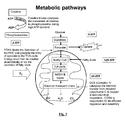
- COX4-2 may therefore be an important regulator of energy supply in the early stages of a race and towards the end of a race when oxygen is limited. As can be seen from Fig. 1 , large amounts of energy are required while peripheral physiological systems (i.e. skeletal muscle) are operating in limited oxygen environments in the early stages of exercise and towards the end of a race. Generation of energy via COX4-2 may be important during both these stages.
- the COX4I2 gene contains a glucocorticoid receptor element (TGTT) which may be targeted to increase COX4-2 expression and therefore increase mitochondrial volume. Also, the COX4I2 gene contains a p53 tumor suppressor binding site (CATG). Recent studies have suggested that p53 may play a role in regulation of mitochondrial biogenesis and aerobic metabolism via COX (Matoba et al. 2006; Saleem et al. 2009).
- Creatine kinase also known as creatine phosphokinase (CPK) or phosphocreatine kinase
- CPK creatine phosphokinase
- ADP phosphocreatine diphosphate
- ATP adenosine triphosphate
- phosphocreatine serves as an energy reservoir for the rapid regeneration of ATP.
- creatine kinase is an important enzyme in such tissues.
- CK enzyme In most cells the CK enzyme consists of two subunits, which can be either B (brain type) or M (muscle type). There are, therefore, three different isoenzymes: CK-MM, CK-BB and CK-MB. The genes for these subunits are located on different chromosomes. In addition, there are two mitochondrial creatine kinases, the ubiquitous and sarcomeric form. The different types of CK isoenzymes are listed in Table 1.
- Isoenzyme patterns differ depending on tissue type. For example, CK-BB occurs mainly in brain tissues, and its levels rarely have any significance in skeletal muscle. Skeletal muscle expresses CK-MM (98%) and low levels of CK-MB (1%) whereas in contrast the myocardium (heart muscle) expresses CK-MM at about 70% and CK-MB at 25-30%.
- CK m The mitochondrial creatine kinase
- CK c maintains critical concentration of creatine and creatine phosphate in the cytosol by coupling their phosphorylation and dephosphorylation respectively with ATP and ADP
- CKg which couples direct phosphorylation of creatine to the glycolytic pathway.
- the creatine kinase, muscle gene encodes a muscle type isozyme of creatine kinase found exclusively in striated muscle.
- the encoded protein is involved in cellular energetics.
- CKM gene knockout mice show a lack of burst activity but maintain normal absolute muscle force (van Deursen et al. 1993).
- We have found that CKM gene transcripts are the most abundant transcripts in the Thoroughbred horse skeletal muscle transcriptome, supporting the pivotal role played by the CKM gene in exercise adaptation in the horse.
- the regulation of glucose utilisation is tightly controlled by the uptake of glucose by glucose transporters, the rate of glycolytic flux and the conversion of pyruvate to acetyl-CoA in mitochondria via the catalytic function of the pyruvate dehydrogenase complex (PDC).
- the critical rate limiting step in the oxidation of glucose is the regulation of assembly of the PDC which is controlled by pyruvate dehydrogenase kinase (PDK).
- PDK blocks the formation of the PDC resulting in the beta-oxidation of fatty acids to acetyl-CoA as the substrate for oxidative phosphorylation.
- the PDK4 gene promoter contains a binding site for the FOXO1A transcription factor, a key regulator of insulin signalling in liver and adipose tissue.
- FOXO1A Single nucleotide polymorphisms in FOXO1A have been found to have a protective effect on T2DM development and related phenotypes in humans.
- FOXO1A has also been found among positively selected genomic regions in Thoroughbred and its PDK4 promoter binding site sequence is conserved in horse.
- the transcription factors FOXO1 and SMAD have also been shown to be responsible for myostatin ( MSTN ) gene regulation and therefore play key roles in the regulation of muscle growth.
- PGC-1 ⁇ encoded by the PPARGC1A (peroxisome proliferator-activated receptor gamma, coactivator 1 alpha) gene, is a key regulator of energy metabolism that regulates insulin sensitivity by controlling glucose transport via SLC2A4 (solute carrier family 2 (facilitated glucose transporter), member 4; previously GLUT4) and drives the formation of oxidative muscle fibres and co-ordinates mitochondrial biogenesis via its interaction with nuclear encoded mitochondrial protein genes.
- SLC2A4 substitute carrier family 2 (facilitated glucose transporter), member 4; previously GLUT4
- Myostatin is also known as growth/differentiation factor 8 precursor (GDF-8).
- GDF-8 growth/differentiation factor 8 precursor
- MSTN myostatin
- the double muscling trait is caused by mutations in the myostatin (MSTN ) gene.
- MSTN gene mutations in racing whippets have been associated with the 'bully' phenotype and heterozygous individuals are significantly faster than individuals carrying the wild-type genotype (Mosher et al 2007). Mutations in the MSTN gene may be associated with athletic power.
- SNPs single nucleotide polymorphisms
- a Thoroughbred is a registered racehorse that can trace its ancestry to one of three foundation stallions and the approximately 30 foundation mares entered in The General Studbook, 1791 (Weatherby and Sons 1791).
- the highest standard and most valuable elite Flat races are known as Group (Europe and Australasia) or Stakes races (North America). The most prestigious of these races include The Breeders' Cup races (United States), The Kentucky Derby (United States), The Epsom Derby (United Kingdom) et cetera.
- Horses that compete over distances ⁇ 1 mile are known as 'sprinters' whereas horses that compete over distances >1 mile are known as 'stayers'.
- Horses competing in 1 mile races may be considered either sprinters or stayers and the way in which a race is executed by the rider often reflects the trainers perceived ability ('sprinter' or 'stayer') of the horse.
- HIF-1 ⁇ activates the transcription of genes encoding PDK1, LDHA, COX4-2 and LON and controls the switch from COX4-1 to COX4-2.
- PDK1, LDHA, COX4-2 and LON controls the switch from COX4-1 to COX4-2.
- Glucorticoid receptor elements (Glucocorticoid responsive and related elements) contain the recognition sequence (TGTT).
- the COX4I2 gene contains one of these elements in Intron 2. Therefore glucocorticoid binding may stimulate increased gene expression leading to increased mitochondrial volume and therefore aerobic energy capacity.
- the present disclosure relates to a single nucleotide polymorphism (SNP) in COX4I2 that is significantly ( P ⁇ 0.01) associated with elite sprinting performance.
- SNP single nucleotide polymorphism
- the significant association of the COX4I2 homozygous TT genotype (EquCab2.0 22676361-C/T) in elite sprint race winners may be utilized in DNA-based tests of genetic potential for elite athletic performance in Thoroughbred horses.
- COX4I2 polymorphism The exact location of the COX4I2 polymorphism is on Equus caballus chromosome 22 at position 22676361 of the Horse Genome Sequence (Equus caballus Version .2.0) which can be viewed at www.broad.mit.edu/mammals/horse/.
- the COX4I2 polymorphism may be identified as EquCab2.0 COX4I2_22676361 (C/T) SNP.
- the horse genome EquCab2 assembly is a Whole Genome Shotgun (WGS) assembly at 6.79x and was released in September 2007.
- WGS Whole Genome Shotgun
- a female Thoroughbred named "Twilight” was selected as the representative horse for genome sequencing.
- the project coordination and genome sequencing and assembly is provided by the Broad Institute.
- the N50 size is the length such that 50% of the assembled genome lies in blocks of the N50 size or longer.
- the N50 size of the contigs is 112.38 kb, and the total length of all contigs is 2.43 Gb. When the gaps between contigs in scaffolds are included, the total span of the assembly is 2.68 Gb.
- the horse EquCab2 was annotated using a standard Ensembl mammalian pipeline.
- Predictions from vertebrate mammals as well as horse proteins have been given priority over predictions from non-vertebrate mammals.
- the set of predictions has been compared to 1:1 homologues genes in human and mouse, and missing homologs in the horse annotation have been recovered using exonerate.
- Horse and human cDNAs have been used to add UTRs to protein based predictions.
- the final gene-set comprises 20,737 protein-coding genes, 2,863 identified as pseudogenes and 1,580 classified as retro-transposed genes.
- flanking sequence and SNP (bold and square brackets) is as follows; (bases indicated in lower case indicate that the sequence read was not optimal for this region of the flanking sequence)
- KASPar competitive allele specific PCR
- Taqman Applied Biosystems
- Genotype trend effects were modeled by estimating the risk associated with a linear trend in magnitude of effect relative to the common homozygote, heterozygote, and rare homozygote genotypes.
- P -values were determined from a likelihood ratio test statistic and approximated according to an asymptotic ⁇ 2 distribution with one degree of freedom.
- the best genetic model for significantly associated SNPs was determined by repeating the analysis with coding variables for additive, recessive and overdominant models.
- Table 2 shows the EquCab2.0 COX4I2 _22676361 (C/T) SNP genotype frequencies amongst the subjects.
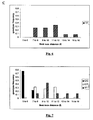
- EquCab2.0 COX4I2 _22676361 (C/T) SNP homozygote TT genotype is significantly associated with elite racing (sprinting) performance over distances ⁇ 8 furlongs (less than 1 mile) ( P ⁇ 0.02) ( Fig. 2 ) and this association is more pronounced over distances ⁇ 7f ( P ⁇ 0.01).
- Thoroughbred horses carrying the homozygote T allele (TT) of the COX4I2 _22676361 (C/T) SNP have a greater sprinting ability compared to Thoroughbred horses carrying the heterozygous T allele (TC) or to Thoroughbred horses that do not carry the T allele (CC). Therefore, the sprinting performance of a Thoroughbred horse can be predicted by testing a biological sample for the presence or absence of the homozygote T allele of the COX4I2 _22676361 (C/T) SNP.
- the present disclosure identifies significant associations between SNPs and athletic performance phenotypes in a set of these genes including ACN9, ACSS1, ACTN2, ADHFE1, CKM, COX412, GSN, MSTN, PON1, PTGS1 and PTPN1 (see the appendices). Because of the known gene expression response to exercise in equine skeletal muscle (Eivers et al 2009) and evidence for association with performance in dogs (Mosher et al 2008) and response to training, four of the genes ( CKM, COX412, PDK4 and MSTN ) that had a significant association with Thoroughbred racing performance were investigated in detail. SNPs in three of those genes ( CKM, COX4I2 and PDK4 ) are associated with elite (Group race winning) performance and a SNP in the MSTN gene is associated with elite sprint race performance.
- sample set was used: Table 3 - Details of samples included in each subpopulation.
- Sample Set B No. sires No. Gr race winners Mean RPR Range RPR Total no. races Mean no. races No. races won No. Gr races won No. Gr 1 races won Mean no. Gr races won TB 148 136 TBE 86 86 84 115 87-134 1170 13.8 425 215 91 2.5 TBO 62 62 0 59 21 - 89 537 8.7 15 0 0 0 0
- TBE Thoroughbred
- TBE Elite Group race winning Thoroughbred
- TBO non-elite (i.e other non-winning) Thoroughbred.
- plink --file mydata -assoc was used, which generates a file plink.assoc containing the fields:
- Cochran-Armitage test does not assume Hardy-Weinberg equilibrium, as the individual, not the allele, is the unit of analysis (although the permutation-based empirical p-values from the basic allelic test also have this property). SNPs showing severe deviations from Hardy-Weinberg are often likely to be bad SNPs, or reflect stratification in the sample, however, and so are probably best excluded in many cases.
- the genotypic test provides a general test of association in the 2-by-3 table of disease-by-genotype.
- the dominant and recessive models are tests for the minor allele (which is the minor allele can be found in the output of either the --assoc or the --freq commands. That is, if D is the minor allele (and d is the major allele): Allelic: D versus d Dominant: (DD, Dd) versus dd Recessive: DD versus (Dd, dd) Genotypic: DD versus Dd versus dd
- Each SNP will feature on five rows of the output, corresponding to the five tests applied.
- the column TEST refers to either ALLELIC, TREND, GENO, DOM or REC, referring to the different types of test mentioned above.
- the genotypic or allelic counts are given for cases and controls separately. For recessive and dominant tests, the counts represent the genotypes, with two of the classes pooled.
- the genotypic and dominant/recessive tests will only be conducted if there is a minimum number of observations per cell in the 2-by-3 table: by default, if at least one of the cells has a frequency less than 5, then the alternate tests are skipped (NA is written in the results file).
- the Cochran-Armitage and allelic tests are performed in all cases. This threshold can be altered with the --cell option: plink --file mydata --model --cell 20
- Table 4 Results of SNP association tests for elite (Group winning) performance ( PDK4, CKM and COX4I2 ) and elite sprinting performance ( MSTN ) in Thoroughbred racehorses. SNPs with the most significant association in each gene are shown here.
- A1 allele 1; A2: Allele 2; F_A(A1): frequency of allele 1 in elite TB (PDK4, CKM and COX4I2) and elite sprinters (MSTN); F_A(A2): frequency of allele 2 in elite TB (PDK4, CKM and COX4I2) and elite sprinters (MSTN); F_U(A1): frequency of allele 1 in non-elite TB (PDK4, CKM and COX4I2) and elite endurance (MSTN); F_U(A2): frequency of allele 2 in non-elite TB (PDK4, CKM and COX4I2) and elite endurance (MSTN).
- Deviations from Hardy-Weinberg equilibrium were investigated to determine departure from expected neutral genetic drift. Deviation from HWE may be an indicator of selection and may alter the expected distribution of genotypes in a population given the allele frequencies. This information is required to correctly assign genotype frequencies to enable the test for performance. Table 8 - Tests for deviations from Hardy-Weinberg equilibrium in ALL (All TB); AFF (Elite and elite sprinters); UNAFF (non-elite and elite endurance).
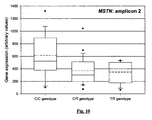
- Deviation from HWE was identified in COX4I2_ 22684390-C/T in the Elite Thoroughbred subpopulation. Thus genotype frequencies may be adjusted in the test to account for the overrepresentation of the TT genotype among elite racehorses. Also, deviation from HWE was identified in MSTN_ 66493737-T/C in the elite endurance Thoroughbred cohort. Thus genotype frequencies may be adjusted in the test to account for the under-representation of the CC genotype among elite endurance racehorses.
- Example 3 A multi-gene prediction test for elite (Group race winning) performance in Thoroughbred horses
- the present disclosure provides a simple DNA based method (genotypic test) for predicting the athletic performance of a thoroughbred race horse based on the presence or absence of a SNP in one or more exercise response gene.
- the exercise response gene may be one or more of the genes listed in the appendices.
- the genotypic test may be based on a SNP in one or more of the PDK4, CKM, COX4I2, COX4I1, MSTN, ACSS1, ACTN2 or PTGS1 genes. Details of some of the SNPs that may be used to predict the athletic performance of a thoroughbred horse are given in the appendices. It will be appreciated that the genotypic test may be based on a combination of any one or more of these SNPs.
- FIG. 3 the three main metabolic pathways contributing to energy production during exercise and the location in the pathways and the function of three genes ( CKM, COX4I2 and PDK4 ) associated with elite racing performance are shown.
- CKM, COX4I2 and PDK4 three genes associated with elite racing performance.
- COX4I2 SNP COX4I2_22684390 (C/T) SNP
- This SNP is located on Chromosome 22 of Equus caballus at position 22,684,390 bp forward strand of the Horse Genome Sequence (Equus caballus Version 2.0) which can be viewed at www.broad.mit.edu/mammals/horse/.
- the horse genome EquCab2 assembly is a Whole Genome Shotgun (WGS) assembly at 6.79x and was released in September 2007.
- WGS Whole Genome Shotgun
- a female Thoroughbred named "Twilight” was selected as the representative horse for genome sequencing.
- the project coordination and genome sequencing and assembly is provided by the Broad Institute.
- the N50 size is the length such that 50% of the assembled genome lies in blocks of the N50 size or longer.
- the N50 size of the contigs is 112.38 kb, and the total length of all contigs is 2.43 Gb. When the gaps between contigs in scaffolds are included, the total span of the assembly is 2.68 Gb.
- the horse EquCab2 was annotated using a standard Ensembl mammalian pipeline.
- Predictions from vertebrate mammals as well as horse proteins have been given priority over predictions from non-vertebrate mammals.
- the set of predictions was been compared to 1:1 homologues genes in human and mouse, and missing homologs in the horse annotation have been recovered using exonerate.
- Horse and human cDNAs have been used to add UTRs to protein based predictions.
- the final gene-set comprises 20,737 protein-coding genes, 2,863 identified as pseudogenes and 1,580 classified as retro-transposed genes.
- flanking sequence and SNP (bold and square brackets) is as follows:
- This SNP is located on Chromosome 10 of Equus caballus at position 15,884,567 bp of the Horse Genome Sequence (Equus caballus Version 2.0) which can be viewed at www.broad.mit.edu/mammals/horse/.
- the horse genome EquCab2 assembly is a Whole Genome Shotgun (WGS) assembly at 6.79x and was released in September 2007.
- WGS Whole Genome Shotgun
- a female Thoroughbred named "Twilight” was selected as the representative horse for genome sequencing.
- the project coordination and genome sequencing and assembly is provided by the Broad Institute.
- the N50 size is the length such that 50% of the assembled genome lies in blocks of the N50 size or longer.
- the N50 size of the contigs is 112.38 kb, and the total length of all contigs is 2.43 Gb. When the gaps between contigs in scaffolds are included, the total span of the assembly is 2.68 Gb.
- the horse EquCab2 was annotated using a standard Ensembl mammalian pipeline.
- Predictions from vertebrate mammals as well as horse proteins have been given priority over predictions from non-vertebrate mammals.
- the set of predictions was been compared to 1:1 homologues genes in human and mouse, and missing homologs in the horse annotation have been recovered using exonerate.
- Horse and human cDNAs have been used to add UTRs to protein based predictions.
- the final gene-set comprises 20,737 protein-coding genes, 2,863 identified as pseudogenes and 1,580 classified as retro-transposed genes.
- flanking sequence and SNP (bold and square brackets) is as follows:
- PDK4 (PDK4_38973231 (A/G) SNP)
- This SNP is located on Chromosome 4 of Equus caballus at position 38,973,231 bp of the Horse Genome Sequence (Equus caballus Version 2.0) which can be viewed at www.broad.mit.edu/mammals/horse/.
- the horse genome EquCab2 assembly is a Whole Genome Shotgun (WGS) assembly at 6.79x and was released in September 2007.
- WGS Whole Genome Shotgun
- a female Thoroughbred named "Twilight” was selected as the representative horse for genome sequencing.
- the project coordination and genome sequencing and assembly is provided by the Broad Institute.
- the N50 size is the length such that 50% of the assembled genome lies in blocks of the N50 size or longer.
- the N50 size of the contigs is 112.38 kb, and the total length of all contigs is 2.43 Gb. When the gaps between contigs in scaffolds are included, the total span of the assembly is 2.68 Gb.
- the horse EquCab2 was annotated using a standard Ensembl mammalian pipeline.
- Predictions from vertebrate mammals as well as horse proteins have been given priority over predictions from non-vertebrate mammals.
- the set of predictions was been compared to 1:1 homologues genes in human and mouse, and missing homologs in the horse annotation have been recovered using exonerate.
- Horse and human cDNAs have been used to add UTRs to protein based predictions.
- the final gene-set comprises 20,737 protein-coding genes, 2,863 identified as pseudogenes and 1,580 classified as retro-transposed genes.
- flanking sequence and SNP (bold and square brackets) is as follows:
- AA represents genotype AA
- AB represents genotype AG and BB represents genotype GG
- COX4I2 AA represents genotype CC
- AB represents genotype CT
- BB represents genotype TT
- CKM AA represents genotype GG
- AB represents genotype GA
- BB represents genotype AA.
- the risk prediction test may be performed using one or more of the SNPs listed in the appendices.
- Racing Post Ratings are a handicap rating determined by a horse's overall performance in a given race with respect to the race level, field quality, weight carried and time of the race. RPR are not directly comparable to speed ratings, rather the rating is intended to represent the weight a horse would be required to carry in a handicap. For example, in races restricted to horses of the same age and sex, a horse with a Racing Post Rating of 120 would, in a handicap, carry three pounds more than a horse rated 117. In open races, sex and weight-for-age allowances are factored in.
- Table 11 shows three SNPs that are significantly associated with RPR.
- Table 11 - SNPs having a significant association with RPR CHR SNP STAT EMP1 NP 4 PDK4_38973231 8.095 0.005052 4750 4 PDK4_38969307 6.825 0.009441 2541 3 COX4I1_32772871 6.748 0.009681 2478
- Table 12 shows the mean RPR for each genotype for the three significantly associated SNPs listed in Table 11 above.
- Table 12 Mean RPR for each genotype of the SNPs from Table 11 CHR SNP VALUE G11 G12 G22 4 PDK4_38973231 GENO A/A A/G G/G 4 PDK4_38973231 COUNTS 19 46 44 4 PDK4_38973231 FREQ 0.1743 0.422 0.4037 4 PDK4_38973231 MEAN 99.95 97.7 80.3 4 PDK4_38973231 SD 33.78 28.9 28.85 4 PDK4_38969307 GENO A/A A/C C/C 4 PDK4_38969307 COUNTS 16 42 42 4 PDK4_38969307 FREQ 0.16 0.42 0.42 4 PDK4_38969307 MEAN 97.19 99.21 79.9 4 PDK4_38969307 SD 36.23 28.06
- the AA genotype has a mean RPR of 99.95
- the AG genotype has a mean RPR of 97.7
- the GG genotype has a mean RPR of 80.3. Therefore we conclude that the AA and AG genotypes are the favourable genotypes correlated with higher RPR.
- the TT genotype has a mean RPR of 100.6
- the TC genotype has a mean RPR of 99.71
- the CC genotype has a mean RPR of 83.3. Therefore we conclude that the TT and TC genotypes are the favourable genotypes correlated with higher RPR.
- COX4I1 SNP COX4I1_32772871 (C / T) SNP
- This SNP is located on Chromosome 3 of Equus caballus at position 32,772,871 bp of the Horse Genome Sequence (Equus caballus Version 2.0) which can be viewed at www.broad.mit.edu/mammals/horse/.
- the horse genome EquCab2 assembly is a Whole Genome Shotgun (WGS) assembly at 6.79x and was released in September 2007.
- WGS Whole Genome Shotgun
- a female Thoroughbred named "Twilight” was selected as the representative horse for genome sequencing.
- the project coordination and genome sequencing and assembly is provided by the Broad Institute.
- the N50 size is the length such that 50% of the assembled genome lies in blocks of the N50 size or longer.
- the N50 size of the contigs is 112.38 kb, and the total length of all contigs is 2.43 Gb. When the gaps between contigs in scaffolds are included, the total span of the assembly is 2.68 Gb.
- the horse EquCab2 was annotated using a standard Ensembl mammalian pipeline.
- Predictions from vertebrate mammals as well as horse proteins have been given priority over predictions from non-vertebrate mammals.
- the set of predictions was been compared to 1:1 homologues genes in human and mouse, and missing homologs in the horse annotation have been recovered using exonerate.
- Horse and human cDNAs have been used to add UTRs to protein based predictions.
- the final gene-set comprises 20,737 protein-coding genes, 2,863 identified as pseudogenes and 1,580 classified as retro-transposed genes.
- flanking sequence and SNP (bold and square brackets) is as follows in which M is A or C:
- Example 5 A gene prediction test for elite sprint race performance in Thoroughbred horses.
- Thoroughbred horses excel in both sprint ( ⁇ 1,500 m) and longer distance (> 1,800 m) races.
- Horses competing in middle distance races may be considered either 'sprinters' or 'stayers' and the way in which a race is executed by the rider often reflects the trainer's perceived sprinting and endurance ability of the horse.
- horses may be described as sprinters based on their conformation and usually have a stockier and more muscular stature and are faster maturing. They usually race as 2 year olds and over shorter distances as 3 year olds. Individuals perceived to be longer distance animals may be referred to as 'backward' requiring more time to mature and running over longer distances as 3 year olds. In some regions (e.g. Australia) breeders attempt to breed only faster 'sprint' type horses.
- the disclosure provides a simple DNA based method (genotype test) for predicting the elite sprint race performance of a thoroughbred race horse based on the presence or absence of a SNP in one or more exercise response gene.
- the exercise response gene may be one or more of the genes listed in the appendices.
- the genotype test may be based on a SNP in one or more of the MSTN, ACN9, PTPN1, PON1, ADHFE1, or GSN genes. Details of some of the SNPs that may be used to predict the elite sprint race performance of a thoroughbred race horse are given in the appendices. It will be appreciated that the genotypic test may be based on a combination of any one or more of these SNPs.
- racehorse samples 39
- Race records were derived from three sources: European race records, The Racing Post on-line database (www.racingpost.co.uk); Australasian and South East Asian race records, Arion Pedigrees (www.arion.co.nz); and North American race records: Pedigree Online Thoroughbred database (www.pedigreequery.com).
- the replication samples had some sharing of relatives, accounted for in the analyses.
- Genomic DNA was extracted from either fresh whole blood or hair samples using a modified version of a standard phenol/chloroform method (Sambrook & Russell 2001). Thirteen pairs of overlapping PCR primers were designed to cover the entire MSTN genomic sequence using the PCR Suite extension to the Primer3 web-based primer design tool (Rozen & Skaletsky 2000; van Baren & Heutink 2004) (Table 13). Twenty-four unrelated Thoroughbred DNA samples were included in a re-sequencing panel to identify Thoroughbred-specific sequence variants. As such this study was powered to detect 95% of SNPs with MAF > 0.05 in the Thoroughbred population (Kruglyak & Nickerson 2001).
- Myostatin gene (MSTN ) variants have previously been shown to contribute to muscle hypertrophy; therefore, sequence variation in the equine MSTN gene, which contains three exons and spans 6,172 bp on chromosome 18 (reverse strand nt 66489608-66495780, EquCab2.0) was investigated. To-date, no sequence variants have been reported in genomic MSTN sequence in Thoroughbred horses and no MSTN SNPs are documented in the EquCab2.0 SNP database.
- Novel sequence variants were identified by re-sequencing the equine MSTN gene in 24 unrelated Thoroughbred horses using 14 overlapping primer pairs (Table 13) spanning all three exons and 288 bp of the 5' upstream region. Although no exonic sequence variants were detected, six SNPs were detected in intron 1 of MSTN [nt 66492979-66494807] (Table 14).
- F ST population differentiation
- n 148 Thoroughbred horses.
- MSTN sequence variants 148 Thoroughbred horses.
- MSTN sequence polymorphisms displayed MAF ⁇ 0.05 in Thoroughbreds (Table 15) and were excluded from the association analyses.
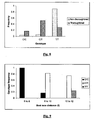
- the C allele was twice as frequent in the short distance ( ⁇ 7 f) than in the long distance (> 8 f) cohort (0.72 and 0.36 respectively) corresponding to an odds ratio of 4.54 (95% C.I. 2.23-9.23).
- the locus conformed to expected Hardy-Weinberg proportions (Table 18).
- P 0.0018
- the C/C genotype was the most common genotype among sprinters ( ⁇ 7 f, > 51%).
- Genotype trend effects were modeled by estimating the risk associated with a linear trend in magnitude of effect relative to the common homozygote, heterozygote, and rare homozygote genotype using the Cochran-Armitage test for the trend model.
- Table 13 PCR primer details for SNP discovery in the equine myostatin (MSTN) gene Amplicon Primer sequences (5') Primer sequences (3') PCR product size (bp) Chr location (EquCab2.0) No.
- TBE elite Group race winning Thoroughbreds
- TBO other non-winning Thoroughbreds
- TBE > 8 f, TBE ⁇ 8 f and TBE ⁇ 7 f elite Group race winning Thoroughbreds that won their best (most valuable or highest grade) races over distances > 8 f, ⁇ 8 f and ⁇ 7 f.
- Odds ratios were calculated for the two most significant results.
- Pop 1 vs Pop 2 Freq T_Pop 1 Freq T_Pop 2 CHISQ P OR TBE vs TBO 0.443 0.425 0.09 0.764 - TBE > 8 f vs TBE ⁇ 8 f 0.641 0.309 17.02 3.70E-05 3.996 TBE > 8 f vs TBE ⁇ 7 f 0.641 0.282 18.31 1.88E-05 4.538 TBE > 8 f vs TBO 0.641 0.425 7.76 0.005 - TBE ⁇ 8 f vs TBO 0.309 0.425 3.06 0.080 - TBE ⁇ 7 f vs TBO 0.282 0.425 4.15 0.042 - b.
- MSTN SNP MSTN 66493737 (T / C) SNP
- This SNP is located on Chromosome 18 of Equus caballus at position 66,490,208-66,495,180 reverse strand of the Horse Genome Sequence (Equus caballus Version 2.0) which can be viewed at www.broad.mit.edu/mammals/horse/.
- the horse genome EquCab2 assembly is a Whole Genome Shotgun (WGS) assembly at 6.79x and was released in September 2007.
- WGS Whole Genome Shotgun
- a female Thoroughbred named "Twilight” was selected as the representative horse for genome sequencing.
- the project coordination and genome sequencing and assembly is provided by the Broad Institute.
- the N50 size is the length such that 50% of the assembled genome lies in blocks of the N50 size or longer.
- the N50 size of the contigs is 112.38 kb, and the total length of all contigs is 2.43 Gb. When the gaps between contigs in scaffolds are included, the total span of the assembly is 2.68 Gb.
- the horse EquCab2 was annotated using a standard Ensembl mammalian pipeline.
- Predictions from vertebrate mammals as well as horse proteins have been given priority over predictions from non-vertebrate mammals.
- the set of predictions was been compared to 1:1 homologues genes in human and mouse, and missing homologs in the horse annotation have been recovered using exonerate.
- Horse and human cDNAs have been used to add UTRs to protein based predictions.
- the final gene-set comprises 20,737 protein-coding genes, 2,863 identified as pseudogenes and 1,580 classified as retro-transposed genes.
- flanking sequence and SNP (bold and square brackets) is as follows:
- races won % runners % winners to runners % wins to runners % winners to total % wins to runs mean no. races per runner total earnings (£) mean earnings (£) mean earnings excl. earners > £100k no. earners > £100k CC 40 21 11 87 17 52.5 52.4 81.0 27.5 19.5 4.1 511114 20440 8203 1 CT 67 32 18 115 26 47.8 56.3 81.3 26.9 22.6 3.6 1801103 36968 4925 5 TT 35 13 6 40 6 37.1 46.2 46.2 17.1 15.0 3.1 87461 5175 5175 0 b.
- TTN TTN
- MSTN1-2_FOR Myostatin MSTN
- MSTN MSTN1-2_REV Myostatin
- MSTN Exon 2 ttgggttttccttccacttg
- MSTN2-3_FOR Myostatin Exon 2 ttcccaagaccaggagaaga
- MSTN2-3_REV Myostatin Exon 3 cagcatcgagattctgtgga (SEQ ID No. 43)
- P 0.0043
- Table 25 shows the mean best race distance for each genotype for four of the SNPs from Table 24 above.
- Table 25 Mean best race distance for each genotype CHR SNP VALUE G11 G12 G22 18 MSTN_66493737 GENO T/T T/C C/C 18 MSTN_66493737 COUNTS 12 46 21 18 MSTN_66493737 FREQ 0.1519 0.5823 0.2658 18 MSTN_66493737 MEAN 10.54 9.087 6.167 18 MSTN_66493737 SD 2.742 2.365 0.8266 18 MSTN_66494218 GENO C/C C/A A/A 18 MSTN_66494218 COUNTS 8 39 31 18 MSTN_66494218 FREQ 0.1026 0.5 0.3974 18 MSTN_66494218 MEAN 10.56 9.179 7.403 18 MSTN_66494218 SD 2.872 2.48 2.043 22 COX4I2_22684844 GENO C/C C/T T/T 22 COX4I2_22
- the TT genotype has a mean best race distance of 10.54 furlongs (f)
- the TC genotype has a mean best race distance of 9.087 f
- the CC genotype has a mean best race distance of 6.167 f.
- Overall the mean best race distance was 8.55 f.
- SNPs may be determined by any SNP genotyping method including for example the following non limiting methods:
- the iPLEX® Gold assay based on multiplex PCR followed by a single base primer extension reaction. After the PCR, remaining nucleotides are deactivated by SAP treatment. The single base primer extension step is performed, and the primer extension products analyzed using MALDI TOF MS.
- KBiosciences uses both its own novel form of competitive allele specific PCR system (KASPar) and TaqmanTM chemistries for genotyping.
- KASPar assays are a proprietary in-house system developed to replace the previously used Amplifluor system.
- TaqMan® SNP Genotyping Assays make it easy to perform SNP genotyping with the precision of TaqMan® reagent-based chemistry.
- TaqMan® Assays provide SNP detection capabilities.
- the TaqMan® Sample-to-SNPTM Kit provides a streamlined protocol for performing TaqMan chemistry-based genotyping analysis from any sample with a single kit.
- the kit is comprised of two parts: the DNA Extract All Lysis Reagents and the TaqMan® GTXpressTM Master Mix.
- the DNA Extract All Lysis Reagents reduce prolonged procedures for the release of real-time PCR-ready DNA to a 5 minute protocol. They can process a wide variety of samples ranging from blood to buccal swabs.
- the TaqMan GTXpress Master Mix enables robust PCR amplification in less than 50 minutes.
- the predictive tests described herein may be applied to select individuals with high or low genetic potential for racing success. These tests can be performed on an individual at any stage in the life cycle e.g. Day 1 (birth), prior to sales (i.e. yearlings, 2 year olds etc), during racing career (i.e. from 2 years old), during breeding (i.e. up to approx 25 years). Also, the tests may be applied to select appropriate stallion - mare matches for mating based on the genetic make-up of mare and stallion.
- Appendix I TBE (Elite) V TBO (non-winner) association test. SNPs raked by P value
- TBE_SP elite sprinter
- TBE_EN elite stayer
Landscapes
- Chemical & Material Sciences (AREA)
- Life Sciences & Earth Sciences (AREA)
- Proteomics, Peptides & Aminoacids (AREA)
- Organic Chemistry (AREA)
- Analytical Chemistry (AREA)
- Zoology (AREA)
- Wood Science & Technology (AREA)
- Health & Medical Sciences (AREA)
- Engineering & Computer Science (AREA)
- Microbiology (AREA)
- Immunology (AREA)
- Molecular Biology (AREA)
- Biotechnology (AREA)
- Biophysics (AREA)
- Physics & Mathematics (AREA)
- Biochemistry (AREA)
- Bioinformatics & Cheminformatics (AREA)
- General Engineering & Computer Science (AREA)
- General Health & Medical Sciences (AREA)
- Genetics & Genomics (AREA)
- Measuring Or Testing Involving Enzymes Or Micro-Organisms (AREA)
Claims (15)
- Verfahren zur Vorhersage des besten Leistungspotentials für Renndistanzen eines Vollblutrennpferds, das den Schritt der Untersuchung einer biologischen Probe von einem Vollblutrennpferd auf das Vorliegen eines MSTN_66493737 (T/C) Einzelnukleotidpolymorphismus (SNP) (SEQ.-ID Nr. 31) umfasst.
- Verfahren nach Anspruch 1, worin das Vorliegen eines C-Allels ein auserlesenes Leistungspotential für Sprint anzeigt.
- Verfahren nach Anspruch 1 oder 2, worin das Vorliegen eines homozygoten CC-Genotyps ein auserlesenes Leistungspotential für Sprint anzeigt.
- Verfahren nach Anspruch 1 oder 2, worin das Vorliegen eines T-Allels ein Leistungspotential für Ausdauer anzeigt.
- Verfahren nach Anspruch 1, worin das Vorliegen eines homozygoten TT-Genotyps ein Leistungspotential für Ausdauer anzeigt.
- Verfahren nach einem der Ansprüche 1 bis 5, worin die biologische Probe des Subjekts aus der Gruppe ausgewählt ist, die Folgende umfasst: Blut, Speichel, Skelettmuskel, Haar, Sperma, Knochenmark, Weichgewebe, Biopsieprobe von innerem Organ und Haut.
- Verfahren nach einem der Ansprüche 1 bis 6, das die folgenden Schritte umfasst:- Extrahieren oder Freisetzen von DNA aus einer biologischen ex-vivo-Probe; und- Identifizieren des Genotyps des MSTN_66493737 (T/C) SNP (SEQ.-ID Nr. 31) in der extrahierten oder freigesetzten DNA,worin das Vorliegen eines C-Allels in dem MSTN_66493737 (T/C) SNP (SEQ.-ID Nr. 31) ein auserlesenes Leistungspotential für Sprint anzeigt und worin das Vorliegen eines T-Allels in dem MSTN-66493737 (T/C) SNP (SEQ.-ID Nr. 31) ein Leistungspotential für Ausdauer anzeigt.
- Verfahren nach Anspruch 7, das den folgenden Schritt umfasst:- Amplifizieren einer Zielsequenz, die den MSTN_66493737 (T/C) SNP (SEQ.-ID Nr. 31) in der extrahierten oder freigesetzten DNA kodiert,vor dem Schritt der Identifizierung des Genotyps des MSTN_66493737 (T/C) SNP (SEQ.-ID Nr. 31).
- Untersuchung nach Anspruch 7 oder 8, worin die DNA genomische DNA ist.
- Isoliertes Polynukleotid, das aus der Nukleinsäuresequenz von SEQ.-ID Nr. 31 besteht.
- Isoliertes Polynukleotid nach Anspruch 10, worin das Nukleotid in der Position 202 c ist.
- Verwendung eines isolierten Polynukleotids, das aus der Nukleinsäuresequenz von SEQ.-ID Nr. 31 besteht, als genetischen Marker zur Vorhersage des besten Leistungspotentials für Renndistanzen eines Vollblutrennpferds.
- Verwendung nach Anspruch 12, worin das Vorliegen eines C-Allels ein auserlesenes Leistungspotential für Sprint anzeigt.
- Verwendung nach Anspruch 12 oder 13, worin das Vorliegen eines T-Allels ein Leistungspotential für Ausdauer anzeigt.
- Verwendung nach Anspruch 12, worin das Vorliegen eines homozygoten CC-Genotyps ein auserlesenes Leistungspotential für Sprint anzeigt und das Vorliegen eines homozygoten TT-Genotyps ein Leistungspotential für Ausdauer anzeigt.
Applications Claiming Priority (3)
| Application Number | Priority Date | Filing Date | Title |
|---|---|---|---|
| US13653308P | 2008-09-11 | 2008-09-11 | |
| US21312509P | 2009-05-08 | 2009-05-08 | |
| PCT/IE2009/000062 WO2010029527A1 (en) | 2008-09-11 | 2009-09-11 | A method for predicting athletic performance potential |
Publications (2)
| Publication Number | Publication Date |
|---|---|
| EP2352850A1 EP2352850A1 (de) | 2011-08-10 |
| EP2352850B1 true EP2352850B1 (de) | 2014-03-19 |
Family
ID=41336086
Family Applications (1)
| Application Number | Title | Priority Date | Filing Date |
|---|---|---|---|
| EP09787418.4A Active EP2352850B1 (de) | 2008-09-11 | 2009-09-11 | Verfahren zur vorhersage des leistungsvermögens von athleten |
Country Status (7)
| Country | Link |
|---|---|
| US (1) | US8771943B2 (de) |
| EP (1) | EP2352850B1 (de) |
| JP (1) | JP5667057B2 (de) |
| AU (1) | AU2009290452B2 (de) |
| NZ (1) | NZ591711A (de) |
| PT (1) | PT2352850E (de) |
| WO (1) | WO2010029527A1 (de) |
Families Citing this family (11)
| Publication number | Priority date | Publication date | Assignee | Title |
|---|---|---|---|---|
| US20110262915A1 (en) * | 2008-09-11 | 2011-10-27 | Emmeline Hill | Method for predicting the athletic performance potential of a subject |
| CN101887046A (zh) * | 2010-07-19 | 2010-11-17 | 高常青 | 检测人体血清肌肉生长抑制素应用于筛选体育运动员 |
| EA027258B1 (ru) | 2011-05-05 | 2017-07-31 | Капилет Джинетикс Аб | Способ прогнозирования стиля передвижения у лошади и применение указанного способа для отбора лошади для разведения |
| WO2016022614A1 (en) * | 2014-08-04 | 2016-02-11 | Lafayette Christa | Method for evaluating health and genetic predisposition of animals |
| CN112176069B (zh) * | 2019-07-04 | 2023-07-04 | 深圳华大法医科技有限公司 | 用于汗血宝马分型的扩增系统、引物、试剂盒及其用途和分型方法 |
| WO2021171591A1 (ja) * | 2020-02-28 | 2021-09-02 | 裕造 園生 | 情報処理方法、情報処理装置、およびプログラム |
| CN111979338B (zh) * | 2020-09-02 | 2021-07-20 | 黑龙江省农业科学院畜牧兽医分院 | 一种选育优质肉羊的分子生物学方法 |
| US20240043926A1 (en) | 2021-03-19 | 2024-02-08 | The Regents Of The University Of California | Biomarkers for conformation of riding traits in horses |
| EP4286534A1 (de) * | 2022-05-31 | 2023-12-06 | Plusvital Ltd. | Verfahren zur bestimmung der rennwahrscheinlichkeit eines pferdes |
| CN115985459B (zh) * | 2022-11-22 | 2026-04-03 | 北京体育大学 | 基于全基因组的运动提高心肺耐力效果预测方法及装置 |
| JP7446402B1 (ja) * | 2022-12-23 | 2024-03-08 | 楽天グループ株式会社 | レーティング利用システム、レーティング利用方法、及びレーティング利用プログラム |
Family Cites Families (5)
| Publication number | Priority date | Publication date | Assignee | Title |
|---|---|---|---|---|
| US20030092019A1 (en) * | 2001-01-09 | 2003-05-15 | Millennium Pharmaceuticals, Inc. | Methods and compositions for diagnosing and treating neuropsychiatric disorders such as schizophrenia |
| EP1789580B1 (de) | 2004-07-02 | 2014-03-12 | Thoroughbred Genetics Ltd | Genetische analyse in bei rennen eingesetzten tieren |
| NZ576349A (en) | 2006-09-18 | 2012-09-28 | Univ Sydney | Equine performance test |
| AU2007341981A1 (en) | 2006-12-29 | 2008-07-10 | The Salk Institute For Biological Studies | Methods for enhancing exercise performance |
| US20110262915A1 (en) | 2008-09-11 | 2011-10-27 | Emmeline Hill | Method for predicting the athletic performance potential of a subject |
-
2009
- 2009-09-11 EP EP09787418.4A patent/EP2352850B1/de active Active
- 2009-09-11 US US13/063,715 patent/US8771943B2/en active Active
- 2009-09-11 JP JP2011526627A patent/JP5667057B2/ja active Active
- 2009-09-11 AU AU2009290452A patent/AU2009290452B2/en active Active
- 2009-09-11 PT PT97874184T patent/PT2352850E/pt unknown
- 2009-09-11 NZ NZ591711A patent/NZ591711A/xx unknown
- 2009-09-11 WO PCT/IE2009/000062 patent/WO2010029527A1/en not_active Ceased
Also Published As
| Publication number | Publication date |
|---|---|
| WO2010029527A1 (en) | 2010-03-18 |
| JP2012501671A (ja) | 2012-01-26 |
| PT2352850E (pt) | 2014-06-25 |
| US20110223600A1 (en) | 2011-09-15 |
| AU2009290452A1 (en) | 2010-03-18 |
| AU2009290452B2 (en) | 2015-01-29 |
| EP2352850A1 (de) | 2011-08-10 |
| US8771943B2 (en) | 2014-07-08 |
| JP5667057B2 (ja) | 2015-02-12 |
| NZ591711A (en) | 2012-11-30 |
Similar Documents
| Publication | Publication Date | Title |
|---|---|---|
| US8771943B2 (en) | Method for predicting athletic performance potential | |
| Hill et al. | Targets of selection in the Thoroughbred genome contain exercise‐relevant gene SNPs associated with elite racecourse performance | |
| US20200115751A1 (en) | Method for predicting the athletic performance potential of a subject | |
| Hill et al. | A sequence polymorphism in MSTN predicts sprinting ability and racing stamina in thoroughbred horses | |
| Zhang et al. | Progress of genome wide association study in domestic animals | |
| Metzger et al. | Expression levels of LCORL are associated with body size in horses | |
| Wang et al. | Domestication genomics: evidence from animals | |
| Gu et al. | Association of sequence variants in CKM (creatine kinase, muscle) and COX4I2 (cytochrome c oxidase, subunit 4, isoform 2) genes with racing performance in Thoroughbred horses | |
| Tozaki et al. | A genome‐wide association study for racing performances in Thoroughbreds clarifies a candidate region near the MSTN gene | |
| Mosher et al. | A mutation in the myostatin gene increases muscle mass and enhances racing performance in heterozygote dogs | |
| Schröder et al. | A genome‐wide association study for quantitative trait loci of show‐jumping in Hanoverian warmblood horses | |
| Hill et al. | The contribution of myostatin (MSTN) and additional modifying genetic loci to race distance aptitude in Thoroughbred horses racing in different geographic regions | |
| Proskura et al. | Single nucleotide polymorphism in the LDHA gene as a potential marker for the racing performance of pigeons | |
| Tozaki et al. | A cohort study of racing performance in Japanese Thoroughbred racehorses using genome information on ECA18 | |
| Akkad et al. | Homozygosity mapping and sequencing identify two genes that might contribute to pointing behavior in hunting dogs | |
| Farries et al. | Analysis of genetic variation contributing to measured speed in Thoroughbreds identifies genomic regions involved in the transcriptional response to exercise | |
| Shin et al. | Multiple genes related to muscle identified through a joint analysis of a two-stage genome-wide association study for racing performance of 1,156 Thoroughbreds | |
| Lee et al. | QTL and gene expression analyses identify genes affecting carcass weight and marbling on BTA14 in Hanwoo (Korean Cattle) | |
| Xu et al. | Identification of single nucleotide polymorphisms (SNPs) associated with heat stress and milk production traits in Chinese holstein cows | |
| Ropka-Molik et al. | The use of the SLC16A1 gene as a potential marker to predict race performance in Arabian horses | |
| Barrey | Reviewe: Genetics and genomics in equine exercise physiology: an overview of the new applications of molecular biology as positive and negative markers of performance and health | |
| US20060275793A1 (en) | Association between markers in the leptin gene and carcass traits in commercial feedlot steer and heifers | |
| IE20090696A1 (en) | A method for predicting the athletic performance potential of a subject | |
| Negro et al. | Molecular diversity between two cohorts of six Spanish riding-horse breeds: impact of selection in Crossbred vs Purebred populations | |
| Schröder | Athletic performance and conformation in Hanoverian warmblood horses-population genetic and genome-wide association analyses |
Legal Events
| Date | Code | Title | Description |
|---|---|---|---|
| PUAI | Public reference made under article 153(3) epc to a published international application that has entered the european phase |
Free format text: ORIGINAL CODE: 0009012 |
|
| 17P | Request for examination filed |
Effective date: 20110408 |
|
| AK | Designated contracting states |
Kind code of ref document: A1 Designated state(s): AT BE BG CH CY CZ DE DK EE ES FI FR GB GR HR HU IE IS IT LI LT LU LV MC MK MT NL NO PL PT RO SE SI SK SM TR |
|
| DAX | Request for extension of the european patent (deleted) | ||
| 17Q | First examination report despatched |
Effective date: 20120223 |
|
| GRAP | Despatch of communication of intention to grant a patent |
Free format text: ORIGINAL CODE: EPIDOSNIGR1 |
|
| INTG | Intention to grant announced |
Effective date: 20131017 |
|
| GRAS | Grant fee paid |
Free format text: ORIGINAL CODE: EPIDOSNIGR3 |
|
| GRAA | (expected) grant |
Free format text: ORIGINAL CODE: 0009210 |
|
| RIN1 | Information on inventor provided before grant (corrected) |
Inventor name: HILL, EMMELINE Inventor name: GU, JINGJING Inventor name: MACHUGH, DAVID Inventor name: KATZ, LISA Inventor name: ORR, NICK |
|
| AK | Designated contracting states |
Kind code of ref document: B1 Designated state(s): AT BE BG CH CY CZ DE DK EE ES FI FR GB GR HR HU IE IS IT LI LT LU LV MC MK MT NL NO PL PT RO SE SI SK SM TR |
|
| REG | Reference to a national code |
Ref country code: GB Ref legal event code: FG4D |
|
| REG | Reference to a national code |
Ref country code: CH Ref legal event code: EP |
|
| REG | Reference to a national code |
Ref country code: IE Ref legal event code: FG4D |
|
| REG | Reference to a national code |
Ref country code: AT Ref legal event code: REF Ref document number: 657739 Country of ref document: AT Kind code of ref document: T Effective date: 20140415 |
|
| REG | Reference to a national code |
Ref country code: DE Ref legal event code: R096 Ref document number: 602009022640 Country of ref document: DE Effective date: 20140430 |
|
| REG | Reference to a national code |
Ref country code: PT Ref legal event code: SC4A Free format text: AVAILABILITY OF NATIONAL TRANSLATION Effective date: 20140617 |
|
| REG | Reference to a national code |
Ref country code: SE Ref legal event code: TRGR |
|
| PG25 | Lapsed in a contracting state [announced via postgrant information from national office to epo] |
Ref country code: LT Free format text: LAPSE BECAUSE OF FAILURE TO SUBMIT A TRANSLATION OF THE DESCRIPTION OR TO PAY THE FEE WITHIN THE PRESCRIBED TIME-LIMIT Effective date: 20140319 Ref country code: NO Free format text: LAPSE BECAUSE OF FAILURE TO SUBMIT A TRANSLATION OF THE DESCRIPTION OR TO PAY THE FEE WITHIN THE PRESCRIBED TIME-LIMIT Effective date: 20140619 |
|
| REG | Reference to a national code |
Ref country code: NL Ref legal event code: VDEP Effective date: 20140319 |
|
| REG | Reference to a national code |
Ref country code: AT Ref legal event code: MK05 Ref document number: 657739 Country of ref document: AT Kind code of ref document: T Effective date: 20140319 |
|
| REG | Reference to a national code |
Ref country code: LT Ref legal event code: MG4D |
|
| PG25 | Lapsed in a contracting state [announced via postgrant information from national office to epo] |
Ref country code: CY Free format text: LAPSE BECAUSE OF FAILURE TO SUBMIT A TRANSLATION OF THE DESCRIPTION OR TO PAY THE FEE WITHIN THE PRESCRIBED TIME-LIMIT Effective date: 20140319 Ref country code: FI Free format text: LAPSE BECAUSE OF FAILURE TO SUBMIT A TRANSLATION OF THE DESCRIPTION OR TO PAY THE FEE WITHIN THE PRESCRIBED TIME-LIMIT Effective date: 20140319 |
|
| PG25 | Lapsed in a contracting state [announced via postgrant information from national office to epo] |
Ref country code: HR Free format text: LAPSE BECAUSE OF FAILURE TO SUBMIT A TRANSLATION OF THE DESCRIPTION OR TO PAY THE FEE WITHIN THE PRESCRIBED TIME-LIMIT Effective date: 20140319 Ref country code: LV Free format text: LAPSE BECAUSE OF FAILURE TO SUBMIT A TRANSLATION OF THE DESCRIPTION OR TO PAY THE FEE WITHIN THE PRESCRIBED TIME-LIMIT Effective date: 20140319 |
|
| PG25 | Lapsed in a contracting state [announced via postgrant information from national office to epo] |
Ref country code: RO Free format text: LAPSE BECAUSE OF FAILURE TO SUBMIT A TRANSLATION OF THE DESCRIPTION OR TO PAY THE FEE WITHIN THE PRESCRIBED TIME-LIMIT Effective date: 20140319 Ref country code: EE Free format text: LAPSE BECAUSE OF FAILURE TO SUBMIT A TRANSLATION OF THE DESCRIPTION OR TO PAY THE FEE WITHIN THE PRESCRIBED TIME-LIMIT Effective date: 20140319 Ref country code: BE Free format text: LAPSE BECAUSE OF FAILURE TO SUBMIT A TRANSLATION OF THE DESCRIPTION OR TO PAY THE FEE WITHIN THE PRESCRIBED TIME-LIMIT Effective date: 20140319 Ref country code: CZ Free format text: LAPSE BECAUSE OF FAILURE TO SUBMIT A TRANSLATION OF THE DESCRIPTION OR TO PAY THE FEE WITHIN THE PRESCRIBED TIME-LIMIT Effective date: 20140319 Ref country code: NL Free format text: LAPSE BECAUSE OF FAILURE TO SUBMIT A TRANSLATION OF THE DESCRIPTION OR TO PAY THE FEE WITHIN THE PRESCRIBED TIME-LIMIT Effective date: 20140319 Ref country code: BG Free format text: LAPSE BECAUSE OF FAILURE TO SUBMIT A TRANSLATION OF THE DESCRIPTION OR TO PAY THE FEE WITHIN THE PRESCRIBED TIME-LIMIT Effective date: 20140619 Ref country code: IS Free format text: LAPSE BECAUSE OF FAILURE TO SUBMIT A TRANSLATION OF THE DESCRIPTION OR TO PAY THE FEE WITHIN THE PRESCRIBED TIME-LIMIT Effective date: 20140719 |
|
| PG25 | Lapsed in a contracting state [announced via postgrant information from national office to epo] |
Ref country code: PL Free format text: LAPSE BECAUSE OF FAILURE TO SUBMIT A TRANSLATION OF THE DESCRIPTION OR TO PAY THE FEE WITHIN THE PRESCRIBED TIME-LIMIT Effective date: 20140319 Ref country code: SK Free format text: LAPSE BECAUSE OF FAILURE TO SUBMIT A TRANSLATION OF THE DESCRIPTION OR TO PAY THE FEE WITHIN THE PRESCRIBED TIME-LIMIT Effective date: 20140319 Ref country code: AT Free format text: LAPSE BECAUSE OF FAILURE TO SUBMIT A TRANSLATION OF THE DESCRIPTION OR TO PAY THE FEE WITHIN THE PRESCRIBED TIME-LIMIT Effective date: 20140319 Ref country code: ES Free format text: LAPSE BECAUSE OF FAILURE TO SUBMIT A TRANSLATION OF THE DESCRIPTION OR TO PAY THE FEE WITHIN THE PRESCRIBED TIME-LIMIT Effective date: 20140319 |
|
| REG | Reference to a national code |
Ref country code: DE Ref legal event code: R097 Ref document number: 602009022640 Country of ref document: DE |
|
| PLBE | No opposition filed within time limit |
Free format text: ORIGINAL CODE: 0009261 |
|
| STAA | Information on the status of an ep patent application or granted ep patent |
Free format text: STATUS: NO OPPOSITION FILED WITHIN TIME LIMIT |
|
| PG25 | Lapsed in a contracting state [announced via postgrant information from national office to epo] |
Ref country code: DK Free format text: LAPSE BECAUSE OF FAILURE TO SUBMIT A TRANSLATION OF THE DESCRIPTION OR TO PAY THE FEE WITHIN THE PRESCRIBED TIME-LIMIT Effective date: 20140319 |
|
| 26N | No opposition filed |
Effective date: 20141222 |
|
| PG25 | Lapsed in a contracting state [announced via postgrant information from national office to epo] |
Ref country code: IT Free format text: LAPSE BECAUSE OF FAILURE TO SUBMIT A TRANSLATION OF THE DESCRIPTION OR TO PAY THE FEE WITHIN THE PRESCRIBED TIME-LIMIT Effective date: 20140319 |
|
| REG | Reference to a national code |
Ref country code: DE Ref legal event code: R097 Ref document number: 602009022640 Country of ref document: DE Effective date: 20141222 |
|
| PG25 | Lapsed in a contracting state [announced via postgrant information from national office to epo] |
Ref country code: MC Free format text: LAPSE BECAUSE OF FAILURE TO SUBMIT A TRANSLATION OF THE DESCRIPTION OR TO PAY THE FEE WITHIN THE PRESCRIBED TIME-LIMIT Effective date: 20140319 Ref country code: LU Free format text: LAPSE BECAUSE OF FAILURE TO SUBMIT A TRANSLATION OF THE DESCRIPTION OR TO PAY THE FEE WITHIN THE PRESCRIBED TIME-LIMIT Effective date: 20140911 |
|
| REG | Reference to a national code |
Ref country code: CH Ref legal event code: PL |
|
| PG25 | Lapsed in a contracting state [announced via postgrant information from national office to epo] |
Ref country code: SI Free format text: LAPSE BECAUSE OF FAILURE TO SUBMIT A TRANSLATION OF THE DESCRIPTION OR TO PAY THE FEE WITHIN THE PRESCRIBED TIME-LIMIT Effective date: 20140319 Ref country code: LI Free format text: LAPSE BECAUSE OF NON-PAYMENT OF DUE FEES Effective date: 20140930 Ref country code: CH Free format text: LAPSE BECAUSE OF NON-PAYMENT OF DUE FEES Effective date: 20140930 |
|
| REG | Reference to a national code |
Ref country code: GB Ref legal event code: 732E Free format text: REGISTERED BETWEEN 20150924 AND 20150930 |
|
| PG25 | Lapsed in a contracting state [announced via postgrant information from national office to epo] |
Ref country code: SM Free format text: LAPSE BECAUSE OF FAILURE TO SUBMIT A TRANSLATION OF THE DESCRIPTION OR TO PAY THE FEE WITHIN THE PRESCRIBED TIME-LIMIT Effective date: 20140319 |
|
| PG25 | Lapsed in a contracting state [announced via postgrant information from national office to epo] |
Ref country code: GR Free format text: LAPSE BECAUSE OF FAILURE TO SUBMIT A TRANSLATION OF THE DESCRIPTION OR TO PAY THE FEE WITHIN THE PRESCRIBED TIME-LIMIT Effective date: 20140620 Ref country code: MT Free format text: LAPSE BECAUSE OF FAILURE TO SUBMIT A TRANSLATION OF THE DESCRIPTION OR TO PAY THE FEE WITHIN THE PRESCRIBED TIME-LIMIT Effective date: 20140319 |
|
| PG25 | Lapsed in a contracting state [announced via postgrant information from national office to epo] |
Ref country code: HU Free format text: LAPSE BECAUSE OF FAILURE TO SUBMIT A TRANSLATION OF THE DESCRIPTION OR TO PAY THE FEE WITHIN THE PRESCRIBED TIME-LIMIT; INVALID AB INITIO Effective date: 20090911 |
|
| REG | Reference to a national code |
Ref country code: FR Ref legal event code: PLFP Year of fee payment: 8 |
|
| REG | Reference to a national code |
Ref country code: FR Ref legal event code: PLFP Year of fee payment: 9 |
|
| PG25 | Lapsed in a contracting state [announced via postgrant information from national office to epo] |
Ref country code: MK Free format text: LAPSE BECAUSE OF FAILURE TO SUBMIT A TRANSLATION OF THE DESCRIPTION OR TO PAY THE FEE WITHIN THE PRESCRIBED TIME-LIMIT Effective date: 20140319 |
|
| REG | Reference to a national code |
Ref country code: FR Ref legal event code: PLFP Year of fee payment: 10 |
|
| P01 | Opt-out of the competence of the unified patent court (upc) registered |
Effective date: 20230419 |
|
| PGFP | Annual fee paid to national office [announced via postgrant information from national office to epo] |
Ref country code: PT Payment date: 20240903 Year of fee payment: 16 |
|
| PGFP | Annual fee paid to national office [announced via postgrant information from national office to epo] |
Ref country code: SE Payment date: 20240903 Year of fee payment: 16 |
|
| PGFP | Annual fee paid to national office [announced via postgrant information from national office to epo] |
Ref country code: TR Payment date: 20240904 Year of fee payment: 16 |
|
| PGFP | Annual fee paid to national office [announced via postgrant information from national office to epo] |
Ref country code: DE Payment date: 20250901 Year of fee payment: 17 |
|
| PGFP | Annual fee paid to national office [announced via postgrant information from national office to epo] |
Ref country code: GB Payment date: 20250822 Year of fee payment: 17 |
|
| PGFP | Annual fee paid to national office [announced via postgrant information from national office to epo] |
Ref country code: FR Payment date: 20250827 Year of fee payment: 17 |
|
| PGFP | Annual fee paid to national office [announced via postgrant information from national office to epo] |
Ref country code: IE Payment date: 20250822 Year of fee payment: 17 |
|
| PG25 | Lapsed in a contracting state [announced via postgrant information from national office to epo] |
Ref country code: PT Free format text: LAPSE BECAUSE OF NON-PAYMENT OF DUE FEES Effective date: 20260311 |