EP1789580B1 - Genetische analyse in bei rennen eingesetzten tieren - Google Patents
Genetische analyse in bei rennen eingesetzten tieren Download PDFInfo
- Publication number
- EP1789580B1 EP1789580B1 EP05757406.3A EP05757406A EP1789580B1 EP 1789580 B1 EP1789580 B1 EP 1789580B1 EP 05757406 A EP05757406 A EP 05757406A EP 1789580 B1 EP1789580 B1 EP 1789580B1
- Authority
- EP
- European Patent Office
- Prior art keywords
- horses
- racing
- variants
- nucleotide sequence
- types
- Prior art date
- Legal status (The legal status is an assumption and is not a legal conclusion. Google has not performed a legal analysis and makes no representation as to the accuracy of the status listed.)
- Expired - Lifetime
Links
Images
Classifications
-
- C—CHEMISTRY; METALLURGY
- C12—BIOCHEMISTRY; BEER; SPIRITS; WINE; VINEGAR; MICROBIOLOGY; ENZYMOLOGY; MUTATION OR GENETIC ENGINEERING
- C12Q—MEASURING OR TESTING PROCESSES INVOLVING ENZYMES, NUCLEIC ACIDS OR MICROORGANISMS; COMPOSITIONS OR TEST PAPERS THEREFOR; PROCESSES OF PREPARING SUCH COMPOSITIONS; CONDITION-RESPONSIVE CONTROL IN MICROBIOLOGICAL OR ENZYMOLOGICAL PROCESSES
- C12Q1/00—Measuring or testing processes involving enzymes, nucleic acids or microorganisms; Compositions therefor; Processes of preparing such compositions
- C12Q1/68—Measuring or testing processes involving enzymes, nucleic acids or microorganisms; Compositions therefor; Processes of preparing such compositions involving nucleic acids
- C12Q1/6876—Nucleic acid products used in the analysis of nucleic acids, e.g. primers or probes
-
- C—CHEMISTRY; METALLURGY
- C12—BIOCHEMISTRY; BEER; SPIRITS; WINE; VINEGAR; MICROBIOLOGY; ENZYMOLOGY; MUTATION OR GENETIC ENGINEERING
- C12Q—MEASURING OR TESTING PROCESSES INVOLVING ENZYMES, NUCLEIC ACIDS OR MICROORGANISMS; COMPOSITIONS OR TEST PAPERS THEREFOR; PROCESSES OF PREPARING SUCH COMPOSITIONS; CONDITION-RESPONSIVE CONTROL IN MICROBIOLOGICAL OR ENZYMOLOGICAL PROCESSES
- C12Q2600/00—Oligonucleotides characterized by their use
- C12Q2600/124—Animal traits, i.e. production traits, including athletic performance or the like
-
- C—CHEMISTRY; METALLURGY
- C12—BIOCHEMISTRY; BEER; SPIRITS; WINE; VINEGAR; MICROBIOLOGY; ENZYMOLOGY; MUTATION OR GENETIC ENGINEERING
- C12Q—MEASURING OR TESTING PROCESSES INVOLVING ENZYMES, NUCLEIC ACIDS OR MICROORGANISMS; COMPOSITIONS OR TEST PAPERS THEREFOR; PROCESSES OF PREPARING SUCH COMPOSITIONS; CONDITION-RESPONSIVE CONTROL IN MICROBIOLOGICAL OR ENZYMOLOGICAL PROCESSES
- C12Q2600/00—Oligonucleotides characterized by their use
- C12Q2600/156—Polymorphic or mutational markers
-
- C—CHEMISTRY; METALLURGY
- C12—BIOCHEMISTRY; BEER; SPIRITS; WINE; VINEGAR; MICROBIOLOGY; ENZYMOLOGY; MUTATION OR GENETIC ENGINEERING
- C12Q—MEASURING OR TESTING PROCESSES INVOLVING ENZYMES, NUCLEIC ACIDS OR MICROORGANISMS; COMPOSITIONS OR TEST PAPERS THEREFOR; PROCESSES OF PREPARING SUCH COMPOSITIONS; CONDITION-RESPONSIVE CONTROL IN MICROBIOLOGICAL OR ENZYMOLOGICAL PROCESSES
- C12Q2600/00—Oligonucleotides characterized by their use
- C12Q2600/172—Haplotypes
Definitions
- the present invention relates to processes for determining and predicting racing ability and aptitude in animals through the study of nucleotide sequence variants, genetic types or profiles and in particular the study of mitochondrial haplotype. Also provided are nucleotide sequence variants and their use in genetic typing analysis and classification. The invention is especially useful in breeding and training of thoroughbred horses for example in selecting performers for purchase or breeding, the study and design of breeding lines and determining preferred race distance and age of optimum racing ability. The invention is also particularly useful in the gambling industry as a valuable additional tool in the settling of suitable odds and classification of performers and their preferred/optimum racing distances. Also provided are kits for use in or with said analyses and methods.
- Horse racing is a multimillion pound industry and a sport enjoyed by millions of followers around the world.
- the 'Classic' races such as the Derby and Oaks generate huge amounts of public interest and income for the industry every year.
- breeding and training of successful racing thoroughbreds remains a very expensive and high-risk business and methods for improved prediction of racing ability and improved breeding and training methods applicable to racing are much needed.
- a particular problem is that biologically and historically, thoroughbred racehorses have not lent themselves to conventional genetic studies relating racing ability, that is actual performance on the track, to genotype.
- the assessment of performance genotype ratios in their progeny is difficult. They are mono ovulating animals with an average gestation period of 11 months, which restricts mares to the production of one foal per year.
- Furthermore, in order to assess performance phenotypes it is necessary to wait until horses have attained at least the minimum racing age of 2 years old.
- WO 03/046203 refers to a 'shot gun' approach to identify genetic markers for individual traits in horses using partial sequencing of the genome, polymorphism identification and whole-genome linkage and analysis, and dismisses candidate gene approaches. Nevertheless, no named genes, relevant to performance are identified.
- pedigree records kept for the thoroughbred are unparalleled in detail in comparison with any other breed or domestic species with the current population being derived from three males. In theory all thoroughbreds can be traced back to three original males lines.
- the population is genetically finite and a restricted stud book has been employed since 1791 (Weatherby and Sons, 1791). Consequently, assessment of pedigree data has served as the basis for a simple form of genetic quantification over the years. This has frequently been informally applied through associations made between the occurrence of particular ancestors and the inheritance of performance traits and perceived anatomical characteristics in their descendants. Numerous pedigree theories have been evolved to explain these relationships and some are more scientifically viable than others.
- a recurrent theme relates to the hierarchical breeding and racing value attached to different maternal lines found in the Thoroughbred breed.
- breeding and pedigree terminology these are also referred to as families, dam lines or tail-female lines.
- Efforts were made to categorise maternal lines in order of importance defined by the quality of horses descended from them.
- Lowe (1898) and Bobinski (1958) traced the origin of the maternal families to the founder mares of the stud book.
- Today, their family comparisons are considered less relevant and their main role is in providing a convenient form of pedigree classification.
- recent female family performance history, incorporating female line relatives within 3-4 generations is still used as a subjective means of assessing the value of horses for racing and breeding.
- mtDNA Origins of the domestic horse have been studied though the mtDNA (Vila et al, 2001; Jansen et al, 2002). Also, mtDNA can be used to study the diversity and variation of female lines in horse breeds like Lipizzan (Kavar et al, 1999), Arabian (Bowling et al, 2000) or Cheju (Yang et al, 2002). However, none of these works have studied any relationship between genetic type and performance.
- the present invention is the first reported to employ specific examination of candidate genes for the study of genetic associations with racing ability and aptitudes as outlined by racecourse success. Although thoroughbred horses are selected for racing ability, there have not been any previous reported associations between genotypes and racecourse performance nor any reliable predictive techniques.
- the present invention provides a process for determining or predicting sporting performance, ability or aptitude of horses, comprising analysis of the presence, distribution or expression of one or more nucleotide sequence variants having an association with sporting performance, ability or performance aptitude, said variants comprising mitochondrial nucleotide sequence variants and/or chromosomal nucleotide sequence variants which are able to complement said mitochondrial nucleotide sequence variants.
- Animal athletes or performance animals according to the invention include sporting breeds such as horses, dogs and birds. Sporting horses include thoroughbred and non-thoroughbred horses, Arab endurance horses, quarter horses and standardbreds. Non equids include greyhounds, racing pigeons, hawks, owls and camels.
- the invention is particularly useful to the sport of racing, particularly horse racing. Uses include gambling, training, breeding, veterinary or nutritional fields.
- the performance aptitude is for speed, stamina, optimum racing distance or precocity of age for racing.
- the performance horses are selected from thoroughbred, standardbreds and trotting horses.
- 'racing ability/aptitude/performance' refers to athletic qualities such as speed and stamina, but does not include disease attributes.
- the present invention provides a nucleotide sequence variant for use in the process of the invention.
- the variant comprises a nucleotide sequence selected from
- nucleotides As used herein 'gene-specific nucleotides' is intended to include nucleotides unique to the relevant gene, such as fragments of the gene that are unique to said gene. As used herein 'hybridisation' relates to sequences that hybridise to said nucleotides. Conditions which affect hybridisation include temperature and salt concentration. In the present context, stringent hybridisation conditions refers to temperatures of greater than 30 degrees centigrade, typically greater than 40 and usually about 55 degrees. Salt conditions are typically 1M, suitably less than 0.5 M. The skilled person would appreciate that the consideration of the combinations of salt and temperature conditions are more important than either condition on its own.
- the present invention provides a protein encoded by any of the variants of the invention or antibodies thereto.
- the present invention provides a set of variant nucleotide sequences comprising one or more dloop mitochondrial gene sequences, plus one or more respiratory enzyme gene sequences and optionally one or more rRNA gene sequences for use in haplotype analysis or classification in animals.
- mitochondrial nucleotide sequence variants are selected from respiratory enzyme and rRNA nucleotide sequences.
- the respiratory enzyme sequences are selected from NADH dehydrogenase 2, NADH dehydrogenase 4, NADH dehydrogenase 4L, NADH dehydrogenase 5, Cytochrome Oxidase I, Cytochrome Oxidase II, ATPase 6, and Cytochrome B.
- the rRNA sequences are selected from rRNA 16S-1, rRNA 16S-2 and rRNA 12S.
- the variants comprise NADH dehydrogenase 2, NADH dehydrogenase 4, NADH dehydrogenase 4L, NADH dehydrogenase 5, Cytochrome Oxidase I, Cytochrome Oxidase II, ATPase 6, Cytochrome B, rRNA 16S-1, rRNA 16S-2, rRNA 12S and dloop variants.
- the present invention provides a set of variants according to the invention, which represent a haplotype for use in a process of the invention.
- the respiratory enzyme sequences are selected from NADH dehydrogenase 2, NADH dehydrogenase 4, NADH dehydrogenase 4L, NADH dehydrogenase 5, cytochrome oxidase I, cytochrome oxidase II, ATPase 6, and cytochrome B.
- Other preferred sets include rRNA sequences which are selected from rRNA 16S-1, rRNA 16S-2 and rRNA 12S.
- a further preferred set comprises NADH dehydrogenase 2, NADH dehydrogenase 4, NADH dehydrogenase 4L, NADH dehydrogenase 5, cytochrome oxidase I, cytochrome oxidase II, ATPase 6, cytochrome B, rRNA 16S-1, rRNA 16S-2, rRNA 12S and dloop variants.
- NADH dehydrogenase 2 NADH dehydrogenase 4L
- NADH dehydrogenase 5 cytochrome oxidase I
- cytochrome oxidase II ATPase 6
- cytochrome B rRNA 16S-1, rRNA 16S-2, rRNA 12S and dloop variants.
- kits for use in the process of the invention comprising one or more nucleotide sequences, or a protein or antibody according to the invention and supporting material and optionally probes, labels or instructions for use. Kits suitable for home or field testing are particularly useful.
- the kit comprises a microarray.
- a 'microarray' comprises sets of chemical reaction areas where different probes are provided on a suitable carrier such as a microchip, slide , bead or the like, to test nucleotide or other fragments.
- the present invention provides a process of classification, identification, sampling or description of genetic types of performance animals using analysis of nucleotide sequence variants as defined in any preceding claim, optionally with pedigree data or a combination thereof.
- the present invention includes sequences between the primers as defined below, the primers, primer sites within the amplified regions and sequences between the start and the stop of the gene. Also provided for are cDNA, mRNA, polypeptide and antisense sequences, which can be extrapolated from the sequences detailed in Example 1 below.
- the present invention provides a kit for use in a mitochondrial type analysis comprising a DNA sequence or a set of sequences as defined above on a suitable medium.
- the present invention further provides a method and a kit for determination of haplotype based on polymorphism in mitochondrial DNA which is simple to use, yet precise and suitable for use under 'home'/field test conditions. Kits suitable for multiple/bulk testing are also provided.
- the sequence(s) is attached to a support material.
- the support material is nylons, nitrocellulose, plastic film or slides.
- the kit is a microarray. Suitable methods are described in Sambrook et al., 1989; Schaefer, 1997; Andrade, 2003; Dunham, 2003.
- the present invention provides a process for identifying variants for use in a process of the invention comprising, selecting candidate nucleotide sequences for comparison, amplifying whole or partial nucleotide sequences using one or more primers if required , analysing samples for candidate sequence variants and correlation of variant types and performance or performance qualities to identify variants with performance implications.
- the present invention provides a process for identifying or detecting in a sample, one or more variants of the invention, comprising amplifying nucleic acid sequence or parts of sequence in the sample using one or more primers if required, followed by testing with or using a suitable analytical technique.
- useful analytical techniques include SSCP or SSCP plus nucleotide sequencing, or hybridisation to one or more probes relevant to said variant or variants.
- the present invention provides primers for use in processes according to the invention.
- the present invention provides the use or analysis of one or more variants of the invention, or one or more variants identified according to the invention or one or more haplotypes according to the invention in the horse racing business.
- Particular uses of the invention include the organisation or reorganisation of stud books or pedigree databases or in the verification of pedigree, providing typing systems for equine maternally-inherited extra-chromosomal DNA, the study of horse physiology, the study of complementation between respiratory complex genes carried on the chromosomes and those carried on mtDNA and other genetic interactions so as to identify positive outcomes resulting in or contributing to, superior energy release or other characteristics which affect sporting performance or ability.
- the present invention permits a classification of the population of thoroughbreds for prediction of breeding, training and race suitability and for detailed forensic studies of thoroughbred lines and pedigree. Moreover, for particular races, contestants can be ranked based on suitable age and/or distance by analysis of genetic profile or on a deduced profile based on pedigree and profiles of known family lines.
- the present invention provides the use for ranking the genetic profile of a subject, group, or predicting the relative outcome of racing involving several subjects, comprising measuring or estimating the haplotype and optionally measuring or estimating the presence, distribution or differential expression of one or more nucleotide sequence variants, and applying the resulting analysis so as to rank the subjects according to preferred racing category or distance.
- an index can be calculated for use in the process of the invention, for example using the percentage of winners of the relevant type related to the frequency of that type in the relevant population.
- the present invention provides the use of the invention for determining suitable odds for gambling optionally taking into account information on other race specific factors.
- the information can be used to prepare a database, literature or a test system.
- databases are a further aspect of the invention and their use in consultancy or advice businesses.
- the invention has application to all types of racing systems, UK, non-UK and amateur as well as professional /top class racing.
- Non UK racing systems include systems such as that in the USA, Canada, Ireland, Australia, New Zealand, Japan, Singapore, Hong Kong, South Africa, South American countries China, Dubai, Saudi Arabia, Kenya, Norway, Sweden, Denmark, Germany and France.
- the present invention is very useful in the betting industry.
- the information provided can supplement traditional information (going, recent form etc.) in assisting settling of odds for any particular race.
- Furthermore more accurate information can be assembled on horses appearing during any one season.
- private and commercial breeders and owners can make considerable use of the invention in breeding and training schedules, regimes, strategies and customisation.
- the present invention provides a practical means of testing and measuring for complementation or other interactions between mitochondrial and chromosomal variants of the same or different complexes.
- Other studies, which are possible with the present invention include the study of heteroplasmy and incompatibility of co-existing d loops in the same individual, which may explain a number of phenomena such as surprisingly good or bad mating outcomes. For example, it can be shown that horses carrying two forms of mtDNA, as determined by functional gene differences, are likely to be subject to variable phenotype expression based on the gene differences present. This may adversely affect racing/breeding ability.
- the present invention also allows the identification of horses, which are heteroplasmic in terms of their mtDNA status, and the possible effects and implications of this phenomena on performance.
- the information provided by the present invention is particularly useful in correlation of the information gathered with physiology or phenotypes.
- the present invention also allows analysis of relationships between variants and muscle type determination (fast/slow twitch). Determination of performance also includes stamina prediction and absolute race winning or losing ability, family trends etc.
- One useful aspect of the present invention is the use of pedigree theories or databases that determine sire/dam mating based on matching of mitochondria DNA types.
- the invention also allows the use of the information system to identify physiological attributes.
- the system of the invention is particularly useful in conjunction with other systems or pedigree information. A large number of new products are possible according to the results of the present invention. A wide number of technical applications of this type would be possible and appreciated by the ordinary skilled person and are also encompassed within the present invention.
- the invention is particularly useful because it improves the welfare of horses. For example by identifying animal types which are susceptible to breakdown or other failures in training and so allow planning of 'appropriate course of training.
- the present invention also reduces the risk of a horse with a genetic predisposition to poor stamina or vice versa from being trained in areas for which is it unsuitable.
- the present invention can also be applied to bodybuilding and other applications of dietary manipulation so as to affect, for example muscle mass, the effect of high lysine foods and muscle mass versus age.
- the sample is blood, but it can be any tissue sample such as a nasal swab, cheek cell sample, semen, urine, hair cell, lymph fluid, serum etc. If samples are not available but details of pedigree and results from related animals are known or can be obtained then it is still possible to determine an animal's performance genotype.
- Blood samples can be obtained fresh or taken as samples, which are mixed with EDTA anticoagulant.
- EDTA tubes (obtainable from Greiner Ltd.) are suitable.
- ACD or lithium chloride tubes can also be used.
- Blood samples are prepared by cell lysis. For example, red cell lysis using freeze/thaw and addition of water, white blood cell lysis is with Proteinase K and SDS. DNA deproteinisation (ammonium persulphate) is followed by DNA precipitation using ethanol. Suitable DNA from blood preparation kits are Perfect gDNA (Eppendorf) and Nucleon (Amersham).
- the assessment of mitochondrial type is determined using SSCP and/or sequence analysis.
- Other suitable methods include SNPs (Single Nucleotide Polymorphisms), RFLPs (Restriction Fragment Length Polymorphisms), AFLPs (Amplified Fragment Length Polymorphisms), VNTRs (Variable Number Tandoem Repeats), and TRS (Tandem repeats) .
- SNPs Single Nucleotide Polymorphisms
- RFLPs Restriction Fragment Length Polymorphisms
- AFLPs Ammplified Fragment Length Polymorphisms
- VNTRs Very Number Tandoem Repeats
- TRS Tandem repeats
- Example 1 Variants, haplotypes and their sequences are detailed in Example 1 below. Haplotype composition is illustrated in Table 1. The present invention provides and identifies 17 new variants, useful in haplotype analysis. Examples of correlation between haplotype and performance are given in Examples 2-5.
- the present invention has the potential for application in a number of formats. These may include: use of simple lab-based and conventional DNA polymorphism tests such as measurements of Single Nucleotide Polymorphisms (SNP), Restriction Fragment Length Polymorphisms (RFLP), Variable Number Tandem Repeats (VNTR), Amplified Fragment Length Polymorphisms (AFLP), Tandem Repeats (TR) and other polymorphism variation; Automated tests involving use of DNA sequencers or genotypers, real-time PCR machines or thermocyclers to detect polymorphisms as previously described; use of tagged primers, oligonucleotide and other biochemical molecules; use of combinations of the previously cited application methods; Denaturing High Performance Liquid Chromatography (DHPLC) based systems, Chromatography based systems; use of fixed matrix detection systems based on anchored nucleotides, polynucleotides or polypeptides, such as micro-array systems or chip-based systems
- kits might be considered in two forms: Those that identify gene variants carried by a horse or a genetic profile; and those that measure the levels of performance-affecting enzymes, polypeptides, polynucleotide or hormones in body tissues or fluids. Other suitable alternatives will be apparent to the skilled person.
- the detection of the gene products covered in this invention in body tissues can be achieved in two ways.
- One way involves tests based on a colourimetric change resulting from presence in body tissue and brought about by conversion of one biochemical into another with a subsequent release of, for example, amino acids which can be detected in vitro.
- the other method is to use tests based on immunological reaction of antibodies to the presence of allelic variants of gene products in body tissue.
- Breeding stock Owners, of both mares and stallions, would benefit from information which can tell them about the variants of important performance-related genes carried by these horses and whether choices of stallion/mare matings based on haplotype is appropriate.
- Horses in training The principal people involved with this group are owners and trainers. They would be primarily interested in using products which give an indication of a horse's genetic performance profile e.g. tests or database/pedigree information which indicate potential stamina range. Unlike the other groups, they would also be interested in biochemical testing kits that can measure the levels of hormones or enzymes or polypeptides shown to affect performance and fitness that are present in a horse at any one time.
- a complementary test might include a microarray-based test for identification of chromosomally determined proteins of the mitochondrial respiratory complexes.
- One particularly useful aspect of the present invention is the use of pedigree theories or databases that determine sire/dam mating based on matching of mitochondrial DNA types as defined by variation dictated by the protein encoding genes. Incorporation of information derived from this invention into database (literature or IT based) for aiding in the purchase of horses at horse sales is an option.
- mtDNA types as defined by variation dictated by the protein encoding genes, affect a horse's stamina or racing performance capabilities make this invention useful for trainers of racehorses because it will allow them to target the training regimes of horses to their genetic potential. Similarly, it may also aid trainers involved in the purchase of horses for clients in their decision-making processes. Muscle composition is affected by training (Hodgson et al., 1986). In future, it may be possible to link the haplotype and variant variability with particular physiological conditions or processes, which may need particular handling with regard to training approaches. Similarly, it is possible that lab based tests, such as measurement of heart rates or VO2 Max, etc., employing mechanical apparatus (e.g. treadmills etc.), may be correlated with the possession of mtDNA haplotype or gene variants for the assessment of physical and racing/breeding capabilities.
- the invention is also particularly useful because it improves the welfare of animals and horses in training. For example by identifying types which are susceptible to breakdown or other failures in training and also reduces the risk of a horse with a genetic predisposition to distance races from being trained in areas for which is it unsuitable.
- kit and test form the information provided by the current invention offers many veterinary uses.
- the ability to predict or determine horses which carry specific variants or mtDNA haplotypes may help to select horse which are more physically capable of surviving specific training regimes.
- a very important use will be where horses varying in their mtDNA can be shown to respond differently to certain drugs, hormones or manual treatment. Identification of these predispositions through test or database will enhance the effects of these processes or treatments. Planning of reproductive or rehabilitation processes following injury or trauma may also be aided by programme targeting through haplotype definition.
- horses of particular haplotype may respond differently to specific feeding or nutritional regimes. It is likely that they will vary with regard to such features as live weight gain or increases in muscle mass.
- the present invention can be applied to body building and other applications of dietary manipulation so as to affect, for example muscle mass, the effect of high lysine foods and muscle mass versus age.
- Other uses include use studying the interation of diet, such as responses to the use of probiotics, neutraceuticals and other compounds.
- lab based tests such as measurement of heart rates or VO2 Max, etc., employing mechanical apparatus (e.g. treadmills etc.), may be correlated with the possession of mtDNA haplotype or gene variants for the assessment of veterinary treatments, processes or use of pharmaceuticals.
- the present invention is very useful in gambling and offers a system that is the first of its kind and provides a fresh angle or approach on the betting process.
- the systems according to the invention have applications to both the laying and placing of bets and offers useful tools for bookmaking organisation in providing useful information when deciding odds.
- the system of the invention enables the development of databases that can provide pre-race genetic data which can be used as supplementary information for the compiling of odds and laying of bets.
- the possibility also exists for the provision of database/internet/media products for punters, betting data companies or racing journals and publications.
- the invention has application all types of racing systems, UK non-UK and amateur as well as professional /top class racing.
- DNA samples from a random group of 1,000 thoroughbred horses were selected for study. DNA was taken from horse blood using the Perfect gDNA Blood Mini Isolation Kit from Eppendorf. 1000 samples were analysed representing 29 thoroughbred female families from different parts of the world. Reference to the thoroughbred General Stud Book (Weatherby & Sons, 1791) showed that the majority of currently existing European female lines, traceable to original stud book members, were represented within this selection, thereby heightening the chances of achieving coverage of all available mtDNA variation within the breed.
- DNA regions from 18 loci were amplified in order to characterise the mtDNA of the thoroughbred horses studied.
- Groups of Polymerase Chain Reaction (PCR) DNA oligonucleotide primers were designed for each of the protein-encoding genes of the equine mtDNA with reference to a mtDNA genome sequence previously outlined (Xu & Arnason, 1994) for the horse.
- primers were also designed to provide amplification of the 16S and 12S ribosomal DNA genes and the D loop region. Primers were designed to achieve the highest degree of PCR coverage for each gene. Eventually, single primer pairs were selected and used to amplify the most variable gene regions from genomic DNA from all of the horses in our sample.
- the primers used with their localisation in the mitochondrial DNA are: Nd1/1 (2772-2791 bp), Nd1/2 (3727-3709 bp); Nd2/1 (3944-3964 bp), Nd2/2 (4936-4916 bp); Nd3/1 (9498-9519 bp), Nd3/2 (9822-9805 bp); Nd4/1 (10345-10364 bp), Nd4/2 (11344-11326 bp); Nd4L/1 (9934-9954 bp), Nd4L/2 (10210-10191 bp); Nd5/1 (12193-12210 bp), Nd5/2 (13192-13174 bp); Nd6/1.
- sequences of the primers are: Nd1/1 TGTTCATAATTAACGTCCTC Nd1/2 CTATGTTTGTGGTGGGATG Nd2/1 CCCTTATCTTCACAACTATTC Nd2/2 GGGAGGATATAACAATTAACG Nd3/1 ATAAACCTCATACTGACACTCC Nd3/2 TTTGGGTTCATTCGTAGG Nd4/1 CAATAGCCTAAACTTCTCAC Nd4/2 GAATAGCTCTCCAATTAGG Nd4L/1 ATATCTTCCTAGCATTCACAG Nd4L/2 TAGCATTGGAGGAGGTTAAG Nd5/1 TTTCCAACTGTTCATCGG Nd5/2 GTTGGAGATGAAGAATCCG Nd6/1 AAACCTTCACCTATTTATGG Nd6/2 TTAATCTCCACGAGTAACC CcO1/1 ACATCGGCACTCTGTACC CcO1/2 AAGAAGATGAAGCCTAGAGC CcO2/1 CCCTTCCAACTAGGATTC
- the PCR reaction were carried out using 1 ⁇ buffer (10mM Tris-HCL, pH 8.0, 50mM KCL, 3.75 mM MgCl), 0.2 mM dNTPs, 0.5 pmol/ ⁇ l of each primer, 0.025 U/ ⁇ l Taq polymerase and 5 ng/ ⁇ l DNA template.
- 1 ⁇ buffer 10mM Tris-HCL, pH 8.0, 50mM KCL, 3.75 mM MgCl
- 0.2 mM dNTPs 0.5 pmol/ ⁇ l of each primer, 0.025 U/ ⁇ l Taq polymerase and 5 ng/ ⁇ l DNA template.
- the PCR thermal cycles were: 1 cycle at 94°C for 1 minute; 30 cycles at 94°C (denaturation) for 30 seconds, 30 seconds (annealing) at 47.5°C for Nd1 or 48.5°C for Nd2 and CcO2 or 50.5°C for 16S-2 and Nd3 or 46.5°C for Nd4 or 49°C for Nd4L and ATP6 or 51°C for Nd5 or 47°C for Nd6 or 50°C for CcO1 or 52°C for D loop 2, 16S-2, 12S and CcO3 and D loop or 55°C for Cytochrome b, 72°C (extension) for 3 minutes for Nd1, Nd2, Nd4, Nd5, CcO1, CytB, D loop2, 12S, 16S-1 and 16S-2 or for 2 minutes and a half for CcO2, Cc03 and ATP6 or for 2 minutes for D loop or for 1 minute and a half for Nd3, Nd4L and ATP8.
- SSCP analysis was carried out by denaturing PCR products through heating at 95°C for 10 mins followed by immediate placement on ice.
- the PCR products were assessed for polymorphisms by running the denatured DNA on 10 % polyacrylamide, 5 % glycerol, 0.5 ⁇ TBE gels (Kukita et al, 1997). The gels were run at 0.6 V/h ⁇ 100bp and stained by silver staining (Caetano-Anolles & Gresshoff, 1994). PCR products shown to represent variants were DNA sequenced.
- variants of each gene were selected for DNA sequencing.
- the DNA of these loci from representatives of all known thoroughbred female lines was also sequenced. Sequencing was performed using an Applied Biosystems ABI PRISM 377 sequencer/genotyper. Amplification products using the relevant primers sequences detailed above were cleaned for sequencing using ChargeSwitch PCR clean-up kits (DNA Research Instruments). 2ul of PCR product was added to 18ul of water and sequencing of the regions was carried out using the forward and reverse primers in both directions.
- PCR-SSCP Polymerase Chain Reaction-Single Strand Conformational Polymorphism
- Variants sequences (5' to 3') are as follows: LOCUS 12S rRNA 931bp Variant ORIGIN A Variant ORIGIN B Variant ORIGIN C LOCUS 16S-1 825bp Variant ORIGIN A Variant ORIGIN B LOCUS 16S-2 811bp Variant ORIGIN A Variant ORIGIN B LOCUS ATP6 671 bp Variant ORIGIN A Variant ORIGIN B Variant ORIGIN C Variant ORIGIN D Variant ORIGIN E LOCUS CCO1 1000 bp Variant ORIGIN A Variant ORIGIN B Variant ORIGIN C Variant ORIGIN D LOCUS CCO2 668 bp Variant ORIGIN A Variant ORIGIN B Variant ORIGIN C Variant ORIGIN D LOCUS CYT B 1110 bp Variant ORIGIN A Variant ORIGIN B Variant ORIGIN C LOCUS ND4 1001 bp Variant ORIGIN A Variant ORIGIN B Variant
- mtDNA type assignment provided a mechanism enabling investigation of the relative performance merits of the genetic types and to study their potential selection over time, for different stamina / distance requirements and for performance optima at different racing ages.
- the pedigrees of randomly selected batches of 1,000 thoroughbred horses known to have been racing or breeding in the years 1903, 1953 and 2003 in the UK and USA were identified.
- mtDNA types were assigned to each of them.
- Table 2 shows the percentage distribution of types over time in the UK and USA and at different ages in the UK. Correlations describing these trends are shown at the bottom of the table.
- mtDNA type data were assigned for the winners of major UK horse races between 1954 and 2003. All of these races have a relatively high prize value and are described by racing's governing bodies as Group races that are categorised as 1,2 and 3 in order of importance. In such higher value races, where entry fees are correspondingly high and the kudos of winning is greater, horses are likely to be racing to their true potential. A consistent test of stamina or speed should, therefore, be applied. The races were chosen on the basis that they have been run consistently over the same distance and age group during the years covered by the study. In total, 74 races were scored incorporating 21 races for 3yo, 19 for 2yo and 34 for older horses. At least 40 years of data was collected for each race.
- the mtDNA type of horses winning each race for up to 50 years was estimated and from this the percentage winning success of the types in all of the races was calculated. By dividing the percentage of wins by the percentage occurrence of each type in the general population for any specific age group it was then possible to assign a success index (Race Index - RI). This was assigned for each race and for the total across all races within each age group.
- Race Indices were also calculated for each variant of all of the genes studied and found in the winners of these races.
- the percentage of wins by each type was also calculated for races grouped into the same distance, e.g. all of the 8f 3yo races were grouped together.
- DI Distance Index
- Table 4 shows the Race Indices for each genetic type over a number of races of differing length.
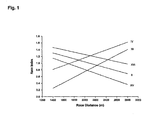
- the RIs are provided for races grouped into the same distance category and the number of races included in each group is provided in the No. races column. RIs can also be measured for individual races. There are clear differences between the types in their RIs at different distances. Some types tend to become more effective at longer distances and others at shorter. The patterns of these stamina preferences vary according to the age group in question.
- Table 5 shows statistical evaluation results of the effect of race distance on RI for each type. A number of strong correlations are observed at all ages. In numerous instances there are also significant linear regressions provided, illustrating a real effect of distance of race on the relative racing success of horses from many of the genetic type groupings. The effects are more pronounced at 3yo where the majority of races are run with horses carrying level weights. Use of Quadratic regressions also indicates that some genetic types have significant performance peaks in the middle distance ranges at all ages.
- COM 1, 2 and 3 represent combinations of VII/VIII, VI/XV/XVII and VI/XV/XVI/XVII respectively.
- Table 6 shows the RIs for each variant at each of the gene loci examined. This is shown for races grouped according to distance and over each age group but the same effect is seen when races are considered individually.
- Table 7 provides statistical evaluation and again shows that the distance potential of horses carrying specific gene variants may vary. For example, the negative correlation in RI vs. race distance occurring in horses carrying the C variant at the ATPase6 gene is highly significant. This may, in part explain the negative correlation also seen for the genetic haplotypes carrying this variant (e.g. III and XV). Combinations of specific alleles enhance the strength of the correlations and linear and quadratic regressions relating genetic type to stamina potential.
- Table 8 shows how mean Race Index of each genetic type changes with age and the relevant correlations describing this are also presented. It is clear that racing effectiveness is age dependent and many of the correlations are significant. Similar effects can be seen for the relationship between specific gene variants and stamina potential over time.
- Table 9 presents information relating to the change in stamina bias of the genetic types at the different age groups. It is clear that some genetic types have their stamina biases at 2yo reinforced at older ages, some level off and others are reversed.
- EXAMPLE 4 APPLICATION OF HAPLOTYPE, VARIANT AND RACE INDEX DATA TO BREEDING PROGRAMMES.
- Tests can be suitably modified for inclusion into a micro-array or chip based system based on identified SNP variation within these mitochondrial genes.
- the mtDNA variation in related non-Thoroughbred breeds indicates which mtDNA types may have been selected for performance. This will to help identify the respiratory complex genes with the greatest influence and provide a genetic test capable of distinguishing the most efficient chromosomal complementing genes for the mtDNA variant carried by a specific horse.
- a microarray based system can be used to rapidly identify important variants of mtDNA complex genes carried by a horse.
- EXAMPLE 5 APPLICATION OF HAPLOTYPE, VARIANT AND RACE INDEX DATA TO GAMBLING (BETTING, LAYING AND ODDS SETTING).
- Race Indices, haplotype variation and variant variation are shown as complementary tools for the assessment of horses' racing ability and stamina attributes.
- Table 11 illustrates the results of such application for a number of races (for which specific RIs have been calculated for each type). Bets are shown as representing the potential to lay horses (bet against them winning or achieving a place), bet on them to win and bet on them to place. In 11 out of 13 cases a successful outcome (positive P/L) resulted. The RIs for each of the horses for that particular race, based on historical data, is indicated. All of the horses bet on to win had good RIs and that which was laid carried a poor score for that particular race.
- Database products according to the invention would be particularly useful to the betting industry prior to the start of a racing season or during ante-post or 'big race' odds composition stages.
- the mitochondrial DNA (mtDNA) molecule carrying genes encoding for respiratory chain enzymes, is a candidate for demonstrating associations between genotype and athletic performance in mammalian species.
- mtDNA mitochondrial DNA
- variation at 7 mitochondrial loci has been implicated in influencing fitness and performance characteristics (Dionne et al., 1993; Perusse et al., 2003).
- thoroughbred horses are selected for racing ability, there have not been any previous reported associations between genotypes and racecourse performance.
- the multi-factorial nature of the inheritance of racing ability is an obvious complicating factor.
- mitochondrial gene variation may represent a measurable component contributing to performance variability.
- SSCP Single Strand Conformational Polymorphism
- Types II, III and XV carrying the same D-loop variant 'B', could be distinguished through variation at the MTATP6 and MTND5 loci.
- horses carrying the same functional gene variants sometimes possessed different D-loop versions.
- haplotypes with negative RI/stamina correlations are similar in terms of the component variants at the different loci.
- Their functional gene variants are the same, except Type II, which differs only at the MTND5 locus.
- r 0.2891
- 'B' a unique variant
- MTATP6 locus a unique variant that has a unique D-loop variant
- Type I has unique variants at the MTND2 and MTND4 locus. At all other loci it is the same as Type IX, which has a slight negative correlation of RI vs. distance.
- Type XI has a unique allele at the MTND5 locus but is otherwise similar to haplotypes showing a range of negative and positive, non-significant, correlations and regressions.
- DNA samples which had been extracted from white blood cells using a range of non-phenol based techniques, were selected from our collection.
- the DNA had been stored in 10mM Tris HCL/1mM EDTA buffer at -20°C.
- Non-thoroughbreds could be categorised into two groups: old breeds that existed prior to the formal instigation of the thoroughbred which consisted of 21 Polish Tarpans, 23 Mongolian riding horses and 22 Peruvian Paso horses; a relatively new breed arising as a result of cross breeding with the thoroughbred consisting of 56 Irish Draught horses.
- Primer design (Table 12) was based on a previously reported sequence (Xu & Arnason, 1994). Primer positions were chosen to provide as much coverage as possible at each locus without diminishing the effectiveness of SSCP analysis. 17 loci were covered, including those of 13 protein-encoding genes, the D-Loop and 12S rRNA. Two primer pairs were used to provide amplification of the large 16S rRNA locus in order to describe variation. For haplotyping purposes, variation at these two positions was combined
- PCR reactions were carried out in 0.2 ml reaction tubes in a volume of 20 ⁇ l containing reaction buffer (10mM Tris-HCL, pH 8.0, 50mM KCL, 3.75 mM MgCl), 0.2 mM dNTPs, 0.5 pmol ⁇ l-1 of each primer, 0.025 U ⁇ l-1 Taq polymerase and 5 ng ⁇ l-1 DNA template.
- SSCP analysis was carried out by denaturing PCR products by heating at 95°C for 10 min, followed by immediate placement on ice. Products were assessed for polymorphisms by running the denatured DNA on 10 % polyacrylamide, 5 % glycerol, 0.5xTBE gels as described by Kukita et al (1997). The gels were run at 0.6 V h-1 ⁇ 100bp and stained by silver staining (Caetano-Anolles et al., 1991). Clear SSCP patterns were produced for all detectable variants. Subject to confirmation by sequencing, newly detected SSCP variants were named alphabetically in order of detection.
- Sequencing was performed using an Applied Biosystems ABI PRISM 377 sequencer/genotyper using the recommended protocol and labelling. PCR amplification products were cleaned for sequencing using Charges witch PCR clean-up kits (DNA Research Instruments). 2ul of PCR product was added to 18ul of water and sequencing of the regions was carried out using the forward and reverse primers in both directions. Sequences were analysed using BioEdit (Hall, 1999). Partial CDS sequences for these loci have been submitted to GenBank.
- the pedigree records kept for the thoroughbred are unparalleled in detail by any other breed or domestic species.
- the population is genetically finite and a restricted studbook has been employed since 1791.
- Table 10 Example of stallion/mare mating scheme incorporating a score based on mtDNA haplotype commonality Table 10 Mare TYPE DI at 8f RI at 8f RI correl. at 3yo Orby's Girl VIII 1.25 1.36 Pref.
Landscapes
- Chemical & Material Sciences (AREA)
- Life Sciences & Earth Sciences (AREA)
- Proteomics, Peptides & Aminoacids (AREA)
- Organic Chemistry (AREA)
- Analytical Chemistry (AREA)
- Zoology (AREA)
- Wood Science & Technology (AREA)
- Health & Medical Sciences (AREA)
- Engineering & Computer Science (AREA)
- Microbiology (AREA)
- Immunology (AREA)
- Molecular Biology (AREA)
- Biotechnology (AREA)
- Biophysics (AREA)
- Physics & Mathematics (AREA)
- Biochemistry (AREA)
- Bioinformatics & Cheminformatics (AREA)
- General Engineering & Computer Science (AREA)
- General Health & Medical Sciences (AREA)
- Genetics & Genomics (AREA)
- Measuring Or Testing Involving Enzymes Or Micro-Organisms (AREA)
Claims (18)
- Prozess zum Ermitteln oder Voraussagen einer sportlichen Leistungsfähigkeit von Pferden, umfassend die Analyse des Vorliegens, der Verteilung oder der Expression von einer oder mehreren Nukleotidsequenzvarianten oder einem Satz von Nukleotidsequenzvarianten, die einen Haplotyp repräsentieren, der mit sportlicher Leistungsfähigkeit assoziiert ist, wobei die Varianten mitochondriale Nukleotidsequenzvarianten und/oder chromosomale Nukleotidsequenzvarianten umfassen, die in der Lage sind, die mitochondrialen Nukleotidsequenzvarianten zu ergänzen, wobei die Varianten aus der Gruppe ausgewählt sind, die aus NADH-Dehydrogenase 2, NADH-Dehydrogenase 4, NADH-Dehydrogenase 4L, NADH-Dehydrogenase 5, Zytochromoxidase I, Zytochromoxidase II, ATPase 6, Zytochrom B, rRNA 16S-1, rRNA 16S-2, rRNA 12S und D-Loop-Varianten besteht, wobei die Varianten zu Haplotypen beitragen oder Haplotypen repräsentieren, die aus der Gruppe ausgewählt sind, die aus den Typen I - XVII besteht, die in Tabelle 1 aufgeführt sind.
- Prozess nach Anspruch 1, wobei die eine oder mehreren Nukleotidsequenzvarianten Sequenzen umfassen, die zwischen Nukleinsäureprimerpaaren liegen, wobei die Nukleinsäureprimer aus der Gruppe ausgewählt sind, die aus SEQ-ID-NUMMERN 1-36 besteht.
- Prozess nach Anspruch 1, wobei die eine oder mehreren Nukleotidsequenzvarianten aus einer oder mehreren der Gruppe ausgewählt sind, die aus SEQ-ID-NUMMERN 37-75 besteht.
- Prozess nach einem der vorhergehenden Ansprüche, wobei der Sport Rennsport ist.
- Prozess nach einem der vorhergehenden Ansprüche, wobei die Leistungsfähigkeit sich auf Geschwindigkeit, Ausdauer, optimale Rennstrecke oder Frühreife hinsichtlich des Rennalters bezieht.
- Prozess nach einem der vorhergehenden Ansprüche, wobei die Pferde aus Vollblütern, Standardbred und Trabern ausgewählt sind.
- Prozess nach einem der vorhergehenden Ansprüche, wobei die Nukleotidsequenzvarianten durch einen Analyseschritt ermittelt werden, umfassend die Amplifikation der Nukleotidsequenzvarianten mittels PCR unter Verwendung von einem oder mehreren der Nukleinsäureprimer, die aus der Gruppe ausgewählt sind, die aus SEQ-ID-NUMMERN 1-36 besteht.
- Verwendung eines Haplotyps, der aus den Typen I - XVII ausgewählt ist, die in Tabelle 1 aufgeführt sind, zur Ermittlung der sportlichen Fähigkeit von Pferden.
- Verwendung eines Haplotyps, der aus einem der Typen I - XVII ausgewählt ist, die in Tabelle 1 aufgeführt sind, zum Training.
- Kit zur Verwendung In dem Prozess nach einem der Ansprüche 1 bis 7, umfassend einen oder mehrere Nukleinsäureprimer, die aus der Gruppe ausgewählt sind, die aus SEQ-ID-NUMMERN 1-36 besteht, zur Ermittlung des Haplotyps von Pferden, wobei der Haplotyp aus der Gruppe ausgewählt ist, die aus den Typen I - XVII besteht, die in Tabelle 1 aufgeführt sind.
- Kit nach Anspruch 10, wobei der eine oder die mehreren Nukleinsäureprimer in der Lage sind, eine oder mehrere Nukleotidsequenzvarianten zu amplifizieren, die aus der Gruppe ausgewählt sind, die aus SEQ-ID-NUMMERN 37-75 besteht.
- Kit nach Ansprüchen 10 oder 11, das ein Microarray umfasst.
- Verwendung eines Prozesses nach einem der Ansprüche 1 bis 7 bei der Organisation oder Reorganisation von Zuchtbüchern oder Abstammungsdatenbanken oder bei der Verifizierung der Abstammung.
- Verwendung eines Prozesses nach einem der Ansprüche 1 bis 7 bei einem Typisierungssystem für von der Mutter vererbte, extrachromosomale DNA beim Pferd.
- Verwendung eines Prozesses nach einem der Ansprüche 1 bis 7 bei der Untersuchung der Pferdephysiologie.
- Verwendung eines Prozesses nach einem der Ansprüche 1 bis 7 bei der Untersuchung der Komplementierung zwischen Atmungskomplexgenen, die auf den Chromosomen getragen werden, und denen, die auf mtDNA getragen werden, und anderen genetischen Wechselwirkungen, um positive Ergebnisse zu erkennen, die zu überlegener Energiefreisetzung oder anderen Merkmalen führen oder beitragen, die sich auf sportliche Leistungsfähigkeit auswirken.
- Verwendung eines Prozesses nach einem der Ansprüche 1 bis 7 zum Rangordnen des genetischen Profils eines Pferd, einer Gruppe von Pferden, oder zum Voraussagen des relativen Ergebnisses von Rennen unter Beteiligung mehrerer Pferden, umfassend das Messen oder Schätzen des Haplotyps und optional das Messen oder Schätzen des Vorliegens, der Verteilung oder differenziellen Expression von einer oder mehreren Nukleotidsequenzvarianten, und das Anwenden der sich ergebenden Analyse zum Rangordnen der Versuchstiere entsprechend der bevorzugten Rennklasse oder Rennstrecke.
- Verwendung nach Anspruch 17, wobei ein Index anhand des Prozentsatzes des relevanten Typs berechnet wird, der in Verbindung mit der Häufigkeit dieses Typs in der relevanten Population steht.
Applications Claiming Priority (3)
| Application Number | Priority Date | Filing Date | Title |
|---|---|---|---|
| GB0414965A GB0414965D0 (en) | 2004-07-02 | 2004-07-02 | Novel products and processes |
| GB0418986A GB0418986D0 (en) | 2004-08-25 | 2004-08-25 | Novel products and processes |
| PCT/GB2005/002623 WO2006003436A1 (en) | 2004-07-02 | 2005-07-04 | Genetic analysis in racing animals |
Publications (2)
| Publication Number | Publication Date |
|---|---|
| EP1789580A1 EP1789580A1 (de) | 2007-05-30 |
| EP1789580B1 true EP1789580B1 (de) | 2014-03-12 |
Family
ID=35004336
Family Applications (1)
| Application Number | Title | Priority Date | Filing Date |
|---|---|---|---|
| EP05757406.3A Expired - Lifetime EP1789580B1 (de) | 2004-07-02 | 2005-07-04 | Genetische analyse in bei rennen eingesetzten tieren |
Country Status (4)
| Country | Link |
|---|---|
| US (1) | US20090156414A1 (de) |
| EP (1) | EP1789580B1 (de) |
| AU (1) | AU2005258948B2 (de) |
| WO (1) | WO2006003436A1 (de) |
Families Citing this family (12)
| Publication number | Priority date | Publication date | Assignee | Title |
|---|---|---|---|---|
| WO2009035792A1 (en) * | 2007-08-03 | 2009-03-19 | Melba Ketchum | Compositions, methods and systems for the simultaneous determination of parentage, identity, sex, genotype and/or phenotype and breed determination in animals |
| EP2352850B1 (de) | 2008-09-11 | 2014-03-19 | University College Dublin National University Of Ireland, Dublin | Verfahren zur vorhersage des leistungsvermögens von athleten |
| US20110262915A1 (en) | 2008-09-11 | 2011-10-27 | Emmeline Hill | Method for predicting the athletic performance potential of a subject |
| EA027258B1 (ru) | 2011-05-05 | 2017-07-31 | Капилет Джинетикс Аб | Способ прогнозирования стиля передвижения у лошади и применение указанного способа для отбора лошади для разведения |
| US9355329B2 (en) | 2011-05-09 | 2016-05-31 | Catherine G. McVey | Image analysis for determining characteristics of pairs of individuals |
| WO2012154841A2 (en) | 2011-05-09 | 2012-11-15 | Mcvey Catherine Grace | Image analysis for determining characteristics of animal and humans |
| US9098898B2 (en) | 2011-05-09 | 2015-08-04 | Catherine Grace McVey | Image analysis for determining characteristics of individuals |
| US9552637B2 (en) | 2011-05-09 | 2017-01-24 | Catherine G. McVey | Image analysis for determining characteristics of groups of individuals |
| CN102277442A (zh) * | 2011-09-08 | 2011-12-14 | 中国人民解放军第三军医大学第二附属医院 | 汉族人群线粒体dna单倍型检测引物阵列及制备方法和应用 |
| CN107699628A (zh) * | 2017-11-24 | 2018-02-16 | 福建海洋研究所 | 一种鉴别梅芳蛇鲻和花斑蛇鲻的分子标记引物及方法 |
| CN107699627A (zh) * | 2017-11-24 | 2018-02-16 | 国家海洋局第三海洋研究所 | 一种鉴别南极革首南极鱼的分子标记引物及方法 |
| CN119007813B (zh) * | 2024-09-29 | 2025-11-07 | 漳州片仔癀药业股份有限公司 | 一种基于mtDNA的高海拔饲养林麝的种源鉴定及遴选方法 |
Family Cites Families (3)
| Publication number | Priority date | Publication date | Assignee | Title |
|---|---|---|---|---|
| GB0111886D0 (en) * | 2001-05-15 | 2001-07-04 | Animal Health Trust | Genetic typing |
| US20030129630A1 (en) | 2001-10-17 | 2003-07-10 | Equigene Research Inc. | Genetic markers associated with desirable and undesirable traits in horses, methods of identifying and using such markers |
| AU2002351634A1 (en) * | 2001-12-28 | 2003-07-15 | Stackpole Limited | One way clutch |
-
2005
- 2005-07-04 EP EP05757406.3A patent/EP1789580B1/de not_active Expired - Lifetime
- 2005-07-04 WO PCT/GB2005/002623 patent/WO2006003436A1/en not_active Ceased
- 2005-07-04 AU AU2005258948A patent/AU2005258948B2/en not_active Ceased
- 2005-07-04 US US11/571,501 patent/US20090156414A1/en not_active Abandoned
Also Published As
| Publication number | Publication date |
|---|---|
| US20090156414A1 (en) | 2009-06-18 |
| AU2005258948B2 (en) | 2012-04-05 |
| EP1789580A1 (de) | 2007-05-30 |
| AU2005258948A1 (en) | 2006-01-12 |
| WO2006003436A1 (en) | 2006-01-12 |
Similar Documents
| Publication | Publication Date | Title |
|---|---|---|
| EP2352850B1 (de) | Verfahren zur vorhersage des leistungsvermögens von athleten | |
| AU2009284493A1 (en) | Methods for determining a breeding value based on a plurality of genetic markers | |
| JP2005538710A (ja) | 運動能力のためのactn3遺伝子型スクリーニング | |
| MX2008012026A (es) | Polimorfismos geneticos en el gen de hormona que libera corticotropina (crh) como marcadores para mejorar el registro de marmoleo de carne de res y/o profundidad de grasa subcutanea. | |
| US20030129630A1 (en) | Genetic markers associated with desirable and undesirable traits in horses, methods of identifying and using such markers | |
| Harrison et al. | Mitochondrial DNA: An important female contribution to thoroughbred racehorse performance | |
| US8003318B2 (en) | Polymorphisms in growth hormone receptor, ghrelin, leptin, neuropeptide Y, and uncoupling protein 2 genes and their associations with measures of performance and carcass merit in beef cattle | |
| US20090024401A1 (en) | Involvement of a Novel Nuclear-Encoded Mitochondrial Poly(A) Polymerase PAPD1 in Extreme Obesity-Related Phenotypes in Mammals | |
| US20110295632A1 (en) | Systems And Methods For Predicting a Livestock Marketing Method | |
| AU2008324673A1 (en) | Association of single nucleotide polymorphisms in the CBFA2T1 and DECR1 genes with performance and carcass merit of beef cattle | |
| AU2006249318A1 (en) | Polymorphisms in fatty acid binding protein 4(FABP4) gene and their associations with measures of marbling and subcutaneous fat depth in beef cattle | |
| US7879552B2 (en) | Association of UQCRC1 SNPs with fat deposition and fatty acid composition | |
| US7662567B2 (en) | Polymorphisms in the urocortin 3 gene and their associations with marbling and subcutaneous fat depth in beef cattle | |
| US7955803B2 (en) | Urotensin 2 and its receptor as candidate genes for beef marbling score, ribeye area and fatty acid composition | |
| EP4308728A1 (de) | Biomarker zur konformation von reitmerkmalen bei pferden | |
| Raj | Evaluation of Genetic Merit of Buffaloes by Direct Sequencing | |
| Durkin | Mapping athletic performance related genes in the equine genome and a genome scan for superior athletic performance in the Thoroughbred | |
| AGRICULTURAE | Christy Garritsen |
Legal Events
| Date | Code | Title | Description |
|---|---|---|---|
| PUAI | Public reference made under article 153(3) epc to a published international application that has entered the european phase |
Free format text: ORIGINAL CODE: 0009012 |
|
| 17P | Request for examination filed |
Effective date: 20070202 |
|
| AK | Designated contracting states |
Kind code of ref document: A1 Designated state(s): AT BE BG CH CY CZ DE DK EE ES FI FR GB GR HU IE IS IT LI LT LU LV MC NL PL PT RO SE SI SK TR |
|
| 17Q | First examination report despatched |
Effective date: 20070718 |
|
| DAX | Request for extension of the european patent (deleted) | ||
| RAP1 | Party data changed (applicant data changed or rights of an application transferred) |
Owner name: THOROUGHBRED GENETICS LTD |
|
| GRAP | Despatch of communication of intention to grant a patent |
Free format text: ORIGINAL CODE: EPIDOSNIGR1 |
|
| GRAS | Grant fee paid |
Free format text: ORIGINAL CODE: EPIDOSNIGR3 |
|
| GRAP | Despatch of communication of intention to grant a patent |
Free format text: ORIGINAL CODE: EPIDOSNIGR1 |
|
| INTG | Intention to grant announced |
Effective date: 20130617 |
|
| GRAA | (expected) grant |
Free format text: ORIGINAL CODE: 0009210 |
|
| AK | Designated contracting states |
Kind code of ref document: B1 Designated state(s): AT BE BG CH CY CZ DE DK EE ES FI FR GB GR HU IE IS IT LI LT LU LV MC NL PL PT RO SE SI SK TR |
|
| REG | Reference to a national code |
Ref country code: GB Ref legal event code: FG4D |
|
| REG | Reference to a national code |
Ref country code: CH Ref legal event code: EP |
|
| REG | Reference to a national code |
Ref country code: AT Ref legal event code: REF Ref document number: 656373 Country of ref document: AT Kind code of ref document: T Effective date: 20140315 |
|
| REG | Reference to a national code |
Ref country code: IE Ref legal event code: FG4D |
|
| REG | Reference to a national code |
Ref country code: DE Ref legal event code: R096 Ref document number: 602005042935 Country of ref document: DE Effective date: 20140417 |
|
| REG | Reference to a national code |
Ref country code: NL Ref legal event code: VDEP Effective date: 20140312 |
|
| PG25 | Lapsed in a contracting state [announced via postgrant information from national office to epo] |
Ref country code: LT Free format text: LAPSE BECAUSE OF FAILURE TO SUBMIT A TRANSLATION OF THE DESCRIPTION OR TO PAY THE FEE WITHIN THE PRESCRIBED TIME-LIMIT Effective date: 20140312 |
|
| REG | Reference to a national code |
Ref country code: AT Ref legal event code: MK05 Ref document number: 656373 Country of ref document: AT Kind code of ref document: T Effective date: 20140312 |
|
| REG | Reference to a national code |
Ref country code: LT Ref legal event code: MG4D |
|
| PG25 | Lapsed in a contracting state [announced via postgrant information from national office to epo] |
Ref country code: SE Free format text: LAPSE BECAUSE OF FAILURE TO SUBMIT A TRANSLATION OF THE DESCRIPTION OR TO PAY THE FEE WITHIN THE PRESCRIBED TIME-LIMIT Effective date: 20140312 Ref country code: CY Free format text: LAPSE BECAUSE OF FAILURE TO SUBMIT A TRANSLATION OF THE DESCRIPTION OR TO PAY THE FEE WITHIN THE PRESCRIBED TIME-LIMIT Effective date: 20140312 Ref country code: FI Free format text: LAPSE BECAUSE OF FAILURE TO SUBMIT A TRANSLATION OF THE DESCRIPTION OR TO PAY THE FEE WITHIN THE PRESCRIBED TIME-LIMIT Effective date: 20140312 |
|
| PG25 | Lapsed in a contracting state [announced via postgrant information from national office to epo] |
Ref country code: LV Free format text: LAPSE BECAUSE OF FAILURE TO SUBMIT A TRANSLATION OF THE DESCRIPTION OR TO PAY THE FEE WITHIN THE PRESCRIBED TIME-LIMIT Effective date: 20140312 |
|
| PG25 | Lapsed in a contracting state [announced via postgrant information from national office to epo] |
Ref country code: RO Free format text: LAPSE BECAUSE OF FAILURE TO SUBMIT A TRANSLATION OF THE DESCRIPTION OR TO PAY THE FEE WITHIN THE PRESCRIBED TIME-LIMIT Effective date: 20140312 Ref country code: BG Free format text: LAPSE BECAUSE OF FAILURE TO SUBMIT A TRANSLATION OF THE DESCRIPTION OR TO PAY THE FEE WITHIN THE PRESCRIBED TIME-LIMIT Effective date: 20140612 Ref country code: NL Free format text: LAPSE BECAUSE OF FAILURE TO SUBMIT A TRANSLATION OF THE DESCRIPTION OR TO PAY THE FEE WITHIN THE PRESCRIBED TIME-LIMIT Effective date: 20140312 Ref country code: BE Free format text: LAPSE BECAUSE OF FAILURE TO SUBMIT A TRANSLATION OF THE DESCRIPTION OR TO PAY THE FEE WITHIN THE PRESCRIBED TIME-LIMIT Effective date: 20140312 Ref country code: IS Free format text: LAPSE BECAUSE OF FAILURE TO SUBMIT A TRANSLATION OF THE DESCRIPTION OR TO PAY THE FEE WITHIN THE PRESCRIBED TIME-LIMIT Effective date: 20140712 Ref country code: EE Free format text: LAPSE BECAUSE OF FAILURE TO SUBMIT A TRANSLATION OF THE DESCRIPTION OR TO PAY THE FEE WITHIN THE PRESCRIBED TIME-LIMIT Effective date: 20140312 Ref country code: CZ Free format text: LAPSE BECAUSE OF FAILURE TO SUBMIT A TRANSLATION OF THE DESCRIPTION OR TO PAY THE FEE WITHIN THE PRESCRIBED TIME-LIMIT Effective date: 20140312 |
|
| PG25 | Lapsed in a contracting state [announced via postgrant information from national office to epo] |
Ref country code: ES Free format text: LAPSE BECAUSE OF FAILURE TO SUBMIT A TRANSLATION OF THE DESCRIPTION OR TO PAY THE FEE WITHIN THE PRESCRIBED TIME-LIMIT Effective date: 20140312 Ref country code: AT Free format text: LAPSE BECAUSE OF FAILURE TO SUBMIT A TRANSLATION OF THE DESCRIPTION OR TO PAY THE FEE WITHIN THE PRESCRIBED TIME-LIMIT Effective date: 20140312 Ref country code: PL Free format text: LAPSE BECAUSE OF FAILURE TO SUBMIT A TRANSLATION OF THE DESCRIPTION OR TO PAY THE FEE WITHIN THE PRESCRIBED TIME-LIMIT Effective date: 20140312 Ref country code: SK Free format text: LAPSE BECAUSE OF FAILURE TO SUBMIT A TRANSLATION OF THE DESCRIPTION OR TO PAY THE FEE WITHIN THE PRESCRIBED TIME-LIMIT Effective date: 20140312 |
|
| REG | Reference to a national code |
Ref country code: DE Ref legal event code: R097 Ref document number: 602005042935 Country of ref document: DE |
|
| PG25 | Lapsed in a contracting state [announced via postgrant information from national office to epo] |
Ref country code: PT Free format text: LAPSE BECAUSE OF FAILURE TO SUBMIT A TRANSLATION OF THE DESCRIPTION OR TO PAY THE FEE WITHIN THE PRESCRIBED TIME-LIMIT Effective date: 20140714 |
|
| PLBE | No opposition filed within time limit |
Free format text: ORIGINAL CODE: 0009261 |
|
| STAA | Information on the status of an ep patent application or granted ep patent |
Free format text: STATUS: NO OPPOSITION FILED WITHIN TIME LIMIT |
|
| PG25 | Lapsed in a contracting state [announced via postgrant information from national office to epo] |
Ref country code: DK Free format text: LAPSE BECAUSE OF FAILURE TO SUBMIT A TRANSLATION OF THE DESCRIPTION OR TO PAY THE FEE WITHIN THE PRESCRIBED TIME-LIMIT Effective date: 20140312 |
|
| REG | Reference to a national code |
Ref country code: DE Ref legal event code: R119 Ref document number: 602005042935 Country of ref document: DE |
|
| 26N | No opposition filed |
Effective date: 20141215 |
|
| PG25 | Lapsed in a contracting state [announced via postgrant information from national office to epo] |
Ref country code: LU Free format text: LAPSE BECAUSE OF FAILURE TO SUBMIT A TRANSLATION OF THE DESCRIPTION OR TO PAY THE FEE WITHIN THE PRESCRIBED TIME-LIMIT Effective date: 20140704 |
|
| REG | Reference to a national code |
Ref country code: CH Ref legal event code: PL |
|
| REG | Reference to a national code |
Ref country code: DE Ref legal event code: R097 Ref document number: 602005042935 Country of ref document: DE Effective date: 20141215 |
|
| PG25 | Lapsed in a contracting state [announced via postgrant information from national office to epo] |
Ref country code: IT Free format text: LAPSE BECAUSE OF FAILURE TO SUBMIT A TRANSLATION OF THE DESCRIPTION OR TO PAY THE FEE WITHIN THE PRESCRIBED TIME-LIMIT Effective date: 20140312 |
|
| PG25 | Lapsed in a contracting state [announced via postgrant information from national office to epo] |
Ref country code: CH Free format text: LAPSE BECAUSE OF NON-PAYMENT OF DUE FEES Effective date: 20140731 Ref country code: LI Free format text: LAPSE BECAUSE OF NON-PAYMENT OF DUE FEES Effective date: 20140731 Ref country code: DE Free format text: LAPSE BECAUSE OF NON-PAYMENT OF DUE FEES Effective date: 20150203 |
|
| REG | Reference to a national code |
Ref country code: DE Ref legal event code: R119 Ref document number: 602005042935 Country of ref document: DE Effective date: 20150203 |
|
| PG25 | Lapsed in a contracting state [announced via postgrant information from national office to epo] |
Ref country code: SI Free format text: LAPSE BECAUSE OF FAILURE TO SUBMIT A TRANSLATION OF THE DESCRIPTION OR TO PAY THE FEE WITHIN THE PRESCRIBED TIME-LIMIT Effective date: 20140312 |
|
| REG | Reference to a national code |
Ref country code: FR Ref legal event code: PLFP Year of fee payment: 11 |
|
| PG25 | Lapsed in a contracting state [announced via postgrant information from national office to epo] |
Ref country code: MC Free format text: LAPSE BECAUSE OF FAILURE TO SUBMIT A TRANSLATION OF THE DESCRIPTION OR TO PAY THE FEE WITHIN THE PRESCRIBED TIME-LIMIT Effective date: 20140312 |
|
| PGFP | Annual fee paid to national office [announced via postgrant information from national office to epo] |
Ref country code: FR Payment date: 20160131 Year of fee payment: 11 |
|
| PG25 | Lapsed in a contracting state [announced via postgrant information from national office to epo] |
Ref country code: GR Free format text: LAPSE BECAUSE OF FAILURE TO SUBMIT A TRANSLATION OF THE DESCRIPTION OR TO PAY THE FEE WITHIN THE PRESCRIBED TIME-LIMIT Effective date: 20140613 |
|
| PG25 | Lapsed in a contracting state [announced via postgrant information from national office to epo] |
Ref country code: TR Free format text: LAPSE BECAUSE OF FAILURE TO SUBMIT A TRANSLATION OF THE DESCRIPTION OR TO PAY THE FEE WITHIN THE PRESCRIBED TIME-LIMIT Effective date: 20140312 Ref country code: HU Free format text: LAPSE BECAUSE OF FAILURE TO SUBMIT A TRANSLATION OF THE DESCRIPTION OR TO PAY THE FEE WITHIN THE PRESCRIBED TIME-LIMIT; INVALID AB INITIO Effective date: 20050704 |
|
| PG25 | Lapsed in a contracting state [announced via postgrant information from national office to epo] |
Ref country code: FR Free format text: LAPSE BECAUSE OF NON-PAYMENT OF DUE FEES Effective date: 20160801 |
|
| REG | Reference to a national code |
Ref country code: FR Ref legal event code: ST Effective date: 20170331 |
|
| PGFP | Annual fee paid to national office [announced via postgrant information from national office to epo] |
Ref country code: GB Payment date: 20230131 Year of fee payment: 18 |
|
| GBPC | Gb: european patent ceased through non-payment of renewal fee |
Effective date: 20230704 |
|
| PGFP | Annual fee paid to national office [announced via postgrant information from national office to epo] |
Ref country code: IE Payment date: 20240103 Year of fee payment: 19 |
|
| PG25 | Lapsed in a contracting state [announced via postgrant information from national office to epo] |
Ref country code: GB Free format text: LAPSE BECAUSE OF NON-PAYMENT OF DUE FEES Effective date: 20230704 |
|
| PG25 | Lapsed in a contracting state [announced via postgrant information from national office to epo] |
Ref country code: IE Free format text: LAPSE BECAUSE OF NON-PAYMENT OF DUE FEES Effective date: 20240704 |