EP2349472B1 - Bioresorbierbare batterie und relevante verfahren - Google Patents
Bioresorbierbare batterie und relevante verfahren Download PDFInfo
- Publication number
- EP2349472B1 EP2349472B1 EP09793282.6A EP09793282A EP2349472B1 EP 2349472 B1 EP2349472 B1 EP 2349472B1 EP 09793282 A EP09793282 A EP 09793282A EP 2349472 B1 EP2349472 B1 EP 2349472B1
- Authority
- EP
- European Patent Office
- Prior art keywords
- biosorbable
- anode
- cathode
- medical device
- separation element
- Prior art date
- Legal status (The legal status is an assumption and is not a legal conclusion. Google has not performed a legal analysis and makes no representation as to the accuracy of the status listed.)
- Not-in-force
Links
- 238000000034 method Methods 0.000 title claims description 7
- 238000000926 separation method Methods 0.000 claims description 37
- 239000000463 material Substances 0.000 claims description 35
- 239000010406 cathode material Substances 0.000 claims description 22
- 229920000642 polymer Polymers 0.000 claims description 22
- 150000002500 ions Chemical class 0.000 claims description 20
- 239000004020 conductor Substances 0.000 claims description 19
- -1 polyoxymetallates Inorganic materials 0.000 claims description 19
- 239000011777 magnesium Substances 0.000 claims description 16
- 239000010405 anode material Substances 0.000 claims description 15
- 239000011159 matrix material Substances 0.000 claims description 15
- 231100000252 nontoxic Toxicity 0.000 claims description 15
- 230000003000 nontoxic effect Effects 0.000 claims description 15
- XEEYBQQBJWHFJM-UHFFFAOYSA-N Iron Chemical compound [Fe] XEEYBQQBJWHFJM-UHFFFAOYSA-N 0.000 claims description 13
- 229910052751 metal Inorganic materials 0.000 claims description 13
- 239000002184 metal Substances 0.000 claims description 13
- 239000007795 chemical reaction product Substances 0.000 claims description 12
- FYYHWMGAXLPEAU-UHFFFAOYSA-N Magnesium Chemical compound [Mg] FYYHWMGAXLPEAU-UHFFFAOYSA-N 0.000 claims description 10
- 229910052749 magnesium Inorganic materials 0.000 claims description 10
- NUJOXMJBOLGQSY-UHFFFAOYSA-N manganese dioxide Chemical compound O=[Mn]=O NUJOXMJBOLGQSY-UHFFFAOYSA-N 0.000 claims description 10
- 230000009467 reduction Effects 0.000 claims description 10
- 230000015572 biosynthetic process Effects 0.000 claims description 8
- 238000006056 electrooxidation reaction Methods 0.000 claims description 8
- 238000012546 transfer Methods 0.000 claims description 8
- 238000004891 communication Methods 0.000 claims description 6
- 229910052742 iron Inorganic materials 0.000 claims description 6
- 229920000747 poly(lactic acid) Polymers 0.000 claims description 6
- 229920001610 polycaprolactone Polymers 0.000 claims description 6
- 239000004632 polycaprolactone Substances 0.000 claims description 6
- 150000003839 salts Chemical class 0.000 claims description 6
- 229920001577 copolymer Polymers 0.000 claims description 5
- 229910021645 metal ion Inorganic materials 0.000 claims description 5
- 229920003171 Poly (ethylene oxide) Polymers 0.000 claims description 4
- 230000000747 cardiac effect Effects 0.000 claims description 4
- 238000000576 coating method Methods 0.000 claims description 4
- GEYXPJBPASPPLI-UHFFFAOYSA-N manganese(III) oxide Inorganic materials O=[Mn]O[Mn]=O GEYXPJBPASPPLI-UHFFFAOYSA-N 0.000 claims description 4
- 238000004519 manufacturing process Methods 0.000 claims description 4
- 229910044991 metal oxide Inorganic materials 0.000 claims description 4
- 150000004706 metal oxides Chemical class 0.000 claims description 4
- 230000033764 rhythmic process Effects 0.000 claims description 4
- 239000011734 sodium Substances 0.000 claims description 4
- 229910052708 sodium Inorganic materials 0.000 claims description 4
- 229910000640 Fe alloy Inorganic materials 0.000 claims description 3
- DGAQECJNVWCQMB-PUAWFVPOSA-M Ilexoside XXIX Chemical compound C[C@@H]1CC[C@@]2(CC[C@@]3(C(=CC[C@H]4[C@]3(CC[C@@H]5[C@@]4(CC[C@@H](C5(C)C)OS(=O)(=O)[O-])C)C)[C@@H]2[C@]1(C)O)C)C(=O)O[C@H]6[C@@H]([C@H]([C@@H]([C@H](O6)CO)O)O)O.[Na+] DGAQECJNVWCQMB-PUAWFVPOSA-M 0.000 claims description 3
- 229910000861 Mg alloy Inorganic materials 0.000 claims description 3
- 229910003174 MnOOH Inorganic materials 0.000 claims description 3
- 229910052782 aluminium Inorganic materials 0.000 claims description 3
- XAGFODPZIPBFFR-UHFFFAOYSA-N aluminium Chemical compound [Al] XAGFODPZIPBFFR-UHFFFAOYSA-N 0.000 claims description 3
- 239000011248 coating agent Substances 0.000 claims description 3
- 229920006237 degradable polymer Polymers 0.000 claims description 3
- 238000010292 electrical insulation Methods 0.000 claims description 3
- JEIPFZHSYJVQDO-UHFFFAOYSA-N iron(III) oxide Inorganic materials O=[Fe]O[Fe]=O JEIPFZHSYJVQDO-UHFFFAOYSA-N 0.000 claims description 3
- 229910001507 metal halide Inorganic materials 0.000 claims description 3
- 150000005309 metal halides Chemical class 0.000 claims description 3
- 229910021518 metal oxyhydroxide Inorganic materials 0.000 claims description 3
- 229910001463 metal phosphate Inorganic materials 0.000 claims description 3
- 229910052976 metal sulfide Inorganic materials 0.000 claims description 3
- 150000003467 sulfuric acid derivatives Chemical class 0.000 claims description 3
- HCHKCACWOHOZIP-UHFFFAOYSA-N Zinc Chemical compound [Zn] HCHKCACWOHOZIP-UHFFFAOYSA-N 0.000 claims description 2
- 229910052739 hydrogen Inorganic materials 0.000 claims description 2
- 239000001257 hydrogen Substances 0.000 claims description 2
- 229910000000 metal hydroxide Inorganic materials 0.000 claims description 2
- 150000004692 metal hydroxides Chemical class 0.000 claims description 2
- 229910052725 zinc Inorganic materials 0.000 claims description 2
- 239000011701 zinc Substances 0.000 claims description 2
- 230000008878 coupling Effects 0.000 claims 3
- 238000010168 coupling process Methods 0.000 claims 3
- 238000005859 coupling reaction Methods 0.000 claims 3
- 229910000838 Al alloy Inorganic materials 0.000 claims 1
- 229910001297 Zn alloy Inorganic materials 0.000 claims 1
- 239000008151 electrolyte solution Substances 0.000 claims 1
- 239000003792 electrolyte Substances 0.000 description 14
- FAPWRFPIFSIZLT-UHFFFAOYSA-M Sodium chloride Chemical compound [Na+].[Cl-] FAPWRFPIFSIZLT-UHFFFAOYSA-M 0.000 description 8
- 238000006243 chemical reaction Methods 0.000 description 7
- 239000011149 active material Substances 0.000 description 6
- 150000001875 compounds Chemical class 0.000 description 6
- 210000003722 extracellular fluid Anatomy 0.000 description 6
- 239000000243 solution Substances 0.000 description 6
- 239000000203 mixture Substances 0.000 description 5
- TWRXJAOTZQYOKJ-UHFFFAOYSA-L Magnesium chloride Chemical compound [Mg+2].[Cl-].[Cl-] TWRXJAOTZQYOKJ-UHFFFAOYSA-L 0.000 description 4
- JLVVSXFLKOJNIY-UHFFFAOYSA-N Magnesium ion Chemical compound [Mg+2] JLVVSXFLKOJNIY-UHFFFAOYSA-N 0.000 description 4
- 210000004027 cell Anatomy 0.000 description 4
- 238000001727 in vivo Methods 0.000 description 4
- 229910001425 magnesium ion Inorganic materials 0.000 description 4
- 230000036647 reaction Effects 0.000 description 4
- 239000011780 sodium chloride Substances 0.000 description 4
- 210000001519 tissue Anatomy 0.000 description 4
- HBBGRARXTFLTSG-UHFFFAOYSA-N Lithium ion Chemical compound [Li+] HBBGRARXTFLTSG-UHFFFAOYSA-N 0.000 description 3
- 230000000712 assembly Effects 0.000 description 3
- 238000000429 assembly Methods 0.000 description 3
- 238000003487 electrochemical reaction Methods 0.000 description 3
- 238000002513 implantation Methods 0.000 description 3
- 229910001416 lithium ion Inorganic materials 0.000 description 3
- 238000007726 management method Methods 0.000 description 3
- 150000002739 metals Chemical class 0.000 description 3
- 150000002894 organic compounds Chemical class 0.000 description 3
- 229920000128 polypyrrole Polymers 0.000 description 3
- 230000000638 stimulation Effects 0.000 description 3
- XLYOFNOQVPJJNP-UHFFFAOYSA-N water Substances O XLYOFNOQVPJJNP-UHFFFAOYSA-N 0.000 description 3
- OYPRJOBELJOOCE-UHFFFAOYSA-N Calcium Chemical compound [Ca] OYPRJOBELJOOCE-UHFFFAOYSA-N 0.000 description 2
- 108010074122 Ferredoxins Proteins 0.000 description 2
- WCUXLLCKKVVCTQ-UHFFFAOYSA-M Potassium chloride Chemical compound [Cl-].[K+] WCUXLLCKKVVCTQ-UHFFFAOYSA-M 0.000 description 2
- 230000003213 activating effect Effects 0.000 description 2
- 150000008064 anhydrides Chemical class 0.000 description 2
- WMWLMWRWZQELOS-UHFFFAOYSA-N bismuth(iii) oxide Chemical compound O=[Bi]O[Bi]=O WMWLMWRWZQELOS-UHFFFAOYSA-N 0.000 description 2
- 239000011575 calcium Substances 0.000 description 2
- 229910052791 calcium Inorganic materials 0.000 description 2
- 235000014633 carbohydrates Nutrition 0.000 description 2
- 150000001720 carbohydrates Chemical class 0.000 description 2
- 238000009125 cardiac resynchronization therapy Methods 0.000 description 2
- 239000000919 ceramic Substances 0.000 description 2
- 239000013626 chemical specie Substances 0.000 description 2
- 238000003776 cleavage reaction Methods 0.000 description 2
- 238000007599 discharging Methods 0.000 description 2
- 230000002255 enzymatic effect Effects 0.000 description 2
- 150000002148 esters Chemical class 0.000 description 2
- 125000000623 heterocyclic group Chemical group 0.000 description 2
- WBJZTOZJJYAKHQ-UHFFFAOYSA-K iron(3+) phosphate Chemical compound [Fe+3].[O-]P([O-])([O-])=O WBJZTOZJJYAKHQ-UHFFFAOYSA-K 0.000 description 2
- 229910000399 iron(III) phosphate Inorganic materials 0.000 description 2
- 229910001629 magnesium chloride Inorganic materials 0.000 description 2
- IPJKJLXEVHOKSE-UHFFFAOYSA-L manganese dihydroxide Chemical compound [OH-].[OH-].[Mn+2] IPJKJLXEVHOKSE-UHFFFAOYSA-L 0.000 description 2
- 238000012986 modification Methods 0.000 description 2
- 230000004048 modification Effects 0.000 description 2
- 230000000926 neurological effect Effects 0.000 description 2
- 230000037361 pathway Effects 0.000 description 2
- 229920001223 polyethylene glycol Polymers 0.000 description 2
- 229920002643 polyglutamic acid Polymers 0.000 description 2
- 150000004032 porphyrins Chemical class 0.000 description 2
- 229910052700 potassium Inorganic materials 0.000 description 2
- 230000008569 process Effects 0.000 description 2
- 230000007017 scission Effects 0.000 description 2
- 239000000126 substance Substances 0.000 description 2
- OKTJSMMVPCPJKN-UHFFFAOYSA-N Carbon Chemical compound [C] OKTJSMMVPCPJKN-UHFFFAOYSA-N 0.000 description 1
- 102000016938 Catalase Human genes 0.000 description 1
- 108010053835 Catalase Proteins 0.000 description 1
- 229910002518 CoFe2O4 Inorganic materials 0.000 description 1
- 102000000634 Cytochrome c oxidase subunit IV Human genes 0.000 description 1
- 108090000365 Cytochrome-c oxidases Proteins 0.000 description 1
- 229910002588 FeOOH Inorganic materials 0.000 description 1
- 229910021578 Iron(III) chloride Inorganic materials 0.000 description 1
- 229910000857 LiTi2(PO4)3 Inorganic materials 0.000 description 1
- WHXSMMKQMYFTQS-UHFFFAOYSA-N Lithium Chemical compound [Li] WHXSMMKQMYFTQS-UHFFFAOYSA-N 0.000 description 1
- 108010063312 Metalloproteins Proteins 0.000 description 1
- 102000010750 Metalloproteins Human genes 0.000 description 1
- 229910016978 MnOx Inorganic materials 0.000 description 1
- 102000004316 Oxidoreductases Human genes 0.000 description 1
- 108090000854 Oxidoreductases Proteins 0.000 description 1
- 108700020962 Peroxidase Proteins 0.000 description 1
- 102000003992 Peroxidases Human genes 0.000 description 1
- ZLMJMSJWJFRBEC-UHFFFAOYSA-N Potassium Chemical compound [K] ZLMJMSJWJFRBEC-UHFFFAOYSA-N 0.000 description 1
- 239000002262 Schiff base Substances 0.000 description 1
- 150000004753 Schiff bases Chemical class 0.000 description 1
- NINIDFKCEFEMDL-UHFFFAOYSA-N Sulfur Chemical compound [S] NINIDFKCEFEMDL-UHFFFAOYSA-N 0.000 description 1
- 102000019197 Superoxide Dismutase Human genes 0.000 description 1
- 108010012715 Superoxide dismutase Proteins 0.000 description 1
- RTAQQCXQSZGOHL-UHFFFAOYSA-N Titanium Chemical compound [Ti] RTAQQCXQSZGOHL-UHFFFAOYSA-N 0.000 description 1
- 230000004913 activation Effects 0.000 description 1
- 230000006978 adaptation Effects 0.000 description 1
- 229910045601 alloy Inorganic materials 0.000 description 1
- 239000000956 alloy Substances 0.000 description 1
- 238000013459 approach Methods 0.000 description 1
- 239000007864 aqueous solution Substances 0.000 description 1
- 229910052797 bismuth Inorganic materials 0.000 description 1
- JCXGWMGPZLAOME-UHFFFAOYSA-N bismuth atom Chemical compound [Bi] JCXGWMGPZLAOME-UHFFFAOYSA-N 0.000 description 1
- AXCZMVOFGPJBDE-UHFFFAOYSA-L calcium dihydroxide Chemical compound [OH-].[OH-].[Ca+2] AXCZMVOFGPJBDE-UHFFFAOYSA-L 0.000 description 1
- 239000000920 calcium hydroxide Substances 0.000 description 1
- 229910001861 calcium hydroxide Inorganic materials 0.000 description 1
- 229910052799 carbon Inorganic materials 0.000 description 1
- 230000015556 catabolic process Effects 0.000 description 1
- 239000002131 composite material Substances 0.000 description 1
- 229920001795 coordination polymer Polymers 0.000 description 1
- 230000007797 corrosion Effects 0.000 description 1
- 238000005260 corrosion Methods 0.000 description 1
- 238000000354 decomposition reaction Methods 0.000 description 1
- 230000001419 dependent effect Effects 0.000 description 1
- 238000009792 diffusion process Methods 0.000 description 1
- 150000002019 disulfides Chemical class 0.000 description 1
- 238000012377 drug delivery Methods 0.000 description 1
- 230000009977 dual effect Effects 0.000 description 1
- KTWOOEGAPBSYNW-UHFFFAOYSA-N ferrocene Chemical compound [Fe+2].C=1C=C[CH-]C=1.C=1C=C[CH-]C=1 KTWOOEGAPBSYNW-UHFFFAOYSA-N 0.000 description 1
- 230000028993 immune response Effects 0.000 description 1
- PNDPGZBMCMUPRI-UHFFFAOYSA-N iodine Chemical compound II PNDPGZBMCMUPRI-UHFFFAOYSA-N 0.000 description 1
- RBTARNINKXHZNM-UHFFFAOYSA-K iron trichloride Chemical compound Cl[Fe](Cl)Cl RBTARNINKXHZNM-UHFFFAOYSA-K 0.000 description 1
- BAUYGSIQEAFULO-UHFFFAOYSA-L iron(2+) sulfate (anhydrous) Chemical compound [Fe+2].[O-]S([O-])(=O)=O BAUYGSIQEAFULO-UHFFFAOYSA-L 0.000 description 1
- AWKHTBXFNVGFRX-UHFFFAOYSA-K iron(2+);manganese(2+);phosphate Chemical class [Mn+2].[Fe+2].[O-]P([O-])([O-])=O AWKHTBXFNVGFRX-UHFFFAOYSA-K 0.000 description 1
- 229910000359 iron(II) sulfate Inorganic materials 0.000 description 1
- 229910052744 lithium Inorganic materials 0.000 description 1
- VTHJTEIRLNZDEV-UHFFFAOYSA-L magnesium dihydroxide Chemical compound [OH-].[OH-].[Mg+2] VTHJTEIRLNZDEV-UHFFFAOYSA-L 0.000 description 1
- 239000000347 magnesium hydroxide Substances 0.000 description 1
- 229910001862 magnesium hydroxide Inorganic materials 0.000 description 1
- 239000011572 manganese Substances 0.000 description 1
- TYTHZVVGVFAQHF-UHFFFAOYSA-N manganese(3+);oxygen(2-) Chemical group [O-2].[O-2].[O-2].[Mn+3].[Mn+3] TYTHZVVGVFAQHF-UHFFFAOYSA-N 0.000 description 1
- SQQMAOCOWKFBNP-UHFFFAOYSA-L manganese(II) sulfate Chemical compound [Mn+2].[O-]S([O-])(=O)=O SQQMAOCOWKFBNP-UHFFFAOYSA-L 0.000 description 1
- 229910000357 manganese(II) sulfate Inorganic materials 0.000 description 1
- 229910052960 marcasite Inorganic materials 0.000 description 1
- 230000007246 mechanism Effects 0.000 description 1
- 239000002905 metal composite material Substances 0.000 description 1
- 230000005012 migration Effects 0.000 description 1
- 238000013508 migration Methods 0.000 description 1
- 239000002114 nanocomposite Substances 0.000 description 1
- 239000002121 nanofiber Substances 0.000 description 1
- 229910000510 noble metal Inorganic materials 0.000 description 1
- 235000015097 nutrients Nutrition 0.000 description 1
- 239000010450 olivine Substances 0.000 description 1
- 229910052609 olivine Inorganic materials 0.000 description 1
- 229920000620 organic polymer Polymers 0.000 description 1
- 230000003647 oxidation Effects 0.000 description 1
- 238000007254 oxidation reaction Methods 0.000 description 1
- 229920000767 polyaniline Polymers 0.000 description 1
- 229920000123 polythiophene Polymers 0.000 description 1
- 239000011591 potassium Substances 0.000 description 1
- 239000001103 potassium chloride Substances 0.000 description 1
- 235000011164 potassium chloride Nutrition 0.000 description 1
- NIFIFKQPDTWWGU-UHFFFAOYSA-N pyrite Chemical compound [Fe+2].[S-][S-] NIFIFKQPDTWWGU-UHFFFAOYSA-N 0.000 description 1
- 229910052683 pyrite Inorganic materials 0.000 description 1
- 238000007634 remodeling Methods 0.000 description 1
- 238000009877 rendering Methods 0.000 description 1
- 229910052596 spinel Inorganic materials 0.000 description 1
- 239000011029 spinel Substances 0.000 description 1
- 229910052566 spinel group Inorganic materials 0.000 description 1
- 230000002269 spontaneous effect Effects 0.000 description 1
- 239000011593 sulfur Substances 0.000 description 1
- 229910052717 sulfur Inorganic materials 0.000 description 1
- 238000002560 therapeutic procedure Methods 0.000 description 1
- 239000010936 titanium Substances 0.000 description 1
- 229910052719 titanium Inorganic materials 0.000 description 1
- NWONKYPBYAMBJT-UHFFFAOYSA-L zinc sulfate Chemical compound [Zn+2].[O-]S([O-])(=O)=O NWONKYPBYAMBJT-UHFFFAOYSA-L 0.000 description 1
Images

Classifications
-
- A—HUMAN NECESSITIES
- A61—MEDICAL OR VETERINARY SCIENCE; HYGIENE
- A61N—ELECTROTHERAPY; MAGNETOTHERAPY; RADIATION THERAPY; ULTRASOUND THERAPY
- A61N1/00—Electrotherapy; Circuits therefor
- A61N1/18—Applying electric currents by contact electrodes
- A61N1/32—Applying electric currents by contact electrodes alternating or intermittent currents
- A61N1/36—Applying electric currents by contact electrodes alternating or intermittent currents for stimulation
- A61N1/372—Arrangements in connection with the implantation of stimulators
- A61N1/378—Electrical supply
-
- H—ELECTRICITY
- H01—ELECTRIC ELEMENTS
- H01M—PROCESSES OR MEANS, e.g. BATTERIES, FOR THE DIRECT CONVERSION OF CHEMICAL ENERGY INTO ELECTRICAL ENERGY
- H01M50/00—Constructional details or processes of manufacture of the non-active parts of electrochemical cells other than fuel cells, e.g. hybrid cells
- H01M50/10—Primary casings; Jackets or wrappings
- H01M50/102—Primary casings; Jackets or wrappings characterised by their shape or physical structure
- H01M50/103—Primary casings; Jackets or wrappings characterised by their shape or physical structure prismatic or rectangular
-
- H—ELECTRICITY
- H01—ELECTRIC ELEMENTS
- H01M—PROCESSES OR MEANS, e.g. BATTERIES, FOR THE DIRECT CONVERSION OF CHEMICAL ENERGY INTO ELECTRICAL ENERGY
- H01M50/00—Constructional details or processes of manufacture of the non-active parts of electrochemical cells other than fuel cells, e.g. hybrid cells
- H01M50/10—Primary casings; Jackets or wrappings
- H01M50/116—Primary casings; Jackets or wrappings characterised by the material
- H01M50/121—Organic material
-
- H—ELECTRICITY
- H01—ELECTRIC ELEMENTS
- H01M—PROCESSES OR MEANS, e.g. BATTERIES, FOR THE DIRECT CONVERSION OF CHEMICAL ENERGY INTO ELECTRICAL ENERGY
- H01M50/00—Constructional details or processes of manufacture of the non-active parts of electrochemical cells other than fuel cells, e.g. hybrid cells
- H01M50/40—Separators; Membranes; Diaphragms; Spacing elements inside cells
- H01M50/409—Separators, membranes or diaphragms characterised by the material
- H01M50/411—Organic material
- H01M50/414—Synthetic resins, e.g. thermoplastics or thermosetting resins
-
- H—ELECTRICITY
- H01—ELECTRIC ELEMENTS
- H01M—PROCESSES OR MEANS, e.g. BATTERIES, FOR THE DIRECT CONVERSION OF CHEMICAL ENERGY INTO ELECTRICAL ENERGY
- H01M6/00—Primary cells; Manufacture thereof
- H01M6/30—Deferred-action cells
- H01M6/32—Deferred-action cells activated through external addition of electrolyte or of electrolyte components
- H01M6/34—Immersion cells, e.g. sea-water cells
-
- H—ELECTRICITY
- H01—ELECTRIC ELEMENTS
- H01M—PROCESSES OR MEANS, e.g. BATTERIES, FOR THE DIRECT CONVERSION OF CHEMICAL ENERGY INTO ELECTRICAL ENERGY
- H01M2220/00—Batteries for particular applications
-
- H—ELECTRICITY
- H01—ELECTRIC ELEMENTS
- H01M—PROCESSES OR MEANS, e.g. BATTERIES, FOR THE DIRECT CONVERSION OF CHEMICAL ENERGY INTO ELECTRICAL ENERGY
- H01M4/00—Electrodes
- H01M4/02—Electrodes composed of, or comprising, active material
- H01M4/36—Selection of substances as active materials, active masses, active liquids
-
- H—ELECTRICITY
- H01—ELECTRIC ELEMENTS
- H01M—PROCESSES OR MEANS, e.g. BATTERIES, FOR THE DIRECT CONVERSION OF CHEMICAL ENERGY INTO ELECTRICAL ENERGY
- H01M4/00—Electrodes
- H01M4/02—Electrodes composed of, or comprising, active material
- H01M4/36—Selection of substances as active materials, active masses, active liquids
- H01M4/38—Selection of substances as active materials, active masses, active liquids of elements or alloys
-
- H—ELECTRICITY
- H01—ELECTRIC ELEMENTS
- H01M—PROCESSES OR MEANS, e.g. BATTERIES, FOR THE DIRECT CONVERSION OF CHEMICAL ENERGY INTO ELECTRICAL ENERGY
- H01M4/00—Electrodes
- H01M4/02—Electrodes composed of, or comprising, active material
- H01M4/36—Selection of substances as active materials, active masses, active liquids
- H01M4/48—Selection of substances as active materials, active masses, active liquids of inorganic oxides or hydroxides
- H01M4/50—Selection of substances as active materials, active masses, active liquids of inorganic oxides or hydroxides of manganese
-
- H—ELECTRICITY
- H01—ELECTRIC ELEMENTS
- H01M—PROCESSES OR MEANS, e.g. BATTERIES, FOR THE DIRECT CONVERSION OF CHEMICAL ENERGY INTO ELECTRICAL ENERGY
- H01M4/00—Electrodes
- H01M4/02—Electrodes composed of, or comprising, active material
- H01M4/36—Selection of substances as active materials, active masses, active liquids
- H01M4/48—Selection of substances as active materials, active masses, active liquids of inorganic oxides or hydroxides
- H01M4/52—Selection of substances as active materials, active masses, active liquids of inorganic oxides or hydroxides of nickel, cobalt or iron
-
- H—ELECTRICITY
- H01—ELECTRIC ELEMENTS
- H01M—PROCESSES OR MEANS, e.g. BATTERIES, FOR THE DIRECT CONVERSION OF CHEMICAL ENERGY INTO ELECTRICAL ENERGY
- H01M4/00—Electrodes
- H01M4/02—Electrodes composed of, or comprising, active material
- H01M4/36—Selection of substances as active materials, active masses, active liquids
- H01M4/58—Selection of substances as active materials, active masses, active liquids of inorganic compounds other than oxides or hydroxides, e.g. sulfides, selenides, tellurides, halogenides or LiCoFy; of polyanionic structures, e.g. phosphates, silicates or borates
- H01M4/5825—Oxygenated metallic salts or polyanionic structures, e.g. borates, phosphates, silicates, olivines
-
- H—ELECTRICITY
- H01—ELECTRIC ELEMENTS
- H01M—PROCESSES OR MEANS, e.g. BATTERIES, FOR THE DIRECT CONVERSION OF CHEMICAL ENERGY INTO ELECTRICAL ENERGY
- H01M4/00—Electrodes
- H01M4/02—Electrodes composed of, or comprising, active material
- H01M4/36—Selection of substances as active materials, active masses, active liquids
- H01M4/60—Selection of substances as active materials, active masses, active liquids of organic compounds
- H01M4/602—Polymers
-
- Y—GENERAL TAGGING OF NEW TECHNOLOGICAL DEVELOPMENTS; GENERAL TAGGING OF CROSS-SECTIONAL TECHNOLOGIES SPANNING OVER SEVERAL SECTIONS OF THE IPC; TECHNICAL SUBJECTS COVERED BY FORMER USPC CROSS-REFERENCE ART COLLECTIONS [XRACs] AND DIGESTS
- Y10—TECHNICAL SUBJECTS COVERED BY FORMER USPC
- Y10T—TECHNICAL SUBJECTS COVERED BY FORMER US CLASSIFICATION
- Y10T29/00—Metal working
- Y10T29/49—Method of mechanical manufacture
- Y10T29/49002—Electrical device making
- Y10T29/49108—Electric battery cell making
Definitions
- This disclosure relates generally to batteries and, more particularly, to batteries that are biosorbable when implanted in a subject, amongst other things.
- Implantable medical devices are designed to function by utilizing energy from a power source.
- implantable medical devices include a battery, which is implanted into the body as part of the medical device and is typically housed within a sealed case.
- the sealed case is made from a relatively noble metal such as titanium to prevent the exposure of the contents of the battery to the in vivo environment. In the absence of recharging, batteries can only provide a finite amount of power before they are discharged to the point of being useless.
- the battery and the associated medical device In circumstances where a battery has been completely discharged, the battery and the associated medical device must generally be explanted and replaced by a new one, unless the battery was only intended for temporary use. For example, when the battery inside a pacemaker no longer provides sufficient power, the pacemaker must generally be surgically removed and replaced with a new pacemaker.
- a medical device including a rechargeable lithium-ion battery for providing power to the medical device.
- the lithium-ion battery includes a positive electrode including a current collector, a first active material, and a second active material.
- the lithium-ion battery also includes a negative electrode including a current collector, a third active material, and a quantity of lithium in electrical contact with the current collector of the negative electrode.
- the second active material exhibits charging and discharging capacity below a corrosion potential of the current collector of the negative electrode and above a decomposition potential of the first active material.
- the present invention relates to a medical device system as set out in claim 1 and a method of making a biosorbable battery as set out in claim 11. Other embodiments are described in the dependent claims.
- a system according to the first part of claim 1 is knwon from U.S. patent no. 3 842 843 .
- embodiments of the present invention include battery assemblies that are biosorbable.
- embodiments herein include batteries with biosorbable components that can harmlessly disintegrate after a period of time within the body.
- the invention includes a biosorbable battery assembly including an anode, a cathode, and a biosorbable separation element.
- the anode can be constructed of a material such that electrochemical oxidation results in the formation of reaction products that are substantially non-toxic.
- the cathode can be constructed of a material such that electrochemical reduction results in the formation of reaction products that are substantially non-toxic. In order to generate a current, the cathode material has a larger standard reduction potential than the material of the anode.
- the biosorbable separation element can be disposed between the anode and the cathode.
- the biosorbable separation element can be configured to provide electrical insulation between the anode and the cathode, yet permit an electrochemical reaction to occur involving the transfer of ions between the anode and the cathode.
- biosorbable in reference to a material shall refer to the property of the material being able to be harmlessly absorbed by the body.
- substantially non-toxic in reference to a chemical compound shall refer to the property of the chemical compound being unlikely to cause harm to an individual at dosages that are reasonably forseeable given the manner in which the chemical compound is being used and/or produced.
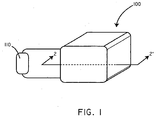
- FIG. 1 a perspective view of a battery assembly 100 in accordance with an embodiment of the invention is shown in conjunction with a load 110.
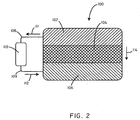
- FIG. 2 shows a cross-sectional schematic view of the battery assembly 100 as taken along line 2-2' of FIG. 1 .
- the battery assembly 100 includes an anode 102, a cathode 106, and a biosorbable separation element 104.
- the anode 102 can be comprised of a material that, when electrochemically oxidized, breaks down into reaction products that are substantially non-toxic. An extensive discussion of exemplary anode materials is included below. However, for purposes of a specific illustration, in some embodiments the anode 102 can be composed of magnesium. When the magnesium is electrochemically oxidized, magnesium ions are formed and then absorbed into the body.
- the cathode 106 can be comprised of a material that when electrochemically reduced breaks down into reaction products that are substantially non-toxic. An extensive discussion of exemplary cathode materials is included below. However, for purposes of a specific illustration, in some embodiments, the cathode 106 can be composed of manganese (IV) oxide. When the manganese (IV) oxide is electrochemically reduced, manganese (III) oxide is formed, which may be further reduced to manganese (II) hydroxide and then absorbed by the body.
- the anode 102 is separated from the cathode 106 by the biosorbable separation element 104.
- the biosorbable separation element 104 in some embodiments, can function to electrically insulate the anode 102 from the cathode 106, so that the electrochemical cell can be made to drive a load 110.
- the biosorbable separation element 104 can include electrolytes so as to allow the flow of ions and maintain charge balance during the electrochemical reaction.
- the biosorbable separation element 104 can include a polymeric matrix.
- the polymeric matrix itself can include electrolytes.
- an electrolyte composition can be disposed within the polymeric matrix.
- non-toxic electrolyte salts such as MgCl 2 or NaCl can be disposed within the polymeric matrix.
- the electrolyte composition can be inserted into the polymeric matrix during manufacturing of the battery assembly 100.
- the electrolyte composition such as a solution including sodium chloride for example, can diffuse into the polymeric matrix after implantation of the battery assembly 100.
- the battery 100 when the battery 100 is activated, such as in various ways described below, it can generate a current to be delivered to a load 110. Specifically, electrons can flow from the anode 102 in the direction of arrow 111 through a first conductor 108. The electrons can then pass through the load 110, through a second conductor 109 in the direction of arrow 112, before completing the circuit at the cathode 106. In order to maintain charge balance, positively charged ions can move in the direction of arrow 114, from the anode 102, through the biosorbable separation element 104 or in some cases around the biosorbable separation element 104, and to the cathode 106.
- the anode 102 will dissolve as the anode material is electrochemically oxidized.
- the anode material is magnesium
- the anode 102 will be broken down according to the following half-cell reaction: Mg ⁇ Mg 2 + + 2 e ⁇
- the cathode 106 is manganese (IV) oxide
- the corresponding half-cell reaction at the cathode is described by the following half-cell reaction: 2 MnO 2 + H 2 O + 2 e ⁇ ⁇ Mn 2 O 3 + 2 OH ⁇
- the electrochemical reaction would have a standard potential ( E 0 ) of over 2.8 V, while operating voltages of about 1.6 V are realized, indicating that the reaction is spontaneous.
- a soluble species in this case Mg 2+
- manganese (III) oxide forms at the cathode 106, which can be further reduced to manganese (II) hydroxide and then dissolve in the extracellular fluid of the body.
- the anode 102 and cathode 106 erode during operation of the battery and in the process a current is generated, until the anode 102 and/or the cathode 106 is completely dissolved, or until the circuit is otherwise opened.
- electrochemical reduction at the cathode 106 forms a chemical species that, while not highly soluble in the aqueous in vivo environment, nonetheless subsequently breaks down chemically and dissolves after the battery 100 is no longer operational. As such, even in these circumstances, the components of the battery are absorbed by the body.
- components such as the first conductor 108 and the second conductor 109 can be made of a material that is more noble (degrades less rapidly) than the anode 102, so that it will continue to function until the anode 102 is dissipated, but it will then itself degrade.
- the anode 102 is magnesium
- the first conductor 108 and the second conductor 109 can be made of aluminum or iron.
- FIGS. 1 and 2 illustrate the use of a single cell
- embodiments herein include batteries with a plurality of cells.
- a plurality of anode plates, cathodes plates, and biosorbable separation elements can be used in order to create a battery with a plurality of cells.
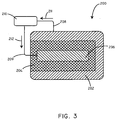
- the battery assembly 200 includes an anode 202, a cathode 206, and a biosorbable separation element 204.
- the anode 202, cathode 206, and biosorbable separation element 204 can be composed of various materials as described more fully below.
- the battery assembly 200 can further include a first conductor 208 and a second conductor 209, to carry electrons in the direction of arrows 211 and 212 respectively.
- the battery assembly 200 can be connected to a load 210.
- the biosorbable separation element 204 can surround the cathode 206, with the anode 202 disposed around the outside of the biosorbable separation element.
- battery assemblies in accordance with embodiments herein can include biosorbable coatings disposed on the outside of the battery assembly that degrade after the battery assembly is inserted in vivo.
- the battery assembly can be coated with a biosorbable polymer layer. It is believed that this configuration can be advantageous to protect the battery assembly during the handling steps that may occur prior to implantation and also to increase the structural integrity of the battery assembly.
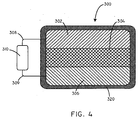
- the battery assembly 300 can include an anode 302, a biosorbable separator 304, and a cathode 306.
- the battery assembly 300 can further include a first conductor 308, and a second conductor 309.
- the battery assembly 300 can be in electrical communication with a load 310.
- the battery assembly 300 can further include a biosorbable coating 320, disposed around the outside of the battery assembly 300.
- the biosorbable coating 320 can be composed of various materials such as biosorbable polymers, carbohydrates, and the like.
- Biosorbable polymers can include those having hydrolytically labile chemical bonds or bonds that are otherwise subject to enzymatic cleavage.
- biosorbable polymers can include those having ester, anhydride, or amide bonds in the polymeric backbone.
- Specific biosorbable polymers can include polylactide (PLA), polyglycolide (PGA), polycaprolactone (PCL), poly(saccharide)s, poly(ethylene oxide), poly(ethylene glycol), copolymers thereof, and the like.
- the biosorbable separation element simply provides electrical insulation between the anode and the cathode.
- the biosorbable separation element also provides a conduit for the passage of ions between the anode and the cathode. That is, the battery assembly can be constructed so that the movement of ions needed to maintain charge balance during operation of the battery assembly occurs through the biosorbable separation element, occurs outside of the biosorbable separation element, or occurs through both pathways.
- the battery assembly 400 can include an anode 402, a biosorbable separator 404, a cathode 406, and an ion transfer conduit 412.
- the ion transfer conduit 412 can be configured to allow for the transfer of ions between the anode 402 and the cathode 406.
- the ion transfer conduit 412 can include an electrolyte.
- the ion transfer conduit 412 can include a porous degradable material, such as a polymer, that can include an electrolyte for purposes of conveying ions.
- the battery assembly 400 can further include a first conductor 408, and a second conductor 410.
- the tissue of the body itself can be utilized for the purpose of transferring ions between the anode and the cathode.
- the extracellular fluid in vivo is an aqueous solution that includes at least some amount of electrolytes such as sodium and potassium. Therefore, extracellular fluid can be used to transfer ions between the anode and the cathode in some embodiments.
- an electrochemical oxidation reaction takes place at the anode liberating electrons that can then be used to drive a load.
- the anode material can be selected so that the reaction products of the electrochemical oxidation are substantially non-toxic. In this manner, the reaction products at the anode can simply be absorbed by the body.
- the anode can be made of many different materials.
- the anode can be made of various metals, various alloys of metals, compounds including metal atoms, ceramic/metal composite and various polymers.
- Exemplary metals can include calcium, magnesium, iron, bismuth, zinc, and aluminum.
- the anode can specifically include magnesium, magnesium alloys, iron, and iron alloys. While not intending to be bound by theory, magnesium and iron can be advantageous as they are both required nutrients and are very safe at the concentrations that would be likely to be achieved by embodiments as disclosed herein.
- Exemplary polymers can include electrochemically oxidizable degradable polymers, such as various types of organometallic polymers.
- anode materials can include PPy based positive electrode array, carbon MEMS, FeOx-C nanofibers, (LiTi 2 (PO 4 ) 3 ), ZnO with conductive ceramics such as Mg(OH) 2 and Ca(OH) 2 nanocomposites, CoFe 2 O 4 .
- Cathode materials used with embodiments herein can be selected so that electrochemical reduction of the cathode material results in reaction products that are substantially non-toxic.
- the cathode material can include materials such as metal oxides, metal hydroxides, metal oxyhydroxides, polyoxymetallates, metal salts, electrochemically reducible organic compounds, and electrochemically reducible biosorbable polymers.
- Exemplary metal oxides can include Mn 2 O 3 , MnO 2 , and Fe 2 O 3 . Further examples of metal oxides can include Bi 2 O 3 and Bi 2 O 4 .
- Exemplary metal oxyhydroxides can include MnOOH.
- Exemplary metal salts can include metal halides, metal sulfides, metal sulfates, and/or metal phosphates.
- Exemplary metal halides can include FeCl 3 and the like.
- metal sulfides can include FeS 2 , Bi 2 S 3 , and the like.
- Exemplary metal sulfates can include FeSO 4 and MnSO 4 .
- Exemplary metal phosphates can include FePO 4 and MnPO 4 .
- Exemplary electrochemically reducible organic compounds can include electrochemically active biological compounds, including metalloenzymes and metalloproteins like oxidases, peroxidases, catalases, superoxide dismutases, and derivatives of the same. Specific examples may include ferredoxins and cytochrome c oxidase.
- Exemplary electrochemically reducible organic compounds can further include metal ion containing macrocycle compounds, including, but not limited to, porphyrins, phthalocyanines and tetraazamacrocycles.
- Exemplary electrochemically reducible biosorbable polymers can include nontoxic conjugated or nonconjugated polymeric disulfide compounds, conjugated or nonconjugated metallopolymers based on nontoxic metal ion complexes, such as ferrocene (including polyvinylferrocene), Schiff bases or heterocycle metal ion complexes, including, but not limited to, polymeric metal ion heterocycles and metal containing macrocycle compounds like porphyrins, phthalocyanines and tetraazamacrocycles.
- Exemplary electrochemically reducible biosorbable polymers can also include conjugated organic polymers like polypyrroles, polythiophenes and polyanilines.
- Exemplary electrochemically reducible biosorbable polymers can also include polymers or copolymers including biosorbable polymer units like polyethylene oxide, polylactide, polycaprolactone or their copolymers.
- cathode materials can include NaFeOx or KFeMnOx; calcium zincate; ZnMnOx; Birnessite type MnOx; iron-manganese phosphate composites; Na or K CoMnCaOx; various organic radical materials; olivine; spherical spinel or spinels in general; PPy/maghemite; and sulfur and oxide based (dual active material composite cathode).
- the cathode material can be a material configured to intercalate ions produced during electrochemical oxidation of the anode.
- the cathode material can be selected to be a material that can intercalate magnesium ions.
- the cathode material can be a material configured to intercalate other ions, such as sodium and/or hydrogen ions.
- Cathode materials used with embodiment herein can be selected so that the cathode material has a higher oxidation potential than the material of the anode. Stated differently, the cathode material can be selected so that is has a larger standard reduction potential than the material of the anode.
- anode and cathode materials include, but are not limited to, those described in Table 1 below.
- Anode Materials Cathode Materials Mg MnOOH Mg FePO 4 Mg Ferredoxin Mg Polyethylenedisulfide Fe FeOOH
- Various embodiments included herein can include a separation element in order to separate the anode from the cathode.
- the separation element can be biosorbable in that it can be made of materials that can harmlessly be absorbed by the body, or break-down into chemical species that can harmlessly be absorbed by the body.
- the biosorbable separation element can be made of biosorbable polymers, biosorbable carbohydrates, and the like.
- Biosorbable polymers can include those having hydrolytically labile chemical bonds or bonds that are otherwise subject to enzymatic cleavage.
- biosorbable polymers can include those having ester, anhydride, or amide bonds in the polymeric backbone.
- Specific biosorbable polymers can include polylactide (PLA), polyglycolide (PGA), polycaprolactone (PCL), poly(saccharide)s, poly(ethylene oxide), poly(ethylene glycol), copolymers thereof, and the like.
- PLA polylactide
- PGA polyglycolide
- PCL polycaprolactone
- the biosorbable separation element can include a porous polymeric matrix.
- the porous polymeric matrix can include a biosorbable polymer, such as those described above.
- an electrolyte composition can be disposed within the porous polymeric matrix.
- a solution such as a sodium chloride solution, a magnesium chloride solution, or a potassium chloride solution can be disposed within the porous polymeric matrix.
- the electrolyte composition can be put within the porous polymeric matrix at the time of manufacturing the battery assembly.
- the biosorbable separation element can include a compound that renders the component radio-opaque.
- the material of the biosorbable separation element can include an x-ray absorbing moiety such as iodine, rendering the biosorbable separation element radio-opaque.
- the battery can be activated through a switching mechanism. That is, a circuit can be closed so that the flow of current is initiated.
- the battery can be activated by diffusion of water and/or electrolytes from the extracellular fluid surrounding the battery structure and into components of the battery assembly.
- water and/or electrolytes from the extracellular fluid surrounding the battery can diffuse into the separation element, thus creating a pathway for the migration of ions needed to operate the battery.
- metal salts such as sodium chloride and the like can be disposed within the porous polymeric matrix, but not in solution, such that the electrolyte is not be immediately active for purposes of transport of ions.
- the battery assembly can be constructed so that water that contacts the outside of the battery assembly, such as after implantation, can diffuse into the porous polymeric matrix, thereby effectively activating the transport of ions.
- battery devices as described herein can be used in conjunction with many different types of implantable medical devices. Specifically, battery devices as described herein can be used with any type of implantable medical device that requires a power source. Battery devices as described herein can be used in conjunction with both temporary and chronically implanted medical devices.
- the invention includes a biosorbable battery in electrical communication with an implantable medical device. Exemplary medical devices can include both biosorbable and non-biosorbable medical devices.
- Exemplary medical devices can include, but are not limited to, implantable cardiac rhythm management devices (including pacemakers, cardiac resynchronization therapy (CRT) devices, remodeling control therapy (RCT) device, cardioverter/defibrillators, or pacemaker-cardioverter/defibrillators, and the like), neurological stimulators, implantable sensors, and the like.
- implantable cardiac rhythm management devices including pacemakers, cardiac resynchronization therapy (CRT) devices, remodeling control therapy (RCT) device, cardioverter/defibrillators, or pacemaker-cardioverter/defibrillators, and the like
- CTR cardiac resynchronization therapy
- RCT remodeling control therapy
- cardioverter/defibrillators or pacemaker-cardioverter/defibrillators, and the like
- neurological stimulators implantable sensors, and the like.
- implantable cardiac rhythm management devices including pacemakers, cardiac resynchronization therapy (CRT) devices, remodeling control therapy (RCT) device, cardioverter/defibrillators, or
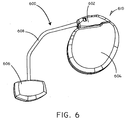
- the medical device system 600 includes an implanted medical device 610 and a biosorbable battery 606.
- a connection lead 608 provided electrical communication between the implanted medical device 610 and the biosorbable battery 606.
- the implanted medical device 610 can include a header 602 and a hermetically scaled case 604.
- Various electrical components including control circuitry are disposed within the case 604.
- the medical device system 600 can also include one or more electrical stimulation leads including electrodes in order to convey electrical stimulation pulses to tissues of the body.
- the phrase “configured” describes a system, apparatus, or other structure that is constructed or configured to perform a particular task or adopt a particular configuration.
- the phrase “configured” can be used interchangeably with other similar phrases such as “arranged”, “arranged and configured”, “constructed and arranged”, “constructed”, “manufactured and arranged”, and the like.
Landscapes
- Chemical & Material Sciences (AREA)
- Chemical Kinetics & Catalysis (AREA)
- Electrochemistry (AREA)
- General Chemical & Material Sciences (AREA)
- Health & Medical Sciences (AREA)
- Engineering & Computer Science (AREA)
- Biomedical Technology (AREA)
- Nuclear Medicine, Radiotherapy & Molecular Imaging (AREA)
- Radiology & Medical Imaging (AREA)
- Life Sciences & Earth Sciences (AREA)
- Animal Behavior & Ethology (AREA)
- General Health & Medical Sciences (AREA)
- Public Health (AREA)
- Veterinary Medicine (AREA)
- Manufacturing & Machinery (AREA)
- Battery Electrode And Active Subsutance (AREA)
- Electrotherapy Devices (AREA)
- Cell Separators (AREA)
- Primary Cells (AREA)
- Battery Mounting, Suspending (AREA)
- Secondary Cells (AREA)
Claims (14)
- Ein Medizintechnik-System (600), das umfasst:ein implantierbares Medizintechnik-Gerät (610); undeine bioabsorbierbare Batterie-Anordnung (606) in elektrischer Verbindung mit dem implantierbaren Medizintechnik-Gerät (610), wobei die bioabsorbierbare Batterie-Anordnung (606) umfasst:eine Anode (102), die ein Anodenmaterial umfasst, wobei elektrochemische Oxidation des Anodenmaterials in der Bildung von Reaktionsprodukten resultiert, die im Wesentlichen ungiftig sind;eine Kathode (106), die ein Kathodenmaterial umfasst, wobei elektrochemische Reduktion des Kathodenmaterials in der Bildung von Reaktionsprodukten resultiert, die im Wesentlichen ungiftig sind, wobei das Kathodenmaterial ein höheres Standard-Reduktionspotential hat als das Anodenmaterial; undgekennzeichnet dadurch, dassein bioabsorbierbares Trennelement (104) zwischen der Anode (102) und der Kathode (106) angeordnet ist, das dazu ausgelegt ist, die Anode (102) und die Kathode (106) voneinander elektrisch zu isolieren.
- Medizintechnik-System gemäß Anspruch 1, wobei das Anodenmaterial ein Material umfasst ausgewählt aus der Gruppe bestehend aus Magnesium, Magnesium-Legierungen, Eisen, Eisen-Legierungen, Zink, Zink-Legierungen, Aluminium, Aluminium-Legierungen, und elektrochemisch oxidierbare abbaubare Polymere, oder ausgewählt aus der Gruppe bestehend aus Magnesium, Magnesium-Legierungen, Eisen und Eisen-Legierungen.
- Medizintechnik-System gemäß Anspruch 1, wobei das Kathodenmaterial ein Material umfasst ausgewählt aus der Gruppe bestehend aus Metalloxiden, Metal-Oxyhydriden, Polyoximetallaten, Metallsalzen und elektrochemisch reduzierbaren abbaubaren Polymere oder ausgewählt aus der Gruppe bestehend aus MnOOH, MN2O3, MnO2, und Fe2O3.
- Medizintechnik-System gemäß Anspruch 3, wobei die Metallsalze Metallhalide, Metalsulfide, Metallsulfate, und/oder Metallphosphate umfassen.
- Medizintechnik-System gemäß Anspruch 1, wobei das Kathodenmaterial ein Material umfasst, das dazu ausgelegt ist, Metallionen einzulagern, die während der elektrochemischen Oxidation der Anode (102) erzeugt werden oder ein Material umfasst, das dazu ausgelegt ist, Magnesium-, Natrium- und/oder Wasserstoff-Ionen einzulagern.
- Medizintechnik-System gemäß Anspruch 1, wobei das bioabsorbierbare Trennelement (104) eine Polymermatrix oder eine Elektrolyt-Lösung umfasst.
- Medizintechnik-System gemäß Anspruch 6, wobei die Polymermatrix ein Polymer ausgewählt aus der Gruppe bestehend aus Polyethylenoxid, Poly-Milchsäure, Polycaprolacton, oder Copolymere daraus umfasst.
- Medizintechnik-System gemäß Anspruch 1, wobei das bioabsorbierbare Trennelement (104) dazu ausgelegt ist, den Transfer von Ionen durch es hindurch von der Anode (102) zu der Kathode (106) zu erlauben.
- Medizintechnik-System gemäß Anspruch 1, das weiter einen Leiter (108) umfasst, der in elektrischer Verbindung mit der Anode (102) oder in elektrischer Verbindung mit der Kathode (106) ist, wobei der Leiter (108) ein leitfähiges Material umfasst, das edler ist als das Material der Anode (102).
- Medizintechnik-System (600) gemäß Anspruch 1, wobei das implantierbare Medizintechnik-Gerät (610) ein Gerät zum Herzrhythmus-Management umfasst.
- Verfahren zum Herstellen eines Medizintechnik-Systems (600), wobei das Verfahren die Bereitstellung eines implantierbaren Medizintechnik-Geräts (610) und einer bioabsorbierbaren Batterie (606) umfasst, wobei die bioabsorbierbare Batterie hergestellt wird durch:Koppeln einer Anode (102) an ein bioabsorbierbares Trennelement (104), wobei die Anode (102) ein erstes Material umfasst, wobei elektrochemische Oxidation des ersten Materials in der Bildung von Reaktionsprodukten resultiert, die im Wesentlichen ungiftig sind,wobei das bioabsorbierbare Trennelement (104) ein bioabsorbierbares Material umfasst; undKoppeln einer Kathode (106) an das bioabsorbierbares Trennelement (104), wobei die Kathode (106) ein zweites Material umfasst, wobei elektrochemische Reduktion des zweiten Materials in der Bildung von Reaktionsprodukten resultiert, die im Wesentlichen ungiftig sind,wobei das zweite Material ein höheres Standard-Reduktionspotential hat als das erste Material.
- Verfahren gemäß Anspruch 11, weiter umfassend Abscheiden einer bioabsorbierbaren Beschichtung über die Anode (102), das bioabsorbierbare Trennelement (104) und die Kathode (106).
- Verfahren gemäß Anspruch 11, wobei das bioabsorbierbare Trennelement (104) ein bioabsorbierbares Polymer umfasst.
- Verfahren gemäß Anspruch 11, weiter umfassend Koppeln eines ersten Leiters (108) an die Anode (102) und eines zweiten Leiters (109) an die Kathode (106).
Applications Claiming Priority (2)
| Application Number | Priority Date | Filing Date | Title |
|---|---|---|---|
| US10259808P | 2008-10-03 | 2008-10-03 | |
| PCT/US2009/059397 WO2010040065A1 (en) | 2008-10-03 | 2009-10-02 | Biosorbable battery and related methods |
Publications (2)
| Publication Number | Publication Date |
|---|---|
| EP2349472A1 EP2349472A1 (de) | 2011-08-03 |
| EP2349472B1 true EP2349472B1 (de) | 2016-03-30 |
Family
ID=41353972
Family Applications (1)
| Application Number | Title | Priority Date | Filing Date |
|---|---|---|---|
| EP09793282.6A Not-in-force EP2349472B1 (de) | 2008-10-03 | 2009-10-02 | Bioresorbierbare batterie und relevante verfahren |
Country Status (4)
| Country | Link |
|---|---|
| US (1) | US8761877B2 (de) |
| EP (1) | EP2349472B1 (de) |
| JP (1) | JP5357259B2 (de) |
| WO (1) | WO2010040065A1 (de) |
Families Citing this family (15)
| Publication number | Priority date | Publication date | Assignee | Title |
|---|---|---|---|---|
| US8761877B2 (en) | 2008-10-03 | 2014-06-24 | Cardiac Pacemakers, Inc. | Biosorbable battery and related methods |
| US8968927B2 (en) * | 2011-07-15 | 2015-03-03 | Covidien Lp | Degradable implantable battery |
| US8968926B2 (en) * | 2011-07-15 | 2015-03-03 | Covidien Lp | Degradable implantable galvanic power source |
| JP5596726B2 (ja) * | 2012-03-05 | 2014-09-24 | 日本電信電話株式会社 | マグネシウム電池 |
| JP5627031B2 (ja) * | 2012-03-13 | 2014-11-19 | 日本電信電話株式会社 | マグネシウム電池 |
| US9985320B2 (en) | 2012-04-30 | 2018-05-29 | Carnegie Mellon University | Water-activated, ingestible battery |
| WO2015061537A1 (en) * | 2013-10-24 | 2015-04-30 | Carnegie Mellon University | Ingestible, electrical device for oral delivery |
| AU2014240353A1 (en) * | 2013-11-12 | 2015-05-28 | Covidien Lp | Degradable implantable battery |
| KR102763310B1 (ko) * | 2014-01-28 | 2025-02-07 | 춘셍 왕 | 다전자 수계 전지 |
| US10597636B2 (en) * | 2014-09-19 | 2020-03-24 | University Of Florida Research Foundation, Inc. | Electroactive polymeric scaffolds and method for delivering nerve growth factor to nerve tissue |
| WO2016061030A1 (en) * | 2014-10-13 | 2016-04-21 | Research Foundation Of The City University Of New York | Mixed material cathode for secondary alkaline batteries |
| WO2017075404A1 (en) | 2015-10-29 | 2017-05-04 | Research Foundation Of The City University Of New York | Electrode designs for high energy density, efficiency, and capacity in rechargeable alkaline batteries |
| US10700362B2 (en) | 2016-09-15 | 2020-06-30 | Energizer Brands, Llc | Coatings for mitigation of coin cell ingestion |
| KR102041039B1 (ko) * | 2018-03-21 | 2019-11-06 | 서울대학교산학협력단 | 생분해성 2차 전지 |
| EP4456234A1 (de) * | 2023-04-27 | 2024-10-30 | Institut Mines Telecom | Bioresorbierbare und flexible elektrochemische na-ionen-mikrobatterie |
Citations (1)
| Publication number | Priority date | Publication date | Assignee | Title |
|---|---|---|---|---|
| US3842843A (en) * | 1972-12-26 | 1974-10-22 | B Dodinot | Biogalvanic power supply device and method |
Family Cites Families (12)
| Publication number | Priority date | Publication date | Assignee | Title |
|---|---|---|---|---|
| US3708344A (en) | 1970-12-10 | 1973-01-02 | Esb Inc | Organic depolarizer |
| US4562841A (en) | 1982-08-05 | 1986-01-07 | Cardiac Pacemakers, Inc. | Programmable multi-mode cardiac pacemaker |
| EP1400204A1 (de) | 1999-08-05 | 2004-03-24 | Broncus Technologies, Inc. | Verfahren und Vorrichtungen zur Herstellung von kollateralen Kanälen in den Lungen |
| US20040073155A1 (en) * | 2000-01-14 | 2004-04-15 | Broncus Technologies, Inc. | Methods and devices for maintaining patency of surgically created channels in tissue |
| EP1407503B1 (de) | 2001-05-10 | 2007-02-21 | Lenzing Aktiengesellschaft | Batterietrennvorrichtungen |
| US6946220B2 (en) | 2001-10-19 | 2005-09-20 | Wilson Greatbatch Technologies, Inc. | Electrochemical cell having a multiplate electrode assembly housed in an irregularly shaped casing |
| US20060271168A1 (en) | 2002-10-30 | 2006-11-30 | Klaus Kleine | Degradable medical device |
| JP4055642B2 (ja) | 2003-05-01 | 2008-03-05 | 日産自動車株式会社 | 高速充放電用電極および電池 |
| US7582387B2 (en) * | 2004-10-29 | 2009-09-01 | Medtronic, Inc. | Lithium-ion battery |
| US20100006431A1 (en) | 2006-02-06 | 2010-01-14 | Gordon George Wallace | Self-Powered Sensing Devices |
| US20120223293A1 (en) | 2007-01-05 | 2012-09-06 | Borenstein Jeffrey T | Biodegradable Electronic Devices |
| US8761877B2 (en) | 2008-10-03 | 2014-06-24 | Cardiac Pacemakers, Inc. | Biosorbable battery and related methods |
-
2009
- 2009-10-01 US US12/572,191 patent/US8761877B2/en active Active
- 2009-10-02 WO PCT/US2009/059397 patent/WO2010040065A1/en not_active Ceased
- 2009-10-02 EP EP09793282.6A patent/EP2349472B1/de not_active Not-in-force
- 2009-10-02 JP JP2011530272A patent/JP5357259B2/ja not_active Expired - Fee Related
Patent Citations (1)
| Publication number | Priority date | Publication date | Assignee | Title |
|---|---|---|---|---|
| US3842843A (en) * | 1972-12-26 | 1974-10-22 | B Dodinot | Biogalvanic power supply device and method |
Also Published As
| Publication number | Publication date |
|---|---|
| JP5357259B2 (ja) | 2013-12-04 |
| US8761877B2 (en) | 2014-06-24 |
| US20100087885A1 (en) | 2010-04-08 |
| WO2010040065A1 (en) | 2010-04-08 |
| EP2349472A1 (de) | 2011-08-03 |
| JP2012504854A (ja) | 2012-02-23 |
Similar Documents
| Publication | Publication Date | Title |
|---|---|---|
| EP2349472B1 (de) | Bioresorbierbare batterie und relevante verfahren | |
| JP5646715B2 (ja) | リチウムイオン電池と医療デバイス | |
| Mond et al. | The cardiac implantable electronic device power source: evolution and revolution | |
| US9362571B2 (en) | Degradable implantable battery | |
| US7879495B2 (en) | Medical device having lithium-ion battery | |
| EP1805831B1 (de) | Lithiumionen-batterie | |
| US8027728B2 (en) | High power implantable battery with improved safety and method of manufacture | |
| EP1611630B1 (de) | Implantierbare hochleistungsbatterie mit verbesserter sicherheit und verfahren zu deren herstellung | |
| US8380310B2 (en) | Implantable electrode assembly, implantable electrochemical power cells and implantable medical device assemblies | |
| EP1856749A2 (de) | Einpflanzbare batterie mit thermoabschaltseparator | |
| US8968926B2 (en) | Degradable implantable galvanic power source | |
| EP2870981A1 (de) | Abbaubare implantierbare Batterie | |
| Root | Medical Device Batteries | |
| Root | Medical device batteries |
Legal Events
| Date | Code | Title | Description |
|---|---|---|---|
| PUAI | Public reference made under article 153(3) epc to a published international application that has entered the european phase |
Free format text: ORIGINAL CODE: 0009012 |
|
| 17P | Request for examination filed |
Effective date: 20110428 |
|
| AK | Designated contracting states |
Kind code of ref document: A1 Designated state(s): AT BE BG CH CY CZ DE DK EE ES FI FR GB GR HR HU IE IS IT LI LT LU LV MC MK MT NL NO PL PT RO SE SI SK SM TR |
|
| DAX | Request for extension of the european patent (deleted) | ||
| 17Q | First examination report despatched |
Effective date: 20150206 |
|
| REG | Reference to a national code |
Ref country code: DE Ref legal event code: R079 Ref document number: 602009037345 Country of ref document: DE Free format text: PREVIOUS MAIN CLASS: A61N0001378000 Ipc: H01M0002020000 |
|
| GRAP | Despatch of communication of intention to grant a patent |
Free format text: ORIGINAL CODE: EPIDOSNIGR1 |
|
| RIC1 | Information provided on ipc code assigned before grant |
Ipc: A61N 1/378 20060101ALI20150904BHEP Ipc: H01M 2/02 20060101AFI20150904BHEP |
|
| INTG | Intention to grant announced |
Effective date: 20150923 |
|
| GRAS | Grant fee paid |
Free format text: ORIGINAL CODE: EPIDOSNIGR3 |
|
| GRAA | (expected) grant |
Free format text: ORIGINAL CODE: 0009210 |
|
| INTG | Intention to grant announced |
Effective date: 20160126 |
|
| AK | Designated contracting states |
Kind code of ref document: B1 Designated state(s): AT BE BG CH CY CZ DE DK EE ES FI FR GB GR HR HU IE IS IT LI LT LU LV MC MK MT NL NO PL PT RO SE SI SK SM TR |
|
| REG | Reference to a national code |
Ref country code: GB Ref legal event code: FG4D |
|
| REG | Reference to a national code |
Ref country code: CH Ref legal event code: EP |
|
| REG | Reference to a national code |
Ref country code: AT Ref legal event code: REF Ref document number: 786236 Country of ref document: AT Kind code of ref document: T Effective date: 20160415 |
|
| REG | Reference to a national code |
Ref country code: IE Ref legal event code: FG4D |
|
| REG | Reference to a national code |
Ref country code: DE Ref legal event code: R096 Ref document number: 602009037345 Country of ref document: DE |
|
| REG | Reference to a national code |
Ref country code: NL Ref legal event code: FP |
|
| REG | Reference to a national code |
Ref country code: LT Ref legal event code: MG4D |
|
| PG25 | Lapsed in a contracting state [announced via postgrant information from national office to epo] |
Ref country code: NO Free format text: LAPSE BECAUSE OF FAILURE TO SUBMIT A TRANSLATION OF THE DESCRIPTION OR TO PAY THE FEE WITHIN THE PRESCRIBED TIME-LIMIT Effective date: 20160630 Ref country code: HR Free format text: LAPSE BECAUSE OF FAILURE TO SUBMIT A TRANSLATION OF THE DESCRIPTION OR TO PAY THE FEE WITHIN THE PRESCRIBED TIME-LIMIT Effective date: 20160330 Ref country code: FI Free format text: LAPSE BECAUSE OF FAILURE TO SUBMIT A TRANSLATION OF THE DESCRIPTION OR TO PAY THE FEE WITHIN THE PRESCRIBED TIME-LIMIT Effective date: 20160330 Ref country code: GR Free format text: LAPSE BECAUSE OF FAILURE TO SUBMIT A TRANSLATION OF THE DESCRIPTION OR TO PAY THE FEE WITHIN THE PRESCRIBED TIME-LIMIT Effective date: 20160701 |
|
| REG | Reference to a national code |
Ref country code: AT Ref legal event code: MK05 Ref document number: 786236 Country of ref document: AT Kind code of ref document: T Effective date: 20160330 |
|
| PG25 | Lapsed in a contracting state [announced via postgrant information from national office to epo] |
Ref country code: LT Free format text: LAPSE BECAUSE OF FAILURE TO SUBMIT A TRANSLATION OF THE DESCRIPTION OR TO PAY THE FEE WITHIN THE PRESCRIBED TIME-LIMIT Effective date: 20160330 Ref country code: LV Free format text: LAPSE BECAUSE OF FAILURE TO SUBMIT A TRANSLATION OF THE DESCRIPTION OR TO PAY THE FEE WITHIN THE PRESCRIBED TIME-LIMIT Effective date: 20160330 Ref country code: SE Free format text: LAPSE BECAUSE OF FAILURE TO SUBMIT A TRANSLATION OF THE DESCRIPTION OR TO PAY THE FEE WITHIN THE PRESCRIBED TIME-LIMIT Effective date: 20160330 |
|
| REG | Reference to a national code |
Ref country code: FR Ref legal event code: PLFP Year of fee payment: 8 |
|
| PG25 | Lapsed in a contracting state [announced via postgrant information from national office to epo] |
Ref country code: IS Free format text: LAPSE BECAUSE OF FAILURE TO SUBMIT A TRANSLATION OF THE DESCRIPTION OR TO PAY THE FEE WITHIN THE PRESCRIBED TIME-LIMIT Effective date: 20160730 Ref country code: EE Free format text: LAPSE BECAUSE OF FAILURE TO SUBMIT A TRANSLATION OF THE DESCRIPTION OR TO PAY THE FEE WITHIN THE PRESCRIBED TIME-LIMIT Effective date: 20160330 Ref country code: PL Free format text: LAPSE BECAUSE OF FAILURE TO SUBMIT A TRANSLATION OF THE DESCRIPTION OR TO PAY THE FEE WITHIN THE PRESCRIBED TIME-LIMIT Effective date: 20160330 |
|
| PG25 | Lapsed in a contracting state [announced via postgrant information from national office to epo] |
Ref country code: SK Free format text: LAPSE BECAUSE OF FAILURE TO SUBMIT A TRANSLATION OF THE DESCRIPTION OR TO PAY THE FEE WITHIN THE PRESCRIBED TIME-LIMIT Effective date: 20160330 Ref country code: AT Free format text: LAPSE BECAUSE OF FAILURE TO SUBMIT A TRANSLATION OF THE DESCRIPTION OR TO PAY THE FEE WITHIN THE PRESCRIBED TIME-LIMIT Effective date: 20160330 Ref country code: SM Free format text: LAPSE BECAUSE OF FAILURE TO SUBMIT A TRANSLATION OF THE DESCRIPTION OR TO PAY THE FEE WITHIN THE PRESCRIBED TIME-LIMIT Effective date: 20160330 Ref country code: ES Free format text: LAPSE BECAUSE OF FAILURE TO SUBMIT A TRANSLATION OF THE DESCRIPTION OR TO PAY THE FEE WITHIN THE PRESCRIBED TIME-LIMIT Effective date: 20160330 Ref country code: PT Free format text: LAPSE BECAUSE OF FAILURE TO SUBMIT A TRANSLATION OF THE DESCRIPTION OR TO PAY THE FEE WITHIN THE PRESCRIBED TIME-LIMIT Effective date: 20160801 Ref country code: RO Free format text: LAPSE BECAUSE OF FAILURE TO SUBMIT A TRANSLATION OF THE DESCRIPTION OR TO PAY THE FEE WITHIN THE PRESCRIBED TIME-LIMIT Effective date: 20160330 Ref country code: CZ Free format text: LAPSE BECAUSE OF FAILURE TO SUBMIT A TRANSLATION OF THE DESCRIPTION OR TO PAY THE FEE WITHIN THE PRESCRIBED TIME-LIMIT Effective date: 20160330 |
|
| PG25 | Lapsed in a contracting state [announced via postgrant information from national office to epo] |
Ref country code: BE Free format text: LAPSE BECAUSE OF FAILURE TO SUBMIT A TRANSLATION OF THE DESCRIPTION OR TO PAY THE FEE WITHIN THE PRESCRIBED TIME-LIMIT Effective date: 20160330 |
|
| REG | Reference to a national code |
Ref country code: DE Ref legal event code: R097 Ref document number: 602009037345 Country of ref document: DE |
|
| PG25 | Lapsed in a contracting state [announced via postgrant information from national office to epo] |
Ref country code: DK Free format text: LAPSE BECAUSE OF FAILURE TO SUBMIT A TRANSLATION OF THE DESCRIPTION OR TO PAY THE FEE WITHIN THE PRESCRIBED TIME-LIMIT Effective date: 20160330 |
|
| PGFP | Annual fee paid to national office [announced via postgrant information from national office to epo] |
Ref country code: NL Payment date: 20161010 Year of fee payment: 8 |
|
| PLBE | No opposition filed within time limit |
Free format text: ORIGINAL CODE: 0009261 |
|
| STAA | Information on the status of an ep patent application or granted ep patent |
Free format text: STATUS: NO OPPOSITION FILED WITHIN TIME LIMIT |
|
| 26N | No opposition filed |
Effective date: 20170103 |
|
| PG25 | Lapsed in a contracting state [announced via postgrant information from national office to epo] |
Ref country code: SI Free format text: LAPSE BECAUSE OF FAILURE TO SUBMIT A TRANSLATION OF THE DESCRIPTION OR TO PAY THE FEE WITHIN THE PRESCRIBED TIME-LIMIT Effective date: 20160330 |
|
| REG | Reference to a national code |
Ref country code: CH Ref legal event code: PL |
|
| REG | Reference to a national code |
Ref country code: IE Ref legal event code: MM4A |
|
| PG25 | Lapsed in a contracting state [announced via postgrant information from national office to epo] |
Ref country code: LI Free format text: LAPSE BECAUSE OF NON-PAYMENT OF DUE FEES Effective date: 20161031 Ref country code: CH Free format text: LAPSE BECAUSE OF NON-PAYMENT OF DUE FEES Effective date: 20161031 |
|
| PG25 | Lapsed in a contracting state [announced via postgrant information from national office to epo] |
Ref country code: LU Free format text: LAPSE BECAUSE OF NON-PAYMENT OF DUE FEES Effective date: 20161002 |
|
| REG | Reference to a national code |
Ref country code: FR Ref legal event code: PLFP Year of fee payment: 9 |
|
| PGFP | Annual fee paid to national office [announced via postgrant information from national office to epo] |
Ref country code: FR Payment date: 20170918 Year of fee payment: 9 Ref country code: GB Payment date: 20170927 Year of fee payment: 9 |
|
| PG25 | Lapsed in a contracting state [announced via postgrant information from national office to epo] |
Ref country code: IE Free format text: LAPSE BECAUSE OF NON-PAYMENT OF DUE FEES Effective date: 20161002 |
|
| PGFP | Annual fee paid to national office [announced via postgrant information from national office to epo] |
Ref country code: DE Payment date: 20170927 Year of fee payment: 9 |
|
| PGFP | Annual fee paid to national office [announced via postgrant information from national office to epo] |
Ref country code: IT Payment date: 20171024 Year of fee payment: 9 |
|
| PG25 | Lapsed in a contracting state [announced via postgrant information from national office to epo] |
Ref country code: HU Free format text: LAPSE BECAUSE OF FAILURE TO SUBMIT A TRANSLATION OF THE DESCRIPTION OR TO PAY THE FEE WITHIN THE PRESCRIBED TIME-LIMIT; INVALID AB INITIO Effective date: 20091002 Ref country code: CY Free format text: LAPSE BECAUSE OF FAILURE TO SUBMIT A TRANSLATION OF THE DESCRIPTION OR TO PAY THE FEE WITHIN THE PRESCRIBED TIME-LIMIT Effective date: 20160330 |
|
| REG | Reference to a national code |
Ref country code: NL Ref legal event code: MM Effective date: 20171101 |
|
| PG25 | Lapsed in a contracting state [announced via postgrant information from national office to epo] |
Ref country code: MC Free format text: LAPSE BECAUSE OF FAILURE TO SUBMIT A TRANSLATION OF THE DESCRIPTION OR TO PAY THE FEE WITHIN THE PRESCRIBED TIME-LIMIT Effective date: 20160330 Ref country code: TR Free format text: LAPSE BECAUSE OF FAILURE TO SUBMIT A TRANSLATION OF THE DESCRIPTION OR TO PAY THE FEE WITHIN THE PRESCRIBED TIME-LIMIT Effective date: 20160330 Ref country code: MK Free format text: LAPSE BECAUSE OF FAILURE TO SUBMIT A TRANSLATION OF THE DESCRIPTION OR TO PAY THE FEE WITHIN THE PRESCRIBED TIME-LIMIT Effective date: 20160330 Ref country code: MT Free format text: LAPSE BECAUSE OF NON-PAYMENT OF DUE FEES Effective date: 20161031 |
|
| PG25 | Lapsed in a contracting state [announced via postgrant information from national office to epo] |
Ref country code: NL Free format text: LAPSE BECAUSE OF NON-PAYMENT OF DUE FEES Effective date: 20171101 Ref country code: BG Free format text: LAPSE BECAUSE OF FAILURE TO SUBMIT A TRANSLATION OF THE DESCRIPTION OR TO PAY THE FEE WITHIN THE PRESCRIBED TIME-LIMIT Effective date: 20160330 |
|
| REG | Reference to a national code |
Ref country code: DE Ref legal event code: R119 Ref document number: 602009037345 Country of ref document: DE |
|
| GBPC | Gb: european patent ceased through non-payment of renewal fee |
Effective date: 20181002 |
|
| PG25 | Lapsed in a contracting state [announced via postgrant information from national office to epo] |
Ref country code: DE Free format text: LAPSE BECAUSE OF NON-PAYMENT OF DUE FEES Effective date: 20190501 |
|
| PG25 | Lapsed in a contracting state [announced via postgrant information from national office to epo] |
Ref country code: FR Free format text: LAPSE BECAUSE OF NON-PAYMENT OF DUE FEES Effective date: 20181031 |
|
| PG25 | Lapsed in a contracting state [announced via postgrant information from national office to epo] |
Ref country code: IT Free format text: LAPSE BECAUSE OF NON-PAYMENT OF DUE FEES Effective date: 20181002 Ref country code: GB Free format text: LAPSE BECAUSE OF NON-PAYMENT OF DUE FEES Effective date: 20181002 |