EP2345944A1 - Vehicle system - Google Patents
Vehicle system Download PDFInfo
- Publication number
- EP2345944A1 EP2345944A1 EP09818904A EP09818904A EP2345944A1 EP 2345944 A1 EP2345944 A1 EP 2345944A1 EP 09818904 A EP09818904 A EP 09818904A EP 09818904 A EP09818904 A EP 09818904A EP 2345944 A1 EP2345944 A1 EP 2345944A1
- Authority
- EP
- European Patent Office
- Prior art keywords
- traveling
- station
- traveling vehicle
- stations
- prohibited section
- Prior art date
- Legal status (The legal status is an assumption and is not a legal conclusion. Google has not performed a legal analysis and makes no representation as to the accuracy of the status listed.)
- Granted
Links
Images





Classifications
-
- G—PHYSICS
- G05—CONTROLLING; REGULATING
- G05D—SYSTEMS FOR CONTROLLING OR REGULATING NON-ELECTRIC VARIABLES
- G05D1/00—Control of position, course, altitude or attitude of land, water, air or space vehicles, e.g. using automatic pilots
- G05D1/02—Control of position or course in two dimensions
- G05D1/021—Control of position or course in two dimensions specially adapted to land vehicles
- G05D1/0212—Control of position or course in two dimensions specially adapted to land vehicles with means for defining a desired trajectory
- G05D1/0214—Control of position or course in two dimensions specially adapted to land vehicles with means for defining a desired trajectory in accordance with safety or protection criteria, e.g. avoiding hazardous areas
-
- G—PHYSICS
- G05—CONTROLLING; REGULATING
- G05D—SYSTEMS FOR CONTROLLING OR REGULATING NON-ELECTRIC VARIABLES
- G05D1/00—Control of position, course, altitude or attitude of land, water, air or space vehicles, e.g. using automatic pilots
- G05D1/60—Intended control result
- G05D1/617—Safety or protection, e.g. defining protection zones around obstacles or avoiding hazards
-
- G—PHYSICS
- G05—CONTROLLING; REGULATING
- G05B—CONTROL OR REGULATING SYSTEMS IN GENERAL; FUNCTIONAL ELEMENTS OF SUCH SYSTEMS; MONITORING OR TESTING ARRANGEMENTS FOR SUCH SYSTEMS OR ELEMENTS
- G05B19/00—Program-control systems
- G05B19/02—Program-control systems electric
- G05B19/418—Total factory control, i.e. centrally controlling a plurality of machines, e.g. direct or distributed numerical control [DNC], flexible manufacturing systems [FMS], integrated manufacturing systems [IMS] or computer integrated manufacturing [CIM]
- G05B19/4189—Total factory control, i.e. centrally controlling a plurality of machines, e.g. direct or distributed numerical control [DNC], flexible manufacturing systems [FMS], integrated manufacturing systems [IMS] or computer integrated manufacturing [CIM] characterised by the transport system
- G05B19/41895—Total factory control, i.e. centrally controlling a plurality of machines, e.g. direct or distributed numerical control [DNC], flexible manufacturing systems [FMS], integrated manufacturing systems [IMS] or computer integrated manufacturing [CIM] characterised by the transport system using automatic guided vehicles [AGV]
-
- G—PHYSICS
- G05—CONTROLLING; REGULATING
- G05D—SYSTEMS FOR CONTROLLING OR REGULATING NON-ELECTRIC VARIABLES
- G05D1/00—Control of position, course, altitude or attitude of land, water, air or space vehicles, e.g. using automatic pilots
- G05D1/60—Intended control result
- G05D1/69—Coordinated control of the position or course of two or more vehicles
-
- Y—GENERAL TAGGING OF NEW TECHNOLOGICAL DEVELOPMENTS; GENERAL TAGGING OF CROSS-SECTIONAL TECHNOLOGIES SPANNING OVER SEVERAL SECTIONS OF THE IPC; TECHNICAL SUBJECTS COVERED BY FORMER USPC CROSS-REFERENCE ART COLLECTIONS [XRACs] AND DIGESTS
- Y02—TECHNOLOGIES OR APPLICATIONS FOR MITIGATION OR ADAPTATION AGAINST CLIMATE CHANGE
- Y02P—CLIMATE CHANGE MITIGATION TECHNOLOGIES IN THE PRODUCTION OR PROCESSING OF GOODS
- Y02P90/00—Enabling technologies with a potential contribution to greenhouse gas [GHG] emissions mitigation
- Y02P90/02—Total factory control, e.g. smart factories, flexible manufacturing systems [FMS] or integrated manufacturing systems [IMS]
-
- Y—GENERAL TAGGING OF NEW TECHNOLOGICAL DEVELOPMENTS; GENERAL TAGGING OF CROSS-SECTIONAL TECHNOLOGIES SPANNING OVER SEVERAL SECTIONS OF THE IPC; TECHNICAL SUBJECTS COVERED BY FORMER USPC CROSS-REFERENCE ART COLLECTIONS [XRACs] AND DIGESTS
- Y02—TECHNOLOGIES OR APPLICATIONS FOR MITIGATION OR ADAPTATION AGAINST CLIMATE CHANGE
- Y02P—CLIMATE CHANGE MITIGATION TECHNOLOGIES IN THE PRODUCTION OR PROCESSING OF GOODS
- Y02P90/00—Enabling technologies with a potential contribution to greenhouse gas [GHG] emissions mitigation
- Y02P90/60—Electric or hybrid propulsion means for production processes
Definitions
- the present invention relates to a traveling vehicle system in which a traveling vehicle travels a predetermined traveling path.
- the present invention relates to the traveling vehicle system which manages the availability of stations set up along the traveling path.
- a traveling vehicle system which is controlled by a computer and allows an unmanned traveling vehicle to travel a traveling path has been used.
- the traveling path includes a plurality of one-way closed paths which are, for example, fixed to a ceiling or disposed on a floor.
- a failure or the like occurs on a traveling vehicle used in the traveling vehicle system, other traveling vehicles cannot travel a section of the traveling path which includes the spot where the disabled car stays.
- a rail which forms the traveling path is under construction, the traveling vehicle cannot travel a section of the traveling path under construction.
- the conventional traveling vehicle system sets a section of the traveling path which includes the unavailable area as a traveling-prohibited section.
- the traveling vehicle system selects a path such that the traveling vehicle does not travel the traveling-prohibited section (for example, refer to Patent Literature (PTL) 1).
- the upper system is unable to designate an alternative station for the traveling vehicle system.
- the upper system and the traveling vehicle system keep transmitting and receiving the order to reach the station which the traveling vehicle cannot reach and the information which notifies that the path to the designated station does not exist. This causes the traveling vehicle to stop on a traveling path with an article to deliver, and to be a factor for a traffic hold-up.
- the present invention is conceived in view of the above described problem.
- the object of the present invention is to provide the traveling vehicle system which can provide precise information regarding the availability of the stations which is associated with the setting of the traveling-prohibited section.
- the traveling vehicle system includes: a traveling path which is pre-provided and includes at least two one-way closed paths connected to one another; stations set up along the traveling path; a traveling vehicle which travels the traveling path; and a management apparatus which manages availability of the stations.
- the management apparatus includes: a traveling-prohibited section setting unit configured to set a traveling-prohibited section which is a section of the traveling path which the traveling vehicle cannot travel; a determination unit configured to determine, for each of the stations, when a traveling-prohibited section is set by the traveling-prohibited section setting unit, whether or not the traveling vehicle can return, to one of the stations from which the traveling vehicle departs, without passing the traveling-prohibited section; and an availability setting unit configured to set the station as available when the determination unit determines that the traveling vehicle can return to the station, and to set the station as unavailable when the determination unit determines that the traveling vehicle cannot return to the station.
- the traveling vehicle system when the traveling-prohibited section is set, the availability of all the stations can be determined.
- the traveling vehicle system according to the present invention can provide precise information regarding the availability of stations which is associated with the setting of the traveling-prohibited section. As a result, it is possible to avoid the confusion such as the transmission of an order which requires the traveling vehicle to reach the unavailable station.
- the station to which the traveling vehicle cannot return is set as unavailable, it is possible to avoid the situation where the traveling vehicle cannot move to an other station after reaching the designated station.
- the traveling-prohibited section setting unit is further configured to cancel one of traveling-prohibited sections including the traveling-prohibited section
- the determination unit is further configured to determine, for each of the stations set as unavailable by the availability setting unit, whether or not the traveling vehicle can return, to the station from which the traveling vehicle departs, without passing one of traveling-prohibited sections which are yet to be canceled and are included in the traveling-prohibited sections, when one of the traveling-prohibited sections is canceled by the traveling-prohibited section setting unit.
- the traveling-prohibited section when the traveling-prohibited section is canceled, the availability of the station set as unavailable can be determined. Thus, the station set as unavailable can be restored without delay.
- the management apparatus further includes an obtaining unit configured to obtain layout change information which indicates a change in layout of either the traveling path or the stations, and the determination unit is further configured to determine based on a changed layout, for each of the stations, whether or not the traveling vehicle can return, to the station from which the traveling vehicle departs, without passing the traveling-prohibited section, when layout change information is obtained by the obtaining unit.
- the traveling vehicle system can provide precise information regarding the availability of stations, based on the changed layout.
- the layout change refers to addition, removal or rearrangement of the station, or a change in the traveling path.
- the present invention enables the traveling vehicle system, in which the traveling vehicle travels the pre-provided traveling path, to provide precise information regarding the availability of stations which is associated with the setting of the traveling-prohibited section.
- FIG. 1 is a diagram showing a structure of a traveling vehicle system 100 according to the embodiment of the present invention.
- the traveling vehicle system 100 includes: traveling vehicles 111 to 113, stations 121 to 124, a traveling path 130, and a controller 140. Following describes each of components included in the traveling vehicle system 100.
- the traveling vehicles 111, 112, and 113 are, for example, overhead traveling vehicles that are suspended from a guiding rail fixed to a ceiling to travel the traveling path 130 in one direction.
- the traveling vehicles 111, 112, and 113 are referred to as a traveling vehicle 110 when each of the traveling vehicles does not need to be differentiated from one another.
- the traveling vehicle 110 may be the traveling vehicle that travels along a rail provided on a floor.
- Stations 121, 122, 123, and 124 are areas where, for example, the traveling vehicle 110 receives or delivers an article.
- the stations are located along the traveling path 130.
- the stations 121, 122, 123, and 124 are referred to as a station 120 when each of the stations does not need to be differentiated from one another.
- a stoppage point is provided on the traveling path 130 corresponding to the station 120. When the traveling vehicle 110 stops at the stoppage point, it is referred to as the traveling vehicle 110 reaches the station 120.
- the traveling path 130 includes the guiding rail which is, for example, fixed to the ceiling.
- the traveling path 130 includes two closed paths 131 and 132. As shown in FIG. 1 , the closed path 131 and the closed path 132 branch at a branch point 133, and merge at a merge point 134. Furthermore, in FIG. 1 , a section of the closed path 131 is set as traveling-prohibited section 135.
- a controller 140 is an example of a management apparatus which manages the availability of the station 120. Also, the controller 140 controls the traveling vehicles 110 based on an order received from an upper controller (not shown).
- FIG. 2 is a block diagram showing a functional structure of the controller 140.
- the controller 140 includes: an input unit 141, a display unit 142, a communication unit 143, a control unit 144, a traveling-prohibited section setting unit 145, a layout change obtaining unit 146, a determination unit 147, an availability setting unit 148, and a storage unit 149. Following describes each of the units included in the controller 140.
- the input unit 141 includes, for example, a keyboard and a mouse. A user enters information through the input unit 141.
- the display unit 142 includes, for example, a liquid crystal display.
- the display unit 142 shows information stored in the storage unit 149, and also shows information entered through the input unit 141.
- the communication unit 143 is a processing unit which communicates with an other apparatus or the like, for example, through a wireless communication network.
- the communication unit 143 transmits, to the traveling vehicle 110, information regarding the station 120 to be reached, and receives information regarding current location of the traveling vehicle 110 transmitted by the traveling vehicle 110.
- the communication unit 143 communicates with the upper controller, for example, through a Local Area Network (LAN).
- the communication unit 143 receives, from the upper controller, a delivery order which includes information regarding the station 120 from which the traveling vehicle 110 is to depart, and the information regarding the station 120 which the traveling vehicle 110 is to reach.
- the communication unit 143 transmits, to the upper controller, information regarding the availability of the station 120.
- the control unit 144 is a processing unit which is, for example, realized by a Central Processing Unit (CPU) and a memory.
- the control unit 144 controls the traveling vehicle 110 based on the delivery order transmitted by the upper controller. Specifically, the control unit 144 controls the traveling vehicle 110 such that the traveling vehicle 110 does not reach the station 120 set as unavailable by the availability setting unit 148. In other words, when an order which requires the traveling vehicle 110 to reach the station 120 set as unavailable is received from the upper controller, the control unit 144 causes the communication unit 143 to transmit, to the upper controller, information to notify the upper controller that the station 120 cannot be reached.
- CPU Central Processing Unit
- the traveling-prohibited section setting unit 145 is a processing unit which is, for example, realized by a memory and a CPU.
- the traveling-prohibited section setting unit 145 sets and cancels the traveling-prohibited section, which is a section of the traveling path 130 which the traveling vehicle 110 cannot travel.
- the layout change obtaining unit 146 is a processing unit which is, for example, realized by a memory and a CPU.
- the layout change obtaining unit 146 obtains layout change information which indicates a change in a layout of either the traveling path 130 or the station 120.
- the layout change obtaining unit 146 obtains, as the layout change information, for example, information regarding the change in arrangement of the station 120 entered by the user through the input unit 141.
- the determination unit 147 is a processing unit which is, for example, realized by a memory and a CPU.
- the determination unit 147 determines, for each of the stations 120, whether or not the traveling vehicle 110 which departs from the station 120 can return, to the station 120 from which the traveling vehicle 110 departs, without passing the traveling-prohibited section.
- the determination unit 147 determines, for each of the stations set as unavailable by the availability setting unit 148, whether or not the traveling vehicle which departs from the station 120 can return, to the station 120 from which the traveling vehicle departs, without passing one of traveling-prohibited sections which are yet to be canceled.
- the determination unit 147 determines in the same manner, for each of the stations 120, whether or not the traveling vehicle 110 which departs from the station 120 can return, to the station 120 from which the traveling vehicle 110 departs, without passing the traveling-prohibited section, based on the changed layout.
- the traveling-prohibited section setting unit 145 sets the traveling-prohibited section 135, which is a section of the closed path 131.
- the determination unit 147 determines that the traveling vehicles 110 which depart from the stations 121 and 122, respectively, cannot return to the stations 121 and 122, respectively, without passing the traveling-prohibited section 135.
- the determination unit 147 determines that the traveling vehicles 110 which depart from the stations 123 and 124, respectively, can return to the stations 123 and 124, respectively, without passing the traveling-prohibited section 135.
- the availability setting unit 148 sets the station as available.
- the availability setting unit 148 sets the station as unavailable.
- the control unit 144 controls the traveling vehicle 110 such that the traveling vehicle 110 reaches only the station 120 set as available. Also, the upper controller does not transmit, to the controller 140, the order that requires, for example, the traveling vehicle to reach the station 120 set as unavailable.
- the storage unit 149 includes, for example, a read/write memory. In the storage unit 149, information regarding availability of each of the stations is stored. Specifically, the storage unit 149 stores a station information table 150.
- FIG. 3 is a diagram showing an example of the station information table 150 stored in the storage unit 149. As shown in FIG. 3 , the station information table 150 stores a station ID, and availability information.
- the station ID is information which identifies the station 120. It is to be noted that the stations 121, 122, 123, and 124 shown in FIG. 1 are identified by the station IDs "S1", “S2", “S3”, and "S4" respectively.
- the availability information indicates whether or not the station 120 is available. When the availability information is "1", the station 120 is available. On the other hand, when the availability information is "0", the station 120 is unavailable.
- the stations 121 and 122 which are identified by the station IDs "S1" and “S2", respectively, are set as unavailable.
- the stations 123 and 124 which are identified by the station IDs "S3" and "S4", respectively, are set as available.
- traveling vehicle system 100 Following describes basic operations of the traveling vehicle system 100 according to this embodiment which includes the structure described above.
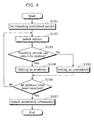
- FIG. 4 is a flowchart showing steps of processing performed by the controller 140 when the traveling-prohibited section is set.
- the traveling-prohibited section setting unit 145 sets the traveling-prohibited section (Step S101). For example, when failure occurs on the traveling vehicle 111 shown in FIG. 1 , the traveling-prohibited section setting unit 145 sets a section which includes the spot where the traveling vehicle 111 stays as the traveling-prohibited section.
- the determination unit 147 selects one of the stations 120 included in the traveling vehicle system 100 (Step S102). For example, the determination unit 147 selects the station 121 identified by the station ID "S1".
- the determination unit 147 determines whether or not the traveling vehicle 110 which departs from the station 120 selected in Step 102 can return to the station 120 without passing the traveling-prohibited section (Step S103).
- the availability setting unit 148 sets the station 120 selected in Step S102 as available (Step S104).
- the availability setting unit 148 sets the station 120 selected in Step S102 as unavailable (Step S105).
- the determination unit 147 determines that the traveling vehicle 110 which departs from the station 121 cannot return to the station 121 without passing the traveling-prohibited section which includes the spot where the traveling vehicle 111 stays. Then, the availability setting unit 148 stores, in the station information table 150, the "0" as the availability information corresponding to the station ID "S1". It is to be noted that whether or not the traveling vehicle 110 can return to the station 121 is calculated using a general method for finding a traveling route.
- the determination unit 147 determines whether or not all the stations 120 have been selected (Step S106). Here, when there is any stations 120 which have not been selected (No in Step S106), the determination unit 147 selects one of the unselected stations 120 included in the traveling vehicle system 100 (Step S102). For example, when only the station 121 has been selected, the determination unit 147 selects the station 122. Then, the controller 140 repeats the processing of Step S103 to Step S105.
- the controller 140 outputs the availability information stored in the station information table 150 (Step S107). Specifically, the communication unit 143 transmits the availability information to the upper controller, or the display unit 142 shows the availability information.
- the controller 140 sets the availability of the station 120 when the traveling-prohibited section is set.
- FIG. 5 is a flowchart showing steps of processing performed by the controller 140 when the traveling-prohibited section is cancelled.
- the traveling-prohibited section setting unit 145 cancels the traveling-prohibited section (Step S201). For example, when the failure of the traveling vehicle 111 shown in FIG. 1 is repaired, the traveling-prohibited section setting unit 145 cancels the traveling-prohibited section which has been set.
- the determination unit 147 selects one of the stations 120 set as unavailable (Step S202). For example, the determination unit 147 refers to the station information table 150 to select one of the stations 120 which has "0" as the availability information and is identified by the station ID.
- the determination unit 147 determines whether or not the traveling vehicle 110 which departs from the station 120 selected in Step S202 can return, to the station 120, without passing the traveling-prohibited section which is yet to be canceled (Step S203).
- the availability setting unit 148 changes the availability of the station 120 selected in Step S102 to available (Step S204).
- the availability setting unit 148 skips the Step S204 and proceeds to the processing of Step S205.
- the determination unit 147 determines whether or not all the stations 120 set as unavailable have been selected (Step S205). Here, when there is any unselected stations 120 (No in Step S205), the determination unit 147 selects one of the unselected stations 120 set as unavailable (Step S202). On the other hand, when all the stations 120 have been selected (Yes in Step S205), the controller 140 outputs the availability information stored in the station information table 150 (Step S206).
- the controller 140 changes, as necessary, the availability of the station 120 set as unavailable.
- FIG. 6 is a flowchart showing steps of processing performed by the controller 140 when layout change information is obtained.
- the layout change obtaining unit 146 obtains the layout change information which indicates a change in the layout (Step S301). For example, when the station 120 is set up, removed, or rearranged, or when the traveling path 130 is added, removed, or changed, the layout change obtaining unit 146 obtains the layout change information.
- the determination unit 147 selects one of the stations 120 included in the traveling vehicle system 100 (Step S302).
- the determination unit 147 determines whether or not the traveling vehicle 110 which departs from the station 120 selected in Step S302 can return, to the station 120, without passing the traveling-prohibited section, based on the changed layout (Step S303).
- the availability setting unit 148 sets the station 120 selected in Step S302 as available (Step S304).
- the availability setting unit 148 sets the station 120 selected in Step S302 as unavailable (Step S305).
- the determination unit 147 determines whether or not all the stations 120 have been selected (Step S306).
- the determination unit 147 selects one of the unselected stations 120 included in the traveling vehicle system 100 (Step S302).
- the controller 140 outputs the availability information stored in the station information table 150 (Step S307).
- the controller 140 sets the availability of the station 120 when the layout is changed.
- the availability setting unit 148 can set the availability of all the stations 120 when the traveling-prohibited section is set. This enables the controller 140 to provide precise information regarding the availability of the station 120 which is associated with the setting of the traveling-prohibited section. As a result, the traveling vehicle system 100 can transmits, to the upper controller or the like, the information regarding the availability of the station 120 which is associated with the setting of the traveling-prohibited section. Thus, confusion that arises from an order which requires the traveling vehicle to reach the unavailable station 120 can be avoided.
- the display unit 142 can display, on a monitor or the like, the information regarding the traveling-prohibited section and the availability of the station 120. Thus, the user can easily understand the state of the traveling vehicle system 100.
- the availability setting unit 148 sets the station to which the traveling vehicle 110 cannot return as unavailable. This means that, in the traveling vehicle system 100, it is possible to avoid the situation where the traveling vehicle 110 cannot move to an other station 120 after reaching the designated station. Specifically, the availability setting unit 148 sets the station 121 in FIG. 1 as unavailable. This enables the traveling vehicle system 100 to prevent the transmission of an order which requires the traveling vehicle 110 to reach the station 121 from which the traveling vehicle 110 cannot move. In other words, the traveling vehicle system 100 can raise an operation rate when the traveling-prohibited section is set.
- the traveling vehicle system 100 can change the availability of the station 120 set as unavailable. Accordingly, the traveling vehicle system 100 can restore, without delay, the station 120 set as unavailable.
- the traveling vehicle system can provide precise information regarding the availability of the station 120, based on the changed layout.
- the traveling vehicle system 100 does not set availability on the traveling vehicle 110.
- the traveling vehicle 110 which exists in the traveling-prohibited section is allowed to travel to the available station 120.
- the traveling vehicle 112 in FIG. 1 can fulfill an order to deliver an article from the station 123 to the station 124.
- the traveling-prohibited section setting unit 145 sets only a section of the closed path, which includes the area where the traveling vehicle 110 cannot travel, as the traveling-prohibited section. In other words, unlike the conventional traveling vehicle system, the traveling-prohibited section setting unit 145 does not set the entire closed path, which includes the area where the traveling vehicle 110 cannot travel, as the traveling-prohibited section. Thus, the number of the unavailable stations and the unavailable traveling vehicles can be limited to a minimum number. A specific example is described with reference to FIG. 8 .
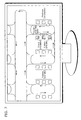
- FIG. 8 is a diagram showing an other example of the traveling vehicle system.
- the traveling vehicle system 200 includes a traveling path 230 and stations 221 and 222.
- the traveling path 230 includes closed paths 231 to 237.
- Other components of the traveling vehicle system 200 are the same as the traveling vehicle system 100, and thus the description thereof is omitted.
- the traveling-prohibited section setting unit 145 in the traveling vehicle system 200 sets a traveling-prohibited section 239 when an area 238 on the traveling path 230 becomes unavailable for the traveling vehicle to travel.
- the traveling vehicle which departs from the station 221 cannot return to the station 221 without passing the traveling-prohibited section 239.
- the availability setting unit 148 sets the station 221 as unavailable.
- the traveling vehicle which departs from the station 222 can return to the station 222 without passing the traveling-prohibited section 239.
- the availability setting unit 148 sets the station 222 as available.
- the traveling vehicle system 200 according to the present invention can set the station 222 as available.
- the number of the unavailable stations can be limited to a minimum number.
- the traveling-prohibited section setting unit 145 sets minimum number of sections as the traveling-prohibited section 239.
- the traveling vehicles 111 and 112 are out of operation because all sections of the closed path 231 or sections between branches in the traveling path 230, in which the area 238 is included, are set as the traveling-prohibited sections.
- the traveling vehicles 111 and 112 in the traveling vehicle system 200 can continue traveling.
- the number of the unavailable traveling vehicles can be limited to a minimum number.
- the traveling vehicle system described in the above embodiment included one controller
- the traveling vehicle system may include a plurality of controllers.
- each of the controllers is in charge of certain sections of the traveling path, and manages the availability of the stations included in the responsible sections of the traveling path.
- the traveling vehicle system which includes controllers can swiftly determine the availability of the station even in the case of a complicated traveling vehicle system which includes a plurality of closed paths and stations.
- the controller controls the traveling vehicle according to the order transmitted by the upper controller.
- the controller may designate the station to be reached by the traveling vehicle, based on the availability information of the station.
- the present invention can also be realized as a station management method having, as steps, characteristic processing units included in the management apparatus (controller) of the above described traveling vehicle system. Also, the present invention can also be realized as a program causing a computer to execute the characteristic steps. In addition, such a program can be distributed through recording media such as a Compact Disc-Read Only Memory (CD-ROM) or a communication network such as the Internet.
- CD-ROM Compact Disc-Read Only Memory
- the traveling vehicle system according to the present invention can provide precise information regarding the availability of the stations which is associated with the setting of the traveling-prohibited section.
- the present invention can be applied to the overhead conveying vehicle system in which an unmanned traveling vehicle travels along the guiding rail fixed to a ceiling to deliver an article.
Landscapes
- Engineering & Computer Science (AREA)
- Physics & Mathematics (AREA)
- General Physics & Mathematics (AREA)
- Automation & Control Theory (AREA)
- General Engineering & Computer Science (AREA)
- Manufacturing & Machinery (AREA)
- Quality & Reliability (AREA)
- Aviation & Aerospace Engineering (AREA)
- Radar, Positioning & Navigation (AREA)
- Remote Sensing (AREA)
- Control Of Position, Course, Altitude, Or Attitude Of Moving Bodies (AREA)
Abstract
Description
- The present invention relates to a traveling vehicle system in which a traveling vehicle travels a predetermined traveling path. In particular, the present invention relates to the traveling vehicle system which manages the availability of stations set up along the traveling path.
- A traveling vehicle system which is controlled by a computer and allows an unmanned traveling vehicle to travel a traveling path has been used. The traveling path includes a plurality of one-way closed paths which are, for example, fixed to a ceiling or disposed on a floor. When a failure or the like occurs on a traveling vehicle used in the traveling vehicle system, other traveling vehicles cannot travel a section of the traveling path which includes the spot where the disabled car stays. Also, when a rail which forms the traveling path is under construction, the traveling vehicle cannot travel a section of the traveling path under construction.
- In view of this, when a certain area becomes unavailable for the traveling vehicle to travel, the conventional traveling vehicle system sets a section of the traveling path which includes the unavailable area as a traveling-prohibited section. Thereby, when selecting a path to a designated station for the traveling vehicle, the traveling vehicle system selects a path such that the traveling vehicle does not travel the traveling-prohibited section (for example, refer to Patent Literature (PTL) 1).
-
- [PTL 1]
Japanese Unexamined Patent Application Publication No.11-85280 - However, when a path to the designated station does not exist, all the information transmitted to an upper system from the above described conventional traveling vehicle system is that a path to reach the designated station does not exist. In other words, the traveling vehicle system and the upper system cannot provide information regarding the availability of the stations which is associated with the setting of the traveling-prohibited section.
- Thus, not knowing the station which the traveling vehicle can reach, the upper system is unable to designate an alternative station for the traveling vehicle system. As a result, in the worst case, the upper system and the traveling vehicle system keep transmitting and receiving the order to reach the station which the traveling vehicle cannot reach and the information which notifies that the path to the designated station does not exist. This causes the traveling vehicle to stop on a traveling path with an article to deliver, and to be a factor for a traffic hold-up.
- The present invention is conceived in view of the above described problem. The object of the present invention is to provide the traveling vehicle system which can provide precise information regarding the availability of the stations which is associated with the setting of the traveling-prohibited section.
- In order to achieve the object described above, the traveling vehicle system according to the present invention includes: a traveling path which is pre-provided and includes at least two one-way closed paths connected to one another; stations set up along the traveling path; a traveling vehicle which travels the traveling path; and a management apparatus which manages availability of the stations. The management apparatus includes: a traveling-prohibited section setting unit configured to set a traveling-prohibited section which is a section of the traveling path which the traveling vehicle cannot travel; a determination unit configured to determine, for each of the stations, when a traveling-prohibited section is set by the traveling-prohibited section setting unit, whether or not the traveling vehicle can return, to one of the stations from which the traveling vehicle departs, without passing the traveling-prohibited section; and an availability setting unit configured to set the station as available when the determination unit determines that the traveling vehicle can return to the station, and to set the station as unavailable when the determination unit determines that the traveling vehicle cannot return to the station.
- With this, when the traveling-prohibited section is set, the availability of all the stations can be determined. Thus, the traveling vehicle system according to the present invention can provide precise information regarding the availability of stations which is associated with the setting of the traveling-prohibited section. As a result, it is possible to avoid the confusion such as the transmission of an order which requires the traveling vehicle to reach the unavailable station.
- Further, since the station to which the traveling vehicle cannot return is set as unavailable, it is possible to avoid the situation where the traveling vehicle cannot move to an other station after reaching the designated station.
- Further, preferably, the traveling-prohibited section setting unit is further configured to cancel one of traveling-prohibited sections including the traveling-prohibited section, and the determination unit is further configured to determine, for each of the stations set as unavailable by the availability setting unit, whether or not the traveling vehicle can return, to the station from which the traveling vehicle departs, without passing one of traveling-prohibited sections which are yet to be canceled and are included in the traveling-prohibited sections, when one of the traveling-prohibited sections is canceled by the traveling-prohibited section setting unit.
- With this, when the traveling-prohibited section is canceled, the availability of the station set as unavailable can be determined. Thus, the station set as unavailable can be restored without delay.
- Further, preferably, the management apparatus further includes an obtaining unit configured to obtain layout change information which indicates a change in layout of either the traveling path or the stations, and the determination unit is further configured to determine based on a changed layout, for each of the stations, whether or not the traveling vehicle can return, to the station from which the traveling vehicle departs, without passing the traveling-prohibited section, when layout change information is obtained by the obtaining unit.
- With this, even when a layout change is made, the traveling vehicle system can provide precise information regarding the availability of stations, based on the changed layout. The layout change refers to addition, removal or rearrangement of the station, or a change in the traveling path.
- The present invention enables the traveling vehicle system, in which the traveling vehicle travels the pre-provided traveling path, to provide precise information regarding the availability of stations which is associated with the setting of the traveling-prohibited section.
-
- [
FIG. 1 ]
FIG. 1 is a diagram showing a structure of a traveling vehicle system according to the embodiment of the present invention. - [
FIG. 2 ]
FIG. 2 is a block diagram showing a characteristic functional structure of a controller. - [
FIG. 3 ]
FIG. 3 is a diagram showing an example of a station information table. - [
FIG. 4 ]
FIG. 4 is a flowchart showing steps of processing performed by the controller when a traveling-prohibited section is set. - [
FIG. 5 ]
FIG. 5 is a flowchart showing steps of processing performed by the controller when the traveling-prohibited section is cancelled. - [
FIG. 6 ]
FIG. 6 is a flowchart showing steps of processing performed by the controller when layout change information is obtained. - [
FIG. 7 ]
FIG. 7 is a diagram showing an example of availability information of stations shown by a display unit. - [
FIG. 8 ]
FIG. 8 is a diagram showing an other example of the traveling vehicle system. - Following describes a traveling vehicle system according to the embodiment of the present invention with reference to the drawings.
-
FIG. 1 is a diagram showing a structure of atraveling vehicle system 100 according to the embodiment of the present invention. - As shown in
FIG. 1 , thetraveling vehicle system 100 includes: travelingvehicles 111 to 113,stations 121 to 124, atraveling path 130, and acontroller 140. Following describes each of components included in thetraveling vehicle system 100. - The
traveling vehicles traveling path 130 in one direction. Hereinafter, thetraveling vehicles vehicle 110 when each of the traveling vehicles does not need to be differentiated from one another. It is to be noted that thetraveling vehicle 110 may be the traveling vehicle that travels along a rail provided on a floor. -
Stations traveling vehicle 110 receives or delivers an article. The stations are located along thetraveling path 130. Hereinafter, thestations station 120 when each of the stations does not need to be differentiated from one another. It is to be noted that a stoppage point is provided on thetraveling path 130 corresponding to thestation 120. When the travelingvehicle 110 stops at the stoppage point, it is referred to as the travelingvehicle 110 reaches thestation 120. - The traveling
path 130 includes the guiding rail which is, for example, fixed to the ceiling. The travelingpath 130 includes twoclosed paths FIG. 1 , theclosed path 131 and theclosed path 132 branch at abranch point 133, and merge at amerge point 134. Furthermore, inFIG. 1 , a section of theclosed path 131 is set as traveling-prohibitedsection 135. - A
controller 140 is an example of a management apparatus which manages the availability of thestation 120. Also, thecontroller 140 controls the travelingvehicles 110 based on an order received from an upper controller (not shown). -
FIG. 2 is a block diagram showing a functional structure of thecontroller 140. As shown inFIG. 2 , thecontroller 140 includes: aninput unit 141, adisplay unit 142, acommunication unit 143, acontrol unit 144, a traveling-prohibitedsection setting unit 145, a layoutchange obtaining unit 146, adetermination unit 147, anavailability setting unit 148, and astorage unit 149. Following describes each of the units included in thecontroller 140. - The
input unit 141 includes, for example, a keyboard and a mouse. A user enters information through theinput unit 141. - The
display unit 142 includes, for example, a liquid crystal display. Thedisplay unit 142 shows information stored in thestorage unit 149, and also shows information entered through theinput unit 141. - The
communication unit 143 is a processing unit which communicates with an other apparatus or the like, for example, through a wireless communication network. Thecommunication unit 143 transmits, to the travelingvehicle 110, information regarding thestation 120 to be reached, and receives information regarding current location of the travelingvehicle 110 transmitted by the travelingvehicle 110. Also, thecommunication unit 143 communicates with the upper controller, for example, through a Local Area Network (LAN). Thecommunication unit 143 receives, from the upper controller, a delivery order which includes information regarding thestation 120 from which the travelingvehicle 110 is to depart, and the information regarding thestation 120 which the travelingvehicle 110 is to reach. Also, thecommunication unit 143 transmits, to the upper controller, information regarding the availability of thestation 120. - The
control unit 144 is a processing unit which is, for example, realized by a Central Processing Unit (CPU) and a memory. Thecontrol unit 144 controls the travelingvehicle 110 based on the delivery order transmitted by the upper controller. Specifically, thecontrol unit 144 controls the travelingvehicle 110 such that the travelingvehicle 110 does not reach thestation 120 set as unavailable by theavailability setting unit 148. In other words, when an order which requires the travelingvehicle 110 to reach thestation 120 set as unavailable is received from the upper controller, thecontrol unit 144 causes thecommunication unit 143 to transmit, to the upper controller, information to notify the upper controller that thestation 120 cannot be reached. - The traveling-prohibited
section setting unit 145 is a processing unit which is, for example, realized by a memory and a CPU. The traveling-prohibitedsection setting unit 145 sets and cancels the traveling-prohibited section, which is a section of the travelingpath 130 which the travelingvehicle 110 cannot travel. - The layout
change obtaining unit 146 is a processing unit which is, for example, realized by a memory and a CPU. The layoutchange obtaining unit 146 obtains layout change information which indicates a change in a layout of either the travelingpath 130 or thestation 120. Specifically, the layoutchange obtaining unit 146 obtains, as the layout change information, for example, information regarding the change in arrangement of thestation 120 entered by the user through theinput unit 141. - The
determination unit 147 is a processing unit which is, for example, realized by a memory and a CPU. When the traveling-prohibited section is set by the traveling-prohibitedsection setting unit 145, thedetermination unit 147 determines, for each of thestations 120, whether or not the travelingvehicle 110 which departs from thestation 120 can return, to thestation 120 from which the travelingvehicle 110 departs, without passing the traveling-prohibited section. - Also, when one of traveling-prohibited sections is canceled by the traveling-prohibited
section setting unit 145, thedetermination unit 147 determines, for each of the stations set as unavailable by theavailability setting unit 148, whether or not the traveling vehicle which departs from thestation 120 can return, to thestation 120 from which the traveling vehicle departs, without passing one of traveling-prohibited sections which are yet to be canceled. - Further, when the layout change information is obtained by the layout
change obtaining unit 146, thedetermination unit 147 determines in the same manner, for each of thestations 120, whether or not the travelingvehicle 110 which departs from thestation 120 can return, to thestation 120 from which the travelingvehicle 110 departs, without passing the traveling-prohibited section, based on the changed layout. - For example, when the traveling
vehicle 111 shown inFIG. 1 is stopped due to failure, the traveling-prohibitedsection setting unit 145 sets the traveling-prohibitedsection 135, which is a section of theclosed path 131. As a result, thedetermination unit 147 determines that the travelingvehicles 110 which depart from thestations stations section 135. On the other hand, thedetermination unit 147 determines that the travelingvehicles 110 which depart from thestations stations section 135. - When the
determination unit 147 determines that the traveling vehicle can return to the station, theavailability setting unit 148 sets the station as available. On the other hand, when thedetermination unit 147 determines that the traveling vehicle cannot return to the station, theavailability setting unit 148 sets the station as unavailable. - Here, when the station is available, it means that an order that requires the traveling vehicle to reach the station may be transmitted. On the other hand, when the station is unavailable, it means that an order that requires the traveling vehicle to reach the station may not be transmitted. Specifically, the
control unit 144 controls the travelingvehicle 110 such that the travelingvehicle 110 reaches only thestation 120 set as available. Also, the upper controller does not transmit, to thecontroller 140, the order that requires, for example, the traveling vehicle to reach thestation 120 set as unavailable. - The
storage unit 149 includes, for example, a read/write memory. In thestorage unit 149, information regarding availability of each of the stations is stored. Specifically, thestorage unit 149 stores a station information table 150. -
FIG. 3 is a diagram showing an example of the station information table 150 stored in thestorage unit 149. As shown inFIG. 3 , the station information table 150 stores a station ID, and availability information. - The station ID is information which identifies the
station 120. It is to be noted that thestations FIG. 1 are identified by the station IDs "S1", "S2", "S3", and "S4" respectively. - The availability information indicates whether or not the
station 120 is available. When the availability information is "1", thestation 120 is available. On the other hand, when the availability information is "0", thestation 120 is unavailable. - For example, in the station information table 150 shown in
FIG. 3 , thestations FIG. 3 , thestations - Following describes basic operations of the traveling
vehicle system 100 according to this embodiment which includes the structure described above. -
FIG. 4 is a flowchart showing steps of processing performed by thecontroller 140 when the traveling-prohibited section is set. - First, the traveling-prohibited
section setting unit 145 sets the traveling-prohibited section (Step S101). For example, when failure occurs on the travelingvehicle 111 shown inFIG. 1 , the traveling-prohibitedsection setting unit 145 sets a section which includes the spot where the travelingvehicle 111 stays as the traveling-prohibited section. - Next, the
determination unit 147 selects one of thestations 120 included in the traveling vehicle system 100 (Step S102). For example, thedetermination unit 147 selects thestation 121 identified by the station ID "S1". - Next, the
determination unit 147 determines whether or not the travelingvehicle 110 which departs from thestation 120 selected in Step 102 can return to thestation 120 without passing the traveling-prohibited section (Step S103). Here, when it is determined that the traveling vehicle can return to the station 120 (Yes in Step S103), theavailability setting unit 148 sets thestation 120 selected in Step S102 as available (Step S104). On the other hand, when it is determined that the traveling vehicle cannot return to the station 120 (No in Step S103), theavailability setting unit 148 sets thestation 120 selected in Step S102 as unavailable (Step S105). - For example, the
determination unit 147 determines that the travelingvehicle 110 which departs from thestation 121 cannot return to thestation 121 without passing the traveling-prohibited section which includes the spot where the travelingvehicle 111 stays. Then, theavailability setting unit 148 stores, in the station information table 150, the "0" as the availability information corresponding to the station ID "S1". It is to be noted that whether or not the travelingvehicle 110 can return to thestation 121 is calculated using a general method for finding a traveling route. - Next, the
determination unit 147 determines whether or not all thestations 120 have been selected (Step S106). Here, when there is anystations 120 which have not been selected (No in Step S106), thedetermination unit 147 selects one of the unselectedstations 120 included in the traveling vehicle system 100 (Step S102). For example, when only thestation 121 has been selected, thedetermination unit 147 selects thestation 122. Then, thecontroller 140 repeats the processing of Step S103 to Step S105. - On the other hand, when all the
stations 120 have been selected (Yes in Step S106), thecontroller 140 outputs the availability information stored in the station information table 150 (Step S107). Specifically, thecommunication unit 143 transmits the availability information to the upper controller, or thedisplay unit 142 shows the availability information. - As described, the
controller 140 sets the availability of thestation 120 when the traveling-prohibited section is set. -
FIG. 5 is a flowchart showing steps of processing performed by thecontroller 140 when the traveling-prohibited section is cancelled. - First, the traveling-prohibited
section setting unit 145 cancels the traveling-prohibited section (Step S201). For example, when the failure of the travelingvehicle 111 shown inFIG. 1 is repaired, the traveling-prohibitedsection setting unit 145 cancels the traveling-prohibited section which has been set. - Next, the
determination unit 147 selects one of thestations 120 set as unavailable (Step S202). For example, thedetermination unit 147 refers to the station information table 150 to select one of thestations 120 which has "0" as the availability information and is identified by the station ID. - Next, the
determination unit 147 determines whether or not the travelingvehicle 110 which departs from thestation 120 selected in Step S202 can return, to thestation 120, without passing the traveling-prohibited section which is yet to be canceled (Step S203). Here, when it is determined that the travelingvehicle 110 can return to the station 120 (Yes in Step S203), theavailability setting unit 148 changes the availability of thestation 120 selected in Step S102 to available (Step S204). On the other hand, when it is determined the travelingvehicle 110 cannot return to the station 120 (No in Step S203), theavailability setting unit 148 skips the Step S204 and proceeds to the processing of Step S205. - Next, the
determination unit 147 determines whether or not all thestations 120 set as unavailable have been selected (Step S205). Here, when there is any unselected stations 120 (No in Step S205), thedetermination unit 147 selects one of the unselectedstations 120 set as unavailable (Step S202). On the other hand, when all thestations 120 have been selected (Yes in Step S205), thecontroller 140 outputs the availability information stored in the station information table 150 (Step S206). - As described, when the traveling-prohibited section is canceled, the
controller 140 changes, as necessary, the availability of thestation 120 set as unavailable. -
FIG. 6 is a flowchart showing steps of processing performed by thecontroller 140 when layout change information is obtained. - First, the layout
change obtaining unit 146 obtains the layout change information which indicates a change in the layout (Step S301). For example, when thestation 120 is set up, removed, or rearranged, or when the travelingpath 130 is added, removed, or changed, the layoutchange obtaining unit 146 obtains the layout change information. - Next, the
determination unit 147 selects one of thestations 120 included in the traveling vehicle system 100 (Step S302). - Next, the
determination unit 147 determines whether or not the travelingvehicle 110 which departs from thestation 120 selected in Step S302 can return, to thestation 120, without passing the traveling-prohibited section, based on the changed layout (Step S303). Here, when it is determined that the traveling vehicle can return to the station 120 (Yes in Step S303), theavailability setting unit 148 sets thestation 120 selected in Step S302 as available (Step S304). On the other hand, when it is determined that the traveling vehicle cannot return to the station 120 (No in Step S303), theavailability setting unit 148 sets thestation 120 selected in Step S302 as unavailable (Step S305). - Next, the
determination unit 147 determines whether or not all thestations 120 have been selected (Step S306). Here, when there is any unselected stations 120 (No in Step S306), thedetermination unit 147 selects one of the unselectedstations 120 included in the traveling vehicle system 100 (Step S302). On the other hand, when all thestations 120 have been selected (Yes in Step S306), thecontroller 140 outputs the availability information stored in the station information table 150 (Step S307). - As described, the
controller 140 sets the availability of thestation 120 when the layout is changed. - As described above, in the traveling
vehicle system 100 according to this embodiment, theavailability setting unit 148 can set the availability of all thestations 120 when the traveling-prohibited section is set. This enables thecontroller 140 to provide precise information regarding the availability of thestation 120 which is associated with the setting of the traveling-prohibited section. As a result, the travelingvehicle system 100 can transmits, to the upper controller or the like, the information regarding the availability of thestation 120 which is associated with the setting of the traveling-prohibited section. Thus, confusion that arises from an order which requires the traveling vehicle to reach theunavailable station 120 can be avoided. In addition, as shown inFIG. 7 , thedisplay unit 142 can display, on a monitor or the like, the information regarding the traveling-prohibited section and the availability of thestation 120. Thus, the user can easily understand the state of the travelingvehicle system 100. - The
availability setting unit 148 sets the station to which the travelingvehicle 110 cannot return as unavailable. This means that, in the travelingvehicle system 100, it is possible to avoid the situation where the travelingvehicle 110 cannot move to another station 120 after reaching the designated station. Specifically, theavailability setting unit 148 sets thestation 121 inFIG. 1 as unavailable. This enables the travelingvehicle system 100 to prevent the transmission of an order which requires the travelingvehicle 110 to reach thestation 121 from which the travelingvehicle 110 cannot move. In other words, the travelingvehicle system 100 can raise an operation rate when the traveling-prohibited section is set. - In addition, when the traveling-prohibited section is canceled, the traveling
vehicle system 100 can change the availability of thestation 120 set as unavailable. Accordingly, the travelingvehicle system 100 can restore, without delay, thestation 120 set as unavailable. - In addition, when the layout change which indicates an addition, removal or rearrangement of the
station 120, or the change in the travelingpath 130 is made, the traveling vehicle system can provide precise information regarding the availability of thestation 120, based on the changed layout. - In addition, the traveling
vehicle system 100 does not set availability on the travelingvehicle 110. Thus, if any, the travelingvehicle 110 which exists in the traveling-prohibited section is allowed to travel to theavailable station 120. Specifically, the travelingvehicle 112 inFIG. 1 can fulfill an order to deliver an article from thestation 123 to thestation 124. - In addition, the traveling-prohibited
section setting unit 145 sets only a section of the closed path, which includes the area where the travelingvehicle 110 cannot travel, as the traveling-prohibited section. In other words, unlike the conventional traveling vehicle system, the traveling-prohibitedsection setting unit 145 does not set the entire closed path, which includes the area where the travelingvehicle 110 cannot travel, as the traveling-prohibited section. Thus, the number of the unavailable stations and the unavailable traveling vehicles can be limited to a minimum number. A specific example is described with reference toFIG. 8 . -
FIG. 8 is a diagram showing an other example of the traveling vehicle system. As shown inFIG. 8 , the travelingvehicle system 200 includes a travelingpath 230 andstations path 230 includesclosed paths 231 to 237. Other components of the travelingvehicle system 200 are the same as the travelingvehicle system 100, and thus the description thereof is omitted. - The traveling-prohibited
section setting unit 145 in the travelingvehicle system 200 sets a traveling-prohibitedsection 239 when anarea 238 on the travelingpath 230 becomes unavailable for the traveling vehicle to travel. As a result, the traveling vehicle which departs from thestation 221 cannot return to thestation 221 without passing the traveling-prohibitedsection 239. Thus, theavailability setting unit 148 sets thestation 221 as unavailable. On the other hand, the traveling vehicle which departs from thestation 222 can return to thestation 222 without passing the traveling-prohibitedsection 239. Thus, theavailability setting unit 148 sets thestation 222 as available. - As described, unlike the conventional traveling vehicle system which sets the
station 222 as unavailable because all the sections of theclosed path 231 are set as unavailable, the travelingvehicle system 200 according to the present invention can set thestation 222 as available. In other words, with the travelingvehicle system 200 according to the present invention, the number of the unavailable stations can be limited to a minimum number. - In addition, when the
area 238 becomes unavailable for the travelingvehicle 110 to travel, the traveling-prohibitedsection setting unit 145 sets minimum number of sections as the traveling-prohibitedsection 239. In the conventional system, the travelingvehicles closed path 231 or sections between branches in the travelingpath 230, in which thearea 238 is included, are set as the traveling-prohibited sections. Unlike this, the travelingvehicles vehicle system 200 can continue traveling. In other words, with the travelingvehicle system 200 according to the present invention, the number of the unavailable traveling vehicles can be limited to a minimum number. - While the traveling vehicle system according to the present invention has been described with reference to the embodiment, it is to be understood that the present invention is not limited to the embodiment described above. Within the spirit of this invention, all modifications that can be made by those skilled in the art are intended to be included within the scope of this invention.
- For example, although the traveling vehicle system described in the above embodiment included one controller, the traveling vehicle system may include a plurality of controllers. When controllers are used, each of the controllers is in charge of certain sections of the traveling path, and manages the availability of the stations included in the responsible sections of the traveling path. The traveling vehicle system which includes controllers can swiftly determine the availability of the station even in the case of a complicated traveling vehicle system which includes a plurality of closed paths and stations.
- In the embodiment described above, the controller controls the traveling vehicle according to the order transmitted by the upper controller. Alternatively, the controller may designate the station to be reached by the traveling vehicle, based on the availability information of the station.
- It is to be noted that the present invention can also be realized as a station management method having, as steps, characteristic processing units included in the management apparatus (controller) of the above described traveling vehicle system. Also, the present invention can also be realized as a program causing a computer to execute the characteristic steps. In addition, such a program can be distributed through recording media such as a Compact Disc-Read Only Memory (CD-ROM) or a communication network such as the Internet.
- The traveling vehicle system according to the present invention can provide precise information regarding the availability of the stations which is associated with the setting of the traveling-prohibited section. For example, the present invention can be applied to the overhead conveying vehicle system in which an unmanned traveling vehicle travels along the guiding rail fixed to a ceiling to deliver an article.
-
- 100, 200 Traveling vehicle system
- 110, 111, 112, 113 Traveling vehicle
- 120, 121, 122, 123, 124, 221, 222 Station
- 130, 230 Traveling path
- 131, 132, 231, 232, 233, 234, 235, 236, 237 Closed path
- 133 Branch point
- 134 Merge point
- 135, 239 Traveling-prohibited section
- 140 Controller
- 141 Input unit
- 142 Display unit
- 143 Communication unit
- 144 Control unit
- 145 Traveling-prohibited section setting unit
- 146 Layout change obtaining unit
- 147 Determination unit
- 148 Availability setting unit
- 149 Storage unit
- 150 Station information table
Claims (3)
- A traveling vehicle system comprising:a traveling path which is pre-provided and includes at least two one-way closed paths connected to one another;stations set up along said traveling path;a traveling vehicle which travels said traveling path; anda management apparatus which manages availability of said stations,wherein said management apparatus includes:a traveling-prohibited section setting unit configured to set a traveling-prohibited section which is a section of said traveling path which said traveling vehicle cannot travel;a determination unit configured to determine, for each of said stations, when a traveling-prohibited section is set by said traveling-prohibited section setting unit, whether or not said traveling vehicle can return, to one of said stations from which said traveling vehicle departs, without passing the traveling-prohibited section; andan availability setting unit configured to set said station as available when said determination unit determines that said traveling vehicle can return to said station, and to set said station as unavailable when said determination unit determines that said traveling vehicle cannot return to said station.
- The traveling vehicle system according to Claim 1,
wherein said traveling-prohibited section setting unit is further configured to cancel one of traveling-prohibited sections including the traveling-prohibited section, and
said determination unit is further configured to determine, for each of said stations set as unavailable by said availability setting unit, whether or not said traveling vehicle can return, to said station from which the traveling vehicle departs, without passing one of traveling-prohibited sections which are yet to be canceled and are included in the traveling-prohibited sections, when one of the traveling-prohibited sections is canceled by said traveling-prohibited section setting unit. - The traveling vehicle system according to Claim 1,
wherein said management apparatus further includes an obtaining unit configured to obtain layout change information which indicates a change in layout of either said traveling path or said stations, and
said determination unit is further configured to determine based on a changed layout, for each of said stations, whether or not said traveling vehicle can return, to said station from which said traveling vehicle departs, without passing the traveling-prohibited section, when layout change information is obtained by said obtaining unit.
Applications Claiming Priority (2)
| Application Number | Priority Date | Filing Date | Title |
|---|---|---|---|
| JP2008261080 | 2008-10-07 | ||
| PCT/JP2009/003501 WO2010041364A1 (en) | 2008-10-07 | 2009-07-24 | Vehicle system |
Publications (3)
| Publication Number | Publication Date |
|---|---|
| EP2345944A1 true EP2345944A1 (en) | 2011-07-20 |
| EP2345944A4 EP2345944A4 (en) | 2013-05-29 |
| EP2345944B1 EP2345944B1 (en) | 2016-02-17 |
Family
ID=42100326
Family Applications (1)
| Application Number | Title | Priority Date | Filing Date |
|---|---|---|---|
| EP09818904.6A Active EP2345944B1 (en) | 2008-10-07 | 2009-07-24 | Vehicle system |
Country Status (7)
| Country | Link |
|---|---|
| US (1) | US9298185B2 (en) |
| EP (1) | EP2345944B1 (en) |
| JP (1) | JP5035424B2 (en) |
| KR (1) | KR101183513B1 (en) |
| CN (1) | CN102177479B (en) |
| TW (1) | TWI468887B (en) |
| WO (1) | WO2010041364A1 (en) |
Cited By (1)
| Publication number | Priority date | Publication date | Assignee | Title |
|---|---|---|---|---|
| PT106723A (en) * | 2013-01-09 | 2014-07-09 | Far Away Sensing | SYSTEM AND REMOTE CONTROL PROCEDURE OF VEHICLES PER SPACE ORIENTATION COPY UNDERSTANDING AN UNEXECUTABLE ORDERS WARNING SUBSYSTEM |
Families Citing this family (7)
| Publication number | Priority date | Publication date | Assignee | Title |
|---|---|---|---|---|
| KR102431740B1 (en) * | 2018-03-15 | 2022-08-11 | 무라다기카이가부시끼가이샤 | Driving vehicle controller and driving vehicle system |
| WO2019243883A1 (en) * | 2018-06-18 | 2019-12-26 | 日産自動車株式会社 | System for operating commercial vehicles |
| SG11202103056WA (en) * | 2018-09-27 | 2021-04-29 | Murata Machinery Ltd | Travel system and control method of travel system |
| CN112684782B (en) * | 2019-10-17 | 2023-07-14 | 北京极智嘉科技股份有限公司 | Path determination method and device, storage medium and electronic equipment |
| KR102434787B1 (en) * | 2020-07-01 | 2022-08-23 | (주)케이시크 | connected tour service method based on self-driving vehicle |
| JP7668629B2 (en) * | 2020-10-14 | 2025-04-25 | 株式会社小松製作所 | Unmanned vehicle control system, unmanned vehicle, and unmanned vehicle control method |
| GB202117095D0 (en) * | 2021-11-26 | 2022-01-12 | Ocado Innovation Ltd | Determining an exclusion zone in a workspace of transport devices |
Family Cites Families (22)
| Publication number | Priority date | Publication date | Assignee | Title |
|---|---|---|---|---|
| US2960735A (en) * | 1957-06-06 | 1960-11-22 | Crane Co | Foundry system |
| US4224979A (en) * | 1977-10-31 | 1980-09-30 | Mcneil Corporation | Automatic foundry system |
| EP0007790A1 (en) * | 1978-08-01 | 1980-02-06 | Imperial Chemical Industries Plc | Driverless vehicle carrying non-directional detectors auto-guided by light signals |
| SE417021B (en) * | 1979-01-02 | 1981-02-16 | Carrago Transportsystem Ab | DEVICE FOR AUTOMATIC CONTROL OF A TURNING MOVEMENT OF A CAR |
| US4244979A (en) * | 1979-05-10 | 1981-01-13 | National Equipment Corporation | Oven-type apparatus and method |
| JPS5845042B2 (en) * | 1979-06-15 | 1983-10-06 | 株式会社日立製作所 | Trajectory control device for trackless moving objects |
| US4459668A (en) * | 1980-03-31 | 1984-07-10 | Japanese National Railways | Automatic train control device |
| US4301506A (en) * | 1980-07-07 | 1981-11-17 | Turco Daniel J | Auto routing computer for eliminating the need for maps or travel instructions |
| US4361300A (en) * | 1980-10-08 | 1982-11-30 | Westinghouse Electric Corp. | Vehicle train routing apparatus and method |
| US5202832A (en) * | 1991-01-29 | 1993-04-13 | R. R. Donnelley & Sons Co. | Material handling automation system using portable transfer module |
| JPH08211937A (en) * | 1995-01-31 | 1996-08-20 | Tsubakimoto Chain Co | Operation managing method for traveling object |
| CN1179217A (en) * | 1995-03-24 | 1998-04-15 | 株式会社小松制作所 | Method and device for formulating driving route data of unmanned dump truck |
| JPH10177415A (en) | 1996-12-18 | 1998-06-30 | Hitachi Ltd | How to avoid deadlocks in unmanned transport systems |
| JP3268353B2 (en) * | 1997-02-20 | 2002-03-25 | 株式会社アドバンスト・ディスプレイ | Control method of automatic guided vehicle using carrier cut-off machine |
| JP3212028B2 (en) | 1997-09-09 | 2001-09-25 | 村田機械株式会社 | Automatic guided vehicle system |
| JP3065036B2 (en) * | 1998-10-02 | 2000-07-12 | 株式会社東芝 | Vehicle traffic control device |
| JP3491195B2 (en) | 1999-10-29 | 2004-01-26 | 株式会社椿本チエイン | Railroad vehicle operation management device |
| ES2247453T3 (en) * | 2002-06-04 | 2006-03-01 | Bombardier Transportation (Technology) Gmbh | SYSTEM AND METHOD OF MANIPULATION AUTOMATION OF VEHICLES IN A SYSTEM OF RAILWAYS. |
| CN1429726A (en) | 2003-01-30 | 2003-07-16 | 沈湧 | Railway communication system of small sized vehicle |
| JP2004252631A (en) * | 2003-02-19 | 2004-09-09 | Mitsubishi Heavy Ind Ltd | AGV operation control method, AGV operation control device, and distribution system using AGV |
| CN100392841C (en) | 2004-08-12 | 2008-06-04 | 友达光电股份有限公司 | Automatic material handling system |
| JP2007257154A (en) * | 2006-03-22 | 2007-10-04 | Asyst Shinko Inc | Transport vehicle management device, transport vehicle management system, transport vehicle management method, and transport vehicle management program |
-
2009
- 2009-07-24 EP EP09818904.6A patent/EP2345944B1/en active Active
- 2009-07-24 KR KR1020117006786A patent/KR101183513B1/en active Active
- 2009-07-24 US US13/122,550 patent/US9298185B2/en active Active
- 2009-07-24 JP JP2010532776A patent/JP5035424B2/en active Active
- 2009-07-24 WO PCT/JP2009/003501 patent/WO2010041364A1/en not_active Ceased
- 2009-07-24 CN CN2009801397608A patent/CN102177479B/en active Active
- 2009-10-05 TW TW98133720A patent/TWI468887B/en active
Cited By (1)
| Publication number | Priority date | Publication date | Assignee | Title |
|---|---|---|---|---|
| PT106723A (en) * | 2013-01-09 | 2014-07-09 | Far Away Sensing | SYSTEM AND REMOTE CONTROL PROCEDURE OF VEHICLES PER SPACE ORIENTATION COPY UNDERSTANDING AN UNEXECUTABLE ORDERS WARNING SUBSYSTEM |
Also Published As
| Publication number | Publication date |
|---|---|
| EP2345944B1 (en) | 2016-02-17 |
| EP2345944A4 (en) | 2013-05-29 |
| KR101183513B1 (en) | 2012-09-20 |
| KR20110044798A (en) | 2011-04-29 |
| JPWO2010041364A1 (en) | 2012-03-01 |
| TWI468887B (en) | 2015-01-11 |
| WO2010041364A1 (en) | 2010-04-15 |
| US9298185B2 (en) | 2016-03-29 |
| US20110184634A1 (en) | 2011-07-28 |
| TW201015261A (en) | 2010-04-16 |
| JP5035424B2 (en) | 2012-09-26 |
| CN102177479B (en) | 2013-09-25 |
| CN102177479A (en) | 2011-09-07 |
Similar Documents
| Publication | Publication Date | Title |
|---|---|---|
| US9298185B2 (en) | Traveling vehicle system | |
| US9285806B2 (en) | Traveling vehicle system | |
| CN109643123B (en) | Driving vehicle system and control method of driving vehicle system | |
| KR101740529B1 (en) | Path planning determination and allocation method of driverless ground vehicle | |
| JP4811454B2 (en) | Conveying cart system and method for instructing traveling route to conveying cart | |
| JP4782194B2 (en) | Transport system | |
| JP2011102166A (en) | Conveying route determining method and automatic conveyance system | |
| EP3290290A1 (en) | Operation management system | |
| WO2020039699A1 (en) | Traveling vehicle control device, traveling vehicle system, and traveling vehicle control method | |
| JP6068634B2 (en) | Route operation result prediction time generation system, route operation result prediction time generation method, and route operation result prediction time generation program | |
| CN115698887B (en) | Traveling vehicle system and traveling vehicle control method | |
| KR102599356B1 (en) | Driving system, automatic vehicle included therein and method of preventing collision at crossing position | |
| WO2017090653A1 (en) | Vehicle control system, traveling management device, resource management device, vehicle control method, and program | |
| JP5088418B2 (en) | Traveling vehicle system | |
| JP4172465B2 (en) | Conveyor cart system | |
| JP5932570B2 (en) | Predictive diamond creation device | |
| JP2019034590A (en) | Vehicle control system, resource management device, vehicle control method, and program | |
| JP7375791B2 (en) | driving vehicle system | |
| EP4184274B1 (en) | Traveling vehicle system | |
| JP2005219840A (en) | Elevator group management system | |
| JP2006260248A (en) | Transport vehicle system | |
| CN111409674B (en) | Team driving method and device for mobile unit, computer device and storage medium | |
| JP7389010B2 (en) | train control system | |
| WO2026028476A1 (en) | Shuttle operation control device, travel management method, and travel management program | |
| JP6657012B2 (en) | Signal security system |
Legal Events
| Date | Code | Title | Description |
|---|---|---|---|
| PUAI | Public reference made under article 153(3) epc to a published international application that has entered the european phase |
Free format text: ORIGINAL CODE: 0009012 |
|
| 17P | Request for examination filed |
Effective date: 20110406 |
|
| AK | Designated contracting states |
Kind code of ref document: A1 Designated state(s): AT BE BG CH CY CZ DE DK EE ES FI FR GB GR HR HU IE IS IT LI LT LU LV MC MK MT NL NO PL PT RO SE SI SK SM TR |
|
| AX | Request for extension of the european patent |
Extension state: AL BA RS |
|
| RIN1 | Information on inventor provided before grant (corrected) |
Inventor name: HARASAKI, KAZUMI |
|
| DAX | Request for extension of the european patent (deleted) | ||
| A4 | Supplementary search report drawn up and despatched |
Effective date: 20130503 |
|
| RIC1 | Information provided on ipc code assigned before grant |
Ipc: G05D 1/02 20060101AFI20130425BHEP Ipc: G05B 19/418 20060101ALI20130425BHEP |
|
| GRAP | Despatch of communication of intention to grant a patent |
Free format text: ORIGINAL CODE: EPIDOSNIGR1 |
|
| INTG | Intention to grant announced |
Effective date: 20150821 |
|
| GRAS | Grant fee paid |
Free format text: ORIGINAL CODE: EPIDOSNIGR3 |
|
| GRAA | (expected) grant |
Free format text: ORIGINAL CODE: 0009210 |
|
| AK | Designated contracting states |
Kind code of ref document: B1 Designated state(s): AT BE BG CH CY CZ DE DK EE ES FI FR GB GR HR HU IE IS IT LI LT LU LV MC MK MT NL NO PL PT RO SE SI SK SM TR |
|
| REG | Reference to a national code |
Ref country code: GB Ref legal event code: FG4D |
|
| REG | Reference to a national code |
Ref country code: CH Ref legal event code: EP |
|
| REG | Reference to a national code |
Ref country code: IE Ref legal event code: FG4D |
|
| REG | Reference to a national code |
Ref country code: AT Ref legal event code: REF Ref document number: 775932 Country of ref document: AT Kind code of ref document: T Effective date: 20160315 |
|
| REG | Reference to a national code |
Ref country code: DE Ref legal event code: R096 Ref document number: 602009036400 Country of ref document: DE |
|
| REG | Reference to a national code |
Ref country code: NL Ref legal event code: MP Effective date: 20160217 |
|
| REG | Reference to a national code |
Ref country code: LT Ref legal event code: MG4D |
|
| REG | Reference to a national code |
Ref country code: AT Ref legal event code: MK05 Ref document number: 775932 Country of ref document: AT Kind code of ref document: T Effective date: 20160217 |
|
| PG25 | Lapsed in a contracting state [announced via postgrant information from national office to epo] |
Ref country code: ES Free format text: LAPSE BECAUSE OF FAILURE TO SUBMIT A TRANSLATION OF THE DESCRIPTION OR TO PAY THE FEE WITHIN THE PRESCRIBED TIME-LIMIT Effective date: 20160217 Ref country code: NO Free format text: LAPSE BECAUSE OF FAILURE TO SUBMIT A TRANSLATION OF THE DESCRIPTION OR TO PAY THE FEE WITHIN THE PRESCRIBED TIME-LIMIT Effective date: 20160517 Ref country code: FI Free format text: LAPSE BECAUSE OF FAILURE TO SUBMIT A TRANSLATION OF THE DESCRIPTION OR TO PAY THE FEE WITHIN THE PRESCRIBED TIME-LIMIT Effective date: 20160217 Ref country code: IT Free format text: LAPSE BECAUSE OF FAILURE TO SUBMIT A TRANSLATION OF THE DESCRIPTION OR TO PAY THE FEE WITHIN THE PRESCRIBED TIME-LIMIT Effective date: 20160217 Ref country code: GR Free format text: LAPSE BECAUSE OF FAILURE TO SUBMIT A TRANSLATION OF THE DESCRIPTION OR TO PAY THE FEE WITHIN THE PRESCRIBED TIME-LIMIT Effective date: 20160518 |
|
| PG25 | Lapsed in a contracting state [announced via postgrant information from national office to epo] |
Ref country code: AT Free format text: LAPSE BECAUSE OF FAILURE TO SUBMIT A TRANSLATION OF THE DESCRIPTION OR TO PAY THE FEE WITHIN THE PRESCRIBED TIME-LIMIT Effective date: 20160217 Ref country code: LT Free format text: LAPSE BECAUSE OF FAILURE TO SUBMIT A TRANSLATION OF THE DESCRIPTION OR TO PAY THE FEE WITHIN THE PRESCRIBED TIME-LIMIT Effective date: 20160217 Ref country code: SE Free format text: LAPSE BECAUSE OF FAILURE TO SUBMIT A TRANSLATION OF THE DESCRIPTION OR TO PAY THE FEE WITHIN THE PRESCRIBED TIME-LIMIT Effective date: 20160217 Ref country code: LV Free format text: LAPSE BECAUSE OF FAILURE TO SUBMIT A TRANSLATION OF THE DESCRIPTION OR TO PAY THE FEE WITHIN THE PRESCRIBED TIME-LIMIT Effective date: 20160217 Ref country code: NL Free format text: LAPSE BECAUSE OF FAILURE TO SUBMIT A TRANSLATION OF THE DESCRIPTION OR TO PAY THE FEE WITHIN THE PRESCRIBED TIME-LIMIT Effective date: 20160217 Ref country code: PL Free format text: LAPSE BECAUSE OF FAILURE TO SUBMIT A TRANSLATION OF THE DESCRIPTION OR TO PAY THE FEE WITHIN THE PRESCRIBED TIME-LIMIT Effective date: 20160217 Ref country code: PT Free format text: LAPSE BECAUSE OF FAILURE TO SUBMIT A TRANSLATION OF THE DESCRIPTION OR TO PAY THE FEE WITHIN THE PRESCRIBED TIME-LIMIT Effective date: 20160617 |
|
| PG25 | Lapsed in a contracting state [announced via postgrant information from national office to epo] |
Ref country code: DK Free format text: LAPSE BECAUSE OF FAILURE TO SUBMIT A TRANSLATION OF THE DESCRIPTION OR TO PAY THE FEE WITHIN THE PRESCRIBED TIME-LIMIT Effective date: 20160217 Ref country code: EE Free format text: LAPSE BECAUSE OF FAILURE TO SUBMIT A TRANSLATION OF THE DESCRIPTION OR TO PAY THE FEE WITHIN THE PRESCRIBED TIME-LIMIT Effective date: 20160217 |
|
| REG | Reference to a national code |
Ref country code: DE Ref legal event code: R097 Ref document number: 602009036400 Country of ref document: DE |
|
| PG25 | Lapsed in a contracting state [announced via postgrant information from national office to epo] |
Ref country code: SM Free format text: LAPSE BECAUSE OF FAILURE TO SUBMIT A TRANSLATION OF THE DESCRIPTION OR TO PAY THE FEE WITHIN THE PRESCRIBED TIME-LIMIT Effective date: 20160217 Ref country code: RO Free format text: LAPSE BECAUSE OF FAILURE TO SUBMIT A TRANSLATION OF THE DESCRIPTION OR TO PAY THE FEE WITHIN THE PRESCRIBED TIME-LIMIT Effective date: 20160217 Ref country code: CZ Free format text: LAPSE BECAUSE OF FAILURE TO SUBMIT A TRANSLATION OF THE DESCRIPTION OR TO PAY THE FEE WITHIN THE PRESCRIBED TIME-LIMIT Effective date: 20160217 Ref country code: SK Free format text: LAPSE BECAUSE OF FAILURE TO SUBMIT A TRANSLATION OF THE DESCRIPTION OR TO PAY THE FEE WITHIN THE PRESCRIBED TIME-LIMIT Effective date: 20160217 |
|
| PLBE | No opposition filed within time limit |
Free format text: ORIGINAL CODE: 0009261 |
|
| STAA | Information on the status of an ep patent application or granted ep patent |
Free format text: STATUS: NO OPPOSITION FILED WITHIN TIME LIMIT |
|
| PG25 | Lapsed in a contracting state [announced via postgrant information from national office to epo] |
Ref country code: BE Free format text: LAPSE BECAUSE OF FAILURE TO SUBMIT A TRANSLATION OF THE DESCRIPTION OR TO PAY THE FEE WITHIN THE PRESCRIBED TIME-LIMIT Effective date: 20160217 |
|
| 26N | No opposition filed |
Effective date: 20161118 |
|
| PG25 | Lapsed in a contracting state [announced via postgrant information from national office to epo] |
Ref country code: BG Free format text: LAPSE BECAUSE OF FAILURE TO SUBMIT A TRANSLATION OF THE DESCRIPTION OR TO PAY THE FEE WITHIN THE PRESCRIBED TIME-LIMIT Effective date: 20160517 Ref country code: SI Free format text: LAPSE BECAUSE OF FAILURE TO SUBMIT A TRANSLATION OF THE DESCRIPTION OR TO PAY THE FEE WITHIN THE PRESCRIBED TIME-LIMIT Effective date: 20160217 |
|
| REG | Reference to a national code |
Ref country code: CH Ref legal event code: PL |
|
| GBPC | Gb: european patent ceased through non-payment of renewal fee |
Effective date: 20160724 |
|
| PG25 | Lapsed in a contracting state [announced via postgrant information from national office to epo] |
Ref country code: MC Free format text: LAPSE BECAUSE OF FAILURE TO SUBMIT A TRANSLATION OF THE DESCRIPTION OR TO PAY THE FEE WITHIN THE PRESCRIBED TIME-LIMIT Effective date: 20160217 |
|
| PG25 | Lapsed in a contracting state [announced via postgrant information from national office to epo] |
Ref country code: CH Free format text: LAPSE BECAUSE OF NON-PAYMENT OF DUE FEES Effective date: 20160731 Ref country code: FR Free format text: LAPSE BECAUSE OF NON-PAYMENT OF DUE FEES Effective date: 20160801 Ref country code: LI Free format text: LAPSE BECAUSE OF NON-PAYMENT OF DUE FEES Effective date: 20160731 |
|
| REG | Reference to a national code |
Ref country code: FR Ref legal event code: ST Effective date: 20170331 |
|
| PG25 | Lapsed in a contracting state [announced via postgrant information from national office to epo] |
Ref country code: GB Free format text: LAPSE BECAUSE OF NON-PAYMENT OF DUE FEES Effective date: 20160724 |
|
| PG25 | Lapsed in a contracting state [announced via postgrant information from national office to epo] |
Ref country code: LU Free format text: LAPSE BECAUSE OF NON-PAYMENT OF DUE FEES Effective date: 20160724 |
|
| PG25 | Lapsed in a contracting state [announced via postgrant information from national office to epo] |
Ref country code: HU Free format text: LAPSE BECAUSE OF FAILURE TO SUBMIT A TRANSLATION OF THE DESCRIPTION OR TO PAY THE FEE WITHIN THE PRESCRIBED TIME-LIMIT; INVALID AB INITIO Effective date: 20090724 Ref country code: CY Free format text: LAPSE BECAUSE OF FAILURE TO SUBMIT A TRANSLATION OF THE DESCRIPTION OR TO PAY THE FEE WITHIN THE PRESCRIBED TIME-LIMIT Effective date: 20160217 |
|
| PG25 | Lapsed in a contracting state [announced via postgrant information from national office to epo] |
Ref country code: MK Free format text: LAPSE BECAUSE OF FAILURE TO SUBMIT A TRANSLATION OF THE DESCRIPTION OR TO PAY THE FEE WITHIN THE PRESCRIBED TIME-LIMIT Effective date: 20160217 Ref country code: MT Free format text: LAPSE BECAUSE OF NON-PAYMENT OF DUE FEES Effective date: 20160731 Ref country code: TR Free format text: LAPSE BECAUSE OF FAILURE TO SUBMIT A TRANSLATION OF THE DESCRIPTION OR TO PAY THE FEE WITHIN THE PRESCRIBED TIME-LIMIT Effective date: 20160217 Ref country code: IS Free format text: LAPSE BECAUSE OF FAILURE TO SUBMIT A TRANSLATION OF THE DESCRIPTION OR TO PAY THE FEE WITHIN THE PRESCRIBED TIME-LIMIT Effective date: 20160217 Ref country code: HR Free format text: LAPSE BECAUSE OF FAILURE TO SUBMIT A TRANSLATION OF THE DESCRIPTION OR TO PAY THE FEE WITHIN THE PRESCRIBED TIME-LIMIT Effective date: 20160217 |
|
| REG | Reference to a national code |
Ref country code: DE Ref legal event code: R079 Ref document number: 602009036400 Country of ref document: DE Free format text: PREVIOUS MAIN CLASS: G05D0001020000 Ipc: G05D0001430000 |
|
| PGFP | Annual fee paid to national office [announced via postgrant information from national office to epo] |
Ref country code: IE Payment date: 20240620 Year of fee payment: 16 |
|
| PGFP | Annual fee paid to national office [announced via postgrant information from national office to epo] |
Ref country code: DE Payment date: 20250620 Year of fee payment: 17 |