EP2339849A1 - Digitalausstrahlungsverfahren, datenempfangseinrichtung, datensendeeinrichtung, datenempfangsprogramm und datensendeprogramm - Google Patents
Digitalausstrahlungsverfahren, datenempfangseinrichtung, datensendeeinrichtung, datenempfangsprogramm und datensendeprogramm Download PDFInfo
- Publication number
- EP2339849A1 EP2339849A1 EP08877531A EP08877531A EP2339849A1 EP 2339849 A1 EP2339849 A1 EP 2339849A1 EP 08877531 A EP08877531 A EP 08877531A EP 08877531 A EP08877531 A EP 08877531A EP 2339849 A1 EP2339849 A1 EP 2339849A1
- Authority
- EP
- European Patent Office
- Prior art keywords
- data
- unit
- channel
- receiving
- advertisement
- Prior art date
- Legal status (The legal status is an assumption and is not a legal conclusion. Google has not performed a legal analysis and makes no representation as to the accuracy of the status listed.)
- Granted
Links
Images



Classifications
-
- H—ELECTRICITY
- H04—ELECTRIC COMMUNICATION TECHNIQUE
- H04N—PICTORIAL COMMUNICATION, e.g. TELEVISION
- H04N7/00—Television systems
- H04N7/16—Analogue secrecy systems; Analogue subscription systems
- H04N7/162—Authorising the user terminal, e.g. by paying; Registering the use of a subscription channel, e.g. billing
- H04N7/163—Authorising the user terminal, e.g. by paying; Registering the use of a subscription channel, e.g. billing by receiver means only
-
- H—ELECTRICITY
- H04—ELECTRIC COMMUNICATION TECHNIQUE
- H04N—PICTORIAL COMMUNICATION, e.g. TELEVISION
- H04N21/00—Selective content distribution, e.g. interactive television or video on demand [VOD]
- H04N21/40—Client devices specifically adapted for the reception of or interaction with content, e.g. set-top-box [STB]; Operations thereof
- H04N21/43—Processing of content or additional data, e.g. demultiplexing additional data from a digital video stream; Elementary client operations, e.g. monitoring of home network or synchronising decoder's clock; Client middleware
- H04N21/433—Content storage operation, e.g. storage operation in response to a pause request, caching operations
- H04N21/4331—Caching operations, e.g. of an advertisement for later insertion during playback
-
- H—ELECTRICITY
- H04—ELECTRIC COMMUNICATION TECHNIQUE
- H04N—PICTORIAL COMMUNICATION, e.g. TELEVISION
- H04N21/00—Selective content distribution, e.g. interactive television or video on demand [VOD]
- H04N21/20—Servers specifically adapted for the distribution of content, e.g. VOD servers; Operations thereof
- H04N21/23—Processing of content or additional data; Elementary server operations; Server middleware
- H04N21/235—Processing of additional data, e.g. scrambling of additional data or processing content descriptors
-
- H—ELECTRICITY
- H04—ELECTRIC COMMUNICATION TECHNIQUE
- H04N—PICTORIAL COMMUNICATION, e.g. TELEVISION
- H04N21/00—Selective content distribution, e.g. interactive television or video on demand [VOD]
- H04N21/40—Client devices specifically adapted for the reception of or interaction with content, e.g. set-top-box [STB]; Operations thereof
- H04N21/41—Structure of client; Structure of client peripherals
- H04N21/422—Input-only peripherals, i.e. input devices connected to specially adapted client devices, e.g. global positioning system [GPS]
- H04N21/42204—User interfaces specially adapted for controlling a client device through a remote control device; Remote control devices therefor
- H04N21/42206—User interfaces specially adapted for controlling a client device through a remote control device; Remote control devices therefor characterized by hardware details
- H04N21/42212—Specific keyboard arrangements
- H04N21/42213—Specific keyboard arrangements for facilitating data entry
- H04N21/42215—Specific keyboard arrangements for facilitating data entry by measuring the time interval during which a key is pressed, e.g. for inputting sequences of digits when selecting a television channel
-
- H—ELECTRICITY
- H04—ELECTRIC COMMUNICATION TECHNIQUE
- H04N—PICTORIAL COMMUNICATION, e.g. TELEVISION
- H04N21/00—Selective content distribution, e.g. interactive television or video on demand [VOD]
- H04N21/40—Client devices specifically adapted for the reception of or interaction with content, e.g. set-top-box [STB]; Operations thereof
- H04N21/43—Processing of content or additional data, e.g. demultiplexing additional data from a digital video stream; Elementary client operations, e.g. monitoring of home network or synchronising decoder's clock; Client middleware
- H04N21/431—Generation of visual interfaces for content selection or interaction; Content or additional data rendering
- H04N21/4312—Generation of visual interfaces for content selection or interaction; Content or additional data rendering involving specific graphical features, e.g. screen layout, special fonts or colors, blinking icons, highlights or animations
-
- H—ELECTRICITY
- H04—ELECTRIC COMMUNICATION TECHNIQUE
- H04N—PICTORIAL COMMUNICATION, e.g. TELEVISION
- H04N21/00—Selective content distribution, e.g. interactive television or video on demand [VOD]
- H04N21/40—Client devices specifically adapted for the reception of or interaction with content, e.g. set-top-box [STB]; Operations thereof
- H04N21/43—Processing of content or additional data, e.g. demultiplexing additional data from a digital video stream; Elementary client operations, e.g. monitoring of home network or synchronising decoder's clock; Client middleware
- H04N21/431—Generation of visual interfaces for content selection or interaction; Content or additional data rendering
- H04N21/4312—Generation of visual interfaces for content selection or interaction; Content or additional data rendering involving specific graphical features, e.g. screen layout, special fonts or colors, blinking icons, highlights or animations
- H04N21/4314—Generation of visual interfaces for content selection or interaction; Content or additional data rendering involving specific graphical features, e.g. screen layout, special fonts or colors, blinking icons, highlights or animations for fitting data in a restricted space on the screen, e.g. EPG data in a rectangular grid
-
- H—ELECTRICITY
- H04—ELECTRIC COMMUNICATION TECHNIQUE
- H04N—PICTORIAL COMMUNICATION, e.g. TELEVISION
- H04N21/00—Selective content distribution, e.g. interactive television or video on demand [VOD]
- H04N21/40—Client devices specifically adapted for the reception of or interaction with content, e.g. set-top-box [STB]; Operations thereof
- H04N21/43—Processing of content or additional data, e.g. demultiplexing additional data from a digital video stream; Elementary client operations, e.g. monitoring of home network or synchronising decoder's clock; Client middleware
- H04N21/434—Disassembling of a multiplex stream, e.g. demultiplexing audio and video streams, extraction of additional data from a video stream; Remultiplexing of multiplex streams; Extraction or processing of SI; Disassembling of packetised elementary stream
- H04N21/4348—Demultiplexing of additional data and video streams
-
- H—ELECTRICITY
- H04—ELECTRIC COMMUNICATION TECHNIQUE
- H04N—PICTORIAL COMMUNICATION, e.g. TELEVISION
- H04N21/00—Selective content distribution, e.g. interactive television or video on demand [VOD]
- H04N21/40—Client devices specifically adapted for the reception of or interaction with content, e.g. set-top-box [STB]; Operations thereof
- H04N21/43—Processing of content or additional data, e.g. demultiplexing additional data from a digital video stream; Elementary client operations, e.g. monitoring of home network or synchronising decoder's clock; Client middleware
- H04N21/435—Processing of additional data, e.g. decrypting of additional data, reconstructing software from modules extracted from the transport stream
-
- H—ELECTRICITY
- H04—ELECTRIC COMMUNICATION TECHNIQUE
- H04N—PICTORIAL COMMUNICATION, e.g. TELEVISION
- H04N21/00—Selective content distribution, e.g. interactive television or video on demand [VOD]
- H04N21/80—Generation or processing of content or additional data by content creator independently of the distribution process; Content per se
- H04N21/81—Monomedia components thereof
- H04N21/812—Monomedia components thereof involving advertisement data
-
- H—ELECTRICITY
- H04—ELECTRIC COMMUNICATION TECHNIQUE
- H04N—PICTORIAL COMMUNICATION, e.g. TELEVISION
- H04N21/00—Selective content distribution, e.g. interactive television or video on demand [VOD]
- H04N21/80—Generation or processing of content or additional data by content creator independently of the distribution process; Content per se
- H04N21/83—Generation or processing of protective or descriptive data associated with content; Content structuring
- H04N21/84—Generation or processing of descriptive data, e.g. content descriptors
Definitions
- the present invention relates to a digital broadcast method, a data receiving device, a data transmitting device, a data receiving program, and a data transmitting program.
- digital broadcasting such as terrestrial digital broadcasting
- standards such as the Association of Radio Industries and Businesses (ARIB), the Advanced Television System Committee (ATSC), and the Digital Video Broadcasting Project (DVB)
- viewers can only watch programs without watching commercials. For example, viewers can avoid watching commercials by switching to another channel only during commercial breaks.
- sponsors may stop providing funds to create TV programs. As a result, the number of good quality programs may be reduced.
- ECM Entitlement Control Message
- TS transport stream
- a method for inserting commercial related information on a commercial while a TV program is distributed.
- a user terminal stores a TV program in a storage unit and also stores commercial related information in the storage unit.
- the user terminal reads out the commercial related information from the storage unit and displays the information with the program.
- viewers are not made to watch information on commercials, if the channel is switched to another channel only during commercial breaks. More specifically, in digital broadcasting, for example, if the channel is switched to another channel in real time only during commercial breaks, the commercials are not played back on the receiver side. If the channel is switched to another channel in real time, the commercial related information inserted into commercials or a TV program is not be stored in the storage unit. Accordingly, the problems described above cannot be solved by conventional technologies.
- the present invention has been made to solve the above-mentioned problems of the conventional technologies, and an object of the invention is to provide a digital broadcast method, a digital receiving device, a digital transmitting device, a data receiving program, and a data transmitting program capable of making viewers watch information on commercials in digital broadcasting.
- a digital broadcast method disclosed in the present application requires, by a data transmitting device, an audio and video receiving step of audio data and video data that form a predetermined content for digital broadcasting; a data receiving step of receiving related data indicating a content related to the predetermined content; a control step of performing a control that transmits the related data received at the receiving data step to a data receiving device prior to transmitting the audio data and the video data received at the audio and video receiving step; by the data receiving device, a receiving step of receiving the audio data and the video data that form the predetermined content and the related data of the predetermined content that have been subject to the control for transmitting at the control step; a channel changing step of changing a viewing channel in response to a changing instruction of the viewing channel from a viewer who is watching a broadcast on a predetermined channel; and a related-data output step of outputting, when the viewing channel is changed from a first channel number to a second channel number at the channel changing step and then changed to the
- the digital broadcast method, the digital receiving device, the digital transmitting device, the data receiving program, and the data transmitting program of embodiments are advantageous in making viewers watch information on commercials in digital broadcasting.
- a digital broadcast method a data receiving device, a data transmitting device, a data receiving program, and a data transmitting program according to the present invention are described below in greater detail with reference to the accompanying drawings.
- the digital broadcast method, the data receiving device, the data transmitting device, the data receiving program, and the data transmitting program of the present invention are not limited to these embodiments.
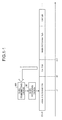
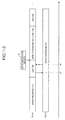
- FIG. 1-1 and FIG. 1-2 are schematics for explaining an outline of the data transmitting device 100 and the data receiving device 10 according to the first embodiment.
- the data transmitting device 100 transmits video data, audio data, character data, and the like for digital broadcasting from a TS complying with the Moving Picture Experts Group (MPEG)-2 system standard. More specifically, the data transmitting device 100 transmits video data, audio data, character data, and the like that form a TV program (hereinafter, referred to as a "main program") or a commercial provided by a TV program production company, a provider, or the like from the TS.
- a main program a TV program
- a commercial provided by a TV program production company, a provider, or the like from the TS.
- the data receiving device 10 receives the TS of the video data and the like transmitted from the data transmitting device 100, and displays the received video data and the like on a predetermined display unit. At this time, the data receiving device 10 displays the video data and the like corresponding to a channel being watched by a viewer. In an example illustrated in FIG. 1-1 , the data receiving device 10 sequentially displays a main program 11A, a commercial (CM) 11B, a main program 12A, and a CM 12B corresponding to a channel CH-X.
- CM commercial
- Viewers sometimes do not watch commercials by switching the viewing channel to another channel only during commercial breaks. For example, in the example illustrated in FIG. 1-1 , the viewer sometimes does not watch the CM 11B after watching the main program 11A by switching the viewing channel to another channel, and then viewing the main program 12A by switching to the original channel CH-X about when the CM 11B is finished. As described above, this means that sponsors may not provide funds to create TV programs.
- the data transmitting device 100 transmits information indicating the content of the commercial as a TS packet of character data, before transmitting video data, audio data, and the like that form the commercial.
- the "information indicating the content of the commercial” is character data in which the content of the commercial is simplified such as the name of the sponsor of the commercial, the name of the product, and the catch-phrase.
- the "information indicating the content of the commercial” is information such as the name of the company manufacturing the sweets, the name of the sweets, the characteristics of the sweets, the catch-phrase, and the sales point.
- the "information indicating the content of the commercial” is referred to as "advertisement-related data”.
- the data transmitting device 100 transmits the advertisement-related data of the CM 11B before transmitting the video data, the audio data, and the like that form the CM 11B. More specifically, the data transmitting device 100 transmits the advertisement-related data of the CM 11B at a time t1 that is before a time t2 at which the video data and the like displayed by the data receiving device 10 is switched from the main program 11A to the CM 11B. Similarly, the data transmitting device 100 transmits the advertisement-related data of the CM 12B, before transmitting the video data, the audio data, and the like that form the CM 12B.
- the data receiving device 10 receives the advertisement-related data transmitted from the data transmitting device 100, and stores the received advertisement-related data in a predetermined storage ("data storage unit 18", which will be described later). Upon detecting that the viewing channel is changed to another channel and then changed to the original channel again, the data receiving device 10 obtains the advertisement-related data of the unwatched commercial from the storage. The data receiving device 10 then, at a predetermined timing, displays the obtained advertisement-related data (such as company name and product name) with the main program.
- the "predetermined timing" is the time at which the advertisement-related data is to be displayed or the like, and the details thereof will be described later.
- the data receiving device 10 changes the viewing channel from the channel CH-X to a channel CH-Y at a time t3 after the display content is switched from the main program 11A to the CM 11B.
- the data receiving device 10 also changes the viewing channel from the channel CH-Y to the channel CH-X, at a time t4 before the display content is switched from the CM 11B to the main program 12A.
- the data receiving device 10 upon detecting that the viewing channel CH-X is changed to another channel CH-Y, and then changed to the original channel CH-X again, the data receiving device 10 obtains the advertisement-related data of the CM 11B from the storage. In the example illustrated in FIG. 1-2 , the data receiving device 10 then displays the main program 12A as well as the advertisement-related data of the CM 118 (noted as a "CM 11B"' in FIG. 1-2 ). For example, if the CM 11B is a commercial for cookies, the data receiving device 10 displays the main program 12A as well as the name of a company that manufactures the cookies and the like. A screen example displayed by the data receiving device 10 will be described later.
- the data transmitting device 100 transmits the advertisement-related data of the commercial before transmitting the video data and the audio data that form the commercial. Accordingly, even if the channel is switched to another channel by the viewer during a period of time when the commercial is displayed, the data receiving device 10 can receive the advertisement-related data of the commercial in advance.
- the data receiving device 10 Upon detecting that the channel being watched in real time is changed to another channel and then changed to the original channel again, the data receiving device 10 according to the first embodiment displays the advertisement-related data with the main program. Accordingly, even if the commercial is not displayed because the channel was switched, the data receiving device 10 can make the viewer watch the advertisement-related data of the commercial without fail, when the channel is switched to the original channel again.
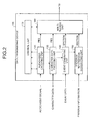
- FIG. 2 is the configuration of the data transmitting device 100 according to the first embodiment.
- the data transmitting device 100 receives an audio signal, a video (or image) signal, character data, event data, and program information from the exterior (a TV program production company or the like).
- the data transmitting device 100 then encodes the received audio signal, the video signal, and the character data to generate a packetized elementary stream (PES).
- PES packetized elementary stream
- the data transmitting device 100 also generates sections by dividing the received event data and the program information into sections.
- the data transmitting device 100 then divides the generated PES and the sections to generate a TS packet of 188-byte length.
- the data transmitting device 100 multiplexes a TS packet of the audio data, a TS packet of the video data, a TS packet of the character data, and a TS packet of the program information being generated, and transmits a TS that is a data stream of the TS packets.
- the TS packet of the audio data, the TS packet of the video data, the TS packet of the character data, and the TS packet of the program information are referred to as an "audio TS packet", a "video TS packet", a "character data TS packet", and a "program information TS packet" below.
- the data transmitting device 100 transmits the advertisement-related data as the character data TS packet. Processing performed by each of the processing units of the data transmitting device 100 will be described in detail below.
- the data transmitting device 100 includes a control unit 110, an audio/video encoding unit 120, a character data encoding unit 130, an event generating unit 140, a program information generating unit 150, and a multiplexing unit 160.
- the control unit 110 controls the data transmitting device 100. More specifically, the control unit 110 controls the audio/video encoding unit 120, the character data encoding unit 130, the event generating unit 140, the program information generating unit 150, and the multiplexing unit 160. The control unit 110 controls the multiplexing unit 160 so that the advertisement-related data of the commercial is transmitted before the video data, the audio data, and the like that form the commercial are transmitted.
- the audio/video encoding unit 120 encodes an audio signal and a video signal. More specifically, the audio/video encoding unit 120 receives an audio signal from the exterior (suck as a TV program production company or a provider), encodes the received audio signal, and generates a PES packet. The audio/video encoding unit 120 also encodes a video signal received from the exterior and generates a PES packet. The audio/video encoding unit 120 then outputs a PES that is a data stream of the generated PES packet to the multiplexing unit 160.
- the character data encoding unit 130 encodes character data. More specifically, the character data encoding unit 130 receives character data from the exterior, encodes the received character data, and generates a PES packet. The character data encoding unit 130 then outputs a PES that is a data stream of the generated PES packet to the multiplexing unit 160.
- the data transmitting device 100 transmits the advertisement-related data to the data receiving device 10 as the character data TS packet as described above.
- the character data encoding unit 130 receives advertisement-related data of a commercial created by a TV program production company, a provider, or the like in advance, and encodes the received advertisement-related data.
- the character data encoding unit 130 then outputs a PES of the advertisement-related data to the multiplexing unit 160.
- the character data encoding unit 130 sets a display start time of a main program to be displayed after the commercial to a presentation time stamp (PTS: time managing information during playback) included in a header of the generated PES packet. More specifically, among a plurality of images that form the main program to be displayed after the commercial indicated by the advertisement-related data, the character data encoding unit 130 sets a value the same as that of the PTS to be set in a header of the PES packet of the first displayed image, to the PTS included in the PES packet of the advertisement-related data.
- PTS presentation time stamp
- the character data encoding unit 130 receives the advertisement-related data of the CM 118.
- the character data encoding unit 130 sets a time "t11" at which the main program 12A to be displayed after the CM 11B is first displayed, to the PTS included in the PES packet of the received advertisement-related data.
- the event generating unit 140 divides event data into sections. More specifically, the event generating unit 140 divides the event data supplied from the exterior into sections, and outputs the generated sections to the multiplexing unit 160.
- the program information generating unit 150 divides program information that is information on a broadcasting station and the program into sections. More specifically, the program information generating unit 150 divides the program information supplied from the exterior into sections and outputs the generated sections to the multiplexing unit 160.
- the program information generating unit 150 also generates a program map table (PMT) for specifying which of the various TS packets transmitted from the data transmitting device 100 corresponds to the video TS packet, the audio TS packet, the character data TS packet, or the like, in a section format. At this time, the program information generating unit 150 generates a PMT so that the character data TS packet of the advertisement-related data can be identified from the character data TS packet other than the advertisement-related data.
- the character data TS packet of the advertisement-related data is referred to as an "advertisement-related data TS packet" below.
- the program information generating unit 150 sets a new descriptor complying with the MPEG-2 system standard to the PMT in association with a packet ID (PID) of the advertisement-related data TS packet.
- PID packet ID
- the descriptor stored in association with the PID of the advertisement-related data TS packet is referred to as an "advertisement-related data descriptor" below.
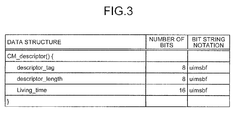
- FIG. 3 is an example configuration of the advertisement-related data descriptor. As illustrated in FIG. 3 , the advertisement-related data descriptor includes "descriptor_tag”, “descriptor_length”, and "Living_time”.
- the "descriptor_tag” is an 8-bit field to identify the type of the descriptor.
- the program information generating unit 150 sets one of user private values from “64" to "255" to the "descriptor_tag". Accordingly, the data receiving device 10 can identify the PID associated with the descriptor whose "descriptor tag” is equivalent to the user private value (from 64 to 255), as the PID of the advertisement-related data TS packet. As a result, the data receiving device 10 can identify the advertisement-related data TS packet from the character data TS packet other than the advertisement-related data TS packet.
- the program information generating unit 150 of the first embodiment sets "64" to the "descriptor_tag" of the advertisement-related data descriptor.
- the "descriptor_length” is an 8-bit field indicating the byte length of the descriptor immediately following the "descriptor_length” field.
- the program information generating unit 150 sets “2" to the "descriptor_length”.
- the "Living_time” is a 16-bit field indicating a lifetime of the advertisement-related data, and is set in seconds.
- the lifetime set to the "Living_time” is a period from the time set in the PTS of the PES packet including the advertisement-related data to the time from when the advertisement-related data can be displayed. For example, it is assumed that relative time information indicating "10 hours 30 minutes 00 second" is set in the PTS of the PES packet of the advertisement-related data. It is also assumed that information indicating "600 seconds” is set in the "Living_time" of the advertisement-related data descriptor stored in association with the PID of the advertisement-related data TS packet. In this case, the data receiving device 10 can start displaying the advertisement-related data from "10 hours 30 minutes 00 second" to "10 hours 40 minutes 00 second".
- an advertisement image that forms the commercial is an advertisement image group including a plurality of advertisement images
- the program information generating unit 150 of the data transmitting device 100 sets a plurality of advertisement-related data descriptors relative to the advertisement images in the PMT. Accordingly, the data receiving device 10 can display a plurality of types of advertisement-related data.
- the multiplexing unit 160 multiplexes the TS packet using the TS format complying with the MPEG-2 system standard, and transmits the multiplexed TS. More specifically, the multiplexing unit 160 receives a PES of video and audio from the audio/video encoding unit 120, and receives a PES of character data from the character data encoding unit 130. The multiplexing unit 160 also receives a section of the event from the event generating unit 140, and receives a section of the program information, a section of the PMT, and the like from the program information generating unit 150. The multiplexing unit 160 divides the received PES and sections, and generates a TS packet of 188-byte length.
- the multiplexing unit 160 multiplexes the generated TS packet. At this time, upon receiving the PES of the advertisement-related data from the character data encoding unit 130, the multiplexing unit 160 multiplexes so that the advertisement-related data TS packet is transmitted before the video TS packet and the audio TS packet of the commercial corresponding to the advertisement-related data, based on an instruction from the control unit 110. More specifically, the multiplexing unit 160 multiplexes the advertisement-related data TS packet of the commercial, before multiplexing the PES including the first displayed image among a plurality of images that form the commercial, as the video TS packet.
- FIG. 4 is the configuration of the data receiving device 10 according to the first embodiment.
- the data receiving device 10 includes a control unit 11, a remote controller interface (hereinafter, referred to as a "remote controller I/F") 12, a tuner 13, a demultiplexer 14, a video decoding unit 15, an audio decoding unit 16, a data decoding unit 17, a data storage unit 18, and an output unit 19.
- a remote controller interface hereinafter, referred to as a "remote controller I/F”
- the control unit 11 controls the data receiving device 10. More specifically, the control unit 11 controls the remote controller I/F 12, the tuner 13, the demultiplexer 14, the video decoding unit 15, the audio decoding unit 16, the data decoding unit 17, the data storage unit 18, and the output unit 19.
- the processing units of the control unit 11 will be described later.
- the remote controller I/F 12 supplies an instruction of a viewer transmitted from a remote controller through infrared rays or radio waves to the data receiving device 10.
- the remote controller I/F 12 receives a channel change instruction from the remote controller, and outputs the received channel change instruction to the control unit 11.
- the tuner 13 receives the TS from the data transmitting device 100, and outputs the received TS to the demultiplexer 14.
- the demultiplexer 14 demultiplexes the TS supplied from the tuner 13. More specifically, the demultiplexer 14 separates the supplied TS into a video TS packet, an audio TS packet, a character data TS packet, an advertisement-related data TS packet, a PMT packet, a program association table (PAT) packet, a program clock reference (PCR) packet, and the like. The demultiplexer 14 then outputs a PAT packet whose PID is "0" to the data decoding unit 17. The data decoding unit 17 analyzes the PAT packet supplied from the demultiplexer 14 and obtains the PID of the PMT. The data decoding unit 17 then outputs the obtained PID of the PMT to the demultiplexer 14 through the control unit 11.
- PAT program association table
- PCR program clock reference
- the demultiplexer 14 then outputs the TS packet (PMT packet) equivalent to the PID of the PMT supplied from the data decoding unit 17, to the data decoding unit 17.
- the data decoding unit 17 analyzes the PMT packet supplied from the demultiplexer 14 and obtains the PIDs of various TS packets. More specifically, the data decoding unit 17 obtains the PID of the video TS packet, the PID of the audio TS packet, the PID of the PCR packet, the PID of the character data TS packet, the PID of the advertisement-related data TS packet, and the like.
- the data decoding unit 17 then outputs the obtained PIDs of the various TS packets to the demultiplexer 14 through the control unit 11.
- the data decoding unit 17 in the first embodiment judges that the PID associated with the descriptor whose "descriptor_tag" is "64" is the PID of the advertisement-related data. TS packet.
- the demultiplexer 14 then outputs the TS packets separated as above based on the PIDs of the various TS packets supplied from the data decoding unit 17, to the video decoding unit 15, the audio decoding unit 16, and the data decoding unit 17. More specifically, the demultiplexer 14 outputs the TS packet whose PID is the PID of the video TS packet, to the video decoding unit 15. The demultiplexer 14 also outputs the TS packet whose PID is the PID of the audio TS packet, to the audio decoding unit 16.
- the demultiplexer 14 also outputs the TS packet whose PID is the PID of the PCR packet, the character data TS packet whose PID is the PID of the character data TS packet, and the TS packet whose PID is the PID of the advertisement-related data TS packet, to the data decoding unit 17.
- the data decoding unit 17 to which the TS packet of the PCR (PCR packet) is supplied analyzes the TS packet and outputs a PCR value included in the PCR packet to the control unit 11. If the PCR value supplied from the data decoding unit 17 is an appropriate value, the control unit 11 overwrites a system time clock (STC) that is the reference time of the data receiving device 10 with the PCR value. Accordingly, the data receiving device 10 can synchronize the STC in the data receiving device 10 with the STC of the data transmitting device 100. As a result, the video, the audio, and the like can be synchronously displayed.
- STC system time clock
- the video decoding unit 15 decodes the video TS packet supplied from the demultiplexer 14. If the time set in the PTS of the PES header is equal to the STC of the data receiving device 10, the video decoding unit 15 outputs the decoded video data to the output unit 19. The video data is displayed as a TV video through the output unit 19.
- the audio decoding unit 16 decodes the audio TS packet supplied from the demultiplexer 14. If the time set in the PTS of the PES header is equal to the STC of the data receiving device 10, the audio decoding unit 16 outputs the decoded audio data to the output unit 19. The audio data is output as audio through the output unit 19.
- the data decoding unit 17 decodes and analyzes the PAT packet, the character data TS packet, and the like supplied from the demultiplexer 14. More specifically, as described above, the PAT packet, the PMT packet, the PCR packet, the character data TS packet, the advertisement-related data TS packet, and the like are supplied to the data decoding unit 17 from the demultiplexer 14. Because the processing performed by the data decoding unit 17 when the PAT packet and the PCR packet are supplied is described above, the description thereof will be omitted here.
- the data decoding unit 17 obtains the lifetime set in the "Living_time" of the advertisement-related data descriptor as well as performing the processing of obtaining the PIDs of the various TS packets as described above. The data decoding unit 17 then outputs the obtained lifetime to the control unit 11.
- the data decoding unit 17 decodes the supplied character data TS packet. More specifically, the data decoding unit 17 decodes the character data TS packet, and if the time of the PTS set in the PES header of the character data is equal to the STC, the data decoding unit 17 outputs the decoded character data to the output unit 19. The character data is displayed as character information through the data receiving device 10.
- the data decoding unit 17 decodes the supplied character data TS packet, and outputs the decoded advertisement-related data to the data storage unit 18. At this time, the data decoding unit 17 outputs information (display start enabled time) set in the PTS included in the PES header of the advertisement-related data to the control unit 11.
- the data storage unit 18 stores therein the advertisement-related data supplied from the data decoding unit 17.
- the advertisement-related data stored in the data storage unit 18 is output to the output unit 19 by the control unit 11, which will be described later, when a predetermined condition is satisfied.
- the control unit 11 includes a channel changing unit 11a and an advertisement-related data output unit 11b.
- the channel changing unit 11a controls the channel change of the data receiving device 10. More specifically, upon receiving a channel change instruction from the remote controller I/F 12, the channel changing unit 11a changes the channel of the data receiving device 10 based on the channel change instruction.
- the advertisement-related data output unit 11b controls output processing of the advertisement-related data. More specifically, if a viewing channel is not stored in a predetermined storage (hereinafter, referred to as a "channel storage"), the advertisement-related data output unit 11b stores the viewing channel in the channel storage.
- a predetermined storage hereinafter, referred to as a "channel storage”.
- the advertisement-related data output unit 11b Upon receiving a channel change instruction from the remote controller I/F 12, the advertisement-related data output unit 11b also determines whether the timer has started. If the timer has not yet started, the advertisement-related data output unit 11b starts the timer. At this time, the advertisement-related data output unit 11b sets an initial value of the timer to the STC of the data receiving device 10 at the moment at which the channel change instruction is received.
- the advertisement-related data output unit 11b discards the advertisement-related data stored in the data storage unit 18. The advertisement-related data output unit 11b then stores the currently selected channel number in the channel storage.
- the "predetermined times is the time during which the advertisement-related data stored in the data storage unit 18 can be output. More specifically, to determine whether the predetermined time has passed, the advertisement-related data output unit 11b determines whether a time T of the timer satisfies the following relation (1) or (2).
- the "display start enabled time” in relations (1) and (2) is the time set in the PTS included in the PES header of the advertisement-related data.
- the control unit 11 receives the PTS (displays start enabled time) from the data decoding unit 17 as described above.
- the data receiving device 10 determines whether the time T of the timer has passed the "display start enabled time+lifetime". If the time T of the timer has passed the "display start enabled time+lifetime", the data receiving device 10 determines that the "predetermined time” described above has passed. This is because the data receiving device 10 cannot display the advertisement-related data when the "display start enabled time + lifetime" has passed.
- the advertisement-related data output unit 11b determines whether the channel number to be changed by the channel change instruction and the channel number stored in the channel storage are the same.
- the advertisement-related data output unit 11b determines whether the time T of the timer at the moment at which the channel change instruction is received satisfies either relation (1) or (2).
- the advertisement-related data output unit 11b outputs the advertisement-related data stored in the data storage unit 18 to the output unit 19, after the channel number is changed by the chancel changing unit 11a. Accordingly, the output unit 19 outputs the advertisement-related data with the main program after the channel is changed.
- the advertisement-related data output unit 11b outputs the advertisement-related data stored in the data storage unit 18 to the output unit 19, when the STC of the data receiving device 10 reaches the display start enabled time (PTS of the advertisement-related data).
- advertisement-related data output processing performed by the advertisement-related data output unit 11b is described with reference to some examples. It is assumed that the time (display start enabled time) set in the PTS included in the PES header of the advertisement-related data is "10:30:00" and the lifetime is "600 (seconds)”.
- the advertisement-related data output unit 11b receives a channel change instruction to return the viewing channel to the original channel from the time "10:30:00" to "10:40:00" after the timer has started.
- the advertisement-related data output unit 11b outputs the advertisement-related data stored in the data storage unit 18 to the output unit 19, after the channel number is changed by the channel changing unit 11a. Accordingly, the output unit 19 outputs the advertisement-related data with the main program after the channel is changed.
- the advertisement-related data output unit 11b receives a channel change instruction to return the viewing channel to the original channel at the time "10:29:00" after the timer has started.
- the advertisement-related data output unit 11b outputs the advertisement-related data stored in the data storage unit 18 to the output unit 19, when the STC of the data receiving device 10 reaches the time "10:30:00". Accordingly, the output unit 19 outputs the advertisement-related data with the main program after the channel is changed.
- the advertisement-related data output unit 11b receives a channel change instruction to return the viewing channel to the original channel at the time "10:43:00" after the timer has started. In this case, the advertisement-related data output unit 11b discards the advertisement-related data stored in the data storage unit 18, because the time T of the timer does not satisfy both relations (1) and (2). The advertisement-related data output unit 11b then stores the currently selected channel number in the channel storage.
- the output unit 19 outputs decoded video data and the like. More specifically, the output unit 19 outputs the video data supplied from the video decoding unit 15, the audio data supplied from the audio decoding unit 16, the character data supplied from the data decoding unit 17, and the like. The output unit 19 also outputs the advertisement-related data output from the data storage unit 18 with the video data and the audio data.
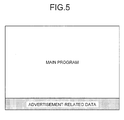
- the output unit 19 of the first embodiment When the advertisement-related data is output with the video data and the audio data, the output unit 19 of the first embodiment outputs the advertisement-related data as illustrated in FIG. 5.
- FIG. 5 is an example of a screen on which the advertisement-related data is output.
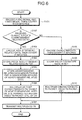
- FIG. 6 is an example flowchart illustrating the TS transmission processing procedure performed by the data transmitting device 100 according to the first embodiment.
- the audio/video encoding unit 120 upon receiving an audio signal and a video signal from the exterior, encodes the received audio signal and the video signal, coverts them into the PES, and outputs the generated. PES to the multiplexing unit 160 (Step S101). For example, the audio/video encoding unit 120 receives the audio signal and the video signal that form the main program and the commercial, and encodes the received audio signal and the video signal.
- the character data encoding unit 130 Upon receiving the advertisement-related data from the exterior (Yes at Step S102), the character data encoding unit 130 encodes the advertisement-related data, converts it into the PES, and outputs the generated PES to the multiplexing unit 160 (Step S103). At this time, the character data encoding unit 130 sets a display start time of the main program displayed after the commercial, to the PTS included in the header of the generated PES packet.
- the program information generating unit 150 then stores the PID of the advertisement-related data TS packet in the PMT (Step S104).
- the program information generating unit 150 also stores the advertisement-related data descriptor in the PMT in association with the PID of the advertisement-related data TS packet (Step S105). More specifically, the program information generating unit 150 of the first embodiment sets "64" to the "descriptor_tag" of the advertisement-related data descriptor.
- the program information generating unit 150 also sets the "descriptor_length” and the "Living_time” in the advertisement-related data descriptor.
- the multiplexing unit 160 divides the PES supplied from the audio/video encoding unit 120 and the PES supplied from the character data encoding unit 130, generates a TS packet, and multiplexes the generated TS packet. At this time, the multiplexing unit 160 multiplexes so that the advertisement-related data TS packet is transmitted before the video TS packet and the audio TS packet of the commercial corresponding to the advertisement-related data (Step S106). The multiplexing unit 160 then transmits the multiplexed TS (Step S107).
- the character data encoding unit 130 Upon receiving character data other than the advertisement-related data (No at Step S102), the character data encoding unit 130 encodes the received character data, coverts it to the PES, and outputs the generated PES to the multiplexing unit 160 (Step S108). The program information generating unit 150 then stores the PID of the character data TS packet in the PMT (Step S109).
- the multiplexing unit 160 then divides the PES supplied from the audio/video encoding unit 120 and the PES supplied from the character data encoding unit 130, generates a TS packet, and multiplexes the generated TS packet (Step S110). The multiplexing unit 160 then transmits the multiplexed TS (Step S107).
- the data transmitting device 100 receives the character data or the advertisement-related data after receiving the audio signal and the video signal.
- the order of receiving the audio signal, the video signal, or the character data is not limited thereto.
- the data transmitting device 100 may receive the audio signal and the video signal after receiving the character data or the advertisement-related data, or may receive all the information simultaneously.
- FIG. 7 is an example flowchart illustrating the advertisement-related data output processing procedure performed by the data receiving device 10 according to the first embodiment.
- the data transmitting device 100 has not yet started the timer, and has not yet stored the channel number in the channel storage.
- the advertisement-related data output unit 11b of the data receiving device 10 stores a channel number in the channel storage Step S201). If an advertisement-related data TS packet is supplied from the demultiplexer 14, the data decoding unit 17 decodes the character data TS packet and stores the advertisement-related data in the data storage unit 18 (Step S202).
- the advertisement-related data output unit 11b Upon receiving a channel change instruction from the remote controlled I/F 12 (Yes at Step S203), the advertisement-related data output unit 11b starts the timer (Step S204). Upon receiving the channel change instruction again (Yes at Step S205), the advertisement-related data output unit 11b determines whether the time T of the timer satisfies either relation (1) or (2) (Step S206).
- the advertisement-related data output unit 11b determines whether the channel number to be changed by the channel change instruction received at Step S205 and the channel number stored in the channel storage are the same (Step S207).
- the advertisement-related data output unit 11b outputs the advertisement-related data stored in the data storage unit 18 to the output unit 19. At this time, if the time T of the timer satisfies relation (1), the advertisement-related data output unit 11b outputs the advertisement-related data stored in the data storage unit 18 to the output unit 19, after the channel number is changed by the channel changing unit 11a. The output unit 19 then outputs the advertisement-related data with the main program after the channel is changed (Step S208).
- the advertisement-related data output unit 11b outputs the advertisement-related data stored in the data storage unit 18 to the output unit 19, when the STC of the data receiving device 10 reaches the display start enabled time of the advertisement-related data.
- the output unit 19 then outputs the advertisement-related data with the main program after the channel is changed (Step S208).
- the advertisement-related data output unit 11b If the channel numbers do not match (No at Step S207), the advertisement-related data output unit 11b returns to the processing at Step S205. If the time T of the timer does not satisfy both relations (1) and (2) (No at Step S206), the advertisement-related data output unit 11b discards the advertisement-related data stored in the data storage unit 18 (Step S209) and returns to the processing at Step S201. More specifically, the advertisement-related data output unit 11b stores the currently selected channel number in the predetermined channel storage (Step S201).
- the advertisement-related data output unit 11b regularly determines whether the time T of the timer satisfies relation (1) or (2) (Step S210). If the time T of the timer satisfies either relation (1) or (2) (Yes at Step S210), the advertisement-related data output unit 11b returns to the processing at Step S205, and regularly determines whether the time T of the timer satisfies relation (1) or (2), until the channel change instruction is received again (Step S210).
- the advertisement-related data output unit 11b discards the advertisement-related data stored in the data storage unit 18 (Step S209) and returns to the processing at Step S201. More specifically, the advertisement-related data output unit 11b stores the currently selected channel number in the channel storage (Step S201).
- the data transmitting device 100 transmits the advertisement-related data of the conmercial before transmitting the video data and the audio data that form the commercial.
- the data receiving device 10 displays the advertisement-related data with the main program.
- the data transmitting device 100 and the data receiving device 10 according to the first embodiment, if the channel is switched to another channel only during commercial breaks, it is possible to make the viewers watch the advertisement-related data without fail.
- the data transmitting device 100 generates an advertisement-related data TS packet in which the display start time of the main program displayed after the commercial is set to the PTS, and transmits it to the data receiving device 10. Accordingly, the data receiving device 10 can display the advertisement-related data with the main program.
- the data transmitting device 100 transmits the lifetime that is a limited time during which the advertisement-related data can be started to display to the data receiving device 10. Accordingly, the data receiving device 10 can control the time from when the advertisement-related data can be displayed. For example, the data receiving device 10 can prevent the advertisement-related data from being displayed several days later.
- the advertisement-related data is transmitted as the character data TS packet.
- the data transmitting device may transmit the advertisement-related data as an event message.
- an example of a data transmitting device that transmits the advertisement-related data as the event message will be described.
- a data transmitting device 200 according to the second embodiment will now be described.
- a configuration of the data transmitting device 200 according to the second embodiment is the same as the configuration (see FIG. 2 ) of the data transmitting device 100 according to the first embodiment.
- the event generating unit 140 of the second embodiment receives advertisement-related data as event data from the exterior. More specifically, the event generating unit 140 sets the received advertisement-related data in a data event, and generates event sections.
- the data event to which the advertisement-related data is set is referred to as an "advertisement-related data event”
- the event message of the advertisement-related data event is referred to as an "advertisement-related data event message” below.
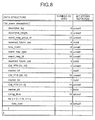
- FIG. 8 is an example configuration of the advertisement-related data event.
- the advertisement-related data event illustrated in FIG. 8 is a descriptor in which General_event_descriptor that is an event defined in the ARIB standard is expanded. In FIG. 8 , the descriptor is noted as "CM_event_descriptor". Some of the fields of the advertisement-related data event illustrated in FIG. 8 will be described below.
- “descriptor_tag” is an 8-bit field to identify the type of the event_descriptor.
- the event generating unit 140 sets one of values from “0x80" to "0xBF” that can be defined, for example, by being operated by the provider or the like, to the "descriptor_tag". Accordingly, the data receiving device 10 can determine that the event_descriptor whose "descriptor_tag” is any one of the values from “0x80" to "0xBF”, is the CM_event_descriptor. As a result, the data receiving device 10 can distinguish the advertisement-related data event from the data event other than the advertisement-related data event.
- descriptor_length is an 8-bit field indicating the byte length of the event_descriptor.
- the event generating unit 140 for example, sets “13” + “the number of bytes of the advertisement-related character data" to the "descriptor_length”.
- Event_msg_group_id is a 12-bint field indicating an identifier for identifying an event message group.
- the event generating unit 140 sets “0" as an identifier of the advertisement-related data event message group to the "event_msg_group_id".
- “reserved_future_use” is an expandable 4-bit field.
- the event generating unit 140 for example, sets “1111” in binary to the "reserved_future_use”.
- time_mode is an 8-bit field indicating a specification method of time at which the event message is to be generated.
- the data transmitting device 100 sets "0x00" to the "time_mode”. Accordingly, the data receiving device 10 can generate an event message immediately after receiving the advertisement-related data event message.
- Event_msg_type is an identifier indicating the type of the event message, and is an 8-bit field.
- the event generating unit 140 sets “0" to the "event_msg_type” as an identifier of the advertisement-related data event message.
- Event_msg_id is a 16-bit field indicating an identifier for identifying individual event message.
- the event generating unit 140 for example, if four advertisement-related data event messages are to be transmitted, sets “0", “1", “2”, and “3" to the "event_msg_id".
- CM_PTS is a 33-bit field indicating the display start enabled time of the advertisement-related data.
- the event generating unit 140 sets the display start enabled time of the main program to be displayed after the commercial indicated by the advertisement-related data to the "CM_PTS".
- the "CM_PTS” can be accurately set by the unit of 90 [kHz].
- marker_bit is a 1-bit field for byte alignment.
- the event generating unit 140 sets "1" to the "marker_bit”.
- “Living_time” is a 16-bit field vindicating the lifetime of the advertisement-related data, and is set in seconds.
- the lifetime is a period from the display start enabled time of the advertisement-related data indicated by the "CM_PTS" to the time from when the advertisement-related data can be displayed.
- data_byte is a field to which the advertisement-related data is set.
- the event generating unit 140 sets advertisement-related data of 243 bytes at maximum, to the "data_byte”.
- the event generating unit 140 of the second embodiment for example, sets values as indicated below to the fields of the advertisement-related data event described above.
- the data receiving device 10 can identify that the event message is the advertisement-related event message.
- the program information generating unit 150 does not set the descriptor of the PMT in association with the PID of the advertisement-related event message, to distinguish the advertisement-related data event from the other data event. This is because, as described above, the receiving side can distinguish the advertisement-related data event from the other data event, based on the information set in the "descriptor_tag" of the "CM_event_descriptor".
- the event generating unit 140 of the data transmitting device 200 sets the advertisement images in association with the advertisement-related event messages by using the event_msg_id. For example, the event generating unit 140 associates the sequence of the advertisement images with the sequence of values of the event_msg_id (such as 0, 1, 2, and 3). Accordingly, the data receiving device can display a plurality of types of advertisement-related data.
- the multiplexing unit 160 of the second embodiment Upon receiving a section of the advertisement-related data event from the event generating unit 140, the multiplexing unit 160 of the second embodiment multiplexes so that the advertisement-related data event message is transmitted before the video TS packet and the audio TS packet of the commercial corresponding to the advertisement-related data, based on the instruction from the control unit 110.
- a data receiving device 20 according to the second embodiment will now be described.
- a configuration of the data receiving device 20 according to the second embodiment is the same as the configuration of the data receiving device 10 according to the first embodiment (see FIG. 4 ).
- the demultiplexer 14 in the second embodiment demultiplexes a TS supplied from the tuner 13, and outputs a TS packet of the event message among the separated TS packets, to the data decoding unit 17.
- the data decoding unit 17 in the second embodiment analyzes the event message supplied from the demultiplexer 14. More specifically, the data decoding unit 17 obtains information set in the fields of the event_descriptor. If the "descriptor_tag" is "0x80", for example, the data decoding unit 17 determines that the event message is the advertisement-related event message.
- the data decoding unit 17 Upon determining that the event message is the advertisement-related event message, the data decoding unit 17 outputs the display start enabled time set in the "CM_PTS" of the "CM_event_descriptor” and the lifetime set in the "Living_time” to the control unit 11. The data decoding unit 17 also outputs the advertisement-related data set in the "data_byte” of the "CM_event_descriptor” to the data storage unit 18.
- the advertisement-related data output unit 11b of the control unit 11 performs the same processing as the advertisement-related data output processing described in the first embodiment, by using the display start enabled time and the lifetime supplied from the data decoding unit 17.
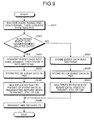
- FIG. 9 is an example flowchart illustrating the TS transmission processing procedure performed by the data transmitting device 200 according to the second embodiment.
- description of a processing procedure similar to the processing procedure illustrated in FIG. 6 will be omitted.
- the event generating unit 140 of the data transmitting device 200 Upon receiving the event data of the advertisement-related data from the exterior (Yes at Step S302), the event generating unit 140 of the data transmitting device 200 converts the received advertisement-related data into the event_descriptor, divides it into sections, and generates event sections (Step S303).
- the program information generating unit 150 then stores the PID of the advertisement-related event message in the PMT (Step S304).
- the multiplexing unit 160 then multiplexes so that the advertisement-related event message is transmitted before the video TS packet and the audio TS packet of the commercial corresponding to the advertisement-related data (Step S305).
- the multiplexing unit 160 then transmits the multiplexed TS (Step S306).
- the event generating unit 140 Upon receiving the event data other than the advertisement-related data from the exterior (No at Step S302), the event generating unit 140 divides the received event data into sections and generates event sections (Step S307).
- the program information generating unit 150 then stores the PID of the event message in the PMT (Step S308).
- the multiplexing unit 160 then divides the PES supplied from the audio/video encoding unit 120 and the event sections supplied from the event generating unit 140, generates a TS packet, and multiplexes the generated TS packet (Step S309).
- the multiplexing unit 160 then transmits the multiplexed TS (Step S306).
- the data transmitting device 200 transmits the advertisement-related data of the commercials as the event message, before transmitting the video data and the audio data that form the commercial.
- the data receiving device 20 Upon detecting that the channel being watched in real time is changed to another channel and then changed to the original channel again, the data receiving device 20 according to the second embodiment displays the advertisement-related data with the main program.
- a commercial of sweets or the like is given as an example, and information such as the name of a company that manufactures the sweets, the name of the sweets, the characteristics of the sweets, and the sales points is given as examples of the advertisement-related data.
- the advertisement-related data is not limited thereto, and is not limited to a so-called commercial to promote a product.
- the advertisement-related data is a concept widely including information provided to viewers in the perspective different from the main program and information that may be skipped by the viewers.
- the advertisement-related data includes introduction of a sponsor in the program (a "brought to you by" screen), a notification of an event in the program, a scene in a drama and the like in which a product of the sponsor is used, and a notification that the broadcast time of the next program is changed due to the extended broadcast.
- all or a part of the processes described as being automatically performed may be manually performed, or all or a part of the processes described as being manually performed may be automatically performed with a known method.
- the information including the process procedures (such as FIG. 6 , FIG. 7 , and FIG. 9 ), specific names, and various kinds of data and parameters illustrated in the specification or in the drawings can be optionally changed, unless otherwise specified.
- the respective constituents of the illustrated apparatuses are functionally conceptual, and need not be physically configured as illustrated (such as FIG. 2 and FIG. 4 ).
- the specific mode of dispersion and integration of each apparatus is not limited to the ones illustrated in the drawings, and all or a part thereof can be functionally or physically dispersed or integrated in an optional unit, depending on various kinds of load and the status of use.
- All or an optional part of the respective processing functions carried out in each apparatus are realized by a central processing unit (CPU) and a computer program analyzed and executed by the CPU, or may be realized as hardware by the wired logic.
- CPU central processing unit
- FIG. 10 is a schematic of a computer that executes the data transmitting program
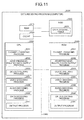
- FIG. 11 is a schematic of a computer that executes the data receiving program.
- a data transmitting program (computer) 1000 is configured to connect a random access memory (RAM) 1010, a cache 1020, a hard disk drive (HDD) 1030, a read only memory (ROM) 1040, and a CPU 1050 through a bus 1060.
- the ROM 1040 stores therein a data transmitting program having the same functions as those of the embodiments.
- the ROM 1040 stores therein a control program 1041, an audio/video encoding program 1042, a character data encoding program 1043, an event generating program 1044, a program information generating program 1045, and a multiplexing program 1046.
- the CPU 1050 reads and executes the programs 1041 to 1046, and thus the programs 1041 to 1046 function as a control process 1051, an audio/video encoding process 1052, a character data encoding process 1053, an event generating process 1054, a program information generating process 1055, and a multiplexing process 1056 as illustrated in FIG. 10 .
- Each of the processes 1051 to 1056 corresponds to the control unit 110, the audio/video encoding unit 120, the character data encoding unit 130, the event generating unit 140, the program information generating unit 150, and the multiplexing unit 160 illustrated in FIG. 2 .
- the programs 1041 to 1046 need not be stored in the ROM 1040 in advance.
- the programs 1041 to 1046 may be stored in a "portable physical medium” such as a flexible disk (FD), a compact disc-read only memory (CD-ROM), a magneto optical (MO) disk, a digital versatile disk (DVD), a magnetic optical disk, and an integrated circuit (IC) card that can be inserted into the computer 1000; in a "fixed physical medium” such as a hard disk drive (HDD) provided inside and outside of the computer 1000; or in "another computer (or server)” connected to the computer 1000 via a public line, the Internet, a local area network (LAN), a wide area network (WAN), or the like.
- the computer 1000 can read out each computer program therefrom, and execute it.
- a data receiving program (computer) 2000 is configured to connect a RAM 2010, a cache 2020, an HDD 2030, a ROM 2040, and a CPU 2050 through a bus 2060.
- the ROM 2040 includes a data receiving program that exhibits the same function as that of the embodiments described above.
- the ROM 2040 stores therein a channel changing program 2041, an advertisement-related data outputting program 2042, a demultiplexing program 2043, a video decoding program 2044, an audio decoding program 2045, a data decoding program 2046, and an outputting program 2047.
- each of the computer programs 2041 to 2047 functions as a channel changing process 2051, an advertisement-related data outputting process 2052, a demultiplexing process 2053, a video decoding process 2054, an audio decoding process 2055, a data decoding process 2056, and an outputting process 2057.
- Each of the processes 2051 to 2057 corresponds to the channel changing unit 11a, the advertisement-related data output unit 11b, the demultiplexer 14, the video decoding unit 15, the audio decoding unit 16, the data decoding unit 17, and the output unit 19 as illustrated in FIG. 4 .
- the HDD 2030 includes a data storage table 2031.
- the data storage table 2031 corresponds to the data storage unit 18 illustrated in FIG. 4 .
- the above-described computer programs 2041 to 2047 need not be stored in the ROM 2040 but for example, may be stored in a "portable physical medium”" such as a flexible disk (FD), a CD-ROM, an MO disk, a DVD, and an IC card that can be inserted into the computer 2000; in a "fixed physical medium” such as a hard disk drive (HDD) provided inside and outside of the computer 2000; or in "another computer (or server)" connected to the computer 2000 via the public line, the Internet, the LAN, the WAN, or the like.
- the computer 2000 can read out each computer program therefrom, and execute it.
Landscapes
- Engineering & Computer Science (AREA)
- Multimedia (AREA)
- Signal Processing (AREA)
- Computer Security & Cryptography (AREA)
- Business, Economics & Management (AREA)
- Marketing (AREA)
- Human Computer Interaction (AREA)
- Two-Way Televisions, Distribution Of Moving Picture Or The Like (AREA)
- Television Systems (AREA)
Applications Claiming Priority (1)
| Application Number | Priority Date | Filing Date | Title |
|---|---|---|---|
| PCT/JP2008/069018 WO2010046965A1 (ja) | 2008-10-21 | 2008-10-21 | デジタル放送方法、データ受信装置、データ送信装置、データ受信プログラムおよびデータ送信プログラム |
Publications (3)
| Publication Number | Publication Date |
|---|---|
| EP2339849A1 true EP2339849A1 (de) | 2011-06-29 |
| EP2339849A4 EP2339849A4 (de) | 2012-11-28 |
| EP2339849B1 EP2339849B1 (de) | 2014-09-03 |
Family
ID=42119026
Family Applications (1)
| Application Number | Title | Priority Date | Filing Date |
|---|---|---|---|
| EP08877531.7A Not-in-force EP2339849B1 (de) | 2008-10-21 | 2008-10-21 | Digitalausstrahlungsverfahren, datenempfangseinrichtung und datenempfangsverfahren |
Country Status (5)
| Country | Link |
|---|---|
| US (1) | US8769562B2 (de) |
| EP (1) | EP2339849B1 (de) |
| JP (1) | JP5316542B2 (de) |
| CN (1) | CN102187666B (de) |
| WO (1) | WO2010046965A1 (de) |
Families Citing this family (5)
| Publication number | Priority date | Publication date | Assignee | Title |
|---|---|---|---|---|
| JP2013183443A (ja) * | 2012-03-05 | 2013-09-12 | Yomiuri Telecasting Corp | コンテンツ視聴制御方法、放送システム、録画再生機及びプログラム |
| JP2015516737A (ja) * | 2012-03-27 | 2015-06-11 | アルカテル−ルーセント | オーディオ/ビデオレンダリング装置上でのマルチメディアデータの表示制御 |
| US10547903B2 (en) * | 2015-10-26 | 2020-01-28 | Arris Enterprises, Inc. | Advertisement display based on channel switch |
| WO2017106695A2 (en) | 2015-12-16 | 2017-06-22 | Gracenote, Inc. | Dynamic video overlays |
| KR102482207B1 (ko) | 2016-03-11 | 2022-12-29 | 삼성전자주식회사 | 디지털 방송 시스템에서 서비스 전환을 위한 방법 및 장치 |
Family Cites Families (18)
| Publication number | Priority date | Publication date | Assignee | Title |
|---|---|---|---|---|
| US20030088872A1 (en) * | 1997-07-03 | 2003-05-08 | Nds Limited | Advanced television system |
| CA2302031A1 (en) * | 1997-08-27 | 1999-03-04 | Starsight Telecast, Incorporated | Systems and methods for replacing television signals |
| JP2001036851A (ja) | 1999-07-23 | 2001-02-09 | Hitachi Ltd | ディジタル放送送受信システム及びその送信装置と受信装置、受信機内蔵テレビ装置 |
| JP2001325180A (ja) * | 2000-05-15 | 2001-11-22 | Sony Corp | コンテンツ配信方法 |
| JP2002051321A (ja) | 2000-08-04 | 2002-02-15 | Sony Corp | デジタルビデオ送信機、デジタルビデオ受信機及びデジタルビデオ送受信機 |
| US20020116471A1 (en) * | 2001-02-20 | 2002-08-22 | Koninklijke Philips Electronics N.V. | Broadcast and processing of meta-information associated with content material |
| JP2002320157A (ja) * | 2001-04-19 | 2002-10-31 | Matsushita Electric Ind Co Ltd | 情報受信装置 |
| EP1446946A2 (de) * | 2001-07-03 | 2004-08-18 | Koninklijke Philips Electronics N.V. | Verfahen und gerät zur anzeige von ähnlichen ansagen |
| US20030031455A1 (en) * | 2001-08-10 | 2003-02-13 | Koninklijke Philips Electronics N.V. | Automatic commercial skipping service |
| US20030149621A1 (en) | 2002-02-07 | 2003-08-07 | Koninklijke Philips Electronics N.V. | Alternative advertising |
| KR100683616B1 (ko) | 2002-03-15 | 2007-02-16 | 후지쯔 가부시끼가이샤 | 영상 정보 배신 장치 및 수신 장치 |
| JP4076067B2 (ja) * | 2002-07-02 | 2008-04-16 | 株式会社日立製作所 | 録画再生システム |
| US7043746B2 (en) * | 2003-01-06 | 2006-05-09 | Matsushita Electric Industrial Co., Ltd. | System and method for re-assuring delivery of television advertisements non-intrusively in real-time broadcast and time shift recording |
| US7383250B2 (en) * | 2004-01-30 | 2008-06-03 | Research In Motion Limited | Contact query data system and method |
| JP2007116417A (ja) * | 2005-10-20 | 2007-05-10 | Funai Electric Co Ltd | 映像記録再生装置 |
| WO2008082891A2 (en) * | 2006-12-29 | 2008-07-10 | Echostar Technologies Corporation | Incremental transmission of data |
| US7937373B2 (en) * | 2007-09-07 | 2011-05-03 | Csi Technology, Inc. | Method and apparatus for automated storage of event-substantiating data |
| US8402497B2 (en) * | 2009-02-05 | 2013-03-19 | Purplecomm Inc. | Meta channel network-based content download technology |
-
2008
- 2008-10-21 JP JP2010534618A patent/JP5316542B2/ja not_active Expired - Fee Related
- 2008-10-21 CN CN200880131583.4A patent/CN102187666B/zh not_active Expired - Fee Related
- 2008-10-21 EP EP08877531.7A patent/EP2339849B1/de not_active Not-in-force
- 2008-10-21 WO PCT/JP2008/069018 patent/WO2010046965A1/ja not_active Ceased
-
2011
- 2011-04-13 US US13/085,740 patent/US8769562B2/en not_active Expired - Fee Related
Also Published As
| Publication number | Publication date |
|---|---|
| US20110187932A1 (en) | 2011-08-04 |
| JP5316542B2 (ja) | 2013-10-16 |
| JPWO2010046965A1 (ja) | 2012-03-15 |
| CN102187666B (zh) | 2015-07-01 |
| EP2339849B1 (de) | 2014-09-03 |
| CN102187666A (zh) | 2011-09-14 |
| WO2010046965A1 (ja) | 2010-04-29 |
| EP2339849A4 (de) | 2012-11-28 |
| US8769562B2 (en) | 2014-07-01 |
Similar Documents
| Publication | Publication Date | Title |
|---|---|---|
| EP2353299B1 (de) | Vorrichtung und verfahren zur synchronisierung eines stereoskopischen bildes sowie vorrichtung und verfahren zur bereitstellung eines darauf basierenden stereoskopischen bildes | |
| KR101898304B1 (ko) | 송신 장치, 송신 방법, 수신 장치, 수신 방법, 프로그램 및 방송 시스템 | |
| US8767041B2 (en) | Method and apparatus for providing 3D still image service over digital broadcasting | |
| KR101887506B1 (ko) | 방송 시스템에서 방송 콘텐츠 재생 방법 및 장치 | |
| US20020087973A1 (en) | Inserting local signals during MPEG channel changes | |
| US10547844B2 (en) | Broadcasting signal transmission and reception method and device | |
| KR101805538B1 (ko) | 방송 신호 송신 장치, 방송 신호 수신 장치, 방송 신호 송신 방법, 및 방송 신호 수신 방법 | |
| KR100568230B1 (ko) | 디지털 tv에서의 광고 제공 장치 및 방법 | |
| US20130160048A1 (en) | System and method of providing sign language broadcasting service | |
| KR101995194B1 (ko) | 디코딩 장치, 수신기기, 송신기기, 송수신 시스템, 디코딩 방법, 및 디코딩 프로그램이 저장된 저장매체 | |
| KR20020029844A (ko) | 디지털 티브이의 출력언어 표시방법 | |
| EP2339849B1 (de) | Digitalausstrahlungsverfahren, datenempfangseinrichtung und datenempfangsverfahren | |
| EP2814256B1 (de) | Verfahren und Vorrichtung zur Modifizierung eines Stroms aus digitalem Inhalt | |
| KR101995197B1 (ko) | 디코딩 장치, 수신기기, 송신기기, 송수신 시스템, 디코딩 방법, 및 디코딩 프로그램이 저장된 저장매체 | |
| JP2000115726A (ja) | ディジタル放送送信装置及びディジタル放送受信装置 | |
| JP2002051325A (ja) | デジタル放送映像受信装置およびデジタル放送映像受信方法 | |
| EP2579604A1 (de) | Empfangsvorrichtung und ausgabeverfahren | |
| EP2339847B1 (de) | Datensendeeinrichtung und datenempfangseinrichtung | |
| CN100586175C (zh) | 嵌入即时电视内容参考标识符的方法和设备 | |
| KR20140099146A (ko) | 다중 영상 기반 방송 서비스를 위한 다중 영상의 기준 pcr 결정 방법 및 그 장치 | |
| EP2111043A2 (de) | Verfahren zum Senden von audiovisuellen Strömen in einer Push-Umbegung | |
| EP3407614B1 (de) | Verfahren und vorrichtung zum senden und empfangen von rundfunksignalen | |
| JP2008147985A (ja) | ディジタル放送受信装置、ディジタル放送システム、制御プログラムおよび可読記録媒体 | |
| JP3914218B2 (ja) | 時系列情報の送出装置及び受信装置 | |
| EP1820339A1 (de) | Endgerät zur decodierung von dmb-inhalten mit hoher geschwindigkeit und verfahren dafür |
Legal Events
| Date | Code | Title | Description |
|---|---|---|---|
| PUAI | Public reference made under article 153(3) epc to a published international application that has entered the european phase |
Free format text: ORIGINAL CODE: 0009012 |
|
| 17P | Request for examination filed |
Effective date: 20110413 |
|
| AK | Designated contracting states |
Kind code of ref document: A1 Designated state(s): AT BE BG CH CY CZ DE DK EE ES FI FR GB GR HR HU IE IS IT LI LT LU LV MC MT NL NO PL PT RO SE SI SK TR |
|
| AX | Request for extension of the european patent |
Extension state: AL BA MK RS |
|
| DAX | Request for extension of the european patent (deleted) | ||
| A4 | Supplementary search report drawn up and despatched |
Effective date: 20121026 |
|
| RIC1 | Information provided on ipc code assigned before grant |
Ipc: H04N 21/433 20110101ALI20121022BHEP Ipc: H04N 7/173 20110101AFI20121022BHEP |
|
| 17Q | First examination report despatched |
Effective date: 20130704 |
|
| GRAP | Despatch of communication of intention to grant a patent |
Free format text: ORIGINAL CODE: EPIDOSNIGR1 |
|
| INTG | Intention to grant announced |
Effective date: 20140324 |
|
| GRAS | Grant fee paid |
Free format text: ORIGINAL CODE: EPIDOSNIGR3 |
|
| GRAA | (expected) grant |
Free format text: ORIGINAL CODE: 0009210 |
|
| AK | Designated contracting states |
Kind code of ref document: B1 Designated state(s): AT BE BG CH CY CZ DE DK EE ES FI FR GB GR HR HU IE IS IT LI LT LU LV MC MT NL NO PL PT RO SE SI SK TR |
|
| REG | Reference to a national code |
Ref country code: GB Ref legal event code: FG4D |
|
| REG | Reference to a national code |
Ref country code: AT Ref legal event code: REF Ref document number: 686132 Country of ref document: AT Kind code of ref document: T Effective date: 20140915 Ref country code: CH Ref legal event code: EP |
|
| REG | Reference to a national code |
Ref country code: IE Ref legal event code: FG4D |
|
| REG | Reference to a national code |
Ref country code: DE Ref legal event code: R096 Ref document number: 602008034286 Country of ref document: DE Effective date: 20141009 |
|
| REG | Reference to a national code |
Ref country code: AT Ref legal event code: MK05 Ref document number: 686132 Country of ref document: AT Kind code of ref document: T Effective date: 20140903 |
|
| PG25 | Lapsed in a contracting state [announced via postgrant information from national office to epo] |
Ref country code: NO Free format text: LAPSE BECAUSE OF FAILURE TO SUBMIT A TRANSLATION OF THE DESCRIPTION OR TO PAY THE FEE WITHIN THE PRESCRIBED TIME-LIMIT Effective date: 20141203 Ref country code: GR Free format text: LAPSE BECAUSE OF FAILURE TO SUBMIT A TRANSLATION OF THE DESCRIPTION OR TO PAY THE FEE WITHIN THE PRESCRIBED TIME-LIMIT Effective date: 20141204 Ref country code: SE Free format text: LAPSE BECAUSE OF FAILURE TO SUBMIT A TRANSLATION OF THE DESCRIPTION OR TO PAY THE FEE WITHIN THE PRESCRIBED TIME-LIMIT Effective date: 20140903 Ref country code: ES Free format text: LAPSE BECAUSE OF FAILURE TO SUBMIT A TRANSLATION OF THE DESCRIPTION OR TO PAY THE FEE WITHIN THE PRESCRIBED TIME-LIMIT Effective date: 20140903 Ref country code: LT Free format text: LAPSE BECAUSE OF FAILURE TO SUBMIT A TRANSLATION OF THE DESCRIPTION OR TO PAY THE FEE WITHIN THE PRESCRIBED TIME-LIMIT Effective date: 20140903 Ref country code: FI Free format text: LAPSE BECAUSE OF FAILURE TO SUBMIT A TRANSLATION OF THE DESCRIPTION OR TO PAY THE FEE WITHIN THE PRESCRIBED TIME-LIMIT Effective date: 20140903 |
|
| REG | Reference to a national code |
Ref country code: NL Ref legal event code: VDEP Effective date: 20140903 |
|
| REG | Reference to a national code |
Ref country code: LT Ref legal event code: MG4D |
|
| PG25 | Lapsed in a contracting state [announced via postgrant information from national office to epo] |
Ref country code: CY Free format text: LAPSE BECAUSE OF FAILURE TO SUBMIT A TRANSLATION OF THE DESCRIPTION OR TO PAY THE FEE WITHIN THE PRESCRIBED TIME-LIMIT Effective date: 20140903 Ref country code: AT Free format text: LAPSE BECAUSE OF FAILURE TO SUBMIT A TRANSLATION OF THE DESCRIPTION OR TO PAY THE FEE WITHIN THE PRESCRIBED TIME-LIMIT Effective date: 20140903 Ref country code: HR Free format text: LAPSE BECAUSE OF FAILURE TO SUBMIT A TRANSLATION OF THE DESCRIPTION OR TO PAY THE FEE WITHIN THE PRESCRIBED TIME-LIMIT Effective date: 20140903 Ref country code: LV Free format text: LAPSE BECAUSE OF FAILURE TO SUBMIT A TRANSLATION OF THE DESCRIPTION OR TO PAY THE FEE WITHIN THE PRESCRIBED TIME-LIMIT Effective date: 20140903 |
|
| PG25 | Lapsed in a contracting state [announced via postgrant information from national office to epo] |
Ref country code: NL Free format text: LAPSE BECAUSE OF FAILURE TO SUBMIT A TRANSLATION OF THE DESCRIPTION OR TO PAY THE FEE WITHIN THE PRESCRIBED TIME-LIMIT Effective date: 20140903 |
|
| PG25 | Lapsed in a contracting state [announced via postgrant information from national office to epo] |
Ref country code: EE Free format text: LAPSE BECAUSE OF FAILURE TO SUBMIT A TRANSLATION OF THE DESCRIPTION OR TO PAY THE FEE WITHIN THE PRESCRIBED TIME-LIMIT Effective date: 20140903 Ref country code: IS Free format text: LAPSE BECAUSE OF FAILURE TO SUBMIT A TRANSLATION OF THE DESCRIPTION OR TO PAY THE FEE WITHIN THE PRESCRIBED TIME-LIMIT Effective date: 20150103 Ref country code: SK Free format text: LAPSE BECAUSE OF FAILURE TO SUBMIT A TRANSLATION OF THE DESCRIPTION OR TO PAY THE FEE WITHIN THE PRESCRIBED TIME-LIMIT Effective date: 20140903 Ref country code: PT Free format text: LAPSE BECAUSE OF FAILURE TO SUBMIT A TRANSLATION OF THE DESCRIPTION OR TO PAY THE FEE WITHIN THE PRESCRIBED TIME-LIMIT Effective date: 20150105 Ref country code: CZ Free format text: LAPSE BECAUSE OF FAILURE TO SUBMIT A TRANSLATION OF THE DESCRIPTION OR TO PAY THE FEE WITHIN THE PRESCRIBED TIME-LIMIT Effective date: 20140903 Ref country code: RO Free format text: LAPSE BECAUSE OF FAILURE TO SUBMIT A TRANSLATION OF THE DESCRIPTION OR TO PAY THE FEE WITHIN THE PRESCRIBED TIME-LIMIT Effective date: 20140903 |
|
| PG25 | Lapsed in a contracting state [announced via postgrant information from national office to epo] |
Ref country code: PL Free format text: LAPSE BECAUSE OF FAILURE TO SUBMIT A TRANSLATION OF THE DESCRIPTION OR TO PAY THE FEE WITHIN THE PRESCRIBED TIME-LIMIT Effective date: 20140903 |
|
| REG | Reference to a national code |
Ref country code: CH Ref legal event code: PL |
|
| REG | Reference to a national code |
Ref country code: DE Ref legal event code: R097 Ref document number: 602008034286 Country of ref document: DE |
|
| PG25 | Lapsed in a contracting state [announced via postgrant information from national office to epo] |
Ref country code: BE Free format text: LAPSE BECAUSE OF NON-PAYMENT OF DUE FEES Effective date: 20141031 Ref country code: MC Free format text: LAPSE BECAUSE OF FAILURE TO SUBMIT A TRANSLATION OF THE DESCRIPTION OR TO PAY THE FEE WITHIN THE PRESCRIBED TIME-LIMIT Effective date: 20140903 |
|
| PLBE | No opposition filed within time limit |
Free format text: ORIGINAL CODE: 0009261 |
|
| STAA | Information on the status of an ep patent application or granted ep patent |
Free format text: STATUS: NO OPPOSITION FILED WITHIN TIME LIMIT |
|
| REG | Reference to a national code |
Ref country code: IE Ref legal event code: MM4A |
|
| PG25 | Lapsed in a contracting state [announced via postgrant information from national office to epo] |
Ref country code: DK Free format text: LAPSE BECAUSE OF FAILURE TO SUBMIT A TRANSLATION OF THE DESCRIPTION OR TO PAY THE FEE WITHIN THE PRESCRIBED TIME-LIMIT Effective date: 20140903 Ref country code: LI Free format text: LAPSE BECAUSE OF NON-PAYMENT OF DUE FEES Effective date: 20141031 Ref country code: CH Free format text: LAPSE BECAUSE OF NON-PAYMENT OF DUE FEES Effective date: 20141031 |
|
| 26N | No opposition filed |
Effective date: 20150604 |
|
| PG25 | Lapsed in a contracting state [announced via postgrant information from national office to epo] |
Ref country code: IT Free format text: LAPSE BECAUSE OF FAILURE TO SUBMIT A TRANSLATION OF THE DESCRIPTION OR TO PAY THE FEE WITHIN THE PRESCRIBED TIME-LIMIT Effective date: 20140903 |
|
| PG25 | Lapsed in a contracting state [announced via postgrant information from national office to epo] |
Ref country code: IE Free format text: LAPSE BECAUSE OF NON-PAYMENT OF DUE FEES Effective date: 20141021 |
|
| PG25 | Lapsed in a contracting state [announced via postgrant information from national office to epo] |
Ref country code: SI Free format text: LAPSE BECAUSE OF FAILURE TO SUBMIT A TRANSLATION OF THE DESCRIPTION OR TO PAY THE FEE WITHIN THE PRESCRIBED TIME-LIMIT Effective date: 20140903 |
|
| PG25 | Lapsed in a contracting state [announced via postgrant information from national office to epo] |
Ref country code: BG Free format text: LAPSE BECAUSE OF FAILURE TO SUBMIT A TRANSLATION OF THE DESCRIPTION OR TO PAY THE FEE WITHIN THE PRESCRIBED TIME-LIMIT Effective date: 20140903 |
|
| PG25 | Lapsed in a contracting state [announced via postgrant information from national office to epo] |
Ref country code: TR Free format text: LAPSE BECAUSE OF FAILURE TO SUBMIT A TRANSLATION OF THE DESCRIPTION OR TO PAY THE FEE WITHIN THE PRESCRIBED TIME-LIMIT Effective date: 20140903 Ref country code: BE Free format text: LAPSE BECAUSE OF FAILURE TO SUBMIT A TRANSLATION OF THE DESCRIPTION OR TO PAY THE FEE WITHIN THE PRESCRIBED TIME-LIMIT Effective date: 20140903 Ref country code: HU Free format text: LAPSE BECAUSE OF FAILURE TO SUBMIT A TRANSLATION OF THE DESCRIPTION OR TO PAY THE FEE WITHIN THE PRESCRIBED TIME-LIMIT; INVALID AB INITIO Effective date: 20081021 Ref country code: MT Free format text: LAPSE BECAUSE OF FAILURE TO SUBMIT A TRANSLATION OF THE DESCRIPTION OR TO PAY THE FEE WITHIN THE PRESCRIBED TIME-LIMIT Effective date: 20140903 Ref country code: LU Free format text: LAPSE BECAUSE OF NON-PAYMENT OF DUE FEES Effective date: 20141021 |
|
| REG | Reference to a national code |
Ref country code: FR Ref legal event code: PLFP Year of fee payment: 9 |
|
| REG | Reference to a national code |
Ref country code: FR Ref legal event code: PLFP Year of fee payment: 10 |
|
| PGFP | Annual fee paid to national office [announced via postgrant information from national office to epo] |
Ref country code: FR Payment date: 20170918 Year of fee payment: 10 |
|
| PGFP | Annual fee paid to national office [announced via postgrant information from national office to epo] |
Ref country code: DE Payment date: 20171018 Year of fee payment: 10 |
|
| PGFP | Annual fee paid to national office [announced via postgrant information from national office to epo] |
Ref country code: GB Payment date: 20171018 Year of fee payment: 10 |
|
| REG | Reference to a national code |
Ref country code: DE Ref legal event code: R119 Ref document number: 602008034286 Country of ref document: DE |
|
| GBPC | Gb: european patent ceased through non-payment of renewal fee |
Effective date: 20181021 |
|
| PG25 | Lapsed in a contracting state [announced via postgrant information from national office to epo] |
Ref country code: DE Free format text: LAPSE BECAUSE OF NON-PAYMENT OF DUE FEES Effective date: 20190501 |
|
| PG25 | Lapsed in a contracting state [announced via postgrant information from national office to epo] |
Ref country code: FR Free format text: LAPSE BECAUSE OF NON-PAYMENT OF DUE FEES Effective date: 20181031 |
|
| PG25 | Lapsed in a contracting state [announced via postgrant information from national office to epo] |
Ref country code: GB Free format text: LAPSE BECAUSE OF NON-PAYMENT OF DUE FEES Effective date: 20181021 |