EP2334309B1 - Th1 vaccination priming for active immunotheraphy - Google Patents
Th1 vaccination priming for active immunotheraphy Download PDFInfo
- Publication number
- EP2334309B1 EP2334309B1 EP09818495.5A EP09818495A EP2334309B1 EP 2334309 B1 EP2334309 B1 EP 2334309B1 EP 09818495 A EP09818495 A EP 09818495A EP 2334309 B1 EP2334309 B1 EP 2334309B1
- Authority
- EP
- European Patent Office
- Prior art keywords
- cells
- disease
- bcl1
- mice
- allogeneic
- Prior art date
- Legal status (The legal status is an assumption and is not a legal conclusion. Google has not performed a legal analysis and makes no representation as to the accuracy of the status listed.)
- Active
Links
Images




Classifications
-
- A—HUMAN NECESSITIES
- A61—MEDICAL OR VETERINARY SCIENCE; HYGIENE
- A61K—PREPARATIONS FOR MEDICAL, DENTAL OR TOILETRY PURPOSES
- A61K35/00—Medicinal preparations containing materials or reaction products thereof with undetermined constitution
- A61K35/12—Materials from mammals; Compositions comprising non-specified tissues or cells; Compositions comprising non-embryonic stem cells; Genetically modified cells
- A61K35/14—Blood; Artificial blood
- A61K35/17—Lymphocytes; B-cells; T-cells; Natural killer cells; Interferon-activated or cytokine-activated lymphocytes
-
- A—HUMAN NECESSITIES
- A61—MEDICAL OR VETERINARY SCIENCE; HYGIENE
- A61K—PREPARATIONS FOR MEDICAL, DENTAL OR TOILETRY PURPOSES
- A61K39/00—Medicinal preparations containing antigens or antibodies
- A61K39/0005—Vertebrate antigens
- A61K39/0011—Cancer antigens
-
- A—HUMAN NECESSITIES
- A61—MEDICAL OR VETERINARY SCIENCE; HYGIENE
- A61P—SPECIFIC THERAPEUTIC ACTIVITY OF CHEMICAL COMPOUNDS OR MEDICINAL PREPARATIONS
- A61P31/00—Antiinfectives, i.e. antibiotics, antiseptics, chemotherapeutics
-
- A—HUMAN NECESSITIES
- A61—MEDICAL OR VETERINARY SCIENCE; HYGIENE
- A61P—SPECIFIC THERAPEUTIC ACTIVITY OF CHEMICAL COMPOUNDS OR MEDICINAL PREPARATIONS
- A61P31/00—Antiinfectives, i.e. antibiotics, antiseptics, chemotherapeutics
- A61P31/04—Antibacterial agents
-
- A—HUMAN NECESSITIES
- A61—MEDICAL OR VETERINARY SCIENCE; HYGIENE
- A61P—SPECIFIC THERAPEUTIC ACTIVITY OF CHEMICAL COMPOUNDS OR MEDICINAL PREPARATIONS
- A61P31/00—Antiinfectives, i.e. antibiotics, antiseptics, chemotherapeutics
- A61P31/04—Antibacterial agents
- A61P31/06—Antibacterial agents for tuberculosis
-
- A—HUMAN NECESSITIES
- A61—MEDICAL OR VETERINARY SCIENCE; HYGIENE
- A61P—SPECIFIC THERAPEUTIC ACTIVITY OF CHEMICAL COMPOUNDS OR MEDICINAL PREPARATIONS
- A61P31/00—Antiinfectives, i.e. antibiotics, antiseptics, chemotherapeutics
- A61P31/12—Antivirals
- A61P31/14—Antivirals for RNA viruses
-
- A—HUMAN NECESSITIES
- A61—MEDICAL OR VETERINARY SCIENCE; HYGIENE
- A61P—SPECIFIC THERAPEUTIC ACTIVITY OF CHEMICAL COMPOUNDS OR MEDICINAL PREPARATIONS
- A61P31/00—Antiinfectives, i.e. antibiotics, antiseptics, chemotherapeutics
- A61P31/12—Antivirals
- A61P31/14—Antivirals for RNA viruses
- A61P31/18—Antivirals for RNA viruses for HIV
-
- A—HUMAN NECESSITIES
- A61—MEDICAL OR VETERINARY SCIENCE; HYGIENE
- A61P—SPECIFIC THERAPEUTIC ACTIVITY OF CHEMICAL COMPOUNDS OR MEDICINAL PREPARATIONS
- A61P31/00—Antiinfectives, i.e. antibiotics, antiseptics, chemotherapeutics
- A61P31/12—Antivirals
- A61P31/20—Antivirals for DNA viruses
-
- A—HUMAN NECESSITIES
- A61—MEDICAL OR VETERINARY SCIENCE; HYGIENE
- A61P—SPECIFIC THERAPEUTIC ACTIVITY OF CHEMICAL COMPOUNDS OR MEDICINAL PREPARATIONS
- A61P31/00—Antiinfectives, i.e. antibiotics, antiseptics, chemotherapeutics
- A61P31/12—Antivirals
- A61P31/20—Antivirals for DNA viruses
- A61P31/22—Antivirals for DNA viruses for herpes viruses
-
- A—HUMAN NECESSITIES
- A61—MEDICAL OR VETERINARY SCIENCE; HYGIENE
- A61P—SPECIFIC THERAPEUTIC ACTIVITY OF CHEMICAL COMPOUNDS OR MEDICINAL PREPARATIONS
- A61P33/00—Antiparasitic agents
- A61P33/02—Antiprotozoals, e.g. for leishmaniasis, trichomoniasis, toxoplasmosis
- A61P33/06—Antimalarials
-
- A—HUMAN NECESSITIES
- A61—MEDICAL OR VETERINARY SCIENCE; HYGIENE
- A61P—SPECIFIC THERAPEUTIC ACTIVITY OF CHEMICAL COMPOUNDS OR MEDICINAL PREPARATIONS
- A61P35/00—Antineoplastic agents
-
- A—HUMAN NECESSITIES
- A61—MEDICAL OR VETERINARY SCIENCE; HYGIENE
- A61P—SPECIFIC THERAPEUTIC ACTIVITY OF CHEMICAL COMPOUNDS OR MEDICINAL PREPARATIONS
- A61P37/00—Drugs for immunological or allergic disorders
-
- A—HUMAN NECESSITIES
- A61—MEDICAL OR VETERINARY SCIENCE; HYGIENE
- A61P—SPECIFIC THERAPEUTIC ACTIVITY OF CHEMICAL COMPOUNDS OR MEDICINAL PREPARATIONS
- A61P37/00—Drugs for immunological or allergic disorders
- A61P37/02—Immunomodulators
-
- A—HUMAN NECESSITIES
- A61—MEDICAL OR VETERINARY SCIENCE; HYGIENE
- A61P—SPECIFIC THERAPEUTIC ACTIVITY OF CHEMICAL COMPOUNDS OR MEDICINAL PREPARATIONS
- A61P37/00—Drugs for immunological or allergic disorders
- A61P37/02—Immunomodulators
- A61P37/04—Immunostimulants
-
- A—HUMAN NECESSITIES
- A61—MEDICAL OR VETERINARY SCIENCE; HYGIENE
- A61P—SPECIFIC THERAPEUTIC ACTIVITY OF CHEMICAL COMPOUNDS OR MEDICINAL PREPARATIONS
- A61P43/00—Drugs for specific purposes, not provided for in groups A61P1/00-A61P41/00
-
- C—CHEMISTRY; METALLURGY
- C12—BIOCHEMISTRY; BEER; SPIRITS; WINE; VINEGAR; MICROBIOLOGY; ENZYMOLOGY; MUTATION OR GENETIC ENGINEERING
- C12N—MICROORGANISMS OR ENZYMES; COMPOSITIONS THEREOF; PROPAGATING, PRESERVING, OR MAINTAINING MICROORGANISMS; MUTATION OR GENETIC ENGINEERING; CULTURE MEDIA
- C12N5/00—Undifferentiated human, animal or plant cells, e.g. cell lines; Tissues; Cultivation or maintenance thereof; Culture media therefor
- C12N5/06—Animal cells or tissues; Human cells or tissues
- C12N5/0602—Vertebrate cells
- C12N5/0634—Cells from the blood or the immune system
- C12N5/0636—T lymphocytes
-
- A—HUMAN NECESSITIES
- A61—MEDICAL OR VETERINARY SCIENCE; HYGIENE
- A61K—PREPARATIONS FOR MEDICAL, DENTAL OR TOILETRY PURPOSES
- A61K35/00—Medicinal preparations containing materials or reaction products thereof with undetermined constitution
- A61K35/12—Materials from mammals; Compositions comprising non-specified tissues or cells; Compositions comprising non-embryonic stem cells; Genetically modified cells
- A61K2035/124—Materials from mammals; Compositions comprising non-specified tissues or cells; Compositions comprising non-embryonic stem cells; Genetically modified cells the cells being hematopoietic, bone marrow derived or blood cells
-
- A—HUMAN NECESSITIES
- A61—MEDICAL OR VETERINARY SCIENCE; HYGIENE
- A61K—PREPARATIONS FOR MEDICAL, DENTAL OR TOILETRY PURPOSES
- A61K39/00—Medicinal preparations containing antigens or antibodies
- A61K2039/51—Medicinal preparations containing antigens or antibodies comprising whole cells, viruses or DNA/RNA
- A61K2039/515—Animal cells
- A61K2039/5152—Tumor cells
-
- A—HUMAN NECESSITIES
- A61—MEDICAL OR VETERINARY SCIENCE; HYGIENE
- A61K—PREPARATIONS FOR MEDICAL, DENTAL OR TOILETRY PURPOSES
- A61K39/00—Medicinal preparations containing antigens or antibodies
- A61K2039/51—Medicinal preparations containing antigens or antibodies comprising whole cells, viruses or DNA/RNA
- A61K2039/515—Animal cells
- A61K2039/5158—Antigen-pulsed cells, e.g. T-cells
-
- A—HUMAN NECESSITIES
- A61—MEDICAL OR VETERINARY SCIENCE; HYGIENE
- A61K—PREPARATIONS FOR MEDICAL, DENTAL OR TOILETRY PURPOSES
- A61K39/00—Medicinal preparations containing antigens or antibodies
- A61K2039/545—Medicinal preparations containing antigens or antibodies characterised by the dose, timing or administration schedule
-
- A—HUMAN NECESSITIES
- A61—MEDICAL OR VETERINARY SCIENCE; HYGIENE
- A61K—PREPARATIONS FOR MEDICAL, DENTAL OR TOILETRY PURPOSES
- A61K39/00—Medicinal preparations containing antigens or antibodies
- A61K2039/57—Medicinal preparations containing antigens or antibodies characterised by the type of response, e.g. Th1, Th2
-
- C—CHEMISTRY; METALLURGY
- C12—BIOCHEMISTRY; BEER; SPIRITS; WINE; VINEGAR; MICROBIOLOGY; ENZYMOLOGY; MUTATION OR GENETIC ENGINEERING
- C12N—MICROORGANISMS OR ENZYMES; COMPOSITIONS THEREOF; PROPAGATING, PRESERVING, OR MAINTAINING MICROORGANISMS; MUTATION OR GENETIC ENGINEERING; CULTURE MEDIA
- C12N2501/00—Active agents used in cell culture processes, e.g. differentation
- C12N2501/20—Cytokines; Chemokines
- C12N2501/23—Interleukins [IL]
-
- C—CHEMISTRY; METALLURGY
- C12—BIOCHEMISTRY; BEER; SPIRITS; WINE; VINEGAR; MICROBIOLOGY; ENZYMOLOGY; MUTATION OR GENETIC ENGINEERING
- C12N—MICROORGANISMS OR ENZYMES; COMPOSITIONS THEREOF; PROPAGATING, PRESERVING, OR MAINTAINING MICROORGANISMS; MUTATION OR GENETIC ENGINEERING; CULTURE MEDIA
- C12N2501/00—Active agents used in cell culture processes, e.g. differentation
- C12N2501/50—Cell markers; Cell surface determinants
- C12N2501/51—B7 molecules, e.g. CD80, CD86, CD28 (ligand), CD152 (ligand)
-
- C—CHEMISTRY; METALLURGY
- C12—BIOCHEMISTRY; BEER; SPIRITS; WINE; VINEGAR; MICROBIOLOGY; ENZYMOLOGY; MUTATION OR GENETIC ENGINEERING
- C12N—MICROORGANISMS OR ENZYMES; COMPOSITIONS THEREOF; PROPAGATING, PRESERVING, OR MAINTAINING MICROORGANISMS; MUTATION OR GENETIC ENGINEERING; CULTURE MEDIA
- C12N2501/00—Active agents used in cell culture processes, e.g. differentation
- C12N2501/50—Cell markers; Cell surface determinants
- C12N2501/515—CD3, T-cell receptor complex
-
- Y—GENERAL TAGGING OF NEW TECHNOLOGICAL DEVELOPMENTS; GENERAL TAGGING OF CROSS-SECTIONAL TECHNOLOGIES SPANNING OVER SEVERAL SECTIONS OF THE IPC; TECHNICAL SUBJECTS COVERED BY FORMER USPC CROSS-REFERENCE ART COLLECTIONS [XRACs] AND DIGESTS
- Y02—TECHNOLOGIES OR APPLICATIONS FOR MITIGATION OR ADAPTATION AGAINST CLIMATE CHANGE
- Y02A—TECHNOLOGIES FOR ADAPTATION TO CLIMATE CHANGE
- Y02A50/00—TECHNOLOGIES FOR ADAPTATION TO CLIMATE CHANGE in human health protection, e.g. against extreme weather
- Y02A50/30—Against vector-borne diseases, e.g. mosquito-borne, fly-borne, tick-borne or waterborne diseases whose impact is exacerbated by climate change
Definitions
- the present invention relates to the field of vaccines, and more particularly to therapeutic vaccine methods. Specifically, the invention relates to methods for use of pharmaceutical compositions containing allogeneic cells for priming for increased Th1 memory that can later be activated and serve as an adjuvant for active immunotherapy of cancer and infectious diseases and other diseases of aging.
- Vaccination a/k/a, active immunotherapy
- active immunotherapy methods are designed to activate the immune system to specifically recognize and protect against invading pathogens.
- active immunotherapy approaches have been used to prevent numerous infectious diseases, including small pox, rabies, typhoid, cholera, plague, measles, varicella, mumps, poliomyelitis, hepatitis B and the tetanus and diphtheria toxins.
- Active immunotherapy concepts are now being applied to develop therapeutic cancer vaccines with the intention of treating existing tumors or preventing tumor recurrence, as well as being applied to the treatment of chronic viral infections.
- existing active immunotherapy technology has not been successful in protecting against many of the modem disease targets such as HIV/AIDS, Hepatitis C and cancer. This is in part due to the inability of current vaccination technology to elicit the correct type of immune responses.
- Th1 immune activation is optimized for intracellular infections such as viruses and involves the activation of Natural Killer (NK) cells and Cytolytic T-cells (CTL) that can lyse infected cells, whereas Th2 immune responses are optimized for humoral (antibody) responses.
- Th1 immune activation is the most highly desired for cancer therapy and Th2 immune responses are directed more at the secretion of specific antibodies and are relatively less important for tumor therapy.
- Prior art vaccine compositions are specialized in eliciting Th2 or humoral immune responses, which is not effective against cancers and most viral diseases.
- Th1 immune activation requires Th1 immune activation. Therefore, one of the goals of active immunotherapy is to develop methods which are capable of deviating a resident Th2 response to a Th1 response. However, in some patients which develop a potentially effective Th1 immune response against a tumor or are therapeutically immunized to develop a Th1 immune response, the tumors still continue to grow unaffected.
- adjuvants have long been a strategy for influencing the immune response to antigens in a vaccine composition.
- Aluminum salts, and squalene oil in water emulsion (MF59) are the most widely used adjuvants in human vaccines.
- MF59 squalene oil in water emulsion
- these adjuvants predominately promote Th2 responses to antigens, and while effective at elevating serum antibody titers do not elicit significant cellular immune responses.
- Allogeneic CD3/CD28 cross-linked Th1 memory cells relate to allogeneic CD3/CD28 cross-linked Th1 memory cells and the document discloses that they provide potent adjuvant effects for active immunotherapy of leukemia/lymphoma.
- Allogeneic Th1 memory cells were prepared from CD4+ cells cultured in the presence of IL-2, IL-7, IL-12 and IL-4. After 6 days of culture, the cells were activated by incubation with anti CD3/anti CD28 coated nanobeads. These cells were shown to express IFN-gamma. Mice were injected with BCL1 (B cell lymphoma cells) alone or in combination with the activated Th1 cells on days 1, 8, 15, 22.
- mice On day 0, these mice were challenged with a lethal dose of BCL1 cells.
- the mice injected with the mixture of BCL1 cells and Th1 cells showed a median survival of 46 days, which was twice as high as mice injected with BCL1 cells alone.
- mice were first vaccinated before tumor injection a significant percentage of mice survive the tumor injection.
- Blood, 102, 3439-3446, (2003 ) relates to CD3/CD28 costimulated T1 and T2 subsets and differential in vivo allosensitization which generates distinct GVT (graft-versus-tumor) and GVHD (graft-versus-host disease) effects.
- Th1 cells were generated using anti-CD3 and anti-CD28 coated magnetic beads in the presence of IL-2, IL-7, IL-12 and IL-4. Mice were lethally irradiated and given bone marrow cells. The mice were then injected with TSA breast cancer cells. Some mice also received Th1 cells. The mice receiving Th1 cells showed a much better survival rate.
- WO 03/034820 relates to Th1 cell adoptive immunotherapy.
- the document discloses methods for generating a population of activated Th1 cells and their use in the treatment of cancer patients.
- Blood, 107, 2562-2569, (2006 ) relates to generation of highly purified and functionally active human Th1 cells against Aspergillus fumigatus.
- the document describes a method for generating a purified population of Th1 cells and suggests the use of these cells in the treatment of patients undergoing allogeneic stem cell transplantation.
- compositions and methods for priming individuals with alloantigens to develop high titers of anti-allogeneic memory cells of the Th1 phenotype are described.
- Primed individuals present with an infectious disease or cancer can then undergo active immunotherapy with the same alloantigens as adjuvant.
- the introduction of alloantigen in a primed individual provides a strong burst of Th1 cytokines which has a powerful adjuvant effect
- the priming method is particularly beneficial for elderly individuals in maintaining immune health, as the number of Th1 cells tend to be lower as individuals increase in age.
- Th1 footprint The methods described herein provide a means to increase the number of Th1 cells in circulation (the "Th1 footprint") in patients by the administration of living allogeneic cells which produce Th1 cytokines.
- Allogeneic cells contain alloantigens which are processed by immune cells and lead to the development of anti-allogeneic immunity.
- Th1 cytokines these cytokines serve as an adjuvant to cause the immune response to the alloantigens to be steered to Th1, thus increasing the Th1 footprint of a patient.
- Multiple injections of the allogeneic cells producing Th1 cytokines serves to boost this Th1 footprint
- the priming vaccinations are generally administered to patients with high susceptibility to diseases such as elderly patients.
- the priming vaccinations may also be administered to patients who have had cancer but are in remission and might be harboring minimal residual disease but not a full tumor challenge.
- the Th1 footprint generated by the priming enables the patient's immune system to be activated to produce Th1-steering cytokines at any time in the future by injecting additional antigenic challenge.
- the patient's immune system is primed and in a standby mode.
- vaccine compositions that include the allogeneic cells can be administered to patients alone or in combination with antigen from the disease.
- This priming of a patient to generate a Th1 footprint flowed by active immunotherapy allows the immune system to more effectively mount a therapeutic response. Patients with existing disease can also be primed prior to active immunotherapy.
- the invention provides use of a composition comprising allogeneic CD3/CD28 cross-linked Th1 memory cells in the manufacture of a medicament for priming a patient susceptible to a disease or a patient not exhibiting symptoms of the disease for the prophylaxis of the disease by increasing the number of Th1 cells in circulation in the patient, characterized in that the medicament is administered in conjunction with one or more antigens from the disease, wherein the disease is a cancer or due to an infectious pathogen.
- the invention also provides a combination medicament and a composition as defined in the appended claims.
- the invention provides use of a composition comprising allogeneic CD3/CD28 cross-linked Th1 memory cells in the manufacture of a medicament for priming a patient susceptible to a disease or a patient not exhibiting symptoms of the disease for the prophylaxis of the disease by increasing the number of Th1 cells in circulation in the patient, characterized in that the medicament is administered in conjunction with one or more antigens from the disease, wherein the disease is a cancer or due to an infectious pathogen.
- the invention also provides a combination medicament and a composition as defined in the appended claims.
- the priming vaccine compositions include allogeneic Th1 memory cells that are activated at the time of injection.
- the methods include administering the priming vaccine compositions to provide a Th1 footprint in normal individuals or patients susceptible to disease or having minimal residual disease.
- the Th1 footprint in these individuals can then be mobilized by active immunotherapy at the onset or recurrence of a disease by administering an activating vaccine composition that includes allogeneic Th1 memory cells.
- the activating vaccine composition may also include disease-related antigens.
- the activating vaccine composition may be used to elicit therapeutic Th1 immunity in patients while also providing the means to overcome the immunoavoidance mechanisms of the disease pathogens and tumors.
- the priming of the patient advantageously creates a powerful in-situ adju adju adju adjuvant for steering Th1 immunity.
- the immune system is able to mount a more timely and effective response.
- a priming vaccine composition that comprises living immune cells, where at least a portion are T-cells.
- the T-cells are preferably memory T-cells (CD45RO+, CD62L Lo ) of the Th1 phenotype (CD4+ T-cells that produce IFN- ⁇ and not IL-4) and referred to herein as "memory cells” or "memory Th1 cells”.
- the memory Th1 cells are activated at the time of formulation and introduction to a patient.
- the preferred activation method is by the cross-linking of CD3 and CD28 surface molecules on the T-cells.
- the activated memory T-cells preferably express CD40L upon being activated and produce large amounts of inflammatory cytokines (such as IFN- ⁇ , GM-CSF, and TNF- ⁇ ). These activated Th1 memory cells are preferably allogeneic to the patient.
- the priming composition may also include disease related antigenic material.
- the composition with activated Th1 memory cells may be used for prophylactic purposes or therapeutic purposes, or both.
- the priming compositions described herein are particularly preferable when administered to individuals who have not exhibited any symptoms of a disease. Even more preferable is administering the priming compositions to patients who have not exhibited any symptoms but are susceptible to a disease.
- the priming composition may also be administered to patients in early stages of a disease or in the case of cancer patients, a patient in remission or with minimal residual disease.
- Application of the compositions to patients exhibiting symptoms are also within the scope of the invention.
- the composition may be administered via all the routes conventionally used or recommended for vaccines: including the parenteral, intradermal, intramuscular, subcutaneous or mucosal routes.
- the composition may be administered intraosseally, intrathecally, interperitoneally or intralaminally.
- the composition may also be administered intranodally or intratumorally.
- the pharmaceutical priming vaccination composition described herein includes living, activated immune cells whereby at least a portion are T-cells.
- the composition may also include disease-related antigens.
- Disease-related antigens as referred to herein include antigens related to a disease causing pathogen, cells or lysates from a tumor or other antigens related to a disease.
- the activated Th1 memory cells used in the priming vaccine pharmaceutical compositions of the present invention are preferably derived from normal donor blood. Preferred methods for processing and production of cells suitable for use in the present invention are described by Har-Noy in US patents 7,435,592 and 7,402,431 and pending US published patent application 2005/0191291 .
- the number of Th1 memory cells used in the vaccine compositions can vary and may also depend on the route of administration.
- the priming and the activating composition generally have between about 1x10 6 cells and about 1x10 10 cells.
- the compositions have between about 1x10 6 cells and about 1x10 8 cells.
- When the composition is administered intradermally or intratumorally between about 1x10 7 cells and about 1x10 9 cells when the composition is administered interperitoneally, intraosseally or intrathecally and between about 1x10 8 cells and about 1x10 10 cells when the composition is administered intravenously.
- Compositions with Th1 memory cells outside of these ranges are also within the scope of this disclosure.
- the priming vaccine composition can be administered to patients susceptible to diseases. These diseases may be diseases that occur often in elderly patients.
- the priming vaccine composition may be effective for patients susceptible to cancer or infectious diseases such as HIV/AIDS, Hepatitis B, Hepatitis C, herpes, tuberculosis and malaria.
- infectious diseases such as HIV/AIDS, Hepatitis B, Hepatitis C, herpes, tuberculosis and malaria.
- the priming vaccine composition When the priming vaccine composition is administered to these patients, they develop an anti-alloantigen immunity.
- the patients' immune system can harbor a Th1 footprint that can be activated when necessary. In other words, the patients' immune system is in a standby mode and primed for a more effective Th1 response to an antigenic challenge.
- activating vaccine compositions as described below can be administered.
- the priming vaccination can be administered to patients who have already had a disease such as cancer but are in remission. Patients in remission can sometimes have minimal residual disease (MRD). In MRD, patients can still have cancer cells but in amounts that are not clinically symptomatic. Overtime, the cancer cells can grow and lead to recurrence of the disease.
- Priming vaccinations that include the activated Th1 memory cells and one or more antigens from the initial cancerous cells can be administered to patients in remission to create a Th1 footprint.
- activating vaccine compositions can be administered containing the activated Th1 memory cells and one or more of the disease-related antigens. Since the patient had been primed earlier, the resident anti-alloantigen memory can mount a response quickly to more effectively combat the full blown antigenic challenge.
- the priming vaccine composition according to the present invention when administered to a patient in remission may be a composition intended for immunization against a single pathogen or cancer, i.e. it comprises one or more antigens from a single pathogen or cancer, or else it may be a composition intended for immunization against several different pathogens or cancers (this is then referred to as a vaccine combination).
- the adjuvant action of the activated Th1 memory cells can be obtained when the activated Th1 cells and the disease-related antigens are combined prior to administration.
- the activated Th1 memory cells are administered separately form the disease-related antigen(s).
- the activated Th1 memory cells are combined with the disease-related antigens prior to administration into the patient.
- booster compositions of activated Th1 memory cells alone or formulated with antigen can be administered.
- the booster compositions can be made at least 3-7 days apart, and more preferably 7-14 days apart. Additional booster compositions can be administered to the patient as required on a monthly or yearly basis.
- the antigen component of the pharmaceutical compositions includes one or more disease-related antigens.
- Any antigen source can be used in the formulation, for example these antigens can be sourced from living cells or organisms, the source material can be irradiation inactivated (or other inactivation method), used as whole cells or organisms or lysates therefrom.
- tumor cells or tumor cell lysates can serve as the cell source material for the antigens.
- the cell source material can be derived from autologous or allogeneic cell sources or from cell lines. Antigen sources are described in US patent application 12/434,168 filed on May 1,2009 .
- activating vaccine compositions with activated Th1 memory cells and one or more sources of disease-related antigens are administered to the patient.
- the patient's immune system can be activated to produce a full scale Th1 response quickly and thus, a more effective response mounted against the antigens due to the anti-alloantigen immunity already present in the patient.
- Activating vaccine compositions generally include allogeneic activated Th1 memory cells as described herein for the priming vaccine compositions.
- the allogeneic Th1 memory cells administered to a patient in the activating composition are from the same source as the allogeneic Th1 memory cells used in the priming composition.
- the number of allogeneic activated Th1 memory cells administered to a patient can be about the same as the number of allogeneic cells administered in the priming compositions. Although the use of greater or lesser amounts of cells in the activating compositions are within the scope of the invention.
- Activating vaccine compositions may also include disease-related antigens as described herein.
- the allogeneic Th1 cells and the disease-related antigens maybe administered together as one activating vaccine composition. Alternatively, the allogeneic Th1 cells and the disease-related antigens can be administered as separate compositions.
- mice--Five to six week old female Balb/c (H-2 d/d ) and male C57BL/6 (H-2 b/b ) mice were purchased from the Hebrew University-Hadassah Medical School Animal Facility, Jerusalem, Israel. All mice were kept under specific pathogen-free (SPF) conditions and given acidified water and food ad libitum. The study was approved by the Animal Ethical Committee of the Hebrew University Medical School. All mice were 6 to 8 weeks old when placed on experiment.
- SPF pathogen-free mice
- BCL1 Tumor Model--BCL1 is a spontaneous B-cell leukemia/lymphoma of Balb/c origin.
- the BCL1 tumor line is maintained in vivo by serial passages in Balb/c recipients.
- animals were infused intravenously through the tail vein with 2000 BCL1 cells on day 0 which is lethal in 100% of the mice.
- 1 x 10 4 BCL1 were implanted subcutaneously in the flank of Balb/c mice.
- BCL1 forms a rapidly growing solid tumor in this setting resembling lymphoma/plasmacytoma.
- CD4+ cells were isolated from male C57BL/6 spleens and cultured for 6 days with anti-CD3 and anti-CD28-coated paramagnetic beads (CD3/CD28 T-cell Expander beads, Dynal/Invitrogen) at an initial bead:CD4 cell ratio of 3:1 and 20 IU/mL recombinant mouse (rm)IL-2, 20 ng/mL rmIL-7, 10 ng/mL rmIL-12 (Peprotech, New Jersey) and 10 ⁇ g/mL antimurine IL-4 mAb (Becton Dickenson) in RPMI 1640 media containing 10% FBS, penicillin-streptomycin-glutamine, nonessential amino acids (NEAA) (Biological Industries, Israel) and 3.3 mM N-acetyl-cysteine (NAC; Sigma) (complete media).
- rm recombinant mouse
- NEAA penicillin-streptomycin-glutamine
- the CD4 cells were harvested and debeaded by physical disruption and passage over a magnet. These cells were either used fresh or stored in liquid nitrogen for future use. Prior to use, the cells were activated by incubation with anti-CD3/anti-CD28-coated nanobeads for 4h in complete media.
- Vaccinations--Mice were vaccinated with vaccine compositions suspended in 0.1ml of HBSS or complete media. Inoculations were made either in alternating foot pads or in the skin layer of the shaved flank.
- BCL1 tumor antigen preparations--BCL1 lysates and irradiated BCL1 cells were used as sources of tumor antigens.
- Batches of BCL1 lysate were derived from 1 x 10 7 BCL1 cells suspended in 2 mL of HBSS and lysed by 3 freeze (in -80°C freezer)-thaw (37°C water bath) cycles. Total cell disruption was microscopically validated using trypan blue staining. The lysate was mixed well to assure a homogenous solution and aliquoted into separate 0.2ml doses. These doses were stored at -80°C prior to use. Fresh BCL1 cells were irradiated at 20 Gy and used within an hour of treatment.
- Monoclonal Antibodies The following monoclonal antibodies (mAb) were used to surface phenotyping: anti-mCD4-PerCP-Cy5 (IgG2a); isotype control rat IgG2a-PerCP-Cy5.5; anti-mCD62L-APC (IgG2a); isotype control rat IgG2a-APC; anti-mCD45RB-PE (IgG2a); isotype control rat IgG2a-PE; anti-mCD8a-FITC (IgG2a); isotype control rat IgG2a-FITC; anti-mCD44-FITC(IgG2b); isotype Control rat IgG2b- FITC; anti-mCD154(CD40L)-PE (IgG); isotype control rat IgG-PE; anti-mCD25-APC (IgG1); isotype control rate IgG1-APC; anti-mCD3e-PerCP
- ELISPOT Assay--Single cell suspensions of spleen cells from immunized mice were prepared. The cells were aliquoted so that 2 x 10 6 viable cells were plated in 2ml of complete media in wells of a 24 well plate. The splenocytes in each well were pulsed with test antigens. The test antigens were prepared as freeze-thaw lysates suspended in complete media. Each well was pulsed with lysate from 1 x 10 7 cells: either BCL1, allogeneic Th1 cells or splenocytes from untreated syngeneic mice. The pulsed wells were cultured for 24h at 37°C in a humidified CO 2 incubator.
- the non-adherent cells were harvested, washed and counted. These cells were then plated in triplicate at 100,000 viable cells per well on pre-coated anti-IFN- ⁇ and anti-IL-4 plates (eBioScience, San Diego, CA) and incubated for an additional 20h in complete media supplemented with 20 IU/ml rmIL-2 (Peprotech). Fresh splenocytes from syngeneic mice activated with PHA were used as a positive control for each plate (data not shown). The plates were developed in accordance with the manufacturer's instructions and read on an automated image analysis system.
- Cryoimmunotherapy tumor models--Two tumor models were used for the cryoimmunotherapy protocols, a bilateral solid tumor model and solid tumor with systemic disease model.
- the bilateral solid tumor model consisted of mice given subcutaneous injections of 1 x 10 4 BCL1 tumor cells bilaterally in the shaved flanks on day 0.
- Cryoablatian--Anesthetized mice (ketamine-HCL, 100 mg/kg, i.p.) underwent cryoablation treatment by applying mild pressure for 10 seconds with frozen tweezers (which were kept in liquid nitrogen) to the tumor. Tumors were 16-25 mm 2 when treated. The ice ball covered the complete tumor mass. To ensure complete thawing of the treated area before vaccination, intratumoral treatments were administered after 1 hour.
- CD3/CD28 cross-linked Th1 cells Characterization of CD3/CD28 cross-linked Th1 cells.
- C57BL/6-derived positively selected CD4+ T-cells were placed in culture on day 0 in cRPMI supplemented with rmIL-12, rmIL-7, rmIL-2 and a neutralizing anti-IL-4 mAb and activated with CD3/CD28 conjugated T-Cell Expanded beads (Dynal/Invirogen) at a 3:1 bead:cell ratio. The cells were split daily from day 3-6 and supplemented with additional T-cell Expander beads, rmIL-7, rmIL-2 and anti-IL-4 mAb.
- Fig. 2A The phenotypic shift in CD45RB, CD62L and CD44 from Day 0 to Day 6 is shown in Fig. 2A .
- the black filled area represents the isotype control.
- the black line is the phenotype of Day 0 CD4+ cells.
- the gray filled area is the phenotype of day 6 cells prior to CD3/CD28 nanobead activation and the gray line represents the phenotype after CD3/CD28 nanobead activation.
- Fig. 2B shows the phenotypic changes in the CD40L effector molecule expression in CD4+ cells placed in culture on day 0 compared to Day 6 harvested cells before and after CD3/CD28 nanobead activation.
- Fig. 2C represents the phenotypic change in CD25 expression in Day 0 CD4+ cells compared to Day 6 cells before and after CD3/CD28 nanobead activation.
- the phenotype of the activated day 6 cells was CD4+, CD62Llo, CD45RBhi, CD44hi, CD40L+, CD25+.
- Cytokine production ( Fig. 3A ) and immunogenicity ( FIG. 3B ) of CD3/CD28 cross-linked Th1 memory cells.
- IFN- ⁇ and IL-4 cytokine production was analyzed in supernatants from 6h cell cultures by ELISA.
- CD4 cells positively selected from C57BL/6 cultured for 6 days in the presence of IL-12 (day 1-3 only), IL-7 and IL-2 expanded 60-100-fold and differentiated to CD45RBhi, CD44hi effector/memory cells. These cells were harvested on Day 6, washed and reactivated with CD3/CD28 nanobeads, cultured for 6 h and the supernatants collected for analysis of by ELISA ( Fig 3A : Fresh activated Th1).
- the non-adherent T-cell fraction was then harvested, washed, and 1 x 10 5 cells were transferred to anti-IFN- ⁇ or anti-IL-4 coated ELISPOT plates in triplicate and cultured another 20h in the presence of 20IU rmIL-2. Each bar represents the mean spot number of triplicates ⁇ SE.
- Th1 alone pretreatment significantly extended survival to a mean of 24 days (hazard ratio 3.14).
- Vaccination with irrad BCL1 with Th1 as an adjuvant did not have a significant effect on survival (mean survival 22 days).
- Mixing f/t BCL1 with Th1 resulted in 50% of the mice surviving lethal tumor challenge and resulted in a median survival of 46 days (hazard ratio 6.08).
- mice were given id injections of either 1 x 10 4 allogeneic CD3/CD28 cross-linked Th1 memory cells alone (Th1) or f/t lysate of 1 x 10 6 BCL1 mixed with Th1 (f/t BCL1+Th1) i.d. on days 1, 8 and 15.
- Control mice survived a mean of 19.5 days.
- mice were infused iv with 2000 cells of BCL1 on day 0. Prior to tumor challenge, mice were primed by inoculation i.d. on day -22, day-15, day -8 and day -1 with either media alone (control), 1 x 10 4 allogeneic CD3/CD28 cross-linked Th1 cells (Th1) or 1 x 10 4 Th1 mixed with freeze/thawed BCL1 tumor lysate (Th1+f/t BCL1 prime). On day 7, some mice were administered therapeutic booster inoculations i.d.
- mice primed by vaccination with f/t BCL1 with Th1 as adjuvant resulted in median survival of 57.5 days with 50% of mice surviving lethal challenge.
- Mice primed with Th1+f/t BCL1 and administered a Th1 booster had 75% survival lethal challenge.
- Solid tumor and systemic tumor response to cryoimmunotherapy Solid tumor and systemic tumor response to cryoimmunotherapy .
- the solid tumor model Balb/c mice were administered subcutaneous inoculations of 1 x 10 4 BCL1 tumor cells bilaterally on the shaved flanks on day 0.
- the systemic tumor model Balb/c mice were administered inoculations of 1 x 10 4 BCL1 tumor cells on the left flank and 2000 BCL1 intravenously through the tail vein on day 0.
- Control mice survived a median of 21 days in the systemic model and 28.5 days in the solid tumor model.
- the survival advantage in the solid tumor model was not significant (n.s.).
- Fig. 7C shows the tumor growth curves of the contralateral untreated tumor masses for mice treated with this protocol. 40% of the mice treated with cryo+Th1 were cured of disease. The growth of contralateral tumor was significantly suppressed (p ⁇ 0.01) in the other 60% of mice that eventually succumbed to disease.
- BCL1 Immunogenicity The native immune response to BCL1 vaccination in Balb/c mice was characterized to serve as a baseline in which to analyze the biological effects of adding an adjuvant. Since BCL1 has been continuously passaged in-vivo for many years that the current BCL1 clone would prove to be non-immunogenic when administered to syngeneic Balb/c mice without an adjuvant due to "immunoediting".
- the immunogenicity of two vaccine preparations of BCL1, either irradiated whole BCL1 (irrad BCL1) or a freeze-thawed lysate of BCL1 (f/t BCL1) were tested without adjuvant ( Fig. 1A ) or mixed with 1 x 10 3 CD3/CD28 cross-linked allogeneic Th1 cells (allo Th1) as adjuvant ( Fig. 1B ).
- the "danger hypothesis" predicts that the f/t BCL1 lysate preparation would be more immunogenic than the irrad BCL1 preparation.
- Vaccination with both irrad BCL1 and f/t BCL1 without adjuvant were able to elicit significant tumor-specific immune responses (see Figure 1A ).
- the mean frequency of tumor-specific T-cells (IL-4+IFN- ⁇ spots) was 1/64 after vaccination with irrad BCL1, which was significantly greater (3.5-fold) than the mean frequency of 1/227 after f/t BCL1 vaccination. Both vaccination protocols resulted in significantly greater frequencies of responding T-cells compared to the control mean frequency of 1/3333 (p ⁇ 0.001).
- T-cell IL-4 mean frequency response to irrad BCL1 vaccination was 1/93 and the IFN- ⁇ response was significantly lower (p ⁇ 0.001) at 1/208.
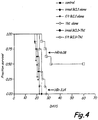
- mice vaccinated with irrad BCL1 or f/t BCL1 were able to survive a lethal challenge of 2000 BCL1 cells administered intravenously through the tail vein (See Figure 4 ), indicating the significant immune responses to both BCL1 vaccination protocols were not protective.
- CD3/CD28 cross-linked Th1 Memory cells The C57BL/6-derived CD3/CD28 cross-linked Th1 memory cells were first characterized for the surface phenotype ( Figure 2A-C ), cytokine production profile ( Figure 3A ) and immune response after 4 weekly i.d. injections in allogeneic Balb/c mice ( Figure 3B ).
- CD62L, CD45RB, CD44, CD25 and CD40L was analyzed to characterize the differentiation of cells over the 6 day culture by FACS of day 0 CD4+ source cells and compared the staining patterns to the same cells harvested after 6 days in culture before and after activation by CD3/CD28 cross-linking. Results are shown in Figure 2A .
- the day 0 positively selected CD4+ cells from splenocytes were stained CD62L hi , CD44 hi but converted from a CD62L hi phenotype to a CD62L lo phenotype. Therefore, the day 6 CD3/CD28 cross-linked cells expressed a phenotype of CD4+, CD62L lo , CD45RB hi , CD44 hi .
- mouse memory cells are normally CD62L lo , CD45RB lo , CD44 hi .
- the CD62L lo , CD45RB lo , CD44 hi phenotype of cells produced by our culture method express the same phenotype as memory/effector cells that have been previously associated with autoimmune disease and allograft rejection.
- CD3/CD28-activated CD4 + , CD62L lo , CD45RB hi , CD44 hi , CD40L + , CD40L + , CD25 + memory/effector cells were tested for cytokine production after activation by CD3/CD28 cross-linking of fresh day 6 harvested cells or day 6 harvested cells that had been frozen in liquid nitrogen, thawed and activated. Activated Day 0 CD4+ cells and non-activated fresh harvested Day 6 cells were included for comparison (see Figure 3 ).
- Th1 memory cells Fresh activated CD4+ memory/effector cells expressed substantial amounts of IFN- ⁇ (4210 ⁇ 169.7 pg/ml/6h) and negligible IL-4 (52.33 ⁇ 6.8 pg/ml/6h) and thus these cells are referred to as Th1 memory cells.
- Th1 memory cells When these Th1 memory cells are frozen in liquid nitrogen prior to activation and later thawed and activated, they maintain the Th1 phenotype but express approximately 29% less IFN- ⁇ and IL-4 than the fresh cells (2985 ⁇ 173.5 pg/ml/6h of IFN- ⁇ and 37.2 ⁇ 6.95 pg/ml/6h of IL-4).
- Non-activated Th1 memory cells produced negligible amounts of cytokines (13 ⁇ 6.7 pg/ml/6h IFN- ⁇ , 8.8 ⁇ 3.6 pg/ml/6h IL-4).
- the source CD4+ cells isolated by positive selection from a single cell suspension of normal C57BL/6 splenocytes produced cytokines upon activation with CD3/CD28-conjugated microbeads with a Th2 bias (254 ⁇ 50.2 pg/ml/6h IL-4; 53.5 ⁇ 11.4 pg/ml/6h IFN- ⁇ ).
- mice were sacrificed and spleens were removed and single cell suspensions were prepared for ELISPOT analysis as previously. Results are shown in Figure 3B .
- Vaccination with allogeneic CD4 cells resulted in a base line allogeneic immune response means frequency (IFN- ⁇ +-IL-4) of 1/348 T-cells.
- Allogeneic Th1 cells Day 6) without CD3/CD28 cross-linking resulted in a response mean frequency of 1/268 T-cells, which was not significantly different than the CD4 cells alone.
- CD3/CD28 cross-linking of the allogeneic Th1 cells resulted in a mean frequency of 1/34 alloantigen-specific T-cells, which was significantly greater than the response frequency of allogeneic CD4 cells and non-activated allogeneic Th1 cells (p ⁇ 0.0001).
- the immune response to allogeneic CD4 cells and non-activated allogeneic Th1 memory cells resulted in skewed Th2 immunity, while the CD3/CD28 cross-linked allogeneic Th1 memory cells elicited a strongly polarized Th1 response.
- CD4 cell vaccination resulted in a mean frequency of 1/181 IL-4 producing T-cells, which was significantly greater (p ⁇ 0.0001) than the mean frequency of 1/4167 IFN- ⁇ producing T-cells.
- Non-activated allogeneic Th1 memory cells elicited a mean frequency of 1/147 IL-4 responding T-cells, which was significantly greater (p ⁇ 0.0001) than the mean frequency of 1/1587 IFN- ⁇ responding T-cells.
- the syngeneic splenocyte control did not elicit a detectable adaptive immune response (results not shown).
- mice were followed for survival (see Figure 4 ).
- the median survival of the media alone control mice was 21 days.
- Vaccination with either irrad BCL1, f/t BCL1 or allogeneic Th1 alone did not result in protection from tumor challenge.
- Therapeutic Vaccine Protocol The above data demonstrated the protective effects of vaccination with f/t BCL1 and allogeneic CD3/CD28 cross-linked Th1 memory cells used as an adjuvant in animals that were vaccinated when they were tumor free and then challenged with a lethal dose of tumor. In order to determine if this protective effect could also provide a therapeutic effect, vaccination protocols were investigated in mice with pre-existing tumors.
- mice received a lethal dose of 2000 BCL1 cells intravenously on day 0 and therapeutic vaccinations of either 1 x 10 4 allogeneic CD3/CD28 cross-linked Th1 memory cells alone (Th1) or f/t lysate of 1 x 10 6 BCL1 mixed with allogeneic Th1 (f/t BCL1+Th1) i.d. on days 1, 8 and 15. Media alone inoculations on the same schedule served as control. Results are shown in Figure 5 .
- mice were primed by i.d.
- mice primed with Th1+f/t BCL1 and administered a Th1 therapeutic booster had 75% survival after a lethal challenge.
- Mice primed with Th1 cells alone and administered a therapeutic booster injection with f/t BCL1+Th1 had a significant survival advantage compared to control with median survival of 46 days (logrank: p ⁇ 0.0001; hazard ratio+5.633) and 37.5% of mice surviving lethal challenge.
- the shape of the Kaplan-Meier survival curve for the Th1 prime/Th1+f/t BCL1 booster group was different when compared to other groups that also resulted in mice cured after lethal BCL1 injection.
- the 50% of mice that did not survive after Th1+f/t BCL1 prime and the 25% that did not survive lethal challenge from the Th1+f/t BCL1 prime/Th1 booster group showed immediate signs of leukemia (palpable splenomegaly and significant weight gain) and succumbed to the disease very early at a mean of 24 days.
- the Th1 prime+f/t BCL1 treatment group contained a subset of mice (62.5%) also with obvious leukemia but that survived significantly longer than control mice and a separate subset (37.5%) that were apparently cured and never showed signs of leukemia.
- cryoablation surgery is a technique that can be translated to the clinic and has been shown to be a well-aimed and controlled procedure capable of inducing tissular necrosis. Cryoablation has been known to elicit an antigenic stimulus (capable of generating a specific immunologic response against autologous antigens of the frozen tissue).
- mice Two tumor models were established where subcutaneous tumors were available for cryoblation.
- solid tumor model Balb/c mice were administered subcutaneous inoculations of 1 x 10 4 BCL1 tumor cells bilaterally on the shaved flanks on day 0.
- systemic tumor model Balb/c mice were administered inoculous of 1 x 10 4 BCL1 tumor cells on the left flank and 2000 BCL1 Intravenously through the tail vein on day 0.
- FIG. 7C solid tumor model
- Figure 7D systemic tumor model
- the area of tumor was determined by measurement of the longest width and length of the tumor with calipers. After complete ablation of the left tumor by cryablation, only contralateral untreated tumor mass was measured.
- the contralateral tumor area is displayed to separately show the response of the 40% mice that survived and the 60% that eventually succumbed to disease.
- the growth of the contralateral tumors were significantly suppressed (p ⁇ 0.01) in the 60% of mice that eventually succumbed to disease.
- mice treated with intratumoral allogeneic Th1 cells alone survived a mean of 28 days, which was significantly longer than control mice which survived a mean of 19 days (logrank: p ⁇ 010001; hazard ratio 4.291). 40% of mice treated with cryo+Th1 survived >90 days.
Landscapes
- Health & Medical Sciences (AREA)
- Life Sciences & Earth Sciences (AREA)
- Chemical & Material Sciences (AREA)
- General Health & Medical Sciences (AREA)
- Veterinary Medicine (AREA)
- Medicinal Chemistry (AREA)
- Public Health (AREA)
- Pharmacology & Pharmacy (AREA)
- Animal Behavior & Ethology (AREA)
- Organic Chemistry (AREA)
- Immunology (AREA)
- Engineering & Computer Science (AREA)
- Nuclear Medicine, Radiotherapy & Molecular Imaging (AREA)
- General Chemical & Material Sciences (AREA)
- Chemical Kinetics & Catalysis (AREA)
- Virology (AREA)
- Oncology (AREA)
- Biomedical Technology (AREA)
- Biotechnology (AREA)
- Bioinformatics & Cheminformatics (AREA)
- Communicable Diseases (AREA)
- Cell Biology (AREA)
- Zoology (AREA)
- Microbiology (AREA)
- Epidemiology (AREA)
- Wood Science & Technology (AREA)
- Hematology (AREA)
- Genetics & Genomics (AREA)
- Molecular Biology (AREA)
- Tropical Medicine & Parasitology (AREA)
- Mycology (AREA)
- Developmental Biology & Embryology (AREA)
- Biochemistry (AREA)
- General Engineering & Computer Science (AREA)
- AIDS & HIV (AREA)
- Pulmonology (AREA)
- Medicines Containing Antibodies Or Antigens For Use As Internal Diagnostic Agents (AREA)
- Medicines Containing Material From Animals Or Micro-Organisms (AREA)
- Medicines That Contain Protein Lipid Enzymes And Other Medicines (AREA)
Priority Applications (1)
| Application Number | Priority Date | Filing Date | Title |
|---|---|---|---|
| PL09818495T PL2334309T3 (pl) | 2008-10-01 | 2009-10-01 | Szczepienie pierwotne TH1 dla aktywnej immunoterapii |
Applications Claiming Priority (3)
| Application Number | Priority Date | Filing Date | Title |
|---|---|---|---|
| US10169208P | 2008-10-01 | 2008-10-01 | |
| US12/570,442 US9695397B2 (en) | 2008-10-01 | 2009-09-30 | Th1 vaccination priming for active immunotherapy |
| PCT/US2009/059177 WO2010039924A2 (en) | 2008-10-01 | 2009-10-01 | Th1 vaccination priming for active immunotheraphy |
Publications (3)
| Publication Number | Publication Date |
|---|---|
| EP2334309A2 EP2334309A2 (en) | 2011-06-22 |
| EP2334309A4 EP2334309A4 (en) | 2013-01-09 |
| EP2334309B1 true EP2334309B1 (en) | 2017-05-31 |
Family
ID=42074205
Family Applications (1)
| Application Number | Title | Priority Date | Filing Date |
|---|---|---|---|
| EP09818495.5A Active EP2334309B1 (en) | 2008-10-01 | 2009-10-01 | Th1 vaccination priming for active immunotheraphy |
Country Status (12)
| Country | Link |
|---|---|
| US (5) | US9695397B2 (https=) |
| EP (1) | EP2334309B1 (https=) |
| JP (4) | JP6042065B2 (https=) |
| CN (2) | CN104758926B (https=) |
| CA (1) | CA2739255C (https=) |
| DK (1) | DK2334309T3 (https=) |
| ES (1) | ES2635516T3 (https=) |
| HU (1) | HUE034855T2 (https=) |
| IL (1) | IL212102A (https=) |
| PL (1) | PL2334309T3 (https=) |
| PT (1) | PT2334309T (https=) |
| WO (1) | WO2010039924A2 (https=) |
Families Citing this family (6)
| Publication number | Priority date | Publication date | Assignee | Title |
|---|---|---|---|---|
| PH12012502233A1 (en) * | 2010-04-13 | 2022-10-05 | Immunovative Therapies Ltd | Methods and compositions for inhibition of treg cells |
| SG10201908048QA (en) | 2014-01-08 | 2019-10-30 | Immunovative Therapies Ltd | Treatment of Human Immunodeficiency Virus/Acquired Immunodeficiency Syndrome |
| TWI714529B (zh) * | 2015-05-20 | 2021-01-01 | 以色列商梵提夫免疫療法公司 | 人類免疫缺乏病毒/後天性免疫缺乏症候群之治療 |
| US11564980B2 (en) | 2018-04-23 | 2023-01-31 | Nantcell, Inc. | Tumor treatment method with an individualized peptide vaccine |
| TWI905535B (zh) | 2018-04-23 | 2025-11-21 | 美商南特細胞公司 | 新抗原表位疫苗及免疫刺激組合物及方法 |
| US20250319132A1 (en) * | 2024-04-16 | 2025-10-16 | Mirror Biologics, Inc. | Methods and compositions for improving the immune response against viral pathogens |
Family Cites Families (15)
| Publication number | Priority date | Publication date | Assignee | Title |
|---|---|---|---|---|
| US6051237A (en) * | 1994-11-08 | 2000-04-18 | The Trustees Of The University Of Pennsylvania | Specific immunotherapy of cancer using a live recombinant bacterial vaccine vector |
| US20080199495A1 (en) * | 1999-04-15 | 2008-08-21 | Monash University | Stimulation of thymus for vaccination development |
| US20020131960A1 (en) * | 2000-06-02 | 2002-09-19 | Michel Sadelain | Artificial antigen presenting cells and methods of use thereof |
| AU2001294834A1 (en) * | 2000-09-26 | 2002-04-08 | Beth Israel Deaconess Medical Center | Recombinant bcg vaccines for the prevention and treatment of cancer |
| US20070025958A1 (en) * | 2000-10-27 | 2007-02-01 | Hadden John W | Vaccine immunotherapy |
| JP2004536800A (ja) * | 2001-05-09 | 2004-12-09 | アルカベロ アクチェセルスカプ | Th1/th2比を変調することによりth1及びth2細胞関連疾患を予防又は治療するための医薬組成物 |
| US20030134415A1 (en) * | 2001-09-19 | 2003-07-17 | Gruenberg Micheal L. | Th1 cell adoptive immunotherapy |
| US20040013649A1 (en) * | 2002-05-10 | 2004-01-22 | Inex Pharmaceuticals Corporation | Cancer vaccines and methods of using the same |
| US20040115224A1 (en) * | 2002-12-16 | 2004-06-17 | Tsuneya Ohno | Preparation and administration of hybrid cell vaccines for the prevention of cancer |
| NZ542134A (en) * | 2003-03-04 | 2009-06-26 | Alexion Pharma Inc | Method of treating autoimmune disease by inducing antigen presentation by tolerance inducing antigen presenting cells |
| US7402431B2 (en) * | 2004-03-01 | 2008-07-22 | Immunovative Therapies, Ltd. | T-cell therapy formulation |
| US7435592B2 (en) * | 2003-05-13 | 2008-10-14 | Immunovative Therapies, Ltd. | Compositions for allogeneic cell therapy |
| CA2555714C (en) * | 2004-02-26 | 2013-12-03 | Immunovative Therapies, Ltd. | Methods for preparing t-cells for cell therapy |
| US7181931B2 (en) * | 2005-02-28 | 2007-02-27 | White Dennis M | Method and apparatus for fitting chain jewelry assembly on an individual |
| US7435692B2 (en) * | 2005-10-19 | 2008-10-14 | Tokyo Electron Limited | Gas jet reduction of iso-dense field thickness bias for gapfill process |
-
2009
- 2009-09-30 US US12/570,442 patent/US9695397B2/en active Active
- 2009-10-01 WO PCT/US2009/059177 patent/WO2010039924A2/en not_active Ceased
- 2009-10-01 DK DK09818495.5T patent/DK2334309T3/en active
- 2009-10-01 CN CN201510137976.8A patent/CN104758926B/zh active Active
- 2009-10-01 JP JP2011530213A patent/JP6042065B2/ja active Active
- 2009-10-01 HU HUE09818495A patent/HUE034855T2/en unknown
- 2009-10-01 PL PL09818495T patent/PL2334309T3/pl unknown
- 2009-10-01 PT PT98184955T patent/PT2334309T/pt unknown
- 2009-10-01 ES ES09818495.5T patent/ES2635516T3/es active Active
- 2009-10-01 EP EP09818495.5A patent/EP2334309B1/en active Active
- 2009-10-01 CA CA2739255A patent/CA2739255C/en active Active
- 2009-10-01 CN CN200980147749.6A patent/CN102227224B/zh active Active
-
2011
- 2011-04-03 IL IL212102A patent/IL212102A/en active IP Right Grant
-
2014
- 2014-04-28 JP JP2014092886A patent/JP2014139247A/ja not_active Withdrawn
-
2016
- 2016-03-01 JP JP2016038729A patent/JP2016104818A/ja not_active Withdrawn
-
2017
- 2017-06-22 US US15/630,592 patent/US10744158B2/en active Active
- 2017-06-22 US US15/630,581 patent/US20170290857A1/en not_active Abandoned
- 2017-11-02 JP JP2017212788A patent/JP6789913B2/ja active Active
-
2020
- 2020-07-14 US US16/928,884 patent/US11833173B2/en active Active
-
2023
- 2023-10-26 US US18/495,532 patent/US20240050480A1/en not_active Abandoned
Also Published As
| Publication number | Publication date |
|---|---|
| CN102227224A (zh) | 2011-10-26 |
| CN104758926B (zh) | 2017-09-22 |
| IL212102A0 (en) | 2011-06-30 |
| US20170290857A1 (en) | 2017-10-12 |
| CN102227224B (zh) | 2015-03-25 |
| US20170281743A1 (en) | 2017-10-05 |
| JP2012504638A (ja) | 2012-02-23 |
| PT2334309T (pt) | 2017-10-06 |
| DK2334309T3 (en) | 2017-07-17 |
| CA2739255A1 (en) | 2010-04-08 |
| US20100086561A1 (en) | 2010-04-08 |
| HK1211230A1 (en) | 2016-05-20 |
| JP2018016651A (ja) | 2018-02-01 |
| US20240050480A1 (en) | 2024-02-15 |
| US11833173B2 (en) | 2023-12-05 |
| CA2739255C (en) | 2019-04-02 |
| ES2635516T3 (es) | 2017-10-04 |
| HUE034855T2 (en) | 2018-03-28 |
| EP2334309A4 (en) | 2013-01-09 |
| CN104758926A (zh) | 2015-07-08 |
| PL2334309T3 (pl) | 2017-11-30 |
| EP2334309A2 (en) | 2011-06-22 |
| US9695397B2 (en) | 2017-07-04 |
| US20200338127A1 (en) | 2020-10-29 |
| US10744158B2 (en) | 2020-08-18 |
| JP6042065B2 (ja) | 2016-12-14 |
| JP6789913B2 (ja) | 2020-11-25 |
| JP2016104818A (ja) | 2016-06-09 |
| WO2010039924A3 (en) | 2010-07-22 |
| JP2014139247A (ja) | 2014-07-31 |
| IL212102A (en) | 2016-06-30 |
| WO2010039924A2 (en) | 2010-04-08 |
Similar Documents
| Publication | Publication Date | Title |
|---|---|---|
| US20240050480A1 (en) | Th1 vaccination priming for active immunotherapy | |
| US12233091B2 (en) | Vaccine compositions and methods | |
| Har-Noy et al. | Allogeneic CD3/CD28 cross-linked Th1 memory cells provide potent adjuvant effects for active immunotherapy of leukemia/lymphoma | |
| HK1158499A (en) | Th1 vaccination priming for active immunotheraphy | |
| HK1158499B (en) | Th1 vaccination priming for active immunotheraphy | |
| HK1211230B (en) | Th1 vaccination priming for active immunotheraphy | |
| HK40000110A (en) | Vaccine compositions and methods | |
| HK40000110B (en) | Vaccine compositions and methods | |
| HK1158090A (en) | Vaccine compositions and methods |
Legal Events
| Date | Code | Title | Description |
|---|---|---|---|
| PUAI | Public reference made under article 153(3) epc to a published international application that has entered the european phase |
Free format text: ORIGINAL CODE: 0009012 |
|
| 17P | Request for examination filed |
Effective date: 20110407 |
|
| AK | Designated contracting states |
Kind code of ref document: A2 Designated state(s): AT BE BG CH CY CZ DE DK EE ES FI FR GB GR HR HU IE IS IT LI LT LU LV MC MK MT NL NO PL PT RO SE SI SK SM TR |
|
| AX | Request for extension of the european patent |
Extension state: AL BA RS |
|
| DAX | Request for extension of the european patent (deleted) | ||
| REG | Reference to a national code |
Ref country code: HK Ref legal event code: DE Ref document number: 1158499 Country of ref document: HK |
|
| A4 | Supplementary search report drawn up and despatched |
Effective date: 20121212 |
|
| RIC1 | Information provided on ipc code assigned before grant |
Ipc: A61P 37/00 20060101ALI20121206BHEP Ipc: A61K 35/30 20060101AFI20121206BHEP |
|
| 17Q | First examination report despatched |
Effective date: 20130920 |
|
| REG | Reference to a national code |
Ref country code: DE Ref legal event code: R079 Ref document number: 602009046411 Country of ref document: DE Free format text: PREVIOUS MAIN CLASS: A61K0035300000 Ipc: A61K0039000000 |
|
| GRAP | Despatch of communication of intention to grant a patent |
Free format text: ORIGINAL CODE: EPIDOSNIGR1 |
|
| RIC1 | Information provided on ipc code assigned before grant |
Ipc: C12N 5/0783 20100101ALI20161201BHEP Ipc: A61P 37/00 20060101ALI20161201BHEP Ipc: A61K 39/00 20060101AFI20161201BHEP |
|
| INTG | Intention to grant announced |
Effective date: 20161221 |
|
| GRAS | Grant fee paid |
Free format text: ORIGINAL CODE: EPIDOSNIGR3 |
|
| GRAA | (expected) grant |
Free format text: ORIGINAL CODE: 0009210 |
|
| AK | Designated contracting states |
Kind code of ref document: B1 Designated state(s): AT BE BG CH CY CZ DE DK EE ES FI FR GB GR HR HU IE IS IT LI LT LU LV MC MK MT NL NO PL PT RO SE SI SK SM TR |
|
| REG | Reference to a national code |
Ref country code: CH Ref legal event code: EP Ref country code: GB Ref legal event code: FG4D |
|
| REG | Reference to a national code |
Ref country code: AT Ref legal event code: REF Ref document number: 896836 Country of ref document: AT Kind code of ref document: T Effective date: 20170615 |
|
| REG | Reference to a national code |
Ref country code: HR Ref legal event code: TUEP Ref document number: P20170970T Country of ref document: HR |
|
| REG | Reference to a national code |
Ref country code: IE Ref legal event code: FG4D |
|
| REG | Reference to a national code |
Ref country code: RO Ref legal event code: EPE |
|
| REG | Reference to a national code |
Ref country code: CH Ref legal event code: NV Representative=s name: HEPP WENGER RYFFEL AG, CH |
|
| REG | Reference to a national code |
Ref country code: DE Ref legal event code: R096 Ref document number: 602009046411 Country of ref document: DE |
|
| REG | Reference to a national code |
Ref country code: SE Ref legal event code: TRGR |
|
| REG | Reference to a national code |
Ref country code: NL Ref legal event code: FP |
|
| REG | Reference to a national code |
Ref country code: DK Ref legal event code: T3 Effective date: 20170707 |
|
| REG | Reference to a national code |
Ref country code: NO Ref legal event code: T2 Effective date: 20170531 |
|
| REG | Reference to a national code |
Ref country code: ES Ref legal event code: FG2A Ref document number: 2635516 Country of ref document: ES Kind code of ref document: T3 Effective date: 20171004 |
|
| REG | Reference to a national code |
Ref country code: PT Ref legal event code: SC4A Ref document number: 2334309 Country of ref document: PT Date of ref document: 20171006 Kind code of ref document: T Free format text: AVAILABILITY OF NATIONAL TRANSLATION Effective date: 20170928 |
|
| REG | Reference to a national code |
Ref country code: FR Ref legal event code: PLFP Year of fee payment: 9 |
|
| REG | Reference to a national code |
Ref country code: HR Ref legal event code: OTEP Ref document number: P20170970T Country of ref document: HR |
|
| PG25 | Lapsed in a contracting state [announced via postgrant information from national office to epo] |
Ref country code: LT Free format text: LAPSE BECAUSE OF FAILURE TO SUBMIT A TRANSLATION OF THE DESCRIPTION OR TO PAY THE FEE WITHIN THE PRESCRIBED TIME-LIMIT Effective date: 20170531 Ref country code: EE Free format text: LAPSE BECAUSE OF FAILURE TO SUBMIT A TRANSLATION OF THE DESCRIPTION OR TO PAY THE FEE WITHIN THE PRESCRIBED TIME-LIMIT Effective date: 20170531 Ref country code: HR Free format text: LAPSE BECAUSE OF FAILURE TO SUBMIT A TRANSLATION OF THE DESCRIPTION OR TO PAY THE FEE WITHIN THE PRESCRIBED TIME-LIMIT Effective date: 20171211 |
|
| REG | Reference to a national code |
Ref country code: GR Ref legal event code: EP Ref document number: 20170402271 Country of ref document: GR Effective date: 20180119 |
|
| PG25 | Lapsed in a contracting state [announced via postgrant information from national office to epo] |
Ref country code: SM Free format text: LAPSE BECAUSE OF FAILURE TO SUBMIT A TRANSLATION OF THE DESCRIPTION OR TO PAY THE FEE WITHIN THE PRESCRIBED TIME-LIMIT Effective date: 20170531 |
|
| REG | Reference to a national code |
Ref country code: DE Ref legal event code: R097 Ref document number: 602009046411 Country of ref document: DE |
|
| REG | Reference to a national code |
Ref country code: HK Ref legal event code: GR Ref document number: 1158499 Country of ref document: HK |
|
| REG | Reference to a national code |
Ref country code: HU Ref legal event code: AG4A Ref document number: E034855 Country of ref document: HU |
|
| PLBE | No opposition filed within time limit |
Free format text: ORIGINAL CODE: 0009261 |
|
| STAA | Information on the status of an ep patent application or granted ep patent |
Free format text: STATUS: NO OPPOSITION FILED WITHIN TIME LIMIT |
|
| 26N | No opposition filed |
Effective date: 20180301 |
|
| PG25 | Lapsed in a contracting state [announced via postgrant information from national office to epo] |
Ref country code: MC Free format text: LAPSE BECAUSE OF FAILURE TO SUBMIT A TRANSLATION OF THE DESCRIPTION OR TO PAY THE FEE WITHIN THE PRESCRIBED TIME-LIMIT Effective date: 20170531 |
|
| PG25 | Lapsed in a contracting state [announced via postgrant information from national office to epo] |
Ref country code: CY Free format text: LAPSE BECAUSE OF NON-PAYMENT OF DUE FEES Effective date: 20171001 Ref country code: SK Free format text: LAPSE BECAUSE OF FAILURE TO SUBMIT A TRANSLATION OF THE DESCRIPTION OR TO PAY THE FEE WITHIN THE PRESCRIBED TIME-LIMIT Effective date: 20170531 Ref country code: FI Free format text: LAPSE BECAUSE OF NON-PAYMENT OF DUE FEES Effective date: 20171001 Ref country code: LU Free format text: LAPSE BECAUSE OF NON-PAYMENT OF DUE FEES Effective date: 20171001 |
|
| PG25 | Lapsed in a contracting state [announced via postgrant information from national office to epo] |
Ref country code: LV Free format text: LAPSE BECAUSE OF NON-PAYMENT OF DUE FEES Effective date: 20171001 Ref country code: SI Free format text: LAPSE BECAUSE OF FAILURE TO SUBMIT A TRANSLATION OF THE DESCRIPTION OR TO PAY THE FEE WITHIN THE PRESCRIBED TIME-LIMIT Effective date: 20170531 Ref country code: IS Free format text: LAPSE BECAUSE OF FAILURE TO SUBMIT A TRANSLATION OF THE DESCRIPTION OR TO PAY THE FEE WITHIN THE PRESCRIBED TIME-LIMIT Effective date: 20180430 |
|
| PG25 | Lapsed in a contracting state [announced via postgrant information from national office to epo] |
Ref country code: MT Free format text: LAPSE BECAUSE OF NON-PAYMENT OF DUE FEES Effective date: 20171001 |
|
| REG | Reference to a national code |
Ref country code: FR Ref legal event code: PLFP Year of fee payment: 10 |
|
| PGFP | Annual fee paid to national office [announced via postgrant information from national office to epo] |
Ref country code: PT Payment date: 20180925 Year of fee payment: 10 |
|
| PG25 | Lapsed in a contracting state [announced via postgrant information from national office to epo] |
Ref country code: BG Free format text: LAPSE BECAUSE OF NON-PAYMENT OF DUE FEES Effective date: 20180506 |
|
| PGFP | Annual fee paid to national office [announced via postgrant information from national office to epo] |
Ref country code: AT Payment date: 20180919 Year of fee payment: 10 |
|
| PG25 | Lapsed in a contracting state [announced via postgrant information from national office to epo] |
Ref country code: RO Free format text: LAPSE BECAUSE OF NON-PAYMENT OF DUE FEES Effective date: 20170531 |
|
| REG | Reference to a national code |
Ref country code: DE Ref legal event code: R082 Ref document number: 602009046411 Country of ref document: DE Representative=s name: STRAUS, ALEXANDER, DIPL.-CHEM.UNIV. DR.PHIL., DE Ref country code: DE Ref legal event code: R082 Ref document number: 602009046411 Country of ref document: DE Representative=s name: 2K PATENT- UND RECHTSANWAELTE PARTNERSCHAFT MB, DE |
|
| PGFP | Annual fee paid to national office [announced via postgrant information from national office to epo] |
Ref country code: NO Payment date: 20191029 Year of fee payment: 11 Ref country code: NL Payment date: 20191026 Year of fee payment: 11 Ref country code: HU Payment date: 20191031 Year of fee payment: 11 Ref country code: CZ Payment date: 20191021 Year of fee payment: 11 |
|
| PGFP | Annual fee paid to national office [announced via postgrant information from national office to epo] |
Ref country code: ES Payment date: 20191104 Year of fee payment: 11 Ref country code: IT Payment date: 20191023 Year of fee payment: 11 Ref country code: PL Payment date: 20191022 Year of fee payment: 11 |
|
| PGFP | Annual fee paid to national office [announced via postgrant information from national office to epo] |
Ref country code: TR Payment date: 20191018 Year of fee payment: 11 |
|
| REG | Reference to a national code |
Ref country code: AT Ref legal event code: UEP Ref document number: 896836 Country of ref document: AT Kind code of ref document: T Effective date: 20170531 |
|
| PG25 | Lapsed in a contracting state [announced via postgrant information from national office to epo] |
Ref country code: GR Free format text: LAPSE BECAUSE OF NON-PAYMENT OF DUE FEES Effective date: 20200506 Ref country code: PT Free format text: LAPSE BECAUSE OF NON-PAYMENT OF DUE FEES Effective date: 20200506 |
|
| REG | Reference to a national code |
Ref country code: BE Ref legal event code: MM Effective date: 20191031 |
|
| REG | Reference to a national code |
Ref country code: AT Ref legal event code: MM01 Ref document number: 896836 Country of ref document: AT Kind code of ref document: T Effective date: 20191001 |
|
| PG25 | Lapsed in a contracting state [announced via postgrant information from national office to epo] |
Ref country code: BE Free format text: LAPSE BECAUSE OF NON-PAYMENT OF DUE FEES Effective date: 20191031 Ref country code: SE Free format text: LAPSE BECAUSE OF NON-PAYMENT OF DUE FEES Effective date: 20191002 |
|
| PG25 | Lapsed in a contracting state [announced via postgrant information from national office to epo] |
Ref country code: AT Free format text: LAPSE BECAUSE OF NON-PAYMENT OF DUE FEES Effective date: 20191001 |
|
| PG25 | Lapsed in a contracting state [announced via postgrant information from national office to epo] |
Ref country code: CZ Free format text: LAPSE BECAUSE OF NON-PAYMENT OF DUE FEES Effective date: 20201001 |
|
| REG | Reference to a national code |
Ref country code: NO Ref legal event code: MMEP |
|
| REG | Reference to a national code |
Ref country code: NL Ref legal event code: MM Effective date: 20201101 |
|
| PG25 | Lapsed in a contracting state [announced via postgrant information from national office to epo] |
Ref country code: NL Free format text: LAPSE BECAUSE OF NON-PAYMENT OF DUE FEES Effective date: 20201101 Ref country code: NO Free format text: LAPSE BECAUSE OF NON-PAYMENT OF DUE FEES Effective date: 20201031 |
|
| PG25 | Lapsed in a contracting state [announced via postgrant information from national office to epo] |
Ref country code: HU Free format text: LAPSE BECAUSE OF NON-PAYMENT OF DUE FEES Effective date: 20201002 |
|
| PG25 | Lapsed in a contracting state [announced via postgrant information from national office to epo] |
Ref country code: IT Free format text: LAPSE BECAUSE OF NON-PAYMENT OF DUE FEES Effective date: 20201001 |
|
| REG | Reference to a national code |
Ref country code: ES Ref legal event code: FD2A Effective date: 20220119 |
|
| PG25 | Lapsed in a contracting state [announced via postgrant information from national office to epo] |
Ref country code: ES Free format text: LAPSE BECAUSE OF NON-PAYMENT OF DUE FEES Effective date: 20201002 |
|
| PG25 | Lapsed in a contracting state [announced via postgrant information from national office to epo] |
Ref country code: TR Free format text: LAPSE BECAUSE OF NON-PAYMENT OF DUE FEES Effective date: 20201001 |
|
| PG25 | Lapsed in a contracting state [announced via postgrant information from national office to epo] |
Ref country code: PL Free format text: LAPSE BECAUSE OF NON-PAYMENT OF DUE FEES Effective date: 20201001 |
|
| P01 | Opt-out of the competence of the unified patent court (upc) registered |
Effective date: 20230607 |
|
| REG | Reference to a national code |
Ref country code: DE Ref legal event code: R082 Ref document number: 602009046411 Country of ref document: DE Representative=s name: STRAUS, ALEXANDER, DIPL.-CHEM.UNIV. DR.PHIL., DE |
|
| REG | Reference to a national code |
Ref country code: CH Ref legal event code: U11 Free format text: ST27 STATUS EVENT CODE: U-0-0-U10-U11 (AS PROVIDED BY THE NATIONAL OFFICE) Effective date: 20251101 |
|
| PGFP | Annual fee paid to national office [announced via postgrant information from national office to epo] |
Ref country code: DE Payment date: 20251029 Year of fee payment: 17 |
|
| PGFP | Annual fee paid to national office [announced via postgrant information from national office to epo] |
Ref country code: GB Payment date: 20251027 Year of fee payment: 17 |
|
| PGFP | Annual fee paid to national office [announced via postgrant information from national office to epo] |
Ref country code: DK Payment date: 20251027 Year of fee payment: 17 |
|
| PGFP | Annual fee paid to national office [announced via postgrant information from national office to epo] |
Ref country code: FR Payment date: 20251027 Year of fee payment: 17 |
|
| PGFP | Annual fee paid to national office [announced via postgrant information from national office to epo] |
Ref country code: CH Payment date: 20251101 Year of fee payment: 17 |
|
| PGFP | Annual fee paid to national office [announced via postgrant information from national office to epo] |
Ref country code: IE Payment date: 20251027 Year of fee payment: 17 |