EP2331057B1 - Compositions and methods for modulating skin pigmentation - Google Patents
Compositions and methods for modulating skin pigmentation Download PDFInfo
- Publication number
- EP2331057B1 EP2331057B1 EP09736640.5A EP09736640A EP2331057B1 EP 2331057 B1 EP2331057 B1 EP 2331057B1 EP 09736640 A EP09736640 A EP 09736640A EP 2331057 B1 EP2331057 B1 EP 2331057B1
- Authority
- EP
- European Patent Office
- Prior art keywords
- amino acids
- bmp6
- seq
- variant
- fragment
- Prior art date
- Legal status (The legal status is an assumption and is not a legal conclusion. Google has not performed a legal analysis and makes no representation as to the accuracy of the status listed.)
- Active
Links
Images




Classifications
-
- A—HUMAN NECESSITIES
- A61—MEDICAL OR VETERINARY SCIENCE; HYGIENE
- A61K—PREPARATIONS FOR MEDICAL, DENTAL OR TOILETRY PURPOSES
- A61K8/00—Cosmetics or similar toiletry preparations
- A61K8/18—Cosmetics or similar toiletry preparations characterised by the composition
- A61K8/30—Cosmetics or similar toiletry preparations characterised by the composition containing organic compounds
- A61K8/64—Proteins; Peptides; Derivatives or degradation products thereof
-
- A—HUMAN NECESSITIES
- A61—MEDICAL OR VETERINARY SCIENCE; HYGIENE
- A61K—PREPARATIONS FOR MEDICAL, DENTAL OR TOILETRY PURPOSES
- A61K8/00—Cosmetics or similar toiletry preparations
- A61K8/18—Cosmetics or similar toiletry preparations characterised by the composition
- A61K8/30—Cosmetics or similar toiletry preparations characterised by the composition containing organic compounds
- A61K8/60—Sugars; Derivatives thereof
- A61K8/606—Nucleosides; Nucleotides; Nucleic acids
-
- A—HUMAN NECESSITIES
- A61—MEDICAL OR VETERINARY SCIENCE; HYGIENE
- A61P—SPECIFIC THERAPEUTIC ACTIVITY OF CHEMICAL COMPOUNDS OR MEDICINAL PREPARATIONS
- A61P17/00—Drugs for dermatological disorders
-
- A—HUMAN NECESSITIES
- A61—MEDICAL OR VETERINARY SCIENCE; HYGIENE
- A61Q—SPECIFIC USE OF COSMETICS OR SIMILAR TOILETRY PREPARATIONS
- A61Q19/00—Preparations for care of the skin
- A61Q19/02—Preparations for care of the skin for chemically bleaching or whitening the skin
-
- A—HUMAN NECESSITIES
- A61—MEDICAL OR VETERINARY SCIENCE; HYGIENE
- A61Q—SPECIFIC USE OF COSMETICS OR SIMILAR TOILETRY PREPARATIONS
- A61Q19/00—Preparations for care of the skin
- A61Q19/04—Preparations for care of the skin for chemically tanning the skin
-
- A—HUMAN NECESSITIES
- A61—MEDICAL OR VETERINARY SCIENCE; HYGIENE
- A61Q—SPECIFIC USE OF COSMETICS OR SIMILAR TOILETRY PREPARATIONS
- A61Q5/00—Preparations for care of the hair
- A61Q5/08—Preparations for bleaching the hair
-
- A—HUMAN NECESSITIES
- A61—MEDICAL OR VETERINARY SCIENCE; HYGIENE
- A61Q—SPECIFIC USE OF COSMETICS OR SIMILAR TOILETRY PREPARATIONS
- A61Q5/00—Preparations for care of the hair
- A61Q5/10—Preparations for permanently dyeing the hair
-
- G—PHYSICS
- G01—MEASURING; TESTING
- G01N—INVESTIGATING OR ANALYSING MATERIALS BY DETERMINING THEIR CHEMICAL OR PHYSICAL PROPERTIES
- G01N33/00—Investigating or analysing materials by specific methods not covered by groups G01N1/00 - G01N31/00
- G01N33/48—Biological material, e.g. blood, urine; Haemocytometers
- G01N33/50—Chemical analysis of biological material, e.g. blood, urine; Testing involving biospecific ligand binding methods; Immunological testing
- G01N33/68—Chemical analysis of biological material, e.g. blood, urine; Testing involving biospecific ligand binding methods; Immunological testing involving proteins, peptides or amino acids
- G01N33/6872—Intracellular protein regulatory factors and their receptors, e.g. including ion channels
-
- G—PHYSICS
- G01—MEASURING; TESTING
- G01N—INVESTIGATING OR ANALYSING MATERIALS BY DETERMINING THEIR CHEMICAL OR PHYSICAL PROPERTIES
- G01N33/00—Investigating or analysing materials by specific methods not covered by groups G01N1/00 - G01N31/00
- G01N33/48—Biological material, e.g. blood, urine; Haemocytometers
- G01N33/50—Chemical analysis of biological material, e.g. blood, urine; Testing involving biospecific ligand binding methods; Immunological testing
- G01N33/74—Chemical analysis of biological material, e.g. blood, urine; Testing involving biospecific ligand binding methods; Immunological testing involving hormones or other non-cytokine intercellular protein regulatory factors such as growth factors, including receptors to hormones and growth factors
-
- G—PHYSICS
- G01—MEASURING; TESTING
- G01N—INVESTIGATING OR ANALYSING MATERIALS BY DETERMINING THEIR CHEMICAL OR PHYSICAL PROPERTIES
- G01N2333/00—Assays involving biological materials from specific organisms or of a specific nature
- G01N2333/435—Assays involving biological materials from specific organisms or of a specific nature from animals; from humans
- G01N2333/705—Assays involving receptors, cell surface antigens or cell surface determinants
- G01N2333/70596—Molecules with a "CD"-designation not provided for elsewhere in G01N2333/705
-
- G—PHYSICS
- G01—MEASURING; TESTING
- G01N—INVESTIGATING OR ANALYSING MATERIALS BY DETERMINING THEIR CHEMICAL OR PHYSICAL PROPERTIES
- G01N2333/00—Assays involving biological materials from specific organisms or of a specific nature
- G01N2333/435—Assays involving biological materials from specific organisms or of a specific nature from animals; from humans
- G01N2333/705—Assays involving receptors, cell surface antigens or cell surface determinants
- G01N2333/71—Assays involving receptors, cell surface antigens or cell surface determinants for growth factors; for growth regulators
-
- G—PHYSICS
- G01—MEASURING; TESTING
- G01N—INVESTIGATING OR ANALYSING MATERIALS BY DETERMINING THEIR CHEMICAL OR PHYSICAL PROPERTIES
- G01N2500/00—Screening for compounds of potential therapeutic value
-
- G—PHYSICS
- G01—MEASURING; TESTING
- G01N—INVESTIGATING OR ANALYSING MATERIALS BY DETERMINING THEIR CHEMICAL OR PHYSICAL PROPERTIES
- G01N2500/00—Screening for compounds of potential therapeutic value
- G01N2500/10—Screening for compounds of potential therapeutic value involving cells
Definitions
- the present invention relates to compositions and methods useful in studying or modulating melanin pigmentation in the skin.
- the invention relates to compositions capable of modulation of the transfer of melanin from melanocytes to keratinocytes and potentially from keratinocytes to keratinocytes, and methods of modulating skin pigmentation in accordance with the claims.
- Melanocytes are neural crest-derived cells distributed along the basal layer of the epidermis and hair bulb. These cells synthesize melanin pigment within unique melanocyte-specific organelles called melanosomes. For skin and hair to become pigmented this melanin must be transferred from melanocytes to adjacent keratinocytes. Mammalian skin and hair/wool/fur colour is determined by melanin quantity and quality (brown/black eumelanin or red/yellow pheomelanin) in a process that involves a large number of steps regulated at multiple control points by a range of different molecules and compounds.
- Bone morphogenetic proteins are secreted signalling molecules that belong to the TGF- ⁇ superfamily. They play important roles in cell proliferation, differentiation, motility, adhesion and cell death (Hogan 1996). More than 20 distinct BMP family members have been described to date, and each exerts it biological activity via interaction with specific BMP receptors (Wozney et al., 1988). BMP signalling operates at multiple levels depending on BMP type, presence of antagonist(s), development stage of target tissue, and target cell receptor type (Botchkarev 2003). BMPs bind two transmembrane receptor families, multiple BMP receptor (BMPR)I and a single BMPRII (Hogan 1996). Interestingly, to initiate signalling, BMP has to bind both receptors, inducing phosphorylation of an intracellular domain in BMPRI by BMP-RII and activating intracellular signal transduction.
- BMPR multiple BMP receptor
- BMPs are powerful regulators of cutaneous development, and they also play important roles in the control of epidermal homeostasis, hair follicle growth, and melanogenesis in normal postnatal skin (Botchkarev 2003).
- Melanocytes are neural crest-derived cells that migrate to the epidermis and hair follicles during embryogenesis and subsequently synthesize and distribute melanin to surrounding keratinocytes (Halaban et al 2003).
- BMPRI receptors BMPRIA (ALK3; Seq ID 4), BMPRIB (ALK6; Seq ID 2), and ActR-I (ALK2) (Kawabata et al., 1998) and in neural precursor cells signalling through ALK3 induces their proliferation while ALK6 induces their differentiation (Panchision et al., 2001), suggesting that receptor expression determines the BMP effect on cells.
- BMP4 in melanocyte biology was first shown by the Gilchrest group in a study showing that this particular BMP family member acted as an autocrine inhibitor of melanogenesis in normal human melanocytes by inhibiting the expression and activity of the rate-limiting enzyme (tyrosinase) in melanocytes (Yaar et al., 2006).
- WO03/086313 describes methods for lightening skin and hair relating to BMP4.
- BMP6 or a fragment, or variant thereof where said variant has at least 70% sequence identity with human BMP6, and wherein the fragment comprises a sequence of amino acids selected from the group consisting of amino acids 374-513 of SEQ ID N0:1, amino acids 382-513 of SEQ ID N0:1, amino acids 388-513 of SEQ ID N0:1 and amino acids 412-513 of SEQ ID N0:1, and wherein said fragment or variant exhibits the ability to increase melanogenesis or melanin transfer, for increasing melanin pigmentation of the hair of a subject.
- modulating melanogenesis In order to modulate pigmentation of the skin, there are two main approaches: modulating melanogenesis and modulating transfer of melanin.
- the present invention can involve one, other or both of these approaches.
- methods which modulate melanin transfer are of particular interest as the present inventors have discovered that melanin transfer can be effectively targeted. Given that it is a further "downstream" process than melanogenesis, it is a more attractive target in terms of avoiding adverse effects.
- This is useful for cosmetic lightening of skin and/or lightening or darkening of hair colour through modulating the level of melanin pigmentation of the skin and/or hair.
- the invention also provides use of a composition comprising the BMP6 antagonist sclerostin, chordin-like or follistatin-related protein (FSRP) for reducing melanin pigmentation of the skin and/or hair of a subject and (CLAIM 12) a cosmetic method of lightening of skin and/or hair colour through reducing the level of melanin pigmentation of the skin and/or hair, the method comprising administering to a subject a composition comprising the BMP6 antagonist sclerostin, chordin-like or follistatin-related protein (FSRP).
- FSRP BMP6 antagonist sclerostin, chordin-like or follistatin-related protein
- a cosmetic method of darkening of hair colour through increasing the level of melanin pigmentation of the hair comprising administering to a subject a composition comprising BMP6, or a fragment or variant thereof, where said variant has at least 70% sequence identity with human BMP6, and where the fragment comprises a sequence of amino acids selected from the group consisting of amino acids 374-513 of SEQ ID N0:1, amino acids 382-513 of SEQ ID N0:1, amino acids 388-513 of SEQ ID N0:1 and amino acids 412-513 of SEQ ID N0:1, and wherein said fragment or variant exhibits the ability to increase melanogenesis or melanin transfer.
- melanin protects the skin from many of the damaging effects of ultraviolet radiation. Accordingly, increasing the amount of melanin in the skin of a subject may be significant in reducing sunlight induced damage, e.g. mutation of a cell potentially leading to cancer or premature ageing.
- the invention also provides BMP6, or a fragment, or variant thereof where said variant has at least 70% sequence identity with human BMP6, and wherein the fragment comprises a sequence of amino acids selected from the group consisting of amino acids 374-513 of SEQ ID N0:1, amino acids 382-513 of SEQ ID N0:1, amino acids 388-513 of SEQ ID N0:1 and amino acids 412-513 of SEQ ID N0:1, and wherein said fragment or variant exhibits the ability to increase melanogenesis or melanin transfer, for use in a method of increasing melanin pigmentation of the skin of a subject.
- the invention provides compositions for use in treating a medical condition associated with abnormal pigmentation of the skin in accordance with the claims.
- Such treatment may be curative, or it might be used in order to lesson symptoms.
- Diseases or medical conditions associated with altered pigmentation of the skin which could be treated include hyperpigmentation (e.g., melasma, chloasma, senile lentigo, solar lentigo, ephelides, post-inflammatory hyperpigmentation) and hypopigmentation (e.g, vitiligo, and post-inflammatory hypopigmentation) and pigmentation loss as a result of skin damage.
- the invention also provides a composition comprising BMP6, or a fragment or variant thereof, where said variant has at least 70% sequence identity with human BMP6, and wherein the fragment comprises a sequence of amino acids selected from the group consisting of amino acids 374-513 of SEQ ID N0:1, amino acids 382-513 of SEQ ID N0:1, amino acids 388-513 of SEQ ID N0:1 and amino acids 412-513 of SEQ ID N0:1, and wherein said fragment or variant exhibits the ability to increase melanogenesis or melanin transfer, for use in a method of treating hypopigmentation of the skin for use in a method of treating vitiligo.
- the invention also provides a composition comprising sclerostin, chordin-like or follistatin-related protein, for use in a method of treating hyper-pigmentation of the skin.
- the composition is applied to the outer surface of the skin and/or hair of a subject.
- the present invention involves application of a composition comprising a BMP6 polypeptide (accession number NM_001718; Seq ID 1) or a fragment or variant thereof in accordance with the claims, wherein said fragment or variant is functionally active.
- a composition comprising a BMP6 polypeptide (accession number NM_001718; Seq ID 1) or a fragment or variant thereof in accordance with the claims, wherein said fragment or variant is functionally active.
- active in this context can mean the ability to stimulate the transfer of melanin from melanocytes to keratinocytes in the assays described below.
- a "functionally active" BMP6 fragment or variant exhibits the ability to increase melanogenesis or melanin transfer as determined using the assays described later.
- the functional activity of BMP6 proteins, variants and fragments can be assayed by various methods known to one skilled in the art ( Current Protocols in Protein Science (1998) Coligan et al., eds., John Wiley & Sons, Inc., Somerset, New Jersey ) and as further discussed below.
- functionally active fragments can include those fragments that comprise one or more structural domains of a BMP6, such as a binding domain, providing said domain is capable of the desired activity.
- Protein domains can be identified using the PFAM program ( Bateman A., et al., Nucleic Acids Res, 1999, 27: 260-2 ).
- the functionally active fragment or variant includes recombinant BMP6 polypeptides and functionally active fragments or variants thereof, including those encoded by a BMP6-encoding nucleic acid.
- the functionally active BMP6 polypeptide could theoretically encompass the BMP6 precursor protein (accession number P22004) (SEQ ID 1).
- the mature BMP6 polypeptide is believed to include amino acids 374-513 of the same.
- Functionally active fragments comprise amino acids 382-513, 388-513 and 412-513 of the BMP6 precursor (SEQ ID 1).
- BMP6-encoding nucleic acid refers to a DNA or RNA molecule that encodes a BMP6 polypeptide.
- the BMP6 polypeptide or nucleic acid or variant or fragment thereof is from a human, but can also be a homolog or derivative thereof.
- Said variant has at least 70% sequence identity, preferably at least 80%, more preferably 85%, still more preferably 90%, and most preferably at least 95% sequence identity with human BMP6 or the sequence encoding BMP6 (NM 001718).
- percent (%) sequence identity with respect to a subject sequence, or a specified portion of a subject sequence, is defined as the percentage of nucleotides or amino acids in the candidate derivative sequence identical with the nucleotides or amino acids in the subject sequence (or specified portion thereof), after aligning the sequences and introducing gaps, if necessary to achieve the maximum percent sequence identity, as generated by the program WU-BLAST-2. 0al9 ( Altschul et al., J. Mol. Biol. (1997) 215: 403- 410 ) with all the search parameters set to default values.
- the HSP S and HSP S2 parameters are dynamic values and are established by the program itself depending upon the composition of the particular sequence and composition of the particular database against which the sequence of interest is being searched.
- a % identity value is determined by the number of matching identical nucleotides or amino acids divided by the sequence length for which the percent identity is being reported. "Percent (%) amino acid sequence similarity" is determined by doing the same calculation as for determining % amino acid sequence identity, but including conservative amino acid substitutions in addition to identical amino acids in the computation.
- Aromatic amino acids that can be substituted for each other are phenylalanine, tryptophan, and tyrosine; interchangeable hydrophobic amino acids are leucine, isoleucine, methionine, and valine; interchangeable polar amino acids are glutamine and asparagine; interchangeable basic amino acids are arginine, lysine and histidine; interchangeable acidic amino acids are aspartic acid and glutamic acid; and interchangeable small amino acids are alanine, serine, threonine, cysteine and glycine.
- an alignment for nucleic acid sequences is provided by the local homology algorithm of Smith and Waterman ( Smith and Waterman, 1981, Advances in Applied Mathematics 2: 482-489; database: European Bioinformatics Institute ; Smith and Waterman, 1981, J. of Molec. Biol., 147: 195-197 ; Nicholas et al., 1998, "A tutorial on Searching Sequence Databases and Sequence Scoring Methods” (www.psc.edu ) and references cited therein; W. R. Pearson, 1991, Genomics 11: 635-650 ).
- This algorithm can be applied to amino acid sequences by using the scoring matrix developed by Dayhoff ( Dayhoff: Atlas of Protein Sequences and Structure, M. O.
- Derivative nucleic acid molecules of the subject nucleic acid molecules include sequences that hybridize to the nucleic acid sequence encoding BMP6.
- the stringency of hybridization can be controlled by temperature, ionic strength, pH, and the presence of denaturing agents such as formamide during hybridization and washing. Conditions routinely used are set out in readily available procedure texts (e.g. Current Protocol in Molecular Biology, Vol. 1, Chap. 2.10, John Wiley & Sons, Publishers (1994 ); Sambrook et al., Molecular Cloning, Cold Spring Harbor (1989 )).
- a nucleic acid molecule of the invention is capable of hybridizing to a nucleic acid molecule containing the nucleotide sequence of a BMP6 under high stringency hybridization conditions that are: prehybridization of filters containing nucleic acid for 8 hours to overnight at 65 C in a solution comprising 6X single strength citrate (SSC) (1X SSC is 0.15 M NaCl, 0.015 M Na citrate; pH 7.0), 5X Denhardt's solution, 0.05% sodium pyrophosphate and 100 g/ml herring sperm DNA; hybridization for 18-20 hours at 65 C in a solution containing 6X SSC, 1X Denhardt's solution, 100 ⁇ g/ml yeast tRNA and 0.05% sodium pyrophosphate; and washing of filters at 65 C for 1 hr in a solution containing 0.1X SSC and 0.1% SDS (sodium dodecyl sulfate).
- SSC single strength citrate
- moderately stringent hybridization conditions are used that are: pretreatment of filters containing nucleic acid for 6 h at 40 C in a solution containing 35% formamide, 5X SSC, 50 mM Tris-HCl (pH7.5), 5mM EDTA, 0.1% PVP, 0.1% Ficoll, 1% BSA, and 500 ⁇ g/ml denatured salmon sperm DNA; hybridization for 18-20h at 40 C in a solution containing 35% formamide, 5X SSC, 50 mM Tris-HCl (pH7.5), 5mM EDTA, 0.02% PVP, 0.02% Ficoll, 0.2% BSA, 100, ⁇ g/ml salmon sperm DNA, and 10% (wt/vol) dextran sulfate; followed by washing twice for 1 hour at 55 C in a solution containing 2X SSC and 0.1% SDS.
- low stringency conditions can be used that are: incubation for 8 hours to overnight at 37 C in a solution comprising 20% formamide, 5 x SSC, 50 mM sodium phosphate (pH 7.6), 5X Denhardt's solution, 10% dextran sulfate, and 20 ⁇ g/ml denatured sheared salmon sperm DNA; hybridization in the same buffer for 18 to 20 hours; and washing of filters in 1 x SSC at about 37 C for 1 hour.
- the invention involves a composition comprising a compound capable of binding to BMP6 and inactivating it in accordance with the claims.
- polypeptides of the present invention may be used with or without modification.
- the invention provides use of an RNA molecule capable of targeted antisense interaction or RNA interference against mRNA encoding ALK6 or Cdc42_.
- a suitable RNAi molecule for targeting Cdc42 mRNA can be
- RNAi is the process of sequence-specific, post-transcriptional gene silencing in animals and plants, initiated by double-stranded RNA (dsRNA) that is homologous in sequence to the silenced gene.
- dsRNA double-stranded RNA
- Methods relating to the use of RNAi to silence genes in C . elegans, Drosophila, plants, and humans are known in the art ( Fire A, et al., 1998 Nature 391: 806-811 ; Fire, A. Trends Genet. 15, 358-363 (1999 ); Sharp, P. A. RNA interference 2001. Genes Dev. 15, 485-490 (2001 ); Hammond, S. M., et al., Nature Rev. Genet. 2,110-1119 (2001 ); Tuschl, T. Chem. Biochem.
- Nucleic acid modulators are commonly used as research reagents, diagnostics, and therapeutics. For example, antisense oligonucleotides, which are able to inhibit gene expression with extraordinar specificity, are often used to elucidate the function of particular genes (see, for example, U.S. Pat. No. 6,165,790 ). Nucleic acid modulators are also used, for example, to distinguish between functions of various members of a biological pathway. For example, antisense oligomers have been employed as therapeutic moieties in the treatment of disease states in animals and man and have been demonstrated in numerous clinical trials to be safe and effective ( Milligan JF, et al, Current Concepts in Antisense Drug Design, J Med Chem. (1993) 36: 1923-1937 ; Tonkinson JL et al., Antisense Oligodeoxynucleotides as Clinical Therapeutic Agents, Cancer Invest. (1996) 14: 54-65 ).
- the substance is an antagonist of BMP6.
- BMP6 antagonists which may be suitable for use in the present invention include sclerostin, chordin-like and follistatin-related protein (FSRP).
- FSRP chordin-like and follistatin-related protein
- the antagonist is sclerostin (SEQ ID 3).
- Antagonists of ALK6 may be able to inhibit the transfer of melanin from melanocytes to keratinocytes, thereby reducing skin and/or hair pigmentation.
- agonists of ALK6 may be capable of enhancing the transfer of melanin from melanocytes to keratinocytes, thereby increasing skin and hair pigmentation. Both of these effects can be desirable from a cosmetic point of view, and additionally there may be medical benefits from such an effect. For example it is currently desirable in western Europe and the United States (and elsewhere) to have a sun tanned appearance for cosmetic reasons. In some countries of Asia it is desirable to have a relatively pale appearance for cosmetic reasons. Additionally, given that melanin is involved in protecting the skin from the damaging effects of the sun, it may be desirable to increase melanin content of the skin from a protective point of view.
- the subject is a mammal, preferably a primate and especially a human.
- the present invention provides a composition comprising a substance capable of modulating the activity or expression of ALK6 or Cdc42 for use in modulation of the pigmentation of the skin and/or hair of a subject in accordance with the claims. Details of suitable substances are provided above, and the modulation may be for cosmetic or for therapeutic purposes.
- the invention provides use of a composition comprising a substance capable of modulating the activity or expression of ALK6 or Cdc42 in the manufacture of a medicament for the treatment of a disease associated with abnormal pigmentation of the skin in accordance with the claims.
- Such treatment may be curative, or it might be in order to lessen symptoms.
- compositions according to the present inventions are suitable for topical application to the skin.
- Any common topical formulation such as a solution, suspension, gel, cream, ointment or salve and the like may be employed. Preparation of such topical formulations are described in the art of pharmaceutical formulations as exemplified, for example, by Gennaro et al. (1995) Remington's Pharmaceutical Sciences, Mack Publishing .
- the compositions could also be administered as a powder or spray, particularly in aerosol form.
- the ALK6 may be on a cell, or it may be provided on a support.
- the method may involve providing a cell expressing ALK6 and determining the ability of the test substance to interact with the ALK6 expressed by said cell, especially ALK6 expressed on the surface of the cell.
- the cell expressing ALK6 may be a melanocyte.
- the method may involve determining the ability of the test substance to activate ALK6, i.e. determining whether the test substance is an agonist of ALK6.
- the method may involve determining the ability of the test substance to deactivate ALK6, i.e. determining whether the test substance is an antagonist of ALK6.
- test substance is capable of modulating the activity of ALK6. For example it is possible to determine the effect of the test substance on downstream signalling molecules which are effected by ALK6 activation. Alternatively, it would be possible to determine the effect of a test substance on the expression of mRNAs or proteins which are effected by ALK6 activation. This could involve determining, for example, a) recruitment of R-Smads (receptor regulated Smads, Smad-1, -5, -8) and its subsequent phosphorylation upon binding to ALK6; b) blocking of activation of R-Smads by inhibitory Smads (I-Smads), e.g. Smads 6 and 7; or c) selective degradation of ALK6 by Smurfs (Smad ubiquitination regulatory factors).
- R-Smads receptor regulated Smads, Smad-1, -5, -8
- I-Smads inhibitory Smads
- Smurfs Smad ubiquitination regulatory factors
- ALK6 ALK6 mRNA levels in the cells
- protein expression on the surface of a cell e.g. using immunofluorescence techniques, ELISA, two-dimensional electrophoresis or mass-spectrometric methods.
- the method may involve the step of determining the ability of the test substance to interact with ALK6 by determining the affect of the test substance on the expression or activation of Cdc42, preferably the expression of Cdc42.
- Methods of determining the expression of Cdc42 include measuring the amount of Cdc42 protein in or on the cell, or determining the amount of a precursor in the synthesis of Cdc42 protein, for example mRNA which codes for Cdc42. Techniques required to determine the level of expression of Cdc42 protein or Cdc42 mRNA levels would be apparent to the person skilled in the art.
- Techniques to determine protein levels may involve immunostaining (e.g., immunofluorescence, western blotting), ELISA, two-dimensional electrophoresis or mass-spectrometric methods.
- Techniques to determine mRNA levels might involve northern blotting, reverse transcriptase PCR, quantitative PCR, microarrays or Affymetrix® chips.
- the present invention is concerned with substances in accordance with the claims which are capable of interacting with ALK6 in a manner which affects melanogenesis or melanin transfer. Accordingly, determining the effect of a test substance on melanogenesis or melanin transfer is particularly desirable. Methods of achieving this are set out in detail in the present application, for example determining the effect of a substance on the number of melanosomes transferred from a melanocyte to a keratinocyte or potentially from keratinocyte to keratinocyte. This may be achieved using the immunostaining techniques described in the present application.
- the method may involve the step of providing BMP6.
- BMP6 By providing BMP6 in the method, it is possible to determine the ability of a test substance to modulate the activity of ALK6 is the presence of its biological ligand. Such a method may be more relevant to physiological conditions as it assesses the ability of a compound to interact with ALK6 in competition with BMP6.
- the cell expressing Cdc42 may be a melanocyte or a keratinocyte, more preferably a melanocyte.
- the method may involve comparing the activity and/or expression of Cdc42 in a cell treated with the test substance with the activity and/or expression of Cdc42 in a control cell.
- the level of expression of Cdc42 may be determined by many methods apparent to the person skilled in the art. In embodiments of the present invention the expression may be determined using immunofluorescence, western blotting or by determining the level of Cdc42 mRNA. As mentioned above, other suitable methods would be apparent to the person skilled in the art.
- BMP bone morphogenetic protein
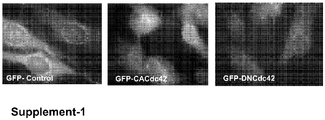
- BMP6 stimulates the expression of (cell division cycle 42) Cdc42 in a dose-dependent manner in human melanocytes using reverse transcriptase analysis. Requirements of Cdc42 in filopodia formation and melanosome transfer in melanocytes were verified using SEM analysis of FM55 cells with transfected constitutively active (CA) Cdc42 and dominant-negative Cdc42. CA-Cdc42 induces dorsal filopodia formation while DN-Cdc42 suppresses dorsal filopodia.
- CA constitutively active
- BMP6 is predicted to be synthesised as a precursor molecule which is cleaved to yield a 132 amino acid mature polypeptide with a calculated molecular weight of approximately 15 Kd.
- BMP6 precursor
- the mature form of BMP6 contains three potential N-linked glycosylation sites per polypeptide chain.
- the active BMP-6 protein molecule is likely a dimer. Processing of BMP6 into the mature form involves dimerization and removal of the N- terminal region in a manner analogous to the processing of the related protein TGF ⁇ ( Gentry et al., Mol. Cell. Biol. 8: 4162 (1988 ).
- the human BMP6 precursor is provided in the GenBank database (accession number-P22004) and integrated into UniprotKB/Swiss-Prot (see SEQ ID NO : 1 ).
- the mature polypeptide is believed to include amino acids 374-513 of SEQ ID NO : 1 .
- Other active BMP-6 polypeptides include polypeptides including amino acids 382-513,388-513 and 412- 513 of SEQ ID NO : 1.
- BMPs work by binding to a receptor complex that is found on the surface of almost all normal cells, and is composed of type I and type II receptors.
- BMPR-I when present as a monomer, binds BMP with low affinity. However, when BMPR-I and BMPR-II are present as a heterodimer, their affinity for BMP is substantially increased (Hogan 1996).
- BMP dimers initiate signaling by binding cooperatively to both type I and type II receptors. Each monomer of BMP6 can connect to both type I and type II receptors. Thus the assembly of the tetrameric receptor complex is essential for transducing the signal into the cell.
- Type II receptors are constitutively-active kinases, which transphosphorylate type I receptors upon ligand binding. However, type I receptors activate intracellular substrates by phosphorylation, and thus determine the specificity of intracellular signals.
- BMPs including BMP6 can bind to 2 type I receptors include BMPR-IA (ALK-3; Seq ID 4), and BMPR-IB (ALK6; Seq ID 2). While BMPR-IA and BMP-IB are structurally similar they show distinct spatial and temporal expression patterns.
- BMP6 induced the expression of its own cognate receptor, ALK6 (accession number 000238).
- a selective BMP6 antagonist sclerostin inhibited this BMP6-induced ALK6 expression along with Cdc42 expression in melanocytes, suggesting that Cdc42 participates in a possible amplification loop for BMP6 signalling.
- Cdc42 signal emanating from melanocyte BMP receptors is involved in filopodia formation to control melanosome transfer to keratinocytes.
- SOST Sclerostin
- the N-terminal region of SOST (amino acids 23-58 of SEQ ID 3) interacts with both type-I and type-II receptor biding sites on BMP6, and a portion of the core region (amino acids 134-166 of SEQ ID 3) may interact with the type II receptor biding site such that antibodies specific for these SOST regions may block or impair binding of BMP to SOST.
- BMP6 can induce melanogenesis by stimulating the expression and activity of the rate-limiting enzyme (tyrosinase) in melanocytes.
- BMP6 can control melanin transfer between melanocytes and keratinocytes, and potentially from keratinocytes to keratinocytes. This occurs, at least in part, through the action of Cdc42.
- BMP antagonists, and molecules based on their structure and action can be used as novel regulators of mammalian skin and hair pigmentation.
- Fully matched epidermal keratinocytes i.e. from the same skin specimen
- K-SFM keratinocyte serum-free medium
- BPE bovine pituitary extract
- BPE bovine pituitary extract
- penicillin 100 U/ml
- streptomycin 100 ⁇ g/ml
- 2 mM L-glutamine 2 mM L-glutamine
- keratinocytes and melanocytes were identified using anti-cytokeratin antibody (Abcam, Cambridge, UK) and the melanocyte-specific NKI/beteb antibody (Monosan, Uden, Netherlands) to gp100 respectively.
- melanocytes (passage 4) and keratinocytes (passage 2) were seeded onto 8-well Lab-Tek® chamber slides (ICN Biomedicals, Inc. Aurora, OH, USA) at a cell density of 1 x 10 4 cells/well and in a ratio of 1 melanocyte to 10 keratinocytes.
- Co-cultures were maintained overnight (16 h) in a mixture of K-SFM and MEM (co-culture medium) to allow cell attachment, followed by medium replenishment for a further 24 h.
- the co-cultures were incubated for 16 h in serum-starved medium (i.e., lacking foetal calf serum and bovine pituitary extract) to remove exogenous sources of growth factors, before assessing the effects of 100ng/ml recombinant human BMP-6 (R & D System, Oxfordshire, UK) and 400ng/ml recombinant human sclerostin (R & D System, Oxfordshire, UK) for 24 h.
- serum-starved medium i.e., lacking foetal calf serum and bovine pituitary extract
- MC Epidermal melanocytes
- KC epidermal keratinocytes
- the cells were switched to serum free medium (so-called starved) supplemented with 10ng/ml and 100ng/ml BMP-6 for 24h, 48h and 72h. Cytotoxicity was assessed by cell death and cytopathologic change in morphology.
- Approximately 1x10 4 MC were seeded into each well of a Lab-tek® 8-well chamber slide and allowed to attach for 24h. Cells were then washed 3-times with sterile PBS and supplemented with 350 ⁇ l of starved serum-free melanocyte medium and incubated at 37°C and 5% CO 2 for 24h. Cells were then washed with sterile PBS three times and incubated with or without 100 ng/ml of BMP-6 for 12 h. Cells were then gently washed 3-times with sterile PBS and fixed in ice-cold methanol for 10 minutes at -20 °C. Slides were stored at -20 °C until immunocytochemistry was performed.
- MC in a confluent T225 flask were trypsinised and seeded into T25 flask with full medium and allowed to attach overnight. 24h before treatment the medium was replaced with starved medium for 24h. Cells were washed 3-times with sterile PBS, and incubated in starved medium alone or with 100ng/ml of BMP-6 for different time periods (1-24 h). In a different experiment cells were treated for 12h with different concentration of BMP-6.
- the molecular weight ladder (Magik Marker, Invitrogen) was incubated in 5% milk PBS/0.075% Tween- 20 and the membrane strips were incubated with either 1 ml of 5% milk PBS/0.075% Tween-20 (negative control), or 1 ml of rabbit anti-tyrosinase (1:200 polyclonal antibody in 5% milk PBS/0.075% Tween 20) and 1 ml of goat anti-actin (1:1000 polyclonal antibody in 5% milk PBS/0.075% Tween 20) on a rocking platform overnight at 4°C. After extensive washes the blots were incubated with horseradish peroxidise conjugated secondary antibodies for 2h.
- the molecular weight ladder was then incubated with 1 ml of HRP-goat anti-human IgG (H+L) (Zymed, USA) (1:500) diluted in 5% milk PBS/0.075% Tween 20 and membrane strips were incubated in 1 ml of anti-rabbit IgG, horseradish peroxidase linked whole antibody (HRP) secondary antibody (Amersham Biosciences, UK) (1:700 diluted in 5% milk PBS/0.075% Tween 20) on a rocking platform for 2 hours at room temperature. The washing procedure was repeated and the membrane strips were incubated in LumiGLO® Reagent and Peroxide (BioLab Ltd, UK) for 2 minutes at room temperature.
- HRP-goat anti-human IgG H+L
- HRP horseradish peroxidase linked whole antibody
- the chemiluminescent signal was detected by exposing the blot strips to Kodak XRA X-ray film (Kodak, UK) at various exposure times, followed by development in developing solution (Kodak, UK) until bands appeared, rinsed in tap water, fixed in the fixer (Kodak, UK) until the film turned blue, then rinsed with tap water and allowed to dry.
- the membrane was then labelled and scanned for densitometric analysis for the semi-quantitative assessment of protein expression levels using analysis software (Image Master Total lab version 1.11).
- the second primary antibody either cytokeratin (1:100) (Abcam, Cambridge, UK) or ⁇ -Actin (1:100) (Santa Cruz, USA) was applied for 1h at room temperature followed by a TRITC-conjugated secondary antibody (1:100) (Jackson Immunoresearch Laboratories, Inc., West Grove, USA).
- DAPI Vector Laboratories, Burlingame, CA
- Negative controls included the omission of primary antibody and replacement with non-immune serum from secondary antibody host and inclusion of secondary antibodies.
- Matched melanocytes-keratinocytes co-cultures were stimulated with different doses of BMP-6 and compared with unstimulated cells.
- Evaluation of melanosome transfer was performed by counting fluorescent gp100-positive spots within recipient keratinocytes in 5 random microscopic fields per well at 100x magnification (oil-immersion) in 3 independent experiments. To avoid counting melanin granules that may still be associated with melanocytes, we only counted gp100-positive spots within keratinocytes that were not in direct contact with melanocytes.
- RT-PCR Reverse transcription-polymerase chain reaction
- melanocytes were also treated with or without 400 ng/ml of Sclerostin either in the presence or absence of 100 ng/ml BMP6.
- RNA samples were treated with deoxyribonuclease (QIAGEN, UK), followed by determination of concentration. Then a Superscript III First-Strand synthesis for Reverse Transcription Kit (Invitrogen, California) was used to synthesize first strand cDNA. The final concentration of RNA in the reaction was 1 ⁇ g/100 ⁇ l for all samples.
- PCR was performed with QIAGEN Fast Cycling PCR kit (QIAGEN, UK) under conditions described by manufacturer. Briefly, the following cycling conditions were used: 95°C for 15 min (stage1); 96°C for 15s; primer annealing for 15s (For Cdc 42-65°C, Tyrosinase-58°C and GAPDH-60°C); 72°C for 25s (stage 2) x 30 cycle. Primers used for RT-PCR reactions are shown in Table 1 and were obtained from Sigma-Genosys, UK. PCR products were separated over 1% agarose gel in 1X TAE buffer and stained with ethidium bromide. 1Kb DNA Plus DNA ladder (Invitrogen, California) were used as a DNA marker. Table 1.
- GFP-Cdc42(15A) and the constitutively active GFP-Cdc42(61L) and GFP in pEGFP-C3 were generous gifts of Richard E. Cheney (University of North Carolina, Chapel Hill). Vectors included the neomycin gene conferring resistance to geneticin (G418). Approximately 5 x 10 5 moderately pigmented FM55 cells were grown to 70-80% confluence in six well plates for 16 h in RPMI medium with 10% FBS day before transfection. FM55 cells were transfected using Lipfectamine 2000 Transfection Reagent (Invitrogen, Carlabad, CA, USA).
- cDNA constructs were mixed with 8 ⁇ l of Lipfectamine 2000 Transfection Reagent in 1.6 ml of Opti-MEM Reduced Serum Medium. Cells were incubated with transfection mixture for 12 h, washed three times with 1X PBS, incubated in fresh RPMI containing 10% FBS for 48h. The transfected cells were selected for 15 days using 1.6 mg/ml G418. Then 1 x 10 4 stable transfected cells were cultured for 24 h in 8-well Lab-Tek® chamber slides in the presence of RPMI medium with 10% FBS.
- Epidermal melanocytes treated with or without 400 ng/ml of Sclerostin either in the presence or absence of 100 ng/ml BMP6 for 72 h and stably-selected transfected FM55 cells were fixed with 1% glutaraldehyde (Sigma, UK) buffered in 0.1 M sodium cacodylate (Agar, UK) at 37 °C. The cells were then post-fixed in 1% osmium tetroxide (Agar, UK) and 1 % tannic acid (Agar, UK) used as mordant, dehydrated through a series of alcohol from 20 to 70%, stained in 0.5% uranyl acetate, followed by further dehydration in 90 and 100% alcohol .
- BMP6 (10 and 100 ng / ml) does not exhibit cytotoxicity to normal human epidermal melanocytes and keratinocytes
- BMP6 is toxic to melanocytes or keratinocytes
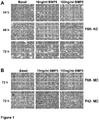
- cells were maintained in the presence of 10 ng/ml and 100ng/ml for 24h, 48h and 72h. Both doses of BMP6 are not associated with altered cell growth or morphology of melanocyte and keratinocytes ( Figure 1A, 1B ).
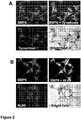
- BMP6 in normal human melanocytes was confirmed by double immunolabeling (yellow-orange, Aiii) of anti-BMP6 (green, Ai) with anti-tyrosinase antibody (red, Aii) ( Figure 2A ). Double immunolabeling of melanocytes with anti-BMP6 (green, Bi) and anti-ALK6 (Red, Bii) antibody revealed BMP6 and ALK6 co-localization (yellow, Biii) throughout the cell ( Figure 2B ).
- the ALK6 receptors are functional, as BMP6 treatment on melanocyte-keratinocyte co-culture leads to stimulation of melanosome transfer from melanocytes to keratinocytes in a dose-dependent fashion ( Figure 3 A, B ). Thus this is the first report of an effect of BMP6 on melanosome transfer in melanocyte-keratinocyte co-culture system. Both autocrine and paracrine effects may be involved.
- BMP6 up-regulates Cdc42 message expression in human epidermal melanocytes
- Cdc42 a master regulator of filopodia formation in human melanocytes
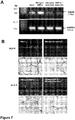
- RT-PCR analysis indicated that maximum induction of Cdc42 after 100 ng/ml BMP6 treatment occurred from 2-4 h and then reduced slightly but remain elevated for up to 12h, compared with the basal level expression of Cdc42 mRNA in untreated control ( Figure 4 A) .
- the induction of Cdc42 mRNA by BMP6 occurred in a dose-dependent fashion ( Figure 4B ).
- BMP6- also stimulated the expression of the BMP6 receptor ALK6 (green Figure 4C ii) compared to normal basal level of expression of ALK6 ( Figure C i) in normal human epidermal melanocytes ( Figure 4C ).
- Rho protein mutants Two kinds have been used extensively to analyze their functions; activated mutants, which are constitutively GTP-bound because the GTPase activating proteins (GAPs) are inhibited; and dominant-negative mutants which act by titrating out guanine nucleotide exchange factor (GEFs) (Feig 1999).
- GEFs guanine nucleotide exchange factor
- Manipulation of melanosomes transfer by over-expression or inhibition of Cdc42 further suggests the strong involvement of filopodia in melanosome transfer. Since BMP6 can up-regulate the expression of Cdc42, this suggests that BMP6-assocaited stimulation of melanosome transfer may involve Cdc42 as its downstream target. To test this we exploited the inhibitory effect of DN-Cdc42 on filopodia formation and melanosome transfer. This can also be similarly achieved by knocking down of endogenous Cdc42 expression of human melanocyte using a siRNA against human Cdc42.
- sclerostin a selective BMP6 antagonist
- sclerostin inhibits BMP-6-induced melanosome transfer
- sclerositin itself inhibited the basal level of melanosome transfer from melanocytes to keratinocytes ( Figure 6A,B ).
- sclerostin inhibited the BMP6-induced melanosome transfer in human epidermal melanocyte-keratinocyte co-culture suggesting that sclerostin can be used as a novel regulatior of mammalian skin and hair pigmentation ( Figure 6A, B ).
- BMP6 increased melanin content (by approx. 32 ⁇ 9% after 72 h) in human epidermal melanocytes in vitro ( Figure 9A ).
- a selective BMP6 antagonist sclerostin inhibited the BMP6-induced melanin content (by 15 ⁇ 3%), in human epidermal melanocytes ( Figure 9A ).
- Tyrosinase activity was also stimulated by BMP6 while Sclerostin inhibited BMP6-induced increase in tyrosinase activity ( Figure 9B ).
- BMP4 has been found to be act as an autocrine inhibitor of melanogenesis in normal human melanocytes by inhibiting the expression and activity of the rate-limiting enzyme (tyrosinase) in melanocytes (Yaar et al., 2006).
- tyrosinase rate-limiting enzyme
- BMP6 act as a stimulator of melanogenesis by stimulating the expression of tyrosinase at both protein and gene level ( Figure 9C ). While sclerostin inhibited the BMP6-induced tyrosinase expression in human epidermal melanocytes at both protein and gene level ( Figure 9C ).
Landscapes
- Health & Medical Sciences (AREA)
- Life Sciences & Earth Sciences (AREA)
- General Health & Medical Sciences (AREA)
- Molecular Biology (AREA)
- Engineering & Computer Science (AREA)
- Veterinary Medicine (AREA)
- Public Health (AREA)
- Animal Behavior & Ethology (AREA)
- Chemical & Material Sciences (AREA)
- Biomedical Technology (AREA)
- Hematology (AREA)
- Immunology (AREA)
- Urology & Nephrology (AREA)
- Dermatology (AREA)
- Cell Biology (AREA)
- Biochemistry (AREA)
- Medicinal Chemistry (AREA)
- Birds (AREA)
- Microbiology (AREA)
- Epidemiology (AREA)
- Pathology (AREA)
- General Physics & Mathematics (AREA)
- Biotechnology (AREA)
- Analytical Chemistry (AREA)
- Physics & Mathematics (AREA)
- Food Science & Technology (AREA)
- Proteomics, Peptides & Aminoacids (AREA)
- Endocrinology (AREA)
- Bioinformatics & Cheminformatics (AREA)
- Chemical Kinetics & Catalysis (AREA)
- General Chemical & Material Sciences (AREA)
- Nuclear Medicine, Radiotherapy & Molecular Imaging (AREA)
- Organic Chemistry (AREA)
- Pharmacology & Pharmacy (AREA)
- Medicines That Contain Protein Lipid Enzymes And Other Medicines (AREA)
- Measuring Or Testing Involving Enzymes Or Micro-Organisms (AREA)
- Investigating Or Analysing Biological Materials (AREA)
- Peptides Or Proteins (AREA)
- Cosmetics (AREA)
Applications Claiming Priority (3)
| Application Number | Priority Date | Filing Date | Title |
|---|---|---|---|
| GBGB0816507.8A GB0816507D0 (en) | 2008-09-10 | 2008-09-10 | Product and method |
| GB0908498A GB0908498D0 (en) | 2009-05-18 | 2009-05-18 | Compositions and methods |
| PCT/GB2009/051139 WO2010029343A2 (en) | 2008-09-10 | 2009-09-08 | Compositions and methods |
Publications (2)
| Publication Number | Publication Date |
|---|---|
| EP2331057A2 EP2331057A2 (en) | 2011-06-15 |
| EP2331057B1 true EP2331057B1 (en) | 2019-03-20 |
Family
ID=41718311
Family Applications (1)
| Application Number | Title | Priority Date | Filing Date |
|---|---|---|---|
| EP09736640.5A Active EP2331057B1 (en) | 2008-09-10 | 2009-09-08 | Compositions and methods for modulating skin pigmentation |
Country Status (9)
| Country | Link |
|---|---|
| US (1) | US8883725B2 (enExample) |
| EP (1) | EP2331057B1 (enExample) |
| JP (1) | JP5773872B2 (enExample) |
| CN (1) | CN102209522B (enExample) |
| AU (1) | AU2009290625B2 (enExample) |
| DK (1) | DK2331057T3 (enExample) |
| ES (1) | ES2727627T3 (enExample) |
| PT (1) | PT2331057T (enExample) |
| WO (1) | WO2010029343A2 (enExample) |
Families Citing this family (7)
| Publication number | Priority date | Publication date | Assignee | Title |
|---|---|---|---|---|
| JP5937515B2 (ja) | 2010-11-01 | 2016-06-22 | 花王株式会社 | 皮膚及び毛髪色制御因子 |
| JP2015512260A (ja) * | 2012-03-30 | 2015-04-27 | ザ プロクター アンド ギャンブルカンパニー | 皮膚色素沈着用の剤を決定する際に使用するためのデータ・アーキテクチャの構築方法 |
| US8927517B2 (en) * | 2012-04-27 | 2015-01-06 | Kao Corporation | Factors controlling skin and hair color |
| KR102348045B1 (ko) * | 2015-02-27 | 2022-01-11 | (주)아모레퍼시픽 | 미백성분의 부작용을 예측하는 방법 |
| CN110092816B (zh) * | 2018-01-29 | 2023-08-01 | 上海市第一人民医院 | 预防和治疗纤维化的小分子多肽及其应用 |
| GB201804355D0 (en) * | 2018-03-19 | 2018-05-02 | Imperial Innovations Ltd | Wound treatment |
| WO2020000470A1 (zh) * | 2018-06-29 | 2020-01-02 | 深圳市博奥康生物科技有限公司 | 促进cdc42蛋白过表达的重组载体及其构建方法 |
Citations (1)
| Publication number | Priority date | Publication date | Assignee | Title |
|---|---|---|---|---|
| WO2008015344A2 (fr) * | 2006-08-03 | 2008-02-07 | Societe D'extraction Des Principes Actifs Sa (Vincience) | Composition dermatologique et/ou cosmetique contenant des polypeptides ou des peptides issus de la proteine slc24a5 |
Family Cites Families (14)
| Publication number | Priority date | Publication date | Assignee | Title |
|---|---|---|---|---|
| US4381292A (en) | 1980-11-14 | 1983-04-26 | The Board Of Trustees Of The Leland Stanford Jr. University | Anti-human T-lymphocyte monoclonal antibody |
| US4451570A (en) | 1981-03-26 | 1984-05-29 | The Regents Of The University Of California | Immunoglobulin-secreting human hybridomas from a cultured human lymphoblastoid cell line |
| US4618577A (en) | 1983-02-09 | 1986-10-21 | The Regents Of The University Of California | Human-human hybridoma, CLNH5 |
| US4946778A (en) | 1987-09-21 | 1990-08-07 | Genex Corporation | Single polypeptide chain binding molecules |
| US5530101A (en) | 1988-12-28 | 1996-06-25 | Protein Design Labs, Inc. | Humanized immunoglobulins |
| US6506559B1 (en) | 1997-12-23 | 2003-01-14 | Carnegie Institute Of Washington | Genetic inhibition by double-stranded RNA |
| HK1047109A1 (zh) | 1999-10-15 | 2003-02-07 | University Of Massachusetts | 作为指定基因干预工具的rna干预轨迹基因 |
| US6165790A (en) | 1999-11-03 | 2000-12-26 | Isis Pharmaceuticals Inc. | Antisense modulation of PI3 kinase p55 gamma expression |
| DK1399023T3 (da) * | 2001-06-01 | 2008-08-18 | Wyeth Corp | Sammensætninger til systemisk indgivelse af sekvenser, der koder for knoglemorfogenese-proteiner |
| CA2481784A1 (en) * | 2002-04-12 | 2003-10-23 | Trustees Of Boston University | Methods for lightening skin and hair |
| AU2006230434A1 (en) * | 2005-03-30 | 2006-10-05 | Wyeth | Methods for stimulating hair growth by administering BMPs |
| WO2008082525A1 (en) | 2006-12-19 | 2008-07-10 | National Stem Cell Inc | Umbilical cord stem cell secreted product derived topical compositions and methods of use thereof |
| WO2008143928A1 (en) | 2007-05-15 | 2008-11-27 | Puretech Ventures | Methods and compositions for treating skin conditions |
| CA2718403A1 (en) * | 2008-03-13 | 2009-09-17 | The General Hospital Corporation | Inhibitors of the bmp signaling pathway |
-
2009
- 2009-09-08 ES ES09736640T patent/ES2727627T3/es active Active
- 2009-09-08 WO PCT/GB2009/051139 patent/WO2010029343A2/en not_active Ceased
- 2009-09-08 US US13/063,016 patent/US8883725B2/en active Active
- 2009-09-08 EP EP09736640.5A patent/EP2331057B1/en active Active
- 2009-09-08 CN CN200980144906.8A patent/CN102209522B/zh active Active
- 2009-09-08 DK DK09736640.5T patent/DK2331057T3/da active
- 2009-09-08 JP JP2011525630A patent/JP5773872B2/ja active Active
- 2009-09-08 AU AU2009290625A patent/AU2009290625B2/en active Active
- 2009-09-08 PT PT09736640T patent/PT2331057T/pt unknown
Patent Citations (1)
| Publication number | Priority date | Publication date | Assignee | Title |
|---|---|---|---|---|
| WO2008015344A2 (fr) * | 2006-08-03 | 2008-02-07 | Societe D'extraction Des Principes Actifs Sa (Vincience) | Composition dermatologique et/ou cosmetique contenant des polypeptides ou des peptides issus de la proteine slc24a5 |
Also Published As
| Publication number | Publication date |
|---|---|
| AU2009290625B2 (en) | 2014-12-11 |
| JP5773872B2 (ja) | 2015-09-02 |
| US8883725B2 (en) | 2014-11-11 |
| WO2010029343A2 (en) | 2010-03-18 |
| DK2331057T3 (da) | 2019-06-17 |
| PT2331057T (pt) | 2019-06-25 |
| WO2010029343A3 (en) | 2010-06-10 |
| CN102209522B (zh) | 2016-04-06 |
| US20110206625A1 (en) | 2011-08-25 |
| AU2009290625A1 (en) | 2010-03-18 |
| EP2331057A2 (en) | 2011-06-15 |
| JP2012501639A (ja) | 2012-01-26 |
| CN102209522A (zh) | 2011-10-05 |
| ES2727627T3 (es) | 2019-10-17 |
Similar Documents
| Publication | Publication Date | Title |
|---|---|---|
| Frank et al. | Nitric oxide triggers enhanced induction of vascular endothelial growth factor expression in cultured keratinocytes (HaCaT) and during cutaneous wound repair | |
| US8883725B2 (en) | Compositions and methods for modulating skin pigmentation | |
| Lee et al. | Reactive oxygen species facilitate adipocyte differentiation by accelerating mitotic clonal expansion | |
| Suzuki et al. | Dual-mode regulation of hair growth cycle by two Fgf-5 gene products | |
| Haendeler et al. | Redox regulatory and anti-apoptotic functions of thioredoxin depend on S-nitrosylation at cysteine 69 | |
| Wake et al. | Early changes in KCC2 phosphorylation in response to neuronal stress result in functional downregulation | |
| EP3191839B1 (en) | Methods for inhibiting hmgb1 activation of melanocytes, method for identification of agents suitable for such inhibiton | |
| KR101830926B1 (ko) | 피부 노화를 방지 및/또는 개선하기 위해 사용되는 pedf-유도 폴리펩티드의 용도 | |
| Hearing | The regulation of melanin formation | |
| Xing et al. | Wnt5a suppresses β-catenin signaling during hair follicle regeneration | |
| EP3225626B1 (en) | Sfrp5-derived peptide fragment and cosmetic composition for skin whitening containing same | |
| Bin et al. | Fibronectin-containing extracellular vesicles protect melanocytes against ultraviolet radiation-induced cytotoxicity | |
| Dorgaleleh et al. | Molecular and biochemical mechanisms of human iris color: A comprehensive review | |
| Mogyorosi et al. | Increased decorin mRNA in diabetic mouse kidney and in mesangial and tubular cells cultured in high glucose | |
| Esposito et al. | A cross-talk between TrkB and Ret tyrosine kinases receptors mediates neuroblastoma cells differentiation | |
| Kauser et al. | Modulation of the human hair follicle pigmentary unit by corticotropin-releasing hormone and urocortin peptides | |
| Kahlina et al. | p68 DEAD box RNA helicase expression in keratinocytes: regulation, nucleolar localization, and functional connection to proliferation and vascular endothelial growth factor gene expression | |
| Yoo et al. | CRTC3, a sensor and key regulator for melanogenesis, as a tunable therapeutic target for pigmentary disorders | |
| Van et al. | Developmental regulation of a turkey intestinal peptide transporter (PepT1) | |
| EP1404713A1 (en) | Novel keratinocyte growth factor-2 analogue in hair follicle | |
| Tao et al. | Anti-aging effect of low molecular weight recombinant humanized collagen on photo-aging by activating adherence junction signaling pathways | |
| Lin et al. | LIGR, a protease‐activated receptor‐2‐derived peptide, enhances skin pigmentation without inducing inflammatory processes | |
| Wang et al. | Transformation of vascular endothelial cells by a point mutation in the Tie2 gene from human intramuscular haemangioma | |
| Castagnino et al. | Neu differentiation factor/heregulin induction by hepatocyte and keratinocyte growth factors | |
| KR20160026180A (ko) | Mitf의 조절자 및 멜라닌 색소성 질환 치료제로서의 stub1 용도 |
Legal Events
| Date | Code | Title | Description |
|---|---|---|---|
| PUAI | Public reference made under article 153(3) epc to a published international application that has entered the european phase |
Free format text: ORIGINAL CODE: 0009012 |
|
| 17P | Request for examination filed |
Effective date: 20110404 |
|
| AK | Designated contracting states |
Kind code of ref document: A2 Designated state(s): AT BE BG CH CY CZ DE DK EE ES FI FR GB GR HR HU IE IS IT LI LT LU LV MC MK MT NL NO PL PT RO SE SI SK SM TR |
|
| AX | Request for extension of the european patent |
Extension state: AL BA RS |
|
| DAX | Request for extension of the european patent (deleted) | ||
| 17Q | First examination report despatched |
Effective date: 20130226 |
|
| STAA | Information on the status of an ep patent application or granted ep patent |
Free format text: STATUS: EXAMINATION IS IN PROGRESS |
|
| RIC1 | Information provided on ipc code assigned before grant |
Ipc: A61K 8/64 20060101ALI20180719BHEP Ipc: A61Q 19/02 20060101ALI20180719BHEP Ipc: A61Q 19/04 20060101ALI20180719BHEP Ipc: G01N 33/74 20060101ALI20180719BHEP Ipc: A61Q 5/10 20060101ALI20180719BHEP Ipc: A61K 8/60 20060101AFI20180719BHEP Ipc: A61Q 5/08 20060101ALI20180719BHEP Ipc: G01N 33/68 20060101ALI20180719BHEP |
|
| GRAP | Despatch of communication of intention to grant a patent |
Free format text: ORIGINAL CODE: EPIDOSNIGR1 |
|
| STAA | Information on the status of an ep patent application or granted ep patent |
Free format text: STATUS: GRANT OF PATENT IS INTENDED |
|
| GRAJ | Information related to disapproval of communication of intention to grant by the applicant or resumption of examination proceedings by the epo deleted |
Free format text: ORIGINAL CODE: EPIDOSDIGR1 |
|
| GRAP | Despatch of communication of intention to grant a patent |
Free format text: ORIGINAL CODE: EPIDOSNIGR1 |
|
| INTG | Intention to grant announced |
Effective date: 20180905 |
|
| INTG | Intention to grant announced |
Effective date: 20181004 |
|
| GRAS | Grant fee paid |
Free format text: ORIGINAL CODE: EPIDOSNIGR3 |
|
| GRAA | (expected) grant |
Free format text: ORIGINAL CODE: 0009210 |
|
| STAA | Information on the status of an ep patent application or granted ep patent |
Free format text: STATUS: THE PATENT HAS BEEN GRANTED |
|
| AK | Designated contracting states |
Kind code of ref document: B1 Designated state(s): AT BE BG CH CY CZ DE DK EE ES FI FR GB GR HR HU IE IS IT LI LT LU LV MC MK MT NL NO PL PT RO SE SI SK SM TR |
|
| REG | Reference to a national code |
Ref country code: GB Ref legal event code: FG4D |
|
| REG | Reference to a national code |
Ref country code: CH Ref legal event code: EP |
|
| REG | Reference to a national code |
Ref country code: DE Ref legal event code: R096 Ref document number: 602009057528 Country of ref document: DE |
|
| REG | Reference to a national code |
Ref country code: AT Ref legal event code: REF Ref document number: 1109765 Country of ref document: AT Kind code of ref document: T Effective date: 20190415 |
|
| REG | Reference to a national code |
Ref country code: IE Ref legal event code: FG4D |
|
| REG | Reference to a national code |
Ref country code: CH Ref legal event code: NV Representative=s name: MURGITROYD AND COMPANY, CH |
|
| REG | Reference to a national code |
Ref country code: DK Ref legal event code: T3 Effective date: 20190611 |
|
| REG | Reference to a national code |
Ref country code: PT Ref legal event code: SC4A Ref document number: 2331057 Country of ref document: PT Date of ref document: 20190625 Kind code of ref document: T Free format text: AVAILABILITY OF NATIONAL TRANSLATION Effective date: 20190618 |
|
| REG | Reference to a national code |
Ref country code: NL Ref legal event code: FP |
|
| REG | Reference to a national code |
Ref country code: SE Ref legal event code: TRGR |
|
| PG25 | Lapsed in a contracting state [announced via postgrant information from national office to epo] |
Ref country code: LT Free format text: LAPSE BECAUSE OF FAILURE TO SUBMIT A TRANSLATION OF THE DESCRIPTION OR TO PAY THE FEE WITHIN THE PRESCRIBED TIME-LIMIT Effective date: 20190320 Ref country code: NO Free format text: LAPSE BECAUSE OF FAILURE TO SUBMIT A TRANSLATION OF THE DESCRIPTION OR TO PAY THE FEE WITHIN THE PRESCRIBED TIME-LIMIT Effective date: 20190620 Ref country code: FI Free format text: LAPSE BECAUSE OF FAILURE TO SUBMIT A TRANSLATION OF THE DESCRIPTION OR TO PAY THE FEE WITHIN THE PRESCRIBED TIME-LIMIT Effective date: 20190320 |
|
| REG | Reference to a national code |
Ref country code: LT Ref legal event code: MG4D |
|
| PG25 | Lapsed in a contracting state [announced via postgrant information from national office to epo] |
Ref country code: BG Free format text: LAPSE BECAUSE OF FAILURE TO SUBMIT A TRANSLATION OF THE DESCRIPTION OR TO PAY THE FEE WITHIN THE PRESCRIBED TIME-LIMIT Effective date: 20190620 Ref country code: LV Free format text: LAPSE BECAUSE OF FAILURE TO SUBMIT A TRANSLATION OF THE DESCRIPTION OR TO PAY THE FEE WITHIN THE PRESCRIBED TIME-LIMIT Effective date: 20190320 Ref country code: HR Free format text: LAPSE BECAUSE OF FAILURE TO SUBMIT A TRANSLATION OF THE DESCRIPTION OR TO PAY THE FEE WITHIN THE PRESCRIBED TIME-LIMIT Effective date: 20190320 Ref country code: GR Free format text: LAPSE BECAUSE OF FAILURE TO SUBMIT A TRANSLATION OF THE DESCRIPTION OR TO PAY THE FEE WITHIN THE PRESCRIBED TIME-LIMIT Effective date: 20190621 |
|
| REG | Reference to a national code |
Ref country code: AT Ref legal event code: MK05 Ref document number: 1109765 Country of ref document: AT Kind code of ref document: T Effective date: 20190320 |
|
| REG | Reference to a national code |
Ref country code: ES Ref legal event code: FG2A Ref document number: 2727627 Country of ref document: ES Kind code of ref document: T3 Effective date: 20191017 |
|
| PG25 | Lapsed in a contracting state [announced via postgrant information from national office to epo] |
Ref country code: CZ Free format text: LAPSE BECAUSE OF FAILURE TO SUBMIT A TRANSLATION OF THE DESCRIPTION OR TO PAY THE FEE WITHIN THE PRESCRIBED TIME-LIMIT Effective date: 20190320 Ref country code: SK Free format text: LAPSE BECAUSE OF FAILURE TO SUBMIT A TRANSLATION OF THE DESCRIPTION OR TO PAY THE FEE WITHIN THE PRESCRIBED TIME-LIMIT Effective date: 20190320 Ref country code: RO Free format text: LAPSE BECAUSE OF FAILURE TO SUBMIT A TRANSLATION OF THE DESCRIPTION OR TO PAY THE FEE WITHIN THE PRESCRIBED TIME-LIMIT Effective date: 20190320 Ref country code: EE Free format text: LAPSE BECAUSE OF FAILURE TO SUBMIT A TRANSLATION OF THE DESCRIPTION OR TO PAY THE FEE WITHIN THE PRESCRIBED TIME-LIMIT Effective date: 20190320 |
|
| PG25 | Lapsed in a contracting state [announced via postgrant information from national office to epo] |
Ref country code: PL Free format text: LAPSE BECAUSE OF FAILURE TO SUBMIT A TRANSLATION OF THE DESCRIPTION OR TO PAY THE FEE WITHIN THE PRESCRIBED TIME-LIMIT Effective date: 20190320 Ref country code: SM Free format text: LAPSE BECAUSE OF FAILURE TO SUBMIT A TRANSLATION OF THE DESCRIPTION OR TO PAY THE FEE WITHIN THE PRESCRIBED TIME-LIMIT Effective date: 20190320 |
|
| PG25 | Lapsed in a contracting state [announced via postgrant information from national office to epo] |
Ref country code: IS Free format text: LAPSE BECAUSE OF FAILURE TO SUBMIT A TRANSLATION OF THE DESCRIPTION OR TO PAY THE FEE WITHIN THE PRESCRIBED TIME-LIMIT Effective date: 20190720 Ref country code: AT Free format text: LAPSE BECAUSE OF FAILURE TO SUBMIT A TRANSLATION OF THE DESCRIPTION OR TO PAY THE FEE WITHIN THE PRESCRIBED TIME-LIMIT Effective date: 20190320 |
|
| REG | Reference to a national code |
Ref country code: DE Ref legal event code: R097 Ref document number: 602009057528 Country of ref document: DE |
|
| PLBE | No opposition filed within time limit |
Free format text: ORIGINAL CODE: 0009261 |
|
| STAA | Information on the status of an ep patent application or granted ep patent |
Free format text: STATUS: NO OPPOSITION FILED WITHIN TIME LIMIT |
|
| 26N | No opposition filed |
Effective date: 20200102 |
|
| PG25 | Lapsed in a contracting state [announced via postgrant information from national office to epo] |
Ref country code: SI Free format text: LAPSE BECAUSE OF FAILURE TO SUBMIT A TRANSLATION OF THE DESCRIPTION OR TO PAY THE FEE WITHIN THE PRESCRIBED TIME-LIMIT Effective date: 20190320 |
|
| PG25 | Lapsed in a contracting state [announced via postgrant information from national office to epo] |
Ref country code: TR Free format text: LAPSE BECAUSE OF FAILURE TO SUBMIT A TRANSLATION OF THE DESCRIPTION OR TO PAY THE FEE WITHIN THE PRESCRIBED TIME-LIMIT Effective date: 20190320 |
|
| PG25 | Lapsed in a contracting state [announced via postgrant information from national office to epo] |
Ref country code: MC Free format text: LAPSE BECAUSE OF FAILURE TO SUBMIT A TRANSLATION OF THE DESCRIPTION OR TO PAY THE FEE WITHIN THE PRESCRIBED TIME-LIMIT Effective date: 20190320 |
|
| PG25 | Lapsed in a contracting state [announced via postgrant information from national office to epo] |
Ref country code: LU Free format text: LAPSE BECAUSE OF NON-PAYMENT OF DUE FEES Effective date: 20190908 |
|
| PG25 | Lapsed in a contracting state [announced via postgrant information from national office to epo] |
Ref country code: CY Free format text: LAPSE BECAUSE OF FAILURE TO SUBMIT A TRANSLATION OF THE DESCRIPTION OR TO PAY THE FEE WITHIN THE PRESCRIBED TIME-LIMIT Effective date: 20190320 |
|
| PG25 | Lapsed in a contracting state [announced via postgrant information from national office to epo] |
Ref country code: HU Free format text: LAPSE BECAUSE OF FAILURE TO SUBMIT A TRANSLATION OF THE DESCRIPTION OR TO PAY THE FEE WITHIN THE PRESCRIBED TIME-LIMIT; INVALID AB INITIO Effective date: 20090908 Ref country code: MT Free format text: LAPSE BECAUSE OF FAILURE TO SUBMIT A TRANSLATION OF THE DESCRIPTION OR TO PAY THE FEE WITHIN THE PRESCRIBED TIME-LIMIT Effective date: 20190320 |
|
| PG25 | Lapsed in a contracting state [announced via postgrant information from national office to epo] |
Ref country code: MK Free format text: LAPSE BECAUSE OF FAILURE TO SUBMIT A TRANSLATION OF THE DESCRIPTION OR TO PAY THE FEE WITHIN THE PRESCRIBED TIME-LIMIT Effective date: 20190320 |
|
| P01 | Opt-out of the competence of the unified patent court (upc) registered |
Effective date: 20230527 |
|
| REG | Reference to a national code |
Ref country code: CH Ref legal event code: U11 Free format text: ST27 STATUS EVENT CODE: U-0-0-U10-U11 (AS PROVIDED BY THE NATIONAL OFFICE) Effective date: 20251001 |
|
| PGFP | Annual fee paid to national office [announced via postgrant information from national office to epo] |
Ref country code: PT Payment date: 20250902 Year of fee payment: 17 |
|
| PGFP | Annual fee paid to national office [announced via postgrant information from national office to epo] |
Ref country code: DK Payment date: 20250929 Year of fee payment: 17 |
|
| PGFP | Annual fee paid to national office [announced via postgrant information from national office to epo] |
Ref country code: IT Payment date: 20250923 Year of fee payment: 17 Ref country code: NL Payment date: 20250924 Year of fee payment: 17 |
|
| PGFP | Annual fee paid to national office [announced via postgrant information from national office to epo] |
Ref country code: BE Payment date: 20250924 Year of fee payment: 17 Ref country code: GB Payment date: 20250929 Year of fee payment: 17 |
|
| PGFP | Annual fee paid to national office [announced via postgrant information from national office to epo] |
Ref country code: FR Payment date: 20250929 Year of fee payment: 17 |
|
| PGFP | Annual fee paid to national office [announced via postgrant information from national office to epo] |
Ref country code: SE Payment date: 20250929 Year of fee payment: 17 |
|
| PGFP | Annual fee paid to national office [announced via postgrant information from national office to epo] |
Ref country code: IE Payment date: 20250929 Year of fee payment: 17 |
|
| PGFP | Annual fee paid to national office [announced via postgrant information from national office to epo] |
Ref country code: DE Payment date: 20250929 Year of fee payment: 17 |
|
| PGFP | Annual fee paid to national office [announced via postgrant information from national office to epo] |
Ref country code: CH Payment date: 20251001 Year of fee payment: 17 |
|
| PGFP | Annual fee paid to national office [announced via postgrant information from national office to epo] |
Ref country code: ES Payment date: 20251107 Year of fee payment: 17 |