EP2322752B1 - Erweiterbare leiter - Google Patents
Erweiterbare leiter Download PDFInfo
- Publication number
- EP2322752B1 EP2322752B1 EP09806287.0A EP09806287A EP2322752B1 EP 2322752 B1 EP2322752 B1 EP 2322752B1 EP 09806287 A EP09806287 A EP 09806287A EP 2322752 B1 EP2322752 B1 EP 2322752B1
- Authority
- EP
- European Patent Office
- Prior art keywords
- rung
- column
- pin
- disposed
- ladder
- Prior art date
- Legal status (The legal status is an assumption and is not a legal conclusion. Google has not performed a legal analysis and makes no representation as to the accuracy of the status listed.)
- Not-in-force
Links
- 230000007246 mechanism Effects 0.000 claims description 36
- 238000010719 annulation reaction Methods 0.000 claims description 34
- 230000002093 peripheral effect Effects 0.000 claims description 13
- 210000003811 finger Anatomy 0.000 description 8
- 238000000034 method Methods 0.000 description 7
- 210000003813 thumb Anatomy 0.000 description 6
- 210000004247 hand Anatomy 0.000 description 2
- 238000005299 abrasion Methods 0.000 description 1
- 238000009434 installation Methods 0.000 description 1
Images





Classifications
-
- E—FIXED CONSTRUCTIONS
- E06—DOORS, WINDOWS, SHUTTERS, OR ROLLER BLINDS IN GENERAL; LADDERS
- E06C—LADDERS
- E06C1/00—Ladders in general
- E06C1/02—Ladders in general with rigid longitudinal member or members
- E06C1/04—Ladders for resting against objects, e.g. walls poles, trees
- E06C1/08—Ladders for resting against objects, e.g. walls poles, trees multi-part
- E06C1/12—Ladders for resting against objects, e.g. walls poles, trees multi-part extensible, e.g. telescopic
- E06C1/125—Ladders for resting against objects, e.g. walls poles, trees multi-part extensible, e.g. telescopic with tubular longitudinal members nested within each other
-
- E—FIXED CONSTRUCTIONS
- E06—DOORS, WINDOWS, SHUTTERS, OR ROLLER BLINDS IN GENERAL; LADDERS
- E06C—LADDERS
- E06C7/00—Component parts, supporting parts, or accessories
- E06C7/06—Securing devices or hooks for parts of extensible ladders
Definitions
- the present invention relates to a ladder, in particular to an extending ladder including a plurality of stiles disposed in a nested arrangement and being able to slip relatively.
- the ladder should usually be used, when the residences, apartments, farms, factories or other places are being repaired or maintained. While the ladder should be stored up when it is not be used. A longer ladder can reach a higher height but it is not convenient to be transported and it will take up more space when the ladder should be stored up. While, an extending ladder can be extended when being used and can be collapsed when being stored up.
- CN 201 047 247 Y discloses an extending ladder according to the preamble of claim 1.
- European Patent EP0527766B1 discloses an extending ladder with a similar structure, which comprises:
- the patent provides a ladder having the function of automatic collapsed from bottom to top. Once the two rungs at the utmost bottom are collapsed, the third rung ranking from bottom to top will be collapsed automatically, and so on until the rung at the top is collapsed automatically in the same manner. However, in the meanwhile, such function will result in the unsafe usage and seem to cause accidents, especially to the damage caused by the pressure of the rung. During the usage of the ladder, if a third party unintentionally touches the switch of the most bottom rung, all of the rungs will then collapse automatically, thus it is highly possible to make the user who stands on the rung to fall down and be harmed.
- an existing extending ladder will be safe all the better when being used, which will be completely collapsed only if the button on each rung is pressed one rung at a time.
- US Patent US7048094B2 also discloses a convenient and safe extending ladder, which comprises:
- the first stile comprising a first column and a second column disposed in a nested arrangement for relative lengthwise movement in a telescopic fashion;
- a latch mechanism for selectively locking the second column relative the first column
- a button operatively coupled to the latch mechanism for actuating the latch mechanism; the button is positioned and dimensioned to contact a tip portion of a thumb of a hand while the first column is grasped between a palm of the hand and at least one finger of the hand;
- the most prominent characters are the 'button' and the 'sleeve', and the main object is to make the button control more convenient and reduce the degree of the friction and the abrasion between two adjacent columns.
- each rung is equipped with two buttons arranged respectively at both ends of the rung. So that, when the user operates the latch mechanism, his two hands should hold the first stile and the second stile and his two thumbs should simultaneously respectively touch the two buttons on each rung, in other words, a pair of hands must be used to operate the two buttons simultaneously and successfully.
- the practical application shows that such operating manner is still inconvenient.
- the second object of the present invention is to provide an extending ladder, which can prevent the upper column from breaking away from the next lower column when the columns are pulled up quickly, and can remind the user whether the columns are pulled in right position.
- the extending ladder comprising:
- latch mechanism is provided with fewer component, so such latch mechanism is in simple structure.
- left and right latch mechanism can also be applied with various latch manners used in the existing extending ladders.
- a first spring seat can be provided on the left side of the interior of the rung, which the left pin can movably pass through, the first spring is disposed in the first spring seat with one end against the inner wall of the right side of the first spring seat and the other end against a shoulder protruded at the middle of the left pin; while a second spring seat can be provided on the right side of the interior of the rung, which the right pin can movably pass through, the second spring is disposed in the second spring seat with one end against the inner wall of the left side of the second spring seat and the other end against a shoulder protruded at the middle of the right pin.
- Said spring seats not only can contain the corresponding spring, but also can sustain the corresponding pin.
- Said limiting block can limit the movement of the corresponding pin, so the left and right button can be well controlled to move within a proper scope.
- the extending ladder can be improved as below: a left limiting annulation is mounted around of the periphery surface of the middle of the left column, which is sandwiched between two adjacent left columns, correspondingly, the left connector is provided with an annular wall to form a socket which is preferably dimensioned to tightly connect with the periphery of the top of the left column, an inner shoulder protruding inward is formed on the top of the inner wall of the socket to stop the left limiting annulation, and the left connector is also provided with a through hole communicating with the socket for the left pin to pass through; while a right limiting annulation is mounted around of the periphery surface of the middle of the right column, which is sandwiched between two adjacent right columns, correspondingly, the right connector is provided with an annular wall to form a socket which is preferably dimensioned to tightly connect with the periphery of the top of the right column, an inner shoulder protruding inward is formed on the top of the inner wall of the socket to stop the
- the corresponding limiting annulation After the column is pulled upward to be in position, the corresponding limiting annulation will be stopped by the matched inner shoulder on the corresponding connector, then the column will be prevented from being pulling out further. Moreover, when the limiting annulation is stopped by the corresponding inner shoulder, that is the column can not be pulled upward easily, it will indicate that the column has been in right position and the user should stop pulling.
- the limiting annulation limited on the corresponding column can adopt the manner as below:
- Said limiting annulation can be limited at the middle of the column conveniently and stably.
- a left bushing is mounted around the opening of the bottom of the left column, the exterior surface of the upper part of the left bushing is in contact with the inner wall of the next lower left column, and the exterior surface of the lower part of the left bushing is tapered;
- the exterior surface of the upper part of the left or right bushing is respectively in contact with the inner wall of the next lower left or right column, adjacent columns can be damped when moves relatively and can be kept from moving relatively too fast, to avoid the damage of the rungs caused by the mutual clash between the adjacent rungs and reduce the noise caused by the mutual clash of the rungs.
- the exterior surface of the lower part of the bushing is tapered, it is helpful for the user to insert the upper column into the next lower column when assembling.
- the internal surface of the upper part of the left bushing is provided with a plurality of project, correspondingly, the peripheral of the bottom of the left column is provided with a plurality of location holes for the corresponding project to insert;
- the internal surface of the upper part of the right bushing is provided with a plurality of projects, correspondingly, the peripheral of the bottom of the right column is provided with a plurality of location holes for the corresponding project to insert.
- the bushing can be mounted on the bottom of the column. It makes the assembling much easy.
- the right side of the left button can be provided with a resisting portion which is convenient for the fingertip to resist against, and the left side of the right button can also be provided with a resisting portion which is convenient for the fingertip to resist against. It can reduce the operating span of the fingers, it is helpful for the fingers to exert on the buttons when operating and it makes the operating more easily for the user.
- the left and right buttons are adjacently arranged on the middle of each rung, so that two buttons can be operated with one hand simultaneously to unlock the rung relative to the corresponding left and right column.
- the thumb and the index figure of the same hand have to be opened, the thumb touches the right button and the index figure touches the left button, then, two fingers drives the left and right buttons respectively to move closely and closely with inward force at the same time, to operate left and right latch mechanism and unlock the rung. Therefore, the operation is very convenient for the user. While the other hand can hold the columns and make the columns move downward. Accordingly, the clash between the adjacent rungs can be avoided and a stable operation process can be also ensured.
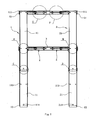
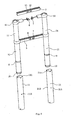
- FIGS. 1 ⁇ 18 show a preferable embodiment of the present invention.
- the extending ladder comprises:
- the left stile 1 is formed of telescopically collapsible left columns 11 which are disposed orderly in a nested arrangement for relative lengthwise movement in a telescopic fashion.
- the right stile 2 is also formed of telescopically collapsible right columns 21 which are disposed orderly in a nested arrangement for relative lengthwise movement in a telescopic fashion.
- the left columns 11 and the right columns 21 are in rough tubular shape.
- Each rung 3 is mounted between the opposite two columns 11, 21. Each rung 3 is hollow and in rectangular figure.
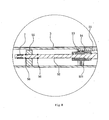
- a left latch mechanism 4 is disposed in each rung 3 for locking the upper left column 11 with the corresponding rung 3 when the ladder extending lengthwise, to keep the ladder from collapsing.
- a right latch mechanism 5 is disposed in each rung 3 for locking the upper right column 21 with the corresponding rung 3 when the ladder extending lengthwise, to keep the ladder from collapsing.
- the left latch mechanism 4 and the right latch mechanism 5 are respectively provided with a left button 6 and a right button 7 to operate the corresponding latch mechanism.
- the left latch mechanism 4 also comprises:
- the right latch mechanism 5 also comprises:
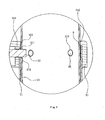
- the left button 6 and the right button 7 are disposed closely with each other in the middle of the corresponding rung 3. That is, a left groove 31 and a right groove 32 are provided in the middle of the rung 3 respectively for the left button 6 and the right button 7 to pass though, the left button 6 and the right button 7 are respectively limited in the left groove 31 and the right groove 32 and can move breadthwise respectively relatively to the left groove 31 and the right groove 32. It makes two buttons 6, 7 be operated conveniently by single hand simultaneity to make the rung 3 released from the corresponding column 11; 21.
- the right side of the left button 6 is provided with a resisting portion 61, which is convenient for the fingertip to resist against, and the left side of the right button 7 is also provided with a resisting portion 71 which is convenient for the fingertip to resist against.
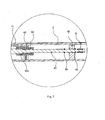
- a left limiting annulation 8 is mounted around of the periphery surface of the middle of the left column 11, which is sandwiched between two adjacent left columns 11, correspondingly, the left connector 41 is provided with an annular wall to form a socket 411 which is preferably dimensioned to tightly connect with the periphery of the top of the left column 11, an inner shoulder 412 protruding inward is formed on the top of the inner wall of the socket 411 to stop the left limiting annulation 8, and the left connector 41 is also provided with a through hole 413 communicating with the socket 411 for the left pin 42 to pass through.
- the left limiting annulation 8 is provided with a first gap 81 opposite to the first locking hole 111, and the inner wall of the left limiting annulation 8 is provided with a plurality of protrusions 82, correspondingly, the peripheral of the middle of the left column 11 is provided with a plurality of small holes 113 for the corresponding protrusion 82 to insert.
- the right connector 51 is provided with an annular wall to form a socket 511 which is preferably dimensioned to tightly connect with the periphery of the top of the right column 21, an inner shoulder 512 protruding inward is formed on the top of the inner wall of the socket 511 to stop the right limiting annulation 9, and the right connector 51 is also provided with a through hole 513 communicating with the socket 511 for the right pin 52 to pass through.
- the right limiting annulation 9 is provided with a second gap 91 opposite to the third locking hole 211, and the inner wall of the right limiting annulation 9 is provided with a plurality of protrusions 92, correspondingly, the peripheral of the middle of the right column 21 is provided with a plurality of small holes 213 for the corresponding protrusion 92 to insert.
- a left bushing 10 is mounted around the opening of the bottom of the left column 11, the exterior surface 101 of the upper part of the left bushing 10 is in contact with the inner wall of the next lower left column 11, and the exterior surface 102 of the lower part of the left bushing 10 is tapered.
- the internal surface of the upper part of the left bushing 10 is provided with a plurality of projects 103, correspondingly, the peripheral of the bottom of the left column 11 is provided with a plurality of location holes 114 for the corresponding project 103 to insert.
- the internal surface of the upper part of the right bushing 12 is provided with a plurality of projects 123, correspondingly, the peripheral of the bottom of the right column 21 is provided with a plurality of location holes 214 for the corresponding project 123 to insert.
- the right limiting annulation 9 After the right column 21 is pulled upward to be in position, the right limiting annulation 9 will be stopped by the matched inner shoulder 512 on the right connector 51, then the right column 21 is prevented from being pulling out further. Moreover, as the right limiting annulation 9 is stopped by the corresponding inner shoulder 512, it will indicate that the right column 21 has been in right position and the user should stop pulling. At this moment, the fourth locking holes 212 on the middle of the pulled right column 21 and the third locking holes 211 on the top of the next lower right column 21 both locate on the same axis.
- the right pin 52 locating in the rung 3 adjacent to the next lower right column 21 will be ejected out, and pass orderly through the through hole 513 on the right connector 51 and the third locking hole 211, then insert into the fourth locking hole 212, to lock the rung 3 and the upper right column 21. While the rung 3 is fixed with the other right column 21, accordingly, the rung 3, the right column 21 connected with the rung 3 and the upper right column 21 are interlocked with each other.
- the locking process of the left column 11 is the same as the right column 21, and both processes are acting simultaneity.
- the user opens the thumb and the index finger of one (same) hand, taking the left hand as an example, the thumb touches the right button 7 and the index finger touches the left button 6, then, two fingers drives the left and right buttons respectively to move closely and closely with inward force at the same time, to make the left and right pin 42, 52 simultaneously move closely and closely. Accordingly, the left and right pin 42 will respectively break away from the second locking hole 112 and the fourth locking hole 212 on the upper corresponding column 11,21 at the same time, releasing the rung 3 from the upper left and right column 11,21. While the other hand (right hand) can hold the columns firmly.
- the exterior surface of the upper part of the left or right bushing 10, 12 on the bottom of the corresponding column will respectively contact and make friction with the inner wall of the next lower left or right column, the left and right bushing 10, 12 have the function of friction drag, to keep the upper left and right column 11, 21 from moving too fast respectively relatively to the next lower left and right column 11, 21.
- the damage of the rungs caused by the mutual clash between the adjacent rungs can be avoided and the noise caused by the mutual clash of the rungs can be reduced.
Landscapes
- Engineering & Computer Science (AREA)
- Mechanical Engineering (AREA)
- Ladders (AREA)
Claims (7)
- Schiebleiter, die Folgendes umfasst:einen linken Holm (1) und einen rechten Holm (2), die gegenüberliegend angeordnet sind,mehrere Sprossen (3), die sich jeweils zwischen dem linken (1) und dem rechten Holm (2) erstrecken,wobei der linke Holm (1) aus teleskopartig zusammenschiebbaren linken Ständern (11) geformt ist, die der Reihe nach in einer verschachtelten Anordnung angeordnet sind,wobei der rechte Holm (2) aus teleskopartig zusammenschiebbaren rechten Ständern (21) geformt ist, die der Reihe nach in einer verschachtelten Anordnung angeordnet sind,und jede Sprosse (3) zwischen den zwei gegenüberliegenden Ständern (11, 21) angeordnet ist,einen linken Klinkenmechanismus (4), der in jeder Sprosse (3) angeordnet ist, um den oberen linken Ständer (11) mit der entsprechenden Sprosse (3) zu verriegeln, wenn die Leiter in Längsrichtung ausgezogen wird, um zu verhindern, dass sich die Leiter zusammenschiebt,einen rechten Klinkenmechanismus (5), der in jeder Sprosse (3) angeordnet ist, um den oberen rechten Ständer (21) mit der entsprechenden Sprosse (3) zu verriegeln, wenn die Leiter in Längsrichtung ausgezogen wird, um zu verhindern, dass sich die Leiter zusammenschiebt,wobei der linke Klinkenmechanismus (4) beziehungsweise der rechte Klinkenmechanismus (5) jeweils mit einem linken Knopf (6) beziehungsweise einem rechten Knopf (7) versehen sind, um den entsprechenden Klinkenmechanismus zu betätigen,wobei der linke Knopf (6) und der rechte Knopf (7) eng beieinander in der Mitte jeder Sprosse (3) angeordnet sind, um so dafür zu sorgen, dass die zwei Knöpfe (6, 7) zweckmäßig durch eine einzelne Hand zu betätigen sind, um zu veranlassen, dass die Sprosse (3) von dem entsprechenden Ständer (11; 21) gelöst wird und wobei der linke Klinkenmechanismus (4) ebenfalls Folgendes umfasst:ein linkes Verbindungsstück (41), das an das linke Ende jeder Sprosse (3) gekoppelt ist, das dafür sorgt, dass die Sprosse (3) mit dem oberen Teil des entsprechenden linken Ständers (11) verbunden ist,einen linken Stift (42), der in jeder Sprosse (3) angeordnet ist, der sich in Horizontal- und in Querrichtung im Verhältnis zu der entsprechenden Sprosse (3) bewegen kann und aus der linken Seite der entsprechenden Sprosse (3) herausragen kann,wobei der linke Knopf (6) mit dem linken Stift (42) verbunden ist, wobei entsprechend ein erstes Verriegelungsloch (111) am Oberteil des linken Ständers (11) bereitgestellt wird, damit der entsprechende linke Stift (42) hindurchgeht, und ein zweites Verriegelungsloch (112) an der Mitte des linken Ständers (11) bereitgestellt wird, damit der entsprechende linke Stift (42) in den linken Ständer (11) eingesetzt wird,wobei der rechte Klinkenmechanismus (5) ebenfalls Folgendes umfasst:ein rechtes Verbindungsstück (51), das an das rechte Ende jeder Sprosse (3) gekoppelt ist, das dafür sorgt, dass die Sprosse (3) mit dem oberen Teil des entsprechenden rechten Ständers (21) verbunden ist,und einen rechten Stift (52), der in jeder Sprosse (3) angeordnet ist, der sich in Horizontal- und in Querrichtung im Verhältnis zu der entsprechenden Sprosse (3) bewegen kann und aus der rechten Seite der entsprechenden Sprosse (3) herausragen kann,wobei der rechte Knopf (7) mit dem rechten Stift (52) verbunden ist, wobei entsprechend ein drittes Verriegelungsloch (211) am Oberteil des rechten Ständers (21) bereitgestellt wird, damit der entsprechende rechte Stift (52) hindurchgeht, und ein viertes Verriegelungsloch (212) an der Mitte des rechten Ständers (21) bereitgestellt wird, damit der entsprechende rechte Stift (52) in den rechten Ständer (21) eingesetzt wird, dadurch gekennzeichnet, dass der linke Klinkenmechanismus ferner eine erste Feder (43) umfasst, die außerhalb des linken Stifts (42) angeordnet ist, um sicherzustellen, dass der linke Stift (42) eine Neigung hat, aus der linken Seite der Sprosse (3) herauszuragen, und der rechte Klinkenmechanismus ferner eine zweite Feder (53) umfasst, die außerhalb des rechten Stifts (52) angeordnet ist, um sicherzustellen, dass der rechte Stift (52) eine Neigung hat, aus der rechten Seite der Sprosse (3) herauszuragen, und dadurch, dass ein linker Begrenzungsblock (45) auf der linken Seite des Inneren der Sprosse (3) bereitgestellt wird, durch den der linke Stift (42) beweglich hindurchgehen kann, und zwei Anschlagringe (46) auf dem linken Stift (42) mit Abstand bereitgestellt werden sind, die jeweils an zwei Seiten des linken Begrenzungsblocks (45) positioniert sind und jeweils durch die Oberfläche von zwei Seiten des linken Begrenzungsblocks (45) angehalten werden können, während ein rechter Begrenzungsblock (55) auf der rechten Seite des Inneren der Sprosse (3) bereitgestellt wird, durch den der rechte Stift (52) beweglich hindurchgehen kann, und zwei Anschlagringe (56) auf dem rechten Stift (52) mit Abstand bereitgestellt werden, die jeweils an zwei Seiten des rechten Begrenzungsblocks (55) positioniert sind und jeweils durch die Oberfläche von zwei Seiten des rechten Begrenzungsblocks (55) angehalten werden können.
- Schiebleiter nach Anspruch 1, wobei ein erster Federsitz (44) auf der linken Seite des Inneren der Sprosse (3) bereitgestellt wird, durch den der linke Stift (42) beweglich hindurchgehen kann, wobei die erste Feder (43) in dem ersten Federsitz (44) angeordnet ist, mit dem einen Ende an der Innenwand der rechten Seite des ersten Federsitzes (44) und dem anderen Ende an einem Absatz (421), der an der Mitte des linken Stifts (42) vorspringt,
während ein zweiter Federsitz (54) auf der rechten Seite des Inneren der Sprosse (3) bereitgestellt wird, durch den der rechte Stift (52) beweglich hindurchgehen kann, wobei die zweite Feder (53) in dem zweiten Federsitz (54) angeordnet ist, mit dem einen Ende an der Innenwand der linken Seite des zweiten Federsitzes (54) und dem anderen Ende an einem Absatz (521), der an der Mitte des rechten Stifts (52) vorspringt. - Schiebleiter nach Anspruch 1, wobei eine linke Begrenzungsringelung (8) um die Umfangsfläche der Mitte des linken Ständers (11) angebracht ist, die zwischen zwei benachbarten linken Ständern (11) angebracht ist, wobei entsprechend das linke Verbindungsstück (41) mit einer ringförmigen Wand versehen ist, um eine Fassung (411) zu bilden, die vorzugsweise so bemessen ist, dass sie sich eng mit dem Umfang des Oberteils des linken Ständers (11) verbindet, wobei ein innerer Absatz (412), der nach innen vorspringt, an dem Oberteil der Innenwand der Fassung (411) geformt ist, um die linke Begrenzungsringelung (8) anzuhalten, und wobei das linke Verbindungsstück (41) ebenfalls mit einem Durchgangsloch (413) versehen ist, das mit der Fassung (411) in Verbindung steht, damit der linke Stift (42) durch dasselbe hindurchgeht,
während eine rechte Begrenzungsringelung (9) um die Umfangsfläche der Mitte des rechten Ständers (21) angebracht ist, die zwischen zwei benachbarten rechten Ständern (21) angebracht ist, wobei entsprechend das rechte Verbindungsstück (51) mit einer ringförmigen Wand versehen ist, um eine Fassung (511) zu bilden, die vorzugsweise so bemessen ist, dass sie sich eng mit dem Umfang des Oberteils des rechten Ständers (21) verbindet, wobei ein innerer Absatz (512), der nach innen vorspringt, an dem Oberteil der Innenwand der Fassung (511) geformt ist, um die rechte Begrenzungsringelung (9) anzuhalten, und wobei das rechte Verbindungsstück (51) ebenfalls mit einem Durchgangsloch (513) versehen ist, das mit der Fassung (511) in Verbindung steht, damit der rechte Stift (52) durch dasselbe hindurchgeht - Schiebleiter nach Anspruch 3, wobei die linke Begrenzungsringelung (8) mit einem ersten Spalt (81) gegenüber dem ersten Verriegelungsloch (111) versehen ist und die Innenwand der linken Begrenzungsringelung (8) mit mehreren Vorsprüngen (82) versehen ist, wobei entsprechend der Umfang der Mitte des linken Ständers (11) mit mehreren kleinen Löchern (113) versehen ist, um den entsprechenden Vorsprung (82) einzusetzen,
während die rechte Begrenzungsringelung (9) mit einem zweiten Spalt (91) gegenüber dem dritten Verriegelungsloch (211) versehen ist und die Innenwand der rechten Begrenzungsringelung (9) mit mehreren Vorsprüngen (92) versehen ist, wobei entsprechend der Umfang der Mitte des rechten Ständers (21) mit mehreren kleinen Löchern (213) versehen ist, um den entsprechenden Vorsprung (92) einzusetzen. - Schiebleiter nach einem der vorhergehenden Ansprüche, wobei eine linke Buchse (10) um die Öffnung des Unterteils des linken Ständers (11) angebracht ist, wobei sich die Außenfläche (101) des oberen Teils der linken Buchse (10) in Berührung mit der Innenwand des nächsten unteren linken Ständers (11) befindet und die Außenfläche (102) des unteren Teils der linken Buchse (10) verjüngt ist,
während eine rechte Buchse (12) um die Öffnung des Unterteils des rechten Ständers (21) angebracht ist, wobei sich die Außenfläche (122) des oberen Teils der rechten Buchse (12) in Berührung mit der Innenwand des nächsten unteren rechten Ständers (21) befindet und die Außenfläche (122) des unteren Teils der rechten Buchse (12) verjüngt ist. - Schiebleiter nach Anspruch 5, wobei die Innenfläche des oberen Teils der linken Buchse (10) mit mehreren Vorsprüngen (103) versehen ist, wobei entsprechend der Umfang des Unterteils des linken Ständers (11) mit mehreren Positionierungslöchern (114) versehen ist, um den entsprechenden Vorsprung (103) einzusetzen,
während die Innenfläche des oberen Teils der rechten Buchse (12) mit mehreren Vorsprüngen (123) versehen ist, wobei entsprechend der Umfang des Unterteils des rechten Ständers (21) mit mehreren Positionierungslöchern (214) versehen ist, um den entsprechenden Vorsprung (123) einzusetzen. - Schiebleiter nach Anspruch 1, wobei die rechte Seite des linken Knopfs (6) mit einem Widerstandsabschnitt (61) versehen ist, der zweckmäßig ist, damit die Fingerspitze dagegen Widerstand findet, und die linke Seite des rechten Knopfs (7) mit einem Widerstandsabschnitt (71) versehen ist, der zweckmäßig ist, damit die Fingerspitze dagegen Widerstand findet.
Applications Claiming Priority (2)
| Application Number | Priority Date | Filing Date | Title |
|---|---|---|---|
| CNU2008201627852U CN201250602Y (zh) | 2008-08-14 | 2008-08-14 | 一种伸缩梯 |
| PCT/CN2009/000792 WO2010017684A1 (zh) | 2008-08-14 | 2009-07-14 | 一种伸缩梯 |
Publications (3)
| Publication Number | Publication Date |
|---|---|
| EP2322752A1 EP2322752A1 (de) | 2011-05-18 |
| EP2322752A4 EP2322752A4 (de) | 2012-09-12 |
| EP2322752B1 true EP2322752B1 (de) | 2013-05-29 |
Family
ID=40746276
Family Applications (1)
| Application Number | Title | Priority Date | Filing Date |
|---|---|---|---|
| EP09806287.0A Not-in-force EP2322752B1 (de) | 2008-08-14 | 2009-07-14 | Erweiterbare leiter |
Country Status (4)
| Country | Link |
|---|---|
| EP (1) | EP2322752B1 (de) |
| CN (1) | CN201250602Y (de) |
| DK (1) | DK2322752T3 (de) |
| WO (1) | WO2010017684A1 (de) |
Families Citing this family (4)
| Publication number | Priority date | Publication date | Assignee | Title |
|---|---|---|---|---|
| CN101338649B (zh) * | 2008-08-14 | 2011-02-09 | 王万兴 | 一种伸缩梯 |
| CN201250602Y (zh) * | 2008-08-14 | 2009-06-03 | 王万兴 | 一种伸缩梯 |
| JP5897935B2 (ja) * | 2012-03-02 | 2016-04-06 | アルインコ株式会社 | 作業台の伸縮脚ロック装置 |
| US10207881B2 (en) | 2016-10-31 | 2019-02-19 | Horizon Global Americas Inc. | Telescoping ramp |
Family Cites Families (12)
| Publication number | Priority date | Publication date | Assignee | Title |
|---|---|---|---|---|
| US1712942A (en) * | 1927-12-29 | 1929-05-14 | Hiram K Smith | Collapsible ladder |
| GB8717884D0 (en) * | 1987-07-28 | 1987-09-03 | Baker M R E | Folding ladders |
| ES2089208T3 (es) | 1990-04-10 | 1996-10-01 | Bertschi Bruno | Escalera plegable. |
| GB9403863D0 (en) * | 1994-03-01 | 1994-04-20 | Foxdale Dev Ltd | Extensible ladder |
| US6708800B2 (en) | 2002-08-02 | 2004-03-23 | Core Distribution, Inc. | Extending ladder and associated manufacturing methods |
| CN2881052Y (zh) * | 2006-02-08 | 2007-03-21 | 何海涛 | 伸缩梯 |
| GB2436584B (en) * | 2006-03-30 | 2011-08-31 | Norman William Liefke | An extension ladder with improved mechanism |
| US7967110B2 (en) * | 2006-07-27 | 2011-06-28 | Werner Co. | Tubular access ladder and method |
| CN200971751Y (zh) * | 2006-10-30 | 2007-11-07 | 范刚 | 一种伸缩梯的锁定装置 |
| CN200985738Y (zh) * | 2006-11-27 | 2007-12-05 | 苏正平 | 一种伸缩梯 |
| CN201047247Y (zh) * | 2007-04-23 | 2008-04-16 | 简世坤 | 一种伸缩梯 |
| CN201250602Y (zh) * | 2008-08-14 | 2009-06-03 | 王万兴 | 一种伸缩梯 |
-
2008
- 2008-08-14 CN CNU2008201627852U patent/CN201250602Y/zh not_active Expired - Lifetime
-
2009
- 2009-07-14 WO PCT/CN2009/000792 patent/WO2010017684A1/zh not_active Ceased
- 2009-07-14 EP EP09806287.0A patent/EP2322752B1/de not_active Not-in-force
- 2009-07-14 DK DK09806287.0T patent/DK2322752T3/da active
Also Published As
| Publication number | Publication date |
|---|---|
| CN201250602Y (zh) | 2009-06-03 |
| WO2010017684A1 (zh) | 2010-02-18 |
| DK2322752T3 (da) | 2013-08-26 |
| EP2322752A1 (de) | 2011-05-18 |
| EP2322752A4 (de) | 2012-09-12 |
Similar Documents
| Publication | Publication Date | Title |
|---|---|---|
| EP1402143B2 (de) | Zusammenschiebbare Leiter | |
| EP3581754B1 (de) | Teleskopische leiteranordnung | |
| EP2322752B1 (de) | Erweiterbare leiter | |
| EP2634360A1 (de) | Verriegelungsstruktur für eine ausziehbare leiter | |
| CA3044940C (en) | Collapsible ladder | |
| EP2971430B1 (de) | Zusammenklappbare leiter | |
| WO2014000407A1 (zh) | 防夹手的安全伸缩梯 | |
| JP7074324B2 (ja) | 梯子体の伸縮脚装置 | |
| JP2023018147A (ja) | 梯子体の伸縮脚装置 | |
| US8939256B2 (en) | Collapsible ladder | |
| US10995547B2 (en) | Telescoping ladder with a cascading collapse mechanism | |
| JP7316003B1 (ja) | 伸縮脚装置および梯子体 | |
| US20130175119A1 (en) | Collapsible ladder | |
| CN201339429Y (zh) | 一种收合方便、安全的伸缩梯 | |
| CN200985738Y (zh) | 一种伸缩梯 | |
| JP3129436U (ja) | 多点伸縮脚立兼ハシゴ |
Legal Events
| Date | Code | Title | Description |
|---|---|---|---|
| PUAI | Public reference made under article 153(3) epc to a published international application that has entered the european phase |
Free format text: ORIGINAL CODE: 0009012 |
|
| 17P | Request for examination filed |
Effective date: 20110214 |
|
| AK | Designated contracting states |
Kind code of ref document: A1 Designated state(s): AT BE BG CH CY CZ DE DK EE ES FI FR GB GR HR HU IE IS IT LI LT LU LV MC MK MT NL NO PL PT RO SE SI SK SM TR |
|
| AX | Request for extension of the european patent |
Extension state: AL BA RS |
|
| DAX | Request for extension of the european patent (deleted) | ||
| A4 | Supplementary search report drawn up and despatched |
Effective date: 20120816 |
|
| RIC1 | Information provided on ipc code assigned before grant |
Ipc: E06C 7/06 20060101ALI20120809BHEP Ipc: E06C 1/12 20060101AFI20120809BHEP |
|
| GRAP | Despatch of communication of intention to grant a patent |
Free format text: ORIGINAL CODE: EPIDOSNIGR1 |
|
| GRAS | Grant fee paid |
Free format text: ORIGINAL CODE: EPIDOSNIGR3 |
|
| GRAA | (expected) grant |
Free format text: ORIGINAL CODE: 0009210 |
|
| AK | Designated contracting states |
Kind code of ref document: B1 Designated state(s): AT BE BG CH CY CZ DE DK EE ES FI FR GB GR HR HU IE IS IT LI LT LU LV MC MK MT NL NO PL PT RO SE SI SK SM TR |
|
| REG | Reference to a national code |
Ref country code: GB Ref legal event code: FG4D |
|
| REG | Reference to a national code |
Ref country code: CH Ref legal event code: EP |
|
| REG | Reference to a national code |
Ref country code: AT Ref legal event code: REF Ref document number: 614528 Country of ref document: AT Kind code of ref document: T Effective date: 20130615 |
|
| REG | Reference to a national code |
Ref country code: IE Ref legal event code: FG4D |
|
| REG | Reference to a national code |
Ref country code: DE Ref legal event code: R096 Ref document number: 602009016117 Country of ref document: DE Effective date: 20130725 |
|
| REG | Reference to a national code |
Ref country code: CH Ref legal event code: NV Representative=s name: MARKS AND CLERK (LUXEMBOURG) LLP, CH |
|
| REG | Reference to a national code |
Ref country code: DK Ref legal event code: T3 |
|
| REG | Reference to a national code |
Ref country code: NL Ref legal event code: T3 |
|
| REG | Reference to a national code |
Ref country code: LT Ref legal event code: MG4D |
|
| PG25 | Lapsed in a contracting state [announced via postgrant information from national office to epo] |
Ref country code: NO Free format text: LAPSE BECAUSE OF FAILURE TO SUBMIT A TRANSLATION OF THE DESCRIPTION OR TO PAY THE FEE WITHIN THE PRESCRIBED TIME-LIMIT Effective date: 20130829 Ref country code: SI Free format text: LAPSE BECAUSE OF FAILURE TO SUBMIT A TRANSLATION OF THE DESCRIPTION OR TO PAY THE FEE WITHIN THE PRESCRIBED TIME-LIMIT Effective date: 20130529 Ref country code: LT Free format text: LAPSE BECAUSE OF FAILURE TO SUBMIT A TRANSLATION OF THE DESCRIPTION OR TO PAY THE FEE WITHIN THE PRESCRIBED TIME-LIMIT Effective date: 20130529 Ref country code: IS Free format text: LAPSE BECAUSE OF FAILURE TO SUBMIT A TRANSLATION OF THE DESCRIPTION OR TO PAY THE FEE WITHIN THE PRESCRIBED TIME-LIMIT Effective date: 20130929 Ref country code: PT Free format text: LAPSE BECAUSE OF FAILURE TO SUBMIT A TRANSLATION OF THE DESCRIPTION OR TO PAY THE FEE WITHIN THE PRESCRIBED TIME-LIMIT Effective date: 20130930 Ref country code: FI Free format text: LAPSE BECAUSE OF FAILURE TO SUBMIT A TRANSLATION OF THE DESCRIPTION OR TO PAY THE FEE WITHIN THE PRESCRIBED TIME-LIMIT Effective date: 20130529 Ref country code: GR Free format text: LAPSE BECAUSE OF FAILURE TO SUBMIT A TRANSLATION OF THE DESCRIPTION OR TO PAY THE FEE WITHIN THE PRESCRIBED TIME-LIMIT Effective date: 20130830 Ref country code: ES Free format text: LAPSE BECAUSE OF FAILURE TO SUBMIT A TRANSLATION OF THE DESCRIPTION OR TO PAY THE FEE WITHIN THE PRESCRIBED TIME-LIMIT Effective date: 20130909 Ref country code: SE Free format text: LAPSE BECAUSE OF FAILURE TO SUBMIT A TRANSLATION OF THE DESCRIPTION OR TO PAY THE FEE WITHIN THE PRESCRIBED TIME-LIMIT Effective date: 20130529 |
|
| PG25 | Lapsed in a contracting state [announced via postgrant information from national office to epo] |
Ref country code: BG Free format text: LAPSE BECAUSE OF FAILURE TO SUBMIT A TRANSLATION OF THE DESCRIPTION OR TO PAY THE FEE WITHIN THE PRESCRIBED TIME-LIMIT Effective date: 20130829 Ref country code: HR Free format text: LAPSE BECAUSE OF FAILURE TO SUBMIT A TRANSLATION OF THE DESCRIPTION OR TO PAY THE FEE WITHIN THE PRESCRIBED TIME-LIMIT Effective date: 20130529 Ref country code: PL Free format text: LAPSE BECAUSE OF FAILURE TO SUBMIT A TRANSLATION OF THE DESCRIPTION OR TO PAY THE FEE WITHIN THE PRESCRIBED TIME-LIMIT Effective date: 20130529 |
|
| PG25 | Lapsed in a contracting state [announced via postgrant information from national office to epo] |
Ref country code: LV Free format text: LAPSE BECAUSE OF FAILURE TO SUBMIT A TRANSLATION OF THE DESCRIPTION OR TO PAY THE FEE WITHIN THE PRESCRIBED TIME-LIMIT Effective date: 20130529 |
|
| PG25 | Lapsed in a contracting state [announced via postgrant information from national office to epo] |
Ref country code: SK Free format text: LAPSE BECAUSE OF FAILURE TO SUBMIT A TRANSLATION OF THE DESCRIPTION OR TO PAY THE FEE WITHIN THE PRESCRIBED TIME-LIMIT Effective date: 20130529 Ref country code: EE Free format text: LAPSE BECAUSE OF FAILURE TO SUBMIT A TRANSLATION OF THE DESCRIPTION OR TO PAY THE FEE WITHIN THE PRESCRIBED TIME-LIMIT Effective date: 20130529 Ref country code: CZ Free format text: LAPSE BECAUSE OF FAILURE TO SUBMIT A TRANSLATION OF THE DESCRIPTION OR TO PAY THE FEE WITHIN THE PRESCRIBED TIME-LIMIT Effective date: 20130529 |
|
| PG25 | Lapsed in a contracting state [announced via postgrant information from national office to epo] |
Ref country code: MC Free format text: LAPSE BECAUSE OF FAILURE TO SUBMIT A TRANSLATION OF THE DESCRIPTION OR TO PAY THE FEE WITHIN THE PRESCRIBED TIME-LIMIT Effective date: 20130529 Ref country code: IT Free format text: LAPSE BECAUSE OF FAILURE TO SUBMIT A TRANSLATION OF THE DESCRIPTION OR TO PAY THE FEE WITHIN THE PRESCRIBED TIME-LIMIT Effective date: 20130529 Ref country code: RO Free format text: LAPSE BECAUSE OF FAILURE TO SUBMIT A TRANSLATION OF THE DESCRIPTION OR TO PAY THE FEE WITHIN THE PRESCRIBED TIME-LIMIT Effective date: 20130529 |
|
| PLBE | No opposition filed within time limit |
Free format text: ORIGINAL CODE: 0009261 |
|
| STAA | Information on the status of an ep patent application or granted ep patent |
Free format text: STATUS: NO OPPOSITION FILED WITHIN TIME LIMIT |
|
| REG | Reference to a national code |
Ref country code: IE Ref legal event code: MM4A |
|
| 26N | No opposition filed |
Effective date: 20140303 |
|
| REG | Reference to a national code |
Ref country code: DE Ref legal event code: R097 Ref document number: 602009016117 Country of ref document: DE Effective date: 20140303 |
|
| PG25 | Lapsed in a contracting state [announced via postgrant information from national office to epo] |
Ref country code: IE Free format text: LAPSE BECAUSE OF NON-PAYMENT OF DUE FEES Effective date: 20130714 |
|
| PGFP | Annual fee paid to national office [announced via postgrant information from national office to epo] |
Ref country code: NL Payment date: 20140710 Year of fee payment: 6 Ref country code: CH Payment date: 20140714 Year of fee payment: 6 Ref country code: DK Payment date: 20140710 Year of fee payment: 6 |
|
| PGFP | Annual fee paid to national office [announced via postgrant information from national office to epo] |
Ref country code: AT Payment date: 20140710 Year of fee payment: 6 |
|
| PGFP | Annual fee paid to national office [announced via postgrant information from national office to epo] |
Ref country code: BE Payment date: 20140714 Year of fee payment: 6 |
|
| PG25 | Lapsed in a contracting state [announced via postgrant information from national office to epo] |
Ref country code: SM Free format text: LAPSE BECAUSE OF FAILURE TO SUBMIT A TRANSLATION OF THE DESCRIPTION OR TO PAY THE FEE WITHIN THE PRESCRIBED TIME-LIMIT Effective date: 20130529 |
|
| PG25 | Lapsed in a contracting state [announced via postgrant information from national office to epo] |
Ref country code: CY Free format text: LAPSE BECAUSE OF FAILURE TO SUBMIT A TRANSLATION OF THE DESCRIPTION OR TO PAY THE FEE WITHIN THE PRESCRIBED TIME-LIMIT Effective date: 20130529 Ref country code: MT Free format text: LAPSE BECAUSE OF FAILURE TO SUBMIT A TRANSLATION OF THE DESCRIPTION OR TO PAY THE FEE WITHIN THE PRESCRIBED TIME-LIMIT Effective date: 20130529 Ref country code: TR Free format text: LAPSE BECAUSE OF FAILURE TO SUBMIT A TRANSLATION OF THE DESCRIPTION OR TO PAY THE FEE WITHIN THE PRESCRIBED TIME-LIMIT Effective date: 20130529 |
|
| PG25 | Lapsed in a contracting state [announced via postgrant information from national office to epo] |
Ref country code: LU Free format text: LAPSE BECAUSE OF NON-PAYMENT OF DUE FEES Effective date: 20130714 Ref country code: HU Free format text: LAPSE BECAUSE OF FAILURE TO SUBMIT A TRANSLATION OF THE DESCRIPTION OR TO PAY THE FEE WITHIN THE PRESCRIBED TIME-LIMIT; INVALID AB INITIO Effective date: 20090714 Ref country code: MK Free format text: LAPSE BECAUSE OF FAILURE TO SUBMIT A TRANSLATION OF THE DESCRIPTION OR TO PAY THE FEE WITHIN THE PRESCRIBED TIME-LIMIT Effective date: 20130529 |
|
| REG | Reference to a national code |
Ref country code: DK Ref legal event code: EBP Effective date: 20150731 |
|
| REG | Reference to a national code |
Ref country code: CH Ref legal event code: PL |
|
| REG | Reference to a national code |
Ref country code: AT Ref legal event code: MM01 Ref document number: 614528 Country of ref document: AT Kind code of ref document: T Effective date: 20150714 |
|
| REG | Reference to a national code |
Ref country code: NL Ref legal event code: MM Effective date: 20150801 |
|
| PG25 | Lapsed in a contracting state [announced via postgrant information from national office to epo] |
Ref country code: CH Free format text: LAPSE BECAUSE OF NON-PAYMENT OF DUE FEES Effective date: 20150731 Ref country code: LI Free format text: LAPSE BECAUSE OF NON-PAYMENT OF DUE FEES Effective date: 20150731 |
|
| PG25 | Lapsed in a contracting state [announced via postgrant information from national office to epo] |
Ref country code: AT Free format text: LAPSE BECAUSE OF NON-PAYMENT OF DUE FEES Effective date: 20150714 Ref country code: NL Free format text: LAPSE BECAUSE OF NON-PAYMENT OF DUE FEES Effective date: 20150801 |
|
| REG | Reference to a national code |
Ref country code: FR Ref legal event code: PLFP Year of fee payment: 8 |
|
| PG25 | Lapsed in a contracting state [announced via postgrant information from national office to epo] |
Ref country code: DK Free format text: LAPSE BECAUSE OF NON-PAYMENT OF DUE FEES Effective date: 20150731 |
|
| REG | Reference to a national code |
Ref country code: FR Ref legal event code: PLFP Year of fee payment: 9 |
|
| PG25 | Lapsed in a contracting state [announced via postgrant information from national office to epo] |
Ref country code: BE Free format text: LAPSE BECAUSE OF NON-PAYMENT OF DUE FEES Effective date: 20150731 |
|
| REG | Reference to a national code |
Ref country code: FR Ref legal event code: PLFP Year of fee payment: 10 |
|
| PGFP | Annual fee paid to national office [announced via postgrant information from national office to epo] |
Ref country code: GB Payment date: 20230629 Year of fee payment: 15 |
|
| PGFP | Annual fee paid to national office [announced via postgrant information from national office to epo] |
Ref country code: FR Payment date: 20230703 Year of fee payment: 15 Ref country code: DE Payment date: 20230703 Year of fee payment: 15 |
|
| REG | Reference to a national code |
Ref country code: DE Ref legal event code: R119 Ref document number: 602009016117 Country of ref document: DE |
|
| GBPC | Gb: european patent ceased through non-payment of renewal fee |
Effective date: 20240714 |
|
| PG25 | Lapsed in a contracting state [announced via postgrant information from national office to epo] |
Ref country code: DE Free format text: LAPSE BECAUSE OF NON-PAYMENT OF DUE FEES Effective date: 20250201 |
|
| PG25 | Lapsed in a contracting state [announced via postgrant information from national office to epo] |
Ref country code: FR Free format text: LAPSE BECAUSE OF NON-PAYMENT OF DUE FEES Effective date: 20240731 |
|
| PG25 | Lapsed in a contracting state [announced via postgrant information from national office to epo] |
Ref country code: GB Free format text: LAPSE BECAUSE OF NON-PAYMENT OF DUE FEES Effective date: 20240714 |