EP2305025A1 - Genetically modified plant capable of biosynthesizing capsinoid - Google Patents
Genetically modified plant capable of biosynthesizing capsinoid Download PDFInfo
- Publication number
- EP2305025A1 EP2305025A1 EP09770086A EP09770086A EP2305025A1 EP 2305025 A1 EP2305025 A1 EP 2305025A1 EP 09770086 A EP09770086 A EP 09770086A EP 09770086 A EP09770086 A EP 09770086A EP 2305025 A1 EP2305025 A1 EP 2305025A1
- Authority
- EP
- European Patent Office
- Prior art keywords
- enzyme
- gene
- plant
- genetically modified
- pamt
- Prior art date
- Legal status (The legal status is an assumption and is not a legal conclusion. Google has not performed a legal analysis and makes no representation as to the accuracy of the status listed.)
- Granted
Links
- 230000003570 biosynthesizing effect Effects 0.000 title 1
- 108090000790 Enzymes Proteins 0.000 claims abstract description 102
- 102000004190 Enzymes Human genes 0.000 claims abstract description 90
- 108090000623 proteins and genes Proteins 0.000 claims abstract description 76
- 238000000034 method Methods 0.000 claims abstract description 61
- 230000014509 gene expression Effects 0.000 claims abstract description 37
- 230000000694 effects Effects 0.000 claims abstract description 26
- 235000012141 vanillin Nutrition 0.000 claims abstract description 23
- MWOOGOJBHIARFG-UHFFFAOYSA-N vanillin Chemical compound COC1=CC(C=O)=CC=C1O MWOOGOJBHIARFG-UHFFFAOYSA-N 0.000 claims abstract description 23
- FGQOOHJZONJGDT-UHFFFAOYSA-N vanillin Natural products COC1=CC(O)=CC(C=O)=C1 FGQOOHJZONJGDT-UHFFFAOYSA-N 0.000 claims abstract description 23
- WRPWWVNUCXQDQV-UHFFFAOYSA-N vanillylamine Chemical compound COC1=CC(CN)=CC=C1O WRPWWVNUCXQDQV-UHFFFAOYSA-N 0.000 claims abstract description 16
- 229940053939 vanillylamine Drugs 0.000 claims abstract description 16
- 125000003277 amino group Chemical group 0.000 claims abstract description 14
- 108020005544 Antisense RNA Proteins 0.000 claims abstract description 12
- 108090000994 Catalytic RNA Proteins 0.000 claims abstract description 12
- 102000053642 Catalytic RNA Human genes 0.000 claims abstract description 12
- 239000003184 complementary RNA Substances 0.000 claims abstract description 12
- 230000003247 decreasing effect Effects 0.000 claims abstract description 12
- 108091092562 ribozyme Proteins 0.000 claims abstract description 12
- 108700026220 vif Genes Proteins 0.000 claims abstract description 8
- 239000003471 mutagenic agent Substances 0.000 claims abstract description 7
- 231100000707 mutagenic chemical Toxicity 0.000 claims abstract description 7
- 238000011282 treatment Methods 0.000 claims abstract description 7
- 230000006378 damage Effects 0.000 claims abstract description 6
- 230000003505 mutagenic effect Effects 0.000 claims abstract description 6
- -1 iRNA Proteins 0.000 claims abstract description 5
- 241000196324 Embryophyta Species 0.000 claims description 96
- 101710082805 Vanillin aminotransferase Proteins 0.000 claims description 46
- YKPUWZUDDOIDPM-SOFGYWHQSA-N capsaicin Chemical compound COC1=CC(CNC(=O)CCCC\C=C\C(C)C)=CC=C1O YKPUWZUDDOIDPM-SOFGYWHQSA-N 0.000 claims description 43
- 230000035772 mutation Effects 0.000 claims description 16
- 238000013518 transcription Methods 0.000 claims description 16
- 230000035897 transcription Effects 0.000 claims description 15
- 235000013399 edible fruits Nutrition 0.000 claims description 14
- 238000012239 gene modification Methods 0.000 claims description 14
- 230000005017 genetic modification Effects 0.000 claims description 14
- 235000013617 genetically modified food Nutrition 0.000 claims description 14
- 230000015572 biosynthetic process Effects 0.000 claims description 12
- 238000013519 translation Methods 0.000 claims description 11
- 230000007423 decrease Effects 0.000 claims description 6
- 235000002566 Capsicum Nutrition 0.000 claims description 5
- 239000001390 capsicum minimum Substances 0.000 claims description 5
- 230000009471 action Effects 0.000 claims description 4
- 230000005764 inhibitory process Effects 0.000 claims description 3
- 238000000354 decomposition reaction Methods 0.000 claims description 2
- 241000208293 Capsicum Species 0.000 claims 2
- 238000004519 manufacturing process Methods 0.000 abstract description 25
- 108020004999 messenger RNA Proteins 0.000 description 40
- 239000002773 nucleotide Substances 0.000 description 34
- 125000003729 nucleotide group Chemical group 0.000 description 34
- 150000007523 nucleic acids Chemical class 0.000 description 33
- 102000039446 nucleic acids Human genes 0.000 description 32
- 108020004707 nucleic acids Proteins 0.000 description 32
- 108020004414 DNA Proteins 0.000 description 31
- 230000000295 complement effect Effects 0.000 description 29
- 210000004027 cell Anatomy 0.000 description 23
- 235000002568 Capsicum frutescens Nutrition 0.000 description 19
- 235000008534 Capsicum annuum var annuum Nutrition 0.000 description 18
- 241001247145 Sebastes goodei Species 0.000 description 18
- 102000004169 proteins and genes Human genes 0.000 description 18
- 108091032973 (ribonucleotides)n+m Proteins 0.000 description 17
- 239000002609 medium Substances 0.000 description 15
- 239000013598 vector Substances 0.000 description 15
- 150000001413 amino acids Chemical group 0.000 description 14
- 241000589158 Agrobacterium Species 0.000 description 12
- 239000013604 expression vector Substances 0.000 description 12
- ZICNYIDDNJYKCP-SOFGYWHQSA-N capsiate Chemical compound COC1=CC(COC(=O)CCCC\C=C\C(C)C)=CC=C1O ZICNYIDDNJYKCP-SOFGYWHQSA-N 0.000 description 11
- 230000014616 translation Effects 0.000 description 11
- 235000009508 confectionery Nutrition 0.000 description 9
- 240000004160 Capsicum annuum Species 0.000 description 8
- 238000007796 conventional method Methods 0.000 description 8
- 239000003550 marker Substances 0.000 description 8
- 239000006870 ms-medium Substances 0.000 description 8
- 239000000047 product Substances 0.000 description 8
- 210000001938 protoplast Anatomy 0.000 description 8
- 230000009466 transformation Effects 0.000 description 8
- 230000009261 transgenic effect Effects 0.000 description 8
- ZENOXNGFMSCLLL-UHFFFAOYSA-N vanillyl alcohol Chemical compound COC1=CC(CO)=CC=C1O ZENOXNGFMSCLLL-UHFFFAOYSA-N 0.000 description 8
- 235000002567 Capsicum annuum Nutrition 0.000 description 7
- NWBJYWHLCVSVIJ-UHFFFAOYSA-N N-benzyladenine Chemical compound N=1C=NC=2NC=NC=2C=1NCC1=CC=CC=C1 NWBJYWHLCVSVIJ-UHFFFAOYSA-N 0.000 description 7
- 239000001511 capsicum annuum Substances 0.000 description 7
- 239000013612 plasmid Substances 0.000 description 7
- 244000185501 Capsicum chinense Species 0.000 description 6
- 240000008574 Capsicum frutescens Species 0.000 description 6
- 108090000340 Transaminases Proteins 0.000 description 6
- 235000017663 capsaicin Nutrition 0.000 description 6
- 229960002504 capsaicin Drugs 0.000 description 6
- 229930027917 kanamycin Natural products 0.000 description 6
- 229960000318 kanamycin Drugs 0.000 description 6
- SBUJHOSQTJFQJX-NOAMYHISSA-N kanamycin Chemical compound O[C@@H]1[C@@H](O)[C@H](O)[C@@H](CN)O[C@@H]1O[C@H]1[C@H](O)[C@@H](O[C@@H]2[C@@H]([C@@H](N)[C@H](O)[C@@H](CO)O2)O)[C@H](N)C[C@@H]1N SBUJHOSQTJFQJX-NOAMYHISSA-N 0.000 description 6
- 229930182823 kanamycin A Natural products 0.000 description 6
- 102000014898 transaminase activity proteins Human genes 0.000 description 6
- 102000040650 (ribonucleotides)n+m Human genes 0.000 description 5
- 108010060511 4-Aminobutyrate Transaminase Proteins 0.000 description 5
- FWMNVWWHGCHHJJ-SKKKGAJSSA-N 4-amino-1-[(2r)-6-amino-2-[[(2r)-2-[[(2r)-2-[[(2r)-2-amino-3-phenylpropanoyl]amino]-3-phenylpropanoyl]amino]-4-methylpentanoyl]amino]hexanoyl]piperidine-4-carboxylic acid Chemical compound C([C@H](C(=O)N[C@H](CC(C)C)C(=O)N[C@H](CCCCN)C(=O)N1CCC(N)(CC1)C(O)=O)NC(=O)[C@H](N)CC=1C=CC=CC=1)C1=CC=CC=C1 FWMNVWWHGCHHJJ-SKKKGAJSSA-N 0.000 description 5
- 102100035923 4-aminobutyrate aminotransferase, mitochondrial Human genes 0.000 description 5
- 235000018306 Capsicum chinense Nutrition 0.000 description 5
- 241000588724 Escherichia coli Species 0.000 description 5
- 241000700605 Viruses Species 0.000 description 5
- 230000000692 anti-sense effect Effects 0.000 description 5
- 238000009396 hybridization Methods 0.000 description 5
- YQYJSBFKSSDGFO-UHFFFAOYSA-N Epihygromycin Natural products OC1C(O)C(C(=O)C)OC1OC(C(=C1)O)=CC=C1C=C(C)C(=O)NC1C(O)C(O)C2OCOC2C1O YQYJSBFKSSDGFO-UHFFFAOYSA-N 0.000 description 4
- 108010025815 Kanamycin Kinase Proteins 0.000 description 4
- 108091028043 Nucleic acid sequence Proteins 0.000 description 4
- 108700008625 Reporter Genes Proteins 0.000 description 4
- 238000004422 calculation algorithm Methods 0.000 description 4
- 230000002950 deficient Effects 0.000 description 4
- 230000006801 homologous recombination Effects 0.000 description 4
- 238000002744 homologous recombination Methods 0.000 description 4
- 208000015181 infectious disease Diseases 0.000 description 4
- 238000003780 insertion Methods 0.000 description 4
- 230000037431 insertion Effects 0.000 description 4
- 239000002245 particle Substances 0.000 description 4
- 230000006798 recombination Effects 0.000 description 4
- 238000005215 recombination Methods 0.000 description 4
- 238000006722 reduction reaction Methods 0.000 description 4
- 239000000725 suspension Substances 0.000 description 4
- 241000701489 Cauliflower mosaic virus Species 0.000 description 3
- 102000053602 DNA Human genes 0.000 description 3
- 206010059866 Drug resistance Diseases 0.000 description 3
- 235000007688 Lycopersicon esculentum Nutrition 0.000 description 3
- 240000007594 Oryza sativa Species 0.000 description 3
- 235000007164 Oryza sativa Nutrition 0.000 description 3
- 238000012228 RNA interference-mediated gene silencing Methods 0.000 description 3
- 240000003768 Solanum lycopersicum Species 0.000 description 3
- 238000002105 Southern blotting Methods 0.000 description 3
- 241000251131 Sphyrna Species 0.000 description 3
- 238000010367 cloning Methods 0.000 description 3
- 239000002299 complementary DNA Substances 0.000 description 3
- 235000014113 dietary fatty acids Nutrition 0.000 description 3
- RBCYRZPENADQGZ-UHFFFAOYSA-N dihydrocapsaicin Natural products COC1=CC(COC(=O)CCCCCCC(C)C)=CC=C1O RBCYRZPENADQGZ-UHFFFAOYSA-N 0.000 description 3
- 239000000194 fatty acid Substances 0.000 description 3
- 229930195729 fatty acid Natural products 0.000 description 3
- 239000012634 fragment Substances 0.000 description 3
- IRSCQMHQWWYFCW-UHFFFAOYSA-N ganciclovir Chemical compound O=C1NC(N)=NC2=C1N=CN2COC(CO)CO IRSCQMHQWWYFCW-UHFFFAOYSA-N 0.000 description 3
- 229960002963 ganciclovir Drugs 0.000 description 3
- 230000009368 gene silencing by RNA Effects 0.000 description 3
- 230000036039 immunity Effects 0.000 description 3
- 238000000520 microinjection Methods 0.000 description 3
- 108010058731 nopaline synthase Proteins 0.000 description 3
- 229920001223 polyethylene glycol Polymers 0.000 description 3
- 235000019633 pungent taste Nutrition 0.000 description 3
- 108091008146 restriction endonucleases Proteins 0.000 description 3
- 238000003757 reverse transcription PCR Methods 0.000 description 3
- 235000009566 rice Nutrition 0.000 description 3
- 239000000523 sample Substances 0.000 description 3
- 239000000758 substrate Substances 0.000 description 3
- 230000008685 targeting Effects 0.000 description 3
- 210000001519 tissue Anatomy 0.000 description 3
- 238000001262 western blot Methods 0.000 description 3
- 241000589155 Agrobacterium tumefaciens Species 0.000 description 2
- 108700028369 Alleles Proteins 0.000 description 2
- 108010067661 Caffeate O-methyltransferase Proteins 0.000 description 2
- 240000000533 Capsicum pubescens Species 0.000 description 2
- 108020004705 Codon Proteins 0.000 description 2
- LFQSCWFLJHTTHZ-UHFFFAOYSA-N Ethanol Chemical compound CCO LFQSCWFLJHTTHZ-UHFFFAOYSA-N 0.000 description 2
- 206010020649 Hyperkeratosis Diseases 0.000 description 2
- 108700023158 Phenylalanine ammonia-lyases Proteins 0.000 description 2
- FAPWRFPIFSIZLT-UHFFFAOYSA-M Sodium chloride Chemical compound [Na+].[Cl-] FAPWRFPIFSIZLT-UHFFFAOYSA-M 0.000 description 2
- 239000004098 Tetracycline Substances 0.000 description 2
- 241000702295 Tomato golden mosaic virus Species 0.000 description 2
- 108700019146 Transgenes Proteins 0.000 description 2
- 125000000539 amino acid group Chemical group 0.000 description 2
- 229960000723 ampicillin Drugs 0.000 description 2
- AVKUERGKIZMTKX-NJBDSQKTSA-N ampicillin Chemical compound C1([C@@H](N)C(=O)N[C@H]2[C@H]3SC([C@@H](N3C2=O)C(O)=O)(C)C)=CC=CC=C1 AVKUERGKIZMTKX-NJBDSQKTSA-N 0.000 description 2
- 238000004458 analytical method Methods 0.000 description 2
- 230000010165 autogamy Effects 0.000 description 2
- 238000002869 basic local alignment search tool Methods 0.000 description 2
- 230000006696 biosynthetic metabolic pathway Effects 0.000 description 2
- 229960003669 carbenicillin Drugs 0.000 description 2
- FPPNZSSZRUTDAP-UWFZAAFLSA-N carbenicillin Chemical compound N([C@H]1[C@H]2SC([C@@H](N2C1=O)C(O)=O)(C)C)C(=O)C(C(O)=O)C1=CC=CC=C1 FPPNZSSZRUTDAP-UWFZAAFLSA-N 0.000 description 2
- 210000002421 cell wall Anatomy 0.000 description 2
- 210000000349 chromosome Anatomy 0.000 description 2
- 238000005520 cutting process Methods 0.000 description 2
- 238000012217 deletion Methods 0.000 description 2
- 230000037430 deletion Effects 0.000 description 2
- 238000001514 detection method Methods 0.000 description 2
- 229940079593 drug Drugs 0.000 description 2
- 239000003814 drug Substances 0.000 description 2
- 230000037149 energy metabolism Effects 0.000 description 2
- 150000004665 fatty acids Chemical class 0.000 description 2
- 238000001914 filtration Methods 0.000 description 2
- 239000007789 gas Substances 0.000 description 2
- 238000010353 genetic engineering Methods 0.000 description 2
- 238000003306 harvesting Methods 0.000 description 2
- 108010002685 hygromycin-B kinase Proteins 0.000 description 2
- 230000003834 intracellular effect Effects 0.000 description 2
- 239000000203 mixture Substances 0.000 description 2
- 108010082527 phosphinothricin N-acetyltransferase Proteins 0.000 description 2
- 210000002826 placenta Anatomy 0.000 description 2
- 239000003375 plant hormone Substances 0.000 description 2
- 239000013600 plasmid vector Substances 0.000 description 2
- 230000008569 process Effects 0.000 description 2
- 238000000746 purification Methods 0.000 description 2
- 238000002415 sodium dodecyl sulfate polyacrylamide gel electrophoresis Methods 0.000 description 2
- 239000002689 soil Substances 0.000 description 2
- 239000007858 starting material Substances 0.000 description 2
- 239000013589 supplement Substances 0.000 description 2
- 230000001629 suppression Effects 0.000 description 2
- 238000003786 synthesis reaction Methods 0.000 description 2
- 230000002194 synthesizing effect Effects 0.000 description 2
- 229960002180 tetracycline Drugs 0.000 description 2
- 229930101283 tetracycline Natural products 0.000 description 2
- 235000019364 tetracycline Nutrition 0.000 description 2
- 150000003522 tetracyclines Chemical class 0.000 description 2
- 238000012546 transfer Methods 0.000 description 2
- KSEBMYQBYZTDHS-HWKANZROSA-M (E)-Ferulic acid Natural products COC1=CC(\C=C\C([O-])=O)=CC=C1O KSEBMYQBYZTDHS-HWKANZROSA-M 0.000 description 1
- WBYWAXJHAXSJNI-VOTSOKGWSA-M .beta-Phenylacrylic acid Natural products [O-]C(=O)\C=C\C1=CC=CC=C1 WBYWAXJHAXSJNI-VOTSOKGWSA-M 0.000 description 1
- WIIZWVCIJKGZOK-IUCAKERBSA-N 2,2-dichloro-n-[(1s,2s)-1,3-dihydroxy-1-(4-nitrophenyl)propan-2-yl]acetamide Chemical compound ClC(Cl)C(=O)N[C@@H](CO)[C@@H](O)C1=CC=C([N+]([O-])=O)C=C1 WIIZWVCIJKGZOK-IUCAKERBSA-N 0.000 description 1
- WTLKTXIHIHFSGU-UHFFFAOYSA-N 2-nitrosoguanidine Chemical compound NC(N)=NN=O WTLKTXIHIHFSGU-UHFFFAOYSA-N 0.000 description 1
- HLXHCNWEVQNNKA-UHFFFAOYSA-N 5-methoxy-2,3-dihydro-1h-inden-2-amine Chemical compound COC1=CC=C2CC(N)CC2=C1 HLXHCNWEVQNNKA-UHFFFAOYSA-N 0.000 description 1
- 241000589156 Agrobacterium rhizogenes Species 0.000 description 1
- 229930192334 Auxin Natural products 0.000 description 1
- 241000894006 Bacteria Species 0.000 description 1
- FMMWHPNWAFZXNH-UHFFFAOYSA-N Benz[a]pyrene Chemical compound C1=C2C3=CC=CC=C3C=C(C=C3)C2=C2C3=CC=CC2=C1 FMMWHPNWAFZXNH-UHFFFAOYSA-N 0.000 description 1
- 240000001844 Capsicum baccatum Species 0.000 description 1
- 235000015855 Capsicum pubescens Nutrition 0.000 description 1
- WBYWAXJHAXSJNI-SREVYHEPSA-N Cinnamic acid Chemical compound OC(=O)\C=C/C1=CC=CC=C1 WBYWAXJHAXSJNI-SREVYHEPSA-N 0.000 description 1
- 108091062157 Cis-regulatory element Proteins 0.000 description 1
- 108091026890 Coding region Proteins 0.000 description 1
- 108010053187 Diphtheria Toxin Proteins 0.000 description 1
- 238000002965 ELISA Methods 0.000 description 1
- 206010017943 Gastrointestinal conditions Diseases 0.000 description 1
- 241000702463 Geminiviridae Species 0.000 description 1
- 108700028146 Genetic Enhancer Elements Proteins 0.000 description 1
- 108700039691 Genetic Promoter Regions Proteins 0.000 description 1
- 108700007698 Genetic Terminator Regions Proteins 0.000 description 1
- 108010060309 Glucuronidase Proteins 0.000 description 1
- 239000005562 Glyphosate Substances 0.000 description 1
- 229920002488 Hemicellulose Polymers 0.000 description 1
- 241000238631 Hexapoda Species 0.000 description 1
- FAIXYKHYOGVFKA-UHFFFAOYSA-N Kinetin Natural products N=1C=NC=2N=CNC=2C=1N(C)C1=CC=CO1 FAIXYKHYOGVFKA-UHFFFAOYSA-N 0.000 description 1
- SRBFZHDQGSBBOR-HWQSCIPKSA-N L-arabinopyranose Chemical compound O[C@H]1COC(O)[C@H](O)[C@H]1O SRBFZHDQGSBBOR-HWQSCIPKSA-N 0.000 description 1
- COLNVLDHVKWLRT-QMMMGPOBSA-N L-phenylalanine Chemical compound OC(=O)[C@@H](N)CC1=CC=CC=C1 COLNVLDHVKWLRT-QMMMGPOBSA-N 0.000 description 1
- 102000003960 Ligases Human genes 0.000 description 1
- 108090000364 Ligases Proteins 0.000 description 1
- 108091036060 Linker DNA Proteins 0.000 description 1
- FUSGACRLAFQQRL-UHFFFAOYSA-N N-Ethyl-N-nitrosourea Chemical compound CCN(N=O)C(N)=O FUSGACRLAFQQRL-UHFFFAOYSA-N 0.000 description 1
- 241000244206 Nematoda Species 0.000 description 1
- 208000008589 Obesity Diseases 0.000 description 1
- 108700026244 Open Reading Frames Proteins 0.000 description 1
- 241000283973 Oryctolagus cuniculus Species 0.000 description 1
- 238000010222 PCR analysis Methods 0.000 description 1
- 239000002202 Polyethylene glycol Substances 0.000 description 1
- 108090000944 RNA Helicases Proteins 0.000 description 1
- 102000004409 RNA Helicases Human genes 0.000 description 1
- 238000010240 RT-PCR analysis Methods 0.000 description 1
- 108020005091 Replication Origin Proteins 0.000 description 1
- 241000700584 Simplexvirus Species 0.000 description 1
- 239000005708 Sodium hypochlorite Substances 0.000 description 1
- 102000006601 Thymidine Kinase Human genes 0.000 description 1
- 108020004440 Thymidine kinase Proteins 0.000 description 1
- 241000726445 Viroids Species 0.000 description 1
- 238000009825 accumulation Methods 0.000 description 1
- 239000002253 acid Substances 0.000 description 1
- 239000000999 acridine dye Substances 0.000 description 1
- 230000003213 activating effect Effects 0.000 description 1
- 230000004913 activation Effects 0.000 description 1
- 238000007792 addition Methods 0.000 description 1
- 238000000246 agarose gel electrophoresis Methods 0.000 description 1
- 229940100198 alkylating agent Drugs 0.000 description 1
- 239000002168 alkylating agent Substances 0.000 description 1
- 210000004102 animal cell Anatomy 0.000 description 1
- 239000003242 anti bacterial agent Substances 0.000 description 1
- 229940088710 antibiotic agent Drugs 0.000 description 1
- 239000002363 auxin Substances 0.000 description 1
- SRBFZHDQGSBBOR-UHFFFAOYSA-N beta-D-Pyranose-Lyxose Natural products OC1COC(O)C(O)C1O SRBFZHDQGSBBOR-UHFFFAOYSA-N 0.000 description 1
- 230000033228 biological regulation Effects 0.000 description 1
- 238000009395 breeding Methods 0.000 description 1
- 230000001488 breeding effect Effects 0.000 description 1
- 231100000357 carcinogen Toxicity 0.000 description 1
- 239000003183 carcinogenic agent Substances 0.000 description 1
- 230000015556 catabolic process Effects 0.000 description 1
- 239000006285 cell suspension Substances 0.000 description 1
- 239000001913 cellulose Substances 0.000 description 1
- 229920002678 cellulose Polymers 0.000 description 1
- 238000005119 centrifugation Methods 0.000 description 1
- 238000006243 chemical reaction Methods 0.000 description 1
- 235000013985 cinnamic acid Nutrition 0.000 description 1
- 229930016911 cinnamic acid Natural products 0.000 description 1
- 238000003776 cleavage reaction Methods 0.000 description 1
- 150000001875 compounds Chemical class 0.000 description 1
- 238000012790 confirmation Methods 0.000 description 1
- 239000000470 constituent Substances 0.000 description 1
- UQHKFADEQIVWID-UHFFFAOYSA-N cytokinin Natural products C1=NC=2C(NCC=C(CO)C)=NC=NC=2N1C1CC(O)C(CO)O1 UQHKFADEQIVWID-UHFFFAOYSA-N 0.000 description 1
- 239000004062 cytokinin Substances 0.000 description 1
- 210000000805 cytoplasm Anatomy 0.000 description 1
- 230000007547 defect Effects 0.000 description 1
- 238000006731 degradation reaction Methods 0.000 description 1
- 230000000593 degrading effect Effects 0.000 description 1
- 238000011161 development Methods 0.000 description 1
- 230000018109 developmental process Effects 0.000 description 1
- 238000010586 diagram Methods 0.000 description 1
- 230000029087 digestion Effects 0.000 description 1
- XJQPQKLURWNAAH-UHFFFAOYSA-N dihydrocapsaicin Chemical compound COC1=CC(CNC(=O)CCCCCCC(C)C)=CC=C1O XJQPQKLURWNAAH-UHFFFAOYSA-N 0.000 description 1
- 238000004520 electroporation Methods 0.000 description 1
- 230000000408 embryogenic effect Effects 0.000 description 1
- 230000002708 enhancing effect Effects 0.000 description 1
- 238000005886 esterification reaction Methods 0.000 description 1
- ZMMJGEGLRURXTF-UHFFFAOYSA-N ethidium bromide Chemical compound [Br-].C12=CC(N)=CC=C2C2=CC=C(N)C=C2[N+](CC)=C1C1=CC=CC=C1 ZMMJGEGLRURXTF-UHFFFAOYSA-N 0.000 description 1
- 229960005542 ethidium bromide Drugs 0.000 description 1
- 238000004880 explosion Methods 0.000 description 1
- 238000010195 expression analysis Methods 0.000 description 1
- 235000001785 ferulic acid Nutrition 0.000 description 1
- KSEBMYQBYZTDHS-HWKANZROSA-N ferulic acid Chemical compound COC1=CC(\C=C\C(O)=O)=CC=C1O KSEBMYQBYZTDHS-HWKANZROSA-N 0.000 description 1
- 229940114124 ferulic acid Drugs 0.000 description 1
- KSEBMYQBYZTDHS-UHFFFAOYSA-N ferulic acid Natural products COC1=CC(C=CC(O)=O)=CC=C1O KSEBMYQBYZTDHS-UHFFFAOYSA-N 0.000 description 1
- 230000037406 food intake Effects 0.000 description 1
- 238000013467 fragmentation Methods 0.000 description 1
- 238000006062 fragmentation reaction Methods 0.000 description 1
- 231100000221 frame shift mutation induction Toxicity 0.000 description 1
- 230000037433 frameshift Effects 0.000 description 1
- 230000004927 fusion Effects 0.000 description 1
- 210000001035 gastrointestinal tract Anatomy 0.000 description 1
- 210000004602 germ cell Anatomy 0.000 description 1
- 210000002980 germ line cell Anatomy 0.000 description 1
- 230000035784 germination Effects 0.000 description 1
- 239000012869 germination medium Substances 0.000 description 1
- XDDAORKBJWWYJS-UHFFFAOYSA-N glyphosate Chemical compound OC(=O)CNCP(O)(O)=O XDDAORKBJWWYJS-UHFFFAOYSA-N 0.000 description 1
- 229940097068 glyphosate Drugs 0.000 description 1
- 230000012010 growth Effects 0.000 description 1
- 239000001963 growth medium Substances 0.000 description 1
- 235000013402 health food Nutrition 0.000 description 1
- 238000004128 high performance liquid chromatography Methods 0.000 description 1
- 239000005556 hormone Substances 0.000 description 1
- 229940088597 hormone Drugs 0.000 description 1
- 210000004408 hybridoma Anatomy 0.000 description 1
- 238000003018 immunoassay Methods 0.000 description 1
- 230000002458 infectious effect Effects 0.000 description 1
- 230000002401 inhibitory effect Effects 0.000 description 1
- 230000002452 interceptive effect Effects 0.000 description 1
- BPHPUYQFMNQIOC-NXRLNHOXSA-N isopropyl beta-D-thiogalactopyranoside Chemical compound CC(C)S[C@@H]1O[C@H](CO)[C@H](O)[C@H](O)[C@H]1O BPHPUYQFMNQIOC-NXRLNHOXSA-N 0.000 description 1
- QANMHLXAZMSUEX-UHFFFAOYSA-N kinetin Chemical compound N=1C=NC=2N=CNC=2C=1NCC1=CC=CO1 QANMHLXAZMSUEX-UHFFFAOYSA-N 0.000 description 1
- 229960001669 kinetin Drugs 0.000 description 1
- 150000002632 lipids Chemical class 0.000 description 1
- 230000002366 lipolytic effect Effects 0.000 description 1
- 239000002502 liposome Substances 0.000 description 1
- 210000001161 mammalian embryo Anatomy 0.000 description 1
- 239000011159 matrix material Substances 0.000 description 1
- 238000005259 measurement Methods 0.000 description 1
- 239000012528 membrane Substances 0.000 description 1
- 229910052751 metal Inorganic materials 0.000 description 1
- 239000002184 metal Substances 0.000 description 1
- WBYWAXJHAXSJNI-UHFFFAOYSA-N methyl p-hydroxycinnamate Natural products OC(=O)C=CC1=CC=CC=C1 WBYWAXJHAXSJNI-UHFFFAOYSA-N 0.000 description 1
- 239000011859 microparticle Substances 0.000 description 1
- 210000004877 mucosa Anatomy 0.000 description 1
- 210000005036 nerve Anatomy 0.000 description 1
- 235000020824 obesity Nutrition 0.000 description 1
- 230000036284 oxygen consumption Effects 0.000 description 1
- 230000036961 partial effect Effects 0.000 description 1
- 230000037361 pathway Effects 0.000 description 1
- COLNVLDHVKWLRT-UHFFFAOYSA-N phenylalanine Natural products OC(=O)C(N)CC1=CC=CC=C1 COLNVLDHVKWLRT-UHFFFAOYSA-N 0.000 description 1
- WTJKGGKOPKCXLL-RRHRGVEJSA-N phosphatidylcholine Chemical compound CCCCCCCCCCCCCCCC(=O)OC[C@H](COP([O-])(=O)OCC[N+](C)(C)C)OC(=O)CCCCCCCC=CCCCCCCCC WTJKGGKOPKCXLL-RRHRGVEJSA-N 0.000 description 1
- 230000004962 physiological condition Effects 0.000 description 1
- 230000001766 physiological effect Effects 0.000 description 1
- 210000000745 plant chromosome Anatomy 0.000 description 1
- 230000004481 post-translational protein modification Effects 0.000 description 1
- 239000000843 powder Substances 0.000 description 1
- 238000002360 preparation method Methods 0.000 description 1
- 230000001737 promoting effect Effects 0.000 description 1
- 238000000751 protein extraction Methods 0.000 description 1
- 238000001243 protein synthesis Methods 0.000 description 1
- 230000005855 radiation Effects 0.000 description 1
- 238000011069 regeneration method Methods 0.000 description 1
- 230000001105 regulatory effect Effects 0.000 description 1
- 238000009877 rendering Methods 0.000 description 1
- 230000010076 replication Effects 0.000 description 1
- 230000000717 retained effect Effects 0.000 description 1
- 239000012882 rooting medium Substances 0.000 description 1
- 230000007017 scission Effects 0.000 description 1
- 230000028327 secretion Effects 0.000 description 1
- 230000007226 seed germination Effects 0.000 description 1
- 230000035945 sensitivity Effects 0.000 description 1
- 239000011780 sodium chloride Substances 0.000 description 1
- 239000001509 sodium citrate Substances 0.000 description 1
- NLJMYIDDQXHKNR-UHFFFAOYSA-K sodium citrate Chemical compound O.O.[Na+].[Na+].[Na+].[O-]C(=O)CC(O)(CC([O-])=O)C([O-])=O NLJMYIDDQXHKNR-UHFFFAOYSA-K 0.000 description 1
- SUKJFIGYRHOWBL-UHFFFAOYSA-N sodium hypochlorite Chemical compound [Na+].Cl[O-] SUKJFIGYRHOWBL-UHFFFAOYSA-N 0.000 description 1
- 238000000527 sonication Methods 0.000 description 1
- 238000010561 standard procedure Methods 0.000 description 1
- 239000008223 sterile water Substances 0.000 description 1
- 238000006467 substitution reaction Methods 0.000 description 1
- 239000003053 toxin Substances 0.000 description 1
- 231100000765 toxin Toxicity 0.000 description 1
- 108700012359 toxins Proteins 0.000 description 1
- QURCVMIEKCOAJU-UHFFFAOYSA-N trans-isoferulic acid Natural products COC1=CC=C(C=CC(O)=O)C=C1O QURCVMIEKCOAJU-UHFFFAOYSA-N 0.000 description 1
- 230000005030 transcription termination Effects 0.000 description 1
- 238000011426 transformation method Methods 0.000 description 1
- 230000001131 transforming effect Effects 0.000 description 1
- 230000009385 viral infection Effects 0.000 description 1
- 238000005406 washing Methods 0.000 description 1
- XLYOFNOQVPJJNP-UHFFFAOYSA-N water Chemical compound O XLYOFNOQVPJJNP-UHFFFAOYSA-N 0.000 description 1
Images

Classifications
-
- C—CHEMISTRY; METALLURGY
- C12—BIOCHEMISTRY; BEER; SPIRITS; WINE; VINEGAR; MICROBIOLOGY; ENZYMOLOGY; MUTATION OR GENETIC ENGINEERING
- C12N—MICROORGANISMS OR ENZYMES; COMPOSITIONS THEREOF; PROPAGATING, PRESERVING, OR MAINTAINING MICROORGANISMS; MUTATION OR GENETIC ENGINEERING; CULTURE MEDIA
- C12N15/00—Mutation or genetic engineering; DNA or RNA concerning genetic engineering, vectors, e.g. plasmids, or their isolation, preparation or purification; Use of hosts therefor
- C12N15/09—Recombinant DNA-technology
- C12N15/63—Introduction of foreign genetic material using vectors; Vectors; Use of hosts therefor; Regulation of expression
- C12N15/79—Vectors or expression systems specially adapted for eukaryotic hosts
- C12N15/82—Vectors or expression systems specially adapted for eukaryotic hosts for plant cells, e.g. plant artificial chromosomes (PACs)
- C12N15/8241—Phenotypically and genetically modified plants via recombinant DNA technology
- C12N15/8242—Phenotypically and genetically modified plants via recombinant DNA technology with non-agronomic quality (output) traits, e.g. for industrial processing; Value added, non-agronomic traits
- C12N15/8243—Phenotypically and genetically modified plants via recombinant DNA technology with non-agronomic quality (output) traits, e.g. for industrial processing; Value added, non-agronomic traits involving biosynthetic or metabolic pathways, i.e. metabolic engineering, e.g. nicotine, caffeine
-
- C—CHEMISTRY; METALLURGY
- C12—BIOCHEMISTRY; BEER; SPIRITS; WINE; VINEGAR; MICROBIOLOGY; ENZYMOLOGY; MUTATION OR GENETIC ENGINEERING
- C12N—MICROORGANISMS OR ENZYMES; COMPOSITIONS THEREOF; PROPAGATING, PRESERVING, OR MAINTAINING MICROORGANISMS; MUTATION OR GENETIC ENGINEERING; CULTURE MEDIA
- C12N15/00—Mutation or genetic engineering; DNA or RNA concerning genetic engineering, vectors, e.g. plasmids, or their isolation, preparation or purification; Use of hosts therefor
- C12N15/09—Recombinant DNA-technology
- C12N15/63—Introduction of foreign genetic material using vectors; Vectors; Use of hosts therefor; Regulation of expression
- C12N15/79—Vectors or expression systems specially adapted for eukaryotic hosts
- C12N15/82—Vectors or expression systems specially adapted for eukaryotic hosts for plant cells, e.g. plant artificial chromosomes (PACs)
- C12N15/8216—Methods for controlling, regulating or enhancing expression of transgenes in plant cells
- C12N15/8218—Antisense, co-suppression, viral induced gene silencing [VIGS], post-transcriptional induced gene silencing [PTGS]
-
- C—CHEMISTRY; METALLURGY
- C12—BIOCHEMISTRY; BEER; SPIRITS; WINE; VINEGAR; MICROBIOLOGY; ENZYMOLOGY; MUTATION OR GENETIC ENGINEERING
- C12N—MICROORGANISMS OR ENZYMES; COMPOSITIONS THEREOF; PROPAGATING, PRESERVING, OR MAINTAINING MICROORGANISMS; MUTATION OR GENETIC ENGINEERING; CULTURE MEDIA
- C12N15/00—Mutation or genetic engineering; DNA or RNA concerning genetic engineering, vectors, e.g. plasmids, or their isolation, preparation or purification; Use of hosts therefor
- C12N15/09—Recombinant DNA-technology
- C12N15/63—Introduction of foreign genetic material using vectors; Vectors; Use of hosts therefor; Regulation of expression
- C12N15/79—Vectors or expression systems specially adapted for eukaryotic hosts
- C12N15/82—Vectors or expression systems specially adapted for eukaryotic hosts for plant cells, e.g. plant artificial chromosomes (PACs)
- C12N15/8241—Phenotypically and genetically modified plants via recombinant DNA technology
- C12N15/8261—Phenotypically and genetically modified plants via recombinant DNA technology with agronomic (input) traits, e.g. crop yield
- C12N15/8271—Phenotypically and genetically modified plants via recombinant DNA technology with agronomic (input) traits, e.g. crop yield for stress resistance, e.g. heavy metal resistance
- C12N15/8274—Phenotypically and genetically modified plants via recombinant DNA technology with agronomic (input) traits, e.g. crop yield for stress resistance, e.g. heavy metal resistance for herbicide resistance
-
- C—CHEMISTRY; METALLURGY
- C12—BIOCHEMISTRY; BEER; SPIRITS; WINE; VINEGAR; MICROBIOLOGY; ENZYMOLOGY; MUTATION OR GENETIC ENGINEERING
- C12N—MICROORGANISMS OR ENZYMES; COMPOSITIONS THEREOF; PROPAGATING, PRESERVING, OR MAINTAINING MICROORGANISMS; MUTATION OR GENETIC ENGINEERING; CULTURE MEDIA
- C12N15/00—Mutation or genetic engineering; DNA or RNA concerning genetic engineering, vectors, e.g. plasmids, or their isolation, preparation or purification; Use of hosts therefor
- C12N15/09—Recombinant DNA-technology
- C12N15/63—Introduction of foreign genetic material using vectors; Vectors; Use of hosts therefor; Regulation of expression
- C12N15/79—Vectors or expression systems specially adapted for eukaryotic hosts
- C12N15/82—Vectors or expression systems specially adapted for eukaryotic hosts for plant cells, e.g. plant artificial chromosomes (PACs)
- C12N15/8241—Phenotypically and genetically modified plants via recombinant DNA technology
- C12N15/8261—Phenotypically and genetically modified plants via recombinant DNA technology with agronomic (input) traits, e.g. crop yield
- C12N15/8271—Phenotypically and genetically modified plants via recombinant DNA technology with agronomic (input) traits, e.g. crop yield for stress resistance, e.g. heavy metal resistance
- C12N15/8279—Phenotypically and genetically modified plants via recombinant DNA technology with agronomic (input) traits, e.g. crop yield for stress resistance, e.g. heavy metal resistance for biotic stress resistance, pathogen resistance, disease resistance
- C12N15/8285—Phenotypically and genetically modified plants via recombinant DNA technology with agronomic (input) traits, e.g. crop yield for stress resistance, e.g. heavy metal resistance for biotic stress resistance, pathogen resistance, disease resistance for nematode resistance
-
- C—CHEMISTRY; METALLURGY
- C12—BIOCHEMISTRY; BEER; SPIRITS; WINE; VINEGAR; MICROBIOLOGY; ENZYMOLOGY; MUTATION OR GENETIC ENGINEERING
- C12P—FERMENTATION OR ENZYME-USING PROCESSES TO SYNTHESISE A DESIRED CHEMICAL COMPOUND OR COMPOSITION OR TO SEPARATE OPTICAL ISOMERS FROM A RACEMIC MIXTURE
- C12P13/00—Preparation of nitrogen-containing organic compounds
- C12P13/02—Amides, e.g. chloramphenicol or polyamides; Imides or polyimides; Urethanes, i.e. compounds comprising N-C=O structural element or polyurethanes
-
- C—CHEMISTRY; METALLURGY
- C12—BIOCHEMISTRY; BEER; SPIRITS; WINE; VINEGAR; MICROBIOLOGY; ENZYMOLOGY; MUTATION OR GENETIC ENGINEERING
- C12P—FERMENTATION OR ENZYME-USING PROCESSES TO SYNTHESISE A DESIRED CHEMICAL COMPOUND OR COMPOSITION OR TO SEPARATE OPTICAL ISOMERS FROM A RACEMIC MIXTURE
- C12P7/00—Preparation of oxygen-containing organic compounds
- C12P7/62—Carboxylic acid esters
-
- Y—GENERAL TAGGING OF NEW TECHNOLOGICAL DEVELOPMENTS; GENERAL TAGGING OF CROSS-SECTIONAL TECHNOLOGIES SPANNING OVER SEVERAL SECTIONS OF THE IPC; TECHNICAL SUBJECTS COVERED BY FORMER USPC CROSS-REFERENCE ART COLLECTIONS [XRACs] AND DIGESTS
- Y02—TECHNOLOGIES OR APPLICATIONS FOR MITIGATION OR ADAPTATION AGAINST CLIMATE CHANGE
- Y02A—TECHNOLOGIES FOR ADAPTATION TO CLIMATE CHANGE
- Y02A40/00—Adaptation technologies in agriculture, forestry, livestock or agroalimentary production
- Y02A40/10—Adaptation technologies in agriculture, forestry, livestock or agroalimentary production in agriculture
- Y02A40/146—Genetically Modified [GMO] plants, e.g. transgenic plants
Definitions
- the present invention relates to a genetically modified plant that biosynthesizes an increased amount of capsinoids, a method of producing the genetically modified plant, a production method of capsinoids from the genetically modified plant and the like.
- Capsaicinoid (capsaicin, dihydrocapsaicin etc.), which is a pungent component of chili pepper, is effective for preventing obesity, since it promotes energy metabolism, stimulates central nerves to promote hormone secretion and activates lipolytic enzyme. In addition, it sterilizes gastrointestinal tract and improves immunity, and also effective for activating immunity and relieving fatigue. However, since capsaicinoid irritates mucosa, ingestion in large amounts may upset the gastrointestinal condition. Moreover, many Japanese people do not like pungent tastes.
- capsinoids fatty acid ester of vanillyl alcohol, capsiate, dihydrocapsiate etc., hereinafter sometimes to be simply referred to as “capsinoid” or “capsinoids"
- capsinoid fatty acid ester of vanillyl alcohol, capsiate, dihydrocapsiate etc.
- vanillylamine is formed from phenylalanine via ferulic acid, vanillin and the like, and capsaicinoid is produced from vanillyamine and branched chain fatty acid by capsaicinoid synthase ( Fig. 1(a) ).
- capsaicinoid is scarcely produced in CH-19 Sweet and capsinoid is produced instead.
- the reason therefor has been unknown for years.
- capsinoids have a little pungent taste, but shows superior physiological activities similar to those of capsaicinoid. Therefore, future application as a starting material of supplements and the like is expected. Therefore, it is desired to clarify the biosynthesis pathway of capsinoids with the aim of breeding and development of new plant varieties capable of producing capsinoids.
- an object of the present invention is to clarify the biosynthesis pathway of capsinoids and, based on the finding, provide a plant capable of producing capsinoids by genetic modification from a plant other than CH-19 Sweet currently known to produce capsinoids.
- the present inventors made a hypothesis that, as a result of the mutation of the pAMT gene, a reduction reaction from vanillin to vanillyl alcohol becomes dominant in CH-19 Sweet instead of the amino group conversion from vanillin to vanillylamine, and a further esterification reaction with branched chain fatty acid results in capsinoids production ( Fig. 1(b) ).
- present inventors have prepared transgenic plants having a pAMT antisense nucleic acid introduced into a pungent variety, Capsicum annuum variety 'Takanotsume'.
- the present invention provides the following:
- the present invention enables to increase production of capsinoids also in a plant variety that substantially does not produce capsinoids or produces only a small amount thereof.
- the present invention provides a genetically modified plant capable of producing capsinoids as compared to wild strains, which shows a decreased expression or activity of an enzyme that catalyzes an amino group conversion reaction from vanillin to vanillylamine.
- the wild strain means a plant to be the target of genetic modification in the present invention.
- the wild strain to be used in the present invention may be any as long as it functionally expresses enzyme group (e.g., phenylalanineammonialyase (PAL), cinnamic acid 4-hydrolase (Ca4H), coumaric acid 3-hydrolase (Ca3H), caffeic acid O-methyltransferase (COMT), capsaicinoid synthase (CS)) necessary for biosynthesis of capsaicinoid.
- PAL phenylalanineammonialyase
- Ca4H cinnamic acid 4-hydrolase
- Ca3H coumaric acid 3-hydrolase
- CS capsaicinoid synthase
- the plant may have such enzyme group by nature, or one or more enzymes may be provided by the expression of a foreign gene.
- the wild strain that can be used for the present invention is a plant having capsaicinoid production ablity by nature, more preferably, plants belonging to Capsicum.
- examples of thereof include, but are not limited to, C. annuum (variety 'Takanotsume', CH-19 Hot, Yatsufusa', 'Toranoo', 'Fushimiama', and the like), C. baccatum (aji amarillo and the like), C. chinense (habanero pepper, Bhut Jolokia and the like), C. frutescens (Capsicum frutescens L. and the like), and C. pubescens (rocoto and the like).
- An enzyme that catalyzes an amino group conversion reaction from vanillin to vanillylamine is not particularly limited as long as it is a protein having an aminotransferase activity and produced by the above-mentioned wild strain, which can use vanillin as a substrate.
- Preferred are aminotransferase pAMT (Putative Aminotransferase) gene having high homology with GABA aminotransferase from rice or tomato, which was found in habanero pepper, and aminotransferase encoded by its ortholog in other plant variety.
- pAMT protein (also referred to as pAMT gene product) of the present invention is a protein containing the same or substantially the same amino acid sequence as the amino acid sequence shown by SEQ ID NO: 2, and having an aminotransferase activity at least equivalent (e.g., 0.5-fold or more, preferably 0.7-fold or more) to the protein consisting of the amino acid sequence shown by SEQ ID NO: 2.
- the "substantially the same amino acid sequence” means an amino acid sequence of natural allele variant or gene polymorphism of pAMT protein derived from CH-19 Hot consisting of the amino acid sequence shown by SEQ ID NO: 2, and an amino acid sequence of its ortholog in other plant variety and the like.
- Examples of the ortholog of pAMT in other plant variety include pAMT derived from habanero pepper (Refseq No. AAC78480), GABA aminotransferase from rice (Refseq No. AAQ14479) and GABA aminotransferase from tomato (Refseq No. AA092257) and the like can be mentioned.
- substantially the same amino acid sequence desirably has not less than 80%, preferably not less than 90%, more preferably not less than 95%, most preferably not less than 97%, of similarity (preferably, identity) to the amino acid sequence shown by SEQ ID NO: 2.
- similarity here means, when two amino acid sequences were aligned using mathematical algorithm known in the art, a proportion (%) of the same and similar amino acid residues to the total overlapping amino acid residues in an optimal alignment (preferably, the algorithm can consider introduction of gap(s) into one or both of the sequences for an optimal alignment).
- an enzyme group of capsinoid biosynthesis system is at least partly common with an enzyme group constituting a capsaicinoid biosynthesis system, except those that catalyze the reduction reaction from vanillin to vanillyl alcohol, and the present invention is based on the finding that the quantitative ratio of the produced capsinoid and capsaicinoid depends on which of the above-mentioned reduction reaction and an amino group conversion reaction from vanillin to vanillylamine proceeds more dominantly.
- the "expression" of an enzyme that catalyzes an amino group conversion reaction from vanillin to vanillylamine means that a translation product (i.e., protein) is produced by a gene encoding the enzyme (e.g., pAMT gene etc.), and is localized at the action site thereof in a functional state.
- the "lower expression” of an enzyme means a result of a significantly decreased protein amount of the enzyme present in a genetically modified plant, as compared to that of wild strain. Therefore, a genetic modification to lower enzyme expression can be performed in any stage, for example, at a gene level, transcription level, post-transcription regulation level, translation level, post-translational modification level and the like.
- the "functionally defective mutation” may be a mutation that decreases the enzyme activity such that the capsinoid production increases significantly as compared to wild strains, and a mutation that completely eliminates the enzyme activity is not necessarily intended.
- Such genetic modification can be achieved by a knockout (or knockin) technique of an enzyme gene utilizing a homologous recombination.
- a DNA chain (targeting vector) having a DNA sequence constructed to inactivate the gene is prepared by, for example,
- gene recombination in plant is mostly nonhomologous, and introduced DNA is randomly inserted into any position of chromosome. Therefore, efficient selection of only a clone targeted to an enzyme gene by homologous recombination, cannot be achieved on the basis of selection of detection of drug resistance, expression of reporter gene and the like. Thus, confirmation of recombination site of any selected clone by Southern hybridization method or PCR method becomes necessary.
- HSV-tk Herpes simplex virus-derived thymidine kinase
- a cell having the vector randomly inserted therein has an HSV-tk gene, and therefore, the cell cannot grow in a medium containing gancyclovir.
- a cell targeted to an enzyme gene locus by homologous recombination becomes gancyclovir resistant since it does not have an HSV-tk gene and can be selected.
- a diphtheria toxin gene is ligated instead of the HSV-tk gene
- a cell having the vector randomly inserted therein is killed by the toxin it produces
- a homologous recombinant can also be selected in the absence of a drug.
- the presence of introduced DNA can be confirmed by applying a part of the formed resistant colony to PCR or Southern hybridization.
- a functionally defective mutation into an enzyme gene by a mutagen treatment introduction of a functionally defective mutation into an enzyme gene by a mutagen treatment can be mentioned.
- the mutagen treatment any can be used as long as it induces point mutation, deletion or frame shift mutation in the DNA of a wild strain.
- treatments with ethylnitrosourea, nitrosoguanidine, benzopyrene, acridine dye, radiation and the like can be mentioned.
- various alkylating agents and carcinogens can also be used as mutagens.
- a method of reacting a mutagen with a cell the method described in Technique of Tissue Culture, 3rd edition (Asakura Publishing Co., Ltd.), The Japan Tissue Culture Association ed.
- a functionally defective variant of an enzyme gene can be selected using the amount of target protein as an index.
- pAMT for example, Western blot analysis can be performed using a polyclonal antibody to pAMT protein, and the amount of the pAMT protein can be determined.
- introduction of a mutation into the gene can be confirmed by determining the nucleotide sequence of the enzyme gene isolated from a part of the plant.
- nucleic acid having an activity to degrade a transcription product of an enzyme gene, or a nucleic acid that suppresses translation of a transcription product into an enzyme protein can be mentioned.
- nucleic acid a nucleic acid containing a nucleotide sequence complementary or substantially complementary to the nucleotide sequence of mRNA of the enzyme, or a part of the sequence, can be mentioned.
- the nucleotide sequence substantially complementary to the nucleotide sequence of mRNA of a target enzyme means a nucleotide sequence having complementation of the level capable of binding to the target sequence of the mRNA and inhibiting the translation thereof under physiological conditions in the subject plant.
- examples of a nucleotide sequence complementary or substantially complementary to the nucleotide sequence of pAMT mRNA include
- pAMT mRNA is preferably pAMT mRNA of CH-19 Hot containing the nucleotide sequence shown by SEQ ID NO: 1, or ortholog thereof in other plant variety (e.g., habanero pepper-derived pAMT (Refseq No. AF085149), GABA aminotransferase of rice (Refseq No. AF297651) and GABA aminotransferase of tomato (Refseq No. AY240231) etc.), or further, natural allele variant, or gene polymorphism thereof.
- habanero pepper-derived pAMT Refseq No. AF085149
- GABA aminotransferase of rice Refseq No. AF297651
- GABA aminotransferase of tomato Refseq No. AY240231
- the "part of a nucleotide sequence complementary or substantially complementary to nucleotide sequence of mRNA of a target enzyme” is not particularly limited in terms of length and position, as long as it can specifically bind to target enzyme mRNA and inhibit translation of protein from the mRNA. From the aspect of sequence specificity, however, it contains at least 10 bases, preferably not less than about 15 bases, more preferably not less than about 20 bases, of a part complementary or substantially complementary to the target sequence.
- nucleic acid containing a nucleotide sequence complementary or substantially complementary to a nucleotide sequence of mRNA of a target enzyme, or a part of such sequence include the following (a) to (c).
- the "antisense RNA” in the present invention is a nucleic acid containing a nucleotide sequence complementary or substantially complementary to the nucleotide sequence of target mRNA, or a part thereof, and has a function to suppress protein synthesis by forming a specific and stable double strand with target mRNA.
- the target region of antisense RNA is not particularly limited in terms of length, as long as hybridization of the antisense RNA results in the inhibition of translation of target mRNA into an enzyme protein, and it may be the total mRNA sequence encoding the enzyme or a partial sequence thereof, wherein a shorter one is about 10 bases long and a longer one is the total mRNA sequence.
- the antisense RNA of the present invention may not only hybridize to target enzyme mRNA to inhibit translation into a protein, but also be bound to a gene of the enzyme, which is a double stranded DNA, to form a triplex and inhibit transcription to RNA (anti-gene).
- RNA interference RNA interference
- RNAi Designer can be appropriately designed based on the information of nucleotide sequence of mRNA to be the target and using commercially available software (e.g., RNAi Designer; Invitrogen).
- ribozyme with broadest utility, self-splicing RNA seen in infectious RNA such as viroid, virusoid and the like can be mentioned, and hammerhead type, hairpin type and the like are known.
- the hammerhead type shows enzyme activity with only about 40 bases, and it is possible to specifically cleave target mRNA alone by rendering several bases on both ends (about 10 bases in total) adjacent to the part with a hammerhead structure form a sequence complementary to a desired cleavage site of mRNA. Since this type of ribozyme contains RNA alone as a substrate, it is further advantageous since it does not attack genomic DNA.
- target sequence can be converted to a single strand by using a hybrid ribozyme wherein virus nucleic acid-derived RNA motif capable of specifically binding to RNA helicase is ligated [ Proc. Natl. Acad. Sci. USA, 98(10): 5572-5577 (2001 )]. Moreover, to promote transfer to the cytoplasm, a hybrid ribozyme wherein a sequence obtained by modifying tRNA is further ligated may be used [ Nucleic Acids Res., 29(13): 2780-2788 (2001 )].
- a DNA encoding an antisense RNA to mRNA of target enzyme when the antisense RNA is comparatively long and is, for example, not less than 100 bp, can be produced by cloning cDNA of the target enzyme according to a conventional method, and directly ligating same, or ligating after fragmentation into a desired length containing a desired region by digestion with a suitable restriction enzyme, to the downstream of a promoter capable of functioning in the cell of the target plant, in an antisense direction.
- the antisense RNA is comparatively short and is, for example, 100 bp or below, it can also be chemically synthesized by a commercially available DNA/RNA automatic synthesizer.
- DNA encoding iRNA to target enzyme mRNA can be constructed as a DNA encoding hairpin type dsRNA by amplifying the target sequence (for example, about 200 - 500 bases) on mRNA by RT-PCR to give double stranded DNA, and ligating two double stranded DNAs in the sense direction and antisense direction via suitable linker sequences by using restriction enzyme and ligase.
- the linker sequence is not particularly limited in terms of its sequence and length as long as it can form a loop capable of forming a hairpin type dsRNA on transcription of the constructed DNA.
- the DNA encoding ribozyme to target enzyme mRNA can be prepared by synthesizing a DNA having a nucleotide sequence of designed ribozyme by a DNA/RNA automatic synthesizer.
- a nucleic acid containing a nucleotide sequence complementary or substantially complementary to a nucleotide sequence of mRNA of a target enzyme, or a part thereof, may be introduced into a target plant by any genetic engineering method.
- infection with a plant virus containing a virus genome genetically engineered to contain the nucleic acid and transformation of a target plant cell with an expression vector containing the nucleic acid can be mentioned.
- the genetically modified plant of the present invention is a transgenic plant obtained by transforming the cell of the wild strain with an expression vector containing the above-mentioned nucleic acid under control of a promoter capable of functioning in a target plant (wild strain) cell.
- the promoter capable of functioning in a wild strain cell can be appropriately selected according to the plant variety used as the wild strain.
- a gene promoter constitutionally expressed in a plant cell preferably constitutional promoter derived from a plant or plant virus (e.g., Cauliflower mosaic virus (CaMV) 35S promoter, CaMV 19S promoter, NOS promoter etc.), or cis promoter in a wild strain target enzyme gene and the like can be mentioned.
- a plant or plant virus e.g., Cauliflower mosaic virus (CaMV) 35S promoter, CaMV 19S promoter, NOS promoter etc.
- a nucleic acid containing a nucleotide sequence complementary or substantially complementary to a nucleotide sequence of mRNA of a target enzyme, or a part thereof is located at the downstream of a promoter capable of functioning in a wild strain cell, so that transcription thereof can be regulated by the promoter. It is preferable that a transcription termination signal (terminator region) capable of functioning in a wild strain be further added at the downstream of the nucleic acid sequence. Examples of the terminator include NOS (nopalinesynthase) gene terminator and the like.
- the expression vector of the present invention may further contain a cis-regulatory element such as an enhancer sequence and the like.
- the expression vector desirably further contains a marker gene for selection of a transformant such as a drug resistance gene marker and the like [e.g., neomycin phosphotransferase II (NPTII) gene, hygromycin phosphotransferase (HPT) phosphinothricinacetyltransferase (PAT) gene, glyphosate resistance gene and the like.
- NPTII neomycin phosphotransferase II
- HPT hygromycin phosphotransferase
- PAT phosphinothricinacetyltransferase
- the expression vector desirably contains a replication origin that enables autonomous replication in Escherichia coli and a selection marker gene in Escherichia coli (for example, ampicillin resistance gene, tetracycline resistance gene etc.).
- the expression vector of the present invention can be conveniently constructed by inserting an expression cassette of the above-mentioned nucleic acid and, where necessary, a selection marker gene into a cloning site of a pUC or pBR Escherichia coli vector.
- an expression cassette of the nucleic acid can be inserted into the T-DNA region (region to be transferred to plant chromosome) on Ti or Ri plasmid retained by the bacterium, and put to use.
- T-DNA region region to be transferred to plant chromosome
- a binary vector system is used for a standard method of transformation by Agrobacterium method. The function necessary for T-DNA transfer is independently supplied by both T-DNA itself and Ti (or Ri) plasmid, and each constituent factor can be divided on different vectors.
- a binary plasmid has a 25 bp border sequence on both ends necessary for cutting out and insertion of T-DNA, and is free of a plant hormone gene causing crown gall (or hairy root), thus simultaneously affording a room for insertion of a foreign gene.
- binary vector for example, pBI101, pBI121 (both CLONTECH) and the like are commercially available.
- the vir region that acts on insertion of T-DNA is located on a different Ti (or Ri) plasmid called a helper plasmid.
- Conventionally known various methods can be used for transformation of plants. Examples thereof include a method including isolating protoplast from a cell of a target plant by a treatment with a cell wall degrading enzyme such as cellulose, hemicellulose and the like, and adding polyethylene glycol to a suspension of the protoplast and an expression vector containing the above-mentioned pAMT gene expression cassette to insert the expression vector into the protoplast by an endocytosis-like process (PEG method), a method including inserting an expression vector into a lipid membrane vesicle such as phosphatidylcholine and the like by sonication and the like, and fusing the vesicle and protoplast in the presence of PEG (liposome method), a method including fusion by a similar process using a mini-cell, and a method including applying an electric pulse to a suspension of protoplast and expression vector to insert the vector in the extracellular solution into the protoplast (electroporation method).
- PEG method endocytosis
- a microinjection method including pushing a micropipette into a cell, and intracellularly injecting a vector DNA in the pipette by hydraulic pressure or gas pressure
- a direct introduction method including accelerating metal microparticles coated with DNA by powder explosion or gas pressure for intracellular introduction such as a particle gun method and the like
- a method utilizing infection with Agrobacterium can be mentioned.
- Microinjection has a defect in that the operation requires practice, and the number of handleable cells is small. Considering the convenience of operation, therefore, plant is preferably transformed by an Agrobacterium method or a particle gun method.
- the particle gun method is further useful since a gene can be directly introduced into the apical meristem of a plant before harvesting.
- a plant virus for example, genomic DNA of geminivirus such as tomato golden mosaic virus (TGMV) and the like between border sequences of a binary vector, virus infection spreads over the whole plant by merely inoculating a cell suspension with a syringe barrel and the like to a cell at any part of a plant before harvesting, and an object gene is simultaneously introduced into the whole plant.
- TGMV tomato golden mosaic virus
- transgene is often chimeric
- a sample cell that permits introduction of the above-mentioned nucleic acid into a germ line cell at high frequency needs to be used for transformation.
- embryo, hypocotyl piece, embryogenic callus, isolated growing point and the like can be mentioned.
- the above-mentioned transformation method using protoplast and microinjection method permit selection of a redifferentiation plant from a single cell, they are superior transformation means for obtaining a homogeneous transgenic plant having a pAMT gene introduced into the whole cell.
- a seed of a chili pepper plant is sterilized, sown on a suitable seed germination medium (e.g., MS medium, LS medium, B5 medium and the like), and aseptically grown.
- a suitable seed germination medium e.g., MS medium, LS medium, B5 medium and the like
- Agrobacterium having a promoter connected with an object nucleic acid, and transformed with a plasmid having a kanamycin resistance gene and a hygromycin resistance gene is cultured, and diluted with a suitable medium to give an Agrobacterium solution.
- Cotyledon after germination is immersed in the Agrobacterium solution for about 10 min, transplanted to a selection medium (e.g., MS medium, LS medium, B5 medium and the like) added with a desired plant hormone (e.g., auxins such as IAA, NAA and the like, cytokinins such as kinetin, benzyladenine and the like) and kanamycin and hygromycin antibiotics, and cultivated at 20 - 30°C.
- a selection medium e.g., MS medium, LS medium, B5 medium and the like
- a desired plant hormone e.g., auxins such as IAA, NAA and the like, cytokinins such as kinetin, benzyladenine and the like
- kanamycin and hygromycin antibiotics e.g., kanamycin and hygromycin antibiotics
- the obtained kanamycin and hygromycin resistant callus and seedling are transplanted to a redifferentiation (rooting) medium (e.g., MS medium, LS medium, B5 medium and the like) added with benzyladenine as necessary to induce redifferentiation (rooting), whereby a seedling plant is obtained.
- a redifferentiation (rooting) medium e.g., MS medium, LS medium, B5 medium and the like
- benzyladenine as necessary to induce redifferentiation (rooting)
- seedling plant is obtained.
- the seedling plant is transplanted to the soil for acclimation, and grown in a controlled greenhouse such as biotron and the like. Seed and fruit can be obtained from the thus-obtained transformant.
- a genomic DNA is extracted from the above-mentioned transformant according to a conventional method, the DNA is cleaved with a suitable restriction enzyme, and Southern hybridization is performed using the introduced object nucleic acid as a probe, whereby the presence or absence of transformation can be confirmed. In addition, the presence or absence of transformation can also be confirmed by synthesizing a primer that specifically amplifies the object nucleic acid and performing a PCR method. Moreover, RNA can be extracted from a transformant or untransformant by a conventional method, and changes in the expression level of target enzyme mRNA can be examined by quantitative RT-PCR, Northern hybridization and the like.
- a protein can be extracted from a transformant or untransformant by a conventional method, and changes in the expression level of target enzyme protein can be examined by immunoassay (RIA method, ELISA method, FIA method and the like) by using an antibody to the target enzyme.
- immunoassay RIA method, ELISA method, FIA method and the like
- Plants differentiated from a seed obtained by self-fertilization of the thus-obtained transgenic plants which show lower expression of the target enzyme as compared to wild strains and, as a result, show higher capsinoid production capability as compared to wild strains are statistically contained at a certain ratio according to the insertion manner of the object nucleic acid.
- the appearance ratio of the improved capsinoid production capability in plants differentiated from the R1 seed obtained by self-fertilization of a redifferentiated generation (R0) plant generally follows the Mendel's Law. For example, when the object nucleic acid is heterozygously inserted into one gene locus, R1 seeds are divided into 3:1 based on the improved capsinoid production capability.
- R1 plants differentiated from the R1 seed those having improved capsinoid production capability are grown and self-fertilized to give R2 seeds.
- the R1 plant is determined a homozygote for the introduced nucleic acid, and when the improved capsinoid production capability is shown in 3:1, the R1 plant is determined to be a heterozygote for the introduced nucleic acid.
- the thus-selected, genetically modified plant which is a homozygote for the introduced nucleic acid is extremely useful as a strain fixedly having an improved capsinoid production capability.
- capsinoid is accumulated in a fruit (fruit skin, placenta and the like)
- the capsinoid production capability can be known at an earlier stage by desirably using, as an index, expression or activity of a target enzyme which is also expressed in a tissue such as leaf and the like.
- the genetic modification that inhibits activity of an enzyme that catalyzes an amino group conversion reaction from vanillin to vanillylamine is not particularly limited as long as it is known.
- introduction of an antibody gene to the enzyme, introduction of a dominant-negative mutant gene, and the like can be mentioned.
- the antibody gene desirably encodes a single chain antibody prepared by genetic engineering, such as scFv, scFv-Fc, minibody, diabody and the like.
- a single chain antibody prepared by genetic engineering, such as scFv, scFv-Fc, minibody, diabody and the like.
- Such antibody can be prepared by producing an antibody producing hybridoma from a mouse immunized with a target enzyme protein or a fragment thereof by a conventional method, cloning the antibody gene from the cell by a conventional method, and ligating the fragment via a linker DNA as appropriate.
- a dominant-negative mutant refers to one with decreased activity due to the introduction of a mutation into a target enzyme.
- the function of the enzyme can be indirectly inhibited by competitively interacting a target endogeneous enzyme in a wild strain with the substrate vanillin.
- the dominant-negative mutant can be produced by introducing a mutation into the nucleic acid encoding the target gene. Examples of the mutation include amino acid mutation that causes a decrease in the function provided by a functional site (e.g., deletion, substitution or addition of one or more amino acids).
- a dominant-negative mutant can be produced by PCR or a method known per se using a known kit.
- a method of introducing a DNA encoding an antibody gene and dominant-negative mutant into a target plant to give a transgenic plant a method similar to the above-mentioned methods for introducing nucleic acid containing a nucleotide sequence complementary or substantially complementary to the nucleotide sequence of mRNA of a target enzyme, or a part thereof, is preferably used.
- the target enzyme is pAMT
- a protein is extracted from placenta, flower and the like, vanillin is added to the extract and the mixture is incubated for a given time, and the resulting vanillylamine is quantified by HPLC and the like, whereby the enzyme activity can be examined.
- the genetically modified plant obtained as mentioned above which shows a decreased expression or activity of an enzyme that catalyzes an amino group conversion reaction from vanillin to vanillylamine as compared to a wild strain, shows increased capsinoid production capability as compared to the wild strain.
- the "increased production capability” may be further increased capsinoid production capability as compared to a wild strain having an ability to produce capsinoids by nature, or production capability newly acquired by a plant incapable of producing capsinoid by nature.
- the present invention also provides a production method of capsinoids, including recovering capsinoids from the genetically modified plant of the present invention.
- a method of recovering capsinoids any known method may be used and, for example, the methods described in the above-mentioned patent document 1 ( JP-A-11-246478 ), JP-A-2002-226445 , JP-A-2004-018428 , W02005/122787 and/or 2006/043601 can be used unlimitatively. Examples
- Example 1 Production of pAMT gene expression-suppressive transformed chili pepper
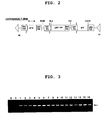
- pAMT gene amplified by RT-PCR with cDNA extracted from CH-19 Sweet was inserted into a GUS region of Ti-plasmid vector pIG121-Hm in the antisense direction ( Fig. 2 ).
- the plasmid was introduced into Agrobacterium tumefaciens EHA101 strain and used for transformation of chili pepper.
- the surface of a seed of Capsicum annuum variety 'Takanotsume' was sterilized with 70% ethanol for 1 min and 2% sodium hypochlorite for 15 min, rinsed 3 times with sterile water, and sown in MS medium. Cotyledon germinated 10 days later was cut and transplanted to MS medium containing 10 mg/l benzyladenine (BA).
- 16 hr day-length culture was performed at 25°C for 24 hr, and the cotyledon was immersed for 10 min in Agrobacterium suspension cultured in YEP medium containing 50 mg/l kanamycin and 50 mg/l hygromycin for 24 hr.
- Agrobacterium suspension cultured in YEP medium containing 50 mg/l kanamycin and 50 mg/l hygromycin for 24 hr.
- the leaf was placed on sterilized filter paper, and then transplanted again to MS medium containing 10 mg/l benzyladenine (BA). After co-cultivation in a dark place for 3 days, the leaf was transplanted to MS medium (selection medium) containing 10 mg/l BA, 50 mg/l kanamycin and 300 mg/l carbenicillin, and 16 hr day-length culture was performed at 25°C.
- MS medium selection medium
- the selection medium was exchanged with a new medium every 10 days - 2 weeks.
- a shoot redifferentiated 1 - 2 months from the start of the selection was transplanted to MS medium (rooting medium) containing 50 mg/l kanamycin and 300 mg/l carbenicillin to induce rooting.
- the rooted plants of 16 strains were transplanted to soil, and grown in phytotron.
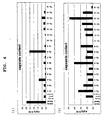
- DNA was extracted from leaf/leaves of the selected individual, and genomic PCR analysis was performed using a primer that amplifies NPTII gene in the vector.
- the PCR product was applied to 1.5% agarose gel electrophoresis, and stained with ethidium bromide. As a result, the selected individual was found to have NPTII gene introduced thereinto ( Fig. 3 ).
- Example 3 Transcription and expression analysis of pAMT gene in transformed chili pepper fruit
- Example 4 Analysis of pAMT protein amount in transformed chili pepper fruit
- the full-length pAMT gene isolated from CH-19 Hot was inserted into a multicloning site of Escherichia coli expression vector (pColdI vector, Takara Bio Inc.).
- the obtained vector was transformed with Chaperon Competent Cell BL21 (Takara Bio Inc.) and cultured with shaking in LB medium (500 ml) containing 20 mg/l chloramphenicol, 50 mg/l ampicillin, 10 ⁇ l/l tetracycline and 1 g/l L-arabinose for 10 hr at 37°C.
- LB medium 500 ml
- the culture medium showed OD600 of 0.6
- 1 mM IPTG was added and the mixture was cultured with shaking at 15°C for 24 hr.
- the grown E The grown E.
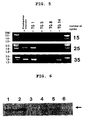
- coli was recovered by centrifugation, and subjected to protein extraction and Histag purification using QIAexpress Ni-NTA Fast Start Kit (QIAGEN). The purified protein was confirmed by SDS-PAGE. The protein was injected to a rabbit to produce a polyclonal antibody. Using the produced polyclonal antibody, the protein extracted from the fruit was electrophoresed by 1 mg SDS-PAGE and analyzed by Western blot. As a result, TG-3 and TG-8 that showed accumulation of capsiate showed a remarkably decreased pAMT protein amount. Also in TG-14, the pAMT protein amount was lower than CH-19 HOT ( Fig. 6 ).
- capsinoids can be highly produced from a plant conventionally incapable of producing capsinoids or capable of producing capsinoids in a low amount.
- the present invention is useful since it can provide capsinoids, which are expected to be applicable to various fields such as medicines, health foods and the like, in large amounts at a low cost.
Landscapes
- Health & Medical Sciences (AREA)
- Life Sciences & Earth Sciences (AREA)
- Genetics & Genomics (AREA)
- Engineering & Computer Science (AREA)
- Chemical & Material Sciences (AREA)
- Organic Chemistry (AREA)
- Zoology (AREA)
- Wood Science & Technology (AREA)
- Biotechnology (AREA)
- General Engineering & Computer Science (AREA)
- Bioinformatics & Cheminformatics (AREA)
- Molecular Biology (AREA)
- Biomedical Technology (AREA)
- Microbiology (AREA)
- General Health & Medical Sciences (AREA)
- Biochemistry (AREA)
- Plant Pathology (AREA)
- Biophysics (AREA)
- Cell Biology (AREA)
- Physics & Mathematics (AREA)
- Chemical Kinetics & Catalysis (AREA)
- General Chemical & Material Sciences (AREA)
- Nutrition Science (AREA)
- Virology (AREA)
- Breeding Of Plants And Reproduction By Means Of Culturing (AREA)
- Micro-Organisms Or Cultivation Processes Thereof (AREA)
- Preparation Of Compounds By Using Micro-Organisms (AREA)
Abstract
Description
- The present invention relates to a genetically modified plant that biosynthesizes an increased amount of capsinoids, a method of producing the genetically modified plant, a production method of capsinoids from the genetically modified plant and the like.
- Capsaicinoid (capsaicin, dihydrocapsaicin etc.), which is a pungent component of chili pepper, is effective for preventing obesity, since it promotes energy metabolism, stimulates central nerves to promote hormone secretion and activates lipolytic enzyme. In addition, it sterilizes gastrointestinal tract and improves immunity, and also effective for activating immunity and relieving fatigue. However, since capsaicinoid irritates mucosa, ingestion in large amounts may upset the gastrointestinal condition. Moreover, many Japanese people do not like pungent tastes.
- As less pungent chili pepper, "CH-19 Sweet" (Variety Registration No. 10375), which is a nonpungent fixed variety of chili pepper selected and fixed by Yazawa et al. has been reported to contain a large amount of novel capsinoids (e.g., non-patent document 1). Such compounds belonging to capsinoids (fatty acid ester of vanillyl alcohol, capsiate, dihydrocapsiate etc., hereinafter sometimes to be simply referred to as "capsinoid" or "capsinoids") are different from capsaicinoid and do not have a pungent taste. However, they have been reported to show an immunity enhancing action, an energy metabolism activation action, oxygen consumption promoting action and the like (e.g.,
patent documents - In most chili peppers, vanillylamine is formed from phenylalanine via ferulic acid, vanillin and the like, and capsaicinoid is produced from vanillyamine and branched chain fatty acid by capsaicinoid synthase (
Fig. 1(a) ). In contrast, capsaicinoid is scarcely produced in CH-19 Sweet and capsinoid is produced instead. However, the reason therefor has been unknown for years. - As mentioned above, capsinoids have a little pungent taste, but shows superior physiological activities similar to those of capsaicinoid. Therefore, future application as a starting material of supplements and the like is expected. Therefore, it is desired to clarify the biosynthesis pathway of capsinoids with the aim of breeding and development of new plant varieties capable of producing capsinoids.
-
- patent document 1:
JP-A-11-246478 - patent document 2:
JP-A-2001-026538 -
- non-patent document 1: Yazawa et al., Journal of the Japanese Society for Horticultural Science, vol. 58, pages 601-607, 1989
- non-patent document 2: Biosci. Biotech. Biochem., 65 (12), 2735-2740 (2001)
- Therefore, an object of the present invention is to clarify the biosynthesis pathway of capsinoids and, based on the finding, provide a plant capable of producing capsinoids by genetic modification from a plant other than CH-19 Sweet currently known to produce capsinoids.
- Present inventors have conducted intensive studies to achieve the above-mentioned object and found that, in CH-19 Sweet, pAMT gene encoding aminotransferase that catalyzes an amino group conversion reaction from vanillin to vanillylamine contains an insertional mutation. That is, it has been clarified as regards CH-19 Sweet that a stop codon is produced due to an insertional mutation of one base in the coding region of pAMT gene of pungent variety "CH-19 Hot", which is a parental variety thereof, and functional aminotransferase is not produced. The present inventors made a hypothesis that, as a result of the mutation of the pAMT gene, a reduction reaction from vanillin to vanillyl alcohol becomes dominant in CH-19 Sweet instead of the amino group conversion from vanillin to vanillylamine, and a further esterification reaction with branched chain fatty acid results in capsinoids production (
Fig. 1(b) ).
To verify the hypothesis, present inventors have prepared transgenic plants having a pAMT antisense nucleic acid introduced into a pungent variety, Capsicum annuum variety 'Takanotsume'. It has been found that production of capsaicinoid decreases but production of capsinoid markedly increases in a lineage showing remarkably decreased expression of pAMT gene from among the obtained transgenic plants.
Present inventors have conducted further studies based on these findings and completed the present invention. - Accordingly, the present invention provides the following:
- [1] a genetically modified plant capable of producing capsinoids, which shows a decreased expression or activity of an enzyme that catalyzes an amino group conversion reaction from vanillin to vanillylamine as compared to wild strains;
- [2] the plant described in the above-mentioned [1], wherein the aforementioned enzyme is a pAMT gene product;
- [3] the plant described in the above-mentioned [1] or [2], wherein the aforementioned decreased expression or activity of the enzyme is caused by a destruction or mutation of the enzyme gene, a decomposition or suppressed translation of a transcription product of the gene, or inhibition of action of the enzyme on vanillin;
- [4] the plant described in any of the above-mentioned [1] to [3], wherein the wild strain has a capsaicinoid biosynthesis system;
- [5] the plant described in the above-mentioned [4], wherein the wild strain is a plant belonging to the genus Capsicum;
- [6] a method of producing a genetically modified plant capable of producing capsinoids, comprising performing a genetic modification to decrease expression or activity of an enzyme that catalyzes an amino group conversion reaction from vanillin to vanillylamine in a plant having a capsaicinoid biosynthesis system;
- [7] the method described in the above-mentioned [6], wherein the genetic modification is selected from the group consisting of an introduction of DNA encoding an antisense RNA, iRNA, ribozyme or dominant-negative mutant for the aforementioned enzyme gene, a destruction of the gene by a knockout method or mutagen treatment, and an introduction of a gene encoding an antibody against the enzyme;
- [8] the method described in the above-mentioned [6] or [7], wherein the aforementioned enzyme is a pAMT gene product;
- [9] the method described in any of the above-mentioned [6] to [8], wherein the plant having a capsaicinoid biosynthesis system belongs to the genus Capsicum; and
- [10] a method of producing capsinoid, comprising recovering the capsinoid from a fruit of the plant described in any of the above-mentioned [1] to [5].
- The present invention enables to increase production of capsinoids also in a plant variety that substantially does not produce capsinoids or produces only a small amount thereof.
-
-
Fig. 1 shows expected synthesis pathways of capsaicin (a) and capsiate (b). -
Fig. 2 is a schematic diagram of Ti-plasmid vector, pIG121-Hm, having pAMT gene inserted in the antisense direction. -
Fig. 3 shows the results of genomic PCR using DNA extracted from leaf piece(s) of transformed chili pepper as a template, wherein M is a marker, C is a control (Capsicum annuum variety 'Takanotsume' without genetic modification), and each number shows selected transformed chili pepper individuals. -
Fig. 4 shows the analytical results of capsiate content (a) and capsaicin content (b) of fruits of transformed chili pepper and CH-19 Sweet, and Capsicum annuum variety 'Takanotsume'. -
Fig. 5 shows the analytical results of transcription expression of pAMT gene in fruits of transformed chili pepper and Capsicum annuum variety 'Takanotsume'. -
Fig. 6 shows the analysis results of proteins extracted from fruits of transformed chili pepper, by Western blot analysis, wherein each lane is 1: CH-19 Hot, 2: TG-1, 3: TG-3, 4: TG-8, 5: TG-14, 6:CH-19 Sweet. - The present invention provides a genetically modified plant capable of producing capsinoids as compared to wild strains, which shows a decreased expression or activity of an enzyme that catalyzes an amino group conversion reaction from vanillin to vanillylamine.
- In the present invention, the "wild strain" means a plant to be the target of genetic modification in the present invention. The wild strain to be used in the present invention may be any as long as it functionally expresses enzyme group (e.g., phenylalanineammonialyase (PAL), cinnamic acid 4-hydrolase (Ca4H), coumaric acid 3-hydrolase (Ca3H), caffeic acid O-methyltransferase (COMT), capsaicinoid synthase (CS)) necessary for biosynthesis of capsaicinoid. The plant may have such enzyme group by nature, or one or more enzymes may be provided by the expression of a foreign gene. Preferably, the wild strain that can be used for the present invention is a plant having capsaicinoid production ablity by nature, more preferably, plants belonging to Capsicum. Examples of thereof include, but are not limited to, C. annuum (variety 'Takanotsume', CH-19 Hot, Yatsufusa', 'Toranoo', 'Fushimiama', and the like), C. baccatum (aji amarillo and the like), C. chinense (habanero pepper, Bhut Jolokia and the like), C. frutescens (Capsicum frutescens L. and the like), and C. pubescens (rocoto and the like).
- An enzyme that catalyzes an amino group conversion reaction from vanillin to vanillylamine is not particularly limited as long as it is a protein having an aminotransferase activity and produced by the above-mentioned wild strain, which can use vanillin as a substrate. Preferred are aminotransferase pAMT (Putative Aminotransferase) gene having high homology with GABA aminotransferase from rice or tomato, which was found in habanero pepper, and aminotransferase encoded by its ortholog in other plant variety.
- More specifically, pAMT protein (also referred to as pAMT gene product) of the present invention is a protein containing the same or substantially the same amino acid sequence as the amino acid sequence shown by SEQ ID NO: 2, and having an aminotransferase activity at least equivalent (e.g., 0.5-fold or more, preferably 0.7-fold or more) to the protein consisting of the amino acid sequence shown by SEQ ID NO: 2. Here, the "substantially the same amino acid sequence" means an amino acid sequence of natural allele variant or gene polymorphism of pAMT protein derived from CH-19 Hot consisting of the amino acid sequence shown by SEQ ID NO: 2, and an amino acid sequence of its ortholog in other plant variety and the like. Examples of the ortholog of pAMT in other plant variety include pAMT derived from habanero pepper (Refseq No. AAC78480), GABA aminotransferase from rice (Refseq No. AAQ14479) and GABA aminotransferase from tomato (Refseq No. AA092257) and the like can be mentioned.
- The above-mentioned "substantially the same amino acid sequence" desirably has not less than 80%, preferably not less than 90%, more preferably not less than 95%, most preferably not less than 97%, of similarity (preferably, identity) to the amino acid sequence shown by SEQ ID NO: 2. The "similarity" here means, when two amino acid sequences were aligned using mathematical algorithm known in the art, a proportion (%) of the same and similar amino acid residues to the total overlapping amino acid residues in an optimal alignment (preferably, the algorithm can consider introduction of gap(s) into one or both of the sequences for an optimal alignment). The similarity of amino acid sequences in the present specification can be calculated using homology calculation algorithm NCBI BLAST (National Center for Biotechnology Information Basic Local Alignment Search Tool) under the following conditions (expectancy =10; allow gap; matrix =BLOSUM62; filtering=OFF).
- In the present invention, an enzyme group of capsinoid biosynthesis system is at least partly common with an enzyme group constituting a capsaicinoid biosynthesis system, except those that catalyze the reduction reaction from vanillin to vanillyl alcohol, and the present invention is based on the finding that the quantitative ratio of the produced capsinoid and capsaicinoid depends on which of the above-mentioned reduction reaction and an amino group conversion reaction from vanillin to vanillylamine proceeds more dominantly. Therefore, by lowering the expression or activity of an enzyme that catalyzes an amino group conversion reaction from vanillin to vanillylamine than that of wild strains, the reduction reaction from vanillin to vanillyl alcohol becomes more dominant and, as a result, the capsinoid production capability can be improved.
- The "expression" of an enzyme that catalyzes an amino group conversion reaction from vanillin to vanillylamine means that a translation product (i.e., protein) is produced by a gene encoding the enzyme (e.g., pAMT gene etc.), and is localized at the action site thereof in a functional state. The "lower expression" of an enzyme means a result of a significantly decreased protein amount of the enzyme present in a genetically modified plant, as compared to that of wild strain. Therefore, a genetic modification to lower enzyme expression can be performed in any stage, for example, at a gene level, transcription level, post-transcription regulation level, translation level, post-translational modification level and the like.
- For example, as a genetic modification that suppresses enzyme expression at a gene level, destruction of the enzyme gene and introduction of functionally defective mutation can be mentioned. Here, the "functionally defective mutation" may be a mutation that decreases the enzyme activity such that the capsinoid production increases significantly as compared to wild strains, and a mutation that completely eliminates the enzyme activity is not necessarily intended. Such genetic modification can be achieved by a knockout (or knockin) technique of an enzyme gene utilizing a homologous recombination. As a specific means to knockout an enzyme gene, a method including isolating an enzyme gene (genome DNA) derived from a plant to be a target of genetic modification (i.e., wild strain) by a conventional method (e.g., in the case of a pAMT gene, pAMT genome DNA can be cloned by a colony or plaque hybridization method from genome DNA library prepared from genomic DNA isolated from a wild strain, using a nucleic acid containing whole or part of the base sequence of CH-19 Hot-derived pAMT cDNA shown by SEQ ID NO: 1 as a probe) and inserting a DNA chain (targeting vector) having a DNA sequence constructed to inactivate the gene into the enzyme gene locus of a wild strain by homologous recombination and the like can be preferably used. A DNA chain (targeting vector) having a DNA sequence constructed to inactivate the gene is prepared by, for example,
- (1) inserting other DNA fragment (e.g., selection marker gene of drug resistance gene, reporter gene and the like) into the exon region or promoter region thereof to destroy the exon or promoter function,
- (2) cleaving out whole or part of the enzyme gene by using the Cre-loxP system or Flp-frt system to delete the gene,
- (3) inserting a stop codon into a protein coding region to prevent complete translation of protein, or
- (4) inserting a DNA sequence (e.g., polyadenylated signal and the like) that terminates gene transcription into a transcription region to prevent synthesis of complete mRNA.
- Generally, gene recombination in plant is mostly nonhomologous, and introduced DNA is randomly inserted into any position of chromosome. Therefore, efficient selection of only a clone targeted to an enzyme gene by homologous recombination, cannot be achieved on the basis of selection of detection of drug resistance, expression of reporter gene and the like. Thus, confirmation of recombination site of any selected clone by Southern hybridization method or PCR method becomes necessary. Thus, when, for example, the Herpes simplex virus-derived thymidine kinase (HSV-tk) gene that imparts gancyclovir sensitivity is ligated outside the region homologous to the target sequence in a targeting vector, a cell having the vector randomly inserted therein has an HSV-tk gene, and therefore, the cell cannot grow in a medium containing gancyclovir. However, a cell targeted to an enzyme gene locus by homologous recombination becomes gancyclovir resistant since it does not have an HSV-tk gene and can be selected. Alternatively, when, for example, a diphtheria toxin gene is ligated instead of the HSV-tk gene, since a cell having the vector randomly inserted therein is killed by the toxin it produces, a homologous recombinant can also be selected in the absence of a drug. The presence of introduced DNA can be confirmed by applying a part of the formed resistant colony to PCR or Southern hybridization.
- As another genetic modification to suppress enzyme expression at a gene level, introduction of a functionally defective mutation into an enzyme gene by a mutagen treatment can be mentioned. As the mutagen treatment, any can be used as long as it induces point mutation, deletion or frame shift mutation in the DNA of a wild strain. Specifically, treatments with ethylnitrosourea, nitrosoguanidine, benzopyrene, acridine dye, radiation and the like can be mentioned. In addition, various alkylating agents and carcinogens can also be used as mutagens. As a method of reacting a mutagen with a cell, the method described in Technique of Tissue Culture, 3rd edition (Asakura Publishing Co., Ltd.), The Japan Tissue Culture Association ed. (1996), Nature Genet., 314 (2000) and the like can be used. A functionally defective variant of an enzyme gene can be selected using the amount of target protein as an index. In the case of pAMT, for example, Western blot analysis can be performed using a polyclonal antibody to pAMT protein, and the amount of the pAMT protein can be determined. As for a plant showing a significantly decreased pAMT protein level, introduction of a mutation into the gene can be confirmed by determining the nucleotide sequence of the enzyme gene isolated from a part of the plant.
- As a genetic modification to suppress enzyme expression at a translation level, introduction of a nucleic acid having an activity to degrade a transcription product of an enzyme gene, or a nucleic acid that suppresses translation of a transcription product into an enzyme protein can be mentioned. As such nucleic acid, a nucleic acid containing a nucleotide sequence complementary or substantially complementary to the nucleotide sequence of mRNA of the enzyme, or a part of the sequence, can be mentioned.
The nucleotide sequence substantially complementary to the nucleotide sequence of mRNA of a target enzyme means a nucleotide sequence having complementation of the level capable of binding to the target sequence of the mRNA and inhibiting the translation thereof under physiological conditions in the subject plant. Specifically, for example, a nucleotide sequence having a similarity of not less than about 80%, preferably not less than about 90%, more preferably not less than about 95%, most preferably not less than about 97%, to the region overlapping with a nucleotide sequence completely complementary to the nucleotide sequence of the mRNA (i.e., nucleotide sequence of mRNA complementary chain). The "similarity of nucleotide sequence" in the present invention can be calculated using homology calculation algorithm NCBI BLAST (National Center for Biotechnology Information Basic Local Alignment Search Tool) and under the following conditions (expectancy =10; allow gap; filtering=ON; match score=1; mismatch score=-3). - More specifically, for example, when the enzyme is pAMT, examples of a nucleotide sequence complementary or substantially complementary to the nucleotide sequence of pAMT mRNA include
- (a) the nucleotide sequence shown by SEQ ID NO: 1 or
- (b) a nucleotide sequence that hybridizes to the nucleotide sequence under stringent conditions, which is a nucleotide sequence complementary or substantially complementary to a sequence encoding a protein having an activity equivalent to that of a protein consisting of the amino acid sequence shown by SEQ ID NO: 2. Under stringent conditions means, for example, the conditions described in Current Protocols in Molecular Biology, John Wiley & Sons, 6.3.1-6.3.6, 1999, for example, hybridization with 6×SSC (sodium chloride/sodium citrate)/45°C, then washing one or more times with 0.2×SSC/0.1% SDS/50 - 65°C and the like, and those of ordinary skill in the art can appropriately select hybridization conditions affording stringency equivalent thereto.
- pAMT mRNA is preferably pAMT mRNA of CH-19 Hot containing the nucleotide sequence shown by SEQ ID NO: 1, or ortholog thereof in other plant variety (e.g., habanero pepper-derived pAMT (Refseq No. AF085149), GABA aminotransferase of rice (Refseq No. AF297651) and GABA aminotransferase of tomato (Refseq No. AY240231) etc.), or further, natural allele variant, or gene polymorphism thereof.
- The "part of a nucleotide sequence complementary or substantially complementary to nucleotide sequence of mRNA of a target enzyme" is not particularly limited in terms of length and position, as long as it can specifically bind to target enzyme mRNA and inhibit translation of protein from the mRNA. From the aspect of sequence specificity, however, it contains at least 10 bases, preferably not less than about 15 bases, more preferably not less than about 20 bases, of a part complementary or substantially complementary to the target sequence.
- Specifically, preferable examples of the nucleic acid containing a nucleotide sequence complementary or substantially complementary to a nucleotide sequence of mRNA of a target enzyme, or a part of such sequence, include the following (a) to (c).
- (a) antisense RNA to target enzyme mRNA
- (b) iRNA (interfering RNA) to target enzyme mRNA
- (c) ribozyme to target enzyme mRNA
- The "antisense RNA" in the present invention is a nucleic acid containing a nucleotide sequence complementary or substantially complementary to the nucleotide sequence of target mRNA, or a part thereof, and has a function to suppress protein synthesis by forming a specific and stable double strand with target mRNA. The target region of antisense RNA is not particularly limited in terms of length, as long as hybridization of the antisense RNA results in the inhibition of translation of target mRNA into an enzyme protein, and it may be the total mRNA sequence encoding the enzyme or a partial sequence thereof, wherein a shorter one is about 10 bases long and a longer one is the total mRNA sequence.
Moreover, the antisense RNA of the present invention may not only hybridize to target enzyme mRNA to inhibit translation into a protein, but also be bound to a gene of the enzyme, which is a double stranded DNA, to form a triplex and inhibit transcription to RNA (anti-gene). - In the present specification, a double stranded RNA consisting of oligoRNA complementary to target enzyme mRNA and a complementary chain thereof, i.e., iRNA, is also defined to be encompassed in the nucleic acid containing a nucleotide sequence complementary or substantially complementary to a nucleotide sequence of mRNA of a target enzyme, or a part thereof. A phenomenon of intracellular introduction of a double stranded RNA resulting in degradation of mRNA complementary to RNA thereof, so-called RNA interference (RNAi), has long been known in nematode, insect, plant and the like. Ever since this phenomenon was confirmed to widely occur in animal cells [Nature, 411(6836): 494-498 (2001)], it has been widely used as an alternative technique of ribozyme. iRNA can be appropriately designed based on the information of nucleotide sequence of mRNA to be the target and using commercially available software (e.g., RNAi Designer; Invitrogen).
- As ribozyme with broadest utility, self-splicing RNA seen in infectious RNA such as viroid, virusoid and the like can be mentioned, and hammerhead type, hairpin type and the like are known. The hammerhead type shows enzyme activity with only about 40 bases, and it is possible to specifically cleave target mRNA alone by rendering several bases on both ends (about 10 bases in total) adjacent to the part with a hammerhead structure form a sequence complementary to a desired cleavage site of mRNA. Since this type of ribozyme contains RNA alone as a substrate, it is further advantageous since it does not attack genomic DNA. When target enzyme mRNA itself has a double stranded structure, the target sequence can be converted to a single strand by using a hybrid ribozyme wherein virus nucleic acid-derived RNA motif capable of specifically binding to RNA helicase is ligated [Proc. Natl. Acad. Sci. USA, 98(10): 5572-5577 (2001)]. Moreover, to promote transfer to the cytoplasm, a hybrid ribozyme wherein a sequence obtained by modifying tRNA is further ligated may be used [Nucleic Acids Res., 29(13): 2780-2788 (2001)].
- A DNA encoding an antisense RNA to mRNA of target enzyme, when the antisense RNA is comparatively long and is, for example, not less than 100 bp, can be produced by cloning cDNA of the target enzyme according to a conventional method, and directly ligating same, or ligating after fragmentation into a desired length containing a desired region by digestion with a suitable restriction enzyme, to the downstream of a promoter capable of functioning in the cell of the target plant, in an antisense direction. When the antisense RNA is comparatively short and is, for example, 100 bp or below, it can also be chemically synthesized by a commercially available DNA/RNA automatic synthesizer.
DNA encoding iRNA to target enzyme mRNA can be constructed as a DNA encoding hairpin type dsRNA by amplifying the target sequence (for example, about 200 - 500 bases) on mRNA by RT-PCR to give double stranded DNA, and ligating two double stranded DNAs in the sense direction and antisense direction via suitable linker sequences by using restriction enzyme and ligase. The linker sequence is not particularly limited in terms of its sequence and length as long as it can form a loop capable of forming a hairpin type dsRNA on transcription of the constructed DNA. For example, when a reporter gene such as β-glucuronidase gene is used as a linker sequence, cutting out iRNA from the hairpin type dsRNA can be monitored by detection of the expression of the reporter gene.
The DNA encoding ribozyme to target enzyme mRNA can be prepared by synthesizing a DNA having a nucleotide sequence of designed ribozyme by a DNA/RNA automatic synthesizer. - A nucleic acid containing a nucleotide sequence complementary or substantially complementary to a nucleotide sequence of mRNA of a target enzyme, or a part thereof, may be introduced into a target plant by any genetic engineering method. For example, infection with a plant virus containing a virus genome genetically engineered to contain the nucleic acid, and transformation of a target plant cell with an expression vector containing the nucleic acid can be mentioned.
Preferably, the genetically modified plant of the present invention is a transgenic plant obtained by transforming the cell of the wild strain with an expression vector containing the above-mentioned nucleic acid under control of a promoter capable of functioning in a target plant (wild strain) cell. - The promoter capable of functioning in a wild strain cell can be appropriately selected according to the plant variety used as the wild strain. Generally, a gene promoter constitutionally expressed in a plant cell, preferably constitutional promoter derived from a plant or plant virus (e.g., Cauliflower mosaic virus (CaMV) 35S promoter, CaMV 19S promoter, NOS promoter etc.), or cis promoter in a wild strain target enzyme gene and the like can be mentioned.
- In the expression vector of the present invention, a nucleic acid containing a nucleotide sequence complementary or substantially complementary to a nucleotide sequence of mRNA of a target enzyme, or a part thereof is located at the downstream of a promoter capable of functioning in a wild strain cell, so that transcription thereof can be regulated by the promoter. It is preferable that a transcription termination signal (terminator region) capable of functioning in a wild strain be further added at the downstream of the nucleic acid sequence. Examples of the terminator include NOS (nopalinesynthase) gene terminator and the like.
- The expression vector of the present invention may further contain a cis-regulatory element such as an enhancer sequence and the like. Moreover, the expression vector desirably further contains a marker gene for selection of a transformant such as a drug resistance gene marker and the like [e.g., neomycin phosphotransferase II (NPTII) gene, hygromycin phosphotransferase (HPT) phosphinothricinacetyltransferase (PAT) gene, glyphosate resistance gene and the like.
To facilitate large-scale preparation and purification, moreover, the expression vector desirably contains a replication origin that enables autonomous replication in Escherichia coli and a selection marker gene in Escherichia coli (for example, ampicillin resistance gene, tetracycline resistance gene etc.). The expression vector of the present invention can be conveniently constructed by inserting an expression cassette of the above-mentioned nucleic acid and, where necessary, a selection marker gene into a cloning site of a pUC or pBR Escherichia coli vector. - When the above-mentioned nucleic acid is introduced by utilizing infection with Agrobacterium tumefaciens or Agrobacterium rhizogenes, an expression cassette of the nucleic acid can be inserted into the T-DNA region (region to be transferred to plant chromosome) on Ti or Ri plasmid retained by the bacterium, and put to use. For a standard method of transformation by Agrobacterium method, a binary vector system is used. The function necessary for T-DNA transfer is independently supplied by both T-DNA itself and Ti (or Ri) plasmid, and each constituent factor can be divided on different vectors. A binary plasmid has a 25 bp border sequence on both ends necessary for cutting out and insertion of T-DNA, and is free of a plant hormone gene causing crown gall (or hairy root), thus simultaneously affording a room for insertion of a foreign gene. As such binary vector, for example, pBI101, pBI121 (both CLONTECH) and the like are commercially available. The vir region that acts on insertion of T-DNA is located on a different Ti (or Ri) plasmid called a helper plasmid.
- Conventionally known various methods can be used for transformation of plants. Examples thereof include a method including isolating protoplast from a cell of a target plant by a treatment with a cell wall degrading enzyme such as cellulose, hemicellulose and the like, and adding polyethylene glycol to a suspension of the protoplast and an expression vector containing the above-mentioned pAMT gene expression cassette to insert the expression vector into the protoplast by an endocytosis-like process (PEG method), a method including inserting an expression vector into a lipid membrane vesicle such as phosphatidylcholine and the like by sonication and the like, and fusing the vesicle and protoplast in the presence of PEG (liposome method), a method including fusion by a similar process using a mini-cell, and a method including applying an electric pulse to a suspension of protoplast and expression vector to insert the vector in the extracellular solution into the protoplast (electroporation method). However, these methods are complicated since a culture technique for redifferentiation from the protoplast to a plant is necessary. As methods of transgene into an intact cell having a cell wall, a microinjection method including pushing a micropipette into a cell, and intracellularly injecting a vector DNA in the pipette by hydraulic pressure or gas pressure, a direct introduction method including accelerating metal microparticles coated with DNA by powder explosion or gas pressure for intracellular introduction such as a particle gun method and the like, and a method utilizing infection with Agrobacterium can be mentioned. Microinjection has a defect in that the operation requires practice, and the number of handleable cells is small. Considering the convenience of operation, therefore, plant is preferably transformed by an Agrobacterium method or a particle gun method. The particle gun method is further useful since a gene can be directly introduced into the apical meristem of a plant before harvesting. Moreover, in the Agrobacterium method, by simultaneously inserting a plant virus, for example, genomic DNA of geminivirus such as tomato golden mosaic virus (TGMV) and the like between border sequences of a binary vector, virus infection spreads over the whole plant by merely inoculating a cell suspension with a syringe barrel and the like to a cell at any part of a plant before harvesting, and an object gene is simultaneously introduced into the whole plant.
- In the particle gun method and Agrobacterium method, however, since transgene is often chimeric, a sample cell that permits introduction of the above-mentioned nucleic acid into a germ line cell at high frequency needs to be used for transformation. For example, embryo, hypocotyl piece, embryogenic callus, isolated growing point and the like can be mentioned. On the other hand, since the above-mentioned transformation method using protoplast and microinjection method permit selection of a redifferentiation plant from a single cell, they are superior transformation means for obtaining a homogeneous transgenic plant having a pAMT gene introduced into the whole cell.
- As specific examples, introduction of an object nucleic acid by Agrobacterium and regeneration method of transformed cell into a plant in a Capsicum plant are shown in the following, which are mere examples and do not at all limit the production method of the genetically modified plant of the present invention.
A seed of a chili pepper plant is sterilized, sown on a suitable seed germination medium (e.g., MS medium, LS medium, B5 medium and the like), and aseptically grown. On the other hand, Agrobacterium having a promoter connected with an object nucleic acid, and transformed with a plasmid having a kanamycin resistance gene and a hygromycin resistance gene is cultured, and diluted with a suitable medium to give an Agrobacterium solution. Cotyledon after germination is immersed in the Agrobacterium solution for about 10 min, transplanted to a selection medium (e.g., MS medium, LS medium, B5 medium and the like) added with a desired plant hormone (e.g., auxins such as IAA, NAA and the like, cytokinins such as kinetin, benzyladenine and the like) and kanamycin and hygromycin antibiotics, and cultivated at 20 - 30°C. The obtained kanamycin and hygromycin resistant callus and seedling are transplanted to a redifferentiation (rooting) medium (e.g., MS medium, LS medium, B5 medium and the like) added with benzyladenine as necessary to induce redifferentiation (rooting), whereby a seedling plant is obtained. When several true leaves are observed, the seedling plant is transplanted to the soil for acclimation, and grown in a controlled greenhouse such as biotron and the like. Seed and fruit can be obtained from the thus-obtained transformant. - A genomic DNA is extracted from the above-mentioned transformant according to a conventional method, the DNA is cleaved with a suitable restriction enzyme, and Southern hybridization is performed using the introduced object nucleic acid as a probe, whereby the presence or absence of transformation can be confirmed. In addition, the presence or absence of transformation can also be confirmed by synthesizing a primer that specifically amplifies the object nucleic acid and performing a PCR method.
Moreover, RNA can be extracted from a transformant or untransformant by a conventional method, and changes in the expression level of target enzyme mRNA can be examined by quantitative RT-PCR, Northern hybridization and the like. Alternatively, a protein can be extracted from a transformant or untransformant by a conventional method, and changes in the expression level of target enzyme protein can be examined by immunoassay (RIA method, ELISA method, FIA method and the like) by using an antibody to the target enzyme. As mentioned above, since most of the gene recombination events in plants result from nonhomologous recombination, the expression of target enzyme does not always decrease in all transgenic plants as compared to wild strains, due to the position effect of chromosome region inserted with the introduced nucleic acid. Therefore, as mentioned above, by measuring and comparing the expression amounts of transformant and untransformant at RNA level or protein level of the target enzyme, lower expression of the target enzyme in a transgenic plant than in a wild strain can be confirmed, based on which the object genetically modified plant can be obtained. - Plants differentiated from a seed obtained by self-fertilization of the thus-obtained transgenic plants, which show lower expression of the target enzyme as compared to wild strains and, as a result, show higher capsinoid production capability as compared to wild strains are statistically contained at a certain ratio according to the insertion manner of the object nucleic acid. The appearance ratio of the improved capsinoid production capability in plants differentiated from the R1 seed obtained by self-fertilization of a redifferentiated generation (R0) plant generally follows the Mendel's Law. For example, when the object nucleic acid is heterozygously inserted into one gene locus, R1 seeds are divided into 3:1 based on the improved capsinoid production capability. Among the R1 plants differentiated from the R1 seed, those having improved capsinoid production capability are grown and self-fertilized to give R2 seeds. When the improved capsinoid production capability is maintained in all seeds, the R1 plant is determined a homozygote for the introduced nucleic acid, and when the improved capsinoid production capability is shown in 3:1, the R1 plant is determined to be a heterozygote for the introduced nucleic acid. The thus-selected, genetically modified plant which is a homozygote for the introduced nucleic acid is extremely useful as a strain fixedly having an improved capsinoid production capability. Since capsinoid is accumulated in a fruit (fruit skin, placenta and the like), the capsinoid production capability can be known at an earlier stage by desirably using, as an index, expression or activity of a target enzyme which is also expressed in a tissue such as leaf and the like.
- The genetic modification that inhibits activity of an enzyme that catalyzes an amino group conversion reaction from vanillin to vanillylamine is not particularly limited as long as it is known. For example, introduction of an antibody gene to the enzyme, introduction of a dominant-negative mutant gene, and the like can be mentioned.
- To avoid difficulties such as assembly efficiency of H chain and L chain within the plant and the like, the antibody gene desirably encodes a single chain antibody prepared by genetic engineering, such as scFv, scFv-Fc, minibody, diabody and the like. Such antibody can be prepared by producing an antibody producing hybridoma from a mouse immunized with a target enzyme protein or a fragment thereof by a conventional method, cloning the antibody gene from the cell by a conventional method, and ligating the fragment via a linker DNA as appropriate.
- A dominant-negative mutant refers to one with decreased activity due to the introduction of a mutation into a target enzyme. In the dominant-negative mutant, the function of the enzyme can be indirectly inhibited by competitively interacting a target endogeneous enzyme in a wild strain with the substrate vanillin. The dominant-negative mutant can be produced by introducing a mutation into the nucleic acid encoding the target gene. Examples of the mutation include amino acid mutation that causes a decrease in the function provided by a functional site (e.g., deletion, substitution or addition of one or more amino acids). A dominant-negative mutant can be produced by PCR or a method known per se using a known kit.
- As a method of introducing a DNA encoding an antibody gene and dominant-negative mutant into a target plant to give a transgenic plant, a method similar to the above-mentioned methods for introducing nucleic acid containing a nucleotide sequence complementary or substantially complementary to the nucleotide sequence of mRNA of a target enzyme, or a part thereof, is preferably used.
- Therefore, by measuring and comparing the activity of the target enzyme between transformant and untransformant, lower activity of the target enzyme in the obtained genetically modified plant than in a wild strain can be confirmed, based on which the object genetically modified plant can be obtained. For example, when the target enzyme is pAMT, a protein is extracted from placenta, flower and the like, vanillin is added to the extract and the mixture is incubated for a given time, and the resulting vanillylamine is quantified by HPLC and the like, whereby the enzyme activity can be examined.
- The genetically modified plant obtained as mentioned above, which shows a decreased expression or activity of an enzyme that catalyzes an amino group conversion reaction from vanillin to vanillylamine as compared to a wild strain, shows increased capsinoid production capability as compared to the wild strain. The "increased production capability" may be further increased capsinoid production capability as compared to a wild strain having an ability to produce capsinoids by nature, or production capability newly acquired by a plant incapable of producing capsinoid by nature.
- The present invention also provides a production method of capsinoids, including recovering capsinoids from the genetically modified plant of the present invention. As a method of recovering capsinoids, any known method may be used and, for example, the methods described in the above-mentioned patent document 1 (
JP-A-11-246478 JP-A-2002-226445 JP-A-2004-018428 W02005/122787 and/or2006/043601 can be used unlimitatively. Examples - pAMT gene amplified by RT-PCR with cDNA extracted from CH-19 Sweet was inserted into a GUS region of Ti-plasmid vector pIG121-Hm in the antisense direction (
Fig. 2 ). The plasmid was introduced into Agrobacterium tumefaciens EHA101 strain and used for transformation of chili pepper.
The surface of a seed of Capsicum annuum variety 'Takanotsume' was sterilized with 70% ethanol for 1 min and 2% sodium hypochlorite for 15 min, rinsed 3 times with sterile water, and sown in MS medium. Cotyledon germinated 10 days later was cut and transplanted to MS medium containing 10 mg/l benzyladenine (BA). 16 hr day-length culture was performed at 25°C for 24 hr, and the cotyledon was immersed for 10 min in Agrobacterium suspension cultured in YEP medium containing 50 mg/l kanamycin and 50 mg/l hygromycin for 24 hr. To remove redundant Agrobacterium suspension, the leaf was placed on sterilized filter paper, and then transplanted again to MS medium containing 10 mg/l benzyladenine (BA). After co-cultivation in a dark place for 3 days, the leaf was transplanted to MS medium (selection medium) containing 10 mg/l BA, 50 mg/l kanamycin and 300 mg/l carbenicillin, and 16 hr day-length culture was performed at 25°C. To suppress growth of Agrobacterium, the selection medium was exchanged with a new medium every 10 days - 2 weeks. A shoot redifferentiated 1 - 2 months from the start of the selection was transplanted to MS medium (rooting medium) containing 50 mg/l kanamycin and 300 mg/l carbenicillin to induce rooting. The rooted plants of 16 strains were transplanted to soil, and grown in phytotron. DNA was extracted from leaf/leaves of the selected individual, and genomic PCR analysis was performed using a primer that amplifies NPTII gene in the vector. The PCR product was applied to 1.5% agarose gel electrophoresis, and stained with ethidium bromide. As a result, the selected individual was found to have NPTII gene introduced thereinto (Fig. 3 ). - Fruits were taken from 16 strains of transformed chili pepper and Capsicum annuum variety 'Takanotsume' without introduction of a gene, and capsiate and capsaicin contents were measured by a conventional method. As a result, 3 transformed chili pepper fruits (TG-3, 8 and 14) were found to contain capsiate in larger amounts than in control Capsicum annuum variety 'Takanotsume'. TG-3 and TG-8 had lower capsaicin contents than other strains (
Fig. 4(a) and 4(b) ). - RNA was extracted from a fruit of a strain with higher capsiate content, and RT-PCR analysis of transcription amount of endogenous pAMT gene was performed. As a result, the strain with high capsiate content was found to show suppressed transcription and expression of pAMT gene. On the other hand, in a strain wherein the capsiate content was not high even though the gene had been introduced, the transcription and expression of endogenous pAMT gene was not suppressed (
Fig. 5 ). From the above results, it has been found that a plant can be modified to artificially synthesize capsiate, by suppression of expression of pAMT gene. - The full-length pAMT gene isolated from CH-19 Hot was inserted into a multicloning site of Escherichia coli expression vector (pColdI vector, Takara Bio Inc.). The obtained vector was transformed with Chaperon Competent Cell BL21 (Takara Bio Inc.) and cultured with shaking in LB medium (500 ml) containing 20 mg/l chloramphenicol, 50 mg/l ampicillin, 10 µl/l tetracycline and 1 g/l L-arabinose for 10 hr at 37°C. When the culture medium showed OD600 of 0.6, 1 mM IPTG was added and the mixture was cultured with shaking at 15°C for 24 hr.
The grown E. coli was recovered by centrifugation, and subjected to protein extraction and Histag purification using QIAexpress Ni-NTA Fast Start Kit (QIAGEN). The purified protein was confirmed by SDS-PAGE. The protein was injected to a rabbit to produce a polyclonal antibody.
Using the produced polyclonal antibody, the protein extracted from the fruit was electrophoresed by 1 mg SDS-PAGE and analyzed by Western blot. As a result, TG-3 and TG-8 that showed accumulation of capsiate showed a remarkably decreased pAMT protein amount. Also in TG-14, the pAMT protein amount was lower than CH-19 HOT (Fig. 6 ). - From the foregoing, it has been shown that suppression of expression of pAMT gene of chili pepper that biosynthesizes capsaicinoids enables production of a plant showing an increased amount of capsinoid biosynthesis.
- According to the present invention, capsinoids can be highly produced from a plant conventionally incapable of producing capsinoids or capable of producing capsinoids in a low amount. The present invention is useful since it can provide capsinoids, which are expected to be applicable to various fields such as medicines, health foods and the like, in large amounts at a low cost.
- This application is based on patent application No.
2008-163884 


Claims (10)
- A genetically modified plant capable of producing capsinoids, which shows a decreased expression or activity of an enzyme that catalyzes an amino group conversion reaction from vanillin to vanillylamine as compared to wild strains.
- The plant according to claim 1, wherein the aforementioned enzyme is a pAMT gene product.
- The plant according to claim 1 or 2, wherein the aforementioned decreased expression or activity of the enzyme is caused by a destruction or mutation of the enzyme gene, a decomposition or suppressed translation of a transcription product of the gene, or inhibition of action of the enzyme on vanillin.
- The plant according to any one of claims 1 to 3, wherein the wild strain has a capsaicinoid biosynthesis system.
- The plant according to claim 4, wherein the wild strain is a plant belonging to the genus Capsicum.
- A method of producing a genetically modified plant capable of producing capsinoids, comprising performing a genetic modification to decrease expression or activity of an enzyme that catalyzes an amino group conversion reaction from vanillin to vanillylamine in a plant having a capsaicinoid biosynthesis system.
- The method according to claim 6, wherein the genetic modification is selected from the group consisting of an introduction of DNA encoding an antisense RNA, iRNA, ribozyme or dominant-negative mutant for the aforementioned enzyme gene, a destruction of the gene by a knockout method or mutagen treatment, and an introduction of a gene encoding an antibody against the enzyme.
- The method according to claim 6 or 7, wherein the aforementioned enzyme is a pAMT gene product.
- The method according to any one of claims 6 to 8, wherein the plant having a capsaicinoid biosynthesis system belongs to the genus Capsicum.
- A method of producing capsinoid, comprising recovering the capsinoid from a fruit of the plant according to any one of claims 1 to 5.
Applications Claiming Priority (2)
| Application Number | Priority Date | Filing Date | Title |
|---|---|---|---|
| JP2008163884 | 2008-06-23 | ||
| PCT/JP2009/061169 WO2009157376A1 (en) | 2008-06-23 | 2009-06-19 | Genetically modified plant capable of biosynthesizing capsinoid |
Publications (3)
| Publication Number | Publication Date |
|---|---|
| EP2305025A1 true EP2305025A1 (en) | 2011-04-06 |
| EP2305025A4 EP2305025A4 (en) | 2011-12-28 |
| EP2305025B1 EP2305025B1 (en) | 2015-01-28 |
Family
ID=41444444
Family Applications (1)
| Application Number | Title | Priority Date | Filing Date |
|---|---|---|---|
| EP09770086.8A Not-in-force EP2305025B1 (en) | 2008-06-23 | 2009-06-19 | Genetically modified plant capable of biosynthesizing capsinoid |
Country Status (8)
| Country | Link |
|---|---|
| US (1) | US9340795B2 (en) |
| EP (1) | EP2305025B1 (en) |
| JP (1) | JP5594137B2 (en) |
| KR (1) | KR101389060B1 (en) |
| CN (1) | CN102065680B (en) |
| BR (1) | BRPI0914419A2 (en) |
| ES (1) | ES2529466T3 (en) |
| WO (1) | WO2009157376A1 (en) |
Families Citing this family (6)
| Publication number | Priority date | Publication date | Assignee | Title |
|---|---|---|---|---|
| JP6059446B2 (en) * | 2012-04-10 | 2017-01-11 | 住友電気工業株式会社 | Method for promoting rooting of shoots derived from cells of the genus Jatropha |
| CA2937124A1 (en) * | 2014-01-17 | 2015-07-23 | Conagen Inc. | Methods of using capsaicin synthase for the microbial production of capsaicinoids |
| EP3377057A4 (en) * | 2016-01-07 | 2018-12-05 | Conagen Inc. | Methods of making capsinoids by biosynthetic processes |
| HUE056799T2 (en) | 2016-07-19 | 2022-03-28 | Conagen Inc | Method for the microbial production of specific natural capsaicinoids |
| WO2020075884A1 (en) * | 2018-10-11 | 2020-04-16 | 서울대학교 산학협력단 | Marker for determining spiciness of pepper pericarp, and use thereof |
| CN115960736B (en) * | 2023-03-01 | 2024-05-28 | 石河子大学 | A kind of engineering yeast of saccharomyces cerevisiae producing vanillylamine and capsaicin and its construction method and application |
Family Cites Families (9)
| Publication number | Priority date | Publication date | Assignee | Title |
|---|---|---|---|---|
| JP3345744B2 (en) | 1998-03-04 | 2002-11-18 | 森永製菓株式会社 | A novel capsaicinoid-like substance having an ester bond |
| AR032578A1 (en) * | 1998-08-10 | 2003-11-19 | Monsanto Technology Llc | METHODS TO CONTROL GIBERELINE LEVELS |
| US6142349A (en) * | 1998-10-21 | 2000-11-07 | Roberson; Melanie | Weaponry holder for a vehicle |
| JP2001026538A (en) | 1999-07-13 | 2001-01-30 | Morinaga & Co Ltd | Food and pharmaceutical compositions containing novel capsaicinoid-like substances |
| JP4637377B2 (en) | 2001-02-01 | 2011-02-23 | 長谷川香料株式会社 | Extraction method of capsaicinoid-like substance from pepper |
| JP4089306B2 (en) | 2002-06-14 | 2008-05-28 | 味の素株式会社 | Capsinoid extract production method and capsinoid extract obtained by the method |
| MXPA06014592A (en) | 2004-06-15 | 2007-05-23 | Ajinomoto Kk | Dried capsicum containing capsinoid and method of drying therefor. |
| WO2006043601A1 (en) | 2004-10-19 | 2006-04-27 | Ajinomoto Co., Inc.. | Method of concentrating minor ingredient contained in oily matter obtained from plant tissue |
| JP2008163884A (en) | 2006-12-28 | 2008-07-17 | Toyota Motor Corp | Control device for internal combustion engine |
-
2009
- 2009-06-19 BR BRPI0914419-6A patent/BRPI0914419A2/en active Search and Examination
- 2009-06-19 EP EP09770086.8A patent/EP2305025B1/en not_active Not-in-force
- 2009-06-19 JP JP2010517969A patent/JP5594137B2/en active Active
- 2009-06-19 KR KR1020117001400A patent/KR101389060B1/en not_active Expired - Fee Related
- 2009-06-19 ES ES09770086.8T patent/ES2529466T3/en active Active
- 2009-06-19 CN CN200980123801.4A patent/CN102065680B/en not_active Expired - Fee Related
- 2009-06-19 WO PCT/JP2009/061169 patent/WO2009157376A1/en not_active Ceased
-
2010
- 2010-12-22 US US12/976,526 patent/US9340795B2/en not_active Expired - Fee Related
Non-Patent Citations (2)
| Title |
|---|
| No further relevant documents disclosed * |
| See also references of WO2009157376A1 * |
Also Published As
| Publication number | Publication date |
|---|---|
| WO2009157376A1 (en) | 2009-12-30 |
| US20110166371A1 (en) | 2011-07-07 |
| EP2305025B1 (en) | 2015-01-28 |
| KR101389060B1 (en) | 2014-05-27 |
| ES2529466T3 (en) | 2015-02-20 |
| BRPI0914419A2 (en) | 2015-08-11 |
| EP2305025A4 (en) | 2011-12-28 |
| KR20110020307A (en) | 2011-03-02 |
| CN102065680A (en) | 2011-05-18 |
| JPWO2009157376A1 (en) | 2011-12-15 |
| JP5594137B2 (en) | 2014-09-24 |
| CN102065680B (en) | 2014-12-24 |
| US9340795B2 (en) | 2016-05-17 |
Similar Documents
| Publication | Publication Date | Title |
|---|---|---|
| CA2941315C (en) | High thebaine poppy and methods of producing the same | |
| EP3456181A1 (en) | Method for creating transformed plant | |
| KR20200070357A (en) | Plant resistance | |
| EP2305025B1 (en) | Genetically modified plant capable of biosynthesizing capsinoid | |
| CN117106820A (en) | Method for creating few lateral branches of tomatoes through genome editing and application of method | |
| CN117604020B (en) | Application of OsTB1 gene and protein in regulating resistance to sheath blight and bacterial blight in rice | |
| CN103665127A (en) | Rice tillering relevant protein, encoding gene thereof and application of rice tillering relevant protein and encoding gene thereof | |
| EP2925869B1 (en) | Trichome specific promoters | |
| CN107868773B (en) | Protein SSIIIa related to rice resistant starch and its encoding gene and application | |
| US11319552B2 (en) | Methods for improving transformation frequency | |
| CN104487576A (en) | Poppy scarlet with modified alkaloid content | |
| KR102876689B1 (en) | Composition for improving pest resistance comprising SIWOX3B gene as an effective component for promoting trichome growth and enhancing function, and use thereof | |
| JP7372657B2 (en) | Plants with increased resistance to Colorado potato beetle, methods for producing the same, and methods for determining resistance to Colorado potato beetles in plants | |
| KR20230033830A (en) | UP gene from Arabidopsis thaliana regulating resistance to environment stress in plant and uses thereof | |
| JP7448255B2 (en) | Plants with increased resistance to Colorado potato beetle, methods for producing the same, and methods for determining resistance to Colorado potato beetles in plants | |
| WO2020055318A1 (en) | Rice plant material resistant against biotic stress | |
| US20150074853A1 (en) | Methods for increasing cotton fiber length | |
| CN103788187A (en) | Plant flowering related protein GmSOC1-like, coding gene and application thereof | |
| JP3747456B2 (en) | Production method of transgenic plants with improved amino acid composition | |
| WO2023008076A1 (en) | Genetically modified potato with reduced glycoalkaloid and method for producing same | |
| KR20250064109A (en) | Method for producing lettuce plant having late bolting trait using CRISPR/Cas9 system and lettuce plant having late bolting trait produced by the same method | |
| CN120965844A (en) | Rice effective spike number related protein SEP1 coding gene and related biological material and application thereof | |
| JP2007275055A (en) | Flower bud formation control gene |
Legal Events
| Date | Code | Title | Description |
|---|---|---|---|
| PUAI | Public reference made under article 153(3) epc to a published international application that has entered the european phase |
Free format text: ORIGINAL CODE: 0009012 |
|
| 17P | Request for examination filed |
Effective date: 20110119 |
|
| AK | Designated contracting states |
Kind code of ref document: A1 Designated state(s): AT BE BG CH CY CZ DE DK EE ES FI FR GB GR HR HU IE IS IT LI LT LU LV MC MK MT NL NO PL PT RO SE SI SK TR |
|
| AX | Request for extension of the european patent |
Extension state: AL BA RS |
|
| RIN1 | Information on inventor provided before grant (corrected) |
Inventor name: KISAKA, HIROAKI Inventor name: MIWA, TETSUYA Inventor name: LANG, YAQIN Inventor name: SUGIYAMA, RYUJI |
|
| DAX | Request for extension of the european patent (deleted) | ||
| A4 | Supplementary search report drawn up and despatched |
Effective date: 20111129 |
|
| RIC1 | Information provided on ipc code assigned before grant |
Ipc: A01H 5/00 20060101AFI20111123BHEP Ipc: C12P 7/62 20060101ALI20111123BHEP Ipc: C12N 15/09 20060101ALI20111123BHEP |
|
| 17Q | First examination report despatched |
Effective date: 20111223 |
|
| GRAP | Despatch of communication of intention to grant a patent |
Free format text: ORIGINAL CODE: EPIDOSNIGR1 |
|
| INTG | Intention to grant announced |
Effective date: 20140805 |
|
| GRAS | Grant fee paid |
Free format text: ORIGINAL CODE: EPIDOSNIGR3 |
|
| GRAA | (expected) grant |
Free format text: ORIGINAL CODE: 0009210 |
|
| RAP1 | Party data changed (applicant data changed or rights of an application transferred) |
Owner name: AJINOMOTO CO., INC. |
|
| AK | Designated contracting states |
Kind code of ref document: B1 Designated state(s): AT BE BG CH CY CZ DE DK EE ES FI FR GB GR HR HU IE IS IT LI LT LU LV MC MK MT NL NO PL PT RO SE SI SK TR |
|
| REG | Reference to a national code |
Ref country code: GB Ref legal event code: FG4D |
|
| REG | Reference to a national code |
Ref country code: CH Ref legal event code: EP Ref country code: CH Ref legal event code: NV Representative=s name: BOHEST AG, CH |
|
| REG | Reference to a national code |
Ref country code: ES Ref legal event code: FG2A Ref document number: 2529466 Country of ref document: ES Kind code of ref document: T3 Effective date: 20150220 |
|
| REG | Reference to a national code |
Ref country code: IE Ref legal event code: FG4D |
|
| REG | Reference to a national code |
Ref country code: DE Ref legal event code: R096 Ref document number: 602009029257 Country of ref document: DE Effective date: 20150312 |
|
| REG | Reference to a national code |
Ref country code: AT Ref legal event code: REF Ref document number: 707819 Country of ref document: AT Kind code of ref document: T Effective date: 20150315 |
|
| REG | Reference to a national code |
Ref country code: AT Ref legal event code: MK05 Ref document number: 707819 Country of ref document: AT Kind code of ref document: T Effective date: 20150128 |
|
| REG | Reference to a national code |
Ref country code: NL Ref legal event code: VDEP Effective date: 20150128 |
|
| REG | Reference to a national code |
Ref country code: LT Ref legal event code: MG4D |
|
| PG25 | Lapsed in a contracting state [announced via postgrant information from national office to epo] |
Ref country code: LT Free format text: LAPSE BECAUSE OF FAILURE TO SUBMIT A TRANSLATION OF THE DESCRIPTION OR TO PAY THE FEE WITHIN THE PRESCRIBED TIME-LIMIT Effective date: 20150128 Ref country code: FI Free format text: LAPSE BECAUSE OF FAILURE TO SUBMIT A TRANSLATION OF THE DESCRIPTION OR TO PAY THE FEE WITHIN THE PRESCRIBED TIME-LIMIT Effective date: 20150128 Ref country code: NO Free format text: LAPSE BECAUSE OF FAILURE TO SUBMIT A TRANSLATION OF THE DESCRIPTION OR TO PAY THE FEE WITHIN THE PRESCRIBED TIME-LIMIT Effective date: 20150428 Ref country code: BG Free format text: LAPSE BECAUSE OF FAILURE TO SUBMIT A TRANSLATION OF THE DESCRIPTION OR TO PAY THE FEE WITHIN THE PRESCRIBED TIME-LIMIT Effective date: 20150428 Ref country code: HR Free format text: LAPSE BECAUSE OF FAILURE TO SUBMIT A TRANSLATION OF THE DESCRIPTION OR TO PAY THE FEE WITHIN THE PRESCRIBED TIME-LIMIT Effective date: 20150128 Ref country code: SE Free format text: LAPSE BECAUSE OF FAILURE TO SUBMIT A TRANSLATION OF THE DESCRIPTION OR TO PAY THE FEE WITHIN THE PRESCRIBED TIME-LIMIT Effective date: 20150128 |
|
| PG25 | Lapsed in a contracting state [announced via postgrant information from national office to epo] |
Ref country code: NL Free format text: LAPSE BECAUSE OF FAILURE TO SUBMIT A TRANSLATION OF THE DESCRIPTION OR TO PAY THE FEE WITHIN THE PRESCRIBED TIME-LIMIT Effective date: 20150128 Ref country code: AT Free format text: LAPSE BECAUSE OF FAILURE TO SUBMIT A TRANSLATION OF THE DESCRIPTION OR TO PAY THE FEE WITHIN THE PRESCRIBED TIME-LIMIT Effective date: 20150128 Ref country code: PL Free format text: LAPSE BECAUSE OF FAILURE TO SUBMIT A TRANSLATION OF THE DESCRIPTION OR TO PAY THE FEE WITHIN THE PRESCRIBED TIME-LIMIT Effective date: 20150128 Ref country code: GR Free format text: LAPSE BECAUSE OF FAILURE TO SUBMIT A TRANSLATION OF THE DESCRIPTION OR TO PAY THE FEE WITHIN THE PRESCRIBED TIME-LIMIT Effective date: 20150429 Ref country code: LV Free format text: LAPSE BECAUSE OF FAILURE TO SUBMIT A TRANSLATION OF THE DESCRIPTION OR TO PAY THE FEE WITHIN THE PRESCRIBED TIME-LIMIT Effective date: 20150128 Ref country code: IS Free format text: LAPSE BECAUSE OF FAILURE TO SUBMIT A TRANSLATION OF THE DESCRIPTION OR TO PAY THE FEE WITHIN THE PRESCRIBED TIME-LIMIT Effective date: 20150528 |
|
| REG | Reference to a national code |
Ref country code: DE Ref legal event code: R097 Ref document number: 602009029257 Country of ref document: DE |
|
| PG25 | Lapsed in a contracting state [announced via postgrant information from national office to epo] |
Ref country code: DK Free format text: LAPSE BECAUSE OF FAILURE TO SUBMIT A TRANSLATION OF THE DESCRIPTION OR TO PAY THE FEE WITHIN THE PRESCRIBED TIME-LIMIT Effective date: 20150128 Ref country code: SK Free format text: LAPSE BECAUSE OF FAILURE TO SUBMIT A TRANSLATION OF THE DESCRIPTION OR TO PAY THE FEE WITHIN THE PRESCRIBED TIME-LIMIT Effective date: 20150128 Ref country code: CZ Free format text: LAPSE BECAUSE OF FAILURE TO SUBMIT A TRANSLATION OF THE DESCRIPTION OR TO PAY THE FEE WITHIN THE PRESCRIBED TIME-LIMIT Effective date: 20150128 Ref country code: RO Free format text: LAPSE BECAUSE OF FAILURE TO SUBMIT A TRANSLATION OF THE DESCRIPTION OR TO PAY THE FEE WITHIN THE PRESCRIBED TIME-LIMIT Effective date: 20150128 Ref country code: EE Free format text: LAPSE BECAUSE OF FAILURE TO SUBMIT A TRANSLATION OF THE DESCRIPTION OR TO PAY THE FEE WITHIN THE PRESCRIBED TIME-LIMIT Effective date: 20150128 |
|
| PLBE | No opposition filed within time limit |
Free format text: ORIGINAL CODE: 0009261 |
|
| STAA | Information on the status of an ep patent application or granted ep patent |
Free format text: STATUS: NO OPPOSITION FILED WITHIN TIME LIMIT |
|
| 26N | No opposition filed |
Effective date: 20151029 |
|
| PG25 | Lapsed in a contracting state [announced via postgrant information from national office to epo] |
Ref country code: MC Free format text: LAPSE BECAUSE OF FAILURE TO SUBMIT A TRANSLATION OF THE DESCRIPTION OR TO PAY THE FEE WITHIN THE PRESCRIBED TIME-LIMIT Effective date: 20150128 |
|
| PG25 | Lapsed in a contracting state [announced via postgrant information from national office to epo] |
Ref country code: SI Free format text: LAPSE BECAUSE OF FAILURE TO SUBMIT A TRANSLATION OF THE DESCRIPTION OR TO PAY THE FEE WITHIN THE PRESCRIBED TIME-LIMIT Effective date: 20150128 Ref country code: LU Free format text: LAPSE BECAUSE OF FAILURE TO SUBMIT A TRANSLATION OF THE DESCRIPTION OR TO PAY THE FEE WITHIN THE PRESCRIBED TIME-LIMIT Effective date: 20150619 |
|
| REG | Reference to a national code |
Ref country code: IE Ref legal event code: MM4A |
|
| PG25 | Lapsed in a contracting state [announced via postgrant information from national office to epo] |
Ref country code: IE Free format text: LAPSE BECAUSE OF NON-PAYMENT OF DUE FEES Effective date: 20150619 |
|
| REG | Reference to a national code |
Ref country code: FR Ref legal event code: PLFP Year of fee payment: 8 |
|
| PG25 | Lapsed in a contracting state [announced via postgrant information from national office to epo] |
Ref country code: MT Free format text: LAPSE BECAUSE OF FAILURE TO SUBMIT A TRANSLATION OF THE DESCRIPTION OR TO PAY THE FEE WITHIN THE PRESCRIBED TIME-LIMIT Effective date: 20150128 |
|
| REG | Reference to a national code |
Ref country code: FR Ref legal event code: PLFP Year of fee payment: 9 |
|
| PG25 | Lapsed in a contracting state [announced via postgrant information from national office to epo] |
Ref country code: HU Free format text: LAPSE BECAUSE OF FAILURE TO SUBMIT A TRANSLATION OF THE DESCRIPTION OR TO PAY THE FEE WITHIN THE PRESCRIBED TIME-LIMIT; INVALID AB INITIO Effective date: 20090619 |
|
| PG25 | Lapsed in a contracting state [announced via postgrant information from national office to epo] |
Ref country code: CY Free format text: LAPSE BECAUSE OF FAILURE TO SUBMIT A TRANSLATION OF THE DESCRIPTION OR TO PAY THE FEE WITHIN THE PRESCRIBED TIME-LIMIT Effective date: 20150128 |
|
| PG25 | Lapsed in a contracting state [announced via postgrant information from national office to epo] |
Ref country code: TR Free format text: LAPSE BECAUSE OF FAILURE TO SUBMIT A TRANSLATION OF THE DESCRIPTION OR TO PAY THE FEE WITHIN THE PRESCRIBED TIME-LIMIT Effective date: 20150128 |
|
| REG | Reference to a national code |
Ref country code: FR Ref legal event code: PLFP Year of fee payment: 10 |
|
| PG25 | Lapsed in a contracting state [announced via postgrant information from national office to epo] |
Ref country code: PT Free format text: LAPSE BECAUSE OF FAILURE TO SUBMIT A TRANSLATION OF THE DESCRIPTION OR TO PAY THE FEE WITHIN THE PRESCRIBED TIME-LIMIT Effective date: 20150128 Ref country code: MK Free format text: LAPSE BECAUSE OF FAILURE TO SUBMIT A TRANSLATION OF THE DESCRIPTION OR TO PAY THE FEE WITHIN THE PRESCRIBED TIME-LIMIT Effective date: 20150128 |
|
| PGFP | Annual fee paid to national office [announced via postgrant information from national office to epo] |
Ref country code: CH Payment date: 20180614 Year of fee payment: 10 Ref country code: DE Payment date: 20180605 Year of fee payment: 10 |
|
| PGFP | Annual fee paid to national office [announced via postgrant information from national office to epo] |
Ref country code: SK Payment date: 20180927 Year of fee payment: 7 |
|
| PGFP | Annual fee paid to national office [announced via postgrant information from national office to epo] |
Ref country code: IT Payment date: 20190620 Year of fee payment: 11 |
|
| PGFP | Annual fee paid to national office [announced via postgrant information from national office to epo] |
Ref country code: FR Payment date: 20190620 Year of fee payment: 11 |
|
| PGFP | Annual fee paid to national office [announced via postgrant information from national office to epo] |
Ref country code: ES Payment date: 20190702 Year of fee payment: 11 |
|
| REG | Reference to a national code |
Ref country code: DE Ref legal event code: R119 Ref document number: 602009029257 Country of ref document: DE |
|
| REG | Reference to a national code |
Ref country code: CH Ref legal event code: PL |
|
| GBPC | Gb: european patent ceased through non-payment of renewal fee |
Effective date: 20190619 |
|
| REG | Reference to a national code |
Ref country code: BE Ref legal event code: MM Effective date: 20190630 |
|
| PG25 | Lapsed in a contracting state [announced via postgrant information from national office to epo] |
Ref country code: DE Free format text: LAPSE BECAUSE OF NON-PAYMENT OF DUE FEES Effective date: 20200101 Ref country code: GB Free format text: LAPSE BECAUSE OF NON-PAYMENT OF DUE FEES Effective date: 20190619 |
|
| PG25 | Lapsed in a contracting state [announced via postgrant information from national office to epo] |
Ref country code: BE Free format text: LAPSE BECAUSE OF NON-PAYMENT OF DUE FEES Effective date: 20190630 Ref country code: CH Free format text: LAPSE BECAUSE OF NON-PAYMENT OF DUE FEES Effective date: 20190630 Ref country code: LI Free format text: LAPSE BECAUSE OF NON-PAYMENT OF DUE FEES Effective date: 20190630 |
|
| PG25 | Lapsed in a contracting state [announced via postgrant information from national office to epo] |
Ref country code: FR Free format text: LAPSE BECAUSE OF NON-PAYMENT OF DUE FEES Effective date: 20200630 |
|
| PG25 | Lapsed in a contracting state [announced via postgrant information from national office to epo] |
Ref country code: IT Free format text: LAPSE BECAUSE OF NON-PAYMENT OF DUE FEES Effective date: 20200619 |
|
| REG | Reference to a national code |
Ref country code: ES Ref legal event code: FD2A Effective date: 20211105 |
|
| PG25 | Lapsed in a contracting state [announced via postgrant information from national office to epo] |
Ref country code: ES Free format text: LAPSE BECAUSE OF NON-PAYMENT OF DUE FEES Effective date: 20200620 |