EP2299691A2 - Bildverarbeitungsvorrichtung und Bildverarbeitungsverfahren - Google Patents
Bildverarbeitungsvorrichtung und Bildverarbeitungsverfahren Download PDFInfo
- Publication number
- EP2299691A2 EP2299691A2 EP10157643A EP10157643A EP2299691A2 EP 2299691 A2 EP2299691 A2 EP 2299691A2 EP 10157643 A EP10157643 A EP 10157643A EP 10157643 A EP10157643 A EP 10157643A EP 2299691 A2 EP2299691 A2 EP 2299691A2
- Authority
- EP
- European Patent Office
- Prior art keywords
- image
- image signal
- transparency
- image processing
- unit
- Prior art date
- Legal status (The legal status is an assumption and is not a legal conclusion. Google has not performed a legal analysis and makes no representation as to the accuracy of the status listed.)
- Ceased
Links
Images





Classifications
-
- H—ELECTRICITY
- H04—ELECTRIC COMMUNICATION TECHNIQUE
- H04N—PICTORIAL COMMUNICATION, e.g. TELEVISION
- H04N5/00—Details of television systems
- H04N5/44—Receiver circuitry for the reception of television signals according to analogue transmission standards
- H04N5/445—Receiver circuitry for the reception of television signals according to analogue transmission standards for displaying additional information
-
- H—ELECTRICITY
- H04—ELECTRIC COMMUNICATION TECHNIQUE
- H04N—PICTORIAL COMMUNICATION, e.g. TELEVISION
- H04N5/00—Details of television systems
- H04N5/222—Studio circuitry; Studio devices; Studio equipment
- H04N5/262—Studio circuits, e.g. for mixing, switching-over, change of character of image, other special effects ; Cameras specially adapted for the electronic generation of special effects
- H04N5/272—Means for inserting a foreground image in a background image, i.e. inlay, outlay
-
- H—ELECTRICITY
- H04—ELECTRIC COMMUNICATION TECHNIQUE
- H04N—PICTORIAL COMMUNICATION, e.g. TELEVISION
- H04N21/00—Selective content distribution, e.g. interactive television or video on demand [VOD]
- H04N21/40—Client devices specifically adapted for the reception of or interaction with content, e.g. set-top-box [STB]; Operations thereof
- H04N21/43—Processing of content or additional data, e.g. demultiplexing additional data from a digital video stream; Elementary client operations, e.g. monitoring of home network or synchronising decoder's clock; Client middleware
- H04N21/431—Generation of visual interfaces for content selection or interaction; Content or additional data rendering
- H04N21/4312—Generation of visual interfaces for content selection or interaction; Content or additional data rendering involving specific graphical features, e.g. screen layout, special fonts or colors, blinking icons, highlights or animations
-
- H—ELECTRICITY
- H04—ELECTRIC COMMUNICATION TECHNIQUE
- H04N—PICTORIAL COMMUNICATION, e.g. TELEVISION
- H04N21/00—Selective content distribution, e.g. interactive television or video on demand [VOD]
- H04N21/40—Client devices specifically adapted for the reception of or interaction with content, e.g. set-top-box [STB]; Operations thereof
- H04N21/43—Processing of content or additional data, e.g. demultiplexing additional data from a digital video stream; Elementary client operations, e.g. monitoring of home network or synchronising decoder's clock; Client middleware
- H04N21/431—Generation of visual interfaces for content selection or interaction; Content or additional data rendering
- H04N21/4312—Generation of visual interfaces for content selection or interaction; Content or additional data rendering involving specific graphical features, e.g. screen layout, special fonts or colors, blinking icons, highlights or animations
- H04N21/4314—Generation of visual interfaces for content selection or interaction; Content or additional data rendering involving specific graphical features, e.g. screen layout, special fonts or colors, blinking icons, highlights or animations for fitting data in a restricted space on the screen, e.g. EPG data in a rectangular grid
-
- H—ELECTRICITY
- H04—ELECTRIC COMMUNICATION TECHNIQUE
- H04N—PICTORIAL COMMUNICATION, e.g. TELEVISION
- H04N21/00—Selective content distribution, e.g. interactive television or video on demand [VOD]
- H04N21/40—Client devices specifically adapted for the reception of or interaction with content, e.g. set-top-box [STB]; Operations thereof
- H04N21/43—Processing of content or additional data, e.g. demultiplexing additional data from a digital video stream; Elementary client operations, e.g. monitoring of home network or synchronising decoder's clock; Client middleware
- H04N21/431—Generation of visual interfaces for content selection or interaction; Content or additional data rendering
- H04N21/4318—Generation of visual interfaces for content selection or interaction; Content or additional data rendering by altering the content in the rendering process, e.g. blanking, blurring or masking an image region
-
- H—ELECTRICITY
- H04—ELECTRIC COMMUNICATION TECHNIQUE
- H04N—PICTORIAL COMMUNICATION, e.g. TELEVISION
- H04N21/00—Selective content distribution, e.g. interactive television or video on demand [VOD]
- H04N21/40—Client devices specifically adapted for the reception of or interaction with content, e.g. set-top-box [STB]; Operations thereof
- H04N21/43—Processing of content or additional data, e.g. demultiplexing additional data from a digital video stream; Elementary client operations, e.g. monitoring of home network or synchronising decoder's clock; Client middleware
- H04N21/44—Processing of video elementary streams, e.g. splicing a video clip retrieved from local storage with an incoming video stream or rendering scenes according to encoded video stream scene graphs
- H04N21/44008—Processing of video elementary streams, e.g. splicing a video clip retrieved from local storage with an incoming video stream or rendering scenes according to encoded video stream scene graphs involving operations for analysing video streams, e.g. detecting features or characteristics in the video stream
-
- H—ELECTRICITY
- H04—ELECTRIC COMMUNICATION TECHNIQUE
- H04N—PICTORIAL COMMUNICATION, e.g. TELEVISION
- H04N21/00—Selective content distribution, e.g. interactive television or video on demand [VOD]
- H04N21/40—Client devices specifically adapted for the reception of or interaction with content, e.g. set-top-box [STB]; Operations thereof
- H04N21/43—Processing of content or additional data, e.g. demultiplexing additional data from a digital video stream; Elementary client operations, e.g. monitoring of home network or synchronising decoder's clock; Client middleware
- H04N21/44—Processing of video elementary streams, e.g. splicing a video clip retrieved from local storage with an incoming video stream or rendering scenes according to encoded video stream scene graphs
- H04N21/44016—Processing of video elementary streams, e.g. splicing a video clip retrieved from local storage with an incoming video stream or rendering scenes according to encoded video stream scene graphs involving splicing one content stream with another content stream, e.g. for substituting a video clip
-
- H—ELECTRICITY
- H04—ELECTRIC COMMUNICATION TECHNIQUE
- H04N—PICTORIAL COMMUNICATION, e.g. TELEVISION
- H04N21/00—Selective content distribution, e.g. interactive television or video on demand [VOD]
- H04N21/80—Generation or processing of content or additional data by content creator independently of the distribution process; Content per se
- H04N21/81—Monomedia components thereof
- H04N21/8126—Monomedia components thereof involving additional data, e.g. news, sports, stocks, weather forecasts
-
- H—ELECTRICITY
- H04—ELECTRIC COMMUNICATION TECHNIQUE
- H04N—PICTORIAL COMMUNICATION, e.g. TELEVISION
- H04N5/00—Details of television systems
- H04N5/222—Studio circuitry; Studio devices; Studio equipment
- H04N5/262—Studio circuits, e.g. for mixing, switching-over, change of character of image, other special effects ; Cameras specially adapted for the electronic generation of special effects
- H04N5/278—Subtitling
-
- H—ELECTRICITY
- H04—ELECTRIC COMMUNICATION TECHNIQUE
- H04N—PICTORIAL COMMUNICATION, e.g. TELEVISION
- H04N5/00—Details of television systems
- H04N5/44—Receiver circuitry for the reception of television signals according to analogue transmission standards
- H04N5/445—Receiver circuitry for the reception of television signals according to analogue transmission standards for displaying additional information
- H04N5/45—Picture in picture, e.g. displaying simultaneously another television channel in a region of the screen
Definitions
- the present invention relates to an image processing apparatus and an image processing method, and more particularly, to an image processing apparatus and an image processing method for processing a graphic image.
- an image processing apparatus performs an alpha-blending with respect to the video image and the graphic image by using an alpha information.
- the alpha information is a value used in processing the alpha-blending, and means to mix a color of a background, and a color of an image overlapped thereover.
- Illustrative, non-limiting embodiments overcome the above disadvantages and other disadvantages not described above. Also, the present invention is not required to overcome the disadvantages described above, and an illustrative, non-limiting embodiment of the present invention may not overcome any of the problems described above.
- Another aspect of the exemplary embodiments is to provide an image processing apparatus and an image processing method determining a position information of a graphic image based on a transparency information.
- Still another aspect of the exemplary embodiments is to provide an image processing apparatus and an image processing method processing an image based on a transparency information.
- an image processing apparatus including: a display unit; a first image output unit which may output a first image signal; a second image output unit which may output a second image signal and a transparency information with respect to the second image signal; an image mixing unit which may output a third image signal mixing the first image signal and the second image signal by using the transparency information; an image processing unit which may process the third image signal to output to the display unit; and a control unit which may extract the transparency information from the second image output unit, and may output a position information about which the second image signal is displayed in the display unit based on the extracted transparency information to the image processing unit.
- the control unit may output to the image processing unit a transparency map representing whether there exists the transparency information with respect to each pixel.
- the control unit may compare the transparency information with a predetermined reference value, and may output to the image processing unit a transparency map with respect to the position of the second image signal generated based on a comparison result.
- the control unit may classify the transparency information into a predetermined group depending on a transparency degree, and may output to the image processing unit a transparency map with respect to the position of the second image signal based on a classification result.
- the image processing apparatus may further comprise a user interface for determining the reference value.
- the image processing unit may comprise a frame rate converting unit which converts a frame rate of the third image signal.
- the image processing unit may include an image converting unit which converts the two dimensional image into a three dimensional image signal.
- the first image signal may include a video image
- the second image signal may include a graphic image
- the image processing apparatus may further include a broadcasting receiving unit which receives a broadcasting signal, wherein the first image signal may include a broadcasting image signal included in the broadcasting signal, and the second image signal may include a data signal included in the broadcasting signal.
- a control method of an image processing apparatus including: receiving a first image signal, a second image signal and a transparency information with respect to the second image signal; mixing the first image signal and the second image signal by using the transparency information; generating a position information by which the second image signal is displayed in a display unit based on the transparency information; and processing the mixed image signal by using the position information.
- the generating the position information may include generating a transparency map representing whether there exists the transparency information with respect to each pixel.
- the generating the position information may include comparing the transparency information with a predetermined reference value, and generating a transparency map with respect to the position of the second image signal generated based on a comparison result.
- the generating the position information may include classifying the transparency information into a predetermined group depending on a transparency degree, and generating a transparency map with respect to the position of the second image signal based on a classification result.
- the processing the mixed image signal may include converting a frame rate of the mixed image signal.
- the first image signal may include a video image
- the second image signal comprises a graphic image
- FIG. 1 is a control block diagram of an image processing apparatus according to an exemplary embodiment
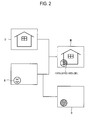
- FIG. 2 illustrates an image output from each configuration block of the image processing apparatus in FIG. 1
- the image processing apparatus includes a plurality of image output units 10 and 20, an image mixing unit 30 mixing an image output from the plurality of image output units 10 and 20, an image processing unit 40 processing a mixed image, a display unit 50, and a control unit 60 controlling, at least, the image processing unit 40 and the display unit 50.
- the image processing apparatus according to the exemplary embodiment includes a display apparatus capable of processing a plurality of images in different layers, and may include a computer system, a television, various terminals, etc.
- the first image output unit 10 outputs a first image signal
- the second image output unit 20 outputs a second image signal.
- the first image signal and the second image signal are formed in different layers, mixed, and then displayed in the display unit 50.
- the first image signal may be an image signal formed in a subordinate layer displaying a video image, that is a video layer
- the second video signal may be a graphic image included in a graphic layer such as an on screen display (OSD), sub picture, a caption, etc. overlapped over the video layer.
- OSD on screen display
- the first image output unit 10 and the second image output unit 20 may include an image source outputting an image to the image mixing unit 30.
- the first image output unit 10 and the second image output unit 20 may include a broadcasting receiving unit outputting a broadcasting image, a network interface such as an internet, a connecting unit receiving a digital versatile disk (DVD) image, a game module outputting a game image, a user interface (UI) generating unit generating a graphic user interface such as an OSD, etc.
- the first image output unit 10 and the second image output unit 20 may have a physically independent configuration, or may be provided as a single configuration as long as it is a configuration capable of outputting different images overlapped to be displayed.
- the second image output unit 20 further outputs to the image mixing unit 30 a transparency information representing a transparency degree.
- This transparency information is referred to an alpha value, and corresponds to a fourth color element corresponding to an opacity degree of the second image signal although not shown.
- the alpha value is a 8-bit data capable of discerning a transparency degree of 0 to 255.
- the image mixing unit 30 performs an alpha blending mixing an image based on the first image signal, the second image signal, and the transparency information.
- an image signal mixed in the image mixing unit 30 and output to the image processing unit 40 will be referred to a third image signal.
- a third image signal III in which the house and the leaf are overlapped is output from the image mixing unit 30.
- an overlapped area IV in which the first image signal I and the second image signal II are overlapped a degree by which the first image signal I is displayed varies depending on the transparency information.
- the house becomes to be displayed more clearly as the transparency increases, and clarity of the house becomes deteriorated and the second image signal II becomes to be displayed more clearly as the transparency decreases.
- the overlapped area IV in which an object of the first image signal I and the second image signal II are overlapped each other, and a boundary part of the second image signal II overlapped with the first image signal I correspond to an area in which an error is likely to frequently happen in an image processing of estimating a movement or forming an interpolation image.
- a position information about where the second image signal is displayed becomes very important in an image processing after mixing.
- a method by which the image mixing unit 30 mixes an image includes known algorithms, and is not defined in a specific method.
- the image processing unit 40 corresponds to a post-processing block processing the third image signal to be finally displayed in the display unit 50.
- the image processing unit 40 may estimate a movement of the third image signal to interpolate an image, or may include a frame rate converting unit converting a frame rate.
- the image processing unit 40 may include an image converting unit converting this into a three dimensional image.
- the display unit 50 displays an image signal processed in the image processing unit 40.
- the display unit 50 may include a liquid crystal display (LCD) panel including a liquid crystal, an organic light emitting diode (OLED) panel including an organic light emitting element, or a plasma display panel (PDP), and a panel driving unit driving the panel.
- LCD liquid crystal display
- OLED organic light emitting diode
- PDP plasma display panel
- the control unit 60 extracts the transparency information from the second image output unit 20, and outputs a position information V (see FIG. 2 ) to the image processing unit 40 based on the extracted transparency information.
- the illustrated position information means information about a pixel in which the second image signal II is displayed in the display unit 40. As described above, if the second image signal II is overlapped over the first image signal I , it is necessary for the image processing unit 40 to correctly determine the position with respect to the second image signal II. Also, since an image processing may vary depending on the transparency degree, to determine a correct transparency information may be an important factor for the movement estimation and the image interpolation.
- the position of the second image signal is determined by expecting the position or the shape in which the second image signal is likely to exist, or by presuming a still image, an error happening rate is high in a movement estimation and interpolating a frame.
- the first image signal is a motion picture, or if the second image signal is not a typical shape, it is difficult to determine the position and it leads to an image processing error.
- the control unit 60 supplies a correct position information of the second image signal II to the image processing unit 40 by using the transparency information.
- the control unit 60 may supply all of the transparency information to the image processing unit 40, or may supply a part of the transparency information, or may supply only information about a position but the transparency information. In any case, the control unit 60 supplies information about an area in which the second image signal II does not exist, and information about an area in which the second image signal II exists in a map type so that the image processing unit 40 can easily determine the position of the second image signal II .
- FIGs. 3 and 4 illustrate a transparency map by the control unit 60.
- FIG. 3 illustrates a transparency map representing whether there exists the transparency information by each pixel.
- the control unit 60 may generate information that "1" is referred to an area in which there is the transparency information, that is, an area in which the second image signal II is overlapped with the first image signal I, and "0" is referred to an area in which there is only the first image signal I by each pixel to output to the image processing unit 40. In this case, since the amount of data of the position information output to the image processing unit 40 becomes reduced in comparison to the case that the transparency information itself is output, a data processing speed increases.
- the control unit 60 may compare the transparency information with a predetermined reference value, and may generate a transparency map based on a comparison result. For example, if the transparency is very high so that an image is displayed like there is no second image signal II , although there is transparency information, the control unit 60 may output "0" although there is the second image signal II.
- the control unit 60 may further include a comparing unit comparing the transparency information with a reference value. This reference value may be determined to be various levels, and it is possible to selectively omit to apply the reference value.
- FIG. 4 illustrates a transparency map in the case that the reference value exists in plural. It may be applied to the case that the transparency information about the second image signal II has not a single value but a partially different value, and the case that the second image signal II having a different transparency information exists not continuously but intermittently. For example, a transparency degree of a part of the second image signal II may be 70%, and that of the remained part thereof may be 20%.
- the image processing unit 40 may process an image by using different algorithms or variables depending on the transparency degree. With a consideration of this point, the control unit 60 may add the position information of the second image signal II to supply the transparency information to the image processing unit 40.
- the control unit 60 may classify the transparency information into a predetermined group depending on the transparency degree, and may generate a transparency map with respect to the position of the second image signal II based on a classified result. As shown therein, "0" may be output as the position information with respect to an area in which there is only the first image signal I , and a group in which the transparent information of the second image signal II is less than a first reference value. "1” may be output as the position information with respect to a group in which the transparent information of the second image signal II exists between the first reference value and a second reference value which is bigger than the first reference value. "2” may be output as the position information with respect to a group in which the transparent information of the second image signal II is more than the second reference value. The number of the group and the number of the reference value are not fixed, and may be determined with a consideration of a processing ability of the image processing unit 40 and a data processing speed of the comparing unit.
- the number used in the above transparency map is just a number referred to for a convenient description, and a data value or a data type which the control unit 60 actually outputs is not defined thereto. Also, the present invention may be applied to the case that overlapped images may be more than two.
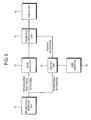
- FIG. 5 is a control block diagram of an image processing apparatus according to another exemplary embodiment.
- the image processing apparatus may include a television, a set top box, etc. including a broadcasting receiving unit 11, and includes a frame rate converting unit 41 converting a frame rate of a broadcasting signal, and a user interface 70 for determining a reference value. Repetitive description with respect to the above configurations is omitted.
- the broadcasting receiving unit 11 may include an antenna, a tuner, etc. receiving a broadcasting signal.
- a received broadcasting signal may include a broadcasting image signal corresponding to a broadcasting content, and a data signal corresponding to a data broadcasting.
- the broadcasting image signal corresponds to the first image signal according to the above exemplary embodiment
- the data signal corresponds to the second image signal.
- the broadcasting receiving unit 11 may further include a demultiplexer dividing a broadcasting image signal and a data signal from a broadcasting signal.
- FIG. 6 illustrates a display image displayed in the display unit 50.
- a second image signal II which is a data signal is overlapped over a first image signal I.
- information related to a broadcasting content, weather, news, a traffic information, etc. are overlapped over a broadcasting signal and to be displayed in a caption type.
- the frame rate converting unit 41 corresponds to the image processing unit of the exemplary embodiment described above, and the display unit 50 may include a liquid crystal panel.
- the user interface 70 is a configuration for determining a reference value used to a position information which the control unit 60 supplies to the frame rate converting unit 41.
- the user interface 70 may include a user input unit for a user input, a GUI (graphic user interface) unit generating and displaying a GUI, etc.
- the reference value may be determined to be a constant value during a manufacturing process of an image processing apparatus, and may be changed or deleted by a user after the manufacturing process.
- FIG. 7 is a control flowchart for describing a control method of an image processing apparatus according to an exemplary embodiment. A control method of an image processing apparatus according to the present exemplary embodiment will be described by referring to FIG. 7 .
- the image mixing unit 30 receives a first image signal, a second image signal and a transparency information with respect to the second image signal (S10), and mixes the first image signal and the second image signal by using the transparency information (S20).
- the control unit 60 extracts the transparency information from the second image output unit 20, and generates a position information by which the second image signal is displayed in the display unit 50 based on the transparency information (S30).
- the position information may include a transparency map representing whether there is the transparency information with respect to each pixel, a transparency map based on a transparency information compared a reference value, a transparency map based on a transparency information classified into a group depending on a transparency degree, etc. Also, all or a part of the transparency information may be output to the image processing unit 40 as the position information.
- the image processing unit 40 processes an image signal by using the mixed third image signal III and the position information (S40), and displays this in the display unit 50.
- exemplary embodiments supplie correct position information and transparency information with respect to the overlapped image signal.
- exemplary embodiments provide an image processing apparatus and an image processing method capable of processing an image based on a correct position information of a graphic image.
- exemplary embodiments provide an image processing apparatus and an image processing method capable of determineing a position information of a graphic image based on a transparency information.
- exemplary embodiments provide an image processing apparatus and an image processing method capable of processing an image based on a transparency information.
Landscapes
- Engineering & Computer Science (AREA)
- Multimedia (AREA)
- Signal Processing (AREA)
- Controls And Circuits For Display Device (AREA)
- Image Processing (AREA)
- Image Generation (AREA)
- Apparatus For Radiation Diagnosis (AREA)
Applications Claiming Priority (1)
| Application Number | Priority Date | Filing Date | Title |
|---|---|---|---|
| KR1020090084603A KR101576969B1 (ko) | 2009-09-08 | 2009-09-08 | 영상처리장치 및 영상처리방법 |
Publications (2)
| Publication Number | Publication Date |
|---|---|
| EP2299691A2 true EP2299691A2 (de) | 2011-03-23 |
| EP2299691A3 EP2299691A3 (de) | 2014-03-26 |
Family
ID=43429528
Family Applications (1)
| Application Number | Title | Priority Date | Filing Date |
|---|---|---|---|
| EP10157643.7A Ceased EP2299691A3 (de) | 2009-09-08 | 2010-03-24 | Bildverarbeitungsvorrichtung und Bildverarbeitungsverfahren |
Country Status (3)
| Country | Link |
|---|---|
| US (2) | US8478075B2 (de) |
| EP (1) | EP2299691A3 (de) |
| KR (1) | KR101576969B1 (de) |
Families Citing this family (21)
| Publication number | Priority date | Publication date | Assignee | Title |
|---|---|---|---|---|
| US9198084B2 (en) | 2006-05-26 | 2015-11-24 | Qualcomm Incorporated | Wireless architecture for a traditional wire-based protocol |
| US8811294B2 (en) | 2008-04-04 | 2014-08-19 | Qualcomm Incorporated | Apparatus and methods for establishing client-host associations within a wireless network |
| US9398089B2 (en) | 2008-12-11 | 2016-07-19 | Qualcomm Incorporated | Dynamic resource sharing among multiple wireless devices |
| US9264248B2 (en) | 2009-07-02 | 2016-02-16 | Qualcomm Incorporated | System and method for avoiding and resolving conflicts in a wireless mobile display digital interface multicast environment |
| US9582238B2 (en) | 2009-12-14 | 2017-02-28 | Qualcomm Incorporated | Decomposed multi-stream (DMS) techniques for video display systems |
| KR20110110433A (ko) * | 2010-04-01 | 2011-10-07 | 삼성전자주식회사 | 영상 표시 장치 및 영상 표시 방법 |
| US9413803B2 (en) | 2011-01-21 | 2016-08-09 | Qualcomm Incorporated | User input back channel for wireless displays |
| US8964783B2 (en) | 2011-01-21 | 2015-02-24 | Qualcomm Incorporated | User input back channel for wireless displays |
| US9787725B2 (en) | 2011-01-21 | 2017-10-10 | Qualcomm Incorporated | User input back channel for wireless displays |
| US10135900B2 (en) | 2011-01-21 | 2018-11-20 | Qualcomm Incorporated | User input back channel for wireless displays |
| US20130013318A1 (en) | 2011-01-21 | 2013-01-10 | Qualcomm Incorporated | User input back channel for wireless displays |
| US9065876B2 (en) | 2011-01-21 | 2015-06-23 | Qualcomm Incorporated | User input back channel from a wireless sink device to a wireless source device for multi-touch gesture wireless displays |
| US10108386B2 (en) | 2011-02-04 | 2018-10-23 | Qualcomm Incorporated | Content provisioning for wireless back channel |
| US9503771B2 (en) * | 2011-02-04 | 2016-11-22 | Qualcomm Incorporated | Low latency wireless display for graphics |
| JP5459251B2 (ja) * | 2011-03-31 | 2014-04-02 | カシオ計算機株式会社 | 画像処理装置、画像処理方法及びプログラム |
| US9525998B2 (en) | 2012-01-06 | 2016-12-20 | Qualcomm Incorporated | Wireless display with multiscreen service |
| KR102246105B1 (ko) | 2014-09-25 | 2021-04-29 | 삼성전자주식회사 | 디스플레이 장치, 이의 제어 방법 및 이의 데이터 전송 방법 |
| US9497505B2 (en) * | 2014-09-30 | 2016-11-15 | The Nielsen Company (Us), Llc | Systems and methods to verify and/or correct media lineup information |
| KR102549463B1 (ko) | 2016-08-30 | 2023-06-30 | 삼성전자주식회사 | 이미지 처리 방법 및 이를 지원하는 전자 장치 |
| CN107948562B (zh) * | 2017-11-30 | 2020-05-15 | 广州市百果园信息技术有限公司 | 视频录制方法和视频录制终端 |
| KR20220056404A (ko) | 2020-10-28 | 2022-05-06 | 삼성전자주식회사 | 디스플레이장치 및 그 제어방법 |
Family Cites Families (20)
| Publication number | Priority date | Publication date | Assignee | Title |
|---|---|---|---|---|
| US4515450A (en) * | 1982-09-29 | 1985-05-07 | Mcdonnell Douglas Corporation | Transparency for use with a flying spot scanner to generate images |
| US5727192A (en) * | 1995-03-24 | 1998-03-10 | 3Dlabs Inc. Ltd. | Serial rendering system with auto-synchronization on frame blanking |
| US6226047B1 (en) * | 1997-05-30 | 2001-05-01 | Daewoo Electronics Co., Ltd. | Method and apparatus for providing an improved user interface in a settop box |
| US6195475B1 (en) * | 1998-09-15 | 2001-02-27 | Hewlett-Packard Company | Navigation system for handheld scanner |
| US6853385B1 (en) * | 1999-11-09 | 2005-02-08 | Broadcom Corporation | Video, audio and graphics decode, composite and display system |
| US6466224B1 (en) * | 1999-01-19 | 2002-10-15 | Matsushita Electric Industrial Co., Ltd. | Image data composition and display apparatus |
| US7483042B1 (en) * | 2000-01-13 | 2009-01-27 | Ati International, Srl | Video graphics module capable of blending multiple image layers |
| US7046254B2 (en) * | 2002-01-28 | 2006-05-16 | International Business Machines Corporation | Displaying transparent resource aids |
| US7019757B2 (en) * | 2002-01-28 | 2006-03-28 | International Business Machines Corporation | Changing the alpha levels of an application window to indicate a status of a computing task |
| US6954905B2 (en) * | 2002-01-28 | 2005-10-11 | International Business Machines Corporation | Displaying transparency characteristic aids |
| EP1404130A1 (de) * | 2002-09-24 | 2004-03-31 | Matsushita Electric Industrial Co., Ltd. | Verfahren und Vorrichtung zur Verarbeitung eines mit einem zusätzlichen Bildsignal gemischten Videosignals |
| WO2006030401A2 (en) * | 2004-09-16 | 2006-03-23 | Koninklijke Philips Electronics N.V. | Multi-layer video/graphics blending including identifying composited non-transparent regions in the alpha multiplied overlay |
| KR100631610B1 (ko) * | 2004-11-26 | 2006-10-09 | 엘지전자 주식회사 | 휴대단말기의 영상신호 합성장치 및 방법 |
| JP4568120B2 (ja) * | 2005-01-04 | 2010-10-27 | 株式会社東芝 | 再生装置 |
| WO2006077720A1 (ja) * | 2005-01-18 | 2006-07-27 | Matsushita Electric Industrial Co., Ltd. | 画像合成装置 |
| JP2007258873A (ja) * | 2006-03-22 | 2007-10-04 | Toshiba Corp | 再生装置および再生方法 |
| US7889205B1 (en) * | 2006-10-24 | 2011-02-15 | Adobe Systems Incorporated | Frame buffer based transparency group computation on a GPU without context switching |
| US20080168493A1 (en) * | 2007-01-08 | 2008-07-10 | James Jeffrey Allen | Mixing User-Specified Graphics with Video Streams |
| JP5023893B2 (ja) * | 2007-08-31 | 2012-09-12 | ソニー株式会社 | 表示装置 |
| JP2009081540A (ja) * | 2007-09-25 | 2009-04-16 | Toshiba Corp | 情報処理装置および合成映像生成方法 |
-
2009
- 2009-09-08 KR KR1020090084603A patent/KR101576969B1/ko active Active
-
2010
- 2010-03-11 US US12/721,670 patent/US8478075B2/en active Active
- 2010-03-24 EP EP10157643.7A patent/EP2299691A3/de not_active Ceased
-
2013
- 2013-06-07 US US13/912,941 patent/US8787701B2/en active Active
Non-Patent Citations (1)
| Title |
|---|
| None |
Also Published As
| Publication number | Publication date |
|---|---|
| US20130272628A1 (en) | 2013-10-17 |
| KR20110026806A (ko) | 2011-03-16 |
| US20110057952A1 (en) | 2011-03-10 |
| EP2299691A3 (de) | 2014-03-26 |
| US8787701B2 (en) | 2014-07-22 |
| KR101576969B1 (ko) | 2015-12-11 |
| US8478075B2 (en) | 2013-07-02 |
Similar Documents
| Publication | Publication Date | Title |
|---|---|---|
| US8478075B2 (en) | Image processing apparatus and image processing method | |
| US8144255B2 (en) | Still subtitle detection apparatus and image processing method therefor | |
| US9652829B2 (en) | Video super-resolution by fast video segmentation for boundary accuracy control | |
| US10417742B2 (en) | System and apparatus for editing preview images | |
| EP1811454A2 (de) | Vorrichtung und Verfahren zur Randbereichsbestimmung | |
| US7420620B2 (en) | Multi-picture display with a secondary high definition picture window having an adjustable aspect ratio | |
| US8432973B2 (en) | Interpolation frame generation apparatus, interpolation frame generation method, and broadcast receiving apparatus | |
| US7821575B2 (en) | Image processing apparatus, receiver, and display device | |
| US20160180558A1 (en) | Display apparatus and controlling method | |
| CN101094369B (zh) | 数字电视机显示模式切换方法 | |
| US12142187B2 (en) | Image display device and operating method therefor | |
| US20100020104A1 (en) | Display processing device, display processing method, and display processing program | |
| US20080107335A1 (en) | Methods for processing image signals and related apparatus | |
| US7903126B2 (en) | Image processing apparatus and image processing method thereof | |
| EP2682937A1 (de) | Anzeigevorrichtung und Steuerungsverfahren dafür | |
| KR20070066621A (ko) | 이미지처리장치 및 이미지처리방법 | |
| EP2063636A1 (de) | Videoverarbeitungsanordnung und videoverarbeitungsverfahren | |
| CN102625066A (zh) | 图像处理装置和图像处理方法 | |
| US20060017850A1 (en) | Video combining apparatus and method thereof | |
| US20090123084A1 (en) | Image processing apparatus and control method thereof | |
| US12603062B2 (en) | Image display device | |
| CN105554587A (zh) | 一种显示控制方法、装置及显示装置 | |
| US20200098322A1 (en) | Image display device | |
| US20250111811A1 (en) | Circuit Device And Display System | |
| KR101397036B1 (ko) | 영상기기의 영상 신호 출력 방법 및 그 방법을 채용한영상기기 |
Legal Events
| Date | Code | Title | Description |
|---|---|---|---|
| PUAI | Public reference made under article 153(3) epc to a published international application that has entered the european phase |
Free format text: ORIGINAL CODE: 0009012 |
|
| AK | Designated contracting states |
Kind code of ref document: A2 Designated state(s): AT BE BG CH CY CZ DE DK EE ES FI FR GB GR HR HU IE IS IT LI LT LU LV MC MK MT NL NO PL PT RO SE SI SK SM TR |
|
| AX | Request for extension of the european patent |
Extension state: AL BA ME RS |
|
| RAP1 | Party data changed (applicant data changed or rights of an application transferred) |
Owner name: SAMSUNG ELECTRONICS CO., LTD. |
|
| PUAL | Search report despatched |
Free format text: ORIGINAL CODE: 0009013 |
|
| AK | Designated contracting states |
Kind code of ref document: A3 Designated state(s): AT BE BG CH CY CZ DE DK EE ES FI FR GB GR HR HU IE IS IT LI LT LU LV MC MK MT NL NO PL PT RO SE SI SK SM TR |
|
| AX | Request for extension of the european patent |
Extension state: AL BA ME RS |
|
| RIC1 | Information provided on ipc code assigned before grant |
Ipc: H04N 5/272 20060101AFI20140214BHEP Ipc: H04N 21/44 20110101ALI20140214BHEP Ipc: H04N 21/431 20110101ALI20140214BHEP Ipc: H04N 5/278 20060101ALI20140214BHEP Ipc: G06K 9/32 20060101ALI20140214BHEP Ipc: H04N 21/81 20110101ALI20140214BHEP |
|
| 17P | Request for examination filed |
Effective date: 20140923 |
|
| RBV | Designated contracting states (corrected) |
Designated state(s): AT BE BG CH CY CZ DE DK EE ES FI FR GB GR HR HU IE IS IT LI LT LU LV MC MK MT NL NO PL PT RO SE SI SK SM TR |
|
| 17Q | First examination report despatched |
Effective date: 20150203 |
|
| STAA | Information on the status of an ep patent application or granted ep patent |
Free format text: STATUS: THE APPLICATION HAS BEEN REFUSED |
|
| 18R | Application refused |
Effective date: 20180209 |