EP2298703A1 - Behandlung von salzwasserhaltigem häuslichen Abwasser - Google Patents
Behandlung von salzwasserhaltigem häuslichen Abwasser Download PDFInfo
- Publication number
- EP2298703A1 EP2298703A1 EP20100179585 EP10179585A EP2298703A1 EP 2298703 A1 EP2298703 A1 EP 2298703A1 EP 20100179585 EP20100179585 EP 20100179585 EP 10179585 A EP10179585 A EP 10179585A EP 2298703 A1 EP2298703 A1 EP 2298703A1
- Authority
- EP
- European Patent Office
- Prior art keywords
- wastewater
- saltwater
- freshwater
- salinity
- treatment
- Prior art date
- Legal status (The legal status is an assumption and is not a legal conclusion. Google has not performed a legal analysis and makes no representation as to the accuracy of the status listed.)
- Withdrawn
Links
- 238000011282 treatment Methods 0.000 title claims abstract description 153
- 239000010840 domestic wastewater Substances 0.000 title claims abstract description 69
- 239000002351 wastewater Substances 0.000 claims abstract description 207
- 230000002829 reductive effect Effects 0.000 claims abstract description 11
- 238000012544 monitoring process Methods 0.000 claims abstract description 8
- 239000013505 freshwater Substances 0.000 claims description 118
- 238000000034 method Methods 0.000 claims description 73
- FAPWRFPIFSIZLT-UHFFFAOYSA-M Sodium chloride Chemical compound [Na+].[Cl-] FAPWRFPIFSIZLT-UHFFFAOYSA-M 0.000 claims description 67
- 239000013535 sea water Substances 0.000 claims description 59
- 150000003839 salts Chemical class 0.000 claims description 47
- 238000002156 mixing Methods 0.000 claims description 37
- XLYOFNOQVPJJNP-UHFFFAOYSA-N water Substances O XLYOFNOQVPJJNP-UHFFFAOYSA-N 0.000 claims description 27
- 241000894006 Bacteria Species 0.000 claims description 21
- 239000011780 sodium chloride Substances 0.000 claims description 13
- 239000000203 mixture Substances 0.000 claims description 12
- 244000005700 microbiome Species 0.000 claims description 11
- 235000012206 bottled water Nutrition 0.000 claims description 10
- 239000003651 drinking water Substances 0.000 claims description 10
- 238000012546 transfer Methods 0.000 claims description 10
- 238000012423 maintenance Methods 0.000 claims description 8
- 238000009304 pastoral farming Methods 0.000 claims description 8
- 238000001704 evaporation Methods 0.000 claims description 7
- 230000008020 evaporation Effects 0.000 claims description 7
- 238000004519 manufacturing process Methods 0.000 claims description 7
- 230000009193 crawling Effects 0.000 claims description 6
- 239000005416 organic matter Substances 0.000 claims description 5
- 230000001651 autotrophic effect Effects 0.000 claims description 3
- 238000011161 development Methods 0.000 claims description 3
- 230000001546 nitrifying effect Effects 0.000 claims description 3
- 230000036961 partial effect Effects 0.000 claims description 3
- 239000010865 sewage Substances 0.000 description 45
- 239000007787 solid Substances 0.000 description 32
- 239000010802 sludge Substances 0.000 description 28
- 230000008569 process Effects 0.000 description 23
- 238000004065 wastewater treatment Methods 0.000 description 20
- 241000196324 Embryophyta Species 0.000 description 19
- 238000002474 experimental method Methods 0.000 description 19
- 238000005273 aeration Methods 0.000 description 18
- 241000588724 Escherichia coli Species 0.000 description 16
- 230000001276 controlling effect Effects 0.000 description 15
- 238000011010 flushing procedure Methods 0.000 description 13
- 230000000813 microbial effect Effects 0.000 description 13
- 238000007792 addition Methods 0.000 description 12
- 239000000523 sample Substances 0.000 description 12
- 230000008901 benefit Effects 0.000 description 10
- 230000009977 dual effect Effects 0.000 description 9
- 230000009467 reduction Effects 0.000 description 9
- 239000000463 material Substances 0.000 description 8
- 239000002609 medium Substances 0.000 description 8
- 239000000126 substance Substances 0.000 description 8
- 238000005406 washing Methods 0.000 description 8
- 239000002028 Biomass Substances 0.000 description 7
- 238000013459 approach Methods 0.000 description 7
- 235000015097 nutrients Nutrition 0.000 description 7
- QVGXLLKOCUKJST-UHFFFAOYSA-N atomic oxygen Chemical compound [O] QVGXLLKOCUKJST-UHFFFAOYSA-N 0.000 description 6
- 239000001301 oxygen Substances 0.000 description 6
- 229910052760 oxygen Inorganic materials 0.000 description 6
- 230000001965 increasing effect Effects 0.000 description 5
- 239000012528 membrane Substances 0.000 description 5
- 239000004033 plastic Substances 0.000 description 5
- 229920003023 plastic Polymers 0.000 description 5
- 239000000243 solution Substances 0.000 description 5
- 239000002699 waste material Substances 0.000 description 5
- 241000223782 Ciliophora Species 0.000 description 4
- MHAJPDPJQMAIIY-UHFFFAOYSA-N Hydrogen peroxide Chemical compound OO MHAJPDPJQMAIIY-UHFFFAOYSA-N 0.000 description 4
- 230000031018 biological processes and functions Effects 0.000 description 4
- 238000011109 contamination Methods 0.000 description 4
- 230000035622 drinking Effects 0.000 description 4
- 230000007613 environmental effect Effects 0.000 description 4
- 230000002262 irrigation Effects 0.000 description 4
- 238000003973 irrigation Methods 0.000 description 4
- 238000009428 plumbing Methods 0.000 description 4
- 238000004062 sedimentation Methods 0.000 description 4
- 239000003643 water by type Substances 0.000 description 4
- IJGRMHOSHXDMSA-UHFFFAOYSA-N Atomic nitrogen Chemical compound N#N IJGRMHOSHXDMSA-UHFFFAOYSA-N 0.000 description 3
- OKTJSMMVPCPJKN-UHFFFAOYSA-N Carbon Chemical compound [C] OKTJSMMVPCPJKN-UHFFFAOYSA-N 0.000 description 3
- 230000001580 bacterial effect Effects 0.000 description 3
- 229910052799 carbon Inorganic materials 0.000 description 3
- 230000008859 change Effects 0.000 description 3
- 238000004140 cleaning Methods 0.000 description 3
- 238000010790 dilution Methods 0.000 description 3
- 239000012895 dilution Substances 0.000 description 3
- 230000000694 effects Effects 0.000 description 3
- 239000010797 grey water Substances 0.000 description 3
- 239000007788 liquid Substances 0.000 description 3
- 238000005259 measurement Methods 0.000 description 3
- 239000011368 organic material Substances 0.000 description 3
- 244000052769 pathogen Species 0.000 description 3
- 239000013049 sediment Substances 0.000 description 3
- 238000012163 sequencing technique Methods 0.000 description 3
- 238000003860 storage Methods 0.000 description 3
- 239000000758 substrate Substances 0.000 description 3
- QGZKDVFQNNGYKY-UHFFFAOYSA-N Ammonia Chemical compound N QGZKDVFQNNGYKY-UHFFFAOYSA-N 0.000 description 2
- NLXLAEXVIDQMFP-UHFFFAOYSA-N Ammonia chloride Chemical compound [NH4+].[Cl-] NLXLAEXVIDQMFP-UHFFFAOYSA-N 0.000 description 2
- CURLTUGMZLYLDI-UHFFFAOYSA-N Carbon dioxide Chemical compound O=C=O CURLTUGMZLYLDI-UHFFFAOYSA-N 0.000 description 2
- 241000195493 Cryptophyta Species 0.000 description 2
- 229930006000 Sucrose Natural products 0.000 description 2
- CZMRCDWAGMRECN-UGDNZRGBSA-N Sucrose Chemical compound O[C@H]1[C@H](O)[C@@H](CO)O[C@@]1(CO)O[C@@H]1[C@H](O)[C@@H](O)[C@H](O)[C@@H](CO)O1 CZMRCDWAGMRECN-UGDNZRGBSA-N 0.000 description 2
- 241000868179 Vorticella convallaria Species 0.000 description 2
- 238000009360 aquaculture Methods 0.000 description 2
- 244000144974 aquaculture Species 0.000 description 2
- 238000005260 corrosion Methods 0.000 description 2
- 230000007797 corrosion Effects 0.000 description 2
- 230000001627 detrimental effect Effects 0.000 description 2
- 235000013305 food Nutrition 0.000 description 2
- 239000003673 groundwater Substances 0.000 description 2
- 238000011534 incubation Methods 0.000 description 2
- 239000010842 industrial wastewater Substances 0.000 description 2
- 239000002054 inoculum Substances 0.000 description 2
- 239000011146 organic particle Substances 0.000 description 2
- 230000005180 public health Effects 0.000 description 2
- 238000005086 pumping Methods 0.000 description 2
- 238000004064 recycling Methods 0.000 description 2
- 230000035939 shock Effects 0.000 description 2
- 239000005720 sucrose Substances 0.000 description 2
- 239000013589 supplement Substances 0.000 description 2
- 241000251468 Actinopterygii Species 0.000 description 1
- 241001629481 Chilodonella Species 0.000 description 1
- 241000192700 Cyanobacteria Species 0.000 description 1
- 229920001353 Dextrin Polymers 0.000 description 1
- 239000004375 Dextrin Substances 0.000 description 1
- MYMOFIZGZYHOMD-UHFFFAOYSA-N Dioxygen Chemical compound O=O MYMOFIZGZYHOMD-UHFFFAOYSA-N 0.000 description 1
- 241000011470 Epistylis chrysemydis Species 0.000 description 1
- 241000248488 Euplotes Species 0.000 description 1
- WQZGKKKJIJFFOK-GASJEMHNSA-N Glucose Natural products OC[C@H]1OC(O)[C@H](O)[C@@H](O)[C@@H]1O WQZGKKKJIJFFOK-GASJEMHNSA-N 0.000 description 1
- 229910002651 NO3 Inorganic materials 0.000 description 1
- -1 NaCl) Chemical class 0.000 description 1
- NHNBFGGVMKEFGY-UHFFFAOYSA-N Nitrate Chemical compound [O-][N+]([O-])=O NHNBFGGVMKEFGY-UHFFFAOYSA-N 0.000 description 1
- 229920005439 Perspex® Polymers 0.000 description 1
- 240000002044 Rhizophora apiculata Species 0.000 description 1
- 229920002472 Starch Polymers 0.000 description 1
- 230000009471 action Effects 0.000 description 1
- 239000000654 additive Substances 0.000 description 1
- 230000000996 additive effect Effects 0.000 description 1
- 230000002411 adverse Effects 0.000 description 1
- 229910021529 ammonia Inorganic materials 0.000 description 1
- 235000019270 ammonium chloride Nutrition 0.000 description 1
- 238000000429 assembly Methods 0.000 description 1
- 230000000712 assembly Effects 0.000 description 1
- 230000009286 beneficial effect Effects 0.000 description 1
- 230000003139 buffering effect Effects 0.000 description 1
- 239000001569 carbon dioxide Substances 0.000 description 1
- 229910002092 carbon dioxide Inorganic materials 0.000 description 1
- 238000006243 chemical reaction Methods 0.000 description 1
- 239000003653 coastal water Substances 0.000 description 1
- 239000011248 coating agent Substances 0.000 description 1
- 238000000576 coating method Methods 0.000 description 1
- 238000010276 construction Methods 0.000 description 1
- 239000008367 deionised water Substances 0.000 description 1
- 229910021641 deionized water Inorganic materials 0.000 description 1
- 230000001419 dependent effect Effects 0.000 description 1
- 235000019425 dextrin Nutrition 0.000 description 1
- 238000010586 diagram Methods 0.000 description 1
- 229910001873 dinitrogen Inorganic materials 0.000 description 1
- 229910001882 dioxygen Inorganic materials 0.000 description 1
- 238000009826 distribution Methods 0.000 description 1
- 238000001035 drying Methods 0.000 description 1
- 230000029142 excretion Effects 0.000 description 1
- 238000009293 extended aeration Methods 0.000 description 1
- 210000003608 fece Anatomy 0.000 description 1
- 239000000706 filtrate Substances 0.000 description 1
- 239000003365 glass fiber Substances 0.000 description 1
- 239000008103 glucose Substances 0.000 description 1
- 230000005484 gravity Effects 0.000 description 1
- 239000001963 growth medium Substances 0.000 description 1
- 230000001939 inductive effect Effects 0.000 description 1
- 238000011221 initial treatment Methods 0.000 description 1
- 229910052500 inorganic mineral Inorganic materials 0.000 description 1
- 238000009434 installation Methods 0.000 description 1
- 230000003993 interaction Effects 0.000 description 1
- 238000011835 investigation Methods 0.000 description 1
- 230000002147 killing effect Effects 0.000 description 1
- 239000010806 kitchen waste Substances 0.000 description 1
- 230000007774 longterm Effects 0.000 description 1
- 238000002803 maceration Methods 0.000 description 1
- 239000002068 microbial inoculum Substances 0.000 description 1
- 230000007483 microbial process Effects 0.000 description 1
- 239000011707 mineral Substances 0.000 description 1
- 238000012986 modification Methods 0.000 description 1
- 230000004048 modification Effects 0.000 description 1
- 238000012806 monitoring device Methods 0.000 description 1
- 230000000877 morphologic effect Effects 0.000 description 1
- 229910052757 nitrogen Inorganic materials 0.000 description 1
- 125000001477 organic nitrogen group Chemical group 0.000 description 1
- 230000003647 oxidation Effects 0.000 description 1
- 238000007254 oxidation reaction Methods 0.000 description 1
- 239000006833 oxoid nutrient broth Substances 0.000 description 1
- 239000002245 particle Substances 0.000 description 1
- 239000011236 particulate material Substances 0.000 description 1
- 230000002572 peristaltic effect Effects 0.000 description 1
- 239000010908 plant waste Substances 0.000 description 1
- 238000007747 plating Methods 0.000 description 1
- 239000004926 polymethyl methacrylate Substances 0.000 description 1
- OTYBMLCTZGSZBG-UHFFFAOYSA-L potassium sulfate Chemical compound [K+].[K+].[O-]S([O-])(=O)=O OTYBMLCTZGSZBG-UHFFFAOYSA-L 0.000 description 1
- 229910052939 potassium sulfate Inorganic materials 0.000 description 1
- 239000001120 potassium sulphate Substances 0.000 description 1
- 235000011151 potassium sulphates Nutrition 0.000 description 1
- 239000012460 protein solution Substances 0.000 description 1
- 238000000746 purification Methods 0.000 description 1
- 230000001105 regulatory effect Effects 0.000 description 1
- 230000000246 remedial effect Effects 0.000 description 1
- 238000011160 research Methods 0.000 description 1
- 230000000717 retained effect Effects 0.000 description 1
- 239000012266 salt solution Substances 0.000 description 1
- 238000012216 screening Methods 0.000 description 1
- 238000005201 scrubbing Methods 0.000 description 1
- 241000894007 species Species 0.000 description 1
- 230000006641 stabilisation Effects 0.000 description 1
- 229910001220 stainless steel Inorganic materials 0.000 description 1
- 239000010935 stainless steel Substances 0.000 description 1
- 238000010561 standard procedure Methods 0.000 description 1
- 239000008107 starch Substances 0.000 description 1
- 235000019698 starch Nutrition 0.000 description 1
- 238000004659 sterilization and disinfection Methods 0.000 description 1
- 238000003756 stirring Methods 0.000 description 1
- 230000002459 sustained effect Effects 0.000 description 1
- 239000008399 tap water Substances 0.000 description 1
- 235000020679 tap water Nutrition 0.000 description 1
- 238000012360 testing method Methods 0.000 description 1
- 238000004448 titration Methods 0.000 description 1
- 238000011144 upstream manufacturing Methods 0.000 description 1
- 210000002700 urine Anatomy 0.000 description 1
Images









Classifications
-
- C—CHEMISTRY; METALLURGY
- C02—TREATMENT OF WATER, WASTE WATER, SEWAGE, OR SLUDGE
- C02F—TREATMENT OF WATER, WASTE WATER, SEWAGE, OR SLUDGE
- C02F3/00—Biological treatment of water, waste water, or sewage
- C02F3/006—Regulation methods for biological treatment
-
- C—CHEMISTRY; METALLURGY
- C02—TREATMENT OF WATER, WASTE WATER, SEWAGE, OR SLUDGE
- C02F—TREATMENT OF WATER, WASTE WATER, SEWAGE, OR SLUDGE
- C02F1/00—Treatment of water, waste water, or sewage
- C02F1/006—Water distributors either inside a treatment tank or directing the water to several treatment tanks; Water treatment plants incorporating these distributors, with or without chemical or biological tanks
-
- C—CHEMISTRY; METALLURGY
- C02—TREATMENT OF WATER, WASTE WATER, SEWAGE, OR SLUDGE
- C02F—TREATMENT OF WATER, WASTE WATER, SEWAGE, OR SLUDGE
- C02F1/00—Treatment of water, waste water, or sewage
- C02F1/02—Treatment of water, waste water, or sewage by heating
- C02F1/04—Treatment of water, waste water, or sewage by heating by distillation or evaporation
- C02F1/14—Treatment of water, waste water, or sewage by heating by distillation or evaporation using solar energy
-
- C—CHEMISTRY; METALLURGY
- C02—TREATMENT OF WATER, WASTE WATER, SEWAGE, OR SLUDGE
- C02F—TREATMENT OF WATER, WASTE WATER, SEWAGE, OR SLUDGE
- C02F2103/00—Nature of the water, waste water, sewage or sludge to be treated
- C02F2103/002—Grey water, e.g. from clothes washers, showers or dishwashers
-
- C—CHEMISTRY; METALLURGY
- C02—TREATMENT OF WATER, WASTE WATER, SEWAGE, OR SLUDGE
- C02F—TREATMENT OF WATER, WASTE WATER, SEWAGE, OR SLUDGE
- C02F2103/00—Nature of the water, waste water, sewage or sludge to be treated
- C02F2103/08—Seawater, e.g. for desalination
-
- C—CHEMISTRY; METALLURGY
- C02—TREATMENT OF WATER, WASTE WATER, SEWAGE, OR SLUDGE
- C02F—TREATMENT OF WATER, WASTE WATER, SEWAGE, OR SLUDGE
- C02F2209/00—Controlling or monitoring parameters in water treatment
- C02F2209/05—Conductivity or salinity
-
- C—CHEMISTRY; METALLURGY
- C02—TREATMENT OF WATER, WASTE WATER, SEWAGE, OR SLUDGE
- C02F—TREATMENT OF WATER, WASTE WATER, SEWAGE, OR SLUDGE
- C02F2209/00—Controlling or monitoring parameters in water treatment
- C02F2209/40—Liquid flow rate
-
- C—CHEMISTRY; METALLURGY
- C02—TREATMENT OF WATER, WASTE WATER, SEWAGE, OR SLUDGE
- C02F—TREATMENT OF WATER, WASTE WATER, SEWAGE, OR SLUDGE
- C02F3/00—Biological treatment of water, waste water, or sewage
- C02F3/02—Aerobic processes
- C02F3/06—Aerobic processes using submerged filters
-
- C—CHEMISTRY; METALLURGY
- C02—TREATMENT OF WATER, WASTE WATER, SEWAGE, OR SLUDGE
- C02F—TREATMENT OF WATER, WASTE WATER, SEWAGE, OR SLUDGE
- C02F3/00—Biological treatment of water, waste water, or sewage
- C02F3/02—Aerobic processes
- C02F3/08—Aerobic processes using moving contact bodies
-
- C—CHEMISTRY; METALLURGY
- C02—TREATMENT OF WATER, WASTE WATER, SEWAGE, OR SLUDGE
- C02F—TREATMENT OF WATER, WASTE WATER, SEWAGE, OR SLUDGE
- C02F3/00—Biological treatment of water, waste water, or sewage
- C02F3/02—Aerobic processes
- C02F3/12—Activated sludge processes
- C02F3/1236—Particular type of activated sludge installations
- C02F3/1263—Sequencing batch reactors [SBR]
-
- C—CHEMISTRY; METALLURGY
- C02—TREATMENT OF WATER, WASTE WATER, SEWAGE, OR SLUDGE
- C02F—TREATMENT OF WATER, WASTE WATER, SEWAGE, OR SLUDGE
- C02F3/00—Biological treatment of water, waste water, or sewage
- C02F3/34—Biological treatment of water, waste water, or sewage characterised by the microorganisms used
-
- Y—GENERAL TAGGING OF NEW TECHNOLOGICAL DEVELOPMENTS; GENERAL TAGGING OF CROSS-SECTIONAL TECHNOLOGIES SPANNING OVER SEVERAL SECTIONS OF THE IPC; TECHNICAL SUBJECTS COVERED BY FORMER USPC CROSS-REFERENCE ART COLLECTIONS [XRACs] AND DIGESTS
- Y02—TECHNOLOGIES OR APPLICATIONS FOR MITIGATION OR ADAPTATION AGAINST CLIMATE CHANGE
- Y02A—TECHNOLOGIES FOR ADAPTATION TO CLIMATE CHANGE
- Y02A20/00—Water conservation; Efficient water supply; Efficient water use
- Y02A20/124—Water desalination
-
- Y—GENERAL TAGGING OF NEW TECHNOLOGICAL DEVELOPMENTS; GENERAL TAGGING OF CROSS-SECTIONAL TECHNOLOGIES SPANNING OVER SEVERAL SECTIONS OF THE IPC; TECHNICAL SUBJECTS COVERED BY FORMER USPC CROSS-REFERENCE ART COLLECTIONS [XRACs] AND DIGESTS
- Y02—TECHNOLOGIES OR APPLICATIONS FOR MITIGATION OR ADAPTATION AGAINST CLIMATE CHANGE
- Y02A—TECHNOLOGIES FOR ADAPTATION TO CLIMATE CHANGE
- Y02A20/00—Water conservation; Efficient water supply; Efficient water use
- Y02A20/124—Water desalination
- Y02A20/138—Water desalination using renewable energy
- Y02A20/142—Solar thermal; Photovoltaics
-
- Y—GENERAL TAGGING OF NEW TECHNOLOGICAL DEVELOPMENTS; GENERAL TAGGING OF CROSS-SECTIONAL TECHNOLOGIES SPANNING OVER SEVERAL SECTIONS OF THE IPC; TECHNICAL SUBJECTS COVERED BY FORMER USPC CROSS-REFERENCE ART COLLECTIONS [XRACs] AND DIGESTS
- Y02—TECHNOLOGIES OR APPLICATIONS FOR MITIGATION OR ADAPTATION AGAINST CLIMATE CHANGE
- Y02W—CLIMATE CHANGE MITIGATION TECHNOLOGIES RELATED TO WASTEWATER TREATMENT OR WASTE MANAGEMENT
- Y02W10/00—Technologies for wastewater treatment
- Y02W10/10—Biological treatment of water, waste water, or sewage
-
- Y—GENERAL TAGGING OF NEW TECHNOLOGICAL DEVELOPMENTS; GENERAL TAGGING OF CROSS-SECTIONAL TECHNOLOGIES SPANNING OVER SEVERAL SECTIONS OF THE IPC; TECHNICAL SUBJECTS COVERED BY FORMER USPC CROSS-REFERENCE ART COLLECTIONS [XRACs] AND DIGESTS
- Y02—TECHNOLOGIES OR APPLICATIONS FOR MITIGATION OR ADAPTATION AGAINST CLIMATE CHANGE
- Y02W—CLIMATE CHANGE MITIGATION TECHNOLOGIES RELATED TO WASTEWATER TREATMENT OR WASTE MANAGEMENT
- Y02W10/00—Technologies for wastewater treatment
- Y02W10/30—Wastewater or sewage treatment systems using renewable energies
- Y02W10/37—Wastewater or sewage treatment systems using renewable energies using solar energy
-
- Y—GENERAL TAGGING OF NEW TECHNOLOGICAL DEVELOPMENTS; GENERAL TAGGING OF CROSS-SECTIONAL TECHNOLOGIES SPANNING OVER SEVERAL SECTIONS OF THE IPC; TECHNICAL SUBJECTS COVERED BY FORMER USPC CROSS-REFERENCE ART COLLECTIONS [XRACs] AND DIGESTS
- Y10—TECHNICAL SUBJECTS COVERED BY FORMER USPC
- Y10T—TECHNICAL SUBJECTS COVERED BY FORMER US CLASSIFICATION
- Y10T137/00—Fluid handling
- Y10T137/8593—Systems
- Y10T137/87571—Multiple inlet with single outlet
- Y10T137/87652—With means to promote mixing or combining of plural fluids
Definitions
- This invention relates to water treatment.
- this invention relates to methods and apparatus for the biological treatment of domestic wastewater based on saltwater.
- Freshwater-based biological treatment systems require the establishment of relatively stable biological communities. These biological communities are capable of adapting to changes in the wastewater, e.g. changes in biological oxygen demand (BOD) as between high and low concentration effluents, but additional provisions are often made in order to maintain biological stability, e.g. the use of storage tanks to intercept large amounts of storm water which would be capable of causing a 'dilution shock' to the biological treatment apparatus.
- BOD biological oxygen demand
- potable water for both toilet flushing and other domestic purposes can be regarded as a waste of a resource which, in some parts of the world, is particularly scarce. For this reason, it is known to use seawater, rather than potable water, for toilet flushing in developed hot countries with little rainfall (e.g. Malta, Hong Kong). In such countries, it is common for the domestic water supply to comprise a 'dual pipe' system. One 'pipe' provides sea water for toilet flushing, the other 'pipe' provides potable water for drinking and washing purposes. The majority of systems employing a 'dual pipe' approach do not involve wastewater treatment. The purpose of the seawater pipe is to conserve freshwater and the toilet effluent and drinking/washing effluent streams are generally released untreated into the environment.
- the effluent from toilet flushing (known in the art as 'brown water') and the effluent from washing etc. (known in the art as 'grey water') is, in traditional wastewater systems as well as a few of those employing the 'dual pipe system', mixed and treated in an apparatus or plant designed for the treatment of freshwater.
- Alternative or additional approaches for the conservation of potable water include ⁇ grey water recycling', where water used for washing is treated locally and then used for toilet flushing or for irrigation. In each of these cases, however, the eventual brown water is still based on a freshwater source and is thus treated using a freshwater-based biological approach.
- a wastewater treatment system designed for use in tidal coastal areas is disclosed.
- the system consists of a freshwater supply network for the provision of potable water and a separate supply network for the provision of a solution of hydrogen peroxide in seawater for toilet flushing.
- both the freshwater-and seawater-based wastewaters are conducted to the same treatment location where they are mixed to produce a single output effluent for treatment by means of microorganisms naturally present in the seawater. No attempt is made to control the salinity of the wastewater being treated.
- the hydrogen peroxide is a highly reactive chemical additive which confers significant operational and environmental disadvantages.
- a wastewater treatment plant for biological treatment of seawater-based brown-water is also employed at the New Zealand Scott Base in Antarctica.
- the brown-water is mixed with a freshwater-based grey-water stream in an uncontrolled manner, resulting in salinity levels in the treatment mixture which are relatively low compared to seawater and which can vary by up to 100% of the average value in each direction.
- Such uncontrolled and random variation in salinity has not, however, hitherto been appreciated as a potential problem in the operation of the plant.
- JP5208197A sea water is added to a freshwater-based activated sludge process in order to reduce bulking of sludge and promote sedimentation.
- EP0104648A2 a process for the biological treatment of industrial wastewaters is described in which the wastewater is adjusted to predetermined levels of pH and salt concentration prior to mixing with a sludge of pre-acclimated microorganisms.
- GB 1466530 describes a freshwater-based wastewater treatment process, particularly aimed at the treatment of oil-contaminated industrial wastewaters, wherein sea water is fed to the wastewater during the treatment.
- the effects of the seawater on an activated sludge process are ascribed to chemical properties of the various salts present, e.g. increased sedimentation of sludge and provision of trace nutrients to microorganisms growing in the freshwater-based culture medium.
- a range of low salt concentrations typically 0.4 wt.% or below) are used and no monitoring of salt concentration is employed.
- one aspect of the present invention provides apparatus for the biological treatment of saltwater-based domestic wastewater, the apparatus having an inlet for the introduction of the saltwater-based domestic wastewater, an outlet for the removal of treated wastewater, means for monitoring the salinity level of the saltwater-based domestic wastewater entering or within the apparatus and means for controlling the salinity level of the saltwater-based domestic wastewater entering or within the apparatus such that fluctuations in the salinity level of the saltwater-based domestic wastewater are reduced and the biological treatment of the saltwater-based domestic wastewater is thereby maintained.
- the apparatus of the present invention allows the establishment of a relatively halophilic biological community and, importantly, allows the maintenance of the community in a state close to an equilibrium, regardless of the salinity level of the effluent or saltwater introduced into the apparatus.
- the efficiency of biological treatment of the wastewater is thus improved and the apparatus allows the realisation of the economic and environmental benefits from the use of saltwater for applications such as toilet flushing.
- the inclusion of a monitoring device allows an accurate determination of the type and extent of remedial action required to maintain the salinity of the contents of the apparatus.
- the device may measure the conductivity of the wastewater or treated wastewater, or the dry weight of dissolved solids.
- a preferred conductivity measurement device is a torroidal conductivity probe.
- the term 'domestic' as used herein implies wastewater arising from human personal activities, i.e. excretion, washing, clothes washing etc., as distinct from wastewater arising from industrial processes.
- the invention is not limited to the treatment of wastewater coming from houses, but also includes that from hotels, offices, hospitals and the like.
- saltwater-based refers to a domestic wastewater treatment process in which saltwater from seawater, saltwater groundwater, brines at seawater strength or below, and other saltwater sources not derived directly from seawater, are used as a carrier medium in domestic situations for various waste materials such as faeces, urine, kitchen waste and the like.
- the predominant salt present in the saltwater is NaCl.
- the means for controlling the salinity level of the saltwater-based domestic wastewater within the apparatus is preferably capable of reducing fluctuations in salinity level to within 50%, more preferably 25%, most preferably 10%, of the desired salinity level.
- the apparatus may work on the principle of, for example, a submerged, aerated biofilm reactor (SABR), an activated sludge reactor (AS), a sequencing batch reactor (SBR), a rotating biological contactor (RBC) or a membrane bioreactor (MBR), such as a submerged bioreactor.
- SABR submerged, aerated biofilm reactor
- AS activated sludge reactor
- SBR sequencing batch reactor
- RBC rotating biological contactor
- MLR membrane bioreactor
- the apparatus comprises a tank for receiving the wastewater and a number of solid, generally plastics material, bodies (e.g. tubes) on which are grown the microorganisms capable of treating the wastewater.
- the wastewater in the tank is aerated using, e.g. oxygen gas or air.
- the activated sludge flocs containing most of the biomass, are separated from the treated wastewater in a settling tank. A high proportion of the sludge flocs is then returned back into the aeration chamber so that a high microbial biomass is maintained.
- the principles of an activated sludge plant are established by temporally separating the aeration and settlement phases. This is done by allowing the growth of the biological community in aerated wastewater in a tank followed by sedimentation of the organisms, in the same tank. The tank is then emptied of the treated component of the wastewater, whilst the microbial flocs are retained, and the process is repeated with further wastewater such that batches of treated wastewater are produced.
- a MBR is a hybrid process/apparatus which combines biological wastewater treatment with synthetic membrane filters submerged in wastewater.
- the membrane filters may have various configurations including flat sheet or hollow fibres.
- the means for controlling the salinity level of the saltwater-based domestic wastewater within the apparatus may comprise a supplementary saltwater feed, by which the contents of the apparatus may be maintained at a substantially constant overall volume.
- a freshwater or dilute saline solution feed may be provided for this purpose.
- the supplementary saltwater feed typically originating from the same source as the saltwater used as the basis of the wastewater, tends to restore the salinity of the contents of the apparatus towards that of the saltwater used as the basis of the wastewater, thus helping to maintain equilibrium conditions for the biological community.
- the maintenance of a substantially constant overall volume further helps in this regard.
- the saltwater feed also has the advantage that peaks of biological oxygen demand in the wastewater may be smoothed out in order to optimise biological treatment efficiency.
- the apparatus may have a further inlet for the introduction of domestic wastewater based on freshwater and a component for the mixing of the freshwater-based wastewater and/or the saltwater-based wastewater with salt (i.e. NaCl), saltwater, a concentrated saline solution, a dilute saline solution and/or freshwater, prior to or on introduction of the freshwater-based wastewater.
- salt i.e. NaCl
- the provision of the further inlet allows the apparatus to be used for the treatment of wastewaters arising from a dual-pipe plumbing assembly, in which the sewage pipework is also dual-pipe, i.e. in which the freshwater wastewater and the saltwater wastewater are conducted separately to treatment or recycling.
- the freshwater wastewater would lower the salinity of the saltwater wastewater in a relatively uncontrolled manner, thus resulting in a loss of equilibrium in the biological community and a reduction in treatment efficiency.
- the addition of salt, saltwater or concentrated saline to the freshwater wastewater minimises the impact of the freshwater wastewater on the salinity level of the contents of the apparatus and thus attenuates the loss of treatment efficiency.
- dilute saline solution or freshwater may be added to the saltwater-based wastewater in order to lower the salinity level thereof to the desired level.
- the salt, concentrated or dilute saline solution, saltwater or freshwater may be added either to the saltwater-based wastewater or the freshwater-based wastewater, or both, provided that the desired salinity level is achieved in the resulting mixed wastewater for biological treatment.
- the term 'concentrated saline solution' refers to a solution with a higher salt concentration than the saltwater used as the basis for the saltwater-wastewater.
- 'Dilute saline solution' should be construed accordingly.
- the component for the mixing of the freshwater or saltwater wastewater with salt, saltwater, dilute or concentrated saline solution or freshwater may comprise a stirring device or mixing chamber upstream of the further inlet, or may simply comprise an outlet for the addition of the saltwater etc. to the freshwater wastewater on its passage towards or through the further inlet, mixing occurring by virtue of the flow of the freshwater wastewater and/or the turbulence created therein on its introduction into the apparatus.
- the means for controlling the salinity level of the wastewater comprises a device for the supply of saltwater, salt or concentrated saline solution.
- the use of salt or a concentrated saline solution reduces the volume of liquid required to be added for salinity level maintenance and thus confers advantages in terms of storage and pumping requirements.
- the apparatus may also or alternatively include a device for the supply of dilute saline solution or freshwater in order to allow for the reduction of the salinity level of the contents of the apparatus, either because of an overdosing of e.g. concentrated saline solution or because of more gradual increases in salinity, e.g. due to evaporation of water from the apparatus, or because a reduced salinity level process is desired.
- the apparatus may include an evaporator for the production of the salt or concentrated saline solution from saltwater originating, preferably, from the same source as that on which the saltwater-based domestic wastewater is based.
- the evaporator may be solar powered. Production of the salt or concentrated saline solution at the site of the apparatus confers benefits in terms of storage and transportation whereas the use of solar power has the advantage of reducing the energy usage of the apparatus, as well as being environmentally advantageous.
- the apparatus is preferably constructed such that those parts which came into contact with saltwater-based domestic wastewater during normal use are formed from salt and/or water corrosion resistant materials.
- salt and/or water corrosion resistant materials may be, for example, stainless steel or plastics.
- the saltwater is sea water. Sea water is naturally extremely abundant and therefore allows significant savings to be made in terms of reduced use and subsequent need for treatment of freshwater.
- the apparatus is preferably provided with a marine biological culture, capable of giving rise to a marine biological community.
- a marine biological community' is herein defined as a suspended or attached community of bacteria and other microorganisms that develops, without acclimation or addition of salts to provide chemical benefits for the microorganisms, when saltwater-based wastewater is held and aerated in a biological wastewater treatment facility.
- Such a community develops directly from a marine biological culture, which may be based on the microbes in seawater, the microbial communities in source saltwater or might be added as microbes previously grown in other saltwater-based treatment facilities.
- the present invention provides a domestic water supply and sewerage assembly comprising: a first supply conduit for the supply of saltwater to at least one toilet and a corresponding first sewerage conduit for removal of saltwater-based wastewater from the toilet; and a second supply conduit for the supply of freshwater to one or more devices requiring potable water and a corresponding second sewerage conduit for removal of freshwater-based wastewater from those devices, the first and second sewerage conduits being arranged so as to allow the transfer of the saltwater-based wastewater for biological treatment without the salinity level of the saltwater-based wastewater being affected by uncontrolled mixing with the freshwater-based wastewater to such a degree as to significantly affect the biological treatment.
- the water supply and sewerage assembly of the present invention employs the dual pipe approach described above but ensures that, unlike in the prior art approaches, the saltwater and freshwater wastewaters do not become uncontrollably mixed in such a way as to significantly affect the salinity level-dependent biological treatment. Instead, mixing of the saltwater and freshwater wastewaters is either avoided prior to biological treatment or is controlled so as to regulate the salinity level of the resulting mixed wastewater and thus to preserve the equilibrium of the biological community in the facility to be used for biological treatment.
- the first sewerage conduit may be arranged for the transfer of the saltwater-based domestic wastewater to an apparatus as described above.
- the second sewerage conduit may be arranged so as to allow the transfer of the freshwater-based domestic wastewater to a separate location to that of the treatment of the saltwater-based domestic wastewater.
- the freshwater-based wastewater may be biologically treated or may be recycled or used for irrigation.
- the second sewerage conduit is arranged so as to allow the transfer of the freshwater-based wastewater to the same location as that of the treatment of the saltwater-based wastewater, the freshwater-based and saltwater-based wastewaters being mixed at or before reaching the location of biological treatment, and the first and/or second sewerage conduit, or a third common conduit carrying mixed wastewater, communicating, in use, with a supply of salt, saltwater, a concentrated saline solution, a dilute saline solution or freshwater, so as to increase or decrease the salinity of the resulting mixed wastewater.
- the assembly of the present invention in preferred embodiments either through conveying the two streams to different locations or by increasing the salinity of the freshwater wastewater stream, e.g. prior to its addition to the saltwater wastewater.
- the assembly of the invention also has the advantage that it may be constructed from the dual pipe plumbing already in place.
- the saltwater used in the assembly is seawater.
- Other saltwaters could also be used, however, such as estuarine water, saltwater groundwater, or brines at seawater strength or below.
- the present invention provides a method for the biological treatment of domestic wastewater, the wastewater comprising a stream of saltwater-based domestic wastewater from at least one toilet supplied with saltwater, and a stream of freshwater-based domestic wastewater from at least one device supplied with freshwater, the method comprising transferring the stream of saltwater-based wastewater for biological treatment in such a manner as to avoid the salinity level of the saltwater-based wastewater being affected by uncontrolled mixing with the stream of freshwater-based wastewater to such a degree as to significantly affect the biological treatment, and biologically treating the resulting saltwater-based or mixed wastewater.
- the method of the present invention allows the use of saltwater for toilet flushing in a dual pipe system but recognises the importance of control of the salinity level of the resulting wastewater and the need to regulate its contact with the freshwater stream.
- Such a method may be carried out using existing dual pipe plumbing, subject to appropriate modification of the wastewater pipes to avoid uncontrolled mixing of the freshwater and saltwater streams.
- the devices supplied with freshwater, typically potable water may be, for example, showers, hand-basins, and the like, although it is recognised that it may occasionally be appropriate for such devices to also use saltwater (e.g. a basin for food washing).
- the stream of saltwater-based wastewater is transferred, for biological treatment, to a separate location to the stream of freshwater-based wastewater.
- this approach allows one to avoid any freshwater contamination of the saltwater wastewater stream and thus provides for the establishment of a relatively stable saline environment for the biological treatment plant.
- the freshwater-based wastewater may also be biologically treated, or may be recycled or used for irrigation.
- the stream of freshwater-based wastewater is mixed with the stream of saltwater-based wastewater, salt, saltwater, a concentrated saline solution, a dilute saline solution or freshwater being added to the stream of freshwater-based wastewater and/or the stream of saltwater-based wastewater prior to or during the mixing, or being added to the mixed wastewater following mixing, so as to increase or decrease the salinity of the resulting mixed wastewater, prior to its biological treatment.
- the amount of salt, saltwater, concentrated saline solution, dilute saline solution or freshwater mixed with the freshwater-based wastewater and/or the saltwater-based wastewater, and the amount of the resulting mixture mixed with the saltwater-based wastewater or the freshwater-based wastewater, respectively is such as to provide a salinity level in the resulting biological treatment mixture of 25 to 150% of the salinity level in the stream of saltwater-based wastewater.
- Using salinity levels close to that of the saltwater-based wastewater ensures that biological treatment efficiency can be maintained with minimal requirement for the dilution of the wastewater to be treated, such dilution being potentially wasteful of freshwater.
- a supplementary feed of saltwater is provided to maintain the wastewater undergoing treatment at a substantially constant overall volume.
- the salinity of the wastewater prior to, undergoing and/or following treatment is monitored. Whether salinity monitoring is carried out or not, it is advantageous to maintain the salinity of the wastewater undergoing treatment at a relatively constant level by means of the addition of salt or a concentrated saline solution to increase the salinity, or a dilute saline solution or freshwater to decrease the salinity, or further saltwater to alter the salinity towards the level of the saltwater-based wastewater.
- Such a step contributes to maintaining a relatively constant saline environment for the biological treatment plant.
- the salt or concentrated saline solution may be obtained by the complete or partial evaporation of saltwater originating from the same source as that on which the saltwater-based wastewater is based.
- the evaporation step may be solar powered, as described above.
- the saltwater is seawater.
- the biological treatment may be aerobic biological treatment performed, for example, using a SABR, AS, SBR, MBR or a RBC.
- the treatment is typically performed using a marine biological culture based on bacteria, protozoa and/or invertebrates.
- the bacteria are preferably selected from single celled and filamentous heterotrophic bacteria and autotrophic nitrifying bacteria.
- the protozoa are preferably selected from grazing protozoa, predominantly ciliated stalked and crawling types.
- the invertebrates are preferably selected from grazing invertebrates, feeding on microorganisms and organic matter, predominantly meiofauna.
- the biological treatment preferably involves the additional step of the addition of nutrients in order to generate a biological community prior to the introduction of wastewater.
- the addition of nutrients ensures that the biological treatment plant is made ready for receiving wastewater in as short a time as possible.
- the nutrients may be in the form of a solution of organic materials, such as artificial sewage, or a viscous protein solution on a solid substrate. It is generally preferred that the generation of the biological community takes place at a salinity level substantially the same as that intended to be used for the biological treatment of the saltwater-based wastewater. This provision helps to avoid any 'shock' to the biological treatment community on the introduction of the wastewater and increases the efficiency of treatment since the organisms are pre-equilibrated to the salinity levels required for treatment.
- this invention provides a method for the biological treatment of saltwater-based domestic wastewater, the method comprising introducing the saltwater-based domestic wastewater into an apparatus suitable for the development and/or maintenance of a biological treatment community and controlling the salinity level of the wastewater within the apparatus such that fluctuations in salinity level are reduced and the biological treatment of the wastewater is thereby maintained.
- seawater for toilet flushing can save around 30% of normal freshwater usage.
- countries using seawater report financial savings of around 70% or more compared with the costs of producing and using freshwater, even when the costs of installation of dual pipe plumbing is taken into account. Given that approximately 70% of the world's population live within 50 km of the sea, the exploitation of seawater for toilet flushing could clearly have tremendous economic and environmental impact.
- the present invention allows the realisation of the above economic and environmental benefits whilst recognising the problem that has hitherto not been identified in the art - the biological treatment of wastewater based on saltwater requires stability of salinity levels in order for optimal or near-optimal efficiency to be achieved.
- the prior art wastewater treatment methods generally involve uncontrolled contamination of the saltwater wastewater with freshwater, thus leading to random variation in the salinity levels of the medium in which the biological treatment takes place.
- the present invention seeks to ensure that, even when the freshwater and saltwater streams are mixed, this is done in a controlled fashion with the use of buffering additions of salt and/or water and thus salinity stability is maintained.
- Wastewater treatment systems have been continuously developed since the nineteenth century and currently there are a plethora of such systems from which wastewater engineers can select a system appropriate to their needs. Despite this wide range of systems available they are generally based on freshwater sources. Wastewater treatment systems are largely assessed by measuring inflow and outflow concentrations of key chemical indicators or a treatment processes efficacy and the microbiology of the processes are rarely routinely monitored, despite being of vital importance to the treatment process.
- research carried out over many years by many investigators worldwide has led to a reasonable understanding of how microorganisms interact with their environment in these treatment facilities to improve effluent quality (e.g.
- seawater-based, biological treatment systems are capable of treating domestic effluent effectively and that the communities of microorganisms can be kept stable, provided saltwater concentrations are kept relatively constant.
- saltwater concentrations are kept relatively constant.
- contamination with saltwater usually hinders the process and stops effective treatment. It has now been found that the same applies in the case of freshwater contamination of saltwater-based sewage treatment.
- the following examples concern two different treatment systems, one based on classical activated sludge (AS) treatment with an extended aeration period and one based on a SABR.
- AS activated sludge
- SABR rigorous activated sludge
- the reactors were tested at full strength seawater (at a salinity of about 35 g/l) and at 50% seawater strength (at a salinity of about 17.5g/l). Furthermore, the full strength seawater based system was also tested at a low organic load (at a BOD of about 150 mg/1) and at high load (at a BOD of about 300 mg/1).
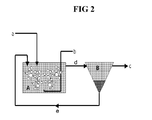
- the AS treatment system ( Fig. 2 ) was made using a 4 litre Perspex aeration chamber (19 cm by 19 cm by 12.5 cm) (A) which was continuously aerated and stirred.
- the outflow from the aeration chamber was transferred via a liquid overflow (indicated by arrow d) to a 1-fitre tubular settling tank (diameter, 7 cm; height, 32 cm) (B).
- sludge was re-circulated (indicated by arrow e) to the aeration chamber using peristaltic pumps. Clean effluent was removed from the top of the settlement tank via an overflow tube (indicated by arrow c) to a capture vessel.
- the mixed liquor (aeration) chamber was aerated at 250 ml/min (aeration inflow indicated at b).
- the tank was mixed by a magnetic stirrer (100 rpm) at the bottom of the tank.
- the influent was delivered via a feed pipe (seawater-based sewage inflow indicated at a) from a header tank, which was filled periodically.
- the artificial sewage (Table 1) was made up in seawater and resulted in an average BOD in the inflow of about 150 mg/l. This represented domestic sewage in gross chemical composition.
- the artificial sewage used was made up in full strength seawater for the 100% seawater experiments (salinity ⁇ 35 g/l) and diluted by half with tap water for the 50% seawater experiments (salinity ⁇ 17.5 g/l). Artificial sewage was used throughout the experiments so that a constant load could be maintained throughout the period of experimentation. Double the artificial sewage concentration was used to achieve an influent BOD of about 300 mg/l. The flow rates were adjusted to achieve a residence time in the aeration tank of about 24 h and a sludge wastage rate of about 10% per day. Table 1. Composition of artificial sewage Substance mg/l Oxoid nutrient broth 120.0 Dextrin 150.0 Glucose 100.0 Ammonium chloride 130.0 Potassium sulphate 8.3 Soluble starch 100.0
- the SABR was of similar construction ( Fig. 3a ) with the following major differences.
- Sterile artificial sewage (A in Fig. 3a ) at 100x the concentration given in Table 1 was mixed with seawater (concentrated artificial sewage flow in Fig. 3a indicated at b, seawater inflow indicated at a) in a 2-litre mixing vessel (B in Fig.
- BOD was measured by the 5-day BOD protocol, which involved incubating samples in sealed, airtight bottles; oxygen concentrations were measured by the Winkler titration before and after incubation for 5 days at 20°C.
- BOD was expressed as O 2 consumed over the 5 day incubation, expressed in mg/l, in bottles in which about 50% (30-70% acceptable range) of the oxygen was consumed.
- the samples were diluted with oxygenated water to achieve 50% O 2 consumption.
- Total SS was measured by the dry weight of material filterable through glass fibre filters (Whatman, GF/C) from 100-200 ml of sample, the filtrate being washed with deionized water to remove dissolved materials before drying at 105°C until constant weight. Salinity was estimated by the total dissolved solids in 5 ml aliquots of filtered sample, again dried at 105°C until constant weight.
- a pilot plant facility was constructed with pilot plant scale reactors designed to treat domestic sewage from between 6-30 population equivalents (PE).
- PE population equivalents
- Three reactors were chosen as examples of the range of small-scale, waste-treatment reactors that are used to treat domestic sewage. These reactors were supplied by commercial package treatment plant companies all proven to work well with freshwater based domestic sewage.
- the three reactors used were a SABR, a SBR and a RBC; these have influent rates of 1.3 m 3 /day, 1.3 m 3 /day and 3.0 m 3 /day, respectively.
- the pilot plant facility was located on a municipal sewage treatment plant in South Wales. It received sewage from the settled sewage line after primary settlement directly from the host sewage treatment works. High strength saline solution ( ⁇ 32%) was added to the inflow so that the salt concentration of the influent could be varied in the range 0-5 g/l by varying the pumping rate. Salinity in the inflow was routinely controlled by flow adjustments based on salinity readings from an electrodeless torroidal probe. This probe was used in the pilot plant for 10 months, with the only maintenance being occasional cleaning, and proved to be very robust, reliable and fully fit for purpose.
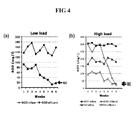
- the AS reactor was operated first at a low organic load at full strength seawater.
- the plant started to reduce the BOD in the effluent and by 8 weeks the Royal Commission standard had been reached.
- Fig. 4b the reactor performed almost identically
- Fig. 4b reaching Royal Commission standards for both BOD and SS within 8 weeks.
- the reactor was then maintained at high BOD and the seawater concentration in the sewage feed was reduced to about 50% (average 45.4%).
- the results from this operating regime ( Fig. 5a ) show slightly improved performance with the Royal Commission standards being reached within 7 weeks for both BOD and SS.
- the standard operating parameters of the reactors also indicated good reactor performance.
- the activated sludge in the reactors settled well in the aeration chamber and Fig. 5b shows good sludge settlement within 30 minutes.
- the mixed liquor suspended solids (MLSS) concentration in the aeration chamber was stable at about 1300 mg/l throughout.
- the sludge volume index (SVI) was between 50-100 in these experiments indicating satisfactory performance.
- a good sludge should have an SVI ⁇ 80 and a very good sludge around 50; whilst an SVI 120 indicates poor settling properties.
- the microbial composition of the sludge was also as expected for a plant working well ( Fig. 6 ).
- the sludge flocs were well separated when viewed microscopically ( Fig. 6a ) and the numbers of protozoa ( Fig. 6b-e ) were typical for a stable plant ( Fig. 6 , Table).
- the apparent species composition of protozoa was typical for a plant producing good effluent (e.g. 1. Curds, C.R., & Cockburn, A., 1970. Water Res. 4, 225-236 ; 2.
- FIG. 6 The other photomicrographs in Fig. 6 show (b) a crawling ciliate, Chilodonella unicata (c), the crawling ciliate, Euplotes affinis, behind a detritus particle (d), the colonial stalked ciliate, Epistylis chrysemydis and (e) the stalked ciliate Vorticella convallaria.
- Fig. 7 shows how BOD values increased rapidly as unexpected, evaporative concentration of the saline artificial sewage occurred when the plant salinity increased to 45g/l in the aeration tank. This stopped the microbial population working well; note a BOD of 67 mg/l in week 3 when the salinity first starts to rise. This meant that the oxidation of the artificial sewage did not occur during the next 4 weeks.
- prompt action in reducing the salinity (see week 6 value in Fig. 7 ) helped re-establish a strong microbial flora which resulted in good treatment after week 8 in Fig.7 (data not shown). This indicated the importance of controlling salinity in these seawater based treatment systems and probably explains how the plant run at 50% seawater salinity produced good effluent more quickly ( Fig. 5a ) than in the 100% seawater experiment ( Fig. 4a ).
- This reactor has a mixing vessel in which bacteria grow to simulate the composition of real sewage before the feed into the aerated reactor ( Fig. 3a ).
- the pilot plant facility was operated for 10 months.
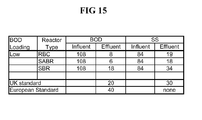
- Fig. 13 shows the results for all three reactors over a 15 week period in summer and autumn with low BOD inflow. This shows that BOD was effectively reduced to within acceptable standards for all three types of pilot plant. These results were obtained shortly after start-up of the pilot plant facility so some plants needed time to establish sufficient microbial biomass in the reactors to treat the effluent effectively.
- the SABR performed well from the beginning producing low BOD and SS ( Fig. 14 ). This showed that the pilot plant established its active biomass very quickly in a similar manner to the laboratory scale plant, supporting the applicability of laboratory scale results (e.g. Fig. 12 ) to full scale plants.
- the RBC was the next quickest to establish and by mid August was producing high quality effluent with low BOD and SS.
- E. coli and coliforms are commonly used as indicators of pathogens in drinking and recreational waters. For this reason it is important that wastewaters from any sewage process show a significant reduction in levels of these two groups of indicator bacteria. Percentage reductions of 95-99% are achievable in effective freshwater-based, wastewater treatment plants.
- Fig. 17b shows how coliforms and E . coli were killed during effective treatment in the SBR.
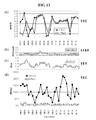
- treatment was not consistently effective, as the plant adapted to the high strength inflow ( Fig. 16b ).
- BOD removal was effective ( Fig. 16b ) and both coliform and E . coli reduction was 95% ( Fig. 17b ), and so equivalent to figures achieved in good freshwater-based plants.
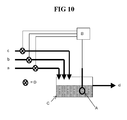
- Salinity can best be monitored and controlled via conductivity estimates obtained by continuous monitoring with a torroidal conductivity probe (A in Fig. 10 ), with built-in temperature compensation, linked to an appropriate controller (B in Fig. 10 ).
- the torroidal probe is electrodeless and works by inducing and sensing alternating current in the surrounding liquid.
- This type of probe is ideal for this wastewater application for the following two main reasons: (i) Torroidal probes will measure conductivity over a wide range of salinity; (ii) The probe's performance is not affected by minor fouling with microbial biofilm (although some routine cleaning is required to prevent gross fouling).
- the conductivity may be measured in a mixing chamber (C in Fig 10 ) into which is flowed saltwater-based wastewater (a in Fig 10 ) and compensating water of high (b in Fig 10 ) and/or low (c in Fig 10 ) salinity.
- the controller then senses the conductivity and adjusts the flow of compensation waters appropriately to adjust salinity in the mixing tank to the desired level.
- Flow control is achieved by the controller by the actuation of valves or other appropriate flow regulating devices (D in Fig 10 ). This allows the achievement of stable salinity in the outflow to the mixing vessel (d in Fig 10 ), this outflow being the wastewater inflow to the aerobic treatment tank.
Landscapes
- Life Sciences & Earth Sciences (AREA)
- Water Supply & Treatment (AREA)
- Health & Medical Sciences (AREA)
- Biodiversity & Conservation Biology (AREA)
- Microbiology (AREA)
- Hydrology & Water Resources (AREA)
- Engineering & Computer Science (AREA)
- Molecular Biology (AREA)
- Chemical & Material Sciences (AREA)
- Environmental & Geological Engineering (AREA)
- Organic Chemistry (AREA)
- Activated Sludge Processes (AREA)
- Biological Treatment Of Waste Water (AREA)
- Treatment Of Biological Wastes In General (AREA)
- Heat Treatment Of Water, Waste Water Or Sewage (AREA)
- Purification Treatments By Anaerobic Or Anaerobic And Aerobic Bacteria Or Animals (AREA)
Applications Claiming Priority (2)
| Application Number | Priority Date | Filing Date | Title |
|---|---|---|---|
| GB0407922A GB0407922D0 (en) | 2004-04-07 | 2004-04-07 | Water treatment |
| EP05732810A EP1735246A1 (de) | 2004-04-07 | 2005-04-07 | Wasserbehandlung |
Related Parent Applications (1)
| Application Number | Title | Priority Date | Filing Date |
|---|---|---|---|
| EP05732810.6 Division | 2005-04-07 |
Publications (1)
| Publication Number | Publication Date |
|---|---|
| EP2298703A1 true EP2298703A1 (de) | 2011-03-23 |
Family
ID=32320522
Family Applications (2)
| Application Number | Title | Priority Date | Filing Date |
|---|---|---|---|
| EP20100179585 Withdrawn EP2298703A1 (de) | 2004-04-07 | 2005-04-07 | Behandlung von salzwasserhaltigem häuslichen Abwasser |
| EP05732810A Withdrawn EP1735246A1 (de) | 2004-04-07 | 2005-04-07 | Wasserbehandlung |
Family Applications After (1)
| Application Number | Title | Priority Date | Filing Date |
|---|---|---|---|
| EP05732810A Withdrawn EP1735246A1 (de) | 2004-04-07 | 2005-04-07 | Wasserbehandlung |
Country Status (12)
| Country | Link |
|---|---|
| US (1) | US7875180B2 (de) |
| EP (2) | EP2298703A1 (de) |
| JP (1) | JP2007532291A (de) |
| CN (2) | CN1980864A (de) |
| AU (2) | AU2005230271A1 (de) |
| BR (1) | BRPI0509750A (de) |
| CA (1) | CA2563455C (de) |
| GB (1) | GB0407922D0 (de) |
| HK (1) | HK1200435A1 (de) |
| MX (1) | MXPA06011596A (de) |
| WO (1) | WO2005097688A1 (de) |
| ZA (1) | ZA200608406B (de) |
Families Citing this family (19)
| Publication number | Priority date | Publication date | Assignee | Title |
|---|---|---|---|---|
| JP5000246B2 (ja) * | 2005-09-28 | 2012-08-15 | 株式会社半導体エネルギー研究所 | 排液処理方法及び処理装置 |
| AU2006299746B2 (en) * | 2005-10-06 | 2011-08-04 | Evoqua Water Technologies Llc | Dynamic control of membrane bioreactor system |
| KR20080063489A (ko) * | 2005-10-06 | 2008-07-04 | 지멘스 워터 테크놀로지스 코포레이션 | 멤브레인 바이오리액터 시스템의 동적 제어 |
| WO2010008268A1 (en) * | 2008-07-15 | 2010-01-21 | Universiti Putra Malaysia | A process for treating wastewater |
| US8216455B1 (en) * | 2008-12-01 | 2012-07-10 | O'brien Mackenzie Anne | Water handling system |
| CN101955253A (zh) * | 2009-12-24 | 2011-01-26 | 北京碧水源科技股份有限公司 | 脉冲错流式膜生物反应器 |
| US8408840B2 (en) | 2010-08-31 | 2013-04-02 | Dennis Dillard | Aerobic irrigation controller |
| JP5636296B2 (ja) * | 2011-01-20 | 2014-12-03 | 公益財団法人微生物化学研究会 | 塩分含有有機廃液処理剤、並びに、塩分濃度低下剤、塩分含有有機廃液の処理方法、及び包括固定担体 |
| US8668187B2 (en) | 2011-11-22 | 2014-03-11 | Kuwait University | Integrated aeration system |
| FR2985723B1 (fr) * | 2012-01-12 | 2015-02-06 | Centre Nat Rech Scient | Dispositif d'assainissement d'une eau usee liquide et procede d'assainissement d'une eau usee liquide mettant en oeuvre un tel dispositif |
| JP5999598B2 (ja) * | 2012-11-06 | 2016-09-28 | 国立大学法人茨城大学 | 海水を利用した下排水処理方法 |
| CN106477716B (zh) * | 2015-08-27 | 2019-10-15 | 北京世纪伟方生物技术有限公司 | 一种用于废弃钻井液处理的活性污泥培养方法 |
| CN105439380A (zh) * | 2015-12-12 | 2016-03-30 | 常州大学 | 一种去除含盐废水中有机物的方法 |
| CN110655278A (zh) * | 2019-10-18 | 2020-01-07 | 江苏师范大学 | 一种用于净化有机废水的生态浮床 |
| KR102464454B1 (ko) * | 2020-08-07 | 2022-11-10 | 주식회사 성광이엔에프 | 폐수 농도 조절을 이용한 고효율의 회전 디스크 타입의 크리스탈라이저 시스템 |
| CN112110539A (zh) * | 2020-09-07 | 2020-12-22 | 大连海洋大学 | 一种具有强化脱氮除磷效能的海水养殖底泥的无害化处理方法 |
| KR102311712B1 (ko) * | 2020-11-20 | 2021-10-13 | 주식회사 부강테크 | 여재가 투입된 회분식 반응조(sbbr)를 이용한 부분 아질산화와 이를 이용한 단축질소제거 오폐수 처리장치 및 시스템 |
| US20230093739A1 (en) * | 2021-09-21 | 2023-03-23 | Laura Summerlin | Sewage Treatment Method |
| CN117432041B (zh) * | 2023-10-19 | 2025-10-03 | 中国科学院南京地理与湖泊研究所 | 一种多级多污染物分流配水系统 |
Citations (8)
| Publication number | Priority date | Publication date | Assignee | Title |
|---|---|---|---|---|
| GB1466530A (en) | 1974-07-05 | 1977-03-09 | Idemitsu Kosak Co Ltd | Activated sludge process for treating waste water |
| EP0104648A2 (de) | 1982-09-29 | 1984-04-04 | Phillips Petroleum Company | Abwasserbehandlung |
| US4442007A (en) | 1982-09-28 | 1984-04-10 | Rehm Russell H | Activated seawater wastewater treatment system |
| EP0523883A1 (de) | 1991-07-01 | 1993-01-20 | Water Research Commission | Verfahren zur Behandlung von salzhaltigen Abwassern |
| JPH05208197A (ja) | 1992-01-31 | 1993-08-20 | Nkk Corp | 活性汚泥のバルキングの防止方法 |
| US5308491A (en) * | 1991-09-27 | 1994-05-03 | The Dow Chemical Company | Biological wastewater treatment process |
| JPH11253942A (ja) | 1998-03-12 | 1999-09-21 | Kubota Corp | 移動式浸漬型膜分離汚水処理装置 |
| EP1341597A1 (de) | 2000-12-04 | 2003-09-10 | Kubota Corporation | Mehrstufiger getauchter membranabscheider zur nutzung in einer behandlungsanlagefür hochkonzentriertes abwasser |
Family Cites Families (6)
| Publication number | Priority date | Publication date | Assignee | Title |
|---|---|---|---|---|
| CN1068088A (zh) * | 1992-04-25 | 1993-01-20 | 黄柳基 | 同步活性污泥法处理有机物废水 |
| GB2281293A (en) * | 1993-05-06 | 1995-03-01 | Kok Pee Saw | Treatment of sewage |
| JPH07184634A (ja) * | 1993-12-28 | 1995-07-25 | Ajinomoto Co Inc | 微生物好気培養における培養方法及び装置 |
| JP3607353B2 (ja) * | 1995-04-21 | 2005-01-05 | 富士写真フイルム株式会社 | 有機アミノカルボン酸分解菌及びそれを用いた廃液の処理方法 |
| US6926830B2 (en) | 2002-06-28 | 2005-08-09 | Kingsford Environmental (H.K.) Ltd. | Combined activated sludge-biofilm sequencing batch reactor and process |
| CN1182055C (zh) * | 2002-10-15 | 2004-12-29 | 上海子征环境技术咨询有限公司 | 沸石生物联合吸附再生污水处理方法 |
-
2004
- 2004-04-07 GB GB0407922A patent/GB0407922D0/en not_active Ceased
-
2005
- 2005-04-07 AU AU2005230271A patent/AU2005230271A1/en not_active Abandoned
- 2005-04-07 CA CA 2563455 patent/CA2563455C/en not_active Expired - Fee Related
- 2005-04-07 CN CNA2005800186207A patent/CN1980864A/zh active Pending
- 2005-04-07 JP JP2007506840A patent/JP2007532291A/ja active Pending
- 2005-04-07 WO PCT/GB2005/001358 patent/WO2005097688A1/en not_active Ceased
- 2005-04-07 ZA ZA200608406A patent/ZA200608406B/en unknown
- 2005-04-07 MX MXPA06011596A patent/MXPA06011596A/es active IP Right Grant
- 2005-04-07 EP EP20100179585 patent/EP2298703A1/de not_active Withdrawn
- 2005-04-07 US US11/547,693 patent/US7875180B2/en not_active Expired - Fee Related
- 2005-04-07 CN CN201410137428.0A patent/CN104150584A/zh active Pending
- 2005-04-07 EP EP05732810A patent/EP1735246A1/de not_active Withdrawn
- 2005-04-07 BR BRPI0509750-9A patent/BRPI0509750A/pt not_active Application Discontinuation
-
2011
- 2011-04-08 AU AU2011201600A patent/AU2011201600B2/en not_active Ceased
-
2015
- 2015-01-28 HK HK15100968.1A patent/HK1200435A1/xx unknown
Patent Citations (8)
| Publication number | Priority date | Publication date | Assignee | Title |
|---|---|---|---|---|
| GB1466530A (en) | 1974-07-05 | 1977-03-09 | Idemitsu Kosak Co Ltd | Activated sludge process for treating waste water |
| US4442007A (en) | 1982-09-28 | 1984-04-10 | Rehm Russell H | Activated seawater wastewater treatment system |
| EP0104648A2 (de) | 1982-09-29 | 1984-04-04 | Phillips Petroleum Company | Abwasserbehandlung |
| EP0523883A1 (de) | 1991-07-01 | 1993-01-20 | Water Research Commission | Verfahren zur Behandlung von salzhaltigen Abwassern |
| US5308491A (en) * | 1991-09-27 | 1994-05-03 | The Dow Chemical Company | Biological wastewater treatment process |
| JPH05208197A (ja) | 1992-01-31 | 1993-08-20 | Nkk Corp | 活性汚泥のバルキングの防止方法 |
| JPH11253942A (ja) | 1998-03-12 | 1999-09-21 | Kubota Corp | 移動式浸漬型膜分離汚水処理装置 |
| EP1341597A1 (de) | 2000-12-04 | 2003-09-10 | Kubota Corporation | Mehrstufiger getauchter membranabscheider zur nutzung in einer behandlungsanlagefür hochkonzentriertes abwasser |
Non-Patent Citations (9)
| Title |
|---|
| 2. CURDS, C.R.; COCKBURN, A., WATER RES., vol. 4, 1970, pages 237 - 249 |
| BITTON: "Wastewater Microbiology", 1999, WILEY-LISS |
| BROWN ET AL., AQUACULTURE, vol. 175, 1999, pages 255 |
| CURDS, C.R.; COCKBURN, A., WATER RES., vol. 4, 1970, pages 225 - 236 |
| DUCKLOW, FEMS MICROBIOL ECOL, vol. 30, 1999, pages 1 - 10 |
| INTRASUNGKHA N, KELLER J, BLACKALL, L: "Biological Nutrient Removal Efficiency in Treatment of Saline Wastewater", WATER SCIENCE AND TECHNOLOGY, vol. 39, no. 6, 1999, pages 183 - 190, XP008048385 * |
| KIRCHMAN: "Microbial Ecology of the Oceans", 2000, WILEY-LISS |
| PANSWAD T ET AL: "Impact of high chloride wastewater on an anaerobic/anoxic/aerobic process with and without inoculation of chloride acclimated seeds", WATER RESEARCH, PERGAMON PRESS, OXFORD, GB, vol. 33, no. 5, April 1999 (1999-04-01), pages 1165 - 1172, XP004182742, ISSN: 0043-1354 * |
| TANG S L: "Dual water supply in Hong Kong", PROCEEDINGS OF THE 26TH WEDC CONFERENCE, DHAKA, BANGLADESH, 2000, XP002331462, Retrieved from the Internet <URL:http://wedc.lboro.ac.uk/> [retrieved on 20050610] * |
Also Published As
| Publication number | Publication date |
|---|---|
| EP1735246A1 (de) | 2006-12-27 |
| BRPI0509750A (pt) | 2007-09-25 |
| GB0407922D0 (en) | 2004-05-12 |
| CN1980864A (zh) | 2007-06-13 |
| AU2011201600A1 (en) | 2011-04-28 |
| MXPA06011596A (es) | 2007-04-20 |
| AU2011201600B2 (en) | 2014-04-24 |
| JP2007532291A (ja) | 2007-11-15 |
| HK1200435A1 (zh) | 2015-08-07 |
| WO2005097688A1 (en) | 2005-10-20 |
| ZA200608406B (en) | 2008-07-30 |
| US7875180B2 (en) | 2011-01-25 |
| CA2563455A1 (en) | 2005-10-20 |
| US20080296220A1 (en) | 2008-12-04 |
| AU2005230271A1 (en) | 2005-10-20 |
| CN104150584A (zh) | 2014-11-19 |
| CA2563455C (en) | 2012-11-20 |
Similar Documents
| Publication | Publication Date | Title |
|---|---|---|
| AU2011201600B2 (en) | Water treatment | |
| Othman et al. | Livestock wastewater treatment using aerobic granular sludge | |
| Huang et al. | Effect of sludge retention time on microbial behaviour in a submerged membrane bioreactor | |
| Bloor et al. | High rate aerobic treatment of brewery wastewater using the jet loop reactor | |
| Block | Biofilms in drinking water distribution systems | |
| Ab Halim et al. | Influence of high temperature on the performance of aerobic granular sludge in biological treatment of wastewater | |
| Farizoglu et al. | Simultaneous removal of C, N, P from cheese whey by jet loop membrane bioreactor (JLMBR) | |
| Hamon et al. | Oncological ward wastewater treatment by membrane bioreactor: Acclimation feasibility and pharmaceuticals removal performances | |
| NO328114B1 (no) | Fremstilling av akklimatisert marint nitrifiserende aktivert slam (AMNS) fra ekskrementslam og fremstilling av akklimatisert marint denitrifiserende aktivert slam (AMDS) fra ekskrementslammet og nitrifisert supernatant. | |
| Fan et al. | Treatment and reuse of toilet wastewater by an airlift external circulation membrane bioreactor | |
| Movahedyan et al. | Performance evaluation of an anaerobic baffled reactor treating wheat flour starch industry wastewater | |
| Ritigala et al. | Comparison of an integrated short-cut biological nitrogen removal process with magnetic coagulation treating swine wastewater and food waste digestate | |
| CN116969604A (zh) | 处理废水和提供a类污泥的系统和方法 | |
| Vaiopoulou et al. | Growth of filamentous bacteria in an enhanced biological phosphorus removal system | |
| Yusoff et al. | Performance of the hybrid growth sequencing batch reactor (HG-SBR) for biodegradation of phenol under various toxicity conditions | |
| US6610204B1 (en) | Microbiological removal of bromine salts from fluid streams | |
| CN212451091U (zh) | 一种基于msbr工艺的废水处理系统 | |
| Wheatley | Biotechnology and effluent treatment | |
| Tan et al. | Cultivation of marine activated sludge to treat saline wastewater | |
| CN115594303A (zh) | 污水短程硝化装置、方法及污水处理系统 | |
| Jianping et al. | Nitrifying treatment of wastewater from fertilizer production in a three‐phase flow airlift loop bioreactor | |
| Ali et al. | Anode substrate tailoring in fed-batch photosynthetic microbial desalination cell for industrial and domestic wastewater treatment | |
| Tremblay et al. | Phosphorus accumulating organisms utilization of volatile fatty acids produced by fermentation of anaerobic mixed liquor | |
| Siriweera et al. | Development of MBR, MABR and AnMBR Systems for Wastewater Treatment | |
| Dang | Treatment of urban wastewater discharged into Tinh Tam lake using hydrogen peroxide-supplemented aerated biofilter system |
Legal Events
| Date | Code | Title | Description |
|---|---|---|---|
| PUAI | Public reference made under article 153(3) epc to a published international application that has entered the european phase |
Free format text: ORIGINAL CODE: 0009012 |
|
| AC | Divisional application: reference to earlier application |
Ref document number: 1735246 Country of ref document: EP Kind code of ref document: P |
|
| AK | Designated contracting states |
Kind code of ref document: A1 Designated state(s): AT BE BG CH CY CZ DE DK EE ES FI FR GB GR HU IE IS IT LI LT LU MC NL PL PT RO SE SI SK TR |
|
| 17P | Request for examination filed |
Effective date: 20110923 |
|
| RAP1 | Party data changed (applicant data changed or rights of an application transferred) |
Owner name: POSEIDON WATER LIMITED |
|
| 17Q | First examination report despatched |
Effective date: 20160907 |
|
| STAA | Information on the status of an ep patent application or granted ep patent |
Free format text: STATUS: EXAMINATION IS IN PROGRESS |
|
| STAA | Information on the status of an ep patent application or granted ep patent |
Free format text: STATUS: THE APPLICATION IS DEEMED TO BE WITHDRAWN |
|
| 18D | Application deemed to be withdrawn |
Effective date: 20190208 |