EP2290784A2 - Circuit MPPT analogique pour une installation photovoltaique de puissance - Google Patents
Circuit MPPT analogique pour une installation photovoltaique de puissance Download PDFInfo
- Publication number
- EP2290784A2 EP2290784A2 EP20100166273 EP10166273A EP2290784A2 EP 2290784 A2 EP2290784 A2 EP 2290784A2 EP 20100166273 EP20100166273 EP 20100166273 EP 10166273 A EP10166273 A EP 10166273A EP 2290784 A2 EP2290784 A2 EP 2290784A2
- Authority
- EP
- European Patent Office
- Prior art keywords
- converter
- conduction mode
- pwm
- signal
- circuit
- Prior art date
- Legal status (The legal status is an assumption and is not a legal conclusion. Google has not performed a legal analysis and makes no representation as to the accuracy of the status listed.)
- Withdrawn
Links
- 238000010248 power generation Methods 0.000 title 1
- 238000000034 method Methods 0.000 claims abstract description 13
- 238000012545 processing Methods 0.000 claims abstract description 6
- 230000003111 delayed effect Effects 0.000 claims description 12
- 238000012544 monitoring process Methods 0.000 claims description 4
- 230000001360 synchronised effect Effects 0.000 claims description 4
- 230000000295 complement effect Effects 0.000 claims description 2
- 238000001914 filtration Methods 0.000 claims description 2
- 230000000087 stabilizing effect Effects 0.000 claims 2
- 230000001186 cumulative effect Effects 0.000 claims 1
- 238000006243 chemical reaction Methods 0.000 abstract description 10
- 238000010586 diagram Methods 0.000 description 15
- 238000005070 sampling Methods 0.000 description 4
- 239000003990 capacitor Substances 0.000 description 3
- 238000005259 measurement Methods 0.000 description 2
- BUGBHKTXTAQXES-UHFFFAOYSA-N Selenium Chemical compound [Se] BUGBHKTXTAQXES-UHFFFAOYSA-N 0.000 description 1
- 238000013459 approach Methods 0.000 description 1
- 230000000052 comparative effect Effects 0.000 description 1
- 238000013500 data storage Methods 0.000 description 1
- 230000003247 decreasing effect Effects 0.000 description 1
- 238000013461 design Methods 0.000 description 1
- 230000000694 effects Effects 0.000 description 1
- 230000010363 phase shift Effects 0.000 description 1
- 230000005855 radiation Effects 0.000 description 1
- 230000011664 signaling Effects 0.000 description 1
- 230000006641 stabilisation Effects 0.000 description 1
- 238000011105 stabilization Methods 0.000 description 1
Images



Classifications
-
- H—ELECTRICITY
- H02—GENERATION; CONVERSION OR DISTRIBUTION OF ELECTRIC POWER
- H02J—CIRCUIT ARRANGEMENTS OR SYSTEMS FOR SUPPLYING OR DISTRIBUTING ELECTRIC POWER; SYSTEMS FOR STORING ELECTRIC ENERGY
- H02J7/00—Circuit arrangements for charging or depolarising batteries or for supplying loads from batteries
- H02J7/34—Parallel operation in networks using both storage and other DC sources, e.g. providing buffering
- H02J7/35—Parallel operation in networks using both storage and other DC sources, e.g. providing buffering with light sensitive cells
-
- Y—GENERAL TAGGING OF NEW TECHNOLOGICAL DEVELOPMENTS; GENERAL TAGGING OF CROSS-SECTIONAL TECHNOLOGIES SPANNING OVER SEVERAL SECTIONS OF THE IPC; TECHNICAL SUBJECTS COVERED BY FORMER USPC CROSS-REFERENCE ART COLLECTIONS [XRACs] AND DIGESTS
- Y02—TECHNOLOGIES OR APPLICATIONS FOR MITIGATION OR ADAPTATION AGAINST CLIMATE CHANGE
- Y02E—REDUCTION OF GREENHOUSE GAS [GHG] EMISSIONS, RELATED TO ENERGY GENERATION, TRANSMISSION OR DISTRIBUTION
- Y02E10/00—Energy generation through renewable energy sources
- Y02E10/50—Photovoltaic [PV] energy
- Y02E10/56—Power conversion systems, e.g. maximum power point trackers
Definitions
- This disclosure relates in general to photovoltaic panel(s) power plants and in particular to the techniques for maximum power point tracking (briefly MPPT).
- the disclosed MPPT technique is particularly effective in power plants wherein generated energy is stored in a battery array or is absorbed from the output of a DC-DC step-up converter at an output voltage relatively stable in the short term.
- PV photovoltaic
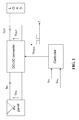
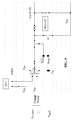
- P&O based MPP trackers are typically implemented by a DSP/ ⁇ C in a feedback loop of a DC-DC converter, whose duty cycle (D) is controlled in such a way as to maximize the power derivable from the PV panel by an electrical load according to a basic scheme as shown in FIG. 1 .
- controlling (varying) the duty cycle of the DC-DC converter is equivalent to perturb the voltage V PV and thus the power extracted from the PV panel.
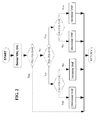
- V PV *I PV The voltage across the PV panel terminals, V PV , and the delivered current, I PV , are periodically measured and converted into digital words. Then their multiplication (V PV *I PV ) is executed to obtain the power currently extracted from the panel and the value obtained is compared with a previously calculated and stored value of output power in order to set the sign of increment of the duty cycle of the PWM drive signal of the power switch of the DC-DC converter that determined the observed variation of the output power. If that variation is greater than zero, the sign is kept unchanged, otherwise it is inverted.
- FIG. 2 The flowchart of such a typical digital MPPT control is depicted in FIG. 2 .
- This control requires two sensors, for measuring both the voltage at the panel terminals and the current, needed for calculate the power currently yielded from the PV panel, and thus two analog to digital conversions are needed too.
- DCM Discontinuous Conduction Mode
- the ADC can represent a crucial part of the whole design, as its resolution strictly relates to circuit complexity and control accuracy.
- a constant current, proportional to the power delivered by the panel(s), to the DC-DC converter charges a capacitor during a first portion of the sampling period and discharges it during a second portion of the sampling period; then, in the third and last portion of the sampling period, the amount of charge left in the capacitor feeds a comparator whose output provides a digital signal indicating whether the power is increasing or decreasing.
- An outstandingly effective novel method of maximum power point tracking (MPPT) in operating a photovoltaic power plant that includes at least a DC-DC converter of the output voltage (V PV ) of a single panel or of a plurality of series-parallel interconnected panels, having a power switch driven by a PWM control signal (V PWM ) of variable duty-cycle (D) generated by a PWM control circuit, in discontinuous conduction mode (DCM) or continuous conduction mode (CCM) depending on the current load of the converter, has now been found, which is implemented by simple low cost analog circuits.
- the method does not require the use of any analog to digital conversion, digital processing or storage and requires only a single voltage sensor, in other words, no dissipative sensing resistance needs to be introduced.
- the method comprises:
- An important embodiment of an analog circuit adapted to force the duty cycle of the PWM drive signal (V PWM ) of the power switch of the DC-DC converter to invert the sign of variation for tracking the maximum power point of functioning of the PV power plant basically comprises:
- the duty cycle D of the power switch of a DC-DC converter is controlled by a Pulse Width Modulated (PWM) driving signal, V PWM .
- PWM Pulse Width Modulated
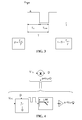
- the ratio between the ON time and the whole period of the waveform is D , as shown in FIG. 3 .
- the amplitude of the PWM driving signal is A and if it is applied to a low-pass filter, the resulting signal will be a constant voltage proportional to the product A*D as far as ripple can be neglected.
- the PWM signal may be used to switch the voltage between V PV and ground at the input of the same low-pass filter, such that the resulting output signal is a constant voltage proportional to V PV *D with negligible ripple.
- the product signal represents the power currently yielded from the PV panel or panels when the converter is functioning in discontinuous conduction mode (DCM).
- FIG. 4 A functional block diagram of hardware adapted to perform such a multiplication is depicted in FIG. 4 .
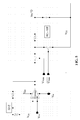
- FIG. 5 is an exemplary analog circuit for producing an output signal of amplitude proportional to the product VPV*D.
- the PWM driving signal is the same waveform that is used to control the power switch of the DC-DC converter of the PV generation plant.
- the low-pass filter may be a simple RC first order circuit, whose time constant may be 5-10 times the period of the PWM driving signal in order to reduce spurious ripple at the output.
- an active low pass filter may alternatively be used.
- V PV may be a scaled version of the panel(s) voltage, tapped from an ordinary voltage divider. Alternatively, and it can be directly coupled, thanks to the decoupling of the amplifier. (V PWM ) and its inverted counterpart are used to switch between V PV and ground the input voltage of the low pass filter. At the output side of the filter, a voltage follower may be used to decouple this stage from the next one.
- the input current is large enough to be monitored as a voltage drop across a relatively small series resistance.
- step-up (boost) converter depicted in FIG. 6 : in (a) for an ideal switch and in (b) for a practical implementation with a MOSFET switch Q 1 in position 1) and a diode D 1 or any equivalent synchronous rectifier in position 2), during the ON time (switch in position 1), the current flowing through the MOSFET Q 1 is I PV (the same current that flows in the PV panel(s)) increases the energy stored in the inductor L . During the OFF time (switch in position 2), the stored energy is released through the diode D 1 to the output node, the voltage on which raises at a value higher than the input voltage.
- I PV the same current that flows in the PV panel(s)
- the MOSFET Q 1 has an intrinsic resistance R DSON when turned on, therefore I PV can be monitored as a voltage drop across Q 1 during ON times.
- I B is equal to the current I A flowing through the MOSFET at T ON l2, as shown in FIG. 7 .
- the average output current can be monitored as the product between (1-D) and the voltage drop across the MOSFET sampled at T ON / 2, which is equal to (R DSON *I A ).
- this multiplication may be performed by a circuit functionally defined in the block diagrams of FIG. 8 .
- the monitored voltage drop must be amplified by a factor K , due to the necessarily low value of R DSON that for a MOSFET is typically in the range of few hundreds m ⁇ .
- FIG. 9 is an exemplary analog circuit for producing an output signal of amplitude proportional to the product of I B* (1-D).
- the circuit may utilize a charge pump at the input for periodically sampling the relatively small voltage drop across the MOSFET at T ON l2 instants accumulating electrical charge for a certain number of PWM cycles for amplifying the detected voltage drop by a certain factor, in the considered sample embodiment by six.
- the resulting voltage, Vcp is proportional to the current I A . of the waveforms of FIG. 7 .
- an analog circuit similar to that of FIG. 5 , performs the product (Vcp*1D).
- the output product signal represents a scaled replica of the average output current of the DC-DC converter I OUT , which tracks the input power trend as explained above.
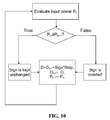
- a simple MPP tracker based on a Perturb & Observe algorithm needs to compare the power extracted from the PV panel at time t n with the power extracted at a precedent time t n-1 in order to verify whether the duty cycle of the PWM signal that controls the power switch of the DC-DC converter is varying in the right direction (i.e. determining an increment of the power extracted from the PV panel(s)) or not. It is assumed that the duty cycle variation is correct if it causes an increase of the input power of the converter, otherwise the duty cycle must vary in the opposite direction.
- FIG. 10 is a typical flow diagram of such a P&O algorithm.
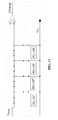
- FIG. 11 An effective embodiment of the core circuit of a fully analog implementation of a MPPT control in a PV generation plant of this disclosure is shown in FIG. 11 .
- the circuit used to delay the product signals produced at the output of the analog circuits of FIG. 5 or of FIG. 9 , that corresponds to the power currently extracted from the panel(s), here identified by the input voltage Vpower may be a distributed RC network, with time constants ranging from about 10 to 100 times the period of the PWM driving signal V PWM .
- the current power value Vpower is applied to the inverting input of a comparator, and its delayed counterpart is applied to the non-inverting input.
- the output of the comparator Vchange becomes high, it means that the direction of the duty cycle variation must be inverted in order to track the maximum power point of operation of the PV panel or panels of the generator plant.
- the number of RC elements in the network will be chosen in order to have the necessary phase shift between the present value of power and its delayed version, sufficient to determine an appreciable voltage drop at the input terminals of the comparator.
- the output of the comparator may be periodically sampled by a common D-type flip flop and the result used to trigger the output inversion of a second flip flop, each time the comparison output Vchange becomes high, that is to say each time the currently monitored power is less than its past value.
- the output of the second flip flop is used to control the slope sign of the reference voltage, Vref, generated by an integrator that is ordinarily compared with a triangular waveform to generate the PWM control waveform.
- a single RC element with a time constant large enough to filter also the lower frequency components introduced by the perturbation process may be used instead of a distributed RC network.
- the time constant should be between about 500 and 1,000 times the period of the PWM drive signal.
- the so filtered value of the input power signal Vpower will correspond to its time-averaged value, which will approach the maximum power when the MPP tracker circuit reaches steady state.
- the time-averaged value of power can be considered as a previous value of power.
- FIG. 12 is a basic block diagram of an exemplary embodiment of the MPPT controller.
- a trivial zero crossing detector can be used to monitor the voltage drop across the diode or any other equivalent synchronous rectifier, and the produced "zero-crossing" flag is processed by any circuit adapted to implement a hysteresis (these ancillary circuits are not shown in the block diagram, being of immediate recognition by any ordinarily skilled technician).
- the DC-DC converter will be considered in DCM only if the flag occurs for at least a pre-established number N of PWM cycles, and it will be considered in CCM if the flag remains absent for at least the same number N of PWM cycles.
- the hysteresis circuit carries out a "working-mode" flag processing that leads to select the pertinent one (Vpower) of the two product signals: V PV *D or Vcp*(1-D), to be fed to the MPP tracker core circuit described above.
- V power the pertinent one
- Vcp*(1-D) the pertinent one of the two product signals: V PV *D or Vcp*(1-D)
- both analog product signals: V PV *D and Vcp*(1-D) are continuously generated by the respective blocks, but only one at the time of the two product signals is used, according to the "working-mode" selection signals CCM and DCM.
- both analog multiplier block include a "memory" element, the capacitor of the output low pass filter, whose state of charge must track the resulting product quantity, in order to guarantee availability of a meaningful analog signal when their output is selected to feed the MPP tracker block.
- another control loop realized by the block Threshold control, forces Vref to stay within a voltage range such that the duty cycle of the PWM generator block be constrained to vary between about 10% and 90%.
- the block PWM generator typically compares the input value Vref with a triangular waveform in order to generate the PWM driving signal V PWM that is used for controlling the step-up converter and the analog multiplication circuits of the blocks V PV *D and Vcp*(1-D).
- the PWM generator block also produces a timing signal that is used at the input of the Charge pump block to sample the voltage drop on the power switch of the converter at T ON / 2 instants.
- circuitry will include other ordinary blocks for functions such as start-up, output voltage and/or current limiting and so on. These circuits not pertinent as far as fully understanding the technical characteristics and manners of practicing the disclosed invention.
Landscapes
- Engineering & Computer Science (AREA)
- Power Engineering (AREA)
- Dc-Dc Converters (AREA)
- Control Of Electrical Variables (AREA)
Applications Claiming Priority (1)
| Application Number | Priority Date | Filing Date | Title |
|---|---|---|---|
| ITVA20090042 | 2009-07-02 |
Publications (2)
| Publication Number | Publication Date |
|---|---|
| EP2290784A2 true EP2290784A2 (fr) | 2011-03-02 |
| EP2290784A3 EP2290784A3 (fr) | 2012-12-19 |
Family
ID=41607704
Family Applications (1)
| Application Number | Title | Priority Date | Filing Date |
|---|---|---|---|
| EP20100166273 Withdrawn EP2290784A3 (fr) | 2009-07-02 | 2010-06-17 | Circuit MPPT analogique pour une installation photovoltaique de puissance |
Country Status (2)
| Country | Link |
|---|---|
| US (1) | US8339112B2 (fr) |
| EP (1) | EP2290784A3 (fr) |
Cited By (5)
| Publication number | Priority date | Publication date | Assignee | Title |
|---|---|---|---|---|
| TWI481988B (zh) * | 2012-04-28 | 2015-04-21 | Au Optronics Corp | 功率追蹤裝置及功率追蹤方法 |
| CN104731157A (zh) * | 2015-03-16 | 2015-06-24 | 北京康拓科技有限公司 | 一种模拟最大功率判断电路 |
| CN112003359A (zh) * | 2020-07-15 | 2020-11-27 | 宁波大学 | 一种基于双栈共振的双源能量采集电路 |
| CN114035644A (zh) * | 2021-10-21 | 2022-02-11 | 西安理工大学 | 一种改进p&o法消除光伏发电系统稳态振荡的控制方法 |
| US11368023B2 (en) | 2018-03-22 | 2022-06-21 | General Electric Company | Dual-sampling maximum power point tracking with dynamic power limiting for power systems |
Families Citing this family (32)
| Publication number | Priority date | Publication date | Assignee | Title |
|---|---|---|---|---|
| FR2961040B1 (fr) * | 2010-06-04 | 2012-06-29 | Commissariat Energie Atomique | Circuit convertisseur et systeme electronique comportant un tel circuit |
| KR20120080107A (ko) * | 2011-01-06 | 2012-07-16 | 삼성전자주식회사 | 태양광 발전 시스템에서 최대 전력 점을 추종하는 전력 제어 방법 및 장치 |
| US9727072B2 (en) * | 2011-03-09 | 2017-08-08 | Solantro Semiconductor Corp. | Photovoltaic system maximum power point tracking |
| US9252661B2 (en) * | 2011-04-01 | 2016-02-02 | Qualcomm Inc. | Methods and devices for power supply control |
| JP5842366B2 (ja) * | 2011-04-04 | 2016-01-13 | 富士電機株式会社 | スイッチング電源制御回路 |
| TWI438602B (zh) | 2011-12-02 | 2014-05-21 | Ind Tech Res Inst | 最大功率點追蹤控制器、最大功率點追蹤系統和最大功率點追蹤方法 |
| CN102447428A (zh) * | 2011-12-21 | 2012-05-09 | 东莞市凯登能源科技有限公司 | 一种功率自动锁定的方法、装置及系统 |
| CN102427316A (zh) * | 2011-12-26 | 2012-04-25 | 东莞市凯登能源科技有限公司 | 一种功率自动搜索的方法、装置及系统 |
| WO2013105008A2 (fr) * | 2012-01-11 | 2013-07-18 | Koninklijke Philips N.V. | Convertisseur d'énergie solaire et procédé de commande de conversion d'énergie solaire |
| CN102594211B (zh) * | 2012-01-19 | 2014-08-13 | 北京工商大学 | 遮挡条件下光伏发电系统输出功率优化方法及跟踪装置 |
| WO2014070831A1 (fr) * | 2012-10-30 | 2014-05-08 | Board Of Trustees Of The University Of Alabama | Architecture et commande d'électronique de puissance de batterie distribuée |
| CN103207639B (zh) * | 2013-04-10 | 2015-04-01 | 卧龙电气集团股份有限公司 | 带最大功率点跟踪模块的光伏逆变器及其工作方法 |
| CN103218006A (zh) * | 2013-04-23 | 2013-07-24 | 南京航空航天大学 | 一种基于Boost类变换器的新型MPPT控制方法 |
| TWI470396B (zh) | 2013-06-26 | 2015-01-21 | 財團法人工業技術研究院 | 功率點追蹤方法與裝置 |
| KR101452776B1 (ko) | 2013-07-10 | 2014-12-17 | 엘에스산전 주식회사 | 태양광 시스템 |
| GB201312621D0 (en) | 2013-07-15 | 2013-08-28 | Univ Plymouth | Control arrangement |
| US9648674B2 (en) * | 2013-08-27 | 2017-05-09 | Texas Instruments Incorporated | Method and apparatus for calculating an average value of an inaccessible current from an accessible current |
| US9397501B2 (en) | 2013-09-09 | 2016-07-19 | Mitsubishi Electric Research Laboratories, Inc. | Maximum power point tracking for photovoltaic power generation system |
| KR20150073680A (ko) * | 2013-12-23 | 2015-07-01 | 한국전자통신연구원 | 최대 전력 추종 장치 및 방법 |
| US9325240B2 (en) * | 2014-01-17 | 2016-04-26 | University Of Virginia Patent Foundation | Low input voltage boost converter with peak inductor current control and offset compensated zero detection |
| US20150221799A1 (en) * | 2014-01-29 | 2015-08-06 | Nate D. Hawthorn | Transformerless Photovoltaic Solar Heating System |
| CN104868742B (zh) * | 2015-05-28 | 2017-07-11 | 西南交通大学 | 一种实现全桥隔离dc‑dc变换器降压变换模式最小电流应力的虚拟功率控制方法 |
| CN106329687B (zh) * | 2016-08-31 | 2019-08-20 | 天宝电子(惠州)有限公司 | 一种便携式交流充电桩控制电路 |
| US9991715B1 (en) | 2017-03-09 | 2018-06-05 | Industrial Technology Research Institute | Maximum power point tracking method and apparatus |
| TWI632445B (zh) * | 2017-03-09 | 2018-08-11 | 財團法人工業技術研究院 | 最大功率點追蹤方法及裝置 |
| EP3474407B1 (fr) * | 2017-10-18 | 2020-01-15 | e-peas S.A. | Circuit intégré de gestion de puissance pour la récupération d'énergie comportant une sélection de puissance multi-mode |
| KR102245969B1 (ko) * | 2019-11-21 | 2021-04-29 | 연세대학교 산학협력단 | 태양광 발전 시스템의 일정 출력 제어를 위한 장치 및 방법 |
| CN110855169B (zh) * | 2019-12-06 | 2021-09-14 | 龙岩学院 | 一种无电压传感器的单相逆变器模型预测控制方法 |
| CN111404141B (zh) * | 2020-03-30 | 2023-04-25 | 湖南大学 | 抑制直流电网中光伏变换器输出振荡的控制方法及系统 |
| CN111665760B (zh) * | 2020-06-23 | 2024-10-29 | 西安热工研究院有限公司 | 一种火电机组二输入平衡功能块连接结构及方法 |
| CN111624932B (zh) * | 2020-06-23 | 2024-10-29 | 西安热工研究院有限公司 | 一种火电机组八输入平衡功能块结构及方法 |
| CN114115431B (zh) * | 2021-11-30 | 2023-05-30 | 浙江佳乐科仪股份有限公司 | 一种光伏发电最大功率跟踪方法和系统 |
Family Cites Families (11)
| Publication number | Priority date | Publication date | Assignee | Title |
|---|---|---|---|---|
| JP3744679B2 (ja) * | 1998-03-30 | 2006-02-15 | 三洋電機株式会社 | 太陽光発電装置 |
| US6043633A (en) * | 1998-06-05 | 2000-03-28 | Systel Development & Industries | Power factor correction method and apparatus |
| US20030066555A1 (en) * | 2000-12-04 | 2003-04-10 | Hui Ron Shu Yuen | Maximum power tracking technique for solar panels |
| US7659673B2 (en) * | 2004-03-15 | 2010-02-09 | Philips Solid-State Lighting Solutions, Inc. | Methods and apparatus for providing a controllably variable power to a load |
| US7102341B1 (en) * | 2005-03-30 | 2006-09-05 | Texas Instruments Incorporated | Apparatus for controlling a power factor correction converter device |
| ITSA20060016A1 (it) * | 2006-06-07 | 2007-12-08 | Univ Degli Studi Salerno | Metodo e dispositivo per il funzionamento di sorgenti energetiche al punto di massima potenza. |
| US7595623B2 (en) * | 2006-11-20 | 2009-09-29 | Freescale Semiconductor, Inc. | Methods and apparatus for a spread spectrum switching regulator |
| JP4374033B2 (ja) * | 2007-02-26 | 2009-12-02 | 株式会社ルネサステクノロジ | スイッチング電源回路 |
| US8130522B2 (en) * | 2007-06-15 | 2012-03-06 | The Regents Of The University Of Colorado, A Body Corporate | Digital power factor correction |
| US7906943B2 (en) * | 2007-12-20 | 2011-03-15 | Microsemi Corporation | Boost converter with adaptive coil peak current |
| JP4631916B2 (ja) * | 2008-02-21 | 2011-02-16 | 日本テキサス・インスツルメンツ株式会社 | 昇圧形dc−dcコンバータ |
-
2010
- 2010-06-17 EP EP20100166273 patent/EP2290784A3/fr not_active Withdrawn
- 2010-07-01 US US12/828,736 patent/US8339112B2/en not_active Expired - Fee Related
Non-Patent Citations (9)
| Title |
|---|
| ASHISH PANDEY; NIVEDITA DASGUPTA; ASHOK K. MUKERJEE: "A Simple Single-Sensor MPPT Solution", IEEE TRANSACTIONS ON POWER ELECTRONICS, vol. 22, no. 2, March 2007 (2007-03-01) |
| CESARE ALIPPI; CRISTIAN GALPERTI: "An Adaptive System for Optimal Solar Energy Harvesting in Wireless Sensor Network Nodes", IEEE TRANSACTIONS ON CIRCUITS AND SYSTEMS-I: REGULAR PAPERS, vol. 55, no. 6, July 2008 (2008-07-01) |
| CHIHCHIANG HUA; MEMBER, IEEE; JONGRONG LIN; CHIHMING SHEN: "Implementation of a DSP-Controlled Photovoltaic System with Peak Power Tracking", IEEE TRANSACTIONS ON INDUSTRIAL ELECTRONICS, vol. 45, no. 1, February 1998 (1998-02-01) |
| D. P. HOHM; M. E. ROPP: "Comparative study of maximum power point tracking algorithms", PROC. PHOTOVOLT.: RES. APPL., April 2003 (2003-04-01), pages 47 - 62 |
| DEZSO SERA; TAMAS KEREKES; REMUS TEODORESCU; FREDE BLAABJERG: "Improved MPPT Algorithms for Rapidly Changing Environmental Conditions", POWER ELECTRONICS AND MOTION CONTROL CONFERENCE, 2006. EPEPEMC 2006. 12TH INTERNATIONAL, 30 August 2006 (2006-08-30), pages 1614 - 1619 |
| N. A. LICIA; C. F. BRAZ; R. S. SELENIO: "Control integrated maximum power point tracking methods", PROC. 16TH EUR. PHOTOVOLT. SOLAR ENERGY CONF., May 2000 (2000-05-01), pages 2582 - 2585 |
| R. LEYVA; C. ALONSO; 1. QUEINNEC; A. CID-PASTOR; D. LAGRANGE; L. MARTINEZ-SALAMERO: "MPPT of Photovoltaic Systems using Extremum-Seeking Control", IEEE TRANSACTIONS ON AEROSPACE AND ELECTRONIC SYSTEMS, vol. 42, January 2006 (2006-01-01), pages 1 |
| TRISHAN ESRAM; PATRICK L. CHAPMAN: "Comparison ofPhotovoltaic Array Maximum Power Point Tracking Techniques", IEEE TRANSACTIONS ON ENERGY CONVERSION, vol. 22, no. 2, June 2007 (2007-06-01) |
| YONGHO KIM; HYUNMIN JO; DEOKJUNG KIM: "A new peak power tracker for cost-effective photovoltaic power system", ENERGY CONVERSION ENGINEERING CONFERENCE, 1996. IECEC 96. PROCEEDINGS OF THE 31ST INTERSOCIETY, vol. 3, 11 August 1996 (1996-08-11), pages 1673 - 1678 |
Cited By (6)
| Publication number | Priority date | Publication date | Assignee | Title |
|---|---|---|---|---|
| TWI481988B (zh) * | 2012-04-28 | 2015-04-21 | Au Optronics Corp | 功率追蹤裝置及功率追蹤方法 |
| CN104731157A (zh) * | 2015-03-16 | 2015-06-24 | 北京康拓科技有限公司 | 一种模拟最大功率判断电路 |
| US11368023B2 (en) | 2018-03-22 | 2022-06-21 | General Electric Company | Dual-sampling maximum power point tracking with dynamic power limiting for power systems |
| CN112003359A (zh) * | 2020-07-15 | 2020-11-27 | 宁波大学 | 一种基于双栈共振的双源能量采集电路 |
| CN114035644A (zh) * | 2021-10-21 | 2022-02-11 | 西安理工大学 | 一种改进p&o法消除光伏发电系统稳态振荡的控制方法 |
| CN114035644B (zh) * | 2021-10-21 | 2023-07-11 | 西安理工大学 | 一种改进p&o法消除光伏发电系统稳态振荡的控制方法 |
Also Published As
| Publication number | Publication date |
|---|---|
| EP2290784A3 (fr) | 2012-12-19 |
| US20110001360A1 (en) | 2011-01-06 |
| US8339112B2 (en) | 2012-12-25 |
Similar Documents
| Publication | Publication Date | Title |
|---|---|---|
| US8339112B2 (en) | Analog MPPT circuit for photovoltaic power plant | |
| CN102064737B (zh) | 太阳能电池板的最大功率点跟踪的装置和方法 | |
| CN102156504B (zh) | 一种太阳能电池板最大功率跟踪装置、跟踪方法以及应用其的太阳能供电装置 | |
| CN102570804B (zh) | 直流电源转换模组、其控制方法、连接器及能量采集系统 | |
| US8422258B2 (en) | Maximum power point tracker, power conversion controller, power conversion device having insulating structure, and method for tracking maximum power point thereof | |
| EP3010135B1 (fr) | Dispositif onduleur | |
| EP3010136B1 (fr) | Dispositif onduleur | |
| US8035257B2 (en) | Method and apparatus for improved burst mode during power conversion | |
| JP5455184B2 (ja) | 最大電力点追従及びバーストモード機能を用いた電力変換の方法と装置 | |
| JP4491622B2 (ja) | 太陽光発電装置 | |
| EP2610698A1 (fr) | Système de production d'électricité solaire, dispositif de commande utilisé pour un système de production d'électricité solaire, ainsi que procédé de commande et programme pour celui-ci | |
| CN109428545B (zh) | 用于光伏组件的功率优化器在不同工作模式之间切换的方法 | |
| CN113252974B (zh) | 负载电流检测电路 | |
| US20160197508A1 (en) | Maximum Power Point Tracking in Energy Harvesting DC-to-DC Converter | |
| KR102087063B1 (ko) | 전력 변환 동안 개선된 버스트 모드를 위한 방법 및 장치 | |
| JP2004280220A (ja) | 太陽光発電システムおよびその最大電力点追従制御方法 | |
| CN102622022A (zh) | 用于电压调整的电压控制电流源 | |
| Lopez-Lapena et al. | Low-power FOCV MPPT controller with automatic adjustment of the sample&hold | |
| Kabalci et al. | Design and implementation of a PI-MPPT based Buck-Boost converter | |
| CN109428544B (zh) | 在电池串组中实现将光伏组件接入或移除的切换方法 | |
| Riawan et al. | Analysis and design of a solar charge controller using cuk converter | |
| Kim et al. | A maximum power point tracking circuit of thermoelectric generators without digital controllers | |
| CN102486530A (zh) | 用于光伏电池最大功率跟踪的功率试探方法及装置 | |
| US20150112495A1 (en) | Apparatus and method for extracting maximum power from energy harvester apparatus | |
| US20120013312A1 (en) | Power Control Device and Method thereof |
Legal Events
| Date | Code | Title | Description |
|---|---|---|---|
| PUAI | Public reference made under article 153(3) epc to a published international application that has entered the european phase |
Free format text: ORIGINAL CODE: 0009012 |
|
| AK | Designated contracting states |
Kind code of ref document: A2 Designated state(s): AL AT BE BG CH CY CZ DE DK EE ES FI FR GB GR HR HU IE IS IT LI LT LU LV MC MK MT NL NO PL PT RO SE SI SK SM TR |
|
| AX | Request for extension of the european patent |
Extension state: BA ME RS |
|
| RAP1 | Party data changed (applicant data changed or rights of an application transferred) |
Owner name: STMICROELECTRONICS SRL |
|
| PUAL | Search report despatched |
Free format text: ORIGINAL CODE: 0009013 |
|
| AK | Designated contracting states |
Kind code of ref document: A3 Designated state(s): AL AT BE BG CH CY CZ DE DK EE ES FI FR GB GR HR HU IE IS IT LI LT LU LV MC MK MT NL NO PL PT RO SE SI SK SM TR |
|
| AX | Request for extension of the european patent |
Extension state: BA ME RS |
|
| RIC1 | Information provided on ipc code assigned before grant |
Ipc: G05F 1/67 20060101ALI20121113BHEP Ipc: H02J 7/35 20060101AFI20121113BHEP |
|
| STAA | Information on the status of an ep patent application or granted ep patent |
Free format text: STATUS: THE APPLICATION HAS BEEN WITHDRAWN |
|
| 18W | Application withdrawn |
Effective date: 20130215 |