EP2289468A1 - Implantatkörper und Verfahren zu seiner Herstellung - Google Patents
Implantatkörper und Verfahren zu seiner Herstellung Download PDFInfo
- Publication number
- EP2289468A1 EP2289468A1 EP10169578A EP10169578A EP2289468A1 EP 2289468 A1 EP2289468 A1 EP 2289468A1 EP 10169578 A EP10169578 A EP 10169578A EP 10169578 A EP10169578 A EP 10169578A EP 2289468 A1 EP2289468 A1 EP 2289468A1
- Authority
- EP
- European Patent Office
- Prior art keywords
- implant body
- shell
- oder
- forming elements
- outer shell
- Prior art date
- Legal status (The legal status is an assumption and is not a legal conclusion. Google has not performed a legal analysis and makes no representation as to the accuracy of the status listed.)
- Granted
Links
- 239000007943 implant Substances 0.000 title claims abstract description 91
- 238000000034 method Methods 0.000 title claims description 37
- 238000004519 manufacturing process Methods 0.000 title abstract description 7
- 239000000463 material Substances 0.000 claims abstract description 58
- 238000011049 filling Methods 0.000 claims abstract description 34
- 239000011148 porous material Substances 0.000 claims abstract description 26
- 239000001506 calcium phosphate Substances 0.000 claims abstract description 21
- 229910052588 hydroxylapatite Inorganic materials 0.000 claims abstract description 20
- XYJRXVWERLGGKC-UHFFFAOYSA-D pentacalcium;hydroxide;triphosphate Chemical compound [OH-].[Ca+2].[Ca+2].[Ca+2].[Ca+2].[Ca+2].[O-]P([O-])([O-])=O.[O-]P([O-])([O-])=O.[O-]P([O-])([O-])=O XYJRXVWERLGGKC-UHFFFAOYSA-D 0.000 claims abstract description 20
- QORWJWZARLRLPR-UHFFFAOYSA-H tricalcium bis(phosphate) Chemical compound [Ca+2].[Ca+2].[Ca+2].[O-]P([O-])([O-])=O.[O-]P([O-])([O-])=O QORWJWZARLRLPR-UHFFFAOYSA-H 0.000 claims abstract description 20
- 239000000203 mixture Substances 0.000 claims abstract description 16
- 229920003229 poly(methyl methacrylate) Polymers 0.000 claims abstract description 11
- 239000004926 polymethyl methacrylate Substances 0.000 claims abstract description 10
- 229910000389 calcium phosphate Inorganic materials 0.000 claims abstract description 9
- 239000004793 Polystyrene Substances 0.000 claims abstract description 8
- 229920002223 polystyrene Polymers 0.000 claims abstract description 8
- 239000000945 filler Substances 0.000 claims abstract description 7
- 230000036961 partial effect Effects 0.000 claims abstract description 6
- 235000011010 calcium phosphates Nutrition 0.000 claims abstract 3
- 238000007493 shaping process Methods 0.000 claims description 29
- 229920001296 polysiloxane Polymers 0.000 claims description 25
- 229920006329 Styropor Polymers 0.000 claims description 22
- VTYYLEPIZMXCLO-UHFFFAOYSA-L Calcium carbonate Chemical compound [Ca+2].[O-]C([O-])=O VTYYLEPIZMXCLO-UHFFFAOYSA-L 0.000 claims description 13
- 229910000391 tricalcium phosphate Inorganic materials 0.000 claims description 12
- 235000019731 tricalcium phosphate Nutrition 0.000 claims description 12
- 229940078499 tricalcium phosphate Drugs 0.000 claims description 12
- 210000000988 bone and bone Anatomy 0.000 claims description 10
- 229920006248 expandable polystyrene Polymers 0.000 claims description 10
- 230000008569 process Effects 0.000 claims description 10
- 238000001035 drying Methods 0.000 claims description 7
- 230000009969 flowable effect Effects 0.000 claims description 7
- 229920000642 polymer Polymers 0.000 claims description 7
- 229920000936 Agarose Polymers 0.000 claims description 6
- 239000011324 bead Substances 0.000 claims description 6
- OSGAYBCDTDRGGQ-UHFFFAOYSA-L calcium sulfate Chemical compound [Ca+2].[O-]S([O-])(=O)=O OSGAYBCDTDRGGQ-UHFFFAOYSA-L 0.000 claims description 6
- 229910000019 calcium carbonate Inorganic materials 0.000 claims description 5
- 230000001427 coherent effect Effects 0.000 claims description 5
- 239000002253 acid Substances 0.000 claims description 4
- 229920000728 polyester Polymers 0.000 claims description 3
- 229920006324 polyoxymethylene Polymers 0.000 claims description 3
- 238000009423 ventilation Methods 0.000 claims description 3
- PNEYBMLMFCGWSK-UHFFFAOYSA-N Alumina Chemical compound [O-2].[O-2].[O-2].[Al+3].[Al+3] PNEYBMLMFCGWSK-UHFFFAOYSA-N 0.000 claims description 2
- 102000008186 Collagen Human genes 0.000 claims description 2
- 108010035532 Collagen Proteins 0.000 claims description 2
- 229920001436 collagen Polymers 0.000 claims description 2
- 238000013016 damping Methods 0.000 claims description 2
- 229930182470 glycoside Natural products 0.000 claims description 2
- 150000002338 glycosides Chemical class 0.000 claims description 2
- 239000011256 inorganic filler Substances 0.000 claims description 2
- 229910003475 inorganic filler Inorganic materials 0.000 claims description 2
- 239000012766 organic filler Substances 0.000 claims description 2
- GBNXLQPMFAUCOI-UHFFFAOYSA-H tetracalcium;oxygen(2-);diphosphate Chemical compound [O-2].[Ca+2].[Ca+2].[Ca+2].[Ca+2].[O-]P([O-])([O-])=O.[O-]P([O-])([O-])=O GBNXLQPMFAUCOI-UHFFFAOYSA-H 0.000 claims description 2
- 229930182556 Polyacetal Natural products 0.000 claims 1
- 238000010304 firing Methods 0.000 claims 1
- 229920005575 poly(amic acid) Polymers 0.000 claims 1
- 229920000747 poly(lactic acid) Polymers 0.000 claims 1
- 238000007711 solidification Methods 0.000 claims 1
- 230000008023 solidification Effects 0.000 claims 1
- CSCPPACGZOOCGX-UHFFFAOYSA-N Acetone Chemical compound CC(C)=O CSCPPACGZOOCGX-UHFFFAOYSA-N 0.000 abstract description 33
- 229920001817 Agar Polymers 0.000 abstract description 20
- 235000010419 agar Nutrition 0.000 abstract description 20
- 241000206672 Gelidium Species 0.000 abstract description 15
- 235000000346 sugar Nutrition 0.000 abstract description 13
- 238000005245 sintering Methods 0.000 abstract description 6
- 238000004090 dissolution Methods 0.000 abstract description 5
- 239000007787 solid Substances 0.000 abstract description 5
- 239000003795 chemical substances by application Substances 0.000 abstract description 4
- 239000002131 composite material Substances 0.000 abstract description 4
- 238000002844 melting Methods 0.000 abstract description 2
- 230000008018 melting Effects 0.000 abstract description 2
- 239000012530 fluid Substances 0.000 abstract 1
- 239000011344 liquid material Substances 0.000 abstract 1
- 239000000919 ceramic Substances 0.000 description 13
- XLYOFNOQVPJJNP-UHFFFAOYSA-N water Chemical compound O XLYOFNOQVPJJNP-UHFFFAOYSA-N 0.000 description 12
- 229920006328 Styrofoam Polymers 0.000 description 11
- 239000008261 styrofoam Substances 0.000 description 11
- 238000001816 cooling Methods 0.000 description 7
- 229910052751 metal Inorganic materials 0.000 description 7
- 239000002184 metal Substances 0.000 description 7
- 229910001868 water Inorganic materials 0.000 description 6
- 239000004480 active ingredient Substances 0.000 description 5
- 239000008272 agar Substances 0.000 description 5
- 239000004033 plastic Substances 0.000 description 5
- 229920003023 plastic Polymers 0.000 description 5
- 150000003839 salts Chemical class 0.000 description 5
- 239000000243 solution Substances 0.000 description 5
- 208000005156 Dehydration Diseases 0.000 description 4
- 229910010293 ceramic material Inorganic materials 0.000 description 4
- UCSJYZPVAKXKNQ-HZYVHMACSA-N streptomycin Chemical compound CN[C@H]1[C@H](O)[C@@H](O)[C@H](CO)O[C@H]1O[C@@H]1[C@](C=O)(O)[C@H](C)O[C@H]1O[C@@H]1[C@@H](NC(N)=N)[C@H](O)[C@@H](NC(N)=N)[C@H](O)[C@H]1O UCSJYZPVAKXKNQ-HZYVHMACSA-N 0.000 description 4
- DLYUQMMRRRQYAE-UHFFFAOYSA-N tetraphosphorus decaoxide Chemical compound O1P(O2)(=O)OP3(=O)OP1(=O)OP2(=O)O3 DLYUQMMRRRQYAE-UHFFFAOYSA-N 0.000 description 4
- 230000003115 biocidal effect Effects 0.000 description 3
- 239000000316 bone substitute Substances 0.000 description 3
- 238000005266 casting Methods 0.000 description 3
- 229920001577 copolymer Polymers 0.000 description 3
- 238000001746 injection moulding Methods 0.000 description 3
- 238000012986 modification Methods 0.000 description 3
- 239000002904 solvent Substances 0.000 description 3
- 239000004604 Blowing Agent Substances 0.000 description 2
- 229930182566 Gentamicin Natural products 0.000 description 2
- CEAZRRDELHUEMR-URQXQFDESA-N Gentamicin Chemical compound O1[C@H](C(C)NC)CC[C@@H](N)[C@H]1O[C@H]1[C@H](O)[C@@H](O[C@@H]2[C@@H]([C@@H](NC)[C@@](C)(O)CO2)O)[C@H](N)C[C@@H]1N CEAZRRDELHUEMR-URQXQFDESA-N 0.000 description 2
- OFBQJSOFQDEBGM-UHFFFAOYSA-N Pentane Chemical compound CCCCC OFBQJSOFQDEBGM-UHFFFAOYSA-N 0.000 description 2
- 239000004952 Polyamide Substances 0.000 description 2
- RTAQQCXQSZGOHL-UHFFFAOYSA-N Titanium Chemical compound [Ti] RTAQQCXQSZGOHL-UHFFFAOYSA-N 0.000 description 2
- 230000009471 action Effects 0.000 description 2
- 239000000956 alloy Substances 0.000 description 2
- 229910045601 alloy Inorganic materials 0.000 description 2
- 239000003242 anti bacterial agent Substances 0.000 description 2
- 230000008859 change Effects 0.000 description 2
- KDLRVYVGXIQJDK-AWPVFWJPSA-N clindamycin Chemical compound CN1C[C@H](CCC)C[C@H]1C(=O)N[C@H]([C@H](C)Cl)[C@@H]1[C@H](O)[C@H](O)[C@@H](O)[C@@H](SC)O1 KDLRVYVGXIQJDK-AWPVFWJPSA-N 0.000 description 2
- 229960002227 clindamycin Drugs 0.000 description 2
- 230000006835 compression Effects 0.000 description 2
- 238000007906 compression Methods 0.000 description 2
- 238000010276 construction Methods 0.000 description 2
- 230000018044 dehydration Effects 0.000 description 2
- 238000006297 dehydration reaction Methods 0.000 description 2
- 238000009792 diffusion process Methods 0.000 description 2
- 230000000694 effects Effects 0.000 description 2
- 229920000159 gelatin Polymers 0.000 description 2
- 235000019322 gelatine Nutrition 0.000 description 2
- 239000003102 growth factor Substances 0.000 description 2
- 229940088597 hormone Drugs 0.000 description 2
- 239000005556 hormone Substances 0.000 description 2
- 230000001965 increasing effect Effects 0.000 description 2
- 238000012432 intermediate storage Methods 0.000 description 2
- 239000011159 matrix material Substances 0.000 description 2
- 229920002647 polyamide Polymers 0.000 description 2
- 239000000843 powder Substances 0.000 description 2
- 239000002356 single layer Substances 0.000 description 2
- 229960005322 streptomycin Drugs 0.000 description 2
- GUVRBAGPIYLISA-UHFFFAOYSA-N tantalum atom Chemical compound [Ta] GUVRBAGPIYLISA-UHFFFAOYSA-N 0.000 description 2
- 238000013022 venting Methods 0.000 description 2
- CZMRCDWAGMRECN-UHFFFAOYSA-N 2-{[3,4-dihydroxy-2,5-bis(hydroxymethyl)oxolan-2-yl]oxy}-6-(hydroxymethyl)oxane-3,4,5-triol Chemical compound OCC1OC(CO)(OC2OC(CO)C(O)C(O)C2O)C(O)C1O CZMRCDWAGMRECN-UHFFFAOYSA-N 0.000 description 1
- NIXOWILDQLNWCW-UHFFFAOYSA-M Acrylate Chemical compound [O-]C(=O)C=C NIXOWILDQLNWCW-UHFFFAOYSA-M 0.000 description 1
- NIXOWILDQLNWCW-UHFFFAOYSA-N Acrylic acid Chemical compound OC(=O)C=C NIXOWILDQLNWCW-UHFFFAOYSA-N 0.000 description 1
- 208000017234 Bone cyst Diseases 0.000 description 1
- 206010065687 Bone loss Diseases 0.000 description 1
- 241000283690 Bos taurus Species 0.000 description 1
- 206010006784 Burning sensation Diseases 0.000 description 1
- OYPRJOBELJOOCE-UHFFFAOYSA-N Calcium Chemical compound [Ca] OYPRJOBELJOOCE-UHFFFAOYSA-N 0.000 description 1
- 235000014653 Carica parviflora Nutrition 0.000 description 1
- 241000252169 Catostomus commersonii Species 0.000 description 1
- 206010008531 Chills Diseases 0.000 description 1
- 241000243321 Cnidaria Species 0.000 description 1
- 206010013786 Dry skin Diseases 0.000 description 1
- 108010010803 Gelatin Proteins 0.000 description 1
- 239000001828 Gelatine Substances 0.000 description 1
- 206010061218 Inflammation Diseases 0.000 description 1
- 206010028980 Neoplasm Diseases 0.000 description 1
- 229910019142 PO4 Inorganic materials 0.000 description 1
- 229910000831 Steel Inorganic materials 0.000 description 1
- QCWXUUIWCKQGHC-UHFFFAOYSA-N Zirconium Chemical compound [Zr] QCWXUUIWCKQGHC-UHFFFAOYSA-N 0.000 description 1
- 239000013543 active substance Substances 0.000 description 1
- 238000013459 approach Methods 0.000 description 1
- 230000001174 ascending effect Effects 0.000 description 1
- 230000003385 bacteriostatic effect Effects 0.000 description 1
- 235000013405 beer Nutrition 0.000 description 1
- 239000012620 biological material Substances 0.000 description 1
- 210000001185 bone marrow Anatomy 0.000 description 1
- 210000002805 bone matrix Anatomy 0.000 description 1
- 230000009172 bursting Effects 0.000 description 1
- 229910052791 calcium Inorganic materials 0.000 description 1
- 239000011575 calcium Substances 0.000 description 1
- 239000004068 calcium phosphate ceramic Substances 0.000 description 1
- -1 calcium sulfate compound Chemical class 0.000 description 1
- 239000012876 carrier material Substances 0.000 description 1
- 210000001520 comb Anatomy 0.000 description 1
- 230000009850 completed effect Effects 0.000 description 1
- 239000000824 cytostatic agent Substances 0.000 description 1
- 230000001085 cytostatic effect Effects 0.000 description 1
- 230000003247 decreasing effect Effects 0.000 description 1
- 238000013461 design Methods 0.000 description 1
- 238000011038 discontinuous diafiltration by volume reduction Methods 0.000 description 1
- 238000009826 distribution Methods 0.000 description 1
- 239000013013 elastic material Substances 0.000 description 1
- 238000005538 encapsulation Methods 0.000 description 1
- 238000002474 experimental method Methods 0.000 description 1
- 230000002349 favourable effect Effects 0.000 description 1
- 238000000799 fluorescence microscopy Methods 0.000 description 1
- 239000008273 gelatin Substances 0.000 description 1
- 235000011852 gelatine desserts Nutrition 0.000 description 1
- 238000000227 grinding Methods 0.000 description 1
- 230000012010 growth Effects 0.000 description 1
- 229960003444 immunosuppressant agent Drugs 0.000 description 1
- 230000001861 immunosuppressant effect Effects 0.000 description 1
- 239000003018 immunosuppressive agent Substances 0.000 description 1
- 230000001976 improved effect Effects 0.000 description 1
- 230000004054 inflammatory process Effects 0.000 description 1
- 238000002347 injection Methods 0.000 description 1
- 239000007924 injection Substances 0.000 description 1
- 208000014674 injury Diseases 0.000 description 1
- 230000010354 integration Effects 0.000 description 1
- 150000002500 ions Chemical class 0.000 description 1
- 230000001788 irregular Effects 0.000 description 1
- 238000002386 leaching Methods 0.000 description 1
- 210000003041 ligament Anatomy 0.000 description 1
- 230000009021 linear effect Effects 0.000 description 1
- 238000002156 mixing Methods 0.000 description 1
- 230000004048 modification Effects 0.000 description 1
- 238000000465 moulding Methods 0.000 description 1
- 210000003205 muscle Anatomy 0.000 description 1
- 230000000399 orthopedic effect Effects 0.000 description 1
- 239000010452 phosphate Substances 0.000 description 1
- 229920006327 polystyrene foam Polymers 0.000 description 1
- 238000002360 preparation method Methods 0.000 description 1
- 238000003825 pressing Methods 0.000 description 1
- 238000000926 separation method Methods 0.000 description 1
- 239000011343 solid material Substances 0.000 description 1
- 239000007858 starting material Substances 0.000 description 1
- 239000010959 steel Substances 0.000 description 1
- 238000001356 surgical procedure Methods 0.000 description 1
- 239000000725 suspension Substances 0.000 description 1
- 229920002994 synthetic fiber Polymers 0.000 description 1
- 229910052715 tantalum Inorganic materials 0.000 description 1
- 238000002560 therapeutic procedure Methods 0.000 description 1
- 210000001519 tissue Anatomy 0.000 description 1
- 229910052719 titanium Inorganic materials 0.000 description 1
- 239000010936 titanium Substances 0.000 description 1
- 230000008733 trauma Effects 0.000 description 1
- 238000011144 upstream manufacturing Methods 0.000 description 1
- 230000004580 weight loss Effects 0.000 description 1
- 229910052726 zirconium Inorganic materials 0.000 description 1
Images


Classifications
-
- A—HUMAN NECESSITIES
- A61—MEDICAL OR VETERINARY SCIENCE; HYGIENE
- A61L—METHODS OR APPARATUS FOR STERILISING MATERIALS OR OBJECTS IN GENERAL; DISINFECTION, STERILISATION OR DEODORISATION OF AIR; CHEMICAL ASPECTS OF BANDAGES, DRESSINGS, ABSORBENT PADS OR SURGICAL ARTICLES; MATERIALS FOR BANDAGES, DRESSINGS, ABSORBENT PADS OR SURGICAL ARTICLES
- A61L27/00—Materials for grafts or prostheses or for coating grafts or prostheses
- A61L27/40—Composite materials, i.e. containing one material dispersed in a matrix of the same or different material
- A61L27/44—Composite materials, i.e. containing one material dispersed in a matrix of the same or different material having a macromolecular matrix
-
- A—HUMAN NECESSITIES
- A61—MEDICAL OR VETERINARY SCIENCE; HYGIENE
- A61F—FILTERS IMPLANTABLE INTO BLOOD VESSELS; PROSTHESES; DEVICES PROVIDING PATENCY TO, OR PREVENTING COLLAPSING OF, TUBULAR STRUCTURES OF THE BODY, e.g. STENTS; ORTHOPAEDIC, NURSING OR CONTRACEPTIVE DEVICES; FOMENTATION; TREATMENT OR PROTECTION OF EYES OR EARS; BANDAGES, DRESSINGS OR ABSORBENT PADS; FIRST-AID KITS
- A61F2/00—Filters implantable into blood vessels; Prostheses, i.e. artificial substitutes or replacements for parts of the body; Appliances for connecting them with the body; Devices providing patency to, or preventing collapsing of, tubular structures of the body, e.g. stents
- A61F2/02—Prostheses implantable into the body
- A61F2/28—Bones
-
- A—HUMAN NECESSITIES
- A61—MEDICAL OR VETERINARY SCIENCE; HYGIENE
- A61L—METHODS OR APPARATUS FOR STERILISING MATERIALS OR OBJECTS IN GENERAL; DISINFECTION, STERILISATION OR DEODORISATION OF AIR; CHEMICAL ASPECTS OF BANDAGES, DRESSINGS, ABSORBENT PADS OR SURGICAL ARTICLES; MATERIALS FOR BANDAGES, DRESSINGS, ABSORBENT PADS OR SURGICAL ARTICLES
- A61L27/00—Materials for grafts or prostheses or for coating grafts or prostheses
- A61L27/50—Materials characterised by their function or physical properties, e.g. injectable or lubricating compositions, shape-memory materials, surface modified materials
- A61L27/56—Porous materials, e.g. foams or sponges
-
- A—HUMAN NECESSITIES
- A61—MEDICAL OR VETERINARY SCIENCE; HYGIENE
- A61F—FILTERS IMPLANTABLE INTO BLOOD VESSELS; PROSTHESES; DEVICES PROVIDING PATENCY TO, OR PREVENTING COLLAPSING OF, TUBULAR STRUCTURES OF THE BODY, e.g. STENTS; ORTHOPAEDIC, NURSING OR CONTRACEPTIVE DEVICES; FOMENTATION; TREATMENT OR PROTECTION OF EYES OR EARS; BANDAGES, DRESSINGS OR ABSORBENT PADS; FIRST-AID KITS
- A61F2/00—Filters implantable into blood vessels; Prostheses, i.e. artificial substitutes or replacements for parts of the body; Appliances for connecting them with the body; Devices providing patency to, or preventing collapsing of, tubular structures of the body, e.g. stents
- A61F2/02—Prostheses implantable into the body
- A61F2/30—Joints
- A61F2/3094—Designing or manufacturing processes
-
- A—HUMAN NECESSITIES
- A61—MEDICAL OR VETERINARY SCIENCE; HYGIENE
- A61F—FILTERS IMPLANTABLE INTO BLOOD VESSELS; PROSTHESES; DEVICES PROVIDING PATENCY TO, OR PREVENTING COLLAPSING OF, TUBULAR STRUCTURES OF THE BODY, e.g. STENTS; ORTHOPAEDIC, NURSING OR CONTRACEPTIVE DEVICES; FOMENTATION; TREATMENT OR PROTECTION OF EYES OR EARS; BANDAGES, DRESSINGS OR ABSORBENT PADS; FIRST-AID KITS
- A61F2/00—Filters implantable into blood vessels; Prostheses, i.e. artificial substitutes or replacements for parts of the body; Appliances for connecting them with the body; Devices providing patency to, or preventing collapsing of, tubular structures of the body, e.g. stents
- A61F2/02—Prostheses implantable into the body
- A61F2/30—Joints
- A61F2/46—Special tools for implanting artificial joints
- A61F2/4644—Preparation of bone graft, bone plugs or bone dowels, e.g. grinding or milling bone material
-
- A—HUMAN NECESSITIES
- A61—MEDICAL OR VETERINARY SCIENCE; HYGIENE
- A61F—FILTERS IMPLANTABLE INTO BLOOD VESSELS; PROSTHESES; DEVICES PROVIDING PATENCY TO, OR PREVENTING COLLAPSING OF, TUBULAR STRUCTURES OF THE BODY, e.g. STENTS; ORTHOPAEDIC, NURSING OR CONTRACEPTIVE DEVICES; FOMENTATION; TREATMENT OR PROTECTION OF EYES OR EARS; BANDAGES, DRESSINGS OR ABSORBENT PADS; FIRST-AID KITS
- A61F2/00—Filters implantable into blood vessels; Prostheses, i.e. artificial substitutes or replacements for parts of the body; Appliances for connecting them with the body; Devices providing patency to, or preventing collapsing of, tubular structures of the body, e.g. stents
- A61F2/02—Prostheses implantable into the body
- A61F2/28—Bones
- A61F2002/2817—Bone stimulation by chemical reactions or by osteogenic or biological products for enhancing ossification, e.g. by bone morphogenetic or morphogenic proteins [BMP] or by transforming growth factors [TGF]
-
- A—HUMAN NECESSITIES
- A61—MEDICAL OR VETERINARY SCIENCE; HYGIENE
- A61F—FILTERS IMPLANTABLE INTO BLOOD VESSELS; PROSTHESES; DEVICES PROVIDING PATENCY TO, OR PREVENTING COLLAPSING OF, TUBULAR STRUCTURES OF THE BODY, e.g. STENTS; ORTHOPAEDIC, NURSING OR CONTRACEPTIVE DEVICES; FOMENTATION; TREATMENT OR PROTECTION OF EYES OR EARS; BANDAGES, DRESSINGS OR ABSORBENT PADS; FIRST-AID KITS
- A61F2/00—Filters implantable into blood vessels; Prostheses, i.e. artificial substitutes or replacements for parts of the body; Appliances for connecting them with the body; Devices providing patency to, or preventing collapsing of, tubular structures of the body, e.g. stents
- A61F2/02—Prostheses implantable into the body
- A61F2/30—Joints
- A61F2002/30001—Additional features of subject-matter classified in A61F2/28, A61F2/30 and subgroups thereof
- A61F2002/30003—Material related properties of the prosthesis or of a coating on the prosthesis
- A61F2002/3006—Properties of materials and coating materials
- A61F2002/30062—(bio)absorbable, biodegradable, bioerodable, (bio)resorbable, resorptive
-
- A—HUMAN NECESSITIES
- A61—MEDICAL OR VETERINARY SCIENCE; HYGIENE
- A61F—FILTERS IMPLANTABLE INTO BLOOD VESSELS; PROSTHESES; DEVICES PROVIDING PATENCY TO, OR PREVENTING COLLAPSING OF, TUBULAR STRUCTURES OF THE BODY, e.g. STENTS; ORTHOPAEDIC, NURSING OR CONTRACEPTIVE DEVICES; FOMENTATION; TREATMENT OR PROTECTION OF EYES OR EARS; BANDAGES, DRESSINGS OR ABSORBENT PADS; FIRST-AID KITS
- A61F2/00—Filters implantable into blood vessels; Prostheses, i.e. artificial substitutes or replacements for parts of the body; Appliances for connecting them with the body; Devices providing patency to, or preventing collapsing of, tubular structures of the body, e.g. stents
- A61F2/02—Prostheses implantable into the body
- A61F2/30—Joints
- A61F2002/30001—Additional features of subject-matter classified in A61F2/28, A61F2/30 and subgroups thereof
- A61F2002/30108—Shapes
- A61F2002/30199—Three-dimensional shapes
- A61F2002/302—Three-dimensional shapes toroidal, e.g. rings
-
- A—HUMAN NECESSITIES
- A61—MEDICAL OR VETERINARY SCIENCE; HYGIENE
- A61F—FILTERS IMPLANTABLE INTO BLOOD VESSELS; PROSTHESES; DEVICES PROVIDING PATENCY TO, OR PREVENTING COLLAPSING OF, TUBULAR STRUCTURES OF THE BODY, e.g. STENTS; ORTHOPAEDIC, NURSING OR CONTRACEPTIVE DEVICES; FOMENTATION; TREATMENT OR PROTECTION OF EYES OR EARS; BANDAGES, DRESSINGS OR ABSORBENT PADS; FIRST-AID KITS
- A61F2/00—Filters implantable into blood vessels; Prostheses, i.e. artificial substitutes or replacements for parts of the body; Appliances for connecting them with the body; Devices providing patency to, or preventing collapsing of, tubular structures of the body, e.g. stents
- A61F2/02—Prostheses implantable into the body
- A61F2/30—Joints
- A61F2002/30001—Additional features of subject-matter classified in A61F2/28, A61F2/30 and subgroups thereof
- A61F2002/30108—Shapes
- A61F2002/30199—Three-dimensional shapes
- A61F2002/30205—Three-dimensional shapes conical
-
- A—HUMAN NECESSITIES
- A61—MEDICAL OR VETERINARY SCIENCE; HYGIENE
- A61F—FILTERS IMPLANTABLE INTO BLOOD VESSELS; PROSTHESES; DEVICES PROVIDING PATENCY TO, OR PREVENTING COLLAPSING OF, TUBULAR STRUCTURES OF THE BODY, e.g. STENTS; ORTHOPAEDIC, NURSING OR CONTRACEPTIVE DEVICES; FOMENTATION; TREATMENT OR PROTECTION OF EYES OR EARS; BANDAGES, DRESSINGS OR ABSORBENT PADS; FIRST-AID KITS
- A61F2/00—Filters implantable into blood vessels; Prostheses, i.e. artificial substitutes or replacements for parts of the body; Appliances for connecting them with the body; Devices providing patency to, or preventing collapsing of, tubular structures of the body, e.g. stents
- A61F2/02—Prostheses implantable into the body
- A61F2/30—Joints
- A61F2002/30001—Additional features of subject-matter classified in A61F2/28, A61F2/30 and subgroups thereof
- A61F2002/30108—Shapes
- A61F2002/30199—Three-dimensional shapes
- A61F2002/30224—Three-dimensional shapes cylindrical
-
- A—HUMAN NECESSITIES
- A61—MEDICAL OR VETERINARY SCIENCE; HYGIENE
- A61F—FILTERS IMPLANTABLE INTO BLOOD VESSELS; PROSTHESES; DEVICES PROVIDING PATENCY TO, OR PREVENTING COLLAPSING OF, TUBULAR STRUCTURES OF THE BODY, e.g. STENTS; ORTHOPAEDIC, NURSING OR CONTRACEPTIVE DEVICES; FOMENTATION; TREATMENT OR PROTECTION OF EYES OR EARS; BANDAGES, DRESSINGS OR ABSORBENT PADS; FIRST-AID KITS
- A61F2/00—Filters implantable into blood vessels; Prostheses, i.e. artificial substitutes or replacements for parts of the body; Appliances for connecting them with the body; Devices providing patency to, or preventing collapsing of, tubular structures of the body, e.g. stents
- A61F2/02—Prostheses implantable into the body
- A61F2/30—Joints
- A61F2002/30001—Additional features of subject-matter classified in A61F2/28, A61F2/30 and subgroups thereof
- A61F2002/30108—Shapes
- A61F2002/30199—Three-dimensional shapes
- A61F2002/30242—Three-dimensional shapes spherical
- A61F2002/30245—Partial spheres
-
- A—HUMAN NECESSITIES
- A61—MEDICAL OR VETERINARY SCIENCE; HYGIENE
- A61F—FILTERS IMPLANTABLE INTO BLOOD VESSELS; PROSTHESES; DEVICES PROVIDING PATENCY TO, OR PREVENTING COLLAPSING OF, TUBULAR STRUCTURES OF THE BODY, e.g. STENTS; ORTHOPAEDIC, NURSING OR CONTRACEPTIVE DEVICES; FOMENTATION; TREATMENT OR PROTECTION OF EYES OR EARS; BANDAGES, DRESSINGS OR ABSORBENT PADS; FIRST-AID KITS
- A61F2/00—Filters implantable into blood vessels; Prostheses, i.e. artificial substitutes or replacements for parts of the body; Appliances for connecting them with the body; Devices providing patency to, or preventing collapsing of, tubular structures of the body, e.g. stents
- A61F2/02—Prostheses implantable into the body
- A61F2/30—Joints
- A61F2002/30001—Additional features of subject-matter classified in A61F2/28, A61F2/30 and subgroups thereof
- A61F2002/30108—Shapes
- A61F2002/30199—Three-dimensional shapes
- A61F2002/30261—Three-dimensional shapes parallelepipedal
- A61F2002/30263—Three-dimensional shapes parallelepipedal cubical
-
- A—HUMAN NECESSITIES
- A61—MEDICAL OR VETERINARY SCIENCE; HYGIENE
- A61F—FILTERS IMPLANTABLE INTO BLOOD VESSELS; PROSTHESES; DEVICES PROVIDING PATENCY TO, OR PREVENTING COLLAPSING OF, TUBULAR STRUCTURES OF THE BODY, e.g. STENTS; ORTHOPAEDIC, NURSING OR CONTRACEPTIVE DEVICES; FOMENTATION; TREATMENT OR PROTECTION OF EYES OR EARS; BANDAGES, DRESSINGS OR ABSORBENT PADS; FIRST-AID KITS
- A61F2/00—Filters implantable into blood vessels; Prostheses, i.e. artificial substitutes or replacements for parts of the body; Appliances for connecting them with the body; Devices providing patency to, or preventing collapsing of, tubular structures of the body, e.g. stents
- A61F2/02—Prostheses implantable into the body
- A61F2/30—Joints
- A61F2002/30001—Additional features of subject-matter classified in A61F2/28, A61F2/30 and subgroups thereof
- A61F2002/30108—Shapes
- A61F2002/30199—Three-dimensional shapes
- A61F2002/30261—Three-dimensional shapes parallelepipedal
- A61F2002/30266—Three-dimensional shapes parallelepipedal wedge-shaped parallelepipeds
-
- A—HUMAN NECESSITIES
- A61—MEDICAL OR VETERINARY SCIENCE; HYGIENE
- A61F—FILTERS IMPLANTABLE INTO BLOOD VESSELS; PROSTHESES; DEVICES PROVIDING PATENCY TO, OR PREVENTING COLLAPSING OF, TUBULAR STRUCTURES OF THE BODY, e.g. STENTS; ORTHOPAEDIC, NURSING OR CONTRACEPTIVE DEVICES; FOMENTATION; TREATMENT OR PROTECTION OF EYES OR EARS; BANDAGES, DRESSINGS OR ABSORBENT PADS; FIRST-AID KITS
- A61F2/00—Filters implantable into blood vessels; Prostheses, i.e. artificial substitutes or replacements for parts of the body; Appliances for connecting them with the body; Devices providing patency to, or preventing collapsing of, tubular structures of the body, e.g. stents
- A61F2/02—Prostheses implantable into the body
- A61F2/30—Joints
- A61F2002/30001—Additional features of subject-matter classified in A61F2/28, A61F2/30 and subgroups thereof
- A61F2002/30108—Shapes
- A61F2002/30199—Three-dimensional shapes
- A61F2002/30273—Three-dimensional shapes pyramidal
-
- A—HUMAN NECESSITIES
- A61—MEDICAL OR VETERINARY SCIENCE; HYGIENE
- A61F—FILTERS IMPLANTABLE INTO BLOOD VESSELS; PROSTHESES; DEVICES PROVIDING PATENCY TO, OR PREVENTING COLLAPSING OF, TUBULAR STRUCTURES OF THE BODY, e.g. STENTS; ORTHOPAEDIC, NURSING OR CONTRACEPTIVE DEVICES; FOMENTATION; TREATMENT OR PROTECTION OF EYES OR EARS; BANDAGES, DRESSINGS OR ABSORBENT PADS; FIRST-AID KITS
- A61F2/00—Filters implantable into blood vessels; Prostheses, i.e. artificial substitutes or replacements for parts of the body; Appliances for connecting them with the body; Devices providing patency to, or preventing collapsing of, tubular structures of the body, e.g. stents
- A61F2/02—Prostheses implantable into the body
- A61F2/30—Joints
- A61F2002/30001—Additional features of subject-matter classified in A61F2/28, A61F2/30 and subgroups thereof
- A61F2002/30108—Shapes
- A61F2002/30199—Three-dimensional shapes
- A61F2002/30273—Three-dimensional shapes pyramidal
- A61F2002/30276—Three-dimensional shapes pyramidal frustopyramidal
-
- A—HUMAN NECESSITIES
- A61—MEDICAL OR VETERINARY SCIENCE; HYGIENE
- A61F—FILTERS IMPLANTABLE INTO BLOOD VESSELS; PROSTHESES; DEVICES PROVIDING PATENCY TO, OR PREVENTING COLLAPSING OF, TUBULAR STRUCTURES OF THE BODY, e.g. STENTS; ORTHOPAEDIC, NURSING OR CONTRACEPTIVE DEVICES; FOMENTATION; TREATMENT OR PROTECTION OF EYES OR EARS; BANDAGES, DRESSINGS OR ABSORBENT PADS; FIRST-AID KITS
- A61F2/00—Filters implantable into blood vessels; Prostheses, i.e. artificial substitutes or replacements for parts of the body; Appliances for connecting them with the body; Devices providing patency to, or preventing collapsing of, tubular structures of the body, e.g. stents
- A61F2/02—Prostheses implantable into the body
- A61F2/30—Joints
- A61F2002/30001—Additional features of subject-matter classified in A61F2/28, A61F2/30 and subgroups thereof
- A61F2002/30108—Shapes
- A61F2002/30199—Three-dimensional shapes
- A61F2002/30289—Three-dimensional shapes helically-coiled
-
- A—HUMAN NECESSITIES
- A61—MEDICAL OR VETERINARY SCIENCE; HYGIENE
- A61F—FILTERS IMPLANTABLE INTO BLOOD VESSELS; PROSTHESES; DEVICES PROVIDING PATENCY TO, OR PREVENTING COLLAPSING OF, TUBULAR STRUCTURES OF THE BODY, e.g. STENTS; ORTHOPAEDIC, NURSING OR CONTRACEPTIVE DEVICES; FOMENTATION; TREATMENT OR PROTECTION OF EYES OR EARS; BANDAGES, DRESSINGS OR ABSORBENT PADS; FIRST-AID KITS
- A61F2/00—Filters implantable into blood vessels; Prostheses, i.e. artificial substitutes or replacements for parts of the body; Appliances for connecting them with the body; Devices providing patency to, or preventing collapsing of, tubular structures of the body, e.g. stents
- A61F2/02—Prostheses implantable into the body
- A61F2/30—Joints
- A61F2002/30001—Additional features of subject-matter classified in A61F2/28, A61F2/30 and subgroups thereof
- A61F2002/30108—Shapes
- A61F2002/30199—Three-dimensional shapes
- A61F2002/30291—Three-dimensional shapes spirally-coiled, i.e. having a 2D spiral cross-section
-
- A—HUMAN NECESSITIES
- A61—MEDICAL OR VETERINARY SCIENCE; HYGIENE
- A61F—FILTERS IMPLANTABLE INTO BLOOD VESSELS; PROSTHESES; DEVICES PROVIDING PATENCY TO, OR PREVENTING COLLAPSING OF, TUBULAR STRUCTURES OF THE BODY, e.g. STENTS; ORTHOPAEDIC, NURSING OR CONTRACEPTIVE DEVICES; FOMENTATION; TREATMENT OR PROTECTION OF EYES OR EARS; BANDAGES, DRESSINGS OR ABSORBENT PADS; FIRST-AID KITS
- A61F2/00—Filters implantable into blood vessels; Prostheses, i.e. artificial substitutes or replacements for parts of the body; Appliances for connecting them with the body; Devices providing patency to, or preventing collapsing of, tubular structures of the body, e.g. stents
- A61F2/02—Prostheses implantable into the body
- A61F2/30—Joints
- A61F2002/30001—Additional features of subject-matter classified in A61F2/28, A61F2/30 and subgroups thereof
- A61F2002/30667—Features concerning an interaction with the environment or a particular use of the prosthesis
- A61F2002/30677—Means for introducing or releasing pharmaceutical products, e.g. antibiotics, into the body
-
- A—HUMAN NECESSITIES
- A61—MEDICAL OR VETERINARY SCIENCE; HYGIENE
- A61F—FILTERS IMPLANTABLE INTO BLOOD VESSELS; PROSTHESES; DEVICES PROVIDING PATENCY TO, OR PREVENTING COLLAPSING OF, TUBULAR STRUCTURES OF THE BODY, e.g. STENTS; ORTHOPAEDIC, NURSING OR CONTRACEPTIVE DEVICES; FOMENTATION; TREATMENT OR PROTECTION OF EYES OR EARS; BANDAGES, DRESSINGS OR ABSORBENT PADS; FIRST-AID KITS
- A61F2/00—Filters implantable into blood vessels; Prostheses, i.e. artificial substitutes or replacements for parts of the body; Appliances for connecting them with the body; Devices providing patency to, or preventing collapsing of, tubular structures of the body, e.g. stents
- A61F2/02—Prostheses implantable into the body
- A61F2/30—Joints
- A61F2/3094—Designing or manufacturing processes
- A61F2/30942—Designing or manufacturing processes for designing or making customized prostheses, e.g. using templates, CT or NMR scans, finite-element analysis or CAD-CAM techniques
- A61F2002/30952—Designing or manufacturing processes for designing or making customized prostheses, e.g. using templates, CT or NMR scans, finite-element analysis or CAD-CAM techniques using CAD-CAM techniques or NC-techniques
-
- A—HUMAN NECESSITIES
- A61—MEDICAL OR VETERINARY SCIENCE; HYGIENE
- A61F—FILTERS IMPLANTABLE INTO BLOOD VESSELS; PROSTHESES; DEVICES PROVIDING PATENCY TO, OR PREVENTING COLLAPSING OF, TUBULAR STRUCTURES OF THE BODY, e.g. STENTS; ORTHOPAEDIC, NURSING OR CONTRACEPTIVE DEVICES; FOMENTATION; TREATMENT OR PROTECTION OF EYES OR EARS; BANDAGES, DRESSINGS OR ABSORBENT PADS; FIRST-AID KITS
- A61F2/00—Filters implantable into blood vessels; Prostheses, i.e. artificial substitutes or replacements for parts of the body; Appliances for connecting them with the body; Devices providing patency to, or preventing collapsing of, tubular structures of the body, e.g. stents
- A61F2/02—Prostheses implantable into the body
- A61F2/30—Joints
- A61F2/3094—Designing or manufacturing processes
- A61F2/30942—Designing or manufacturing processes for designing or making customized prostheses, e.g. using templates, CT or NMR scans, finite-element analysis or CAD-CAM techniques
- A61F2002/30957—Designing or manufacturing processes for designing or making customized prostheses, e.g. using templates, CT or NMR scans, finite-element analysis or CAD-CAM techniques using a positive or a negative model, e.g. moulds
-
- A—HUMAN NECESSITIES
- A61—MEDICAL OR VETERINARY SCIENCE; HYGIENE
- A61F—FILTERS IMPLANTABLE INTO BLOOD VESSELS; PROSTHESES; DEVICES PROVIDING PATENCY TO, OR PREVENTING COLLAPSING OF, TUBULAR STRUCTURES OF THE BODY, e.g. STENTS; ORTHOPAEDIC, NURSING OR CONTRACEPTIVE DEVICES; FOMENTATION; TREATMENT OR PROTECTION OF EYES OR EARS; BANDAGES, DRESSINGS OR ABSORBENT PADS; FIRST-AID KITS
- A61F2/00—Filters implantable into blood vessels; Prostheses, i.e. artificial substitutes or replacements for parts of the body; Appliances for connecting them with the body; Devices providing patency to, or preventing collapsing of, tubular structures of the body, e.g. stents
- A61F2/02—Prostheses implantable into the body
- A61F2/30—Joints
- A61F2/3094—Designing or manufacturing processes
- A61F2002/30968—Sintering
-
- A—HUMAN NECESSITIES
- A61—MEDICAL OR VETERINARY SCIENCE; HYGIENE
- A61F—FILTERS IMPLANTABLE INTO BLOOD VESSELS; PROSTHESES; DEVICES PROVIDING PATENCY TO, OR PREVENTING COLLAPSING OF, TUBULAR STRUCTURES OF THE BODY, e.g. STENTS; ORTHOPAEDIC, NURSING OR CONTRACEPTIVE DEVICES; FOMENTATION; TREATMENT OR PROTECTION OF EYES OR EARS; BANDAGES, DRESSINGS OR ABSORBENT PADS; FIRST-AID KITS
- A61F2210/00—Particular material properties of prostheses classified in groups A61F2/00 - A61F2/26 or A61F2/82 or A61F9/00 or A61F11/00 or subgroups thereof
- A61F2210/0004—Particular material properties of prostheses classified in groups A61F2/00 - A61F2/26 or A61F2/82 or A61F9/00 or A61F11/00 or subgroups thereof bioabsorbable
-
- A—HUMAN NECESSITIES
- A61—MEDICAL OR VETERINARY SCIENCE; HYGIENE
- A61F—FILTERS IMPLANTABLE INTO BLOOD VESSELS; PROSTHESES; DEVICES PROVIDING PATENCY TO, OR PREVENTING COLLAPSING OF, TUBULAR STRUCTURES OF THE BODY, e.g. STENTS; ORTHOPAEDIC, NURSING OR CONTRACEPTIVE DEVICES; FOMENTATION; TREATMENT OR PROTECTION OF EYES OR EARS; BANDAGES, DRESSINGS OR ABSORBENT PADS; FIRST-AID KITS
- A61F2230/00—Geometry of prostheses classified in groups A61F2/00 - A61F2/26 or A61F2/82 or A61F9/00 or A61F11/00 or subgroups thereof
- A61F2230/0063—Three-dimensional shapes
- A61F2230/0065—Three-dimensional shapes toroidal, e.g. ring-shaped, doughnut-shaped
-
- A—HUMAN NECESSITIES
- A61—MEDICAL OR VETERINARY SCIENCE; HYGIENE
- A61F—FILTERS IMPLANTABLE INTO BLOOD VESSELS; PROSTHESES; DEVICES PROVIDING PATENCY TO, OR PREVENTING COLLAPSING OF, TUBULAR STRUCTURES OF THE BODY, e.g. STENTS; ORTHOPAEDIC, NURSING OR CONTRACEPTIVE DEVICES; FOMENTATION; TREATMENT OR PROTECTION OF EYES OR EARS; BANDAGES, DRESSINGS OR ABSORBENT PADS; FIRST-AID KITS
- A61F2230/00—Geometry of prostheses classified in groups A61F2/00 - A61F2/26 or A61F2/82 or A61F9/00 or A61F11/00 or subgroups thereof
- A61F2230/0063—Three-dimensional shapes
- A61F2230/0067—Three-dimensional shapes conical
-
- A—HUMAN NECESSITIES
- A61—MEDICAL OR VETERINARY SCIENCE; HYGIENE
- A61F—FILTERS IMPLANTABLE INTO BLOOD VESSELS; PROSTHESES; DEVICES PROVIDING PATENCY TO, OR PREVENTING COLLAPSING OF, TUBULAR STRUCTURES OF THE BODY, e.g. STENTS; ORTHOPAEDIC, NURSING OR CONTRACEPTIVE DEVICES; FOMENTATION; TREATMENT OR PROTECTION OF EYES OR EARS; BANDAGES, DRESSINGS OR ABSORBENT PADS; FIRST-AID KITS
- A61F2230/00—Geometry of prostheses classified in groups A61F2/00 - A61F2/26 or A61F2/82 or A61F9/00 or A61F11/00 or subgroups thereof
- A61F2230/0063—Three-dimensional shapes
- A61F2230/0069—Three-dimensional shapes cylindrical
-
- A—HUMAN NECESSITIES
- A61—MEDICAL OR VETERINARY SCIENCE; HYGIENE
- A61F—FILTERS IMPLANTABLE INTO BLOOD VESSELS; PROSTHESES; DEVICES PROVIDING PATENCY TO, OR PREVENTING COLLAPSING OF, TUBULAR STRUCTURES OF THE BODY, e.g. STENTS; ORTHOPAEDIC, NURSING OR CONTRACEPTIVE DEVICES; FOMENTATION; TREATMENT OR PROTECTION OF EYES OR EARS; BANDAGES, DRESSINGS OR ABSORBENT PADS; FIRST-AID KITS
- A61F2230/00—Geometry of prostheses classified in groups A61F2/00 - A61F2/26 or A61F2/82 or A61F9/00 or A61F11/00 or subgroups thereof
- A61F2230/0063—Three-dimensional shapes
- A61F2230/0071—Three-dimensional shapes spherical
-
- A—HUMAN NECESSITIES
- A61—MEDICAL OR VETERINARY SCIENCE; HYGIENE
- A61F—FILTERS IMPLANTABLE INTO BLOOD VESSELS; PROSTHESES; DEVICES PROVIDING PATENCY TO, OR PREVENTING COLLAPSING OF, TUBULAR STRUCTURES OF THE BODY, e.g. STENTS; ORTHOPAEDIC, NURSING OR CONTRACEPTIVE DEVICES; FOMENTATION; TREATMENT OR PROTECTION OF EYES OR EARS; BANDAGES, DRESSINGS OR ABSORBENT PADS; FIRST-AID KITS
- A61F2230/00—Geometry of prostheses classified in groups A61F2/00 - A61F2/26 or A61F2/82 or A61F9/00 or A61F11/00 or subgroups thereof
- A61F2230/0063—Three-dimensional shapes
- A61F2230/0082—Three-dimensional shapes parallelepipedal
-
- A—HUMAN NECESSITIES
- A61—MEDICAL OR VETERINARY SCIENCE; HYGIENE
- A61F—FILTERS IMPLANTABLE INTO BLOOD VESSELS; PROSTHESES; DEVICES PROVIDING PATENCY TO, OR PREVENTING COLLAPSING OF, TUBULAR STRUCTURES OF THE BODY, e.g. STENTS; ORTHOPAEDIC, NURSING OR CONTRACEPTIVE DEVICES; FOMENTATION; TREATMENT OR PROTECTION OF EYES OR EARS; BANDAGES, DRESSINGS OR ABSORBENT PADS; FIRST-AID KITS
- A61F2230/00—Geometry of prostheses classified in groups A61F2/00 - A61F2/26 or A61F2/82 or A61F9/00 or A61F11/00 or subgroups thereof
- A61F2230/0063—Three-dimensional shapes
- A61F2230/0082—Three-dimensional shapes parallelepipedal
- A61F2230/0084—Three-dimensional shapes parallelepipedal cubical
-
- A—HUMAN NECESSITIES
- A61—MEDICAL OR VETERINARY SCIENCE; HYGIENE
- A61F—FILTERS IMPLANTABLE INTO BLOOD VESSELS; PROSTHESES; DEVICES PROVIDING PATENCY TO, OR PREVENTING COLLAPSING OF, TUBULAR STRUCTURES OF THE BODY, e.g. STENTS; ORTHOPAEDIC, NURSING OR CONTRACEPTIVE DEVICES; FOMENTATION; TREATMENT OR PROTECTION OF EYES OR EARS; BANDAGES, DRESSINGS OR ABSORBENT PADS; FIRST-AID KITS
- A61F2230/00—Geometry of prostheses classified in groups A61F2/00 - A61F2/26 or A61F2/82 or A61F9/00 or A61F11/00 or subgroups thereof
- A61F2230/0063—Three-dimensional shapes
- A61F2230/0086—Pyramidal, tetrahedral, or wedge-shaped
-
- A—HUMAN NECESSITIES
- A61—MEDICAL OR VETERINARY SCIENCE; HYGIENE
- A61F—FILTERS IMPLANTABLE INTO BLOOD VESSELS; PROSTHESES; DEVICES PROVIDING PATENCY TO, OR PREVENTING COLLAPSING OF, TUBULAR STRUCTURES OF THE BODY, e.g. STENTS; ORTHOPAEDIC, NURSING OR CONTRACEPTIVE DEVICES; FOMENTATION; TREATMENT OR PROTECTION OF EYES OR EARS; BANDAGES, DRESSINGS OR ABSORBENT PADS; FIRST-AID KITS
- A61F2230/00—Geometry of prostheses classified in groups A61F2/00 - A61F2/26 or A61F2/82 or A61F9/00 or A61F11/00 or subgroups thereof
- A61F2230/0063—Three-dimensional shapes
- A61F2230/0091—Three-dimensional shapes helically-coiled or spirally-coiled, i.e. having a 2-D spiral cross-section
-
- A—HUMAN NECESSITIES
- A61—MEDICAL OR VETERINARY SCIENCE; HYGIENE
- A61F—FILTERS IMPLANTABLE INTO BLOOD VESSELS; PROSTHESES; DEVICES PROVIDING PATENCY TO, OR PREVENTING COLLAPSING OF, TUBULAR STRUCTURES OF THE BODY, e.g. STENTS; ORTHOPAEDIC, NURSING OR CONTRACEPTIVE DEVICES; FOMENTATION; TREATMENT OR PROTECTION OF EYES OR EARS; BANDAGES, DRESSINGS OR ABSORBENT PADS; FIRST-AID KITS
- A61F2310/00—Prostheses classified in A61F2/28 or A61F2/30 - A61F2/44 being constructed from or coated with a particular material
- A61F2310/00005—The prosthesis being constructed from a particular material
- A61F2310/00011—Metals or alloys
- A61F2310/00023—Titanium or titanium-based alloys, e.g. Ti-Ni alloys
-
- A—HUMAN NECESSITIES
- A61—MEDICAL OR VETERINARY SCIENCE; HYGIENE
- A61F—FILTERS IMPLANTABLE INTO BLOOD VESSELS; PROSTHESES; DEVICES PROVIDING PATENCY TO, OR PREVENTING COLLAPSING OF, TUBULAR STRUCTURES OF THE BODY, e.g. STENTS; ORTHOPAEDIC, NURSING OR CONTRACEPTIVE DEVICES; FOMENTATION; TREATMENT OR PROTECTION OF EYES OR EARS; BANDAGES, DRESSINGS OR ABSORBENT PADS; FIRST-AID KITS
- A61F2310/00—Prostheses classified in A61F2/28 or A61F2/30 - A61F2/44 being constructed from or coated with a particular material
- A61F2310/00005—The prosthesis being constructed from a particular material
- A61F2310/00011—Metals or alloys
- A61F2310/00029—Cobalt-based alloys, e.g. Co-Cr alloys or Vitallium
-
- A—HUMAN NECESSITIES
- A61—MEDICAL OR VETERINARY SCIENCE; HYGIENE
- A61F—FILTERS IMPLANTABLE INTO BLOOD VESSELS; PROSTHESES; DEVICES PROVIDING PATENCY TO, OR PREVENTING COLLAPSING OF, TUBULAR STRUCTURES OF THE BODY, e.g. STENTS; ORTHOPAEDIC, NURSING OR CONTRACEPTIVE DEVICES; FOMENTATION; TREATMENT OR PROTECTION OF EYES OR EARS; BANDAGES, DRESSINGS OR ABSORBENT PADS; FIRST-AID KITS
- A61F2310/00—Prostheses classified in A61F2/28 or A61F2/30 - A61F2/44 being constructed from or coated with a particular material
- A61F2310/00005—The prosthesis being constructed from a particular material
- A61F2310/00011—Metals or alloys
- A61F2310/00035—Other metals or alloys
- A61F2310/00131—Tantalum or Ta-based alloys
-
- A—HUMAN NECESSITIES
- A61—MEDICAL OR VETERINARY SCIENCE; HYGIENE
- A61F—FILTERS IMPLANTABLE INTO BLOOD VESSELS; PROSTHESES; DEVICES PROVIDING PATENCY TO, OR PREVENTING COLLAPSING OF, TUBULAR STRUCTURES OF THE BODY, e.g. STENTS; ORTHOPAEDIC, NURSING OR CONTRACEPTIVE DEVICES; FOMENTATION; TREATMENT OR PROTECTION OF EYES OR EARS; BANDAGES, DRESSINGS OR ABSORBENT PADS; FIRST-AID KITS
- A61F2310/00—Prostheses classified in A61F2/28 or A61F2/30 - A61F2/44 being constructed from or coated with a particular material
- A61F2310/00005—The prosthesis being constructed from a particular material
- A61F2310/00179—Ceramics or ceramic-like structures
- A61F2310/00185—Ceramics or ceramic-like structures based on metal oxides
- A61F2310/00203—Ceramics or ceramic-like structures based on metal oxides containing alumina or aluminium oxide
-
- A—HUMAN NECESSITIES
- A61—MEDICAL OR VETERINARY SCIENCE; HYGIENE
- A61F—FILTERS IMPLANTABLE INTO BLOOD VESSELS; PROSTHESES; DEVICES PROVIDING PATENCY TO, OR PREVENTING COLLAPSING OF, TUBULAR STRUCTURES OF THE BODY, e.g. STENTS; ORTHOPAEDIC, NURSING OR CONTRACEPTIVE DEVICES; FOMENTATION; TREATMENT OR PROTECTION OF EYES OR EARS; BANDAGES, DRESSINGS OR ABSORBENT PADS; FIRST-AID KITS
- A61F2310/00—Prostheses classified in A61F2/28 or A61F2/30 - A61F2/44 being constructed from or coated with a particular material
- A61F2310/00005—The prosthesis being constructed from a particular material
- A61F2310/00179—Ceramics or ceramic-like structures
- A61F2310/00293—Ceramics or ceramic-like structures containing a phosphorus-containing compound, e.g. apatite
-
- A—HUMAN NECESSITIES
- A61—MEDICAL OR VETERINARY SCIENCE; HYGIENE
- A61F—FILTERS IMPLANTABLE INTO BLOOD VESSELS; PROSTHESES; DEVICES PROVIDING PATENCY TO, OR PREVENTING COLLAPSING OF, TUBULAR STRUCTURES OF THE BODY, e.g. STENTS; ORTHOPAEDIC, NURSING OR CONTRACEPTIVE DEVICES; FOMENTATION; TREATMENT OR PROTECTION OF EYES OR EARS; BANDAGES, DRESSINGS OR ABSORBENT PADS; FIRST-AID KITS
- A61F2310/00—Prostheses classified in A61F2/28 or A61F2/30 - A61F2/44 being constructed from or coated with a particular material
- A61F2310/00005—The prosthesis being constructed from a particular material
- A61F2310/00353—Bone cement, e.g. polymethylmethacrylate or PMMA
-
- A—HUMAN NECESSITIES
- A61—MEDICAL OR VETERINARY SCIENCE; HYGIENE
- A61F—FILTERS IMPLANTABLE INTO BLOOD VESSELS; PROSTHESES; DEVICES PROVIDING PATENCY TO, OR PREVENTING COLLAPSING OF, TUBULAR STRUCTURES OF THE BODY, e.g. STENTS; ORTHOPAEDIC, NURSING OR CONTRACEPTIVE DEVICES; FOMENTATION; TREATMENT OR PROTECTION OF EYES OR EARS; BANDAGES, DRESSINGS OR ABSORBENT PADS; FIRST-AID KITS
- A61F2310/00—Prostheses classified in A61F2/28 or A61F2/30 - A61F2/44 being constructed from or coated with a particular material
- A61F2310/00005—The prosthesis being constructed from a particular material
- A61F2310/00365—Proteins; Polypeptides; Degradation products thereof
Definitions
- Expandable polystyrene beads are preferably used as shaping elements in this process, for example Styropor® F414, which is foamed with pentane as blowing agent.
- Styropor® F414 which is foamed with pentane as blowing agent.
- these balls expand very quickly and increase in volume. In this way, the contact bridge between the balls is wider and thus determines the diameter of the interconnecting passages into the surface; when using a silicone tool, the balls press into the silicone wall and also pulls the negative pressure the deformable wall on the ball surface into the implant.
- Foamed materials for use as shaping elements are preferably used, even those to which blowing agents are added, which are activated at a certain temperature or under certain conditions.
- a particularly preferred material is the Styropor® F414 having preferred densities of the foamed polystyrene between 17g / l and 70g / l, preferably about 20g / l to 35g / l.
- the grain size distribution of the foamed material is between 200 ⁇ m and 15mm, often related are the sizes between 1000 ⁇ m and 3000 ⁇ m.
- various forming elements with different densities for example, differently foamed polystyrene balls with different diameters, were piled up in a cylinder with movable, vacuum-tight piston up to a defined height of 84.3mm and exposed to a defined vacuum; From the change in the initial level as a function of the applied negative pressure, quantities were determined which reflect an initial volume reduction by removing the air between the forming elements, followed by a volume expansion that could be adjusted by applying a force F, measured in N, to the old initial length and reflected the expansion pressure of the air in the shaping elements. Depending on the time, the force decreased slowly, which was explained by the bursting of air bubbles in the plastic. From this phenomenon, the defined times were determined for the application of negative pressure.
- Pressures between 150mbar and 800mbar, preferably around 300mbar to 500mbar for 15 minutes, acting on a calcium phosphate agar-agar mixture, at a temperature of the implant of 4-12 ° C showed particularly favorable results in terms of external porosity and internal Inter Konnex ions.
- Particularly suitable as deformable forms are giess- or injection-molded silicones of Shore hardness below 25 shore, preferably below 18-20 shore.
- plastically deformable tools examples include tools of Styropor® different density
- elastically deformable tools examples include the above-mentioned silicones, which also foamed silicones may be used.
- the expansion pressure of these materials in a vacuum adds in its effect to that of the shaping expandable elements.
- HA hydroxyapatite
- TCP tricalcium phosphate
- agar-agar solution in the ratio 10g powder / 7ml up to 25ml solution, which corresponds to a ratio of 1.4 to 0.4
- the shrinkage factor can already be calculated from the batch: this is the case for a pourable HA agar-agar mixture which is filled at 60 ° C. between 0.95 and 2.9, preferably between 1.75 and 2.15 at a ratio of 15g / 35ml of a 1.7% agar-agar solution at exactly 1.91.
- the definitive design multiplied by the shrinkage factor results in an implant body in plastic or another CAD / CAM easily processable material, which is encapsulated in a stem shape to the top with a pourable silicone.
- the shaping Body are easily removed mechanically again, the silicone mold is repeatedly perforated at the bottom and then heaped up with Polystysrolkugeln the desired size, then sealed with a silicone lid with vent holes and filled in a filling with example, the ceramic material.
- the tool is applied in toto in a desiccator with a negative pressure and cooled down to 4-12 ° C, for example, via the control plate.
- the tool can be disassembled and the green compact is easy to remove.
- the styrofoam is now dissolved out of the ceramic Styropor® implant, the ceramic dehydrated in steps 70/80/90 and 100% acetone and then dried stepwise in air with cooling (cold drying).
- the result is documented by the hour with the help of a fine scale, and no further weight loss in air is apparent and the weight curve remains linear, the implant is dried for 24 h in the desiccator with the addition of P 2 O 5 under vacuum 150-250 mbar absolute pressure and then at Burned 1300 ° C in the sintering furnace.
- Styrofoam® ball of 12mm diameter are immersed in a cylindrical vessel with perforated bottom with holes of 10-11mm in diameter and a tightly fitting balls fixed fixed fixed lid with the same holes in a cup and intruded, filled with 90 ° C hot wax and this is taken from the stove.
- the container with the Styropor® balls fits with its outer diameter conclusive in the cylindrical wax vessel, which has a removable bottom.
- the bottom of the wax vessel is dismantled and pushed out of the Styrofoam® container.
- the Styrofoam® container is also freed from its bottom and lid and pushed out of the Styrofoam® cylinder and removed from the Styrofoam® in an acetone bath.
- the resulting continuous interconnecting porous wax framework is inserted into a filling vessel receiving this in a conclusive manner.
- the filling vessel has a filler neck with perforations at the bottom of the vessel and can also receive a sieve, which is needed for sucking smaller Styropor® balls, and it is also provided with a lid which has vent holes, for example with a diameter of 1.5 - 2.5mm.
- Styropor® balls with a diameter of, for example, 600-1200 ⁇ m are sucked into the wax frame, with a sieve having a mesh width of 400 ⁇ m being connected upstream in the filling support.
- the cavity system of the wax framework fills up completely with the smaller Styropor® balls and is then closed with a lid.
- the container is now filled with a ceramic mass, whereby the mass is sucked in through the ventilation holes via the filling nozzle or olane-sized pressure is simply filled through the nozzle. If the ceramic material comes out of the vent holes of the lid, the mold is filled and is now placed together with the tool in a desiccator and subjected to a negative pressure of 500-600 mbar for 15 minutes and cooled during this time on the metal plate.
- the hardened wax-ceramic Styropor® block is subsequently stripped of Styropor® in the acetone bath, dried in air and sintered with the wax in an oven at 1300 ° C.
- the result is completely isolated, outside porous throughout and completely internally interconnected chambered balls with a diameter of 6mm. Due to the shrinkage of the matrix material, completely separated spheres are formed.
- the cube is mechanically removed and the silicone tool is placed in a filling tool, the bottom of which consists of a perforated silicone floor and covered after filling with 1200 ⁇ m measuring Styropor® balls with a silicone lid with vent holes conclusive.
- a filling tool the bottom of which consists of a perforated silicone floor and covered after filling with 1200 ⁇ m measuring Styropor® balls with a silicone lid with vent holes conclusive.
- the tool After the tool has been closed with a screw cap with vent holes, it is filled with a ceramic mass; Subsequently, in a desiccator on a metal and coolable control plate, the admission with negative pressure of 500mbar over 15 minutes with simultaneous cooling. Then the tool is disassembled and the ceramic Styrofoam® cube carefully removed mechanically and freed in the acetone bath of the forming elements.
- the Kältedehydratmaschine is connected as described in Examples 1 and 2 and then sintered the cube in the oven, for example, 1300 ° C.
- the result is a dimensionally very stable compression cube with open porosity over all surfaces and a continuous interconnecting porosity of the inner structure and reinforced edges of compact ceramic.
- FIG. 1 is a simple vacuum chamber described in the form of a desiccator (10) with vent valve (13) and cock for connecting a hose to the vacuum pump (12) and a metal cooling plate (11) with a standing on the cooling plate filling tool (1) with a conclusively recorded deformable Tool in three parts, a body (2), a lid (7) with perforations (4) and a bottom (8) with perforations (5) for filling with, for example, a ceramic mass.
- a desiccator 10 with vent valve (13) and cock for connecting a hose to the vacuum pump (12) and a metal cooling plate (11) with a standing on the cooling plate filling tool (1) with a conclusively recorded deformable Tool in three parts, a body (2), a lid (7) with perforations (4) and a bottom (8) with perforations (5) for filling with, for example, a ceramic mass.
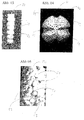
- an implant from claims (1) - (3) is shown as a bone dowel (30), for example for Refixation a band in the replacement of the cruciate ligament on the outside of the dowel, which has horizontal (31) constrictions, which may advantageously be arranged helically, and which has an outer shell interrupted by pores (32) over its entire surface.
- FIG. 4 is a lightweight ceramic implant (40), net-shaped sintered, with an open porosity over the entire surface (43), which has intersecting furrows or grooves (41, 42) in which the eye muscles can be sutured, which is part of an artificial Eye is used.
- the Figure 5 shows a ball conglomerate (50), which consists of solid balls (51), but which also consists of elements of the Figure 2 can exist and is characterized by wide bridges (52) between the ball elements and regular embkugel perpetu (53).
Landscapes
- Health & Medical Sciences (AREA)
- Chemical & Material Sciences (AREA)
- Veterinary Medicine (AREA)
- Animal Behavior & Ethology (AREA)
- Public Health (AREA)
- Oral & Maxillofacial Surgery (AREA)
- Transplantation (AREA)
- General Health & Medical Sciences (AREA)
- Life Sciences & Earth Sciences (AREA)
- Engineering & Computer Science (AREA)
- Medicinal Chemistry (AREA)
- Epidemiology (AREA)
- Dermatology (AREA)
- Orthopedic Medicine & Surgery (AREA)
- Dispersion Chemistry (AREA)
- Materials Engineering (AREA)
- Composite Materials (AREA)
- Cardiology (AREA)
- Biomedical Technology (AREA)
- Heart & Thoracic Surgery (AREA)
- Vascular Medicine (AREA)
- Prostheses (AREA)
- Materials For Medical Uses (AREA)
- Medicinal Preparation (AREA)
Abstract
Description
- In der Chirurgie am Bewegungsapparat besteht seit jeher ein Bedarf, Knochendefekte nach Frakturen, nach Entfernung von Tumoren, Knochensubstanzverluste nach Entzündungen oder in Verbindung mit Knochenzysten mit Knochenmaterial oder mit einem dem Knochen ähnlichen Ersatzmaterial wieder aufzufüllen. Hierbei wurde zum Teil auch auf bovines Ersatzmaterial zurückgegriffen [Tröster SD 1993: Die Hydroxylapatitkeramik Endobon®). Eine alternative Therapiemöglichkeit für Knochendefekte. In: Venbrocks R, Salis G von (Hrsg): Jahrbuch der Orthopädie,pp 231-246. Zülpich: Biermann ] oder Material aus Korallenriffen [Irwin RB, Bernhard M, Biddinger A (2001) Coralline hydroxyapatit as bone substitute in orthopaedic oncology. Am J Orthop 30:544-550 ] im Labor aufbereitet (replaminiforme Prozesse) und eingesetzt. Beiden Materialien haftet der Makel an, dass es biologische und damit gerichtete Strukturen sind, die man nicht mehr beeinflussen kann und die kaum standardisiert herstellbar sind. Beide Werkstoffe bringen die Anisotropie in Struktur und Eigenschaften einer gewachsenen biologischen Struktur mit und sind in fast allen Fällen zu steif. Ein Verfahren für die Herstellung solch biologischen Ersatzmaterials ist in der
DE-A 3903695 beschrieben. Synthetische Ersatzwerkstoffe sind zwar aus reinen Ausgangsmaterialien herstellbar, lassen jedoch eine geordnete, dem Knochen ähnliche Struktur vermissen; ein solcher synthetischer Werkstoff ist das geschäumte Ceros®; diese Werkstoffe lassen einen knöchernen Durchwuchs vermissen, da die Poren meist geschlossen sind [Dingeldein E und H Wahlig (1992) Fluoreszenzmikroskopische Untersuchungen zur knöchernen Integration von Kalziumphosphatkeramiken. In: Merck Biomaterialien (Hrsg) Endobon® und DBCS®, Darmstadt:Merck ]. - In der Offenlegungsschrift
DPA 2242 867 US PA 38 99 556 wird ein Verfahren mit einem präformierten, formgebenden Gerüst beschrieben mit einer dichten Schüttung von Kugeln, bei dem die formgebenden Elemente von einem Lösungsmittel übergossen werden und auf diese Weise verklebt werden sollen; mit einem solchen Verfahren lässt sich jedoch kein gleichmässig poröses interkonnektierendes Material in stardardisierter Form herstellen; zu unregelmässig waren die Verklebungen und zu unkontrollierbar der Anlösungsprozess. In derEP 0553167 undEP 0204786 wurde das Problem teilweise gelöst, indem deformierbare formgebende Elemente durch Druckbeaufschlagung in Kontakt aufeinander gepresst wurden und in diesem Zustand von der Gerüst-bildenden Masse umgossen wurde, welche danach aushärtete und anschliessend von den formgebenden Elementen chemisch oder thermisch wieder befreit wurden. Die so hergestellten Implantate liesen in der Hälfte, die der Druckbeaufschlagung zugewandt war, schöne und nahezu gleichmässige Interkonnektierungen erkennen, in der vor dieser abgewandten Hälfte jedoch waren zahlreiche geschlossenen Poren ausgebildet. Formgebende deformierbare und nur teilweise elastischen Elemente dämpfen die einwirkende Kraft und die deformierende Wirkung erschöpft sich durch Dämpfurg, sodass keine gleichmässige und durchgehende Interkonnexion erreicht wird. Rein zufällig wurde nun ein Verfahren gefunden, welches diese Phänomen vermeiden lässt und vollständig gleichmässige Verformung aller am Prozess beteiligten formgebenden Elemente erreichen lässt. Diese Verfahren ist denkbar einfach und daher auch besonders preiswert und vollständig reproduzierbar. - Die folgenden Punkte sind bevorzugte Ausführungsformen der vorliegenden Erfindung:
- 1) Kugelförmiger, polymorpher oder auch andersförmiger, gekammerter Implantatkörper (Abb 2/20), bestehend aus einer vollständigen oder unvollständigen dicken oder dünnen Schale mit insgesamt, teilweise oder gemischt glatter, rauher oder strukturierter Oberfläche (Abb 2/21), über die Gesamt- oder Teilfläche durchbrochen von im Durchmesser einstellbaren runden oder rundlichen, gleichmässig oder ungleichmässig verteilten Poren, und einer inneren Struktur, bestehend aus einem Hohlraum oder einem Konglomerat aus von Kugelschalen (Abb 2/22) umgebenen Hohlräumen, die mit ihrem Schalengerüst in direktem Zusammenhang mit der äusseren Schale stehen, welches ein zusammenhängendes Hohlraumsystem aus hohlen Kugeln oder kugelförmigen Hohlräumen umschliesst, das über ein im Durchmesser einstellbares Porensystem im Schalengerüst durchgehend interkonnektierend verbunden ist und durch die äussere Schale nach aussen geöffnet ist.
- 2) Implantatkörper nach Punkt (1) als Quader oder Würfel, Zylinder, Konus (Abb 03/30) oder Scheibe, Halbschale oder Halbkugel, Kugelsegment, Kugelschnitz, Keil oder Ring oder Scheibenring, Pyramide oder Pyramidenstumpf, Spirale oder Schraube oder jedwede andere Form.
- 3) Implantatkörper nach den. Punkten (1) und (2) so beschaffen, dass die Aussenschale strukturiert ist in Form von zirkulären (Abb 03/31) oder radiären, longitudinalen, schrägen oder spiralförmigen, parallel oder sich kreuzend (Abb 04/41,42) verlaufenden Einschnürungen, Furchen oder Wülsten, oder beidem, einzeln oder in Vielzahl, oder in Form einzelner oder mehrerer Erhebungen, Eindellungen, Zapfen oder anderer Strukturen.
- 4) Implantatkörper nach Punkt (1) - (3) so beschaffen, dass die innere Struktur einem schalenförmigen Schwamm- oder Spongiosaknochen entspricht (Abb 2b).
- 5) Werkstoff oder Implantat nach Punkt (1) bis (4) so beschaffen, dass die Pore der äusseren Schale in ihrem Durchmesser kleiner ist als der Durchmesser des mit ihr in Verbindung stehenden Hohlraumes und zwar im Verhältnis 1:5 bis 1:1,5, im Mittel 1:2 bis 1:3 (Abb 2a, 2b und Abb 04/43).
- 6) Implantatkörper nach den Punkten (1) bis (5), vorzugsweise in Form gekammerter Kugeln oder kugelförmiger Gebilde einer Grösse zwischen 0,8mm und 12mm im Durchmesser, im Mittel zwischen 1-2 mm und 3-6 mm im Durchmesser und einem interkonnektierend verbundenen inneren Porensystem mit Durchmessern der Poren zwischen 80µm und 1500µm, vorzugsweise 150µm bis 600µm (Abb 2a).
- 7) Implantatkörper nach den Punkten (1)-(6) so beschaffen, dass ein Konglomerat von Einzelimplantaten ausgebildet ist, vorzugsweise aus kugelförmigen, die mit einstellbar breiten Brücken (Abb 05/52) miteinander verbunden sind und ein in sich zusammenhängendes Hohlraumsystem (Abb 05/53) umschliessen, das es erlaubt, dass die vorzugsweise kugelförmigen Implantatkörper in der Weise von Knochen umwachsen werden können, dass ein physiologisches Schwammknochengerüst entsteht, dessen Durchtritte durch die Verbindungsbrücken der Implantatkörper vorgegeben sind.
- 8) Implantatkörper nach den Punkten (1) bis (7), so beschaffen, dass der Gerüstwerkstoff ein Ca-Phosphat, insbesondere Tri-Calciumphosphat oder Tetra-Calciumphosphat, ein Hydroxylapatit, eine Calcium-Carbonat oder Calcium -Sulfat-Verbindung ist, oder auch eine Aluminiumoxyd-Keramik, ein Kollagen, eine Polyaminosäure oder ein anderes resorbierbares Polymeres, aber auch ein Acrylat oder Abkömmling davon, ein Polymethylmethacrylat oder ein Copolymer davon, mit oder ohne Calciumphosphat, Calcium-Sulfat oder Calcium -Carbonat als Füllwerkstoff, oder ein Metall, vorzugsweise eine CoCrMo-Legierung, Titan oder Tantal oder eine Legierung derselben ist.
- 9) Implantatkörper nach den Punkten (1) bis (8) so beschaffen, dass das Hohlraumsystem ganz oder teilweise mit einem resorbierbaren oder nicht resorbierbaren organischen oder anorganischen Füllwerkstoff, mit dämpfenden oder versteifenden Eigenschaften, aufgefüllt oder beschichtet ist, und zwar in der Weise, dass die innere Füllung sich auf das Innere des Implantatkörpers beschränkt oder diesen vollständig ausfüllt, jedoch die äussere Schale nicht überragt, oder regelmässi g oder unregelmässig aus den Poren der äusseren Schale hervorquillt und tropfenförmige und /oder kugelförmige oder ähnlich konfigurierte Erhebungen über die äussere Schale bildet, die gleichmässig oder ungleichmässig über die Oberfläche verteilt, Mikrobewegungen mehrerer gleicher oder ähnlicher Implantatkörper, beispielsweise in einer Schüttung, ganz oder nahezu ganz verhindern.
- 10) Implantatkörper nach den Punkten (1) bis (9) so beschaffen, dass als Füllstoff ein resorbierbares Polymeres, beispielsweise eine Polyaminosäure, ein ßolylactid, Polyglactin, Glycosid oder ähnlicher Werkstoff, ganz allgemein Polyacetale, Polysäureamide oder Polyester, aber auch nicht resorbierbare Polymere wie Polymethylmethacrylate oder ähnliche Polymere, Agarose oder ein Gemisch aus Agarose und einem Calciumphosphat oder Calciumcarbonat verwandt wird.
- 11) Implantatkörper nach den Punkten (1) bis (10) so beschaffen, dass ausschliesslich das Zentrum oder die zentrale Achse oder die Hohlräume entlang der zentralen Achse, zusammenhängend oder einzelne Hohlräume verstreut oder Gruppen von Hohlräumen mit einem Werkstoff nach den Punkten (9) und (10) aufgefüllt sind, der einen Wirkstoff enthält, der schnell oder langsam, kurzzeitig oder protrahiert freigesetzt wird und sich per Diffusion über die freie Implantatoberfläche zentrifugal verteilt.
- 12) Implantatkörper nach den Punkten (1) bis (11) so beschaffen, dass als Wirkstoff ein Wachstumsfaktor,ein Gewebshormon, und / oder ein Gemisch dieser Faktoren, beispielsweise als demineralisierte Knochenmatrix, oder ein Antibiotikum enthält oder ein Hormon, ein Immunsuppressivum, ein Zytostatikum oder ein Gemisch aus Wachstumsfaktoren und einem Antibiotikum oder eine Kombination aus verschiedenen Wirkstoffen, welche aus dem Trägerwerkstoff nach Punkt (11) in verschiedener Weise freigesetzt werden.
- 13) Implantatkörper nach Punkt (12) so beschaffen, dass als Antibiotikum Gentamycin, Clindamycin, Streptomycin oder ein anderes bakteriostatisch oder baterizid wirkendes Mittel verwandt wird.
- 14) Implantatkörper nach den Punkten (1)-(13) so beschaffen, dass in standardisierter Weise weite und engere Hohlraumsysteme ausgebildet sind, die zusammenhängend oder unterbrochen, einzeln oder in Gruppen oder auch entlang einer Achse angeordnet sind und unterschiedlich weite Interkonnexionen aufweisen und die Hohlräume sich damit leichter oder schwerer mit Füllwerkstoffen oder Wirkstoffen oder beidem ausfüllen lassen.
- 15) Implantatkörper nach den Punkten (1) - (14) so beschaffen, dass verschieden grosse Hohlräume mit einem interkonnektierenden Gerüst aus einem anderen resorbierbaren oder nicht resorbierbaren Werkstoff aufgebaut sind, beispielsweise ein grosser Hohlraum mit einer schalenförmigen Wandung aus Hydroxylapatit mit einem schalenförmig aufgebauten Gerüst aus einem leicht resorbierbaren Tricalciumphosphat, sodass in dieser Weise ein durchgehend kombinierter, beispielsweise aus Hydroxylapatit und Tricalciumphosphat bestehender, oder umgekehrt oder ein aus anderen Werkstoffen kombinierter Implantatkörper entsteht.
- 16) Verbundimplantatkörper, bestehend aus einem Implantatkörper I der Punkte (1) - (15), und einem Implantatkörper II dieser Ansprüche, jedoch mit sich unterscheidender Porosität, mit oder ohne Füllwerkstoff mit oder ohne Wirkstoff, teilweise oder vollständig in seinem Hohlraumsystem aufgefüllt, in der Weise verbunden, dass letzterer entlang einer zentralen Achse mechanisch eingesetzt ist, sei es, dass durch Schleifen oder eine andere Trennmethode ein zentraler Zylinder herausgenommen wurde oder dieser durch das Herstellverfahren des Implantatkörpers I bereits ausgespart ist.
- 17) Verbundimplantatkörper, bestehend aus einem Implantatkörper I und einem mechanisch in diesen eingesetzten Implantatkörper II, welcher aus einem porösen oder soliden Werkstoff mit oder ohne Wirkstoff besteht und entweder resorbierbar oder nicht resorbierbar ist, beispielsweise aus einem Werkstoff des Punktes (9) - (12) besteht, mit oder ohne einem Wirkstoff, wie in den Punkten (11) und (12).
- 18) Verfahren zur Herstellung von Implantaten nach den Punkten (1) bis (15) mit den folgenden Schritten:
- Schüttung von formgebenden Elementen in eine Form mit perforiertem Boden und Deckel ohne dass fonngebende Elemente herausfallen können, im einfachsten Falle mit einem Siebraster verschlossen, Boden und Deckel so zueinander angeordnet, dass die formgebenden Elemente in festem Kontakt gehalten werden können.
- Intrusion der Form mit den in dieser Form gehaltenen, formgebenden Elementen in eine Passform, beispielsweise einen Becher, der die Form schlüssig aufnimmt, gefüllt mit heissem Wachs einer Schmelztemperatur zwischen 60°C und 90°C, in der Regel um 80°C, und Aushärten des Wachses; aber auch Aufgiessen oder Einsaugen von Wachs ist möglich.
- Herausziehen der Form mit ausgehärtetem Wachsgerüst, welches die formgebenden Elemente umfasst, und Auslösen oder Entfernen der formgebenden Elemente, beispielsweise Auflösen von lufthaltigen Polystyrolkugeln als formgebende Elemente in Aceton oder Herauslösen von Zuckerkugeln im Wasser oder einem ähnlichen Entfernen anderer physikalisch oder chemisch wieder entfernbarer Formkörper, welches das Wachsgerüst nicht angreift;
- Auffüllen des so entstandenen Hohlraumsystems mit kleineren formgebenden Elementen, beispielsweise Zuckerkugeln im Rieselverfahren mit Hilfe eines Rüttlers oder Styropor®-Kugeln im Einsaugverfahren mit einem Sauger und einem Siebdeckel, um das Durchsaugen der formgebenden Elementen zu verhindern;
- Auffüllen des verbleibenden Hohlraumsystems um die formgebenden Elemente mit einem fliessfähigen Werkstoff, beispielsweise einem Gemisch aus Agar-Agar und einem Calciumphosphat, wie Tricalciumphosphat oder Hydroxylapatit oder auch einem anderen fliessfähigen und aushärtbaren Werkstoff, wie Polymethylmethacrylat(PMMA) oder einem Copolymeren davon oder auch einem anderen resorbierbaren oder nicht resorbieren fliessfähigen Werkstoff.
- Festigen des fliessfähigen Werkstoffes um die formgebenden Elemente im Wachsgerüst, sei es durch Abkühlen des Agar/Calciumphosphatgemisches, sei es durch Selbstaushärten eines PMMA Werkstoffes und anschliessend Herauslösen der formgebenden Elemente und Entfernen des Wachsgerüstes durch ein hierfür geeignetes Verfahren, beispielsweise Herauslösen von Zuckerkugeln oder auskristallisierten Salzen aus einem PMMA-Gerüst in Wasser, oder Herauslösen von lufthaltigen Polystyrolkugeln aus einem Agar-Calciumphosphatgemisch in Aceton und anschliessendes Herauslösen vom Wachs in einem geeigneten Lösungsmittel, beispielsweise Methylcellulosesolvacetat, oder einfach das Verbrennen des Wachses während des Sinterns in einem Sinterofen bei Temperaturen zwischen 900°C und 1400°C.
- 19) Verfahren nach Punkt (18) mit den darin beschriebenen Verfahrensschritten, so durchgeführt, dass als formgebende Elemente Zucker-oder Salzkugeln zwischen 300µm und 15mm verwandt werden und diese in Wasser herausgelöst werden und die so entstanden Poren des Wachsgerüstes mit kleineren Zucker oder Salzkugeln, oder lufthaltigen Polystyrolkugeln oder anderen leicht löslichen lufthaltigen oder soliden Kunststoffkugeln aufgefüllt werden, die anschliessend von einem Gerüstwerkstoff umflossen werden und danach mit Wasser oder Lösungsmittel oder auch Hitze wieder entfernt werden.
- 20) Verfahren nach Punkt (18) und (19) mit den darin beschriebenen Verfahrensschritten, ergänzt durch einen Verfahrensschritt:
- lufthaltige formgebende Elemente in den Poren des Wachsgerüstes werden in einer temperierten vakuumdichten Kammer einem definierten Unterdruck ausgesetzt,und gleichzeitig über eine kühlbare Stellplatte abgekühlt, was dazu führt, dass sich die lufthaltigen formgebenden Elemente bei ihrer Ausdehnung das noch weiche Wachs in die Zwischenkugelräume verdrängen und sich breitere Kontaktbrücken zwischen den Elementen ausbilden, insbesondere auch an der Grenzzone zum Wachs; das Ergebnis ist nach Einsaugen des Gerüstwerkstoffes und dessen Aushärten eine porösere Struktur der Implantatkörper, inbesondere eine durch die Höhe und Dauer des einwirkenden Vakuums sehr exakt einstellbare und damit definierbare Interkonnexion und Oberflächenporosität.
- 21) Verfahren nach Punkt (20) mit den in den Punkten (18) und (19) beschriebenen Verfahrensschritten, modifiziert im folgenden Verfahrensschritt:
- lufthaltige formgebende Elemente in den Poren des Wachsgerüstes werden von einem fliessfähigen Gerüstwerkstoff umflossen und vollständig aufgefüllt; der Implantatkörper wird anschliessend mit den Luft enthaltenden, meistens geschäumten, formgebenden Elementen und dem diese umgebenden Gerüstwerkstoff in eine, beispielsweise über die Stellplatte temperierbare Vakuumkammer gestellt und bei 40-60°C, vorzugsweise 50°C, mit einem definierten Unterdruck beaufschlagt; dabei kann es auch vorteilhaft sein bei gekühlter Stellplatte bei 4°C bis 12°C und erhöhtem Unterdruck zu arbeiten; dieser führt zur Ausdehnung der formgebenden Elemente und beeinflusst daher direkt die Makroposität und die Durchtritte (Interkonnexionen), vor allem aber auch die Oberflächenporen; das Vakuum ist zwischen 800 mbar und 150 mbar Absolutdruck exakt und über eine Schaltuhr auch zeitlich einstellbar, die Temperatur in dem Gefäss ist schnell abkühlbar, z.B.über eine Stellplatte aus Metall, sodass das erreichte Ergebnis durch das Steifwerden des Wachsgerüstes festgehalten wird.
- 22) Verfahren nach Punkt (18) mit den folgenden Modifikationen:
- Schüttung von formgebenden Elementen, beispielsweise Zuckerkugeln, in ein Werkzeug und Umspritzen der Kugelschüttung mit Polystyrolschaum, welcher danach aushärtet.
- gegebenenfalls Zwischenlagerung in einer definiert feuchten Kammer, ein Vorgang, der zum Anlösen der Zuckerkugeln im Interface zum Gerüstwerkstoff führt und zu Fliessbrücken zwischen den formgebenden Elementen, ein Vorgang, welcher durch regelmässiges Umlagern der Implantatkörper gleichmässig über das Implantat verteilt werden kann, danach Trocknen im Trockenofen und Entfernen der Formkörper mit Wasser oder Hitze, ohne den Schritt einer Zwischenlagerung in einer feuchten Kammer erfolgt das Entfernen der formgebenden Zucker- oder auch Salzelemente, beispielsweis als Kugeln, im Wasser sofort.
- Auffüllen der Hohlräume im geschäumten Polystyrolgerüst mit formgebenden Elementen und Fortfahren wie in den Punkten (18) bis (21) beschrieben.
- 23) Verfahren nach Punkt (18) mit der folgenden Modifikation:
- Als Gerüstwerkstoff wird giessfähiges und selbsthärtendes Silikon verwandt, welches Zuckerkugeln oder auch lufthaltiges Polystyrol als formgebende Elemente, oder solide Metall-oder Plastikkugeln oder Formelemente, welche anschliessend chemisch, physikalisch oder auch vorsichtig mechanisch wieder entfernt werden können, beispielsweise zu 4/5 umfliesst
- das Auffüllen der Poren des Silikongerüstes mit kleineren formgebenden Elementen kann beispielsweise mit Zuckerkugeln, aber auch mit geschäumten Polystyrolkugeln erfolgen,welches im ersteren Fall im Rieselverfahren und im zweiteren vorzugsweise durch Einsaugen über ein Siebgitter erfolgt.
- Wird im Anschluss daran das Poren und Spaltensystem wie unter Punkt (18) beschrieben, beispielsweise mit einem Agar/Hydroxylapatit Gemisch aufgefüllt und anschliessend in einer Vakuumkammer einem definierten Unterdruck ausgesetzt, so bilden sich Durchtritte und Randporositäten aus, aufgrund der Deformierbarkeit des Werkzeugs und der Expansion der formgebenden Elemente.
- 24) Verfahren zur Herstellung eines Implantatkörpers nach den Punkten (1)bis (17) mit folgenden Verfahrensschritten:
- die äussere Form des Implantatkörpers wird mit seinen definitiven Massen mit dem Schrumpfungsfaktor des Werkstoffes des Stützgerüstes multipliziert und mechanisch oder im Abdruckverfahren oder auch über CAD/CAM hergestellt.
- mit dieser Form wird in einem Werkzeug mit Silikon im Abgussverfahren eine Silikonform hergestellt, die bis auf den Deckel den Implantatkörper wiedergibt.
- das Silikonwerkzeug wird mit den formgebenden Elementen gefüllt und mit einem Silikondeckel verschlossen; dieser enthält eine Öffnung zum Befüllen im Deckel und eine oder mehrere Öffnungen zum Belüften am Boden oder umgekehrt;
- über den Deckel wird das Werkzeug mit der plastischen Masse des Stützgerüstes, beispielsweise einem Gemisch aus Agar-Agar und Hydroxylapatit, befüllt;
- anschliessend wird das Werkzeug mit den formgebenden Elementen, umfasst von der Masse des Stützgerüstes in einer geschlossenen Kammer mit einem Unterdruck beaufschlagt und abgekühlt.
- es folgt die Herausnahme aus der Form und das Entfernen der formgebenden Elemente, beispielsweise der geschäumten Polystyrolkugeln in Aceton.
- nach der schrittweisen Dehydratation im Aceton wird der Implantalkörper in der Kühltruhe langsam an Luft getrocknet und anschliessend im Exsikkator unter Einwirkung von Phosphorpentoxyd weiter dehydratisiert.
- der so getrocknete Implantatkörper aus beispielsweise einem Agar-Agar/Hydroxylapatit oder auch Agar-Agar/TCP Gemisch wird im Sinterofen gebrannt; der so gewonnene gekammerte Implantatkörper zeigt eine durchgehende Porosität unter Einschluss seiner gesamten Oberfläche und ist masshaltig und frei von Rissen.
- 25) Verfahren nach Punkt (24) zur Herstellung von gekammerten kugelförmigen Implantatkörpern nach den Punkten (1)-(17) mit folgenden Modifikationen:
- der Silikonabdruck wird von einem Monolayer von Stahl- oder Polyamidkugeln hergestellt, welche zu 4/5 umgossen werden und anschliessend aus dem elastischen Material mechanisch wieder entfernt werden.
- das so entstandene Hohlraumsystem wird in einem Abfüllwerkzeug mit perforiertem Silikonboden mit kleineren formgebenden Elementen, beispielsweise geschäumten Polystyrolkugeln aufgefüllt und anschliessend mit einem perforierten Deckel mit perforierter Silikoneinlage abgeschlossen; Boden und Decke weisen Bohrungen für die Auffüllung mit der Gerüstmasse bzw. für die Entlüftung auf.
- das Werkzeug wird gefüllt mit der Masse des Stützgerüstes, beispielsweise einem Gemisch aus Agar-Agar und HA oder Tricalciumphosphat, anschliessend in einer geschlossenen Kammer mit Unterdruck beaufschlagt und abgekühlt.
- die so erstarrten Implantatkörper werden vorsichtig aus der Form gedrückt und es werden die formgebenden Elemente entfernt, beispielsweise die geschäumten Polystyrolkugeln in Aceton, dehydratisiert und anschliessend bei 1000°C - 1300°C gebrannt, beispielsweise in einem Zirconiumtiegel.
- 26) Herstellen eines Implantates nach den Punkten (1) - (17), als Ergebnis der folgenden Verfahrensschritte:
- Erstellen eines elastisch oder plastisch deformierbaren Werkzeuges, beispielsweise im Spritzgussverfahren, nach einer CAD/CAM Konstruktion oder einer anderen technischen Konstruktion, oder im Abdruck oder Giessverfahren von einer direkten Vorlage, in jedem Fall aber unter Berücksichtigung des Schrumpfungsfaktors und so beschaffen, dass es mit formgebenden Elementen befüllt werden und wieder verschlossen werden kann, beispielsweise als Sandwich oder als fast geschlossener Körper mit Öffnung und Deckel und Belüftungsvorrichtungen auf der Gegenseite;
- Befüllen des deformierbaren Werkzeuges mit formgebenden Elementen, beispielsweise mit EPS-Kugeln (Expandable-Poly-Styrol) oder direkt Styropor®-Kugeln, oder anderen leicht wieder entfernbaren formgebenden Elemente in Kugel-oder auch anderer Form, beispielsweise Zucker-oder Salzkugeln, Gelatine oder andere leicht entfernbare Materialien;
- Einbringen in ein Füllwerkzeug, beispielsweise ein Mutterwerkzeug in einer Spritzgussmaschine, oder einer anderen Abfüllvorrichtung für den Gerüstwerkstoff;
- Auffüllen durch Einspritzen oder Einsaugen des Gerüstwerkstoffes mit oder ohne definierten Unterdruck;
- Abkühlen des Werkzeuges, zusammen mit dem Implantat, in der Vakuumkammer unter definiertem Unterdruck und über eine definierte Zeit;
- Herausnehmen des Implantates, zusammen mit den formgebenden Elementen und Auslösen der formgebenden Elemente physikalisch oder chemisch;
- Brennen eines beispielsweise keramischen Implantates bei 900° C bis 1400° C im Sinterofen.
- Die Anwendung von einem auf die form gebenden Elemente einwirkenden Unterdruck führte überraschend zu einem perfekten Ergebnis. Dabei werden die locker in ein Werkzeug geschütteten formgebenden Elemente entweder vor der Abfüllung in einem vakuumdichten System mit einem definierten Unterdruck beaufschlagt und anschliessend die gerüstbildende Masse eingesaugt und unter Einwirkung des definierten Unterdruckes bei definierter Temperatur über eine definierte Zeit aushärten gelassen, oder nach der Abfüllung zusammen mit dem Gerüstwerkstoff, mit definiertem Unterdruck beaufschlagt und gleichzeitig abgekühlt, beispielsweise über eine metallene Stellplatte:
- Diese fast noch einfachere Anordnung führte aus dem Grunde zu weiter standardisierbaren Ergebnissen und beinhaltet folgende Schritte: die lockere Schüttung von formgebenden Elementen wurde mit der strukturbildenden Gerüstmasse umgossen und das geschlossene Gefäss, welches nicht vakuum - versiegelt war, wurde in einem dichten mit Unterdruck beaufschlagten Gefäss über eine bestimmte Zeit bei definierter Temperatur einem definierten Unterdruck ausgesetzt und gleichzeitig über die Stellplatte abgekühlt. Das einfache Handling dieses Vorgehens liess das Ergebnis hoch reproduzierbar werden.
- Doch auch dieses Ergebnis konnte zufällig durch eine zunächst unscheinbare Veränderung, vor allem im Hinblick auf die einstellbare Porosität der Oberfläche, weiter verbessert werden:
- Nahm man nämlich statt eines festen metallischen Werkzeuges eine deformierbare Silikonform, so führte dies dazu, dass das Implantat, abhängig vom angelegten Unterdruck eine durchgehende bis in die Oberfläche reichende Porosität aufwies, die durch die Höhe des Unterdruckes auf der einen Seite und den E-Modul des Werkzeuges auf der anderen Seite einstellbar war. Dieses Verfahren liess auch dann eine durchgehende Porosität erreichen, wenn die formgebenden Elemente nicht expansionsfähig, also beispielsweise nicht lufthaltig, sondern beispielsweise Zuckerkugeln waren.
- Als formgebende Elemente werden bei diesem Verfahren vorzugsweise expandierbare Polystyrol-Kugeln (EPS) verwendet, beispielsweise Styropor® F414, das mit Pentan als Treibmittel aufgeschäumt ist. Beim Anlegen eines Unterdruckes dehnen sich diese Kugeln sehr schnell aus und nehmen an Volumen zu. Auf diese Weise wird die Kontaktbrücke zwischen den Kugeln breiter und bestimmt damit die Durchmesser der interkonnektierenden Durchtritte bis hinein in die Oberfläche; bei Verwendung eines Silikonwerkzeuges drücken sich die Kugeln in die Silikonwand und zudem zieht der Unterdruck die deformierbare Wand über die Kugeloberfläche in das Implantat hinein.
- Geschäumte Werkstoffe zur Verwendung als formgebende Elemente werden bevorzugt eingesetzt, auch solche, denen Treibmittel zugesetzt sind, welche bei einer bestimmten Temperatur oder unter bestimmten Voraussetzungen aktiviert werden. Ein besonders bevorzugtes Material stellt das Styropor® F414 dar mit bevorzugten Raumgewichten des aufgeschäumten Polystyrols zwischen 17g/l und 70g/l, vorzugsweise etwa 20g/l bis 35g/l. Die Komgrössenverteilung des aufgeschäumten Materials liegt zwischen 200µm und 15mm, häufig verwandt sind die Grössen zwischen 1000µm und 3000µm.
Zur Bestimmung der Expansion und der Deformierbarkeit der einzelnen formgebenden Elemente wurden Versuche durchgeführt, um in einfacher Weise die Parameter zu bestimmen, die zur Standardisierung des Verfahrens notwendig sind. Hierfür wurden verschiedene formgebende Elemente mit verschiedenen Raumgewichten, beispielsweise verschieden geschäumte Polystyrol-Kugeln mit verschiedenen Durchmessern, in einem Zylinder mit beweglichen, vakuumdicht anliegenden Kolben bis zu einer definierten Höhe von 84,3mm aufgeschüttet und einem definierten Vakuum ausgesetzt ; aus.der Veränderung der Ausgangshöhe in Abhängigkeit vom angelegten Unterdruck wurden Grössen ermittelt, die eine anfängliche Volumenreduktion durch Entfernen der Luft zwischen den formgebenden Elementen widerspiegeln, gefolgt von einer Volumenausdehnung, die durch Aufbringen einer Kraft F, gemessen in N, zur alten Ausgangslänge einstellbar war und den Expansionsdruck der Luft in den formgebenden Elementen widergab. In Abhängigkeit von der Zeit nahm die Kraft langsam ab, was durch das Platzen der Luftblasen im Kunststoff zu erklären war. Aus diesem Phänomen wurden die definierten Zeiten ermittelt für die Beaufschlagung mit Unterdruck.
Drücke zwischen 150mbar und 800mbar, vorzugsweise um 300mbar bis 500mbar über eine Zeit von 15 Minuten einwirkend auf ein Calciumphosphat - Agar-Agar Gemisch, bei einer Temperatur des Implantates von 4-12° C zeigten besonders günstige Ergebnisse in Bezug auf die Aussenporosität und die inneren Interkonnexionen.
Als deformierbare Formen eignen sich vor allem giess- oder im Spritzgussverfahren verwendete Silicone einer Shorehärte unter 25 shore, vorzugsweise unter 18-20 shore. Es können aber alle plastisch oder elastisch deformierbaren Werkstoffe Verwendung finden, deren E-Modul deutlich unter dem der formgebenden Elemente liegt. Entsprechend können die Werkzeuge gegossen werden, aber auch in grossen Serien im Spritzgussverfahren hergestellt werden. Beispiele für plastisch deformierbare Werkzeuge sind Werkzeuge aus Styropor® verschiedener Dichte, Beispiele für elastisch deformierbare Werkzeuge sind die oben erwähnten Silikone, wobei auch geschäumte Silikone zur Anwendung kommen können. Der Expansionsdruck dieser Werkstoffe im Vakuum addiert sich in seiner Wirkung zu dem der formgebenden expansionsfähigen Elemente. - Als giessfähiges Material für den Gerüstwerkstoff wird vorzgsweise eine Mischung aus Hydroxylapatit (HA) oder Tricalciumphosphat (TCP) und einer Agar-Agar Lösung im Verhältnis 10g Pulver / 7ml bis zu 25ml Lösung, was einem Verhältnis von 1,4 bis 0,4 entspricht, ganz optimal sind Ansätze, bei denen das Mischungsverhältnis Pulver zu Lösung 0,45 bis 0,48 entspricht, beispielsweise 1600g HA auf 3500ml Lösung.
- Je nach Zusammensetzung kann aus dem Ansatz bereits der Schrumpfungsfaktor berechnet werden: dieser liegt bei einem giessfähigen HA-Agar-Agar Gemisch, welches bei 60°C abgefüllt wird zwischen 0,95 bis 2,9, vorzugsweise zwischen 1,75 und 2,15, bei einem Verhältnis von 15g/35ml einer 1,7%igen Agar-Agar Lösung bei exakt 1,91. Mit diesen beiden Voraussetzungen, expandierbare formgebende Elemente, einer deformierbaren Silikonform und einem exakten Ansatz mit definierter Schrumpfung liessen sich sehr präzise Implantate "net shaped" sintern ohne, dass eine Nachbearbeitung notwendig wurde.
- Das definitive Design multipliziert mit dem Schrumpfungsfaktor ergibt beispielsweise ein Implantatkörper in Kunststoff oder einem anderen im CAD/CAM Verfahren leicht bearbeitbaren Material, welches in einem Stammform bis zur Oberkante mit einem giessfähigen Silikon umgossen wird. Nach Aushärten des Silikons kann der formgebende Körper leicht wieder mechanisch entfern werden, die Silikonform wird am Boden mehrfach perforiert und danach mit Polystysrolkugeln der gewünschte Grösse aufgeschüttet, danach mit einem Silikondeckel mit Entlüftungslöchern verschlossen und in einer Abfüllform mit beispielsweise der Keramikmasse abgefüllt. Unmittelbar nach der Abfüllung wird das Werkzeug in toto in einem Exsiccator mit einem Unterdruck beaufschlagt und auf 4-12°C heruntergekühlt, beispielsweise über die Stellplatte. Nach Aushärten der Keramikmasse kann das Werkzeug demontiert werden und der Grünling ist leicht zu entfernen. Im Acetonbad wird nun aus dem Keramik-Styropor®-Implantat das Styropor herausgelöst, die Keramik dehydratisiert in Schritten 70/80/90 und 100%iges Aceton und anschliessend unter Kühlung schrittweise an Luft getrocknet (Kältetrocknung). Das Ergebnis wird stundenweise mit Hilfe einer Feinwaage dokumentiert, sowie kein weiterer Gewichtsverlust an Luft sich abzeichnet und die Gewichtskurve linear gleich bleibt, wird das Implantat über 24h im Exsiccator unter Zusatz von P2O5 unter Vakuum 150- 250 mbar Absolutdruck getrocknet und anschliessend bei 1300°C im Sinterofen gebrannt. Das Ergebnis ist ein offenporiges, absout masshaltiges Implantat mit einer gegenüber mechanisch nachbearbeiteten Knochenersatzwerkstoff Zylindern oder Würfeln (Draenert et.al.2001:Synthetische Knochenersatzwerkstoffe auf HA-und TCP-Basis Trauma Berufskrh 3:293-300 Heidelberg New York Berlin Tokyo: Springer) deutlich höhere Festigkeit, die durch äussere Strukturierung weiter vergrössert werden kann, beispielsweis Ringe, Einschnürungen, massive Kanten usw.
- Styropor®-Kugel von 12mm Durchmesser werden in einem zylindrischen Gefäss mit perforiertem Boden mit Bohrungen von 10-11mm im Durchmesser und einem schlüssig den Kugeln aufsitzenden fixierbaren Deckel mit denselben Bohrungen in einen Becher getaucht und intrudiert, der mit 90°C heissem Wachs gefüllt und hierfür aus dem Heizofen genommen wird. Der Behälter mit den Styropor®-Kugeln passt dabei mit seinem Aussendurchmesser schlüssig in das zylindrische Wachsgefäss, welches einen demontierbaren Boden aufweist.
- Nach Aushärten des Wachses bei Zimmertemperatur, wird der Boden des Wachsgefässes demontiert und der Styropor®-Behälter herausgedrückt. Der Styropor®-Behälter wird ebenfalls von seinem Boden und dem Deckel befreit und der Wachs-Styropor®-Zylinder herausgeschoben und in einem Acetonbad von dem Styropor® befreit. Nach Trocknung an Luft wird das so entstandene durchgehend interkonnektierend poröse Wachsgerüst in eine dieses schlüssig aufnehmendes Abfüllgefäss eingeschoben. Das Abfüllgefäss weißt einen Einfüllstutzen mit Perforationen am Boden des Geefässes auf und kann ausserdem ein Sieb aufnehmen, welches zum Einsaugen kleinerer Styropor®-Kugeln benötigt wird, ausserdem ist es mit einem Deckel versehen, welcher Entlüftungsbohrungen aufweist, beispielsweise mit einem Durchmesser von 1,5 - 2,5mm. In das Wachsgerüst werden Styropor®-Kugeln mit einem Durchmesser von beispielsweise 600-1200µm eingesaugt, wobei im Abfüllstützen ein Sieb mit einer Maschenweit von 400µm vorgeschalten wird. Das Hohlraumsystem des Wachsgerüstes füllt sich vollständig mit den kleineren Styropor®-Kugeln auf und wird danach mit einem Deckel verschlossen. Das Gefüss wird nun mit einer Keramikmasse abgefüllt, wobei über den Abfüllstutzen die Masse über die Belüftungslöcher eingesaugt oder olane grossen Druck einfach über den Stutzen aufgefüllt wird. Tritt die Keramikmasse aus den Entlüftungslöchern des Deckels aus, ist die Form gefüllt und wird nun mitsamt dem Werkzeug in einen Exsiccator gestellt und über 15 Minuten mit einem Unterdruck von 500-600mbar beaufschlagt und während dieser Zeit über die metallene Stellplatte abgekühlt. Der so ausgehärtete Wachs-Keramik-Styropor®-Block wird anschliessend im Acetonbad vom Styropor® befreit, an Luft getrocknet und mit dem Wachs im Ofen bei 1300°C gesintert. Das Ergebnis sind vollständig isolierte, aussen durchgehend poröse und im Innern vollstandig interkonnektierend gekammerte Kugeln mit einem Durchmesser um 6mm. Aufgrund der Schrumpfung des Matrixmaterial kommt es zur Ausbildung vollständig separierter Kugeln.
- Statt einzelner gekammerter Kugeln kann ein interessanter Werkstoff gefertigt werden, der einem Negativabdruck der Knochenmarkswaben entspricht und ein Kugelkonglomeral mit Zwischenräumen zwischen den gekammerten Kugeln für das Einwachsen von Knochenbälkchen und breiten Verbindungsbrücken, die den Kontaktstellen der Kugeln entsprechen:
- Die Schritte entsprechen dem Beispiel 1, jedoch wird das Wachs-Styropor®-Gerüst während des Aushärtens in einem Exsiccator einem definierten Unterdruck von beispielsweise 600mbar ausgesetzt. Die daraufhin erfolgende Expansion der Styropor®-Kugeln führt zu verbreiterten Brücken und dickeren. Verbindungsarmen zwischen den Kugeln. Nach Aushärten des Wachs-Styropor®-Gerüstes erfolgt das Herauslösen des Styropor®. Die nachfolgenden Schritte entsprechen dem Beispiel 1 mit Einsaugen von kleineren Styropor®. Kugeln, Auffüllen mit einer Keramikmasse, Nachevakuieren unter Abkühlen und anschliessendem Herauslösen der formgebenden Elemente im Aceton; danach erfolgt im Gegensatz zum Beispiel 1 der Kälte-Trocknungsschritt: in Schritten von jeweils 2h wird über 70/80/90 und 3x 100 %iges Aceton in Stufen in der Kühltruhe an Luft getrocknet, bei 4-12°C aufsteigend in beispielsweise 4 Schritten von jeweils 3 Stunden bis zur Zimmertemperatur und anschliessender Dehydratation im Exsiccator unter Zuhilfenahme von P2O5 und einem Vakuum um 150mbar Absolutdruck über 24h. Bei einem solchen Vorgehen bleiben breite Brücken zwischen den gekammerten Kugeln bestehen und das Wachsgerüst kann mitsamt dem Keramikinlet im Ofen gebrannt werden bei beispielsweise 1300°C; das Wachs kann auch vorher im Heizofen abgeschmolzen werden bei 90°C, Voraussetzug hierfür ist, dass die Keramikmasse bereits luftgetrocknet ist. Das Ergebnis ist ein perfektes Gerüst aus zusammenhängenden im Inneren perfekt interkonnektierend gekammerten Kugeln mit durchgehend poröser Oberfläche und einer erstaunlich hohen Kompressionsfestigkeit. Diese liegt je nach Kugelgrösse bei 4-12Mpa.
- Die Herstellung eines Inasshaltigen Würfels mit einer Kantenlänge von 15mm und einer offenen Porosität über alle Flächen: Es wird bei einer Matrixmasse von 16/35 HA/-Agar-Agar Suspension 1,7%ig ein Schrumpfungsfaktor von 1,91 berechnet und im CAD CAM Verfahren ein Würfel aus POM mit einer Kantenlänge von 28,65mm hergestellt. Da der Würfel eine hohe Festigkeit von 4-6 Mpa erreichen soll, werden die Kanten nicht abgerundet. Der Würfel wird in ein Formwerkzeug gestellt und bis zu seiner Oberkante mit einem selbsthärtenden Silikon ausgegossen. Nach 24h wird der Würfel mechanisch entfernt und das Silikonwerkzeug in ein Abfüllwerkzeug eingebracht, dessen Boden innen aus einem perforierten Silikonboden besteht und nach Auffüllen mit 1200µm messenden Styropor®-Kugeln mit einem Silikondeckel mit Entlüftungslöchern schlüssig abgedeckt. Nachdem das Werkzeug mit einem Schraubdeckel mit Entlüftungslöchern verschlossen wurde, wird es mit einer Keramimasse aufgefüllt; anschliesend erfolgt im Exsiccator auf einer metallenen und kühlbaren Stellplatte die Beaufschlagung mit Unterdruck von 500mbar über 15 Minuten bei gleichzeitiger Abkühlung. Danach wird das Werkzeug demontiert und der Keramik-Styropor®-Würfel vorsichtig mechanisch herausgenommen und im Acetonbad von den formgebenden Elementen befreit. Zur rissfreien Trocknung wird die Kältedehydratisierung angeschlossen wie in den Beispielen 1 und 2 beschrieben und anschliessend der Würfel im Ofen bei beispielsweise 1300°C gesintert. Das Ergebnis ist ein masshaltiger sehr kompressionsstabiler Würfel mit offener Porosität über alle Flächen und einer durchgehend interkonnektierenden Porosität der inneren Struktur und verstärkten Kanten aus kompakter Keramik.
- In der
Abbildung 1 ist eine einfache Vakuumkammer beschrieben in Form eines Exsiccators (10) mit Belüftungsventil (13) und Hahn zum Anschluss eines Schlauches zur Vakuumpumpe (12) und einer metallenen Kühlplatte (11) mit einem auf der Kühlplatte stehenden Abfüllwerkzeug (1) mit einem schlüssig aufgenommenen deformierbaren Werkzeug in drei Teilen, einen Korpus (2), einen Deckel (7) mit Perforationen (4) und einem Boden (8) mit Perforationen (5) zum Auffüllen beispielsweise mit einer keramischen Masse. - In der
Abbildung 2a und 2b sind keramische Implantate des Anspruchs 1 dargestellt (20), einmal in der Aufsicht und in derAbbildung 2b als Bruch. Die Aufsicht auf die Kugelschale lässt die offene Porosität (22) erkennen und die rauhe Schale (21). Im Bruch ist die interkonnektierende Porenstruktur (23) dargestellt. - In der
Abbildung 3 ist ein Implantat aus den Ansprüchen (1) - (3) dargestellt als Knochendübel (30), beispielsweise zur Refixation eines Bandes beim Kreuzbandersatz über die Aussenseite des Dübels, welches horizontale (31) Einschnürungen aufweist, die vorteilhaft jedoch auch schraubenförmig angeordnet sein können, und welches über die gesamte Oberfläche eine von Poren (32) unterbrochene äussere Schale aufweist. - In der
Abbildung 4 ist ein leichtes Keramikimplantat (40), net shaped gesintert, mit einer offenen Porosität über die gesamte Oberfläche (43), welches sich kreuzende Furchen oder Rinnen (41,42) aufweist, in denen die Augenmuskeln vernäht werden können, welches als Teil eines künstlichen Auges verwendet wird. - Die
Abbildung 5 zeigt ein Kugelkonglomerat (50), welches aus soliden Kugeln (51) besteht, welchesjedoch auch aus Elementen derAbbildung 2 bestehen kann und sich durch breite Brücken (52) zwischen den Kugelelementen und regelmässigen Zwischenkugelräumen (53) auszeichnet.
Claims (15)
- Zylinderförmiger gekammerter Implantatkörper, bestehend aus einer äusseren Schale (21) und einer inneren Struktur, wobei die äussere Schale eine glatte, rauhe oder strukturierte Oberfläche aufweist, die über ihre Gesamt- oder Teilfläche von im Durchmesser einstellbaren, runden oder rundlichen, gleichmäßig oder ungleichmäßig verteilten Poren durchbrochen ist, und wobei die innere Struktur aus einem Konglomerat aus von Kugelschalen umgebenen Hohlräumen besteht, wobei die Kugelschalen ein Schalengerüst bilden, das in direktem Zusammenhang mit der äusseren Schale steht, und wobei die Hohlräume ein zusammenhängendes Hohlraumsystem (23) bilden, dessen Hohlräume im Durchmesser einstellbar und durchgehend interkonnektierend verbunden sind, wobei das Hohlraumsystem der inneren Struktur durch die äussere Schale nach außen geöffnet ist.
- Implantatkörper nach Anspruch 1, wobei die äussere Schale strukturiert ist in Form von einer oder mehreren zirkulären oder radiären, longitudinalen, schrägen oder spiralförmigen, parallel oder sich kreuzend verlaufenden Einschnürungen, Furchen und/oder Wülsten oder in Form einzelner oder mehrerer Erhebungen, Eindellungen oder Zapfen.
- Implantatkörper nach Anspruch 1 oder 2, wobei die innere Struktur einem schalenförmigen Schwamm- oder Spongiosaknochen entspricht.
- Implantatkörper nach einem der Ansprüche 1 bis 3, wobei mindestens eine Pore der äusseren Schale in ihrem Durchmesser kleiner ist als der Durchmesser eines mit ihr in Verbindung stehenden Hohlraumes der inneren Struktur, wobei das Verhältnis der Durchmesser vorzugsweise 1:5 bis 1:1,5, im Mittel vorzugsweise 1:2 bis 1:3 beträgt.
- Implantatkörper nach einem der Ansprüche 1 bis 4, wobei das Konglomerat der inneren Struktur aus Einzelimplantaten ausgebildet ist, die mit einstellbar breiten Brücken miteinander verbunden sind und das zusammenhängende Hohlraumsystem umschließen, wodurch die Einzelimplantate in der Weise von Knochen durchwachsen werden können, dass ein physiologisches Schwammknochengerüst entsteht, dessen Durchtritte durch die Verbindungsbrücken der Einzelimplantate vorgegeben sind.
- Implantatkörper nach einem der Ansprüche 1 bis 5, wobei der Werkstoff des Schalengerüsts ein Calciumphosphat, wie Tri-Calciumphosphat oder Tetra-Calciumphosphat, ein Hydroxylapatit, ein Calciumcarbonat, eine Calciumsufatverbindung, eine Aluminiumoxidkeramik, ein Kollagen, eine Polyaminosäure oder ein anderes resorbierbares Polymer ist.
- Implantatkörper nach einem der Ansprüche 1 bis 6, wobei das Hohlraumsystem ganz oder teilweise mit einem resorbierbaren oder nicht resorbierbaren organischen oder anorganischen Füllwerkstoff mit dämpfenden oder versteifenden Eigenschaften aufgefüllt oder beschichtet ist, wobei der Füllwerkstoff sich auf das Innere des Implantatkörpers beschränkt oder diesen vollständig ausfüllt, jedoch die äussere Schale nicht überragt, oder wobei der Füllwerkstoff regelmäßig oder unregelmäßig aus den Poren der äusseren Schale hervorquillt und tropfenförmige und/oder kugelförmige oder ähnlich konfigurierte Erhebungen über die äussere Schale bildet, die gleichmäßig oder ungleichmäßig über die Oberfläche der äusseren Schale verteilt sind, wodurch Mikrobewegungen mehrerer gleicher oder ähnlicher Implantatkörper, beispielsweise einer Schüttung, ganz oder nahezu ganz verhindert werden.
- Implantatkörper nach Anspruch 7, wobei als Füllwerkstoff eine resorbierbares Polymer, beispielsweise eine Polyaminosäure, ein Polylactid, Polyglactin oder Glycosid, ein Polyacetal, ein Polysäureamid oder Polyester, oder ein nicht resorbierbares Polymer, wie Polymethylmethacrylat oder Agarose oder ein Gemisch aus Agarose und einem Calciumphosphat oder Calciumcarbonat verwendet wird.
- Implantatkörper nach einem der Ansprüche 1 bis 8, wobei in standardisierter Weise weite und engere Hohlraumsysteme ausgebildet sind, die zusammenhängend oder unterbrochen, einzeln oder in Gruppen oder entlang einer Achse angeordnet sind und unterschiedlich weite Interkonnexionen aufweisen, wodurch sich die Hohlräume leichter oder schwerer mit Füllwerkstoffen ausfüllen lassen.
- Implantatkörper nach einem der Ansprüche 1 bis 9, wobei in dem Hohlraumsystem verschieden große Hohlräume mit einer Wandung aus einem Werkstoff und einem interkonnektierenden Schalengerüst aus einem anderen resorbierbaren oder nicht resorbierbaren Werkstoff aufgebaut sind, beispielsweise ein großer Hohlraum mit einer schalenförmigen Wandung aus Hydroxylapatit und mit einem Schalengerüst aus einem leicht resorbierbaren Tricalciumphosphat.
- Verfahren zur Herstellung eines Implantatkörpers nach einem der Ansprüche 1-10 mit folgenden Verfahrensschritten:Herstellen der äußeren Form des Implantatkörpers unter Berücksichtigung des Schrumpfungsfaktors des Werkstoffes des Schalengerüstes und der äußeren Schale durch Füllen eines Werkzeuges mittels Schüttung unter Unterdruck expandierbarer formgebender Elemente, wobei das Werkzeug eine oder mehrere Belüftungsöffnugen aufweist,Befüllen des Werkzeugs mit einer das Schalengerüst und die äußere Schale des Implantatkörpers bildenden Masse,Beaufschlagen des Werkzeugs mit einem Unterdruck in einer geschlossenen Kammer, wobei das Beaufschlagen vor oder nach dem Befüllen des Werkzeugs mit der das Schalengerüst und die äußere Schale bildenden Masse erfolgt,Entfernen der formgebenden Elemente,Trocknen, Dehydratisieren und Brennen des nach Entfernen der formgebenden Elemente gebildeten Implantatkörpers.
- Verfahren nach Anspruch 11, wobei nach dem Entfernen der formgebenden Elemente das entstandene Hohlraumsystem mit kleineren formgebenden Elementen aufgefüllt und das verbleibende Hohlraumsystem um die kleineren formgebenden Elemente anschließend mit einem fließfähigen Werkstoff aufgefüllt wird, welcher im fertigen Implantatkörper das Schalengerüst und die äußere Schale bildet, und wobei die kleineren formgebenden Elemente nach dem Festigen des fließfähigen Werkstoffs entfernt werden.
- Verfahren nach Anspruch 11 oder 12, wobei lufthaltige formgebende Elemente verwendet werden.
- Verfahren nach einem der Ansprüche 11 bis 13, wobei die formgebenden Elemente aus expandierbarem Polystyrol (EPS) oder Styropor® bestehen und sich bei der Beaufschlagung mit Unterdruck ausdehnen können, so dass sich breitere Kontaktbrücken zwischen formgebenden Elementen ausbilden, wodurch die Interkonnexion und Oberflächenporosität des fertigen Implantatkörpers einstellbar ist.
- Verfahren nach einem der Ansprüche 11 bis 14, wobei das Werkzeug aus Polystyrol oder Silikon besteht und/oder wobei die Unterdruckkammer temperiert ist und bei definierter Temperatur ein definierter Unterdruck angelegt wird, um die Ausdehnung der formgebenden Elemente und damit die Hohlräume des zusammenhängenden Hohlraumsystems, deren Interkonnexion und die Größe der Poren der äußeren Schale zu steuern.
Applications Claiming Priority (2)
| Application Number | Priority Date | Filing Date | Title |
|---|---|---|---|
| DE102004027657A DE102004027657A1 (de) | 2004-06-07 | 2004-06-07 | Gekammerter Werkstoff als Implantat, Knochenersatz und allgemein als Werkstoff |
| EP05756998A EP1753375B1 (de) | 2004-06-07 | 2005-06-07 | Gekammerter werkstoff als implantat, knochenersatz und allgemein als werkstoff |
Related Parent Applications (3)
| Application Number | Title | Priority Date | Filing Date |
|---|---|---|---|
| EP05756998A Division-Into EP1753375B1 (de) | 2004-06-07 | 2005-06-07 | Gekammerter werkstoff als implantat, knochenersatz und allgemein als werkstoff |
| EP05756998A Division EP1753375B1 (de) | 2004-06-07 | 2005-06-07 | Gekammerter werkstoff als implantat, knochenersatz und allgemein als werkstoff |
| EP05756998.0 Division | 2005-06-07 |
Publications (2)
| Publication Number | Publication Date |
|---|---|
| EP2289468A1 true EP2289468A1 (de) | 2011-03-02 |
| EP2289468B1 EP2289468B1 (de) | 2015-08-05 |
Family
ID=34981524
Family Applications (6)
| Application Number | Title | Priority Date | Filing Date |
|---|---|---|---|
| EP11187800.5A Withdrawn EP2417937A3 (de) | 2004-06-07 | 2005-06-07 | Kugelförmiger Implantatkörper |
| EP05756998A Expired - Lifetime EP1753375B1 (de) | 2004-06-07 | 2005-06-07 | Gekammerter werkstoff als implantat, knochenersatz und allgemein als werkstoff |
| EP10169578.1A Expired - Lifetime EP2289468B1 (de) | 2004-06-07 | 2005-06-07 | Implantatkörper und Verfahren zu seiner Herstellung |
| EP11187802.1A Withdrawn EP2417938A3 (de) | 2004-06-07 | 2005-06-07 | Implantat als Kugelkonglomerat |
| EP11187799.9A Withdrawn EP2417936A3 (de) | 2004-06-07 | 2005-06-07 | Implantatkörper |
| EP11187798.1A Withdrawn EP2417935A3 (de) | 2004-06-07 | 2005-06-07 | Implantatkörper mit Wirkstoff |
Family Applications Before (2)
| Application Number | Title | Priority Date | Filing Date |
|---|---|---|---|
| EP11187800.5A Withdrawn EP2417937A3 (de) | 2004-06-07 | 2005-06-07 | Kugelförmiger Implantatkörper |
| EP05756998A Expired - Lifetime EP1753375B1 (de) | 2004-06-07 | 2005-06-07 | Gekammerter werkstoff als implantat, knochenersatz und allgemein als werkstoff |
Family Applications After (3)
| Application Number | Title | Priority Date | Filing Date |
|---|---|---|---|
| EP11187802.1A Withdrawn EP2417938A3 (de) | 2004-06-07 | 2005-06-07 | Implantat als Kugelkonglomerat |
| EP11187799.9A Withdrawn EP2417936A3 (de) | 2004-06-07 | 2005-06-07 | Implantatkörper |
| EP11187798.1A Withdrawn EP2417935A3 (de) | 2004-06-07 | 2005-06-07 | Implantatkörper mit Wirkstoff |
Country Status (5)
| Country | Link |
|---|---|
| US (1) | US8814936B2 (de) |
| EP (6) | EP2417937A3 (de) |
| DE (1) | DE102004027657A1 (de) |
| ES (1) | ES2396980T3 (de) |
| WO (1) | WO2005120399A1 (de) |
Families Citing this family (8)
| Publication number | Priority date | Publication date | Assignee | Title |
|---|---|---|---|---|
| DE102005037141A1 (de) * | 2005-08-06 | 2007-02-08 | Syntan Gbr(vertretungsberechtigter Gesellschafter Hr. Dr. Dieter Girlich, 01309 Dresden) | Spongiös-metallisches Implantat und Verfahren zu seiner Herstellung |
| US8029498B2 (en) * | 2006-03-14 | 2011-10-04 | Kci Licensing Inc. | System for percutaneously administering reduced pressure treatment using balloon dissection |
| CN101708343B (zh) * | 2009-11-03 | 2013-03-20 | 厦门大学 | 微-纳米有序结构硬组织生物材料膜层的制备方法 |
| JP5311359B2 (ja) * | 2010-04-09 | 2013-10-09 | 株式会社Frontier Vision | 白内障手術練習用模擬水晶体 |
| WO2018063980A1 (en) * | 2016-09-29 | 2018-04-05 | Bio-Rad Laboratories, Inc. | Agarose-filled ceramic apatite |
| CN115135392A (zh) | 2020-02-19 | 2022-09-30 | 生物辐射实验室股份有限公司 | 制备聚合物填充的色谱树脂的方法 |
| CN113476651A (zh) * | 2021-07-12 | 2021-10-08 | 南通美韦德生命科学有限公司 | 一种骨固定用抗菌树脂 |
| CN113887093A (zh) * | 2021-09-03 | 2022-01-04 | 南方科技大学 | 多孔结构材料的力学性能的仿真分析方法及实验测定方法 |
Citations (8)
| Publication number | Priority date | Publication date | Assignee | Title |
|---|---|---|---|---|
| US2242867A (en) | 1940-02-24 | 1941-05-20 | William H Martin | Welding machine |
| US3899556A (en) | 1972-08-31 | 1975-08-12 | German Federal Republic Repres | Process for producing implantable, porous, ceramic, bone substitution, bone connection or prosthesis anchoring materials |
| EP0204786A1 (de) | 1984-12-14 | 1986-12-17 | Draenert Klaus | Knochenersatzwerkstoff und seine verwendung. |
| DE3903695A1 (de) | 1989-02-08 | 1990-08-09 | Merck Patent Gmbh | Resorbierbare knochenkeramik auf basis von tricalciumphosphat |
| EP0553167A1 (de) | 1990-10-19 | 1993-08-04 | Draenert, Klaus, Dr.med.Dr.med.habil. | Werkstoff und verfahren zu seiner herstellung |
| WO1995021053A1 (de) * | 1994-02-04 | 1995-08-10 | Klaus Draenert | Werkstoff und verfahren zu seiner herstellung |
| US6316091B1 (en) * | 1997-02-05 | 2001-11-13 | Sdgi Holdings, Inc. | Method for preparing synthetic bone substitutes with controlled porosity |
| US20020005600A1 (en) * | 2000-05-12 | 2002-01-17 | Ma Peter X. | Reverse fabrication of porous materials |
Family Cites Families (15)
| Publication number | Priority date | Publication date | Assignee | Title |
|---|---|---|---|---|
| US4906423A (en) * | 1987-10-23 | 1990-03-06 | Dow Corning Wright | Methods for forming porous-surfaced polymeric bodies |
| US5167271A (en) * | 1988-10-20 | 1992-12-01 | Lange Frederick F | Method to produce ceramic reinforced or ceramic-metal matrix composite articles |
| US6033437A (en) * | 1991-09-30 | 2000-03-07 | Orbital Implant Technology | Pegs for orbital implants |
| DE4242889A1 (de) * | 1992-12-18 | 1994-06-23 | Merck Patent Gmbh | Hohlendoprothesen mit Knochenwachstumsfördernder Füllung |
| AU7564494A (en) * | 1993-08-13 | 1995-03-14 | Smith & Nephew Richards Inc. | Microporous polymeric foams and microtextured surfaces |
| JP3362267B2 (ja) * | 1993-12-29 | 2003-01-07 | 日本特殊陶業株式会社 | 生体インプラント材料及びその製造方法 |
| US6471993B1 (en) * | 1997-08-01 | 2002-10-29 | Massachusetts Institute Of Technology | Three-dimensional polymer matrices |
| US6696073B2 (en) * | 1999-02-23 | 2004-02-24 | Osteotech, Inc. | Shaped load-bearing osteoimplant and methods of making same |
| US6479418B2 (en) * | 1999-12-16 | 2002-11-12 | Isotis N.V. | Porous ceramic body |
| CA2460026C (en) * | 2001-09-24 | 2011-06-28 | Millenium Biologix Inc. | Porous ceramic composite bone grafts |
| US7166133B2 (en) * | 2002-06-13 | 2007-01-23 | Kensey Nash Corporation | Devices and methods for treating defects in the tissue of a living being |
| US7449236B2 (en) * | 2002-08-09 | 2008-11-11 | Boston Scientific Scimed, Inc. | Porous polymeric particle comprising polyvinyl alcohol and having interior to surface porosity-gradient |
| DE10248056A1 (de) | 2002-10-11 | 2004-04-22 | Adolf Würth GmbH & Co. KG | Metallelement, Verfahren zu seiner Herstellung und Anwendung |
| US20050043585A1 (en) * | 2003-01-03 | 2005-02-24 | Arindam Datta | Reticulated elastomeric matrices, their manufacture and use in implantable devices |
| GB2455991B (en) | 2007-12-28 | 2010-12-01 | Hauzer Techno Coating Bv | A method of giving an article a coloured appearance and an article having a coloured appearance |
-
2004
- 2004-06-07 DE DE102004027657A patent/DE102004027657A1/de not_active Ceased
-
2005
- 2005-06-07 EP EP11187800.5A patent/EP2417937A3/de not_active Withdrawn
- 2005-06-07 EP EP05756998A patent/EP1753375B1/de not_active Expired - Lifetime
- 2005-06-07 EP EP10169578.1A patent/EP2289468B1/de not_active Expired - Lifetime
- 2005-06-07 US US11/570,205 patent/US8814936B2/en active Active
- 2005-06-07 WO PCT/EP2005/006115 patent/WO2005120399A1/de not_active Ceased
- 2005-06-07 EP EP11187802.1A patent/EP2417938A3/de not_active Withdrawn
- 2005-06-07 ES ES05756998T patent/ES2396980T3/es not_active Expired - Lifetime
- 2005-06-07 EP EP11187799.9A patent/EP2417936A3/de not_active Withdrawn
- 2005-06-07 EP EP11187798.1A patent/EP2417935A3/de not_active Withdrawn
Patent Citations (8)
| Publication number | Priority date | Publication date | Assignee | Title |
|---|---|---|---|---|
| US2242867A (en) | 1940-02-24 | 1941-05-20 | William H Martin | Welding machine |
| US3899556A (en) | 1972-08-31 | 1975-08-12 | German Federal Republic Repres | Process for producing implantable, porous, ceramic, bone substitution, bone connection or prosthesis anchoring materials |
| EP0204786A1 (de) | 1984-12-14 | 1986-12-17 | Draenert Klaus | Knochenersatzwerkstoff und seine verwendung. |
| DE3903695A1 (de) | 1989-02-08 | 1990-08-09 | Merck Patent Gmbh | Resorbierbare knochenkeramik auf basis von tricalciumphosphat |
| EP0553167A1 (de) | 1990-10-19 | 1993-08-04 | Draenert, Klaus, Dr.med.Dr.med.habil. | Werkstoff und verfahren zu seiner herstellung |
| WO1995021053A1 (de) * | 1994-02-04 | 1995-08-10 | Klaus Draenert | Werkstoff und verfahren zu seiner herstellung |
| US6316091B1 (en) * | 1997-02-05 | 2001-11-13 | Sdgi Holdings, Inc. | Method for preparing synthetic bone substitutes with controlled porosity |
| US20020005600A1 (en) * | 2000-05-12 | 2002-01-17 | Ma Peter X. | Reverse fabrication of porous materials |
Non-Patent Citations (1)
| Title |
|---|
| IRWIN RB; BERNHARD M; BIDDINGER A: "Coralline hydroxyapatite as bone substitute in orthopaedic oncology", AM J ORTHOP, vol. 30, 2001, pages 544 - 550 |
Also Published As
| Publication number | Publication date |
|---|---|
| ES2396980T3 (es) | 2013-03-01 |
| EP1753375A1 (de) | 2007-02-21 |
| EP1753375B1 (de) | 2012-10-10 |
| US8814936B2 (en) | 2014-08-26 |
| EP2417937A3 (de) | 2014-06-04 |
| EP2417936A2 (de) | 2012-02-15 |
| EP2417937A2 (de) | 2012-02-15 |
| WO2005120399A1 (de) | 2005-12-22 |
| EP2417935A3 (de) | 2014-06-04 |
| DE102004027657A1 (de) | 2006-02-02 |
| EP2417938A2 (de) | 2012-02-15 |
| EP2289468B1 (de) | 2015-08-05 |
| EP2417936A3 (de) | 2014-06-04 |
| EP2417938A3 (de) | 2014-06-04 |
| US20080319547A1 (en) | 2008-12-25 |
| EP2417935A2 (de) | 2012-02-15 |
Similar Documents
| Publication | Publication Date | Title |
|---|---|---|
| US5958314A (en) | Process for the preparation of porous material | |
| EP1635885B1 (de) | Knochenaufbaumittel und herstellungsverfahren | |
| WO1995021053A9 (de) | Werkstoff und verfahren zu seiner herstellung | |
| DE69825911T2 (de) | Knochersatzmaterial | |
| US5531794A (en) | Ceramic device providing an environment for the promotion and formation of new bone | |
| US5993716A (en) | Material and process for its preparation | |
| DE3106917A1 (de) | Implantat als ersatz fuer spongioese knochen und verfahren zu seiner herstellung | |
| EP0204786B1 (de) | Knochenersatzwerkstoff und seine verwendung | |
| EP3389567B1 (de) | Medizinisches produkt sowie medizinisches kit zur anwendung bei der behandlung, insbesondere zur anwendung beim auffüllen und/oder verschluss, einer knochenkavität | |
| EP0811359B1 (de) | Verfahren zur Herstellung eines Werkstoffs | |
| EP2289468B1 (de) | Implantatkörper und Verfahren zu seiner Herstellung | |
| DE60308412T2 (de) | Knochenersatzmaterial | |
| EP0554301B1 (de) | Implantat und verfahren zu seiner herstellung | |
| CN113631121B (zh) | 由渗入有生物活性供体材料的基底材料构成的植入物及其制造方法 | |
| EP4164705B1 (de) | Verfahren zur herstellung eines biokompatiblen implantats und implantat | |
| DE102005059461B4 (de) | Verfahren zur Herstellung eines offenzelligen Schaumes aus einem sinterfähigen Material | |
| JP2539501B2 (ja) | 燐酸カルシウム系化合物成形体およびその製造方法 | |
| RU2000111493A (ru) | Прочное изделие, используемое в качестве материала заменителя кости, и способ его изготовления, прочное изделие, используемое при формировании заменителя кости для хирургической имплантации (варианты) |
Legal Events
| Date | Code | Title | Description |
|---|---|---|---|
| PUAI | Public reference made under article 153(3) epc to a published international application that has entered the european phase |
Free format text: ORIGINAL CODE: 0009012 |
|
| AC | Divisional application: reference to earlier application |
Ref document number: 1753375 Country of ref document: EP Kind code of ref document: P |
|
| AK | Designated contracting states |
Kind code of ref document: A1 Designated state(s): AT BE BG CH CY CZ DE DK EE ES FI FR GB GR HU IE IS IT LI LT LU MC NL PL PT RO SE SI SK TR |
|
| 17P | Request for examination filed |
Effective date: 20110823 |
|
| RAP1 | Party data changed (applicant data changed or rights of an application transferred) |
Owner name: KARL STORZ GMBH & CO. KG |
|
| 17Q | First examination report despatched |
Effective date: 20120309 |
|
| REG | Reference to a national code |
Ref country code: DE Ref legal event code: R079 Ref document number: 502005014889 Country of ref document: DE Free format text: PREVIOUS MAIN CLASS: A61F0002280000 Ipc: A61F0002300000 |
|
| GRAP | Despatch of communication of intention to grant a patent |
Free format text: ORIGINAL CODE: EPIDOSNIGR1 |
|
| RIC1 | Information provided on ipc code assigned before grant |
Ipc: A61L 27/44 20060101ALI20150115BHEP Ipc: A61L 27/56 20060101ALI20150115BHEP Ipc: A61F 2/46 20060101ALI20150115BHEP Ipc: A61F 2/28 20060101ALI20150115BHEP Ipc: A61F 2/30 20060101AFI20150115BHEP |
|
| INTG | Intention to grant announced |
Effective date: 20150205 |
|
| RIN1 | Information on inventor provided before grant (corrected) |
Inventor name: DRAENERT, KLAUS |
|
| GRAS | Grant fee paid |
Free format text: ORIGINAL CODE: EPIDOSNIGR3 |
|
| GRAA | (expected) grant |
Free format text: ORIGINAL CODE: 0009210 |
|
| AC | Divisional application: reference to earlier application |
Ref document number: 1753375 Country of ref document: EP Kind code of ref document: P |
|
| AK | Designated contracting states |
Kind code of ref document: B1 Designated state(s): AT BE BG CH CY CZ DE DK EE ES FI FR GB GR HU IE IS IT LI LT LU MC NL PL PT RO SE SI SK TR |
|
| REG | Reference to a national code |
Ref country code: GB Ref legal event code: FG4D Free format text: NOT ENGLISH |
|
| REG | Reference to a national code |
Ref country code: CH Ref legal event code: EP |
|
| REG | Reference to a national code |
Ref country code: AT Ref legal event code: REF Ref document number: 740245 Country of ref document: AT Kind code of ref document: T Effective date: 20150815 |
|
| REG | Reference to a national code |
Ref country code: IE Ref legal event code: FG4D Free format text: LANGUAGE OF EP DOCUMENT: GERMAN |
|
| REG | Reference to a national code |
Ref country code: DE Ref legal event code: R096 Ref document number: 502005014889 Country of ref document: DE |
|
| REG | Reference to a national code |
Ref country code: LT Ref legal event code: MG4D |
|
| REG | Reference to a national code |
Ref country code: NL Ref legal event code: MP Effective date: 20150805 |
|
| PG25 | Lapsed in a contracting state [announced via postgrant information from national office to epo] |
Ref country code: LT Free format text: LAPSE BECAUSE OF FAILURE TO SUBMIT A TRANSLATION OF THE DESCRIPTION OR TO PAY THE FEE WITHIN THE PRESCRIBED TIME-LIMIT Effective date: 20150805 Ref country code: FI Free format text: LAPSE BECAUSE OF FAILURE TO SUBMIT A TRANSLATION OF THE DESCRIPTION OR TO PAY THE FEE WITHIN THE PRESCRIBED TIME-LIMIT Effective date: 20150805 Ref country code: GR Free format text: LAPSE BECAUSE OF FAILURE TO SUBMIT A TRANSLATION OF THE DESCRIPTION OR TO PAY THE FEE WITHIN THE PRESCRIBED TIME-LIMIT Effective date: 20151106 |
|
| PG25 | Lapsed in a contracting state [announced via postgrant information from national office to epo] |
Ref country code: ES Free format text: LAPSE BECAUSE OF FAILURE TO SUBMIT A TRANSLATION OF THE DESCRIPTION OR TO PAY THE FEE WITHIN THE PRESCRIBED TIME-LIMIT Effective date: 20150805 Ref country code: SE Free format text: LAPSE BECAUSE OF FAILURE TO SUBMIT A TRANSLATION OF THE DESCRIPTION OR TO PAY THE FEE WITHIN THE PRESCRIBED TIME-LIMIT Effective date: 20150805 Ref country code: PL Free format text: LAPSE BECAUSE OF FAILURE TO SUBMIT A TRANSLATION OF THE DESCRIPTION OR TO PAY THE FEE WITHIN THE PRESCRIBED TIME-LIMIT Effective date: 20150805 Ref country code: PT Free format text: LAPSE BECAUSE OF FAILURE TO SUBMIT A TRANSLATION OF THE DESCRIPTION OR TO PAY THE FEE WITHIN THE PRESCRIBED TIME-LIMIT Effective date: 20151207 Ref country code: IS Free format text: LAPSE BECAUSE OF FAILURE TO SUBMIT A TRANSLATION OF THE DESCRIPTION OR TO PAY THE FEE WITHIN THE PRESCRIBED TIME-LIMIT Effective date: 20151205 |
|
| PG25 | Lapsed in a contracting state [announced via postgrant information from national office to epo] |
Ref country code: NL Free format text: LAPSE BECAUSE OF FAILURE TO SUBMIT A TRANSLATION OF THE DESCRIPTION OR TO PAY THE FEE WITHIN THE PRESCRIBED TIME-LIMIT Effective date: 20150805 |
|
| PG25 | Lapsed in a contracting state [announced via postgrant information from national office to epo] |
Ref country code: SK Free format text: LAPSE BECAUSE OF FAILURE TO SUBMIT A TRANSLATION OF THE DESCRIPTION OR TO PAY THE FEE WITHIN THE PRESCRIBED TIME-LIMIT Effective date: 20150805 Ref country code: DK Free format text: LAPSE BECAUSE OF FAILURE TO SUBMIT A TRANSLATION OF THE DESCRIPTION OR TO PAY THE FEE WITHIN THE PRESCRIBED TIME-LIMIT Effective date: 20150805 Ref country code: EE Free format text: LAPSE BECAUSE OF FAILURE TO SUBMIT A TRANSLATION OF THE DESCRIPTION OR TO PAY THE FEE WITHIN THE PRESCRIBED TIME-LIMIT Effective date: 20150805 Ref country code: CZ Free format text: LAPSE BECAUSE OF FAILURE TO SUBMIT A TRANSLATION OF THE DESCRIPTION OR TO PAY THE FEE WITHIN THE PRESCRIBED TIME-LIMIT Effective date: 20150805 |
|
| REG | Reference to a national code |
Ref country code: DE Ref legal event code: R097 Ref document number: 502005014889 Country of ref document: DE |
|
| PG25 | Lapsed in a contracting state [announced via postgrant information from national office to epo] |
Ref country code: RO Free format text: LAPSE BECAUSE OF FAILURE TO SUBMIT A TRANSLATION OF THE DESCRIPTION OR TO PAY THE FEE WITHIN THE PRESCRIBED TIME-LIMIT Effective date: 20150805 |
|
| PLBE | No opposition filed within time limit |
Free format text: ORIGINAL CODE: 0009261 |
|
| STAA | Information on the status of an ep patent application or granted ep patent |
Free format text: STATUS: NO OPPOSITION FILED WITHIN TIME LIMIT |
|
| 26N | No opposition filed |
Effective date: 20160509 |
|
| PG25 | Lapsed in a contracting state [announced via postgrant information from national office to epo] |
Ref country code: SI Free format text: LAPSE BECAUSE OF FAILURE TO SUBMIT A TRANSLATION OF THE DESCRIPTION OR TO PAY THE FEE WITHIN THE PRESCRIBED TIME-LIMIT Effective date: 20150805 |
|
| REG | Reference to a national code |
Ref country code: FR Ref legal event code: PLFP Year of fee payment: 12 |
|
| PG25 | Lapsed in a contracting state [announced via postgrant information from national office to epo] |
Ref country code: BE Free format text: LAPSE BECAUSE OF NON-PAYMENT OF DUE FEES Effective date: 20160630 |
|
| PG25 | Lapsed in a contracting state [announced via postgrant information from national office to epo] |
Ref country code: MC Free format text: LAPSE BECAUSE OF FAILURE TO SUBMIT A TRANSLATION OF THE DESCRIPTION OR TO PAY THE FEE WITHIN THE PRESCRIBED TIME-LIMIT Effective date: 20150805 |
|
| PGFP | Annual fee paid to national office [announced via postgrant information from national office to epo] |
Ref country code: GB Payment date: 20161207 Year of fee payment: 12 Ref country code: DE Payment date: 20161208 Year of fee payment: 12 |
|
| REG | Reference to a national code |
Ref country code: CH Ref legal event code: PL |
|
| PGFP | Annual fee paid to national office [announced via postgrant information from national office to epo] |
Ref country code: IT Payment date: 20161219 Year of fee payment: 12 Ref country code: FR Payment date: 20161207 Year of fee payment: 12 |
|
| REG | Reference to a national code |
Ref country code: IE Ref legal event code: MM4A |
|
| PG25 | Lapsed in a contracting state [announced via postgrant information from national office to epo] |
Ref country code: LI Free format text: LAPSE BECAUSE OF NON-PAYMENT OF DUE FEES Effective date: 20160630 Ref country code: CH Free format text: LAPSE BECAUSE OF NON-PAYMENT OF DUE FEES Effective date: 20160630 |
|
| PG25 | Lapsed in a contracting state [announced via postgrant information from national office to epo] |
Ref country code: IE Free format text: LAPSE BECAUSE OF NON-PAYMENT OF DUE FEES Effective date: 20160607 |
|
| REG | Reference to a national code |
Ref country code: AT Ref legal event code: MM01 Ref document number: 740245 Country of ref document: AT Kind code of ref document: T Effective date: 20160607 |
|
| PG25 | Lapsed in a contracting state [announced via postgrant information from national office to epo] |
Ref country code: AT Free format text: LAPSE BECAUSE OF NON-PAYMENT OF DUE FEES Effective date: 20160607 |
|
| REG | Reference to a national code |
Ref country code: DE Ref legal event code: R119 Ref document number: 502005014889 Country of ref document: DE |
|
| GBPC | Gb: european patent ceased through non-payment of renewal fee |
Effective date: 20170607 |
|
| REG | Reference to a national code |
Ref country code: FR Ref legal event code: ST Effective date: 20180228 |
|
| PG25 | Lapsed in a contracting state [announced via postgrant information from national office to epo] |
Ref country code: GB Free format text: LAPSE BECAUSE OF NON-PAYMENT OF DUE FEES Effective date: 20170607 Ref country code: DE Free format text: LAPSE BECAUSE OF NON-PAYMENT OF DUE FEES Effective date: 20180103 |
|
| PG25 | Lapsed in a contracting state [announced via postgrant information from national office to epo] |
Ref country code: IT Free format text: LAPSE BECAUSE OF NON-PAYMENT OF DUE FEES Effective date: 20170607 Ref country code: FR Free format text: LAPSE BECAUSE OF NON-PAYMENT OF DUE FEES Effective date: 20170630 Ref country code: HU Free format text: LAPSE BECAUSE OF FAILURE TO SUBMIT A TRANSLATION OF THE DESCRIPTION OR TO PAY THE FEE WITHIN THE PRESCRIBED TIME-LIMIT; INVALID AB INITIO Effective date: 20050607 Ref country code: CY Free format text: LAPSE BECAUSE OF FAILURE TO SUBMIT A TRANSLATION OF THE DESCRIPTION OR TO PAY THE FEE WITHIN THE PRESCRIBED TIME-LIMIT Effective date: 20150805 |
|
| PG25 | Lapsed in a contracting state [announced via postgrant information from national office to epo] |
Ref country code: TR Free format text: LAPSE BECAUSE OF FAILURE TO SUBMIT A TRANSLATION OF THE DESCRIPTION OR TO PAY THE FEE WITHIN THE PRESCRIBED TIME-LIMIT Effective date: 20150805 Ref country code: LU Free format text: LAPSE BECAUSE OF NON-PAYMENT OF DUE FEES Effective date: 20160607 |
|
| PG25 | Lapsed in a contracting state [announced via postgrant information from national office to epo] |
Ref country code: BG Free format text: LAPSE BECAUSE OF FAILURE TO SUBMIT A TRANSLATION OF THE DESCRIPTION OR TO PAY THE FEE WITHIN THE PRESCRIBED TIME-LIMIT Effective date: 20150805 |