EP2287293B1 - Thermophile Bakterienstämme zur Herstellung von Ethanol - Google Patents
Thermophile Bakterienstämme zur Herstellung von Ethanol Download PDFInfo
- Publication number
- EP2287293B1 EP2287293B1 EP10179839.5A EP10179839A EP2287293B1 EP 2287293 B1 EP2287293 B1 EP 2287293B1 EP 10179839 A EP10179839 A EP 10179839A EP 2287293 B1 EP2287293 B1 EP 2287293B1
- Authority
- EP
- European Patent Office
- Prior art keywords
- ethanol
- strain
- gram
- gene
- pdc
- Prior art date
- Legal status (The legal status is an assumption and is not a legal conclusion. Google has not performed a legal analysis and makes no representation as to the accuracy of the status listed.)
- Expired - Lifetime
Links
Images





Classifications
-
- C—CHEMISTRY; METALLURGY
- C12—BIOCHEMISTRY; BEER; SPIRITS; WINE; VINEGAR; MICROBIOLOGY; ENZYMOLOGY; MUTATION OR GENETIC ENGINEERING
- C12N—MICROORGANISMS OR ENZYMES; COMPOSITIONS THEREOF; PROPAGATING, PRESERVING, OR MAINTAINING MICROORGANISMS; MUTATION OR GENETIC ENGINEERING; CULTURE MEDIA
- C12N1/00—Microorganisms; Compositions thereof; Processes of propagating, maintaining or preserving microorganisms or compositions thereof; Processes of preparing or isolating a composition containing a microorganism; Culture media therefor
- C12N1/20—Bacteria; Culture media therefor
- C12N1/205—Bacterial isolates
-
- C—CHEMISTRY; METALLURGY
- C12—BIOCHEMISTRY; BEER; SPIRITS; WINE; VINEGAR; MICROBIOLOGY; ENZYMOLOGY; MUTATION OR GENETIC ENGINEERING
- C12N—MICROORGANISMS OR ENZYMES; COMPOSITIONS THEREOF; PROPAGATING, PRESERVING, OR MAINTAINING MICROORGANISMS; MUTATION OR GENETIC ENGINEERING; CULTURE MEDIA
- C12N9/00—Enzymes; Proenzymes; Compositions thereof; Processes for preparing, activating, inhibiting, separating or purifying enzymes
- C12N9/0004—Oxidoreductases (1.)
- C12N9/0006—Oxidoreductases (1.) acting on CH-OH groups as donors (1.1)
-
- C—CHEMISTRY; METALLURGY
- C12—BIOCHEMISTRY; BEER; SPIRITS; WINE; VINEGAR; MICROBIOLOGY; ENZYMOLOGY; MUTATION OR GENETIC ENGINEERING
- C12P—FERMENTATION OR ENZYME-USING PROCESSES TO SYNTHESISE A DESIRED CHEMICAL COMPOUND OR COMPOSITION OR TO SEPARATE OPTICAL ISOMERS FROM A RACEMIC MIXTURE
- C12P7/00—Preparation of oxygen-containing organic compounds
- C12P7/02—Preparation of oxygen-containing organic compounds containing a hydroxy group
- C12P7/04—Preparation of oxygen-containing organic compounds containing a hydroxy group acyclic
- C12P7/06—Ethanol, i.e. non-beverage
- C12P7/065—Ethanol, i.e. non-beverage with microorganisms other than yeasts
-
- C—CHEMISTRY; METALLURGY
- C12—BIOCHEMISTRY; BEER; SPIRITS; WINE; VINEGAR; MICROBIOLOGY; ENZYMOLOGY; MUTATION OR GENETIC ENGINEERING
- C12P—FERMENTATION OR ENZYME-USING PROCESSES TO SYNTHESISE A DESIRED CHEMICAL COMPOUND OR COMPOSITION OR TO SEPARATE OPTICAL ISOMERS FROM A RACEMIC MIXTURE
- C12P7/00—Preparation of oxygen-containing organic compounds
- C12P7/40—Preparation of oxygen-containing organic compounds containing a carboxyl group including Peroxycarboxylic acids
- C12P7/56—Lactic acid
-
- C—CHEMISTRY; METALLURGY
- C12—BIOCHEMISTRY; BEER; SPIRITS; WINE; VINEGAR; MICROBIOLOGY; ENZYMOLOGY; MUTATION OR GENETIC ENGINEERING
- C12R—INDEXING SCHEME ASSOCIATED WITH SUBCLASSES C12C - C12Q, RELATING TO MICROORGANISMS
- C12R2001/00—Microorganisms ; Processes using microorganisms
- C12R2001/01—Bacteria or Actinomycetales ; using bacteria or Actinomycetales
- C12R2001/07—Bacillus
-
- Y—GENERAL TAGGING OF NEW TECHNOLOGICAL DEVELOPMENTS; GENERAL TAGGING OF CROSS-SECTIONAL TECHNOLOGIES SPANNING OVER SEVERAL SECTIONS OF THE IPC; TECHNICAL SUBJECTS COVERED BY FORMER USPC CROSS-REFERENCE ART COLLECTIONS [XRACs] AND DIGESTS
- Y02—TECHNOLOGIES OR APPLICATIONS FOR MITIGATION OR ADAPTATION AGAINST CLIMATE CHANGE
- Y02E—REDUCTION OF GREENHOUSE GAS [GHG] EMISSIONS, RELATED TO ENERGY GENERATION, TRANSMISSION OR DISTRIBUTION
- Y02E50/00—Technologies for the production of fuel of non-fossil origin
- Y02E50/10—Biofuels, e.g. bio-diesel
Definitions
- This invention relates to the production of ethanol as a product of bacterial fermentation.
- the invention relates to ethanol production by thermophilic strains of Bacillus sp.
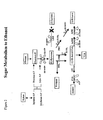
- Glycolysis is the series of enzymatic steps whereby the six carbon glucose molecule is broken down, via multiple intermediates, into two molecules of the three carbon compound pyruvate.
- the glycolytic pathways of many bacteria produce pyruvate as a common intermediate. Subsequent metabolism of pyruvate results in a net production of NADH and ATP as well as waste products commonly known as fermentation products.
- ATP is generated via glycolysis. Additional ATP can also be regenerated during the production of organic acids such as acetate. NAD + is regenerated from NADH during the reduction of organic substrates such as pyruvate or acetyl CoA. Therefore, the fermentation products of glycolysis and pyruvate metabolism include organic acids, such as lactate, formate and acetate as well as neutral products such as ethanol.
- Acetyl-CoA is then converted to acetate, via phosphotransacetylase (PTA) and acetate kinase (AK) with the co-production of ATP, or reduced to ethanol via acetaldehyde dehydrogenase (AcDH) and alcohol dehydrogenase (ADH).
- PTA phosphotransacetylase
- AK acetate kinase
- AcDH acetaldehyde dehydrogenase
- ADH alcohol dehydrogenase
- excess NADH produced from glycolysis is re-oxidised to NAD + by lactate dehydrogenase (LDH) during the reduction of pyruvate to lactate.
- LDH lactate dehydrogenase
- NADH can also be re-oxidised by AcDH and ADH during the reduction of acetyl-CoA to ethanol but this is a minor reaction in cells with a functional LDH. Theoretical yields of ethanol are therefore not
- Ethanologenic organisms such as Zymomonas mobilis and yeast
- Ethanologenic organisms are capable of a second type of anaerobic fermentation commonly referred to as an alcoholic fermentation in which pyruvate is metabolised to acetaldehyde and CO 2 by pyruvate decarboxylase (PDC).
- Acetaldehyde is then reduced to ethanol by ADH regenerating NAD + Alcoholic fermentation results in the metabolism of 1 molecule of glucose to two molecules of ethanol and two molecules of CO 2 .
- the genes which encode both of these enzymes in Z. mobilis have been isolated, cloned and expressed recombinantly in hosts capable of producing high yields of ethanol via the synthetic route described above.
- mobilis can both be integrated via the use of a pet operon to produce Gram negative recombinant hosts, including Erwina, Klebsiella and Xanthomonas species, each of which expresses the heterologous genes of Z. mobilis resulting in high yield production of ethanol via a synthetic pathway from pyruvate to ethanol.
- US 5482846 discloses the simultaneous transformation of Gram positive Bacillus sp with heterologous genes which encode both the PDC and ADH enzymes so that the transformed bacteria produce ethanol as a primary fermentation product. There is no suggestion that the bacteria may be transformed with the pdc gene alone. US 5,916,787 also discloses the transformation of Bacillus sp with genes encoding pdc and adh.
- thermophilic bacteria for ethanol production offers many advantages over traditional processes based upon mesophilic ethanol producers. Such advantages include the ability to ferment a wide range of substrates, utilising both cellobiose and pentose sugars found within the dilute acid hydrolysate of lignocellulose, as well as the reduction of ethanol inhibition by continuous removal of ethanol from the reaction medium using either a mild vacuum or gas sparging. In this way, the majority of the ethanol produced may be automatically removed in the vapour phase at temperatures above 50°C allowing the production phase to be fed with high sugar concentrations without exceeding the ethanol tolerance of the organism, thereby making the reaction more efficient.
- the use of thermophilic organisms also provides significant economic savings over traditional process methods based upon lower ethanol separation costs.
- Hartley B. S. et al. (“Development and Economics of a Novel Thermophilic Ethanol Fermentation". Presentations from Biotech '83 London 4 - 6 May 1983. First World Conference, Northwood, Online Conf. Ltd., GB, 1 May 1983, pages 895 - 905 ) describe a Bacillus stearothermophilus strain LLD-15 and envisaged steering strategies to manipulate the bacterium to produce higher ethanol yields.
- facultative anaerobes also provides a number of advantages in allowing a mixed aerobic and anaerobic process. This facilitates the use of by-products of the anaerobic phase to generate further catalytic biomass in the aerobic phase which can then be returned to the anaerobic production phase.
- the inventors have produced sporulation deficient variants of a thermophilic, facultatively anaerobic, Gram-positive bacterium which exhibit improved ethanol production-related characteristics.
- This approach has a number of important advantages over conventional processes using both traditional and recombinant mesophilic bacteria, including simplification of the transformation process by using only the pdc gene of Z. mobilis in strains that already produce ethanol and have a 'native' adh gene.
- Expression of pdc has resulted in a significant increase in ethanol production by the recombinant organism and has unexpectedly improved the organism's growth characteristics.
- Recombinant microorganisms, which prior to transformation with the pdc gene were highly unstable and difficult to culture, show significant increases in growth and survival rates both aerobically and anaerobically as well as an increase in the rate of ethanol production near to theoretical yields.
- a first aspect of the invention relates to a Gram-positive bacterium defined in claim 1 hereinafter, which has been transformed with a heterologous pdc gene, but which has solely a native alcohol dehydrogenase function.
- organisms which carry out glycolysis or a variant thereof can be engineered, in accordance with the present invention, to convert as much as 67% of the carbon in a sugar molecule via glycolysis and a synthetic metabolic pathway comprising enzymes which are encoded by heterologous pdc and native adh genes.
- the result is an engineered organism which produces ethanol as its primary fermentation product.
- the Gram-positive bacterium is a Bacillus and a thermophile.
- the Gram-positive bacterium is preferably selected from B. stearothermophilus ; B. calvodex; B. caldotenax ; B. thermoglucosidasius, B. coagulans, B. licheniformis, B. thermodehitrificans, and B. caldolyticus.
- a gene encoding lactate dehydrogenase may be inactivated in the Gram-positive bacterium of the invention.
- the lactate dehydrogenase gene may be inactivated by homologous recombination.
- the heterologous pdc gene may be from Zymomonas sp, preferably Z. mobilis or may be from yeast e.g the S. cerevisae pdc 5 gene.
- the heterologous gene may be incorporated into the chromosome of the bacterium.
- the bacterium may be transformed with a plasmid comprising the heterologous gene.
- the bacterium is transformed using plasmid pFC1, more preferably with pFC1-PDC1.
- the invention includes a Bacillus sp including the operon of the invention.
- the Bacillus sp may be selected from B. stearothermophilus ; B. calvodex ; B. caldotenax, B. thermoglucosidasius, B. coagulans, B. licheniformis, B. thermodenitrificans, and B. caldolyticus.
- the operon may be incorporated into the genome of the Bacillus. Multiple copies of the PDC operon may be incorporated into the genome.
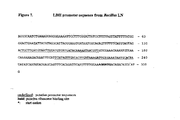
- the Gram-positive bacterium has the heterologous gene operatively linked to the lactate dehydrogenase promoter from Bacillus strain LN (NCIMB accession number 41038) so that the heterologous gene is under the control of the promoter.
- the sequence of the promoter region from strain LN is shown in Figure 7 .
- strains LN NCIMB accession number 41038
- LN-T E31, E32
- TN NCIMB accession number 41039
- TN-P1 TN-P3
- LN-S J8
- NCIMB accession number 41040 LN-D (NCIMB accession number 41041); LN-D11 and LN-P1.
- a second aspect of the present invention relates to a method of producing ethanol using bacteria of the invention maintained under suitable conditions.
- the method may be operated at a temperature between 40-75°C; preferably at a temperature of 52-65°C; most preferably at a temperature of 60-65°C.
- nucleic acid molecule comprising the lactate dehydrogenase promoter of strain LN (NCIMB accession number 41038).
- the sequence of a nucleic acid molecule comprising the lactate dehydrogenase promoter of strain LN is shown in Figure 7 .
- the nucleic acid molecule comprises a functional fragment of the nucleic acid sequence shown in Figure 7 .
- a functional fragment is defined as a fragment that function as a promoter and enables the expression of an operably linked gene.
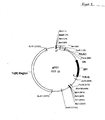
- Plasmid pFC1 Also provided is plasmid pFC1.
- the structure of this plasmid is shown schematically in Figure 8 .
- Plasmid pFC1-PDC1 Also provided is plasmid pFC1-PDC1.
- the structure of this plasmid is shown schematically in Figure 9 .
- the inventors initiated a strain development program to overcome inherent strain limitations in respect of ethanol production, such as instability and sporulation under adverse conditions. Physiological manipulation and selection for strains with superior growth characteristics has been achieved in continuous culture, whereas a more targeted genetic approach has been used to engineer strains with greater stability and superior production characteristics.
- Bacillus strains LLD-15, LLD-R, LLD-16 and T13 have been described in EP-A-0370023 and by Amartey et al, (1999) Process Biochemistry 34 No. 3 pp.289-294 .
- Strain LLD-15 (NCIMB12428) arose during attempts to obtain mutants of Bacillus stearothermophilus strain NCA 1503 lacking L-LDH activity by selecting for suicide substrate resistance (Payton and Hartley (1984) Trends in Biotechnology, 2 No. 6 ).
- Strain LLD-15 was assumed to be a variant of B. stearothermophilus NCA1503, but is, in fact, derived from PS11.
- Strain LLD-R arises spontaneously and reproducibly from strain LLD-15 and is selected on plates or during continuous cultures under which it grows more rapidly (i.e. at low pH in media containing sugars, acetate and formate). LLD-R produces L-lactate anaerobically and contains high levels of L-LDH, so is therefore, clearly a wild type revertant of the non-lactate-producing LLD-15 lesion.
- Bacillus strain T13 is an L-lactate deficient mutant of strain LLD-R. Isolation and characterisation of this mutant strain has been described previously by, Javed. M. PhD Thesis, Imperial College, London. Thus, Bacillus strains LLD-15, LLD-16 and T13 are mutants of the original isolate, PSII in which the ldh gene has been inactivated either via spontaneous mutation or by chemical mutagenesis and the major fermentation product, unlike PSII, is ethanol.
- the lactate dehydrogenase gene mutation in LLD-15, LLD-16 and T13 results from the insertion of a transposon into the coding region of the lactate dehydrogenase gene resulting in ldhT geno-type.
- strains are inherently unstable in high sugar concentrations (>2%) and revert back to lactate producing strains.
- Strains T13 and LLD-15 revert to T13-R and LLD-R, respectively.
- Strains LLD-15, LLD-R, LLD-16 and T13 also tend to sporulate under adverse growth conditions such as changes in pH, temperature and medium compositions, and during periods of nutrient starvation. Since sporulation often leads to culture washout in a continuous system, these strains are not suitable for large scale industrial use in which process parameters fluctuate.
- Bacillus strain LN was produced from LLD-R as a spontaneous sporulation mutant which arose during nitrogen adaptation in continuous culture. Strain LN is more robust than the parental strains LLD-15 and LLD-R under vigorous industrial conditions such as low pH, high sugar concentrations and in crude hydrolysate feed stocks and is more amenable to plasmid transformation. Strain LN is sporulation deficient ( spo - ) and is particularly suitable for the production of high purity L-lactic acid, producing up to 0.4g of L-lactate/g of glucose at 65°C. This strain is sensitive to kanamycin concentrations in excess of 5 ⁇ g/ml and an ideal host for genetic manipulation ( ldh inactivation and heterologous gene expression). Strain LN has been deposited under the terms of the Budapest Treaty under accession No. NCIMB 41038.
- Strains E31 and E32 are spontaneous transposon mutants from strain LN. Both strains are lactate deficient and produce up to 0.5g of ethanol/g of glucose at 65°C. They are non-sporulating and as such more amenable to genetic manipulation than T13.
- Strain LN-S (J8) was produced by a single crossover homologous recombination event between pUBUC-LDH a temperature sensitive, non-replicative plasmid harbouring an internal region of the ldh gene and the ldh gene on the chromosome (see Figure 3 ). This resulted in inactivation of the ldh gene and a lactate negative phenotype. This strain is also sporulation deficient and resistant to kanamycin. It is stable in relatively high sugar concentrations in continuous culture (with 10g/L of residual sugar), it has good growth characteristics and produces relatively high yields of ethanol.
- the cells produce up to 20g/L of ethanol (i.e. 0.4g of ethanol/g of glucose utilised) for 200 hours or more without any drop in ethanol yield.
- This strain was produced by a double crossover homologous recombination event between a linear insertion cassette and the ldh gene from strain LN (see Figure 4 ).
- the insertion cassette (pUC-IC) is a non-replicating pUC18 plasmid harbouring a kanamycin resistance gene flanked by the ldh and lactase permease (1p) gene seequences. Recombination inactivated both the ldh and 1p genes resulting in a lactate negative phenotype.
- This strain is also sporulation deficient and resistant to kanamycin.
- Strain LN-D can tolerate high sugar concentrations (with up to 10g/L of residual sugar), it has good growth characteristics and produces relatively high yields of ethanol.
- the cells produce up to 20g/L of ethanol (i.e. 0.4g of ethanol/g of glucose utilised) for 200 hours or more without any drop in ethanol yield or cell viability. Furthermore, kanamycin selection was not required to maintain the ldh gene inactivation.
- strain LN-D11 The resistance of strain LN-D to kanamycin was cured after repeated subculture to produce strain LN-D11.
- This strain is lactate negative, sporulation deficient and sensitive to kanamycin concentrations in excess of 5 ⁇ g/ml.
- Strain LN-D11 can tolerate high sugar concentrations (with up to 10g/L of residual sugar), it has good growth characteristics and produces relatively high yields of ethanol. For example, in continuous culture at pH 7.0, 52°C, dilution rate of 0.1h -1 , and 50g/L glucose feed, the cells produce up to 20g/L of ethanol (i.e. 0.4g of ethanol/g of glucose utilised) for 200 hours or more without any drop in ethanol yield or cell viability. This strain is an ideal host for heterologous gene expression.
- Strain LN-DP1 was produced from strain LN-D11 after transformation with the replicative plasmid pBST22-zym (also referred to as pZP1).
- the backbone of this vector is pBST22 (originally developed by Liao et al (1986) PNAS (USA) 83: 576-580 ) with the entire pdc gene from Z. mobilis under the control of the ldh promoter sequence from B. stearothermophilus NCA 1503.
- Strain LN-DP1 is sporulation deficient; kanamycin resistant, lactate negative and contains the heterologous pdc gene from Z. mobilis .
- Strain LN-DP1 can utilise high sugar concentrations, it has good growth characteristics and produces relatively high yields of ethanol. For example, in continuous culture at pH 7.0, 60°C, dilution rate of 0.1h -1 , and 50g/L glucose feed, the cells produce up to 25g/L ethanol (i.e. 0.5g of ethanol/g of glucose utilised) for 200 hours or more without any drop in ethanol yield.
- Strain TN arose spontaneously from T13 during nitrogen adaptation in continuous culture. This strain is more robust than the parental strain under vigorous industrial conditions (i.e. low pH, high sugar concentrations, and in crude hydrolysate feed stocks) and is more amenable to plasmid transformation, making it an ideal host for genetic engineering. Strain TN is sporulation deficient and lactate negative (the ldh gene has been inactivated by transposon mutagenesis into the coding region of the ldh gene). Strain TN is a good ethanol producer on dilute sugar feeds.
- the cells produce up to 8g/L ethanol (i.e. 0.4g of ethanol/g of glucose utilised) for 100 hours or more without any drop in ethanol yield.
- This strain is sensitive to kanamycin concentrations in excess of 5 ⁇ g/ml and an ideal host for genetic manipulation.
- Strain TN-P1 was produced from strain TN after transformation with the replicative plasmid pBST22-zym. As previously described, pBST22-zym was produced by the incorporation of a pdc gene in vector pBST22. The transformation efficiency of TN was 10-fold higher with pBST22-zym than pBST22 and the colony size of the transformants were significantly larger indicating that pdc expression conferred a growth advantage to the cells.
- TN-P1 is also more stable and a better ethanol producer than TN, especially in sugar concentrations greater than 20g/L.
- strain TN-P1 produced up to 0.5g ethanol/g sugar utilised for 600 hours with no significant drop in yield or cell viability.
- TN-P1 produced 0.4 g ethanol/g sugar utilised in for 400 hours with no significant drop in ethanol yield or culture viability.
- Plasmid selection in strain TN-P1 was first maintained with kanamycin but the plasmid was found to be relatively stable without selection and no significant plasmid loss was detected after 300 hours of continuous culture.
- the plasmid and PDC enzyme were found to be relatively stable at high temperatures.
- continuous culture controlled at pH 7.0 with a dilution rate of 0.1h -1 , and a glucose feed of 30g/L, there was no significant drop in ethanol yield or culture viability when the growth temperature was increased from 52 to 60°C.
- Strain TN-P3 was produced from strain TN after transformation with the replicative plasmid pFC1-PDC1.
- the backbone of this vector is pFC1 ( Figure 8 ) which was formed from a fusion of pAB124 ( Bingham et al., Gen. Microbiol., 114, 401-408, 1979 ) and pUC18.
- the pdc gene was amplified from Z. mobilis chromosomal DNA by PCR using the following primers.
- the restriction sites Bam HI and Sac I (underlined) were introduced into the amplified gene.
- the ldh promoter was amplified by PCR from Bacillus LN using the following primers.
- the restriction sites Sac I and Bam HI (underlined) were introduced into the amplified sequence.
- the ldh promoter sequence and pdc gene were digested with Sac I and Bam HI and then ligated together ( Figure 6 ). The construct was then digested with Bam HI and ligated into Bam HI digested pFC1 to form plasmid pFC1-PDC1 ( Figure 9 ).
- Strain TN-P3 is a good ethanol producer and produces yields in excess of 0.45g ethanol/g sugar at temperatures between 50 and 60°C.
- SCO or Campbell-type integration was used for directed ldh gene inactivation.
- An internal fragment (700 bp) of the target gene ( ldh ) was first cloned into pUBUC to form pUBUC-LDH.
- Plasmid pUBUC is a shuttle vector for DNA transfer between Escherichia coli and Bacillus strains LN and TN and was formed from the fusion of pUB 110 and pUC 18. This vector contains a selectable marker that confers resistance to kanamycin and a Gram-positive and Gram-negative replicon. The plasmid is temperature sensitive in Bacillus and cannot replicate above 54°C.
- Plasmid pUBUC-LDH was first methylated ( in vivo ) and then transformed into the host strain (LN) at the permissible temperature (50°C) for plasmid propagation. The growth temperature was then increased to 65°C, preventing plasmid replication and integrants were selected using kanamycin. Integration of the plasmid DNA into the ldh gene resulted in gene inactivation and a lactate negative phenotype.
- Double-Crossover Recombination (DCO) ( Figures 4 & 5)
- DCO or replacement recombination differs from SCO in that it results in integration of only one copy of the target DNA and typically, a region of chromosomal DNA is replaced by another region, either foreign DNA or mutationally altered homologous DNA.
- the target DNA (kanamycin marker) was flanked on either side by mutationally altered fragments of the ldh gene in plasmid pUC-IC (a non-replicative vector based on pUC18). The vector was first methylated ( in vivo ) and then linearised at a site outside the flanking region (this prevents SCO). The methylated, linearised plasmid DNA was then transformed into strain LN and integrants were selected using kanamycin.
- This technique has also be used to inactivate ldh and integrate a copy of the pdc gene into the chromosome simultaneously ( Figure 5 ) and can be applied to other genes of interest.
- the pdc gene from Z. mobilis is under the control of the ldh promoter sequence from B. stearothermophilus NCA1503 ( Figure 6 ).
- This plasmid was transformed into strain TN to form TN-P1.
- PDC improved cell growth, pdc expression and subsequent enzyme activity was relatively weak and there was only a small increase in ethanol yield.
- PDC activity is sensitive to temperature and rapidly declined at growth temperatures greater than 60°C.
- Plasmid pFC1 is a shuttle vector that contains a Gram-positive and Gram-negative replicon and confers resistance to ampicillin and tetracycline. This plasmid was transformed into strain TN to form TN-P3.
- TN-P3 produces significantly more ethanol than the untransformed control strain TN.
- strains were cultured in a culture medium containing JSD supplemented with 50mM PIPES buffer and 2% glucose at 54°C for 24 hours.
- TN-P1 and TN-P3 cultures were supplemented with kanamycin (12 ⁇ g/ml) and tetracycline (10 ⁇ g/ml), respectively.
- thermostability of pdc can be improved by cloning an alternative pdc gene, encoding a more thermostable PDC enzyme, from Saccharomyces cerevisiae.
- This gene referred to as pdc5 will also be under the control of the ldh promoter from strain LN (see Figure 9 , construct 3).
- the construct will be cloned into pFC1 and the resulting plasmid pFC1-PDC5 will be transformed into strain TN.
- An artificial PDC operon can be constructed using interchangeable gene sequences from the ldh promoter, pdc genes from Z. mobilis and the yeast Saccharomyces cerevisiae, and adh from LN (see Figure 10 ).
- This expression strategy may also be used for other genes of interest.
Landscapes
- Chemical & Material Sciences (AREA)
- Life Sciences & Earth Sciences (AREA)
- Organic Chemistry (AREA)
- Engineering & Computer Science (AREA)
- Health & Medical Sciences (AREA)
- Zoology (AREA)
- Wood Science & Technology (AREA)
- Genetics & Genomics (AREA)
- Bioinformatics & Cheminformatics (AREA)
- Biotechnology (AREA)
- General Engineering & Computer Science (AREA)
- Microbiology (AREA)
- Biochemistry (AREA)
- General Health & Medical Sciences (AREA)
- Biomedical Technology (AREA)
- Medicinal Chemistry (AREA)
- Chemical Kinetics & Catalysis (AREA)
- General Chemical & Material Sciences (AREA)
- Virology (AREA)
- Tropical Medicine & Parasitology (AREA)
- Molecular Biology (AREA)
- Micro-Organisms Or Cultivation Processes Thereof (AREA)
- Preparation Of Compounds By Using Micro-Organisms (AREA)
Claims (13)
- Thermophiles grampositives Bakterium aus einer Bacillus sp., das mit einem heterologen Gen, das Pyruvatdecarboxylase kodiert, transformiert ist, jedoch ausschließlich native Alkoholdehydrogenasefunktion aufweist, wobei das heterologe Gen operativ mit einem Lactatdehydrogenase-Promotor mit der in Figur 7 gezeigten Sequenz verknüpft ist.
- Grampositives Bakterium gemäß Anspruch 1, wobei das Bacillus aus B. stearothermophilus; B. calvodelox; B. caldotenax, B. thermoglucosidasius, B. coagulans, B. licheniformis, B. thermodenitrificans und B. caldolyticus ausgewählt ist.
- Grampositives Bakterium gemäß Anspruch 1 oder 2, wobei das Bakterium ein Lactatdehydrogenase kodierendes Gen umfasst, das inaktiviert ist.
- Grampositives Bakterium gemäß Anspruch 3, wobei das Lactatdehydrogenase-Gen durch homologe Rekombination inaktiviert ist.
- Grampositives Bakterium gemäß einem der vorstehenden Ansprüche, wobei das heterologe Gen aus Zymomonas sp. oder aus Saccharomyces cerevisiae ist.
- Grampositives Bakterium gemäß Anspruch 5, wobei das heterologe Gen aus Z. mobilis ist.
- Grampositives Bakterium gemäß Anspruch 5, wobei das heterologe Gen pdc 5 aus S. cerevisiae ist.
- Grampositives Bakterium gemäß einem der vorstehenden Ansprüche, wobei das heterologe Gen in das Chromosom des Bakteriums inkorporiert ist.
- Grampositives Bakterium gemäß einem der Ansprüche 1 bis 7, wobei das Bakterium mit einem Plasmid, welches das heterologe Gen umfasst, transformiert ist.
- Verfahren zum Erzeugen von Ethanol, das ein Kultivieren eines Bakteriums oder Stammes gemäß einem der Ansprüche 1 bis 9 unter geeigneten Bedingungen umfasst.
- Verfahren gemäßAnspruch 10, wobei das Verfahren bei einer Temperatur zwischen 40 - 75 °C durchgeführt wird.
- Verfahren gemäß Anspruch 10, wobei das Verfahren bei einer Temperatur von 52 bis 65 °C durchgeführt wird.
- Verfahren gemäß Anspruch 10, wobei das Verfahren bei einer Temperatur von 60 bis 65 °C durchgeführt wird.
Applications Claiming Priority (3)
| Application Number | Priority Date | Filing Date | Title |
|---|---|---|---|
| GBGB0000185.9A GB0000185D0 (en) | 2000-01-06 | 2000-01-06 | Ethanol production |
| US17719900P | 2000-01-21 | 2000-01-21 | |
| EP01900179A EP1278873A1 (de) | 2000-01-06 | 2001-01-05 | Fermentative produktion von ethanol durch heterologe expression eines pyruvatdecarboxylasegens in bacillus sp |
Related Parent Applications (2)
| Application Number | Title | Priority Date | Filing Date |
|---|---|---|---|
| EP01900179A Division EP1278873A1 (de) | 2000-01-06 | 2001-01-05 | Fermentative produktion von ethanol durch heterologe expression eines pyruvatdecarboxylasegens in bacillus sp |
| EP01900179.1 Division | 2001-01-05 |
Publications (3)
| Publication Number | Publication Date |
|---|---|
| EP2287293A2 EP2287293A2 (de) | 2011-02-23 |
| EP2287293A3 EP2287293A3 (de) | 2011-06-01 |
| EP2287293B1 true EP2287293B1 (de) | 2015-04-08 |
Family
ID=9883239
Family Applications (2)
| Application Number | Title | Priority Date | Filing Date |
|---|---|---|---|
| EP01900179A Withdrawn EP1278873A1 (de) | 2000-01-06 | 2001-01-05 | Fermentative produktion von ethanol durch heterologe expression eines pyruvatdecarboxylasegens in bacillus sp |
| EP10179839.5A Expired - Lifetime EP2287293B1 (de) | 2000-01-06 | 2001-01-05 | Thermophile Bakterienstämme zur Herstellung von Ethanol |
Family Applications Before (1)
| Application Number | Title | Priority Date | Filing Date |
|---|---|---|---|
| EP01900179A Withdrawn EP1278873A1 (de) | 2000-01-06 | 2001-01-05 | Fermentative produktion von ethanol durch heterologe expression eines pyruvatdecarboxylasegens in bacillus sp |
Country Status (5)
| Country | Link |
|---|---|
| US (4) | US20020034816A1 (de) |
| EP (2) | EP1278873A1 (de) |
| AU (1) | AU2385601A (de) |
| GB (2) | GB0000185D0 (de) |
| WO (1) | WO2001049865A1 (de) |
Families Citing this family (21)
| Publication number | Priority date | Publication date | Assignee | Title |
|---|---|---|---|---|
| GB0024554D0 (en) | 2000-10-06 | 2000-11-22 | Agrol Ltd | Ethanol production |
| AU2007231884B2 (en) * | 2000-10-06 | 2012-06-07 | Elsworth Biotechnology Limited | Ethanol production |
| CA2424890C (en) * | 2000-10-06 | 2014-06-03 | Elsworth Biotechnology Limited | Ethanol production in gram-positive bacteria with a stabilized mutation in lactate dehydrogenase |
| DE10344200A1 (de) * | 2003-09-22 | 2005-05-04 | Basf Ag | Verfahren zur Herstellung eines D-Pantothensäure und/oder deren Salze enthaltendes Tierfuttersupplement |
| WO2006117536A1 (en) * | 2005-05-04 | 2006-11-09 | Tmo Renewables Limited | Thermophilic microorganisms with inactivated lactate dehydrogenase gene (ldh) for ethanol production |
| GB0511602D0 (en) | 2005-06-07 | 2005-07-13 | Tmo Biotec Ltd | Microorganisms |
| GB0520344D0 (en) * | 2005-10-06 | 2005-11-16 | Tmo Biotec Ltd | Microoganisms |
| US8497128B2 (en) * | 2006-01-24 | 2013-07-30 | Purac Biochem B.V. | Genetic modification of homolactic thermophilic bacilli |
| GB0605889D0 (en) * | 2006-03-24 | 2006-05-03 | Bioconversion Technologies Ltd | Regulation Of Thermophile Ethanol Fermentation |
| GB0605890D0 (en) * | 2006-03-24 | 2006-05-03 | Bioconversion Technologies Ltd | Enhancemeny Of Microbial Ethanol Production |
| AP2724A (en) | 2006-07-21 | 2013-08-31 | Xyleco Inc | Conversion systems for biomass |
| AU2007301758B2 (en) * | 2006-09-28 | 2011-09-15 | Tmo Renewables Limited | Thermophilic microorganisms for ethanol production |
| EP2064225A4 (de) | 2007-05-09 | 2010-03-03 | Mascoma Corp | Mesosphile und thermophile gen-knockout-mechanismen sowie verfahren zu ihrer anwendung |
| GB0715751D0 (en) | 2007-08-13 | 2007-09-19 | Tmo Renewables Ltd | Thermophilic micro-organisms for ethanol production |
| GB0820262D0 (en) * | 2008-11-05 | 2008-12-10 | Tmo Renewables Ltd | Microorganisms |
| US20120301937A1 (en) | 2010-01-26 | 2012-11-29 | Scale Biofuel, ApS | Methods for producing and harvesting ethanol and apparatus for producing and harvesting the same |
| GB2478791A (en) * | 2010-03-19 | 2011-09-21 | Qteros Inc | Ethanol production by genetically-modified bacteria |
| BR112013029388A2 (pt) | 2011-05-18 | 2017-01-31 | Scale Biofuel Aps | processos de produção de produtos de fermentação voláteis auxiliados pelo sol |
| US11248241B2 (en) | 2011-10-07 | 2022-02-15 | Hangzou Dehong Technology Co., Ltd. | Methods of producing lactic acid or a salt or an ester thereof by using a versatile extremely thermophilic bacteria |
| EP2977471A1 (de) | 2014-07-23 | 2016-01-27 | PURAC Biochem BV | Genetische Modifizierung von (S)-Milchsäure-erzeugenden thermophilen Bakterien |
| GB201417362D0 (en) | 2014-10-01 | 2014-11-12 | Hartley Brian S | Devices and methods for selection of microbial strains |
Family Cites Families (6)
| Publication number | Priority date | Publication date | Assignee | Title |
|---|---|---|---|---|
| US5182199A (en) * | 1987-05-27 | 1993-01-26 | Hartley Brian S | Thermophilic ethanol production in a two-stage closed system |
| GB8712410D0 (en) | 1987-05-27 | 1987-07-01 | Elsworth Biotech Ltd | Thermophilic ethanol production |
| US5000000A (en) | 1988-08-31 | 1991-03-19 | University Of Florida | Ethanol production by Escherichia coli strains co-expressing Zymomonas PDC and ADH genes |
| US5554520A (en) | 1988-08-31 | 1996-09-10 | Bioenergy International, L.C. | Ethanol production by recombinant hosts |
| US5482846A (en) * | 1988-08-31 | 1996-01-09 | University Of Florida | Ethanol production in Gram-positive microbes |
| JPH0789933B2 (ja) * | 1992-12-24 | 1995-10-04 | 日本電気株式会社 | プラスミド |
-
2000
- 2000-01-06 GB GBGB0000185.9A patent/GB0000185D0/en not_active Ceased
-
2001
- 2001-01-05 EP EP01900179A patent/EP1278873A1/de not_active Withdrawn
- 2001-01-05 US US09/754,083 patent/US20020034816A1/en not_active Abandoned
- 2001-01-05 GB GB0215401A patent/GB2377448A/en not_active Withdrawn
- 2001-01-05 EP EP10179839.5A patent/EP2287293B1/de not_active Expired - Lifetime
- 2001-01-05 WO PCT/GB2001/000036 patent/WO2001049865A1/en not_active Ceased
- 2001-01-05 AU AU23856/01A patent/AU2385601A/en not_active Abandoned
-
2003
- 2003-11-05 US US10/700,472 patent/US20040253713A1/en not_active Abandoned
-
2007
- 2007-03-13 US US11/717,004 patent/US7691620B2/en not_active Expired - Fee Related
-
2009
- 2009-11-12 US US12/617,177 patent/US8192977B2/en not_active Expired - Fee Related
Also Published As
| Publication number | Publication date |
|---|---|
| US20020034816A1 (en) | 2002-03-21 |
| WO2001049865A8 (en) | 2001-10-11 |
| US20040253713A1 (en) | 2004-12-16 |
| AU2385601A (en) | 2001-07-16 |
| WO2001049865A1 (en) | 2001-07-12 |
| US8192977B2 (en) | 2012-06-05 |
| US20070292928A1 (en) | 2007-12-20 |
| GB2377448A (en) | 2003-01-15 |
| US7691620B2 (en) | 2010-04-06 |
| EP2287293A2 (de) | 2011-02-23 |
| US20100248319A1 (en) | 2010-09-30 |
| EP1278873A1 (de) | 2003-01-29 |
| GB0000185D0 (en) | 2000-03-01 |
| EP2287293A3 (de) | 2011-06-01 |
| GB0215401D0 (en) | 2002-08-14 |
| WO2001049865A9 (en) | 2002-10-24 |
Similar Documents
| Publication | Publication Date | Title |
|---|---|---|
| US8192977B2 (en) | Ethanol production | |
| JP5732083B2 (ja) | エタノール産生 | |
| Bothast et al. | Fermentations with new recombinant organisms | |
| US9469858B2 (en) | Sporulation-deficient thermophilic microorganisms for the production of ethanol | |
| EP0973915B1 (de) | Cellobiose fermentierende rekombinante mikroorganismen | |
| US8236994B2 (en) | Process for the biological production of 1,3-propanediol from glycerol with high yield | |
| EP2392663A1 (de) | Thermophile Organismen zur Umwandlung von Lignozellulose-Biomasse in Ethanol | |
| EP1499708A1 (de) | L-arabinose verbrauchende modifizierte hefe | |
| US20090226992A1 (en) | Enhancement of Microbial Ethanol Production | |
| US8097460B2 (en) | Ethanol production in bacillus | |
| US20090042265A1 (en) | Thermophilic Microorganisms with Inactivated Lactate Dehydrogenase Gene (LDH) for Ethanol Production | |
| US8541222B2 (en) | Modified microorganisms with inactivated lactate dehydrogenase gene | |
| WO2007110592A2 (en) | Fermentation process for the production of ethanol | |
| AU2007231884B2 (en) | Ethanol production | |
| HK1143834A (en) | Ethanol production |
Legal Events
| Date | Code | Title | Description |
|---|---|---|---|
| PUAI | Public reference made under article 153(3) epc to a published international application that has entered the european phase |
Free format text: ORIGINAL CODE: 0009012 |
|
| AC | Divisional application: reference to earlier application |
Ref document number: 1278873 Country of ref document: EP Kind code of ref document: P |
|
| AK | Designated contracting states |
Kind code of ref document: A2 Designated state(s): AT BE CH CY DE DK ES FI FR GB GR IE IT LI LU MC NL PT SE TR |
|
| PUAL | Search report despatched |
Free format text: ORIGINAL CODE: 0009013 |
|
| AK | Designated contracting states |
Kind code of ref document: A3 Designated state(s): AT BE CH CY DE DK ES FI FR GB GR IE IT LI LU MC NL PT SE TR |
|
| RIN1 | Information on inventor provided before grant (corrected) |
Inventor name: GREEN, EDWARD Inventor name: BAGHAEI-YAZDI, NAMDAR Inventor name: JAVED, MUHAMMAD |
|
| 17P | Request for examination filed |
Effective date: 20111201 |
|
| 17Q | First examination report despatched |
Effective date: 20120411 |
|
| GRAP | Despatch of communication of intention to grant a patent |
Free format text: ORIGINAL CODE: EPIDOSNIGR1 |
|
| INTG | Intention to grant announced |
Effective date: 20141031 |
|
| GRAS | Grant fee paid |
Free format text: ORIGINAL CODE: EPIDOSNIGR3 |
|
| GRAA | (expected) grant |
Free format text: ORIGINAL CODE: 0009210 |
|
| AC | Divisional application: reference to earlier application |
Ref document number: 1278873 Country of ref document: EP Kind code of ref document: P |
|
| AK | Designated contracting states |
Kind code of ref document: B1 Designated state(s): AT BE CH CY DE DK ES FI FR GB GR IE IT LI LU MC NL PT SE TR |
|
| RAP1 | Party data changed (applicant data changed or rights of an application transferred) |
Owner name: ELSWORTH BIOTECHNOLOGY LIMITED |
|
| REG | Reference to a national code |
Ref country code: GB Ref legal event code: FG4D |
|
| REG | Reference to a national code |
Ref country code: CH Ref legal event code: EP |
|
| REG | Reference to a national code |
Ref country code: IE Ref legal event code: FG4D |
|
| REG | Reference to a national code |
Ref country code: AT Ref legal event code: REF Ref document number: 720598 Country of ref document: AT Kind code of ref document: T Effective date: 20150515 |
|
| REG | Reference to a national code |
Ref country code: DE Ref legal event code: R096 Ref document number: 60149318 Country of ref document: DE Effective date: 20150521 |
|
| REG | Reference to a national code |
Ref country code: AT Ref legal event code: MK05 Ref document number: 720598 Country of ref document: AT Kind code of ref document: T Effective date: 20150408 |
|
| REG | Reference to a national code |
Ref country code: NL Ref legal event code: VDEP Effective date: 20150408 |
|
| PG25 | Lapsed in a contracting state [announced via postgrant information from national office to epo] |
Ref country code: NL Free format text: LAPSE BECAUSE OF FAILURE TO SUBMIT A TRANSLATION OF THE DESCRIPTION OR TO PAY THE FEE WITHIN THE PRESCRIBED TIME-LIMIT Effective date: 20150408 |
|
| PG25 | Lapsed in a contracting state [announced via postgrant information from national office to epo] |
Ref country code: ES Free format text: LAPSE BECAUSE OF FAILURE TO SUBMIT A TRANSLATION OF THE DESCRIPTION OR TO PAY THE FEE WITHIN THE PRESCRIBED TIME-LIMIT Effective date: 20150408 Ref country code: FI Free format text: LAPSE BECAUSE OF FAILURE TO SUBMIT A TRANSLATION OF THE DESCRIPTION OR TO PAY THE FEE WITHIN THE PRESCRIBED TIME-LIMIT Effective date: 20150408 Ref country code: PT Free format text: LAPSE BECAUSE OF FAILURE TO SUBMIT A TRANSLATION OF THE DESCRIPTION OR TO PAY THE FEE WITHIN THE PRESCRIBED TIME-LIMIT Effective date: 20150810 |
|
| PG25 | Lapsed in a contracting state [announced via postgrant information from national office to epo] |
Ref country code: AT Free format text: LAPSE BECAUSE OF FAILURE TO SUBMIT A TRANSLATION OF THE DESCRIPTION OR TO PAY THE FEE WITHIN THE PRESCRIBED TIME-LIMIT Effective date: 20150408 Ref country code: GR Free format text: LAPSE BECAUSE OF FAILURE TO SUBMIT A TRANSLATION OF THE DESCRIPTION OR TO PAY THE FEE WITHIN THE PRESCRIBED TIME-LIMIT Effective date: 20150709 |
|
| REG | Reference to a national code |
Ref country code: DE Ref legal event code: R097 Ref document number: 60149318 Country of ref document: DE |
|
| PG25 | Lapsed in a contracting state [announced via postgrant information from national office to epo] |
Ref country code: DK Free format text: LAPSE BECAUSE OF FAILURE TO SUBMIT A TRANSLATION OF THE DESCRIPTION OR TO PAY THE FEE WITHIN THE PRESCRIBED TIME-LIMIT Effective date: 20150408 |
|
| PLBE | No opposition filed within time limit |
Free format text: ORIGINAL CODE: 0009261 |
|
| STAA | Information on the status of an ep patent application or granted ep patent |
Free format text: STATUS: NO OPPOSITION FILED WITHIN TIME LIMIT |
|
| 26N | No opposition filed |
Effective date: 20160111 |
|
| PG25 | Lapsed in a contracting state [announced via postgrant information from national office to epo] |
Ref country code: IT Free format text: LAPSE BECAUSE OF FAILURE TO SUBMIT A TRANSLATION OF THE DESCRIPTION OR TO PAY THE FEE WITHIN THE PRESCRIBED TIME-LIMIT Effective date: 20150408 |
|
| PG25 | Lapsed in a contracting state [announced via postgrant information from national office to epo] |
Ref country code: BE Free format text: LAPSE BECAUSE OF NON-PAYMENT OF DUE FEES Effective date: 20160131 |
|
| PGFP | Annual fee paid to national office [announced via postgrant information from national office to epo] |
Ref country code: GB Payment date: 20160104 Year of fee payment: 16 |
|
| REG | Reference to a national code |
Ref country code: DE Ref legal event code: R119 Ref document number: 60149318 Country of ref document: DE |
|
| PG25 | Lapsed in a contracting state [announced via postgrant information from national office to epo] |
Ref country code: LU Free format text: LAPSE BECAUSE OF FAILURE TO SUBMIT A TRANSLATION OF THE DESCRIPTION OR TO PAY THE FEE WITHIN THE PRESCRIBED TIME-LIMIT Effective date: 20160105 Ref country code: BE Free format text: LAPSE BECAUSE OF FAILURE TO SUBMIT A TRANSLATION OF THE DESCRIPTION OR TO PAY THE FEE WITHIN THE PRESCRIBED TIME-LIMIT Effective date: 20150408 |
|
| REG | Reference to a national code |
Ref country code: CH Ref legal event code: PL |
|
| PG25 | Lapsed in a contracting state [announced via postgrant information from national office to epo] |
Ref country code: MC Free format text: LAPSE BECAUSE OF FAILURE TO SUBMIT A TRANSLATION OF THE DESCRIPTION OR TO PAY THE FEE WITHIN THE PRESCRIBED TIME-LIMIT Effective date: 20150408 |
|
| REG | Reference to a national code |
Ref country code: FR Ref legal event code: ST Effective date: 20160930 |
|
| PG25 | Lapsed in a contracting state [announced via postgrant information from national office to epo] |
Ref country code: DE Free format text: LAPSE BECAUSE OF NON-PAYMENT OF DUE FEES Effective date: 20160802 Ref country code: LI Free format text: LAPSE BECAUSE OF NON-PAYMENT OF DUE FEES Effective date: 20160131 Ref country code: CH Free format text: LAPSE BECAUSE OF NON-PAYMENT OF DUE FEES Effective date: 20160131 |
|
| REG | Reference to a national code |
Ref country code: IE Ref legal event code: MM4A |
|
| PG25 | Lapsed in a contracting state [announced via postgrant information from national office to epo] |
Ref country code: FR Free format text: LAPSE BECAUSE OF NON-PAYMENT OF DUE FEES Effective date: 20160201 |
|
| PG25 | Lapsed in a contracting state [announced via postgrant information from national office to epo] |
Ref country code: IE Free format text: LAPSE BECAUSE OF NON-PAYMENT OF DUE FEES Effective date: 20160105 |
|
| PG25 | Lapsed in a contracting state [announced via postgrant information from national office to epo] |
Ref country code: SE Free format text: LAPSE BECAUSE OF FAILURE TO SUBMIT A TRANSLATION OF THE DESCRIPTION OR TO PAY THE FEE WITHIN THE PRESCRIBED TIME-LIMIT Effective date: 20150408 |
|
| GBPC | Gb: european patent ceased through non-payment of renewal fee |
Effective date: 20170105 |
|
| PG25 | Lapsed in a contracting state [announced via postgrant information from national office to epo] |
Ref country code: GB Free format text: LAPSE BECAUSE OF NON-PAYMENT OF DUE FEES Effective date: 20170105 |
|
| PG25 | Lapsed in a contracting state [announced via postgrant information from national office to epo] |
Ref country code: CY Free format text: LAPSE BECAUSE OF FAILURE TO SUBMIT A TRANSLATION OF THE DESCRIPTION OR TO PAY THE FEE WITHIN THE PRESCRIBED TIME-LIMIT Effective date: 20150408 |
|
| PG25 | Lapsed in a contracting state [announced via postgrant information from national office to epo] |
Ref country code: TR Free format text: LAPSE BECAUSE OF FAILURE TO SUBMIT A TRANSLATION OF THE DESCRIPTION OR TO PAY THE FEE WITHIN THE PRESCRIBED TIME-LIMIT Effective date: 20150408 |