EP2284791B1 - Verfahren zum erzeugen einer dreidimensionalen objektidentifikationsbilddatenbank, verarbeitungsvorrichtung und verarbeitungsprogramm - Google Patents
Verfahren zum erzeugen einer dreidimensionalen objektidentifikationsbilddatenbank, verarbeitungsvorrichtung und verarbeitungsprogramm Download PDFInfo
- Publication number
- EP2284791B1 EP2284791B1 EP09738792.2A EP09738792A EP2284791B1 EP 2284791 B1 EP2284791 B1 EP 2284791B1 EP 09738792 A EP09738792 A EP 09738792A EP 2284791 B1 EP2284791 B1 EP 2284791B1
- Authority
- EP
- European Patent Office
- Prior art keywords
- vector
- dimensional object
- image
- local
- model
- Prior art date
- Legal status (The legal status is an assumption and is not a legal conclusion. Google has not performed a legal analysis and makes no representation as to the accuracy of the status listed.)
- Not-in-force
Links
Images




Classifications
-
- G—PHYSICS
- G06—COMPUTING OR CALCULATING; COUNTING
- G06F—ELECTRIC DIGITAL DATA PROCESSING
- G06F16/00—Information retrieval; Database structures therefor; File system structures therefor
- G06F16/50—Information retrieval; Database structures therefor; File system structures therefor of still image data
- G06F16/58—Retrieval characterised by using metadata, e.g. metadata not derived from the content or metadata generated manually
- G06F16/583—Retrieval characterised by using metadata, e.g. metadata not derived from the content or metadata generated manually using metadata automatically derived from the content
-
- G—PHYSICS
- G06—COMPUTING OR CALCULATING; COUNTING
- G06F—ELECTRIC DIGITAL DATA PROCESSING
- G06F16/00—Information retrieval; Database structures therefor; File system structures therefor
- G06F16/50—Information retrieval; Database structures therefor; File system structures therefor of still image data
- G06F16/58—Retrieval characterised by using metadata, e.g. metadata not derived from the content or metadata generated manually
- G06F16/583—Retrieval characterised by using metadata, e.g. metadata not derived from the content or metadata generated manually using metadata automatically derived from the content
- G06F16/5854—Retrieval characterised by using metadata, e.g. metadata not derived from the content or metadata generated manually using metadata automatically derived from the content using shape and object relationship
-
- G—PHYSICS
- G06—COMPUTING OR CALCULATING; COUNTING
- G06F—ELECTRIC DIGITAL DATA PROCESSING
- G06F18/00—Pattern recognition
- G06F18/20—Analysing
- G06F18/21—Design or setup of recognition systems or techniques; Extraction of features in feature space; Blind source separation
-
- G—PHYSICS
- G06—COMPUTING OR CALCULATING; COUNTING
- G06F—ELECTRIC DIGITAL DATA PROCESSING
- G06F18/00—Pattern recognition
- G06F18/20—Analysing
- G06F18/21—Design or setup of recognition systems or techniques; Extraction of features in feature space; Blind source separation
- G06F18/217—Validation; Performance evaluation; Active pattern learning techniques
-
- G—PHYSICS
- G06—COMPUTING OR CALCULATING; COUNTING
- G06V—IMAGE OR VIDEO RECOGNITION OR UNDERSTANDING
- G06V10/00—Arrangements for image or video recognition or understanding
- G06V10/40—Extraction of image or video features
- G06V10/46—Descriptors for shape, contour or point-related descriptors, e.g. scale invariant feature transform [SIFT] or bags of words [BoW]; Salient regional features
- G06V10/462—Salient features, e.g. scale invariant feature transforms [SIFT]
-
- G—PHYSICS
- G06—COMPUTING OR CALCULATING; COUNTING
- G06V—IMAGE OR VIDEO RECOGNITION OR UNDERSTANDING
- G06V10/00—Arrangements for image or video recognition or understanding
- G06V10/70—Arrangements for image or video recognition or understanding using pattern recognition or machine learning
-
- G—PHYSICS
- G06—COMPUTING OR CALCULATING; COUNTING
- G06V—IMAGE OR VIDEO RECOGNITION OR UNDERSTANDING
- G06V10/00—Arrangements for image or video recognition or understanding
- G06V10/70—Arrangements for image or video recognition or understanding using pattern recognition or machine learning
- G06V10/77—Processing image or video features in feature spaces; using data integration or data reduction, e.g. principal component analysis [PCA] or independent component analysis [ICA] or self-organising maps [SOM]; Blind source separation
- G06V10/776—Validation; Performance evaluation
Definitions
- the present invention relates to a method of compiling three-dimensional object identifying image database, a processing apparatus and a processing program. More particularly, the present invention relates to: a method for compiling an image database which stores therein a plurality of images showing three-dimensional objects from viewpoints for constructing models of the respective objects and from which a model corresponding to an object that is given as a retrieval query (query) is retrieved so as to output an object relating to the model as a recognition result; and an apparatus and a program for processing the image database.
- the techniques of recognizing three-dimensional objects included in images can be classified into a technique that generally recognizes the class of objects and a technique that recognizes the instance.
- the former returns the class of objects, such as a chair and an automobile, as the result, whereas the latter identifies the instance such as a specific model of an automobile.
- the present invention will focus on the latter, i.e., the identification of the instance, and description will be made in relation thereto.
- the present invention will focus on a three-dimensional object recognition, which uses local descriptors, for example based on a SIFT (Scale-Invariant Feature Transform)(e.g., see Non-Patent Literature 1).
- SIFT Scale-Invariant Feature Transform
- Non-Patent Literatures 4 and 5 In the case of using a large number of visual words, the calculation time required for matching between the local descriptors and the visual words is unignorable, and thus speeding-up by using various data structures such as a tree structure is necessary (see Non-Patent Literatures 4 and 5).
- the simplest one of the recognition techniques may be such a technique in which a label indicating an object is added to a large number of local descriptors, which correspond to the above cases, and based on matching with those local descriptors which are obtained from unknown images, votes are cast for the label indicating the object.
- the matching is performed using the nearest neighbor searching. In such a process, since it is only necessary to assign a correct label to each local descriptor obtained from unknown images, it is not necessary to record all the local descriptors.
- voting is processing used for partially counting up evidences in the field of information processing, and is processing in which: based on each of the obtained evidences, a score is given to one of choices; and the choice that has obtained a top score, as a result of counting up scores based on all the evidences, is to be selected.
- the score for voting varies depending on the evidences.
- Non-Patent Literature 6 According to the technique (see Non-Patent Literature 6) of the approximate nearest neighbor searching proposed by Noguchi et al., for example, objects are recognized by majority vote. In view of this, it is understood that all the votes need not necessarily be correct. In the case of a 2D planar object, it is known that the matching accuracy required for achieving recognition rate of 97% or more is as low as about 15% (see Non-Patent Literature 6). Based on this point, it may be possible to construct an object model with an even lesser number of local descriptors than those obtained through condensing.
- the present invention is, based on the above viewpoint, to choose local descriptors that are less likely to lower the recognition rate, and thereby to construct small memory models which enable highly accurate object recognition.
- the present invention provides a method for compiling an image database using the models, and an apparatus and a program for processing the image database.
- the present invention provides a method for compiling an image database that is used for a three-dimensional object recognition comprising the steps of: extracting, from a plurality of images each image showing a three-dimensional object from different viewpoint, a plurality of local descriptors each of which is a vector representing respective local features of each image; constructing an object model of the three-dimensional object, the object model being obtained by estimating contribution of each vector to the three-dimensional object recognition, by choosing the vectors making positive contribution and by organizing the chosen vectors in such a manner that each vector is adapted to be used for approximate nearest neighbor searching; and storing into the image database the images showing the three-dimensional object and the constructed object model with an object ID for identifying the three-dimensional object being attached, wherein: each of the steps is executed by a computer; the storing step stores the object model and the corresponding object ID so that, when an image showing a three-dimensional object in question is given as a query while a plurality of object models are stored in the image database, the computer extracts a plurality of
- the present invention provides an apparatus for processing an image database that is used for a three-dimensional object recognition comprising: an extraction section which extracts, from a plurality of images each image showing a three-dimensional object from different viewpoint, a plurality of local descriptors each of which is a vector representing respective local features of each image; a model construction section which constructs an object model of the three-dimensional object, the object model being obtained by estimating contribution of each vector to the three-dimensional object recognition, by choosing the vectors making positive contribution and by organizing the chosen vectors in such a manner that each vector is adapted to be used for approximate nearest neighbor searching; a storing section which stores into the image database the images showing the three-dimensional object and the constructed object model with an object ID for identifying the three-dimensional object being attached; and a retrieval section which, when an image showing a three-dimensional object in question is given as a query while a plurality of object models are stored in the image database: extracts a plurality of query local descriptors from the query in a similar manner
- the present invention provides a program for processing an image database that is used for a three-dimensional object recognition, the program causing a computer to function as: an extraction section which extracts, from a plurality of images each image showing a three-dimensional object from different viewpoint, a plurality of local descriptors each of which is a vector representing respective local features of each image; a model construction section which constructs an object model of the three-dimensional object, the object model being obtained by estimating contribution of each vector to the three-dimensional object recognition, by choosing the vectors making positive contribution and by organizing the chosen vectors in such a manner that each vector is adapted to be used for approximate nearest neighbor searching; a storing section which stores into the image database the images showing the three-dimensional object and the constructed object model with an object ID for identifying the three-dimensional object being attached; and a retrieval section which, when an image showing a three-dimensional object in question is given as a query while a plurality of object models are stored in the image database: extracts a plurality of query local de
- An aspect of the feature of the present invention is that through an object recognition simulation using a huge number of images, the degree of contribution (positive contribution) and the degree of obstruction (negative contribution) to the object recognition caused by the local descriptors are obtained thereby to choose local descriptors.
- the above model construction step estimates the contribution of vectors in such a manner that when each vector extracted from an image of a three-dimensional object is approximately nearest to another vector according to the same three-dimensional object from a different viewpoint, the vector is regarded to make a positive contribution, and when the vector is approximately nearest to another vector according to a different three-dimensional object, the vector is regarded to make a negative contribution, and then chooses the local descriptors to be used for models. Accordingly, such local descriptors that are less likely to lower the recognition rate are chosen, and thus it is possible to construct small memory models which can realize highly accurate object recognition.
- the local descriptors represent local features of images by vectors.
- a specific mode for local descriptors is, for example, the SIFT.
- the PCA-SIFT is applied as an example of modes for local descriptors.
- a local descriptor contributes to improvement in the recognition rate.
- to organize local descriptors so as to be adapted to be used for approximate nearest neighbor searching means to extract local descriptors from images of an object to be stored in an image database so as to store in the database the local descriptors and the above object while the both are associated with each other.
- the nearest neighbor searching is a process of determining, when a local descriptor is given, a local descriptor nearest to the given local descriptor from among local descriptors stored in the above database.
- the distances between respective two vectors are calculated, and the vectors at the shortest distance are regarded as nearest neighbors.
- a local descriptor obtained from the search result need not necessarily be nearest to its corresponding query local descriptor, but needs to be near (similar) to the query local descriptor.
- approximate nearest neighbor searching which finds nearest neighbors through approximation processing but does not guarantee they are true nearest neighbors
- the reason why the approximate nearest neighbor searching is employed instead of the nearest neighbor searching is mainly for the sake of shortening processing time required for searching.
- to obtain one object from candidates based on the points of similarities or the points of differences between each query local descriptor and candidate local descriptors means to determine one object that is most similar to the query local descriptor by estimating, using a predetermined technique, points of similarity or points of differences between the query local descriptor and the candidate local descriptors.
- a technique in which nearest local descriptors to query local descriptors are retrieved from among local descriptors stored in models, and a vote is cast for an object according to each of the nearest local descriptors obtained as retrieve results, and an object having obtained the largest number of votes is determined as the object most similar to the query object.
- the model construction step may specify an approximate nearest vector to a target vector to be estimated, the approximate nearest vector being retrieved from vectors extracted from images showing from the different viewpoints the same three-dimensional object according to the target vector and from images of different three-dimensional objects; count up a score in the case where the approximate nearest vector is derived from the same three-dimensional object according to the target vector; and choose the vectors that construct the object model based on scores counted in the counting steps for each vector.
- each local descriptor extracted from an image showing an object from a viewpoint is estimated, whereby whether or not the local descriptor is used in the model of the object can be chosen.
- the above model construction step may retrieve and specify a vector that is approximately nearest to a target vector to be estimated, from images showing from different viewpoints the same three-dimensional object according to the above target vector and from images of different three-dimensional objects, count up a score in the case where the approximate nearest vector is derived from the same three-dimensional object according to the target vector, deduct a score in the case where the approximate nearest vector is derived from images of different three-dimensional objects, and choose vectors that construct the above object model, based on the calculated score.
- the above model construction step may score each vector extracted from each image showing the three-dimensional object to be stored from the different viewpoints. Accordingly, local descriptors extracted from the images showing respective objects from respective viewpoints are estimated, whereby local descriptors that are used for constructing a model of each object can be determined.
- the above model construction step may choose the vectors so that the vectors extracted from the images of the same three-dimensional object from different viewpoints are shared almost evenly in the object model. Accordingly, models almost evenly include local descriptors obtained from the respective viewpoints, and thus whatever the viewpoint of an image given as a query is, a stable nearest neighbor searching result can be obtained, and a high recognition rate can be realized.
- the above model construction step may estimate the contribution of each vector to the recognition of a three-dimensional instance.
- highly accurate, high-speed, memory efficient technique may be preferred. Since the visual words substantially involve grouping, the visual words will be effective for the recognition in the class level, but are not compatible with the recognition in the instance level.
- the technique of the present invention is considered to be particularly effective for the recognition in the instance level. However, this should not be deemed to exclude the employment of the technique of the present invention into the recognition in the class level, and into the technique using the visual words.
- FIG. 1 is a diagram illustrating a flow of model storing processing according to the present invention.
- Local descriptors include such local descriptors that improve the recognition rate of object recognition when they are stored in models, and such local descriptors that lower the recognition rate.
- an object recognition simulation will be performed using images for model construction.
- the object recognition simulation of the present invention if local descriptors contribute to the object recognition in a manner as to improve the recognition rate, such a contribution is called "positive contribution”, whereas if local descriptors contribute to the object recognition in a manner as to lower the recognition rate, such a contribution is called “negative contribution”.
- Some local descriptors positively contribute to recognition of many images. It is considered that if such local descriptors are stored in models, a fewer number of local descriptors are required for recognition of a certain number of images. Thus, in the present invention, such local descriptors are considered to be effective local descriptors to achieve the objective of constructing small memory models that realize highly accurate object recognition. At this time, some of such local descriptors may negatively contribute to recognition of some images. Local descriptors making negative contributions are such local descriptors that have caused error correspondence in the object recognition simulation. Thus, when such local descriptors are stored, it is considered that such local descriptors are highly likely to negatively contribute to recognition of unknown images. Accordingly, in the present invention, it will be assumed that those local descriptors which negatively contribute to a fewer images are less likely to cause erroneous voting and are more effective local descriptors.
- the contribution of local descriptors and their characteristics are analyzed based on the result of the object recognition simulation; as many local descriptors making negative contributions as possible are eliminated; and combinations of effective local descriptors making positive contributions are searched for, for the sake of the objective achievement.
- this combination searching involves a large-scale combination optimization problem, it is difficult to obtain optimal solutions.
- the present invention will propose a greedy storage technique (that may not be optimal solutions but may achieve the objective) of storing in models local descriptors that are effective for the objective achievement.
- images that are obtained by shooting a recognition target object while the object is being rotated are referred to as frame images, and are used as model construction images.
- a PCA-SIFT is used as a technique of extracting local descriptors.
- the PCA-SIFT is disclosed, for example, in " PCA-SIFT: A more distinctive representation for local image descriptors" by Y. Ke and R. Sukthankar, Proc. of CVPR2004, Vol.2, pp.506-513 (2004 ).
- processes performed to construct a model will be described specifically.
- an object recognition simulation is performed using the frame images, correspondence between respective query local descriptors and local descriptors in other images is checked, and how the correspondence contributes to the object recognition rate will be analyzed.
- description will be made on the object recognition simulation.
- the technique by Noguchi et al. (see Non-Patent Literature 6, and Patent Literature 1) will be used for the object recognition simulation.
- this technique for the sake of approximate nearest searching of local descriptors, models are constructed, and data is stored in hash tables.
- local descriptors are obtained from unknown images, and by using each local descriptor as a query, its corresponding local descriptor is searched for from the hash tables through the approximate nearest searching. A vote is cast for an object including such a corresponding local descriptor. This process is performed with respect to all the local descriptors obtained from the unknown images, and an object having obtained a largest number of votes is regarded as a recognition result.
- local descriptors obtained from a frame image are used as queries, and the other local descriptors obtained from the remaining frame images are stored in models.
- a local descriptor that is nearest to a query local descriptor when a local descriptor that is nearest to a query local descriptor is obtained from the same object as the query local descriptor is, the local descriptor allows correct voting for the query, and thus contributes to the object recognition in a manner as to improve the recognition rate. Accordingly, in this embodiment, such a local descriptor is set as a local descriptor making a positive contribution.
- the local descriptor when a local descriptor that is nearest to a query local descriptor is obtained from an object different from that the query local descriptor is obtained from, the local descriptor contributes to the object recognition in a manner as to lower the recognition rate. Accordingly, in this embodiment, such a local descriptor is set as a local descriptor making a negative contribution.
- the above process is performed with respect to all the frame images, and all the local descriptors are analyzed in terms of their contributions.
- the number of local descriptors to be stored is fewer than if n local descriptors each of which positively contributes to recognition of one image is stored.
- the local descriptors that can positively contribute to recognition of more images are set as effective local descriptors for the objective achievement.
- how many images the local descriptor positively contributes to is set as a criterion for determining the effectiveness of a local descriptor making a positive contribution, and the number of the images is set as an evaluation value E 1 . That is, the greater E 1 of a local descriptor is, the more images the local descriptor positively contributes to in the object recognition simulation.
- E 1 evaluation value
- Local descriptors making negative contributions and their characteristics will be described. Nearest to a local descriptor making a negative contribution, local descriptors which are obtained from other objects are present. Thus, when such a local descriptor is stored in a model, it is considered that the local descriptor is highly likely to negatively contribute to recognition of unknown images. Based on such an idea, in this embodiment, local descriptors that can make negative contributions are considered to be ineffective for the objective achievement.
- the number of local descriptors required for recognizing n images will be reduced if two local descriptors, i.e., the aforementioned local descriptor and a local descriptor that positively contributes to recognition of the image that the aforementioned local descriptor negatively contributes to are stored in a model, as compared to if n local descriptors each of which positively contributes to recognition of one image are stored in a model.
- two local descriptors i.e., the aforementioned local descriptor and a local descriptor that positively contributes to recognition of the image that the aforementioned local descriptor negatively contributes to are stored in a model, as compared to if n local descriptors each of which positively contributes to recognition of one image are stored in a model.
- how many images each local descriptor negatively contributes to for their recognition is used as the determination criterion, whereby the effectiveness of each local descriptor is obtained.
- the number of such images is set as an evaluation value E 2 . That is, when the evaluation value E 2 of a local descriptor is smaller, it means that there are present fewer local descriptors that are obtained from other objects, nearest to the local descriptor. It is considered that such a local descriptor is less likely to cause erroneous recognition, and thus, the local descriptor is considered to be effective for the objective achievement.
- each model is constructed based on the assumption that the following preconditions are satisfied.
- E 1 and E 2 are values obtained from the object recognition simulation when all local descriptors obtained from other frame images than a query image are stored in a model.
- distances between a local descriptor and its nearest local descriptors are calculated and saved. Based on the distance calculation, if a local descriptor having a correct object ID is close in distance to a query local descriptor, within a feature space, it is highly likely that the local descriptor gives a correct vote. In addition, if a local descriptor having a wrong object ID is far in distance from a query local descriptor, within the feature space, it is less likely that the local descriptor gives an erroneous vote. Accordingly, in this embodiment, with this distance information, the order of the local descriptors to be stored in a model will be determined, and description will be made thereon hereinafter in detail.
- the distance between the query local descriptor and the local descriptor is set as D 1 .
- D 1 of a local descriptor indicates that the local descriptor which has the same object ID as the query local descriptor, among such local descriptors having the same E 1 -E 2 value, is present nearest to the query local descriptor.
- the distance between a query local descriptor and a local descriptor that is nearest to the query local descriptor, among those local descriptors having object IDs different from that of the query local descriptor, is set as D 2 .
- D 2 When the value of D 2 is greater, it indicates that fewer local descriptors having other object IDs are present nearest to the query local descriptor.
- D 1 and D 2 are used for the following expression.
- E 3 D 2 D 1
- N is the number of images used for constructing a model of an object
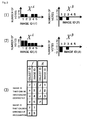
- image tables X indicate how many correct votes can be cast based on models currently stored when an image having an ID Ij is given as a query.
- N is the number of images used for constructing a model of an object
- image tables X indicate how many correct votes can be cast based on models currently stored when an image having an ID Ij is given as a query.
- N is the number of images used for constructing a model of an object
- image tables X indicate how many correct votes can be cast based on models currently stored when an image having an ID Ij is given as a query.
- a local descriptor f extracted from an object A is a local descriptor that positively contributes to images having image IDs 1, 2, 4, and 5 of the object A in the object recognition simulation, and negatively contributes to images having image IDs 1 and 3 of an object B. If the local descriptor f is stored in a model, as shown in FIG. 3(a) , votes are cast in an image table X A of the object A, and votes are decremented in an image table X B of the object B.
- a local descriptor g extracted from the object A is a local descriptor that positively contributes to images having image IDs 1, 2, and 3 of the object A, and negatively contributes to an image having an image ID 1 of the object B in the object recognition simulation.
- the image tables will be as shown in FIG. 3(b) .
- a threshold t is set for the total number of local descriptors to be stored in a model, and when all the values in each image table reach s or more, if the number of local descriptors stored in the model is less than t, the minimum vote number s in the image table is incremented by one for stable object recognition, and local descriptors are stored in decreasing order of their value of E' 1 - E 2 , such that all the values in the image table will be s or more. The above processing is repeated until the number of local descriptors stored in the model reaches t.
- FIG. 8 is a flowchart showing a procedure of storing images in a three-dimensional object recognition image database, according to this embodiment.
- the computer extracts local descriptors from the frame images showing the object (step S11).
- local descriptors in a certain frame image are used as a query, and local descriptors obtained from the other frame images are stored in models, and then object recognition simulation is performed.
- scores are obtained with respect to the local descriptors making positive contributions. Scores have been obtained with respect to the local descriptors in the same frame image (step S 13).
- step S15 whether or not scores are obtained with respect to all the frame images showing the object to be stored is determined.
- step S 15 whether or not scores are obtained with respect to all the frame images showing the object to be stored is determined.
- step S19 When the object recognition simulation is completed with respect to all the frame images (Yes in step S 15), local descriptors that highly positively contribute to recognition of each frame image of the target object are chosen (step S19).
- a specific example of a procedure of choosing such local descriptors is as per the above description made with reference to FIG. 3 .
- Choice of local descriptors is repeated until a predetermined number of local descriptors (t local descriptors according to the description with reference to FIG. 3 ) have been chosen for the target object (step S21).
- the chosen local descriptors are stored into an image database for constructing a model according to the target object (step S23).
- step S25 whether or not there are any objects yet to be stored is checked (step S25), and in the case where there are any other objects yet to be stored (No in step S25), the routine returns to step S11 and the processing is repeated.
- step S25 the storage processing into the image database ends.
- FIG. 9 is a flowchart showing a procedure of recognition (retrieval) using, as the target, the image database in which images are stored based on the procedure shown in FIG. 8 .
- a computer performing processing extracts local descriptors from the query (step S31).
- a local descriptor nearest to each of the extracted local descriptors is determined from among the local descriptors stored in the image database.
- a vote is cast for an object including the determined local descriptor in its model (step S33).
- step S35 With respect to each of the local descriptors included in the query, whether or not a vote has been cast for an object that is obtained as a result of nearest neighbor searching is judged (step S35).
- step S33 With respect to each of the local descriptors included in the query, the voting processing in above step S33 is performed.
- voting is completed with respect to all the local descriptors (Yes in step S35)
- an object that has obtained the largest number of votes is outputted as a recognition result (step S37).
- FIG. 10 is a block diagram illustrating a functional configuration of the processing apparatus which processes an image database used for a three-dimensional object recognition according to the present invention.
- a processing apparatus 1 to store a model of a three-dimensional object in an image database 25, a plurality of frame images 21 representing the object to be stored are given as inputs to a processing apparatus 1. A model according to a target object is outputted and stored in the image database 25.
- a query 23 is given as an input to the processing apparatus 1.
- the processing apparatus 1 refers to the image database 25 to output information to specify the object stored in the image database 25.
- An extraction section 11 extracts feature vectors from the inputted frame images 21 or the inputted query 23.
- a model construction section 13 chooses, through an object recognition simulation, local descriptors that are effective for image recognition from among the local descriptors extracted from the frame images, organizes the chosen local descriptors so as to be adapted to be used for nearest neighbor searching, and constructs a model according to the target object.
- a storing section 15 stores the constructed model in the image database.
- a retrieval section 17 determines, through the nearest neighbor search processing, a local descriptor that is nearest to each of the local descriptors extracted from the query 23 from among the local descriptors stored in the image database 25.
- the retrieval section 17 casts a vote for an image including the determined local descriptor, and specifies an object from among objects stored in the image database 25, based on a result of the voting performed with respect to each local descriptor included in the query.
- the retrieval section 17 outputs identification information of the specified object 27 as a recognition result.
- a computer and a memory are mainly used as hardware realizing the functions of the extraction section 11, the model construction section 13, the storing section 15, and the retrieval section 17 shown in FIG. 10 . That is, when a computer executes a processing program which processes an image database used for a predetermined object recognition, the function of each section is executed.
- the experiments were performed using 11 objects shown in FIG. 4 , and COIL-100.
- a data set used for an experiment performed with respect to the 11 objects will be described.
- three-dimensional objects were rotated by 360 degrees; a video of each of the objects was shot with a Hi-Vision video camera (manufactured by Sony Corporation, model number: HDR-HCl, resolution: 740480); and all frame images obtained thereby were used for model construction.
- the number of the frame images was 13086 in total, and the number of local descriptors obtained was about 2.5 million, and the memory size of all the models was 191.3 MB.
- FIG. 4 shows the used objects, the number of frame images used for constructing a model of each object, and the average number of local descriptors extracted per frame image.
- Query images were prepared by placing the three-dimensional objects in a lighting condition different from that when the objects were shot for the images for model construction, and by taking the objects at every 10 degrees of rotation. Accordingly, 36 images were obtained per object.
- the COIL is an image database including images of 100 objects each shot at every 5 degrees of rotation.
- 36 images which were obtained by shooting the object at angles of 0 degrees, 10 degrees, 20 degrees, ..., and 350 degrees were used for model construction.
- 36 images were prepared per object by shooting the object at angles of 5 degrees, 15 degrees, 25 degrees, ..., and 355 degrees.
- the number of local descriptors obtained from all the images for model construction was about 180,000, and the memory size of all the models constructed was 13.6 MB.
- FIG. 5 illustrates examples of the used frame images.
- the technique by Noguchi et al. was used as the three-dimensional object recognition technique.
- the same parameters were used in the object recognition simulation according to this embodiment and in the experiments.
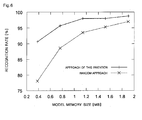
- models constructed using this embodiment, and models chosen at random from all the local descriptors were used, and the recognition rates were compared.
- the random technique 10 kinds of models were constructed.
- the images having caused the erroneous recognition were erroneously recognized because objects other than correct objects obtained a larger number of votes, or because correct objects had not obtained any vote.
- the problem that an object other than the correct object obtains a larger number of votes is considered to occur because nearest local descriptors to the stored local descriptors may change between a state where any local descriptor is yet to be eliminated and a state after choice of local descriptors.
- the number of local descriptors obtained from each image was fewer.
Landscapes
- Engineering & Computer Science (AREA)
- Theoretical Computer Science (AREA)
- General Physics & Mathematics (AREA)
- Physics & Mathematics (AREA)
- Data Mining & Analysis (AREA)
- Computer Vision & Pattern Recognition (AREA)
- Library & Information Science (AREA)
- Databases & Information Systems (AREA)
- Evolutionary Computation (AREA)
- General Engineering & Computer Science (AREA)
- Artificial Intelligence (AREA)
- Multimedia (AREA)
- Medical Informatics (AREA)
- General Health & Medical Sciences (AREA)
- Health & Medical Sciences (AREA)
- Computing Systems (AREA)
- Software Systems (AREA)
- Life Sciences & Earth Sciences (AREA)
- Evolutionary Biology (AREA)
- Bioinformatics & Computational Biology (AREA)
- Bioinformatics & Cheminformatics (AREA)
- Information Retrieval, Db Structures And Fs Structures Therefor (AREA)
- Processing Or Creating Images (AREA)
- Image Analysis (AREA)
Claims (7)
- Ein Verfahren, durchgeführt von einem Computer, zur Zusammenstellung einer Bilddatenbank, die für eine dreidimensionale Objekterkennung verwendet wird, dadurch gekennzeichnet, dass es folgende Schritte umfasst:Extraktion, aus einer Vielzahl von Bildern, wobei jedes Bild ein dreidimensionales Objekt aus einem anderen Blickwinkel zeigt, einer Vielzahl lokaler Deskriptoren, von denen jeder ein Vektor ist, der entsprechende lokale Merkmale jedes Bildes darstellt;Konstruktion eines Objektmodells des dreidimensionalen Objekts, wobei das Objektmodell gewonnen wird durch Schätzung des Beitrags jedes Vektors zur dreidimensionalen Objekterkennung, durch Auswahl der Vektoren, die einen positiven Beitrag leisten, und durch Organisieren der ausgewählten Vektoren auf solche Art und Weise, dass jeder Vektor geeignet ist, für die Suche nach dem ungefähr nächsten Nachbarn verwendet zu werden; undSpeicherung der Bilder, die das dreidimensionale Objekt zeigen, und des konstruierten Objektmodells in der Bilddatenbank, wobei eine Objektkennung zur Identifikation des dreidimensionalen Objekts beigefügt ist, worin:der Speicherungsschritt das Objektmodell und die entsprechende Objektkennung so speichert, dass, wenn ein Bild, das ein betreffendes dreidimensionales Objekt zeigt, als Abfrage gegeben wird, während eine Vielzahl von Objektmodellen in der Bilddatenbank gespeichert ist, der Computer eine Vielzahl lokaler Abfrage-Deskriptoren durch einen ähnlichen Schritt wie den Exktraktionsschritt aus der Abfrage extrahiert, benachbarte Vektoren aus den lokalen Deskriptoren bestimmt, die in der Bilddatenbank gespeichert sind, wobei jeder der benachbarten Vektoren jedem der extrahierten lokalen Abfrage-Deskriptoren am nächsten ist und aus den gespeicherten Objektmodellen in der Bilddatenbank abgerufen wird mit Hilfe eines Algorithmus der Suche nach dem ungefähr nächsten Nachbarn,
für jeden der Vektoren eine Stimme für jedes Objekt abgibt, das den Vektor in seinem Modell einschließt, und weiter ein dreidimensionales Objekt bestimmt, das die größte Anzahl von Stimmen erhalten hat; undder Objektmodell-Konstruktionsschritt den Beitrag jedes Vektors derart schätzt, dass, wenn ein Vektor, der aus einem Bild eines dreidimensionalen Objekts extrahiert wird, einem anderen Vektor entsprechend demselben dreidimensionalen Objekt aus einem anderen Blickwinkel ungefähr am nächsten ist, der Vektor dahingehend betrachtet wird, dass er einen positiven Beitrag leistet, und wenn der Vektor einem anderen Vektor entsprechend einem anderen dreidimensionalen Objekt ungefähr am nächsten ist, der Vektor dahingehend betrachtet wird, dass er einen negativen Beitrag leistet. - Das Verfahren gemäß Anspruch 1, worin
der Modellkonstruktionsschritt das Objektmodell durch folgende Schritte konstruiert:Angabe eines ungefähr nächsten Vektors für einen zu schätzenden Zielvektor, wobei der ungefähr nächste Vektor aus Vektoren abgerufen wird, die aus Bildern extrahiert werden, welche aus den verschiedenen Blickwinkeln dasselbe dreidimensionale Objekt entsprechend dem Zielvektor zeigen, und aus Bildern verschiedener dreidimensionaler Objekte;Summierung eines Werts in dem Fall, in dem der ungefähr nächste Vektor von demselben dreidimensionalen Objekt entsprechend dem Zielvektor abgeleitet ist; undAuswahl der Vektoren, die das Objektmodell konstruieren, anhand der Werte, die in den Zählschritten für jeden Vektor gezählt wurden. - Das Verfahren gemäß Anspruch 2, worin
der Modellkonstruktionsschritt jeden Vektor wertet, der aus jedem Bild extrahiert wurde, das das zu speichernde dreidimensionale Objekt aus den verschiedenen Blickwinkeln zeigt. - Das Verfahren gemäß Anspruch 2 oder 3, worin
der Modellkonstruktionsschritt die Vektoren so wählt, dass die Vektoren, die aus den Bildern desselben dreidimensionalen Objekts aus verschiedenen Blickwinkeln extrahiert werden, im Objektmodell zu nahezu gleichen Teilen gemeinsam genutzt werden. - Das Verfahren gemäß einem beliebigen der Ansprüche 1 bis 4, worin
der Modellkonstruktionsschritt den Beitrag jedes Vektors zur Erkennung eines dreidimensionalen Objekts schätzt. - Eine Vorrichtung zur Verarbeitung einer Bilddatenbank, die für eine dreidimensionale Objekterkennung verwendet wird, dadurch gekennzeichnet, dass sie Folgendes umfasst:einen Extraktionsabschnitt, ausgebildet, um aus einer Vielzahl von Bildern, wobei jedes Bild ein dreidimensionales Objekt aus einem anderen Blickwinkel zeigt, eine Vielzahl lokaler Deskriptoren zu extrahieren, von denen jeder ein Vektor ist, der entsprechende lokale Merkmale jedes Bildes darstellt;einen Modellkonstruktionsabschnitt, ausgebildet, um ein Objektmodell des dreidimensionalen Objekts zu konstruieren, wobei das Objektmodell gewonnen wird durch Schätzung des Beitrags jedes Vektors zur dreidimensionalen Objekterkennung, durch Auswahl der Vektoren, die einen positiven Beitrag leisten, und durch Organisation der ausgewählten Vektoren auf solche Art, dass jeder Vektor geeignet ist, für die Suche nach dem ungefähr nächsten Nachbarn verwendet zu werden;einen Speicherungsabschnitt, ausgebildet, um in der Bilddatenbank die Bilder zu speichern, die das dreidimensionale Objekt zeigen, und das konstruierte Objektmodell, wobei eine Objektkennung zur Identifikation des dreidimensionalen Objekts beigefügt ist; undeinen Abrufabschnitt, ausgebildet, um, wenn ein Bild, das ein betreffendes dreidimensionales Objekt zeigt, als Abfrage gegeben wird, während eine Vielzahl von Objektmodellen in der Bilddatenbank gespeichert ist, eine Vielzahl lokaler Abfrage-Deskriptoren auf ähnliche Art und Weise wie im Exktraktionsabschnitt aus der Abfrage extrahiert, benachbarte Vektoren aus den lokalen Deskriptoren zu bestimmen, die in der Bilddatenbank gespeichert sind, wobei jeder der benachbarten Vektoren jedem der extrahierten lokalen Abfrage-Deskriptoren am nächsten ist und aus den gespeicherten Objektmodellen in der Bilddatenbank abgerufen wird mit Hilfe eines Algorithmus der Suche nach dem ungefähr nächsten Nachbarn, für jeden der Vektoren eine Stimme für jedes Objekt abzugeben, das den Vektor in seinem Modell einschließt, und weiter ausgebildet, um ein dreidimensionales Objekt zu bestimmen, das die größte Anzahl von Stimmen erhalten hat,
wobei der Objektmodellkonstruktionsabschnitt den Beitrag jedes Vektors derart schätzt, dass, wenn ein Vektor, der aus einem Bild eines dreidimensionalen Objekts extrahiert wird, einem anderen Vektor entsprechend demselben dreidimensionalen Objekt aus einem anderen Blickwinkel ungefähr am nächsten ist, der Vektor dahingehend betrachtet wird, dass er einen positiven Beitrag leistet, und wenn der Vektor einem anderen Vektor entsprechend einem anderen dreidimensionalen Objekt ungefähr am nächsten ist, der Vektor dahingehend betrachtet wird, dass er einen negativen Beitrag leistet. - Ein Programm zur Verarbeitung einer Bilddatenbank, die für eine dreidimensionale Objekterkennung verwendet wird, wobei das Programm dadurch gekennzeichnet ist, dass es, wenn es ausgeführt wird, den Computer veranlasst, als Folgendes zu fungieren:ein Extraktionsabschnitt, der aus einer Vielzahl von Bildern, wobei jedes Bild ein dreidimensionales Objekt aus einem anderen Blickwinkel zeigt, eine Vielzahl lokaler Deskriptoren extrahiert, von denen jeder ein Vektor ist, der entsprechende lokale Merkmale jedes Bildes darstellt;ein Modellkonstruktionsabschnitt, der ein Objektmodell des dreidimensionalen Objekts konstruiert, wobei das Objektmodell gewonnen wird durch Schätzung des Beitrags jedes Vektors zur dreidimensionalen Objekterkennung, durch Auswahl der Vektoren, die einen positiven Beitrag leisten, und durch Organisieren der ausgewählten Vektoren auf solche Art und Weise, dass jeder Vektor geeignet ist, für die Suche nach dem ungefähr nächsten Nachbarn verwendet zu werden;ein Speicherungsabschnitt, der die Bilder, die das dreidimensionale Objekt zeigen, und das konstruierte Objektmodell in der Bilddatenbank speichert, wobei eine Objektkennung zur Identifikation des dreidimensionalen Objekts beigefügt ist; undein Abrufabschnitt, der, wenn ein Bild, das ein betreffendes dreidimensionales Objekt zeigt, als Abfrage gegeben wird, während eine Vielzahl von Objektmodellen in der Bilddatenbank gespeichert ist, eine Vielzahl lokaler Abfrage-Deskriptoren auf ähnliche Art und Weise wie im Exktraktionsabschnitt aus der Abfrage extrahiert, benachbarte Vektoren aus den lokalen Deskriptoren bestimmt, die in der Bilddatenbank gespeichert sind, wobei jeder der benachbarten Vektoren jedem der extrahierten lokalen Abfrage-Deskriptoren am nächsten ist und aus den gespeicherten Objektmodellen in der Bilddatenbank abgerufen wird mit Hilfe eines Algorithmus der Suche nach dem ungefähr nächsten Nachbarn, für jeden der Vektoren eine Stimme für jedes Objekt abgibt, das den Vektor in seinem Modell einschließt, und weiterein dreidimensionales Objekt bestimmt, das die größte Anzahl von Stimmen erhalten hat,wobei der Objektmodellkonstruktionsschritt den Beitrag jedes Vektors derart schätzt, dass, wenn ein Vektor, der aus einem Bild eines dreidimensionalen Objekts extrahiert wird, einem anderen Vektor entsprechend demselben dreidimensionalen Objekt aus einem anderen Blickwinkel ungefähr am nächsten ist, der Vektor dahingehend betrachtet wird, dass er einen positiven Beitrag leistet, und wenn der Vektor einem anderen Vektor entsprechend einem anderen dreidimensionalen Objekt ungefähr am nächsten ist, der Vektor dahingehend betrachtet wird, dass er einen negativen Beitrag leistet.
Applications Claiming Priority (2)
| Application Number | Priority Date | Filing Date | Title |
|---|---|---|---|
| JP2008118646 | 2008-04-30 | ||
| PCT/JP2009/058284 WO2009133855A1 (ja) | 2008-04-30 | 2009-04-27 | 3次元物体認識用画像データベースの作成方法、処理装置および処理用プログラム |
Publications (3)
| Publication Number | Publication Date |
|---|---|
| EP2284791A1 EP2284791A1 (de) | 2011-02-16 |
| EP2284791A4 EP2284791A4 (de) | 2012-11-07 |
| EP2284791B1 true EP2284791B1 (de) | 2014-01-01 |
Family
ID=41255071
Family Applications (1)
| Application Number | Title | Priority Date | Filing Date |
|---|---|---|---|
| EP09738792.2A Not-in-force EP2284791B1 (de) | 2008-04-30 | 2009-04-27 | Verfahren zum erzeugen einer dreidimensionalen objektidentifikationsbilddatenbank, verarbeitungsvorrichtung und verarbeitungsprogramm |
Country Status (6)
| Country | Link |
|---|---|
| US (1) | US8306315B2 (de) |
| EP (1) | EP2284791B1 (de) |
| JP (1) | JP5278881B2 (de) |
| KR (1) | KR101257999B1 (de) |
| CN (1) | CN102016910B (de) |
| WO (1) | WO2009133855A1 (de) |
Families Citing this family (25)
| Publication number | Priority date | Publication date | Assignee | Title |
|---|---|---|---|---|
| WO2011136276A1 (ja) * | 2010-04-28 | 2011-11-03 | 公立大学法人大阪府立大学 | 三次元物体認識用画像データベースの作成方法および作成装置 |
| US20120011142A1 (en) * | 2010-07-08 | 2012-01-12 | Qualcomm Incorporated | Feedback to improve object recognition |
| US8274508B2 (en) * | 2011-02-14 | 2012-09-25 | Mitsubishi Electric Research Laboratories, Inc. | Method for representing objects with concentric ring signature descriptors for detecting 3D objects in range images |
| US9036925B2 (en) | 2011-04-14 | 2015-05-19 | Qualcomm Incorporated | Robust feature matching for visual search |
| US9087395B1 (en) * | 2011-04-28 | 2015-07-21 | A9.Com, Inc. | Techniques for providing content animation |
| JP5692725B2 (ja) * | 2011-05-27 | 2015-04-01 | 公立大学法人大阪府立大学 | 近似最近傍探索に係るデータベースの登録方法および登録装置 |
| US8706711B2 (en) | 2011-06-22 | 2014-04-22 | Qualcomm Incorporated | Descriptor storage and searches of k-dimensional trees |
| EP2727030A4 (de) * | 2011-06-29 | 2015-05-27 | Univ Johns Hopkins | System für eine dreidimensionale schnittstelle und datenbank |
| US9042648B2 (en) | 2012-02-23 | 2015-05-26 | Microsoft Technology Licensing, Llc | Salient object segmentation |
| US8705870B2 (en) | 2012-03-02 | 2014-04-22 | Microsoft Corporation | Image searching by approximate κ-NN graph |
| US9501573B2 (en) * | 2012-07-30 | 2016-11-22 | Robert D. Fish | Electronic personal companion |
| US9710493B2 (en) | 2013-03-08 | 2017-07-18 | Microsoft Technology Licensing, Llc | Approximate K-means via cluster closures |
| US9818150B2 (en) | 2013-04-05 | 2017-11-14 | Digimarc Corporation | Imagery and annotations |
| US9269022B2 (en) | 2013-04-11 | 2016-02-23 | Digimarc Corporation | Methods for object recognition and related arrangements |
| US9626387B2 (en) * | 2013-04-19 | 2017-04-18 | Charles Nathan Adelman | Volumetric vector node and object based multi-dimensional operating system |
| WO2015026874A1 (en) | 2013-08-19 | 2015-02-26 | Nant Holdings Ip, Llc | Metric based recognition, systems and methods |
| KR101713690B1 (ko) | 2013-10-25 | 2017-03-08 | 한국전자통신연구원 | 특징 선택 방법을 이용한 비주얼 기술자 추출 방법 및 시스템 |
| US9934563B2 (en) | 2015-10-29 | 2018-04-03 | Empire Technology Development Llc | 3D object rotation-based mechanical parts selection through 2D image processing |
| US10860898B2 (en) * | 2016-10-16 | 2020-12-08 | Ebay Inc. | Image analysis and prediction based visual search |
| US10970768B2 (en) | 2016-11-11 | 2021-04-06 | Ebay Inc. | Method, medium, and system for image text localization and comparison |
| JP7003455B2 (ja) * | 2017-06-15 | 2022-01-20 | オムロン株式会社 | テンプレート作成装置、物体認識処理装置、テンプレート作成方法及びプログラム |
| US10402448B2 (en) * | 2017-06-28 | 2019-09-03 | Google Llc | Image retrieval with deep local feature descriptors and attention-based keypoint descriptors |
| US11514696B2 (en) * | 2019-12-17 | 2022-11-29 | Ricoh Company, Ltd. | Display device, display method, and computer-readable recording medium |
| CN116310213B (zh) * | 2023-02-23 | 2023-10-24 | 北京百度网讯科技有限公司 | 三维物体模型的处理方法、装置、电子设备与可读存储介质 |
| CN116777870A (zh) * | 2023-06-20 | 2023-09-19 | 重庆中科摇橹船信息科技有限公司 | 基于机器视觉算法的汽车涂胶质量检测方法和计算机设备 |
Family Cites Families (8)
| Publication number | Priority date | Publication date | Assignee | Title |
|---|---|---|---|---|
| JP3148133B2 (ja) * | 1996-10-30 | 2001-03-19 | 三菱電機株式会社 | 情報検索装置 |
| KR100651010B1 (ko) * | 2002-07-10 | 2006-11-30 | 닛본 덴끼 가부시끼가이샤 | 3차원 물체 모델을 사용한 화상 대조 시스템, 화상 대조 방법 및 화상 대조 프로그램을 기록한 컴퓨터 판독 가능한 기록매체 |
| JP4292837B2 (ja) | 2002-07-16 | 2009-07-08 | 日本電気株式会社 | パターン特徴抽出方法及びその装置 |
| WO2004102222A1 (ja) * | 2003-05-13 | 2004-11-25 | Fujitsu Limited | 物体検出装置、物体検出方法、物体検出プログラム、距離センサ |
| GB2409027A (en) * | 2003-12-11 | 2005-06-15 | Sony Uk Ltd | Face detection |
| JP4488804B2 (ja) * | 2004-06-23 | 2010-06-23 | 株式会社トプコン | ステレオ画像の関連付け方法及び3次元データ作成装置 |
| WO2006069496A1 (fr) * | 2004-12-31 | 2006-07-06 | Fujitsu Limited | Procede de recherche de modele 3d et dispositif associe |
| US8199973B2 (en) * | 2006-08-31 | 2012-06-12 | Osaka Prefecture University Public Corporation | Image recognition method, image recognition device, and image recognition program |
-
2009
- 2009-04-27 EP EP09738792.2A patent/EP2284791B1/de not_active Not-in-force
- 2009-04-27 KR KR1020107024731A patent/KR101257999B1/ko not_active Expired - Fee Related
- 2009-04-27 JP JP2010510121A patent/JP5278881B2/ja not_active Expired - Fee Related
- 2009-04-27 CN CN2009801155420A patent/CN102016910B/zh not_active Expired - Fee Related
- 2009-04-27 WO PCT/JP2009/058284 patent/WO2009133855A1/ja not_active Ceased
- 2009-04-27 US US12/990,401 patent/US8306315B2/en not_active Expired - Fee Related
Also Published As
| Publication number | Publication date |
|---|---|
| US20110058733A1 (en) | 2011-03-10 |
| KR101257999B1 (ko) | 2013-04-24 |
| JPWO2009133855A1 (ja) | 2011-09-01 |
| JP5278881B2 (ja) | 2013-09-04 |
| EP2284791A1 (de) | 2011-02-16 |
| US8306315B2 (en) | 2012-11-06 |
| EP2284791A4 (de) | 2012-11-07 |
| CN102016910A (zh) | 2011-04-13 |
| KR20100135878A (ko) | 2010-12-27 |
| WO2009133855A1 (ja) | 2009-11-05 |
| CN102016910B (zh) | 2012-11-28 |
Similar Documents
| Publication | Publication Date | Title |
|---|---|---|
| EP2284791B1 (de) | Verfahren zum erzeugen einer dreidimensionalen objektidentifikationsbilddatenbank, verarbeitungsvorrichtung und verarbeitungsprogramm | |
| US8340451B2 (en) | Method for constructing image database for object recognition, processing apparatus and processing program | |
| Zheng et al. | SIFT meets CNN: A decade survey of instance retrieval | |
| JP4883649B2 (ja) | 画像認識方法、画像認識装置および画像認識プログラム | |
| Sivic et al. | Video Google: Efficient visual search of videos | |
| JP6544756B2 (ja) | 画像の高次元特徴の類似性を比較するための方法及びデバイス | |
| Garcia-Fidalgo et al. | Hierarchical place recognition for topological mapping | |
| JP5527555B2 (ja) | 画像データベースの作成方法、作成プログラム及び画像検索方法 | |
| CN111859004B (zh) | 检索图像的获取方法、装置、设备及可读存储介质 | |
| CN106951551B (zh) | 联合gist特征的多重索引图像检索方法 | |
| JP6017277B2 (ja) | 特徴ベクトルの集合で表されるコンテンツ間の類似度を算出するプログラム、装置及び方法 | |
| JP5833499B2 (ja) | 高次元の特徴ベクトル集合で表現されるコンテンツを高精度で検索する検索装置及びプログラム | |
| Aly et al. | Scaling object recognition: Benchmark of current state of the art techniques | |
| JP5923744B2 (ja) | 画像検索システム、画像検索方法及び検索装置 | |
| Ozkan et al. | Exploiting Local Indexing and Deep Feature Confidence Scores for Fast Image-to-Video Search | |
| Zhu et al. | Bag-of-words against nearest-neighbor search for visual object retrieval | |
| Ober et al. | Dual-layer visual vocabulary tree hypotheses for object recognition | |
| CN110032652B (zh) | 媒体文件查找方法和装置、存储介质及电子装置 | |
| CN115565229A (zh) | 一种档案对象识别方法、装置及介质 | |
| Manger et al. | Enlarging the discriminability of bag-of-words representations with deep convolutional features | |
| Sakata et al. | Osaka Prefecture University at TRECVID 2011. | |
| Feng et al. | Efficient indexing for mobile image retrieval | |
| Lee et al. | Multi-stage image retrieval based on feature augmentation with truncated polynomial weight | |
| Kiranyaz et al. | Incremental evolution of collective network of binary classifier for content-based image classification and retrieval | |
| HK1165067B (en) | Method and device for compiling image database, and method for retrieving image |
Legal Events
| Date | Code | Title | Description |
|---|---|---|---|
| PUAI | Public reference made under article 153(3) epc to a published international application that has entered the european phase |
Free format text: ORIGINAL CODE: 0009012 |
|
| 17P | Request for examination filed |
Effective date: 20101126 |
|
| AK | Designated contracting states |
Kind code of ref document: A1 Designated state(s): AT BE BG CH CY CZ DE DK EE ES FI FR GB GR HR HU IE IS IT LI LT LU LV MC MK MT NL NO PL PT RO SE SI SK TR |
|
| AX | Request for extension of the european patent |
Extension state: AL BA RS |
|
| DAX | Request for extension of the european patent (deleted) | ||
| A4 | Supplementary search report drawn up and despatched |
Effective date: 20121005 |
|
| RIC1 | Information provided on ipc code assigned before grant |
Ipc: G06T 1/00 20060101AFI20120928BHEP Ipc: G06F 17/30 20060101ALI20120928BHEP |
|
| GRAP | Despatch of communication of intention to grant a patent |
Free format text: ORIGINAL CODE: EPIDOSNIGR1 |
|
| INTG | Intention to grant announced |
Effective date: 20130802 |
|
| GRAS | Grant fee paid |
Free format text: ORIGINAL CODE: EPIDOSNIGR3 |
|
| GRAA | (expected) grant |
Free format text: ORIGINAL CODE: 0009210 |
|
| AK | Designated contracting states |
Kind code of ref document: B1 Designated state(s): AT BE BG CH CY CZ DE DK EE ES FI FR GB GR HR HU IE IS IT LI LT LU LV MC MK MT NL NO PL PT RO SE SI SK TR |
|
| REG | Reference to a national code |
Ref country code: GB Ref legal event code: FG4D |
|
| REG | Reference to a national code |
Ref country code: CH Ref legal event code: EP |
|
| REG | Reference to a national code |
Ref country code: IE Ref legal event code: FG4D |
|
| REG | Reference to a national code |
Ref country code: AT Ref legal event code: REF Ref document number: 647872 Country of ref document: AT Kind code of ref document: T Effective date: 20140215 |
|
| REG | Reference to a national code |
Ref country code: DE Ref legal event code: R096 Ref document number: 602009021145 Country of ref document: DE Effective date: 20140220 |
|
| REG | Reference to a national code |
Ref country code: NL Ref legal event code: VDEP Effective date: 20140101 |
|
| REG | Reference to a national code |
Ref country code: AT Ref legal event code: MK05 Ref document number: 647872 Country of ref document: AT Kind code of ref document: T Effective date: 20140101 |
|
| REG | Reference to a national code |
Ref country code: LT Ref legal event code: MG4D |
|
| PG25 | Lapsed in a contracting state [announced via postgrant information from national office to epo] |
Ref country code: LT Free format text: LAPSE BECAUSE OF FAILURE TO SUBMIT A TRANSLATION OF THE DESCRIPTION OR TO PAY THE FEE WITHIN THE PRESCRIBED TIME-LIMIT Effective date: 20140101 Ref country code: IS Free format text: LAPSE BECAUSE OF FAILURE TO SUBMIT A TRANSLATION OF THE DESCRIPTION OR TO PAY THE FEE WITHIN THE PRESCRIBED TIME-LIMIT Effective date: 20140501 |
|
| PGFP | Annual fee paid to national office [announced via postgrant information from national office to epo] |
Ref country code: GB Payment date: 20140414 Year of fee payment: 6 |
|
| PG25 | Lapsed in a contracting state [announced via postgrant information from national office to epo] |
Ref country code: ES Free format text: LAPSE BECAUSE OF FAILURE TO SUBMIT A TRANSLATION OF THE DESCRIPTION OR TO PAY THE FEE WITHIN THE PRESCRIBED TIME-LIMIT Effective date: 20140101 Ref country code: AT Free format text: LAPSE BECAUSE OF FAILURE TO SUBMIT A TRANSLATION OF THE DESCRIPTION OR TO PAY THE FEE WITHIN THE PRESCRIBED TIME-LIMIT Effective date: 20140101 Ref country code: FI Free format text: LAPSE BECAUSE OF FAILURE TO SUBMIT A TRANSLATION OF THE DESCRIPTION OR TO PAY THE FEE WITHIN THE PRESCRIBED TIME-LIMIT Effective date: 20140101 Ref country code: PT Free format text: LAPSE BECAUSE OF FAILURE TO SUBMIT A TRANSLATION OF THE DESCRIPTION OR TO PAY THE FEE WITHIN THE PRESCRIBED TIME-LIMIT Effective date: 20140502 Ref country code: NL Free format text: LAPSE BECAUSE OF FAILURE TO SUBMIT A TRANSLATION OF THE DESCRIPTION OR TO PAY THE FEE WITHIN THE PRESCRIBED TIME-LIMIT Effective date: 20140101 Ref country code: CY Free format text: LAPSE BECAUSE OF FAILURE TO SUBMIT A TRANSLATION OF THE DESCRIPTION OR TO PAY THE FEE WITHIN THE PRESCRIBED TIME-LIMIT Effective date: 20140101 Ref country code: SE Free format text: LAPSE BECAUSE OF FAILURE TO SUBMIT A TRANSLATION OF THE DESCRIPTION OR TO PAY THE FEE WITHIN THE PRESCRIBED TIME-LIMIT Effective date: 20140101 |
|
| PGFP | Annual fee paid to national office [announced via postgrant information from national office to epo] |
Ref country code: IT Payment date: 20140424 Year of fee payment: 6 Ref country code: DE Payment date: 20140425 Year of fee payment: 6 Ref country code: FR Payment date: 20140328 Year of fee payment: 6 |
|
| PG25 | Lapsed in a contracting state [announced via postgrant information from national office to epo] |
Ref country code: BE Free format text: LAPSE BECAUSE OF FAILURE TO SUBMIT A TRANSLATION OF THE DESCRIPTION OR TO PAY THE FEE WITHIN THE PRESCRIBED TIME-LIMIT Effective date: 20140101 Ref country code: HR Free format text: LAPSE BECAUSE OF FAILURE TO SUBMIT A TRANSLATION OF THE DESCRIPTION OR TO PAY THE FEE WITHIN THE PRESCRIBED TIME-LIMIT Effective date: 20140101 Ref country code: LV Free format text: LAPSE BECAUSE OF FAILURE TO SUBMIT A TRANSLATION OF THE DESCRIPTION OR TO PAY THE FEE WITHIN THE PRESCRIBED TIME-LIMIT Effective date: 20140101 |
|
| REG | Reference to a national code |
Ref country code: DE Ref legal event code: R097 Ref document number: 602009021145 Country of ref document: DE |
|
| PG25 | Lapsed in a contracting state [announced via postgrant information from national office to epo] |
Ref country code: CZ Free format text: LAPSE BECAUSE OF FAILURE TO SUBMIT A TRANSLATION OF THE DESCRIPTION OR TO PAY THE FEE WITHIN THE PRESCRIBED TIME-LIMIT Effective date: 20140101 Ref country code: RO Free format text: LAPSE BECAUSE OF FAILURE TO SUBMIT A TRANSLATION OF THE DESCRIPTION OR TO PAY THE FEE WITHIN THE PRESCRIBED TIME-LIMIT Effective date: 20140101 Ref country code: DK Free format text: LAPSE BECAUSE OF FAILURE TO SUBMIT A TRANSLATION OF THE DESCRIPTION OR TO PAY THE FEE WITHIN THE PRESCRIBED TIME-LIMIT Effective date: 20140101 Ref country code: EE Free format text: LAPSE BECAUSE OF FAILURE TO SUBMIT A TRANSLATION OF THE DESCRIPTION OR TO PAY THE FEE WITHIN THE PRESCRIBED TIME-LIMIT Effective date: 20140101 |
|
| PLBE | No opposition filed within time limit |
Free format text: ORIGINAL CODE: 0009261 |
|
| STAA | Information on the status of an ep patent application or granted ep patent |
Free format text: STATUS: NO OPPOSITION FILED WITHIN TIME LIMIT |
|
| PG25 | Lapsed in a contracting state [announced via postgrant information from national office to epo] |
Ref country code: MC Free format text: LAPSE BECAUSE OF FAILURE TO SUBMIT A TRANSLATION OF THE DESCRIPTION OR TO PAY THE FEE WITHIN THE PRESCRIBED TIME-LIMIT Effective date: 20140101 Ref country code: LU Free format text: LAPSE BECAUSE OF FAILURE TO SUBMIT A TRANSLATION OF THE DESCRIPTION OR TO PAY THE FEE WITHIN THE PRESCRIBED TIME-LIMIT Effective date: 20140427 Ref country code: PL Free format text: LAPSE BECAUSE OF FAILURE TO SUBMIT A TRANSLATION OF THE DESCRIPTION OR TO PAY THE FEE WITHIN THE PRESCRIBED TIME-LIMIT Effective date: 20140101 Ref country code: SK Free format text: LAPSE BECAUSE OF FAILURE TO SUBMIT A TRANSLATION OF THE DESCRIPTION OR TO PAY THE FEE WITHIN THE PRESCRIBED TIME-LIMIT Effective date: 20140101 |
|
| REG | Reference to a national code |
Ref country code: CH Ref legal event code: PL |
|
| 26N | No opposition filed |
Effective date: 20141002 |
|
| REG | Reference to a national code |
Ref country code: DE Ref legal event code: R097 Ref document number: 602009021145 Country of ref document: DE Effective date: 20141002 |
|
| REG | Reference to a national code |
Ref country code: IE Ref legal event code: MM4A |
|
| PG25 | Lapsed in a contracting state [announced via postgrant information from national office to epo] |
Ref country code: LI Free format text: LAPSE BECAUSE OF NON-PAYMENT OF DUE FEES Effective date: 20140430 Ref country code: CH Free format text: LAPSE BECAUSE OF NON-PAYMENT OF DUE FEES Effective date: 20140430 |
|
| PG25 | Lapsed in a contracting state [announced via postgrant information from national office to epo] |
Ref country code: IE Free format text: LAPSE BECAUSE OF NON-PAYMENT OF DUE FEES Effective date: 20140427 |
|
| PG25 | Lapsed in a contracting state [announced via postgrant information from national office to epo] |
Ref country code: SI Free format text: LAPSE BECAUSE OF FAILURE TO SUBMIT A TRANSLATION OF THE DESCRIPTION OR TO PAY THE FEE WITHIN THE PRESCRIBED TIME-LIMIT Effective date: 20140101 |
|
| REG | Reference to a national code |
Ref country code: DE Ref legal event code: R119 Ref document number: 602009021145 Country of ref document: DE |
|
| GBPC | Gb: european patent ceased through non-payment of renewal fee |
Effective date: 20150427 |
|
| PG25 | Lapsed in a contracting state [announced via postgrant information from national office to epo] |
Ref country code: DE Free format text: LAPSE BECAUSE OF NON-PAYMENT OF DUE FEES Effective date: 20151103 Ref country code: GB Free format text: LAPSE BECAUSE OF NON-PAYMENT OF DUE FEES Effective date: 20150427 Ref country code: IT Free format text: LAPSE BECAUSE OF NON-PAYMENT OF DUE FEES Effective date: 20150427 |
|
| REG | Reference to a national code |
Ref country code: FR Ref legal event code: ST Effective date: 20151231 |
|
| PG25 | Lapsed in a contracting state [announced via postgrant information from national office to epo] |
Ref country code: FR Free format text: LAPSE BECAUSE OF NON-PAYMENT OF DUE FEES Effective date: 20150430 |
|
| PG25 | Lapsed in a contracting state [announced via postgrant information from national office to epo] |
Ref country code: MT Free format text: LAPSE BECAUSE OF FAILURE TO SUBMIT A TRANSLATION OF THE DESCRIPTION OR TO PAY THE FEE WITHIN THE PRESCRIBED TIME-LIMIT Effective date: 20140101 |
|
| PG25 | Lapsed in a contracting state [announced via postgrant information from national office to epo] |
Ref country code: NO Free format text: LAPSE BECAUSE OF FAILURE TO SUBMIT A TRANSLATION OF THE DESCRIPTION OR TO PAY THE FEE WITHIN THE PRESCRIBED TIME-LIMIT Effective date: 20140401 |
|
| PG25 | Lapsed in a contracting state [announced via postgrant information from national office to epo] |
Ref country code: BG Free format text: LAPSE BECAUSE OF FAILURE TO SUBMIT A TRANSLATION OF THE DESCRIPTION OR TO PAY THE FEE WITHIN THE PRESCRIBED TIME-LIMIT Effective date: 20140101 Ref country code: GR Free format text: LAPSE BECAUSE OF FAILURE TO SUBMIT A TRANSLATION OF THE DESCRIPTION OR TO PAY THE FEE WITHIN THE PRESCRIBED TIME-LIMIT Effective date: 20140402 |
|
| PG25 | Lapsed in a contracting state [announced via postgrant information from national office to epo] |
Ref country code: TR Free format text: LAPSE BECAUSE OF FAILURE TO SUBMIT A TRANSLATION OF THE DESCRIPTION OR TO PAY THE FEE WITHIN THE PRESCRIBED TIME-LIMIT Effective date: 20140101 Ref country code: HU Free format text: LAPSE BECAUSE OF FAILURE TO SUBMIT A TRANSLATION OF THE DESCRIPTION OR TO PAY THE FEE WITHIN THE PRESCRIBED TIME-LIMIT; INVALID AB INITIO Effective date: 20090427 |
|
| PG25 | Lapsed in a contracting state [announced via postgrant information from national office to epo] |
Ref country code: MK Free format text: LAPSE BECAUSE OF FAILURE TO SUBMIT A TRANSLATION OF THE DESCRIPTION OR TO PAY THE FEE WITHIN THE PRESCRIBED TIME-LIMIT Effective date: 20140101 |