EP2281770A2 - Tower climbing and servicing device - Google Patents
Tower climbing and servicing device Download PDFInfo
- Publication number
- EP2281770A2 EP2281770A2 EP10170277A EP10170277A EP2281770A2 EP 2281770 A2 EP2281770 A2 EP 2281770A2 EP 10170277 A EP10170277 A EP 10170277A EP 10170277 A EP10170277 A EP 10170277A EP 2281770 A2 EP2281770 A2 EP 2281770A2
- Authority
- EP
- European Patent Office
- Prior art keywords
- climbing
- tower
- servicing
- maintenance
- selectively
- Prior art date
- Legal status (The legal status is an assumption and is not a legal conclusion. Google has not performed a legal analysis and makes no representation as to the accuracy of the status listed.)
- Withdrawn
Links
- 230000009194 climbing Effects 0.000 title claims abstract description 120
- 238000012423 maintenance Methods 0.000 claims abstract description 56
- 238000000034 method Methods 0.000 description 9
- 238000004140 cleaning Methods 0.000 description 4
- 239000000463 material Substances 0.000 description 2
- 238000010422 painting Methods 0.000 description 2
- 241001465754 Metazoa Species 0.000 description 1
- 241000736911 Turritella communis Species 0.000 description 1
- 230000009471 action Effects 0.000 description 1
- 230000004075 alteration Effects 0.000 description 1
- 239000000428 dust Substances 0.000 description 1
- 230000005684 electric field Effects 0.000 description 1
- 230000005611 electricity Effects 0.000 description 1
- 239000002783 friction material Substances 0.000 description 1
- 239000003973 paint Substances 0.000 description 1
- 230000000737 periodic effect Effects 0.000 description 1
- 230000004044 response Effects 0.000 description 1
- 238000005201 scrubbing Methods 0.000 description 1
- 238000006467 substitution reaction Methods 0.000 description 1
Images

Classifications
-
- F—MECHANICAL ENGINEERING; LIGHTING; HEATING; WEAPONS; BLASTING
- F03—MACHINES OR ENGINES FOR LIQUIDS; WIND, SPRING, OR WEIGHT MOTORS; PRODUCING MECHANICAL POWER OR A REACTIVE PROPULSIVE THRUST, NOT OTHERWISE PROVIDED FOR
- F03D—WIND MOTORS
- F03D80/00—Details, components or accessories not provided for in groups F03D1/00 - F03D17/00
- F03D80/50—Maintenance or repair
- F03D80/55—Cleaning
-
- B—PERFORMING OPERATIONS; TRANSPORTING
- B66—HOISTING; LIFTING; HAULING
- B66C—CRANES; LOAD-ENGAGING ELEMENTS OR DEVICES FOR CRANES, CAPSTANS, WINCHES, OR TACKLES
- B66C23/00—Cranes comprising essentially a beam, boom, or triangular structure acting as a cantilever and mounted for translatory of swinging movements in vertical or horizontal planes or a combination of such movements, e.g. jib-cranes, derricks, tower cranes
- B66C23/18—Cranes comprising essentially a beam, boom, or triangular structure acting as a cantilever and mounted for translatory of swinging movements in vertical or horizontal planes or a combination of such movements, e.g. jib-cranes, derricks, tower cranes specially adapted for use in particular purposes
- B66C23/20—Cranes comprising essentially a beam, boom, or triangular structure acting as a cantilever and mounted for translatory of swinging movements in vertical or horizontal planes or a combination of such movements, e.g. jib-cranes, derricks, tower cranes specially adapted for use in particular purposes with supporting couples provided by walls of buildings or like structures
-
- F—MECHANICAL ENGINEERING; LIGHTING; HEATING; WEAPONS; BLASTING
- F03—MACHINES OR ENGINES FOR LIQUIDS; WIND, SPRING, OR WEIGHT MOTORS; PRODUCING MECHANICAL POWER OR A REACTIVE PROPULSIVE THRUST, NOT OTHERWISE PROVIDED FOR
- F03D—WIND MOTORS
- F03D80/00—Details, components or accessories not provided for in groups F03D1/00 - F03D17/00
- F03D80/50—Maintenance or repair
-
- F—MECHANICAL ENGINEERING; LIGHTING; HEATING; WEAPONS; BLASTING
- F05—INDEXING SCHEMES RELATING TO ENGINES OR PUMPS IN VARIOUS SUBCLASSES OF CLASSES F01-F04
- F05B—INDEXING SCHEME RELATING TO WIND, SPRING, WEIGHT, INERTIA OR LIKE MOTORS, TO MACHINES OR ENGINES FOR LIQUIDS COVERED BY SUBCLASSES F03B, F03D AND F03G
- F05B2230/00—Manufacture
- F05B2230/80—Repairing, retrofitting or upgrading methods
-
- F—MECHANICAL ENGINEERING; LIGHTING; HEATING; WEAPONS; BLASTING
- F05—INDEXING SCHEMES RELATING TO ENGINES OR PUMPS IN VARIOUS SUBCLASSES OF CLASSES F01-F04
- F05B—INDEXING SCHEME RELATING TO WIND, SPRING, WEIGHT, INERTIA OR LIKE MOTORS, TO MACHINES OR ENGINES FOR LIQUIDS COVERED BY SUBCLASSES F03B, F03D AND F03G
- F05B2240/00—Components
- F05B2240/90—Mounting on supporting structures or systems
- F05B2240/94—Mounting on supporting structures or systems on a movable wheeled structure
-
- Y—GENERAL TAGGING OF NEW TECHNOLOGICAL DEVELOPMENTS; GENERAL TAGGING OF CROSS-SECTIONAL TECHNOLOGIES SPANNING OVER SEVERAL SECTIONS OF THE IPC; TECHNICAL SUBJECTS COVERED BY FORMER USPC CROSS-REFERENCE ART COLLECTIONS [XRACs] AND DIGESTS
- Y02—TECHNOLOGIES OR APPLICATIONS FOR MITIGATION OR ADAPTATION AGAINST CLIMATE CHANGE
- Y02E—REDUCTION OF GREENHOUSE GAS [GHG] EMISSIONS, RELATED TO ENERGY GENERATION, TRANSMISSION OR DISTRIBUTION
- Y02E10/00—Energy generation through renewable energy sources
- Y02E10/70—Wind energy
- Y02E10/72—Wind turbines with rotation axis in wind direction
Definitions
- the subject matter disclosed herein relates to the art of tower servicing devices and, more particularly, to tower climbing and servicing device.
- wind generators must be serviced in order to maintain proper operation.
- air currents rotate large rotor blades or propellers that are mounted in nacelles at the top of a tower.
- the blades spin a rotor relative to a stator to generate an electrical field.
- the rate of rotation is controlled by varying blade pitch as well as through the use of various braking systems.
- the blade pitch is adjusted to spill wind energy in order to limit rotational speed.
- the braking system is employed to further prevent the blades from achieving high rotational speeds.
- the blade pitch is adjusted in order to capture as much wind energy as possible.
- the wind generators require maintenance. Dirt, dust and other debris carried by the wind adhere to the generator. As such, the generator, in particular the blades and the nacelle, requires periodic cleaning. At present, cleaning the wind generator requires skilled personnel to scale the tower. Climbing gear such as harnesses, boatswains' chairs, or scaffolding, is suspended from the nacelle or blade hub to provide support for the personnel as various maintenance tasks are performed.
- a servicing system for a tower member including a first end portion that extends to a second end portion through an intermediate portion having an outer surface
- a climbing system operatively coupleable to the tower member.
- the climbing system includes at least one climbing module that is selectively operated to shift the climbing system along the tower member from the first end portion toward the second end portion.
- the servicing system also includes an operating system operatively coupled to the climbing system.
- the operating system includes at least one lifting motor and a maintenance member.
- the at least one lifting motor selectively shifts the operating system relative to the climbing system.
- the tower servicing system may include at least one climbing module that includes a body member having at least one driving wheel, and at least one driving motor operatively coupled to the at least one driving wheel.
- the at least one driving wheel may include a plurality of driving wheels and the at least one driving motor may include a first driving motor and a second driving motor.
- the first driving motor may be connected to select ones of the plurality of driving wheels, and the second driving motor may be connected to other select ones of the plurality of driving wheels.
- the at least one climbing module may include a plurality of climbing modules.
- the at least one the tower servicing system may include a first lifting motor operatively connected between one of the plurality of climbing modules and the operating system, and a second lifting motor operatively connected between another of the plurality of climbing modules and the operation system, the first and second lifting motors being selectively operated to shift the operating system toward the climbing system.
- the operating system may include at least one rail member extending about the outer surface of the tower member, the maintenance member being selectively shifted along the at least one rail member.
- the maintenance member may be selectively shifted along the at least one rail member in a direction substantially perpendicular to a direction of travel of the climbing system.
- the at least one rail member may circumscribe the tower member.
- the tower servicing system may additionally include an attachment system operatively coupled to the (at least one) climbing module, the attachment system being selectively activated to secure the climbing module to the outer surface of the tower member.
- the attachment system may include at least one clamp member and at least one actuator member, the actuator member being selectively activated to urge the clamp member into contact with the outer surface of the tower member.
- a method of servicing a tower member having a main body including a first end portion, a second end portion and an intermediate portion having an outer surface includes mounting a climbing system including at least one climbing module to the outer surface of the tower member.
- the method further includes connecting an operating system provided with a maintenance member to the climbing system, selectively shifting the climbing system from the first end portion toward the second end portion of the tower member, selectively shifting the operating system toward the climbing system, and operating the maintenance member to perform a maintenance operation on the tower member.
- the method of servicing a tower member may also include stopping the climbing system along the tower member, and clamping the climbing module to the outer surface of the tower member.
- the method may include shifting the maintenance member along at least one rail that circumscribes the tower member. Shifting the maintenance member may include moving the maintenance member in a direction substantially perpendicular to a direction of travel of the climbing system.
- a servicing system includes a climbing system configured and disposed to be operatively coupled to a tower member.
- the climbing system includes at least one climbing module that is selectively operated to shift the climbing system axially along the tower member.
- the serving system also includes an operating system operatively coupled to the climbing system.
- the operating system including at least one lifting motor and a maintenance member, the at least one lifting motor selectively shifting the operating system relative to the climbing system, allowing the maintenance member to selectively perform maintenance on the tower member.
- the at least one climbing module may include a plurality of climbing modules spaced about the outer surface.
- the tower serving system may also have an operating system that includes at least one rail member extending about an outer surface of the tower member, the maintenance member being selectively shifted along the at least one rail member.
- Wind turbine 2 is configured to be supported upon land or out at sea. Towards that end, wind turbine 2 includes a tower member 4 having a first end portion 6 that extends to a second end portion 8 through an intermediate portion 10 having an outer surface 11. Wind turbine 2 further includes a yaw system 12 having mounted thereto a wind energy collection system 14. Yaw system 12 is selectively rotated about an axis defined by tower member 4 in order to position wind energy collection system 14 relative to prevailing wind currents. In any event, wind energy collection system 14 includes a central hub 16 and a plurality of blade members 20-22. Blade members 20-22 collectively rotate about an access defined by central hub 16 in the response to wind current.
- each blade member 20-22 is transferred to a rotor (not shown) that is rotated within a stator (also not shown) to produce electricity.
- each blade member 20 is selectively pivotable in order to establish a preferred pitch so as to enhance wind energy collection.
- maintenance to tower member 4 is required. Dirt carried by the air currents, animal contact such as, birds and the like should be periodically removed from wind turbine 2.
- wind turbine 2 is provided with a servicing system 40 that is selectively mounted to tower member 4.
- servicing system 40 includes a climbing system 54 and an operating system 58.
- Climbing system 54 includes a plurality of climbing modules 64-69 that are arrayed about outer surface 11 of tower member 4. As each climbing module 64-69 is similarly constructed, a detailed description will follow referencing climbing module 64 with an understanding that the remaining climbing modules, i.e., climbing modules 65-69 are similarly formed.
- climbing module 64 includes a body member 80 having a first pair of drive wheels 82 and 83 and a second pair of drive wheels one of which is indicated at 85.
- First pair of drive wheels 82 and 83 are operatively connected to a first driving motor 87 arranged within the body member 80 while the second pair of drive wheels are operatively coupled to a second driving motor 88 also disposed within body member 80.
- drive wheels 82-85 are formed from a material having a high coefficient of friction thereby enabling climbing modules 64 to scale tower member 4 from first end portion 6 towards second end portion 8.
- climbing system 54 includes a first connector member 93 and second connector member 94. Connector members 93 and 94 circumscribe tower member 4 and apply pressure to climbing modules 64-69.
- connector members 93 and 94 are formed from an elastic-type material that urges climbing modules 64-69 onto outer surface 11 of tower member 4. Circumscribe should be understood to mean that connector members 93 and 94 extend about an outer circumference of tower member 4. Connector members 93 and 94 could be, but need not be, in contact with tower member 4.
- operating system 58 includes a first lifting motor 104 and a second lifting motor 105.
- Each lifting motor 104, 105 includes a corresponding drum member 108 and 109.
- Drum member 108 stores a first length of cable 112 while second drum member 109 stores a second length of cable of 113.
- Cables 112 and 113 extend from respective ones of drum members 108 and 109 to corresponding mounting members 116 and 117 provided on, for example, climbing modules 64 and 69.
- number of lifting motors and cables could vary in accordance with the exemplary embodiment.
- operating system 58 includes a maintenance member 124 that is supported upon first and second rail members 128 and 129. More specifically, rail members 128 and 129 circumscribe outer surface 11 of tower member 4 with maintenance member 124 being selectively shiftable about outer surface 11 of tower member 4. Circumscribe should be understood to mean that rail members 128 and 129 extend about an outer circumference of tower member 4. Rail members 128 and 129 could be, but need not be, in contact with tower member 4. Maintenance member 124 is configured and disposed to perform a maintenance task, such as cleaning, re-painting, and tower shell detecting.
- a maintenance task such as cleaning, re-painting, and tower shell detecting.
- operating system 58 could include a plurality of maintenance members arranged between adjacent ones of climbing modules 64-69. It should also be understood that maintenance member 124 is readily changeable to allow various tasked to be performed in a single maintenance operation, and that multiple maintenance members, each performing a separate maintenance task, can be employed.
- servicing system 40 further includes an attachment system 140 operatively associated with at least one of the climbing modules 64-69.
- attachment system 140 is provided on climbing module 67 however the number and location of attachment system 140 can vary.
- Attachment system 140 includes a clamp member 142 having a body portion 144 including a first arcuate surface 145 and a second, opposing arcuate surface 146.
- Second arcuate surface 146 is provided with a friction material (not shown) that, when urged against outer surface 11 of tower member 4, supports climbing system 54.
- attachment system 140 includes a first linkage system 156 and a second linkage system 157.
- First linkage system 156 includes a first link member 159 that is operatively connected to a second link member 160.
- First link member 159 is connected to climbing module 67 while second link member 160 is connected to the first arcuate surface 145 of clamp member 142.
- second linkage system 157 includes a first link member 161 and a second link member 162.
- First link member 161 is coupled to climbing module 67 while second link member 162 is coupled to first arcuate surface 145 of clamp member 142.
- Attachment system 140 further includes a first actuator member 166 and a second actuator member 167.
- First actuator member 166 is operatively connected to first linkage system 156 while second actuator member 167 is operatively connected to second linkage system 157.
- Actuator members 166 and 167 operate on first and second linkage system 156, 157 to urge clamp member 142 against outer surface 11 of tower member 4.
- climbing system 54 is attached to outer surface 11 of tower member 4. Once attached, climbing modules 64-69 selectively traverse tower member 4 from first end portion 6 towards second end portion 8. Once at a selected location, attachment system 140 is energized to clamp climbing system 54 to tower member 4. Attachment system 140 allows for a substantially lightweight climbing system to traverse tower member 4 while higher weight (maintenance) components are lifted by cables once the climbing system is in place. At this point, lifting motors 104 and 105 are selectively activated in order to raise and position operating system 58. Once positioned, maintenance member 124 is activated and the maintenance operation is performed on tower member 4. As noted above, maintenance member 124 is selectively shiftable upon rail members 128 and 129 in order to facilitate the maintenance function.
- maintenance member 124 can include a cleaning system that provides a scrubbing action to outer surface 11 of tower member 4, maintenance member 124 could be a painting system that aids in applying a coat of paint to the other surface of tower member 4 or the like.
- the exemplary embodiment enables tower maintenance functions to be performed from the ground thereby reducing the number of tower maintenance personnel required to perform a maintenance operation and further removes the need for maintenance personnel to scale the tower member in order to perform the maintenance operation.
Landscapes
- Engineering & Computer Science (AREA)
- Mechanical Engineering (AREA)
- Life Sciences & Earth Sciences (AREA)
- Sustainable Development (AREA)
- Sustainable Energy (AREA)
- Chemical & Material Sciences (AREA)
- Combustion & Propulsion (AREA)
- General Engineering & Computer Science (AREA)
- Civil Engineering (AREA)
- Structural Engineering (AREA)
- Wind Motors (AREA)
- Movable Scaffolding (AREA)
Abstract
Description
- The subject matter disclosed herein relates to the art of tower servicing devices and, more particularly, to tower climbing and servicing device.
- The need to scale towers and service supported components has existed for some time. For example, wind generators must be serviced in order to maintain proper operation. In wind generators, air currents rotate large rotor blades or propellers that are mounted in nacelles at the top of a tower. The blades spin a rotor relative to a stator to generate an electrical field. The rate of rotation is controlled by varying blade pitch as well as through the use of various braking systems. During high wind conditions, the blade pitch is adjusted to spill wind energy in order to limit rotational speed. Occasionally, the braking system is employed to further prevent the blades from achieving high rotational speeds. During low wind conditions, the blade pitch is adjusted in order to capture as much wind energy as possible.
- Over time, the wind generators require maintenance. Dirt, dust and other debris carried by the wind adhere to the generator. As such, the generator, in particular the blades and the nacelle, requires periodic cleaning. At present, cleaning the wind generator requires skilled personnel to scale the tower. Climbing gear such as harnesses, boatswains' chairs, or scaffolding, is suspended from the nacelle or blade hub to provide support for the personnel as various maintenance tasks are performed.
- According to one aspect of the invention, a servicing system for a tower member including a first end portion that extends to a second end portion through an intermediate portion having an outer surface includes a climbing system operatively coupleable to the tower member. The climbing system includes at least one climbing module that is selectively operated to shift the climbing system along the tower member from the first end portion toward the second end portion. The servicing system also includes an operating system operatively coupled to the climbing system. The operating system includes at least one lifting motor and a maintenance member.
- The at least one lifting motor selectively shifts the operating system relative to the climbing system. The tower servicing system may include at least one climbing module that includes a body member having at least one driving wheel, and at least one driving motor operatively coupled to the at least one driving wheel. The at least one driving wheel may include a plurality of driving wheels and the at least one driving motor may include a first driving motor and a second driving motor. The first driving motor may be connected to select ones of the plurality of driving wheels, and the second driving motor may be connected to other select ones of the plurality of driving wheels. The at least one climbing module may include a plurality of climbing modules. In addition, it may include a connector member linking each of the plurality of climbing modules, the connector member being configured and disposed to urge each of the plurality of climbing modules onto the outer surface of the tower member. The connector member may be configured and disposed to circumscribe the tower member. Furthermore, the at least one the tower servicing system may include a first lifting motor operatively connected between one of the plurality of climbing modules and the operating system, and a second lifting motor operatively connected between another of the plurality of climbing modules and the operation system, the first and second lifting motors being selectively operated to shift the operating system toward the climbing system. The operating system may include at least one rail member extending about the outer surface of the tower member, the maintenance member being selectively shifted along the at least one rail member. The maintenance member may be selectively shifted along the at least one rail member in a direction substantially perpendicular to a direction of travel of the climbing system. The at least one rail member may circumscribe the tower member. The tower servicing system may additionally include an attachment system operatively coupled to the (at least one) climbing module, the attachment system being selectively activated to secure the climbing module to the outer surface of the tower member. The attachment system may include at least one clamp member and at least one actuator member, the actuator member being selectively activated to urge the clamp member into contact with the outer surface of the tower member.
- According to another aspect of the invention, a method of servicing a tower member having a main body including a first end portion, a second end portion and an intermediate portion having an outer surface includes mounting a climbing system including at least one climbing module to the outer surface of the tower member. The method further includes connecting an operating system provided with a maintenance member to the climbing system, selectively shifting the climbing system from the first end portion toward the second end portion of the tower member, selectively shifting the operating system toward the climbing system, and operating the maintenance member to perform a maintenance operation on the tower member. The method of servicing a tower member may also include stopping the climbing system along the tower member, and clamping the climbing module to the outer surface of the tower member. Moreover, the method may include shifting the maintenance member along at least one rail that circumscribes the tower member. Shifting the maintenance member may include moving the maintenance member in a direction substantially perpendicular to a direction of travel of the climbing system.
- According to yet another aspect of the invention, a servicing system includes a climbing system configured and disposed to be operatively coupled to a tower member. The climbing system includes at least one climbing module that is selectively operated to shift the climbing system axially along the tower member. The serving system also includes an operating system operatively coupled to the climbing system. The operating system including at least one lifting motor and a maintenance member, the at least one lifting motor selectively shifting the operating system relative to the climbing system, allowing the maintenance member to selectively perform maintenance on the tower member. The at least one climbing module may include a plurality of climbing modules spaced about the outer surface. The tower serving system may also have an operating system that includes at least one rail member extending about an outer surface of the tower member, the maintenance member being selectively shifted along the at least one rail member.
- Various advantages and features will become more apparent from the following description taken in conjunction with the drawings.
- The subject matter, which is regarded as the invention, is particularly pointed out and distinctly claimed in the claims at the conclusion of the specification. The foregoing and other features, and advantages of the invention are apparent from the following detailed description taken in conjunction with the accompanying drawings in which:
-
FIG. 1 is a partial perspective view of a tower climbing and service device mounted to a wind generator tower in accordance with an exemplary embodiment; -
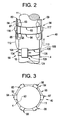
FIG 2 is an elevational view of the tower climbing and servicing device ofFIG. 1 ; -
FIG 3 is a top view of the tower climbing and servicing device ofFIG. 2 ; and -
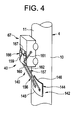
FIG. 4 is a perspective view of a climbing module including an attachment system in accordance with an exemplary embodiment. - The detailed description explains embodiments of the invention, together with advantages and features, by way of example with reference to the drawings.
- With initial reference to
FIG. 1 , a wind turbine is indicated generally at 2.Wind turbine 2 is configured to be supported upon land or out at sea. Towards that end,wind turbine 2 includes a tower member 4 having afirst end portion 6 that extends to a second end portion 8 through anintermediate portion 10 having anouter surface 11.Wind turbine 2 further includes ayaw system 12 having mounted thereto a windenergy collection system 14. Yawsystem 12 is selectively rotated about an axis defined by tower member 4 in order to position windenergy collection system 14 relative to prevailing wind currents. In any event, windenergy collection system 14 includes acentral hub 16 and a plurality of blade members 20-22. Blade members 20-22 collectively rotate about an access defined bycentral hub 16 in the response to wind current. The rotation of blade members 20-22 is transferred to a rotor (not shown) that is rotated within a stator (also not shown) to produce electricity. In addition, eachblade member 20 is selectively pivotable in order to establish a preferred pitch so as to enhance wind energy collection. Over time, maintenance to tower member 4 is required. Dirt carried by the air currents, animal contact such as, birds and the like should be periodically removed fromwind turbine 2. Towards that end,wind turbine 2 is provided with aservicing system 40 that is selectively mounted to tower member 4. - As best shown in
FIGS. 2 and 3 ,servicing system 40 includes aclimbing system 54 and anoperating system 58.Climbing system 54 includes a plurality of climbing modules 64-69 that are arrayed aboutouter surface 11 of tower member 4. As each climbing module 64-69 is similarly constructed, a detailed description will followreferencing climbing module 64 with an understanding that the remaining climbing modules, i.e., climbing modules 65-69 are similarly formed. As shown, climbingmodule 64 includes abody member 80 having a first pair ofdrive wheels drive wheels first driving motor 87 arranged within thebody member 80 while the second pair of drive wheels are operatively coupled to asecond driving motor 88 also disposed withinbody member 80. In accordance with the exemplary embodiment, drive wheels 82-85 are formed from a material having a high coefficient of friction thereby enablingclimbing modules 64 to scale tower member 4 fromfirst end portion 6 towards second end portion 8. In order to further ensure frictional contact between climbing modules 64-69 and tower member 4, climbingsystem 54 includes afirst connector member 93 andsecond connector member 94.Connector members connector members outer surface 11 of tower member 4. Circumscribe should be understood to mean thatconnector members Connector members - As further shown in
FIG. 2 ,operating system 58 includes afirst lifting motor 104 and asecond lifting motor 105. Each liftingmotor corresponding drum member Drum member 108 stores a first length ofcable 112 whilesecond drum member 109 stores a second length of cable of 113.Cables drum members members modules operating system 58 and climbing system 57, it should be understood that number of lifting motors and cables could vary in accordance with the exemplary embodiment. - In further accordance with the exemplary embodiment,
operating system 58 includes amaintenance member 124 that is supported upon first andsecond rail members rail members outer surface 11 of tower member 4 withmaintenance member 124 being selectively shiftable aboutouter surface 11 of tower member 4. Circumscribe should be understood to mean thatrail members Rail members Maintenance member 124 is configured and disposed to perform a maintenance task, such as cleaning, re-painting, and tower shell detecting. Of course it should also be understood that while onlysingle maintenance member 124 is shown,operating system 58 could include a plurality of maintenance members arranged between adjacent ones of climbing modules 64-69. It should also be understood thatmaintenance member 124 is readily changeable to allow various tasked to be performed in a single maintenance operation, and that multiple maintenance members, each performing a separate maintenance task, can be employed. - As best shown in
FIG. 4 ,servicing system 40 further includes anattachment system 140 operatively associated with at least one of the climbing modules 64-69. In the exemplary embodiment shown,attachment system 140 is provided on climbingmodule 67 however the number and location ofattachment system 140 can vary.Attachment system 140 includes aclamp member 142 having abody portion 144 including a firstarcuate surface 145 and a second, opposingarcuate surface 146. Secondarcuate surface 146 is provided with a friction material (not shown) that, when urged againstouter surface 11 of tower member 4, supports climbingsystem 54. Towards that end,attachment system 140 includes afirst linkage system 156 and asecond linkage system 157. -
First linkage system 156 includes afirst link member 159 that is operatively connected to asecond link member 160.First link member 159 is connected to climbingmodule 67 whilesecond link member 160 is connected to the firstarcuate surface 145 ofclamp member 142. Similarly,second linkage system 157 includes afirst link member 161 and asecond link member 162.First link member 161 is coupled to climbingmodule 67 whilesecond link member 162 is coupled to firstarcuate surface 145 ofclamp member 142.Attachment system 140 further includes afirst actuator member 166 and asecond actuator member 167.First actuator member 166 is operatively connected tofirst linkage system 156 whilesecond actuator member 167 is operatively connected tosecond linkage system 157.Actuator members second linkage system clamp member 142 againstouter surface 11 of tower member 4. - In order to perform a maintenance operation, climbing
system 54 is attached toouter surface 11 of tower member 4. Once attached, climbing modules 64-69 selectively traverse tower member 4 fromfirst end portion 6 towards second end portion 8. Once at a selected location,attachment system 140 is energized to clampclimbing system 54 to tower member 4.Attachment system 140 allows for a substantially lightweight climbing system to traverse tower member 4 while higher weight (maintenance) components are lifted by cables once the climbing system is in place. At this point, liftingmotors operating system 58. Once positioned,maintenance member 124 is activated and the maintenance operation is performed on tower member 4. As noted above,maintenance member 124 is selectively shiftable uponrail members maintenance member 124 can include a cleaning system that provides a scrubbing action toouter surface 11 of tower member 4,maintenance member 124 could be a painting system that aids in applying a coat of paint to the other surface of tower member 4 or the like. The exemplary embodiment enables tower maintenance functions to be performed from the ground thereby reducing the number of tower maintenance personnel required to perform a maintenance operation and further removes the need for maintenance personnel to scale the tower member in order to perform the maintenance operation. - While the invention has been described in detail in connection with only a limited number of embodiments, it should be readily understood that the invention is not limited to such disclosed embodiments. Rather, the invention can be modified to incorporate any number of variations, alterations, substitutions or equivalent arrangements not heretofore described, but which are commensurate with the spirit and scope of the invention. Additionally, while various embodiments of the invention have been described, it is to be understood that aspects of the invention may include only some of the described embodiments. Accordingly, the invention is not to be seen as limited by the foregoing description, but is only limited by the scope of the appended claims.
- Various aspects and embodiments of the present invention are defined by the following numbered clauses:
- 1. A servicing system for a tower member having a first end portion that extends to a second end portion through an intermediate portion having an outer surface, the servicing system comprising:
- a climbing system operatively coupleable to the tower member, the climbing system including at least one climbing module that is selectively operated to shift the climbing system along the tower member from the first end portion toward the second end portion; and
- an operating system operatively coupled to the climbing system, the operating system including at last one lifting motor and a maintenance member, the at least one lifting motor selectively shifting the operating system relative to the climbing system.
- 2. The tower servicing system according to clause 1, wherein the at least one climbing module includes a body member having at least one driving wheel and at least one driving motor operatively coupled to the at least one driving wheel.
- 3. The tower servicing system according to any preceding clause, wherein the at least one driving wheel includes a plurality of driving wheels and the at least one driving motor includes a first driving motor and a second driving motor.
- 4. The tower servicing system according to any preceding clause, wherein the first driving motor is connected to select ones of the plurality of driving wheels and the second driving motor is connected to other select ones of the plurality of driving wheels.
- 5. The tower servicing system according to any preceding clause, wherein the at least one climbing module includes a plurality of climbing modules.
- 6. The tower servicing system according to any preceding clause, further comprising: a connector member linking each of the plurality of climbing modules, the connector member being configured and disposed to urge each of the plurality of climbing modules onto the outer surface of the tower member.
- 7. The tower servicing system according to any preceding clause, wherein the connector member is configured and disposed to circumscribe the tower member.
- 8. The tower servicing system according to any preceding clause, further comprising: a first lifting motor operatively connected between one of the plurality of climbing modules and the operating system and a second lifting motor operatively connected between another of the plurality of climbing modules and the operation system, the first and second lifting motors being selectively operated to shift the operating system toward the climbing system.
- 9. The tower servicing system according to any preceding clause, wherein the operating system includes at least one rail member extending about the outer surface of the tower member, the maintenance member being selectively shifted along the at least one rail member.
- 10. The tower servicing system according to any preceding clause, wherein the maintenance member is selectively shifted along the at least one rail member in a direction substantially perpendicular to a direction of travel of the climbing system.
- 11. The tower servicing system according to any preceding clause, wherein the at least one rail member circumscribes the tower member.
- 12. The tower servicing system according to any preceding clause, further comprising: an attachment system operatively coupled to the at least one climbing module, the attachment system being selectively activated to secure the climbing module to the outer surface of the tower member.
- 13. The tower servicing system according to any preceding clause, wherein the attachment system includes at least one clamp member and at least one actuator member, the actuator member being selectively activated to urge the clamp member into contact with the outer surface of the tower member.
- 14. A method of servicing a tower member having a main body including a first end portion, a second end portion and an intermediate portion having an outer surface, the method comprising:
- mounting a climbing system including at least one climbing module to the outer surface of the tower member;
- connecting an operating system including a maintenance member to the climbing system;
- selectively shifting the climbing system from the first end portion toward the second end portion of the tower member;
- selectively shifting the operating system toward the climbing system; and
- operating the maintenance member to perform a maintenance operation on the wind turbine system.
- 15. The method of any preceding clause, further comprising:
- stopping the climbing system along the tower member; and
- clamping the climbing module to the outer surface of the tower member.
- 16. The method of any preceding clause, further comprising: shifting the maintenance member along at least one rail that circumscribes the tower member.
- 17. The method of any preceding clause, wherein shifting the maintenance member includes moving the maintenance member in a direction substantially perpendicular to a direction of travel of the climbing system.
- 18. A tower servicing system comprising:
- a climbing system configured to be operatively coupled to a tower member, the climbing system including at least one climbing module that is selectively operated to shift the climbing system axially along the tower member; and
- an operating system operatively coupled to the climbing system, the operating system including at last one lifting motor and a maintenance member, the at least one lifting motor selectively shifting the operating system relative to the climbing system, allowing the maintenance member to selectively perform maintenance on the tower member.
- 19. The tower servicing system according to any preceding clause, wherein the at least one climbing module includes a plurality of climbing modules spaced about the outer surface.
- 20. The tower servicing system according to any preceding clause, wherein the operating system includes at least one rail member extending about an outer surface of the tower member, the maintenance member being selectively shifted along the at least one rail member.
Claims (10)
- A servicing system (40) for a tower member (4) having a first end portion (6) that extends to a second end portion (8) through an intermediate portion (10) having an outer surface (11), the servicing system (40) comprising:a climbing system (54) operatively coupleable to the tower member (4), the climbing system (54) including at least one climbing module (64-69) that is selectively operated to shift the climbing system (54) along the tower member (4) from the first end portion (6) toward the second end portion (8); andan operating system (58) operatively coupled to the climbing system (54), the operating system (58) including at least one lifting motor (104) and a maintenance member (124), the at least one lifting motor (104) selectively shifting the operating system (58) relative to the climbing system (54).
- The tower servicing system (40) according to claim 1, wherein the at least one climbing module (64-69) includes a body member (80) having at least one driving wheel (82) and at least one driving motor (87) operatively coupled to the at least one driving wheel (82).
- The tower servicing system (40) according to any preceding claim, wherein the at least one driving wheel (82) includes a plurality of driving wheels (82-85) and the at least one driving motor (87) includes a first driving motor (87) and a second driving motor (88).
- The tower servicing system (40) according to any preceding claim, wherein the first driving motor (87) is connected to select ones of the plurality of driving wheels (82, 83) and the second driving motor (88) is connected to other select ones of the plurality of driving wheels (84, 85).
- The tower servicing system (40) according to any preceding claim, further comprising: a connector member (93) linking each of the plurality of climbing modules (64-69), the connector member (93) being configured and disposed to urge each of the plurality of climbing modules (64-69) onto the outer surface (11) of the tower member (4).
- The tower servicing system (40) according to any preceding claim, further comprising: a first lifting motor (104) operatively connected between one of the plurality of climbing modules (64) and the operating system (58) and a second lifting motor (105) operatively connected between another of the plurality of climbing modules (68) and the operation system (58), the first and second lifting motors (104, 105) being selectively operated to shift the operating system (58) toward the climbing system (54).
- The tower servicing system (40) according to any preceding claim, wherein the operating system (58) includes at least one rail member (128) extending about the outer surface (11) of the tower member (4), the maintenance member (124) being selectively shifted along the at least one rail member (128).
- The tower servicing system (40) according to any preceding claim, wherein the maintenance member (124) is selectively shifted along the at least one rail member (128) in a direction substantially perpendicular to a direction of travel of the climbing system (54).
- The tower servicing system (40) according to any preceding claim, further comprising: an attachment system (140) operatively coupled to the at least one climbing module (64), the attachment system (140) being selectively activated to secure the climbing module (64) to the outer surface (11) of the tower member (4).
- The tower servicing system (10) according to any preceding claim, wherein the attachment system (140) includes at least one clamp member (142) and at least one actuator member (166), the actuator member (166) being selectively activated to urge the clamp member (142) into contact with the outer surface (11) of the tower member (4).
Applications Claiming Priority (1)
| Application Number | Priority Date | Filing Date | Title |
|---|---|---|---|
| US12/535,288 US20110031066A1 (en) | 2009-08-04 | 2009-08-04 | Tower climbing and servicing device |
Publications (2)
| Publication Number | Publication Date |
|---|---|
| EP2281770A2 true EP2281770A2 (en) | 2011-02-09 |
| EP2281770A3 EP2281770A3 (en) | 2012-07-18 |
Family
ID=43037894
Family Applications (1)
| Application Number | Title | Priority Date | Filing Date |
|---|---|---|---|
| EP10170277A Withdrawn EP2281770A3 (en) | 2009-08-04 | 2010-07-21 | Tower climbing and servicing device |
Country Status (7)
| Country | Link |
|---|---|
| US (1) | US20110031066A1 (en) |
| EP (1) | EP2281770A3 (en) |
| JP (1) | JP2011032860A (en) |
| KR (1) | KR20110014117A (en) |
| CN (1) | CN101993020A (en) |
| AU (1) | AU2010206036A1 (en) |
| CA (1) | CA2710876A1 (en) |
Cited By (4)
| Publication number | Priority date | Publication date | Assignee | Title |
|---|---|---|---|---|
| WO2013113494A3 (en) * | 2012-01-31 | 2013-10-03 | Fachhochschule Aachen | Climbing robot for masts |
| WO2018010749A1 (en) * | 2016-07-12 | 2018-01-18 | Rope Robotics Aps | System with art apparatus on a wire, method of its. operation, use therof and a toolkit |
| WO2019068300A1 (en) | 2017-10-02 | 2019-04-11 | Rope Robotics Aps | Spreader tool for spreading viscous material onto the edge of a wind turbine blade and use thereof, a robot system with such tool, an operation site with such system and a method for operating such system |
| WO2023110039A3 (en) * | 2021-12-17 | 2023-07-27 | Vestas Wind Systems A/S | Method and system for reducing vortex induced vibrations of a wind turbine tower |
Families Citing this family (31)
| Publication number | Priority date | Publication date | Assignee | Title |
|---|---|---|---|---|
| US20110284327A1 (en) * | 2010-05-20 | 2011-11-24 | Rope Partner, Inc. | Device for positioning a rope access technician in relation to a blade of a wind turbine |
| KR101225690B1 (en) * | 2011-09-02 | 2013-01-23 | 삼성중공업 주식회사 | Movable monitoring robot, and wind power generator having the same, and method for monitoring fastening condition of wind power generator tower segment connecting element using movable monitoring robot |
| KR101291120B1 (en) * | 2011-09-02 | 2013-08-01 | 삼성중공업 주식회사 | Maintenance robot for wind power generator |
| KR101225691B1 (en) * | 2011-09-02 | 2013-01-23 | 삼성중공업 주식회사 | Maintenance robot for wind power generator |
| KR101291121B1 (en) * | 2011-09-02 | 2013-08-01 | 삼성중공업 주식회사 | Maintenance robot, and wind power generator having the same |
| KR101372288B1 (en) | 2012-06-28 | 2014-03-11 | 삼성중공업 주식회사 | Wind turbine carriage, and wind turbine maintenance system having the same |
| KR101324980B1 (en) * | 2012-06-28 | 2013-11-05 | 삼성중공업 주식회사 | Maintenance apparatus for blade of wind turbine and wind turbine having the same |
| KR101358125B1 (en) * | 2012-06-28 | 2014-02-07 | 삼성중공업 주식회사 | Maintenance apparatus for wind turbine |
| CN105836621A (en) * | 2015-01-15 | 2016-08-10 | 三汽车起重机械有限公司 | Climbing crane |
| DE102015211517A1 (en) * | 2015-06-23 | 2016-12-29 | Wobben Properties Gmbh | Mobile device for performing maintenance on a wind turbine |
| CN110691908B (en) * | 2017-04-05 | 2022-04-12 | 西门子歌美飒可再生能源公司 | parked components |
| CN108159582B (en) * | 2018-01-30 | 2023-02-28 | 南安市荣华机械科技有限公司 | Wall climbing electric device |
| CN108489890A (en) * | 2018-05-03 | 2018-09-04 | 中国长江电力股份有限公司 | Power station hydraulic headstock gear piston rod rust detection robot and application method |
| CN109591907A (en) * | 2019-01-30 | 2019-04-09 | 湖南达诺智能机器人科技有限公司 | A kind of bridge pier detection walking mechanism and traveling method |
| US11384739B2 (en) * | 2019-05-14 | 2022-07-12 | Ranbir Sahni | Robotic system for wind turbine airfoil maintenance |
| US20230048890A1 (en) * | 2019-12-18 | 2023-02-16 | Vestas Wind Systems A/S | Coating applicator tool head used with automated device for repairing leading edge damage on wind turbine blade |
| CN110861727A (en) * | 2019-12-26 | 2020-03-06 | 江苏风洋风电技术工程有限公司 | Wind power tower climbing robot |
| CN110917582A (en) * | 2020-01-02 | 2020-03-27 | 缙云旅程机械科技有限公司 | Single climbing device used during transformer maintenance |
| CN111228755B (en) * | 2020-03-21 | 2021-04-16 | 郑州工业应用技术学院 | Aerial work device for electric construction and method of using the same |
| CN111388902A (en) * | 2020-04-13 | 2020-07-10 | 象山罗雅电子科技有限公司 | Electrician's electric wire maintenance protection equipment |
| CN111686422A (en) * | 2020-06-01 | 2020-09-22 | 屈克礼 | Telegraph pole climbing device for power engineering |
| ES2914705B2 (en) * | 2020-12-14 | 2023-03-24 | Arquimea Ingenieria S L U | Maintenance and inspection device for wind turbines |
| CN113300182B (en) * | 2021-04-21 | 2022-07-01 | 国网山东省电力公司东明县供电公司 | Ground wire mounting mechanism |
| CN113209576A (en) * | 2021-06-03 | 2021-08-06 | 贵州电网有限责任公司 | Detachable seat type pole climbing device |
| CN113716498B (en) * | 2021-09-08 | 2023-03-24 | 徐磊 | Urban lighting facility construction equipment |
| CN114300993B (en) * | 2022-01-07 | 2025-08-22 | 安徽明诚电力设备安装有限公司 | A pole-lifting auxiliary maintenance device for electric power equipment |
| CN114427292A (en) * | 2022-02-17 | 2022-05-03 | 中建八局新型建造工程有限公司 | Steel structure high-altitude intelligent self-locking and split self-climbing device and method |
| CN114962179B (en) * | 2022-06-23 | 2025-07-15 | 西安热工研究院有限公司 | Adsorption mobile device and detection method for ultrasonic detection of wind turbine tower array |
| CN115970240B (en) * | 2022-12-09 | 2024-09-03 | 贵州电网有限责任公司 | Climbing pole climbers for power line overhaul |
| CN116789050B (en) * | 2023-08-08 | 2026-01-30 | 巨力索具股份有限公司 | A wind turbine tower self-spiral climbing device |
| CN116771617B (en) * | 2023-08-15 | 2023-11-17 | 威海亨策新能源科技有限公司 | Wind driven generator tower drum cleaning equipment and method |
Family Cites Families (30)
| Publication number | Priority date | Publication date | Assignee | Title |
|---|---|---|---|---|
| US742447A (en) * | 1903-04-04 | 1903-10-27 | Frank H Goodyear | Tree-climbing motor. |
| US2654638A (en) * | 1951-04-13 | 1953-10-06 | Robert A Elliott | Pole climbing device |
| US2782436A (en) * | 1955-04-05 | 1957-02-26 | John S Tomer | Pipe cleaner with tandem scraping heads |
| US2873089A (en) * | 1955-05-19 | 1959-02-10 | Parkmaster Systems Inc | Shuttle for carrying automotive vehicles |
| US3117401A (en) * | 1961-03-22 | 1964-01-14 | Crutcher Rolfs Cummings Inc | Column polisher |
| US3504767A (en) * | 1968-07-15 | 1970-04-07 | Sherman & Reilly | Mechanical pole climber |
| US3520383A (en) * | 1968-10-29 | 1970-07-14 | Willi Loock | Apparatus for climbing pole-like objects |
| US3727723A (en) * | 1971-02-16 | 1973-04-17 | L Pitcairn | Height-adjustable tree seat |
| FR2294566A1 (en) * | 1974-12-11 | 1976-07-09 | Mugnaini Fernando | ELEVATOR DEVICE ALLOWING TO ELEVATE AN OPERATOR ALONG A SUPPORT POST FOR ELECTRIC LINES, ETC |
| US4286417A (en) * | 1979-08-08 | 1981-09-01 | Robert T. Nelson | Blasting machine with position sensing and adjustment |
| US5226973A (en) * | 1987-05-28 | 1993-07-13 | Crc-Evans Rehabilitation Systems, Inc. | Hydrocleaning of the exterior surface of a pipeline to remove coatings |
| EP0542168B1 (en) * | 1991-11-15 | 1997-02-12 | Alce Garden S.r.l. | Self-propelled vehicle for climbing along pole-shaped elements, such as tree trunks, poles and the like |
| US5615696A (en) * | 1992-07-24 | 1997-04-01 | Lawler; Oliver W. | Apparatus for treating pipe |
| US5685393A (en) * | 1996-02-08 | 1997-11-11 | Early; W. O. | Tree climbing apparatus |
| JPH1182285A (en) * | 1997-09-16 | 1999-03-26 | Nkk Corp | Construction method of wind power generator, climbing crane device and maintenance method using the same |
| DE19741988A1 (en) * | 1997-09-23 | 1999-04-01 | Karin Peiter | Construction method for wind power plant |
| US6079517A (en) * | 1999-09-28 | 2000-06-27 | Payne; Robert W. | Power driven tree stand |
| AU2003258492A1 (en) * | 2002-09-04 | 2004-03-29 | Pp Energy Aps | A method and a device for lifting and/or lowering of objects at a wind turbine or the like and uses hereof |
| CA2520168C (en) * | 2003-04-15 | 2009-08-11 | Vestas Wind Systems A/S | Method of servicing the outer components of a wind turbine such as the wind turbine blades and the tower with a work platform and work platform |
| DE10336392B4 (en) * | 2003-08-06 | 2005-11-03 | Paar, Ulrich, Dipl.-Ing. | Chassis for guiding tools |
| US7198134B2 (en) * | 2004-06-14 | 2007-04-03 | General Electric Company | Method and apparatus for assisting multiple climbers |
| EP1838939B1 (en) * | 2005-01-19 | 2016-10-05 | ITI Scotland Limited | A clamp, self-advancing climbing device, and method of coupling same to a tubular |
| ES2334186B1 (en) * | 2006-08-11 | 2010-12-28 | Ventol España S.L. | ROBOT TREPADOR CLEANER. |
| US7997311B2 (en) * | 2006-11-03 | 2011-08-16 | Prout Jr Edward L | Self-propelled climbing apparatus for stripping, trimming and coating palm trees |
| GB2459874B (en) * | 2008-05-08 | 2010-09-15 | Iti Scotland Ltd | A clamping system and self advancing support platform |
| US8057605B2 (en) * | 2008-07-23 | 2011-11-15 | Gallegos Frank J | Wind turbine tower washing apparatus and method |
| US8281442B2 (en) * | 2009-07-17 | 2012-10-09 | General Electric Company | Wind turbine blade inspection and cleaning system |
| USD632221S1 (en) * | 2010-03-11 | 2011-02-08 | Sky Climber Llc | Bosun's chair |
| US8171809B2 (en) * | 2010-06-25 | 2012-05-08 | General Electric Company | System and method for wind turbine inspection |
| US8641374B2 (en) * | 2010-06-30 | 2014-02-04 | Vestas Wind Systems A/S | Cleaning and inspecting apparatus for wind turbine and related methods |
-
2009
- 2009-08-04 US US12/535,288 patent/US20110031066A1/en not_active Abandoned
-
2010
- 2010-07-21 EP EP10170277A patent/EP2281770A3/en not_active Withdrawn
- 2010-07-22 CA CA2710876A patent/CA2710876A1/en not_active Abandoned
- 2010-07-29 JP JP2010169925A patent/JP2011032860A/en not_active Withdrawn
- 2010-07-29 AU AU2010206036A patent/AU2010206036A1/en not_active Abandoned
- 2010-08-03 KR KR1020100074939A patent/KR20110014117A/en not_active Withdrawn
- 2010-08-04 CN CN201010254571XA patent/CN101993020A/en active Pending
Non-Patent Citations (1)
| Title |
|---|
| None |
Cited By (4)
| Publication number | Priority date | Publication date | Assignee | Title |
|---|---|---|---|---|
| WO2013113494A3 (en) * | 2012-01-31 | 2013-10-03 | Fachhochschule Aachen | Climbing robot for masts |
| WO2018010749A1 (en) * | 2016-07-12 | 2018-01-18 | Rope Robotics Aps | System with art apparatus on a wire, method of its. operation, use therof and a toolkit |
| WO2019068300A1 (en) | 2017-10-02 | 2019-04-11 | Rope Robotics Aps | Spreader tool for spreading viscous material onto the edge of a wind turbine blade and use thereof, a robot system with such tool, an operation site with such system and a method for operating such system |
| WO2023110039A3 (en) * | 2021-12-17 | 2023-07-27 | Vestas Wind Systems A/S | Method and system for reducing vortex induced vibrations of a wind turbine tower |
Also Published As
| Publication number | Publication date |
|---|---|
| AU2010206036A1 (en) | 2011-02-24 |
| CN101993020A (en) | 2011-03-30 |
| EP2281770A3 (en) | 2012-07-18 |
| CA2710876A1 (en) | 2011-02-04 |
| KR20110014117A (en) | 2011-02-10 |
| JP2011032860A (en) | 2011-02-17 |
| US20110031066A1 (en) | 2011-02-10 |
Similar Documents
| Publication | Publication Date | Title |
|---|---|---|
| US20110031066A1 (en) | Tower climbing and servicing device | |
| CA2715459C (en) | Apparatus and method for manipulating a component of a wind turbine | |
| EP2147885B1 (en) | Portable crane system for wind turbine components | |
| EP3653874B1 (en) | System and method for wind blade inspection, repair and upgrade | |
| ES2602584T3 (en) | Maintenance system for wind turbine equipment | |
| EP2725220B1 (en) | Method and system for replacing a single wind turbine blade | |
| US9745953B2 (en) | Method and system for replacing a single wind turbine blade | |
| EP3431751B1 (en) | System and method for suspending a rotor blade of a wind turbine uptower | |
| EP0035313A2 (en) | Wind turbine and method for power generation | |
| JP7002360B2 (en) | Lightning protection inspection method for wind power generators | |
| CA2705982A1 (en) | Method and apparatus for cleaning and de-icing wind turbine rotor blades | |
| EP3061964A1 (en) | System and method for cooling or cleaning a slip ring assembly of a generator | |
| CN105593469A (en) | Wind generator with lightweight adjustable blades | |
| TW201307677A (en) | Wind power equipment | |
| US20140037456A1 (en) | Wind turbine bedplate support frame | |
| EP3088732B1 (en) | Method and system for replacing a single wind turbine blade | |
| EP3622173B1 (en) | A wind energy park comprising airborne wind energy systems | |
| KR101334339B1 (en) | Blade gripping apparatus for wind turbine | |
| EP2412973B1 (en) | A slip ring unit for direct drive wind turbines | |
| EP3631193B1 (en) | Method for dismantling a wind turbine and erecting an airborne wind energy generating system | |
| KR101359585B1 (en) | An electrical power supply device for electrically powering at least one item of equipment on a rotary rotor of an aircraft, and an aircraft | |
| CN210531073U (en) | Suspension bridge for maintaining wind power blade | |
| KR101556264B1 (en) | Balance providing apparatus | |
| JP2024012109A (en) | Wind turbine maintenance cabin and wind turbine maintenance method | |
| AU7038881A (en) | Wind turbine and method for power generation |
Legal Events
| Date | Code | Title | Description |
|---|---|---|---|
| PUAI | Public reference made under article 153(3) epc to a published international application that has entered the european phase |
Free format text: ORIGINAL CODE: 0009012 |
|
| AK | Designated contracting states |
Kind code of ref document: A2 Designated state(s): AL AT BE BG CH CY CZ DE DK EE ES FI FR GB GR HR HU IE IS IT LI LT LU LV MC MK MT NL NO PL PT RO SE SI SK SM TR |
|
| AX | Request for extension of the european patent |
Extension state: BA ME RS |
|
| PUAL | Search report despatched |
Free format text: ORIGINAL CODE: 0009013 |
|
| AK | Designated contracting states |
Kind code of ref document: A3 Designated state(s): AL AT BE BG CH CY CZ DE DK EE ES FI FR GB GR HR HU IE IS IT LI LT LU LV MC MK MT NL NO PL PT RO SE SI SK SM TR |
|
| AX | Request for extension of the european patent |
Extension state: BA ME RS |
|
| RIC1 | Information provided on ipc code assigned before grant |
Ipc: F03D 1/00 20060101ALI20120608BHEP Ipc: F03D 11/04 20060101ALI20120608BHEP Ipc: B66C 23/20 20060101AFI20120608BHEP Ipc: F03D 11/00 20060101ALI20120608BHEP |
|
| STAA | Information on the status of an ep patent application or granted ep patent |
Free format text: STATUS: THE APPLICATION IS DEEMED TO BE WITHDRAWN |
|
| 18D | Application deemed to be withdrawn |
Effective date: 20130119 |