EP2272497B1 - Methods of increasing lymphatic function - Google Patents
Methods of increasing lymphatic function Download PDFInfo
- Publication number
- EP2272497B1 EP2272497B1 EP10172193A EP10172193A EP2272497B1 EP 2272497 B1 EP2272497 B1 EP 2272497B1 EP 10172193 A EP10172193 A EP 10172193A EP 10172193 A EP10172193 A EP 10172193A EP 2272497 B1 EP2272497 B1 EP 2272497B1
- Authority
- EP
- European Patent Office
- Prior art keywords
- vegf
- vegfr
- protein
- uvb
- agonist
- Prior art date
- Legal status (The legal status is an assumption and is not a legal conclusion. Google has not performed a legal analysis and makes no representation as to the accuracy of the status listed.)
- Active
Links
Images


Classifications
-
- A—HUMAN NECESSITIES
- A61—MEDICAL OR VETERINARY SCIENCE; HYGIENE
- A61K—PREPARATIONS FOR MEDICAL, DENTAL OR TOILETRY PURPOSES
- A61K38/00—Medicinal preparations containing peptides
- A61K38/16—Peptides having more than 20 amino acids; Gastrins; Somatostatins; Melanotropins; Derivatives thereof
- A61K38/17—Peptides having more than 20 amino acids; Gastrins; Somatostatins; Melanotropins; Derivatives thereof from animals; from humans
- A61K38/177—Receptors; Cell surface antigens; Cell surface determinants
- A61K38/179—Receptors; Cell surface antigens; Cell surface determinants for growth factors; for growth regulators
-
- A—HUMAN NECESSITIES
- A61—MEDICAL OR VETERINARY SCIENCE; HYGIENE
- A61K—PREPARATIONS FOR MEDICAL, DENTAL OR TOILETRY PURPOSES
- A61K38/00—Medicinal preparations containing peptides
- A61K38/16—Peptides having more than 20 amino acids; Gastrins; Somatostatins; Melanotropins; Derivatives thereof
- A61K38/17—Peptides having more than 20 amino acids; Gastrins; Somatostatins; Melanotropins; Derivatives thereof from animals; from humans
- A61K38/18—Growth factors; Growth regulators
-
- A—HUMAN NECESSITIES
- A61—MEDICAL OR VETERINARY SCIENCE; HYGIENE
- A61K—PREPARATIONS FOR MEDICAL, DENTAL OR TOILETRY PURPOSES
- A61K38/00—Medicinal preparations containing peptides
- A61K38/16—Peptides having more than 20 amino acids; Gastrins; Somatostatins; Melanotropins; Derivatives thereof
- A61K38/17—Peptides having more than 20 amino acids; Gastrins; Somatostatins; Melanotropins; Derivatives thereof from animals; from humans
- A61K38/18—Growth factors; Growth regulators
- A61K38/1858—Platelet-derived growth factor [PDGF]
- A61K38/1866—Vascular endothelial growth factor [VEGF]
-
- A—HUMAN NECESSITIES
- A61—MEDICAL OR VETERINARY SCIENCE; HYGIENE
- A61K—PREPARATIONS FOR MEDICAL, DENTAL OR TOILETRY PURPOSES
- A61K8/00—Cosmetics or similar toiletry preparations
- A61K8/18—Cosmetics or similar toiletry preparations characterised by the composition
- A61K8/30—Cosmetics or similar toiletry preparations characterised by the composition containing organic compounds
- A61K8/64—Proteins; Peptides; Derivatives or degradation products thereof
-
- A—HUMAN NECESSITIES
- A61—MEDICAL OR VETERINARY SCIENCE; HYGIENE
- A61P—SPECIFIC THERAPEUTIC ACTIVITY OF CHEMICAL COMPOUNDS OR MEDICINAL PREPARATIONS
- A61P17/00—Drugs for dermatological disorders
-
- A—HUMAN NECESSITIES
- A61—MEDICAL OR VETERINARY SCIENCE; HYGIENE
- A61P—SPECIFIC THERAPEUTIC ACTIVITY OF CHEMICAL COMPOUNDS OR MEDICINAL PREPARATIONS
- A61P17/00—Drugs for dermatological disorders
- A61P17/02—Drugs for dermatological disorders for treating wounds, ulcers, burns, scars, keloids, or the like
-
- A—HUMAN NECESSITIES
- A61—MEDICAL OR VETERINARY SCIENCE; HYGIENE
- A61P—SPECIFIC THERAPEUTIC ACTIVITY OF CHEMICAL COMPOUNDS OR MEDICINAL PREPARATIONS
- A61P17/00—Drugs for dermatological disorders
- A61P17/16—Emollients or protectives, e.g. against radiation
-
- A—HUMAN NECESSITIES
- A61—MEDICAL OR VETERINARY SCIENCE; HYGIENE
- A61P—SPECIFIC THERAPEUTIC ACTIVITY OF CHEMICAL COMPOUNDS OR MEDICINAL PREPARATIONS
- A61P43/00—Drugs for specific purposes, not provided for in groups A61P1/00-A61P41/00
-
- A—HUMAN NECESSITIES
- A61—MEDICAL OR VETERINARY SCIENCE; HYGIENE
- A61P—SPECIFIC THERAPEUTIC ACTIVITY OF CHEMICAL COMPOUNDS OR MEDICINAL PREPARATIONS
- A61P7/00—Drugs for disorders of the blood or the extracellular fluid
- A61P7/10—Antioedematous agents; Diuretics
-
- A—HUMAN NECESSITIES
- A61—MEDICAL OR VETERINARY SCIENCE; HYGIENE
- A61Q—SPECIFIC USE OF COSMETICS OR SIMILAR TOILETRY PREPARATIONS
- A61Q19/00—Preparations for care of the skin
- A61Q19/004—Aftersun preparations
-
- C—CHEMISTRY; METALLURGY
- C07—ORGANIC CHEMISTRY
- C07K—PEPTIDES
- C07K16/00—Immunoglobulins [IGs], e.g. monoclonal or polyclonal antibodies
- C07K16/18—Immunoglobulins [IGs], e.g. monoclonal or polyclonal antibodies against material from animals or humans
- C07K16/22—Immunoglobulins [IGs], e.g. monoclonal or polyclonal antibodies against material from animals or humans against growth factors ; against growth regulators
-
- G—PHYSICS
- G01—MEASURING; TESTING
- G01N—INVESTIGATING OR ANALYSING MATERIALS BY DETERMINING THEIR CHEMICAL OR PHYSICAL PROPERTIES
- G01N33/00—Investigating or analysing materials by specific methods not covered by groups G01N1/00 - G01N31/00
- G01N33/48—Biological material, e.g. blood, urine; Haemocytometers
- G01N33/50—Chemical analysis of biological material, e.g. blood, urine; Testing involving biospecific ligand binding methods; Immunological testing
- G01N33/68—Chemical analysis of biological material, e.g. blood, urine; Testing involving biospecific ligand binding methods; Immunological testing involving proteins, peptides or amino acids
- G01N33/6863—Cytokines, i.e. immune system proteins modifying a biological response such as cell growth proliferation or differentiation, e.g. TNF, CNF, GM-CSF, lymphotoxin, MIF or their receptors
-
- G—PHYSICS
- G01—MEASURING; TESTING
- G01N—INVESTIGATING OR ANALYSING MATERIALS BY DETERMINING THEIR CHEMICAL OR PHYSICAL PROPERTIES
- G01N33/00—Investigating or analysing materials by specific methods not covered by groups G01N1/00 - G01N31/00
- G01N33/48—Biological material, e.g. blood, urine; Haemocytometers
- G01N33/50—Chemical analysis of biological material, e.g. blood, urine; Testing involving biospecific ligand binding methods; Immunological testing
- G01N33/68—Chemical analysis of biological material, e.g. blood, urine; Testing involving biospecific ligand binding methods; Immunological testing involving proteins, peptides or amino acids
- G01N33/6887—Chemical analysis of biological material, e.g. blood, urine; Testing involving biospecific ligand binding methods; Immunological testing involving proteins, peptides or amino acids from muscle, cartilage or connective tissue
-
- A—HUMAN NECESSITIES
- A61—MEDICAL OR VETERINARY SCIENCE; HYGIENE
- A61K—PREPARATIONS FOR MEDICAL, DENTAL OR TOILETRY PURPOSES
- A61K39/00—Medicinal preparations containing antigens or antibodies
- A61K2039/505—Medicinal preparations containing antigens or antibodies comprising antibodies
-
- A—HUMAN NECESSITIES
- A61—MEDICAL OR VETERINARY SCIENCE; HYGIENE
- A61K—PREPARATIONS FOR MEDICAL, DENTAL OR TOILETRY PURPOSES
- A61K2800/00—Properties of cosmetic compositions or active ingredients thereof or formulation aids used therein and process related aspects
- A61K2800/70—Biological properties of the composition as a whole
-
- C—CHEMISTRY; METALLURGY
- C07—ORGANIC CHEMISTRY
- C07K—PEPTIDES
- C07K2317/00—Immunoglobulins specific features
- C07K2317/70—Immunoglobulins specific features characterized by effect upon binding to a cell or to an antigen
- C07K2317/76—Antagonist effect on antigen, e.g. neutralization or inhibition of binding
-
- G—PHYSICS
- G01—MEASURING; TESTING
- G01N—INVESTIGATING OR ANALYSING MATERIALS BY DETERMINING THEIR CHEMICAL OR PHYSICAL PROPERTIES
- G01N2333/00—Assays involving biological materials from specific organisms or of a specific nature
- G01N2333/435—Assays involving biological materials from specific organisms or of a specific nature from animals; from humans
- G01N2333/475—Assays involving growth factors
- G01N2333/515—Angiogenesic factors; Angiogenin
-
- G—PHYSICS
- G01—MEASURING; TESTING
- G01N—INVESTIGATING OR ANALYSING MATERIALS BY DETERMINING THEIR CHEMICAL OR PHYSICAL PROPERTIES
- G01N2333/00—Assays involving biological materials from specific organisms or of a specific nature
- G01N2333/435—Assays involving biological materials from specific organisms or of a specific nature from animals; from humans
- G01N2333/52—Assays involving cytokines
-
- G—PHYSICS
- G01—MEASURING; TESTING
- G01N—INVESTIGATING OR ANALYSING MATERIALS BY DETERMINING THEIR CHEMICAL OR PHYSICAL PROPERTIES
- G01N2500/00—Screening for compounds of potential therapeutic value
- G01N2500/10—Screening for compounds of potential therapeutic value involving cells
Definitions
- the lymphatic vascular system is composed of a dense network of thin-walled capillaries that drain protein-rich lymph from the extracellular space. Its major roles include the maintenance of tissue fluid homeostasis and mediation of the afferent immune response ( Oliver et al. (2002) Genes Dev. 16:773-83 ; Witte et al. (2001) Microsc. Res: Tech. 55:122-45 ).
- One known function of lymphatic vessels is the drainage of tissue fluid from normal and inflamed tissues ( Kunststofffeld et al. (2004) Blood 104:1048-57 ).
- WO 2005/097187 A2 discloses the treatment of UVB-induced skin damage by means of a humanized anti-VEGF-A antibody, in particular bevacizumab.
- VEGF vascular endothelial growth factor
- VEGF-A vascular endothelial growth factor-A
- systemic blockade of VEGF-A signaling largely prevented lymphatic vessel abnormalities and photo-damage induced by UVB.
- the disclosure features methods of reducing UVB induced skin damage by decreasing the activity or levels of VEGF-A in the skin, e.g., on the face, chest, neck, hands, or other regions of the body. These methods can further include increasing the activity or levels of a lymphangiogenic factor, e.g., VEGF-C or VEGF-D, in the skin.
- a lymphangiogenic factor e.g., VEGF-C or VEGF-D
- the present invention provides a VEGF-C agonist selected from i) a protein that includes a VEGF-C polypeptide and ii) a nucleic acid encoding a VEGF-C polypeptide for use in treating a subject having UVB-induced skin damage.
- the agonist may be used in methods of reducing UVB induced skin damage, e.g., on the face, chest, neck, hands, or other regions of the body, by promoting lymphatic function.
- the agonist may also be used in methods of reducing edema by decreasing the activity or levels of VEGF-A.
- a VEGF-C agonist is an agent that directly or indirectly increases VEGF-C activity in the subject.
- the VEGF-C agonists of the invention include a protein that includes a VEGF-C polypeptide (e.g., as modified into its mature heterodimeric form) or a nucleic acid encoding a VEGF-C.
- Other proteins and molecules e.g., antibodies and small molecules, can also be used increase VEGFR activity.
- antibodies that bind, and optionally crosslink (e.g., dimerize) VEGFR e.g., VEGFR-3) can be used to VEGFR (e.g., VEGFR-3) activity.
- Other additional suitable VEGF-C agonists include small molecules, natural products, and extracts.
- the agonists can be used to treat a condition in which increased lymphatic vessel function is desired.
- a condition in which increased lymphatic vessel function is desired included edema, e.g., due to UVB irradiation.
- Other conditions in which increased lymphatic vessel function is desired include aged skin or damaged skin, e.g., UVB-damaged skin.
- Still other conditions include those caused in part by a genetic or environmental factor, e.g., ultraviolet radiation.
- the invention may be used in a method of treating a subject, e.g., a human subject.
- the method includes (a) identifying a subject at risk for, or having, edema or skin damage, e.g., due to radiation exposure, e.g., chronic or acute UVB-exposure; and (b) administering to the subject that modulates an agonist described herein.
- the agonist is administered to the subject's skin, e.g., topically.
- chronic or acute UVB-induced redness, inflammation, edema, blistering, swelling and/or sunburn of the skin are prevented or reduced.
- Acute UVB-exposure means exposure to at least one MED of UVB light, preferably at least 2, 3, or 5 MEDS.
- the subject is exposed to between 3-8 MEDS, e.g., 3-5, 5-7, or 7-8 MEDS.
- the subject will be, is, or has been, exposed to the sun when the UV index is moderate to extreme, e.g., for a time sufficient to cause sunburn.
- the subject may exhibit one or more symptom of acute UVB exposure, e.g., skin inflammation, redness, swelling, blistering, tenderness or edema.
- the subject is at least 5 years of age.
- the subject is at least 10, 15, 20, 25, 30, 5, 40, 5, 50, or more years of age.
- the agent is administered via a liposome carrier, e.g., a lecithin liposome or an alkylphospholipid liposome.
- a liposome carrier e.g., a lecithin liposome or an alkylphospholipid liposome.
- the agent can be administered to the face, chest, neck, hands, and other regions of the body.
- the treatment can involve more than one administration, e.g., at least two, three, or four administrations, of the agent.
- the treatment can also involve daily administration of the agent.
- the agonist of the invention can be administered in combination with a sunscreen, antibiotic, moisturizer, a retinoic acid, a retinoid derivative, or an alpha-hydroxy acid.
- the agonist is administered to the subject in combination with a controlled release device, e.g., a biocompatible polymer, micro particle, or mesh. The device can reduce degradation and control the release of the agent.
- the medical treatment may also involve evaluating the subject for skin damage.
- the evaluation can be performed before, during, and/or after the administration of the agent.
- the evaluation can be performed at least 4 hours, 8 hours, 12 hours, 1 day, 2 days, 4,7,14, or more days before and/or after the administration.
- the administration of the agonist is performed: prior to exposure to UVB light, e.g., prior to sun exposure; when chronic or acute-UVB-induced skin damage (e.g., sunburn, selling, redness, and/or inflammation) is noticed or diagnosed; at the time a treatment for a skin damage-related disorder is begun or begins to exert its effects; or generally, as is needed to maintain skin health.
- chronic or acute-UVB-induced skin damage e.g., sunburn, selling, redness, and/or inflammation
- the period over which the agonist is administered, or the period over which clinically effective levels are maintained in the subject can be short term, e.g., for one day, two days, one week, or long term, e.g., for six months or more or a year or more, or short term, e.g., for less than a year, six months, one month, two weeks or less.
- the identification of a subject in need of altered skin damage can be performed e.g., by the subject, by a health care provider, by a provider of a skin damage treatment, or another party.
- the agent may be administered, e.g., by the subject, by a health care provider, by a provider of a skin damage treatment, or another party.
- the evaluation of the effect on skin damage may be performed, e.g., by the subject, by a health care provider, by a provider of a skin damage treatment, or another party.
- VEGF antagonists can be treated with other VEGF antagonists.
- treatment is possible with anti-VEGF antibodies such as bevacizumab; or VEGF receptor antagonists, e.g., anti-VEGF receptor antibodies or small molecule inhibitors, compounds having a molecular weight of less than 1500 daltons.
- Exemplary inhibitors and VEGF receptor antagonists include inhibitors of VEGF receptor tyrosine kinase activity.
- 4-[4-(1-Amino-1-methylethyl)phenyl]-2-[4-(2-morpholin-4-yl-ethyl)phenylamino]pyrimidine-5-carbonitrile (JNJ-17029259) is one of a structural class of 5-cyanopyrimidines that are orally available, selective, nanomolar inhibitors of the vascular endothelial growth factor receptor-2 (VEGF-R2)- Additional examples include: PTK-787/ZK222584 (Astra-Zeneca), SU5416, SU11248 (Pfizer), and ZD6474 ([N-(4-bromo-2-fluorophenyl)-6-methoxy-7-[(1-methylpiperidin-4-yl)methoxy]quinazolin-4-amine]).
- Still other agents that can be used are broad specificity tyrosine kinase inhibitors, e.g., SU6668. See, e.g., Bergers, B. et al. (2003) J. Clin. Invest. 111, 1287-1295 .
- VEGF-A or VEGFR-2 is inhibited by decreasing the level of expression of an endogenous VEGF-A or VEGFR-2 gene, e.g., by decreasing transcription of the VEGF-A or VEGFR-2 gene.
- transcription of the VEGF-A or VEGFR-2 gene can be decreased by: altering the regulatory sequences of the endogenous VEGF-A or VEGFR-2 gene, e.g., by the addition of a negative regulatory sequence, such as a DNA-binding site for a transcriptional repressor, or by the removal of a positive regulatory sequence, such as an enhancer or a DNA-binding site for a transcriptional activator.
- the antibody that binds VEGF-A or VEGFR-2 is a monoclonal antibody, e.g., a humanized chimeric or human monoclonal antibody.
- an agent that decreases VEGF expression is a VEGF-A or VEGFR-2 nucleic acid molecule that can bind to a cellular VEGF-A or VEGFR-2 nucleic acid sequence, e.g., mRNA, and can inhibit expression of the protein, e.g., an antisense, siRNA molecule or ribozyme; an agent that decreases VEGF-A or VEGFR-2 gene expression, e.g., a small molecule that binds the promoter of VEGF-A or VEGFR-2; or a crude or semi-purified extract, e.g., a botanical extract such as a plant extract, or algal extract, e.g., pomegranate seed oil or grape seed oil.
- a botanical extract such as a plant extract, or algal extract, e.g., pomegranate seed oil or grape seed oil.
- the use can further include: increasing the activity of one or more lymphogenic factors, e.g., increasing the activity of naturally occurring lymphogenic proteins such as VEGF-C or -D or VEGFR (e.g., VEGFR-3) in the subject.
- VEGF-C or -D or VEGFR (e.g., VEGFR-3) activity can be increased, e.g., by administering an agent which increases a VEGF-C or -D or VEGFR (e.g., VEGFR-3) activity.
- an agent which increases a VEGF-C or -D or VEGFR (e.g., VEGFR-3) activity can be one or more of the following: a VEGF-C or -D polypeptide, or a biologically active fragment or analog thereof, e.g., a VEGF-C or-D derived polypeptide or retro-inverso polypeptide thereof; a nucleic acid encoding a VEGF-C or -D polypeptide, or a biologically active fragment or analog thereof; an agonist of VEGF-C or -D, e.g., an antibody or a small molecule having or increasing VEGF-C or -D activity; or an agent that increases VEGF-C or -D nucleic acid expression, e.g., a small molecule which binds to the promoter region of VEGF-C or-D and increases expression.
- a VEGF-C or -D polypeptide or a biologically active fragment or analog thereof
- VEGF-C or -D or VEGFR is increased by an agent, e.g., a small molecule, which induces VEGF-G or -D or VEGFR (e.g., VEGFR-3) expression.
- an agent that induces VEGF-C or -D or VEGFR (e.g., VEGFR-3) expression is administered topically.
- the agent is administered to a subject sufficiently before UVB exposure, e.g., sun exposure, such that a lymphogenesis effect is present in the subject's skin at the time of UVB exposure.
- VEGF-C or -D or VEGFR activity can also be increased by controlled delivery to the subject of a VEGF-C or -D or VEGFR (e.g., VEGFR-3) nucleic acid, or a VEGF-C or -D or VEGFR (e.g., VEGFR-3) protein, fragment, or analog.
- a VEGF-C or-D or VEGFR (e.g., VEGFR-3) nucleic acid, protein, fragment, or analog can be administered to the subject in combination with a controlled release device, e.g., a biocompatible polymer, micro particle, or mesh.
- the device can reduce degradation and control the release of the VEGF-C or -D or VEGFR (e.g., VEGFR-3) nucleic acid, protein, fragment, or analog.
- VEGF-C or -D or VEGFR e.g., VEGFR-3 biocompatible controlled release system
- a VEGF-C or -D or VEGFR (e.g., VEGFR-3) biocompatible controlled release system can be administered to the subject, e.g., by injection or implantation, e.g., intramuscularly, subcutaneously, intravenously, or at an organ, joint cavity, or at a lesion.
- the level of VEGF-C or -D or VEGFR can also be increased by increasing the endogenous VEGF-C or -D or VEGFR (e.g., VEGFR-3) activity.
- Activity can be increased by increasing the level of expression of the gene, e.g., by increasing transcription of the VEGF-C or -D or VEGFR (e.g., VEGFR-3) gene; increasing the stability of the VEGF-C or -D or VEGFR (e.g., VEGFR-3) mRNA, e.g., by altering the secondary or tertiary structure of the mRNA; increasing the translation of VEGF-C or -D or VEGFR (e.g., VEGFR-3) mRNA, e.g., by altering the sequence of the VEGF-C or -D or VEGFR (e.g., VEGFR-3) mRNA; and/or increasing the stability of the VEGF
- Transcription of the VEGF-C or -D or VEGFR (e.g., VEGFR-3) gene can be increased, e.g., by altering the regulatory sequences of the endogenous VEGF-C or -D or VEGFR (e.g., VEGFR-3) gene.
- the regulatory sequence can be altered by: the addition of a positive regulatory element (such as an enhancer or a DNA-binding site for a transcriptional activator); the deletion of a negative regulatory element (such as a DNA-binding site for a transcriptional repressor) and/or replacement of the endogenous regulatory sequence, or elements therein, with that of another gene, thereby allowing the VEGF-C or -D or VEGFR (e.g., VEGFR-3) gene to be transcribed more efficiently.
- a positive regulatory element such as an enhancer or a DNA-binding site for a transcriptional activator
- a negative regulatory element such as a DNA-binding site for a transcriptional repressor
- the agonist is used in combination with a small molecule or a crude or semi-purified extract, e.g., a botanical extract such as a plant extract, that induces VEGF-C or -D or VEGFR (e.g., VEGFR-3).
- a small molecule or a crude or semi-purified extract e.g., a botanical extract such as a plant extract, that induces VEGF-C or -D or VEGFR (e.g., VEGFR-3).
- the invention features a kit for modulating skin damage of a subject that includes a composition as claimed, and instructions for use, e.g., instructions to apply the composition to an area of the body in need of treatment for acute UVB-induced skin damage, e.g., redness, swelling, sunburn and/or inflammation.
- the composition also has a cosmetic ingredient, e.g., a fragrance or moisturizer.
- An effective amount of the agonist of the present invention is defined as the amount of a composition that, upon administration to a subject (e.g., a human), reduces skin damage in the subject.
- the effective amount to be administered to a subject is typically based on a variety of factors including age, sex, surface area, weight, and conditions of the skin. Body surface area may be approximately determined from height and weight of the patient. See, e.g., Scientific Tables, Geigy Pharmaceuticals, Ardley, New York, 1970, 537. Effective doses will vary, as recognized by those skilled in the art, dependent on route of administration, excipient usage, and the possibility of co-usage with other treatments such as usage of other skin damage-modulating compounds,
- the invention may be used in a method that includes: applying, to a skin region of a human subject, (e.g., forearms, legs, back, torso, head, face, scalp, a protective amount of a VEGF signaling inhibitor; and exposing the subject to irradiation, e.g., to sunlight, e.g., direct or high intensity sunlight, or to a UV-light, e.g., as in a tanning parlor.
- a protective amount is an amount sufficient to reduced skin damage to a detectable or statistically significant level
- the invention may be used in methods of monitoring a subject or cells from a subject, e.g., skin cells.
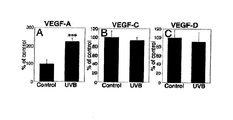
- the methods include evaluating expression of one or more of VEGF-A, -C, and -D.
- An increase in VEGF-A levels and a decrease in VEGF-C or -D levels, relative to a reference (e.g., control or un-irradiated cells) can indicate that the subject or cells from the subject are at risk for or have been exposed to a skin damaging condition, e.g., irradiation, e.g., UVB irradiation.
- a skin damaging condition e.g., irradiation, e.g., UVB irradiation.
- exposure to UVB-radiation means exposure to natural sunlight or artificial UVB radiation (e.g., a UVB sun lamp, e.g., for tanning, or for phototherapy, e.g., for treatment of psoriasis, atopic dermatitis, or vitiligo) of at least one MED.
- natural sunlight or artificial UVB radiation e.g., a UVB sun lamp, e.g., for tanning, or for phototherapy, e.g., for treatment of psoriasis, atopic dermatitis, or vitiligo
- UVB Ultraviolet B
- VEGF vascular endothelial growth factor
- VEGF-A Targeted overexpression of VEGF-A in the epidermis of transgenic mice led to increased enlargement and, surprisingly, also to leakage of lymphatic vessels after acute UVB irradiation, whereas systemic blockade of VEGF-A signaling largely prevented lymphatic vessel abnormalities and also prevented photo-damage induced by UVB.
- lymphatic vessels as novel targets for preventing UVB-induced cutaneous photodamage, and they also suggest that promotion of lymphatic function, for example by lymphangiogenic factors such as VEGF-C, may ameliorate the damaging effects of UVB irradiation - that are mediated in part by VEGF-A - on the skin.
- this application features methods of treating (e.g., reducing, ameliorating, or preventing) skin damage (e.g., induced by UVB) by decreasing the levels or activity of VEGF-A or VEGFR (e.g., VEGFR-2), e.g., in the skin, of a subject.
- skin damage e.g., induced by UVB
- VEGFR e.g., VEGFR-2
- VEGF and VEGF receptors are reviewed, e.g., in Shibuya and Claesson-Welsh (2006) Exp. Cell Res. 312:549-60 ; Byrne et al. (2005) J. Cell. Mol. Med. 9:777-94 ; and Coultas et al. (2005) Nature 438:937-45 .
- UV index (developed by the United States Environmental Protection Agency) indicates the intensity of the sun's UV rays on a given day. There are four categories - moderate (UV index is less than 3), high (UV index is 3 to 6) very high (UV index is 6 to 10) and extreme (UV index is greater than 10). A moderate UV Index means it will take more than an hour to bum your skin; an extreme level means it will take less than 15 minutes. The index is often included with weather reports. Clinically, UVB exposure is measured in minimal erythema doses (MED). One MED is the amount of UVB required to produce a sunburn in sensitive skin. Moderate-to-severe acute UVB-induced skin damage, e.g., sunburn, can occur at 3-8 MEDs.
- MED minimal erythema doses
- VEGF vascular endothelial growth factor
- VEGFR e.g., VEGFR-2 or -3 modulator
- the agent may be any type of compound that can be administered to a subject (e.g., antibodies, proteins, peptides, glycoproteins, glycopeptides, glycolipids, polysaccharides, oligosaccharides, nucleic acids, bioorganic molecules, peptidomimetics, pharmacological agents and their metabolites, transcriptional and translation control sequences, natural products and extracts, and the like).
- the VEGF/VEGFR modulator is a biologic, e.g., a protein having a molecular weight of between 5-300 kDa.
- a VEGF/VEGFR modulator may inhibit binding of VEGF to a VEGFR or may prevent VEGF-mediated signal transduction, e.g., as transduced by the VEGFR protein, e.g., VEGFR-2.
- a VEGF/VEGFR modulator that binds to VEGF may alter the conformation of VEGF, hinder binding of VEGF to VEGFR, or otherwise decrease the affinity of VEGF for a VEGFR or prevent the interaction between VEGF and a VEGFR.
- a VEGF/VEGFR modulator may stimulate binding of VEGF to a VEGFR or may induce VEGFR signal transduction by activating the VEGFR in the absence of a VEGF.
- a VEGF/VEGFR modulator may bind to VEGF or to a VEGPR with a K d of less than 10 -6 , 10 -7 , 10 -8 , 10 -9 , or 10 -10 M.
- the VEGF/VEGFR modulator binds to VEGF (i.e., VEGF-A with an affinity at least 5, 10, 20, 50, 100, 200, 500, or 1000 better than its affinity for a non-VEGF-A protein, e.g., VEGF-C or VEGF-D).
- a preferred VEGF/VEGFR modulator specifically binds to VEGF or VEGFR, such as a VEGF or VEGFR specific antibody.
- Exemplary VEGF/VEGFR modulators include antibodies that bind to VEGF or VEGFR and soluble forms of the VEGFR that compete with cell surface VEGFR for binding to VEGF.
- An example of a soluble form of VEGFR is a protein that includes at least a portion of the extracellular domain of a VEGFR (e.g., a soluble VEGP-binding fragment of VEGFR-2 or VEGFR-3, e.g., including a portion that binds to VEGF).
- An exemplary soluble form of the VEGFR protein includes a region of the VEGFR protein that binds to VEGF, e.g., an extracellular domain, e.g., domain of in the extracellular region.
- This region can be physically associated, e.g., fused to another amino acid sequence, e.g., an Fc domain, at its N- or C- terminus.
- the region from VEGFR can be spaced by a linker from the heterologous amino acid sequence.
- Other soluble forms of VEGFR e.g., forms that do not include an Fc domain, can also be used.
- Exemplary VEGF/VEGFR modulators include antibodies that bind to VEGF and/or VEGFR.
- the antibody inhibits the interaction between VEGF and a VEGFR, e.g., by physically blocking the interaction, decreasing the affinity of VEGF and/or VEGFR for its counterpart, disrupting or destabilizing VEGF complexes, sequestering VEGF or a VEGFR, or targeting VEGF or VEGFR for degradation.
- the antibody can bind to VEGF or VEGFR at an epitope that includes one or more amino acid residues that participate in the VEGF/VEGFR binding interface. Such amino acid residues can be identified, e.g., by alanine scanning.
- the antibody can bind to residues that do not participate in the VEGF/VEGFR binding.
- the antibody can alter a conformation of VEGF or VEGFR and thereby reduce binding affinity, or the antibody may sterically hinder VEGF/VEGFR binding.
- antibodies that bind to VEGF and/or VEGFR can be used.
- the antibody can prevent activation of a VEGF/VEGFR mediated event or activity.
- an antibody refers to a protein that includes at least one immunoglobulin variable region, e.g., an amino acid sequence that provides an immunoglobulin variable domain or an immunoglobulin variable domain sequence.
- an antibody can include a heavy (H) chain variable region (abbreviated herein as VH), and a light (L) chain variable region (abbreviated herein as VL).
- VH heavy chain variable region
- L light chain variable region
- an antibody includes two heavy (H) chain variable regions and two light (L) chain variable regions.
- antibody encompasses antigen-binding fragments of antibodies (e.g., single chain antibodies, Fab fragments, F(ab') 2 fragments, Fd fragments, Fv fragments, and dAb fragments) as well as complete antibodies, e.g., intact and/or full length immunoglobulins of types IgA, IgG (e.g., IgG1, IgG2, IgG3, IgG4), IgE, IgD, IgM (as well as subtypes thereof).
- the light chains of the immunoglobulin may be of types kappa or lambda.
- the antibody is glycosylated.
- An antibody can be functional for antibody-dependent cytotoxicity and/or complement mediated cytotoxicity, or may be non-functional for one or both of these activities.
- VH and VL regions can be further subdivided into regions of hypervariability, termed “complementarity determining regions” ("CDR"), interspersed with regions that are more conserved, termed “framework regions” (FR).
- CDR complementarity determining regions
- FR framework regions
- the extent of the FR's and CDR's has been precisely defined (see, Kabat, E.A., et al. (1991) Sequences of Proteins of Immunological Interest, Fifth Edition, US Department of Health and Human Services, NIH Publication No. 91-3242 ; and Chothia, C. et al. (1987) J. Mol. Biol. 196:901-917 ). Kabat definitions are used herein.
- Each VH and VL is typically composed of three CDR's and four FR's, arranged from amino-tenminus to carboxyl-terminus in the following order: FR1, CDR1, FR2, CDR2, FR3, CDR3, FR4.
- immunoglobulin domain refers to a domain from the variable or constant domain of immunoglobulin molecules. Immunoglobulin domains typically contain two ⁇ -sheets formed of about seven ⁇ -strands, and a conserved disulfide bond (see, e.g., A. F. Williams and A. N. Barclay (1988) Ann. Rev Immunol. 6:381-405 ).
- An "immunoglobulin variable domain sequence” refers to an amino acid sequence that can form a structure sufficient to position CDR sequences in a conformation suitable for antigen binding. For example, the sequence may include all or part of the amino acid sequence of a naturally-occurring variable domain.
- the sequence may omit one, two, or more N- or C-terminal amino acids, internal amino acids, may include one or more insertions or additional terminal amino acids, or may include other alterations.
- a polypeptide that includes an immunoglobulin variable domain sequence can associate with another immunoglobulin variable domain sequence to form a target binding structure (or "antigen binding site"), e.g., a structure that interacts with VEGFR.
- the VH or VLchain of the antibody can further include all or part of a heavy or light chain constant region, to thereby form a heavy or light immunoglobulin chain, respectively.
- the antibody is a tetramer of two heavy immunoglobulin chains and two light immunoglobulin chains.
- the heavy and light immunoglobulin chains can be connected by disulfide bonds.
- the heavy chain constant region typically includes three constant domains, CH1, CH2, and CH3.
- the light chain constant region typically includes a CL domain.
- the variable region of the heavy and light chains contains a binding domain that interacts with an antigen.
- the constant regions of the antibodies typically mediate the binding of the antibody to host tissues or factors, including various cells of the immune system (e.g., effector cells) and the first component (C1q) of the classical complement system.
- One or more regions of an antibody can be human, effectively human, or humanized.
- one or more of the variable regions can be human or effectively human.
- one or more of the CDRs e.g., HC CDR1, HC CDR2, HC CDR3, LC CDR1, LC CDR2, and LC CDR3, can be human.
- Each of the light chain CDRs can be human.
- HC CDR3 can be human.
- One or more of the framework regions can be human, e.g., FR1, FR2, FR3, and FR4 of the HC or LC.
- all the framework regions are human, e.g., derived from a human somatic cell, e.g., a hematopoietic cell that produces immunoglobulins or a non-hematopoietic cell.
- the human sequences are germline sequences, e.g., encoded by a germline nucleic acid.
- One or more of the constant regions can be human, effectively human, or humanized.
- at least 70, 75, 80, 85, 90, 92, 95, or 98% of the framework regions (e.g., FR1, FR2, and FR3, collectively, or FR1, FR2, FR3, and FR4, collectively) or the entire antibody can be human, effectively human, or humanized.
- FR1, FR2, and FR3 collectively can be at least 70, 75, 80, 85, 90, 92, 95, 98, or 99% identical, or completely identical, to a human sequence encoded by a human germline segment.
- an “effectively human” immunoglobulin variable region is an immunoglobulin variable region that includes a sufficient number of human framework amino acid positions such that the immunoglobulin variable region does not elicit an immunogenic response in a normal human.
- An “effectively human” antibody is an antibody that includes a sufficient number of human amino acid positions such that the antibody does not elicit an immunogenic response in a normal human.
- a "humanized” immunoglobulin variable region is an immunoglobulin variable region that is modified such that the modified form elicits less of an immune response in a human than does the non-modified form, e.g., is modified to include a sufficient number of human framework amino acid positions such that the immunoglobulin variable region does not elicit an immunogenic response in a normal human.
- Descriptions of "humanized” immunoglobulins include, for example, US Pat. Nos. 6,407,213 and 5,693,762 .
- humanized immunoglobulins can include a non-human amino acid at one or more framework amino acid positions.
- Antibodies that bind to VEGF or a VEGFR can be generated by a variety of means, including immunization, e.g., using an animal, or in vitro methods such as phage display. All or part of VEGF or VEGFR can be used as an immunogen or as a target for selection. For example, VEGF or a fragment thereof, VEGFR or a fragment thereof, can be used as an immunogen.
- the immunized animal contains immunoglobulin producing cells with natural, human, or partially human immunoglobulin loci.
- the non-human animal includes at least a part of a human immunoglobulin gene.
- Non-human antibodies to VEGF and VEGFR can also be produced, e.g., in a rodent.
- the non-human antibody can be humanized, e.g., as described in EP 239 400 ; US Pat. Nos. 6,602,503 ; 5,693,761 ; and 6,407,213 , deimmunized, or otherwise modified to make it effectively human.
- EP 239 400 (Winter et al. ) describes altering antibodies by substitution (within a given variable region) of their complementarity determining regions (CDRs) for one species with those from another.
- CDRs of a non-human (e.g., murine) antibody are substituted into the corresponding regions in a human antibody by using recombinant nucleic acid technology to produce sequences encoding the desired substituted antibody.
- Human constant region gene segments of the desired isotype usually gamma I for CH and kappa for CL
- the humanized heavy and light chain genes can be co-expressed in mammalian cells to produce soluble humanized antibody.
- Other methods for humanizing antibodies can also be used.
- Fully human monoclonal antibodies that bind to VEGF and VEGFR can be produced, e.g., using in vitro-primed human splenocytes, as described by Boerner et al. (1991) J. Immunol. 147:86-95 . They may be prepared by repertoire cloning as described by Persson et al. (1991) Proc. Nat. Acad. Sci. USA 88:2432-2436 or by Huang and Stollar (1991) J. Immunol. Methods 141:227-236 ; also US Pat. No. 5,798,230 .
- phage display libraries may also be used to isolate high affinity antibodies that can be developed as human therapeutics using standard phage technology (see, e.g., Hoogenboom et al. (1998) Immunotechnology 4:1-20 ; Hoogenboom et al. (2000) Immunol Today 2:371-378 ; and US 2003-0232333 ).
- Antibodies and other proteins described herein can be produced in prokaryotic and eukaryotic cells.
- the antibodies e.g., scFv's
- the antibodies are expressed in a yeast cell such as Pichia (see, e.g., Powers et al. (2001) J. Immunol. Methods 251:123-35 ), Hanseula, or Saccharomyces.
- Antibodies can be produced in mammalian cells.
- mammalian host cells for recombinant expression include Chinese Hamster Ovary (CHO cells) (including dihydrofolate reductase-negative CHO cells, described in Urlaub and Chasin (1980) Proc. Natl. Acad Sci. USA 77:4216-4220 , used with a DHFR selectable marker, e.g., as described in Kaufman and Sharp (1982) Mol. Biol.
- lymphocytic cell lines e.g., NSO myeloma cells and SP2 cells, COS cells, K562, and a cell from a transgenic animal, e.g., a transgenic mammal.
- the cell is a mammary epithelial cell.
- the recombinant expression vectors may carry additional nucleic acid sequences, such as sequences that regulate replication of the vector in host cells (e.g., origins of replication) and selectable marker genes.
- the selectable marker gene facilitates selection of host cells into which the vector has been introduced (see e.g., US Pat. Nos. 4,399,216 ; 4,634,665 ; and 5,179,017 ).
- Exemplary selectable marker genes include the dihydrofolate reductase (DHFR) gene (for use in dhfr - host cells with methotrexate selection/amplification) and the neo gene (for G418 selection).
- DHFR dihydrofolate reductase
- a recombinant expression vector encoding both the antibody heavy chain and the antibody light chain is introduced into dhfr- CHO cells by calcium phosphate-mediated transfection.
- the antibody heavy and light chain genes are each operatively linked to enhancer/promoter regulatory elements (e.g., derived from SV40, CMV, adenovirus and the like, such as a CMV enhancer/AdMLP promoter regulatory element or an SV40 enhancer/AdMLP promoter regulatory element) to drive high levels of transcription of the genes.
- the recombinant expression vector also carries a DHFR gene, which allows for selection of CHO cells that have been transfected with the vector using methotrexate selection/amplification.
- the selected transformant host cells are cultured to allow for expression of the antibody heavy and light chains and intact antibody is recovered from the culture medium.
- Standard molecular biology techniques are used to prepare the recombinant expression vector, to transfect the host cells, to select for transformants, to culture the host cells, and to recover the antibody from the culture medium. For example, some antibodies can be isolated by affinity chromatography with a Protein A or Protein G
- Antibodies may also include modifications, e.g., modifications that alter Fc function, e.g., to decrease or remove interaction with an Fc receptor or with C1q, or both.
- modifications e.g., modifications that alter Fc function, e.g., to decrease or remove interaction with an Fc receptor or with C1q, or both.
- the human IgG1 constant region can be mutated at one or more residues, e.g., one or more ofresidues 234 and 237, e.g., according to the numbering in US Pat. No. 5,648,260 .
- Other exemplary modifications include those described in US Pat. No. 5,648,260 .
- the antibody/protein production system may be designed to synthesize antibodies or other proteins in which the Fc region is glycosylated.
- the Fc domain of IgG molecules is glycosylated at asparagine 297 in the CH2 domain.
- the Fc domain can also include other eukaryotic post-translational modifications.
- the protein is produced in a form that is not glycosylated.
- Antibodies and other proteins can also be produced by a transgenic animal.
- US Pat. No. 5,849,992 describes a method for expressing an antibody in the mammary gland of a transgenic mammal.
- a transgene is constructed that includes a milk-specific promoter and nucleic acid sequences encoding the antibody of interest, e.g., an antibody described herein, and a signal sequence for secretion.
- the milk produced by females of such transgenic mammals includes, secreted-therein, the protein of interest, e.g., an antibody or Fc fusion protein.
- the protein can be purified from the milk, or for some applications, used directly.
- nucleic acid antagonists are used to decrease expression of an endogenous gene encoding VEGF or a VEGFR.
- the nucleic acid antagonist is an siRNA that targets mRNA encoding VEGF or a VEGFR.
- Other types of antagonistic nucleic acids can also be used, e.g., a dsRNA, a ribozyme, a triple-helix former, or an antisense nucleic acid.
- nucleic acid antagonists can be directed to downstream effector targets of VEGFR activation.
- siRNAs are small double stranded RNAs (dsRNAs) that optionally include overhangs.
- the duplex region of an siRNA is about 18 to 25 nucleotides in length, e.g., about 19, 20, 21, 22, 23, or 24 nucleotides in length.
- the siRNA sequences are exactly complementary to the target mRNA.
- dsRNAs and siRNAs in particular can be used to silence gene expression in mammalian cells (e.g., human cells).
- siRNAs also include short hairpin RNAs (shRNAs) with 29-base-pair stems and 2-nucleotide 3' overhangs. See, e.g., Clemens et al. (2000) Proc. Natl.
- Anti-sense agents can include, for example, from about 8 to about 80 nucleobases (i.e., from about 8 to about 80 nucleotides), e.g., about 8 to about 50 nucleobases, or about 12 to about 30 nucleobases.
- Anti-sense compounds include ribozymes, external guide sequence (EGS) oligonucleotides (oligozymes), and other short catalytic RNAs or catalytic oligonucleotides which hybridize to the target nucleic acid and modulate its expression.
- Anti-sense compounds can include a stretch of at least eight consecutive nucleobases that are complementary to a sequence in the target gene.
- An oligonucleotide need not be 100% complementary to its target nucleic acid sequence to be specifically hybridizable.
- An oligonucleotide is specifically hybridizable when binding of the oligonucleotide to the target interferes with the normal function of the target molecule to cause a loss of utility, and there is a sufficient degree of complementarity to avoid nonspecific binding of the oligonucleotide to non-target sequences under conditions in which specific binding is desired, i.e., under physiological conditions in the case of in vivo assays or therapeutic treatment or, in the case of in vitro assays, under conditions in which the assays are conducted.
- Hybridization of antisense oligonucleotides with mRNA can interfere with one or more of the normal functions of mRNA.
- the functions of mRNA to be interfered with include all key functions such as, for example, translocation of the RNA to the site of protein translation, translation of protein from the RNA, splicing of the RNA to yield one or more mRNA species, and catalytic activity which may be engaged in by the RNA. Binding of specific protein(s) to the RNA may also be interfered with by antisense oligonucleotide hybridization to the RNA.
- Exemplary antisense compounds include DNA or RNA sequences that specifically hybridize to the target nucleic acid, e.g., the mRNA encoding VEGF or VEGFR.
- the complementary region can extend for between about 8 to about 80 nucleobases.
- the compounds can include one or more modified nucleobases.
- Modified nucleobases may include, e.g., 5-substituted pyrimidines such as 5-iodouracil, 5-iodocytosine, and C5-propynyl pyrimidines such as C5-propynylcytosine and C5-propynyluracil.
- modified nucleobases include N 4 --(C 1 -C 12 ) alkylaminocytosines and N 4 ,N 4 --(C 1 -C 12 ) dialkylaminocytosines.
- Modified nucleobases may also include 7-substituted-8-aza-7-deazapurines and 7-substituted-7-deazapurines such as, for example, 7-iodo-7-deazapurines, 7-cyano-7-deazapurines, 7-aminocarbonyl-7-deazapurines.
- Examples of these include 6-amino-7-iodo-7-deazapurines, 6-amino-7-cyano-7-deazapurines, 6-amino-7-aminocarbonyl-7-deazapurines, 2-amino-6-hydroxy-7-iodo-7-deazapurines, 2-amino-6-hydroxy-7-cyano-7-deazapurines, and 2-amino-6-hydroxy-7-aminocarbonyl-7-deazapurines.
- N 6 --(C 1 -C 12 ) alkylaminopurines and N 6 ,N 6 --(C 1 -C 12 ) dialkylaminopurines are also suitable modified nucleobases.
- other 6-substituted purines including, for example, 6-thioguanine may constitute appropriate modified nucleobases.
- Other suitable nucleobases include 2-thiouracil, 8-bromoadenine, 8-bromoguanine, 2-fluoroadenine, and 2-fluoroguanine. Derivatives of any of the aforementioned modified nucleobases are also appropriate.
- Substituents of any of the preceding compounds may include C 1 -C 30 alkyl, C 2 -C 30 alkenyl, C 2 -C 30 alkynyl, aryl, aralkyl, heteroaryl, halo, amino, amido, nitro, thio, sulfonyl, carboxyl, alkoxy, alkylcarbonyl, alkoxycarbonyl, and the like.
- nucleic acid agents are also available. See, e.g., U.S. Patent Nos. 4,987,071 ;. 5,116,742 ; and 5,093,246 ; Woolf et al. (1992) Proc Natl Acad Sci USA; Antisense RNA and DNA, D.A. Melton, Ed., Cold Spring Harbor Laboratory, Cold Spring Harbor, N.Y. (1988); 89:7305-9 ; Haselhoff and Gerlach (1988) Nature 334:585-59 ; Helene, C. (1991) Anticancer Drug Des. 6:569-84 ; Helene (1992) Ann. N.Y. Acad. Sci. 660:27-36 ; and Maher (1992) Bioassays 14:807-15 .
- Artificial transcription factors can also be used to regulate expression of VEGF or a VEGFR.
- the artificial transcription factor can be designed or selected from a library, e.g., for ability to bind to a sequence in an endogenous gene encoding VEGF or VEGFR, e.g., in a regulatory region, e.g., the promoter.
- the artificial transcription factor can be prepared by selection in vitro (e.g., using phage display, U.S. Pat. No. 6,534,261 ) or in vivo, or by design based on a recognition code (see, e.g., WO 00/42219 and U.S. Pat. No. 6,511,808 ).
- an artificial transcription factor can be fused to a transcriptional regulatory domain, e.g., an activation domain to activate transcription or a repression domain to repress transcription.
- repression domains can be used to decrease expression of endogenous genes encoding VEGF or VEGFR.
- the artificial transcription factor can itself be encoded by a heterologous nucleic acid that is delivered to a cell or the protein itself can be delivered to a cell (see, e.g., U.S. Pat. No. 6,534,261 ).
- the heterologous nucleic acid that includes a sequence encoding the artificial transcription factor can be operably linked to an inducible promoter, e.g., to enable fine control of the level of the artificial transcription factor in the cell, e.g., an endothelial cell.
- compositions of the present invention can include a medium compatible with a cell, explant or subject.
- topical pharmaceutical compositions can exist in many forms, e.g., in the form of a solution, cream, ointment, gel, lotion, shampoo, soap or aerosol.
- carrier materials can be employed in the composition of this invention such as alcohols, aloe vera gel, allantoin, glycerin, vitamin A and E oils, mineral oils, and polyethylene glycols.
- Other additives e.g., preservatives, fragrance, sunscreen, or other cosmetic ingredients, can be present in the composition.
- liposomes can be used to carry and deliver an agent, e.g., a agent described herein, into a cell. Detailed guidance can be found in, e.g., Yarosh et al. (2001) lancet 357: 926 and Bouwstra et al. (2002) Adv. Drug Deliv. Rev. 54 Suppl 1:S41
- the agent may be administered via the orally route or the parenteral route, including subcutaneously, intraperitoneally, intramuscularly, intravenously or other route.
- parenteral route including subcutaneously, intraperitoneally, intramuscularly, intravenously or other route.
- local administration they are administered topically, transdermally, transmucosally, intranasally or other route.
- a cell may be contacted extracellularly or intracellularly with the agent, e.g., by microinjection or transfection.
- the agonist may be applied and removed immediately, applied and not removed, and/or repeatedly applied with constant, increasing or decreasing frequency and/or at increasing or decreasing doses or concentrations. More than one route of administration may be used simultaneously, e.g., topical administration in association with oral administration.
- parenteral dosage forms include aqueous solutions of the active agent, in a isotonic saline, 5% glucose or other well-known pharmaceutically acceptable excipient.
- Solubilizing agents such as cyclodextrins, or other solubilizing agents well known to those familiar with the art, can be utilized as pharmaceutical excipients for delivery of the pigment modulating composition.
- the composition may be provided as, e.g., a cosmetics, a medication or a skin care product.
- the composition can also be formulated into dosage forms for other routes of administration utilizing conventional methods.
- a pharmaceutical composition can be formulated, for example, in dosage forms for oral administration as a powder or granule, or in a capsule, a tablet (each including timed release and sustained release formulations), or a gel seal, with optional pharmaceutical carriers suitable for preparing solid compositions, such as vehicles (e.g., starch, glucose, fruit sugar, sucrose, gelatin and the like), lubricants (e.g., magnesium stearate), disintegrators (e.g., starch and crystalline cellulose), and binders (e.g., lactose, mannitol, starch and gum arabic).
- vehicles e.g., starch, glucose, fruit sugar, sucrose, gelatin and the like
- lubricants e.g., magnesium stearate
- disintegrators
- solvents e.g., distilled water for injection
- stabilizers e.g., sodium edetate
- isotonizing agents e.g., sodium chloride, glycerin and mannitol
- pH-adjusting agents e.g., hydrochloric acid, citric acid and sodium hydroxide
- suspending agents e.g., methyl cellulose and the like
- solvents e.g., distilled water for injection
- stabilizers e.g., sodium edetate
- isotonizing agents e.g., sodium chloride, glycerin and mannitol
- pH-adjusting agents e.g., hydrochloric acid, citric acid and sodium hydroxide
- suspending agents e.g., methyl cellulose
- composition may contain other pharmaceutical ingredients, e.g., a second treatment for skin, e.g., a moisturizer, a sunscreen.
- a second treatment for skin e.g., a moisturizer, a sunscreen.
- kits can be provided in a kit.
- the kit includes (a) the agonist, e.g., a composition that includes the agonist, and (b) informational material.
- the informational material can be descriptive, instructional, marketing or other material that relates to the methods described herein and/or the use of the agonist for the methods described herein.
- the informational material relates to acute UVB skin damage, e.g., sunburn.
- the informational material can include instructions to administer the agonist described herein in a suitable manner to perform the methods described herein, e.g., in a suitable dose, dosage form, or mode of administration (e.g., a dose, dosage form, or mode of administration described herein). Preferred doses, dosage forms, or modes of administration are topical and percutaneous.
- the informational material can include instructions to administer the agonist described herein to a suitable subject, e.g., a human, e.g., a human having, or at risk for, acute UVB damage.
- the informational material of the kits is not limited in its form.
- the informational material e.g., instructions
- the informational material is provided in printed matter, e.g., a printed text, drawing, and/or photograph, e.g., a label or printed sheet.
- the informational material can also be provided in other formats, such as Braille, computer readable material, video recording, or audio recording.
- the informational material of the kit is contact information, e.g., a physical address, email address, website, or telephone number, where a user of the kit can obtain substantive information about the agonist and/or its use in the methods described herein.
- the informational material can also be provided in any combination of formats.
- the composition of the kit can include other ingredients, such as a solvent or buffer, a stabilizer, a preservative, a fragrance or other cosmetic ingredient, and/or a second agent for treating a condition or disorder described herein.
- the other ingredients can be included in the kit, but in different compositions or containers than an agent described herein.
- the kit can include instructions for admixing the agonist described herein and the other ingredients, or for using the agonist described herein together with the other ingredients.
- the agonist described herein can be provided in any form, e.g., liquid, dried or lyophilized form. It is preferred that the agonist described herein be substantially pure and/or sterile.
- the liquid solution preferably is an aqueous solution, with a sterile aqueous solution being preferred.
- reconstitution generally is by the addition of a suitable solvent.
- the solvent e.g., sterile water or buffer, can optionally be provided in the kit.
- the kit can include one or more containers for the composition containing an agent described herein.
- the kit contains separate containers, dividers or compartments for the composition and informational material.
- the composition can be contained in a bottle, vial, or syringe, and the informational material can be contained in a plastic sleeve or packet.
- the separate elements of the kit are contained within a single, undivided container.
- the composition is contained in a bottle, vial or syringe that has attached thereto the informational material in the form of a label.
- the kit includes a plurality (e.g., a pack) of individual containers, each containing one or more unit dosage forms (e.g., a dosage form described herein) of an agent described herein.
- the kit includes a plurality of syringes, ampules, foil packets, or blister packs, each containing a single unit dose of an agent described herein.
- the containers of the kits can be air tight and/or waterproof.
- the kit optionally includes a device suitable for administration of the composition, e.g., a syringe, inhalant, pipette, forceps, measured spoon, dropper (e.g., eye dropper), swab (e.g., a cotton swab or wooden swab), or any such delivery device.
- a device suitable for administration of the composition e.g., a syringe, inhalant, pipette, forceps, measured spoon, dropper (e.g., eye dropper), swab (e.g., a cotton swab or wooden swab), or any such delivery device.
- the device is a swab.
- mice were treated with 50 ⁇ g of an anti-mouse VEGF neutralizing antibody (R&D Systems, Minneapolis, MN) or with 50 ⁇ g of control IgG by intraperitoneal injection at 24 hours before exposure to 54 mJ/cm 2 of UVB irradiation as described ( Hirakawa et al. (2005) Blood 105:2392-9 ). All animal studies were approved by the Massachusetts General Hospital Subcommittee on Research Animal Care.
- an anti-mouse VEGF neutralizing antibody R&D Systems, Minneapolis, MN
- control IgG by intraperitoneal injection at 24 hours before exposure to 54 mJ/cm 2 of UVB irradiation as described
- RNA was isolated from the whole back skin of mice at 2 days after the last UVB irradiation (n 7/group), using the TRIZOL ® reagent (Invitrogen, Carlsbad, CA) followed by treatment with RQ1 RNase-free DNase (Promega, Madison, WI). The whole skin was homogenized using Tissue Lyser (Qiagen GmbH, Germany) The expression levels of VEGF-A, -C and -D mRNA were investigated by quantitative real-time RT-PCR, using the ABI PRISM ® 7000 Sequence Detection System (Applied Biosystems, Foster City, CA) as described ( Hong et al. (2004) Nat. Genet. 36:683-5 ).
- VEGF-A, -C and -D were described previously ( Kunststofffeld et al. (2004) Blood 104:1048-57 ). Each reaction was multiplexed with glyceralaldehyde-3-phosphate dehydrogenase (GAPDH) primers (forward 5'-TCACTGGCATGGCCTTCC-3' (SEQ ID NO:1), reverse 5'-GGCGGGCACGTCAGATCCA-3' (SEQ ID NO:2)) and probe (5'-JOE-TTCCTACCCCCAATGTGTCCGTCG-TAMRA-3' (SEQ ID NO:3)) as an internal control.
- GPDH glyceralaldehyde-3-phosphate dehydrogenase
- Sections were examined by a Nikon E-600 microscope (Nikon, Melville, NY) and images were captured with a SPOTTM digital camera (Diagnostic Instruments, Sterling Heights, MI). Morphometric analyses were performed using IPLABTM software (Scanalytics, Fairfax, VA) as described ( Hirakawa et al. (2005) Blood 105:2392-9 ). Three different fields of each section were examined and the number of vessels per square micrometer, the average vessels size and the relative tissue area occupied by lymphatic vessels were determined in the dermis in an area within 200 ⁇ m distance from the epidermal-dermal junction. The unpaired Student t-test was used to analyze differences in microvessel density and size. In addition, routine hematoxylin-eosin stains were performed as described previously ( Prophet, Arrington, and Sobin (1992) Laboratory Methods in Histotechnology ).
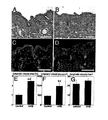
- Double immunofluorescence stains for the panvascular marker CD31 and for the lymphatic-specific hyaluronan receptor LYVE-1 revealed moderate enlargement of CD31+/LYVE-1- blood vessels ( Fig. 1C and D ), in agreement with previous studies ( Yano et al. (2005) Br. J. Dermatol. 152:115-21 ).
- LYVE-1-positive cutaneous lymphatic vessels were dramatically increased in size, with irregular shapes and sometimes incomplete endothelial cell lining of the vessel walls, whereas only normal, collapsed lymphatic vessels were found in sham-irradiated mice ( Fig. 1C and D ).
- VEGF-A Nagy et al. (2002) J. Exp. Med. 196:1497-506
- VEGF-C or VEGF-D Jussila et al. (2002) Physiol. Rev. 82:673-700
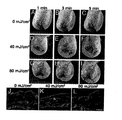
- Example 4 Acute UVB irradiation induces enlargement and hyperpermeability of cutaneous lymphatic vessels
- Example 5 Increased enlargement of lymphatic vessels in UVB-irradiated VEGF-A transgenic mice
- VEGF-A vascular endothelial growth factor-A
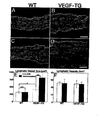
- epidermis-derived VEGF-A might directly promote the UVB-induced enlargement and leakiness of lymphatic vessels. Therefore, transgenic FVB mice that overexpress murine VEGF164 under control of the keratin 14 promoter ( Detmar et al. (1998) J. Invest. Dermatol. 111:1-6 ) and FVB wild type mice were exposed to a single dose of 40 mJ/cm 2 UVB irradiation or were sham-irradiated.
- Example 6 Systematic blockade of VEGF-A inhibits the UVB-induced enlargement of lymphatic vessels
Landscapes
- Health & Medical Sciences (AREA)
- Life Sciences & Earth Sciences (AREA)
- Engineering & Computer Science (AREA)
- Chemical & Material Sciences (AREA)
- General Health & Medical Sciences (AREA)
- Immunology (AREA)
- Medicinal Chemistry (AREA)
- Veterinary Medicine (AREA)
- Public Health (AREA)
- Animal Behavior & Ethology (AREA)
- Proteomics, Peptides & Aminoacids (AREA)
- Molecular Biology (AREA)
- Biomedical Technology (AREA)
- Bioinformatics & Cheminformatics (AREA)
- Pharmacology & Pharmacy (AREA)
- Hematology (AREA)
- Epidemiology (AREA)
- Urology & Nephrology (AREA)
- Cell Biology (AREA)
- Organic Chemistry (AREA)
- Gastroenterology & Hepatology (AREA)
- Zoology (AREA)
- Biochemistry (AREA)
- Pathology (AREA)
- General Physics & Mathematics (AREA)
- Biotechnology (AREA)
- Microbiology (AREA)
- Food Science & Technology (AREA)
- Physics & Mathematics (AREA)
- Analytical Chemistry (AREA)
- Dermatology (AREA)
- Chemical Kinetics & Catalysis (AREA)
- General Chemical & Material Sciences (AREA)
- Nuclear Medicine, Radiotherapy & Molecular Imaging (AREA)
- Birds (AREA)
- Vascular Medicine (AREA)
- Biophysics (AREA)
- Genetics & Genomics (AREA)
- Diabetes (AREA)
- Toxicology (AREA)
Applications Claiming Priority (2)
| Application Number | Priority Date | Filing Date | Title |
|---|---|---|---|
| US76032806P | 2006-01-18 | 2006-01-18 | |
| EP07717966A EP1984522B1 (en) | 2006-01-18 | 2007-01-18 | Methods of increasing lymphatic function |
Related Parent Applications (2)
| Application Number | Title | Priority Date | Filing Date |
|---|---|---|---|
| EP07717966.1 Division | 2007-01-18 | ||
| EP07717966A Division EP1984522B1 (en) | 2006-01-18 | 2007-01-18 | Methods of increasing lymphatic function |
Publications (3)
| Publication Number | Publication Date |
|---|---|
| EP2272497A2 EP2272497A2 (en) | 2011-01-12 |
| EP2272497A3 EP2272497A3 (en) | 2011-03-23 |
| EP2272497B1 true EP2272497B1 (en) | 2012-10-03 |
Family
ID=38191298
Family Applications (2)
| Application Number | Title | Priority Date | Filing Date |
|---|---|---|---|
| EP10172193A Active EP2272497B1 (en) | 2006-01-18 | 2007-01-18 | Methods of increasing lymphatic function |
| EP07717966A Active EP1984522B1 (en) | 2006-01-18 | 2007-01-18 | Methods of increasing lymphatic function |
Family Applications After (1)
| Application Number | Title | Priority Date | Filing Date |
|---|---|---|---|
| EP07717966A Active EP1984522B1 (en) | 2006-01-18 | 2007-01-18 | Methods of increasing lymphatic function |
Country Status (10)
| Country | Link |
|---|---|
| US (2) | US8367609B2 (enExample) |
| EP (2) | EP2272497B1 (enExample) |
| JP (2) | JP2009523807A (enExample) |
| KR (2) | KR101611322B1 (enExample) |
| CN (2) | CN103638522A (enExample) |
| AT (1) | ATE476986T1 (enExample) |
| DE (1) | DE602007008365D1 (enExample) |
| ES (2) | ES2396440T3 (enExample) |
| TW (1) | TWI428143B (enExample) |
| WO (1) | WO2007084599A2 (enExample) |
Families Citing this family (6)
| Publication number | Priority date | Publication date | Assignee | Title |
|---|---|---|---|---|
| WO2005107461A2 (en) * | 2004-04-07 | 2005-11-17 | The General Hospital Corporation | Modulating lymphatic function |
| MX2008002882A (es) | 2005-09-07 | 2008-03-27 | Tyco Healthcare | Aposito de herida con deposito de vacio. |
| US8580755B2 (en) * | 2008-02-19 | 2013-11-12 | University Of Rochester | Methods and compositions for treating inflammatory conditions |
| SG183562A1 (en) * | 2010-03-01 | 2012-10-30 | Mitomics Inc | Uv associated mtdna fusion transcripts and methods and uses thereof |
| US10405961B2 (en) | 2013-03-14 | 2019-09-10 | Cell and Molecular Tissue Engineering, LLC | Coated surgical mesh, and corresponding systems and methods |
| US10130288B2 (en) | 2013-03-14 | 2018-11-20 | Cell and Molecular Tissue Engineering, LLC | Coated sensors, and corresponding systems and methods |
Family Cites Families (47)
| Publication number | Priority date | Publication date | Assignee | Title |
|---|---|---|---|---|
| US8821A (en) * | 1852-03-23 | Machiheiiy toe | ||
| US4399216A (en) | 1980-02-25 | 1983-08-16 | The Trustees Of Columbia University | Processes for inserting DNA into eucaryotic cells and for producing proteinaceous materials |
| US5179017A (en) | 1980-02-25 | 1993-01-12 | The Trustees Of Columbia University In The City Of New York | Processes for inserting DNA into eucaryotic cells and for producing proteinaceous materials |
| US4634665A (en) | 1980-02-25 | 1987-01-06 | The Trustees Of Columbia University In The City Of New York | Processes for inserting DNA into eucaryotic cells and for producing proteinaceous materials |
| GB8607679D0 (en) | 1986-03-27 | 1986-04-30 | Winter G P | Recombinant dna product |
| US4987071A (en) | 1986-12-03 | 1991-01-22 | University Patents, Inc. | RNA ribozyme polymerases, dephosphorylases, restriction endoribonucleases and methods |
| US5116742A (en) | 1986-12-03 | 1992-05-26 | University Patents, Inc. | RNA ribozyme restriction endoribonucleases and methods |
| WO1988007089A1 (en) | 1987-03-18 | 1988-09-22 | Medical Research Council | Altered antibodies |
| IL162181A (en) | 1988-12-28 | 2006-04-10 | Pdl Biopharma Inc | A method of producing humanized immunoglubulin, and polynucleotides encoding the same |
| US5530101A (en) | 1988-12-28 | 1996-06-25 | Protein Design Labs, Inc. | Humanized immunoglobulins |
| US5789650A (en) | 1990-08-29 | 1998-08-04 | Genpharm International, Inc. | Transgenic non-human animals for producing heterologous antibodies |
| JP4124480B2 (ja) | 1991-06-14 | 2008-07-23 | ジェネンテック・インコーポレーテッド | 免疫グロブリン変異体 |
| US6824777B1 (en) | 1992-10-09 | 2004-11-30 | Licentia Ltd. | Flt4 (VEGFR-3) as a target for tumor imaging and anti-tumor therapy |
| DK0678122T3 (da) | 1993-01-12 | 2000-03-06 | Biogen Inc | Rekombinante anti-VLA4 antistofmolekyler |
| US5827690A (en) | 1993-12-20 | 1998-10-27 | Genzyme Transgenics Corporatiion | Transgenic production of antibodies in milk |
| GB9410533D0 (en) * | 1994-05-26 | 1994-07-13 | Lynxvale Ltd | In situ hybridisation and immuno-Chemical localisation of a growth factor |
| AU2466895A (en) | 1995-04-28 | 1996-11-18 | Abgenix, Inc. | Human antibodies derived from immunized xenomice |
| US6018098A (en) * | 1995-06-16 | 2000-01-25 | Thomas Jefferson University | In vivo and in vitro model of cutaneous photoaging |
| US7727761B2 (en) * | 1995-08-01 | 2010-06-01 | Vegenics Limited | Vascular endothelial growth factor C (VEGF-C) protein and gene, mutants thereof, and uses thereof |
| US6361946B1 (en) * | 1997-02-05 | 2002-03-26 | Licentia Ltd | Vascular endothelial growth factor C (VEGF-C) protein and gene, mutants thereof, and uses thereof |
| DE19541844C1 (de) | 1995-11-09 | 1997-07-24 | Gsf Forschungszentrum Umwelt | Verfahren zur Herstellung von menschlichen Antikörpern und deren Verwendung |
| US20030143204A1 (en) | 2001-07-27 | 2003-07-31 | Lewis David L. | Inhibition of RNA function by delivery of inhibitors to animal cells |
| CA2263890C (en) | 1996-08-23 | 2013-05-14 | Ludwig Institute For Cancer Research | Recombinant vascular endothelial cell growth factor d (vegf-d) |
| FR2752734B1 (fr) | 1996-09-02 | 1998-11-06 | Cird Galderma | Utilisation de retinoides pour la preparation d'un medicament destine a traiter les affections liees a une surexpression de vegf |
| US6337320B1 (en) * | 1996-10-11 | 2002-01-08 | Thione International, Inc. | Reparatives for ultraviolet radiation skin damage |
| DE69732304T2 (de) * | 1996-11-01 | 2005-06-02 | Ark Therapeutics Ltd. | Verwendung von vegf zur herstellung eines medikaments zur behandlung oder verhinderung der intimalen hyperplasie und verabreichungsgerät |
| CA2273194C (en) | 1996-12-03 | 2011-02-01 | Abgenix, Inc. | Transgenic mammals having human ig loci including plural vh and vk regions and antibodies produced therefrom |
| US6093740A (en) * | 1997-04-30 | 2000-07-25 | Eli Lilly And Company | Therapeutic treatment for skin disorders |
| JP2002532720A (ja) * | 1998-12-11 | 2002-10-02 | エーザイ株式会社 | 血管内皮成長因子(vegf)の使用 |
| CN1330555A (zh) * | 1998-12-21 | 2002-01-09 | 路德维格癌症研究所 | 抗截短的vegf-d的抗体及其应用 |
| US6453242B1 (en) | 1999-01-12 | 2002-09-17 | Sangamo Biosciences, Inc. | Selection of sites for targeting by zinc finger proteins and methods of designing zinc finger proteins to bind to preselected sites |
| US6534261B1 (en) | 1999-01-12 | 2003-03-18 | Sangamo Biosciences, Inc. | Regulation of endogenous gene expression in cells using zinc finger proteins |
| CN1433318A (zh) * | 1999-02-08 | 2003-07-30 | 人体基因组科学有限公司 | 血管内皮生长因子2 |
| WO2000058511A1 (en) * | 1999-03-26 | 2000-10-05 | Ludwig Institute For Cancer Research | Screening and therapy for lymphatic disorders involving the flt4 receptor tyrosine kinase (vegfr-3) |
| US20020119921A1 (en) * | 1999-03-31 | 2002-08-29 | Michael Streit | Thrombospondin-2 and uses thereof |
| US6867348B1 (en) * | 1999-12-16 | 2005-03-15 | Xenogen Corporation | Methods and compositions for screening for angiogenesis modulating compounds |
| US20020102260A1 (en) * | 2000-03-02 | 2002-08-01 | Marc Achen | Methods for treating neoplastic disease characterized by vascular endothelial growth factor D expression, for screening for neoplastic disease or metastatic risk, and for maintaining vascularization of tissue |
| JP2003526367A (ja) | 2000-03-16 | 2003-09-09 | ジェネティカ インコーポレイテッド | Rna干渉の方法とrna干渉組成物 |
| US8288322B2 (en) | 2000-04-17 | 2012-10-16 | Dyax Corp. | Methods of constructing libraries comprising displayed and/or expressed members of a diverse family of peptides, polypeptides or proteins and the novel libraries |
| US6511808B2 (en) | 2000-04-28 | 2003-01-28 | Sangamo Biosciences, Inc. | Methods for designing exogenous regulatory molecules |
| WO2002053202A1 (de) * | 2001-01-05 | 2002-07-11 | Gerd Hausdorf | Durch korrosion abbaubare metallische medizinische implante |
| TWI233361B (en) | 2001-04-13 | 2005-06-01 | Gen Hospital Corp | Methods of preventing UVB-induced skin damage |
| EP1572902B1 (en) | 2002-02-01 | 2014-06-11 | Life Technologies Corporation | HIGH POTENCY siRNAS FOR REDUCING THE EXPRESSION OF TARGET GENES |
| CU23178A1 (es) * | 2002-04-15 | 2006-09-22 | Ct Ingenieria Genetica Biotech | INMUNOTERAPIA ACTIVA ANTIANGIOGéNICA |
| WO2003093430A2 (en) | 2002-05-03 | 2003-11-13 | The Board Of Trustees Of The Leland Stanford Junior University | Methods and compositions for use in preparing sirnas |
| WO2004015062A2 (en) | 2002-08-12 | 2004-02-19 | New England Biolabs, Inc. | Methods and compositions relating to gene silencing |
| WO2005097187A2 (en) * | 2004-04-01 | 2005-10-20 | The General Hospital Corporation | Methods of preventing uvb-induced skin damage |
-
2007
- 2007-01-18 JP JP2008551385A patent/JP2009523807A/ja active Pending
- 2007-01-18 TW TW096101900A patent/TWI428143B/zh active
- 2007-01-18 KR KR1020157010985A patent/KR101611322B1/ko active Active
- 2007-01-18 ES ES10172193T patent/ES2396440T3/es active Active
- 2007-01-18 DE DE602007008365T patent/DE602007008365D1/de active Active
- 2007-01-18 WO PCT/US2007/001309 patent/WO2007084599A2/en not_active Ceased
- 2007-01-18 US US11/654,776 patent/US8367609B2/en active Active
- 2007-01-18 ES ES07717966T patent/ES2350269T3/es active Active
- 2007-01-18 CN CN201310303045.1A patent/CN103638522A/zh active Pending
- 2007-01-18 AT AT07717966T patent/ATE476986T1/de not_active IP Right Cessation
- 2007-01-18 EP EP10172193A patent/EP2272497B1/en active Active
- 2007-01-18 CN CNA2007800096055A patent/CN101405408A/zh active Pending
- 2007-01-18 KR KR1020087020003A patent/KR20080087164A/ko not_active Ceased
- 2007-01-18 EP EP07717966A patent/EP1984522B1/en active Active
-
2013
- 2013-01-11 US US13/739,533 patent/US9192652B2/en active Active
-
2015
- 2015-05-11 JP JP2015096792A patent/JP2015187119A/ja active Pending
Also Published As
| Publication number | Publication date |
|---|---|
| US9192652B2 (en) | 2015-11-24 |
| CN103638522A (zh) | 2014-03-19 |
| EP1984522A2 (en) | 2008-10-29 |
| CN101405408A (zh) | 2009-04-08 |
| EP1984522B1 (en) | 2010-08-11 |
| ES2350269T3 (es) | 2011-01-20 |
| EP2272497A2 (en) | 2011-01-12 |
| WO2007084599A3 (en) | 2007-12-27 |
| DE602007008365D1 (de) | 2010-09-23 |
| US20130280311A1 (en) | 2013-10-24 |
| US20070224137A1 (en) | 2007-09-27 |
| JP2009523807A (ja) | 2009-06-25 |
| KR101611322B1 (ko) | 2016-04-11 |
| KR20080087164A (ko) | 2008-09-30 |
| US8367609B2 (en) | 2013-02-05 |
| WO2007084599A2 (en) | 2007-07-26 |
| TWI428143B (zh) | 2014-03-01 |
| TW200738267A (en) | 2007-10-16 |
| JP2015187119A (ja) | 2015-10-29 |
| EP2272497A3 (en) | 2011-03-23 |
| KR20150053821A (ko) | 2015-05-18 |
| ES2396440T3 (es) | 2013-02-21 |
| ATE476986T1 (de) | 2010-08-15 |
Similar Documents
| Publication | Publication Date | Title |
|---|---|---|
| EP2272497B1 (en) | Methods of increasing lymphatic function | |
| EP2839843B1 (en) | VLA-1 antagonist for use in treating stroke | |
| US6712617B2 (en) | Methods of preventing UVB-induced skin damage | |
| US20150030611A1 (en) | Monitoring and Modulating HGF/HGFR Activity | |
| CA2973266A1 (en) | Lingo-1 antagonists and uses for treatment of demyelinating disorders | |
| US8114422B2 (en) | Methods and compositions for reducing skin damage | |
| CN117320749A (zh) | 用于治疗或预防重症肌无力的药物组合物 | |
| US20050281761A1 (en) | Methods of preventing UVB-induced skin damage | |
| JP2011506371A (ja) | 抗Fasリガンド抗体を含有する天疱瘡の治療薬 | |
| US20050276765A1 (en) | Preventing skin damage | |
| JP2025176134A (ja) | 中等度から重度の掻破痕を有するアトピー性皮膚炎の治療におけるネモリズマブ | |
| US20240165108A1 (en) | Novel use | |
| KR20170055745A (ko) | 발모 조절 중추 세포인 모유두 세포의 증식과 생존 및 세포 활성화 촉진 작용을 지닌 기능성 조절 항체 및 이의 용도 | |
| WO2021026064A2 (en) | Compositions and methods for treating serpin b13 disorders | |
| HK1207576B (en) | Vla-1 antagonist for use in treating stroke |
Legal Events
| Date | Code | Title | Description |
|---|---|---|---|
| PUAI | Public reference made under article 153(3) epc to a published international application that has entered the european phase |
Free format text: ORIGINAL CODE: 0009012 |
|
| 17P | Request for examination filed |
Effective date: 20100806 |
|
| AC | Divisional application: reference to earlier application |
Ref document number: 1984522 Country of ref document: EP Kind code of ref document: P |
|
| AK | Designated contracting states |
Kind code of ref document: A2 Designated state(s): AT BE BG CH CY CZ DE DK EE ES FI FR GB GR HU IE IS IT LI LT LU LV MC NL PL PT RO SE SI SK TR |
|
| PUAL | Search report despatched |
Free format text: ORIGINAL CODE: 0009013 |
|
| RIC1 | Information provided on ipc code assigned before grant |
Ipc: A61K 38/18 20060101ALI20110207BHEP Ipc: A61Q 19/00 20060101ALI20110207BHEP Ipc: A61P 17/16 20060101ALI20110207BHEP Ipc: C07K 16/22 20060101ALN20101124BHEP Ipc: A61K 39/395 20060101ALI20110207BHEP Ipc: A61K 8/64 20060101AFI20101124BHEP |
|
| AK | Designated contracting states |
Kind code of ref document: A3 Designated state(s): AT BE BG CH CY CZ DE DK EE ES FI FR GB GR HU IE IS IT LI LT LU LV MC NL PL PT RO SE SI SK TR |
|
| 17Q | First examination report despatched |
Effective date: 20111013 |
|
| RIC1 | Information provided on ipc code assigned before grant |
Ipc: A61K 38/18 20060101ALI20120228BHEP Ipc: C07K 16/22 20060101ALN20120228BHEP Ipc: A61P 17/16 20060101ALI20120228BHEP Ipc: A61Q 19/00 20060101ALI20120228BHEP Ipc: A61K 39/395 20060101ALN20120228BHEP Ipc: G01N 33/68 20060101ALN20120228BHEP Ipc: A61K 8/64 20060101AFI20120228BHEP |
|
| GRAP | Despatch of communication of intention to grant a patent |
Free format text: ORIGINAL CODE: EPIDOSNIGR1 |
|
| RTI1 | Title (correction) |
Free format text: METHODS OF INCREASING LYMPHATIC FUNCTION |
|
| GRAS | Grant fee paid |
Free format text: ORIGINAL CODE: EPIDOSNIGR3 |
|
| GRAA | (expected) grant |
Free format text: ORIGINAL CODE: 0009210 |
|
| AC | Divisional application: reference to earlier application |
Ref document number: 1984522 Country of ref document: EP Kind code of ref document: P |
|
| AK | Designated contracting states |
Kind code of ref document: B1 Designated state(s): AT BE BG CH CY CZ DE DK EE ES FI FR GB GR HU IE IS IT LI LT LU LV MC NL PL PT RO SE SI SK TR |
|
| REG | Reference to a national code |
Ref country code: GB Ref legal event code: FG4D |
|
| REG | Reference to a national code |
Ref country code: AT Ref legal event code: REF Ref document number: 577637 Country of ref document: AT Kind code of ref document: T Effective date: 20121015 Ref country code: CH Ref legal event code: EP |
|
| REG | Reference to a national code |
Ref country code: IE Ref legal event code: FG4D |
|
| REG | Reference to a national code |
Ref country code: DE Ref legal event code: R096 Ref document number: 602007025945 Country of ref document: DE Effective date: 20121129 |
|
| REG | Reference to a national code |
Ref country code: AT Ref legal event code: MK05 Ref document number: 577637 Country of ref document: AT Kind code of ref document: T Effective date: 20121003 |
|
| REG | Reference to a national code |
Ref country code: ES Ref legal event code: FG2A Ref document number: 2396440 Country of ref document: ES Kind code of ref document: T3 Effective date: 20130221 |
|
| PG25 | Lapsed in a contracting state [announced via postgrant information from national office to epo] |
Ref country code: SI Free format text: LAPSE BECAUSE OF FAILURE TO SUBMIT A TRANSLATION OF THE DESCRIPTION OR TO PAY THE FEE WITHIN THE PRESCRIBED TIME-LIMIT Effective date: 20121003 |
|
| REG | Reference to a national code |
Ref country code: NL Ref legal event code: VDEP Effective date: 20121003 |
|
| REG | Reference to a national code |
Ref country code: LT Ref legal event code: MG4D |
|
| PG25 | Lapsed in a contracting state [announced via postgrant information from national office to epo] |
Ref country code: SE Free format text: LAPSE BECAUSE OF FAILURE TO SUBMIT A TRANSLATION OF THE DESCRIPTION OR TO PAY THE FEE WITHIN THE PRESCRIBED TIME-LIMIT Effective date: 20121003 Ref country code: NL Free format text: LAPSE BECAUSE OF FAILURE TO SUBMIT A TRANSLATION OF THE DESCRIPTION OR TO PAY THE FEE WITHIN THE PRESCRIBED TIME-LIMIT Effective date: 20121003 Ref country code: IS Free format text: LAPSE BECAUSE OF FAILURE TO SUBMIT A TRANSLATION OF THE DESCRIPTION OR TO PAY THE FEE WITHIN THE PRESCRIBED TIME-LIMIT Effective date: 20130203 Ref country code: FI Free format text: LAPSE BECAUSE OF FAILURE TO SUBMIT A TRANSLATION OF THE DESCRIPTION OR TO PAY THE FEE WITHIN THE PRESCRIBED TIME-LIMIT Effective date: 20121003 Ref country code: LT Free format text: LAPSE BECAUSE OF FAILURE TO SUBMIT A TRANSLATION OF THE DESCRIPTION OR TO PAY THE FEE WITHIN THE PRESCRIBED TIME-LIMIT Effective date: 20121003 |
|
| PG25 | Lapsed in a contracting state [announced via postgrant information from national office to epo] |
Ref country code: BE Free format text: LAPSE BECAUSE OF FAILURE TO SUBMIT A TRANSLATION OF THE DESCRIPTION OR TO PAY THE FEE WITHIN THE PRESCRIBED TIME-LIMIT Effective date: 20121003 Ref country code: PT Free format text: LAPSE BECAUSE OF FAILURE TO SUBMIT A TRANSLATION OF THE DESCRIPTION OR TO PAY THE FEE WITHIN THE PRESCRIBED TIME-LIMIT Effective date: 20130204 Ref country code: LV Free format text: LAPSE BECAUSE OF FAILURE TO SUBMIT A TRANSLATION OF THE DESCRIPTION OR TO PAY THE FEE WITHIN THE PRESCRIBED TIME-LIMIT Effective date: 20121003 Ref country code: GR Free format text: LAPSE BECAUSE OF FAILURE TO SUBMIT A TRANSLATION OF THE DESCRIPTION OR TO PAY THE FEE WITHIN THE PRESCRIBED TIME-LIMIT Effective date: 20130104 Ref country code: PL Free format text: LAPSE BECAUSE OF FAILURE TO SUBMIT A TRANSLATION OF THE DESCRIPTION OR TO PAY THE FEE WITHIN THE PRESCRIBED TIME-LIMIT Effective date: 20121003 |
|
| PG25 | Lapsed in a contracting state [announced via postgrant information from national office to epo] |
Ref country code: AT Free format text: LAPSE BECAUSE OF FAILURE TO SUBMIT A TRANSLATION OF THE DESCRIPTION OR TO PAY THE FEE WITHIN THE PRESCRIBED TIME-LIMIT Effective date: 20121003 |
|
| PG25 | Lapsed in a contracting state [announced via postgrant information from national office to epo] |
Ref country code: DK Free format text: LAPSE BECAUSE OF FAILURE TO SUBMIT A TRANSLATION OF THE DESCRIPTION OR TO PAY THE FEE WITHIN THE PRESCRIBED TIME-LIMIT Effective date: 20121003 Ref country code: BG Free format text: LAPSE BECAUSE OF FAILURE TO SUBMIT A TRANSLATION OF THE DESCRIPTION OR TO PAY THE FEE WITHIN THE PRESCRIBED TIME-LIMIT Effective date: 20130103 Ref country code: EE Free format text: LAPSE BECAUSE OF FAILURE TO SUBMIT A TRANSLATION OF THE DESCRIPTION OR TO PAY THE FEE WITHIN THE PRESCRIBED TIME-LIMIT Effective date: 20121003 Ref country code: CZ Free format text: LAPSE BECAUSE OF FAILURE TO SUBMIT A TRANSLATION OF THE DESCRIPTION OR TO PAY THE FEE WITHIN THE PRESCRIBED TIME-LIMIT Effective date: 20121003 Ref country code: SK Free format text: LAPSE BECAUSE OF FAILURE TO SUBMIT A TRANSLATION OF THE DESCRIPTION OR TO PAY THE FEE WITHIN THE PRESCRIBED TIME-LIMIT Effective date: 20121003 |
|
| PLBE | No opposition filed within time limit |
Free format text: ORIGINAL CODE: 0009261 |
|
| STAA | Information on the status of an ep patent application or granted ep patent |
Free format text: STATUS: NO OPPOSITION FILED WITHIN TIME LIMIT |
|
| PG25 | Lapsed in a contracting state [announced via postgrant information from national office to epo] |
Ref country code: RO Free format text: LAPSE BECAUSE OF FAILURE TO SUBMIT A TRANSLATION OF THE DESCRIPTION OR TO PAY THE FEE WITHIN THE PRESCRIBED TIME-LIMIT Effective date: 20121003 Ref country code: MC Free format text: LAPSE BECAUSE OF NON-PAYMENT OF DUE FEES Effective date: 20130131 |
|
| REG | Reference to a national code |
Ref country code: CH Ref legal event code: PL |
|
| 26N | No opposition filed |
Effective date: 20130704 |
|
| REG | Reference to a national code |
Ref country code: IE Ref legal event code: MM4A |
|
| PG25 | Lapsed in a contracting state [announced via postgrant information from national office to epo] |
Ref country code: CH Free format text: LAPSE BECAUSE OF NON-PAYMENT OF DUE FEES Effective date: 20130131 Ref country code: LI Free format text: LAPSE BECAUSE OF NON-PAYMENT OF DUE FEES Effective date: 20130131 |
|
| REG | Reference to a national code |
Ref country code: DE Ref legal event code: R097 Ref document number: 602007025945 Country of ref document: DE Effective date: 20130704 |
|
| PG25 | Lapsed in a contracting state [announced via postgrant information from national office to epo] |
Ref country code: CY Free format text: LAPSE BECAUSE OF FAILURE TO SUBMIT A TRANSLATION OF THE DESCRIPTION OR TO PAY THE FEE WITHIN THE PRESCRIBED TIME-LIMIT Effective date: 20121003 |
|
| PG25 | Lapsed in a contracting state [announced via postgrant information from national office to epo] |
Ref country code: IE Free format text: LAPSE BECAUSE OF NON-PAYMENT OF DUE FEES Effective date: 20130118 |
|
| PG25 | Lapsed in a contracting state [announced via postgrant information from national office to epo] |
Ref country code: TR Free format text: LAPSE BECAUSE OF FAILURE TO SUBMIT A TRANSLATION OF THE DESCRIPTION OR TO PAY THE FEE WITHIN THE PRESCRIBED TIME-LIMIT Effective date: 20121003 |
|
| PG25 | Lapsed in a contracting state [announced via postgrant information from national office to epo] |
Ref country code: LU Free format text: LAPSE BECAUSE OF NON-PAYMENT OF DUE FEES Effective date: 20130118 Ref country code: HU Free format text: LAPSE BECAUSE OF FAILURE TO SUBMIT A TRANSLATION OF THE DESCRIPTION OR TO PAY THE FEE WITHIN THE PRESCRIBED TIME-LIMIT; INVALID AB INITIO Effective date: 20070118 |
|
| REG | Reference to a national code |
Ref country code: FR Ref legal event code: PLFP Year of fee payment: 10 |
|
| REG | Reference to a national code |
Ref country code: FR Ref legal event code: PLFP Year of fee payment: 11 |
|
| REG | Reference to a national code |
Ref country code: FR Ref legal event code: PLFP Year of fee payment: 12 |
|
| P01 | Opt-out of the competence of the unified patent court (upc) registered |
Effective date: 20230530 |
|
| PGFP | Annual fee paid to national office [announced via postgrant information from national office to epo] |
Ref country code: DE Payment date: 20241210 Year of fee payment: 19 |
|
| PGFP | Annual fee paid to national office [announced via postgrant information from national office to epo] |
Ref country code: ES Payment date: 20250210 Year of fee payment: 19 |
|
| PGFP | Annual fee paid to national office [announced via postgrant information from national office to epo] |
Ref country code: IT Payment date: 20241210 Year of fee payment: 19 |
|
| PGFP | Annual fee paid to national office [announced via postgrant information from national office to epo] |
Ref country code: GB Payment date: 20251211 Year of fee payment: 20 |
|
| PGFP | Annual fee paid to national office [announced via postgrant information from national office to epo] |
Ref country code: FR Payment date: 20251222 Year of fee payment: 20 |