EP2268800B1 - Neu identifiziertes humanes rhinovirus des typs hrv-c und verfahren und kits zum nachweis des typs hrv-cs - Google Patents
Neu identifiziertes humanes rhinovirus des typs hrv-c und verfahren und kits zum nachweis des typs hrv-cs Download PDFInfo
- Publication number
- EP2268800B1 EP2268800B1 EP09732607.8A EP09732607A EP2268800B1 EP 2268800 B1 EP2268800 B1 EP 2268800B1 EP 09732607 A EP09732607 A EP 09732607A EP 2268800 B1 EP2268800 B1 EP 2268800B1
- Authority
- EP
- European Patent Office
- Prior art keywords
- hrv
- seq
- sequence
- sample
- strain
- Prior art date
- Legal status (The legal status is an assumption and is not a legal conclusion. Google has not performed a legal analysis and makes no representation as to the accuracy of the status listed.)
- Active
Links
Images


Classifications
-
- C—CHEMISTRY; METALLURGY
- C12—BIOCHEMISTRY; BEER; SPIRITS; WINE; VINEGAR; MICROBIOLOGY; ENZYMOLOGY; MUTATION OR GENETIC ENGINEERING
- C12N—MICROORGANISMS OR ENZYMES; COMPOSITIONS THEREOF; PROPAGATING, PRESERVING, OR MAINTAINING MICROORGANISMS; MUTATION OR GENETIC ENGINEERING; CULTURE MEDIA
- C12N7/00—Viruses; Bacteriophages; Compositions thereof; Preparation or purification thereof
-
- C—CHEMISTRY; METALLURGY
- C07—ORGANIC CHEMISTRY
- C07K—PEPTIDES
- C07K14/00—Peptides having more than 20 amino acids; Gastrins; Somatostatins; Melanotropins; Derivatives thereof
- C07K14/005—Peptides having more than 20 amino acids; Gastrins; Somatostatins; Melanotropins; Derivatives thereof from viruses
-
- C—CHEMISTRY; METALLURGY
- C12—BIOCHEMISTRY; BEER; SPIRITS; WINE; VINEGAR; MICROBIOLOGY; ENZYMOLOGY; MUTATION OR GENETIC ENGINEERING
- C12Q—MEASURING OR TESTING PROCESSES INVOLVING ENZYMES, NUCLEIC ACIDS OR MICROORGANISMS; COMPOSITIONS OR TEST PAPERS THEREFOR; PROCESSES OF PREPARING SUCH COMPOSITIONS; CONDITION-RESPONSIVE CONTROL IN MICROBIOLOGICAL OR ENZYMOLOGICAL PROCESSES
- C12Q1/00—Measuring or testing processes involving enzymes, nucleic acids or microorganisms; Compositions therefor; Processes of preparing such compositions
- C12Q1/70—Measuring or testing processes involving enzymes, nucleic acids or microorganisms; Compositions therefor; Processes of preparing such compositions involving virus or bacteriophage
- C12Q1/701—Specific hybridization probes
-
- G—PHYSICS
- G01—MEASURING; TESTING
- G01N—INVESTIGATING OR ANALYSING MATERIALS BY DETERMINING THEIR CHEMICAL OR PHYSICAL PROPERTIES
- G01N33/00—Investigating or analysing materials by specific methods not covered by groups G01N1/00 - G01N31/00
- G01N33/48—Biological material, e.g. blood, urine; Haemocytometers
- G01N33/50—Chemical analysis of biological material, e.g. blood, urine; Testing involving biospecific ligand binding methods; Immunological testing
- G01N33/53—Immunoassay; Biospecific binding assay; Materials therefor
- G01N33/569—Immunoassay; Biospecific binding assay; Materials therefor for microorganisms, e.g. protozoa, bacteria, viruses
-
- G—PHYSICS
- G01—MEASURING; TESTING
- G01N—INVESTIGATING OR ANALYSING MATERIALS BY DETERMINING THEIR CHEMICAL OR PHYSICAL PROPERTIES
- G01N33/00—Investigating or analysing materials by specific methods not covered by groups G01N1/00 - G01N31/00
- G01N33/48—Biological material, e.g. blood, urine; Haemocytometers
- G01N33/50—Chemical analysis of biological material, e.g. blood, urine; Testing involving biospecific ligand binding methods; Immunological testing
- G01N33/53—Immunoassay; Biospecific binding assay; Materials therefor
- G01N33/569—Immunoassay; Biospecific binding assay; Materials therefor for microorganisms, e.g. protozoa, bacteria, viruses
- G01N33/56983—Viruses
-
- C—CHEMISTRY; METALLURGY
- C12—BIOCHEMISTRY; BEER; SPIRITS; WINE; VINEGAR; MICROBIOLOGY; ENZYMOLOGY; MUTATION OR GENETIC ENGINEERING
- C12N—MICROORGANISMS OR ENZYMES; COMPOSITIONS THEREOF; PROPAGATING, PRESERVING, OR MAINTAINING MICROORGANISMS; MUTATION OR GENETIC ENGINEERING; CULTURE MEDIA
- C12N2770/00—MICROORGANISMS OR ENZYMES; COMPOSITIONS THEREOF; PROPAGATING, PRESERVING, OR MAINTAINING MICROORGANISMS; MUTATION OR GENETIC ENGINEERING; CULTURE MEDIA ssRNA viruses positive-sense
-
- C—CHEMISTRY; METALLURGY
- C12—BIOCHEMISTRY; BEER; SPIRITS; WINE; VINEGAR; MICROBIOLOGY; ENZYMOLOGY; MUTATION OR GENETIC ENGINEERING
- C12N—MICROORGANISMS OR ENZYMES; COMPOSITIONS THEREOF; PROPAGATING, PRESERVING, OR MAINTAINING MICROORGANISMS; MUTATION OR GENETIC ENGINEERING; CULTURE MEDIA
- C12N2770/00—MICROORGANISMS OR ENZYMES; COMPOSITIONS THEREOF; PROPAGATING, PRESERVING, OR MAINTAINING MICROORGANISMS; MUTATION OR GENETIC ENGINEERING; CULTURE MEDIA ssRNA viruses positive-sense
- C12N2770/00011—Details
- C12N2770/00021—Viruses as such, e.g. new isolates, mutants or their genomic sequences
-
- C—CHEMISTRY; METALLURGY
- C12—BIOCHEMISTRY; BEER; SPIRITS; WINE; VINEGAR; MICROBIOLOGY; ENZYMOLOGY; MUTATION OR GENETIC ENGINEERING
- C12N—MICROORGANISMS OR ENZYMES; COMPOSITIONS THEREOF; PROPAGATING, PRESERVING, OR MAINTAINING MICROORGANISMS; MUTATION OR GENETIC ENGINEERING; CULTURE MEDIA
- C12N2770/00—MICROORGANISMS OR ENZYMES; COMPOSITIONS THEREOF; PROPAGATING, PRESERVING, OR MAINTAINING MICROORGANISMS; MUTATION OR GENETIC ENGINEERING; CULTURE MEDIA ssRNA viruses positive-sense
- C12N2770/00011—Details
- C12N2770/32011—Picornaviridae
-
- C—CHEMISTRY; METALLURGY
- C12—BIOCHEMISTRY; BEER; SPIRITS; WINE; VINEGAR; MICROBIOLOGY; ENZYMOLOGY; MUTATION OR GENETIC ENGINEERING
- C12N—MICROORGANISMS OR ENZYMES; COMPOSITIONS THEREOF; PROPAGATING, PRESERVING, OR MAINTAINING MICROORGANISMS; MUTATION OR GENETIC ENGINEERING; CULTURE MEDIA
- C12N2770/00—MICROORGANISMS OR ENZYMES; COMPOSITIONS THEREOF; PROPAGATING, PRESERVING, OR MAINTAINING MICROORGANISMS; MUTATION OR GENETIC ENGINEERING; CULTURE MEDIA ssRNA viruses positive-sense
- C12N2770/00011—Details
- C12N2770/32011—Picornaviridae
- C12N2770/32711—Rhinovirus
-
- C—CHEMISTRY; METALLURGY
- C12—BIOCHEMISTRY; BEER; SPIRITS; WINE; VINEGAR; MICROBIOLOGY; ENZYMOLOGY; MUTATION OR GENETIC ENGINEERING
- C12N—MICROORGANISMS OR ENZYMES; COMPOSITIONS THEREOF; PROPAGATING, PRESERVING, OR MAINTAINING MICROORGANISMS; MUTATION OR GENETIC ENGINEERING; CULTURE MEDIA
- C12N2770/00—MICROORGANISMS OR ENZYMES; COMPOSITIONS THEREOF; PROPAGATING, PRESERVING, OR MAINTAINING MICROORGANISMS; MUTATION OR GENETIC ENGINEERING; CULTURE MEDIA ssRNA viruses positive-sense
- C12N2770/00011—Details
- C12N2770/32011—Picornaviridae
- C12N2770/32711—Rhinovirus
- C12N2770/32721—Viruses as such, e.g. new isolates, mutants or their genomic sequences
-
- C—CHEMISTRY; METALLURGY
- C12—BIOCHEMISTRY; BEER; SPIRITS; WINE; VINEGAR; MICROBIOLOGY; ENZYMOLOGY; MUTATION OR GENETIC ENGINEERING
- C12N—MICROORGANISMS OR ENZYMES; COMPOSITIONS THEREOF; PROPAGATING, PRESERVING, OR MAINTAINING MICROORGANISMS; MUTATION OR GENETIC ENGINEERING; CULTURE MEDIA
- C12N2770/00—MICROORGANISMS OR ENZYMES; COMPOSITIONS THEREOF; PROPAGATING, PRESERVING, OR MAINTAINING MICROORGANISMS; MUTATION OR GENETIC ENGINEERING; CULTURE MEDIA ssRNA viruses positive-sense
- C12N2770/00011—Details
- C12N2770/32011—Picornaviridae
- C12N2770/32711—Rhinovirus
- C12N2770/32722—New viral proteins or individual genes, new structural or functional aspects of known viral proteins or genes
Definitions
- the present invention generally relates to the identification and detection of human rhinoviruses. More particularly, the present invention relates to the characterization of a new strain of human rhinovirus of genetic group C (HRV-C) as well as methods and kits for detecting the presence of HRV-C, for instance, by PCR amplification.
- HRV-C genetic group C
- HRVs Human rhinoviruses
- Rhinoviruses are small RNA, non-enveloped, viruses belonging to the family picornaviridae . Until now, over 100 serotypes of Rhinoviruses have been identified by specific antisera in a collaborative program supported by the World Health Organization (WHO). Rhinoviruses are divided into major (90%) and minor (10%) groups, according to their cellular receptor usage. An alternative classification, dividing the viruses into group A and B, based on sensitivity to antiviral compounds and correlating with sequence similarities and pathogenicity, has also been proposed [1] .
- Kistler et al [3] used virochip to test samples from recruited adults who had cold symptoms from the fall of 2001 to December of 2004. They found 5 divergent HRVs named as HRV'X', which possessed slightly more sequence similarity to HRV-A than to HRV-B reference serotypes. None of the divergent HRV'X' isolates were culturable.
- Lee et al [4] used Respiratory Multicode Assay to analyze nasal lavage samples of infants. They found 5 distinct strains and proposed that they represent a new HRV genetic group (HRV-C). None of the samples containing the new HRV strains produced cytopathic effect (CPE) in standard WI-38 or MRC-5 cell cultures used for the detection and isolation of HRV.
- CPE cytopathic effect
- the present invention is based on the discovery of a new Rhinovirus strain of HRV-C, named BCH019, which is believed to be associated with severe respiratory illness.
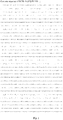
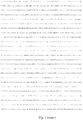
- BCH019 The genomic sequence of BCH019 is set out in Figure 1 and SEQ ID NO: 1.
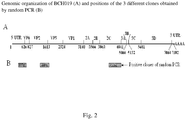
- the organization of the genome of BCH019 is depicted in Figure 2 .
- the present invention relates to an isolated HRV-C Rhinovirus having a RNA genome, said genome comprising a polynucleotide sequence selected from the group consisting of:
- the disclosure also relates to nucleic acid sequences of said virus as well as the use of the above polynucleotide or fragments thereof in designing primers or probes for detecting HRV-C Rhinovirus in a sample.
- the present invention also concerns nucleic fragments comprising or consisting of at least 100, 150 or 200 consecutive nucleotides, belonging to a nucleotide sequence starting at nucleotide 627 and ending at nucleotide 7064 of SEQ ID NO: 1 and especially the following fragments respectively identified in SEQ ID NO: 22 (VP2 nt 828-1613 inclusive) and SEQ ID NO: 23 (PCR product nt 556-886 inclusive) and the variants which exhibit at least 85% identity, preferably at least 90 or 95% identity, respectively or their complementary sequences and SEQ ID NO: 21 (VP4 nt 627-827 inclusive) and variants which exhibit at least 90% identity with SEQ ID NO: 21 or their complementary sequences.
- the present invention provides a pair of primers for amplifying a strain of HRV-C in a sample by PCR amplification, wherein at least one primer comprises a nucleotide sequence which consists of 18 to 30 consecutive nucleotides, especially 18 to 25 consecutive nucleotides, within the region from about nucleotide 556 to about nucleotide 886 of SEQ ID NO: 1.
- the pair of primers comprises a forward primer 556F as set out in SEQ ID NO: 6 and a reverse primer 886R as set out in SEQ ID NO: 7.
- the present invention provides a kit for PCR amplifying a strain of HRV-C in a sample comprising at least one primer pair of the present invention as mentioned above.
- the present invention provides a method for detecting the presence of a strain of HRV-C in a sample, comprising the steps of:
- the sample is selected from the group consisting of human oral and nasal samples (obtained from nasal lavage, nasopharyngeal aspirate, bronchial lavage, sputum, oral and nasal swabs) and viral culture supernatants.
- nucleotide sequences listed as SEQ ID Nos: 1, 21, 22 and 23 correspond to cDNA obtained from the reverse transcription of genomic RNA.
- the invention concerns:
- Proteins and polypeptides can be produced by recombinant technology or chemical synthesis.
- Antibodies can be polyclonal antibodies, monoclonal antibodies, recombinant antibodies or fragments thereof, such as Fab, Fab', Fab'2, scFv, Fv.
- the present invention is based on the discovery of a new Rhinovirus strain, named BCH019, which is believed to be associated with severe respiratory illness.
- BCH019 The full genomic sequence of BCH019 is set out in Figure 1 and SEQ ID NO: 1. Genomic characterization showed that the full genome of BCH019 spans 7121nt, including a 5'-UTR (626nt), a polyprotein coding sequence (6438nt), a 3'-UTR (38nt), and a polyA tail ( Fig. 2 ).
- the organization of the coding region of the precursor polyprotein in BCH019 is same as that in all the known HRVs, which has a highly conserved translation initiation site (encoding MGAQVS) and regions corresponding to the capsid genes VP4, VP2, VP3, VP1 and non-structural genes 2A, 2B, 2C, 3A, 3B, 3C and 3D.
- VP1 is the major protein to form the canyon and the drug-binding pocket of the capsid.
- the canyon is the receptor-binding site.
- VP4 gene is the most conservative region in all the structure protein of HRVs.
- BCH019 was the unique microorganism detected in the nasopharyngeal aspirate sample from a patient (sample number BCH019) clinically diagnosed as bronchopneumonia suggests a close correlation between BCH019 and the symptoms of acute lower respiratory tract infection developed in this patient.
- the present invention provides primers, kits, and methods for specifically amplifying a strain of HRV-C in a sample by PCR amplification.
- the primers of the invention are designed targeting the region around the VP4 gene of BCH019 and at least one primer of the invention comprises a nucleotide sequence corresponding to 18-25 consecutive nucleotides within the region from about 70 bp 5'-upstream of VP4 gene to about 60 bp 3'-downstream of VP4 gene of the genomic sequence of BCH019, i.e., from about nucleotide 556 to about nucleotide 886 of SEQ ID NO: 1.
- the region to be amplified by a primer pair of the invention includes a region about 70 bp 5'-upstream of VP4 gene (the 3'-terminal region of the 5'UTR, which is conservative for all the rhinovirus), the whole VP4 gene, and a region about 60 bp 3'-downstream of VP4 gene (the 5'-terminal region of the VP2 gene, which is conservative only for HRV-C).
- the forward primer is designed according to the sequence of the 3'-terminal region of the 5'UTR, which is conservative for all the rhinovirus
- the reverse primer is designed according to the sequence of the 5'-terminal region of the VP2 gene, which is conservative only for HRV-C.
- the designing of a primer for amplifying a given nucleotide sequence is within the reach of those skilled in the art.
- Softwares to assist the designing of a primer are available in the art, for example, Vector NTI Advance 10 (Invitrogen).
- Factors to be taken into account in the designing of primers include the length, Tm, avoiding of formation of secondary structure, etc, and are also known for those in the art.
- the forward primer is 556F (5'-ACTACTTTGGGTGTCCGTGTTTC-3', SEQ ID NO: 6)
- the reverse primer is 886R (5'-TTTCCRATAGTGATTTGCTTKAGCC-3', SEQ ID NO: 7).
- the region covered by this primer pair is from 70 bp 5'-upstream of VP4 gene to 59 bp 3'-downstream of VP4 gene in genome of BCH019, i.e., from nucleotide 556 to nucleotide 886 of SEQ ID NO: 1.
- the primer pair of 556F and 886R was used to screen clinical samples and the results showed that some of the samples screened also contained rhinoviruses which are belong to HRV Clade C.
- the present invention provides a pair of primers for amplifying a strain of HRV-C in a sample by PCR amplification, wherein the pair of primers comprises a forward primer 556F as set out in SEQ ID NO: 6 and a reverse primer 886R as set out in SEQ ID NO: 7.
- the present invention further provides a kit for amplifying a strain of HRV-C in a sample comprising at least one primer pair of the present invention as mentioned above.
- the present invention provides a method for detecting the presence of a strain of HRV-C in a sample from a mammal, comprising the steps of:
- the sample that can be tested according to the present invention can be nasal lavage, nasopharyngeal aspirate, bronchial lavage, or sputum.
- This new Rhinovirus strain was identified from nasopharyngeal aspirate sample obtained from a 2 months old male infant (sample number BCH019) clinically diagnosed as bronchopneumonia.
- the patient was negative for anti-IgM against CMV, EBV, HSV and CoX.
- An exclusion test of the nasopharyngeal aspirate sample gave negative results for known respiratory tract viruses (including human parainfluenza viruses 1-4, influenza viruses, respiratory syncytial viruse, human enteroviruses, human rhinoviruses human coronaviruses 229E, NL63, HKU1 and OC43, human metapneumovirus human adenoviruses and bocavirus).
- respiratory tract viruses including human parainfluenza viruses 1-4, influenza viruses, respiratory syncytial viruse, human enteroviruses, human rhinoviruses human coronaviruses 229E, NL63, HKU1 and OC43, human metapneu
- Random PCR can be used to detect both DNA and RNA viral genomes [7] .
- 3 different viruses have been identified using random PCR: human bocavirus [8] , human KI polyomavirus [9] and human WU polyomavirus [10] .
- the first amplification step of Random PCR uses a first random primer with a 5' end unique nucleotide universal sequence, containing restriction enzyme sites for subsequent cloning, followed by a degenerate hexa- or heptamer sequence at the 3' end.
- a subsequent PCR amplification step is carried out with a second, specific primer complementary to the 5' universal region of the first random primer.
- Nucleic acid was extracted by using the NucliSens basic kit extraction module (bioMérieux). 10 ⁇ l of nucleic acid was mixed with 0.4 ⁇ l of universal primer FR26RV-N (5'-GCCGGAGCTCTGCAGATATCNNNNNN-3', SEQ ID NO: 2) at 50 ⁇ M and 1.7 ⁇ l sterile deionized water. The samples were incubated at 65°C for 5 min., and then chilled on ice.
- the 50 ⁇ l reaction mixture consisted of 5 ⁇ l 10 ⁇ ExTaq buffer (Mg 2+ plus) (TaKaRa), each dNTP at 0.2 mM (TaKaRa), 40 pmol of the specific primer FR20RV (5'-GCCGGAGCTCTGCAGATATC-3', SEQ ID NO: 3) (which is specific for the universal primer FR26RV-N), and 2.5 units of ExTaq (TaKaRa). After 10 min at 94°C, 40 cycles of amplification (94°C for 1 min, 65°C for 1 min, and 72°C for 2 min.) were performed in GeneAmp® PCR System 9700 (Applied Biosystem).
- the amplification products obtained as above were purified by using a QIAquick PCR Purification Kit (Qiagen). Products were then separated on an agarose gel and fragments between ⁇ 500 and 2000 bp in length were excised and extracted by QIAquick Gel Extraction Kit (Qiagen). Purified PCR products were ligated to the pMD18-T vector (TaKaRa) and introduced into chemically competent E. coli DH10B (Invitrogen). Bacteria were cultured on ampicillin-X-Gal (5-bromo-4-chloro-3-indolyl- ⁇ -D-galactopyranoside) agar plates, allowing blue-white screening. White colonies were picked and cultured for 2 h in 1 ml of Luria-Bertani broth plus ampicillin.
- the 3 initial different clones represented 3 different fragments of a rhinovirus genome ( Fig. 2B ).
- the first was 307 bp covering the region of 5'UTR/VP4, the second was 494bp covering the region of VP2/VP3, and the third was 635 bp covering the region of 2C/3A.
- Series PCR primers were designed, with which most of genomic fragments were obtained step by step.
- the RACE system of Invitrogen was used to obtain the 5' end and 3' end terminal sequences of the genome.
- This new virus is identified as a rhinovirus and named BCH019, the entire genomic sequence of which is set out in Figure 1 and SEQ ID NO: 1.
- the genome of BCH019 spans 7121nt, including 5'UTR (626 nt), polyprotein coding sequence (6438 nt), 3'UTR (38 nt) and polyA tail ( Fig. 2A ).
- the organization of precursor polyprotein is same as all the HRV, which has a highly conserved translation initiation site (MGAQVS) and regions corresponding to the sequences encoding structural proteins VP4, VP2, VP3, VP1 and non structural proteins 2A, 2B, 2C, 3A, 3B, 3C and 3D ( Fig. 2A ).
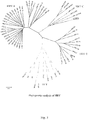
- Phylogenetic tree was constructed based on alignments of BCH019 with all the complete sequence of HRV serotypes (Human rhinovirus sp. isolate NAT045 [F077280], Human rhinovirus sp. isolate NAT001 [EF077279], Human rhinovirus QPM [EF186077], Human rhinovirus C strain 026 [EF582387], Human rhinovirus C strain 025 [EF582386], Human rhinovirus C strain 024 [EF582385], HRV89 [NC 001617], B [NC 001490], 93 [EF173425], 52 [EF173424], 37 [EF173423], 3 [EF173422], 27 [EF173421], 17 [EF173420], 94 [EF173419], 78 [EF173418], 64 [EF173417], 24 [EF173416], 12 [EF173415], 11 [EF173414], 30 [DQ473512], 55 [DQ473511], 75 [DQ473510], A [DQ473509], 28
- BCH019 represents a distinct new human rhinovirus. Even comparing with HRV NAT045, the closest HRV strain in phylogenetic tree, the similarity between BCH019 and HRV NAT045 was only 66.7%. BCH019 and some other recently discovered rhinoviruses including HRV-QPM, HRV-NAT045, 001, HRV-C 024, 025, and 026 clearly belong to a separate clade, HRV-C.
- nucleic acid of sample BCH019 was extracted again.
- Newly designed specific primers targeting all the putative coding protein were used to amplify the genes.
- Primer VP4 (5'-ATGGGTGCACAAGTGAGTAA-3', SEQ ID NO: 8) and primer VP2R (5'-GCTATTGCTTTTGGGTTTG-3', SEQ ID NO: 9) were designed to amplify VP4 and VP2 genes ( Fig 4B ).
- Primer VP3 (5'-GGGCTACCAACCAGACTACCAA-3', SEQ ID NO: 10) and primer VP3R (5'-CGATATGTTGTTACTAGGCTGTTC-3', SEQ ID NO: 11) were designed to amplify VP3 gene ( Fig 4D ).
- Primer 2A (5'-GGACCCAGTGATTTATTTGTACA-3', SEQ ID NO: 12) and primer 2BR (5'-CTGCTTGGAGGGCGGTTTA-3', SEQ ID NO: 13) were designed to amplify 2A and 2B genes ( Fig 4D ).
- Primer 2C (5'-CAGTGGTGATGGTTGGCTC-3', SEQ ID NO: 14) and primer 2CR (5'-GCGTTGGAATATTGCATCTAG-3', SEQ ID NO: 15) were designed to amplify 2C gene ( Fig 4A ).
- Primer 3A (5'-GATTAGGAGATTCTGAGACACCA-3', SEQ ID NO: 16) and primer 3CR (5'-CGCTGGGTGTCATTAAAGTATT-3', SEQ ID NO: 17) were designed to amplify 3A, 3B and 3C genes ( Fig 4D ).
- Primer 3D (5'-TGCTATCACACATGTCCAAGA-3', SEQ ID NO: 18) and primer 3DR (5'-GAAATTGTCAAGCCACTGC-3', SEQ ID NO: 19) were designed to amplify 3D gene ( Fig 4C ).
- Figure 4 shows the PCR products obtained by using primers targeting the protein coding regions of BCH019. At least 3 clones of each PCR products were sequenced to make sure the accuracy of the sequence of each region. The result confirmed the existence of the rhinovirus BCH019 in this sample and the accuracy of the sequence.
- VP4 gene is the most conservative region in all the structure protein, so the full-length sequences of this region of all known HRVs were compared in order to design specific primers for HRV-C.
- a forward primer 556F (5'-ACTACTTTGGGTGTCCGTGTTTC-3', SEQ ID NO: 6) and a reverse primer 886R (5'-TTTCCRATAGTGATTTGCTTKAGCC-3', SEQ ID NO: 7) were designed which are directed to the region from 70 bp 5'-upstream of VP4 gene to 59 bp 3'-downstream of VP4 gene of SEQ ID NO: 1.
- the forward primer 556F was designed according to the sequence of the 3'-terminal region of the 5'UTR, which is conservative for all the rhinovirus, while the reverse primer 886R was designed according to the sequence of the 5'-terminal region of the VP2 gene, which is conservative only for HRV-C.
- primers 556F and 886R were used to screen clinical samples for the evidence of infection with strains of HRV-C.
Landscapes
- Health & Medical Sciences (AREA)
- Life Sciences & Earth Sciences (AREA)
- Chemical & Material Sciences (AREA)
- Engineering & Computer Science (AREA)
- Organic Chemistry (AREA)
- Immunology (AREA)
- Virology (AREA)
- Molecular Biology (AREA)
- General Health & Medical Sciences (AREA)
- Biochemistry (AREA)
- Zoology (AREA)
- Genetics & Genomics (AREA)
- Wood Science & Technology (AREA)
- Biomedical Technology (AREA)
- Biotechnology (AREA)
- Microbiology (AREA)
- Medicinal Chemistry (AREA)
- Bioinformatics & Cheminformatics (AREA)
- Proteomics, Peptides & Aminoacids (AREA)
- Urology & Nephrology (AREA)
- Hematology (AREA)
- Physics & Mathematics (AREA)
- Analytical Chemistry (AREA)
- General Engineering & Computer Science (AREA)
- Biophysics (AREA)
- Tropical Medicine & Parasitology (AREA)
- Cell Biology (AREA)
- Food Science & Technology (AREA)
- General Physics & Mathematics (AREA)
- Pathology (AREA)
- Gastroenterology & Hepatology (AREA)
- Measuring Or Testing Involving Enzymes Or Micro-Organisms (AREA)
Claims (16)
- Isoliertes HRV-C-Rhinovirus mit einem RNA-Genom, wobei das Genom eine Polynukleotidsequenz umfasst, ausgewählt aus der Gruppe, bestehend aus:(i) einer Sequenz, identifiziert als SEQ ID NO: 1,(ii) einer Sequenz, welche wenigstens 75% Identität zu SEQ ID NO: 1 aufweist, und(iii) einer komplementären Sequenz einer in (i) oder (ii) identifizierten Sequenz.
- Virus gemäß Anspruch 1, dadurch charakterisiert, dass sein Genom wenigstens einen offenen Leserahmen umfasst, welcher ein Polyprotein kodiert, dessen Sequenz als SEQ ID NO: 20 identifiziert ist.
- Nukleinsäuresequenz, welche aus dem Genom des wie in Anspruch 1 definierten Virus erhalten werden kann, wobei die Sequenz ausgewählt ist aus der Gruppe, bestehend aus:(i) einer Sequenz, identifiziert als SEQ ID NO: 1,(ii) einer Sequenz, welche wenigstens 75% Identität zu SEQ ID NO: 1 aufweist, und(iii) einer komplementären Sequenz einer in (i) oder (ii) identifizierten Sequenz.
- Nukleinfragment, dadurch charakterisiert, dass es wenigstens 100 aufeinanderfolgende Nukleotide umfasst oder daraus besteht, welche zu einer bei Nukleotid 627 beginnenden und bei Nukleotid 7064 von SEQ ID NO: 1 endenden Nukleotidsequenz gehören.
- Nukleinfragment gemäß Anspruch 4, dadurch charakterisiert, dass es ausgewählt ist aus der Gruppe, bestehend aus:- SEQ ID NO: 21, einer Sequenz, welche wenigstens 90% Identität zu SEQ ID NO: 21 aufweist, oder ihrer komplementären Sequenzen,- SEQ ID NO: 22, einer Sequenz, welche wenigstens 85% Identität zu SEQ ID NO: 22 aufweist, oder ihrer komplementären Sequenzen, und- SEQ ID NO: 23, einer Sequenz, welche wenigstens 85% Identität zu SEQ ID NO: 23 aufweist, oder ihrer komplementären Sequenzen.
- Primerpaar zum Amplifizieren eines HRV-C-Stammes in einer Probe durch PCR-Amplifikation, wobei wenigstens ein Primer eine Sequenz aufweist, welche aus 18-30 aufeinanderfolgenden Nukleotiden innerhalb der Region von Nukleotid 556 bis Nukleotid 886 von SEQ ID NO: 1 besteht.
- Primerpaar gemäß Anspruch 6, wobei der Vorwärts-Primer aus einer wie in SEQ ID NO: 6 dargestellten Nukleotidsequenz besteht und der Rückwärts-Primer aus einer wie in SEQ ID NO: 7 dargestellten Nukleotidsequenz besteht.
- Verfahren zum Detektieren der Anwesenheit eines HRV-C-Stammes in einer Probe, umfassend die Schritte:(a) Extrahieren von Nukleinsäure aus der Probe,(b) Amplifizieren der extrahierten Nukleinsäure, und(c) Ermitteln der Anwesenheit einer oder mehrerer für den HRV-C-Stamm von Anspruch 1 spezifischen Nukleinsäuresequenzen,wobei der Amplifikationsschritt zum Beispiel durch eine RT-PCR-Amplifikation unter Verwendung wenigstens eines wie in Anspruch 6 oder 7 definierten Primerpaares durchgeführt wird.
- Verfahren gemäß Anspruch 8, wobei die Probe ausgewählt ist aus der Gruppe, bestehend aus menschlichen nasalen oder oralen Proben und Kulturüberständen.
- Kit zum Amplifizieren eines HRV-C-Stammes in einer Probe, umfassend wenigstens ein wie in Anspruch 6 oder 7 definiertes Primerpaar.
- Verwendung eines Primerpaares gemäß Anspruch 6 oder 7 zum Detektieren von HRV-C-Rhinovirus in einer Probe.
- Isoliertes Protein, welches eine als SEQ ID NO: 20 identifizierte Aminosäuresequenz umfasst oder daraus besteht.
- Antikörper mit Spezifität gegen ein Epitop eines Proteins, wobei das Protein aus einer als SEQ ID NO: 20 identifizierten Aminosäuresequenz besteht.
- Verfahren zum Detektieren der Anwesenheit eines HRV-C-Stammes in einer Probe,
umfassend die Schritte des Inkontaktbringens der Probe mit einem wie in Anspruch 12 definierten Protein und Detektieren der Anwesenheit eines zwischen dem Protein und anti-HRV-C-Antikörpern gebildeten Immunkomplexes;
oder
umfassend die Schritte des Inkontaktbringens der Probe mit wenigstens einem wie in Anspruch 13 definierten Antikörper und Detektieren der Anwesenheit eines Immunkomplexes aus Antikörper/HRV-C-Protein. - Verfahren gemäß Anspruch 14, wobei die Probe eine Probe ist, ausgewählt aus der Gruppe, bestehend aus Blut, Plasma, Serum, nasalen oder oralen menschlichen Proben und Kulturüberständen.
- Kit für die Diagnose eines HRV-C-Stammes, dadurch charakterisiert, dass es wenigstens ein wie in Anspruch 12 definiertes Protein oder einen wie in Anspruch 13 definierten Antikörper umfasst.
Applications Claiming Priority (2)
| Application Number | Priority Date | Filing Date | Title |
|---|---|---|---|
| PCT/CN2008/000785 WO2009127081A1 (en) | 2008-04-17 | 2008-04-17 | A newly identified human rhinovirus of hrv-c and methods and kits for detecting hrv-cs |
| PCT/CN2009/071310 WO2009127154A1 (en) | 2008-04-17 | 2009-04-16 | A newly identified human rhinovirus of hrv-c and methods and kits for detecting hrv-cs |
Publications (3)
| Publication Number | Publication Date |
|---|---|
| EP2268800A1 EP2268800A1 (de) | 2011-01-05 |
| EP2268800A4 EP2268800A4 (de) | 2012-08-15 |
| EP2268800B1 true EP2268800B1 (de) | 2017-12-20 |
Family
ID=41198755
Family Applications (1)
| Application Number | Title | Priority Date | Filing Date |
|---|---|---|---|
| EP09732607.8A Active EP2268800B1 (de) | 2008-04-17 | 2009-04-16 | Neu identifiziertes humanes rhinovirus des typs hrv-c und verfahren und kits zum nachweis des typs hrv-cs |
Country Status (4)
| Country | Link |
|---|---|
| US (1) | US8709779B2 (de) |
| EP (1) | EP2268800B1 (de) |
| CN (1) | CN102007208B (de) |
| WO (2) | WO2009127081A1 (de) |
Families Citing this family (7)
| Publication number | Priority date | Publication date | Assignee | Title |
|---|---|---|---|---|
| WO2009127081A1 (en) * | 2008-04-17 | 2009-10-22 | Biomerieux | A newly identified human rhinovirus of hrv-c and methods and kits for detecting hrv-cs |
| AR095425A1 (es) * | 2013-03-15 | 2015-10-14 | Glaxosmithkline Biologicals Sa | Vacuna, uso y procedimiento para prevenir una infección por picornavirus |
| US11384387B2 (en) | 2017-03-25 | 2022-07-12 | Gen-Probe Incorporated | Compositions, methods and kits to detect adenovirus nucleic acid |
| CN108504774B (zh) * | 2018-02-26 | 2021-12-14 | 宁波海尔施基因科技有限公司 | 一种检测鼻病毒分型和肠道病毒的方法 |
| CN113186343A (zh) * | 2021-04-25 | 2021-07-30 | 济南国益生物科技有限公司 | 一种基于lfd-rma法检测人鼻病毒的引物探针组 |
| EP4378951A4 (de) * | 2021-07-26 | 2025-10-15 | Beijing Wantai Biological Pharmacy Co Ltd | Epitoppolypeptid mit allgemeiner affinität für humanes rhinovirus sowie antikörper und verwendungen davon |
| CN115029477B (zh) * | 2021-11-16 | 2023-06-16 | 江汉大学 | 一种人鼻病毒的mnp标记位点、引物组合物、试剂盒及其应用 |
Family Cites Families (8)
| Publication number | Priority date | Publication date | Assignee | Title |
|---|---|---|---|---|
| DE3628658A1 (de) * | 1986-08-23 | 1988-03-03 | Boehringer Ingelheim Int | Polypeptide des rhinovirusstammes hrv89 sowie die hierfuer codierenden dna-molekuele |
| JP5000056B2 (ja) * | 2001-09-26 | 2012-08-15 | 三菱化学メディエンス株式会社 | ヒトライノウイルスの系統解析による血清型または遺伝子型の同定法 |
| WO2006073436A2 (en) * | 2004-04-29 | 2006-07-13 | The Trustees Of Columbia University In The City Of New York | Mass tag pcr for multiplex diagnostics |
| WO2008016594A1 (en) * | 2006-07-31 | 2008-02-07 | The Trustees Of Columbia University In The City Of New York | Picornavirus and uses thereof |
| WO2009127081A1 (en) * | 2008-04-17 | 2009-10-22 | Biomerieux | A newly identified human rhinovirus of hrv-c and methods and kits for detecting hrv-cs |
| US20100233677A1 (en) * | 2009-02-10 | 2010-09-16 | Liggett Stephen B | Full genome sequences of human rhinovirus strains |
| WO2011008349A2 (en) * | 2009-05-26 | 2011-01-20 | Duke University | Methods of identifying infectious disease and assays for identifying infectious disease |
| FI20095592A0 (fi) * | 2009-05-28 | 2009-05-28 | Matti Waris | Pikornavirusten differentiointi, nukleiinihappoja siihen, niiden käyttö ja niitä käyttävät biomääritysmenetelmät |
-
2008
- 2008-04-17 WO PCT/CN2008/000785 patent/WO2009127081A1/en not_active Ceased
-
2009
- 2009-04-16 CN CN200980113369.0A patent/CN102007208B/zh active Active
- 2009-04-16 US US12/936,004 patent/US8709779B2/en active Active
- 2009-04-16 WO PCT/CN2009/071310 patent/WO2009127154A1/en not_active Ceased
- 2009-04-16 EP EP09732607.8A patent/EP2268800B1/de active Active
Non-Patent Citations (5)
| Title |
|---|
| DATABASE EMBL [online] 15 November 2007 (2007-11-15), "Human rhinovirus W21 5' UTR.", retrieved from EBI accession no. EM_STD:EU126777 Database accession no. EU126777 * |
| DATABASE EMBL [online] 27 December 2005 (2005-12-27), "Antwerp rhinovirus 98/99 isolate 99038325 5' UTR.", retrieved from EBI accession no. EM_STD:DQ316268 Database accession no. DQ316268 * |
| DATABASE EMBL [online] 27 December 2005 (2005-12-27), "Antwerp rhinovirus 98/99 isolate 99048172 5' UTR.", retrieved from EBI accession no. EM_STD:DQ316291 Database accession no. DQ316291 * |
| INOUYE S ET AL: "AEQUOREA GREEN FLUORESCENT PROTEIN EXPRESSION OF THE GENE AND FLUORESCENCE CHARACTERISTICS OF THE RECOMBINANT PROTEIN", FEBS LETTERS, ELSEVIER, AMSTERDAM, NL, vol. 341, no. 2/03, 21 March 1994 (1994-03-21), pages 277 - 280, XP002030244, ISSN: 0014-5793, DOI: 10.1016/0014-5793(94)80472-9 * |
| ZHUANG ET AL: "Purification of GFP fusion proteins with high purity and yield by monoclonal antibody-coupled affinity column chromatography", PROTEIN EXPRESSION AND PURIFICATION, ACADEMIC PRESS, SAN DIEGO, CA, vol. 59, no. 1, 8 February 2008 (2008-02-08), pages 138 - 143, XP022561028, ISSN: 1046-5928, DOI: 10.1016/J.PEP.2008.01.020 * |
Also Published As
| Publication number | Publication date |
|---|---|
| WO2009127154A1 (en) | 2009-10-22 |
| CN102007208A (zh) | 2011-04-06 |
| EP2268800A1 (de) | 2011-01-05 |
| CN102007208B (zh) | 2016-06-01 |
| WO2009127081A1 (en) | 2009-10-22 |
| US8709779B2 (en) | 2014-04-29 |
| EP2268800A4 (de) | 2012-08-15 |
| US20110111391A1 (en) | 2011-05-12 |
Similar Documents
| Publication | Publication Date | Title |
|---|---|---|
| Pyrc et al. | Identification of new human coronaviruses | |
| Abdul-Rasool et al. | Understanding human coronavirus HCoV-NL63 | |
| Lee et al. | High-throughput, sensitive, and accurate multiplex PCR-microsphere flow cytometry system for large-scale comprehensive detection of respiratory viruses | |
| Pierangeli et al. | Detection and typing by molecular techniques of respiratory viruses in children hospitalized for acute respiratory infection in Rome, Italy | |
| Bok et al. | Evolutionary dynamics of GII. 4 noroviruses over a 34-year period | |
| Gerna et al. | Genetic variability of human coronavirus OC43‐, 229E‐, and NL63‐like strains and their association with lower respiratory tract infections of hospitalized infants and immunocompromised patients | |
| Lau et al. | Isolation and characterization of a novel Betacoronavirus subgroup A coronavirus, rabbit coronavirus HKU14, from domestic rabbits | |
| CN112575120B (zh) | 一种SARS-CoV-2 D614G突变检测试剂盒及检测方法 | |
| Dijkman et al. | Human bocavirus can be cultured in differentiated human airway epithelial cells | |
| Li et al. | An outbreak of acute respiratory disease in China caused by human adenovirus type B55 in a physical training facility | |
| Tapparel et al. | New molecular detection tools adapted to emerging rhinoviruses and enteroviruses | |
| US8709779B2 (en) | Newly identified human rhinovirus of HRV-C and methods and kits for detecting HRV-Cs | |
| Geng et al. | A novel human coronavirus: Middle East respiratory syndrome human coronavirus | |
| CN103088165B (zh) | 一种快速鉴定鸭病毒性肝炎病毒血清型的多重rt-pcr方法 | |
| Piewbang et al. | Phylogenetic evidence of a novel lineage of canine pneumovirus and a naturally recombinant strain isolated from dogs with respiratory illness in Thailand | |
| Xu et al. | Surveillance and genome analysis of human bocavirus in patients with respiratory infection in Guangzhou, China | |
| Farsani et al. | Identification of a new genotype of Torque Teno Mini virus | |
| Savolainen-Kopra et al. | Novel species of human rhinoviruses in acute otitis media | |
| Gong et al. | In vitro adaptation and genome analysis of a sub-subgenotype 2.1 c isolate of classical swine fever virus | |
| Wang et al. | Isolation and recombinant analysis of variants of porcine epidemic diarrhea virus strains from Beijing, China | |
| Camps et al. | Prevalence of human metapneumovirus among hospitalized children younger than 1 year in Catalonia, Spain | |
| Khalafalla et al. | Isolation and genetic characterization of MERS-CoV from dromedary camels in the United Arab Emirates | |
| Woo et al. | Comparison of laboratory diagnostic methods for measles infection and identification of measles virus genotypes in Hong Kong | |
| Karamese | All Microbiological Aspects of SARS-CoV-2 Virus | |
| Yoo et al. | Primary structure of the sialodacryoadenitis virus genome: sequence of the structural-protein region and its application for differential diagnosis |
Legal Events
| Date | Code | Title | Description |
|---|---|---|---|
| PUAI | Public reference made under article 153(3) epc to a published international application that has entered the european phase |
Free format text: ORIGINAL CODE: 0009012 |
|
| 17P | Request for examination filed |
Effective date: 20101015 |
|
| AK | Designated contracting states |
Kind code of ref document: A1 Designated state(s): AT BE BG CH CY CZ DE DK EE ES FI FR GB GR HR HU IE IS IT LI LT LU LV MC MK MT NL NO PL PT RO SE SI SK TR |
|
| AX | Request for extension of the european patent |
Extension state: AL BA RS |
|
| DAX | Request for extension of the european patent (deleted) | ||
| A4 | Supplementary search report drawn up and despatched |
Effective date: 20120716 |
|
| RIC1 | Information provided on ipc code assigned before grant |
Ipc: C07K 14/095 20060101ALI20120710BHEP Ipc: C12N 15/41 20060101ALI20120710BHEP Ipc: C12R 1/93 20060101ALI20120710BHEP Ipc: C12N 15/11 20060101ALI20120710BHEP Ipc: C12N 7/00 20060101AFI20120710BHEP Ipc: C12Q 1/68 20060101ALI20120710BHEP Ipc: C07H 21/04 20060101ALI20120710BHEP |
|
| 17Q | First examination report despatched |
Effective date: 20151102 |
|
| GRAP | Despatch of communication of intention to grant a patent |
Free format text: ORIGINAL CODE: EPIDOSNIGR1 |
|
| INTG | Intention to grant announced |
Effective date: 20170825 |
|
| GRAS | Grant fee paid |
Free format text: ORIGINAL CODE: EPIDOSNIGR3 |
|
| GRAA | (expected) grant |
Free format text: ORIGINAL CODE: 0009210 |
|
| AK | Designated contracting states |
Kind code of ref document: B1 Designated state(s): AT BE BG CH CY CZ DE DK EE ES FI FR GB GR HR HU IE IS IT LI LT LU LV MC MK MT NL NO PL PT RO SE SI SK TR |
|
| REG | Reference to a national code |
Ref country code: GB Ref legal event code: FG4D |
|
| REG | Reference to a national code |
Ref country code: CH Ref legal event code: EP |
|
| REG | Reference to a national code |
Ref country code: IE Ref legal event code: FG4D |
|
| REG | Reference to a national code |
Ref country code: AT Ref legal event code: REF Ref document number: 956405 Country of ref document: AT Kind code of ref document: T Effective date: 20180115 |
|
| REG | Reference to a national code |
Ref country code: DE Ref legal event code: R096 Ref document number: 602009049975 Country of ref document: DE |
|
| REG | Reference to a national code |
Ref country code: NL Ref legal event code: MP Effective date: 20171220 Ref country code: FR Ref legal event code: PLFP Year of fee payment: 10 |
|
| PG25 | Lapsed in a contracting state [announced via postgrant information from national office to epo] |
Ref country code: FI Free format text: LAPSE BECAUSE OF FAILURE TO SUBMIT A TRANSLATION OF THE DESCRIPTION OR TO PAY THE FEE WITHIN THE PRESCRIBED TIME-LIMIT Effective date: 20171220 Ref country code: SE Free format text: LAPSE BECAUSE OF FAILURE TO SUBMIT A TRANSLATION OF THE DESCRIPTION OR TO PAY THE FEE WITHIN THE PRESCRIBED TIME-LIMIT Effective date: 20171220 Ref country code: NO Free format text: LAPSE BECAUSE OF FAILURE TO SUBMIT A TRANSLATION OF THE DESCRIPTION OR TO PAY THE FEE WITHIN THE PRESCRIBED TIME-LIMIT Effective date: 20180320 Ref country code: LT Free format text: LAPSE BECAUSE OF FAILURE TO SUBMIT A TRANSLATION OF THE DESCRIPTION OR TO PAY THE FEE WITHIN THE PRESCRIBED TIME-LIMIT Effective date: 20171220 |
|
| REG | Reference to a national code |
Ref country code: LT Ref legal event code: MG4D |
|
| REG | Reference to a national code |
Ref country code: AT Ref legal event code: MK05 Ref document number: 956405 Country of ref document: AT Kind code of ref document: T Effective date: 20171220 |
|
| PG25 | Lapsed in a contracting state [announced via postgrant information from national office to epo] |
Ref country code: GR Free format text: LAPSE BECAUSE OF FAILURE TO SUBMIT A TRANSLATION OF THE DESCRIPTION OR TO PAY THE FEE WITHIN THE PRESCRIBED TIME-LIMIT Effective date: 20180321 Ref country code: HR Free format text: LAPSE BECAUSE OF FAILURE TO SUBMIT A TRANSLATION OF THE DESCRIPTION OR TO PAY THE FEE WITHIN THE PRESCRIBED TIME-LIMIT Effective date: 20171220 Ref country code: LV Free format text: LAPSE BECAUSE OF FAILURE TO SUBMIT A TRANSLATION OF THE DESCRIPTION OR TO PAY THE FEE WITHIN THE PRESCRIBED TIME-LIMIT Effective date: 20171220 Ref country code: BG Free format text: LAPSE BECAUSE OF FAILURE TO SUBMIT A TRANSLATION OF THE DESCRIPTION OR TO PAY THE FEE WITHIN THE PRESCRIBED TIME-LIMIT Effective date: 20180320 |
|
| PG25 | Lapsed in a contracting state [announced via postgrant information from national office to epo] |
Ref country code: NL Free format text: LAPSE BECAUSE OF FAILURE TO SUBMIT A TRANSLATION OF THE DESCRIPTION OR TO PAY THE FEE WITHIN THE PRESCRIBED TIME-LIMIT Effective date: 20171220 |
|
| PG25 | Lapsed in a contracting state [announced via postgrant information from national office to epo] |
Ref country code: CZ Free format text: LAPSE BECAUSE OF FAILURE TO SUBMIT A TRANSLATION OF THE DESCRIPTION OR TO PAY THE FEE WITHIN THE PRESCRIBED TIME-LIMIT Effective date: 20171220 Ref country code: ES Free format text: LAPSE BECAUSE OF FAILURE TO SUBMIT A TRANSLATION OF THE DESCRIPTION OR TO PAY THE FEE WITHIN THE PRESCRIBED TIME-LIMIT Effective date: 20171220 Ref country code: EE Free format text: LAPSE BECAUSE OF FAILURE TO SUBMIT A TRANSLATION OF THE DESCRIPTION OR TO PAY THE FEE WITHIN THE PRESCRIBED TIME-LIMIT Effective date: 20171220 Ref country code: CY Free format text: LAPSE BECAUSE OF FAILURE TO SUBMIT A TRANSLATION OF THE DESCRIPTION OR TO PAY THE FEE WITHIN THE PRESCRIBED TIME-LIMIT Effective date: 20171220 Ref country code: SK Free format text: LAPSE BECAUSE OF FAILURE TO SUBMIT A TRANSLATION OF THE DESCRIPTION OR TO PAY THE FEE WITHIN THE PRESCRIBED TIME-LIMIT Effective date: 20171220 |
|
| PG25 | Lapsed in a contracting state [announced via postgrant information from national office to epo] |
Ref country code: IT Free format text: LAPSE BECAUSE OF FAILURE TO SUBMIT A TRANSLATION OF THE DESCRIPTION OR TO PAY THE FEE WITHIN THE PRESCRIBED TIME-LIMIT Effective date: 20171220 Ref country code: IS Free format text: LAPSE BECAUSE OF FAILURE TO SUBMIT A TRANSLATION OF THE DESCRIPTION OR TO PAY THE FEE WITHIN THE PRESCRIBED TIME-LIMIT Effective date: 20180420 Ref country code: RO Free format text: LAPSE BECAUSE OF FAILURE TO SUBMIT A TRANSLATION OF THE DESCRIPTION OR TO PAY THE FEE WITHIN THE PRESCRIBED TIME-LIMIT Effective date: 20171220 Ref country code: PL Free format text: LAPSE BECAUSE OF FAILURE TO SUBMIT A TRANSLATION OF THE DESCRIPTION OR TO PAY THE FEE WITHIN THE PRESCRIBED TIME-LIMIT Effective date: 20171220 Ref country code: AT Free format text: LAPSE BECAUSE OF FAILURE TO SUBMIT A TRANSLATION OF THE DESCRIPTION OR TO PAY THE FEE WITHIN THE PRESCRIBED TIME-LIMIT Effective date: 20171220 |
|
| REG | Reference to a national code |
Ref country code: DE Ref legal event code: R097 Ref document number: 602009049975 Country of ref document: DE |
|
| PLBE | No opposition filed within time limit |
Free format text: ORIGINAL CODE: 0009261 |
|
| STAA | Information on the status of an ep patent application or granted ep patent |
Free format text: STATUS: NO OPPOSITION FILED WITHIN TIME LIMIT |
|
| 26N | No opposition filed |
Effective date: 20180921 |
|
| PG25 | Lapsed in a contracting state [announced via postgrant information from national office to epo] |
Ref country code: DK Free format text: LAPSE BECAUSE OF FAILURE TO SUBMIT A TRANSLATION OF THE DESCRIPTION OR TO PAY THE FEE WITHIN THE PRESCRIBED TIME-LIMIT Effective date: 20171220 Ref country code: MC Free format text: LAPSE BECAUSE OF FAILURE TO SUBMIT A TRANSLATION OF THE DESCRIPTION OR TO PAY THE FEE WITHIN THE PRESCRIBED TIME-LIMIT Effective date: 20171220 |
|
| REG | Reference to a national code |
Ref country code: CH Ref legal event code: PL |
|
| REG | Reference to a national code |
Ref country code: BE Ref legal event code: MM Effective date: 20180430 |
|
| REG | Reference to a national code |
Ref country code: IE Ref legal event code: MM4A |
|
| PG25 | Lapsed in a contracting state [announced via postgrant information from national office to epo] |
Ref country code: LU Free format text: LAPSE BECAUSE OF NON-PAYMENT OF DUE FEES Effective date: 20180416 |
|
| PG25 | Lapsed in a contracting state [announced via postgrant information from national office to epo] |
Ref country code: CH Free format text: LAPSE BECAUSE OF NON-PAYMENT OF DUE FEES Effective date: 20180430 Ref country code: SI Free format text: LAPSE BECAUSE OF FAILURE TO SUBMIT A TRANSLATION OF THE DESCRIPTION OR TO PAY THE FEE WITHIN THE PRESCRIBED TIME-LIMIT Effective date: 20171220 Ref country code: BE Free format text: LAPSE BECAUSE OF NON-PAYMENT OF DUE FEES Effective date: 20180430 Ref country code: LI Free format text: LAPSE BECAUSE OF NON-PAYMENT OF DUE FEES Effective date: 20180430 |
|
| PG25 | Lapsed in a contracting state [announced via postgrant information from national office to epo] |
Ref country code: IE Free format text: LAPSE BECAUSE OF NON-PAYMENT OF DUE FEES Effective date: 20180416 |
|
| PG25 | Lapsed in a contracting state [announced via postgrant information from national office to epo] |
Ref country code: MT Free format text: LAPSE BECAUSE OF NON-PAYMENT OF DUE FEES Effective date: 20180416 |
|
| PG25 | Lapsed in a contracting state [announced via postgrant information from national office to epo] |
Ref country code: TR Free format text: LAPSE BECAUSE OF FAILURE TO SUBMIT A TRANSLATION OF THE DESCRIPTION OR TO PAY THE FEE WITHIN THE PRESCRIBED TIME-LIMIT Effective date: 20171220 |
|
| PG25 | Lapsed in a contracting state [announced via postgrant information from national office to epo] |
Ref country code: PT Free format text: LAPSE BECAUSE OF FAILURE TO SUBMIT A TRANSLATION OF THE DESCRIPTION OR TO PAY THE FEE WITHIN THE PRESCRIBED TIME-LIMIT Effective date: 20171220 Ref country code: HU Free format text: LAPSE BECAUSE OF FAILURE TO SUBMIT A TRANSLATION OF THE DESCRIPTION OR TO PAY THE FEE WITHIN THE PRESCRIBED TIME-LIMIT; INVALID AB INITIO Effective date: 20090416 |
|
| PG25 | Lapsed in a contracting state [announced via postgrant information from national office to epo] |
Ref country code: MK Free format text: LAPSE BECAUSE OF NON-PAYMENT OF DUE FEES Effective date: 20171220 |
|
| PGFP | Annual fee paid to national office [announced via postgrant information from national office to epo] |
Ref country code: DE Payment date: 20250429 Year of fee payment: 17 |
|
| PGFP | Annual fee paid to national office [announced via postgrant information from national office to epo] |
Ref country code: GB Payment date: 20250428 Year of fee payment: 17 |
|
| PGFP | Annual fee paid to national office [announced via postgrant information from national office to epo] |
Ref country code: FR Payment date: 20250425 Year of fee payment: 17 |