EP2265059B1 - Versetzter diskontinuierlicher Empfang für Carrier-Aggregation - Google Patents
Versetzter diskontinuierlicher Empfang für Carrier-Aggregation Download PDFInfo
- Publication number
- EP2265059B1 EP2265059B1 EP10166164A EP10166164A EP2265059B1 EP 2265059 B1 EP2265059 B1 EP 2265059B1 EP 10166164 A EP10166164 A EP 10166164A EP 10166164 A EP10166164 A EP 10166164A EP 2265059 B1 EP2265059 B1 EP 2265059B1
- Authority
- EP
- European Patent Office
- Prior art keywords
- signal
- user equipment
- component carriers
- base band
- base station
- Prior art date
- Legal status (The legal status is an assumption and is not a legal conclusion. Google has not performed a legal analysis and makes no representation as to the accuracy of the status listed.)
- Active
Links
Images



Classifications
-
- H—ELECTRICITY
- H04—ELECTRIC COMMUNICATION TECHNIQUE
- H04L—TRANSMISSION OF DIGITAL INFORMATION, e.g. TELEGRAPHIC COMMUNICATION
- H04L5/00—Arrangements affording multiple use of the transmission path
- H04L5/0001—Arrangements for dividing the transmission path
- H04L5/0003—Two-dimensional division
- H04L5/0005—Time-frequency
- H04L5/0007—Time-frequency the frequencies being orthogonal, e.g. OFDM(A) or DMT
-
- H—ELECTRICITY
- H04—ELECTRIC COMMUNICATION TECHNIQUE
- H04L—TRANSMISSION OF DIGITAL INFORMATION, e.g. TELEGRAPHIC COMMUNICATION
- H04L5/00—Arrangements affording multiple use of the transmission path
- H04L5/003—Arrangements for allocating sub-channels of the transmission path
- H04L5/0042—Intra-user or intra-terminal allocation
-
- H—ELECTRICITY
- H04—ELECTRIC COMMUNICATION TECHNIQUE
- H04L—TRANSMISSION OF DIGITAL INFORMATION, e.g. TELEGRAPHIC COMMUNICATION
- H04L5/00—Arrangements affording multiple use of the transmission path
- H04L5/003—Arrangements for allocating sub-channels of the transmission path
- H04L5/0058—Allocation criteria
- H04L5/0062—Avoidance of ingress interference, e.g. ham radio channels
-
- H—ELECTRICITY
- H04—ELECTRIC COMMUNICATION TECHNIQUE
- H04W—WIRELESS COMMUNICATION NETWORKS
- H04W52/00—Power management, e.g. Transmission Power Control [TPC] or power classes
- H04W52/02—Power saving arrangements
- H04W52/0209—Power saving arrangements in terminal devices
- H04W52/0212—Power saving arrangements in terminal devices managed by the network, e.g. network or access point is leader and terminal is follower
- H04W52/0216—Power saving arrangements in terminal devices managed by the network, e.g. network or access point is leader and terminal is follower using a pre-established activity schedule, e.g. traffic indication frame
-
- Y—GENERAL TAGGING OF NEW TECHNOLOGICAL DEVELOPMENTS; GENERAL TAGGING OF CROSS-SECTIONAL TECHNOLOGIES SPANNING OVER SEVERAL SECTIONS OF THE IPC; TECHNICAL SUBJECTS COVERED BY FORMER USPC CROSS-REFERENCE ART COLLECTIONS [XRACs] AND DIGESTS
- Y02—TECHNOLOGIES OR APPLICATIONS FOR MITIGATION OR ADAPTATION AGAINST CLIMATE CHANGE
- Y02D—CLIMATE CHANGE MITIGATION TECHNOLOGIES IN INFORMATION AND COMMUNICATION TECHNOLOGIES [ICT], I.E. INFORMATION AND COMMUNICATION TECHNOLOGIES AIMING AT THE REDUCTION OF THEIR OWN ENERGY USE
- Y02D30/00—Reducing energy consumption in communication networks
- Y02D30/70—Reducing energy consumption in communication networks in wireless communication networks
Definitions
- the invention relates to wireless communication systems, and more particularly to data transmission of wireless communication systems.
- a wireless communication system comprises a base station and user equipment. The user equipment is often a handheld device having a limited power supply, and reduction of power consumption of the user equipment is therefore an important issue to extend the battery life of the user equipment.
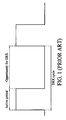
- Fig. 1 shows a schematic diagram of signal transmission in a discontinuous reception mode. A period is sliced into a series of periodic data transmission cycles.
- the base station When the wireless communication system operates in the discontinuous reception mode, the base station only sends control signaling to the user equipment during active periods of the data transmission cycle.
- the user equipment therefore, only needs to receive the control signaling during the active periods, and can enter a sleeping state with low power consumption when not in the active periods.
- the power consumption of the user equipment is therefore reduced to extend the battery life of the user equipment.
- a wireless communication system operating in a semi-persistant scheduling, SPS, mode has similar communication operations with a wireless communication system operating in the discontinuous reception mode.
- a base station operating in a discontinuous reception mode transmits control data to user equipment via a plurality of the component carriers with different frequency bands.
- Each component carrier may have different active periods.
- the base station may send control signaling to the user equipment with three different methods.
- Fig. 2A shows the first schematic diagram of active periods of three component carriers according to an identical configuration method is shown. According to the identical configuration method, the active periods of the three component carriers are the same.
- a base station may send control signaling to the user equipment during the same active periods via the three component carriers. The active periods of the three component carriers therefore have the same configuration.
- DRX with Carrier Aggregation in LTE-Advanced 3GP DRAFT discusses the Rel-10 UE behavior for Discontinuous Reception ,DRX, with carrier aggregation.
- the document discusses the impact of supporting multiple component carriers in relation to battery savings, and proposes that the UE shall perform DRX independently for each component carriers.
- Fig. 2B shows the second schematic diagram of active periods of three component carriers according to an independent configuration method.
- the three component carriers have different active periods and the DRX cycle.
- a base station therefore sends control signaling to the user equipment during different active periods via the three component carriers.
- the base station must send an increased amount of the configuration messages to the user equipment to synchronize transmission and reception of the control signaling.
- Fig. 2C shows the third schematic diagram of active periods of three component carriers according to an anchor carrier based method.
- a carrier is determined as an anchor carrier.
- a base station mainly sends control signaling to the user equipment via the anchor carrier during active periods.
- the base station When the base station uses other component carriers, the base station sends a notification message to the user equipment via the anchor carrier in advance and user equipment receive control signaling on the activated carriers.
- All the aforementioned three methods have shortcomings.
- the user equipment must comprise multiple radio frequency modules to respectively receive radio signals via the multiple component carriers at the same active time periods, and therefore consumes more power.
- the independent configuration method the active periods of the three component carriers are different, and the base station must send extra configuration messages to synchronize transmission and reception of the control signaling.
- the anchor carrier based method only the anchor carrier is used to transmit control signaling and other component carriers are left idle without transmitting control signaling.
- a new method for arranging active periods of different component carriers of a wireless communication system operating in a discontinuous reception mode is therefore required to improve the performance of the wireless communication system.
- the wireless communication system comprises a base station and user equipment, and the base station transmits data to the user equipment via a plurality of the component carriers comprising a series of data transmission cycles.
- the starting time of a plurality of active periods of the component carriers in each data transmission cycle are interleaved in an order, so that the starting time of active periods of the component carriers may not overlap with each other.
- Control data is then sent from the base station to the user equipment via the component carriers during the active periods of the component carriers.
- the control data is then received by the user equipment via the component carriers during the active periods of the component carriers.
- the invention also provides a user equipment.
- the user equipment is wirelessly coupled to a base station via a plurality of component carriers, and comprises a plurality of radio frequency modules and at least one base band processors.
- Each of the plurality of radio frequency modules receives a radio signal from the base station via one of the component carriers during a plurality of active periods of the corresponding component carriers.
- the at least one base band processor retrieves control data from the radio signals received by the radio frequency modules.
- the base station transmits the control data to the user equipment via the component carriers to the user equipment during the active periods of the component carriers, and the starting time of the plurality of active periods of the component carriers are interleaved in each data transmission cycle.
- Fig. 1 is an exemplary schematic diagram of signal transmission in a discontinuous reception mode
- Fig. 2A is an exemplary schematic diagram of active periods of three component carriers according to an identical configuration method
- Fig. 2B is an exemplary schematic diagram of active periods of three component carriers according to an independent configuration method
- Fig. 2C is an exemplary schematic diagram of active periods of three component carriers according to an anchor carrier based method
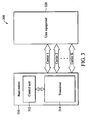
- Fig. 3 is an exemplary block diagram of a wireless communication system according to the invention.
- Fig. 4A is an exemplary schematic diagram of an embodiment of the arrangement of the active periods of a plurality of the component carriers according to the invention.
- Fig. 4B is an exemplary schematic diagram of another embodiment of the arrangement of the active periods of a plurality of the component carriers according to the invention.
- Fig. 5A is an exemplary block diagram of an embodiment of user equipment with a simplified hardware structure according to the invention.
- Fig. 5B is an exemplary block diagram of another embodiment of user equipment according to the invention.
- Fig. 6A shows an exemplary independent coupling mode coupling radio frequency modules to base band processors according to the invention
- Fig. 6B shows an xemplary combined coupling mode coupling radio frequency modules to base band processors according to the invention
- Fig. 6C shows an exemplary hybrid coupling mode coupling radio frequency modules to base band processors according to the invention
- Fig. 7 is an exemplary schematic diagram of the extension of active periods of the component carriers according to an extension signal
- Fig. 8 is an exemplary schematic diagram of the adjustment of the active periods of the component carriers according to an activation signal.
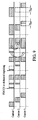
- Fig. 9 is an exemplary schematic diagram of the suspension of active periods of the component carriers according to an early suspension signal.
- Fig. 3 shows an exemplary block diagram of a wireless communication system 300 according to the invention is shown.
- the wireless communication system 300 comprises a base station 310 and user equipment 320.
- the base station 310 can be wirelessly coupled to the user equipment 320 via a plurality of the component carriers 1 ⁇ K with different frequency carriers, and data is communicated between the base station 310 and the user equipment via the component carriers 1 ⁇ K.
- the base station 310 also sends control data to the user equipment 320 via the component carriers 1 ⁇ K to negotiate communication requirements and synchronize communication behavior with the user equipment 320.
- the base station 310 sends the control data to the user equipment 320 in a discontinuous reception, DRX mode, as shown in Fig. 1 .
- the base station 310 sends the control data to the user equipment in a semi-persistent scheduling, SPS, mode.
- a staggered configuration method for sending control data from the base station 310 to the user equipment 320 is provided.
- a total time period for data transmission between the base station 310 and the user equipment 320 is divided into a series of data transmission cycles with the same duration.
- each of the component carriers has corresponding active periods in which the base station 310 transmits control data to the user equipment 320 via the corresponding component carrier, and the starting time of an active period of one component carrier is staggered to the starting time of active periods of other component carriers.
- the base station 310 may send control data via one component carrier at a time
- the user equipment 320 receives the control data via one component carrier at a time.
- the staggered method provides diversity in the design of the spatial and frequency domains with simple configuration.
- the base station 310 comprises a control unit 312 and a transceiver 314.
- the control unit 312 interleaves a plurality of the starting time of active periods of the component carriers 1 ⁇ K in each data transmission cycle in an order, so that the starting time of active periods of the component carriers 1 ⁇ K are staggered.
- the transceiver 314 then sends control data to the user equipment 320 via the component carriers 1 ⁇ K during the active periods of the component carriers.
- the user equipment 320 receives the control data via the component carriers 1 ⁇ K during the active periods of the component carriers 1 ⁇ K.
- the user equipment 320 can apply all of its antennas in the reception control data of the active component carrier to improve the signal quality of the control data received via the active component carrier.
- the control unit 312 arranges the active periods of the component carriers 1 ⁇ K in each data transmission cycle in an order, so that the starting time of active periods of the component carriers mutually differ by an offset period.
- Fig. 4A an exemplary schematic diagram of an embodiment of the arrangement of the active periods of a plurality of the component carriers according to the invention is shown. Assume that there are three component carriers 1 ⁇ 3 for data transmission between the base station 310 and the user equipment 320. The frequency band of the component carrier 2 is higher than that of the component carrier 1, and the frequency band of the component carrier 3 is higher than that of the component carrier 2. The active period of the component carrier 2 is later than that of the component carrier 1, and the active period of the component carrier 3 is later than that of the component carrier 2. In other words, the active periods of the component carriers having lower frequency bands are earlier than the active periods of the component carriers having higher frequency bands.
- FIG. 4B an exemplary schematic diagram of another embodiment of the arrangement of the active periods of a plurality of the component carriers according to the invention is shown.
- the frequency band of the component carrier 2 is higher than that of the component carrier 1
- the frequency band of the component carrier 3 is higher than that of the component carrier 2.
- the active period of the component carrier 2 is earlier than that of the component carrier 1, and the active period of the component carrier 3 is earlier than that of the component carrier 2.
- the active periods of the component carriers having higher frequency bands are earlier than the active periods of the component carriers having lower frequency bands.
- the user equipment 500 comprises an antenna 502, a radio frequency module 504, and a base band processor 506.
- the user equipment 500 may comprise only one antenna 502, one radio frequency module 504, and one base band processor 506.
- the antenna 502 and the radio frequency module 504 receive a radio signal from the active component carrier during the active period corresponding to the active component carrier.
- the base band processor 506 retrieves control data from the radio signal received by the radio frequency module 504.
- the base band processor 506 sends a control signal CTRL to the radio frequency module to adjust a receiving frequency band to that of the active component carrier.
- Fig. 5A an exemplary block diagram of another embodiment of user equipment 550 according to the invention is shown.
- the user equipment comprises three antennas 512, 522, and 532, three radio frequency modules 514, 524, and 534, three base band processors 516, 526, and 536, and a dynamic switch module 540.
- Each of the antennas 512, 522, and 532 and the corresponding radio frequency modules 514, 524, and 534 receives a radio signal from a base station via one of three component carriers.
- a digital processing circuit comprising the base band processors 516, 526, and 536 then controls the dynamic switch module 540 to selectively couple the output terminals of the radio frequency modules 514, 524, and 534 with input terminals of the base band processors 516, 526, and 536; thereby dynamically sending the radio signals received by the radio frequency modules 514, 524, and 534 to the base band processors 516, 526, and 536.
- the base band processors 516, 526, and 536 then retrieve control data from the radio signals.
- FIG. 6A an exemplary independent coupling mode coupling radio frequency modules to base band processors according to the invention is shown.
- the output terminals of the radio frequency modules RF 1 , RF 2 , and RF 3 are respectively coupled to the input terminals of the base band processors BB 1 , BB 2 , and BB 3 , and the radio signals transmitted via three different component carriers are respectively processed by the base band processors BB 1 , BB 2 , and BB 3 .
- one base band processor can process the functions of these the three processors on different time.
- FIG. 6B an exemplary combined coupling mode coupling radio frequency modules to base band processors according to the invention is shown.
- the output terminals of the radio frequency modules RF 1 , RF 2 , and RF 3 receive signal at the same carrier and are all coupled to the input terminal of the base band processor BB 1 , and the radio signals transmitted the same component carriers are all processed by the base band processor BB 1 .
- one base band processor can process the functions of the base band processor BB 1 .
- FIG. 6C an exemplary hybrid coupling mode coupling radio frequency modules to base band processors according to the invention is shown.
- the output terminal of the radio frequency module RF 1 is coupled to the input terminal of the base band processors BB 1 , and the output terminals of the radio frequency modules RF 2 and RF 3 are both coupled to the input terminal of the base band processor BB 2 , where the RF 2 and RF 3 receive the signals at the same carrier.
- the radio signals transmitted via a first component carrier is processed by the base band processor BB 1
- the radio signals transmitted via a second and a third component carriers are processed by the base band processor BB 2 .
- one base band processor can process the functions of the base band processors BB 1 and BB 2 .
- the base station may sometimes simultaneously activate all component carriers to transmit control data to the user equipment. Because the user equipment still receives control data according to the predetermined active periods of the corresponding component carriers, the base station must inform the user equipment of the adjustment of the active periods of the component carriers. In one embodiment, the base station sends an extension signal to the user equipment to dynamically extend active periods of the component carriers. Referring to Fig. 7 , an exemplary schematic diagram of the extension of active periods of the component carriers according to an extension signal is shown. In a first data transmission cycle, an active period of a component carrier 1 is earlier than the active periods of the component carriers 2 and 3. In a second data transmission cycle, an extension signal is transmitted from the base station to the user equipment.
- the starting time of the active period of the component carrier 1 is therefore delayed from time t 71 to time t 73 , and the starting time of the active period of the component carrier 2 is also delayed from time t 72 to time t 73 .
- the extension signal may be a layer-1 physical dedicated control channel ,PDCCH, signal, a layer-1 physical HARQ indicator channel ,PHICH, signal, a layer-2 MAC control signal, or a layer-3 radio resource control ,RRC, signal.
- the base station sends an activation signal to the user equipment via an early activated component carrier to configure the active periods of at least one later-activated component carrier in some of the data transmission cycles, wherein the active period of the early activated component carrier is earlier than that of the later-activated component carrier.
- Fig. 8 an exemplary schematic diagram of the adjustment of the active periods of the component carriers according to an activation signal is shown. In a first data transmission cycle, an active period of a component carrier 1 is earlier than the active periods of the component carriers 2, 3, and 4.
- an activation signal is transmitted from the base station to the user equipment via the early-activated component carrier 1, and the activation signal comprises information concerning adjustment of the configuration of the active periods of the later-activated component carriers 2, 3, and 4. The starting time of the active periods of the component carriers 2, 3, and 4 are therefore advanced to time t 81 .
- an activation signal is transmitted from the base station to the user equipment via the early-activated component carrier 1, and the activation signal comprises information concerning of adjustment of the configuration of the active periods of the later-activated component carriers 3 and 4. The starting time of the active periods of the component carriers 3 and 4 are therefore advanced to time t 82 .
- the activation signal may also be a layer-1 physical dedicated control channel ,PDCCH, signal, a layer-1 physical HARQ indicator channel ,PHICH, signal, a layer-2 MAC control signal, or a layer-3 radio resource control ,RRC, signal.
- PDCCH layer-1 physical dedicated control channel
- PHICH layer-1 physical HARQ indicator channel
- RRC layer-3 radio resource control
- the base station does not send control data to the user equipment via component carriers.
- the user equipment still tries to receive control data via the component carriers during corresponding active periods, leading to meaningless power consumption.
- the base station may send an early suspension signal to the user equipment to prevent the user equipment from receiving the control data during predetermined active periods of some of the component carriers.
- Fig. 9 a schematic diagram of the suspension of active periods of the component carriers according to an early suspension signal is shown. In a first data transmission cycle, an active period of a component carrier 1 is earlier than the active periods of the component carriers 2 and 3.
- extension signals are transmitted from the base station to the user equipment to align the starting time of the active periods of the component carriers 1 and 2 with that of the active period of the component carrier 3.
- an activation signal is transmitted from the base station to the user equipment via the early-activated component carrier 1, the active period of the later-activated component carriers 2 is therefore delayed, and the active period of the later-activated component carriers 3 is therefore advanced.
- a first early suspension signal is transmitted from the base station to the user equipment, and a first half of the active period of the component carrier 3 is suspended according to the first early suspension signal.
- a second early suspension signal is transmitted from the base station to the user equipment, and the active period of the component carrier 2 is suspended according to the second early suspension signal.
- the early suspension signal is a layer-1 physical dedicated control channel ,PDCCH, signal, a layer-1 physical HARQ indicator channel ,PHICH, signal, a layer-2 MAC control signal, or a layer-3 radio resource control ,RRC, signal.
Landscapes
- Engineering & Computer Science (AREA)
- Signal Processing (AREA)
- Computer Networks & Wireless Communication (AREA)
- Mobile Radio Communication Systems (AREA)
Claims (20)
- Ein Datenkommunlkationsverfahren für ein kabelloses Kommunikationssystem, wobei das kabellose Kommunikationssystem eine Basisstation und ein Benutzergerät umfasst, die Basisstation überträgt Daten an das Benutzergerät über eine Vielzahl von Komponententrägern/component carriers, umfassend eine Reihe von Datenübertragungszyklen, und das Verfahren umfasst:Überlappen der Startzeiten einer Vielzahl von aktiven Perioden der Komponententräger in jedem Datenübertragungszyklus, wobei die Startzeiten der aktiven Perioden in einer Reihenfolge überlappen sind, so dass sich die Startzeit der aktiven Perioden der Komponententräger nicht mit einander überlappen; undSenden von Kontrolldaten von der Basisstation an das Benutzergerät über die Komponententräger während der aktiven Perioden der Komponententräger.
- Das Datenkommunikationsverfahren nach Anspruch 1, wobei das Datenkommunlkationsverfahren weiterhin umfasst:Empfangen der Kontrolldaten durch das Benutzergerät über die Komponententräger während der aktiven Perioden der Komponententräger.
- Das Datenkommunikationsverfahren nach Anspruch 1, wobei die Basisstation die Kontrolldaten an das Benutzergerät in einem diskontinuierlichen Empfangsmodus, DRX ,oder in einem Semi-persistenten Planungsmodus, SPS, sendet.
- Das Datenkommunikationsverfahren nach Anspruch 1, wobei die Komponententräger unterschiedliche Frequenzbänder haben, und der Überlappungsschrltt umfasst:Anordnen der aktiven Perioden der Komponententräger in jedem Datenübertragungszyklus in einer Reihenfolge, so dass sich die aktiven Perioden der Komponententräger gegenseitig durch eine Off-Set Periode voneinander unterscheiden.
- Das Datenkommunikationsverfahren nach Anspruch 4, wobei die aktiven Perioden der Komponententräger, die höhere Frequenzbänder haben, früher oder später als die aktiven Perioden der Komponententräger sind, die geringere Frequenzbänder haben.
- Das Datenkommunikationsverfahren nach Anspruch 2, nobel:das Benutzergerät ein Funkfrequenzmodul und einen Basisbandprozessor umfasst, wobei der Basisbandprozessor einen aktiven Komponententräger aus der Vielzahl von Komponententräger auswählt, das Funkfrequenzmodul empfängt ein Funksignal von der Basisstation über den aktiven Komponententräger, und der Basisbandprozessor erlangt die Kontrolldaten von dem Funksignal;Das Benutzergerät umfasst eine Vielzahl von Funkfrequenzmodulen und eine Vielzahl von Basisbandprozessoren, wobei jedes der Funkfrequenzmodule ein Funksignal von der Basisstation über einen der Komponententräger empfängt, und jeder der Basisbandprozessoren erlangt die Kontrolldaten von einem der Funksignale;Das Benutzergerät umfasst eine Vielzahl von Funkfrequenzmodulen und einen Basisbandprozessor, wobei jedes der Funkfrequenzmodule ein Funksignal von der Basisstation über die gleichen Komponententräger empfängt, und der Basisband Prozessor erlangt die Kontrolldaten von dem Funksignal; oderdas Benutzergerät umfasst eine Vielzahl von Funkfrequenzmodulen, ein dynamisches Schaltmodul, und eine Vielzahl von Basisbandprozessoren, wobei jedes der Funkfrequenzmodule ein Funksignal von der Basisstation über einen der Komponententräger empfängt, die Schalter koppeln selektiv die Funkfrequenzmodul mit dem Basisbandprozessor, um die Funksignale zu dem Basisbandprozessor zu senden, und der Basisbandprozessor erlangt die Kontrolldaten von den Funksignalen.
- Das Datenkommunikationsverfahren nach Anspruch 2, wobei das Benutzergerät eine Vielzahl von Funkfrequenzmodulen und eine Vielzahl von Basisbandprozessoren umfasst, wobei jedes der Funkfrequenzmodule ein Funksignal von der Basisstation über einen der Komponententräger empfängt, und jeder der Basisbandprozessoren erlangt die Kontrolldaten von einem der Funksignale.
- Das Datenkommunikationsverfahren nach Anspruch 2, wobei das Benutzergerät eine Vielzahl von Funkfrequenzmodulen und einen Basisbandprozessor umfasst, wobei jedes der Funkfrequenzmodule ein Funksignal von der Basisstation über die gleichen Komponententräger empfängt, und der Basisbandprozessoren erlangt die Kontrolldaten von den Funksignalen.
- Das Datenkommunikationsverfahren nach Anspruch 2, wobei das Benutzergerät eine Vielzahl von Funkfrequenzmodulen, eine Vielzahl von Schaltern, eine Vielzahl von Basisbandprozessoren umfasst, wobei jedes der Funkfrequenzmodule ein Funksignal von der Basisstation über einen der Komponententräger empfängt, die Schalter koppeln die Funkfrequenzmodulen selektiv mit dem Basisbandprozessoren, um die Funksignale an den Basisbandprozessoren zu senden, und der Basis Bandprozessor erlangt die Kontrolldaten von den Funksignalen.
- Das Datenkommunikationsverfahren nach Anspruch 1, wobei das Datenkommunikationsverfahren weiterhin umfasst:Senden eines Extensionssignals von der Basisstation an das Benutzergerät, um die aktiven Perioden von einigen der Komponententräger zu erweitern, dabei werden die aktiven Perioden aller Komponententräger in einigen der Datenübertragungszyklen angepasst/ausgerichtet;wobei das Extensionsslgnal ein Layer-1 physikalisch zugeordnetes Kontrollkanal ,PDCCH' Signal, ein Layer-1 physikalisches HARQ Indikator-Kanal- ,PHICH, Signal, ein Layer-2 MAC-Kontroll-Signal, oder er ein Layer 3 Funk-Resource -Kontroll, RRC, Signal ist.
- Das Datenkommunikationsverfahren nach Anspruch 1, wobei das Datenkommunikationsverfahren weiterhin umfasst:Senden eines Aktivierungssignals von einer Basisstation an ein Benutzergerät über einen früh aktivierten Komponententräger, um die aktiven Perioden von zumindestens einem später aktivierten Komponententräger in einigen der Datenübertragungszyklen zu konfigurieren, wobei die aktive Periode des früher aktivierten Komponententrägers früher ist, als die des später aktivierten Komponententrägers; wobei das Aktivlerungssignal ein Layer-1 physikalisch zugeordnetes Kontrollkanal- 'PDCCH' Signal, ein Layer-1 physikalisches HARQ Indikator-Kanal- ,PHICH, Signal, ein Layer-2 MAC-Kontroll-Signal, oder er ein Layer 3 Funk-Resource-Kontroll, RRC, Signal ist.
- Das Datenkommunikationsverfahren nach Anspruch 1, wobei das Datenkommunikationsverfahren weiterhin umfasst:Senden eines frühen Suspendierungssignals von der Basisstation an das Benutzergerät, um das Benutzergerät davon abzuhalten die Kontrolldaten in den aktiven Perioden von einigen der Komponententrägern in einigen der Detenübertragungszyklen zu empfangen;wobei das frühe Suspendierungssignal ein Layer-1 physikalisch zugeordnetes Kontrollkanal- 'PDCCH' Signal ein Layer-1 physikalisches HARQ Indikator-Kanal- ,PHICH, Signal, ein Layer-2 MAC-Kontroll-Signal, oder er ein Layer 3 Funk-Resource -Kontroll, RRC, Signal ist.
- Ein Benutzergerät (320,500), kabellos mit einer Basisstation (310) über eine Vielzahl von Komponententrägern gekoppelt, umfassend:eine Vielzahl von Funkfrequenzmodulen (504), jedes ist konfiguriert, um ein Funksignal von der Basisstation über einen der Komponententräger während einer Vielzahl von aktiven Perioden der Komponententräger zu empfangen; undzumindestens einen Basisbandprozessor (506), der mit den Funkfrequenzmodulen gekoppelt ist, der konfiguriert Ist, um Kontrolldaten von den Funksignalen zu erlangen, die durch die Funkfrequenzmodule empfangen wurden;wobei die Kontrolldaten über die Komponententräger für das Benutzergerät während der aktiven Perioden der Komponententräger empfangen werden, und die Startzeiten der Vielzahl von aktiven Perioden der Komponententräger überlappen sich in jedem der Datenübertragungszyklen;wobei die Startzeiten der aktiven Perioden sich in einer Reihenfolge überlappen, so dass die Startzeit der aktiven Perioden der Komponententräger sich nicht miteinander überlappen.
- Das Benutzergerät nach Anspruch 13, wobei das Benutzergerät konfiguriert ist, um Kontrolldaten von der Basisstation in einem diskontinuierlichen Empfangsmodus, DRX, oder in einem semi-persistenten Planungsmodus, SPS, zu senden.
- Das Benutzergerät nach Anspruch 13, wobei der Basisbandprozessoren konfiguriert ist, um einen aktiven Komponententräger von der früh Vielzahl von Komponententrägern auszuwählen, und konfiguriert ist, um die Kontrolldaten von dem Funksignal, das zu dem aktiven Komponententräger korrespondiert, zu erlangen.
- Das Benutzergerät nach Anspruch 13, wobei der zu mindestens eine Basisbandprozessoren eine Vielzahl von Basisbandprozessoren umfasst, und die Vielzahl von Basisbandprozessoren sind jeweils mit einem der Basisbandprozessoren gekoppelt und sind jeweils konfiguriert, um die Kontrolldaten von einem der Funksignale zu erlangen.
- Das Benutzergerät nach Anspruch 13, wobei zumindest ein Basisbandprozessor eine Vielzahl von Basisbandprozessoren umfasst, und das Benutzergerät umfasst:eine Vielzahl von Schaltern, die selektiv die Funkfrequenzmodule mit den Basisbandprozessoren koppeln, um die Funksignale zu den Basisbandprozessoren zu senden; wobei die Vielzahl der Basisbandprozessoren konfiguriert Ist, um die Kontrolldaten von den Funksignalen, die über die Schalter empfangen wurden, zu erlangen.
- Das Benutzergerät nach Anspruch 13, ist ausgebildet, um ein Extensionssignal zu empfangen, das weiterhin durch die Basisstation an das Benutzergerät gesendet wurde, um die aktiven Perioden von einem der Komponententräger zu verlängern, dabei erfolgt ein Abgleichen der aktiven Perioden von allen Komponententrägern in einigen der Datenübertragungszyklen; wobei das Extensionssignal ein Layer-1 physikalisch zugeordnetes Kontrollkanal- 'PDCCH' Signal, ein Layer-1 physikalisches HARQ Indikator-Kanal- 'PHICH, Signal, ein Layer-2 MAC-Kontroll-Signal, oder er ein Layer 3 Funk-Resource -Kontroll, RRC, Signal ist.
- Das Benutzergerät nach Anspruch 13, konfiguriert um ein Aktivierungssignal, das von der Basisstation weiter an ein Benutzergerät über einen früh aktivierten Komponententräger zu empfangen, um die aktiven Perioden von zu mindestens einem später aktivierten Komponententräger In einigen der Datenübertragungszyklen zu konfigurieren, wobei die aktive Periode des früher aktivierten Komponententrägers früher ist als die des später aktivierten Komponententrägers; wobei das Aktivierungsslgnal ein Layer-1 physikalisch zugeordnetes Kontrollkanal- 'PDCCH' Signal, ein Layer-1 physikalisches HARQ Indlkator-Kanal- ,PHICH, Signal, ein Layer-2 MAC-Kontroll-Signal, oder er ein Layer 3 Funk-Resource -Kontroll, RRC, Signal ist.
- Das Benutzergerät nach Anspruch 16, konfiguriert um ein frühen Suspendierungssignals von der Basisstation an das Benutzergerät zu empfangen, um das Benutzergerät davon abzuhalten die Kontrolldaten in den aktiven Perioden von einigen der Komponententrägern In einigen der Datenübertragungszyklen zu empfangen; wobei das frühe Suspendierungssignal ein Layer-1 physikalisch zugeordnetes Kontrollkanal- 'PDCCH' Signal, ein Layer-1 physikalisches HARQ Indikator-Kanal- ,PHICH, Signal, ein Layer-2 MAC-Kontroll-Signal, oder er ein Layer 3 Funk-Resource-Kontroll, RRC, Signal ist.
Applications Claiming Priority (1)
| Application Number | Priority Date | Filing Date | Title |
|---|---|---|---|
| US21822909P | 2009-06-18 | 2009-06-18 |
Publications (2)
| Publication Number | Publication Date |
|---|---|
| EP2265059A1 EP2265059A1 (de) | 2010-12-22 |
| EP2265059B1 true EP2265059B1 (de) | 2012-12-05 |
Family
ID=42676904
Family Applications (1)
| Application Number | Title | Priority Date | Filing Date |
|---|---|---|---|
| EP10166164A Active EP2265059B1 (de) | 2009-06-18 | 2010-06-16 | Versetzter diskontinuierlicher Empfang für Carrier-Aggregation |
Country Status (4)
| Country | Link |
|---|---|
| US (1) | US8830978B2 (de) |
| EP (1) | EP2265059B1 (de) |
| CN (1) | CN102014091B (de) |
| TW (1) | TWI423706B (de) |
Families Citing this family (9)
| Publication number | Priority date | Publication date | Assignee | Title |
|---|---|---|---|---|
| ES2499715T3 (es) * | 2009-09-30 | 2014-09-29 | Telefonaktiebolaget L M Ericsson (Publ) | Reconfiguración de conjunto activo de portadoras componentes en sistemas inalámbricos multi-portadora |
| US8917659B2 (en) * | 2009-10-29 | 2014-12-23 | Lg Electronics Inc. | Method of transmitting warning message in multiple component carrier system |
| EP2395797B8 (de) * | 2010-06-11 | 2014-04-02 | Intel Mobile Communications GmbH | Verfahren zur Steuerung der Betriebsaktivitätsmodi eines drahtlosen Telekommunikationsendgeräts |
| CN103209487A (zh) * | 2012-01-17 | 2013-07-17 | 中兴通讯股份有限公司 | 一种无线通信方法和通信装置及通信系统 |
| US9681375B2 (en) * | 2012-05-02 | 2017-06-13 | Marvell World Trade Ltd. | Scheduling schemes for user equipment power saving in a communication network |
| EP2822328B1 (de) * | 2013-07-04 | 2018-10-03 | Alcatel Lucent | Vorrichtungen, Verfahren und Computerprogramme für einen mobilen Sender-Empfänger und für einen Basisstations-Sender-Empfänger |
| JP6744925B2 (ja) * | 2016-07-21 | 2020-08-19 | テレフオンアクチーボラゲット エルエム エリクソン(パブル) | データチャネルの開始位置のためのフレキシブル指示 |
| US10979182B2 (en) * | 2017-10-30 | 2021-04-13 | Qualcomm Incorporated | Managing hybrid automatic repeat request (HARQ) memory for radio tune-away |
| US20230010588A1 (en) * | 2021-07-07 | 2023-01-12 | Qualcomm Incorporated | Coordinated tune away for multi-sim devices |
Family Cites Families (10)
| Publication number | Priority date | Publication date | Assignee | Title |
|---|---|---|---|---|
| DE102005040027B4 (de) * | 2005-08-23 | 2012-10-25 | Nec Europe Ltd. | Verfahren zur Steuerung der Kommunikation mit mobilen Stationen über ein drahtloses Netzwerk |
| WO2007032649A1 (en) | 2005-09-15 | 2007-03-22 | Samsung Electronics Co., Ltd. | Method and apparatus for transmitting and receiving status report comprising received status of packet data in a mobile communication system |
| JP4786340B2 (ja) | 2005-12-28 | 2011-10-05 | 株式会社エヌ・ティ・ティ・ドコモ | 基地局装置およびパケットスケジューリング方法 |
| JP4869778B2 (ja) | 2006-01-18 | 2012-02-08 | 株式会社エヌ・ティ・ティ・ドコモ | 送信装置、受信装置および通信方法 |
| KR100871264B1 (ko) * | 2006-04-11 | 2008-11-28 | 삼성전자주식회사 | 이동 통신 시스템에서의 불연속 패킷 수신 방법 및 장치 |
| JP2007300217A (ja) * | 2006-04-27 | 2007-11-15 | Toshiba Corp | Ofdm信号の送信方法、ofdm送信機及びofdm受信機 |
| JP5001693B2 (ja) * | 2007-03-22 | 2012-08-15 | 株式会社エヌ・ティ・ティ・ドコモ | 移動通信システムで使用される基地局装置及び方法 |
| EP1988649A1 (de) * | 2007-05-04 | 2008-11-05 | Nokia Siemens Networks Oy | Verfahren, System, Vorrichtungen und entsprechendes Computerprogramm zur Zuweisung von Kommunikationsressourcen |
| CN101483891B (zh) * | 2008-01-08 | 2012-12-05 | 株式会社Ntt都科摩 | 对用户设备设置激活期起始点的方法及装置 |
| EP2260663B1 (de) * | 2008-03-25 | 2013-07-17 | Telefonaktiebolaget L M Ericsson (publ) | Drx-funktionalität in drahtlosen mehrträger-netzen |
-
2010
- 2010-06-16 EP EP10166164A patent/EP2265059B1/de active Active
- 2010-06-17 US US12/817,379 patent/US8830978B2/en active Active
- 2010-06-18 CN CN2010102086687A patent/CN102014091B/zh active Active
- 2010-06-18 TW TW099119851A patent/TWI423706B/zh active
Also Published As
| Publication number | Publication date |
|---|---|
| US8830978B2 (en) | 2014-09-09 |
| CN102014091A (zh) | 2011-04-13 |
| TWI423706B (zh) | 2014-01-11 |
| CN102014091B (zh) | 2013-08-07 |
| TW201110774A (en) | 2011-03-16 |
| EP2265059A1 (de) | 2010-12-22 |
| US20110026498A1 (en) | 2011-02-03 |
Similar Documents
| Publication | Publication Date | Title |
|---|---|---|
| KR102363747B1 (ko) | 5g new radio에서의 대역폭부, 검색 공간 및 접속 모드 불연속 수신 동작의 공동 최적화 | |
| US8767604B2 (en) | Methods and arrangements in a telecommunication system | |
| US8830978B2 (en) | Data communication method, wireless communication system, and base station | |
| US20260113802A1 (en) | New Radio Wakeup Radio | |
| EP2959729B1 (de) | Benutzervorrichtung mit betriebsarten mit reduziertem leistungsverbrauch | |
| JP2022177185A (ja) | 基地局、移動局、及び、方法 | |
| US9603091B2 (en) | Reducing periodic reporting in discontinuous receive (DRX) mode | |
| CN114557049A (zh) | 用于载波聚合的连接非连续接收 | |
| US20110002281A1 (en) | Discontinuous reception for carrier aggregation | |
| AU2010260186A1 (en) | Method and system for discontinuous reception operation for long term evolution advanced carrier aggregation | |
| US20140355504A1 (en) | Handling a State of a Device | |
| US20240236858A1 (en) | Methods, devices, and systems for transmitting and receiving signal for power management | |
| CN118450470A (zh) | 一种通信方法及装置 | |
| WO2021259343A1 (en) | Efficient adaption of ue power saving in 5g new radio (nr) | |
| CN118383054A (zh) | 无线通信方法、终端设备和网络设备 | |
| EP4319265A1 (de) | Sendeverfahren für downlink-steuerinformationen (dci) und kommunikationsvorrichtung | |
| CN121080048A (zh) | 与配置的调度会话的激活或禁用有关的装置、方法和计算机程序 | |
| CN121510220A (zh) | 一种免调度传输方法及相关装置 |
Legal Events
| Date | Code | Title | Description |
|---|---|---|---|
| PUAI | Public reference made under article 153(3) epc to a published international application that has entered the european phase |
Free format text: ORIGINAL CODE: 0009012 |
|
| AK | Designated contracting states |
Kind code of ref document: A1 Designated state(s): AL AT BE BG CH CY CZ DE DK EE ES FI FR GB GR HR HU IE IS IT LI LT LU LV MC MK MT NL NO PL PT RO SE SI SK SM TR |
|
| AX | Request for extension of the european patent |
Extension state: BA ME RS |
|
| 17P | Request for examination filed |
Effective date: 20110111 |
|
| 17Q | First examination report despatched |
Effective date: 20110919 |
|
| GRAP | Despatch of communication of intention to grant a patent |
Free format text: ORIGINAL CODE: EPIDOSNIGR1 |
|
| GRAS | Grant fee paid |
Free format text: ORIGINAL CODE: EPIDOSNIGR3 |
|
| GRAA | (expected) grant |
Free format text: ORIGINAL CODE: 0009210 |
|
| AK | Designated contracting states |
Kind code of ref document: B1 Designated state(s): AL AT BE BG CH CY CZ DE DK EE ES FI FR GB GR HR HU IE IS IT LI LT LU LV MC MK MT NL NO PL PT RO SE SI SK SM TR |
|
| REG | Reference to a national code |
Ref country code: GB Ref legal event code: FG4D |
|
| REG | Reference to a national code |
Ref country code: CH Ref legal event code: EP |
|
| REG | Reference to a national code |
Ref country code: AT Ref legal event code: REF Ref document number: 587863 Country of ref document: AT Kind code of ref document: T Effective date: 20121215 |
|
| REG | Reference to a national code |
Ref country code: IE Ref legal event code: FG4D |
|
| REG | Reference to a national code |
Ref country code: DE Ref legal event code: R096 Ref document number: 602010003926 Country of ref document: DE Effective date: 20130131 |
|
| REG | Reference to a national code |
Ref country code: AT Ref legal event code: MK05 Ref document number: 587863 Country of ref document: AT Kind code of ref document: T Effective date: 20121205 |
|
| REG | Reference to a national code |
Ref country code: NL Ref legal event code: T3 |
|
| PG25 | Lapsed in a contracting state [announced via postgrant information from national office to epo] |
Ref country code: ES Free format text: LAPSE BECAUSE OF FAILURE TO SUBMIT A TRANSLATION OF THE DESCRIPTION OR TO PAY THE FEE WITHIN THE PRESCRIBED TIME-LIMIT Effective date: 20130316 Ref country code: FI Free format text: LAPSE BECAUSE OF FAILURE TO SUBMIT A TRANSLATION OF THE DESCRIPTION OR TO PAY THE FEE WITHIN THE PRESCRIBED TIME-LIMIT Effective date: 20121205 Ref country code: LT Free format text: LAPSE BECAUSE OF FAILURE TO SUBMIT A TRANSLATION OF THE DESCRIPTION OR TO PAY THE FEE WITHIN THE PRESCRIBED TIME-LIMIT Effective date: 20121205 Ref country code: SE Free format text: LAPSE BECAUSE OF FAILURE TO SUBMIT A TRANSLATION OF THE DESCRIPTION OR TO PAY THE FEE WITHIN THE PRESCRIBED TIME-LIMIT Effective date: 20121205 Ref country code: NO Free format text: LAPSE BECAUSE OF FAILURE TO SUBMIT A TRANSLATION OF THE DESCRIPTION OR TO PAY THE FEE WITHIN THE PRESCRIBED TIME-LIMIT Effective date: 20130305 |
|
| REG | Reference to a national code |
Ref country code: LT Ref legal event code: MG4D |
|
| PG25 | Lapsed in a contracting state [announced via postgrant information from national office to epo] |
Ref country code: GR Free format text: LAPSE BECAUSE OF FAILURE TO SUBMIT A TRANSLATION OF THE DESCRIPTION OR TO PAY THE FEE WITHIN THE PRESCRIBED TIME-LIMIT Effective date: 20130306 Ref country code: SI Free format text: LAPSE BECAUSE OF FAILURE TO SUBMIT A TRANSLATION OF THE DESCRIPTION OR TO PAY THE FEE WITHIN THE PRESCRIBED TIME-LIMIT Effective date: 20121205 Ref country code: LV Free format text: LAPSE BECAUSE OF FAILURE TO SUBMIT A TRANSLATION OF THE DESCRIPTION OR TO PAY THE FEE WITHIN THE PRESCRIBED TIME-LIMIT Effective date: 20121205 Ref country code: PL Free format text: LAPSE BECAUSE OF FAILURE TO SUBMIT A TRANSLATION OF THE DESCRIPTION OR TO PAY THE FEE WITHIN THE PRESCRIBED TIME-LIMIT Effective date: 20121205 |
|
| PG25 | Lapsed in a contracting state [announced via postgrant information from national office to epo] |
Ref country code: AT Free format text: LAPSE BECAUSE OF FAILURE TO SUBMIT A TRANSLATION OF THE DESCRIPTION OR TO PAY THE FEE WITHIN THE PRESCRIBED TIME-LIMIT Effective date: 20121205 |
|
| PG25 | Lapsed in a contracting state [announced via postgrant information from national office to epo] |
Ref country code: IS Free format text: LAPSE BECAUSE OF FAILURE TO SUBMIT A TRANSLATION OF THE DESCRIPTION OR TO PAY THE FEE WITHIN THE PRESCRIBED TIME-LIMIT Effective date: 20130405 Ref country code: BG Free format text: LAPSE BECAUSE OF FAILURE TO SUBMIT A TRANSLATION OF THE DESCRIPTION OR TO PAY THE FEE WITHIN THE PRESCRIBED TIME-LIMIT Effective date: 20130305 Ref country code: EE Free format text: LAPSE BECAUSE OF FAILURE TO SUBMIT A TRANSLATION OF THE DESCRIPTION OR TO PAY THE FEE WITHIN THE PRESCRIBED TIME-LIMIT Effective date: 20121205 Ref country code: CZ Free format text: LAPSE BECAUSE OF FAILURE TO SUBMIT A TRANSLATION OF THE DESCRIPTION OR TO PAY THE FEE WITHIN THE PRESCRIBED TIME-LIMIT Effective date: 20121205 Ref country code: SK Free format text: LAPSE BECAUSE OF FAILURE TO SUBMIT A TRANSLATION OF THE DESCRIPTION OR TO PAY THE FEE WITHIN THE PRESCRIBED TIME-LIMIT Effective date: 20121205 Ref country code: BE Free format text: LAPSE BECAUSE OF FAILURE TO SUBMIT A TRANSLATION OF THE DESCRIPTION OR TO PAY THE FEE WITHIN THE PRESCRIBED TIME-LIMIT Effective date: 20121205 |
|
| PG25 | Lapsed in a contracting state [announced via postgrant information from national office to epo] |
Ref country code: RO Free format text: LAPSE BECAUSE OF FAILURE TO SUBMIT A TRANSLATION OF THE DESCRIPTION OR TO PAY THE FEE WITHIN THE PRESCRIBED TIME-LIMIT Effective date: 20121205 Ref country code: PT Free format text: LAPSE BECAUSE OF FAILURE TO SUBMIT A TRANSLATION OF THE DESCRIPTION OR TO PAY THE FEE WITHIN THE PRESCRIBED TIME-LIMIT Effective date: 20130405 |
|
| PLBE | No opposition filed within time limit |
Free format text: ORIGINAL CODE: 0009261 |
|
| STAA | Information on the status of an ep patent application or granted ep patent |
Free format text: STATUS: NO OPPOSITION FILED WITHIN TIME LIMIT |
|
| PG25 | Lapsed in a contracting state [announced via postgrant information from national office to epo] |
Ref country code: DK Free format text: LAPSE BECAUSE OF FAILURE TO SUBMIT A TRANSLATION OF THE DESCRIPTION OR TO PAY THE FEE WITHIN THE PRESCRIBED TIME-LIMIT Effective date: 20121205 |
|
| 26N | No opposition filed |
Effective date: 20130906 |
|
| PG25 | Lapsed in a contracting state [announced via postgrant information from national office to epo] |
Ref country code: CY Free format text: LAPSE BECAUSE OF FAILURE TO SUBMIT A TRANSLATION OF THE DESCRIPTION OR TO PAY THE FEE WITHIN THE PRESCRIBED TIME-LIMIT Effective date: 20121205 |
|
| PG25 | Lapsed in a contracting state [announced via postgrant information from national office to epo] |
Ref country code: IT Free format text: LAPSE BECAUSE OF FAILURE TO SUBMIT A TRANSLATION OF THE DESCRIPTION OR TO PAY THE FEE WITHIN THE PRESCRIBED TIME-LIMIT Effective date: 20121205 |
|
| REG | Reference to a national code |
Ref country code: DE Ref legal event code: R097 Ref document number: 602010003926 Country of ref document: DE Effective date: 20130906 |
|
| PG25 | Lapsed in a contracting state [announced via postgrant information from national office to epo] |
Ref country code: HR Free format text: LAPSE BECAUSE OF FAILURE TO SUBMIT A TRANSLATION OF THE DESCRIPTION OR TO PAY THE FEE WITHIN THE PRESCRIBED TIME-LIMIT Effective date: 20130731 Ref country code: MC Free format text: LAPSE BECAUSE OF FAILURE TO SUBMIT A TRANSLATION OF THE DESCRIPTION OR TO PAY THE FEE WITHIN THE PRESCRIBED TIME-LIMIT Effective date: 20121205 |
|
| REG | Reference to a national code |
Ref country code: IE Ref legal event code: MM4A |
|
| PG25 | Lapsed in a contracting state [announced via postgrant information from national office to epo] |
Ref country code: IE Free format text: LAPSE BECAUSE OF NON-PAYMENT OF DUE FEES Effective date: 20130616 |
|
| REG | Reference to a national code |
Ref country code: CH Ref legal event code: PL |
|
| PG25 | Lapsed in a contracting state [announced via postgrant information from national office to epo] |
Ref country code: MT Free format text: LAPSE BECAUSE OF FAILURE TO SUBMIT A TRANSLATION OF THE DESCRIPTION OR TO PAY THE FEE WITHIN THE PRESCRIBED TIME-LIMIT Effective date: 20121205 |
|
| PG25 | Lapsed in a contracting state [announced via postgrant information from national office to epo] |
Ref country code: CH Free format text: LAPSE BECAUSE OF NON-PAYMENT OF DUE FEES Effective date: 20140630 Ref country code: LI Free format text: LAPSE BECAUSE OF NON-PAYMENT OF DUE FEES Effective date: 20140630 |
|
| PG25 | Lapsed in a contracting state [announced via postgrant information from national office to epo] |
Ref country code: SM Free format text: LAPSE BECAUSE OF FAILURE TO SUBMIT A TRANSLATION OF THE DESCRIPTION OR TO PAY THE FEE WITHIN THE PRESCRIBED TIME-LIMIT Effective date: 20121205 |
|
| PG25 | Lapsed in a contracting state [announced via postgrant information from national office to epo] |
Ref country code: TR Free format text: LAPSE BECAUSE OF FAILURE TO SUBMIT A TRANSLATION OF THE DESCRIPTION OR TO PAY THE FEE WITHIN THE PRESCRIBED TIME-LIMIT Effective date: 20121205 |
|
| PG25 | Lapsed in a contracting state [announced via postgrant information from national office to epo] |
Ref country code: MK Free format text: LAPSE BECAUSE OF FAILURE TO SUBMIT A TRANSLATION OF THE DESCRIPTION OR TO PAY THE FEE WITHIN THE PRESCRIBED TIME-LIMIT Effective date: 20121205 Ref country code: LU Free format text: LAPSE BECAUSE OF NON-PAYMENT OF DUE FEES Effective date: 20130616 Ref country code: HU Free format text: LAPSE BECAUSE OF FAILURE TO SUBMIT A TRANSLATION OF THE DESCRIPTION OR TO PAY THE FEE WITHIN THE PRESCRIBED TIME-LIMIT; INVALID AB INITIO Effective date: 20100616 |
|
| REG | Reference to a national code |
Ref country code: FR Ref legal event code: PLFP Year of fee payment: 7 |
|
| REG | Reference to a national code |
Ref country code: FR Ref legal event code: PLFP Year of fee payment: 8 |
|
| REG | Reference to a national code |
Ref country code: FR Ref legal event code: PLFP Year of fee payment: 9 |
|
| PG25 | Lapsed in a contracting state [announced via postgrant information from national office to epo] |
Ref country code: AL Free format text: LAPSE BECAUSE OF FAILURE TO SUBMIT A TRANSLATION OF THE DESCRIPTION OR TO PAY THE FEE WITHIN THE PRESCRIBED TIME-LIMIT Effective date: 20121205 |
|
| PGFP | Annual fee paid to national office [announced via postgrant information from national office to epo] |
Ref country code: NL Payment date: 20250421 Year of fee payment: 16 |
|
| PGFP | Annual fee paid to national office [announced via postgrant information from national office to epo] |
Ref country code: DE Payment date: 20250423 Year of fee payment: 16 |
|
| PGFP | Annual fee paid to national office [announced via postgrant information from national office to epo] |
Ref country code: GB Payment date: 20250425 Year of fee payment: 16 |
|
| PGFP | Annual fee paid to national office [announced via postgrant information from national office to epo] |
Ref country code: FR Payment date: 20250422 Year of fee payment: 16 |