EP2257953B1 - Schnittstelle und verbindungsdose für eine htsl-entmagnetisierungsspule - Google Patents
Schnittstelle und verbindungsdose für eine htsl-entmagnetisierungsspule Download PDFInfo
- Publication number
- EP2257953B1 EP2257953B1 EP09725012.0A EP09725012A EP2257953B1 EP 2257953 B1 EP2257953 B1 EP 2257953B1 EP 09725012 A EP09725012 A EP 09725012A EP 2257953 B1 EP2257953 B1 EP 2257953B1
- Authority
- EP
- European Patent Office
- Prior art keywords
- interface
- conductor
- hts
- conductors
- substrate
- Prior art date
- Legal status (The legal status is an assumption and is not a legal conclusion. Google has not performed a legal analysis and makes no representation as to the accuracy of the status listed.)
- Active
Links
Images


Classifications
-
- B—PERFORMING OPERATIONS; TRANSPORTING
- B63—SHIPS OR OTHER WATERBORNE VESSELS; RELATED EQUIPMENT
- B63G—OFFENSIVE OR DEFENSIVE ARRANGEMENTS ON VESSELS; MINE-LAYING; MINE-SWEEPING; SUBMARINES; AIRCRAFT CARRIERS
- B63G9/00—Other offensive or defensive arrangements on vessels against submarines, torpedoes, or mines
- B63G9/06—Other offensive or defensive arrangements on vessels against submarines, torpedoes, or mines for degaussing vessels
-
- H—ELECTRICITY
- H01—ELECTRIC ELEMENTS
- H01F—MAGNETS; INDUCTANCES; TRANSFORMERS; SELECTION OF MATERIALS FOR THEIR MAGNETIC PROPERTIES
- H01F13/00—Apparatus or processes for magnetising or demagnetising
- H01F13/006—Methods and devices for demagnetising of magnetic bodies, e.g. workpieces, sheet material
-
- H—ELECTRICITY
- H01—ELECTRIC ELEMENTS
- H01F—MAGNETS; INDUCTANCES; TRANSFORMERS; SELECTION OF MATERIALS FOR THEIR MAGNETIC PROPERTIES
- H01F6/00—Superconducting magnets; Superconducting coils
- H01F6/06—Coils, e.g. winding, insulating, terminating or casing arrangements therefor
- H01F6/065—Feed-through bushings, terminals and joints
-
- Y—GENERAL TAGGING OF NEW TECHNOLOGICAL DEVELOPMENTS; GENERAL TAGGING OF CROSS-SECTIONAL TECHNOLOGIES SPANNING OVER SEVERAL SECTIONS OF THE IPC; TECHNICAL SUBJECTS COVERED BY FORMER USPC CROSS-REFERENCE ART COLLECTIONS [XRACs] AND DIGESTS
- Y02—TECHNOLOGIES OR APPLICATIONS FOR MITIGATION OR ADAPTATION AGAINST CLIMATE CHANGE
- Y02E—REDUCTION OF GREENHOUSE GAS [GHG] EMISSIONS, RELATED TO ENERGY GENERATION, TRANSMISSION OR DISTRIBUTION
- Y02E40/00—Technologies for an efficient electrical power generation, transmission or distribution
- Y02E40/60—Superconducting electric elements or equipment; Power systems integrating superconducting elements or equipment
-
- Y—GENERAL TAGGING OF NEW TECHNOLOGICAL DEVELOPMENTS; GENERAL TAGGING OF CROSS-SECTIONAL TECHNOLOGIES SPANNING OVER SEVERAL SECTIONS OF THE IPC; TECHNICAL SUBJECTS COVERED BY FORMER USPC CROSS-REFERENCE ART COLLECTIONS [XRACs] AND DIGESTS
- Y10—TECHNICAL SUBJECTS COVERED BY FORMER USPC
- Y10S—TECHNICAL SUBJECTS COVERED BY FORMER USPC CROSS-REFERENCE ART COLLECTIONS [XRACs] AND DIGESTS
- Y10S505/00—Superconductor technology: apparatus, material, process
- Y10S505/70—High TC, above 30 k, superconducting device, article, or structured stock
- Y10S505/706—Contact pads or leads bonded to superconductor
-
- Y—GENERAL TAGGING OF NEW TECHNOLOGICAL DEVELOPMENTS; GENERAL TAGGING OF CROSS-SECTIONAL TECHNOLOGIES SPANNING OVER SEVERAL SECTIONS OF THE IPC; TECHNICAL SUBJECTS COVERED BY FORMER USPC CROSS-REFERENCE ART COLLECTIONS [XRACs] AND DIGESTS
- Y10—TECHNICAL SUBJECTS COVERED BY FORMER USPC
- Y10S—TECHNICAL SUBJECTS COVERED BY FORMER USPC CROSS-REFERENCE ART COLLECTIONS [XRACs] AND DIGESTS
- Y10S505/00—Superconductor technology: apparatus, material, process
- Y10S505/825—Apparatus per se, device per se, or process of making or operating same
- Y10S505/884—Conductor
- Y10S505/885—Cooling, or feeding, circulating, or distributing fluid; in superconductive apparatus
-
- Y—GENERAL TAGGING OF NEW TECHNOLOGICAL DEVELOPMENTS; GENERAL TAGGING OF CROSS-SECTIONAL TECHNOLOGIES SPANNING OVER SEVERAL SECTIONS OF THE IPC; TECHNICAL SUBJECTS COVERED BY FORMER USPC CROSS-REFERENCE ART COLLECTIONS [XRACs] AND DIGESTS
- Y10—TECHNICAL SUBJECTS COVERED BY FORMER USPC
- Y10S—TECHNICAL SUBJECTS COVERED BY FORMER USPC CROSS-REFERENCE ART COLLECTIONS [XRACs] AND DIGESTS
- Y10S505/00—Superconductor technology: apparatus, material, process
- Y10S505/825—Apparatus per se, device per se, or process of making or operating same
- Y10S505/917—Mechanically manufacturing superconductor
- Y10S505/925—Making superconductive joint
-
- Y—GENERAL TAGGING OF NEW TECHNOLOGICAL DEVELOPMENTS; GENERAL TAGGING OF CROSS-SECTIONAL TECHNOLOGIES SPANNING OVER SEVERAL SECTIONS OF THE IPC; TECHNICAL SUBJECTS COVERED BY FORMER USPC CROSS-REFERENCE ART COLLECTIONS [XRACs] AND DIGESTS
- Y10—TECHNICAL SUBJECTS COVERED BY FORMER USPC
- Y10S—TECHNICAL SUBJECTS COVERED BY FORMER USPC CROSS-REFERENCE ART COLLECTIONS [XRACs] AND DIGESTS
- Y10S505/00—Superconductor technology: apparatus, material, process
- Y10S505/825—Apparatus per se, device per se, or process of making or operating same
- Y10S505/917—Mechanically manufacturing superconductor
- Y10S505/926—Mechanically joining superconductive members
Definitions
- the present invention relates to an electrical interface device for a degaussing system junction box.
- Lightweight conductors that can transmit large amounts of electric current without significant loss have numerous applications. For example, in electro-refining applications such as aluminum production processes, high amounts of current are required. Other applications requiring light-weight, high-current conductors are naval ships.
- Naval ships typically formed of ferromagnetic materials and thus having a substantive magnetic field, are outfitted with complex degaussing systems which serve to reduce the magnetic field of the ship. This permits the naval ships to evade magnetic sensitive ordnances or devices such as mines that are triggered by the ship's large magnetic field.
- a system of electromagnetic windings (“degaussing coils”) are provided within the ships hull.
- degaussing coils multi-turn wire windings are installed to surround the ship hull in each of three orthogonal directions.
- conventional wire cables including degaussing coils, are formed of large diameter conductive wires, typically made of copper or aluminum wire.
- HTS high-temperature superconducting
- a high temperature superconductor (HTS) material refers to a material that can maintain superconducting behavior at temperatures of 20 K and higher (i.e., critical temperature, Tc ⁇ 20 K).
- Tc critical temperature
- HTS wire bundles are disclosed in WO 2008/011184 Accordingly, the HTS wire bundles afford greater flexibility, reduced weight, and high current carrying capacity, thereby having significant advantages over the conventional cables.
- An apparatus for serially joining individual conductors of a multi-conductor superconductive wire bundle to form at least one multi-turn winding comprising: an electrical interface device that serially joins individual high temperature superconductors (HTS) bundle conductors of a wire bundle to form at least one multi-turn superconductor winding, the interface device comprising: an input end, an output end.
- the apparatus is characterized in that it further comprises: a substrate, and a plurality of HTS interface conductors embedded in the substrate such that at least some of the interface conductors extend from the input end to the output end.
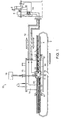
- a degaussing system 10 which includes one or more HTS wire bundles 2 enclosed in an elongate flexible bundle cryostat 4 (only a portion of the cryostat 4 is shown).
- the opposed ends of the HTS wire bundles 2 are received within a junction box 14, which serves to consolidate the various systems needed to achieve degaussing.
- a refrigeration unit 6 provides a suitable gas or liquid coolant 12 (e.g., cooled helium gas or liquid nitrogen) to an interior of a connection box 16 provided within the junction box 14, as well as to the bundle cryostat 4 via the connection box 16.
- a pump 8 circulates the coolant 12 from the refrigeration unit 6, through the connection box 16 and through the bundle cryostat 4 to maintain the individual HTS wire conductors 3 within the HTS wire bundles 2 at a temperature at which superconduction is possible.
- power is supplied from a power supply 18 to the HTS wire bundle 2 via the connection box 16.
- the refrigeration unit 6 and the pump 8 are shown as housed separately from the junction box 14.
- the system 10 is not limited to this configuration.
- the refrigeration unit 6 and pump 8 may be integrated within junction box 14.
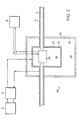
- the junction box 14, shown schematically in Fig. 2 is a cryostat and includes an outer housing 15 and an inner housing corresponding to the connection box 16.
- the connection box (inner housing) 16 is substantially smaller in size than the outer housing 15 such that a relative large intermediate space 24 is provided between the outer housing 15 and the connection box 16.
- the intermediate space 24 is vacated so that a vacuum exists in the intermediate space 24.
- a layer of insulation (not shown) may be provided on an inner surface 25 of the outer housing 15, or on an outer surface 27 of the inner housing 16.
- a supply of coolant 12 is provided to the interior space 26 of the inner housing 16 by the refrigeration unit 6.
- the junction box 14 is configured to receive opposed first 11 and second 19 ends of one or more HTS wire bundles 2 (only one wire bundle is shown).
- the HTS wire bundle 2 is formed of multiple HTS wires 3.
- the HTS wire 3 is a "flat" wire, that is, the HTS wire 3 is formed to have a generally rectangular cross section in which the wire width is large relative to the wire depth, although the HTS wires 3 are not limited to this shape or proportion.
- the size of the cross-sectional area of the HTS flat wire 3 is related to the current carrying capacity of the wire such that an increase in the cross sectional area increases the current carrying capacity of the wire.
- the particular cross sectional area of the HTS wire 3 is determined by the specific requirements of the particular application.
- HTS wire 3 employed is also determined by the specific requirements of the particular application.
- types of high temperature superconductors that may be employed in the HTS wire bundle 2 include, but are not limited to, copper oxide superconductors such as bismuth strontium calcium copper oxide (BSCCO), yttrium barium copper oxide (YBCO), and magnesium diboride (MgB 2 ).
- individual flat wires 3 may be provided with a coating 5 of a compliant material prior to stacking.
- the coating material 5 may be a conductor, a semiconductor, or an insulator.
- the coating material 5 may be Kapton® (registered trademark of E. I. du Pont de Nemours and Company) polyimide film.
- HTS flat wires 3 are arranged in a stacked configuration 7, although the inventive concept described herein is not limited to a stacked configuration.
- individual HTS flat wires 3 may be stacked so that adjacent HTS flat wires 3 may be slightly offset in the width direction.
- the resulting stack 7 has a cross-sectional shape that is a parallelogram such as a rhomboid.
- the stack 7 is maintained in the desired configuration by any appropriate means, such as wrapping the stack 7 with polymer, paper, metal foil strip or the like (not shown).
- each stack 7 is formed of eight HTS flat wires 3.
- each stack 7 may be constituted by any number of HTS flat wires 3.
- several stacks 7 may be assembled together to form a stack superstructure 9.
- three stacks 7 of HTS flat wires 3 are assembled to form a triad superstructure 9 having a substantially hexagonally-shaped cross-section.
- any number of stacks 7 may be assembled in any desired arrangement to form a stack superstructure 9. The number of stacks 7 employed and particular configuration of the stacks 7 is determined by the specific requirements of the particular application.
- the stack superstructure 9 is maintained in the desired configuration by any appropriate means.
- the stack superstructure 9 is maintained in the desired configuration by providing the stack superstructure 9 with an overwrap 21 formed of polymer tape or a preformed polymer helix such as a polytetraflouroethylene (TEFLON) wrap.
- TEFLON polytetraflouroethylene
- HTS wire bundle 2 refers to a stack superstructure 9 surrounded by a helical overwrap 21.
- Each HTS wire bundle 2 is elongate, and may range in length from a few meters to hundreds of meters.
- Each HTS wire bundle 2 includes opposed first 11 and second 19 wire bundle ends. The first and second wire bundle ends 11, 19 are received within the junction box 14 such that each of the first and second wire bundle ends 11, 19 extend into the interior space 26 of the connection box 16.
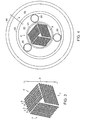
- the HTS wire bundle 2 is disposed within the flexible bundle cryostat 4 ( Fig. 4 ).
- the bundle cryostat 4 is an assembly of elongate, coaxially arranged stainless steel tubular housings 62, 64.
- the HTS wire bundle 2 is disposed within an interior space 61 of the inner housing 62, and is supported within the interior space 61 by one or more support members 60.
- An intermediate space 66 is provided between the inner housing 62 and the outer housing 64. The intermediate space 66 is vacated so that a vacuum exists in the intermediate space 66.
- the length of the bundle cryostat 4 generally corresponds to the length of the HTS wire bundle 2, and thus can be in the range of a few meters to hundreds of meters.
- the bundle cryostat 4 is joined to the junction box 14 so that the interior space 61 of the inner housing 62 opens to, and is in fluid communication with, the interior space 26 of the connection box 16.
- Fittings 67 are provided at respective opposed ends 63, 65 of the bundle cryostat 4 which permit the coolant 12 to be injected under pressure into the open interior space 61.
- the coolant 12, which flows between the respective opposed ends 63, 65 of the bundle cryostat 4 serves to maintain the HTS wires 3 at a temperature which permits the HTS wires 3, and thus the HTS wire bundle 2, to exhibit the property of superconductivity.
- a flow restrictor 13 can be placed in the HTS wire bundle 2.
- the fittings 67 are configured to fix the ends 63, 65 of the bundle cryostat 4 to the outer housing 15. In other embodiments (not shown) the fittings 67 may fix the ends 63, 65 of the bundle cryostat 4 to the connection box 16.
- An electrical interface device 30 is disposed in the interior space 26 of the connection box 16 ( Fig. 5 ).
- the interior space 26 receives coolant 12 from the refrigeration unit 6, and thus is maintained at a sufficiently low temperature to permit superconductivity therewithin.
- the interface device 30 is a single entity that is configured to received each end of each HTS wire 3 and superconductively connect the individual HTS wires 3 in series, whereby one or more lengths of multi-conductor HTS wire bundle 2 are converted into a single, multi-turn degaussing winding. In this arrangement, each turn of the multi-turn winding is constituted by one HTS wire 3.
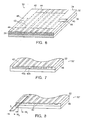
- the interface device includes a substrate 32 in which several interface conductors 42 are provided ( Fig. 6 ).
- the substrate 32 may be formed of a conventional insulative material of the type used in printed circuit boards.
- the substrate 32 may be formed of an epoxy resin, such as FR-4.
- the substrate is not limited to this material, and may be formed of other insulative material having properties which accommodate supporting electrical conductors in long term use at or below the critical temperature T c found within the interior space 26.
- the substrate 32 has an upper surface 34, and an opposed lower surface 36.
- directional references such as “upper” and “lower” are used to provide a relational description with reference to an orientation shown in the figures, and are not intended to be absolute or limiting.
- a thermally-conductive layer 46 is formed on the lower surface 36, and serves to conduct heat away from interface conductors 42 disposed within the substrate 32.
- the thermally conductive layer 46 is formed of copper.
- Substrate 32 further includes power supply lands 48, 49 that permit connection of two of the interface conductors 42 within the interface device 30 to the power supply 18. As discussed further below, when the individual HTS wires 3 are connected to the respective interface conductors 42, power is supplied to the HTS wire bundle 2 from the power supply 18 via the power supply lands 48, 49. Power supply lands 48, 49 may receive power from power supply 18 via conventional copper wire conductors 18a, 18b, which may by connected to the lands 48, 49 by soldering or other conventional means.
- the power supply lands 48, 49 are formed of superconductive materials, and thus the lands 48, 49 are configured to provide a long current transfer zone since current transfer must occur over a length that is proportional to the difference in cross-sectional area of the power supply conductor 18a, 18b and the HTS interface conductor 42.
- a single substrate 32 is disposed within the connection box 16.
- the substrate 32 may be formed to be plate-like in shape, as shown in Fig. 6 .
- the substrate may be formed to provide a curved surface. Such a curved surface may be C-shaped, circular, or spiral shaped when viewed in cross-section.
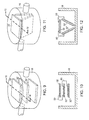
- more than one substrate 32 is disposed within the connection box 16 ( Figs. 9-12 ), and the serial electrical connection between respective interface conductors 42 of the different substrates 32, 32',32"... is achieved using jumpers 50 that extend between the respective interface conductors 42 ( Figs. 10, 12 ).
- the substrate sheets 32, 32', 32" when more than one substrate 32 is employed, the substrate sheets 32, 32', 32"... are disposed within the connection box 16 in a parallel, spaced apart arrangement ( Fig. 9, 10 ). In other embodiments, the substrate sheets 32 are arranged substantially edge to edge to form a polygon when viewed in section ( Fig. 11, 12 ).
- Interface conductors 42 are provided within the substrate 32, and are formed of superconductive material.
- the particular type of superconductive material employed to form the interface conductors 42 is determined by the specific requirements of the particular application.
- Examples of types of high temperature superconductors that may be used to form interface conductors 42 include, but are not limited to, copper oxide superconductors such as bismuth strontium calcium copper oxide (BSCCO), yttrium barium copper oxide (YBCO), and magnesium diboride (MgB 2 ).
- the interface conductors 42 will be formed of the same superconductive material that is used to form the HTS wires 3.
- the interface conductors 42 are disposed in the substrate 32 so as to extend from a first end 38 to a second end 40 of the substrate 32.
- the interface conductors 42 are deposited on the upper surface 34.
- the interface conductors 42 are laminated within the substrate, and include elongate exposed connection lands (connection points) 44 corresponding to each end of each interface conductor 42.
- the interface conductors 42 are arranged to extend in parallel within the substrate 32. Like the HTS flat wires 3, the interface conductors 42 are formed to have a generally rectangular cross section in which the interface conductor width w 1 is large relative to the conductor depth. The interface conductors 42 are oriented within the substrate 32 so that the conductor width is generally parallel to the upper surface 34 of the substrate 32.
- the interface conductor width w 1 is substantially the same as the width w 2 of the HTS wire 3.
- the interface conductor 42 may be formed of two, vertically stacked interface conductors 42a, 42b ( Fig. 7 ). By this arrangement, the current carrying capacity of the interface conductor is greater than that of the HTS wire 3. For example, by stacking two interface conductors 42a, 42b, the current carrying capacity of the interface conductor 42 is about twice the current carrying capacity of the HTS wire 3.
- an arrangement in which the interface conductor 42 is provided in a width w 1 that is much greater than, for example two times the width w 2 of the HTS wire 3, may be employed to achieve increased current carrying capacity ( Fig. 8 ).
- the interface conductors 42 are arranged within the substrate 32 in a way that joins respective ends 11, 19 of the HTS wire bundle 2 such that the individual HTS wires 3 are serially connected.
- An exemplary arrangement of interface conductors 42, including power supply lands 48, 49, is shown schematically in Fig. 13 , in which the interface conductors 42 are numbered from C1 to C13.
- the HTS wires 3 of one or more HTS wire bundles 2 may be received by the interface device 30.
- respective opposed ends of each HTS wire 3 are represented alphabetically, whereby both ends of a first HTS wire 3 are labeled "A”, both ends of another HTS wire 3 are labeled "B", et cetera, until each HTS wire 3 is uniquely represented.
- one or more HTS wire bundles 2 provide twelve HTS wires 3, represented as A, B, C, D, E, F, G, H, I, J, K, and L.
- a first end of the HTS wire A is connected to interface conductor C1 at the first end 38 of the substrate 32.
- interface conductor C1 corresponds to a power supply land 48, for example corresponding to a positive pole of the power supply 18.
- a first end of the HTS wire B is connected to interface conductor C2 at the first end 38 of the substrate 32
- a first end of the HTS wire C is connected to interface conductor C3 at the first end 38 of the substrate 32, and so forth.
- a second end of the HTS wire A is connected to interface conductor C2 at the second end 40 of the substrate 32.
- the connection location of the second end of the HTS wire 3 is offset by one interface conductor 42 relative to the connection location of its first end.
- a second end of the HTS wire B is connected to interface conductor C3 at the second end 40 of the substrate 32
- a second end of the HTS wire C is connected to interface conductor C4 at the second end 40 of the substrate 32 and so forth, continuing in this manner until the last HTS wire L is connected to interface conductor C13.
- interface conductor C13 corresponds to a power supply land 49, for example corresponding to a negative pole of the power supply 18.
- the interface device 30 is configured to receive opposed first and second ends 11, 19 of the HTS wire bundle 2, and to connect HTS wires 3 from the first end 11 to respective HTS wires 3 of the second end 19 to form at least one superconductive multi-turn winding.
- one or more HTS wire bundles 2 provide twelve HTS wires 3, and the interface device 30 has thirteen interface conductors 42. It is understood that the interface device 30 is not limited in the number of HTS wires that can be received. In particular, the interface device 30 is not limited to having thirteen interface conductors 42, but may be provided with greater or fewer numbers of interface conductors 42 as required by the specific application. For example, it is well within the art to provide one or more substrates 32 having interface conductors 42 as needed to accommodate the number of HTS wires 3 employed in a particular application.
- the interface device 30 For a junction box 14 configuration in which one or more HTS wire bundles 2 are connected to a single substrate 32, and the HTS wire bundles 2 comprise n HTS wires, then in order to form an electromagnetic winding employing all n of the HTS wires 3 of the HTS wire bundle 2, the interface device 30 must be provided with at least n+1 interface conductors 42 embedded in the substrate 32 such that at least n-1 interface conductors extend from the first end 38 to the second end 40.
- the first end 38 of the interface device 30 is connected to the first end 11 of the HTS wire bundle 2 such that the n i th interface conductor is joined to the n i th wire bundle conductor, and the second end of the interface device 40 is connected to the second end 19 of the HTS wire bundle 2 such that the n i th interface conductor is joined to the (n i +1)th wire bundle conductor.
- one end of the first interface conductor (n 1 ) is configured to accept power input
- one end of the (n+1) st interface conductor is configured to provide power output.
- the first end of the nth HTS wire 3 is connected to a first end of the nth interface conductor, and the second end of the nth HTS wire 3 is connected to the second end of the (n+1)th interface conductor.
- the interface device 30 is not limited to this particular sequence of connections.
- One of ordinary skill in the art is capable of determining other sequences of connections in which a multi-turn winding is obtained,
- connection box 16 may be configured to focus the flow of coolant 12 directly at the interface device 30. This can be achieved by providing an appropriate structure such as a nozzle (not shown) or deflector 17 ( Fig. 5 ) at the inlet of the coolant 12 to the connection box 16, or at a location intermediate the inlet and the interface device 30.
Landscapes
- Engineering & Computer Science (AREA)
- Power Engineering (AREA)
- Aviation & Aerospace Engineering (AREA)
- Superconductors And Manufacturing Methods Therefor (AREA)
- Containers, Films, And Cooling For Superconductive Devices (AREA)
Claims (14)
- Vorrichtung zum seriellen Verbinden einzelner Leiter eines aus mehreren Leitern bestehenden supraleitfähigen Drahtbündels (2), um mindestens eine aus mehreren Windungen bestehende Wicklung zu bilden, die Folgendes umfasst:- eine elektrische Schnittstellenvorrichtung (30), die einzelne Hochtemperatur-Supraleiter (HTS)-Bündelleiter (3) eines Drahtbündels seriell verbindet, um mindestens eine aus mehreren Windungen bestehende Supraleiterwicklung zu bilden, wobei die Schnittstellenvorrichtung ein Eingangsende und ein Ausgangsende umfasst;wobei die Vorrichtung dadurch gekennzeichnet ist, dass sie des Weiteren Folgedes umfasst:- ein Substrat (32) und mehrere HTS-Schnittstellenleiter (42), die dergestalt in das Substrat (32) eingebettet sind, dass sich mindestens einige der Schnittstellenleiter von dem Eingangsende zu dem Ausgangsende erstrecken.
- Vorrichtung nach Anspruch 1, die des Weiteren Folgendes umfasst:- mindestens ein Hochtemperatur-Supraleiter (HTS)-Drahtbündel (2), wobei umfasst HTS-Drahtbündel mehrere HTS-Bündelleiter (3) enthält, wobei jeder Bündelleiter ein erstes (11) und ein zweites (19) Bündelleiter-Ende aufweist, die einander entgegengesetzt sind,- ein Gehäuse (16),- eine elektrische Schnittstellenvorrichtung (30), die in dem Gehäuse angeordnet ist, wobei die Schnittstellenvorrichtung dafür ausgebildet ist, jedes Ende jedes Bündelleiters jedes HTS-Drahtbündels zu empfangen,
wobei die Schnittstellenvorrichtung dafür ausgebildet ist, ein jeweiliges erstes Ende von Bündelleitern elektrisch mit jeweiligen zweiten Enden anderer Bündelleiter zu verbinden, um mindestens eine aus mehreren Windungen bestehende Wicklung zu bilden. - Vorrichtung nach Anspruch 2, wobei die Schnittstellenvorrichtung (30) dafür ausgebildet ist, eine supraleitfähige elektrische Verbindung der jeweiligen ersten Enden (11) von Bündelleitern mit den jeweiligen zweiten Enden (19) anderer Bündelleiter herzustellen, um mindestens eine aus mehreren Windungen bestehende superleitende Wicklung zu bilden.
- Vorrichtung nach Anspruch 2, wobei das Gehäuse (16) einen Kryostat definiert.
- Vorrichtung nach Anspruch 1, wobei die elektrische Schnittstellenvorrichtung (30) Folgendes umfasst:- ein Substrat (32), und- mehrere Schnittstellenleiter (42), die aus einem supraleitfähigen Material gebildet sind, wobei die Schnittstellenleiter auf dem Substrat angeordnet sind.
- Vorrichtung nach Anspruch 5,
wobei das Substrat (32) zu einem Flachmaterial (32, 32', 32") geformt ist, das eine erste Seite und eine zweite, der ersten Seite gegenüberliegende Seite aufweist,
wobei sich die mehreren Schnittstellenleiter (42) innerhalb des Substrats (30) dergestalt erstrecken, dass mindestens ein Abschnitt der Verbindungsabsätze (44), die jedem Ende jedes Schnittstellenleiters entsprechen, auf der ersten Seite des Substrats frei liegt; und
wobei eine Schicht (46) aus wärmeleitfähigem Material auf der zweiten Seite des Substrats (32) angeordnet ist. - Vorrichtung nach Anspruch 2, wobei
das mindestens eine Drahtbündel (2) ein Drahtbündel mit n Leitern aufweist und die elektrische Schnittstellenvorrichtung (30) Folgendes umfasst:- ein Eingangsende,- ein Ausgangsende,- ein Substrat (32); und- n+1 Schnittstellenleiter (42), die dergestalt in das Substrat (32) eingebettet sind, dass sich mindestens n-1 Schnittstellenleiter von dem Eingangsende zu dem Ausgangsende erstrecken,wobei
das Eingangsende oder das Ausgangsende der Schnittstellenvorrichtung mit dem ersten Ende (11) des Drahtbündels dergestalt verbunden ist, dass der ni -te Schnittstellenleiter mit dem ni -ten Drahtbündelleiter verbunden ist und das andere des Eingangsendes und des Ausgangsendes der Schnittstellenvorrichtung (30) mit dem zweiten Ende (19) des Drahtbündels dergestalt verbunden ist, dass der ni-te Schnittstellenleiter mit dem (ni+1)-ten Drahtbündelleiter verbunden ist. - Vorrichtung nach Anspruch 1, wobei die elektrische Schnittstellenvorrichtung (30) Folgendes umfasst:- mehrere Substrate (32, 32', 32"), wobei jedes Substrat mehrere Schnittstellenleiter (42) enthält, die aus einem supraleitfähigen Material gebildet sind, wobei die Schnittstellenleiter auf dem jeweiligen Substrat angeordnet sind.
- Vorrichtung nach Anspruch 1, wobei
das Eingangsende oder das Ausgangsende der Schnittstellenvorrichtung (30) mit dem ersten Ende (11) des Drahtbündels dergestalt verbunden ist, dass ein n-ter Schnittstellenleiter mit einem n-ten Bündelleiter verbunden
ist, und
das andere des Eingangsendes und des Ausgangsendes der elektrischen Schnittstellenvorrichtung mit dem zweiten Ende (19) des Drahtbündels dergestalt verbunden ist, dass der n-te HTS-Schnittstellenleiter mit dem (n+1)-ten Bündelleiter verbunden ist. - Vorrichtung nach Anspruch 1,
wobei das Substrat (32) zu einem Flachmaterial geformt ist, das eine erste Seite und eine zweite, der ersten Seite gegenüberliegende Seite aufweist, und
wobei sich die mehreren HTS-Schnittstellenleiter (42) innerhalb des Substrats dergestalt erstrecken, dass mindestens ein Abschnitt der Verbindungsabsätze (44), die jedem Ende jedes HTS-Schnittstellenleiters entsprechen, auf der ersten Seite des Substrats frei liegen. - Vorrichtung nach Anspruch 1, die des Weiteren eine Schicht (46) aus wärmeleitfähigem Material umfasst, die auf einer Seite des Substrats (32) angeordnet ist.
- Vorrichtung nach Anspruch 1,
wobei ein einzelner HTS-Schnittstellenleiter (42) eine erste Stromtransportkapazität hat, wobei
ein einzelner HTS-Bündelleiter (3) eine zweite Stromkapazität hat, und wobei die erste Stromtransportkapazität größer ist als die zweite Stromtransportkapazität. - Vorrichtung nach Anspruch 1, wobei die elektrische Schnittstellenvorrichtung (30) mehrere Substrate umfasst.
- Vorrichtung nach Anspruch 1, wobei
ein erstes Ende (11) eines HTS-Schnittstellenleiters dafür ausgebildet ist, an einen Eingangsleiter einer Stromversorgung angeschlossen zu werden, und ein zweites Ende (19) des einen HTS-Schnittstellenleiters dem Eingangsende der Schnittstellenvorrichtung entspricht, und ein erstes Ende eines anderen Schnittstellen-HTS-Leiters dafür ausgebildet ist, an einen Ausgangsleiter einer Stromversorgung angeschlossen zu werden, und ein zweites Ende des anderen HTS-Schnittstellenleiters dem Ausgangsende der Schnittstellenvorrichtung entspricht.
Applications Claiming Priority (2)
| Application Number | Priority Date | Filing Date | Title |
|---|---|---|---|
| US12/057,836 US8731629B2 (en) | 2008-03-28 | 2008-03-28 | Interface device for a high temperature superconductor degaussing system junction box |
| PCT/US2009/037524 WO2009120553A1 (en) | 2008-03-28 | 2009-03-18 | Interface device and junction box for a htsc degaussing coil |
Publications (2)
| Publication Number | Publication Date |
|---|---|
| EP2257953A1 EP2257953A1 (de) | 2010-12-08 |
| EP2257953B1 true EP2257953B1 (de) | 2014-11-19 |
Family
ID=40690773
Family Applications (1)
| Application Number | Title | Priority Date | Filing Date |
|---|---|---|---|
| EP09725012.0A Active EP2257953B1 (de) | 2008-03-28 | 2009-03-18 | Schnittstelle und verbindungsdose für eine htsl-entmagnetisierungsspule |
Country Status (7)
| Country | Link |
|---|---|
| US (1) | US8731629B2 (de) |
| EP (1) | EP2257953B1 (de) |
| KR (1) | KR101330233B1 (de) |
| AU (1) | AU2009228535B2 (de) |
| CA (1) | CA2719469C (de) |
| ES (1) | ES2528296T3 (de) |
| WO (1) | WO2009120553A1 (de) |
Families Citing this family (9)
| Publication number | Priority date | Publication date | Assignee | Title |
|---|---|---|---|---|
| DE4426753A1 (de) * | 1994-07-28 | 1996-02-01 | Bayer Ag | Mittel zur Bekämpfung von Pflanzenschädlingen |
| US8731629B2 (en) | 2008-03-28 | 2014-05-20 | American Superconductor Corporation | Interface device for a high temperature superconductor degaussing system junction box |
| KR100957623B1 (ko) * | 2009-10-30 | 2010-05-13 | 한국전력공사 | 고온 초전도체 교류손실 측정 장치 |
| WO2015006350A2 (en) | 2013-07-09 | 2015-01-15 | Advanced Conductor Technologies Llc | Multiphase coaxial superconducting cables and corc degaussing system |
| EP2919325B1 (de) * | 2014-03-11 | 2017-02-22 | Nexans | Endenabschluß für ein supraleitfähiges elektrisches Kabel |
| JP6853267B2 (ja) | 2016-01-21 | 2021-03-31 | ブルックヘイブン テクノロジー グループ, インコーポレイテッド | 第2世代超伝導フィラメント及びケーブル |
| NZ752435A (en) | 2016-09-07 | 2022-10-28 | Brookhaven Tech Group Inc | Reel-to-reel exfoliation and processing of second generation superconductors |
| WO2018227083A1 (en) | 2017-06-09 | 2018-12-13 | Brookhaven Technology Group, Inc. | Flexible multi-filament high temperature superconducting cable |
| GB2574210B (en) * | 2018-05-30 | 2022-09-28 | Siemens Healthcare Ltd | Superconducting joints |
Family Cites Families (7)
| Publication number | Priority date | Publication date | Assignee | Title |
|---|---|---|---|---|
| DE2205045A1 (de) | 1972-02-03 | 1973-08-09 | Wilhelm Dr Ing Lepper | Spulen fuer gleich- oder wechselstrom |
| JPS62234880A (ja) * | 1986-04-04 | 1987-10-15 | 株式会社日立製作所 | 超電導線の接合方法 |
| DE3905424C2 (de) | 1989-02-22 | 1994-02-17 | Vacuumschmelze Gmbh | Verfahren zur Herstellung einer supraleitenden Verbindung zwischen oxidischen Supraleitern |
| JP2003123866A (ja) | 2001-10-15 | 2003-04-25 | Mitsubishi Heavy Ind Ltd | 超伝導線材の接続構造 |
| US7608785B2 (en) * | 2004-04-27 | 2009-10-27 | Superpower, Inc. | System for transmitting current including magnetically decoupled superconducting conductors |
| CA2658009C (en) * | 2006-07-21 | 2013-05-14 | American Superconductor Corporation | High-current, compact flexible conductors containing high temperature superconducting tapes |
| US8731629B2 (en) | 2008-03-28 | 2014-05-20 | American Superconductor Corporation | Interface device for a high temperature superconductor degaussing system junction box |
-
2008
- 2008-03-28 US US12/057,836 patent/US8731629B2/en active Active
-
2009
- 2009-03-18 CA CA2719469A patent/CA2719469C/en active Active
- 2009-03-18 EP EP09725012.0A patent/EP2257953B1/de active Active
- 2009-03-18 AU AU2009228535A patent/AU2009228535B2/en active Active
- 2009-03-18 ES ES09725012.0T patent/ES2528296T3/es active Active
- 2009-03-18 WO PCT/US2009/037524 patent/WO2009120553A1/en not_active Ceased
- 2009-03-18 KR KR1020107023902A patent/KR101330233B1/ko active Active
Also Published As
| Publication number | Publication date |
|---|---|
| US8731629B2 (en) | 2014-05-20 |
| ES2528296T3 (es) | 2015-02-06 |
| AU2009228535B2 (en) | 2013-05-16 |
| US20090247411A1 (en) | 2009-10-01 |
| CA2719469C (en) | 2015-05-19 |
| KR20100127297A (ko) | 2010-12-03 |
| CA2719469A1 (en) | 2009-10-01 |
| WO2009120553A1 (en) | 2009-10-01 |
| EP2257953A1 (de) | 2010-12-08 |
| AU2009228535A1 (en) | 2009-10-01 |
| KR101330233B1 (ko) | 2013-11-15 |
Similar Documents
| Publication | Publication Date | Title |
|---|---|---|
| EP2257953B1 (de) | Schnittstelle und verbindungsdose für eine htsl-entmagnetisierungsspule | |
| US10943712B2 (en) | Superconducting cables and methods of making the same | |
| EP0786783B1 (de) | Verfahren zur Leitung eines vorgegebenen Stroms durch ein supraleitendes Hochleistungskabel | |
| US8044752B2 (en) | High-current, compact flexible conductors containing high temperature superconducting tapes | |
| US11488747B2 (en) | Superconducting power cable system | |
| KR101156972B1 (ko) | 자기적으로 분리된 초전도 전도체를 포함하는 전류 전송시스템 | |
| US7151225B2 (en) | Superconducting cable and superconducting cable line using the same | |
| US11394263B2 (en) | Superconductive electric coil device and rotor comprising a coil device | |
| EP1147524A1 (de) | Supraleitendes kabel | |
| KR102580374B1 (ko) | Lts 및 hts 관내도체 의 하이브리드 조인트 조립체, 이의 lts 및 hts 관내도체의 하이브리드 조인트 방법 및 이에 의한 lts 관내도체의 연장 방법 | |
| WO2007080794A1 (ja) | 超電導ケーブル | |
| US20120103659A1 (en) | Superconducting cable system |
Legal Events
| Date | Code | Title | Description |
|---|---|---|---|
| PUAI | Public reference made under article 153(3) epc to a published international application that has entered the european phase |
Free format text: ORIGINAL CODE: 0009012 |
|
| 17P | Request for examination filed |
Effective date: 20100902 |
|
| AK | Designated contracting states |
Kind code of ref document: A1 Designated state(s): AT BE BG CH CY CZ DE DK EE ES FI FR GB GR HR HU IE IS IT LI LT LU LV MC MK MT NL NO PL PT RO SE SI SK TR |
|
| AX | Request for extension of the european patent |
Extension state: AL BA RS |
|
| DAX | Request for extension of the european patent (deleted) | ||
| 17Q | First examination report despatched |
Effective date: 20131219 |
|
| RIC1 | Information provided on ipc code assigned before grant |
Ipc: H01F 6/06 20060101ALI20140410BHEP Ipc: B63G 9/06 20060101AFI20140410BHEP Ipc: H01F 13/00 20060101ALN20140410BHEP |
|
| REG | Reference to a national code |
Ref country code: DE Ref legal event code: R079 Ref document number: 602009027846 Country of ref document: DE Free format text: PREVIOUS MAIN CLASS: H01F0006060000 Ipc: B63G0009060000 |
|
| GRAP | Despatch of communication of intention to grant a patent |
Free format text: ORIGINAL CODE: EPIDOSNIGR1 |
|
| INTG | Intention to grant announced |
Effective date: 20140606 |
|
| RIC1 | Information provided on ipc code assigned before grant |
Ipc: H01F 13/00 20060101ALN20140526BHEP Ipc: H01F 6/06 20060101ALI20140526BHEP Ipc: B63G 9/06 20060101AFI20140526BHEP |
|
| GRAS | Grant fee paid |
Free format text: ORIGINAL CODE: EPIDOSNIGR3 |
|
| GRAA | (expected) grant |
Free format text: ORIGINAL CODE: 0009210 |
|
| AK | Designated contracting states |
Kind code of ref document: B1 Designated state(s): AT BE BG CH CY CZ DE DK EE ES FI FR GB GR HR HU IE IS IT LI LT LU LV MC MK MT NL NO PL PT RO SE SI SK TR |
|
| REG | Reference to a national code |
Ref country code: GB Ref legal event code: FG4D |
|
| REG | Reference to a national code |
Ref country code: CH Ref legal event code: EP |
|
| REG | Reference to a national code |
Ref country code: AT Ref legal event code: REF Ref document number: 696828 Country of ref document: AT Kind code of ref document: T Effective date: 20141215 |
|
| REG | Reference to a national code |
Ref country code: IE Ref legal event code: FG4D |
|
| REG | Reference to a national code |
Ref country code: DE Ref legal event code: R096 Ref document number: 602009027846 Country of ref document: DE Effective date: 20141231 |
|
| REG | Reference to a national code |
Ref country code: ES Ref legal event code: FG2A Ref document number: 2528296 Country of ref document: ES Kind code of ref document: T3 Effective date: 20150206 |
|
| REG | Reference to a national code |
Ref country code: NL Ref legal event code: T3 |
|
| REG | Reference to a national code |
Ref country code: AT Ref legal event code: MK05 Ref document number: 696828 Country of ref document: AT Kind code of ref document: T Effective date: 20141119 |
|
| REG | Reference to a national code |
Ref country code: GR Ref legal event code: EP Ref document number: 20150400337 Country of ref document: GR Effective date: 20150318 |
|
| REG | Reference to a national code |
Ref country code: LT Ref legal event code: MG4D |
|
| PG25 | Lapsed in a contracting state [announced via postgrant information from national office to epo] |
Ref country code: FI Free format text: LAPSE BECAUSE OF FAILURE TO SUBMIT A TRANSLATION OF THE DESCRIPTION OR TO PAY THE FEE WITHIN THE PRESCRIBED TIME-LIMIT Effective date: 20141119 Ref country code: PT Free format text: LAPSE BECAUSE OF FAILURE TO SUBMIT A TRANSLATION OF THE DESCRIPTION OR TO PAY THE FEE WITHIN THE PRESCRIBED TIME-LIMIT Effective date: 20150319 Ref country code: NO Free format text: LAPSE BECAUSE OF FAILURE TO SUBMIT A TRANSLATION OF THE DESCRIPTION OR TO PAY THE FEE WITHIN THE PRESCRIBED TIME-LIMIT Effective date: 20150219 Ref country code: LT Free format text: LAPSE BECAUSE OF FAILURE TO SUBMIT A TRANSLATION OF THE DESCRIPTION OR TO PAY THE FEE WITHIN THE PRESCRIBED TIME-LIMIT Effective date: 20141119 Ref country code: IS Free format text: LAPSE BECAUSE OF FAILURE TO SUBMIT A TRANSLATION OF THE DESCRIPTION OR TO PAY THE FEE WITHIN THE PRESCRIBED TIME-LIMIT Effective date: 20150319 |
|
| PG25 | Lapsed in a contracting state [announced via postgrant information from national office to epo] |
Ref country code: AT Free format text: LAPSE BECAUSE OF FAILURE TO SUBMIT A TRANSLATION OF THE DESCRIPTION OR TO PAY THE FEE WITHIN THE PRESCRIBED TIME-LIMIT Effective date: 20141119 Ref country code: LV Free format text: LAPSE BECAUSE OF FAILURE TO SUBMIT A TRANSLATION OF THE DESCRIPTION OR TO PAY THE FEE WITHIN THE PRESCRIBED TIME-LIMIT Effective date: 20141119 Ref country code: CY Free format text: LAPSE BECAUSE OF FAILURE TO SUBMIT A TRANSLATION OF THE DESCRIPTION OR TO PAY THE FEE WITHIN THE PRESCRIBED TIME-LIMIT Effective date: 20141119 Ref country code: PL Free format text: LAPSE BECAUSE OF FAILURE TO SUBMIT A TRANSLATION OF THE DESCRIPTION OR TO PAY THE FEE WITHIN THE PRESCRIBED TIME-LIMIT Effective date: 20141119 Ref country code: SE Free format text: LAPSE BECAUSE OF FAILURE TO SUBMIT A TRANSLATION OF THE DESCRIPTION OR TO PAY THE FEE WITHIN THE PRESCRIBED TIME-LIMIT Effective date: 20141119 Ref country code: HR Free format text: LAPSE BECAUSE OF FAILURE TO SUBMIT A TRANSLATION OF THE DESCRIPTION OR TO PAY THE FEE WITHIN THE PRESCRIBED TIME-LIMIT Effective date: 20141119 |
|
| PG25 | Lapsed in a contracting state [announced via postgrant information from national office to epo] |
Ref country code: CZ Free format text: LAPSE BECAUSE OF FAILURE TO SUBMIT A TRANSLATION OF THE DESCRIPTION OR TO PAY THE FEE WITHIN THE PRESCRIBED TIME-LIMIT Effective date: 20141119 Ref country code: RO Free format text: LAPSE BECAUSE OF FAILURE TO SUBMIT A TRANSLATION OF THE DESCRIPTION OR TO PAY THE FEE WITHIN THE PRESCRIBED TIME-LIMIT Effective date: 20141119 Ref country code: EE Free format text: LAPSE BECAUSE OF FAILURE TO SUBMIT A TRANSLATION OF THE DESCRIPTION OR TO PAY THE FEE WITHIN THE PRESCRIBED TIME-LIMIT Effective date: 20141119 Ref country code: SK Free format text: LAPSE BECAUSE OF FAILURE TO SUBMIT A TRANSLATION OF THE DESCRIPTION OR TO PAY THE FEE WITHIN THE PRESCRIBED TIME-LIMIT Effective date: 20141119 Ref country code: DK Free format text: LAPSE BECAUSE OF FAILURE TO SUBMIT A TRANSLATION OF THE DESCRIPTION OR TO PAY THE FEE WITHIN THE PRESCRIBED TIME-LIMIT Effective date: 20141119 |
|
| REG | Reference to a national code |
Ref country code: DE Ref legal event code: R097 Ref document number: 602009027846 Country of ref document: DE |
|
| PLBE | No opposition filed within time limit |
Free format text: ORIGINAL CODE: 0009261 |
|
| STAA | Information on the status of an ep patent application or granted ep patent |
Free format text: STATUS: NO OPPOSITION FILED WITHIN TIME LIMIT |
|
| 26N | No opposition filed |
Effective date: 20150820 |
|
| PG25 | Lapsed in a contracting state [announced via postgrant information from national office to epo] |
Ref country code: MC Free format text: LAPSE BECAUSE OF FAILURE TO SUBMIT A TRANSLATION OF THE DESCRIPTION OR TO PAY THE FEE WITHIN THE PRESCRIBED TIME-LIMIT Effective date: 20141119 Ref country code: LU Free format text: LAPSE BECAUSE OF FAILURE TO SUBMIT A TRANSLATION OF THE DESCRIPTION OR TO PAY THE FEE WITHIN THE PRESCRIBED TIME-LIMIT Effective date: 20150318 |
|
| REG | Reference to a national code |
Ref country code: CH Ref legal event code: PL |
|
| REG | Reference to a national code |
Ref country code: IE Ref legal event code: MM4A |
|
| PG25 | Lapsed in a contracting state [announced via postgrant information from national office to epo] |
Ref country code: CH Free format text: LAPSE BECAUSE OF NON-PAYMENT OF DUE FEES Effective date: 20150331 Ref country code: LI Free format text: LAPSE BECAUSE OF NON-PAYMENT OF DUE FEES Effective date: 20150331 Ref country code: IE Free format text: LAPSE BECAUSE OF NON-PAYMENT OF DUE FEES Effective date: 20150318 |
|
| PG25 | Lapsed in a contracting state [announced via postgrant information from national office to epo] |
Ref country code: SI Free format text: LAPSE BECAUSE OF FAILURE TO SUBMIT A TRANSLATION OF THE DESCRIPTION OR TO PAY THE FEE WITHIN THE PRESCRIBED TIME-LIMIT Effective date: 20141119 |
|
| REG | Reference to a national code |
Ref country code: FR Ref legal event code: PLFP Year of fee payment: 8 |
|
| PG25 | Lapsed in a contracting state [announced via postgrant information from national office to epo] |
Ref country code: MT Free format text: LAPSE BECAUSE OF FAILURE TO SUBMIT A TRANSLATION OF THE DESCRIPTION OR TO PAY THE FEE WITHIN THE PRESCRIBED TIME-LIMIT Effective date: 20141119 |
|
| REG | Reference to a national code |
Ref country code: FR Ref legal event code: PLFP Year of fee payment: 9 |
|
| PG25 | Lapsed in a contracting state [announced via postgrant information from national office to epo] |
Ref country code: BG Free format text: LAPSE BECAUSE OF FAILURE TO SUBMIT A TRANSLATION OF THE DESCRIPTION OR TO PAY THE FEE WITHIN THE PRESCRIBED TIME-LIMIT Effective date: 20141119 Ref country code: HU Free format text: LAPSE BECAUSE OF FAILURE TO SUBMIT A TRANSLATION OF THE DESCRIPTION OR TO PAY THE FEE WITHIN THE PRESCRIBED TIME-LIMIT; INVALID AB INITIO Effective date: 20090318 |
|
| PG25 | Lapsed in a contracting state [announced via postgrant information from national office to epo] |
Ref country code: BE Free format text: LAPSE BECAUSE OF FAILURE TO SUBMIT A TRANSLATION OF THE DESCRIPTION OR TO PAY THE FEE WITHIN THE PRESCRIBED TIME-LIMIT Effective date: 20141119 |
|
| REG | Reference to a national code |
Ref country code: FR Ref legal event code: PLFP Year of fee payment: 10 |
|
| PG25 | Lapsed in a contracting state [announced via postgrant information from national office to epo] |
Ref country code: MK Free format text: LAPSE BECAUSE OF FAILURE TO SUBMIT A TRANSLATION OF THE DESCRIPTION OR TO PAY THE FEE WITHIN THE PRESCRIBED TIME-LIMIT Effective date: 20141119 |
|
| PGFP | Annual fee paid to national office [announced via postgrant information from national office to epo] |
Ref country code: GR Payment date: 20200330 Year of fee payment: 12 Ref country code: IT Payment date: 20200323 Year of fee payment: 12 Ref country code: NL Payment date: 20200326 Year of fee payment: 12 |
|
| PGFP | Annual fee paid to national office [announced via postgrant information from national office to epo] |
Ref country code: TR Payment date: 20200303 Year of fee payment: 12 |
|
| PGFP | Annual fee paid to national office [announced via postgrant information from national office to epo] |
Ref country code: ES Payment date: 20200401 Year of fee payment: 12 |
|
| REG | Reference to a national code |
Ref country code: NL Ref legal event code: MM Effective date: 20210401 |
|
| PG25 | Lapsed in a contracting state [announced via postgrant information from national office to epo] |
Ref country code: NL Free format text: LAPSE BECAUSE OF NON-PAYMENT OF DUE FEES Effective date: 20210401 |
|
| PG25 | Lapsed in a contracting state [announced via postgrant information from national office to epo] |
Ref country code: GR Free format text: LAPSE BECAUSE OF NON-PAYMENT OF DUE FEES Effective date: 20211008 |
|
| PG25 | Lapsed in a contracting state [announced via postgrant information from national office to epo] |
Ref country code: IT Free format text: LAPSE BECAUSE OF NON-PAYMENT OF DUE FEES Effective date: 20210318 |
|
| REG | Reference to a national code |
Ref country code: ES Ref legal event code: FD2A Effective date: 20220523 |
|
| PG25 | Lapsed in a contracting state [announced via postgrant information from national office to epo] |
Ref country code: TR Free format text: LAPSE BECAUSE OF NON-PAYMENT OF DUE FEES Effective date: 20210318 |
|
| PG25 | Lapsed in a contracting state [announced via postgrant information from national office to epo] |
Ref country code: ES Free format text: LAPSE BECAUSE OF NON-PAYMENT OF DUE FEES Effective date: 20210319 |
|
| P01 | Opt-out of the competence of the unified patent court (upc) registered |
Effective date: 20230810 |
|
| PGFP | Annual fee paid to national office [announced via postgrant information from national office to epo] |
Ref country code: GB Payment date: 20260327 Year of fee payment: 18 |
|
| PGFP | Annual fee paid to national office [announced via postgrant information from national office to epo] |
Ref country code: DE Payment date: 20260327 Year of fee payment: 18 |
|
| PGFP | Annual fee paid to national office [announced via postgrant information from national office to epo] |
Ref country code: FR Payment date: 20260325 Year of fee payment: 18 |