EP2247301B1 - Use of therapeutic fusion peptides for the treatment and prevention of cancer - Google Patents
Use of therapeutic fusion peptides for the treatment and prevention of cancer Download PDFInfo
- Publication number
- EP2247301B1 EP2247301B1 EP09712807.8A EP09712807A EP2247301B1 EP 2247301 B1 EP2247301 B1 EP 2247301B1 EP 09712807 A EP09712807 A EP 09712807A EP 2247301 B1 EP2247301 B1 EP 2247301B1
- Authority
- EP
- European Patent Office
- Prior art keywords
- amino acid
- muc1
- seq
- cancer
- acid residues
- Prior art date
- Legal status (The legal status is an assumption and is not a legal conclusion. Google has not performed a legal analysis and makes no representation as to the accuracy of the status listed.)
- Not-in-force
Links
Images


Classifications
-
- A—HUMAN NECESSITIES
- A61—MEDICAL OR VETERINARY SCIENCE; HYGIENE
- A61K—PREPARATIONS FOR MEDICAL, DENTAL OR TOILETRY PURPOSES
- A61K38/00—Medicinal preparations containing peptides
- A61K38/16—Peptides having more than 20 amino acids; Gastrins; Somatostatins; Melanotropins; Derivatives thereof
- A61K38/17—Peptides having more than 20 amino acids; Gastrins; Somatostatins; Melanotropins; Derivatives thereof from animals; from humans
- A61K38/1703—Peptides having more than 20 amino acids; Gastrins; Somatostatins; Melanotropins; Derivatives thereof from animals; from humans from vertebrates
- A61K38/1709—Peptides having more than 20 amino acids; Gastrins; Somatostatins; Melanotropins; Derivatives thereof from animals; from humans from vertebrates from mammals
- A61K38/1735—Mucins, e.g. human intestinal mucin
-
- A—HUMAN NECESSITIES
- A61—MEDICAL OR VETERINARY SCIENCE; HYGIENE
- A61K—PREPARATIONS FOR MEDICAL, DENTAL OR TOILETRY PURPOSES
- A61K31/00—Medicinal preparations containing organic active ingredients
-
- A—HUMAN NECESSITIES
- A61—MEDICAL OR VETERINARY SCIENCE; HYGIENE
- A61K—PREPARATIONS FOR MEDICAL, DENTAL OR TOILETRY PURPOSES
- A61K31/00—Medicinal preparations containing organic active ingredients
- A61K31/33—Heterocyclic compounds
- A61K31/395—Heterocyclic compounds having nitrogen as a ring hetero atom, e.g. guanethidine or rifamycins
- A61K31/495—Heterocyclic compounds having nitrogen as a ring hetero atom, e.g. guanethidine or rifamycins having six-membered rings with two or more nitrogen atoms as the only ring heteroatoms, e.g. piperazine or tetrazines
- A61K31/505—Pyrimidines; Hydrogenated pyrimidines, e.g. trimethoprim
- A61K31/517—Pyrimidines; Hydrogenated pyrimidines, e.g. trimethoprim ortho- or peri-condensed with carbocyclic ring systems, e.g. quinazoline, perimidine
-
- A—HUMAN NECESSITIES
- A61—MEDICAL OR VETERINARY SCIENCE; HYGIENE
- A61K—PREPARATIONS FOR MEDICAL, DENTAL OR TOILETRY PURPOSES
- A61K31/00—Medicinal preparations containing organic active ingredients
- A61K31/33—Heterocyclic compounds
- A61K31/395—Heterocyclic compounds having nitrogen as a ring hetero atom, e.g. guanethidine or rifamycins
- A61K31/535—Heterocyclic compounds having nitrogen as a ring hetero atom, e.g. guanethidine or rifamycins having six-membered rings with at least one nitrogen and one oxygen as the ring hetero atoms, e.g. 1,2-oxazines
- A61K31/5375—1,4-Oxazines, e.g. morpholine
- A61K31/5377—1,4-Oxazines, e.g. morpholine not condensed and containing further heterocyclic rings, e.g. timolol
-
- A—HUMAN NECESSITIES
- A61—MEDICAL OR VETERINARY SCIENCE; HYGIENE
- A61K—PREPARATIONS FOR MEDICAL, DENTAL OR TOILETRY PURPOSES
- A61K38/00—Medicinal preparations containing peptides
- A61K38/04—Peptides having up to 20 amino acids in a fully defined sequence; Derivatives thereof
- A61K38/10—Peptides having 12 to 20 amino acids
-
- A—HUMAN NECESSITIES
- A61—MEDICAL OR VETERINARY SCIENCE; HYGIENE
- A61K—PREPARATIONS FOR MEDICAL, DENTAL OR TOILETRY PURPOSES
- A61K39/00—Medicinal preparations containing antigens or antibodies
- A61K39/395—Antibodies; Immunoglobulins; Immune serum, e.g. antilymphocytic serum
- A61K39/39533—Antibodies; Immunoglobulins; Immune serum, e.g. antilymphocytic serum against materials from animals
- A61K39/39558—Antibodies; Immunoglobulins; Immune serum, e.g. antilymphocytic serum against materials from animals against tumor tissues, cells, antigens
-
- A—HUMAN NECESSITIES
- A61—MEDICAL OR VETERINARY SCIENCE; HYGIENE
- A61P—SPECIFIC THERAPEUTIC ACTIVITY OF CHEMICAL COMPOUNDS OR MEDICINAL PREPARATIONS
- A61P1/00—Drugs for disorders of the alimentary tract or the digestive system
- A61P1/04—Drugs for disorders of the alimentary tract or the digestive system for ulcers, gastritis or reflux esophagitis, e.g. antacids, inhibitors of acid secretion, mucosal protectants
-
- A—HUMAN NECESSITIES
- A61—MEDICAL OR VETERINARY SCIENCE; HYGIENE
- A61P—SPECIFIC THERAPEUTIC ACTIVITY OF CHEMICAL COMPOUNDS OR MEDICINAL PREPARATIONS
- A61P15/00—Drugs for genital or sexual disorders; Contraceptives
-
- A—HUMAN NECESSITIES
- A61—MEDICAL OR VETERINARY SCIENCE; HYGIENE
- A61P—SPECIFIC THERAPEUTIC ACTIVITY OF CHEMICAL COMPOUNDS OR MEDICINAL PREPARATIONS
- A61P17/00—Drugs for dermatological disorders
-
- A—HUMAN NECESSITIES
- A61—MEDICAL OR VETERINARY SCIENCE; HYGIENE
- A61P—SPECIFIC THERAPEUTIC ACTIVITY OF CHEMICAL COMPOUNDS OR MEDICINAL PREPARATIONS
- A61P35/00—Antineoplastic agents
-
- A—HUMAN NECESSITIES
- A61—MEDICAL OR VETERINARY SCIENCE; HYGIENE
- A61P—SPECIFIC THERAPEUTIC ACTIVITY OF CHEMICAL COMPOUNDS OR MEDICINAL PREPARATIONS
- A61P35/00—Antineoplastic agents
- A61P35/04—Antineoplastic agents specific for metastasis
-
- C—CHEMISTRY; METALLURGY
- C07—ORGANIC CHEMISTRY
- C07K—PEPTIDES
- C07K14/00—Peptides having more than 20 amino acids; Gastrins; Somatostatins; Melanotropins; Derivatives thereof
- C07K14/435—Peptides having more than 20 amino acids; Gastrins; Somatostatins; Melanotropins; Derivatives thereof from animals; from humans
- C07K14/46—Peptides having more than 20 amino acids; Gastrins; Somatostatins; Melanotropins; Derivatives thereof from animals; from humans from vertebrates
- C07K14/47—Peptides having more than 20 amino acids; Gastrins; Somatostatins; Melanotropins; Derivatives thereof from animals; from humans from vertebrates from mammals
- C07K14/4701—Peptides having more than 20 amino acids; Gastrins; Somatostatins; Melanotropins; Derivatives thereof from animals; from humans from vertebrates from mammals not used
- C07K14/4727—Mucins, e.g. human intestinal mucin
-
- C—CHEMISTRY; METALLURGY
- C07—ORGANIC CHEMISTRY
- C07K—PEPTIDES
- C07K16/00—Immunoglobulins [IG], e.g. monoclonal or polyclonal antibodies
- C07K16/18—Immunoglobulins [IG], e.g. monoclonal or polyclonal antibodies against material from animals or humans
- C07K16/28—Immunoglobulins [IG], e.g. monoclonal or polyclonal antibodies against material from animals or humans against receptors, cell surface antigens or cell surface determinants
- C07K16/2863—Immunoglobulins [IG], e.g. monoclonal or polyclonal antibodies against material from animals or humans against receptors, cell surface antigens or cell surface determinants against receptors for growth factors, growth regulators
-
- C—CHEMISTRY; METALLURGY
- C07—ORGANIC CHEMISTRY
- C07K—PEPTIDES
- C07K16/00—Immunoglobulins [IG], e.g. monoclonal or polyclonal antibodies
- C07K16/18—Immunoglobulins [IG], e.g. monoclonal or polyclonal antibodies against material from animals or humans
- C07K16/28—Immunoglobulins [IG], e.g. monoclonal or polyclonal antibodies against material from animals or humans against receptors, cell surface antigens or cell surface determinants
- C07K16/30—Immunoglobulins [IG], e.g. monoclonal or polyclonal antibodies against material from animals or humans against receptors, cell surface antigens or cell surface determinants from tumour cells
- C07K16/3015—Breast
-
- C—CHEMISTRY; METALLURGY
- C07—ORGANIC CHEMISTRY
- C07K—PEPTIDES
- C07K16/00—Immunoglobulins [IG], e.g. monoclonal or polyclonal antibodies
- C07K16/18—Immunoglobulins [IG], e.g. monoclonal or polyclonal antibodies against material from animals or humans
- C07K16/28—Immunoglobulins [IG], e.g. monoclonal or polyclonal antibodies against material from animals or humans against receptors, cell surface antigens or cell surface determinants
- C07K16/30—Immunoglobulins [IG], e.g. monoclonal or polyclonal antibodies against material from animals or humans against receptors, cell surface antigens or cell surface determinants from tumour cells
- C07K16/3046—Stomach, Intestines
-
- C—CHEMISTRY; METALLURGY
- C07—ORGANIC CHEMISTRY
- C07K—PEPTIDES
- C07K16/00—Immunoglobulins [IG], e.g. monoclonal or polyclonal antibodies
- C07K16/18—Immunoglobulins [IG], e.g. monoclonal or polyclonal antibodies against material from animals or humans
- C07K16/28—Immunoglobulins [IG], e.g. monoclonal or polyclonal antibodies against material from animals or humans against receptors, cell surface antigens or cell surface determinants
- C07K16/30—Immunoglobulins [IG], e.g. monoclonal or polyclonal antibodies against material from animals or humans against receptors, cell surface antigens or cell surface determinants from tumour cells
- C07K16/3053—Skin, nerves, brain
-
- A—HUMAN NECESSITIES
- A61—MEDICAL OR VETERINARY SCIENCE; HYGIENE
- A61K—PREPARATIONS FOR MEDICAL, DENTAL OR TOILETRY PURPOSES
- A61K39/00—Medicinal preparations containing antigens or antibodies
- A61K2039/505—Medicinal preparations containing antigens or antibodies comprising antibodies
-
- C—CHEMISTRY; METALLURGY
- C07—ORGANIC CHEMISTRY
- C07K—PEPTIDES
- C07K2317/00—Immunoglobulins specific features
- C07K2317/70—Immunoglobulins specific features characterized by effect upon binding to a cell or to an antigen
- C07K2317/76—Antagonist effect on antigen, e.g. neutralization or inhibition of binding
-
- C—CHEMISTRY; METALLURGY
- C07—ORGANIC CHEMISTRY
- C07K—PEPTIDES
- C07K2319/00—Fusion polypeptide
- C07K2319/01—Fusion polypeptide containing a localisation/targetting motif
- C07K2319/03—Fusion polypeptide containing a localisation/targetting motif containing a transmembrane segment
Definitions
- This invention is related to the area of cancer therapeutics and prophylactics. In particular, it relates to methods of inhibiting, retarding, and reducing risk of cancer initiation, growth, and invasion.
- MUC1 (DF3, CD227, episialin, POEM) is a heavily O-glycosylated heterodimeric protein of >300 kDa, normally expressed abundantly on the apical surface of glandular epithelia. In greater than 90% of human breast carcinomas and metastases, apical localization is lost and MUC1 is overexpressed (by greater than 10 fold) and underglycosylated (1, 2). Deregulated expression of MUC1 is found in many other types of adenocarcinomas as well, including cancers of the lung, pancreas, ovary and prostate, in addition to being highly expressed in leukemias, myelomas and lymphomas (3-5).
- MUC1 is an oncogene.
- a transgenic mouse model driving MUC1 (human) overexpression to the mouse mammary gland (MMTV-MUC1) results in the development of breast cancer and is accompanied by a failure of the mammary gland to undergo complete postlactational regression via apoptosis (6).
- Transfection of MUC1 into 3Y1 fibroblasts induces their transformation, and transfection of MUC1 into colon cancer cells demonstrates that MUC1 overexpression inhibits drug-induced apoptosis (7).
- the cytoplasmic domain of MUC1 contains sites for multiple protein interactions, although these interactions go largely unformed in the polarized epithelium of the normal breast, as the binding partners of MUC1 are typically found on the basolateral membrane (Reviewed in (8) and (9, 10)).
- MUC1 is overexpressed and functionally interacts with src, GSK3 ⁇ , epidermal growth factor receptor (EGFR) and ⁇ -catenin, among others (9, 11, 12).
- EGFR epidermal growth factor receptor
- ⁇ -catenin among others (9, 11, 12).
- the sites for interaction between MUC1 and these proteins have been mapped to distinct domains within the 72-amino acid cytoplasmic tail of MUC1 (11, 13-15).
- the Epidermal Growth Factor Receptor (EGFR) family of tyrosine kinases are frequently deregulated in cancer, and commonly amplified and/or overexpressed in invasive carcinoma [reviewed in (16)].
- the family is comprised of four homologous type 1 tyrosine kinase receptors (including EGFR, her2/neu/erbB2, erbB3 and erbB4) and multiple related ligands [including epidermal growth factor (EGF) and transforming growth factor alpha (TGF ⁇ ), among others].
- EGF epidermal growth factor
- TGF ⁇ transforming growth factor alpha
- Wnt1 and Wnt3 were found to be selectively activated in the most aggressive breast tumors (22).
- the Wnts are secreted glycoproteins that bind the transmembrane frizzled receptor, resulting in a signaling cascade that inactivates the mechanism for ⁇ -catenin degradation and results in transformation (23-28).
- MMTV-Wnt1 transgenic mice EGFR was found to interact with and phosphorylate ⁇ -catenin in a tumor-specific manner (Schroeder et al 2002). These studies demonstrate that ⁇ -catenin and EGFR can affect their respective pathways to promote transformation. Finally, MUC1 is also implicated in ⁇ -catenin dependent transformation, indicating that these three proteins have the ability to cooperatively promote cancer progression. In MMTV-Wnt-1 transgenic mouse models crossed onto a Muc1-null background, loss of Muc1 corresponds to a significant reduction in tumor progression (Schroeder et al, 2003). Additionally, interactions between MUC1 and ⁇ -catenin were found to be highly increased in samples from human metastatic breast tumors, indicating that these interactions are clinically relevant (Schroeder et al 2003).
- MUC1 can inhibit the downregulation of EGFR and promote the transforming ability of both EGFR and ⁇ -catenin
- genetically derived mouse models implicate MUC1 in both EGFR- and ⁇ -catenin-dependent transformation and metastasis.
- the interaction sites on MUC1 for both EGFR and ⁇ -catenin lie in tandem on the MUC1 cytoplasmic domain.
- WO2006/113667 teaches the use of a fusion peptide which interrupts the interaction between MUC1 and ⁇ -catenin and can be used to treat an established cancer.
- WO2004/092339 teaches compositions and methods for inhibiting the binding of the carboxy-terminus of MUC1 to PD2 domains and to enhance the sensitivity of MUC1 expressing cancer cells to chemotherapeutic agents.
- a fusion peptide according to claim 1 for use in treating a human who has an identified elevated risk of cancer. The probability of initiation of the cancer is thereby reduced.
- a fusion peptide according to claim 6 and an EGFR inhibitor for use in treating a human who has had a tumor resected. The probability of recurrence or metastasis of the tumor is thereby reduced.
- a fusion peptide according to claim 10 for use in treating a patient with skin cancer.
- the invasiveness or growth of the cancer is thereby reduced or retarded.
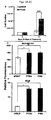
- Figs. 1A-1F A MUC1 mimetic peptide (PMIP) can efficiently enter cells, promote EGFR degradation and inhibit the interaction of MUC1 and ⁇ -catenin.
- Fig. 1A Human MUC1's cytoplasmic amino acid sequence (MUC1CT; SEQ ID NO: 15), which includes an EGFR/src phosphorylation site (underline; SEQ ID NO: 15, residues 46-49) and ⁇ -catenin binding site (double underline; SEQ ID NO: 15, residues 50-59).
- the PTD4 10ng/ml) or without (-S, no serum) and protein lysates were generated and separated on an SDS-PAGE.
- Fig. 1 D-F MDA-MB-468 cells were treated with EGF (10ng/ml) and either ( Fig. 1 D ) hPMIP (10 ⁇ M), ( Fig. 1 E ) PTD4 (10 ⁇ M) or ( Fig. 1 F ) PBS overnight.
- EGF 10ng/ml
- Fig. 1 D hPMIP
- Fig. 1 E hPMIP
- Fig. 1 E PTD4
- Fig. 1 F PBS overnight.
- the cells were fixed, probed for MUC1 (Texas Red) and ⁇ -catenin (FITC) and examined on a confocal microscope (400x). Co-localization (arrows) analysis was performed using Image Pro Plus and is designated with white pixels.
- Figs. 2A-2C PMIP inhibits cell proliferation and invasion of breast cancer cells in vitro.
- Fig. 2 A BT20 cells were cultured in a 96-well dish (10 4 cells/well) and treated daily for 6 days with either hPMIP (10 ⁇ M) or PTD4 (10 ⁇ M) in RPMI 1640/1% FBS. An MTT assay was performed to quantify cell number after treatment was complete (***, p ⁇ 0.0001). Error bars represent standard error.
- Fig. 2 B MDA-MB-231 and Fig.
- BT20cell lines were treated with either hPMIP (50 ⁇ M), PTD4 (50 ⁇ M), or PBS overnight, labeled with Calcein AM, allowed to invade through a Transwell (8.0 ⁇ M) insert into a Type I collagen gel, and the invaded cells were fluorescently measured.
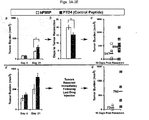
- Figs. 3A-3E PMIP significantly inhibits tumor growth and recurrence in vivo.
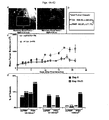
- Figs. 4A-4D PMIP significantly slows progression of MMTV-pyV mT induced mammary gland tumors.
- Fig. 4 A MMTV-pyV mT transgenic mice were injected with FITC-msPMIP (50 ⁇ g/g body weight), sacrificed four hours later and various tissues visualized using fluorescence microscopy. FITC-msPMIP localization in the mouse mammary gland tumors is shown (2.5x and 8x).
- Fig. 4 B Mammary gland tumors (>0.5 cm in diameter) were allowed to develop and mice were injected daily (50 ⁇ g/g body weight, 21 day treatment, i.p.
- MMTV-pyV mT tumors have differential response to msPMIP.
- MFP mammary fat pad Fig.
- FIG. 6A-6B PMIP is associated with reduced Muc1 expression.
- FIG. 6 A A representative MMTV- pyV mT msPMIP (P) treated mouse and a PTD4 mouse (C) were each injected 30 minutes prior to sacrifice with epidermal growth factor (1 ⁇ g/g body weight) and with peptide. Following sacrifice the tumors were collected and protein lysates were generated. Protein (50 ⁇ g) was separated by SDS-PAGE, transferred and immunoblotted for expression of phosphotyrosine (PY99), EGFR (1005), Muc1 (CT2), and ⁇ -actin (AC-15).
- PY99 phosphotyrosine
- EGFR EGFR
- CT2 Muc1
- AC-15 ⁇ -actin
- MUC1 mimetic peptides are selectively retained in mammary gland tumors, colon, and skin after systemic administration. Moreover, MUC1 mimetic peptides reduce tumor initiation. In addition, MUC1 mimetic peptides can be used in conjunction with other anti-EGFR treatments in the adjuvant context, i.e., after surgery.
- the fusion peptide for use according to the invention has the structure A-B-C or C-B-A, wherein A is a protein transduction domain which enhances translocation of attached macromolecules across cellular membranes selected form the group consisting of SEQ.ID.N. 3-6.
- B is a spacer of 0-5 amino acid residues.
- C is a polypeptide of 6-15 amino acid residues.
- C comprises all or a portion of PYEKVSAGNGGSSLS (SEQ ID NO: 1).
- the portion of C comprises GGSSLS (SEQ ID NO: 2).
- At least one of said 6-15 amino acid residues is conservatively substituted such that an uncharged polar amino acid replaces an uncharged polar amino acid, or a non-polar amino acid replaces a non-polar amino acid residue, or an acidic amino acid replaces an acidic amino acid, or wherein one of said 6- 15 amino acid residues is substituted with an A residue.
- Any protein transduction domain can be used in fusion proteins. These include any of the domains which have been previously identified and used for protein transduction. See for example the extensive Table 1 of Dietz and Bahr, Molecular and Cellular Neuroscience, 27 (2004) 85-131 . Certain of such domains are shown in SEQ ID NO: 3, 4, 5, and 6. Other PTDs including synthetic ones can be used. These domains facilitate the uptake by the cells of the attached peptides.
- Spacers for use in fusion protein are additional amino acid residues that are used in fusion proteins typically to facilitate manufacture or synthesis. These can be fairly innocuous and are of a length of from 0 to 5 residues.
- the linkers can be monotonous or mixed residue.
- the residues can be random or sequences obtained from other proteins or designed for a particular property, e.g ., physical, chemical or biological.
- MUC1 cytoplasmic domain peptides such as SEQ ID NO: 14 increase invasion of breast cancer cells. Schroeder, 2003. Surprisingly, shorter portions of such peptides actually have the opposite effect.
- These peptides comprises from 6 to 15 contiguous amino acid residues selected from SEQ ID NO: 1 and include the amino acid sequence shown in SEQ ID NO: 2. Slight deviations from the precise sequence may be used to optimize activity, such as by substitution of one, two or three residues to make conservative changes or by substitution with alanine. Conservative changes substitute similar residues for each other, such as an uncharged polar for an uncharged polar, or a non-polar for a non-polar, or an acidic for an acidic residue.
- G or S residues can be substituted with G, S, T, C, Y, N, and Q.
- L residues can be substituted with A, V, I, P, F, W, and M.
- A, V, and P residues can be substituted with A, V, L, I, P, F, W, and M residues.
- Y or N residues can be substituted with G, S, T, C, Y, N, and Q residues.
- E residues can be substituted with a D residue.
- K residues can be substituted with an R or H residue. Any residue can be substituted with an alanine residue unless such substitution is found to destroy the invasion and metastasis inhibiting activity.
- Such substituted peptides can be readily tested, e.g., using invasion assays, tumor growth assays, tumor initiation assays, etc..
- Cancer cells in vitro or in vivo, can be contacted with or supplied with the fusion peptides of the present invention. They can be directly supplied as peptides or they can be endogenously produced by supplying the cells with nucleic acid vectors which express and produce the fusion peptides in the cells.
- any delivery technique known in the art can be used, including but not limited to direct intratumoral injection, intramuscular injection, intravascular injection, subcutaneous injection, intraperitoneal injection, etc.
- In vitro delivery can be accomplished, for example, simply by supplying the fusion peptide to the culture medium.
- Cancers and cancer cells which may be treated include breast, skin, colon, ovarian, prostate, cervical, colorectal, lung, brain, head and neck, pancreatic, kidney, and liver.
- the effect which is observed upon administration is a reduced extent or retarded rate of initiation, growth, invasion, and metastasis.
- Suitable assays for measuring these processes are described in the examples. Other assays as are known in the art can be used as well.
- Fusion peptides can be formulated or modified as are known in the art. This may involve covalent modifications, such as capping, or PEGylation, or combination with micelles or liposomes. Such modifications and formulations may increase stability in the body, therefore permitting higher percentages of the input dosage to reach the target cancer.
- the fusion proteins can also be used in conjunction with other treatments, including but not limited to EGFR inhibitors. The treatments may be administered simultaneously or serially. Other suitable treatments for treating cancers include chemotherapeutic drug administration or infusion, anti-tumor antibodies, anti-receptor antibodies, radiation treatment, radiolabeled drugs, and surgery. Use of two modalities which act in different ways may provide increased benefit to the patient.
- Suitable EGFR inhibitors may be antibodies or kinase inhibitors, such as panitumumab, cetuximab, gefitinib, and erlotinib.
- a similar inhibitory effect on the binding of MUC1 to ⁇ -catenin can be obtained by delivering antibodies to the cell or cancer patient.
- the antibodies can be any type, monoclonal or polyclonal, single chain or multi-chain.
- the antibodies may be made in a host mammal, in cell culture, or in recombinant cells.
- the antibodies bind to an epitope contained in SEQ ID NO: 1.
- Antibodies can be raised using a peptide according to SEQ ID NO: 1 as an immunogen, for example, or using fusion proteins according to the invention as immunogens, or using other fusion proteins as immunogens.
- Vectors for delivery of nucleic acids encoding the fusion proteins of the present invention can be any that are known in the art.
- Adenoviral vectors and adeno-associated vectors are will known and widely used.
- Non-viral vectors can also be used, such as nanoparticles, liposomes, and micelles.
- Retroviral vectors can be used in some embodiments.
- the person of skill in the art can select a vector that is suitable for her purposes.
- the person of skill in the art can select a vector and host cell system for recombinant manufacture of the fusion proteins of the invention in culture.
- a person who is identified as having inherited genes associated with cancer is at increased risk of developing cancer. Such persons can be treated to reduce their risk of cancer initiation. Similarly, those who have been exposed to environmental risks, such as atomic bomb fall-out, nuclear fuel waste, and other pollutants, are at increased risk of developing cancer. Genes which may be mutated and the autosomal dominant disorders they cause include, but are not limited to BRCA1: breast cancer, BRCA2: breast cancer, APC: colon cancer HNPCC: colon cancer, CDKN2: melanoma.
- Autosomal dominant inherited cancer risks include basal cell nevus syndrome, neurofibromatosis type 2, Carney syndrome, osteochondromatosis, multiple, chordoma, familial, paraganglioma, familial, Cowden syndrome, Peutz-Jeghers syndrome, esophageal cancer with tylosis, prostate cancer, gastric cancer, familial, renal cancer, familial, Li-Fraumeni syndrome, retinoblastoma, multiple endocrine neoplasia type 1, tuberous sclerosis, multiple endocrine neoplasia type 2, von Hippel-Lindau disease, neurofibromatosis type 1, and Wilms' tumor.
- Autosomal recessive disorders disposing to cancer include ataxiatelangiectasia Rothmund-Thomson syndrome, Bloom syndrome xeroderma pigmentosa, Werner's syndrome, and Fanconi's anemia.
- MUC1 mimetic peptides linked to a protein transduction domain (PTD) can freely enter transformed cells and inhibit their invasion in vitro. These same peptides can inhibit primary tumor growth, tumor spread, and recurrence of tumors after resection, for example, in an orthotopically implanted breast cancer model.
- PMIP mimetic peptides such as SEQ ID NO: 17 and 18, can survive in circulation with tissue specific retention and no detectable toxicity.
- PMIP can significantly inhibit tumor growth, for example, in a spontaneous mouse model that mimics human breast cancer. Mechanistically, this tumor-inhibitory effect is closely associated with a decrease in EGFR and MUC1 expression. Together these data demonstrate that these peptide-based intracellular drugs show strong efficacy as non-toxic treatment for cancers.
- MUC1 human MUC1 in mouse mammary glands promotes transformation, and the loss of MUC1 in several transgenic models can significantly delay tumor onset (6, 10, 12). This may be due to the number of oncogenic partners MUC1 has been demonstrated to interact with, namely ⁇ -catenin, src, and EGFR [Reviewed in (8)]. This mimetic peptide is designed to block interactions between MUC1, ⁇ -catenin and EGFR, and we have demonstrated that PMIP treatment does block MUC1 interactions with these proteins. In addition, we observed a loss of MUC1 expression in response to PMIP treatment under certain conditions, which may be the result of downregulation of EGFR.
- MUC1 inhibits the ligand-dependent degradation of EGFR, resulting in enhanced receptor stability (9). Furthermore, we have demonstrated that this interaction promotes the oncogenic properties of EGFR (10). Neither of the mouse models used in these experiments were previously shown to be dependent upon EGFR for progression, and yet, PMIP is significantly effective in each model. This indicates that PMIP may have broad applications against tumors overexpressing MUC1, which encompasses most epithelial neoplasias (39). In addition, PMIP may serve as an important adjuvant therapy with anti-EGFR treatments [Reviewed in (40), which is expressly incorporated for this purpose]. Our data indicate that MUC1 induces the internalization, altered trafficking and enhanced signaling of EGFR (9). Therefore, if PMIP blocks these interactions, anti-EGPR therapy that relies on surface-localization of EGFR could by enhanced by PMIP co-delivery.
- PMIP is a potent drug that is active at all stages of tumor progression: inhibiting initiation, inhibiting growth, inducing regression, and inhibiting metastatic spread.
- Metastatic breast cancer cell lines MDA-MD-231 and BT20 cells were obtained from the American Tissue Culture Collection. These cell lines were cultured with 10 % Fetal Bovine Serum (Cellgro, Herndon, VA), 1 % Penicillin-Streptomycin-Glutamine (Invitrogen, Eugene, OR) and RPMI 1640 (Cellgro) media at 37° C with 5 % CO 2 in a humidified incubator.
- Fetal Bovine Serum Cellgro, Herndon, VA
- Penicillin-Streptomycin-Glutamine Invitrogen, Eugene, OR
- RPMI 1640 Cellgro
- Collagen matrix (0.9 mg/ml Type I Rat tail collagen (BD Biosciences, Billerica, MA), 83.0 % (v/v) M-199 medium (Life Technologies), and 0.18 % NaHCO 3 (Fisher, Hampton, NH)) was poured into a 24 well plate. Prior to collagen polymerization a 0.8 ⁇ m pore transwell insert (Coming Inc., Corning, NY) was placed on top of the matrix. The polymerized collagen was rehydrated using a chemoattractant (20 % FBS/RPMI 1640 with 100 ng/mL EGF). MDA-MB-231 cells were treated with 50 ⁇ M of peptide in serum free RPMI 1640 media for 17 hours.
- a chemoattractant (20 % FBS/RPMI 1640 with 100 ng/mL EGF).
- the cells Prior to loading the cells onto the transwell inserts they were fluorescently labeled with Calcein-AM (Invitrogen) for 30 minutes and then washed with PBS. The cells were then resuspended in a 50 ⁇ M peptide/RPMI 1640 serum free media and loaded onto the inserts in each well (266,000 cells/well). The cells were allowed to invade into the matrix for 12 hrs at 37° C with 5% CO 2 in a humidified incubator. After the 12 hrs, the collagen matrix was treated with a 0.25 % Collagenase in 40 % FBS/PBS and the inserts were removed (Calbiochem, San Diego, CA). The number of fluorescently labeled cells that had invaded into the collagen were measured using a Molecular Devices spectrophotometer (Ex:485, Em:538, and Cutoff:530).
- CT2 anti-MUC1 cytoplasmic tail
- Neomarkers Inc. Neomarkers Inc.
- Antibodies against phosphorylated tyrosine (PY99), and EGFR/erbB1 (1005) were all purchased from Santa Cruz Biotechnologies (Santa Cruz, CA).
- the ⁇ -actin antibody was from Sigma Chemical Company (St. Louis, MO).
- Secondary antibodies conjugated to HRP were acquired from Molecular Probes (Invitrogen) and the anti-Hamster HRP conjugated antibody was purchased from Jackson Labs (West Grover, PA).
- Epidermal growth factor (EGF) was stored at -20° C at a concentration of 100 ng/ ⁇ l (Invitrogen).
- BT20 cells were treated for 2 hours with 200 ⁇ M hPMIP tagged with FITC and fixed in 4 % Paraformaldhyde/PBS. Fixed cells were washed 3 times with 0.02% NaN 3 /PBS and incubated with Slowfade Gold antifade reagent with DAPI (Invitrogen). Cells were visualized with a fluorescence DMLB Leica compound microscope.
- hPMIP (SEQ ID NO: 17), FITC-hPMIP, msPMIP (SEQ ID NO: 18), FITC-msPMIP and PTD4 polypeptides (SEQ ID NO: 16) were synthesized by GenScript (Scotch Plains, NJ) and delivered lyophilized. The peptides were resuspended at a concentration of 500 ⁇ M in PBS and stored at -80° C in single-use aliquots.
- Immunocompromised mice (scid) mice (Taconic, Rockville, MD) were tested for the presence of serum IgG and found to be ⁇ 20 ⁇ g/ml IgG.
- Female mice (four to six weeks old) were injected with 1x10 7 cells embedded in Matri-gel (BD Biosciences) into the mammary fat pad and allowed to grow to either 100 mm 3 or 500 mm 3 , based on the formula a 2 x b / 2 where a is the smaller diameter and b is the larger diameter.
- mice were injected intraperitoneally (i.p.) with 50 ⁇ g/g body weight of either PMIP or PTD4 control peptide for 21 days and measured with calipers every two days. Either at the end of 21 days, or after the tumor had reached 800 mm 3 , tumors were resected by injecting the mice with buprenorphine (2.5 mg/kg body weight, Infusion Solutions, Totowa, NJ) at least one hour prior to resection and anesthetizing the mice with isoflurane (Abbott, Abbott Park, II). Following surgery, mice were treated with buprenorphine (2.5 mg/kg body weight) 8 and 16 hrs post-surgery. Animals were then followed for 10 days to examine regrowth at the primary tumor site or at secondary mammary glands, then sacrificed.
- buprenorphine 2.5 mg/kg body weight, Infusion Solutions, Totowa, NJ
- mice MMTV- pyV mT mice (33), obtained from Jackson Laboratories) entered into study upon the development of tumors that measured ⁇ 0.5 cm in at least one diameter. Only mice greater than seven weeks of age were included in the study and mice that developed fluid cysts were excluded. Animals were injected i.p. with 50 ⁇ g/g body weight of msPMIP or PTD4 once daily for 21 days. Each of ten mammary glands were measured using calipers every two days, and measurements were used to determine tumor volume based on the formula a 2 x b / 2 , with a being the smaller diameter and b being the larger diameter. After treatment for 21 days, mice were sacrificed by CO 2 inhalation and tissues resected. Several msPMIP treated mice were injected with FITC-msPMIP (50 ⁇ g/g body weight) one or fours hours prior to sacrifice and intact tissues were visualized using a fluorescence MZFLIII Leica dissection microscope.
- PMIP inhibits invasion. These cells were chosen as they represent models of high and low MUC1 expression, respectively (data not shown). We found that PMIP treatment significantly inhibited the ability of cells to invade through an 8.0 ⁇ M filter and into a Type I collagen matrix when compared to cells treated with control peptide (PTD4) or PBS ( Fig. 1 C and D). To determine if hPMIP could also affect proliferation and/or apoptosis we performed Annexin V and cell number quantification on the human breast cancer cell line MDA-MB-231. hPMIP treatment was found to have no detectable effects on apoptosis or cell growth when cells were grown on plastic (data not shown).
- PMIP inhibits tumor growth and inhibits recurrence in a xenograft breast cancer model.
- hPMIP strongly inhibited cellular invasion in vitro
- hPMIP could alter the metastatic potential of MDA-MB-231 breast cancer cells implanted into the mammary fat pad of severe combined immune deficiency (scid) mice.
- treatment with hPMIP yielded a substantial inhibition in tumor regrowth and spread to secondary mammary glands post resection of the primary tumor ( Fig. 2 B and 2E ).
- hPMIP treatment also slowed the growth of the primary tumor ( Fig. 2 C ).
- Fig. 2 A and 2 B In the first experiment ( Fig. 2 A and 2 B ), cells were allowed to establish a large tumor mass (500 mm 3 ) and mice were injected (i.p.) for 21 days with hPMIP or control peptide (PTD4) ( Fig. 2A ). At the end of treatment, primary breast tumors were resected, and animals were followed to examine rates of tumor regrowth and/or metastasis to secondary mammary glands. While regrowth and secondary mammary gland tumors were found in equal number for both treatment groups, the tumor volume for the control treated animals averaged 760 mm 3 while the PMIP treated averaged only 73 mm 3 ( Fig. 2 B ). Note that mice were not treated with drug during the 10 days in which regrowth was followed. We also noted a decrease in the tumor size in the hPMIP-treated animals compared to control, and next designed an experiment that would allow us to determine if hPMIP was affecting tumor growth rate in this model.
- PMIP inhibits, tumor growth and induces regression in spontaneous breast cancer. While the xenograft model demonstrated the effect of hPMIP treatment on growth and progression of established cell lines, we wanted to determine how msPMIP would affect tumor initiation and progression in a mouse model which better recapitulates human breast cancer.
- the MMTV-pyV mT transgenic mouse model of breast cancer strongly resembles human breast cancer by activating multiple signaling pathways, including AKT, src and shc (33, 34). Studies have demonstrated that the resulting breast cancer pathologically and molecularly mimics the full progression of hyperplasia, ductal carcinoma in situ and adenocarcinomas observed in human disease (35, 36).
- MMTV-pyV mT mice bearing mammary gland tumors of >0.5cm in diameter were treated for 21 days with either msPMIP or PTD4 control peptide.
- PTD4 69 mm 3 /day in control
- msPMIP treatment results in a reduction of EGFR and Mucl levels.
- MUC1 expression inhibits ligand-dependent degradation of EGFR
- msPMIP was affecting EGF-dependent degradation of EGFR
Landscapes
- Health & Medical Sciences (AREA)
- Chemical & Material Sciences (AREA)
- Life Sciences & Earth Sciences (AREA)
- Medicinal Chemistry (AREA)
- General Health & Medical Sciences (AREA)
- Organic Chemistry (AREA)
- Animal Behavior & Ethology (AREA)
- Veterinary Medicine (AREA)
- Public Health (AREA)
- Pharmacology & Pharmacy (AREA)
- Immunology (AREA)
- Epidemiology (AREA)
- Proteomics, Peptides & Aminoacids (AREA)
- Engineering & Computer Science (AREA)
- Bioinformatics & Cheminformatics (AREA)
- Biophysics (AREA)
- Biochemistry (AREA)
- Genetics & Genomics (AREA)
- Molecular Biology (AREA)
- Gastroenterology & Hepatology (AREA)
- Nuclear Medicine, Radiotherapy & Molecular Imaging (AREA)
- General Chemical & Material Sciences (AREA)
- Chemical Kinetics & Catalysis (AREA)
- Zoology (AREA)
- Cell Biology (AREA)
- Biomedical Technology (AREA)
- Oncology (AREA)
- Marine Sciences & Fisheries (AREA)
- Toxicology (AREA)
- Mycology (AREA)
- Microbiology (AREA)
- Neurology (AREA)
- Dermatology (AREA)
- Endocrinology (AREA)
- Reproductive Health (AREA)
- Medicines That Contain Protein Lipid Enzymes And Other Medicines (AREA)
- Peptides Or Proteins (AREA)
- Medicines Containing Antibodies Or Antigens For Use As Internal Diagnostic Agents (AREA)
- Pharmaceuticals Containing Other Organic And Inorganic Compounds (AREA)
Applications Claiming Priority (2)
| Application Number | Priority Date | Filing Date | Title |
|---|---|---|---|
| US3002108P | 2008-02-20 | 2008-02-20 | |
| PCT/US2009/034541 WO2009105557A1 (en) | 2008-02-20 | 2009-02-19 | Use of therapeutic peptides for the treatment and prevention of cancer |
Publications (2)
| Publication Number | Publication Date |
|---|---|
| EP2247301A1 EP2247301A1 (en) | 2010-11-10 |
| EP2247301B1 true EP2247301B1 (en) | 2014-06-11 |
Family
ID=40848240
Family Applications (1)
| Application Number | Title | Priority Date | Filing Date |
|---|---|---|---|
| EP09712807.8A Not-in-force EP2247301B1 (en) | 2008-02-20 | 2009-02-19 | Use of therapeutic fusion peptides for the treatment and prevention of cancer |
Country Status (8)
| Country | Link |
|---|---|
| US (2) | US20110014195A1 (enExample) |
| EP (1) | EP2247301B1 (enExample) |
| JP (2) | JP2011512415A (enExample) |
| CN (1) | CN101977623A (enExample) |
| AU (1) | AU2009215503B2 (enExample) |
| CA (1) | CA2714939A1 (enExample) |
| ES (1) | ES2500640T3 (enExample) |
| WO (1) | WO2009105557A1 (enExample) |
Families Citing this family (4)
| Publication number | Priority date | Publication date | Assignee | Title |
|---|---|---|---|---|
| US9585938B2 (en) | 2010-10-12 | 2017-03-07 | Arizona Cancer Therapeutics, Llc | EGFR-based peptides |
| WO2016161440A2 (en) | 2015-04-03 | 2016-10-06 | Arizona Cancer Therapeutics, Llc | Egfr-based inhibitor peptides for combinatorial inactivation of erbb1, erbb2, and erbb3 |
| CN110305209B (zh) * | 2019-07-09 | 2022-09-13 | 福建医科大学附属第一医院 | 用于治疗恶性肿瘤的多肽及其作为疫苗的用途 |
| WO2022173917A1 (en) * | 2021-02-11 | 2022-08-18 | Arizona Board Of Regents On Behalf Of The University Of Arizona | Compositions and methods for treating breast cancer |
Family Cites Families (6)
| Publication number | Priority date | Publication date | Assignee | Title |
|---|---|---|---|---|
| EP1958642A1 (en) * | 2000-12-22 | 2008-08-20 | Dana-Farber Cancer Institute | Regulation of cell growth by MUC1 |
| US20080090770A1 (en) * | 2003-04-11 | 2008-04-17 | Belmares Michael P | Modulation of Muc1 Mediated Signal Transduction |
| WO2005042573A1 (en) * | 2003-10-24 | 2005-05-12 | Dana-Farber Cancer Institute, Inc. | Modulation of the interaction of muc1 with muc1 ligands |
| WO2005090407A1 (en) * | 2004-03-19 | 2005-09-29 | Imclone Systems Incorporated | Human anti-epidermal growth factor receptor antibody |
| DE602005023488D1 (de) * | 2004-06-17 | 2010-10-21 | Mannkind Corp | Tumorassoziierte antigenprofile in der krebsdiagnostik und immuntherapie |
| EP1868629B1 (en) * | 2005-04-15 | 2014-10-22 | Arizona Biomedical Research Commission | Therapeutic fusion peptides for the treatment of metastatic cancer |
-
2009
- 2009-02-19 AU AU2009215503A patent/AU2009215503B2/en not_active Ceased
- 2009-02-19 JP JP2010547751A patent/JP2011512415A/ja active Pending
- 2009-02-19 EP EP09712807.8A patent/EP2247301B1/en not_active Not-in-force
- 2009-02-19 US US12/867,396 patent/US20110014195A1/en not_active Abandoned
- 2009-02-19 CN CN2009801096259A patent/CN101977623A/zh active Pending
- 2009-02-19 CA CA2714939A patent/CA2714939A1/en not_active Abandoned
- 2009-02-19 ES ES09712807.8T patent/ES2500640T3/es active Active
- 2009-02-19 WO PCT/US2009/034541 patent/WO2009105557A1/en not_active Ceased
-
2014
- 2014-08-29 JP JP2014174796A patent/JP2015028034A/ja active Pending
-
2015
- 2015-09-09 US US14/849,402 patent/US20160082082A1/en not_active Abandoned
Also Published As
| Publication number | Publication date |
|---|---|
| AU2009215503A1 (en) | 2009-08-27 |
| JP2011512415A (ja) | 2011-04-21 |
| CA2714939A1 (en) | 2009-08-27 |
| WO2009105557A1 (en) | 2009-08-27 |
| US20110014195A1 (en) | 2011-01-20 |
| JP2015028034A (ja) | 2015-02-12 |
| CN101977623A (zh) | 2011-02-16 |
| US20160082082A1 (en) | 2016-03-24 |
| EP2247301A1 (en) | 2010-11-10 |
| ES2500640T3 (es) | 2014-09-30 |
| AU2009215503B2 (en) | 2014-05-08 |
Similar Documents
| Publication | Publication Date | Title |
|---|---|---|
| Bitler et al. | Intracellular MUC1 peptides inhibit cancer progression | |
| JP7064275B2 (ja) | 診断および治療のための腫瘍関連細胞表面抗原の同定 | |
| Patel et al. | Targeting the EGFR-family for therapy: biological challenges and clinical perspective | |
| US20090075926A1 (en) | Method for identifying and manipulating cells | |
| AU2006236441B2 (en) | Therapeutic peptides for the treatment of metastatic cancer | |
| US20160082082A1 (en) | Use of therapeutic peptides for the treatment and prevention of cancer | |
| Shen et al. | ICAM3 mediates tumor metastasis via a LFA-1-ICAM3-ERM dependent manner | |
| AU2011316653B2 (en) | EGFR-based peptides | |
| US20100016222A1 (en) | Novel agent for inducing apoptosis comprising msx1 or a gene encoding the same as an active ingredient | |
| US20150218288A1 (en) | Proliferation of muc1 expressing cells | |
| JP2014114292A (ja) | 抗腫瘍薬、医薬品、組成物、及びその使用 | |
| US9789156B2 (en) | Combination anti-human epidermal growth factor receptor 2 (anti-HER2) cancer therapy using mucin 1 (MUC1) peptides and hemotherapeutics | |
| TW201200151A (en) | Methods and compositions related to reduced MET phosphorylation by leukocyte cell-derived chemotaxin 2 in tumor cells | |
| Sweeney et al. | ErbB receptor negative regulatory mechanisms: implications in cancer | |
| WO2010130073A1 (zh) | Itgb4bp及其衍生物用于预防和/或治疗增生性瘢痕及纤维化病变 | |
| JP2008525005A (ja) | 新規の物質、および、それらの使用 | |
| Peng et al. | TGF-β1/SMAD3-mediated non-canonical hedgehog signaling promotes pancreatic stellate cell activation and fibrosis in chronic pancreatitis | |
| US10870690B2 (en) | Protein therapeutant and method for treating cancer | |
| Bitler | Determining the Role of Muc1 and Beta-catenin on the Epidermal Growth Factor Receptor Signaling and Localization in Breast Cancer | |
| WO2007030651A1 (en) | Mammary secreted protein for cancer treatment |
Legal Events
| Date | Code | Title | Description |
|---|---|---|---|
| PUAI | Public reference made under article 153(3) epc to a published international application that has entered the european phase |
Free format text: ORIGINAL CODE: 0009012 |
|
| 17P | Request for examination filed |
Effective date: 20100819 |
|
| AK | Designated contracting states |
Kind code of ref document: A1 Designated state(s): AT BE BG CH CY CZ DE DK EE ES FI FR GB GR HR HU IE IS IT LI LT LU LV MC MK MT NL NO PL PT RO SE SI SK TR |
|
| AX | Request for extension of the european patent |
Extension state: AL BA RS |
|
| DAX | Request for extension of the european patent (deleted) | ||
| 17Q | First examination report despatched |
Effective date: 20120919 |
|
| REG | Reference to a national code |
Ref country code: DE Ref legal event code: R079 Ref document number: 602009024587 Country of ref document: DE Free format text: PREVIOUS MAIN CLASS: A61K0038170000 Ipc: A61P0035000000 |
|
| GRAJ | Information related to disapproval of communication of intention to grant by the applicant or resumption of examination proceedings by the epo deleted |
Free format text: ORIGINAL CODE: EPIDOSDIGR1 |
|
| GRAP | Despatch of communication of intention to grant a patent |
Free format text: ORIGINAL CODE: EPIDOSNIGR1 |
|
| RIC1 | Information provided on ipc code assigned before grant |
Ipc: A61P 35/00 20060101AFI20131129BHEP |
|
| INTG | Intention to grant announced |
Effective date: 20131219 |
|
| GRAS | Grant fee paid |
Free format text: ORIGINAL CODE: EPIDOSNIGR3 |
|
| GRAA | (expected) grant |
Free format text: ORIGINAL CODE: 0009210 |
|
| AK | Designated contracting states |
Kind code of ref document: B1 Designated state(s): AT BE BG CH CY CZ DE DK EE ES FI FR GB GR HR HU IE IS IT LI LT LU LV MC MK MT NL NO PL PT RO SE SI SK TR |
|
| REG | Reference to a national code |
Ref country code: GB Ref legal event code: FG4D |
|
| REG | Reference to a national code |
Ref country code: CH Ref legal event code: EP |
|
| REG | Reference to a national code |
Ref country code: IE Ref legal event code: FG4D |
|
| REG | Reference to a national code |
Ref country code: AT Ref legal event code: REF Ref document number: 671935 Country of ref document: AT Kind code of ref document: T Effective date: 20140715 |
|
| REG | Reference to a national code |
Ref country code: DE Ref legal event code: R096 Ref document number: 602009024587 Country of ref document: DE Effective date: 20140724 |
|
| REG | Reference to a national code |
Ref country code: ES Ref legal event code: FG2A Ref document number: 2500640 Country of ref document: ES Kind code of ref document: T3 Effective date: 20140930 |
|
| RAP2 | Party data changed (patent owner data changed or rights of a patent transferred) |
Owner name: ARIZONA CANCER THERAPEUTICS, LLC |
|
| PG25 | Lapsed in a contracting state [announced via postgrant information from national office to epo] |
Ref country code: FI Free format text: LAPSE BECAUSE OF FAILURE TO SUBMIT A TRANSLATION OF THE DESCRIPTION OR TO PAY THE FEE WITHIN THE PRESCRIBED TIME-LIMIT Effective date: 20140611 Ref country code: GR Free format text: LAPSE BECAUSE OF FAILURE TO SUBMIT A TRANSLATION OF THE DESCRIPTION OR TO PAY THE FEE WITHIN THE PRESCRIBED TIME-LIMIT Effective date: 20140912 Ref country code: NO Free format text: LAPSE BECAUSE OF FAILURE TO SUBMIT A TRANSLATION OF THE DESCRIPTION OR TO PAY THE FEE WITHIN THE PRESCRIBED TIME-LIMIT Effective date: 20140911 Ref country code: LT Free format text: LAPSE BECAUSE OF FAILURE TO SUBMIT A TRANSLATION OF THE DESCRIPTION OR TO PAY THE FEE WITHIN THE PRESCRIBED TIME-LIMIT Effective date: 20140611 |
|
| REG | Reference to a national code |
Ref country code: NL Ref legal event code: VDEP Effective date: 20140611 |
|
| REG | Reference to a national code |
Ref country code: AT Ref legal event code: MK05 Ref document number: 671935 Country of ref document: AT Kind code of ref document: T Effective date: 20140611 |
|
| REG | Reference to a national code |
Ref country code: LT Ref legal event code: MG4D |
|
| PG25 | Lapsed in a contracting state [announced via postgrant information from national office to epo] |
Ref country code: LV Free format text: LAPSE BECAUSE OF FAILURE TO SUBMIT A TRANSLATION OF THE DESCRIPTION OR TO PAY THE FEE WITHIN THE PRESCRIBED TIME-LIMIT Effective date: 20140611 Ref country code: HR Free format text: LAPSE BECAUSE OF FAILURE TO SUBMIT A TRANSLATION OF THE DESCRIPTION OR TO PAY THE FEE WITHIN THE PRESCRIBED TIME-LIMIT Effective date: 20140611 Ref country code: SE Free format text: LAPSE BECAUSE OF FAILURE TO SUBMIT A TRANSLATION OF THE DESCRIPTION OR TO PAY THE FEE WITHIN THE PRESCRIBED TIME-LIMIT Effective date: 20140611 |
|
| REG | Reference to a national code |
Ref country code: GB Ref legal event code: 732E Free format text: REGISTERED BETWEEN 20141106 AND 20141112 |
|
| PG25 | Lapsed in a contracting state [announced via postgrant information from national office to epo] |
Ref country code: RO Free format text: LAPSE BECAUSE OF FAILURE TO SUBMIT A TRANSLATION OF THE DESCRIPTION OR TO PAY THE FEE WITHIN THE PRESCRIBED TIME-LIMIT Effective date: 20140611 Ref country code: PT Free format text: LAPSE BECAUSE OF FAILURE TO SUBMIT A TRANSLATION OF THE DESCRIPTION OR TO PAY THE FEE WITHIN THE PRESCRIBED TIME-LIMIT Effective date: 20141013 Ref country code: EE Free format text: LAPSE BECAUSE OF FAILURE TO SUBMIT A TRANSLATION OF THE DESCRIPTION OR TO PAY THE FEE WITHIN THE PRESCRIBED TIME-LIMIT Effective date: 20140611 Ref country code: SK Free format text: LAPSE BECAUSE OF FAILURE TO SUBMIT A TRANSLATION OF THE DESCRIPTION OR TO PAY THE FEE WITHIN THE PRESCRIBED TIME-LIMIT Effective date: 20140611 Ref country code: CZ Free format text: LAPSE BECAUSE OF FAILURE TO SUBMIT A TRANSLATION OF THE DESCRIPTION OR TO PAY THE FEE WITHIN THE PRESCRIBED TIME-LIMIT Effective date: 20140611 |
|
| PG25 | Lapsed in a contracting state [announced via postgrant information from national office to epo] |
Ref country code: AT Free format text: LAPSE BECAUSE OF FAILURE TO SUBMIT A TRANSLATION OF THE DESCRIPTION OR TO PAY THE FEE WITHIN THE PRESCRIBED TIME-LIMIT Effective date: 20140611 Ref country code: IS Free format text: LAPSE BECAUSE OF FAILURE TO SUBMIT A TRANSLATION OF THE DESCRIPTION OR TO PAY THE FEE WITHIN THE PRESCRIBED TIME-LIMIT Effective date: 20141011 Ref country code: PL Free format text: LAPSE BECAUSE OF FAILURE TO SUBMIT A TRANSLATION OF THE DESCRIPTION OR TO PAY THE FEE WITHIN THE PRESCRIBED TIME-LIMIT Effective date: 20140611 Ref country code: NL Free format text: LAPSE BECAUSE OF FAILURE TO SUBMIT A TRANSLATION OF THE DESCRIPTION OR TO PAY THE FEE WITHIN THE PRESCRIBED TIME-LIMIT Effective date: 20140611 |
|
| REG | Reference to a national code |
Ref country code: DE Ref legal event code: R097 Ref document number: 602009024587 Country of ref document: DE |
|
| PLBE | No opposition filed within time limit |
Free format text: ORIGINAL CODE: 0009261 |
|
| STAA | Information on the status of an ep patent application or granted ep patent |
Free format text: STATUS: NO OPPOSITION FILED WITHIN TIME LIMIT |
|
| PG25 | Lapsed in a contracting state [announced via postgrant information from national office to epo] |
Ref country code: DK Free format text: LAPSE BECAUSE OF FAILURE TO SUBMIT A TRANSLATION OF THE DESCRIPTION OR TO PAY THE FEE WITHIN THE PRESCRIBED TIME-LIMIT Effective date: 20140611 |
|
| 26N | No opposition filed |
Effective date: 20150312 |
|
| REG | Reference to a national code |
Ref country code: DE Ref legal event code: R097 Ref document number: 602009024587 Country of ref document: DE Effective date: 20150312 |
|
| PG25 | Lapsed in a contracting state [announced via postgrant information from national office to epo] |
Ref country code: BE Free format text: LAPSE BECAUSE OF FAILURE TO SUBMIT A TRANSLATION OF THE DESCRIPTION OR TO PAY THE FEE WITHIN THE PRESCRIBED TIME-LIMIT Effective date: 20140611 |
|
| PG25 | Lapsed in a contracting state [announced via postgrant information from national office to epo] |
Ref country code: SI Free format text: LAPSE BECAUSE OF FAILURE TO SUBMIT A TRANSLATION OF THE DESCRIPTION OR TO PAY THE FEE WITHIN THE PRESCRIBED TIME-LIMIT Effective date: 20140611 |
|
| REG | Reference to a national code |
Ref country code: DE Ref legal event code: R082 Ref document number: 602009024587 Country of ref document: DE Representative=s name: COHAUSZ & FLORACK PATENT- UND RECHTSANWAELTE P, DE Ref country code: DE Ref legal event code: R081 Ref document number: 602009024587 Country of ref document: DE Owner name: ARIZONA CANCER THERAPEUTICS, LLC, TUCSON, US Free format text: FORMER OWNER: ARIZONA BIOMEDICAL RESEARCH COMMISSION, PHOENIX, ARIZ., US |
|
| PG25 | Lapsed in a contracting state [announced via postgrant information from national office to epo] |
Ref country code: LU Free format text: LAPSE BECAUSE OF FAILURE TO SUBMIT A TRANSLATION OF THE DESCRIPTION OR TO PAY THE FEE WITHIN THE PRESCRIBED TIME-LIMIT Effective date: 20150219 |
|
| REG | Reference to a national code |
Ref country code: CH Ref legal event code: PL |
|
| PG25 | Lapsed in a contracting state [announced via postgrant information from national office to epo] |
Ref country code: LI Free format text: LAPSE BECAUSE OF NON-PAYMENT OF DUE FEES Effective date: 20150228 Ref country code: MC Free format text: LAPSE BECAUSE OF FAILURE TO SUBMIT A TRANSLATION OF THE DESCRIPTION OR TO PAY THE FEE WITHIN THE PRESCRIBED TIME-LIMIT Effective date: 20140611 Ref country code: CH Free format text: LAPSE BECAUSE OF NON-PAYMENT OF DUE FEES Effective date: 20150228 |
|
| REG | Reference to a national code |
Ref country code: IE Ref legal event code: MM4A |
|
| PG25 | Lapsed in a contracting state [announced via postgrant information from national office to epo] |
Ref country code: IE Free format text: LAPSE BECAUSE OF NON-PAYMENT OF DUE FEES Effective date: 20150219 |
|
| REG | Reference to a national code |
Ref country code: FR Ref legal event code: PLFP Year of fee payment: 8 |
|
| PGFP | Annual fee paid to national office [announced via postgrant information from national office to epo] |
Ref country code: ES Payment date: 20160226 Year of fee payment: 8 Ref country code: IT Payment date: 20160223 Year of fee payment: 8 Ref country code: DE Payment date: 20160226 Year of fee payment: 8 |
|
| PGFP | Annual fee paid to national office [announced via postgrant information from national office to epo] |
Ref country code: GB Payment date: 20160226 Year of fee payment: 8 Ref country code: FR Payment date: 20160217 Year of fee payment: 8 |
|
| PG25 | Lapsed in a contracting state [announced via postgrant information from national office to epo] |
Ref country code: MT Free format text: LAPSE BECAUSE OF FAILURE TO SUBMIT A TRANSLATION OF THE DESCRIPTION OR TO PAY THE FEE WITHIN THE PRESCRIBED TIME-LIMIT Effective date: 20140611 |
|
| PG25 | Lapsed in a contracting state [announced via postgrant information from national office to epo] |
Ref country code: BG Free format text: LAPSE BECAUSE OF FAILURE TO SUBMIT A TRANSLATION OF THE DESCRIPTION OR TO PAY THE FEE WITHIN THE PRESCRIBED TIME-LIMIT Effective date: 20140611 Ref country code: HU Free format text: LAPSE BECAUSE OF FAILURE TO SUBMIT A TRANSLATION OF THE DESCRIPTION OR TO PAY THE FEE WITHIN THE PRESCRIBED TIME-LIMIT; INVALID AB INITIO Effective date: 20090219 |
|
| PG25 | Lapsed in a contracting state [announced via postgrant information from national office to epo] |
Ref country code: CY Free format text: LAPSE BECAUSE OF FAILURE TO SUBMIT A TRANSLATION OF THE DESCRIPTION OR TO PAY THE FEE WITHIN THE PRESCRIBED TIME-LIMIT Effective date: 20140611 |
|
| PG25 | Lapsed in a contracting state [announced via postgrant information from national office to epo] |
Ref country code: TR Free format text: LAPSE BECAUSE OF FAILURE TO SUBMIT A TRANSLATION OF THE DESCRIPTION OR TO PAY THE FEE WITHIN THE PRESCRIBED TIME-LIMIT Effective date: 20140611 |
|
| REG | Reference to a national code |
Ref country code: DE Ref legal event code: R119 Ref document number: 602009024587 Country of ref document: DE |
|
| GBPC | Gb: european patent ceased through non-payment of renewal fee |
Effective date: 20170219 |
|
| REG | Reference to a national code |
Ref country code: FR Ref legal event code: ST Effective date: 20171031 |
|
| PG25 | Lapsed in a contracting state [announced via postgrant information from national office to epo] |
Ref country code: DE Free format text: LAPSE BECAUSE OF NON-PAYMENT OF DUE FEES Effective date: 20170901 Ref country code: FR Free format text: LAPSE BECAUSE OF NON-PAYMENT OF DUE FEES Effective date: 20170228 |
|
| PG25 | Lapsed in a contracting state [announced via postgrant information from national office to epo] |
Ref country code: IT Free format text: LAPSE BECAUSE OF NON-PAYMENT OF DUE FEES Effective date: 20170219 Ref country code: GB Free format text: LAPSE BECAUSE OF NON-PAYMENT OF DUE FEES Effective date: 20170219 |
|
| PG25 | Lapsed in a contracting state [announced via postgrant information from national office to epo] |
Ref country code: MK Free format text: LAPSE BECAUSE OF FAILURE TO SUBMIT A TRANSLATION OF THE DESCRIPTION OR TO PAY THE FEE WITHIN THE PRESCRIBED TIME-LIMIT Effective date: 20140611 |
|
| REG | Reference to a national code |
Ref country code: ES Ref legal event code: FD2A Effective date: 20180705 |
|
| PG25 | Lapsed in a contracting state [announced via postgrant information from national office to epo] |
Ref country code: ES Free format text: LAPSE BECAUSE OF NON-PAYMENT OF DUE FEES Effective date: 20170220 |