EP2245008B1 - Verfahren zur herstellung von atorvastatin und dabei verwendete zwischenprodukte - Google Patents
Verfahren zur herstellung von atorvastatin und dabei verwendete zwischenprodukte Download PDFInfo
- Publication number
- EP2245008B1 EP2245008B1 EP08753187A EP08753187A EP2245008B1 EP 2245008 B1 EP2245008 B1 EP 2245008B1 EP 08753187 A EP08753187 A EP 08753187A EP 08753187 A EP08753187 A EP 08753187A EP 2245008 B1 EP2245008 B1 EP 2245008B1
- Authority
- EP
- European Patent Office
- Prior art keywords
- phenyl
- compound
- carbon atoms
- ethyl
- isopropyl
- Prior art date
- Legal status (The legal status is an assumption and is not a legal conclusion. Google has not performed a legal analysis and makes no representation as to the accuracy of the status listed.)
- Active
Links
- 0 CC(C)c1c(C(CC2=CC=CCC2)=*)c(-c2ccccc2)c(-c(cc2)ccc2F)[n]1CCC(CC(CC(O)=O)O)O Chemical compound CC(C)c1c(C(CC2=CC=CCC2)=*)c(-c2ccccc2)c(-c(cc2)ccc2F)[n]1CCC(CC(CC(O)=O)O)O 0.000 description 7
Classifications
-
- C—CHEMISTRY; METALLURGY
- C07—ORGANIC CHEMISTRY
- C07D—HETEROCYCLIC COMPOUNDS
- C07D207/00—Heterocyclic compounds containing five-membered rings not condensed with other rings, with one nitrogen atom as the only ring hetero atom
- C07D207/02—Heterocyclic compounds containing five-membered rings not condensed with other rings, with one nitrogen atom as the only ring hetero atom with only hydrogen or carbon atoms directly attached to the ring nitrogen atom
- C07D207/30—Heterocyclic compounds containing five-membered rings not condensed with other rings, with one nitrogen atom as the only ring hetero atom with only hydrogen or carbon atoms directly attached to the ring nitrogen atom having two double bonds between ring members or between ring members and non-ring members
- C07D207/34—Heterocyclic compounds containing five-membered rings not condensed with other rings, with one nitrogen atom as the only ring hetero atom with only hydrogen or carbon atoms directly attached to the ring nitrogen atom having two double bonds between ring members or between ring members and non-ring members with hetero atoms or with carbon atoms having three bonds to hetero atoms with at the most one bond to halogen, e.g. ester or nitrile radicals, directly attached to ring carbon atoms
-
- A—HUMAN NECESSITIES
- A61—MEDICAL OR VETERINARY SCIENCE; HYGIENE
- A61P—SPECIFIC THERAPEUTIC ACTIVITY OF CHEMICAL COMPOUNDS OR MEDICINAL PREPARATIONS
- A61P3/00—Drugs for disorders of the metabolism
- A61P3/06—Antihyperlipidemics
-
- C—CHEMISTRY; METALLURGY
- C07—ORGANIC CHEMISTRY
- C07F—ACYCLIC, CARBOCYCLIC OR HETEROCYCLIC COMPOUNDS CONTAINING ELEMENTS OTHER THAN CARBON, HYDROGEN, HALOGEN, OXYGEN, NITROGEN, SULFUR, SELENIUM OR TELLURIUM
- C07F5/00—Compounds containing elements of Groups 3 or 13 of the Periodic Table
- C07F5/02—Boron compounds
- C07F5/025—Boronic and borinic acid compounds
Definitions
- the present invention relates to a method for preparing atorvastatin. More specifically, the present invention relates to a novel intermediate for the preparation of atorvastatin and a method of preparing atorvastatin using the same.
- HMG-CoA reductase Drugs, which show cholesterol lowering effects through a mechanism of inhibiting the activity of 3-hydroxy-3-methyl-glutaryl coenzyme A reductase (HMG-CoA reductase), are generally called "statin".
- the first generation compounds developed earliest, include simvastatin, lovastatin, pravastatin and the like, which are fermentation products, and the second generation compounds, which are synthetic drugs, include atorvastatin, fluvastatin, rosuvastatin, pitavastatin and the like.
- atorvastatin is a very promising compound, which showed the highest growth rate during the recent three years and had a market size of 13.2 billion dollars in the year 2006. Also, the annual average growth rate was more than 20%.
- the first reaction comprises refluxing the compound of formula A and the compound of formula B in a hydrocarbon solvent, such as toluene, cyclohexane or a mixture thereof, and allowing the resulting compound of formula C into contact with aqueous acid solution such as aqueous hydrochloric acid solution.
- a hydrocarbon solvent such as toluene, cyclohexane or a mixture thereof
- the preparation process according to the reaction scheme 1 has problems in that the reaction time in the first reaction is very long (about 100 hours), leading to an increase in side reactions, and the total yield of the product is as very low as about 15%, because it is not easy to remove produced byproducts.
- WO 02/057274 discloses a process for preparing atorvastatin, in which, as shown in the following reaction scheme 2, a compound of formula (A) and a compound of formula (D) are allowed to reflux and condensate by using acetic acid in a xylene solvent to prepare a compound of formula (E), which is then hydrolyzed, thus preparing atorvastatin.
- the reaction time is very long (about 44 hours) and, in addition, intensive reaction conditions are required, because the reaction must be carried out at high temperature (not less than 110 °C) using xylene, having a high boiling point, as a reaction solvent. Also, it is difficult to remove the remaining solvent, the toxicity of the solvent itself can cause a serious problem in terms of the safety of workers, and thus it is unsuitable to apply the preparation process in actual industrial fields. In addition, there are problems in that the production of byproducts increases due to a very long reaction time and that it is not easy to remove byproducts.
- the reaction time is very long (22-25 hours)
- a high reaction temperature is required, leading to an increase in side reactions, and a separation and purification process is carried out using column chromatography in order to remove produced byproducts, leading to a decrease in the yield of the reaction.
- it is not suitable to apply the preparation process in actual industrial fields.
- the 1,4-dione compound of formula H shown in the reaction scheme 4 has a structure very similar to a 1,4-dione compound, which is used in the present invention.
- the preparation process according to the reaction scheme 4 is difficult to apply in actual industrial fields, because the reaction time is very long (about 2 days) and, in addition, the yield of the product is as very low as about 19%.
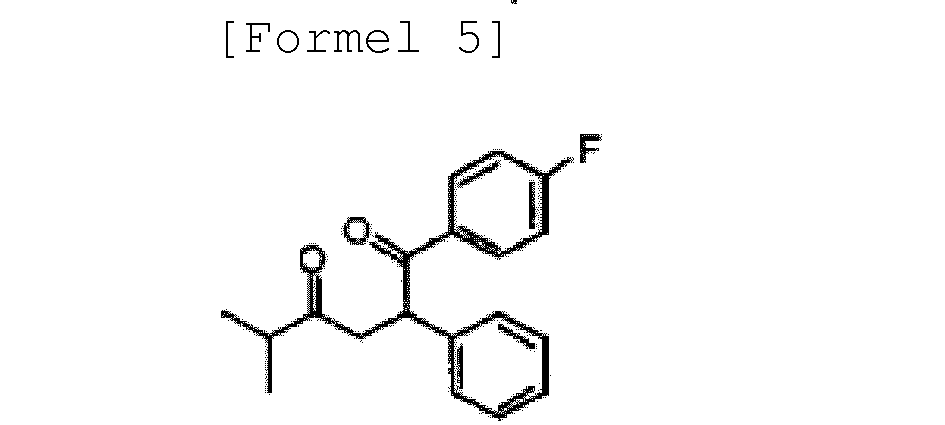
- the present inventors have conducted many studies to a method for preparing atorvastatin, which can overcome the above-described problems occurring in the prior art, and, as a result, have synthesized a novel intermediate (formula 7a) using a 1,4-dione compound (formula 5), which contains no a substituent group at carbon location 3 and has a structural arrangement, which can be easily cyclized with a chiral intermediate, and have developed a method of preparing atorvastatin or a pharmaceutically acceptable salt thereof by using the intermediate in high efficiency and high yield, thereby completing the present invention.
- the present invention relates to a novel method for preparing atorvastatin and provides a method for preparing a compound of the following formula 1 or a pharmaceutically acceptable salt thereof, which comprises the steps of:
- R 9 is hydrogen, a straight or branched chain alkyl having 1-8 carbon atoms, a cycloalkyl group having 3-6 carbon atoms, phenyl, benzyl or ⁇ , ⁇ -dimethylbenzyl
- R 10 and R 11 are each independently hydrogen, a straight or branched chain alkyl having 1-8 carbon atoms, a cycloalkyl group having 3-6 carbon atoms, benzyl or phenyl, or R 10 and R 11 together form -(CH 2 ) 4 -, -(CH 2 ) 5 -, -(CH(R 12 )CH 2 ) 3 -, -(CH(R 12 )CH 2 ) 4 -, -(CH(R 12 )(CH 2 ) 2 CH(R 12 ))-, -(CH(R 12 )(CH 2 ) 3 CH(R 12 ))-, -CH 2 CH 2 -O-CH 2 CH 2 -, -CH(R
- the present invention provides a method for preparing the compound of formula 7a by cyclocondensing a compound of the following formula 5 and a compound of the following formula 6:
- a method capable of producing a large amount of atorvastatin at high purity and high yield under mild reaction conditions capable of producing a large amount of atorvastatin at high purity and high yield under mild reaction conditions.
- the present invention relates to a method of preparing a compound of formula 1 at high efficiency and high yield using a compound of formula 7 and a compound of formula 8, which are key intermediates.
- the present invention relates to a compound of formula 7a, which is a novel intermediate, and to a preparation method thereof.
- the present invention relates to a method for preparing a compound of formula 1 or a pharmaceutically acceptable salt thereof, which comprises the steps of:
- a 4 is oxygen;
- the present invention relates to a method of preparing the compound of formula 1 or a pharmaceutically acceptable salt thereof by using compounds of the following formula 9a and formula 9b:
- the compound of formula 9 can be prepared by reaching the compound of formula 7 with the compound of formula 8 in the presence of a selected reaction solvent and a selected acid.
- the compound of formula 8 can be used in 1-10 molar equivalents, preferably 1-8 molar equivalents, and most preferably 2-6 molar equivalents.
- the reaction solvent is one or more selected from the group consisting of: halogen solvents, such as methylene chloride, chloroform, and carbon tetrachloride, aromatic solvents, such as toluene, benzene, nitrobenzene and xylene, and ether solvents, such as tetrahydrofuran, diethylether, dioxane and diisopropylether.
- the solvent is preferably a halogen solvent or an aromatic solvent, and most preferably methylene chloride.
- Lewis acid preferably aluminum chloride, zinc chloride, trifluoroborane, tribromoborane, titanium tetrachloride, iron chloride or tin tetrachloride, and most preferably aluminum chloride is used.
- aluminum chloride is used in 1-10 molar equivalents, preferably 1-8 molar equivalents, and more preferably 2-6 molar equivalents.
- the reaction temperature is in the range from -78 °C to room temperature, preferably from -78 °C to 0 °C, and most preferably from -78 °C to - 40 °C.
- the reaction time is between 10 minutes and 48 hours, and preferably between 10 minutes and 8 hours.
- the compound of formula 9 can be prepared by carrying out the reaction between peroxide, such as m-chloroperoxybenzoic acid (m-CPBA) and hydrogen peroxide (H 2 O 2 ) and the compound of formula 8, in a solvent selected from the group consisting of halogen solvents, such as methylene chloride and chloroform, alcoholic solvents, such as methanol and ethanol, and ether solvents, such as dioxane and tetrahydrofuran.
- peroxide such as m-chloroperoxybenzoic acid (m-CPBA) and hydrogen peroxide (H 2 O 2 ) and the compound of formula 8
- the reaction step (2) of synthesizing the compound of formula 1 by deprotecting and hydrolyzing the obtained compound of formula 9 can be carried out according to any method known in the art (see WO 02/057274 ), and the compound of formula 1 can be converted to a pharmaceutically acceptable salt thereof through a salt formation step.
- Pharmaceutically acceptable salts include organic salts and inorganic salts.
- organic salts include, but are not limited to, morpholine, piperazine, trimethylamine, triethylamine, dimethylamine, diethylamine, dipropylamine, diisopropylamine, dibenzylamine, dicyclohexylamine, lysine, ornitine, threonine, arginine, metformin, N-benzyl-2-phenylethanamine, 2-amino-2-methyl-1-propanol, 1-phenylethanamine, 1,2-ethanediamine, ammonia, 2-methyl-2-propanamine, phenethylamine and 2-(3,4-dimethoxyphenyl)ethanamine, and preferred examples of inorganic salts include, but are not limited to, alkali metals, such as lithium, sodium, potassium and cesium, alkaline earth metals, such as magnesium and calcium, aluminum, bismuth and iron.
- the deprotection and/or hydrolysis reaction may be carried out by using alkali metal, preferably lithium hydroxide, sodium hydroxide, sodium bicarbonate, sodium carbonate, potassium bicarbonate, potassium carbonate or potassium hydroxide, and most preferably sodium hydroxide.
- alkali metal preferably lithium hydroxide, sodium hydroxide, sodium bicarbonate, sodium carbonate, potassium bicarbonate, potassium carbonate or potassium hydroxide, and most preferably sodium hydroxide.
- sodium hydroxide can be used in 1-10 molar equivalents, preferably 3-7 molar equivalents, and most preferably 4-5 molar equivalents.
- the reaction temperature is 0-100 °C, and preferably 0-50 °C, and the reaction time is about 1-6 hours, and preferably about 2-4 hours.
- a solvent, which is used in the reaction of step (2), is one or more selected from the group consisting of, for example, alcoholic solvents, such as methanol, ethanol, propanol or butanol, ether solvents, such as tetrahydrofuran, diethylether, dioxane or diisopropylether, and water.
- alcoholic solvents such as methanol, ethanol, propanol or butanol
- ether solvents such as tetrahydrofuran, diethylether, dioxane or diisopropylether
- water a mixture of an ether solvent and water is used, and more preferably, a mixture of tetrahydrofuran and water is used.
- the hydrolysis reaction may be carried out at the same time as the deprotection reaction, and a calcium salt formation reaction may be carried out without a separate purification process.
- a compound in the form of sodium salt is collected, and may then be prepared into atorvastatin hemicalcium salt in a selected solvent by using any one selected from the group consisting of calcium carbonate, calcium hydroxide, calcium acetate, calcium sulfate and calcium chloride.
- the equivalent of calcium acetate for the formation of calcium salt is preferably 0.5 mole.
- the solvent that is used in the salt formation reaction is one or more selected from the group consisting of, for example, alcoholic solvents, such as methanol, ethanol, propanol or butanol, ether solvents, such as tetrahydrofuran, diethylether, dioxane or diisopropylether, and water.
- alcoholic solvents such as methanol, ethanol, propanol or butanol
- ether solvents such as tetrahydrofuran, diethylether, dioxane or diisopropylether
- water water.
- the solvent is preferably is a mixture of an alcoholic solvent and water, and more preferably a mixture of methanol and water.
- the reaction temperature is 10-80 °C, and preferably 10-60 °C, and the reaction temperature is about 1-6 hours, and preferably about 1-3 hours.
- the present invention relates to a compound of the following formula 7a, which is a novel intermediate, and a preparation method thereof: wherein A 1 A 2 , A 3 W and are as defined above:
- the compound of formula 7a is a compound of the following formula 7b:
- the compound of formula 7a can be prepared by cyclocondensing a compound of the following formula 5 and a compound of the following formula 6. wherein A 1 , A 2 , A 3 , W and Z are as defined above.
- the condensation of the compound of formula 5 with the compound of formula 6 is carried out in a selected organic solvent in the presence of acid to prepare the compound of formula 7a, and a water removal agent or a water removal device may be used to remove water during the reaction.
- the organic solvent that is used in the reaction is one or more selected from the group consisting of hydrocarbon solvents, such as hexane, cyclohexane or heptane, aromatic solvents, such as toluene, benzene or xylene, ether solvents, such as tetrahydrofuran, diethylether, dioxane or diisopropylether, alcoholic solvents, such as methanol, ethanol, propanol or butanol, and polar solvents, such as dimethylformamide or N,N-dimethylacetamide.
- the solvent is preferably an aromatic solvent, and most preferably toluene.
- the acid is pivalic acid, trifluoromethylsulfonic acid, methanesulfonic acid, p-toluenesulfonic acid or acetic acid, and preferably pivalic acid.
- the water removal agent may be molecular sieve, anhydrous magnesium sulfate or anhydrous sodium sulfate, and the water removal device may be a Dean-Stark trap. In the present invention, the Dean-Stark trap is preferably used to remove water.
- the reaction temperature is 50-110 °C, preferably a reflux temperature suitable for the solvent, and more preferably 80-100 °C. If the reaction temperature is low or exceeds 110 °C, the reaction does not occur or byproducts are produced, leading to a significant decrease in the yield of the reaction.
- the reaction time is about 1-48 hours, preferably 5-30 hours, and more preferably 10-20 hours.
- the compound of formula 6 may be used in 1-3 molar equivalents, and preferably 1-1.5 molar equivalents.
- the known compound of formula 5 can be obtained according to any method known in the art (see J. Med. Chem., 1991, 34, 357-366 , and US Patent No. 5,003,081 ). Also, the known compound of formula 6 can be obtained according to the methods known in US Patent No. 5,003,081 , and International Publication Nos. WO 05/012246 , WO 03/070733 , WO 89/07598 and WO 94/20492 .
- the compound of formula 5 can be prepared by subjecting a compound of formula 2 to a Knoevenagel condensation reaction with benzaldehyde in a n-hexane solvent in the presence of beta-alanine and acetic acid using a Dean-Stark trap, to prepare a compound of formula 3, subjecting the compound of formula 3 to a Stetter reaction with 4-fluorobenzaldehyde in reflux conditions in an ethanol solvent in the presence of a thiazolium catalyst to prepare a compound of formula 4, and subjecting the compound of formula 4 to decarboxylation in tetrahydrofuran in the presence of sodium hydroxide.
- R 13 is methyl or ethyl.
- Example 4-1 Preparation of t-butyl 2-((4R,6R)-6-(2-(2-(4-fluorophenyl)-5-isopropyl-3-phenyl-1H-pyrrol-1-yl)ethyl)-2-phenyl-1,3,2-dioxaborinan-4-yl)acetate
- reaction mixture was cooled slowly to 20-25 °C and washed with purified water, and the organic layer was separated, dried over anhydrous magnesium sulfate, filtered, and concentrated under reduced pressure, thus obtaining 194 g of the title compound as yellow oil.
- Example 4-2 Preparation of t-butyl 2-((4R,6R)-6-(2-(2-(4-fluorophenyl)-5-isopropyl-3-phenyl-1H-pyrrol-1-yl)ethyl)-2,2-dimethyl-1,3-dioxan-4-yl)acetate
- Example 4-1 the title compound was synthesized using 1-(4-fluorophenyl)-5-methyl-2-phenyl-1,4-hexanedione and t-butyl 2-((4R,6R)-6-(2-aminoethyl)-2,2-dimethyl-1,3-dioxane-4-yl)acetate.
- Example 4-1 According to the same method as in Example 4-1, the title compound was synthesized using 1-(4-fluorophenyl)-5-methyl-2-phenyl-1,4-hexanedione and 2-((4R,6R)-6-(2-aminoethyl)-2,2-dimethyl-1,3-dioxan-4-yl)acetic acid.
- Example 4-4 Preparation of ethyl 2-((4R,6R)-6-(2-(2-(4-fluorophenyl)-5-isopropyl-3-phenyl-1H-pyrrol-1-yl)ethyl)-2,2-dimethyl-1,3-dioxan-4-yl)acetate
- Example 4-1 the title compound was synthesized using 1-(4-fluorophenyl)-5-methyl-2-phenyl-1,4-hexanedione and ethyl 2-((4R,6R)-6-(2-aminoethyl)-2,2-dimethyl-1,3-dioxan-4-yl)acetate.
- Example 4-5 Preparation of benzyl 2-((4R,6R)-6-(2-(2-(4-fluorophenyl)-5-isooropyl-3-phenyl-1H-pyrrol-1-yl)ethyl)-2,2-dimethyl-1,3-dioxan-4-yl)acetate
- Example 4-1 the title compound was synthesized using 1-(4-fluorophenyl)-5-methyl-2-phenyl-1,4-hexanedione and benzyl 2-((4R,6R)-6-(2-aminoethyl)-2,2-dimethyl-1,3-dioxan-4-yl)acetate.
- Example 4-1 According to the same method as in Example 4-1, the title compound was synthesized using 1-(4-fluorophenyl)-5-methyl-2-phenyl-1,4-hexanedione and 2-phenylpropan-2-yl 2-((4R,6R)-6-(2-aminoethyl)-2,2-dimethyl-1,3-dioxan-4-yl)acetate.
- Example 4-7 Preparation of t-butyl 2-((4R,6R)-6-(2-(2-(4-fluorophenyl)-5-isooropyl-3-phenyl-1H-pyrrol-1-yl)ethyl)-2-(3-nitrophenyl)-1,3,2-dioxaborinan-4-yl)acetate
- Example 4-1 the title compound was synthesized using 1-(4-fluorophenyl)-5-methyl-2-phenyl-1,4-hexanedione and t-butyl 2-((4R,6R)-6-(2-aminoethyl)-2-(3-nitrophenyl)-1,3,2-dioxaborinan-4-yl)acetate.
- Example 4-8 Preparation of t-butyl 2-((4R,6R)-6-(2-(2-(4-fluorophenyl)-5-isopropyl-3-phenyl-1H-pyrrol-1-yl)ethyl)-2-(4-methoxyphenyl)-1,3,2-dioxaborinan-4-yl)acetate
- Example 4-1 the title compound was synthesized using 1-(4-fluorophenyl)-5-methyl-2-phenyl-1,4-hexanedione and t-butyl 2-((4R,6R)-6-(2-aminoethyl)-2-(4-methoxyphenyl)-1,3,2-dioxaborinan-4-yl)acetate.
- Example 4-9 Preparation of t-butyl 2-((4R,6R)-2-ethyl-6-(2-(2-(4-fluorophenyl)-5-isopropyl-3-phenyl-1H-pyrrol-1-yl)ethyl)-1,3,2-dioxaborinan-4-yl)acetate
- Example 4-1 the title compound was synthesized using 1-(4-fluorophenyl)-5-methyl-2-phenyl-1,4-hexanedione and t-butyl 2-((4R,6R)-6-(2-aminoethyl)-2-ethyl-1,3,2-dioxaborinan-4-yl)acetate.
- Example 4-10 Preparation of t-butyl 2-((4R,6R)-6-(2-(2-(4-fluorophenyl)-5-isopropyl-3-phenyl-1H-pyrrol-1-yl)ethyl)-2-(methylphosphate)-1,3-dioxan-4-yl)acetate
- Example 4-1 the title compound was synthesized using 1-(4-fluorophenyl)-5-methyl-2-phenyl-1,4-hexanedione and t-butyl 2-((4R,6R)-6-(2-aminoethyl)-2-methylphosphate-1,3-dioxan-4-yl)acetate.
- Example 4-1 According to the same method as in Example 4-1, the title compound was synthesized using 1-(4-fluorophenyl)-5-methyl-2-phenyl-1,4-hexanedione and 2-(4-(benzyloxy)-6-methoxytetrahydro-2H-pyran-2-yl)ethanamine.
- Example 4-1 According to the same method as in Example 4-1, the title compound was synthesized using 1-(4-fluorophenyl)-5-methyl-2-phenyl-1,4-hexanedione and 6-(2-aminoethyl)4-(benzyloxy)tetrahydro-2H-pyran-2-one.
- Example 4-13 Preparation of t-butyl 2-((4R,6R)-2,2-di-t-butyl-6-(2-(2-(4-fluorophenyl)-5-isopropyl-3-phenyl-1H-pyrrol-1-yl)ethyl)-1,3,2-dioxasilinan-4-yl)acetate
- Example 4-1 the title compound was synthesized using 1-(4-fluorophenyl)-5-methyl-2-phenyl-1,4-hexanedione and t-butyl 2-((4R,6R)-6-(2-aminoethyl)-2,2-di-t-butyl-1,3,2-dioxasilinan-4-yl)acetate.
- Example 4-14 Preparation of t-butyl 2-((4R,6R)-6-(2-(4-fluorophenyl)-5-isopropyl-3-phenyl-1H-pyrrrol-1-yl)ethyl)-2-(sulfite)-1,3-dioxan-4-yl)acetate
- Example 4-1 the title compound was synthesized using 1-(4-fluorophenyl)-5-methyl-2-phenyl-1,4-hexanedione and t-butyl 2-((4R,6R)-6-(2-aminoethyl)-2-sulfite-1,3-dioxan-4-yl)acetate.
- Example 4-15 Preparation of ethyl 2-((2R,4R)-4-(2-(2-(4-fluorophenyl)-5-isopropyl-3-phenyl-1H-pyrrol-1-yl)ethyl)-1,5-dioxaspiro[5.5]undecan-2-yl)acetate
- Example 4-1 the title compound was synthesized using 1-(4-fluorophenyl)-5-methyl-2-phenyl-1,4-hexanedione and ethyl 2-((2R,4R)-4-(2-aminoethyl)-1,5-dioxaspiro[5.5]undecan-2-yl)acetate.
- Example 4-16 Preparation of t-butyl 2-((2R,4R)-4-(2-(2-(4-fluorophenyl)-5-isopropyl-3-phenyl-1H-pyrrol-1-yl)ethyl)-1,5-dioxaspiro[5.5]undecan-2-yl)acetate
- Example 4-1 the title compound was synthesized using 1-(4-fluorophenyl)-5-methyl-2-phenyl-1,4-hexanedione and t-butyl 2-((2R,4R)-4-(2-aminoethyl)-1,5-dioxaspiro[5.5]undecan-2-yl)acetate.
- Example 4-17 Preparation of cyclohexyl 2-((2R,4R)-4-(2-(2-(4-fluorophenyl)-5-isopropyl-3-phenyl-1H-pyrrol-1-yl)ethyl)-1,5-dioxaspiro[5.5]undecan-2-yl)acetate
- Example 4-1 According the same method as in Example 4-1, the title compound was synthesized using 1-(4-fluorophenyl)-5-methyl-2-phenyl-1,4-hexanedione and cyclohexyl 2-((2R,4R)-4-(2-aminoethyl)-1,5-dioxaspiro[5.5]undecan-2-yl)acetate.
- Example 4-18 Preparation of phenyl 2-((2R,4R)-4-(2-(2-(4-fluorophenyl)-5-isopropyl-3-phenyl-1H-pyrrol-1-yl)ethyl)-1,5-dioxaspiro[5.5]undecan-2-yl)acetate
- Example 4-1 the title compound was synthesized using 1-(4-fluorophenyl)-5-methyl-2-phenyl-1,4-hexanedione and phenyl 2-((2R,4R)-4-(2-aminoethyl)-1,5-dioxaspiro[5.5]undecan-2-yl)acetate.
- Example 4-19 Preparation of benzyl 2-((2R,4R)-4-(2-(2-(4-fluorophenyl)-5-isopropyl-3-phenyl-1H-pyrrol-1-yl)ethyl)-1,5-dioxaspiro[5.5]undecan-2-yl)acetate
- Example 4-1 the title compound was synthesized using 1-(4-fluorophenyl)-5-methyl-2-phenyl-1,4-hexanedione and benzyl 2-((2R,4R)-4-(2-aminoethyl)-1,5-dioxaspiro[5.5]undecan-2-yl)acetate.
- Example 4-1 According to the same method as in Example 4-1, the title compound was synthesized using 1-(4-fluorophenyl)-5-methyl-2-phenyl-1,4-hexanedione and 2-phenylpropan-2-yl 2-((2R,4R)-4-(2-aminoethyl)-1,5-dioxaspiro[5.5]undecan-2-yl)acetate.
- Example 4-1 According to the same method as in Example 4-1, the title compound was synthesized using 1-(4-fluorophenyl-5-methyl-2-phenyl-1,4-hexanedione and 2-((4R,6R)-6-(2-aminoethyl)-2,2-dimethyl-1,3-dioxan-4-yl)-N,N-dimethylacetamide.
- the tiotle compound was synthesized using 1-(4-fluorophenyl)-5-methyl-2-phenyl-1,4-hexanedione and 2-((4R,6R)-6-(2-aminoethyl)-2,2-dimethyl-1,3-dioxan-4-yl)-N,N-dicyclohexylacetamide.
- Example 4-1 According to the same method as in Example 4-1, the title compound was synthesized using 1-(4-fluorophenyl)-5-methyl-2-phenyl-1,4-hexanedione and 2-((4R,6R)-6-(2-aminoethyl)-2,2-dimethyl-1,3-dioxan-4-yl)-1-(piperidin-1-yl)ethanone.
- Example 4-1 According to the same method as in Example 4-1, the title compound was synthesized using 1-(4-fluorophenyl)-5-methyl-2-phenyl-1,4-hexanedione and 2-((2R,4R)-4-(2-aminoethyl)-1,5-dioxaspiro[5.5]undecan-2-yl)-1-morpholinoethanone.
- Example 4-1 the title compound was synthesized using 1-(4-fluorophenyl)-5-methyl-2-phenyl-1,4-hexanedione and t-butyl 2-((4R,6R)-6-(2-aminoethyl)-2-methoxy-1,3,2-dioxaborinan-4-yl)acetate.
- Example 4-1 the title compound was synthesized using 1-(4-fluorophenyl)-5-methyl-2-phenyl-1,4-hexanedione and t-butyl 2-((4R,6R)-6-(2-aminoethyl)-2-chloro-1,3-dioxaphosphorinan-4-yl)acetate.
- Example 5-1 Preparation of t-butyl 2-((4R,6R)-6-(2-(2-(4-fluorophenyl)-5-isopropyl-3-phenyl-4-(phenylcarbamoyl)-1H-pyrrol-1-yl)ethyl)-2-phenyl-1,3,2-dioxaborinan-4-yl)acetate
- reaction temperature was lowered to a temperature between -50 °C and - 60 °C, and a solution of 160 g of t-butyl 2-((4R,6R)-6-(2-(2-(4-fluorophenyl)-5-isopropyl-3-phenyl-1H-pyrrol-1-yl)ethyl)-2-phenyl-1,3,2-dioxaborinan-4-yl)acetate in 1.2 L of methylene chloride was slowly added dropwise to the reaction material over 1 hour and was then stirred for 1 hour. After the completion of the reaction, purified water was added to the reaction product, and the mixture was stirred for 30 minutes, heated slowly to room temperature, and then stirred for 30 minutes.
- the organic layer was separated three times with purified water and one time with a saturated aqueous sodium chloride solution.
- the organic layer was separated, dried over anhydrous magnesium sulfate, filtered, and concentrated under reduced pressure, thus obtaining oil.
- the oil was crystallized from isopropylether and heptane, thus obtaining 147 g of the title compound as a solid.
- Example 5-1 The title compound as a light yellow solid was obtained in the same manner as in Example 5-1, except that zinc chloride was instead of aluminum chloride.
- Example 5-3 Preparation of t-butyl 2-((4R,6R)-6-(2-(2-(4-fluorophenyl)-5- isopropyl-3-phenyl-4-(phenylcarbamothioyl)-1H-pyrrol-1-yl)ethyl)-2-phenyl-1,3,2- dioxaborinan-4-yl)acetate
- Example 5-4 Preparation of t-butyl 2-((4R,6R)-6-(2-(2-(4-fluorophenyl)-5-isopropyl-3-phenyl-4-(phenylcarbarmoyl)-1H-pyrrol-1-yl)ethyl)-2-phenyl-1,3,2-dioxaborinan-4-yl)acetate
- Example 5-5 Preparation of t-butyl 2-((4R,6R)-6-(2-(2-(4-fluorophenyl)-5-isopropyl-3-phenyl-4-(phenylcarbomyl)-1H-pyrrol-1-yl)ethyl)-2,2-dimethyl-1,3-dioxan-4-yl)acetate
- Example 5-1 the title compound was synthesized using t-butyl 2-((4R,6R)-6-(2-(2-(4-fluorophenyl)-5-isopropyl-3-phenyl-1H-pyrrol-1-yl)ethyl)-2,2-dimethyl-1,3-dioxan-4-yl)acetate.
- Example 5-6 Preparation of 2-((4R,6R)-6-2-(2-(4-fluorophenyl)-5-isopropyl-3-phenyl-4-(phenylcarbamoyl)-1H-pyrrol-1-yl)ethyl)-2,2-dimethyl-1,3-dioxan-4-yl)acetic acid
- Example 5-1 According to the same method as in Example 5-1, the title compound was synthesized using 2-((4R,6R)-6-(2-(2-(4-fluorophenyl)-5-isopropyl-3-phenyl-1 H-pyrrol-1-yl)ethyl)-2,2-dimethyl-1,3-dioxan-4-yl)acetic acid.
- Example 5-7 Preparation of ethyl 2-((4R,6R)-6-(2-(2-(4-fluorophenyl)-5-isopropyl-3-phenyl-4-(phenylcarbamoyl)-1H-pyrrol-1-yl)ethyl)-2,2-dimethyl-1,3-dioxan-4-yl)acetate
- Example 5-1 the title compound was synthesized using ethyl 2-((4R,6R)-6-(2-(2-(4-fluorophenyl)-5-isopropyl-3-phenyl-1H-pyrrol-1-yl)ethyl)-2,2-dimethyl-1,3-dioxan-4-yl)acetate.
- Example 5-8 Preparation of benzyl 2-((4R,6R)-6-(2-(2-(4-fluorophenyl)-5-isopropyl-3-phenyl-4-(phenylcarbamoyl)-1H-pyrrol-1-yl-ethyl)-2,2-dimethyl-1,3-dioxan-4-yl)acetate
- Example 5-1 the title compound was synthesized using benzyl 2-((4R,6R)-6-(2-(2-(4-fluorophenyl)-5-isopropyl-3-phenyl-1H-pyrrol-1-yl)ethyl)-2,2-dimethyl-1,3-dioxan-4-yl)acetate.
- Example 5-1 the title compound was synthesized using 2-phenylpropan-2-yl 2-((4R,6R)-6-(2-(2-(4-fluorophenyl)-5-isopropyl-3-phenyl-1 H-pyrrol-1-yl)ethyl)-2,2-dimethyl-1,3-dioxan-4-yl)acetate.
- Example 5-10 Preparation of t-butyl 2-((4R,6R)-6-(2-(2-(4-fluorophenyl)-5-isopropyl-3-phenyl-4-(phenylcarbamoyl)-1H-pyrrol-1-yl)ethyl)-2-(3-nitrophenyl)-1,3,2-dioxaborinan-4-yl)acetate
- Example 5-1 the title compound was synthesized using t-butyl 2-((4R,6R)-6-(2-(2-(4-fluorophenyl)-5-isopropyl-3-phenyl-1H-pyrrol-1-yl)ethyl)-2-(3-nitrophenyl)-1,3,2-dioxaborinan-4-yl)acetate.
- Example 5-11 Preparation of t-butyl 2-((4R,6R)-6-(2-(2-(4-fluorophenyl)-5-isopropyl-3-phenyl-4-(phenylcarbamoyl-1H-pyrrol-1-yl)ethyl)-2-(4-methoxyphenyl)-1,3,2-dioxaborinan-4-yl)acetate
- Example 5-1 the title compound was synthesized using t-butyl 2-((4R,6R)-6-(2-(2-(4-fluorophenyl)-5-isopropyl-3-phenyl-1H-pyrrol-1-yl)ethyl)-2-(4-methoxyphenyl)-1,3,2-dioxaborinan-4-yl)acetate.
- Example 5-12 Preparation of t-butyl 2-((4R,6R)-2-ethyl-6-(2-(2-(4-fluorophenyl)-5-isopropyl-3-phenyl-4-(phenylcarbarmoyl)-1H-pyrrol-1-yl)ethyl)-1,3,2-dioxaborinan-4-yl)acetate
- Example 5-1 the title compound was synthesized using t-butyl 2-((4R,6R)-2-ethyl-6-(2-(2-(4-fluorophenyl)-5-isopropyl-3-phenyl-1H-pyrrol-1-yl)ethyl)-2-(4-methoxyphenyl)-1,3,2-dioxaborinan-4-yl)acetate.
- Example 5-13 Preparation of t-butyl 2-((4R,6R)-6-(2-(2-(4-fluorophenyl)-5-isopropyl-3-phenyl-4-(phenylcarbamoyl)-1H-pyrrol-1-yl)ethyl)-2-methoxy-2-oxo-1,3,2-dioxaphosphinan-4-yl)acetate
- Example 5-1 the title compound was synthesized using t-butyl 2-((4R,6R)-6-(2-(2-(4-fluorophenyl)-5-isopropyl-3-phenyl-1H-pyrrol-1-yl)ethyl)-2-methoxy-2-oxo-1,3,2-dioxaphosphinan-4-yl)acetate.
- Example 5-1 According to the same method as in Example 5-1, the title compound was synthesized using 1-(2-(4-(benzyloxy)-6-methoxytetrahydro-2H-pyran-2-yl)ethyl)-2-(4-fluorophenyl)-5-isopropyl-3-phenyl-1H-pyrrole.
- Example 5-1 According to the same method as in Example 5-1, the title compound was synthesized using 4-(benzyloxy)-6-(2-(2-(4-fluorophenyl)-5-isopropyl-3-phenyl-1H-pyrrol-1-yl)ethyl)tetrahydro-2H-pyran-2-one.
- Example 5-16 Preparation of phenyl 1-(2-((4R,6R)-6-(2-t-butoxy-2-oxoethyl)-2,2-di-t-butyl-1,3,2-dioxasilinan-4-yl)ethyl)-5-(4-fluorophenyl)-2-isopropyl-4-phenyl-1H-pyrrol-3-carboxylate
- Example 5-1 the title compound was synthesized using t-butyl 2-((4R,6R)-2,2-di-t-butyl-6-(2-(2-(4-fluorophenyl)-5-isopropyl-3-phenyl-1H-pyrrol-1-yl)ethyl)-1,3,2-dioxasilinan-4-yl)acetate.
- Example 5-17 Preparation of t-butyl 2-((4R,6R)-6-(2-(2-(4-fluorophenyl)-5-isopropyl-3-phenyl-4-(phenylcarbamoyl)-1H-pyrrol-1-yl)ethyl)-2-oxo-1,3,2-dioxathian-4-yl)acetate
- Example 5-1 the title compound was synthesized using t-butyl 2-((4R,6R)-6-(2-(2-(4-fluorophenyl)-5-isopropyl-3-phenyl-1H-pyrrol-1-yl)ethyl)-2-oxo-1,3,2-dioxathian-4-yl)acetate.
- Example 5-18 Preparation of ethyl 2-((2R,4R)-4-(2-(2-(4-fluorophenyl)-5-isopropyl-3-phenyl-4-(phenylcarbamoyl)-1H-pyrrol-1-yl)ethyl)-1,5-dioxaspiro[5.5]undecan-2-yl)acetate
- Example 5-1 the title compound was synthesized using ethyl 2-((2R,4R)-4-(2-(2-(4-fluorophenyl)-5-isopropyl-3-phenyl-1H-pyrrol-1-yl)ethyl)-1,5-dioxaspiro[5.5]undecan-2-yl)acetate.
- Example 5-19 Preparation of t-butyl 2-((2R,4R)-4-(2-(2-(4-fluorophenyl)-5-isopropyl-3-phenyl-4-(phenylcarbamoyl)-1H-pyrrol-1-yl)ethyl)-1,5-dioxaspiro[5.5]undecan-2-yl)acetate
- Example 5-1 the title compound was synthesized using t-butyl 2-((2R,4R)-4-(2-(2-(4-fluorophenyl)-5-isopropyl-3-phenyl-1 H-pyrrol-1-yl)ethyl)-1,5-dioxaspiro[5.5]undecan-2-yl)acetate.
- Example 5-20 Preparation of cyclohexyl 2-((2R,4R)-4-(2-(2-(4-fluorophenyl) 5-isopropyl-3-phenyl-4-(phenylcarbamoyl)-1H-pyrrol-1-yl)ethyl)-1,5-dioxaspiro[5.5]undecan-2-yl)acetate
- Example 5-1 the title compound was synthesized using cyclohexyl 2-((2R,4R)-4-(2-(2-(4-fluorophenyl)-5-isopropyl-3-phenyl-1H-pyrrol-1-yl)ethyl)-1,5-dioxaspiro[5.5]undecan-2-yl)acetate.
- Example 5-21 Preparation of phenyl 2-((2R,4R)-4-(2-(2-(4-fluorophenyl)-5-isopropyl-3-phenyl-4-(phenylcarbamoyl)-1H-pyrrol-1-ylethyl)-1,5-dioxaspiro[5.5]undecan-2-yl)acetate
- Example 5-1 the title compound was synthesized using phenyl 2-((2R,4R)-4-(2-(2-(4-fluorophenyl)-5-isopropyl-3-phenyl-1H-pyrrol-1-yl)ethyl)-1,5-dioxaspiro[5.5]undecan-2-yl)acetate.
- Example 5-22 Preparation of benzyl_ 2-((2R,4R)-4-(2-(2-(4-fluorophenyl)-5-isopropyl-3-phenyl-4-(phenylcarbamoyl)-1H-pyrrol-1-yl)ethyl)-1,5-dioxaspiro[5.5]undecan-2-yl)acetate
- Example 5-1 the title compound was synthesized using benzyl 2-((2R,4R)-4-(2-(2-(4-fluorophenyl)-5-isopropyl-3-phenyl-1H-pyrrol-1-yl)ethyl)-1,5-dioxaspiro[5.5]undecan-2-yl)acetate.
- Example 5-1 the title compound was synthesized using 2-phenylpropan-2-yl 2-((2R,4R)-4-(2-(2-(4-fluorophenyl)-5-isopropyl-3-phenyl-1 H-pyrrol-1-yl)ethyl)-1,5-dioxaspiro[5.5]undecan-2-yl)acetate.
- Example 5-1 According to the same method as in Example 5-1, the title compound was synthesized using 2-((4R,6R)-6-(2-(2-(4-fluorophenyl)-5-isopropyl-3-phenyl-1H-pyrrol-1-yl)ethyl-2,2-dimethyl-1,3-dioxan-4-yl)-N,N-dimethylacetamide.
- Example 5-1 the title compound was synthesized using N,N-dicyclohexyl-2-((4R,6R)-6-(2-(2-(4-fluorophenyl)-5-isopropyl-3-phenyl-1H-pyrrol-1-yl)ethyl)-2,2-dimethyl-1,3-dioxan-4-yl)acetamide.
- Example 5-26 Preparation of 1-2-((4R,6R)-2.2-dimethyl-2-oxo-2-(pyridin-1-vlLyl)-1,3-dioxan-4-yl)ethyl)-5-(4-fluorophenyl)-2-isopropyl-N,4-diphenyl-1H-pyrrol-3-carboxamide
- Example 5-1 According to the same method as in Example 5-1, the title compound was synthesized using 2-((4R,6R)-6-(2-(2-(4-fluorophenyl)-5-isopropyl-3-phenyl-1H-pyrrol-1-yl)ethyl)-2,2-dimethyl-1,3-dioxan-4-yl)-1-(piperidin-1-yl)ethanone.
- Example 5-27 Preparation of 5-(4-fluorophenyl)-2-isooropyl-1-(2-((2R,4R)-4-(2-morpholino-2-oxoethyl)-1,5-dioxaspiro[5.5]undecan-2-yl)ethyl)-N,4-diphenyl-1H-pyrrol-3-carboxamide.
- Example 5-1 According to the same method as in Example 5-1, the title compound was synthesized using 2-((2R,4R)-4-(2-(2-(4-fluorophenyl)-5-isopropyl-3-phenyl-1H-pyrrol-1-yl)ethyl)-1,5-dioxaspiro[5.5]undecan-2-yl)-1-morpholinoethanone.
- Example 5-28 Preparation of t-butyl 2-((4R,6R)-6-(2-(2-(4-fluorophenyl)-5-isopropyl-3-phenyl-4-(phenylcarbamoyl)-1H-pyrrol-1-yl)ethyl)-2-methoxy-1,3,2-dioxaborinan-4-yl)acetate
- Example 5-1 the title compound was synthesized using t-butyl 2-((4R,6R)-6-(2-(2-(4-fluorophenyl)-5-isopropyl-3-phenyl-1H-pyrrol-1-yl)ethyl)-2-methoxy-1,3,2-dioxaborinan-4-yl)acetate.
Landscapes
- Chemical & Material Sciences (AREA)
- Organic Chemistry (AREA)
- Health & Medical Sciences (AREA)
- Medicinal Chemistry (AREA)
- Pharmacology & Pharmacy (AREA)
- Diabetes (AREA)
- Hematology (AREA)
- Obesity (AREA)
- Chemical Kinetics & Catalysis (AREA)
- General Chemical & Material Sciences (AREA)
- Engineering & Computer Science (AREA)
- Nuclear Medicine, Radiotherapy & Molecular Imaging (AREA)
- Bioinformatics & Cheminformatics (AREA)
- Life Sciences & Earth Sciences (AREA)
- Animal Behavior & Ethology (AREA)
- General Health & Medical Sciences (AREA)
- Public Health (AREA)
- Veterinary Medicine (AREA)
- Organic Low-Molecular-Weight Compounds And Preparation Thereof (AREA)
- Pharmaceuticals Containing Other Organic And Inorganic Compounds (AREA)
Claims (10)
- Verfahren zur Herstellung einer Verbindung mit der folgenden Formel 1 oder eines pharmazeutisch verträglichen Salzes derselben, das die Schritte umfasst:(1) Durchführen einer Reaktion von einer Verbindung mit der folgenden Formel 7 mit einer Verbindung mit der folgenden Formel 8, um eine Verbindung mit der folgenden Formel 9 zu erhalten, und(2) Entfernen der Schutzgruppe und Hydrolysieren der Verbindung mit der Formel 9, die in Schritt (1) erhalten wurde:


 wobei A1 und A2 jeweils Sauerstoff darstellen und A3 CH2 darstellt,A4 Sauerstoff oder Schwefel darstellt;
W

oder Z CH2COR8 darstellt, wobei R8
- Verfahren nach Anspruch 1, wobei A1 und A2 in Formel 7 bis 9 Sauerstoff darstellen,
A3 CH2 darstellt; A4 Sauerstoff darstellt, W

wobei R1 und R2 jeweils unabhängig voneinander Wasserstoff, OH, Methyl, Ethyl, t-Butyl, Isopropyl oder Phenyl darstellen oder R1 und R2 zusammen Sauerstoff (=0) oder -(CH2)n- bilden, wobei n gleich 4 oder 5 ist, R3 Sauerstoff oder Schwefel darstellt, R4 Cl, Br, F, I, Methyl, Ethyl, t-Butyl, Isopropyl, Trityl, Phenyl, OH, Methoxy, Ethoxy oder Phenoxy darstellt und R5 Sauerstoff (=0), Methyl, Ethyl, t-Butyl, Isopropyl, Methoxy, Ethoxy, Phenoxy, t-Butoxy, Phenyl, Naphthalenyl, Methoxyphenyl, Ethoxyphenyl, Nitrophenyl, Difluorphenyl oder Chinolinyl
darstellen und Z -CH2COR8 darstellt, wobei R8

- Verfahren nach Anspruch 2, wobei es sich bei der Verbindung mit der Formel 9 um eine Verbindung mit der folgenden Formel 9a handelt:


- Verfahren nach Anspruch 2, wobei es sich bei der Verbindung mit der Formel 9 um eine Verbindung mit der folgenden Formel 9b handelt.

- Verfahren nach Anspruch 1, wobei A4 in der Verbindung mit der Formel 9, die in Schritt (1) erhalten wird, Schwefel darstellt und das Verfahren darüber hinaus den Schritt des Umwandelns von A4 von Schwefel zu Sauerstoff umfasst.
- Verfahren nach einem der Ansprüche 1 bis 5, wobei das Entfernen der Schutzgruppe und/oder das Hydrolysieren in Schritt (2) mit Hilfe von Alkalimetall durchgeführt wird.
- Verbindung mit der folgenden Formel 7a:
 wobei A1 und A2 Sauerstoff darstellen, A3 CH2 darstellt,W
darstellt, wobei R1 und R2 jeweils unabhängig voneinander Wasserstoff, OH, ein gerad- oder verzweigt-kettiges Alkyl mit 1-8 Kohlenstoffatomen oder Phenyl darstellen oder R1 und R2 zusammen Sauerstoff (=0) oder -(CH2)n- bilden, wobei n gleich 4 oder 5 ist, R3 Sauerstoff oder Schwefel darstellt, R4 Cl, Br, F, I, eine lineare oder verzweigte Kette mit 1-8 Kohlenstoffatomen, Phenyl, Trityl, OH, ein Alkoxy mit 1-8 Kohlenstoffatomen oder Phenoxy darstellt und R5 Sauerstoff (=0), ein gerad- oder verzweigt-kettiges Alkyl mit 1-8 Kohlenstoffatomen, ein Alkoxy mit 1-8 Kohlenstoffatomen, ein Aryl oder Aryloxy darstellt, wobei ein Aryl oder Aryloxy unsubstituiert oder mit einem Alkyl mit 1-4 Kohlenstoffatomen, einem Alkoxy mit 1-4 Kohlenstoffatomen, Nitro oder Halogen oder einem C6-C10-Heteroaryl umfassend ein oder zwei Heteroatome ausgewählt aus einer Gruppe bestehend aus N, 0 und S substituiert ist, undZ -CH2COR8 darstellt, wobei R8
- Verbindung nach Anspruch 7, bei der es sich um eine Verbindung mit der folgenden Formel 7a handelt:

 wobei A1 und A2 Sauerstoff darstellen, A3 CH2 darstellt,W
 Z -CH2COR8 darstellt, wobei R8
- Verbindung nach Anspruch 8, bei der es sich um eine Verbindung mit der folgenden Formel 7b handelt:


- Verfahren zur Herstellung einer Verbindung mit der folgenden Formel 7a, welches das Cylokondensieren einer Verbindung mit der folgenden Formel 5 und einer Verbindung mit der folgenden Formel 6 umfasst, um eine Verbindung mit der Formel 7a zu erhalten:


Applications Claiming Priority (2)
| Application Number | Priority Date | Filing Date | Title |
|---|---|---|---|
| KR1020080007757A KR100850850B1 (ko) | 2008-01-25 | 2008-01-25 | 아토르바스타틴의 제조방법 및 이에 사용되는 중간체 |
| PCT/KR2008/002373 WO2009093776A1 (en) | 2008-01-25 | 2008-04-25 | Method for the preparation of atorvastatin and intermediates used therein |
Publications (3)
| Publication Number | Publication Date |
|---|---|
| EP2245008A1 EP2245008A1 (de) | 2010-11-03 |
| EP2245008A4 EP2245008A4 (de) | 2011-08-03 |
| EP2245008B1 true EP2245008B1 (de) | 2013-02-20 |
Family
ID=39881324
Family Applications (1)
| Application Number | Title | Priority Date | Filing Date |
|---|---|---|---|
| EP08753187A Active EP2245008B1 (de) | 2008-01-25 | 2008-04-25 | Verfahren zur herstellung von atorvastatin und dabei verwendete zwischenprodukte |
Country Status (5)
| Country | Link |
|---|---|
| US (1) | US8178697B2 (de) |
| EP (1) | EP2245008B1 (de) |
| KR (1) | KR100850850B1 (de) |
| ES (1) | ES2407506T3 (de) |
| WO (1) | WO2009093776A1 (de) |
Families Citing this family (2)
| Publication number | Priority date | Publication date | Assignee | Title |
|---|---|---|---|---|
| KR101157314B1 (ko) | 2009-06-05 | 2012-06-15 | 주식회사종근당 | 로수바스타틴의 신규한 제조방법, 이 제조에 유용한 중간체 화합물 및 그의 제조방법 |
| MX2013002809A (es) * | 2010-09-16 | 2013-04-29 | Dsm Sinochem Pharm Nl Bv | Esteres de acidos hexanoicos. |
Family Cites Families (7)
| Publication number | Priority date | Publication date | Assignee | Title |
|---|---|---|---|---|
| HUP0303555A3 (en) * | 2000-11-16 | 2005-08-29 | Teva Pharma | Hydrolysis of [r(r |
| EP1756053A1 (de) | 2004-05-31 | 2007-02-28 | Ranbaxy Laboratories Limited | Verfahren zur herstellung von atorvastatin |
| WO2006032959A2 (en) | 2004-08-06 | 2006-03-30 | Glenmark Pharmaceuticals Limited | Processes for the preparation of pyrrole derivatives |
| ATE509009T1 (de) | 2005-03-14 | 2011-05-15 | C P Pharmaceuticals Internat C V | Herstellung eines atorvastatin-zwischenprodukts unter anwendung einer paal-knorr-kondensation |
| JP2009507821A (ja) | 2005-09-09 | 2009-02-26 | ファイザー・サイエンス・アンド・テクノロジー・アイルランド・リミテッド | アトルバスタチン中間体の調製 |
| WO2007028412A1 (en) | 2005-09-10 | 2007-03-15 | Ulkar Kimya Sanayii Ve Ticaret A.S. | Method for producing lactones |
| WO2007099552A2 (en) | 2006-03-02 | 2007-09-07 | Matrix Labaratories Ltd | Novel crystalline form of atovastatin hemi-magnesium |
-
2008
- 2008-01-25 KR KR1020080007757A patent/KR100850850B1/ko active Active
- 2008-04-25 EP EP08753187A patent/EP2245008B1/de active Active
- 2008-04-25 ES ES08753187T patent/ES2407506T3/es active Active
- 2008-04-25 US US12/864,139 patent/US8178697B2/en active Active
- 2008-04-25 WO PCT/KR2008/002373 patent/WO2009093776A1/en not_active Ceased
Also Published As
| Publication number | Publication date |
|---|---|
| WO2009093776A1 (en) | 2009-07-30 |
| US8178697B2 (en) | 2012-05-15 |
| KR100850850B1 (ko) | 2008-08-06 |
| ES2407506T3 (es) | 2013-06-12 |
| EP2245008A4 (de) | 2011-08-03 |
| EP2245008A1 (de) | 2010-11-03 |
| US20110015407A1 (en) | 2011-01-20 |
Similar Documents
| Publication | Publication Date | Title |
|---|---|---|
| EP2024341B1 (de) | Neue verfahren für statine und deren pharmazeutisch unbedenkliche salze | |
| EP0923554B1 (de) | N-benzylpiperidin- und tetrahydropyridin-derivate | |
| KR20040081161A (ko) | HMG-CoA 환원효소 억제제의 제조 방법 | |
| HU200442B (en) | Process for production of new derivatives of phenoxi-acetic acid and medical compositions containing them | |
| US7812179B2 (en) | Process for the preparation of atorvastatin and intermediates | |
| US9518014B2 (en) | Process for synthesis of ezetimibe and intermediates used in said process | |
| EP2245008B1 (de) | Verfahren zur herstellung von atorvastatin und dabei verwendete zwischenprodukte | |
| US7301046B2 (en) | Boronate esters | |
| AU2002353102A1 (en) | A process for producing phenserine and its analog | |
| EP0365064B1 (de) | Substituierte aromatische Verbindungen mit zentraler Nervensystem-Wirkung | |
| US20110295005A1 (en) | Process for preparing pyrimidine derivatives | |
| KR100980379B1 (ko) | 광학활성을 갖는 5-히드록시-3-옥소헵타노에이트 유도체의제조방법 | |
| Gangar et al. | Anti selective glycolate aldol reactions of (S)-4-isopropyl-1-[(R)-1-phenylethyl] imidazolidin-2-one: Application towards the asymmetric synthesis of 8-4′-oxyneolignans | |
| JP3187905B2 (ja) | ラセミおよび光学活性1,2,3,4−テトラヒドロイソキノリン−3−カルボン酸およびその前駆体の製造方法 | |
| RU2470018C2 (ru) | Новые производные пирокатехина | |
| KR20090070233A (ko) | 피롤릴헵탄산 화합물의 합성 중간체 및 신규 중간체를이용한 제조방법 | |
| CN103012240B (zh) | 一种阿托伐他汀钙的制备方法 | |
| KR20090104253A (ko) | 아토르바스타틴의 제조방법, 이에 사용되는 중간체 화합물및 이들의 제조방법 | |
| US20110263870A1 (en) | Novel pyrrole derivatives and their synthesis | |
| WO2010035948A1 (en) | Novel (1,3-butadien-2-yl)methylamine derivatives and preparation method thereof | |
| IE63205B1 (en) | 7-(1h-pyrrol-3-yl)-substituted 3,5-dihydroxyheptanoic acids, their corresponding Delta-lactones and salts, processes for their preparation, their use as medicaments, pharmaceutical products and intermediates | |
| EP2769979A1 (de) | Verfahren zur Herstellung von wesentlichen Zwischenprodukten zur Synthese von Statinen | |
| US20060063929A1 (en) | Process for preparing for imidazopyran derivatives | |
| US7932403B2 (en) | Process for preparing pyrrole derivatives and intermediates | |
| Wojaczyńska et al. | Chiral pyrrolidine thioethers and 2-azanorbornane derivatives bearing additional nitrogen functions. Enantiopure ligands for palladium-catalyzed Tsuji-Trost reaction. |
Legal Events
| Date | Code | Title | Description |
|---|---|---|---|
| PUAI | Public reference made under article 153(3) epc to a published international application that has entered the european phase |
Free format text: ORIGINAL CODE: 0009012 |
|
| 17P | Request for examination filed |
Effective date: 20100819 |
|
| AK | Designated contracting states |
Kind code of ref document: A1 Designated state(s): AT BE BG CH CY CZ DE DK EE ES FI FR GB GR HR HU IE IS IT LI LT LU LV MC MT NL NO PL PT RO SE SI SK TR |
|
| AX | Request for extension of the european patent |
Extension state: AL BA MK RS |
|
| DAX | Request for extension of the european patent (deleted) | ||
| RIC1 | Information provided on ipc code assigned before grant |
Ipc: C07D 207/34 20060101AFI20090814BHEP Ipc: C07D 405/06 20060101ALI20110621BHEP Ipc: C07F 9/6574 20060101ALI20110621BHEP Ipc: C07F 5/02 20060101ALI20110621BHEP Ipc: C07D 411/06 20060101ALI20110621BHEP Ipc: C07F 7/18 20060101ALI20110621BHEP |
|
| A4 | Supplementary search report drawn up and despatched |
Effective date: 20110630 |
|
| 17Q | First examination report despatched |
Effective date: 20120203 |
|
| GRAP | Despatch of communication of intention to grant a patent |
Free format text: ORIGINAL CODE: EPIDOSNIGR1 |
|
| GRAS | Grant fee paid |
Free format text: ORIGINAL CODE: EPIDOSNIGR3 |
|
| GRAP | Despatch of communication of intention to grant a patent |
Free format text: ORIGINAL CODE: EPIDOSNIGR1 |
|
| RAP1 | Party data changed (applicant data changed or rights of an application transferred) |
Owner name: CHONG KUN DANG PHARMACEUTICAL CORP. |
|
| GRAA | (expected) grant |
Free format text: ORIGINAL CODE: 0009210 |
|
| AK | Designated contracting states |
Kind code of ref document: B1 Designated state(s): AT BE BG CH CY CZ DE DK EE ES FI FR GB GR HR HU IE IS IT LI LT LU LV MC MT NL NO PL PT RO SE SI SK TR |
|
| REG | Reference to a national code |
Ref country code: GB Ref legal event code: FG4D |
|
| REG | Reference to a national code |
Ref country code: CH Ref legal event code: EP |
|
| REG | Reference to a national code |
Ref country code: AT Ref legal event code: REF Ref document number: 597490 Country of ref document: AT Kind code of ref document: T Effective date: 20130315 |
|
| REG | Reference to a national code |
Ref country code: IE Ref legal event code: FG4D |
|
| REG | Reference to a national code |
Ref country code: DE Ref legal event code: R096 Ref document number: 602008022298 Country of ref document: DE Effective date: 20130418 |
|
| REG | Reference to a national code |
Ref country code: ES Ref legal event code: FG2A Ref document number: 2407506 Country of ref document: ES Kind code of ref document: T3 Effective date: 20130612 |
|
| REG | Reference to a national code |
Ref country code: AT Ref legal event code: MK05 Ref document number: 597490 Country of ref document: AT Kind code of ref document: T Effective date: 20130220 |
|
| REG | Reference to a national code |
Ref country code: NL Ref legal event code: VDEP Effective date: 20130220 |
|
| REG | Reference to a national code |
Ref country code: LT Ref legal event code: MG4D |
|
| PG25 | Lapsed in a contracting state [announced via postgrant information from national office to epo] |
Ref country code: AT Free format text: LAPSE BECAUSE OF FAILURE TO SUBMIT A TRANSLATION OF THE DESCRIPTION OR TO PAY THE FEE WITHIN THE PRESCRIBED TIME-LIMIT Effective date: 20130220 Ref country code: IS Free format text: LAPSE BECAUSE OF FAILURE TO SUBMIT A TRANSLATION OF THE DESCRIPTION OR TO PAY THE FEE WITHIN THE PRESCRIBED TIME-LIMIT Effective date: 20130620 Ref country code: BG Free format text: LAPSE BECAUSE OF FAILURE TO SUBMIT A TRANSLATION OF THE DESCRIPTION OR TO PAY THE FEE WITHIN THE PRESCRIBED TIME-LIMIT Effective date: 20130520 Ref country code: SE Free format text: LAPSE BECAUSE OF FAILURE TO SUBMIT A TRANSLATION OF THE DESCRIPTION OR TO PAY THE FEE WITHIN THE PRESCRIBED TIME-LIMIT Effective date: 20130220 Ref country code: NO Free format text: LAPSE BECAUSE OF FAILURE TO SUBMIT A TRANSLATION OF THE DESCRIPTION OR TO PAY THE FEE WITHIN THE PRESCRIBED TIME-LIMIT Effective date: 20130520 Ref country code: LT Free format text: LAPSE BECAUSE OF FAILURE TO SUBMIT A TRANSLATION OF THE DESCRIPTION OR TO PAY THE FEE WITHIN THE PRESCRIBED TIME-LIMIT Effective date: 20130220 |
|
| PG25 | Lapsed in a contracting state [announced via postgrant information from national office to epo] |
Ref country code: SI Free format text: LAPSE BECAUSE OF FAILURE TO SUBMIT A TRANSLATION OF THE DESCRIPTION OR TO PAY THE FEE WITHIN THE PRESCRIBED TIME-LIMIT Effective date: 20130220 Ref country code: LV Free format text: LAPSE BECAUSE OF FAILURE TO SUBMIT A TRANSLATION OF THE DESCRIPTION OR TO PAY THE FEE WITHIN THE PRESCRIBED TIME-LIMIT Effective date: 20130220 Ref country code: BE Free format text: LAPSE BECAUSE OF FAILURE TO SUBMIT A TRANSLATION OF THE DESCRIPTION OR TO PAY THE FEE WITHIN THE PRESCRIBED TIME-LIMIT Effective date: 20130220 Ref country code: PL Free format text: LAPSE BECAUSE OF FAILURE TO SUBMIT A TRANSLATION OF THE DESCRIPTION OR TO PAY THE FEE WITHIN THE PRESCRIBED TIME-LIMIT Effective date: 20130220 Ref country code: FI Free format text: LAPSE BECAUSE OF FAILURE TO SUBMIT A TRANSLATION OF THE DESCRIPTION OR TO PAY THE FEE WITHIN THE PRESCRIBED TIME-LIMIT Effective date: 20130220 Ref country code: GR Free format text: LAPSE BECAUSE OF FAILURE TO SUBMIT A TRANSLATION OF THE DESCRIPTION OR TO PAY THE FEE WITHIN THE PRESCRIBED TIME-LIMIT Effective date: 20130521 Ref country code: PT Free format text: LAPSE BECAUSE OF FAILURE TO SUBMIT A TRANSLATION OF THE DESCRIPTION OR TO PAY THE FEE WITHIN THE PRESCRIBED TIME-LIMIT Effective date: 20130620 |
|
| PG25 | Lapsed in a contracting state [announced via postgrant information from national office to epo] |
Ref country code: HR Free format text: LAPSE BECAUSE OF FAILURE TO SUBMIT A TRANSLATION OF THE DESCRIPTION OR TO PAY THE FEE WITHIN THE PRESCRIBED TIME-LIMIT Effective date: 20130220 |
|
| PG25 | Lapsed in a contracting state [announced via postgrant information from national office to epo] |
Ref country code: RO Free format text: LAPSE BECAUSE OF FAILURE TO SUBMIT A TRANSLATION OF THE DESCRIPTION OR TO PAY THE FEE WITHIN THE PRESCRIBED TIME-LIMIT Effective date: 20130220 Ref country code: DK Free format text: LAPSE BECAUSE OF FAILURE TO SUBMIT A TRANSLATION OF THE DESCRIPTION OR TO PAY THE FEE WITHIN THE PRESCRIBED TIME-LIMIT Effective date: 20130220 Ref country code: NL Free format text: LAPSE BECAUSE OF FAILURE TO SUBMIT A TRANSLATION OF THE DESCRIPTION OR TO PAY THE FEE WITHIN THE PRESCRIBED TIME-LIMIT Effective date: 20130220 Ref country code: SK Free format text: LAPSE BECAUSE OF FAILURE TO SUBMIT A TRANSLATION OF THE DESCRIPTION OR TO PAY THE FEE WITHIN THE PRESCRIBED TIME-LIMIT Effective date: 20130220 Ref country code: CZ Free format text: LAPSE BECAUSE OF FAILURE TO SUBMIT A TRANSLATION OF THE DESCRIPTION OR TO PAY THE FEE WITHIN THE PRESCRIBED TIME-LIMIT Effective date: 20130220 Ref country code: EE Free format text: LAPSE BECAUSE OF FAILURE TO SUBMIT A TRANSLATION OF THE DESCRIPTION OR TO PAY THE FEE WITHIN THE PRESCRIBED TIME-LIMIT Effective date: 20130220 |
|
| PG25 | Lapsed in a contracting state [announced via postgrant information from national office to epo] |
Ref country code: MC Free format text: LAPSE BECAUSE OF FAILURE TO SUBMIT A TRANSLATION OF THE DESCRIPTION OR TO PAY THE FEE WITHIN THE PRESCRIBED TIME-LIMIT Effective date: 20130220 Ref country code: CY Free format text: LAPSE BECAUSE OF FAILURE TO SUBMIT A TRANSLATION OF THE DESCRIPTION OR TO PAY THE FEE WITHIN THE PRESCRIBED TIME-LIMIT Effective date: 20130220 |
|
| REG | Reference to a national code |
Ref country code: CH Ref legal event code: PL |
|
| PLBE | No opposition filed within time limit |
Free format text: ORIGINAL CODE: 0009261 |
|
| STAA | Information on the status of an ep patent application or granted ep patent |
Free format text: STATUS: NO OPPOSITION FILED WITHIN TIME LIMIT |
|
| 26N | No opposition filed |
Effective date: 20131121 |
|
| REG | Reference to a national code |
Ref country code: IE Ref legal event code: MM4A |
|
| PG25 | Lapsed in a contracting state [announced via postgrant information from national office to epo] |
Ref country code: LI Free format text: LAPSE BECAUSE OF NON-PAYMENT OF DUE FEES Effective date: 20130430 Ref country code: CH Free format text: LAPSE BECAUSE OF NON-PAYMENT OF DUE FEES Effective date: 20130430 |
|
| REG | Reference to a national code |
Ref country code: DE Ref legal event code: R097 Ref document number: 602008022298 Country of ref document: DE Effective date: 20131121 |
|
| PG25 | Lapsed in a contracting state [announced via postgrant information from national office to epo] |
Ref country code: IE Free format text: LAPSE BECAUSE OF NON-PAYMENT OF DUE FEES Effective date: 20130425 |
|
| REG | Reference to a national code |
Ref country code: DE Ref legal event code: R082 Ref document number: 602008022298 Country of ref document: DE Representative=s name: PATENT- UND RECHTSANWAELTE ULLRICH & NAUMANN P, DE |
|
| REG | Reference to a national code |
Ref country code: ES Ref legal event code: PC2A Owner name: CHONG KUN DANG HOLDINGS CORP. Effective date: 20141216 |
|
| REG | Reference to a national code |
Ref country code: ES Ref legal event code: PC2A Owner name: CHONG KUN DANG PHARMACEUTICALS CORP. Effective date: 20141217 |
|
| REG | Reference to a national code |
Ref country code: DE Ref legal event code: R082 Ref document number: 602008022298 Country of ref document: DE Representative=s name: PATENT- UND RECHTSANWAELTE ULLRICH & NAUMANN P, DE Effective date: 20141119 Ref country code: DE Ref legal event code: R081 Ref document number: 602008022298 Country of ref document: DE Owner name: CHONG KUN DANG PHARMACEUTICAL CORP., KR Free format text: FORMER OWNER: CHONG KUN DANG PHARMACEUTICAL CORP., SEOUL/SOUL, KR Effective date: 20141119 Ref country code: DE Ref legal event code: R081 Ref document number: 602008022298 Country of ref document: DE Owner name: CHONG KUN DANG PHARMACEUTICAL CORP., KR Free format text: FORMER OWNER: CHONG KUN DANG HOLDINGS CORP., SEOUL, KR Effective date: 20141119 Ref country code: GB Ref legal event code: 732E Free format text: REGISTERED BETWEEN 20141127 AND 20141203 |
|
| REG | Reference to a national code |
Ref country code: FR Ref legal event code: CD Owner name: CHONG KUN DANG PHARMACEUTICAL CORP., KR Effective date: 20141201 Ref country code: FR Ref legal event code: CA Effective date: 20141201 Ref country code: FR Ref legal event code: TP Owner name: CHONG KUN DANG PHARMACEUTICAL CORP., KR Effective date: 20141201 |
|
| PG25 | Lapsed in a contracting state [announced via postgrant information from national office to epo] |
Ref country code: MT Free format text: LAPSE BECAUSE OF FAILURE TO SUBMIT A TRANSLATION OF THE DESCRIPTION OR TO PAY THE FEE WITHIN THE PRESCRIBED TIME-LIMIT Effective date: 20130220 |
|
| PG25 | Lapsed in a contracting state [announced via postgrant information from national office to epo] |
Ref country code: TR Free format text: LAPSE BECAUSE OF FAILURE TO SUBMIT A TRANSLATION OF THE DESCRIPTION OR TO PAY THE FEE WITHIN THE PRESCRIBED TIME-LIMIT Effective date: 20130220 |
|
| PG25 | Lapsed in a contracting state [announced via postgrant information from national office to epo] |
Ref country code: HU Free format text: LAPSE BECAUSE OF FAILURE TO SUBMIT A TRANSLATION OF THE DESCRIPTION OR TO PAY THE FEE WITHIN THE PRESCRIBED TIME-LIMIT; INVALID AB INITIO Effective date: 20080425 Ref country code: LU Free format text: LAPSE BECAUSE OF NON-PAYMENT OF DUE FEES Effective date: 20130425 |
|
| REG | Reference to a national code |
Ref country code: FR Ref legal event code: PLFP Year of fee payment: 9 |
|
| REG | Reference to a national code |
Ref country code: FR Ref legal event code: PLFP Year of fee payment: 10 |
|
| REG | Reference to a national code |
Ref country code: FR Ref legal event code: PLFP Year of fee payment: 11 |
|
| P01 | Opt-out of the competence of the unified patent court (upc) registered |
Effective date: 20230421 |
|
| PGFP | Annual fee paid to national office [announced via postgrant information from national office to epo] |
Ref country code: FR Payment date: 20250321 Year of fee payment: 18 |
|
| PGFP | Annual fee paid to national office [announced via postgrant information from national office to epo] |
Ref country code: IT Payment date: 20250321 Year of fee payment: 18 Ref country code: GB Payment date: 20250320 Year of fee payment: 18 |
|
| PGFP | Annual fee paid to national office [announced via postgrant information from national office to epo] |
Ref country code: DE Payment date: 20250320 Year of fee payment: 18 |
|
| PGFP | Annual fee paid to national office [announced via postgrant information from national office to epo] |
Ref country code: ES Payment date: 20250516 Year of fee payment: 18 |