EP2243296B1 - Auf ratenverzerrungsmodellierung basierende quantisierung für cabac-kodierer - Google Patents
Auf ratenverzerrungsmodellierung basierende quantisierung für cabac-kodierer Download PDFInfo
- Publication number
- EP2243296B1 EP2243296B1 EP09700776.9A EP09700776A EP2243296B1 EP 2243296 B1 EP2243296 B1 EP 2243296B1 EP 09700776 A EP09700776 A EP 09700776A EP 2243296 B1 EP2243296 B1 EP 2243296B1
- Authority
- EP
- European Patent Office
- Prior art keywords
- quantized coefficients
- coefficients
- coefficient
- sets
- quantized
- Prior art date
- Legal status (The legal status is an assumption and is not a legal conclusion. Google has not performed a legal analysis and makes no representation as to the accuracy of the status listed.)
- Not-in-force
Links
- 238000013139 quantization Methods 0.000 title claims description 152
- 238000000034 method Methods 0.000 claims description 125
- 230000008569 process Effects 0.000 claims description 48
- 230000006870 function Effects 0.000 claims description 19
- 239000011159 matrix material Substances 0.000 claims description 15
- 230000003044 adaptive effect Effects 0.000 claims description 10
- 238000004364 calculation method Methods 0.000 claims description 10
- 230000003247 decreasing effect Effects 0.000 claims description 6
- 238000013459 approach Methods 0.000 description 28
- 230000033001 locomotion Effects 0.000 description 26
- 238000004891 communication Methods 0.000 description 15
- 239000013598 vector Substances 0.000 description 14
- 208000037170 Delayed Emergence from Anesthesia Diseases 0.000 description 11
- 238000010586 diagram Methods 0.000 description 11
- 230000006835 compression Effects 0.000 description 8
- 238000007906 compression Methods 0.000 description 8
- 230000002123 temporal effect Effects 0.000 description 7
- 230000009466 transformation Effects 0.000 description 7
- 230000005540 biological transmission Effects 0.000 description 6
- 238000012545 processing Methods 0.000 description 4
- 241000023320 Luma <angiosperm> Species 0.000 description 3
- OSWPMRLSEDHDFF-UHFFFAOYSA-N methyl salicylate Chemical compound COC(=O)C1=CC=CC=C1O OSWPMRLSEDHDFF-UHFFFAOYSA-N 0.000 description 3
- 238000010606 normalization Methods 0.000 description 3
- 238000003491 array Methods 0.000 description 2
- 238000004422 calculation algorithm Methods 0.000 description 2
- 230000001413 cellular effect Effects 0.000 description 2
- 238000013500 data storage Methods 0.000 description 2
- 238000013461 design Methods 0.000 description 2
- 230000001133 acceleration Effects 0.000 description 1
- 239000000654 additive Substances 0.000 description 1
- 230000000996 additive effect Effects 0.000 description 1
- 238000004458 analytical method Methods 0.000 description 1
- 238000004590 computer program Methods 0.000 description 1
- 230000000593 degrading effect Effects 0.000 description 1
- 230000001419 dependent effect Effects 0.000 description 1
- 238000006073 displacement reaction Methods 0.000 description 1
- 230000000694 effects Effects 0.000 description 1
- 238000005516 engineering process Methods 0.000 description 1
- 239000004973 liquid crystal related substance Substances 0.000 description 1
- 230000003287 optical effect Effects 0.000 description 1
- 238000005457 optimization Methods 0.000 description 1
- 239000005022 packaging material Substances 0.000 description 1
- 230000009467 reduction Effects 0.000 description 1
- 230000002441 reversible effect Effects 0.000 description 1
- 238000001228 spectrum Methods 0.000 description 1
- 230000001360 synchronised effect Effects 0.000 description 1
- 230000007704 transition Effects 0.000 description 1
- 238000013519 translation Methods 0.000 description 1
- 230000014616 translation Effects 0.000 description 1
- 230000000007 visual effect Effects 0.000 description 1
Images






Classifications
-
- H—ELECTRICITY
- H04—ELECTRIC COMMUNICATION TECHNIQUE
- H04N—PICTORIAL COMMUNICATION, e.g. TELEVISION
- H04N19/00—Methods or arrangements for coding, decoding, compressing or decompressing digital video signals
- H04N19/10—Methods or arrangements for coding, decoding, compressing or decompressing digital video signals using adaptive coding
- H04N19/102—Methods or arrangements for coding, decoding, compressing or decompressing digital video signals using adaptive coding characterised by the element, parameter or selection affected or controlled by the adaptive coding
- H04N19/124—Quantisation
-
- H—ELECTRICITY
- H04—ELECTRIC COMMUNICATION TECHNIQUE
- H04N—PICTORIAL COMMUNICATION, e.g. TELEVISION
- H04N19/00—Methods or arrangements for coding, decoding, compressing or decompressing digital video signals
- H04N19/10—Methods or arrangements for coding, decoding, compressing or decompressing digital video signals using adaptive coding
- H04N19/102—Methods or arrangements for coding, decoding, compressing or decompressing digital video signals using adaptive coding characterised by the element, parameter or selection affected or controlled by the adaptive coding
- H04N19/13—Adaptive entropy coding, e.g. adaptive variable length coding [AVLC] or context adaptive binary arithmetic coding [CABAC]
-
- H—ELECTRICITY
- H04—ELECTRIC COMMUNICATION TECHNIQUE
- H04N—PICTORIAL COMMUNICATION, e.g. TELEVISION
- H04N19/00—Methods or arrangements for coding, decoding, compressing or decompressing digital video signals
- H04N19/10—Methods or arrangements for coding, decoding, compressing or decompressing digital video signals using adaptive coding
- H04N19/102—Methods or arrangements for coding, decoding, compressing or decompressing digital video signals using adaptive coding characterised by the element, parameter or selection affected or controlled by the adaptive coding
- H04N19/132—Sampling, masking or truncation of coding units, e.g. adaptive resampling, frame skipping, frame interpolation or high-frequency transform coefficient masking
-
- H—ELECTRICITY
- H04—ELECTRIC COMMUNICATION TECHNIQUE
- H04N—PICTORIAL COMMUNICATION, e.g. TELEVISION
- H04N19/00—Methods or arrangements for coding, decoding, compressing or decompressing digital video signals
- H04N19/10—Methods or arrangements for coding, decoding, compressing or decompressing digital video signals using adaptive coding
- H04N19/134—Methods or arrangements for coding, decoding, compressing or decompressing digital video signals using adaptive coding characterised by the element, parameter or criterion affecting or controlling the adaptive coding
- H04N19/146—Data rate or code amount at the encoder output
- H04N19/147—Data rate or code amount at the encoder output according to rate distortion criteria
-
- H—ELECTRICITY
- H04—ELECTRIC COMMUNICATION TECHNIQUE
- H04N—PICTORIAL COMMUNICATION, e.g. TELEVISION
- H04N19/00—Methods or arrangements for coding, decoding, compressing or decompressing digital video signals
- H04N19/10—Methods or arrangements for coding, decoding, compressing or decompressing digital video signals using adaptive coding
- H04N19/169—Methods or arrangements for coding, decoding, compressing or decompressing digital video signals using adaptive coding characterised by the coding unit, i.e. the structural portion or semantic portion of the video signal being the object or the subject of the adaptive coding
- H04N19/17—Methods or arrangements for coding, decoding, compressing or decompressing digital video signals using adaptive coding characterised by the coding unit, i.e. the structural portion or semantic portion of the video signal being the object or the subject of the adaptive coding the unit being an image region, e.g. an object
- H04N19/176—Methods or arrangements for coding, decoding, compressing or decompressing digital video signals using adaptive coding characterised by the coding unit, i.e. the structural portion or semantic portion of the video signal being the object or the subject of the adaptive coding the unit being an image region, e.g. an object the region being a block, e.g. a macroblock
-
- H—ELECTRICITY
- H04—ELECTRIC COMMUNICATION TECHNIQUE
- H04N—PICTORIAL COMMUNICATION, e.g. TELEVISION
- H04N19/00—Methods or arrangements for coding, decoding, compressing or decompressing digital video signals
- H04N19/10—Methods or arrangements for coding, decoding, compressing or decompressing digital video signals using adaptive coding
- H04N19/169—Methods or arrangements for coding, decoding, compressing or decompressing digital video signals using adaptive coding characterised by the coding unit, i.e. the structural portion or semantic portion of the video signal being the object or the subject of the adaptive coding
- H04N19/18—Methods or arrangements for coding, decoding, compressing or decompressing digital video signals using adaptive coding characterised by the coding unit, i.e. the structural portion or semantic portion of the video signal being the object or the subject of the adaptive coding the unit being a set of transform coefficients
-
- H—ELECTRICITY
- H04—ELECTRIC COMMUNICATION TECHNIQUE
- H04N—PICTORIAL COMMUNICATION, e.g. TELEVISION
- H04N19/00—Methods or arrangements for coding, decoding, compressing or decompressing digital video signals
- H04N19/10—Methods or arrangements for coding, decoding, compressing or decompressing digital video signals using adaptive coding
- H04N19/189—Methods or arrangements for coding, decoding, compressing or decompressing digital video signals using adaptive coding characterised by the adaptation method, adaptation tool or adaptation type used for the adaptive coding
- H04N19/19—Methods or arrangements for coding, decoding, compressing or decompressing digital video signals using adaptive coding characterised by the adaptation method, adaptation tool or adaptation type used for the adaptive coding using optimisation based on Lagrange multipliers
-
- H—ELECTRICITY
- H04—ELECTRIC COMMUNICATION TECHNIQUE
- H04N—PICTORIAL COMMUNICATION, e.g. TELEVISION
- H04N19/00—Methods or arrangements for coding, decoding, compressing or decompressing digital video signals
- H04N19/90—Methods or arrangements for coding, decoding, compressing or decompressing digital video signals using coding techniques not provided for in groups H04N19/10-H04N19/85, e.g. fractals
- H04N19/91—Entropy coding, e.g. variable length coding [VLC] or arithmetic coding
Definitions
- This disclosure relates to digital video coding and, more particularly, quantization techniques for video coding processes that support context-based adaptive binary arithmetic coding (CABAC).
- CABAC context-based adaptive binary arithmetic coding
- Digital video capabilities can be incorporated into a wide range of devices, including digital televisions, digital direct broadcast systems, wireless broadcast systems, personal digital assistants (PDAs), laptop or desktop computers, digital cameras, digital recording devices, video gaming devices, video game consoles, cellular or satellite radio telephones, and the like.
- Digital video devices implement video compression techniques, such as MPEG-2, MPEG-4, or ITU-T H.264/MPEG-4, Part 10, Advanced Video Coding (AVC), to transmit and receive digital video information more efficiently.
- Video compression techniques perform spatial prediction and temporal prediction to reduce or remove redundancy inherent in video sequences.
- Intra-coding relies on spatial prediction to reduce or remove spatial redundancy between video blocks within a given coded unit, which may comprise a video frame, a slice of a video frame, a group of pictures, or another defined unit of video blocks.
- inter-coding relies on temporal prediction to reduce or remove temporal redundancy between video blocks of successive coded units of a video sequence.
- a video encoder performs spatial prediction to compress data based on other data within the same coded unit.
- the video encoder performs motion estimation and motion compensation to track the movement of corresponding video blocks of two or more adjacent coded units.
- the video encoder may apply transform, quantization and entropy coding processes to further reduce the bit rate associated with communication of a residual block.
- Transform techniques may comprise discrete cosine transforms or conceptually similar processes. Alternatively, wavelet transforms, integer transforms, or other types of transforms may be used. In a discrete cosine transform (DCT) process, as an example, the transform process converts a set of pixel values into transform coefficients, which may represent the energy of the pixel values in the frequency domain.
- Quantization is applied to the transform coefficients, and generally involves a process that limits the number of bits associated with any given transform coefficient.
- Entropy coding comprises one or more processes that collectively compress a sequence of quantized transform coefficients.
- a method of quantizing coefficients of a video block for a video coding process that supports CABAC, as set forth in claim 1, and a device that quantizes coefficients of a video block for a video coding process that supports CABAC, as set forth in claim 11, is provided. Further embodiments are claimed in the dependent claims.
- this disclosure provides an apparatus configured to quantize coefficients of a video block for a video coding process that supports CABAC.
- the apparatus comprises a quantization unit that generates a plurality of sets of quantized coefficients for the video block, wherein each of the sets of quantized coefficients is defined based on an assumption that a particular one of the coefficients of the video block corresponds to a last non-zero coefficient of the video block, estimates a plurality of costs associated with coding the video block via the CABAC, wherein the estimated costs are based respectively on different ones of the sets of quantized coefficients, and selects a given one of the sets of quantized coefficients associated with a lowest cost.
- this disclosure provides a device that quantizes coefficients of a video block for a video coding process that supports CABAC, the device comprising means for generating a plurality of sets of quantized coefficients for the video block, wherein each of the sets of quantized coefficients is defined based on an assumption that a particular one of the coefficients of the video block corresponds to a last non-zero coefficient of the video block, means for estimating a plurality of costs associated with coding the video block via the CABAC, wherein the estimated costs are based respectively on different ones of the sets of quantized coefficients, and means for selecting a given one of the sets of quantized coefficients associated with a lowest cost.
- the techniques described in this disclosure may be implemented in hardware, software, firmware, or any combination thereof. If implemented in software, the software may be executed in one or more processors, such as a microprocessor, application specific integrated circuit (ASIC), field programmable gate array (FPGA), or digital signal processor (DSP).
- processors such as a microprocessor, application specific integrated circuit (ASIC), field programmable gate array (FPGA), or digital signal processor (DSP).
- ASIC application specific integrated circuit
- FPGA field programmable gate array
- DSP digital signal processor
- this disclosure also contemplates a computer-readable medium comprising instructions that upon execution cause a device to quantize coefficients of a video block in a video coding process that supports CABAC, wherein the instructions cause the device to generate a plurality of sets of quantized coefficients for the video block, wherein each of the sets of quantized coefficients is defined based on an assumption that a particular one of the coefficients of the video block corresponds to a last non-zero coefficient of the video block, estimate a plurality of costs associated with coding the video block via the CABAC, wherein the estimated costs are based respectively on different ones of the sets of quantized coefficients, and select a given one of the sets of quantized coefficients associated with a lowest cost.
- source device 12 may include a video source 20, video encoder 22 a modulator/demodulator (modem) 23 and a transmitter 24.
- Destination device 16 may include a receiver 26 a modem 27, a video decoder 28, and a display device 30.
- video encoder 22 of source device 12 may be configured to apply quantization techniques that consider the effects of context adaptive binary arithmetic coding (CABAC). In this way, source device 12 may achieve desirable levels of quantization and thereby improve the encoding process.
- CABAC context adaptive binary arithmetic coding
- Video encoder 22 may estimate a plurality of costs associated with coding the video block via CABAC, wherein the estimated costs are based respectively on different ones of the sets of quantized coefficients, and select a given one of the sets of quantized coefficients associated with a lowest cost.
- This approach may be referred to as a one-pass approach insofar as the estimated costs are generated for each of the different sets of quantized coefficients in a single pass that considers different coefficients as being the last non-zero coefficient of the video block.
- the two pass approach however, estimation techniques are used to estimate the last non-zero coefficient, and sets of quantized coefficients may only be generated and considered for the single case where the estimated last non-zero coefficient is fixed as the last non-zero coefficient.
- the combined one-pass approach may be more computationally intensive than the one-pass approach, but may yield more accurate results in some cases.
- Various additional techniques may be used to reduce the computational complexity of the one-pass approach.
- the two-pass approach may significantly reduce complexity relative to the one-pass approach, and in many cases, the reductions in coding quality in the two-pass approach may be negligible relative to the one-pass approach.
- source device 12 generates coded video data for transmission to destination device 16.
- devices 12, 16 may operate in a substantially symmetrical manner.
- each of devices 12, 16 may include video encoding and decoding components.
- system 10 may support one-way or two-way video transmission between video devices 12, 16, e.g., for video streaming, video playback, video broadcasting, or video telephony.
- Video source 20 of source device 12 may include a video capture device, such as a video camera, a video archive containing previously captured video, or a video feed from a video content provider.
- video source 20 may generate computer graphics-based data as the source video, or a combination of live video, archived video, and computer-generated video.
- source device 12 and destination device 16 may form so-called camera phones or video phones.
- the captured, pre-captured or computer-generated video may be encoded by video encoder 22.
- the encoded video information may then be modulated by modem 23 according to a communication standard, e.g., such as code division multiple access (CDMA) or another communication standard, and transmitted to destination device 16 via transmitter 24.
- a communication standard e.g., such as code division multiple access (CDMA) or another communication standard
- Modem 23 may include various mixers, filters, amplifiers or other components designed for signal modulation.
- Transmitter 24 may include circuits designed for transmitting data, including amplifiers, filters, and one or more antennas.
- Receiver 26 of destination device 16 receives information over channel 15, and modem 27 demodulates the information.
- the video encoding process may implement the techniques described herein to improve the quantization processes.
- the video decoding process performed by video decoder 28 may perform inverse quantization in reconstructing the video sequence.
- Display device 28 displays the decoded video data to a user, and may comprise any of a variety of display devices such as a cathode ray tube, a liquid crystal display (LCD), a plasma display, an organic light emitting diode (OLED) display, or another type of display device.
- LCD liquid crystal display
- OLED organic light emitting diode
- communication channel 15 may comprise any wireless or wired communication medium, such as a radio frequency (RF) spectrum or one or more physical transmission lines, or any combination of wireless and wired media.
- Communication channel 15 may form part of a packet-based network, such as a local area network, a wide-area network, or a global network such as the Internet.
- Communication channel 15 generally represents any suitable communication medium, or collection of different communication media, for transmitting video data from source device 12 to destination device 16.
- Video encoder 22 and video decoder 28 may operate according to a video compression standard that supports CABAC, such as the ITU-T H.264 standard, alternatively described as MPEG-4, Part 10, Advanced Video Coding (AVC).
- video encoder 22 and video decoder 28 may each be integrated with an audio encoder and decoder, and may include appropriate MUX-DEMUX units, or other hardware and software, to handle encoding of both audio and video in a common data stream or separate data streams. If applicable, MUX-DEMUX units may conform to the ITU H.223 multiplexer protocol, or other protocols such as the user datagram protocol (UDP).
- UDP user datagram protocol
- the ITU-T H.264/MPEG-4 (AVC) standard was formulated by the ITU-T Video Coding Experts Group (VCEG) together with the ISO/IEC Moving Picture Experts Group (MPEG) as the product of a collective partnership known as the Joint Video Team (JVT).
- JVT Joint Video Team
- the H.264 standard is described in ITU-T Recommendation H.264, Advanced Video Coding for generic audiovisual services, by the ITU-T Study Group, and dated March, 2005 , which may be referred to herein as the H.264 standard or H.264 specification, or the H.264/AVC standard or specification.
- the Joint Video Team (JVT) continues to work extensions to H.264/MPEG-4 AVC.
- Video encoder 22 and video decoder 28 each may be implemented as one or more microprocessors, digital signal processors (DSPs), application specific integrated circuits (ASICs), field programmable gate arrays (FPGAs), discrete logic, software, hardware, firmware or any combinations thereof.
- DSPs digital signal processors
- ASICs application specific integrated circuits
- FPGAs field programmable gate arrays
- Each of video encoder 22 and video decoder 28 may be included in one or more encoders or decoders, either of which may be integrated as part of a combined encoder/decoder (CODEC) in a respective mobile device, subscriber device, broadcast device, server, or the like.
- CDEC combined encoder/decoder
- a video sequence typically includes a series of video frames.
- Video encoder 22 operates on video blocks within individual video frames in order to encode the video data.
- the video blocks may have fixed or varying sizes, and may differ in size according to a specified coding standard.
- Each video frame includes a series of slices.
- Each slice may include a series of macroblocks, which may be arranged into sub-blocks.
- the ITU-T H.264 standard supports intra prediction in various block sizes, such as 16 by 16, 8 by 8, or 4 by 4 for luma components, and 8x8 for chroma components, as well as inter prediction in various block sizes, such as 16 by 16, 16 by 8, 8 by 16, 8 by 8, 8 by 4, 4 by 8 and 4 by 4 for luma components and corresponding scaled sizes for chroma components.
- Video blocks may comprise blocks of pixel data, or blocks of transformation coefficients, e.g., following a transformation process such as discrete cosine transform or a conceptually similar transformation process.
- the quantization techniques of this disclosure typically apply to the transformation coefficients of transformed video blocks.
- Smaller video blocks can provide better resolution, and may be used for locations of a video frame that include high levels of detail.
- macroblocks (MBs) and the various sub-blocks may be considered to be video blocks.
- a slice may be considered to be a series of video blocks, such as MBs and/or sub-blocks. Each slice may be an independently decodable unit of a video frame.
- a transform may be performed on the 8x8 residual block or 4x4 residual block, and an additional transform may be applied to the DC coefficients of the 4x4 blocks for chroma components or luma component if an intra_16x16 prediction mode is used.
- video encoder 22 may generate a plurality of sets of quantized coefficients for the video block, wherein each of the sets of quantized coefficients is defined based on an assumption that a particular one of the coefficients of the video block corresponds to a last non-zero coefficient of the video block.
- Video encoder 22 may estimate a plurality of costs associated with coding the video block via CABAC, wherein the estimated costs are based respectively on different ones of the sets of quantized coefficients, and select a given one of the sets of quantized coefficients associated with a lowest cost.
- Video encoder 22 may use the selected set of quantized coefficients for quantization of the video block. This approach is referred to as a one-pass approach.
- the quantization techniques may follow a two-pass approach.
- video encoder 22 may estimate a last non-zero coefficient of the video block in a first pass, and then generate a set of quantized coefficients for the video block in a second pass based on an assumption that the estimated last non-zero coefficient is actually the last non-zero coefficient of the video block.
- estimation techniques are used to estimate the last non-zero coefficient, and sets of quantized coefficients may only be considered for the case where the estimated last non-zero coefficient is actually the last non-zero coefficient.
- the separate estimation pass may eliminate the need to perform computations associated with sets of quantized coefficients that do not have the correct coefficient as the last non-zero coefficient.
- FIG. 2 is a block diagram illustrating an example of a video encoder 50 that includes a rate-distortion (RD) quantization unit 40 that performs quantization of residual coefficients consistent with this disclosure.
- Video encoder 50 may correspond to video encoder 22 of device 20, or a video encoder of a different device.
- Video encoder 50 may perform intra- and inter-coding of blocks within video frames. Intra-coding relies on spatial prediction to reduce or remove spatial redundancy in video within a given video frame. Inter-coding relies on temporal prediction to reduce or remove temporal redundancy in video within adjacent frames of a video sequence. For inter-coding, video encoder 50 performs motion estimation to track the movement of matching video blocks between two or more adjacent frames.
- Intra-mode I-mode
- Inter-modes such as prediction (P-mode) or bi-dirrectional (B-mode) may refer to the temporal based compression modes.
- video encoder 50 receives a current video block within a video frame to be encoded.
- video encoder 50 includes prediction unit 32, reference frame store 34, block transform unit 38, RD quantization unit 40, inverse quantization unit 42, inverse transform unit 44 and CABAC coding unit 46.
- a deblocking filter (not shown) may also be included to filter block boundaries to remove blockiness artifacts.
- Video encoder 50 also includes summer 48 and summer 51.
- Prediction unit 32 generally represents an intra prediction unit and/or a inter prediction unit.
- video encoder 50 receives a video block to be coded, and prediction unit 32 performs predictive coding techniques.
- prediction unit 32 compares the video block to be encoded to various blocks in one or more video reference frames or slices in order to define a predictive block.
- prediction unit 32 generates a predictive block based on neighboring data within the same coded unit.
- Prediction unit 32 outputs the prediction block and adder 48 subtracts the prediction block from the video block being coded in order to generate a residual block.
- Video encoder 50 forms a residual video block by subtracting the prediction video block produced by prediction unit 32 from the original video block being coded.
- Summer 48 performs this subtraction operation.
- Transform unit 38 applies a transform, such as a discrete cosine transform (DCT) or a conceptually similar transform, to the residual block, producing a video block comprising residual transform block coefficients.
- Transform unit 38 may perform other transforms defined by the H.264 standard, which are conceptually similar to DCT. Wavelet transforms, integer transforms, sub-band transforms or other types of transforms could also be used.
- transform unit 38 applies the transform to the residual block, producing a block of residual transform coefficients.
- the transform may convert the residual information from a pixel domain to a frequency domain.
- the block in the current frame is obtained by first constructing its prediction in the same manner as in the encoder and by adding to the prediction the compressed prediction error.
- the difference between the reconstructed frame R(x,y) and the original frame I(x,y) may be referred to as the reconstruction error.
- quantization of transform coefficients in video codecs is usually based on uniform-reconstruction quantizers (URQ).
- the classification rule for quantizing the data is defined by the encoder.
- One example of quantization is a so-called dead-zone plus uniform threshold quantization (DZ-UTQ) approach.
- DZ-UTQ uniform threshold quantization
- I ij sgn c ij ⁇ ⁇ c ij QP + f 0 ⁇ where l ij corresponds to a level associated with a given QP.
- Q represents a quantization matrix
- % represents modular division
- ⁇ is equal to 2 15+QP/6 /3 for intra frames and 2 15+QP/6 /6 for inter frames.
- the values associated with Q and R for QP %6 0.1,...,5 and may be pre-calculated and stored.
- CABAC is one method of coding transform coefficients used in H.264/AVC.
- CABAC encoding unit 46 of FIG. 2 may perform such coding.
- coding any data symbol using CABAC may involve the following stages: binarization, context model selection, arithmetic encoding and probability updating.
- CABAC unit 46 converts any non-binary-valued symbol into a binary code prior to arithmetic coding.
- context model selection CABAC unit 46 chooses a context model from a selection of available models, e.g., depending on the statistics associated with recently-coded data symbols.
- a "context model” is a probability model for one or more bins of the binarized symbol. This model may be chosen from a selection of available models depending on the statistics of recently-coded data symbols.
- the context model stores the probability of each bin being "1" or "0.”
- CABAC unit 46 encodes each bin according to the selected probability model (also referred to as a context model).
- the selected probability model is updated (probability updating) based on the actual coded value (e.g. if the bin value was "1", the frequency count of "1"s is increased).
- Probability estimation in CABAC may be based on a table-driven estimator using a finite-state machine (FSM). In this case, each probability model in CABAC may take one out of 128 different states with associated probability values p.
- FSM finite-state machine
- Probability update may be performed by a transition process between sixty-four separate probability states for the "Least Probable Symbol” which is the least probable of the two binary decisions "0" or "1.”
- the context model selection, arithmetic encoding and probability updating may be repeated for each bit (or "bin") of the binarized symbol.
- J ( ⁇ , c ij , l ij ) is the Lagrangian Cost for the coefficient c ij when quantized to level l ij .
- J ⁇ c ij I ij err c ij I ij + ⁇ ⁇ bits I ij .
- the number of bits ( "bits(l ij )") required to code value l ij may be calculated by encoding l ij using a portion of CABAC, e.g., as defined for ITU H.264.
- RD quantization unit 40 may only perform the first two steps of CABAC for purposes of quantization. These first two steps include binarization and context model selection.
- RD quantization unit 40 may estimate the number of bits required to code each bin. Assuming that the context selected for a given bin corresponds to state m in a finite-state machine, the estimated number of bits required to code a given bin may be represented as the entropy of the probability p assigned to state m. It may be sufficient for RD quantization unit 40 to determine contexts for each bin once per mackroblock.
- l ij floor and l ij ceil For each coefficient c ij at most 3 possible values of level
- the speed of the quantization techniques performed by RD quantization unit 40 may be increased as follows.
- RD quantization unit 40 may quantize coefficients of a video block for a video coding process that supports CABAC.
- RD quantization unit 40 may generate a plurality of sets of quantized coefficients for the video block, wherein each of the sets of quantized coefficients are defined based on assumptions that a particular one of the coefficients of the video block corresponds to a last non-zero coefficient of the video block, estimate a plurality of costs associated with coding the video block via the CABAC, wherein the estimated costs are based respectively on different ones of the sets of quantized coefficients, select a given one of the sets of quantized coefficients associated with a lowest cost, and output the given one of the sets of quantized coefficients to CABAC encoding unit 46.
- CABAC encoding unit 46 may then perform the CABAC process on the given one of the sets of quantized coefficients to entropy code the given one of the sets of quantized coefficients into a bitstream, and output the bitstream.
- the Lagrangian cost functions may define sets of individual coefficient Lagrangian costs associated each of the quantized coefficients in the sets of quantized coefficients.
- Quantization unit 40 calculates the sets of individual coefficient Lagrangian costs associated with the quantized coefficients in the sets of quantized coefficients for values of the quantized coefficients equal to zero, a floor value and a ceiling value. Examples of these values are described above.
- the floor value is based on an absolute value of an individual one of the coefficients of the video block, a quantization parameter, and a quantization matrix
- the ceiling value comprises the floor value plus one.
- quantization unit 40 may implement acceleration techniques like those mentioned above. For example, for an individual one of the quantized coefficients, if the individual one of the quantized coefficients is closer to the floor value than the ceiling value, quantization unit 40 may skip calculation of an individual coefficient Lagrangian cost associated with the individual one of the quantized coefficients for values equal to the ceiling value.
- RD quantization unit 40 may skip estimating a particular cost associated with coding the video block for that one of the sets of quantized coefficients.
- RD quantization unit 40 may terminate estimating the plurality of costs associated with a particular one of the sets when a summation to define a particular Lagrangian cost associated with the particular one of the sets starts to increase with decreasing values of the coefficients of the video block.
- FIG. 4 is a block diagram illustrating an example of a video decoder 60, which decodes a video sequence that is encoded in the manner described herein.
- Video decoder 60 includes a CABAC decoding unit 52 that performs the reciprocal decoding function of the encoding performed by CABAC unit 46 of FIG. 3 .
- Video decoder 60 may perform intra- and inter- decoding of blocks within video frames.
- video decoder 60 includes CABAC decoding unit 52 (mentioned above), motion compensation unit 54, inverse quantization unit 56, inverse transform unit 58, and reference frame store 62.
- Video decoder 60 also includes summer 64.
- video decoder 60 also may include a deblocking filter (not shown) that filters the output of summer 64.
- FIG. 4 illustrates the temporal prediction components of video decoder 60 for inter-decoding of video blocks.
- video decoder 60 also may include spatial prediction components for intra-decoding of some video blocks.
- motion compensation unit 54 receives the motion vectors and one or more reconstructed reference frames from reference frame store 62.
- Inverse quantization unit 56 inverse quantizes, i.e., de-quantizes, the quantized block coefficients.
- the inverse quantization process may be a conventional process as defined by H.264 decoding.
- Inverse transform unit 58 applies an inverse transform, e.g., an inverse DCT or conceptually similar inverse transform process, to the transform coefficients in order to produce residual blocks in the pixel domain.
- Motion compensation unit 54 produces motion compensated blocks that are summed by summer 64 with the residual blocks to form decoded blocks.
- a deblocking filter may also be applied to filter the decoded blocks in order to remove blockiness artifacts.
- the filtered blocks are then placed in reference frame store 62, which provides reference blocks from motion compensation and also produces decoded video to a drive display device (such as device 28 of FIG. 1 ).
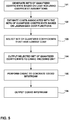
- FIG. 5 is a flow diagram illustrating a one-pass technique performed by video encoder 50.
- rate-distortion (RD) quantization unit 40 generates sets of quantized coefficients based on non-zero coefficient assumptions (101). In particular, RD quantization unit 40 assumes that a given coefficient is a last non-zero coefficient, and based on this assumption calculates sets of coefficients for the video block. RD quantization unit 40 next assumes that another coefficient is a last non-zero coefficient, and based on this assumption generates another set of coefficients for the video block, and so forth.
- RD quantization unit 40 assumes that a given coefficient is a last non-zero coefficient, and based on this assumption calculates sets of coefficients for the video block.
- RD quantization unit 40 next assumes that another coefficient is a last non-zero coefficient, and based on this assumption generates another set of coefficients for the video block, and so forth.
- quantization unit 40 estimates costs based on Lagrangian cost functions (102).
- RD quantization unit 40 determines individual Lagrangian cost functions for each coefficient at a plurality of possible values, e.g., zero, a floor value, and a ceiling value.
- the floor value may be based on an absolute value of an individual one of the coefficients of the video block, a quantization parameter, and a quantization matrix (or a parameter thereof), and the ceiling value may comprise the floor value plus one.
- RD quantization unit 40 selects the set of quantized coefficients that have the lowest overall Lagrangian cost (103). In particular, RD quantization unit 40 sums the lowest individual Lagrangian costs for each coefficient for a set, and repeats this process for each possible set. Again the Lagrangian costs balance costs of rate and distortion. RD quantization unit 40 selects the set having the overall lowest Lagrangian (103), and RD quantization unit 40 outputs the selected set of quantized coefficients to CABAC encoding unit 46 (104). CABAC encoding unit 46 performs CABAC based on the selected set of quantized coefficients and any other syntax parameters to generate a coded bitstream (105), and outputs the coded bitstream (106).
- CABAC encoding unit 46 performs CABAC based on the selected set of quantized coefficients and any other syntax parameters to generate a coded bitstream (105), and outputs the coded bitstream (106).
- the function % represents modular division.
- RD quantization unit 40 selects lowest cost individual coefficient Lagrangian cost functions for each coefficient (111), and determines the overall Lagrangian cost for the set (112), e.g., by summing the selected individual coefficient Lagrangian costs. RD quantization unit 40 repeats this process of steps (110-112) if there is another set of quantized coefficients to consider (yes branch 113). In particular, for each set of coefficients defined by the assumption that a given coefficient is the last non-zero coefficient, quantization unit 40 repeats this process of steps (110-112). Once the overall Lagrangian cost has been determined for each possible set of quantized coefficients (defined by the last non-zero coefficient assumptions), RD quantization unit 40 selects the set of quantized coefficients that have the lowest overall Lagrangian cost (114).
- FIGS. 7-9 illustrate optional techniques that may be used to accelerate the quantization process without substantially sacrificing quality in the quantized coefficients.
- the techniques of FIGS. 7-9 may be used individually or collectively.
- the techniques of FIGS. 7-9 are most applicable to the one-pass quantization process, but some of these techniques (particularly the techniques of FIG. 7 ) may also be useful in the two-pass quantization addressed in greater detail below.
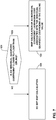
- RD quantization unit 40 may skip calculation of an individual coefficient Lagrangian cost associated with the individual quantized coefficient at the ceiling value (122).
- RD quantization unit 40 may assume that the individual coefficient Lagrangian cost associated with the individual quantized coefficient will be minimized at either zero or the floor value. Accordingly, in this case, RD quantization unit 40 may avoid the unnecessary computations associated with calculation of a Lagrangian cost associated with the individual quantized coefficient at the ceiling value. The calculation is not skipped (123), however, if the individual quantized coefficient is not closer to the floor than the ceiling (no branch of 121).
- RD quantization unit 40 does not skip estimation of the particular cost.
- the technique of FIG. 8 is another way for RD quantization unit 40 to avoid some unnecessary computations.
- the proposed two-pass algorithm discussed below finds quantized coefficients values l ij for which the value of the total Lagrangian Cost function J( ⁇ ) is close to its minimum.
- the two-pass approach may be characterized by lower complexity than methods of minimizing the total Lagrangian Cost function J( ⁇ ) based on an exhaustive search.
- RD quantization unit 40 may execute some or all of the following steps in the first pass, which is used to estimate the last non-zero coefficient of a video block.
- RD quantization unit 40 fixes the context for greater_than_1 symbol to be one of the 5 possible values.
- the coefficient c k with the smallest corresponding value of J k ( ⁇ ) is assumed to be the last nonzero coefficient in the block.
- RD quantization unit 40 may perform a second pass that generates a set of quantized coefficients for the video block based on an assumption that the estimated last non-zero coefficient is actually the last non-zero coefficient of the video block.
- level / i may be considered, e.g., 0, l i floor and to l i ceil .
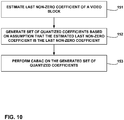
- FIG. 10 is a flow diagram illustrating an encoding technique that may use the two-pass approach outlined above.
- RD quantization unit 40 estimates a last non-zero coefficient of a video block (151).
- this estimation step (151) may include approximating costs associated with coding the video block via the CABAC, and different ones of the approximated costs may correspond to different coefficients being the last non-zero coefficient.
- the final estimated last non-zero coefficient defines a lowest approximated cost.
- RD quantization unit 40 may define the different ones of the approximated costs in a sequential fashion by sequentially considering each of the coefficients of the video block as being the last non-zero coefficient. In doing so, RD quantization unit 40 sequentially adjusts an accumulated cost upward and downward when considering each of the coefficients of the video block as being the last non-zero coefficient.
Landscapes
- Engineering & Computer Science (AREA)
- Multimedia (AREA)
- Signal Processing (AREA)
- Compression Or Coding Systems Of Tv Signals (AREA)
- Compression, Expansion, Code Conversion, And Decoders (AREA)
Claims (20)
- Ein Verfahren zum Quantisieren von Koeffizienten eines Videoblockes für einen Videocodierungsprozess, der kontextbasierte, adaptive, binäre, arithmetische Codierung bzw. CABAC (CABAC = context-based adaptive binary arithmetic coding) unterstützt, wobei das Verfahren Folgendes aufweist:Generieren (101) einer Vielzahl von Sätzen von quantisierten Koeffizienten für den Videoblock, wobei jeder der Sätze von quantisierten Koeffizienten basierend auf einer Annahme definiert ist, dass ein bestimmter einer der Koeffizienten des Videoblockes einem letzten Nicht-Null-Koeffizienten des Videoblockes entspricht;für jeden jeweiligen Satz von quantisierten Koeffizienten in der Vielzahl von Sätzen von quantisierten Koeffizienten, Schätzen (102) von Aufwand bzw. Kosten, die mit dem Codieren des Videoblockes über CABAC (52) assoziiert sind, wobei die geschätzten Kosten für den jeweiligen Satz von quantisierten Koeffizienten auf dem jeweiligen Satz von quantisierten Koeffizienten basieren, wobei das Schätzen der Kosten für den jeweiligen Satz von quantisierten Koeffizienten Folgendes aufweist:für jeden jeweiligen Koeffizienten in dem jeweiligen Satz von quantisierten Koeffizienten Berechnen (110) eines Satzes von höchstens drei Lagrange-Kosten, die mit dem jeweiligen Koeffizienten für Werte des jeweiligen quantisierten Koeffizienten gleich einem Wert von Null, einem unteren Grenzwert (floor value) und einem oberen Grenzwert (ceiling value) assoziiert sind, wobei ein Satz von Lagrange-Kostenfunktionen den Satz von Lagrange-Kosten definiert, die mit dem jeweiligen Koeffizienten assoziiert sind, wobei der Satz von Lagrange-Kostenfunktionen mit einem Raten-Verzerrungsmodell assoziiert ist, undSummieren (112) der niedrigsten der Lagrange-Kosten, die mit jedem Koeffizienten des jeweiligen Satzes von quantisierten Koeffizienten assoziiert sind zum Bestimmen der geschätzten Kosten für den jeweiligen Satz von quantisierten Koeffizienten; undAuswählen (103) eines gegebenen einen des Satzes von quantisierten Koeffizienten, der mit den niedrigsten der geschätzten Kosten für die Vielzahl von Sätzen von quantisierten Koeffizienten assoziiert ist.
- Verfahren nach Anspruch 1, das weiter Ausgeben (104) des gegebenen einen des Satzes von quantisierten Koeffizienten aufweist.
- Verfahren nach Anspruch 2, das weiter Folgendes aufweist:Durchführen von CABAC (105) an dem gegebenen einen der Sätze von quantisierten Koeffizienten zum Entropiecodieren des gegebenen einen des Satzes von quantisierten Koeffizienten in einen Bitstrom; undAusgeben (106) des Bitstroms.
- Verfahren nach Anspruch 1, wobei die Kosten, die mit dem gegebenen einen der Sätze von quantisierten Koeffizienten assoziiert sind, eine niedrigste Anzahl von Bits definieren, die mit der Vielzahl von Kosten assoziiert sind.
- Verfahren nach Anspruch 4, das weiter Speichern eines Wertes aufweist, der die niedrigste Anzahl von Bits anzeigt, die mit den bestimmten Kosten assoziiert sind.
- Verfahren nach Anspruch 1, wobei der untere Grenzwert auf einem absoluten Wert des jeweiligen quantisierten Koeffizienten, einem Quantisierungsparameter und einer Quantisierungsmatrix basiert, und wobei der obere Grenzwert der untere Grenzwert plus Eins ist.
- Verfahren nach Anspruch 1, das weiter für einen individuellen einen der Koeffizienten in dem jeweiligen Satz von quantisierten Koeffizienten Folgendes aufweist:wenn der individuelle eine der Koeffizienten näher an dem unteren Grenzwert als an dem oberen Grenzwert ist (121), Auslassen der Berechnung (122) von Lagrange-Kosten, die mit dem individuellen einen der Koeffizienten für einen Wert gleich dem oberen Grenzwert assoziiert sind.
- Verfahren nach Anspruch 1, das weiter Folgendes aufweist:wenn der bestimmte eine der Koeffizienten des Videoblockes, der dem letzten Nicht-Null-Koeffizienten des Videoblockes für den jeweiligen Satz von quantisierten Koeffizienten entspricht, einen Wert definiert der näher an dem unteren Grenzwert als dem oberen Grenzwert ist (132) und wenn der untere Grenzwert gleich Null ist (131), Auslassen (133) der Schätzung der Kosten, die mit dem Codieren des Videoblockes assoziiert sind für den jeweiligen Satz von quantisierten Koeffizienten.
- Verfahren nach Anspruch 1, wobei das Schätzen der Kosten für den jeweiligen Satz von quantisierten Koeffizienten Folgendes aufweist:für jeden jeweiligen quantisierten Koeffizienten ci, i = k-1...0, in dem jeweiligen Satz von quantisierten Koeffizienten, Berechnen eines Satzes von Lagrange-Kosten, die mit dem jeweiligen quantisierten Koeffizienten assoziiert sind; undwobei die Berechnung des Satzes von Lagrange-Kosten, die mit den quantisierten Koeffizienten in dem jeweiligen Satz von quantisierten Koeffizienten assoziiert sind, beendet wird (142), wenn die Lagrange-Kosten, die mit den quantisierten Koeffizienten in dem jeweiligen Satz von quantisierten Koeffizienten assoziiert sind, mit abnehmenden Werten von k beginnen zuzunehmen.
- Ein computerlesbares Medium, das Instruktionen aufweist, die auf eine Ausführung hin eine Einrichtung veranlassen, Koeffizienten in einem Videoblock in einem Videocodierungsprozess, der kontextbasierte, adaptive, binäre, arithmetische Kodierung bzw. CABAC (CABAC = context-based adaptive binary arithmetic coding) unterstützt, zu quantisieren, wobei die Instruktionen die Einrichtung veranlassen, die Schritte nach einem der Ansprüche 1 bis 9 auszuführen.
- Eine Einrichtung, die Koeffizienten eines Videoblockes für einen Videocodierungsprozess, der kontextbasierte, adaptive, binäre, arithmetische Kodierung bzw. CABAC (CABAC = context-based adaptive binary arithmetic coding) unterstützt, quantisiert, wobei die Einrichtung Folgendes aufweist:Mittel zum Generieren (101) einer Vielzahl von Sätzen von quantisierten Koeffizienten für den Videoblock, wobei jeder der Sätze von quantisierten Koeffizienten basierend auf einer Annahme definiert ist, dass ein bestimmter einer der Koeffizienten des Videoblockes einem letzten Nicht-Null-Koeffizienten des Videoblockes entspricht;Mittel zum Schätzen (102), für jeden jeweiligen Satz von quantisierten Koeffizienten in der Vielzahl von Sätzen von quantisierten Koeffizienten, von Aufwand bzw. Kosten, die mit dem Codieren des Videoblockes über CABAC assoziiert sind, wobei die geschätzten Kosten für den jeweiligen Satz von quantisierten Koeffizienten auf dem jeweiligen Satz von quantisierten Koeffizienten basieren, wobei die Mittel zum Schätzen der Kosten für den jeweiligen Satz von quantisierten Koeffizienten Folgendes aufweisen:Mittel zum Berechnen (110), für jeden jeweiligen Koeffizienten in dem jeweiligen Satz von quantisierten Koeffizienten, eines Satzes von höchstens drei Lagrange-Kosten, die mit dem jeweiligen Koeffizienten für Werte des jeweiligen quantisierten Koeffizienten gleich einem Wert von Null, einem unteren Grenzwert und einem oberen Grenzwert assoziiert sind, wobei ein Satz von Lagrange-Kostenfunktionen den Satz von Lagrange-Kosten definiert, die mit dem jeweiligen Koeffizienten assoziiert sind, wobei der Satz von Lagrange-Kostenfunktionen mit einem Raten-Verzerrungsmodell assoziiert ist, undMittel zum Summieren der niedrigsten der Lagrange-Kosten, die mit jedem Koeffizienten des jeweiligen Satzes von quantisierten Koeffizienten assoziiert sind zum Bestimmen der geschätzten Kosten für den jeweiligen Satz von quantisierten Koeffizienten; undMittel zum Auswählen (111) eines gegebenen einen des Satzes von quantisierten Koeffizienten, der mit den niedrigsten der geschätzten Kosten für die Vielzahl von Sätzen von quantisierten Koeffizienten assoziiert ist.
- Einrichtung nach Anspruch 11, die weiter Folgendes aufweist:Mittel zum Ausgeben (104) des gegebenen einen des Satzes von quantisierten Koeffizienten.
- Einrichtung nach Anspruch 12, die weiter Folgendes aufweist:Mittel zum Durchführen von CABAC (105) an dem gegebenen einen der Sätze von quantisierten Koeffizienten zum Entropiecodieren des gegebenen einen des Satzes von quantisierten Koeffizienten in einen Bitstrom; undMittel zum Ausgeben (106) des Bitstroms.
- Einrichtung nach Anspruch 11, wobei die Kosten, die mit dem gegebenen einen der Sätze von quantisierten Koeffizienten assoziiert sind, eine niedrigste Anzahl von Bits definieren, die mit der Vielzahl von Kosten assoziiert sind.
- Einrichtung nach Anspruch 14, die weiter Mittel zum Speichern eines Wertes aufweist, der die niedrigste Anzahl von Bits anzeigt, die mit den bestimmten Kosten assoziiert sind.
- Einrichtung nach Anspruch 11, wobei der untere Grenzwert auf einem absoluten Wert des jeweiligen quantisierten Koeffizienten, einem Quantisierungsparameter und einer Quantisierungsmatrix basiert, und wobei der obere Grenzwert der untere Grenzwert plus Eins ist.
- Einrichtung nach Anspruch 11, wobei, für einen individuellen einen der Koeffizienten in dem jeweiligen Satz von quantisierten Koeffizienten, wenn der individuelle eine der Koeffizienten näher an dem unteren Grenzwert als an dem oberen Grenzwert ist, eine Berechnung von Lagrange-Kosten, die mit dem individuellen einen der Koeffizienten für einen Wert gleich dem oberen Grenzwert assoziiert sind, ausgelassen wird.
- Einrichtung nach Anspruch 11, die weiter Folgendes aufweist:Mittel zum Auslassen (133), wenn der bestimmte eine der Koeffizienten des Videoblockes, der dem letzten Nicht-Null-Koeffizienten des Videoblockes für den jeweiligen Satz von quantisierten Koeffizienten entspricht, einen Wert definiert der näher an dem unteren Grenzwert als dem oberen Grenzwert ist (132) und wenn der untere Grenzwert gleich Null ist (131), der Schätzung der Kosten, die mit dem Codieren des Videoblockes assoziiert sind für den jeweiligen Satz von quantisierten Koeffizienten.
- Einrichtung nach Anspruch 11, wobei die Mittel zum Schätzen Folgendes aufweisen:für jeden jeweiligen quantisierten Koeffizienten ci, i = k-1...0, in dem jeweiligen Satz von quantisierten Koeffizienten in der Vielzahl von Sätzen von quantisierten Koeffizienten, Mittel zum Berechnen eines Satzes von Lagrange-Kosten, die mit dem jeweiligen quantisierten Koeffizienten assoziiert sind; undwobei die Berechnung des Satzes von Lagrange-Kosten, die mit den quantisierten Koeffizienten in dem jeweiligen Satz von quantisierten Koeffizienten assoziiert sind, beendet wird (142), wenn die Lagrange-Kosten, die mit den quantisierten Koeffizienten in dem jeweiligen Satz von quantisierten Koeffizienten assoziiert sind, mit abnehmenden Werten von k beginnen zuzunehmen.
- Eine Vorrichtung, die die Einrichtung nach Anspruch 11, einen Sender (24) und eine CABAC-Einheit aufweist, wobei die Einrichtung weiter konfiguriert ist zum:Ausgeben (104) des gegebenen einen des Satzes von quantisierten Koeffizienten; undwobei die CABAC-Einheit CABAC (105) an dem gegebenen einen des Satzes von quantisierten Koeffizienten durchführt zum Entropiecodieren des gegebenen einen des Satzes von quantisierten Koeffizienten in einen Bitstrom; undwobei der Sender (24) zum Senden des Bitstroms konfiguriert ist.
Priority Applications (1)
| Application Number | Priority Date | Filing Date | Title |
|---|---|---|---|
| EP14184076.9A EP2824929A3 (de) | 2008-01-08 | 2009-01-08 | Quantisierung basierend auf Ratenverzerrungsoptimierungsmodellierung für Cabac-Codierer |
Applications Claiming Priority (4)
| Application Number | Priority Date | Filing Date | Title |
|---|---|---|---|
| US1983008P | 2008-01-08 | 2008-01-08 | |
| US3045408P | 2008-02-21 | 2008-02-21 | |
| US12/340,205 US8891615B2 (en) | 2008-01-08 | 2008-12-19 | Quantization based on rate-distortion modeling for CABAC coders |
| PCT/US2009/030465 WO2009089370A1 (en) | 2008-01-08 | 2009-01-08 | Quantization based on rate-distortion modeling for cabac coders |
Related Child Applications (2)
| Application Number | Title | Priority Date | Filing Date |
|---|---|---|---|
| EP14184076.9A Division-Into EP2824929A3 (de) | 2008-01-08 | 2009-01-08 | Quantisierung basierend auf Ratenverzerrungsoptimierungsmodellierung für Cabac-Codierer |
| EP14184076.9A Division EP2824929A3 (de) | 2008-01-08 | 2009-01-08 | Quantisierung basierend auf Ratenverzerrungsoptimierungsmodellierung für Cabac-Codierer |
Publications (2)
| Publication Number | Publication Date |
|---|---|
| EP2243296A1 EP2243296A1 (de) | 2010-10-27 |
| EP2243296B1 true EP2243296B1 (de) | 2017-03-01 |
Family
ID=40844521
Family Applications (2)
| Application Number | Title | Priority Date | Filing Date |
|---|---|---|---|
| EP09700776.9A Not-in-force EP2243296B1 (de) | 2008-01-08 | 2009-01-08 | Auf ratenverzerrungsmodellierung basierende quantisierung für cabac-kodierer |
| EP14184076.9A Withdrawn EP2824929A3 (de) | 2008-01-08 | 2009-01-08 | Quantisierung basierend auf Ratenverzerrungsoptimierungsmodellierung für Cabac-Codierer |
Family Applications After (1)
| Application Number | Title | Priority Date | Filing Date |
|---|---|---|---|
| EP14184076.9A Withdrawn EP2824929A3 (de) | 2008-01-08 | 2009-01-08 | Quantisierung basierend auf Ratenverzerrungsoptimierungsmodellierung für Cabac-Codierer |
Country Status (10)
| Country | Link |
|---|---|
| US (1) | US8891615B2 (de) |
| EP (2) | EP2243296B1 (de) |
| JP (1) | JP5290325B2 (de) |
| KR (1) | KR101177737B1 (de) |
| CN (1) | CN101911702B (de) |
| BR (1) | BRPI0907209A2 (de) |
| CA (1) | CA2709711C (de) |
| RU (1) | RU2475999C2 (de) |
| TW (1) | TWI457002B (de) |
| WO (1) | WO2009089370A1 (de) |
Families Citing this family (69)
| Publication number | Priority date | Publication date | Assignee | Title |
|---|---|---|---|---|
| US8891615B2 (en) | 2008-01-08 | 2014-11-18 | Qualcomm Incorporated | Quantization based on rate-distortion modeling for CABAC coders |
| US9008171B2 (en) | 2008-01-08 | 2015-04-14 | Qualcomm Incorporated | Two pass quantization for CABAC coders |
| KR101375668B1 (ko) * | 2008-03-17 | 2014-03-18 | 삼성전자주식회사 | 변환 계수의 부호화, 복호화 방법 및 장치 |
| US8902972B2 (en) | 2008-04-11 | 2014-12-02 | Qualcomm Incorporated | Rate-distortion quantization for context-adaptive variable length coding (CAVLC) |
| US8218633B2 (en) * | 2008-06-18 | 2012-07-10 | Kiu Sha Management Limited Liability Company | Bidirectionally decodable Wyner-Ziv video coding |
| KR20110027238A (ko) * | 2009-09-10 | 2011-03-16 | 삼성전자주식회사 | 휴대용 단말기의 영상 데이터 처리 장치 및 방법 |
| US20110125987A1 (en) * | 2009-11-20 | 2011-05-26 | Qualcomm Incorporated | Dedicated Arithmetic Decoding Instruction |
| DK3435674T3 (da) * | 2010-04-13 | 2023-08-21 | Ge Video Compression Llc | Kodning af signifikanskort og transformationskoefficientblokke |
| KR102310816B1 (ko) * | 2010-05-12 | 2021-10-13 | 인터디지털 매디슨 페턴트 홀딩스 에스에이에스 | 통합된 유효성 맵 코딩을 위한 방법 및 장치 |
| KR101373814B1 (ko) * | 2010-07-31 | 2014-03-18 | 엠앤케이홀딩스 주식회사 | 예측 블록 생성 장치 |
| EP2606648A1 (de) | 2010-10-05 | 2013-06-26 | General instrument Corporation | Codierung und decodierung anhand der auswahl von adaptiven kontextmodellen mit zickzack-scan |
| KR102586032B1 (ko) * | 2010-10-14 | 2023-10-10 | 인터디지털 브이씨 홀딩스 인코포레이티드 | 향상된 엔트로피 인코딩 및 디코딩을 위한 방법 및 장치 |
| US9042440B2 (en) | 2010-12-03 | 2015-05-26 | Qualcomm Incorporated | Coding the position of a last significant coefficient within a video block based on a scanning order for the block in video coding |
| US8976861B2 (en) * | 2010-12-03 | 2015-03-10 | Qualcomm Incorporated | Separately coding the position of a last significant coefficient of a video block in video coding |
| US20120163456A1 (en) | 2010-12-22 | 2012-06-28 | Qualcomm Incorporated | Using a most probable scanning order to efficiently code scanning order information for a video block in video coding |
| US8913662B2 (en) * | 2011-01-06 | 2014-12-16 | Qualcomm Incorporated | Indicating intra-prediction mode selection for video coding using CABAC |
| US8755620B2 (en) | 2011-01-12 | 2014-06-17 | Panasonic Corporation | Image coding method, image decoding method, image coding apparatus, image decoding apparatus, and image coding and decoding apparatus for performing arithmetic coding and/or arithmetic decoding |
| US8687904B2 (en) * | 2011-01-14 | 2014-04-01 | Panasonic Corporation | Image coding method, image coding apparatus, image decoding method, image decoding apparatus, and image coding and decoding apparatus which include arithmetic coding or arithmetic decoding |
| US8891617B2 (en) * | 2011-01-18 | 2014-11-18 | Google Inc. | Method and system for processing video data |
| US10075706B2 (en) * | 2011-01-19 | 2018-09-11 | Sun Patent Trust | Image coding method, image decoding method, image coding apparatus, image decoding apparatus, and image coding and decoding apparatus |
| US8953690B2 (en) * | 2011-02-16 | 2015-02-10 | Google Technology Holdings LLC | Method and system for processing video data |
| US9106913B2 (en) * | 2011-03-08 | 2015-08-11 | Qualcomm Incorporated | Coding of transform coefficients for video coding |
| US10499059B2 (en) | 2011-03-08 | 2019-12-03 | Velos Media, Llc | Coding of transform coefficients for video coding |
| US8861599B2 (en) | 2011-03-08 | 2014-10-14 | Sony Corporation | Context reduction for last transform position coding |
| US20120230396A1 (en) * | 2011-03-11 | 2012-09-13 | Mitsubishi Electric Research Laboratories, Inc. | Method for Embedding Decoding Information in Quantized Transform Coefficients |
| US9379736B2 (en) * | 2011-06-03 | 2016-06-28 | Qualcomm Incorporated | Context-adaptive coding video data |
| ES2944949T3 (es) * | 2011-06-24 | 2023-06-27 | Sun Patent Trust | Método y aparato de codificación de imágenes |
| US9491469B2 (en) | 2011-06-28 | 2016-11-08 | Qualcomm Incorporated | Coding of last significant transform coefficient |
| MY160178A (en) * | 2011-06-28 | 2017-02-28 | Samsung Electronics Co Ltd | Method and apparatus for coding video and method and apparatus for decoding video accompanied with arithmetic coding |
| EP2760201A4 (de) * | 2011-06-28 | 2015-06-17 | Samsung Electronics Co Ltd | Verfahren und vorrichtung zur entropiekodierung und -dekodierung |
| MY183543A (en) * | 2011-07-18 | 2021-02-25 | Sun Patent Trust | Image coding method, image decoding method, image coding apparatus, image decoding apparatus, and image coding and decoding apparatus |
| BR112014007494B1 (pt) * | 2011-09-29 | 2022-05-31 | Sharp Kabushiki Kaisha | Dispositivo de decodificação de imagem, método de decodificação de imagem, e dispositivo de codificação de imagem |
| WO2013047811A1 (ja) | 2011-09-29 | 2013-04-04 | シャープ株式会社 | 画像復号装置、画像復号方法および画像符号化装置 |
| AU2011236109B2 (en) * | 2011-10-18 | 2015-02-19 | Canon Kabushiki Kaisha | Method, apparatus and system for encoding and decoding the significance map for residual coefficients of a transform unit |
| US9584819B2 (en) | 2011-10-24 | 2017-02-28 | Qualcomm Incorporated | Grouping of tiles for video coding |
| US8964849B2 (en) | 2011-11-01 | 2015-02-24 | Blackberry Limited | Multi-level significance maps for encoding and decoding |
| MX2013008943A (es) * | 2011-11-07 | 2013-09-06 | Panasonic Corp | Metodo de codificacion de imagenes, metodo de decodificacion de imagenes, aparato de codificacion de imagenes, aparato de decodificacion de imagenes y aparato de codificacion y decodificacion de imagenes. |
| BR112014011150B1 (pt) | 2011-11-08 | 2022-08-09 | Google Technology Holdings LLC | Método de determinação de palavras de código binárias para coeficientes de transformada |
| KR101672107B1 (ko) | 2011-11-08 | 2016-11-02 | 구글 테크놀로지 홀딩스 엘엘씨 | 변환 계수들에 대한 이진 코드워드들을 결정하는 방법 |
| US9247257B1 (en) | 2011-11-30 | 2016-01-26 | Google Inc. | Segmentation based entropy encoding and decoding |
| ES2864591T3 (es) * | 2011-12-21 | 2021-10-14 | Sun Patent Trust | Selección de contexto para codificación por entropía de coeficientes de transformada |
| US9191670B2 (en) * | 2012-01-17 | 2015-11-17 | Qualcomm Incorporated | Throughput improvement for CABAC coefficient level coding |
| US20130188728A1 (en) | 2012-01-20 | 2013-07-25 | Sony Corporation | Complexity reduction of significance map coding |
| WO2013109993A1 (en) | 2012-01-21 | 2013-07-25 | General Instrument Corporation | Method of determining binary codewords for transform coefficients |
| CN103220509B (zh) * | 2012-01-21 | 2017-12-15 | 中兴通讯股份有限公司 | 自适应控制算术编码bin数量的方法、编码器和解码器 |
| EP2805497A1 (de) | 2012-01-21 | 2014-11-26 | Motorola Mobility LLC | Verfahren zur bestimmung binärer codewörter für transformationskoeffizienten |
| US20130195200A1 (en) * | 2012-01-28 | 2013-08-01 | Research In Motion Limited | Methods and devices for context modeling to enable modular processing |
| US9479780B2 (en) * | 2012-02-01 | 2016-10-25 | Google Technology Holdings LLC | Simplification of significance map coding |
| US9565435B2 (en) | 2012-02-04 | 2017-02-07 | Google Technology Holdings LLC | Devices and methods for context reduction in last significant coefficient position coding |
| US9237344B2 (en) * | 2012-03-22 | 2016-01-12 | Qualcomm Incorporated | Deriving context for last position coding for video coding |
| CA2807382A1 (en) * | 2012-04-16 | 2013-10-16 | Research In Motion Limited | Modified contexts for level coding of video data |
| US9774856B1 (en) | 2012-07-02 | 2017-09-26 | Google Inc. | Adaptive stochastic entropy coding |
| WO2014103182A1 (ja) * | 2012-12-27 | 2014-07-03 | 日本電気株式会社 | 映像符号化装置、映像符号化方法および映像符号化プログラム |
| US9509998B1 (en) | 2013-04-04 | 2016-11-29 | Google Inc. | Conditional predictive multi-symbol run-length coding |
| JP5644987B1 (ja) | 2013-06-11 | 2014-12-24 | 日本電気株式会社 | 映像符号化装置、映像符号化方法および映像符号化プログラム |
| US10264261B2 (en) * | 2013-08-27 | 2019-04-16 | Integrated Device Technology, Inc. | Entropy encoding initialization for a block dependent upon an unencoded block |
| JP6197496B2 (ja) * | 2013-08-30 | 2017-09-20 | 富士通株式会社 | 量子化装置、量子化方法および量子化プログラム |
| US9392288B2 (en) | 2013-10-17 | 2016-07-12 | Google Inc. | Video coding using scatter-based scan tables |
| US9179151B2 (en) | 2013-10-18 | 2015-11-03 | Google Inc. | Spatial proximity context entropy coding |
| US10313681B2 (en) * | 2013-12-18 | 2019-06-04 | Intel Corporation | Techniques for rate-distortion optimization in video compression |
| US9432696B2 (en) | 2014-03-17 | 2016-08-30 | Qualcomm Incorporated | Systems and methods for low complexity forward transforms using zeroed-out coefficients |
| US9516345B2 (en) | 2014-03-17 | 2016-12-06 | Qualcomm Incorporated | Systems and methods for low complexity forward transforms using mesh-based calculations |
| US9948934B2 (en) * | 2014-07-02 | 2018-04-17 | Apple Inc. | Estimating rate costs in video encoding operations using entropy encoding statistics |
| FR3024933A1 (fr) * | 2014-08-12 | 2016-02-19 | Orange | Procede de codage et de decodage d'images, dispositif de codage et de decodage d'images et programmes d'ordinateur correspondants |
| US9762912B2 (en) * | 2015-01-16 | 2017-09-12 | Microsoft Technology Licensing, Llc | Gradual updating using transform coefficients for encoding and decoding |
| US9781424B2 (en) | 2015-01-19 | 2017-10-03 | Google Inc. | Efficient context handling in arithmetic coding |
| JP6476900B2 (ja) * | 2015-01-21 | 2019-03-06 | 富士通株式会社 | 動画像符号化装置、動画像符号化方法及び動画像符号化用コンピュータプログラム |
| US9916415B2 (en) * | 2016-04-11 | 2018-03-13 | Globalfoundries Inc. | Integrated circuit performance modeling that includes substrate-generated signal distortions |
| CN108322749B (zh) * | 2018-03-15 | 2021-03-16 | 北京数码视讯科技股份有限公司 | Rdoq的系数优化方法、rdoq的加速方法及装置 |
Family Cites Families (24)
| Publication number | Priority date | Publication date | Assignee | Title |
|---|---|---|---|---|
| JP2503706B2 (ja) | 1990-01-19 | 1996-06-05 | 三菱電機株式会社 | 変換符号化方式 |
| CA2118880A1 (en) * | 1994-03-11 | 1995-09-12 | Kannan Ramchandran | Jpeg/mpeg decoder-compatible optimized thresholding for image and video signal compression |
| EP0768007B1 (de) * | 1995-04-25 | 1999-12-08 | Koninklijke Philips Electronics N.V. | Vorrichtung und verfahren zur kodierung von videobildern. |
| TW455821B (en) | 1999-09-03 | 2001-09-21 | Ind Tech Res Inst | Signal process method and device |
| EP3540946A1 (de) | 2002-04-26 | 2019-09-18 | NTT DoCoMo, Inc. | Signaldecodierungsverfahren |
| JP4037839B2 (ja) | 2004-03-11 | 2008-01-23 | 株式会社東芝 | 画像符号化方法及び装置 |
| JP4188878B2 (ja) | 2004-06-07 | 2008-12-03 | 日本電信電話株式会社 | 動画像符号化方法,動画像符号化装置,動画像符号化プログラムおよびそのプログラムを記録したコンピュータ読み取り可能な記録媒体 |
| ATE532270T1 (de) * | 2004-07-14 | 2011-11-15 | Slipstream Data Inc | Verfahren, system und computerprogramm für die optimierung von datenkomprimierung |
| KR100612015B1 (ko) | 2004-07-22 | 2006-08-11 | 삼성전자주식회사 | 컨텍스트 적응형 이진 산술 부호화 방법 및 그 장치 |
| JP4281667B2 (ja) | 2004-10-25 | 2009-06-17 | 株式会社日立製作所 | 画像符号化装置 |
| JP2006157881A (ja) | 2004-11-08 | 2006-06-15 | Toshiba Corp | 可変長符号化装置及びその方法 |
| US20060098733A1 (en) | 2004-11-08 | 2006-05-11 | Kabushiki Kaisha Toshiba | Variable-length coding device and method of the same |
| NO322043B1 (no) | 2004-12-30 | 2006-08-07 | Tandberg Telecom As | Fremgangsmate for forenklet entropikoding |
| KR100746007B1 (ko) | 2005-04-19 | 2007-08-06 | 삼성전자주식회사 | 엔트로피 코딩의 컨텍스트 모델을 적응적으로 선택하는방법 및 비디오 디코더 |
| RU2336661C2 (ru) | 2005-04-19 | 2008-10-20 | Самсунг Электроникс Ко., Лтд. | Способ и устройство адаптивного выбора контекстной модели для кодирования по энтропии |
| US8379721B2 (en) | 2005-09-22 | 2013-02-19 | Qualcomm Incorported | Two pass rate control techniques for video coding using a min-max approach |
| JP5061122B2 (ja) | 2006-01-09 | 2012-10-31 | マティアス・ナロシュケ | ハイブリッドなビデオ符号化における予測誤差の適応符号化 |
| KR20070077059A (ko) | 2006-01-19 | 2007-07-25 | 삼성전자주식회사 | 엔트로피 부호화/복호화 방법 및 장치 |
| US8401082B2 (en) | 2006-03-27 | 2013-03-19 | Qualcomm Incorporated | Methods and systems for refinement coefficient coding in video compression |
| CN100574434C (zh) * | 2006-06-23 | 2009-12-23 | 深圳安凯微电子技术有限公司 | 一种图像压缩/解压缩方法和系统 |
| US8582663B2 (en) | 2006-08-08 | 2013-11-12 | Core Wireless Licensing S.A.R.L. | Method, device, and system for multiplexing of video streams |
| KR101166732B1 (ko) | 2007-05-04 | 2012-07-19 | 퀄컴 인코포레이티드 | 추정된 코딩 비용을 이용하는 비디오 코딩 모드 선택 |
| US7957600B2 (en) * | 2007-05-08 | 2011-06-07 | Arris Group, Inc. | Methods and systems for rate-distortion optimized quantization of transform blocks in block transform video coding |
| US8891615B2 (en) | 2008-01-08 | 2014-11-18 | Qualcomm Incorporated | Quantization based on rate-distortion modeling for CABAC coders |
-
2008
- 2008-12-19 US US12/340,205 patent/US8891615B2/en active Active
-
2009
- 2009-01-08 WO PCT/US2009/030465 patent/WO2009089370A1/en not_active Ceased
- 2009-01-08 RU RU2010133239/07A patent/RU2475999C2/ru not_active IP Right Cessation
- 2009-01-08 CN CN200980101857XA patent/CN101911702B/zh not_active Expired - Fee Related
- 2009-01-08 KR KR1020107017564A patent/KR101177737B1/ko not_active Expired - Fee Related
- 2009-01-08 TW TW098100525A patent/TWI457002B/zh not_active IP Right Cessation
- 2009-01-08 JP JP2010542348A patent/JP5290325B2/ja not_active Expired - Fee Related
- 2009-01-08 CA CA2709711A patent/CA2709711C/en not_active Expired - Fee Related
- 2009-01-08 EP EP09700776.9A patent/EP2243296B1/de not_active Not-in-force
- 2009-01-08 EP EP14184076.9A patent/EP2824929A3/de not_active Withdrawn
- 2009-01-08 BR BRPI0907209-8A patent/BRPI0907209A2/pt not_active IP Right Cessation
Also Published As
| Publication number | Publication date |
|---|---|
| BRPI0907209A2 (pt) | 2015-07-14 |
| CN101911702A (zh) | 2010-12-08 |
| KR20100102701A (ko) | 2010-09-24 |
| CN101911702B (zh) | 2012-07-25 |
| WO2009089370A1 (en) | 2009-07-16 |
| TW201004354A (en) | 2010-01-16 |
| US8891615B2 (en) | 2014-11-18 |
| EP2824929A3 (de) | 2015-06-10 |
| KR101177737B1 (ko) | 2012-08-28 |
| EP2824929A2 (de) | 2015-01-14 |
| CA2709711C (en) | 2013-05-14 |
| JP2011509642A (ja) | 2011-03-24 |
| RU2010133239A (ru) | 2012-02-20 |
| US20090175332A1 (en) | 2009-07-09 |
| JP5290325B2 (ja) | 2013-09-18 |
| RU2475999C2 (ru) | 2013-02-20 |
| EP2243296A1 (de) | 2010-10-27 |
| TWI457002B (zh) | 2014-10-11 |
| CA2709711A1 (en) | 2009-07-16 |
Similar Documents
| Publication | Publication Date | Title |
|---|---|---|
| EP2243296B1 (de) | Auf ratenverzerrungsmodellierung basierende quantisierung für cabac-kodierer | |
| US9008171B2 (en) | Two pass quantization for CABAC coders | |
| US8902972B2 (en) | Rate-distortion quantization for context-adaptive variable length coding (CAVLC) | |
| US8571104B2 (en) | Adaptive coefficient scanning in video coding | |
| RU2434360C2 (ru) | Адаптивное кодирование режима прогнозирования видеоблоков | |
| EP2387851B1 (de) | Filterprädiktion auf der basis von aktivitätsmetriken bei der videocodierung | |
| KR20100079037A (ko) | 비디오 영상 부호화 방법 및 장치 |
Legal Events
| Date | Code | Title | Description |
|---|---|---|---|
| PUAI | Public reference made under article 153(3) epc to a published international application that has entered the european phase |
Free format text: ORIGINAL CODE: 0009012 |
|
| 17P | Request for examination filed |
Effective date: 20100809 |
|
| AK | Designated contracting states |
Kind code of ref document: A1 Designated state(s): AT BE BG CH CY CZ DE DK EE ES FI FR GB GR HR HU IE IS IT LI LT LU LV MC MK MT NL NO PL PT RO SE SI SK TR |
|
| AX | Request for extension of the european patent |
Extension state: AL BA RS |
|
| DAX | Request for extension of the european patent (deleted) | ||
| 17Q | First examination report despatched |
Effective date: 20130729 |
|
| REG | Reference to a national code |
Ref country code: DE Ref legal event code: R079 Ref document number: 602009044442 Country of ref document: DE Free format text: PREVIOUS MAIN CLASS: H04N0007260000 Ipc: H04N0019910000 |
|
| GRAP | Despatch of communication of intention to grant a patent |
Free format text: ORIGINAL CODE: EPIDOSNIGR1 |
|
| RIC1 | Information provided on ipc code assigned before grant |
Ipc: H04N 19/13 20140101ALI20160823BHEP Ipc: H04N 19/176 20140101ALI20160823BHEP Ipc: H04N 19/91 20140101AFI20160823BHEP Ipc: H04N 19/147 20140101ALI20160823BHEP Ipc: H04N 19/18 20140101ALI20160823BHEP Ipc: H04N 19/19 20140101ALI20160823BHEP Ipc: H04N 19/132 20140101ALI20160823BHEP Ipc: H04N 19/124 20140101ALI20160823BHEP |
|
| INTG | Intention to grant announced |
Effective date: 20160916 |
|
| GRAS | Grant fee paid |
Free format text: ORIGINAL CODE: EPIDOSNIGR3 |
|
| GRAA | (expected) grant |
Free format text: ORIGINAL CODE: 0009210 |
|
| AK | Designated contracting states |
Kind code of ref document: B1 Designated state(s): AT BE BG CH CY CZ DE DK EE ES FI FR GB GR HR HU IE IS IT LI LT LU LV MC MK MT NL NO PL PT RO SE SI SK TR |
|
| REG | Reference to a national code |
Ref country code: GB Ref legal event code: FG4D |
|
| REG | Reference to a national code |
Ref country code: CH Ref legal event code: EP Ref country code: AT Ref legal event code: REF Ref document number: 872563 Country of ref document: AT Kind code of ref document: T Effective date: 20170315 |
|
| REG | Reference to a national code |
Ref country code: IE Ref legal event code: FG4D |
|
| REG | Reference to a national code |
Ref country code: DE Ref legal event code: R096 Ref document number: 602009044442 Country of ref document: DE |
|
| REG | Reference to a national code |
Ref country code: NL Ref legal event code: MP Effective date: 20170301 |
|
| REG | Reference to a national code |
Ref country code: LT Ref legal event code: MG4D |
|
| REG | Reference to a national code |
Ref country code: AT Ref legal event code: MK05 Ref document number: 872563 Country of ref document: AT Kind code of ref document: T Effective date: 20170301 |
|
| PG25 | Lapsed in a contracting state [announced via postgrant information from national office to epo] |
Ref country code: GR Free format text: LAPSE BECAUSE OF FAILURE TO SUBMIT A TRANSLATION OF THE DESCRIPTION OR TO PAY THE FEE WITHIN THE PRESCRIBED TIME-LIMIT Effective date: 20170602 Ref country code: NO Free format text: LAPSE BECAUSE OF FAILURE TO SUBMIT A TRANSLATION OF THE DESCRIPTION OR TO PAY THE FEE WITHIN THE PRESCRIBED TIME-LIMIT Effective date: 20170601 Ref country code: FI Free format text: LAPSE BECAUSE OF FAILURE TO SUBMIT A TRANSLATION OF THE DESCRIPTION OR TO PAY THE FEE WITHIN THE PRESCRIBED TIME-LIMIT Effective date: 20170301 Ref country code: HR Free format text: LAPSE BECAUSE OF FAILURE TO SUBMIT A TRANSLATION OF THE DESCRIPTION OR TO PAY THE FEE WITHIN THE PRESCRIBED TIME-LIMIT Effective date: 20170301 Ref country code: LT Free format text: LAPSE BECAUSE OF FAILURE TO SUBMIT A TRANSLATION OF THE DESCRIPTION OR TO PAY THE FEE WITHIN THE PRESCRIBED TIME-LIMIT Effective date: 20170301 |
|
| PG25 | Lapsed in a contracting state [announced via postgrant information from national office to epo] |
Ref country code: SE Free format text: LAPSE BECAUSE OF FAILURE TO SUBMIT A TRANSLATION OF THE DESCRIPTION OR TO PAY THE FEE WITHIN THE PRESCRIBED TIME-LIMIT Effective date: 20170301 Ref country code: BG Free format text: LAPSE BECAUSE OF FAILURE TO SUBMIT A TRANSLATION OF THE DESCRIPTION OR TO PAY THE FEE WITHIN THE PRESCRIBED TIME-LIMIT Effective date: 20170601 Ref country code: AT Free format text: LAPSE BECAUSE OF FAILURE TO SUBMIT A TRANSLATION OF THE DESCRIPTION OR TO PAY THE FEE WITHIN THE PRESCRIBED TIME-LIMIT Effective date: 20170301 Ref country code: LV Free format text: LAPSE BECAUSE OF FAILURE TO SUBMIT A TRANSLATION OF THE DESCRIPTION OR TO PAY THE FEE WITHIN THE PRESCRIBED TIME-LIMIT Effective date: 20170301 Ref country code: ES Free format text: LAPSE BECAUSE OF FAILURE TO SUBMIT A TRANSLATION OF THE DESCRIPTION OR TO PAY THE FEE WITHIN THE PRESCRIBED TIME-LIMIT Effective date: 20170301 |
|
| PG25 | Lapsed in a contracting state [announced via postgrant information from national office to epo] |
Ref country code: NL Free format text: LAPSE BECAUSE OF FAILURE TO SUBMIT A TRANSLATION OF THE DESCRIPTION OR TO PAY THE FEE WITHIN THE PRESCRIBED TIME-LIMIT Effective date: 20170301 |
|
| PG25 | Lapsed in a contracting state [announced via postgrant information from national office to epo] |
Ref country code: RO Free format text: LAPSE BECAUSE OF FAILURE TO SUBMIT A TRANSLATION OF THE DESCRIPTION OR TO PAY THE FEE WITHIN THE PRESCRIBED TIME-LIMIT Effective date: 20170301 Ref country code: CZ Free format text: LAPSE BECAUSE OF FAILURE TO SUBMIT A TRANSLATION OF THE DESCRIPTION OR TO PAY THE FEE WITHIN THE PRESCRIBED TIME-LIMIT Effective date: 20170301 Ref country code: EE Free format text: LAPSE BECAUSE OF FAILURE TO SUBMIT A TRANSLATION OF THE DESCRIPTION OR TO PAY THE FEE WITHIN THE PRESCRIBED TIME-LIMIT Effective date: 20170301 Ref country code: SK Free format text: LAPSE BECAUSE OF FAILURE TO SUBMIT A TRANSLATION OF THE DESCRIPTION OR TO PAY THE FEE WITHIN THE PRESCRIBED TIME-LIMIT Effective date: 20170301 |
|
| PG25 | Lapsed in a contracting state [announced via postgrant information from national office to epo] |
Ref country code: PL Free format text: LAPSE BECAUSE OF FAILURE TO SUBMIT A TRANSLATION OF THE DESCRIPTION OR TO PAY THE FEE WITHIN THE PRESCRIBED TIME-LIMIT Effective date: 20170301 Ref country code: PT Free format text: LAPSE BECAUSE OF FAILURE TO SUBMIT A TRANSLATION OF THE DESCRIPTION OR TO PAY THE FEE WITHIN THE PRESCRIBED TIME-LIMIT Effective date: 20170703 Ref country code: IS Free format text: LAPSE BECAUSE OF FAILURE TO SUBMIT A TRANSLATION OF THE DESCRIPTION OR TO PAY THE FEE WITHIN THE PRESCRIBED TIME-LIMIT Effective date: 20170701 |
|
| REG | Reference to a national code |
Ref country code: DE Ref legal event code: R097 Ref document number: 602009044442 Country of ref document: DE |
|
| REG | Reference to a national code |
Ref country code: FR Ref legal event code: PLFP Year of fee payment: 10 |
|
| PLBE | No opposition filed within time limit |
Free format text: ORIGINAL CODE: 0009261 |
|
| STAA | Information on the status of an ep patent application or granted ep patent |
Free format text: STATUS: NO OPPOSITION FILED WITHIN TIME LIMIT |
|
| PG25 | Lapsed in a contracting state [announced via postgrant information from national office to epo] |
Ref country code: DK Free format text: LAPSE BECAUSE OF FAILURE TO SUBMIT A TRANSLATION OF THE DESCRIPTION OR TO PAY THE FEE WITHIN THE PRESCRIBED TIME-LIMIT Effective date: 20170301 |
|
| PGFP | Annual fee paid to national office [announced via postgrant information from national office to epo] |
Ref country code: FR Payment date: 20171220 Year of fee payment: 10 |
|
| 26N | No opposition filed |
Effective date: 20171204 |
|
| PG25 | Lapsed in a contracting state [announced via postgrant information from national office to epo] |
Ref country code: IT Free format text: LAPSE BECAUSE OF FAILURE TO SUBMIT A TRANSLATION OF THE DESCRIPTION OR TO PAY THE FEE WITHIN THE PRESCRIBED TIME-LIMIT Effective date: 20170301 Ref country code: SI Free format text: LAPSE BECAUSE OF FAILURE TO SUBMIT A TRANSLATION OF THE DESCRIPTION OR TO PAY THE FEE WITHIN THE PRESCRIBED TIME-LIMIT Effective date: 20170301 |
|
| PGFP | Annual fee paid to national office [announced via postgrant information from national office to epo] |
Ref country code: GB Payment date: 20171228 Year of fee payment: 10 |
|
| PGFP | Annual fee paid to national office [announced via postgrant information from national office to epo] |
Ref country code: DE Payment date: 20180109 Year of fee payment: 10 |
|
| REG | Reference to a national code |
Ref country code: CH Ref legal event code: PL |
|
| PG25 | Lapsed in a contracting state [announced via postgrant information from national office to epo] |
Ref country code: LU Free format text: LAPSE BECAUSE OF NON-PAYMENT OF DUE FEES Effective date: 20180108 |
|
| REG | Reference to a national code |
Ref country code: IE Ref legal event code: MM4A |
|
| REG | Reference to a national code |
Ref country code: BE Ref legal event code: MM Effective date: 20180131 |
|
| PG25 | Lapsed in a contracting state [announced via postgrant information from national office to epo] |
Ref country code: BE Free format text: LAPSE BECAUSE OF NON-PAYMENT OF DUE FEES Effective date: 20180131 Ref country code: CH Free format text: LAPSE BECAUSE OF NON-PAYMENT OF DUE FEES Effective date: 20180131 Ref country code: LI Free format text: LAPSE BECAUSE OF NON-PAYMENT OF DUE FEES Effective date: 20180131 |
|
| PG25 | Lapsed in a contracting state [announced via postgrant information from national office to epo] |
Ref country code: IE Free format text: LAPSE BECAUSE OF NON-PAYMENT OF DUE FEES Effective date: 20180108 |
|
| PG25 | Lapsed in a contracting state [announced via postgrant information from national office to epo] |
Ref country code: MC Free format text: LAPSE BECAUSE OF FAILURE TO SUBMIT A TRANSLATION OF THE DESCRIPTION OR TO PAY THE FEE WITHIN THE PRESCRIBED TIME-LIMIT Effective date: 20170301 |
|
| REG | Reference to a national code |
Ref country code: DE Ref legal event code: R119 Ref document number: 602009044442 Country of ref document: DE |
|
| GBPC | Gb: european patent ceased through non-payment of renewal fee |
Effective date: 20190108 |
|
| PG25 | Lapsed in a contracting state [announced via postgrant information from national office to epo] |
Ref country code: FR Free format text: LAPSE BECAUSE OF NON-PAYMENT OF DUE FEES Effective date: 20190131 Ref country code: DE Free format text: LAPSE BECAUSE OF NON-PAYMENT OF DUE FEES Effective date: 20190801 |
|
| PG25 | Lapsed in a contracting state [announced via postgrant information from national office to epo] |
Ref country code: GB Free format text: LAPSE BECAUSE OF NON-PAYMENT OF DUE FEES Effective date: 20190108 |
|
| PG25 | Lapsed in a contracting state [announced via postgrant information from national office to epo] |
Ref country code: MT Free format text: LAPSE BECAUSE OF NON-PAYMENT OF DUE FEES Effective date: 20180108 |
|
| PG25 | Lapsed in a contracting state [announced via postgrant information from national office to epo] |
Ref country code: TR Free format text: LAPSE BECAUSE OF FAILURE TO SUBMIT A TRANSLATION OF THE DESCRIPTION OR TO PAY THE FEE WITHIN THE PRESCRIBED TIME-LIMIT Effective date: 20170301 |
|
| PG25 | Lapsed in a contracting state [announced via postgrant information from national office to epo] |
Ref country code: HU Free format text: LAPSE BECAUSE OF FAILURE TO SUBMIT A TRANSLATION OF THE DESCRIPTION OR TO PAY THE FEE WITHIN THE PRESCRIBED TIME-LIMIT; INVALID AB INITIO Effective date: 20090108 |
|
| PG25 | Lapsed in a contracting state [announced via postgrant information from national office to epo] |
Ref country code: MK Free format text: LAPSE BECAUSE OF NON-PAYMENT OF DUE FEES Effective date: 20170301 Ref country code: CY Free format text: LAPSE BECAUSE OF FAILURE TO SUBMIT A TRANSLATION OF THE DESCRIPTION OR TO PAY THE FEE WITHIN THE PRESCRIBED TIME-LIMIT Effective date: 20170301 |