EP2241593A1 - Polymerfunktionalisierte Kohlenstoffnanoröhre, Verfahren zu deren Herstellung und Verwendung - Google Patents
Polymerfunktionalisierte Kohlenstoffnanoröhre, Verfahren zu deren Herstellung und Verwendung Download PDFInfo
- Publication number
- EP2241593A1 EP2241593A1 EP09005138A EP09005138A EP2241593A1 EP 2241593 A1 EP2241593 A1 EP 2241593A1 EP 09005138 A EP09005138 A EP 09005138A EP 09005138 A EP09005138 A EP 09005138A EP 2241593 A1 EP2241593 A1 EP 2241593A1
- Authority
- EP
- European Patent Office
- Prior art keywords
- polymer
- carbon nanotube
- carbon nanotubes
- functionalized carbon
- groups
- Prior art date
- Legal status (The legal status is an assumption and is not a legal conclusion. Google has not performed a legal analysis and makes no representation as to the accuracy of the status listed.)
- Withdrawn
Links
Images


Classifications
-
- C—CHEMISTRY; METALLURGY
- C09—DYES; PAINTS; POLISHES; NATURAL RESINS; ADHESIVES; COMPOSITIONS NOT OTHERWISE PROVIDED FOR; APPLICATIONS OF MATERIALS NOT OTHERWISE PROVIDED FOR
- C09C—TREATMENT OF INORGANIC MATERIALS, OTHER THAN FIBROUS FILLERS, TO ENHANCE THEIR PIGMENTING OR FILLING PROPERTIES ; PREPARATION OF CARBON BLACK ; PREPARATION OF INORGANIC MATERIALS WHICH ARE NO SINGLE CHEMICAL COMPOUNDS AND WHICH ARE MAINLY USED AS PIGMENTS OR FILLERS
- C09C1/00—Treatment of specific inorganic materials other than fibrous fillers; Preparation of carbon black
- C09C1/44—Carbon
-
- B—PERFORMING OPERATIONS; TRANSPORTING
- B82—NANOTECHNOLOGY
- B82Y—SPECIFIC USES OR APPLICATIONS OF NANOSTRUCTURES; MEASUREMENT OR ANALYSIS OF NANOSTRUCTURES; MANUFACTURE OR TREATMENT OF NANOSTRUCTURES
- B82Y30/00—Nanotechnology for materials or surface science, e.g. nanocomposites
-
- B—PERFORMING OPERATIONS; TRANSPORTING
- B82—NANOTECHNOLOGY
- B82Y—SPECIFIC USES OR APPLICATIONS OF NANOSTRUCTURES; MEASUREMENT OR ANALYSIS OF NANOSTRUCTURES; MANUFACTURE OR TREATMENT OF NANOSTRUCTURES
- B82Y40/00—Manufacture or treatment of nanostructures
-
- C—CHEMISTRY; METALLURGY
- C01—INORGANIC CHEMISTRY
- C01B—NON-METALLIC ELEMENTS; COMPOUNDS THEREOF; METALLOIDS OR COMPOUNDS THEREOF NOT COVERED BY SUBCLASS C01C
- C01B32/00—Carbon; Compounds thereof
- C01B32/15—Nano-sized carbon materials
- C01B32/158—Carbon nanotubes
- C01B32/168—After-treatment
- C01B32/174—Derivatisation; Solubilisation; Dispersion in solvents
-
- C—CHEMISTRY; METALLURGY
- C08—ORGANIC MACROMOLECULAR COMPOUNDS; THEIR PREPARATION OR CHEMICAL WORKING-UP; COMPOSITIONS BASED THEREON
- C08K—Use of inorganic or non-macromolecular organic substances as compounding ingredients
- C08K9/00—Use of pretreated ingredients
- C08K9/08—Ingredients agglomerated by treatment with a binding agent
-
- C—CHEMISTRY; METALLURGY
- C09—DYES; PAINTS; POLISHES; NATURAL RESINS; ADHESIVES; COMPOSITIONS NOT OTHERWISE PROVIDED FOR; APPLICATIONS OF MATERIALS NOT OTHERWISE PROVIDED FOR
- C09C—TREATMENT OF INORGANIC MATERIALS, OTHER THAN FIBROUS FILLERS, TO ENHANCE THEIR PIGMENTING OR FILLING PROPERTIES ; PREPARATION OF CARBON BLACK ; PREPARATION OF INORGANIC MATERIALS WHICH ARE NO SINGLE CHEMICAL COMPOUNDS AND WHICH ARE MAINLY USED AS PIGMENTS OR FILLERS
- C09C3/00—Treatment in general of inorganic materials, other than fibrous fillers, to enhance their pigmenting or filling properties
- C09C3/10—Treatment with macromolecular organic compounds
-
- C—CHEMISTRY; METALLURGY
- C01—INORGANIC CHEMISTRY
- C01P—INDEXING SCHEME RELATING TO STRUCTURAL AND PHYSICAL ASPECTS OF SOLID INORGANIC COMPOUNDS
- C01P2004/00—Particle morphology
- C01P2004/01—Particle morphology depicted by an image
- C01P2004/04—Particle morphology depicted by an image obtained by TEM, STEM, STM or AFM
-
- C—CHEMISTRY; METALLURGY
- C01—INORGANIC CHEMISTRY
- C01P—INDEXING SCHEME RELATING TO STRUCTURAL AND PHYSICAL ASPECTS OF SOLID INORGANIC COMPOUNDS
- C01P2004/00—Particle morphology
- C01P2004/10—Particle morphology extending in one dimension, e.g. needle-like
- C01P2004/13—Nanotubes
-
- C—CHEMISTRY; METALLURGY
- C01—INORGANIC CHEMISTRY
- C01P—INDEXING SCHEME RELATING TO STRUCTURAL AND PHYSICAL ASPECTS OF SOLID INORGANIC COMPOUNDS
- C01P2004/00—Particle morphology
- C01P2004/10—Particle morphology extending in one dimension, e.g. needle-like
- C01P2004/13—Nanotubes
- C01P2004/133—Multiwall nanotubes
-
- C—CHEMISTRY; METALLURGY
- C01—INORGANIC CHEMISTRY
- C01P—INDEXING SCHEME RELATING TO STRUCTURAL AND PHYSICAL ASPECTS OF SOLID INORGANIC COMPOUNDS
- C01P2006/00—Physical properties of inorganic compounds
- C01P2006/22—Rheological behaviour as dispersion, e.g. viscosity, sedimentation stability
-
- C—CHEMISTRY; METALLURGY
- C01—INORGANIC CHEMISTRY
- C01P—INDEXING SCHEME RELATING TO STRUCTURAL AND PHYSICAL ASPECTS OF SOLID INORGANIC COMPOUNDS
- C01P2006/00—Physical properties of inorganic compounds
- C01P2006/40—Electric properties
-
- C—CHEMISTRY; METALLURGY
- C01—INORGANIC CHEMISTRY
- C01P—INDEXING SCHEME RELATING TO STRUCTURAL AND PHYSICAL ASPECTS OF SOLID INORGANIC COMPOUNDS
- C01P2006/00—Physical properties of inorganic compounds
- C01P2006/80—Compositional purity
-
- C—CHEMISTRY; METALLURGY
- C01—INORGANIC CHEMISTRY
- C01P—INDEXING SCHEME RELATING TO STRUCTURAL AND PHYSICAL ASPECTS OF SOLID INORGANIC COMPOUNDS
- C01P2006/00—Physical properties of inorganic compounds
- C01P2006/90—Other properties not specified above
-
- C—CHEMISTRY; METALLURGY
- C08—ORGANIC MACROMOLECULAR COMPOUNDS; THEIR PREPARATION OR CHEMICAL WORKING-UP; COMPOSITIONS BASED THEREON
- C08K—Use of inorganic or non-macromolecular organic substances as compounding ingredients
- C08K2201/00—Specific properties of additives
- C08K2201/001—Conductive additives
-
- Y—GENERAL TAGGING OF NEW TECHNOLOGICAL DEVELOPMENTS; GENERAL TAGGING OF CROSS-SECTIONAL TECHNOLOGIES SPANNING OVER SEVERAL SECTIONS OF THE IPC; TECHNICAL SUBJECTS COVERED BY FORMER USPC CROSS-REFERENCE ART COLLECTIONS [XRACs] AND DIGESTS
- Y10—TECHNICAL SUBJECTS COVERED BY FORMER USPC
- Y10T—TECHNICAL SUBJECTS COVERED BY FORMER US CLASSIFICATION
- Y10T428/00—Stock material or miscellaneous articles
- Y10T428/29—Coated or structually defined flake, particle, cell, strand, strand portion, rod, filament, macroscopic fiber or mass thereof
- Y10T428/2982—Particulate matter [e.g., sphere, flake, etc.]
- Y10T428/2991—Coated
- Y10T428/2998—Coated including synthetic resin or polymer
Definitions
- the present invention relates to a polymer-functionalized carbon nanotube comprising a carbon nanotube, a first polymer adsorbed on the outer surface of the carbon nanotube, and a first polymer covalently bonded to the first polymer. It further relates to a process for producing such a polymer-functionalized carbon nanotube, a dispersion comprising these nanotubes, polymers comprising these nanotubes and surface coatings comprising these nanotubes.
- Carbon nanotubes are considered interesting materials for a variety of low and high tech applications. For many applications, singulation of carbon nanotubes and maintaining their dispersion in suspensions or polymer matrices are important.
- EP 1 988 390 A2 discloses the design and synthesis of a matrix nanocomposite with amino carbon nanotubes as a functionalized sensor layer for detection of carbon dioxide by sonic wave detection, for example surface acoustic waves or structure-borne sound waves.
- These sensor materials include an amino carbon nanotube (single wall or multiwall) and a polymer or other compounds that are sensitive to carbon dioxide in the sonic wave based sensor.
- the sensitivity of the matrix of the amino carbon nanotubes and a polymer or other compounds is ensured by the presence of amino groups which can reversibly react with carbon dioxide at room temperature to form carbamates.
- Polymers with which the amino-carbon nanotubes can form a matrix include polyvinylamine and polyallylamine.
- WO 2002/16257 A2 discloses polymer-coated and polymer-coated single-walled carbon nanotubes. This publication further relates to small strands of polymer coated and polymer coated single walled carbon nanotubes and materials containing these nanotubes. Such polymer modification suppresses van der Waals attractions between single single-walled carbon nanotubes and small strands of single-walled carbon nanotubes. As a result, these nanotubes can be better kept suspended in a solvent even at higher concentrations.
- Suitable coating polymers include polyvinylpyrrolidone, polystyrenesulfonate, poly (1-vinylpyrrolidone-co-vinylacetate), poly (1-vinylpyrrolidone-co-acrylate), poly (1-vinylpyrrolidone-co-dimethylaminoethylmethacrylate), polyvinylsulfate, poly (sodium styrenesulfonic acid co maleic acid), dextran, dextran sulfate, bovine serum albumin, poly (methyl methacrylate-co-ethyl acrylate), polyvinyl alcohol, polyethylene glycol, polyallylamines, and mixtures thereof.
- the invention therefore proposes a polymer-functionalized carbon nanotube comprising a carbon nanotube, a first polymer adsorbed on the outer surface of the carbon nanotube, and a second polymer covalently bonded to the first polymer, wherein the binding of the second polymer to the first polymer by the reaction of Amino groups of the first polymer with amino groups reactive groups of the second polymer is achieved.
- Carbon nanotubes which can be used according to the invention also referred to below as nanotubes in the following, include all single-walled or multi-walled carbon nanotubes of the cylinder-type, scroll-type, multiscroll-type or onion-like structure. Preference is given to using multi-walled carbon nanotubes of the cylinder type, scroll type, multiscroll type or mixtures thereof. It is favorable if the carbon nanotubes have a ratio of length to outer diameter of ⁇ 5, preferably ⁇ 100.
- the carbon nanotubes used are not covalently functionalized on their surface. This means that the nanotubes do not carry any additional functional groups covalently attached via further reaction steps on their surface.
- the use of oxidants such as nitric acid, hydrogen peroxide, potassium permanganate and sulfuric acid or a possible mixture of these agents for the functionalization of the nanotubes is avoided.
- An advantage of the use of non-covalently functionalized nanotubes is that the ⁇ -electron system of the surface is not disturbed and can therefore interact freely with free amino groups of the first polymer.
- an amino group-comprising first polymer is adsorbed on the outer surface of the carbon nanotube.
- the adsorption is to be understood as meaning that no covalent attachment of the first polymer to the nanotube surface takes place, but noncovalent interactions exist. Examples include electron transfer of the lone pair of atoms of the aminic nitrogen atom into the conjugated ⁇ -electron system of the nanotube or thermodynamic effects when wrapping the nanotube with the polymer strand.
- the first polymer can wrap the nanotube once or several times. It is also possible that the first polymer does not wrap the nanotube, but merely rests on its surface.
- the polymer-functionalized carbon nanotube according to the invention furthermore comprises a second polymer covalently bound to the first polymer.
- the covalent attachment of the second polymer to the first is accomplished by reacting reactive groups of the second polymer with the amino groups of the first polymer.
- Reactive groups of the second polymer may be, for example, acid groups, acid halides, acid anhydrides, activated carboxylic acid groups such as carboxylic acid halides, carboxylic acid methyl esters, carboxylic anhydrides, succinimidyl esters, furthermore isocyanate groups, aldehyde groups, keto groups and / or epoxide groups.
- the primary adsorbate layer of the first polymer on the carbon nanotube can be stabilized by intramolecular or intermolecular crosslinking reactions.
- Priority here are the intramolecular crosslinks. This is in contrast to a simple functionalization of the layer of the first polymer low molecular weight reactants.
- the polymer-functionalized carbon nanotube according to the invention can be such that the second polymer crosslinks the first polymer intramolecularly. Then, more than one amino group of a polymer strand of the first polymer reacts with more than one amino group-reactive group of a polymer strand of the second polymer.
- the choice of the second polymer makes it possible to give hydrophobic properties to an initially hydrophilic surface of the carbon nanotube. This is important if such nanotubes are to be incorporated, for example, in a polymer matrix.
- the nanotubes may have contact angles to water, as determined by the Wilhelmy plate method, of ⁇ 145 ° to ⁇ 175 °, preferably ⁇ 155 ° to ⁇ 170 °.
- a common precursor can first be used for various desired surface properties.
- the amino groups of the amino group-comprising first polymer are primary amino groups. This is particularly advantageous if the adsorption of the first polymer is to take place on a nanotube of aqueous solution. It then benefits from the water-solubility of the polymers comprising primary amino groups. Furthermore, such polymers have two reactive H atoms per amino N atom, allowing for a broader group of attachment reactions of the second polymer.
- the first polymer is selected from the group comprising polyvinylamine, polyallylamine, polyaminosaccharides, polyethyleneimine and / or copolymers of the abovementioned polymers with further polymers.
- the molecular weight M w of these polymers can be ⁇ 50 000 g / mol to ⁇ 500 000 g / mol, preferably ⁇ 200 000 g / mol to ⁇ 400 000 g / mol.
- Particularly preferred is a polyvinylamine having a molecular weight M w of ⁇ 330000 g / mol to ⁇ 350000 g / mol and a degree of hydrolysis of ⁇ 90%.
- the amino-reactive groups of the second polymer comprise cyclic carboxylic anhydride groups and / or isocyanate groups.
- carboxylic acid anhydride groups carboxylic anhydride groups having 5 or 6 ring atoms are preferred. Examples of these are succinic anhydride groups. These functional groups are formed by the copolymerization of maleic anhydride with an olefin. The advantage of carboxylic anhydride groups is that in the reaction with the amino groups of the first polymer no condensation products are released, but a ring opening takes place.
- Isocyanate groups may be, for example, part of a polyurethane polymer, a polyurethane prepolymer or a polymeric polyisocyanate.
- Suitable polymers include polyurethane polymers, polyurethane prepolymers or polymeric polyisocyanates based on aromatic or aliphatic polyisocyanates such as tolylene diisocyanate, diphenyldimethane diisocyanate, hexamethylene diisocyanate, isophorone diisocyanate and / or H 12 diphenylmethane diisocyanate.
- the second polymer is selected from the group comprising poly (octadecene-maleic anhydride), poly (ethylene-maleic anhydride), poly (styrene-maleic anhydride), poly (isobutylene-maleic anhydride) and / or poly (methylvinyl-ether-maleic anhydride ).
- polymers combine the advantage of the reactive cyclic carboxylic anhydride groups with the ability to control the hydrophobicity of the secondary functionalization via the choice of maleic anhydride copolymerized olefin.
- the molecular weight M n of these polymers can be ⁇ 20000 g / mol to ⁇ 100 000 g / mol, preferably ⁇ 30000 g / mol to ⁇ 50 000 g / mol.
- Particularly preferred is a poly (octadecene maleic anhydride) having a molecular weight M n of ⁇ 30000 g / mol to ⁇ 50000 g / mol.
- the carbon nanotube to be functionalized itself, it may be, for example, a non-covalently functionalized, multi-walled carbon nanotube with a diameter of ⁇ 3 nm to ⁇ 100 nm.
- the diameter here refers to the mean diameter of the nanotubes. It may also be in a range of ⁇ 5 nm to ⁇ 80 nm and advantageously from ⁇ 6 nm to ⁇ 60 nm.
- the length of the nanotubes is initially not limited. However, it can be, for example, in a range of ⁇ 50 nm to ⁇ 100 ⁇ m and advantageously of ⁇ 100 nm to ⁇ 10 ⁇ m.
- Such carbon nanotubes are for example available under the name BayTubes ® from Bayer MaterialScience AG.
- Step (A) of the process according to the invention initially involves the provision of carbon nanotubes as starting material.
- Suitable nanotubes have already been described above, so that reference will be made to this and no repeated listing is made. The same applies to the descriptions of the first and the second polymer.
- the carbon nanotubes are present in an aqueous solution of a first polymer comprising amino groups.
- concentration of the first polymer in the aqueous solution calculated without the carbon nanotubes may be, for example, in a range of ⁇ 0.01 wt% to ⁇ 10 wt%, preferably from ⁇ 0.1 wt% to ⁇ 1 wt%. , based on the total weight of the aqueous solution without the carbon nanotubes.
- the concentration of the carbon nanotubes used in the aqueous solution of the first polymer may be, for example, in a range from ⁇ 0.1% by weight to ⁇ 10% by weight, preferably from ⁇ 1% by weight to ⁇ 5% by weight, based on the total weight the aqueous solution without the carbon nanotubes lie.
- step (B) the resulting primary functionalized nanotubes with the first polymer are reacted with a solution of a second polymer to cause the reaction of the amino groups of the first polymer with reactive groups of the second polymer.
- the solvent for the second polymer should at least partially keep it in solution at the desired weight proportions.
- the second solvent is at least partially miscible with water, so that the secondary functionalization can proceed in a homogeneous phase.
- the solvent should be inert or at least inert to such groups as, for example, isocyanate groups.
- solvents examples include methanol, ethanol, isopropanol, butanol, ethylene glycol, propylene glycol, butylene glycol, acetone, N, N-dimethylformamide, dimethyl sulfoxide, N-methyl-2-pyrrolidone, mixtures of the abovementioned solvents with one another and / or mixtures of the abovementioned solvents with water. Particularly preferred is acetone.
- concentration of the second polymer in the solvent may be, for example, in a range of ⁇ 0.01% by weight to ⁇ 10% by weight, preferably from ⁇ 0.1% by weight to ⁇ 1% by weight.
- the carbon nanotubes comprising the first polymer obtained in step (A) are not dried before step (B).
- the obtained primary-functionalized nanotubes are not dried before being further reacted. This is advantageous if the dried nanotubes from step (A) tend to aggregate and then become unusable.
- step (A) can quite cleansing steps are carried out, for example, washing and centrifuging.
- step (B) cleaning steps can follow.
- step (B) the secondary-functionalized carbon nanotubes can be dried. This can happen, among other things, in a vacuum.
- the steps (A) and / or (B) are carried out at a temperature of ⁇ 0 ° C to ⁇ 30 ° C.
- the inventive method has the advantage that no high temperatures are required, as prevail, for example, in a reaction extrusion.
- steps (A) and / or (B) are carried out at room temperature.
- the pH of the aqueous solution of the first polymer in step (A) is> 7. If the reaction is carried out in basic medium, the number of unprotonated amino groups can be increased. In this way, more amino groups are available for secondary functionalization with the second polymer.
- the pH of the aqueous solution of the first polymer may be in a range of ⁇ 8 to ⁇ 10.
- the pH of the aqueous solution of the first polymer in step (A) is ⁇ 7. If the acidic medium is used, the number of unprotonated amino groups can be reduced. In this way, fewer amino groups are available for secondary functionalization with the second polymer.
- the pH of the aqueous solution of the first polymer may be in a range of ⁇ 2 to ⁇ 6.5.
- step (A) It is an advantage of the process according to the invention that working in aqueous solution in step (A). In this way, two possibilities are obtained to influence the later surface properties of the polymer-functionalized carbon nanotubes according to the invention.
- the second polymer can also be determined by the determination of the pH also to what extent the second polymer binds to the first polymer.
- a further subject of the present invention is a dispersion comprising polymer-functionalized carbon nanotubes according to the invention.
- the dispersing medium may be liquid or solid.
- it may be a polymer, in particular a polyurethane.
- polyurethane polymer in which the carbon nanotubes according to the invention are dispersed.
- polymer-functionalized carbon nanotubes are contained in a proportion of ⁇ 0.1% by weight to ⁇ 15% by weight.
- the proportion of these carbon nanotubes may also be ⁇ 0.5% by weight to ⁇ 5% by weight.
- the dispersion is a nonaqueous liquid dispersion.
- the nanotubes according to the invention can be provided for further processing, for example as a coating agent.
- a further subject of the present invention is a polymer comprising polymer-functionalized carbon nanotubes according to the invention in a proportion below the percolation limit of the polymer-functionalized carbon nanotubes.
- the polymer may be, for example, in polyurethane polymer.
- the percolation limit here is the content of carbon nanotubes according to the invention, above which the electrical conductivity of the polymer comprising the nanotubes increases abruptly. If the percolation limit is not exceeded, the dielectric constant of the material can be increased. Thus, dielectric elastomers can be obtained with a suitable base polymer.
- a further subject of the present invention is a polymer comprising polymer-functionalized carbon nanotubes according to the invention in an amount above the percolation limit of the polymer-functionalized carbon nanotubes.
- the polymer may be, for example, a polyurethane polymer. Above the percolation limit, such materials can be used, for example, as electrodes, with a suitable base polymer as elastomeric electrodes.
- a further subject of the present invention is a surface coating comprising polymer-functionalized carbon nanotubes according to the invention.
- hydrophobized carbon nanotubes are used by the secondary functionalization to obtain hydrophobic surface coatings.
- the nanotubes used herein may have contact angles to water, as determined by the Wilhelmy plate method, of ⁇ 145 ° to ⁇ 175 °, preferably ⁇ 155 ° to ⁇ 170 °.
- the nanotubes can be incorporated, inter alia, in melamine resins, polyurethanes or silicones.
- FIG. 1 shows schematically and by way of example the synthesis of inventively functionalized carbon nanotubes.
- the carbon nanotube used as starting material is first reacted with polyvinylamine.
- polyvinylamine Depending on the pH of the aqueous solution of the polyvinylamine, a greater or lesser portion of the polyvinylamine is in protonated form. Shown is the protonated form as amine hydrochloride.
- the proportion of the unprotonated form in the polyvinylamine is indicated by the variable x, and the proportion of the protonated form by the variable y. This is a schematic and should not be understood as a block copolymer.
- the product of the first reaction is the carbon nanotube wrapped by the polyvinylamine / polyvinylamine hydrochloride.
- the polymer backbone and free amino and ammonium groups are shown. As described above, only the free amino groups contribute to the attachment of the polymer to the nanotube surface through noncovalent interactions.
- the variation of the pH of the aqueous solution of the polyvinylamine can therefore influence how the adsorption of the polyvinylamine proceeds. Furthermore, by protonation free amino groups can be blocked so that they do not participate in the subsequent functionalization step.
- the carbon nanotube wrapped with polyvinylamine / polyvinylamine hydrochloride is then reacted with poly (octadecene-maleic anhydride), which for convenience is referred to as POMA.
- POMA poly (octadecene-maleic anhydride)
- maleic anhydride groups of the POMA react with free amino groups.
- hydrophobic C 16 alkyl chains as well as carboxylic acid groups protrude from the surface of the secondary-functionalized carbon nanotube.
- expressly included according to the invention is the case where several maleic anhydride groups of a POMA polymer strand react with the amino groups present on a carbon nanotube.
- FIG. 2 shows a scanning electron micrograph of unfunctionalized carbon nanotubes. This image serves as a reference for assessing the morphology of the functionalized nanotubes.
- FIG. 3 shows a scanning electron micrograph of carbon nanotubes, which were first functionalized with an aqueous solution of polyvinylamine at pH 6.5 and then further reacted with poly (octadecene-maleic anhydride).
- polyvinylamine at pH 6.5
- poly (octadecene-maleic anhydride) octadecene-maleic anhydride
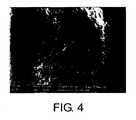
- FIG. 4 shows a scanning electron micrograph of carbon nanotubes, which were first functionalized with an aqueous polyvinylamine solution at pH 8 and then further reacted with poly (octadecene-maleic anhydride).
- a comparison with the recording FIG. 1 shows that the morphology of the nanotubes was preserved after secondary functionalization.
- Example Group 2 The functionalized carbon nanotubes obtained in Example Group 2 were characterized by elemental analysis (C, H, N) and contact angle measurement. Results of the measurements are shown in the table below. The results in brackets in the determination of the contact angle and the N content in the elemental analysis are the measurements for the intermediate stage in the production, on which only the polyvinylamine is adsorbed.
- the contact angle was determined by the Wilhelmy plate method, using a Dataphysics DCAT 11 dynamic contact angle meter and tensiometer for software-controlled determination of the contact angle of powders.
- the coated carbon nanotubes were applied to a double-sided adhesive tape, 1 ⁇ 1 cm, from Tesa AG. The nanotubes completely covered this tape. Subsequently, the thus-coated adhesive tape was immersed in deionized water and pulled out again, whereby the resultant force of weight (F G ), negligible buoyancy force (F A ) and Wilhelmy or wetting force (F W ) can be measured.
- the results of the contact angle measurement show a clear hydrophobization of the carbon nanotubes after the secondary functionalization.
Landscapes
- Chemical & Material Sciences (AREA)
- Engineering & Computer Science (AREA)
- Nanotechnology (AREA)
- Organic Chemistry (AREA)
- Materials Engineering (AREA)
- Crystallography & Structural Chemistry (AREA)
- Physics & Mathematics (AREA)
- Condensed Matter Physics & Semiconductors (AREA)
- General Physics & Mathematics (AREA)
- Inorganic Chemistry (AREA)
- Manufacturing & Machinery (AREA)
- Composite Materials (AREA)
- Health & Medical Sciences (AREA)
- Chemical Kinetics & Catalysis (AREA)
- Medicinal Chemistry (AREA)
- Polymers & Plastics (AREA)
- Carbon And Carbon Compounds (AREA)
- Processes Of Treating Macromolecular Substances (AREA)
- Compositions Of Macromolecular Compounds (AREA)
Abstract
Description
- Die vorliegende Erfindung betrifft eine polymerfunktionalisierte Kohlenstoffnanoröhre, umfassend eine Kohlenstoffnanoröhre, ein an der äußeren Oberfläche der Kohlenstoffnanoröhre adsorbiertes, Aminogruppen umfassendes erstes Polymer sowie ein an das erste Polymer kovalent gebundenes zweites Polymer. Sie betrifft weiterhin ein Verfahren zur Herstellung einer solchen polymerfunktionalisierten Kohlenstoffnanoröhre, eine diese Nanoröhren umfassende Dispersion, diese Nanoröhren umfassende Polymere sowie diese Nanoröhren umfassende Oberflächenbeschichtungen.
- Kohlenstoffnanoröhren (carbon nanotubes, CNT) gelten als interessante Materialien für eine Vielzahl von Anwendungen in Low- und High-Tech-Bereich. Für viele Anwendungen sind die Vereinzelung von Kohlenstoffnanoröhren und das Aufrechterhalten ihrer Dispergierung in Suspensionen oder Polymermatrizes wichtig.
- Es ist eine Vielzahl von Arbeiten bekannt, in denen Oberflächenreaktionen an Kohlenstoffnanoröhren beschrieben werden. Häufig werden oxidierende Verfahren genutzt, um Keto- und Carbonsäuregruppen an der Oberfläche der Nanoröhren reaktiv anzubinden und damit eine hinreichende Oberflächenpolarität und Oberflächenreaktivität für mögliche Folgereaktionen zu schaffen. Nachteilig an dieser Funktionalisierung ist jedoch, dass durch die Oxidation das delokalisierte π-Elektronensystem der Nanoröhre unterbrochen werden kann, was den Verlust von gewünschten Eigenschaften zur Folge haben kann. Eine Alternative hierzu ist das Umhüllen der Nanoröhren mit Polymeren.
-
EP 1 988 390 A2 offenbart das Design und die Synthese eines Matrix-Nanoverbundwerkstoffs mit Amino-Kohlenstoffnanoröhren als funktionalisierte Sensorschicht zur Detektion von Kohlendioxid mittels Schallwellenerkennung, zum Beispiel akustischen Oberflächenwellen oder Körperschallwellen. Diese Sensormaterialien beinhalten eine Amino-Kohlenstoffnanoröhre (einwandig oder mehrwandig) und ein Polymer oder andere Verbindungen, welche in dem schallwellenbasierten Sensor gegenüber Kohlendioxid empfindlich sind. Die Empfindlichkeit der Matrix aus den Amino-Kohlenstoffnanoröhren und einem Polymer oder anderen Verbindungen wird durch die Anwesenheit von Aminogruppen sichergestellt, welche bei Raumtemperatur mit Kohlendioxid reversibel zu Carbamaten reagieren können. Polymere, mit dem die Amino-Kohlenstoffnanoröhren eine Matrix bilden können, sind unter anderem Polyvinylamin und Polyallylamin. -
WO 2002/16257 A2 - Diese genannten Beschichtungspolymere weisen alle hydrophile Eigenschaften auf, so dass die damit beschichteten Polymere an ihrer Oberfläche folglich hydrophiliert werden. Für Anwendungen, in denen die Nanoröhren in eine weniger hydrophile Matrix eingearbeitet werden sollen, ist dieses aber nachteilig. Wünschenswert wären Kohlenstoffnanoröhren, in denen der Grad der Hydrophilie oder Hydrophobie der Oberfläche einstellbar ist.
- Erfindungsgemäß vorgeschlagen wird daher eine polymerfunktionalisierte Kohlenstoffnanoröhre, umfassend eine Kohlenstoffnanoröhre, ein an der äußeren Oberfläche der Kohlenstoffnanoröhre adsorbiertes, Aminogruppen umfassendes erstes Polymer sowie ein an das erste Polymer kovalent gebundenes zweites Polymer, wobei die Bindung des zweiten Polymers an das erste Polymer durch die Reaktion von Aminogruppen des ersten Polymers mit gegenüber Aminogruppen reaktiven Gruppen des zweiten Polymers erreicht wird.
- Erfindungsgemäß einsetzbare Kohlenstoffnanoröhren, im Folgenden auch synonym als Nanoröhren bezeichnet, umfassen alle einwandigen oder mehrwandigen Kohlenstoffnanoröhren vom Zylinder-Typ, Scroll-Typ, Multiscroll-Typ oder mit zwiebelartiger Struktur. Bevorzugt sind mehrwandige Kohlenstoffnanoröhren vom Zylinder-Typ, Scroll-Typ, Multiscroll-Typ oder deren Mischungen einzusetzen. Günstig ist es, wenn die Kohlenstoffnanoröhren ein Verhältnis von Länge zu Außendurchmesser von ≥5, bevorzugt ≥100 haben.
- Im Unterschied zu den bereits erwähnten bekannten Kohlenstoffnanoröhren vom Scroll-Typ mit nur einer durchgehenden oder unterbrochenen Graphenlage existieren auch Kohlenstoffnanoröhren-Strukturen, die aus mehreren Graphenlagen bestehen, welche zu einem Stapel zusammengefasst und aufgerollt vorliegen. Man spricht hierbei vom Multiscroll-Typ. Diese Kohlenstoffnanoröhren sind dem Fachmann bekannt und werden in
DE 10 2007 044031 A1 beschrieben, auf die in vollem Umfang Bezug genommen wird. Diese Struktur verhält sich zu den Kohlenstoffnanoröhren vom einfachen Scroll-Typ vergleichsweise wie die Struktur mehrwandiger zylindrischer Kohlenstoffnanoröhren (cylindrical MWNT) zur Struktur der einwandigen zylindrischen Kohlenstoffnanoröhren (cylindrical SWNT). - Vorteilhafterweise sind die eingesetzten Kohlenstoffnanoröhren an ihrer Oberfläche nicht kovalent funktionalisiert. Dieses bedeutet, dass die Nanoröhren keine zusätzlichen, über weitere Reaktionsschritte kovalent angebundenen funktionellen Gruppen an ihrer Oberfläche tragen. Insbesondere vermieden wird der Einsatz von Oxidationsmitteln wie Salpetersäure, Wasserstoffperoxid, Kaliumpermanganat und Schwefelsäure oder eine mögliche Mischung dieser Mittel für die Funktionalisierung der Nanoröhren. Vorteilhaft am Einsatz nicht kovalent funktionalisierter Nanoröhren ist, dass das π-Elektronensystem der Oberfläche nicht gestört wird und daher uneingeschränkt mit freien Aminogruppen des ersten Polymers wechselwirken kann.
- Es ist vorgesehen, dass an der äußeren Oberfläche der Kohlenstoffnanoröhre ein Aminogruppen umfassendes erstes Polymer adsorbiert ist. Die Adsorption ist so zu verstehen, dass keine kovalente Anbindung des ersten Polymers an die Nanoröhrenoberfläche stattfindet, sondern nichtkovalente Wechselwirkungen bestehen. Beispiele hierfür sind Elektronentransfers des freien Elektronenpaars des aminischen Stickstoffatoms in das konjugierte π-Elektronensystem der Nanoröhre oder aber thermodynamische Effekte beim Umwickeln der Nanoröhre mit dem Polymerstrang. Das erste Polymer kann die Nanoröhre einfach oder mehrfach umwickeln. Es ist auch möglich, dass das erste Polymer die Nanoröhre nicht umwickelt, sondern lediglich auf dessen Oberfläche aufliegt.
- Die erfindungsgemäße polymerfunktionalisierte Kohlenstoffnanoröhre umfasst weiterhin ein an das erste Polymer kovalent gebundenes zweites Polymer. Die kovalente Bindung des zweiten Polymers an das erste wird erreicht, indem reaktive Gruppen des zweiten Polymers mit den Aminogruppen des ersten Polymers reagieren. Reaktive Gruppen des zweiten Polymers können beispielsweise Säuregruppen, Säurehalogenide, Säureanhydride, aktivierte Carbonsäuregruppen wie Carbonsäurehalogenide, Carbonsäuremethylester, Carbonsäureanhydride, Succinimidylester, weiterhin Isocyanatgruppen, Aldehydgruppen, Ketogruppen und/oder Epoxidgruppen sein.
- Dadurch, dass ein zweites Polymer mit freien Aminogruppen des ersten Polymers zur Reaktion gebracht wird, kann die primäre Adsorbatschicht des ersten Polymers auf der Kohlenstoffnanoröhre durch intramolekulare oder intermolekulare Vernetzungsreaktionen stabilisiert werden. Vorrangig hierbei sind die intramolekularen Vernetzungen. Dieses steht im Gegensatz zu einer einfachen Funktionalisierung der Schicht des ersten Polymers durch niedermolekulare Reaktanden. Mit anderen Worten kann die erfindungsgemäße polymerfunktionalisierte Kohlenstoffnanoröhre so beschaffen sein, dass das zweite Polymer das erste Polymer intramolekular vernetzt. Dann reagieren mehr als eine Aminogruppe eines Polymerstrangs des ersten Polymers mit mehr als einer gegenüber Aminogruppen reaktiven Gruppe eines Polymerstrangs des zweiten Polymers.
- Durch die Wahl des zweiten Polymers wird es möglich, einer zunächst hydrophilen Oberfläche der Kohlenstoffnanoröhre auch hydrophobe Eigenschaften zu geben. Dieses ist wichtig, wenn solche Nanoröhren beispielsweise in eine Polymermatrix eingearbeitet werden sollen. Die Nanoröhren können zum Beispiel Kontaktwinkel gegenüber Wasser, bestimmt durch die Wilhelmy-Plattenmethode, von ≥ 145° bis ≤ 175°, vorzugsweise von ≥ 155° bis ≤ 170°, aufweisen. In Hinblick auf eine rationelle Syntheseplanung kann für verschiedene gewünschte Oberflächeneigenschaften zunächst eine gemeinsame Vorstufe genutzt werden.
- In einer Ausführungsform der erfindungsgemäßen polymerfunktionalisierten Kohlenstoffnanoröhre sind die Aminogruppen des Aminogruppen umfassenden ersten Polymers primäre Aminogruppen. Dieses ist insbesondere von Vorteil, wenn die Adsorption des ersten Polymers auf eine Nanoröhre aus wässriger Lösung erfolgen soll. Dann wird von der Wasserlöslichkeit der primäre Aminogruppen umfassenden Polymere profitiert. Weiterhin weisen solche Polymere pro aminischem N-Atom zwei reaktive H-Atome auf, was eine breitere Gruppe von Anbindungsreaktionen des zweiten Polymers ermöglicht.
- In einer weiteren Ausführungsform der erfindungsgemäßen polymerfunktionalisierten Kohlenstoffnanoröhre ist das erste Polymer ausgewählt aus der Gruppe umfassend Polyvinylamin, Polyallylamin, Polyaminosaccharide, Polyethylenimin und/oder Copolymere der vorgenannten Polymere mit weiteren Polymeren. Das Molekulargewicht Mw dieser Polymere kann ≥ 50000 g/mol bis ≤500000 g/mol, vorzugsweise ≥200000 g/mol bis ≤400000 g/mol betragen. Besonders bevorzugt ist ein Polyvinylamin mit einem Molekulargewicht Mw von ≥330000 g/mol bis ≤ 350000 g/mol und einem Hydrolysegrad von ≥90%.
- In einer weiteren Ausführungsform der erfindungsgemäßen polymerfunktionalisierten Kohlenstoffnanoröhre umfassen die gegenüber Aminogruppen reaktiven Gruppen des zweiten Polymers cyclische Carbonsäureanhydridgruppen und/oder Isocyanatgruppen. Unter den Carbonsäureanhydridgruppen sind hierbei Carbonsäureanhydridgruppen mit 5 oder 6 Ringatomen bevorzugt. Beispiele hierfür sind Bernsteinsäureanhydrid-Gruppen. Diese funktionellen Gruppen entstehen bei der Copolymersation von Maleinsäureanhydrid mit einem Olefin. Der Vorteil von Carbonsäureanhydridgruppen liegt darin, dass bei der Reaktion mit den Aminogruppen des ersten Polymers keine Kondensationsprodukte freigesetzt werden, sondern eine Ringöffnung erfolgt.
- Isocyanatgruppen können beispielsweise Teil eines Polyurethanpolymers sein, eines Polyurethan-Prepolymers oder eines polymeren Polyisocyanats. Geeignet sind unter anderem Polyurethanpolymere, Polyurethanprepolymere oder polymere Polyisocyanate auf der Basis von aromatischen oder aliphatischen Polyisocyanaten wie Toluylendiisocyanat, Diphenyldimethandiisocyanat, Hexamethylendiisocyanat, Isophoron-Diisocyanat und/oder H12-Diphenylmethandiisocyanat.
- In einer weiteren Ausführungsform der erfindungsgemäßen polymerfunktionalisierten Kohlenstoffnanoröhre ist das zweite Polymer ausgewählt aus der Gruppe umfassend Poly(octadecen-maleinsäureanhydrid), Poly(ethylen-maleinsäureanhydrid), Poly(styrol-maleinsäureanhydrid), Poly(isobutylen-maleinsäureanhydrid) und/oder Poly(methylvinylethermaleinsäureanhydrid). Diese Polymere vereinen den Vorteil der reaktiven cyclischen Carbonsäureanhydridgruppen mit der Möglichkeit, über die Wahl des mit Maleinsäureanhydrid copolymerisierten Olefins die Hydrophobie der Sekundärfunktionalisierung zu steuern. Das Molekulargewicht Mn dieser Polymere kann ≥20000 g/mol bis ≤100000 g/mol, vorzugsweise ≥ 30000 g/mol bis ≤ 50000 g/mol betragen. Besonders bevorzugt ist ein Poly(octadecenmaleinsäureanhydrid) mit einem Molekulargewicht Mn von ≥30000 g/mol bis ≤50000 g/mol.
- In Hinblick auf die zu funktionalisierende Kohlenstoffnanoröhre selbst kann sie beispielsweise eine nicht kovalent funktionalisierte, mehrwandige Kohlenstoff-Nanoröhre mit einem Durchmesser von ≥3 nm bis ≤100 nm sein. Der Durchmesser bezieht sich hierbei auf den mittleren Durchmesser der Nanoröhren. Er kann auch in einem Bereich von ≥5 nm bis ≤80 nm und vorteilhafterweise von ≥6 nm bis ≤60 nm liegen. Die Länge der Nanoröhren ist zunächst nicht begrenzt. Sie kann aber beispielsweise in einem Bereich von ≥50 nm bis ≤100 µm und vorteilhafterweise von ≥ 100 nm bis ≤ 10 µm liegen. Solche Kohlenstoffnanoröhren sind beispielsweise unter dem Namen BAYTUBES® von der Firma Bayer Materialscience AG erhältlich.
- Ein weiterer Gegenstand der vorliegenden Erfindung ist ein Verfahren zur Herstellung einer erfindungsgemäßen polymerfunktionalisierten Kohlenstoffnanoröhre, umfassend die Schritte:
- (A) Bereitstellen von Kohlenstoffnanoröhren in einer wässrigen Lösung eines Aminogruppen umfassenden ersten Polymers; und
- (B) Hinzufügen einer Lösung eines zweiten, gegenüber Aminogruppen reaktive Gruppen umfassendes Polymer zu einer Dispersion der in Schritt (A) erhaltenen, das erste Polymer umfassenden Kohlenstoffnanoröhren.
- Schritt (A) des erfindungsgemäßen Verfahrens beinhaltet zunächst das Bereitstellen von Kohlenstoffnanoröhren als Ausgangsmaterial. Geeignete Nanoröhren wurden bereits vorstehend beschrieben, so dass hierauf in vollem Umfang Bezug genommen und auf eine wiederholte Aufzählung verzichtet wird. Gleiches gilt für die Beschreibungen des ersten und des zweiten Polymers.
- Die Kohlenstoffnanoröhren liegen in einer wässrigen Lösung eines Aminogruppen umfassenden ersten Polymers vor. Die Konzentration des ersten Polymers in der wässrigen Lösung, berechnet ohne die Kohlenstoffnanoröhren, kann beispielsweise in einem Bereich von ≥0,01 Gewichts-% bis ≤10 Gewichts-%, vorzugsweise von ≥0,1 Gewichts-% bis ≤1 Gewichts-%, bezogen auf das Gesamtgewicht der wässrigen Lösung ohne die Kohlenstoffnanoröhren, liegen. Die Konzentration der eingesetzten Kohlenstoffnanoröhren in der wässrigen Lösung des ersten Polymers kann beispielsweise in einem Bereich von ≥0,1 Gewichts-% bis ≤10 Gewichts-%, vorzugsweise von ≥ 1 Gewichts-% bis ≤5 Gewichts-%, bezogen auf das Gesamtgewicht der wässrigen Lösung ohne die Kohlenstoffnanoröhren, liegen.
- In Schritt (B) werden die erhaltenen, mit dem ersten Polymer primärfunktionalisierten Nanoröhren mit einer Lösung eines zweiten Polymers umgesetzt, um die Reaktion der Aminogruppen des ersten Polymers mit reaktiven Gruppen des zweiten Polymers ablaufen zu lassen. Das Lösungsmittel für das zweite Polymer sollte dieses zumindest teilweise bei den gewünschten Gewichtsanteilen in Lösung halten. Vorteilhafterweise ist das zweite Lösungsmittel mit Wasser zumindest teilweise mischbar, so dass die Sekundärfunktionalisierung in homogener Phase ablaufen kann. Für den Fall, dass das zweite Polymer reaktive Gruppen umfasst, welche auch mit Wasser reagieren, sollte das Lösungsmittel gegenüber solchen Gruppen wie zum Beispiel Isocyanatgruppen inert oder zumindest reaktionsträge sein. Beispiele für generell geeignete Lösungsmittel sind Methanol, Ethanol, Isopropanol, Butanol, Ethylenglykol, Propylenglykol, Butylenglykol, Aceton, N,N-Dimethylformamid, Dimethylsulfoxid, N-Methyl-2-pyrrolidon, Gemische der vorgenannten Lösungsmittel untereinander und/oder Mischungen der vorgenannten Lösungsmittel mit Wasser. Besonders bevorzugt ist Aceton. Die Konzentration des zweiten Polymers in dem Lösungsmittel kann beispielsweise in einem Bereich von ≥0,01 Gewichts-% bis ≤10 Gewichts-%, vorzugsweise von ≥0,1 Gewichts-% bis ≤1 Gewichts-% liegen.
- In einer Ausführungsform des erfindungsgemäßen Verfahrens werden die in Schritt (A) erhaltenen, das erste Polymer umfassenden Kohlenstoffnanoröhren vor dem Schritt (B) nicht getrocknet. Es werden also die erhaltenen primärfunktionalisierten Nanoröhren nicht getrocknet, bevor sie weiter umgesetzt werden. Dieses ist vorteilhaft, wenn die getrockneten Nanoröhren aus Schritt (A) zur Aggregierung neigen und dann unbrauchbar würden. Nach Schritt (A) können aber durchaus Reinigungsschritte durchgeführt werden, beispielsweise Waschen und Zentrifugieren. Ebenso können nach Schritt (B) sich Reinigungsschritte anschließen. Nach Schritt (B) können die sekundärfunktionalisierten Kohlenstoffnanoröhren getrocknet werden. Dieses kann unter anderem im Vakuum geschehen.
- In einer Ausführungsform des erfindungsgemäßen Verfahrens werden die Schritte (A) und/oder (B) bei einer Temperatur von ≥0 °C bis ≤30 °C durchgeführt. Das erfindungsgemäße Verfahren hat den Vorteil, dass keine hohen Temperaturen benötigt werden, wie sie beispielsweise bei einer Reaktionsextrusion herrschen. Vorzugsweise werden die Schritte (A) und/oder (B) bei Raumtemperatur durchgeführt.
- In einer weiteren Ausführungsform des erfindungsgemäßen Verfahrens beträgt der pH-Wert der wässrigen Lösung des ersten Polymers in Schritt (A) > 7. Wird im basischen Medium gearbeitet, so kann die Anzahl der unprotonierten Aminogruppen erhöht werden. Auf diese Weise stehen mehr Aminogruppen für die Sekundärfunktionalisierung mit dem zweiten Polymer zur Verfügung. Der pH-Wert der wässrigen Lösung des ersten Polymers kann beispielsweise in einem Bereich von ≥8 bis ≤10 liegen.
- In einer weiteren Ausführungsform des erfindungsgemäßen Verfahrens beträgt der pH-Wert der wässrigen Lösung des ersten Polymers in Schritt (A) < 7. Wird im sauren Medium gearbeitet, so kann die Anzahl der unprotonierten Aminogruppen verringert werden. Auf diese Weise stehen weniger Aminogruppen für die Sekundärfunktionalisierung mit dem zweiten Polymer zur Verfügung. Der pH-Wert der wässrigen Lösung des ersten Polymers kann beispielsweise in einem Bereich von ≥2 bis ≤6,5 liegen.
- Es ist ein Vorteil des erfindungsgemäßen Verfahrens, dass in Schritt (A) in wässriger Lösung gearbeitet wird. Auf diese Weise erhält man zwei Möglichkeiten, um auf die späteren Oberflächeneigenschaften der erfindungsgemäßen polymerfunktionalisierten Kohlenstoffnanoröhren Einfluss zu nehmen. Neben der Wahl des zweiten Polymers kann auch noch durch die Festlegung des pH-Wertes auch bestimmt werden, in welchem Maße das zweite Polymer an das erste Polymer anbindet.
- Ein weiterer Gegenstand der vorliegenden Erfindung ist eine Dispersion, umfassend erfindungsgemäße polymerfunktionalisierte Kohlenstoffnanoröhren. Hierin wird die Dispergierbarkeit der erfindungsgemäßen Nanoröhren ausgenutzt. Das Dispergiermedium kann flüssig oder fest sein. Beispielsweise kann es ein Polymer, insbesondere ein Polyurethan sein. Dann liegt ein Polyurethanpolymer vor, in dem die erfindungsgemäßen Kohlenstoffnanoröhren dispergiert sind. Es ist möglich, dass in der erfindungsgemäßen Dispersion die polymerfunktionalisierten Kohlenstoffnanoröhren in einem Anteil von ≥0,1 Gewichts-% bis ≤15 Gewichts-% enthalten sind. Der Anteil dieser Kohlenstoffnanoröhren kann auch ≥0,5 Gewichts-% bis ≤5 Gewichts-% betragen.
- In einer Ausführungsform der Dispersion ist die Dispersion eine nichtwässrige flüssige Dispersion. Auf diese Weise können die erfindungsgemäßen Nanoröhren für die Weiterverarbeitung, beispielsweise als Beschichtungsmittel, bereitgestellt werden.
- Ein weiterer Gegenstand der vorliegenden Erfindung ist ein Polymer, umfassend erfindungsgemäße polymerfunktionalisierte Kohlenstoffnanoröhren in einem Anteil unterhalb der Perkolationsgrenze der polymerfunktionalisierten Kohlenstoffnanoröhren. Das Polymer kann beispielsweise in Polyurethanpolymer sein. Die Perkolationsgrenze ist hierbei der Gehalt an erfindungsgemäßen Kohlenstoffnanoröhren zu verstehen, oberhalb dessen die elektrische Leitfähigkeit des die Nanoröhren umfassenden Polymers sprunghaft ansteigt. Wird die Perkolationsgrenze nicht überschritten, so lässt sich die dielektrische Konstante des Materials erhöhen. So lassen sich mit einem geeigneten Basispolymer dielektrische Elastomere erhalten.
- Ein weiterer Gegenstand der vorliegenden Erfindung ist ein Polymer, umfassend erfindungsgemäße polymerfunktionalisierte Kohlenstoffnanoröhren in einem Anteil oberhalb der Perkolationsgrenze der polymerfunktionalisierten Kohlenstoffnanoröhren. Das Polymer kann beispielsweise ein Polyurethanpolymer sein. Oberhalb der Perkolationsgrenze lassen sich solche Materialien zum Beispiel als Elektroden, mit einem geeigneten Basispolymer als elastomere Elektroden verwenden.
- Ein weiterer Gegenstand der vorliegenden Erfindung ist eine Oberflächenbeschichtung, umfassend erfindungsgemäße polymerfunktionalisierte Kohlenstoffnanoröhren. Vorzugsweise werden durch die Sekundärfunktionalisierung hydrophobisierte Kohlenstoffnanoröhren eingesetzt, um hydrophobe Oberflächenbeschichtungen zu erhalten. Die hierin eingesetzten Nanoröhren können beispielsweise Kontaktwinkel gegenüber Wasser, bestimmt durch die Wilhelmy-Plattenmethode, von ≥ 145° bis ≤ 175°, vorzugsweise von ≥ 155° bis ≤ 170°, aufweisen. Für eine Oberflächenbeschichtung können die Nanoröhren unter anderem in Melaminharze, Polyurethane oder Silikone eingearbeitet werden.
- Die vorliegende Erfindung wird anhand der nachfolgenden Figuren weiter erläutert. Es zeigen:
- FIG. 1
- die Synthese von erfindungsgemäßen funktionalisierten Kohlenstoffnanoröhren
- FIG. 2
- eine Rasterelektronenmikroskopaufnahme von unfunktionalisierten Kohlenstoffnanoröhren
- FIG. 3
- eine Rasterelektronenmikroskopaufnahme von erfindungsgemäßen funktionalisierten Kohlenstoffnanoröhren
- FIG.4
- eine Rasterelektronenmikroskopaufnahme von erfindungsgemäß funktionalisierten Kohlenstoffnanoröhren
-
FIG. 1 zeigt schematisch und beispielhaft die Synthese von erfindungsgemäß funktionalisierten Kohlenstoffnanoröhren. Die als Edukt eingesetzte Kohlenstoffnanoröhre wird zunächst mit Polyvinylamin umgesetzt. Abhängig vom pH-Wert der wässrigen Lösung des Polyvinylamins liegt ein größerer oder geringerer Teil des Polyvinylamins in protonierter Form vor. Dargestellt ist die protonierte Form als Aminhydrochlorid. Der Anteil der unprotonierten Form im Polyvinylamin wird durch die Variable x, der Anteil der protonierten Form durch die Variable y angegeben. Dieses ist eine schematische Darstellung und sollte nicht als Block-Copolymer verstanden werden. - Das Produkt der ersten Umsetzung ist die vom Polyvinylamin/Polyvinylaminhydrochlorid umwickelte Kohlenstoffnanoröhre. Das Polymerrückgrat und freie Amino- und Ammoniumgruppen sind dargestellt. Wie eingangs beschrieben, tragen nur die freien Aminogruppen durch nichtkovalente Wechselwirkungen zur Anbindung des Polymers auf die Nanoröhrenoberfläche bei. Durch die Variation des pH-Werts der wässrigen Lösung des Polyvinylamins kann also beeinflusst werden, wie die Adsorption des Polyvinylamins verläuft. Weiterhin können durch die Protonierung freie Aminogruppen blockiert werden, so dass sie nicht am nachfolgenden Funktionalisierungsschritt teilnehmen.
- Die mit Polyvinylamin/Polyvinylaminhydrochlorid umwickelte Kohlenstoffnanoröhre wird anschließend mit Poly(octadecen-maleinsäureanhydrid), welches zur Vereinfachung als POMA bezeichnet wird, umgesetzt. Hierbei reagieren Maleinsäureanhydridgruppen des POMA mit freien Aminogruppen. Im Ergebnis ragen hydrophobe C16-Alkylketten sowie Carbonsäuregruppen von der Oberfläche der sekundärfunktionalisierten Kohlenstoffnanoröhre. Erfindungsgemäß ausdrücklich eingeschlossen ist der Fall, dass mehrere Maleinsäureanhydridgruppen eines POMA-Polymerstrangs mit den auf einer Kohlenstoffnanoröhre befindlichen Aminogruppen reagieren.
-
FIG. 2 zeigt eine Rasterelektronenmikroskopaufnahme von unfunktionalisierten Kohlenstoffnanoröhren. Diese Aufnahme dient als Referenz zur Beurteilung der Morphologie der funktionalisierten Nanoröhren. -
FIG. 3 zeigt eine Rasterelektronenmikroskopaufnahme von Kohlenstoffnanoröhren, welche zunächst mit einer wässrigen Polyvinylaminlösung bei einem pH-Wert von 6,5 funktionalisiert wurden und anschließend mit Poly(octadecen-maleinsäureanhydrid) weiter umgesetzt wurden. Ein Vergleich mit der Aufnahme ausFIG. 1 zeigt, dass die Morphologie der Nanoröhren nach der Sekundärfunktionalisierung erhalten blieb. -
FIG. 4 zeigt eine Rasterelektronenmikroskopaufnahme von Kohlenstoffnanoröhren, welche zunächst mit einer wässrigen Polyvinylaminlösung bei einem pH-Wert von 8 funktionalisiert wurden und anschließend mit Poly(octadecen-maleinsäureanhydrid) weiter umgesetzt wurden. Ein Vergleich mit der Aufnahme ausFIG. 1 zeigt, dass die Morphologie der Nanoröhren nach der Sekundärfunktionalisierung erhalten blieb. - Die vorliegende Erfindung wird ebenfalls anhand der nachfolgenden Beispiele weiter erläutert.
- Beispielgruppe 1 mit den Beispielen 1a, 1b und 1c:
- 0,5 g BAYTUBES® (mehrwandige Kohlenstoffnanoröhren, Firma Bayer MaterialScience AG) wurden in einem Zentrifugenglas aus Teflon eingewogen und mit 20 ml einer Poly(vinylamin)-Lösung (PVAm 9095, Mw = 340000 g/mol, Hydrolysegrad > 90%, Firma BASF SE; 1 Gewichts-%-Lösung in Wasser) und entsprechendem pH-Wert versetzt. Im Beispiel 1a betrug der pH-Wert 6,5, im Beispiel 1b pH 8 und im Beispiel 1c pH 11. Diese Reaktionsmischung wurde für 30 Minuten kontinuierlich geschüttelt und anschließend 30 Minuten bei 12000 U/min zentrifugiert, um die Nanoröhren von der Polymer-Lösung zu trennen. Die modifizierten Nanoröhren wurden anschließend zwei Mal mit jeweils 20 ml destilliertem Wasser gewaschen und zur Trennung erneut zentrifugiert. Die modifizierten Nanoröhren wurden anschließend zweimal mit jeweils 20 ml Aceton gewaschen. 0,2 g Poly(octadecen-maleinsäureanhydrid) (POMA, Mn = 30000 bis 50000 g/mol, Firma Aldrich) wurden in 30 ml Aceton gelöst und anschließend zu den aminogruppentragenden Nanoröhren in ein Zentrifugenglas hinzugegeben. Die Reaktionsmischung wurde für zwei Stunden beständig bei Raumtemperatur geschüttelt und anschließend 30 Minuten bei 12000 U/min zentrifugiert. Die Probe wurde drei Tage lang mit Aceton extrahiert, um überschüssiges nicht funktionalisiertes Copolymer von der Oberfläche herunterzuspülen. Anschließend wurden die modifizierten Nanoröhren bei Raumtemperatur unter Vakuum getrocknet. Es wurde beobachtet, dass die so modifizierten Nanoröhren sowohl nach der ersten als auch nach der zweiten Funktionalisierung rieselfähig blieben.
- Beispielgruppe 2 mit den Beispiel 2a bis 2f:
- 0,5 g mehrwandige Kohlenstoffnanoröhren (NANOCYL 7000, series, Firma Nanocyl S. A.) wurden in einem Zentrifugenglas aus Teflon eingewogen und mit 20 ml einer Poly(vinylamin)-Lösung (PVAm 9095, Mw = 340000 g/mol, Hydrolysegrad > 90%, Firma BASF SE; 1 Gewichts-%-Lösung in Wasser) und entsprechendem pH-Wert versetzt. Im Beispiel 2a betrug der pH-Wert 2, im Beispiel 2b pH 3, im Beispiel 2c pH 4,2, im Beispiel 2d pH 6,5, im Beispiel 2e pH 8 sowie im Beispiel 2f pH 11. Diese Reaktionsmischung wurde für 30 Minuten kontinuierlich geschüttelt und anschließend 60 Minuten bei 12000 U/min zentrifugiert, um die Nanoröhren von der Polymer-Lösung zu trennen. Die modifizierten Nanoröhren wurden anschließend zwei Mal mit jeweils 20 ml destilliertem Wasser gewaschen und zur Trennung erneut zentrifugiert. Die modifizierten Nanoröhren wurden anschließend zweimal mit jeweils 20 ml Aceton gewaschen. 0,2 g Poly(octadecen-maleinsäureanhydrid) (POMA, Mn = 30000 bis 50000 g/mol, Firma Aldrich) wurden in 30 ml Aceton gelöst und anschließend zu den aminogruppentragenden Nanoröhren in ein Zentrifugenglas hinzugegeben. Die Reaktionsmischung wurde für zwei Stunden beständig bei Raumtemperatur geschüttelt und anschließend 30 Minuten bei 12000 U/min zentrifugiert. Die Probe wurde drei Tage lang mit Aceton extrahiert, um überschüssiges nicht funktionalisiertes Copolymer von der Oberfläche herunterzuspülen. Anschließend wurden die modifizierten Nanoröhren bei Raumtemperatur unter Vakuum getrocknet. Es wurde beobachtet, dass die so modifizierten Nanoröhren nach der zweiten Funktionalisierung rieselfähig blieben.
- Die in der Beispielgruppe 2 erhaltenen funktionalisierten Kohlenstoffnanoröhren wurden mittels Elementaranalyse (C, H, N) und Kontaktwinkelmessung charakterisiert. Ergebnisse der Messungen sind in der nachfolgenden Tabelle wiedergegeben. Die Ergebnisse in Klammern bei der Bestimmung des Kontaktwinkels und des N-Gehalts in der Elementaranalyse sind die Messwerte für die Zwischenstufe bei der Herstellung, auf welcher nur das Polyvinylamin adsorbiert ist.
Beispiel Kontaktwinkel θ [°] Elementaranalyse C [%] Elementaranalyse H [%] Elementaranalyse N [%] Ausgangsmaterial Nanoröhren 146,3 ± 6,9 87,77 0,52 - 2a (pH 2) 164,9 ± 13,5 (122,9 ± 0,2) 76,24 3,40 3,08 (3,49) 2b (pH 3) 166,3 ± 12,1 (131,1 ± 1,3) 76,88 3,43 2,96 (3,42) 2c (pH 4,2) 148,5 ± 9,9 (134,3 ± 12,4) 87,82 1,15 2,44 (3,38) 2d (pH 6,5) 158,8 ± 18,8 (145,4 ± 8,1) 82,89 2,38 2,66 (3,46) 2e (pH 8) 170,0 ± 4,2 (115,9 ± 25,4) 77,91 3,68 2,56 (3,28) 2f (pH 11) 147,02 ± 3,1 (126,6 ± 3,2) 79,35 3,76 3,05(3,58) - Der Kontaktwinkel wurde mit der Wilhelmy-Plattenmethode bestimmt, wobei ein dynamisches Kontaktwinkelmessgerät und Tensiometer der Firma Dataphysics DCAT 11 zur softwaregesteuerten Bestimmung des Kontaktwinkels von Pulvern verwendet wurde. Die beschichteten Kohlenstoffnanoröhren wurden auf einen doppelseitigen Klebestreifen, 1 × 1 cm, der Firma Tesa AG aufgebracht. Die Nanoröhren bedeckten diesen Klebestreifen vollständig. Anschließend wurde der so beschichtete Klebestreifen in deionisiertes Wasser eingetaucht und wieder herausgezogen, wodurch die dadurch resultierende Kraft aus Gewichtskraft (FG), vernachlässigbarer Auftriebskraft (FA) und Wilhelmy- beziehungsweise Benetzungskraft (FW) gemessen werden kann. Mit der Benetzungskraft ist eine Berechnung des Kontaktwinkels θ durch die nachfolgende Gleichung möglich, wobei u dem Umfang des Klebestreifens entspricht und γlv der Oberflächenspannung des Wassers bei 23°C (γlv = 72,8 mN · m-1): cos (θ) = FW/(u · γlv).
- Die Ergebnisse der Kontaktwinkelmessung zeigen eine deutliche Hydrophobisierung der Kohlenstoffnanoröhren nach der Sekundärfunktionalisierung.
Claims (15)
- Polymerfunktionalisierte Kohlenstoffnanoröhre, umfassend eine Kohlenstoffnanoröhre, ein an der äußeren Oberfläche der Kohlenstoffnanoröhre adsorbiertes, Aminogruppen umfassendes erstes Polymer sowie ein an das erste Polymer kovalent gebundenes zweites Polymer, wobei die Bindung des zweiten Polymers an das erste Polymer durch die Reaktion von Aminogruppen des ersten Polymers mit gegenüber Aminogruppen reaktiven Gruppen des zweiten Polymers erreicht wird.
- Polymerfunktionalisierte Kohlenstoffnanoröhre gemäß Anspruch 1, wobei die Aminogruppen des Aminogruppen umfassenden ersten Polymers primäre Aminogruppen sind.
- Polymerfunktionalisierte Kohlenstoffnanoröhre gemäß Anspruch 1, wobei das erste Polymer ausgewählt ist aus der Gruppe umfassend Polyvinylamin, Polyallylamin, Polyaminosaccharide, Polyethylenimin und/oder Copolymere der vorgenannten Polymere mit weiteren Polymeren.
- Polymerfunktionalisierte Kohlenstoffnanoröhre gemäß Anspruch 1, wobei die gegenüber Aminogruppen reaktiven Gruppen des zweiten Polymers cyclische Carbonsäureanhydridgruppen und/oder Isocyanatgruppen umfassen.
- Polymerfunktionalisierte Kohlenstoffnanoröhre gemäß Anspruch 1, wobei das zweite Polymer ausgewählt ist aus der Gruppe umfassend Poly(octadecen-maleinsäureanhydrid), Poly(ethylen-maleinsäureanhydrid), Poly(styrol-maleinsäureanhydrid), Poly(isobutylen-maleinsäureanhydrid) und/oder Poly(methylvinylether-maleinsäureanhydrid).
- Verfahren zur Herstellung einer polymerfunktionalisierten Kohlenstoffnanoröhre gemäß Anspruch 1, umfassend die Schritte:(A) Bereitstellen von Kohlenstoffnanoröhren in einer wässrigen Lösung eines Aminogruppen umfassenden ersten Polymers; und(B) Hinzufügen einer Lösung eines zweiten, gegenüber Aminogruppen reaktive Gruppen umfassendes Polymer zu einer Dispersion der in Schritt (A) erhaltenen, das erste Polymer umfassenden Kohlenstoffnanoröhren.
- Verfahren gemäß Anspruch 6, wobei die in Schritt (A) erhaltenen, das erste Polymer umfassenden Kohlenstoffnanoröhren vor dem Schritt (B) nicht getrocknet werden.
- Verfahren gemäß Anspruch 6, wobei die Schritte (A) und/oder (B) bei einer Temperatur von ≥0 °C bis ≤30 °C durchgeführt werden.
- Verfahren gemäß Anspruch 6, wobei der pH-Wert der wässrigen Lösung des ersten Polymers in Schritt (A) > 7 beträgt.
- Verfahren gemäß Anspruch 6, wobei der pH-Wert der wässrigen Lösung des ersten Polymers in Schritt (A) < 7 beträgt.
- Dispersion, umfassend polymerfunktionalisierte Kohlenstoffnanoröhren gemäß Anspruch 1.
- Dispersion gemäß Anspruch 11, wobei die Dispersion eine nichtwässrige flüssige Dispersion ist.
- Polymer, umfassend polymerfunktionalisierte Kohlenstoffnanoröhren gemäß Anspruch 1 in einem Anteil unterhalb der Perkolationsgrenze der polymerfunktionalisierten Kohlenstoffnanoröhren.
- Polymer, umfassend polymerfunktionalisierte Kohlenstoffnanoröhren gemäß Anspruch 1 in einem Anteil oberhalb der Perkolationsgrenze der polymerfunktionalisierten Kohlenstoffnanöröhren.
- Oberflächenbeschichtung, umfassend polymerfunktionalisierte Kohlenstoffnanoröhren gemäß Anspruch 1.
Priority Applications (8)
| Application Number | Priority Date | Filing Date | Title |
|---|---|---|---|
| EP09005138A EP2241593A1 (de) | 2009-04-08 | 2009-04-08 | Polymerfunktionalisierte Kohlenstoffnanoröhre, Verfahren zu deren Herstellung und Verwendung |
| US13/262,717 US20120114947A1 (en) | 2009-04-08 | 2010-03-26 | Polymer-functionalized carbon nanotube, process for its production and use |
| KR1020117023582A KR20120009442A (ko) | 2009-04-08 | 2010-03-26 | 중합체-작용화된 카본 나노튜브, 그의 제조 방법 및 용도 |
| JP2012503888A JP2012523359A (ja) | 2009-04-08 | 2010-03-26 | ポリマー官能基化カーボンナノチューブ、その製造方法および使用 |
| CN2010800160710A CN102388098A (zh) | 2009-04-08 | 2010-03-26 | 聚合物官能化碳纳米管、其制备方法及其用途 |
| EP10711018A EP2417192A1 (de) | 2009-04-08 | 2010-03-26 | Polymerfunktionalisierte kohlenstoffnanoröhre, verfahren zu deren herstellung und verwendung |
| PCT/EP2010/001922 WO2010115528A1 (de) | 2009-04-08 | 2010-03-26 | Polymerfunktionalisierte kohlenstoffnanoröhre, verfahren zu deren herstellung und verwendung |
| TW099110655A TW201107237A (en) | 2009-04-08 | 2010-04-07 | Polymer-functionalized carbon nanotube, process for preparation thereof and use |
Applications Claiming Priority (1)
| Application Number | Priority Date | Filing Date | Title |
|---|---|---|---|
| EP09005138A EP2241593A1 (de) | 2009-04-08 | 2009-04-08 | Polymerfunktionalisierte Kohlenstoffnanoröhre, Verfahren zu deren Herstellung und Verwendung |
Publications (1)
| Publication Number | Publication Date |
|---|---|
| EP2241593A1 true EP2241593A1 (de) | 2010-10-20 |
Family
ID=40912106
Family Applications (2)
| Application Number | Title | Priority Date | Filing Date |
|---|---|---|---|
| EP09005138A Withdrawn EP2241593A1 (de) | 2009-04-08 | 2009-04-08 | Polymerfunktionalisierte Kohlenstoffnanoröhre, Verfahren zu deren Herstellung und Verwendung |
| EP10711018A Withdrawn EP2417192A1 (de) | 2009-04-08 | 2010-03-26 | Polymerfunktionalisierte kohlenstoffnanoröhre, verfahren zu deren herstellung und verwendung |
Family Applications After (1)
| Application Number | Title | Priority Date | Filing Date |
|---|---|---|---|
| EP10711018A Withdrawn EP2417192A1 (de) | 2009-04-08 | 2010-03-26 | Polymerfunktionalisierte kohlenstoffnanoröhre, verfahren zu deren herstellung und verwendung |
Country Status (7)
| Country | Link |
|---|---|
| US (1) | US20120114947A1 (de) |
| EP (2) | EP2241593A1 (de) |
| JP (1) | JP2012523359A (de) |
| KR (1) | KR20120009442A (de) |
| CN (1) | CN102388098A (de) |
| TW (1) | TW201107237A (de) |
| WO (1) | WO2010115528A1 (de) |
Families Citing this family (15)
| Publication number | Priority date | Publication date | Assignee | Title |
|---|---|---|---|---|
| KR101444635B1 (ko) * | 2012-06-21 | 2014-09-26 | 테슬라 나노코팅스, 인크. | 기능화된 흑연물질의 제조방법 |
| JP2014101233A (ja) * | 2012-11-16 | 2014-06-05 | Asahi Kasei Chemicals Corp | 表面処理カーボンナノチューブ |
| US20150037895A1 (en) * | 2013-07-31 | 2015-02-05 | International Business Machines Corporation | Hydrocarbon Detector Based on Carbon Nanotubes |
| US9688538B2 (en) | 2014-02-05 | 2017-06-27 | University Of Houston System | Graft polymerization initiated on graphitic nanomaterials and their nanocomposite formation |
| US10329435B2 (en) | 2014-07-01 | 2019-06-25 | University Of Utah Research Foundation | Electrothermal coating with nanostructures mixture and method for making the same |
| CN104927404B (zh) * | 2015-06-15 | 2017-08-11 | 北京化工大学 | 一种原位共聚技术制备核壳型碳纳米管介电填料的方法 |
| KR102482030B1 (ko) * | 2015-11-20 | 2022-12-27 | 주식회사 동진쎄미켐 | 탄소 소재 분산용 잉크 조성물 및 그 제조방법 |
| KR101955975B1 (ko) * | 2016-07-07 | 2019-03-08 | 한국화학연구원 | 인쇄가 가능한 변형 센서용 소재 |
| CA3087372A1 (en) * | 2018-01-11 | 2019-07-18 | Nanocore Aps | Composite materials comprising mechanical ligands |
| CN109825863B (zh) * | 2019-03-28 | 2021-02-05 | 烟台恒诺新材料有限公司 | 一种碳纳米管导电浆在黑孔化直接电镀中的应用 |
| JP7204890B2 (ja) * | 2019-09-10 | 2023-01-16 | 株式会社東芝 | 電極の製造方法および光電変換素子の製造方法 |
| JP7360161B2 (ja) * | 2020-01-24 | 2023-10-12 | 国立大学法人東海国立大学機構 | 積層体、積層体の製造方法、および、積層体を備えるデバイス |
| WO2021149582A1 (ja) * | 2020-01-24 | 2021-07-29 | 国立大学法人東海国立大学機構 | 積層体、積層体の製造方法、および、積層体を備えるデバイス |
| CN112479185B (zh) * | 2020-12-03 | 2022-03-29 | 安徽大学 | 一种聚单宁酸氨酯稳定的碳纳米管水分散体及其制备方法 |
| CN118725442B (zh) * | 2024-08-07 | 2025-05-02 | 浙江太湖远大新材料股份有限公司 | 一种超短脱气时间的超高压电缆用交联聚乙烯绝缘料及其制备方法 |
Citations (8)
| Publication number | Priority date | Publication date | Assignee | Title |
|---|---|---|---|---|
| WO2002016257A2 (en) | 2000-08-24 | 2002-02-28 | William Marsh Rice University | Polymer-wrapped single wall carbon nanotubes |
| WO2003038837A1 (en) * | 2001-10-29 | 2003-05-08 | Hyperion Catalysis International, Inc. | Polymer containing functionalized carbon nanotubes |
| EP1522552A1 (de) * | 2003-10-09 | 2005-04-13 | Fuji Xerox Co., Ltd. | Verbundwerkstoff und Verfahren zu dessen Herstellung |
| WO2005120823A2 (en) * | 2004-02-18 | 2005-12-22 | University Of Florida | Non-covalent bonding agent for carbon nanotube reinforced polymer composites |
| EP1777259A1 (de) * | 2005-10-24 | 2007-04-25 | Basf Aktiengesellschaft | Kohlenstoffnanoröhrchen verstärkte Polymerzusammensetzung und Verfahren zu deren Herstellung |
| EP1788019A1 (de) * | 2005-11-16 | 2007-05-23 | Gwangju Institute of Science and Technology | Nanoröhrenverbundwerkstoff und Verfahren zu seiner Herstellung |
| EP1988390A2 (de) | 2007-04-30 | 2008-11-05 | Honeywell International Inc. | Matrixnanokomposit mit Amino-Kohlenstoffnanoröhrchen zur Detektion von Kohlendioxid |
| DE102007044031A1 (de) | 2007-09-14 | 2009-03-19 | Bayer Materialscience Ag | Kohlenstoffnanoröhrchenpulver, Kohlenstoffnanoröhrchen und Verfahren zu ihrer Herstellung |
Family Cites Families (1)
| Publication number | Priority date | Publication date | Assignee | Title |
|---|---|---|---|---|
| FR2870251B1 (fr) * | 2004-05-11 | 2010-09-17 | Arkema | Materiaux composites a base de nanotubes de carbone et matrices polymeres et leurs procedes d'obtention |
-
2009
- 2009-04-08 EP EP09005138A patent/EP2241593A1/de not_active Withdrawn
-
2010
- 2010-03-26 EP EP10711018A patent/EP2417192A1/de not_active Withdrawn
- 2010-03-26 CN CN2010800160710A patent/CN102388098A/zh active Pending
- 2010-03-26 JP JP2012503888A patent/JP2012523359A/ja not_active Withdrawn
- 2010-03-26 KR KR1020117023582A patent/KR20120009442A/ko not_active Withdrawn
- 2010-03-26 US US13/262,717 patent/US20120114947A1/en not_active Abandoned
- 2010-03-26 WO PCT/EP2010/001922 patent/WO2010115528A1/de not_active Ceased
- 2010-04-07 TW TW099110655A patent/TW201107237A/zh unknown
Patent Citations (8)
| Publication number | Priority date | Publication date | Assignee | Title |
|---|---|---|---|---|
| WO2002016257A2 (en) | 2000-08-24 | 2002-02-28 | William Marsh Rice University | Polymer-wrapped single wall carbon nanotubes |
| WO2003038837A1 (en) * | 2001-10-29 | 2003-05-08 | Hyperion Catalysis International, Inc. | Polymer containing functionalized carbon nanotubes |
| EP1522552A1 (de) * | 2003-10-09 | 2005-04-13 | Fuji Xerox Co., Ltd. | Verbundwerkstoff und Verfahren zu dessen Herstellung |
| WO2005120823A2 (en) * | 2004-02-18 | 2005-12-22 | University Of Florida | Non-covalent bonding agent for carbon nanotube reinforced polymer composites |
| EP1777259A1 (de) * | 2005-10-24 | 2007-04-25 | Basf Aktiengesellschaft | Kohlenstoffnanoröhrchen verstärkte Polymerzusammensetzung und Verfahren zu deren Herstellung |
| EP1788019A1 (de) * | 2005-11-16 | 2007-05-23 | Gwangju Institute of Science and Technology | Nanoröhrenverbundwerkstoff und Verfahren zu seiner Herstellung |
| EP1988390A2 (de) | 2007-04-30 | 2008-11-05 | Honeywell International Inc. | Matrixnanokomposit mit Amino-Kohlenstoffnanoröhrchen zur Detektion von Kohlendioxid |
| DE102007044031A1 (de) | 2007-09-14 | 2009-03-19 | Bayer Materialscience Ag | Kohlenstoffnanoröhrchenpulver, Kohlenstoffnanoröhrchen und Verfahren zu ihrer Herstellung |
Also Published As
| Publication number | Publication date |
|---|---|
| TW201107237A (en) | 2011-03-01 |
| WO2010115528A1 (de) | 2010-10-14 |
| US20120114947A1 (en) | 2012-05-10 |
| EP2417192A1 (de) | 2012-02-15 |
| JP2012523359A (ja) | 2012-10-04 |
| KR20120009442A (ko) | 2012-01-31 |
| CN102388098A (zh) | 2012-03-21 |
Similar Documents
| Publication | Publication Date | Title |
|---|---|---|
| EP2241593A1 (de) | Polymerfunktionalisierte Kohlenstoffnanoröhre, Verfahren zu deren Herstellung und Verwendung | |
| DE102006055106C5 (de) | Dispergierverfahren | |
| EP2266786B1 (de) | Herstellung von Verbundwerkstoffen aus Nanokompositen | |
| DE102015223936A1 (de) | Verbundmaterial mit Polypropylen und Graphen und Verfahren zum Herstellen desselben | |
| US9428394B2 (en) | Highly oxidized graphene oxide and methods for production thereof | |
| US8703090B2 (en) | Methods for preparation of graphene nanoribbons from carbon nanotubes and compositions, thin films and devices derived therefrom | |
| DE112009001621B4 (de) | Polymerelektrolytmembran, Verfahren zur Herstellung einer Polymerelektrolytmembran und Festpolymerbrennstoffzelle | |
| DE112007001286T5 (de) | Kohlenstoff und Kohlenstoffverbundstoffe mit hochgeordneten Poren mit Mesogrösse | |
| EP2417176A1 (de) | Hydroxygruppen umfassende kohlenstoffnanoröhren, verfahren zu deren herstellung und diese kohlenstoffnanoröhren umfassende polyurethanpolymere | |
| DE3420929A1 (de) | Kugelfoermiges poroeses polyimidpulver und verfahren zu dessen herstellung | |
| CN113165882A (zh) | 可分散的边缘功能化的石墨烯薄片 | |
| US7641883B2 (en) | Method for separating carbon nanotubes, method for dispersing carbon nanotubes and compositions used for the methods | |
| EP2992947A1 (de) | Verfahren zur herstellung mikroporöser organischer membranen, mikroporöse organische membranen und deren verwendung | |
| KR102389736B1 (ko) | 탄소나노튜브를 포함하는 나노복합막 및 그 제조방법 | |
| EP2236542A1 (de) | Herstellung von Polyazol-Kompositen | |
| CH697740A2 (de) | Funktionalisierte beschichtung aus kohlenstoffnanoröhren und deren anwendungen. | |
| DE10038124B4 (de) | Verwendung einer mehrwandigen Nanoröhre auf einem Substrat und als elektronisches Bauelement | |
| DE19916802A1 (de) | Verbundmembran auf Polyanilinbasis | |
| EP1368110B1 (de) | Funktionalisierte polyimid-formkörper und funktionalisierte polyimid-membran | |
| DE102008027499A1 (de) | Herstellung von Kompositen aus Polyoxadiazol-Polymeren | |
| DE10296747B4 (de) | Verfahren zur Herstellung eines Polyanilinsalzes, gelöst in organischen Lösungsmitteln | |
| EP0562378A1 (de) | Verfahren zur Herstellung von dünnen Polyglukanregeneratfilmen | |
| Ghadiri et al. | Enhanced ion separation by amine grafted graphene oxide-tripolyphosphate anionic composite membrane based on polyvinylidene fluoride | |
| EP2710077A1 (de) | Verfahren zur herstellung von kovalent gebundene aminogruppen aufweisenden kohlenstoff-füllstoffen | |
| DE112021008420T5 (de) | Reduziertes graphenoxid für eine sekundärbatterie, verfahren zu dessen herstellung und elektrode und sekundärbatterie, die dieses verwenden |
Legal Events
| Date | Code | Title | Description |
|---|---|---|---|
| PUAI | Public reference made under article 153(3) epc to a published international application that has entered the european phase |
Free format text: ORIGINAL CODE: 0009012 |
|
| AK | Designated contracting states |
Kind code of ref document: A1 Designated state(s): AT BE BG CH CY CZ DE DK EE ES FI FR GB GR HR HU IE IS IT LI LT LU LV MC MK MT NL NO PL PT RO SE SI SK TR |
|
| AX | Request for extension of the european patent |
Extension state: AL BA RS |
|
| 17P | Request for examination filed |
Effective date: 20110420 |
|
| 17Q | First examination report despatched |
Effective date: 20110511 |
|
| GRAP | Despatch of communication of intention to grant a patent |
Free format text: ORIGINAL CODE: EPIDOSNIGR1 |
|
| STAA | Information on the status of an ep patent application or granted ep patent |
Free format text: STATUS: THE APPLICATION IS DEEMED TO BE WITHDRAWN |
|
| 18D | Application deemed to be withdrawn |
Effective date: 20130227 |