EP2226064A1 - Second preparation composition for hair dyeing or bleaching - Google Patents
Second preparation composition for hair dyeing or bleaching Download PDFInfo
- Publication number
- EP2226064A1 EP2226064A1 EP08868484A EP08868484A EP2226064A1 EP 2226064 A1 EP2226064 A1 EP 2226064A1 EP 08868484 A EP08868484 A EP 08868484A EP 08868484 A EP08868484 A EP 08868484A EP 2226064 A1 EP2226064 A1 EP 2226064A1
- Authority
- EP
- European Patent Office
- Prior art keywords
- bleaching
- composition
- hair
- hair dyeing
- part composition
- Prior art date
- Legal status (The legal status is an assumption and is not a legal conclusion. Google has not performed a legal analysis and makes no representation as to the accuracy of the status listed.)
- Granted
Links
Classifications
-
- A—HUMAN NECESSITIES
- A61—MEDICAL OR VETERINARY SCIENCE; HYGIENE
- A61Q—SPECIFIC USE OF COSMETICS OR SIMILAR TOILETRY PREPARATIONS
- A61Q5/00—Preparations for care of the hair
- A61Q5/10—Preparations for permanently dyeing the hair
-
- A—HUMAN NECESSITIES
- A61—MEDICAL OR VETERINARY SCIENCE; HYGIENE
- A61K—PREPARATIONS FOR MEDICAL, DENTAL OR TOILETRY PURPOSES
- A61K8/00—Cosmetics or similar toiletry preparations
- A61K8/18—Cosmetics or similar toiletry preparations characterised by the composition
- A61K8/19—Cosmetics or similar toiletry preparations characterised by the composition containing inorganic ingredients
- A61K8/22—Peroxides; Oxygen; Ozone
-
- A—HUMAN NECESSITIES
- A61—MEDICAL OR VETERINARY SCIENCE; HYGIENE
- A61K—PREPARATIONS FOR MEDICAL, DENTAL OR TOILETRY PURPOSES
- A61K8/00—Cosmetics or similar toiletry preparations
- A61K8/18—Cosmetics or similar toiletry preparations characterised by the composition
- A61K8/30—Cosmetics or similar toiletry preparations characterised by the composition containing organic compounds
- A61K8/31—Hydrocarbons
-
- A—HUMAN NECESSITIES
- A61—MEDICAL OR VETERINARY SCIENCE; HYGIENE
- A61K—PREPARATIONS FOR MEDICAL, DENTAL OR TOILETRY PURPOSES
- A61K8/00—Cosmetics or similar toiletry preparations
- A61K8/18—Cosmetics or similar toiletry preparations characterised by the composition
- A61K8/30—Cosmetics or similar toiletry preparations characterised by the composition containing organic compounds
- A61K8/40—Cosmetics or similar toiletry preparations characterised by the composition containing organic compounds containing nitrogen
- A61K8/41—Amines
-
- A—HUMAN NECESSITIES
- A61—MEDICAL OR VETERINARY SCIENCE; HYGIENE
- A61Q—SPECIFIC USE OF COSMETICS OR SIMILAR TOILETRY PREPARATIONS
- A61Q5/00—Preparations for care of the hair
- A61Q5/08—Preparations for bleaching the hair
Definitions
- the present invention relates to a second part composition for hair dyeing or bleaching used by being mixed with a first part composition containing an alkali agent.
- An alkali agent blended into a first part in an oxidizing hair dye or bleaching agent is used for improving a bleaching effect and a hair dyeing effect, and activating an activity of an oxidizing agent blended into a second part to promote the oxidative degradation of melanin granules in hair so that a bright color tone maybe obtained.
- ammonia has been generally used as the alkali agent, ammonia has a strong pungent odor. Attempts have been made to use, for example, alkanolamines instead of ammonia in order to reduce the pungent odor of ammonia (see, for example, Patent Document 1).
- the alkanolamines involve some problems, in that, the alkanolamines also have their unique unpleasant odors, and do not have enough bleaching performance for providing hair with a bright tinge. Therefore, an oxidizing hair dye or bleaching agent which enables not only to prevent generation of pungent odor or unpleasant odor but also to provide bleaching performance sufficient for providing hair with a bright tinge has been desired.
- the present invention provides a second part composition for hair dyeing or bleaching, which is mixed with a first part composition containing an alkali agent before use, the composition containing the following components (A) to (D): (A) an organic amine having at least one hydrophobic chain or a salt thereof; (B) an oily component which is a liquid form at 25°C under normal pressure (1013.25 hPa); (C) an oxidizing agent; and (D) water, in which the composition has a pH of 1 to 6 at 25°C.
- A an organic amine having at least one hydrophobic chain or a salt thereof
- B an oily component which is a liquid form at 25°C under normal pressure (1013.25 hPa)
- C an oxidizing agent
- water in which the composition has a pH of 1 to 6 at 25°C.
- kits for hair dyeing or bleaching including: a first part composition for hair dyeing or bleaching containing an alkali agent; and the above-mentioned second part composition for hair dyeing or bleaching, in which a composition obtained by mixing the first part and the second part has a pH of 8 to 12 at 25°C.
- the present invention provides a method for hair dyeing or bleaching, 1 the method including: mixing the above-mentioned second part composition with a first part composition for hair dyeing or bleaching containing an alkali agent; and applying the mixture to hair.
- the present invention relates to a second part composition for hair dyeing or bleaching from which generation of pungent odor or unpleasant odor at the time of its application is suppressed and which exerts sufficient bleaching performance.
- the inventors of the present invention have found that the above-mentionedproblems can be solved by blending a specific organic amine or a salt thereof into a second part composition for hair dyeing or bleaching, together with a liquid oily component. That is, in an acidic second part, the organic amine transforms into a cationic surfactant form and functions as an emulsifier. However, when the second part is mixed with a first part and the mixture has an alkaline pH, the above-mentioned cationic surfactant reverts to the original amine, and its surface activity is lost. As a result, the emulsion structure of the second part is destroyed, and the oily component is released to a liquid-air interface in an oil film fashion. Accordingly, the volatilization of an alkali agent can be prevented, and a pungent odor or unpleasant odor is prevented.
- the hydrophobic chain is preferably a linear or branched alkyl or alkenyl group having 6 to 24, more preferably 12 to 24, or even more preferably 14 to 22, carbon atoms.
- the organic amine is more preferably represented by the following general formula (1).
- R 1 represents a linear or branched alkyl or alkenyl group having 6 to 24 carbon atoms
- R 2 and R 3 may be the same or different from each other and each represent an alkyl group having 1 to 6 carbon atoms or -(AO) n H
- A represents an alkylene group having 2 to 4 carbon atoms
- n represents a number of 1 to 6, and n A's may be the same or different from each other and may be arranged in an arbitrary fashion
- X represents a single bond, -O-(CH 2 ) m -, -C(O)-NH-(CH 2 ) m -, -NH-C(0)-(CH 2 ) m -, or -[O-CH 2 CH(OH)-CH 2 ] 1 - (m represents a number of 2 to 4 and 1 represents a number of 1 to 5).
- R 1 , R 2 , and R 3 are preferably the following groups from such a viewpoint that the dispersibility of the component (B) is improved under an acidic condition so that the emulsion stability of the second part may be improved, and such a viewpoint that the component (B) is quickly released froman emulsion state after the mixing with the first part.
- R 1 is preferably a linear or branched alkyl or alkenyl group, or more preferably alkyl group, having 12 to 24, or more preferably 14 to 22 , carbon atoms.
- R 2 and R 3 which may be the same or different from each other, are each preferably an alkyl group having 1 to 6 carbon atoms or a -(CH 2 CH 2 O) n H group (n represents 1 to 3, or more preferably 1).
- n represents 1 to 3, or more preferably 1
- R 2 and R 3 is a -(CH 2 CH2 O ) n H group
- the other is preferably an alkyl group having 1 to 6 carbon atoms.
- both R 2 and R 3 are preferably alkyl groups each having 1 to 6 carbon atoms which are the same or different from each other, or more preferably each a methyl group or an ethyl group.
- the salt include: inorganic acid salts such as a hydrochloride and a phosphate; and organic acid salts such as a citrate, a glycolate, and a lactate.
- Organic amine or the salt thereof as the component (A) can be used alone, or two or more kinds of them can be used in combination.
- the amount of the organic amine or the salt of the amine as the component (A) is preferably 0.1 to 20 % by mass, more preferably 0.5 to 15 % by mass, or even more preferably 1 to 10 % by mass in the second part composition of the present invention in terms of the organic amine.
- the oily component which is a liquid form at 25°C under normal pressure (1013.25 hPa) as the component (B) is blended for preventing generation of a pungent odor or unpleasant odor at the time of the application, for improving the bleaching performance, and for providing finished hair with moisture.
- oily component include hydrocarbon oils, animal and vegetable oils, higher alcohols, higher fatty acids, ester oils, and silicone oils.
- hydrocarbon oils include ⁇ -olefin oligomer, light isoparaffin, lightliquidisoparaffin, squalane, polybutene, liquid isoparaffin, and liquid paraffin.
- animal and vegetable oils examples include olive oil, Camellia japonica seed oil, Camellia sinensis seed oil, Camellia kissi oil, safflower oil, sunflower oil, soybean oil, cottonseed oil, sesame oil, corn oil, peanut oil, rapeseed oil, rice bran oil, rice germ oil, wheat germ oil, Job' s tears oil, grapeseed oil, almond oil, avocado oil, carrot oil, macadamia nut oil, castor oil, linseed oil, coconut oil, mink oil, yolk oil, and jojoba oil.
- Examples of the higher alcohols include isostearyl alcohol, 2-octyl dodecanol, decyl tetradecanol, oleyl alcohol, 2-hexyl decanol, linoleyl alcohol, and linolenyl alcohol.
- Examples of the higherfatty acidsin includeisostearicacid, oleic acid, and linoleic acid.
- ester oils examples include diisopropyl adipate, diisobutyl adipate, dioctyl adipate, di-2-hexyldecyl adipate, diisostearyl adipate, isostearyl myristate, isotridecyl myristate, isopropyl myristate, octyldodecyl myristate, cetyl octanoate, isononyl isononanoate, isodecyl isononanoate, isotridecyl isononanoate, diisopropyl sebacate, isopropyl palmitate, hexyl laurate, decyl oleate, hexyldecyl dimethyloctanoate, octyl palmitate, lauryl lactate, octyldodecyl lactate, isocetyl
- silicone oils examples include methyl polysiloxane, methylphenyl polysiloxane, methyl cyclopolysiloxane, polyether modified silicone, amino modified silicone, betaine modified silicone, alkyl modified silicone, and alkoxy modified silicone.
- methyl polysiloxane methylphenyl polysiloxane
- methyl cyclopolysiloxane polyether modified silicone
- amino modified silicone betaine modified silicone
- alkyl modified silicone alkoxy modified silicone
- the amount of the oily component as the component (B) is preferably 0.3 to 50 % by mass, more preferably 1 to 40 % by mass, even more preferably 2 to 30 % by mass, or even further more preferably 5 to 20 % by mass in the second part composition of the present invention.
- Examples of the oxidizing agent as the component (C) include hydrogen peroxide, and urea peroxide, melamine peroxide, sodium perborate, potassium perborate, sodium percarbonate, and potassium percarbonate as hydrogen peroxide generators. Of those, hydrogen peroxide is preferred.
- the amount of the oxidizing agent is preferably 0.1 to 12 % by mass, more preferably 0.5 to 9 % by mass, or even more preferably 1 to 6 % by mass in the second part composition of the present invention in terms of hydrogen peroxide, from the viewpoint of a sufficient bleaching/hair dyeing effect, and the reductions of hair damage and scalp irritation.
- the second part composition of the present invention can be blended with any supplemental cationic surfactant or nonionic surfactant other than the cationic surfactant formed of the organic amine as the component (A) under an acidic condition.
- cationic surfactant examples include lauryltrimethylammonium chloride, cetyltrimethylammonium chloride , stearyltrimethylammonium chloride, behenyltrimethylammonium chloride, distearyldimethylammonium chloride, cetyltrimethylammonium bromide, and stearyltrimethylammonium bromide.
- cationic surfactants can be used alone, or two or more kinds of them can be used in combination.
- nonionic surfactant examples include polyoxyethylene (hereinafter referred to as "POE”) alkyl ethers, POE alkyl phenyl ethers, POE/polyoxypropylene (hereinafter referred to as "POP") alkyl ethers, POE sorbitan fatty acid esters, POE fatty acid esters, POE hydrogenated castor oil, and fatty acid glycerin esters.
- POE alkyl ethers, the POE alkyl phenyl ethers, the POE/POP alkyl ethers, and the like are preferred because of their resistance to acids and alkali agents, and the POE alkyl ethers are more preferred.
- POE alkyl ethers include POE lauryl ether, POE cetyl ether, POE stearyl ether, POE behenyl ether, and POE tridecyl ether.
- POE lauryl ether POE cetyl ether
- POE stearyl ether POE behenyl ether
- POE tridecyl ether POE tridecyl ether.
- Each of those nonionic surfactants can be used alone, or two or more kinds of them can be used in combination.
- supplemental surfactants are preferably not blended, from the viewpoint that a function of the component (A) is preferable to be sufficiently exerted for causing demulsification at the time of the mixing of the first part and the second part so that an oil film may be formed.
- the amount is preferable to be limited up to the amount that the demulsification is not inhibited at the time of the mixing of the first part and the second part and hence the oil film can be formed.
- the content of such a supplemental surfactant is preferably 0.01 to 10 % by mass, more preferably 0.05 to 5 % by mass, or even more preferably 0.1 to 3 % by mass in the second part of the present invention.
- the ratio of such a supplemental surfactant is preferably 50 parts by mass or less, more preferably 30 parts by mass or less, or even more preferably 10 parts by mass or less with respect to 100 parts by mass of the component (A) in terms of the organic amine.
- Organic solvent examples include: lower alkanols such as ethanol and 2-propanol; polyhydric alcohols such as propylene glycol and 1,3-butylene glycol; aromatic alcohols such as benzyl alcohol, benzyloxy ethanol, and phenoxy ethanol; cellosolves such as ethyl cellosolve and butyl cellosolve; and carbitols such as ethyl carbitol and butyl carbitol.
- lower alkanols such as ethanol and 2-propanol
- polyhydric alcohols such as propylene glycol and 1,3-butylene glycol
- aromatic alcohols such as benzyl alcohol, benzyloxy ethanol, and phenoxy ethanol
- cellosolves such as ethyl cellosolve and butyl cellosolve
- carbitols such as ethyl carbitol and butyl carbitol.
- any other components typically used as raw materials for cosmetics in addition to the above-mentioned components, can be added to the second part composition of the present invention.
- optional components include natural or synthetic polymers, hydrolyzed proteins, amino acids, antiseptics, chelating agents, stabilizers, antioxidants, plant extracts, vitamins, thickeners, perfumes, and UV absorbers.
- the form of the secondpart composition of the present invention can be, for example, an emulsion form, a cream form, a gel form, or a paste form.
- the second part composition of the present invention has a pH of 1 to 6, or preferably 2 to 4 at 25°C.
- pH adjustor are, for example, an inorganic acid such as hydrochloric acid or phosphoric acid, or a salt thereof, or an organic acid such as citric acid, glycolic acid, or lactic acid, or a salt thereof.
- the second part composition of the present invention is used as an oxidizing agent composition for a two- or three-part oxidizing hair dye or hair bleaching agent that has been widely used. That is, a two-component hair dye composition or hair bleaching agent can be prepared by combining the second part composition of the present invention with the first part containing the alkali agent. Alternatively, a three-component hair dye composition or hair bleaching agent can be prepared by further combining a third part as a powdery oxidizing agent formed of a granulated product of, for example, a persulfate (such as ammonium persulfate, potassium persulfate, or sodium persulfate).
- a persulfate such as ammonium persulfate, potassium persulfate, or sodium persulfate.
- a two-part hair dye composition is provided.
- a two-part hair bleaching agent is provided. Oxidizing dye intermediates and direct dyes used in ordinary hair dyes can be optionally used as the dye.
- alkali agent examples include: ammonia; alkanolamines such as monoethanolamine, isopropanolamine, 2-amino-2-methylpropanol, and 2-aminobutanol; alkanediamines such as 1,3-propanediamine; carbonates such as guanidine carbonate, sodium carbonate, potassium carbonate, and ammonium carbonate; and hydrogen carbonates such as sodium hydrogen carbonate, potassium hydrogen carbonate, and ammonium hydrogen carbonate.
- alkanolamines such as monoethanolamine, isopropanolamine, 2-amino-2-methylpropanol, and 2-aminobutanol
- alkanediamines such as 1,3-propanediamine
- carbonates such as guanidine carbonate, sodium carbonate, potassium carbonate, and ammonium carbonate
- hydrogen carbonates such as sodium hydrogen carbonate, potassium hydrogen carbonate, and ammonium hydrogen carbonate.
- the first part has a pH (25°C) of preferably 8 to 12 or more preferably 9 to 11.
- the pH (25°C) of the mixture preferably exceed 7 so that the mixture may be alkaline, from the viewpoint that the surface activity of the component (A) blended into the second part is lost so that the emulsion structure of the second part may be destroyed and the component (B) may be released to a liquid-air interface in an oil film fashion.
- the pH is preferably 8 to 12 or more preferably 9 to 11from the viewpoint of a bleaching/hair dyeing effect and skin irritation.
- the first part composition and the second part composition can be combined to provide a kit for dyeing or bleaching formed of the compositions.
- Treatment method for hair dying or bleaching with the second part composition of the present invention includes, for example, mixing the second part of the present invention with the first part (and further, the third part in the case of a three-part composition) immediately before use; applying the mixture to the hair; allowing to stand for a predetermined time period; washing out the mixture after the allowing to stand; and drying the hair.
- the temperature at which the mixture is applied to the hair is 15 to 45°C, and the time period for which the mixture is applied to the hair is preferably 3 to 45 minutes, more preferably 5 to 30 minutes, or even more preferably 10 to 30 minutes.
- the first part and the second part prepared in amounts of 1 g each were sufficiently mixed.
- the mixture was applied to a white hair tress (1 g of Chinese hair), and was then incubated for 20 minutes.
- the hair was rinsed with flowing water, washed with a shampoo, and dried. After that, visual evaluation was performed by scoring according to the following five levels in comparison with Comparative Example 1 as a control.
- the first part and the second part prepared in amounts of 10 g each were sufficiently mixed.
- the mixture was applied to a black hair tress (15 g of Japanese hair), and was then incubated for 20 minutes.
- the hair was rinsed with flowing water, washed with a shampoo, and dried. After that, visual evaluation was performed by scoring according to the following five levels in comparison with Comparative Example 4 as a control.
- Example Comparative Example 5 6 7 8 4 5 6 First part First part for bleaching Second part Inventive Product 1 Inventive Product 2 Inventive Product 3 Inventive Product 4 Comparative Product 4 Comparative Product 5 Comparative Product 6 pH (25°C) at time of mixing 10 10 10 10 10 10 10 10 10 Ponnet odor +20 +20 +20 +20 - -14 -15 Color brightness +11 +10 +10 +11 - -22 -10
Landscapes
- Health & Medical Sciences (AREA)
- Life Sciences & Earth Sciences (AREA)
- Animal Behavior & Ethology (AREA)
- General Health & Medical Sciences (AREA)
- Public Health (AREA)
- Veterinary Medicine (AREA)
- Birds (AREA)
- Epidemiology (AREA)
- Emergency Medicine (AREA)
- Chemical & Material Sciences (AREA)
- Inorganic Chemistry (AREA)
- Cosmetics (AREA)
Abstract
Description
- The present invention relates to a second part composition for hair dyeing or bleaching used by being mixed with a first part composition containing an alkali agent.
- An alkali agent blended into a first part in an oxidizing hair dye or bleaching agent is used for improving a bleaching effect and a hair dyeing effect, and activating an activity of an oxidizing agent blended into a second part to promote the oxidative degradation of melanin granules in hair so that a bright color tone maybe obtained. Although ammonia has been generally used as the alkali agent, ammonia has a strong pungent odor. Attempts have been made to use, for example, alkanolamines instead of ammonia in order to reduce the pungent odor of ammonia (see, for example, Patent Document 1). However, the alkanolamines involve some problems, in that, the alkanolamines also have their unique unpleasant odors, and do not have enough bleaching performance for providing hair with a bright tinge. Therefore, an oxidizing hair dye or bleaching agent which enables not only to prevent generation of pungent odor or unpleasant odor but also to provide bleaching performance sufficient for providing hair with a bright tinge has been desired.
- [Patent Document 1]
JP-A-01-213220 - The present invention provides a second part composition for hair dyeing or bleaching, which is mixed with a first part composition containing an alkali agent before use, the composition containing the following components (A) to (D): (A) an organic amine having at least one hydrophobic chain or a salt thereof; (B) an oily component which is a liquid form at 25°C under normal pressure (1013.25 hPa); (C) an oxidizing agent; and (D) water, in which the composition has a pH of 1 to 6 at 25°C.
- Further, the present invention provides a kit for hair dyeing or bleaching, including: a first part composition for hair dyeing or bleaching containing an alkali agent; and the above-mentioned second part composition for hair dyeing or bleaching, in which a composition obtained by mixing the first part and the second part has a pH of 8 to 12 at 25°C.
- In addition, the present invention provides a method for hair dyeing or bleaching, 1 the method including: mixing the above-mentioned second part composition with a first part composition for hair dyeing or bleaching containing an alkali agent; and applying the mixture to hair.
- The present invention relates to a second part composition for hair dyeing or bleaching from which generation of pungent odor or unpleasant odor at the time of its application is suppressed and which exerts sufficient bleaching performance.
- The inventors of the present invention have found that the above-mentionedproblems can be solved by blending a specific organic amine or a salt thereof into a second part composition for hair dyeing or bleaching, together with a liquid oily component. That is, in an acidic second part, the organic amine transforms into a cationic surfactant form and functions as an emulsifier. However, when the second part is mixed with a first part and the mixture has an alkaline pH, the above-mentioned cationic surfactant reverts to the original amine, and its surface activity is lost. As a result, the emulsion structure of the second part is destroyed, and the oily component is released to a liquid-air interface in an oil film fashion. Accordingly, the volatilization of an alkali agent can be prevented, and a pungent odor or unpleasant odor is prevented.
- Among the organic amine having at least one hydrophobic chain or the salt of the amine as the component (A), the hydrophobic chain is preferably a linear or branched alkyl or alkenyl group having 6 to 24, more preferably 12 to 24, or even more preferably 14 to 22, carbon atoms. The organic amine is more preferably represented by the following general formula (1).
-

- [wherein R1 represents a linear or branched alkyl or alkenyl group having 6 to 24 carbon atoms, R2 and R3 may be the same or different from each other and each represent an alkyl group having 1 to 6 carbon atoms or -(AO)nH (A represents an alkylene group having 2 to 4 carbon atoms, n represents a number of 1 to 6, and n A's may be the same or different from each other and may be arranged in an arbitrary fashion), and X represents a single bond, -O-(CH2)m-, -C(O)-NH-(CH2)m-, -NH-C(0)-(CH2)m-, or -[O-CH2CH(OH)-CH2]1- (m represents a number of 2 to 4 and 1 represents a number of 1 to 5).]
- In the above general formula (1), R1, R2, and R3 are preferably the following groups from such a viewpoint that the dispersibility of the component (B) is improved under an acidic condition so that the emulsion stability of the second part may be improved, and such a viewpoint that the component (B) is quickly released froman emulsion state after the mixing with the first part.
- R1 is preferably a linear or branched alkyl or alkenyl group, or more preferably alkyl group, having 12 to 24, or more preferably 14 to 22 , carbon atoms. R2 and R3, which may be the same or different from each other, are each preferably an alkyl group having 1 to 6 carbon atoms or a -(CH2CH2O)nH group (n represents 1 to 3, or more preferably 1). When one of R2 and R3 is a -(CH2CH2O)nH group, the other is preferably an alkyl group having 1 to 6 carbon atoms. Further, both R2 and R3 are preferably alkyl groups each having 1 to 6 carbon atoms which are the same or different from each other, or more preferably each a methyl group or an ethyl group. Examples of the salt include: inorganic acid salts such as a hydrochloride and a phosphate; and organic acid salts such as a citrate, a glycolate, and a lactate. Organic amine or the salt thereof as the component (A) can be used alone, or two or more kinds of them can be used in combination.
- The amount of the organic amine or the salt of the amine as the component (A) is preferably 0.1 to 20 % by mass, more preferably 0.5 to 15 % by mass, or even more preferably 1 to 10 % by mass in the second part composition of the present invention in terms of the organic amine.
- The oily component which is a liquid form at 25°C under normal pressure (1013.25 hPa) as the component (B) is blended for preventing generation of a pungent odor or unpleasant odor at the time of the application, for improving the bleaching performance, and for providing finished hair with moisture. Examples of such oily component include hydrocarbon oils, animal and vegetable oils, higher alcohols, higher fatty acids, ester oils, and silicone oils. Examples of the hydrocarbon oils include α-olefin oligomer, light isoparaffin, lightliquidisoparaffin, squalane, polybutene, liquid isoparaffin, and liquid paraffin. Examples of the animal and vegetable oils include olive oil, Camellia japonica seed oil, Camellia sinensis seed oil, Camellia kissi oil, safflower oil, sunflower oil, soybean oil, cottonseed oil, sesame oil, corn oil, peanut oil, rapeseed oil, rice bran oil, rice germ oil, wheat germ oil, Job' s tears oil, grapeseed oil, almond oil, avocado oil, carrot oil, macadamia nut oil, castor oil, linseed oil, coconut oil, mink oil, yolk oil, and jojoba oil. Examples of the higher alcohols include isostearyl alcohol, 2-octyl dodecanol, decyl tetradecanol, oleyl alcohol, 2-hexyl decanol, linoleyl alcohol, and linolenyl alcohol. Examples of the higherfatty acidsincludeisostearicacid, oleic acid, and linoleic acid. Examples of the ester oils include diisopropyl adipate, diisobutyl adipate, dioctyl adipate, di-2-hexyldecyl adipate, diisostearyl adipate, isostearyl myristate, isotridecyl myristate, isopropyl myristate, octyldodecyl myristate, cetyl octanoate, isononyl isononanoate, isodecyl isononanoate, isotridecyl isononanoate, diisopropyl sebacate, isopropyl palmitate, hexyl laurate, decyl oleate, hexyldecyl dimethyloctanoate, octyl palmitate, lauryl lactate, octyldodecyl lactate, isocetyl stearate, isocetyl isostearate, ethylene glycol dioctanoate, dipentaerythritol fatty acid ester, cetyl caprate, glyceryl tricaprylate, neopentyl glycol dicaprate, and diisostearyl malate. Examples of the silicone oils include methyl polysiloxane, methylphenyl polysiloxane, methyl cyclopolysiloxane, polyether modified silicone, amino modified silicone, betaine modified silicone, alkyl modified silicone, and alkoxy modified silicone. Each of those oily components may be used alone, or two or more kinds of them may be used in combination.
- The amount of the oily component as the component (B) is preferably 0.3 to 50 % by mass, more preferably 1 to 40 % by mass, even more preferably 2 to 30 % by mass, or even further more preferably 5 to 20 % by mass in the second part composition of the present invention.
- Examples of the oxidizing agent as the component (C) include hydrogen peroxide, and urea peroxide, melamine peroxide, sodium perborate, potassium perborate, sodium percarbonate, and potassium percarbonate as hydrogen peroxide generators. Of those, hydrogen peroxide is preferred. The amount of the oxidizing agent is preferably 0.1 to 12 % by mass, more preferably 0.5 to 9 % by mass, or even more preferably 1 to 6 % by mass in the second part composition of the present invention in terms of hydrogen peroxide, from the viewpoint of a sufficient bleaching/hair dyeing effect, and the reductions of hair damage and scalp irritation.
- The second part composition of the present invention can be blended with any supplemental cationic surfactant or nonionic surfactant other than the cationic surfactant formed of the organic amine as the component (A) under an acidic condition.
- Examples of the cationic surfactant include lauryltrimethylammonium chloride, cetyltrimethylammonium chloride , stearyltrimethylammonium chloride, behenyltrimethylammonium chloride, distearyldimethylammonium chloride, cetyltrimethylammonium bromide, and stearyltrimethylammonium bromide. Each of those cationic surfactants can be used alone, or two or more kinds of them can be used in combination.
- Examples of the nonionic surfactant include polyoxyethylene (hereinafter referred to as "POE") alkyl ethers, POE alkyl phenyl ethers, POE/polyoxypropylene (hereinafter referred to as "POP") alkyl ethers, POE sorbitan fatty acid esters, POE fatty acid esters, POE hydrogenated castor oil, and fatty acid glycerin esters. Of those, the POE alkyl ethers, the POE alkyl phenyl ethers, the POE/POP alkyl ethers, and the like are preferred because of their resistance to acids and alkali agents, and the POE alkyl ethers are more preferred. Specific examples of the POE alkyl ethers include POE lauryl ether, POE cetyl ether, POE stearyl ether, POE behenyl ether, and POE tridecyl ether. Each of those nonionic surfactants can be used alone, or two or more kinds of them can be used in combination.
- These supplemental surfactants are preferably not blended, from the viewpoint that a function of the component (A) is preferable to be sufficiently exerted for causing demulsification at the time of the mixing of the first part and the second part so that an oil film may be formed. However, if such a supplemental surfactant is blended for improving the stability of the second part, the amount is preferable to be limited up to the amount that the demulsification is not inhibited at the time of the mixing of the first part and the second part and hence the oil film can be formed. Specifically, the content of such a supplemental surfactant is preferably 0.01 to 10 % by mass, more preferably 0.05 to 5 % by mass, or even more preferably 0.1 to 3 % by mass in the second part of the present invention. The ratio of such a supplemental surfactant is preferably 50 parts by mass or less, more preferably 30 parts by mass or less, or even more preferably 10 parts by mass or less with respect to 100 parts by mass of the component (A) in terms of the organic amine.
- Water and, if required, an organic solvent are used as a medium for the second part composition of the present invention. Examples of the organic solvent include: lower alkanols such as ethanol and 2-propanol; polyhydric alcohols such as propylene glycol and 1,3-butylene glycol; aromatic alcohols such as benzyl alcohol, benzyloxy ethanol, and phenoxy ethanol; cellosolves such as ethyl cellosolve and butyl cellosolve; and carbitols such as ethyl carbitol and butyl carbitol.
- Any other components typically used as raw materials for cosmetics, in addition to the above-mentioned components, can be added to the second part composition of the present invention. Examples of such optional components include natural or synthetic polymers, hydrolyzed proteins, amino acids, antiseptics, chelating agents, stabilizers, antioxidants, plant extracts, vitamins, thickeners, perfumes, and UV absorbers.
- The form of the secondpart composition of the present invention can be, for example, an emulsion form, a cream form, a gel form, or a paste form.
- The second part composition of the present invention has a pH of 1 to 6, or preferably 2 to 4 at 25°C. Examples of pH adjustor are, for example, an inorganic acid such as hydrochloric acid or phosphoric acid, or a salt thereof, or an organic acid such as citric acid, glycolic acid, or lactic acid, or a salt thereof.
- The second part composition of the present invention is used as an oxidizing agent composition for a two- or three-part oxidizing hair dye or hair bleaching agent that has been widely used. That is, a two-component hair dye composition or hair bleaching agent can be prepared by combining the second part composition of the present invention with the first part containing the alkali agent. Alternatively, a three-component hair dye composition or hair bleaching agent can be prepared by further combining a third part as a powdery oxidizing agent formed of a granulated product of, for example, a persulfate (such as ammonium persulfate, potassium persulfate, or sodium persulfate).
- When the above-mentioned first part contains a dye, a two-part hair dye composition is provided. When the first part does not contain any dye, a two-part hair bleaching agent is provided. Oxidizing dye intermediates and direct dyes used in ordinary hair dyes can be optionally used as the dye. In addition, examples of the alkali agent include: ammonia; alkanolamines such as monoethanolamine, isopropanolamine, 2-amino-2-methylpropanol, and 2-aminobutanol; alkanediamines such as 1,3-propanediamine; carbonates such as guanidine carbonate, sodium carbonate, potassium carbonate, and ammonium carbonate; and hydrogen carbonates such as sodium hydrogen carbonate, potassium hydrogen carbonate, and ammonium hydrogen carbonate. In addition, the same components as those exemplified for the secondpart, typicallyusedas rawmaterials for cosmetics, can each be incorporated into the first part.
- The first part has a pH (25°C) of preferably 8 to 12 or more preferably 9 to 11. In addition, when the second part composition of the present invention is mixed with the first part composition, the pH (25°C) of the mixture preferably exceed 7 so that the mixture may be alkaline, from the viewpoint that the surface activity of the component (A) blended into the second part is lost so that the emulsion structure of the second part may be destroyed and the component (B) may be released to a liquid-air interface in an oil film fashion. In addition, the pH is preferably 8 to 12 or more preferably 9 to 11from the viewpoint of a bleaching/hair dyeing effect and skin irritation. In addition, the first part composition and the second part composition can be combined to provide a kit for dyeing or bleaching formed of the compositions.
- Treatment method for hair dying or bleaching with the second part composition of the present invention includes, for example, mixing the second part of the present invention with the first part (and further, the third part in the case of a three-part composition) immediately before use; applying the mixture to the hair; allowing to stand for a predetermined time period; washing out the mixture after the allowing to stand; and drying the hair. The temperature at which the mixture is applied to the hair is 15 to 45°C, and the time period for which the mixture is applied to the hair is preferably 3 to 45 minutes, more preferably 5 to 30 minutes, or even more preferably 10 to 30 minutes.
- First parts (for hair dyeing and bleaching) having the following formulations, and second parts (Inventive product 1 to 4 and Comparative Products 1 to 3) shown in Table 1 were prepared. Then, "pungent odor" and "color brightness" or "dyeing performance" of combinations shown in Table 2 (hair dyes) and Table 3 (bleaching agents) when the parts were used for mixing were evaluated The evaluation was performed by ten panelists, and the total points are shown in Tables 2 and 3.
-
First part for hair dyeing (% by mass) Toluene-2,5-diamine 0.4 p-Aminophenol 0.6 m-Aminophenol 0.3 Resorcin 0.6 Stearyltrimethylammonium chloride (28 % by mass) 3.0 Polyoxyethylene (2) cetyl ether 0.5 Polyoxyethylene (40) cetyl ether 2.0 Stearyl alcohol 6.0 Oleyl alcohol 1.0 Propylene glycol 5.0 Ascorbic acid 0.5 Aqueous ammonia (28 % by mass) 8.0 Purified water Balance pH (25°C)=11 -
First part for bleaching (% by mass) Stearyltrimethylammonium chloride (28 % by mass) 3.0 Polyoxyethylene (2) cetyl ether 0.5 Polyoxyethylene (40) cetyl ether 2.0 Stearyl alcohol 6.0 Oleyl alcohol 1.0 Propylene glycol 5.0 Ascorbic acid 0.5 Aqueous ammonia (28 % by mass) 8.0 Purified water Balance pH (25°C)=11 -
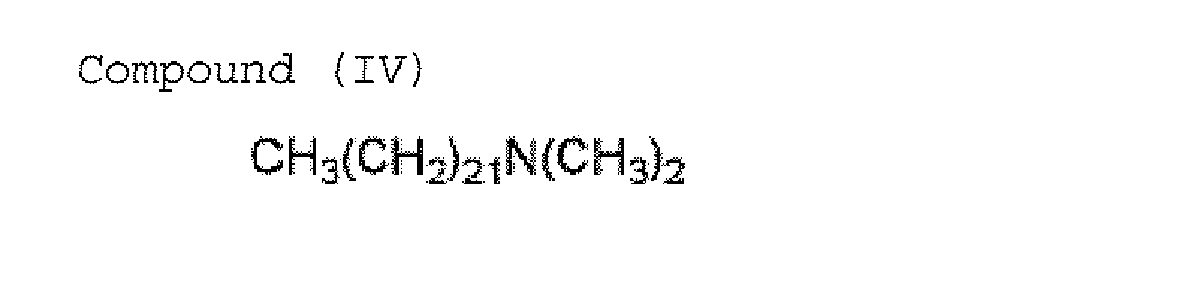
[Table 1] Second part (% by mass) Inventive Product Comparative Product 1 2 3 4 1 2 3 (A) Compound (I) 3 - - - - - 3 Compound (II) - 3 - - - - - Compound (III) - - 3 - - - - Compound (IV) - - - 3 - - - (A)' Behenyltrimethyl ammonium chloride (80 wt%) - - - - 3 3 - Behenyl alcohol 5 5 5 5 5 5 5 Stearyl alcohol 2 2 2 2 2 2 2 (B) Liquid paraffin 10 10 10 10 10 - - Glycerin 6 6 6 6 6 6 6 Oxyquinoline sulfate 0.05 0.05 0.05 0.05 0.05 0.05 0.05 Phosphoric acid Adjusted to pH 3.5 (25°C) (C) Aqueous hydrogen peroxide (35 wt%) 16 16 16 16 15 16 16 (D) Purified water Balance Balance Balance Balance Balance Balance Balance 


- The first part and the second part prepared in amounts of 5 g each were sufficiently mixed, and then an aliquot of the mixture was applied to a dish having a diameter of 7 cm. Sensory evaluation was performed by smelling the applied mixture and scoring according to the following five levels, in comparison with Comparative Example 1 (in the case of a composition for hair dyeing) or Comparative Example 4 (in the case of a composition for bleaching) as a control.
- +2: The pungent odor is weak compared with that of Comparative Example 1 (or 4).
- +1: The pungent odor is somewhat weak compared with that of Comparative Example 1 (or 4).
- ±0: The pungent odor is substantially comparable to that of Comparative Example 1 (or 4).
- -1: The pungent odor is somewhat strong compared with that of Comparative Example 1 (or 4).
- -2: The pungent odor is strong compared with that of Comparative Example 1 (or 4).
- The first part and the second part prepared in amounts of 1 g each were sufficiently mixed. The mixture was applied to a white hair tress (1 g of Chinese hair), and was then incubated for 20 minutes. The hair was rinsed with flowing water, washed with a shampoo, and dried. After that, visual evaluation was performed by scoring according to the following five levels in comparison with Comparative Example 1 as a control.
- +2: The dyeing performance is excellent compared with that of Comparative Example 1.
- +1: The dyeing performance is somewhat excellent compared with that of Comparative Example 1.
- ±0: The dyeing performance is substantially comparable to that of Comparative Example 1.
- -1: The dyeing performance is somewhat inferior to that of Comparative Example 1.
- -2: The dyeingperformance is inferior to that of Comparative Example 1.
- The first part and the second part prepared in amounts of 10 g each were sufficiently mixed. The mixture was applied to a black hair tress (15 g of Japanese hair), and was then incubated for 20 minutes. The hair was rinsed with flowing water, washed with a shampoo, and dried. After that, visual evaluation was performed by scoring according to the following five levels in comparison with Comparative Example 4 as a control.
- +2: The color brightness is excellent compared with that of Comparative Example 4.
- +1: The color brightness is somewhat excellent compared with that of Comparative Example 4.
- ±0: The color brightness is substantially comparable to that of Comparative Example 4.
- -1: The color brightness is somewhat inferior to that of Comparative Example 4.
- -2: The color brightness is inferior to that of Comparative Example 4.
-
[Table 2] Example Comparative Example 1 2 3 4 1 2 3 First part First part for hair dyeing Second part Inventive product 1 Inventive Product 2 Inventive Product 3 Inventive Product 4 Comparative Product 1 Comparative Product 2 Comparative Product 3 pH (25°C) at time of 10 10 10 10 10 10 10 mixing Pungent odor +20 +20 +20 +20 - -14 -15 Dyeing performance +11 +11 +10 +10 - -10 -10 -
[Table 3] Example Comparative Example 5 6 7 8 4 5 6 First part First part for bleaching Second part Inventive Product 1 Inventive Product 2 Inventive Product 3 Inventive Product 4 Comparative Product 4 Comparative Product 5 Comparative Product 6 pH (25°C) at time of mixing 10 10 10 10 10 10 10 Pungent odor +20 +20 +20 +20 - -14 -15 Color brightness +11 +10 +10 +11 - -22 -10
Claims (4)
- A second part composition for hair dyeing or bleaching, which is mixed with a first part composition comprising an alkali agent before use, the composition comprising the following components (A) to (D):(A) an organic amine having at least one hydrophobic chain or a salt thereof;(B) an oily component which is a liquid form at 25°C under normal pressure (1013.25 hPa);(C) an oxidizing agent; and(D) water,
wherein the composition has a pH of 1 to 6 at 25°C. - The second part composition for hair dyeing or bleaching according to claim 1, wherein a ratio of a surfactant to be blended except the component (A) is 50 parts by mass or less with respect to 100 parts by mass of the component (A).
- A kit for hair dyeing or bleaching, comprising:a first part composition for hair dyeing or bleaching comprising an alkali agent; andthe second part composition for hair dyeing or bleaching according to claim 1 or 2,wherein a composition obtained by mixing the first part and the second part has a pH of 8 to 12 at 25°C.
- A method for hair dyeing or bleaching, the method comprising mixing the second part composition according to claim 1 or 2 with a first part composition for hair dyeing or bleaching comprising an alkali agent; and
applying the mixture to hair.
Applications Claiming Priority (2)
| Application Number | Priority Date | Filing Date | Title |
|---|---|---|---|
| JP2007338838A JP5502273B2 (en) | 2007-12-28 | 2007-12-28 | Second agent composition for hair dyeing or hair bleaching |
| PCT/JP2008/003994 WO2009084219A1 (en) | 2007-12-28 | 2008-12-26 | Second preparation composition for hair dyeing or bleaching |
Publications (3)
| Publication Number | Publication Date |
|---|---|
| EP2226064A1 true EP2226064A1 (en) | 2010-09-08 |
| EP2226064A4 EP2226064A4 (en) | 2015-08-12 |
| EP2226064B1 EP2226064B1 (en) | 2018-12-05 |
Family
ID=40823955
Family Applications (1)
| Application Number | Title | Priority Date | Filing Date |
|---|---|---|---|
| EP08868484.0A Active EP2226064B1 (en) | 2007-12-28 | 2008-12-26 | Second part composition for hair dyeing or bleaching |
Country Status (4)
| Country | Link |
|---|---|
| US (1) | US7972389B2 (en) |
| EP (1) | EP2226064B1 (en) |
| JP (1) | JP5502273B2 (en) |
| WO (1) | WO2009084219A1 (en) |
Cited By (2)
| Publication number | Priority date | Publication date | Assignee | Title |
|---|---|---|---|---|
| WO2011091875A3 (en) * | 2010-01-29 | 2013-05-16 | Henkel Ag & Co. Kgaa | Mousse-type dyes |
| WO2017063853A1 (en) * | 2015-10-14 | 2017-04-20 | Henkel Ag & Co. Kgaa | Liquid hair dye with optimized dying performance and care |
Families Citing this family (6)
| Publication number | Priority date | Publication date | Assignee | Title |
|---|---|---|---|---|
| US8153108B2 (en) * | 2003-04-25 | 2012-04-10 | Kao Corporation | Hair cosmetic product |
| JP5630989B2 (en) | 2009-03-11 | 2014-11-26 | 花王株式会社 | Two-component hair dye |
| CN103079532B (en) | 2010-08-31 | 2015-03-25 | 花王株式会社 | Two-Part Foam Hair Color |
| JP7165486B2 (en) * | 2015-12-28 | 2022-11-04 | 花王株式会社 | Second agent composition for aerosol type hair dye or hair bleaching agent |
| US11241369B2 (en) | 2017-11-30 | 2022-02-08 | L'oreal | Skin-brightening compositions and methods |
| US11045398B2 (en) | 2017-12-27 | 2021-06-29 | L'oreal | Skin-brightening compositions and methods |
Family Cites Families (20)
| Publication number | Priority date | Publication date | Assignee | Title |
|---|---|---|---|---|
| JPS63170308A (en) * | 1987-01-07 | 1988-07-14 | Hoou Kk | Oxidation hair dye |
| JP2659740B2 (en) | 1988-02-22 | 1997-09-30 | ホーユー株式会社 | Hair dye composition |
| JP2001342119A (en) * | 2000-06-02 | 2001-12-11 | Ceramide Sha:Kk | Hair color treating agent and hair dyeing method using the same |
| EP1372580B1 (en) * | 2000-12-13 | 2010-09-29 | The Procter & Gamble Company | OXIDATIVE HAIR DYE COMPOSITION CONTAINING POLYALKYLENEGLYCOL(n)ALKYLAMINE AND A SOLID FATTY COMPOUND |
| JP2001213738A (en) * | 2001-03-12 | 2001-08-07 | Sanei Kagaku Kk | Composition for compounding hair treatment agent, and hair treatment agent |
| ATE400321T1 (en) * | 2001-03-30 | 2008-07-15 | Procter & Gamble | HAIR BLEACH |
| JP3715575B2 (en) * | 2002-01-28 | 2005-11-09 | ホーユー株式会社 | Hair bleaching composition and hair dye composition |
| EP1340489A1 (en) * | 2002-02-28 | 2003-09-03 | Kao Chemicals Europe S.L. | Compositions comprising levelling agent for dyeing keratinous fibres, use and method |
| AU2003216897A1 (en) * | 2002-04-22 | 2003-11-03 | Unilever Plc | Hair dye compositions |
| JP4080413B2 (en) | 2003-02-20 | 2008-04-23 | ホーユー株式会社 | Hair bleaching composition and hair dye composition |
| JP4312117B2 (en) * | 2004-07-16 | 2009-08-12 | ホーユー株式会社 | Hair bleaching composition and hair dye composition |
| JP2006182685A (en) | 2004-12-27 | 2006-07-13 | Kao Corp | Hair dye composition |
| JP4772361B2 (en) * | 2005-04-11 | 2011-09-14 | 花王株式会社 | Hair cosmetics |
| DK1714677T3 (en) * | 2005-04-22 | 2010-11-01 | Kao Corp Sa | Long-chain fatty acid dimethylaminopropylamide as a leveling agent for dyeing keratin fibers |
| JP4942072B2 (en) * | 2005-12-09 | 2012-05-30 | 株式会社 資生堂 | Hair cosmetics |
| JP2007197418A (en) * | 2005-12-28 | 2007-08-09 | Kao Corp | Hair dye composition |
| JP2007191458A (en) | 2006-01-20 | 2007-08-02 | Number Three:Kk | Permanent hair dye composition |
| JP4999380B2 (en) | 2006-07-11 | 2012-08-15 | 株式会社マンダム | Oxidative hair dye composition |
| JP4999389B2 (en) | 2006-07-27 | 2012-08-15 | 株式会社マンダム | Oxidative hair dye composition |
| ATE500813T1 (en) | 2006-09-11 | 2011-03-15 | Kpss Kao Gmbh | HAIR DYE |
-
2007
- 2007-12-28 JP JP2007338838A patent/JP5502273B2/en not_active Expired - Fee Related
-
2008
- 2008-12-26 US US12/811,020 patent/US7972389B2/en active Active
- 2008-12-26 WO PCT/JP2008/003994 patent/WO2009084219A1/en not_active Ceased
- 2008-12-26 EP EP08868484.0A patent/EP2226064B1/en active Active
Non-Patent Citations (1)
| Title |
|---|
| See references of WO2009084219A1 * |
Cited By (3)
| Publication number | Priority date | Publication date | Assignee | Title |
|---|---|---|---|---|
| WO2011091875A3 (en) * | 2010-01-29 | 2013-05-16 | Henkel Ag & Co. Kgaa | Mousse-type dyes |
| WO2017063853A1 (en) * | 2015-10-14 | 2017-04-20 | Henkel Ag & Co. Kgaa | Liquid hair dye with optimized dying performance and care |
| US10512598B2 (en) | 2015-10-14 | 2019-12-24 | Henkel Ag & Co. Kgaa | Liquid hair dye with optimized dying performance and care |
Also Published As
| Publication number | Publication date |
|---|---|
| US7972389B2 (en) | 2011-07-05 |
| JP2009155311A (en) | 2009-07-16 |
| US20100281627A1 (en) | 2010-11-11 |
| EP2226064B1 (en) | 2018-12-05 |
| JP5502273B2 (en) | 2014-05-28 |
| WO2009084219A1 (en) | 2009-07-09 |
| EP2226064A4 (en) | 2015-08-12 |
Similar Documents
| Publication | Publication Date | Title |
|---|---|---|
| JP5653007B2 (en) | Hair treatment composition | |
| JP5792926B2 (en) | Hair treatment method | |
| US7972389B2 (en) | Second part composition for hair dyeing or bleaching | |
| JP4834259B2 (en) | Decolorant composition and hair dye composition | |
| JP5341628B2 (en) | Hair treatment composition | |
| JP5016230B2 (en) | Second agent composition for hair dyeing or hair bleaching | |
| JP5507897B2 (en) | Hair treatment composition | |
| JP2006104162A (en) | Hair cosmetic composition | |
| JPWO2007072892A1 (en) | Destaining agent composition | |
| JP5303099B2 (en) | Hair dye or hair bleach composition | |
| JP2003221319A (en) | Hair-bleaching composition and hair-dye composition | |
| JP4351971B2 (en) | Oily hair cosmetic composition | |
| JP5140245B2 (en) | Second agent composition for hair dyeing or hair bleaching | |
| JP2006028087A (en) | Oily hair cosmetic | |
| JP7506639B2 (en) | First agent composition for hair dyeing or hair bleaching | |
| JP2005170791A (en) | Hair bleaching agent composition and hair dyeing agent composition | |
| JP4533026B2 (en) | Hair cosmetics | |
| JP4083096B2 (en) | Hair cosmetics and hair cosmetics | |
| JP2010037314A (en) | Hairdye composition | |
| JP2006316031A (en) | Hair treatment agent composition and method for using the same | |
| KR102646279B1 (en) | A composition having improved emulsion stability comprising hydroquinone | |
| JP2006298863A (en) | Hair treating agent | |
| JP5506249B2 (en) | Hair cosmetic composition | |
| JP5546798B2 (en) | Hair cosmetic composition | |
| JP5005458B2 (en) | Hair dye composition, oxidative hair dye composition, and method for suppressing hair color change |
Legal Events
| Date | Code | Title | Description |
|---|---|---|---|
| PUAI | Public reference made under article 153(3) epc to a published international application that has entered the european phase |
Free format text: ORIGINAL CODE: 0009012 |
|
| 17P | Request for examination filed |
Effective date: 20100628 |
|
| AK | Designated contracting states |
Kind code of ref document: A1 Designated state(s): AT BE BG CH CY CZ DE DK EE ES FI FR GB GR HR HU IE IS IT LI LT LU LV MC MT NL NO PL PT RO SE SI SK TR |
|
| AX | Request for extension of the european patent |
Extension state: AL BA MK RS |
|
| DAX | Request for extension of the european patent (deleted) | ||
| RA4 | Supplementary search report drawn up and despatched (corrected) |
Effective date: 20150715 |
|
| RIC1 | Information provided on ipc code assigned before grant |
Ipc: A61K 8/31 20060101ALI20150709BHEP Ipc: A61Q 5/10 20060101ALI20150709BHEP Ipc: A61K 8/22 20060101ALI20150709BHEP Ipc: A61Q 5/08 20060101ALI20150709BHEP Ipc: A61K 8/41 20060101AFI20150709BHEP Ipc: A61K 8/42 20060101ALI20150709BHEP |
|
| STAA | Information on the status of an ep patent application or granted ep patent |
Free format text: STATUS: EXAMINATION IS IN PROGRESS |
|
| 17Q | First examination report despatched |
Effective date: 20170323 |
|
| GRAP | Despatch of communication of intention to grant a patent |
Free format text: ORIGINAL CODE: EPIDOSNIGR1 |
|
| STAA | Information on the status of an ep patent application or granted ep patent |
Free format text: STATUS: GRANT OF PATENT IS INTENDED |
|
| INTG | Intention to grant announced |
Effective date: 20180622 |
|
| GRAJ | Information related to disapproval of communication of intention to grant by the applicant or resumption of examination proceedings by the epo deleted |
Free format text: ORIGINAL CODE: EPIDOSDIGR1 |
|
| STAA | Information on the status of an ep patent application or granted ep patent |
Free format text: STATUS: EXAMINATION IS IN PROGRESS |
|
| GRAJ | Information related to disapproval of communication of intention to grant by the applicant or resumption of examination proceedings by the epo deleted |
Free format text: ORIGINAL CODE: EPIDOSDIGR1 |
|
| GRAP | Despatch of communication of intention to grant a patent |
Free format text: ORIGINAL CODE: EPIDOSNIGR1 |
|
| GRAS | Grant fee paid |
Free format text: ORIGINAL CODE: EPIDOSNIGR3 |
|
| GRAR | Information related to intention to grant a patent recorded |
Free format text: ORIGINAL CODE: EPIDOSNIGR71 |
|
| GRAS | Grant fee paid |
Free format text: ORIGINAL CODE: EPIDOSNIGR3 |
|
| STAA | Information on the status of an ep patent application or granted ep patent |
Free format text: STATUS: GRANT OF PATENT IS INTENDED |
|
| GRAA | (expected) grant |
Free format text: ORIGINAL CODE: 0009210 |
|
| INTC | Intention to grant announced (deleted) | ||
| GRAA | (expected) grant |
Free format text: ORIGINAL CODE: 0009210 |
|
| STAA | Information on the status of an ep patent application or granted ep patent |
Free format text: STATUS: THE PATENT HAS BEEN GRANTED |
|
| AK | Designated contracting states |
Kind code of ref document: B1 Designated state(s): AT BE BG CH CY CZ DE DK EE ES FI FR GB GR HR HU IE IS IT LI LT LU LV MC MT NL NO PL PT RO SE SI SK TR |
|
| INTG | Intention to grant announced |
Effective date: 20181029 |
|
| REG | Reference to a national code |
Ref country code: GB Ref legal event code: FG4D |
|
| REG | Reference to a national code |
Ref country code: CH Ref legal event code: EP |
|
| REG | Reference to a national code |
Ref country code: AT Ref legal event code: REF Ref document number: 1072165 Country of ref document: AT Kind code of ref document: T Effective date: 20181215 |
|
| REG | Reference to a national code |
Ref country code: IE Ref legal event code: FG4D |
|
| REG | Reference to a national code |
Ref country code: DE Ref legal event code: R096 Ref document number: 602008058257 Country of ref document: DE |
|
| REG | Reference to a national code |
Ref country code: NL Ref legal event code: MP Effective date: 20181205 |
|
| REG | Reference to a national code |
Ref country code: AT Ref legal event code: MK05 Ref document number: 1072165 Country of ref document: AT Kind code of ref document: T Effective date: 20181205 |
|
| REG | Reference to a national code |
Ref country code: LT Ref legal event code: MG4D |
|
| PG25 | Lapsed in a contracting state [announced via postgrant information from national office to epo] |
Ref country code: AT Free format text: LAPSE BECAUSE OF FAILURE TO SUBMIT A TRANSLATION OF THE DESCRIPTION OR TO PAY THE FEE WITHIN THE PRESCRIBED TIME-LIMIT Effective date: 20181205 Ref country code: FI Free format text: LAPSE BECAUSE OF FAILURE TO SUBMIT A TRANSLATION OF THE DESCRIPTION OR TO PAY THE FEE WITHIN THE PRESCRIBED TIME-LIMIT Effective date: 20181205 Ref country code: NO Free format text: LAPSE BECAUSE OF FAILURE TO SUBMIT A TRANSLATION OF THE DESCRIPTION OR TO PAY THE FEE WITHIN THE PRESCRIBED TIME-LIMIT Effective date: 20190305 Ref country code: HR Free format text: LAPSE BECAUSE OF FAILURE TO SUBMIT A TRANSLATION OF THE DESCRIPTION OR TO PAY THE FEE WITHIN THE PRESCRIBED TIME-LIMIT Effective date: 20181205 Ref country code: LT Free format text: LAPSE BECAUSE OF FAILURE TO SUBMIT A TRANSLATION OF THE DESCRIPTION OR TO PAY THE FEE WITHIN THE PRESCRIBED TIME-LIMIT Effective date: 20181205 Ref country code: LV Free format text: LAPSE BECAUSE OF FAILURE TO SUBMIT A TRANSLATION OF THE DESCRIPTION OR TO PAY THE FEE WITHIN THE PRESCRIBED TIME-LIMIT Effective date: 20181205 Ref country code: ES Free format text: LAPSE BECAUSE OF FAILURE TO SUBMIT A TRANSLATION OF THE DESCRIPTION OR TO PAY THE FEE WITHIN THE PRESCRIBED TIME-LIMIT Effective date: 20181205 Ref country code: BG Free format text: LAPSE BECAUSE OF FAILURE TO SUBMIT A TRANSLATION OF THE DESCRIPTION OR TO PAY THE FEE WITHIN THE PRESCRIBED TIME-LIMIT Effective date: 20190305 |
|
| PG25 | Lapsed in a contracting state [announced via postgrant information from national office to epo] |
Ref country code: SE Free format text: LAPSE BECAUSE OF FAILURE TO SUBMIT A TRANSLATION OF THE DESCRIPTION OR TO PAY THE FEE WITHIN THE PRESCRIBED TIME-LIMIT Effective date: 20181205 Ref country code: GR Free format text: LAPSE BECAUSE OF FAILURE TO SUBMIT A TRANSLATION OF THE DESCRIPTION OR TO PAY THE FEE WITHIN THE PRESCRIBED TIME-LIMIT Effective date: 20190306 |
|
| PG25 | Lapsed in a contracting state [announced via postgrant information from national office to epo] |
Ref country code: NL Free format text: LAPSE BECAUSE OF FAILURE TO SUBMIT A TRANSLATION OF THE DESCRIPTION OR TO PAY THE FEE WITHIN THE PRESCRIBED TIME-LIMIT Effective date: 20181205 |
|
| PG25 | Lapsed in a contracting state [announced via postgrant information from national office to epo] |
Ref country code: CZ Free format text: LAPSE BECAUSE OF FAILURE TO SUBMIT A TRANSLATION OF THE DESCRIPTION OR TO PAY THE FEE WITHIN THE PRESCRIBED TIME-LIMIT Effective date: 20181205 Ref country code: PT Free format text: LAPSE BECAUSE OF FAILURE TO SUBMIT A TRANSLATION OF THE DESCRIPTION OR TO PAY THE FEE WITHIN THE PRESCRIBED TIME-LIMIT Effective date: 20190405 Ref country code: PL Free format text: LAPSE BECAUSE OF FAILURE TO SUBMIT A TRANSLATION OF THE DESCRIPTION OR TO PAY THE FEE WITHIN THE PRESCRIBED TIME-LIMIT Effective date: 20181205 Ref country code: IT Free format text: LAPSE BECAUSE OF FAILURE TO SUBMIT A TRANSLATION OF THE DESCRIPTION OR TO PAY THE FEE WITHIN THE PRESCRIBED TIME-LIMIT Effective date: 20181205 |
|
| REG | Reference to a national code |
Ref country code: CH Ref legal event code: PL |
|
| PG25 | Lapsed in a contracting state [announced via postgrant information from national office to epo] |
Ref country code: LU Free format text: LAPSE BECAUSE OF NON-PAYMENT OF DUE FEES Effective date: 20181226 Ref country code: SK Free format text: LAPSE BECAUSE OF FAILURE TO SUBMIT A TRANSLATION OF THE DESCRIPTION OR TO PAY THE FEE WITHIN THE PRESCRIBED TIME-LIMIT Effective date: 20181205 Ref country code: RO Free format text: LAPSE BECAUSE OF FAILURE TO SUBMIT A TRANSLATION OF THE DESCRIPTION OR TO PAY THE FEE WITHIN THE PRESCRIBED TIME-LIMIT Effective date: 20181205 Ref country code: IS Free format text: LAPSE BECAUSE OF FAILURE TO SUBMIT A TRANSLATION OF THE DESCRIPTION OR TO PAY THE FEE WITHIN THE PRESCRIBED TIME-LIMIT Effective date: 20190405 Ref country code: EE Free format text: LAPSE BECAUSE OF FAILURE TO SUBMIT A TRANSLATION OF THE DESCRIPTION OR TO PAY THE FEE WITHIN THE PRESCRIBED TIME-LIMIT Effective date: 20181205 |
|
| REG | Reference to a national code |
Ref country code: DE Ref legal event code: R097 Ref document number: 602008058257 Country of ref document: DE |
|
| REG | Reference to a national code |
Ref country code: IE Ref legal event code: MM4A |
|
| REG | Reference to a national code |
Ref country code: BE Ref legal event code: MM Effective date: 20181231 |
|
| PLBE | No opposition filed within time limit |
Free format text: ORIGINAL CODE: 0009261 |
|
| STAA | Information on the status of an ep patent application or granted ep patent |
Free format text: STATUS: NO OPPOSITION FILED WITHIN TIME LIMIT |
|
| PG25 | Lapsed in a contracting state [announced via postgrant information from national office to epo] |
Ref country code: MC Free format text: LAPSE BECAUSE OF FAILURE TO SUBMIT A TRANSLATION OF THE DESCRIPTION OR TO PAY THE FEE WITHIN THE PRESCRIBED TIME-LIMIT Effective date: 20181205 Ref country code: DK Free format text: LAPSE BECAUSE OF FAILURE TO SUBMIT A TRANSLATION OF THE DESCRIPTION OR TO PAY THE FEE WITHIN THE PRESCRIBED TIME-LIMIT Effective date: 20181205 Ref country code: IE Free format text: LAPSE BECAUSE OF NON-PAYMENT OF DUE FEES Effective date: 20181226 Ref country code: SI Free format text: LAPSE BECAUSE OF FAILURE TO SUBMIT A TRANSLATION OF THE DESCRIPTION OR TO PAY THE FEE WITHIN THE PRESCRIBED TIME-LIMIT Effective date: 20181205 |
|
| 26N | No opposition filed |
Effective date: 20190906 |
|
| PG25 | Lapsed in a contracting state [announced via postgrant information from national office to epo] |
Ref country code: BE Free format text: LAPSE BECAUSE OF NON-PAYMENT OF DUE FEES Effective date: 20181231 |
|
| PG25 | Lapsed in a contracting state [announced via postgrant information from national office to epo] |
Ref country code: LI Free format text: LAPSE BECAUSE OF NON-PAYMENT OF DUE FEES Effective date: 20181231 Ref country code: CH Free format text: LAPSE BECAUSE OF NON-PAYMENT OF DUE FEES Effective date: 20181231 |
|
| PG25 | Lapsed in a contracting state [announced via postgrant information from national office to epo] |
Ref country code: MT Free format text: LAPSE BECAUSE OF NON-PAYMENT OF DUE FEES Effective date: 20181226 |
|
| PG25 | Lapsed in a contracting state [announced via postgrant information from national office to epo] |
Ref country code: TR Free format text: LAPSE BECAUSE OF FAILURE TO SUBMIT A TRANSLATION OF THE DESCRIPTION OR TO PAY THE FEE WITHIN THE PRESCRIBED TIME-LIMIT Effective date: 20181205 |
|
| PG25 | Lapsed in a contracting state [announced via postgrant information from national office to epo] |
Ref country code: HU Free format text: LAPSE BECAUSE OF FAILURE TO SUBMIT A TRANSLATION OF THE DESCRIPTION OR TO PAY THE FEE WITHIN THE PRESCRIBED TIME-LIMIT; INVALID AB INITIO Effective date: 20081226 Ref country code: CY Free format text: LAPSE BECAUSE OF FAILURE TO SUBMIT A TRANSLATION OF THE DESCRIPTION OR TO PAY THE FEE WITHIN THE PRESCRIBED TIME-LIMIT Effective date: 20181205 |
|
| P01 | Opt-out of the competence of the unified patent court (upc) registered |
Effective date: 20230522 |
|
| PGFP | Annual fee paid to national office [announced via postgrant information from national office to epo] |
Ref country code: DE Payment date: 20241029 Year of fee payment: 17 |
|
| PGFP | Annual fee paid to national office [announced via postgrant information from national office to epo] |
Ref country code: GB Payment date: 20241107 Year of fee payment: 17 |
|
| PGFP | Annual fee paid to national office [announced via postgrant information from national office to epo] |
Ref country code: FR Payment date: 20241111 Year of fee payment: 17 |