EP2224732B1 - Videovorrichtung - Google Patents
Videovorrichtung Download PDFInfo
- Publication number
- EP2224732B1 EP2224732B1 EP10154773A EP10154773A EP2224732B1 EP 2224732 B1 EP2224732 B1 EP 2224732B1 EP 10154773 A EP10154773 A EP 10154773A EP 10154773 A EP10154773 A EP 10154773A EP 2224732 B1 EP2224732 B1 EP 2224732B1
- Authority
- EP
- European Patent Office
- Prior art keywords
- controller
- broadcast signal
- visually impaired
- display component
- light source
- Prior art date
- Legal status (The legal status is an assumption and is not a legal conclusion. Google has not performed a legal analysis and makes no representation as to the accuracy of the status listed.)
- Not-in-force
Links
- 230000001771 impaired effect Effects 0.000 claims abstract description 74
- 238000000034 method Methods 0.000 claims abstract 4
- 238000012545 processing Methods 0.000 claims description 13
- 230000006870 function Effects 0.000 description 9
- 230000005236 sound signal Effects 0.000 description 7
- 238000010586 diagram Methods 0.000 description 6
- 238000012795 verification Methods 0.000 description 5
- 238000012790 confirmation Methods 0.000 description 3
- 238000001514 detection method Methods 0.000 description 2
- 238000005516 engineering process Methods 0.000 description 2
- 239000004973 liquid crystal related substance Substances 0.000 description 2
- 238000006243 chemical reaction Methods 0.000 description 1
- 238000012986 modification Methods 0.000 description 1
- 230000004048 modification Effects 0.000 description 1
- 238000000926 separation method Methods 0.000 description 1
Images




Classifications
-
- H—ELECTRICITY
- H04—ELECTRIC COMMUNICATION TECHNIQUE
- H04N—PICTORIAL COMMUNICATION, e.g. TELEVISION
- H04N5/00—Details of television systems
- H04N5/44—Receiver circuitry for the reception of television signals according to analogue transmission standards
- H04N5/60—Receiver circuitry for the reception of television signals according to analogue transmission standards for the sound signals
-
- H—ELECTRICITY
- H04—ELECTRIC COMMUNICATION TECHNIQUE
- H04N—PICTORIAL COMMUNICATION, e.g. TELEVISION
- H04N21/00—Selective content distribution, e.g. interactive television or video on demand [VOD]
- H04N21/40—Client devices specifically adapted for the reception of or interaction with content, e.g. set-top-box [STB]; Operations thereof
- H04N21/43—Processing of content or additional data, e.g. demultiplexing additional data from a digital video stream; Elementary client operations, e.g. monitoring of home network or synchronising decoder's clock; Client middleware
- H04N21/435—Processing of additional data, e.g. decrypting of additional data, reconstructing software from modules extracted from the transport stream
-
- H—ELECTRICITY
- H04—ELECTRIC COMMUNICATION TECHNIQUE
- H04N—PICTORIAL COMMUNICATION, e.g. TELEVISION
- H04N21/00—Selective content distribution, e.g. interactive television or video on demand [VOD]
- H04N21/40—Client devices specifically adapted for the reception of or interaction with content, e.g. set-top-box [STB]; Operations thereof
- H04N21/43—Processing of content or additional data, e.g. demultiplexing additional data from a digital video stream; Elementary client operations, e.g. monitoring of home network or synchronising decoder's clock; Client middleware
- H04N21/443—OS processes, e.g. booting an STB, implementing a Java virtual machine in an STB or power management in an STB
- H04N21/4436—Power management, e.g. shutting down unused components of the receiver
-
- H—ELECTRICITY
- H04—ELECTRIC COMMUNICATION TECHNIQUE
- H04N—PICTORIAL COMMUNICATION, e.g. TELEVISION
- H04N21/00—Selective content distribution, e.g. interactive television or video on demand [VOD]
- H04N21/40—Client devices specifically adapted for the reception of or interaction with content, e.g. set-top-box [STB]; Operations thereof
- H04N21/47—End-user applications
- H04N21/485—End-user interface for client configuration
-
- H—ELECTRICITY
- H04—ELECTRIC COMMUNICATION TECHNIQUE
- H04N—PICTORIAL COMMUNICATION, e.g. TELEVISION
- H04N21/00—Selective content distribution, e.g. interactive television or video on demand [VOD]
- H04N21/40—Client devices specifically adapted for the reception of or interaction with content, e.g. set-top-box [STB]; Operations thereof
- H04N21/47—End-user applications
- H04N21/488—Data services, e.g. news ticker
-
- H—ELECTRICITY
- H04—ELECTRIC COMMUNICATION TECHNIQUE
- H04N—PICTORIAL COMMUNICATION, e.g. TELEVISION
- H04N21/00—Selective content distribution, e.g. interactive television or video on demand [VOD]
- H04N21/80—Generation or processing of content or additional data by content creator independently of the distribution process; Content per se
- H04N21/81—Monomedia components thereof
- H04N21/8106—Monomedia components thereof involving special audio data, e.g. different tracks for different languages
-
- H—ELECTRICITY
- H04—ELECTRIC COMMUNICATION TECHNIQUE
- H04N—PICTORIAL COMMUNICATION, e.g. TELEVISION
- H04N21/00—Selective content distribution, e.g. interactive television or video on demand [VOD]
- H04N21/80—Generation or processing of content or additional data by content creator independently of the distribution process; Content per se
- H04N21/83—Generation or processing of protective or descriptive data associated with content; Content structuring
- H04N21/84—Generation or processing of descriptive data, e.g. content descriptors
Definitions
- the present invention generally relates to a video device. More specifically, the present invention relates to a video device that receives digital broadcasts. Background Information
- the audio stream of the transmitted TS is made up of a plurality of sets (or tracks) of audio data made for different languages.
- this audio stream includes audio data for the visually impaired.
- Audio for the visually impaired is usually necessary when a visually impaired person views a television program, but video is often unnecessary.
- the video is displayed during viewing of the television program regardless of who the viewer is. This meant that, in the case of a liquid crystal television, for example, power consumption by the backlight is wasted.
- conventional technologies related to video and audio muting are well known (see Japanese Laid-Open Patent Application Publications Nos. 2007-089146 , 2006-054613 , 2006-033677 , and 2005-020725 , for example), but do not disclose a solution to the above problem.
- One object of the present invention is to provide a video device with which power consumption can be reduced when a visually impaired person views television programs.
- this video device it is possible to provide a video device with which power consumption can be reduced when a visually impaired person views television programs.
- FIG. 1 is a block diagram of a television receiver in accordance with one embodiment
- FIG. 2 is a diagram illustrating a service description table stored in a temporary memory of the television receiver illustrated in FIG. 1 ;
- FIG. 3 is a diagram illustrating an event information table stored in the temporary memory
- FIG. 4 is a flowchart illustrating an operation of the television receiver illustrated in FIG. 1 ;
- FIG. 5 is a detail diagram illustrating descriptors stored in the temporary memory
- FIG. 6 is a data table stored in the temporary memory
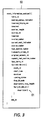
- FIG. 7 is a diagram illustrating an OSD (on screen display) displayed on a display component of the television receiver illustrated in FIG. 1 .
- FIG. 1 is a block diagram of a television receiver (e.g., video device) (hereinafter referred to as TV) 100.
- the TV 100 includes a controller 11, a control interface 12, a memory 13, a temporary memory 14, a broadcast signal processor 15, an OSD (on screen display) processor 16, a video stream processor 17, an audio stream processor 18, a data stream processor 19, a video signal output component 20, an audio signal output component 21, a display component 22, a light source 23, and a speaker 24.
- the controller 11 includes CPU (central processing unit), for example, and controls the various components of the TV 100.
- the control interface 12 includes a light receiver (not shown) that receives operation commands sent from a remote control device, or a button component (not shown) provided to a front panel of the TV 100.
- the TV 100 executes specific operations according to the operation (e.g., operation input) of the control interface 12.
- the memory 13 includes a flash ROM (read only memory), a hard disk, or the like.
- Various kinds of software, such as application software, are stored in the memory 13.
- the temporary memory 14 includes a RAM (random access memory), for example, and stores data needed for computation processing and control processing by the controller 11.
- the broadcast signal processor 15 includes a tuner, a demultiplexer, or the like, and converts digital broadcast signals received by an antenna N into a transport stream (TS), and then separates this TS into individual streams having a video stream, an audio stream, and a data stream. After this separation, the video stream is outputted to the video stream processor 17, the audio stream is outputted to the audio stream processor 18, and the data stream is outputted to the data stream processor 19.
- TS transport stream
- the OSD processor 16 produces OSD data for displaying images, characters, or various other kinds of data on the display component 22, and outputs this data to the video signal output component 20.
- the video stream processor 17 subjects the inputted video stream to image processing or other specific processing, and converts the video stream that has undergone this processing into a video signal. Furthermore, the video stream processor 17 outputs the video signal to the video signal output component 20.
- the audio stream processor 18 subjects the inputted audio stream to audio processing or other specific processing, and converts the audio stream that has undergone this processing into an audio signal. Furthermore, the audio stream processor 18 outputs the audio signal to the audio signal output component 21.
- the data stream processor 19 subjects the inputted data stream to data processing or other specific processing, thereby extracting various kinds of data included in the data stream. Furthermore, the data stream processor 19 outputs the extracted data to the temporary memory 14.
- the data outputted from the data stream processor 19 to the temporary memory 14 here includes a service description table (SDT) 30 illustrated in FIG. 2 , an event information table (EIT) 50 illustrated in FIG. 3 , and a data table 70 illustrated in FIG. 6 .
- SDT service description table
- EIT event information table
- data table 70 illustrated in FIG. 6 .
- the SDT 30 illustrated in FIG. 2 includes a plurality of descriptors that represent information such as the "channel name” or "broadcast company name” related to the tuned television program.
- the EIT 50 illustrated in FIG. 3 includes a plurality of descriptors that represent information such as the "program name,” "broadcast date and time,” and "program content” related to the tuned television program.
- descriptors 31 in the SDT 30 and/or descriptors 51 in the EIT 50 include two descriptors 60 illustrated in FIG. 5 .
- the descriptors 60 include a descriptor 61 shown as "stream_content” and a descriptor 62 shown as “component_type.”
- a specific numerical value 63 is described in the place shown by "*****” in the descriptor 61
- a specific numerical value 64 is described in the place shown by "*****" in the descriptor 62.
- the numerical value 63 added to the descriptor 61 and the numerical value 64 added to the descriptor 62 are used to confirm details about the video stream, audio stream, and data stream.
- the descriptor 61 and the descriptor 62 are paired, and a plurality of pairs is readied for each stream.
- a category 71 corresponding to the descriptor 61 and a category 72 corresponding to the descriptor 62 are referred to in the data table 70 by the controller 11.
- the category 71 having the same numerical value as the numerical value 63 added to the descriptor 61, and the category 72 having the same numerical value as the numerical value 64 added to the descriptor 62 are detected by the controller 11. Then, detailed information about each stream is confirmed by referring to a category 73 corresponding to the two detected categories (category 71 and category 72).
- the video signal output component 20 combines the inputted video signal with OSD data outputted from the OSD processor 16, and outputs this to the display component 22.
- the light source 23 adjusts the brightness of the video displayed on the display component 22.
- the display component 22 includes an LCD (liquid crystal display), for example, and the light source 23 includes a CCFL (cold cathode fluorescent lamp).
- the light source 23 is switched off (e.g., turned off)
- the video displayed on the display component 22 enters a non-display state, in which the video is not displayed on the display component 22.
- the audio signal output component 21 amplifies the inputted audio signal and outputs it to the speaker 24.
- step S1 the SDT 30 ( FIG. 2 ) and/or the EIT 50 ( FIG. 3 ) are acquired from the data stream in the data stream processor 19 under the control of the controller 11 ( FIG. 1 ).
- the acquired SDT 30 and/or EIT 50 are stored in the temporary memory 14 ( FIG. 1 ).
- step S2 the controller 11 stars verifying the SDT 30 and/or EIT 50 stored in the temporary memory 14. More specifically, the descriptors 31 in the SDT 30 and the descriptors 51 in the EIT 50 are verified. Then, the numerical value 63 added to the descriptor 61 ( FIG. 5 ) and the numerical value 64 added to the descriptor 62 ( FIG. 5 ), given by the descriptors 31 and/or the descriptors 51, are confirmed.
- step S3 the controller 11 verifies whether or not audio data for the visually impaired is included in the audio stream for the tuned television program based on the verification result in step S2. If the result of this verification is that there is audio data for the visually impaired ("Yes” in step S3), then the flow proceeds to step S4. On the other hand, if there is no audio data for the visually impaired ("No" in step S3), then the flow proceeds to step S7b.
- the controller 11 refers to the category 71 corresponding to the descriptor 61 and the category 72 corresponding to the descriptor 62, and then the category 71 having the same numerical value as the numerical value 63 confirmed in step S2 and, similarly, the category 72 having the same numerical value as the numerical value 64 confirmed in step S2 are detected from the data table 70 stored in the temporary memory 14 as shown in FIG. 6 . Then, the controller 11 refers to the category 73 corresponding to the two detected categories (the category 71 and the category 72). As a result, the controller 11 confirms whether or not there is a descriptor related to audio data for the visually impaired in the category 73. If there is such a descriptor, then the controller 11 recognizes that the audio stream includes audio data for the visually impaired.
- the category 71 having the same numerical value as the numerical value 63 and the category 72 having the same numerical value as the numerical value 64 are the places highlighted in gray in FIG. 6 .
- the category 73 corresponding to the category 71 and the category 72 describes "MPEG-1 Layer 2 audio description for the visually impaired".
- the controller 11 recognizes that the audio stream of the tuned television program includes audio data for the visually impaired.
- step S4 the controller 11 verifies whether or not the function of "visually impaired viewer priority setting" is activated.
- the "visually impaired viewer priority setting” indicates that a visually impaired person is viewing a television program. If the result of this verification is that the setting is activated ("Yes” in step S4), then the flow proceeds to step S5. On the other hand, if the setting is inactivated ("No" in step S4), then the flow proceeds to step S7b.
- the "visually impaired viewer priority setting” is preset by performing a specific operation with the control interface 12, which is done by someone other than the visually impaired person, such as a family member or the person who installs the TV 100. Furthermore, information related to the "visually impaired viewer priority setting" is stored in the memory 13 (or the temporary memory 14), for example. If the function of "visually impaired viewer priority setting" is activated, then this function is executed when a channel is changed, or when the TV 100 is started up (when the power is switched on).
- the control interface 12 and the memory 13 (or the temporary memory 14) here are examples of the preset component (or preset means).
- step S5 the controller 11 executes final confirmation of whether or not the "visually impaired viewer priority setting" is reflected during viewing of a television program.
- This final confirmation is carried out by displaying the OSD 80 shown in FIG. 7 on the display component 22.
- the data of the OSD 80 is produced by the OSD processor 16 under the control of the controller 11.
- the OSD 80 here is an example of the notice information.
- step S6 the controller 11 verifies whether or not there has been an input operation (e.g., operation input) with the control interface 12 within a specific, preset length of time after the OSD 80 is displayed on the display component 22.
- the specific, preset length of time is set to 3 minutes, 5 minutes, and so forth, for example. If the result of this verification is that there is no input operation ("No" in step S6), then the flow proceeds to step S7a. On the other hand, if there is an input operation ("Yes" in step S6), then the flow proceeds to step S7b.
- the input operation verified in step S6 means an operation in which "No" is selected on the OSD 80. If there is no input operation within the specific length of time, then the OSD 80 displayed on the display component 22 automatically goes away.
- step S7a viewing of the television program begins with the "visually impaired viewer priority setting" being reflected
- step S7b viewing of the television program begins without the "visually impaired viewer priority setting” being reflected.
- the audio signal output component 21 outputs normal audio (e.g., main audio) along with audio for the visually impaired (e.g., sub audio) to the speaker 24.
- the normal audio includes dialogue or sound of the video of the television program.
- the audio for the visually impaired includes audio commentary describing what is happening on the video of the television program for the visually impaired.
- the controller 11 switches off (or turned off) the light source 23 so that the video displayed on the display component 22 enters the non-display state.
- step S7b the television program is viewed in the normal state (or display state). In other words, the light source 23 is turned on so that the video is displayed on the display component 22 and only the normal audio is outputted from the speaker 24.
- step S8 the controller 11 verifies whether or not the control interface 12 has been operated during viewing of a television program. If the result of this verification is that there is no input operation with the control interface 12 ("No" in step S8), then the flow proceeds to step S9a. On the other hand, if there is an input operation with the control interface 12 ("Yes” in step S8), then the flow proceeds to step S9b. If the input operation is made with the control interface 12, then the controller 11 again turns on the light source 23 and displays the video on the display component 22.
- step S9a viewing of the television program that reflects the "visually impaired priority setting" is continued. Then, the operation of this flowchart is ended by turning off the power to the TV 100, for example.
- step S9b if the input operation performed in step S8 is a tuning operation of a channel ("Yes" in step S9b), then the flow returns to just before step S1. On the other hand, if the input operation performed in step S8 is not a tuning operation (such as if it is a volume adjustment) ("No" in step S9b), then the flow returns to just before step S5.
- the TV 100 mainly includes the controller 11, the broadcast signal processor 15, the display component 22, the speaker 24, and the light source 23.
- the controller 11 controls the various components of the TV 100.
- the broadcast signal processor 15 receives the digital broadcast signal and performs specific signal processing.
- the display component 22 displays video based on the output from the broadcast signal processor 15.
- the speaker 24 outputs audio based on the output from the broadcast signal processor 15.
- the light source 23 is used for the display component 22.
- the controller 11 verifies whether or not the digital broadcast signal includes audio for the visually impaired. If the audio for the visually impaired is included, then the controller 11 outputs the audio for the visually impaired and the normal audio from the speaker 24, and switches off the light source 23 so that the video displayed on the display component is in the non-display state.
- the output of audio for the visually impaired is accompanied by the light source 23 being switched off, allowing the video displayed on the display component 22 to be put in the non-display state. This saves on power consumption.
- the controller 11 refers to the category 71 corresponding to the descriptor 61 and the category 72 corresponding to the descriptor 62 in the data table 70. Furthermore, the category 71 having the same numerical value as the numerical value 63 and the category 72 having the same numerical value as the numerical value 64 are detected by the controller 11. Moreover, the controller 11 refers to the category 73 corresponding to the detection result.
- the normal audio is outputted along with the audio for the visually impaired to the speaker 24, and the light source 23 is switched off so that the video displayed on the display component 22 enters the non-display state. Consequently, when a television program is viewed by a visually impaired person, that is, when there is no need to display video, the light source 23 is automatically switched off and the video displayed on the display component 22 can be shut off. As a result, this saves on power consumption.
- the TV 100 further includes the control interface 12 and the memory 13 as a preset means.
- the preset means pre-selects that the light source 23 will be switched off and the video displayed on the display component 22 will be put in the non-display state when the digital broadcast signal includes audio for the visually impaired. If the digital broadcast signal includes audio for the visually impaired and the preset means has selected that the video will be put in the non-display state, then the light source 23 is switched off and the video displayed on the display component 22 is put in the non-displayed state. If the digital broadcast signal includes audio for the visually impaired and the preset means has not selected that the video will be put in the non-displayed state, then the light source 23 is switched on and the video is displayed on the display component22. Furthermore, if the digital broadcast signal does not include audio for the visually impaired, then the light source 23 is switched on and the video is displayed on the display component 22.
- step S3 if there is audio data for the visually impaired ("Yes” in step S3), and if the function of "visually impaired viewer priority setting," which assumes that a visually impaired person is viewing a television program, is activated (“Yes” in step S4), then the light source 23 is switched off and the video displayed on the display component 22 is shut off (step S7a). If there is audio data for the visually impaired ("Yes” in step S3), and the function of "visually impaired viewer priority setting" is inactivated (“No” in step S4), then the light source 23 is switched on and the video is displayed on the display component 22 (step S7b).
- step S3 if there is no audio data for the visually impaired ("No" in step S3), then the light source 23 is switched on and the video is displayed on the display component 22 (step S7b). Therefore, whether or not video is displayed can be selected according to the viewer, which makes the TV 100 more convenient to viewers.
- the TV 100 further includes the control interface 12 for operating the TV 100.
- the controller 11 displays the notice information notifying that the video displayed on the display component 22 will be put in the non-display state before the light source 23 is switched off and the state changes to the non-display state. If there is no specific operation of the control interface 12 within the specific length of time after the display of this notice information, then the state changes to the non-display state. On the other hand, if there is a specific operation of the control interface 12 within the specific length of time, then the state does not change to the non-display state.
- the TV 100 when a visually impaired person views together with someone with normal vision, if the specific operation is made with the control interface 12 within the specific length of time after the display of the notice information, then the display of video will be maintained, which makes the TV 100 more convenient for persons who are not visually impaired.
- the OSD 80 for final confirmation of whether or not the "visually impaired priority setting" is reflected is displayed on the display component 22 (step S5). If there is no input operation with the control interface 12 within the specific, preset length of time since this display of the OSD 80 ("No” in step S6), then the viewing of the television program that reflects the "visually impaired priority setting" is begun (step S7a). On the other hand, if there is an input operation with the control interface 12 within the specific, preset length of time since this display of the OSD 80 ("Yes” in step S6), then the viewing of the television program that does not reflect the "visually impaired viewer priority setting" is begun (step S7b).
- the TV 100 is given as an example of a video device, but the application is not limited to this.
- the video device can instead be a projector, a PC (personal computer), portable terminal, or other such video device.
- the display component 22 includes the LCD and the light source 23 includes the CCFL.
- the display component 22 and the light source 23 can be used instead as the display component 22 and the light source 23.
- an ELP electroactive panel
- PDP plasma display panel
- the display itself is made up of a light source can also be used.
- step S7b in FIG. 4 the video is displayed on the display component 22, and only the normal audio is outputted from the speaker 24. However, if there is audio for the visually impaired, then this audio for the visually impaired can also be outputted along with the normal audio to the speaker 24 in step S7b.
- detect as used herein to describe an operation or function carried out by a component, a section, a device or the like includes a component, a section, a device or the like that does not require physical detection, but rather includes determining, measuring, modeling, predicting or computing or the like to carry out the operation or function.
- configured as used herein to describe a component, section or part of a device includes hardware and/or software that is constructed and/or programmed to carry out the desired function.
Landscapes
- Engineering & Computer Science (AREA)
- Multimedia (AREA)
- Signal Processing (AREA)
- General Engineering & Computer Science (AREA)
- Software Systems (AREA)
- Human Computer Interaction (AREA)
- Two-Way Televisions, Distribution Of Moving Picture Or The Like (AREA)
- Controls And Circuits For Display Device (AREA)
Claims (11)
- Videovorrichtung, die eine Prioritätseinstellung für den sehbehinderten Betrachter hat, enthaltend:einen Rundsendesignalprozessor, der dazu eingerichtet ist, ein digitales Rundsendesignal zu empfangen und das digitale Rundsendesignal zu verarbeiten;ein Anzeigebauteil, das dazu eingerichtet ist, Video auf der Basis des digitalen Rundsendesignals anzuzeigen, das von dem Rundsendesignalprozessor ausgegeben wird, wobei das Anzeigebauteil eine Lichtquelle hat;einen Lautsprecher, der dazu eingerichtet ist, Hauptaudio des Videos auf der Basis des digitalen Rundsendesignals auszugeben, das von dem Rundsendesignalprozessor ausgegeben wird; undeine Steuereinheit, die dazu eingerichtet ist zu ermitteln, ob das digitale Rundsendesignal Zusatzaudio für den Sehbehinderten enthält oder nicht, wobei die Steuereinheit weiterhin dazu eingerichtet ist, das Zusatzaudio für den Sehbehinderten mit dem Hauptaudio des Videos aus dem Lautsprecher auszugeben und die Lichtquelle des Anzeigebauteils abzuschalten, sofern die Steuereinheit ermittelt, dass das digitale Rundsendesignal das Zusatzaudio für den Sehbehinderten enthält, wenn die Vorrichtung auf die Prioritätseinstellung voreingestellt ist.
- Videovorrichtung nach Anspruch 1, weiterhin enthaltend:ein Voreinstellungsbauteil, das dazu eingerichtet ist, die Prioritätseinstellung voreinzustellen, bei der die Steuereinheit die Lichtquelle des Anzeigebauteils abschaltet, sofern die Steuereinheit ermittelt, dass das digitale Rundsendesignal das Zusatzaudio für den Sehbehinderten enthält,
wobei die Steuereinheit dazu eingerichtet ist, die Lichtquelle des Anzeigebauteils abzuschalten, wenn das Voreinstellungsbauteil die Prioritätseinstellung einstellt und die Steuereinheit ermittelt, dass das digitale Rundsendesignal das Zusatzaudio für den Sehbehinderten enthält, und
die Steuereinheit dazu eingerichtet ist, die Lichtquelle des Anzeigebauteils einzuschalten, wenn das Voreinstellungsbauteil die Prioritätseinstellung nicht einstellt und die Steuereinheit ermittelt, dass das digitale Rundsendesignal das Zusatzaudio für den Sehbehinderten enthält, oder wenn die Steuereinheit ermittelt, dass das digitale Rundsendesignal das Zusatzaudio für den Sehbehinderten nicht enthält. - Videovorrichtung nach Anspruch 1, weiterhin enthaltend:eine Steuerschnittstelle, die dazu eingerichtet ist, Bedieneingaben einzugeben,wobei die Steuereinheit dazu eingerichtet ist, Hinweisinformationen anzuzeigen, bevor die Steuereinheit die Lichtquelle des Anzeigebauteils abschaltet, wobei die Hinweisinformationen darüber Auskunft geben, dass das Anzeigebauteil in einen Nicht-Anzeigezustand versetzt wird,die Steuereinheit dazu eingerichtet ist, die Lichtquelle des Anzeigebauteils abzuschalten, sofern die Steuereinheit keine Bedieneingabe in Erwiderung auf die Hinweisinformationen von der Steuerschnittstelle innerhalb einer vorbestimmten Zeitlänge empfängt, nachdem die Hinweisinformationen angezeigt wurden, unddie Steuereinheit dazu eingerichtet ist, die Lichtquelle des Anzeigebauteils einzuschalten, sofern die Steuereinheit die Bedieneingabe in Erwiderung auf die Hinweisinformationen von der Steuerschnittstelle innerhalb der vorbestimmten Zeitlänge empfängt, nachdem die Hinweisinformationen angezeigt wurden.
- Videovorrichtung nach Anspruch 3, bei der die Steuereinheit weiterhin dazu eingerichtet ist, das Hauptaudio des Videos ohne das Zusatzaudio für den Sehbehinderten aus dem Lautsprecher auszugeben, wenn die Steuereinheit die Bedieneingabe in Erwiderung auf die Hinweisinformationen von der Steuerschnittstelle innerhalb der vorbestimmten Zeitlänge empfängt, nachdem die Hinweisinformationen angezeigt wurden.
- Videovorrichtung nach Anspruch 3, bei der die Steuereinheit weiterhin dazu eingerichtet ist zu ermitteln, ob das digitale Rundsendesignal für einen abgestimmten Kanal das Zusatzaudio für den Sehbehinderten enthält oder nicht, sofern die Steuereinheit eine Bedieneingabe für eine Abstimmtätigkeit der Videovorrichtung auf den abgestimmten Kanal empfängt.
- Videovorrichtung nach Anspruch 5, bei der die Steuereinheit weiterhin dazu eingerichtet ist, die Lichtquelle des Anzeigebauteils einzuschalten und die Hinweisinformationen anzuzeigen, nachdem die Steuereinheit die Lichtquelle des Anzeigebauteils abgeschaltet hat, wenn die Steuereinheit eine Bedieneingabe für eine Tätigkeit der Videovorrichtung empfängt, die sich von der Abstimmtätigkeit der Videovorrichtung unterscheidet.
- Videovorrichtung nach Anspruch 2, weiterhin enthaltend:eine Steuerschnittstelle, die dazu eingerichtet ist Betätigungseingaben einzugeben,wobei die Steuereinheit dazu eingerichtet ist, Hinweisinformationen anzuzeigen, bevor die Steuereinheit die Lichtquelle des Anzeigebauteils abschaltet, wobei die Hinweisinformationen darüber Auskunft geben, dass das Anzeigebauteil in einen Nicht-Anzeigezustand versetzt wird,die Steuereinheit dazu eingerichtet ist, die Lichtquelle des Anzeigebauteils abzuschalten, sofern die Steuereinheit keine Bedieneingabe in Erwiderung auf die Hinweisinformationen von der Steuerschnittstelle innerhalb einer vorbestimmten Zeitlänge empfängt, nachdem die Hinweisinformationen angezeigt wurden, unddie Steuereinheit dazu eingerichtet ist, die Lichtquelle des Anzeigebauteils einzuschalten, sofern die Steuereinheit die Bedieneingabe in Erwiderung auf die Hinweisinformationen von der Steuerschnittstelle innerhalb der vorbestimmten Zeitlänge empfängt, nachdem die Hinweisinformationen angezeigt wurden.
- Videovorrichtung nach Anspruch 7, bei der die Steuereinheit weiterhin dazu eingerichtet ist, das Hauptaudio des Videos ohne das Zusatzaudio für den Sehbehinderten aus dem Lautsprecher auszugeben, wenn die Steuereinheit die Bedieneingabe in Erwiderung auf die Hinweisinformationen von der Steuerschnittstelle innerhalb der vorbestimmten Zeitlänge empfängt, nachdem die Hinweisinformationen angezeigt wurden.
- Videovorrichtung nach Anspruch 7, bei der die Steuereinheit weiterhin dazu eingerichtet ist zu ermitteln, ob das digitale Rundsendesignal für einen abgestimmten Kanal das Zusatzaudio für den Sehbehinderten enthält oder nicht, sofern die Steuereinheit eine Bedieneingabe für eine Abstimmtätigkeit der Videovorrichtung auf den abgestimmten Kanal empfängt.
- Videovorrichtung nach Anspruch 9, bei der die Steuereinheit weiterhin dazu eingerichtet ist, die Lichtquelle des Anzeigebauteils einzuschalten und die Hinweisinformationen anzuzeigen, nachdem die Steuereinheit die Lichtquelle des Anzeigebauteils abgeschaltet hat, wenn die Steuereinheit eine Bedieneingabe für eine Tätigkeit der Videovorrichtung empfängt, die sich von der Abstimmtätigkeit der Videovorrichtung unterscheidet.
- Verfahren zum Steuern einer Videovorrichtung, wobei das Verfahren umfasst:Empfangen eines digitalen Rundsendesignals;Verarbeiten des digitalen Rundsendesignals;Anzeigen von Video auf der Basis des digitalen Rundsendesignals auf einem Anzeigebauteil;Ausgeben des Hauptaudios des Videos auf der Basis des digitalen Rundsendesignals aus einem Lautsprecher;Ermitteln, ob das digitale Rundsendesignal Zusatzaudio für den Sehbehinderten enthält oder nicht; undAusgeben des Zusatzaudios für den Sehbehinderten mit dem Hauptaudio des Videos aus dem Lautsprecher und Abschalten einer Lichtquelle des Anzeigebauteils bei Ermittlung, dass das digitale Rundsendesignal das Zusatzaudio für den Sehbehinderten enthält.
Applications Claiming Priority (1)
| Application Number | Priority Date | Filing Date | Title |
|---|---|---|---|
| JP2009043755A JP2010200087A (ja) | 2009-02-26 | 2009-02-26 | 映像機器 |
Publications (2)
| Publication Number | Publication Date |
|---|---|
| EP2224732A1 EP2224732A1 (de) | 2010-09-01 |
| EP2224732B1 true EP2224732B1 (de) | 2012-05-09 |
Family
ID=42112289
Family Applications (1)
| Application Number | Title | Priority Date | Filing Date |
|---|---|---|---|
| EP10154773A Not-in-force EP2224732B1 (de) | 2009-02-26 | 2010-02-26 | Videovorrichtung |
Country Status (4)
| Country | Link |
|---|---|
| US (1) | US20100214474A1 (de) |
| EP (1) | EP2224732B1 (de) |
| JP (1) | JP2010200087A (de) |
| AT (1) | ATE557529T1 (de) |
Families Citing this family (5)
| Publication number | Priority date | Publication date | Assignee | Title |
|---|---|---|---|---|
| EP2924989A1 (de) | 2011-03-16 | 2015-09-30 | Electronics and Telecommunications Research Institute | Vorrichtung und verfahren zur bereitstellung von streaming-inhalten mithilfe von darstellungen |
| US9214093B2 (en) | 2011-10-28 | 2015-12-15 | Sony Corporation | Audio description availability notifier |
| US10356484B2 (en) | 2013-03-15 | 2019-07-16 | Samsung Electronics Co., Ltd. | Data transmitting apparatus, data receiving apparatus, data transceiving system, method for transmitting data, and method for receiving data |
| KR102201826B1 (ko) * | 2013-03-15 | 2021-01-12 | 삼성전자주식회사 | 데이터 전송 장치, 데이터 수신 장치, 데이터 송수신 시스템, 데이터 전송 방법 및 데이터 수신 방법 |
| WO2015167187A1 (ko) * | 2014-04-27 | 2015-11-05 | 엘지전자 주식회사 | 방송 신호 송신 장치, 방송 신호 수신 장치, 방송 신호 송신 방법, 및 방송 신호 수신 방법 |
Family Cites Families (12)
| Publication number | Priority date | Publication date | Assignee | Title |
|---|---|---|---|---|
| US5677739A (en) * | 1995-03-02 | 1997-10-14 | National Captioning Institute | System and method for providing described television services |
| US6624803B1 (en) * | 1995-10-20 | 2003-09-23 | Wisconsin Alumni Research Foundation | Interface for electronic devices providing improved access for people with disabilities |
| JP3525913B2 (ja) * | 2001-05-10 | 2004-05-10 | 船井電機株式会社 | 音声自動選択機能を有する放送受信装置 |
| US7360234B2 (en) * | 2002-07-02 | 2008-04-15 | Caption Tv, Inc. | System, method, and computer program product for selective filtering of objectionable content from a program |
| US7307621B2 (en) * | 2002-10-31 | 2007-12-11 | Dell Products L.P. | Computer system with monitor on/off functionality |
| JP4371913B2 (ja) | 2003-06-02 | 2009-11-25 | シャープ株式会社 | ディスプレイ装置 |
| JP2006033677A (ja) | 2004-07-21 | 2006-02-02 | Matsushita Electric Ind Co Ltd | 映像再生出力装置及び映像再生出力方法 |
| JP2006054613A (ja) | 2004-08-10 | 2006-02-23 | Nec Access Technica Ltd | Tv機能を有する携帯電話機および携帯電話機におけるtv駆動方法 |
| KR20060133137A (ko) * | 2005-06-20 | 2006-12-26 | 엠앤시스템 주식회사 | 티브이의 영상/음성신호 분리 구현 장치 |
| WO2007023955A1 (ja) | 2005-08-26 | 2007-03-01 | Sharp Kabushiki Kaisha | 音声処理装置及びそれを備えた表示装置 |
| JP2009043755A (ja) | 2007-08-06 | 2009-02-26 | Hitachi Kokusai Electric Inc | アッシャ装置及び半導体製造方法 |
| US8169552B2 (en) * | 2009-01-23 | 2012-05-01 | Sanyo Electric Co., Ltd. | Television receiver |
-
2009
- 2009-02-26 JP JP2009043755A patent/JP2010200087A/ja active Pending
-
2010
- 2010-02-25 US US12/712,332 patent/US20100214474A1/en not_active Abandoned
- 2010-02-26 AT AT10154773T patent/ATE557529T1/de active
- 2010-02-26 EP EP10154773A patent/EP2224732B1/de not_active Not-in-force
Also Published As
| Publication number | Publication date |
|---|---|
| US20100214474A1 (en) | 2010-08-26 |
| EP2224732A1 (de) | 2010-09-01 |
| ATE557529T1 (de) | 2012-05-15 |
| JP2010200087A (ja) | 2010-09-09 |
Similar Documents
| Publication | Publication Date | Title |
|---|---|---|
| CN102630383B (zh) | 显示装置、该显示装置的控制方法 | |
| JP2006141030A (ja) | デジタル放送受信機におけるチャネル切替時の情報出力方法 | |
| JP2010074574A (ja) | 電子機器及び音声調整方法 | |
| US20090184887A1 (en) | Display apparatus having a plurality of displays and control method therefor | |
| EP2224732B1 (de) | Videovorrichtung | |
| CN101453589A (zh) | 支持多语言应用环境的装置与方法 | |
| JP2010200085A (ja) | 映像機器 | |
| US20100097523A1 (en) | Display apparatus and control method thereof | |
| US8407739B2 (en) | Apparatus and method for displaying broadcasting program guide information | |
| JP4562606B2 (ja) | 受信装置及び受信方法 | |
| JP2008211652A (ja) | テレビ放送受信装置及びその消費電力低減方法 | |
| CN100542234C (zh) | 显示设备及其控制方法 | |
| US20110157211A1 (en) | Display control device and display control method | |
| KR100753090B1 (ko) | 방송신호 수신장치 및 채널 정보 표시방법 | |
| US20100131981A1 (en) | Method for displaying a widget and a broadcast receiving apparatus thereof | |
| CN101682703B (zh) | 观看数据广播的方法以及实现该方法的接收装置 | |
| US7907221B2 (en) | Television device | |
| KR100853729B1 (ko) | 텔레비전의 밝기 조절장치 및 그 방법 | |
| KR101074592B1 (ko) | 영상표시기기의 자막 처리장치 및 방법 | |
| EP2211539A2 (de) | Verfahren zur Anzeige eines Widget und Rundfunkempfangsvorrichtung dafür | |
| KR100702237B1 (ko) | 영상처리장치 및 그 제어방법 | |
| KR101324193B1 (ko) | 디스플레이장치 및 그 제어방법 | |
| WO2021056932A1 (zh) | 一种显示设备和电视节目的切换方法 | |
| KR100731357B1 (ko) | 화질 조정 방법 및 이를 수행하는 영상처리장치 | |
| KR20050122882A (ko) | 자막 화면 기능을 강화한 텔레비전 |
Legal Events
| Date | Code | Title | Description |
|---|---|---|---|
| PUAI | Public reference made under article 153(3) epc to a published international application that has entered the european phase |
Free format text: ORIGINAL CODE: 0009012 |
|
| AK | Designated contracting states |
Kind code of ref document: A1 Designated state(s): AT BE BG CH CY CZ DE DK EE ES FI FR GB GR HR HU IE IS IT LI LT LU LV MC MK MT NL NO PL PT RO SE SI SK SM TR |
|
| AX | Request for extension of the european patent |
Extension state: AL BA RS |
|
| 17P | Request for examination filed |
Effective date: 20110203 |
|
| RIC1 | Information provided on ipc code assigned before grant |
Ipc: H04N 5/60 20060101AFI20110404BHEP |
|
| GRAP | Despatch of communication of intention to grant a patent |
Free format text: ORIGINAL CODE: EPIDOSNIGR1 |
|
| GRAS | Grant fee paid |
Free format text: ORIGINAL CODE: EPIDOSNIGR3 |
|
| GRAA | (expected) grant |
Free format text: ORIGINAL CODE: 0009210 |
|
| AK | Designated contracting states |
Kind code of ref document: B1 Designated state(s): AT BE BG CH CY CZ DE DK EE ES FI FR GB GR HR HU IE IS IT LI LT LU LV MC MK MT NL NO PL PT RO SE SI SK SM TR |
|
| REG | Reference to a national code |
Ref country code: GB Ref legal event code: FG4D |
|
| REG | Reference to a national code |
Ref country code: AT Ref legal event code: REF Ref document number: 557529 Country of ref document: AT Kind code of ref document: T Effective date: 20120515 Ref country code: CH Ref legal event code: EP |
|
| REG | Reference to a national code |
Ref country code: IE Ref legal event code: FG4D |
|
| REG | Reference to a national code |
Ref country code: DE Ref legal event code: R096 Ref document number: 602010001339 Country of ref document: DE Effective date: 20120705 |
|
| REG | Reference to a national code |
Ref country code: NL Ref legal event code: VDEP Effective date: 20120509 |
|
| REG | Reference to a national code |
Ref country code: LT Ref legal event code: MG4D Effective date: 20120509 |
|
| PG25 | Lapsed in a contracting state [announced via postgrant information from national office to epo] |
Ref country code: SE Free format text: LAPSE BECAUSE OF FAILURE TO SUBMIT A TRANSLATION OF THE DESCRIPTION OR TO PAY THE FEE WITHIN THE PRESCRIBED TIME-LIMIT Effective date: 20120509 Ref country code: FI Free format text: LAPSE BECAUSE OF FAILURE TO SUBMIT A TRANSLATION OF THE DESCRIPTION OR TO PAY THE FEE WITHIN THE PRESCRIBED TIME-LIMIT Effective date: 20120509 Ref country code: CY Free format text: LAPSE BECAUSE OF FAILURE TO SUBMIT A TRANSLATION OF THE DESCRIPTION OR TO PAY THE FEE WITHIN THE PRESCRIBED TIME-LIMIT Effective date: 20120509 Ref country code: PL Free format text: LAPSE BECAUSE OF FAILURE TO SUBMIT A TRANSLATION OF THE DESCRIPTION OR TO PAY THE FEE WITHIN THE PRESCRIBED TIME-LIMIT Effective date: 20120509 Ref country code: LT Free format text: LAPSE BECAUSE OF FAILURE TO SUBMIT A TRANSLATION OF THE DESCRIPTION OR TO PAY THE FEE WITHIN THE PRESCRIBED TIME-LIMIT Effective date: 20120509 Ref country code: NO Free format text: LAPSE BECAUSE OF FAILURE TO SUBMIT A TRANSLATION OF THE DESCRIPTION OR TO PAY THE FEE WITHIN THE PRESCRIBED TIME-LIMIT Effective date: 20120809 Ref country code: IS Free format text: LAPSE BECAUSE OF FAILURE TO SUBMIT A TRANSLATION OF THE DESCRIPTION OR TO PAY THE FEE WITHIN THE PRESCRIBED TIME-LIMIT Effective date: 20120909 |
|
| REG | Reference to a national code |
Ref country code: AT Ref legal event code: MK05 Ref document number: 557529 Country of ref document: AT Kind code of ref document: T Effective date: 20120509 |
|
| PG25 | Lapsed in a contracting state [announced via postgrant information from national office to epo] |
Ref country code: LV Free format text: LAPSE BECAUSE OF FAILURE TO SUBMIT A TRANSLATION OF THE DESCRIPTION OR TO PAY THE FEE WITHIN THE PRESCRIBED TIME-LIMIT Effective date: 20120509 Ref country code: PT Free format text: LAPSE BECAUSE OF FAILURE TO SUBMIT A TRANSLATION OF THE DESCRIPTION OR TO PAY THE FEE WITHIN THE PRESCRIBED TIME-LIMIT Effective date: 20120910 Ref country code: GR Free format text: LAPSE BECAUSE OF FAILURE TO SUBMIT A TRANSLATION OF THE DESCRIPTION OR TO PAY THE FEE WITHIN THE PRESCRIBED TIME-LIMIT Effective date: 20120810 Ref country code: HR Free format text: LAPSE BECAUSE OF FAILURE TO SUBMIT A TRANSLATION OF THE DESCRIPTION OR TO PAY THE FEE WITHIN THE PRESCRIBED TIME-LIMIT Effective date: 20120509 Ref country code: SI Free format text: LAPSE BECAUSE OF FAILURE TO SUBMIT A TRANSLATION OF THE DESCRIPTION OR TO PAY THE FEE WITHIN THE PRESCRIBED TIME-LIMIT Effective date: 20120509 |
|
| PG25 | Lapsed in a contracting state [announced via postgrant information from national office to epo] |
Ref country code: BE Free format text: LAPSE BECAUSE OF FAILURE TO SUBMIT A TRANSLATION OF THE DESCRIPTION OR TO PAY THE FEE WITHIN THE PRESCRIBED TIME-LIMIT Effective date: 20120509 |
|
| PG25 | Lapsed in a contracting state [announced via postgrant information from national office to epo] |
Ref country code: SK Free format text: LAPSE BECAUSE OF FAILURE TO SUBMIT A TRANSLATION OF THE DESCRIPTION OR TO PAY THE FEE WITHIN THE PRESCRIBED TIME-LIMIT Effective date: 20120509 Ref country code: CZ Free format text: LAPSE BECAUSE OF FAILURE TO SUBMIT A TRANSLATION OF THE DESCRIPTION OR TO PAY THE FEE WITHIN THE PRESCRIBED TIME-LIMIT Effective date: 20120509 Ref country code: DK Free format text: LAPSE BECAUSE OF FAILURE TO SUBMIT A TRANSLATION OF THE DESCRIPTION OR TO PAY THE FEE WITHIN THE PRESCRIBED TIME-LIMIT Effective date: 20120509 Ref country code: AT Free format text: LAPSE BECAUSE OF FAILURE TO SUBMIT A TRANSLATION OF THE DESCRIPTION OR TO PAY THE FEE WITHIN THE PRESCRIBED TIME-LIMIT Effective date: 20120509 Ref country code: NL Free format text: LAPSE BECAUSE OF FAILURE TO SUBMIT A TRANSLATION OF THE DESCRIPTION OR TO PAY THE FEE WITHIN THE PRESCRIBED TIME-LIMIT Effective date: 20120509 Ref country code: EE Free format text: LAPSE BECAUSE OF FAILURE TO SUBMIT A TRANSLATION OF THE DESCRIPTION OR TO PAY THE FEE WITHIN THE PRESCRIBED TIME-LIMIT Effective date: 20120509 Ref country code: RO Free format text: LAPSE BECAUSE OF FAILURE TO SUBMIT A TRANSLATION OF THE DESCRIPTION OR TO PAY THE FEE WITHIN THE PRESCRIBED TIME-LIMIT Effective date: 20120509 |
|
| PG25 | Lapsed in a contracting state [announced via postgrant information from national office to epo] |
Ref country code: IT Free format text: LAPSE BECAUSE OF FAILURE TO SUBMIT A TRANSLATION OF THE DESCRIPTION OR TO PAY THE FEE WITHIN THE PRESCRIBED TIME-LIMIT Effective date: 20120509 |
|
| PLBE | No opposition filed within time limit |
Free format text: ORIGINAL CODE: 0009261 |
|
| STAA | Information on the status of an ep patent application or granted ep patent |
Free format text: STATUS: NO OPPOSITION FILED WITHIN TIME LIMIT |
|
| 26N | No opposition filed |
Effective date: 20130212 |
|
| PG25 | Lapsed in a contracting state [announced via postgrant information from national office to epo] |
Ref country code: ES Free format text: LAPSE BECAUSE OF FAILURE TO SUBMIT A TRANSLATION OF THE DESCRIPTION OR TO PAY THE FEE WITHIN THE PRESCRIBED TIME-LIMIT Effective date: 20120820 |
|
| REG | Reference to a national code |
Ref country code: DE Ref legal event code: R097 Ref document number: 602010001339 Country of ref document: DE Effective date: 20130212 |
|
| PG25 | Lapsed in a contracting state [announced via postgrant information from national office to epo] |
Ref country code: BG Free format text: LAPSE BECAUSE OF FAILURE TO SUBMIT A TRANSLATION OF THE DESCRIPTION OR TO PAY THE FEE WITHIN THE PRESCRIBED TIME-LIMIT Effective date: 20120809 |
|
| PG25 | Lapsed in a contracting state [announced via postgrant information from national office to epo] |
Ref country code: MC Free format text: LAPSE BECAUSE OF NON-PAYMENT OF DUE FEES Effective date: 20130228 |
|
| REG | Reference to a national code |
Ref country code: IE Ref legal event code: MM4A |
|
| PG25 | Lapsed in a contracting state [announced via postgrant information from national office to epo] |
Ref country code: IE Free format text: LAPSE BECAUSE OF NON-PAYMENT OF DUE FEES Effective date: 20130226 |
|
| PG25 | Lapsed in a contracting state [announced via postgrant information from national office to epo] |
Ref country code: MT Free format text: LAPSE BECAUSE OF FAILURE TO SUBMIT A TRANSLATION OF THE DESCRIPTION OR TO PAY THE FEE WITHIN THE PRESCRIBED TIME-LIMIT Effective date: 20120509 |
|
| REG | Reference to a national code |
Ref country code: CH Ref legal event code: PL |
|
| PG25 | Lapsed in a contracting state [announced via postgrant information from national office to epo] |
Ref country code: LI Free format text: LAPSE BECAUSE OF NON-PAYMENT OF DUE FEES Effective date: 20140228 Ref country code: CH Free format text: LAPSE BECAUSE OF NON-PAYMENT OF DUE FEES Effective date: 20140228 |
|
| REG | Reference to a national code |
Ref country code: FR Ref legal event code: PLFP Year of fee payment: 6 |
|
| PGFP | Annual fee paid to national office [announced via postgrant information from national office to epo] |
Ref country code: DE Payment date: 20150218 Year of fee payment: 6 |
|
| PG25 | Lapsed in a contracting state [announced via postgrant information from national office to epo] |
Ref country code: SM Free format text: LAPSE BECAUSE OF FAILURE TO SUBMIT A TRANSLATION OF THE DESCRIPTION OR TO PAY THE FEE WITHIN THE PRESCRIBED TIME-LIMIT Effective date: 20120509 |
|
| PGFP | Annual fee paid to national office [announced via postgrant information from national office to epo] |
Ref country code: FR Payment date: 20150210 Year of fee payment: 6 Ref country code: GB Payment date: 20150225 Year of fee payment: 6 |
|
| PG25 | Lapsed in a contracting state [announced via postgrant information from national office to epo] |
Ref country code: TR Free format text: LAPSE BECAUSE OF FAILURE TO SUBMIT A TRANSLATION OF THE DESCRIPTION OR TO PAY THE FEE WITHIN THE PRESCRIBED TIME-LIMIT Effective date: 20120509 |
|
| PG25 | Lapsed in a contracting state [announced via postgrant information from national office to epo] |
Ref country code: HU Free format text: LAPSE BECAUSE OF FAILURE TO SUBMIT A TRANSLATION OF THE DESCRIPTION OR TO PAY THE FEE WITHIN THE PRESCRIBED TIME-LIMIT; INVALID AB INITIO Effective date: 20100226 Ref country code: LU Free format text: LAPSE BECAUSE OF NON-PAYMENT OF DUE FEES Effective date: 20130226 Ref country code: MK Free format text: LAPSE BECAUSE OF FAILURE TO SUBMIT A TRANSLATION OF THE DESCRIPTION OR TO PAY THE FEE WITHIN THE PRESCRIBED TIME-LIMIT Effective date: 20120509 |
|
| REG | Reference to a national code |
Ref country code: DE Ref legal event code: R119 Ref document number: 602010001339 Country of ref document: DE |
|
| GBPC | Gb: european patent ceased through non-payment of renewal fee |
Effective date: 20160226 |
|
| REG | Reference to a national code |
Ref country code: FR Ref legal event code: ST Effective date: 20161028 |
|
| PG25 | Lapsed in a contracting state [announced via postgrant information from national office to epo] |
Ref country code: FR Free format text: LAPSE BECAUSE OF NON-PAYMENT OF DUE FEES Effective date: 20160229 Ref country code: DE Free format text: LAPSE BECAUSE OF NON-PAYMENT OF DUE FEES Effective date: 20160901 Ref country code: GB Free format text: LAPSE BECAUSE OF NON-PAYMENT OF DUE FEES Effective date: 20160226 |