EP2220493B1 - Neue oberflächen-protein-mutante des hepatitis b virus hbv surface antigen (hbsag) - Google Patents
Neue oberflächen-protein-mutante des hepatitis b virus hbv surface antigen (hbsag) Download PDFInfo
- Publication number
- EP2220493B1 EP2220493B1 EP08869063.1A EP08869063A EP2220493B1 EP 2220493 B1 EP2220493 B1 EP 2220493B1 EP 08869063 A EP08869063 A EP 08869063A EP 2220493 B1 EP2220493 B1 EP 2220493B1
- Authority
- EP
- European Patent Office
- Prior art keywords
- oligo
- seq
- polypeptide
- hepatitis
- virus
- Prior art date
- Legal status (The legal status is an assumption and is not a legal conclusion. Google has not performed a legal analysis and makes no representation as to the accuracy of the status listed.)
- Not-in-force
Links
Images



Classifications
-
- G—PHYSICS
- G01—MEASURING; TESTING
- G01N—INVESTIGATING OR ANALYSING MATERIALS BY DETERMINING THEIR CHEMICAL OR PHYSICAL PROPERTIES
- G01N33/00—Investigating or analysing materials by specific methods not covered by groups G01N1/00 - G01N31/00
- G01N33/48—Biological material, e.g. blood, urine; Haemocytometers
- G01N33/50—Chemical analysis of biological material, e.g. blood, urine; Testing involving biospecific ligand binding methods; Immunological testing
- G01N33/53—Immunoassay; Biospecific binding assay; Materials therefor
- G01N33/576—Immunoassay; Biospecific binding assay; Materials therefor for hepatitis
- G01N33/5761—Hepatitis B
- G01N33/5764—Hepatitis B surface antigen
-
- C—CHEMISTRY; METALLURGY
- C07—ORGANIC CHEMISTRY
- C07K—PEPTIDES
- C07K14/00—Peptides having more than 20 amino acids; Gastrins; Somatostatins; Melanotropins; Derivatives thereof
- C07K14/005—Peptides having more than 20 amino acids; Gastrins; Somatostatins; Melanotropins; Derivatives thereof from viruses
-
- A—HUMAN NECESSITIES
- A61—MEDICAL OR VETERINARY SCIENCE; HYGIENE
- A61K—PREPARATIONS FOR MEDICAL, DENTAL OR TOILETRY PURPOSES
- A61K39/00—Medicinal preparations containing antigens or antibodies
-
- C—CHEMISTRY; METALLURGY
- C12—BIOCHEMISTRY; BEER; SPIRITS; WINE; VINEGAR; MICROBIOLOGY; ENZYMOLOGY; MUTATION OR GENETIC ENGINEERING
- C12N—MICROORGANISMS OR ENZYMES; COMPOSITIONS THEREOF; PROPAGATING, PRESERVING, OR MAINTAINING MICROORGANISMS; MUTATION OR GENETIC ENGINEERING; CULTURE MEDIA
- C12N2730/00—Reverse transcribing DNA viruses
- C12N2730/00011—Details
- C12N2730/10011—Hepadnaviridae
- C12N2730/10111—Orthohepadnavirus, e.g. hepatitis B virus
- C12N2730/10122—New viral proteins or individual genes, new structural or functional aspects of known viral proteins or genes
-
- G—PHYSICS
- G01—MEASURING; TESTING
- G01N—INVESTIGATING OR ANALYSING MATERIALS BY DETERMINING THEIR CHEMICAL OR PHYSICAL PROPERTIES
- G01N2333/00—Assays involving biological materials from specific organisms or of a specific nature
- G01N2333/005—Assays involving biological materials from specific organisms or of a specific nature from viruses
- G01N2333/01—DNA viruses
- G01N2333/02—Hepadnaviridae, e.g. hepatitis B virus
Definitions
- the invention relates to sequences of a novel mutant or variant of the hepatitis B surface antigen (HBsAg) and methods to detect this genome and protein variant as well as antibodies directed against it from patient samples.
- HBsAg hepatitis B surface antigen
- the new sequences result in 7, in this combination not yet known amino acid substitutions in the hepatitis B surface antigen, HBsAg in the range of amino acid positions 100 to 180 of the amino acid sequence of the surface antigen, with six substitutions in the region of the a- Determinants are (aa 101 to aa 180) and a substitution in the immediate vicinity thereof (aa 100).
- the invention also relates to immunochemical detection methods for the simultaneous detection of this novel HBV variant together with known variants / subtypes and to the use of the novel sequences in conjunction with known sequences for the simultaneous detection of HBV-specific antibodies.
- the antigen or antibody determinations can each be carried out in a different or non-differentiating manner in a test batch.
- the invention also relates to the detection of the corresponding nucleic acids by means of so-called nucleic acid tests (for example polymerase chain reaction, PCR) with the aid of suitable primers and the use of the new amino acid sequences for the production of vaccines.
- nucleic acid tests for example polymerase chain reaction, PCR
- the hepatitis B virus (HBV) is known to be the trigger of a variety of disease pathways, from mild inapparenten infection progresses to chronically active and fulminant hepatitis (viral hepatitis).
- the active immunization stimulation of the Antibody response by antigen challenge
- passive immunization by injection of preformed antibodies
- the HBV belongs to the hepadna viruses and represents a virus particle with a diameter of 42 nm, which consists of core and shell.
- the genome of the virus is a partially double-stranded, circular DNA sequence of about 3200 nucleotides which encode at least six different viral genes ( Tiollais et al., Nature 317: 489-495 (1985 )). There are four open reading frames for the formation of viral proteins.
- HBV surface antigen which is also called small protein (S).
- S small protein
- L large protein
- M middle protein
- Common to all three proteins is the 226 amino acid S-HBsAg sequence ( Gerlich et al., Viral Hepatitis and Liver Disease, Hollinger et al., William-Wilkens, Baltimore, MD, pages 121-134 (1991 )).
- the protein regions in front of the small HBs are also called Pre-Sl and Pre-S2.
- the pre-S1 domain comprises 108 or 119 amino acids
- the pre-S2 domain consists of 55 amino acids. Both domains are contained in the L protein (389 or 400 amino acids, depending on the genotype) while the M protein comprises only the pre-S2 together with the S antigen (281 amino acids).
- the pre-S proteins have different degrees of glycosylation and carry the receptors for the recognition of liver cells.
- the C gene carries the information for the nucleocapsid protein, hepatitis B core antigen (HBcAg).
- HBcAg hepatitis B core antigen
- the translation of this protein can already start in the pre-C region and lead to the formation of hepatitis Be antigen (HBeAg).
- HBeAg hepatitis Be antigen
- the HBeAg has a different folding and immunogenicity than HBcAg.
- HBeAg occurs freely in the serum and, if positive, is considered to be an indicator for the formation of HBcAg and thus for the formation of infectious virus particles.
- the reverse transcription DNA polymerase contained in the virus particle is encoded by the P gene and the transactivator X gene is considered to play a causative role in the development of HBV-associated primary liver cell carcinomas.
- the viral replication cycle of HBV comprises an intracellular pre-genomic RNA that is transcribed into DNA in the viral nucleocapsid. Since HBV's own reverse transcriptase DNA polymerase does not have a proof-reading capability, incorrect nucleotides are incorporated at a relatively high frequency. As a result the HBV has a mutation rate which, at about 1 nucleotide / 10000 bases / infection year, is about 10 times that of other DNA viruses ( Blum, Digestion 56: 85-95 (1995 ); Okamoto et al., Jpn. J. Exp. Med. 57: 231-236 (1987 )). In addition, quite often deletions and insertions occur ( Carman et al., Lancet 341: 349-353 (1993 )).
- HBV variability is expressed inter alia in the occurrence of 9 serologically defined subtypes ( Courouce et al., Bibliotheca Haematologica 42: 1 (1976 ) and a total of at least 8 different genotypes, designated A through H ( Fig. 1 ) and have a geographical distribution.
- Norder et al., J. Gen. Virol. 73: 3141-3145 (1992 ) Norder et al., Virology 198: 489-503 (1994 ) Norder et al .; Intervirology 47: 289-309 (2004 ) In addition, a number of mutants are described in which one or more amino acids are present, missing or supernumerary.
- HBV immunoglobulins and / or antiviral therapy may exert selective pressure, leading to an increased occurrence of so-called "escape mutants” and may significantly increase the probability of occurrence of HBV mutants ( Terrault et al., Hepatology 28: 555-561 (1998 ); Tillmann et al., Hepatology 30: 244-256 (1999 ); Hunt et al., Hepatology 31: 1037-1044 (2000 ).
- mutants isolation of mutants is advantageous, and the subsequent identification and characterization of individual mutants may lead to improved vaccines and / or diagnostics.
- the immune response following infection with HBV is primarily directed against the so-called a-determinant as a common hepatitis B virus region of the S protein located on the surface of the virus particles (Gerlich et al., Supra) and the most heterogeneous portion represent the B cell epitopes of the S gene.
- HBsAg determination using serum immunoassay methods in donor serum used in blood donation worldwide detects circulating HBV surface antigens with antibodies against the a-determinant (polyclonal or monoclonal origin) and, if positive, rejects the corresponding blood donation to HBV HBV infections to prevent contaminated blood.
- Another application of the HBsAg determination is the detection of a present acute HBV infection.
- HBs-specific antibodies in the blood of subjects with a positive assay result of HBsAg-specific antibodies (anti-HBs) it is demonstrated that either a natural infection has expired or that a successful vaccination has been successful.
- nucleic acid testing is also e.g. using the polymerase chain reaction (PCR, polymerase chain reaction) on the use of primers (starters) specific for the HBV nucleotides.
- PCR polymerase chain reaction
- variants and mutants of HBV are not keen, and a proposal in this regard is widely used ( Carman, J. Viral Hepat. 4 (suppl.1): 11-20 (1997 ). Accordingly, the term "variant” should be applied to naturally occurring subtypes that occur without known interference, such as selection pressure by antiviral therapy and / or immunoglobulin administration, and have a geographic distribution pattern.
- the characterization and subsequent classification of the subtypes is carried out using monoclonal antibodies and based on an altered reaction pattern due to the exchange of one or a few amino acids (n).
- HBV subtypes can be roughly classified into adr, adw, ayr or ayw, which can be further distinguished in at least 9 sub-subtypes: ayw1, ayw2, ayw3, ayw4, ayr, adwr2, adw4, adrq + and adrq- ( Swenson et al., J. Virol. Meth. 33: 27-28 (1991 ) Blitz et al. J. Clin. Microbiol. 36: 648-651 . Ashton-Rickardt et al., J. Med. Virol. 29: 204-214 (1989 )).
- the term mutation should be reserved for those variants that arise exclusively under selection pressure such as vaccination or antiviral therapy.
- Many mutations have already been described, some of which led to diagnostically incorrect findings ( Carman et al., Lancet 345: 1406-1407 ) and of which the following aa exchanges are cited by way of example: Consensus: aa position mutant: I 110 V P 111 T T 114 S T 116 S P 120 T / S T 123 AT I / T 126 A / S Q 129 MR K / M 133 L T 143 M / L D 144 H / A / E G 145 R / A A 157 R such as Cysteine exchanges at aa positions 107, 124, 137, 147 & 149.
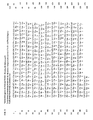
- genotype D ( Fig. 1 )
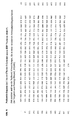
- Subtype ayw2 ( Fig. 2 ) of which the new variant surprisingly differs in 8 aa positions ( Fig. 6 ).
- the most prominent feature is the substitutions at positions 122 and 160.
- genotype D subtype ayw2
- the subtype determining amino acid at position 122 is surprisingly substituted for genotype D, subtype ayw2 (substitution of K for R), so that the subtype of the HDB-07 variant can correctly be described as ad.
- all comparison sequences of the ad subtype would result in a poorer overall match than genotype D, subtype ayw2.
- epitopes on the a-determinant are structural, that is, may be present as so-called conformational epitopes, it is likely that the immunogenicity and also the binding capacity of antibodies to the a-determinant will be affected by amino acid replacement at position # 100 can be.
- the present invention therefore relates to an oligo- or polypeptide comprising the amino acid sequence shown in SEQ ID NO: 5 corresponding to the amino acid positions 100 to 180 of the S antigen of the hepatitis B virus, which has a total length of 226 amino acids.
- the present invention also relates to an oligo- or polypeptide comprising the amino acid sequence shown in SEQ ID NO: 3.
- the amino acid sequence shown in SEQ ID NO: 3 corresponds to the S antigen of the hepatitis B virus.
- the determination of the identity between two amino acid sequences is known per se to a person skilled in the art and can be carried out with customary computer programs.
- the identity is determined using the computer program Bestfit of Genetics Computer Group (Madison, WI). The parameters are used in the default settings.
- the current program version is used on the priority date of the present application.
- a high percentage of identity means high correspondence, equality or equivalence of two sequences.
- An oligo- or polypeptide may also comprise an amino acid sequence in which zero to seven amino acids are substituted, deleted or inserted relative to SEQ ID NO: 5.
- amino acid sequence also 0 to 6, 0 to 5, 0 to 4, 0 to 3, 0 to 2 amino acids or 1 amino acid to SEQ ID NO: 5 may be substituted, deleted or inserted.
- Substitutions may also refer to amino acid positions corresponding to positions 100, 105, 110, 118, 120, 142, 116 and 173 of the S antigen of HBV.
- An oligo- or polypeptide may also comprise an amino acid sequence in which zero to six amino acids are substituted, deleted or inserted relative to SEQ ID NO: 3.
- amino acid sequence also 0 to 6, 0 to 5, 0 to 4, 0 to 3, 0 to 2 amino acids or 1 amino acid to SEQ ID NO: 3 may be substituted, deleted or inserted.
- the oligo- or polypeptide of the invention may also comprise an amino acid sequence which is a partial sequence of SEQ ID NO: 3 having at least 75 or at least 80 or at least 85 or at least 90 or at least 95 or at least 100 consecutive amino acids of SEQ ID NO: 3 at least this subsequence
- the polypeptide of the invention may also comprise a fragment of an HBs antigen of a hepatitis B virus, the fragment having a length of at least 15 amino acids, the HBs antigen at position 100 cysteine, at position 105 arginine at position 110 leucine, at position 118 arginine, at position 120 leucine, at position 142 leucine, at position 160 asparagine and at position 173 proline, and the fragment comprises cysteine 100, arginine 105, arginine 118, leucine 120, leucine 142, asparagine 160 and / or proline 173 ,
- the oligopeptide or polypeptide includes seven of these specific amino acid residues.
- the total length of the oligopeptides or polypeptides is usually 5 to 1000 amino acids, preferably 6 to 500 amino acids, more preferably 7 to 300 amino acids, most preferably 8 to 200 amino acids.
- the oligo- or polypeptides may also contain foreign amino acids that are not encoded by the genome of a hepatitis B virus. Thus, amino acids may be included, which facilitate the coupling to solid phases or allow the coupling to labeling substances. It may contain amino acids that have arisen due to cloning and were expressed in the recombinant expression.
- the oligo- or polypeptide according to the invention may be a fusion protein which, besides HBV-derived amino acids, contains a fusion partner, e.g. A "tag" sequence that facilitates purification, or a protein moiety that increases solubility and / or yield in recombinant expression. Such fusion partners are known per se to the person skilled in the art.
- the oligo or polypeptides do not contain foreign amino acids that are not encoded by the genome of an HBV. Accordingly, these oligo- or polypeptides consist of any of the amino acid sequences described above and / or in the claims.
- the oligo- or polypeptide of the invention is preferably immunogenic, i. it can induce an antibody response in a mammalian organism.
- the oligo- or polypeptide contains at least one antigenic determinant or at least one epitope.
- the oligo- or polypeptide contains an epitope found in other HBV variants, e.g. B. in subtype ayw2, is not included.
- the oligo- or polypeptide comprises one of the amino acid sequences SEQ ID NO: 3, SEQ ID NO: 4 and SEQ ID NO: 5.
- Another aspect of the invention is an immunogenic peptide or mixture of immunogenic peptides containing one or more of the oligo- or polypeptides described in this application.
- the immunogenic peptide or mixture may contain the oligopeptide or polypeptides alone or in conjunction with known HBV immunogens.
- the present invention also relates to nucleic acid molecules which are derived from the genome of the novel HBV variant HDB 07 or mutants thereof, in particular nucleic acid molecules which are derived from the gene which codes for HBsAg.
- the invention therefore relates, for example, to an oligo- or polynucleotide which comprises the nucleotide sequence SEQ ID NO: 2.
- the nucleotide sequence SEQ ID NO: 2 encodes the amino acid sequence SEQ ID NO: 5.
- the invention also relates to an oligo- or polynucleotide comprising the nucleotide sequence SEQ ID NO: 1.
- the nucleotide sequence SEQ ID NO: 1 encodes the amino acid sequence SEQ ID NO: 3.
- Identity is defined here as the degree of equality between two strands of two DNA segments. The identity is expressed as a percentage value by multiplying the number of identical bases of two sequences to be compared divided by the length of the shorter sequence and by 100 ( Smith et al., Adv. Appl. Mathem. 2: 482-489 (1981 ).
- the determination of the identity between two amino acid sequences is known per se to a person skilled in the art and can be carried out with customary computer programs.
- the identity is determined using the computer program Bestfit of Genetics Computer Group (Madison, WI). The parameters are used in the default settings.
- the current program version is used on the priority date of the present application.
- a high percentage of identity means high correspondence, equality or equivalence of two sequences.
- An oligonucleotide or polynucleotide may comprise a nucleotide sequence in which zero to 10 nucleotides are substituted, deleted or added as compared to SEQ ID NO: 2.
- nucleotide sequence also 0 to 9, 0 to 8, 0 to 7, 0 to 6, 0 to 5, 0 to 4, 0 to 3, 0 to 2 nucleotides or 1 nucleotide to SEQ ID NO: 2 substituted, deleted or be advertised.
- An oligonucleotide or polynucleotide may also comprise a nucleotide sequence which is a partial sequence of SEQ ID NO: 1 having at least 8 consecutive nucleotides of SEQ ID NO: 1, the partial sequence comprising at least one of the positions 298, 299, 300, 310, 311, 312, 313, 314, 315, 328, 329, 330, 343, 344, 345, 352, 353, 354, 358, 359, 360, 364, 365, 366, 424, 425, 426, 478, 479, 480, 517, 518 and 519 of SEQ ID NO: 1.
- the partial sequence may comprise at least 9, more preferably at least 10, more preferably at least 11, most preferably at least 12 consecutive nucleotides of the nucleotide sequence shown in SEQ ID NO: 1.
- the partial sequence comprises at least 13, at least 14, at least 15, at least 16, at least 17, at least 18, at least 19, at least 20, at least 21, at least 22, at least 23, at least 24, at least 25, at least 26, at least 27 , at least 28, at least 29, at least 30, at least 35, at least 40, at least 45, at least 50, at least 60, at least 70, at least 80, at least 90, at least 100, at least 120, at least 150, at least 175, at least 200, at least 250 or at least 300 consecutive nucleotides of the nucleotide sequence shown in SEQ ID NO: 1.
- the subsequence may be two, three, four, five, six, seven, eight, nine, ten, eleven, twelve, 13, 14, 15, 16, 17, 18, 19, 20, 21, 22, 23, 24, 25 , 26, 27, 28, 29 or all 30 of the positions 298, 299, 300, 310, 311, 312, 313, 314, 315, 328, 329, 330, 343, 344, 345, 352, 353, 354, 358 , 359, 360, 364, 365, 366, 424, 425, 426, 478, 479, 480, 517, 518 and 519 of SEQ ID NO: 1.
- the oligonucleotide or polynucleotide comprises a nucleotide sequence which hybridizes under stringent conditions, preferably specifically, to a polynucleotide complementary to the sequence SEQ ID NO: 1 or to SEQ ID NO: 2.
- stringent conditions are the following conditions: a) incubation at 42 ° C for 16 hours in a solution containing 50% formamide, 5xSSC (150 mM NaCl, 15 mM trisodium citrate), 50 mM sodium phosphate pH 7.6, 5 x Denhardt's solution, 10% dextran sulfate and 20 ⁇ g / ml denatured, sheared salmon sperm DNA; b) then washing in 0.1 x SSC at about 65 ° C.
- 5xSSC 150 mM NaCl, 15 mM trisodium citrate
- 50 mM sodium phosphate pH 7.6 50 mM sodium phosphate pH 7.6, 5 x Denhardt's solution, 10% dextran sulfate and 20 ⁇ g / ml denatured, sheared salmon sperm DNA
- a nucleotide sequence specifically hybridizes to a given polynucleotide if it does not hybridize, or significantly weaker, to other nucleotide sequences. In the present case, this may mean that the nucleotide sequence does not or only weakly hybridizes to HBsAg-encoding polynucleotides from conventional HBV variants (eg genotype D, subtype ayw2).
- the invention also relates to an oligo- or polynucleotide comprising a nucleotide sequence which codes for an oligo- or polypeptide according to the invention, as described in this application.
- Another aspect of the invention is an oligonucleotide or polynucleotide comprising a nucleotide sequence complementary to the nucleotide sequences described above.
- the minimum length of the oligo- or polynucleotides is 6, preferably 8, more preferably 10, most preferably 12 nucleotides.
- the total length of the oligonucleotide or polynucleotide is typically 6 to 3000 nucleotides, preferably 6 to 1500 nucleotides, more preferably 8 to 900 nucleotides, most preferably 8 to 600 nucleotides.
- the oligo- or Polynucleotides may also contain nucleotides that are not derived from the genome of a hepatitis B virus. Thus, nucleotides may be included which code for particular amino acids intended to fulfill desired functions, as described above.
- the oligonucleotide or polynucleotide according to the invention can code for a fusion protein which, in addition to HBV-derived amino acids, contains a fusion partner, eg. A "tag" sequence that facilitates purification, or a protein moiety that increases solubility and / or yield in recombinant expression.
- fusion partners and the DNA encoding them are known per se to those skilled in the art.
- Preferred oligo- or polynucleotides of the present invention comprise a nucleotide sequence selected from the group consisting of SEQ ID NO: 1 and SEQ ID NO: 2.
- polynucleotides of the invention may also be labeled, for example by a fluorescent label or a radioactive label.
- a fluorescent label or a radioactive label.
- Such polynucleotides can be advantageously used in a hybridization reaction or a polymerase chain reaction (PCR).
- the invention also relates to a vector or a plasmid containing an oligo- or polynucleotide according to the present invention.
- the plasmid can be, for example, a cloning vector which serves to increase the nucleic acid in host cells or to provide certain restriction sites.
- Expression vectors are vectors that allow expression of the cloned nucleic acid in host cells. Host cells may be various prokaryotic or eukaryotic cells. Prokaryotic host cells are z. B. bacterial cells such as E. coli cells.
- the expression vectors of the invention may contain certain control elements, such as promoters or binding sites for repression factors. In another embodiment, the expression vectors contain a nucleic acid segment that encodes part of a fusion protein.
- the invention also relates to a cell, e.g. B. a host cell containing a polynucleotide according to the invention, plasmid or a vector according to the invention.
- the host cells may be cultured under appropriate conditions such that transcription of the contained nucleic acid and subsequent translation takes place.
- the invention also relates to a method of producing a polypeptide, comprising introducing a polynucleotide, a plasmid or an expression vector of the invention into host cells and subjecting the host cells to Cultured conditions that lead to the expression of the polypeptide.
- the polypeptide may be recovered from the host cells.
- the production of the polypeptide occurs in bacteria, most preferably in E. coli cells.
- polypeptides and peptides of the present invention may also be chemically synthesized by known methods such as e.g. Solid phase synthesis can be produced.
- polynucleotides of the invention can be prepared by known methods of chemical synthesis. Polynucleotide fragments obtained by chemical synthesis can then also be linked enzymatically by ligases.
- the oligo- or polynucleotides according to the invention can also be prepared by "site-directed mutagenesis" from known sequences by introducing point mutations at specific positions. Such methods are known per se to the person skilled in the art.
- An antibody which binds to an oligo- or polypeptide of the invention can be prepared in a known manner, either by means of an oligo- or polypeptide of the invention or a fragment thereof ( Harlow and Lane (1988) Antibodies: A Laboratory Manual; Cold Spring Harbor Laboratory ). They may be polyclonal or monoclonal antibodies, but monoclonal antibodies are preferred. Preferably, these are specific antibodies directed against the HBsAg of the new HBV variant, but which are HBsAg from other HBV variants, e.g. B. genotype D subtype ayw2, do not recognize.
- Such antibodies can be obtained by detecting peptides specific to the new HBsAg based on a sequence comparison of the amino acid sequences of the novel HBsAg and HBsAg from known strains, and using these peptides to produce the antibodies. It is also possible to prepare a mixture of polyclonal antibodies and to deplete them by incubation with known HBsAg. In another embodiment, the antibody recognizes not only the new HBsAg but also known HBsAg variants. This makes it possible to simultaneously detect different variants of HBsAg.
- the antibody may bind to an oligo- or polypeptide consisting of an amino acid sequence selected from the group consisting of SEQ ID NO: 3, SEQ ID NO: 4, SEQ ID NO: 5, SEQ ID NO: 6, SEQ ID NO: 7, SEQ ID NO: 8, SEQ ID NO: 9, SEQ ID NO: 10, SEQ ID NO: 11, SEQ ID NO: 12, SEQ ID NO: 13, SEQ ID NO: 14, SEQ ID NO: 15, SEQ ID NO: 16 and SEQ ID NO: 17.
- the antibody binds to an oligo- or polypeptide consisting of an amino acid sequence selected from the group consisting of SEQ ID NO: 6, SEQ ID NO: 7, SEQ ID NO: 8, SEQ ID NO: 9, SEQ ID NO: 10, SEQ ID NO: 11, SEQ ID NO: 12, SEQ ID NO: 13, SEQ ID NO: 14, SEQ ID NO: 15, SEQ ID NO: 16 and SEQ ID NO: 17.
- the antibody does not bind to the a determinants of the known HBV genotypes A, B, C, D, E, and F (see Fig. 1 ).
- the antibody does not bind to the a-determinant of HBV genotype D, subtype ayw2.
- the antibodies may be polyclonal or monoclonal animal or human origin.
- the invention also relates to a test kit for the detection of hepatitis B viruses containing an oligo- or polypeptide according to the invention and / or an oligodeic polynucleotide according to the invention.
- the invention also relates to an immunogenic peptide or mixture of immunogenic peptides containing one or more oligo- or polypeptides of the invention alone or in combination with known HBV immunogens.
- a method of detecting a hepatitis B antigen is characterized in that (a) a sample is incubated with an antibody under conditions which allow the formation of an antigen-antibody complex; and (b) detecting an antigen-antibody complex containing the antibody.
- methods are also known that are homogeneous in nature (ie, do not require bound / free separation) that do not require a probe (eg, agglutination), can be evaluated by the naked eye (eg, radial immunodiffusion), or other probes (eg, radioactive) Isotopes or chemiluminescence) or multiple probes operate (such as the biotin / streptavidin system).
- a probe eg, agglutination
- HBsAg of the new HBV variant means all methods which are suitable for the detection of polypeptide sequences or antigens of the new HBV variant, regardless of whether the HBsAg alone variant or in conjunction with HBsAg of known a-determinants and / or known mutations in the a-region.
- HBsAg determination with a detection method against another analyte (eg HIV antigen or the simultaneous determination of HBV variant HBsAg and specific antibodies directed against it) in a test batch (differentiating or non-differentiating) combine.
- another analyte eg HIV antigen or the simultaneous determination of HBV variant HBsAg and specific antibodies directed against it
- the invention also relates to a method for the detection of antibodies which are directed against a hepatitis B virus antigen, characterized in that (a) a sample is incubated with an oligopeptide or polypeptide according to the invention under conditions which prevent the formation of an antigen. Allow antibody complex; and (b) detecting the antibody-antigen complex containing the oligo- or polypeptide.
- methods are also known that are homogeneous in nature (ie, do not require bound / free separation) that do not require a probe (eg, agglutination), can be evaluated by the naked eye (eg, radial immunodiffusion), or other probes (eg, radioactive) Isotopes or chemiluminescence) or multiple probes operate (such as the biotin / streptavidin system).
- a probe eg, agglutination
- polypeptide structures of the HBV variant can be represented by anti-idiotypic antibodies or variant-specific monoclonal or polyclonal antibodies can also be used for the determination of anti-HBs antibodies (eg in a competitive assay format) by choosing a suitable test principle. It is also known that by selecting the test principle, it is also possible to differentiate the immunoglobulin classes (eg by the "indirect" method with a second class-specific antibody (eg IgG or IgM specific) with probe or by means of the so-called anti- ⁇ -principle (IgM specific). Of course, the methods and materials (including probe and polypeptide sequences) must be adapted to the respective target.
- a hepatitis B nucleic acid in another method, can be detected.
- This method is characterized in that (a) a sample is incubated with an oligonucleotide or polynucleotide of the invention under conditions permitting selective hybridization of the oligonucleotide or polynucleotide with a hepatitis B nucleic acid in the sample; and (b) it is determined whether polynucleotide duplexes comprising the oligonucleotide or polynucleotide have been formed.
- the hepatitis B nucleic acid can also be detected by (a) incubating a sample with at least one oligo- or polynucleotide of the invention under conditions permitting selective hybridization of the oligo- or polynucleotide with a hepatitis B nucleic acid in the sample; (b) carrying out a polymerase chain reaction; and (c) it is determined whether a nucleic acid has been amplified.
- the invention also relates to the use of an oligo- or polynucleotide according to the invention as a primer and / or as a probe.
- the present nucleotide sequences can be used to prepare primers and / or gene probes, which is why kits containing primers and / or probes for the detection of HBV variant-specific nucleic acid either alone or in conjunction with known HBV nucleotide sequences in test samples are also the subject of the invention.
- PCR is a method to amplify a desired nucleotide sequence of a nucleic acid or nucleic acid mixture.
- the primers are each specifically by a polymerase with the desired nucleic acid extended as reading frame. After dissociation from the original strand, new primers are hybridized and in turn extended by the polymerase. By repeating these cycles, enrichment of the desired target sequence molecules is achieved.
- nucleic acid assays it is possible to use nucleotide sequences of the present invention to produce DNA oligomers of 6-8 nucleotides or greater which are suitable for detecting as hybridization probes the viral genome of the HBV variant described herein in individuals that may carry the virus variant, or eg In the blood donation blood samples for the presence of the variant genome either targeted or in combination with the detection of nucleotide sequences of known HBV variants and / or HBV mutants to screen.
- corresponding primers can be developed which are specific for the new variant or can detect both the new variant and variants known in the prior art.
- Another object of the present invention is an isolated hepatitis B virus having an HBs antigen comprising the amino acid sequence of SEQ ID NO: 5.
- the invention also encompasses cultures of tissue cells which are infected with the HBV variant according to the invention as well as the isolated HBV variant itself.
- An immunogenic preparation containing the attenuated or inactivated HDB 07 variant of HBV is also an object of the invention.
- the invention also relates to the use of an oligo- or polynucleotide according to the invention or of an oligopeptide or polypeptide according to the invention for the production of a medicament for the treatment or prevention of an HBV infection.
- the oligo- or polynucleotides or oligo- or polypeptides according to the invention can be used for the production of a vaccine against HBV.
- the invention also includes a vaccine comprising a polypeptide of the present invention and a common adjuvant (eg, Freund's adjuvans, phosphate-buffered Saline or similar).
- a vaccine comprising a polypeptide of the present invention and a common adjuvant (eg, Freund's adjuvans, phosphate-buffered Saline or similar).
- a vaccine can be used to stimulate the production of antibodies in mammals.
- the invention encompasses a particle that includes a non-variant specific amino acid sequence that induces particle formation along with an epitope-containing polypeptide that is specific for the HBV variant of the invention.
- nucleotide sequences of the invention may also be used to prepare so-called antisense oligonucleotides (optionally for therapeutic purposes).
- the present invention contemplates an isolated nucleotide sequence encoding the present inventive variant of the hepatitis B surface antigen (HBsAg) determinant at the amino acid positions between aa 1 and 226, resulting in a peptide product that is useful in the art the aa sequence with the in Fig. 6 represented SEQ. ID NO: 4 matches
- the present invention includes a vector comprising one or more of said nucleotide sequences as well as a host cell containing said vector and a method of displaying a corresponding polypeptide from said a determinant, comprising incubating said host cell over time and under conditions required for the expression of the polypeptide.
- An isolated HBV variant is also the subject of the invention, wherein the virus has an a-determinant which corresponds to the aa sequences at least between about position 100 and 160.
- An immunogenic mixture for producing polyclonal or monoclonal antibodies is also the subject of the present invention comprising the described isolated HBV or one or more of the described peptides.
- the invention also includes a polynucleotide probe containing an HBV genome sequence which results, by substitution of amino acids, for a modified a-determinant identical to the described aa sequence of the novel HBV variant.
- kits for the detection of polynucleotides of the HBV variant by means of said probe as well as kits for the detection of antibodies that are specific for the variant or epitopes thereof, are also subject of the invention, as the methods of detecting polynucleotides and antibodies comprising an incubation to form corresponding complexes and detection of these complexes by suitable methods known to those skilled in the art.
- kits and detection methods may be designed to be supplementary or specific, i.e., specific and exclusive, to detect nucleotides and antibodies directed against the antigen of the HBV variant. allow the additional detection of the variant analyte according to the invention at the present time known HBV nucleotides, or antibodies.
- an immunogenic mixture of polypeptide sequences of the invention may also be used in conjunction with known antigens, e.g. be used for improving the effectiveness of a vaccine.
- the present invention describes a new variant of the hepatitis B virus (HBV) which has a completely new a-determinant as a result of amino acid replacement in the subsequent aa positions of the S-HBsAg sequence.
- HBV hepatitis B virus
- the 1-letter code is used: aa from HDB 07 aa position aa of ayw2 / genotype D R 105 P L 110 I R 118 T L 120 P K 122 R L 142 P N 160 K P 173 L
- position aa 100 of HDB 07 contains cysteine (C) instead of tyrosine (Y): C. 100 Y.
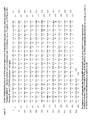
- the present invention relates to an isolated nucleotide sequence which codes for the a-determinant of the virus ( Fig. 3 and SEQ ID No: 1).
- the invention also includes nucleotides having at least 65% identity, preferably at least 75% identity, and more preferably at least 90% identity with the nucleotide sequence of the present invention, or fragments thereof, and sequences complementary thereto.
- the invention also includes polypeptides encoded by nucleotide sequences described above, in particular those amino acid sequences which determine the a-determinant of HBsAg.
- a nucleotide fragment is understood to mean a consecutive sequence of at least 9, preferably 9-15, particularly preferably 15-21 and even more preferably 21-60 nucleotides from the nucleotide sequence of the new HBV variant, mixtures of such nucleotide fragments also being obvious ,
- a polypeptide fragment is understood as a consequence of at least 3, preferably 3-5, more preferably 5-7 and even more preferably 7-20 amino acids from the a-determinant of the new HBV variant, including mixtures of such polypeptide fragments this invention fall.
- nucleotide sequence that is hybridizable and results in nucleotide sequences that are complementary to nucleotide sequences of the HBsAg of the novel HBV variant or portions of the a-determinant of the novel HBV variant, or subtype or Mutation due to HDB 07.
- nucleotide sequence after its isolation by methods according to the prior art in prokaryotic eg E. coli
- eukaryotic host cells eg Chinese hamster ovary cell
- yeast eg S. cerevisiae
- Methods known in the art such as Transfection, Transformation or Electroporation: Molecular Cloning: A Laboratory Manual, 2nd ed., Vol. 1-3, ed Sambrook et al., Cold Spring Harbor Laboratory Press (1989 ), whereby transient or permanent cultures can be applied.
- the present invention encompasses isolated nucleotide sequences of the a-determinant of the novel HBV variant, polypeptides encoded by these nucleotides, vectors containing nucleotide sequences of the a-determinant of the novel HBV variant as well as the host cell into which a vector is introduced.
- an expression system recombinant or genetic engineering
- analogous polypeptide structures are also produced fully synthetic or directly by purification from the virus variant.
- polypeptides or proteins of the novel HBV variant for the production of monoclonal and / or polyclonal antibodies which bind immunologically to binding sites (epitopes) of the a-determinant of the novel HBV variant.
- the methods for the preparation of antibodies are known in the art (eg Koehler et al., Nature 256-494 (1975 ) Mimms et al., Vi. 176: 604-619 (1990 ).
- the a-determinant of the HDB 07 variant according to the invention in the form of the entire polypeptide sequence or parts thereof for the determination of antibodies directed against the HBV variant (anti-HBsAg antibodies) (see above).
- methods are also known that are homogeneous in nature (ie, do not require bound / free separation) that do not require a probe (eg, agglutination), can be evaluated by the naked eye (eg, radial immunodiffusion), or other probes (eg radioactive isotopes or chemiluminescence) or multiple probes (such as the biotin / streptavidin system).
- a probe eg, agglutination
- the polypeptide structures of the HBV variant HDB 07 can be represented by anti-idiotypic antibodies or, by choosing a suitable test principle, variant-specific monoclonal or polyclonal antibodies can also be used for the determination of anti-HBs antibodies (for example in a competitive assay format). It is also known that selection of the test principle can also be used to differentiate the immunoglobulin classes (for example, by the "indirect" method with a second class-specific antibody (eg IgG or IgM-specific) with a probe or with the aid of the so-called anti -p principle (IgM specific)). Of course, the methods and materials, including probe and polypeptide sequences, must be adapted to the particular target.
- methods which are of a homogeneous nature (ie do not require bound / free separation), which manage without a probe (eg agglutination method), are evaluable by the naked eye (eg radial immunodiffusion) or use other probes (eg radioactive isotopes or chemiluminescence) or multiple probes (such as the biotin / strepavidin system).
- an HBsAg determination with a detection method for the detection of another analyte (eg HIV-Arttigen or the simultaneous determination of.H.BV variant HBsAg and directed against specific antibodies) in a test mixture (differentiating or non-differentiating).
- another analyte eg HIV-Arttigen or the simultaneous determination of.H.BV variant HBsAg and directed against specific antibodies
- nucleic acid testing it is also known to the person skilled in the art to use nucleotide sequences according to the present invention to prepare DNA oligomers of 6-8 nucleotides or greater, which are suitable as hybridization probes for the viral genome of the HBV described here -Variant in persons who may carry the virus variant HDB 07 or eg In the blood donation blood samples for the presence of the variant genome either targeted or in combination with the detection of nucleotide sequences of known HBV variants and / or HBV mutants to screen. Likewise, corresponding primers can be developed on the basis of the found nucleotide sequences of the novel HBV variant.
- the invention also includes a vaccine comprising a polypeptide of the present invention and a common adjuvant (e.g., Freund's adjuvant, phosphate buffered saline, or the like).
- a vaccine can be used to stimulate the production of antibodies in mammals, including humans.
- the invention encompasses a particle that includes a non-variant specific amino acid sequence that induces particle formation along with an epitope-containing polypeptide specific for HBV variant HDB 07 of the present invention.
- diagnostic reagents as kits are the subject of the invention, based on the methods described above, a detection of against HBV variant-specific antigen (HBsAg) directed antibodies (anti-HBs), either as singular determinations or with each other or with other known HBV antigens or antibodies specifically reacting therewith or also with completely different analytes.
- HBV variant-specific antigen HBsAg
- anti-HBs directed antibodies
- kits containing primers and / or probes for detecting HBV variant-specific nucleic acid either alone or in conjunction with known HBV nucleotide sequences in test samples are also subject of the invention .
- Nuleotide sequences according to the present invention can also be used to prepare so-called antisense oligonucleotides (if appropriate for therapeutic purposes).
- PCR is a method to amplify a desired nucleotide sequence of a nucleic acid or nucleic acid mixture.
- the primers are each specifically extended by a polymerase with the desired nucleic acid reading frame. After dissociation from the original strand, new primers are hybridized and in turn extended by the polymerase. By repeating these cycles, enrichment of molecules with the target sequence sought is achieved.
- the present invention also includes cultures of tissue cells that are infected with the HBV variant according to the invention, as well as the isolated HBV variant itself.
- An immunogenic preparation containing the attenuated or inactivated HDB 07 variant of HBV according to the invention is also an object the invention.
- Example 1 HBsAg determination by enzyme immunoassay, EIA
- the intensity of color development is directly proportional to the HBsAg content of the test sample, with an O.D. Value (light absorption value) that is lower than a threshold value is evaluated as HBsAg negative.
- O.D. Value light absorption value
- the limit is defined as the O.D. mean of the control tested in parallel, negative (included in the kit), to which a constant amount of 0.05 O.D. is added.
- the detection limits of the test lots were compared with the internationally accepted standard preparations of the Paul-Ehrlich-Institut, Langen, Germany to 0.007 ng ad subtype / ml and 0.005 ng ay subtype / ml from tests of dilutions of the standard preparations in HBsAg negative serum by graphic interpolation.
- a 65 ⁇ l aliquot of the Berlin sample was made up to a volume of 200 ⁇ l with 135 ⁇ l negative plasma and the DNA was isolated by using the QIA amp® Min Elute TM Virus Spin Kit from Qiagen, Hilden (Germany). All procedural steps were followed as described in the leaflet and the elution was carried out in a volume of 20 ⁇ l each.
- HBV primers The four following HBV primers were used: Primer 1 with the 5 '>3' sequence: GGGTCACCATATTCTTGGGAAC (SEQ ID NO: 28) Primer 2 with the 5 '>3' sequence: TATACCCAAAGACAAAAGAAAATTGG (SEQ ID NO: 29) Primer 3 with the 5 '>3' sequence: GACTCGTGGTGGACTTCTCTC (SEQ ID NO: 30) Primer 4 with the 5 '>3' sequence: TACAGACTTGCCCCCCAATACC (SEQ ID NO: 31)
- the nucleotides were purchased from Amersham Biosciences, UK.
- Primer 1 (10 ⁇ M) 1 ⁇ l
- Primer 2 (10 ⁇ M) 1 ⁇ l 10-fold conc.
- Buffer including 15 mM Mg2Cl
- 5 ⁇ l dNTP mixture (10 mM) 1 ⁇ l least.
- water 34.75 ⁇ l
- Ampli Taq (5 U / ⁇ l) 0.25 ⁇ l Per tube 43 ⁇ l total volume plus 7 ⁇ l of isolated DNA 50 ⁇ l reaction volume
- Primer 3 (10 ⁇ M) 1 ⁇ l
- Primer 4 (10 ⁇ M) 1 ⁇ l 10-fold conc. buffer 5 ⁇ l dNTP mixture (10 mM) 1 ⁇ l least. water 34.75 ⁇ l Ampli Taq (5 U / ⁇ l) 0,25 ⁇ l Per tube 43 ⁇ l total volume plus 7 ⁇ l PCR product v.rxn 50 ⁇ l reaction volume
- the purified PCR product was sequenced by Eurofin Medigenomix GmbH Martinsried (Germany) using the ABI 3700 capillary system in conjunction with the ABI BigDye Terminator Chemistry Version 3.1. and ABI Sequencing Analysis Software Version 3.7. using primers 3 and 4 described in Example 3.
- the HBsAg of the analyzed sample within the sequenced region shows the best match of the nucleotide and amino acid sequence with genotype D, subtype ayw2.
- the analyzed sample from Berlin shows a total of 7 amino acid substitutions compared to genotype D, subtype ayw2 (see also Fig.
Landscapes
- Health & Medical Sciences (AREA)
- Life Sciences & Earth Sciences (AREA)
- Chemical & Material Sciences (AREA)
- Immunology (AREA)
- Molecular Biology (AREA)
- Engineering & Computer Science (AREA)
- Urology & Nephrology (AREA)
- Biochemistry (AREA)
- Hematology (AREA)
- Medicinal Chemistry (AREA)
- General Health & Medical Sciences (AREA)
- Biomedical Technology (AREA)
- Organic Chemistry (AREA)
- Biotechnology (AREA)
- Microbiology (AREA)
- Gastroenterology & Hepatology (AREA)
- Proteomics, Peptides & Aminoacids (AREA)
- Biophysics (AREA)
- Cell Biology (AREA)
- Genetics & Genomics (AREA)
- Communicable Diseases (AREA)
- Virology (AREA)
- Food Science & Technology (AREA)
- Physics & Mathematics (AREA)
- Analytical Chemistry (AREA)
- General Physics & Mathematics (AREA)
- Pathology (AREA)
- Peptides Or Proteins (AREA)
Description
- Die Erfindung betrifft Sequenzen einer neuen Mutante oder Variante des Hepatitis B surface Antigens (HBsAg) und Methoden, diese Genom- und Protein-Variante sowie dagegen gerichtete Antikörper aus Patientenproben zu detektieren.
- Die neuen Sequenzen führen zu 7, in dieser Kombination noch nicht bekannten Aminosäure-Austauschen (Substitutionen) in dem Hepatitis B surface Antigen, HBsAg im Bereich der Aminosäurepositionen 100 bis 180 der Aminosäuresequenz des surface Antigens, wobei sich sechs Substitutionen in der Region der a-Determinante befinden (aa 101 bis aa 180) sowie eine Substitution in unmittelbarer Nachbarschaft davon (aa 100).
- Die Erfindung betrifft auch immunchemische Nachweisverfahren zum gleichzeitigen Nachweis dieser neuen HBV-Variante zusammen mit bekannten Varianten/Subtypen sowie die Verwendung der neuen Sequenzen in Verbindung mit bekannten Sequenzen zum gleichzeitigen Nachweis von HBV-spezifischen Antikörpern. Die Antigen bzw. Antikörper-Bestimmungen können jeweils in einem Testansatz differenzierend oder nicht-differenzierend durchgeführt werden.
- Schließlich betrifft die Erfindung auch den Nachweis der entsprechenden Nukleinsäuren mit Hilfe sogenannter Nukleinsäure-Tests (z.B. Polymerase Chain Reaction, PCR) mit Hilfe geeigneter Primer sowie die Verwendung der neuen Aminosäuresequenzen zur Herstellung von Impfstoffen.
- Das Hepatitis B Virus (HBV) ist bekanntermaßen der Auslöser einer Vielzahl von Erkrankungsverläufen, von milden inapparenten Infektionsverläufen bis hin zu chronisch aktiven und fulminant verlaufenden Leberentzündungen (Virushepatitiden).
- Die chronische Infektion mit HBV stellt mit geschätzten 400 Millionen betroffenen Menschen ein globales Gesundheitsproblem dar (Lee, N. Engl. J. Med. 337; 1733-1745 (1997))
- Als die am besten geeigneten prophylaktischen Maßnahmen für die weltweit häufig anzutreffende HBV-Infektion gelten die aktive Immunisierung (Stimulation der Antikörperantwort durch Antigengabe) und auch die passive Immunisierung (durch Injektion präformierter Antikörper).
- Das HBV gehört zu den Hepadna-Viren und stellt ein Viruspartikel mit einem Durchmesser von 42 nm dar, das aus Kern und Hülle besteht. Das Genom des Virus ist eine partiell doppelsträngige, ringförmige DNA- Sequenz von etwa 3200 Nukleotiden, die mindestens sechs verschiedene virale Gene kodieren (Tiollais et al., Nature 317: 489-495 (1985)). Es liegen vier offene Leserahmen für die Bildung der viralen Proteine vor.
- Im S-Gen liegt die Information für das HBV Oberflächen- (surface) Antigen (HBsAg), das auch small protein (S) genannt wird. Daneben gibt es größere Formen, die als large protein (L) und middle protein (M) bezeichnet werden. Allen drei Proteinen gemeinsam ist die 226 Aminosäuren umfassende S-HBsAg Sequenz (Gerlich et al., Viral Hepatitis and Liver Disease, Hollinger et al., William-Wilkens, Baltimore, MD, pages 121-134 (1991)).
- Die Proteinregionen vor dem small HBs werden auch Pre-Sl und Pre-S2 bezeichnet. Die Pre-S1-Domäne umfasst, abhängig vom Genotyp, 108 bzw: 119 Aminosäuren, während die Pre-S2-Domäne aus 55 Aminosäuren besteht. Beide Domänen sind in dem L-Protein (389 oder 400 Aminosäuren, je nach Genotyp) enthalten, während das M-Protein nur das Pre-S2 zusammen mit dem S-Antigen umfaßt (281 Aminosäuren). Die Pre-S Proteine weisen unterschiedliche Glykosilierungsgrade auf und tragen die Rezeptoren für die Erkennung der Leberzellen.
- Das C-Gen trägt die Information für das Nukleokapsid-Protein, Hepatitis B Core-Antigen (HBcAg). Die Translation dieses Proteins kann bereits in der Pre-C-region starten und zur Bildung von Hepatitis Be-Antigen (HBeAg) führen. Das HBeAg weist gegenüber HBcAg eine andere Faltung und Immunogenität auf. HBeAg kommt im Gegensatz zu HBcAg frei im Serum vor und wird bei positivem Nachweis als Indikator für die Bildung von HBcAg und damit für die Bildung infektiöser Viruspartikel angesehen.
- Die im Viruspartikel enthaltene Reverse Transkriptions DNA-Polymerase wird vom P-Gen codiert und für das Transaktivator X-Gen wird eine ursächliche Rolle bei der Entstehung von HBV-assoziierten primären Leberzell-Karzinomen diskutiert.
- Der virale Replikationszyklus von HBV umfaßt eine intrazelluläre prä-genomische RNA, die im viralen Nukleocapsid in die in DNA umgeschrieben wird. Da die HBV-eigene Reverse Transkriptase DNA- Polymerase über keine Richtigkeits-Lesefähigkeit (proof-reading capability) verfügt, werden mit relativ hoher Häufigkeit falsche Nukleotide eingebaut. Als Folge weist das HBV eine Mutationsrate auf, die mit ca. 1 Nukleotid/10000 Basen/Infektionsjahr etwa dem 10-fachen dessen entspricht, was andere DNA Viren aufweisen (Blum, Digestion 56: 85-95 (1995); Okamoto et al., Jpn. J. Exp. Med. 57: 231-236 (1987)). Daneben treten auch recht häufig Deletionen und Insertionen auf (Carman et al., Lancet 341: 349-353 (1993)).
- Die resultierende Variabilität von HBV drückt sich unter anderem in dem Auftreten von 9 serologisch definierten Subtypen (Courouce et al., Bibliotheca Haematologica 42: 1 (1976)) und insgesamt mindestens 8 verschiedenen Genotypen aus, die mit A bis H bezeichnet werden (
Abb. 1 ) und eine geographische Verteilung aufweisen. (Norder et al., J. Gen. Virol. 73: 3141-3145 (1992), Norder et al., Virology 198: 489-503 (1994), Norder et al.; Intervirology 47:289-309 (2004)). Außerdem werden eine Reihe von Mutanten beschrieben, bei denen eine Aminosäure oder mehrere ausgetauscht vorliegen, fehlen oder überzählig sind. - Neben natürlicherweise stattfindenden Mutationen (Cooreman et al., Hepatology 30: 1287-1292 (1999) kann eine Gabe von HBV Immunglobulinen und / oder eine antivirale Therapie (z.B. mit Lamivudine) einen Selektionsdruck ausüben, was zum vermehrten Auftreten sogenannter "Escape-Mutanten" führen und die Auftretens-Wahrscheinlichkeit von HBV-Mutanten deutlich erhöhen kann (Terrault et al., Hepatology 28: 555-561 (1998); Tillmann et al., Hepatology 30: 244-256 (1999); Hunt et al., Hepatology 31: 1037-1044 (2000).
- Nicht alle HBV-Mutationen führen zu replikationsfähigen Viren und oft liegt eine Koexistenz mit replikationsfahigem Virus vor, was auch die Sequenzierungsgenauigkeit von isolierter DNA limitiert oder gar zur Nichterkennung von veränderten Sequenzen durch PCR, Klonierungsarbeiten mit anschließender Sequenzierung führt, wenn diese quantitativ < 10 % der Gesamt-DNA ausmachen (Cooreman et al., J. Biomed. Sci. 8: 237-247 (2001).
- Demnach ist die Isolierung von Mutanten vorteilhaft, wobei die sich anschließende Identifizierung und Charakterisierung einzelner Mutanten möglicherweise zu verbesserten Vakzinen und/oder Diagnostika führt.
- Die Immunantwort nach einer Infektion mit HBV ist hauptsächlich gegen die sogenannte a-Determinante als eine allen Hepatitis B Viren gemeinsame Region des S-Proteins gerichtet, die sich auf der Oberfläche der Viruspartikel befindet (Gerlich et al., supra) und die den heterogensten Teil der B-Zellepitope des S-Gens darstellen.
- Als Bindestellen für Antikörper werden nach heutigem Kenntnisstand insgesamt mindestens 5 sich teilweise überlappende Epitope auf der a-Determinante zwischen Aminosäure-Position 101 und 180 angenommen (
Abb. 1 und2 ) wie durch die Anwendung von monoklonalen Antikörpern gezeigt werden konnte (Peterson et al., J. Immunol. 132: 920-927 (1984)). Es handelt sich hauptsächlich um komplexe Konformations-Epitope, die durch mehrere DisulfidBrücken stabilisiert werden. Teilweise liegen auch Sequenz-Epitope vor, die mit Hilfe synthetisch hergestellter zyklischer Peptid-Strukturen dargestellt werden können. - Sogenannte "schützende Antikörper", die nach einer natürlichen Infektion mit HBV im Serum zirkulieren, sind zu 99% gegen die sehr immunogene a-Determinante des HBV gerichtet (Jilg, Vaccine 16: 65-68 (1998). Auf diese Tatsache stützt sich die breite Anwendung der Immunisierung mit Vakzinen, die entweder aus Humanserum isoliert oder gentechnologisch hergestellt wurden und die Verabreichung von Hepatitis B Immunglobulinen, die humane HBV - spezifische Antikörper enthalten. Beide prophylaktischen Strategien beruhen auf dem neutralisierenden Effekt, die HBs-spezifische Antikörper nach Bindung an die "a-Loop-Epitope" entfalten (Carman et al., Hepatology 24: 489-493 (1996), Muller et al., J. Hepatol. 13: 90-96 (1991) und Samuel et al., N. Engl. J. Med. 329: 1842-1847 (1993)).
- Ähnlich beruhen die heute weit verbreiteten Diagnostika auf der Bindung von a-Determinantenspezifischen Antikörpern mit Epitopen der a-Determinante. So wird bei der im Blutspendewesen weltweit angewendeten HBsAg-Bestimmung mit immunchemischen Bestimmungsmethoden im Serum von Spendern zirkulierendes HBV Oberflächenantigen mit Antikörpern gegen die a-Determinante (polyklonal oder monoklonalen Ursprungs) nachgewiesen und bei positivem Resultat die entsprechende Blutspende verworfen, um iatrogene HBV Infektionen durch HBV-kontaminiertes Blut zu verhindern. Eine weitere Anwendung der HBsAg-Bestimmung liegt im Nachweis einer vorliegenden akuten HBV-Infektion.
- Umgekehrt wird mit der Bestimmung von HBs-spezifischen Antikörpern im Blut von Probanden mit einem positiven Bestimmungsresultat von HBsAg-spezifischen Antikörpern (Anti-HBs) nachgewiesen, daß entweder eine natürliche Infektion abgelaufen oder daß eine durchgeführte Vakzinierung erfolgreich verlaufen ist.
- Schließlich beruht auch die Nukleinsäure-Testung z.B. mit Hilfe der Polymerase-Chain-Rektion (PCR, Polymerase-Ketten-Reaktion) auf der Verwendung von Primern (Starter), die für die HBV Nukleotide spezifisch sind.
- Auf Grund der zentralen Rolle, die die a-Determinante bei der aktiven Immunisierung (Vakzinierung mit HBV Antigen), der passiven Immunisierung (Schutz durch HBV -spezische Immunglobuline), dem Nachweis von Impferfolg bzw. stattgefundener HBV Infektion (beides mittels Bestimmung von HBsAg-spezischen Antikörpern, Anti-HBs) und schließlich der Sicherheit im Blutspendewesen (HBsAg-Bestimmung und PCR) hat, ist verständlich, daß in Fachkreisen das Auftreten von Mutanten und auch neuen Varianten, insbesondere im Bereich der a-Determinante, mit großer Aufmerksamkeit verfolgt wird.
- Es könnten in der a-Determinante des HBV veränderte aber replikationsfähige neue Mutanten und/oder Varianten sowohl das prophylaktische als auch das diagnostische Konzept unterlaufen (Brind et al., J. Hepatol. 26: 228-235 (1997), Fischer et al., Transplant Proc. 31: 492-493 (1999), Ghany et al., Hepatology 27: 213-222 (1998), Protzer-Knolle et al., Hepatology 27: 254-263 (1998), Carman et al., Gastroenterology 102: 711-719 (1992) und
Coleman et al., WO 02/079217 Al, (2002 WO 03/087351 WO 2004/113370 offenbart Sequenzen einer HBsAg Variante sowie Methoden zu deren Nachweis in Patientenproben. - Die Abgrenzung von Varianten und Mutanten des HBV ist nicht scharf, wobei ein diesbezüglicher Vorschlag breite Anwendung findet (Carman, J. Viral Hepat. 4 (suppl.1): 11-20 (1997). Demzufolge sollte die Bezeichnung "Variante" für natürlicherweise vorkommende Subtypen angewendet werden, die ohne bekannte Interferenz, beispielsweise Selektionsdruck durch antivirale Therapie und / oder Immunglobulin-Gabe, auftreten und ein geographisches Verteilungsmuster aufweisen.
- Die Charakterisierung und anschließende Klassifizierung der Subtypen erfolgt mit Hilfe monoklonaler Antikörper und basiert auf einem veränderten Reaktionsmuster auf Grund des Austausches von einer oder wenigen Aminosäure(n). Die Grundlage der Klassifizierung stellen die Aminosäurepositionen 122 oder 160 der verbreitetsten HBV Sequenz dar: aa 122 und aa 160 =Lysin, K.
- Alle Serotypen enthalten die Gruppen-spezifische a-Determinante, während die aa 122 und zusätzlich 133 und 134 den d- bzw. y-Subtyp und aa 160 die Zugehörigkeit zum w- bzw. r-Subtyp bestimmen. Auf dieser Basis lassen sich HBV Subtypen grob in adr, adw, ayr oder ayw einteilen, die sich weiter in mindestens 9 Sub-Subtypen unterscheiden lassen: ayw1, ayw2, ayw3, ayw4, ayr, adwr2, adw4, adrq+ und adrq- (Swenson et al., J. Virol. Meth. 33: 27-28 (1991), Blitz et al. J. Clin. Microbiol. 36: 648-651, Ashton-Rickardt et al., J. Med. Virol. 29: 204-214 (1989)).
- Da diese Klassifizierung eine serologische Reaktivität zur Grundlage hat, muß nicht jede Typisierung notwendigerweise eine Variabilität auf der Aminosäure-Ebene bedeuten, weshalb dem Genotyping auf der S-Gen-Ebene der Vorzug gegeben wird (Ohba et al., Virus Res. 39: 25-34 (1995)).
- Subtypen treten aus noch nicht bekannten Gründen in bestimmten geographischen und ethnischen Mustern auf.
- Die Bezeichnung Mutation sollte nach Carman solchen Varianten vorbehalten bleiben, die ausschließlich unter Selektionsdruck wie Vakzinierung oder antivirale Therapie entstehen. Es sind bereits viele Mutationen beschrieben worden, von denen manche zu diagnostisch falschen Befundungen führten ( Carman et al., Lancet 345: 1406-1407) und von denen die nachstehend genannten aa-Austausche beispielhaft zitiert werden:
Consensus: aa-Position Mutante: I 110 V P 111 T T 114 S T 116 S P 120 T / S T 123 A / N I/T 126 A / S Q 129 H / R K/M 133 L T 143 M / L D 144 H / A / E G 145 R / A A 157 R sowie Cystein Austausche in den aa-Positionen 107, 124, 137, 147 & 149. - (Coleman, supra; Okamoto et al., Pediatr. Res. 32: 264-268 (1992); Zhang et al., Scand. J. Infect. Dis. 28: 9-15 (1996); Zuckermann et al., Lancet 343: 737-738 (1994)).
- Überraschend wurde in einer Probe (Serum/Plasma) eines an Leberentzündung erkrankten Patienten aus Berlin (interne Identifikationsnummer: 126734 / 305024817) ein atypisches Reaktionsmuster von Hepatitis-Markern gefunden.
- Neben dem Krankheitsbild deutet auch nachgewiesene Hepatitis B-Virus-DNA auf eine HBV-Infektion hin, ohne daß allerdings der HBsAg-Nachweis mit einem zugelassenen leistungsstarken HBsAg-ELISA gelang.
- Eine durchgeführte Sequenzierung führte völlig überraschend zu der in
Abb. 3 und4 dargestellten Nukleotid-Sequenz und der inAbb. 5 und6 abgebildeten Aminosäure-Sequenz, die beide unerwartet zu dem beschriebenen Substitutionsmuster führten. - Aus diesen Sequenzen wird deutlich, daß es sich völlig überraschend nicht um eine Punktmutation, d.h. Austausch weniger Nukleotide handelt, da insgesamt n=7 Aminosäuren in der Region von aa 100 bis 181 gegenüber den Aminosäuresequenzen der repräsentativen Genotypen (
Abb. 1 ) substituiert vorliegen. Im Hinblick auf die Häufigkeit der Aminosäure-Substitutionen ist überraschend davon auszugehen, daß es sich um eine neue Mutante handelt oder daß die Mutationen so ausgeprägt sind, daß die Konsequenz eher als neue Variante zu beschreiben ist, die im Folgenden als HDB 07-Variante bezeichnet wird. - Die Analyse der besten Überstimmung der Aminosäuresequenz der a-Determinante mit bekannten Sequenzen verweist auf Genotyp D (
Abb. 1 ), Subtyp ayw2 (Abb. 2 ) von dem sich die neue Variante überraschend allerdings in 8 aa-Positionen unterscheidet (Abb. 6 ). Prominentestes Merkmal sind die Substitutionen an den Positionen 122 und 160. Obwohl die beste Übereinstimmung mit Genotyp D, Subtyp ayw2 erzielt wird, ist die den Subtyp bestimmende Aminosäure an Position 122 überraschenderweise in Bezug auf Genotyp D, Subtyp ayw2 substituiert (Substitution von K anstelle von R), so daß der Subtyp der HDB-07 Variante korrekterweise als ad zu bezeichnen ist. Alle Vergleichssequenzen vom Subtyp ad würden jedoch zu einer schlechteren Gesamtübereinstimmung führen als Genotyp D, Subtyp ayw2. Vollkommen überraschend wurde an Position 160 eine Substitution von N anstelle von K gefunden. Da Position 160 über die Zugehörigkeit zum w- (K an Position 160) bzw. r-Subtyp (R an Position 160) entscheidet, verliert die neue Variante HDB-07 durch diese Substitution diese Subtyp-Zugehörigkeit. Der Verlust der Zugehörigkeit zu einem Subtyp wurde zwar als sehr seltenes Phänomen bereits in der Literatur beschrieben (Okamoto et al., Mol Immunol. 26(2):197-205 (1989)), ein Zusammentreffen eines solchen Phänotyps mit einem substitutionsbedingten Subtypwechsel ist jedoch bislang noch nicht in der Literatur zu finden. - Da bekannt ist, daß Epitope auf der a-Determinante strukturbedingt sind, das heißt als sogenannte Konformationsepitope vorliegen können, ist es wahrscheinlich, daß die Immunogenität und auch die Bindefähigkeit von Antikörpern an die a-Determinante durch den Aminosäure-Austausch in Position # 100 beeinflußt werden kann.
- Die vorliegende Erfindung betrifft daher ein Oligo- oder Polypeptid, das die in SEQ ID NO:5 gezeigte Amniosäuresequenz entsprechend den Aminosäurepositionen 100 bis 180 des S-Antigens des Hepatitis B-Virus, welches eine Länge von insgesamt 226 Aminosäure aufweist, umfasst.
- Die vorliegende Erfindung betrifft auch ein Oligo- oder Polypeptid umfassend die in SEQ ID NO:3 gezeigte Aminosäuresequenz. Die in SEQ ID NO:3 gezeigte Amniosäuresequenz entspricht dem S-Antigen des Hepatitis B-Virus.
- Die Bestimmung der Identität zwischen zwei Aminosäuresequenzen ist dem Fachmann an sich bekannt und kann mit üblichen Computerprogrammen durchgeführt werden. Vorzugsweise wird die Bestimmung der Identität mit dem Computerprogramm "Bestfit" der Genetics Computer Group (Madison, WI) durchgeführt. Die Parameter werden in den Standardeinstellungen (default) verwendet. Vorzugsweise wird die am Prioritätstag der vorliegenden Anmeldung aktuelle Programmversion verwendet. Ein hoher Prozentwert der Identität bedeutet eine hohe Entsprechung, Gleichheit oder Äquivalenz zweier Sequenzen.
- Ein Oligo- oder Polypeptid kann auch eine Aminosäuresequenz umfassen, in der gegenüber SEQ ID NO:5 null bis sieben Aminosäuren substituiert, deletiert oder inseriert sind. In der Aminosäuresequenz können auch 0 bis 6, 0 bis 5, 0 bis 4, 0 bis 3, 0 bis 2 Aminosäuren oder 1 Aminosäure gegenüber SEQ ID NO:5 substituiert, deletiert oder inseriert sein. Substitutionen können auch die Aminosäurepositionen betreffen, die den Positionen 100, 105, 110, 118, 120, 142, 116 und 173 des S-Antigens von HBV entsprechen.
- Ein Oligo- oder Polypeptid kann auch eine Aminosäuresequenz umfassen, in der gegenüber SEQ ID NO:3 null bis sechs Aminosäuren substituiert, deletiert oder inseriert sind. In der Aminosäuresequenz können auch 0 bis 6, 0 bis 5, 0 bis 4, 0 bis 3, 0 bis 2 Aminosäuren oder 1 Aminosäure gegenüber SEQ ID NO:3 substituiert, deletiert oder inseriert sein.
- Das erfindungsgemäße Oligo- oder Polypeptid kann auch eine Aminosäuresequenz umfassen, die eine Teilsequenz von SEQ ID NO:3 mit wenigstens 75 oder wenigstens 80 oder wenigstens 85 oder wenigstens 90 oder wenigstens 95 oder wenigstens 100 aufeinanderfolgenden Aminosäuren von SEQ ID NO:3 ist, wobei diese Teilsequenz wenigstens
- alle acht der Positionen 100, 105, 110, 118, 120, 142, 160 und 173 von SEQ ID NO:3 einschließt.
- Das erfindungsgemäße Polypeptid kann auch ein Fragment eines HBs-Antigens eines Hepatitis B-Virus umfassen, wobei das Fragment eine Länge von wenigstens 15 Aminosäurren hat, das HBs-Antigen an Position 100 Cystein, an Position 105 Arginin, an Position 110 Leucin, an Position 118 Arginin, an Position 120 Leucin, an Position 142 Leucin, an Position 160 Asparagin und an Position 173 Prolin aufweist, und das Fragment Cystein 100, Arginin 105, Arginin 118, Leucin 120, Leucin 142, Asparagin 160 und/oder Prolin 173 umfaßt. Das Oligo- oder Polypeptid schließt sieben dieser spezifischen Aminosäurereste ein.
- Die Gesamtlänge der Oligo- oder Polypeptide ist in der Regel 5 bis 1000 Aminosäuren, vorzugsweise 6 bis 500 Aminosäuren, bevorzugter 7 bis 300 Aminosäuren, am bevorzugtesten 8 bis 200 Aminosäuren. Die Oligo- oder Polypeptide können auch Fremdaminosäuren enthalten, die nicht vom Genom eines Hepatitis B-Virus kodiert werden. So können Aminosäuren enthalten sein, die die Kopplung an feste Phasen erleichtern oder die Kopplung an Markierungssubstanzen ermöglichen. Es können Aminosäuren enthalten sein, die aufgrund der Klonierung entstanden sind und bei der rekombinanten Expression mit exprimiert wurden. Schließlich kann das erfindungsgemäße Oligo- oder Polypeptid ein Fusionsprotein sein, das neben von HBV abgeleiteten Aminosäuren einen Fusionspartner enthält, z. B. eine "tag"-Sequenz, die die Reinigung erleichtert, oder ein Proteinanteil, der die Löslichkeit und/oder Ausbeute bei der rekombinanten Expression erhöht. Derartige Fusionspartner sind dem Fachmann an sich bekannt.
- In einer anderen Ausführungsform enthalten die Oligo- oder Polypeptide keine Fremdaminosäuren, die nicht vom Genom eines HBV kodiert werden. Entsprechend bestehen diese Oligo- oder Polypeptide aus einer der oben und/oder in den Ansprüchen beschriebenen Aminosäuresequenzen.
- Das erfindungsgemäße Oligo- oder Polypeptid ist vorzugsweiseimmunogen, d.h. es kann eine Antikörperantwort in einem Säugerorgänismus induzieren. Üblicherweise enthält das Oligo- oder Polypeptid wenigstens eine antigene Determinante oder wenigstens ein Epitop. In einer besonderen Ausführungsform enthält das Oligo- oder Polypeptid ein Epitop, das in anderen HBV-Varianten, z. B. in Subtyp ayw2, nicht enthalten ist.
- Vorzugsweise umfasst das Oligo- oder Polypeptid eine der Aminosäuresequenzen SEQ ID NO:3, SEQ ID NO:4 und SEQ ID NO:5.
- Ein weiterer Aspekt der Erfindung ist ein immunogenes Peptid oder eine Mischung immunogener Peptide, enthaltend eines oder mehrere der in dieser Anmeldung beschriebenen Oligo- oder Polypeptide. Das immunogene Peptid oder die immunogene Mischung kann das/die Oligo- oder Polypeptide alleine oder in Verbindung mit bekannten HBV-Immunogenen enthalten.
- Gegenstand der vorliegenden Erfindung sind auch Nukleinsäuremoleküle, die vom Genom der neuen HBV-Variante HDB 07 oder Mutanten davon abgeleitet sind, insbesondere Nukleinsäuremoleküle, die von dem Gen abgeleitet sind, das HBsAg kodiert.
- Die Erfindung betrifft daher beispielsweise ein Oligo- oder Polynukleotid, das die Nukleotidsequenz SEQ ID NO:2 umfasst. Die Nukleotidsequenz SEQ ID NO:2 kodiert für die Aminosäuresequenz SEQ ID NO:5.
- Gegenstand der Erfindung ist auch ein Oligo- oder Polynukleotid umfassend die Nukleotidsequenz SEQ ID NO:1. Die Nukleotidsequenz SEQ ID NO:1 kodiert für die Aminosäuresequenz SEQ ID NO:3.
- Identität ist hier definiert als Grad der Gleichheit zwischen zwei Strängen von zwei DNA-Segmenten. Ausgedrückt wird die Identität als prozentualer Wert, indem die Anzahl identischer Basen zweier zu vergleichender Sequenzen geteilt durch die Länge der kürzeren Sequenz und mit 100 multipliziert wird (Smith et al., Adv. Appl. Mathem. 2: 482-489 (1981).
- Die Bestimmung der Identität zwischen zwei Aminosäuresequenzen ist dem Fachmann an sich bekannt und kann mit üblichen Computerprogrammen durchgeführt werden. Vorzugsweise wird die Bestimmung der Identität mit dem Computerprogramm "Bestfit" der Genetics Computer Group (Madison, WI) durchgeführt. Die Parameter werden in den Standardeinstellungen (default) verwendet. Vorzugsweise wird die am Prioritätstag der vorliegenden Anmeldung aktuelle Programmversion verwendet. Ein hoher Prozentwert der Identität bedeutet eine hohe Entsprechung, Gleichheit oder Äquivalenz zweier Sequenzen.
- Diese Bewertung ist auch auf Aminosäuresequenzen von Peptiden und Proteinen anwendbar (Dayhoff, Atlas of Protein Sequences and Structure, M.O Dayhoff ed. 5 Suppl. 3: 353-358, Nat. Biom. Res. Found., Washington D.C., USA, Gribskov, Nucl. Acids Res. 14 (6): 6745-66763 (1986).
- Ein Oligo- oder Polynukleotid kann eine Nukleotidsequenz umfassen, in der im Vergleich zu SEQ ID NO:2 null bis 10 Nukleotide substituiert, deletiert oder hinzugefügt sind. In der Nukleotidsequenz können auch 0 bis 9, 0 bis 8, 0 bis 7, 0 bis 6, 0 bis 5, 0 bis 4, 0 bis 3, 0 bis 2 Nukleotide oder 1 Nukleotid gegenüber SEQ ID NO:2 substituiert, deletiert oder inseriert sein.
- Ein Oligo- oder Polynukleotid kann auch eine Nukleotidsequenz umfassen, die eine Teilsequenz von SEQ ID NO:1 mit wenigstens 8 aufeinanderfolgenden Nukleotiden von SEQ ID NO:1 ist, wobei die Teilsequenz wenigstens eine der Positionen 298, 299, 300, 310, 311, 312, 313, 314, 315, 328, 329, 330, 343, 344, 345, 352, 353, 354, 358, 359, 360, 364, 365, 366, 424, 425, 426, 478, 479, 480, 517, 518 und 519 von SEQ ID NO:1 einschließt. Die Teilsequenz kann wenigstens 9, bevorzugter wenigstens 10, weiter bevorzugt wenigstens 11, am bevorzugtesten wenigstens 12 aufeinanderfolgende Nukleotide der in SEQ ID NO:1 gezeigten Nukleotidsequenz umfassen. In weiteren Ausführungsformen umfasst die Teilsequenz wenigstens 13, wenigstens 14, wenigstens 15, wenigstens 16, wenigstens 17, wenigstens 18, wenigstens 19, wenigstens 20, wenigstens 21, wenigstens 22, wenigstens 23, wenigstens 24, wenigstens 25, wenigstens 26, wenigstens 27, wenigstens 28, wenigstens 29, wenigstens 30, wenigstens 35, wenigstens 40, wenigstens 45, wenigstens 50, wenigstens 60, wenigstens 70, wenigstens 80, wenigstens 90, wenigstens 100, wenigstens 120, wenigstens 150, wenigstens 175, wenigstens 200, wenigstens 250 oder wenigstens 300 aufeinanderfolgende Nukleotide der in SEQ ID NO:1 gezeigten Nukleotidsequenz.
- Die Teilsequenz kann zwei, drei, vier, fünf, sechs, sieben, acht, neun, zehn, elf, zwölf, 13, 14, 15, 16, 17, 18, 19, 20, 21, 22, 23, 24, 25, 26, 27, 28, 29 oder alle 30 der Positionen 298, 299, 300, 310, 311, 312, 313, 314, 315, 328, 329, 330, 343, 344, 345, 352, 353, 354, 358, 359, 360, 364, 365, 366, 424, 425, 426, 478, 479, 480, 517, 518 und 519 von SEQ ID NO:1 einschließen.
- In einer anderen Ausführungsform umfasst das Oligo- oder Polynukleotid eine Nukleotidsequenz, die unter stringenten Bedingungen, vorzugsweise spezifisch, mit einem zu der Sequenz SEQ ID NO:1 oder zu der SEQ ID NO:2 komplementären Polynukleotid hybridisiert.
- Verfahren zur Bestimmung, ob ein gegebenes Oligo- oder Polynukleotid mit einem anderen Polynukleotid hybridisiert, sind dem Fachmann an sich bekannt. Ein spezielles Beispiel für "stringente Bedingungen" sind folgende Bedingungen: a) 16-stündige Inkubation bei 42 °C in einer Lösung enthaltend 50 % Formamid, 5xSSC (150 mM NaCl, 15 mM Trinatriumcitrat), 50 mM Natriumphosphat pH 7,6, 5 x Denhardt's Lösung, 10 % Dextransulfat und 20 µg/ml denaturierte, gescherte Lachssperma-DNA; b) anschließend Waschen in 0,1 x SSC bei ungefähr 65 °C. Hybridisierungs- und Waschbedingungen sind dem Fachmann an sich bekannt und beispielhaft in Sambrook et al., Molecular Cloning: A Laboratory Manual, Second Edition, Cold Spring Harbor, N.Y., (1989) angegeben. Eine Nukleotidsequenz hybridisiert spezifisch an ein gegebenes Polynukleotid, wenn sie nicht oder wesentlich schwächer an andere Nukleotidsequenzen hybridisiert. Im vorliegenden Fall kann das bedeuten, dass die Nukleotidsequenz nicht oder nur schwach an für HBsAg kodierende Polynukleotide aus herkömmlichen HBV-Varianten (z. B. Genotyp D, Subtyp ayw2) hybridisiert.
- Die Erfindung betrifft auch ein Oligo- oder Polynukleotid umfassend eine Nukleotidsequenz, die für ein erfindungsgemäßes Oligo- oder Polypeptid kodiert, wie es in dieser Anmeldung beschrieben ist. Ein weiterer Aspekt der Erfindung ist ein Oligo- oder Polynukleotid umfassend eine zu den oben beschriebenen Nukleotidsequenzen komplementäre Nukleotidsequenz.
- Die Mindestlänge der Oligo- oder Polynukleotide beträgt 6, vorzugsweise 8, bevorzugter 10, am bevorzugtesten 12 Nukleotide. Die Gesamtlänge des Oligo- oder Polynukleotids ist in der Regel 6 bis 3000 Nukleotide, vorzugsweise 6 bis 1500 Nukleotide, bevorzugter 8 bis 900 Nukleotide, am bevorzugtesten 8 bis 600 Nukleotide. Die Oligo- oder Polynukleotide können auch Nukleotide enthalten, die nicht vom Genom eines Hepatitis B-Virus herstammen. So können Nukleotide enthalten sein, die für bestimmte Aminosäuren kodieren, die gewünschte Funktionen erfüllen sollen, wie oben beschrieben. Es können Nukleotide enthalten sein, die aufgrund der Klonierung entstanden sind, z. B. um bestimmte Schnittstellen einzuführen. Schließlich kann das erfindungsgemäße Oligo- oder Polynukleotid für ein Fusionsprotein kodieren, das neben von HBV abgeleiteten Aminosäuren einen Fusionspartner enthält, z. B. eine "tag"-Sequenz, die die Reinigung erleichtert, oder ein Proteinanteil, der die Löslichkeit und/oder Ausbeute bei der rekombinanten Expression erhöht. Derartige Fusionspartner und die sie kodierende DNA sind dem Fachmann an sich bekannt.
- Bevorzugte Oligo- oder Polynukleotide der vorliegenden Erfindung umfassen eine Nukleotidsequenz, die ausgewählt ist aus der Gruppe bestehend aus SEQ ID NO:1 und SEQ ID NO:2.
- Die erfindungsgemäßen Polynukleotide können auch markiert sein, beispielsweise durch eine Fluoreszenzmarkierung oder eine radioaktive Markierung. Derartige Polynukleotide können vorteilhaft in einer Hybridisierungsreaktion oder einer Polymerasekettenreaktion (PCR) eingesetzt werden.
- Die Erfindung betrifft auch einen Vektor oder ein Plasmid enthaltend ein Oligo- oder Polynukleotid gemäß vorliegender Erfindung. Das Plasmid kann beispielsweise ein Klonierungsvektor sein, der dazu dient, die Nukleinsäure in Wirtszellen zu vermehren oder bestimmte Restriktionsschnittstellen zur Verfügung zu stellen. Expressionsvektoren sind Vektoren, die die Expression der klonierten Nukleinsäure in Wirtszellen erlauben. Wirtszellen können verschiedene prokaryontische oder eukaryontische Zellen sein. Prokaryontische Wirtszellen sind z. B. bakterielle Zellen wie E. coli-Zellen. Die erfindungsgemäßen Expressionsvektoren können bestimmte Steuerelemente wie z.B. Promotoren oder Bindungsstellen für Repressionsfaktoren enthalten. In einer weiteren Ausführungsform enthalten die Expressionsvektoren einen Nukleinsäureabschnitt, der für einen Teil eines Fusionsproteins kodiert.
- Die Erfindung betrifft ebenfalls eine Zelle, z. B. eine Wirtszelle, die ein erfindungsgemäßes Polynukleotid, Plasmid oder einen erfindungsgemäßen Vektor enthält. Die Wirtszellen können unter geeigneten Bedingungen kultiviert werden, so dass eine Transkription der enthaltenen Nukleinsäure und nachfolgende Translation stattfindet. Die Erfindung betrifft auch ein Verfahren zur Herstellung eines Polypeptids, bei dem man ein Polynukleotid, ein Plasmid oder einen Expressionsvektor der Erfindung in Wirtszellen einbringt und die Wirtszellen unter Bedingungen kultiviert, die zur Expression des Polypeptids führen. Gegebenenfalls kann anschließend das Polypeptid aus den Wirtszellen gewonnen werden. Vorzugsweise findet die Herstellung des Polypeptids in Bakterien, am bevorzugtesten in E. coli-Zellen statt. Geeignete Mittel und Bedingungen zur Kultivierung sind beispielsweise in Ausubel et al. (1993) "Current Protocols in Molecular Biology" beschrieben. Die Gewinnung des exprimierten Polypeptids geschieht nach für den Fachmann an sich bekannten Methoden. Verschiedene Verfahren zur Proteinreinigung sind beispielsweise beschrieben in Scopes R. (1994) "Protein Purification: Principles and Practice" (3rd edition) Springer Verlag.
- Die Polypeptide und Peptide der vorliegenden Erfindung können jedoch auch chemisch durch bekannte Verfahren wie z.B. Festphasensynthese hergestellt werden. Ebenso können die erfindungsgemäßen Polynukleotide durch bekannte Verfahren der chemischen Synthese hergestellt werden. Durch chemische Synthese erhaltene Polynukleotidfragmente können dann auch enzymatisch durch Ligasen verknüpft werden. Die erfindungsgemäßen Oligo- oder Polynukleotide können auch durch "site-directed mutagenesis" aus bekannten Sequenzen hergestellt werden, indem an bestimmten Positionen Punktmutationen eingeführt werden. Derartige Verfahren sind dem Fachmann an sich bekannt.
- Ein Antikörper, der an ein erfindungsgemäßes Oligo- oder Polypeptid bindet, kann auf bekannte Weise hergestellt werden, entweder mittels eines Oligo- oder Polypeptids der Erfindung oder eines Fragments davon (Harlow und Lane (1988) Antibodies: A Laboratory Manual; Cold Spring Harbor Laboratory). Es kann sich um polyklonale oder monoklonale Antikörper handeln, monoklonale Antikörper sind aber bevorzugt. Vorzugsweise handelt es sich um spezifische Antikörper, die gegen das HBsAg der neuen HBV-Variante gerichtet sind, die aber HBsAg aus anderen HBV-Varianten, z. B. Genotyp D Subtyp ayw2, nicht erkennen. Solche Antikörper können erhalten werden, indem aufgrund eines Sequenzvergleichs der Aminosäuresequenzen des neuen HBsAg und HBsAg aus bekannten Stämmen Peptide ermittelt werden, die spezifisch für das neue HBsAg sind, und diese Peptide zur Herstellung der Antikörper verwendet werden. Es ist auch möglich, eine Mischung polyklonaler Antikörper herzustellen und sie durch Inkubation mit bekanntem HBsAg zu depletieren. In einer anderen Ausführungsform erkennt der Antikörper nicht nur das neue HBsAg, sondern auch bekannte HBsAg-Varianten. Dadurch ist es möglich, gleichzeitig verschiedene Varianten von HBsAg zu detektieren.
- Der Antikörper kann an ein Oligo- oder Polypeptid binden, das aus einer Aminosäuresequenz besteht, die ausgewählt ist aus der Gruppe bestehend aus SEQ ID NO:3, SEQ ID NO:4, SEQ ID NO:5, SEQ ID NO:6, SEQ ID NO:7, SEQ ID NO:8, SEQ ID NO:9, SEQ ID NO:10, SEQ ID NO:11, SEQ ID NO:12, SEQ ID NO:13, SEQ ID NO:14, SEQ ID NO:15, SEQ ID NO:16 und SEQ ID NO:17. Besonders bevorzugt bindet der Antikörper an ein Oligo- oder Polypeptid, das aus einer Aminosäuresequenz besteht, die ausgewählt ist aus der Gruppe bestehend aus SEQ ID NO:6, SEQ ID NO:7, SEQ ID NO:8, SEQ ID NO:9, SEQ ID NO:10, SEQ ID NO:11, SEQ ID NO:12, SEQ ID NO:13, SEQ ID NO:14, SEQ ID NO:15, SEQ ID NO:16 und SEQ ID NO:17. In einer besonderen Ausführungsform bindet der Antikörper nicht an die a-Determinanten der bekannten HBV-Genotypen A, B, C, D, E und F (siehe
Abb. 1 ). In einer besonderen Ausführungsform bindet der Antikörper nicht an die a-Determinante von HBV Genotyp D, Subtyp ayw2. - Die Antikörper können polyklonalen oder monoklonalen tierischen oder menschlichen Ursprungs sein.
- Die Erfindung betrifft auch einen Testkit zum Nachweis von Hepatitis B-Viren, enthaltend ein erfindungsgemäßes Oligo- oder Polypeptid und/oder ein erfindungsgemäßes Oligo- öder Polynukleotid.
- Die Erfindung bezieht sich auch auf ein immunogenes Peptid oder eine Mischung immunogener Peptide, enthaltend ein oder mehrere erfindungsgemäßen Oligo- oder Polypeptide alleine oder in Verbindung mit bekannten HBV-Immunogenen.
- Ein Verfahren zum Nachweis eines Hepatitis B-Antigens, ist dadurch gekennzeichnet, dass (ä) eine Probe mit einem Antikörper unter Bedingungen inkubiert wird, die die Bildung eines Antigen-Antikörper-Komplexes gestatten; und (b) ein Antigen-Antikörper-Komplex, der den Antikörper enthält, nachgewiesen wird.
- Es können monoklonale oder polyklonale Antikörper (oder Mischungen bzw. Fragmente davon oder Mischungen von Fragmenten), die mit Epitopen der neuen HBV Variante reagieren, dazu verwendet werden, die a-Determinante der erfindungsgemäßen HBV Variante in Form der gesamten Polypeptidsequenz oder Teilen davon in Untersuchungsproben zu bestimmen: HBsAg der HDB 07-Variante.
- Dem Fachmann ist eine Vielzahl von Bestimmungsmethoden geläufig, bei denen mit einem oder mehreren monoklonalen Antikörper(n) oder polyklonalen Antikörpern (oder Mischungen davon bzw. Fragmenten oder Mischungen von Fragmenten), die spezifisch für die a-Determinante der HBV Variante sind, Immunkomplexe gebildet oder deren Bildung gehemmt werden.
- Eine spezielle Ausführung stellt der sogenannte Enzymimmunoassay dar, von dem ein mögliches Testprinzip im folgenden beispielhaft beschrieben wird, ohne jedoch die erfindungsgemäße Idee darauf zu beschränken:
- Bei dem sehr weit verbreiteten sogenannten Sandwich-Prinzip werden auf einem geeigneten Träger (z.B. Mikropartikel oder Oberfläche von Vertiefungen einer Mikrotitrationsplatte) immobilisierte Antikörper oder Fragmente davon mit der Untersuchungsprobe inkubiert. An die Antikörper gebundenes HBsAg wird nach Entfernen überschüssiger Probe detektiert, indem eine weitere Inkubation erfolgt mit Anti-HBs-Antikörpern (monoklonal oder polyklonal oder Fragmente bzw. Mischungen dieser Fragmente), die mit einer Sonde versehen sind. Als Sonde wird häufig ein Enzym eingesetzt, dessen katalytische Umsetzung (nach Entfernen des überschüssigen Reagenzes) eines geeigneten Substrates zu einer Farbreaktion führt, die photometrisch gemessen wird und deren Intensität dem in der Probe vorhandenen HBsAg-Gehalt proportional ist.
- Neben dieser speziellen Ausführungsform sind auch Methoden bekannt, die homogener Natur sind (d.h. keine bound/free Trennung erfordern), die ganz ohne Sonde auskommen (z.B. Agglutinationsverfahren), mit bloßem Auge auswertbar sind (z.B. radiale Immundiffusion) oder sich anderer Sonden (z.B. radioaktive Isotope oder Chemilumineszenz) bzw. mehrerer Sonden bedienen (wie z.B. Das Biotin/Streptavidin-System).
- All diese Ausführungsformen entsprechen dem Stand der Technik, so dass unter "Bestimmung von HBsAg der neuen HBV Variante" mit der vorliegenden Erfindung alle Verfahren verstanden werden, die sich zum Nachweis von Polypeptidsequenzen oder Antigenen der neuen HBV Variante eignen, ungeachtet ob alleine das HBsAg der neuen Variante bestimmt wird oder in Verbindung mit HBsAg von bekannten a-Determinanten und/oder bekannten Mutationen in der a-Region.
- Ebenso ist es möglich, aus ökonomischen Gründen eine HBsAg-Bestimmung mit einer Nachweismethode gegen einen weiteren Analyten (z.B. HIV-Antigen oder die gleichzeitige Bestimmung von HBV Varianten-HBsAg und dagegen gerichtete spezifische Antikörper) in einem Testansatz (differenzierend oder nicht-differenzierend) zu kombinieren.
- Die Erfindung betrifft auch ein Verfahren zum Nachweis von Antikörpern, die gegen ein Hepatitis B-Virus-Antigen gerichtet sind, dadurch gekennzeichnet, dass (a) eine Probe mit einem erfindungsgemäßen Oligo- oder Polypeptid unter Bedingungen inkubiert wird, die die Bildung eines Antigen-Antikörper-Komplexes gestatten; und (b) der Antikörper-Antigen-Komplex, der das Oligo- oder Polypeptid enthält, nachgewiesen wird.
- Eine spezielle Ausführung stellt der sogenannte Enzymimmunoassay dar, von dem ein mögliches Testprinzip im folgenden beispielhaft beschrieben wird, ohne jedoch die erfindungsgemäße Idee darauf einzuschränken:
- Bei dem sehr weit verbreiteten sogenannten Sandwich-Prinzip werden auf einem geeigneten Träger (z.B. Mikropartikel oder Oberfläche von Vertiefungen einer Mikrotitrationsplatte) immobilisierte Epitop-tragende Polypeptid- oder Protein-Sequenzen mit der Untersuchungsprobe inkubiert. An die Epitope gebundene Antikörper werden nach Entfernen überschüssiger Probe detektiert, indem eine weitere Inkubation erfolgt mit Epitop-tragenden Polypeptid- oder Protein-Sequenzen, die mit einer Sonde versehen sind. Als Sonde wird häufig ein Enzym eingesetzt, dessen katalytische Umsetzung (nach Entfernen des überschüssigen Reagenzes) eines geeigneten Substrates zu einer Farbreaktion führt, die photometrisch gemessen wird und deren Intensität dem in der Probe vorhandenen Antikörpergehalt proportional ist.
- Neben dieser speziellen Ausführungsform sind auch Methoden bekannt, die homogener Natur sind (d.h. keine bound/free Trennung erfordern), die ganz ohne Sonde auskommen (z.B. Agglutinationsverfahren), mit bloßem Auge auswertbar sind (z.B. radiale Immundiffusion) oder sich anderer Sonden (z.B. radioaktive Isotope oder Chemilumineszenz) bzw. mehrerer Sonden bedienen (wie z.B. Das Biotin/Streptavidin-System).
- Ebenso können die Polypeptidstrukturen der HBV Variante durch anti-idiotypische Antikörper dargestellt werden oder durch Wahl eines geeigneten Testprinzips auch Varianten-spezifische monoklonale oder polyklonale Antikörper zur Bestimmung von Anti-HBs-Antikörpern (z.B. in einem kompetitiven Testformat) herangezogen werden. Es ist ebenso bekannt, dass durch Wahl des Testprinzips auch eine Differenzierung der Immunglobulin-Klassen erfolgen kann (z.B. durch das "indirekte" Verfahren mit einem zweiten Klassen-spezifischen Antikörper (z.B. IgG oder IgM spezifisch) mit Sonde oder mit Hilfe des sogenannten Anti-µ-Prinzips (IgM spezifisch). Natürlich müssen die Methoden und Materialen (inkl. Sonde und Polypeptidsequenzen) dem jeweiligen Ziel angepaßt werden.
- All diese Ausführungsformen entsprechen dem Stand der Technik, so dass unter "Bestimmung von Antikörpern, die für die a-Determinante der neuen HDB 07-Variante spezifisch sind" mit der vorliegenden Erfindung alle Verfahren verstanden werden, die sich zum Nachweis von Immunglobulinen und/oder Immunglobulin-Klassen gegen die neue HBV Variante eignen, ungeachtet ob alleine der Antikörper gegen die neue Variante gesucht wird oder in Verbindung mit Antikörpern gegen bekannte a-Determinanten und / oder bekannte Mutationen in der a-Region.
- In einem anderen Verfahren kann eine Hepatitis B-Nukleinsäure nachgewiesen werden. Dieses Verfahren ist dadurch gekennzeichnet, dass (a) eine Probe mit einem erfindungsgemäßen Oligo-oder Polynukleotid unter Bedingungen inkubiert wird, die die selektive Hybridisierung des Oligo- oder Polynukleotids mit einer Hepatitis B-Nukleinsäure in der Probe gestatten; und (b) bestimmt wird, ob Polynukleotidduplexe gebildet wurden, die das Oligo- oder Polynukleotid umfassen.
- Die Hepatitis B-Nukleinsäure kann auch dadurch nachgewiesen werden, dass (a) eine Probe mit wenigstens einem erfindungsgemäßen Oligo- oder Polynukleotid unter Bedingungen inkubiert wird, die die selektive Hybridisierung des Oligo- oder Polynukleotids mit einer Hepatitis B-Nukleinsäure in der Probe gestatten; (b) eine Polymerasekettenreaktion durchgeführt wird; und (c) bestimmt wird, ob eine Nukleinsäure amplifiziert wurde.
- Die Erfindung betrifft auch die Verwendung eines erfindungsgemäßen Oligo- oder Polynukleotids als Primer und/oder als Sonde. Die vorliegenden Nukleotidsequenzen können benutzt werden, um Primer und/oder Gensonden herzustellen, weshalb auch Kits, enthaltend Primer und/oder Sonden zum Nachweis von HBV Varianten-spezifischer Nukleinsäure entweder alleine oder in Verbindung mit bekannten HBV Nukleotidsequenzen in Untersuchungsproben ebenfalls Gegenstand der Erfindung sind.
- Auf Basis der vorliegenden Nukleotidsequenzen können Primer entwickelt werden, die in der sog. "Polymerase Chain Reaction" (PCR) Verwendung finden. Die PCR stellt eine Methode dar, um eine gewünschte Nukleotidsequenz einer Nukleinsäure oder eines Nukleinsäuregemisches zu amplifizieren. Dabei werden die Primer jeweils spezifisch durch eine Polymerase mit der gewünschten Nukleinsäure als Leseraster verlängert. Nach Dissoziation von dem Originalstrang werden neue Primer hybridisiert und wiederum durch die Polymerase verlängert. Durch Wiederholung dieser Zyklen wird eine Anreicherung der gesuchten Zielsequenz-Moleküle erreicht.
- In Bezug auf Nukleinsäuretests (NAT) ist es möglich, Nukleotid-Sequenzen der vorliegenden Erfindung zu verwenden, um DNA- Oligomere von 6-8 Nukleotiden oder größer herzustellen, die geeignet sind, als Hybridisierungssonden das virale Genom der hier beschriebenen HBV Variante in Personen nachzuweisen, die möglicherweise die Virus-Variante tragen, oder z.B. im Blutspendewesen Blutkonserven auf Vorhandensein des Varianten-Genoms entweder gezielt oder in Kombination mit dem Nachweis von Nukleotidsequenzen bekannter HBV Varianten und/oder HBV-Mutatanten zu screenen.
- Ebenso können auf Basis der gefundenen Nukleotidsequenzen der neuen HBV Variante entsprechende Primer entwickelt werden, die für die neue Variante spezifisch sind oder sowohl die neue Variante als auch im Stand der Technik bekannte Varianten detektieren können.
- Ein weiterer Gegenstand der vorliegenden Erfindung ist ein isoliertes Hepatitis B-Virus, das ein HBs-Antigen aufweist, das die Aminosäuresequenz SEQ ID NO:5 umfasst. Schließlich umfasst die Erfindung auch Kulturen von Gewebezellen, die mit der erfindungsgemäßen HBV-Variante infiziert sind ebenso wie die isolierte-HBV Variante selbst. Auch eine immunogene Zubereitung, die die attenuierte oder inaktivierte HDB 07-Variante von HBV enthält, ist Gegenstand der Erfindung.
- Die Erfindung betrifft auch die Verwendung eines erfindungsgemäßen Oligo- oder Polynukleotids oder eines erfindungsgemäßen Oligo- oder Polypeptids zur Herstellung eines Arzneimittels zur Behandlung oder Vorbeugung einer HBV-Infektion. Insbesondere können die erfindungsgemäßen Oligo- oder Polynukleotide bzw. Oligo- oder Polypeptide zur Herstellung eines Impfstoffs gegen HBV verwendet werden.
- Ferner schließt die Erfindung auch eine Vakzine ein umfassend ein Polypeptid der vorliegenden Erfindung und ein gebräuchliches Adjuvans (z.B. Freund'sches adjuvans, Phosphat-gepufferte Saline o.ä.). Eine derartige Vakzine kann dazu verwendet werden, um die Bildung von Antikörpern in Säugetieren anzuregen. Ähnlich umfasst die Erfindung ein Partikel, das eine Nicht-Varianten spezifische Aminosäure-Sequenz beinhaltet, die eine Partikel-Bildung induziert zusammen mit einem Epitop-enthaltenden Polypeptid, das spezifisch für die erfindungsgemäße HBV Variante ist.
- Die Nukleotidsequenzen der Erfindung können auch dazu verwendet werden, sog. Antisense Oligonukleotide darzustellen (gegebenenfalls für therapeutische Zwecke).
- Weitere Aspekte der vorliegenden Erfindung sind die folgenden Gegenstände (1) bis (15):
- (1) Ein isoliertes Oligo- oder Polynukleotid mit einer der Sequenzen ausgewählt aus der Gruppe von SEQ ID NO:1 bis SEQ ID NO:2:
- SEQ ID NO:1

- SEQ ID NO:2 GTT 242

- SEQ ID NO:18
AGCAGGGGACTA - SEQ ID NO:19
AGCAGGGGACTATGCAAA - SEQ ID NO:20
AGCAGGGGACTATGCAAAACCTGC - SEQ ID NO:21
AGCAGGGGACTATGCAAAACCTGCACGACTCCTGCTCAAGGAACC - SEQ ID NO:22

- SEQ ID NO:23
TTCGGAAACTTC - SEQ ID NO:24
TGGGCTTTCGGAAACTTC - SEQ ID NO:25
CCATCATCCTGGGCTTTCGGAAACTTC - SEQ ID NO:26
AATTGCACCTGTATTCCCATCCCATCATCCTGGGCTTTCGGAAACTTC - SEQ ID NO:27

- SEQ ID NO:1
- (2) Ein Oligo- oder Polynukleotid nach (1), das mit einem Oligo- oder Polynukleotid, welches eine zu einer der Sequenzen, ausgewählt aus der Gruppe von SEQ ID NO:1 bis SEQ ID NO:2, komplementär Sequenz hat, unter stringenten Bedingungen hybridisiert.
- (3) Ein isoliertes Oligo- oder Polynukleotid, welches für HBs-Antigen des Hepatitis B-Virus kodiert und ein Oligo- oder Polynukleotid nach (1) oder (2) enthält.
- (4) Ein Fragment eines Oligo- oder Polynukleotids, welches für HBs-Antigen des Hepatitis B-Virus kodiert, dadurch gekennzeichnet, dass das Fragment ein Oligo- oder Polypeptid nach (1) oder, (2) enthält.
- (5) Ein isoliertes Oligo- oder Polynukleotid, welches für die a-Determinante des HBs-Antigens des Hepatitis B-Virus kodiert und ein Oligo- oder Polynukleotid nach (1) oder (2) enthält.
- (6) Ein Primer, der für ein Oligo- oder Polynukleotid gemäß einem der Gegenstände (1) bis (5) spezifisch ist.
- (7) Ein Vektor, der mindestens ein Oligo- oder Polynukleotid gemäß einem der Gegenstände (1) bis (4) enthält.
- (8) Eine Wirtszelle, die einen Vektor nach (7) enthält.
- (9) Ein Oligo- oder Polypeptid welches durch ein Oligo- oder Polynukleotid nach einem der Gegenstände (1) bis (4) kodiert wird.
- (10) Isoliertes Oligo- oder Polypeptid, das eine Aminosäuresequenz ausgewählt aus der Gruppe von SEQ ID NO:3 bis SEQ ID NO:5 hat:
- SEQ ID NO:3 C L W V Y I 226
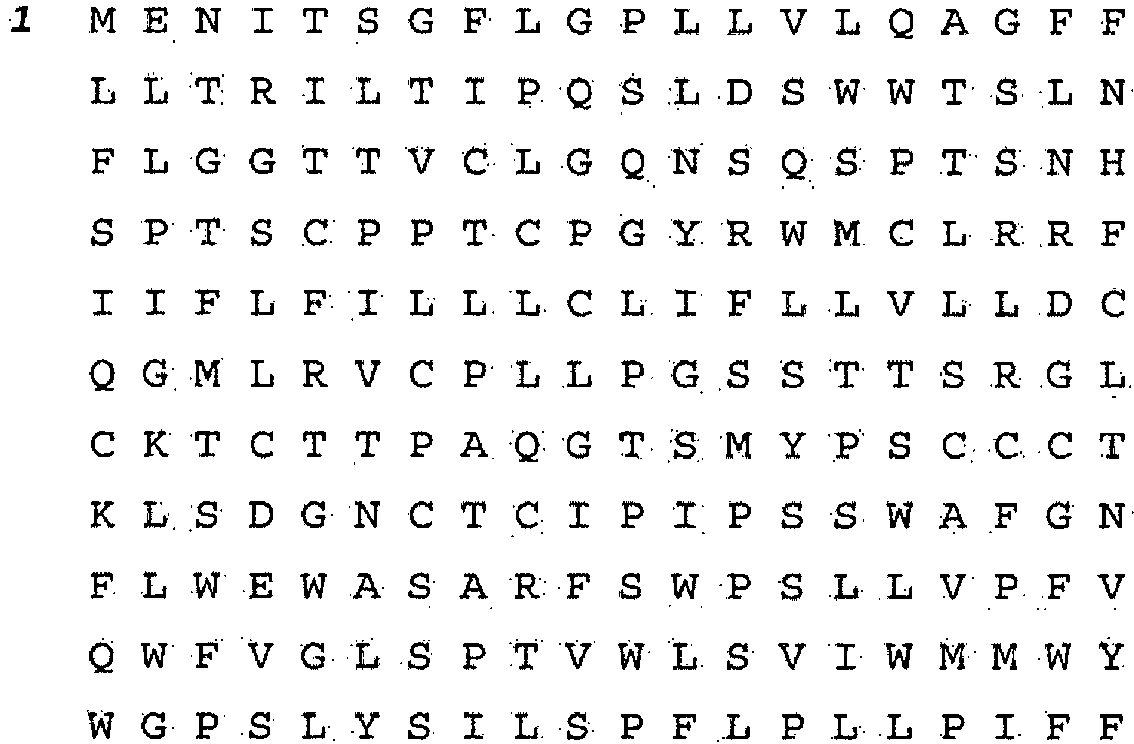
- SEQ ID NO:4

- SEQ ID NO:5

- SEQ ID NO:6
S T T S R - SEQ ID NO:7
T T S R G - SEQ ID NO:8
T S R G L - SEQ ID NO:9
S R G L C - SEQ ID NO:10
R G L C K - SEQ ID NO:11
G L C K T - SEQ ID NO:12
L C K T C - SEQ ID NO:13
W A F G N - SEQID NO:14
A F G N F - SEQ ID NO:15
F G N F L - SEQ ID NO:16
G N F L W
N F L W E
- SEQ ID NO:3
- (11) Isoliertes Polypeptid entsprechend der Sequenz des HBs-Antigens des Hepatitis B-Virus, dadurch gekennzeichnet, dass es ein Oligo- oder Polypeptid gemäß einem der Gegenstände (9) bis (10) enthält.
- (12) Fragment eines Polypeptids, welches der Sequenz des HBs-Antigens des Hepatitis B-Virus entspricht, dadurch gekennzeichnet, dass das Fragment ein Oligo- oder Polypeptid gemäß einem der Gegenstände (9) bis (10) enthält.
- (13) Isoliertes Polypeptid, welches für die a-Determinante des HBs-Antigens des Hepatitis B-Virus kodiert, dadurch gekennzeichnet, dass es ein Öligo- oder Polypeptid gemäß einem der Gegenstände (9) bis (10) enthält.
- (14) Testkit zum Nachweis oder zur Bestimmung mittels einer Hybridisierungsreaktion einer Nukleinsäure, die für eine Variante oder Mutante des Hepatitis B-Virus spezifisch ist, unter Verwendung mindestens eines Oligo- oder Polynukleotids gemäß einem oder mehreren der Gegenstände (1) bis (6).
- (15) Testkit zum immunchemischen Nachweis oder zur immunchemischen Bestimmung eines gegen eine Variante oder Mutante des Hepatitis B-Virus gerichteten Antikörpers unter Verwendung mindestens eines Oligö- oder Polypeptids gemäß einem der Gegenstände (9) bis (13).
- Zusätzlich beinhaltet die vorliegende Erfindung eine isolierte Nukleotid-Sequenz, die die vorliegende erfindungsgemäße Variante der a-Determinante des Hepatitis B surface Antigens (HBsAg) in den Aminosäuren-Positionen zwischen aa 1 und 226 kodiert bzw. zu einem Peptid-Produkt führt, das in der aa-Sequenz mit der in
Abb. 6 dargestellten SEQ. ID NO:4 übereinstimmt - Des weiteren beinhaltet die vorliegende Erfindung einen Vektor, umfassend eine oder mehrere der genannten Nukleotid-Sequenzen wie auch eine Wirtszelle, die diesen Vektor enthält und eine Methode zur Darstellung eines entsprechenden Polypeptids aus der a-Determinante, umfassend die Inkubation der oben genannten Wirtszelle über Zeiten und unter Bedingungen, die für die Expression des Polypeptides erforderlich sind.
- Eine isolierte HBV Variante ist ebenfalls Gegenstand der Erfindung, wobei das Virus eine a-Determinante aufweist, die den aa-Sequenzen mindestens zwischen ca. Position 100 und 160 entspricht.
- Auch eine immunogene Mischung zur Erzeugung polyklonaler oder monoklonaler Antikörper ist Gegenstand der vorliegenden Erfindung umfassend das beschriebene isolierte HBV oder ein bzw. mehrere der beschriebenen Poypeptide.
- Die Erfindung beinhaltet auch eine Polynukleotid-Sonde, enthaltend eine HBV Genom-Sequenz, welche durch Substitution von Aminosäuren zu einer modifizierten a-Determinanten führt, die mit der beschriebenen aa-Sequenz der neuen HBV-Variante identisch ist.
- Auch Kits zum Nachweis von Polynukleotiden der HBV-Variante mit Hilfe der genannten Sonde wie auch Kits zum Nachweis von Antikörpern, die für die Variante oder Epitope davon spezifisch sind, sind ebenso Gegenstand der Erfindung, wie die Methoden des Nachweises von Polynukleotiden und Antikörpern, umfassend eine Inkubation zur Bildung entsprechender Komplexe und Nachweis dieser Komplexe durch geeignete dem Fachmann bekannte Verfahren.
- Die Ausführungsformen dieser Kits und Nachweismethoden können zum spezifischen und alleinigen Nachweis von Nukleotiden und gegen das Antigen der HBV-Variante gerichteter Antikörper ausgelegt sein oder supplementär, d.h. den zusätzlichen Nachweis der erfindungsgemäßen Varianten-Analyten zu derzeitig bekannten HBV-Nukleotiden, bzw. Antikörpern gestatten.
- Analog kann eine immunogene Mischung von erfindungsgemäßen Polypeptidsequenzen auch in Verbindung mit bekannten Antigenen z.B. für die Verbesserung der Wirksamkeit einer Vakzine angewendet werden.
- Die vorliegende Erfindung beschreibt eine neue Variante des Hepatitis B Virus (HBV), die eine völlig neue a-Determinante als Resultat von Aminosäure-Austauschen in den nachfolgenden aa-Positionen der S-HBsAg Sequenz aufweist. Für die Beschreibung der Aminosäuren wird der 1-Buchstaben-Code verwendet:
aa von HDB 07 aa-Position aa von ayw2/Genotyp D R 105 P L 110 I R 118 T L 120 P K 122 R L 142 P N 160 K P 173 L - Außerdem liegt in Position aa 100 von HDB 07 Cystein (C) statt Tyrosin (Y) vor:
C. 100 Y. - Diese aa-Substitutionen lassen sich auf entsprechende Nukleotid-Substitutionen der entsprechenden Codons zurückführen.
- Die vorliegende Erfindung betrifft eine isolierte Nukleotid-Sequenz, die für die a-Determinante des Virus kodiert (
Abb. 3 sowie SEQ ID No: 1). - Die Erfindung umfaßt auch Nukleotide mit mindestens 65 % Übereinstimmung, bevorzugt mindestens 75% Übereinstimmung und besonders bevorzugt mit mindestens 90% Übereinstimmung mit der Nukleotid-Sequenz der vorliegenden Erfindung bzw. Fragmenten davon sowie dazu komplementäre Sequenzen.
- Die Erfindung umfaßt auch Polypeptide, die von, oben beschriebenen Nukleotid-Sequenzen kodiert werden, insbesondere solche Aminosäuresequenzen, die die a-Determinante des HBsAg bestimmen.
- Unter einem Nukleotid-Fragment wird eine konsekutive Folge von mindestens 9, bevorzugt 9-15, besonders bevorzugt 15-21 und sogar ganz besonders bevorzugt 21-60 Nukleotide aus der Nukleotidsequenz der neuen HBV-Variante verstanden, wobei auch Mischungen derartiger Nukleotid-Fragmente naheliegen.
- Ein Polypeptid-Fragment wird als Folge von mindestens 3, bevorzugt 3-5, besonders bevorzugt 5-7 und sogar ganz besonders bevorzugt 7-20 Aminosäuren aus der a-Determinante der neuen HBV-Variante verstanden, wobei auch Mischungen derartiger Polypeptid-Fragmente unter diese Erfindung fallen.
- Unter die vorliegende Erfindung fällt auch eine isolierte Nukleotid-Sequenz, die hybridisierbar ist und zu Nukleotid-Sequenzen führt, die den Nukleotidsequenzen des HBsAg der neuen HBV Variante oder Teilen der a-Determinante der neuen HBV Variante entsprechen, komplementär dazu sind oder als Subtyp oder Mutation auf HDB 07 zurückzuführen sind.
- Dem Fachmann ist bekannt, daß eine Nukleotidsequenz nach deren Isolierung nach Methoden gemäß Stand der Technik in prokaryontische (z.B. E. coli), eukaryontische Wirtszellen (z.B. Chinese Hamster Ovary Cell) oder Hefe (z.B. S. Cerevisiae) mit Hilfe eines Vektors oder Konstruktes eingebracht werden können (mit dem Fachmann bekannten Methoden wie z.B. Transfektion, Transformation oder Elektroporation: Molecular Cloning: A Laboratory Manual, 2nd ed., Vol. 1-3, ed Sambrook et al., Cold Spring Harbor Laboratory Press (1989), wobei transiente oder permanente Kulturen angewendet werden können.
- Demzufolge umfaßt die vorliegende Erfindung isolierte Nukleotidsequenzen der a-Determinante der neuen HBV Variante, Polypeptide, die durch diese Nukleotide kodiert werden, Vektoren, die Nucleotidsequenzen der a-Determinante der neuen HBV Variante enthalten wie auch die Wirtszelle, in die ein Vektor gebracht wird. Neben der Darstellung von Polypeptiden mit Hilfe eines Expressions-Systems (rekombinant oder gentechnologisch) ist dem Fachmann bekannt, daß analoge Polypeptid-Strukturen auch vollsynthetisch oder direkt durch Reinigung aus der Virusvariante hergestellt werden.
- Es ist möglich, die Polypeptide oder Proteine der neuen HBV Variante zur Erzeugung von monoklonalen und/oder polyklonalen Antikörpern zu verwenden, die immunologisch an Bindestellen (Epitope) der a-Determinante der neuen HBV Variante binden. Die Methoden zur Darstellung von Antikörpern sind dem Fachmann bekannt (z.B. Koehler et al., Nature 256-494 (1975), Mimms et al., Vi. 176: 604-619 (1990).
- Ferner ist es möglich, die a-Determinante der erfindungsgemäßen HDB 07-Variante in Form der gesamten Polypeptidsequenz oder Teilen davon für die Bestimmung von gegen die HBV Variante gerichteten Antikörpern (Anti-HBsAg-Antikörpern) zu verwenden (siehe oben).
- Dem Fachmann ist eine Vielzahl von Bestimmungsmethoden geläufig, bei denen mit Polypeptiden aus der a-Determinante der HBV Variante und Antikörpern tierischen oder menschlichen Ursprungs Immunkomplexe gebildet oder deren Bildung gehemmt werden.
- Eine spezielle Ausführung stellt der sogenannte Enzymimmunoassay dar, von dem ein mögliches Testprinzip im Folgenden beispielhaft beschrieben wird, ohne jedoch die erfindungsgemäße Lehre darauf zu beschränken:
- Bei dem sehr weit verbreitetet sogenannten Sandwich-Prinzip werden auf einem geeigneten Träger (z.B. Mikropartikel oder Oberfläche von Vertiefungen einer Mikrotitrationsplatte) immobilisierte Epitop-tragende Polypeptid- oder Protein-Sequenzen mit der Untersuchungsprobe inkubiert. An die Epitope gebundene Antikörper werden nach Entfernen überschüssiger Probe detektiert, indem eine weitere Inkubation mit Epitop-tragenden Polypeptid- oder Protein-Sequenzen erfolgt, die mit einer Sonde versehen sind. Als Sonde wird häufig ein Enzym eingesetzt, dessen katalytische Umsetzung eines geeigneten Substrates - nach Entfernen des überschüssigen Reagenzes - zu einer Farbreaktion führt, die photometrisch gemessen wird und deren Intensität dem in der Probe vorhandenen Antikörpergehalt proportional ist.
- Neben dieser speziellen Ausführungsform sind auch Methoden bekannt, die homogener Natur sind (d.h. keine bound/free-Trennung erfordern), die ganz ohne Sonde auskommen (z.B. Agglutinationsverfahren), mit bloßem Auge auswertbar sind (z.B. radiale Immundiffusion) oder sich anderer Sonden (z.B. radioaktive Isotope oder Chemilumineszenz) bzw. mehrerer Sonden bedienen (wie z.B. das Biotin/Strepavidin-System).
- Ebenso können die Polypeptidstrukturen der HBV-Variante HDB 07 durch anti-idiotypische Antikörper dargestellt werden oder durch Wahl eines geeigneten Testprinzips auch Variantenspezifische monoklonale oder polyklonale Antikörper zur Bestimmung von Anti-HBs-Antikörpern (z.B. in einem kompetitiven Testformat) herangezogen werden. Es ist ebenso bekannt, daß durch Wahl des Testprinzips auch eine Differenzierung der Immunglobulin-Klassen erfolgen kann (z.B. durch das "indirekte" Verfahren mit einem zweiten Klassenspezifischen Antikörper (z.B. IgG- oder IgM-spezifisch) mit einer Sonde oder mit Hilfe des sogenannten Anti-p-Prinzips (IgM spezifisch)). Natürlich müssen die Methoden und Materialen, einschließlich Sonde und Polypeptidsequenzen, dem jeweiligen Ziel angepaßt werden.
- All diese Ausführungsformen sind dem Fachmann bekannt, so daß unter "Bestimmung von Antikörpern, die für die a-Determinante der neuen HDB 07-Variante spezifisch sind" gemäß vorliegender Erfindung alle Verfahren verstanden werden, die sich zum Nachweis von gegen die neue HBV-Variante HDB 07 gerichteten Immunglobulinen und / oder Immunglobulin-Klassen eignen, ungeachtet der Frage, ob alleine der Antikörper gegen die neue Variante gesucht wird oder in Verbindung mit Antikörpern gegen bekannte a-Determinanten und / oder bekannte Mutationen in der a-Region.
- Schließlich ist dem Fachmann ebenso bekannt, monoklonale oder polyklonale Antikörper oder Mischungen davon oder Fragmente solcher Antikörper oder Mischungen davon, die mit Epitopen der neuen HBV-Variante HDB 07 reagieren, dazu zu verwenden, die a-Determinante der erfindungsgemäßen HBV-Variante (HBsAg der HDB 07-Variante) in Form der gesamten Polypeptidsequenz oder Teilen davon in Untersuchungsproben zu bestimmen.
- Dem Fachmann ist eine Vielzahl von Bestimmungsmethoden geläufig, bei denen mit einem oder mehreren monoklonalen Antikörper(n) oder polyklonalen Antikörpern (oder Mischungen davon bzw. Fragmenten oder Mischungen von Fragmenten), die spezifisch für die a-Determinante der HBV-Variante sind, Immunkomplexe gebildet oder deren Bildung gehemmt werden.
- Eine spezielle Ausführung stellt der sogenannte Enzymimmunoassay dar, von dem ein mögliches Testprinzip im folgenden beispielhaft beschrieben wird, ohne jedoch die erfindungsgemäße Idee darauf zu beschränken:
- Bei dem sehr weit verbreitetet sogenannten Sandwich-Prinzip werden auf einem geeigneten Träger (z.B. Mikropartikel oder Oberfläche von Vertiefungen einer Mikrotitrationsplatte) immobilisierte Antikörper oder Fragmente davon mit der Untersuchungsprobe inkubiert. An die Antikörper gebundenes HBsAg wird nach Entfernen überschüssiger Probe detektiert, indem eine weitere Inkubation erfolgt mit Anti-HBs-Antikörpern (monoklonal oder polyklonal oder Fragmente bzw. Mischungen dieser Fragmente), die mit einer Sonde versehen sind. Als Sonde wird häufig ein Enzym eingesetzt, dessen katalytische Umsetzung eines geeigneten Substrates - nach Entfernen des überschüssigen Reagenzes - zu einer Farbreaktion führt, die photometrisch gemessen wird und deren Intensität dem in der Probe vorhandenen Antikörpergehalt proportional ist.
- Neben dieser speziellen Ausführungsform sind auch Methoden bekannt, die homogener Natur sind (d.h. keine bound/free Trennung erfordern), die ganz ohne Sonde auskommen (z.B. Agglutinationsverfahren), mit bloßem Auge auswertbar sind (z.B. radiale Immundiffusion) oder sich anderer Sonden (z.B. radioaktive Isotope oder Chemilumineszenz) bzw. mehrerer Sonden bedienen (wie z.B. das Biotin/Strepavidin-System).
- All diese Ausführungsformen sind dem Fachmann bekannt, so daß unter "Bestimmung von HBsAg der neuen HBV Variante" mit der vorliegenden Erfindung alle Verfahren verstanden werden, die sich zum Nachweis von Polypeptidsequenzen oder Antigenen der neuen HBV Variante eignen, ungeachtet der Frage, ob alleine das HBsAg der neuen Variante bestimmt wird oder in Verbindung mit HBsAg von bekannten a-Determinanten und / öder bekannten Mutationen in der a-Region.
- Ebenso ist dem Fachmann geläufig, aus ökonomischen Gründen eine HBsAg-Bestimmung mit einer Nachweismethode zum Nachweis eines weiteren Analyten (z.B. HIV-Arttigen oder die gleichzeitige Bestimmung von.H.BV Varianten-HBsAg und dagegen gerichtete spezifische Antikörper) in einem Testansatz (differenzierend oder nicht-differenzierend) zu kombinieren.
- In Bezug auf Nukleinsäure-Testung (NAT) ist dem Fachmann ebenso bekannt, Nukleotid-Sequenzen gemäß vorliegender Erfindung zu verwenden, um DNA-Oligomere von 6-8 Nukleotiden oder größer herzustellen, die geeignet sind, als Hybridisierungssonden das virale Genom der hier beschriebenen HBV-Variante in Personen nachzuweisen, die möglicherweise die Virus-Variante HDB 07 tragen oder z.B. im Blutspendewesen Blutkonserven auf Vorhandensein des Varianten-Genoms entweder gezielt oder in Kombination mit dem Nachweis von Nukleotidsequenzen bekannter HBV-Varianten und/oder HBV-Mutanten zu screenen. Ebenso können auf Basis der gefundenen Nukleotidsequenzen der neuen HBV Variante entsprechende Primer entwickelt werden.
- Ferner schließt die Erfindung auch eine Vakzine ein, umfassend ein Polypeptid gemäß vorliegender Erfindung und ein gebräuchliches Adjuvans (z.B. Freundsches Adjuvans, Phosphat-gepufferte Saline o.ä.). Eine derartige Vakzine kann dazu verwendet werden, um die Bildung von Antikörpern in Säugetieren einschließlich des Menschen anzuregen. Ähnlich umfaßt die Erfindung ein Partikel, das eine nicht-variantenspezifische Aminosäure-Sequenz beinhaltet, die eine Partikel-Formation induziert zusammen mit einem Epitop-enthaltenden Polypeptid, das spezifisch für die erfindungsgemäße HBV-Variante HDB 07 ist.
- Schließlich sind auch diagnostische Reagenzien als Kits Gegenstand der Erfindung, die basierend auf den oben beschriebenen Verfahren einen Nachweis von gegen HBV Varianten-spezifischem Antigen (HBsAg) gerichtete Antikörper (Anti-HBs), entweder als singuläre Bestimmungen oder miteinander oder mit anderen bekannten HBV-Antigenen bzw. spezifisch damit reagierenden Antikörpern bzw. auch mit ganz anderen Analyten kombinierbar.
- Zusätzlich können die vorliegenden Nukleotidsequenzen benutzt werden, um Primer und/oder Gensonden herzustellen, weshalb auch Kits, enthaltend Primer und/oder Sonden zum Nachweis von HBV Varianten-spezifischer Nukleinsäure entweder alleine oder in Verbindung mit bekannten HBV Nukleotidsequenzen in Untersuchungsproben ebenfalls Gegenstand der Erfindung sind.
- Nuleotidsequenzen gemäß vorliegender Erfindung können auch dazu verwendet werden, sog. Antisense-Oligonukleotide darzustellen (ggfs. für therapeutische Zwecke).
- Schließlich können auf Basis vorliegender Nukleotidsequenzen auch Primer entwickelt werden, die in der sog. Polymerase Chain Reaction (PCR) Verwendung finden. Die PCR stellt eine Methode dar, um eine gewünschte Nukleotidsequenz einer Nukleinsäure oder eines Nukleinsäuregemisches zu amplifizieren. Dabei werden die Primer jeweils spezifisch durch eine Polymerase mit der gewünschten Nukleinsäure als Leseraster verlängert. Nach Dissoziation von dem Originalstrang werden neue Primer hybridisiert und wiederum durch die Polymerase verlängert. Durch Wiederholung dieser Zyklen wird eine Anreicherung von Molekülen mit der gesuchten Zielsequenz erreicht.
- Weiterhin umfaßt die vorliegende Erfindung auch Kulturen von Gewebezellen, die mit der erfindungsgemäßen HBV-Variante infiziert sind, ebenso wie die isolierte HBV-Variante selbst. Auch eine immunogene Aufbereitung, die die attenuierte oder inaktivierte erfindungsgemäße HDB 07 -Variante von HBV enthält, ist Gegenstand der Erfindung.
- Die vorliegende Erfindung ist darüber hinaus in den Patentansprüchen beschrieben.
-
-
Abb. 1 stellt eine Übersicht der Aminosäure- Sequenzen der a-Determinante von 8 beschriebenen Genotypen des HBV im Vergleich zur Variante HDB 07 dar. - In
Abb. 2 sind die Nukleotid- und Aminosäure-Sequenzen des S-Gens des Genotyps D, Subtyp ayw2 von HBV dargestellt. -
Abb. 3 bildet die Nukleotid-Sequenz des HBV surface Antigens für Subtyp ayw2 des Genotyps D von HBV ab im Vergleich zur Nukleotid-Sequenz von HDB 07. -
Abb. 4 fasst die translationsrelevanten Abweichungen der Nukleotid-Sequenz von HDB 07 zusammen. - In
Abb. 5 wird die Nukleotid-Sequenz des S-Gens von HDB 07 sowie die entsprechende Aminosäure-Sequenz dargestellt. Die a-Determinante befindet sich zwischen Aminsäure No. 101 und 180 des kleinen HBsAg (Small, S). -
Abb. 6 zeigt die entsprechende Polypeptid-Sequenz der a-Determinante von HDB 07, sowie eng benachbarter Bereiche, die von der inAbb. 5 beschriebenen Nukleotid-Sequenz kodiert werden. Diese werden mit analogen Bereichen des Subtyp ayw2 des Genotyps D von HBV verglichen. - Die nachfolgenden Beispiele erläutern die vorliegende Erfindung näher, ohne daß die Erfindung auf die beschriebenen Beispiele beschränkt ist.
- Zur Bestimmung des surface Antigens (HBsAg) von HBV im Blut des Patienten aus Berlin wurde der Enzymimmunoassay Enzygnost® HBsAg 5.0 der Fa. Dade Behring Marburg GmbH, Marburg (Deutschland) angewendet.
- Es handelt sich um einen in Europa zugelassenen leistungsfähigen Test, der den Angaben der Packungsbeilage gemäß abgearbeitet wurde.
- Das zu Grunde liegende Testprinzip ist ein sogenannter Sandwich Test im Mikrotitrationsplatten-Format:
- 100 µl der zu untersuchenden Probe werden in einem Einschritt-Verfahren mit 25 µl Konjugat 1 (monoklonale HBsAg spezifische Antikörper von der Maus, die kovalent mit Biotin markiert sind) und immobilisierten HBsAg-spezifischen polyklonalen Antikörpern vom Schaf in Kontakt gebracht. Nach 60-minütiger Inkubation bei 37°C und Entfernen überschüssiger Komponenten durch 4-maliges Waschen der Platten-Kavitäten werden 100 µl Konjugat 2 zugegeben, das aus Streptavidin besteht, an das das Sonden-Enzym Peroxidase kovalent gebunden ist.
- Nach 30-minütiger Inkubation bei 37°C und Entfernen überschüssiger Komponenten durch 4-maliges Waschen der Platten-Kavitäten werden 75 µl Chromogen-Puffer/Substrat-Lösung zugegeben, gefolgt von einer 30-minütigen Inkubation bei Raumtemperatur. Die Entwicklung des blau gefärbten Tetramethylbenzidin-Farbstoffes wird durch Zugabe von 75 µl Stoplösung (Schwefelsäure) unterbrochen und der Farbstoff bei 450 nm photometrisch gemessen.
- Die Intensität der Farbentwicklung, gemessen an der optischen Dichte (O.D.) ist dem Gehalt der Untersuchungsprobe an HBsAg direkt proportional, wobei ein O.D. Wert (Lichtabsorptionswert), der niedriger als ein Grenzwert ist, als HBsAg-negativ bewertet wird. Der Grenzwert ist definiert als der O.D.-Mittelwert der parallel getesteten Kontrolle, negativ (im Testkit enthalten), zu dem ein konstanter Betrag von 0,05 O.D. addiert wird.
- Die Nachweisgrenzen des zur Untersuchung herangezogenen Lots (# 35214) wurden mit den international akzeptierten Standardpräparationen des Paul-Ehrlich-Institutes, Langen, Deutschland zu 0,007 ng ad-Subtyp/ ml bzw. 0,005 ng ay-Subtyp / ml aus Testungen von Verdünnungen der Standardpräparationen in HBsAg-negativem Serum durch graphische Interpolation ermittelt.
- Die Untersuchung der Probe # 126734 / 305024817, aus der auch die DNA-Isolierung vorgenommen wurde, brachte in 2 unabhängigen Versuchen an zwei verschiedenen Tagen Ergebnisse zwischen 0,02 und 0,03 O.D., die den Kriterien des Testes entsprechend als HBsAg-negativ zu interpretieren sind. Die mitgeführte Kontrolle, positiv (im Testkit enthalten) war positiv (Validierungskriterien erfüllt).
- Ein 65 µl-Aliquot der Berliner Probe wurde mit 135µl negativem Plasma auf ein Volumen von 200µl aufgefüllt und die DNA isoliert, indem der QIA amp® Min Elute™ Virus Spin Kit der Fa. Qiagen, Hilden (Deutschland) angewendet wurde. Dabei wurden alle Verfahrensschritte wie in der Packungsbeilage beschrieben befolgt und die Elution in einem Volumen von je 20 µl vorgenommen.
- Die vier nachstehenden HBV Primer wurden verwendet:
Primer 1 mit der 5'> 3'- Sequenz: GGGTCACCATATTCTTGGGAAC (SEQ ID NO:28) Primer 2 mit der 5'> 3'- Sequenz: TATACCCAAAGACAAAAGAAAATTGG (SEQ ID NO:29) Primer 3 mit der 5'> 3'- Sequenz: GACTCGTGGTGGACTTCTCTC (SEQ ID NO:30) Primer 4 mit der 5'> 3'- Sequenz: TACAGACTTGCCCCCCAATACC (SEQ ID NO:31) - Es wurde eine sogenannte nested PCR amplification des surface Antigens durchgeführt, wobei der Perkin Elmer Ampli Taq ® DNA Polymerase Kit sowie der Thermocycler Gene Amp ® PCR system 9700 der Fa. Perkin Elmer Applied Biosystems, USA verwendet wurde.
- Die Nukleotide wurden von der Fa. Amersham Biosciences, UK bezogen.
- Für den ersten Amplifikations-Zyklus wurden 7 µl der isolierten DNA unter Verwendung der oben genannten Primer 1 und 2 sowie folgenden Bedingungen amplifiziert:
-
Primer 1 (10 µM) 1 µl Primer 2 (10 µM) 1 µl 10 -fach konz. Puffer (incl. 15 mM Mg2Cl) 5 µl dNTP Mischung (10 mM) 1 µl dest. Wasser 34,75 µl Ampli Taq (5 U/ µl) 0,25 µl Pro Röhrchen 43 µl Gesamtvolumen plus 7 µl isolierte DNA 50 µl Reaktionsvolumen - Der 50 µl-Ansatz wurde unter Verwendung des beschriebenen Thermocyclers unter folgenden Bedingungen amplifiziert:
- 94° C, 1 min. / 94°C, 28 sek. - 50° C, 28 sek. - 72 ° C, 60 sek. (40 cycles) / 72 ° C, 5 min. / 8 °C soak.
- In der zweiten Amplifzierungsrunde wurde 7 µl des ersten PCR Produktes weiter amplifiziert unter Verwendung der HBV Primer 3 und 4 und folgenden Bedingungen:
-
Primer 3 (10 µM) 1 µl Primer 4 (10 µM) 1 µl 10 -fach konz. Puffer 5 µl dNTP Mischung (10 mM) 1 µl dest. Wasser 34,75 µl Ampli Taq (5 U/ µl) 0,25µl Pro Röhrchen 43 µl Gesamtvolumen plus 7 µl PCR Produkt v.rxn 50 µl Reaktionsvolumen - Dieser PCR 2- Ansatz wurde unter Verwendung des oben beschriebenen Thermocyclers amplifiziert wobei folgende Bedingungen angewendet wurden:
- 94° C, 1 min. / 94°C, 28 sek. - 55° C, 28 sek. - 72 ° C, 38 sek. (40 cycles) / 72 ° C, 5 min. / 8 °C soak.
- Abschließend wurde das PCR 2 Produkt elektrophoretisch aufgetrennt (1,5 % Agarose) unter Mitführen geeigneter Molekulargewichtsmarker. Das PCR-Produkt (mit ca. 520 Basenpaaren) wurde mit Hilfe des QIA quick PCR Purification Kit der Fa. Qiagen, Hilden (Deutschland) aufgereinigt
- Das gereinigte PCR Produkt wurde von der Fa. Eurofin Medigenomix GmbH Martinsried (Deutschland) mit Hilfe des ABI 3700 Kapillar Systems sequenziert in Verbindung mit der ABI BigDye Terminator Chemistry Version 3.1. und der ABI Sequencing Analysis Software Version 3.7. unter Verwendung der in Bsp. 3 beschriebenen Primer 3 und 4.
- Es konnte gezeigt werden, daß das HBsAg der analysierten Probe innerhalb des sequenzierten Bereiches die beste Übereinstimmung der Nukleotid- und Aminosäure-Sequenz mit dem Genotyp D, Subtyp ayw2 zeigt. In der Region der a-Determinante zeigt die analysierte Probe aus Berlin insgesamt 7 Aminosäure-Substitutionen im Vergleich zum Genotyp D, Subtyp ayw2 (siehe auch
Abb. 6 ):HDB 07: D, ayw2: 1) Arg (R) statt 105 Pro (P) 2) Arg (R) statt 118 Thr (T) 3) Leu (L) statt 120 Pro (P) 4) Lys (K) statt 122 Arg (R) 5) Leu (L) statt 142 Pro (P) 6) Asn (N) statt 160 Lys (K) 7) Pro (P) statt 173 Leu (L) 8) Leu (L) statt 110 Ile (I) - Zusätzlich liegt eine Aminosäure-Substitution in der Position # 100 vor:
9) Tyr (Y) statt 100 Cys (C). -
- <110> Siemens Healthcare Diagnostics Products GmbH
- <120> Neue Oberflächen-Protein-Mutante des Hepatitis B Virus HBV surface Antigen (HBsAg)
- <130> 2007/B008 - Ma 1292
- <140>
DE 10 2007 062 962.3
<141> 2007-12-21 - <160> 31
- <170> PatentIn version 3.3
- <210> 1
<211> 678
<212> DNA
<213> Hepatitis B virus - <400> 1

- <210> 2
<211> 243
<212> DNA
<213> Hepatitis B virus - <400> 2


- <210> 3
<211> 226
<212> PRT
<213> Hepatitis B virus - <400> 3


- <210> 4
<211> 91
<212> PRT
<213> Hepatitis B virus - <400> 4

- <210> 5
<211> 81
<212> PRT
<213> Hepatitis B virus - <400> 5


- <210> 6
<211> 5
<212> PRT
<213> Hepatitis B virus - <400> 6

- <210> 7
<211> 5
<212> PRT
<213> Hepatitis B virus - <400> 7

- <210> 8
<211> 5
<212> PRT
<213> Hepatitis B virus - <400> 8

- <210> 9
<211> 5
<212> PRT
<213> Hepatitis B virus - <400> 9

- <210> 10
<211> 5
<212> PRT
<213> Hepatitis B virus - <400> 10

- <210> 11
<211> 5
<212> PRT
<213> Hepatitis B virus - <400> 11

- <210> 12
<211> 5
<212> PRT
<213> Hepatitis B virus - <400> 12

- <210> 13
<211> 5
<212> PRT
<213> Hepatitis B virus - <400> 13

- <210> 14
<211> 5
<212> PRT
<213> Hepatitis B virus - <400> 14

- <210> 15
<211> 5
<212> PRT
<213> Hepatitis B virus - <400> 15

- <210> 16
<211> 5
<212> PRT
<213> Hepatitis B virus - <400> 16

- <210> 17
<211> 5
<212> PRT
<213> Hepatitis B virus - <400> 17

- <210> 18
<211> 12
<212> DNA
<213> Hepatitis B virus - <400> 18
agcaggggac ta 12 - <210> 19
<211> 18
<212> DNA
<213> Hepatitis B virus - <400> 19
agcaggggac tatgcaaa 18 - <210> 20
<211> 24
<212> DNA
<213> Hepatitis B virus - <400> 20
agcaggggac tatgcaaaac ctgc 24 - <210> 21
<211> 45
<212> DNA
<213> Hepatitis B virus - <400> 21
agcaggggac tatgcaaaac ctgcacgact cctgctcaag gaacc 45 - <210> 22
<211> 81
<212> DNA
<213> Hepatitis B virus - <400> 22

- <210> 23
<211> 12
<212> DNA
<213> Hepatitis B virus - <400> 23
ttcggaaact tc 12 - <210> 24
<211> 18
<212> DNA
<213> Hepatitis B virus - <400> 24
tgggctttcg gaaacttc 18 - <210> 25
<211> 27
<212> DNA
<213> Hepatitis B virus - <400> 25
ccatcatcct gggctttcgg aaacttc 27 - <210> 26
<211> 48
<212> DNA
<213> Hepatitis B virus - <400> 26
aattgcacct gtattcccat cccatcatcc tgggctttcg gaaacttc 48 - <210> 27
<211> 81
<212> DNA
<213> Hepatitis B virus - <400> 27

- <210> 28
<211> 22
<212> DNA
<213> Hepatitis B virus - <400> 28
gggtcaccat attcttggga ac 22 - <210> 29
<211> 26
<212> DNA
<213> Hepatitis B virus - <400> 29
tatacccaaa gacaaaagaa aattgg 26 - <210> 30
<211> 21
<212> DNA
<213> Hepatitis B virus - <400> 30
gactcgtggt ggacttctct c 21 - <210> 31
<211> 22
<212> DNA
<213> Hepatitis B virus - <400> 31
tacagacttg gcccccaata cc 22
Claims (14)
- Oligo- oder Polypeptid umfassend(a) eine Aminosäuresequenz, die eine Teilsequenz von SEQ ID NO:3 mit wenigstens 75 aufeinanderfolgenden Aminosäuren von SEQ ID NO:3 ist, wobei diese Teilsequenz alle acht der Positionen 100, 105, 110, 118, 120, 142, 160 und 173 von SEQ ID NO:3 einschließt; oder(b) ein Fragment eines HBs-Antigens eines Hepatitis B-Virus, wobei das Fragment eine Länge von wenigstens 15 Aminosäuren hat, das HBs-Antigen an Position 100 Cystein, an Position 105 Arginin, an Position 110 Leucin, an Position 118 Arginin, an Position 120 Leucin, an Position 142 Leucin, an Position 160 Asparagin und an Position 173 Prolin aufweist, und das Fragment Cystein 100, Arginin 105, Arginin 118, Leucin 120, Leucin 142, Asparagin 160 und Prolin 173 Umfaßt.
- Oligo- oder Polypeptid nach Anspruch 1, dadurch gekennzeichnet, daß es mit Seren aus Individuen reagiert, die mit der Hepatitis B-Virusvariante, umfassend eine Nukleotidsequenz, kodierend für eine Aminosäuresequenz, welche die SEQ ID NO:4 einschließt, infiziert sind.
- Oligo- oder Polypeptid nach Anspruch 1 oder 2, dadurch gekennzeichnet, daß es eine Aminosäuresequenz umfaßt, die ausgewählt ist aus der Gruppe bestehend aus SEQ ID NO:3, SEQ ID NO:4 und SEQ ID NO:5.
- Oligo- oder Polynukleotid, umfassend eine Nukleotidsequenz, die für ein Oligo- öder Polypeptid nach einem der Ansprüche 1 bis 3 kodiert oder ein dazu komplementäres Oligo- oder Polynukleotid.
- Oligo- oder Polynukleotid nach Anspruch 4, dadurch gekennzeichnet, daß es eine Nukleotidsequenz bestehend aus SEQ ID NO:2 umfaßt.
- Vektor oder Plasmid enthaltend ein Oligo- oder Polynukleotid nach einem der Ansprüche 4 bis 5.
- Zelle, die mit einem Vektor oder Plasmid nach Anspruch 6 transformiert oder transfiziert wurde.
- Zelle, die ein Oligo- oder Polynukleotid nach einem der Ansprüche 4 bis 5 oder einen Vektor oder ein Plasmid nach Anspruch 6 enthält.
- Verfahren zur Herstellung eines Oligo- oder Polypeptids nach einem der Ansprüche 1 bis 3, das umfaßt, daß man eine Zelle nach Anspruch 7 oder 8 unter geeigneten Bedingungen kultiviert, so daß das Oligo- oder Polypeptid exprimiert wird.
- Verfahren nach Anspruch 9, dadurch gekennzeichnet, daß das Oligo- oder Polypeptid aus den Zellen gewonnen wird und von anderen Oligo- oder Polypeptiden abgetrennt wird.
- Testkit zum Nachweis von Hepatitis B-Viren, enthaltend ein Oligo- oder Polypeptid nach einem der Ansprüche 1 bis 3.
- Immunogenes Peptid oder Mischung immunogener Peptide, enthaltend ein oder mehrere Oligo- oder Polypeptide nach einem der Ansprüche 1 bis 3 alleine oder in Verbindung mit bekannten HBV-Immunogenen.
- Verfahren zum Nachweis von Antikörpern, die gegen ein Hepatitis B-Virus-Antigen gerichtet sind, dadurch gekennzeichnet, daß(a) eine Probe mit einem Oligo- oder. Polypeptid nach einem der Ansprüche 1 bis 3 unter Bedingungen inkubiert wird, die die Bildung eines Antigen-Antikörper-Komplexes gestatten; und(b) der Antikörper-Antigen-Komplex, der das Oligo- oder Polypeptid enthält, nachgewiesen wird.
- Isoliertes Hepatitis B-Virus, das ein HBs-Antigen aufweist, das die Aminosäuresequenz SEQ ID NO:5 umfaßf.
Applications Claiming Priority (2)
| Application Number | Priority Date | Filing Date | Title |
|---|---|---|---|
| DE102007062962A DE102007062962A1 (de) | 2007-12-21 | 2007-12-21 | Neue Oberflächen-Protein-Mutante des Hepatitis B Virus HBV surface Antigen (HBsAg) |
| PCT/EP2008/010708 WO2009083136A1 (de) | 2007-12-21 | 2008-12-16 | Neue oberflächen-protein-mutante des hepatitis b virus hbv surface antigen (hbsag) |
Publications (2)
| Publication Number | Publication Date |
|---|---|
| EP2220493A1 EP2220493A1 (de) | 2010-08-25 |
| EP2220493B1 true EP2220493B1 (de) | 2015-01-28 |
Family
ID=40551435
Family Applications (1)
| Application Number | Title | Priority Date | Filing Date |
|---|---|---|---|
| EP08869063.1A Not-in-force EP2220493B1 (de) | 2007-12-21 | 2008-12-16 | Neue oberflächen-protein-mutante des hepatitis b virus hbv surface antigen (hbsag) |
Country Status (5)
| Country | Link |
|---|---|
| US (1) | US8729231B2 (de) |
| EP (1) | EP2220493B1 (de) |
| DE (1) | DE102007062962A1 (de) |
| ES (1) | ES2531098T3 (de) |
| WO (1) | WO2009083136A1 (de) |
Families Citing this family (2)
| Publication number | Priority date | Publication date | Assignee | Title |
|---|---|---|---|---|
| WO2016085284A1 (ko) * | 2014-11-28 | 2016-06-02 | (주)셀트리온 | B형 간염 바이러스 표면 항원의 에피토프 및 이에 특이적으로 결합하는 b형 간염 바이러스 중화 결합 분자 |
| EP4458975A3 (de) | 2019-09-30 | 2025-02-12 | Gilead Sciences, Inc. | Hbv-impfstoffe und verfahren zur behandlung von hbv |
Family Cites Families (5)
| Publication number | Priority date | Publication date | Assignee | Title |
|---|---|---|---|---|
| US7202354B2 (en) | 2001-03-30 | 2007-04-10 | Abbott Laboratories | Hepatitis B virus surface antigen mutant and methods of detection thereof |
| EP2455390A1 (de) * | 2002-04-12 | 2012-05-23 | Melbourne Health | Hepatitis-B-Virusvarianten mit reduzierter Suszeptibilität für Nukleosidanaloga und Verwendungen dafür |
| US7485312B2 (en) | 2003-06-20 | 2009-02-03 | Dade Behring Marburg Gmbh | Surface protein (HBsAg) variant of the hepatitis B virus |
| JP2007509614A (ja) | 2003-10-21 | 2007-04-19 | メルボルン ヘルス | Hbv変種の検出および適用 |
| ES2470318T3 (es) * | 2005-03-15 | 2014-06-23 | Rheinische Friedrich-Wilhelms-Universit�T Bonn | Variantes del virus de la hepatitis B resistentes a ciertos análogos nucle�sidos, pero sensibles a otros, y usos de las mismas |
-
2007
- 2007-12-21 DE DE102007062962A patent/DE102007062962A1/de not_active Withdrawn
-
2008
- 2008-12-16 US US12/809,983 patent/US8729231B2/en active Active
- 2008-12-16 EP EP08869063.1A patent/EP2220493B1/de not_active Not-in-force
- 2008-12-16 ES ES08869063T patent/ES2531098T3/es active Active
- 2008-12-16 WO PCT/EP2008/010708 patent/WO2009083136A1/de not_active Ceased
Non-Patent Citations (2)
| Title |
|---|
| LAZAREVIC I ET AL: "Distribution of HBV genotypes, subgenotypes and HBsAg subtypes among chronically infected patients in Serbia", DISTRIBUTION OF HBV GENOTYPES, SUBGENOTYPES AND HBSAG SUBTYPES AMONG CHRONICALLY INFECTED PATIENTS IN SERBIA, vol. 152, no. 11, 6 August 2007 (2007-08-06), pages 2017 - 2025, XP019565409, ISSN: 1432-8798, DOI: DOI:10.1007/S00705-007-1031-0 * |
| NIESTERS H.G.M. ET AL.: "The added value of molecular analysis in the source and contact tracing ofRT hepatitis B transmission in a community", 5 April 2006 (2006-04-05), Retrieved from the Internet <URL:http://ibis/IBIS/exam/dbfetch.jsp?id=EM_VI:DQ412279> [retrieved on 20110620] * |
Also Published As
| Publication number | Publication date |
|---|---|
| US8729231B2 (en) | 2014-05-20 |
| US20110033838A1 (en) | 2011-02-10 |
| EP2220493A1 (de) | 2010-08-25 |
| DE102007062962A1 (de) | 2009-06-25 |
| ES2531098T3 (es) | 2015-03-10 |
| WO2009083136A1 (de) | 2009-07-09 |
Similar Documents
| Publication | Publication Date | Title |
|---|---|---|
| DE69111801T2 (de) | Vakzin gegen hepatitis b. | |
| DE3886363T2 (de) | NANBV-Diagnostika und Vakzine. | |
| Theilmann et al. | Detection of pre‐S1 proteins in serum and liver of HBsAg‐positive patients: A new marker for hepatitis B virus infection | |
| DE69433285T2 (de) | Hepatitis-b-virusmutanten, und verbindungen und verfahren für ihre bestimmung | |
| DE69637264T2 (de) | Virales Material und Multiple-Sklerose assoziierte Nukleotidfragmente mit diagnostischen, prophylaktischen und therapeutischen Verwendungen | |
| DE68929467T2 (de) | HIV-2 Varianten | |
| DE69233234T2 (de) | Genomische hcv-sequenzen für diagnostik und therapie | |
| US8628772B2 (en) | Surface protein (HBsAg) variant of the hepatitis B virus | |
| DE69534617T2 (de) | Hepatitis b-impfstoff | |
| EP1638994B1 (de) | NEUE OBERFLÄCHENPROTEIN- (HbsAg-) VARIANTE DES HEPATITIS B VIRUS | |
| EP0279460A1 (de) | Virusantigen, Verfahren zu seiner Gewinnung und Anwendung in Diagnose und Therapie (Impfstoff) | |
| AU756858B2 (en) | A vaccine-induced hepatitis B viral strain and uses thereof | |
| DE60115938T2 (de) | Monoklonale antikörper gegen hepatitis b virus | |
| EP2220493A1 (de) | Neue oberflächen-protein-mutante des hepatitis b virus hbv surface antigen (hbsag) | |
| DE69011122T2 (de) | Rubella-e1 und c peptide. | |
| Nalpas et al. | Secondary immune response to hepatitis B virus vaccine in alcoholics | |
| DE69824001T2 (de) | Reagenz zum nachweis und weiterverfolgen von virusinfektionen | |
| KR100498118B1 (ko) | 하나의 돌연변이 인체 b형 간염 바이러스 균주 및 그용도 | |
| US6787142B2 (en) | Mutant human hepatitis B viral strain and uses thereof | |
| DE3886443T2 (de) | Menschliche Rhinoviruspeptide. | |
| Li et al. | Suitability of yeast-and Escherichia coli-expressed hepatitis B virus core antigen derivatives for detection of anti-HBc antibodies in human sera | |
| DE60030443T2 (de) | Synthetische peptide die immunoreaktivität gegen den virus von hepatitis a zeigen | |
| DE69331796T2 (de) | Kernantigenprotein des Hepatitis C-Virus, sowie diagnostisches Verfahren und Satz von Reagenzen | |
| DD298525A5 (de) | Verfahren zur herstellung eines hcv-impfstoffes |
Legal Events
| Date | Code | Title | Description |
|---|---|---|---|
| PUAI | Public reference made under article 153(3) epc to a published international application that has entered the european phase |
Free format text: ORIGINAL CODE: 0009012 |
|
| 17P | Request for examination filed |
Effective date: 20100505 |
|
| AK | Designated contracting states |
Kind code of ref document: A1 Designated state(s): AT BE BG CH CY CZ DE DK EE ES FI FR GB GR HR HU IE IS IT LI LT LU LV MC MT NL NO PL PT RO SE SI SK TR |
|
| AX | Request for extension of the european patent |
Extension state: AL BA MK RS |
|
| DAX | Request for extension of the european patent (deleted) | ||
| 17Q | First examination report despatched |
Effective date: 20110701 |
|
| REG | Reference to a national code |
Ref country code: DE Ref legal event code: R079 Ref document number: 502008012651 Country of ref document: DE Free format text: PREVIOUS MAIN CLASS: G01N0033530000 Ipc: C07K0014005000 |
|
| RIC1 | Information provided on ipc code assigned before grant |
Ipc: A61K 39/00 20060101ALI20131114BHEP Ipc: G01N 33/576 20060101ALI20131114BHEP Ipc: C07K 14/005 20060101AFI20131114BHEP |
|
| GRAP | Despatch of communication of intention to grant a patent |
Free format text: ORIGINAL CODE: EPIDOSNIGR1 |
|
| INTG | Intention to grant announced |
Effective date: 20140711 |
|
| GRAS | Grant fee paid |
Free format text: ORIGINAL CODE: EPIDOSNIGR3 |
|
| GRAA | (expected) grant |
Free format text: ORIGINAL CODE: 0009210 |
|
| AK | Designated contracting states |
Kind code of ref document: B1 Designated state(s): AT BE BG CH CY CZ DE DK EE ES FI FR GB GR HR HU IE IS IT LI LT LU LV MC MT NL NO PL PT RO SE SI SK TR |
|
| REG | Reference to a national code |
Ref country code: GB Ref legal event code: FG4D Free format text: NOT ENGLISH |
|
| REG | Reference to a national code |
Ref country code: CH Ref legal event code: EP |
|
| REG | Reference to a national code |
Ref country code: IE Ref legal event code: FG4D Free format text: LANGUAGE OF EP DOCUMENT: GERMAN |
|
| REG | Reference to a national code |
Ref country code: ES Ref legal event code: FG2A Ref document number: 2531098 Country of ref document: ES Kind code of ref document: T3 Effective date: 20150310 |
|
| REG | Reference to a national code |
Ref country code: AT Ref legal event code: REF Ref document number: 708200 Country of ref document: AT Kind code of ref document: T Effective date: 20150315 |
|
| REG | Reference to a national code |
Ref country code: DE Ref legal event code: R096 Ref document number: 502008012651 Country of ref document: DE Effective date: 20150319 |
|
| REG | Reference to a national code |
Ref country code: NL Ref legal event code: VDEP Effective date: 20150128 |
|
| REG | Reference to a national code |
Ref country code: LT Ref legal event code: MG4D |
|
| PG25 | Lapsed in a contracting state [announced via postgrant information from national office to epo] |
Ref country code: LT Free format text: LAPSE BECAUSE OF FAILURE TO SUBMIT A TRANSLATION OF THE DESCRIPTION OR TO PAY THE FEE WITHIN THE PRESCRIBED TIME-LIMIT Effective date: 20150128 Ref country code: FI Free format text: LAPSE BECAUSE OF FAILURE TO SUBMIT A TRANSLATION OF THE DESCRIPTION OR TO PAY THE FEE WITHIN THE PRESCRIBED TIME-LIMIT Effective date: 20150128 Ref country code: SE Free format text: LAPSE BECAUSE OF FAILURE TO SUBMIT A TRANSLATION OF THE DESCRIPTION OR TO PAY THE FEE WITHIN THE PRESCRIBED TIME-LIMIT Effective date: 20150128 Ref country code: HR Free format text: LAPSE BECAUSE OF FAILURE TO SUBMIT A TRANSLATION OF THE DESCRIPTION OR TO PAY THE FEE WITHIN THE PRESCRIBED TIME-LIMIT Effective date: 20150128 Ref country code: BG Free format text: LAPSE BECAUSE OF FAILURE TO SUBMIT A TRANSLATION OF THE DESCRIPTION OR TO PAY THE FEE WITHIN THE PRESCRIBED TIME-LIMIT Effective date: 20150428 Ref country code: NO Free format text: LAPSE BECAUSE OF FAILURE TO SUBMIT A TRANSLATION OF THE DESCRIPTION OR TO PAY THE FEE WITHIN THE PRESCRIBED TIME-LIMIT Effective date: 20150428 |
|
| PG25 | Lapsed in a contracting state [announced via postgrant information from national office to epo] |
Ref country code: PL Free format text: LAPSE BECAUSE OF FAILURE TO SUBMIT A TRANSLATION OF THE DESCRIPTION OR TO PAY THE FEE WITHIN THE PRESCRIBED TIME-LIMIT Effective date: 20150128 Ref country code: IS Free format text: LAPSE BECAUSE OF FAILURE TO SUBMIT A TRANSLATION OF THE DESCRIPTION OR TO PAY THE FEE WITHIN THE PRESCRIBED TIME-LIMIT Effective date: 20150528 Ref country code: LV Free format text: LAPSE BECAUSE OF FAILURE TO SUBMIT A TRANSLATION OF THE DESCRIPTION OR TO PAY THE FEE WITHIN THE PRESCRIBED TIME-LIMIT Effective date: 20150128 Ref country code: GR Free format text: LAPSE BECAUSE OF FAILURE TO SUBMIT A TRANSLATION OF THE DESCRIPTION OR TO PAY THE FEE WITHIN THE PRESCRIBED TIME-LIMIT Effective date: 20150429 Ref country code: NL Free format text: LAPSE BECAUSE OF FAILURE TO SUBMIT A TRANSLATION OF THE DESCRIPTION OR TO PAY THE FEE WITHIN THE PRESCRIBED TIME-LIMIT Effective date: 20150128 |
|
| REG | Reference to a national code |
Ref country code: DE Ref legal event code: R097 Ref document number: 502008012651 Country of ref document: DE |
|
| PG25 | Lapsed in a contracting state [announced via postgrant information from national office to epo] |
Ref country code: DK Free format text: LAPSE BECAUSE OF FAILURE TO SUBMIT A TRANSLATION OF THE DESCRIPTION OR TO PAY THE FEE WITHIN THE PRESCRIBED TIME-LIMIT Effective date: 20150128 Ref country code: EE Free format text: LAPSE BECAUSE OF FAILURE TO SUBMIT A TRANSLATION OF THE DESCRIPTION OR TO PAY THE FEE WITHIN THE PRESCRIBED TIME-LIMIT Effective date: 20150128 Ref country code: RO Free format text: LAPSE BECAUSE OF FAILURE TO SUBMIT A TRANSLATION OF THE DESCRIPTION OR TO PAY THE FEE WITHIN THE PRESCRIBED TIME-LIMIT Effective date: 20150128 Ref country code: SK Free format text: LAPSE BECAUSE OF FAILURE TO SUBMIT A TRANSLATION OF THE DESCRIPTION OR TO PAY THE FEE WITHIN THE PRESCRIBED TIME-LIMIT Effective date: 20150128 Ref country code: CZ Free format text: LAPSE BECAUSE OF FAILURE TO SUBMIT A TRANSLATION OF THE DESCRIPTION OR TO PAY THE FEE WITHIN THE PRESCRIBED TIME-LIMIT Effective date: 20150128 |
|
| PLBE | No opposition filed within time limit |
Free format text: ORIGINAL CODE: 0009261 |
|
| STAA | Information on the status of an ep patent application or granted ep patent |
Free format text: STATUS: NO OPPOSITION FILED WITHIN TIME LIMIT |
|
| REG | Reference to a national code |
Ref country code: FR Ref legal event code: PLFP Year of fee payment: 8 |
|
| 26N | No opposition filed |
Effective date: 20151029 |
|
| PG25 | Lapsed in a contracting state [announced via postgrant information from national office to epo] |
Ref country code: SI Free format text: LAPSE BECAUSE OF FAILURE TO SUBMIT A TRANSLATION OF THE DESCRIPTION OR TO PAY THE FEE WITHIN THE PRESCRIBED TIME-LIMIT Effective date: 20150128 |
|
| PG25 | Lapsed in a contracting state [announced via postgrant information from national office to epo] |
Ref country code: BE Free format text: LAPSE BECAUSE OF NON-PAYMENT OF DUE FEES Effective date: 20151231 |
|
| PG25 | Lapsed in a contracting state [announced via postgrant information from national office to epo] |
Ref country code: LU Free format text: LAPSE BECAUSE OF FAILURE TO SUBMIT A TRANSLATION OF THE DESCRIPTION OR TO PAY THE FEE WITHIN THE PRESCRIBED TIME-LIMIT Effective date: 20151216 Ref country code: MC Free format text: LAPSE BECAUSE OF FAILURE TO SUBMIT A TRANSLATION OF THE DESCRIPTION OR TO PAY THE FEE WITHIN THE PRESCRIBED TIME-LIMIT Effective date: 20150128 |
|
| REG | Reference to a national code |
Ref country code: CH Ref legal event code: PL |
|
| REG | Reference to a national code |
Ref country code: IE Ref legal event code: MM4A |
|
| PG25 | Lapsed in a contracting state [announced via postgrant information from national office to epo] |
Ref country code: CH Free format text: LAPSE BECAUSE OF NON-PAYMENT OF DUE FEES Effective date: 20151231 Ref country code: LI Free format text: LAPSE BECAUSE OF NON-PAYMENT OF DUE FEES Effective date: 20151231 Ref country code: IE Free format text: LAPSE BECAUSE OF NON-PAYMENT OF DUE FEES Effective date: 20151216 |
|
| REG | Reference to a national code |
Ref country code: FR Ref legal event code: PLFP Year of fee payment: 9 |
|
| REG | Reference to a national code |
Ref country code: AT Ref legal event code: MM01 Ref document number: 708200 Country of ref document: AT Kind code of ref document: T Effective date: 20151216 |
|
| PG25 | Lapsed in a contracting state [announced via postgrant information from national office to epo] |
Ref country code: HU Free format text: LAPSE BECAUSE OF FAILURE TO SUBMIT A TRANSLATION OF THE DESCRIPTION OR TO PAY THE FEE WITHIN THE PRESCRIBED TIME-LIMIT; INVALID AB INITIO Effective date: 20081216 Ref country code: AT Free format text: LAPSE BECAUSE OF NON-PAYMENT OF DUE FEES Effective date: 20151216 |
|
| PG25 | Lapsed in a contracting state [announced via postgrant information from national office to epo] |
Ref country code: CY Free format text: LAPSE BECAUSE OF FAILURE TO SUBMIT A TRANSLATION OF THE DESCRIPTION OR TO PAY THE FEE WITHIN THE PRESCRIBED TIME-LIMIT Effective date: 20150128 |
|
| PG25 | Lapsed in a contracting state [announced via postgrant information from national office to epo] |
Ref country code: TR Free format text: LAPSE BECAUSE OF FAILURE TO SUBMIT A TRANSLATION OF THE DESCRIPTION OR TO PAY THE FEE WITHIN THE PRESCRIBED TIME-LIMIT Effective date: 20150128 Ref country code: MT Free format text: LAPSE BECAUSE OF FAILURE TO SUBMIT A TRANSLATION OF THE DESCRIPTION OR TO PAY THE FEE WITHIN THE PRESCRIBED TIME-LIMIT Effective date: 20150128 |
|
| REG | Reference to a national code |
Ref country code: FR Ref legal event code: PLFP Year of fee payment: 10 |
|
| PG25 | Lapsed in a contracting state [announced via postgrant information from national office to epo] |
Ref country code: PT Free format text: LAPSE BECAUSE OF FAILURE TO SUBMIT A TRANSLATION OF THE DESCRIPTION OR TO PAY THE FEE WITHIN THE PRESCRIBED TIME-LIMIT Effective date: 20150128 |
|
| PGFP | Annual fee paid to national office [announced via postgrant information from national office to epo] |
Ref country code: FR Payment date: 20211217 Year of fee payment: 14 |
|
| PGFP | Annual fee paid to national office [announced via postgrant information from national office to epo] |
Ref country code: IT Payment date: 20211222 Year of fee payment: 14 |
|
| PGFP | Annual fee paid to national office [announced via postgrant information from national office to epo] |
Ref country code: GB Payment date: 20220117 Year of fee payment: 14 Ref country code: DE Payment date: 20220218 Year of fee payment: 14 |
|
| PGFP | Annual fee paid to national office [announced via postgrant information from national office to epo] |
Ref country code: ES Payment date: 20220324 Year of fee payment: 14 |
|
| REG | Reference to a national code |
Ref country code: DE Ref legal event code: R119 Ref document number: 502008012651 Country of ref document: DE |
|
| GBPC | Gb: european patent ceased through non-payment of renewal fee |
Effective date: 20221216 |
|
| PG25 | Lapsed in a contracting state [announced via postgrant information from national office to epo] |
Ref country code: GB Free format text: LAPSE BECAUSE OF NON-PAYMENT OF DUE FEES Effective date: 20221216 Ref country code: DE Free format text: LAPSE BECAUSE OF NON-PAYMENT OF DUE FEES Effective date: 20230701 |
|
| PG25 | Lapsed in a contracting state [announced via postgrant information from national office to epo] |
Ref country code: FR Free format text: LAPSE BECAUSE OF NON-PAYMENT OF DUE FEES Effective date: 20221231 |
|
| REG | Reference to a national code |
Ref country code: ES Ref legal event code: FD2A Effective date: 20240129 |
|
| PG25 | Lapsed in a contracting state [announced via postgrant information from national office to epo] |
Ref country code: IT Free format text: LAPSE BECAUSE OF NON-PAYMENT OF DUE FEES Effective date: 20221216 |
|
| PG25 | Lapsed in a contracting state [announced via postgrant information from national office to epo] |
Ref country code: ES Free format text: LAPSE BECAUSE OF NON-PAYMENT OF DUE FEES Effective date: 20221217 |
|
| PG25 | Lapsed in a contracting state [announced via postgrant information from national office to epo] |
Ref country code: ES Free format text: LAPSE BECAUSE OF NON-PAYMENT OF DUE FEES Effective date: 20221217 |