EP2218457A1 - CD44v6 peptides as inhibitors of bacterial infections - Google Patents
CD44v6 peptides as inhibitors of bacterial infections Download PDFInfo
- Publication number
- EP2218457A1 EP2218457A1 EP09002149A EP09002149A EP2218457A1 EP 2218457 A1 EP2218457 A1 EP 2218457A1 EP 09002149 A EP09002149 A EP 09002149A EP 09002149 A EP09002149 A EP 09002149A EP 2218457 A1 EP2218457 A1 EP 2218457A1
- Authority
- EP
- European Patent Office
- Prior art keywords
- peptide
- inib
- cd44v6
- met
- seq
- Prior art date
- Legal status (The legal status is an assumption and is not a legal conclusion. Google has not performed a legal analysis and makes no representation as to the accuracy of the status listed.)
- Granted
Links
- 108090000765 processed proteins & peptides Proteins 0.000 title claims abstract description 132
- 208000035143 Bacterial infection Diseases 0.000 title claims abstract description 12
- 208000022362 bacterial infectious disease Diseases 0.000 title claims abstract description 12
- 108010058905 CD44v6 antigen Proteins 0.000 title abstract description 77
- 102000004196 processed proteins & peptides Human genes 0.000 title description 23
- 239000003112 inhibitor Substances 0.000 title 1
- 150000001875 compounds Chemical class 0.000 claims abstract description 49
- 241000894006 Bacteria Species 0.000 claims abstract description 24
- 230000003834 intracellular effect Effects 0.000 claims abstract description 14
- 241000607768 Shigella Species 0.000 claims abstract description 6
- 230000002265 prevention Effects 0.000 claims abstract description 5
- 102000001189 Cyclic Peptides Human genes 0.000 claims abstract description 4
- 108010069514 Cyclic Peptides Proteins 0.000 claims abstract description 4
- 241000186781 Listeria Species 0.000 claims abstract description 3
- 241000186359 Mycobacterium Species 0.000 claims abstract description 3
- 241000224016 Plasmodium Species 0.000 claims abstract description 3
- 150000001413 amino acids Chemical class 0.000 claims description 49
- FWMNVWWHGCHHJJ-SKKKGAJSSA-N 4-amino-1-[(2r)-6-amino-2-[[(2r)-2-[[(2r)-2-[[(2r)-2-amino-3-phenylpropanoyl]amino]-3-phenylpropanoyl]amino]-4-methylpentanoyl]amino]hexanoyl]piperidine-4-carboxylic acid Chemical compound C([C@H](C(=O)N[C@H](CC(C)C)C(=O)N[C@H](CCCCN)C(=O)N1CCC(N)(CC1)C(O)=O)NC(=O)[C@H](N)CC=1C=CC=CC=1)C1=CC=CC=C1 FWMNVWWHGCHHJJ-SKKKGAJSSA-N 0.000 claims description 42
- 125000003275 alpha amino acid group Chemical group 0.000 claims description 20
- 150000003839 salts Chemical class 0.000 claims description 17
- 241000186779 Listeria monocytogenes Species 0.000 claims description 13
- 208000015181 infectious disease Diseases 0.000 claims description 6
- 206010024641 Listeriosis Diseases 0.000 claims description 3
- 210000004027 cell Anatomy 0.000 description 74
- 239000011324 bead Substances 0.000 description 51
- 230000004913 activation Effects 0.000 description 46
- 230000026731 phosphorylation Effects 0.000 description 29
- 238000006366 phosphorylation reaction Methods 0.000 description 29
- 102100032912 CD44 antigen Human genes 0.000 description 18
- 101000868273 Homo sapiens CD44 antigen Proteins 0.000 description 18
- 230000000694 effects Effects 0.000 description 17
- 108010029485 Protein Isoforms Proteins 0.000 description 16
- 102000001708 Protein Isoforms Human genes 0.000 description 16
- 102000004169 proteins and genes Human genes 0.000 description 15
- 108090000623 proteins and genes Proteins 0.000 description 15
- 238000002474 experimental method Methods 0.000 description 14
- 238000000034 method Methods 0.000 description 14
- 102100020903 Ezrin Human genes 0.000 description 13
- 108010055671 ezrin Proteins 0.000 description 13
- 230000001419 dependent effect Effects 0.000 description 11
- 210000004292 cytoskeleton Anatomy 0.000 description 10
- 239000003814 drug Substances 0.000 description 9
- 230000008569 process Effects 0.000 description 9
- 230000006698 induction Effects 0.000 description 8
- 230000002401 inhibitory effect Effects 0.000 description 8
- 230000009918 complex formation Effects 0.000 description 7
- 239000012634 fragment Substances 0.000 description 7
- 239000004816 latex Substances 0.000 description 7
- 229920000126 latex Polymers 0.000 description 7
- 230000011664 signaling Effects 0.000 description 7
- 239000000126 substance Substances 0.000 description 7
- 102000007469 Actins Human genes 0.000 description 6
- 108010085238 Actins Proteins 0.000 description 6
- 229920002971 Heparan sulfate Polymers 0.000 description 6
- HTTJABKRGRZYRN-UHFFFAOYSA-N Heparin Chemical compound OC1C(NC(=O)C)C(O)OC(COS(O)(=O)=O)C1OC1C(OS(O)(=O)=O)C(O)C(OC2C(C(OS(O)(=O)=O)C(OC3C(C(O)C(O)C(O3)C(O)=O)OS(O)(=O)=O)C(CO)O2)NS(O)(=O)=O)C(C(O)=O)O1 HTTJABKRGRZYRN-UHFFFAOYSA-N 0.000 description 6
- 230000015572 biosynthetic process Effects 0.000 description 6
- 230000009545 invasion Effects 0.000 description 6
- 238000006467 substitution reaction Methods 0.000 description 6
- 238000001890 transfection Methods 0.000 description 6
- 102000008055 Heparan Sulfate Proteoglycans Human genes 0.000 description 5
- 102000002151 Microfilament Proteins Human genes 0.000 description 5
- 108010040897 Microfilament Proteins Proteins 0.000 description 5
- 108090000054 Syndecan-2 Proteins 0.000 description 5
- 238000007792 addition Methods 0.000 description 5
- 238000005755 formation reaction Methods 0.000 description 5
- 229920000669 heparin Polymers 0.000 description 5
- 229960002897 heparin Drugs 0.000 description 5
- 108700024394 Exon Proteins 0.000 description 4
- 108010006444 Leucine-Rich Repeat Proteins Proteins 0.000 description 4
- TWRXJAOTZQYOKJ-UHFFFAOYSA-L Magnesium chloride Chemical compound [Mg+2].[Cl-].[Cl-] TWRXJAOTZQYOKJ-UHFFFAOYSA-L 0.000 description 4
- FAPWRFPIFSIZLT-UHFFFAOYSA-M Sodium chloride Chemical compound [Na+].[Cl-] FAPWRFPIFSIZLT-UHFFFAOYSA-M 0.000 description 4
- 230000037396 body weight Effects 0.000 description 4
- 239000000872 buffer Substances 0.000 description 4
- -1 caamsylate Chemical compound 0.000 description 4
- 230000006870 function Effects 0.000 description 4
- 230000004927 fusion Effects 0.000 description 4
- 210000004901 leucine-rich repeat Anatomy 0.000 description 4
- 239000003446 ligand Substances 0.000 description 4
- 230000001404 mediated effect Effects 0.000 description 4
- 230000004048 modification Effects 0.000 description 4
- 238000012986 modification Methods 0.000 description 4
- 102000005962 receptors Human genes 0.000 description 4
- 108020003175 receptors Proteins 0.000 description 4
- BJHCYTJNPVGSBZ-YXSASFKJSA-N 1-[4-[6-amino-5-[(Z)-methoxyiminomethyl]pyrimidin-4-yl]oxy-2-chlorophenyl]-3-ethylurea Chemical compound CCNC(=O)Nc1ccc(Oc2ncnc(N)c2\C=N/OC)cc1Cl BJHCYTJNPVGSBZ-YXSASFKJSA-N 0.000 description 3
- WEVYAHXRMPXWCK-UHFFFAOYSA-N Acetonitrile Chemical compound CC#N WEVYAHXRMPXWCK-UHFFFAOYSA-N 0.000 description 3
- 241000283707 Capra Species 0.000 description 3
- 239000006144 Dulbecco’s modified Eagle's medium Substances 0.000 description 3
- PEDCQBHIVMGVHV-UHFFFAOYSA-N Glycerine Chemical compound OCC(O)CO PEDCQBHIVMGVHV-UHFFFAOYSA-N 0.000 description 3
- 241000283160 Inia Species 0.000 description 3
- 108010053099 Vascular Endothelial Growth Factor Receptor-2 Proteins 0.000 description 3
- 102100033177 Vascular endothelial growth factor receptor 2 Human genes 0.000 description 3
- 230000001580 bacterial effect Effects 0.000 description 3
- 230000001086 cytosolic effect Effects 0.000 description 3
- 230000007423 decrease Effects 0.000 description 3
- 229940079593 drug Drugs 0.000 description 3
- 238000009650 gentamicin protection assay Methods 0.000 description 3
- 239000006166 lysate Substances 0.000 description 3
- 210000004962 mammalian cell Anatomy 0.000 description 3
- 230000007246 mechanism Effects 0.000 description 3
- 238000002135 phase contrast microscopy Methods 0.000 description 3
- 108091008598 receptor tyrosine kinases Proteins 0.000 description 3
- 102000027426 receptor tyrosine kinases Human genes 0.000 description 3
- 238000003786 synthesis reaction Methods 0.000 description 3
- GOJUJUVQIVIZAV-UHFFFAOYSA-N 2-amino-4,6-dichloropyrimidine-5-carbaldehyde Chemical group NC1=NC(Cl)=C(C=O)C(Cl)=N1 GOJUJUVQIVIZAV-UHFFFAOYSA-N 0.000 description 2
- CIWBSHSKHKDKBQ-JLAZNSOCSA-N Ascorbic acid Chemical compound OC[C@H](O)[C@H]1OC(=O)C(O)=C1O CIWBSHSKHKDKBQ-JLAZNSOCSA-N 0.000 description 2
- 102000000905 Cadherin Human genes 0.000 description 2
- 108050007957 Cadherin Proteins 0.000 description 2
- 102000005853 Clathrin Human genes 0.000 description 2
- 108010019874 Clathrin Proteins 0.000 description 2
- KCXVZYZYPLLWCC-UHFFFAOYSA-N EDTA Chemical compound OC(=O)CN(CC(O)=O)CCN(CC(O)=O)CC(O)=O KCXVZYZYPLLWCC-UHFFFAOYSA-N 0.000 description 2
- ZRALSGWEFCBTJO-UHFFFAOYSA-N Guanidine Chemical compound NC(N)=N ZRALSGWEFCBTJO-UHFFFAOYSA-N 0.000 description 2
- 102000018697 Membrane Proteins Human genes 0.000 description 2
- 108010052285 Membrane Proteins Proteins 0.000 description 2
- AFVFQIVMOAPDHO-UHFFFAOYSA-N Methanesulfonic acid Chemical compound CS(O)(=O)=O AFVFQIVMOAPDHO-UHFFFAOYSA-N 0.000 description 2
- 108020004459 Small interfering RNA Proteins 0.000 description 2
- DTQVDTLACAAQTR-UHFFFAOYSA-N Trifluoroacetic acid Chemical compound OC(=O)C(F)(F)F DTQVDTLACAAQTR-UHFFFAOYSA-N 0.000 description 2
- 230000033115 angiogenesis Effects 0.000 description 2
- 230000000903 blocking effect Effects 0.000 description 2
- 230000001413 cellular effect Effects 0.000 description 2
- 230000004700 cellular uptake Effects 0.000 description 2
- 229930193282 clathrin Natural products 0.000 description 2
- 238000000749 co-immunoprecipitation Methods 0.000 description 2
- 238000007796 conventional method Methods 0.000 description 2
- 125000004122 cyclic group Chemical group 0.000 description 2
- 238000012217 deletion Methods 0.000 description 2
- 230000037430 deletion Effects 0.000 description 2
- 201000010099 disease Diseases 0.000 description 2
- 208000037265 diseases, disorders, signs and symptoms Diseases 0.000 description 2
- 230000007783 downstream signaling Effects 0.000 description 2
- 238000005516 engineering process Methods 0.000 description 2
- 150000002148 esters Chemical class 0.000 description 2
- CCIVGXIOQKPBKL-UHFFFAOYSA-M ethanesulfonate Chemical compound CCS([O-])(=O)=O CCIVGXIOQKPBKL-UHFFFAOYSA-M 0.000 description 2
- 210000003527 eukaryotic cell Anatomy 0.000 description 2
- 208000021045 exocrine pancreatic carcinoma Diseases 0.000 description 2
- 239000000499 gel Substances 0.000 description 2
- 230000013595 glycosylation Effects 0.000 description 2
- 238000006206 glycosylation reaction Methods 0.000 description 2
- 210000004408 hybridoma Anatomy 0.000 description 2
- 238000010820 immunofluorescence microscopy Methods 0.000 description 2
- 238000011534 incubation Methods 0.000 description 2
- 150000002632 lipids Chemical class 0.000 description 2
- 229910001629 magnesium chloride Inorganic materials 0.000 description 2
- 238000004519 manufacturing process Methods 0.000 description 2
- 239000002609 medium Substances 0.000 description 2
- 239000012528 membrane Substances 0.000 description 2
- 230000003278 mimic effect Effects 0.000 description 2
- 239000000203 mixture Substances 0.000 description 2
- 125000003729 nucleotide group Chemical group 0.000 description 2
- 208000008443 pancreatic carcinoma Diseases 0.000 description 2
- 238000010647 peptide synthesis reaction Methods 0.000 description 2
- 238000012545 processing Methods 0.000 description 2
- 230000007115 recruitment Effects 0.000 description 2
- 230000009467 reduction Effects 0.000 description 2
- 239000011347 resin Substances 0.000 description 2
- 229920005989 resin Polymers 0.000 description 2
- 239000012723 sample buffer Substances 0.000 description 2
- 230000019491 signal transduction Effects 0.000 description 2
- 239000011780 sodium chloride Substances 0.000 description 2
- 238000002415 sodium dodecyl sulfate polyacrylamide gel electrophoresis Methods 0.000 description 2
- 239000007790 solid phase Substances 0.000 description 2
- 239000000243 solution Substances 0.000 description 2
- UCSJYZPVAKXKNQ-HZYVHMACSA-N streptomycin Chemical compound CN[C@H]1[C@H](O)[C@@H](O)[C@H](CO)O[C@H]1O[C@@H]1[C@](C=O)(O)[C@H](C)O[C@H]1O[C@@H]1[C@@H](NC(N)=N)[C@H](O)[C@@H](NC(N)=N)[C@H](O)[C@H]1O UCSJYZPVAKXKNQ-HZYVHMACSA-N 0.000 description 2
- QAOWNCQODCNURD-UHFFFAOYSA-L sulfate group Chemical group S(=O)(=O)([O-])[O-] QAOWNCQODCNURD-UHFFFAOYSA-L 0.000 description 2
- 230000019635 sulfation Effects 0.000 description 2
- 238000005670 sulfation reaction Methods 0.000 description 2
- 239000006228 supernatant Substances 0.000 description 2
- 238000012360 testing method Methods 0.000 description 2
- 238000002560 therapeutic procedure Methods 0.000 description 2
- JOXIMZWYDAKGHI-UHFFFAOYSA-N toluene-4-sulfonic acid Chemical compound CC1=CC=C(S(O)(=O)=O)C=C1 JOXIMZWYDAKGHI-UHFFFAOYSA-N 0.000 description 2
- VZCYOOQTPOCHFL-UHFFFAOYSA-N trans-butenedioic acid Natural products OC(=O)C=CC(O)=O VZCYOOQTPOCHFL-UHFFFAOYSA-N 0.000 description 2
- 238000001262 western blot Methods 0.000 description 2
- GHOKWGTUZJEAQD-ZETCQYMHSA-N (D)-(+)-Pantothenic acid Chemical compound OCC(C)(C)[C@@H](O)C(=O)NCCC(O)=O GHOKWGTUZJEAQD-ZETCQYMHSA-N 0.000 description 1
- JKMHFZQWWAIEOD-UHFFFAOYSA-N 2-[4-(2-hydroxyethyl)piperazin-1-yl]ethanesulfonic acid Chemical compound OCC[NH+]1CCN(CCS([O-])(=O)=O)CC1 JKMHFZQWWAIEOD-UHFFFAOYSA-N 0.000 description 1
- FEWJPZIEWOKRBE-UHFFFAOYSA-M 3-carboxy-2,3-dihydroxypropanoate Chemical compound OC(=O)C(O)C(O)C([O-])=O FEWJPZIEWOKRBE-UHFFFAOYSA-M 0.000 description 1
- ALKYHXVLJMQRLQ-UHFFFAOYSA-M 3-carboxynaphthalen-2-olate Chemical compound C1=CC=C2C=C(C([O-])=O)C(O)=CC2=C1 ALKYHXVLJMQRLQ-UHFFFAOYSA-M 0.000 description 1
- ODHCTXKNWHHXJC-VKHMYHEASA-N 5-oxo-L-proline Chemical compound OC(=O)[C@@H]1CCC(=O)N1 ODHCTXKNWHHXJC-VKHMYHEASA-N 0.000 description 1
- 230000005730 ADP ribosylation Effects 0.000 description 1
- QTBSBXVTEAMEQO-UHFFFAOYSA-M Acetate Chemical compound CC([O-])=O QTBSBXVTEAMEQO-UHFFFAOYSA-M 0.000 description 1
- 229920000936 Agarose Polymers 0.000 description 1
- QGZKDVFQNNGYKY-UHFFFAOYSA-O Ammonium Chemical compound [NH4+] QGZKDVFQNNGYKY-UHFFFAOYSA-O 0.000 description 1
- 239000004475 Arginine Substances 0.000 description 1
- 208000004429 Bacillary Dysentery Diseases 0.000 description 1
- BVKZGUZCCUSVTD-UHFFFAOYSA-M Bicarbonate Chemical compound OC([O-])=O BVKZGUZCCUSVTD-UHFFFAOYSA-M 0.000 description 1
- BTBUEUYNUDRHOZ-UHFFFAOYSA-N Borate Chemical compound [O-]B([O-])[O-] BTBUEUYNUDRHOZ-UHFFFAOYSA-N 0.000 description 1
- 241000283690 Bos taurus Species 0.000 description 1
- 108091003079 Bovine Serum Albumin Proteins 0.000 description 1
- 125000001433 C-terminal amino-acid group Chemical group 0.000 description 1
- BVKZGUZCCUSVTD-UHFFFAOYSA-L Carbonate Chemical compound [O-]C([O-])=O BVKZGUZCCUSVTD-UHFFFAOYSA-L 0.000 description 1
- 108010067225 Cell Adhesion Molecules Proteins 0.000 description 1
- 102000016289 Cell Adhesion Molecules Human genes 0.000 description 1
- 206010008342 Cervix carcinoma Diseases 0.000 description 1
- KRKNYBCHXYNGOX-UHFFFAOYSA-K Citrate Chemical compound [O-]C(=O)CC(O)(CC([O-])=O)C([O-])=O KRKNYBCHXYNGOX-UHFFFAOYSA-K 0.000 description 1
- RGHNJXZEOKUKBD-SQOUGZDYSA-M D-gluconate Chemical compound OC[C@@H](O)[C@@H](O)[C@H](O)[C@@H](O)C([O-])=O RGHNJXZEOKUKBD-SQOUGZDYSA-M 0.000 description 1
- FEWJPZIEWOKRBE-JCYAYHJZSA-N Dextrotartaric acid Chemical compound OC(=O)[C@H](O)[C@@H](O)C(O)=O FEWJPZIEWOKRBE-JCYAYHJZSA-N 0.000 description 1
- 101150039808 Egfr gene Proteins 0.000 description 1
- 241000792859 Enema Species 0.000 description 1
- 108091008794 FGF receptors Proteins 0.000 description 1
- VZCYOOQTPOCHFL-OWOJBTEDSA-N Fumaric acid Chemical compound OC(=O)\C=C\C(O)=O VZCYOOQTPOCHFL-OWOJBTEDSA-N 0.000 description 1
- 208000005577 Gastroenteritis Diseases 0.000 description 1
- 206010017915 Gastroenteritis shigella Diseases 0.000 description 1
- WQZGKKKJIJFFOK-GASJEMHNSA-N Glucose Natural products OC[C@H]1OC(O)[C@H](O)[C@@H](O)[C@@H]1O WQZGKKKJIJFFOK-GASJEMHNSA-N 0.000 description 1
- DHMQDGOQFOQNFH-UHFFFAOYSA-N Glycine Natural products NCC(O)=O DHMQDGOQFOQNFH-UHFFFAOYSA-N 0.000 description 1
- 239000004471 Glycine Substances 0.000 description 1
- 229920002683 Glycosaminoglycan Polymers 0.000 description 1
- 241000282412 Homo Species 0.000 description 1
- VEXZGXHMUGYJMC-UHFFFAOYSA-N Hydrochloric acid Chemical compound Cl VEXZGXHMUGYJMC-UHFFFAOYSA-N 0.000 description 1
- CPELXLSAUQHCOX-UHFFFAOYSA-N Hydrogen bromide Chemical compound Br CPELXLSAUQHCOX-UHFFFAOYSA-N 0.000 description 1
- 101710148896 Internalin A Proteins 0.000 description 1
- 101710148893 Internalin B Proteins 0.000 description 1
- LEVWYRKDKASIDU-IMJSIDKUSA-N L-cystine Chemical compound [O-]C(=O)[C@@H]([NH3+])CSSC[C@H]([NH3+])C([O-])=O LEVWYRKDKASIDU-IMJSIDKUSA-N 0.000 description 1
- WHUUTDBJXJRKMK-VKHMYHEASA-N L-glutamic acid Chemical compound OC(=O)[C@@H](N)CCC(O)=O WHUUTDBJXJRKMK-VKHMYHEASA-N 0.000 description 1
- QIVBCDIJIAJPQS-VIFPVBQESA-N L-tryptophane Chemical compound C1=CC=C2C(C[C@H](N)C(O)=O)=CNC2=C1 QIVBCDIJIAJPQS-VIFPVBQESA-N 0.000 description 1
- JVTAAEKCZFNVCJ-UHFFFAOYSA-M Lactate Chemical compound CC(O)C([O-])=O JVTAAEKCZFNVCJ-UHFFFAOYSA-M 0.000 description 1
- 239000012097 Lipofectamine 2000 Substances 0.000 description 1
- 101710164436 Listeriolysin O Proteins 0.000 description 1
- KDXKERNSBIXSRK-UHFFFAOYSA-N Lysine Natural products NCCCCC(N)C(O)=O KDXKERNSBIXSRK-UHFFFAOYSA-N 0.000 description 1
- 239000004472 Lysine Substances 0.000 description 1
- 108091054455 MAP kinase family Proteins 0.000 description 1
- 102000043136 MAP kinase family Human genes 0.000 description 1
- 241000124008 Mammalia Species 0.000 description 1
- 201000009906 Meningitis Diseases 0.000 description 1
- CHJJGSNFBQVOTG-UHFFFAOYSA-N N-methyl-guanidine Natural products CNC(N)=N CHJJGSNFBQVOTG-UHFFFAOYSA-N 0.000 description 1
- MBBZMMPHUWSWHV-BDVNFPICSA-N N-methylglucamine Chemical compound CNC[C@H](O)[C@@H](O)[C@H](O)[C@H](O)CO MBBZMMPHUWSWHV-BDVNFPICSA-N 0.000 description 1
- 229910002651 NO3 Inorganic materials 0.000 description 1
- NHNBFGGVMKEFGY-UHFFFAOYSA-N Nitrate Chemical compound [O-][N+]([O-])=O NHNBFGGVMKEFGY-UHFFFAOYSA-N 0.000 description 1
- 241000283973 Oryctolagus cuniculus Species 0.000 description 1
- MUBZPKHOEPUJKR-UHFFFAOYSA-N Oxalic acid Chemical compound OC(=O)C(O)=O MUBZPKHOEPUJKR-UHFFFAOYSA-N 0.000 description 1
- 229910019142 PO4 Inorganic materials 0.000 description 1
- 229930040373 Paraformaldehyde Natural products 0.000 description 1
- 108091000080 Phosphotransferase Proteins 0.000 description 1
- 244000126010 Pithecellobium dulce Species 0.000 description 1
- 235000002194 Pithecellobium dulce Nutrition 0.000 description 1
- 235000007891 Pithecellobium lobatum Nutrition 0.000 description 1
- 241000567363 Puccinellia maritima Species 0.000 description 1
- AUNGANRZJHBGPY-SCRDCRAPSA-N Riboflavin Chemical compound OC[C@@H](O)[C@@H](O)[C@@H](O)CN1C=2C=C(C)C(C)=CC=2N=C2C1=NC(=O)NC2=O AUNGANRZJHBGPY-SCRDCRAPSA-N 0.000 description 1
- 102000036646 Signalosomes Human genes 0.000 description 1
- 108091007411 Signalosomes Proteins 0.000 description 1
- 102000019361 Syndecan Human genes 0.000 description 1
- 108050006774 Syndecan Proteins 0.000 description 1
- 229920002253 Tannate Polymers 0.000 description 1
- 101710120037 Toxin CcdB Proteins 0.000 description 1
- 108020004566 Transfer RNA Proteins 0.000 description 1
- 102100023935 Transmembrane glycoprotein NMB Human genes 0.000 description 1
- DTQVDTLACAAQTR-UHFFFAOYSA-M Trifluoroacetate Chemical compound [O-]C(=O)C(F)(F)F DTQVDTLACAAQTR-UHFFFAOYSA-M 0.000 description 1
- QIVBCDIJIAJPQS-UHFFFAOYSA-N Tryptophan Natural products C1=CC=C2C(CC(N)C(O)=O)=CNC2=C1 QIVBCDIJIAJPQS-UHFFFAOYSA-N 0.000 description 1
- 241000251539 Vertebrata <Metazoa> Species 0.000 description 1
- 206010000210 abortion Diseases 0.000 description 1
- 231100000176 abortion Toxicity 0.000 description 1
- 238000010521 absorption reaction Methods 0.000 description 1
- 229940022663 acetate Drugs 0.000 description 1
- 230000021736 acetylation Effects 0.000 description 1
- 238000006640 acetylation reaction Methods 0.000 description 1
- 239000002253 acid Substances 0.000 description 1
- 150000007513 acids Chemical class 0.000 description 1
- 239000004480 active ingredient Substances 0.000 description 1
- 230000010933 acylation Effects 0.000 description 1
- 238000005917 acylation reaction Methods 0.000 description 1
- 239000000443 aerosol Substances 0.000 description 1
- AZDRQVAHHNSJOQ-UHFFFAOYSA-N alumane Chemical class [AlH3] AZDRQVAHHNSJOQ-UHFFFAOYSA-N 0.000 description 1
- 230000009435 amidation Effects 0.000 description 1
- 238000007112 amidation reaction Methods 0.000 description 1
- 150000003863 ammonium salts Chemical class 0.000 description 1
- 238000013459 approach Methods 0.000 description 1
- ODKSFYDXXFIFQN-UHFFFAOYSA-N arginine Natural products OC(=O)C(N)CCCNC(N)=N ODKSFYDXXFIFQN-UHFFFAOYSA-N 0.000 description 1
- 230000010516 arginylation Effects 0.000 description 1
- 229940072107 ascorbate Drugs 0.000 description 1
- 235000010323 ascorbic acid Nutrition 0.000 description 1
- 239000011668 ascorbic acid Substances 0.000 description 1
- 238000003556 assay Methods 0.000 description 1
- 230000008901 benefit Effects 0.000 description 1
- 229940077388 benzenesulfonate Drugs 0.000 description 1
- SRSXLGNVWSONIS-UHFFFAOYSA-M benzenesulfonate Chemical compound [O-]S(=O)(=O)C1=CC=CC=C1 SRSXLGNVWSONIS-UHFFFAOYSA-M 0.000 description 1
- 229940050390 benzoate Drugs 0.000 description 1
- WPYMKLBDIGXBTP-UHFFFAOYSA-N benzoic acid Chemical compound OC(=O)C1=CC=CC=C1 WPYMKLBDIGXBTP-UHFFFAOYSA-N 0.000 description 1
- 230000008512 biological response Effects 0.000 description 1
- 238000006664 bond formation reaction Methods 0.000 description 1
- 210000004899 c-terminal region Anatomy 0.000 description 1
- 239000002775 capsule Substances 0.000 description 1
- 125000003178 carboxy group Chemical group [H]OC(*)=O 0.000 description 1
- 238000004113 cell culture Methods 0.000 description 1
- 210000002421 cell wall Anatomy 0.000 description 1
- 230000033077 cellular process Effects 0.000 description 1
- 230000036755 cellular response Effects 0.000 description 1
- 230000005754 cellular signaling Effects 0.000 description 1
- 238000005119 centrifugation Methods 0.000 description 1
- 208000019065 cervical carcinoma Diseases 0.000 description 1
- 238000007385 chemical modification Methods 0.000 description 1
- 239000003153 chemical reaction reagent Substances 0.000 description 1
- 239000003795 chemical substances by application Substances 0.000 description 1
- OEYIOHPDSNJKLS-UHFFFAOYSA-N choline Chemical compound C[N+](C)(C)CCO OEYIOHPDSNJKLS-UHFFFAOYSA-N 0.000 description 1
- 229960001231 choline Drugs 0.000 description 1
- 238000003776 cleavage reaction Methods 0.000 description 1
- 239000011248 coating agent Substances 0.000 description 1
- 238000000576 coating method Methods 0.000 description 1
- 201000010897 colon adenocarcinoma Diseases 0.000 description 1
- 208000029742 colonic neoplasm Diseases 0.000 description 1
- 230000008878 coupling Effects 0.000 description 1
- 238000010168 coupling process Methods 0.000 description 1
- 238000005859 coupling reaction Methods 0.000 description 1
- 239000006071 cream Substances 0.000 description 1
- 238000004132 cross linking Methods 0.000 description 1
- HCAJEUSONLESMK-UHFFFAOYSA-N cyclohexylsulfamic acid Chemical compound OS(=O)(=O)NC1CCCCC1 HCAJEUSONLESMK-UHFFFAOYSA-N 0.000 description 1
- 229960003067 cystine Drugs 0.000 description 1
- 210000000805 cytoplasm Anatomy 0.000 description 1
- 210000005220 cytoplasmic tail Anatomy 0.000 description 1
- 230000002950 deficient Effects 0.000 description 1
- 230000002939 deleterious effect Effects 0.000 description 1
- 230000017858 demethylation Effects 0.000 description 1
- 238000010520 demethylation reaction Methods 0.000 description 1
- 238000001514 detection method Methods 0.000 description 1
- 235000005911 diet Nutrition 0.000 description 1
- 230000037213 diet Effects 0.000 description 1
- ZBCBWPMODOFKDW-UHFFFAOYSA-N diethanolamine Chemical compound OCCNCCO ZBCBWPMODOFKDW-UHFFFAOYSA-N 0.000 description 1
- 230000004069 differentiation Effects 0.000 description 1
- 239000003085 diluting agent Substances 0.000 description 1
- 238000010790 dilution Methods 0.000 description 1
- 239000012895 dilution Substances 0.000 description 1
- 239000000539 dimer Substances 0.000 description 1
- SWSQBOPZIKWTGO-UHFFFAOYSA-N dimethylaminoamidine Natural products CN(C)C(N)=N SWSQBOPZIKWTGO-UHFFFAOYSA-N 0.000 description 1
- 239000001177 diphosphate Substances 0.000 description 1
- XPPKVPWEQAFLFU-UHFFFAOYSA-J diphosphate(4-) Chemical compound [O-]P([O-])(=O)OP([O-])([O-])=O XPPKVPWEQAFLFU-UHFFFAOYSA-J 0.000 description 1
- 235000011180 diphosphates Nutrition 0.000 description 1
- POULHZVOKOAJMA-UHFFFAOYSA-M dodecanoate Chemical compound CCCCCCCCCCCC([O-])=O POULHZVOKOAJMA-UHFFFAOYSA-M 0.000 description 1
- 230000003828 downregulation Effects 0.000 description 1
- 239000003937 drug carrier Substances 0.000 description 1
- 229940009662 edetate Drugs 0.000 description 1
- 229950005627 embonate Drugs 0.000 description 1
- 239000000839 emulsion Substances 0.000 description 1
- 206010014599 encephalitis Diseases 0.000 description 1
- 239000007920 enema Substances 0.000 description 1
- 229940079360 enema for constipation Drugs 0.000 description 1
- 230000029578 entry into host Effects 0.000 description 1
- 102000052116 epidermal growth factor receptor activity proteins Human genes 0.000 description 1
- 229950000206 estolate Drugs 0.000 description 1
- DEFVIWRASFVYLL-UHFFFAOYSA-N ethylene glycol bis(2-aminoethyl)tetraacetic acid Chemical compound OC(=O)CN(CC(O)=O)CCOCCOCCN(CC(O)=O)CC(O)=O DEFVIWRASFVYLL-UHFFFAOYSA-N 0.000 description 1
- 230000029142 excretion Effects 0.000 description 1
- 239000012894 fetal calf serum Substances 0.000 description 1
- 102000052178 fibroblast growth factor receptor activity proteins Human genes 0.000 description 1
- 239000006260 foam Substances 0.000 description 1
- 244000078673 foodborn pathogen Species 0.000 description 1
- 238000009472 formulation Methods 0.000 description 1
- 230000022244 formylation Effects 0.000 description 1
- 238000006170 formylation reaction Methods 0.000 description 1
- 230000006251 gamma-carboxylation Effects 0.000 description 1
- 229940050410 gluconate Drugs 0.000 description 1
- 239000008103 glucose Substances 0.000 description 1
- 229930195712 glutamate Natural products 0.000 description 1
- 125000003630 glycyl group Chemical group [H]N([H])C([H])([H])C(*)=O 0.000 description 1
- 239000008187 granular material Substances 0.000 description 1
- 150000003278 haem Chemical group 0.000 description 1
- 230000036541 health Effects 0.000 description 1
- IPCSVZSSVZVIGE-UHFFFAOYSA-M hexadecanoate Chemical compound CCCCCCCCCCCCCCCC([O-])=O IPCSVZSSVZVIGE-UHFFFAOYSA-M 0.000 description 1
- QAOWNCQODCNURD-UHFFFAOYSA-M hydrogensulfate Chemical compound OS([O-])(=O)=O QAOWNCQODCNURD-UHFFFAOYSA-M 0.000 description 1
- 230000033444 hydroxylation Effects 0.000 description 1
- 238000005805 hydroxylation reaction Methods 0.000 description 1
- 238000001114 immunoprecipitation Methods 0.000 description 1
- 238000000338 in vitro Methods 0.000 description 1
- 238000001727 in vivo Methods 0.000 description 1
- 239000012678 infectious agent Substances 0.000 description 1
- 230000002458 infectious effect Effects 0.000 description 1
- 230000005764 inhibitory process Effects 0.000 description 1
- 239000007924 injection Substances 0.000 description 1
- 238000002347 injection Methods 0.000 description 1
- 230000003993 interaction Effects 0.000 description 1
- 108091069349 internalin family Proteins 0.000 description 1
- 230000026045 iodination Effects 0.000 description 1
- 238000006192 iodination reaction Methods 0.000 description 1
- 229940001447 lactate Drugs 0.000 description 1
- 229940099584 lactobionate Drugs 0.000 description 1
- JYTUSYBCFIZPBE-AMTLMPIISA-N lactobionic acid Chemical compound OC(=O)[C@H](O)[C@@H](O)[C@@H]([C@H](O)CO)O[C@@H]1O[C@H](CO)[C@H](O)[C@H](O)[C@H]1O JYTUSYBCFIZPBE-AMTLMPIISA-N 0.000 description 1
- 229940070765 laurate Drugs 0.000 description 1
- 108020001756 ligand binding domains Proteins 0.000 description 1
- 239000007788 liquid Substances 0.000 description 1
- 239000006210 lotion Substances 0.000 description 1
- 239000007937 lozenge Substances 0.000 description 1
- 239000012139 lysis buffer Substances 0.000 description 1
- 229920002521 macromolecule Polymers 0.000 description 1
- 229940049920 malate Drugs 0.000 description 1
- VZCYOOQTPOCHFL-UPHRSURJSA-N maleic acid Chemical compound OC(=O)\C=C/C(O)=O VZCYOOQTPOCHFL-UPHRSURJSA-N 0.000 description 1
- BJEPYKJPYRNKOW-UHFFFAOYSA-N malic acid Chemical compound OC(=O)C(O)CC(O)=O BJEPYKJPYRNKOW-UHFFFAOYSA-N 0.000 description 1
- IWYDHOAUDWTVEP-UHFFFAOYSA-M mandelate Chemical compound [O-]C(=O)C(O)C1=CC=CC=C1 IWYDHOAUDWTVEP-UHFFFAOYSA-M 0.000 description 1
- 239000000463 material Substances 0.000 description 1
- 230000001394 metastastic effect Effects 0.000 description 1
- 206010061289 metastatic neoplasm Diseases 0.000 description 1
- 230000011987 methylation Effects 0.000 description 1
- 238000007069 methylation reaction Methods 0.000 description 1
- 230000005012 migration Effects 0.000 description 1
- 238000013508 migration Methods 0.000 description 1
- 230000035772 mutation Effects 0.000 description 1
- 230000007498 myristoylation Effects 0.000 description 1
- DIOQZVSQGTUSAI-UHFFFAOYSA-N n-butylhexane Natural products CCCCCCCCCC DIOQZVSQGTUSAI-UHFFFAOYSA-N 0.000 description 1
- 231100000252 nontoxic Toxicity 0.000 description 1
- 230000003000 nontoxic effect Effects 0.000 description 1
- 239000002773 nucleotide Substances 0.000 description 1
- QIQXTHQIDYTFRH-UHFFFAOYSA-N octadecanoic acid Chemical compound CCCCCCCCCCCCCCCCCC(O)=O QIQXTHQIDYTFRH-UHFFFAOYSA-N 0.000 description 1
- 239000003921 oil Substances 0.000 description 1
- 239000002674 ointment Substances 0.000 description 1
- 229940049964 oleate Drugs 0.000 description 1
- ZQPPMHVWECSIRJ-KTKRTIGZSA-N oleic acid Chemical compound CCCCCCCC\C=C/CCCCCCCC(O)=O ZQPPMHVWECSIRJ-KTKRTIGZSA-N 0.000 description 1
- 238000006384 oligomerization reaction Methods 0.000 description 1
- 230000003647 oxidation Effects 0.000 description 1
- 238000007254 oxidation reaction Methods 0.000 description 1
- 230000000242 pagocytic effect Effects 0.000 description 1
- 229940014662 pantothenate Drugs 0.000 description 1
- 235000019161 pantothenic acid Nutrition 0.000 description 1
- 239000011713 pantothenic acid Substances 0.000 description 1
- 229920002866 paraformaldehyde Polymers 0.000 description 1
- 239000006072 paste Substances 0.000 description 1
- 230000001575 pathological effect Effects 0.000 description 1
- 230000037361 pathway Effects 0.000 description 1
- VLTRZXGMWDSKGL-UHFFFAOYSA-N perchloric acid Chemical class OCl(=O)(=O)=O VLTRZXGMWDSKGL-UHFFFAOYSA-N 0.000 description 1
- 239000000546 pharmaceutical excipient Substances 0.000 description 1
- 239000012071 phase Substances 0.000 description 1
- NBIIXXVUZAFLBC-UHFFFAOYSA-K phosphate Chemical compound [O-]P([O-])([O-])=O NBIIXXVUZAFLBC-UHFFFAOYSA-K 0.000 description 1
- 239000010452 phosphate Substances 0.000 description 1
- 150000003905 phosphatidylinositols Chemical class 0.000 description 1
- 102000020233 phosphotransferase Human genes 0.000 description 1
- 239000006187 pill Substances 0.000 description 1
- 229920001184 polypeptide Polymers 0.000 description 1
- 230000004481 post-translational protein modification Effects 0.000 description 1
- 230000001323 posttranslational effect Effects 0.000 description 1
- 230000003389 potentiating effect Effects 0.000 description 1
- 239000000843 powder Substances 0.000 description 1
- 230000013823 prenylation Effects 0.000 description 1
- 238000002360 preparation method Methods 0.000 description 1
- 125000002924 primary amino group Chemical group [H]N([H])* 0.000 description 1
- 229940002612 prodrug Drugs 0.000 description 1
- 239000000651 prodrug Substances 0.000 description 1
- 239000000047 product Substances 0.000 description 1
- 230000035755 proliferation Effects 0.000 description 1
- 125000006239 protecting group Chemical group 0.000 description 1
- 230000002797 proteolythic effect Effects 0.000 description 1
- 239000002510 pyrogen Substances 0.000 description 1
- 229940043131 pyroglutamate Drugs 0.000 description 1
- ZHNFLHYOFXQIOW-LPYZJUEESA-N quinine sulfate dihydrate Chemical compound [H+].[H+].O.O.[O-]S([O-])(=O)=O.C([C@H]([C@H](C1)C=C)C2)C[N@@]1[C@@H]2[C@H](O)C1=CC=NC2=CC=C(OC)C=C21.C([C@H]([C@H](C1)C=C)C2)C[N@@]1[C@@H]2[C@H](O)C1=CC=NC2=CC=C(OC)C=C21 ZHNFLHYOFXQIOW-LPYZJUEESA-N 0.000 description 1
- 230000006340 racemization Effects 0.000 description 1
- 238000003259 recombinant expression Methods 0.000 description 1
- 230000026267 regulation of growth Effects 0.000 description 1
- 230000001105 regulatory effect Effects 0.000 description 1
- 238000007634 remodeling Methods 0.000 description 1
- 230000000754 repressing effect Effects 0.000 description 1
- 230000004044 response Effects 0.000 description 1
- 238000004007 reversed phase HPLC Methods 0.000 description 1
- 238000007363 ring formation reaction Methods 0.000 description 1
- 150000003873 salicylate salts Chemical class 0.000 description 1
- 230000007017 scission Effects 0.000 description 1
- 201000005113 shigellosis Diseases 0.000 description 1
- 230000007781 signaling event Effects 0.000 description 1
- 239000002904 solvent Substances 0.000 description 1
- 239000007921 spray Substances 0.000 description 1
- 229960005322 streptomycin Drugs 0.000 description 1
- 150000003890 succinate salts Chemical class 0.000 description 1
- KDYFGRWQOYBRFD-UHFFFAOYSA-L succinate(2-) Chemical compound [O-]C(=O)CCC([O-])=O KDYFGRWQOYBRFD-UHFFFAOYSA-L 0.000 description 1
- IIACRCGMVDHOTQ-UHFFFAOYSA-M sulfamate Chemical compound NS([O-])(=O)=O IIACRCGMVDHOTQ-UHFFFAOYSA-M 0.000 description 1
- 230000010741 sumoylation Effects 0.000 description 1
- 239000000829 suppository Substances 0.000 description 1
- 230000004083 survival effect Effects 0.000 description 1
- 239000000725 suspension Substances 0.000 description 1
- 238000010189 synthetic method Methods 0.000 description 1
- 230000009885 systemic effect Effects 0.000 description 1
- 239000003826 tablet Substances 0.000 description 1
- 229940095064 tartrate Drugs 0.000 description 1
- 230000001225 therapeutic effect Effects 0.000 description 1
- 210000001519 tissue Anatomy 0.000 description 1
- 231100000419 toxicity Toxicity 0.000 description 1
- 230000001988 toxicity Effects 0.000 description 1
- 238000012546 transfer Methods 0.000 description 1
- 238000013519 translation Methods 0.000 description 1
- 108091007466 transmembrane glycoproteins Proteins 0.000 description 1
- 210000004881 tumor cell Anatomy 0.000 description 1
- 230000007306 turnover Effects 0.000 description 1
- 230000034512 ubiquitination Effects 0.000 description 1
- 238000010798 ubiquitination Methods 0.000 description 1
- 210000003934 vacuole Anatomy 0.000 description 1
- 229940070710 valerate Drugs 0.000 description 1
- NQPDZGIKBAWPEJ-UHFFFAOYSA-N valeric acid Chemical compound CCCCC(O)=O NQPDZGIKBAWPEJ-UHFFFAOYSA-N 0.000 description 1
- 238000005406 washing Methods 0.000 description 1
Images



Classifications
-
- A—HUMAN NECESSITIES
- A61—MEDICAL OR VETERINARY SCIENCE; HYGIENE
- A61K—PREPARATIONS FOR MEDICAL, DENTAL OR TOILETRY PURPOSES
- A61K38/00—Medicinal preparations containing peptides
- A61K38/16—Peptides having more than 20 amino acids; Gastrins; Somatostatins; Melanotropins; Derivatives thereof
- A61K38/17—Peptides having more than 20 amino acids; Gastrins; Somatostatins; Melanotropins; Derivatives thereof from animals; from humans
- A61K38/177—Receptors; Cell surface antigens; Cell surface determinants
- A61K38/178—Lectin superfamily, e.g. selectins
-
- A—HUMAN NECESSITIES
- A61—MEDICAL OR VETERINARY SCIENCE; HYGIENE
- A61K—PREPARATIONS FOR MEDICAL, DENTAL OR TOILETRY PURPOSES
- A61K38/00—Medicinal preparations containing peptides
- A61K38/04—Peptides having up to 20 amino acids in a fully defined sequence; Derivatives thereof
- A61K38/12—Cyclic peptides, e.g. bacitracins; Polymyxins; Gramicidins S, C; Tyrocidins A, B or C
-
- A—HUMAN NECESSITIES
- A61—MEDICAL OR VETERINARY SCIENCE; HYGIENE
- A61P—SPECIFIC THERAPEUTIC ACTIVITY OF CHEMICAL COMPOUNDS OR MEDICINAL PREPARATIONS
- A61P31/00—Antiinfectives, i.e. antibiotics, antiseptics, chemotherapeutics
- A61P31/04—Antibacterial agents
-
- C—CHEMISTRY; METALLURGY
- C07—ORGANIC CHEMISTRY
- C07K—PEPTIDES
- C07K14/00—Peptides having more than 20 amino acids; Gastrins; Somatostatins; Melanotropins; Derivatives thereof
- C07K14/435—Peptides having more than 20 amino acids; Gastrins; Somatostatins; Melanotropins; Derivatives thereof from animals; from humans
- C07K14/705—Receptors; Cell surface antigens; Cell surface determinants
- C07K14/70585—CD44
-
- Y—GENERAL TAGGING OF NEW TECHNOLOGICAL DEVELOPMENTS; GENERAL TAGGING OF CROSS-SECTIONAL TECHNOLOGIES SPANNING OVER SEVERAL SECTIONS OF THE IPC; TECHNICAL SUBJECTS COVERED BY FORMER USPC CROSS-REFERENCE ART COLLECTIONS [XRACs] AND DIGESTS
- Y02—TECHNOLOGIES OR APPLICATIONS FOR MITIGATION OR ADAPTATION AGAINST CLIMATE CHANGE
- Y02A—TECHNOLOGIES FOR ADAPTATION TO CLIMATE CHANGE
- Y02A50/00—TECHNOLOGIES FOR ADAPTATION TO CLIMATE CHANGE in human health protection, e.g. against extreme weather
- Y02A50/30—Against vector-borne diseases, e.g. mosquito-borne, fly-borne, tick-borne or waterborne diseases whose impact is exacerbated by climate change
Definitions
- the present invention relates to the use of peptide compounds for the prevention and/or treatment of a bacterial infection.
- Bacteria have developed ingenious strategies to invade mammalian cells and to spread from one cell to another. They express proteins that mimic functions of cellular proteins in order to target host cells and promote their entry.
- One such bacterium is Listeria monocytogenes, a food-borne pathogen that can cause listeriosis. This disease manifests as meningitis, encephalitis, gastroenteritis and mother-to-fetus infections that lead to abortion in pregnant women.
- L. monocytogenes induces its uptake into non-phagocytic host cells using surface proteins of the internalin family. Although L. monocytogenes expresses several internalins, only two members, internalin A and B (InIA, InIB), are well characterized.
- InIA is covalently linked to the bacterial cell wall and binds to E-cadherin.
- InIB is non-covalently bound to bacterial lipoteichoic acids and stimulates c-Met phosphorylation. Both InIA and InIB can independently mediate L. monocytogenes invasion. After the initial binding to the cell surface, the bacterium is engulfed by a "zipper" mechanism. Activation of cell surface proteins leads to actin remodeling and membrane extensions so that the bacteria can be driven into the cells. The vacuoles containing the bacteria are then lysed by listeriolysin O, a molecule that can lyse phagosomal membranes. The bacteria are released into the cytoplasm and move from one cell to another using the actin cytoskeleton.
- InIB activates c-Met similarly to HGF, the classical c-Met ligand, and induces downstream signaling pathways such as the MAPK or the JNK pathway.
- Activated c-Met is internalized, a process that normally regulates receptor tyrosine kinase (RTK) activation and turnover. Indeed, shortly after activation by their ligands, RTKs like c-Met are endocytosed, in most cases through a clathrin-dependent mechanism. This internalization process is subverted by L. monocytogenes to invade eukaryotic cells.
- InIB and HGF do not compete with each other for binding to c-Met. These data speak for the presence of different binding sites for InIB and HGF on c-Met and are consistent with the fact that InIB and HGF have no sequence homology and are not structurally related.
- InIB consists of several domains including an N-terminal leucine rich repeat (LRR), an Inter-repeat region (IR) followed by a B-repeat (BR) and three C-terminal glycine/tryptophan-rich (GW) domains.
- LRR domain is critical for binding to c-Met and is essential for the invasion of bacteria.
- HSPG heparan-sulfate proteoglycans
- This monomeric mutant is unable to dimerize the isolated ligand-binding domain of c-Met in vitro, even in the presence of heparin.
- heparan sulfation is not required for activation of the c-Met receptor.
- a mutant of HGF deficient in heparin sulfate binding is even more potent for c-Met activation than wild type HGF.
- removal of heparan sulfate moieties from cell surface molecules does not interfere with the activation of c-Met.
- CD44 forms a family of transmembrane glycoproteins that play important roles in many cellular processes amongst which are the regulation of growth, survival, differentiation and migration.
- the smallest isoform is called CD44s or CD44 standard. Larger isoforms differ thereof mainly in their extracellular domain in which inclusion of ten so-called "variant exons" in various combinations can take place.
- CD44v6 designates isoforms that contain the v6 variant exon either alone or in combination with other variant exons. All CD44v6 isoforms are able to act as a co-receptor for c-Met. In pathological situations, these isoforms confer metastatic propensity to several tumor cells.
- CD44v6 The role of CD44v6 for c-Met activation is two-fold: the extracellular part of CD44 is needed for activation of the receptor itself whereas the cytoplasmic tail is instrumental for signaling.
- the cytoplasmic domain of CD44v6 recruits the actin cytoskeleton via binding to ERM (Ezrin-Radixin-Moesin) proteins.
- ERM Ezrin-Radixin-Moesin
- CD44v6, HGF, c-Met, ERM proteins together with the cytoskeleton form a signalosome complex that promotes signaling. For instance, Ras activation by its guanine-nucleotide exchange factor SOS did not occur in cells transfected with a mutant form of CD44v6 where the cytoplasmic domain had been removed.
- siRNA repressing ezrin abrogated HGF induced signaling to Erk.
- siRNA repressing ezrin abrogated HGF induced signaling to Erk.
- an ezrin protein that lacked the actin-binding domain ez ⁇ ABD
- ez ⁇ ABD actin-binding domain
- CD44v6 for c-Met
- VEGFR-2 that plays a pivotal role in angiogenesis also requires CD44v6 for activation and for signaling.
- CD44v6 peptides that block c-Met activation also inhibited the activation of VEGFR-2 induced with VEGFA-165 and reveal a role of CD44 in angiogenesis.
- RTK-ligand units recruit other players such as cell adhesion molecules most likely to fine-tune the signaling events. Examples are FGFRs or EGFRs that recruit members of the syndecan and cadherin family as co-receptors.
- the technical problem underlying the present invention is to provide a medicament that can inhibit bacterial infection.
- the present invention relates to a peptide compound comprising an amino acid sequence displayed by amino acids 7 to 11 of SEQ ID NO: 2 or of SEQ ID NO: 1, or a functionally active derivative thereof, or a pharmaceutically acceptable salt thereof, for use in the prevention and/or treatment of a bacterial infection in an individual.
- the present invention relates to a peptide compound comprising an amino acid sequence displayed by SEQ ID NO: 2 or SEQ ID NO: 1, or a functionally active derivative thereof, or a pharmaceutically acceptable salt thereof, for use in the manufacture of a medicament for the prevention and/or treatment of a bacterial infection in an individual.
- the peptide compound of the present invention is a peptide consisting of amino acids 7 to 11 of SEQ ID NO: 2 or of SEQ ID NO: 1.
- the peptide compound of the present invention is a peptide consisting of SEQ ID NO: 2 or SEQ ID NO. 1.
- the peptide compound of the present invention may be any peptide compound described in European patent application EP 1 647 556 .
- the peptide compound of the present invention comprises or consists of a fragment of SEQ ID NO: 2 or of SEQ ID NO: 1, said fragment having the activity of inhibiting the complex formation between CD44, c-Met and Inl-B leading to the phosphorylation and internalization of c-Met, as well as to phosphorylation of Erk.
- peptide compound of the present invention is selected from the group consisting of
- the peptide compound of the present invention is selected from the group consisting of
- the peptide compound of the present invention may comprise amino acid sequences derived from other proteins. Therefore, in a preferred embodiment, the peptide compound of the present invention comprises fusion peptides comprising one of the above amino acid sequences fused to a another, preferably heterologous, amino acid sequence.
- the heterologous amino acid sequence may comprise or consist of 1, 2, 3, 4 or more amino acids.
- the heterologous amino acid sequence may for example comprise or consist of at least 5 or at least 10 or at least 20 heterologous amino acids.
- the heterologous amino acid sequences may be fused to the N- and/or C-terminus of the peptide compound of the present invention.
- the peptide compound of the present invention is a derivative of the peptides described above.
- derivative as used herein comprises functionally active derivatives, variants and chemical derivatives of the peptide compound.
- derivatives which contain deletions, additions and/or substitutions of amino acids, the presence, absence or substitution of which does not have a substantial influence on the activity of the peptide compound, e.g. conservative amino acid substitutions, i.e. substitution of an amino acid by an amino acid having similar chemical properties.
- derivative includes post-translational modifications, e.g. glycosylation patterns that differ from the wild-type.
- a “variant" of a peptide is meant to refer to a molecule substantially similar to either the entire peptide, or a fragment thereof having essentially the same function.
- a variant of a first peptide may be a second peptide which has 1 to 5, preferably 1 to 4, more preferably 1 to 3, more preferably 1 or 2 amino acid substitutions, additions and/or deletions with respect to said first peptide.
- variants of SEQ ID NO: 2 may have 1 to 5 amino acid substitutions with respect to SEQ ID NO: 2, as long as the activity of inhibiting the complex formation between CD44, c-Met and Inl-B leading to the phosphorylation and internalization of c-Met, as well as to phosphorylation of Erk, is substantially the same as that of the peptide consisting of the amino acid sequence as shown in SEQ ID NO: 2.
- a molecule is a "chemical derivative" of a first peptide when it contains additional chemical moieties not present in the first peptide. Such moieties may improve for example the molecule's solubility, absorption, or biological half-life. The moieties may alternatively for example decrease the toxicity of the molecule, or eliminate or attenuate any undesirable side effect of the molecule.
- the derivative has at least 75%, preferably at least 100% of the activity of inhibiting the complex formation between CD44, c-Met and Inl-B leading to the phosphorylation and internalization of c-Met, as well as to phosphorylation of Erk of the peptide compound from which it is derived.
- fragment of a given peptide as used herein is meant to refer to any peptide subset of said peptide.
- a fragment comprises at least 2 contiguous amino acids of the sequence of said peptide.
- the fragment comprises at least 4, more preferably at least 5, more preferably at least 6, more preferably at least 8, even more preferably at least 10 contiguous amino acids of said peptide.
- the peptide compound of the invention has the activity of inhibiting the complex formation between CD44, c-Met and Inl-B leading to the phosphorylation and internalization of c-Met, as well as to phosphorylation of Erk, measured in form of the activation of the Erk protein through phosphorylation.
- the inhibitory activity results in a reduction of downstream Erk activation.
- downstream Erk activation is reduced by at least 30%, more preferably by at least 50% and even more preferably by at least 70% with respect to the downstream Erk activation in the presence of a control peptide.
- the activity can be determined in cell culture.
- peptide compound denotes a compound comprising at lease one peptide. In one embodiment of the present application the “peptide compound” consists of a peptide.
- peptide compound includes compounds comprising a peptide and a chemical moiety which is not an amino acid.
- peptide refers to any compound comprising two or more amino acids joined to each other by peptide bonds or modified peptide bonds, i.e. peptide isosteres.
- Peptide refers to both short chains and to longer chains, generally referred to as polypeptides. Peptides may contain amino acids other than the 20 gene-encoded amino acids. Peptides include amino acid sequences modified either by natural processes, such as post-translational processing, or by chemical modification techniques which are well known in the art. Modifications can occur anywhere in a peptide, including the peptide backbone, the amino acid side-chains and the amino or carboxyl termini. The same type of modification may be present in the same or varying degrees at several sites in a given peptide. Also, a given peptide may contain many types of modifications.
- Peptides may be branched and they may be cyclic, with or without branching. Cyclic, branched and branched cyclic peptides may result from post-translation natural processes or may be made by synthetic methods. Modifications include acetylation, acylation, ADP-ribosylation, amidation, covalent attachment of flavin, covalent attachment of a heme moiety, covalent attachment of a nucleotide or nucleotide derivative, covalent attachment of a lipid or lipid derivative, covalent attachment of phosphatidylinositol, cross-linking, cyclization, disulfide bond formation, demethylation, formation of covalent cross-links, formation of cystine, formation of pyroglutamate, formylation, gamma-carboxylation, glycosylation, GPI anchor formation, hydroxylation, iodination, methylation, myristoylation, oxidation, proteolytic processing, phosphorylation, prenylation
- peptide compound may as a preferred embodiment include salts, preferably pharmaceutically acceptable salts of the peptides described herein. Salts encompassed within the term “pharmaceutically acceptable salts” refer to non-toxic salts of the peptide compounds of this invention.
- Representative salts and esters include the following: acetate, ascorbate, benzenesulfonate, benzoate, bicarbonate, bisulfate, bitartrate, borate, caamsylate, carbonate, citrate, dihydrochloride, methanesulfonate, ethanesulfonate, p-toluenesulfonate, cyclohexylsulfamate, quinate, edetate, edisylate, estolate, esylate, fumarate, gluconate, glutamate, glycerophophates, hydrobromide, hydrochloride, hydroxynaphthoate, lactate, lactobionate, laurate, malate, maleate, mandelate, mesylate, mucate, napsylate, nitrate, n-methylglucamine, oleate, oxalate, palmoates, pamoate (embonate), palm
- salts include Ca, Li, Mg, Na, and K salts; salts of amino acids such as lysine or arginine; guanidine, diethanolamine or choline; ammonium, substituted ammonium salts or aluminum salts.
- the salts are prepared by conventional methods.
- the peptide of the invention has a length of at least 2 amino acids.
- the length of the peptide is at least 4, more preferably at least 5, more preferably at least 6, more preferably at least 8, most preferably at least 10 amino acids.
- the maximum length is not particularly limited. It is preferred, however, that the peptide has a length of from about 6 to about 30 amino acids, preferably of from about 8 to about 25 amino acids, more preferably of from about 10 to about 20 amino acids, most preferably of from about 10 to about 15 amino acids. Larger peptides may be employed, for example when fusion peptides with heterologous amino acid sequences are prepared.
- the peptide of the present invention is an isolated peptide.
- the peptide of the present invention is in a pure state.
- the peptide is 80% pure, preferably 90% pure, more preferably 95% pure, even more preferably 99% pure and particularly preferred is a pharmaceutically pure state that is greater than 99.9% pure with respect to contaminating macromolecules, particularly other peptides. It is preferred that the peptide is free of infectious and pyrogenic agents.
- a purified peptide is substantially free of other peptides.
- the term “pure” does not exclude the presence of the same peptide in alternative physical forms, such as dimers.
- the peptides of the present invention may be prepared by chemical synthesis or by recombinant expression in host cells. The preparation by chemical synthesis is preferred.
- compounds of SEQ ID NO: 2 or 1 or other peptides of the present invention are amenable to production by the technique of solution- or solid-phase peptide synthesis.
- the synthetic peptide synthesis approach generally entails the use of automated synthesizers and appropriate resins as solid phase, to which is attached the C-terminal amino acid of the desired peptide. Extension of the peptide in the N-terminal direction is then achieved by successively coupling a suitably protected form of the next desired amino acid, using either FMOC- or BOC-based chemical protocols typically, until synthesis is complete.
- Protecting groups are then cleaved from the peptide, usually simultaneously with cleavage of peptide from the resin, and the peptide is then isolated and purified using conventional techniques, such as by reversed phase HPLC using acetonitrile as solvent and tri-fluoroacetic acid as ion-pairing agent. Such procedures are generally described in numerous publications.
- the peptide compound of the present invention may be a chemically derived structure, diverted from the peptide sequences described herein, or a pharmaceutically acceptable salt and/or physiologically functional derivative thereof.
- the chemically derived structure can be a cyclopeptide or a pharmaceutically acceptable salt and/or physiologically functional derivative thereof.
- the invention further includes the use of a substance metabolized to a peptide compound of the invention.
- the individual according to the present invention may be any individual which is susceptible to a bacterial infection.
- the individual is a vertebrate, more preferably a mammal, like for example a mouse, a rat, a human, a rabbit, a pig a cattle, or a horse, and most preferably a rat or a human.
- the bacterial infection is an infection with an intracellular bacterium.
- the intracellular bacterium is selected from the group consisting of Listeria spp., Mycobacterium spp., Plasmodium spp., and Shigella spp.
- An especially preferred intracellular bacterium is Listeria monocytogenes.
- the intracellular bacterium is a bacterium, wherein the cellular uptake of the bacterium is mediated by InIB-induced activation of c-Met.
- the intracellular bacterium is a bacterium, wherein the cellular uptake of the bacterium involves the formation of a complex between CD44, c-Met and InIB, leading to the phosphorylation and internalization of c-Met, as well as to phosphorylation of Erk.
- the bacterial infection is listeriosis.
- the medicament of the present invention can be formulated as e.g., liquids, suspensions, emulsions, lozenges, cachets, ampoules, suppositories, pessaries, ointments, gels, pastes, sprays, lotions, oils, boluses, electuaries, aerosols, powders, granules, tablets, pills, capsules, injections, solutions, foams, creams, enemas and the like, comprising at least one compound of the present invention alone or in admixture with pharmaceutically acceptable carriers, excipients and/or diluents.
- Specific dose levels of the medicament of the present invention for any particular patient will be employed depending upon a variety of factors including the age, body weight, general health, sex, diet, and prior medication, and the severity of the particular disease of the patient, and the activity of specific compounds employed, time of administration, route of administration, rate of excretion, the duration of the treatment, other drugs, compounds, and/or materials used in combination.
- the appropriate dosage of medicament can vary from patient to patient. Determining the optimal dosage will generally involve balancing of the level of therapeutic benefit against any risk or deleterious side effects of the treatment.
- Administration in vivo can be effected in one dose, continuously or intermittently throughout the course of treatment. Methods of determining the most effective means and dosages of administration are well known to those of skill in the art, and will vary with the formulation used for therapy, the purpose of the therapy, the target cell being treated, and the subject being treated. Single or multiple administrations can be carried out with the dose level and pattern being selected by the treating physician.
- a suitable systemic dose of the active compound of the medicament of the present invention is in the range of about 0.01 to about 1000 mg per kilogram body weight preferably 0.1 to 500 mg per kilogram body weight and even more preferably 1.0 to 500 mg per kilogram body weight of the subject per day.
- the active ingredient is a salt, an ester, prodrug, or the like
- the amount administered is calculated on the basis of the parent compound and so the actual weight to be used is increased proportionately.
- the amount of compound may vary from the above given estimation. However, such an application would aim at reaching local concentrations of the drug ranging from about 0.1 ng/ml to 10 mg/ml, more preferred from 1 ng/ml to 1 mg/ml.
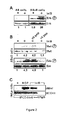
- HeLa cells were induced with InIB (A) at a concentration of 1nM for 5min at 37°C. Pretreatment with a control peptide or a CD44v6 14-mer peptide having SEQ ID NO: 2 at a concentration of 100 ng/ml for 30 min was performed when indicated. Phosphorylation of c-Met and of Erk were measured as described in experimental procedures. The same experiments were performed with the HT29 cells (B).
- C HeLa cells were transfected with two different siRNA (v6-1 and v6-2, described in experimental procedures) to downregulate CD44v6 and with a control siRNA. 48 h after transfection, cells were starved for additional 24 h. InIB-induced c-Met and Erk phosphorylation were measured. The expression of CD44v6 was detected by Western Blot analysis. The numbers reflect -fold induction as determined by densitometric scanning (Image J program).
- AS cells or ASs6 cells were induced with InIB as indicated (A) and ASs6 cells in addition with a CD44v6 14-mer peptide having SEQ ID NO: 1 or an unrelated (control) peptide (B). Erk phosphorylation (A,B) or c-Met phosphorylation (B) was determined.
- C HeLa cells were induced either with HGF or InIB for 5 min at 37°C.
- CD44v6 was immunoprecipitated from the lysates and a Western Blot was performed using CD44v6 and c-Met antibodies as indicated. For control, an IgG antibody was used. The numbers reflect -fold induction as determined by densitometric scanning (Image J program).
- Control beads or beads coated with InIB were incubated with HeLa cells. Cells were pretreated with a CD44v6 peptide having SEQ ID NO: 2 or a control peptide for one hour as indicated. Extracellular beads bind to a Cy3-labelled antibody and are stained red in immunofluorescence microscopy. In phase contrast microscopy both extracellular and intracellular beads are detected. The number of internalized beads (black) was counted in approximately a thousand cells and shown as intracellular beads/100 cells in the graph. The results are expressed as means ⁇ standard deviation of three independent experiments.
- Figure 5 Ezrin-dependent uptake of InIB-coated beads.
- InIB-dependent c-Met and Erk phosphorylation was measured in HeLa cells transiently transfected with a control vector or a vector coding for a truncated version of ezrin deprived of the actin binding domain (ez ⁇ ABD or DN Ezrin). In these cells also the uptake of latex beads was determined as described in Figure 4 . The counts of internalized beads obtained for three independent experiments are given in Table 1.
- the human colon adenocarcinoma cell lines HT29 and the human cervix carcinoma cell line HeLa were grown in Dulbecco's modified Eagle's medium (DMEM; Invitrogen, Düsseldorf, Germany) supplemented with 10% fetal calf serum (FCS; PAA Cölbe, Germany).
- DMEM Dulbecco's modified Eagle's medium
- FCS fetal calf serum
- the rat pancreatic carcinoma cell line BSp73AS and its transfectant BSp73ASs6 were grown in RMPI (Invitrogen, Düsseldorf, Germany) plus 10% FCS.
- the human monoclonal antibody against CD44v6 (Biwa) was obtained from Bender (Vienna, Austria).
- the pan-CD44 antibody IM7 was from Pharmingen, the antibody against Erk 1 (K-23) from Santa Cruz (CA, USA).
- the Phospho-Erk antibody (Phospho-p44/42 Map Kinase) was purchased from Cell Signalling Technology (Beverly, England). Secondary antibodies labeled with HRP were purchased from Dako (Hamburg, Germany).
- Mouse IgG was obtained from Santa Cruz (CA, U.S.A).
- the hybridoma cell supernatant of anti-InIB monoclonal antibody was a kind gift from J.
- HGF was a generous gift of George Vande Woude (Van Andel Institute, USA).
- InIB was prepared as is known in the art.
- the CD44 v6 peptide (14-mer: KEQWFGNRWHEGYR, SEQ ID NO:2) and the control peptide were synthesized by NMI Technology Transfer (Reutlingen, Germany).
- An ezrin construct where the last 29 amino acids encoding the actin-binding domain have been deleted has been kindly provided by Monique Arpin (CNRS, Paris, France).
- the Cy-3 labeled secondary antibody was bought from Dianova (Hamburg, Germany).
- HT29 cells were induced with InIB (1 nM) or with HGF (0,15 nM) for 5 min at 37°C.
- Cells were lysed using a buffer containing 25 mM Hepes pH 7.5; 100 mM NaCl; 10 mM MgCl 2 ; 1 mM EDTA; 10% Glycerol; 1% NP40. Lysates were cleared by centrifugation at 15000 rpm for 30 min. Cleared lysates were incubated with an anti-CD44v6 antibody (IM7) over night followed by an incubation with a mixture of Protein A and Protein G agarose beads (Pierce, Rockford, USA) for 2 h. The beads were washed 3 times with the lysis buffer and solubilized in sample buffer + DTT. The samples were loaded on an SDSPAGE gel and blotted with the anti-phospho-Met antibody.
- IM7 anti-CD44v6 antibody
- HT29 cells were seeded at a concentration of 3x10 5 cells/well in a 6-well plate. They were then incubated with InIB (1 nM) for 48 h at 37°C.
- InIB 1 nM
- CD44 anti-v6 antibodies Biwa; 100 ⁇ g/ml
- a CD44v6 peptide 100 ng/ml
- siRNA inhibition Cells were transfected with CD44v6 specific siRNAs (eurofins MWG GmbH, Ebersberg, Germany):
- Latex bead invasion assay Coating of the beads with InIB was performed as is known in the art. Briefly, 25 ⁇ l of latex beads (4x10 8 beads/ml, Dynabeads M-450, Dynal, Invitrogen, Düsseldorf, Germany) were coated with goat anti-mouse IgG and then incubated with 0.5 ml of hybridoma cell supernatant of monoclonal anti-InIB antibody for 2 h at 4°C. After washing with PBS, the beads were incubated with InIB (3 ⁇ M) latex beads coated with both the goat anti-mouse IgG and the anti-InIB mAb were used as control beads.
- 2x10 4 cells were seeded in chamber slides (LabTek Chamber slides, Nunc, Langenselbold, Germany). Cells were incubated for 2 h with the InIB-coated beads or control beads in 0.2 ml of complete DMEM at 37°C. The cells were washed with 0.5 ml of medium and incubated in medium for 1 h at 37°C.
- the cells were washed three times with 1 ml of CB buffer (10 mM Pipes, 150 mM NaCl, 5 mM EGTA, 5 mM glucose, 5 mM MgCl2, 100 ⁇ g/ml streptomycin), fixed with 4% paraformaldehyde in CB buffer for 30 min and washed with PBS.
- the non-permeabilized cells were incubated with 0.2 ml of BSA (1% in CB buffer and incubated with a Cy3-labeled goat anti-mouse antibody (1:200 dilution) to detect the extracellular beads. Intracellular and extracellular beads were detected by phase contrast microscopy.
- CD44v6 is necessary for HGF-induced c-Met activation. This was demonstrated by means of CD44v6 specific antibodies, CD44v6 peptides and CD44v6-specific siRNA that all blocked the activation of c-Met. These tools were used to investigate whether CD44v6 also plays a role in InIB-induced activation of c-Met and signaling. In HT29 and in HeLa cells, where a contribution of CD44v6 to HGF-induced c-Met activation was already observed a human CD44v6 14-mer peptide having SEQ ID NO: 2 completely abrogated InIB-induced activation of c-Met ( Fig. 1A, B ). Also downstream signaling monitored by Erk activation was inhibited.
- CD44v6-specific peptide and siRNA against CD44v6 are able to block InIB-induced activation of c-Met and subsequent signaling.
- the HT29 and HeLa cells used in these experiments express CD44 variant isoforms containing exon v6 together with other variant exons.
- rat pancreatic carcinoma cells BSp73AS, abbreviated AS, Fig. 2
- these cells transfected with such a CD44v6 isoform (BSp73ASs6, abbreviated ASs6) were used. These cells express this CD44v6 isoform as the only variant isoform in addition to CD44s.
- CD44v6, c-Met and InIB form a complex
- CD44v6, c-Met and InIB are in close vicinity and form a complex.
- CD44v6 was immunoprecipitated and the presence of c-Met in the complex checked. Indeed, upon induction with InIB, endogenous c-Met and CD44v6 were co-immunoprecipitated ( Fig. 2C ), whereas no complex was observed in the absence of InIB. In the control IgG immunoprecipitation, no association between c-Met and CD44v6 is to be observed.
- CD44v6 mediates InIB-induced scattering and entry of InIB-coated beads
- InIB similarly to HGF can induce complex biological responses such as scattering upon activation of c-Met. It was tested whether scattering was also dependent on CD44v6. As expected, both a anti-CD44v6 antibody and a CD44v6-specific peptide having SEQ ID NO: 2 blocked this response ( Fig. 3 ). InIB-activated c-Met is internalized leading to the entry of the bacteria into the host cells. This process can be simulated using InIB-coated latex beads that are also internalized into mammalian cells. The latex beads invasion assay was used to test the effect of a CD44v6 peptide on InIB-induced cellular entry.
- the beads were first coated with an anti-mouse antibody followed by a monoclonal antibody (mAb) against InIB and then loaded with InIB.
- mAb monoclonal antibody
- HeLa cells were incubated with control beads (only coated with the anti-mouse antibody together with the anti-InIB mAb) or InIB-coated beads.
- a Cy3-labelled antibody directed against the anti-InIB mAb was used. As the cells were not permeabilized, this labeled antibody could only bind to beads that remained outside. The binding of this antibody can be detected by immunofluorescence microscopy. In phase contrast microscopy, however, all beads can be seen.
- ERM proteins are essential for entry of InIB-coated beads in cells
- InIB activation of c-Met is dependent on CD44v6. Indeed, InIB-induced c-Met activation as well as downstream Erk phosphorylation can be blocked by means of a CD44v6 peptide and upon downregulation of CD44v6 by siRNA. In addition, induction of c-Met via InIB in a cell line that lacks CD44v6 is possible only after transfection of CD44v6. InIB induces a complex between c-Met and CD44v6 as shown by co-immunoprecipitation. In addition, scattering and in particular, entry of InIB-coated beads that mimic the entry of L. monocytogenes into cells is dependent on CD44v6. This event is also regulated by ezrin binding to the cytoskeleton. Taken together these data demonstrate a role of CD44v6 in InIB-mediated L. monocytogenes invasion of eukaryotic cells.
- HGF and InIB share no structural similarities and bind to different sites on c-Met.
- the same CD44v6 peptide blocks activation of c-Met induced by both ligands.
- a likely explanation would be that the CD44v6 peptide inhibits the interaction between CD44v6 and c-Met and thereby its activation. This however seems not to be the case.
- the CD44v6 peptide rather addresses CD44v6 itself changing its conformation. This observation could also explain how the same CD44v6 peptide blocks the activation of a completely different receptor, VEGFR-2.
- CD44v6 does not seem to act itself as an HSPG in the case of InIB induction, as only the CD44v3-containing isoforms can be heparan-sulphated and the HT29 cells do not express the v3 and the v6 exons in the same isoform. Furthermore, it has been shown that an isoform of CD44 containing only the v6 exon was sufficient to support InIB-induced Erk phosphorylation. This isoform can certainly not be heparan-sulphated.
Landscapes
- Health & Medical Sciences (AREA)
- Life Sciences & Earth Sciences (AREA)
- Chemical & Material Sciences (AREA)
- Medicinal Chemistry (AREA)
- General Health & Medical Sciences (AREA)
- Immunology (AREA)
- Gastroenterology & Hepatology (AREA)
- Proteomics, Peptides & Aminoacids (AREA)
- Public Health (AREA)
- Veterinary Medicine (AREA)
- Organic Chemistry (AREA)
- Pharmacology & Pharmacy (AREA)
- Animal Behavior & Ethology (AREA)
- Cell Biology (AREA)
- Epidemiology (AREA)
- Zoology (AREA)
- Engineering & Computer Science (AREA)
- Bioinformatics & Cheminformatics (AREA)
- Genetics & Genomics (AREA)
- Toxicology (AREA)
- Biochemistry (AREA)
- Biophysics (AREA)
- Molecular Biology (AREA)
- Oncology (AREA)
- Chemical Kinetics & Catalysis (AREA)
- Communicable Diseases (AREA)
- General Chemical & Material Sciences (AREA)
- Nuclear Medicine, Radiotherapy & Molecular Imaging (AREA)
- Peptides Or Proteins (AREA)
- Medicines That Contain Protein Lipid Enzymes And Other Medicines (AREA)
Abstract
The peptide compound may be a cyclopeptide.
Description
- The present invention relates to the use of peptide compounds for the prevention and/or treatment of a bacterial infection.
- Bacteria have developed ingenious strategies to invade mammalian cells and to spread from one cell to another. They express proteins that mimic functions of cellular proteins in order to target host cells and promote their entry. One such bacterium is Listeria monocytogenes, a food-borne pathogen that can cause listeriosis. This disease manifests as meningitis, encephalitis, gastroenteritis and mother-to-fetus infections that lead to abortion in pregnant women. L. monocytogenes induces its uptake into non-phagocytic host cells using surface proteins of the internalin family. Although L. monocytogenes expresses several internalins, only two members, internalin A and B (InIA, InIB), are well characterized. InIA is covalently linked to the bacterial cell wall and binds to E-cadherin. InIB is non-covalently bound to bacterial lipoteichoic acids and stimulates c-Met phosphorylation. Both InIA and InIB can independently mediate L. monocytogenes invasion. After the initial binding to the cell surface, the bacterium is engulfed by a "zipper" mechanism. Activation of cell surface proteins leads to actin remodeling and membrane extensions so that the bacteria can be driven into the cells. The vacuoles containing the bacteria are then lysed by listeriolysin O, a molecule that can lyse phagosomal membranes. The bacteria are released into the cytoplasm and move from one cell to another using the actin cytoskeleton.
- InIB activates c-Met similarly to HGF, the classical c-Met ligand, and induces downstream signaling pathways such as the MAPK or the JNK pathway. Activated c-Met is internalized, a process that normally regulates receptor tyrosine kinase (RTK) activation and turnover. Indeed, shortly after activation by their ligands, RTKs like c-Met are endocytosed, in most cases through a clathrin-dependent mechanism. This internalization process is subverted by L. monocytogenes to invade eukaryotic cells.
- InIB and HGF do not compete with each other for binding to c-Met. These data speak for the presence of different binding sites for InIB and HGF on c-Met and are consistent with the fact that InIB and HGF have no sequence homology and are not structurally related. InIB consists of several domains including an N-terminal leucine rich repeat (LRR), an Inter-repeat region (IR) followed by a B-repeat (BR) and three C-terminal glycine/tryptophan-rich (GW) domains. The LRR domain is critical for binding to c-Met and is essential for the invasion of bacteria. Four amino acids located in the exposed concave region of the LRR domain seem to be critical for this binding, since mutations of all four amino acids lead to a dramatic decrease of L. monocytogenes invasion. The functions of the IR and of the B domains are not well characterized whereas the role of the GW-rich modules seems to be the ability to bind to heparan-sulfate proteoglycans (HSPG). The binding to HSPGs enhances bacterial entry and is critical for c-Met clustering and activation. Also heparin, a sulphated glycosaminoglycan present on HSPGs, induces oligomerization of c-Met. A truncated form of InIB, InIB321 where the B-repeat and GW domains are removed and that cannot bind to heparin, induces phosphorylation of c-Met, but not the phenotypic cellular response like cell scattering or proliferation. This monomeric mutant is unable to dimerize the isolated ligand-binding domain of c-Met in vitro, even in the presence of heparin. Interestingly, in the case of HGF, heparan sulfation is not required for activation of the c-Met receptor. Indeed, a mutant of HGF deficient in heparin sulfate binding is even more potent for c-Met activation than wild type HGF. Furthermore, removal of heparan sulfate moieties from cell surface molecules does not interfere with the activation of c-Met.
- CD44 forms a family of transmembrane glycoproteins that play important roles in many cellular processes amongst which are the regulation of growth, survival, differentiation and migration. The smallest isoform is called CD44s or CD44 standard. Larger isoforms differ thereof mainly in their extracellular domain in which inclusion of ten so-called "variant exons" in various combinations can take place. Herein, the term CD44v6 designates isoforms that contain the v6 variant exon either alone or in combination with other variant exons. All CD44v6 isoforms are able to act as a co-receptor for c-Met. In pathological situations, these isoforms confer metastatic propensity to several tumor cells.
- The role of CD44v6 for c-Met activation is two-fold: the extracellular part of CD44 is needed for activation of the receptor itself whereas the cytoplasmic tail is instrumental for signaling. The cytoplasmic domain of CD44v6 recruits the actin cytoskeleton via binding to ERM (Ezrin-Radixin-Moesin) proteins. CD44v6, HGF, c-Met, ERM proteins together with the cytoskeleton form a signalosome complex that promotes signaling. For instance, Ras activation by its guanine-nucleotide exchange factor SOS did not occur in cells transfected with a mutant form of CD44v6 where the cytoplasmic domain had been removed. Furthermore, siRNA repressing ezrin abrogated HGF induced signaling to Erk. Finally, an ezrin protein that lacked the actin-binding domain (ezΔABD) acted in a dominant negative fashion and repressed the activation of Erk induced by HGF.
- The co-receptor function of CD44v6 for c-Met is not unique. For instance, VEGFR-2 that plays a pivotal role in angiogenesis also requires CD44v6 for activation and for signaling. Interestingly, the same CD44v6 peptides that block c-Met activation also inhibited the activation of VEGFR-2 induced with VEGFA-165 and reveal a role of CD44 in angiogenesis. More and more evidence shows that several RTK-ligand units recruit other players such as cell adhesion molecules most likely to fine-tune the signaling events. Examples are FGFRs or EGFRs that recruit members of the syndecan and cadherin family as co-receptors.
- Therefore, the technical problem underlying the present invention is to provide a medicament that can inhibit bacterial infection.
- The solution to the above technical problem is achieved by the embodiments characterized in the claims.
- In particular, the present invention relates to a peptide compound comprising an amino acid sequence displayed by amino acids 7 to 11 of SEQ ID NO: 2 or of SEQ ID NO: 1, or a functionally active derivative thereof, or a pharmaceutically acceptable salt thereof, for use in the prevention and/or treatment of a bacterial infection in an individual.
- In another aspect, the present invention relates to a peptide compound comprising an amino acid sequence displayed by SEQ ID NO: 2 or SEQ ID NO: 1, or a functionally active derivative thereof, or a pharmaceutically acceptable salt thereof, for use in the manufacture of a medicament for the prevention and/or treatment of a bacterial infection in an individual.
- In a preferred embodiment, the peptide compound of the present invention is a peptide consisting of amino acids 7 to 11 of SEQ ID NO: 2 or of SEQ ID NO: 1. In another preferred embodiment of the present invention, the peptide compound of the present invention is a peptide consisting of SEQ ID NO: 2 or SEQ ID NO. 1.
-
- In a preferred embodiment, the peptide compound of the present invention comprises or consists of a fragment of SEQ ID NO: 2 or of SEQ ID NO: 1, said fragment having the activity of inhibiting the complex formation between CD44, c-Met and Inl-B leading to the phosphorylation and internalization of c-Met, as well as to phosphorylation of Erk.
- For example the peptide compound of the present invention is selected from the group consisting of
- (a) peptides comprising or consisting of the amino acid sequence as shown in SEQ ID NO: 2 or SEQ ID NO: 1;
- (b) peptides consisting of a fragment of SEQ ID NO: 4 or of SEQ ID NO: 3, and having the activity of inhibiting the complex formation between CD44, c-Met and InIB leading to the phosphorylization and internalization of c-Met, as well as to phosphorylation of Erk;
- (c) heterologous fusion peptides comprising or consisting of a peptide according to (a) or (b) fused to a heterologous amino acid sequence; and
- (d) derivatives of a peptide according to (a), (b) or (c) having the activity of inhibiting the complex formation between CD44, c-Met and InIB leading to the phosphorylization and internalization of c-Met, as well as to phosphorylation of Erk.
- In a preferred embodiment of the present invention, the peptide compound of the present invention is selected from the group consisting of
- (a) peptides comprising or consisting of the amino acid sequence as shown in SEQ ID NO: 2 or SEQ ID NO: 1,
- (b) peptides comprising or consisting of any one of the following amino acid sequences:
- amino acids 2 to 14 of SEQ ID NO: 2 or 1,
- amino acids 2 to 13 of SEQ ID NO: 2 or 1,
- amino acids 2 to 12 of SEQ ID NO: 2 or 1,
- amino acids 2 to 11 of SEQ ID NO: 2 or 1,
- amino acids 3 to 14 of SEQ ID NO: 2 or 1,
- amino acids 3 to 13 of SEQ ID NO: 2 or 1,
- amino acids 3 to 12 of SEQ ID NO: 2 or 1,
- amino acids 3 to 11 of SEQ ID NO: 2 or 1,
- amino acids 4 to 14 of SEQ ID NO: 2 or 1,
- amino acids 4 to 13 of SEQ ID NO: 2 or 1,
- amino acids 4 to 12 of SEQ ID NO: 2 or 1,
- amino acids 4 to 11 of SEQ ID NO: 2 or 1,
- amino acids 5 to 14 of SEQ ID NO: 2 or 1,
- amino acids 5 to 13 of SEQ ID NO: 2 or 1,
- amino acids 5 to 12 of SEQ ID NO: 2 or 1,
- amino acids 5 to 11 of SEQ ID NO: 2 or 1,
-
amino acids 6 to 14 of SEQ ID NO: 2 or 1, -
amino acids 6 to 13 of SEQ ID NO: 2 or 1, -
amino acids 6 to 12 of SEQ ID NO: 2 or 1, -
amino acids 6 to 11 of SEQ ID NO: 2 or 1, - amino acids 7 to 14 of SEQ ID NO: 2 or 1,
- amino acids 7 to 13 of SEQ ID NO: 2 or 1,
- amino acids 7 to 12 of SEQ ID NO: 2 or 1,
- amino acids 7 to 11 of SEQ ID NO: 2 or 1,
- (c) heterologous fusion peptides comprising (a) or (b) fused to a heterologous amino acid sequence.
- The peptide compound of the present invention may comprise amino acid sequences derived from other proteins. Therefore, in a preferred embodiment, the peptide compound of the present invention comprises fusion peptides comprising one of the above amino acid sequences fused to a another, preferably heterologous, amino acid sequence. The heterologous amino acid sequence may comprise or consist of 1, 2, 3, 4 or more amino acids. The heterologous amino acid sequence may for example comprise or consist of at least 5 or at least 10 or at least 20 heterologous amino acids. The heterologous amino acid sequences may be fused to the N- and/or C-terminus of the peptide compound of the present invention.
- In a further embodiment of the present invention, the peptide compound of the present invention is a derivative of the peptides described above. The term "derivative" as used herein comprises functionally active derivatives, variants and chemical derivatives of the peptide compound.
- The term "functionally active derivative" as used herein related to derivatives which contain deletions, additions and/or substitutions of amino acids, the presence, absence or substitution of which does not have a substantial influence on the activity of the peptide compound, e.g. conservative amino acid substitutions, i.e. substitution of an amino acid by an amino acid having similar chemical properties. The term "derivative" includes post-translational modifications, e.g. glycosylation patterns that differ from the wild-type.
- A "variant" of a peptide is meant to refer to a molecule substantially similar to either the entire peptide, or a fragment thereof having essentially the same function. A variant of a first peptide may be a second peptide which has 1 to 5, preferably 1 to 4, more preferably 1 to 3, more preferably 1 or 2 amino acid substitutions, additions and/or deletions with respect to said first peptide. For example, variants of SEQ ID NO: 2 may have 1 to 5 amino acid substitutions with respect to SEQ ID NO: 2, as long as the activity of inhibiting the complex formation between CD44, c-Met and Inl-B leading to the phosphorylation and internalization of c-Met, as well as to phosphorylation of Erk, is substantially the same as that of the peptide consisting of the amino acid sequence as shown in SEQ ID NO: 2.
- A molecule is a "chemical derivative" of a first peptide when it contains additional chemical moieties not present in the first peptide. Such moieties may improve for example the molecule's solubility, absorption, or biological half-life. The moieties may alternatively for example decrease the toxicity of the molecule, or eliminate or attenuate any undesirable side effect of the molecule.
- Generally, the derivative has at least 75%, preferably at least 100% of the activity of inhibiting the complex formation between CD44, c-Met and Inl-B leading to the phosphorylation and internalization of c-Met, as well as to phosphorylation of Erk of the peptide compound from which it is derived.
- The term "fragment" of a given peptide as used herein is meant to refer to any peptide subset of said peptide. Generally, a fragment comprises at least 2 contiguous amino acids of the sequence of said peptide. Preferably, the fragment comprises at least 4, more preferably at least 5, more preferably at least 6, more preferably at least 8, even more preferably at least 10 contiguous amino acids of said peptide.
- Methods for determining the activity of inhibiting the complex formation between CD44, c-Met and Inl-B leading to the phosphorylation and internalization of c-Met, as well as to phosphorylation of Erk are well known in the art. The peptide compound of the invention has the activity of inhibiting the complex formation between CD44, c-Met and Inl-B leading to the phosphorylation and internalization of c-Met, as well as to phosphorylation of Erk, measured in form of the activation of the Erk protein through phosphorylation. The inhibitory activity results in a reduction of downstream Erk activation. Preferably, downstream Erk activation is reduced by at least 30%, more preferably by at least 50% and even more preferably by at least 70% with respect to the downstream Erk activation in the presence of a control peptide. For example the activity can be determined in cell culture.
- The term "peptide compound" as used herein denotes a compound comprising at lease one peptide. In one embodiment of the present application the "peptide compound" consists of a peptide. The term "peptide compound" includes compounds comprising a peptide and a chemical moiety which is not an amino acid.
- The term "peptide" as used herein refers to any compound comprising two or more amino acids joined to each other by peptide bonds or modified peptide bonds, i.e. peptide isosteres. "Peptide" refers to both short chains and to longer chains, generally referred to as polypeptides. Peptides may contain amino acids other than the 20 gene-encoded amino acids. Peptides include amino acid sequences modified either by natural processes, such as post-translational processing, or by chemical modification techniques which are well known in the art. Modifications can occur anywhere in a peptide, including the peptide backbone, the amino acid side-chains and the amino or carboxyl termini. The same type of modification may be present in the same or varying degrees at several sites in a given peptide. Also, a given peptide may contain many types of modifications.
- Peptides may be branched and they may be cyclic, with or without branching. Cyclic, branched and branched cyclic peptides may result from post-translation natural processes or may be made by synthetic methods. Modifications include acetylation, acylation, ADP-ribosylation, amidation, covalent attachment of flavin, covalent attachment of a heme moiety, covalent attachment of a nucleotide or nucleotide derivative, covalent attachment of a lipid or lipid derivative, covalent attachment of phosphatidylinositol, cross-linking, cyclization, disulfide bond formation, demethylation, formation of covalent cross-links, formation of cystine, formation of pyroglutamate, formylation, gamma-carboxylation, glycosylation, GPI anchor formation, hydroxylation, iodination, methylation, myristoylation, oxidation, proteolytic processing, phosphorylation, prenylation, racemization, selenoylation, sulfation, transfer-RNA mediated addition of amino acids to proteins such as arginylation, ubiquitination and sumoylation.
- The term "peptide compound" may as a preferred embodiment include salts, preferably pharmaceutically acceptable salts of the peptides described herein. Salts encompassed within the term "pharmaceutically acceptable salts" refer to non-toxic salts of the peptide compounds of this invention. Representative salts and esters include the following: acetate, ascorbate, benzenesulfonate, benzoate, bicarbonate, bisulfate, bitartrate, borate, caamsylate, carbonate, citrate, dihydrochloride, methanesulfonate, ethanesulfonate, p-toluenesulfonate, cyclohexylsulfamate, quinate, edetate, edisylate, estolate, esylate, fumarate, gluconate, glutamate, glycerophophates, hydrobromide, hydrochloride, hydroxynaphthoate, lactate, lactobionate, laurate, malate, maleate, mandelate, mesylate, mucate, napsylate, nitrate, n-methylglucamine, oleate, oxalate, palmoates, pamoate (embonate), palmitate, pantothenate, perchlorates, phosphate/diphosphate, polygalacturonate, salicylates, stearate, succinates, sulfate, sulfamate, subacetate, succinate, tannate, tartrate, tosylate, trifluoroacetate, and valerate. Other salts include Ca, Li, Mg, Na, and K salts; salts of amino acids such as lysine or arginine; guanidine, diethanolamine or choline; ammonium, substituted ammonium salts or aluminum salts. The salts are prepared by conventional methods.
- The peptide of the invention has a length of at least 2 amino acids. Preferably, the length of the peptide is at least 4, more preferably at least 5, more preferably at least 6, more preferably at least 8, most preferably at least 10 amino acids. The maximum length is not particularly limited. It is preferred, however, that the peptide has a length of from about 6 to about 30 amino acids, preferably of from about 8 to about 25 amino acids, more preferably of from about 10 to about 20 amino acids, most preferably of from about 10 to about 15 amino acids. Larger peptides may be employed, for example when fusion peptides with heterologous amino acid sequences are prepared.
- It is preferred that the peptide of the present invention is an isolated peptide.
- It is also preferred that the peptide of the present invention is in a pure state. Preferably, the peptide is 80% pure, preferably 90% pure, more preferably 95% pure, even more preferably 99% pure and particularly preferred is a pharmaceutically pure state that is greater than 99.9% pure with respect to contaminating macromolecules, particularly other peptides. It is preferred that the peptide is free of infectious and pyrogenic agents.
- Preferably, a purified peptide is substantially free of other peptides. When used in this context, the term "pure" does not exclude the presence of the same peptide in alternative physical forms, such as dimers.
- The peptides of the present invention may be prepared by chemical synthesis or by recombinant expression in host cells. The preparation by chemical synthesis is preferred. As protein products, compounds of SEQ ID NO: 2 or 1 or other peptides of the present invention are amenable to production by the technique of solution- or solid-phase peptide synthesis. The synthetic peptide synthesis approach generally entails the use of automated synthesizers and appropriate resins as solid phase, to which is attached the C-terminal amino acid of the desired peptide. Extension of the peptide in the N-terminal direction is then achieved by successively coupling a suitably protected form of the next desired amino acid, using either FMOC- or BOC-based chemical protocols typically, until synthesis is complete. Protecting groups are then cleaved from the peptide, usually simultaneously with cleavage of peptide from the resin, and the peptide is then isolated and purified using conventional techniques, such as by reversed phase HPLC using acetonitrile as solvent and tri-fluoroacetic acid as ion-pairing agent. Such procedures are generally described in numerous publications.
- The peptide compound of the present invention may be a chemically derived structure, diverted from the peptide sequences described herein, or a pharmaceutically acceptable salt and/or physiologically functional derivative thereof. The chemically derived structure can be a cyclopeptide or a pharmaceutically acceptable salt and/or physiologically functional derivative thereof. The invention further includes the use of a substance metabolized to a peptide compound of the invention.
- The individual according to the present invention may be any individual which is susceptible to a bacterial infection. In a preferred embodiment the individual is a vertebrate, more preferably a mammal, like for example a mouse, a rat, a human, a rabbit, a pig a cattle, or a horse, and most preferably a rat or a human.
- In a preferred embodiment of the present invention, the bacterial infection is an infection with an intracellular bacterium. Preferably, the intracellular bacterium is selected from the group consisting of Listeria spp., Mycobacterium spp., Plasmodium spp., and Shigella spp. An especially preferred intracellular bacterium is Listeria monocytogenes.
- In a preferred embodiment of the present invention, the intracellular bacterium is a bacterium, wherein the cellular uptake of the bacterium is mediated by InIB-induced activation of c-Met.
- In a preferred embodiment of the present invention, the intracellular bacterium is a bacterium, wherein the cellular uptake of the bacterium involves the formation of a complex between CD44, c-Met and InIB, leading to the phosphorylation and internalization of c-Met, as well as to phosphorylation of Erk.
- In yet another preferred embodiment of the present invention, the bacterial infection is listeriosis.
- The medicament of the present invention can be formulated as e.g., liquids, suspensions, emulsions, lozenges, cachets, ampoules, suppositories, pessaries, ointments, gels, pastes, sprays, lotions, oils, boluses, electuaries, aerosols, powders, granules, tablets, pills, capsules, injections, solutions, foams, creams, enemas and the like, comprising at least one compound of the present invention alone or in admixture with pharmaceutically acceptable carriers, excipients and/or diluents.
- Specific dose levels of the medicament of the present invention for any particular patient will be employed depending upon a variety of factors including the age, body weight, general health, sex, diet, and prior medication, and the severity of the particular disease of the patient, and the activity of specific compounds employed, time of administration, route of administration, rate of excretion, the duration of the treatment, other drugs, compounds, and/or materials used in combination. The appropriate dosage of medicament can vary from patient to patient. Determining the optimal dosage will generally involve balancing of the level of therapeutic benefit against any risk or deleterious side effects of the treatment.
- Administration in vivo can be effected in one dose, continuously or intermittently throughout the course of treatment. Methods of determining the most effective means and dosages of administration are well known to those of skill in the art, and will vary with the formulation used for therapy, the purpose of the therapy, the target cell being treated, and the subject being treated. Single or multiple administrations can be carried out with the dose level and pattern being selected by the treating physician.
- In general, a suitable systemic dose of the active compound of the medicament of the present invention is in the range of about 0.01 to about 1000 mg per kilogram body weight preferably 0.1 to 500 mg per kilogram body weight and even more preferably 1.0 to 500 mg per kilogram body weight of the subject per day. Where the active ingredient is a salt, an ester, prodrug, or the like, the amount administered is calculated on the basis of the parent compound and so the actual weight to be used is increased proportionately. In case the compound is applied locally, the amount of compound may vary from the above given estimation. However, such an application would aim at reaching local concentrations of the drug ranging from about 0.1 ng/ml to 10 mg/ml, more preferred from 1 ng/ml to 1 mg/ml.
- The figures show:
- HeLa cells were induced with InIB (A) at a concentration of 1nM for 5min at 37°C. Pretreatment with a control peptide or a CD44v6 14-mer peptide having SEQ ID NO: 2 at a concentration of 100 ng/ml for 30 min was performed when indicated. Phosphorylation of c-Met and of Erk were measured as described in experimental procedures. The same experiments were performed with the HT29 cells (B). (C) HeLa cells were transfected with two different siRNA (v6-1 and v6-2, described in experimental procedures) to downregulate CD44v6 and with a control siRNA. 48 h after transfection, cells were starved for additional 24 h. InIB-induced c-Met and Erk phosphorylation were measured. The expression of CD44v6 was detected by Western Blot analysis. The numbers reflect -fold induction as determined by densitometric scanning (Image J program).
- AS cells or ASs6 cells were induced with InIB as indicated (A) and ASs6 cells in addition with a CD44v6 14-mer peptide having SEQ ID NO: 1 or an unrelated (control) peptide (B). Erk phosphorylation (A,B) or c-Met phosphorylation (B) was determined. In (C), HeLa cells were induced either with HGF or InIB for 5 min at 37°C. CD44v6 was immunoprecipitated from the lysates and a Western Blot was performed using CD44v6 and c-Met antibodies as indicated. For control, an IgG antibody was used. The numbers reflect -fold induction as determined by densitometric scanning (Image J program).
- Scattering of HT29 cells was determined after treatment with InIB alone or together with a control peptide or a CD44v6 peptide or antibody as indicated. The magnification used was x20.
- Control beads or beads coated with InIB (see experimental procedures) were incubated with HeLa cells. Cells were pretreated with a CD44v6 peptide having SEQ ID NO: 2 or a control peptide for one hour as indicated. Extracellular beads bind to a Cy3-labelled antibody and are stained red in immunofluorescence microscopy. In phase contrast microscopy both extracellular and intracellular beads are detected. The number of internalized beads (black) was counted in approximately a thousand cells and shown as intracellular beads/100 cells in the graph. The results are expressed as means ± standard deviation of three independent experiments.
- InIB-dependent c-Met and Erk phosphorylation was measured in HeLa cells transiently transfected with a control vector or a vector coding for a truncated version of ezrin deprived of the actin binding domain (ezΔABD or DN Ezrin). In these cells also the uptake of latex beads was determined as described in
Figure 4 . The counts of internalized beads obtained for three independent experiments are given in Table 1. - The present invention will now be further illustrated in the following examples without being limited thereto.
- Cells. The human colon adenocarcinoma cell lines HT29 and the human cervix carcinoma cell line HeLa (American tissue culture collection, ATCC; Wesel, Germany. Accession no: CCL-2) were grown in Dulbecco's modified Eagle's medium (DMEM; Invitrogen, Karlsruhe, Germany) supplemented with 10% fetal calf serum (FCS; PAA Cölbe, Germany). The rat pancreatic carcinoma cell line BSp73AS and its transfectant BSp73ASs6 were grown in RMPI (Invitrogen, Karlsruhe, Germany) plus 10% FCS.
- Antibodies and other reagents. The human monoclonal antibody against CD44v6 (Biwa) was obtained from Bender (Vienna, Austria). The pan-CD44 antibody IM7 was from Pharmingen, the antibody against Erk 1 (K-23) from Santa Cruz (CA, USA). The Phospho-Erk antibody (Phospho-p44/42 Map Kinase) was purchased from Cell Signalling Technology (Beverly, England). Secondary antibodies labeled with HRP were purchased from Dako (Hamburg, Germany). Mouse IgG was obtained from Santa Cruz (CA, U.S.A). The hybridoma cell supernatant of anti-InIB monoclonal antibody was a kind gift from J. Wehland, Braunschweig, Germany. HGF was a generous gift of George Vande Woude (Van Andel Institute, USA). InIB was prepared as is known in the art. The CD44 v6 peptide (14-mer: KEQWFGNRWHEGYR, SEQ ID NO:2) and the control peptide were synthesized by NMI Technology Transfer (Reutlingen, Germany). An ezrin construct where the last 29 amino acids encoding the actin-binding domain have been deleted has been kindly provided by Monique Arpin (CNRS, Paris, France). The Cy-3 labeled secondary antibody was bought from Dianova (Hamburg, Germany).
- Detection of c-Met and Erk phosphorylation. In all experiments cells were induced with 1 nM of InIB where indicated. Induction was performed for 5 min at 37°C. Blocking experiments were performed by incubating the CD44v6 14-mer peptide having for example SEQ ID NO: 2 or SEQ ID NO: 1 (100 ng/ml) or the control peptide (100 ng/ml) for 30 min at 37°C prior to induction with InIB. Cells were lysed with sample buffer + DTT and subjected to SDS-PAGE. The corresponding blots were treated with the respective antibodies according to the manufacturer instructions.
- Co-immunoprecipitation. HT29 cells were induced with InIB (1 nM) or with HGF (0,15 nM) for 5 min at 37°C. Cells were lysed using a buffer containing 25 mM Hepes pH 7.5; 100 mM NaCl; 10 mM MgCl2; 1 mM EDTA; 10% Glycerol; 1% NP40. Lysates were cleared by centrifugation at 15000 rpm for 30 min. Cleared lysates were incubated with an anti-CD44v6 antibody (IM7) over night followed by an incubation with a mixture of Protein A and Protein G agarose beads (Pierce, Rockford, USA) for 2 h. The beads were washed 3 times with the lysis buffer and solubilized in sample buffer + DTT. The samples were loaded on an SDSPAGE gel and blotted with the anti-phospho-Met antibody.
- Scattering assay. HT29 cells were seeded at a concentration of 3x10⁵ cells/well in a 6-well plate. They were then incubated with InIB (1 nM) for 48 h at 37°C. For the blocking experiments, CD44 anti-v6 antibodies (Biwa; 100 µg/ml) or a CD44v6 peptide (100 ng/ml) were added before addition of InIB. Pictures were taken using a phase contrast microscope 48 h after induction.
- siRNA inhibition. Cells were transfected with CD44v6 specific siRNAs (eurofins MWG GmbH, Ebersberg, Germany):
- v6-1: siRNA 25nt 5' - AGU AGU ACA ACG GAA GAA ATT - 3' (SEQ ID NO: 5)
- v6-2: siRNA 25nt 5' - GGA UAU CGC CAA ACA CCC ATT - 3' (SEQ ID NO: 6)
- or control siRNA (AATTCTCCGAACGTGTCACGT, SEQ ID NO: 7) (Quiagen, Hilden, Germany, Cat. No. 1022076) using lipofectamine 2000 (Invitrogen, Karlsruhe, Germany) according to the manufacturer's protocol. 48 h post-transfection the cells were starved for 24 h and then treated with InIB as described above.
- Latex bead invasion assay. Coating of the beads with InIB was performed as is known in the art. Briefly, 25 µl of latex beads (4x10⁸ beads/ml, Dynabeads M-450, Dynal, Invitrogen, Karlsruhe, Germany) were coated with goat anti-mouse IgG and then incubated with 0.5 ml of hybridoma cell supernatant of monoclonal anti-InIB antibody for 2 h at 4°C. After washing with PBS, the beads were incubated with InIB (3 µM) latex beads coated with both the goat anti-mouse IgG and the anti-InIB mAb were used as control beads. For the invasion assay, 2x10⁴ cells were seeded in chamber slides (LabTek Chamber slides, Nunc, Langenselbold, Germany). Cells were incubated for 2 h with the InIB-coated beads or control beads in 0.2 ml of complete DMEM at 37°C. The cells were washed with 0.5 ml of medium and incubated in medium for 1 h at 37°C. After this incubation time, the cells were washed three times with 1 ml of CB buffer (10 mM Pipes, 150 mM NaCl, 5 mM EGTA, 5 mM glucose, 5 mM MgCl2, 100 µg/ml streptomycin), fixed with 4% paraformaldehyde in CB buffer for 30 min and washed with PBS. The non-permeabilized cells were incubated with 0.2 ml of BSA (1% in CB buffer and incubated with a Cy3-labeled goat anti-mouse antibody (1:200 dilution) to detect the extracellular beads. Intracellular and extracellular beads were detected by phase contrast microscopy. An overlay of fluorescence scans and bright field scans show the internalized beads in black and the extracellular beads in red. Cells were mounted in PVA and viewed using microscope (Axioskop 200M (fluo), Zeiss, Jena, Germany). Intracellular beads were counted in approximately 1000 cells. Each experiment was repeated at least three times and results were analyzed statistically.
- CD44v6 is necessary for HGF-induced c-Met activation. This was demonstrated by means of CD44v6 specific antibodies, CD44v6 peptides and CD44v6-specific siRNA that all blocked the activation of c-Met. These tools were used to investigate whether CD44v6 also plays a role in InIB-induced activation of c-Met and signaling. In HT29 and in HeLa cells, where a contribution of CD44v6 to HGF-induced c-Met activation was already observed a human CD44v6 14-mer peptide having SEQ ID NO: 2 completely abrogated InIB-induced activation of c-Met (
Fig. 1A, B ). Also downstream signaling monitored by Erk activation was inhibited. A control peptide had no effect. By means of siRNA against CD44v6, the requirement of CD44v6 was further confirmed. Two different siRNAs downregulated CD44v6 expression in HeLa cells and thereby inhibited InIB-induced c-Met and Erk activation (Fig. 1C ). - Thus, a CD44v6-specific peptide and siRNA against CD44v6 are able to block InIB-induced activation of c-Met and subsequent signaling. The HT29 and HeLa cells used in these experiments express CD44 variant isoforms containing exon v6 together with other variant exons. In order to confirm the dependency of c-Met activation on CD44v6 and to test whether an isoform containing exclusively exon v6 was sufficient for the activation of c-Met, rat pancreatic carcinoma cells (BSp73AS, abbreviated AS,
Fig. 2 ) or these cells transfected with such a CD44v6 isoform (BSp73ASs6, abbreviated ASs6) were used. These cells express this CD44v6 isoform as the only variant isoform in addition to CD44s. - In the AS cells, no activation of c-Met was observed after addition of InIB, whereas activation was detected in cells expressing CD44v6 (
Fig. 2A ). Therefore, this experiment not only confirmed that a CD44v6 isoform is needed for InIB-induced activation but it also demonstrated that exon v6 inclusion alone was sufficient. As expected, InIB-induced c-Met and Erk phosphorylation were abrogated in these ASs6 cells upon treatment with the CD44v6 peptide having SEQ ID NO:1 (Fig. 2B ). - The results so far suggest that CD44v6, c-Met and InIB are in close vicinity and form a complex. To identify such a complex CD44v6 was immunoprecipitated and the presence of c-Met in the complex checked. Indeed, upon induction with InIB, endogenous c-Met and CD44v6 were co-immunoprecipitated (
Fig. 2C ), whereas no complex was observed in the absence of InIB. In the control IgG immunoprecipitation, no association between c-Met and CD44v6 is to be observed. - InIB similarly to HGF can induce complex biological responses such as scattering upon activation of c-Met. It was tested whether scattering was also dependent on CD44v6. As expected, both a anti-CD44v6 antibody and a CD44v6-specific peptide having SEQ ID NO: 2 blocked this response (
Fig. 3 ). InIB-activated c-Met is internalized leading to the entry of the bacteria into the host cells. This process can be simulated using InIB-coated latex beads that are also internalized into mammalian cells. The latex beads invasion assay was used to test the effect of a CD44v6 peptide on InIB-induced cellular entry. The beads were first coated with an anti-mouse antibody followed by a monoclonal antibody (mAb) against InIB and then loaded with InIB. HeLa cells were incubated with control beads (only coated with the anti-mouse antibody together with the anti-InIB mAb) or InIB-coated beads. In order to distinguish between beads that have entered the cells and beads that remained outside, a Cy3-labelled antibody directed against the anti-InIB mAb was used. As the cells were not permeabilized, this labeled antibody could only bind to beads that remained outside. The binding of this antibody can be detected by immunofluorescence microscopy. In phase contrast microscopy, however, all beads can be seen. An overlay between the two pictures allows distinguishing between beads in and outside the cells. The red beads are the ones outside the cells whereas the black beads correspond to the internalized ones. Control beads without InIB are all excluded from the cells whereas InIB-coated beads can enter. A drastic decrease of the entry was observed when HeLa cells were preincubated with the CD44v6 peptide. The entry was blocked to nearly 100%. The control peptide had no effect on the uptake. Intracellular beads were counted in approximately one thousand cells (Fig. 4 ). These data demonstrate that CD44v6 is instrumental for the entry of InIB-coated beads into the cells suggesting that also the entry of the bacteria itself might depend on CD44v6. - The recruitment of ERM proteins together with the cytoskeleton to CD44v6 is a decisive step in c-Met dependent signal transduction. In order to investigate if ERM proteins and the cytoskeleton are also necessary for internalization of InIB-coated beads, an ezrin protein that lacks the actin binding (ezΔABD) ability was used. This protein acts in a dominant negative fashion on signal transduction. In the case of HGF it competes with endogenous ezrin and has a dramatic effect on Erk phosphorylation whereas c-Met activation itself is not affected. The same is true for InIB-induced c-Met and Erk activation (
Fig. 5 ). Transfection of HeLa cells with this dominant negative ezrin construct completely abrogated the entry of InIB-coated beads whereas transfection with a control vector had no effect. The number of internalized beads for approximately one thousand cells was counted and the results of three independent experiments are shown in Table 1. In conclusion, the link of ezrin to the cytoskeleton is instrumental for entry of InIB-coated beads.
- It has been shown that InIB activation of c-Met is dependent on CD44v6. Indeed, InIB-induced c-Met activation as well as downstream Erk phosphorylation can be blocked by means of a CD44v6 peptide and upon downregulation of CD44v6 by siRNA. In addition, induction of c-Met via InIB in a cell line that lacks CD44v6 is possible only after transfection of CD44v6. InIB induces a complex between c-Met and CD44v6 as shown by co-immunoprecipitation. In addition, scattering and in particular, entry of InIB-coated beads that mimic the entry of L. monocytogenes into cells is dependent on CD44v6. This event is also regulated by ezrin binding to the cytoskeleton. Taken together these data demonstrate a role of CD44v6 in InIB-mediated L. monocytogenes invasion of eukaryotic cells.
- HGF and InIB share no structural similarities and bind to different sites on c-Met. However, the same CD44v6 peptide blocks activation of c-Met induced by both ligands. A likely explanation would be that the CD44v6 peptide inhibits the interaction between CD44v6 and c-Met and thereby its activation. This however seems not to be the case. The CD44v6 peptide rather addresses CD44v6 itself changing its conformation. This observation could also explain how the same CD44v6 peptide blocks the activation of a completely different receptor, VEGFR-2.
- InIB recruits heparin to activate c-Met. CD44v6 does not seem to act itself as an HSPG in the case of InIB induction, as only the CD44v3-containing isoforms can be heparan-sulphated and the HT29 cells do not express the v3 and the v6 exons in the same isoform. Furthermore, it has been shown that an isoform of CD44 containing only the v6 exon was sufficient to support InIB-induced Erk phosphorylation. This isoform can certainly not be heparan-sulphated.
- The recruitment of heparin by InIB leads to the clustering of c-Met, a process required for full activation. The activation of the c-Met receptor via InIB is the first step necessary for InIB-mediated L. monocytogenes uptake into host cells. The bacteria uptake by means of InIB-coated beads was simulated. Their uptake can be completely inhibited by CD44v6-specific peptides demonstrating that CD44v6 is instrumental for infection of cells by L. monocytogenes. Interestingly also Shigella makes use of CD44 for its entry into mammalian cells. Shigella is responsible for bacillary dysentery in humans. It secretes several proteins named IpaA-D that are essential for the infection process. One of them, IpaB interacts with CD44s. This binding is essential for bacteria invasion.
- In the case of InIB, signaling depends on the actin cytoskeleton. Transfection of an ezrin protein lacking the actin-binding domain leads to a drastic reduction of Erk phosphorylation but not of c-Met activation. More strikingly, also the uptake of InIB-coated beads is dependent on ezrin binding to the cytoskeleton. These data fit perfectly with recent evidence showing that actin is necessary for clathrin-dependent internalization since the disruption of actin assembly leads to a complete block of this process. Interestingly, also Shigella invasion via CD44 requires ezrin for the entry process.
- Taken together, the data shown here demonstrate that a link from c-Met to the cytoskeleton via the CD44v6 cytoplasmic domain and ERM proteins is required for InIB-dependent uptake of beads into cells showing a similar mechanism mediating L. monocytogenes invasion of host cells.


Claims (8)
- A peptide compound comprising an amino acid sequence displayed by amino acids 7 to 11 of SEQ ID NO: 2 or of SEQ ID NO: 1, or a functionally active derivative thereof, or a pharmaceutically acceptable salt thereof, for use in the prevention and/or treatment of a bacterial infection in an individual.
- The peptide compound according to claim 1, wherein the peptide compound comprises SEQ ID NO: 2.
- The peptide compound according to claim 1, wherein the peptide compound comprises SEQ ID NO: 1.
- The peptide compound according to anyone of claims 1 to 3, wherein the bacterial infection is an infection with an intracellular bacterium.
- The peptide compound according to claim 4, wherein the intracellular bacterium is selected from the group consisting of Listeria spp., Mycobacterium spp., Plasmodium spp., and Shigella spp.
- The peptide compound according to claim 5, wherein the intracellular bacterium is Listeria monocytogenes.
- The peptide compound according to anyone of claims 1 to 6, wherein the bacterial infection is listeriosis.
- The peptide compound according to anyone of claims 1 to 7, wherein the peptide compound is a cyclopeptide or a pharmaceutically acceptable salt thereof.
Priority Applications (4)
| Application Number | Priority Date | Filing Date | Title |
|---|---|---|---|
| AT09002149T ATE523204T1 (en) | 2009-02-16 | 2009-02-16 | CD44V6 PEPTIDES AS BACTERIAL INFECTION INHIBITORS |
| EP09002149A EP2218457B1 (en) | 2009-02-16 | 2009-02-16 | CD44v6 peptides as inhibitors of bacterial infections |
| US12/658,949 US20100305026A1 (en) | 2009-02-16 | 2010-02-16 | CD44V6 peptides as inhibitors of bacterial infections |
| US13/673,749 US8933017B2 (en) | 2009-02-16 | 2012-11-09 | CD44V6 peptides as inhibitors of bacterial infections |
Applications Claiming Priority (1)
| Application Number | Priority Date | Filing Date | Title |
|---|---|---|---|
| EP09002149A EP2218457B1 (en) | 2009-02-16 | 2009-02-16 | CD44v6 peptides as inhibitors of bacterial infections |
Publications (2)
| Publication Number | Publication Date |
|---|---|
| EP2218457A1 true EP2218457A1 (en) | 2010-08-18 |
| EP2218457B1 EP2218457B1 (en) | 2011-09-07 |
Family
ID=40834558
Family Applications (1)
| Application Number | Title | Priority Date | Filing Date |
|---|---|---|---|
| EP09002149A Not-in-force EP2218457B1 (en) | 2009-02-16 | 2009-02-16 | CD44v6 peptides as inhibitors of bacterial infections |
Country Status (3)
| Country | Link |
|---|---|
| US (2) | US20100305026A1 (en) |
| EP (1) | EP2218457B1 (en) |
| AT (1) | ATE523204T1 (en) |
Cited By (5)
| Publication number | Priority date | Publication date | Assignee | Title |
|---|---|---|---|---|
| WO2014079931A1 (en) * | 2012-11-21 | 2014-05-30 | Karlsruher Institut für Technologie | Cd44v6-derived peptides for treating breast cancers |
| WO2014079943A1 (en) * | 2012-11-21 | 2014-05-30 | Karlsruher Institut für Technologie | Cd44v6-derived peptides for treating metastasizing cancers |
| WO2014079940A1 (en) * | 2012-11-21 | 2014-05-30 | Karlsruher Institut für Technologie | Cd44v6-derived peptides for treating pancreatic cancer |
| WO2014079914A1 (en) * | 2012-11-21 | 2014-05-30 | Karlsruher Institut für Technologie | Cd44v6-derived pegylated peptides |
| US10703796B2 (en) | 2014-12-05 | 2020-07-07 | Amcure Gmbh | CD44v6-derived cyclic peptides for treating cancers and angiogenesis related diseases |
Families Citing this family (1)
| Publication number | Priority date | Publication date | Assignee | Title |
|---|---|---|---|---|
| EP4464714A1 (en) | 2023-05-19 | 2024-11-20 | Karlsruher Institut für Technologie | Screening method for cell-repelling peptides |
Citations (4)
| Publication number | Priority date | Publication date | Assignee | Title |
|---|---|---|---|---|
| WO2000006738A2 (en) * | 1998-07-27 | 2000-02-10 | Microbial Technics Limited | NUCLEIC ACIDS AND PROTEINS FROM $i(STREPTOCOCCUS PNEUMONIAE) |
| WO2004092209A2 (en) * | 2003-04-15 | 2004-10-28 | Intercell Ag | S. pneumoniae antigens |
| EP1647556A1 (en) | 2004-10-14 | 2006-04-19 | TopoTarget Germany AG | Peptidic compounds and derivatives thereof for the treatment of human diseases through inhibition of signaling via growth factors |
| WO2009016515A2 (en) * | 2007-08-01 | 2009-02-05 | Novartis Ag | Compositions comprising pneumococcal antigens |
-
2009
- 2009-02-16 EP EP09002149A patent/EP2218457B1/en not_active Not-in-force
- 2009-02-16 AT AT09002149T patent/ATE523204T1/en not_active IP Right Cessation
-
2010
- 2010-02-16 US US12/658,949 patent/US20100305026A1/en not_active Abandoned
-
2012
- 2012-11-09 US US13/673,749 patent/US8933017B2/en not_active Expired - Fee Related
Patent Citations (4)
| Publication number | Priority date | Publication date | Assignee | Title |
|---|---|---|---|---|
| WO2000006738A2 (en) * | 1998-07-27 | 2000-02-10 | Microbial Technics Limited | NUCLEIC ACIDS AND PROTEINS FROM $i(STREPTOCOCCUS PNEUMONIAE) |
| WO2004092209A2 (en) * | 2003-04-15 | 2004-10-28 | Intercell Ag | S. pneumoniae antigens |
| EP1647556A1 (en) | 2004-10-14 | 2006-04-19 | TopoTarget Germany AG | Peptidic compounds and derivatives thereof for the treatment of human diseases through inhibition of signaling via growth factors |
| WO2009016515A2 (en) * | 2007-08-01 | 2009-02-05 | Novartis Ag | Compositions comprising pneumococcal antigens |
Non-Patent Citations (1)
| Title |
|---|
| JUNG C ET AL: "Involvement of CD44v6 in InlB-dependent Listeria invasion", MOLECULAR MICROBIOLOGY, vol. 72, no. 5, June 2009 (2009-06-01), pages 1196 - 1207, XP002536874, ISSN: 0950-382X * |
Cited By (10)
| Publication number | Priority date | Publication date | Assignee | Title |
|---|---|---|---|---|
| WO2014079931A1 (en) * | 2012-11-21 | 2014-05-30 | Karlsruher Institut für Technologie | Cd44v6-derived peptides for treating breast cancers |
| WO2014079943A1 (en) * | 2012-11-21 | 2014-05-30 | Karlsruher Institut für Technologie | Cd44v6-derived peptides for treating metastasizing cancers |
| WO2014079940A1 (en) * | 2012-11-21 | 2014-05-30 | Karlsruher Institut für Technologie | Cd44v6-derived peptides for treating pancreatic cancer |
| WO2014079914A1 (en) * | 2012-11-21 | 2014-05-30 | Karlsruher Institut für Technologie | Cd44v6-derived pegylated peptides |
| JP2016501858A (en) * | 2012-11-21 | 2016-01-21 | アムキュア ゲーエムベーハー | CD44V6-derived peptides for treating metastatic cancer |
| JP2016501857A (en) * | 2012-11-21 | 2016-01-21 | アムキュア ゲーエムベーハー | CD44V6-derived peptide for treating pancreatic cancer |
| US9586993B2 (en) | 2012-11-21 | 2017-03-07 | Amcure Gmbh | CD44v6-derived peptides for treating pancreatic cancer |
| US9586994B2 (en) | 2012-11-21 | 2017-03-07 | Amcure Gmbh | CD44V6-derived peptides for treating breast cancer |
| US9593146B2 (en) | 2012-11-21 | 2017-03-14 | Amcure Gmbh | CD44v6-derived peptides for treating metastasizing cancer |
| US10703796B2 (en) | 2014-12-05 | 2020-07-07 | Amcure Gmbh | CD44v6-derived cyclic peptides for treating cancers and angiogenesis related diseases |
Also Published As
| Publication number | Publication date |
|---|---|
| US20130072423A1 (en) | 2013-03-21 |
| US8933017B2 (en) | 2015-01-13 |
| EP2218457B1 (en) | 2011-09-07 |
| ATE523204T1 (en) | 2011-09-15 |
| US20100305026A1 (en) | 2010-12-02 |
Similar Documents
| Publication | Publication Date | Title |
|---|---|---|
| Fuki et al. | The syndecan family of proteoglycans. Novel receptors mediating internalization of atherogenic lipoproteins in vitro. | |
| US8933017B2 (en) | CD44V6 peptides as inhibitors of bacterial infections | |
| Stuible et al. | Mechanism and function of monoclonal antibodies targeting siglec-15 for therapeutic inhibition of osteoclastic bone resorption | |
| US10273276B2 (en) | Rspondins as modulators of angiogenesis and vasculogenesis | |
| US10034922B2 (en) | Peptide having angiogenesis inhibitory activity and composition containing same | |
| CN109789184A (en) | For treating the method and composition of myelofibrosis | |
| US20100129372A1 (en) | Inhibition of pacap signalling for the prevention and treatment of thrombocytopenia | |
| KR20080113368A (en) | Screening of Anticancer Compounds Using Netrin-1 Activity | |
| US8883738B2 (en) | Use of a peptide fragment of CD44v6 in the treatment of ophthalmic diseases | |
| Chia et al. | Expression and localisation of brain-type organic cation transporter (BOCT/24p3R/LCN2R) in the normal rat hippocampus and after kainate-induced excitotoxicity | |
| JP2020023501A (en) | Compositions and methods for reducing skin pigmentation | |
| US7758862B2 (en) | Hepatocyte growth factor receptor splice variants and methods of using same | |
| CN104995207B (en) | Inhibitors of β integrin-G protein α subunit binding interactions | |
| JPWO2007117038A1 (en) | Cancer preventive / therapeutic agent | |
| US20080153753A1 (en) | Method of treating side effects induced by therapeutic agents | |
| CA2931023C (en) | Pharmaceutical compositions of isolated peptides for the treatment of metastatic cancer | |
| JPWO2007049624A1 (en) | Cancer preventive / therapeutic agent | |
| CN100480387C (en) | GBS toxin receptor | |
| US20080125362A1 (en) | Method of screening compound preventing cells from infection with Hepatitis C virus (HCV) | |
| US20220184177A1 (en) | Polypeptides for treatment of cancer | |
| WO2019117691A1 (en) | Peptides binding to cd44v6 and use thereof | |
| JPWO2019102710A1 (en) | Human cancer cell metastasis inhibitor and human cancer cell determination drug | |
| JPH08143597A (en) | Human neurotensin receptor protein, its production and use | |
| Chamberland | NECAP2-driven fast recycling controls cell migration and cancer cell invasion | |
| US10125183B2 (en) | Decoy peptides inhibiting binding of AMIGO2 and 3-phosphoinositide-dependent kinase 1 |
Legal Events
| Date | Code | Title | Description |
|---|---|---|---|
| PUAI | Public reference made under article 153(3) epc to a published international application that has entered the european phase |
Free format text: ORIGINAL CODE: 0009012 |
|
| AK | Designated contracting states |
Kind code of ref document: A1 Designated state(s): AT BE BG CH CY CZ DE DK EE ES FI FR GB GR HR HU IE IS IT LI LT LU LV MC MK MT NL NO PL PT RO SE SI SK TR |
|
| AX | Request for extension of the european patent |
Extension state: AL BA RS |
|
| 17P | Request for examination filed |
Effective date: 20100923 |
|
| 17Q | First examination report despatched |
Effective date: 20101021 |
|
| GRAP | Despatch of communication of intention to grant a patent |
Free format text: ORIGINAL CODE: EPIDOSNIGR1 |
|
| AKX | Designation fees paid |
Designated state(s): AT BE BG CH CY CZ DE DK EE ES FI FR GB GR HR HU IE IS IT LI LT LU LV MC MK MT NL NO PL PT RO SE SI SK TR |
|
| GRAS | Grant fee paid |
Free format text: ORIGINAL CODE: EPIDOSNIGR3 |
|
| GRAA | (expected) grant |
Free format text: ORIGINAL CODE: 0009210 |
|
| REG | Reference to a national code |
Ref country code: GB Ref legal event code: FG4D |
|
| REG | Reference to a national code |
Ref country code: CH Ref legal event code: EP Ref country code: CH Ref legal event code: NV Representative=s name: BRAUNPAT BRAUN EDER AG |
|
| REG | Reference to a national code |
Ref country code: IE Ref legal event code: FG4D |
|
| REG | Reference to a national code |
Ref country code: DE Ref legal event code: R096 Ref document number: 602009002470 Country of ref document: DE Effective date: 20111201 |
|
| REG | Reference to a national code |
Ref country code: NL Ref legal event code: VDEP Effective date: 20110907 |
|
| PG25 | Lapsed in a contracting state [announced via postgrant information from national office to epo] |
Ref country code: NO Free format text: LAPSE BECAUSE OF FAILURE TO SUBMIT A TRANSLATION OF THE DESCRIPTION OR TO PAY THE FEE WITHIN THE PRESCRIBED TIME-LIMIT Effective date: 20111207 Ref country code: HR Free format text: LAPSE BECAUSE OF FAILURE TO SUBMIT A TRANSLATION OF THE DESCRIPTION OR TO PAY THE FEE WITHIN THE PRESCRIBED TIME-LIMIT Effective date: 20110907 Ref country code: FI Free format text: LAPSE BECAUSE OF FAILURE TO SUBMIT A TRANSLATION OF THE DESCRIPTION OR TO PAY THE FEE WITHIN THE PRESCRIBED TIME-LIMIT Effective date: 20110907 Ref country code: SE Free format text: LAPSE BECAUSE OF FAILURE TO SUBMIT A TRANSLATION OF THE DESCRIPTION OR TO PAY THE FEE WITHIN THE PRESCRIBED TIME-LIMIT Effective date: 20110907 Ref country code: LT Free format text: LAPSE BECAUSE OF FAILURE TO SUBMIT A TRANSLATION OF THE DESCRIPTION OR TO PAY THE FEE WITHIN THE PRESCRIBED TIME-LIMIT Effective date: 20110907 |
|
| LTIE | Lt: invalidation of european patent or patent extension |
Effective date: 20110907 |
|
| PG25 | Lapsed in a contracting state [announced via postgrant information from national office to epo] |
Ref country code: AT Free format text: LAPSE BECAUSE OF FAILURE TO SUBMIT A TRANSLATION OF THE DESCRIPTION OR TO PAY THE FEE WITHIN THE PRESCRIBED TIME-LIMIT Effective date: 20110907 Ref country code: SI Free format text: LAPSE BECAUSE OF FAILURE TO SUBMIT A TRANSLATION OF THE DESCRIPTION OR TO PAY THE FEE WITHIN THE PRESCRIBED TIME-LIMIT Effective date: 20110907 Ref country code: GR Free format text: LAPSE BECAUSE OF FAILURE TO SUBMIT A TRANSLATION OF THE DESCRIPTION OR TO PAY THE FEE WITHIN THE PRESCRIBED TIME-LIMIT Effective date: 20111208 Ref country code: CY Free format text: LAPSE BECAUSE OF FAILURE TO SUBMIT A TRANSLATION OF THE DESCRIPTION OR TO PAY THE FEE WITHIN THE PRESCRIBED TIME-LIMIT Effective date: 20110907 Ref country code: LV Free format text: LAPSE BECAUSE OF FAILURE TO SUBMIT A TRANSLATION OF THE DESCRIPTION OR TO PAY THE FEE WITHIN THE PRESCRIBED TIME-LIMIT Effective date: 20110907 |
|
| REG | Reference to a national code |
Ref country code: AT Ref legal event code: MK05 Ref document number: 523204 Country of ref document: AT Kind code of ref document: T Effective date: 20110907 |
|
| PG25 | Lapsed in a contracting state [announced via postgrant information from national office to epo] |
Ref country code: BE Free format text: LAPSE BECAUSE OF FAILURE TO SUBMIT A TRANSLATION OF THE DESCRIPTION OR TO PAY THE FEE WITHIN THE PRESCRIBED TIME-LIMIT Effective date: 20110907 |
|
| PG25 | Lapsed in a contracting state [announced via postgrant information from national office to epo] |
Ref country code: CZ Free format text: LAPSE BECAUSE OF FAILURE TO SUBMIT A TRANSLATION OF THE DESCRIPTION OR TO PAY THE FEE WITHIN THE PRESCRIBED TIME-LIMIT Effective date: 20110907 Ref country code: IS Free format text: LAPSE BECAUSE OF FAILURE TO SUBMIT A TRANSLATION OF THE DESCRIPTION OR TO PAY THE FEE WITHIN THE PRESCRIBED TIME-LIMIT Effective date: 20120107 Ref country code: SK Free format text: LAPSE BECAUSE OF FAILURE TO SUBMIT A TRANSLATION OF THE DESCRIPTION OR TO PAY THE FEE WITHIN THE PRESCRIBED TIME-LIMIT Effective date: 20110907 |
|
| PG25 | Lapsed in a contracting state [announced via postgrant information from national office to epo] |
Ref country code: PL Free format text: LAPSE BECAUSE OF FAILURE TO SUBMIT A TRANSLATION OF THE DESCRIPTION OR TO PAY THE FEE WITHIN THE PRESCRIBED TIME-LIMIT Effective date: 20110907 Ref country code: PT Free format text: LAPSE BECAUSE OF FAILURE TO SUBMIT A TRANSLATION OF THE DESCRIPTION OR TO PAY THE FEE WITHIN THE PRESCRIBED TIME-LIMIT Effective date: 20120109 Ref country code: EE Free format text: LAPSE BECAUSE OF FAILURE TO SUBMIT A TRANSLATION OF THE DESCRIPTION OR TO PAY THE FEE WITHIN THE PRESCRIBED TIME-LIMIT Effective date: 20110907 Ref country code: NL Free format text: LAPSE BECAUSE OF FAILURE TO SUBMIT A TRANSLATION OF THE DESCRIPTION OR TO PAY THE FEE WITHIN THE PRESCRIBED TIME-LIMIT Effective date: 20110907 Ref country code: IT Free format text: LAPSE BECAUSE OF FAILURE TO SUBMIT A TRANSLATION OF THE DESCRIPTION OR TO PAY THE FEE WITHIN THE PRESCRIBED TIME-LIMIT Effective date: 20110907 Ref country code: RO Free format text: LAPSE BECAUSE OF FAILURE TO SUBMIT A TRANSLATION OF THE DESCRIPTION OR TO PAY THE FEE WITHIN THE PRESCRIBED TIME-LIMIT Effective date: 20110907 |
|
| PLBE | No opposition filed within time limit |
Free format text: ORIGINAL CODE: 0009261 |
|
| STAA | Information on the status of an ep patent application or granted ep patent |
Free format text: STATUS: NO OPPOSITION FILED WITHIN TIME LIMIT |
|
| PG25 | Lapsed in a contracting state [announced via postgrant information from national office to epo] |
Ref country code: DK Free format text: LAPSE BECAUSE OF FAILURE TO SUBMIT A TRANSLATION OF THE DESCRIPTION OR TO PAY THE FEE WITHIN THE PRESCRIBED TIME-LIMIT Effective date: 20110907 |
|
| 26N | No opposition filed |
Effective date: 20120611 |
|
| PG25 | Lapsed in a contracting state [announced via postgrant information from national office to epo] |
Ref country code: MC Free format text: LAPSE BECAUSE OF NON-PAYMENT OF DUE FEES Effective date: 20120229 |
|
| REG | Reference to a national code |
Ref country code: DE Ref legal event code: R097 Ref document number: 602009002470 Country of ref document: DE Effective date: 20120611 |
|
| REG | Reference to a national code |
Ref country code: IE Ref legal event code: MM4A |
|
| PG25 | Lapsed in a contracting state [announced via postgrant information from national office to epo] |
Ref country code: IE Free format text: LAPSE BECAUSE OF NON-PAYMENT OF DUE FEES Effective date: 20120216 |
|
| PG25 | Lapsed in a contracting state [announced via postgrant information from national office to epo] |
Ref country code: MK Free format text: LAPSE BECAUSE OF FAILURE TO SUBMIT A TRANSLATION OF THE DESCRIPTION OR TO PAY THE FEE WITHIN THE PRESCRIBED TIME-LIMIT Effective date: 20110907 |
|
| PG25 | Lapsed in a contracting state [announced via postgrant information from national office to epo] |
Ref country code: BG Free format text: LAPSE BECAUSE OF FAILURE TO SUBMIT A TRANSLATION OF THE DESCRIPTION OR TO PAY THE FEE WITHIN THE PRESCRIBED TIME-LIMIT Effective date: 20111207 |
|
| PG25 | Lapsed in a contracting state [announced via postgrant information from national office to epo] |
Ref country code: MT Free format text: LAPSE BECAUSE OF FAILURE TO SUBMIT A TRANSLATION OF THE DESCRIPTION OR TO PAY THE FEE WITHIN THE PRESCRIBED TIME-LIMIT Effective date: 20110907 |
|
| PG25 | Lapsed in a contracting state [announced via postgrant information from national office to epo] |
Ref country code: ES Free format text: LAPSE BECAUSE OF FAILURE TO SUBMIT A TRANSLATION OF THE DESCRIPTION OR TO PAY THE FEE WITHIN THE PRESCRIBED TIME-LIMIT Effective date: 20111218 |
|
| PG25 | Lapsed in a contracting state [announced via postgrant information from national office to epo] |
Ref country code: TR Free format text: LAPSE BECAUSE OF FAILURE TO SUBMIT A TRANSLATION OF THE DESCRIPTION OR TO PAY THE FEE WITHIN THE PRESCRIBED TIME-LIMIT Effective date: 20110907 |
|
| PG25 | Lapsed in a contracting state [announced via postgrant information from national office to epo] |
Ref country code: LU Free format text: LAPSE BECAUSE OF NON-PAYMENT OF DUE FEES Effective date: 20120216 |
|
| PG25 | Lapsed in a contracting state [announced via postgrant information from national office to epo] |
Ref country code: HU Free format text: LAPSE BECAUSE OF FAILURE TO SUBMIT A TRANSLATION OF THE DESCRIPTION OR TO PAY THE FEE WITHIN THE PRESCRIBED TIME-LIMIT Effective date: 20090216 |
|
| REG | Reference to a national code |
Ref country code: FR Ref legal event code: PLFP Year of fee payment: 7 |
|
| PGFP | Annual fee paid to national office [announced via postgrant information from national office to epo] |
Ref country code: CH Payment date: 20150223 Year of fee payment: 7 |
|
| PGFP | Annual fee paid to national office [announced via postgrant information from national office to epo] |
Ref country code: FR Payment date: 20150217 Year of fee payment: 7 Ref country code: GB Payment date: 20150223 Year of fee payment: 7 |
|
| REG | Reference to a national code |
Ref country code: CH Ref legal event code: PL |
|
| GBPC | Gb: european patent ceased through non-payment of renewal fee |
Effective date: 20160216 |
|
| PG25 | Lapsed in a contracting state [announced via postgrant information from national office to epo] |
Ref country code: LI Free format text: LAPSE BECAUSE OF NON-PAYMENT OF DUE FEES Effective date: 20160229 Ref country code: CH Free format text: LAPSE BECAUSE OF NON-PAYMENT OF DUE FEES Effective date: 20160229 |
|
| REG | Reference to a national code |
Ref country code: FR Ref legal event code: ST Effective date: 20161028 |
|
| PG25 | Lapsed in a contracting state [announced via postgrant information from national office to epo] |
Ref country code: GB Free format text: LAPSE BECAUSE OF NON-PAYMENT OF DUE FEES Effective date: 20160216 Ref country code: FR Free format text: LAPSE BECAUSE OF NON-PAYMENT OF DUE FEES Effective date: 20160229 |
|
| PGFP | Annual fee paid to national office [announced via postgrant information from national office to epo] |
Ref country code: DE Payment date: 20170222 Year of fee payment: 9 |
|
| REG | Reference to a national code |
Ref country code: DE Ref legal event code: R119 Ref document number: 602009002470 Country of ref document: DE |
|
| PG25 | Lapsed in a contracting state [announced via postgrant information from national office to epo] |
Ref country code: DE Free format text: LAPSE BECAUSE OF NON-PAYMENT OF DUE FEES Effective date: 20180901 |