EP2216749B1 - Bildklassifizierungsvorrichtung und bildklassifizierungsprogramm - Google Patents
Bildklassifizierungsvorrichtung und bildklassifizierungsprogramm Download PDFInfo
- Publication number
- EP2216749B1 EP2216749B1 EP08855861.4A EP08855861A EP2216749B1 EP 2216749 B1 EP2216749 B1 EP 2216749B1 EP 08855861 A EP08855861 A EP 08855861A EP 2216749 B1 EP2216749 B1 EP 2216749B1
- Authority
- EP
- European Patent Office
- Prior art keywords
- image
- images
- color
- clusters
- characteristic value
- Prior art date
- Legal status (The legal status is an assumption and is not a legal conclusion. Google has not performed a legal analysis and makes no representation as to the accuracy of the status listed.)
- Not-in-force
Links
Images










Classifications
-
- G—PHYSICS
- G06—COMPUTING OR CALCULATING; COUNTING
- G06F—ELECTRIC DIGITAL DATA PROCESSING
- G06F16/00—Information retrieval; Database structures therefor; File system structures therefor
- G06F16/50—Information retrieval; Database structures therefor; File system structures therefor of still image data
- G06F16/55—Clustering; Classification
-
- G—PHYSICS
- G06—COMPUTING OR CALCULATING; COUNTING
- G06F—ELECTRIC DIGITAL DATA PROCESSING
- G06F16/00—Information retrieval; Database structures therefor; File system structures therefor
- G06F16/50—Information retrieval; Database structures therefor; File system structures therefor of still image data
- G06F16/51—Indexing; Data structures therefor; Storage structures
-
- G—PHYSICS
- G06—COMPUTING OR CALCULATING; COUNTING
- G06F—ELECTRIC DIGITAL DATA PROCESSING
- G06F16/00—Information retrieval; Database structures therefor; File system structures therefor
- G06F16/50—Information retrieval; Database structures therefor; File system structures therefor of still image data
- G06F16/54—Browsing; Visualisation therefor
-
- G—PHYSICS
- G06—COMPUTING OR CALCULATING; COUNTING
- G06F—ELECTRIC DIGITAL DATA PROCESSING
- G06F16/00—Information retrieval; Database structures therefor; File system structures therefor
- G06F16/50—Information retrieval; Database structures therefor; File system structures therefor of still image data
- G06F16/58—Retrieval characterised by using metadata, e.g. metadata not derived from the content or metadata generated manually
- G06F16/583—Retrieval characterised by using metadata, e.g. metadata not derived from the content or metadata generated manually using metadata automatically derived from the content
- G06F16/5838—Retrieval characterised by using metadata, e.g. metadata not derived from the content or metadata generated manually using metadata automatically derived from the content using colour
-
- G—PHYSICS
- G06—COMPUTING OR CALCULATING; COUNTING
- G06F—ELECTRIC DIGITAL DATA PROCESSING
- G06F18/00—Pattern recognition
- G06F18/20—Analysing
- G06F18/23—Clustering techniques
-
- G—PHYSICS
- G06—COMPUTING OR CALCULATING; COUNTING
- G06T—IMAGE DATA PROCESSING OR GENERATION, IN GENERAL
- G06T1/00—General purpose image data processing
-
- G—PHYSICS
- G06—COMPUTING OR CALCULATING; COUNTING
- G06T—IMAGE DATA PROCESSING OR GENERATION, IN GENERAL
- G06T7/00—Image analysis
- G06T7/40—Analysis of texture
- G06T7/41—Analysis of texture based on statistical description of texture
- G06T7/44—Analysis of texture based on statistical description of texture using image operators, e.g. filters, edge density metrics or local histograms
-
- G—PHYSICS
- G06—COMPUTING OR CALCULATING; COUNTING
- G06V—IMAGE OR VIDEO RECOGNITION OR UNDERSTANDING
- G06V10/00—Arrangements for image or video recognition or understanding
- G06V10/40—Extraction of image or video features
- G06V10/56—Extraction of image or video features relating to colour
-
- G—PHYSICS
- G06—COMPUTING OR CALCULATING; COUNTING
- G06V—IMAGE OR VIDEO RECOGNITION OR UNDERSTANDING
- G06V10/00—Arrangements for image or video recognition or understanding
- G06V10/70—Arrangements for image or video recognition or understanding using pattern recognition or machine learning
- G06V10/762—Arrangements for image or video recognition or understanding using pattern recognition or machine learning using clustering, e.g. of similar faces in social networks
-
- G—PHYSICS
- G06—COMPUTING OR CALCULATING; COUNTING
- G06V—IMAGE OR VIDEO RECOGNITION OR UNDERSTANDING
- G06V20/00—Scenes; Scene-specific elements
- G06V20/10—Terrestrial scenes
Definitions
- the present invention relates to an image classification device and an image classification program for classifying multiple sets of image data.
- One of typical search methods is a method based on a similarity between a search request image (query image) held by the user and each of images in a database (see, for example, Non-patent Document 1 and Non-patent Document 2). By use of these methods, the user can acquire a desired image from the database.
- Patent Document 1 As a method for searching for an image similar to the query image, there is an image search device for calculating an inter-image distance between a query image and each set of other image data and then extracting as similar images the sets of image data in ascending order of the inter-image distance (see, for example, Patent Document 1).
- Patent Document 1 a user can search for a desired image by drawing the query image even if not having the query image.
- Patent Document 1 Japanese Patent Application Publication No. 2000-148795
- Patent Document 1 the methods described above are based on the assumption that a user has a query image. Therefore, when the user does not have a query image or is uncertain about the search request, the user faces difficulty in searching. In Patent Document 1, the user draws the query image. Therefore, the user faces difficulty in searching for a desired image when the user cannot draw a query image well. Moreover, when the user does not have a clear image about a desired image, the method described in Patent Document 1 cannot be applied.
- the technique allows a user to intuitively recognize images in a database by previously classifying the images in the database into groups of similar images and presenting a result of the classification.
- Such a technique is expected for allowing a user to efficiently search for images even when the user does not have a query image or a clear search intention.
- an object of the present invention to provide an image classification device and an image classification program for classifying multiple sets of image data into groups of similar images.
- An exemplary image classification device includes: an image database for storage of sets of image data; a characteristic value set calculation unit that calculates a characteristic value set of the whole image of the set of image data, detects an edge of the corresponding set of image data, and calculates a characteristic value set of the detected edge portion, for each of the sets of image data; a first clustering unit that classifies the sets of image data into clusters based on the characteristic value sets of the whole images; a second clustering unit that further classifies the clusters classified by the first clustering unit into clusters based on the characteristic value sets of the edge portions; and a cluster integration unit that determines which pixels constitutes a subject in each of the sets of image data, based on a composition of the corresponding image, and integrates some of the clusters classified by the second clustering unit together based on the pixels constituting the subject.
- the image classification device described above can achieve highly accurate image classification by performing multistage processing by focusing on colors in the image and a distribution thereof. Specifically, after clustering is performed by the first clustering unit based on the characteristic value set of the whole image, clustering is performed by the second clustering unit by focusing on an edge, which is an important feature of the image, to increase the accuracy. Furthermore, in order to suppress an influence of the excessive division, the clusters are integrated based on the characteristic value set obtained from the subject in the image data. In the image classification device according to the first aspect of the present invention, first, sets of the image data are roughly classified based on the characteristic value set of the whole image. Next, more detailed hierarchical classification is performed by focusing on the edge portions which characterize the images.
- the clusters excessively divided by the classifications are integrated for each of the subjects based on the features of the subject.
- a cluster which is likely to match to a search keyword entered by the user can be generated.
- a display unit may be provided which arbitrarily arranges thumbnails of the sets of image data, update and display coordinates of each of the thumbnails based on the characteristic value set of the whole image of the image data, the characteristic value set of the edge portion of the image data, the characteristic value set of the pixels constituting the subject of the image data, and the clusters of the image data determined by the cluster integration unit 14, calculate a shift amount of each of the thumbnails, and repeat the processing of updating and displaying the coordinates until the shift amount of each of the thumbnails is converged to 0.
- the image classification device as described above allows the user to intuitively recognize the image data in the image database. Thus, even when the user does not have the query image or a clear search intention, desired image data can be searched for.
- the characteristic value set calculation unit calculates a color correlogram of the whole image based on a luminance value of the image data, calculates a distance of the color correlogram from the whole image of each of the other sets of image data as a characteristic value set of the whole image, calculates a color correlogram in the edge portion, and calculates a distance of the color correlogram from the edge portion of each of the other sets of image data as a characteristic value set of the edge portion.
- the characteristic value sets of the image data can be calculated by taking into consideration not only an amount of colors in the image data but also a spatial distribution.
- the first clustering unit determines the number of clusters and determines which sets of image data to belong to each of the clusters so that a clustering error for each of all the clusters falls within a threshold.
- the second clustering unit determines the number of clusters and determines which sets of image data to belong to each of the clusters so that an in-cluster error of each of the clusters classified by the first clustering unit falls within a threshold.
- high-accuracy clustering can be executed by performing multiple stages of clustering.
- the cluster integration unit provides an arbitrary boundary line in the image data, calculates a distance between color histograms in first and second regions obtained by the boundary line, shifts the boundary line to obtain, as a boundary line for defining the composition, a boundary line across which the distance between color histograms significantly changes and sets, as the pixels constituting the subject, pixels whose color differences from a representative color of pixels constituting outside the boundary line are greater than a threshold.
- the cluster integration unit further calculates a color correlogram and a color histogram of the pixels constituting the subject, and iteratively integrates the clusters classified by the second clustering unit together based on the calculated color correlogram and color histogram, until a dissimilarity between any two clusters of the clusters becomes higher than a threshold.
- a query image characteristic value set calculation unit and a cluster determination unit may be provided, the query image characteristic value set calculation unit calculating a feature vector of query image data, the cluster determination unit determining, based on the feature vector of the query image data, which cluster the query image data belongs to among clusters generated by the cluster integration unit.
- the image classification device as described above makes it possible to extract similar images from the multiple sets of image data.
- the feature vector has, as parameters, a color correlogram of the whole image, a color correlogram of an edge portion, and a color histogram and a color correlogram in a subject region.
- the query image characteristic value set calculation unit calculates the feature vector of the query image data by calculating the color correlogram of the whole image of the query image data, the color correlogram of the edge portion of the query image data, and the color histogram and the color correlogram in the subject region of the query image data.
- the cluster determination unit calculates an average of the feature vectors of the sets of image data belonging to each of the clusters generated by the cluster integration unit and sets a cluster that has a feature vector with the smallest distance from the feature vector of the query image data as a cluster to which the query image belongs.
- An exemplary image classification program for classifying sets of image data into groups of similar images allows a computer to function as: characteristic value set calculation means for calculating a characteristic value set of the whole image of set of image data stored in an image database, detecting an edge of the corresponding set of the image data, and calculating characteristic value sets of the detected edge portion, for each of the sets of image data; first clustering means for classifying the sets of sets of image data into clusters based on the characteristic value sets of the whole images; second clustering means for further classifying the clusters classified by the first clustering means into clusters based on the characteristic value sets of the edge portions; and cluster integration means for determining which pixels constitutes a subject in each of the sets of image data, based on a composition of the image, and integrates some of the clusters classified by the second clustering means together based on the pixels constituting the subject.
- the computer may be further allowed to function as: display means for arbitrarily arranging thumbnails of the sets of image data, updating and displaying coordinates of each of the thumbnails based on the characteristic value set of the whole image of the image data, the characteristic value set of the edge portion of the image data, the characteristic value set of the pixels constituting the subject of the image data, calculating a shift amount of each of the thumbnails, and repeating the processing of updating and displaying the coordinates until the shift amount of each of the thumbnails is converged to 0.
- the characteristic value set calculation means may calculate a color correlogram of the whole image based on a luminance value of the image data, calculate a distance between the color correlograms with the whole image of another set of image data as a characteristic value set of the whole image, calculate a color correlogram in the edge portion, and calculate a distance between the color correlograms with the edge portion of another set of image data as a characteristic value set of the edge portion.
- the characteristic value sets may be calculated by use of the color correlogram and the color histogram.
- the first clustering means may determine the number of clusters and determine which sets of image data to belong to each of the clusters so that a clustering error for each of all the clusters falls within a threshold.
- the second clustering means may determine the number of clusters and determine which sets of image data to belong to each of the clusters so that an in-cluster error of each of the clusters classified by the first clustering unit falls within a threshold.
- the cluster integration means may provide an arbitrary boundary line in the image data, calculate a distance between color histograms in first and second regions obtained by the boundary line, shift the boundary line to obtain, as a boundary line for defining the composition, a boundary line across which the distance between color histograms significantly changes and set, as the pixels constituting the subject, pixels whose color differences from a representative color of pixels constituting outside the boundary line are greater than a threshold.
- the cluster integration means may further calculate a color correlogram and a color histogram of the pixels constituting the subject, and iteratively integrate the clusters classified by the second clustering means, based on the calculated color correlogram and color histogram, until a dissimilarity between any two clusters of the clusters is set higher than a threshold.
- the computer may be further allowed to function as: query image characteristic value set calculation means for calculating a feature vector of query image data; and cluster determination means for determining, based on the feature vector of the query image data, which cluster the query image data belongs to among clusters generated by the cluster integration means.
- the feature vector may have, as parameters, a color correlogram of the whole image, a color correlogram of an edge portion, and a color histogram and a color correlogram in a subject region.
- the query image characteristic value set calculation means may calculate the feature vector of the query image data by calculating the color correlogram of the whole image of the query image data, the color correlogram of the edge portion of the query image data, and the color histogram and the color correlogram in the subject region of the query image data.
- the cluster determination means may calculate an average of the feature vectors of the sets of image data belonging to each of the clusters generated by the cluster integration means and set a cluster that has a feature vector with the smallest distance from the feature vector of the query image data as a cluster to which the query image belongs.
- an image classification device and an image classification program for classifying multiple sets of image data into groups of similar images.
- An image classification device 1 classifies multiple sets of image data into groups of similar images.
- the image classification device 1 according to the preferred embodiment of the present invention classifies image data in an image database 51 into groups of similar images and searches for an image based on the obtained classification result. Furthermore, the image classification device 1 visualizes and presents the classification and search result on a three-dimensional space. By arranging the classification and search result on the three-dimensional space, the image classification device 1 can achieve a user interface which can enhance the understanding of a similarity between images based on a spatial distance.
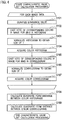
- Step S1 image data in the image database 51 is read from a storage device 107.
- Step S2 corresponding characteristic value sets are calculated for respective sets of the image data in the image database thus read in Step S1.
- This characteristic value set includes a characteristic value set calculated from pixels of the whole image and a characteristic value set calculated from pixels in an edge portion of the image.
- Step S3 to Step S5 the image classification device 1 performs clustering in multiple stages based on the extracted characteristic value sets.
- the image classification device 1 classifies images based on colors, structures and the like. Specifically, in Step S3, the image classification device 1 divides multiple sets of image data into multiple clusters based on a characteristic value set related to a color distribution of the whole image. Thereafter, in Step S4, the image classification device 1 further divides the clusters classified in Step S3, based on a characteristic value set related to a color distribution in the edge portion of the image. In Step S5, the image classification device 1 integrates the clusters excessively divided in Step S4, based on a color distribution of a subject portion and an appearance frequency of colors.
- Step S6 the image classification device 1 displays a result of the classification of the images in the image database 51 on a display device 105.
- the image classification device 1 visualizes the classification result on a three-dimensional space by using the corresponding characteristic value set of respective image sets and the clustering result obtained by the processing of Step S3 to Step S5.
- a classification unit 10 in the image classification device 1 performs clustering by focusing on a color distribution in the image and by use of a color correlogram and a K-means method (Step S3). Based on the classification result thus obtained, the image classification device 1 divides each of the clusters by use of a color correlogram calculated for edge pixels, in order to take into consideration a more detailed color distribution in the image (Step S4).
- the edge pixels are edges acquired by use of a Sobel filter, and are not necessarily edges of the subject.
- the image classification device 1 applies reintegration processing on the clusters by use of the color histogram and color correlogram obtained from the subject (Step S5). In calculation of a distance between the characteristic value sets in each of the processing steps described above, a quadratic form distance between the color correlograms is used. By use of the characteristic value set of each image and belonging cluster information thus obtained, the image classification device 1 allows a display unit 20 to visualize the classification result on the three-dimensional space (Step S6).
- the image classification device 1 includes a central processing controller 101, a ROM (Read Only Memory) 102, a RAM (Random Access Memory) 103, and an I/O interface 109, which are connected to each other through a bus 110.
- An input device 104, a display device 105, a communication controller 106, a storage device 107, and a removable disk 108 are connected to the I/O interface 109.
- the central processing controller 101 reads a boot program for starting the image classification device 1 from the ROM 102 based on an input signal from the input device 104 and executes the boot program.
- the central processing controller 101 further reads an operating system stored in the storage device 107.
- the central processing controller 101 controls the various devices based on input signals from the input device 104, the communication controller 106 and the like, reads programs and data stored in the RAM 103, the storage device 107 and the like, and loads the programs and data into the RAM 103.
- the central processing controller 101 is a processor which achieves a series of processing to be described later, including processing to perform calculation and processing of data based on a command of the program thus read from the RAM 103.
- the input device 104 includes input devices, such as a keyboard and a mouse, which are used by an operator to input various operations.
- the input device 104 creates an input signal based on the operation by the operator and transmits the signal to the central processing controller 101 through the I/O interface 109 and the bus 110.
- a CRT (Cathode Ray Tube) display, a liquid crystal display or the like is employed for the display device 105.
- the display device 105 receives an output signal to be displayed on the display device 105 from the central processing controller 101 through the bus 110 and the I/O interface 109 and displays a result of processing by the central processing controller 101, and the like, for example.
- the communication controller 106 is a device such as a LAN card and a modem.
- the communication controller 06 is a device which connects the image classification device 1 to the Internet or a communication network such as a LAN.
- the data sets transmitted to or received from the communication network through the communication controller 106 are transmitted to and received from the central processing controller 101 as input signals or output signals through the I/O interface 109 and the bus 110.
- the storage device 107 is a semiconductor storage device or a magnetic disk device.
- the storage device 107 stores data and programs to be executed by the central processing controller 101.
- the removable disk 108 is an optical disk or a flexible disk, and signals read or written by a disk drive are transmitted to and received from the central processing controller 101 through the I/O interface 109 and the bus 110.
- an image classification program is stored, and an image database 51 is also stored as shown in Fig. 1 .
- the central processing controller 101 of the image classification device 1 reads and executes the image classification program, a classification unit 10 and a display unit 20 are implemented in the image classification device 1.
- the image classification device 1 includes the image database 51, the classification unit 10 and the display unit 20.
- the classification unit 10 includes a characteristic value set calculation unit 11, a first clustering unit 12, a second clustering unit 13, and a cluster integration unit 14.
- the image database 51 stores multiple sets of image.
- the image data stored in the image database is to be classified by the image classification device 1 according to the preferred embodiment of the present invention.
- each set of the image data may have its characteristic value sets, cluster information, and the like associated with each other, the characteristic value sets calculated by processing to be described later, the cluster information including cluster identifiers.
- the characteristic value set calculation unit 11 calculates a characteristic value set of the whole image for each of the sets of image data stored in the image database 51. Moreover, the characteristic value set calculation unit 11 detects edges of the corresponding sets of the image data and calculates characteristic value sets of the detected edge portions. Here, the characteristic value set calculation unit 11 calculates a color correlogram based on a luminance value of the image data for each of the multiple sets of image data. The characteristic value set calculation unit 11 calculates a distance of the color correlogram from another set of image data as a characteristic value set.
- the characteristic value set calculated from the pixels of the whole image may be calculated by adding characteristic value sets calculated from the pixels of the edge portions in the image and characteristic value sets calculated from the pixels of the edge portions and exclusive pixels among the pixels of the whole image.
- the characteristic value set calculation unit 11 of the present invention performs the calculation based on the color correlogram for each set of the image data.
- the color histogram may be used or both of the color histogram and color correlogram may be used.
- the first clustering unit 12 classifies the multiple sets of image data into clusters based on the characteristic value set of the whole image. Based on the characteristic value set of the whole image, the first clustering unit 12 determines the number of clusters and sets of image data belonging to each of the clusters so as to set a clustering error for all the clusters to be within a threshold.
- the second clustering unit 13 further classifies each of the clusters classified by the first clustering unit 12 into clusters based on the characteristic value sets of the edge portions. Based on the characteristic value sets of the edge portions, the second clustering unit 13 determines the number of clusters and sets of image data belonging to each of the clusters so as to set an in-cluster error of each of the clusters classified by the first clustering unit 12 to be within a threshold.
- the cluster integration unit 14 determines pixels constituting a subject from the composition of the image for each of the sets of image data and integrates the multiple clusters classified by the second clustering unit 13 based on the pixels constituting the subject.
- the cluster integration unit 14 provides an arbitrary boundary line in a set of the image data and calculates a distance between color histograms in a first region and a second region obtained by the boundary line.
- the cluster integration unit 14 determines, by shifting the boundary line, a boundary line which significantly changes the distance between the color histograms as the boundary line for determining the composition.
- the cluster integration unit 14 determines pixels whose color difference from a representative color of pixels constituting outside the boundary line is greater than a threshold as the pixels constituting the subject.
- the cluster integration unit 14 further calculates a color correlogram and a color histogram of the pixels constituting the subject. Based on the calculated color correlogram and color histogram, the cluster integration unit 14 iteratively integrates clusters of the multiple clusters classified by the second clustering unit 13 until a dissimilarity between any two clusters becomes higher than a threshold.
- the display unit 20 visually displays the image data classified by the classification unit 10 on the display device 105.
- the display unit 20 arbitrarily arranges thumbnails corresponding to the sets of image data. Furthermore, based on the characteristic value set of the whole image, the characteristic value sets of the edge portions, the characteristic value set of the pixels constituting the subject, and the cluster of the image data determined by the cluster integration unit 14, the display unit 20 updates and displays coordinates of each of the thumbnails and calculates a shift amount of each of the thumbnails. The display unit 20 repeats the processing of updating and displaying the coordinates until the shift amount of each thumbnail is converged to 0.
- the display unit 20 defines a distance between the sets of image data from the color correlogram of the whole image, the color correlogram of the edge portions, and the color correlogram in the subject region. Based on the distance between the sets of image data, the display unit 20 displays the thumbnails on the display device 105 while moving the thumbnails.
- the description is given of the case where the distance between the sets of image data is calculated based on the color correlograms.
- only the color histograms may be used or both of the color histograms and color correlograms may be used.
- the image classification device 1 targets color images for classification and automatically classifies the images by use of features based on colors in the images.
- a color histogram is used as the feature expressing the colors in the image.
- the use of the color histogram can not take into consideration a spatial distribution of the colors in the image. Therefore, the image classification device 1 according to the preferred embodiment of the present invention focuses on a color correlogram as a feature with which the color distribution in the image can be considered.
- a difference in the spatial color distribution is taken into consideration and thus high-accuracy automatic image classification is achieved.
- the description is given of the case where the classification is performed based on the color correlograms.
- the color histograms may be used or both of the color histograms and color correlograms may be used.
- Steps S102 to S104 and S107 may be omitted.
- processing of Steps S102 to S104 is processing of calculating a color histogram of each set of the image data
- processing of Steps S105 to S107 is processing of calculating a color correlogram of each set of the image data
- processing of Steps S108 and S109 is processing of calculating distances of the color correlograms and color histograms between each two of the sets of image data based on the color histograms and color correlograms of the sets of image data acquired in Steps S104 and S105.
- the characteristic value set calculation unit 11 calculates a color histogram and a color correlogram for each set of the image data stored in the image database 51.
- Step S101 the characteristic value set calculation unit 11 quantizes a luminance value of each pixel in the image data.
- description is given of the case where the following processing is executed based on the luminance value. However, the processing may be executed based on an RGB value of each of pixels.
- Step S102 among bins in the histogram, the characteristic value set calculation unit 11 casts a vote for a pixel value corresponding to the pixel in the image data.
- Step S103 the characteristic value set calculation unit 11 normalizes the histogram acquired in Step S102 to obtain a sum of 1.
- Step S104 the characteristic value set calculation unit 11 acquires the value calculated in Step S103 as the color histogram of the image data.
- Step S105 among bins in the correlogram, the characteristic value set calculation unit 11 casts a vote for a pixel value corresponding to the pixel in the image data.
- Step S106 the characteristic value set calculation unit 11 normalizes the correlogram acquired in Step S105 to obtain a sum of 1.
- Step S107 the characteristic value set calculation unit 11 acquires the value calculated in Step S106 as the color correlogram of the image data.
- Step S108 the feature unit calculation unit 11 calculates a quadratic form distance between the color histograms of the image data and stores the calculated distance in the image database 51. Furthermore, in Step S109, the feature unit calculation unit 11 calculates a quadratic form distance between the color correlograms of the image data and stores the calculated distance in the image database 51. For example, when 50 sets of image data are stored in the image database 51, the quadratic form distance between the color histograms and the quadratic form distance between the color correlograms are 50 ⁇ 49/2, respectively.
- the color histogram is defined as a distribution of probability of how often a specific color appears in an image.
- I c ⁇ p
- I(p) c ⁇ .
- a color histogram h ci (I) for a color c i of the image I is defined by the following Equation 1.
- the color histogram is defined as a distribution of probability of how often a specific color appears in an image
- the color correlogram is defined as a distribution of probability of how specific colors of different pixels away from each other by a certain distance in an image co-occur. Accordingly, as shown in Fig. 5A and Fig. 5B , the color histogram and the color correlogram show different features. Specifically, an image having one large circle as shown in Fig. 5A and an image having many small circles as shown in Fig. 5B both have the same color histogram. However, the respective features of the images shown in Figs. 5A and 5B can be shown by representing these images using color correlograms.
- p 1 ⁇ p 2 k , p 1 ⁇ I c i
- Equation 3 a distance
- Equation 2 is replaced by the following Equation 4 in order to take into consideration a color distribution in a local region around the pixel.
- the image classification device 1 in the preferred embodiment of the present invention can take into consideration a difference in spatial color distribution in the image by using the color correlogram as a feature. Moreover, the image classification device 1 can automatically classify images with high accuracy.
- the image classification device 1 extracts the above two features from the classification target image and defines a distance therebetween for each set of the image data. Furthermore, the image classification device 1 calculates a similarity between images based on the defined distance and classifies the images based on the obtained similarity
- the image classification device 1 calculates features and performs multistage processing by focusing on a limited region, such as the whole image, edges, or a subject. Thus, the image classification device 1 can automatically classify the images with higher accuracy.
- the image classification device 1 evaluates a similarity between images by use of distances between color histograms and between color correlograms calculated from images in the multiple sets of image data.
- Various distance scales are conceivable as a distance scale between the color histograms.
- use of a quadratic form distance which is reported to be a distance scale close to human perception, makes it possible to obtain an appropriate classification result.
- the quadratic form distance is defined as a distance between color histograms and thus cannot be used, as it is, as a distance scale between color correlograms. Therefore, the image classification device 1 according to the preferred embodiment of the present invention defines a distance between color correlograms by extending the concept of the quadratic form distance between color histograms.
- s xy e ad xy 2
- ⁇ is a positive constant
- d xy is a color difference in a L*a*b color system of the colors corresponding to the xth and yth bins.
- the image classification device 1 uses the quadratic form distance defined by Equation 5 as a distance between the color histograms.
- a computational complexity is reduced by converting the color histogram as described below in calculation of the quadratic form distance.
- ⁇ is a diagonal matrix in which eigenvalues of S are arranged in descending order
- U is a matrix in which corresponding eigenvectors are arranged.
- n-dimensional color histograms h i and h j are converted into 1-dimensional vectors, represented by the following Expression 12, by the following Equation 10.
- Equation 11 a distance between h i and h j on a 1-dimensional space is defined by the following Equation 11.
- Equation 9 is approximated by the following Equation 12 as in the case of the calculation of the quadratic form distance between the color histograms. In this way, a computational complexity is reduced.
- D c l c i c j c i ′ ⁇ c j ′ T c i ′ ⁇ c j ′
- Equation 13 is established for the above Equation 12.
- the image classification device 1 evaluates a similarity between images by using the vectors represented by the following Expression 19 as feature vectors and the distances represented by the following Expression 20, thereby classifying the images.
- Expression 19 the vectors represented by the following Expression 19
- Expression 20 the distances represented by the following Expression 20
- the first clustering unit 12, the second clustering unit 13, and the cluster integration unit 14 will be described.
- high-accuracy automatic image classification is achieved by focusing and performing multistage processing on colors in images and a distribution thereof.
- images are classified by use of the K-means method based on a quadratic form distance between color correlograms while focusing on a distribution of colors in images.
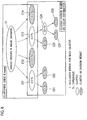
- the image classification device 1 classifies image data groups stored in the image database 51 by use of the K-means method to generate clusters C11, C12, C13 and C14 as shown in Fig. 6 .
- the image classification device 1 detects edge pixels from the image and divides each of the obtained clusters by use of a color correlogram calculated from only the edge pixels and pixels therearound.
- the edge pixels are edges acquired by use of a Sobel filter, and are edges of the subject.
- the image classification device 1 further divides a cluster, among the clusters obtained by division by the K-means method, having a greater in-cluster error than a predetermined threshold Th.
- the clusters having the greater in-cluster errors than the predetermined threshold Th are the clusters C11 and C13.
- the image classification device 1 divides the cluster C11 into clusters C21 and C22. Furthermore, the image classification device 1 divides the cluster C13 into clusters C23 and C24. The cluster C24 thus obtained has a greater in-cluster error than the predetermined threshold Th. Thus, the image classification device 1 further divides the cluster C24 into cluster C31 and cluster C32. In this manner, the image classification device 1 divides the clusters so that the in-cluster error of each of the clusters becomes smaller than the predetermined threshold Th.
- an accurate classification result can be obtained by taking into consideration a more detailed color distribution in the image.
- the image classification device 1 adds cluster reintegration processing by use of the color histogram and color correlogram obtained from the subject in order to suppress influences of excessive division.
- the image classification device 1 can accurately classify the images into groups of similar images. Specifically, the image classification device 1 integrates any clusters considered to contain the same subject among the seven clusters C21, C22, C12, C23, C31, C32 and C14 as the classification result to obtain six clusters or less.
- the clustering using the K-means method is a kind of nonhierarchical clustering method.
- Step S201 the first clustering unit 12 first sets the number K of clusters to 1.
- Step S202 the first clustering unit 12 performs clustering to set the number of clusters to K. In this event, the first clustering unit 12 calculates a clustering error E(k) for all the clusters in Step S203.
- Step S204 If the number K of clusters is 1 in Step S204, the first clustering unit 12 increments K in Step S205. Furthermore, the first clustering unit 12 returns to Step S202 to perform clustering to set the number of clusters to K.
- Step S204 if the number K of clusters is not 1 in Step S204 and if a difference between the clustering error E(k) for the current number of clusters and a clustering error E(k-1) for the number of clusters smaller by 1 than the current number of clusters is equal to or greater than a predetermined threshold in Step S206, the first clustering unit 12 increments K in Step S205. Furthermore, the first clustering unit 12 returns to Step S202 to perform clustering to set the number of clusters to K.
- the clustering error is regarded as being converged in the state of the current number of clusters.
- the first clustering unit 12 terminates the first clustering processing.
- the first clustering unit 12 generates a feature vector to be used for the K-means method. For each of f i , the first clustering unit 12 quantizes R, G, and B luminance values into corresponding m gradations and calculates a color correlogram for a distance k 1 .
- k 1 is a previously given value.
- a 1-dimensional vector c' i is calculated by applying Equation 13 to the obtained color correlogram and is set to be the feature vector.
- the K-means method is applied to the feature vector obtained by the above processing. However, in the K-means method, a clustering result varies according to an initial cluster and the number of clusters.
- a clustering error E k represented by the following Equation 14 is used to evaluate the clustering result.
- the first clustering unit 12 applies the K-means method M times while randomly changing the initial value for each cluster.
- the first clustering unit 12 sets a result having a minimum value of E K as a clustering result when the number of clusters is K.
- the scree plot is used to determine the number of principal components in principal component analysis.
- the scree plot includes plotting eigenvalues of principal components in order from a first principal component, and employing the number of principal components before a difference between two points becomes small.
- the number of principal components is associated with the number of clusters and the eigenvalues are associated with E k and, when
- the image classification device 1 Since the classification result obtained by applying the K-means method focuses on the color distribution of the whole image, detailed features of the image are not taken into consideration. Thus, images obtained by imaging different subjects may belong to the same cluster. Therefore, the image classification device 1 obtains a more accurate classification result by dividing each of the clusters by use of more detailed features. Specifically, the image classification device 1 focuses on edges as the detailed features of the image and takes into consideration a color relationship between edge pixels and pixels around the edge pixels, thereby obtaining a more accurate classification result.
- the edge pixels are edges acquired by use of a Sobel filter, and are not necessarily edges of the subject.
- each of the pixels around the edge pixels is one having coordinates (a, b) at which a distance k 2 from the edge pixel satisfies an inequality represented by the following Expression 22 when the edge pixel has coordinates (x, y).
- k 2 is a previously given parameter.
- Step S301 the second clustering unit 13 applies a Sobel filter to all the sets of image data stored in the image database 51 and acquires an edge image in each set of the image data.
- Step S302 the second clustering unit 13 generates a color correlogram of the edge image acquired in Step S301 for each set of the image data.
- Step S303 the second clustering unit 13 calculates an in-cluster error E for each of the clusters generated by the first clustering unit 12.
- This in-cluster error E is based on a quadratic form distance between the color correlograms of the edge images generated in Step S302 for the image data belonging to the cluster.
- This quadratic form distance between the color correlograms in the edge portions of each set of the image data is preferably stored in the image database 51.
- Step S303 to Step S305 The processing of Step S303 to Step S305 is repeated until it is determined that the in-cluster errors E of all the clusters are less than the threshold. When the in-cluster errors E of all the clusters are less than the threshold, the second clustering processing is terminated.
- Equations 15 to 17 an edge strength es obtained by the Sobel filter is defined by the following Equations 15 to 17.
- Equations 16 and 17 are changed to the following Equations 18 and 19.
- ⁇ a-c ⁇ represents a color difference between a and c in an L*a*b color space.
- the edge pixels are detected by use of the Sobel filter thus extended.
- the edge pixels are detected by use of the Sobel filter thus extended.
- a color correlogram is prepared for a distance k 2 (k 2 ⁇ k 1 ) from the edge pixel obtained by use of the above extended Sobel filter.
- a feature vector represented by the following Expression 25, which is calculated by use of Equation 13 enables the processing focusing on the edges.
- c i l By use of the feature vector thus obtained, each of the clusters is further divided into two clusters by the K-means method.
- the above processing allows the image classification device 1 to divide each of the clusters obtained by use of the K-means method by focusing on the edge which is the important feature of the image.
- the divided clusters are integrated by focusing on the subject, thereby obtaining a final classification result.
- cluster integration processing performed by the cluster integration unit 14 according to the preferred embodiment of the present invention.
- the cluster integration unit 14 executes processing of Step S401 to Step S404 for all the image data stored in the image database 51. In the processing of Step S401 to Step S404, the cluster integration unit 14 determines a composition of the image data.
- Step S401 the cluster integration unit 14 sets an arbitrary boundary line for one set of the image data stored in the image database 51 to divide the image into two regions.
- Step S402 for each of the two regions obtained by division in Step S401, the cluster integration unit 14 calculates a color histogram for pixels positioned in the region.
- Step S403 based on a quadratic form distance between the color histograms in the two regions, the cluster integration unit 14 determines whether or not the boundary line set in Step S401 represents the composition of the image.
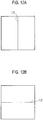
- Steps S401 to S404 is repeated by changing a direction of the boundary line as shown in Figs 12A to Fig. 12D .
- the cluster integration unit 14 can divide the image data into pixels within the boundary line and pixels outside the boundary line.
- Step S405 the cluster integration unit 14 extracts pixels constituting a subject based on features of the pixels within the boundary line and the pixels outside the boundary line.
- the cluster integration unit 14 integrates the clusters containing the images having pixels of a similar subject. Specifically, the cluster integration unit 14 integrates clusters having similar subjects, among the multiple clusters, into one cluster. Information on the cluster to which each of the image data thus obtained belongs is preferably stored in the image database 51.
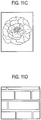
- classification target images are classified roughly into two compositions shown in Figs. 11A and 11B based on rough color distributions thereof.
- a change in a quadratic form distance between color histograms in the two regions at the time when j is changed per 1/d from 1/d to (d-1)/d shows a specific trend due to the image composition.
- the characteristic value set used for determination of the composition defines the following Expression 27 calculated by the following Equations 21 and 22 using a quadratic form distance between h i, j, 1 and h i, j, 2 .
- the pixels constituting the subject are estimated from the image having Composition 1. Since a background is generally in contact with edges of the image, a median value of luminance values in the L*a*b color system of the pixels contained in the regions represented by the following Expression 33, which are regions present at the edges of the image, is obtained by use of the boundary line represented by the following Expression 32, which is obtained in the determination of Composition 1. i ⁇ A i ⁇ , 1 d , 1 , And A i ⁇ , d ⁇ 1 d , 2 Accordingly, the obtained median value is set to be a representative color of the pixels constituting the background of the image.
- the pixels whose color difference from the obtained representative color of the pixels constituting the background is greater than a threshold TH object are estimated by the image classification device 1 to be the pixels constituting the subject. Meanwhile, the image classification device 1 regards the whole image of the image having Composition 2 as one subject and estimates all the pixels to be the pixels constituting the subject.
- the cluster integration unit 14 suppresses excessive division of the clusters by integrating the clusters by focusing on the pixels constituting the subject thus obtained, and accordingly obtains a final classification result. Since the above processing focuses on the subject, a color correlogram is calculated for a distance k 1 from the pixels estimated to constitute the subject as described above. Incidentally, it is known that the color correlogram shows a high similarity between very similar images but is likely to be affected by an imaging direction of the subject and the like. Therefore, in the preferred embodiment, a color histogram is obtained from the pixels constituting the subject and also a feature vector h' i is calculated by Equation 10. Thus, by using the calculated feature vector h'i together with the feature vector obtained by use of the color correlogram, the clusters are integrated. For cluster integration, the Ward method is used, which is one of the hierarchical clustering methods.
- the Ward method is a method for defining a dissimilarity S(C k , C l ) between the clusters C k and C l by use of the following Equation 23 and sequentially integrating two clusters having the lowest dissimilarity.
- S C k C l n k n l n k + n l ⁇ k ⁇ ⁇ l T ⁇ k ⁇ ⁇ l
- Equation 23 is changed to the following Equation 24.
- the integration processing is repeated until a minimum value of S(C k , C l ) takes a value higher than a threshold TH.
- the cluster integration unit 14 stores each of the characteristic value sets obtained by the above processing and the clustering result for each of the images and uses those for visualization. However, considering that a distance between the characteristic value sets is calculated in visualization, each of the characteristic value sets to be stored is a value converted by use of Equation 10 and Equation 13.
- the image classification device 1 Based on the characteristic value sets of the images obtained by the processing performed by the classification unit 10 and the classification result thereof, the image classification device 1 according to the preferred embodiment of the present invention visualizes the image classification result.
- This visualization of the image classification result can be achieved by arranging the images on a multidimensional space.
- Step S501 the display unit 20 calculates a color correlogram of the whole image, a color correlogram in an edge region, and a color histogram and a color correlogram in a subject region for each set of the image data stored in the image database 51.
- the processing result values obtained by the classification unit 10 described above are preferably referred to.
- the display unit 20 defines a distance between each two sets of the image data in Step S502.
- Step S503 the display unit 20 arranges thumbnails of the image data on a screen of the display device 105. In this event, the display unit 20 displays the thumbnails of the image data at random positions.
- Step S504 the display unit 20 updates coordinates of the thumbnails of the image data based on the distance between the image data defined in Step S502 and the clusters determined by the classification unit 10.
- Step S505 the display unit 20 determines whether or not updating the coordinates is concluded. If the updating is not concluded, the display unit 20 returns to Step S504 and further updates the coordinates of the thumbnails of the image data.
- Step S505 if it is determined in Step S505 that the display device 20 has concluded updating the coordinates, the display unit 20 terminates the display processing.
- the display unit 20 creates a feature vector from each set of the image data.
- the display unit 20 uses the characteristic value sets described above, including the color correlogram of the whole image, the color correlogram in the edge region, and the color histogram and color correlogram in the subject region.
- the display unit 20 calculates a distance D I (i,j) between images based on the following Equation 26 from the feature vector v i of the image I i thus obtained.
- the display unit 20 reduces the distance between the images belonging to the same cluster by assigning values that satisfy w same ⁇ w other to the weights w same and w other .
- the images determined to belong to the same cluster from the classification result are arranged close to each other.
- the display unit 20 updates the coordinates of the thumbnails of the images based on the distance between the images and displays a convergence process thereof by animation.
- the display unit 20 achieves visualization of the image classification result.
- the display unit 20 first randomly arranges images on a space and visualizes by animation how the images are gathered into groups of similar images.
- a three-dimensional space is selected, that is a maximum dimension that can be perceived by human beings.
- the display unit 20 determines coordinates of the images in the three-dimensional space by reducing the dimensions of the features calculated from the classification target images to three dimensions, and arranges the images on the three-dimensional space.
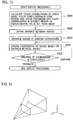
- the display unit 20 performs perspective transformation shown in Fig. 14 to express the images on a two-dimensional screen, thereby obtaining a final output image.
- the display unit 20 according to the preferred embodiment of the present invention follows the following steps.
- Step 1 Initial Arrangement
- the display unit 20 randomly arranges the images on the three-dimensional space and subjects the images to perspective transformation, thereby displaying the images on the two-dimensional screen.
- the display unit 20 draws a polyhedron at coordinates where each of the images is arranged and draws a target image on each of the faces of the polyhedron.
- the display unit 20 can present the position of the image on the three-dimensional space to the user in a user-friendly manner.
- the display unit 20 calculates a shift amount of each image based on a distance between images, and changes coordinates of each image on the three-dimensional space.
- a shift amount thereof represented by the following Expression 39 is calculated based on the following Equations 27 and 28.
- Expression 41 represents a distance between the images I i and I j on the three-dimensional space when the coordinate pi of the image I i is moved by m i .
- D I real i j Therefore, the shift amount of the image, which is represented by the following Expression 42, is obtained as one that minimizes a difference between the previously defined distance D I (i,j) between images and an actual distance represented by the following Expression 43 on the three-dimensional space.
- the display unit 20 updates the coordinate of each image as expressed by the following Equation 29.
- m i * [Expression 45] p i ⁇ p i + m i *
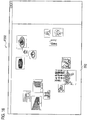
- the display unit 20 repeats Step 2 until the shift amount, which is represented by the following Expression 46, of every image is converged to 0. m i * Upon convergence to 0, a screen shown in Fig. 16 is displayed on the display device 105.
- thumbnails of similar images such as pictures representing maple leaves and pictures representing buildings, are arranged nearby. Meanwhile, thumbnails of images not similar to each other are arranged at a distance.
- a distance between the thumbnails of image data approaches the previously defined distance D I (i,j). Accordingly, the thumbnails of similar image data are arranged close to each other.
- Fig. 17A shows an example where the coordinates of each image (the thumbnail of the image data) are limited to one dimension for convenience. As shown in Fig. 17A , it is confirmed that actual distances between each two images are "7" and "2" and the previously defined distances between each two images are "5" and "4".
- the display unit 20 uses these values to calculate an evaluation function when coordinates of an image I 2 are moved, and moves the image in a direction of minimizing the values.
- Fig. 17B shows positions of the respective images.
- the display unit 20 can arrange each image close to similar images by repeating the above processing.
- the evaluation function is as follows in the next step.
- Fig. 17C shows positions of the respective images.
- the evaluation function is as follows in the next step.
- the evaluation function is minimized when the image is not moved. Since the evaluation function is converged at this point, the display unit 20 terminates movement of the images (thumbnails of the image data). By performing the above processing for all the images until the evaluation function is converged, the display unit 20 achieves visualization of the image classification result.
- the display unit 20 first displays an initial screen P201 shown in Fig. 15 on the display device 105.
- the initial screen P201 includes a classification process display part 201.
- the classification process display part 201 displays a state where the thumbnails of the image data are randomly arranged in Step 1 described above.
- This initial screen P201 is a screen obtained by randomly arranging the thumbnails of each image data on the three-dimensional space and then subjecting the thumbnails to perspective transformation.
- the display device 105 displays the thumbnails of the image data being moved in Steps 2 and 3. Displaying the automatic classification process by use of animation in this manner allows the user to intuitively recognize the images contained in the database.
- a result screen P202 shown in Fig. 16 is displayed on the display device 105.
- the result screen P202 includes a classification result display part 202.
- similar images are displayed nearby while images not similar to each other are displayed at a distance.
- buttons for visualizing the process of moving the thumbnails of the image data are provided. Specifically, the following buttons are provided.
- the display unit 20 can restore the classification process to the initial state.
- a map indicating a current position and a viewpoint direction is prepared on an upper right portion of the classification screen.
- the user can freely move in the three-dimensional space in which the images are arranged. Clicking on this button makes it possible to switch between display and hide of the map.
- the display unit 20 enables the movement in the three-dimensional space in which the images are arranged and change in the viewpoint by dragging a mouse. Besides the above, the display unit 20 is also allowed to switch to any of four predetermined positions and viewpoints by the user clicking on one of four viewpoint change buttons.
- the display unit 20 reproduces the classification process by animation. Thereafter, classification target image groups are eventually gathered into groups of similar images as shown in the result screen P202 of Fig. 16 .
- the display unit 20 can display the classification result.
- the user can freely move in the three-dimensional space and change the viewpoint by dragging the mouse in the classification process display unit 201 and the classification result display unit 202.
- the user can view the classification process and result from a free viewpoint.
- the user can intuitively recognize the images in the database.
- even when the user has no query image or no clear search intention he/she can search for desired images.
- the display unit 20 may display a result of displaying the images belonging to the same cluster as that of a specific image. In this event, it is preferable that image data belonging to the same cluster as that of the selected image data is also displayed together with the selected image data. The user can select images from the image data belonging to the same cluster as that of the selected image data. By clicking on one of the selected images, the user can select a new image.
- the image classification device 1 allows the user to intuitively recognize the images contained in the database by presenting to the user the classification process and classification result in the automatic image classification. Thus, even when the user has no query image or no clear search intention, the image classification device 1 can provide images desired by the user.
- the image classification device 1 visualizes the classification result on the three-dimensional space in displaying of the classification result.
- the image classification device 1 allows the user to efficiently view the classification result.
- the image classification device 1 determines a distance on the three-dimensional space based on a dissimilarity between images, and arranges thumbnails of the images on the display device 105.
- a state where the thumbnails of the images in the database are gathered into groups of similar images is displayed on the display device 105.
- the image classification device 1 determines the distance between the images based on the dissimilarity. Therefore, the shorter the distance from a certain image, images more similar to the certain image are arranged on the display device 105. On the other hand, the farther away from the certain image, images more dissimilar to the certain image are arranged on the display device 105. Thus, when observing a very narrow range around the certain image upon display of the classification result, particularly similar images among the similar images are arranged nearby. Similarly, not very similar images are arranged farther away. Moreover, when observing a range including more images, similar images are arranged nearby and dissimilar images are arranged farther away. Since all the images in the database are arranged in the above manner, the image classification device 1 allows the user to efficiently view the classification result in an intuitively understandable manner.
- the image classification device 1 performs clustering processing in stages.
- the image classification device 1 can classify the images by taking into consideration not only the color distribution of the whole image but also more detailed features in the image. Specifically, by performing clustering based on the color distribution of the whole image, the image classifcation device 1 can classify the images into clusters of wholly similar images. Next, by dividing each of the clusters based on the color distribution in the edge region, the image classification device 1 can more accurately perform clustering. Furthermore, by estimating the subject present in the image and reintegrating the clusters based on the features of the subject, the image classification device 1 can classify the images by taking into consideration the subject that is the most important information in the image. Furthermore, by using the quadratic form distance as the distance scale in calculation of distances between color histograms and between color correlograms at each stage of the clustering, the image classification device 1 achieves classification closer to human visual perception.
- the image classification device 1 allows the first clustering unit 12 to roughly classify images based on the characteristic value set of the whole image.
- the image classification device 1 then allows the second clustering unit 13 to perform more detailed hierarchical classification by focusing on the edge portions which characterize the images.
- the cluster integration unit 14 integrates the clusters, which are excessively divided by the first clustering unit 12 and the second clustering unit 13, based on the features of the subjects so as to obtain clusters for the corresponding subjects.
- the image classification device 1 can generate clusters which are likely to match to a search keyword entered by the user.
- An image classification device 1a can automatically search for an image when given a query image, by utilizing the classification function according to the preferred embodiment.
- the image classification device 1a first extracts a characteristic value set from the inputted query image.
- a query image processing unit 30 in the image classification device 1 according to the modified embodiment of the present invention determines a cluster to which the query image belongs by comparing the extracted characteristic value set with those of images in a database.
- characteristic value set calculation and classification of each image in the database have been previously completed.
- a display unit 20 visualizes a search result on a three-dimensional space.
- the image classification device 1a searches for an image similar to the inputted query image by extracting a characteristic value set from the query image and comparing the extracted characteristic value set with those of images in an image database 51.
- the image classification device 1a according to the modified embodiment of the present invention extracts all characteristic value sets used for classification of images from the inputted query image. Thereafter, a cluster to which the query image belongs is determined by comparing the query image with the images in the database, characteristic value set calculation and classification of each of the images previously completed.
- the display unit 20 visualizes a search result on the three-dimensional space.
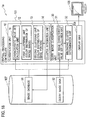
- the image classification device 1a according to the modified embodiment of the present invention is different from the image classification device 1 according to the preferred embodiment of the present invention shown in Fig. 1 in that the image classification device 1a includes the query image classification unit 30.
- the query image classification unit 30 includes a query image characteristic value set calculation unit 31 and a belonging cluster determination unit 32.
- the query image characteristic value set calculation unit 31 calculates a feature vector of query image data 52.
- the feature vector is a vector having, as parameters, a color correlogram of the whole image, a color correlogram in an edge portion, and a color histogram and a color correlogram in a subject region.
- the query image characteristic value set calculation unit 31 calculates a color correlogram of the whole image of the query image data 52, a color correlogram in an edge portion of the query image data 52, and a color histogram and a color correlogram in a subject region of the 52 query image data, and thus calculates a feature vector of the query image data 52.
- the cluster determination unit 32 determines a cluster to which the query image data 52 belongs among clusters generated by a cluster integration unit 14 based on the feature vector of the query image data 52.
- the cluster determination unit 32 calculates an average of the feature vectors of sets of the image data belonging to each of the clusters generated by the cluster integration unit 14. Thereafter, the cluster determination unit 32 determines a cluster that has the smallest distance from the feature vector of the query image data 52 as a cluster to which the query image belongs.
- Step S21 the image classification device 1a calculates a feature vector of the query image data 52. Thereafter, in Step S22, the image classification device 1a reads sets of image data from the image database 22 and acquires a feature vector in each set of the image data.
- Step S23 the image classification device 1a calculates a distance between the feature vectors of the query image data 52 and each set of the image data.
- Step S24 the image classification device 1a determines a cluster to which the query image data 52 belongs. In this event, the image classification device 1a determines a cluster that has the smallest distance calculated in Step S23 as the cluster to which the query image data 52 belongs.
- Step S25 the image classification device 1a displays on the display device 105 a classification process of the query image data 52 and the image data stored in the image database 51.
- the query image characteristic value set calculation processing 31 reads the query image data 52 from a storage device 107 in Step S601, and calculates a color correlogram of the whole image of the query image data 52 in Step S602. Next, in Step S603, the query image characteristic value set calculation processing 31 calculates a color correlogram in the edge portion of the query image data 52. Furthermore, the query image characteristic value set calculation processing 31 calculates a color correlogram in the subject region, in Step S604.
- Step S605 the query image characteristic value set calculation processing 31 generates a feature vector from the outputs in Step S602 to Step S604.
- the query image characteristic value set calculation processing 31 uses the characteristic value set used for automatic image classification by the classification unit 10. Specifically, the query image characteristic value set calculation processing 31 calculates the color correlogram of the whole image, the color correlogram in the edge region, and the color histogram and color correlogram in the subject region. The obtained characteristic value sets of the color histogram and color correlograms are converted by use of Equation 10 and Equation 13 to calculate a similarity based on a quadratic form distance. The query image characteristic value set calculation processing 31 creates a vector having the values thus obtained as elements and sets this vector as a feature vector v query .
- Step S701 the belonging cluster determination unit 32 generates a feature vector from each of the image data in the image database 52. Thereafter, in Step S702, the belonging cluster determination unit 32 calculates an average vector of the feature vector of each of the clusters generated by the cluster integration unit 14.
- Step S703 the belonging cluster determination unit 32 calculates a distance between the feature vector of the query image data 52 and the average of the feature vectors of the clusters calculated in Step S702. Thereafter, in Step S704, the belonging cluster determination unit 32 determines a cluster that has the smallest distance between the feature vectors calculated in Step S703 as a cluster to which the query image data 52 belongs.
- the belonging cluster determination unit 32 creates a feature vector similar to the feature vector of the query image data 51 by use of a previously calculated characteristic value set for each set of the image data in the image database 51. Thereafter, an average vector of the feature vectors of the clusters is calculated by use of the obtained feature vectors, and the obtained average vector is set as v i .
- the characteristic value set of the query image and the cluster to which the query image belongs, which are obtained by the above processing, are stored with the characteristic value sets and clusters of the images in the image database 51 and used for visualization.
- a display part 20a according to the modified embodiment of the present invention adds to the image database 51 the feature value of the query image data 52 and information on the cluster to which the query image data belongs, which are obtained by the query image classification unit 30. Furthermore, the display part 20a performs visualization in the same way as the image classification device 1 described in the preferred embodiment of the present invention does.
- the display unit 20 of the image classification device 1 displays the process of the images gathering into clusters of similar images by animation.
- visualization is performed by focusing on the query image data 52 since the query image data 52 is inputted.
- the display unit 20a updates camera parameters so that a query image is always displayed in the center of the screen in perspective transformation as shown in Fig. 22 .
- the display unit 20a visualizes, on the screen, a process in which the images similar to the query image data 52 are gathered.
- the display unit 20a displays a result screen P203 shown in Fig. 22 , for example.
- This result screen P203 is obtained by extracting image data similar to the query image data 52 in the image classification device 1a according to the modified embodiment of the present invention.
- a query image display part 204 a thumbnail of the query image data 52 is displayed.
- the thumbnail of the query image data 52 is displayed.
- thumbnails of images similar to the query image data 52 are displayed nearby and thumbnails of images not similar thereto are displayed farther away.
- a similar image display part 205 sets of the image data belonging to the same cluster as that of the query image data 52, among the sets of the image data displayed in the classification result display part 203, are displayed as similar images. In this event, only sets of the image data having similar feature vectors may be displayed among the sets of the image data belonging to the same cluster.
- the image classification device 1a allows the user to intuitively search for desired images by arranging similar images around the query image data 52 on the three-dimensional space.
- the image classification device 1a allows the user to efficiently view the search result by visually displaying the search result on the three-dimensional space. Specifically, the image classification device 1a allows the user to intuitively understand the search result by using a distance on the three-dimensional space as a dissimilarity between images. Furthermore, by setting the distance on the three-dimensional space based on the dissimilarity between images, images similar to an image other than the query image displayed as a search result are also displayed nearby. Thus, the image classification device 1a allows the user to efficiently view the search result.
- the image classification device 1a enables efficient search with a small computational complexity by using a clustering result of the images in the search target database upon searching. Specifically, upon searching, first, feature value calculation and clustering are assumed to be completed for the search target images in the image database 51 by use of the method described in the preferred embodiment. Thereafter, when the query image data 52 is inputted, the image classification device 1a performs clustering of the query image by use of the clustering result in the image database 51, thereby enabling efficient processing.
- the image classification device described in the preferred embodiment of the present invention may be configured on one set of hardware as shown in Fig. 1 or may be configured on multiple sets of hardware according to functions and the number of processes.
- the image classification device may be implemented in an existing information system.
Landscapes
- Engineering & Computer Science (AREA)
- Theoretical Computer Science (AREA)
- Physics & Mathematics (AREA)
- General Physics & Mathematics (AREA)
- Data Mining & Analysis (AREA)
- General Engineering & Computer Science (AREA)
- Databases & Information Systems (AREA)
- Computer Vision & Pattern Recognition (AREA)
- Multimedia (AREA)
- Evolutionary Computation (AREA)
- Software Systems (AREA)
- Library & Information Science (AREA)
- Artificial Intelligence (AREA)
- Health & Medical Sciences (AREA)
- Computing Systems (AREA)
- Life Sciences & Earth Sciences (AREA)
- Bioinformatics & Cheminformatics (AREA)
- Bioinformatics & Computational Biology (AREA)
- Evolutionary Biology (AREA)
- General Health & Medical Sciences (AREA)
- Medical Informatics (AREA)
- Probability & Statistics with Applications (AREA)
- Information Retrieval, Db Structures And Fs Structures Therefor (AREA)
- Image Analysis (AREA)
- Processing Or Creating Images (AREA)
Claims (2)
- Bildklassifizierungsvorrichtung (1) zum Klassifizieren von Bildern in Gruppen ähnlicher Bilder, aufweisend:Eine Bild-Datenbank (51) zum Speichern von Bildern,wobei die Bildklassifizierungsvorrichtung ferner aufweist:Eine Charakteristische-Werte-Menge-Berechnungseinheit (11), eingerichtet zum Berechnen einer Charakteristische-Werte-Menge des ganzen Bildes und zum Berechnen einer Charakteristische-Werte-Menge eines detektierten Kantenbereichs für jedes Bild;eine erste Gruppierungseinheit (12), eingerichtet zum Klassifizieren der Bilder in erste Gruppen basierend auf den Charakteristische-Werte-Mengen der ganzen Bilder;eine zweite Gruppierungseinheit (13), eingerichtet, weiterhin einen Kantenbereich eines Objekts innerhalb des entsprechenden Bilds unter Verwendung eines Sobel-Filters zu detektieren und die von der ersten Gruppierungseinheit (12) klassifizierten ersten Gruppen basierend auf den Charakteristische-Werte-Mengen der Kantenbereiche in zweite Gruppen zu klassifizieren;eine Gruppenintegrationseinheit (14), eingerichtet zum Ermitteln von Bildern mit einer Zusammensetzung, die das Objekt aufweist, Ermitteln, welche Pixel das Objekt in jedem ermittelten Bilder bilden und Integrieren einiger der von der zweiten Gruppierungseinheit (13) klassifizierten zweiten Gruppen zusammen in integrierte Gruppen basierend auf den Pixeln, die das Objekt bilden, wobei die Gruppenintegrationseinheit (14) eine beliebige Grenzlinie in das Bild schiebt, eine Distanz quadratischer Form zwischen den Farbhistogrammen des durch die Grenzlinie erhaltenen ersten und zweiten Bereichs berechnet und die Gruppenintegrationseinheit (14) Grenzlinien ermittelt, für die die Distanz quadratischer Form zwischen Farbhistogrammen maximal ist und die Pixel, die das Objekt bilden, basierend auf Farbunterschieden ermittelt, wobei ein Medianwert von Pixeln, die außerhalb der Grenzlinien liegen, größer als ein Schwellwert ist; und;eine Anzeigeeinheit (20), eingerichtet zum Berechnen eines Farb-Korrelogramms des ganzen Bilds, eines Farb-Korrelogramms in einem Kantenbereich und eines Farbhistogramms und eines Farb-Korrelogramms in einem Objektbereich für jede Menge der in der Bild-Datenbank gespeicherten Bilddaten,zum Berechnen einer Distanz zwischen Bildern basierend auf der Charakteristische-Werte-Menge der Bilder und der integrierten Gruppen, wobei die Distanz zwischen Bildern, die zu denselben integrierten Gruppen gehören, kürzer ist als die Distanz zwischen Bildern, die zu den unterschiedlichen integrierten Gruppen gehören, zum Anordnen von Miniaturbildern der Bilder an zufälligen Positionen in einem drei-dimensionalen Raum und zum Wiederholen eines Prozesses zum Aktualisieren der Koordinaten der Miniaturbilder basierend auf einem Verschiebungsbetrag von jedem der Miniaturbilder und eines Prozesses zum Anzeigen der Miniaturbilder basierend auf aktualisierten Koordinaten bis der Verschiebungsbetrag von jedem der Miniaturbilder zu Null konvergiert, wobei der Verschiebungsbetrag von jedem der Miniaturbilder derart berechnet wird, dass er den Unterschied zwischen der Distanz zwischen Bildern, berechnet basierend auf den Charakteristische-Werte-Mengen, und der Distanz von entsprechenden Miniaturbildern in dem drei-dimensionalen Raum minimiert.
- Bildklassifizierungsprogramm zum Klassifizieren von Bildern in Gruppen ähnlicher Bilder, das, wenn es von einem Computer ausgeführt wird, es dem Computer ermöglicht, zu funktionieren als:Charakteristische-Werte-Menge-Berechnungsmittel (11), eingerichtet zum Berechnen einer Charakteristische-Werte-Menge des ganzen Bildes, das in einer Bild-Datenbank (51) gespeichert ist, und zum Berechnen einer Charakteristische-Werte-Menge eines detektierten Kantenbereichs für jedes Bild;erste Gruppierungsmittel (12), eingerichtet zum Klassifizieren der Bilder in erste Gruppen basierend auf den Charakteristische-Werte-Mengen der ganzen Bilder;zweite Gruppierungsmittel (13), eingerichtet, weiterhin einen Kantenbereich eines Objekts innerhalb des entsprechenden Bilds unter Verwendung eines Sobel-Filters zu detektieren und die von den ersten Gruppierungsmitteln (12) klassifizierten ersten Gruppen basierend auf den Charakteristische-Werte-Mengen der Kantenbereiche in zweite Gruppen zu klassifizieren;Gruppenintegrationsmittel (14), eingerichtet zum Ermitteln von Bildern mit einer Zusammensetzung, die das Objekt aufweist, Ermitteln, welche Pixel das Objekt in jedem ermittelten Bilder bilden und Integrieren einiger der von den zweiten Gruppierungsmitteln (13) klassifizierten zweiten Gruppen zusammen in integrierte Gruppen basierend auf den Pixeln, die das Objekt bilden, wobei die Gruppenintegrationsmittel (14) eine beliebige Grenzlinie in das Bild schieben, eine Distanz quadratischer Form zwischen den Farbhistogrammen des durch die Grenzlinie erhaltenen ersten und zweiten Bereichs berechnen und die Gruppenintegrationsmittel (14) Grenzlinien ermitteln, für die die Distanz quadratischer Form zwischen Farbhistogrammen maximal ist und die Pixel, die das Objekt bilden, basierend auf Farbunterschieden ermitteln, wobei ein Medianwert von Pixeln, die außerhalb der Grenzlinien liegen, größer als ein Schwellwert ist; und;Anzeigemittel (20), eingerichtet zum Berechnen eines Farb-Korrelogramms des ganzen Bilds, eines Farb-Korrelogramms in einem Kantenbereich und eines Farbhistogramms und eines Farb-Korrelogramms in einem Objektbereich für jede Menge der in der Bild-Datenbank gespeicherten Bilddaten, zum Berechnen einer Distanz zwischen Bildern basierend auf der Charakteristische-Werte-Menge der Bilder und der integrierten Gruppen, wobei die Distanz zwischen Bildern, die zu denselben integrierten Gruppen gehören, kürzer ist als die Distanz zwischen Bildern, die zu den unterschiedlichen integrierten Gruppen gehören,zum Anordnen von Miniaturbildern der Bilder an zufälligen Positionen in einem drei-dimensionalen Raum und zum Wiederholen eines Prozesses zum Aktualisieren der Koordinaten der Miniaturbilder basierend auf einem Verschiebungsbetrag von jedem der Miniaturbilder und eines Prozesses zum Anzeigen der Miniaturbilder basierend auf aktualisierten Koordinaten bis der Verschiebungsbetrag von jedem der Miniaturbilder zu Null konvergiert, wobei der Verschiebungsbetrag von jedem der Miniaturbilder derart berechnet wird, dass er den Unterschied zwischen der Distanz zwischen Bildern, berechnet basierend auf den Charakteristische-Werte-Mengen, und der Distanz von entsprechenden Miniaturbildern in dem drei-dimensionalen Raum minimiert.
Applications Claiming Priority (2)
| Application Number | Priority Date | Filing Date | Title |
|---|---|---|---|
| JP2007312371 | 2007-12-03 | ||
| PCT/JP2008/071803 WO2009072466A1 (ja) | 2007-12-03 | 2008-12-01 | 画像分類装置および画像分類プログラム |
Publications (3)
| Publication Number | Publication Date |
|---|---|
| EP2216749A1 EP2216749A1 (de) | 2010-08-11 |
| EP2216749A4 EP2216749A4 (de) | 2011-12-21 |
| EP2216749B1 true EP2216749B1 (de) | 2017-11-08 |
Family
ID=40717646
Family Applications (1)
| Application Number | Title | Priority Date | Filing Date |
|---|---|---|---|
| EP08855861.4A Not-in-force EP2216749B1 (de) | 2007-12-03 | 2008-12-01 | Bildklassifizierungsvorrichtung und bildklassifizierungsprogramm |
Country Status (4)
| Country | Link |
|---|---|
| US (1) | US8180161B2 (de) |
| EP (1) | EP2216749B1 (de) |
| JP (1) | JP5229744B2 (de) |
| WO (1) | WO2009072466A1 (de) |
Families Citing this family (58)
| Publication number | Priority date | Publication date | Assignee | Title |
|---|---|---|---|---|
| EP3336765A1 (de) * | 2006-05-10 | 2018-06-20 | Nikon Corporation | Objekterkennungsvorrichtung, objekterkennungsprogramm und bildsuchdienstleistungsverfahren |
| US8004576B2 (en) | 2008-10-31 | 2011-08-23 | Digimarc Corporation | Histogram methods and systems for object recognition |
| JP5123870B2 (ja) * | 2009-02-10 | 2013-01-23 | キヤノン株式会社 | 画像処理方法および画像処理装置およびプログラム |
| JP2011243148A (ja) * | 2010-05-21 | 2011-12-01 | Sony Corp | 情報処理装置、情報処理方法及びプログラム |
| JP5539066B2 (ja) * | 2010-06-29 | 2014-07-02 | キヤノン株式会社 | クラスタリング処理装置、クラスタリング処理方法 |
| JP2012058926A (ja) * | 2010-09-07 | 2012-03-22 | Olympus Corp | キーワード付与装置及びプログラム |
| SE535888C2 (sv) * | 2011-06-08 | 2013-02-05 | Imtt Svenska Ab | Förfarande för att identifiera en karaktäristisk del i en bild |
| US20130004066A1 (en) * | 2011-07-03 | 2013-01-03 | Butler David G | Determining a background color of a document |
| KR101851241B1 (ko) * | 2011-12-06 | 2018-04-24 | 삼성전자 주식회사 | 휴대 단말기의 컨텐츠 통합 관리 방법 및 장치 |
| US9158965B2 (en) * | 2012-06-14 | 2015-10-13 | The Board Of Trustees Of The Leland Stanford Junior University | Method and system for optimizing accuracy-specificity trade-offs in large scale visual recognition |
| US9185387B2 (en) | 2012-07-03 | 2015-11-10 | Gopro, Inc. | Image blur based on 3D depth information |
| WO2014045075A1 (en) * | 2012-09-21 | 2014-03-27 | Ltu Technologies | Method and a device for visualizing information related to similarity distance computed between two images |
| WO2014171381A1 (ja) * | 2013-04-17 | 2014-10-23 | 大日本印刷株式会社 | コロニー検出装置、培地情報登録システム、プログラム及び衛生管理システム |
| EP3058511A4 (de) * | 2013-10-16 | 2017-11-08 | 3M Innovative Properties Company | Anmerkungserkennung und assoziation auf der basis von gruppierung |
| US20160026874A1 (en) | 2014-07-23 | 2016-01-28 | Gopro, Inc. | Activity identification in video |
| US9685194B2 (en) | 2014-07-23 | 2017-06-20 | Gopro, Inc. | Voice-based video tagging |
| US9697233B2 (en) * | 2014-08-12 | 2017-07-04 | Paypal, Inc. | Image processing and matching |
| US10203847B1 (en) * | 2014-09-29 | 2019-02-12 | Amazon Technologies, Inc. | Determining collections of similar items |
| US10019143B1 (en) | 2014-09-29 | 2018-07-10 | Amazon Technologies, Inc. | Determining a principal image from user interaction |
| JP6419560B2 (ja) * | 2014-12-05 | 2018-11-07 | 株式会社東芝 | 検索装置、方法及びプログラム |
| US9734870B2 (en) | 2015-01-05 | 2017-08-15 | Gopro, Inc. | Media identifier generation for camera-captured media |
| US9805662B2 (en) * | 2015-03-23 | 2017-10-31 | Intel Corporation | Content adaptive backlight power saving technology |
| US9639560B1 (en) | 2015-10-22 | 2017-05-02 | Gopro, Inc. | Systems and methods that effectuate transmission of workflow between computing platforms |
| US9871994B1 (en) | 2016-01-19 | 2018-01-16 | Gopro, Inc. | Apparatus and methods for providing content context using session metadata |
| US9787862B1 (en) | 2016-01-19 | 2017-10-10 | Gopro, Inc. | Apparatus and methods for generating content proxy |
| US10078644B1 (en) | 2016-01-19 | 2018-09-18 | Gopro, Inc. | Apparatus and methods for manipulating multicamera content using content proxy |
| US10129464B1 (en) | 2016-02-18 | 2018-11-13 | Gopro, Inc. | User interface for creating composite images |
| US9972066B1 (en) | 2016-03-16 | 2018-05-15 | Gopro, Inc. | Systems and methods for providing variable image projection for spherical visual content |
| US10402938B1 (en) | 2016-03-31 | 2019-09-03 | Gopro, Inc. | Systems and methods for modifying image distortion (curvature) for viewing distance in post capture |
| US9838730B1 (en) | 2016-04-07 | 2017-12-05 | Gopro, Inc. | Systems and methods for audio track selection in video editing |
| US10229719B1 (en) | 2016-05-09 | 2019-03-12 | Gopro, Inc. | Systems and methods for generating highlights for a video |
| US9953679B1 (en) | 2016-05-24 | 2018-04-24 | Gopro, Inc. | Systems and methods for generating a time lapse video |
| US9967515B1 (en) | 2016-06-15 | 2018-05-08 | Gopro, Inc. | Systems and methods for bidirectional speed ramping |
| US9922682B1 (en) | 2016-06-15 | 2018-03-20 | Gopro, Inc. | Systems and methods for organizing video files |
| US10045120B2 (en) | 2016-06-20 | 2018-08-07 | Gopro, Inc. | Associating audio with three-dimensional objects in videos |
| US10395119B1 (en) | 2016-08-10 | 2019-08-27 | Gopro, Inc. | Systems and methods for determining activities performed during video capture |
| US9953224B1 (en) | 2016-08-23 | 2018-04-24 | Gopro, Inc. | Systems and methods for generating a video summary |
| JP2018041261A (ja) * | 2016-09-07 | 2018-03-15 | 東芝テック株式会社 | 情報処理装置及びプログラム |
| US10268898B1 (en) | 2016-09-21 | 2019-04-23 | Gopro, Inc. | Systems and methods for determining a sample frame order for analyzing a video via segments |
| US10282632B1 (en) | 2016-09-21 | 2019-05-07 | Gopro, Inc. | Systems and methods for determining a sample frame order for analyzing a video |
| US10397415B1 (en) | 2016-09-30 | 2019-08-27 | Gopro, Inc. | Systems and methods for automatically transferring audiovisual content |
| US10044972B1 (en) | 2016-09-30 | 2018-08-07 | Gopro, Inc. | Systems and methods for automatically transferring audiovisual content |
| US11106988B2 (en) | 2016-10-06 | 2021-08-31 | Gopro, Inc. | Systems and methods for determining predicted risk for a flight path of an unmanned aerial vehicle |
| US10002641B1 (en) | 2016-10-17 | 2018-06-19 | Gopro, Inc. | Systems and methods for determining highlight segment sets |
| CN108132935B (zh) * | 2016-11-30 | 2021-08-10 | 英业达科技有限公司 | 图像分类方法及图像展示方法 |
| CN108460389B (zh) | 2017-02-20 | 2021-12-03 | 阿里巴巴集团控股有限公司 | 一种识别图像中对象的类型预测方法、装置及电子设备 |
| WO2018155412A1 (ja) | 2017-02-21 | 2018-08-30 | 日本電気株式会社 | 分類装置と分類方法並びにプログラム |
| US9916863B1 (en) | 2017-02-24 | 2018-03-13 | Gopro, Inc. | Systems and methods for editing videos based on shakiness measures |
| US10339443B1 (en) | 2017-02-24 | 2019-07-02 | Gopro, Inc. | Systems and methods for processing convolutional neural network operations using textures |
| US10360663B1 (en) | 2017-04-07 | 2019-07-23 | Gopro, Inc. | Systems and methods to create a dynamic blur effect in visual content |
| US10395122B1 (en) | 2017-05-12 | 2019-08-27 | Gopro, Inc. | Systems and methods for identifying moments in videos |
| US10614114B1 (en) | 2017-07-10 | 2020-04-07 | Gopro, Inc. | Systems and methods for creating compilations based on hierarchical clustering |
| US10402698B1 (en) | 2017-07-10 | 2019-09-03 | Gopro, Inc. | Systems and methods for identifying interesting moments within videos |
| JP6674581B1 (ja) * | 2019-07-16 | 2020-04-01 | 株式会社ジャパン・カレント | 画像分類システム及び画像分類方法 |
| CN110502651B (zh) * | 2019-08-15 | 2022-08-02 | 深圳市商汤科技有限公司 | 图像处理方法及装置、电子设备和存储介质 |
| CN115668295A (zh) * | 2020-05-29 | 2023-01-31 | 索尼集团公司 | 图像处理装置和方法 |
| CN111860692B (zh) * | 2020-07-31 | 2022-05-31 | 国网重庆市电力公司电力科学研究院 | 一种基于K-mediod的物联网环境下的异常数据检测方法 |
| CN112257801B (zh) * | 2020-10-30 | 2022-04-29 | 浙江商汤科技开发有限公司 | 图像的增量聚类方法、装置、电子设备及存储介质 |
Family Cites Families (5)
| Publication number | Priority date | Publication date | Assignee | Title |
|---|---|---|---|---|
| JP2000148795A (ja) | 1998-08-31 | 2000-05-30 | Canon Inc | 画像検索装置及びその方法、コンピュ―タ可読メモリ |
| EP1815392A1 (de) * | 2004-11-23 | 2007-08-08 | Eastman Kodak Company | Automatische röntgenbilderklassifizierung mittels anatomischer informationen |
| JP4565187B2 (ja) | 2005-06-10 | 2010-10-20 | 国立大学法人北海道大学 | 画像表示位置決定装置、画像表示位置決定方法、画像表示位置決定プログラム、及びこれを記録したコンピュータ読取可能な記録媒体 |
| EP1755067A1 (de) | 2005-08-15 | 2007-02-21 | Mitsubishi Electric Information Technology Centre Europe B.V. | Gegenseitiger-Rang Ähnlichkeitraum für Anleitung, Visualisierung und Clustering von Bilddatenbanken |
| TWI384413B (zh) | 2006-04-24 | 2013-02-01 | Sony Corp | An image processing apparatus, an image processing method, an image processing program, and a program storage medium |
-
2008
- 2008-12-01 JP JP2009544662A patent/JP5229744B2/ja not_active Expired - Fee Related
- 2008-12-01 EP EP08855861.4A patent/EP2216749B1/de not_active Not-in-force
- 2008-12-01 WO PCT/JP2008/071803 patent/WO2009072466A1/ja not_active Ceased
- 2008-12-01 US US12/673,423 patent/US8180161B2/en not_active Expired - Fee Related
Non-Patent Citations (1)
| Title |
|---|
| None * |
Also Published As
| Publication number | Publication date |
|---|---|
| JP5229744B2 (ja) | 2013-07-03 |
| EP2216749A4 (de) | 2011-12-21 |
| EP2216749A1 (de) | 2010-08-11 |
| US8180161B2 (en) | 2012-05-15 |
| US20110103700A1 (en) | 2011-05-05 |
| WO2009072466A1 (ja) | 2009-06-11 |
| JPWO2009072466A1 (ja) | 2011-04-21 |
Similar Documents
| Publication | Publication Date | Title |
|---|---|---|
| EP2216749B1 (de) | Bildklassifizierungsvorrichtung und bildklassifizierungsprogramm | |
| JP5033580B2 (ja) | 画像処理装置及び画像処理方法 | |
| US7440638B2 (en) | Image retrieving system, image classifying system, image retrieving program, image classifying program, image retrieving method and image classifying method | |
| EP2063393B1 (de) | Farbklassifizierungsverfahren, farberkennungsverfahren, farbklassifizierungseinrichtung, farberkennungseinrichtung, farberkennungssystem, computerprogramm und aufzeichnungsmedium | |
| KR100737176B1 (ko) | 신호 처리 방법 및 영상 음성 처리 장치 | |
| EP1387303A2 (de) | Bildklassifikationsverfahren und Bildmerkmalsraumdarstellungsverfahren | |
| US20060029276A1 (en) | Object image detecting apparatus, face image detecting program and face image detecting method | |
| EP2490171A1 (de) | Vorrichtung zur extraktion von kleidungsmerkmalen, personenaufrufvorrichtung und verarbeitungsverfahren dafür | |
| EP2779618B1 (de) | Automatische generierung der vorschaubilder | |
| WO2004095358A1 (en) | Human figure contour outlining in images | |
| JP2001202523A (ja) | 画像処理方法及びその装置 | |
| EP1246124B1 (de) | Verfahren und Gerät zur Anzeige eines Bildraumes | |
| US10289884B2 (en) | Image analyzer, image analysis method, computer program product, and image analysis system | |
| EP3772703A2 (de) | Bildverarbeitungsvorrichtung und bildverarbeitungsverfahren | |
| EP2293243A2 (de) | Bildverarbeitungsvorrichtung, Bilderfassungsvorrichtung, Bildverarbeitungsverfahren und Programm | |
| US20080089553A1 (en) | Content search method and apparatus | |
| CN100456294C (zh) | 图像显示控制装置和方法 | |
| WO2020255307A1 (ja) | 情報処理装置、情報処理方法、および記録媒体 | |
| JP4948607B2 (ja) | 画像検索装置、画像分類装置及び方法並びにプログラム | |
| US20090169117A1 (en) | Image analyzing method | |
| EP3217356B1 (de) | Vorrichtung, system und verfahren zum extrahieren eines dedizierten bildbereiches unter verwendung von graph-cuts | |
| JP2004192555A (ja) | 情報管理方法、情報管理装置及び情報管理プログラム | |
| KR101556601B1 (ko) | 3차원 볼륨 영상의 빅 데이터 데이터베이스 구축 장치 및 방법 | |
| JP4964798B2 (ja) | 画像辞書生成装置,画像辞書生成方法,画像辞書生成プログラムおよびその記録媒体 | |
| JP2004185259A (ja) | 蓄積画像管理装置及びプログラム |
Legal Events
| Date | Code | Title | Description |
|---|---|---|---|
| PUAI | Public reference made under article 153(3) epc to a published international application that has entered the european phase |
Free format text: ORIGINAL CODE: 0009012 |
|
| 17P | Request for examination filed |
Effective date: 20100208 |
|
| AK | Designated contracting states |
Kind code of ref document: A1 Designated state(s): AT BE BG CH CY CZ DE DK EE ES FI FR GB GR HR HU IE IS IT LI LT LU LV MC MT NL NO PL PT RO SE SI SK TR |
|
| AX | Request for extension of the european patent |
Extension state: AL BA MK RS |
|
| DAX | Request for extension of the european patent (deleted) | ||
| A4 | Supplementary search report drawn up and despatched |
Effective date: 20111117 |
|
| RIC1 | Information provided on ipc code assigned before grant |
Ipc: G06T 7/40 20060101ALI20111111BHEP Ipc: G06T 7/00 20060101ALI20111111BHEP Ipc: G06K 9/00 20060101ALI20111111BHEP Ipc: G06F 17/30 20060101ALI20111111BHEP Ipc: G06T 1/00 20060101AFI20111111BHEP Ipc: G06K 9/62 20060101ALI20111111BHEP Ipc: G06K 9/46 20060101ALI20111111BHEP |
|
| 17Q | First examination report despatched |
Effective date: 20150415 |
|
| REG | Reference to a national code |
Ref country code: DE Ref legal event code: R079 Ref document number: 602008052912 Country of ref document: DE Free format text: PREVIOUS MAIN CLASS: G06T0001000000 Ipc: G06F0017300000 |
|
| RIC1 | Information provided on ipc code assigned before grant |
Ipc: G06K 9/46 20060101ALI20170413BHEP Ipc: G06K 9/00 20060101ALI20170413BHEP Ipc: G06K 9/62 20060101ALI20170413BHEP Ipc: G06T 7/44 20170101ALI20170413BHEP Ipc: G06T 1/00 20060101ALI20170413BHEP Ipc: G06F 17/30 20060101AFI20170413BHEP |
|
| GRAP | Despatch of communication of intention to grant a patent |
Free format text: ORIGINAL CODE: EPIDOSNIGR1 |
|
| INTG | Intention to grant announced |
Effective date: 20170601 |
|
| GRAS | Grant fee paid |
Free format text: ORIGINAL CODE: EPIDOSNIGR3 |
|
| GRAA | (expected) grant |
Free format text: ORIGINAL CODE: 0009210 |
|
| AK | Designated contracting states |
Kind code of ref document: B1 Designated state(s): AT BE BG CH CY CZ DE DK EE ES FI FR GB GR HR HU IE IS IT LI LT LU LV MC MT NL NO PL PT RO SE SI SK TR |
|
| REG | Reference to a national code |
Ref country code: GB Ref legal event code: FG4D |
|
| REG | Reference to a national code |
Ref country code: CH Ref legal event code: EP Ref country code: AT Ref legal event code: REF Ref document number: 944792 Country of ref document: AT Kind code of ref document: T Effective date: 20171115 |
|
| REG | Reference to a national code |
Ref country code: IE Ref legal event code: FG4D |
|
| REG | Reference to a national code |
Ref country code: DE Ref legal event code: R096 Ref document number: 602008052912 Country of ref document: DE |
|
| REG | Reference to a national code |
Ref country code: FR Ref legal event code: PLFP Year of fee payment: 10 |
|
| REG | Reference to a national code |
Ref country code: NL Ref legal event code: MP Effective date: 20171108 |
|
| REG | Reference to a national code |
Ref country code: LT Ref legal event code: MG4D |
|
| REG | Reference to a national code |
Ref country code: AT Ref legal event code: MK05 Ref document number: 944792 Country of ref document: AT Kind code of ref document: T Effective date: 20171108 |
|
| PG25 | Lapsed in a contracting state [announced via postgrant information from national office to epo] |
Ref country code: LT Free format text: LAPSE BECAUSE OF FAILURE TO SUBMIT A TRANSLATION OF THE DESCRIPTION OR TO PAY THE FEE WITHIN THE PRESCRIBED TIME-LIMIT Effective date: 20171108 Ref country code: NO Free format text: LAPSE BECAUSE OF FAILURE TO SUBMIT A TRANSLATION OF THE DESCRIPTION OR TO PAY THE FEE WITHIN THE PRESCRIBED TIME-LIMIT Effective date: 20180208 Ref country code: NL Free format text: LAPSE BECAUSE OF FAILURE TO SUBMIT A TRANSLATION OF THE DESCRIPTION OR TO PAY THE FEE WITHIN THE PRESCRIBED TIME-LIMIT Effective date: 20171108 Ref country code: ES Free format text: LAPSE BECAUSE OF FAILURE TO SUBMIT A TRANSLATION OF THE DESCRIPTION OR TO PAY THE FEE WITHIN THE PRESCRIBED TIME-LIMIT Effective date: 20171108 Ref country code: SE Free format text: LAPSE BECAUSE OF FAILURE TO SUBMIT A TRANSLATION OF THE DESCRIPTION OR TO PAY THE FEE WITHIN THE PRESCRIBED TIME-LIMIT Effective date: 20171108 Ref country code: FI Free format text: LAPSE BECAUSE OF FAILURE TO SUBMIT A TRANSLATION OF THE DESCRIPTION OR TO PAY THE FEE WITHIN THE PRESCRIBED TIME-LIMIT Effective date: 20171108 |
|
| PG25 | Lapsed in a contracting state [announced via postgrant information from national office to epo] |
Ref country code: BG Free format text: LAPSE BECAUSE OF FAILURE TO SUBMIT A TRANSLATION OF THE DESCRIPTION OR TO PAY THE FEE WITHIN THE PRESCRIBED TIME-LIMIT Effective date: 20180208 Ref country code: HR Free format text: LAPSE BECAUSE OF FAILURE TO SUBMIT A TRANSLATION OF THE DESCRIPTION OR TO PAY THE FEE WITHIN THE PRESCRIBED TIME-LIMIT Effective date: 20171108 Ref country code: AT Free format text: LAPSE BECAUSE OF FAILURE TO SUBMIT A TRANSLATION OF THE DESCRIPTION OR TO PAY THE FEE WITHIN THE PRESCRIBED TIME-LIMIT Effective date: 20171108 Ref country code: LV Free format text: LAPSE BECAUSE OF FAILURE TO SUBMIT A TRANSLATION OF THE DESCRIPTION OR TO PAY THE FEE WITHIN THE PRESCRIBED TIME-LIMIT Effective date: 20171108 Ref country code: GR Free format text: LAPSE BECAUSE OF FAILURE TO SUBMIT A TRANSLATION OF THE DESCRIPTION OR TO PAY THE FEE WITHIN THE PRESCRIBED TIME-LIMIT Effective date: 20180209 Ref country code: IS Free format text: LAPSE BECAUSE OF FAILURE TO SUBMIT A TRANSLATION OF THE DESCRIPTION OR TO PAY THE FEE WITHIN THE PRESCRIBED TIME-LIMIT Effective date: 20180308 |
|
| PG25 | Lapsed in a contracting state [announced via postgrant information from national office to epo] |
Ref country code: DK Free format text: LAPSE BECAUSE OF FAILURE TO SUBMIT A TRANSLATION OF THE DESCRIPTION OR TO PAY THE FEE WITHIN THE PRESCRIBED TIME-LIMIT Effective date: 20171108 Ref country code: SK Free format text: LAPSE BECAUSE OF FAILURE TO SUBMIT A TRANSLATION OF THE DESCRIPTION OR TO PAY THE FEE WITHIN THE PRESCRIBED TIME-LIMIT Effective date: 20171108 Ref country code: EE Free format text: LAPSE BECAUSE OF FAILURE TO SUBMIT A TRANSLATION OF THE DESCRIPTION OR TO PAY THE FEE WITHIN THE PRESCRIBED TIME-LIMIT Effective date: 20171108 Ref country code: CZ Free format text: LAPSE BECAUSE OF FAILURE TO SUBMIT A TRANSLATION OF THE DESCRIPTION OR TO PAY THE FEE WITHIN THE PRESCRIBED TIME-LIMIT Effective date: 20171108 Ref country code: CY Free format text: LAPSE BECAUSE OF FAILURE TO SUBMIT A TRANSLATION OF THE DESCRIPTION OR TO PAY THE FEE WITHIN THE PRESCRIBED TIME-LIMIT Effective date: 20171108 |
|
| REG | Reference to a national code |
Ref country code: CH Ref legal event code: PL |
|
| REG | Reference to a national code |
Ref country code: DE Ref legal event code: R097 Ref document number: 602008052912 Country of ref document: DE |
|
| PG25 | Lapsed in a contracting state [announced via postgrant information from national office to epo] |
Ref country code: IT Free format text: LAPSE BECAUSE OF FAILURE TO SUBMIT A TRANSLATION OF THE DESCRIPTION OR TO PAY THE FEE WITHIN THE PRESCRIBED TIME-LIMIT Effective date: 20171108 Ref country code: PL Free format text: LAPSE BECAUSE OF FAILURE TO SUBMIT A TRANSLATION OF THE DESCRIPTION OR TO PAY THE FEE WITHIN THE PRESCRIBED TIME-LIMIT Effective date: 20171108 Ref country code: RO Free format text: LAPSE BECAUSE OF FAILURE TO SUBMIT A TRANSLATION OF THE DESCRIPTION OR TO PAY THE FEE WITHIN THE PRESCRIBED TIME-LIMIT Effective date: 20171108 |
|
| PLBE | No opposition filed within time limit |
Free format text: ORIGINAL CODE: 0009261 |
|
| STAA | Information on the status of an ep patent application or granted ep patent |
Free format text: STATUS: NO OPPOSITION FILED WITHIN TIME LIMIT |
|
| REG | Reference to a national code |
Ref country code: IE Ref legal event code: MM4A |
|
| PG25 | Lapsed in a contracting state [announced via postgrant information from national office to epo] |
Ref country code: LU Free format text: LAPSE BECAUSE OF NON-PAYMENT OF DUE FEES Effective date: 20171201 Ref country code: MT Free format text: LAPSE BECAUSE OF NON-PAYMENT OF DUE FEES Effective date: 20171201 |
|
| 26N | No opposition filed |
Effective date: 20180809 |
|
| REG | Reference to a national code |
Ref country code: BE Ref legal event code: MM Effective date: 20171231 |
|
| PG25 | Lapsed in a contracting state [announced via postgrant information from national office to epo] |
Ref country code: IE Free format text: LAPSE BECAUSE OF NON-PAYMENT OF DUE FEES Effective date: 20171201 |
|
| REG | Reference to a national code |
Ref country code: DE Ref legal event code: R079 Ref document number: 602008052912 Country of ref document: DE Free format text: PREVIOUS MAIN CLASS: G06F0017300000 Ipc: G06F0016000000 |
|
| PG25 | Lapsed in a contracting state [announced via postgrant information from national office to epo] |
Ref country code: CH Free format text: LAPSE BECAUSE OF NON-PAYMENT OF DUE FEES Effective date: 20171231 Ref country code: BE Free format text: LAPSE BECAUSE OF NON-PAYMENT OF DUE FEES Effective date: 20171231 Ref country code: SI Free format text: LAPSE BECAUSE OF FAILURE TO SUBMIT A TRANSLATION OF THE DESCRIPTION OR TO PAY THE FEE WITHIN THE PRESCRIBED TIME-LIMIT Effective date: 20171108 Ref country code: LI Free format text: LAPSE BECAUSE OF NON-PAYMENT OF DUE FEES Effective date: 20171231 |
|
| PG25 | Lapsed in a contracting state [announced via postgrant information from national office to epo] |
Ref country code: MC Free format text: LAPSE BECAUSE OF FAILURE TO SUBMIT A TRANSLATION OF THE DESCRIPTION OR TO PAY THE FEE WITHIN THE PRESCRIBED TIME-LIMIT Effective date: 20171108 Ref country code: HU Free format text: LAPSE BECAUSE OF FAILURE TO SUBMIT A TRANSLATION OF THE DESCRIPTION OR TO PAY THE FEE WITHIN THE PRESCRIBED TIME-LIMIT; INVALID AB INITIO Effective date: 20081201 |
|
| PG25 | Lapsed in a contracting state [announced via postgrant information from national office to epo] |
Ref country code: TR Free format text: LAPSE BECAUSE OF FAILURE TO SUBMIT A TRANSLATION OF THE DESCRIPTION OR TO PAY THE FEE WITHIN THE PRESCRIBED TIME-LIMIT Effective date: 20171108 |
|
| PG25 | Lapsed in a contracting state [announced via postgrant information from national office to epo] |
Ref country code: PT Free format text: LAPSE BECAUSE OF FAILURE TO SUBMIT A TRANSLATION OF THE DESCRIPTION OR TO PAY THE FEE WITHIN THE PRESCRIBED TIME-LIMIT Effective date: 20171108 |
|
| PGFP | Annual fee paid to national office [announced via postgrant information from national office to epo] |
Ref country code: GB Payment date: 20221223 Year of fee payment: 15 Ref country code: FR Payment date: 20221222 Year of fee payment: 15 Ref country code: DE Payment date: 20220620 Year of fee payment: 15 |
|
| REG | Reference to a national code |
Ref country code: DE Ref legal event code: R119 Ref document number: 602008052912 Country of ref document: DE |
|
| GBPC | Gb: european patent ceased through non-payment of renewal fee |
Effective date: 20231201 |
|
| PG25 | Lapsed in a contracting state [announced via postgrant information from national office to epo] |
Ref country code: DE Free format text: LAPSE BECAUSE OF NON-PAYMENT OF DUE FEES Effective date: 20240702 |
|
| PG25 | Lapsed in a contracting state [announced via postgrant information from national office to epo] |
Ref country code: GB Free format text: LAPSE BECAUSE OF NON-PAYMENT OF DUE FEES Effective date: 20231201 |
|
| PG25 | Lapsed in a contracting state [announced via postgrant information from national office to epo] |
Ref country code: FR Free format text: LAPSE BECAUSE OF NON-PAYMENT OF DUE FEES Effective date: 20231231 |
|
| PG25 | Lapsed in a contracting state [announced via postgrant information from national office to epo] |
Ref country code: GB Free format text: LAPSE BECAUSE OF NON-PAYMENT OF DUE FEES Effective date: 20231201 Ref country code: FR Free format text: LAPSE BECAUSE OF NON-PAYMENT OF DUE FEES Effective date: 20231231 Ref country code: DE Free format text: LAPSE BECAUSE OF NON-PAYMENT OF DUE FEES Effective date: 20240702 |