EP2215866B1 - Opportunistische spektrenerfassungsoptimierung für ein kommunikationssystem - Google Patents
Opportunistische spektrenerfassungsoptimierung für ein kommunikationssystem Download PDFInfo
- Publication number
- EP2215866B1 EP2215866B1 EP08856692.2A EP08856692A EP2215866B1 EP 2215866 B1 EP2215866 B1 EP 2215866B1 EP 08856692 A EP08856692 A EP 08856692A EP 2215866 B1 EP2215866 B1 EP 2215866B1
- Authority
- EP
- European Patent Office
- Prior art keywords
- band
- sensing
- channels
- base station
- spectrum
- Prior art date
- Legal status (The legal status is an assumption and is not a legal conclusion. Google has not performed a legal analysis and makes no representation as to the accuracy of the status listed.)
- Active
Links
Images


Classifications
-
- H—ELECTRICITY
- H04—ELECTRIC COMMUNICATION TECHNIQUE
- H04W—WIRELESS COMMUNICATION NETWORKS
- H04W16/00—Network planning, e.g. coverage or traffic planning tools; Network deployment, e.g. resource partitioning or cells structures
- H04W16/14—Spectrum sharing arrangements between different networks
-
- H—ELECTRICITY
- H04—ELECTRIC COMMUNICATION TECHNIQUE
- H04W—WIRELESS COMMUNICATION NETWORKS
- H04W72/00—Local resource management
- H04W72/12—Wireless traffic scheduling
- H04W72/121—Wireless traffic scheduling for groups of terminals or users
-
- H—ELECTRICITY
- H04—ELECTRIC COMMUNICATION TECHNIQUE
- H04W—WIRELESS COMMUNICATION NETWORKS
- H04W72/00—Local resource management
- H04W72/50—Allocation or scheduling criteria for wireless resources
- H04W72/535—Allocation or scheduling criteria for wireless resources based on resource usage policies
Definitions
- the present invention relates generally to communication systems and more particularly spectrum sharing amongst communication systems.
- One band can cover AM radio, another VH television, still others cell phones, citizen's-band radio, pagers, and so on.
- the radio spectrum is almost entirely occupied, not all devices use portions of the radio spectrum at the same time or location. At some locations or at some times of the day, a large percentage of the allocated spectrum may be sitting idle, even though it is officially accounted for.
- Cognitive radio is a paradigm for wireless communication in which either a network or a wireless device uses spectrum that are licensed to other users or systems on a temporary secondary basis. This type of secondary access of unlicensed spectrum by a secondary system or cognitive device has to ensure minimum interference to the licensed users.
- a primary system is a licensed (incumbent) user of a frequency spectrum.
- the primary system may be a television receiver that is within the service contour, licensed wireless microphones, or other systems governed by the FCC or other regulatory body.
- a secondary device could be a personal cell-phone, PDA or a communication network like a public safety network.
- FDD Frequency Domain Duplexing
- TDD Time Domain Duplexing
- a secondary device In order to increase spectrum availability in times of emergency or otherwise there is a need for FDD based public safety systems to utilize spectrum opportunistically on a secondary basis. Irrespective of the mode of operation, a secondary device must periodically sense for the presence of the primary and vacate that frequency or spectrum as soon as any primary activity is detected. In order to achieve this, the secondary systems utilize quiet periods during which all secondary activity is prohibited to allow the devices to sense for incumbent primary signals. Scheduling of these quiet periods is challenging and further, these periods of no activity could be longer and more frequent based on the system requirements and deployment areas thereby adversely affecting the overall network performance of the secondary system.
- the Base Station instructs its' associated Consumer Premise Equipments (CPEs) to perform periodic measurement activities, which may be either in-band or out-of-band.
- CPEs Consumer Premise Equipments
- the BS periodically quiets the channel so that incumbent sensing can be carried out.
- a primary communication system is an incumbent user of a frequency spectrum that allows sharing of its frequency spectrum on a secondary or equal access basis with secondary systems.
- the secondary communication system is one which opportunistically uses the spectrum of the primary system, and is also referred to as a cognitive radio (CR) system.
- CR cognitive radio
- in-band channels shall consist of the current cognitive radio operational channel along with one or more adjacent channels.
- adjacent channels are also considered as in-band channels to account for any spectrum leakage that is caused by the operation of the CR device.
- Out-of-band channels comprise channels that do not overlap with current in-band channels and can potentially be used by the CR system. Both in-band and out-of-band channels being used by the CR system fall within the frequency spectrum of the primary communication system.
- embodiments of the invention described herein may be comprised of one or more conventional processors and unique stored program instructions that control the one or more processors to implement, in conjunction with certain non-processor circuits, some, most, or all of the functions for clustering of subscribers and link interleaving between systems.
- the non-processor circuits may include, but are not limited to, a radio receiver, a radio transmitter, signal drivers, clock circuits, power source circuits, and user input devices. As such, these functions may be interpreted as steps of a method for utilizing secondary spectrum based on clustering and link interleaving.
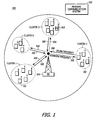
- FIG. 1 illustrates a communication system 100 operating in accordance with some embodiments of the invention.
- Communication system 100 includes a plurality of subscriber units 102 and base station 104 which operate using a first mode of operation in conjunction with link interleaving for in-band sensing utilizing a second mode of operation to be described herein.
- communication system 100 will be described in terms of a plurality of subscriber units 102 and base station 104 operating using a FDD mode of operation in conjunction with link interleaving for in-band sensing capability utilizing a TDD mode of operation.
- the subscriber units 102 are preferably subscriber units of a public safety system seeking to share spectrum, but not interfere, with another pre-existing incumbent system (shown as primary system 120).
- the primary communication system 120 may be operating for example, in TV spectrum licensed to TV broadcasters and Wireless Microphone.
- the secondary communication system's spectrum is not limited to TV spectrum however and can include any other spectrum which can be utilized on secondary or equal access basis.
- Base station 104 groups the plurality of subscriber unit 102 into clusters based on physical and/or logical parameters. In FIG. 1 , a plurality of clusters 110 are shown, four of which are labeled as cluster 0, cluster 1, cluster 2 and cluster 3.
- Base station 104 and cluster 102 communicate via an uplink frequency 106 and downlink frequency 108. Each cluster communicates with the base station 104 using the same up link frequency and down link frequency in FDD mode. Alternatively, other systems may use different uplink and downlink frequencies.
- base station 104 provides out-of-band sensing opportunities to clusters 0, 1, 2, 3 one at a time to sense out-of-band channels, and base station 104 further provides in-band sensing opportunities for all subscribers via link interleaving to be described herein.
- the communication system of FIG. 1 comprises the plurality of clusters 110, each cluster 0, 1, 2, 3 having a plurality of subscriber units 102 communicating with the base station 104 using a FDD mode of operation.
- the base station 104 communicates with each cluster 0, 1, 2, 3 via an uplink frequency 106 and a downlink frequency 108.
- the out-of-band sensing opportunity scheduling is accomplished by the base station 104 by broadcasting an out-of-band sensing scheduling data comprising a secondary channel list and other out-of-band sensing parameters like sensing duration and sensing opportunity divisor (X) to the clusters 0, 1, 2, 3 for shared spectrum utilization via downlink 108.
- Each cluster 0, 1, 2, 3 performs out-of-band spectrum sensing to detect primary incumbent channels and send the sensed channel data back to the base station 104.
- Each cluster 0, 1, 2, 3 transmits the sensed channel data back to the base station via uplink frequency 106. This process is repeated until all of the channels have been sensed by preferably all (or alternatively a predetermined number) of clusters 0, 1, 2, 3.
- the base station 104 ranks all the out-of-band channels for use in case of in-band primary incumbent detection and schedules all the subscribers in the network to change to TDD operation and utilize link interleaving for in-band sensing by all the subscribers during a predetermined time interval.
- the scheduling of the in-band sensing time interval is determined by a controller (not shown) within the base station 104.
- the scheduling of in-band sensing is based on at least one of: the number of in-band channels, type of in-band signals, integration time and subscriber location.
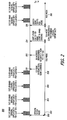
- FIG. 2 illustrates a basic time line of a base station in communication with various subscribers of a CR system operating in the spectrum of a primary incumbent system in accordance with an embodiment of the present invention.
- the clusters 0, 1, 2, 3 perform out-of-band spectrum sensing for primary incumbent channels and send the sensed channel data back to the base station for collaborative detection and channel ranking purposes. Only one cluster senses at any point in time in order to optimize channel bandwidth utilization.
- the base station 104 avoids scheduling any downlink packets to subscribers that are in the process of sensing, and uses these out-of-band sensing opportunities to increase the downlink capacity of subscribers in other clusters. This will reduce the overall loss of bandwidth incurred due to sensing.
- the uplink between the subscribers and the base-station is unaffected by the out-of-band sensing operation.
- the base station 104 proceeds to combine the out-of-band sensing data and rank the out-of band channels at 210. Subscribers will use the highest ranked out-of-band channel when an incumbent user is detected on an in-band channel.
- the base station 104 then notifies at 212 all subscribers to switch to TDD link interleaving mode for in-band sensing opportunity over a predetermined time interval. All the subscribers and the base station then start operating in TDD link interleaved mode for the predetermined time interval provided by the base station notification.
- In-band sensing using link interleaving begins at 214 and continues until the in-band sensing time interval expires (the time interval being the same for all subscribers) and the operating mode switches back to FDD mode of operation at 216, at which time the clusters repeat the sequential out-of-band sensing at their individual opportunity.
- a more detailed explanation of the actual link interleaving occurring between the base station 104 and the subscribers is provided in detail in conjunction with FIG. 3 .
- FIG. 3 illustrates an example of uplink and downlink interleaving 300 for the CR system performing in-band sensing in the primary system's spectrum in accordance with an embodiment of the invention.
- base station 104 schedules in-band sensing opportunities for all the subscribers registered with the base station via downlink channel 108. Operation begins at 302 with normal FDD communication 304 on both the uplink channel 106 and downlink channel 108. Base station 104 transmits a notification 306 to all of the subscribers in the system of in-band sensing opportunity.
- the in-band sensing opportunity notification 306 identifies the sensing opportunity for uplink or downlink channel and further consists of a list of in-band channels to be sensed, the starting time of the interleaving, the duration of the in-band sensing interleaving, the map of the interleaving (designating duration and time of uplink and downlink in TDD mode).
- in-band channels consist of all the channels that are affected by the current operation of the CR system on a channel in the primary system's spectrum.
- downlink in-band sensing is performed at 314, thus downlink is interleaved 312 on the uplink channel 106. While interleaving downlink 312 on the uplink channel 106, the downlink channel 108 remains quiet and provides in-band sensing opportunity 314 on downlink channel. As stated previously, the downlink channel in-band sensing 314 time interval is scheduled by base station 104. At the expiration of the time interval, operation returns to FDD mode 316.
- the in-band sensing notification 318 comprises an uplink channel, and the uplink is interleaved at 322 on the down link channel 108 while the base and the subscribers perform uplink in-band sensing 324 on the uplink channel 106 over a scheduled uplink in-band sensing time interval.
- the scheduled time interval of uplink in-band sensing 324 no transmission occurs on the uplink channel 106.
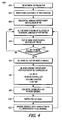
- FIG. 4 summarizes a system level operation of the CR system in the primary system's spectrum.
- the method 400 provides a subscriber clustering scheme for out-of-band sensing and link interleaving for in-band sensing in accordance with an embodiment of the invention.
- Method 400 begins with network initialization in FDD mode in primary system's spectrum.
- the subscribers begin by registering with the CR system and are grouped into clusters by the base station at 404, the clustering being based on logical and/or physical clustering technique to be described later in conjunction with FIG. 6 .
- sequential notification of out-of band sensing opportunities is provided by the base station to the clusters using frame number or beacon number inherent in a communication system.
- out-of-band spectrum sensing is performed by the clusters in individual sensing opportunities in response to the sequential notification.
- out-of-band sensing data is transmitted by the subscribers in the clusters to the base station.
- the base station 104 ranks all the out-of-band channels at 414 based on the out-of band sensing data received from the subscribers.
- in-band sensing opportunity notification by the base station occurs at 416 leading to link interleaving in TDD mode for either uplink channel or downlink channel in-band sensing at 418.
- all subscribers and base station revert back to FDD mode at 420.
- the base station then returns to normal operation and receives in-band sensing data from all subscribers in FDD mode 422.
- the in-band sensing data is combined by the base station for in-band primary incumbent detection.
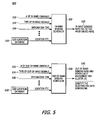
- FIG. 5 illustrates a block diagram of an in-band sensing scheduler and out-of-band sensing scheduler in accordance with some embodiments of the invention.
- In-band sensing scheduler 510 is preferably a controller within base station 104 which takes one or more in-band characteristics, including but not limited to, the number of in-band channels 512, type of in-band signals 514, integration time 516, location of a base station and /or location of subscriber units within a cluster as maintained in a geo-location database of the controller 518. Some or all of these in-band parameters can be used to determine the number of in-band channels to sense, the rate at which to switch from FDD to TDD and back to FDD and the duration of the in-band sensing time interval.
- the timing rate of packets and the time interval for in-band sensing may vary from system to system based on location, maximum transmit power and RF characteristics of the devices in the system.
- the link interleaving provides a dynamic means of using a primary system's spectrum by a base station of a secondary system without the loss of system bandwidth and with reduced affect on the secondary system's throughput. More importantly, both UL and DL are maintained. This helps in maintaining time synchronization and further enables the base-station scheduler to optimize the DL and UL reservations to the subscribers.
- Out-of-band sensing scheduler 530 is preferably part of the same controller within base station 104 and takes one or more out-of-band characteristics, including but not limited to, the number of out-of-band channels, type of out-of-band signals, integration time, location of a base station and /or location of subscriber units within a cluster as maintained in a geo-location database of the controller. Some or all of these out-of band parameters can be used to determine the out-of-band sensing rate using sensing opportunity divisor (X) and opportunity assignment per cluster 540, an example of which is provided later.
- the out-of-band scheduler also continuously identifies sensing opportunities for clusters and thus identifies clusters which can receive data packets from the base station while one of the clusters is performing out-of-band sensing.
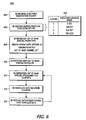
- FIG. 6 is a method of subscriber clustering used to perform out-of-band sensing in FDD mode in accordance with an embodiment of the invention.
- the base station receives registration requests from one or more subscribers.
- the base station assigns an address to each subscriber corresponding to a cluster.
- a plurality of clusters are assigned to addresses with predetermined ranges. In the example shown in 606, three clusters 0, 1, 2, and 3 are assigned subscriber addresses within the ranges of 0-255 (cluster 0); 256-511 (cluster 1), 512-767 (cluster 2); 768-1023 (cluster 3).
- the base station broadcasts out-of-band sensing parameters, the out-of-bound parameters being sensing opportunity divisor (X); sensing time duration; and out-of-band channel list.
- the base station registers subscribers with an out-of-band scheduler using the assigned addresses.
- both base station and subscribers identify an out-of band sensing opportunity for a given cluster (N). The subscribers then perform the out-of-band sensing when the opportunity belongs to that subscriber while the base station schedules data for other clusters at 614.
- FC - SC % 4 / X Y
- FIG. 7 shows an example of out-of band sensing by a cluster starting at a beacon boundary.
- Time line 700 shows beacon intervals 702 for a cluster N.
- the value of the sensing opportunity (Y) is calculated and if equal to 0 (zero) then out-of-band sensing occurs at 708.
- OB SO out-of-band sensing opportunity
- N Clusters
- CLUSTER (N) BEACON/FRAME NUMBER 0 1 2 3 0 0 OB SO OF SO 1 OB SO 2 OF SO 3 OF SO
- the occurrence of OB SO within the Table indicates that a sensing opportunity for the sensing cluster exists after that beacon or frame number.
- the blank spaces within the Table indicate clusters to which the base station can transmit user/network data to those clusters that do not have current sensing opportunities.
- the combination of clustering and link interleaving provided by the present invention allows FDD based cognitive radio public safety systems to operate in a spectrum on secondary basis, such as TV spectrum used by wireless microphone or television.
- the CR system uses clustering and link interleaving to identify a list of potential channels ranked in order of usability which can be used opportunistically in case of in-band incumbent detection. While clustering is used for out-of-band sensing and does not require link interleaving, the out-of-band sensing provides a rank list of alternate channels in the secondary spectrum which can be used by the CR system. Thus, clustering provides a means of optimizing out-of-band sensing.
- link interleaving is used for in-band sensing and is used by all subscribers, no clustering is required during link interleaving.
- In-band sensing is required for the detection of on-channel primary incumbent users.
- Link interleaving based in-band sensing provides a method to optimize in-band sensing, particularly useful in FDD systems.
- the spectrum sensing provided by the present invention can also be used by conventional TDD systems where in link interleaving can be performed by switching the operating frequency consisting of interleaved uplink and downlink to generate in-band sensing opportunities.
- the out-of-band sensing opportunities can still be assigned on a cluster by cluster basis in the case of TDD systems for efficient utilization of system throughput.
- the spectrum sensing provided by the present invention can also be extended to systems that support multiple uplink-downlink frequency pairs. In such a scenario, scheduling of in-band sensing and link interleaving will be done on groups of devices that use the same uplink (UL) and downlink (DL) frequency pair.
Landscapes
- Engineering & Computer Science (AREA)
- Computer Networks & Wireless Communication (AREA)
- Signal Processing (AREA)
- Mobile Radio Communication Systems (AREA)
Claims (10)
- Verfahren eines sekundären Kommunikationssystems (100) zum Teilen eines Spektrums mit einem primären Kommunikationssystem (120), wobei das Verfahren die folgenden Schritte umfasst:bei dem sekundären System (100):Anmeldung von Teilnehmereinheiten (102) bei einer Basisstation (104);Gruppierung (404) der Teilnehmereinheiten (102), basierend auf einer Adressenzuweisung zum Zeitpunkt einer Anmeldung;Suchen (408) nach Außerband-Kanälen innerhalb des Spektrums des primären Systems während eines Betriebs in einer FDD-Betriebsart (FDD Frequenzbereichsduplex);Erzeugung (414) einer Rangliste von potentiellen Kanälen, basierend auf den abgetasteten Außerband-Kanälen;Benachrichtigung (416) der Teilnehmereinheiten eine Imband-Abtastung zu starten, in Reaktion darauf, dass all die Außerband-Kanäle durch eine vorbestimmte Zahl von Clustern abgetastet worden sind;Verwendung von Verbindungsverschachtelung (418) für eine Imband-Abtastung unter Verwendung einer TDD-Betriebsart;Zurückkehren (420) zu einer FDD-Betriebsart, wenn eine vorbestimmte Imband-Abtastzeit abgelaufen ist.
- Verfahren gemäß Anspruch 1, wobei eine Verwendung von Verbindungsverschachtelung umfasst: eine Verwendung von Verbindungsverschachtelung (418) für eine Uplink-Imband-Abtastung auf einem Downlink-Kanal (108) unter Verwendung einer TDD-Betriebsart, und eine Verwendung von Verbindungsverschachtelung für eine Downlink-Imband-Abtastung auf einem Uplink-Imband-Kanal unter Verwendung einer TDD-Betriebsart.
- Verfahren gemäß Anspruch 1 oder 2, wobei der Schritt zur Abtastung nach Außerband-Kanälen umfasst: den Schritt zur sequenziellen Abtastung nach Außerband-Kanälen innerhalb des Spektrums des primären Systems während eines Betriebs in einer FDD-Betriebsart (FDD = Frequenzbereichsduplex).
- CR-Kommunikationssystem (100) (CR = kognitiver Funk) zum Teilen eines Spektrums mit einem etablierten Kommunikationssystem (102), wobei das CR-System umfasst:eine Mehrzahl von Teilnehmern (102), die in eine Mehrzahl von Clustern (110) gruppiert sind;eine Basisstation (104), die mit der Mehrzahl von Clustern (110) über eine FDD-Betriebsart (FDD = Frequenzbereichsduplex) kommuniziert, wobei die Basisstation jedem Cluster eine Suchmöglichkeit für eine Außerband-Suche zur Verfügung stellt; undwobei, nach einer Bestimmung, dass eine vorbestimmte Zahl von Außerband-Kanälen durch eine vorbestimmte Zahl von Clustern abgetastet worden ist, die Basisstation (104) eine Rangliste der Außerband-Kanäle erstellt;wobei die Mehrzahl von Teilnehmern zu einem TDD-Betrieb (TDD = Zeitbereichsduplex) wechselt, unter Verwendung von Verbindungsverschachtelung für eine Imband-Abtastung während eines vorbestimmten Imband-Abtastzeitintervalls.
- CR-System gemäß Anspruch 4, wobei die Basisstation (104) und die Mehrzahl von Teilnehmern zu der FDD-Betriebsart zurückkehren, nachdem das vorbestimmte Imband-Abtastzeitintervall verstrichen ist.
- CR-System gemäß Anspruch 4 oder 5, wobei die Basisstation geeignet ist jedem Cluster eine sequenzielle Abtastmöglichkeit zur Außerband-Abtastung über ein vorbestimmtes Außerband-Abtastzeitintervall zur Verfügung zu stellen.
- CR-System gemäß Anspruch 4, 5 oder 6, wobei die Basisstation (104) geeignet ist mit der Mehrzahl von Teilnehmern über ein Frequenzduplexverfahren (FDD), unter Verwendung einer Uplink-Frequenz (106) und einer Downlink-Frequenz (108), zu kommunizieren;
wobei die Mehrzahl von Clustern geeignet ist eine Außerband-Spektrumsabtastung durchzuführen, um primäre etablierte Kanäle zu detektieren und abgetastete Kanaldaten von den abgetasteten etablierten Kanälen über die Uplink-Frequenz an die Basisstation (104) zurück zu übertragen, bis die vorbestimmte Zahl von Kanälen durch die vorbestimmte Zahl der Mehrzahl von Clustern (110) abgetastet worden ist; und
wobei die Basisstation (104) geeignet ist eine Rangliste all der Außerband-Kanäle zu erstellen, zur Verwendung für den Fall des Vorliegens einer Imband-Detektion auf einem Imband-Kanal, und wobei die Basisstation geeignet ist alle von der Mehrzahl von Teilnehmern zu terminieren zu einem TDD-Betrieb zu wechseln und eine Verbindungsverschachtelung für eine Imband-Abtastung während eines vorbestimmten Zeitintervalls zu verwenden. - CR-System gemäß Anspruch 7, das weiterhin einen Controller (510) innerhalb der Basisstation (104) umfasst, und wobei die Terminierung des Imband-Abtastzeitintervalls durch den Controller bestimmt wird.
- CR-System gemäß Anspruch 7, wobei die Terminierung der Imband-Abtastung auf der Zahl von Imband-Kanälen, der Art von Imband-Signalen, der Integrationszeit und/oder dem Teilnehmerstandort basiert.
- Verfahren gemäß einem der Ansprüche 1 - 3 oder CR-System gemäß einem der Ansprüche 4 - 9, wobei Imband-Kanäle Kanäle umfassen, die durch den aktuellen Betrieb des sekundären Systems (100) auf einem Kanal in dem Spektrum des primären Systems beeinflusst werden, und wobei Außerband-Kanäle Kanäle umfassen, die sich nicht mit aktuellen Imband-Kanälen überlappen, und Kanäle, die durch das sekundäre System (100) verwendet werden können.
Applications Claiming Priority (2)
| Application Number | Priority Date | Filing Date | Title |
|---|---|---|---|
| US11/946,306 US8155033B2 (en) | 2007-11-28 | 2007-11-28 | Opportunistic spectrum sensing optimization for a communication system |
| PCT/US2008/082413 WO2009073303A1 (en) | 2007-11-28 | 2008-11-05 | Opportunistic spectrum sensing optimization for a communication system |
Publications (2)
| Publication Number | Publication Date |
|---|---|
| EP2215866A1 EP2215866A1 (de) | 2010-08-11 |
| EP2215866B1 true EP2215866B1 (de) | 2016-01-06 |
Family
ID=40409914
Family Applications (1)
| Application Number | Title | Priority Date | Filing Date |
|---|---|---|---|
| EP08856692.2A Active EP2215866B1 (de) | 2007-11-28 | 2008-11-05 | Opportunistische spektrenerfassungsoptimierung für ein kommunikationssystem |
Country Status (4)
| Country | Link |
|---|---|
| US (1) | US8155033B2 (de) |
| EP (1) | EP2215866B1 (de) |
| KR (1) | KR101135756B1 (de) |
| WO (1) | WO2009073303A1 (de) |
Families Citing this family (32)
| Publication number | Priority date | Publication date | Assignee | Title |
|---|---|---|---|---|
| KR101559320B1 (ko) * | 2008-02-18 | 2015-10-13 | 삼성전자주식회사 | 라이센스 대역 및 공유 대역의 효과적 사용을 위한 모바일시스템 및 기지국 시스템 |
| US8340060B2 (en) * | 2008-03-03 | 2012-12-25 | Ntt Docomo, Inc. | OFDMA-based co-channel femtocell |
| US8428632B2 (en) * | 2008-03-31 | 2013-04-23 | Motorola Solutions, Inc. | Dynamic allocation of spectrum sensing resources in cognitive radio networks |
| US8982996B2 (en) * | 2008-06-10 | 2015-03-17 | Samsung Electronics Co., Ltd. | Cognitive radio communication system using multiple input multiple output communication scheme |
| US20090325578A1 (en) * | 2008-06-27 | 2009-12-31 | Nokia Siemens Networks Oy | Support for multi-group frequency division duplex wireless network |
| US8599728B2 (en) * | 2008-07-11 | 2013-12-03 | Nokia Siemens Networks Oy | Recovery schemes for group switching procedures for multi-group frequency division duplex wireless networks |
| US8077650B2 (en) * | 2008-09-30 | 2011-12-13 | Qualcomm Incorporated | Methods of announcing a call and transmitting application data to an access terminal in a wireless communications system |
| JP5335095B2 (ja) * | 2008-11-12 | 2013-11-06 | テレフオンアクチーボラゲット エル エム エリクソン(パブル) | リンクアダプテーションのシステムと方法 |
| EP2356763A1 (de) * | 2008-12-08 | 2011-08-17 | BAE Systems Information and Electronic Systems Integration Inc. | Verfahren zur kollaborativen unterscheidung zwischen authentischen und störsignalen in einem drahtlosen kognitven netzwerk |
| JP5648286B2 (ja) * | 2009-01-14 | 2015-01-07 | ソニー株式会社 | 通信システム、通信装置、プログラム、及び通信制御方法 |
| JP5601201B2 (ja) * | 2009-01-26 | 2014-10-08 | ソニー株式会社 | 通信制御方法、通信装置、及びプログラム |
| WO2010097722A1 (en) * | 2009-02-27 | 2010-09-02 | Koninklijke Philips Electronics, N.V. | Scheduling and protection of quiet periods in a quiet zone for incumbent signal detection |
| US8204015B2 (en) * | 2009-05-29 | 2012-06-19 | Motorola Solutions, Inc. | Method and apparatus for zone controller based dynamic spectrum allocation |
| US8488619B2 (en) * | 2009-06-09 | 2013-07-16 | Alcatel Lucent | Allocating interlace multiplex pairs for multicast services |
| US8521087B2 (en) * | 2009-07-15 | 2013-08-27 | Lg Electronics Inc. | System and method for cognitive radio transmission |
| JP5370889B2 (ja) * | 2009-07-24 | 2013-12-18 | 独立行政法人情報通信研究機構 | コグニティブ無線通信用スペクトラムセンサー及びコグニティブ無線通信方法 |
| JP5668815B2 (ja) * | 2009-08-12 | 2015-02-12 | ソニー株式会社 | 通信制御方法、通信装置、及びプログラム |
| US8315571B2 (en) * | 2009-11-24 | 2012-11-20 | Telefonaktiebolaget L M Ericsson (Publ) | Sensing wireless transmissions from a user of a spectral resource |
| KR101290025B1 (ko) * | 2009-11-30 | 2013-07-30 | 한국전자통신연구원 | 데이터 송수신기와 데이터 송수신용 안테나 및 센싱용 수신기와 센싱용 안테나의 공유 방법 및 무선 통신 시스템 |
| KR101079928B1 (ko) | 2009-12-17 | 2011-11-04 | 한국과학기술원 | 클러스터 기반의 협력 센싱을 위한 무선 인지 통신 장치 및 그 방법 |
| US9148791B2 (en) * | 2010-02-26 | 2015-09-29 | Nokia Technologies Oy | Method and apparatus for spectrum sensing |
| JP5617676B2 (ja) * | 2010-07-07 | 2014-11-05 | ソニー株式会社 | 通信制御装置、通信制御方法、通信システム及び通信装置 |
| EP2705681A1 (de) * | 2011-05-03 | 2014-03-12 | Interdigital Patent Holdings, Inc. | Verfahren und vorrichtung für kollaborative erfassung mit einem benutzergerät mit koordiniertem silencing in von der lizenz ausgenommenen frequenzbändern |
| US8666421B2 (en) * | 2011-05-13 | 2014-03-04 | Limei Xu | Method for spectrum sensing in cognitive radio networks with open wireless architecture |
| EP2742760A2 (de) * | 2011-06-08 | 2014-06-18 | XG Technology, Inc. | Gleichlaufende mehrbandige senderarchitektur |
| CN102324989B (zh) * | 2011-07-21 | 2014-01-22 | 电子科技大学 | 一种分簇式频谱感知方法 |
| CN105636113B (zh) * | 2014-11-04 | 2019-11-22 | 普天信息技术有限公司 | 一种频点传输质量的探测方法 |
| US9554390B2 (en) | 2015-05-18 | 2017-01-24 | The Aerospace Corporation | Interference control in shared bands |
| JP6892646B2 (ja) * | 2017-03-02 | 2021-06-23 | 株式会社国際電気通信基礎技術研究所 | 判定装置、コンピュータに実行させるためのプログラム、およびプログラムを記録したコンピュータ読み取り可能な記録媒体 |
| EP4166977A1 (de) | 2021-10-18 | 2023-04-19 | Nxp B.V. | System und verfahren zur kombinierten durchführung drahtloser kommunikation und messung |
| EP4166976A1 (de) | 2021-10-18 | 2023-04-19 | Nxp B.V. | System und verfahren zur kombinierten durchführung drahtloser kommunikation und messung |
| EP4277150A1 (de) | 2022-05-09 | 2023-11-15 | Nxp B.V. | Vorrichtung und verfahren zur optimierung von kombinierten erfassungs- und kommunikationssystemen |
Family Cites Families (11)
| Publication number | Priority date | Publication date | Assignee | Title |
|---|---|---|---|---|
| DE19836576C2 (de) | 1998-08-12 | 2000-06-21 | Siemens Ag | Wechsel eines gestörten Funkkanals |
| US6990087B2 (en) | 2002-04-25 | 2006-01-24 | Raytheon Company | Dynamic wireless resource utilization |
| JP4268634B2 (ja) | 2003-04-22 | 2009-05-27 | インターデイジタル テクノロジー コーポレーション | ワイヤレス通信システムにおいてtddとfddとの間でのリソース割り当てを統合する方法及びシステム |
| ES2304496T3 (es) | 2003-07-31 | 2008-10-16 | Nokia Siemens Networks Gmbh | Procedimiento de gestion de recursos de radio comun en una red telefonica celular multi-rat. |
| US7239870B2 (en) | 2003-11-05 | 2007-07-03 | Ipr Licensing, Inc. | Wireless communication method and apparatus with reconfigurable architecture for supporting an enhanced uplink soft handover operation |
| US20060084444A1 (en) | 2004-10-20 | 2006-04-20 | Nokia Corporation | System and method utilizing a cognitive transceiver for ad hoc networking |
| US20090219909A1 (en) | 2005-11-16 | 2009-09-03 | Gwangzeen Ko | Method for switching and managing frequency access in cognitive radio system, base station and subscriber station using the same |
| US7826422B2 (en) * | 2006-04-25 | 2010-11-02 | Stmicroelectronics, Inc. | Synchronized, semi-dynamic frequency hopping method for WRAN and other wireless networks |
| WO2007123497A1 (en) * | 2006-04-26 | 2007-11-01 | Agency For Science, Technology And Research | Methods of transmitting and receiving data |
| US8031618B2 (en) * | 2006-10-16 | 2011-10-04 | Stmicroelectronics, Inc. | Methods of RF sensing control and dynamic frequency selection control for cognitive radio based dynamic spectrum access network systems-cognitive dynamic frequency hopping |
| US9179394B2 (en) * | 2006-10-20 | 2015-11-03 | Stmicroelectronics, Inc. | Apparatus and method for coordinated sensing of wireless devices in a communication system |
-
2007
- 2007-11-28 US US11/946,306 patent/US8155033B2/en active Active
-
2008
- 2008-11-05 WO PCT/US2008/082413 patent/WO2009073303A1/en not_active Ceased
- 2008-11-05 EP EP08856692.2A patent/EP2215866B1/de active Active
- 2008-11-05 KR KR1020107011831A patent/KR101135756B1/ko active Active
Also Published As
| Publication number | Publication date |
|---|---|
| WO2009073303A1 (en) | 2009-06-11 |
| US8155033B2 (en) | 2012-04-10 |
| KR101135756B1 (ko) | 2012-04-16 |
| US20090135744A1 (en) | 2009-05-28 |
| KR20100081359A (ko) | 2010-07-14 |
| EP2215866A1 (de) | 2010-08-11 |
Similar Documents
| Publication | Publication Date | Title |
|---|---|---|
| EP2215866B1 (de) | Opportunistische spektrenerfassungsoptimierung für ein kommunikationssystem | |
| US8385259B2 (en) | Cross channel coexistence beaconing protocol for wireless dynamic spectrum access networks | |
| US8204015B2 (en) | Method and apparatus for zone controller based dynamic spectrum allocation | |
| US8340155B2 (en) | Techniques for generating and using a reservation map | |
| CN103313253B (zh) | 用于在rf频段中的资源分配冲突处理的方法、装置 | |
| JP6812631B2 (ja) | スペクトルリソース分配方法、及び完全スペクトル共有のための装置 | |
| EP2373077A1 (de) | Verfahren und Funkbasisstation zur effektiven Spektrumsverwendung | |
| CN103875187A (zh) | 在免授权/共享频带中的跳频 | |
| KR20070099459A (ko) | 다중 채널을 이용하는 네트워크에서 주기적 레인징을수행하는 방법 및 장치 | |
| CN109845375A (zh) | 无线通信中基于准予的和无准予的话务复用上的干扰缓解 | |
| EP2005654A2 (de) | Verfahren zur erstellung und verwendung einer reservierungskarte | |
| US20140112302A1 (en) | Method of dynamic allocation of shared resources in a time-frequency plan and associated device | |
| US8494450B2 (en) | Method and system for managing communication in a frequency division multiple access (FDMA) communication network | |
| US9473946B2 (en) | Method, apparatus, and computer program product for temporary release of resources in radio networks | |
| WO2012165881A2 (ko) | 무선 통신 시스템에서 셀프 스케줄링 장치 및 방법 | |
| EP2398292B2 (de) | Koexistenzverfahren und einrichtung von mehreren betriebseinheits-systemen | |
| WO2012021131A1 (en) | Common control channel design and coexistence mechanism for tv white space | |
| US20240389124A1 (en) | Sidelink transmission method, terminal, and storage medium | |
| RU2438269C2 (ru) | Способ и базовая станция радиосвязи для эффективного использования спектра | |
| JP2011139260A (ja) | 無線通信システムの周波数資源割り当て方法およびそのシステム | |
| KR101599700B1 (ko) | 티브이 화이트 스페이스를 이용하는 무선 통신장치의 주파수 제어장치 및 그 방법 | |
| WO2002032163A2 (en) | Method of operating an asymmetrical half-duplex communication system | |
| CN121397575A (en) | Uplink silence configuration method, device, terminal and network side equipment | |
| CN119382845A (zh) | 侧链路参考信号的传输方法及终端 | |
| Choi et al. | Zone-Based Sharable Sensing Scheme in Decentralized Cognitive Radio Networks |
Legal Events
| Date | Code | Title | Description |
|---|---|---|---|
| PUAI | Public reference made under article 153(3) epc to a published international application that has entered the european phase |
Free format text: ORIGINAL CODE: 0009012 |
|
| 17P | Request for examination filed |
Effective date: 20100505 |
|
| AK | Designated contracting states |
Kind code of ref document: A1 Designated state(s): AT BE BG CH CY CZ DE DK EE ES FI FR GB GR HR HU IE IS IT LI LT LU LV MC MT NL NO PL PT RO SE SI SK TR |
|
| AX | Request for extension of the european patent |
Extension state: AL BA MK RS |
|
| DAX | Request for extension of the european patent (deleted) | ||
| RAP1 | Party data changed (applicant data changed or rights of an application transferred) |
Owner name: MOTOROLA SOLUTIONS, INC. |
|
| GRAP | Despatch of communication of intention to grant a patent |
Free format text: ORIGINAL CODE: EPIDOSNIGR1 |
|
| INTG | Intention to grant announced |
Effective date: 20150521 |
|
| GRAS | Grant fee paid |
Free format text: ORIGINAL CODE: EPIDOSNIGR3 |
|
| GRAA | (expected) grant |
Free format text: ORIGINAL CODE: 0009210 |
|
| AK | Designated contracting states |
Kind code of ref document: B1 Designated state(s): AT BE BG CH CY CZ DE DK EE ES FI FR GB GR HR HU IE IS IT LI LT LU LV MC MT NL NO PL PT RO SE SI SK TR |
|
| REG | Reference to a national code |
Ref country code: GB Ref legal event code: FG4D |
|
| REG | Reference to a national code |
Ref country code: CH Ref legal event code: EP |
|
| REG | Reference to a national code |
Ref country code: IE Ref legal event code: FG4D |
|
| REG | Reference to a national code |
Ref country code: AT Ref legal event code: REF Ref document number: 769789 Country of ref document: AT Kind code of ref document: T Effective date: 20160215 |
|
| REG | Reference to a national code |
Ref country code: DE Ref legal event code: R096 Ref document number: 602008041949 Country of ref document: DE |
|
| REG | Reference to a national code |
Ref country code: LT Ref legal event code: MG4D |
|
| REG | Reference to a national code |
Ref country code: NL Ref legal event code: MP Effective date: 20160106 |
|
| REG | Reference to a national code |
Ref country code: AT Ref legal event code: MK05 Ref document number: 769789 Country of ref document: AT Kind code of ref document: T Effective date: 20160106 |
|
| PG25 | Lapsed in a contracting state [announced via postgrant information from national office to epo] |
Ref country code: NL Free format text: LAPSE BECAUSE OF FAILURE TO SUBMIT A TRANSLATION OF THE DESCRIPTION OR TO PAY THE FEE WITHIN THE PRESCRIBED TIME-LIMIT Effective date: 20160106 |
|
| PG25 | Lapsed in a contracting state [announced via postgrant information from national office to epo] |
Ref country code: HR Free format text: LAPSE BECAUSE OF FAILURE TO SUBMIT A TRANSLATION OF THE DESCRIPTION OR TO PAY THE FEE WITHIN THE PRESCRIBED TIME-LIMIT Effective date: 20160106 Ref country code: NO Free format text: LAPSE BECAUSE OF FAILURE TO SUBMIT A TRANSLATION OF THE DESCRIPTION OR TO PAY THE FEE WITHIN THE PRESCRIBED TIME-LIMIT Effective date: 20160406 Ref country code: FI Free format text: LAPSE BECAUSE OF FAILURE TO SUBMIT A TRANSLATION OF THE DESCRIPTION OR TO PAY THE FEE WITHIN THE PRESCRIBED TIME-LIMIT Effective date: 20160106 Ref country code: GR Free format text: LAPSE BECAUSE OF FAILURE TO SUBMIT A TRANSLATION OF THE DESCRIPTION OR TO PAY THE FEE WITHIN THE PRESCRIBED TIME-LIMIT Effective date: 20160407 Ref country code: ES Free format text: LAPSE BECAUSE OF FAILURE TO SUBMIT A TRANSLATION OF THE DESCRIPTION OR TO PAY THE FEE WITHIN THE PRESCRIBED TIME-LIMIT Effective date: 20160106 Ref country code: IT Free format text: LAPSE BECAUSE OF FAILURE TO SUBMIT A TRANSLATION OF THE DESCRIPTION OR TO PAY THE FEE WITHIN THE PRESCRIBED TIME-LIMIT Effective date: 20160106 |
|
| PG25 | Lapsed in a contracting state [announced via postgrant information from national office to epo] |
Ref country code: PT Free format text: LAPSE BECAUSE OF FAILURE TO SUBMIT A TRANSLATION OF THE DESCRIPTION OR TO PAY THE FEE WITHIN THE PRESCRIBED TIME-LIMIT Effective date: 20160506 Ref country code: SE Free format text: LAPSE BECAUSE OF FAILURE TO SUBMIT A TRANSLATION OF THE DESCRIPTION OR TO PAY THE FEE WITHIN THE PRESCRIBED TIME-LIMIT Effective date: 20160106 Ref country code: LV Free format text: LAPSE BECAUSE OF FAILURE TO SUBMIT A TRANSLATION OF THE DESCRIPTION OR TO PAY THE FEE WITHIN THE PRESCRIBED TIME-LIMIT Effective date: 20160106 Ref country code: AT Free format text: LAPSE BECAUSE OF FAILURE TO SUBMIT A TRANSLATION OF THE DESCRIPTION OR TO PAY THE FEE WITHIN THE PRESCRIBED TIME-LIMIT Effective date: 20160106 Ref country code: PL Free format text: LAPSE BECAUSE OF FAILURE TO SUBMIT A TRANSLATION OF THE DESCRIPTION OR TO PAY THE FEE WITHIN THE PRESCRIBED TIME-LIMIT Effective date: 20160106 Ref country code: LT Free format text: LAPSE BECAUSE OF FAILURE TO SUBMIT A TRANSLATION OF THE DESCRIPTION OR TO PAY THE FEE WITHIN THE PRESCRIBED TIME-LIMIT Effective date: 20160106 Ref country code: IS Free format text: LAPSE BECAUSE OF FAILURE TO SUBMIT A TRANSLATION OF THE DESCRIPTION OR TO PAY THE FEE WITHIN THE PRESCRIBED TIME-LIMIT Effective date: 20160506 |
|
| REG | Reference to a national code |
Ref country code: DE Ref legal event code: R082 Ref document number: 602008041949 Country of ref document: DE Representative=s name: SCHUMACHER & WILLSAU PATENTANWALTSGESELLSCHAFT, DE Ref country code: DE Ref legal event code: R081 Ref document number: 602008041949 Country of ref document: DE Owner name: MOTOROLA SOLUTIONS, INC., CHICAGO, US Free format text: FORMER OWNER: MOTOROLA SOLUTIONS, INC., SCHAUMBURG, ILL., US |
|
| REG | Reference to a national code |
Ref country code: DE Ref legal event code: R097 Ref document number: 602008041949 Country of ref document: DE |
|
| PG25 | Lapsed in a contracting state [announced via postgrant information from national office to epo] |
Ref country code: EE Free format text: LAPSE BECAUSE OF FAILURE TO SUBMIT A TRANSLATION OF THE DESCRIPTION OR TO PAY THE FEE WITHIN THE PRESCRIBED TIME-LIMIT Effective date: 20160106 Ref country code: DK Free format text: LAPSE BECAUSE OF FAILURE TO SUBMIT A TRANSLATION OF THE DESCRIPTION OR TO PAY THE FEE WITHIN THE PRESCRIBED TIME-LIMIT Effective date: 20160106 |
|
| PLBE | No opposition filed within time limit |
Free format text: ORIGINAL CODE: 0009261 |
|
| STAA | Information on the status of an ep patent application or granted ep patent |
Free format text: STATUS: NO OPPOSITION FILED WITHIN TIME LIMIT |
|
| PG25 | Lapsed in a contracting state [announced via postgrant information from national office to epo] |
Ref country code: CZ Free format text: LAPSE BECAUSE OF FAILURE TO SUBMIT A TRANSLATION OF THE DESCRIPTION OR TO PAY THE FEE WITHIN THE PRESCRIBED TIME-LIMIT Effective date: 20160106 Ref country code: SK Free format text: LAPSE BECAUSE OF FAILURE TO SUBMIT A TRANSLATION OF THE DESCRIPTION OR TO PAY THE FEE WITHIN THE PRESCRIBED TIME-LIMIT Effective date: 20160106 Ref country code: RO Free format text: LAPSE BECAUSE OF FAILURE TO SUBMIT A TRANSLATION OF THE DESCRIPTION OR TO PAY THE FEE WITHIN THE PRESCRIBED TIME-LIMIT Effective date: 20160106 |
|
| 26N | No opposition filed |
Effective date: 20161007 |
|
| PG25 | Lapsed in a contracting state [announced via postgrant information from national office to epo] |
Ref country code: BE Free format text: LAPSE BECAUSE OF FAILURE TO SUBMIT A TRANSLATION OF THE DESCRIPTION OR TO PAY THE FEE WITHIN THE PRESCRIBED TIME-LIMIT Effective date: 20160106 |
|
| PG25 | Lapsed in a contracting state [announced via postgrant information from national office to epo] |
Ref country code: SI Free format text: LAPSE BECAUSE OF FAILURE TO SUBMIT A TRANSLATION OF THE DESCRIPTION OR TO PAY THE FEE WITHIN THE PRESCRIBED TIME-LIMIT Effective date: 20160106 Ref country code: BG Free format text: LAPSE BECAUSE OF FAILURE TO SUBMIT A TRANSLATION OF THE DESCRIPTION OR TO PAY THE FEE WITHIN THE PRESCRIBED TIME-LIMIT Effective date: 20160406 |
|
| REG | Reference to a national code |
Ref country code: CH Ref legal event code: PL |
|
| PG25 | Lapsed in a contracting state [announced via postgrant information from national office to epo] |
Ref country code: CH Free format text: LAPSE BECAUSE OF NON-PAYMENT OF DUE FEES Effective date: 20161130 Ref country code: LI Free format text: LAPSE BECAUSE OF NON-PAYMENT OF DUE FEES Effective date: 20161130 |
|
| REG | Reference to a national code |
Ref country code: IE Ref legal event code: MM4A |
|
| REG | Reference to a national code |
Ref country code: FR Ref legal event code: ST Effective date: 20170731 |
|
| PG25 | Lapsed in a contracting state [announced via postgrant information from national office to epo] |
Ref country code: LU Free format text: LAPSE BECAUSE OF NON-PAYMENT OF DUE FEES Effective date: 20161130 |
|
| PG25 | Lapsed in a contracting state [announced via postgrant information from national office to epo] |
Ref country code: FR Free format text: LAPSE BECAUSE OF NON-PAYMENT OF DUE FEES Effective date: 20161130 |
|
| PG25 | Lapsed in a contracting state [announced via postgrant information from national office to epo] |
Ref country code: IE Free format text: LAPSE BECAUSE OF NON-PAYMENT OF DUE FEES Effective date: 20161105 |
|
| PG25 | Lapsed in a contracting state [announced via postgrant information from national office to epo] |
Ref country code: CY Free format text: LAPSE BECAUSE OF FAILURE TO SUBMIT A TRANSLATION OF THE DESCRIPTION OR TO PAY THE FEE WITHIN THE PRESCRIBED TIME-LIMIT Effective date: 20160106 Ref country code: HU Free format text: LAPSE BECAUSE OF FAILURE TO SUBMIT A TRANSLATION OF THE DESCRIPTION OR TO PAY THE FEE WITHIN THE PRESCRIBED TIME-LIMIT; INVALID AB INITIO Effective date: 20081105 |
|
| PG25 | Lapsed in a contracting state [announced via postgrant information from national office to epo] |
Ref country code: TR Free format text: LAPSE BECAUSE OF FAILURE TO SUBMIT A TRANSLATION OF THE DESCRIPTION OR TO PAY THE FEE WITHIN THE PRESCRIBED TIME-LIMIT Effective date: 20160106 Ref country code: MC Free format text: LAPSE BECAUSE OF FAILURE TO SUBMIT A TRANSLATION OF THE DESCRIPTION OR TO PAY THE FEE WITHIN THE PRESCRIBED TIME-LIMIT Effective date: 20160106 |
|
| PG25 | Lapsed in a contracting state [announced via postgrant information from national office to epo] |
Ref country code: MT Free format text: LAPSE BECAUSE OF NON-PAYMENT OF DUE FEES Effective date: 20161105 |
|
| P01 | Opt-out of the competence of the unified patent court (upc) registered |
Effective date: 20230523 |
|
| PGFP | Annual fee paid to national office [announced via postgrant information from national office to epo] |
Ref country code: DE Payment date: 20251022 Year of fee payment: 18 |
|
| PGFP | Annual fee paid to national office [announced via postgrant information from national office to epo] |
Ref country code: GB Payment date: 20251023 Year of fee payment: 18 |
|
| REG | Reference to a national code |
Ref country code: DE Ref legal event code: R082 Ref document number: 602008041949 Country of ref document: DE Representative=s name: PUSCHMANN BORCHERT KAISER KLETTNER PATENTANWAE, DE |