EP2211684B1 - Systems and software for wavefront data processing, vision correction, and other applications - Google Patents
Systems and software for wavefront data processing, vision correction, and other applications Download PDFInfo
- Publication number
- EP2211684B1 EP2211684B1 EP08845610A EP08845610A EP2211684B1 EP 2211684 B1 EP2211684 B1 EP 2211684B1 EP 08845610 A EP08845610 A EP 08845610A EP 08845610 A EP08845610 A EP 08845610A EP 2211684 B1 EP2211684 B1 EP 2211684B1
- Authority
- EP
- European Patent Office
- Prior art keywords
- wavefront
- input
- received
- aberrations
- system error
- Prior art date
- Legal status (The legal status is an assumption and is not a legal conclusion. Google has not performed a legal analysis and makes no representation as to the accuracy of the status listed.)
- Not-in-force
Links
- 238000012937 correction Methods 0.000 title description 4
- 230000003287 optical effect Effects 0.000 claims abstract description 37
- 238000012546 transfer Methods 0.000 claims abstract description 20
- 238000004891 communication Methods 0.000 claims abstract description 3
- 230000004075 alteration Effects 0.000 claims description 47
- 230000006870 function Effects 0.000 claims description 14
- 238000000034 method Methods 0.000 claims description 14
- 210000001747 pupil Anatomy 0.000 claims description 12
- 210000004087 cornea Anatomy 0.000 claims description 5
- 238000002679 ablation Methods 0.000 claims description 4
- 238000005286 illumination Methods 0.000 claims description 4
- 230000001902 propagating effect Effects 0.000 claims 1
- 238000005259 measurement Methods 0.000 description 12
- 238000003384 imaging method Methods 0.000 description 10
- 238000004458 analytical method Methods 0.000 description 4
- 238000012634 optical imaging Methods 0.000 description 4
- 210000001525 retina Anatomy 0.000 description 3
- 238000012360 testing method Methods 0.000 description 3
- 238000004364 calculation method Methods 0.000 description 2
- 238000010276 construction Methods 0.000 description 2
- 238000013461 design Methods 0.000 description 2
- 238000006073 displacement reaction Methods 0.000 description 2
- 230000000694 effects Effects 0.000 description 2
- 230000014509 gene expression Effects 0.000 description 2
- 238000012986 modification Methods 0.000 description 2
- 230000004048 modification Effects 0.000 description 2
- 238000001356 surgical procedure Methods 0.000 description 2
- 238000013459 approach Methods 0.000 description 1
- 238000012512 characterization method Methods 0.000 description 1
- 230000002596 correlated effect Effects 0.000 description 1
- 230000007547 defect Effects 0.000 description 1
- 230000001419 dependent effect Effects 0.000 description 1
- 239000011159 matrix material Substances 0.000 description 1
- 230000035945 sensitivity Effects 0.000 description 1
- 238000004088 simulation Methods 0.000 description 1
- 230000001502 supplementing effect Effects 0.000 description 1
- 238000013519 translation Methods 0.000 description 1
- 230000000007 visual effect Effects 0.000 description 1
Images

Classifications
-
- A—HUMAN NECESSITIES
- A61—MEDICAL OR VETERINARY SCIENCE; HYGIENE
- A61B—DIAGNOSIS; SURGERY; IDENTIFICATION
- A61B3/00—Apparatus for testing the eyes; Instruments for examining the eyes
- A61B3/10—Objective types, i.e. instruments for examining the eyes independent of the patients' perceptions or reactions
- A61B3/1015—Objective types, i.e. instruments for examining the eyes independent of the patients' perceptions or reactions for wavefront analysis
Definitions
- the present invention relates generally to systems and software for determining aberrations, and more specifically to systems and software for determining aberrations of an input wavefront by correcting for, compensating for, or reducing system errors.
- Wavefront imaging system may be generally considered to be systems for transferring optical information contained in an object or input wavefront from an object space to an image space containing an image or output wavefront generally located at an image plane.
- a wavefront sensor containing a detector or detector array such as a CCD or CMOS detector array, is generally placed at or near an image plane within the image space in order to provide one or more electronic or digital images of the image wavefront.
- the wavefront sensor may include additional optics disposed at or near the image space to further transfer or process the image wavefront.
- a lenslet array may be disposed at or near the image plane in order to sample various portions the image wavefront.
- a recording media such as a holographic plate and a reference beam may be provided to record the wavefront for later reconstruction.
- the recorded information in the image plane or space is generally used to provide information contained in the original object wavefront.
- the transfer of optical information by the wavefront imaging system to the wavefront sensor is, however, generally imperfect. At a minimum, the effects of diffraction, which arise from the use of a finite system aperture, will limit the ability of the wavefront imaging system to transfer information contained in the object space to the conjugate image space. In addition, the wavefront imaging system will produce other errors or aberrations during the transfer process, for example, aberrations produced by imperfect optical elements within the system and/or misalignment between these optical elements.
- the errors or aberrations produced by the optical imaging system may depend, not only on the system aberrations themselves, but also on the aberrations contained in the original input wavefront.
- WO 03/060568 A2 discloses an optical system for ablation correction with which it is possible to convert measured wavefront data into an ablation profile for correcting visual defects.
- the measured wavefront data is correlated with accumulated data on previously treated eyes.
- An adjustment is applied to the measured wavefront data based upon a correlating step.
- Embodiments of the present invention are generally directed to systems and software for measuring or determining aberrations of an input wavefront based on an output wavefront produced when the input wavefront passes through an imaging system that produces an output wavefront that is received by a wavefront sensor.
- the measurement or determination of the input wavefront is provided by correcting for, compensating for, or reducing system errors and/or input wavefront errors that may alter the error produced by the system.
- Embodiments of the present invention will be illustrated using aberrometer systems used in the area of ophthalmic measurement and correction. However, it will be understood that embodiments of the present invention may be utilized in other optical applications where measurement of a wavefront or image may be affected by transfer of the wavefront or image through a transfer optical system.
- an aberrometer or wavefront measurement system 10 is configured to provide a characterization of an input or object wavefront W of a subject eye 20 containing a cornea 22 and a retina 25.
- the wavefront measurement system 10 comprises an illumination optical system 30 that includes an illumination source 32 and may include one or more lenses 35 or other optical elements that are configured to direct light from the light source 32 to the eye 20 and to preferably focus the light onto the retina 25.
- the wavefront measurement system 10 also includes a computer or processor 36 that is used to control various components of the system 10, to collect input data from the system 10, and to make calculations regarding aberrations of the wavefronts W and/or W', aberrations of the system 10, and/or aberrations of the eye 20.
- the wavefront measurement system 10 also comprises an optical relay or image relay system 40 that is configured to receive and relay an input wavefront W from the eye 20.
- the input wavefront W is transformed by the relay system or telescope 40 into a wavefront W' that is received by a wavefront sensor 38 .
- the optical relay system 40 comprises a first lens 42 and a second lens 45.
- the first lens 42 of relay system 40 As the input wavefront W passes through the first lens 42 of relay system 40, light is generally directed or focused onto an internal focal plane. This light then passes through the second lens 45 to form the wavefront W', which is received by the wavefront sensor 38.
- at least one of the lenses 42, 45 may be replaced or supplemented by another optical element, for example, a diffractive optical element (DOE) or mirror.
- DOE diffractive optical element
- aberrations may be introduced into the wavefront W' that were not present in the input wavefront W, for example, by misalignment between the lenses 42, 45 in translation (dx, dy, dz) or rotation (d ⁇ x, d ⁇ y, d ⁇ z).
- aberrations may be introduced due to inherent optical characteristics of the optical relay system 40, for example, spherical aberrations introduced through the use of spherical lenses.
- the wavefront sensor 38 is a Shack-Hartmann wavefront sensor comprising a lenslet array 55 and a detector 60, which may be a CCD, CMOS, or similar type detector comprising an array of pixel elements. Alternatively, other types of wavefront sensors may be used, for example, an interferometer or phase diversity sensor arrangement.
- the test object is an eye 70 which produces the wavefront W at an exit pupil 75.
- the wavefront W is produced by focused light reflected by the eyes retina that passes through the eye.
- a mathematical relationship may be built of the wavefront aberrations in between the entrance pupil of the eye and the exit pupil of the relay system using Fourier polynomials and Zernike polynomials.
- the wavefront W also includes aberrations as it passes from the cornea of the eye to the pupil 75, which may be included in the aberrations calculated for the transferred wavefront W'. In other embodiments, aberrations introduced into the wavefront senor 50 may also be included in the wavefront analysis.
- more than one relay system may be disposed between the test object and the wavefront sensor 50, in which case an analysis according to embodiments of the present invention may be used to calculate aberrations introduced into the wavefront from the test object.
- the computer or processor 36 contains memory including instructions for calculating aberrations of the wavefront W', for example, by representing the wavefront W' as a polynomial, such as a Zernike polynomial or Fourier polynomial, for example as taught in USPN 6,609,793, 6,830,332.
- a polynomial such as a Zernike polynomial or Fourier polynomial
- the computer 36 may be a desktop or portable computer. Alternatively, the computer 36 may be incorporated into an electronic circuit board or chip containing on-board memory or in communications with separate external memory.
- a memory for the computer 36 contains value for certain parameters.
- the memory may contain one or more system error parameters.
- the system error parameters may include errors, aberrations, or misalignment information regarding the wavefront measurement system 10 and/or the optical relay system 40.
- the system error parameters may include coefficients of a polynomial equation representing an error or aberration, such as Zernike polynomial, a Taylor polynomial, or the like.
- a corneal refractive surgical system 100 includes a laser for performing a corneal refractive surgery such as a LASIK or PRK procedure, for example, as disclosed in USPN 6,964,659 .
- the surgical system 100 is provided with a treatment profile for a cornea based on the wavefront W' that is calculated based on the wavefront W and corrections or compensations for the transfer system 40 and/or cross-terms of the transfer system and the input wavefront W in accordance to embodiments discussed herein, or the like.
- a method or formulas are used in wavefront measurements using a confocal system from one point (pin hole or small aperture) to another conjugated point (pin hole or small aperture) instead of from one plane to another plane.
- a method may be applied for any other aerometer or device to measure accurately the aberrations of human eye or other optical system that uses a relay system before the wavefront sensor.
- the aberrations introduced into the object wavefront W may reduced or eliminated by adjusted, supplementing, or replacing optical elements of the relay system 40 or some other optical element of the measurement system 10.
- the final design of a wavefront measurement system or relay system 10 may be adjusted to reduce or eliminate the sensitivity to misalignment of certain optical elements of the system.
- a wavefront propagation theory may be used to derive mathematical expressions of the wavefront propagation through the optical relay system 40.
- the basis for the wavefront propagation may be based on:
- the wavefront transfer function or matrix may be given by:
- ray tracing simulations may be used to derive mathematical expressions of the wavefront propagation through the optical relay system 40, as discussed in further detail below.
- Embodiments of the present invention generally relate to optical imaging systems and methods of determining the image errors produced by such optical imaging systems.
- Embodiments of the present invention discussed below are for illustrative purposes and are not intended to limit the scope of the present invention. Aspects of the present invention are discussed below in conjunction with the "Slides” referenced therein and include with this disclosure.
- Output Input + System
- the relay system shown in FIG. 2 was used to demonstrate the effects of cross-talk in producing significant output error. It will be appreciated that this specific example is not meant to limit the scope of the present invention, but is given as a way of demonstrating the importance of using an analysis according to embodiments of the present invention in the design of optical systems, for example in the field of ophthalmic diagnostic.
- steps 1-3 of method 200 above various errors are introduced into the input and system shown in FIG. 2 .
- Input errors are shown in terms of Zernike coefficients in the second column of TABLE 1 below.
- the column labeled "OUTPUT” in TABLE 1 shows the resulting output after the system errors are subtracted out.
- the error in percent introduced by cross-talk is shown in the column in TABLE 1 labeled "Error Function 2".
- Error Function 2 As can be seen, these errors are significant for many of the Zernike terms.
- an additional error is introduce by way of displacement of the object plan by 10 millimeters. This amount of displacement error is typical in aberrometers used to measure aberrations of a subjects eye or cornea.
- a real relay system can introduce an input-dependent error due to the crosstalk between the input, the system, and the pupil diffraction to the output wavefront 2. Error could be introduced if the measured wavefront plane is not conjugated to the pupil plane because of changes in the wavefront during propagation 3.
- the quality of the relay optics and the alignment of the relay system are critical.
- Errors measuring lower order aberrations of the input wavefront may be relatively low, while those of higher order aberrations may be relatively high, as summarized in the following table: Not ignorable 1 2 (system RMS ⁇ ⁇ /4) Low order (up to 4th order) Determined by the system Up to 5% High order (above 4th order) Determined by the system Up to 50%
Landscapes
- Life Sciences & Earth Sciences (AREA)
- Health & Medical Sciences (AREA)
- Medical Informatics (AREA)
- Biophysics (AREA)
- Ophthalmology & Optometry (AREA)
- Engineering & Computer Science (AREA)
- Biomedical Technology (AREA)
- Heart & Thoracic Surgery (AREA)
- Physics & Mathematics (AREA)
- Molecular Biology (AREA)
- Surgery (AREA)
- Animal Behavior & Ethology (AREA)
- General Health & Medical Sciences (AREA)
- Public Health (AREA)
- Veterinary Medicine (AREA)
- Eye Examination Apparatus (AREA)
- Testing Of Optical Devices Or Fibers (AREA)
Abstract
Description
- The present invention relates generally to systems and software for determining aberrations, and more specifically to systems and software for determining aberrations of an input wavefront by correcting for, compensating for, or reducing system errors.
- Wavefront imaging system may be generally considered to be systems for transferring optical information contained in an object or input wavefront from an object space to an image space containing an image or output wavefront generally located at an image plane. A wavefront sensor, containing a detector or detector array such as a CCD or CMOS detector array, is generally placed at or near an image plane within the image space in order to provide one or more electronic or digital images of the image wavefront. The wavefront sensor may include additional optics disposed at or near the image space to further transfer or process the image wavefront. For example, a lenslet array may be disposed at or near the image plane in order to sample various portions the image wavefront. In some cases, a recording media such as a holographic plate and a reference beam may be provided to record the wavefront for later reconstruction. In any case, the recorded information in the image plane or space is generally used to provide information contained in the original object wavefront.
- The transfer of optical information by the wavefront imaging system to the wavefront sensor is, however, generally imperfect. At a minimum, the effects of diffraction, which arise from the use of a finite system aperture, will limit the ability of the wavefront imaging system to transfer information contained in the object space to the conjugate image space. In addition, the wavefront imaging system will produce other errors or aberrations during the transfer process, for example, aberrations produced by imperfect optical elements within the system and/or misalignment between these optical elements.
- In prior art wavefront imaging systems, aberrations or errors of the imaging system are typically not accounted for, which can lead to errors in accurately determining aberrations of an input wavefront, which has passed through an aberrated imaging system, based on measurements of an output wavefront. Rather, the imaging system is designed so as to minimize system optical aberrations, and is carefully aligned to reduce alignment errors. However, the inventor have found that even relatively small system aberrations or misalignment can lead to large errors in calculating the magnitude of higher order aberration terms of the original input wavefront.
- In some cases, the errors or aberrations produced by the optical imaging system may depend, not only on the system aberrations themselves, but also on the aberrations contained in the original input wavefront.
- Accordingly, better methods and systems are needed to provide more accurate calculation of the aberrations contained in an input wavefront after it has passed through a wavefront imaging system containing system aberrations and misalignments.
-
WO 03/060568 A2 - Embodiments of the present invention may be better understood from the following detailed description when read in conjunction with the accompanying drawings. Such embodiments, which are for illustrative purposes only, depict novel and non-obvious aspects of the invention. The drawings include the following figures:
-
FIG. 1 is a schematic drawing of a wavefront sensor according to an embodiment of the present invention. -
FIG. 2 is a schematic drawing of the image or wavefront transfer system for the wavefront sensor shown inFIG. 1 . -
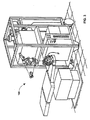
FIG. 3 is system for performing a corneal ablation surgery according to an embodiment of the present invention. - Embodiments of the present invention are generally directed to systems and software for measuring or determining aberrations of an input wavefront based on an output wavefront produced when the input wavefront passes through an imaging system that produces an output wavefront that is received by a wavefront sensor. The measurement or determination of the input wavefront is provided by correcting for, compensating for, or reducing system errors and/or input wavefront errors that may alter the error produced by the system. Embodiments of the present invention will be illustrated using aberrometer systems used in the area of ophthalmic measurement and correction. However, it will be understood that embodiments of the present invention may be utilized in other optical applications where measurement of a wavefront or image may be affected by transfer of the wavefront or image through a transfer optical system.
- Referring to
FIG. 1 , in certain embodiments of the present invention, an aberrometer orwavefront measurement system 10 is configured to provide a characterization of an input or object wavefront W of asubject eye 20 containing acornea 22 and aretina 25. Thewavefront measurement system 10 comprises an illuminationoptical system 30 that includes anillumination source 32 and may include one ormore lenses 35 or other optical elements that are configured to direct light from thelight source 32 to theeye 20 and to preferably focus the light onto theretina 25. Thewavefront measurement system 10 also includes a computer orprocessor 36 that is used to control various components of thesystem 10, to collect input data from thesystem 10, and to make calculations regarding aberrations of the wavefronts W and/or W', aberrations of thesystem 10, and/or aberrations of theeye 20. Thewavefront measurement system 10 also comprises an optical relay orimage relay system 40 that is configured to receive and relay an input wavefront W from theeye 20. The input wavefront W is transformed by the relay system ortelescope 40 into a wavefront W' that is received by awavefront sensor 38 . - In certain embodiments, the
optical relay system 40 comprises afirst lens 42 and asecond lens 45. As the input wavefront W passes through thefirst lens 42 ofrelay system 40, light is generally directed or focused onto an internal focal plane. This light then passes through thesecond lens 45 to form the wavefront W', which is received by thewavefront sensor 38. Some embodiments, at least one of thelenses lenses optical relay system 40, for example, spherical aberrations introduced through the use of spherical lenses. - In the illustrated embodiment the
wavefront sensor 38 is a Shack-Hartmann wavefront sensor comprising alenslet array 55 and adetector 60, which may be a CCD, CMOS, or similar type detector comprising an array of pixel elements. Alternatively, other types of wavefront sensors may be used, for example, an interferometer or phase diversity sensor arrangement. In the illustrated embodiment shown inFIG. 2 , the test object is aneye 70 which produces the wavefront W at anexit pupil 75. The wavefront W is produced by focused light reflected by the eyes retina that passes through the eye. In such embodiments, a mathematical relationship may be built of the wavefront aberrations in between the entrance pupil of the eye and the exit pupil of the relay system using Fourier polynomials and Zernike polynomials. In certain embodiments, the wavefront W also includes aberrations as it passes from the cornea of the eye to thepupil 75, which may be included in the aberrations calculated for the transferred wavefront W'. In other embodiments, aberrations introduced into the wavefront senor 50 may also be included in the wavefront analysis. - In some embodiments, more than one relay system may be disposed between the test object and the wavefront sensor 50, in which case an analysis according to embodiments of the present invention may be used to calculate aberrations introduced into the wavefront from the test object.
- In certain embodiments, the computer or
processor 36 contains memory including instructions for calculating aberrations of the wavefront W', for example, by representing the wavefront W' as a polynomial, such as a Zernike polynomial or Fourier polynomial, for example as taught in USPN 6,609,793, 6,830,332. - The
computer 36 may be a desktop or portable computer. Alternatively, thecomputer 36 may be incorporated into an electronic circuit board or chip containing on-board memory or in communications with separate external memory. - In some embodiments, a memory for the
computer 36 contains value for certain parameters. For example, the memory may contain one or more system error parameters. For example, the system error parameters may include errors, aberrations, or misalignment information regarding thewavefront measurement system 10 and/or theoptical relay system 40. The system error parameters may include coefficients of a polynomial equation representing an error or aberration, such as Zernike polynomial, a Taylor polynomial, or the like. - Referring to
FIG. 3 , in certain embodiments, a corneal refractivesurgical system 100 includes a laser for performing a corneal refractive surgery such as a LASIK or PRK procedure, for example, as disclosed inUSPN 6,964,659 . - The
surgical system 100 is provided with a treatment profile for a cornea based on the wavefront W' that is calculated based on the wavefront W and corrections or compensations for thetransfer system 40 and/or cross-terms of the transfer system and the input wavefront W in accordance to embodiments discussed herein, or the like. - In some embodiments, a method or formulas are used in wavefront measurements using a confocal system from one point (pin hole or small aperture) to another conjugated point (pin hole or small aperture) instead of from one plane to another plane. In other embodiments, a method may be applied for any other aerometer or device to measure accurately the aberrations of human eye or other optical system that uses a relay system before the wavefront sensor.
- In certain embodiments, the aberrations introduced into the object wavefront W may reduced or eliminated by adjusted, supplementing, or replacing optical elements of the
relay system 40 or some other optical element of themeasurement system 10. In some embodiments, the final design of a wavefront measurement system orrelay system 10 may be adjusted to reduce or eliminate the sensitivity to misalignment of certain optical elements of the system. - In some embodiments, a wavefront propagation theory may be used to derive mathematical expressions of the wavefront propagation through the
optical relay system 40. The basis for the wavefront propagation may be based on: - Fresnel-Kirchhoff theory
- Distribution and phase function
- Fourier optics
- In such embodiments, the wavefront transfer function or matrix may be given by:
-

-

- W, WTF, W' may use sets of polynomials
- Additionally or alternatively, ray tracing simulations may be used to derive mathematical expressions of the wavefront propagation through the
optical relay system 40, as discussed in further detail below. - The Fresnel-Kirchhoff's approximate formula may include the following relations:


- W(x0,y0 ) is the ideal pupil function;
-

- Embodiments of the present invention generally relate to optical imaging systems and methods of determining the image errors produced by such optical imaging systems. Embodiments of the present invention discussed below are for illustrative purposes and are not intended to limit the scope of the present invention. Aspects of the present invention are discussed below in conjunction with the "Slides" referenced therein and include with this disclosure.
- As discussed above, it is typically assumed that the output at an image plane of an optical system is given as:


- The inventor have found that in cases where either the input or the system have no error or aberrations, there is no cross-talk and the above relationship is valid. However, the inventors have also found that in some situations, cross-talk can actually have a significant affect on the output, particularly in terms of higher order aberration (e.g., above 4th order). Accordingly, a more accurate assessment of the output may be provided by:


- Error Function 2 = (output - input - system error) / input Referring to Equations (9) Referring to Equations (3) through (5) above, the inventors used Fresnel-Kirchhoff's approximate formula to provide a more accurate analysis of an optical imaging system output that accounts for cross-talk. The need for such an approach has been illustrated by the inventors using the following method 200:
- 1. At input plane, provide values in Zernike coefficients.
- 2. At
lens 42 and lens 45 (seeFIG. 2 ), input aberrations (e.g., 0.1 microns spherical aberration) - 3. Using a ray tracing program,
decenter lens 42 relative to lens 45 (e.g., 0.1mm to 0.5mm) and introduce relative tilt (2 to 5 degrees) and defocused (e.g., 0.1 mm); - 4. Calculate the wavefront at an output plane by wavefront maps and Zernike coefficients,;
- 5. Calculate an error function using the wavefront maps and fit to Zernike polynomials.
- 6. Repeat 1-5 with
lens 42 shifted left by 10 mm. - 7. Repeat 1-5 with zero input (2) OR zero system error (zero all in 4) will make the error function 2 zero.
- Accordingly, and by way of example, the relay system shown in
FIG. 2 was used to demonstrate the effects of cross-talk in producing significant output error. It will be appreciated that this specific example is not meant to limit the scope of the present invention, but is given as a way of demonstrating the importance of using an analysis according to embodiments of the present invention in the design of optical systems, for example in the field of ophthalmic diagnostic. - In steps 1-3 of method 200 above, various errors are introduced into the input and system shown in
FIG. 2 . Input errors are shown in terms of Zernike coefficients in the second column of TABLE 1 below. The column labeled "OUTPUT" in TABLE 1 shows the resulting output after the system errors are subtracted out. Thus, the error in percent introduced by cross-talk is shown in the column in TABLE 1 labeled "Error Function 2". As can be seen, these errors are significant for many of the Zernike terms. In TABLE 2, an additional error is introduce by way of displacement of the object plan by 10 millimeters. This amount of displacement error is typical in aberrometers used to measure aberrations of a subjects eye or cornea.TABLE 1 INPUT CONJUGATED OUTPUT Error Function 2 Z 1 0.73 : 1 1.185371 Z 2 -0.10 : 4^(112) (p) * COS (A) -0.100265 Z 3 -0.10 : 4^(112) (p)* SIN (A) -0,309667 Z 4 0.32 : 3^(112) (2p-^2-1) 0.331621 1.95% Z 5 -0.10 : 6-^(1/2) (p^2) * SIN (2A) -0.095975 -4.02% Z 6 -0.10 : 6^(1/2) (p^2) *COS (2A) -0.096498 -3.50% Z 7 -0.10 : 8^(1/2) (3p^3-2p)* SIN (A) -0.094691 -5.31% Z 8 -0.10 : 8-^(1/2) (3p^3-2p)*COS (A) 0.093219 -6.78% Z 9 -0.10 : 8^(1/2) (p^3)* SIN (3A) -0.09571 -4.29% Z 10 -0.10 : 8^(1/2) (p^3) *COS (3A) -0.097180 -2.82% Z 11 -0.10 : 5-^(1/2) (6p-^4-6p-^2+1) -0.288831 -6.76% Z 12 -0.05 : 10^(1/2) (4p-^4 - 3p-^2) *COS (2A) -0.046635 -6.73% Z13 -0.05 : 10^(1/2) (4p^4 - 3p^2) * SIN (2A) -0.046091 -7.82% Z 14 0.05 : 10^(1/2) (p^4) * COS (4A) -0.048774 -2.45% Z 15 -0.05 : 10^(1/2) (p^4) * SIN (4A) -0.046940 -6.12% Z 16 -0.05 : 12^(1/2) (10p^5-12p^3 +3p)* COS (A) -0.0043968 -12.06% Z 17 -0.03 : 12^(1/2) (10p^5 - 12p^3 + 3p) * SIN (A) -0.024911 -16.96% Z 18 -0.03 : 12^(1/2) (5p^5 - 4p^3) * COS (3A) -0.027555 -8.15% Z 19 -0.03 : 12^(1/2) (5p^5 - 4p^3) SIN (3A) -0.026558 -11.47% Z 20 -0.03 : 12^(1/2) (p^5) *COS (5A) -0.028616 -4.61% Z 21. -0.03 : 2^(1/2) (p^5) * SIN (5A) -0.027833 -7.22% Z 22 -0.03 : 7^(1/2) (20p^6 - 30p^4 + 12p^2 - 1) -0.021155 -21.67% Z 23 -0.01 : 14^(1/2) A) -0.007083 -29.17% Z 24 -0.01 : 14^(1/2) A) -0007631 -23.69% Z 25 0.01 : 14^(1/2) (6p^6- 5p^4) * SIN (4A) -0008299 -17.01% Z 26 -0.01 : 14^(1/2) (6p^6 - 5p^4) * COS (4A) 0.009175 -8.25% Z 27 -0.01 : 14^(1/2) (p^6) * SIN (6A) -0.008496 -15.04% Z 28 0.01 : 14^(1/2) (p^6) COS (6A) -0.009279 -7.21% Z 29 -001 : 16^(1/2) SIN (A) -0.005762 -42.38% Z 30 0.01 : 16^(1/2) COS (A) -0.005568 -44.32% Z 31 -0.01 : 16^(1/2))3A) -0.007889 -21.11% Z 32 -0.01 : 16^(1/2) 3A) -0008411 -15.89% Z 33 -0.01 : 16^(1/2) (7p^7 - 6p^5) * SIN (5A) -0.009393 -6.07% Z 34 -0.01 : 16^(1/2) (7p^7 - 6p^5) COS (5A) -0.008911 -10.89% Z 35 -0.01 : 16^(1/2) (p^)*S)N(7A) -0.009280 -7.20% Z 36 -0.01 : 16^(1/2) (p^7) * COS (7A) -0.009105 -8.95% Z 37 -0.01 : 9^(1/2) + 1) -0.004645 -52.83% TABLE 2 INPUT NON-CONJUGATED +10 mm OUTPUT Error Function 2 : Z 1 0.73 : 1 1.188192 Z 2 -0.10 : 4^ (1/2) (p) * COS (A) -0.099986 Z 3 -0.10 : 4^(1/2) (p) * SIN (A) -0.308426 Z 4 0.32 : 3^(1/2) (2p^2 - 1) 0.334590 2.88% Z 5 -0.10 : 6^(112)(p^2) * SIN (2A) -0.095868 -4.13% ; Z 6 -0.10 : 6^(1/2) (p^2) COS (2A) -0.096638 -3.36% Z 7 -0.10 : 8^(1/2) (3p^3 - 2p) * SIN (A) -0.09921 -6.08% Z 8 -0.10 : 8^(1/2) (3p^3 - 2p) * COS (A) -0.093020 -6.98% Z 9 -0.10 : 8^(1/2) (p^3) * SIN (3A) -0.095921 -4.08% Z 10 -0.10 : 8^(1/2) (p^3) * COS (3A) -0.097297 -2.70% Z 11 -0.10 : 5^(1/2) (6p^4 - 6p^2 + 1) -0.286254 -9.33% Z 12 -0.05 : 10^(1/2) (4p^4 - 3p^2) * COS (2A) -0.046927 -6.15% Z 13 -0.05 : 10^(1/2) (4p^4 - 3p^2) * SIN (2A) -0.046072 -786% Z 14 -0.05 : 10^(1(2) (p^4) * COS (4A) -0.048841 -2.32% Z 15 -0.05 : 10^(112) (p^4) * SIN (4A) -0.047399 -5.20% Z 16 -0.05 : 12^(1/2) (10p^5 -12p^3 +3p)* COS (A) -0.043978 -12.04% Z 17 -0.03 : 12^(1/2) (10p^5 - 12p^3 +3p) * SIN (A) -0.024479 -18.40% Z 18 -0.03 : 12^(1/2) (5p^5 - 4 p^3) * COS (3A) -0.027777 -7.41% Z 19 -0.03 : 12^(1/2) (5p^5 - 4p^3) * SIN (3A) -0.026923 -10.26% Z 20 -0.03 : 12^ (1/2) (p^5) * COS (5A) -0.028486 -5.05% Z 21 -0.03 : 12^(1/2) (p^5) * SIN (5A) -0.028431 -523% Z 22 -0.03 : 7^(1/2) (20p^6 - 30p^4 + 12p^2 - 1) -0.019803 -26.17% Z 23 -0.01 : 14^(1/2) A) -0.007201 -27.99% Z 24 -0.01 : 14^(1/2)A) -0.008088 -19.12% Z 25 -0.01 : 14^(1/2) (6p^6 - 5p^4) * SIN (4A) -0.008896 -11.04% Z 26 -0.01 : 14^(1/2) (6p^6 - 5p^4) * COS (4A) -0.009299 -7.01% Z 27 -0.01 : 14^(1/2) (p^6) * SIN(6A) -0.009083 -9.17% Z 28 -0.01 : 14^(1/2) (p^6) * COS (6A) -0.009026 -9.74% Z 29 -0.01 : 16^(1/2) SIN (A) -0.005442 -45.58% Z 30 -0.01 : 16^(1/2) COS (A) -0.005801 -41.99% Z 31 -0.01 : 16^(1/2) 3A) -0.008378 -16.22% Z 32 0.01 : 16^(1/2) 3A) -0.008716 -12.84% Z 33 -0.01 : 16^(1/2) (7p^ - 6p^5) * SIN (5A) -0.010059 0.59% Z 34 -0.01 : 16^(1/2) (7p"7 - 6pAS) * COS (5A) -0.008808 -11.92 % Z 35 -0.01 : 16^(1/2) (p^7) * SIN (7A) -0.009793 -2.07% Z 36 -0.01 : 16^(1/2) (p^7) * COS (7A) -0.008750 -12.50% Z 37 -0.01 : 9^(112) +1) -0.004604 -53.24% - By way of summary, it was concluded that:
1. A real relay system can introduce an input-dependent error due to the crosstalk between the input, the system, and the pupil diffraction to the output wavefront
2. Error could be introduced if the measured wavefront plane is not conjugated to the pupil plane because of changes in the wavefront during propagation
3. The quality of the relay optics and the alignment of the relay system are critical.
4. Errors measuring lower order aberrations of the input wavefront may be relatively low, while those of higher order aberrations may be relatively high, as summarized in the following table:Not ignorable 1 2 (system RMS < λ/4) Low order (up to 4th order) Determined by the system Up to 5% High order (above 4th order) Determined by the system Up to 50% - The above presents a description of the best mode contemplated of carrying out the present invention, and of the manner and process of making and using it, in such full, clear, concise, and exact terms as to enable any person skilled in the art to which it pertains to make and use this invention. This invention is, however, susceptible to modifications and alternate constructions from that discussed above which are fully equivalent. Consequently, it is not the intention to limit this invention to the particular embodiments disclosed. On the contrary, the intention is to cover modifications and alternate constructions coming within the scope of the invention as generally expressed by the following claims, which particularly point out and distinctly claim the subject matter of the invention.


Claims (14)
- A system (10) for providing vision, comprising:an aberrometer configured to measure a received wavefront, the aberrometer including:a wavefront sensor (38); anda transfer optical system for transferring an input wavefront (w) so as to provide the received wavefront at or near the wavefront sensor, the input wavefront (w) being the wavefront inputted into the transfer optical system (30) and the received wavefront being the wavefront received by the wavefront sensor (38);a processor (36) in communication with the aberrometer;a readable memory coupled to the processor (36) containing one or more system error parameters; andinstructions located within the memory and available to the processor for (1) determining at least one aberration of the received wavefront and (2) calculating the input wavefront based on the received wavefront and the one or more system error parameters, characterised in that the processor calculates the input wavefront (w) from the received wavefront by removing the system error, wherein the system error comprises a cross-term of the input wavefront (w) and the one or more system error parameters.
- The system of claim 1, wherein input wavefront (w) is disposed at a pupil of a subject eye.
- The system of claim 1 or 2, wherein the one or more system error parameters are calculated based on one or more abberations of the input wavefront (w) and/or
wherein the one or more system error parameters are calculated based on.one or more input parameters, the input parameters being one or more aberrations of the transfer optical system (30) and misalignment of one or more components of the aberrometer. - The system of claim 1-3, wherein the system error is represented by a polynomial equations.
- The system of claim 4, wherein polynomial equation includes a plurality of coefficients, the coefficients being Zernike coefficients or Fourier coefficients.
- The system according to any one of claims 1-5, wherein the aberrometer further comprises:an illumination source (32);an illuminating optical system (30) for directing light from the illumination source (32) to the subject eye (20) to create an input wavefront (w) from light reflected by the subject eye.
- The system of claim 6, wherein wavefront sensor (38) comprises detector (60) and a plurality of lenslet (55) for receiving the received wavefront and focusing light from the received wavefront onto the detector (60).
- The system of claim 6 or 7, wherein the system error includes aberrations, the aberrations being aberrations of the transfer optical system.
- The system of claim 6 or 7, wherein the system error includes aberrations of the transfer optical system.
- The system according to any of claims 1-9, wherein the system error parameters are based on Fresnel- Kirchhoff's approximate formula.
- The system according to any of claims 1-10, wherein the system further comprises an ablation system configured to modify a cornea of the subject eye (20) based on the received wavefront and the one or more system error parameters.
- A method of providing vision, comprising:supplying an input wavefront located at an input plane;supplying an aberrometer configured to measure a received wavefront, the aberrometer including:one or more system error parameters;a wavefront sensor (38); anda transfer optical system;forming a received wavefront at or near the wavefront sensor by propagating the input wavefront (w) through the transfer optical system, the input wavefront (w) being the wavefront inputted into the transfer optical system (30) and the received wavefront being the wavefront received by the wavefront sensor (38);determining at least one aberration of the received wavefront; characterised bycalculating the input wavefront (w) from the received wavefront by removing the system error, wherein the system error comprises a cross-term of the input wavefront and the one or more system error parameters.
- A method of designing an optical system, comprising:providing a system according to claim 1, the system further including an input plane, an output plane; the method further comprising:calculating a system error function;adjusting a system parameter; repeating calculating and adjusting until the error is below a threshold.
- The method of claim 13, wherein calculating the system error function is based on Fresnel-Kirchhoff's approximate formula.
Applications Claiming Priority (3)
| Application Number | Priority Date | Filing Date | Title |
|---|---|---|---|
| US98435507P | 2007-10-31 | 2007-10-31 | |
| US2889008P | 2008-02-14 | 2008-02-14 | |
| PCT/US2008/082162 WO2009059256A1 (en) | 2007-10-31 | 2008-11-18 | Systems and software for wavefront data processing, vision correction, and other applications |
Publications (2)
| Publication Number | Publication Date |
|---|---|
| EP2211684A1 EP2211684A1 (en) | 2010-08-04 |
| EP2211684B1 true EP2211684B1 (en) | 2011-05-11 |
Family
ID=40317750
Family Applications (1)
| Application Number | Title | Priority Date | Filing Date |
|---|---|---|---|
| EP08845610A Not-in-force EP2211684B1 (en) | 2007-10-31 | 2008-11-18 | Systems and software for wavefront data processing, vision correction, and other applications |
Country Status (6)
| Country | Link |
|---|---|
| US (2) | US7654672B2 (en) |
| EP (1) | EP2211684B1 (en) |
| AT (1) | ATE508677T1 (en) |
| AU (1) | AU2008318401B2 (en) |
| CA (1) | CA2704415C (en) |
| WO (1) | WO2009059256A1 (en) |
Families Citing this family (7)
| Publication number | Priority date | Publication date | Assignee | Title |
|---|---|---|---|---|
| WO2005086582A2 (en) * | 2004-03-11 | 2005-09-22 | Nano-Or Technologies (Israel) Ltd. | Methods and apparatus for wavefront manipulations and improved 3-d measurements |
| US8356900B2 (en) | 2006-01-20 | 2013-01-22 | Clarity Medical Systems, Inc. | Large diopter range real time sequential wavefront sensor |
| US8506083B2 (en) | 2011-06-06 | 2013-08-13 | Clarity Medical Systems, Inc. | Compact wavefront sensor module and its attachment to or integration with an ophthalmic instrument |
| US7654672B2 (en) * | 2007-10-31 | 2010-02-02 | Abbott Medical Optics Inc. | Systems and software for wavefront data processing, vision correction, and other applications |
| EP2802253A4 (en) | 2012-01-10 | 2015-04-22 | Digital Vision Llc | Intra-ocular lens optimizer |
| BR112014016995A8 (en) | 2012-01-10 | 2017-07-04 | Digital Vision Llc | refractometer with a remote wavefront generator |
| TWI520712B (en) | 2012-11-07 | 2016-02-11 | 克萊提醫學系統公司 | Apparatus and method for operating a real time large diopter range sequential wavefront sensor |
Family Cites Families (12)
| Publication number | Priority date | Publication date | Assignee | Title |
|---|---|---|---|---|
| FR2791548B1 (en) * | 1999-04-01 | 2001-07-06 | Univ Paris Vii Denis Diderot | DEVICE FOR OBSERVING A HIGH RESOLUTION BODY |
| US6050687A (en) * | 1999-06-11 | 2000-04-18 | 20/10 Perfect Vision Optische Geraete Gmbh | Method and apparatus for measurement of the refractive properties of the human eye |
| US7044944B2 (en) * | 2000-03-22 | 2006-05-16 | Alcon Refractivehorizons, Inc. | Optimization of ablation correction of an optical system and associated methods |
| US6609793B2 (en) * | 2000-05-23 | 2003-08-26 | Pharmacia Groningen Bv | Methods of obtaining ophthalmic lenses providing the eye with reduced aberrations |
| SE0101293D0 (en) * | 2001-04-11 | 2001-04-11 | Pharmacia Groningen Bv | Technical field of the invention |
| US6637884B2 (en) * | 2001-12-14 | 2003-10-28 | Bausch & Lomb Incorporated | Aberrometer calibration |
| US6809793B1 (en) | 2002-01-16 | 2004-10-26 | Advanced Micro Devices, Inc. | System and method to monitor reticle heating |
| US6964659B2 (en) * | 2002-05-30 | 2005-11-15 | Visx, Incorporated | Thermal modeling for reduction of refractive laser surgery times |
| DE10333794A1 (en) * | 2003-07-24 | 2005-03-03 | Technovision Gmbh | Method and device for online contact lens evaluation |
| US20050105044A1 (en) * | 2003-11-14 | 2005-05-19 | Laurence Warden | Lensometers and wavefront sensors and methods of measuring aberration |
| US20080074614A1 (en) * | 2006-09-25 | 2008-03-27 | Richard Alan Leblanc | Method and system for pupil acquisition |
| US7654672B2 (en) * | 2007-10-31 | 2010-02-02 | Abbott Medical Optics Inc. | Systems and software for wavefront data processing, vision correction, and other applications |
-
2008
- 2008-10-31 US US12/263,433 patent/US7654672B2/en active Active
- 2008-11-18 WO PCT/US2008/082162 patent/WO2009059256A1/en not_active Ceased
- 2008-11-18 AT AT08845610T patent/ATE508677T1/en not_active IP Right Cessation
- 2008-11-18 AU AU2008318401A patent/AU2008318401B2/en not_active Ceased
- 2008-11-18 CA CA2704415A patent/CA2704415C/en not_active Expired - Fee Related
- 2008-11-18 EP EP08845610A patent/EP2211684B1/en not_active Not-in-force
-
2009
- 2009-12-30 US US12/650,130 patent/US8162480B2/en not_active Expired - Fee Related
Also Published As
| Publication number | Publication date |
|---|---|
| EP2211684A1 (en) | 2010-08-04 |
| AU2008318401B2 (en) | 2014-02-06 |
| CA2704415C (en) | 2014-09-09 |
| US20100103378A1 (en) | 2010-04-29 |
| ATE508677T1 (en) | 2011-05-15 |
| US7654672B2 (en) | 2010-02-02 |
| US20090109403A1 (en) | 2009-04-30 |
| US8162480B2 (en) | 2012-04-24 |
| WO2009059256A1 (en) | 2009-05-07 |
| CA2704415A1 (en) | 2009-05-07 |
| AU2008318401A1 (en) | 2009-05-07 |
Similar Documents
| Publication | Publication Date | Title |
|---|---|---|
| US6578963B2 (en) | Wavefront sensor for objective measurement of an optical system and associated methods | |
| AU747840B2 (en) | Apparatus and method for measuring vision defects of a human eye | |
| EP1210003B1 (en) | Objective measurement and correction of optical systems using wavefront analysis | |
| CA2275762C (en) | Apparatus for improving vision and resolution of retinal images | |
| US6598975B2 (en) | Apparatus and method for measuring vision defects of a human eye | |
| US7654672B2 (en) | Systems and software for wavefront data processing, vision correction, and other applications | |
| EP1619999B1 (en) | Compact portable wavefront sensor | |
| CA2425256A1 (en) | Determination of ocular refraction from wavefront aberration data | |
| MXPA01013364A (en) | Spatial filter for enhancing hartmann shack images and associated methods. | |
| AU2002366342A1 (en) | Apparatus and the associated methods for calibrating a wavefront sensor | |
| EP1593945A1 (en) | Wavefront sensor and relay for optical measurement and associated methods | |
| Navarro | Measurement and correction of optical aberrations in human eyes |
Legal Events
| Date | Code | Title | Description |
|---|---|---|---|
| PUAI | Public reference made under article 153(3) epc to a published international application that has entered the european phase |
Free format text: ORIGINAL CODE: 0009012 |
|
| 17P | Request for examination filed |
Effective date: 20100430 |
|
| AK | Designated contracting states |
Kind code of ref document: A1 Designated state(s): AT BE BG CH CY CZ DE DK EE ES FI FR GB GR HR HU IE IS IT LI LT LU LV MC MT NL NO PL PT RO SE SI SK TR |
|
| AX | Request for extension of the european patent |
Extension state: AL BA MK RS |
|
| RIN1 | Information on inventor provided before grant (corrected) |
Inventor name: ZHAO, HUAWEI Inventor name: LI, CHEN |
|
| GRAP | Despatch of communication of intention to grant a patent |
Free format text: ORIGINAL CODE: EPIDOSNIGR1 |
|
| DAX | Request for extension of the european patent (deleted) | ||
| GRAS | Grant fee paid |
Free format text: ORIGINAL CODE: EPIDOSNIGR3 |
|
| GRAA | (expected) grant |
Free format text: ORIGINAL CODE: 0009210 |
|
| AK | Designated contracting states |
Kind code of ref document: B1 Designated state(s): AT BE BG CH CY CZ DE DK EE ES FI FR GB GR HR HU IE IS IT LI LT LU LV MC MT NL NO PL PT RO SE SI SK TR |
|
| REG | Reference to a national code |
Ref country code: GB Ref legal event code: FG4D |
|
| REG | Reference to a national code |
Ref country code: CH Ref legal event code: EP |
|
| REG | Reference to a national code |
Ref country code: IE Ref legal event code: FG4D |
|
| REG | Reference to a national code |
Ref country code: DE Ref legal event code: R096 Ref document number: 602008006930 Country of ref document: DE Effective date: 20110622 |
|
| REG | Reference to a national code |
Ref country code: NL Ref legal event code: T3 |
|
| REG | Reference to a national code |
Ref country code: CH Ref legal event code: NV Representative=s name: NOVAGRAAF INTERNATIONAL SA |
|
| REG | Reference to a national code |
Ref country code: SE Ref legal event code: TRGR |
|
| PG25 | Lapsed in a contracting state [announced via postgrant information from national office to epo] |
Ref country code: PT Free format text: LAPSE BECAUSE OF FAILURE TO SUBMIT A TRANSLATION OF THE DESCRIPTION OR TO PAY THE FEE WITHIN THE PRESCRIBED TIME-LIMIT Effective date: 20110912 Ref country code: LT Free format text: LAPSE BECAUSE OF FAILURE TO SUBMIT A TRANSLATION OF THE DESCRIPTION OR TO PAY THE FEE WITHIN THE PRESCRIBED TIME-LIMIT Effective date: 20110511 Ref country code: NO Free format text: LAPSE BECAUSE OF FAILURE TO SUBMIT A TRANSLATION OF THE DESCRIPTION OR TO PAY THE FEE WITHIN THE PRESCRIBED TIME-LIMIT Effective date: 20110811 |
|
| PG25 | Lapsed in a contracting state [announced via postgrant information from national office to epo] |
Ref country code: IS Free format text: LAPSE BECAUSE OF FAILURE TO SUBMIT A TRANSLATION OF THE DESCRIPTION OR TO PAY THE FEE WITHIN THE PRESCRIBED TIME-LIMIT Effective date: 20110911 Ref country code: ES Free format text: LAPSE BECAUSE OF FAILURE TO SUBMIT A TRANSLATION OF THE DESCRIPTION OR TO PAY THE FEE WITHIN THE PRESCRIBED TIME-LIMIT Effective date: 20110822 Ref country code: SI Free format text: LAPSE BECAUSE OF FAILURE TO SUBMIT A TRANSLATION OF THE DESCRIPTION OR TO PAY THE FEE WITHIN THE PRESCRIBED TIME-LIMIT Effective date: 20110511 Ref country code: BE Free format text: LAPSE BECAUSE OF FAILURE TO SUBMIT A TRANSLATION OF THE DESCRIPTION OR TO PAY THE FEE WITHIN THE PRESCRIBED TIME-LIMIT Effective date: 20110511 Ref country code: AT Free format text: LAPSE BECAUSE OF FAILURE TO SUBMIT A TRANSLATION OF THE DESCRIPTION OR TO PAY THE FEE WITHIN THE PRESCRIBED TIME-LIMIT Effective date: 20110511 Ref country code: FI Free format text: LAPSE BECAUSE OF FAILURE TO SUBMIT A TRANSLATION OF THE DESCRIPTION OR TO PAY THE FEE WITHIN THE PRESCRIBED TIME-LIMIT Effective date: 20110511 Ref country code: GR Free format text: LAPSE BECAUSE OF FAILURE TO SUBMIT A TRANSLATION OF THE DESCRIPTION OR TO PAY THE FEE WITHIN THE PRESCRIBED TIME-LIMIT Effective date: 20110812 Ref country code: LV Free format text: LAPSE BECAUSE OF FAILURE TO SUBMIT A TRANSLATION OF THE DESCRIPTION OR TO PAY THE FEE WITHIN THE PRESCRIBED TIME-LIMIT Effective date: 20110511 Ref country code: CY Free format text: LAPSE BECAUSE OF FAILURE TO SUBMIT A TRANSLATION OF THE DESCRIPTION OR TO PAY THE FEE WITHIN THE PRESCRIBED TIME-LIMIT Effective date: 20110511 |
|
| PG25 | Lapsed in a contracting state [announced via postgrant information from national office to epo] |
Ref country code: EE Free format text: LAPSE BECAUSE OF FAILURE TO SUBMIT A TRANSLATION OF THE DESCRIPTION OR TO PAY THE FEE WITHIN THE PRESCRIBED TIME-LIMIT Effective date: 20110511 Ref country code: CZ Free format text: LAPSE BECAUSE OF FAILURE TO SUBMIT A TRANSLATION OF THE DESCRIPTION OR TO PAY THE FEE WITHIN THE PRESCRIBED TIME-LIMIT Effective date: 20110511 |
|
| PG25 | Lapsed in a contracting state [announced via postgrant information from national office to epo] |
Ref country code: PL Free format text: LAPSE BECAUSE OF FAILURE TO SUBMIT A TRANSLATION OF THE DESCRIPTION OR TO PAY THE FEE WITHIN THE PRESCRIBED TIME-LIMIT Effective date: 20110511 Ref country code: RO Free format text: LAPSE BECAUSE OF FAILURE TO SUBMIT A TRANSLATION OF THE DESCRIPTION OR TO PAY THE FEE WITHIN THE PRESCRIBED TIME-LIMIT Effective date: 20110511 Ref country code: SK Free format text: LAPSE BECAUSE OF FAILURE TO SUBMIT A TRANSLATION OF THE DESCRIPTION OR TO PAY THE FEE WITHIN THE PRESCRIBED TIME-LIMIT Effective date: 20110511 Ref country code: DK Free format text: LAPSE BECAUSE OF FAILURE TO SUBMIT A TRANSLATION OF THE DESCRIPTION OR TO PAY THE FEE WITHIN THE PRESCRIBED TIME-LIMIT Effective date: 20110511 |
|
| PLBE | No opposition filed within time limit |
Free format text: ORIGINAL CODE: 0009261 |
|
| STAA | Information on the status of an ep patent application or granted ep patent |
Free format text: STATUS: NO OPPOSITION FILED WITHIN TIME LIMIT |
|
| 26N | No opposition filed |
Effective date: 20120214 |
|
| PG25 | Lapsed in a contracting state [announced via postgrant information from national office to epo] |
Ref country code: IT Free format text: LAPSE BECAUSE OF FAILURE TO SUBMIT A TRANSLATION OF THE DESCRIPTION OR TO PAY THE FEE WITHIN THE PRESCRIBED TIME-LIMIT Effective date: 20110511 Ref country code: HR Free format text: LAPSE BECAUSE OF FAILURE TO SUBMIT A TRANSLATION OF THE DESCRIPTION OR TO PAY THE FEE WITHIN THE PRESCRIBED TIME-LIMIT Effective date: 20111123 |
|
| REG | Reference to a national code |
Ref country code: DE Ref legal event code: R097 Ref document number: 602008006930 Country of ref document: DE Effective date: 20120214 |
|
| PG25 | Lapsed in a contracting state [announced via postgrant information from national office to epo] |
Ref country code: MC Free format text: LAPSE BECAUSE OF NON-PAYMENT OF DUE FEES Effective date: 20111130 |
|
| REG | Reference to a national code |
Ref country code: IE Ref legal event code: MM4A |
|
| PG25 | Lapsed in a contracting state [announced via postgrant information from national office to epo] |
Ref country code: IE Free format text: LAPSE BECAUSE OF NON-PAYMENT OF DUE FEES Effective date: 20111118 |
|
| PG25 | Lapsed in a contracting state [announced via postgrant information from national office to epo] |
Ref country code: MT Free format text: LAPSE BECAUSE OF FAILURE TO SUBMIT A TRANSLATION OF THE DESCRIPTION OR TO PAY THE FEE WITHIN THE PRESCRIBED TIME-LIMIT Effective date: 20110511 |
|
| PG25 | Lapsed in a contracting state [announced via postgrant information from national office to epo] |
Ref country code: LU Free format text: LAPSE BECAUSE OF NON-PAYMENT OF DUE FEES Effective date: 20111118 |
|
| PG25 | Lapsed in a contracting state [announced via postgrant information from national office to epo] |
Ref country code: BG Free format text: LAPSE BECAUSE OF FAILURE TO SUBMIT A TRANSLATION OF THE DESCRIPTION OR TO PAY THE FEE WITHIN THE PRESCRIBED TIME-LIMIT Effective date: 20110811 |
|
| PG25 | Lapsed in a contracting state [announced via postgrant information from national office to epo] |
Ref country code: TR Free format text: LAPSE BECAUSE OF FAILURE TO SUBMIT A TRANSLATION OF THE DESCRIPTION OR TO PAY THE FEE WITHIN THE PRESCRIBED TIME-LIMIT Effective date: 20110511 |
|
| PG25 | Lapsed in a contracting state [announced via postgrant information from national office to epo] |
Ref country code: HU Free format text: LAPSE BECAUSE OF FAILURE TO SUBMIT A TRANSLATION OF THE DESCRIPTION OR TO PAY THE FEE WITHIN THE PRESCRIBED TIME-LIMIT Effective date: 20110511 |
|
| PG25 | Lapsed in a contracting state [announced via postgrant information from national office to epo] |
Ref country code: HR Free format text: LAPSE BECAUSE OF FAILURE TO SUBMIT A TRANSLATION OF THE DESCRIPTION OR TO PAY THE FEE WITHIN THE PRESCRIBED TIME-LIMIT Effective date: 20110511 |
|
| REG | Reference to a national code |
Ref country code: FR Ref legal event code: PLFP Year of fee payment: 8 |
|
| REG | Reference to a national code |
Ref country code: FR Ref legal event code: PLFP Year of fee payment: 9 |
|
| PGFP | Annual fee paid to national office [announced via postgrant information from national office to epo] |
Ref country code: NL Payment date: 20161028 Year of fee payment: 9 |
|
| PGFP | Annual fee paid to national office [announced via postgrant information from national office to epo] |
Ref country code: SE Payment date: 20161007 Year of fee payment: 9 |
|
| REG | Reference to a national code |
Ref country code: FR Ref legal event code: PLFP Year of fee payment: 10 |
|
| REG | Reference to a national code |
Ref country code: FR Ref legal event code: PLFP Year of fee payment: 11 |
|
| PGFP | Annual fee paid to national office [announced via postgrant information from national office to epo] |
Ref country code: FR Payment date: 20180223 Year of fee payment: 11 |
|
| REG | Reference to a national code |
Ref country code: SE Ref legal event code: EUG |
|
| REG | Reference to a national code |
Ref country code: NL Ref legal event code: MM Effective date: 20171201 |
|
| PG25 | Lapsed in a contracting state [announced via postgrant information from national office to epo] |
Ref country code: SE Free format text: LAPSE BECAUSE OF NON-PAYMENT OF DUE FEES Effective date: 20171119 |
|
| PG25 | Lapsed in a contracting state [announced via postgrant information from national office to epo] |
Ref country code: NL Free format text: LAPSE BECAUSE OF NON-PAYMENT OF DUE FEES Effective date: 20171201 |
|
| REG | Reference to a national code |
Ref country code: CH Ref legal event code: PFA Owner name: JOHNSON AND JOHNSON SURGICAL VISION, INC., US Free format text: FORMER OWNER: ABBOTT MEDICAL OPTICS INC., US |
|
| REG | Reference to a national code |
Ref country code: DE Ref legal event code: R081 Ref document number: 602008006930 Country of ref document: DE Owner name: JOHNSON & JOHNSON SURGICAL VISION, INC. (N. D., US Free format text: FORMER OWNER: ABBOTT MEDICAL OPTICS INC., SANTA ANA, CALIF., US Ref country code: DE Ref legal event code: R082 Ref document number: 602008006930 Country of ref document: DE |
|
| PGFP | Annual fee paid to national office [announced via postgrant information from national office to epo] |
Ref country code: DE Payment date: 20181106 Year of fee payment: 11 |
|
| PGFP | Annual fee paid to national office [announced via postgrant information from national office to epo] |
Ref country code: GB Payment date: 20181114 Year of fee payment: 11 Ref country code: CH Payment date: 20181115 Year of fee payment: 11 |
|
| REG | Reference to a national code |
Ref country code: DE Ref legal event code: R119 Ref document number: 602008006930 Country of ref document: DE |
|
| REG | Reference to a national code |
Ref country code: CH Ref legal event code: PL |
|
| PG25 | Lapsed in a contracting state [announced via postgrant information from national office to epo] |
Ref country code: LI Free format text: LAPSE BECAUSE OF NON-PAYMENT OF DUE FEES Effective date: 20191130 Ref country code: CH Free format text: LAPSE BECAUSE OF NON-PAYMENT OF DUE FEES Effective date: 20191130 |
|
| GBPC | Gb: european patent ceased through non-payment of renewal fee |
Effective date: 20191118 |
|
| PG25 | Lapsed in a contracting state [announced via postgrant information from national office to epo] |
Ref country code: FR Free format text: LAPSE BECAUSE OF NON-PAYMENT OF DUE FEES Effective date: 20191130 Ref country code: DE Free format text: LAPSE BECAUSE OF NON-PAYMENT OF DUE FEES Effective date: 20200603 Ref country code: GB Free format text: LAPSE BECAUSE OF NON-PAYMENT OF DUE FEES Effective date: 20191118 |