EP2204377A1 - Cysteine-free technetium (tc) or rhenium (re) chelating peptide tags and their use - Google Patents
Cysteine-free technetium (tc) or rhenium (re) chelating peptide tags and their use Download PDFInfo
- Publication number
- EP2204377A1 EP2204377A1 EP08291257A EP08291257A EP2204377A1 EP 2204377 A1 EP2204377 A1 EP 2204377A1 EP 08291257 A EP08291257 A EP 08291257A EP 08291257 A EP08291257 A EP 08291257A EP 2204377 A1 EP2204377 A1 EP 2204377A1
- Authority
- EP
- European Patent Office
- Prior art keywords
- seq
- tco
- peptide
- peptide tag
- amino acid
- Prior art date
- Legal status (The legal status is an assumption and is not a legal conclusion. Google has not performed a legal analysis and makes no representation as to the accuracy of the status listed.)
- Withdrawn
Links
Images

Classifications
-
- C—CHEMISTRY; METALLURGY
- C07—ORGANIC CHEMISTRY
- C07K—PEPTIDES
- C07K5/00—Peptides containing up to four amino acids in a fully defined sequence; Derivatives thereof
- C07K5/04—Peptides containing up to four amino acids in a fully defined sequence; Derivatives thereof containing only normal peptide links
- C07K5/08—Tripeptides
- C07K5/0802—Tripeptides with the first amino acid being neutral
- C07K5/0804—Tripeptides with the first amino acid being neutral and aliphatic
- C07K5/0806—Tripeptides with the first amino acid being neutral and aliphatic the side chain containing 0 or 1 carbon atoms, i.e. Gly, Ala
-
- C—CHEMISTRY; METALLURGY
- C07—ORGANIC CHEMISTRY
- C07K—PEPTIDES
- C07K5/00—Peptides containing up to four amino acids in a fully defined sequence; Derivatives thereof
- C07K5/04—Peptides containing up to four amino acids in a fully defined sequence; Derivatives thereof containing only normal peptide links
- C07K5/06—Dipeptides
- C07K5/06008—Dipeptides with the first amino acid being neutral
- C07K5/06017—Dipeptides with the first amino acid being neutral and aliphatic
- C07K5/06026—Dipeptides with the first amino acid being neutral and aliphatic the side chain containing 0 or 1 carbon atom, i.e. Gly or Ala
-
- C—CHEMISTRY; METALLURGY
- C07—ORGANIC CHEMISTRY
- C07K—PEPTIDES
- C07K5/00—Peptides containing up to four amino acids in a fully defined sequence; Derivatives thereof
- C07K5/04—Peptides containing up to four amino acids in a fully defined sequence; Derivatives thereof containing only normal peptide links
- C07K5/08—Tripeptides
- C07K5/0802—Tripeptides with the first amino acid being neutral
- C07K5/0804—Tripeptides with the first amino acid being neutral and aliphatic
- C07K5/081—Tripeptides with the first amino acid being neutral and aliphatic the side chain containing O or S as heteroatoms, e.g. Cys, Ser
-
- C—CHEMISTRY; METALLURGY
- C07—ORGANIC CHEMISTRY
- C07K—PEPTIDES
- C07K5/00—Peptides containing up to four amino acids in a fully defined sequence; Derivatives thereof
- C07K5/04—Peptides containing up to four amino acids in a fully defined sequence; Derivatives thereof containing only normal peptide links
- C07K5/08—Tripeptides
- C07K5/0815—Tripeptides with the first amino acid being basic
-
- C—CHEMISTRY; METALLURGY
- C07—ORGANIC CHEMISTRY
- C07K—PEPTIDES
- C07K5/00—Peptides containing up to four amino acids in a fully defined sequence; Derivatives thereof
- C07K5/04—Peptides containing up to four amino acids in a fully defined sequence; Derivatives thereof containing only normal peptide links
- C07K5/10—Tetrapeptides
- C07K5/1002—Tetrapeptides with the first amino acid being neutral
- C07K5/1005—Tetrapeptides with the first amino acid being neutral and aliphatic
- C07K5/1013—Tetrapeptides with the first amino acid being neutral and aliphatic the side chain containing O or S as heteroatoms, e.g. Cys, Ser
-
- C—CHEMISTRY; METALLURGY
- C07—ORGANIC CHEMISTRY
- C07K—PEPTIDES
- C07K7/00—Peptides having 5 to 20 amino acids in a fully defined sequence; Derivatives thereof
- C07K7/04—Linear peptides containing only normal peptide links
- C07K7/06—Linear peptides containing only normal peptide links having 5 to 11 amino acids
-
- C—CHEMISTRY; METALLURGY
- C07—ORGANIC CHEMISTRY
- C07K—PEPTIDES
- C07K7/00—Peptides having 5 to 20 amino acids in a fully defined sequence; Derivatives thereof
- C07K7/04—Linear peptides containing only normal peptide links
- C07K7/08—Linear peptides containing only normal peptide links having 12 to 20 amino acids
Definitions
- the present invention relates to a peptide tag which can be used to bind a radionuclide to a protein of interest which comprises the tag and allow the imaging of such a tagged protein.
- the present invention relates to a peptide tag which chelates a Tc or Re atom but which does not comprise a Cysteine residue as well as to vectors incorporating the tag and to chemical methods to join the tag to an existing protein.
- Imaging agents could, in principle, be obtained from such peptides or proteins via their labelling with an element possessing a property that renders these labelled molecules detectable with an imaging system.
- 99m Tc is metastable nuclear isotope of technetium-99, which has almost ideal properties for in vivo diagnostic imaging. It has a half life which is long enough to allow the preparation of an imaging agent and for the diagnostic studies (about 6h) to be performed, but is short enough to permit the administration of millicurie amounts without exposing the patient to a significant dose of irradiation.
- the monochromatic 140 Kev photons and its 89% abundance are ideal for imaging studies with gamma cameras or SPECT systems.
- 99m Tc can be easily obtained from 99 Mo/ 99m Tc generator taking advantage of the transient equilibrium between the parent radionuclide 99 Mo and the 99m Tc radionuclide. The separation of 99 Mo and 99m Tc is easily achieved from the generator by elution of pertechnetate TcO 4 - with saline solutions.
- Tc cores can then be prepared by reduction of the eluted pertechnetate.
- Several oxidation states of Tc can be generated and used.
- One of the most studied core corresponds to diatomic Tc(V) core [TcO] 3+ and more recently a number of studies reported the production and use of the Tc(I) triscarbonyl [Tc(CO) 3 ] + to label peptides and proteins.
- Rhenium has similarly advantageous properties which make it a suitable element for radiolabelling and in vivo / in vitro imaging and therapeutic uses.
- Re and Tc have very similar chemistry and as Re is less expensive to produce and certain of its isotopes have a longer half-life than Tc making them a better radionuclide in some uses.
- Gly-Gly-Cys SEQ ID NO: 28
- Lys-Gly-Cys SEQ ID NO: 29
- Cys-Gly-Cys SEQ ID NO: 30
- N2S2 motif 8,9
- [TcO] 3+ chelating-peptide sequences containing proteinogenic amino acids but without Cysteine residues would therefore appear to be good candidate molecules.
- such peptide sequences are extremely uncommon and in the art only peptide sequences containing Glycine and Alanine residues have been shown able to chelate the [TcO] 3+ core in a N4 motif (10,11).
- These peptides showed interconverting [TcO] 3+ syn and anti isomers and, no stability data have been reported for these complexes prior to in vivo testing. Stability is an essential property of a radio-labelled reagent as dissociated [TcO] 3+ complex will result in a greater nonspecific background signal leading to a lower signal to noise ratio.
- TcO/ReO chelating sequence 13
- TcO/ReO chelating sequence 13
- These dipeptides have the major disadvantage that they comprise only three Tc/Re chelating functional groups, which would be expected to impact upon the stability of the complex, thereby reducing their usefulness for in vivo applications.
- a peptide tag selected from the group consisting of:
- UBI 29-41 is a tridecamer corresponding to residue 29 to 41 of the protein Ubiquicidine, originally isolated from mouse macrophages (14).
- UBI 29-41 is a cationic antimicrobial peptide of the sequence TGRAICRRMQYNRR (SEQ ID NO: 1) possessing five Arginine residues and one Lysine.
- the inventors findings disprove the proposal of Ferro-Flores et al. (18) that the [TcO] 3+ core was coordinated via the Lysine 5 and Arginine 7 side chain chemical functions.
- the inventors have shown that the replacement of residue K5 by a Norleucine residue (Analog UBI-A3, Table I) and that of R7 by a Norvaline (Analog UBI-A5, Table I) do not lead to any decrease in the labelling yield clearly showing that these residues were not directly involved in the coordination of the [TcO] 3+ core.
- the inventors have shown that the first three residues X 1 X 2 X 3 , corresponding to the sequence T 1 G 2 R 3 in UBI 29-41, have the greatest impact upon chelation.
- the OH group present in the side chain of the native Threonine residue (X 1 ) plays a very important role in the chelation of the radionuclide.
- the inventors have developed a set of peptide tags which can be used to chelate a [TcO] 3+ nuclide core which are of a smaller size than UBI 29-41 and which have a labelling yield comparable or greater efficiency to [TcO] 3+ cores and or peptide tags which are of comparable size to UBI 29-41 but which have a significantly greater labelling yield to [TcO] 3+ cores.
- the peptide tag may further comprise a linker at its N or C terminal so as to facilitate the incorporation of the tag into a protein of interest at the C or N terminal thereof respectively.
- a linker can be used to link the native functional domain of the protein, located at the C or N terminus, to the new functional domain.
- Such peptide linkers normally comprise a string of several amino acid residues which are not expected to affect either the native or new functional domains. Examples include a series of six Histidine residues or two Glycine residues, but many other linkers are known in the art of various lengths and amino acid composition.
- the peptide tag may comprise a further portion of UBI 29-41, corresponding to residues 5 to 13 thereof, which the inventors have shown when at least one residue therein is replaced with a non-natural or natural amino acid residue lacking the side chain of the native residue leads to an increase in radionuclide labelling of the peptide tag.
- radio-labelled proteins may be used for a variety of purposes such as in vitro and in vivo imaging and radiotherapy.
- X 5 comprises Norleucine.
- X 1 is selected from the group comprising: Threonine, Serine, Tyrosine, Aspartic acid, Glutamic acid.
- X 2 is Glycine
- peptide tags are selected from the following:
- retro-inverso version of the peptide tags which they have developed that is peptides which contain NH-CO bonds instead of CO-NH peptide bonds, have similar properties.
- retro-inverso peptides are much more resistant to proteolysis than L-peptides and hence better candidate molecules for in vitro and in vivo imaging reagents.
- retro-inverso peptides can be incorporated into the terminus of the protein to be labelled.
- the tag comprises a free N-terminus on the N-terminal residue.
- peptide tags with a free N-terminus that is with a free amine group, show higher levels of [TcO] 3+ core chelation than those lacking a free N-terminus.
- the peptide tag comprises a free carboxylate on the C-terminal residue.
- the Tc radionuclide is 99m Tc.
- the Re radionuclide is 186 Re or 188 Re .
- this first aspect of the present invention also relates to isolated or purified nucleotide molecules encoding one or more of the peptide tags according to this first aspect of the present invention.
- a vector characterised in that it comprises a coding sequence for a peptide tag according to the first aspect of the present invention; a cloning site configured to introduce a protein coding sequence in frame with said peptide tag forming a fusion protein; and the transcriptional elements necessary to express said fusion protein in a target cell or cell free expression system.
- a third aspect of the present invention there is provided a method to synthesis a peptide tag according to the first aspect of the present invention, wherein said peptide tag is synthesised by liquid phase or solid phase synthesis (SSPS) (40).
- SSPS liquid phase or solid phase synthesis
- Peptides are synthesized by coupling the carboxyl group or C-terminus of one amino acid to the amino group or N-terminus of another. The possibility of unintended reactions is obvious, thus protecting groups are usually necessary. Generally peptide synthesis methods are conducted in the liquid phase or solid phase.
- This method is based upon repeated cycles of coupling-deprotection.
- the free N-terminal amine of a solid-phase attached peptide is coupled to a single N-protected amino acid unit. This unit is then deprotected, revealing a new N-terminal amine to which a further amino acid may be attached.
- both the peptide tag and a protein comprising the peptide tag can be synthesised for further use.
- a fourth aspect of the present invention there is provided a method to synthesis a protein comprising a peptide tag according to the first aspect of the present invention, wherein said protein is synthesised by liquid phase or solid phase synthesis.
- a method to chemically link a peptide tag according to the first aspect of the present invention to a target protein comprising the steps of:
- an isolated or purified peptide tag selected from the group consisting of:
- X 5 comprises Norleucine.
- X 1 is selected from the group comprising: Threonine, Serine, Tyrosine, Aspartic acid, Glutamic acid.
- X 2 is Glycine
- peptide tags are selected from the following:
- an isolated or purified peptide tag chelated with a Tc core wherein said peptide tag is selected from the group consisting of:
- the Inventors have shown that the peptide tags they have developed can be stably chelated with a Tc core.
- the chelated Tc core is (TcO) 3+ or [Tc(CO) 3 ] + , preferably (TcO) 3+ .
- X 5 comprises Norleucine.
- X 1 is selected from the group comprising: Threonine, Serine, Tyrosine, Aspartic acid, Glutamic acid.
- X 2 is Glycine
- peptide tag is selected from the group consisting of:
- a method of labelling with a Tc core, a protein of interest which comprises a peptide tag according to an earlier aspect of the present invention comprising the steps of:
- the aqueous solution of a reducing agent is SnCl 2 .
- said pertechnetate salt is sodium, potassium or lithium salt.
- proteins of interest comprising one of the chelating peptide tags they have developed, can be labelled using several protocols with a Tc core. They have also shown that such labelled proteins of interest are stably labelled
- step a) (iii) an aqueous solution of ammonium salt of technetic (VII) acid (ammonium pertechnetate or NH 4 TcO 4 ) is also added.
- VI technetic
- Fluorenylmethyloxycarbonyl (Fmoc) amino acids (Nova Biochem, Laufelfingen, Switzerland) were used with the following side chain protecting groups: tert-butyl ether for Ser and Thr; tert-butyl ester for Asp and Glu; 2,2,5,7,8-pentamethylchromane-6-sulfonyl for Arg; trityl for Cys, Gln and Asn; and tert-butyloxycarbonyl for Lys.
- Solvents and reagents for peptide synthesis were from SDS (Peypin, France) or Fluka (St. Quentin Fallavier, France).
- Ammonium pertechnetate (NH 4 TcO 4 ) was purchased from the National Oak Ridge Laboratory (USA) and reoxydized using a published procedure (37). The concentration of the aqueous solution used in the labeling experiment were determined using electronic absorption spectroscopy assuming a 6220 M -1 cm -1 extinction coefficient for pure pertechnetate at 244 nm.
- Designed peptides were obtained by solid phase synthesis on an automatic peptide synthesizer (model 433A, Applied Biosystems, Foster City, USA) by using fluorenylmethyloxycarbonyl (Fmoc)-amino acid derivatives, Novasyn TGR (Nova Biochem, France) and N -hydroxy-benzotriazole (HOBt) / N,N'- dicyclohexylcarbodiimide (DCCI, Applied Biosystems) mediated coupling.
- Fmoc fluorenylmethyloxycarbonyl
- Novasyn TGR Nova Biochem, France
- DCCI N -hydroxy-benzotriazole
- DCCI N,N'- dicyclohexylcarbodiimide
- the peptide was cleaved from the resin with simultaneous removal of side-chain protecting groups by treatment with a mixture of 95% trifluoroacetic acid, 2.5% water, 2.5% triisopropylsilane for 2 h at room temperature for the 13-mer peptides and 30 minutes for shorter peptides.
- the resin was then filtered and the free peptide precipitated in methyl-tert-butyl ether at 4 °C. After centrifugation and washing three times with ether, the peptide was dissolved in 20% acetic acid and lyophilized. For shorter peptides, the solvent was removed in vacuo and the resulting yellow oil was dissolved in 20% acetic acid and lyophilized.
- the reduced peptides were purified by preparative reversed-phase high pressure liquid chromatography (HPLC) using non-linear gradient of eluent B (0.09% trifluoroacetic acid, 90% acetonitrile in water) in eluent A (0.1 % trifluoroacetic acid in water) over 80 min, on a Supelco BioWide Pore C18 column (10 x 250 mm) at 4.5 mL/min flow rate. Peaks were analyzed in analytical HPLC and >95% pure fractions were pooled and lyophilized.
- HPLC high pressure liquid chromatography
- the solution was acidified with 0.8 ⁇ l of 1N HCl and diluted to 120 ⁇ l with eluent A (0.05% trifluoroacetic acid in water; final pH ⁇ 2.5).
- eluent A 0.05% trifluoroacetic acid in water; final pH ⁇ 2.5.
- the mixture was analyzed using a Grace Altima C8 column (Grace Davison, Lokeren, Belgium) and an optimized non linear gradient of eluent B (0.045% trifluoroacetic acid, 90% acetonitrile in water) into eluent A.
- the labeling yield was calculated using internal calibration. A first experiment was carried out under the conditions reported above and the area of the peak corresponding to the unreacted peptide was normalized to that of the peak corresponding to the internal reference caffeine giving the ratio R 1 . A second experiment was carried out under the same conditions excepted that TcO 4 - was not added to the reaction mixture. The peak corresponding to the unreacted peptide was normalized to that of caffeine to give the ratio R 2 . The labeling yield was calculated as (1-R 1 /R 2 ).
- a solution containing 16 ⁇ g of lyophilized TcO[UBI 29-41] (SEQ ID NO: 1) was added to 32 ⁇ l of Cysteine solution in PBS pH 7.4. Three concentrations of Cysteine solution were used: 100mM, 15mM and 1mM corresponding respectively to a molar ratio Cysteine:Tc-UBI-WT of 333, 53 and 3. The samples were incubated for 20h at 310 K prior to HPLC and ESI-MS analysis. Similar experiment was performed for TGRRR(SEQ ID : NO 22)-TcO complex.
- TGRRR(SEQ ID : NO 22)-TcO complex 13 ⁇ g of lyophilized TGRRR(SEQ ID : NO 22)-TcO complex were added to 64 ⁇ l of 15 mM Cysteine solution in PBS pH 7.4 corresponding to a TGRRR(SEQ ID : NO 22)-TcO:Cysteine molar ratio of 50. This solution was incubated for 20h at room temperature prior to HPLC analysis.
- the technetium complex was purified on a 4.6 x 150 mm Altima C8 column using a linear gradient of 20% to 80% of eluent B (50 mM ammonium trifluoroacetate in 70% aqueous methanolic solution) into eluent A (50 mM ammonium trifluoroacetate) over a period of 40 minutes.
- LC-MS analyses were performed on a HPLC Agilent 1100 Series coupled on-line to an ESI-Ion Trap mass spectrometer Esquire HCT (Bruker-Daltonics, Germany). Elution was carried out on a Grace Altima C8 column (Grace Davison, Lokeren, Belgium) at a flow rate of 600 ⁇ L/min with a linear gradient of eluent B (0.045% trifluoroacetic acid, 90% acetonitrile in water) into eluent A (0.05% trifluoroacetic acid in water). By use of a splitting system 90% of the elution from the column was directed to the DAD (Diode-Array Detector) detector for UV absorbance measurement.
- DAD Dynamicon-Array Detector
- the UBI-29-41 peptide (SEQ ID NO: 1) and the purified TcO complex were prepared at 1.5mM in 600 ⁇ l 90%H 2 O/10% D 2 O. The pH was adjusted to 5.8 for both samples. 1 H chemical shift were measured using internal reference 3-(trimethylsilyl)[2,2,3,3,-2H4]propionate (TSP).
- TGRRR SEQ ID NO: 22
- TcO complex The NMR experiments performed to assign the side chain and backbone resonances of TGRRR (SEQ ID NO: 22) and its TcO complex were recorded on a Bruker DRX-500 equipped with 5mm BBI Z gradients probe in 90%H 2 O/10% D 2 O and 100 % D 2 O.
- a series of 1 H- 1 H and 1 H- 13 C 2D experiments were recorded.
- 1 H- 1 H total correlated spectroscopy (TOCSY) was recorded with a 80 ms mixing time with a DIPSI2 sequence for mixing and water suppression with a 3-9-19 pulse sequence with gradients.
- 2D off resonance ROESY spectrum (TROESY) was recorded with a 100 ms ROESY spin lock time.
- Protocol 1 was adapted from that reported by Mélendez-Alafort et al . for the direct labelling of UBI 29-41 (SEQ ID: NO 1) using a commercially available pertechnetate solution eluted from a 99 Mo/ 99m Tc generator(19).
- protocol 1 5 ⁇ l of 1 mg/ml SnCl 2 solution in water prepared extemporaneously, 10 ⁇ l of NaOH 0.1N solution, 2.4 ⁇ l of 100 nM 99(m+g) TcO 4 - in saline solution were successively added to 15 ⁇ l of 1 mg/ml aqueous solution of UBI 29-41(SEQ ID: NO 1) in water.
- the final concentrations of UBI 29-41(SEQ ID: NO 1), SnCl 2 , 99(m+g) TcO 4 - were respectively 270 ⁇ M, 840 ⁇ M and 7.4 nM.
- the pH of the solution was 10.5.
- the reaction was left for 5 min at room temperature.
- the resulting products were characterized by reverse-phase HPLC.
- the inventors preferred method to characterize the complexes formed during the labelling of the peptide UBI 29-41 (SEQ ID: NO 1) is ESI-MS.
- three elution conditions were used at pH 2.5, 5.5 and 6.8. No significant differences were observed between these three conditions.
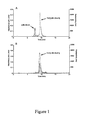
- Figure 1A shows the superimposition of the UV chromatogram (at 220 nm) and ⁇ -radio-chromatogram of the labelling solution with elution at pH 2.5.
- the ⁇ -radio-chromatogram demonstrates the presence of a product eluting at a higher retention time than the main species giving the most important absorption at 220 nm.
- the reaction conditions used in protocol 1 did not permit the inventors to obtain a significant amount of the Tc-UBI 29-41(SEQ ID: NO 1) complex precluding characterization of the products by ESI-MS. This is mainly due to the limited Tc concentrations delivered by the 99 Mo/ 99m Tc generator.
- the inventors designed a second labelling protocol, protocol 2. 5 ⁇ l of 1 mg/ml SnCl 2 solution in water prepared extemporaneously, 10 ⁇ l of NaOH 0.1N solution, 2.4 ⁇ l of 100 nM 99(m+g) TcO 4 - in saline solution and 2.4 ⁇ l of a 5.5 mM solution of [NH 4 99g TcO 4 ] were successively added to 15 ⁇ l of 1 mg/ml aqueous solution of UBI 29-41(SEQ ID: NO 1) in water. The final concentrations of UBI 29-41(SEQ ID: NO 1), SnCl 2 and 99 Tc were respectively 270 ⁇ M, 840 ⁇ M and 407 ⁇ M. The reaction mixture was left 5 minutes at room temperature.
- the TcO labelling yield of UBI 29-41(SEQ ID: NO 1) with protocol 2 was determined using a calibration procedure described in Material and Methods. This allowed an accurate determination of the TcO labelling yield that is reported in Table I for UBI 29-41. It must be noted that, in the experimental conditions of protocol 2, the labelling yield of UBI 29-41 (SEQ ID: NO 1) was 79 %.
- UBI 29-41 SEQ ID: NO 1
- UBI-A1 SEQ ID: 1
- UBI-A11 Table I
- the labelling Yield was calculated as (1-R1/R2), were R1 corresponds to the ratio of the unreacted peptide on that of the internal reference caffeine in the 99(m+g) Tc labelling experiment under conditions of protocol 2 and R2, the ratio of the unreacted peptide on that of the internal reference caffeine in the conditions of protocol 2 but without TcO 4 - .
- R1 corresponds to the ratio of the unreacted peptide on that of the internal reference caffeine in the 99(m+g) Tc labelling experiment under conditions of protocol 2
- R2 the ratio of the unreacted peptide on that of the internal reference caffeine in the conditions of protocol 2 but without TcO 4 - .
- TGRAK (P2) (SEQ ID NO: 15), TGRAKR (P3) (SEQ ID NO: 16) and TGRAKRR (P4) (SEQ ID NO: 17) corresponded respectively to the first 5, 6 and 7 N-terminal residues of the parent sequence UBI 29-41 (SEQ ID: NO 1).
- This peptide might therefore be used to tag proteins or peptides in N-terminal position and could lead to an almost quantitative incorporation of the [TcO] 3+ core in the conditions of protocol 2.
- a similar effect on the [TcO] 3+ labelling yield of the deletion of N-terminal acetyl group was observed in UBI 29-41 (H-UBI (SEQ ID : NO 13) versus UBI-WT (SEQ ID : NO 1) in Table I).
- H-UBI SEQ ID : NO 13
- UBI-WT SEQ ID : NO 1
- the Inventors also investigated the retro inverso sequence of P9 (RRRGT) peptide P15.
- the [TcO] 3+ labelling yield obtained for P15 in the conditions of protocol 2 suggested that this sequence could also be used as a C-terminal tag to incorporate [TcO] 3+ in proteins or peptides.
- the TcO-TGRRR complex must be stable during 1-3 times the period of 99m Tc.
- the inventors evaluated the stability of the [TcO] 3+ complexes in the case of the peptide UBI-WT (SEQ ID : NO 1) and TGRRR, (peptide P13; SEQ ID NO: 26). To this end, the inventors performed a Cysteine challenge. 16 ⁇ g of the TcO[UBI-WT] was added to 1, 15, and 100 mM solutions of Cysteine at pH 7.4 corresponding respectively to molar ratio of 3, 53 and 333. These samples were incubated for 20 h at 310 K. The mixtures were analyzed by HPLC and LC-MS.
- BPTI aprotinin
- BPTI a natural inhibitor of Serine proteases like trypsin, chymotrypsin, plasmin and kallikrein. It is commercially available under the name of Trasylol (Bayer, Germany). 99m Tc-aprotinin has been already used to visualize renal morphology (38) and to image amyloid fibrils (20). It has also been recently suggested to be useful for visualizing thrombii via the targeting of the fibrinolytic and/or neutrophile-derived Serine protease activities (39).
- BPTIv an analog of BPTI
- SEQ ID NO: 32 The application of protocol 2 used in the present work to label the different peptides was applied to BPTIv (SEQ ID NO: 32). In these conditions, no TcO-BPTIv complex was formed.
- the peak observed in HPLC and characterized by ESI-MS corresponded to the uncomplexed BPTIv (Table VII).
- Table VII TcO Labelling yield of BPTIv and TGRRRGG-BPTIv using protocol 2. Protein TcO Labelling Yield MW BPTIv 0% 7232.5 TGRRRGG-BPTIv >95% 7344.5
- the inventors produced, by solid phase chemical synthesis, an analog of BPTIv (SEQ ID: NO 32) where the TcO chelating sequence TGRRR discovered in the present work was added in N terminal position of BPTIv.
- a GG spacer was added between the TGRRR and the first residue of BPTIv in order to avoid putative conformational constraints that could prevent [TcO] 3+ chelation.
- TGRRRGG-BPTIv was produced by solid phase chemical synthesis and characterized by ESI-MS.
- the inventors applied the [TcO] 3+ labelling protocol 2 to TGRRRGG-BPTIv.
- the HPLC analysis of this sample displayed only one peak and the ESI-MS analysis showed that the mass of the product corresponds to an adduct of +112 Da to the mass of TGRRRGG-BPTIv (Table VII).
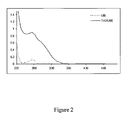
- the electronic absorption spectra of the monoadduct exhibited a large absorption centred at 274 nm neither observed in the absorption spectra of the uncomplexed TGRRRGG-BPTIv nor in the BPTIv.
- this absorption might correspond to a ligand to metal charge transfer (LMCT).
- the first part of the inventors work concerned the analysis of the [TcO] 3+ chelation site of a tri-decamer fragment of the protein ubiquicidin, named UBI 29-41.
- the present work allowed the Inventors to identify the [TcO 3+ ] coordination site in UBI 29-14 to the N terminal part of the peptide (Residue 1-4) and that the coordination atoms are oxygen of the hydroxyl group of T1 and the nitrogen of the amide function of residue G2, R3 and T4.
- the inventors therefore assume that all the peptides synthesized in the present study chelate the [TcO] 3+ core via their N-terminal sequence, where the oxygen of the hydroxyl group of T 1 is always present. This oxygen may constitute one of the driving forces that determine the location of the [TcO] 3+ chelation site in these peptides.
- the NMR data recorded on the [TcO] 3+ complex of peptide P13 strongly suggest that, in addition to the coordinating functions identified in peptide P9, the N-terminal group might participate in the coordination of the [TcO] 3+ core. This may explain the almost quantitative incorporation of the [TcO] 3+ core observed for peptide P13 that is significantly increased as compared to the N-acetyl version P9 of this sequence.
- the TcO 4 - anions may interact with the guanidinium groups of the Arginines located in the vicinity of the chelating site prior to reduction. Consistent with this interpretation is the comparison of the [TcO] 3+ labelling yield of peptide P9 that is dramatically increased (by about 60 %) as compared to P12 (Table IV) suggesting that Arginine residues may have a specific contribution beyond their cationic character.
- the present data does not allow a definitive description of the precise mechanism by which the segment R3 to R5 of the TGRRR peptide improves the [TcO] 3+ labelling yield dramatically.
- this proposal is also consistent with the fact that the [TcO] 3+ labelling protocol 2, in contrast to the ligand exchange approach, implies the simultaneous reduction of the pertechnetate oxyanion and the coordination of the resulting [TcO] 3+ core.
- pentapeptide peptide P13 pentapeptide peptide P13 (TGRRR; SEQ ID NO: 26).
- TGRRR pentapeptide peptide P13
- SEQ ID NO: 26 the inventors considered aprotinin, a natural inhibitor of Serine proteases like trypsin, chymotrypsin, plasmin and kallikrein.
- the application of the [TcO] 3+ labelling protocol 2 used in the present work to TGRRRGG-BPTIv showed a quantitative incorporation of the [TcO] 3+ core while no [TcO] 3+ labelling was observed in the same conditions with BPTIv.
- sequences described in the present report are composed of natural amino acids. Therefore, their use is not limited to proteins produced by solid-phase peptide synthesis but can be easily incorporated to large size protein via recombinant technologies. Such peptide sequences can be added to the N-terminal or the C-terminal sequence of the targeting molecule, if this region is not involved in the interaction with its receptor.
Landscapes
- Chemical & Material Sciences (AREA)
- Organic Chemistry (AREA)
- Genetics & Genomics (AREA)
- Biochemistry (AREA)
- Biophysics (AREA)
- General Health & Medical Sciences (AREA)
- Health & Medical Sciences (AREA)
- Medicinal Chemistry (AREA)
- Molecular Biology (AREA)
- Proteomics, Peptides & Aminoacids (AREA)
- Life Sciences & Earth Sciences (AREA)
- Peptides Or Proteins (AREA)
- Investigating Or Analysing Biological Materials (AREA)
- Medicines Containing Antibodies Or Antigens For Use As Internal Diagnostic Agents (AREA)
Priority Applications (6)
| Application Number | Priority Date | Filing Date | Title |
|---|---|---|---|
| EP08291257A EP2204377A1 (en) | 2008-12-30 | 2008-12-30 | Cysteine-free technetium (tc) or rhenium (re) chelating peptide tags and their use |
| EP09805844.9A EP2382229B1 (en) | 2008-12-30 | 2009-12-28 | Cysteine-free technetium (tc) or rhenium (re) chelating peptide tags and their use |
| PCT/IB2009/007971 WO2010076654A2 (en) | 2008-12-30 | 2009-12-28 | CYSTEINE-FREE EFFICIENT TECHNETIUM (Tc) OR RHENIUM (Re) CHELATING PEPTIDE TAGS AND THEIR USE |
| CA2745946A CA2745946A1 (en) | 2008-12-30 | 2009-12-28 | Cysteine-free efficient technetium (tc) or rhenium (re) chelating peptide tags and their use |
| US13/133,446 US9234001B2 (en) | 2008-12-30 | 2009-12-28 | Cysteine-free efficient Technetium (Tc) or Rhenium (Re) chelating peptide tags and their use |
| JP2011542921A JP5756758B2 (ja) | 2008-12-30 | 2009-12-28 | システイン非含有で有効なテクネチウム(Tc)又はレニウム(Re)のキレート化ペプチドタグ及びその使用 |
Applications Claiming Priority (1)
| Application Number | Priority Date | Filing Date | Title |
|---|---|---|---|
| EP08291257A EP2204377A1 (en) | 2008-12-30 | 2008-12-30 | Cysteine-free technetium (tc) or rhenium (re) chelating peptide tags and their use |
Publications (1)
| Publication Number | Publication Date |
|---|---|
| EP2204377A1 true EP2204377A1 (en) | 2010-07-07 |
Family
ID=40578262
Family Applications (2)
| Application Number | Title | Priority Date | Filing Date |
|---|---|---|---|
| EP08291257A Withdrawn EP2204377A1 (en) | 2008-12-30 | 2008-12-30 | Cysteine-free technetium (tc) or rhenium (re) chelating peptide tags and their use |
| EP09805844.9A Not-in-force EP2382229B1 (en) | 2008-12-30 | 2009-12-28 | Cysteine-free technetium (tc) or rhenium (re) chelating peptide tags and their use |
Family Applications After (1)
| Application Number | Title | Priority Date | Filing Date |
|---|---|---|---|
| EP09805844.9A Not-in-force EP2382229B1 (en) | 2008-12-30 | 2009-12-28 | Cysteine-free technetium (tc) or rhenium (re) chelating peptide tags and their use |
Country Status (5)
| Country | Link |
|---|---|
| US (1) | US9234001B2 (enExample) |
| EP (2) | EP2204377A1 (enExample) |
| JP (1) | JP5756758B2 (enExample) |
| CA (1) | CA2745946A1 (enExample) |
| WO (1) | WO2010076654A2 (enExample) |
Families Citing this family (1)
| Publication number | Priority date | Publication date | Assignee | Title |
|---|---|---|---|---|
| FR2949463B1 (fr) | 2009-08-26 | 2011-09-16 | Commissariat Energie Atomique | Inhibiteurs de mmp |
Citations (2)
| Publication number | Priority date | Publication date | Assignee | Title |
|---|---|---|---|---|
| EP0403225A2 (en) * | 1989-06-12 | 1990-12-19 | Immunomedics, Inc. | Methods for technetium/rhenium labelling of proteins |
| WO1998054314A1 (en) * | 1997-05-29 | 1998-12-03 | Rijksuniversiteit Leiden | Antimicrobial peptides derived from ubiquicidine |
Family Cites Families (1)
| Publication number | Priority date | Publication date | Assignee | Title |
|---|---|---|---|---|
| US4421735A (en) * | 1980-04-17 | 1983-12-20 | The Massachusetts General Hospital | Radiolabeled diagnostic compositions and method for making the same |
-
2008
- 2008-12-30 EP EP08291257A patent/EP2204377A1/en not_active Withdrawn
-
2009
- 2009-12-28 JP JP2011542921A patent/JP5756758B2/ja not_active Expired - Fee Related
- 2009-12-28 CA CA2745946A patent/CA2745946A1/en not_active Abandoned
- 2009-12-28 US US13/133,446 patent/US9234001B2/en not_active Expired - Fee Related
- 2009-12-28 WO PCT/IB2009/007971 patent/WO2010076654A2/en not_active Ceased
- 2009-12-28 EP EP09805844.9A patent/EP2382229B1/en not_active Not-in-force
Patent Citations (2)
| Publication number | Priority date | Publication date | Assignee | Title |
|---|---|---|---|---|
| EP0403225A2 (en) * | 1989-06-12 | 1990-12-19 | Immunomedics, Inc. | Methods for technetium/rhenium labelling of proteins |
| WO1998054314A1 (en) * | 1997-05-29 | 1998-12-03 | Rijksuniversiteit Leiden | Antimicrobial peptides derived from ubiquicidine |
Non-Patent Citations (42)
| Title |
|---|
| BIGOTT-HENNKENS, H. M. ET AL., J MED CHEM, vol. 51, 2008, pages 1223 - 30 |
| BOGDANOV, A., JR.; SIMONOVA, M.;; WEISSLEDER, R., BIOCHIM BIOPHYS ACTA, vol. 1397, 1998, pages 56 - 64 |
| BOYD, G. E., J. CHEM. ED., vol. 36, 1959, pages 3 - 12 |
| CANTORIAS, M. V. ET AL., INORG CHEM, vol. 46, 2007, pages 7326 - 40 |
| CARDOSO, I. ET AL., J. EUR J BIOCHEM, vol. 267, 2000, pages 2307 - 11 |
| FERRO-FLORES G ET AL: "Molecular recognition and stability of <99m>Tc-UBI 29-41 based on experimental and semiempirical results", APPLIED RADIATION AND ISOTOPES, ELSEVIER, OXFORD, GB, vol. 61, no. 6, 1 December 2004 (2004-12-01), pages 1261 - 1268, XP004573400, ISSN: 0969-8043 * |
| FERRO-FLORES, G. ET AL., APPL RADIAT ISOT, vol. 61, 2004, pages 1261 - 8 |
| FRANCESCONI, L. C. ET AL., INORG CHEM, vol. 43, 2004, pages 2867 - 75 |
| GEORGE, A. J. ET AL., PROC NATL ACAD SCI USA, vol. 92, 1995, pages 8358 - 62 |
| HIEMSTRA, P. S. ET AL., JLEUKOC BIOL, vol. 66, 1999, pages 423 - 8 |
| HNATOWICH, D. J. ET AL., J NUCL MED, vol. 34, 1993, pages 109 - 19 |
| KASINA, S. ET AL., BIOCONJUG CHEM, vol. 9, 1998, pages 108 - 17 |
| KASINA, S. ET AL., JNUCL MED, vol. 32, 1991, pages 1445 - 51 |
| KATAYEV, E., A.; USTYNYUK, Y., A.; SESSLER, J., L., COORDINATION CHEMISTRY REVIEWS, vol. 250, 2006, pages 3004 - 37 |
| LARSEN, S. K. ET AL., BIOCONJUG CHEM, vol. 6, 1995, pages 635 - 8 |
| LEVASHOVA, Z. ET AL., BIOCONJUG CHEM, vol. 19, 2008, pages 1049 - 54 |
| LIPOWSKA, M. ET AL., INORG CHEM, vol. 41, 2002, pages 3032 - 41 |
| LISTER-JAMES, J. ET AL., J NUCL MED, vol. 37, 1996, pages 775 - 81 |
| LISTER-JAMES, J.; MOYER, B. R.; DEAN, T. Q, JNUCL MED, vol. 40, 1996, pages 221 - 33 |
| LIU, S. ET AL., BIOCONJUG CHEM, vol. 7, 1996, pages 63 - 71 |
| LIU, S.; EDWARDS, D. S., CHEM REV, vol. 99, 1999, pages 2235 - 68 |
| MARQUART, M. ET AL., ACTA CRYSTALLOGR., SECT B, vol. 39, 1983, pages 480 - 490 |
| MELENDEZ-ALAFORT L ET AL: "Lys and Arg in UBI: A specific site for a stable Tc-99m complex?", NUCLEAR MEDICINE AND BIOLOGY, ELSEVIER, NY, US, vol. 30, no. 6, 1 August 2003 (2003-08-01), pages 605 - 615, XP004444178, ISSN: 0969-8051 * |
| MELENDEZ-ALAFORT, L. ET AL., J. NUCL MED BIOL, vol. 30, 2003, pages 605 - 15 |
| NILGES, M.; CLORE, G. M.; GRONENBORN, A. M., FEBS LETT, vol. 239, 1988, pages 129 - 36 |
| PERERA PINTADO, A. ET AL., JOURNAL OF RADIOANALYTICAL AND NUCLEAR CHEMISTRY, vol. 275, 2008, pages 619 - 626 |
| R. B. MERRIFIELD: "Solid Phase Peptide Synthesis. I. The Synthesis of a Tetrapeptide", J. AM. CHEM. SOC., vol. 85, no. 14, 1963, pages 2149 - 2154, XP002257754, DOI: doi:10.1021/ja00897a025 |
| RHODES, B. A., INT J RAD APPL INSTRUM B, vol. 18, 1991, pages 667 - 76 |
| RUSTOM, R. ET AL., CLIN. SCI (LOND), vol. 83, no. 3, 1992, pages 289 - 294 |
| SCHWIETERS, C. D. ET AL., J MAGN RESON, vol. 160, 2003, pages 65 - 73 |
| TAIT, J. F. ET AL., BIOCONJUG CHEM, vol. 11, 2000, pages 918 - 25 |
| TESSIER, C.; ROCHON, F. D.;; BEAUCHAMP, A. L., INORG CHEM, vol. 43, 2004, pages 7463 - 73 |
| VANBILLOEN, H. P. ET AL., NUCL MED BIOL, vol. 22, 1995, pages 325 - 38 |
| VANBILLOEN, H. P.; DE ROO, M. J.;; VERBRUGGEN, A. M., EUR JNUCL MED, vol. 23, 1996, pages 40 - 8 |
| WAIBEL, R. ET AL., NAT BIOTECHNOL, vol. 17, 1999, pages 897 - 901 |
| WELLING M M ET AL: "Radiochemical and biological characteristics of <99m>Tc-UBI 29-41 for imaging of bacterial infections", NUCLEAR MEDICINE AND BIOLOGY, ELSEVIER, NY, US, vol. 29, no. 4, 1 May 2002 (2002-05-01), pages 413 - 422, XP004357344, ISSN: 0969-8051 * |
| WELLING, M. M. ET AL., EUR J NUCL MED, vol. 27, 2000, pages 292 - 301 |
| WELLING, M. M. ET AL., JNUCL MED, vol. 42, 2001, pages 788 - 94 |
| WELLING, M. M. ET AL., NUCL MED BIOL, vol. 29, 2002, pages 413 - 22 |
| WONG, E. ET AL., INORG CHEM, vol. 36, 1997, pages 5799 - 5808 |
| WONG, E. ET AL., INORG CHEM, vol. 40, 2001, pages 5695 - 700 |
| ZAKHAROVA, E.; HORVATH, M. P.; GOLDENBERG, D. P., J MOL BIOL, 2008 |
Also Published As
| Publication number | Publication date |
|---|---|
| JP5756758B2 (ja) | 2015-07-29 |
| EP2382229B1 (en) | 2013-07-24 |
| US9234001B2 (en) | 2016-01-12 |
| WO2010076654A3 (en) | 2010-12-16 |
| CA2745946A1 (en) | 2010-07-08 |
| WO2010076654A2 (en) | 2010-07-08 |
| EP2382229A2 (en) | 2011-11-02 |
| JP2012513980A (ja) | 2012-06-21 |
| US20110318827A1 (en) | 2011-12-29 |
Similar Documents
| Publication | Publication Date | Title |
|---|---|---|
| Glass et al. | Protein kinase inhibitor-(6-22)-amide peptide analogs with standard and nonstandard amino acid substitutions for phenylalanine 10: inhibition of cAMP-dependent protein kinase | |
| RS61853B1 (sr) | Biciklični peptidni ligandi specifični za mt1-mmp | |
| US8110402B2 (en) | Metal abstraction peptide (MAP) tag and associated methods | |
| Sardesai et al. | Construction of coordinatively saturated rhodium complexes containing appended peptides | |
| Nakamura et al. | Synthesis of peptide thioesters via an N–S acyl shift reaction under mild acidic conditions on an N‐4, 5‐dimethoxy‐2‐mercaptobenzyl auxiliary group | |
| Hruby et al. | Design of novel synthetic peptides including cyclic conformationally and topgraphically constrained analogs | |
| EP2204377A1 (en) | Cysteine-free technetium (tc) or rhenium (re) chelating peptide tags and their use | |
| KITADA et al. | New peptide models for studying racemization | |
| Gutheil et al. | N-to-C solid-phase peptide and peptide trifluoromethylketone synthesis using amino acid tert-butyl esters | |
| CA2179889A1 (en) | Inhibitors of serine proteases, bearing a chelating group | |
| EP1047708B1 (en) | Peptide chelators that predominately form a single stereoisomeric species upon coordination to a metal center | |
| Okamoto et al. | An efficient solid‐phase synthesis of peptidyl‐N‐acetylguanidines for use in native chemical ligation | |
| Koźmiński et al. | Labelling of peptides with 99m Tc complexes through the modified C-terminal group | |
| US6334996B1 (en) | Chelators that predominantely form a single stereoisomeric species upon coordination to a metal center | |
| Borin et al. | Synthetic and binding studies on the calcium binding site I of bovine brain calmodulin: II. Synthesis and CD studies on the cyclic 20–31 sequence | |
| Bodanszky et al. | Studies on the conformation of secretin: The position of the helical stretch | |
| Radau | Cyanopeptides: A new and nearly inexhaustible natural resource for the design and structure-activity relationship studies of new inhibitors of trypsin-like serine proteases | |
| Wakamiya et al. | Structural determination of ancovenin, a peptide inhibitor of angiotensin I converting enzyme. | |
| WO2025179168A1 (en) | Synthesis of dll3-binding peptides | |
| VAN ROEY et al. | Crystal and molecular structure of tert.‐butyloxycarbonyl‐L‐hydroxy‐prolyl‐α‐aminoisobutyryl‐α‐aminoisobutyryl‐L‐phenylalaninol | |
| PALADINO et al. | Synthesis and in vitro activities of new tryptophan‐modified and thiomethylene‐containing pseudopeptide antagonists of the neurokinins | |
| Hamzé et al. | Solid phase synthesis of mono-or disubstituted arginine containing peptides from an isothiocitrulline precursor | |
| CA2142173A1 (en) | Hirudin derivatives and a process for their preparation | |
| US20060111552A1 (en) | Metal binding precursors for the synthesis of peptide-metal conjugates | |
| Žertová et al. | The Analogs of [D-Har 8] Vasopressin with Di-and Trisubstituted Phenylalanine in Position 2; Synthesis and Some Biological Properties |
Legal Events
| Date | Code | Title | Description |
|---|---|---|---|
| PUAI | Public reference made under article 153(3) epc to a published international application that has entered the european phase |
Free format text: ORIGINAL CODE: 0009012 |
|
| AK | Designated contracting states |
Kind code of ref document: A1 Designated state(s): AT BE BG CH CY CZ DE DK EE ES FI FR GB GR HR HU IE IS IT LI LT LU LV MC MT NL NO PL PT RO SE SI SK TR |
|
| AX | Request for extension of the european patent |
Extension state: AL BA MK RS |
|
| AKY | No designation fees paid | ||
| REG | Reference to a national code |
Ref country code: DE Ref legal event code: R108 Effective date: 20110215 Ref country code: DE Ref legal event code: 8566 |
|
| STAA | Information on the status of an ep patent application or granted ep patent |
Free format text: STATUS: THE APPLICATION IS DEEMED TO BE WITHDRAWN |
|
| 18D | Application deemed to be withdrawn |
Effective date: 20110108 |