EP2200331A2 - Diffusion de vidéo 3D/stéréoscopique avec transmission en temps différé d'un flux de données vidéo 3D auxiliaire - Google Patents
Diffusion de vidéo 3D/stéréoscopique avec transmission en temps différé d'un flux de données vidéo 3D auxiliaire Download PDFInfo
- Publication number
- EP2200331A2 EP2200331A2 EP09175743A EP09175743A EP2200331A2 EP 2200331 A2 EP2200331 A2 EP 2200331A2 EP 09175743 A EP09175743 A EP 09175743A EP 09175743 A EP09175743 A EP 09175743A EP 2200331 A2 EP2200331 A2 EP 2200331A2
- Authority
- EP
- European Patent Office
- Prior art keywords
- realtime
- auxiliary video
- information table
- stream
- broadcasting
- Prior art date
- Legal status (The legal status is an assumption and is not a legal conclusion. Google has not performed a legal analysis and makes no representation as to the accuracy of the status listed.)
- Withdrawn
Links
Images


Classifications
-
- H—ELECTRICITY
- H04—ELECTRIC COMMUNICATION TECHNIQUE
- H04N—PICTORIAL COMMUNICATION, e.g. TELEVISION
- H04N21/00—Selective content distribution, e.g. interactive television or video on demand [VOD]
- H04N21/40—Client devices specifically adapted for the reception of or interaction with content, e.g. set-top-box [STB]; Operations thereof
- H04N21/43—Processing of content or additional data, e.g. demultiplexing additional data from a digital video stream; Elementary client operations, e.g. monitoring of home network or synchronising decoder's clock; Client middleware
- H04N21/435—Processing of additional data, e.g. decrypting of additional data, reconstructing software from modules extracted from the transport stream
-
- H—ELECTRICITY
- H04—ELECTRIC COMMUNICATION TECHNIQUE
- H04N—PICTORIAL COMMUNICATION, e.g. TELEVISION
- H04N21/00—Selective content distribution, e.g. interactive television or video on demand [VOD]
- H04N21/20—Servers specifically adapted for the distribution of content, e.g. VOD servers; Operations thereof
- H04N21/23—Processing of content or additional data; Elementary server operations; Server middleware
- H04N21/236—Assembling of a multiplex stream, e.g. transport stream, by combining a video stream with other content or additional data, e.g. inserting a URL [Uniform Resource Locator] into a video stream, multiplexing software data into a video stream; Remultiplexing of multiplex streams; Insertion of stuffing bits into the multiplex stream, e.g. to obtain a constant bit-rate; Assembling of a packetised elementary stream
-
- H—ELECTRICITY
- H04—ELECTRIC COMMUNICATION TECHNIQUE
- H04H—BROADCAST COMMUNICATION
- H04H20/00—Arrangements for broadcast or for distribution combined with broadcast
- H04H20/40—Arrangements for broadcast specially adapted for accumulation-type receivers
-
- H—ELECTRICITY
- H04—ELECTRIC COMMUNICATION TECHNIQUE
- H04H—BROADCAST COMMUNICATION
- H04H60/00—Arrangements for broadcast applications with a direct linking to broadcast information or broadcast space-time; Broadcast-related systems
- H04H60/02—Arrangements for generating broadcast information; Arrangements for generating broadcast-related information with a direct linking to broadcast information or to broadcast space-time; Arrangements for simultaneous generation of broadcast information and broadcast-related information
- H04H60/07—Arrangements for generating broadcast information; Arrangements for generating broadcast-related information with a direct linking to broadcast information or to broadcast space-time; Arrangements for simultaneous generation of broadcast information and broadcast-related information characterised by processes or methods for the generation
-
- H—ELECTRICITY
- H04—ELECTRIC COMMUNICATION TECHNIQUE
- H04N—PICTORIAL COMMUNICATION, e.g. TELEVISION
- H04N13/00—Stereoscopic video systems; Multi-view video systems; Details thereof
-
- H—ELECTRICITY
- H04—ELECTRIC COMMUNICATION TECHNIQUE
- H04N—PICTORIAL COMMUNICATION, e.g. TELEVISION
- H04N13/00—Stereoscopic video systems; Multi-view video systems; Details thereof
- H04N13/10—Processing, recording or transmission of stereoscopic or multi-view image signals
-
- H—ELECTRICITY
- H04—ELECTRIC COMMUNICATION TECHNIQUE
- H04N—PICTORIAL COMMUNICATION, e.g. TELEVISION
- H04N13/00—Stereoscopic video systems; Multi-view video systems; Details thereof
- H04N13/10—Processing, recording or transmission of stereoscopic or multi-view image signals
- H04N13/106—Processing image signals
- H04N13/172—Processing image signals image signals comprising non-image signal components, e.g. headers or format information
-
- H—ELECTRICITY
- H04—ELECTRIC COMMUNICATION TECHNIQUE
- H04N—PICTORIAL COMMUNICATION, e.g. TELEVISION
- H04N13/00—Stereoscopic video systems; Multi-view video systems; Details thereof
- H04N13/10—Processing, recording or transmission of stereoscopic or multi-view image signals
- H04N13/194—Transmission of image signals
-
- H—ELECTRICITY
- H04—ELECTRIC COMMUNICATION TECHNIQUE
- H04N—PICTORIAL COMMUNICATION, e.g. TELEVISION
- H04N19/00—Methods or arrangements for coding, decoding, compressing or decompressing digital video signals
- H04N19/30—Methods or arrangements for coding, decoding, compressing or decompressing digital video signals using hierarchical techniques, e.g. scalability
- H04N19/37—Methods or arrangements for coding, decoding, compressing or decompressing digital video signals using hierarchical techniques, e.g. scalability with arrangements for assigning different transmission priorities to video input data or to video coded data
-
- H—ELECTRICITY
- H04—ELECTRIC COMMUNICATION TECHNIQUE
- H04N—PICTORIAL COMMUNICATION, e.g. TELEVISION
- H04N19/00—Methods or arrangements for coding, decoding, compressing or decompressing digital video signals
- H04N19/46—Embedding additional information in the video signal during the compression process
-
- H—ELECTRICITY
- H04—ELECTRIC COMMUNICATION TECHNIQUE
- H04N—PICTORIAL COMMUNICATION, e.g. TELEVISION
- H04N19/00—Methods or arrangements for coding, decoding, compressing or decompressing digital video signals
- H04N19/50—Methods or arrangements for coding, decoding, compressing or decompressing digital video signals using predictive coding
- H04N19/597—Methods or arrangements for coding, decoding, compressing or decompressing digital video signals using predictive coding specially adapted for multi-view video sequence encoding
-
- H—ELECTRICITY
- H04—ELECTRIC COMMUNICATION TECHNIQUE
- H04N—PICTORIAL COMMUNICATION, e.g. TELEVISION
- H04N19/00—Methods or arrangements for coding, decoding, compressing or decompressing digital video signals
- H04N19/60—Methods or arrangements for coding, decoding, compressing or decompressing digital video signals using transform coding
- H04N19/61—Methods or arrangements for coding, decoding, compressing or decompressing digital video signals using transform coding in combination with predictive coding
-
- H—ELECTRICITY
- H04—ELECTRIC COMMUNICATION TECHNIQUE
- H04N—PICTORIAL COMMUNICATION, e.g. TELEVISION
- H04N21/00—Selective content distribution, e.g. interactive television or video on demand [VOD]
- H04N21/20—Servers specifically adapted for the distribution of content, e.g. VOD servers; Operations thereof
- H04N21/21—Server components or server architectures
-
- H—ELECTRICITY
- H04—ELECTRIC COMMUNICATION TECHNIQUE
- H04N—PICTORIAL COMMUNICATION, e.g. TELEVISION
- H04N21/00—Selective content distribution, e.g. interactive television or video on demand [VOD]
- H04N21/20—Servers specifically adapted for the distribution of content, e.g. VOD servers; Operations thereof
- H04N21/23—Processing of content or additional data; Elementary server operations; Server middleware
-
- H—ELECTRICITY
- H04—ELECTRIC COMMUNICATION TECHNIQUE
- H04N—PICTORIAL COMMUNICATION, e.g. TELEVISION
- H04N21/00—Selective content distribution, e.g. interactive television or video on demand [VOD]
- H04N21/20—Servers specifically adapted for the distribution of content, e.g. VOD servers; Operations thereof
- H04N21/23—Processing of content or additional data; Elementary server operations; Server middleware
- H04N21/234—Processing of video elementary streams, e.g. splicing of video streams or manipulating encoded video stream scene graphs
- H04N21/2343—Processing of video elementary streams, e.g. splicing of video streams or manipulating encoded video stream scene graphs involving reformatting operations of video signals for distribution or compliance with end-user requests or end-user device requirements
- H04N21/234327—Processing of video elementary streams, e.g. splicing of video streams or manipulating encoded video stream scene graphs involving reformatting operations of video signals for distribution or compliance with end-user requests or end-user device requirements by decomposing into layers, e.g. base layer and one or more enhancement layers
-
- H—ELECTRICITY
- H04—ELECTRIC COMMUNICATION TECHNIQUE
- H04N—PICTORIAL COMMUNICATION, e.g. TELEVISION
- H04N21/00—Selective content distribution, e.g. interactive television or video on demand [VOD]
- H04N21/20—Servers specifically adapted for the distribution of content, e.g. VOD servers; Operations thereof
- H04N21/23—Processing of content or additional data; Elementary server operations; Server middleware
- H04N21/235—Processing of additional data, e.g. scrambling of additional data or processing content descriptors
-
- H—ELECTRICITY
- H04—ELECTRIC COMMUNICATION TECHNIQUE
- H04N—PICTORIAL COMMUNICATION, e.g. TELEVISION
- H04N21/00—Selective content distribution, e.g. interactive television or video on demand [VOD]
- H04N21/20—Servers specifically adapted for the distribution of content, e.g. VOD servers; Operations thereof
- H04N21/23—Processing of content or additional data; Elementary server operations; Server middleware
- H04N21/236—Assembling of a multiplex stream, e.g. transport stream, by combining a video stream with other content or additional data, e.g. inserting a URL [Uniform Resource Locator] into a video stream, multiplexing software data into a video stream; Remultiplexing of multiplex streams; Insertion of stuffing bits into the multiplex stream, e.g. to obtain a constant bit-rate; Assembling of a packetised elementary stream
- H04N21/23614—Multiplexing of additional data and video streams
-
- H—ELECTRICITY
- H04—ELECTRIC COMMUNICATION TECHNIQUE
- H04N—PICTORIAL COMMUNICATION, e.g. TELEVISION
- H04N21/00—Selective content distribution, e.g. interactive television or video on demand [VOD]
- H04N21/20—Servers specifically adapted for the distribution of content, e.g. VOD servers; Operations thereof
- H04N21/23—Processing of content or additional data; Elementary server operations; Server middleware
- H04N21/236—Assembling of a multiplex stream, e.g. transport stream, by combining a video stream with other content or additional data, e.g. inserting a URL [Uniform Resource Locator] into a video stream, multiplexing software data into a video stream; Remultiplexing of multiplex streams; Insertion of stuffing bits into the multiplex stream, e.g. to obtain a constant bit-rate; Assembling of a packetised elementary stream
- H04N21/2365—Multiplexing of several video streams
-
- H—ELECTRICITY
- H04—ELECTRIC COMMUNICATION TECHNIQUE
- H04N—PICTORIAL COMMUNICATION, e.g. TELEVISION
- H04N21/00—Selective content distribution, e.g. interactive television or video on demand [VOD]
- H04N21/40—Client devices specifically adapted for the reception of or interaction with content, e.g. set-top-box [STB]; Operations thereof
- H04N21/43—Processing of content or additional data, e.g. demultiplexing additional data from a digital video stream; Elementary client operations, e.g. monitoring of home network or synchronising decoder's clock; Client middleware
- H04N21/434—Disassembling of a multiplex stream, e.g. demultiplexing audio and video streams, extraction of additional data from a video stream; Remultiplexing of multiplex streams; Extraction or processing of SI; Disassembling of packetised elementary stream
-
- H—ELECTRICITY
- H04—ELECTRIC COMMUNICATION TECHNIQUE
- H04N—PICTORIAL COMMUNICATION, e.g. TELEVISION
- H04N21/00—Selective content distribution, e.g. interactive television or video on demand [VOD]
- H04N21/40—Client devices specifically adapted for the reception of or interaction with content, e.g. set-top-box [STB]; Operations thereof
- H04N21/43—Processing of content or additional data, e.g. demultiplexing additional data from a digital video stream; Elementary client operations, e.g. monitoring of home network or synchronising decoder's clock; Client middleware
- H04N21/434—Disassembling of a multiplex stream, e.g. demultiplexing audio and video streams, extraction of additional data from a video stream; Remultiplexing of multiplex streams; Extraction or processing of SI; Disassembling of packetised elementary stream
- H04N21/4347—Demultiplexing of several video streams
-
- H—ELECTRICITY
- H04—ELECTRIC COMMUNICATION TECHNIQUE
- H04N—PICTORIAL COMMUNICATION, e.g. TELEVISION
- H04N21/00—Selective content distribution, e.g. interactive television or video on demand [VOD]
- H04N21/80—Generation or processing of content or additional data by content creator independently of the distribution process; Content per se
- H04N21/81—Monomedia components thereof
- H04N21/816—Monomedia components thereof involving special video data, e.g 3D video
-
- H—ELECTRICITY
- H04—ELECTRIC COMMUNICATION TECHNIQUE
- H04H—BROADCAST COMMUNICATION
- H04H20/00—Arrangements for broadcast or for distribution combined with broadcast
- H04H20/28—Arrangements for simultaneous broadcast of plural pieces of information
- H04H20/30—Arrangements for simultaneous broadcast of plural pieces of information by a single channel
Definitions
- the present invention relates to a apparatus and method for transmitting/receiving broadcasting signals; and, more particularly, to a apparatus and method for transmitting/receiving broadcasting signals to provide a non-realtime three-dimensional (3D) stereoscopic broadcasting service.
- 3D three-dimensional
- a digital three-dimensional (3D) stereoscopic broadcasting service makes viewers feel a sense of depth by using a plurality of videos with a predetermined disparity.
- the 3D stereoscopic broadcasting service uses auxiliary videos whose viewpoint is different from the viewpoint of two-dimensional (2D) videos provided in a 2D broadcasting service and used for forming 3D stereoscopic videos, which will be referred to as 3D auxiliary videos, hereafter.
- 3D auxiliary videos for instance, when a 2D video is an video of a left-eye viewpoint, the 3D auxiliary video is an video of a right-eye viewpoint or multiple viewpoint.
- the 3D stereoscopic broadcasting service requires more transmission bandwidth than the 2D broadcasting service, because it should transmit the 3D auxiliary videos in addition to the 2D videos.
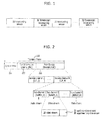
- Fig. 1 illustrates a schedule of broadcasting program services on a certain Digital Multimedia Broadcasting (DMB) service channel.
- DMB Digital Multimedia Broadcasting
- the DMB apparatus provides both 2D broadcasting service and 3D stereoscopic broadcasting service on the certain service channel.
- 2D video stream, 3D auxiliary video stream, and 3D supplementary data stream are transmitted in realtime at the time when a corresponding broadcasting service is scheduled to be provided. Since the number of DMB service channels is limited, it is desirable to provide both 2D broadcasting service and 3D stereoscopic broadcasting service on one service channel, rather than to allocate a service channel dedicated to a 3D stereoscopic broadcasting service.
- the 3D supplementary data stream is data stream including information needed for a DMB terminal to receive and restore 3D auxiliary videos, such as depth information and disparity information.
- the disparity information denotes a range difference between the viewpoint of a left-eye video and the viewpoint of a right-eye video.
- the depth information signifies a distance difference between the left-eye video and the right-eye video with respect to a predetermined object.
- the certain service channel accommodating both 2D broadcasting service and 3D stereoscopic broadcasting service is allocated with sufficient transmission bandwidth needed to provide a 3D stereoscopic broadcasting service, which transmits 3D auxiliary video stream, and 3D supplementary data stream in addition to 2D video stream, the transmission bandwidth is consumed wastefully during a 2D broadcasting service.
- the service channel is allocated with as much transmission bandwidth as needed to provide a 2D broadcasting service, the quality of 3D videos restored during a 3D stereoscopic broadcasting service are deteriorated due to insufficient transmission bandwidth.
- An embodiment of the present invention is directed to providing a broadcasting transmission/reception apparatus which transmits three-dimensional (3D) auxiliary videos needed to provide a 3D stereoscopic broadcasting service and 3D supplementary data including information about the 3D auxiliary video in non-realtime.
- 3D three-dimensional
- a broadcasting transmission apparatus which includes: a non-realtime broadcasting server configured to generate 3D auxiliary video stream for 3D auxiliary video and non-realtime service information table data stream for a non-realtime service information table including information needed to receive and restore the 3D auxiliary video before a time point when a 3D stereoscopic broadcasting service is provided; a media coder configured to generate two-dimensional (2D) video stream for 2D video at a predetermined bit rate based on a bit rate of the 3D auxiliary video stream; and a multiplexer configured to multiplex the 2D video stream, the 3D auxiliary video stream, and the non-realtime service information table data stream on a predetermined sub-channel.
- a non-realtime broadcasting server configured to generate 3D auxiliary video stream for 3D auxiliary video and non-realtime service information table data stream for a non-realtime service information table including information needed to receive and restore the 3D auxiliary video before a time point when a 3D stereoscopic broadcasting service is provided
- a broadcasting reception apparatus which includes: a signal receiver configured to receive and demultiplex Digital Multimedia Broadcasting (DMB) signals and separate the DMB signals into 3D auxiliary video stream of a 3D auxiliary video for a 3D stereoscopic broadcasting service and non-realtime service information table data stream which includes information needed to receive and restore the 3D auxiliary video; a data storage configured to store the 3D auxiliary video stream and the non-realtime service information table data stream; a 2D video processor configured to decode 2D video stream generated from the demultiplexing and generate 2D video; a 3D video processor configured to generate the 3D auxiliary video by decoding the stored 3D auxiliary video stream and the stored non-realtime service information table data stream, and generate 3D video by using the 2D video and the 3D auxiliary video; and a display unit configured to display the 2D video and the 3D video.
- DMB Digital Multimedia Broadcasting
- a broadcasting transmission method which includes: generating three-dimensional (3D) auxiliary video stream and non-realtime service information table data; transmitting two-dimensional (2D) video stream, the 3D auxiliary video stream and the non-realtime service information table data; wherein the non-realtime service information table data includes: a section body configured to include information needed to receive and restore the 3D auxiliary video stream to provide a 3D stereoscopic broadcasting service; and a section header configured to include information needed to receive the non-realtime service information table data.
- a broadcasting reception method which includes: receiving and demultiplexing Digital Multimedia Broadcasting (DMB) signals to thereby generate 3D auxiliary video transport stream of a 3D auxiliary video for a 3D stereoscopic broadcasting service and non-realtime service information table transport stream including information needed to receive and restore the 3D auxiliary video; separately storing the 3D auxiliary video transport stream of a 3D auxiliary video for a 3D stereoscopic broadcasting service and the non-realtime service information table transport stream; decoding 2D video transport stream generated from the demultiplexing to thereby produce 2D video; receiving a user request for the 3D stereoscopic broadcasting service; and generating 3D video based on the 2D video by decoding the stored 3D auxiliary video transport stream and the non-realtime service information table transport stream upon receipt of the user request.
- DMB Digital Multimedia Broadcasting
- Fig. 1 illustrates a schedule of broadcasting program services on a certain Digital Multimedia Broadcasting (DMB) service channel.
- DMB Digital Multimedia Broadcasting
- Fig. 2 illustrates a transport frame 200 transmitted from a three-dimensional (3D) stereoscopic broadcasting transmission apparatus in accordance with an embodiment of the present invention.
- Fig. 3 is a block view showing a 3D stereoscopic broadcasting transmission apparatus in accordance with an embodiment of the present invention.
- Fig. 4 is a block view illustrating a non-realtime broadcasting server 303 of Fig. 3 .
- Fig. 5 illustrates a data structure of a non-realtime service information table.
- Fig. 6 is a block view describing a 3D stereoscopic broadcasting reception apparatus in accordance with an embodiment of the present invention.
- Fig. 7 is a flowchart describing a 3D stereoscopic broadcasting transmission method in accordance with an embodiment of the present invention.
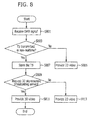
- Fig. 8 is a flowchart describing a 3D stereoscopic broadcasting reception method in accordance with an embodiment of the present invention.
- Fig. 2 illustrates a transport frame 200 transmitted from a three-dimensional (3D) stereoscopic broadcasting transmission apparatus in accordance with an embodiment of the present invention.
- the transport frame 200 includes a sync channel 201, a fast information channel (FIC) 203, and a main service channel (MSC) 205.
- the transport frame 200 is transformed into transport stream to be transmitted.
- the sync channel 201 includes information needed for synchronization when a Digital Multimedia Broadcasting (DMB) signal receiving apparatus receives and demodulates the transport frame 200.
- the FIC 203 includes diverse control informations needed for a broadcasting service and emergency data needed for fast transmission.
- the MSC 205 includes a plurality of service channels CIF_1 to CIF_N, and each of the service channels CIF_1 to CIF_N includes a plurality of sub-channels SUBCH_1 to SUBCH_K. Audio stream and video stream needed for a 3D stereoscopic broadcasting service and data stream needed for a data service are transmitted through the respective sub-channels SUBCH_1 to SUBCH_K.
- the 3D stereoscopic broadcasting transmission apparatus transmits 2D video stream in realtime through a second sub-channel SUBCH_2 for transmitting video stream while transmitting 3D auxiliary video stream and 3D supplementary data stream in non-realtime.
- the 3D stereoscopic broadcasting transmission apparatus of this embodiment of the present invention transmits the 3D auxiliary video stream and the 3D supplementary data stream through the second sub-channel SUBCH_2 along with the 2D video stream at a predetermined bit rate before the 3D stereoscopic broadcasting service is provided so as to prevent the 2D video stream from being distorted.
- the 3D stereoscopic broadcasting transmission apparatus transmits the 3D auxiliary video stream and the 3D supplementary data stream in non-realtime for a longer time at a lower bit rate than the time and bit rate when the 3D auxiliary video stream and the 3D supplementary data stream are transmitted in realtime.
- the 3D auxiliary video stream and the 3D supplementary data stream can be transmitted through a transmission bandwidth needed for a 2D broadcasting service without deterioration in 3D videos.
- the 3D stereoscopic broadcasting transmission apparatus of this embodiment of the present invention can transmit the 3D auxiliary video stream and the 3D supplementary data stream in non-realtime through the second sub-channel SUBCH_2 along with the 2D video stream based on a null packet method and a constant bit rate allocation method.
- the null packet method uses a null packet which is used when 2D video stream of a relatively low bit rate that does not use the entire transmission bandwidth of the second sub-channel SUBCH_2 are transmitted.
- the 3D auxiliary video stream and the 3D supplementary data stream may be additionally transmitted instead of the null packet generated when the 2D video stream are transmitted.
- the constant bit rate allocation method is a method of reserving a bandwidth for the 3D auxiliary video stream in advance in the transmission bandwidth of the second sub-channel SUBCH_2.
- the constant bit rate method calculates the size and retransmission number of the 3D auxiliary video stream in advance, adjusts a transmission bandwidth for transmitting the 2D video stream in advance, and transmits the 3D auxiliary video stream and the 3D supplementary data stream through a vacant transmission bandwidth.
- the 3D supplementary data stream includes such information as the size of the 3D auxiliary video stream and the retransmission number thereof.
- the size of the 3D supplementary data stream may be neglected because it is very small compared to the size of the 3D auxiliary video stream.
- the 3D supplementary data stream further includes information for receiving and restoring the 3D auxiliary video stream, which will be described later on. The data structure of the 3D supplementary data stream will be described later with reference to Fig. 5 .
- a 3D stereoscopic broadcasting reception apparatus receives the 3D auxiliary video stream and the 3D supplementary data stream, which are transmitted in non-realtime, stores them, and restores 3D videos based on the stored 3D auxiliary video stream and 3D supplementary data stream at a time point when a 3D stereoscopic broadcasting service is provided.
- the 3D stereoscopic broadcasting transmission apparatus may transmit the 3D auxiliary video stream and the 3D supplementary data stream in non-realtime through the second sub-channel SUBCH_2 in a time band when the 2D broadcasting service is not provided, for example, at night.
- Fig. 3 is a block view showing a 3D stereoscopic broadcasting transmission apparatus in accordance with an embodiment of the present invention.
- the 3D stereoscopic broadcasting transmission apparatus includes a media coder 301, a non-realtime broadcasting server 303, and a multiplexer 305.
- the embodiment of Fig. 3 shows 3D auxiliary video and 3D supplementary data transmitted based on the constant bit rate allocation method.
- the embodiment of Fig. 3 shows 3D auxiliary video and 3D supplementary data transmitted as type of transport stream. Since the 3D supplementary data includes information on the 3D auxiliary video transmitted in non-realtime, it will be referred to as a non-realtime service information table data(NRST), hereafter.
- NRST non-realtime service information table data
- the media coder 301 codes 2D video, transforms the 2D video into 2D video transport stream 2D_TS, and transmits the 2D video transport stream 2D_TS to a multiplexer 305.
- the 2D video may be provided from a photographing device such as a camera.
- the media coder 301 may code the 2D video based on the Moving Picture Experts Group 2 or 4 (MPEG-2/4) or Audio Video Coding (AVC) method.
- MPEG-2/4 Moving Picture Experts Group 2 or 4
- AVC Audio Video Coding
- the media coder 301 codes the 2D video to thereby generate elementary stream (ES) and packetizes the elementary stream to thereby generate packetized elementary stream (PES). Subsequently, the media coder 301 outputs 2D video transport stream 2D_TS based on the packetized elementary stream.
- the media coder 301 adjusts a bit rate based on bit rate control information BIT_CTRL outputted from the non-realtime broadcasting server 303 and codes the 2D video.
- the media coder 301 may code the 2D video and output it in the form of an electronic file.
- the electronic file may be of an MP4 file format defined by the MPEG.
- the non-realtime broadcasting server 303 stores the 3D auxiliary video and the non-realtime service information table and transform the 3D auxiliary video and the non-realtime service information table into transport streams, which are 3D auxiliary video transport stream 3D_TS and the non-realtime service information table transport stream NRST_TS before the 3D stereoscopic broadcasting service is provided.
- the non-realtime broadcasting server 303 transmits the 3D auxiliary video transport stream 3D_TS and the non-realtime service information table transport stream NRST_TS to the multiplexer 305.
- the non-realtime broadcasting server 303 determines a transmission bandwidth needed to transmit the 3D auxiliary video transport stream 3D_TS and outputs bit rate control information BIT_CTRL to the media coder 301.
- bit rate control information BIT_CTRL it is possible to prevent the quality of the 2D video from being deteriorated due to excessively small bit rate of the 2D video transport stream 2D_TS by limiting the transmission bandwidth needed to transmit the 3D auxiliary video transport stream 3D_TS to a predetermined value.
- the multiplexer 305 multiplexes and outputs the 3D auxiliary video transport stream 3D_TS, the non-realtime service information table transport stream NRST_TS, and the 2D video transport stream 2D_TS on a predetermined sub-channel, e.g., the second sub-channel SUBCH_2. Since the 2D video transport stream 2D_TS, the 3D auxiliary video transport stream 3D_TS, and the non-realtime service information table transport stream NRST_TS are transmitted together on the second sub-channel SUBCH_2, they do not have to be multiplexed together.
- the multiplexer 305 receives a Program Clock Reference (PCR) so that the 2D video and the 3D auxiliary video should be synchronized in the DMB signal receiving apparatus. Since the 3D auxiliary video transport stream 3D_TS and the non-realtime service information table transport stream NRST_TS are transmitted in realtime, when they are not transmitted, the multiplexer 305 outputs only the 2D video transport stream 2D_TS.
- the multiplexer 305 may multiplex multiplexed video transport stream outputted from the non-realtime broadcasting server 303 together with other streams such as audio transport stream, Binary Format for Scene (BIFS) transport stream, and Program Specific Information (PSI) transport stream, and output DMB signals of the transport frame 200 shown in Fig. 2 .
- the video transport stream may be transmitted in an enhanced stream mode (ESM) transport mode.
- ESM transport mode is a transport mode defined by the DMB to transmit data stream outputted at a uniform bit rate such as video. Error correction and Reed Solomon (RS) coding and interleaver coding for stable transmission are applied to the ESM transport mode.
- the DMB signals are modulated and transmitted to the DMB signal receiving apparatus.
- BIFS is a technology in support of a data service interlocking with a bi-directional data service or broadcasting program.
- data related to a broadcasting program e.g., information about a director or casts
- PSI is detailed information of a program. It provides information on which program the DMB signal receiving apparatus should select, which packet it should take from the selected program, and how to decode the packet.
- the PSI includes a Program Map Table (PMT), a Program Association Table (PAT), a Conditional Access Table (CAT), and a Network Information Table (NIT).
- PMT Program Map Table
- PAT Program Association Table
- CAT Conditional Access Table
- NIT Network Information Table
- Each of the packets constituting the 2D video transport stream 2D_TS, the 3D auxiliary video transport stream 3D_TS, and the non-realtime service information table transport stream NRST_TS is multiplexed with a different packet ID (PID), and the PAT and the PMT includes information about the 2D video transport stream 2D_TS, the 3D auxiliary video transport stream 3D_TS, and the non-realtime service information table transport stream NRST_TS.
- the DMB signal receiving apparatus may check the PID information by using the PAT and the PMT, extract desired information, and restore the desired information.
- the media coder 301 may be designed to receive the 3D auxiliary video transport stream 3D_TS and the non-realtime service information table transport stream NRST_TS, which are generated in the non-realtime broadcasting server 303, multiplex them together with the 2D video transport stream 2D_TS, and transmit them to the multiplexer 305.
- the non-realtime broadcasting server 303 may store non-realtime data streams for a non-realtime data service, and transmits the non-realtime data streams to the multiplexer 305.
- An example of the non-realtime data service may be a whether forecast service. The non-realtime data service will be described in detail later on with reference with Fig. 6 .
- Fig. 4 is a block view illustrating a non-realtime broadcasting server 303 of Fig. 3 .
- the non-realtime broadcasting server 303 includes a storage module 401, a streaming module 403, a scheduling module 405, a non-realtime service information table generation module 407, and a control module 409.
- the storage module 401 stores 3D auxiliary video and a non-realtime service information table and transmits them to the streaming module 403 under the control of the scheduling module 405.
- the scheduling module 405 controls transmission time points of the storage module 401 based on broadcasting service schedule information.
- the storage module 401 stores the 3D auxiliary video and the non-realtime service information table under the control of the scheduling module 405 before a 3D stereoscopic broadcasting service is provided.
- the streaming module 403 codes the 3D auxiliary video and the non-realtime service information table, which are transmitted from the storage module 401, to thereby transform them into 3D auxiliary video transport stream 3D_TS and non-realtime service information table transport stream NRST_TS, and transmits them to the multiplexer 305.
- the streaming module 403 codes the 3D auxiliary video at a predetermined bit rate based on a bit rate control signal BIT_CTRL and outputs 3D auxiliary video transport stream 3D_TS.
- the control module 409 calculates a bit rate needed to transmit 3D auxiliary video transport stream 3D_TS based on the non-realtime service information table.
- the control module 409 generates bit rate control information BIT_CTRL and transmits it to the media coder 301 and the streaming module 403 so that the media coder 301 could control the bit rate of the 2D video transport stream 2D_TS.
- the control module 409 controls the 2D video transport stream 2D_TS and the 3D auxiliary video transport stream 3D_TS.
- the non-realtime service information table generation module 407 generates the non-realtime service information table which will be used for the 3D auxiliary video transport stream 3D_TS to be received and restored reliably in the DMB signal receiving apparatus.
- Fig. 5 illustrates a data structure of a non-realtime service information table 500.
- the non-realtime service information table 500 includes a section header 501 and a section body 503.
- the section header 501 includes information for receiving the non-realtime service information table 500, e.g., a table identifier, a section length, a version number, and a section number.
- the section body 503 includes information for receiving and restoring the 3D auxiliary video transport stream 3D_TS, e.g., a service identifier, a service type, a stream size, the number of retransmission, the period of retransmission, transmission starting time, transmission end time, a supplementary identifier of a 3D stereoscopic broadcasting service and so forth. Meanwhile, the information included in the section header 501 and the section body 503 may be changed according to a 3D stereoscopic broadcasting transmission/reception apparatus.
- the table identifier is an identifier of the non-realtime service information table 500. Since the non-realtime service information table 500 may be formed of multiple data and transmitted according to a apparatus, the section header 501 includes the table identifier.
- the section length signifies the size of the section body 503. Recognizes the size of the section body 503, the DMB signal receiving apparatus expects the size of the non-realtime service information table 500 and receives the non-realtime service information table 500.
- the version number signifies the version number of the non-realtime service information table 500 and the version number increases by 1 as the version changes.
- the section number signifies the number of the section header 501 and the section body 503 included by the non-realtime service information table 500.
- the section header 501 includes the section number.
- the DMB signal receiving apparatus may receive the non-realtime service information table 500 by using the information included in the section header 501.
- the section body 503 includes a plurality of streams, and each of the streams includes information about the 3D stereoscopic broadcasting service.
- a first stream includes information about a 3D stereoscopic broadcasting to be shown at 3 o'clock
- a second stream includes information about a 3D stereoscopic broadcasting to be on air at 4 o'clock.
- each of the streams may include information corresponding to each 3D auxiliary video transport stream 3D_TS.
- the information included in the streams is the service identifier, the service type, the stream size, the number of retransmission, the period of retransmission, the transmission starting time, the transmission end time, and the supplementary descriptor of a 3D stereoscopic broadcasting service, the depth information, and the disparity information.
- the service identifier signifies which broadcasting program of which service channel the streams are for.
- the service type indicates whether the streams include information about the 3D stereoscopic broadcasting program or a BIFS-based 3D stereoscopic broadcasting data service.
- the stream size indicates the size of the 3D auxiliary video transport stream 3D_TS.
- the DMB signal receiving apparatus may allocate a memory in advance or examine the size of the finally received 3D auxiliary video transport stream 3D_TS based on the stream size information of the 3D auxiliary video transport stream 3D_TS.
- the number of retransmission and the period of retransmission signify the number of retransmission and the period of retransmission of the 3D auxiliary video transport stream 3D_TS. Since the DMB signal receiving apparatus can hardly receive a 3D auxiliary video transport stream 3D_TS at once in a wireless communication environment, the 3D auxiliary video transport stream 3D_TS may be retransmitted. The DMB signal receiving apparatus receives the 3D auxiliary video transport stream 3D_TS based on the number of retransmission and the period of retransmission.
- the transmission starting time and the transmission end time signify the time when the 3D auxiliary video transport stream 3D_TS begins to be transmitted and the time when its transmission ends, respectively.
- the transmission starting time and the transmission end time may be represented using Modified Julian Date (MJD) and Universal Time Coordinated (UTC).
- the supplementary descriptor of a 3D stereoscopic broadcasting service includes information needed to restore the 3D auxiliary video transport stream 3D_TS and generate 3D video.
- the supplementary descriptor of a 3D stereoscopic broadcasting service may be a descriptor about a 3D video format and a coding scheme.
- the 3D video format indicates whether the 3D video is a binocular video or a multi-viewpoint video using depth information or disparity information.
- the 3D video format may also indicate the frame size of the 3D video.
- the coding scheme indicates the coding scheme of the 3D auxiliary video transport stream 3D_TS.
- the 3D auxiliary video may be coded based on MPEG-2, MPEG-4, or H.264/AVC.
- the DMB signal receiving apparatus may restore the 3D video by using the information included in the section body 503.
- the DMB signal receiving apparatus may detect PID information and extract and restore desired information by using a Program Association Table (PAT) and a Program Map Table (PMT), the identifier defined in the non-realtime service information table 500 may be included in the PAT and the PMT.
- PAT Program Association Table
- PMT Program Map Table
- Fig. 6 is a block view describing a 3D stereoscopic broadcasting reception apparatus in accordance with an embodiment of the present invention.
- the 3D stereoscopic broadcasting reception apparatus includes a signal receiver 601, a data storage 603, a 2D video processor 605, a 3D video processor 607, a non-realtime service processor 609, and a display unit 611.
- the 3D stereoscopic broadcasting reception apparatus corresponds to the DMB signal receiving apparatus.
- the signal receiver 601 receives and demodulates DMB signals transmitted from the 3D stereoscopic broadcasting transmission apparatus. Then, the signal receiver 601 demultiplexes the demodulated DMB signals into 2D video transport stream 2D_TS, 3D auxiliary video transport stream 3D_TS, non-realtime service information table transport stream NRST_TS, audio transport stream, BIFS transport stream, PSI transport stream and so forth. Then, the signal receiver 601 transmits the 3D auxiliary video transport stream 3D_TS, which is transmitted in non-realtime, and the non-realtime service information table transport stream NRST_TS to the data storage 603.
- the signal receiver 601 may receive the 3D auxiliary video transport stream 3D_TS based on a PSI and a non-realtime service information table.
- the signal receiver 601 After receiving the 3D auxiliary video transport stream 3D_TS based on the PAT, the PMT, and the non-realtime service information table, the signal receiver 601 transmits the 3D auxiliary video transport stream 3D_TS and the non-realtime service information table transport stream NRST_TS to the data storage 603.
- the data storage 603 stores the 3D auxiliary video transport stream 3D_TS and the non-realtime service information table transport stream NRST_TS and transmits them to the 3D video processor 607 at a time point when the 3D stereoscopic broadcasting service is to be provided according to a broadcasting schedule.
- the 2D video processor 605 receives 2D video transport stream 2D_TS, generates 2D video by performing decoding, and transmits the generated 2D video to the display unit 611.
- the display unit 611 displays the 2D video transmitted from the 2D video processor 605.
- the 3D video processor 607 receives the 3D auxiliary video transport stream 3D_TS and the non-realtime service information table transport stream NRST_TS from the data storage 603 and decodes them to thereby generate 3D auxiliary video.
- the 3D video processor 607 receives the 2D video from the 2D video processor 605 and combines the 2D video with the 3D auxiliary video to thereby generate 3D video.
- the 3D video processor 607 may generate the 3D video by interlacing the 2D video and the 3D auxiliary video with each other based on the depth information or disparity information included in the decoded non-linear service information table.
- the 3D video processor 607 may generate the 3D video by applying diverse 3D stereoscopic video generation algorithms.
- the 3D auxiliary video and the 2D video should be exactly synchronized on a frame basis to enhance the cubic effect of the 3D video.
- the 3D video processor 607 may synchronize the 3D auxiliary video and the 2D video based on the PCR.
- the 3D video generated by the 3D video processor 607 is transmitted to the display unit 611, and the display unit 611 displays the 3D video. Meanwhile, the display unit 611 may receive and display the 2D video from the 2D video processor 605 at the time point when the 3D stereoscopic broadcasting service is provided upon receipt of a user request.
- the non-realtime data transport stream for a non-realtime data service may be included in the DMB signals, and the signal receiver 601 may transmit the non-realtime data transport stream to the data storage 603 together with the 3D auxiliary video transport stream 3D_TS and the non-realtime service information table transport stream NRST_TS.
- the non-realtime service processor 609 may read the non-realtime data transport stream from the data storage 603 upon receipt of a user request, decodes the non-realtime data transport stream, and provides the non-realtime data service.
- Fig. 7 is a flowchart describing a 3D stereoscopic broadcasting transmission method in accordance with an embodiment of the present invention.
- step S701 the non-realtime broadcasting server 303 generates a non-realtime service information table, and stores the non-realtime service information table along with 3D auxiliary video in step S703.
- step S705 the media coder 301 codes 2D video and generates 2D video transport stream 2D_TS to be transmitted in realtime.
- step S707 the non-realtime broadcasting server 303 generates 3D auxiliary video transport stream 3D_TS and non-realtime service information table transport stream NRST_TS, which are to be transmitted in non-realtime, by coding the 3D auxiliary video and the non-realtime service information table before a 3D stereoscopic broadcasting service is provided.
- the non-realtime broadcasting server 303 calculates a bit rate needed to transmit the 3D auxiliary video based on the non-realtime service information table, generates bit rate control information BIT_CTRL, and transmits the bit rate control information BIT_CTRL to the media coder 301 so that the media coder 301 could generate the 2D video transport stream 2D_TS at a predetermined bit rate.
- the non-realtime broadcasting server 303 controls the bit rate of transport stream in step S709.
- step S711 the 2D video transport stream 2D_TS, the 3D auxiliary video transport stream 3D_TS, and the non-realtime service information table transport stream NRST_TS are multiplexed in the media coder 301 or the non-realtime broadcasting server 303, finally multiplexed in the multiplexer 305 along with audio transport stream, and transmitted to the DMB signal receiving apparatus.
- Fig. 8 is a flowchart describing a 3D stereoscopic broadcasting reception method in accordance with an embodiment of the present invention.
- step S801 the signal receiver 601 demodulates and demultiplexes DMB signals transmitted from the 3D stereoscopic broadcasting transmission apparatus.
- step S803 the signal receiver 601 discriminates transport streams transmitted in non-realtime, such as 3D auxiliary video transport stream 3D_TS, the non-realtime service information table transport stream NRST_TS, and the non-realtime service data transport stream, from transport streams transmitted in realtime among the demultiplexed transport streams.
- step S805 2D video transport stream 2D_TS transmitted in realtime is decoded in the 2D video processor 605 and transmitted to the display unit 611.
- step S807 the transport streams transmitted in non-realtime are stored in the data storage 603.
- the transport streams stored in the data storage 603 are decoded in the 3D video processor 607 to thereby generate 3D video at a time point when a 3D stereoscopic broadcasting service is provided, and the 3D video is provided to the display unit 611.
- the display unit 611 displays the 3D video in step S811, or show the 2D video in step S813.
- a non-realtime service provided by the non-realtime service processor 609 may be shown in the display unit 611 if there is a user request.
- the method of the present invention described above may be programmed for a computer. Codes and code segments constituting the computer program may be easily inferred by a computer programmer of ordinary skill in the art to which the present invention pertains.
- the computer program may be stored in a computer-readable recording medium, i.e., data storage, and it may be read and executed by a computer to realize the method of the present invention.
- the recording medium includes all types of computer-readable recording media, that is, it includes not only tangible media such as CD and DVD, but also intangible media such as carrier wave.
- the apparatus and method of the present invention transmits 3D auxiliary videos needed to provide a 3D stereoscopic broadcasting service and 3D supplementary data including information about the 3D auxiliary video in non-realtime in addition to two-dimensional (2D) videos for a 2D broadcasting service.
Landscapes
- Engineering & Computer Science (AREA)
- Signal Processing (AREA)
- Multimedia (AREA)
- Testing, Inspecting, Measuring Of Stereoscopic Televisions And Televisions (AREA)
- Two-Way Televisions, Distribution Of Moving Picture Or The Like (AREA)
Applications Claiming Priority (1)
| Application Number | Priority Date | Filing Date | Title |
|---|---|---|---|
| KR1020080130656A KR101164857B1 (ko) | 2008-12-19 | 2008-12-19 | 비실시간으로 3차원 입체 방송을 제공하기 위한 방송 송수신 시스템 및 방법 |
Publications (2)
| Publication Number | Publication Date |
|---|---|
| EP2200331A2 true EP2200331A2 (fr) | 2010-06-23 |
| EP2200331A3 EP2200331A3 (fr) | 2014-01-01 |
Family
ID=42027689
Family Applications (1)
| Application Number | Title | Priority Date | Filing Date |
|---|---|---|---|
| EP09175743.5A Withdrawn EP2200331A3 (fr) | 2008-12-19 | 2009-11-12 | Diffusion de vidéo 3D/stéréoscopique avec transmission en temps différé d'un flux de données vidéo 3D auxiliaire |
Country Status (2)
| Country | Link |
|---|---|
| EP (1) | EP2200331A3 (fr) |
| KR (1) | KR101164857B1 (fr) |
Cited By (4)
| Publication number | Priority date | Publication date | Assignee | Title |
|---|---|---|---|---|
| EP2685714A4 (fr) * | 2011-03-10 | 2014-08-27 | Korea Electronics Telecomm | Procédé et dispositif d'émission / réception d'un service de radiodiffusion stéréoscopique en temps différé |
| US20150101004A1 (en) * | 2012-06-22 | 2015-04-09 | Sony Corporation | Receiver apparatus and synchronization processing method thereof |
| US20150135247A1 (en) * | 2012-06-22 | 2015-05-14 | Sony Corporation | Receiver apparatus and synchronization processing method thereof |
| US12513370B1 (en) * | 2022-08-24 | 2025-12-30 | Apple Inc. | Systems and methods for blending media |
Family Cites Families (3)
| Publication number | Priority date | Publication date | Assignee | Title |
|---|---|---|---|---|
| US7319720B2 (en) * | 2002-01-28 | 2008-01-15 | Microsoft Corporation | Stereoscopic video |
| KR100585966B1 (ko) * | 2004-05-21 | 2006-06-01 | 한국전자통신연구원 | 3차원 입체 영상 부가 데이터를 이용한 3차원 입체 디지털방송 송/수신 장치 및 그 방법 |
| KR100905723B1 (ko) | 2006-12-08 | 2009-07-01 | 한국전자통신연구원 | 비실시간 기반의 디지털 실감방송 송수신 시스템 및 그방법 |
-
2008
- 2008-12-19 KR KR1020080130656A patent/KR101164857B1/ko not_active Expired - Fee Related
-
2009
- 2009-11-12 EP EP09175743.5A patent/EP2200331A3/fr not_active Withdrawn
Cited By (5)
| Publication number | Priority date | Publication date | Assignee | Title |
|---|---|---|---|---|
| EP2685714A4 (fr) * | 2011-03-10 | 2014-08-27 | Korea Electronics Telecomm | Procédé et dispositif d'émission / réception d'un service de radiodiffusion stéréoscopique en temps différé |
| US20150101004A1 (en) * | 2012-06-22 | 2015-04-09 | Sony Corporation | Receiver apparatus and synchronization processing method thereof |
| US20150135247A1 (en) * | 2012-06-22 | 2015-05-14 | Sony Corporation | Receiver apparatus and synchronization processing method thereof |
| US10397633B2 (en) * | 2012-06-22 | 2019-08-27 | Saturn Licensing Llc | Receiver apparatus and synchronization processing method thereof |
| US12513370B1 (en) * | 2022-08-24 | 2025-12-30 | Apple Inc. | Systems and methods for blending media |
Also Published As
| Publication number | Publication date |
|---|---|
| KR20100071815A (ko) | 2010-06-29 |
| KR101164857B1 (ko) | 2012-07-11 |
| EP2200331A3 (fr) | 2014-01-01 |
Similar Documents
| Publication | Publication Date | Title |
|---|---|---|
| JP4779024B2 (ja) | 符号化されたビデオ・ストリーム間をシームレスにスプライスするためのビデオ符号化 | |
| US20130293677A1 (en) | Reception device for receiving a plurality of real-time transfer streams, transmission device for transmitting same, and method for playing multimedia content | |
| KR100632189B1 (ko) | 디지털 신호 멀티플렉싱 방법과 장치, 디지털 신호 전송 방법과 장치, 디지털 신호 기록 방법과 장치 및 기록 매체 | |
| KR101789641B1 (ko) | 하나 이상의 네트워크를 통하여 방송 컨텐트를 송신 또는 수신하기 위한 방법 및 장치 | |
| US9210354B2 (en) | Method and apparatus for reception and transmission | |
| US20120081516A1 (en) | Transmitting apparatus, transmitting method, receiving apparatus, and receiving method | |
| CN105025309A (zh) | 广播发射机及其3d视频数据处理方法 | |
| US20100266052A1 (en) | Method and apparatus for transmitting/receiving enhanced media data in digital multimedia broadcasting system | |
| US20150135247A1 (en) | Receiver apparatus and synchronization processing method thereof | |
| KR20130018208A (ko) | 송신 장치, 수신 장치 및 그 송수신 방법 | |
| KR100913880B1 (ko) | 휴대방송 시스템에서 선호 채널 관리 장치 및 방법 | |
| US20100232453A1 (en) | Information processing apparatus and multiplexing method | |
| JP2012070404A (ja) | データ伝送方法及び装置 | |
| US20140125762A1 (en) | Transmission device, transmission method, reception apparatus, and reception method | |
| EP0932269A2 (fr) | Méthode et dispositif pour le multiplexage, la transmission et l'enregistrement de signaux numériques, comme par exemple des signaux de radiodiffusion numérique | |
| EP2200331A2 (fr) | Diffusion de vidéo 3D/stéréoscopique avec transmission en temps différé d'un flux de données vidéo 3D auxiliaire | |
| KR100910996B1 (ko) | 디지털 멀티미디어 방송 시스템에서의 3차원 비디오 서비스제공 방법 | |
| KR20080051041A (ko) | 전송 효율을 높이기 위한 다시점 파노라믹 콘텐츠 송/수신시스템 및 그 방법 | |
| KR100501909B1 (ko) | 엠펙-4 데이터를 디지털 오디오 방송 데이터에 다중화하는 장치와 그 방법 및 그 역다중화 방법 | |
| WO2008016213A1 (fr) | Système et procédé de diffusion numérique | |
| KR101869103B1 (ko) | 실시간 방송 프로그램의 기준 영상과 부가 영상간의 동기화 방법 및 이를 수행하는 송수신 시스템 | |
| WO2008005750A2 (fr) | Procédé et appareil de distribution de signaux multiplex statistiques à des dispositifs portables | |
| EP3506642A1 (fr) | Procédé et appareil de transmission de signal de diffusion | |
| KR101129900B1 (ko) | 비디오 서비스의 유휴 대역을 이용해서 부가 데이터를 전송하기 위한 dmb송수신 장치 및 그의 방법 | |
| KR20140025134A (ko) | Dmb 시스템에서 제한수신 메시지 전송 방법 및 그 장치 |
Legal Events
| Date | Code | Title | Description |
|---|---|---|---|
| PUAI | Public reference made under article 153(3) epc to a published international application that has entered the european phase |
Free format text: ORIGINAL CODE: 0009012 |
|
| AK | Designated contracting states |
Kind code of ref document: A2 Designated state(s): AT BE BG CH CY CZ DE DK EE ES FI FR GB GR HR HU IE IS IT LI LT LU LV MC MK MT NL NO PL PT RO SE SI SK SM TR |
|
| AX | Request for extension of the european patent |
Extension state: AL BA RS |
|
| RIC1 | Information provided on ipc code assigned before grant |
Ipc: H04H 20/40 20080101ALI20130917BHEP Ipc: H04N 7/08 20060101ALI20130917BHEP Ipc: H04N 13/00 20060101AFI20130917BHEP Ipc: H04H 20/28 20080101ALI20130917BHEP |
|
| PUAL | Search report despatched |
Free format text: ORIGINAL CODE: 0009013 |
|
| AK | Designated contracting states |
Kind code of ref document: A3 Designated state(s): AT BE BG CH CY CZ DE DK EE ES FI FR GB GR HR HU IE IS IT LI LT LU LV MC MK MT NL NO PL PT RO SE SI SK SM TR |
|
| AX | Request for extension of the european patent |
Extension state: AL BA RS |
|
| RIC1 | Information provided on ipc code assigned before grant |
Ipc: H04N 13/00 20060101AFI20131127BHEP Ipc: H04H 20/40 20080101ALI20131127BHEP Ipc: H04H 20/28 20080101ALI20131127BHEP Ipc: H04N 7/08 20060101ALI20131127BHEP |
|
| STAA | Information on the status of an ep patent application or granted ep patent |
Free format text: STATUS: THE APPLICATION IS DEEMED TO BE WITHDRAWN |
|
| 18D | Application deemed to be withdrawn |
Effective date: 20140702 |