EP2196989A1 - Grammar and template-based speech recognition of spoken utterances - Google Patents
Grammar and template-based speech recognition of spoken utterances Download PDFInfo
- Publication number
- EP2196989A1 EP2196989A1 EP08021450A EP08021450A EP2196989A1 EP 2196989 A1 EP2196989 A1 EP 2196989A1 EP 08021450 A EP08021450 A EP 08021450A EP 08021450 A EP08021450 A EP 08021450A EP 2196989 A1 EP2196989 A1 EP 2196989A1
- Authority
- EP
- European Patent Office
- Prior art keywords
- speech
- text message
- communication system
- predetermined
- speech recognition
- Prior art date
- Legal status (The legal status is an assumption and is not a legal conclusion. Google has not performed a legal analysis and makes no representation as to the accuracy of the status listed.)
- Granted
Links
Images

Classifications
-
- G—PHYSICS
- G10—MUSICAL INSTRUMENTS; ACOUSTICS
- G10L—SPEECH ANALYSIS TECHNIQUES OR SPEECH SYNTHESIS; SPEECH RECOGNITION; SPEECH OR VOICE PROCESSING TECHNIQUES; SPEECH OR AUDIO CODING OR DECODING
- G10L15/00—Speech recognition
- G10L15/22—Procedures used during a speech recognition process, e.g. man-machine dialogue
-
- G—PHYSICS
- G10—MUSICAL INSTRUMENTS; ACOUSTICS
- G10L—SPEECH ANALYSIS TECHNIQUES OR SPEECH SYNTHESIS; SPEECH RECOGNITION; SPEECH OR VOICE PROCESSING TECHNIQUES; SPEECH OR AUDIO CODING OR DECODING
- G10L15/00—Speech recognition
- G10L15/08—Speech classification or search
- G10L15/18—Speech classification or search using natural language modelling
- G10L15/183—Speech classification or search using natural language modelling using context dependencies, e.g. language models
- G10L15/19—Grammatical context, e.g. disambiguation of the recognition hypotheses based on word sequence rules
- G10L15/193—Formal grammars, e.g. finite state automata, context free grammars or word networks
Definitions
- the present invention relates to the art of automatic speech recognition and, in particular, recognition of spoken utterances in speech-to-text systems allowing a user the dictation of texts as E-Mails and SMS messages.
- the human voice can probably be considered as the most natural and comfortable man-computer interface.
- Voice input provides the advantages of hands-free operation, thereby, e.g., providing access for physically challenged users or users that are using there hands for different operation, e.g., driving a car.
- computer users for a long time desired software applications that can be operated by verbal utterances.
- communication with remote parties by means of electronic mail, SMS, etc. can be realized by spoken utterances that have to be recognized in transformed into text that eventually is sent to a remote party.
- navigation systems in vehicles become increasingly prevalent.
- on board navigation computer systems analyze the combined data provided by GPS (Global Positioning System), motion sensors as ABS wheel sensors as well as a digital map and thereby determine the current position and velocity of a vehicle with increasing preciseness.
- GPS Global Positioning System
- the vehicle navigation systems may also be equipped to receive and process broadcasted information as, e.g., the traffic information provided by radio stations, and also to send emails, etc. to a remote party.
- SMS Short Message Service
- the driver of a vehicle is not able to send an SMS message by typing the text message by means of the relatively tiny keyboard of a standard cell phone.
- the driver can use a larger keyboard when, e.g., the cell phone is inserted in an appropriate hands-free set or when the vehicle communication system is provided with a touch screen or a similar device, manually editing a text that is intended to be sent to a remote communication party would distract the driver's attention from steering the vehicle. Therefore, writing an E-Mail or an SMS would result in some threat to the driving safety, in particular, in heavy traffic.
- HMM Hidden Markov Models
- Speech recognizing systems conventionally choose the guess for an orthographic representation of a spoken word or sentence that corresponds to sampled acoustic signals from a finite vocabulary of words that can be recognized and are stored, for example, as data/vocabulary lists.
- comparison of words recognized by the recognizer and words of a lexical list usually take into account the probability of mistaking one word, e.g. a phoneme, for another.
- the present invention provides a communication system according to claim 1.
- the claimed communication system comprises a database comprising classes of speech templates, in particular, classified according to a predetermined grammar; an input means configured to receive and to digitize speech signals corresponding to a spoken utterance; a speech recognition means configured to receive and recognize the digitized speech signals; and wherein the speech recognition means is configured to recognize the digitized speech signals based on speech templates stored in the database and a grammatical structure.
- the input means may comprise a speech input and/or a telephone unit and/or a connector to a cell phone and/or a Bluetooth connector and/or a WLAN connector.
- the communication system may further comprise or be connected to a text message generating means configured to generate a text message based on the recognition of the digitized speech signals.
- the text message may be generated as an SMS message, an EMS message, an MMS message or an E-Mail, for example.
- the speech signals are obtained by means of one or more microphones, for example, installed in a passenger compartment of a vehicle and configured to detect verbal utterances of the passengers.
- different microphones are installed in the vehicle and located in the vicinities of the respective passenger seats.
- Microphone arrays may be employed including one or more directional microphones in order to increase the quality of the microphone signal (comprising the wanted speech but also background noise) which after digitization is to be processed further by the speech recognition means.
- the speech recognition means can be configured to recognize the digitized speech signals on a letter-by-letter and/or word-by-word basis. Whereas in the letter-by-letter mode the user is expected to spell a word letter-by-letter, in the word-by-word mode pauses after each spoken word are required. The letter-by-letter mode is relatively uncomfortable but reliable. Moreover, it may be preferred to employ recognition of the digitized speech signals sentence-by-sentence.
- probability estimates or other reliability evaluations of the recognition results are assigned to the recognition results that may, e.g., be generated in form of N-best lists comprising candidate words. If the reliability evaluations for one employed speech recognition mode fall below a predetermined threshold the recognition process may be repeated by a different mode and/or the may be prompted to repeat an utterance.
- the digitized speech signals are analyzed for the recognition process.
- feature (characteristic) vectors comprising feature parameters may be extracted and spectral envelopes, formants, the pitch and short-time power spectrum, etc., may be determined in order to facilitate speech recognition, in principle.
- the guess for an orthographic representation of a spoken word or sentence that corresponds to sampled acoustic signals is chosen from a finite vocabulary of words that can be recognized and is structured according to the classes of templates stored in the database, for example, in form of a data list for each class, respectively.
- the speech templates may represent parts of sentences or even complete sentences typically used in E-Mails, SMS messages, etc.
- a text message can be generated on the basis of the recognition result.
- the text generating means may be incorporated in the speech recognition means and does not necessarily represent a separate physical unit.
- the text message generated by the text message generating means on the basis of the recognition result obtained by the speech recognition means can be encoded as an SMS (Short Message Service) message, an EMS (Enhanced Message Service), an MMS (Multimedia Message Service) message or an E-Mail comprising, e.g., ASCII text or another plain text or a richer format text. Encoding as an EMS message allows for a great variety of appended data files to be sent together with the generated text message.
- operation of the communication system for the transmission of a text message does not require any text input by the user.
- the driver of a vehicle is, thus, enabled to send a text message to a remote party without typing in any characters.
- Safety and comfort are, therefore, improved as compared to systems of the art that require haptic inputs by touch screens, keyboards, etc.
- the recognition process is based on a predetermined grammatical structure of some predetermined grammar.
- the speech samples may be classified according to the grammar.
- Recognition based on the predetermined grammatical structure necessarily, implies that a user is expected to obey a grammatical structure of the predetermined grammar when performing verbal/spoken utterances that are to be recognized. It is the combined grammar and template approach that facilitates recognition of spoken utterances and subsequent speech-to-text processing and transmitting of text messages in embedded systems or cellular phones, for example.
- grammatical structure a sequence of words of particular grammatical functions, clause constituents.
- speech recognition is performed for a predetermined sequence of words corresponding to speech samples of different classes stored in the database.
- the grammatical structure may be constituted by a relatively small limited number of words, say less than 10 words.
- a user is expected to sequentially utter a subject noun, a predicate (verb) and an object noun.
- This sequence of words of different grammatical functions represents a predetermined grammatical structure of a predetermined grammar, e.g., the English, French or German grammar.
- a plurality of grammatical structures can be provided for a variety of applications (see description below) and used for the recognition process.
- the automated speech recognition process is, thus, performed by matching each word of a spoken utterance only with a limited subset of the entirety of the stored templates, namely, in accordance with the predetermined grammatical structure. Therefore, the reliability of the recognition process is significantly enhanced, particularly, if only limited computational resources are available, since only limited comparative operations have to be performed and only for respective classes of speech templates that fit to the respective spoken word under consideration for speech recognition. Consequently, the speech recognition process is fastened and less error-prone as compared to conventional recognition systems/methods employed in present-day communication systems.
- the user can be expected to utter a sequence of words in a particular context. More particularly the user may be asked by the communication system about the context, e.g., by a displayed text message or synthesized speech output.
- the above-mentioned subject noun, the predicate and the object noun are recognized by templates classified in their respective classes dependent on the previously given context/application.
- a set of alternative grammatical structures may be provided (and stored in a database to be used for the recognition process) for a particular context, e.g., according to a sequence of several template sentences by which a user can compose complex SMS messages as "I am in the car. I will arrive at home. I love you. "
- the templates in general, may also include emoticons.
- the communication system may also be configured to prompt a warning or a repeat command, if no speech sample is identified to match the digitized speech signal with some confidence measure exceeding a predetermined confidence threshold.
- the speech recognition means may be configured to expect: Subject noun for the party (usually including the user) who is expected to arrive at some expectation time, predicate specifying the way of arriving (e.g., “come/coming”, “arrive/arriving”, “land/landing”, “enter/entering port”, etc.) and object noun (city, street address, etc.), followed by the time specification (date, hours, temporal adverbs line “early”, "late”, etc.).
- the grammatical structures shall mirror/represent contexts/applications frequently used in E-Mails, SMS messages, etc., i.e. contexts related to common communication schemes related to appointments, spatial and temporal information, etc. Such contexts usually show particular grammatical structures in E-Mails, SMS messages, etc., and these grammatical structures are provided for the speech recognition process.
- the communication system of the present invention may be configured to to prompt the user to input, by verbal utterances, a sequence of a predetermined number of words at least partly of different grammatical functions in a predetermined order and wherein the speech recognition means is configured to recognize the digitized speech signals corresponding to the sequence of words in the predetermined order.
- a predetermined order of a predetermined number of words only that is input by verbal utterances is considered for the recognition process.
- elements of the grammatical structures provided for the speech recognition and, e.g., stored in a database of the communication system can be considered as placeholders to be filled with the words actually uttered by the user.
- the reliability of the speech recognition process thereby, is further enhanced, since the variety of expected/possible speech inputs is significantly reduced. It might also be preferred to provide the opportunity that an unexpected input word (of an unexpected grammatical form, i.e. being an unexpected clauses constituent) and/or failure of recognition of a word being part of an utterance results in a warning output of the communication system (displayed on a display means and/or output by synthesized speech) and/or in intervention by the communication system, for example, in form of a speech dialog.
- an unexpected input word of an unexpected grammatical form, i.e. being an unexpected clauses constituent
- failure of recognition of a word being part of an utterance results in a warning output of the communication system (displayed on a display means and/or output by synthesized speech) and/or in intervention by the communication system, for example, in form of a speech dialog.
- the communication system may be configured to prompt the user to define a particular context and, in this case, the speech recognition means is configured to recognize the digitized speech signals (utterances spoken by the user) based on the defined particular context.
- prompts can be given by the communication system by simply waiting for an input, by displaying some sign (of the type of a "blinking cursor", for example), by an appropriate synthesized speech output, by displaying a message, etc.
- the prompt may even include announcement of the grammatical function of an expected utterance in accordance with the grammatical structure.
- the expected grammatical structure may be displayed in form of a display of the expected grammatical function of the words of a sequence of words according to the grammatical structure (e.g., "Noun” - "Verb” - "Object")
- success of the recognition process is even further facilitated albeit at the cost of comfort and smoothness of the dictation process.
- the communication system provided herein is of particular utility for navigation systems installed in vehicles, as for example, automobiles.
- cellular phones can advantageously make use of the present invention and, thus, a cellular phone comprising a communication system according to one of the preceding examples is provided.
- the present invention further provides a method for speech recognition of spoken utterances, comprising providing classes of speech templates, in particular, classified according to a predetermined grammar; obtaining speech signals corresponding to a spoken utterance; and recognizing the speech signals based on provided speech templates and a predetermined grammatical structure.
- the method may further comprise prompting a user to input, by verbal utterances, a sequence of a predetermined number of words at least partly of different grammatical functions (i.e. a predetermined number of clause constituents) in a predetermined order and/or define a particular context; and may further comprise recognizing the speech signals speech corresponding to the sequence of words in the predetermined order and/or based on the defined particular context.
- the speech templates can advantageously be classified according to their grammatical functions (classes of clause constituents) and/or contexts of communication.
- the contexts may be given in form of typical communication contexts of relevance in E-Mail or SMS communication.
- Provision of context dependent grammatical structures may be based on an analysis of a pool of real-world E-Mails or SMS messages, etc., in order to provide appropriate grammatical structures for common contexts (e.g., informing on appointments. locations, invitations, etc.).
- a method for transmitting a text message comprising the steps of one of the examples of the method for speech recognition, and further comprising the steps of generating a text message based on the recognition result and transmitting the text message to a receiving party.
- Transmission is preferably performed in a wireless manner, e.g., via WLAN or conventional radio broadcast.
- the method for transmitting a text message may further comprise displaying at least part of the text message on a display means and/or outputting a synthesized speech signal based on the text message and prompting a user to acknowledge the text message displayed on the display means and/or the output synthesized speech signal.
- the step of transmitting the text message is performed in response to a predetermined user's input in response to the displayed text message and/or the output synthesized speech signal.
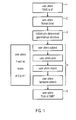
- Figure 1 shows a flow diagram illustrating an example of the method of transmitting a text message according to the invention.
- Figure 2 illustrates an example for the template based speech recognition according to the invention.
- a vehicle navigation system configured according to present invention comprises a speech input means and a speech recognition means.
- the speech input means is used to receive a speech signal detected by one or more microphones installed in a vehicular cabin and to generate a digitized speech signal based on the detected speech signal.
- the speech recognition means is configured to analyze the digitized speech signal for recognition. For the analyzing process feature vectors comprising characteristic parameters as cepstral coefficients may be deduced from the digitized speech signal.
- the speech recognition means has access to a speech database in which speech samples are stored. Comparison of the analyzed speech signal with speech samples stored in the speech database is performed by the speech recognition means. The best fitting speech sample is determined and the corresponding text message is generated from the speech samples and transmitted to a remote party.
- a user of the navigation system e.g., a driver of the vehicle in which the vehicle navigation system is installed, may intend to send an SMS message to another person (named X in the present example). He utters the keyword "SMS" followed by the addressee 1.
- SMS transmission function and, in particular, processing for speech recognition of utterances that are to be translated to a text massage that can be transmitted is initiated.
- the phone number of X will be looked up in a corresponding telephone list.
- dictation of an E-Mail cold be announced by the utterance "E-Mail to X" and the corresponding E-Mail address may be automatically looked up.
- activation of the speech recognition means is performed by the utterance of a keyword.
- the system has to be in a stand-by mode, i.e. the microphone and the speech input means are active.
- the speech input means in this case may recognize the main keyword for activating the speech recognition means by itself without the help of an actual recognizing process and a speech database, since the main keyword should be chosen to be very distinct and the digital data representation thereof can, e.g., be permanently hold in the main memory.
- the speech recognition means is configured to expect a particular predetermined grammatical structure of the following utterances that are to be recognized in reaction of the recognition of the keyword "Arrival time", i.e. a particular one of a set of predetermined grammatical structures is initiated 3 that is to be observed by the user to achieve correct recognition results.
- the predetermined grammatical structure to be observed by the user after utterance of the keyword "Arrival time” is the following: 'Subject' followed by 'verb' followed by 'object' followed by 'tempera! adverb'.
- the user may utter 4 "I will be home at 6 p.m.”.
- This spoken sentence will be recognized by means of a set of speech templates looked-up by the speech recognition means.
- the users concludes 5 the text of the SMS message by the keyphrase "End of SMS”. It is noted that the user may utter the whole sentence "I come home at 7 p.m” without any pauses between the individual words. Recognition of the entire sentence is performed on the basis of the speech templates provided for the words of the sentence.
- the user's utterances are detected by one or more microphones and digitized and analyzed for speech recognition.
- the speech recognition means may work on a word-by-word basis and by comparison of each analyzed word with the speech samples classified according to the grammatical structure and the templates stored in the speech database. Accordingly, a text message is generated from stored speech samples that are identified by the speech recognition means to correspond to each word of the driver's utterance, respectively.
- the navigation system or other in-car device may output a synthesized verbal utterance, e.g., "Text of SMS (E-Mail): I come home at 7 p.m".
- the recognized text may be displayed to the user on some display device.
- the driver can verify the recognized text, e.g., by utterance of the keyword "Correct".
- the generated text message can subsequently be passed to a transmitting means for transmission to a remote communication party, i.e. in the present case, to a person named X.
- the present invention is described to be incorporated in a vehicle navigation system, it can, in fact, be incorporated in any communication system comprising a speech recognition means.
- the present invention can be incorporated in a cellular phone, a Personal Digital Assistant (PDA), etc.
- PDA Personal Digital Assistant
- the automated recognition of a user's utterances is based on speech templates. Parts of typical sentences of E-Mails, for example, are represented by the templates.
- Figure 2 shows an example in that a speaker has uttered the incomplete sentence "I will come home at”. After a pause after the preposition "at” he is expected to specify the time of arrival at home.
- a speech recognition means incorporating the present invention will expect the time of day of the arrival of the user. It might be configured to prompt a warning or a repeat command in the case the user's utterance cannot be recognized as a time of day.
- the user may be expected to finish an incomplete sentence "I will come home” by "at 7 p.m.” or "at 8 p.m.”, etc.
- a speech recognition means incorporating the present invention will recognize the utterance completing the sentence, i.e. "7 p.m.” or "at 7 p.m.”, for example, based on speech templates that represent such standard phrases commonly used in E-Mails, SMS messages, etc. It should be noted that, in general, these speech templates may represent parts of sentences or even complete sentences.
Landscapes
- Engineering & Computer Science (AREA)
- Computational Linguistics (AREA)
- Health & Medical Sciences (AREA)
- Audiology, Speech & Language Pathology (AREA)
- Human Computer Interaction (AREA)
- Physics & Mathematics (AREA)
- Acoustics & Sound (AREA)
- Multimedia (AREA)
- Artificial Intelligence (AREA)
- Navigation (AREA)
- Telephonic Communication Services (AREA)
Abstract
Description
- The present invention relates to the art of automatic speech recognition and, in particular, recognition of spoken utterances in speech-to-text systems allowing a user the dictation of texts as E-Mails and SMS messages.
- The human voice can probably be considered as the most natural and comfortable man-computer interface. Voice input provides the advantages of hands-free operation, thereby, e.g., providing access for physically challenged users or users that are using there hands for different operation, e.g., driving a car. Thus, computer users for a long time desired software applications that can be operated by verbal utterances. In particular, communication with remote parties by means of electronic mail, SMS, etc. can be realized by spoken utterances that have to be recognized in transformed into text that eventually is sent to a remote party.
- For example, navigation systems in vehicles become increasingly prevalent. Usually on board navigation computer systems analyze the combined data provided by GPS (Global Positioning System), motion sensors as ABS wheel sensors as well as a digital map and thereby determine the current position and velocity of a vehicle with increasing preciseness. The vehicle navigation systems may also be equipped to receive and process broadcasted information as, e.g., the traffic information provided by radio stations, and also to send emails, etc. to a remote party.
- Besides acoustic communication by verbal utterances text messages sent by means of the Short Message Service (SMS) employed by cell phones are very popular. However, in particular, the driver of a vehicle is not able to send an SMS message by typing the text message by means of the relatively tiny keyboard of a standard cell phone. Even if the driver can use a larger keyboard when, e.g., the cell phone is inserted in an appropriate hands-free set or when the vehicle communication system is provided with a touch screen or a similar device, manually editing a text that is intended to be sent to a remote communication party would distract the driver's attention from steering the vehicle. Therefore, writing an E-Mail or an SMS would result in some threat to the driving safety, in particular, in heavy traffic.
- There is, therefore, a need to provide passengers in vehicles, in particular, in automobiles, with an improved alternative kind of communication, in particular, communication with a remote party during a travel by means of text messages generated from verbal utterances from a user during a travel with the automobile.
- Present-day speech recognition systems usually make use of a concatenation of allophones that constitute a linguistic word. The allophones are typically represented by Hidden Markov Models (HMM) that are characterized by a sequence of states each of which has a well-defined transition probability. In order to recognize a spoken word, the systems have to compute the most likely sequence of states through the HMM. This calculation is usually performed by means of the Viterbi algorithm, which iteratively determines the most likely path through the associated trellis.
- Speech recognizing systems conventionally choose the guess for an orthographic representation of a spoken word or sentence that corresponds to sampled acoustic signals from a finite vocabulary of words that can be recognized and are stored, for example, as data/vocabulary lists. In the art comparison of words recognized by the recognizer and words of a lexical list usually take into account the probability of mistaking one word, e.g. a phoneme, for another.
- The above-mentioned vocabulary lists become readily very long for practical applications. Consequently, conventional search processes can take an unacceptable long time. Particularly, due to the relatively limited computational resources available in embedded systems, as vehicle communication system and vehicle navigation systems, for example, reliable automated speech recognition of verbal utterances poses a complex technical problem. It is therefore a goal to be achieved with the present invention to provide speech recognition of verbal utterances for speech-to-text applications that allow efficient and reliable recognition results and communication with a remote party by text messages even if only limited computational resources are available.
- In view of the above, the present invention provides a communication system according to claim 1. The claimed communication system comprises
a database comprising classes of speech templates, in particular, classified according to a predetermined grammar;
an input means configured to receive and to digitize speech signals corresponding to a spoken utterance;
a speech recognition means configured to receive and recognize the digitized speech signals; and wherein
the speech recognition means is configured to recognize the digitized speech signals based on speech templates stored in the database and a grammatical structure. - The input means may comprise a speech input and/or a telephone unit and/or a connector to a cell phone and/or a Bluetooth connector and/or a WLAN connector. The communication system may further comprise or be connected to a text message generating means configured to generate a text message based on the recognition of the digitized speech signals. The text message may be generated as an SMS message, an EMS message, an MMS message or an E-Mail, for example.
- The speech signals are obtained by means of one or more microphones, for example, installed in a passenger compartment of a vehicle and configured to detect verbal utterances of the passengers. Advantageously, different microphones are installed in the vehicle and located in the vicinities of the respective passenger seats. Microphone arrays may be employed including one or more directional microphones in order to increase the quality of the microphone signal (comprising the wanted speech but also background noise) which after digitization is to be processed further by the speech recognition means.
- In principle, the speech recognition means can be configured to recognize the digitized speech signals on a letter-by-letter and/or word-by-word basis. Whereas in the letter-by-letter mode the user is expected to spell a word letter-by-letter, in the word-by-word mode pauses after each spoken word are required. The letter-by-letter mode is relatively uncomfortable but reliable. Moreover, it may be preferred to employ recognition of the digitized speech signals sentence-by-sentence.
- It may also be foreseen that probability estimates or other reliability evaluations of the recognition results are assigned to the recognition results that may, e.g., be generated in form of N-best lists comprising candidate words. If the reliability evaluations for one employed speech recognition mode fall below a predetermined threshold the recognition process may be repeated by a different mode and/or the may be prompted to repeat an utterance.
- The digitized speech signals are analyzed for the recognition process. For this recognition process, feature (characteristic) vectors comprising feature parameters may be extracted and spectral envelopes, formants, the pitch and short-time power spectrum, etc., may be determined in order to facilitate speech recognition, in principle.
- The guess for an orthographic representation of a spoken word or sentence that corresponds to sampled acoustic signals is chosen from a finite vocabulary of words that can be recognized and is structured according to the classes of templates stored in the database, for example, in form of a data list for each class, respectively. The speech templates may represent parts of sentences or even complete sentences typically used in E-Mails, SMS messages, etc.
- A text message can be generated on the basis of the recognition result. The text generating means may be incorporated in the speech recognition means and does not necessarily represent a separate physical unit. The text message generated by the text message generating means on the basis of the recognition result obtained by the speech recognition means can be encoded as an SMS (Short Message Service) message, an EMS (Enhanced Message Service), an MMS (Multimedia Message Service) message or an E-Mail comprising, e.g., ASCII text or another plain text or a richer format text. Encoding as an EMS message allows for a great variety of appended data files to be sent together with the generated text message.
- According to the present invention, operation of the communication system for the transmission of a text message does not require any text input by the user. In particular, the driver of a vehicle is, thus, enabled to send a text message to a remote party without typing in any characters. Safety and comfort are, therefore, improved as compared to systems of the art that require haptic inputs by touch screens, keyboards, etc.
- It is essential for the present invention that the recognition process is based on a predetermined grammatical structure of some predetermined grammar. The speech samples may be classified according to the grammar. Recognition based on the predetermined grammatical structure, necessarily, implies that a user is expected to obey a grammatical structure of the predetermined grammar when performing verbal/spoken utterances that are to be recognized. It is the combined grammar and template approach that facilitates recognition of spoken utterances and subsequent speech-to-text processing and transmitting of text messages in embedded systems or cellular phones, for example.
- Herein, by grammatical structure a sequence of words of particular grammatical functions, clause constituents, is meant. Thus, speech recognition is performed for a predetermined sequence of words corresponding to speech samples of different classes stored in the database. The grammatical structure may be constituted by a relatively small limited number of words, say less than 10 words. To give a particular example in more detail, a user is expected to sequentially utter a subject noun, a predicate (verb) and an object noun. This sequence of words of different grammatical functions (subject noun, verb, object noun) represents a predetermined grammatical structure of a predetermined grammar, e.g., the English, French or German grammar. A plurality of grammatical structures can be provided for a variety of applications (see description below) and used for the recognition process.
- The automated speech recognition process is, thus, performed by matching each word of a spoken utterance only with a limited subset of the entirety of the stored templates, namely, in accordance with the predetermined grammatical structure. Therefore, the reliability of the recognition process is significantly enhanced, particularly, if only limited computational resources are available, since only limited comparative operations have to be performed and only for respective classes of speech templates that fit to the respective spoken word under consideration for speech recognition. Consequently, the speech recognition process is fastened and less error-prone as compared to conventional recognition systems/methods employed in present-day communication systems.
- In particular, the user can be expected to utter a sequence of words in a particular context. More particularly the user may be asked by the communication system about the context, e.g., by a displayed text message or synthesized speech output. The above-mentioned subject noun, the predicate and the object noun, for example, are recognized by templates classified in their respective classes dependent on the previously given context/application. Moreover, a set of alternative grammatical structures may be provided (and stored in a database to be used for the recognition process) for a particular context, e.g., according to a sequence of several template sentences by which a user can compose complex SMS messages as
"I am in the car. I will arrive at home. I love you."
- As shown in this example, the templates, in general, may also include emoticons.
- The communication system may also be configured to prompt a warning or a repeat command, if no speech sample is identified to match the digitized speech signal with some confidence measure exceeding a predetermined confidence threshold.
- Consider a case in that a user is willing to send an E-Mail to a remote communication party in which he wants to indicate the expected arrival time at a particular destination. In this case, he could utter a keyword, "Arrival time", thereby initiating speech recognition based on templates that may be classified in a corresponding class stored in the database. The speech recognition means may be configured to expect: Subject noun for the party (usually including the user) who is expected to arrive at some expectation time, predicate specifying the way of arriving (e.g., "come/coming", "arrive/arriving", "land/landing", "enter/entering port", etc.) and object noun (city, street address, etc.), followed by the time specification (date, hours, temporal adverbs line "early", "late", etc.).
- It is noted that a large variety of contexts/applications shall be provided in order to allow for reliable recognition of different kinds of dictations. The grammatical structures shall mirror/represent contexts/applications frequently used in E-Mails, SMS messages, etc., i.e. contexts related to common communication schemes related to appointments, spatial and temporal information, etc. Such contexts usually show particular grammatical structures in E-Mails, SMS messages, etc., and these grammatical structures are provided for the speech recognition process.
- In particular, the communication system of the present invention may be configured to to prompt the user to input, by verbal utterances, a sequence of a predetermined number of words at least partly of different grammatical functions in a predetermined order and wherein the speech recognition means is configured to recognize the digitized speech signals corresponding to the sequence of words in the predetermined order.
- Different from conventional speech recognition means that are configured to recognize an arbitrary sequence of words, according to this example of the invention a predetermined order of a predetermined number of words only that is input by verbal utterances is considered for the recognition process. Moreover, elements of the grammatical structures provided for the speech recognition and, e.g., stored in a database of the communication system, can be considered as placeholders to be filled with the words actually uttered by the user.
- The reliability of the speech recognition process, thereby, is further enhanced, since the variety of expected/possible speech inputs is significantly reduced. It might also be preferred to provide the opportunity that an unexpected input word (of an unexpected grammatical form, i.e. being an unexpected clauses constituent) and/or failure of recognition of a word being part of an utterance results in a warning output of the communication system (displayed on a display means and/or output by synthesized speech) and/or in intervention by the communication system, for example, in form of a speech dialog.
- Moreover, the communication system may be configured to prompt the user to define a particular context and, in this case, the speech recognition means is configured to recognize the digitized speech signals (utterances spoken by the user) based on the defined particular context.
- In the above example, prompts can be given by the communication system by simply waiting for an input, by displaying some sign (of the type of a "blinking cursor", for example), by an appropriate synthesized speech output, by displaying a message, etc. The prompt may even include announcement of the grammatical function of an expected utterance in accordance with the grammatical structure. In fact, the expected grammatical structure may be displayed in form of a display of the expected grammatical function of the words of a sequence of words according to the grammatical structure (e.g., "Noun" - "Verb" - "Object") Hereby, success of the recognition process is even further facilitated albeit at the cost of comfort and smoothness of the dictation process.
- The communication system provided herein is of particular utility for navigation systems installed in vehicles, as for example, automobiles. Moreover, cellular phones can advantageously make use of the present invention and, thus, a cellular phone comprising a communication system according to one of the preceding examples is provided.
- The present invention further provides a method for speech recognition of spoken utterances, comprising
providing classes of speech templates, in particular, classified according to a predetermined grammar;
obtaining speech signals corresponding to a spoken utterance; and
recognizing the speech signals based on provided speech templates and a predetermined grammatical structure. - The method may further comprise
prompting a user to
input, by verbal utterances, a sequence of a predetermined number of words at least partly of different grammatical functions (i.e. a predetermined number of clause constituents) in a predetermined order and/or
define a particular context; and may further comprise
recognizing the speech signals speech corresponding to the sequence of words in the predetermined order and/or based on the defined particular context. - In the above-mentioned examples of the method the speech templates can advantageously be classified according to their grammatical functions (classes of clause constituents) and/or contexts of communication. The contexts may be given in form of typical communication contexts of relevance in E-Mail or SMS communication. Provision of context dependent grammatical structures may be based on an analysis of a pool of real-world E-Mails or SMS messages, etc., in order to provide appropriate grammatical structures for common contexts (e.g., informing on appointments. locations, invitations, etc.).
- Furthermore, it is provided a method for transmitting a text message comprising the steps of one of the examples of the method for speech recognition, and further comprising the steps of generating a text message based on the recognition result and transmitting the text message to a receiving party. Transmission is preferably performed in a wireless manner, e.g., via WLAN or conventional radio broadcast.
- The method for transmitting a text message, may further comprise displaying at least part of the text message on a display means and/or outputting a synthesized speech signal based on the text message and prompting a user to acknowledge the text message displayed on the display means and/or the output synthesized speech signal. In this case, the step of transmitting the text message is performed in response to a predetermined user's input in response to the displayed text message and/or the output synthesized speech signal.
- Additional features and advantages of the present invention will be described with reference to the drawing. In the description, reference is made to the accompanying figures that are meant to illustrate examples of the invention. It is understood that such examples do not represent the full scope of the invention.
-
Figure 1 shows a flow diagram illustrating an example of the method of transmitting a text message according to the invention. -
Figure 2 illustrates an example for the template based speech recognition according to the invention. - The present invention can, for example, be incorporated in a vehicle navigation system or another in-car device that may be coupled with a cellular phone allowing for communication with a remote party via E-Mail, SMS messages, etc. A vehicle navigation system configured according to present invention comprises a speech input means and a speech recognition means. The speech input means is used to receive a speech signal detected by one or more microphones installed in a vehicular cabin and to generate a digitized speech signal based on the detected speech signal. The speech recognition means is configured to analyze the digitized speech signal for recognition. For the analyzing process feature vectors comprising characteristic parameters as cepstral coefficients may be deduced from the digitized speech signal.
- The speech recognition means has access to a speech database in which speech samples are stored. Comparison of the analyzed speech signal with speech samples stored in the speech database is performed by the speech recognition means. The best fitting speech sample is determined and the corresponding text message is generated from the speech samples and transmitted to a remote party.
- With reference to
Figure 1 , consider an example in that a user of the navigation system, e.g., a driver of the vehicle in which the vehicle navigation system is installed, may intend to send an SMS message to another person (named X in the present example). He utters the keyword "SMS" followed by the addressee 1. Thereby, an SMS transmission function and, in particular, processing for speech recognition of utterances that are to be translated to a text massage that can be transmitted is initiated. In particular, the phone number of X will be looked up in a corresponding telephone list. Alternatively, dictation of an E-Mail cold be announced by the utterance "E-Mail to X" and the corresponding E-Mail address may be automatically looked up. - It may be preferred that activation of the speech recognition means is performed by the utterance of a keyword. In this case, the system has to be in a stand-by mode, i.e. the microphone and the speech input means are active. The speech input means in this case may recognize the main keyword for activating the speech recognition means by itself without the help of an actual recognizing process and a speech database, since the main keyword should be chosen to be very distinct and the digital data representation thereof can, e.g., be permanently hold in the main memory.
- Next, the user utters 2 another keyword, namely, "Arrival time". According to the present example, the speech recognition means is configured to expect a particular predetermined grammatical structure of the following utterances that are to be recognized in reaction of the recognition of the keyword "Arrival time", i.e. a particular one of a set of predetermined grammatical structures is initiated 3 that is to be observed by the user to achieve correct recognition results. For example, the predetermined grammatical structure to be observed by the user after utterance of the keyword "Arrival time" is the following: 'Subject' followed by 'verb' followed by 'object' followed by 'tempera! adverb'.
- The user may utter 4 "I will be home at 6 p.m.". This spoken sentence will be recognized by means of a set of speech templates looked-up by the speech recognition means. The users concludes 5 the text of the SMS message by the keyphrase "End of SMS". It is noted that the user may utter the whole sentence "I come home at 7 p.m" without any pauses between the individual words. Recognition of the entire sentence is performed on the basis of the speech templates provided for the words of the sentence.
- It is noted that the user's utterances are detected by one or more microphones and digitized and analyzed for speech recognition. The speech recognition means may work on a word-by-word basis and by comparison of each analyzed word with the speech samples classified according to the grammatical structure and the templates stored in the speech database. Accordingly, a text message is generated from stored speech samples that are identified by the speech recognition means to correspond to each word of the driver's utterance, respectively.
- After the user's utterances have been recognized by the speech recognition means the navigation system or other in-car device may output a synthesized verbal utterance, e.g., "Text of SMS (E-Mail): I come home at 7 p.m". Alternatively or additionally, the recognized text may be displayed to the user on some display device. Thus, the driver can verify the recognized text, e.g., by utterance of the keyword "Correct". The generated text message can subsequently be passed to a transmitting means for transmission to a remote communication party, i.e. in the present case, to a person named X.
- Whereas in the above-described example the present invention is described to be incorporated in a vehicle navigation system, it can, in fact, be incorporated in any communication system comprising a speech recognition means. In particular, the present invention can be incorporated in a cellular phone, a Personal Digital Assistant (PDA), etc.
- It is an essential feature of the present invention that the automated recognition of a user's utterances is based on speech templates. Parts of typical sentences of E-Mails, for example, are represented by the templates.
Figure 2 shows an example in that a speaker has uttered the incomplete sentence "I will come home at". After a pause after the preposition "at" he is expected to specify the time of arrival at home. According to this example, a speech recognition means incorporating the present invention will expect the time of day of the arrival of the user. It might be configured to prompt a warning or a repeat command in the case the user's utterance cannot be recognized as a time of day. - Alternatively to the shown example, the user may be expected to finish an incomplete sentence "I will come home" by "at 7 p.m." or "at 8 p.m.", etc. In any case, a speech recognition means incorporating the present invention will recognize the utterance completing the sentence, i.e. "7 p.m." or "at 7 p.m.", for example, based on speech templates that represent such standard phrases commonly used in E-Mails, SMS messages, etc. It should be noted that, in general, these speech templates may represent parts of sentences or even complete sentences.
Claims (15)
- A communication system, comprising
a database comprising classes of speech templates, in particular, classified according to a predetermined grammar;
an input means configured to receive and to digitize speech signals corresponding to a spoken utterance;
a speech recognition means configured to receive and recognize the digitized speech signals; and wherein
the speech recognition means is configured to recognize the digitized speech signals based on speech templates stored in the database and a predetermined grammatical structure. - The communication system according to claim 1, further comprising a text message generating means configured to generate a text message based on the recognition of the digitized speech signals.
- The communication system according to claim 1 or 2, wherein the communication system is configured to prompt the user to input, by verbal utterances, a sequence of a predetermined number of words at least partly of different grammatical functions in a predetermined order and wherein the speech recognition means is configured to recognize the digitized speech signals corresponding to the sequence of words in the predetermined order.
- The communication system according to one of the preceding claims, wherein the communication system is configured to prompt the user to define a particular context and wherein the speech recognition means is configured to recognize the digitized speech signals based on the defined particular context.
- The communication system according to one of the preceding claims, wherein the speech templates are classified according to their grammatical functions and/or contexts.
- The communication system according to one of the preceding claims, wherein the input means comprises a speech input and/or a telephone unit and/or a connector to a cell phone and/or a Bluetooth connector and/or a WLAN connector.
- The communication system according to one of the claims 2 to 6, wherein the text message generating means is configured to generate the text message as an SMS message, an EMS message, an MMS message or an E-Mail.
- Vehicle navigation system installed in a vehicle, in particular, an automobile, comprising the communication system according to one of the preceding claims.
- Cellular phone comprising the communication system according to one of the preceding claims.
- Method for speech recognition of spoken utterances, comprising
providing classes of speech templates, in particular, classified according to a predetermined grammar;
obtaining speech signals corresponding to a spoken utterance; and
recognizing the speech signals based on provided speech templates and a predetermined grammatical structure. - The method according to claim 10, further comprising
prompting a user to
input, by verbal utterances, a sequence of a predetermined number of words at least partly of different grammatical functions in a predetermined order and/or
define a particular context; and comprising
recognizing the speech signals speech corresponding to the sequence of words in the predetermined order and/or based on the defined particular context. - The method according to claim 10 or 11, wherein the speech templates are classified according to their grammatical functions and/or contexts.
- Method for transmitting a text message comprising the steps of the method for speech recognition according to one of the claims 10 to 12, and further comprising the steps of generating a text message based on the recognition result and transmitting the text message to a receiver.
- Method according to claim 13, further comprising
displaying at least part of the text message on a display means and/or outputting a synthesized speech signal based on the text message and prompting a user to acknowledge the text message displayed on the display means and/or the output synthesized speech signal; and wherein
transmitting of the text message is performed in response to a predetermined user's input in response to the displayed text message and/or the output synthesized speech signal. - Computer program product, comprising one or more computer readable media having computer-executable instructions for performing one or more of the steps of the method according to one of the Claims 10 - 14.
Priority Applications (2)
| Application Number | Priority Date | Filing Date | Title |
|---|---|---|---|
| EP08021450A EP2196989B1 (en) | 2008-12-10 | 2008-12-10 | Grammar and template-based speech recognition of spoken utterances |
| US12/634,302 US20110161079A1 (en) | 2008-12-10 | 2009-12-09 | Grammar and Template-Based Speech Recognition of Spoken Utterances |
Applications Claiming Priority (1)
| Application Number | Priority Date | Filing Date | Title |
|---|---|---|---|
| EP08021450A EP2196989B1 (en) | 2008-12-10 | 2008-12-10 | Grammar and template-based speech recognition of spoken utterances |
Publications (2)
| Publication Number | Publication Date |
|---|---|
| EP2196989A1 true EP2196989A1 (en) | 2010-06-16 |
| EP2196989B1 EP2196989B1 (en) | 2012-06-27 |
Family
ID=40548013
Family Applications (1)
| Application Number | Title | Priority Date | Filing Date |
|---|---|---|---|
| EP08021450A Active EP2196989B1 (en) | 2008-12-10 | 2008-12-10 | Grammar and template-based speech recognition of spoken utterances |
Country Status (2)
| Country | Link |
|---|---|
| US (1) | US20110161079A1 (en) |
| EP (1) | EP2196989B1 (en) |
Families Citing this family (174)
| Publication number | Priority date | Publication date | Assignee | Title |
|---|---|---|---|---|
| US8645137B2 (en) | 2000-03-16 | 2014-02-04 | Apple Inc. | Fast, language-independent method for user authentication by voice |
| US8677377B2 (en) | 2005-09-08 | 2014-03-18 | Apple Inc. | Method and apparatus for building an intelligent automated assistant |
| US9318108B2 (en) | 2010-01-18 | 2016-04-19 | Apple Inc. | Intelligent automated assistant |
| US8977255B2 (en) | 2007-04-03 | 2015-03-10 | Apple Inc. | Method and system for operating a multi-function portable electronic device using voice-activation |
| US10002189B2 (en) | 2007-12-20 | 2018-06-19 | Apple Inc. | Method and apparatus for searching using an active ontology |
| US9330720B2 (en) | 2008-01-03 | 2016-05-03 | Apple Inc. | Methods and apparatus for altering audio output signals |
| US8996376B2 (en) | 2008-04-05 | 2015-03-31 | Apple Inc. | Intelligent text-to-speech conversion |
| US10496753B2 (en) | 2010-01-18 | 2019-12-03 | Apple Inc. | Automatically adapting user interfaces for hands-free interaction |
| US20100030549A1 (en) | 2008-07-31 | 2010-02-04 | Lee Michael M | Mobile device having human language translation capability with positional feedback |
| US8676904B2 (en) | 2008-10-02 | 2014-03-18 | Apple Inc. | Electronic devices with voice command and contextual data processing capabilities |
| US9858925B2 (en) | 2009-06-05 | 2018-01-02 | Apple Inc. | Using context information to facilitate processing of commands in a virtual assistant |
| US10241752B2 (en) | 2011-09-30 | 2019-03-26 | Apple Inc. | Interface for a virtual digital assistant |
| US10241644B2 (en) | 2011-06-03 | 2019-03-26 | Apple Inc. | Actionable reminder entries |
| US10706373B2 (en) | 2011-06-03 | 2020-07-07 | Apple Inc. | Performing actions associated with task items that represent tasks to perform |
| US9431006B2 (en) | 2009-07-02 | 2016-08-30 | Apple Inc. | Methods and apparatuses for automatic speech recognition |
| US10679605B2 (en) | 2010-01-18 | 2020-06-09 | Apple Inc. | Hands-free list-reading by intelligent automated assistant |
| US10276170B2 (en) | 2010-01-18 | 2019-04-30 | Apple Inc. | Intelligent automated assistant |
| US10553209B2 (en) | 2010-01-18 | 2020-02-04 | Apple Inc. | Systems and methods for hands-free notification summaries |
| US10705794B2 (en) * | 2010-01-18 | 2020-07-07 | Apple Inc. | Automatically adapting user interfaces for hands-free interaction |
| CN102934107B (en) * | 2010-02-18 | 2016-09-14 | 株式会社尼康 | Information processing device, portable device, and information processing system |
| US8682667B2 (en) | 2010-02-25 | 2014-03-25 | Apple Inc. | User profiling for selecting user specific voice input processing information |
| US9123339B1 (en) | 2010-11-23 | 2015-09-01 | Google Inc. | Speech recognition using repeated utterances |
| US9262612B2 (en) | 2011-03-21 | 2016-02-16 | Apple Inc. | Device access using voice authentication |
| US10057736B2 (en) | 2011-06-03 | 2018-08-21 | Apple Inc. | Active transport based notifications |
| US8994660B2 (en) | 2011-08-29 | 2015-03-31 | Apple Inc. | Text correction processing |
| KR101892733B1 (en) * | 2011-11-24 | 2018-08-29 | 한국전자통신연구원 | Voice recognition apparatus based on cepstrum feature vector and method thereof |
| US10134385B2 (en) | 2012-03-02 | 2018-11-20 | Apple Inc. | Systems and methods for name pronunciation |
| US9483461B2 (en) | 2012-03-06 | 2016-11-01 | Apple Inc. | Handling speech synthesis of content for multiple languages |
| US9280610B2 (en) | 2012-05-14 | 2016-03-08 | Apple Inc. | Crowd sourcing information to fulfill user requests |
| US10417037B2 (en) | 2012-05-15 | 2019-09-17 | Apple Inc. | Systems and methods for integrating third party services with a digital assistant |
| US9721563B2 (en) | 2012-06-08 | 2017-08-01 | Apple Inc. | Name recognition system |
| US9495129B2 (en) | 2012-06-29 | 2016-11-15 | Apple Inc. | Device, method, and user interface for voice-activated navigation and browsing of a document |
| US9547647B2 (en) | 2012-09-19 | 2017-01-17 | Apple Inc. | Voice-based media searching |
| EP4560630A3 (en) | 2013-02-07 | 2025-08-06 | Apple Inc. | Voice trigger for a digital assistant |
| US10652394B2 (en) | 2013-03-14 | 2020-05-12 | Apple Inc. | System and method for processing voicemail |
| US10748529B1 (en) | 2013-03-15 | 2020-08-18 | Apple Inc. | Voice activated device for use with a voice-based digital assistant |
| WO2014197336A1 (en) | 2013-06-07 | 2014-12-11 | Apple Inc. | System and method for detecting errors in interactions with a voice-based digital assistant |
| US9582608B2 (en) | 2013-06-07 | 2017-02-28 | Apple Inc. | Unified ranking with entropy-weighted information for phrase-based semantic auto-completion |
| WO2014197334A2 (en) | 2013-06-07 | 2014-12-11 | Apple Inc. | System and method for user-specified pronunciation of words for speech synthesis and recognition |
| WO2014197335A1 (en) | 2013-06-08 | 2014-12-11 | Apple Inc. | Interpreting and acting upon commands that involve sharing information with remote devices |
| US10176167B2 (en) | 2013-06-09 | 2019-01-08 | Apple Inc. | System and method for inferring user intent from speech inputs |
| EP3008641A1 (en) | 2013-06-09 | 2016-04-20 | Apple Inc. | Device, method, and graphical user interface for enabling conversation persistence across two or more instances of a digital assistant |
| US10791216B2 (en) | 2013-08-06 | 2020-09-29 | Apple Inc. | Auto-activating smart responses based on activities from remote devices |
| US9646613B2 (en) | 2013-11-29 | 2017-05-09 | Daon Holdings Limited | Methods and systems for splitting a digital signal |
| US10296160B2 (en) | 2013-12-06 | 2019-05-21 | Apple Inc. | Method for extracting salient dialog usage from live data |
| US10170123B2 (en) | 2014-05-30 | 2019-01-01 | Apple Inc. | Intelligent assistant for home automation |
| US9633004B2 (en) | 2014-05-30 | 2017-04-25 | Apple Inc. | Better resolution when referencing to concepts |
| US9966065B2 (en) | 2014-05-30 | 2018-05-08 | Apple Inc. | Multi-command single utterance input method |
| US9785630B2 (en) | 2014-05-30 | 2017-10-10 | Apple Inc. | Text prediction using combined word N-gram and unigram language models |
| US9430463B2 (en) | 2014-05-30 | 2016-08-30 | Apple Inc. | Exemplar-based natural language processing |
| US9760559B2 (en) | 2014-05-30 | 2017-09-12 | Apple Inc. | Predictive text input |
| US9842101B2 (en) | 2014-05-30 | 2017-12-12 | Apple Inc. | Predictive conversion of language input |
| US10078631B2 (en) | 2014-05-30 | 2018-09-18 | Apple Inc. | Entropy-guided text prediction using combined word and character n-gram language models |
| US9715875B2 (en) | 2014-05-30 | 2017-07-25 | Apple Inc. | Reducing the need for manual start/end-pointing and trigger phrases |
| US9338493B2 (en) | 2014-06-30 | 2016-05-10 | Apple Inc. | Intelligent automated assistant for TV user interactions |
| US10659851B2 (en) | 2014-06-30 | 2020-05-19 | Apple Inc. | Real-time digital assistant knowledge updates |
| US10446141B2 (en) | 2014-08-28 | 2019-10-15 | Apple Inc. | Automatic speech recognition based on user feedback |
| US9818400B2 (en) | 2014-09-11 | 2017-11-14 | Apple Inc. | Method and apparatus for discovering trending terms in speech requests |
| US10789041B2 (en) | 2014-09-12 | 2020-09-29 | Apple Inc. | Dynamic thresholds for always listening speech trigger |
| US9646609B2 (en) | 2014-09-30 | 2017-05-09 | Apple Inc. | Caching apparatus for serving phonetic pronunciations |
| US10127911B2 (en) | 2014-09-30 | 2018-11-13 | Apple Inc. | Speaker identification and unsupervised speaker adaptation techniques |
| US10074360B2 (en) | 2014-09-30 | 2018-09-11 | Apple Inc. | Providing an indication of the suitability of speech recognition |
| US9886432B2 (en) | 2014-09-30 | 2018-02-06 | Apple Inc. | Parsimonious handling of word inflection via categorical stem + suffix N-gram language models |
| US9668121B2 (en) | 2014-09-30 | 2017-05-30 | Apple Inc. | Social reminders |
| US10269342B2 (en) * | 2014-10-29 | 2019-04-23 | Hand Held Products, Inc. | Method and system for recognizing speech using wildcards in an expected response |
| US10552013B2 (en) | 2014-12-02 | 2020-02-04 | Apple Inc. | Data detection |
| DE102014224794B4 (en) * | 2014-12-03 | 2024-02-29 | Bayerische Motoren Werke Aktiengesellschaft | Voice assistance method for a motor vehicle |
| US10152299B2 (en) | 2015-03-06 | 2018-12-11 | Apple Inc. | Reducing response latency of intelligent automated assistants |
| US9865280B2 (en) | 2015-03-06 | 2018-01-09 | Apple Inc. | Structured dictation using intelligent automated assistants |
| US9721566B2 (en) | 2015-03-08 | 2017-08-01 | Apple Inc. | Competing devices responding to voice triggers |
| US9886953B2 (en) | 2015-03-08 | 2018-02-06 | Apple Inc. | Virtual assistant activation |
| US10567477B2 (en) | 2015-03-08 | 2020-02-18 | Apple Inc. | Virtual assistant continuity |
| US9899019B2 (en) | 2015-03-18 | 2018-02-20 | Apple Inc. | Systems and methods for structured stem and suffix language models |
| US9842105B2 (en) | 2015-04-16 | 2017-12-12 | Apple Inc. | Parsimonious continuous-space phrase representations for natural language processing |
| EP3089159B1 (en) | 2015-04-28 | 2019-08-28 | Google LLC | Correcting voice recognition using selective re-speak |
| US10460227B2 (en) | 2015-05-15 | 2019-10-29 | Apple Inc. | Virtual assistant in a communication session |
| US10200824B2 (en) | 2015-05-27 | 2019-02-05 | Apple Inc. | Systems and methods for proactively identifying and surfacing relevant content on a touch-sensitive device |
| US10083688B2 (en) | 2015-05-27 | 2018-09-25 | Apple Inc. | Device voice control for selecting a displayed affordance |
| US10127220B2 (en) | 2015-06-04 | 2018-11-13 | Apple Inc. | Language identification from short strings |
| US9578173B2 (en) | 2015-06-05 | 2017-02-21 | Apple Inc. | Virtual assistant aided communication with 3rd party service in a communication session |
| US10101822B2 (en) | 2015-06-05 | 2018-10-16 | Apple Inc. | Language input correction |
| US10186254B2 (en) | 2015-06-07 | 2019-01-22 | Apple Inc. | Context-based endpoint detection |
| US10255907B2 (en) | 2015-06-07 | 2019-04-09 | Apple Inc. | Automatic accent detection using acoustic models |
| US11025565B2 (en) | 2015-06-07 | 2021-06-01 | Apple Inc. | Personalized prediction of responses for instant messaging |
| US20160378747A1 (en) | 2015-06-29 | 2016-12-29 | Apple Inc. | Virtual assistant for media playback |
| US10671428B2 (en) | 2015-09-08 | 2020-06-02 | Apple Inc. | Distributed personal assistant |
| US10331312B2 (en) | 2015-09-08 | 2019-06-25 | Apple Inc. | Intelligent automated assistant in a media environment |
| US10747498B2 (en) | 2015-09-08 | 2020-08-18 | Apple Inc. | Zero latency digital assistant |
| US10740384B2 (en) | 2015-09-08 | 2020-08-11 | Apple Inc. | Intelligent automated assistant for media search and playback |
| US9697820B2 (en) | 2015-09-24 | 2017-07-04 | Apple Inc. | Unit-selection text-to-speech synthesis using concatenation-sensitive neural networks |
| US10366158B2 (en) | 2015-09-29 | 2019-07-30 | Apple Inc. | Efficient word encoding for recurrent neural network language models |
| US11010550B2 (en) | 2015-09-29 | 2021-05-18 | Apple Inc. | Unified language modeling framework for word prediction, auto-completion and auto-correction |
| US11587559B2 (en) | 2015-09-30 | 2023-02-21 | Apple Inc. | Intelligent device identification |
| US10691473B2 (en) | 2015-11-06 | 2020-06-23 | Apple Inc. | Intelligent automated assistant in a messaging environment |
| US10956666B2 (en) | 2015-11-09 | 2021-03-23 | Apple Inc. | Unconventional virtual assistant interactions |
| US10049668B2 (en) | 2015-12-02 | 2018-08-14 | Apple Inc. | Applying neural network language models to weighted finite state transducers for automatic speech recognition |
| US10223066B2 (en) | 2015-12-23 | 2019-03-05 | Apple Inc. | Proactive assistance based on dialog communication between devices |
| US10446143B2 (en) | 2016-03-14 | 2019-10-15 | Apple Inc. | Identification of voice inputs providing credentials |
| US9934775B2 (en) | 2016-05-26 | 2018-04-03 | Apple Inc. | Unit-selection text-to-speech synthesis based on predicted concatenation parameters |
| US9972304B2 (en) | 2016-06-03 | 2018-05-15 | Apple Inc. | Privacy preserving distributed evaluation framework for embedded personalized systems |
| US11227589B2 (en) | 2016-06-06 | 2022-01-18 | Apple Inc. | Intelligent list reading |
| US10249300B2 (en) | 2016-06-06 | 2019-04-02 | Apple Inc. | Intelligent list reading |
| US10049663B2 (en) | 2016-06-08 | 2018-08-14 | Apple, Inc. | Intelligent automated assistant for media exploration |
| US12223282B2 (en) | 2016-06-09 | 2025-02-11 | Apple Inc. | Intelligent automated assistant in a home environment |
| DK179588B1 (en) | 2016-06-09 | 2019-02-22 | Apple Inc. | Intelligent automated assistant in a home environment |
| US10067938B2 (en) | 2016-06-10 | 2018-09-04 | Apple Inc. | Multilingual word prediction |
| US10490187B2 (en) | 2016-06-10 | 2019-11-26 | Apple Inc. | Digital assistant providing automated status report |
| US10192552B2 (en) | 2016-06-10 | 2019-01-29 | Apple Inc. | Digital assistant providing whispered speech |
| US10586535B2 (en) | 2016-06-10 | 2020-03-10 | Apple Inc. | Intelligent digital assistant in a multi-tasking environment |
| US10509862B2 (en) | 2016-06-10 | 2019-12-17 | Apple Inc. | Dynamic phrase expansion of language input |
| DK179415B1 (en) | 2016-06-11 | 2018-06-14 | Apple Inc | Intelligent device arbitration and control |
| DK179049B1 (en) | 2016-06-11 | 2017-09-18 | Apple Inc | Data driven natural language event detection and classification |
| DK201670540A1 (en) | 2016-06-11 | 2018-01-08 | Apple Inc | Application integration with a digital assistant |
| DK179343B1 (en) | 2016-06-11 | 2018-05-14 | Apple Inc | Intelligent task discovery |
| US10474753B2 (en) | 2016-09-07 | 2019-11-12 | Apple Inc. | Language identification using recurrent neural networks |
| US10043516B2 (en) | 2016-09-23 | 2018-08-07 | Apple Inc. | Intelligent automated assistant |
| US11281993B2 (en) | 2016-12-05 | 2022-03-22 | Apple Inc. | Model and ensemble compression for metric learning |
| US10593346B2 (en) | 2016-12-22 | 2020-03-17 | Apple Inc. | Rank-reduced token representation for automatic speech recognition |
| US11204787B2 (en) | 2017-01-09 | 2021-12-21 | Apple Inc. | Application integration with a digital assistant |
| US10417266B2 (en) | 2017-05-09 | 2019-09-17 | Apple Inc. | Context-aware ranking of intelligent response suggestions |
| DK201770383A1 (en) | 2017-05-09 | 2018-12-14 | Apple Inc. | User interface for correcting recognition errors |
| US10726832B2 (en) | 2017-05-11 | 2020-07-28 | Apple Inc. | Maintaining privacy of personal information |
| US10395654B2 (en) | 2017-05-11 | 2019-08-27 | Apple Inc. | Text normalization based on a data-driven learning network |
| DK201770439A1 (en) | 2017-05-11 | 2018-12-13 | Apple Inc. | Offline personal assistant |
| DK201770428A1 (en) | 2017-05-12 | 2019-02-18 | Apple Inc. | Low-latency intelligent automated assistant |
| US11301477B2 (en) | 2017-05-12 | 2022-04-12 | Apple Inc. | Feedback analysis of a digital assistant |
| DK179745B1 (en) | 2017-05-12 | 2019-05-01 | Apple Inc. | SYNCHRONIZATION AND TASK DELEGATION OF A DIGITAL ASSISTANT |
| DK179496B1 (en) | 2017-05-12 | 2019-01-15 | Apple Inc. | USER-SPECIFIC Acoustic Models |
| DK201770432A1 (en) | 2017-05-15 | 2018-12-21 | Apple Inc. | Hierarchical belief states for digital assistants |
| DK201770431A1 (en) | 2017-05-15 | 2018-12-20 | Apple Inc. | Optimizing dialogue policy decisions for digital assistants using implicit feedback |
| US20180336892A1 (en) | 2017-05-16 | 2018-11-22 | Apple Inc. | Detecting a trigger of a digital assistant |
| US10303715B2 (en) | 2017-05-16 | 2019-05-28 | Apple Inc. | Intelligent automated assistant for media exploration |
| US10403278B2 (en) | 2017-05-16 | 2019-09-03 | Apple Inc. | Methods and systems for phonetic matching in digital assistant services |
| DK179549B1 (en) | 2017-05-16 | 2019-02-12 | Apple Inc. | Far-field extension for digital assistant services |
| US10311144B2 (en) | 2017-05-16 | 2019-06-04 | Apple Inc. | Emoji word sense disambiguation |
| US10657328B2 (en) | 2017-06-02 | 2020-05-19 | Apple Inc. | Multi-task recurrent neural network architecture for efficient morphology handling in neural language modeling |
| US10445429B2 (en) | 2017-09-21 | 2019-10-15 | Apple Inc. | Natural language understanding using vocabularies with compressed serialized tries |
| US10755051B2 (en) | 2017-09-29 | 2020-08-25 | Apple Inc. | Rule-based natural language processing |
| US10636424B2 (en) | 2017-11-30 | 2020-04-28 | Apple Inc. | Multi-turn canned dialog |
| US10733982B2 (en) | 2018-01-08 | 2020-08-04 | Apple Inc. | Multi-directional dialog |
| US10733375B2 (en) | 2018-01-31 | 2020-08-04 | Apple Inc. | Knowledge-based framework for improving natural language understanding |
| US10789959B2 (en) | 2018-03-02 | 2020-09-29 | Apple Inc. | Training speaker recognition models for digital assistants |
| US10592604B2 (en) | 2018-03-12 | 2020-03-17 | Apple Inc. | Inverse text normalization for automatic speech recognition |
| US10818288B2 (en) | 2018-03-26 | 2020-10-27 | Apple Inc. | Natural assistant interaction |
| US10909331B2 (en) | 2018-03-30 | 2021-02-02 | Apple Inc. | Implicit identification of translation payload with neural machine translation |
| US11145294B2 (en) | 2018-05-07 | 2021-10-12 | Apple Inc. | Intelligent automated assistant for delivering content from user experiences |
| US10928918B2 (en) | 2018-05-07 | 2021-02-23 | Apple Inc. | Raise to speak |
| US10984780B2 (en) | 2018-05-21 | 2021-04-20 | Apple Inc. | Global semantic word embeddings using bi-directional recurrent neural networks |
| US10892996B2 (en) | 2018-06-01 | 2021-01-12 | Apple Inc. | Variable latency device coordination |
| DK201870355A1 (en) | 2018-06-01 | 2019-12-16 | Apple Inc. | Virtual assistant operation in multi-device environments |
| US11386266B2 (en) | 2018-06-01 | 2022-07-12 | Apple Inc. | Text correction |
| DK179822B1 (en) | 2018-06-01 | 2019-07-12 | Apple Inc. | Voice interaction at a primary device to access call functionality of a companion device |
| DK180639B1 (en) | 2018-06-01 | 2021-11-04 | Apple Inc | DISABILITY OF ATTENTION-ATTENTIVE VIRTUAL ASSISTANT |
| US11076039B2 (en) | 2018-06-03 | 2021-07-27 | Apple Inc. | Accelerated task performance |
| US11010561B2 (en) | 2018-09-27 | 2021-05-18 | Apple Inc. | Sentiment prediction from textual data |
| US10839159B2 (en) | 2018-09-28 | 2020-11-17 | Apple Inc. | Named entity normalization in a spoken dialog system |
| US11170166B2 (en) | 2018-09-28 | 2021-11-09 | Apple Inc. | Neural typographical error modeling via generative adversarial networks |
| US11462215B2 (en) | 2018-09-28 | 2022-10-04 | Apple Inc. | Multi-modal inputs for voice commands |
| US11475898B2 (en) | 2018-10-26 | 2022-10-18 | Apple Inc. | Low-latency multi-speaker speech recognition |
| US11638059B2 (en) | 2019-01-04 | 2023-04-25 | Apple Inc. | Content playback on multiple devices |
| US11348573B2 (en) | 2019-03-18 | 2022-05-31 | Apple Inc. | Multimodality in digital assistant systems |
| US11307752B2 (en) | 2019-05-06 | 2022-04-19 | Apple Inc. | User configurable task triggers |
| DK201970509A1 (en) | 2019-05-06 | 2021-01-15 | Apple Inc | Spoken notifications |
| US11475884B2 (en) | 2019-05-06 | 2022-10-18 | Apple Inc. | Reducing digital assistant latency when a language is incorrectly determined |
| US11423908B2 (en) | 2019-05-06 | 2022-08-23 | Apple Inc. | Interpreting spoken requests |
| US11140099B2 (en) | 2019-05-21 | 2021-10-05 | Apple Inc. | Providing message response suggestions |
| DK201970510A1 (en) | 2019-05-31 | 2021-02-11 | Apple Inc | Voice identification in digital assistant systems |
| US11289073B2 (en) | 2019-05-31 | 2022-03-29 | Apple Inc. | Device text to speech |
| US11496600B2 (en) | 2019-05-31 | 2022-11-08 | Apple Inc. | Remote execution of machine-learned models |
| DK180129B1 (en) | 2019-05-31 | 2020-06-02 | Apple Inc. | USER ACTIVITY SHORTCUT SUGGESTIONS |
| US11360641B2 (en) | 2019-06-01 | 2022-06-14 | Apple Inc. | Increasing the relevance of new available information |
| WO2021056255A1 (en) | 2019-09-25 | 2021-04-01 | Apple Inc. | Text detection using global geometry estimators |
| US11043220B1 (en) | 2020-05-11 | 2021-06-22 | Apple Inc. | Digital assistant hardware abstraction |
| US12039996B2 (en) | 2021-07-28 | 2024-07-16 | Google Llc | Dynamic adaptation of graphical user interface elements by an automated assistant as a user iteratively provides a spoken utterance, or sequence of spoken utterances |
Citations (2)
| Publication number | Priority date | Publication date | Assignee | Title |
|---|---|---|---|---|
| EP1482479A1 (en) | 2003-05-29 | 2004-12-01 | Microsoft Corporation | Semantic object synchronous understanding for highly interactive interface |
| US7369988B1 (en) | 2003-02-24 | 2008-05-06 | Sprint Spectrum L.P. | Method and system for voice-enabled text entry |
Family Cites Families (7)
| Publication number | Priority date | Publication date | Assignee | Title |
|---|---|---|---|---|
| US7769364B2 (en) * | 2001-06-01 | 2010-08-03 | Logan James D | On demand voice mail recording system |
| US6163768A (en) * | 1998-06-15 | 2000-12-19 | Dragon Systems, Inc. | Non-interactive enrollment in speech recognition |
| US6219638B1 (en) * | 1998-11-03 | 2001-04-17 | International Business Machines Corporation | Telephone messaging and editing system |
| US7315613B2 (en) * | 2002-03-11 | 2008-01-01 | International Business Machines Corporation | Multi-modal messaging |
| US7627638B1 (en) * | 2004-12-20 | 2009-12-01 | Google Inc. | Verbal labels for electronic messages |
| EP1879000A1 (en) * | 2006-07-10 | 2008-01-16 | Harman Becker Automotive Systems GmbH | Transmission of text messages by navigation systems |
| JP2008096541A (en) * | 2006-10-06 | 2008-04-24 | Canon Inc | Speech processing apparatus and control method thereof |
-
2008
- 2008-12-10 EP EP08021450A patent/EP2196989B1/en active Active
-
2009
- 2009-12-09 US US12/634,302 patent/US20110161079A1/en not_active Abandoned
Patent Citations (2)
| Publication number | Priority date | Publication date | Assignee | Title |
|---|---|---|---|---|
| US7369988B1 (en) | 2003-02-24 | 2008-05-06 | Sprint Spectrum L.P. | Method and system for voice-enabled text entry |
| EP1482479A1 (en) | 2003-05-29 | 2004-12-01 | Microsoft Corporation | Semantic object synchronous understanding for highly interactive interface |
Also Published As
| Publication number | Publication date |
|---|---|
| EP2196989B1 (en) | 2012-06-27 |
| US20110161079A1 (en) | 2011-06-30 |
Similar Documents
| Publication | Publication Date | Title |
|---|---|---|
| EP2196989B1 (en) | Grammar and template-based speech recognition of spoken utterances | |
| US9476718B2 (en) | Generating text messages using speech recognition in a vehicle navigation system | |
| US9202465B2 (en) | Speech recognition dependent on text message content | |
| CN108242236B (en) | Dialogue processing device, vehicle and dialogue processing method | |
| US8340958B2 (en) | Text and speech recognition system using navigation information | |
| US8639508B2 (en) | User-specific confidence thresholds for speech recognition | |
| US9570066B2 (en) | Sender-responsive text-to-speech processing | |
| US10818286B2 (en) | Communication system and method between an on-vehicle voice recognition system and an off-vehicle voice recognition system | |
| US8688451B2 (en) | Distinguishing out-of-vocabulary speech from in-vocabulary speech | |
| US20060100871A1 (en) | Speech recognition method, apparatus and navigation system | |
| US9997155B2 (en) | Adapting a speech system to user pronunciation | |
| US20190311713A1 (en) | System and method to fulfill a speech request | |
| US20130289993A1 (en) | Speak and touch auto correction interface | |
| US20120109649A1 (en) | Speech dialect classification for automatic speech recognition | |
| US20180074661A1 (en) | Preferred emoji identification and generation | |
| US9911408B2 (en) | Dynamic speech system tuning | |
| US9715877B2 (en) | Systems and methods for a navigation system utilizing dictation and partial match search | |
| US20160111090A1 (en) | Hybridized automatic speech recognition | |
| US10621985B2 (en) | Voice recognition device and method for vehicle | |
| US20230315997A9 (en) | Dialogue system, a vehicle having the same, and a method of controlling a dialogue system | |
| US9473094B2 (en) | Automatically controlling the loudness of voice prompts | |
| US12394413B2 (en) | Dialogue management method, user terminal and computer-readable recording medium | |
| KR20210120286A (en) | Dialogue system, Vehicle and method for controlling the dialogue system | |
| CN110556104B (en) | Speech recognition device, speech recognition method, and storage medium storing program | |
| CN114550713A (en) | Dialogue system, vehicle, and dialogue system control method |
Legal Events
| Date | Code | Title | Description |
|---|---|---|---|
| PUAI | Public reference made under article 153(3) epc to a published international application that has entered the european phase |
Free format text: ORIGINAL CODE: 0009012 |
|
| AK | Designated contracting states |
Kind code of ref document: A1 Designated state(s): AT BE BG CH CY CZ DE DK EE ES FI FR GB GR HR HU IE IS IT LI LT LU LV MC MT NL NO PL PT RO SE SI SK TR |
|
| AX | Request for extension of the european patent |
Extension state: AL BA MK RS |
|
| 17P | Request for examination filed |
Effective date: 20101208 |
|
| 17Q | First examination report despatched |
Effective date: 20110110 |
|
| AKX | Designation fees paid |
Designated state(s): DE FR GB |
|
| RAP1 | Party data changed (applicant data changed or rights of an application transferred) |
Owner name: NUANCE COMMUNICATIONS, INC. |
|
| GRAP | Despatch of communication of intention to grant a patent |
Free format text: ORIGINAL CODE: EPIDOSNIGR1 |
|
| GRAS | Grant fee paid |
Free format text: ORIGINAL CODE: EPIDOSNIGR3 |
|
| GRAA | (expected) grant |
Free format text: ORIGINAL CODE: 0009210 |
|
| AK | Designated contracting states |
Kind code of ref document: B1 Designated state(s): DE FR GB |
|
| REG | Reference to a national code |
Ref country code: GB Ref legal event code: FG4D |
|
| REG | Reference to a national code |
Ref country code: DE Ref legal event code: R096 Ref document number: 602008016656 Country of ref document: DE Effective date: 20120830 |
|
| PLBE | No opposition filed within time limit |
Free format text: ORIGINAL CODE: 0009261 |
|
| STAA | Information on the status of an ep patent application or granted ep patent |
Free format text: STATUS: NO OPPOSITION FILED WITHIN TIME LIMIT |
|
| 26N | No opposition filed |
Effective date: 20130328 |
|
| REG | Reference to a national code |
Ref country code: DE Ref legal event code: R097 Ref document number: 602008016656 Country of ref document: DE Effective date: 20130328 |
|
| REG | Reference to a national code |
Ref country code: FR Ref legal event code: PLFP Year of fee payment: 8 |
|
| REG | Reference to a national code |
Ref country code: FR Ref legal event code: PLFP Year of fee payment: 9 |
|
| REG | Reference to a national code |
Ref country code: FR Ref legal event code: PLFP Year of fee payment: 10 |
|
| PGFP | Annual fee paid to national office [announced via postgrant information from national office to epo] |
Ref country code: FR Payment date: 20181231 Year of fee payment: 11 |
|
| PG25 | Lapsed in a contracting state [announced via postgrant information from national office to epo] |
Ref country code: FR Free format text: LAPSE BECAUSE OF NON-PAYMENT OF DUE FEES Effective date: 20191231 |
|
| PGFP | Annual fee paid to national office [announced via postgrant information from national office to epo] |
Ref country code: GB Payment date: 20201202 Year of fee payment: 13 |
|
| GBPC | Gb: european patent ceased through non-payment of renewal fee |
Effective date: 20211210 |
|
| PG25 | Lapsed in a contracting state [announced via postgrant information from national office to epo] |
Ref country code: GB Free format text: LAPSE BECAUSE OF NON-PAYMENT OF DUE FEES Effective date: 20211210 |
|
| PGFP | Annual fee paid to national office [announced via postgrant information from national office to epo] |
Ref country code: DE Payment date: 20250930 Year of fee payment: 18 |