EP2184293A2 - Unterdrückung der resistenz von insekten gegen bacillus thuringiensis-cry-toxine unter verwendung von toxinen, die nicht den cadherin-rezeptor benötigen - Google Patents
Unterdrückung der resistenz von insekten gegen bacillus thuringiensis-cry-toxine unter verwendung von toxinen, die nicht den cadherin-rezeptor benötigen Download PDFInfo
- Publication number
- EP2184293A2 EP2184293A2 EP07747214A EP07747214A EP2184293A2 EP 2184293 A2 EP2184293 A2 EP 2184293A2 EP 07747214 A EP07747214 A EP 07747214A EP 07747214 A EP07747214 A EP 07747214A EP 2184293 A2 EP2184293 A2 EP 2184293A2
- Authority
- EP
- European Patent Office
- Prior art keywords
- modified
- toxins
- domain cry
- toxin
- domain
- Prior art date
- Legal status (The legal status is an assumption and is not a legal conclusion. Google has not performed a legal analysis and makes no representation as to the accuracy of the status listed.)
- Granted
Links
Images


Classifications
-
- C—CHEMISTRY; METALLURGY
- C12—BIOCHEMISTRY; BEER; SPIRITS; WINE; VINEGAR; MICROBIOLOGY; ENZYMOLOGY; MUTATION OR GENETIC ENGINEERING
- C12N—MICROORGANISMS OR ENZYMES; COMPOSITIONS THEREOF; PROPAGATING, PRESERVING, OR MAINTAINING MICROORGANISMS; MUTATION OR GENETIC ENGINEERING; CULTURE MEDIA
- C12N15/00—Mutation or genetic engineering; DNA or RNA concerning genetic engineering, vectors, e.g. plasmids, or their isolation, preparation or purification; Use of hosts therefor
- C12N15/09—Recombinant DNA-technology
- C12N15/63—Introduction of foreign genetic material using vectors; Vectors; Use of hosts therefor; Regulation of expression
- C12N15/79—Vectors or expression systems specially adapted for eukaryotic hosts
- C12N15/82—Vectors or expression systems specially adapted for eukaryotic hosts for plant cells, e.g. plant artificial chromosomes (PACs)
- C12N15/8241—Phenotypically and genetically modified plants via recombinant DNA technology
- C12N15/8261—Phenotypically and genetically modified plants via recombinant DNA technology with agronomic (input) traits, e.g. crop yield
- C12N15/8271—Phenotypically and genetically modified plants via recombinant DNA technology with agronomic (input) traits, e.g. crop yield for stress resistance, e.g. heavy metal resistance
- C12N15/8279—Phenotypically and genetically modified plants via recombinant DNA technology with agronomic (input) traits, e.g. crop yield for stress resistance, e.g. heavy metal resistance for biotic stress resistance, pathogen resistance, disease resistance
- C12N15/8286—Phenotypically and genetically modified plants via recombinant DNA technology with agronomic (input) traits, e.g. crop yield for stress resistance, e.g. heavy metal resistance for biotic stress resistance, pathogen resistance, disease resistance for insect resistance
-
- C—CHEMISTRY; METALLURGY
- C07—ORGANIC CHEMISTRY
- C07K—PEPTIDES
- C07K14/00—Peptides having more than 20 amino acids; Gastrins; Somatostatins; Melanotropins; Derivatives thereof
- C07K14/195—Peptides having more than 20 amino acids; Gastrins; Somatostatins; Melanotropins; Derivatives thereof from bacteria
- C07K14/32—Peptides having more than 20 amino acids; Gastrins; Somatostatins; Melanotropins; Derivatives thereof from bacteria from Bacillus (G)
- C07K14/325—Bacillus thuringiensis crystal peptides, i.e. delta-endotoxins
-
- Y—GENERAL TAGGING OF NEW TECHNOLOGICAL DEVELOPMENTS; GENERAL TAGGING OF CROSS-SECTIONAL TECHNOLOGIES SPANNING OVER SEVERAL SECTIONS OF THE IPC; TECHNICAL SUBJECTS COVERED BY FORMER USPC CROSS-REFERENCE ART COLLECTIONS [XRACs] AND DIGESTS
- Y02—TECHNOLOGIES OR APPLICATIONS FOR MITIGATION OR ADAPTATION AGAINST CLIMATE CHANGE
- Y02A—TECHNOLOGIES FOR ADAPTATION TO CLIMATE CHANGE
- Y02A40/00—Adaptation technologies in agriculture, forestry, livestock or agroalimentary production
- Y02A40/10—Adaptation technologies in agriculture, forestry, livestock or agroalimentary production in agriculture
- Y02A40/146—Genetically Modified [GMO] plants, e.g. transgenic plants
Definitions
- the genetic basis of the resistance of insects to Unmodified 3-Domain Cry Toxins is linked to mutations in the cadherin gene that encodes the primary receptor of the Cry1A toxins.
- the primary receptor is truncated or absent, so the binding of Cry toxins to the membranes of the intestinal cells is reduced or absent. Therefore, resistant insects are not sensitive to Unmodified 3-Domain Cry Toxins
- the Modified 3-Domain Cry Toxins that are presented in this invention suppress resistance by not requiring binding of the toxin to the cadherin receptor.
- the toxicity of the Modified 3-Domain Cry Toxins was demonstrated against two strains of insects resistant to wild Cry1A toxins and was also tested on insects with a reduced vulnerability to Cry toxins induced by silencing the cadherin RNA.
- One strain of resistant insects presents Type 1 resistance by genetic modification of the cadherin gene, while the other strain presents Type 1 resistance not linked to mutations in the cadherin gene.
- the Modified 3-Domain Cry Toxins produced by the genetic constructions here described may be presented to the insect population as topically applied insecticides (for example, as a spray insecticide), as transgenic microorganisms, or as transgenic plants.
- Bt toxins are toxic for some specific insects and are non-toxic to humans, vertebrates, and plants. They are also completely biodegradable. Therefore, Bt toxins are safe and effective in controlling pest insects.
- the applications for these toxins include: 1) controlling defoliating infestations in forests, 2) controlling mosquitoes and black flies which are vectors for disease in humans, 3) controlling agricultural infestations by using insecticide formulations containing Bt toxins or microorganisms that express them, and 4) controlling agricultural infestations by using transgenic plants that produce Bt toxins.
- Domain III is formed by two antiparallel ⁇ -sheets. This domain is also involved in specificity and interaction with the receptor (de Maagd et al, 2001).
- the contacts between domain II and III that corresponds to ⁇ -11 and ⁇ -12 sheets) as well as the interior area of domain III (that corresponds to ⁇ -17 and ⁇ -23 sheets) also are highly conserved within the 3-Domain Cry toxin family.
- This initial activation of the toxin involves proteolytic processing of the N-terminal end (25-30 amino acids for Cry1 toxins, 58 residues for Cry3 toxins and 49 for Cry2Aa) and in the case of the long Cry protoxins of 130 kDa (Cry1, Cry4, Cry5, Cry7-Cry14, Cry16-21, Cry24-Cry32, Cry39-44, Cry47-48 and Cry50) approximately half the protein is also processed in its C-terminal end.
- CADR the abbreviation of the cadherin type of proteins that act as primary receptor for one or more Bt toxins. Due to the fact that a systematic nomenclature for these proteins has not yet been established, the names of the different CADRs present in different insects vary, for example, Bt-R 1 for the cadherin of Manduca sexta (Vadlamudi et al, 1995) and BtR for P. gossypiella (Morin et al, 2003).
- this invention targets a very well known group of short Cry toxins in particular (Cry3, Cry2 and Cry11) and long cry toxins (Cry1, Cry4, Cry5, Cry7, Cry8, Cry9, Cry10, Cry11, Cry12, Cry13, Cry 14, Cry 16, Cry17, Cry18, Cry19, Cry20, Cry21, Cry24, Cry25, Cry26, Cry27, Cry28, Cry29, Cry30, Cry31, Cry32, Cry39, Cry40, Cry41, Cry42, Cry43, Cry44, Cry47, Cry48 and Cry50), which share a mechanism of action.
- these toxins must bind to a primary receptor before forming an oligomeric structure that inserts itself into the membrane to create pores.
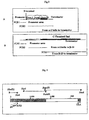
- This invention is based on knowledge of the mechanism of action of certain members of the 3-Domain Cry family (illustrated in Figure 1 ), which it is hoped will be common for the other members of the 3-Domain Cry toxin family (Bravo et al., 2004; Gomez et al, 2002; Rausell et al, 2004a, Rausell et al, 2004b; Herrero, S. et al, 2004; Mu ⁇ oz-Garay et al, 2006).
- the specific restriction sites that are included in the 5' end of the product of the PCR1 containing the promoter area and in the 3' end of the PCR that contains the terminator must be used to bind these DNA fragments to a proper plasmid vector.
- the binding mix may be transformed into E . coli cells, and the transforming plasmid may then be purified and transformed into B. thuringiensis cells for the expression of Modified 3-Domain Cry Toxins and the production of bioinsecticides.
- the Modified 3-Domain Cry Toxin gene may be expressed in heterological systems as other microorganisms using proper vectors (including bacteria, virus, algae, and yeasts) or other organisms including transgenic insect and plant cells.
- the vector must be proper for transformation and expression in plants (such as corn, cotton, and soy, or others), so that the engineered plants produce the Modified 3-Domain Cry Toxins.
- proteic fragments were obtained from the Cry1Ab and Cry1Ac toxins which lack the ⁇ -1 helix, through the method of this invention as illustrated in Example 1.
- Modified 3-Domain Cry Toxins do not require binding to the primary receptor to form the pre-pore oligomeric structure. Thus, given that the Modified 3-Domain Cry Toxins which lack the ⁇ -1 helix are toxic to the Eligible Resistant Insects, they both continue to be toxic for insects sensitive to the Unmodified 3-Domain Cry Toxins.
- the toxicity of the Modified 3-Domain Cry Toxins was determined by feeding resistant and vulnerable larvae in bioassays diets containing different concentrations of the Modified 3-Domain Cry Toxin.
- the toxicity of Cry1AbMod and Cry1AcMod was compared with that of their unmodified counterparts, Cry1Ab and Cry1Ac against the first stage vulnerable (wild) larvae of the pink bollworm (Pectinophora gossypiellá) and pink bollworms that are resistance to Cry1Ab and Cry1Ac.
- Cry1AcMod The toxicity of Cry1AcMod was also compared with its counterpart, unmodified Cry1Ac, against first instar larvae of the vulnerable strains resistant to Cry1Ac of the diamondback worm.
- Unmodified Cry1Ab and Cry1Ac toxins were highly toxic to vulnerable larvae, but not so for resistant larvae (Tables 1 and 2).
- the Modified 3-Domain Cry Toxins, Cry1AbMod and Cry1AcMod killed the vulnerable larvae as well as the resistant ones (Tables 1 and 2).
- this invention refers to the method to suppress the resistance of the Eligible Resistant Insects, which is based on killing said insects by allowing them to eat foods containing a sufficient amount of the Modified 3-Domain Cry Toxin of this invention.
- the lethal dose depends on many factors, including: the mixture of the excipient used; the technique and conditions of application; if the formulation is an aerosol, a film, or small particles; the thickness of the film or the size of the particles and others of this type. The resolution of these factors and other considerations suitable for determining the lethal dose of Modified 3-Domain Cry Toxins is within the abilities of professionals in the technical field.
- the formulations and the transgenic organisms may be used for agricultural crops, forests, and to control disease vectors.
- some genetically altered trees exist that produce Bt toxins
- algae has been genetically altered to produce Bt toxins to control mosquitos.
- Unmodified 3-Domain Cry Toxins may be applied until the appearance of the Eligible Resistant Insects is calculated to take place or is observed, at which time the formulations containing the Modified 3-Domain Cry Toxins may be then applied to kill the resistant insects.
- the Modified 3-Domain Cry Toxins may be contained in host organisms or associated with spores or in a homogeneous preparation of pure proteins or in a mixture of spores with cultivated transformed organisms.
- the Modified 3-Domain Cry Toxins may also be contained in a non-sporing microorganism such as Escherichia coli or a sporing microorganism such as Bacillus megaterium or B.
- excipient means an inert solid or liquid material, which may be inorganic or organic and of a synthetic or natural origin, with which the active compound is mixed or formulated to facilitate its application on plants, seeds, grounds, water, or other objects to be treated, or its storage, transport, and/or management. Any of the commonly used materials in the formulation of bio-pesticides -for example, acceptable additives in horticulture, agriculture, and ecology are suitable-.
- suitable liquid excipients are water, alcohols such as isopropyl and glycol alcohols; ketones such as acetone, methylethylketone, methylisobutylketone and cyclohexanone; ethers such as cellosolves; aromatic hydrocarbons such as benzene, toluene, and xylene; petroleum fractions such as kerosene, light mineral oils; chlorinated hydrocarbons such as carbon tetrachloride, perchloroethylene, and trichloromethane.
- Other suitable compounds are liquefied compounds, that are normally vapors or gases. Mixtures of different liquids are commonly suitable.
- a surfactant agent may be added, which may be an emulsifying agent, a dispersing agent, or a moisturizing agent: may be non-ionic or ionic. Any of these surfactant agents usually applied in the formulation of herbicides or insecticides may be used.
- Suitable surfactant agents are the sodium and calcium salts of polyacrylic and sulfonic acids; products of fatty acid or aliphatic amine or amide condensation that contain at least 12 carbon atoms in the ethylene oxide and/or propylene oxide molecule; glycerol esters and fatty acid, sorbitan, saccharose, or pentanethiol; condensations of these with ethylene oxide and/or propylene oxide; products of fatty acid condensations or alkylphenols, for example, p- octylphenol or p -octylcresol, with ethylene oxide and/or propylene oxide; sulfates or sulfonates of these products of condensation, alkaline salts or alkaline earth metals, preferably sodium salts of sulfuric or sulfonic acid esters that contain at least 10 carbon atoms in the molecule, for example, sodium lauryl sulfate, secondary alkyl sodium sulfates, sodium salt of
- UV protectors are referenced in US patent No. 5,141,744 , where stable macrogels are described (for at least six months) that contain UV protectors (like octyl dimethyl PABA) that are used in pesticides including Bt toxins which offer advantages for protection against inactivation by sunlight.
- US patent No. 4,094,969 discloses another manner to establish pesticide formulations that contain Bt toxins which rapidly degrade upon exposition to sunlight through the addition of sulfonated copolymers.
- the compounds of this invention may be prepared as wettable powders, granules, solutions, emulsifiable concentrates, concentrates in suspension, and aerosols.
- the wettable powders are usually compounded to contain between 25 to 75% by weight of the active compound and usually contain, in addition to the solid carrier, between 3 and 10% by weight of a dispersing agent, 12 to 15% of a surfactant agent and, when necessary, up to 1 to 10% by weight of stabilizers and other additives such as penetrators or adhesives.
- the powders are usually formulated as a concentrate powder that has a composition that is similar to that of the wettable powders but without the dispersing or surfactant agents, and are diluted in the field with additional solid carriers in order to obtain a compound that usually contains between 0.5 and 10% by weight of the active compound.
- the granules are usually prepared to be of a size between 10 and 100 BS mesh (1,676-0.152 mm), and may be manufactured by agglomeration or impregnation techniques. Generally, the granules contain between 0.5 and 25% by weight of the active compound, 0 and 1% by weight of additives such as stabilizers, modifiers for slow release and agglutinating agents.
- Emulsifying concentrates usually contain, in addition to the solvent and, when necessary, the cosolvent between 10 and 20% by volume weight of the active compound, between 2 and 20% by volume weight of emulsifiers and between 0 and 20% by volume weight of appropriate additives such as stabilizers, penetrants, and corrosion inhibitors.
- Concentrates in suspension are compounded to obtain a stable, nonsettleable, and fluid product and usually contains between 0 and 75% by weight of the active compound, between 0.5 and 5% by weight of dispersing agents, between 1 and 5% of surfactant agents, between 0.1 and 10% by weight of suspension agents, such as antifoaming agents, corrosion inhibitors, stabilizers, especially for the protein, penetrants, and adhesives, and as a carrier, water or an organic liquid in which the active compound is substantially insoluble; certain organic solids or inorganic salts may be dissolved in the carrier to help prevent sedimentation or as antifreeze agents for water.
- Aqueous dispersions and emulsions for example, formulations obtained by diluting a wettable powder or concentrate in accordance with the invention with water, which also fall within the scope of this invention.
- Said emulsions may be of the water in oil type or of oil in water, or it may have a thick consistency like mayonnaise.
- Formulations containing the Modified 3-Domain Cry Toxins are prepared according to known methods, for example by homogeneous mixing and/or grinding the active ingredients with the carrier mix.
- the Agrobacterium method is considered preferable to the gene pistol, due to the high frequency of external DNA single-site insertion, making it easier to monitor. If Agrobacterium is used to transform plants, the DNA to be inserted in the genome of the plant must be cloned in special plasmids, either in an intermediate vector or in a binary vector. This method of transformation may be easily used by experts in the technology to transform plant with the constructions that contain the Modified 3-Domain Cry Toxins genes of this invention, to generate transgenic plants that kill or avoid the appearance of Eligible Resistant Insects in the field.
- Cry1Ab and Cry1Ac 3-Domain Cry Toxins were selected: Cry1Ab and Cry1Ac.
- the promoter area, the coding area of the complete protein and the ⁇ -1 helix were identified in both of these, as follows: Toxin Gene Promoter Area Coding Area of Complete Protein N-Terminal and Coding Area of the ⁇ -1 Helix Coding Area of the Toxin (from the ⁇ -2 helix to ⁇ -23) cry1Ab 1-390 pb 390- 4272 pb 390-538 pb 538-2225 pb cry1Ac 11-401pb 401- 4251 pb 401 -549 pb 549-2236 pb pb, pairs of bases
- the transforming and wild strains were cultivated for 3 days in a shaking incubator at 29°C and 200 rpm in a nutritious sporulation medium (Lereclus et al., 1995) supplemented with 10 ⁇ g of erythromycin per ml.
- the Modified and Unmodified 3-Domain Cry Toxin crystals were recovered and purified by saccharose gradient (Thomas and Ellar, 1983) and solubilized in 10 mM of buffer carbonates with a pH of 10.5.
- the protein samples were separated in 10% SDS-PAGE acrylamide gels (Laemmli, 1970).
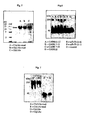
- the genetically altered cells as well as those that were not altered produced proteins with an apparent molecular weight of approximately 130 kDa ( Fig. 5 ).
- the AZP-R resistant strain of the pink bollworm was obtained by selecting survivors of exposure to the Cry1Ac toxin in 10 cotton fields (Tabashnik et al., 2000). The repeated selection increased the resistance of the AZP-R strain to the Cry1Ac up to 3,100 times with respect to the vulnerable APHIS-S strain of the same worm (Tabashnik et al., 2002a).
- the resistance to the Cry1Ac is inherited recessively and is linked to 3 mutant alleles (r1, r2 and r3) of the CADR (BtR) gene (Morin et al, 2003).
- Cry1AbMod and Cry1AcMod toxins kill the pink bollworm that is resistant to the Cry1Ab and Cry1Ac toxins. It was observed that at a concentration of 100 ⁇ g of the toxin per ml of diet, the survival of the pink bollworm was high with the Cry1Ab and Cry1Ac toxins (94% and 100% respectively). Whereas, at a concentration of 30 ⁇ g of the toxin per ml of diet, the survival of the resistant pink bollworm was 0% with both Cry1AbMod and Cry1AcMod toxins.
- the Cry1AcMod protein kills the diamondback worm that is resistant to the Cry1Ac toxin.
- the Cry1AcMod protein kills the diamondback worm that is resistant to the Cry1Ac toxin.
- the Cry1AcMod protein kills the diamondback worm that is resistant to the Cry1Ac toxin.
- the survival of the resistant strain of the diamondback worm was 0% when treated with the Cry1AcMod toxin. Therefore, the modified toxin, Cry1AcMod suppresses the resistance of the diamondback worm to the unmodified toxin, Cry1A.
- sexta a fragment of 442 pb of the gene (from residue 8 to 155) was amplified by rtPCR from cDNA produced from samples of RNAm obtained from 5° instar larvae using the following oligonucleotides as first in the reaction of rtPCR GCTCTAGAGCTGCCTTCCTGCTGGTGTTTA and GGAATTCCTCCACGCGCACATTG AACAT.
- the 442 pb fragment was digested with the restriction enzymes Xba I and Eco RI and cloned in the pLITMUS 28i (HiScribe TM ) previously digested with the same restriction enzymes, this vector has two T7 promoter that flank a multi-cloning site.
- EXAMPLE 6 Toxicity of the Cry1Ab and Cry1AbMod toxins to M. sexta larvae that have silenced the Bt-R 1 receptor.
Landscapes
- Health & Medical Sciences (AREA)
- Genetics & Genomics (AREA)
- Life Sciences & Earth Sciences (AREA)
- Chemical & Material Sciences (AREA)
- Organic Chemistry (AREA)
- Engineering & Computer Science (AREA)
- Molecular Biology (AREA)
- Bioinformatics & Cheminformatics (AREA)
- Wood Science & Technology (AREA)
- Biomedical Technology (AREA)
- Biophysics (AREA)
- Biotechnology (AREA)
- General Engineering & Computer Science (AREA)
- General Health & Medical Sciences (AREA)
- Biochemistry (AREA)
- Zoology (AREA)
- Pest Control & Pesticides (AREA)
- Gastroenterology & Hepatology (AREA)
- Physics & Mathematics (AREA)
- Cell Biology (AREA)
- Plant Pathology (AREA)
- Insects & Arthropods (AREA)
- Crystallography & Structural Chemistry (AREA)
- Microbiology (AREA)
- Medicinal Chemistry (AREA)
- Proteomics, Peptides & Aminoacids (AREA)
- Peptides Or Proteins (AREA)
- Agricultural Chemicals And Associated Chemicals (AREA)
- Micro-Organisms Or Cultivation Processes Thereof (AREA)
- Breeding Of Plants And Reproduction By Means Of Culturing (AREA)
Applications Claiming Priority (1)
| Application Number | Priority Date | Filing Date | Title |
|---|---|---|---|
| PCT/MX2007/000068 WO2008150150A2 (es) | 2007-06-08 | 2007-06-08 | Supresión de resistencia en insectos hacia las toxinas cry de bacillus thuringiensis utilizando toxinas que no requieren al receptor caderina. |
Publications (3)
| Publication Number | Publication Date |
|---|---|
| EP2184293A2 true EP2184293A2 (de) | 2010-05-12 |
| EP2184293A4 EP2184293A4 (de) | 2010-08-04 |
| EP2184293B1 EP2184293B1 (de) | 2011-10-12 |
Family
ID=40094318
Family Applications (1)
| Application Number | Title | Priority Date | Filing Date |
|---|---|---|---|
| EP07747214A Active EP2184293B1 (de) | 2007-06-08 | 2007-06-08 | Unterdrückung der resistenz von insekten gegen bacillus thuringiensis-cry-toxine unter verwendung von toxinen, die nicht den cadherin-rezeptor benötigen |
Country Status (9)
| Country | Link |
|---|---|
| US (2) | US20100186123A1 (de) |
| EP (1) | EP2184293B1 (de) |
| CN (1) | CN101730712B (de) |
| AT (1) | ATE528317T1 (de) |
| AU (1) | AU2007354729B2 (de) |
| BR (1) | BRPI0721721A2 (de) |
| CA (1) | CA2690188C (de) |
| MX (1) | MX2009013089A (de) |
| WO (1) | WO2008150150A2 (de) |
Families Citing this family (2)
| Publication number | Priority date | Publication date | Assignee | Title |
|---|---|---|---|---|
| CN103773775B (zh) * | 2014-01-26 | 2015-11-18 | 江苏省农业科学院 | 一种人源抗虫基因及其编码的抗Cry1B毒素独特型单链抗体与应用 |
| CA2992295A1 (en) * | 2015-07-23 | 2017-01-26 | Monsanto Technology Llc | Multi functional toxins |
Family Cites Families (24)
| Publication number | Priority date | Publication date | Assignee | Title |
|---|---|---|---|---|
| US4094969A (en) | 1973-10-29 | 1978-06-13 | Sandoz, Inc. | Pesticide compositions stabilized with sulfonated catechin/leucocyanidin copolymer and method of using same |
| EP0320500B1 (de) | 1983-01-13 | 2004-11-17 | Max-Planck-Gesellschaft zur Förderung der Wissenschaften e.V. | Nichtonkogenisches Ti-Plasmidvektorsystem und für das Einschleusen expressionsfähiger Gene in Pflanzengenomen verwendbare rekombinante DNA-Moleküle |
| EP0131624B1 (de) | 1983-01-17 | 1992-09-16 | Monsanto Company | Plasmide zur transformation von pflanzenzellen |
| NL8300698A (nl) | 1983-02-24 | 1984-09-17 | Univ Leiden | Werkwijze voor het inbouwen van vreemd dna in het genoom van tweezaadlobbige planten; agrobacterium tumefaciens bacterien en werkwijze voor het produceren daarvan; planten en plantecellen met gewijzigde genetische eigenschappen; werkwijze voor het bereiden van chemische en/of farmaceutische produkten. |
| NL8300699A (nl) | 1983-02-24 | 1984-09-17 | Univ Leiden | Werkwijze voor het inbouwen van vreemd dna in het genoom van tweezaadlobbige planten; werkwijze voor het produceren van agrobacterium tumefaciens bacterien; stabiele cointegraat plasmiden; planten en plantecellen met gewijzigde genetische eigenschappen; werkwijze voor het bereiden van chemische en/of farmaceutische produkten. |
| NL8401048A (nl) | 1984-04-03 | 1985-11-01 | Rijksuniversiteit Leiden En Pr | Werkwijze voor het inbouwen van vreemd dna in het genoom van eenzaadlobbige planten. |
| US5231019A (en) | 1984-05-11 | 1993-07-27 | Ciba-Geigy Corporation | Transformation of hereditary material of plants |
| NL8401780A (nl) | 1984-06-04 | 1986-01-02 | Rijksuniversiteit Leiden En Pr | Werkwijze voor het inbouwen van vreemd dna in het genoom van planten. |
| US5149645A (en) | 1984-06-04 | 1992-09-22 | Rijksuniversiteit Leiden | Process for introducing foreign DNA into the genome of plants |
| US4945050A (en) | 1984-11-13 | 1990-07-31 | Cornell Research Foundation, Inc. | Method for transporting substances into living cells and tissues and apparatus therefor |
| AU7360087A (en) | 1986-04-30 | 1987-11-24 | Boyce Thompson Institute For Plant Research Inc. | Electric field mediated dna transformation of plant cells and organelles |
| US5177010A (en) | 1986-06-30 | 1993-01-05 | University Of Toledo | Process for transforming corn and the products thereof |
| EP0267159A3 (de) | 1986-11-07 | 1990-05-02 | Ciba-Geigy Ag | Verfahren zur genetischen Modifikation monokotyler Pflanzen |
| SE455438B (sv) | 1986-11-24 | 1988-07-11 | Aga Ab | Sett att senka en brennares flamtemperatur samt brennare med munstycken for oxygen resp brensle |
| ES2074999T3 (es) | 1987-05-20 | 1995-10-01 | Ciba Geigy Ag | Plantas de zea mays y plantas de zea mays transgenicas regeneradas de protoplastos o celulas derivadas de protoplastos. |
| US5141131A (en) | 1989-06-30 | 1992-08-25 | Dowelanco | Method and apparatus for the acceleration of a propellable matter |
| US5141744A (en) | 1989-08-03 | 1992-08-25 | Temple University | Insecticide delivery system and attractant |
| ES2260886T3 (es) | 1990-11-23 | 2006-11-01 | Bayer Bioscience N.V. | Procedimiento para transformar plantas monocotiledoneas. |
| JPH07505531A (ja) | 1992-04-15 | 1995-06-22 | プラント・ジェネティック・システムズ・エヌ・ブイ | 単子葉植物細胞の形質転換法 |
| US5469976A (en) | 1993-04-30 | 1995-11-28 | Burchell; James R. | Shelf allocation and management system |
| US6114608A (en) * | 1997-03-14 | 2000-09-05 | Novartis Ag | Nucleic acid construct comprising bacillus thuringiensis cry1Ab gene |
| AP9901541A0 (en) * | 1996-11-20 | 1999-06-30 | Ecogen Inc | Broad-spectrum delta-endotoxins. |
| CZ301915B6 (cs) * | 1998-08-19 | 2010-07-28 | Monsanto Technology Llc | Rekombinantní molekula DNA, transformovaná bunka, rostlina a zpusob zlepšení genové exprese |
| EP1988099B1 (de) * | 2001-01-09 | 2012-11-14 | Bayer CropScience NV | Insektizide Proteine von Bacillus thuringiensis |
-
2007
- 2007-06-08 AT AT07747214T patent/ATE528317T1/de not_active IP Right Cessation
- 2007-06-08 US US12/602,794 patent/US20100186123A1/en not_active Abandoned
- 2007-06-08 WO PCT/MX2007/000068 patent/WO2008150150A2/es not_active Ceased
- 2007-06-08 EP EP07747214A patent/EP2184293B1/de active Active
- 2007-06-08 AU AU2007354729A patent/AU2007354729B2/en not_active Ceased
- 2007-06-08 CN CN200780053274.5A patent/CN101730712B/zh active Active
- 2007-06-08 CA CA2690188A patent/CA2690188C/en not_active Expired - Fee Related
- 2007-06-08 BR BRPI0721721-8A patent/BRPI0721721A2/pt not_active IP Right Cessation
-
2009
- 2009-11-30 MX MX2009013089A patent/MX2009013089A/es active IP Right Grant
-
2018
- 2018-04-10 US US15/949,840 patent/US10704059B2/en not_active Expired - Fee Related
Non-Patent Citations (4)
| Title |
|---|
| BOONSERM P ET AL: "Crystal Structure of the Mosquito-larvicidal Toxin Cry4Ba and Its Biological Implications" JOURNAL OF MOLECULAR BIOLOGY, LONDON, GB LNKD- DOI:10.1016/J.JMB.2005.02.013, vol. 348, no. 2, 29 April 2005 (2005-04-29), pages 363-382, XP004820193 ISSN: 0022-2836 * |
| JIMENEZ-JUAREZ NURIA ET AL: "Bacillus thuringiensis Cry1Ab mutants affecting oligomer formation are non-toxic to Manduca sexta larvae" JOURNAL OF BIOLOGICAL CHEMISTRY, vol. 282, no. 29, 30 May 2007 (2007-05-30) , pages 21222-21229, XP002586314 ISSN: 0021-9258 * |
| See also references of WO2008150150A2 * |
| SOBERON MARIO ET AL: "Engineering modified Bt toxins to counter insect resistance" SCIENCE (WASHINGTON D C), vol. 318, no. 5856, December 2007 (2007-12), pages 1640-1642, XP002586315 ISSN: 0036-8075 * |
Also Published As
| Publication number | Publication date |
|---|---|
| BRPI0721721A2 (pt) | 2013-01-22 |
| US10704059B2 (en) | 2020-07-07 |
| CA2690188C (en) | 2017-05-16 |
| CN101730712B (zh) | 2015-04-08 |
| CA2690188A1 (en) | 2008-12-11 |
| WO2008150150A3 (es) | 2009-04-02 |
| US20180282758A1 (en) | 2018-10-04 |
| AU2007354729B2 (en) | 2012-07-26 |
| ATE528317T1 (de) | 2011-10-15 |
| CN101730712A (zh) | 2010-06-09 |
| EP2184293B1 (de) | 2011-10-12 |
| AU2007354729A1 (en) | 2008-12-11 |
| MX2009013089A (es) | 2010-03-04 |
| WO2008150150A2 (es) | 2008-12-11 |
| US20100186123A1 (en) | 2010-07-22 |
| EP2184293A4 (de) | 2010-08-04 |
Similar Documents
| Publication | Publication Date | Title |
|---|---|---|
| Soberón et al. | Signaling versus punching hole: How do Bacillus thuringiensis toxins kill insect midgut cells? | |
| Schnepf et al. | Bacillus thuringiensis and its pesticidal crystal proteins | |
| Li et al. | Expression of Cry5B protein from Bacillus thuringiensis in plant roots confers resistance to root-knot nematode | |
| George et al. | Bacillus thuringiensis applications in agriculture | |
| CA3206363A1 (en) | Novel insect inhibitory proteins | |
| Swiecicka et al. | Novel isolate of Bacillus thuringiensis subsp. thuringiensis that produces a quasicuboidal crystal of Cry1Ab21 toxic to larvae of Trichoplusia ni | |
| AU2017342921B2 (en) | Novel insect inhibitory proteins | |
| Sheikh et al. | An overview on resistance of insect pests against Bt crops | |
| Pohare et al. | Bacillus thuringiensis as potential biocontrol agent for sustainable agriculture | |
| Peferoen | Insect control with transgenic plants expressing Bacillus thuringiensis crystal proteins | |
| Jain et al. | Current status of bacillus thuringiensis: insecticidal crystal proteins and transgenic crops | |
| Hu et al. | Efficient constitutive expression of chitinase in the mother cell of Bacillus thuringiensis and its potential to enhance the toxicity of Cry1Ac protoxin | |
| US10704059B2 (en) | Suppression of resistance in insects to bacillus thuringiensis cry toxins that do not require the cadherin receptor | |
| Federici | Bacteria as biological control agents for insects: economics, engineering, and environmental safety | |
| Boncheva et al. | Activity of Bacillus thuringiensis δ-endotoxins against codling moth (Cydia pomonella L.) larvae | |
| US20180312868A1 (en) | Chlamydomonas strains with chloroplast-expressed cry proteins for biological control of mosquitoes that transmit disease | |
| EP3982729B1 (de) | Bacillus-thuringiensis-stamm | |
| CN104745603B (zh) | 使用不需要钙黏着蛋白受体的毒素遏制昆虫对苏云金芽孢杆菌cry毒素的抗性 | |
| Zúñiga-Navarrete et al. | Role of GPI-anchored membrane receptors in the mode of action of Bacillus thuringiensis Cry toxins | |
| Kurt | Coleoptera-Specific (cry3Aa) Delta-Endotoxin Biosynthesis by A Local Isolate of Bt subsp. tenebrionis, Gene Cloning and Characterization | |
| SAFETY | Brian A. Federici* Department of Entomology and Graduate Programs in Molecular Biology, University of California, Riverside, CA 92521, USA | |
| Soberóna et al. | Instituto de Biotecnología, Universidad Nacional Autónoma de MØxico. Apdo. Postal 510–3, Cuernavaca 62250, Morelos (Mexico) Fax:+ 527773291624, e-mail: bravo@ ibt. unam. mx b Department of Cell Biology and Neuroscience, University of California, Riverside, CA 92506 (USA) | |
| Swiecicka et al. | Bacillus thuringiensis Novel Isolate of | |
| George | Expression and genetic manipulation of Bacillus thuringiensis toxins for improved toxicity and development of a protocol for in vivo selection of toxin variants with improved activity | |
| Li | Analyses of resistance to Bacillus thuringiensis delta-endotoxins in the European corn borer, Ostrinia nubilalis (Lepidoptera: Crambidae) |
Legal Events
| Date | Code | Title | Description |
|---|---|---|---|
| PUAI | Public reference made under article 153(3) epc to a published international application that has entered the european phase |
Free format text: ORIGINAL CODE: 0009012 |
|
| 17P | Request for examination filed |
Effective date: 20091217 |
|
| AK | Designated contracting states |
Kind code of ref document: A2 Designated state(s): AT BE BG CH CY CZ DE DK EE ES FI FR GB GR HU IE IS IT LI LT LU LV MC MT NL PL PT RO SE SI SK TR |
|
| AX | Request for extension of the european patent |
Extension state: AL BA HR MK RS |
|
| A4 | Supplementary search report drawn up and despatched |
Effective date: 20100705 |
|
| DAX | Request for extension of the european patent (deleted) | ||
| GRAP | Despatch of communication of intention to grant a patent |
Free format text: ORIGINAL CODE: EPIDOSNIGR1 |
|
| RIC1 | Information provided on ipc code assigned before grant |
Ipc: C12P 21/04 20060101ALI20110308BHEP Ipc: A01H 5/00 20060101ALI20110308BHEP Ipc: C12N 15/75 20060101ALI20110308BHEP Ipc: C12N 15/82 20060101ALI20110308BHEP Ipc: C12N 15/32 20060101ALI20110308BHEP Ipc: C12N 1/21 20060101ALI20110308BHEP Ipc: C07K 14/325 20060101AFI20110308BHEP |
|
| GRAS | Grant fee paid |
Free format text: ORIGINAL CODE: EPIDOSNIGR3 |
|
| GRAA | (expected) grant |
Free format text: ORIGINAL CODE: 0009210 |
|
| AK | Designated contracting states |
Kind code of ref document: B1 Designated state(s): AT BE BG CH CY CZ DE DK EE ES FI FR GB GR HU IE IS IT LI LT LU LV MC MT NL PL PT RO SE SI SK TR |
|
| REG | Reference to a national code |
Ref country code: GB Ref legal event code: FG4D |
|
| REG | Reference to a national code |
Ref country code: CH Ref legal event code: EP |
|
| REG | Reference to a national code |
Ref country code: IE Ref legal event code: FG4D |
|
| REG | Reference to a national code |
Ref country code: DE Ref legal event code: R096 Ref document number: 602007017797 Country of ref document: DE Effective date: 20111215 |
|
| REG | Reference to a national code |
Ref country code: NL Ref legal event code: VDEP Effective date: 20111012 |
|
| LTIE | Lt: invalidation of european patent or patent extension |
Effective date: 20111012 |
|
| REG | Reference to a national code |
Ref country code: AT Ref legal event code: MK05 Ref document number: 528317 Country of ref document: AT Kind code of ref document: T Effective date: 20111012 |
|
| PG25 | Lapsed in a contracting state [announced via postgrant information from national office to epo] |
Ref country code: IS Free format text: LAPSE BECAUSE OF FAILURE TO SUBMIT A TRANSLATION OF THE DESCRIPTION OR TO PAY THE FEE WITHIN THE PRESCRIBED TIME-LIMIT Effective date: 20120212 Ref country code: LT Free format text: LAPSE BECAUSE OF FAILURE TO SUBMIT A TRANSLATION OF THE DESCRIPTION OR TO PAY THE FEE WITHIN THE PRESCRIBED TIME-LIMIT Effective date: 20111012 Ref country code: BE Free format text: LAPSE BECAUSE OF FAILURE TO SUBMIT A TRANSLATION OF THE DESCRIPTION OR TO PAY THE FEE WITHIN THE PRESCRIBED TIME-LIMIT Effective date: 20111012 |
|
| PG25 | Lapsed in a contracting state [announced via postgrant information from national office to epo] |
Ref country code: NL Free format text: LAPSE BECAUSE OF FAILURE TO SUBMIT A TRANSLATION OF THE DESCRIPTION OR TO PAY THE FEE WITHIN THE PRESCRIBED TIME-LIMIT Effective date: 20111012 Ref country code: PT Free format text: LAPSE BECAUSE OF FAILURE TO SUBMIT A TRANSLATION OF THE DESCRIPTION OR TO PAY THE FEE WITHIN THE PRESCRIBED TIME-LIMIT Effective date: 20120213 Ref country code: LV Free format text: LAPSE BECAUSE OF FAILURE TO SUBMIT A TRANSLATION OF THE DESCRIPTION OR TO PAY THE FEE WITHIN THE PRESCRIBED TIME-LIMIT Effective date: 20111012 Ref country code: SI Free format text: LAPSE BECAUSE OF FAILURE TO SUBMIT A TRANSLATION OF THE DESCRIPTION OR TO PAY THE FEE WITHIN THE PRESCRIBED TIME-LIMIT Effective date: 20111012 Ref country code: SE Free format text: LAPSE BECAUSE OF FAILURE TO SUBMIT A TRANSLATION OF THE DESCRIPTION OR TO PAY THE FEE WITHIN THE PRESCRIBED TIME-LIMIT Effective date: 20111012 |
|
| PG25 | Lapsed in a contracting state [announced via postgrant information from national office to epo] |
Ref country code: CY Free format text: LAPSE BECAUSE OF FAILURE TO SUBMIT A TRANSLATION OF THE DESCRIPTION OR TO PAY THE FEE WITHIN THE PRESCRIBED TIME-LIMIT Effective date: 20111012 |
|
| PG25 | Lapsed in a contracting state [announced via postgrant information from national office to epo] |
Ref country code: DK Free format text: LAPSE BECAUSE OF FAILURE TO SUBMIT A TRANSLATION OF THE DESCRIPTION OR TO PAY THE FEE WITHIN THE PRESCRIBED TIME-LIMIT Effective date: 20111012 Ref country code: CZ Free format text: LAPSE BECAUSE OF FAILURE TO SUBMIT A TRANSLATION OF THE DESCRIPTION OR TO PAY THE FEE WITHIN THE PRESCRIBED TIME-LIMIT Effective date: 20111012 Ref country code: SK Free format text: LAPSE BECAUSE OF FAILURE TO SUBMIT A TRANSLATION OF THE DESCRIPTION OR TO PAY THE FEE WITHIN THE PRESCRIBED TIME-LIMIT Effective date: 20111012 Ref country code: EE Free format text: LAPSE BECAUSE OF FAILURE TO SUBMIT A TRANSLATION OF THE DESCRIPTION OR TO PAY THE FEE WITHIN THE PRESCRIBED TIME-LIMIT Effective date: 20111012 Ref country code: BG Free format text: LAPSE BECAUSE OF FAILURE TO SUBMIT A TRANSLATION OF THE DESCRIPTION OR TO PAY THE FEE WITHIN THE PRESCRIBED TIME-LIMIT Effective date: 20120112 |
|
| PLBE | No opposition filed within time limit |
Free format text: ORIGINAL CODE: 0009261 |
|
| STAA | Information on the status of an ep patent application or granted ep patent |
Free format text: STATUS: NO OPPOSITION FILED WITHIN TIME LIMIT |
|
| PG25 | Lapsed in a contracting state [announced via postgrant information from national office to epo] |
Ref country code: RO Free format text: LAPSE BECAUSE OF FAILURE TO SUBMIT A TRANSLATION OF THE DESCRIPTION OR TO PAY THE FEE WITHIN THE PRESCRIBED TIME-LIMIT Effective date: 20111012 Ref country code: PL Free format text: LAPSE BECAUSE OF FAILURE TO SUBMIT A TRANSLATION OF THE DESCRIPTION OR TO PAY THE FEE WITHIN THE PRESCRIBED TIME-LIMIT Effective date: 20111012 |
|
| 26N | No opposition filed |
Effective date: 20120713 |
|
| REG | Reference to a national code |
Ref country code: DE Ref legal event code: R097 Ref document number: 602007017797 Country of ref document: DE Effective date: 20120713 |
|
| PG25 | Lapsed in a contracting state [announced via postgrant information from national office to epo] |
Ref country code: MC Free format text: LAPSE BECAUSE OF NON-PAYMENT OF DUE FEES Effective date: 20120630 Ref country code: AT Free format text: LAPSE BECAUSE OF FAILURE TO SUBMIT A TRANSLATION OF THE DESCRIPTION OR TO PAY THE FEE WITHIN THE PRESCRIBED TIME-LIMIT Effective date: 20111012 |
|
| REG | Reference to a national code |
Ref country code: CH Ref legal event code: PL |
|
| REG | Reference to a national code |
Ref country code: CH Ref legal event code: PL |
|
| GBPC | Gb: european patent ceased through non-payment of renewal fee |
Effective date: 20120608 |
|
| REG | Reference to a national code |
Ref country code: IE Ref legal event code: MM4A |
|
| REG | Reference to a national code |
Ref country code: DE Ref legal event code: R119 Ref document number: 602007017797 Country of ref document: DE Effective date: 20130101 |
|
| PG25 | Lapsed in a contracting state [announced via postgrant information from national office to epo] |
Ref country code: CH Free format text: LAPSE BECAUSE OF NON-PAYMENT OF DUE FEES Effective date: 20120630 Ref country code: IE Free format text: LAPSE BECAUSE OF NON-PAYMENT OF DUE FEES Effective date: 20120608 Ref country code: LI Free format text: LAPSE BECAUSE OF NON-PAYMENT OF DUE FEES Effective date: 20120630 Ref country code: ES Free format text: LAPSE BECAUSE OF FAILURE TO SUBMIT A TRANSLATION OF THE DESCRIPTION OR TO PAY THE FEE WITHIN THE PRESCRIBED TIME-LIMIT Effective date: 20120123 Ref country code: GB Free format text: LAPSE BECAUSE OF NON-PAYMENT OF DUE FEES Effective date: 20120608 Ref country code: DE Free format text: LAPSE BECAUSE OF NON-PAYMENT OF DUE FEES Effective date: 20130101 |
|
| PG25 | Lapsed in a contracting state [announced via postgrant information from national office to epo] |
Ref country code: FI Free format text: LAPSE BECAUSE OF FAILURE TO SUBMIT A TRANSLATION OF THE DESCRIPTION OR TO PAY THE FEE WITHIN THE PRESCRIBED TIME-LIMIT Effective date: 20111012 |
|
| PG25 | Lapsed in a contracting state [announced via postgrant information from national office to epo] |
Ref country code: MT Free format text: LAPSE BECAUSE OF FAILURE TO SUBMIT A TRANSLATION OF THE DESCRIPTION OR TO PAY THE FEE WITHIN THE PRESCRIBED TIME-LIMIT Effective date: 20111012 |
|
| PG25 | Lapsed in a contracting state [announced via postgrant information from national office to epo] |
Ref country code: TR Free format text: LAPSE BECAUSE OF FAILURE TO SUBMIT A TRANSLATION OF THE DESCRIPTION OR TO PAY THE FEE WITHIN THE PRESCRIBED TIME-LIMIT Effective date: 20111012 |
|
| PG25 | Lapsed in a contracting state [announced via postgrant information from national office to epo] |
Ref country code: LU Free format text: LAPSE BECAUSE OF NON-PAYMENT OF DUE FEES Effective date: 20120608 |
|
| PG25 | Lapsed in a contracting state [announced via postgrant information from national office to epo] |
Ref country code: HU Free format text: LAPSE BECAUSE OF FAILURE TO SUBMIT A TRANSLATION OF THE DESCRIPTION OR TO PAY THE FEE WITHIN THE PRESCRIBED TIME-LIMIT Effective date: 20070608 |
|
| PG25 | Lapsed in a contracting state [announced via postgrant information from national office to epo] |
Ref country code: GR Free format text: LAPSE BECAUSE OF FAILURE TO SUBMIT A TRANSLATION OF THE DESCRIPTION OR TO PAY THE FEE WITHIN THE PRESCRIBED TIME-LIMIT Effective date: 20111012 |
|
| REG | Reference to a national code |
Ref country code: FR Ref legal event code: PLFP Year of fee payment: 10 |
|
| REG | Reference to a national code |
Ref country code: FR Ref legal event code: PLFP Year of fee payment: 11 |
|
| REG | Reference to a national code |
Ref country code: FR Ref legal event code: PLFP Year of fee payment: 12 |
|
| REG | Reference to a national code |
Ref country code: FR Ref legal event code: PLFP Year of fee payment: 17 |
|
| P01 | Opt-out of the competence of the unified patent court (upc) registered |
Effective date: 20230519 |
|
| PGFP | Annual fee paid to national office [announced via postgrant information from national office to epo] |
Ref country code: IT Payment date: 20250522 Year of fee payment: 19 |
|
| PGFP | Annual fee paid to national office [announced via postgrant information from national office to epo] |
Ref country code: FR Payment date: 20250401 Year of fee payment: 19 |