EP2183963A1 - Method for producing plant with modified flower morphology - Google Patents
Method for producing plant with modified flower morphology Download PDFInfo
- Publication number
- EP2183963A1 EP2183963A1 EP08792170A EP08792170A EP2183963A1 EP 2183963 A1 EP2183963 A1 EP 2183963A1 EP 08792170 A EP08792170 A EP 08792170A EP 08792170 A EP08792170 A EP 08792170A EP 2183963 A1 EP2183963 A1 EP 2183963A1
- Authority
- EP
- European Patent Office
- Prior art keywords
- seq
- plant
- amino acid
- dna
- acid sequence
- Prior art date
- Legal status (The legal status is an assumption and is not a legal conclusion. Google has not performed a legal analysis and makes no representation as to the accuracy of the status listed.)
- Granted
Links
Images

Classifications
-
- C—CHEMISTRY; METALLURGY
- C12—BIOCHEMISTRY; BEER; SPIRITS; WINE; VINEGAR; MICROBIOLOGY; ENZYMOLOGY; MUTATION OR GENETIC ENGINEERING
- C12N—MICROORGANISMS OR ENZYMES; COMPOSITIONS THEREOF; PROPAGATING, PRESERVING, OR MAINTAINING MICROORGANISMS; MUTATION OR GENETIC ENGINEERING; CULTURE MEDIA
- C12N15/00—Mutation or genetic engineering; DNA or RNA concerning genetic engineering, vectors, e.g. plasmids, or their isolation, preparation or purification; Use of hosts therefor
- C12N15/09—Recombinant DNA-technology
- C12N15/63—Introduction of foreign genetic material using vectors; Vectors; Use of hosts therefor; Regulation of expression
- C12N15/79—Vectors or expression systems specially adapted for eukaryotic hosts
- C12N15/82—Vectors or expression systems specially adapted for eukaryotic hosts for plant cells, e.g. plant artificial chromosomes (PACs)
- C12N15/8241—Phenotypically and genetically modified plants via recombinant DNA technology
- C12N15/8261—Phenotypically and genetically modified plants via recombinant DNA technology with agronomic (input) traits, e.g. crop yield
- C12N15/8262—Phenotypically and genetically modified plants via recombinant DNA technology with agronomic (input) traits, e.g. crop yield involving plant development
- C12N15/827—Flower development or morphology, e.g. flowering promoting factor [FPF]
-
- C—CHEMISTRY; METALLURGY
- C07—ORGANIC CHEMISTRY
- C07K—PEPTIDES
- C07K14/00—Peptides having more than 20 amino acids; Gastrins; Somatostatins; Melanotropins; Derivatives thereof
- C07K14/415—Peptides having more than 20 amino acids; Gastrins; Somatostatins; Melanotropins; Derivatives thereof from plants
Definitions
- the present invention relates to a method for producing a plant with modified flower morphology and a plant obtained by using this method.
- the present invention relates to a method for producing a plant with modified flower morphology by suppressing the function of a transcription factor involved in the polarity determination and a plant obtained by using this method.
- Flower morphology is one of the critical factors in ornamental value of garden plants.
- the development of a flower begins with differentiation into a flower primordium from an inflorescence meristem. From the floral meristem contained in the flower primordium, four types of flower organs, sepals, petals, stamens and pistils are differentiated. Thereafter, a mature flower is formed as a complex organ containing differentiated flower organs. Plants with modified flower morphology are highly useful in agriculture because they can be utilized in creation of novel garden plants and creation of fruits with a novel morphology.
- the MADS-box family genes are genes encoding a transcription factor containing a conserved region called the MADS-box and constitute a gene family composed of 30 or more genes.
- transcription factor examples include the Class A genes such as APETALA1 (AP1) and APETALA (AP2), the Class B genes such as APETALA3 (AP3) and PISTILLATA (PI) and the Class C genes such as AGAMOUS (AG). Changes in the flower morphology have been confirmed in mutants of these genes.
- AP1 APETALA1
- AP2 APETALA1
- AP3 APETALA3
- PI PISTILLATA
- AGAMOUS AGAMOUS
- a fundamental structure of a leaf of angiosperms which is relatively flat tissue, can be generally explained in the basis of three axes, namely the proximal-distal, central-lateral and adaxial-abaxial axes.
- transcription factors to determine these polarities include the YABBY group such as YABBY1 (YAB1) or YABBY3 (YAB3), the HD group such as PHABULOSA (PHB) and the KANADI group such as KANADI (KAN). It has been known that these factors are involved in determination of the polarity in leaf blades (Non-patent Literatures 1 to 3).
- a method for modifying flower morphology by genetic engineering As a method for modifying flower morphology by genetic engineering, the present inventors have thus far found a method using a peptide which converts an arbitrary transcription factor into a transcription repressor (for example, Patent Literatures 1 to 7).
- This peptide is excised from a Class II ERF (Ethylene Responsive Element Binding Factor) protein or a plant zinc finger protein (for example Arabidopsis thaliana SUPERMAN protein or the like) and has an extremely simple structure.
- ERF Ethylene Responsive Element Binding Factor
- a plant zinc finger protein for example Arabidopsis thaliana SUPERMAN protein or the like
- a transcription factor had been converted to a transcriptional repressor, and the present inventors have successfully produced a plant in which expression of a targeted gene whose transcription is promoted by the transcription factor is suppressed.
- the present inventors have established a method for producing a male-sterile plant and a method for modifying flower morphology, both in which the expression of the AP3 gene or AG gene of Arabidopsis thaliana , which gene is the above-mentioned MADS-box family gene, is suppressed by using a repressor capable of binding to a promoter region of the respective gene (Patent Literatures 8 to 9).
- the flower morphology is modified by overexpressing a chimeric repressor in a recombinant plant so as to suppress the function of a transcription factor involved in the polarity determination of a plant organ, which chimeric repressor was obtained by converting the transcription factor (YAB1, KAN or PHB) involved in the polarity determination of a plant leaf into the transcription repressor.
- any technique for modifying flower morphology by regulating a gene other than the transcription factors of the Classes A, B and C belonging to the MADS-box family related to flower morphology has not been known.
- the transcription factors such as YAB 1, YAB3, PHB and KAN are known as transcription factors determining the polarity of a plant, yet their functions for the flower morphology are not known.
- the present invention was made in the light of the above-mentioned problems and an object thereof is to provide a method for simply and surely producing a novel plant with modified flower morphology by suppressing the function of a transcription factor involved in the polarity determination.
- the present inventors intensively studied and succeeded in obtaining a method for producing a plant with modified flower morphology, the method comprising the steps of obtaining a transformed cell by introducing a chimeric DNA in which a DNA encoding a transcription factor involved in the polarity determination of a plant, which transcription factor will be described later, and a DNA encoding a functional peptide converting the transcription factor into a transcription repressor are fused; and regenerating a transformed plant from the above-mentioned transformed cell; as well as a transformant with modified flower morphology.
- the present invention provides a method for producing a plant with modified flower morphology, the method comprising modifying the flower morphology of a plant by suppressing the function of a transcription factor involved in the polarity determination of a plant. Further, the present invention provides a method for producing a plant with modified flower morphology, comprising the steps of obtaining a transformed cell by introducing a chimeric DNA in which a DNA encoding the above-mentioned transcription factor and a DNA encoding the above-mentioned functional peptide; and regenerating a transformed plant from the above-mentioned transformed cell. Still further, the present invention provides a method for producing a plant with modified flower morphology, wherein the above-mentioned transcription factor is selected from:
- the method for producing a plant according to the present invention has, as described above, a structure of modifying flower morphology of a plant by suppressing the function of a transcription factor(s) involved in the polarity determination of a plant, and hence, shows an effect that the function of the above-mentioned transcription factor such as YAB1, KAN1 and PHB can be suppressed and the flower morphology can be easily modified More particularly, since florist crops which have morphology changes in their petals, pistils or the like can be produced, the present invention has an effect that novel horticultural varieties can be created. Also, in fruit trees, since the morphology of fruits can be changed, it has also an effect that a fruit with a novel morphology can be created. Furthermore, since the flower morphology can be modified more simply and surely than cross-breeding, the present invention has an effect that the labor force can be reduced.
- a method for suppressing the function of a transcription factor involved in the polarity determination of a plant is not particularly restricted and examples thereof include methods of suppressing the activity of an endogenous transcription factor by introducing a transcription repressor into a plant; and methods of suppressing the expression of a gene encoding a transcription factor by gene disruption, RNA interference (RNAi) or the like.
- RNAi RNA interference
- the function of the above-mentioned transcription factor is suppressed, a plant with modified flow morphology can be produced. That is, since the above-mentioned transcription factor is indispensable for nomial morphogenesis such as the polarity of plant organs (e.g. the upper and lower sides of a leaf and symmetric property), the conversion of the above-mentioned transcription factor into the transcription repressor causes abnormality in the morphogenesis of flower.
- a gene targeted by the above-mentioned transcription factor need not to be identified. Since the flower morphology is modified as a result, it is speculated that the above-mentioned target gene is a gene having functions to affect the flower morphology in the process of flower formation. However, in the present method, transcriptional repression can be effectively carried out even without the function and structure of the gene being identified.
- chimeric proteins used in the method for producing a plant with modified flower morphology according to the present invention one of the examples of a method for producing a plant according to the present invention; a plant obtained thereby and usefulness thereof; as well as the use thereof will be respectively described.
- the chimeric protein used in the present invention is a fusion protein in which the above-mentioned transcription factor is fused with the functional peptide converting an arbitrary transcription factor to a transcription repressor. So, the above-mentioned transcription factor and functional peptide will be respectively described.
- Examples of a transcription factor involved in the polarity determination of a plant include the KAN1 protein, KAN2 protein, KAN3 protein, KAN4 protein, YAB1 protein, YAB3 protein and PHB protein of Arabidopsis thaliana. As long as it is a transcription factor involved in the polarity determination of a plant, it is not particularly restricted.
- a representative example of the transcription factor used in the present invention preferably includes the KAN1 protein, YAB1 protein or PHB protein of Arabidopsis thaliana.
- the KAN1 protein is a protein having the amino acid sequence shown in SEQ ID NO: 2.
- the YAB1 protein is a protein having the amino acid sequence shown in SEQ ID NO: 4.
- the PHB protein is a protein having the amino acid sequence shown in SEQ ID NO: 6.
- the above-mentioned transcription factor is not limited to SEQ ID NO: 2, 4 or 6, and may be a homolog having equivalent functions.
- a protein having an amino acid sequence of SEQ ID NO: 2 including substitution, deletion, insertion, and/or addition of one or several amino acids can be used in the present invention, as long as it is capable of modifying the flower morphology of a plant when introduced into the plant as a chimeric protein with the transcription repressor converting peptide described later.
- a protein having an amino acid sequence of SEQ ID NO: 4 including substitution, deletion, insertion, and/or addition of one or several amino acids can be used in the present invention, as long as it is capable of modifying the flower morphology of a plant when introduced into the plant as a chimeric protein with the transcription repressor converting peptide described below.
- a protein having an amino acid sequence of SEQ ID NO: 6 including substitution, depletion, insertion, and/or addition of one or several amino acids can be used in the present invention, as long as it is capable of modifying the flower morphology of a plant when introduced into the plant as a chimeric protein with the transcription repressor converting peptide described below.
- amino acid sequence of SEQ ID NO: 2, 4 or 6 including substitution, deletion, insertion, or addition of one or several amino acids is not particularly restricted and means, for example, 1 to 20 amino acids, preferably 1 to 10 amino acids, more preferably 1 to 7 amino acids, further preferably 1 to 5 amino acids, particularly preferably 1 to 3 amino acids.
- a known gene recombination technique can preferably be employed.
- a gene encoding the above-mentioned transcription factor can be preferably used in the method for producing a plant according to the present invention.
- KAN1 gene when used as a transcription factor, a gene encoding this KAN1 protein (for convenience in description, referred to as KAN1 gene) can be exemplified.
- a specific example of the KAN1 gene includes a polynucleotide containing the nucleotide sequence of SEQ ID NO: 1 as the open reading frame (ORF).
- ORF open reading frame
- YAB1 gene a gene encoding this YAB1 protein (for convenience in description, referred to as YAB1 gene) can be exemplified.
- a specific example of the YAB1 gene includes a polynucleotide containing the nucleotide sequence of SEQ ID NO: 3 as the open reading frame (ORF). Also, for instance, when the PHB protein is used as a transcription factor, a gene encoding this PHB protein (for convenience in description, referred to as PHB gene) can be exemplified.
- a specific example of the PHB gene includes a polynucleotide containing the nucleotide sequence of SEQ ID NO: 5 as the open reading frame (ORF).
- a DNA encoding the transcription factor used in the present invention is not limited to the above-mentioned examples and may be a DNA having a homology to the nucleotide sequence of SEQ ID NO: 1, 3 or 5. Specific examples thereof include a DNA hybridizing with the DNA consisting of the nucleotide sequence complementary to the nucleotide sequence of SEQ ID NO: 1, 3 or 5 under stringent conditions and encoding a protein capable of modifying the flower morphology of a plant when introduced into the plant as a chimeric protein with a transcription repressor converting peptide.
- hybridizing under stringent conditions means preferably binding under conditions of washing with 2 ⁇ SSC at 60°C, more preferably binding under conditions of washing with 0.1 ⁇ SSC at 60°C.
- examples of the DNA encoding the transcription factor used in the present invention also include a DNA encoding an amino acid sequence having an identity of not less than 90% to the amino acid sequence of SEQ ID NO: 2,4 or 6.
- the above-mentioned hybridization can be carried out by a conventional known method such as the method described in J. Sambrook et al. Molecular Cloning, A Laboratory Manual, 2nd Ed., Cold Spring Harbor Laboratory (1989 ). Usually, the higher the temperature and the lower the concentration of salt, the higher the stringency is (it is more difficult for non-specific DNA to hybridize).
- a method for obtaining a DNA encoding the above-mentioned transcription factor is not restricted.
- the DNA can be isolated from many plants by a conventional known method. For instance, a primer pair prepared on the basis of a nucleotide sequence of a known transcription factor can be used. Using this primer pair, PCR can be carried out with cDNA or genomic DNA of a plant as a template, thereby obtaining the above-mentioned DNA
- a DNA encoding the above-mentioned transcription factor can also be obtained by chemical synthesis by a conventional known method.
- a functional peptide converting an arbitrary transcription factor into a transcription repressor which peptide is used in the present invention (for convenience in description, referred to as transcription repressor converting peptide), is not particularly restricted. As long as it is a peptide capable of suppressing the function of the corresponding transcription factor by forming a chimeric protein fused with the transcription factor, any peptides can be employed. Specific examples include transcription repressor converting peptides discovered by the present inventors (Patent Literatures 1 to 7).
- the present inventors discovered that a protein obtained by binding one of the Class II ERF genes, AtERF3 protein, AtERF4 protein, AtERF7 protein or AtERF8 protein, all of which are derived from Arabidopsis thaliana, to a transcription factor converted the transcription factor into a transcription repressor and markedly suppressed the function of the targeted transcription factor. They therefore constructed an effector plasmid containing a DNA encoding each of the above-mentioned protein and a DNA excised therefrom, and actually succeeded in suppressing the function of the transcription factor by introducing this plasmid into plant cells (see, for example, Patent Literatures 1 to 4).
- the protein suppressing the function of a transcription factor may be a peptide with an extremely simple structure and these peptides with the extremely simple structure have the function of converting an arbitrary transcription factor into a transcription repressor.
- the Arabidopsis thaliana SUPERMAN protein has a motif which is not identical to the above-mentioned common motif, it has the function of converting an arbitrary transcription factor to a transcription represses, as well as that a chimeric DNA obtained by binding a DNA encoding this SUPERMAN protein to a DNA encoding a DNA binding domain of a transcription factor or a transcription factor generates a protein having a strong ability for the transcription repression.
- one of the examples of the transcription repressor converting peptide used in the present invention includes Class II ERF proteins such as the AtERF3 protein, AtERF4 protein, AtERF7 protein and AtERF8 protein, all of which are derived from Arabidopsis thaliana, the tobacco ERF3 protein, rice OsERF3 protein, zinc finger proteins such as Arabidopsis thaliana ZAT10 protein and ZAT11 protein, Arabidopsis thaliana SUPERMAN protein, peptides cut off from these proteins, and synthetic peptides having the above-mentioned function.
- Class II ERF proteins such as the AtERF3 protein, AtERF4 protein, AtERF7 protein and AtERF8 protein, all of which are derived from Arabidopsis thaliana, the tobacco ERF3 protein, rice OsERF3 protein, zinc finger proteins such as Arabidopsis thaliana ZAT10 protein and ZAT11 protein, Arabidopsis thaliana SUPERMAN protein, peptides cut off from these
- transcription repressor convening peptide examples include peptides having the amino acid sequence of any one of SEQ ID NOs: 7 to 46. These oligopeptides are those found to be the above-mentioned transcription repressor converting peptide by the present inventors.
- transcription repressor converting peptides described in the above (I)-2 can convert the corresponding transcription factor to a transcription repressor by being fused with the transcription factor described in the above (I)-1 to provide a chimeric protein. Therefore, in the present invention, if a polynucleotide encoding the above-mentioned transcription represser converting peptide is used, and a chimeric DNA in which the polynucleotide is fused with DNA encoding the transcription factor is obtained, the chimeric protein can be produced.
- a chimeric DNA is constructed.
- the chimeric DNA is introduced into plant cells.
- the chimeric protein can be produced.
- a specific method for introducing the chimeric DNA into plant cells will be explained in detail in the section (II) described later.
- a specific nucleotide sequence of the above-mentioned transcription repressor converting polynucleotide is not restricted. As long as it contains, on the basis of genetic codes, a nucleotide sequence corresponding to the amino acid sequence of the above-mentioned transcription repressor converting peptide, any nucleotide sequence may be employed. Further, as needed, the above-mentioned transcription repressor converting polynucleotide may contain a nucleotide sequence which is a connecting region for linking the polynucleotide to a DNA of the transcription factor.
- nucleotide sequence for allowing them to be in-frame may be included.
- the chimeric protein used in the present invention can be obtained from the above-mentioned chimeric DNA in which a DNA encoding the transcription factor is linked with the transcription repressor converting polynucleotide. Therefore, as long as the above-mentioned chimeric protein contains the above-mentioned transcription factor and the above-mentioned transcription repressor converting peptide, the structure thereof is not restricted. For instance, various additional polypeptides such as a polypeptide having a linker function for linking the transcription factor and the transcription repressor converting peptide, and a polypeptide to label the chimeric protein with an epitope such as His, Myc or Flag, can be contained.
- a structure other than the polypeptide such as a sugar chain or isoprenoid group, may be contained as needed.
- the order of the transcription factor and the transcription repressor converting peptide is not restricted and either one may be placed on the amino terminal region.
- the method for producing a plant according to the present invention is not restricted as long as it includes processes of producing the chimeric protein described in the above (I) in the plant and modifying the flower morphology. And, if the method for producing a plant according to the present invention is shown with concrete steps, examples include a production method comprising the steps of, for example, constructing an expression vector, transformation and selection. Among these, in the present invention, as long as the method includes at least the step of transformation, any method may be employed. Each of the steps will be concretely described below.
- the step of constructing an expression vector which step is carried out in the present invention, is not restricted, as long as it is a step of constructing a recombinant expression vector containing the DNA encoding the transcription factor described in the above (I)-1, the transcription repressor converting polynucleotide described in the above (I)-2 and a promoter.
- a parent vector for the above-mentioned recombinant expression vector various conventional known vectors can be used.
- a plasmid, a phage, a cosmid or the like can be used and the vector can be appropriately selected depending on a plant cell into which the vector is introduced and a method for introduction.
- Specific examples of the vector include pBR322, pBR325, pUC19, pUC119, pBluescript, pBluescriptSK and the pBI-based vectors.
- the method for introducing the vector into a plant is a method using Agrobacterium , it is preferred to use a pBI-based binary vector.
- the pBI-based binary vector include pBIG, pBIN19, pBI101, pBI121 and pBI221.
- the above-mentioned promoter is not restricted as long as it is a promoter capable of expressing a gene in a plant and a known promoter can preferably be used.
- this promoter include the cauliflower mosaic virus 35S promoter (CaMV 35S), an actin promoter, a promoter of a nopaline synthetase gene, the tobacco PR1a gene promoter and the promoter of the small subunit of the tomato ribulose-1, 5-bisphosphate carboxylase / oxygenase.
- the cauliflower mosaic virus 35S promoter or the actin promoter can more preferably be used.
- the use of each of the above-mentioned promoters enables the obtained recombinant expression vector to strongly express an arbitrary gene when introduced in plant cells.
- a specific structure as a recombinant expression vector is not restricted.
- the above-mentioned recombinant expression vector may further contain another DNA segment, in addition to the above-mentioned promoter and the above-mentioned chimeric DNA.
- the other DNA segment is not restricted and examples thereof include terminators, selection makers, enhancers and nucleotide sequences to enhance translational efficiency.
- the above-mentioned recombinant expression vector may further have a T-DNA region. The T-DNA region can increase the efficiency of gene introduction particularly when the above-mentioned recombinant expression vector is introduced into plants using Agrobacterium .
- the terminator is not restricted as long as it has a function as a transcription termination site, and a known terminator may be used.
- a transcription termination region of a nopaline synthetase gene (Nos terminator), the transcription termination region of the cauliflower mosaic virus 35S (CaMV 35S terminator) or the like can preferably be used.
- the Nos terminator can more preferably be used.
- a drug resistance gene can be used as the above-mentioned selection marker.
- a drug resistance gene includes drug resistance genes against hygromycin, bleomycin, kanamycin, gentamicin, chloramphenicol or the like.
- a method for constructing the above-mentioned recombinant expression vector is also not restricted.
- the above-mentioned promoter, a DNA encoding the transcription factor, the transcription repressor converting polynucleotide and, as needed, the above-mentionedl other DNA segment may be incorporated into an appropriately selected parent vector in a prescribe order.
- a DNA encoding the transcription factor may be linked with the transcription repressor converting polynucleotide to construct a chimeric DNA; and then this chimeric DNA may be linked with the promoter (and, as needed, terminator or the like) to construct an expression cassette, which may be introduced into the vector.
- the order of these DNA segments can be defined by, for example, preparing digestion sites of respective DNA segments as a cohesive ends which are complement to each other and allowing them to react using a ligation enzyme.
- a terminator included in the expression cassette, any order is acceptable as long as the order is, from the upstream, a promoter, the above-mentioned chimeric DNA and a terminator.
- reagents for constructing the recombinant expression vector that is, the types of restriction enzymes, ligation enzymes and the like are not restricted and commercially available reagents may be appropriately selected and used.
- a method for propagating (a method for producing) the above-mentioned recombinant expression vector is also not particularly restricted and a conventional known method can be employed.
- the vector may be propagated in the E. coli.
- a preferred type of E . coli may be selected depending on the type of the vector.
- step of transformation comprises introducing the recombinant expression vector described in the above-mentioned (II)-1 into plants cells and producing the chimeric protein described in the above-mentioned (I).
- a method for introducing the above-mentioned recombinant expression vector in plant cells is not restricted and a known method appropriate to the plant cells can be employed Specific examples include a method using Agrobacterium and a method in which the vector is directly introduced into the plant cells.
- a method for introducing the recombinant expression vector directly into the plant cells microinjection method, electroporation method, polyethylene glycol method, particle gun method, protoplast fusion method, calcium phosphate method or the like can be used.
- Examples of the plant cells into which the above-mentioned recombinant expression vector is introduced include cells of each tissue in plant organs such as flowers, leaves and rbots; callus; adventitious embryos; and cells of suspension culture.
- the above-mentioned recombinant expression vector may be appropriately constructed depending on the type of plants to be produced.
- a widely usable recombinant expression vector may be constructed in advance and may be introduced into the plant cells.
- any method may be employed. Further, a step of constructing the above-mentioned recombinant expression vector may be included. Furthermore, another step may be included. Specific examples thereof include the step of selection in which an appropriate transformant is selected from plants after the transformation.
- the step of selection is not restricted.
- the selection may be carried out using drug resistance such as hygromycin resistance or the like as a standard.
- the selection may be carried out based on the flower morphology of a plant per se, after allowing a transformant to grow.
- An example of the selection based on the flower morphology includes a method for comparing the flower morphology of the transformant with that of a plant which is not transformed (see examples described later).
- the flower morphology not only allows the selection to be carried out merely by a simple comparison but also enables the modification of flower morphology, which is the very effect of the present invention, to be confirmed.
- a desired transformed plant can be obtained by breeding and growing tissues such as cells, adventitious buds or adventitious embryos selected in the above-mentioned step of selection.
- the phrase "flower morphology is modified” is not particularly restricted as long as the character related to the flower morphology is modified.
- the flower morphology include the length of a peduncle, the form of petals, the petal pattern, the petal color, the form of the calyx, the form of the pod, the form of the stamen and the form of the pistil; and the morphology of fruits is also included.
- the flower morphology is not limited thereto.
- the phrase "flower morphology is modified” includes cases where only one morphology is modified and cases where a plurality of morphologies are simultaneously modified.
- a progeny with modified flower morphology can be obtained from the plant by sexual reproduction or asexual reproduction. Also, by obtaining plant cells or breeding materials such as seeds, fruits, stocks, calluses, tubers, cut ears, clusters from this plant or progeny thereof and using these, the plant can be mass-produced. Therefore, in the method for producing a plant according to the present invention, a step of breeding (a step of mass production) in which a plant after the selection is reproduced may be included.
- plant in the present invention includes at least any one of grown plant individual, plant cells, plant tissues, calluses and seeds. That is, in the present invention, those capable of eventually growing up to a plant individual are all considered to be a plant.
- the above-mentioned plant cells include plant cells with various morphologies. As these plant cells, for example, cells of suspension culture, protoplasts, sections of a leaf and the like are included. By allowing these plant cells to grow or differentiate, a plant can be obtained. Regeneration of a plant from plant cells can be carried out using a conventional known method depending on the type of the plant cells. Therefore, the method for producing a plant according to the present invention may include a step of regeneration in which a plant is regenerated from plant cells.
- a plant with modified flower morphology is not restricted and an example includes a plant whose usefulness is increased by modification of the flower morphology.
- This plant may be either an angiosperm or a gymnosperm.
- an angiosperm it may be either a monocotyledon or a dicotyledon; however, a dicotyledon is more preferred
- a dicotyledon it may be either archichlamydeae or sympetalae. Examples of sympetalae include Gentianales, Solanales, Lamiales, Callitrichales, Plantaginales, Campanulales, Scrophulariales, Rubiales, Dipsacales and Asterales.
- archichlamydeae examples include Dilleniales, Theales, Malvales, Lecythidales, Nepenthales, Violales, Salicales, Capparales, Ericales, Diapensiales, Ebenales, Primulales, Magnoliales, Laurales, Piperales, Aristolochiales, Illiciales, Nymphaeales, Ranunculales, Papaverales, Trochodendrales, Hamamelidales, Daphniphyllales, Fagales, Caryophyllales, Polygonales, Rosales, Fabales, Proteales, Podostemales, Haloragales, Myrtales, Comales, Santalales, Rafflesiales, Celastrales, Euphorbiales, Rhamnales, Linales, Sapindales, Geraniales and Apiales.
- a vector for constructing a vector for transformation, p35SG was constructed according to the following steps (1) to (4).
- a vector for transformation of plant having two att sites for mediating recombination with a DNA fragment sandwiched between the att sites of the vector for construction, was constructed according to the following steps (1) to (3).
- p35SSRDXG a gene encoding a transcription factor, KAN1 protein, derived from Arabidopsis thaliana was incorporated according to the following steps (1) to (3).
- p35SSRDXG a gene encoding a transcription factor, YAB1 protein, derived from Arabidopsis thaliana was incorporated according to the following steps (1) to (3).
- p35SSRDXG a gene encoding a transcription factor, PHB protein derived from Arabidopsis thaliana was incorporated according to the following steps (1) to (3).
- a DNA fragment containing the CaMV 35S promoter, the chimeric gene, the Nos-ter, and the like on the above-mentioned vector for construction was transferred to a vector for transformation of plant, pBIGCKH, thereby constructing an expression vector for a plant as a host.
- a recombination reaction was carried out using Gateway (registered trademark) LR clonase (registered trademark) produced by Invitrogen Corporation according to the following the steps (1) to (3).
- Immature fruits of morning glory (variety: Violet) at 2 weeks after flowering were immersed in sodium hypochlorite solution with 2% effective chlorine concentration for 15 minutes to be sterilized. Thereafter, immature embryos with a length of 2 mm to 8 mm were removed and placed on an MS basal medium, sucrose (6%), naphthaleneacetic acid (NAA) (3 mg/L) and gelangum (0.2%) (pH 5.8). They were cultured at 25°C under light conditions, thereby forming adventitious embryos, which were used as tissues for gene transfer.
- the resulting embryos were placed on a solid medium prepared by adding sucrose (6%), and NAA (0.5 mg/l) as a plant hormone and acetosyringone 10 (mg/l) to the MS basal medium, adjusting the pH of the mixture to 5.8 and then adding Gelrite (0.2%). Co-culturing was carried out under a temperature condition of 25°C in the dark for 2 days.
- the adventitious embryos (100 embryos) after the co-culturing were place on a solid selection medium prepared by adding sucrose (6%), NAA (0.5 mg/l) as a plant hormone, Augmentin ((manufactured by SmithKline Beecham, Tanabe) containing amoxicillin (250 mg/l), potassium clavulanate (50 mg/l)) and kanamycin (25 mg/l) to the MS medium, adjusting the pH of the mixture to 5.8 and then adding Gelrite (0.2%). They were cultured under a temperature condition of 25°C in the dark and transferred to a fresh selection medium every month.
- transformed plants were regenerated from the transformed adventitious embryos. These regenerated plants were placed on a growth medium prepared by adding Augmentin ((manufactured by SmithKline Beecham, Tanabe) containing amoxicillin (250 mg/l), potassium clavulanate (50 mg/l)), and kanamycin (25 mg/l) to an MS medium with a 1/2 concentration of inorganic salts, adjusting the pH of the mixture to 5.8 and then adding agar (1.2%). They were cultured under a temperature condition of 25°C and light conditions (1000 lux, 16-hour illumination).
- Augmentin (manufactured by SmithKline Beecham, Tanabe) containing amoxicillin (250 mg/l), potassium clavulanate (50 mg/l)), and kanamycin (25 mg/l)
- Augmentin (manufactured by SmithKline Beecham, Tanabe) containing amoxicillin (250 mg/l), potassium clavulanate (50 mg/l)),
- Figure 1 shows the morphology of petals.
- (a) is the wild type plant whereas (b) is the plant transformed with ATKAN1SRDX.
- the morning glory transformed with ATKAN1SRDX had petals with more severe irregularities, as compared witch the wild type, and star-shaped flowering.
- Figure 2 shows the morphology and the size of petals.
- (a) is the wild type plant whereas (b) is the plant transformed with ATYAB1SRDX.
- the morning glory transformed with ATYAB 1 SRDX had petals with more severe irregularities, as compared with the wild type, and star-shaped flowering.
- the morning glory transformed with ATYAB1SRDX had smaller petals with a reduced size as compared with the wild type.
- Figure 3 shows the morphology of petals.
- (a) is the wild type plant whereas (b) is the plant transformed with ATPHBSRDX.
- the morning glory transformed with ATPHBSRDX had petals with more severe irregularities, as compared with the wild type, and star-shaped flowering.
- a plant with modified flower morphology can be obtained by suppressing the function of a transcription factor such as KAN1, YAB1 or PHB.
- a transcription factor such as KAN1, YAB1 or PHB.
- the present invention can be used in various types of agriculture and horticulture, agribusiness, as well as the industry of processing agricultural products and the food industry.
- the present invention is considered to be very useful.
Landscapes
- Health & Medical Sciences (AREA)
- Life Sciences & Earth Sciences (AREA)
- Genetics & Genomics (AREA)
- Chemical & Material Sciences (AREA)
- Organic Chemistry (AREA)
- Molecular Biology (AREA)
- Engineering & Computer Science (AREA)
- Biochemistry (AREA)
- Biomedical Technology (AREA)
- Biophysics (AREA)
- Biotechnology (AREA)
- General Engineering & Computer Science (AREA)
- General Health & Medical Sciences (AREA)
- Bioinformatics & Cheminformatics (AREA)
- Zoology (AREA)
- Wood Science & Technology (AREA)
- Microbiology (AREA)
- Plant Pathology (AREA)
- Physics & Mathematics (AREA)
- Cell Biology (AREA)
- Physiology (AREA)
- Botany (AREA)
- Gastroenterology & Hepatology (AREA)
- Medicinal Chemistry (AREA)
- Proteomics, Peptides & Aminoacids (AREA)
- Breeding Of Plants And Reproduction By Means Of Culturing (AREA)
- Peptides Or Proteins (AREA)
- Micro-Organisms Or Cultivation Processes Thereof (AREA)
Abstract
Description
- The present invention relates to a method for producing a plant with modified flower morphology and a plant obtained by using this method. In particular, the present invention relates to a method for producing a plant with modified flower morphology by suppressing the function of a transcription factor involved in the polarity determination and a plant obtained by using this method.
- Flower morphology is one of the critical factors in ornamental value of garden plants. The development of a flower begins with differentiation into a flower primordium from an inflorescence meristem. From the floral meristem contained in the flower primordium, four types of flower organs, sepals, petals, stamens and pistils are differentiated. Thereafter, a mature flower is formed as a complex organ containing differentiated flower organs. Plants with modified flower morphology are highly useful in agriculture because they can be utilized in creation of novel garden plants and creation of fruits with a novel morphology.
- Thus far, modification of flower morphology of a plant has been generally carried out by cross-breeding in which varieties of plants are crossed. Yet, the conventional cross-breeding requires long periods of time and expertise in order to produce a plant having the intended morphology. Therefore, a method for simply and surely modifying the flower morphology is demanded.
- In general, development of flower morphology in higher plants is explained by the ABC model. In this model, it is considered that the flower morphology is modified through transcriptional regulation of Class A, Class B and Class C genes belonging to a MADS-box family (Hajime Sakai, Molecular genetics of flower morphogenesis, new edition "Molecular mechanisms of form determination in plants" (Shujunsha) 150-163 (2000)). The MADS-box family genes are genes encoding a transcription factor containing a conserved region called the MADS-box and constitute a gene family composed of 30 or more genes. Examples of the transcription factor include the Class A genes such as APETALA1 (AP1) and APETALA (AP2), the Class B genes such as APETALA3 (AP3) and PISTILLATA (PI) and the Class C genes such as AGAMOUS (AG). Changes in the flower morphology have been confirmed in mutants of these genes.
- Meanwhile, a fundamental structure of a leaf of angiosperms, which is relatively flat tissue, can be generally explained in the basis of three axes, namely the proximal-distal, central-lateral and adaxial-abaxial axes. Examples of transcription factors to determine these polarities include the YABBY group such as YABBY1 (YAB1) or YABBY3 (YAB3), the HD group such as PHABULOSA (PHB) and the KANADI group such as KANADI (KAN). It has been known that these factors are involved in determination of the polarity in leaf blades (Non-patent Literatures 1 to 3).
- As a method for modifying flower morphology by genetic engineering, the present inventors have thus far found a method using a peptide which converts an arbitrary transcription factor into a transcription repressor (for example, Patent Literatures 1 to 7). This peptide is excised from a Class II ERF (Ethylene Responsive Element Binding Factor) protein or a plant zinc finger protein (for example Arabidopsis thaliana SUPERMAN protein or the like) and has an extremely simple structure. And, by introducing a gene encoding a fusion protein (chimeric protein) in which various transcription factors are fused with the above-mentioned peptide into a plant, a transcription factor had been converted to a transcriptional repressor, and the present inventors have successfully produced a plant in which expression of a targeted gene whose transcription is promoted by the transcription factor is suppressed. Specifically, the present inventors have established a method for producing a male-sterile plant and a method for modifying flower morphology, both in which the expression of the AP3 gene or AG gene of Arabidopsis thaliana, which gene is the above-mentioned MADS-box family gene, is suppressed by using a repressor capable of binding to a promoter region of the respective gene (Patent Literatures 8 to 9).
However, it is not known that the flower morphology is modified by overexpressing a chimeric repressor in a recombinant plant so as to suppress the function of a transcription factor involved in the polarity determination of a plant organ, which chimeric repressor was obtained by converting the transcription factor (YAB1, KAN or PHB) involved in the polarity determination of a plant leaf into the transcription repressor. - Patent Literature 1:
JP 2001-269177 A - Patent Literature 2:
JP 2001-269178 A - Patent Literature 3:
JP 2001-292776 A - Patent Literature 4:
JP 2001-292777 A - Patent Literature 5:
JP 2001-269176 A - Patent Literature 6:
JP 2001-269179 A - Patent Literature 7:
WO03/055903 - Patent Literature 8:
JP 2005-192483 A - Patent Literature 9:
JP 2006-42729 A - Non-patent Literature 1: Eshed Y, Baum SF, Perea JV, Bowman JL. Curr Biol. 2001 Ang 21; 11(16):1251-60.
- Non patent Literature 2: Eshed Y, Izbaki A, Baum SF, Floyd SK, Bowman JL. Development 2004 Jun;131(12):2997-3006.
- Non-patent Literature 3: Kidner CA, Timmermans MC. Curr Opin Plant Biol 2007 Feb; 10(1):13-20
- Conventionally, any technique for modifying flower morphology by regulating a gene other than the transcription factors of the Classes A, B and C belonging to the MADS-box family related to flower morphology has not been known. Meanwhile, as described above, the transcription factors such as YAB 1, YAB3, PHB and KAN are known as transcription factors determining the polarity of a plant, yet their functions for the flower morphology are not known. Nonetheless, it was thought that, if a function of a transcription factor involved in normal morphogenesis of a flower could be suppressed by overexpressing a chimeric protein in which these transcription factors are converted into the transcription repressor in a recombinant plant, modification of the flower morphology might be efficiently carried out, which modification is different from conventional ones by regulation of the common MADS-box family transcription factor(s).
- The present invention was made in the light of the above-mentioned problems and an object thereof is to provide a method for simply and surely producing a novel plant with modified flower morphology by suppressing the function of a transcription factor involved in the polarity determination.
In order to solve the above-mentioned problems, the present inventors intensively studied and succeeded in obtaining a method for producing a plant with modified flower morphology, the method comprising the steps of
obtaining a transformed cell by introducing a chimeric DNA in which a DNA encoding a transcription factor involved in the polarity determination of a plant, which transcription factor will be described later, and a DNA encoding a functional peptide converting the transcription factor into a transcription repressor are fused; and
regenerating a transformed plant from the above-mentioned transformed cell; as well as a transformant with modified flower morphology. - Accordingly, the summary of the present invention is as follows. The present invention provides a method for producing a plant with modified flower morphology, the method comprising modifying the flower morphology of a plant by suppressing the function of a transcription factor involved in the polarity determination of a plant.
Further, the present invention provides a method for producing a plant with modified flower morphology, comprising the steps of obtaining a transformed cell by introducing a chimeric DNA in which a DNA encoding the above-mentioned transcription factor and a DNA encoding the above-mentioned functional peptide; and regenerating a transformed plant from the above-mentioned transformed cell.
Still further, the present invention provides a method for producing a plant with modified flower morphology, wherein the above-mentioned transcription factor is selected from: - (1) a DNA encoding the amino acid sequence of SEQ ID NO: 2;.
- (2) a DNA comprising the nucleotide sequence of SEQ ID NO:1;
- (3) a DNA encoding an amino acid sequence of SEQ ID NO: 2 including substitution, deletion, insertion, and/or addition of one or several amino acids;
- (4) a DNA hybridizing with the DNA consisting of the nucleotide sequence complementary to the nucleotide sequence of SEQ ID NO: 1 under stringent conditions; and
- (5) a DNA encoding an amino acid sequence having an identity of not less than 90% to the amino acid sequence of SEQ ID NO: 2.
- (1) a DNA encoding the amino acid sequence of SEQ ID NO: 4;
- (2) a DNA comprising the nucleotide sequence of SEQ ID NO: 3;
- (3) a DNA encoding an amino acid sequence of SEQ ID NO: 4 including substitution, deletion, insertion, and/or addition of one or several amino acids;
- (4) a DNA hybridizing with the DNA consisting of the nucleotide sequence complementary to the nucleotide sequence of SEQ ID NO: 3 under stringent conditions; and
- (5) a DNA encoding an amino acid sequence having an identity of not less than 90% to the amino acid sequence of SEQ ID NO: 4.
- (1) a DNA encoding the amino acid sequence of SEQ ID NO: 6;
- (2) a DNA comprising the nucleotide sequence of SEQ ID NO: 5;
- (3) a DNA encoding an amino acid sequence of SEQ ID NO: 6 including substitution, deletion, insertion, and/or addition of one or several amino acids;
- (4) a DNA hybridizing with the DNA consisting of the nucleotide sequence complementary to the nucleotide sequence of SEQ ID NO: 5 under stringent conditions; and
- (5) a DNA encoding an amino acid sequence having an identity of not less than 90% to the amino acid sequence of SEQ ID NO: 6.
- The method for producing a plant according to the present invention has, as described above, a structure of modifying flower morphology of a plant by suppressing the function of a transcription factor(s) involved in the polarity determination of a plant, and hence, shows an effect that the function of the above-mentioned transcription factor such as YAB1, KAN1 and PHB can be suppressed and the flower morphology can be easily modified More particularly, since florist crops which have morphology changes in their petals, pistils or the like can be produced, the present invention has an effect that novel horticultural varieties can be created. Also, in fruit trees, since the morphology of fruits can be changed, it has also an effect that a fruit with a novel morphology can be created. Furthermore, since the flower morphology can be modified more simply and surely than cross-breeding, the present invention has an effect that the labor force can be reduced.
-
- [
Figure 1] Figure 1 is photographs showing ATKAN1SRDX transformed morning glory (b) and wild type morning glory (a). - [
Figure 2] Figure 2 is photographs showing ATYAB1SRDX transformed morning glory (b) and wild type morning glory (a). - [
Figure 3] Figure 3 is photographs showing ATPHBSRDX transformed morning glory (b) and wild type morning glory (a). - The present invention will be described in detail below; however the present invention is not limited thereto.
A method for suppressing the function of a transcription factor involved in the polarity determination of a plant is not particularly restricted and examples thereof include methods of suppressing the activity of an endogenous transcription factor by introducing a transcription repressor into a plant; and methods of suppressing the expression of a gene encoding a transcription factor by gene disruption, RNA interference (RNAi) or the like. Among these, it is preferred to produce a chimeric protein in a plant, which chimeric protein have been obtained by fusing the above-mentioned transcription factor and a functional peptide converting an arbitrary transcription factor into a transcription repressor. In the thus obtained plant, since the function of the above-mentioned transcription factor is suppressed, a plant with modified flow morphology can be produced. That is, since the above-mentioned transcription factor is indispensable for nomial morphogenesis such as the polarity of plant organs (e.g. the upper and lower sides of a leaf and symmetric property), the conversion of the above-mentioned transcription factor into the transcription repressor causes abnormality in the morphogenesis of flower.
In the present method, a gene targeted by the above-mentioned transcription factor need not to be identified. Since the flower morphology is modified as a result, it is speculated that the above-mentioned target gene is a gene having functions to affect the flower morphology in the process of flower formation. However, in the present method, transcriptional repression can be effectively carried out even without the function and structure of the gene being identified. - In the following description, chimeric proteins used in the method for producing a plant with modified flower morphology according to the present invention; one of the examples of a method for producing a plant according to the present invention; a plant obtained thereby and usefulness thereof; as well as the use thereof will be respectively described.
- As described above, the chimeric protein used in the present invention is a fusion protein in which the above-mentioned transcription factor is fused with the functional peptide converting an arbitrary transcription factor to a transcription repressor. So, the above-mentioned transcription factor and functional peptide will be respectively described.
- Examples of a transcription factor involved in the polarity determination of a plant include the KAN1 protein, KAN2 protein, KAN3 protein, KAN4 protein, YAB1 protein, YAB3 protein and PHB protein of Arabidopsis thaliana. As long as it is a transcription factor involved in the polarity determination of a plant, it is not particularly restricted.
- A representative example of the transcription factor used in the present invention preferably includes the KAN1 protein, YAB1 protein or PHB protein of Arabidopsis thaliana. The KAN1 protein is a protein having the amino acid sequence shown in SEQ ID NO: 2. The YAB1 protein is a protein having the amino acid sequence shown in SEQ ID NO: 4. The PHB protein is a protein having the amino acid sequence shown in SEQ ID NO: 6.
In examples described later, by fusing a functional peptide described later with the KAN1 protein, YAB1 protein or PHB protein, the KAN1 protein, YAB1 protein or PHB protein, each of which is the transcription factor, is converted into a transcription repressor. - However, the above-mentioned transcription factor is not limited to SEQ ID NO: 2, 4 or 6, and may be a homolog having equivalent functions. Specifically, even a protein having an amino acid sequence of SEQ ID NO: 2 including substitution, deletion, insertion, and/or addition of one or several amino acids can be used in the present invention, as long as it is capable of modifying the flower morphology of a plant when introduced into the plant as a chimeric protein with the transcription repressor converting peptide described later. Also, even a protein having an amino acid sequence of SEQ ID NO: 4 including substitution, deletion, insertion, and/or addition of one or several amino acids can be used in the present invention, as long as it is capable of modifying the flower morphology of a plant when introduced into the plant as a chimeric protein with the transcription repressor converting peptide described below. Also, even a protein having an amino acid sequence of SEQ ID NO: 6 including substitution, depletion, insertion, and/or addition of one or several amino acids can be used in the present invention, as long as it is capable of modifying the flower morphology of a plant when introduced into the plant as a chimeric protein with the transcription repressor converting peptide described below.
- The range of the term "one or several amino acids" in the above-mentioned phrase " an amino acid sequence of SEQ ID NO: 2, 4 or 6 including substitution, deletion, insertion, or addition of one or several amino acids " is not particularly restricted and means, for example, 1 to 20 amino acids, preferably 1 to 10 amino acids, more preferably 1 to 7 amino acids, further preferably 1 to 5 amino acids, particularly preferably 1 to 3 amino acids.
- When the chimeric protein used in the present invention is produced, as described later, a known gene recombination technique can preferably be employed. A gene encoding the above-mentioned transcription factor can be preferably used in the method for producing a plant according to the present invention.
- For instance, when the KAN1 protein is used as a transcription factor, a gene encoding this KAN1 protein (for convenience in description, referred to as KAN1 gene) can be exemplified. A specific example of the KAN1 gene includes a polynucleotide containing the nucleotide sequence of SEQ ID NO: 1 as the open reading frame (ORF). Also, for instance, when the YAB 1 protein is used as a transcription factor, a gene encoding this YAB1 protein (for convenience in description, referred to as YAB1 gene) can be exemplified. A specific example of the YAB1 gene includes a polynucleotide containing the nucleotide sequence of SEQ ID NO: 3 as the open reading frame (ORF). Also, for instance, when the PHB protein is used as a transcription factor, a gene encoding this PHB protein (for convenience in description, referred to as PHB gene) can be exemplified. A specific example of the PHB gene includes a polynucleotide containing the nucleotide sequence of SEQ ID NO: 5 as the open reading frame (ORF).
- Needless to say, a DNA encoding the transcription factor used in the present invention is not limited to the above-mentioned examples and may be a DNA having a homology to the nucleotide sequence of SEQ ID NO: 1, 3 or 5. Specific examples thereof include a DNA hybridizing with the DNA consisting of the nucleotide sequence complementary to the nucleotide sequence of SEQ ID NO: 1, 3 or 5 under stringent conditions and encoding a protein capable of modifying the flower morphology of a plant when introduced into the plant as a chimeric protein with a transcription repressor converting peptide. The term "hybridizing under stringent conditions" herein means preferably binding under conditions of washing with 2×SSC at 60°C, more preferably binding under conditions of washing with 0.1×SSC at 60°C. And, examples of the DNA encoding the transcription factor used in the present invention also include a DNA encoding an amino acid sequence having an identity of not less than 90% to the amino acid sequence of SEQ ID NO: 2,4 or 6.
- The above-mentioned hybridization can be carried out by a conventional known method such as the method described in J. Sambrook et al. Molecular Cloning, A Laboratory Manual, 2nd Ed., Cold Spring Harbor Laboratory (1989). Usually, the higher the temperature and the lower the concentration of salt, the higher the stringency is (it is more difficult for non-specific DNA to hybridize).
- A method for obtaining a DNA encoding the above-mentioned transcription factor is not restricted. The DNA can be isolated from many plants by a conventional known method. For instance, a primer pair prepared on the basis of a nucleotide sequence of a known transcription factor can be used. Using this primer pair, PCR can be carried out with cDNA or genomic DNA of a plant as a template, thereby obtaining the above-mentioned DNA A DNA encoding the above-mentioned transcription factor can also be obtained by chemical synthesis by a conventional known method.
- A functional peptide converting an arbitrary transcription factor into a transcription repressor, which peptide is used in the present invention (for convenience in description, referred to as transcription repressor converting peptide), is not particularly restricted. As long as it is a peptide capable of suppressing the function of the corresponding transcription factor by forming a chimeric protein fused with the transcription factor, any peptides can be employed. Specific examples include transcription repressor converting peptides discovered by the present inventors (Patent Literatures 1 to 7).
- The present inventors discovered that a protein obtained by binding one of the Class II ERF genes, AtERF3 protein, AtERF4 protein, AtERF7 protein or AtERF8 protein, all of which are derived from Arabidopsis thaliana, to a transcription factor converted the transcription factor into a transcription repressor and markedly suppressed the function of the targeted transcription factor. They therefore constructed an effector plasmid containing a DNA encoding each of the above-mentioned protein and a DNA excised therefrom, and actually succeeded in suppressing the function of the transcription factor by introducing this plasmid into plant cells (see, for example, Patent Literatures 1 to 4). Additionally, when the same test as described above was carried out for one of the Class II ERF genes, namely a gene encoding tobacco ERF3 protein (see, for example, Patent Literature 5), a gene encoding rice OsERF3 protein (see, for example, Patent Literature 6) and one of the genes of zinc finger proteins, namely a gene encoding ZAT10 or ZAP11 of Arabidopsis thaliana, it was also found that the transcription factor was converted into the transcription repressor to suppress the function of the targeted transcription factor. Furthermore, the present inventors revealed that these proteins had a common motif containing aspartic acid-leucine-asparagine (DLN) in their carboxyl-terminal region. As a result of studying proteins having this common motif, they have found that the protein suppressing the function of a transcription factor may be a peptide with an extremely simple structure and these peptides with the extremely simple structure have the function of converting an arbitrary transcription factor into a transcription repressor.
- The present inventors have also found that, even though the Arabidopsis thaliana SUPERMAN protein has a motif which is not identical to the above-mentioned common motif, it has the function of converting an arbitrary transcription factor to a transcription represses, as well as that a chimeric DNA obtained by binding a DNA encoding this SUPERMAN protein to a DNA encoding a DNA binding domain of a transcription factor or a transcription factor generates a protein having a strong ability for the transcription repression. (Ohta, M., Matsui, K., Huatsu, K., Shinshi, H. and Ohme-Takagi, M., The Plant Cell, Vol.13, 1959-1968, August, 2001; Hiratsu, K., Ohta, M., Matsui, K., Ohme-Takagi, M., FEBS Letters, 514, 351-354 (2002)).
- Hence, one of the examples of the transcription repressor converting peptide used in the present invention, in this embodiment, includes Class II ERF proteins such as the AtERF3 protein, AtERF4 protein, AtERF7 protein and AtERF8 protein, all of which are derived from Arabidopsis thaliana, the tobacco ERF3 protein, rice OsERF3 protein, zinc finger proteins such as Arabidopsis thaliana ZAT10 protein and ZAT11 protein, Arabidopsis thaliana SUPERMAN protein, peptides cut off from these proteins, and synthetic peptides having the above-mentioned function.
- More specific examples of the above-mentioned transcription repressor convening peptide include peptides having the amino acid sequence of any one of SEQ ID NOs: 7 to 46. These oligopeptides are those found to be the above-mentioned transcription repressor converting peptide by the present inventors.
- Various transcription repressor converting peptides described in the above (I)-2 can convert the corresponding transcription factor to a transcription repressor by being fused with the transcription factor described in the above (I)-1 to provide a chimeric protein. Therefore, in the present invention, if a polynucleotide encoding the above-mentioned transcription represser converting peptide is used, and a chimeric DNA in which the polynucleotide is fused with DNA encoding the transcription factor is obtained, the chimeric protein can be produced.
- Specifically, by linking a polynucleotide encoding the above-mentioned transcription repressor converting peptide (for convenience in description, referred to as transcription repressor converting polynucleotide) to a DNA encoding the above-mentioned transcription factor, a chimeric DNA is constructed. The chimeric DNA is introduced into plant cells. By this, the chimeric protein can be produced. A specific method for introducing the chimeric DNA into plant cells will be explained in detail in the section (II) described later.
- A specific nucleotide sequence of the above-mentioned transcription repressor converting polynucleotide is not restricted. As long as it contains, on the basis of genetic codes, a nucleotide sequence corresponding to the amino acid sequence of the above-mentioned transcription repressor converting peptide, any nucleotide sequence may be employed. Further, as needed, the above-mentioned transcription repressor converting polynucleotide may contain a nucleotide sequence which is a connecting region for linking the polynucleotide to a DNA of the transcription factor. Further, in cases where the amino acid reading frame of the above-mentioned transcription repressor converting polynucleotide is not in frame with the reading frame of the DNA of the transcription factors, an additional nucleotide sequence for allowing them to be in-frame may be included.
- The chimeric protein used in the present invention can be obtained from the above-mentioned chimeric DNA in which a DNA encoding the transcription factor is linked with the transcription repressor converting polynucleotide. Therefore, as long as the above-mentioned chimeric protein contains the above-mentioned transcription factor and the above-mentioned transcription repressor converting peptide, the structure thereof is not restricted. For instance, various additional polypeptides such as a polypeptide having a linker function for linking the transcription factor and the transcription repressor converting peptide, and a polypeptide to label the chimeric protein with an epitope such as His, Myc or Flag, can be contained. Furthermore, in the above-mentioned chimeric protein, a structure other than the polypeptide, such as a sugar chain or isoprenoid group, may be contained as needed. In addition, in the chimeric protein, the order of the transcription factor and the transcription repressor converting peptide is not restricted and either one may be placed on the amino terminal region.
- The method for producing a plant according to the present invention is not restricted as long as it includes processes of producing the chimeric protein described in the above (I) in the plant and modifying the flower morphology. And, if the method for producing a plant according to the present invention is shown with concrete steps, examples include a production method comprising the steps of, for example, constructing an expression vector, transformation and selection. Among these, in the present invention, as long as the method includes at least the step of transformation, any method may be employed. Each of the steps will be concretely described below.
- The step of constructing an expression vector, which step is carried out in the present invention, is not restricted, as long as it is a step of constructing a recombinant expression vector containing the DNA encoding the transcription factor described in the above (I)-1, the transcription repressor converting polynucleotide described in the above (I)-2 and a promoter.
- As a parent vector for the above-mentioned recombinant expression vector, various conventional known vectors can be used. For instance, a plasmid, a phage, a cosmid or the like can be used and the vector can be appropriately selected depending on a plant cell into which the vector is introduced and a method for introduction. Specific examples of the vector include pBR322, pBR325, pUC19, pUC119, pBluescript, pBluescriptSK and the pBI-based vectors. Particularly, in cases where the method for introducing the vector into a plant is a method using Agrobacterium, it is preferred to use a pBI-based binary vector. Specific examples of the pBI-based binary vector include pBIG, pBIN19, pBI101, pBI121 and pBI221.
- The above-mentioned promoter is not restricted as long as it is a promoter capable of expressing a gene in a plant and a known promoter can preferably be used. Examples of this promoter include the cauliflower mosaic virus 35S promoter (CaMV 35S), an actin promoter, a promoter of a nopaline synthetase gene, the tobacco PR1a gene promoter and the promoter of the small subunit of the tomato ribulose-1, 5-bisphosphate carboxylase / oxygenase. Among these, the cauliflower mosaic virus 35S promoter or the actin promoter can more preferably be used. The use of each of the above-mentioned promoters enables the obtained recombinant expression vector to strongly express an arbitrary gene when introduced in plant cells.
- As long as the above-mentioned promoter is linked such that a chimeric DNA in which a DNA encoding the transcription factor is linked to the transcription repressor converting polynucleotide can be expressed and introduced in the vector, a specific structure as a recombinant expression vector is not restricted.
- The above-mentioned recombinant expression vector may further contain another DNA segment, in addition to the above-mentioned promoter and the above-mentioned chimeric DNA. The other DNA segment is not restricted and examples thereof include terminators, selection makers, enhancers and nucleotide sequences to enhance translational efficiency. Also, the above-mentioned recombinant expression vector may further have a T-DNA region. The T-DNA region can increase the efficiency of gene introduction particularly when the above-mentioned recombinant expression vector is introduced into plants using Agrobacterium.
- The terminator is not restricted as long as it has a function as a transcription termination site, and a known terminator may be used. For instance, specifically, a transcription termination region of a nopaline synthetase gene (Nos terminator), the transcription termination region of the cauliflower mosaic virus 35S (CaMV 35S terminator) or the like can preferably be used. Among these, the Nos terminator can more preferably be used.
- In the above-mentioned vector for transformation, by placing the terminator on an appropriate site, a phenomenon that an unnecessarily long transcription product is synthesizes or that a strong promoter decreases the number of copies of plasmid can be prevented, from occurring after the introduction in plant cells.
- As the above-mentioned selection marker, for example, a drug resistance gene can be used. One of the specific examples of this drug-resistant gene includes drug resistance genes against hygromycin, bleomycin, kanamycin, gentamicin, chloramphenicol or the like. By this, selection of a plant growing in a medium containing the above-mentioned antibiotics allows a transformed plant to be readily selected.
- A method for constructing the above-mentioned recombinant expression vector is also not restricted. The above-mentioned promoter, a DNA encoding the transcription factor, the transcription repressor converting polynucleotide and, as needed, the above-mentionedl other DNA segment may be incorporated into an appropriately selected parent vector in a prescribe order. For instance, a DNA encoding the transcription factor may be linked with the transcription repressor converting polynucleotide to construct a chimeric DNA; and then this chimeric DNA may be linked with the promoter (and, as needed, terminator or the like) to construct an expression cassette, which may be introduced into the vector.
- In the construction of the chimeric DNA and the construction of the expression cassette, the order of these DNA segments can be defined by, for example, preparing digestion sites of respective DNA segments as a cohesive ends which are complement to each other and allowing them to react using a ligation enzyme. In cases where a terminator is included in the expression cassette, any order is acceptable as long as the order is, from the upstream, a promoter, the above-mentioned chimeric DNA and a terminator. Also, reagents for constructing the recombinant expression vector, that is, the types of restriction enzymes, ligation enzymes and the like are not restricted and commercially available reagents may be appropriately selected and used.
- A method for propagating (a method for producing) the above-mentioned recombinant expression vector is also not particularly restricted and a conventional known method can be employed. In general, using E. coli as a host, the vector may be propagated in the E. coli. In this case, a preferred type of E. coli may be selected depending on the type of the vector.
- Any step of transformation is acceptable as long as the step carried out in the present invention comprises introducing the recombinant expression vector described in the above-mentioned (II)-1 into plants cells and producing the chimeric protein described in the above-mentioned (I).
- A method for introducing the above-mentioned recombinant expression vector in plant cells (a method of transformation) is not restricted and a known method appropriate to the plant cells can be employed Specific examples include a method using Agrobacterium and a method in which the vector is directly introduced into the plant cells. As the method for introducing the recombinant expression vector directly into the plant cells, microinjection method, electroporation method, polyethylene glycol method, particle gun method, protoplast fusion method, calcium phosphate method or the like can be used.
- Examples of the plant cells into which the above-mentioned recombinant expression vector is introduced include cells of each tissue in plant organs such as flowers, leaves and rbots; callus; adventitious embryos; and cells of suspension culture.
- Here, in the method for producing a plant according to the present invention, the above-mentioned recombinant expression vector may be appropriately constructed depending on the type of plants to be produced. A widely usable recombinant expression vector may be constructed in advance and may be introduced into the plant cells.
- As long as the method for producing a plant according to the present invention includes the above-mentioned step of transformation, any method may be employed. Further, a step of constructing the above-mentioned recombinant expression vector may be included. Furthermore, another step may be included. Specific examples thereof include the step of selection in which an appropriate transformant is selected from plants after the transformation.
- The step of selection is not restricted. For instance, the selection may be carried out using drug resistance such as hygromycin resistance or the like as a standard. Or, the selection may be carried out based on the flower morphology of a plant per se, after allowing a transformant to grow. An example of the selection based on the flower morphology includes a method for comparing the flower morphology of the transformant with that of a plant which is not transformed (see examples described later). In particular, the flower morphology not only allows the selection to be carried out merely by a simple comparison but also enables the modification of flower morphology, which is the very effect of the present invention, to be confirmed.
- A desired transformed plant can be obtained by breeding and growing tissues such as cells, adventitious buds or adventitious embryos selected in the above-mentioned step of selection.
- Confirmation whether the above-mentioned chimeric DNA in which a DNA encoding a desired transcription factor and a DNA encoding the transcription repressor converting polynucleotide are linked is incorporated into the transformed plant obtained in the above-mentioned step can be carried out by extracting DNA from these tissues according to a conventional method followed by known PCR (Polymerase Chain Reaction) method or Southern hybridization method.
- In the present invention, the phrase "flower morphology is modified" is not particularly restricted as long as the character related to the flower morphology is modified. Examples of the flower morphology include the length of a peduncle, the form of petals, the petal pattern, the petal color, the form of the calyx, the form of the pod, the form of the stamen and the form of the pistil; and the morphology of fruits is also included. Yet, the flower morphology is not limited thereto. In addition, the phrase "flower morphology is modified" includes cases where only one morphology is modified and cases where a plurality of morphologies are simultaneously modified.
- In the method for producing a plant according to the present invention, because the above-mentioned chimeric DNA is introduced into a plant, a progeny with modified flower morphology can be obtained from the plant by sexual reproduction or asexual reproduction. Also, by obtaining plant cells or breeding materials such as seeds, fruits, stocks, calluses, tubers, cut ears, clusters from this plant or progeny thereof and using these, the plant can be mass-produced. Therefore, in the method for producing a plant according to the present invention, a step of breeding (a step of mass production) in which a plant after the selection is reproduced may be included.
- The term "plant" in the present invention includes at least any one of grown plant individual, plant cells, plant tissues, calluses and seeds. That is, in the present invention, those capable of eventually growing up to a plant individual are all considered to be a plant. And, the above-mentioned plant cells include plant cells with various morphologies. As these plant cells, for example, cells of suspension culture, protoplasts, sections of a leaf and the like are included. By allowing these plant cells to grow or differentiate, a plant can be obtained. Regeneration of a plant from plant cells can be carried out using a conventional known method depending on the type of the plant cells. Therefore, the method for producing a plant according to the present invention may include a step of regeneration in which a plant is regenerated from plant cells.
- Here, the specific type of a plant with modified flower morphology according to the present invention is not restricted and an example includes a plant whose usefulness is increased by modification of the flower morphology. This plant may be either an angiosperm or a gymnosperm. As an angiosperm, it may be either a monocotyledon or a dicotyledon; however, a dicotyledon is more preferred As a dicotyledon, it may be either archichlamydeae or sympetalae. Examples of sympetalae include Gentianales, Solanales, Lamiales, Callitrichales, Plantaginales, Campanulales, Scrophulariales, Rubiales, Dipsacales and Asterales. And, examples of archichlamydeae include Dilleniales, Theales, Malvales, Lecythidales, Nepenthales, Violales, Salicales, Capparales, Ericales, Diapensiales, Ebenales, Primulales, Magnoliales, Laurales, Piperales, Aristolochiales, Illiciales, Nymphaeales, Ranunculales, Papaverales, Trochodendrales, Hamamelidales, Daphniphyllales, Fagales, Caryophyllales, Polygonales, Rosales, Fabales, Proteales, Podostemales, Haloragales, Myrtales, Comales, Santalales, Rafflesiales, Celastrales, Euphorbiales, Rhamnales, Linales, Sapindales, Geraniales and Apiales.
- The present invention will now be concretely described with the illustration of examples thereof. However, the scope of the present invention is not limited thereto. Unless otherwise noted, the following experimental procedures were carried out in accordance with methods described in "Molecular Cloning, 2nd edition" (J. Sambrook et al., Cold Spring Harbor Laboratory press, 1989).
- A vector for constructing a vector for transformation, p35SG, was constructed according to the following steps (1) to (4).
-
- (1) Each region of attL1 and attL2 on the pENTR vector manufactured by Invitrogen Corporation was amplified by PCR using primers attL1-F (SEQ ID NO: 47), attL1-R (SEQ ID NO: 48), attL2-F (SEQ ID NO: 49) and attL2-R (SEQ ID NO: 50). The obtained attL1 fragment was digested with a restriction enzyme, HindIII and the attL2 fragment was digested with EcoRI, followed by purification. Conditions for the PCR reaction involved a cycle of a denaturing reaction at 94°C for 1 minute, an annealing reaction at 47°C for 2 minutes and an extension reaction at 74°C for 1 minute, which cycle was repeated 25 times. Hereinafter, all PCR reactions were carried out under the same conditions.
-
- (2) The plasmid pBI221 manufactured by Clontech, Inc (USA) was digested with restriction enzymes XbaI and SacI and then the GUS (β-glucuronidase) gene was removed by agarose gel electrophoresis, thereby obtaining a 35S-Nos plasmid fragment DNA containing the cauliflower mosaic virus 35S promoter (in the description below, referred to as CaMV 35S for convenience) and a transcription termination region of the nopaline synthetase (in the description below, referred to as Nos-ter for convenience).
-
- (3) DNA fragments having the following sequences of SEQ ID NOs: 51 and 52 were synthesized. The DNA fragments were, after heated at 90°C for 2 minutes, heated at 60°C for 1 hour and kept to be static at room temperature (25°C) for 2 hours to anneal, thereby forming a double-stranded DNA chain. This was ligated into an XbaI-SacI region of the above-mentioned 35S-Nos plasmid fragment DNA, thereby completing the p35S-Nos plasmid. The DNA fragment having the sequence of SEQ ID NO: 51 or 52 contains a BamHI restriction enzyme site at the 5'-terminus, the omega sequence derived from tobacco mosaic virus to enhance translational efficiency, as well as restriction enzyme sites for SmaI, SalI, and SstI, in the mentioned order.
- 5'-ctagaggatccacaattaccaacaacaacaaacaacaaacaacattacaattacagatcccgggggtaccgtcgacgagctc-3' (SEQ ID NO: 51)
- 5'-cgtcgacggtacccccgggatctgtaattgtaatgttgtttgttgtttgttgttgttggtaattgtggatcct-3' (SEQ ID NO: 52)
-
- (4) This p35S-Nos plasmid was digested with a restriction enzyme, HindIII, and then the above-mentioned attL1 fragment was inserted into the resultant. Further, this was digested with EcoRI and the attL2 fragment was inserted thereinto, thereby completing the vector p35SG.
- A vector for construction incorporating a polynucleotide encoding a transcription repressor converting peptide, p35SSRDXG, was constructed according to the following steps (1) to (2).
- (1) DNAs having the following sequences, which DNAs were designed so as to encode the 12-amino acid transcription repressor converting peptide LDLDLELRLGFA (SRDX: SEQ ID NO: 23) and to have the termination codon TAA at the 3'-terminus, were synthesized. The DNAs were heated at 70°C for 10 minutes and then allowed to naturally cool to anneal, thereby providing a double-stranded DNA.
- 5'-gggcttgatctggatctagaactccgtttgggtttcgcttaag-3' (SEQ ID NO: 53)
- 5'-tcgacttaagcgaaacccaaacggagttctagatccagatcaagccc-3' (SEQ ID NO: 54)
-
- (2) The p35SG vector was digested with restriction enzymes SmaI and SalI and, into this region, the above-mentioned double-stranded DNA encoding SRDX was inserted, thereby constructing p35SSRDXG.
- A vector for transformation of plant, pBIGCKH, having two att sites for mediating recombination with a DNA fragment sandwiched between the att sites of the vector for construction, was constructed according to the following steps (1) to (3).
-
- (1) pBIG (Becker, D. Nucleic Acids Res. 18:203, 1990) provided by Michigan State University in the United States was digested with restriction enzymes HindIII and EcoRI and then GUS and Nos regions were removed by electrophoresis.
-
- (2) The Fragment A of the Gateway (registered trademark) vector conversion system purchased from Invitrogen Corporation was inserted into an EcoRV site in the plasmid pBluscript. This was digested with HindIII-EcoRI and the Fragment A fragment was recovered.
-
- (3) The recovered Fragment A fragment was ligated with the above-mentioned pBIG plasmid fragment, thereby constructing pBIGCKH. These can be amplified only in E. coli DB3.1 (Invitrogen Corporation) and is resistant to chloramphenicol and kanamycin.
- Into the above-mentioned vector for construction, p35SSRDXG, a gene encoding a transcription factor, KAN1 protein, derived from Arabidopsis thaliana was incorporated according to the following steps (1) to (3).
- (1) From an Arabidopsis thaliana cDNA library, a DNA fragment containing only the coding region of the Arabidopsis thaliana KAN1 gene (Gene ID No. AT5G16560) except for its termination codon was amplified by PCR using the following primers.
- Primer 1 (KAN1-F)
- 5'-atgtctatgg aaggtgtttt tcagagaa-3' (SEQ ID NO: 55)
- Primer 2
- (KAN1-R stopless) 5'- tttcctcgtgccaatctggtctgcctaatgt -3' (SEQ ID NO: 56)
-
- (2)The obtained DNA fragment of the KAN1 coding region was ligated to the SmaI site of the vector for construction, p35SSRDXG, which had been digested with restriction enzyme SmaI in advance.
-
- (3) E. coli was transformed with the resulting plasmid. And then, the plasmid was prepared and its nucleotide sequence was determined. A clone having the insert in the forward direction was isolated, thereby obtaining p35SKAN1SRDXG having a chimeric gene with SRDX.
- Into the above-mentioned vector for construction, p35SSRDXG, a gene encoding a transcription factor, YAB1 protein, derived from Arabidopsis thaliana was incorporated according to the following steps (1) to (3).
-
- (1) From an Arabidopsis thaliana cDNA library, a DNA fragment containing only the coding region of the Arabidopsis thaliana YAB1 gene (Gene ID No. AT2G45190) except for its termination codon was amplified by PCR using the following primers.
- Primer 1 (YAB1-F)
- 5'-atgtctatgt cgtctatgtc cccttc-3' (SEQ ID NO: 57)
- Primer 2 (YAB1-R stopless)
- 5'-ataagga gtcacaccaacgttagcagctgc-3' (SEQ ID NO: 58)
-
- (2) The obtained DNA fragment of the YAB1 coding region was ligated to the SmaI site of the vector for construction, p35SSRDXG, which had been digested with restriction enzyme SmaI in advance.
-
- (3) E coli was transformed with the resulting plasmid And then the plasmid was prepared and its nucleotide sequence was determined. A clone having the insert in a forward direction was isolated, thereby obtaining p35SYAB1SRDXG having a chimeric gene with SRDX
- Into the above-mentioned vector for construction, p35SSRDXG, a gene encoding a transcription factor, PHB protein derived from Arabidopsis thaliana was incorporated according to the following steps (1) to (3).
-
- (1) From an Arabidopsis thaliana cDNA library, a DNA fragment containing only the coding region of Arabidopsis thaliana PHB gene (Gene ID No. AT2G34710) except for its termination codon was amplified using the following primers by PCR.
- Primer 1 (PHB-F)
- 5'- atgatgatgg tccattcgatgagcagaga -3' (SEQ ID NO: 59)
- Primer 2 (PEB-R stopless)
- 5'- aacgaacgaccaattcacgaacatgaaagc -3' (SEQ ID NO: 60)
-
- (2) The obtained DNA fragment of the PHB coding region was ligated to the SmaI site of the vector for construction, p35SSRDXG, which had been digested with restriction enzyme SmaI in advance.
-
- (3) E. coli was transformed with the resulting plasmid And then the plasmid was prepared and its nucleotide sequence was determined. A clone having the insert in a forward direction was isolated, thereby obtaining p35SPHBSRDXG having a chimeric gene with SRDX.
- A DNA fragment containing the CaMV 35S promoter, the chimeric gene, the Nos-ter, and the like on the above-mentioned vector for construction was transferred to a vector for transformation of plant, pBIGCKH, thereby constructing an expression vector for a plant as a host. A recombination reaction was carried out using Gateway (registered trademark) LR clonase (registered trademark) produced by Invitrogen Corporation according to the following the steps (1) to (3).
-
- (1) First, to p35SKAN1SRDXG, p35SYAB1SRDXG or p35SPHBSRDXG (1.5 µL each (about 300 ng)) and pBIGCKH (4.0 µL (about 600 ng)), 5-fold diluted LR buffer (4.0 µL) and TE buffer (10 mM TrisCl pH 7.0, 1 mM EDTA) (5.5 µL) were added.
-
- (2) To this solution, LR clonase (4.0 µL) was added. The mixture was incubated at 25°C for 60 minutes. Subsequently, proteinase K (2 µL) was added and the mixture was incubated at 37°C for 10 minutes.
-
- (3)Thereafter, 1 to 2 µL, of this solution was transformed into E. coli (DH5α or the like) and selection was carried out using kanamycin.
- Immature fruits of morning glory (variety: Violet) at 2 weeks after flowering were immersed in sodium hypochlorite solution with 2% effective chlorine concentration for 15 minutes to be sterilized. Thereafter, immature embryos with a length of 2 mm to 8 mm were removed and placed on an MS basal medium, sucrose (6%), naphthaleneacetic acid (NAA) (3 mg/L) and gelangum (0.2%) (pH 5.8). They were cultured at 25°C under light conditions, thereby forming adventitious embryos, which were used as tissues for gene transfer.
- To the culture broth obtained by culturing Agrobacterium tumefaciens (p35SLBA4404-ATKAN1SRDX, p35SLBA4404-ATYAB1SRDX, p35SLBA4404-ATPHBSRDX) harboring the vectors for transformation p35SATKANSRDX, p35SATYABSRDX and p35SATPHBSRDX, all of which were obtained above, in the LB medium at 28°C overnight, the above-mentioned adventitious embryos of morning glory (100 embryos) were immersed and treated for 5 minutes. After the immersion treatment, the resulting embryos were placed on a solid medium prepared by adding sucrose (6%), and NAA (0.5 mg/l) as a plant hormone and acetosyringone 10 (mg/l) to the MS basal medium, adjusting the pH of the mixture to 5.8 and then adding Gelrite (0.2%). Co-culturing was carried out under a temperature condition of 25°C in the dark for 2 days.
- The adventitious embryos (100 embryos) after the co-culturing were place on a solid selection medium prepared by adding sucrose (6%), NAA (0.5 mg/l) as a plant hormone, Augmentin ((manufactured by SmithKline Beecham, Tanabe) containing amoxicillin (250 mg/l), potassium clavulanate (50 mg/l)) and kanamycin (25 mg/l) to the MS medium, adjusting the pH of the mixture to 5.8 and then adding Gelrite (0.2%). They were cultured under a temperature condition of 25°C in the dark and transferred to a fresh selection medium every month.
- One month after the transfer to the above-mentioned selection medium, the above-mentioned adventitious embryos were placed on a solid regeneration medium prepared by adding sucrose (3%), IAA (2 mg/l) and BA (2mg/l) as plant hormones, Augmentin ((manufactured by SmithKline Beecham, Tanabe) containing amoxicillin (250 mg/l) and potassium clavulanate (50 mg/l)) and kanamycin (25 mg/l) to the MS medium, adjusting the pH of the mixture to 5.8 and then adding agar (1.2%).
- About 2 months after the transfer to the regeneration medium, transformed plants were regenerated from the transformed adventitious embryos. These regenerated plants were placed on a growth medium prepared by adding Augmentin ((manufactured by SmithKline Beecham, Tanabe) containing amoxicillin (250 mg/l), potassium clavulanate (50 mg/l)), and kanamycin (25 mg/l) to an MS medium with a 1/2 concentration of inorganic salts, adjusting the pH of the mixture to 5.8 and then adding agar (1.2%).
They were cultured under a temperature condition of 25°C and light conditions (1000 lux, 16-hour illumination). As a result, 25 individuals of morning glory plants transformed with ATKAN1SRDX,11 individuals of morning glory plants transformed with ATYAB1SRDX and 25 individuals of morning glory plants transformed with ATPHBSRDX were obtained.
All of these plants were acclimatized and potted. - Introduction of the ATKAN1SRDX, ATYAB1SRDX, and ATPHBSRDX genes was confined by PCR using a leaf of the thus obtained transformed plant as a material for gene analysis.
In addition, using leaves of 25 individuals of morning glory plants transformed with ATKAN1 SRDX, 11 individuals of morning glory plants transformed with ATYAB1SRDX and 25 individuals of morning glory plants transformed with ATPHBSRDX, all of which transformed morning glory plants were potted above, expression of each chimeric gene in the plant was analyzed by reverse transcription PCR (RT-PCR: a known method) and, as a result, the expression was confirmed in all of the transformant - The results of comparison between the phenotype of the morning glory transformed with ATKAN1SRDX and that of the wild type are shown in
Figure 1. Figure 1 shows the morphology of petals. InFigure 1,(a) is the wild type plant whereas (b) is the plant transformed with ATKAN1SRDX. As is evident fromFigure 1 , the morning glory transformed with ATKAN1SRDX had petals with more severe irregularities, as compared witch the wild type, and star-shaped flowering. - The results of comparison between the phenotype of the morning glory transformed with ATYAB1SRDX and that of the wild type are shown in
Figure 2. Figure 2 shows the morphology and the size of petals. InFigure 2,(a) is the wild type plant whereas (b) is the plant transformed with ATYAB1SRDX. As is evident fromFigure 2 , the morning glory transformed with ATYAB 1 SRDX had petals with more severe irregularities, as compared with the wild type, and star-shaped flowering. Further, the morning glory transformed with ATYAB1SRDX had smaller petals with a reduced size as compared with the wild type. - The results of comparison between the phenotype of the morning glory transformed with ATPHBSRDX and that of the wild type are shown in
Figure 3. Figure 3 shows the morphology of petals. InFigure 3,(a) is the wild type plant whereas (b) is the plant transformed with ATPHBSRDX. As is evident fromFigure 3 , the morning glory transformed with ATPHBSRDX had petals with more severe irregularities, as compared with the wild type, and star-shaped flowering. -
- SEQ ID NO: 1: Nucleotide sequence encoding the KAN1 protein
- SEQ ID NO: 2: Amino acid sequence of the KAN1 protein
- SEQ ID NO: 3: Nucleotide sequence encoding the YAB1 protein
- SEQ ID NO: 4: Amino acid sequence of the YAB1 protein
- SEQ ID NO: 5: Nucleotide sequence encoding the PHB protein
- SEQ ID NO: 6: Amino acid sequence of the PHB protein
- SEQ ID NO: 7: Amino acid sequence of a transcription repressor converting peptide
- SEQ ID NO: 8: Amino acid sequence of a transcription repressor converting peptide
- SEQ ID NO: 9: Amino acid sequence of a transcription repressor converting peptide
- SEQ ID NO: 10: Amino acid sequence of a transcription repressor converting peptide
- SEQ ID NO: 11: Amino acid sequence of a transcription repressor converting peptide
- SEQ ID NO: 12: Amino acid sequence of a transcription repressor converting peptide
- SEQ ID NO:13: Amino acid sequence of a transcription repressor converting peptide
- SEQ ID NO: 14: Amino acid sequence of a transcription repressor converting peptide
- SEQ ID NO: 15: Amino acid sequence of a transcription repressor converting peptide
- SEQ ID NO: 16: Amino acid sequence of a transcription repressor converting peptide
- SEQ ID NO:17: Amino acid sequence of a transcription repressor converting peptide
- SEQ ID NO: 18: Amino acid sequence of a transcription repressor converting peptide
- SEQ ID NO: 19: Amino acid sequence of a transcription repressor converting peptide
- SEQ ID NO: 20: Amino acid sequence of a transcription repressor converting peptide
- SEQ ID NO: 21: Amino acid sequence of a transcription repressor converting peptide
- SEQ ID NO: 22: Amino acid sequence of a transcription repressor converting peptide
- SEQ ID NO: 23: Amino acid sequence of a transcription repressor converting peptide
- SEQ ID NO: 24: Amino acid sequence of a transcription repressor converting peptide
- SEQ ID NO: 25: Amino acid sequence of a transcription repressor converting peptide
- SEQ ID NO: 26: Amino acid sequence of a transcription repressor converting peptide
- SEQ ID NO: 27: Amino acid sequence of a transcription repressor converting peptide
- SEQ ID NO: 28: Amino acid sequence of a transcription repressor converting peptide
- SEQ ID NO: 29: Amino acid sequence of a transcription repressor converting peptide
- SEQ ID NO: 30: Amino acid sequence of a transcription repressor converting peptide
- SEQ ID NO: 31: Amino acid sequence of a transcription repressor converting peptide
- SEQ ID NO: 32: Amino acid sequence of a transcription repressor converting peptide
- SEQ ID NO: 33: Amino acid sequence of a transcription repressor converting peptide
- SEQ ID NO: 34: Amino acid sequence of a transcription repressor converting peptide
- SEQ ID NO: 35: Amino acid sequence of a transcription repressor converting peptide
- SEQ ID NO: 36: Amino acid sequence of a Transcription repressor converting peptide
- SEQ ID NO: 37: Amino acid sequence of a transcription repressor converting peptide
- SEQ ID NO: 38: Amino acid sequence of a transcription repressor converting peptide
- SEQ ID NO: 39: Amino acid sequence of a transcription repressor converting peptide
- SEQ ID NO: 40: Amino acid sequence of a transcription repressor converting peptide
- SEQ ID NO: 41: Amino acid sequence of a transcription repressor converting peptide
- SEQ ID NO: 42: Amino acid sequence of a transcription repressor converting peptide
- SEQ ID NO: 43: Amino acid sequence of a transcription repressor converting peptide
- SEQ ID NO: 44: Amino acid sequence of a transcription repressor converting peptide
- SEQ ID NO: 45: Amino acid sequence of a transcription repressor converting peptide
- SEQ ID NO: 46: Amino acid sequence of a transcription repressor converting peptide
- SEQ ID NO: 47: Forward primer for amplifying the attL1 region
- SEQ ID NO: 48: Reverse primer for amplifying the attL1 region
- SEQ ID NO: 49: Forward primer for amplifying the attL2 region
- SEQ ID NO: 50: Reverse primer for amplifying the attL2 region
- SEQ ID NO: 51: Oligonucleotide (sense strand) containing BamHI restriction enzyme site, the omega sequence derived from tobacco mosaic virus and restriction enzyme sites of Smal SalI and SstI
- SEQ ID NO: 52: Oligonucleotide (antisense strand) containing BamHI restriction enzyme site, the omega sequence derived from tobacco mosaic virus and restriction enzyme sites of SmaI, SalI and SstI
- SEQ ID NO: 53: Oligonucleotide (sense strand) encoding the transcription repressor conversing peptide SRDX
- SEQ ID NO: 54: Oligonucleotide (antisense strand) encoding the transcription repressor converting peptide SRDX
- SEQ ID NO: 55: Forward primer for amplifying KAN1
- SEQ ID NO: 56: Reverse primer for amplifying KAN1
- SEQ ID NO: 57: Forward primer for amplifying YAB1
- SEQ ID NO: 58: Reverse primer for amplifying YAB1
- SEQ ID NO: 59: Forward primer for amplifying PHB
- SEQ ID NO: 60: Reverse primer for amplifying PHB
- In the present invention, a plant with modified flower morphology can be obtained by suppressing the function of a transcription factor such as KAN1, YAB1 or PHB. Hence, the present invention can be used in various types of agriculture and horticulture, agribusiness, as well as the industry of processing agricultural products and the food industry. Moreover, the present invention is considered to be very useful.


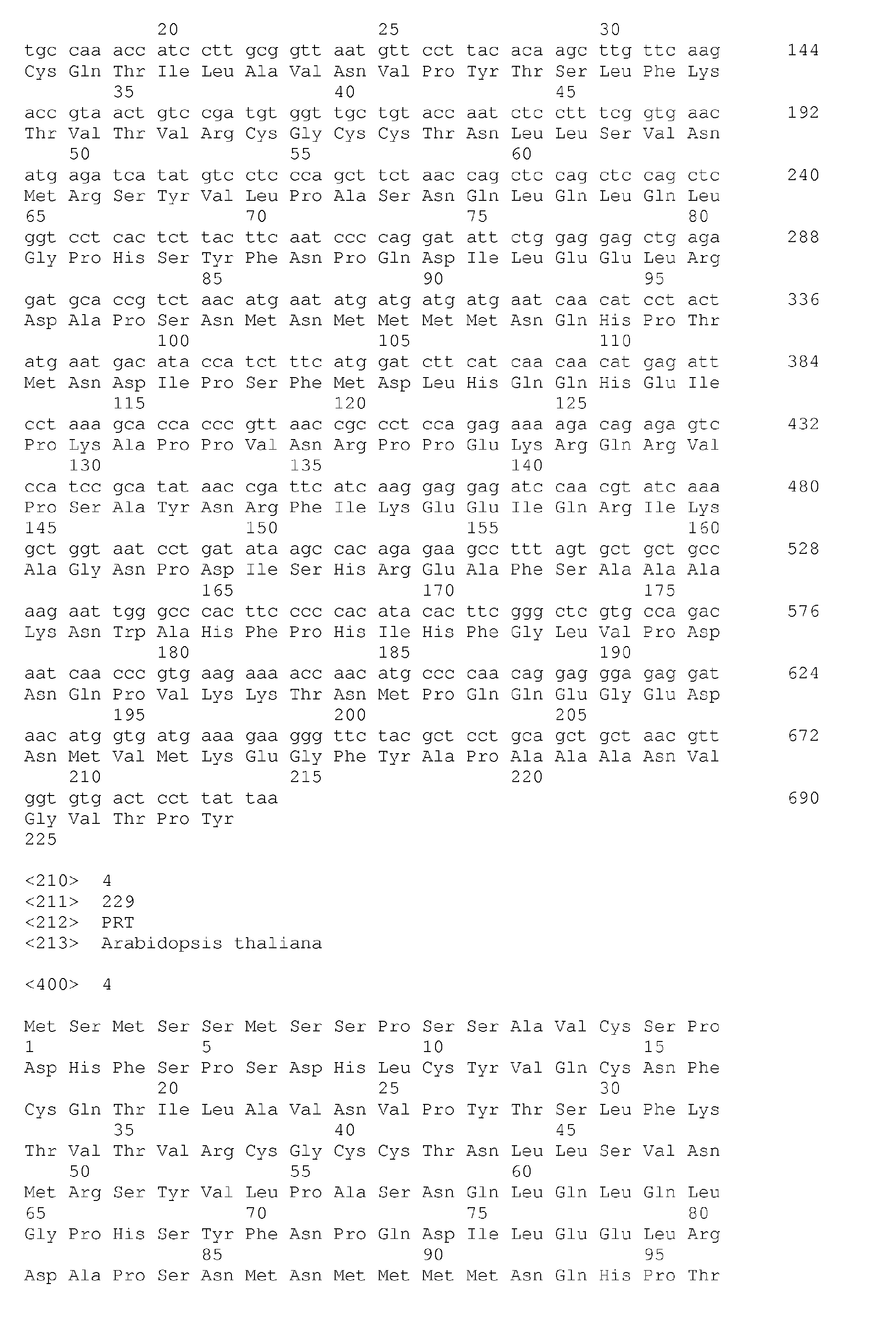


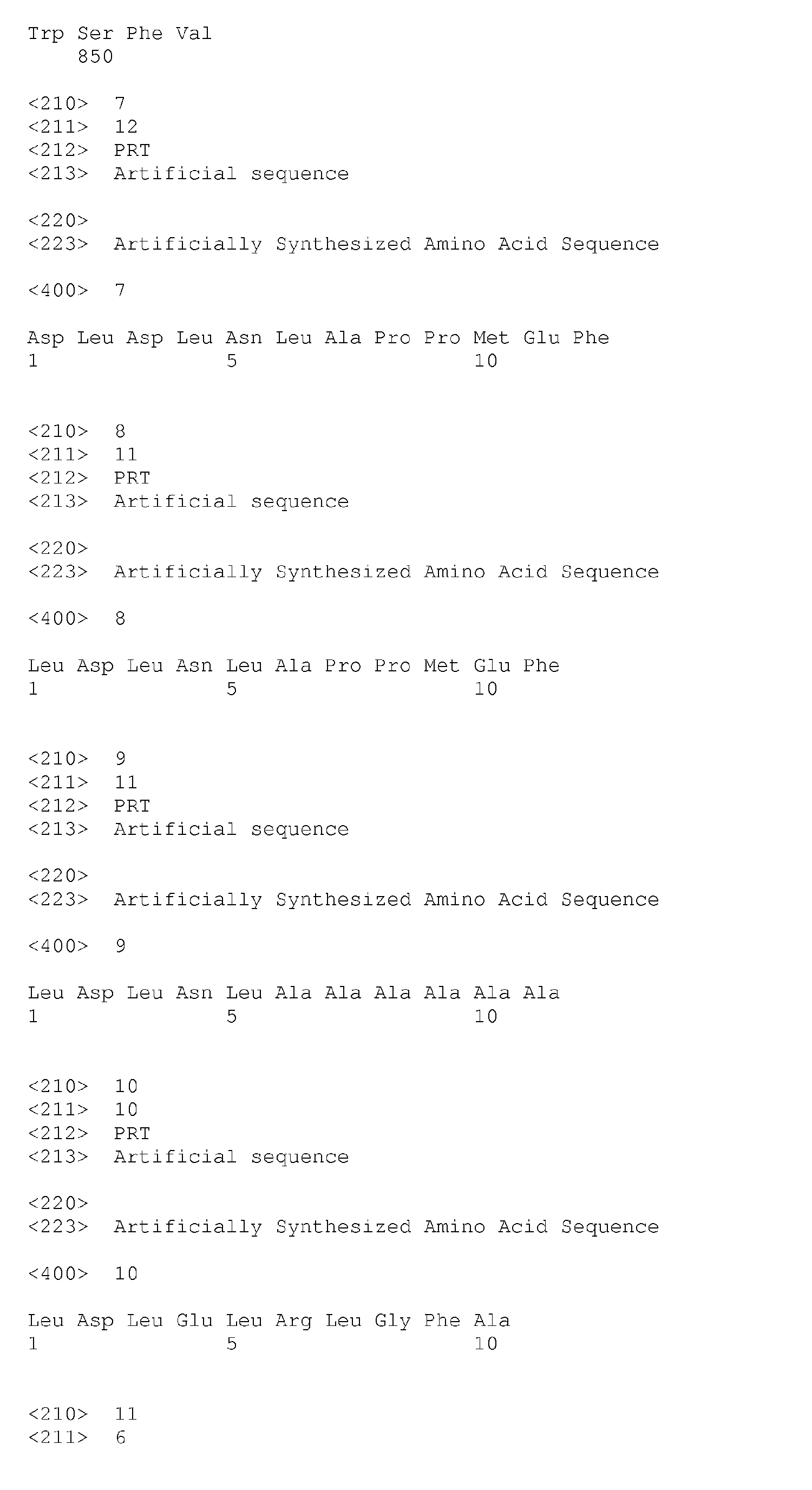


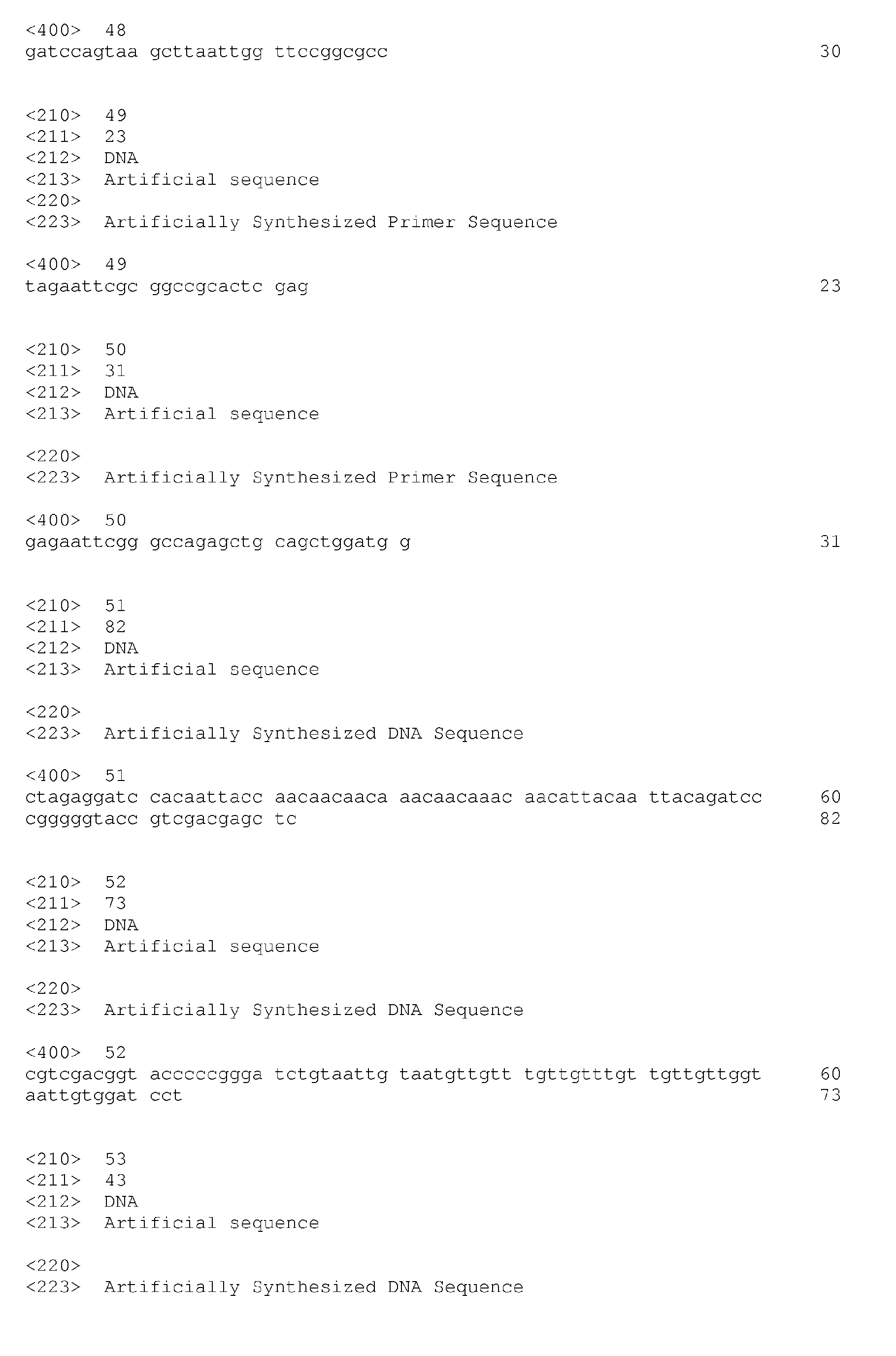


Also, the present invention relates to a plant produced by any one of the above-mentioned methods.
Claims (7)
- A method for producing a plant with modified flower morphology, characterized in that flower morphology of said plant is modified by suppressing the function of a transcription factor involved in the polarity determination of said plant
- The method for producing a plant with modified flower morphology according to claim 1, said method comprising the steps of
obtaining a transformed cell by introducing a chimeric DNA in which a DNA encoding said transcription factor and a DNA encoding a functional peptide converting a transcription factor into a transcription repressor are fused; and
regenerating a transformed plant from said transformed cell. - The method for producing a plant with modified flower morphology according to claim 2, wherein said DNA encoding said transcription factor is selected from:(1) a DNA encoding the amino acid sequence of SEQ ID NO: 2;(2) a DNA comprising the nucleotide sequence of SEQ ID NO:1;(3) a DNA encoding an amino acid sequence of SEQ ID NO: 2 including substitution, deletion, insertion, and/or addition of one or several amino acids;(4) a DNA hybridizing with the DNA consisting of the nucleotide sequence complementary to the nucleotide sequence of SEQ ID NO: under stringent conditions; and(5) a DNA encoding an amino acid sequence having an identity of not less than 90% to the amino acid sequence of SEQ ID NO: 2.
- The method for producing a plant with modified flower morphology according to claim 2, wherein said DNA encoding said transcription factor is selected from:(1) a DNA encoding the amino acid sequence of SEQ ID NO: 4;(2) a DNA comprising the nucleotide sequence of SEQ ID NO: 3;(3) a DNA encoding an amino acid sequence of SEQ ID NO: 4 including substitution, deletion, insertion, and/or addition of one or several amino acids;(4) a DNA hybridizing with the DNA consisting of the nucleotide sequence complementary to the nucleotide sequence of SEQ ID NO: 3 under stringent conditions; and(5) a DNA encoding an amino acid sequence having an identity of not less than 90% to the amino acid sequence of SEQ ID NO: 4.
- The method for producing a plant with modified flower morphology according to claim 2, wherein said DNA encoding said transcription factor is selected from:(1) a DNA encoding the amino acid sequence of SEQ ID NO: 6;(2) a DNA comprising the nucleotide sequence of SEQ ID NO: 5;(3) a DNA encoding an amino acid sequence of SEQ ID NO: 6 including substitution, deletion, insertion, and/or addition of one or several amino acids;(4) a DNA hybridizing with the DNA consisting of the nucleotide sequence complementary to the nucleotide sequence of SEQ ID NO: 5 under stringent conditions; and(5) a DNA encoding an amino acid sequence having an identity of not less than 90% to the amino acid sequence of SEQ ID NO: 6.
- The method for producing a plant with modified flower morphology according to any one of claims 2 to 5, wherein said functional peptide is a peptide having the amino acid sequence of any one of the SEQ ID NO: 7 to SEQ ID NO: 46.
- A plant produced by the method for production according to any one of claims 1 to 6.
Applications Claiming Priority (2)
| Application Number | Priority Date | Filing Date | Title |
|---|---|---|---|
| JP2007204253 | 2007-08-06 | ||
| PCT/JP2008/063973 WO2009020101A1 (en) | 2007-08-06 | 2008-08-04 | Method for producing plant with modified flower morphology |
Publications (3)
| Publication Number | Publication Date |
|---|---|
| EP2183963A1 true EP2183963A1 (en) | 2010-05-12 |
| EP2183963A4 EP2183963A4 (en) | 2010-09-01 |
| EP2183963B1 EP2183963B1 (en) | 2013-09-18 |
Family
ID=40341333
Family Applications (1)
| Application Number | Title | Priority Date | Filing Date |
|---|---|---|---|
| EP08792170.6A Not-in-force EP2183963B1 (en) | 2007-08-06 | 2008-08-04 | Method for producing plant with modified flower morphology |
Country Status (4)
| Country | Link |
|---|---|
| US (1) | US8314291B2 (en) |
| EP (1) | EP2183963B1 (en) |
| JP (1) | JP5099138B2 (en) |
| WO (1) | WO2009020101A1 (en) |
Families Citing this family (3)
| Publication number | Priority date | Publication date | Assignee | Title |
|---|---|---|---|---|
| CA2822302A1 (en) | 2006-02-13 | 2007-08-23 | Alethia Biotherapeutics Inc. | Methods of impairing osteoclast differentiation |
| US8168181B2 (en) | 2006-02-13 | 2012-05-01 | Alethia Biotherapeutics, Inc. | Methods of impairing osteoclast differentiation using antibodies that bind siglec-15 |
| ES2723885T3 (en) | 2012-07-19 | 2019-09-03 | Daiichi Sankyo Co Ltd | Anti-Siglec-15 antibodies |
Family Cites Families (13)
| Publication number | Priority date | Publication date | Assignee | Title |
|---|---|---|---|---|
| JPH11318462A (en) | 1998-05-15 | 1999-11-24 | Kiyotaka Okada | Genes involved in flower formation in plants |
| JP3407033B2 (en) | 2000-03-27 | 2003-05-19 | 独立行政法人産業技術総合研究所 | Peptides having the function of suppressing gene transcription |
| JP3421740B2 (en) | 2000-03-27 | 2003-06-30 | 独立行政法人産業技術総合研究所 | Peptides having the function of suppressing gene transcription |
| JP3407034B2 (en) | 2000-03-27 | 2003-05-19 | 独立行政法人産業技術総合研究所 | Peptides having the function of suppressing gene transcription |
| JP3409079B2 (en) | 2000-03-27 | 2003-05-19 | 独立行政法人産業技術総合研究所 | Peptides having the function of suppressing gene transcription |
| JP3407035B2 (en) | 2000-04-11 | 2003-05-19 | 独立行政法人産業技術総合研究所 | Peptides having the function of suppressing gene transcription |
| JP3407036B2 (en) | 2000-04-11 | 2003-05-19 | 独立行政法人産業技術総合研究所 | Peptides having the function of suppressing gene transcription |
| EP1456231A2 (en) | 2001-12-20 | 2004-09-15 | Shire Biochem Inc. | Streptococcus antigens |
| EP1469010B1 (en) * | 2001-12-26 | 2008-11-12 | National Institute of Advanced Industrial Science and Technology | Transcription regulatory gene and peptide |
| AU2005203861B2 (en) * | 2004-01-07 | 2007-11-22 | Japan Science And Technology Agency | Method of producing sterile plant, plant obtained by using the same and use thereof |
| JP2005192483A (en) | 2004-01-07 | 2005-07-21 | Japan Science & Technology Agency | Method for producing male sterile body of plant, plant body obtained using the same, and use thereof |
| JP2006042729A (en) * | 2004-08-06 | 2006-02-16 | Japan Science & Technology Agency | Method for producing double blooming plant body, plant body obtained using the same, and use thereof |
| JP2005295879A (en) | 2004-04-09 | 2005-10-27 | Japan Science & Technology Agency | Method for producing plant with modified flower form, plant obtained using the same, and use thereof |
-
2008
- 2008-08-04 US US12/672,489 patent/US8314291B2/en not_active Expired - Fee Related
- 2008-08-04 WO PCT/JP2008/063973 patent/WO2009020101A1/en not_active Ceased
- 2008-08-04 EP EP08792170.6A patent/EP2183963B1/en not_active Not-in-force
- 2008-08-04 JP JP2009526453A patent/JP5099138B2/en not_active Expired - Fee Related
Also Published As
| Publication number | Publication date |
|---|---|
| WO2009020101A1 (en) | 2009-02-12 |
| JP5099138B2 (en) | 2012-12-12 |
| EP2183963B1 (en) | 2013-09-18 |
| JPWO2009020101A1 (en) | 2010-11-04 |
| EP2183963A4 (en) | 2010-09-01 |
| US8314291B2 (en) | 2012-11-20 |
| US20100146666A1 (en) | 2010-06-10 |
Similar Documents
| Publication | Publication Date | Title |
|---|---|---|
| US7179904B2 (en) | Promoter, promoter control elements, and combinations, and uses thereof | |
| US6946586B1 (en) | Genetic trait breeding method | |
| US20110271405A1 (en) | Compositions and methods for increasing seed size and/or yield by expressing a modified transgene encoding a growth and/or development related protein | |
| CA2367408A1 (en) | Genetic trait breeding method | |
| CA2734798A1 (en) | Engineering of bolting resistance in sugar beet by means of the transgenic expression of the beet homologue of flowering time control gene ft | |
| US20140173779A1 (en) | Methods and Compositions for Effecting Developmental Gene Expression in Plants | |
| NZ552613A (en) | Nucleic acid molecules and their use in plant male sterility | |
| DE60124698T2 (en) | PLANT DEVELOPMENT CONTROLING NUCLEIC ACIDS | |
| CA2877496A1 (en) | Terminating flower (tmf) gene and methods of use | |
| AU2005203861B2 (en) | Method of producing sterile plant, plant obtained by using the same and use thereof | |
| US8314291B2 (en) | Method for producing plant with modified flower morphology | |
| CN107573411B (en) | Application of wheat TaZIM1-7A protein in regulation and control of crop heading period | |
| Sage-Ono et al. | Induction of double flowers in Pharbitis nil using a class-C MADS-box transcription factor with Chimeric REpressor gene-Silencing Technology | |
| WO2004081204A1 (en) | Plant and plant cell having been modified in cell multiplication and development/differentiation | |
| JP2006006248A (en) | Method for producing plant body with controlled leaf morphogenesis, plant body obtained using the same, and use thereof | |
| JP2006042729A (en) | Method for producing double blooming plant body, plant body obtained using the same, and use thereof | |
| AU2002305492B2 (en) | Combinations of genes for producing seed plants exhibiting modulated reproductive development | |
| JP2006020607A (en) | Method for producing plant body with modified leaf morphology, plant body obtained using the same, and use thereof | |
| CN112342236A (en) | Application of rice histone methyltransferase in enhancing crop drought resistance and improving yield per plant | |
| JP2005295879A (en) | Method for producing plant with modified flower form, plant obtained using the same, and use thereof | |
| JP2006280242A (en) | Method for producing completely sterile plant, plant obtained using the same, and use thereof | |
| US7560612B2 (en) | Early-inflorescence-preferred regulatory elements and uses thereof | |
| CN112321693B (en) | Application of wheat TaCCT1-6A protein in regulation and control of crop heading period | |
| WO2001031017A2 (en) | Plants with a modified flower and seed development | |
| EP2514302B1 (en) | Process for production of multi-petaled cyclamen |
Legal Events
| Date | Code | Title | Description |
|---|---|---|---|
| PUAI | Public reference made under article 153(3) epc to a published international application that has entered the european phase |
Free format text: ORIGINAL CODE: 0009012 |
|
| 17P | Request for examination filed |
Effective date: 20100302 |
|
| AK | Designated contracting states |
Kind code of ref document: A1 Designated state(s): AT BE BG CH CY CZ DE DK EE ES FI FR GB GR HR HU IE IS IT LI LT LU LV MC MT NL NO PL PT RO SE SI SK TR |
|
| AX | Request for extension of the european patent |
Extension state: AL BA MK RS |
|
| RAP1 | Party data changed (applicant data changed or rights of an application transferred) |
Owner name: UNIVERSITY OF TSUKUBA |
|
| A4 | Supplementary search report drawn up and despatched |
Effective date: 20100804 |
|
| RAP1 | Party data changed (applicant data changed or rights of an application transferred) |
Owner name: UNIVERSITY OF TSUKUBA |
|
| DAX | Request for extension of the european patent (deleted) | ||
| RAP1 | Party data changed (applicant data changed or rights of an application transferred) |
Owner name: UNIVERSITY OF TSUKUBA |
|
| 17Q | First examination report despatched |
Effective date: 20110825 |
|
| GRAP | Despatch of communication of intention to grant a patent |
Free format text: ORIGINAL CODE: EPIDOSNIGR1 |
|
| INTG | Intention to grant announced |
Effective date: 20130412 |
|
| GRAS | Grant fee paid |
Free format text: ORIGINAL CODE: EPIDOSNIGR3 |
|
| GRAA | (expected) grant |
Free format text: ORIGINAL CODE: 0009210 |
|
| AK | Designated contracting states |
Kind code of ref document: B1 Designated state(s): AT BE BG CH CY CZ DE DK EE ES FI FR GB GR HR HU IE IS IT LI LT LU LV MC MT NL NO PL PT RO SE SI SK TR |
|
| REG | Reference to a national code |
Ref country code: GB Ref legal event code: FG4D |
|
| REG | Reference to a national code |
Ref country code: CH Ref legal event code: EP |
|
| REG | Reference to a national code |
Ref country code: IE Ref legal event code: FG4D |
|
| REG | Reference to a national code |
Ref country code: AT Ref legal event code: REF Ref document number: 632237 Country of ref document: AT Kind code of ref document: T Effective date: 20131015 |
|
| REG | Reference to a national code |
Ref country code: DE Ref legal event code: R096 Ref document number: 602008027670 Country of ref document: DE Effective date: 20131114 |
|
| REG | Reference to a national code |
Ref country code: CH Ref legal event code: NV Representative=s name: AMMANN PATENTANWAELTE AG BERN, CH |
|
| REG | Reference to a national code |
Ref country code: NL Ref legal event code: T3 |
|
| PG25 | Lapsed in a contracting state [announced via postgrant information from national office to epo] |
Ref country code: CY Free format text: LAPSE BECAUSE OF FAILURE TO SUBMIT A TRANSLATION OF THE DESCRIPTION OR TO PAY THE FEE WITHIN THE PRESCRIBED TIME-LIMIT Effective date: 20130828 Ref country code: LT Free format text: LAPSE BECAUSE OF FAILURE TO SUBMIT A TRANSLATION OF THE DESCRIPTION OR TO PAY THE FEE WITHIN THE PRESCRIBED TIME-LIMIT Effective date: 20130918 Ref country code: SE Free format text: LAPSE BECAUSE OF FAILURE TO SUBMIT A TRANSLATION OF THE DESCRIPTION OR TO PAY THE FEE WITHIN THE PRESCRIBED TIME-LIMIT Effective date: 20130918 Ref country code: HR Free format text: LAPSE BECAUSE OF FAILURE TO SUBMIT A TRANSLATION OF THE DESCRIPTION OR TO PAY THE FEE WITHIN THE PRESCRIBED TIME-LIMIT Effective date: 20130918 Ref country code: NO Free format text: LAPSE BECAUSE OF FAILURE TO SUBMIT A TRANSLATION OF THE DESCRIPTION OR TO PAY THE FEE WITHIN THE PRESCRIBED TIME-LIMIT Effective date: 20131218 |
|
| REG | Reference to a national code |
Ref country code: AT Ref legal event code: MK05 Ref document number: 632237 Country of ref document: AT Kind code of ref document: T Effective date: 20130918 |
|
| REG | Reference to a national code |
Ref country code: LT Ref legal event code: MG4D |
|
| PG25 | Lapsed in a contracting state [announced via postgrant information from national office to epo] |
Ref country code: FI Free format text: LAPSE BECAUSE OF FAILURE TO SUBMIT A TRANSLATION OF THE DESCRIPTION OR TO PAY THE FEE WITHIN THE PRESCRIBED TIME-LIMIT Effective date: 20130918 Ref country code: GR Free format text: LAPSE BECAUSE OF FAILURE TO SUBMIT A TRANSLATION OF THE DESCRIPTION OR TO PAY THE FEE WITHIN THE PRESCRIBED TIME-LIMIT Effective date: 20131219 Ref country code: SI Free format text: LAPSE BECAUSE OF FAILURE TO SUBMIT A TRANSLATION OF THE DESCRIPTION OR TO PAY THE FEE WITHIN THE PRESCRIBED TIME-LIMIT Effective date: 20130918 Ref country code: ES Free format text: LAPSE BECAUSE OF FAILURE TO SUBMIT A TRANSLATION OF THE DESCRIPTION OR TO PAY THE FEE WITHIN THE PRESCRIBED TIME-LIMIT Effective date: 20130918 Ref country code: LV Free format text: LAPSE BECAUSE OF FAILURE TO SUBMIT A TRANSLATION OF THE DESCRIPTION OR TO PAY THE FEE WITHIN THE PRESCRIBED TIME-LIMIT Effective date: 20130918 |
|
| PG25 | Lapsed in a contracting state [announced via postgrant information from national office to epo] |
Ref country code: CY Free format text: LAPSE BECAUSE OF FAILURE TO SUBMIT A TRANSLATION OF THE DESCRIPTION OR TO PAY THE FEE WITHIN THE PRESCRIBED TIME-LIMIT Effective date: 20130918 Ref country code: BE Free format text: LAPSE BECAUSE OF FAILURE TO SUBMIT A TRANSLATION OF THE DESCRIPTION OR TO PAY THE FEE WITHIN THE PRESCRIBED TIME-LIMIT Effective date: 20130918 |
|
| PG25 | Lapsed in a contracting state [announced via postgrant information from national office to epo] |
Ref country code: CZ Free format text: LAPSE BECAUSE OF FAILURE TO SUBMIT A TRANSLATION OF THE DESCRIPTION OR TO PAY THE FEE WITHIN THE PRESCRIBED TIME-LIMIT Effective date: 20130918 Ref country code: IS Free format text: LAPSE BECAUSE OF FAILURE TO SUBMIT A TRANSLATION OF THE DESCRIPTION OR TO PAY THE FEE WITHIN THE PRESCRIBED TIME-LIMIT Effective date: 20140118 Ref country code: SK Free format text: LAPSE BECAUSE OF FAILURE TO SUBMIT A TRANSLATION OF THE DESCRIPTION OR TO PAY THE FEE WITHIN THE PRESCRIBED TIME-LIMIT Effective date: 20130918 Ref country code: EE Free format text: LAPSE BECAUSE OF FAILURE TO SUBMIT A TRANSLATION OF THE DESCRIPTION OR TO PAY THE FEE WITHIN THE PRESCRIBED TIME-LIMIT Effective date: 20130918 Ref country code: RO Free format text: LAPSE BECAUSE OF FAILURE TO SUBMIT A TRANSLATION OF THE DESCRIPTION OR TO PAY THE FEE WITHIN THE PRESCRIBED TIME-LIMIT Effective date: 20130918 |
|
| PG25 | Lapsed in a contracting state [announced via postgrant information from national office to epo] |
Ref country code: AT Free format text: LAPSE BECAUSE OF FAILURE TO SUBMIT A TRANSLATION OF THE DESCRIPTION OR TO PAY THE FEE WITHIN THE PRESCRIBED TIME-LIMIT Effective date: 20130918 Ref country code: PL Free format text: LAPSE BECAUSE OF FAILURE TO SUBMIT A TRANSLATION OF THE DESCRIPTION OR TO PAY THE FEE WITHIN THE PRESCRIBED TIME-LIMIT Effective date: 20130918 |
|
| REG | Reference to a national code |
Ref country code: DE Ref legal event code: R097 Ref document number: 602008027670 Country of ref document: DE |
|
| PG25 | Lapsed in a contracting state [announced via postgrant information from national office to epo] |
Ref country code: PT Free format text: LAPSE BECAUSE OF FAILURE TO SUBMIT A TRANSLATION OF THE DESCRIPTION OR TO PAY THE FEE WITHIN THE PRESCRIBED TIME-LIMIT Effective date: 20140120 |
|
| PLBE | No opposition filed within time limit |
Free format text: ORIGINAL CODE: 0009261 |
|
| STAA | Information on the status of an ep patent application or granted ep patent |
Free format text: STATUS: NO OPPOSITION FILED WITHIN TIME LIMIT |
|
| 26N | No opposition filed |
Effective date: 20140619 |
|
| PG25 | Lapsed in a contracting state [announced via postgrant information from national office to epo] |
Ref country code: IT Free format text: LAPSE BECAUSE OF FAILURE TO SUBMIT A TRANSLATION OF THE DESCRIPTION OR TO PAY THE FEE WITHIN THE PRESCRIBED TIME-LIMIT Effective date: 20130918 |
|
| PG25 | Lapsed in a contracting state [announced via postgrant information from national office to epo] |
Ref country code: DK Free format text: LAPSE BECAUSE OF FAILURE TO SUBMIT A TRANSLATION OF THE DESCRIPTION OR TO PAY THE FEE WITHIN THE PRESCRIBED TIME-LIMIT Effective date: 20130918 |
|
| REG | Reference to a national code |
Ref country code: DE Ref legal event code: R097 Ref document number: 602008027670 Country of ref document: DE Effective date: 20140619 |
|
| PGFP | Annual fee paid to national office [announced via postgrant information from national office to epo] |
Ref country code: NL Payment date: 20140820 Year of fee payment: 7 |
|
| PGFP | Annual fee paid to national office [announced via postgrant information from national office to epo] |
Ref country code: FR Payment date: 20140821 Year of fee payment: 7 |
|
| REG | Reference to a national code |
Ref country code: DE Ref legal event code: R119 Ref document number: 602008027670 Country of ref document: DE |
|
| PG25 | Lapsed in a contracting state [announced via postgrant information from national office to epo] |
Ref country code: LU Free format text: LAPSE BECAUSE OF FAILURE TO SUBMIT A TRANSLATION OF THE DESCRIPTION OR TO PAY THE FEE WITHIN THE PRESCRIBED TIME-LIMIT Effective date: 20140804 Ref country code: MC Free format text: LAPSE BECAUSE OF FAILURE TO SUBMIT A TRANSLATION OF THE DESCRIPTION OR TO PAY THE FEE WITHIN THE PRESCRIBED TIME-LIMIT Effective date: 20130918 |
|
| REG | Reference to a national code |
Ref country code: CH Ref legal event code: PL |
|
| GBPC | Gb: european patent ceased through non-payment of renewal fee |
Effective date: 20140804 |
|
| PG25 | Lapsed in a contracting state [announced via postgrant information from national office to epo] |
Ref country code: LI Free format text: LAPSE BECAUSE OF NON-PAYMENT OF DUE FEES Effective date: 20140831 Ref country code: CH Free format text: LAPSE BECAUSE OF NON-PAYMENT OF DUE FEES Effective date: 20140831 |
|
| REG | Reference to a national code |
Ref country code: IE Ref legal event code: MM4A |
|
| REG | Reference to a national code |
Ref country code: DE Ref legal event code: R119 Ref document number: 602008027670 Country of ref document: DE Effective date: 20150303 |
|
| PG25 | Lapsed in a contracting state [announced via postgrant information from national office to epo] |
Ref country code: DE Free format text: LAPSE BECAUSE OF NON-PAYMENT OF DUE FEES Effective date: 20150303 Ref country code: GB Free format text: LAPSE BECAUSE OF NON-PAYMENT OF DUE FEES Effective date: 20140804 |
|
| PG25 | Lapsed in a contracting state [announced via postgrant information from national office to epo] |
Ref country code: IE Free format text: LAPSE BECAUSE OF NON-PAYMENT OF DUE FEES Effective date: 20140804 |
|
| REG | Reference to a national code |
Ref country code: NL Ref legal event code: MM Effective date: 20150901 |
|
| PG25 | Lapsed in a contracting state [announced via postgrant information from national office to epo] |
Ref country code: BG Free format text: LAPSE BECAUSE OF FAILURE TO SUBMIT A TRANSLATION OF THE DESCRIPTION OR TO PAY THE FEE WITHIN THE PRESCRIBED TIME-LIMIT Effective date: 20130918 |
|
| REG | Reference to a national code |
Ref country code: FR Ref legal event code: ST Effective date: 20160429 |
|
| PG25 | Lapsed in a contracting state [announced via postgrant information from national office to epo] |
Ref country code: NL Free format text: LAPSE BECAUSE OF NON-PAYMENT OF DUE FEES Effective date: 20150901 Ref country code: MT Free format text: LAPSE BECAUSE OF FAILURE TO SUBMIT A TRANSLATION OF THE DESCRIPTION OR TO PAY THE FEE WITHIN THE PRESCRIBED TIME-LIMIT Effective date: 20130918 |
|
| PG25 | Lapsed in a contracting state [announced via postgrant information from national office to epo] |
Ref country code: TR Free format text: LAPSE BECAUSE OF FAILURE TO SUBMIT A TRANSLATION OF THE DESCRIPTION OR TO PAY THE FEE WITHIN THE PRESCRIBED TIME-LIMIT Effective date: 20130918 Ref country code: HU Free format text: LAPSE BECAUSE OF FAILURE TO SUBMIT A TRANSLATION OF THE DESCRIPTION OR TO PAY THE FEE WITHIN THE PRESCRIBED TIME-LIMIT; INVALID AB INITIO Effective date: 20080804 |
|
| PG25 | Lapsed in a contracting state [announced via postgrant information from national office to epo] |
Ref country code: FR Free format text: LAPSE BECAUSE OF NON-PAYMENT OF DUE FEES Effective date: 20150831 |