EP2181699A1 - Kosmetische Formulierung mit Siloxanelastomeren zur Verbesserung der mikrobiologischen Stabilität - Google Patents
Kosmetische Formulierung mit Siloxanelastomeren zur Verbesserung der mikrobiologischen Stabilität Download PDFInfo
- Publication number
- EP2181699A1 EP2181699A1 EP09013270A EP09013270A EP2181699A1 EP 2181699 A1 EP2181699 A1 EP 2181699A1 EP 09013270 A EP09013270 A EP 09013270A EP 09013270 A EP09013270 A EP 09013270A EP 2181699 A1 EP2181699 A1 EP 2181699A1
- Authority
- EP
- European Patent Office
- Prior art keywords
- siloxane elastomers
- crosspolymer
- elastomers
- dimethicone
- ppg
- Prior art date
- Legal status (The legal status is an assumption and is not a legal conclusion. Google has not performed a legal analysis and makes no representation as to the accuracy of the status listed.)
- Withdrawn
Links
- 229920001971 elastomer Polymers 0.000 title claims abstract description 53
- 239000000806 elastomer Substances 0.000 title claims abstract description 53
- KPUWHANPEXNPJT-UHFFFAOYSA-N disiloxane Chemical class [SiH3]O[SiH3] KPUWHANPEXNPJT-UHFFFAOYSA-N 0.000 title claims abstract description 45
- 239000002537 cosmetic Substances 0.000 title claims abstract description 31
- 230000002906 microbiologic effect Effects 0.000 title claims abstract description 13
- 238000002360 preparation method Methods 0.000 claims abstract description 31
- 239000000203 mixture Substances 0.000 claims abstract description 23
- 239000000126 substance Substances 0.000 claims abstract description 10
- 125000001931 aliphatic group Chemical group 0.000 claims abstract description 5
- 239000003054 catalyst Substances 0.000 claims abstract description 3
- 238000006459 hydrosilylation reaction Methods 0.000 claims abstract description 3
- 125000001183 hydrocarbyl group Chemical group 0.000 claims abstract 2
- 239000003921 oil Substances 0.000 claims description 24
- 229940008099 dimethicone Drugs 0.000 claims description 22
- 239000004205 dimethyl polysiloxane Substances 0.000 claims description 22
- 235000013870 dimethyl polysiloxane Nutrition 0.000 claims description 22
- 229920000435 poly(dimethylsiloxane) Polymers 0.000 claims description 22
- 229920006037 cross link polymer Polymers 0.000 claims description 21
- 229920002554 vinyl polymer Polymers 0.000 claims description 8
- 239000001993 wax Substances 0.000 claims description 5
- 238000006243 chemical reaction Methods 0.000 claims description 4
- XUIMIQQOPSSXEZ-UHFFFAOYSA-N Silicon Chemical compound [Si] XUIMIQQOPSSXEZ-UHFFFAOYSA-N 0.000 abstract 1
- 229910052710 silicon Inorganic materials 0.000 abstract 1
- 239000010703 silicon Substances 0.000 abstract 1
- 238000009472 formulation Methods 0.000 description 17
- -1 alkyl benzoates Chemical class 0.000 description 13
- HEMHJVSKTPXQMS-UHFFFAOYSA-M Sodium hydroxide Chemical compound [OH-].[Na+] HEMHJVSKTPXQMS-UHFFFAOYSA-M 0.000 description 12
- 229920002545 silicone oil Polymers 0.000 description 11
- PEDCQBHIVMGVHV-UHFFFAOYSA-N Glycerine Chemical compound OCC(O)CO PEDCQBHIVMGVHV-UHFFFAOYSA-N 0.000 description 10
- XLYOFNOQVPJJNP-UHFFFAOYSA-N water Substances O XLYOFNOQVPJJNP-UHFFFAOYSA-N 0.000 description 10
- 239000002994 raw material Substances 0.000 description 9
- 229920001296 polysiloxane Polymers 0.000 description 8
- 239000003755 preservative agent Substances 0.000 description 8
- LFQSCWFLJHTTHZ-UHFFFAOYSA-N Ethanol Chemical compound CCO LFQSCWFLJHTTHZ-UHFFFAOYSA-N 0.000 description 7
- 230000000813 microbial effect Effects 0.000 description 7
- QWGRWMMWNDWRQN-UHFFFAOYSA-N 2-methylpropane-1,3-diol Chemical compound OCC(C)CO QWGRWMMWNDWRQN-UHFFFAOYSA-N 0.000 description 6
- PBFGMXZRJIUGKU-UHFFFAOYSA-N 3-decanoyloxybutyl decanoate Chemical compound CCCCCCCCCC(=O)OCCC(C)OC(=O)CCCCCCCCC PBFGMXZRJIUGKU-UHFFFAOYSA-N 0.000 description 6
- 229940114374 butylene glycol dicaprylate Drugs 0.000 description 6
- 150000002632 lipids Chemical class 0.000 description 6
- 239000002304 perfume Substances 0.000 description 6
- 239000000843 powder Substances 0.000 description 6
- LEACJMVNYZDSKR-UHFFFAOYSA-N 2-octyldodecan-1-ol Chemical compound CCCCCCCCCCC(CO)CCCCCCCC LEACJMVNYZDSKR-UHFFFAOYSA-N 0.000 description 5
- LFESLSYSZQYEIZ-UHFFFAOYSA-N 3-octanoyloxybutyl octanoate Chemical compound CCCCCCCC(=O)OCCC(C)OC(=O)CCCCCCC LFESLSYSZQYEIZ-UHFFFAOYSA-N 0.000 description 5
- KGKQNDQDVZQTAG-UHFFFAOYSA-N 8-methylnonyl 2,2-dimethylpropanoate Chemical compound CC(C)CCCCCCCOC(=O)C(C)(C)C KGKQNDQDVZQTAG-UHFFFAOYSA-N 0.000 description 5
- 239000004904 UV filter Substances 0.000 description 5
- 244000052616 bacterial pathogen Species 0.000 description 5
- PKPOVTYZGGYDIJ-UHFFFAOYSA-N dioctyl carbonate Chemical compound CCCCCCCCOC(=O)OCCCCCCCC PKPOVTYZGGYDIJ-UHFFFAOYSA-N 0.000 description 5
- 235000011187 glycerol Nutrition 0.000 description 5
- 229940100573 methylpropanediol Drugs 0.000 description 5
- 230000002335 preservative effect Effects 0.000 description 5
- GTJOHISYCKPIMT-UHFFFAOYSA-N 2-methylundecane Chemical compound CCCCCCCCCC(C)C GTJOHISYCKPIMT-UHFFFAOYSA-N 0.000 description 4
- NIXOWILDQLNWCW-UHFFFAOYSA-N Acrylic acid Chemical compound OC(=O)C=C NIXOWILDQLNWCW-UHFFFAOYSA-N 0.000 description 4
- 241000589513 Burkholderia cepacia Species 0.000 description 4
- SGVYKUFIHHTIFL-UHFFFAOYSA-N Isobutylhexyl Natural products CCCCCCCC(C)C SGVYKUFIHHTIFL-UHFFFAOYSA-N 0.000 description 4
- YBGZDTIWKVFICR-JLHYYAGUSA-N Octyl 4-methoxycinnamic acid Chemical compound CCCCC(CC)COC(=O)\C=C\C1=CC=C(OC)C=C1 YBGZDTIWKVFICR-JLHYYAGUSA-N 0.000 description 4
- 241000589776 Pseudomonas putida Species 0.000 description 4
- 229920002472 Starch Polymers 0.000 description 4
- GWEVSGVZZGPLCZ-UHFFFAOYSA-N Titan oxide Chemical compound O=[Ti]=O GWEVSGVZZGPLCZ-UHFFFAOYSA-N 0.000 description 4
- 229960003872 benzethonium Drugs 0.000 description 4
- DLAHAXOYRFRPFQ-UHFFFAOYSA-N dodecyl benzoate Chemical compound CCCCCCCCCCCCOC(=O)C1=CC=CC=C1 DLAHAXOYRFRPFQ-UHFFFAOYSA-N 0.000 description 4
- BXWNKGSJHAJOGX-UHFFFAOYSA-N hexadecan-1-ol Chemical compound CCCCCCCCCCCCCCCCO BXWNKGSJHAJOGX-UHFFFAOYSA-N 0.000 description 4
- 239000004615 ingredient Substances 0.000 description 4
- VKPSKYDESGTTFR-UHFFFAOYSA-N isododecane Natural products CC(C)(C)CC(C)CC(C)(C)C VKPSKYDESGTTFR-UHFFFAOYSA-N 0.000 description 4
- WWZKQHOCKIZLMA-UHFFFAOYSA-N octanoic acid Chemical compound CCCCCCCC(O)=O WWZKQHOCKIZLMA-UHFFFAOYSA-N 0.000 description 4
- OSORMYZMWHVFOZ-UHFFFAOYSA-N phenethyl benzoate Chemical compound C=1C=CC=CC=1C(=O)OCCC1=CC=CC=C1 OSORMYZMWHVFOZ-UHFFFAOYSA-N 0.000 description 4
- 210000003491 skin Anatomy 0.000 description 4
- 239000011734 sodium Substances 0.000 description 4
- 235000019698 starch Nutrition 0.000 description 4
- NKJOXAZJBOMXID-UHFFFAOYSA-N 1,1'-Oxybisoctane Chemical compound CCCCCCCCOCCCCCCCC NKJOXAZJBOMXID-UHFFFAOYSA-N 0.000 description 3
- WHBKVWBGTBULQY-UHFFFAOYSA-N 2-propylheptyl octanoate Chemical compound CCCCCCCC(=O)OCC(CCC)CCCCC WHBKVWBGTBULQY-UHFFFAOYSA-N 0.000 description 3
- 241000894006 Bacteria Species 0.000 description 3
- WVDDGKGOMKODPV-UHFFFAOYSA-N Benzyl alcohol Chemical compound OCC1=CC=CC=C1 WVDDGKGOMKODPV-UHFFFAOYSA-N 0.000 description 3
- ZAKOWWREFLAJOT-CEFNRUSXSA-N D-alpha-tocopherylacetate Chemical compound CC(=O)OC1=C(C)C(C)=C2O[C@@](CCC[C@H](C)CCC[C@H](C)CCCC(C)C)(C)CCC2=C1C ZAKOWWREFLAJOT-CEFNRUSXSA-N 0.000 description 3
- 240000004808 Saccharomyces cerevisiae Species 0.000 description 3
- 229920002125 Sokalan® Polymers 0.000 description 3
- 239000004480 active ingredient Substances 0.000 description 3
- 150000001298 alcohols Chemical class 0.000 description 3
- 125000005250 alkyl acrylate group Chemical group 0.000 description 3
- BTFJIXJJCSYFAL-UHFFFAOYSA-N arachidyl alcohol Natural products CCCCCCCCCCCCCCCCCCCCO BTFJIXJJCSYFAL-UHFFFAOYSA-N 0.000 description 3
- 229960005193 avobenzone Drugs 0.000 description 3
- 229960001631 carbomer Drugs 0.000 description 3
- 125000004432 carbon atom Chemical group C* 0.000 description 3
- 229940081733 cetearyl alcohol Drugs 0.000 description 3
- 239000003795 chemical substances by application Substances 0.000 description 3
- KRKNYBCHXYNGOX-UHFFFAOYSA-N citric acid Chemical compound OC(=O)CC(O)(C(O)=O)CC(O)=O KRKNYBCHXYNGOX-UHFFFAOYSA-N 0.000 description 3
- 125000004122 cyclic group Chemical group 0.000 description 3
- ZAKOWWREFLAJOT-UHFFFAOYSA-N d-alpha-Tocopheryl acetate Natural products CC(=O)OC1=C(C)C(C)=C2OC(CCCC(C)CCCC(C)CCCC(C)C)(C)CCC2=C1C ZAKOWWREFLAJOT-UHFFFAOYSA-N 0.000 description 3
- 239000000975 dye Substances 0.000 description 3
- 150000002148 esters Chemical class 0.000 description 3
- UBHWBODXJBSFLH-UHFFFAOYSA-N hexadecan-1-ol;octadecan-1-ol Chemical compound CCCCCCCCCCCCCCCCO.CCCCCCCCCCCCCCCCCCO UBHWBODXJBSFLH-UHFFFAOYSA-N 0.000 description 3
- 150000002430 hydrocarbons Chemical group 0.000 description 3
- 230000003020 moisturizing effect Effects 0.000 description 3
- BARWIPMJPCRCTP-CLFAGFIQSA-N oleyl oleate Chemical compound CCCCCCCC\C=C/CCCCCCCCOC(=O)CCCCCCC\C=C/CCCCCCCC BARWIPMJPCRCTP-CLFAGFIQSA-N 0.000 description 3
- 229920006395 saturated elastomer Polymers 0.000 description 3
- 125000004079 stearyl group Chemical group [H]C([*])([H])C([H])([H])C([H])([H])C([H])([H])C([H])([H])C([H])([H])C([H])([H])C([H])([H])C([H])([H])C([H])([H])C([H])([H])C([H])([H])C([H])([H])C([H])([H])C([H])([H])C([H])([H])C([H])([H])C([H])([H])[H] 0.000 description 3
- 229940042585 tocopherol acetate Drugs 0.000 description 3
- 150000003626 triacylglycerols Chemical class 0.000 description 3
- 239000000230 xanthan gum Substances 0.000 description 3
- 229920001285 xanthan gum Polymers 0.000 description 3
- 235000010493 xanthan gum Nutrition 0.000 description 3
- 229940082509 xanthan gum Drugs 0.000 description 3
- VBICKXHEKHSIBG-UHFFFAOYSA-N 1-monostearoylglycerol Chemical compound CCCCCCCCCCCCCCCCCC(=O)OCC(O)CO VBICKXHEKHSIBG-UHFFFAOYSA-N 0.000 description 2
- TYYHDKOVFSVWON-UHFFFAOYSA-N 2-butyl-2-methoxy-1,3-diphenylpropane-1,3-dione Chemical compound C=1C=CC=CC=1C(=O)C(OC)(CCCC)C(=O)C1=CC=CC=C1 TYYHDKOVFSVWON-UHFFFAOYSA-N 0.000 description 2
- APINLBHZXUNBHE-UHFFFAOYSA-N 3,4-diethyl-2-hexylphenol;5-methoxy-4-phenyltriazine Chemical compound COC1=CN=NN=C1C1=CC=CC=C1.CCCCCCC1=C(O)C=CC(CC)=C1CC APINLBHZXUNBHE-UHFFFAOYSA-N 0.000 description 2
- OHCBNHXSUYKHAE-UHFFFAOYSA-N 5-ethyl-4-hexyltriazine Chemical compound CCCCCCC1=NN=NC=C1CC OHCBNHXSUYKHAE-UHFFFAOYSA-N 0.000 description 2
- KCXVZYZYPLLWCC-UHFFFAOYSA-N EDTA Chemical compound OC(=O)CN(CC(O)=O)CCN(CC(O)=O)CC(O)=O KCXVZYZYPLLWCC-UHFFFAOYSA-N 0.000 description 2
- 241000233866 Fungi Species 0.000 description 2
- DGAQECJNVWCQMB-PUAWFVPOSA-M Ilexoside XXIX Chemical compound C[C@@H]1CC[C@@]2(CC[C@@]3(C(=CC[C@H]4[C@]3(CC[C@@H]5[C@@]4(CC[C@@H](C5(C)C)OS(=O)(=O)[O-])C)C)[C@@H]2[C@]1(C)O)C)C(=O)O[C@H]6[C@@H]([C@H]([C@@H]([C@H](O6)CO)O)O)O.[Na+] DGAQECJNVWCQMB-PUAWFVPOSA-M 0.000 description 2
- JHWNWJKBPDFINM-UHFFFAOYSA-N Laurolactam Chemical compound O=C1CCCCCCCCCCCN1 JHWNWJKBPDFINM-UHFFFAOYSA-N 0.000 description 2
- CSNNHWWHGAXBCP-UHFFFAOYSA-L Magnesium sulfate Chemical compound [Mg+2].[O-][S+2]([O-])([O-])[O-] CSNNHWWHGAXBCP-UHFFFAOYSA-L 0.000 description 2
- 240000003183 Manihot esculenta Species 0.000 description 2
- 235000016735 Manihot esculenta subsp esculenta Nutrition 0.000 description 2
- WHNWPMSKXPGLAX-UHFFFAOYSA-N N-Vinyl-2-pyrrolidone Chemical compound C=CN1CCCC1=O WHNWPMSKXPGLAX-UHFFFAOYSA-N 0.000 description 2
- 229920000299 Nylon 12 Polymers 0.000 description 2
- 229920002690 Polyoxyl 40 HydrogenatedCastorOil Polymers 0.000 description 2
- 229920002701 Polyoxyl 40 Stearate Polymers 0.000 description 2
- 239000004721 Polyphenylene oxide Substances 0.000 description 2
- QAOWNCQODCNURD-UHFFFAOYSA-L Sulfate Chemical compound [O-]S([O-])(=O)=O QAOWNCQODCNURD-UHFFFAOYSA-L 0.000 description 2
- 150000001252 acrylic acid derivatives Chemical class 0.000 description 2
- ULBTUVJTXULMLP-UHFFFAOYSA-N butyl octadecanoate Chemical compound CCCCCCCCCCCCCCCCCC(=O)OCCCC ULBTUVJTXULMLP-UHFFFAOYSA-N 0.000 description 2
- 150000004649 carbonic acid derivatives Chemical class 0.000 description 2
- 229960000541 cetyl alcohol Drugs 0.000 description 2
- 229940071160 cocoate Drugs 0.000 description 2
- 238000011109 contamination Methods 0.000 description 2
- 229920001577 copolymer Polymers 0.000 description 2
- CVSVTCORWBXHQV-UHFFFAOYSA-N creatine Chemical compound NC(=[NH2+])N(C)CC([O-])=O CVSVTCORWBXHQV-UHFFFAOYSA-N 0.000 description 2
- FBYYWBUKHICADY-UHFFFAOYSA-N decanoic acid;2-[[3-hydroxy-2,2-bis(hydroxymethyl)propoxy]methyl]-2-(hydroxymethyl)propane-1,3-diol;octanoic acid;pentanoic acid Chemical compound CCCCC(O)=O.CCCCCCCC(O)=O.CCCCCCCCCC(O)=O.OCC(CO)(CO)COCC(CO)(CO)CO FBYYWBUKHICADY-UHFFFAOYSA-N 0.000 description 2
- ZUOUZKKEUPVFJK-UHFFFAOYSA-N diphenyl Chemical compound C1=CC=CC=C1C1=CC=CC=C1 ZUOUZKKEUPVFJK-UHFFFAOYSA-N 0.000 description 2
- 239000000839 emulsion Substances 0.000 description 2
- 238000005516 engineering process Methods 0.000 description 2
- 229940075529 glyceryl stearate Drugs 0.000 description 2
- 229940049294 glyceryl stearate se Drugs 0.000 description 2
- XUGNVMKQXJXZCD-UHFFFAOYSA-N isopropyl palmitate Chemical compound CCCCCCCCCCCCCCCC(=O)OC(C)C XUGNVMKQXJXZCD-UHFFFAOYSA-N 0.000 description 2
- 229940105132 myristate Drugs 0.000 description 2
- 229960003921 octisalate Drugs 0.000 description 2
- FMJSMJQBSVNSBF-UHFFFAOYSA-N octocrylene Chemical group C=1C=CC=CC=1C(=C(C#N)C(=O)OCC(CC)CCCC)C1=CC=CC=C1 FMJSMJQBSVNSBF-UHFFFAOYSA-N 0.000 description 2
- 229960000601 octocrylene Drugs 0.000 description 2
- WCJLCOAEJIHPCW-UHFFFAOYSA-N octyl 2-hydroxybenzoate Chemical compound CCCCCCCCOC(=O)C1=CC=CC=C1O WCJLCOAEJIHPCW-UHFFFAOYSA-N 0.000 description 2
- OQILCOQZDHPEAZ-UHFFFAOYSA-N octyl palmitate Chemical compound CCCCCCCCCCCCCCCC(=O)OCCCCCCCC OQILCOQZDHPEAZ-UHFFFAOYSA-N 0.000 description 2
- 229920000570 polyether Polymers 0.000 description 2
- 229910052708 sodium Inorganic materials 0.000 description 2
- 239000008107 starch Substances 0.000 description 2
- TUNFSRHWOTWDNC-UHFFFAOYSA-N tetradecanoic acid Chemical compound CCCCCCCCCCCCCC(O)=O TUNFSRHWOTWDNC-UHFFFAOYSA-N 0.000 description 2
- 239000002562 thickening agent Substances 0.000 description 2
- 239000004408 titanium dioxide Substances 0.000 description 2
- GKAVWWCJCPVMNR-UHFFFAOYSA-N tridecyl octadecanoate Chemical compound CCCCCCCCCCCCCCCCCC(=O)OCCCCCCCCCCCCC GKAVWWCJCPVMNR-UHFFFAOYSA-N 0.000 description 2
- SMYKBXMWXCZOLU-UHFFFAOYSA-N tris-decyl benzene-1,2,4-tricarboxylate Chemical compound CCCCCCCCCCOC(=O)C1=CC=C(C(=O)OCCCCCCCCCC)C(C(=O)OCCCCCCCCCC)=C1 SMYKBXMWXCZOLU-UHFFFAOYSA-N 0.000 description 2
- 125000000391 vinyl group Chemical group [H]C([*])=C([H])[H] 0.000 description 2
- 229940088594 vitamin Drugs 0.000 description 2
- 229930003231 vitamin Natural products 0.000 description 2
- 239000011782 vitamin Substances 0.000 description 2
- 235000013343 vitamin Nutrition 0.000 description 2
- 239000000341 volatile oil Substances 0.000 description 2
- PUPZLCDOIYMWBV-UHFFFAOYSA-N (+/-)-1,3-Butanediol Chemical compound CC(O)CCO PUPZLCDOIYMWBV-UHFFFAOYSA-N 0.000 description 1
- JNYAEWCLZODPBN-JGWLITMVSA-N (2r,3r,4s)-2-[(1r)-1,2-dihydroxyethyl]oxolane-3,4-diol Chemical compound OC[C@@H](O)[C@H]1OC[C@H](O)[C@H]1O JNYAEWCLZODPBN-JGWLITMVSA-N 0.000 description 1
- MEJYDZQQVZJMPP-ULAWRXDQSA-N (3s,3ar,6r,6ar)-3,6-dimethoxy-2,3,3a,5,6,6a-hexahydrofuro[3,2-b]furan Chemical compound CO[C@H]1CO[C@@H]2[C@H](OC)CO[C@@H]21 MEJYDZQQVZJMPP-ULAWRXDQSA-N 0.000 description 1
- OVYMWJFNQQOJBU-UHFFFAOYSA-N 1-octanoyloxypropan-2-yl octanoate Chemical compound CCCCCCCC(=O)OCC(C)OC(=O)CCCCCCC OVYMWJFNQQOJBU-UHFFFAOYSA-N 0.000 description 1
- OWISAISQSYLQFG-UHFFFAOYSA-N 2,2-diethyl-N-(5-hexyltriazin-4-yl)butanamide Chemical compound C(C)C(C(=O)NC1=NN=NC=C1CCCCCC)(CC)CC OWISAISQSYLQFG-UHFFFAOYSA-N 0.000 description 1
- JNAYPSWVMNJOPQ-UHFFFAOYSA-N 2,3-bis(16-methylheptadecanoyloxy)propyl 16-methylheptadecanoate Chemical compound CC(C)CCCCCCCCCCCCCCC(=O)OCC(OC(=O)CCCCCCCCCCCCCCC(C)C)COC(=O)CCCCCCCCCCCCCCC(C)C JNAYPSWVMNJOPQ-UHFFFAOYSA-N 0.000 description 1
- CHHHXKFHOYLYRE-UHFFFAOYSA-M 2,4-Hexadienoic acid, potassium salt (1:1), (2E,4E)- Chemical compound [K+].CC=CC=CC([O-])=O CHHHXKFHOYLYRE-UHFFFAOYSA-M 0.000 description 1
- SMZOUWXMTYCWNB-UHFFFAOYSA-N 2-(2-methoxy-5-methylphenyl)ethanamine Chemical compound COC1=CC=C(C)C=C1CCN SMZOUWXMTYCWNB-UHFFFAOYSA-N 0.000 description 1
- SBMYBOVJMOVVQW-UHFFFAOYSA-N 2-[3-[[4-(2,2-difluoroethyl)piperazin-1-yl]methyl]-4-[2-(2,3-dihydro-1H-inden-2-ylamino)pyrimidin-5-yl]pyrazol-1-yl]-1-(2,4,6,7-tetrahydrotriazolo[4,5-c]pyridin-5-yl)ethanone Chemical compound FC(CN1CCN(CC1)CC1=NN(C=C1C=1C=NC(=NC=1)NC1CC2=CC=CC=C2C1)CC(=O)N1CC2=C(CC1)NN=N2)F SBMYBOVJMOVVQW-UHFFFAOYSA-N 0.000 description 1
- NFIHXTUNNGIYRF-UHFFFAOYSA-N 2-decanoyloxypropyl decanoate Chemical compound CCCCCCCCCC(=O)OCC(C)OC(=O)CCCCCCCCC NFIHXTUNNGIYRF-UHFFFAOYSA-N 0.000 description 1
- LWLRMRFJCCMNML-UHFFFAOYSA-N 2-ethylhexyl dodecanoate Chemical compound CCCCCCCCCCCC(=O)OCC(CC)CCCC LWLRMRFJCCMNML-UHFFFAOYSA-N 0.000 description 1
- SFAAOBGYWOUHLU-UHFFFAOYSA-N 2-ethylhexyl hexadecanoate Chemical compound CCCCCCCCCCCCCCCC(=O)OCC(CC)CCCC SFAAOBGYWOUHLU-UHFFFAOYSA-N 0.000 description 1
- MWKPHOIHTLQZIY-UHFFFAOYSA-N 2-hexyldecyl octadecanoate Chemical compound CCCCCCCCCCCCCCCCCC(=O)OCC(CCCCCC)CCCCCCCC MWKPHOIHTLQZIY-UHFFFAOYSA-N 0.000 description 1
- NKEQOUMMGPBKMM-UHFFFAOYSA-N 2-hydroxy-2-[2-(2-hydroxy-3-octadecanoyloxypropoxy)-2-oxoethyl]butanedioic acid Chemical compound CCCCCCCCCCCCCCCCCC(=O)OCC(O)COC(=O)CC(O)(C(O)=O)CC(O)=O NKEQOUMMGPBKMM-UHFFFAOYSA-N 0.000 description 1
- RFVNOJDQRGSOEL-UHFFFAOYSA-N 2-hydroxyethyl octadecanoate Chemical compound CCCCCCCCCCCCCCCCCC(=O)OCCO RFVNOJDQRGSOEL-UHFFFAOYSA-N 0.000 description 1
- BJRXGOFKVBOFCO-UHFFFAOYSA-N 2-hydroxypropyl 16-methylheptadecanoate Chemical compound CC(C)CCCCCCCCCCCCCCC(=O)OCC(C)O BJRXGOFKVBOFCO-UHFFFAOYSA-N 0.000 description 1
- RUDXBXPTJPNTSO-UHFFFAOYSA-N 2-octyldodecyl hexadecanoate Chemical compound CCCCCCCCCCCCCCCC(=O)OCC(CCCCCCCC)CCCCCCCCCC RUDXBXPTJPNTSO-UHFFFAOYSA-N 0.000 description 1
- QMIBDVOQOZDSEN-UHFFFAOYSA-N 2-phenylbenzimidazole-2-sulfonic acid Chemical compound N1=C2C=CC=CC2=NC1(S(=O)(=O)O)C1=CC=CC=C1 QMIBDVOQOZDSEN-UHFFFAOYSA-N 0.000 description 1
- UIVPNOBLHXUKDX-UHFFFAOYSA-N 3,5,5-trimethylhexyl 3,5,5-trimethylhexanoate Chemical compound CC(C)(C)CC(C)CCOC(=O)CC(C)CC(C)(C)C UIVPNOBLHXUKDX-UHFFFAOYSA-N 0.000 description 1
- HIQIXEFWDLTDED-UHFFFAOYSA-N 4-hydroxy-1-piperidin-4-ylpyrrolidin-2-one Chemical compound O=C1CC(O)CN1C1CCNCC1 HIQIXEFWDLTDED-UHFFFAOYSA-N 0.000 description 1
- DTWJJSICXFENKC-UHFFFAOYSA-N 4-phenyl-1h-benzimidazole Chemical compound C=12NC=NC2=CC=CC=1C1=CC=CC=C1 DTWJJSICXFENKC-UHFFFAOYSA-N 0.000 description 1
- SJIDAAGFCNIAJP-UHFFFAOYSA-N 6-methylheptyl octadecanoate Chemical compound CCCCCCCCCCCCCCCCCC(=O)OCCCCCC(C)C SJIDAAGFCNIAJP-UHFFFAOYSA-N 0.000 description 1
- XUVVLJKRLAXOKZ-UHFFFAOYSA-N 7-methyloctyl octadecanoate Chemical compound CCCCCCCCCCCCCCCCCC(=O)OCCCCCCC(C)C XUVVLJKRLAXOKZ-UHFFFAOYSA-N 0.000 description 1
- 241001331781 Aspergillus brasiliensis Species 0.000 description 1
- 241000222122 Candida albicans Species 0.000 description 1
- 241000222173 Candida parapsilosis Species 0.000 description 1
- 244000060011 Cocos nucifera Species 0.000 description 1
- 235000013162 Cocos nucifera Nutrition 0.000 description 1
- XMSXQFUHVRWGNA-UHFFFAOYSA-N Decamethylcyclopentasiloxane Chemical compound C[Si]1(C)O[Si](C)(C)O[Si](C)(C)O[Si](C)(C)O[Si](C)(C)O1 XMSXQFUHVRWGNA-UHFFFAOYSA-N 0.000 description 1
- XTJFFFGAUHQWII-UHFFFAOYSA-N Dibutyl adipate Chemical compound CCCCOC(=O)CCCCC(=O)OCCCC XTJFFFGAUHQWII-UHFFFAOYSA-N 0.000 description 1
- ZGTMUACCHSMWAC-UHFFFAOYSA-L EDTA disodium salt (anhydrous) Chemical compound [Na+].[Na+].OC(=O)CN(CC([O-])=O)CCN(CC(O)=O)CC([O-])=O ZGTMUACCHSMWAC-UHFFFAOYSA-L 0.000 description 1
- QZKRHPLGUJDVAR-UHFFFAOYSA-K EDTA trisodium salt Chemical compound [Na+].[Na+].[Na+].OC(=O)CN(CC([O-])=O)CCN(CC([O-])=O)CC([O-])=O QZKRHPLGUJDVAR-UHFFFAOYSA-K 0.000 description 1
- 241000588724 Escherichia coli Species 0.000 description 1
- CMBYOWLFQAFZCP-UHFFFAOYSA-N Hexyl dodecanoate Chemical compound CCCCCCCCCCCC(=O)OCCCCCC CMBYOWLFQAFZCP-UHFFFAOYSA-N 0.000 description 1
- 240000008415 Lactuca sativa Species 0.000 description 1
- 239000004166 Lanolin Substances 0.000 description 1
- 229920000881 Modified starch Polymers 0.000 description 1
- 239000004909 Moisturizer Substances 0.000 description 1
- 239000005662 Paraffin oil Substances 0.000 description 1
- 241000589516 Pseudomonas Species 0.000 description 1
- 241000589517 Pseudomonas aeruginosa Species 0.000 description 1
- 244000044822 Simmondsia californica Species 0.000 description 1
- 235000004433 Simmondsia californica Nutrition 0.000 description 1
- 241000191967 Staphylococcus aureus Species 0.000 description 1
- 235000021355 Stearic acid Nutrition 0.000 description 1
- 239000007983 Tris buffer Substances 0.000 description 1
- 241001135917 Vitellaria paradoxa Species 0.000 description 1
- 235000018936 Vitellaria paradoxa Nutrition 0.000 description 1
- BZUVPTAFNJMPEZ-CLFAGFIQSA-N [(z)-docos-13-enyl] (z)-docos-13-enoate Chemical compound CCCCCCCC\C=C/CCCCCCCCCCCCOC(=O)CCCCCCCCCCC\C=C/CCCCCCCC BZUVPTAFNJMPEZ-CLFAGFIQSA-N 0.000 description 1
- TXZRBCSUYLEATA-GALHSAGASA-N [(z)-docos-13-enyl] (z)-octadec-9-enoate Chemical compound CCCCCCCC\C=C/CCCCCCCCCCCCOC(=O)CCCCCCC\C=C/CCCCCCCC TXZRBCSUYLEATA-GALHSAGASA-N 0.000 description 1
- SZAMSYKZCSDVBH-CLFAGFIQSA-N [(z)-octadec-9-enyl] (z)-docos-13-enoate Chemical compound CCCCCCCC\C=C/CCCCCCCCCCCC(=O)OCCCCCCCC\C=C/CCCCCCCC SZAMSYKZCSDVBH-CLFAGFIQSA-N 0.000 description 1
- 239000002253 acid Substances 0.000 description 1
- 150000007513 acids Chemical class 0.000 description 1
- 239000000654 additive Substances 0.000 description 1
- 230000002411 adverse Effects 0.000 description 1
- CEGOLXSVJUTHNZ-UHFFFAOYSA-K aluminium tristearate Chemical compound [Al+3].CCCCCCCCCCCCCCCCCC([O-])=O.CCCCCCCCCCCCCCCCCC([O-])=O.CCCCCCCCCCCCCCCCCC([O-])=O CEGOLXSVJUTHNZ-UHFFFAOYSA-K 0.000 description 1
- 229940063655 aluminum stearate Drugs 0.000 description 1
- 230000000844 anti-bacterial effect Effects 0.000 description 1
- 230000000845 anti-microbial effect Effects 0.000 description 1
- 230000001153 anti-wrinkle effect Effects 0.000 description 1
- 239000003899 bactericide agent Substances 0.000 description 1
- XVAMCHGMPYWHNL-UHFFFAOYSA-N bemotrizinol Chemical compound OC1=CC(OCC(CC)CCCC)=CC=C1C1=NC(C=2C=CC(OC)=CC=2)=NC(C=2C(=CC(OCC(CC)CCCC)=CC=2)O)=N1 XVAMCHGMPYWHNL-UHFFFAOYSA-N 0.000 description 1
- UREZNYTWGJKWBI-UHFFFAOYSA-M benzethonium chloride Chemical compound [Cl-].C1=CC(C(C)(C)CC(C)(C)C)=CC=C1OCCOCC[N+](C)(C)CC1=CC=CC=C1 UREZNYTWGJKWBI-UHFFFAOYSA-M 0.000 description 1
- 229960001950 benzethonium chloride Drugs 0.000 description 1
- 235000019445 benzyl alcohol Nutrition 0.000 description 1
- 235000010290 biphenyl Nutrition 0.000 description 1
- 239000004305 biphenyl Substances 0.000 description 1
- DODLBEDXTHPKOW-UHFFFAOYSA-N bis(2,3-dihydroxypropyl) butanedioate Chemical compound OCC(O)COC(=O)CCC(=O)OCC(O)CO DODLBEDXTHPKOW-UHFFFAOYSA-N 0.000 description 1
- FQUNFJULCYSSOP-UHFFFAOYSA-N bisoctrizole Chemical compound N1=C2C=CC=CC2=NN1C1=CC(C(C)(C)CC(C)(C)C)=CC(CC=2C(=C(C=C(C=2)C(C)(C)CC(C)(C)C)N2N=C3C=CC=CC3=N2)O)=C1O FQUNFJULCYSSOP-UHFFFAOYSA-N 0.000 description 1
- 229940095731 candida albicans Drugs 0.000 description 1
- 229940055022 candida parapsilosis Drugs 0.000 description 1
- 235000014633 carbohydrates Nutrition 0.000 description 1
- 150000001720 carbohydrates Chemical class 0.000 description 1
- 239000004359 castor oil Substances 0.000 description 1
- 235000019438 castor oil Nutrition 0.000 description 1
- 229920002678 cellulose Polymers 0.000 description 1
- 235000010980 cellulose Nutrition 0.000 description 1
- 229940073669 ceteareth 20 Drugs 0.000 description 1
- ACTIUHUUMQJHFO-UPTCCGCDSA-N coenzyme Q10 Chemical compound COC1=C(OC)C(=O)C(C\C=C(/C)CC\C=C(/C)CC\C=C(/C)CC\C=C(/C)CC\C=C(/C)CC\C=C(/C)CC\C=C(/C)CC\C=C(/C)CC\C=C(/C)CCC=C(C)C)=C(C)C1=O ACTIUHUUMQJHFO-UPTCCGCDSA-N 0.000 description 1
- 230000001332 colony forming effect Effects 0.000 description 1
- 238000004040 coloring Methods 0.000 description 1
- 230000000052 comparative effect Effects 0.000 description 1
- 230000000536 complexating effect Effects 0.000 description 1
- 239000008139 complexing agent Substances 0.000 description 1
- 229960003624 creatine Drugs 0.000 description 1
- 239000006046 creatine Substances 0.000 description 1
- 229940086555 cyclomethicone Drugs 0.000 description 1
- 230000007423 decrease Effects 0.000 description 1
- SASYSVUEVMOWPL-NXVVXOECSA-N decyl oleate Chemical compound CCCCCCCCCCOC(=O)CCCCCCC\C=C/CCCCCCCC SASYSVUEVMOWPL-NXVVXOECSA-N 0.000 description 1
- 239000002781 deodorant agent Substances 0.000 description 1
- 150000001983 dialkylethers Chemical class 0.000 description 1
- 229940100539 dibutyl adipate Drugs 0.000 description 1
- 238000002845 discoloration Methods 0.000 description 1
- 230000000694 effects Effects 0.000 description 1
- 239000003792 electrolyte Substances 0.000 description 1
- 229960000655 ensulizole Drugs 0.000 description 1
- 210000002615 epidermis Anatomy 0.000 description 1
- 239000010696 ester oil Substances 0.000 description 1
- 239000003925 fat Substances 0.000 description 1
- 239000004872 foam stabilizing agent Substances 0.000 description 1
- 235000013305 food Nutrition 0.000 description 1
- 230000000855 fungicidal effect Effects 0.000 description 1
- 230000002070 germicidal effect Effects 0.000 description 1
- 125000005456 glyceride group Chemical group 0.000 description 1
- ZEMPKEQAKRGZGQ-XOQCFJPHSA-N glycerol triricinoleate Natural products CCCCCC[C@@H](O)CC=CCCCCCCCC(=O)OC[C@@H](COC(=O)CCCCCCCC=CC[C@@H](O)CCCCCC)OC(=O)CCCCCCCC=CC[C@H](O)CCCCCC ZEMPKEQAKRGZGQ-XOQCFJPHSA-N 0.000 description 1
- 231100000206 health hazard Toxicity 0.000 description 1
- PMMXXYHTOMKOAZ-UHFFFAOYSA-N hexadecyl 7-methyloctanoate Chemical compound CCCCCCCCCCCCCCCCOC(=O)CCCCCC(C)C PMMXXYHTOMKOAZ-UHFFFAOYSA-N 0.000 description 1
- 229940100463 hexyl laurate Drugs 0.000 description 1
- 229940088597 hormone Drugs 0.000 description 1
- 239000005556 hormone Substances 0.000 description 1
- 229930195733 hydrocarbon Natural products 0.000 description 1
- 229940049290 hydrogenated coco-glycerides Drugs 0.000 description 1
- 239000012535 impurity Substances 0.000 description 1
- 238000011835 investigation Methods 0.000 description 1
- 229940100554 isononyl isononanoate Drugs 0.000 description 1
- 229940115478 isopropyl lauroyl sarcosinate Drugs 0.000 description 1
- 229940089456 isopropyl stearate Drugs 0.000 description 1
- 229940119170 jojoba wax Drugs 0.000 description 1
- 229940039717 lanolin Drugs 0.000 description 1
- 235000019388 lanolin Nutrition 0.000 description 1
- 239000007788 liquid Substances 0.000 description 1
- 229910052943 magnesium sulfate Inorganic materials 0.000 description 1
- 235000019341 magnesium sulphate Nutrition 0.000 description 1
- 238000004519 manufacturing process Methods 0.000 description 1
- 244000005700 microbiome Species 0.000 description 1
- 235000019426 modified starch Nutrition 0.000 description 1
- 230000001333 moisturizer Effects 0.000 description 1
- GQEZCXVZFLOKMC-UHFFFAOYSA-N n-alpha-hexadecene Natural products CCCCCCCCCCCCCCC=C GQEZCXVZFLOKMC-UHFFFAOYSA-N 0.000 description 1
- 239000005445 natural material Substances 0.000 description 1
- QIQXTHQIDYTFRH-UHFFFAOYSA-N octadecanoic acid Chemical compound CCCCCCCCCCCCCCCCCC(O)=O QIQXTHQIDYTFRH-UHFFFAOYSA-N 0.000 description 1
- OQCDKBAXFALNLD-UHFFFAOYSA-N octadecanoic acid Natural products CCCCCCCC(C)CCCCCCCCC(O)=O OQCDKBAXFALNLD-UHFFFAOYSA-N 0.000 description 1
- AEIJTFQOBWATKX-UHFFFAOYSA-N octane-1,2-diol Chemical compound CCCCCCC(O)CO AEIJTFQOBWATKX-UHFFFAOYSA-N 0.000 description 1
- 229960001679 octinoxate Drugs 0.000 description 1
- 125000002347 octyl group Chemical group [H]C([*])([H])C([H])([H])C([H])([H])C([H])([H])C([H])([H])C([H])([H])C([H])([H])C([H])([H])[H] 0.000 description 1
- 235000014593 oils and fats Nutrition 0.000 description 1
- 229940049964 oleate Drugs 0.000 description 1
- ZQPPMHVWECSIRJ-KTKRTIGZSA-N oleic acid Chemical compound CCCCCCCC\C=C/CCCCCCCC(O)=O ZQPPMHVWECSIRJ-KTKRTIGZSA-N 0.000 description 1
- BARWIPMJPCRCTP-UHFFFAOYSA-N oleic acid oleyl ester Natural products CCCCCCCCC=CCCCCCCCCOC(=O)CCCCCCCC=CCCCCCCCC BARWIPMJPCRCTP-UHFFFAOYSA-N 0.000 description 1
- 229940120511 oleyl erucate Drugs 0.000 description 1
- 239000003960 organic solvent Substances 0.000 description 1
- 125000005375 organosiloxane group Chemical group 0.000 description 1
- 239000004482 other powder Substances 0.000 description 1
- 238000004806 packaging method and process Methods 0.000 description 1
- 239000012188 paraffin wax Substances 0.000 description 1
- 239000013618 particulate matter Substances 0.000 description 1
- 229940100460 peg-100 stearate Drugs 0.000 description 1
- 230000000144 pharmacologic effect Effects 0.000 description 1
- 229940098888 phenethyl benzoate Drugs 0.000 description 1
- 239000000049 pigment Substances 0.000 description 1
- 239000000419 plant extract Substances 0.000 description 1
- 229920000642 polymer Polymers 0.000 description 1
- 229920005862 polyol Polymers 0.000 description 1
- 150000003077 polyols Chemical class 0.000 description 1
- 230000008092 positive effect Effects 0.000 description 1
- 235000010241 potassium sorbate Nutrition 0.000 description 1
- 239000004302 potassium sorbate Substances 0.000 description 1
- 229940069338 potassium sorbate Drugs 0.000 description 1
- 238000004321 preservation Methods 0.000 description 1
- PZQSQRCNMZGWFT-QXMHVHEDSA-N propan-2-yl (z)-octadec-9-enoate Chemical compound CCCCCCCC\C=C/CCCCCCCC(=O)OC(C)C PZQSQRCNMZGWFT-QXMHVHEDSA-N 0.000 description 1
- XLCIFRJORZNGEV-UHFFFAOYSA-N propan-2-yl 2-[dodecanoyl(methyl)amino]acetate Chemical compound CCCCCCCCCCCC(=O)N(C)CC(=O)OC(C)C XLCIFRJORZNGEV-UHFFFAOYSA-N 0.000 description 1
- ZPWFUIUNWDIYCJ-UHFFFAOYSA-N propan-2-yl octadecanoate Chemical compound CCCCCCCCCCCCCCCCCC(=O)OC(C)C ZPWFUIUNWDIYCJ-UHFFFAOYSA-N 0.000 description 1
- 235000012045 salad Nutrition 0.000 description 1
- 125000002914 sec-butyl group Chemical group [H]C([H])([H])C([H])([H])C([H])(*)C([H])([H])[H] 0.000 description 1
- 239000003352 sequestering agent Substances 0.000 description 1
- 229920002379 silicone rubber Polymers 0.000 description 1
- 230000009759 skin aging Effects 0.000 description 1
- 239000001509 sodium citrate Substances 0.000 description 1
- NLJMYIDDQXHKNR-UHFFFAOYSA-K sodium citrate Chemical compound O.O.[Na+].[Na+].[Na+].[O-]C(=O)CC(O)(CC([O-])=O)C([O-])=O NLJMYIDDQXHKNR-UHFFFAOYSA-K 0.000 description 1
- 229940045898 sodium stearoyl glutamate Drugs 0.000 description 1
- KDHFCTLPQJQDQI-BDQAORGHSA-M sodium;(4s)-4-amino-5-octadecanoyloxy-5-oxopentanoate Chemical compound [Na+].CCCCCCCCCCCCCCCCCC(=O)OC(=O)[C@@H](N)CCC([O-])=O KDHFCTLPQJQDQI-BDQAORGHSA-M 0.000 description 1
- 230000006641 stabilisation Effects 0.000 description 1
- 238000011105 stabilization Methods 0.000 description 1
- 239000008117 stearic acid Substances 0.000 description 1
- ABTZKZVAJTXGNN-UHFFFAOYSA-N stearyl heptanoate Chemical compound CCCCCCCCCCCCCCCCCCOC(=O)CCCCCC ABTZKZVAJTXGNN-UHFFFAOYSA-N 0.000 description 1
- 229940098758 stearyl heptanoate Drugs 0.000 description 1
- 230000000475 sunscreen effect Effects 0.000 description 1
- 239000000516 sunscreening agent Substances 0.000 description 1
- 229940095064 tartrate Drugs 0.000 description 1
- 125000000383 tetramethylene group Chemical group [H]C([H])([*:1])C([H])([H])C([H])([H])C([H])([H])[*:2] 0.000 description 1
- 229940093609 tricaprylin Drugs 0.000 description 1
- PJHKBYALYHRYSK-UHFFFAOYSA-N triheptanoin Chemical compound CCCCCCC(=O)OCC(OC(=O)CCCCCC)COC(=O)CCCCCC PJHKBYALYHRYSK-UHFFFAOYSA-N 0.000 description 1
- 229940078561 triheptanoin Drugs 0.000 description 1
- 229940098385 triisostearin Drugs 0.000 description 1
- VLPFTAMPNXLGLX-UHFFFAOYSA-N trioctanoin Chemical compound CCCCCCCC(=O)OCC(OC(=O)CCCCCCC)COC(=O)CCCCCCC VLPFTAMPNXLGLX-UHFFFAOYSA-N 0.000 description 1
- 229940099259 vaseline Drugs 0.000 description 1
- 239000007762 w/o emulsion Substances 0.000 description 1
Images

Classifications
-
- A—HUMAN NECESSITIES
- A61—MEDICAL OR VETERINARY SCIENCE; HYGIENE
- A61Q—SPECIFIC USE OF COSMETICS OR SIMILAR TOILETRY PREPARATIONS
- A61Q19/00—Preparations for care of the skin
-
- A—HUMAN NECESSITIES
- A61—MEDICAL OR VETERINARY SCIENCE; HYGIENE
- A61K—PREPARATIONS FOR MEDICAL, DENTAL OR TOILETRY PURPOSES
- A61K8/00—Cosmetics or similar toiletry preparations
- A61K8/18—Cosmetics or similar toiletry preparations characterised by the composition
- A61K8/72—Cosmetics or similar toiletry preparations characterised by the composition containing organic macromolecular compounds
- A61K8/84—Cosmetics or similar toiletry preparations characterised by the composition containing organic macromolecular compounds obtained by reactions otherwise than those involving only carbon-carbon unsaturated bonds
- A61K8/89—Polysiloxanes
- A61K8/891—Polysiloxanes saturated, e.g. dimethicone, phenyl trimethicone, C24-C28 methicone or stearyl dimethicone
- A61K8/894—Polysiloxanes saturated, e.g. dimethicone, phenyl trimethicone, C24-C28 methicone or stearyl dimethicone modified by a polyoxyalkylene group, e.g. cetyl dimethicone copolyol
-
- A—HUMAN NECESSITIES
- A61—MEDICAL OR VETERINARY SCIENCE; HYGIENE
- A61Q—SPECIFIC USE OF COSMETICS OR SIMILAR TOILETRY PREPARATIONS
- A61Q17/00—Barrier preparations; Preparations brought into direct contact with the skin for affording protection against external influences, e.g. sunlight, X-rays or other harmful rays, corrosive materials, bacteria or insect stings
- A61Q17/04—Topical preparations for affording protection against sunlight or other radiation; Topical sun tanning preparations
-
- A—HUMAN NECESSITIES
- A61—MEDICAL OR VETERINARY SCIENCE; HYGIENE
- A61K—PREPARATIONS FOR MEDICAL, DENTAL OR TOILETRY PURPOSES
- A61K2800/00—Properties of cosmetic compositions or active ingredients thereof or formulation aids used therein and process related aspects
- A61K2800/40—Chemical, physico-chemical or functional or structural properties of particular ingredients
- A61K2800/52—Stabilizers
- A61K2800/524—Preservatives
Definitions
- the invention describes cosmetic preparations comprising ABC siloxane elastomers for improving the microbiological stability.
- Siloxane elastomers are used in cosmetic preparations because of their silky and powdery sensor properties. If one depends on polar substances in cosmetic formulations because of the desired technology, then siloxane elastomers which are often not usable as gel in nonpolar oils, generally silicone oils, since they provoke instabilities. For this reason, starches or other powder raw materials are often used. At the same time it is known that powder raw materials of all kinds, in particular of natural origin, adversely affect the microbiological stability of cosmetic formulations. Thus, the entire formulation freedom is limited.
- a disadvantage of the previously known elastomers is their limitation to silicone oils or to imperatively volatile silicone oils and that the processing in cosmetics works only with volatile silicone oil. Silicone oils are nonpolar per se.
- WO 2005094775 and EP 1391193 describe known siloxane elastomers such as dimethicone / vinyl dimethicone crosspolymer or dimethicone / polysilicone 11.
- siloxane elastomers are described. These silioxane elastomers, more specifically, siloxane polyether elastomers, are obtained by the reaction of an organosiloxane with a cyclosiloxane containing at least two SiH groups and one or more substances having at least 2 aliphatic unsaturated groups in the molecule using a hydrosilylation catalyst. These in the WO 2007109260 . WO 2007109240 and WO 2008/085360 gel formulated siloxane elastomers can be combined with personal care or health care ingredients that exhibit pharmacological effects, such as vitamins or hormones. This in WO 2007109260 . WO 2007109240 and WO 2008/085360 described siloxane elastomers can also be provided in non-volatile, polar oils.
- the ABC siloxane elastomers are combined with polar oils or waxes in the formulation.
- organohydrogensiloxanes A of the structure: and or with x, d, d1 and d2 in the range of 0 to 11,000 are preferred according to the invention to use.
- ABC siloxane elastomers according to the invention are especially those in the publications WO 2007109260 .
- WO 2007109240 and WO 2008/085360 described silicone elastomers, silicone polyether elastomers and their gel forms. It is hereby expressly to those in the publications WO 2007109260 .
- WO 2007109240 and WO 2008/085360 represented elastomers and their preparation reference.
- Preferred examples of the siloxane elastomers according to the invention are dimethicone / PPG-20 crosspolymer, dimethicone / bis-isobutyl PPG-20 crosspolymer or bis-vinyl dimethicone / PPG-20 crosspolymer.
- novel ABC siloxane elastomers according to the invention differ from the classic known siloxane elastomers, such as the dimethicone / vinyl dimethicone crosspolymer, due to a different chemical structure and thus also cause differences in their properties.
- the ABC siloxane elastomers are advantageously added to the formulation in combination with one or more polar oils and waxes. Preferred proportions of the ABC siloxane elastomers are in the range from 1 to 25% by weight, based on the total mass of the preparation, in particular in the range from 2 to 10% by weight. In comparative studies, the following example preparations 23 to 26 were tested for microbial stability.
- the example preparations were placed in a microbiological full load test. Germ strain tests were carried out with the bacteria Staphylococcus aureus / epidermis, Pseudomonas aeruginosa, Pseudomonas putida / cepacia, Escherichia coli / Enterob. Gergoviae, Aspergillus brasiliensis and Candida albicans / parapsilosis / guilliermondii. It was tested in particular against the germs Pseudomonas putida / cepacia (KBE colony-forming unit).
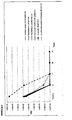
- Figure 2 shows the germicidal effect of the preparation according to the invention (Example 26) of all relevant germs. Frequently fails the existence of a germ burden that not all germs die quickly enough. Pseudomonas putida / cepacia are often such germs that lead to failure of the exercise test. Thus, in comparison of the preparations with and without siloxane elastomers according to the invention, these germs are advantageously reduced only by the preparations according to the invention. Only by the addition of the elastomer Pseudomonas putidalcepacia were sufficiently reduced by the formula (Example 24, 25 and in particular 26) and only then could the microbial load test be passed.
- illustration 1 shows the decline of Pseudomonas putida / cepacia germs after 7 days.
- the microbial stability is insufficient, whereas this stability is improved by the addition of the ABC siloxane elastomers, as shown in Examples 24, 25 and 26.
- the proportion of ABC siloxane elastomers is preferably more than 1.5% by weight, based on the total mass of the preparation (see Examples 24, 25 and 26).
- the ABC siloxane elastomers with polar oils so in particular oils other than silicone oils, improved compatibility and thus enable a more diverse sensors, better stabilization and release of active ingredients, especially particulate matter.
- silicone oils in particular volatile silicone oils, which are otherwise contained in cosmetic preparations comprising siloxane elastomers can be dispensed with according to the invention.
- the preparations according to the invention are therefore advantageously silicone oil-free. In this case, a content of less than 1% by weight, based on the total mass of the preparation, preferably less than 0.1% by weight of silicone oils is free.
- oils and fats differ in their polarity. It has been proposed to assume the interfacial tension against water as a measure of the polarity index of an oil or an oil phase. In this case, the lower the interfacial tension between this oil phase and water, the greater the polarity of the relevant oil phase. According to the invention, the interfacial tension is considered as a possible measure of the polarity of a given oil component.
- the interfacial tension is the force acting on an imaginary line of one meter length located in the interface between two phases.
- the physical unit for this interfacial tension is calculated classically by the force / length relationship and is usually expressed in mN / m (millinewtons divided by meters). It has a positive connotation if it tries to reduce the interface. In the opposite case, it has a negative sign.
- Lipids are considered to be polar whose interfacial tension with water is less than 20 mN / m, and non-polar ones whose interfacial tension with water is more than 30 mN / m.
- Lipids with an interfacial tension against water between 20 and 30 mN / m are generally referred to as medium polar.
- lipids with an interfacial tension of less than 30 mN / m in combination with the ABC siloxane elastomers in cosmetic preparations.
- polar oils which include liquid UV filters, are necessary to dissolve a sufficient amount of poorly soluble UV filters, which in turn are necessary to achieve higher light protection performance.
- novel elastomers provide additional SPF and UV-A boost, i. the sunscreen power is increased overall compared to formulas that do not contain the novel elastomer.
- Advantageous polar oil components can be selected for the purposes of the present invention from the group of esters of saturated and / or unsaturated, branched and / or unbranched alkanecarboxylic acids having a chain length of 3 to 30 carbon atoms and saturated and / or unsaturated, branched and / or unbranched Alcohols having a chain length of 3 to 30 carbon atoms and from the group of esters of aromatic carboxylic acids and saturated and / or unsaturated, branched and / or unbranched alcohols of a chain length of 3 to 30 carbon atoms.
- ester oils may advantageously be selected from the group consisting of phenethyl benzoate, 2-phenylethyl benzoate, propylheptyl caprylate, isopropyl lauroyl sarcosinate, dibutyl adipate, octyl palmitate, octyl cocoate, octyl isostearate, octyldodeceyl myristate, octyldodecanol, cetearyl isononanoate, isopropyl myristate, isopropyl palmitate, isopropyl stearate, isopropyl oleate, n-butyl stearate, n-butyl stearate.
- oil phase of the formulations according to the invention has a content of C 12-13 -alkyl benzoate or consists entirely of this.
- Other oil components may include: Caprylic / Capric Triglycerides, Octyldodecanol, C12-15 Alkyl Benzoates, Butylene Glycol Dicaprylate / Dicaprate, Dicaprylyl Carbonate, Isopropyl Palmitate, Ethylhexyl Cocoate, Cera Microcristallina + Paraffin Liquidum, Butyrospermum Parkii, Dicaprylyl Ether, Hydrogenated Coco-Glycerides, Simmondsia Chinensis Oil, Tridecyl Stearate, Tridecyl Trimellitate, Dipentaerythrityl Hexacaprylate / Hexacaprate, Lanolin Alcohol.
- lipids with an interfacial tension against water in the range of 20 to 29.9 mN / m.
- the polar lipids are selected from the group C 12-15 alkyl benzoate; Butylene glycol dicaprylate / dicaprate, dicaprylyl carbonate, isodecyl neopentanoate and caprylic / capric triglycerides,
- the volatility of the oils is a characteristic of its use. According to the invention, the addition of volatile oils at room temperature can likewise be dispensed with or their content can be reduced.
- compositions according to the invention may also contain additives which are customary in cosmetics, for example perfume, thickener, deodorant, antimicrobial, fungicidal, bacteriocidal, UV filter, self-tanning agent, moisturizing agent, complexing and sequestering agent, pearlescing agent, plant extracts, vitamins, active ingredients , Preservatives, bactericides, dyes, pigments which have a coloring effect, thickeners, moisturizing and / or moisturizing substances, fats, oils, waxes, if not excluded, or other common ingredients of a cosmetic or dermatological formulation such as Alcohols, polyols, polymers, foam stabilizers, electrolytes, organic solvents or silicone derivatives.
- Moisturizers can also be used advantageously as anti-wrinkle active ingredients for protection against skin changes, as described, for example, in US Pat. B. occur during skin aging, can be used.
- Preservatives are advantageously added to the cosmetic preparations, but their proportion can be reduced due to the ABC siloxane elastomers.
- the addition of methylpropanediol and / or benzethonium chlorides is advantageous.
- the proportion of preserving agents, in particular methylpropanediol and / or benzethonium chlorides is advantageously less than 5% by weight, in particular less than 4.5% by weight of methylpropanediol and in particular less than 0.1% by weight of benzethonium chlorides, in each case based on the total mass of the preparation.
- the use of the ABC siloxane elastomers in combination with methylpropanediol and / or benzethonium chlorides to improve the microbial stability of cosmetic preparations is particularly preferred, especially with the reduced levels.
- Stable emulsions are formed in all examples.
Landscapes
- Health & Medical Sciences (AREA)
- Life Sciences & Earth Sciences (AREA)
- Animal Behavior & Ethology (AREA)
- General Health & Medical Sciences (AREA)
- Public Health (AREA)
- Veterinary Medicine (AREA)
- Dermatology (AREA)
- Birds (AREA)
- Epidemiology (AREA)
- Cosmetics (AREA)
Abstract
Description
- Die Erfindung beschreibt kosmetische Zubereitungen umfassend ABC-Siloxanelastomere zur Verbesserung der mikrobiologischen Stabilität.
- Siloxanelastomere werden in kosmetischen Zubereitungen aufgrund ihrer seidigen und pudrigen Sensorikeigenschaften eingesetzt. Ist man in kosmetischen Formulierungen aufgrund der gewünschten Technologie auf polare Subtanzen angewiesen, so sind Siloxanelastomere, die als Gel in unpolaren Ölen, in der Regel Silikonölen, oft nicht verwendbar, da sie Instabilitäten provozieren. Aus diesem Grunde werden deswegen oft Stärken oder andere Puderrohstoffe eingesetzt. Gleichzeitig ist bekannt, dass Puderrohstoffe aller Art, insbesondere natürlicher Herkunft, die mikrobiologische Stabilität von kosmetischen Formulierungen negativ beeinflussen. Somit ist der gesamte Formulierungsfreiraum eingeschränkt.
- Nachteil bei den bisher bekannten Elastomeren ist deren Einschränkung auf Silikonöle bzw. auf zwingend flüchtige Silikonöle und dass die Verarbeitung in Kosmetika nur mit flüchtigem Silikonöl funktioniert. Silikonöle sind per se unpolar.
-
DE 102005019548 ,WO 2005094775 undEP 1391193 beschreiben bekannte Siloxanelastomere wie Dimethicon/Vinyl Dimethicon Crosspolymer oder Dimethicon/Polysilicon 11. - In den
WO 2007109260 ,WO 2007109240 undWO 2008085360 werden neuartige Siloxanelastomere beschrieben. Diese Silioxanelastomere, genauer Siloxanpolyetherelastomere, erhält man durch die Reaktion eines Organosiloxans mit einem, mindestens zwei SiH Gruppen enthaltendem Cyclosiloxan und einer Substanz oder mehreren Substanzen, mit mindestens 2 aliphatischen ungesättigten Gruppen im Molekül unter Verwendung eines Hydrosilylierungskatalysators. Diese in denWO 2007109260 ,WO 2007109240 undWO 2008/085360 beschriebenen Siloxanelastomere in Gelform können mit Körperpflege- oder Gesundheitsstoffen, die pharmakologische Wirkungen zeigen, wie Vitamine oder Hormone, kombiniert werden. Diese inWO 2007109260 ,WO 2007109240 undWO 2008/085360 beschriebenen Siloxanelastomere können auch in nicht flüchtigen, polaren Ölen zur Verfügung gestellt werden. - Aufgrund ihrer Inhaltsstoffe sind Kosmetika durch eine mikrobielle Kontamination gefährdet. Bei nicht ausreichend geschützten Produkten kann es daher zu einer gesundheitlichen Gefährdung des Verwenders bzw. zum Verderb des Produktes kommen. Letzteres kann sich durch unangenehmen Geruch, Verfärbung, Schimmelbildung oder auch durch eine physikalische Instabilität zeigen.
- Eine große Vielfalt von Mikroorganismen führt zu Verunreinigungen in Kosmetika. In der Mehrzahl handelt es sich hierbei um Bakterien, geringer ist der Anteil an Hefen und Schimmelpilzen. Eine Kontamination von Kosmetika ist zum einen während der gesamten Herstellung, zum anderen während der Benutzung möglich. Im letzteren Fall, insbesondere bei Produkten, welche in Tiegel angeboten werden, da hier der Verbraucher in die Masse fasst und sie dabei potentiell mit Mikroben kontaminieren kann. Aus diesem Grund werden bestimmte Produkte nur in Tuben oder aus Spendern angeboten. Diese Verpackungsformen werden jedoch zum Teil als weniger attraktiv und kosmetisch empfunden.
- Generell müssen alle Kosmetika neben der physikalischen Stabilität auch eine mikrobiologische Stabilität ausweisen. Diese Stabilität wird im Allgemeinen durch einen mehrwöchigen Keimbelastungstest nachgewiesen.
- Das Gefühl eines Produktes während der Applikation beeinflußt das Erleben des Produktes immens. Aus diesem Grunde ist man bemüht für jedes Produkt das Gefühl während der Applikation optimal abzustimmen. Oft gewünschte Eigenschaften der Kosmetika sind seidig, pudrig, samtig. Um dieses Gefühl zu erzeugen werden verschiedene Rohstoffe eingesetzt. Besonders effektiv sind dabei Siloxanelastomere. Da bekannte Siloxanelastomere immer gequollen in flüchtigen, unpolaren Silikonölen bereitgestellt werden, ist man bei einigen Technologien gezwungen alternative Rohstoffe zu verwenden. Hier werden oft Puderrohstoffe verwendet, die Derivate von natürlichen Substanzen, insbesondere Kohlenhydraten, wie Stärken, Cellulosen, etc. verwendet, da man sie gut in polaren Formulierungen formulieren kann. Es liegt aber auf der Hand, das solche Substanzen ideale Nahrung für Mikoben wie Bakterien, Hefen und Pilze darstellen. Um die mikrobiologische Stabilität zu gewährleiten, muss man dann zu höheren Mengen an Konservierungsmittel oder zu wirkungsstärkeren jedoch beim Konsumenten ungern gesehenen Substanzen, wie halogenierten organischen Substanzen, FAL-Abspaltern etc. greifen.
- Aufgabe ist es daher kosmetische Zubereitungen bereit zu stellen, welche statt der üblichen, mikrobiologisch bedenklichen Stärkederivate Siloxaneelastomere enthalten, ohne die physikalische Stabilität der Formel zu beeinflussen und dennoch eine ausreichende mikrobiologische Stabilität aufweisen.
- Bedeutsam wäre es aber darüber hinaus für den kosmetischen Einsatz stabile und vielfältig einsetzbare kosmetische Zubereitungen bereit zu stellen.
- Gelöst werden diese Aufgaben durch kosmetische Formulierungen umfassend ABC-Siloxanelastomere entsprechend Anspruch 1.
- Die erfindungsgemäße kosmetische Formulierung umfasst ein oder mehrere ABC-Siloxanelastomere, erhältlich aus der Reaktion von
- A-Organohydrogensiloxanen mit mindestens zwei SiH tragenden - Cyclosiloxanringen pro Molekül mit
- B-Stoffen oder Mischungen mit mindestens zwei aliphatischen ungesättigten Gruppen oder Hydrocarbongruppen pro Molekül und einem
- C-Hydrosilylationskatalysator.
- Bevorzugt werden die ABC-Siloxanelastomere mit polaren Ölen oder Wachsen in der Zubereitung kombiniert.
- Insbesondere Organohydrogensiloxane A der Struktur:


- Erfindungsgemäße ABC-Siloxanelastomere sind vor allem die in den Druckschriften
WO 2007109260 ,WO 2007109240 undWO 2008/085360 beschriebenen Silikon Elastomere, Silikon Polyether Elastomere und deren Gelformen. Es wird hiermit ausdrücklich zu den in der DruckschriftenWO 2007109260 ,WO 2007109240 undWO 2008/085360 dargestellten Elastomeren und deren Herstellung Bezug genommen.
Bevorzugte Beispiele der erfindungsgemäßen Siloxanelastomere sind Dimethicone/PPG-20 Crosspolymer, Dimethicone/ Bis-Isobutyl PPG-20 Crosspolymer bzw. Bis-Vinyl Dimethicone/PPG-20 Crosspolymer. - Diese erfindungsgemäßen neuartigen ABC-Siloxanelastomere unterscheiden sich von den klassischen bekannten Siloxanelastomeren, wie das Dimethicon/Vinyl Dimethicon Crosspolymer, aufgrund einer unterschiedlichen chemischen Struktur und bedingen dadurch auch Unterschiede in ihren Eigenschaften.
- Überraschenderweise wurde nun gefunden, dass durch den Einsatz der ABC-Siloxanelastomere die mikrobiologische Stabilität erhöht werden konnte. Kosmetische Formulierungen umfassend die ABC-Siloxanelastomere anstelle der sonst verwendeten Puderrohstoffe oder anderen Elastomeren führen erstaunlicherweise zu einer besseren Absterbekinetik bezüglich Bakterien, Hefen und Pilzen innerhalb eines Testzeitraumes von 28 Tagen. Produkte die sonst den Keimbelastungstest (KBT) nicht bestanden haben, haben überraschenderweise durch den Austausch von Puderrohstoffen durch ABC-Siloxanelastomere bei sonst gleicher Formulierung den KBT bestanden und sind physikalisch stabil. Das heißt auch, dass bei Produkten durch den Austausch von Puderrohstoffen durch ABC-Siloxanelastomere die sonst nicht reduzierbare Menge der Konservierungsmittel/ Konservierungsmittelhelfer reduziert werden kann, ohne dass die mikrobiologische und physikalische Stabilität beeinträchtigt wird.
- Die Verwendung von ein oder mehreren ABC-Siloxanelastomere, erhältlich aus der Reaktion von
- A-Organohydrogensiloxanen mit mindestens zwei SiH tragenden Cyclosiloxanringen pro Molekül, mit
- B-Stoffen oder Mischungen mit mindestens zwei aliphatischen ungesättigten Gruppen oder Hydrocarbongruppen pro Molekül und einem
- C-Hydrosilylationskatalysator,
in kosmetischen Zubereitungen führt zur Verbesserung der mikrobiologische Stabilität der Zubereitung.
Erfindungsgemäß ist daher deren entsprechende Verwendung zur Verbesserung der mikrobiologische Stabilität kosmetischer Zubereitungen. - Der Zubereitung werden die ABC-Siloxanelastomere vorteilhaft in Kombination mit ein oder mehereren polaren Öle und Wachsen zugesetzt.
Bevorzugte Anteile der ABC-Siloxanelastomere liegen im Bereich von 1 bis 25 Gew.%, bezogen auf die Gesamtmasse der Zubereitung, insbesondere im Bereich von 2 bis 10 Gew.%.
In Vergleichsuntersuchungen wurden folgende Beispielzubereitungen 23 bis 26 hinsichtlich der mikrobiellen Stabilität getestet.Inhaltsstoffe/Beispiele 23 24 25 26 Glyceryl Stearate 2,6 2,6 2,6 2,6 Caprylic/Capric Triglyceride 2,5 2,5 2,5 2,5 Cetearyl Alcohol 3 3 3 3 PEG-40 Stearate 0,8 0,8 0,8 0,8 Aqua + Trisodium EDTA 1 1 1 1 Ethylhexyl Methoxycinnamate + BHT 3 3 3 3 Dimethicone 0,35 0,35 0,35 0,35 Cyclomethicone 2,15 2,15 2,15 2,15 C12-15 Alkyl Benzoate 2,5 2,5 2,5 2,5 Butyl Methoxydibenzoylmethane 1 1 1 1 Nylon-12 1,5 1,5 1,5 Glycerin 8,65 8,65 8.65 8,65 Aqua + Sodium Hydroxide 0,054 0,054 0,054 0,054 Carbomer 0,1 0,1 0,1 0,1 Parfum 0,25 0,25 0,25 0,25 Tapioca Starch + Aqua 1,5 1,5 1,5 Dicaprylyl Carbonate 2,5 2,5 2,5 2,5 Methylpropanediol 4 4 4 4 Benzethonium Chloride 0,05 0,05 0,05 0,05 Dimethicone/ Bis-Isobutyl PPG-20 Crosspolymer 0 1,5 1,5 3 Aqua Ad Ad Ad Ad - Die Beispielzubereitungen wurden in einen mikrobiologischen Vollbelastungstest gegeben. Es wurden Keimbelastungstests mit den Keimen Staphylococcus aureus/epidermis, Pseudomonas aeruginosa,Pseudomonas putida/cepacia, Escherichia Coli/Enterob. Gergoviae, Aspergillus Brasiliensis und Candida albicans/parapsilosis/guilliermondii durchgeführt. Es wurde insbesondere gegen die Keime Pseudomonas putida/cepacia getestet (KBE - Koloniebildende Einheit).
-
Abbildung 2 zeigt die keimabtötende Wirkung der erfindungsgemäßen Zubereitung (Beispiel 26) aller relevanten Keime.
Häufig scheitert das Bestehen einer Keimbelastung daran, das nicht alle Keime schnell genug absterben. Pseudomonas putida/cepacia stellen häufig derartige Keime dar, die zu einem Nichtbestehen des Belastungstests führen.
So zeigt sich im Vergleich der Zubereitungen mit und ohne erfindungsgemäßen Siloxanelastomeren, dass diese Keime nur durch die erfindungsgemäßen Zubereitungen vorteilhaft verringert werden.
Erst durch die Zugabe des Elastomers sind auch Pseudomonas putidalcepacia genügend von der Formel (Beispiel 24, 25und insbesondere 26) reduziert worden und erst so konnte der Keimbelastungstest bestanden werden. -
Abbildung 1 zeigt den Rückgang der Pseudomonas putida/cepacia Keime nach 7 Tagen. Ohne Zusatz an erfindungsgemäßen ABC Siloxanelastomeren (Beispiel 23) ist die mikrobielle Stabilität ungenügend, hingegen wird diese Stabilität durch den Zusatz an den ABC Siloxanelastomeren verbessert, wie die Beispiele 24, 25 und 26 zeigen.
Deutlich wird anhand der Untersuchungen auch, dass wenn Puderrohstoffe wie Tapioca Starch und/oder Nylon-12 in den Zubereitungen enthalten sind, die Konservierung schwieriger wird. Der Zusatz an erfindungsgemäßen Elastomeren diese Schwierigkeiten jedoch vermindern hilft.
Vorteilhaft hinsichtlich der mikrobiellen Stabilität der kosmetischen Zubereitungen zeigt sich weiterhin, dass der Anteil an ABC-Siloxanelastomeren vorzugsweise über 1,5 Gew.%, bezogen auf die Gesamtmasse der Zubereitung liegt (siehe Beispiele 24, 25 und 26). - Der Zusatz an polaren Öle oder Wachse in Kombination mit ABC-Siloxanelastomeren führt zur Stabilitätsverbesserung kosmetischer Zubereitungen und deren Kombination ist demnach bevorzugt zur Stabilitätsverbesserung kosmetischer Zubereitungen zu verwenden.
- So zeigen die ABC-Siloxanelastomere mit polaren Ölen, also insbesondere anderen Ölen als Silikonölen, eine verbesserte Kompatibilität und ermöglichen so eine vielfältigere Sensorik, bessere Stabilisierung und Freisetzung von Wirkstoffen, insbesondere partikulären Stoffen.
- Aus der verbesserten Kompatibilität mit verschiedenen, auch polaren Ölen im Gegensatz zu herkömmlichen Siloxanelastomeren kann erfindungsgemäß auf unpolare und insbesondere flüchtige Öle (Kohlenwasserstoffe, Silikonöle) in kosmetischen Formeln zukünftig verzichtet bzw. deren Menge reduziert werden, was einen erheblichen Formulierungsvorteil und -freiraum bietet.
Auf die in kosmetischen Zubereitungen umfassend Siloxanelastomeren ansonsten enthaltenen Silikonöle, insbesondere flüchtigen Silikonöle, kann erfindungsgemäß verzichtet werden. Vorteilhaft sind die erfindungsgemäßen Zubereitungen daher silikonölfrei. Frei hießt dabei ein Anteil von weniger als 1 Gew.%, bezogen auf die Gesamtmasse der Zubereitung, bevorzugt weniger als 0,1 Gew.% an Silikonölen. - Öle und Fette unterscheiden sich unter anderem in ihrer Polarität. Es wurde vorgeschlagen, die Grenzflächenspannung gegenüber Wasser als Maß für den Polaritätsindex eines Öls bzw. einer Ölphase anzunehmen. Dabei gilt, dass die Polarität der betreffenden Ölphase umso größer ist, je niedriger die Grenzflächenspannung zwischen dieser Ölphase und Wasser ist. Erfindungsgemäß wird die Grenzflächenspannung als ein mögliches Maß für die Polarität einer gegebenen Ölkomponente angesehen.
- Die Grenzflächenspannung ist diejenige Kraft, die an einer gedachten, in der Grenzfläche zwischen zwei Phasen befindlichen Linie der Länge von einem Meter wirkt. Die physikalische Einheit für diese Grenzflächenspannung errechnet sich klassisch nach der Beziehung Kraft/Länge und wird gewöhnlich in mN/m (Millinewton geteilt durch Meter) wiedergegeben. Sie hat positives Vorzeichen, wenn sie das Bestreben hat, die Grenzfläche zu verkleinern. Im umgekehrten Falle hat sie negatives Vorzeichen. Als polar werden Lipide angesehen, deren Grenzflächenspannung gegen Wasser weniger als 20 mN/m beträgt, als unpolar solche, deren Grenzflächenspannung gegen Wasser mehr als 30 mN/m beträgt. Lipide mit einer Grenzflächenspannung gegen Wasser zwischen 20 und 30 mN/m werden im Allgemeinen als mittelpolar bezeichnet.
- Erfindungsgemäß ist es nun möglich Lipide mit einer Grenzflächenspannung kleiner 30 mN/m in Kombination mit den ABC-Siloxanelastomeren in kosmetischen Zubereitungen einzusetzen.
- Auf den Zusatz unpolarer Lipide mit einer Grenzflächenspannung größer 30 mN/m kann hingegen verzichtet werden bzw. deren Gehalt erheblich reduziert werden.
- Beispielsweise sind polare Ole, wozu auch flüssige UV-Filter zählen, notwendig um eine ausreichende Menge schwerlöslicher UV-Filter zu lösen, die wiederum nötig sind, um höhere Lichtschutzleistungen zu erreichen.
- Der Verbraucher bevorzugt immer höhere Lichtschutzleistungen, um sich vor der Sonne zu schützen, möchte aber auf ein angenehmes Hautgefühl beim Auftragen solcher Formulierungen nicht verzichten. Herkömmliche Siloxanelastomere sind normalerweise nicht mit polaren Ölen kompatibel, beeinflussen allerdings das Hautgefühl positiv. Mit den ABC-Siloxanelastomeren ist es erstmals möglich, hohe Mengen an ansonsten schwerlöslichen UV-Filtern einzuarbeiten und nicht auf ein angenehmes Hautgefühl zu verzichten. Die Löslichkeit der schwerlösliche UV-Filter ist erhöht, wenn das erfindungsgemäße ABC-Siloxanelastomer eingesetzt wird.
Somit ist auch erstmals erhöhter Lichtschutz (SPF) und gleichzeitig erhöhter UV-A Schutz mit den erfindungsgemäßen Formulierungen möglich. - Zusätzlich wird durch die neuartigen Elastomere ein zusätzlicher SPF und UV-A Boost gewährleistet, d.h. die Lichtschutzleistung wird insgesamt erhöht gegenüber Formeln, die das neuartige Elastomer nicht enthalten.
- Vorteilhafte polare Ölkomponenten können im Sinne der vorliegenden Erfindung gewählt werden aus der Gruppe der Ester aus gesättigten und/oder ungesättigten, verzweigten und/oder unverzweigten Alkancarbonsäuren einer Kettenlänge von 3 bis 30 C-Atomen und gesättigten und/oder ungesättigten, verzweigten und/oder unverzweigten Alkoholen einer Kettenlänge von 3 bis 30 C-Atomen sowie aus der Gruppe der Ester aus aromatischen Carbonsäuren und gesättigten und/oder ungesättigten, verzweigten und/oder unverzweigten Alkoholen einer Kettenlänge von 3 bis 30 C-Atomen. Solche Esteröle können vorteilhaft gewählt werden aus der Gruppe Phenethylbenzoat, 2-Phenylethylbenzoat, Propylheptyl Caprylate, Isopropyl Lauroyl Sarkosinat, Dibutyladipat, Octylpalmitat, Octylcocoat, Octylisostearat, Octyldodeceylmyristat, Octyldodekanol, Cetearylisononanoat, Isopropylmyristat, Isopropylpalmitat, Isopropylstearat, Isopropyloleat, n-Butylstearat, n-Hexyllaurat, n-Decyloleat, Isooctylstearat, Isononylstearat, Isononylisononanoat, 2-Ethylhexylpalmitat, 2-Ethylhexyllaurat, 2-Hexyldecylstearat, 2-Octyldodecylpalmitat, Stearylheptanoat, Oleyloleat, Oleylerucat, Erucyloleat, Erucylerucat, Tridecylstearat, Tridecyltrimellitat, sowie synthetische, halbsynthetische und natürliche Gemische solcher Ester, wie z. B. Jojobaöl.
Ferner können vorteilhaft gewählt werden Dialkylether und Dialkylcarbonate, vorteilhaft sind z. B. Dicaprylylether (Cetiol OE) und/oder Dicaprylylcarbonat, beispielsweise das unter der Handelsbezeichnung Cetiol CC bei der Fa. Cognis erhältliche. Es ist ferner bevorzugt, das oder die Ölkomponenten aus der Gruppe Isoeikosan, Neopentylglykoldiheptanoat, Propylenglykoldicaprylat/dicaprat, Caprylic/Capric/Diglycerylsuccinat, Butylenglykol Dicaprylat/Dicaprat, C12-13-Alkyllactat, Di-C12-13-Alkyltartrat, Triisostearin, Dipentaerythrityl Hexacaprylat/Hexacaprat, Propylenglykolmonoisostearat, Tricaprylin, Dimethylisosorbid zu wählen. Es ist insbesondere vorteilhaft, wenn die Ölphase der erfindungsgemäßen Formulierungen einen Gehalt an C12-13-Alkylbenzoat aufweist oder vollständig aus diesem besteht. Weitere Ölkomponenten können sein: Caprylic/Capric Triglyceride, Octyldodecanol, C12-15 Alkyl Benzoate, Butylenglycol Dicaprylat/Dicaprat, Dicaprylyl Carbonat, Isopropyl Palmitate, Ethylhexyl Cocoate, Cera Microcristallina + Paraffinum Liquidum, Butyrospermum Parkii, Dicaprylyl Ether, Hydrogenated Coco-Glycerides, Simmondsia Chinensis Oil, Tridecyl Stearate, Tridecyl Trimellitate, Dipentaerythrityl Hexacaprylate/Hexacaprate, Lanolin Alkohol. - Insbesondere vorteilhaft sind Lipide (Öle) mit einer Grenzflächenspannung gegen Wasser im Bereich von 20 bis 29,9 mN/m. Insbesondere werden die polaren Lipide gewählt aus der Gruppe C12-15Alkylbenzoat; Butylenglycol Dicaprylat/Dicaprat, Dicaprylyl Carbonat, Isodecyl Neopentanoate und Caprylic/Capric Triglyceride,
- Ebenfalls ist die Flüchtigkeit der Öle ein Charakteristikum zu dessen Einsatzmöglichkeit. Erfindungsgemäß kann auf den Zusatz bei Raumtemperatur flüchtigen Ölen ebenso verzichtet werden bzw. deren Gehalt vermindert werden.
- Die erfindungsgemäßen Zusammensetzungen können ferner gegebenenfalls in der Kosmetik übliche Zusatzstoffe, beispielsweise Parfüm, Verdicker, Desodorantien, antimikrobielle Stoffe, fungizide Stoffe, bakteriozide Stoffe, UV-Filter, selbstbräunende Agenzien, rückfettende Agentien, Komplexierungs- und Sequestrierungsagentien, Perlglanzagentien, Pflanzenextrakte, Vitamine, Wirkstoffe, Konservierungsmittel, Bakterizide, Farbstoffe, Pigmente, die eine färbende Wirkung haben, Verdickungsmittel, anfeuchtende und/oder feuchthaltende Substanzen, Fette, Öle, Wachse, sofern nicht ausgeschlossen, oder andere übliche Bestandteile einer kosmetischen oder dermatologischen Formulierung wie Alkohole, Polyole, Polymere, Schaumstabilisatoren, Elektrolyte, organische Lösungsmittel oder Silikonderivate enthalten.
Moisturizer können vorteilhaft auch als Antifaltenwirkstoffe zum Schutz vor Hautveränderungen, wie sie z. B. bei der Hautalterung auftreten, verwendet werden. - Vorteilhaft sind den kosmetischen Zubereitungen Konservierungsmittel zugesetzt, deren Anteil jedoch aufgrund der ABC-Siloxanelastomere verringert werden kann. Vorteilhaft zeigt sich der Zusatz an Methylpropanediol und/oder Benzethonium Chloride. Der Anteil an Konservierungshelfern, insbesondere Methylpropanediol und/oder Benzethonium Chloride, beträgt vorteilhaft weniger als 5 Gew.%, insbesondere weniger als 4,5 Gew.% an Methylpropanediol und insbesondere weniger als 0,1 Gew.% an Benzethonium Chloride, jeweils bezogen auf die Gesamtmasse der Zubereitung. Die Verwendung der ABC-Siloxanelastomere in Kombination mit Methylpropanediol und/oder Benzethonium Chloride zur Verbesserung der mikrobiellen Stabilität kosmetischer Zubereitungen ist besonders bevorzugt, insbesondere mit den verringerten Anteilen.
- Nachfolgende Beispiele zeigen bevorzugte Ausführungsformen der erfindungemäßen Formulierungen. Soweit nichts anderes angegeben beziehen sich die Zahlenwerte auf Gewichtsanteile, bezogen auf die Gesamtmasse der Formulierungen.
Beispiel Emulsion 1 2 3 4 5 Glyceryl Stearat Citrat 2 2 2 Glyceryl Stearat SE 1 1 Cetearyl Alkohol + PEG-40 Rizinusöl + Natrium Cetearyl Sulfat 2,5 2,5 Cetearylalkohol 1,5 1 Stearylalkohol 2 1,5 Acrylates/C10-30 Alkyl Acrylat Crosspolymer 0,2 0,1 Xanthan Gum 0,4 0,2 0,2 0,3 C12-15 Alkyl Benzoat 3 5 Dicaprylyl Carbonat 2 Myristylmyristat 2 1 Butylenglycol Dicaprylat/Dicaprat 3 3 Propylheptyl Caprylat 5 5 2 Dicaprylyl Ether 2 Octyldodecanol 1 Cyclisches Silikon 5 5 1 10 Dimethicon / PPG-20 Crosspolymer und Isodecyl Neopentanoat 10 2,25 12,5 Dimethicon / PPG-20 Crosspolymer und Isododecan 5 10 Lineares Silikon 6 5 5 1-Methyl-1,3-propandiol 5 8 Glycerin 3 5 3 5 3 Octan-1,2-diol 2 1 2-Methyl-1,3 propandiol 2 Bis-Vinyl Dimethicon / PPG-20 Crosspolymer 4 1 0,25 2-(4'-Diethylamino-2'-hydoxybenzoyl)-benzoesäurehexylester 3 5 1 0,5 2 Octocrylen 5 Titandioxid 0,5 1 2 Phenylbenzimidazol Sulfonsäure 4 2 Octylsalicylat 5 Polysilicon-15 2 Ethylhexylmethoxycinnamat 10 Methylen Bis-Benzotriazolyl Tetramethylbutylphenol 3 2 Ethylhexyltriazin 3 2 3 Bis-Ethylhexylphenol Methoxyphenyl Triazin 2 PVP/Hexadecen Copolymer 0,2 0,5 0,1 0,2 Vitamin E Acetat 0,2 0,2 0,2 0,3 0,1 Na2H2EDTA 0,1 0,1 0,2 0,2 0,2 Parfüm 0,2 0,3 0,3 0,4 0,25 Konservierungsmittel 0,3 0,5 1 0,4 0,6 Natriumhydroxid q.s. q.s. q.s. q.s. q.s. Wasser ad 100,0 ad 100,0 ad 100,0 ad 100,0 ad 100,0 - Es bilden sich bei allen Beispielen stabile Emulsionen.
Beispiel 6 7 8 9 10 11 Glyceryl Stearat SE 1 2 Cetearyl Alkohol + PEG-40 Rizinusöl+ Natrium Cetearyl Sulfat 2 1,5 Natrium Stearoylglutamat 0,2 0,4 Sucrosepolystearat 1 0,8 Polyglyceryl-3 Methylglycose Distearat 3 2,5 Sorbitanstearat 1 0,8 Copolymer aus Vinylpyrrolidon und Acrylsäure 1.5 Stearylalkohol 2 Cetylalkohol 2 2 2 Acrylates/C10-30 Alkyl Acrylat Crosspolymer 0,3 0,2 0,1 Carbomer 0,2 0,1 Xanthan Gum 0,5 0,3 C12-15 Alkyl Benzoat 3 5 Butylenglycol Dicaprylat/Dicaprat Dicaprylyl Carbonat 4 2 2 Octyldodecanol 2 Cyclisches Silikon 3 2 10 5 Dimethicon / PPG-20 Crosspolymer und Isodecyl Neopentanoat 25 18 5 4,3 Bis-Vinyl Dimethicon/PPG-20 Crosspolymer und Isododecan 12,25 10 5 15 3,5 Lineares Silikon 2 5 8 5 Glycerin 1 2 4 5 2 8 Ethanol 4 3 4 4 2-(4'-Diethylamino-2'-hydoxybenzoyl)-benzoesäurehexylester 2 1,5 0,5 6 Octacrylen 7,5 Butyl Methoxydibenzoylmethan 2,5 3 2 Ethylhexylmethoxycinnamat 4 7,5 Octylsalicylat 5 Phenylbenzimidazol Sulfonsäure 2 1 1 Titandioxid 5 3 Bis-Ethylhexylphenol Methoxyphenyl Triazin 2 2 Isoamylmethoxycinnamat 5 Ethylhexyltriazin 2 2 Vitamin E Acetat 0,1 0,2 0,1 0,5 0,25 0,3 Na2H2EDTA 0,05 0,2 0,2 0,2 0,2 0,5 Stärke 2 1 3 Parfüm 0,2 0,1 0,3 0,25 Konservierungsmittel q.s. q.s. q.s. q.s. q.s. q.s. Natriumhydroxid, Farbstoffe q.s. q.s. q.s. q.s. q.s. q.s. Wasser ad 100,0 ad 100,0 ad 100,0 ad 100,0 ad 100,0 ad 100,0 Beispiel 12 13 14 15 16 17 Glycerylstearat 2,5 2 1,2 1 PEG-40 Stearat 1 PEG-100 Stearat 2,5 Ceteareth-20 1 Stearinsäure 2,5 3 Cetearylalkohol 4 2 Stearylalkohol 2 1 Cetylalkohol 1 1 Acrytates/C10-30 Alkyl Acrylat Crosspolymer 0,05 0,2 0,2 0,5 Carbomer 0,1 0,2 Xanthan Gum 0,3 Triheptanoin 2 C12-15 Alkyl Benzoat 7 3 3 Butylenglycol Dicaprylat/Dicaprat 2 4 5 Dicaprylyl Carbonat 4 2 Phenylethylbenzoat 5 5 4 Diisopropytsebacat 3 5 Cyclisches Silikon 3 2-Propylheptyloctanoat 4 3 2 7,5 Bis-Vinyl Dimethicon / PPG-20 Crosspolymer und Isodecyl Neopentanoat 20 2,5 12,5 10 Dimethicon / PPG-20 Crosspolymer und Isododecan 7,5 6 5 Glycerin 7,5 5 4 3 5 2 Ethanol 2 4 2 Bis-Ethylhexyloxyphenol Methoxyphenyltriazin 2 3 0,5 1,5 3 2 Ethylhexylmethoxycinnamat 7 8 1 Octylsalicylat 5 3 Homosalat 3 Octocrylen 5 4 4 Phenylbenzimidazol Sulfonsäure 1 2 Butyl Methoxydibenzoylmethan 2 3 4 1 2,4,6-Tris-(biphenyl)-1,3,5-triazin 2 1 Diethylhexylbutamidotriazin 2 1,5 2 Ethylhexyltriazin 1 1,5 Creatin 0,5 0,5 0,2 Coenzym Q 10 0,1 0,02 Vitamin E Acetat 0,5 0,3 0,3 0,8 0,5 Na2H2EDTA 0,1 0,5 Parfüm 0,2 0,3 0,4 0,5 Parabene 0,5 0,4 0,5 0,3 0,3 0,4 Natriumhydroxid, Farbstoffe q.s. q.s. q.s. q.s. q.s. q.s. Wasser ad 100,0 ad 100,0 ad 100,0 ad 100,0 ad 100,0 ad 100,0 W/O-Emulsionen 17 18 19 20 21 Triglycerindiisostearat 1,0 0,5 0,25 2,0 3,0 Diglycerindipolyhydroxystearat 1,0 1,5 1,75 3,0 2,0 Paraffinöl 12,5 10,0 8,0 5,0 11,5 Vaseline 8,0 6,0 5,0 12,0 2,5 Hydrierte Kokosglyceride 2,0 1,0 2,5 5,0 0,25 Decyloleat 0,5 0,75 1,0 2,0 0,25 Octyldodecanol 0,5 1,0 0,75 3,0 0,25 Aluminiumstearat 0,4 0,3 0,6 1,0 0,05 Dicaprylylcarbonat 0,1 0,05 0,15 0,5 1,0 Hydriertes Rizinusöl 0,5 0,75 1,0 2,5 5,0 Dimethicon / PPG-20 Crosspolymer und Isododecan --- 12,5 2,5 --- --- Bis-Vinyl Dimethicon / PPG-20 Crosspolymer und Isodecyl Neopentanoat 7,5 --- --- 5 20 Magnesiumsulfat 0,5 0,6 0,5 0,7 1,0 Glycerin 3,0 5,0 10,0 15,0 1,5 Zitronensäure 0,2 0,1 0,2 0,3 1,0 Natriumcitrat 0,2 0.05 0.4 0.3 2,0 Parfum q,s, q,s, q,s, q,s, q,s, Ethanol 2,0 --- 5,0 --- --- Capryl-/Caprinsäuretriglycerid 2,0 2,5 3,0 5,0 0,5 Kaliumsorbat 0,04 0,15 0,05 0,03 0,4 Benzylalkohol . 0,3 0,4 0,25 0,15 --- Wasser ad 100 ad 100 ad 100 ad 100 ad 100
Claims (4)
- Verwendung von ein oder mehreren ABC-Siloxanelastomere, erhältlich aus der Reaktion vonA-Organohydrogensiloxanen mit mindestens zwei SiH tragenden Cyclosiloxanringen pro Molekül, mitB-Stoffen oder Mischungen mit mindestens zwei aliphatischen ungesättigten Gruppen oder Hydrocarbongruppen pro Molekül und einemC-Hydrosilylationskatalysator zur Verbesserung der mikrobiologischen Stabilität kosmetischer Zubereitungen.
- Verwendung nach Anspruch 1, dadurch gekennzeichnet, dass als ABC-Siloxanelastomere Dimethicone/PPG-20 Crosspolymer, Dimethicone/ Bis-Isobutyl PPG-20 Crosspolymer und/oder Bis-Vinyl Dimethicone/PPG-20 Crosspolymer gewählt werden.
- Verwendung nach Anspruch 1, dadurch gekennzeichnet, dass den Zubereitungen ein oder mehrere polare Öle und/oder Wachse zugesetzt werden.
- Verwendung nach Anspruch 1, 2 oder 3, dadurch gekennzeichnet, dass die ABC-Siloxanelastomere zu einem Anteil von mehr als 1,5 Gew.%, bezogen auf die Gesamtmasse der Zubereitung, in der Zubereitung enthalten sind.
Applications Claiming Priority (1)
| Application Number | Priority Date | Filing Date | Title |
|---|---|---|---|
| DE102008053788A DE102008053788A1 (de) | 2008-10-22 | 2008-10-22 | Kosmetische Formulierung mit Siloxanelastomeren zur Verbesserung der mikrobiologischen Stabilität |
Publications (1)
| Publication Number | Publication Date |
|---|---|
| EP2181699A1 true EP2181699A1 (de) | 2010-05-05 |
Family
ID=41697653
Family Applications (1)
| Application Number | Title | Priority Date | Filing Date |
|---|---|---|---|
| EP09013270A Withdrawn EP2181699A1 (de) | 2008-10-22 | 2009-10-21 | Kosmetische Formulierung mit Siloxanelastomeren zur Verbesserung der mikrobiologischen Stabilität |
Country Status (2)
| Country | Link |
|---|---|
| EP (1) | EP2181699A1 (de) |
| DE (1) | DE102008053788A1 (de) |
Cited By (2)
| Publication number | Priority date | Publication date | Assignee | Title |
|---|---|---|---|---|
| WO2013000742A3 (de) * | 2011-06-27 | 2013-12-05 | Beiersdorf Ag | Verwendung von silikonelastomeren in kosmetischen zubereitungen |
| EP2723312B1 (de) | 2011-06-27 | 2017-10-04 | Beiersdorf AG | Tapiokastärke in silikonelastomer-haltigen kosmetischen zubereitungen |
Citations (10)
| Publication number | Priority date | Publication date | Assignee | Title |
|---|---|---|---|---|
| US3624120A (en) * | 1969-12-22 | 1971-11-30 | Procter & Gamble | Quaternary ammonium salts of cyclic siloxane polymers |
| EP0393511A2 (de) * | 1989-04-17 | 1990-10-24 | Dow Corning Toray Silicone Company Ltd. | Antimikrobielle Siloxankautchuk-Partikel |
| WO2003093349A1 (en) * | 2002-05-01 | 2003-11-13 | Dow Corning Corporation | Organohydrogensilicon compounds |
| EP1391193A1 (de) | 2002-07-31 | 2004-02-25 | Beiersdorf AG | Silikon-in-Wasser-Emulsion enthaltend spezifisches Polyether-Polydimethylsiloxan-Copolymer |
| WO2005094775A1 (de) | 2004-04-02 | 2005-10-13 | Schwan-Stabilo Cosmetics Gmbh & Co. Kg. | Zubereitung in form einer emulsion mit einer filmbildenden polymerkombination |
| DE102005005199A1 (de) * | 2005-02-03 | 2006-08-10 | Beiersdorf Ag | Verwendung von Alkylglucosiden zum Erzielen oder Verbessern der mikrobiologischen Stabilität von kosmetischen Zubereitungen |
| DE102005019548A1 (de) | 2005-04-22 | 2006-10-26 | Beiersdorf Ag | Dünnflüssige W/O/W-Emulsion |
| WO2007109240A2 (en) | 2006-03-21 | 2007-09-27 | Dow Corning Corporation | Silicone polyether elastomer gels |
| WO2007109260A2 (en) | 2006-03-21 | 2007-09-27 | Dow Corning Corporation | Silicone elastomer gels |
| WO2008085360A2 (en) | 2006-12-29 | 2008-07-17 | Dow Corning Corporation | Personal care compositions containing silicone elastomer gels |
Family Cites Families (2)
| Publication number | Priority date | Publication date | Assignee | Title |
|---|---|---|---|---|
| US6548074B1 (en) * | 1999-07-22 | 2003-04-15 | Elizabeth Arden Co., Division Of Conopco, Inc. | Silicone elastomer emulsions stabilized with pentylene glycol |
| HU227970B1 (en) * | 2007-07-10 | 2012-07-30 | Egis Gyogyszergyar Nyrt | Pharmaceutical compositions containing silicones of high volatility |
-
2008
- 2008-10-22 DE DE102008053788A patent/DE102008053788A1/de not_active Withdrawn
-
2009
- 2009-10-21 EP EP09013270A patent/EP2181699A1/de not_active Withdrawn
Patent Citations (10)
| Publication number | Priority date | Publication date | Assignee | Title |
|---|---|---|---|---|
| US3624120A (en) * | 1969-12-22 | 1971-11-30 | Procter & Gamble | Quaternary ammonium salts of cyclic siloxane polymers |
| EP0393511A2 (de) * | 1989-04-17 | 1990-10-24 | Dow Corning Toray Silicone Company Ltd. | Antimikrobielle Siloxankautchuk-Partikel |
| WO2003093349A1 (en) * | 2002-05-01 | 2003-11-13 | Dow Corning Corporation | Organohydrogensilicon compounds |
| EP1391193A1 (de) | 2002-07-31 | 2004-02-25 | Beiersdorf AG | Silikon-in-Wasser-Emulsion enthaltend spezifisches Polyether-Polydimethylsiloxan-Copolymer |
| WO2005094775A1 (de) | 2004-04-02 | 2005-10-13 | Schwan-Stabilo Cosmetics Gmbh & Co. Kg. | Zubereitung in form einer emulsion mit einer filmbildenden polymerkombination |
| DE102005005199A1 (de) * | 2005-02-03 | 2006-08-10 | Beiersdorf Ag | Verwendung von Alkylglucosiden zum Erzielen oder Verbessern der mikrobiologischen Stabilität von kosmetischen Zubereitungen |
| DE102005019548A1 (de) | 2005-04-22 | 2006-10-26 | Beiersdorf Ag | Dünnflüssige W/O/W-Emulsion |
| WO2007109240A2 (en) | 2006-03-21 | 2007-09-27 | Dow Corning Corporation | Silicone polyether elastomer gels |
| WO2007109260A2 (en) | 2006-03-21 | 2007-09-27 | Dow Corning Corporation | Silicone elastomer gels |
| WO2008085360A2 (en) | 2006-12-29 | 2008-07-17 | Dow Corning Corporation | Personal care compositions containing silicone elastomer gels |
Cited By (3)
| Publication number | Priority date | Publication date | Assignee | Title |
|---|---|---|---|---|
| WO2013000742A3 (de) * | 2011-06-27 | 2013-12-05 | Beiersdorf Ag | Verwendung von silikonelastomeren in kosmetischen zubereitungen |
| EP2723312B1 (de) | 2011-06-27 | 2017-10-04 | Beiersdorf AG | Tapiokastärke in silikonelastomer-haltigen kosmetischen zubereitungen |
| EP2723312B2 (de) † | 2011-06-27 | 2020-03-18 | Beiersdorf AG | Tapiokastärke in silikonelastomer-haltigen kosmetischen zubereitungen |
Also Published As
| Publication number | Publication date |
|---|---|
| DE102008053788A1 (de) | 2010-04-29 |
Similar Documents
| Publication | Publication Date | Title |
|---|---|---|
| DE102010038952A1 (de) | Konservierungsmittel-Zusammensetzungen und Kosmetika enthaltend diese | |
| US6391290B1 (en) | Skin care compositions | |
| DE10141258A1 (de) | Leichtes Hautpflegeprodukt | |
| EP2627414A2 (de) | Mikrobiologisch stabile anwendungsfreundliche zubereitung mit degradationsanfälligen wirkstoffen | |
| EP2308458A2 (de) | Zubereitung für die Tagespflege | |
| EP3122315B1 (de) | Wirkstoffkombinationen aus 4-hydroxyacetophenon und einem oder mehreren glycerin- und/oder oligoglycerinester von verzweigtkettigen und/oder unverzweigtkettigen alkancarbonsäuren, sowie kosmetische oder dermatologische zubereitungen, diese wirkstoffkombinationen enthaltend | |
| EP2552437A2 (de) | Mikrobiologisch stabile anwendungsfreundliche zubereitungen mit anionischen oder kationischen wirkstoffen | |
| DE102013200819A1 (de) | Wirkstoffkombinationen aus Dehydracetsäure und einem oder mehrere Polyolen | |
| DE102008060656A1 (de) | Kosmetische Formulierung mit neuartigen Silsesquioxan Wachsharzen | |
| DE102008053791A1 (de) | Kosmetische Formulierung mit Siloxanelastomeren und partikulären Stoffen | |
| EP3111919B1 (de) | Emulsionen enthaltend kationische emulgatoren auf basis von mdipa esterquats | |
| EP1486200B1 (de) | Kosmetische Zubereitungen mit stabilisierten Konservierungsmitteln | |
| EP2114354B1 (de) | Lichtschutzzubereitung mit einer kombination von mikropigmenten | |
| DE102005051862B4 (de) | Emulsion enthaltend 1,2-Alkandiole, Emulgatoren und polare Ölkomponenten sowie deren Verwendung | |
| DE102008053788A1 (de) | Kosmetische Formulierung mit Siloxanelastomeren zur Verbesserung der mikrobiologischen Stabilität | |
| DE102012222783A1 (de) | Polyolhaltige kosmetische oder dermatologische Zubereitungen mit verbesserter Sensorik | |
| DE102004010246A1 (de) | Kosmetische Zubereitung enthaltend C24-Fettsäuren | |
| DE112012002397B4 (de) | Kosmetische oder dermatologische Zubereitungen mit Polyglyceryl-10-Stearat und Polylysin | |
| EP2179721A1 (de) | Kosmetische Formulierung mit neuartigen Siloxanelastomeren | |
| EP1627668A1 (de) | Dünnflüssige Pickering-Emulsion | |
| EP2717837B1 (de) | Wirkstoffkombinationen aus -polylysin (epsilon-polylysin) und einem oder mehreren aromatischen estern, aldehyden und/oder alkoholen | |
| JP2004300143A (ja) | 防腐殺菌剤並びに該防腐殺菌剤を配合した化粧料、医薬品及び食品 | |
| EP2119427A2 (de) | Viskositätsregulierte kosmetische Zubereitung | |
| DE102015224334A1 (de) | Einsatz von Additiven zur effektiven Konservierung / boostende Wirkung bestehender Konservierung kosmetischer Emulsionen | |
| DE102020204937A1 (de) | Umweltfreundliches Sonnenschutzmittel |
Legal Events
| Date | Code | Title | Description |
|---|---|---|---|
| PUAI | Public reference made under article 153(3) epc to a published international application that has entered the european phase |
Free format text: ORIGINAL CODE: 0009012 |
|
| AK | Designated contracting states |
Kind code of ref document: A1 Designated state(s): AT BE BG CH CY CZ DE DK EE ES FI FR GB GR HR HU IE IS IT LI LT LU LV MC MK MT NL NO PL PT RO SE SI SK SM TR |
|
| AX | Request for extension of the european patent |
Extension state: AL BA RS |
|
| 17P | Request for examination filed |
Effective date: 20101105 |
|
| 17Q | First examination report despatched |
Effective date: 20101201 |
|
| TPAC | Observations filed by third parties |
Free format text: ORIGINAL CODE: EPIDOSNTIPA |
|
| STAA | Information on the status of an ep patent application or granted ep patent |
Free format text: STATUS: THE APPLICATION IS DEEMED TO BE WITHDRAWN |
|
| 18D | Application deemed to be withdrawn |
Effective date: 20120612 |
|
| RIN1 | Information on inventor provided before grant (corrected) |
Inventor name: KOEHLER, MANUELA Inventor name: SKUBSCH, KERSTIN Inventor name: STORBECK, CELINA |