EP2170948B1 - Modified globin proteins with altered electron transport pathway - Google Patents
Modified globin proteins with altered electron transport pathway Download PDFInfo
- Publication number
- EP2170948B1 EP2170948B1 EP08775775.3A EP08775775A EP2170948B1 EP 2170948 B1 EP2170948 B1 EP 2170948B1 EP 08775775 A EP08775775 A EP 08775775A EP 2170948 B1 EP2170948 B1 EP 2170948B1
- Authority
- EP
- European Patent Office
- Prior art keywords
- protein
- leu
- haemoglobin
- composition
- oxygen
- Prior art date
- Legal status (The legal status is an assumption and is not a legal conclusion. Google has not performed a legal analysis and makes no representation as to the accuracy of the status listed.)
- Active
Links
Images


Classifications
-
- C—CHEMISTRY; METALLURGY
- C07—ORGANIC CHEMISTRY
- C07K—PEPTIDES
- C07K14/00—Peptides having more than 20 amino acids; Gastrins; Somatostatins; Melanotropins; Derivatives thereof
- C07K14/795—Porphyrin- or corrin-ring-containing peptides
- C07K14/805—Haemoglobins; Myoglobins
-
- A—HUMAN NECESSITIES
- A61—MEDICAL OR VETERINARY SCIENCE; HYGIENE
- A61K—PREPARATIONS FOR MEDICAL, DENTAL OR TOILETRY PURPOSES
- A61K47/00—Medicinal preparations characterised by the non-active ingredients used, e.g. carriers or inert additives; Targeting or modifying agents chemically bound to the active ingredient
- A61K47/50—Medicinal preparations characterised by the non-active ingredients used, e.g. carriers or inert additives; Targeting or modifying agents chemically bound to the active ingredient the non-active ingredient being chemically bound to the active ingredient, e.g. polymer-drug conjugates
- A61K47/51—Medicinal preparations characterised by the non-active ingredients used, e.g. carriers or inert additives; Targeting or modifying agents chemically bound to the active ingredient the non-active ingredient being chemically bound to the active ingredient, e.g. polymer-drug conjugates the non-active ingredient being a modifying agent
- A61K47/56—Medicinal preparations characterised by the non-active ingredients used, e.g. carriers or inert additives; Targeting or modifying agents chemically bound to the active ingredient the non-active ingredient being chemically bound to the active ingredient, e.g. polymer-drug conjugates the non-active ingredient being a modifying agent the modifying agent being an organic macromolecular compound, e.g. an oligomeric, polymeric or dendrimeric molecule
- A61K47/59—Medicinal preparations characterised by the non-active ingredients used, e.g. carriers or inert additives; Targeting or modifying agents chemically bound to the active ingredient the non-active ingredient being chemically bound to the active ingredient, e.g. polymer-drug conjugates the non-active ingredient being a modifying agent the modifying agent being an organic macromolecular compound, e.g. an oligomeric, polymeric or dendrimeric molecule obtained otherwise than by reactions only involving carbon-to-carbon unsaturated bonds, e.g. polyureas or polyurethanes
- A61K47/60—Medicinal preparations characterised by the non-active ingredients used, e.g. carriers or inert additives; Targeting or modifying agents chemically bound to the active ingredient the non-active ingredient being chemically bound to the active ingredient, e.g. polymer-drug conjugates the non-active ingredient being a modifying agent the modifying agent being an organic macromolecular compound, e.g. an oligomeric, polymeric or dendrimeric molecule obtained otherwise than by reactions only involving carbon-to-carbon unsaturated bonds, e.g. polyureas or polyurethanes the organic macromolecular compound being a polyoxyalkylene oligomer, polymer or dendrimer, e.g. PEG, PPG, PEO or polyglycerol
-
- A—HUMAN NECESSITIES
- A61—MEDICAL OR VETERINARY SCIENCE; HYGIENE
- A61K—PREPARATIONS FOR MEDICAL, DENTAL OR TOILETRY PURPOSES
- A61K47/00—Medicinal preparations characterised by the non-active ingredients used, e.g. carriers or inert additives; Targeting or modifying agents chemically bound to the active ingredient
- A61K47/50—Medicinal preparations characterised by the non-active ingredients used, e.g. carriers or inert additives; Targeting or modifying agents chemically bound to the active ingredient the non-active ingredient being chemically bound to the active ingredient, e.g. polymer-drug conjugates
- A61K47/51—Medicinal preparations characterised by the non-active ingredients used, e.g. carriers or inert additives; Targeting or modifying agents chemically bound to the active ingredient the non-active ingredient being chemically bound to the active ingredient, e.g. polymer-drug conjugates the non-active ingredient being a modifying agent
- A61K47/62—Medicinal preparations characterised by the non-active ingredients used, e.g. carriers or inert additives; Targeting or modifying agents chemically bound to the active ingredient the non-active ingredient being chemically bound to the active ingredient, e.g. polymer-drug conjugates the non-active ingredient being a modifying agent the modifying agent being a protein, peptide or polyamino acid
-
- A—HUMAN NECESSITIES
- A61—MEDICAL OR VETERINARY SCIENCE; HYGIENE
- A61K—PREPARATIONS FOR MEDICAL, DENTAL OR TOILETRY PURPOSES
- A61K47/00—Medicinal preparations characterised by the non-active ingredients used, e.g. carriers or inert additives; Targeting or modifying agents chemically bound to the active ingredient
- A61K47/50—Medicinal preparations characterised by the non-active ingredients used, e.g. carriers or inert additives; Targeting or modifying agents chemically bound to the active ingredient the non-active ingredient being chemically bound to the active ingredient, e.g. polymer-drug conjugates
- A61K47/51—Medicinal preparations characterised by the non-active ingredients used, e.g. carriers or inert additives; Targeting or modifying agents chemically bound to the active ingredient the non-active ingredient being chemically bound to the active ingredient, e.g. polymer-drug conjugates the non-active ingredient being a modifying agent
- A61K47/62—Medicinal preparations characterised by the non-active ingredients used, e.g. carriers or inert additives; Targeting or modifying agents chemically bound to the active ingredient the non-active ingredient being chemically bound to the active ingredient, e.g. polymer-drug conjugates the non-active ingredient being a modifying agent the modifying agent being a protein, peptide or polyamino acid
- A61K47/64—Drug-peptide, drug-protein or drug-polyamino acid conjugates, i.e. the modifying agent being a peptide, protein or polyamino acid which is covalently bonded or complexed to a therapeutically active agent
- A61K47/6445—Haemoglobin
-
- A—HUMAN NECESSITIES
- A61—MEDICAL OR VETERINARY SCIENCE; HYGIENE
- A61P—SPECIFIC THERAPEUTIC ACTIVITY OF CHEMICAL COMPOUNDS OR MEDICINAL PREPARATIONS
- A61P7/00—Drugs for disorders of the blood or the extracellular fluid
-
- A—HUMAN NECESSITIES
- A61—MEDICAL OR VETERINARY SCIENCE; HYGIENE
- A61P—SPECIFIC THERAPEUTIC ACTIVITY OF CHEMICAL COMPOUNDS OR MEDICINAL PREPARATIONS
- A61P7/00—Drugs for disorders of the blood or the extracellular fluid
- A61P7/08—Plasma substitutes; Perfusion solutions; Dialytics or haemodialytics; Drugs for electrolytic or acid-base disorders, e.g. hypovolemic shock
-
- A—HUMAN NECESSITIES
- A61—MEDICAL OR VETERINARY SCIENCE; HYGIENE
- A61P—SPECIFIC THERAPEUTIC ACTIVITY OF CHEMICAL COMPOUNDS OR MEDICINAL PREPARATIONS
- A61P9/00—Drugs for disorders of the cardiovascular system
-
- A—HUMAN NECESSITIES
- A61—MEDICAL OR VETERINARY SCIENCE; HYGIENE
- A61K—PREPARATIONS FOR MEDICAL, DENTAL OR TOILETRY PURPOSES
- A61K38/00—Medicinal preparations containing peptides
Definitions
- the present invention relates to modified oxygen-carrying compounds such as haemoglobin and their use.
- Transfusion of a patient with donated blood has a number of disadvantages. Firstly, there may be a shortage of a patient's blood type. Secondly, there is a danger that the donated blood may be contaminated with infectious agents such as hepatitis viruses and HIV. Thirdly, donated blood has a limited shelf life. In addition, there are some situations where blood may not be readily available, such as in a battlefield or civil emergencies.
- a blood substitute is an oxygen carrying solution that also provides the oncotic pressure necessary to maintain blood volume.
- Two types of substitutes have recently been studied, fluorocarbon emulsions and haemoglobin solutions.
- Haemoglobin as it exists within the red blood cell is composed of two alpha globin chains and two beta globin chains, each carrying a haem molecule.
- One alpha-like globin chain and one beta-like globin chain combine to form a dimer which is very stable.
- Alpha-like and beta-like globin genes belong to a family of related globin genes which are expressed at different stages of development and regulated by oxygen tension, pH, and the development from embryo to foetus to newborn.
- Two dimers then line up in antiparallel fashion to form tetramers. The binding of dimers to form the tetramers is not as strong as in the case of monomers binding to associate into dimers.
- the tetramers therefore, have a tendency to fall apart to form dimers and there is always an equilibrium between tetramers, dimers, and monomers.
- the predominant form is the tetramer; with dilution, the dimer becomes the predominant form.
- This equilibrium is also affected by solvent, salts, pH and other factors as the binding forces are partly electrostatic.
- haemoglobin As a blood substitute. Firstly, large dosages are required, requiring large scale production of protein, either by recombinant means or from donated human or recovered non-human blood. Secondly, it is important to obtain haemoglobin that is free from infectious agents and toxic substances. Thirdly, although haemoglobin is normally a tetramer of 68,000 molecular weight, it can dissociate to form alpha-beta dimers. The dimers are rapidly cleared by the kidneys and the residence time is much too short for cell-free haemoglobin to be useful as a blood substitute.
- haemoglobin via recombinant DNA systems, chemical modification of haemoglobin, and the production of haemoglobin variants.
- Haemoglobin and variants of it have been expressed in various cellular systems, including E. coli, yeast and mammalian cells such as CHO cells.
- variants of haemoglobin include: variants which autopolymerize, variants which prevent the dissociation of the tetramer, and variants that are stable in alkali. There are also over 30 naturally occurring haemoglobin variants which exhibit lowered oxygen affinity. Several examples of such variants are disclosed in WO 88/091799 .
- Recombinant mutant human haemoglobins have been made in order to decrease the oxygen affinity of extracellular haemoglobin.
- a human betaF41Y,K66T haemoglobin is described in Baudin-Creuza (1999) Journal Biological Chemistry 274, 25550-25554 .
- haemoglobin is the modification of this protein by the addition of further polymers to improve the stability of the protein in the blood.
- US 5,900,402 describes the use of non antigenic polymers, preferably polyalkylene oxide or polyethylene glycol.
- haemoglobins and indeed myoglobins or other oxygen-carrying proteins are involved in oxygen transport and storage they are, as a consequence of this function (because of the redox properties of the iron ion present in the porphyrin ring of protein), responsible for the generation of reactive oxygen species.
- Autoxidation of the oxy derivative (Fe(II)) leads to non-functional ferric haem (Fe(III)) and superoxide ion (O 2 - ), which subsequently dismutates to generate H 2 O 2 . These species can ultimately damage the protein and/or the haem group.
- Ferryl haem and the radical can also be extremely toxic, notwithstanding their transient existence. These oxidative cascades can be damaging because: (i) peroxide is a powerful oxidant known to produce cellular damage, (ii) both the ferryl haem and protein-based radicals can initiate oxidation of lipids, nucleic and amino acids by abstraction of hydrogen atoms, and (iii) haem modification can lead to highly toxic haem to protein-cross-linked species and to the loss of haem and the release of the 'free' iron.
- haemoglobin-mediated peroxidative damage exists especially whenever the protein is removed from the protective environment of the erythrocyte. This would occur, for example, during spontaneous erythrocyte haemolysis or in haemolytic anaemias (e.g. sickle-cell anaemia). It has been shown that myoglobin induces kidney damage following crush injury (rhabdomyolysis) by exactly this peroxidative mechanism, rather than by free-iron catalysed Fenton chemistry as was thought previously ( Holt et al, (1999) Increased lipid peroxidation in patients with rhabdomyolysis.
- haemoglobin can cause similar damage in vivo when it is released from the erythrocyte in subarachnoid haemorrhage ( Reeder, et al (2002) Toxicity of myoglobin and haemoglobin: oxidative stress in patients with rhabdomyolysis and subarachnoid haemorrhage. Biochem. Soc. Trans. 30, 745-748 ).
- haem-mediated oxidative reactions of cell-free haemoglobin developed as a blood substitute
- Ferryl haemoglobin can cause cell injury, including apoptotic and necrotic cell death. Perfusion of rat intestine with chemically modified haemoglobin has been shown to cause localized oxidative stress, leading to leakage of the mesentery of radiolabelled albumin (Appel et al (2002) Comparison of effects of two haemoglobin-based O2 carriers on intestinal integrity and microvascular leakage. Am. J. Physiol. Heart Circ. Physiol. 283, H1292-H1301 ). Importantly, the cyanomet derivative of this haemoglobin, in which the haem iron is blocked with cyanide and is unavailable to enter a redox reaction, produced no cellular changes.
- compositions comprising a modified porphyrin-based oxygen-carrying protein, methods of making such compositions, and modified porphyrin-based oxygen-carrying proteins for use, as set out in the claims.
- myoglobin and haemoglobin from certain species show two distinct pathways of electron transfer from exogenous reductants to the ferryl haem iron.
- a low affinity pathway (typically >5mM) represents direct electron transfer from the reductant to the ferryl haem iron in a hydrophobic pocket within the protein.
- a second high affinity pathway (typically ⁇ 100 ⁇ M but often ⁇ 10 ⁇ M) involves electron transfer between the reductant and ferryl haem iron via one or more protein amino acids.
- This high affinity through-protein pathway is present in native human myoglobin and haemoglobin alpha subunit, but absent in human haemoglobin beta subunits and Aplysia myoglobin.
- An example of an amino acid that allows this electron transfer is Tyr103 and Tyr42 in myoglobin and haemoglobin alpha chain respectively.
- the present disclosure provides a modified porphyrin-based oxygen-carrying protein, wherein said protein comprises a modification to enhance or introduce a high affinity electron transfer pathway to the ferryl ion.
- the protein is preferably a haemoglobin beta chain (Hb ⁇ ).
- the modification may be to Phe41, particularly wherein Phe41 is substituted by Tyr.
- the disclosure also provides nucleic acids encoding these proteins, means for their production and the use of the proteins in methods of treatment. These and other aspects are described further herein below.
- a porphyrin-based oxygen carrying protein refers to any polypeptide chain which in its native form carries a porphyrin molecule and which polypeptide, either alone or in a complex, carries and releases oxygen bound to the porphyrin molecule. Variants of such proteins, e.g. naturally occurring or synthetic mutants of wild-type porphyrin-based oxygen-carrying proteins are also contemplated.
- the porphyrin-based oxygen-carrying protein will, in its native state, lack the high affinity oxygen transfer pathway present in the haemoglobin alpha subunit, e.g. the protein of SEQ ID NO:1 or its mammalian homologues. This pathway is mediated via an electron transfer pathway which includes a tyrosine residue at position 7 of the C helix.
- haemoglobin subunit proteins are also numbered by reference to the residues of individual helices or inter-helix resides, as set out in Table 1 below (based on US 5,028,588 ). Tyr42 of human haemoglobin alpha chain is thus also identified in the art as residue C7.
- the pathway is an electron transfer between the reductant and ferryl haem iron via one or more protein amino acids.
- This high affinity through-protein pathway is present in native human myoglobin and haemoglobin alpha subunit, but absent in human haemoglobin beta subunits.
- the oxygen-carrying proteins to be modified include mammalian haemoglobin subunits but may include non-mammalian haemoproteins and other genetically engineered proteins where the protein is altered to carry oxygen. These proteins will be recombinant, having altered sequences (substitution of amino acid residues, but may also include insertion of residues) to introduce a high affinity through-protein electron pathway from reductants in the bulk solution to the haem ferryl iron.
- the disclosure is applicable to any haemoglobin subunit which in its natural state does not have the high-affinity pathway.
- the protein is human haemoglobin beta chain, whose sequence is set out as SEQ ID NO:2 below.
- Other haemoglobin subunits which may be used are those which are vertebrate or non-vertebrate haemoglobin subunits that do not have a tyrosine residue at a position equivalent to residue 42 / C7.
- Vertebrate haemoglobins include mammalian haemoglobins. Mammalian haemoglobins are particularly highly conserved.
- homologues to the human beta chain include members of the beta globin superfamily, such as gamma or delta haemoglobin found in haemoglobin F (HbF) or haemoglobin A2 (HbA2) respectively.
- HbF haemoglobin F
- HbA2 haemoglobin A2
- These and other non-limiting examples of such homologues include the mammalian species homologues of Table 2, all of which also have a Phe42 residue.
- the sequences may be obtained from on-line databases including via the Research Collaboratory for Structural Bioinformatics protein databank (pdb).
- beta-family subunit sequence may be used either with its corresponding alpha subunit or alone, or in combination with another beta-family subunit protein.
- vertebrate haemoglobins alpha subunit homologues include avian, reptile and fish haemoglobins having a residue equivalent to Phe42.
- Non-limiting examples of such subunits include those given in Table 3, which indicates in column 3 the position of the amino acid residue homologous to Phe42 of mammalian beta chain subunits.
- non-vertebrate eukaryote beta haemoglobin homologues may be identified in arthropods or other multicellular organisms (e.g. molluscs, nematode worms and non-nematode worms) and those of unicellular organisms.
- the oxygen carrying protein may be modified by substitution or insertion to introduce a high-affinity electron transfer pathway.
- the phenylalanine of the beta subunit of haemoglobin is located close to the haem and is surface exposed making it ideal to act as an electron conduit from exogenous reductants to the ferryl haem iron were it to be a redox-active group.
- the disclosure provides an insertion or substitution to provide a redox-active residue at a similar position.
- the redox-active amino acid may be, for example, tyrosine, tryptophan or histidine. Tyrosine is particularly preferred.
- the disclosure provides a mammalian beta globin subunit modified to position a redox-active residue in the protein such that protein exhibits a high affinity electron transfer pathway.
- the presence of this pathway may be observed by showing that the protein has a double rectangular hyperbola concentration dependence to reducing agents.
- the C7 position is substituted to introduce a redox-active amino acid, particularly those mentioned above.
- the beta globin subunit alternatively may include an insertion to introduce this residue into the protein, e.g. into the C helix, e.g. between the C6 and C7 residues, or between the C7 and CD1 residues. Such an insertion may be combined with a further modification of the C helix of the protein, e.g. a deletion or substitution of a residue in the C1 to C6 positions.
- Molecular modelling methods may be used to identify other positions in the beta chain of mammalian haemoglobins which are also located near the ferryl haem iron and which may be substituted to introduce a redox-active amino acid.
- the protein in addition to the attenuating modification of a wild-type oxygen-carrying protein, may comprise one or more (for example from one to five, such as one or two) additional substitutions, or a deletion or insertion of from one to five, such as one, two or three amino acids (which may be contiguous or non-contiguous).
- additional substitutions for example from one to five, such as one or two
- a deletion or insertion of from one to five such as one, two or three amino acids (which may be contiguous or non-contiguous).
- these may be variations which affect a further property of the protein, such as its oxygen affinity or cooperativity, enhancements in stability and assembly rates, decreased heme loss rates or autoxidation rates, or resistance to proteolytic degradation and aggregation, its binding to nitric oxide or its ability to be produced in a soluble form by recombinant means.
- modifications are known in the art per se and may be incorporated into proteins.
- the modification is one which reduces the binding of nitric oxide (NO).
- NO nitric oxide
- haemoglobin variants which limit NO binding while still permitting oxygen transport are known.
- haemoglobin beta chains which have reduced rates of reaction with nitric oxide are disclosed in US 6,455,676 .
- oxygen-carrying proteins are present in multimeric forms. Such forms may prolong life of the protein in circulation, improve oxygen-carrying capacity or reduce side-effects.
- haemoglobin beta subunit proteins such forms include a tetrameric haemoglobin protein.
- two beta chains may form a tetramer with two alpha chains.
- two or more of the subunits may be covalently linked to each other, e.g. via chemical cross-linking or as a result of recombinant expression.
- the alpha chains may be wild type alpha chains, e.g. a human alpha chain of SEQ ID NO:1 or a homologous vertebrate or non-vertebrate alpha chain.
- Vertebrate alpha chains include mammalian, avian, reptile and fish alpha chains.
- Such alpha chains include those found with their associated with the beta chains referred to above in Tables 2 to 4 and whose sequences are obtainable from the pdb entries.
- the alpha chains may comprise one or more (for example from one to five, such as one or two) additional substitutions, or a deletion or insertion of from one to five, such as one, two or three amino acids (which may be contiguous or non-contiguous). These may be variations which affect a further property of the protein, such as its interaction with other proteins, its binding to nitric oxide or to facilitate its production by recombinant means.
- the alpha chain may be modified to remove tyrosine residue at position 42, e.g. by deletion or by substitution with a redox-inactive residue.
- Amino acids which are contemplated here as redox-inactive residues include alanine, arginine, asparagine, aspartic acid, cysteine, glutamic acid, glutamine, glycine, isoleucine, leucine, lysine, methionine, phenylalanine, proline, serine, threonine and valine
- oxygen-carrying proteins may be conjugated to a protecting group.
- protecting groups are known as such in the art and may be used.
- the protecting group is a protein
- this protecting group may be produced as a fusion, e.g. at the N- or C-terminus of the oxygen-carrying protein.
- the protein may be co-expressed with the oxygen-carrying protein or expressed separately, and the two proteins joined by chemical means using a cross-linker.
- one class of protecting groups are enzymatic anti-oxidant proteins. These include catalase and superoxide dismutase (SOD). Any suitable catalase or SOD may be used, though preferably these are human enzymes. The enzymes may be produced recombinantly or by any other means conventional in the art.
- any suitable inert cross-linking reagent previously reported as suitable for preparing cross-linked haemoglobin for use as an oxygen-carrying resuscitative fluid can be used, for example glutaraldehyde, diasprin derivatives, polyaldehydes including those derived from oxidative ring-opening of oligosaccharides, diphosphate esters, triphosphate esters, etc.
- the enzymes of interest have chemical groups similar to those on the globin chains of haemoglobin so that they will appropriately chemically bind to the haemoglobin as it cross-links by reaction with the cross-linking reagent.
- Relative amounts of the oxygen-carrying protein and the enzymatic anti-oxidant protein can vary over wide limits, with the oxygen-carrying protein constituting the major component.
- the total weight of the enzyme(s) is suitably in the approximate range of 0.1-10% based on the weight of the oxygen-carrying protein, and preferably in the approximate range 0.5-2.5%.
- the weight ratio of SOD to catalase is suitably from about 1:1 to 5:1 and preferably from about 1.5:1 to 2.5:1.
- Another class of protecting group which may be used as well as the above-described enzymatic groups, or in the alternative, is a non-antigenic polymeric group such as a polyalkylene oxide protecting group. Such groups may also be used on monomeric oxygen-carrying proteins or these proteins when in dimeric or higher form.
- US 5,900,402 describes the conjugation of polyalkylene oxides, most preferably polyethylene glycol (PEG) to oxygen-carrying proteins.
- PEG polyethylene glycol
- the conjugate is preferably formed by covalently bonding a hydroxyl terminal of the polyalkylene oxide and the free amino groups of lysine residues of the oxygen-carrying protein. See, for example, U.S. Pat. No. 5,234,903 , which discloses mPEG-succinimidyl carbonate-Hb conjugates. Other methods for conjugating the polymers with oxygen-carrying proteins are known in the art as such, such as by via an amide or ester linkage, are also suitable for use. While epsilon amino group modifications of haemoglobin lysines are preferred, other conjugation methods are also contemplated. Covalent linkage by any atom between the haemoglobin and polymer is possible. Moreover, non-covalent conjugation such as lipophilic or hydrophilic interactions are also contemplated.
- activated polymers which are suitable for covalently conjugating the oxygen carrying proteins are described in U.S. Pat. Nos. 5,349,001 ; 5,321,095 ; 5,324,844 and 5,605,976 as well as PCT Publication Numbers WO95/11924 and WO96/00080 .
- the conjugates preferably include polyethylene glycol (PEG) as the polyalkylene oxide.
- PEG polyethylene glycol
- the polyalkylene oxides include monomethoxy-polyethylene glycol, polypropylene glycol, block copolymers of polyethylene glycol and polypropylene glycol and the like.
- the polymers can also be distally capped withC 2-4 , alkyls instead of monomethoxy groups.
- the polyalkylene oxides must be soluble in water at room temperature.
- Polyalkylene oxide strands having a (number average) molecular weight of from about 200 to about 100,000 Daltons can be used.
- preferable PAOs have molecular weights of from about 1,000 to about 30,000 while PAOs having a molecular weight of from about 2,000 to about 25,000 are more preferred.
- Some particularly preferred conjugates include polyalkylene oxide strands having a molecular weight of about 5,000 Daltons.
- the ratio of the number of strands of the non-antigenic polymeric group to the oxygen-carrying protein may be from about 1:1 to about 20:1, preferably from about 5:1 to 15:1, for example about 10:1.
- the strands may be of the size ranges specified above.
- the molecular weight of a monomer of an oxygen-carrying protein prior to conjugation is about 17,000 Da.
- the conjugate will be from about 30% to 60%, such as about 45% to 55% by weight of protein (i.e. the oxygen-carrying protein or a conjugate of this protein and an enzymatic group), the remainder being the non-antigenic polymeric group.
- An example of the present disclosure is thus a conjugate of an oxygen-carrying protein of and 45% to 55% by weight of polyalkylene oxide having a molecular weight of from about 2,000 to about 25,000.
- the oxygen-carrying protein may be a haemoglobin beta chain in which the modification is at Phe41.
- the polyalkylene oxide is PEG.
- the oxygen-carrying protein is a haemoglobin alpha chain in which the attenuating modification is at Phe41 and the polyalkylene oxide is PEG.
- the oxygen-carrying protein may be in the form of a monomer or a polymer of two or more units.
- the oxygen-carrying proteins are desirably formulated as a composition comprising a physiologically acceptable carrier, suitable for administration to a mammal, particularly a human.
- a physiologically acceptable carrier suitable for administration to a mammal, particularly a human.
- a carrier will be a sterile solution which comprises buffers and preservatives used to keep the solution at physiological pH and stable during storage.
- the carriers may be such physiologically compatible buffers as Hank's or Ringer's solution, physiological saline, a mixture consisting of saline and glucose, and heparinized sodium-citrate-citric acid-dextrose solution.
- the oxygen-carrying proteins can be mixed with colloidal-like plasma substitutes and plasma expanders such as linear polysaccharides (e.g.
- oxygen-carrying proteins may be mixed with water soluble, physiologically acceptable, polymeric plasma substitutes, examples of which include polyvinyl alcohol, poly(ethylene oxide), polyvinylpyrrolidone, and ethylene oxide-polypropylene glycol condensates.
- Compositions may further include one or more compounds with anti-oxidant properties. These compounds may include ascorbate and urate.
- the anti-oxidant may be included at any suitable concentration, which may vary according to intended use and the nature of the anti-oxidant. For example, a suitable concentration of urate may be in the range of from 50 to 400 micromolar, and for ascorbate of from 50 to 200 micromolar, though lower or higher amounts may be used if need be.
- compositions may also include iron chelating agents which may play a role in sequestering iron released by the breakdown of the oxygen-carrying protein.
- iron chelating agents include desferrioxamine and deferiprone.
- the iron chelating agent, or mixture thereof, may be present at a concentration of, for example, 10 - 5000 micromolar.
- Proteins of the disclosure may be used as blood substitutes. There are numerous conditions in which it will be useful for restoration, maintenance or replacement of oxygen levels is required. These include trauma; ischemia (such as ischemia induced by heart attack, stroke, or cerebrovascular trauma); haemodilution, where a blood substitute is required to replace blood that is removed pre-operatively; septic shock; cancer (e.g. to deliver oxygen to the hypoxic inner core of a tumour mass); chronic anaemia; sickle cell anaemia; cardioplegia; and hypoxia. Thus the oxygen-carrying proteins, and compositions thereof, may be used in methods for the treatment of the above-mentioned conditions.
- oxygen-carrying proteins, and compositions thereof, of the present disclosure may also be used ex vivo in organ perfusion.
- Blood substitutes may be particularly useful in the organ perfusion, where maintaining oxygen content in an organ ex vivo prior to transplantation is required to sustain the organ in an acceptable condition.
- Organs include heart, liver, lung, kidneys.
- the concentration and amount of oxygen-carrying protein used in any of the above-mentioned methods will be at the discretion of the physician, taking account of the nature of the condition of the patient and the treatment.
- the oxygen-carrying protein may be used at a concentration of from 0.1 to 6 g/dl, e.g. from 0.1 to 4 g/dl.
- the oxygen-carrying protein will usually be administered intravenously.
- Co-administration of an innocuous reagent to enhance nitric oxide production e.g. arginine
- an innocuous reagent to enhance nitric oxide production e.g. arginine
- the disclosure also provides nucleic acids encoding the modified oxygen-carrying proteins.
- the nucleic acid may be DNA or RNA.
- the DNA may be single- or double-stranded.
- the nucleic acid may in isolated and/or purified form, or free or substantially free of material with which it is naturally associated, such as free or substantially free of nucleic acid flanking the gene in the human genome, except possibly one or more regulatory sequence(s) for expression.
- nucleic acids may be obtained by modification of wild-type sequences encoding the oxygen-carrying protein.
- the nucleic acid sequences of wild-type haemoglobins and other oxygen carrying proteins are known in the art and widely available.
- recombinant techniques such as site-directed mutagenesis may be used to modify a known wild-type sequence such that the sequence encodes a modified oxygen-carrying protein.
- the wild-type sequence of a mammalian nucleic acid may also be modified to optimize codon usage for expression in a heterologous system, e.g. in bacterial or yeast cells.
- a nucleic acid may be incorporated into a recombinant replicable vector.
- the vector may be used to replicate the nucleic acid in a compatible host cell.
- the disclosure provides a method of making a nucleic acid by introducing a nucleic acid of the invention into a replicable vector, introducing the vector into a compatible host cell, and growing the host cell under conditions which bring about replication of the vector.
- a nucleic acid in a vector is operably linked to a control sequence which is capable of providing for the expression of the coding sequence by the host cell, i.e. the vector is an expression vector.
- operably linked refers to a juxtaposition wherein the components described are in a relationship permitting them to function in their intended manner.
- a control sequence "operably linked" to a coding sequence is ligated in such a way that expression of the coding sequence is achieved under condition compatible with the control sequences.
- Suitable vectors can be chosen or constructed, containing appropriate regulatory sequences, including promoter sequences, terminator fragments, polyadenylation sequences, enhancer sequences, marker genes and other sequences as appropriate.
- Vectors may be plasmids, viral e.g. 'phage phagemid or baculoviral, cosmids, YACs, BACs, or PACs as appropriate.
- Vectors include gene therapy vectors, for example vectors based on adenovirus, adeno-associated virus, retrovirus (such as HIV or MLV) or alpha virus vectors.
- the vectors may be provided with an origin of replication, optionally a promoter for the expression of the oxygen-carrying protein and optionally a regulator of the promoter.
- the vectors may contain one or more selectable marker genes, for example an ampicillin resistance gene in the case of a bacterial plasmid or a neomycin resistance gene for a mammalian vector.
- Vectors may be used in vitro, for example for the production of RNA or used to transfect or transform a host cell.
- Systems for cloning and expression of a polypeptide in a variety of different host cells are well known. Suitable host cells include bacteria, eukaryotic cells such as mammalian and yeast, and baculovirus systems.
- Mammalian cell lines available in the art for expression of a heterologous polypeptide include Chinese hamster ovary cells, HeLa cells, baby hamster kidney cells, COS cells and many others.
- Promoters and other expression regulation signals may be selected to be compatible with the host cell for which the expression vector is designed.
- yeast promoters include S. cerevisiae GAL4 and ADH promoters, S. pombe nmt1 and adh promoter.
- Mammalian promoters include the metallothionein promoter which is can be induced in response to heavy metals such as cadmium.
- Viral promoters such as the SV40 large T antigen promoter or adenovirus promoters may also be used. All these promoters are readily available in the art.
- the vectors may include other sequences such as promoters or enhancers to drive the expression of the inserted nucleic acid, nucleic acid sequences so that the oxygen-carrying protein is produced as a fusion and/or nucleic acid encoding secretion signals so that the polypeptide produced in the host cell is secreted from the cell.
- Vectors for production of polypeptides for use in gene therapy include vectors which carry a mini-gene sequence.
- Host cells such as those mentioned herein above may be cultured under conditions to bring about expression of the oxygen-carrying protein, followed by recovery of the protein to provide the protein in substantially isolated form.
- the protein may be produced with a source of haem or may be mixed with a suitable source of haem such as ferro-protoporphyrin or ferri-protoporphyrin (hemin) during or after recovery in order to provide a functional oxygen-carrying protein.
- a source of haem such as ferro-protoporphyrin or ferri-protoporphyrin (hemin) during or after recovery in order to provide a functional oxygen-carrying protein.
- US 5,801,019 describes expression and recovery of various modified haemoglobins, including multimers of haemoglobin subunits, in yeast cells. Such methods may be used for the production of the oxygen-carrying proteins.
- oxygen-carrying protein is a haemoglobin beta chain subunit
- it may be co-expressed with complementary subunits, e.g. a alpha chain subunit.
- the co-expressed protein may be in the form of a separate protein or a fusion with the beta chain subunit.
- the proteins are recovered using standard methods including but not limited to chromatography (e.g., ion exchange, affinity, and sizing column chromatography), centrifugation, differential solubility, or by any other standard technique for the purification of proteins.
- chromatography e.g., ion exchange, affinity, and sizing column chromatography
- centrifugation e.g., centrifugation
- differential solubility e.g., differential solubility
- Catalase (10nM) was added to remove unreacted H 2 O 2 and was left to react for a further 1 min.
- the ferryl haem protein is stable for several hours.
- Reductant was then added in 0.1 M sodium phosphate pH 7.4 in a 1:1 volume ratio so that final concentration of ferryl myoglobin was 10 ⁇ M.
- the pH may be 'jumped' to other values where the ferryl haem is unstable using other strong buffers (e.g. 0.1 M sodium acetate, pH 5).
- the optical spectrum was followed until reaction was complete.
- the time course (425nm-408nm) was fitted to a single exponential function using the least squares method.
- k a and k b are the maximum rates for each hyperbola and K D1 and K D2 are the dissociation constants, S is the concentration of the reductant and A R is the rate constant for ferryl auto-reduction.
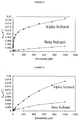
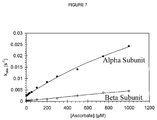
- the dependence of the concentration of reductant on the changes in the observed rate constant for ferryl myoglobin reduction from horse shows a double rectangular hyperbola dependence that is not observed in A plysia myoglobin.
- Myoglobin from horse has two tyrosine residues at positions 103 and 146, while Aplysia myoglobin has no tyrosine residues.
- a tyrosine residue close to the haem is key to the high affinity through-protein electron transfer pathway.
- the model incorporates a step in which the oxidized reductant may be regenerated. This model also allows predictions on other haem proteins based on crystal structures.
- alpha subunit of human haemoglobin shows a tyrosine in a similar spatial position (Tyr42) compared to myoglobin, close to the haem and is surface exposed making it ideal to act as an electron conduit from exogenous reductants to the ferryl haem iron ( Fig 4 ).
- the corresponding residue in human haemoglobin beta is a redox-inactive phenylalanine.
- the heterogeneous subunits of human haemoglobin exhibit different mechanisms of ferryl reduction.
- Site directed mutagenesis of ⁇ -Tyr42 eliminates the high affinity through-protein electron transfer pathway decreasing the rate of ferryl haem reduction.
- Escherichia coli harbouring a plasmid encoding the modified alpha chains were grown and the modified alpha chains recovered using standard methods, essentially as described in Example 5 below.
- Table 4 Primer sequences used for site-directed mutagenesis. Name Sequence (5'-3') aY42V for CCTTCCCAACCACCAAAACCGTGTTCCCACACTTTGATCTG (SEQ ID NO:3) aY42V rev CAGATCAAAGTGTGGGAACACGGTTTTGGTGGTTGGGAAGG (SEQ ID NO:4) aY42random for CCTTCCCAACCACCAAAACCNNKTTCCCACACTTTGATCTG (SEQ ID NO:5) aY42random rev CAGATCAAAGTGTGGGAAMNNGGTTTTGGTGGTTGGGAAGG (SEQ ID NO:6)
- mutation of ⁇ -Tyr42 to a partially redox active tryptophan decreases the rate of ferryl reduction of the alpha subunit 2 fold at 10 ⁇ M ascorbate concentration and mutation of ⁇ -Tyr42 to a redox inactive valine decreases the rate of ferryl reduction of the alpha 12 fold at 10 ⁇ M ascorbate concentration.
- a beta chain mutant of the human haemoglobin beta chain was made using the following primer pair to introduce a ⁇ -Phe4>Tyr mutation: Name Sequence (5'-3') bF41Y for CCGTGGACCCAGCGTTACTTTGAATCCTTCGGTG (SEQ ID NO:7) bF41Y rev CACCGAAGGATTCAAAGTAACGCTGGGTCCACGG (SEQ ID NO:8)
- the genes for human haemoglobin alpha- and beta- chains were optimised for expression in Escerichia coli and cloned into the vector pETDuet resulting in HbpETDuet. Mutant variants of the alpha and beta genes were created using site-directed mutagenesis, as described above.
- a high-fidelity enzyme either Phusion (Finnzymes) or Pfu Ultra (Stratagene), was used according to the suppliers' specifications in the PCR reactions with the following PCR-program: 95°C 2min; 95°C 30s 55°C 1min 72°C 5min 16 cycles; 72°C 10min.
- the template DNA was then digested using Dpnl (Fermentas) and mutated plasmid transformed into Escherichia coli BL21 DE3 using standard procedures. Resulting clones were sequenced with BigDye terminator v.3.0 (Applied Biosystems) to confirm correct sequence.
- Escherichia coli BL21 DE3 harbouring the plasmid HbpETDuet was grown in 2L flasks containing 1 L TB-medium with 100 ⁇ g/ml carbenicillin at 37°C and 120rpm until OD 620 ⁇ 1. Expression of haemoglobin was then induced by adding 0.1mM IPTG. Also 0.3mM ⁇ -aminolevulinic acid and CO-gas was added to improve protein yield. Culture conditions were altered after induction to 22°C and 60rpm. Cells were harvested and resuspended in 10mM NaP buffer pH 6.0 before sonication to break the cells.
- Haemoglobin was purified using ionexchange chromatography with CM Sepharose FF (GE Healthcare). After the sample was applied to the column it was washed with 10mM NaP buffer pH 6.0 until the absorbance returned to baseline. The haemoglobin was eluted with 70mM NaP-buffer pH 7.2 and concentrated using VivaSpin columns (Vivascience). The concentrated sample was then applied to a Sephacryl S-200 gel filtration column (GE Healthcare) using elution-buffer. Haemoglobin containing fractions were concentrated as above and stored at -80°C until needed.
Landscapes
- Health & Medical Sciences (AREA)
- Life Sciences & Earth Sciences (AREA)
- Chemical & Material Sciences (AREA)
- Medicinal Chemistry (AREA)
- Engineering & Computer Science (AREA)
- Bioinformatics & Cheminformatics (AREA)
- General Health & Medical Sciences (AREA)
- Public Health (AREA)
- Veterinary Medicine (AREA)
- Pharmacology & Pharmacy (AREA)
- Animal Behavior & Ethology (AREA)
- Proteomics, Peptides & Aminoacids (AREA)
- Organic Chemistry (AREA)
- Epidemiology (AREA)
- Molecular Biology (AREA)
- Chemical Kinetics & Catalysis (AREA)
- General Chemical & Material Sciences (AREA)
- Nuclear Medicine, Radiotherapy & Molecular Imaging (AREA)
- Biophysics (AREA)
- Hematology (AREA)
- Diabetes (AREA)
- Gastroenterology & Hepatology (AREA)
- Biochemistry (AREA)
- Genetics & Genomics (AREA)
- Heart & Thoracic Surgery (AREA)
- Cardiology (AREA)
- Peptides Or Proteins (AREA)
- Medicines That Contain Protein Lipid Enzymes And Other Medicines (AREA)
- Micro-Organisms Or Cultivation Processes Thereof (AREA)
- Preparation Of Compounds By Using Micro-Organisms (AREA)
Applications Claiming Priority (2)
| Application Number | Priority Date | Filing Date | Title |
|---|---|---|---|
| GBGB0712685.7A GB0712685D0 (en) | 2007-06-29 | 2007-06-29 | Improvements relating to oxygen-carrying proteins (2) |
| PCT/GB2008/002199 WO2009004309A1 (en) | 2007-06-29 | 2008-06-26 | Modified globin proteins with altered electron transport pathway |
Publications (2)
| Publication Number | Publication Date |
|---|---|
| EP2170948A1 EP2170948A1 (en) | 2010-04-07 |
| EP2170948B1 true EP2170948B1 (en) | 2016-11-02 |
Family
ID=38420974
Family Applications (1)
| Application Number | Title | Priority Date | Filing Date |
|---|---|---|---|
| EP08775775.3A Active EP2170948B1 (en) | 2007-06-29 | 2008-06-26 | Modified globin proteins with altered electron transport pathway |
Country Status (9)
| Country | Link |
|---|---|
| US (1) | US8609814B2 (enExample) |
| EP (1) | EP2170948B1 (enExample) |
| JP (1) | JP2010531659A (enExample) |
| CN (1) | CN101711255A (enExample) |
| AU (1) | AU2008272721B2 (enExample) |
| BR (1) | BRPI0812403B8 (enExample) |
| CA (1) | CA2690370A1 (enExample) |
| GB (1) | GB0712685D0 (enExample) |
| WO (1) | WO2009004309A1 (enExample) |
Families Citing this family (4)
| Publication number | Priority date | Publication date | Assignee | Title |
|---|---|---|---|---|
| EP2858495A4 (en) | 2012-04-30 | 2016-06-01 | Dow Agrosciences Llc | VEHICLES FOR RELEASING PESTICIDE COMPOSITIONS |
| GB201704006D0 (en) * | 2017-03-13 | 2017-04-26 | Univ Essex | Modified globin proteins |
| JP7387597B2 (ja) | 2017-07-18 | 2023-11-28 | ヴァーテック・バイオ・インコーポレイテッド | ヘモグロビンを含む代用血液及び作製方法 |
| GB201721503D0 (en) * | 2017-12-20 | 2018-01-31 | Univ Essex | Modified globin proteins |
Family Cites Families (4)
| Publication number | Priority date | Publication date | Assignee | Title |
|---|---|---|---|---|
| GB8711614D0 (en) * | 1987-05-16 | 1987-06-24 | Medical Res Council | Proteins |
| US5884323A (en) * | 1995-10-13 | 1999-03-16 | 3Com Corporation | Extendible method and apparatus for synchronizing files on two different computer systems |
| EP0859789A1 (en) | 1995-10-23 | 1998-08-26 | Rice University | Hemoglobin mutants that reduce heme loss |
| GB0712683D0 (en) | 2007-06-29 | 2007-08-08 | Wivenhoe Technology Ltd | Improvements relating to oxygen-carrying proteins(1) |
-
2007
- 2007-06-29 GB GBGB0712685.7A patent/GB0712685D0/en not_active Ceased
-
2008
- 2008-06-26 AU AU2008272721A patent/AU2008272721B2/en active Active
- 2008-06-26 WO PCT/GB2008/002199 patent/WO2009004309A1/en not_active Ceased
- 2008-06-26 JP JP2010514108A patent/JP2010531659A/ja active Pending
- 2008-06-26 US US12/452,075 patent/US8609814B2/en active Active
- 2008-06-26 CN CN200880021531A patent/CN101711255A/zh active Pending
- 2008-06-26 BR BRPI0812403A patent/BRPI0812403B8/pt active IP Right Grant
- 2008-06-26 EP EP08775775.3A patent/EP2170948B1/en active Active
- 2008-06-26 CA CA2690370A patent/CA2690370A1/en not_active Abandoned
Non-Patent Citations (5)
| Title |
|---|
| BRANDON J. REEDER ET AL: "Desferrioxamine Inhibits Production of Cytotoxic Heme to Protein Cross-Linked Myoglobin: A Mechanism to Protect against Oxidative Stress without Iron Chelation", CHEMICAL RESEARCH IN TOXICOLOGY, vol. 18, no. 6, 1 June 2005 (2005-06-01), pages 1004 - 1011, XP055024364, ISSN: 0893-228X, DOI: 10.1021/tx049660y * |
| JACQUELINE DUNNE ET AL: "Ascorbate removes key precursors to oxidative damage by cell-free haemoglobin in vitro and in vivo", BIOCHEMICAL JOURNAL, vol. 399, no. 3, 1 November 2006 (2006-11-01), pages 513, XP055181027, ISSN: 0264-6021, DOI: 10.1042/BJ20060341 * |
| REEDER ET AL: "Iron chelators can protect against oxidative stress through ferryl heme reduction", FREE RADICAL BIOLOGY AND MEDICINE, ELSEVIER SCIENCE, US, vol. 44, no. 3, 19 January 2008 (2008-01-19), pages 264 - 273, XP022427999, ISSN: 0891-5849, DOI: 10.1016/J.FREERADBIOMED.2007.08.006 * |
| ROBERTS ET AL: "Inhibition of heme protein redox cycling: Reduction of ferryl heme by iron chelators and the role of a novel through-protein electron transfer pathway", FREE RADICAL BIOLOGY AND MEDICINE, ELSEVIER SCIENCE, US, vol. 44, no. 3, 5 December 2007 (2007-12-05), pages 257 - 260, XP022427997, ISSN: 0891-5849, DOI: 10.1016/J.FREERADBIOMED.2007.10.042 * |
| VOLLAARD ET AL: "A new sensitive assay reveals that hemoglobin is oxidatively modified in vivo", FREE RADICAL BIOLOGY AND MEDICINE, ELSEVIER SCIENCE, US, vol. 39, no. 9, 1 November 2005 (2005-11-01), pages 1216 - 1228, XP005105450, ISSN: 0891-5849, DOI: 10.1016/J.FREERADBIOMED.2005.06.012 * |
Also Published As
| Publication number | Publication date |
|---|---|
| EP2170948A1 (en) | 2010-04-07 |
| WO2009004309A1 (en) | 2009-01-08 |
| CA2690370A1 (en) | 2009-01-08 |
| AU2008272721A1 (en) | 2009-01-08 |
| US8609814B2 (en) | 2013-12-17 |
| BRPI0812403A2 (pt) | 2014-12-02 |
| GB0712685D0 (en) | 2007-08-08 |
| JP2010531659A (ja) | 2010-09-30 |
| BRPI0812403B8 (pt) | 2021-05-25 |
| CN101711255A (zh) | 2010-05-19 |
| AU2008272721B2 (en) | 2013-06-27 |
| BRPI0812403B1 (pt) | 2019-08-27 |
| US20100137189A1 (en) | 2010-06-03 |
Similar Documents
| Publication | Publication Date | Title |
|---|---|---|
| WO1991019505A1 (en) | Modified human hemoglobin, blood substitutes containing the same, and vectors for expressing the modified hemoglobin | |
| US11124559B2 (en) | Generation of hemoglobin-based oxygen carriers using elastin-like polypeptides | |
| AU2017232073B2 (en) | Methods for preparing PEG-hemoglobin conjugates using reduced reactant ratios | |
| EP2170948B1 (en) | Modified globin proteins with altered electron transport pathway | |
| Bobofchak et al. | A recombinant polymeric hemoglobin with conformational, functional, and physiological characteristics of an in vivo O2 transporter | |
| EP3595702B1 (en) | Modified haemoglobin proteins | |
| US5349054A (en) | Activated benzenepentacarboxylate-crosslinked low oxygen affinity hemoglobin | |
| US6974794B1 (en) | Hemoglobin-antioxidant conjugates | |
| WO2009004310A1 (en) | Modified globin proteins with attenuated electron transport pathway | |
| Domingues et al. | Construction of a new polycistronic vector for over-expression and rapid purification of human hemoglobin | |
| Apperson | Globin engineering studies: optimizing the designs of circularly permuted myoglobin and single-chain hemoglobin | |
| Arkosi et al. | Selective polyethylene glycol attachment to hemerythrin for potential use in blood substitutes | |
| US6812207B1 (en) | Hemoglobin mutants that reduce heme loss | |
| Fronticelli et al. | Design, Conformational, Functional and Physiological Characterization of Recombinant Polymeric Heme-Proteins | |
| HK1177255A (en) | Methods for preparing peg-hemoglobin conjugates using reduced reactant ratios |
Legal Events
| Date | Code | Title | Description |
|---|---|---|---|
| PUAI | Public reference made under article 153(3) epc to a published international application that has entered the european phase |
Free format text: ORIGINAL CODE: 0009012 |
|
| 17P | Request for examination filed |
Effective date: 20100120 |
|
| AK | Designated contracting states |
Kind code of ref document: A1 Designated state(s): AT BE BG CH CY CZ DE DK EE ES FI FR GB GR HR HU IE IS IT LI LT LU LV MC MT NL NO PL PT RO SE SI SK TR |
|
| AX | Request for extension of the european patent |
Extension state: AL BA MK RS |
|
| 17Q | First examination report despatched |
Effective date: 20100331 |
|
| DAX | Request for extension of the european patent (deleted) | ||
| RAP1 | Party data changed (applicant data changed or rights of an application transferred) |
Owner name: UNIVERSITY OF ESSEX ENTERPRISES LIMITED |
|
| GRAP | Despatch of communication of intention to grant a patent |
Free format text: ORIGINAL CODE: EPIDOSNIGR1 |
|
| INTG | Intention to grant announced |
Effective date: 20160615 |
|
| GRAS | Grant fee paid |
Free format text: ORIGINAL CODE: EPIDOSNIGR3 |
|
| GRAA | (expected) grant |
Free format text: ORIGINAL CODE: 0009210 |
|
| AK | Designated contracting states |
Kind code of ref document: B1 Designated state(s): AT BE BG CH CY CZ DE DK EE ES FI FR GB GR HR HU IE IS IT LI LT LU LV MC MT NL NO PL PT RO SE SI SK TR |
|
| REG | Reference to a national code |
Ref country code: GB Ref legal event code: FG4D |
|
| REG | Reference to a national code |
Ref country code: AT Ref legal event code: REF Ref document number: 841777 Country of ref document: AT Kind code of ref document: T Effective date: 20161115 Ref country code: CH Ref legal event code: EP |
|
| REG | Reference to a national code |
Ref country code: IE Ref legal event code: FG4D |
|
| REG | Reference to a national code |
Ref country code: DE Ref legal event code: R096 Ref document number: 602008047177 Country of ref document: DE |
|
| PG25 | Lapsed in a contracting state [announced via postgrant information from national office to epo] |
Ref country code: LV Free format text: LAPSE BECAUSE OF FAILURE TO SUBMIT A TRANSLATION OF THE DESCRIPTION OR TO PAY THE FEE WITHIN THE PRESCRIBED TIME-LIMIT Effective date: 20161102 |
|
| REG | Reference to a national code |
Ref country code: NL Ref legal event code: MP Effective date: 20161102 |
|
| REG | Reference to a national code |
Ref country code: LT Ref legal event code: MG4D |
|
| REG | Reference to a national code |
Ref country code: AT Ref legal event code: MK05 Ref document number: 841777 Country of ref document: AT Kind code of ref document: T Effective date: 20161102 |
|
| PG25 | Lapsed in a contracting state [announced via postgrant information from national office to epo] |
Ref country code: NO Free format text: LAPSE BECAUSE OF FAILURE TO SUBMIT A TRANSLATION OF THE DESCRIPTION OR TO PAY THE FEE WITHIN THE PRESCRIBED TIME-LIMIT Effective date: 20170202 Ref country code: GR Free format text: LAPSE BECAUSE OF FAILURE TO SUBMIT A TRANSLATION OF THE DESCRIPTION OR TO PAY THE FEE WITHIN THE PRESCRIBED TIME-LIMIT Effective date: 20170203 Ref country code: LT Free format text: LAPSE BECAUSE OF FAILURE TO SUBMIT A TRANSLATION OF THE DESCRIPTION OR TO PAY THE FEE WITHIN THE PRESCRIBED TIME-LIMIT Effective date: 20161102 Ref country code: NL Free format text: LAPSE BECAUSE OF FAILURE TO SUBMIT A TRANSLATION OF THE DESCRIPTION OR TO PAY THE FEE WITHIN THE PRESCRIBED TIME-LIMIT Effective date: 20161102 Ref country code: SE Free format text: LAPSE BECAUSE OF FAILURE TO SUBMIT A TRANSLATION OF THE DESCRIPTION OR TO PAY THE FEE WITHIN THE PRESCRIBED TIME-LIMIT Effective date: 20161102 |
|
| REG | Reference to a national code |
Ref country code: FR Ref legal event code: PLFP Year of fee payment: 10 |
|
| PG25 | Lapsed in a contracting state [announced via postgrant information from national office to epo] |
Ref country code: HR Free format text: LAPSE BECAUSE OF FAILURE TO SUBMIT A TRANSLATION OF THE DESCRIPTION OR TO PAY THE FEE WITHIN THE PRESCRIBED TIME-LIMIT Effective date: 20161102 Ref country code: ES Free format text: LAPSE BECAUSE OF FAILURE TO SUBMIT A TRANSLATION OF THE DESCRIPTION OR TO PAY THE FEE WITHIN THE PRESCRIBED TIME-LIMIT Effective date: 20161102 Ref country code: AT Free format text: LAPSE BECAUSE OF FAILURE TO SUBMIT A TRANSLATION OF THE DESCRIPTION OR TO PAY THE FEE WITHIN THE PRESCRIBED TIME-LIMIT Effective date: 20161102 Ref country code: PT Free format text: LAPSE BECAUSE OF FAILURE TO SUBMIT A TRANSLATION OF THE DESCRIPTION OR TO PAY THE FEE WITHIN THE PRESCRIBED TIME-LIMIT Effective date: 20170302 Ref country code: PL Free format text: LAPSE BECAUSE OF FAILURE TO SUBMIT A TRANSLATION OF THE DESCRIPTION OR TO PAY THE FEE WITHIN THE PRESCRIBED TIME-LIMIT Effective date: 20161102 Ref country code: IS Free format text: LAPSE BECAUSE OF FAILURE TO SUBMIT A TRANSLATION OF THE DESCRIPTION OR TO PAY THE FEE WITHIN THE PRESCRIBED TIME-LIMIT Effective date: 20170302 Ref country code: FI Free format text: LAPSE BECAUSE OF FAILURE TO SUBMIT A TRANSLATION OF THE DESCRIPTION OR TO PAY THE FEE WITHIN THE PRESCRIBED TIME-LIMIT Effective date: 20161102 |
|
| PG25 | Lapsed in a contracting state [announced via postgrant information from national office to epo] |
Ref country code: CZ Free format text: LAPSE BECAUSE OF FAILURE TO SUBMIT A TRANSLATION OF THE DESCRIPTION OR TO PAY THE FEE WITHIN THE PRESCRIBED TIME-LIMIT Effective date: 20161102 Ref country code: DK Free format text: LAPSE BECAUSE OF FAILURE TO SUBMIT A TRANSLATION OF THE DESCRIPTION OR TO PAY THE FEE WITHIN THE PRESCRIBED TIME-LIMIT Effective date: 20161102 Ref country code: RO Free format text: LAPSE BECAUSE OF FAILURE TO SUBMIT A TRANSLATION OF THE DESCRIPTION OR TO PAY THE FEE WITHIN THE PRESCRIBED TIME-LIMIT Effective date: 20161102 Ref country code: EE Free format text: LAPSE BECAUSE OF FAILURE TO SUBMIT A TRANSLATION OF THE DESCRIPTION OR TO PAY THE FEE WITHIN THE PRESCRIBED TIME-LIMIT Effective date: 20161102 Ref country code: SK Free format text: LAPSE BECAUSE OF FAILURE TO SUBMIT A TRANSLATION OF THE DESCRIPTION OR TO PAY THE FEE WITHIN THE PRESCRIBED TIME-LIMIT Effective date: 20161102 |
|
| REG | Reference to a national code |
Ref country code: DE Ref legal event code: R097 Ref document number: 602008047177 Country of ref document: DE |
|
| PG25 | Lapsed in a contracting state [announced via postgrant information from national office to epo] |
Ref country code: BE Free format text: LAPSE BECAUSE OF FAILURE TO SUBMIT A TRANSLATION OF THE DESCRIPTION OR TO PAY THE FEE WITHIN THE PRESCRIBED TIME-LIMIT Effective date: 20161102 Ref country code: IT Free format text: LAPSE BECAUSE OF FAILURE TO SUBMIT A TRANSLATION OF THE DESCRIPTION OR TO PAY THE FEE WITHIN THE PRESCRIBED TIME-LIMIT Effective date: 20161102 Ref country code: BG Free format text: LAPSE BECAUSE OF FAILURE TO SUBMIT A TRANSLATION OF THE DESCRIPTION OR TO PAY THE FEE WITHIN THE PRESCRIBED TIME-LIMIT Effective date: 20170202 |
|
| PLBE | No opposition filed within time limit |
Free format text: ORIGINAL CODE: 0009261 |
|
| STAA | Information on the status of an ep patent application or granted ep patent |
Free format text: STATUS: NO OPPOSITION FILED WITHIN TIME LIMIT |
|
| 26N | No opposition filed |
Effective date: 20170803 |
|
| PG25 | Lapsed in a contracting state [announced via postgrant information from national office to epo] |
Ref country code: SI Free format text: LAPSE BECAUSE OF FAILURE TO SUBMIT A TRANSLATION OF THE DESCRIPTION OR TO PAY THE FEE WITHIN THE PRESCRIBED TIME-LIMIT Effective date: 20161102 |
|
| PG25 | Lapsed in a contracting state [announced via postgrant information from national office to epo] |
Ref country code: MC Free format text: LAPSE BECAUSE OF FAILURE TO SUBMIT A TRANSLATION OF THE DESCRIPTION OR TO PAY THE FEE WITHIN THE PRESCRIBED TIME-LIMIT Effective date: 20161102 |
|
| REG | Reference to a national code |
Ref country code: CH Ref legal event code: PL |
|
| REG | Reference to a national code |
Ref country code: IE Ref legal event code: MM4A |
|
| PG25 | Lapsed in a contracting state [announced via postgrant information from national office to epo] |
Ref country code: IE Free format text: LAPSE BECAUSE OF NON-PAYMENT OF DUE FEES Effective date: 20170626 Ref country code: LU Free format text: LAPSE BECAUSE OF NON-PAYMENT OF DUE FEES Effective date: 20170626 Ref country code: LI Free format text: LAPSE BECAUSE OF NON-PAYMENT OF DUE FEES Effective date: 20170630 Ref country code: CH Free format text: LAPSE BECAUSE OF NON-PAYMENT OF DUE FEES Effective date: 20170630 |
|
| REG | Reference to a national code |
Ref country code: FR Ref legal event code: PLFP Year of fee payment: 11 |
|
| PG25 | Lapsed in a contracting state [announced via postgrant information from national office to epo] |
Ref country code: MT Free format text: LAPSE BECAUSE OF NON-PAYMENT OF DUE FEES Effective date: 20170626 |
|
| PG25 | Lapsed in a contracting state [announced via postgrant information from national office to epo] |
Ref country code: HU Free format text: LAPSE BECAUSE OF FAILURE TO SUBMIT A TRANSLATION OF THE DESCRIPTION OR TO PAY THE FEE WITHIN THE PRESCRIBED TIME-LIMIT; INVALID AB INITIO Effective date: 20080626 |
|
| PG25 | Lapsed in a contracting state [announced via postgrant information from national office to epo] |
Ref country code: CY Free format text: LAPSE BECAUSE OF NON-PAYMENT OF DUE FEES Effective date: 20161102 |
|
| PG25 | Lapsed in a contracting state [announced via postgrant information from national office to epo] |
Ref country code: TR Free format text: LAPSE BECAUSE OF FAILURE TO SUBMIT A TRANSLATION OF THE DESCRIPTION OR TO PAY THE FEE WITHIN THE PRESCRIBED TIME-LIMIT Effective date: 20161102 |
|
| PGFP | Annual fee paid to national office [announced via postgrant information from national office to epo] |
Ref country code: DE Payment date: 20250523 Year of fee payment: 18 |
|
| PGFP | Annual fee paid to national office [announced via postgrant information from national office to epo] |
Ref country code: GB Payment date: 20250523 Year of fee payment: 18 |
|
| PGFP | Annual fee paid to national office [announced via postgrant information from national office to epo] |
Ref country code: FR Payment date: 20250523 Year of fee payment: 18 |