EP2168340B1 - Zugangsdomänenauswahl in einem kommunikationsnetz - Google Patents
Zugangsdomänenauswahl in einem kommunikationsnetz Download PDFInfo
- Publication number
- EP2168340B1 EP2168340B1 EP08761007.7A EP08761007A EP2168340B1 EP 2168340 B1 EP2168340 B1 EP 2168340B1 EP 08761007 A EP08761007 A EP 08761007A EP 2168340 B1 EP2168340 B1 EP 2168340B1
- Authority
- EP
- European Patent Office
- Prior art keywords
- user
- access domain
- feature tag
- address
- multimedia subsystem
- Prior art date
- Legal status (The legal status is an assumption and is not a legal conclusion. Google has not performed a legal analysis and makes no representation as to the accuracy of the status listed.)
- Active
Links
Images



Classifications
-
- H—ELECTRICITY
- H04—ELECTRIC COMMUNICATION TECHNIQUE
- H04L—TRANSMISSION OF DIGITAL INFORMATION, e.g. TELEGRAPHIC COMMUNICATION
- H04L65/00—Network arrangements, protocols or services for supporting real-time applications in data packet communication
- H04L65/1066—Session management
- H04L65/1069—Session establishment or de-establishment
-
- H—ELECTRICITY
- H04—ELECTRIC COMMUNICATION TECHNIQUE
- H04L—TRANSMISSION OF DIGITAL INFORMATION, e.g. TELEGRAPHIC COMMUNICATION
- H04L65/00—Network arrangements, protocols or services for supporting real-time applications in data packet communication
- H04L65/1066—Session management
- H04L65/1073—Registration or de-registration
-
- H—ELECTRICITY
- H04—ELECTRIC COMMUNICATION TECHNIQUE
- H04L—TRANSMISSION OF DIGITAL INFORMATION, e.g. TELEGRAPHIC COMMUNICATION
- H04L65/00—Network arrangements, protocols or services for supporting real-time applications in data packet communication
- H04L65/1066—Session management
- H04L65/1083—In-session procedures
- H04L65/1095—Inter-network session transfer or sharing
-
- H—ELECTRICITY
- H04—ELECTRIC COMMUNICATION TECHNIQUE
- H04W—WIRELESS COMMUNICATION NETWORKS
- H04W48/00—Access restriction; Network selection; Access point selection
- H04W48/18—Selecting a network or a communication service
Definitions
- the invention relates to the field of access domain selection in a communications network.
- IP Multimedia Subsystem is the technology defined by the Third Generation Partnership Project (3GPP) to provide IP Multimedia services over mobile communication networks. IP Multimedia services provide a dynamic combination of voice, video, messaging, data, etc. within the same session.
- the IMS makes use of the Session Initiation Protocol (SIP) to set up and control calls or sessions between user terminals.
- SIP Session Initiation Protocol
- SDP Session Description Protocol
- SIP was created as a user-to-user protocol
- the IMS allows operators and service providers to control user access to services and to charge users accordingly.
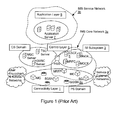
- FIG 1a illustrates schematically how the IMS fits into the mobile network architecture in the case of a General Packet Radio Service (GPRS) access network.
- GPRS General Packet Radio Service
- c ontrol of communications occurs at three layers (or planes).
- the lowest layer is the Connectivity Layer 1, also referred to as the bearer plane and through which signals are directed to/from user equipment, UE, accessing the network.
- the entities within the connectivity layer 1 that connect an IMS subscriber to IMS services form a network that is referred to as the IP-Connectivity Access Network, IP-CAN.
- the GPRS network includes various GPRS Support Nodes (GSNs).
- GSN GPRS Support Nodes
- GGSN gateway GPRS support node
- the middle layer is the Control Layer 4, and at the top is the Application Layer 6.
- the IMS 3 includes a core network 3a, which operates over the middle, Control Layer 4 and the Connectivity Layer 1, and a Service Network 3b.
- the IMS core network 3a includes nodes that send/receive signals to/from the GPRS network via the GGSN 2a at the Connectivity Layer 1 and network nodes that include Call/Session Control Functions (CSCFs) 5, which operate as SIP proxies within the IMS in the middle, Control Layer 4.
- CSCFs Call/Session Control Functions
- the 3GPP architecture defines three types of CSCFs: the Proxy CSCF (P-CSCF) which is the first point of contact within the IMS for a SIP terminal; the Serving CSCF (S-CSCF) which provides services to the user that the user is subscribed to; and the Interrogating CSCF (I-CSCF) whose role is to identify the correct S-CSCF and to forward to that S-CSCF a request received from a SIP terminal via a P-CSCF.
- P-CSCF Proxy CSCF
- S-CSCF Serving CSCF
- I-CSCF Interrogating CSCF
- the top, Application Layer 6 includes the IMS service network 3b.
- Application Servers (ASs) 7 are provided for implementing IMS service functionality
- IMS Internet Protocol
- VoIP Voice Over IP
- PS packet switched
- CS Circuit Switched
- ICS-AS allows signalling that is not supported over standard CS signalling (ISUP) to emulate an IMS terminal towards an IMS core network.
- IMS terminal connected to an IMS network via a CS access network can use IMS services.
- Examples of such signalling include IMS registration, mid-call signalling, additional info for call set-up signalling (e.g. SIP URL).
- Unstructured Supplementary Service Data (USSD) is used to transport this additional signalling (termed ICCP, IMS CS Control Protocol) in a CS network.
- the session continuity aspect of a session is decoupled from the ICS-AS and resides in a Voice Call Continuity (VCC) Application Server (AS).
- VCC specifications define methods that allow a user with User Equipment (UE) to move between different access technologies without requiring different levels of service depending on the access technologies.
- VCC functionality includes, for example, support for allowing the UE to automatically select an access network.
- the ICS-AS behaves as an AS connected to an IMS Serving-Call Session Control Function (S-CSCF) via the ISC interface.
- the second is ICS-AS using an Mw interface: The ICS-AS emulates a Proxy-Call Session Control Function (P-CSCF) connected to an S-CSCF via an Mw interface.
- ISC IP Multimedia Subsystem Control
- S-CSCF IMS Serving-Call Session Control Function
- Mw interface Mw interface
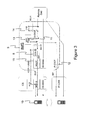
- FIG. 2 illustrates ICS architecture for the first option of ICS-AS using an ISC interface.
- An ICS-AS 8 interfaces with an IMS Core network 9 using the ISC interface.
- the ICS-AS 8 is triggered and involved in an IMS session using initial Filter Criteria (iFC)s.
- iFC initial Filter Criteria
- an Access Domain Selection (ADS) function also known as Domain Selection Function (DSF) selects the access domain to reach the User Equipment (UE) 10.
- ADS Access Domain Selection
- DSF Domain Selection Function
- FIG. 3 illustrates schematically ICS architecture for the second option described above, in which the ICS-AS 8 emulates a Proxy-Call Session Control Function (P-CSCF).
- the ICS-AS 8 interfaces with IMS Core 9 using the Mw interface and a SIP message is routed in the same way as a SIP message is routed from a S-CSCF 11 to a P-CSCF 12.
- a VCC AS 13 receives a SIP INVITE message
- an ADS function selects the access domain at which the UE 10 should be reached.
- the ADS function may be deployed as an independent AS from the VCC AS 13. Note that the ICS-AS 8 is only used when ADS selects CS access as the access domain, whereas the scenario in which the ICS-AS 8 uses an ISC interface, as described above, involves the ICS-AS 8 in both CS and PS access.
- a VCC user is not registered with an IMS network when he is using a CS access network.
- an unregistered trigger is used to provide IMS service
- a Telephony Application Server (TAS) 14 must implement an additional mechanism (e.g. using CAMEL) to ascertain whether a user is attached using a CS access network or not in order to provide registered IMS services to a user.
- TAS Telephony Application Server
- One possible solution to avoid this is to support IMS registration from an ICS-AS 8 based on triggers received, for example from the UE 10 using the ICCP so that the TAS 14 can be informed from the S-CSCF 11 using a third party registration procedure.
- the S-CSCF 11 uses a Reg event package as specified in RFC 3680, "Session Initiation Protocol (SIP) Event Package for Registrations", to ascertain whether a user is registered with an I MS network using a CS access network.
- SIP Session Initiation Protocol
- an ADS function functions as follows: When a user access an IMS network using a CS access network, the ADS function changes a Request Uniform Resource Identifier (URI) from a sip or tel URI of the called party to a CSRN (CS Routing Number).
- the CSRN is used to route a call from the IMS network to the user in the CS domain.
- the CSRN may be a Mobile Station Roaming Number (MSRN) dynamically fetched from a Visited Mobile Switching Centre (VMSC), or may be obtained from a prefix to the called party's Mobile Subscriber ISDN Number (MSISDN), where the prefix is a routing number to the CS access domain.
- MSRN Mobile Station Roaming Number
- MSISDN Mobile Subscriber ISDN Number
- the S-CSCF 11 routes the INVITE request to the CS domain via a Breakout Gateway control Function (BGCF) and a Media Gateway Control Function (MGCF) 15, as it recognizes that the CSRN does not belong to a user connected to the IMS network (using Telephone Number Mapping, ENUM).
- BGCF Breakout Gateway control Function
- MGCF Media Gateway Control Function
- the ADS function When a PS access network is selected, the ADS function returns the same Request URI unchanged which is a sip or tel URI of the called party.
- the S-CSCF 11 therefore routes the INVITE request to the contact addresses registered in the IMS network as described in TS 24.229 subclause 5.4.3.3.
- a VCC AS 13 is the last AS invoked for terminating calls and the first AS invoked for originating calls in the ISC chain.
- a user is IMS registered even when he is using a CS access network.
- the ICS-AS is decoupled from the VCC AS 13, and the ICS-AS 16 is the last AS invoked for terminating calls and the first AS invoked for originating calls in the ISC chain.
- the ICS-AS 16 also includes an ADS function.
- the ADS function in the ICS-AS 8 operates in the same way as described in 3GPP Rel7.
- the ADS function changes the Request URI from a sip or tel URI of the called party to a CSRN, and the S-CSCF 11 routes the INVITE request to the CS access domain.
- the ADS When PS access is selected, the ADS returns the same Request URI unchanged.
- the URI is a sip or tel URI of the called party.
- the S-CSCF 11 registers both the PS contact address and the CS contact address, and so the 3GPP Rel7 VCC mechanism as explained above does not work.
- the INVITE request may be routed to the CS contact address, which is associated with the ICS-AS 8. If the request is routed to that contact address, the request will fail.
- a new mechanism is required in the ADS function and the S-CSCF 11 to exclude a CS contact addresses for INVITE request routing, and to route the request only to a PS access contact address.
- the ICS-AS 8 is decoupled from the VCC AS 13, and the VCC AS 13 is the last AS invoked for terminating calls and the first AS invoked for originating calls.
- the VCC AS 13 includes an ADS function.
- the ADS function needs to instruct the S-CSCF 11 to route the INVITE request only to the ICS-AS 8 and the CS access network.
- a CSRN is used in the INVITE Request URI, the contact selection of a UE's Public User ID is not used. This is because a CSRN is different from a UE's Public User ID (i.e. call forwarding to different number) and is not a number registered with the IMS network.
- the SIP INVITE will not route to the ICS-AS 8 using the Mw interface in this case, but will instead route directly to the CS access domain via the BGCF/MGCF 15 without involving the ICS-AS 8.
- the S-CSCF 11 may route the INVITE message to a PS contact that is registered with the S-CSCF 11, which is not desirable in this case.
- a new mechanism is required in the ADS and the S-CSCF 11 to route to only a CS access contact address and to the ICS-AS 8.
- the ADS returns the same Request URI unchanged, which is a sip or tel URI of the called party.
- the S-CSCF 11 registers both the PS contact address and the CS contact address, and so the 3GPP Rel7 VCC mechanism as explained above does not work.
- the INVITE request may be routed to the CS contact address, which is associated with the ICS-AS 8. If the request is routed to that contact address, the request will fail.
- a new mechanism is required in the ADS function and the S-CSCF 11 to exclude CS contact addresses for INVITE request routing, and to route the request only to a PS access contact address.
- the inventors have realised the problems associated with CS access to an IMS network, and have devised a method an apparatus to mitigate these problems.
- a method for managing access domain selection for a user device accessing an IP Multimedia Subsystem (IMS) network.
- IMS IP Multimedia Subsystem
- a Call Session Control Function (CSCF) in the IMS network stores an access domain indicator associated with a user's contact address.
- the access domain indicator is associated with the user's contact address when the user registers with the IMS network.
- the CSCF sends the access domain indicator to an Access Domain Selection (ADS) function in the IMS network, the access domain indicator to be used by the ADS function in selecting an access domain. This allows the ADS function to select the correct access domain to use when sending messages to the user device.
- ADS Access Domain Selection
- the access domain indicator comprises a feature tag, the feature tag indicating that the access domain is a circuit switched access domain, and comprising an address identifying an IMS Centralized Services Application Server (ICS AS).
- the ADS function selects a packet switched network to which a communication is to be sent.
- the CSCF determines if the Feature Tag is present in a Reject-Contact header of an INVITE message and, as a result of the determination, excludes the user's contact address associated with the Feature Tag, This prevents the invite message from being sent (either forked or forwarded) to the user device at the circuit switched access domain.
- the ADS function selects a circuit switched network to which a communication is to be sent.
- the CSCF determine if the Feature Tag is present in an Accept-Contact header of an INVITE message. As a result of the determination, the CSCF amends an address in the INVITE message to the user's contact address associated with the feature tag, thereby preventing sending the INVITE message to the user device using a packet switched access domain.
- the access domain indicator comprises a Globally Routable User Agent URL and an associated contact address.
- the Globally Routable User Agent URL and associated contact address identify, in the case that the user is accessing the IMS network using a packet switched access network, a user terminal, and in the case that the user is accessing the IMS network using a circuit switched network, an IMS Centralized Services Application Server.
- the ADS function receives an INVITE message and selects a packet switched network to which the INVITE message is to be sent. The ADS function then amends a URI included in the INVITE message to the Globally Routable User Agent URL identifying the user terminal, and sends the amended INVITE message to a CSCF.
- the ADS function receives an INVITE message and selects a circuit switched network to which the INVITE message is to be sent.
- the ADS function then amends a URI included in the INVITE message to the Globally Routable User Agent URL identifying the IMS Centralized Services Application Server, and sends the amended INVITE to a CSCF.
- a CSCF in the IMS network stores a further Feature Tag associated with a user's further contact address, the further Feature Tag being associated with the user's further contact address when the user registers with the IMS network, and sends the further Feature Tag to an ADS function in the IMS network, the further Feature Tag to be used by the ADS function in selecting an access domain.
- This is useful where, for example, a user is attached to the IMS network using more than one device.
- a CSCF node for use in an IMS network.
- the CSCF node has a receiver for receiving an access domain indicator, which is associated with a user's contact address.
- a memory is provided for storing the access domain indicator, and a transmitter is provided for sending the access domain indicator to an ADS function.
- the CSCF node optionally further comprises a second receiver for receiving an INVITE message from an ADS function, and a processor for determining if an access domain indicator comprising a Feature Tag is present in a Reject-Contact header of the INVITE message.
- the processor is arranged to, as a result of the determination, exclude the user's contact address associated with the feature tag, thereby preventing sending the INVITE message to the user at the excluded user's contact address.
- a second transmitter is provided for sending the INVITE message to a user device.
- the CSCF node is provided with a second receiver for receiving an INVITE message from an ADS function and a processor for determining if an access domain indicator comprising a Feature Tag is present in an Accept-Contact header of the INVITE message.
- the processor is further arranged to, as a result of the determination, amend an address in the INVITE message to the user's contact address associated with the feature tag, thereby preventing sending the INVITE message to the user using a packet switched access domain.
- a second transmitter is provided for forwarding the invite message to the user's contact address.
- an ADS function node is provided with a first receiver for receiving from a CSCF in an IMS network an access domain indicator associated with a user's contact address.
- the access domain indicator was associated with the user's contact address when the user registered with the IMS network.
- a memory is provided for storing the received access domain indicator.
- a second receiver is arranged to receive an INVITE message addressed to the user.
- a processor is provided for amending an address in the INVITE message to a target address on the basis of the stored access domain indicator, and a transmitter is provided for sending the amended INVITE to the CSCF for forwarding to the amended address. In this way, the INVITE is not sent to an incorrect address.
- the ADS function node is located in one of an IMS Centralized Services Application Server node and a Voice Call Continuity Application Server.
- an ICS AS according to claim 10 that is provided with a receiver for receiving a registration request from a User Equipment via a circuit switched access domain.
- a processor is arranged to associate a feature tag indicating that the access domain is a circuit switched access domain with a user address, and to include an address identifying an ICS AS in the request, and a transmitter is provided for sending the registration request to a CSCF.
- a user device for accessing an IMS network.
- the user device is provided with a processor for determining an access domain via which the user device can connect to the IMS network, and a transmitter for sending a message requesting registration with the IMS network, the message including an access domain indicator associated with a user's contact address.
- a "feature tag" is introduced to indicate at IMS registration of a user that the user is reachable via a CS access network.
- a caller preference mechanism (RFC 3841 "Caller Preferences for the Session Initiation Protocol"
- RRC 3841 Caller Preferences for the Session Initiation Protocol
- the feature tag provides information to instruct the S-CSCF to route a call only to the contact(s) associated with the feature tag.
- the ICS-AS registers the CS contact of the UE using a feature tag (herein termed CS-FT).
- CS-FT a feature tag
- the feature tag indicates that a CS access network is being used by the UE, and further includes a contact address associated with the ICS-AS via which the UE can be contacted.
- the ADS function must be aware of the type of access network through which the UE is registered. Where the ICS-AS using an ISC interface model is used, the ADS function is included in the ICS-AS, and so is already aware that the user is registered via a CS access network (because it has triggered registration via the CS access network). Where the ICS-AS using a Mw interface is used, the ADS function is not included in the ICS-AS but instead included in a VCC AS. The fact that the user is accessing the IMS network via a CS access network must be communicated to the VCC AS by a third party registration.
- the S-CSCF stores the CS contact address and the CS-FT.
- Figure 4 illustrates schematically an example of an IMS registration status of a user in the S-CSCF.
- the UE 10 is dual access (which means it can access via a CS access network 16 and an IP-CAN1/PS access network 17), and registers both a CS contact address (contact1) 18 and a PS contact address (contact2) 19 in the S-CSCF 11.
- the CS contact 18 is associated with a CS-FT.
- An IP Multimedia Public Identity (IMPU) is also registered from a personal computer 20 via access network IP-CAN2 21 using a different IP-CAN PS contact (contact3) 22.
- IMPU IP Multimedia Public Identity
- the ADS function is located in the ICS-AS 8.
- the ICS-AS 8 receives a SIP INVITE request from the S-CSCF 11, triggered by an iFC, the ADS function is invoked for access domain selection.
- access domain selection works in the same way as for 3GPP Rel7 VCC.
- the ADS function changes the Request URI of the SIP INVITE to a CSRN in order that the S-CSCF 11 can route the request to the CS access domain.
- Contact information associated with the CS access domain is not used for routing in this case.
- the ADS function does not map the Request URI to a CSRN, but does alter the Request URI to add a Reject-Contact header including the CS-FT.
- FIG. 5 illustrates the case described above where a PS access network is selected for routing a SIP INVITE request.
- the S-CSCF 11 in the IMS network receives a SIP INVITE request with an IMPU in the Request URI, it matches the three contacts (this procedure is as defined in step 9 of sub-clause 5.4.3.3 of TS 24.229), one of the contacts being to a CS network 16 and the other two to IP networks 17, 21.
- the Reject-Contact header contains the CS-FT
- Contact1 18 is excluded from the target sets for further routing as per the caller preference mechanism. Contact1 18 is rejected because it uses a CS access network 16.
- Dependent on local policy or q-values indicated by the UE 10 and the personal computer 20 the SIP INVITE request is forked to UE PS contact2 19 and/or PC PS contact3 22 and not to the CS contact1 18.
- the ADS function is located in a VCC AS 13.
- a VCC AS 13 receives a SIP INVITE request from the S-CSCF 11, triggered by an iFC, the ADS function at the VCC AS 13 is invoked for access domain selection.
- a mechanism is required to exclusively select CS access contacts 18 to ensure that the session is routed to the ICS-AS 8 rather than to any of the PS access contacts 19, 22, as illustrated in Figure 6 .
- the ADS function 23 disposed at the VCC AS 13, does not substantially alter the Request URI but adds the Accept-Contact header to the Request URI.
- the Accept-Contact header includes a CS-FT having a "require" and "explicit" parameter.
- the S-CSCF 11 only routes the call to the contact associated with CS-FT (Contact1 18 in Figure 6 ). In this way, the SIP INVITE is not routed to any of the contacts 19, 22 associated with a PS access network.
- a Globally Routable User agent URL (GRUU) is allocated dynamically by the S-CSCF 11 to each of a user's contacts in both CS 16 and PS 17, 21 access networks.
- the GRUU is provided to an ADS function 24 using a registration event package from the S-CSCF.
- the ADS function 24 uses the GRUU in a Request URI to inform the ADS function which access may be used.
- this embodiment has the disadvantage that the UE 10 and the IMS core must support the GRUU, it has the advantage that the ADS function 24 can control forking to different access networks without needing to involve the S-CSCF 11.
- the ADS function 24 subscribes to a registration event package, and receives the binding information on an Address of Record (AoR), Contact address, and its GRUU. As described previously, the ADS function 24 is located in the ICS-AS 8 in the case of an ICS-AS 8 using an ISC interface, and as part of a VCC AS 13 for ICS-AS using a Mw interface.
- the UE 10 is dual access (which means it can access via a CS access network 16 and an IP-CAN1/PS access network 17), and registers both a CS contact address (contact1) 18 and a PS contact address (contact2) 19 in the S-CSCF 11.
- the CS contact (contact1) 18 is associated with GRUU1
- the UE 10 PS contact is associated with GRUU2.
- the same IMPU is also registered from a personal computer via access network IP-CAN2 21, and has a PS contact (contact3) 22, which is associated with GRUU3.
- the ADS function 24 is aware if a particular GRUU is associated with a CS access or not by checking if a contact address matches that of a pre-configured ICS-AS address.
- the ADS function 24 is located at the ICS-AS 8.
- the ADS function 24 is invoked for access domain selection.
- the access domain is selected in the same way as described in 3GPP Rel7 VCC.
- the ADS function changes the Request URI of the SIP INVITE to a CSRN so that S-CSCF can route the SIP INVITE to the CS access network 16.
- Contact information associated with the CS access is not used for routing in this case.
- the ADS function 24 uses GRUU2 or GRUU3 associated with the user's PS contacts.
- Figure 8 illustrates the case when a SIP INVITE request is routed to a PS access (GRUU2). In this way the SIP INVITE is routed to a PS access network 17 and not to a CS access network 16.
- the ADS function 24 is located at the VCC AS 13.
- the VCC AS 13 receives a SIP INVITE request from the S-CSCF 11, triggered by an iFC, the ADS function 24 is invoked for access domain selection.
- PS access is selected, the same mechanism described above for an ICS-AS 8 using an ISC interface is used, the Request-URI is changed to a GRUU associated with one or more of the PS contacts.
- CS access is selected, the Request-URI is changed to a GRUU associated with one or more of the CS contacts 18.
- Both embodiments of the invention described above allow a network operator to control Access Domain Selection from an Application Server, while also allowing a user's CS contact to be registered in an IMS network.
- the key steps of both described embodiments of the invention are summarized in the flow chart of Figure 9 .
- an access domain indicator (which may be a FT or a GRUU) is associated S2 with the user's access and provided S3 to the S-CSCF.
- the access domain indicator is provided S4 to an Access Domain Selection function when an access domain is to be selected, and used S5 by the Access Domain Selection function to select an access domain as described above.
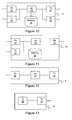
- the S-CSCF 11 is provided with a receiver for receiving an access domain indicator associated with a user's contact address, which may be a feature tag or a GRUU as described above.
- a memory 26 is provided for storing the access domain indicator, and a transmitter 27 is also provided for sending the access domain indicator to an ADS function 24.
- a second receiver for 28 may be provided receiving an invite message from the ADS 24.
- a processor 29 is used to determine if an access domain indicator comprising a Feature Tag is present in a Reject-Contact header of the invite message or an Accept-Contact header, and, as a result of the determination, amend a target address in the invite message to the correct user's contact address.
- a second transmitter 30 is provided for forwarding the invite message to the user's contact address.
- FIG 11 illustrates schematically an ADS 24 according to an embodiment of the invention.
- the ADS 24 is provided with a first receiver 31 for receiving an access domain indicator associated with a user's contact address from the S-CSCF 11.
- a memory 32 is provided for storing the received access domain indicator.
- a second receiver 33 is provided for receiving an invite message addressed to the user, and a processor 34 is used to amend the address in the invite message to a target address on the basis of the stored access domain indicator.
- a transmitter 35 is used for sending the amended invite to the S-CSCF 11 for to the amended address.
- FIG 12 illustrates schematically an ICS-AS 8 according to an embodiment of the invention in which a receiver 36 is provided for receiving a registration request from a UE via a circuit switched access domain, and a processor 37 is provided for associating a feature tag indicating that the access domain is a circuit switched access domain with a user address, and for including an address identifying an IP Multimedia Subsystem Centralized Services Application Server in the request.
- a transmitter 38 is provided for sending the registration request to a Call Session Control Function.
- Figure 13 illustrates a User device 10 according to an embodiment of the invention.
- the user device 10 is provide with a processor 39 arranged to determine an access domain via which the user device 10 can connect to the IMS network, and a transmitter 40 for sending a message requesting registration with the IMS network, the message including an access domain indicator associated with a user's contact address.
Landscapes
- Engineering & Computer Science (AREA)
- Computer Networks & Wireless Communication (AREA)
- Signal Processing (AREA)
- Business, Economics & Management (AREA)
- General Business, Economics & Management (AREA)
- Multimedia (AREA)
- Computer Security & Cryptography (AREA)
- Telephonic Communication Services (AREA)
- Mobile Radio Communication Systems (AREA)
Claims (11)
- Verfahren zum Verwalten von Zugangsdomänenauswahl für eine Benutzereinrichtung, die auf ein IMS(IP-Multimedia-Subsystem)-Netz zugreift, wobei das Verfahren umfasst:dass an einer Call-Session-Steuerfunktion im IMS-Netz zusätzlich zu einer Kontaktadresse des Benutzers ein mit der Kontaktadresse des Benutzers assoziierter Feature-Tag gespeichert wird, wobei der Feature-Tag mit der Kontaktadresse des Benutzers assoziiert wird, wenn sich der Benutzer beim IMS-Netz registriert, und der Feature-Tag anzeigt, dass die Zugangsdomäne eine leitungsvermittelte Zugangsdomäne ist, und eine Adresse umfasst, die einen IMS-Centralized-Services-Anwendungsserver identifiziert; unddass der Feature-Tag an eine Zugangsdomänen-Auswahlfunktion im IMS-Netz gesendet wird, wobei der Feature-Tag von der Zugangsdomänen-Auswahlfunktion beim Auswählen einer Zugangsdomäne zu verwenden ist.
- Verfahren nach Anspruch 1, außerdem umfassend:dass an der Zugangsdomänen-Auswahlfunktion ein paketvermitteltes Netz ausgewählt wird, an das eine Kommunikation zu senden ist;dass an einer Call-Session-Steuerfunktion bestimmt wird, ob der Feature-Tag in einem Kontaktablehnungs-Header einer INVITE-Nachricht vorhanden ist; unddass als Ergebnis der Bestimmung die mit dem Feature-Tag assoziierte Kontaktadresse des Benutzers ausgeschlossen wird, wodurch das Senden der INVITE-Nachricht an die Benutzereinrichtung an der leitungsvermittelten Zugangsdomäne verhindert wird.
- Verfahren nach Anspruch 1, außerdem umfassend:dass an der Zugangsdomänen-Auswahlfunktion ein leitungsvermitteltes Netz ausgewählt wird, an das eine Kommunikation zu senden ist;dass an einer Call-Session-Steuerfunktion bestimmt wird, ob der Feature-Tag in einem Kontaktannahme-Header einer INVITE-Nachricht vorhanden ist; unddass als Ergebnis der Bestimmung eine Adresse in der INVITE-Nachricht um die mit dem Feature-Tag assoziierte Kontaktadresse des Benutzers ergänzt wird, wodurch verhindert wird, dass die INVITE-Nachricht unter Verwendung einer paketvermittelten Zugangsdomäne an die Benutzereinrichtung gesendet wird.
- Verfahren nach einem der Ansprüche 1 bis 3, umfassend, dass an einer Call-Session-Steuerfunktion im IMS-Netz ein weiterer mit einer weiteren Kontaktadresse des Benutzers assoziierter Feature-Tag gespeichert wird, wobei der weitere Feature-Tag mit der weiteren Kontaktadresse des Benutzers assoziiert wird, wenn sich der Benutzer beim IMS-Netz registriert; und
dass der weitere Feature-Tag an eine Zugangsdomänen-Auswahlfunktion im IMS-Netz gesendet wird, wobei der weitere Feature-Tag durch die Zugangsdomänen-Auswahlfunktion beim Auswählen einer Zugangsdomäne zu verwenden ist. - Call-Session-Steuerfunktionsknoten zur Verwendung in einem IMS-Netz, wobei der Call-Session-Steuerfunktionsknoten umfasst:einen Empfänger zum Empfangen eines Feature-Tags, wobei der Feature-Tag mit einer Kontaktadresse des Benutzers assoziiert ist und anzeigt, dass die Zugangsdomäne eine leitungsvermittelte Zugangsdomäne ist, und außerdem eine Adresse umfasst, die einen IMS-Centralized-Services-Anwendungsserver identifiziert;einen Speicher, um zusätzlich zur Kontaktadresse des Benutzers den Feature-Tag zu speichern; undeinen Sender, um den Feature-Tag an eine Zugangsdomänen-Auswahlfunktion zu senden.
- Call-Session-Steuerfunktionsknoten nach Anspruch 5, außerdem umfassend:einen zweiten Empfänger zum Empfangen einer INVITE-Nachricht von einer Zugangsdomänen-Auswahlfunktion;einen Prozessor, um zu bestimmen, ob ein Feature-Tag in einem Kontaktablehnungs-Header der INVITE-Nachricht vorhanden ist, und als ein Ergebnis der Bestimmung die mit dem Feature-Tag assoziierte Kontaktadresse des Benutzers auszuschließen, wodurch das Senden der INVITE-Nachricht an den Benutzer an der ausgeschlossenen Kontaktadresse des Benutzers verhindert wird; undeinen zweiten Sender zum Senden der INVITE-Nachricht an die Benutzereinrichtung.
- Call-Session-Steuerfunktionsknoten nach Anspruch 5, außerdem umfassend:einen zweiten Empfänger zum Empfangen einer INVITE-Nachricht von einer Zugangsdomänen-Auswahlfunktion;einen Prozessor, um zu bestimmen, ob ein Feature-Tag in einem Kontaktannahme-Header der INVITE-Nachricht vorhanden ist, und als ein Ergebnis der Bestimmung eine Adresse in der INVITE-Nachricht um die mit dem Feature-Tag assoziierte Kontaktadresse des Benutzers zu ergänzen, wodurch verhindert wird, dass die INVITE-Nachricht unter Verwendung einer paketvermittelten Zugangsdomäne an den Benutzer gesendet wird;einen zweiten Sender zum Weiterleiten der INVITE-Nachricht an die Kontaktadresse des Benutzers.
- Zugangsdomänen-Auswahlfunktionsknoten, Folgendes umfassend:einen ersten Empfänger, um von einer Call-Session-Steuerfunktion in einem IMS-Netz einen mit einer Kontaktaktadresse des Benutzers assoziierten Feature-Tag zu empfangen, wobei der Feature-Tag mit der Kontaktadresse des Benutzers assoziiert wird, wenn sich der Benutzer beim IMS-Netz registriert, und eine Anzeige umfasst, dass die Zugangsdomäne eine leitungsvermittelte Zugangsdomäne ist, und eine Adresse, die einen IMS-Centralized-Services-Anwendungsserver identifiziert; undeinen Speicher zum Speichern des empfangenen Feature-Tags;einen zweiten Empfänger zum Empfangen einer an den Benutzer adressierten INVITE-Nachricht;einen Prozessor zum Ergänzen einer Adresse in der INVITE-Nachricht um eine Zieladresse auf der Basis des gespeicherten Feature-Tags; undeinen Sender zum Senden der ergänzten INVITE-Nachricht an die Call-Session-Steuerfunktion zum Weiterleiten an die ergänzte Adresse.
- Zugangsdomänen-Auswahlfunktionsknoten nach Anspruch 8, worin der Zugangsdomänen-Auswahlfunktionsknoten in einem von Folgenden angeordnet ist:einem IMS-Centralized-Services-Anwendungsserverknoten und einem Sprachrufkontinuitäts-Anwendungsserver.
- IMS-Centralized-Services-Anwendungsserverknoten, Folgendes umfassend:einen Empfänger zum Empfangen einer Registrieranforderung von einem Benutzergerät über eine leitungsvermittelte Zugangsdomäne;einen Prozessor, um mit einer Benutzeradresse einen Feature-Tag zu assoziieren, der anzeigt, dass die Zugangsdomäne eine leitungsvermittele Zugangsdomäne ist, und um eine Adresse einzuschließen, die einen IMS-Centralized-Services-Anwendungsserver identifiziert; undeinen Sender zum Senden der Registrieranforderung an eine Call-Session-Steuerfunktion.
- Benutzereinrichtung, um auf ein IMS-Netz zuzugreifen, wobei die Benutzereinrichtung umfasst:einen Prozessor, um eine Zugangsdomäne zu bestimmen, über die sich die Benutzereinrichtung an das IMS-Netz anschließen kann; undeinen Sender, um eine Nachricht zu senden, die das Registrieren beim IMS-Netz anfordert, wobei die Nachricht einen mit einer Kontaktadresse des Benutzers assoziierten Feature-Tag einschließt, wobei der Feature-Tag anzeigt, dass die Zugangsdomäne eine leitungsvermittelte Zugangsdomäne ist, und eine Adresse umfasst, die einen IMS-Centralized-Services-Anwendungsserver identifiziert.
Applications Claiming Priority (2)
| Application Number | Priority Date | Filing Date | Title |
|---|---|---|---|
| GBGB0711592.6A GB0711592D0 (en) | 2007-06-15 | 2007-06-15 | Access domain selection in a communications network |
| PCT/EP2008/057484 WO2008152133A2 (en) | 2007-06-15 | 2008-06-13 | Access domain selection in a communications network |
Publications (2)
| Publication Number | Publication Date |
|---|---|
| EP2168340A2 EP2168340A2 (de) | 2010-03-31 |
| EP2168340B1 true EP2168340B1 (de) | 2013-09-04 |
Family
ID=38332160
Family Applications (1)
| Application Number | Title | Priority Date | Filing Date |
|---|---|---|---|
| EP08761007.7A Active EP2168340B1 (de) | 2007-06-15 | 2008-06-13 | Zugangsdomänenauswahl in einem kommunikationsnetz |
Country Status (7)
| Country | Link |
|---|---|
| US (1) | US20100182998A1 (de) |
| EP (1) | EP2168340B1 (de) |
| CN (1) | CN101690084B (de) |
| AU (1) | AU2008263878B2 (de) |
| BR (1) | BRPI0813348A2 (de) |
| GB (1) | GB0711592D0 (de) |
| WO (1) | WO2008152133A2 (de) |
Families Citing this family (9)
| Publication number | Priority date | Publication date | Assignee | Title |
|---|---|---|---|---|
| EP2418818B1 (de) * | 2010-08-12 | 2018-02-14 | Deutsche Telekom AG | Netzwerkeinheit zur verwaltung von kommunikationen in richtung einer benutzereinheit über ein kommunikationsnetzwerk |
| EP2418816B1 (de) * | 2010-08-12 | 2018-12-12 | Deutsche Telekom AG | Registrierung eines Benutzerendgerätes in einem Kommunikationsnetz mittels eines anderen Kommunikationsnetzes |
| EP2418817B1 (de) | 2010-08-12 | 2018-12-12 | Deutsche Telekom AG | Anwendungsserver zur Verwaltung von Kommunikationen in Richtung eines Benutzereinheitssatzes |
| EP2418815B1 (de) | 2010-08-12 | 2019-01-02 | Deutsche Telekom AG | Verwaltung von SIP-Kommunikationen in Richtung einer Benutzereinheit in einem Kommunikationsnetzwerk |
| US20130279373A1 (en) * | 2012-04-18 | 2013-10-24 | Interdigital Patent Holdings, Inc. | Method and apparatus for providing an internet protocol multimedia subsystem triggering service |
| WO2013174440A1 (en) | 2012-05-24 | 2013-11-28 | Telefonaktiebolaget L.M. Ericsson (Publ) | Method, network and network entity for establishing a communication session to a user equipment roaming in ims |
| US20140293832A1 (en) * | 2013-03-27 | 2014-10-02 | Alcatel-Lucent Usa Inc. | Method to support guest users in an ims network |
| CN103347256B (zh) * | 2013-07-19 | 2015-12-02 | 成都博云科技有限公司 | 一种ims网络的用户漫游识别方法及用户漫游识别系统 |
| WO2016176862A1 (zh) * | 2015-05-07 | 2016-11-10 | 华为技术有限公司 | 一种业务处理方法及用户设备 |
Family Cites Families (13)
| Publication number | Priority date | Publication date | Assignee | Title |
|---|---|---|---|---|
| AU2002224990A1 (en) * | 2002-01-10 | 2003-07-24 | Nokia Corporation | Method and system for proxying a message |
| US20070189215A1 (en) * | 2004-01-07 | 2007-08-16 | Huawei Technologies Co., Ltd. | Method for reducing interface load of home subscriber server |
| CN100461942C (zh) * | 2005-05-27 | 2009-02-11 | 华为技术有限公司 | Ip多媒体子系统接入域安全机制的选择方法 |
| US8055262B1 (en) * | 2005-07-05 | 2011-11-08 | Nextel Communications Inc. | Dispatch network and IMS integration with centralized event notification server |
| JP4138808B2 (ja) * | 2006-01-10 | 2008-08-27 | 株式会社エヌ・ティ・ティ・ドコモ | 通信システムおよび通信方法 |
| GB0601007D0 (en) * | 2006-01-10 | 2006-03-01 | Samsung Electronics Co Ltd | Mobile Communications |
| KR101295577B1 (ko) * | 2006-02-06 | 2013-08-09 | 엘지전자 주식회사 | 네트워크 기반의 vcc 기능 제어 방법, 단말 및 네트워크서버 |
| KR20070108425A (ko) * | 2006-02-06 | 2007-11-12 | 엘지전자 주식회사 | VCC에서의 call 수행 방법, 단말 및 VCC어플리케이션 서버 |
| KR101259121B1 (ko) * | 2006-02-06 | 2013-04-26 | 엘지전자 주식회사 | 단말 기반의 vcc 기능제어 방법, 그 단말 및 그네트워크 서버 |
| WO2008041111A2 (en) * | 2006-10-04 | 2008-04-10 | Nortel Networks Limited | Circuit-switched and multimedia subsystem voice continuity |
| WO2008077435A1 (en) * | 2006-12-27 | 2008-07-03 | Telecom Italia S.P.A. | Method and apparatuses for the provision of network services offered through a set of servers in an ims network |
| US8891482B2 (en) * | 2007-01-09 | 2014-11-18 | Nokia Corporation | Session continuity in communication networks |
| US9055517B2 (en) * | 2007-02-26 | 2015-06-09 | Blackberry Limited | System and method of user-directed dynamic domain selection |
-
2007
- 2007-06-15 GB GBGB0711592.6A patent/GB0711592D0/en not_active Ceased
-
2008
- 2008-06-13 CN CN200880020276.9A patent/CN101690084B/zh active Active
- 2008-06-13 EP EP08761007.7A patent/EP2168340B1/de active Active
- 2008-06-13 AU AU2008263878A patent/AU2008263878B2/en not_active Ceased
- 2008-06-13 US US12/664,769 patent/US20100182998A1/en not_active Abandoned
- 2008-06-13 WO PCT/EP2008/057484 patent/WO2008152133A2/en not_active Ceased
- 2008-06-13 BR BRPI0813348-4A2A patent/BRPI0813348A2/pt active Search and Examination
Also Published As
| Publication number | Publication date |
|---|---|
| BRPI0813348A2 (pt) | 2014-12-30 |
| CN101690084B (zh) | 2016-04-06 |
| GB0711592D0 (en) | 2007-07-25 |
| US20100182998A1 (en) | 2010-07-22 |
| WO2008152133A3 (en) | 2009-07-16 |
| CN101690084A (zh) | 2010-03-31 |
| AU2008263878B2 (en) | 2012-08-30 |
| AU2008263878A1 (en) | 2008-12-18 |
| WO2008152133A2 (en) | 2008-12-18 |
| EP2168340A2 (de) | 2010-03-31 |
Similar Documents
| Publication | Publication Date | Title |
|---|---|---|
| EP2168340B1 (de) | Zugangsdomänenauswahl in einem kommunikationsnetz | |
| US8208930B2 (en) | Message routing in a telecommunication system | |
| US9083784B2 (en) | Techniques for providing multimedia communication services to a subscriber | |
| US9906566B2 (en) | Voice session termination for messaging clients in IMS | |
| EP2192742B1 (de) | Lokalsitzungssteuerung, ip-multimedia-subsystem und sitzungsregistrationsverfahren | |
| US20040193700A1 (en) | Service provisioning in a communication system | |
| US20100217875A1 (en) | Method and apparatus for use in a communications network | |
| AU2008238192A1 (en) | Mechanism for executing server discovery | |
| EP2091186A1 (de) | Verfahren, netzwerk und einrichtung zum sitzungs-routen | |
| US20110090903A1 (en) | Providing location information in an ip multimedia subsystem network | |
| EP2716001B1 (de) | Routen von anrufen in ip-multimedia-subsystem netzwerken für zentralisierte dienste | |
| US9509547B2 (en) | Selection of service domain in IMS centralised services | |
| EP1981246B1 (de) | Verfahren, vorrichtung und system zur überprüfung der gültigkeit für global steuerbare benutzeragent uri | |
| KR100807863B1 (ko) | 통신 시스템에서의 서비스 제공 | |
| KR20100102363A (ko) | 아이피 멀티미디어 서브시스템에서의 서비스 등록 방법 및 시스템 | |
| KR100703426B1 (ko) | 아이피 기반 멀티미디어 서브시스템에서 가입자 정보유실시 발신 및 착신 호를 가능하게 하는 방법 및 장치 | |
| CN113453174B (zh) | 一种漫游地业务提供方法、ip多媒体系统及存储介质 | |
| KR101075614B1 (ko) | 아이피 기반 멀티미디어 서브시스템에서 가입자 정보유실시 착신호를 가능하게 하는 방법 | |
| CN1913504B (zh) | 一种路由路径控制方法、系统和装置 | |
| CN101137209B (zh) | 基于位置路由的系统及位置路由设备和方法 | |
| US20150208224A1 (en) | Emergency Signalling in an IP Multimedia Subsystem Network | |
| WO2007144681A1 (en) | Method and system for providing portability | |
| CN101299874A (zh) | 用户数据返回方法、系统及设备 |
Legal Events
| Date | Code | Title | Description |
|---|---|---|---|
| PUAI | Public reference made under article 153(3) epc to a published international application that has entered the european phase |
Free format text: ORIGINAL CODE: 0009012 |
|
| 17P | Request for examination filed |
Effective date: 20091202 |
|
| AK | Designated contracting states |
Kind code of ref document: A2 Designated state(s): AT BE BG CH CY CZ DE DK EE ES FI FR GB GR HR HU IE IS IT LI LT LU LV MC MT NL NO PL PT RO SE SI SK TR |
|
| AX | Request for extension of the european patent |
Extension state: AL BA MK RS |
|
| DAX | Request for extension of the european patent (deleted) | ||
| GRAP | Despatch of communication of intention to grant a patent |
Free format text: ORIGINAL CODE: EPIDOSNIGR1 |
|
| INTG | Intention to grant announced |
Effective date: 20130418 |
|
| GRAS | Grant fee paid |
Free format text: ORIGINAL CODE: EPIDOSNIGR3 |
|
| GRAA | (expected) grant |
Free format text: ORIGINAL CODE: 0009210 |
|
| AK | Designated contracting states |
Kind code of ref document: B1 Designated state(s): AT BE BG CH CY CZ DE DK EE ES FI FR GB GR HR HU IE IS IT LI LT LU LV MC MT NL NO PL PT RO SE SI SK TR |
|
| REG | Reference to a national code |
Ref country code: GB Ref legal event code: FG4D |
|
| REG | Reference to a national code |
Ref country code: CH Ref legal event code: EP |
|
| REG | Reference to a national code |
Ref country code: AT Ref legal event code: REF Ref document number: 631018 Country of ref document: AT Kind code of ref document: T Effective date: 20130915 |
|
| REG | Reference to a national code |
Ref country code: IE Ref legal event code: FG4D |
|
| REG | Reference to a national code |
Ref country code: DE Ref legal event code: R096 Ref document number: 602008027319 Country of ref document: DE Effective date: 20131031 Ref country code: CH Ref legal event code: NV Representative=s name: MARKS AND CLERK (LUXEMBOURG) LLP, CH |
|
| REG | Reference to a national code |
Ref country code: NL Ref legal event code: T3 |
|
| REG | Reference to a national code |
Ref country code: SE Ref legal event code: TRGR |
|
| REG | Reference to a national code |
Ref country code: AT Ref legal event code: MK05 Ref document number: 631018 Country of ref document: AT Kind code of ref document: T Effective date: 20130904 |
|
| PG25 | Lapsed in a contracting state [announced via postgrant information from national office to epo] |
Ref country code: CY Free format text: LAPSE BECAUSE OF FAILURE TO SUBMIT A TRANSLATION OF THE DESCRIPTION OR TO PAY THE FEE WITHIN THE PRESCRIBED TIME-LIMIT Effective date: 20130821 Ref country code: NO Free format text: LAPSE BECAUSE OF FAILURE TO SUBMIT A TRANSLATION OF THE DESCRIPTION OR TO PAY THE FEE WITHIN THE PRESCRIBED TIME-LIMIT Effective date: 20131204 Ref country code: AT Free format text: LAPSE BECAUSE OF FAILURE TO SUBMIT A TRANSLATION OF THE DESCRIPTION OR TO PAY THE FEE WITHIN THE PRESCRIBED TIME-LIMIT Effective date: 20130904 Ref country code: LT Free format text: LAPSE BECAUSE OF FAILURE TO SUBMIT A TRANSLATION OF THE DESCRIPTION OR TO PAY THE FEE WITHIN THE PRESCRIBED TIME-LIMIT Effective date: 20130904 Ref country code: HR Free format text: LAPSE BECAUSE OF FAILURE TO SUBMIT A TRANSLATION OF THE DESCRIPTION OR TO PAY THE FEE WITHIN THE PRESCRIBED TIME-LIMIT Effective date: 20130904 |
|
| REG | Reference to a national code |
Ref country code: DE Ref legal event code: R082 Ref document number: 602008027319 Country of ref document: DE Representative=s name: BURCHARDI, THOMAS, DIPL.-ING. UNIV., DE Ref country code: LT Ref legal event code: MG4D |
|
| PG25 | Lapsed in a contracting state [announced via postgrant information from national office to epo] |
Ref country code: FI Free format text: LAPSE BECAUSE OF FAILURE TO SUBMIT A TRANSLATION OF THE DESCRIPTION OR TO PAY THE FEE WITHIN THE PRESCRIBED TIME-LIMIT Effective date: 20130904 Ref country code: LV Free format text: LAPSE BECAUSE OF FAILURE TO SUBMIT A TRANSLATION OF THE DESCRIPTION OR TO PAY THE FEE WITHIN THE PRESCRIBED TIME-LIMIT Effective date: 20130904 Ref country code: GR Free format text: LAPSE BECAUSE OF FAILURE TO SUBMIT A TRANSLATION OF THE DESCRIPTION OR TO PAY THE FEE WITHIN THE PRESCRIBED TIME-LIMIT Effective date: 20131205 Ref country code: PL Free format text: LAPSE BECAUSE OF FAILURE TO SUBMIT A TRANSLATION OF THE DESCRIPTION OR TO PAY THE FEE WITHIN THE PRESCRIBED TIME-LIMIT Effective date: 20130904 Ref country code: SI Free format text: LAPSE BECAUSE OF FAILURE TO SUBMIT A TRANSLATION OF THE DESCRIPTION OR TO PAY THE FEE WITHIN THE PRESCRIBED TIME-LIMIT Effective date: 20130904 |
|
| PG25 | Lapsed in a contracting state [announced via postgrant information from national office to epo] |
Ref country code: CY Free format text: LAPSE BECAUSE OF FAILURE TO SUBMIT A TRANSLATION OF THE DESCRIPTION OR TO PAY THE FEE WITHIN THE PRESCRIBED TIME-LIMIT Effective date: 20130904 Ref country code: BE Free format text: LAPSE BECAUSE OF FAILURE TO SUBMIT A TRANSLATION OF THE DESCRIPTION OR TO PAY THE FEE WITHIN THE PRESCRIBED TIME-LIMIT Effective date: 20130904 |
|
| PG25 | Lapsed in a contracting state [announced via postgrant information from national office to epo] |
Ref country code: SK Free format text: LAPSE BECAUSE OF FAILURE TO SUBMIT A TRANSLATION OF THE DESCRIPTION OR TO PAY THE FEE WITHIN THE PRESCRIBED TIME-LIMIT Effective date: 20130904 Ref country code: CZ Free format text: LAPSE BECAUSE OF FAILURE TO SUBMIT A TRANSLATION OF THE DESCRIPTION OR TO PAY THE FEE WITHIN THE PRESCRIBED TIME-LIMIT Effective date: 20130904 Ref country code: IS Free format text: LAPSE BECAUSE OF FAILURE TO SUBMIT A TRANSLATION OF THE DESCRIPTION OR TO PAY THE FEE WITHIN THE PRESCRIBED TIME-LIMIT Effective date: 20140104 Ref country code: RO Free format text: LAPSE BECAUSE OF FAILURE TO SUBMIT A TRANSLATION OF THE DESCRIPTION OR TO PAY THE FEE WITHIN THE PRESCRIBED TIME-LIMIT Effective date: 20130904 Ref country code: EE Free format text: LAPSE BECAUSE OF FAILURE TO SUBMIT A TRANSLATION OF THE DESCRIPTION OR TO PAY THE FEE WITHIN THE PRESCRIBED TIME-LIMIT Effective date: 20130904 |
|
| PG25 | Lapsed in a contracting state [announced via postgrant information from national office to epo] |
Ref country code: ES Free format text: LAPSE BECAUSE OF FAILURE TO SUBMIT A TRANSLATION OF THE DESCRIPTION OR TO PAY THE FEE WITHIN THE PRESCRIBED TIME-LIMIT Effective date: 20130904 |
|
| REG | Reference to a national code |
Ref country code: DE Ref legal event code: R097 Ref document number: 602008027319 Country of ref document: DE |
|
| PG25 | Lapsed in a contracting state [announced via postgrant information from national office to epo] |
Ref country code: PT Free format text: LAPSE BECAUSE OF FAILURE TO SUBMIT A TRANSLATION OF THE DESCRIPTION OR TO PAY THE FEE WITHIN THE PRESCRIBED TIME-LIMIT Effective date: 20140106 |
|
| PLBE | No opposition filed within time limit |
Free format text: ORIGINAL CODE: 0009261 |
|
| STAA | Information on the status of an ep patent application or granted ep patent |
Free format text: STATUS: NO OPPOSITION FILED WITHIN TIME LIMIT |
|
| 26N | No opposition filed |
Effective date: 20140605 |
|
| PG25 | Lapsed in a contracting state [announced via postgrant information from national office to epo] |
Ref country code: IT Free format text: LAPSE BECAUSE OF FAILURE TO SUBMIT A TRANSLATION OF THE DESCRIPTION OR TO PAY THE FEE WITHIN THE PRESCRIBED TIME-LIMIT Effective date: 20130904 |
|
| REG | Reference to a national code |
Ref country code: DE Ref legal event code: R097 Ref document number: 602008027319 Country of ref document: DE Effective date: 20140605 |
|
| PG25 | Lapsed in a contracting state [announced via postgrant information from national office to epo] |
Ref country code: DK Free format text: LAPSE BECAUSE OF FAILURE TO SUBMIT A TRANSLATION OF THE DESCRIPTION OR TO PAY THE FEE WITHIN THE PRESCRIBED TIME-LIMIT Effective date: 20130904 |
|
| PG25 | Lapsed in a contracting state [announced via postgrant information from national office to epo] |
Ref country code: LU Free format text: LAPSE BECAUSE OF FAILURE TO SUBMIT A TRANSLATION OF THE DESCRIPTION OR TO PAY THE FEE WITHIN THE PRESCRIBED TIME-LIMIT Effective date: 20140613 Ref country code: MC Free format text: LAPSE BECAUSE OF FAILURE TO SUBMIT A TRANSLATION OF THE DESCRIPTION OR TO PAY THE FEE WITHIN THE PRESCRIBED TIME-LIMIT Effective date: 20130904 |
|
| REG | Reference to a national code |
Ref country code: IE Ref legal event code: MM4A |
|
| PG25 | Lapsed in a contracting state [announced via postgrant information from national office to epo] |
Ref country code: IE Free format text: LAPSE BECAUSE OF NON-PAYMENT OF DUE FEES Effective date: 20140613 |
|
| PG25 | Lapsed in a contracting state [announced via postgrant information from national office to epo] |
Ref country code: MT Free format text: LAPSE BECAUSE OF FAILURE TO SUBMIT A TRANSLATION OF THE DESCRIPTION OR TO PAY THE FEE WITHIN THE PRESCRIBED TIME-LIMIT Effective date: 20130904 |
|
| PG25 | Lapsed in a contracting state [announced via postgrant information from national office to epo] |
Ref country code: BG Free format text: LAPSE BECAUSE OF FAILURE TO SUBMIT A TRANSLATION OF THE DESCRIPTION OR TO PAY THE FEE WITHIN THE PRESCRIBED TIME-LIMIT Effective date: 20130904 |
|
| REG | Reference to a national code |
Ref country code: FR Ref legal event code: PLFP Year of fee payment: 9 |
|
| PG25 | Lapsed in a contracting state [announced via postgrant information from national office to epo] |
Ref country code: HU Free format text: LAPSE BECAUSE OF FAILURE TO SUBMIT A TRANSLATION OF THE DESCRIPTION OR TO PAY THE FEE WITHIN THE PRESCRIBED TIME-LIMIT; INVALID AB INITIO Effective date: 20080613 Ref country code: TR Free format text: LAPSE BECAUSE OF FAILURE TO SUBMIT A TRANSLATION OF THE DESCRIPTION OR TO PAY THE FEE WITHIN THE PRESCRIBED TIME-LIMIT Effective date: 20130904 |
|
| REG | Reference to a national code |
Ref country code: FR Ref legal event code: PLFP Year of fee payment: 10 |
|
| REG | Reference to a national code |
Ref country code: FR Ref legal event code: PLFP Year of fee payment: 11 |
|
| PGFP | Annual fee paid to national office [announced via postgrant information from national office to epo] |
Ref country code: SE Payment date: 20190627 Year of fee payment: 12 |
|
| PGFP | Annual fee paid to national office [announced via postgrant information from national office to epo] |
Ref country code: CH Payment date: 20190702 Year of fee payment: 12 |
|
| REG | Reference to a national code |
Ref country code: CH Ref legal event code: PL |
|
| PG25 | Lapsed in a contracting state [announced via postgrant information from national office to epo] |
Ref country code: CH Free format text: LAPSE BECAUSE OF NON-PAYMENT OF DUE FEES Effective date: 20200630 Ref country code: LI Free format text: LAPSE BECAUSE OF NON-PAYMENT OF DUE FEES Effective date: 20200630 |
|
| PG25 | Lapsed in a contracting state [announced via postgrant information from national office to epo] |
Ref country code: SE Free format text: LAPSE BECAUSE OF NON-PAYMENT OF DUE FEES Effective date: 20200614 |
|
| REG | Reference to a national code |
Ref country code: SE Ref legal event code: EUG |
|
| REG | Reference to a national code |
Ref country code: DE Ref legal event code: R079 Ref document number: 602008027319 Country of ref document: DE Free format text: PREVIOUS MAIN CLASS: H04L0029060000 Ipc: H04L0065000000 |
|
| PGFP | Annual fee paid to national office [announced via postgrant information from national office to epo] |
Ref country code: GB Payment date: 20220628 Year of fee payment: 15 |
|
| PGFP | Annual fee paid to national office [announced via postgrant information from national office to epo] |
Ref country code: FR Payment date: 20220627 Year of fee payment: 15 |
|
| GBPC | Gb: european patent ceased through non-payment of renewal fee |
Effective date: 20230613 |
|
| PG25 | Lapsed in a contracting state [announced via postgrant information from national office to epo] |
Ref country code: GB Free format text: LAPSE BECAUSE OF NON-PAYMENT OF DUE FEES Effective date: 20230613 |
|
| PG25 | Lapsed in a contracting state [announced via postgrant information from national office to epo] |
Ref country code: FR Free format text: LAPSE BECAUSE OF NON-PAYMENT OF DUE FEES Effective date: 20230630 |
|
| PGFP | Annual fee paid to national office [announced via postgrant information from national office to epo] |
Ref country code: DE Payment date: 20250627 Year of fee payment: 18 |
|
| PGFP | Annual fee paid to national office [announced via postgrant information from national office to epo] |
Ref country code: NL Payment date: 20250626 Year of fee payment: 18 |