EP2159224A1 - Bromo-phenyl substituted thiazolyl dihydropyrimidines - Google Patents
Bromo-phenyl substituted thiazolyl dihydropyrimidines Download PDFInfo
- Publication number
- EP2159224A1 EP2159224A1 EP08757463A EP08757463A EP2159224A1 EP 2159224 A1 EP2159224 A1 EP 2159224A1 EP 08757463 A EP08757463 A EP 08757463A EP 08757463 A EP08757463 A EP 08757463A EP 2159224 A1 EP2159224 A1 EP 2159224A1
- Authority
- EP
- European Patent Office
- Prior art keywords
- compound
- formula
- salt
- composition according
- appropriate
- Prior art date
- Legal status (The legal status is an assumption and is not a legal conclusion. Google has not performed a legal analysis and makes no representation as to the accuracy of the status listed.)
- Granted
Links
- VZWOXDYRBDIHMA-UHFFFAOYSA-N Cc1ncc[s]1 Chemical compound Cc1ncc[s]1 VZWOXDYRBDIHMA-UHFFFAOYSA-N 0.000 description 1
Classifications
-
- C—CHEMISTRY; METALLURGY
- C07—ORGANIC CHEMISTRY
- C07D—HETEROCYCLIC COMPOUNDS
- C07D417/00—Heterocyclic compounds containing two or more hetero rings, at least one ring having nitrogen and sulfur atoms as the only ring hetero atoms, not provided for by group C07D415/00
- C07D417/02—Heterocyclic compounds containing two or more hetero rings, at least one ring having nitrogen and sulfur atoms as the only ring hetero atoms, not provided for by group C07D415/00 containing two hetero rings
- C07D417/04—Heterocyclic compounds containing two or more hetero rings, at least one ring having nitrogen and sulfur atoms as the only ring hetero atoms, not provided for by group C07D415/00 containing two hetero rings directly linked by a ring-member-to-ring-member bond
-
- A—HUMAN NECESSITIES
- A61—MEDICAL OR VETERINARY SCIENCE; HYGIENE
- A61P—SPECIFIC THERAPEUTIC ACTIVITY OF CHEMICAL COMPOUNDS OR MEDICINAL PREPARATIONS
- A61P1/00—Drugs for disorders of the alimentary tract or the digestive system
- A61P1/16—Drugs for disorders of the alimentary tract or the digestive system for liver or gallbladder disorders, e.g. hepatoprotective agents, cholagogues, litholytics
-
- A—HUMAN NECESSITIES
- A61—MEDICAL OR VETERINARY SCIENCE; HYGIENE
- A61P—SPECIFIC THERAPEUTIC ACTIVITY OF CHEMICAL COMPOUNDS OR MEDICINAL PREPARATIONS
- A61P31/00—Antiinfectives, i.e. antibiotics, antiseptics, chemotherapeutics
- A61P31/12—Antivirals
-
- A—HUMAN NECESSITIES
- A61—MEDICAL OR VETERINARY SCIENCE; HYGIENE
- A61P—SPECIFIC THERAPEUTIC ACTIVITY OF CHEMICAL COMPOUNDS OR MEDICINAL PREPARATIONS
- A61P31/00—Antiinfectives, i.e. antibiotics, antiseptics, chemotherapeutics
- A61P31/12—Antivirals
- A61P31/20—Antivirals for DNA viruses
-
- A—HUMAN NECESSITIES
- A61—MEDICAL OR VETERINARY SCIENCE; HYGIENE
- A61P—SPECIFIC THERAPEUTIC ACTIVITY OF CHEMICAL COMPOUNDS OR MEDICINAL PREPARATIONS
- A61P35/00—Antineoplastic agents
-
- A—HUMAN NECESSITIES
- A61—MEDICAL OR VETERINARY SCIENCE; HYGIENE
- A61P—SPECIFIC THERAPEUTIC ACTIVITY OF CHEMICAL COMPOUNDS OR MEDICINAL PREPARATIONS
- A61P43/00—Drugs for specific purposes, not provided for in groups A61P1/00-A61P41/00
-
- C—CHEMISTRY; METALLURGY
- C07—ORGANIC CHEMISTRY
- C07D—HETEROCYCLIC COMPOUNDS
- C07D417/00—Heterocyclic compounds containing two or more hetero rings, at least one ring having nitrogen and sulfur atoms as the only ring hetero atoms, not provided for by group C07D415/00
- C07D417/14—Heterocyclic compounds containing two or more hetero rings, at least one ring having nitrogen and sulfur atoms as the only ring hetero atoms, not provided for by group C07D415/00 containing three or more hetero rings
Definitions
- the invention relates to a new bromo-phenyl substituted thiazolyl dihydropyrimidine, its preparation method and use as a medicament especially for treating and preventing hepatitis B infections.
- the invention also relates to a composition comprising the dihydropyrimidine, other antiviral agent and, when appropriate, an immunomodulator and a medicament comprising the composition especially for treating and preventing HBV infections such as hepatitis B infections.
- the hepatitis B virus belongs to the family of hepadna viruses. It can cause acute and/or persistent or progressive chronic diseases. Many other clinical manifestations in the pathological state are also caused by the hepatitis B virus-in particular chronic inflammation of the liver, cirrhosis of the liver and hepatocellular carcinoma. In addition, coinfection with the heptatitis delta virus may have adverse effects on the progress of the disease.
- the interferon and lamivudine are conventional medicaments approved to be used for treating chronic hepatitis.
- the interferon has just moderate activity but has an adverse side reaction.
- lamivudine has good activity, its resistance develops rapidly during the treatment and relapse effects often appear after the treatment is stopped.
- the IC 50 value of lamivudine (3-TC) is 300 nM ( Science, 299 (2003), 893-896 ).
- U.S. Patent No. 7,074,784 discloses 6-amidoalkyldihydropyrimidine and its use as a medicament especially for treating and preventing hepatitis B infection.
- R 1 is o-chlorine
- R 2 is p-chlorine
- R 6 is 3,5-difluoro-pyridin-2-yl
- X is -CH 2 -
- Z is morpholinyl.
- the compound can inhibit the growth of hepatitis B virus during cell culturing.
- the IC 50 value is 2 nM (tested by themselves).
- U.S. Patent No. 7,074,784 B2 also discloses an example, wherein a difluoro residue is substituted for thiazol-2-yl (described in Example 45 of the patent). The derivative has a similar IC 50 value (2 nM) (see Table 1). Table 1.
- Example 2 of U.S. Patent No. 7,074,784 B2 Example R 1 R 2 R 3 R 6 IC 50 (nM) 12 Cl Cl CH 3 2 (self-tested) 9 Br F CH 3 7 5 Cl F CH 3 2-4 45 Cl Cl CH 3 2
- This invention relates to a compound having formula (I) and its isomer (Ia), wherein R 1 is o-bromine, R 2 is p-fluorine, R 3 is C 1 -C 4 alkyl, R 6 is thiazol-2-yl, X is methylene and Z is morpholinyl.
- R 1 of the compound of the invention having formula (I) and (Ia) is o-bromine
- R 2 is p-fluorine
- R 3 is methyl or ethyl
- R 6 is thiazol-2-yl
- X is methylene
- Z is morpholinyl.
- This invention also relates to an enantiomer of the compound disclosed herein and a mixture thereof.
- the racemate can be separated by a known method, and fundamentally it is a homogeneous component in a stereoisomer mixture.
- the compounds of the invention comprise an isomer having formula (I) and (Ia) and a mixture thereof.
- the compound of the invention can also be in a form of a salt, preferably a physiologically acceptable salt.
- the physiologically acceptable salt can be an inorganic acid salt or organic acid salt.
- it is an inorganic acid salt such as chloride, bromide, phosphate or sulfate, etc., or a carboxylate or a sulfonate, such as acetate, maleate, fumarate, malate, citrate, tartarate, lactate, benzoate or methanesulfonate, ethanesulfonate, benzenesulfonate, toluenesulfonate or naphthalenedisulfonate, etc.
- the physiologically acceptable salt can also be a metal salt or an ammonium salt of the compound of the invention.
- it is a sodium salt, potassium salt, magnesium salt or calcium salt, and an ammonium salt produced by ammonia or organic amine such as ethylamine, diethylamine or triethylamine, diethanolamine or triethanolamine, dicyclohexylamine, dimethylaminoethyl alcohol, arginine, lysine, ethylenediamine or 2-phenylethylamine, etc.
- the compound (I) of the invention can be prepared by the following methods:
- Compound of formula (VI) can be prepared by, for example, reacting a compound having formula (VIII) wherein R 1 , R 2 , R 3 and R 6 are as defined herein, with a brominating agent such as N-bromosuccinimide, preferably in an inert organic solution, to produce a compound having formula (IX): and reacting the compound having a nucleophilic substituent, directly or after the compound being further converted according to a conventional method as described in a literature, with the morpholine having formula (VII).
- a brominating agent such as N-bromosuccinimide
- ⁇ -keto carboxylate (III) is well-known, or can be prepared by known methods published in the literature [for example, D. Borrmann, "Um GmbH von Diketen mit mecanicen, Phenolen und Mercaptanen", in “Methoden der organischen Chemie” (Houben-Weyl), vol. VII/4, 230 ff (1968 ); Y. Oikawa, K. Sugano und O. Yonemitsu, J. Org. Chem. 43, 2087 (1978 )].
- the compound (V) is known and can be prepared according to the descriptions of WO-A-99/54326 and WO-A-99/54329 .
- Morpholine (VII) is commercially available.
- the inert organic solvent is preferably an alcohol such as methanol, ethanol and isopropyl alcohol, an ether such as dioxane, diethyl ether, tetrahydrofuran, ethylene glycol monomethyl ether, ethylene glycol dimethyl ether, a carboxylic acid such as acetic acid, dimethylformamide, dimethyl sulfoxide, acetonitrile, pyridine or hexamethyl phosphoric triamide.
- an alcohol such as methanol, ethanol and isopropyl alcohol
- an ether such as dioxane, diethyl ether, tetrahydrofuran, ethylene glycol monomethyl ether, ethylene glycol dimethyl ether, a carboxylic acid such as acetic acid, dimethylformamide, dimethyl sulfoxide, acetonitrile, pyridine or hexamethyl phosphoric triamide.
- the reaction temperature can be varied within quite a wide range. Usually the temperature is between 20 °C and 150 °C. Preferably, the temperature is the boiling temperature of the selected solvent.
- the reaction can be carried out under the atmospheric pressure or under a high pressure. It is usually carried out under the atmospheric pressure.
- the reaction can be carried out with or without an acid or alkali. It is preferable to carry out the reaction in the presence of a weak acid such as acetic acid, formic acid or the like.
- a weak acid such as acetic acid, formic acid or the like.
- An embodiment of the invention relates to a composition
- a composition comprising A) at least one of the above dihydropyrimidines and B) at least one of other antiviral agents different from A).
- a certain embodiment of the invention relates to a composition
- a composition comprising A) the above dihydropyrimidine, B) an HBV polymerase inhibitor and, when appropriate, C) an immunomodulator.
- the immunomodulator C) is selected from, for example, all the interferons such as ⁇ -interferon, ⁇ -interferon and ⁇ -interferon, especially ⁇ -2a-interferon and ⁇ -2b-interferon, an interleukin such as interleukin-2, a polypeptide such as thymosin- ⁇ -1 and a thymoctonan, an imidazoquinoline derivative such as levamisole, an immunoglobulin and a therapeutic vaccine.
- interferons such as ⁇ -interferon, ⁇ -interferon and ⁇ -interferon, especially ⁇ -2a-interferon and ⁇ -2b-interferon, an interleukin such as interleukin-2, a polypeptide such as thymosin- ⁇ -1 and a thymoctonan, an imidazoquinoline derivative such as levamisole, an immunoglobulin and a therapeutic vaccine.
- this invention also relates to a composition for treating and preventing HBV infections and its use for treating diseases induced by HBV.
- the use of the combinations of the invention provides valuable advantages for the treatment of HBV-induced diseases compared with monotherapy with the individual compounds, namely principally a synergistic antiviral activity, but also good tolerability of the combinations of the invention in Tox-50 (the range of toxicity at which 50% of the cells survive).
- HBV polymerase inhibitors B for the purposes of the invention are those which, in the endogenous polymerase assay which was published by Ph. A. Furman et al. in Antimicrobial Agents and Chemotherapy, Vol. 36 (No. 12), 2688 (1992 ) and which is described hereinafter, lead to an inhibition of the formation of an HBV DNA double strand, so as to result in a maximum of 50% of the activity of the zero value.
- HBV polymerase inhibitors B for use in the invention are the substances disclosed in the endogenous polymerase experiment published in " Antimicrobial Agents and Chemotherapy” Vol.36 (No.12), 2688 (1992) by Ph. A. Furman , and the substances described below for inhibiting the formation of double-stranded HBV DNA thereby resulting in the maximum 50% activity value to be zero.
- HBV virions from culture supernatants incorporate nucleoside 5'-triphosphates into the plus strand of the HBV DNA in vitro.
- nucleoside 5'-triphosphates By using agarose gel electrophoresis, the incorporation of [ ⁇ - 32 P]-deoxynucleoside 5'-triphosphate into the viral 3.2 kb DNA product is observed in the presence and absence of a substance potentially having HBV polymerase-inhibiting properties.
- HBV virions are obtained from the cell culture supernatant of HepG2.2.15 cells by precipitation with polyethyleneglycol and are concentrated. One part by volume of clarified cell culture supernatant is mixed with 1/4 by volume of an aqueous solution containing 50% by weight polyethylene glycol 8000 and 0.6 M sodium chloride.
- the virions are sedimented by centrifugation at 2500 ⁇ g/15 minutes.
- the sediments are resuspended in 2 ml of buffer containing 0.05 M tris-HCl (pH 7.5) and dialyzed against the same buffer containing 100 mM potassium chloride.
- the samples can be frozen at -80° C.
- Each reaction mixture (100 ⁇ l) contains at least 105 HBV virions; 50 mM tris-HCl (pH 7.5); 300 mM potassium chloride; 50 mM magnesium chloride; 0.1% Nonident ® P-40 (nonionic detergent from Boehringer Mannheim); 10 ⁇ M dATP, 10 ⁇ M dGTP, 10 ⁇ M dTTP; 10 ⁇ Ci [ 32 P]dCTP (3000 Ci/mmol; final concentration 33 nM) and 1 ⁇ M of the potential polymerase inhibitor in its triphosphorylated form.
- the samples are incubated at 37° C for one hour and then the reaction is stopped by adding 50 mM EDTA.
- a 10% weight/volume SDS solution (containing 10 g of SDS per 90 ml of water) is added to a final concentration of 1% by volume (based on the total volume), and proteinase K is added to a final concentration of 1 mg/ml. After incubation at 37° C for one hour, samples are extracted with the same volume of phenol/chloroform/isoamyl alcohol (ratio 25:24:1 by volume), and the DNA is precipitated from the aqueous phase with ethanol.
- Adefovir dipivoxil 9- ⁇ 2-[[bis[(pivaloyloxy)-methoxy]-phosphinyl]-methoxy]-ethyl ⁇ -a-denine, cf.
- L-FMAU 1-(2-deoxy-2-fluoro- ⁇ -L-arabinofuranosyl)-5-methyl-pyrimidine-2,4(1H,3H)-dione, cf. WO 99/05157 , WO 99/05158 and U.S. Pat. No. 5,753,789 .
- a further preferred embodiment of the invention relates to a composition
- a composition comprising A) the above dihydropyrimidines having formula (I) and (Ia); and B) lamivudine.
- HBV antiviral agents B comprise, for example, phenylpropenamides of the following formula: wherein R 1 and R 2 are, each independently, C 1-4 alkyl or, together with the nitrogen atom on which they are located, form a ring having 5 to 6 ring atoms which comprise carbon and/or oxygen; R 3 to R 12 are each independently hydrogen, halogen, C 1-4 alkyl, optionally substituted C 1-4 alkoxy, nitro, cyano or trifluoromethyl; and R 13 is hydrogen, C 1-4 alkyl, C 1-7 acyl or aralkyl and X is halogen or optionally substituted C 1-4 alkyl.
- AT-61 is the compound
- Preferred immunomodulators C) comprise, for example, all interferons such as ⁇ -, ⁇ - and ⁇ -interferons, in particular also ⁇ -2a- and ⁇ -2b-interferons, interleukins such as interleukin-2, polypeptides such asthymosin- ⁇ -1 and thymoctonan, imidazoquinoline derivatives such as Levamisole ® , immunoglobulins and therapeutic vaccines.
- a further preferred embodiment of the invention relates to combinations of A) above dihydropyrimidines (I) and (Ia), B) lamivudine and, where appropriate, C) an interferon.
- the antiviral action of the compounds of the invention on hepatitis B virus is investigated by methods based on those described by M. A. Sells et al., Proc. Natl. Acad. Sci., 84, 1005-1009 (1987 ) and B. E. Korba et al., Antiviral Research 19, 55-70 (1992 ).
- the antiviral tests are carried out in 96-well microtiter plates.
- the first vertical row of the plate receives only growth medium and HepG2.2.15 cells. It serves as virus control.
- test compounds 50 mM
- DMSO dimethyl methoxysulfoxide
- test concentration 100 ⁇ M (1st test concentration) in each case into the second vertical test row of the microtiter plate and subsequently diluted in twofold steps 210 times in growth medium plus 2% by weight of fetal calf serum (volume 25 ⁇ l)
- Each well of the microtiter plate then contains 225 ⁇ l of HepG2.2.15 cell suspension (5 ⁇ 104 cells/ml) in growth medium plus 2% by weight of fetal calf serum.
- the test mixture is incubated at 37° C and 5% CO2 (v/v) for 4 days.
- the supernatant is then aspirated off and discarded, and the wells receive 225 ⁇ l of freshly prepared growth medium.
- the compounds according to the invention are each added anew as 10-fold concentrated solution in a volume of 25 ⁇ l. The mixtures are incubated for a further 4 days
- the HepG2.2.15 cells are examined under the light microscope or by means of biochemical detection methods (for example Alamar Blue stain or Trypan Blue stain) for cytotoxic changes
- the supernatant and/or cells are then harvested and sucked by means of a vacuum onto 96-well dot-blot chambers covered with a nylon membrane (in accordance with the manufacturer's information).
- Substance-induced cytotoxic or cytostatic changes in the HepG2.2.15 cells are detected, for example, under the light microscope as changes in cell morphology. Such substance-induced changes in the HepG2.2.15 cells compare with untreated cells are visible, for example, as cytolysis, vacuolation or altered cell morphology.
- a 50% cytotoxicity (Tox.-50) means that 50% of the cells show a morphology comparable to the corresponding cell control.
- the tolerability of some of the compounds according to the invention is additionally tested on other host cells such as, for example, HeLa cells, primary human peripheral blood cells or transformed cell lines such as H-9 cells.
- the intra- or extracellular supernatants of the HepG2.2.15 cells are denatured (1.5 M NaCl/0.5 N NaOH), neutralized (3 M NaCl/0.5M Tris HCl, pH 7.5) and washed (2 ⁇ SSC).
- the DNA is then baked onto the membrane by incubating the filters at 120° C for 2-4 hours.
- Detection of the viral DNA from the treated HepG2.2.15 cells on the nylon filters is usually carried out with nonradioactive, digoxigenin-labeled hepatitis B-specific DNA probes, each of which is labeled with digoxigenin, purified and employed for the hybridization in accordance with the manufacturer's information.
- the prehybridization and hybridization take place in 5 ⁇ SSC, 1 ⁇ blocking reagent, 0.1 % by weight N-lauroylsarcosine, 0.02% by weight SDS and 100 ⁇ g of herring sperm DNA.
- the prehybridization takes place at 60° C for 30 minutes, and the specific hybridization takes place with 20 to 40 ng/ml of the digoxigenized, denatured HBV-specific DNA (14 hours, 60° C). The filters are then washed.
- the filters were washed and prehybridized in a blocking reagent (in accordance with the manufacturer's information). Hybridization was then carried out with an anti-DIG antibody coupled to alkaline phosphatase for 30 minutes. After a washing step, the substrate of alkaline phosphatase, CSPD, was added, incubated with the filters for 5 minutes, then packed in plastic film and incubated at 37° C for a further 15 minutes. The chemiluminescence of the hepatitis B-specific DNA signals was visualized by exposing the filters to an X-ray film (incubation depending on signal strength: 10 minutes to 2 hours).
- the half-maximum inhibitory concentration (IC 50 , 50% inhibitory concentration) was determined as the concentration at which the intra- or extracellular hepatitis B-specific band was reduced by the compound according to the invention by 50% compared with an untreated sample.
- the compound of the invention exhibits an effective antiviral effect with an IC 50 less than 1 nM. Therefore, the compound of the invention is suitable for use in treating the diseases induced by viruses, especially acute and chronic persistent HBV infections.
- Chronic viral diseases induced by HBV can worsen the morbidity and the chronic hepatitis B virus infection can cause liver cirrhosis and/or hepatocellular carcinoma in many cases.
- Areas of indication which may be mentioned for the compounds of the invention are, for example: the treatment of acute and chronic viral infections which may lead to infectious hepatitis, for example infections with heptatitis B viruses.
- the compounds of the invention are particularly suitable for the treatment of chronic hepatitis B infections and the treatment of acute and chronic hepatitis B viral infections.
- the present invention includes pharmaceutical preparations which, besides nontoxic, inert pharmaceutically suitable carriers, comprise one or more compounds (I) or (Ia) or a combination of the invention or which consist of one or more active ingredients (I) or (Ia) or of a combination of the invention.
- the active ingredients (I) and (Ia) are intended to be present in the pharmaceutical preparations mentioned above in a concentration of about 0.1 to 99.5% by weight, preferably of about 0.5 to 95% by weight, of the complete mixture.
- compositions mentioned above may also comprise other active pharmaceutical ingredients apart from the compounds (I) and (Ia).
- the ratio of the amounts of the components A, B and, where appropriate, C in the compositions of the invention may vary within wide limits; it is preferably 5 to 500 mg of A/10 to 1000 mg of B, in particular 10 to 200 mg of A/20 to 400 mg of B.
- Component C which is also to be used where appropriate, may be used in amounts of, preferably, 1 to 10 million, in particular 2 to 7 million, I.U. (international units), about three times a week over a period of up to one year.
- the compounds or compositions of the invention are intended to be present in the pharmaceutical preparations mentioned above in general in a concentration of about 0.1 to 99.5, preferably about 0.5 to 95, % by weight of the complete mixture.
- the pharmaceutical preparations mentioned above can be produced in a conventional way by known methods, for example by mixing the active ingredient(s) with the carrier(s).
- a single dose contains the active ingredient(s) preferably in amounts of about 1 to about 80, in particular 1 to 30 mg/kg of body weight.
- the invention therefore relates further to the compounds and compositions defined above for controlling diseases.
- the invention further relates to medicaments comprising at least one of the compounds or compositions defined above and, where appropriate, one or more other active pharmaceutical ingredient(s).
- the invention further relates to the use of the compounds and compositions defined above for producing a medicament for the treatment and prophylaxis of the diseases described above, preferably of viral diseases, in particular of hepatitis B.
- the percentage data in the following examples relate in each case to weight unless indicated otherwise.
- the ratios of solvents in solvent mixtures are in each case based on volume.
- the anti-HBV active compounds in the two examples are enantiomers having a relatively long retention time.
- the treatment of the hepatitis B virus-producing HepG2.2.15 cells with the compounds of the invention can lead to a reduction in intra- and/or extracellular viral DNA.
- the compounds disclosed herein exhibit an effective antiviral effect with the IC 50 less than 1 nM. Therefore, the compounds can be used for the treatment of a disease induced by viruses, especially acute and chronic persistent HBV infections according to the methods of the invention or any method known to a person skilled in the art.
Landscapes
- Organic Chemistry (AREA)
- Chemical & Material Sciences (AREA)
- Health & Medical Sciences (AREA)
- Life Sciences & Earth Sciences (AREA)
- Veterinary Medicine (AREA)
- Nuclear Medicine, Radiotherapy & Molecular Imaging (AREA)
- Medicinal Chemistry (AREA)
- Pharmacology & Pharmacy (AREA)
- General Chemical & Material Sciences (AREA)
- Animal Behavior & Ethology (AREA)
- General Health & Medical Sciences (AREA)
- Public Health (AREA)
- Chemical Kinetics & Catalysis (AREA)
- Engineering & Computer Science (AREA)
- Virology (AREA)
- Communicable Diseases (AREA)
- Oncology (AREA)
- Bioinformatics & Cheminformatics (AREA)
- Biotechnology (AREA)
- Molecular Biology (AREA)
- Gastroenterology & Hepatology (AREA)
- Pharmaceuticals Containing Other Organic And Inorganic Compounds (AREA)
- Medicines That Contain Protein Lipid Enzymes And Other Medicines (AREA)
- Plural Heterocyclic Compounds (AREA)
Abstract
Description
- The invention relates to a new bromo-phenyl substituted thiazolyl dihydropyrimidine, its preparation method and use as a medicament especially for treating and preventing hepatitis B infections. The invention also relates to a composition comprising the dihydropyrimidine, other antiviral agent and, when appropriate, an immunomodulator and a medicament comprising the composition especially for treating and preventing HBV infections such as hepatitis B infections.
- The hepatitis B virus belongs to the family of hepadna viruses. It can cause acute and/or persistent or progressive chronic diseases. Many other clinical manifestations in the pathological state are also caused by the hepatitis B virus-in particular chronic inflammation of the liver, cirrhosis of the liver and hepatocellular carcinoma. In addition, coinfection with the heptatitis delta virus may have adverse effects on the progress of the disease.
- The interferon and lamivudine are conventional medicaments approved to be used for treating chronic hepatitis. However, the interferon has just moderate activity but has an adverse side reaction. Although lamivudine has good activity, its resistance develops rapidly during the treatment and relapse effects often appear after the treatment is stopped. The IC50 value of lamivudine (3-TC) is 300 nM (Science, 299 (2003), 893-896).
-
U.S. Patent No. 7,074,784 discloses 6-amidoalkyldihydropyrimidine and its use as a medicament especially for treating and preventing hepatitis B infection. - It is described in Example 12 of
U.S. Patent No. 7,074,784 that R1 is o-chlorine, R2 is p-chlorine, R6 is 3,5-difluoro-pyridin-2-yl, X is -CH2- and Z is morpholinyl. The compound can inhibit the growth of hepatitis B virus during cell culturing. The IC50 value is 2 nM (tested by themselves). - The main substitution in Example 12 is replacing bis-chlorine with R1 (o-bromine) and R2 (p-fluorine), which results in the IC50 of Compound 9 being 7 nM (described in Example 9 of the patent). And when the main substituents are changed into R1 (o-chlorine) and R2 (p-fluorine), an approximate IC50 value is also obtained (IC50 =2-4 nM in Example 5).
- It is indicated that the IC50 value cannot increase with the variation of the main substituents R1 and R2 (see Table 1).
-
U.S. Patent No. 7,074,784 B2 also discloses an example, wherein a difluoro residue is substituted for thiazol-2-yl (described in Example 45 of the patent). The derivative has a similar IC50 value (2 nM) (see Table 1).Table 1. Example 2 of U.S. Patent No. 7,074,784 B2 Example R1 R2 R3 R6 IC50 (nM) 12 Cl Cl CH3 
2 (self-tested) 9 Br F CH3 
7 5 Cl F CH3 
2-4 45 Cl Cl CH3 
2 - We have surprisingly discovered that a derivative with an activity of 10 times higher and the IC50 value of less than 1 nM can be obtained by substituting with thiazol-2-yl and changing the main substituents into R1=o-bromine and R2=p-fluorine. This is unexpected when reading
US 7,074,784 (see Table 2).
Table 2. Some Examples of this Invention Example R1 R2 R3 R6 IC50 (nM) 1 Br F CH3 
0.3 2 Br Cl CH2CH3 
0.2 - This invention relates to a compound having formula (I) and its isomer (Ia),

- Preferably, R1 of the compound of the invention having formula (I) and (Ia) is o-bromine, R2 is p-fluorine, R3 is methyl or ethyl, R6 is thiazol-2-yl, X is methylene and Z is morpholinyl.
- This invention also relates to an enantiomer of the compound disclosed herein and a mixture thereof. The racemate can be separated by a known method, and fundamentally it is a homogeneous component in a stereoisomer mixture.
- The compounds of the invention comprise an isomer having formula (I) and (Ia) and a mixture thereof.
- The compound of the invention can also be in a form of a salt, preferably a physiologically acceptable salt.
- The physiologically acceptable salt can be an inorganic acid salt or organic acid salt. Preferably it is an inorganic acid salt such as chloride, bromide, phosphate or sulfate, etc., or a carboxylate or a sulfonate, such as acetate, maleate, fumarate, malate, citrate, tartarate, lactate, benzoate or methanesulfonate, ethanesulfonate, benzenesulfonate, toluenesulfonate or naphthalenedisulfonate, etc.
- The physiologically acceptable salt can also be a metal salt or an ammonium salt of the compound of the invention. In a preferred example, it is a sodium salt, potassium salt, magnesium salt or calcium salt, and an ammonium salt produced by ammonia or organic amine such as ethylamine, diethylamine or triethylamine, diethanolamine or triethanolamine, dicyclohexylamine, dimethylaminoethyl alcohol, arginine, lysine, ethylenediamine or 2-phenylethylamine, etc.
- The compound (I) of the invention can be prepared by the following methods:
- [A] firstly a benzaldehyde having formula (II) reacts with a β-ketoester having formula (III) with or without the addition of an alkali or an acid, and, when appropriate, in the presence of an inert organic solvent to produce a benzylidene compound having formula (IV):


- [B] the β-ketoester having formula (III) reacts with the benzaldehyde having formula (II) and the amidine having formula (V) or a salt thereof (such as hydrochloride or acetate) with or without the addition of an alkali or an acid, and, when appropriate, in the presence of an inert organic solvent in one step; or
- [C] if X in formula (I) is methylene, a compound having formula (VI) reacts with morpholine having formula (VII) with or without the addition of an alkali, and, when appropriate, in the presence of an inert organic solvent,

- [D] the benzaldehyde having formula (II) reacts with a compound having formula (X) and the amidine having formula (V) with or without the addition of an alkali and, when appropriate, in an inert organic solvent,

- Compound of formula (VI) can be prepared by, for example, reacting a compound having formula (VIII)


- In order to prepare the compound of the invention having formula (I), wherein X is methylene and Z is morpholinyl, a chloroacetate having formula (XI) reacts with morpholine (VII) to produce the β-keto carboxylate of formula (III),

- As a starting material, 2-bromo-4-fluoro-benzaldehyde (II) is commercially available.
- As a starting material, β-keto carboxylate (III) is well-known, or can be prepared by known methods published in the literature [for example, D. Borrmann, "Umsetzung von Diketen mit Alkoholen, Phenolen und Mercaptanen", in "Methoden der organischen Chemie" (Houben-Weyl), vol. VII/4, 230 ff (1968); Y. Oikawa, K. Sugano und O. Yonemitsu, J. Org. Chem. 43, 2087 (1978)].
- The compound (V) is known and can be prepared according to the descriptions of
WO-A-99/54326 WO-A-99/54329 - Morpholine (VII) is commercially available.
- Compounds (VIII) and (X) can be prepared according to step [A] or [B] described in
WO-A-99/54326 - All inert organic solvents are suitable for use in steps A, B, C and D. The inert organic solvent is preferably an alcohol such as methanol, ethanol and isopropyl alcohol, an ether such as dioxane, diethyl ether, tetrahydrofuran, ethylene glycol monomethyl ether, ethylene glycol dimethyl ether, a carboxylic acid such as acetic acid, dimethylformamide, dimethyl sulfoxide, acetonitrile, pyridine or hexamethyl phosphoric triamide.
- The reaction temperature can be varied within quite a wide range. Usually the temperature is between 20 °C and 150 °C. Preferably, the temperature is the boiling temperature of the selected solvent.
- The reaction can be carried out under the atmospheric pressure or under a high pressure. It is usually carried out under the atmospheric pressure.
- The reaction can be carried out with or without an acid or alkali. It is preferable to carry out the reaction in the presence of a weak acid such as acetic acid, formic acid or the like.
- An embodiment of the invention relates to a composition comprising A) at least one of the above dihydropyrimidines and B) at least one of other antiviral agents different from A).
- A certain embodiment of the invention relates to a composition comprising A) the above dihydropyrimidine, B) an HBV polymerase inhibitor and, when appropriate, C) an immunomodulator.
- Preferably the immunomodulator C) is selected from, for example, all the interferons such as α-interferon, β-interferon and γ-interferon, especially α-2a-interferon and α-2b-interferon, an interleukin such as interleukin-2, a polypeptide such as thymosin-α-1 and a thymoctonan, an imidazoquinoline derivative such as levamisole, an immunoglobulin and a therapeutic vaccine.
- Thereby, this invention also relates to a composition for treating and preventing HBV infections and its use for treating diseases induced by HBV.
- The use of the combinations of the invention provides valuable advantages for the treatment of HBV-induced diseases compared with monotherapy with the individual compounds, namely principally a synergistic antiviral activity, but also good tolerability of the combinations of the invention in Tox-50 (the range of toxicity at which 50% of the cells survive).
- The substances referred to as HBV polymerase inhibitors B for the purposes of the invention are those which, in the endogenous polymerase assay which was published by Ph. A. Furman et al. in Antimicrobial Agents and Chemotherapy, Vol. 36 (No. 12), 2688 (1992) and which is described hereinafter, lead to an inhibition of the formation of an HBV DNA double strand, so as to result in a maximum of 50% of the activity of the zero value.
- HBV polymerase inhibitors B for use in the invention are the substances disclosed in the endogenous polymerase experiment published in "Antimicrobial Agents and Chemotherapy" Vol.36 (No.12), 2688 (1992) by Ph. A. Furman, and the substances described below for inhibiting the formation of double-stranded HBV DNA thereby resulting in the maximum 50% activity value to be zero.
- HBV virions from culture supernatants incorporate nucleoside 5'-triphosphates into the plus strand of the HBV DNA in vitro. By using agarose gel electrophoresis, the incorporation of [α-32P]-deoxynucleoside 5'-triphosphate into the viral 3.2 kb DNA product is observed in the presence and absence of a substance potentially having HBV polymerase-inhibiting properties. HBV virions are obtained from the cell culture supernatant of HepG2.2.15 cells by precipitation with polyethyleneglycol and are concentrated. One part by volume of clarified cell culture supernatant is mixed with 1/4 by volume of an aqueous solution containing 50% by weight polyethylene glycol 8000 and 0.6 M sodium chloride. The virions are sedimented by centrifugation at 2500×g/15 minutes. The sediments are resuspended in 2 ml of buffer containing 0.05 M tris-HCl (pH 7.5) and dialyzed against the same buffer containing 100 mM potassium chloride. The samples can be frozen at -80° C. Each reaction mixture (100 µl) contains at least 105 HBV virions; 50 mM tris-HCl (pH 7.5); 300 mM potassium chloride; 50 mM magnesium chloride; 0.1% Nonident® P-40 (nonionic detergent from Boehringer Mannheim); 10 µM dATP, 10 µM dGTP, 10 µM dTTP; 10 µCi [32P]dCTP (3000 Ci/mmol; final concentration 33 nM) and 1 µM of the potential polymerase inhibitor in its triphosphorylated form. The samples are incubated at 37° C for one hour and then the reaction is stopped by adding 50 mM EDTA. A 10% weight/volume SDS solution (containing 10 g of SDS per 90 ml of water) is added to a final concentration of 1% by volume (based on the total volume), and proteinase K is added to a final concentration of 1 mg/ml. After incubation at 37° C for one hour, samples are extracted with the same volume of phenol/chloroform/isoamyl alcohol (ratio 25:24:1 by volume), and the DNA is precipitated from the aqueous phase with ethanol. The DNA pellet is resuspended in 10 µl of gel buffer (solution of 10.8 g of tris, 5.5 g of boric acid and 0.75 g of EDTA in 1 liter of water (=TBE buffer)) and separated by electrophoresis in an agarose gel. Either the gel is dried or the nucleic acids present therein transferred by the Southern transfer technique to a membrane. The amount of labeled DNA double strand formed is then determined in relation to the negative control (=endo-pol reaction without substance or with inactive control substance). An HBV polymerase inhibitor is present if a maximum of 50% of the activity of the negative control is present.
- Preferred HBV polymerase inhibitors B) comprise, for example, 3TC=lamivudine=4-amino-1-[(2R-cis)-2-(hydroxymethyl)-1,3-oxathiolan-5-yl-]-pyrimidin-2 (1H)-one, cf.
EP-B 382 526 U.S. Pat. No. 5,047,407 ) andWO 91/11186 U.S. Pat. No. 5,204,466 ); Adefovir dipivoxil = 9-{2-[[bis[(pivaloyloxy)-methoxy]-phosphinyl]-methoxy]-ethyl}-a-denine, cf.EP-B 481 214 U.S. Pat. Nos. 5,663,159 and5,792,756 ),U.S. Pat. Nos. 4,724,233 and4,808,716 ; BMS 200475=[1S-(1-α,3-α,4-β)]-2-amino-1,9-dihydro-9-[4-hydroxy-3-(hydroxymethyl)-2-methylene-cyclopentyl]-6H-purin-6-one, cf.EP-B 481 754 U.S. Pat. Nos. 5,206,244 and5,340,816 ),WO 98/09964 99/41275 EP-B 349 242 U.S. Pat. No. 5,049,671 ) andEP-B 434 450 U.S. Pat. No. 5,034,394 ); FTC=(2R-cis)-4-amino-5-fluoro-1-[2-(hydroxymethyl)-1,3-oxathiolan-5-yl]-pyrimidin-2(1H)-one, cf.WO 92/14743 U.S. Pat. Nos. 5,204,466 ,5,210,085 ,5,539,116 ,5,700,937 ,5,728,575 ,5,814,639 ,5,827,727 ,5,852,027 ,5,892,025 ,5,914,331 ,5,914,400 ) andWO 92/18517 WO 94/27616 U.S. Pat. Nos. 5,627,160 ,5,561,120 ,5,631,239 and5,830,881 ); L-FMAU=1-(2-deoxy-2-fluoro-β-L-arabinofuranosyl)-5-methyl-pyrimidine-2,4(1H,3H)-dione, cf.WO 99/05157 WO 99/05158 U.S. Pat. No. 5,753,789 . - A further preferred embodiment of the invention relates to a composition comprising A) the above dihydropyrimidines having formula (I) and (Ia); and B) lamivudine.
- Other preferred HBV antiviral agents B comprise, for example, phenylpropenamides of the following formula:

- The phenylpropenamides and their preparation methods are disclosed in
WO 98/33501 
- Preferred immunomodulators C) comprise, for example, all interferons such as α-, β- and γ-interferons, in particular also α-2a- and α-2b-interferons, interleukins such as interleukin-2, polypeptides such asthymosin-α-1 and thymoctonan, imidazoquinoline derivatives such as Levamisole®, immunoglobulins and therapeutic vaccines.
- A further preferred embodiment of the invention relates to combinations of A) above dihydropyrimidines (I) and (Ia), B) lamivudine and, where appropriate, C) an interferon.
- The antiviral action of the compounds of the invention on hepatitis B virus is investigated by methods based on those described by M. A. Sells et al., Proc. Natl. Acad. Sci., 84, 1005-1009 (1987) and B. E. Korba et al., Antiviral Research 19, 55-70 (1992).
- The antiviral tests are carried out in 96-well microtiter plates. The first vertical row of the plate receives only growth medium and HepG2.2.15 cells. It serves as virus control.
- Stock solutions of the test compounds (50 mM) are initially dissolved in DMSO, and further dilutions are prepared in the HepG2.2.15 growth medium. The compounds according to the invention are usually pipetted in a test concentration of 100 µM (1st test concentration) in each case into the second vertical test row of the microtiter plate and subsequently diluted in twofold steps 210 times in growth medium plus 2% by weight of fetal calf serum (volume 25 µl)
- Each well of the microtiter plate then contains 225 µl of HepG2.2.15 cell suspension (5×10⁴ cells/ml) in growth medium plus 2% by weight of fetal calf serum. The test mixture is incubated at 37° C and 5% CO2 (v/v) for 4 days.
- The supernatant is then aspirated off and discarded, and the wells receive 225 µl of freshly prepared growth medium. The compounds according to the invention are each added anew as 10-fold concentrated solution in a volume of 25 µl. The mixtures are incubated for a further 4 days
- Before harvesting the supernatants to determine the antiviral effect, the HepG2.2.15 cells are examined under the light microscope or by means of biochemical detection methods (for example Alamar Blue stain or Trypan Blue stain) for cytotoxic changes
- The supernatant and/or cells are then harvested and sucked by means of a vacuum onto 96-well dot-blot chambers covered with a nylon membrane (in accordance with the manufacturer's information).
- Substance-induced cytotoxic or cytostatic changes in the HepG2.2.15 cells are detected, for example, under the light microscope as changes in cell morphology. Such substance-induced changes in the HepG2.2.15 cells compare with untreated cells are visible, for example, as cytolysis, vacuolation or altered cell morphology. A 50% cytotoxicity (Tox.-50) means that 50% of the cells show a morphology comparable to the corresponding cell control.
- The tolerability of some of the compounds according to the invention is additionally tested on other host cells such as, for example, HeLa cells, primary human peripheral blood cells or transformed cell lines such as H-9 cells.
- No cytotoxic changes are detectable at concentrations >10 µM of the compounds of the invention.
- After the supernatants or lysed cells is transferred to the nylon membrane of the blot apparatus (see above), the intra- or extracellular supernatants of the HepG2.2.15 cells are denatured (1.5 M NaCl/0.5 N NaOH), neutralized (3 M NaCl/0.5M Tris HCl, pH 7.5) and washed (2×SSC). The DNA is then baked onto the membrane by incubating the filters at 120° C for 2-4 hours.
- Detection of the viral DNA from the treated HepG2.2.15 cells on the nylon filters is usually carried out with nonradioactive, digoxigenin-labeled hepatitis B-specific DNA probes, each of which is labeled with digoxigenin, purified and employed for the hybridization in accordance with the manufacturer's information.
- The prehybridization and hybridization take place in 5×SSC, 1×blocking reagent, 0.1 % by weight N-lauroylsarcosine, 0.02% by weight SDS and 100 µg of herring sperm DNA. The prehybridization takes place at 60° C for 30 minutes, and the specific hybridization takes place with 20 to 40 ng/ml of the digoxigenized, denatured HBV-specific DNA (14 hours, 60° C). The filters are then washed.
- The immunological detection of the digoxigenin-labeled DNA took place in accordance with the manufacturer's information:
- The filters were washed and prehybridized in a blocking reagent (in accordance with the manufacturer's information). Hybridization was then carried out with an anti-DIG antibody coupled to alkaline phosphatase for 30 minutes. After a washing step, the substrate of alkaline phosphatase, CSPD, was added, incubated with the filters for 5 minutes, then packed in plastic film and incubated at 37° C for a further 15 minutes. The chemiluminescence of the hepatitis B-specific DNA signals was visualized by exposing the filters to an X-ray film (incubation depending on signal strength: 10 minutes to 2 hours).
- The half-maximum inhibitory concentration (IC50, 50% inhibitory concentration) was determined as the concentration at which the intra- or extracellular hepatitis B-specific band was reduced by the compound according to the invention by 50% compared with an untreated sample.
- It is unexpected that the compound of the invention exhibits an effective antiviral effect with an IC50 less than 1 nM. Therefore, the compound of the invention is suitable for use in treating the diseases induced by viruses, especially acute and chronic persistent HBV infections. Chronic viral diseases induced by HBV can worsen the morbidity and the chronic hepatitis B virus infection can cause liver cirrhosis and/or hepatocellular carcinoma in many cases.
- Areas of indication which may be mentioned for the compounds of the invention are, for example: the treatment of acute and chronic viral infections which may lead to infectious hepatitis, for example infections with heptatitis B viruses. The compounds of the invention are particularly suitable for the treatment of chronic hepatitis B infections and the treatment of acute and chronic hepatitis B viral infections.
- The present invention includes pharmaceutical preparations which, besides nontoxic, inert pharmaceutically suitable carriers, comprise one or more compounds (I) or (Ia) or a combination of the invention or which consist of one or more active ingredients (I) or (Ia) or of a combination of the invention.
- The active ingredients (I) and (Ia) are intended to be present in the pharmaceutical preparations mentioned above in a concentration of about 0.1 to 99.5% by weight, preferably of about 0.5 to 95% by weight, of the complete mixture.
- The pharmaceutical preparations mentioned above may also comprise other active pharmaceutical ingredients apart from the compounds (I) and (Ia).
- The ratio of the amounts of the components A, B and, where appropriate, C in the compositions of the invention may vary within wide limits; it is preferably 5 to 500 mg of A/10 to 1000 mg of B, in particular 10 to 200 mg of A/20 to 400 mg of B.
- Component C, which is also to be used where appropriate, may be used in amounts of, preferably, 1 to 10 million, in particular 2 to 7 million, I.U. (international units), about three times a week over a period of up to one year.
- The compounds or compositions of the invention are intended to be present in the pharmaceutical preparations mentioned above in general in a concentration of about 0.1 to 99.5, preferably about 0.5 to 95, % by weight of the complete mixture.
- The pharmaceutical preparations mentioned above can be produced in a conventional way by known methods, for example by mixing the active ingredient(s) with the carrier(s).
- It has generally proved to be advantageous both in human and in veterinary medicine to administer the active ingredient(s) in total amounts of about 0.5 to about 500, preferably of 1 to 100 mg/kg of body weight every 24 hours, where appropriate in the form of a plurality of single doses, to achieve the desired results. A single dose contains the active ingredient(s) preferably in amounts of about 1 to about 80, in particular 1 to 30 mg/kg of body weight. However, it may be necessary to deviate from the dosages mentioned, in particular depending on the species and body weight of the subject to be treated, the nature and severity of the disorder, the type of preparation and mode of administration of the medicament, and the time or interval within which administration takes place.
- The invention therefore relates further to the compounds and compositions defined above for controlling diseases.
- The invention further relates to medicaments comprising at least one of the compounds or compositions defined above and, where appropriate, one or more other active pharmaceutical ingredient(s).
- The invention further relates to the use of the compounds and compositions defined above for producing a medicament for the treatment and prophylaxis of the diseases described above, preferably of viral diseases, in particular of hepatitis B.
- The percentage data in the following examples relate in each case to weight unless indicated otherwise. The ratios of solvents in solvent mixtures are in each case based on volume.
- Ethyl 4-(2-bromo-4-fluorophenyl)-2-(thiazol-2-yl)-6-methyl-1,4-dihydropyrimidine-5-carboxylic ester

- A mixture of 10.0 g (49.3 mmol) of 2-bromo-4-fluorobenzaldehyde, 6.4 g (49.3 mmol) of ethyl acetoacetate, 8.1 g (49.3 mmol) of 2-amidino-thiazole hydrochloride and 4.8 g (58.5 mmol) of sodium acetate was dissolved or suspended in 400 ml of ethanol and then boiled and refluxed for 16 hours. The solution obtained was cooled to room temperature and filtered. The residue was washed with water to remove inorganic salts. The product of 10.8 g (51.6%) was obtained. Melting point: 163-165 °C.
- Intermediate 2 was synthesized from methyl acetoacetate by a method similar to that for Intermediate 1. Yield: 53% (melting point: 155-157 °C).
-

- 5.0 g (11.8 mmol) of Intermediate 1 was added into 100 ml of carbon tetrachloride and was heated to 50 °C in an atmosphere of the argon gas to obtain a clear solution. At this temperature, 2.33 g (13.0 mmol) ofN-bromosuccinimide was added into the solution and mixed at the temperature for 10 minutes. The solution obtained was then cooled immediately and filtered at room temperature, and decompressed for concentration. The product obtained has a purity of higher than 90% according to the test result of HPLC, and was used as a raw material in the next step. Rf = 0.69 (the ratio of petroleum ether to ethyl acetate is 8:2).
- Intermediate 4 was synthesized from Intermediate 2 by a method similar to that for the preparation of Intermediate 3. Rf = 0.69 (the ratio of petroleum ether to ethyl acetate is 8:2).
-

- 2.0 g of Intermediate 2 was added into 15 ml of methanol to form a solution. The solution was mixed with 5 times of morpholine and stirred for 30 minutes at room temperature. The solution obtained was then diluted with water and extracted with ethyl acetate. Yield: 1.7 g. Melting point: 161-163 °C. Rf = 0.45 (the ratio of petroleum ether to ethyl acetate is 8:2)
-

- Example 6 was synthesized from Intermediate 4 by a method similar to that for the preparation of Example 5. Melting point: 173-175 °C. Rf = 0.43 (the ratio of petroleum ether to ethyl acetate is 8:2).
- The enantiomers prepared in Example 5 and Example 6 were separated on a chiral column (Daicel Chiralpak AS-H, mobile phase: n-hexane/ethanol = 99/1).
- The anti-HBV active compounds in the two examples are enantiomers having a relatively long retention time.
- The activity data of the compounds of the invention are listed below:
Example No. IC50 (nM) 5 0.2 (-)-5 0.1 6 0.3 (-)-6 0.2 - The treatment of the hepatitis B virus-producing HepG2.2.15 cells with the compounds of the invention can lead to a reduction in intra- and/or extracellular viral DNA.
- The examples disclosed herein show that the compounds disclosed herein exhibit an effective antiviral effect with the IC50 less than 1 nM. Therefore, the compounds can be used for the treatment of a disease induced by viruses, especially acute and chronic persistent HBV infections according to the methods of the invention or any method known to a person skilled in the art.
Claims (27)
- A compound having formula (I) or its isomer (Ia) or an enantiomer and a salt thereof,

- The compound according to claim 1 and the enantiomer and the salt thereof, wherein, R1 is o-bromine, R2 is p-fluorine, R3 is methyl or ethyl, R6 is thiazolyl-2-yl, X is methylene and Z is morpholinyl.
- A compound having one of the following structures and an enantiomer, tautomer or salt thereof:

- A method of preparing the compound according to claim 1 comprising the steps of:[A] reacting a benzaldehyde having formula (II) with a β-ketoester having formula (III) to produce a benzylidene compound having formula (IV):
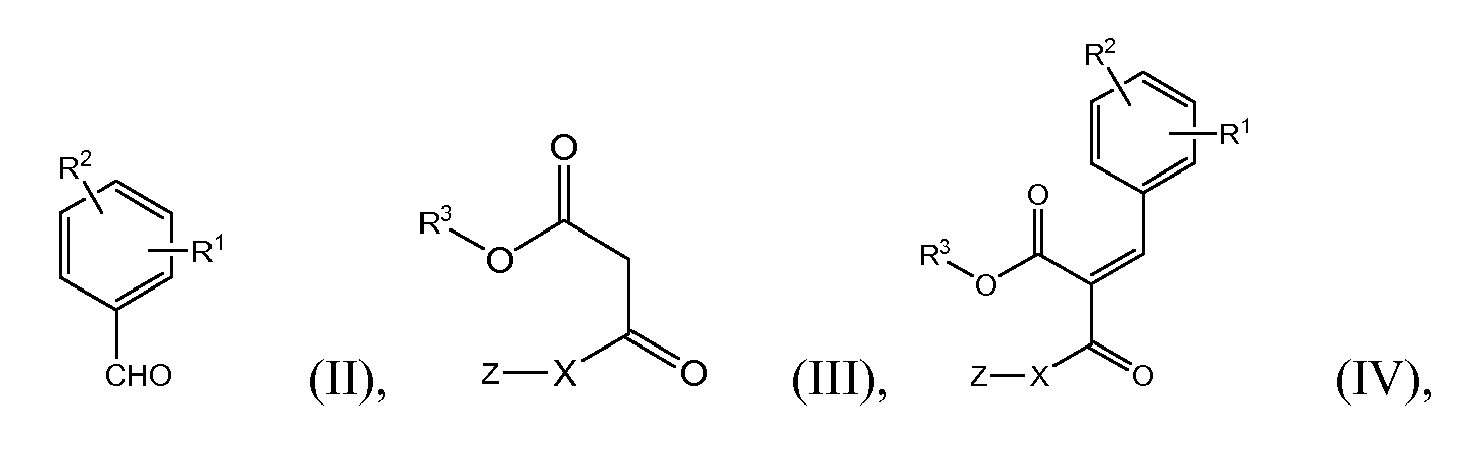
 [B] reacting the compound having formula (III) with an aldehyde (II) and amidine (V) or a salt thereof or a compound having formula (V) in one step;[C] where X in formula (I) is methylene, reacting the compound having formula (VI) with morpholine (VII) or a salt thereof:
 [D] reacting the aldehyde having formula (II) with a compound having formula (X) and an amidine having formula (V) or a salt thereof:
- A compound having formula (XII):

- A compound for controlling diseases according to any of claims 1-3.
- A medicament comprising at least one compound according to any of claims 1-3, and, when appropriate, further comprising other active pharmaceutical agents.
- Use of the compound according to any of claims 1-3 in the manufacture of a medicament for treating and preventing a viral disease.
- Use of the compound according to any of claims 1-3 in the manufacture of a medicament for treating and preventing hepatitis B infection.
- A method of treating hepatitis B comprising administering an effective amount of the compound according to claim 1 to a mammal.
- A method of treating a disease caused by hepatitis B infection comprising administering an effective amount of the compound according to claim 1 to a mammal.
- The method according to claim 11, wherein the disease is hepatitis.
- The method according to claim 11, wherein the disease is cirrhosis.
- The method according to claim 11, wherein the disease is hepatocellular carcinoma.
- A pharmaceutical composition comprising one or more compounds according to claim 1 and a pharmaceutically acceptable carrier.
- A composition comprising the following components:A) at least one dihydropyrimidine compound according to any of claims 1-3,B) at least an HBV antiviral agent which is different from component A, and, when appropriate,C) at least an immunomodulator.
- The composition according to claim 16, wherein the component B is a HBV polymerase inhibitor.
- The composition according to claim 16, wherein the component B is lamivudine.
- The composition according to claim 16, wherein the component B is selected from the compound having the following formula:

each of R1 and R2 is independently C1-4 alkyl or, together with the nitrogen atom on which they are located, form a ring having 5 to 6 ring atoms which comprise carbon and/or oxygen;
each of R3 to R12 is independently hydrogen, halogen, C1-C4-alkyl, optionally substituted C1-C4-alkoxy, nitro, cyano or trifluoromethyl; and R13 is hydrogen, C1-C4-alkyl, C1-C7-acyl or aralkyl and X is halogen or optionally substituted C1-C4-alkyl. - The composition according to claim 19, wherein the compound has the following structure:

- The composition according to any of claims 16-20, wherein the immunomodulator comprises an interferon.
- A composition which comprises the following components:A) the dihydropyrimidine compound according to any of claims 1-3,B) lamivudine, and, when appropriate,C) an interferon.
- A method of preparing the composition according to any of claims 16-20, which is characterized in that it comprises combining or mixing component A, component B and, when appropriate, component C in an appropriate mode.
- The composition according to any of claims 16-22 for controlling diseases.
- A medicament comprising at least one composition according to any of claims 16-22, and, when appropriate, comprising other active pharmaceutical agents.
- Use of the composition according to any of claims 16-22 in the manufacture of a medicament for treating and preventing a viral disease.
- Use of the composition according to any of claims 16-22 in the manufacture of a medicament for treating and preventing hepatitis B infection.
Priority Applications (4)
| Application Number | Priority Date | Filing Date | Title |
|---|---|---|---|
| PL08757463T PL2159224T3 (en) | 2007-06-18 | 2008-06-18 | Bromo-phenyl substituted thiazolyl dihydropyrimidines |
| PL12176861T PL2514750T3 (en) | 2007-06-18 | 2008-06-18 | Bromo-phenyl substituted thiazolyl dihydropyrimidines |
| DK12176861.8T DK2514750T5 (en) | 2007-06-18 | 2008-06-18 | BROMPHENYL-SUBSTITUTED THIAZOLYLDIHYDROPYRIMIDINES |
| EP12176861.8A EP2514750B1 (en) | 2007-06-18 | 2008-06-18 | Bromo-phenyl substituted thiazolyl dihydropyrimidines |
Applications Claiming Priority (2)
| Application Number | Priority Date | Filing Date | Title |
|---|---|---|---|
| CN200710119019 | 2007-06-18 | ||
| PCT/CN2008/001187 WO2008154817A1 (en) | 2007-06-18 | 2008-06-18 | Bromo-phenyl substituted thiazolyl dihydropyrimidines |
Related Child Applications (1)
| Application Number | Title | Priority Date | Filing Date |
|---|---|---|---|
| EP12176861.8A Division EP2514750B1 (en) | 2007-06-18 | 2008-06-18 | Bromo-phenyl substituted thiazolyl dihydropyrimidines |
Publications (3)
| Publication Number | Publication Date |
|---|---|
| EP2159224A1 true EP2159224A1 (en) | 2010-03-03 |
| EP2159224A4 EP2159224A4 (en) | 2011-08-03 |
| EP2159224B1 EP2159224B1 (en) | 2012-08-01 |
Family
ID=40155886
Family Applications (2)
| Application Number | Title | Priority Date | Filing Date |
|---|---|---|---|
| EP12176861.8A Active EP2514750B1 (en) | 2007-06-18 | 2008-06-18 | Bromo-phenyl substituted thiazolyl dihydropyrimidines |
| EP08757463A Active EP2159224B1 (en) | 2007-06-18 | 2008-06-18 | Bromo-phenyl substituted thiazolyl dihydropyrimidines |
Family Applications Before (1)
| Application Number | Title | Priority Date | Filing Date |
|---|---|---|---|
| EP12176861.8A Active EP2514750B1 (en) | 2007-06-18 | 2008-06-18 | Bromo-phenyl substituted thiazolyl dihydropyrimidines |
Country Status (14)
| Country | Link |
|---|---|
| US (4) | US8236797B2 (en) |
| EP (2) | EP2514750B1 (en) |
| JP (2) | JP5361879B2 (en) |
| KR (1) | KR101173892B1 (en) |
| CN (2) | CN102066369B (en) |
| AU (1) | AU2008265397C1 (en) |
| BR (1) | BRPI0813237B8 (en) |
| CA (1) | CA2691056C (en) |
| DK (2) | DK2514750T5 (en) |
| ES (2) | ES2391597T3 (en) |
| PL (2) | PL2514750T3 (en) |
| PT (2) | PT2514750E (en) |
| RU (1) | RU2443703C2 (en) |
| WO (1) | WO2008154817A1 (en) |
Cited By (3)
| Publication number | Priority date | Publication date | Assignee | Title |
|---|---|---|---|---|
| WO2014048355A1 (en) * | 2012-09-27 | 2014-04-03 | Sunshine Lake Pharma Co., Ltd. | Crystalline forms of dihydropyrimidine derivatives |
| EP3074393A4 (en) * | 2013-11-27 | 2017-04-19 | Sunshine Lake Pharma Co., Ltd. | Processes for preparing dihydropyrimidine derivatives and intermediates thereof |
| EP3139954A4 (en) * | 2014-05-09 | 2018-02-28 | Indiana University Research and Technology Corporation | Methods and compositions for treating hepatitis b virus infections |
Families Citing this family (28)
| Publication number | Priority date | Publication date | Assignee | Title |
|---|---|---|---|---|
| AU2008265397C1 (en) | 2007-06-18 | 2013-08-29 | Sunshine Lake Pharma Co., Ltd. | Bromo-phenyl substituted thiazolyl dihydropyrimidines |
| WO2010069147A1 (en) * | 2008-12-17 | 2010-06-24 | 张中能 | Dihydropyrimidine derivatives, compositions thereof and their use |
| CN101744823B (en) * | 2008-12-17 | 2013-06-19 | 广东东阳光药业有限公司 | Solid dispersion of dihydropyrimidine compounds and preparation thereof for medical purpose |
| CN101575318B (en) | 2009-06-25 | 2012-02-08 | 中国人民解放军军事医学科学院毒物药物研究所 | Dihydropyrimidine compounds and their use in the preparation of medicines for treating and/or preventing viral diseases |
| AU2013207205B2 (en) | 2012-01-06 | 2017-02-02 | Janssen Sciences Ireland Uc | 4,4-disubstituted-1,4-dihydropyrimidines and the use thereof as medicaments for the treatment of Hepatitis B |
| US20130267517A1 (en) | 2012-03-31 | 2013-10-10 | Hoffmann-La Roche Inc. | Novel 4-methyl-dihydropyrimidines for the treatment and prophylaxis of hepatitis b virus infection |
| WO2014029193A1 (en) * | 2012-08-24 | 2014-02-27 | Sunshine Lake Pharma Co., Ltd. | Dihydropyrimidine compounds and their application in pharmaceuticals |
| CN103664897B (en) * | 2012-09-01 | 2018-04-03 | 广东东阳光药业有限公司 | Dihydropyrimidines and its application in medicine |
| CN103664925B (en) * | 2012-09-07 | 2018-01-23 | 广东东阳光药业有限公司 | The Dihydropyrimidines of heteroaryl substitution and its application in medicine |
| MX2015002954A (en) * | 2012-09-10 | 2015-06-05 | Hoffmann La Roche | 6-amino acid heteroaryldihydropyrimidines for the treatment and prophylaxis of hepatitis b virus infection. |
| CN103664899B (en) * | 2012-09-11 | 2017-06-16 | 广东东阳光药业有限公司 | The Dihydropyrimidines of heteroaryl substitution and its application in medicine |
| MX2015013363A (en) * | 2013-03-20 | 2016-01-08 | Univ Indiana Res & Tech Corp | Fluorescent-hap: a diagnostic stain for hbv cores in cells. |
| WO2015074546A1 (en) | 2013-11-19 | 2015-05-28 | Sunshine Lake Pharma Co., Ltd. | Dihydropyrimidine compounds and their application in pharmaceuticals |
| US9771358B2 (en) | 2014-03-28 | 2017-09-26 | Sunshine Lake Pharma Co., Ltd. | Dihydropyrimidine compounds and their application in pharmaceuticals |
| EP3253751B1 (en) | 2015-02-07 | 2020-12-09 | Sunshine Lake Pharma Co., Ltd. | Complexes and salts of dihydropyrimidine derivatives and their application in pharmaceuticals |
| HK1255463A1 (en) | 2015-11-03 | 2019-08-16 | F. Hoffmann-La Roche Ag | Combination therapy of an hbv capsid assembly inhibitor and an interferon |
| JP2019526562A (en) | 2016-08-24 | 2019-09-19 | エフ.ホフマン−ラ ロシュ アーゲーF. Hoffmann−La Roche Aktiengesellschaft | Combination therapy of HBV capsid assembly inhibitor and nucleoside (Thi) analogue |
| LT3587420T (en) | 2017-02-23 | 2021-07-12 | Fujian Cosunter Pharmaceutical Co., Ltd. | TRICYCLE COMPOUND AND ITS USE |
| KR20190122762A (en) * | 2017-03-31 | 2019-10-30 | 후지필름 가부시키가이샤 | 4-pyridone compound or salt thereof, pharmaceutical composition comprising the same and agent |
| EP3645516A4 (en) | 2017-06-27 | 2021-07-07 | Janssen Pharmaceutica NV | Heteroaryldihydropyrimidine derivatives and methods of treating hepatitis b infections |
| CN107501257B (en) * | 2017-08-17 | 2020-05-29 | 山东大学 | Dihydropyrimidine-triazole derivative and preparation method and application thereof |
| WO2019223791A1 (en) | 2018-05-25 | 2019-11-28 | 正大天晴药业集团股份有限公司 | 2,3-dihydro-1h-pyrrolizine-7-formamide derivative and application thereof |
| US11053235B2 (en) | 2018-08-09 | 2021-07-06 | Janssen Sciences Ireland Unlimited Company | Substituted 1,4-dihydropyrimidines for the treatment of HBV infection or HBV-induced diseases |
| WO2020038456A1 (en) | 2018-08-23 | 2020-02-27 | 福建广生堂药业股份有限公司 | Crystal form of tri-cycle compound and application thereof |
| WO2020255016A1 (en) | 2019-06-18 | 2020-12-24 | Janssen Sciences Ireland Unlimited Company | Combination of hepatitis b virus (hbv) vaccines and dihydropyrimidine derivatives as capsid assembly modulators |
| CN114728973B (en) | 2019-11-22 | 2024-06-28 | 正大天晴药业集团股份有限公司 | Crystal form of a nucleoprotein inhibitor and its application |
| CN116888118A (en) | 2021-02-05 | 2023-10-13 | 和博医药有限公司 | Phenyldihydropyrimidine compounds and their applications |
| CN117136187A (en) * | 2021-06-24 | 2023-11-28 | 上海齐鲁制药研究中心有限公司 | Novel anti-hepatitis B compounds |
Family Cites Families (43)
| Publication number | Priority date | Publication date | Assignee | Title |
|---|---|---|---|---|
| US6458772B1 (en) | 1909-10-07 | 2002-10-01 | Medivir Ab | Prodrugs |
| DE3234684A1 (en) * | 1982-09-18 | 1984-03-22 | Bayer Ag, 5090 Leverkusen | NEW DIHYDROPYRIMIDINE, METHOD FOR THE PRODUCTION THEREOF AND THEIR USE IN MEDICINAL PRODUCTS |
| CS263951B1 (en) | 1985-04-25 | 1989-05-12 | Antonin Holy | 9-(phosponylmethoxyalkyl)adenines and method of their preparation |
| CS263952B1 (en) | 1985-04-25 | 1989-05-12 | Holy Antonin | Remedy with antiviral effect |
| US5047407A (en) | 1989-02-08 | 1991-09-10 | Iaf Biochem International, Inc. | 2-substituted-5-substituted-1,3-oxathiolanes with antiviral properties |
| GB8815265D0 (en) | 1988-06-27 | 1988-08-03 | Wellcome Found | Therapeutic nucleosides |
| MY104575A (en) | 1989-12-22 | 1994-04-30 | The Wellcome Foundation Ltd | Therapeutic nucleosides. |
| US5827727A (en) | 1990-02-01 | 1998-10-27 | Emory University | Method of resolution of 1,3-oxathiolane nucleoside enantiomers |
| US5700937A (en) | 1990-02-01 | 1997-12-23 | Emory University | Method for the synthesis, compositions and use of 2'-deoxy-5-fluoro-3'-thiacytidine and related compounds |
| US5204466A (en) | 1990-02-01 | 1993-04-20 | Emory University | Method and compositions for the synthesis of bch-189 and related compounds |
| US5914331A (en) | 1990-02-01 | 1999-06-22 | Emory University | Antiviral activity and resolution of 2-hydroxymethyl-5-(5-fluorocytosin-1-yl)-1,3-oxathiolane |
| US5276151A (en) | 1990-02-01 | 1994-01-04 | Emory University | Method of synthesis of 1,3-dioxolane nucleosides |
| EP0481214B1 (en) | 1990-09-14 | 1998-06-24 | Institute Of Organic Chemistry And Biochemistry Of The Academy Of Sciences Of The Czech Republic | Prodrugs of phosphonates |
| US5340816A (en) | 1990-10-18 | 1994-08-23 | E. R. Squibb & Sons, Inc. | Hydroxymethyl(methylenecyclopentyl) purines and pyrimidines |
| US5206244A (en) | 1990-10-18 | 1993-04-27 | E. R. Squibb & Sons, Inc. | Hydroxymethyl (methylenecyclopentyl) purines and pyrimidines |
| IL100965A (en) | 1991-02-22 | 1999-12-31 | Univ Emory | 2-Hydroxymethyl-5-(5-fluorocytosin-l-yl)-1,3-oxathiolane its resolution and pharmaceutical compositions containing it |
| WO1992018517A1 (en) | 1991-04-17 | 1992-10-29 | Yale University | Method of treating or preventing hepatitis b virus |
| US5627160A (en) | 1993-05-25 | 1997-05-06 | Yale University | L-2',3'-dideoxy nucleoside analogs as anti-hepatitis B (HBV) and anti-HIV agents |
| TW374087B (en) | 1993-05-25 | 1999-11-11 | Univ Yale | L-2',3'-dideoxy nucleotide analogs as anti-hepatitis B(HBV) and anti-HIV agents |
| US5753789A (en) | 1996-07-26 | 1998-05-19 | Yale University | Oligonucleotides containing L-nucleosides |
| WO1998009964A1 (en) | 1996-09-03 | 1998-03-12 | Bristol-Myers Squibb Company | IMPROVED PROCESS FOR PREPARING THE ANTIVIRAL AGENT [1S-(1α, 3α, 4β)]-2-AMINO-1,9-DIHYDRO-9-[4-HYDROXY-3-(HYDROXYMETHYL)-2-METHYLENECYCLOPENTYL]-6H-PURIN-6-ONE |
| WO1998033501A1 (en) | 1997-01-31 | 1998-08-06 | Avid Therapeutics Inc. | 2-benzoylamino-3-phenylpropenamide derivatives and methods of using the same |
| TW434252B (en) | 1997-07-23 | 2001-05-16 | Univ Georgia Res Found | Process for the preparation of 2'-fluoro-5-methyl-β-L-arabino-furanosyluridine |
| DE19817264A1 (en) | 1998-04-18 | 1999-10-21 | Bayer Ag | New dihydropyrimidine derivatives and their corresponding mesomers useful as antiviral agents |
| DE19817265A1 (en) | 1998-04-18 | 1999-10-21 | Bayer Ag | Treating hepatitis B using new or known dihydropyrimidine derivative antiviral agents |
| DE19817262A1 (en) | 1998-04-18 | 1999-10-21 | Bayer Ag | New dihydropyrimidine derivatives and their corresponding mesomers useful in treatment of hepatitis |
| WO2000058302A1 (en) | 1999-03-25 | 2000-10-05 | Bayer Aktiengesellschaft | Dihydropyrimidines and their use in the treatment of hepatitis b |
| US6636943B1 (en) * | 1999-07-30 | 2003-10-21 | Hewlett-Packard Development Company, L.P. | Method for detecting continuity modules in a direct Rambus DRAM subsystem |
| WO2001045712A1 (en) | 1999-12-22 | 2001-06-28 | Bayer Aktiengesellschaft | Combinations of medicaments for treating viral diseases |
| DE10012549A1 (en) | 2000-03-15 | 2001-09-20 | Bayer Ag | New heterocyclic-substituted dihydropyrimidine derivatives useful for treatment of viral infections, especially hepatitis B infections |
| DE10012824A1 (en) | 2000-03-16 | 2001-09-20 | Bayer Ag | New 6-hydroxyhydrocarbyl or 6-thiohydrocarbyl-dihydropyrimidine-5-carboxylic acid derivatives, useful for the treatment of viral infections, especially hepatitis B infections |
| DE10012823A1 (en) | 2000-03-16 | 2001-09-20 | Bayer Ag | New alkyl-6-aminoalkyl-dihydropyrimidine-5-carboxylate derivatives, useful for the treatment of viral, especially hepatitis B, infections |
| DE10013125A1 (en) | 2000-03-17 | 2001-09-20 | Bayer Ag | New 4-dihalophenyl-dihydropyrimidine-5-carboxylate ester derivatives, useful as antiviral agents having strong activity against hepatitis B virus and low cytotoxicity |
| DE10013126A1 (en) | 2000-03-17 | 2001-09-20 | Bayer Ag | New 6-aminoalkyl-dihydropyrimidine-5-carboxylate ester derivatives, useful as antiviral agents having strong activity against hepatitis B virus and low cytotoxicity |
| SE0001836D0 (en) | 2000-05-18 | 2000-05-18 | Inovacor Ab | Computer based system |
| TWI332091B (en) | 2003-07-22 | 2010-10-21 | Univ Tokyo Nat Univ Corp | Polarized plate of reflection type,laminated optical device and liquid display device |
| CN101104617B (en) | 2006-07-10 | 2010-06-23 | 北京摩力克科技有限公司 | Dihydropyrimidine compounds and their use in the preparation of medicines for treating and preventing viral diseases |
| CN101104604B (en) | 2006-07-10 | 2011-03-02 | 北京摩力克科技有限公司 | Optically pure dihydropyrimidine compounds and use for the same in preparing medicament for curing and preventing virosis |
| CN101225084A (en) * | 2007-01-16 | 2008-07-23 | 北京摩力克科技有限公司 | Dihydropyrimidine compounds and their use in the preparation of medicines for treating and preventing viral diseases |
| CN101328170B (en) | 2007-06-18 | 2011-09-14 | 张中能 | Fluorophenyl-substituted thiazole dihydropyrimidine |
| AU2008265397C1 (en) | 2007-06-18 | 2013-08-29 | Sunshine Lake Pharma Co., Ltd. | Bromo-phenyl substituted thiazolyl dihydropyrimidines |
| CN101328168B (en) | 2007-06-18 | 2011-09-07 | 张中能 | Diethylcarbamyl-substituted thiazole dihydropyrimidine |
| CN101328169B (en) | 2007-06-18 | 2011-05-25 | 张中能 | Diethylcarbamyl-substituted thiazole dihydropyrimidine |
-
2008
- 2008-06-18 AU AU2008265397A patent/AU2008265397C1/en active Active
- 2008-06-18 BR BRPI0813237A patent/BRPI0813237B8/en active IP Right Grant
- 2008-06-18 PL PL12176861T patent/PL2514750T3/en unknown
- 2008-06-18 EP EP12176861.8A patent/EP2514750B1/en active Active
- 2008-06-18 PT PT121768618T patent/PT2514750E/en unknown
- 2008-06-18 DK DK12176861.8T patent/DK2514750T5/en active
- 2008-06-18 CA CA2691056A patent/CA2691056C/en active Active
- 2008-06-18 PL PL08757463T patent/PL2159224T3/en unknown
- 2008-06-18 US US12/664,392 patent/US8236797B2/en not_active Ceased
- 2008-06-18 ES ES08757463T patent/ES2391597T3/en active Active
- 2008-06-18 RU RU2010101212/04A patent/RU2443703C2/en active
- 2008-06-18 WO PCT/CN2008/001187 patent/WO2008154817A1/en not_active Ceased
- 2008-06-18 KR KR1020107000850A patent/KR101173892B1/en active Active
- 2008-06-18 PT PT08757463T patent/PT2159224E/en unknown
- 2008-06-18 US US13/869,947 patent/USRE45004E1/en active Active
- 2008-06-18 ES ES12176861.8T patent/ES2442907T3/en active Active
- 2008-06-18 EP EP08757463A patent/EP2159224B1/en active Active
- 2008-06-18 CN CN2008800208411A patent/CN102066369B/en active Active
- 2008-06-18 JP JP2010512492A patent/JP5361879B2/en active Active
- 2008-06-18 CN CNA2008101257258A patent/CN101328171A/en not_active Withdrawn
- 2008-06-18 DK DK08757463.8T patent/DK2159224T3/en active
-
2012
- 2012-07-17 US US13/550,601 patent/US8343969B2/en not_active Ceased
-
2013
- 2013-04-25 US US13/869,981 patent/USRE44987E1/en active Active
- 2013-06-03 JP JP2013116979A patent/JP5970421B2/en active Active
Cited By (11)
| Publication number | Priority date | Publication date | Assignee | Title |
|---|---|---|---|---|
| WO2014048355A1 (en) * | 2012-09-27 | 2014-04-03 | Sunshine Lake Pharma Co., Ltd. | Crystalline forms of dihydropyrimidine derivatives |
| AU2013324779B2 (en) * | 2012-09-27 | 2015-10-08 | Sunshine Lake Pharma Co., Ltd. | Crystalline forms of dihydropyrimidine derivatives |
| TWI561520B (en) * | 2012-09-27 | 2016-12-11 | Sunshine Lake Pharma Co Ltd | Crystalline forms of dihydropyrimidine derivatives |
| RU2646599C2 (en) * | 2012-09-27 | 2018-03-06 | Саншайн Лейк Фарма Ко., Лтд | Crystalline forms of the dihydropyrimidin derivatives |
| EP3074393A4 (en) * | 2013-11-27 | 2017-04-19 | Sunshine Lake Pharma Co., Ltd. | Processes for preparing dihydropyrimidine derivatives and intermediates thereof |
| EP3074392A4 (en) * | 2013-11-27 | 2017-04-19 | Sunshine Lake Pharma Co., Ltd. | Processes for preparing dihydropyrimidine derivatives and intermediates thereof |
| EP3074394A4 (en) * | 2013-11-27 | 2017-04-26 | Sunshine Lake Pharma Co., Ltd. | Processes for preparing dihydropyrimidine derivatives and intermediates thereof |
| AU2014356984B2 (en) * | 2013-11-27 | 2018-01-04 | Sunshine Lake Pharma Co., Ltd. | Processes for preparing dihydropyrimidine derivatives and intermediates thereof |
| AU2014356986B2 (en) * | 2013-11-27 | 2018-01-04 | Sunshine Lake Pharma Co., Ltd. | Processes for preparing dihydropyrimidine derivatives and intermediates thereof |
| AU2014356985B2 (en) * | 2013-11-27 | 2018-06-21 | Sunshine Lake Pharma Co., Ltd. | Processes for preparing dihydropyrimidine derivatives and intermediates thereof |
| EP3139954A4 (en) * | 2014-05-09 | 2018-02-28 | Indiana University Research and Technology Corporation | Methods and compositions for treating hepatitis b virus infections |
Also Published As
Similar Documents
| Publication | Publication Date | Title |
|---|---|---|
| EP2159224B1 (en) | Bromo-phenyl substituted thiazolyl dihydropyrimidines | |
| CN101328169B (en) | Diethylcarbamyl-substituted thiazole dihydropyrimidine | |
| US20030232842A1 (en) | Medicaments against viral diseases | |
| CN101328170B (en) | Fluorophenyl-substituted thiazole dihydropyrimidine | |
| CN101328168B (en) | Diethylcarbamyl-substituted thiazole dihydropyrimidine | |
| DE10012824A1 (en) | New 6-hydroxyhydrocarbyl or 6-thiohydrocarbyl-dihydropyrimidine-5-carboxylic acid derivatives, useful for the treatment of viral infections, especially hepatitis B infections | |
| DE10013125A1 (en) | New 4-dihalophenyl-dihydropyrimidine-5-carboxylate ester derivatives, useful as antiviral agents having strong activity against hepatitis B virus and low cytotoxicity | |
| HK1174035B (en) | Bromo-phenyl substituted thiazolyl dihydropyrimidines | |
| HK1125646A (en) | Bromo-phenyl substituted thiazolyl dihydropyrimidines |
Legal Events
| Date | Code | Title | Description |
|---|---|---|---|
| PUAI | Public reference made under article 153(3) epc to a published international application that has entered the european phase |
Free format text: ORIGINAL CODE: 0009012 |
|
| 17P | Request for examination filed |
Effective date: 20091203 |
|
| AK | Designated contracting states |
Kind code of ref document: A1 Designated state(s): AT BE BG CH CY CZ DE DK EE ES FI FR GB GR HR HU IE IS IT LI LT LU LV MC MT NL NO PL PT RO SE SI SK TR |
|
| AX | Request for extension of the european patent |
Extension state: AL BA MK RS |
|
| DAX | Request for extension of the european patent (deleted) | ||
| A4 | Supplementary search report drawn up and despatched |
Effective date: 20110706 |
|
| RIC1 | Information provided on ipc code assigned before grant |
Ipc: C07D 413/14 20060101ALI20110630BHEP Ipc: A61K 31/426 20060101ALI20110630BHEP Ipc: C07D 417/14 20060101AFI20110630BHEP Ipc: A61K 31/381 20060101ALI20110630BHEP Ipc: A61P 1/16 20060101ALI20110630BHEP Ipc: A61K 31/395 20060101ALI20110630BHEP Ipc: A61K 31/506 20060101ALI20110630BHEP |
|
| 17Q | First examination report despatched |
Effective date: 20110919 |
|
| RAP1 | Party data changed (applicant data changed or rights of an application transferred) |
Owner name: SUNSHINE LAKE PHARMA CO., LTD |
|
| REG | Reference to a national code |
Ref country code: DE Ref legal event code: R079 Ref document number: 602008017621 Country of ref document: DE Free format text: PREVIOUS MAIN CLASS: C07D0417140000 Ipc: C07D0417040000 |
|
| RIC1 | Information provided on ipc code assigned before grant |
Ipc: A61P 1/16 20060101ALI20120308BHEP Ipc: A61P 31/20 20060101ALI20120308BHEP Ipc: A61K 31/506 20060101ALI20120308BHEP Ipc: C07D 417/04 20060101AFI20120308BHEP |
|
| GRAP | Despatch of communication of intention to grant a patent |
Free format text: ORIGINAL CODE: EPIDOSNIGR1 |
|
| GRAS | Grant fee paid |
Free format text: ORIGINAL CODE: EPIDOSNIGR3 |
|
| GRAA | (expected) grant |
Free format text: ORIGINAL CODE: 0009210 |
|
| AK | Designated contracting states |
Kind code of ref document: B1 Designated state(s): AT BE BG CH CY CZ DE DK EE ES FI FR GB GR HR HU IE IS IT LI LT LU LV MC MT NL NO PL PT RO SE SI SK TR |
|
| REG | Reference to a national code |
Ref country code: GB Ref legal event code: FG4D |
|
| REG | Reference to a national code |
Ref country code: AT Ref legal event code: REF Ref document number: 568630 Country of ref document: AT Kind code of ref document: T Effective date: 20120815 Ref country code: CH Ref legal event code: NV Representative=s name: ROMAN VUILLE Ref country code: CH Ref legal event code: EP |
|
| REG | Reference to a national code |
Ref country code: DK Ref legal event code: T3 |
|
| REG | Reference to a national code |
Ref country code: IE Ref legal event code: FG4D |
|
| REG | Reference to a national code |
Ref country code: NO Ref legal event code: T2 Effective date: 20120801 |
|
| REG | Reference to a national code |
Ref country code: DE Ref legal event code: R096 Ref document number: 602008017621 Country of ref document: DE Effective date: 20120927 |
|
| REG | Reference to a national code |
Ref country code: RO Ref legal event code: EPE |
|
| REG | Reference to a national code |
Ref country code: SE Ref legal event code: TRGR |
|
| REG | Reference to a national code |
Ref country code: PT Ref legal event code: SC4A Free format text: AVAILABILITY OF NATIONAL TRANSLATION Effective date: 20121016 |
|
| REG | Reference to a national code |
Ref country code: GR Ref legal event code: EP Ref document number: 20120402008 Country of ref document: GR Effective date: 20120915 |
|
| REG | Reference to a national code |
Ref country code: SK Ref legal event code: T3 Ref document number: E 12222 Country of ref document: SK |
|
| REG | Reference to a national code |
Ref country code: NL Ref legal event code: T3 |
|
| REG | Reference to a national code |
Ref country code: ES Ref legal event code: FG2A Ref document number: 2391597 Country of ref document: ES Kind code of ref document: T3 Effective date: 20121128 |
|
| REG | Reference to a national code |
Ref country code: PL Ref legal event code: T3 |
|
| REG | Reference to a national code |
Ref country code: LT Ref legal event code: MG4D Effective date: 20120801 |
|
| PG25 | Lapsed in a contracting state [announced via postgrant information from national office to epo] |
Ref country code: LT Free format text: LAPSE BECAUSE OF FAILURE TO SUBMIT A TRANSLATION OF THE DESCRIPTION OR TO PAY THE FEE WITHIN THE PRESCRIBED TIME-LIMIT Effective date: 20120801 Ref country code: IS Free format text: LAPSE BECAUSE OF FAILURE TO SUBMIT A TRANSLATION OF THE DESCRIPTION OR TO PAY THE FEE WITHIN THE PRESCRIBED TIME-LIMIT Effective date: 20121201 Ref country code: HR Free format text: LAPSE BECAUSE OF FAILURE TO SUBMIT A TRANSLATION OF THE DESCRIPTION OR TO PAY THE FEE WITHIN THE PRESCRIBED TIME-LIMIT Effective date: 20120801 Ref country code: CY Free format text: LAPSE BECAUSE OF FAILURE TO SUBMIT A TRANSLATION OF THE DESCRIPTION OR TO PAY THE FEE WITHIN THE PRESCRIBED TIME-LIMIT Effective date: 20120801 |
|
| PG25 | Lapsed in a contracting state [announced via postgrant information from national office to epo] |
Ref country code: LV Free format text: LAPSE BECAUSE OF FAILURE TO SUBMIT A TRANSLATION OF THE DESCRIPTION OR TO PAY THE FEE WITHIN THE PRESCRIBED TIME-LIMIT Effective date: 20120801 Ref country code: SI Free format text: LAPSE BECAUSE OF FAILURE TO SUBMIT A TRANSLATION OF THE DESCRIPTION OR TO PAY THE FEE WITHIN THE PRESCRIBED TIME-LIMIT Effective date: 20120801 |
|
| PG25 | Lapsed in a contracting state [announced via postgrant information from national office to epo] |
Ref country code: EE Free format text: LAPSE BECAUSE OF FAILURE TO SUBMIT A TRANSLATION OF THE DESCRIPTION OR TO PAY THE FEE WITHIN THE PRESCRIBED TIME-LIMIT Effective date: 20120801 |
|
| REG | Reference to a national code |
Ref country code: HU Ref legal event code: AG4A Ref document number: E015327 Country of ref document: HU |
|
| PLBE | No opposition filed within time limit |
Free format text: ORIGINAL CODE: 0009261 |
|
| STAA | Information on the status of an ep patent application or granted ep patent |
Free format text: STATUS: NO OPPOSITION FILED WITHIN TIME LIMIT |
|
| 26N | No opposition filed |
Effective date: 20130503 |
|
| PG25 | Lapsed in a contracting state [announced via postgrant information from national office to epo] |
Ref country code: BG Free format text: LAPSE BECAUSE OF FAILURE TO SUBMIT A TRANSLATION OF THE DESCRIPTION OR TO PAY THE FEE WITHIN THE PRESCRIBED TIME-LIMIT Effective date: 20121101 |
|
| REG | Reference to a national code |
Ref country code: DE Ref legal event code: R097 Ref document number: 602008017621 Country of ref document: DE Effective date: 20130503 |
|
| PG25 | Lapsed in a contracting state [announced via postgrant information from national office to epo] |
Ref country code: MC Free format text: LAPSE BECAUSE OF FAILURE TO SUBMIT A TRANSLATION OF THE DESCRIPTION OR TO PAY THE FEE WITHIN THE PRESCRIBED TIME-LIMIT Effective date: 20120801 |
|
| PG25 | Lapsed in a contracting state [announced via postgrant information from national office to epo] |
Ref country code: MT Free format text: LAPSE BECAUSE OF FAILURE TO SUBMIT A TRANSLATION OF THE DESCRIPTION OR TO PAY THE FEE WITHIN THE PRESCRIBED TIME-LIMIT Effective date: 20120801 |
|
| PG25 | Lapsed in a contracting state [announced via postgrant information from national office to epo] |
Ref country code: LU Free format text: LAPSE BECAUSE OF NON-PAYMENT OF DUE FEES Effective date: 20130618 |
|
| REG | Reference to a national code |
Ref country code: FR Ref legal event code: PLFP Year of fee payment: 9 |
|
| REG | Reference to a national code |
Ref country code: FR Ref legal event code: PLFP Year of fee payment: 10 |
|
| REG | Reference to a national code |
Ref country code: DE Ref legal event code: R082 Ref document number: 602008017621 Country of ref document: DE Representative=s name: BECKER-KURIG-STRAUS PATENTANWAELTE PARTNERSCHA, DE Ref country code: DE Ref legal event code: R081 Ref document number: 602008017621 Country of ref document: DE Owner name: RUYUAN WEI AN PHARM CO., LTD., SHAOGUAN, CN Free format text: FORMER OWNER: SUNSHINE LAKE PHARMA CO., LTD., DONGGUAN, GUANGDONG, CN Ref country code: DE Ref legal event code: R082 Ref document number: 602008017621 Country of ref document: DE Representative=s name: BECKER & KURIG PARTNERSCHAFT PATENTANWAELTE MB, DE Ref country code: DE Ref legal event code: R082 Ref document number: 602008017621 Country of ref document: DE Representative=s name: BECKER & KURIG PARTNERSCHAFT PATENTANWAELTE PA, DE Ref country code: DE Ref legal event code: R082 Ref document number: 602008017621 Country of ref document: DE Representative=s name: BECKER, KURIG, STRAUS, DE Ref country code: DE Ref legal event code: R081 Ref document number: 602008017621 Country of ref document: DE Owner name: RUYUAN WEI XIANG TECHNOLOGY CO., LTD., CN Free format text: FORMER OWNER: SUNSHINE LAKE PHARMA CO., LTD., DONGGUAN, GUANGDONG, CN |
|
| REG | Reference to a national code |
Ref country code: CH Ref legal event code: PCAR Free format text: NEW ADDRESS: C/O IPP INTELLECTUAL PROPERTY PARTNERS ROUTE DES AVOUILLONS 6, 1196 GLAND (CH) Ref country code: CH Ref legal event code: PUE Owner name: RUYUAN WEI TECHNOLOGY CO. LTD, CN Free format text: FORMER OWNER: SUNSHINE LAKE PHARMA CO., LTD, CN |
|
| REG | Reference to a national code |
Ref country code: FR Ref legal event code: PLFP Year of fee payment: 11 |
|
| REG | Reference to a national code |
Ref country code: ES Ref legal event code: PC2A Effective date: 20180618 Ref country code: ES Ref legal event code: PC2A Owner name: RUYUAN WEI XIANG TECHNOLOGY CO., LTD. Effective date: 20180618 |
|
| REG | Reference to a national code |
Ref country code: GB Ref legal event code: 732E Free format text: REGISTERED BETWEEN 20180531 AND 20180606 |
|
| REG | Reference to a national code |
Ref country code: SK Ref legal event code: PC4A Ref document number: E 12222 Country of ref document: SK Owner name: RUYUAN WEI XIANG TECHNOLOGY CO., LTD., SHAOGUA, CN Free format text: FORMER OWNER: SUNSHINE LAKE PHARMA CO., LTD, GUANGDONG, CN Effective date: 20180326 |
|
| REG | Reference to a national code |
Ref country code: NL Ref legal event code: PD Owner name: RUYUAN WEI XIANG TECHNOLOGY CO., LTD.; CN Free format text: DETAILS ASSIGNMENT: CHANGE OF OWNER(S), ASSIGNMENT; FORMER OWNER NAME: SUNSHINE LAKE PHARMA CO., LTD Effective date: 20180516 |
|
| REG | Reference to a national code |
Ref country code: NO Ref legal event code: CHAD Owner name: RUYUAN WEI XIANG TECHNOLOGY CO., CN |
|
| REG | Reference to a national code |
Ref country code: HU Ref legal event code: FH1C Free format text: FORMER REPRESENTATIVE(S): PINTZ ES TARSAI SZABADALMI, VEDJEGY ES JOGI IRODA KFT., HU Representative=s name: PINTZ ES TARSAI SZABADALMI, VEDJEGY ES JOGI IR, HU Ref country code: HU Ref legal event code: GB9C Owner name: RUYUAN WEI XIANG TECHNOLOGY CO., LTD., CN Free format text: FORMER OWNER(S): SUNSHINE LAKE PHARMA CO., LTD, CN |
|
| REG | Reference to a national code |
Ref country code: BE Ref legal event code: PD Owner name: RUYUAN WEI XIANG TECHNOLOGY CO., LTD.; CN Free format text: DETAILS ASSIGNMENT: CHANGE OF OWNER(S), CESSION; FORMER OWNER NAME: SUNSHINE LAKE PHARMA CO., LTD Effective date: 20180518 |
|
| REG | Reference to a national code |
Ref country code: FR Ref legal event code: TP Owner name: RUYUAN WEI XIANG TECHNOLOGY CO., LTD., CN Effective date: 20180914 |
|
| REG | Reference to a national code |
Ref country code: CH Ref legal event code: PUE Owner name: RUYUAN WEI AN PHARM CO., LTD., CN Free format text: FORMER OWNER: RUYUAN WEI TECHNOLOGY CO. LTD, CN |
|
| REG | Reference to a national code |
Ref country code: NO Ref legal event code: CHAD Owner name: RUYUAN WEI AN PHARM CO., CN |
|
| REG | Reference to a national code |
Ref country code: DE Ref legal event code: R082 Ref document number: 602008017621 Country of ref document: DE Representative=s name: BECKER-KURIG-STRAUS PATENTANWAELTE PARTNERSCHA, DE Ref country code: DE Ref legal event code: R081 Ref document number: 602008017621 Country of ref document: DE Owner name: RUYUAN WEI AN PHARM CO., LTD., SHAOGUAN, CN Free format text: FORMER OWNER: RUYUAN WEI XIANG TECHNOLOGY CO., LTD., SHAOGUAN, CN Ref country code: DE Ref legal event code: R082 Ref document number: 602008017621 Country of ref document: DE Representative=s name: BECKER & KURIG PARTNERSCHAFT PATENTANWAELTE MB, DE Ref country code: DE Ref legal event code: R082 Ref document number: 602008017621 Country of ref document: DE Representative=s name: BECKER & KURIG PARTNERSCHAFT PATENTANWAELTE PA, DE |
|
| REG | Reference to a national code |
Ref country code: NL Ref legal event code: PD Owner name: RUYUAN WEI AN PHARM CO., LTD.; CN Free format text: DETAILS ASSIGNMENT: CHANGE OF OWNER(S), ASSIGNMENT; FORMER OWNER NAME: SUNSHINE LAKE PHARMA CO., LTD Effective date: 20191206 |
|
| REG | Reference to a national code |
Ref country code: BE Ref legal event code: PD Owner name: RUYUAN WEI AN PHARM CO., LTD.; CN Free format text: DETAILS ASSIGNMENT: CHANGE OF OWNER(S), CESSION; FORMER OWNER NAME: RUYUAN WEI XIANG TECHNOLOGY CO., LTD. Effective date: 20191114 |
|
| REG | Reference to a national code |
Ref country code: GB Ref legal event code: 732E Free format text: REGISTERED BETWEEN 20191212 AND 20191218 |
|
| REG | Reference to a national code |
Ref country code: AT Ref legal event code: PC Ref document number: 568630 Country of ref document: AT Kind code of ref document: T Owner name: RUYUAN WEI XIANG TECHNOLOGY CO., LTD., CN Effective date: 20191202 |
|
| REG | Reference to a national code |
Ref country code: HU Ref legal event code: GB9C Owner name: RUYUAN WEI AN PHARM CO., LTD., CN Free format text: FORMER OWNER(S): SUNSHINE LAKE PHARMA CO., LTD, CN; RUYUAN WEI XIANG TECHNOLOGY CO., LTD., CN |
|
| REG | Reference to a national code |
Ref country code: SK Ref legal event code: PC4A Ref document number: E 12222 Country of ref document: SK Owner name: RUYUAN WEI AN PHARM CO., LTD., SHAOGUAN, GUANG, CN Free format text: FORMER OWNER: RUYUAN WEI XIANG TECHNOLOGY CO., LTD., SHAOGUAN, CN Effective date: 20200120 |
|
| REG | Reference to a national code |
Ref country code: ES Ref legal event code: PC2A Owner name: RUYUAN WEI AN PHARM CO., LTD. Effective date: 20200131 |
|
| REG | Reference to a national code |
Ref country code: AT Ref legal event code: PC Ref document number: 568630 Country of ref document: AT Kind code of ref document: T Owner name: RUYUAN WEI AN PHARM CO., LTD., CN Effective date: 20200212 |
|
| P01 | Opt-out of the competence of the unified patent court (upc) registered |
Effective date: 20240109 |
|
| REG | Reference to a national code |
Ref country code: GB Ref legal event code: 732E Free format text: REGISTERED BETWEEN 20240125 AND 20240131 |
|
| PGFP | Annual fee paid to national office [announced via postgrant information from national office to epo] |
Ref country code: FI Payment date: 20250617 Year of fee payment: 18 |
|
| PGFP | Annual fee paid to national office [announced via postgrant information from national office to epo] |
Ref country code: PL Payment date: 20250610 Year of fee payment: 18 Ref country code: DE Payment date: 20250618 Year of fee payment: 18 |
|
| PGFP | Annual fee paid to national office [announced via postgrant information from national office to epo] |
Ref country code: GB Payment date: 20250625 Year of fee payment: 18 Ref country code: DK Payment date: 20250618 Year of fee payment: 18 |
|
| PGFP | Annual fee paid to national office [announced via postgrant information from national office to epo] |
Ref country code: NO Payment date: 20250617 Year of fee payment: 18 |
|
| PGFP | Annual fee paid to national office [announced via postgrant information from national office to epo] |
Ref country code: NL Payment date: 20250625 Year of fee payment: 18 Ref country code: BE Payment date: 20250624 Year of fee payment: 18 |
|
| PGFP | Annual fee paid to national office [announced via postgrant information from national office to epo] |
Ref country code: PT Payment date: 20250606 Year of fee payment: 18 |
|
| PGFP | Annual fee paid to national office [announced via postgrant information from national office to epo] |
Ref country code: HU Payment date: 20250613 Year of fee payment: 18 Ref country code: FR Payment date: 20250620 Year of fee payment: 18 |
|
| PGFP | Annual fee paid to national office [announced via postgrant information from national office to epo] |
Ref country code: GR Payment date: 20250616 Year of fee payment: 18 |
|
| PGFP | Annual fee paid to national office [announced via postgrant information from national office to epo] |
Ref country code: RO Payment date: 20250610 Year of fee payment: 18 Ref country code: AT Payment date: 20250616 Year of fee payment: 18 |
|
| PGFP | Annual fee paid to national office [announced via postgrant information from national office to epo] |
Ref country code: SK Payment date: 20250616 Year of fee payment: 18 Ref country code: TR Payment date: 20250613 Year of fee payment: 18 |
|
| PGFP | Annual fee paid to national office [announced via postgrant information from national office to epo] |
Ref country code: CZ Payment date: 20250605 Year of fee payment: 18 |
|
| PGFP | Annual fee paid to national office [announced via postgrant information from national office to epo] |
Ref country code: IE Payment date: 20250618 Year of fee payment: 18 |
|
| PGFP | Annual fee paid to national office [announced via postgrant information from national office to epo] |
Ref country code: SE Payment date: 20250618 Year of fee payment: 18 |
|
| PGFP | Annual fee paid to national office [announced via postgrant information from national office to epo] |
Ref country code: ES Payment date: 20250718 Year of fee payment: 18 |
|
| PGFP | Annual fee paid to national office [announced via postgrant information from national office to epo] |
Ref country code: IT Payment date: 20250630 Year of fee payment: 18 |
|
| PGFP | Annual fee paid to national office [announced via postgrant information from national office to epo] |
Ref country code: CH Payment date: 20250701 Year of fee payment: 18 |