EP2159113A1 - Dichtbuchse in einer Scheibenwischvorrichtung - Google Patents
Dichtbuchse in einer Scheibenwischvorrichtung Download PDFInfo
- Publication number
- EP2159113A1 EP2159113A1 EP09100360A EP09100360A EP2159113A1 EP 2159113 A1 EP2159113 A1 EP 2159113A1 EP 09100360 A EP09100360 A EP 09100360A EP 09100360 A EP09100360 A EP 09100360A EP 2159113 A1 EP2159113 A1 EP 2159113A1
- Authority
- EP
- European Patent Office
- Prior art keywords
- sealing
- shaft
- insertion section
- sealing bush
- section
- Prior art date
- Legal status (The legal status is an assumption and is not a legal conclusion. Google has not performed a legal analysis and makes no representation as to the accuracy of the status listed.)
- Granted
Links
- 238000007789 sealing Methods 0.000 title claims abstract description 60
- 238000003780 insertion Methods 0.000 claims abstract description 50
- 230000037431 insertion Effects 0.000 claims abstract description 50
- 230000000087 stabilizing effect Effects 0.000 claims abstract description 8
- 239000011324 bead Substances 0.000 claims description 13
- 230000005540 biological transmission Effects 0.000 claims description 7
- 230000006641 stabilisation Effects 0.000 claims description 7
- 238000011105 stabilization Methods 0.000 claims description 7
- 230000007704 transition Effects 0.000 claims description 2
- 230000033001 locomotion Effects 0.000 description 13
- 239000000314 lubricant Substances 0.000 description 5
- 238000011161 development Methods 0.000 description 2
- 230000018109 developmental process Effects 0.000 description 2
- 230000008602 contraction Effects 0.000 description 1
- 230000001419 dependent effect Effects 0.000 description 1
- 229920001971 elastomer Polymers 0.000 description 1
- 239000000806 elastomer Substances 0.000 description 1
- 238000009434 installation Methods 0.000 description 1
- 230000001050 lubricating effect Effects 0.000 description 1
- 230000001681 protective effect Effects 0.000 description 1
- 239000003566 sealing material Substances 0.000 description 1
Images

Classifications
-
- F—MECHANICAL ENGINEERING; LIGHTING; HEATING; WEAPONS; BLASTING
- F16—ENGINEERING ELEMENTS AND UNITS; GENERAL MEASURES FOR PRODUCING AND MAINTAINING EFFECTIVE FUNCTIONING OF MACHINES OR INSTALLATIONS; THERMAL INSULATION IN GENERAL
- F16J—PISTONS; CYLINDERS; SEALINGS
- F16J15/00—Sealings
- F16J15/02—Sealings between relatively-stationary surfaces
- F16J15/021—Sealings between relatively-stationary surfaces with elastic packing
- F16J15/022—Sealings between relatively-stationary surfaces with elastic packing characterised by structure or material
- F16J15/024—Sealings between relatively-stationary surfaces with elastic packing characterised by structure or material the packing being locally weakened in order to increase elasticity
- F16J15/025—Sealings between relatively-stationary surfaces with elastic packing characterised by structure or material the packing being locally weakened in order to increase elasticity and with at least one flexible lip
-
- B—PERFORMING OPERATIONS; TRANSPORTING
- B60—VEHICLES IN GENERAL
- B60S—SERVICING, CLEANING, REPAIRING, SUPPORTING, LIFTING, OR MANOEUVRING OF VEHICLES, NOT OTHERWISE PROVIDED FOR
- B60S1/00—Cleaning of vehicles
- B60S1/02—Cleaning windscreens, windows or optical devices
- B60S1/04—Wipers or the like, e.g. scrapers
- B60S1/32—Wipers or the like, e.g. scrapers characterised by constructional features of wiper blade arms or blades
- B60S1/34—Wiper arms; Mountings therefor
- B60S1/3488—Means for mounting wiper arms onto the vehicle
- B60S1/349—Means for mounting the wiper bearing to the vehicle body
-
- F—MECHANICAL ENGINEERING; LIGHTING; HEATING; WEAPONS; BLASTING
- F16—ENGINEERING ELEMENTS AND UNITS; GENERAL MEASURES FOR PRODUCING AND MAINTAINING EFFECTIVE FUNCTIONING OF MACHINES OR INSTALLATIONS; THERMAL INSULATION IN GENERAL
- F16J—PISTONS; CYLINDERS; SEALINGS
- F16J15/00—Sealings
- F16J15/16—Sealings between relatively-moving surfaces
- F16J15/32—Sealings between relatively-moving surfaces with elastic sealings, e.g. O-rings
- F16J15/3204—Sealings between relatively-moving surfaces with elastic sealings, e.g. O-rings with at least one lip
- F16J15/3232—Sealings between relatively-moving surfaces with elastic sealings, e.g. O-rings with at least one lip having two or more lips
-
- F—MECHANICAL ENGINEERING; LIGHTING; HEATING; WEAPONS; BLASTING
- F16—ENGINEERING ELEMENTS AND UNITS; GENERAL MEASURES FOR PRODUCING AND MAINTAINING EFFECTIVE FUNCTIONING OF MACHINES OR INSTALLATIONS; THERMAL INSULATION IN GENERAL
- F16J—PISTONS; CYLINDERS; SEALINGS
- F16J3/00—Diaphragms; Bellows; Bellows pistons
- F16J3/04—Bellows
- F16J3/041—Non-metallic bellows
-
- B—PERFORMING OPERATIONS; TRANSPORTING
- B60—VEHICLES IN GENERAL
- B60S—SERVICING, CLEANING, REPAIRING, SUPPORTING, LIFTING, OR MANOEUVRING OF VEHICLES, NOT OTHERWISE PROVIDED FOR
- B60S1/00—Cleaning of vehicles
- B60S1/02—Cleaning windscreens, windows or optical devices
- B60S1/04—Wipers or the like, e.g. scrapers
- B60S1/043—Attachment of the wiper assembly to the vehicle
- B60S1/0441—Attachment of the wiper assembly to the vehicle characterised by the attachment means
- B60S1/0447—Attachment of the wiper assembly to the vehicle characterised by the attachment means non-screw fixation, (e.g. snap-in, bayonnet-type..)
-
- B—PERFORMING OPERATIONS; TRANSPORTING
- B60—VEHICLES IN GENERAL
- B60S—SERVICING, CLEANING, REPAIRING, SUPPORTING, LIFTING, OR MANOEUVRING OF VEHICLES, NOT OTHERWISE PROVIDED FOR
- B60S1/00—Cleaning of vehicles
- B60S1/02—Cleaning windscreens, windows or optical devices
- B60S1/04—Wipers or the like, e.g. scrapers
- B60S1/32—Wipers or the like, e.g. scrapers characterised by constructional features of wiper blade arms or blades
- B60S1/34—Wiper arms; Mountings therefor
- B60S1/3488—Means for mounting wiper arms onto the vehicle
- B60S1/3493—Means for mounting the wiper shaft in the wiper bearing
Definitions
- the invention relates to a sealing bush in a windshield wiper device for a vehicle for receiving a shaft in the transmission path between a drive motor and a wiper arm according to the preamble of claim 1.
- a windshield wiper device for a motor vehicle including a wiper motor, an output shaft disposed in a transmission housing and driven by the wiper motor, and a wiper arm actuated by the output shaft.
- the output shaft is received in a mounting member which is bush-shaped and performs the function of a seal, via which the wiper motor is sealed to the vehicle body or the rear window.
- a sealing to a protective cap is achieved with the bush-shaped mounting element, which is pushed onto the end face of the output shaft.
- the mounting elements on the one hand to ensure a sufficient tightness, on the other hand, the mounting elements must also be resilient enough to allow the movement of the drive shaft, in addition to the rotational movement to produce a pendulum wiping movement of the wiper arm and smaller relative axial movements relative to the mounting element occur can.
- the invention is based on the object with simple constructive measures to form a sealing bush for receiving a shaft in a windshield wiper device with high density at the same time good compliance.
- the sealing bush according to the invention is used in a windshield wiper device for a vehicle for receiving a shaft, which is arranged in the transmission path between a drive motor of the windshield wiper device and a wiper arm.
- this shaft is the output shaft, which is driven via a transmission by the armature shaft of the drive motor and which is the carrier of a wiper arm or actuates a wiper linkage on which the wiper arm is arranged.
- the sealing bush which has the function of a mounting element, on the one hand, the shaft is fixed relative to the vehicle body, on the other hand, the sealing bush has the task of protecting gear parts or the drive motor of the windscreen wiper device from dirt and moisture.
- the sealing bush in a bearing chamber contains a lubricant reservoir, which serves to lubricate and seal the shaft.
- the sealing bush consists of an insertion section, via which the shaft is inserted into the sealing bush, and an axially adjoining, integrally formed bearing section for supporting the shaft and for receiving a lubricant.
- the bearing portion has on the inside radially inwardly projecting sealing lips, which axially delimit a bearing chamber in which the lubricant is received and through which the shaft is passed, so that the shaft comes into contact with the lubricant.
- One of the storage chamber delimiting Sealing lips is located in the transition between the bearing portion and the insertion section.
- the wall of the bearing portion is formed bellows-shaped, so in cross-section has a waveform or a wave-like wall, which allows in particular in the axial direction of the shaft expansion and contraction with reduced effort.
- the sealing bush can be relatively easily twisted due to the bellows-shaped wall in the region of the bearing section, since the wavy wall also offers less resistance to torsion.
- a relative rotation between the insertion and the bearing portion is possible, for example, the fixedly connected to a vehicle part insertion remains largely unaffected by a torsional movement of the bearing portion, which can come about in particular by the rotational movement of the shaft.
- radial deflection movements seen in the transverse direction to the shaft axis, can be performed by the bearing portion due to the compliance of the Lürabitesswandung in the transverse direction without affecting the insertion.
- a radially inwardly projecting stabilizing bead is arranged on the inside of the insertion, which has the task of stabilizing the insertion section, which also serves for fastening the sealing bushing on the vehicle component.
- the insertion section also represents the attachment portion with which the sealing bush is fastened to the vehicle body or the window of the vehicle.
- the wall thickness of the insertion is equal to the Attachment to the disc or the vehicle component increased by the radially inwardly projecting stabilization bead, whereby the reduction of the wall thickness is compensated by the incision on the outside of the insertion at least partially.
- a radially expanded section which ensures, on the one hand, that the inner casing of the sealing bush rests against the outer circumferential surface of the shaft only in the area of the sealing lips and thus the shaft is inserted relatively easily into the sealing bushing can perform as well as their rotary motion.
- this design also ensures that the sealing lip can perform small axial movements in operation and thus compensate for corresponding shaft movements that are not transmitted due to the higher flexibility of the bearing section or only to a reduced extent on the insertion section.
- a diameter-tapering insertion bevel Adjacent to the insertion opening, a diameter-tapering insertion bevel is arranged on the inside of the insertion section, which advantageously extends to the stabilization bead, which is arranged at a distance from the end face of the insertion section.
- the insertion bevel allows a safe and easy insertion of the shaft in the sealing bushing after mounting the sealing bushing on the vehicle part.
- the clear diameter of the stabilizing bead is expediently larger than the clear diameter of the sealing lips, to ensure that only the sealing lips on the Lying surface of the shaft, but not the Stabilmaschineswulst, which would otherwise lead to increased friction between the shaft and the sealing bushing.
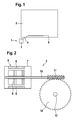
- the windshield wiper device 1 is used for wiping a vehicle window 2 in a motor vehicle.
- the windshield wiper device 1 consists of a drive device 3, which is designed in particular as an electric motor, and a wiper arm 4 operated by the drive motor, on which a wiper blade 5 is held, which rests on the vehicle window 2.
- the wiper arm 4 Upon actuation of the drive motor 3, the wiper arm 4 is set in a swinging rotary motion.
- the drive device 3 is in Fig. 2 presented in more detail. It consists of an electric drive motor 6 with a housing 7, in which permanent magnets 8 are arranged, which enclose an armature or rotor shaft 10, which forms the armature of the electric motor together with a current through a commutator coil 9.
- the protruding from the housing 7 portion of the rotor shaft 10 is a carrier of a thread or a worm 11, which meshes with a worm wheel 12.
- Worm 11 and worm wheel 12 in this case form a transmission, which is preferably arranged in a separate gear housing.
- the worm wheel 12 is rotatably mounted on an output shaft 13 or the spur gear drives the Abtriebswlle via a transfer gear, the output shaft 13 directly drives the wiper arm or a wiper linkage, on which the wiper arm is held. If necessary, a planetary gear or the like can also be used as the transmission.
- a sealing bush 14 is shown in which the output shaft is rotatably received and which serves as a mounting element for attachment to a vehicle component, in particular on a vehicle window or a body part of the motor vehicle.
- the sealing bush 14 consists of a sealing material, for example an elastomer, and is constructed in two parts in the axial direction and comprises an insertion section 15 for insertion of the output shaft and a bearing section 16 for bearing and lubricating the shaft.
- the two sections 15 and 16 form a common, one-piece component.
- Fig. 4 serves the axial interior of the sealing bushing 14 for receiving the output shaft 13 which is connected in the manner schematically illustrated with the wiper arm 4.
- the insertion section 15 has on its outer side a notch 20, with which the sealing bush 14 on the vehicle window. 2 is attached.
- an attachment to a body component comes into consideration.
- the output shaft is inserted via the end face of the insertion section 15 in the central, axially extending recess in the sealing bush 14.
- the inside of the insertion section 15 is provided with an insertion bevel 17, so that the recess widens in a funnel shape toward the end face of the insertion section 15.
- the insertion bevel 17 extends up to a stabilization bead 18 arranged on the inside, which is located axially approximately at the level of the notch 20 which is arranged on the outside of the insertion section 15. This at least partially compensates for the loss of wall thickness caused by the notch 20 in the wall of the insertion section 15, since the stabilization bead 18 protrudes radially inward and forms the radially narrowest constriction in the insertion section 15.
- the bearing portion 16 has a bearing chamber 23, which is bounded axially by two radially inwardly projecting sealing lips 21 and 22, which rest in the inserted state on the lateral surface of the output shaft 13. Between the sealing lips 21 and 22 is an annular space between the lateral surface of the shaft 13 and the inner wall of the bearing portion 16, which serves to receive a lubricant.
- the wall of the bearing portion 16 is designed bellows-shaped and has a waveform 24.
- the wall is additionally made significantly thinner compared to the wall of the insertion section 15.
- the thin-walled design in combination with the waveform 24 gives the wall a significant degree of mobility, especially in the axial direction, but also with respect to a torsion about the axial direction and radial deflections and bends. This has the advantage that the bearing portion 16 relative to the Insertion section 15 can perform relative movements, without this having a significant influence on the position of the insertion.
- a radially expanded portion 19 is introduced on the inner surface of the insertion section 15.
- the portion 19 ensures that when inserting the shaft 13 into the sealing bushing 14, the lateral surface of the shaft passes only in limited contact with the inner jacket of the sealing bush to reduce the friction and facilitate insertion.
- the stabilizing bead 18 is set back in the radial direction with respect to the sealing lips 21 and 22 and has no direct contact with the lateral surface of the shaft 13.
- the insertion section 15 is slightly inclined overall relative to the bearing section 16, such that the longitudinal axes of the recesses in the bearing section 16 and in the insertion section 15 enclose a small angle to one another, which is less than 10 ° in the exemplary embodiment, whereby possibly larger angles are also suitable, but also a coaxial alignment of insertion and storage section.
- a small angle to one another which is less than 10 ° in the exemplary embodiment, whereby possibly larger angles are also suitable, but also a coaxial alignment of insertion and storage section.
- About the angled arrangement of the insertion relative to the bearing section of the structural installation situation of the sealing bush 14 can be taken into account.
Landscapes
- Engineering & Computer Science (AREA)
- General Engineering & Computer Science (AREA)
- Mechanical Engineering (AREA)
- Connection Of Motors, Electrical Generators, Mechanical Devices, And The Like (AREA)
- Sealing Using Fluids, Sealing Without Contact, And Removal Of Oil (AREA)
- Sealing With Elastic Sealing Lips (AREA)
- Sealing Of Bearings (AREA)
- Sliding-Contact Bearings (AREA)
- Motor Or Generator Frames (AREA)
Abstract
Description
- Die Erfindung bezieht sich auf eine Dichtbuchse in einer Scheibenwischvorrichtung für ein Fahrzeug zur Aufnahme einer Welle im Übertragungsweg zwischen einem Antriebsmotor und einem Wischarm nach dem Oberbegriff des Anspruches 1.
- In der
DE 10 2006 054 187 A1 wird eine Scheibenwischvorrichtung für ein Kraftfahrzeug beschrieben, die einen Wischermotor, eine in einem Getriebegehäuse angeordnete und von dem Wischermotor angetriebene Abtriebswelle sowie einen Wischarm umfasst, der von der Abtriebswelle betätigt wird. Die Abtriebswelle ist in einem Montageelement aufgenommen, das buchsenförmig ausgeführt ist und die Funktion einer Dichtung übernimmt, über die der Wischermotor zur Fahrzeugkarosserie oder zur Heckscheibe abgedichtet wird. Des Weiteren wird mit dem buchsenförmigen Montageelement auch eine Abdichtung zu einer Schutzkappe erreicht, die auf die Stirnseite der Abtriebswelle aufgeschoben ist. - Bei derartigen Montageelementen ist einerseits auf eine hinreichende Dichtigkeit zu achten, andererseits müssen die Montageelemente auch nachgiebig genug sein, um die Bewegung der Antriebswelle zu ermöglichen, wobei zusätzlich zu der Drehbewegung zum Erzeugen einer pendelnden Wischbewegung des Wischarms auch kleinere axiale Relativbewegungen bezogen auf das Montageelement auftreten können.
- Der Erfindung liegt die Aufgabe zugrunde, mit einfachen konstruktiven Maßnahmen eine Dichtbuchse zur Aufnahme einer Welle in einer Scheibenwischvorrichtung mit hoher Dichtigkeit bei zugleich guter Nachgiebigkeit auszubilden.
- Diese Aufgabe wird erfindungsgemäß mit den Merkmalen des Anspruches 1 gelöst. Die Unteransprüche geben zweckmäßige Weiterbildungen an.
- Die erfindungsgemäße Dichtbuchse wird in einer Scheibenwischvorrichtung für ein Fahrzeug zur Aufnahme einer Welle eingesetzt, die im Übertragungsweg zwischen einem Antriebsmotor der Scheibenwischvorrichtung und einem Wischarm angeordnet ist. Bei dieser Welle handelt es sich insbesondere um die Abtriebswelle, die über ein Getriebe von der Ankerwelle des Antriebsmotors angetrieben wird und die Träger eines Wischarms ist oder ein Wischgestänge betätigt, an dem der Wischarm angeordnet ist. Mithilfe der Dichtbuchse, die die Funktion eines Montageelementes hat, wird zum einen die Welle bezogen auf die Fahrzeugkarosserie fixiert, zum andern hat die Dichtbuchse die Aufgabe, Getriebeteile bzw. den Antriebsmotor der Scheibenwischvorrichtung vor Verschmutzung und Nässe zu schützen. Außerdem enthält die Dichtbuchse in einer Lagerkammer einen Schmiermittelvorrat, der zur Schmierung und Abdichtung der Welle dient.
- Die Dichtbuchse besteht aus einem Einführabschnitt, über den die Welle in die Dichtbuchse eingesteckt wird, und einem sich daran axial anschließenden, einteilig ausgebildeten Lagerabschnitt zur zur Lagerung der Welle und zur Aufnahme eines Schmiermittels. Der Lagerabschnitt besitzt auf der Innenseite radial nach innen ragende Dichtlippen, die eine Lagerkammer axial begrenzen, in der das Schmiermittel aufgenommen ist und durch die die Welle hindurchgeführt ist, so dass die Welle in Kontakt mit dem Schmiermittel gelangt. Eine der die Lagerkammer begrenzenden Dichtlippen befindet sich im Übergang zwischen dem Lagerabschnitt und dem Einführabschnitt.
- Des Weiteren ist vorgesehen, dass die Wandung des Lagerabschnittes balgförmig ausgebildet ist, also im Querschnitt eine Wellenform bzw. eine wellenähnliche Wandung aufweist, die insbesondere in Achsrichtung der Welle eine Dehnung und Kontraktion mit reduziertem Kraftaufwand erlaubt. Zugleich kann die Dichtbuchse aufgrund der balgförmigen Wandung im Bereich des Lagerabschnittes verhältnismäßig leicht tordiert werden, da die wellenförmige Wandung auch gegenüber einer Torsion einen geringeren Widerstand bietet. Auf diese Weise ist eine Relativverdrehung zwischen dem Einführabschnitt und dem Lagerabschnitt möglich, wobei beispielsweise der fest mit einem Fahrzeugteil verbundene Einführabschnitt weitgehend unbeeinflusst bleibt von einer Torsionsbewegung des Lagerabschnittes, welche insbesondere durch die Drehbewegung der Welle zustande kommen kann. Aber auch radiale Auslenkbewegungen, in Querrichtung zur Wellenachse gesehen, können von dem Lagerabschnitt aufgrund der Nachgiebigkeit der Lagerabschnittswandung in Querrichtung ohne Beeinflussung des Einführabschnittes ausgeführt werden.
- Gemäß einer zweckmäßigen Weiterbildung ist vorgesehen, dass auf der Innenseite des Einführabschnittes ein radial nach innen ragender Stabilisierungswulst angeordnet ist, dem die Aufgabe zukommt, den Einführabschnitt, der zugleich zur Befestigung der Dichtbuchse am Fahrzeugbauteil dient, zu stabilisieren. Der Einführabschnitt stellt zugleich den Befestigungsabschnitt dar, mit dem die Dichtbuchse an der Fahrzeugkarosserie oder der Scheibe des Fahrzeuges befestigt wird. Hierbei kann es zweckmäßig sein, den innen liegenden Stabilisierungswulst axial in Höhe eines auf der Außenseite des Einführabschnittes angeordneten Einschnittes zu positionieren, der zur Fixierung der Dichtbuchse an dem Fahrzeugbauteil, also der Fahrzeugkarosserie oder der Scheibe dient. In dieser Ausführung wird die Wandstärke des Einführabschnittes in Höhe der Befestigung an der Scheibe bzw. dem Fahrzeugbauteil durch den radial nach innen ragenden Stabilisierungswulst erhöht, wodurch die Minderung der Wandstärke durch den Einschnitt auf der Außenseite des Einführabschnittes zumindest teilweise kompensiert wird. Dadurch können die Haltekräfte sowie die dynamischen Kräfte, welche im Betrieb der Scheibenwischvorrichtung und durch die Fahrzeugbewegung auftreten, im Bereich der Halterung der Dichtbuchse besser aufgenommen werden, was zu einer Verlängerung der Lebensdauer der Dichtbuchse beiträgt.
- Zwischen dem Stabilisierungswulst und der axial nächstgelegenen Dichtlippe befindet sich vorzugsweise ein radial erweiterter Abschnitt, wodurch zum einen sichergestellt ist, dass der Innenmantel der Dichtbuchse nur im Bereich der Dichtlippen an der äußeren Mantelfläche der Welle anliegt und somit die Welle verhältnismäßig leicht in die Dichtbuchse eingeschoben werden kann sowie ihre Drehbewegung ausführen kann. Zum andern ist durch diese Ausführung auch gewährleistet, dass die Dichtlippe im Betrieb kleine axiale Bewegungen ausführen und damit entsprechende Wellenbewegungen kompensieren kann, die aufgrund der höheren Nachgiebigkeit des Lagerabschnittes nicht oder nur in einem reduzierten Maße auf den Einführabschnitt übertragen werden.
- Benachbart zur Einführöffnung ist an der Innenseite des Einführabschnittes eine den Durchmesser verjüngernde Einführschräge angeordnet, die sich vorteilhafterweise bis zu dem Stabilisierungswulst erstreckt, der mit Abstand zur Stirnseite des Einführabschnittes angeordnet ist. Die Einführschräge ermöglicht ein sicheres und leichtes Einführen der Welle in die Dichtbuchse nach dem Montieren der Dichtbuchse am Fahrzeugteil.
- Der lichte Durchmesser des Stabilisierungswulstes ist zweckmäßigerweise größer als der lichte Durchmesser der Dichtlippen, um sicherzustellen, dass nur die Dichtlippen an der Mantelfläche der Welle anliegen, nicht jedoch der Stabilisierungswulst, was andernfalls zu einer erhöhten Reibung zwischen Welle und Dichtbuchse führen würde.
- Weitere Vorteile und zweckmäßige Ausführungen sind den weiteren Ansprüchen, der Figurenbeschreibung und den Zeichnungen zu entnehmen. Es zeigen:
- Fig. 1
- eine schematische Darstellung einer Scheibenwischvorrichtung für ein Kraftfahrzeug,
- Fig. 2
- eine schematische Darstellung einer Antriebsvorrichtung für einen Scheibenwischer, mit einem elektrischen Antriebsmotor, dessen Ankerwelle mit einem Zahnrad kämmt, welches fest mit einer Abtriebswelle zum Antrieb des Wischarms gekoppelt ist,
- Fig. 3
- eine perspektivische Darstellung einer Dichtbuchse zur Aufnahme und Halterung der Abtriebswelle an einem Fahrzeugbauteil, beispielsweise einer Fahrzeugscheibe,
- Fig. 4
- die Dichtbuchse im Schnitt.
- In den Figuren sind gleiche Bauteile mit gleichen Bezugszeichen versehen.
- Die in
Fig. 1 in schematischer Weise dargestellte Scheibenwischvorrichtung 1 wird zum Wischen einer Fahrzeugscheibe 2 in einem Kraftfahrzeug verwendet. Die Scheibenwischvorrichtung 1 besteht aus einer Antriebsvorrichtung 3, die insbesondere als Elektromotor ausgeführt ist, sowie einem vom Antriebsmotor betätigten Wischarm 4, an dem ein Wischblatt 5 gehalten ist, das auf der Fahrzeugscheibe 2 aufliegt. Bei Betätigung des Antriebsmotors 3 wird der Wischarm 4 in eine pendelnde Drehbewegung versetzt. - Die Antriebsvorrichtung 3 ist in
Fig. 2 in detaillierterer Weise dargestellt. Sie besteht aus einem elektrischen Antriebsmotor 6 mit einem Gehäuse 7, in welchem Permanentmagnete 8 angeordnet sind, die eine Anker- bzw. Rotorwelle 10 umschließen, welche gemeinsam mit einer über einen Kommutator bestrombaren Spule 9 den Anker des Elektromotors bildet. Der aus dem Gehäuse 7 herausragende Abschnitt der Rotorwelle 10 ist Träger eines Gewindes bzw. einer Schnecke 11, das bzw. die mit einem Schneckenrad 12 kämmt. Schnecke 11 und Schneckenrad 12 bilden hierbei ein Getriebe, das bevorzugt in einem eigenen Getriebegehäuse angeordnet ist. Das Schneckenrad 12 ist drehfest auf einer Abtriebswelle 13 angeordnet oder das Stirnrad treibt die Abtriebswlle über ein Umsetzgetriebe an, wobei die Abtriebswelle 13 unmittelbar den Wischarm oder ein Wischgestänge antreibt, an welchem der Wischarm gehalten ist. Als Getriebe kann gegebenenfalls auch ein Planetengetriebe oder ähnliches eingesetzt werden. - In den
Fig. 3 und 4 ist eine Dichtbuchse 14 dargestellt, in der die Abtriebswelle drehbar aufgenommen ist und die als Montageelement zur Befestigung an einem Fahrzeugbauteil dient, insbesondere an einer Fahrzeugscheibe oder einem Karosserieteil des Kraftfahrzeugs. Die Dichtbuchse 14 besteht aus einem Dichtmaterial, beispielsweise einem Elastomer, und ist in Achsrichtung zweiteilig aufgebaut und umfasst einen Einführabschnitt 15 zum Einführen der Abtriebswelle und einen Lagerabschnitt 16 zum Lagern und Schmieren der Welle. Die beiden Abschnitte 15 und 16 bilden ein gemeinsames, einteilig ausgeführtes Bauteil. - Wie insbesondere der Schnittdarstellung gemäß
Fig. 4 zu entnehmen, dient der axiale Innenraum der Dichtbuchse 14 zur Aufnahme der Abtriebswelle 13, die in der schematisch dargestellten Weise mit dem Wischarm 4 verbunden ist. Der Einführabschnitt 15 weist auf seiner Außenseite eine Einkerbung 20 auf, mit der die Dichtbuchse 14 an der Fahrzeugscheibe 2 befestigt ist. Gegebenenfalls kommt auch eine Befestigung an einem Karosseriebauteil in Betracht. - Die Abtriebswelle wird über die Stirnseite des Einführabschnittes 15 in die zentrische, axial verlaufende Ausnehmung in der Dichtbuchse 14 eingeführt. Zum erleichterten Einführen ist die Innenseite des Einführabschnittes 15 mit einer Einführschräge 17 ausgestattet, so dass sich die Ausnehmung zur Stirnseite des Einführabschnittes 15 hin trichterförmig erweitert. Die Einführschräge 17 erstreckt sich bis zu einem an der Innenseite angeordneten Stabilisierungswulst 18, der sich axial annähernd in Höhe der Einkerbung 20 befindet, die auf der Außenseite des Einführabschnittes 15 angeordnet ist. Damit wird zumindest teilweise eine Kompensation des durch die Einkerbung 20 bedingten Wandstärkenverlustes in der Wandung des Einführabschnittes 15 erzielt, da der Stabilisierungswulst 18 radial nach innen einragt und im Einführabschnitt 15 die radial engste Einschnürung bildet.
- Der Lagerabschnitt 16 weist eine Lagerkammer 23 auf, die axial von zwei radial nach innen ragenden Dichtlippen 21 und 22 begrenzt ist, welche im eingeschobenen Zustand an der Mantelfläche der Abtriebswelle 13 anliegen. Zwischen den Dichtlippen 21 und 22 befindet sich ein Ringraum zwischen der Mantelfläche der Welle 13 und der Innenwandung des Lagerabschnittes 16, der zur Aufnahme eines Schmiermittels dient.
- Die Wandung des Lagerabschnittes 16 ist balgförmig ausgeführt und weist eine Wellenform 24 auf. Außerdem ist die Wandung zusätzlich verglichen mit der Wandung des Einführabschnittes 15 signifikant dünner ausgebildet. Die dünnwandige Ausführung in Kombination mit der Wellenform 24 verleiht der Wandung ein erhebliches Maß an Beweglichkeit, insbesondere in Achsrichtung, aber auch im Hinblick auf eine Torsion um die Achsrichtung sowie gegenüber radialen Auslenkungen und Biegungen. Dies hat den Vorteil, dass der Lagerabschnitt 16 bezogen auf den Einführabschnitt 15 Relativbewegungen ausführen kann, ohne dass dies die Position des Einführabschnittes in maßgebender Weise beeinflusst.
- Zwischen der dem Einführabschnitt 15 zugewandten Dichtlippe 21 am Lagerabschnitt 16 und dem Stabiliserungswulst 18 ist am Innenmantel des Einführabschnittes 15 ein radial erweiterter Abschnitt 19 eingebracht. Der Abschnitt 19 stellt sicher, dass beim Einführen der Welle 13 in die Dichtbuchse 14 die Mantelfläche der Welle nur in begrenztem Kontakt mit dem Innenmantel der Dichtbuchse gelangt, um die Reibung zu reduzieren und das Einführen zu erleichtern. Im eingeschobenen Zustand liegen lediglich die beiden Dichtlippen 21 und 22 unmittelbar an der Mantelfläche der Welle 13 an. Der Stabilisierungswulst 18 ist dagegen in Radialrichtung gegenüber den Dichtlippen 21 und 22 zurückgesetzt und besitzt keinen unmittelbaren Kontakt zur Mantelfläche der Welle 13.
- Der Einführabschnitt 15 ist insgesamt gegenüber dem Lagerabschnitt 16 geringfügig geneigt, derart, dass die Längsachsen der Ausnehmungen im Lagerabschnitt 16 und im Einführschnitt 15 zueinander einen kleinen Winkel einschließen, der im Ausführungsbeispiel kleiner als 10° ist, wobei gegebenenfalls auch größere Winkel in Betracht kommen, aber auch eine koaxiale Ausrichtung von Einführabschnitt und Lagerabschnitt. Über die winklige Anordnung des Einführabschnittes gegenüber dem Lagerabschnitt kann der konstruktiven Einbausituation der Dichtbuchse 14 Rechnung getragen werden.
Claims (8)
- Dichtbuchse in einer Scheibenwischvorrichtung (1) für ein Fahrzeug zur Aufnahme einer Welle (13) im Übertragungsweg zwischen einem Antriebsmotor (6) und einem Wischarm (4), bestehend aus einem Einführabschnitt (15) zum Einführen der Welle und einem sich daran axial anschließenden Lagerabschnitt (16), wobei der Lagerabschnitt (16) auf der Innenseite radial nach innen ragende Dichtlippen (21, 22) zur axialen Begrenzung einer Lagerkammer (23) aufweist,
dadurch gekennzeichnet, dass die Wandung (24) des Lagerabschnitts (16) im Bereich zwischen den Dichtlippen (21, 22) balgförmig ausgebildet ist. - Dichtbuchse nach Anspruch 1,
dadurch gekennzeichnet,
dass auf der Innenseite des Einführabschnitts (15) ein radial nach innen ragender Stabilisierungswulst (18) angeordnet ist. - Dichtbuchse nach Anspruch 2,
dadurch gekennzeichnet, dass der Stabilisierungswulst (18) axial in Höhe einer auf der Außenseite des Einführabschnitts (15) angeordneten Einkerbung (20) liegt, der zur Fixierung der Dichtbuchse (14) an einem Fahrzeugbauteil (2) dient. - Dichtbuchse nach Anspruch 2 oder 3,
dadurch gekennzeichnet, dass auf der Innenseite des Einführabschnitts (15) zwischen dem Stabilisierungswulst (18) und der Dichtlippe (21) am Übergang zum Lagerabschnitt (16) ein radial erweiterter Abschnitt (19) angeordnet ist. - Dichtbuchse nach einem der Ansprüche 2 bis 4,
dadurch gekennzeichnet, dass der lichte Durchmesser des Stabilisierungswulstes (18) größer ist als der lichte Durchmesser der Dichtlippen (21, 22). - Dichtbuchse nach einem der Ansprüche 1 bis 5,
dadurch gekennzeichnet, dass auf der Innenseite des Einführabschnitts (15) benachbart zur Einführöffnung eine den Durchmesser verjüngende Einführschräge (17) angeordnet ist. - Dichtbuchse nach einem der Ansprüche 2 bis 5 und nach Anspruch 6,
dadurch gekennzeichnet, dass die Einführschräge (17) sich bis zum Stabilisierungswulst (18) erstreckt. - Scheibenwischvorrichtung für ein Fahrzeug mit einer Dichtbuchse (14) nach einem der Ansprüche 1 bis 7.
Priority Applications (1)
| Application Number | Priority Date | Filing Date | Title |
|---|---|---|---|
| PL09100360T PL2159113T3 (pl) | 2008-08-28 | 2009-07-16 | Urządzenie wycieraczkowe do szyb z tuleją uszczelniającą |
Applications Claiming Priority (1)
| Application Number | Priority Date | Filing Date | Title |
|---|---|---|---|
| DE102008041663A DE102008041663A1 (de) | 2008-08-28 | 2008-08-28 | Dichtbuchse in einer Scheibenwischvorrichtung |
Publications (2)
| Publication Number | Publication Date |
|---|---|
| EP2159113A1 true EP2159113A1 (de) | 2010-03-03 |
| EP2159113B1 EP2159113B1 (de) | 2011-09-28 |
Family
ID=41395597
Family Applications (1)
| Application Number | Title | Priority Date | Filing Date |
|---|---|---|---|
| EP09100360A Not-in-force EP2159113B1 (de) | 2008-08-28 | 2009-07-16 | Scheibenwischvorrichtung mit einer Dichtbuchse |
Country Status (5)
| Country | Link |
|---|---|
| EP (1) | EP2159113B1 (de) |
| AT (1) | ATE526214T1 (de) |
| DE (1) | DE102008041663A1 (de) |
| ES (1) | ES2370579T3 (de) |
| PL (1) | PL2159113T3 (de) |
Cited By (5)
| Publication number | Priority date | Publication date | Assignee | Title |
|---|---|---|---|---|
| CN103542098A (zh) * | 2012-07-11 | 2014-01-29 | 通用汽车环球科技运作有限责任公司 | 用于雨刷装置的密封套 |
| CN108515938A (zh) * | 2018-04-04 | 2018-09-11 | 蔚来汽车有限公司 | 汽车及其雨刷密封组件 |
| FR3104226A1 (fr) * | 2019-12-06 | 2021-06-11 | Psa Automobiles Sa | Soufflet d’etancheite pour un levier de commande d’une boite de vitesses |
| EP4407824A1 (de) * | 2023-01-25 | 2024-07-31 | Kaiser GmbH & Co. KG | Wandstopfen |
| DE102015224552B4 (de) | 2014-12-10 | 2025-12-04 | Nifco Inc. | Tülle |
Citations (6)
| Publication number | Priority date | Publication date | Assignee | Title |
|---|---|---|---|---|
| JPH0512324U (ja) * | 1991-07-30 | 1993-02-19 | 自動車電機工業株式会社 | ワイパピボツト用防水部材 |
| JPH09301133A (ja) * | 1996-05-10 | 1997-11-25 | Asmo Co Ltd | ピボット軸の防水構造 |
| DE19903140A1 (de) | 1998-01-29 | 1999-08-05 | Bosch Gmbh Robert | Wischeranlage |
| US6081964A (en) | 1997-06-04 | 2000-07-04 | Sumitomo Wiring Systems, Ltd. | Grommet with a groove for channelizing water drips |
| FR2884579A1 (fr) | 2005-04-18 | 2006-10-20 | Valeo Electronique Sys Liaison | Bague de traversee de cloison |
| DE102006054187A1 (de) | 2006-11-16 | 2008-05-21 | Robert Bosch Gmbh | Elektronisches Wischsystem-Geräuschkompensation |
-
2008
- 2008-08-28 DE DE102008041663A patent/DE102008041663A1/de not_active Withdrawn
-
2009
- 2009-07-16 ES ES09100360T patent/ES2370579T3/es active Active
- 2009-07-16 PL PL09100360T patent/PL2159113T3/pl unknown
- 2009-07-16 EP EP09100360A patent/EP2159113B1/de not_active Not-in-force
- 2009-07-16 AT AT09100360T patent/ATE526214T1/de active
Patent Citations (6)
| Publication number | Priority date | Publication date | Assignee | Title |
|---|---|---|---|---|
| JPH0512324U (ja) * | 1991-07-30 | 1993-02-19 | 自動車電機工業株式会社 | ワイパピボツト用防水部材 |
| JPH09301133A (ja) * | 1996-05-10 | 1997-11-25 | Asmo Co Ltd | ピボット軸の防水構造 |
| US6081964A (en) | 1997-06-04 | 2000-07-04 | Sumitomo Wiring Systems, Ltd. | Grommet with a groove for channelizing water drips |
| DE19903140A1 (de) | 1998-01-29 | 1999-08-05 | Bosch Gmbh Robert | Wischeranlage |
| FR2884579A1 (fr) | 2005-04-18 | 2006-10-20 | Valeo Electronique Sys Liaison | Bague de traversee de cloison |
| DE102006054187A1 (de) | 2006-11-16 | 2008-05-21 | Robert Bosch Gmbh | Elektronisches Wischsystem-Geräuschkompensation |
Cited By (5)
| Publication number | Priority date | Publication date | Assignee | Title |
|---|---|---|---|---|
| CN103542098A (zh) * | 2012-07-11 | 2014-01-29 | 通用汽车环球科技运作有限责任公司 | 用于雨刷装置的密封套 |
| DE102015224552B4 (de) | 2014-12-10 | 2025-12-04 | Nifco Inc. | Tülle |
| CN108515938A (zh) * | 2018-04-04 | 2018-09-11 | 蔚来汽车有限公司 | 汽车及其雨刷密封组件 |
| FR3104226A1 (fr) * | 2019-12-06 | 2021-06-11 | Psa Automobiles Sa | Soufflet d’etancheite pour un levier de commande d’une boite de vitesses |
| EP4407824A1 (de) * | 2023-01-25 | 2024-07-31 | Kaiser GmbH & Co. KG | Wandstopfen |
Also Published As
| Publication number | Publication date |
|---|---|
| ATE526214T1 (de) | 2011-10-15 |
| EP2159113B1 (de) | 2011-09-28 |
| DE102008041663A1 (de) | 2010-03-04 |
| PL2159113T3 (pl) | 2012-02-29 |
| ES2370579T3 (es) | 2011-12-20 |
Similar Documents
| Publication | Publication Date | Title |
|---|---|---|
| EP2001716B1 (de) | Scheibenwischerantriebsanordnung | |
| EP1837256B1 (de) | Scheibenwischerantriebsanordnung | |
| EP2297484B1 (de) | Getriebe sowie getriebe-antriebseinheit | |
| WO2008080656A1 (de) | Scheibenwischerantrieb für fahrzeuge | |
| EP0500868B1 (de) | Antriebsvorrichtung, insbesondere für scheibenwischer an kraftfahrzeugen | |
| DE102013015613B4 (de) | Elektrischer Antrieb | |
| EP2159113B1 (de) | Scheibenwischvorrichtung mit einer Dichtbuchse | |
| DE102007000941A1 (de) | Wellgetriebe | |
| DE10220064B4 (de) | Durchführung einer zumindest schwenkbaren Welle | |
| DE102013212040A1 (de) | Antriebseinrichtung, insbesondere für eine Scheibenwischvorrichtung | |
| EP1935729B1 (de) | Scheibenwischvorrichtung in einem Fahrzeug | |
| DE102010044100B4 (de) | Antriebseinrichtung für eine Scheibenwischvorrichtung in einem Fahrzeug | |
| DE102017214523A1 (de) | Lenksysteme für ein Fahrzeug | |
| DE102010043827A1 (de) | Antriebseinrichtung, insbesondere für eine Scheibenwischvorrichtung in einem Fahrzeug | |
| WO2008058810A1 (de) | Scheibenwischervorrichtung | |
| DE102010043819B4 (de) | Antriebseinrichtung für eine Scheibenwischvorrichtung in einem Fahrzeug | |
| WO2009000574A1 (de) | Scheibenwischerantrieb | |
| EP2114738B1 (de) | Scheibenwischvorrichtung, insbesondere für ein kraftfahrzeug | |
| DE202006019860U1 (de) | Scheibenwischerantriebsanordnung | |
| DE102016100181A1 (de) | Spannungswellengetriebe | |
| DE102009054721B4 (de) | Welle in einem Wellenlager, insbesondere Antriebswelle für eine Scheibenwischvorrichtung | |
| DE102012209023A1 (de) | Gelenkstange in einem Wischergestänge für eine Scheibenwischvorrichtung | |
| DE102010064124A1 (de) | Scheibenwischerantrieb | |
| DE102007055641A1 (de) | Elektrischer Antriebsmotor, insbesondere für ein Aggregat in einem Kraftfahrzeug | |
| DE102012224366A1 (de) | Antriebseinrichtung für eine Scheibenwischvorrichtung in einem Fahrzeug |
Legal Events
| Date | Code | Title | Description |
|---|---|---|---|
| PUAI | Public reference made under article 153(3) epc to a published international application that has entered the european phase |
Free format text: ORIGINAL CODE: 0009012 |
|
| AK | Designated contracting states |
Kind code of ref document: A1 Designated state(s): AT BE BG CH CY CZ DE DK EE ES FI FR GB GR HR HU IE IS IT LI LT LU LV MC MK MT NL NO PL PT RO SE SI SK SM TR |
|
| AX | Request for extension of the european patent |
Extension state: AL BA RS |
|
| 17P | Request for examination filed |
Effective date: 20100903 |
|
| 17Q | First examination report despatched |
Effective date: 20100928 |
|
| GRAP | Despatch of communication of intention to grant a patent |
Free format text: ORIGINAL CODE: EPIDOSNIGR1 |
|
| RTI1 | Title (correction) |
Free format text: WINDSCREEN WIPER DEVICE WITH A SEALING BUSHING |
|
| GRAS | Grant fee paid |
Free format text: ORIGINAL CODE: EPIDOSNIGR3 |
|
| GRAA | (expected) grant |
Free format text: ORIGINAL CODE: 0009210 |
|
| AK | Designated contracting states |
Kind code of ref document: B1 Designated state(s): AT BE BG CH CY CZ DE DK EE ES FI FR GB GR HR HU IE IS IT LI LT LU LV MC MK MT NL NO PL PT RO SE SI SK SM TR |
|
| REG | Reference to a national code |
Ref country code: GB Ref legal event code: FG4D Free format text: NOT ENGLISH |
|
| REG | Reference to a national code |
Ref country code: CH Ref legal event code: EP |
|
| REG | Reference to a national code |
Ref country code: IE Ref legal event code: FG4D |
|
| REG | Reference to a national code |
Ref country code: DE Ref legal event code: R096 Ref document number: 502009001441 Country of ref document: DE Effective date: 20111124 |
|
| REG | Reference to a national code |
Ref country code: RO Ref legal event code: EPE |
|
| REG | Reference to a national code |
Ref country code: ES Ref legal event code: FG2A Ref document number: 2370579 Country of ref document: ES Kind code of ref document: T3 Effective date: 20111220 |
|
| REG | Reference to a national code |
Ref country code: NL Ref legal event code: VDEP Effective date: 20110928 |
|
| PG25 | Lapsed in a contracting state [announced via postgrant information from national office to epo] |
Ref country code: NO Free format text: LAPSE BECAUSE OF FAILURE TO SUBMIT A TRANSLATION OF THE DESCRIPTION OR TO PAY THE FEE WITHIN THE PRESCRIBED TIME-LIMIT Effective date: 20111228 Ref country code: LT Free format text: LAPSE BECAUSE OF FAILURE TO SUBMIT A TRANSLATION OF THE DESCRIPTION OR TO PAY THE FEE WITHIN THE PRESCRIBED TIME-LIMIT Effective date: 20110928 Ref country code: FI Free format text: LAPSE BECAUSE OF FAILURE TO SUBMIT A TRANSLATION OF THE DESCRIPTION OR TO PAY THE FEE WITHIN THE PRESCRIBED TIME-LIMIT Effective date: 20110928 Ref country code: HR Free format text: LAPSE BECAUSE OF FAILURE TO SUBMIT A TRANSLATION OF THE DESCRIPTION OR TO PAY THE FEE WITHIN THE PRESCRIBED TIME-LIMIT Effective date: 20110928 Ref country code: SE Free format text: LAPSE BECAUSE OF FAILURE TO SUBMIT A TRANSLATION OF THE DESCRIPTION OR TO PAY THE FEE WITHIN THE PRESCRIBED TIME-LIMIT Effective date: 20110928 |
|
| LTIE | Lt: invalidation of european patent or patent extension |
Effective date: 20110928 |
|
| PG25 | Lapsed in a contracting state [announced via postgrant information from national office to epo] |
Ref country code: CY Free format text: LAPSE BECAUSE OF FAILURE TO SUBMIT A TRANSLATION OF THE DESCRIPTION OR TO PAY THE FEE WITHIN THE PRESCRIBED TIME-LIMIT Effective date: 20110928 Ref country code: GR Free format text: LAPSE BECAUSE OF FAILURE TO SUBMIT A TRANSLATION OF THE DESCRIPTION OR TO PAY THE FEE WITHIN THE PRESCRIBED TIME-LIMIT Effective date: 20111229 Ref country code: LV Free format text: LAPSE BECAUSE OF FAILURE TO SUBMIT A TRANSLATION OF THE DESCRIPTION OR TO PAY THE FEE WITHIN THE PRESCRIBED TIME-LIMIT Effective date: 20110928 Ref country code: SI Free format text: LAPSE BECAUSE OF FAILURE TO SUBMIT A TRANSLATION OF THE DESCRIPTION OR TO PAY THE FEE WITHIN THE PRESCRIBED TIME-LIMIT Effective date: 20110928 |
|
| REG | Reference to a national code |
Ref country code: PL Ref legal event code: T3 |
|
| REG | Reference to a national code |
Ref country code: IE Ref legal event code: FD4D |
|
| PG25 | Lapsed in a contracting state [announced via postgrant information from national office to epo] |
Ref country code: IS Free format text: LAPSE BECAUSE OF FAILURE TO SUBMIT A TRANSLATION OF THE DESCRIPTION OR TO PAY THE FEE WITHIN THE PRESCRIBED TIME-LIMIT Effective date: 20120128 Ref country code: CZ Free format text: LAPSE BECAUSE OF FAILURE TO SUBMIT A TRANSLATION OF THE DESCRIPTION OR TO PAY THE FEE WITHIN THE PRESCRIBED TIME-LIMIT Effective date: 20110928 Ref country code: SK Free format text: LAPSE BECAUSE OF FAILURE TO SUBMIT A TRANSLATION OF THE DESCRIPTION OR TO PAY THE FEE WITHIN THE PRESCRIBED TIME-LIMIT Effective date: 20110928 |
|
| PG25 | Lapsed in a contracting state [announced via postgrant information from national office to epo] |
Ref country code: PT Free format text: LAPSE BECAUSE OF FAILURE TO SUBMIT A TRANSLATION OF THE DESCRIPTION OR TO PAY THE FEE WITHIN THE PRESCRIBED TIME-LIMIT Effective date: 20120130 Ref country code: NL Free format text: LAPSE BECAUSE OF FAILURE TO SUBMIT A TRANSLATION OF THE DESCRIPTION OR TO PAY THE FEE WITHIN THE PRESCRIBED TIME-LIMIT Effective date: 20110928 Ref country code: IT Free format text: LAPSE BECAUSE OF FAILURE TO SUBMIT A TRANSLATION OF THE DESCRIPTION OR TO PAY THE FEE WITHIN THE PRESCRIBED TIME-LIMIT Effective date: 20110928 Ref country code: EE Free format text: LAPSE BECAUSE OF FAILURE TO SUBMIT A TRANSLATION OF THE DESCRIPTION OR TO PAY THE FEE WITHIN THE PRESCRIBED TIME-LIMIT Effective date: 20110928 |
|
| PG25 | Lapsed in a contracting state [announced via postgrant information from national office to epo] |
Ref country code: IE Free format text: LAPSE BECAUSE OF FAILURE TO SUBMIT A TRANSLATION OF THE DESCRIPTION OR TO PAY THE FEE WITHIN THE PRESCRIBED TIME-LIMIT Effective date: 20110928 Ref country code: DK Free format text: LAPSE BECAUSE OF FAILURE TO SUBMIT A TRANSLATION OF THE DESCRIPTION OR TO PAY THE FEE WITHIN THE PRESCRIBED TIME-LIMIT Effective date: 20110928 |
|
| PLBE | No opposition filed within time limit |
Free format text: ORIGINAL CODE: 0009261 |
|
| STAA | Information on the status of an ep patent application or granted ep patent |
Free format text: STATUS: NO OPPOSITION FILED WITHIN TIME LIMIT |
|
| 26N | No opposition filed |
Effective date: 20120629 |
|
| REG | Reference to a national code |
Ref country code: DE Ref legal event code: R097 Ref document number: 502009001441 Country of ref document: DE Effective date: 20120629 |
|
| PGFP | Annual fee paid to national office [announced via postgrant information from national office to epo] |
Ref country code: RO Payment date: 20120706 Year of fee payment: 4 |
|
| BERE | Be: lapsed |
Owner name: ROBERT BOSCH G.M.B.H. Effective date: 20120731 |
|
| PG25 | Lapsed in a contracting state [announced via postgrant information from national office to epo] |
Ref country code: MC Free format text: LAPSE BECAUSE OF NON-PAYMENT OF DUE FEES Effective date: 20120731 Ref country code: MK Free format text: LAPSE BECAUSE OF FAILURE TO SUBMIT A TRANSLATION OF THE DESCRIPTION OR TO PAY THE FEE WITHIN THE PRESCRIBED TIME-LIMIT Effective date: 20110928 |
|
| PG25 | Lapsed in a contracting state [announced via postgrant information from national office to epo] |
Ref country code: BE Free format text: LAPSE BECAUSE OF NON-PAYMENT OF DUE FEES Effective date: 20120731 |
|
| PG25 | Lapsed in a contracting state [announced via postgrant information from national office to epo] |
Ref country code: BG Free format text: LAPSE BECAUSE OF FAILURE TO SUBMIT A TRANSLATION OF THE DESCRIPTION OR TO PAY THE FEE WITHIN THE PRESCRIBED TIME-LIMIT Effective date: 20111228 |
|
| PG25 | Lapsed in a contracting state [announced via postgrant information from national office to epo] |
Ref country code: MT Free format text: LAPSE BECAUSE OF FAILURE TO SUBMIT A TRANSLATION OF THE DESCRIPTION OR TO PAY THE FEE WITHIN THE PRESCRIBED TIME-LIMIT Effective date: 20110928 |
|
| REG | Reference to a national code |
Ref country code: CH Ref legal event code: PL |
|
| GBPC | Gb: european patent ceased through non-payment of renewal fee |
Effective date: 20130716 |
|
| PG25 | Lapsed in a contracting state [announced via postgrant information from national office to epo] |
Ref country code: TR Free format text: LAPSE BECAUSE OF FAILURE TO SUBMIT A TRANSLATION OF THE DESCRIPTION OR TO PAY THE FEE WITHIN THE PRESCRIBED TIME-LIMIT Effective date: 20110928 Ref country code: CH Free format text: LAPSE BECAUSE OF NON-PAYMENT OF DUE FEES Effective date: 20130731 Ref country code: LI Free format text: LAPSE BECAUSE OF NON-PAYMENT OF DUE FEES Effective date: 20130731 Ref country code: GB Free format text: LAPSE BECAUSE OF NON-PAYMENT OF DUE FEES Effective date: 20130716 Ref country code: RO Free format text: LAPSE BECAUSE OF NON-PAYMENT OF DUE FEES Effective date: 20130716 |
|
| PG25 | Lapsed in a contracting state [announced via postgrant information from national office to epo] |
Ref country code: SM Free format text: LAPSE BECAUSE OF FAILURE TO SUBMIT A TRANSLATION OF THE DESCRIPTION OR TO PAY THE FEE WITHIN THE PRESCRIBED TIME-LIMIT Effective date: 20110928 Ref country code: LU Free format text: LAPSE BECAUSE OF NON-PAYMENT OF DUE FEES Effective date: 20120716 |
|
| PG25 | Lapsed in a contracting state [announced via postgrant information from national office to epo] |
Ref country code: HU Free format text: LAPSE BECAUSE OF FAILURE TO SUBMIT A TRANSLATION OF THE DESCRIPTION OR TO PAY THE FEE WITHIN THE PRESCRIBED TIME-LIMIT Effective date: 20090716 |
|
| REG | Reference to a national code |
Ref country code: AT Ref legal event code: MM01 Ref document number: 526214 Country of ref document: AT Kind code of ref document: T Effective date: 20140716 |
|
| PG25 | Lapsed in a contracting state [announced via postgrant information from national office to epo] |
Ref country code: AT Free format text: LAPSE BECAUSE OF NON-PAYMENT OF DUE FEES Effective date: 20140716 |
|
| REG | Reference to a national code |
Ref country code: FR Ref legal event code: PLFP Year of fee payment: 8 |
|
| REG | Reference to a national code |
Ref country code: FR Ref legal event code: PLFP Year of fee payment: 9 |
|
| REG | Reference to a national code |
Ref country code: FR Ref legal event code: PLFP Year of fee payment: 10 |
|
| PGFP | Annual fee paid to national office [announced via postgrant information from national office to epo] |
Ref country code: ES Payment date: 20190822 Year of fee payment: 11 Ref country code: FR Payment date: 20190724 Year of fee payment: 11 |
|
| PGFP | Annual fee paid to national office [announced via postgrant information from national office to epo] |
Ref country code: PL Payment date: 20190708 Year of fee payment: 11 |
|
| PGFP | Annual fee paid to national office [announced via postgrant information from national office to epo] |
Ref country code: DE Payment date: 20200924 Year of fee payment: 12 |
|
| PG25 | Lapsed in a contracting state [announced via postgrant information from national office to epo] |
Ref country code: FR Free format text: LAPSE BECAUSE OF NON-PAYMENT OF DUE FEES Effective date: 20200731 |
|
| REG | Reference to a national code |
Ref country code: ES Ref legal event code: FD2A Effective date: 20211230 |
|
| PG25 | Lapsed in a contracting state [announced via postgrant information from national office to epo] |
Ref country code: ES Free format text: LAPSE BECAUSE OF NON-PAYMENT OF DUE FEES Effective date: 20200717 |
|
| REG | Reference to a national code |
Ref country code: DE Ref legal event code: R119 Ref document number: 502009001441 Country of ref document: DE |
|
| PG25 | Lapsed in a contracting state [announced via postgrant information from national office to epo] |
Ref country code: DE Free format text: LAPSE BECAUSE OF NON-PAYMENT OF DUE FEES Effective date: 20220201 |
|
| PG25 | Lapsed in a contracting state [announced via postgrant information from national office to epo] |
Ref country code: PL Free format text: LAPSE BECAUSE OF NON-PAYMENT OF DUE FEES Effective date: 20200716 |