EP2153758B1 - Verfahren zur Bestimmung der Auslastung einer Mühle - Google Patents
Verfahren zur Bestimmung der Auslastung einer Mühle Download PDFInfo
- Publication number
- EP2153758B1 EP2153758B1 EP08162227A EP08162227A EP2153758B1 EP 2153758 B1 EP2153758 B1 EP 2153758B1 EP 08162227 A EP08162227 A EP 08162227A EP 08162227 A EP08162227 A EP 08162227A EP 2153758 B1 EP2153758 B1 EP 2153758B1
- Authority
- EP
- European Patent Office
- Prior art keywords
- mill
- coffee
- speed
- rotational speed
- motor
- Prior art date
- Legal status (The legal status is an assumption and is not a legal conclusion. Google has not performed a legal analysis and makes no representation as to the accuracy of the status listed.)
- Active
Links
Images
Classifications
-
- A—HUMAN NECESSITIES
- A47—FURNITURE; DOMESTIC ARTICLES OR APPLIANCES; COFFEE MILLS; SPICE MILLS; SUCTION CLEANERS IN GENERAL
- A47J—KITCHEN EQUIPMENT; COFFEE MILLS; SPICE MILLS; APPARATUS FOR MAKING BEVERAGES
- A47J42/00—Coffee mills; Spice mills
- A47J42/38—Parts or details
- A47J42/44—Automatic starting or stopping devices; Warning devices
-
- A—HUMAN NECESSITIES
- A47—FURNITURE; DOMESTIC ARTICLES OR APPLIANCES; COFFEE MILLS; SPICE MILLS; SUCTION CLEANERS IN GENERAL
- A47J—KITCHEN EQUIPMENT; COFFEE MILLS; SPICE MILLS; APPARATUS FOR MAKING BEVERAGES
- A47J31/00—Apparatus for making beverages
- A47J31/42—Beverage-making apparatus with incorporated grinding or roasting means for coffee
Definitions
- the invention relates to a method for determining the utilization of a mill, in particular a coffee grinder, according to the preamble of patent claim 1.
- the following description is directed to a coffee grinder to which the inventive method finds a preferred application.
- the invention can be applied to any mill without substantial changes, in which a material to be ground in a grinder between a solid (stator) and a motor-driven rotating tool (rotor) is crushed.
- Grinders usually consist of metallic tools, more rarely of corundum (household grain mills). The grinding effect is achieved by multiple comminution in an increasingly narrow grinding gap, which can usually be varied by axial displacement of the rotor or stator. Milling is done by shearing and / or rubbing action.
- Such grinders, especially coffee grinders, are known and find a diverse application.
- the coffee grinders in automatic coffee machines are powered by either DC motors or AC motors.
- the AC motor is getting more and more, because it can be made much cheaper than a DC motor.
- a DC motor requires more components such as a collector, brushes, two different windings or winding and permanent magnets, and a dedicated transformer and rectifier feed system.
- the contents of the bean container are monitored by a light barrier.
- This has the advantage that an empty message is issued as a warning and beans can be refilled in time.
- this solution is quite complex and susceptible to contamination.
- a disadvantage of the AC motor is therefore that its current consumption or the associated voltage drop can not be used to monitor the state of the motor, this in contrast to DC motors, where the power consumption with the output torque (square) increases.
- the invention has for its object to provide a method for determining the utilization of a driven with an AC motor mill, in particular a coffee mill, specify, with which the state of the grinder can be determined under a variety of operating conditions.
- German Utility Model G 90 05 651 a machine for preparing coffee infusion is described in which the respective amount of coffee for a portion is measured by the number of revolutions of the grinder determined and the motor is stopped after reaching a preset count.
- WO 2008/001403 describes a method for detecting the amount of beans in a bean mill in which the motor of the mill is driven at two different driving torques and the amount of beans is determined based on the rotational period difference.
- this mill advantageously has a DC motor.
- the invention is based on a measurement of the rotational speed of the grinder, i. its number of revolutions per unit time.
- the speed of the grinder can be measured in different ways. For example, it is possible to attach a mechanical element to a rotating component, which is rotationally coupled to the grinder, which periodically comes into contact with the rotation with a fixed switching element and thereby generates a pulse. It is also possible to use several rotating and / or fixed elements.
- a permanent magnet disposed on the rotating member and cooperating with a fixed Hall sensor to detect the rotational speed of the mill.
- This non-contact method works the same as with a flow meter, one pulse per revolution. Since the asynchronous AC motors run almost mains synchronously in idle, one has a precise reference here. The line frequency is pretty much the most stable thing in the power supply. The controller merely needs to know which of the two frequencies occurring in the world is present, i. either 50 or 60 Hz. By this exact reference, a relatively small drop in speed, about 5 to 10%, can now be used to distinguish between grinding and idling.
- the inventive method allows for suitable design of the individual parts of the mill, in particular coffee grinder, the detection of all possible operating conditions. This will be explained on an embodiment, reference being made to the single figure of the attached drawing.
- the example refers to a coffee machine; Such machines in which coffee is ground and the ground coffee produced is further processed for the preparation of an infusion, are well known and will therefore not be described in detail.
- a disc-shaped flywheel is arranged on the shaft of an AC motor, which drives the grinder. At the periphery of this mass a strong permanent magnet is embedded in the disc.
- the disc is in the housing of the coffee machine a Hall sensor so opposite that with each revolution of the flywheel in the sensor, a voltage pulse is induced.
- the pulses are fed in a conventional manner an integrated circuit containing a clock ("clock") and calculates the speed of the flywheel.
- the coffee machine is informed by pressing a corresponding switch the power frequency. This is only necessary once; This setting can also be made by the manufacturer.
- the coffee machine preferably has a slide between the coffee bean container and the input of the grinder.
- This slider can be opened and closed by an electromagnet. It may also be a multi-part, iris-shaped shutter. Then the engine of the grinder is set in motion, the speed measured with the help of the Hall probe and the measured value stored. Obtained in this way the idle speed. Also, this preparatory step does not need to be performed before each grinding and may be relocated to a condition where the bean hopper is empty. For such embodiments of the method, no slide or closure of the container is required.
- the speed is determined and stored at which the normal grinding process takes place. This value is redetermined at certain intervals and the already stored speed value is updated. Since other speed values are also due to a change of the grind, e.g. can be attributed to another type of coffee, or on a wear of the grinder, instead of updating a continuous storage of the measured values can be provided.
- the speed of the grinder changes when the fineness of the ground coffee is changed. Therefore, the invention contemplates that the speed values are also recorded as a function of the fineness of the milled product.
- the grinder is completely or partially blocked by a foreign body or by wet coffee beans. In this case, the speed drops sharply and can go back to zero.
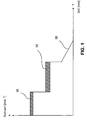
- the area 10 corresponds to the idling.
- the speed is high and only slightly variable; Fluctuation factors are the internal friction of the Machine that increases with time, and system voltage irregularities.
- the width of the zone 10 is low.
- the speed drops to a value in the range 20.
- This range is wider than Zone 10 because the speed varies quite widely depending on the type of coffee and the fineness of the ground coffee. For greater fluctuation also contributes wear of the grinding tools; this influence is rather low because increased wear (which increases the speed) will produce a coarser ground coffee, and the user will adjust the fineness of the grind accordingly (causing the speed to drop slightly again).
- the speed drops along the line 30 and can also assume a constant low value. In any case, it is intended to trigger an alarm in this state and / or to stop the motor of the grinder.
- the stored speed values can be displayed as such or together with their meaning ("empty”, “grinding”, “blocking”) on a small display field. It is also possible to pass on the stored values via a connection to a computer, which can quickly find the causes in the event of a malfunction. Finally, RPM values that approach or exceed a range limit in the RPM range "Milling" can be used to automatically readjust the grinder.
- the invention has been described in the above as an example of a coffee grinder in a coffee machine. As already mentioned, however, the invention can be applied to virtually all grinders with rotor and stator in order to monitor and / or control them. Also, the individual steps of the described method can be modified and if necessary also reversed, and additional steps can be introduced, for example a running or intermittent comparison of the measured speed values with the mains frequency and a possible adjustment, or an automation of all or individual Process steps. Such modifications and additions as are familiar to those skilled in the art are within the scope of the patent.
Landscapes
- Engineering & Computer Science (AREA)
- Food Science & Technology (AREA)
- Mechanical Engineering (AREA)
- Apparatus For Making Beverages (AREA)
- Crushing And Grinding (AREA)
- Disintegrating Or Milling (AREA)
Description
- Die Erfindung betrifft ein Verfahren zur Bestimmung der Auslastung einer Mühle, insbesondere einer Kaffeemühle, nach dem Oberbegriff des Patentanspruchs 1.
- Die folgende Beschreibung ist auf eine Kaffeemühle ausgerichtet, auf welche das erfindungsgemässe Verfahren eine bevorzugte Anwendung findet. Die Erfindung kann jedoch ohne wesentliche Änderungen auf jede Mühle angewandt werden, bei der ein Mahlgut in einem Mahlwerk zwischen einem festen (Stator) und einem motorgetriebenen rotierenden Werkzeug (Rotor) zerkleinert wird.
- Mahlwerke bestehen meist aus metallischen Werkzeugen, seltener auch aus Korund (Haushaltsgetreidemühlen). Die Mahlwirkung wird durch mehrfache Zerkleinerung in einem sich zunehmend verengenden Mahlspalt erzielt, der meist durch axiale Verschiebung des Rotors oder Stators variiert werden kann. Gemahlen wird durch Scher- und/oder Reibwirkung. Solche Mahlwerke, insbesondere Kaffeemühlen, sind bekannt und finden eine vielfältige Anwendung.
- Die Kaffeemühlen in automatischen Kaffeemaschinen werden entweder mit Gleichstrommotoren oder mit Wechselstrommotoren angetrieben. Dabei setzt sich der Wechselstrommotor immer mehr durch, weil er bedeutend preisgünstiger als ein Gleichstrommotor hergestellt werden kann. Während der Wechselstrommotor einfach zu fabrizieren ist und unmittelbar mit dem Wechselstrom des Netzes betrieben werden kann, benötigt ein Gleichstrommotor bei der Herstellung mehr Einzelteile wie Kollektor, Bürsten, zwei verschiedene Wicklungen oder eine Wicklung und Permanentmagnete, sowie ein eigenes Speisesystem aus Transformator und Gleichrichter.
- Beim Mahlvorgang ist es wichtig, dessen Ablauf kontrollieren zu können. Dies trifft insbesondere für alle Mühlen zu, bei denen keine direkte visuelle Überwachung des Mahlwerks möglich ist und auch für Fälle, bei denen eine Blockierung des Mahlwerks durch einen Fremdkörper verursacht wird, der von weiterem Mahlgut verdeckt ist. Eine Kontrolle des korrekten Betriebszustandes des Mahlwerks ist bei Kaffeemühlen wichtig, weil es immer wieder vorkommt, dass der Kaffeebohnenvorrat durch Steinchen verunreinigt ist. Diese Steinchen blockieren dann das Mahlwerk.
- Bei Mühlen mit Gleichstrommotoren wird die Stromaufnahme gemessen, um zwischen den verschiedenen Betriebszuständen unterscheiden zu können. Es können dadurch mindestens drei Zustände unterschieden werden:
- 1. Innerhalb von definierten Limiten der Stromaufnahme kann von normalem Mahlen ausgegangen werden.
- 2. Bei Stromstärken über der oberen Limite ist die Mühle blockiert oder überlastet. In diesem Fall wird der Benutzer meist aufgefordert, eventuelle Fremdkörper aus der Mühle zu entfernen.
- 3. Wenn keine Bohnen mehr vorhanden sind, ist der Strom kleiner als die untere Limite. Der Benutzer wird aufgefordert, Bohnen nachzufüllen.
- Bei der Verwendung von Wechselstrommotoren gestaltet sich die Überwachung anders:
- Vielfach wird der Inhalt des Bohnenbehälters per Lichtschranke überwacht. Dies hat den Vorteil, dass eine Leermeldung als Vorwarnung ausgegeben wird und Bohnen rechtzeitig nachgefüllt werden können. Diese Lösung ist allerdings recht aufwändig und anfällig auf Verschmutzung. Zudem hat man damit noch keine Möglichkeit zur Kontrolle von Blockierung und Überlast.
- Mit neueren integrierten Schaltungen besteht auch die Möglichkeit, den Strom günstig zu messen. Schwankende Netzspannungen und eine zu geringe Veränderung zwischen Normalbetrieb und Leerlauf machen diese Methode allerdings sehr problematisch.
- Ein Nachteil des Wechselstrommotors besteht also darin, dass dessen Stromaufnahme bzw. der damit verbundene Spannungsabfall nicht zur Überwachung des Zustands des Motors ausgenutzt werden kann, dies im Gegensatz zu Gleichstrommotoren, bei denen die Stromaufnahme mit dem abgegebenen Drehmoment (quadratisch) ansteigt.
- Die Erfindung hat sich zur Aufgabe gestellt, ein Verfahren zur Ermittlung der Auslastung einer mit einem Wechselstrommotor angetriebenen Mühle, insbesondere einer Kaffeemühle, anzugeben, mit dem der Zustand des Mahlwerks unter den verschiedensten Betriebsbedingungen bestimmt werden kann.
- Solche Verfahren sind bereits bekannt geworden. So bestimmt das Verfahren, das im Dokument
JP 6-133868 - Im Dokument
JP 4-352915 - Im deutschen Gebrauchsmuster G 90 05 651 ist eine Maschine zum Zubereiten von Kaffee-Aufguss beschrieben, bei der die jeweilige Kaffeemenge für eine Portion dadurch abgemessen wird, dass die Anzahl der Umdrehungen des Mahlwerks bestimmt und der Motor nach Erreichen eines voreingestellten Zählwerts stillgesetzt wird.
-
WO 2008/001403 beschreibt ein Verfahren zur Detektierung der Bohnenmenge in einer Bohnenmühle, in dem der Motor der Mühle mit zwei unterschiedlichen Antriebsdrehmomenten angetrieben wird und die Menge der Bohnen auf Grund des Drehperiode-Unterschieds bestimmt wird. Diese Mühle besitzt jedoch vorteilhaft einen Gleichstrommotor. - In keinem der angegebenen Dokumente ist ein Verfahren
- beschrieben oder auch nur nahegelegt, das es erlaubt, die einzelnen Phasen des Mahlens einer Portion Kaffeemehl zu bestimmen und eventuelle Störungen anzuzeigen bzw. den Mahlmotor dann abzuschalten.
- Das erfindungsgemässe Verfahren ist im kennzeichnenden Teil des Patentanspruches 1 definiert. Bevorzugte Ausführungsformen bilden den Gegenstand von abhängigen Ansprüchen.
- Die Erfindung beruht auf einer Messung der Drehzahl des Mahlwerks, d.h. dessen Anzahl von Umdrehungen pro Zeiteinheit. Die Drehzahl des Mahlwerks kann auf verschiedene Weise gemessen werden. Man kann beispielsweise an einem rotierenden Bauteil, das drehschlüssig mit dem Mahlwerk gekoppelt ist, ein mechanisches Element anbringen, das bei der Rotation mit einem feststehenden Schaltelement periodisch in Berührung kommt und dabei einen Impuls erzeugt. Es können auch mehrere rotierende und/oder feststehende Elemente eingesetzt werden.
- Eine weitere Möglichkeit ist die bekannte optische Drehzahlmessung mit Hilfe von optoelektronischen Elementen, welche berührungsfrei arbeitet.
- Gemäss vorliegender Erfindung wird die Verwendung eines Permanentmagneten bevorzugt, der am rotierenden Element angeordnet ist und mit einem feststehenden Hallsensor zusammenwirkt, um die Drehzahl der Mühle zu erfassen. Dieses ebenfalls berührungsfrei arbeitende Verfahren funktioniert gleich wie bei einem Durchflussmesser, pro Umdrehung erhält man einen Impuls. Da die asynchronen Wechselstrommotoren im Leerlauf nahezu netzsynchron laufen, hat man hier eine präzise Referenz. Die Netzfrequenz ist so ziemlich das Stabilste, was es in der Stromversorgung gibt. Der Steuerung muss lediglich mitgeteilt werden, welche der beiden auf der Welt vorkommenden Frequenzen vorliegt, d.h. entweder 50 oder 60 Hz. Durch diese genaue Referenz kann nun ein relativ geringer Abfall der Drehzahl, etwa 5 bis 10%, zur Unterscheidung zwischen Mahlen und Leerlauf herangezogen werden.
- Auch die Erfassung von Überlastsituationen wird problemloser, weil die Drehzahl durch eine gegebenenfalls eingebaute Schwungmasse wesentlich stabiler ist als die Stromaufnahme. In Kombination mit einer Messung der aktuellen Netzspannung wäre auch eine Kontrolle oder sogar Automatisierung der Mühleneinstellungen denkbar, wie z.B. die Kompensation einer Abnutzung der Mahlwerkzeuge.
- Das erfindungsgemässe Verfahren ermöglicht bei geeigneter Ausbildung der einzelnen Teile der Mühle, insbesondere Kaffeemühle, die Erfassung sämtlicher möglichen Betriebsbedingungen. Dies soll an einem Ausführungsbeispiel erläutert werden, wobei Bezug auf die einzige Figur der beigelegten Zeichnung genommen wird. Im Beispiel wird auf eine Kaffeemaschine verwiesen; solche Maschinen, in denen Kaffee gemahlen und das erzeugte Kaffeemehl zur Bereitung eines Aufgusses weiterverarbeitet wird, sind allgemein bekannt und sollen daher nicht näher beschrieben werden.
- Bei der verwendeten Kaffeemaschine ist auf der Welle eines Wechselstrommotors, der das Mahlwerk antreibt, eine scheibenförmige Schwungmasse angeordnet. Am Umfang dieser Masse ist ein kräftiger Permanentmagnet in die Scheibe eingelassen. Der Scheibe steht im Gehäuse der Kaffeemaschine ein Hallsensor derart gegenüber, dass bei jeder Umdrehung der Schwungscheibe im Sensor ein Spannungsimpuls induziert wird. Die Impulse werden in an sich bekannter Weise einer integrierten Schaltung zugeleitet, die einen Taktgeber ("clock") enthält und die Drehzahl der Schwungmasse berechnet.
- Anstelle des einen Permanentmagneten können auch mehrere Magnete verwendet werden, beispielsweise zwei Stück, die über einem Durchmesser der Scheibe angeordnet sind, so dass zwei Impulse, die der Hall-Sensor misst und weiterleitet, einer Umdrehung entsprechen.
- Als Erstes wird der Kaffeemaschine durch Betätigen eines entsprechenden Umschalters die Netzfrequenz mitgeteilt. Dies ist nur ein einziges Mal nötig; diese Einstellung kann auch schon beim Hersteller vorgenommen werden.
- Bevorzugt weist die Kaffeemaschine einen Schieber zwischen dem Kaffeebohnenbehälter und dem Eingang des Mahlwerks auf. Dieser Schieber kann durch einen Elektromagneten geöffnet und geschlossen werden. Es kann sich dabei auch um einen mehrteiligen, irisblendenförmigen Verschluss handeln. Dann wird der Motor des Mahlwerks in Gang gesetzt, die Drehzahl mit Hilfe der Hall-Sonde gemessen und der Messwert gespeichert. Man erhält auf diese Weise die Leerlaufdrehzahl. Dieser vorbereitende Schritt muss auch nicht vor jedem Mahlvorgang ausgeführt werden und kann auf einen Zustand verlegt werden, bei dem der Bohnen-Vorratsbehälter leer ist. Für solche Ausführungsformen des Verfahrens wird auch kein Schieber bzw. Verschluss des Behälters benötigt.
- Als nächstes wird die Drehzahl ermittelt und gespeichert, mit welcher der normale Mahlvorgang abläuft. Dieser Wert wird in bestimmten Abständen neu bestimmt und der bereits gespeicherte Drehzahlwert aktualisiert. Da andere Drehzahlwerte auch auf einen Wechsel des Mahlguts, z.B. auf eine andere Kaffeesorte, oder auf einen Verschleiss des Mahlwerks zurückgeführt werden können, kann anstelle der Aktualisierung auch eine laufende Speicherung der Messwerte vorgesehen werden.
- Auch ist zu berücksichtigen, dass sich die Drehzahl des Mahlwerks ändert, wenn die Feinheit des Kaffeemehls verändert wird. Daher sieht die Erfindung vor, dass auch die Drehzahlwerte in Abhängigkeit von der Feinheit des gemahlenen Produkts aufgezeichnet werden.
- Schliesslich kann der Fall eintreten, dass das Mahlwerk durch einen Fremdkörper oder durch nasse Kaffeebohnen ganz oder teilweise blockiert wird. In diesem Fall fällt die Drehzahl stark ab und kann bis auf Null zurückgehen.
- In der Figur sind diese Verhältnisse grob schematisch in Diagrammform dargestellt, wobei die Drehzahl n (z.B. in min-1) gegen die Zeit (z.B. in min) aufgetragen ist.
- Der Bereich 10 entspricht dem Leerlauf. Hier ist die Drehzahl hoch und nur wenig veränderlich; Schwankungsfaktoren sind die innere Reibung der Maschine, die mit der Zeit zunimmt, und Unregelmässigkeiten der Netzspannung. Die Breite der Zone 10 ist gering.
- Beim normalen Mahlvorgang sinkt die Drehzahl auf einen Wert im Bereich 20 ab. Dieser Bereich ist breiter als die Zone 10, weil die Drehzahl je nach Kaffeesorte und eingestellter Feinheit des Kaffeemehls ziemlich stark schwankt. Zur grösseren Schwankungsbreite trägt auch eine Abnutzung der Mahlwerkzeuge bei; dieser Einfluss ist eher gering, weil eine erhöhte Abnutzung (wodurch die Drehzahl steigt) ein gröberes Kaffeemehl liefert, und der Benutzer wird den Feinheitsgrad der Mahlung entsprechend nachstellen (wodurch die Drehzahl wieder ein wenig sinkt).
- Sollte die Mühle sehr schwer gehen oder gar blockieren, so sinkt die Drehzahl längs der Linie 30 und kann auch einen konstanten niedrigen Wert annehmen. Jedenfalls ist vorgesehen, in diesem Zustand einen Alarm auszulösen und/oder den Motor des Mahlwerks anzuhalten.
- Die gespeicherten Drehzahlwerte können als solche oder auch zusammen mit ihrer Bedeutung ("Leeriauf", "Mahlen", "Blockierung") auf einem kleinen Anzeigefeld angezeigt werden. Es ist auch möglich, die gespeicherten Werte über einen Anschluss an einen Computer weiterzugeben, der im Falle einer Maschinenstörung schnell die Ursachen auffinden kann. Schliesslich können Drehzahlwerte, die sich einer Bereichslimite im Drehzahlbereich "Mahlen" nähern oder diese überschreiten, zur automatischen Nachstellung des Mahlwerks verwendet werden.
- Die Erfindung ist im Obenstehenden als Beispiel einer Kaffeemühle in einem Kaffeeautomaten beschrieben worden. Wie eingangs schon erwähnt wurde, kann die Erfindung aber auf praktisch alle Mahlwerke mit Rotor und Stator angewendet werden, um diese zu überwachen und/oder zu steuern. Auch können die einzelnen Schritte des beschriebenen Verfahrens abgeändert und gegebenenfalls auch vertauscht werden, und es können zusätzliche Schritte eingeführt werden, beispielsweise ein laufender oder intermittierender Vergleich der gemessenen Drehzahlwerte mit der Netzfrequenz und eine allfällige Nachstellung, oder eine Automatisierung aller oder einzelner Verfahrensschritte. Solche Abänderungen und Zusätze, die für den Fachmann geläufig sind, fallen in den Schutzbereich des Patentes.
Claims (9)
- Verfahren zur Bestimmung der Auslastung einer Mühle, insbesondere einer Kaffeemühle, bei der ein Wechselstrommotor einen Rotor eines Mahlwerks mit Stator und Rotor antreibt, dadurch gekennzeichnet,
dass die Drehzahl des Motors an einem drehschlüssig mit dem Mahlwerk verbundenen Bauteil der Maschine gemessen wird, und dass die Messwerte zur Bestimmung der Mühlenauslastung herangezogen werden, indem in einem ersten Schritt die Leerlaufdrehzahl des Mahlwerks in Abwesenheit von Mahlgut ermittelt und als Bezugswert der nachfolgenden Bestimmungen verwendet wird. - Verfahren nach Anspruch 1, dadurch gekennzeichnet, dass die Leerlaufdrehzahl in Beziehung zur Netzfrequenz gesetzt wird, nachdem der Nennwert der Netzfrequenz ausgewählt und der Maschine mitgeteilt wurde.
- Verfahren nach einem der vorstehenden Ansprüche, dadurch gekennzeichnet, dass in einem zweiten Schritt die Drehzahl des Mahlwerks bei Normalbetrieb mit dem vorgesehenen Mahlgut bestimmt wird, wobei die Bestimmung jeweils in Abhängigkeit von der Feinheit des gemahlenen Gutes und gegebenenfalls auch vom Abnutzungsgrad des Mahlwerks erfolgt.
- Verfahren nach einem der vorstehenden Ansprüche, dadurch gekennzeichnet, dass bei einer Drehzahl, die unter dem niedrigsten Wert der gemäss Anspruch 3 gemessenen Drehzahlen liegt, oder bei einer Drehzahl, die gegen Null geht oder die Null ist, eine Blockierung des Mahlwerks ermittelt und die Stromversorgung des Motors abgeschaltet wird.
- Verfahren nach einem der vorstehenden Ansprüche, dadurch gekennzeichnet, dass die Drehzahl des Mahlwerks mit einer Vorrichtung ermittelt wird, die aus einer Schwungscheibe und einem Hall-Sensor besteht, wobei die Schwungscheibe drehschlüssig mit dem Mahlwerk verbunden ist und mindestens einen fest angebrachten Permanentmagneten aufweist, der mit dem Hall-Sensor derart zusammenwirkt, dass der Sensor beim Vorbeigang eines Magneten ein impulsförmiges Signal abgibt.
- Verfahren nach einem der vorstehenden Ansprüche, dadurch gekennzeichnet, dass beim Abschalten des Motors infolge einer Blockierung des Mahlwerks ein akustisches Signal abgegeben wird.
- Verfahren nach einem der vorstehenden Ansprüche, dadurch gekennzeichnet, dass sämtliche ermittelten Drehzahlen in einem Speicher abrufbar registriert werden.
- Verfahren nach einem der vorstehenden Ansprüche, dadurch gekennzeichnet, dass der aus der Drehzahl ermittelte Betriebszustand der Mühle optisch angezeigt wird.
- Verfahren nach einem der vorstehenden Ansprüche, dadurch gekennzeichnet, dass die Mühle die Kaffeemühle einer Kaffeemaschine ist.
Priority Applications (6)
| Application Number | Priority Date | Filing Date | Title |
|---|---|---|---|
| ES08162227T ES2369877T3 (es) | 2008-08-12 | 2008-08-12 | Procedimiento para determinar la carga de régimen de un molino. |
| EP08162227A EP2153758B1 (de) | 2008-08-12 | 2008-08-12 | Verfahren zur Bestimmung der Auslastung einer Mühle |
| AT08162227T ATE516732T1 (de) | 2008-08-12 | 2008-08-12 | Verfahren zur bestimmung der auslastung einer mühle |
| DK08162227.6T DK2153758T3 (da) | 2008-08-12 | 2008-08-12 | Fremgangsmåde til bestemmelse af udnyttelsen af en mølle |
| US13/057,289 US8511592B2 (en) | 2008-08-12 | 2009-07-28 | Method for determining the load of a mill |
| PCT/EP2009/059740 WO2010018060A1 (de) | 2008-08-12 | 2009-07-28 | Verfahren zur bestimmung der auslastung einer mühle |
Applications Claiming Priority (1)
| Application Number | Priority Date | Filing Date | Title |
|---|---|---|---|
| EP08162227A EP2153758B1 (de) | 2008-08-12 | 2008-08-12 | Verfahren zur Bestimmung der Auslastung einer Mühle |
Publications (2)
| Publication Number | Publication Date |
|---|---|
| EP2153758A1 EP2153758A1 (de) | 2010-02-17 |
| EP2153758B1 true EP2153758B1 (de) | 2011-07-20 |
Family
ID=40076738
Family Applications (1)
| Application Number | Title | Priority Date | Filing Date |
|---|---|---|---|
| EP08162227A Active EP2153758B1 (de) | 2008-08-12 | 2008-08-12 | Verfahren zur Bestimmung der Auslastung einer Mühle |
Country Status (6)
| Country | Link |
|---|---|
| US (1) | US8511592B2 (de) |
| EP (1) | EP2153758B1 (de) |
| AT (1) | ATE516732T1 (de) |
| DK (1) | DK2153758T3 (de) |
| ES (1) | ES2369877T3 (de) |
| WO (1) | WO2010018060A1 (de) |
Cited By (1)
| Publication number | Priority date | Publication date | Assignee | Title |
|---|---|---|---|---|
| WO2024083353A1 (de) * | 2022-10-21 | 2024-04-25 | Wmf Gmbh | Kaffeemühle, kaffeemaschine und verfahren zum mahlen von kaffee in einer kaffeemühle |
Families Citing this family (6)
| Publication number | Priority date | Publication date | Assignee | Title |
|---|---|---|---|---|
| CN105007785B (zh) * | 2013-05-16 | 2019-08-06 | 皇家飞利浦有限公司 | 操作研磨机的方法 |
| PL3068273T3 (pl) * | 2013-11-12 | 2020-07-27 | Koninklijke Philips N.V. | Młynek do kawy i sposób mielenia kawy |
| US9675211B2 (en) * | 2015-03-06 | 2017-06-13 | Helen Of Troy Limited | No-bean detection for coffee bean grinder |
| IT201800020734A1 (it) * | 2018-12-21 | 2020-06-21 | Roger Tech S R L | Macinacaffe' elettrico |
| DE102019206396A1 (de) * | 2019-05-03 | 2020-11-05 | BSH Hausgeräte GmbH | Verfahren zum Betreiben einer Kaffeemaschine |
| CN111905873B (zh) * | 2020-08-05 | 2021-06-25 | 中煤科工集团唐山研究院有限公司 | 双齿辊破碎机失速保护方法 |
Family Cites Families (4)
| Publication number | Priority date | Publication date | Assignee | Title |
|---|---|---|---|---|
| IT216645Z2 (it) | 1989-06-07 | 1991-09-17 | Omre Srl | Macchina per la preparazione di infuso di caffe' con macinacaffe' perfezionato. |
| JPH04352915A (ja) | 1991-05-29 | 1992-12-08 | Sanyo Electric Co Ltd | ミル付コ−ヒ−沸し器 |
| JP3023629B2 (ja) | 1992-10-23 | 2000-03-21 | 松下電器産業株式会社 | コーヒー沸かし器 |
| ITMI20061232A1 (it) * | 2006-06-26 | 2007-12-27 | Saeco Ipr Ltd | Metodo di rilevazione della quantita' di grani in un dispositivo di macinatura |
-
2008
- 2008-08-12 AT AT08162227T patent/ATE516732T1/de active
- 2008-08-12 ES ES08162227T patent/ES2369877T3/es active Active
- 2008-08-12 DK DK08162227.6T patent/DK2153758T3/da active
- 2008-08-12 EP EP08162227A patent/EP2153758B1/de active Active
-
2009
- 2009-07-28 WO PCT/EP2009/059740 patent/WO2010018060A1/de not_active Ceased
- 2009-07-28 US US13/057,289 patent/US8511592B2/en active Active
Cited By (1)
| Publication number | Priority date | Publication date | Assignee | Title |
|---|---|---|---|---|
| WO2024083353A1 (de) * | 2022-10-21 | 2024-04-25 | Wmf Gmbh | Kaffeemühle, kaffeemaschine und verfahren zum mahlen von kaffee in einer kaffeemühle |
Also Published As
| Publication number | Publication date |
|---|---|
| ES2369877T3 (es) | 2011-12-07 |
| WO2010018060A1 (de) | 2010-02-18 |
| EP2153758A1 (de) | 2010-02-17 |
| US20110155829A1 (en) | 2011-06-30 |
| DK2153758T3 (da) | 2011-10-24 |
| US8511592B2 (en) | 2013-08-20 |
| ATE516732T1 (de) | 2011-08-15 |
Similar Documents
| Publication | Publication Date | Title |
|---|---|---|
| WO2010018060A1 (de) | Verfahren zur bestimmung der auslastung einer mühle | |
| EP1707089B1 (de) | Verfahren zum Detektieren des Fehlens von Kaffeebohnen in einem Mahlwerk einer Kaffeemaschine sowie Kaffeemaschine zur Durchführung des Verfahrens | |
| EP3804586B1 (de) | Kaffeemühle | |
| DE69603644T2 (de) | Mit hoher Taktfrequenz arbeitendes Winkelregelungssystem für einen geschalteten Reluktanzmotorantrieb | |
| DE69420781T2 (de) | Vorrichtung zur Überwachung der Dynamik rotierender Anlagen | |
| DE102018122837A1 (de) | Elektrisches Drehwerkzeug mit Bremse | |
| DE112016001933T5 (de) | Elektrowerkzeug | |
| DE102004024935A1 (de) | Motor-Drehmomentsteuerung zur Verringerung der Unfallgefahr bei Zentrifugenrotoren | |
| DE2755647A1 (de) | Vorrichtung zur ueberwachung des fadens einer oe-spinnturbine | |
| DE2658477A1 (de) | Vorrichtung zur ueberwachung von ungleichmaessigkeiten und/oder strukturaenderungen des fadens einer oe-spinnturbine | |
| EP0930941B1 (de) | Verfahren und einrichtung zur automatischen überwachung von maschinen, insbesondere für zerkleinerungsmaschinen, vorzugsweise rotorscheren | |
| DE9005651U1 (de) | Maschine für das Zubereiten von Kaffee-Aufguß | |
| WO2002040169A1 (de) | Verfahren und anlage zur zerkleinerung von abfall | |
| DE102013211997A1 (de) | Handwerkzeugmaschine mit einer Sensorvorrichtung | |
| DE2145096C (de) | Einrichtung zur automatischen Mahlspalt-Steuerung bei einer Mühle | |
| EP0332568A1 (de) | Betriebsverfahren und Steuerschaltung zur Anlaufüberwachung für elektrische Hochspannungsmotoren mit asynchronem Anlauf | |
| DE10014174A1 (de) | Bremsmodul | |
| EP3363598B1 (de) | Verfahren zum abbremsen einer werkzeugspindel | |
| EP1637890B1 (de) | Verfahren zur berührungslosen Drehzahlmessung für Elektromotoren | |
| DE4113565C2 (de) | Verfahren und Vorrichtung zur Überwachung der Verzugskraft in Streckwerken von Spinnereimaschinen | |
| CH670016A5 (de) | ||
| DE102012106915B4 (de) | Aktenvernichter | |
| DE102011052966A1 (de) | Verfahren zum Betreiben einer elektromagnetischen Kupplung sowie elektromagnetische Kupplung | |
| EP0275862A2 (de) | Einrichtung zur Unwuchterkennung | |
| DE10331934B3 (de) | Verfahren zum Steuern eines Waschmaschinen-Motors und Waschmaschinen-Motor |
Legal Events
| Date | Code | Title | Description |
|---|---|---|---|
| PUAI | Public reference made under article 153(3) epc to a published international application that has entered the european phase |
Free format text: ORIGINAL CODE: 0009012 |
|
| AK | Designated contracting states |
Kind code of ref document: A1 Designated state(s): AT BE BG CH CY CZ DE DK EE ES FI FR GB GR HR HU IE IS IT LI LT LU LV MC MT NL NO PL PT RO SE SI SK TR |
|
| AX | Request for extension of the european patent |
Extension state: AL BA MK RS |
|
| RAP1 | Party data changed (applicant data changed or rights of an application transferred) |
Owner name: SCHAERER AG |
|
| 17P | Request for examination filed |
Effective date: 20100804 |
|
| 17Q | First examination report despatched |
Effective date: 20100903 |
|
| AKX | Designation fees paid |
Designated state(s): AT BE BG CH CY CZ DE DK EE ES FI FR GB GR HR HU IE IS IT LI LT LU LV MC MT NL NO PL PT RO SE SI SK TR |
|
| GRAP | Despatch of communication of intention to grant a patent |
Free format text: ORIGINAL CODE: EPIDOSNIGR1 |
|
| GRAS | Grant fee paid |
Free format text: ORIGINAL CODE: EPIDOSNIGR3 |
|
| GRAA | (expected) grant |
Free format text: ORIGINAL CODE: 0009210 |
|
| AK | Designated contracting states |
Kind code of ref document: B1 Designated state(s): AT BE BG CH CY CZ DE DK EE ES FI FR GB GR HR HU IE IS IT LI LT LU LV MC MT NL NO PL PT RO SE SI SK TR |
|
| REG | Reference to a national code |
Ref country code: GB Ref legal event code: FG4D Free format text: NOT ENGLISH |
|
| REG | Reference to a national code |
Ref country code: CH Ref legal event code: EP |
|
| REG | Reference to a national code |
Ref country code: DE Ref legal event code: R096 Ref document number: 502008004243 Country of ref document: DE Effective date: 20110915 |
|
| REG | Reference to a national code |
Ref country code: CH Ref legal event code: NV Representative=s name: BOVARD AG |
|
| REG | Reference to a national code |
Ref country code: NL Ref legal event code: T3 |
|
| REG | Reference to a national code |
Ref country code: DK Ref legal event code: T3 |
|
| REG | Reference to a national code |
Ref country code: SE Ref legal event code: TRGR |
|
| REG | Reference to a national code |
Ref country code: ES Ref legal event code: FG2A Ref document number: 2369877 Country of ref document: ES Kind code of ref document: T3 Effective date: 20111207 |
|
| PG25 | Lapsed in a contracting state [announced via postgrant information from national office to epo] |
Ref country code: MT Free format text: LAPSE BECAUSE OF FAILURE TO SUBMIT A TRANSLATION OF THE DESCRIPTION OR TO PAY THE FEE WITHIN THE PRESCRIBED TIME-LIMIT Effective date: 20110720 |
|
| PG25 | Lapsed in a contracting state [announced via postgrant information from national office to epo] |
Ref country code: LT Free format text: LAPSE BECAUSE OF FAILURE TO SUBMIT A TRANSLATION OF THE DESCRIPTION OR TO PAY THE FEE WITHIN THE PRESCRIBED TIME-LIMIT Effective date: 20110720 Ref country code: PT Free format text: LAPSE BECAUSE OF FAILURE TO SUBMIT A TRANSLATION OF THE DESCRIPTION OR TO PAY THE FEE WITHIN THE PRESCRIBED TIME-LIMIT Effective date: 20111121 Ref country code: IS Free format text: LAPSE BECAUSE OF FAILURE TO SUBMIT A TRANSLATION OF THE DESCRIPTION OR TO PAY THE FEE WITHIN THE PRESCRIBED TIME-LIMIT Effective date: 20111120 Ref country code: FI Free format text: LAPSE BECAUSE OF FAILURE TO SUBMIT A TRANSLATION OF THE DESCRIPTION OR TO PAY THE FEE WITHIN THE PRESCRIBED TIME-LIMIT Effective date: 20110720 Ref country code: NO Free format text: LAPSE BECAUSE OF FAILURE TO SUBMIT A TRANSLATION OF THE DESCRIPTION OR TO PAY THE FEE WITHIN THE PRESCRIBED TIME-LIMIT Effective date: 20111020 Ref country code: HR Free format text: LAPSE BECAUSE OF FAILURE TO SUBMIT A TRANSLATION OF THE DESCRIPTION OR TO PAY THE FEE WITHIN THE PRESCRIBED TIME-LIMIT Effective date: 20110720 |
|
| REG | Reference to a national code |
Ref country code: IE Ref legal event code: FD4D |
|
| BERE | Be: lapsed |
Owner name: SCHAERER A.G. Effective date: 20110831 |
|
| PG25 | Lapsed in a contracting state [announced via postgrant information from national office to epo] |
Ref country code: CY Free format text: LAPSE BECAUSE OF FAILURE TO SUBMIT A TRANSLATION OF THE DESCRIPTION OR TO PAY THE FEE WITHIN THE PRESCRIBED TIME-LIMIT Effective date: 20110720 Ref country code: PL Free format text: LAPSE BECAUSE OF FAILURE TO SUBMIT A TRANSLATION OF THE DESCRIPTION OR TO PAY THE FEE WITHIN THE PRESCRIBED TIME-LIMIT Effective date: 20110720 Ref country code: SI Free format text: LAPSE BECAUSE OF FAILURE TO SUBMIT A TRANSLATION OF THE DESCRIPTION OR TO PAY THE FEE WITHIN THE PRESCRIBED TIME-LIMIT Effective date: 20110720 Ref country code: LV Free format text: LAPSE BECAUSE OF FAILURE TO SUBMIT A TRANSLATION OF THE DESCRIPTION OR TO PAY THE FEE WITHIN THE PRESCRIBED TIME-LIMIT Effective date: 20110720 Ref country code: GR Free format text: LAPSE BECAUSE OF FAILURE TO SUBMIT A TRANSLATION OF THE DESCRIPTION OR TO PAY THE FEE WITHIN THE PRESCRIBED TIME-LIMIT Effective date: 20111021 |
|
| PG25 | Lapsed in a contracting state [announced via postgrant information from national office to epo] |
Ref country code: MC Free format text: LAPSE BECAUSE OF NON-PAYMENT OF DUE FEES Effective date: 20110831 |
|
| PG25 | Lapsed in a contracting state [announced via postgrant information from national office to epo] |
Ref country code: SK Free format text: LAPSE BECAUSE OF FAILURE TO SUBMIT A TRANSLATION OF THE DESCRIPTION OR TO PAY THE FEE WITHIN THE PRESCRIBED TIME-LIMIT Effective date: 20110720 Ref country code: IE Free format text: LAPSE BECAUSE OF FAILURE TO SUBMIT A TRANSLATION OF THE DESCRIPTION OR TO PAY THE FEE WITHIN THE PRESCRIBED TIME-LIMIT Effective date: 20110720 Ref country code: CZ Free format text: LAPSE BECAUSE OF FAILURE TO SUBMIT A TRANSLATION OF THE DESCRIPTION OR TO PAY THE FEE WITHIN THE PRESCRIBED TIME-LIMIT Effective date: 20110720 |
|
| PLBE | No opposition filed within time limit |
Free format text: ORIGINAL CODE: 0009261 |
|
| STAA | Information on the status of an ep patent application or granted ep patent |
Free format text: STATUS: NO OPPOSITION FILED WITHIN TIME LIMIT |
|
| PG25 | Lapsed in a contracting state [announced via postgrant information from national office to epo] |
Ref country code: BE Free format text: LAPSE BECAUSE OF NON-PAYMENT OF DUE FEES Effective date: 20110831 Ref country code: EE Free format text: LAPSE BECAUSE OF FAILURE TO SUBMIT A TRANSLATION OF THE DESCRIPTION OR TO PAY THE FEE WITHIN THE PRESCRIBED TIME-LIMIT Effective date: 20110720 Ref country code: RO Free format text: LAPSE BECAUSE OF FAILURE TO SUBMIT A TRANSLATION OF THE DESCRIPTION OR TO PAY THE FEE WITHIN THE PRESCRIBED TIME-LIMIT Effective date: 20110720 |
|
| 26N | No opposition filed |
Effective date: 20120423 |
|
| REG | Reference to a national code |
Ref country code: FR Ref legal event code: ST Effective date: 20120525 |
|
| REG | Reference to a national code |
Ref country code: CH Ref legal event code: NV Representative=s name: RENTSCH PARTNER AG |
|
| REG | Reference to a national code |
Ref country code: DE Ref legal event code: R097 Ref document number: 502008004243 Country of ref document: DE Effective date: 20120423 |
|
| PG25 | Lapsed in a contracting state [announced via postgrant information from national office to epo] |
Ref country code: FR Free format text: LAPSE BECAUSE OF NON-PAYMENT OF DUE FEES Effective date: 20110920 |
|
| PG25 | Lapsed in a contracting state [announced via postgrant information from national office to epo] |
Ref country code: LU Free format text: LAPSE BECAUSE OF NON-PAYMENT OF DUE FEES Effective date: 20110812 |
|
| PG25 | Lapsed in a contracting state [announced via postgrant information from national office to epo] |
Ref country code: BG Free format text: LAPSE BECAUSE OF FAILURE TO SUBMIT A TRANSLATION OF THE DESCRIPTION OR TO PAY THE FEE WITHIN THE PRESCRIBED TIME-LIMIT Effective date: 20111020 |
|
| PG25 | Lapsed in a contracting state [announced via postgrant information from national office to epo] |
Ref country code: TR Free format text: LAPSE BECAUSE OF FAILURE TO SUBMIT A TRANSLATION OF THE DESCRIPTION OR TO PAY THE FEE WITHIN THE PRESCRIBED TIME-LIMIT Effective date: 20110720 |
|
| PG25 | Lapsed in a contracting state [announced via postgrant information from national office to epo] |
Ref country code: HU Free format text: LAPSE BECAUSE OF FAILURE TO SUBMIT A TRANSLATION OF THE DESCRIPTION OR TO PAY THE FEE WITHIN THE PRESCRIBED TIME-LIMIT Effective date: 20110720 |
|
| REG | Reference to a national code |
Ref country code: AT Ref legal event code: MM01 Ref document number: 516732 Country of ref document: AT Kind code of ref document: T Effective date: 20130812 |
|
| PG25 | Lapsed in a contracting state [announced via postgrant information from national office to epo] |
Ref country code: AT Free format text: LAPSE BECAUSE OF NON-PAYMENT OF DUE FEES Effective date: 20130812 |
|
| PGFP | Annual fee paid to national office [announced via postgrant information from national office to epo] |
Ref country code: DK Payment date: 20160819 Year of fee payment: 9 |
|
| PGFP | Annual fee paid to national office [announced via postgrant information from national office to epo] |
Ref country code: SE Payment date: 20160819 Year of fee payment: 9 |
|
| PGFP | Annual fee paid to national office [announced via postgrant information from national office to epo] |
Ref country code: ES Payment date: 20160810 Year of fee payment: 9 |
|
| REG | Reference to a national code |
Ref country code: CH Ref legal event code: NV Representative=s name: CMSRK RENTSCH KAELIN AG, CH |
|
| REG | Reference to a national code |
Ref country code: CH Ref legal event code: PFA Owner name: SCHAERER AG, CH Free format text: FORMER OWNER: SCHAERER AG, CH |
|
| REG | Reference to a national code |
Ref country code: CH Ref legal event code: PCAR Free format text: NEW ADDRESS: HIRSCHENGRABEN 1, 8001 ZUERICH (CH) |
|
| REG | Reference to a national code |
Ref country code: DK Ref legal event code: EBP Effective date: 20170831 |
|
| PG25 | Lapsed in a contracting state [announced via postgrant information from national office to epo] |
Ref country code: SE Free format text: LAPSE BECAUSE OF NON-PAYMENT OF DUE FEES Effective date: 20170813 |
|
| PG25 | Lapsed in a contracting state [announced via postgrant information from national office to epo] |
Ref country code: DK Free format text: LAPSE BECAUSE OF NON-PAYMENT OF DUE FEES Effective date: 20170831 |
|
| REG | Reference to a national code |
Ref country code: ES Ref legal event code: FD2A Effective date: 20181029 |
|
| PG25 | Lapsed in a contracting state [announced via postgrant information from national office to epo] |
Ref country code: ES Free format text: LAPSE BECAUSE OF NON-PAYMENT OF DUE FEES Effective date: 20170813 |
|
| PGFP | Annual fee paid to national office [announced via postgrant information from national office to epo] |
Ref country code: GB Payment date: 20190827 Year of fee payment: 12 |
|
| GBPC | Gb: european patent ceased through non-payment of renewal fee |
Effective date: 20200812 |
|
| PG25 | Lapsed in a contracting state [announced via postgrant information from national office to epo] |
Ref country code: GB Free format text: LAPSE BECAUSE OF NON-PAYMENT OF DUE FEES Effective date: 20200812 |
|
| P01 | Opt-out of the competence of the unified patent court (upc) registered |
Effective date: 20230524 |
|
| PGFP | Annual fee paid to national office [announced via postgrant information from national office to epo] |
Ref country code: NL Payment date: 20230726 Year of fee payment: 16 |
|
| PGFP | Annual fee paid to national office [announced via postgrant information from national office to epo] |
Ref country code: IT Payment date: 20230809 Year of fee payment: 16 |
|
| PGFP | Annual fee paid to national office [announced via postgrant information from national office to epo] |
Ref country code: DE Payment date: 20230808 Year of fee payment: 16 |
|
| PGFP | Annual fee paid to national office [announced via postgrant information from national office to epo] |
Ref country code: CH Payment date: 20240901 Year of fee payment: 17 |
|
| REG | Reference to a national code |
Ref country code: DE Ref legal event code: R119 Ref document number: 502008004243 Country of ref document: DE |
|
| REG | Reference to a national code |
Ref country code: NL Ref legal event code: MM Effective date: 20240901 |
|
| PG25 | Lapsed in a contracting state [announced via postgrant information from national office to epo] |
Ref country code: NL Free format text: LAPSE BECAUSE OF NON-PAYMENT OF DUE FEES Effective date: 20240901 |
|
| PG25 | Lapsed in a contracting state [announced via postgrant information from national office to epo] |
Ref country code: DE Free format text: LAPSE BECAUSE OF NON-PAYMENT OF DUE FEES Effective date: 20250301 |
|
| PG25 | Lapsed in a contracting state [announced via postgrant information from national office to epo] |
Ref country code: IT Free format text: LAPSE BECAUSE OF NON-PAYMENT OF DUE FEES Effective date: 20240812 |
|
| REG | Reference to a national code |
Ref country code: CH Ref legal event code: H13 Free format text: ST27 STATUS EVENT CODE: U-0-0-H10-H13 (AS PROVIDED BY THE NATIONAL OFFICE) Effective date: 20260324 |
|
| PG25 | Lapsed in a contracting state [announced via postgrant information from national office to epo] |
Ref country code: CH Free format text: LAPSE BECAUSE OF NON-PAYMENT OF DUE FEES Effective date: 20250831 |