EP2148892B2 - Schlammphasenpolymerisation - Google Patents
Schlammphasenpolymerisation Download PDFInfo
- Publication number
- EP2148892B2 EP2148892B2 EP08750254.8A EP08750254A EP2148892B2 EP 2148892 B2 EP2148892 B2 EP 2148892B2 EP 08750254 A EP08750254 A EP 08750254A EP 2148892 B2 EP2148892 B2 EP 2148892B2
- Authority
- EP
- European Patent Office
- Prior art keywords
- reactor
- flow
- flow separation
- transfer line
- line
- Prior art date
- Legal status (The legal status is an assumption and is not a legal conclusion. Google has not performed a legal analysis and makes no representation as to the accuracy of the status listed.)
- Active
Links
Images
Classifications
-
- C—CHEMISTRY; METALLURGY
- C08—ORGANIC MACROMOLECULAR COMPOUNDS; THEIR PREPARATION OR CHEMICAL WORKING-UP; COMPOSITIONS BASED THEREON
- C08F—MACROMOLECULAR COMPOUNDS OBTAINED BY REACTIONS ONLY INVOLVING CARBON-TO-CARBON UNSATURATED BONDS
- C08F10/00—Homopolymers and copolymers of unsaturated aliphatic hydrocarbons having only one carbon-to-carbon double bond
-
- Y—GENERAL TAGGING OF NEW TECHNOLOGICAL DEVELOPMENTS; GENERAL TAGGING OF CROSS-SECTIONAL TECHNOLOGIES SPANNING OVER SEVERAL SECTIONS OF THE IPC; TECHNICAL SUBJECTS COVERED BY FORMER USPC CROSS-REFERENCE ART COLLECTIONS [XRACs] AND DIGESTS
- Y02—TECHNOLOGIES OR APPLICATIONS FOR MITIGATION OR ADAPTATION AGAINST CLIMATE CHANGE
- Y02P—CLIMATE CHANGE MITIGATION TECHNOLOGIES IN THE PRODUCTION OR PROCESSING OF GOODS
- Y02P20/00—Technologies relating to chemical industry
- Y02P20/50—Improvements relating to the production of bulk chemicals
- Y02P20/582—Recycling of unreacted starting or intermediate materials
Definitions
- the average pressure drop over any 5 minute period between the first polymerisation reactor and the flow separation varies by less than 30%, preferably by less than 15% in any 4 hour period, preferably in any 12 hour period.
- the first flow is recycled back into the transfer line upstream of the flow separation instead of being passed back into the first reactor.
- This recycle loop may contain active polymer, and it is preferred that the polymer production in the recycle loop component of the transfer line is between 0.2 and 5 %wt, preferably less than 2%wt of that in the polymerisation reactor.
- the reagent whose concentration is reduced is a chain transfer agent or comonomer. It is also preferred that the polymerisation is carried out at a pressure of at least 90% of that in the first polymerisation reactor.
- the invention is particularly applicable to the continuous polymerization of olefins, preferably alpha mono olefins, in an elongated tubular closed loop reaction zone.
- olefins preferably alpha mono olefins
- the olefin(s) is continuously added to, and contacted with, a catalyst in a hydrocarbon diluent.
- the monomer(s) polymerise to form a slurry of solid particulate polymer suspended in the polymerisation medium or diluent.
- the slurry in the reactor will comprise the particulate polymer, the hydrocarbon diluent(s), (co) monomer(s), catalyst, chain terminators such as hydrogen and other reactor additives
- the slurry will comprise 20-75, preferably 30-70 weight percent based on the total weight of the slurry of particulate polymer and 80-25, preferably 70-30 weight percent based on the total weight of the slurry of suspending medium, where the suspending medium is the sum of all the fluid components in the reactor and will comprise the diluent, olefin monomer and any additives
- the diluent can be an inert diluent or it can be a reactive diluent in particular a liquid olefin monomer; where the principal diluent is an inert diluent the olefin monomer will typically comprise 2-20, preferably 4-10 weight percent of the slurry.
- the slurry is pumped around the relatively smooth path-endless loop reaction system at fluid velocities sufficient (i) to maintain the polymer in suspension in the slurry and (ii) to maintain acceptable cross-sectional concentration and solids loading gradients.
- An alternative polymer is a multimodal ethylene polymer having a density between 900 and 930 kg/m 3 and a melt flow index MI 2 of 0.1 to 20 g/10min, said ethylene polymer comprising:
- the alpha mono-olefin monomers generally employed in such reactions are one or more 1-olefins having up to 8 carbon atoms per molecule and no branching nearer the double bond than the 4-position.
- Typical examples include ethylene, propylene, butene-1, pentene-1, hexene-1 and octene-1, and mixtures such as ethylene and butene-1 or ethylene and hexene-1.
- Butene-1, pentene-1 and hexene-1 are particularly preferred comonomers for ethylene copolymerisation.
- Typical diluents employed in such reactions include hydrocarbons having 2 to 12, preferably 3 to 8, carbon atoms per molecule, for example linear alkanes such as propane, n-butane, n-hexane and n-heptane, or branched alkanes such as isobutane, isopentane, isooctane and 2,2,-dimethylpropane, or cycloalkanes such as cyclopentane and cyclohexane or their mixtures.
- linear alkanes such as propane, n-butane, n-hexane and n-heptane
- branched alkanes such as isobutane, isopentane, isooctane and 2,2,-dimethylpropane
- cycloalkanes such as cyclopentane and cyclohexane or their mixtures.
- the diluent is generally inert with respect to the catalyst, cocatalyst and polymer produced (such as liquid aliphatic, cycloaliphatic and aromatic hydrocarbons), at a temperature such that at least 50% (preferably at least 70%) of the polymer formed is insoluble therein.
- Isobutane is particularly preferred as the diluent for ethylene polymerisation.
- the operating conditions can also be such that the monomers (e.g, ethylene, propylene) act as the diluent as is the case in so called bulk polymerisation processes.
- the slurry concentration limits in volume percent have been found to be able to be applied independently of molecular weight of the diluent and whether the diluent is inert or reactive, liquid or supercritical.
- Propylene monomer is particularly preferred as the diluent for propylene polymerisation.
- the particulate polymer is separated from the diluent in a manner such that the diluent is not exposed to contamination so as to permit recycle of the diluent to the polymerization zone with minimal if any purification.
- Separating the particulate polymer produced by the process of the present invention from the diluent typically can be by any method known in the art for example it can involve either (i) the use of discontinuous vertical settling legs such that the flow of slurry across the opening thereof provides a zone where the polymer particles can settle to some extent from the diluent or (ii) continuous product withdrawal via a single or multiple withdrawal ports, the location of which can be anywhere on the loop reactor but is preferably adjacent to the downstream end of a horizontal section of the loop.
- Any continuous withdrawal ports will typically have an internal diameter in the range 2-25, preferably 4-15, especially 5-10 cm
- This invention permits large scale polymerisation reactors to be operated with low diluent recovery requirements.
- the operation of large diameter reactors with high solids concentrations in the slurry minimises the quantity of the principal diluent withdrawn from the polymerisation loop.
- Use of concentrating devices on the withdrawn polymer slurry, preferably hydrocylones (single or in the case of multiple hydrocyclones in parallel or series), further enhances the recovery of diluent in an energy efficient manner since significant pressure reduction and vaporisation of recovered diluent is avoided.
- the diluent and any monomer vapours recovered in the primary flash vessel are typically condensed, preferably without recompression and reused in the polymerization process.
- the pressure of the primary flash vessel is preferably controlled to enable condensation with a readily available cooling medium (e.g. cooling water) of essentially all of the flash vapour prior to any recompression, typically such pressure in said primary flash vessel will be 4-25 for example 10-20, preferably 15-17 bara.
- the solids recovered from the primary flash vessel is preferably passed to a secondary flash vessel to remove residual volatiles. Alternatively the slurry may be passed to a flash vessel of lower pressure than in the above mentioned primary vessel such that recompression is needed to condense the recovered diluent. Use of a high pressure flash vessel is preferred.
- Non-limiting examples of Ziegler-type catalysts are the compounds comprising a transition metal chosen from groups IIIB, IVB, VB or VIB of the periodic table, magnesium and a halogen obtained by mixing a magnesium compound with a compound of the transition metal and a halogenated compound.
- the halogen can optionally form an integral part of the magnesium compound or of the transition metal compound.
- Metallocene-type catalysts may be metallocenes activated by either an alumoxane or by an ionising agent as described, for example, in Patent Application EP-500,944-A 1 (Mitsui Toatsu Chemicals).
- Ziegler-type catalysts are most preferred.
- particular examples include at least one transition metal chosen from groups IIIB, IVB, VB and VIB, magnesium and at least one halogen. Good results are obtained with those comprising:
- organoaluminium compounds of trialkylaluminiums such as triethylaluminium, trialkenylaluminiums such as triisopropenylaluminium, aluminium mono- and dialkoxides such as diethylaluminium ethoxide, mono- and dihalogenated alkylaluminiums such as diethylaluminium chloride, alkylaluminium mono- and dihydrides such as dibutylaluminium hydride and organoaluminium compounds comprising lithium such as LiAl(C 2 H 5 ) 4 .
- Organoaluminium compounds, especially those which are not halogenated, are well suited. Triethylaluminium and triisobutylaluminium are especially advantageous.
- the chromium-based catalyst is preferred to comprise a supported chromium oxide catalyst having a titania-containing support, for example a composite silica and titania support.
- a particularly preferred chromium-based catalyst may comprise from 0.5 to 5 wt % chromium, preferably around 1 wt % chromium, such as 0.9 wt % chromium based on the weight of the chromium-containing catalyst.
- the support comprises at least 2 wt % titanium, preferably around 2 to 3 wt % titanium, more preferably around 2.3 wt % titanium based on the weight of the chromium containing catalyst.
- the chromium-based catalyst may have a specific surface area of from 200 to 700 m 2 /g, preferably from 400 to 550 m 2 /g and a volume porosity of greater than 2 cm 3 /g preferably from 2 to 3 cm 3 /g.
- Silica supported chromium catalysts are typically subjected to an initial activation step in air at an elevated activation temperature.
- the activation temperature preferably ranges from 500 to 850°C, more preferably 600 to 750°C.
- Example 1 may be considered to be a reference case.
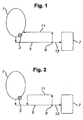
- Examples 2, 3 and 4 demonstrate the considerable flexibility of the present invention; with the flow separation in the same position, it is possible to operate over a large range of production rates and solids contents.
- Example 5 demonstrates a separation point further from the downstream vessel.
- Example 6 is a comparative Example, where the flow separation is less than halfway along the line.
- Comparative Example 6 can be compared directly with Examples 1 and 5, all three of which operate at the same production rate and solids content, with the same mass flowrates in the three lines, and with the same velocity in line 13. The only difference is the location of the flow separation, which means that in the case of Example 6 the potential for fouling or sedimentation to occur is much greater than in the other two cases. It should also be noted that the pressure drop along line 13 in Example 6 is undesirable because it is greater than 1 bar, whereas it is less than 1 bar in Examples 1 and 5.
Landscapes
- Chemical & Material Sciences (AREA)
- Health & Medical Sciences (AREA)
- Chemical Kinetics & Catalysis (AREA)
- Medicinal Chemistry (AREA)
- Polymers & Plastics (AREA)
- Organic Chemistry (AREA)
- Addition Polymer Or Copolymer, Post-Treatments, Or Chemical Modifications (AREA)
- Polymerisation Methods In General (AREA)
- Other Resins Obtained By Reactions Not Involving Carbon-To-Carbon Unsaturated Bonds (AREA)
- Surgical Instruments (AREA)
- Glass Compositions (AREA)
Claims (9)
- Verfahren zum Überführen eines polymerhaltigen Aufschlämmungsstroms über eine Überführungsleitung aus einem Polymerisationsreaktor in einen nachgeschalteten zweiten Polymerisationsreaktor, wobei der Aufschlämmungsstrom vor dem Eintritt in den zweiten Reaktor in zwei Ströme aufgetrennt wird, wobei der erste Strom stromaufwärts der Stromtrennung in den Kreislauf zurückgeführt und der zweite Strom in den zweiten Reaktor geleitet wird, wobei sich die Stromtrennung an einer Stelle befindet, die auf mehr als der Hälfte der Strecke entlang der Überführungsleitung zwischen dem Reaktor und dem zweiten Reaktor liegt.
- Verfahren gemäß Anspruch 1, wobei die Länge der Überführungsleitung zwischen dem ersten Reaktor und dem Ort der Stromtrennung wenigstens zweimal, vorzugsweise wenigstens viermal und besonders bevorzugt wenigstens zehnmal so groß ist wie die Länge zwischen dem nachgeschalteten zweiten Polymerisationsreaktor und dem Ort der Stromtrennung.
- Verfahren gemäß einem der vorstehenden Ansprüche, wobei die über eine beliebige Zeitdauer von 5 Minuten gemittelte Fließgeschwindigkeit stromaufwärts der Stromtrennung um weniger als 50%, vorzugsweise um weniger als 10%, über eine beliebige Zeitdauer von 4 Stunden, vorzugsweise über eine beliebige Zeitdauer von 12 Stunden, variiert.
- Verfahren gemäß einem der vorstehenden Ansprüche, wobei der über eine beliebige Zeitdauer von 5 Minuten gemittelte Druckabfall zwischen dem ersten Polymerisationsreaktor und der Stromtrennung um weniger als 30%, vorzugsweise um weniger als 15%, über eine beliebige Zeitdauer von 4 Stunden, vorzugsweise über eine beliebige Zeitdauer von 12 Stunden, variiert.
- Verfahren gemäß einem der vorstehenden Ansprüche, wobei ein Teil oder die Gesamtheit des ersten Stroms stromaufwärts der Stromtrennung zurück in die Überführungsleitung geführt wird, so dass eine Rückführungsschleife entsteht.
- Verfahren gemäß einem der Ansprüche 1 bis 4, wobei der erste Strom stromaufwärts der Stromtrennung zurück in den ersten Reaktor geführt wird.
- Verfahren gemäß einem der vorstehenden Ansprüche, wobei sich ein Feststoffkonzentrator an der Stelle der Stromtrennung in der Überführungsleitung befindet.
- Verfahren gemäß Anspruch 7, wobei der Feststoffkonzentrator ein Hydrozyklon ist und der Strom in den nachgeschalteten zweiten Reaktor den konzentrierten Unterlauf aus dem Hydrozyklon bildet und der stromaufwärts zurückgeführte Strom den verdünnungsmittelreichen Oberlauf aus dem Hydrozyklon bildet.
- Verfahren gemäß einem der vorstehenden Ansprüche, wobei ein oder mehrere Katalysatorzuströme und/oder ein Teil oder die Gesamtheit eines der Reagentienzuströme zu einem oder allen Reaktoren in die Überführungs- oder Rückführungsleitung eingeführt wird.
Priority Applications (1)
| Application Number | Priority Date | Filing Date | Title |
|---|---|---|---|
| EP08750254.8A EP2148892B2 (de) | 2007-05-18 | 2008-05-13 | Schlammphasenpolymerisation |
Applications Claiming Priority (3)
| Application Number | Priority Date | Filing Date | Title |
|---|---|---|---|
| EP07252047 | 2007-05-18 | ||
| PCT/EP2008/055810 WO2008141965A1 (en) | 2007-05-18 | 2008-05-13 | Slurry phase polymerisation |
| EP08750254.8A EP2148892B2 (de) | 2007-05-18 | 2008-05-13 | Schlammphasenpolymerisation |
Publications (3)
| Publication Number | Publication Date |
|---|---|
| EP2148892A1 EP2148892A1 (de) | 2010-02-03 |
| EP2148892B1 EP2148892B1 (de) | 2011-05-04 |
| EP2148892B2 true EP2148892B2 (de) | 2014-06-18 |
Family
ID=38537922
Family Applications (1)
| Application Number | Title | Priority Date | Filing Date |
|---|---|---|---|
| EP08750254.8A Active EP2148892B2 (de) | 2007-05-18 | 2008-05-13 | Schlammphasenpolymerisation |
Country Status (8)
| Country | Link |
|---|---|
| US (1) | US8148476B2 (de) |
| EP (1) | EP2148892B2 (de) |
| CN (1) | CN101679549B (de) |
| AT (1) | ATE508145T1 (de) |
| DE (1) | DE602008006714D1 (de) |
| ES (1) | ES2363832T5 (de) |
| RU (1) | RU2464281C2 (de) |
| WO (1) | WO2008141965A1 (de) |
Families Citing this family (4)
| Publication number | Priority date | Publication date | Assignee | Title |
|---|---|---|---|---|
| US10646845B2 (en) | 2013-07-03 | 2020-05-12 | Chevron Phillips Chemical Company Lp | Cooling between multiple polyolefin polymerization reactors |
| CN105829358B (zh) | 2013-12-23 | 2019-07-23 | 英尼奥斯欧洲股份公司 | 用于在聚合反应器系统中使烯烃聚合的方法 |
| JP2017500422A (ja) | 2013-12-23 | 2017-01-05 | イネオス ユーロープ アクチェンゲゼルシャフト | スカベンジャー注入 |
| CN115838450B (zh) * | 2021-09-18 | 2024-03-05 | 中国石油化工股份有限公司 | 一种用于淤浆聚乙烯的制备方法 |
Citations (12)
| Publication number | Priority date | Publication date | Assignee | Title |
|---|---|---|---|---|
| US3152872A (en) † | 1964-10-13 | figure | ||
| US5575979A (en) † | 1991-03-04 | 1996-11-19 | Phillips Petroleum Company | Process and apparatus for separating diluents from solid polymers utilizing a two-stage flash and a cyclone separator |
| WO1997031693A1 (en) † | 1996-02-29 | 1997-09-04 | Shell Internationale Research Maatschappij B.V. | Method for separating liquid from a slurry and process for the preparation of hydrocarbons |
| US6204344B1 (en) † | 1998-03-20 | 2001-03-20 | Exxon Chemical Patents, Inc. | Continuous slurry polymerization volatile removal |
| US20010018499A1 (en) † | 2000-01-18 | 2001-08-30 | Solvay Polyolefins Europe-Belgium (Societe Anonyme) | Process for manufacturing an olefin polymer composition |
| WO2005044871A1 (en) † | 2003-10-31 | 2005-05-19 | Chevron Phillips Chemical Company Lp | Separation of polymer particles and vaporized diluent in a cyclone |
| WO2005080446A1 (en) † | 2004-02-13 | 2005-09-01 | Total Petrochemicals Research Feluy | Transfer vessel between flash tank and purge column for recovering polymer solids |
| EP1611948A1 (de) † | 2004-07-01 | 2006-01-04 | Total Petrochemicals Research Feluy | Polymerisierungsreaktoren mit einem By-Pass |
| WO2006015807A1 (en) † | 2004-08-10 | 2006-02-16 | Ineos Manufacturing Belgium Nv | Polymerisation process |
| EP1803498A1 (de) † | 2005-12-30 | 2007-07-04 | Total Petrochemicals Research Feluy | Dynamische Druckregelung in doppelten Schlaufenreaktoren |
| EP1825909A1 (de) † | 2006-02-23 | 2007-08-29 | Total Petrochemicals Research Feluy | Verbindungsrohr zwischen zwei Schleifenreaktoren |
| EP1825911A1 (de) † | 2006-02-27 | 2007-08-29 | Total Petrochemicals Research Feluy | Verbindungsrohr zwischen zwei Schleifenreaktoren |
Family Cites Families (3)
| Publication number | Priority date | Publication date | Assignee | Title |
|---|---|---|---|---|
| BE1013236A3 (fr) * | 2000-01-18 | 2001-11-06 | Solvay | Procede de fabrication de polymeres d'olefines. |
| RU2209213C1 (ru) * | 2002-04-01 | 2003-07-27 | Открытое акционерное общество "Нижнекамскнефтехим" | Способ получения бутилкаучука |
| EP1415999B1 (de) * | 2002-10-30 | 2007-12-05 | Borealis Technology Oy | Verfahren und Vorrichtung zur Herstellung von Olefinpolymeren |
-
2008
- 2008-05-13 AT AT08750254T patent/ATE508145T1/de active
- 2008-05-13 ES ES08750254.8T patent/ES2363832T5/es active Active
- 2008-05-13 EP EP08750254.8A patent/EP2148892B2/de active Active
- 2008-05-13 DE DE602008006714T patent/DE602008006714D1/de active Active
- 2008-05-13 WO PCT/EP2008/055810 patent/WO2008141965A1/en not_active Ceased
- 2008-05-13 CN CN200880016450.2A patent/CN101679549B/zh active Active
- 2008-05-13 RU RU2009146855/04A patent/RU2464281C2/ru not_active IP Right Cessation
- 2008-05-13 US US12/451,362 patent/US8148476B2/en active Active
Patent Citations (12)
| Publication number | Priority date | Publication date | Assignee | Title |
|---|---|---|---|---|
| US3152872A (en) † | 1964-10-13 | figure | ||
| US5575979A (en) † | 1991-03-04 | 1996-11-19 | Phillips Petroleum Company | Process and apparatus for separating diluents from solid polymers utilizing a two-stage flash and a cyclone separator |
| WO1997031693A1 (en) † | 1996-02-29 | 1997-09-04 | Shell Internationale Research Maatschappij B.V. | Method for separating liquid from a slurry and process for the preparation of hydrocarbons |
| US6204344B1 (en) † | 1998-03-20 | 2001-03-20 | Exxon Chemical Patents, Inc. | Continuous slurry polymerization volatile removal |
| US20010018499A1 (en) † | 2000-01-18 | 2001-08-30 | Solvay Polyolefins Europe-Belgium (Societe Anonyme) | Process for manufacturing an olefin polymer composition |
| WO2005044871A1 (en) † | 2003-10-31 | 2005-05-19 | Chevron Phillips Chemical Company Lp | Separation of polymer particles and vaporized diluent in a cyclone |
| WO2005080446A1 (en) † | 2004-02-13 | 2005-09-01 | Total Petrochemicals Research Feluy | Transfer vessel between flash tank and purge column for recovering polymer solids |
| EP1611948A1 (de) † | 2004-07-01 | 2006-01-04 | Total Petrochemicals Research Feluy | Polymerisierungsreaktoren mit einem By-Pass |
| WO2006015807A1 (en) † | 2004-08-10 | 2006-02-16 | Ineos Manufacturing Belgium Nv | Polymerisation process |
| EP1803498A1 (de) † | 2005-12-30 | 2007-07-04 | Total Petrochemicals Research Feluy | Dynamische Druckregelung in doppelten Schlaufenreaktoren |
| EP1825909A1 (de) † | 2006-02-23 | 2007-08-29 | Total Petrochemicals Research Feluy | Verbindungsrohr zwischen zwei Schleifenreaktoren |
| EP1825911A1 (de) † | 2006-02-27 | 2007-08-29 | Total Petrochemicals Research Feluy | Verbindungsrohr zwischen zwei Schleifenreaktoren |
Also Published As
| Publication number | Publication date |
|---|---|
| DE602008006714D1 (de) | 2011-06-16 |
| RU2464281C2 (ru) | 2012-10-20 |
| ES2363832T3 (es) | 2011-08-17 |
| CN101679549B (zh) | 2014-11-19 |
| ES2363832T5 (es) | 2014-09-15 |
| CN101679549A (zh) | 2010-03-24 |
| US8148476B2 (en) | 2012-04-03 |
| RU2009146855A (ru) | 2011-06-27 |
| EP2148892B1 (de) | 2011-05-04 |
| WO2008141965A1 (en) | 2008-11-27 |
| ATE508145T1 (de) | 2011-05-15 |
| US20110224388A1 (en) | 2011-09-15 |
| EP2148892A1 (de) | 2010-02-03 |
Similar Documents
| Publication | Publication Date | Title |
|---|---|---|
| US7820116B2 (en) | Slurry phase polymerisation process | |
| US9567408B2 (en) | Slurry phase polymerisation process | |
| US8101692B2 (en) | Slurry phase polymerisation process | |
| EP2148892B2 (de) | Schlammphasenpolymerisation | |
| US8183334B2 (en) | Slurry phase polymerisation process | |
| EP1859858A1 (de) | Schleifenreaktor zur Polymerisation |
Legal Events
| Date | Code | Title | Description |
|---|---|---|---|
| PUAI | Public reference made under article 153(3) epc to a published international application that has entered the european phase |
Free format text: ORIGINAL CODE: 0009012 |
|
| 17P | Request for examination filed |
Effective date: 20091015 |
|
| AK | Designated contracting states |
Kind code of ref document: A1 Designated state(s): AT BE BG CH CY CZ DE DK EE ES FI FR GB GR HR HU IE IS IT LI LT LU LV MC MT NL NO PL PT RO SE SI SK TR |
|
| AX | Request for extension of the european patent |
Extension state: AL BA MK RS |
|
| 17Q | First examination report despatched |
Effective date: 20100401 |
|
| DAX | Request for extension of the european patent (deleted) | ||
| GRAP | Despatch of communication of intention to grant a patent |
Free format text: ORIGINAL CODE: EPIDOSNIGR1 |
|
| GRAS | Grant fee paid |
Free format text: ORIGINAL CODE: EPIDOSNIGR3 |
|
| GRAA | (expected) grant |
Free format text: ORIGINAL CODE: 0009210 |
|
| AK | Designated contracting states |
Kind code of ref document: B1 Designated state(s): AT BE BG CH CY CZ DE DK EE ES FI FR GB GR HR HU IE IS IT LI LT LU LV MC MT NL NO PL PT RO SE SI SK TR |
|
| REG | Reference to a national code |
Ref country code: GB Ref legal event code: FG4D |
|
| REG | Reference to a national code |
Ref country code: CH Ref legal event code: EP |
|
| REG | Reference to a national code |
Ref country code: IE Ref legal event code: FG4D |
|
| REF | Corresponds to: |
Ref document number: 602008006714 Country of ref document: DE Date of ref document: 20110616 Kind code of ref document: P |
|
| REG | Reference to a national code |
Ref country code: DE Ref legal event code: R096 Ref document number: 602008006714 Country of ref document: DE Effective date: 20110616 |
|
| REG | Reference to a national code |
Ref country code: ES Ref legal event code: FG2A Ref document number: 2363832 Country of ref document: ES Kind code of ref document: T3 Effective date: 20110817 |
|
| REG | Reference to a national code |
Ref country code: NL Ref legal event code: VDEP Effective date: 20110504 |
|
| PG25 | Lapsed in a contracting state [announced via postgrant information from national office to epo] |
Ref country code: NO Free format text: LAPSE BECAUSE OF FAILURE TO SUBMIT A TRANSLATION OF THE DESCRIPTION OR TO PAY THE FEE WITHIN THE PRESCRIBED TIME-LIMIT Effective date: 20110804 Ref country code: SE Free format text: LAPSE BECAUSE OF FAILURE TO SUBMIT A TRANSLATION OF THE DESCRIPTION OR TO PAY THE FEE WITHIN THE PRESCRIBED TIME-LIMIT Effective date: 20110504 Ref country code: PT Free format text: LAPSE BECAUSE OF FAILURE TO SUBMIT A TRANSLATION OF THE DESCRIPTION OR TO PAY THE FEE WITHIN THE PRESCRIBED TIME-LIMIT Effective date: 20110905 Ref country code: LT Free format text: LAPSE BECAUSE OF FAILURE TO SUBMIT A TRANSLATION OF THE DESCRIPTION OR TO PAY THE FEE WITHIN THE PRESCRIBED TIME-LIMIT Effective date: 20110504 |
|
| PG25 | Lapsed in a contracting state [announced via postgrant information from national office to epo] |
Ref country code: LV Free format text: LAPSE BECAUSE OF FAILURE TO SUBMIT A TRANSLATION OF THE DESCRIPTION OR TO PAY THE FEE WITHIN THE PRESCRIBED TIME-LIMIT Effective date: 20110504 Ref country code: CY Free format text: LAPSE BECAUSE OF FAILURE TO SUBMIT A TRANSLATION OF THE DESCRIPTION OR TO PAY THE FEE WITHIN THE PRESCRIBED TIME-LIMIT Effective date: 20110504 Ref country code: FI Free format text: LAPSE BECAUSE OF FAILURE TO SUBMIT A TRANSLATION OF THE DESCRIPTION OR TO PAY THE FEE WITHIN THE PRESCRIBED TIME-LIMIT Effective date: 20110504 Ref country code: GR Free format text: LAPSE BECAUSE OF FAILURE TO SUBMIT A TRANSLATION OF THE DESCRIPTION OR TO PAY THE FEE WITHIN THE PRESCRIBED TIME-LIMIT Effective date: 20110805 Ref country code: SI Free format text: LAPSE BECAUSE OF FAILURE TO SUBMIT A TRANSLATION OF THE DESCRIPTION OR TO PAY THE FEE WITHIN THE PRESCRIBED TIME-LIMIT Effective date: 20110504 Ref country code: IS Free format text: LAPSE BECAUSE OF FAILURE TO SUBMIT A TRANSLATION OF THE DESCRIPTION OR TO PAY THE FEE WITHIN THE PRESCRIBED TIME-LIMIT Effective date: 20110904 |
|
| PG25 | Lapsed in a contracting state [announced via postgrant information from national office to epo] |
Ref country code: MT Free format text: LAPSE BECAUSE OF FAILURE TO SUBMIT A TRANSLATION OF THE DESCRIPTION OR TO PAY THE FEE WITHIN THE PRESCRIBED TIME-LIMIT Effective date: 20110504 Ref country code: NL Free format text: LAPSE BECAUSE OF FAILURE TO SUBMIT A TRANSLATION OF THE DESCRIPTION OR TO PAY THE FEE WITHIN THE PRESCRIBED TIME-LIMIT Effective date: 20110504 Ref country code: MC Free format text: LAPSE BECAUSE OF NON-PAYMENT OF DUE FEES Effective date: 20110531 |
|
| PG25 | Lapsed in a contracting state [announced via postgrant information from national office to epo] |
Ref country code: CZ Free format text: LAPSE BECAUSE OF FAILURE TO SUBMIT A TRANSLATION OF THE DESCRIPTION OR TO PAY THE FEE WITHIN THE PRESCRIBED TIME-LIMIT Effective date: 20110504 Ref country code: EE Free format text: LAPSE BECAUSE OF FAILURE TO SUBMIT A TRANSLATION OF THE DESCRIPTION OR TO PAY THE FEE WITHIN THE PRESCRIBED TIME-LIMIT Effective date: 20110504 |
|
| PLBI | Opposition filed |
Free format text: ORIGINAL CODE: 0009260 |
|
| PG25 | Lapsed in a contracting state [announced via postgrant information from national office to epo] |
Ref country code: DK Free format text: LAPSE BECAUSE OF FAILURE TO SUBMIT A TRANSLATION OF THE DESCRIPTION OR TO PAY THE FEE WITHIN THE PRESCRIBED TIME-LIMIT Effective date: 20110504 Ref country code: PL Free format text: LAPSE BECAUSE OF FAILURE TO SUBMIT A TRANSLATION OF THE DESCRIPTION OR TO PAY THE FEE WITHIN THE PRESCRIBED TIME-LIMIT Effective date: 20110504 Ref country code: SK Free format text: LAPSE BECAUSE OF FAILURE TO SUBMIT A TRANSLATION OF THE DESCRIPTION OR TO PAY THE FEE WITHIN THE PRESCRIBED TIME-LIMIT Effective date: 20110504 Ref country code: RO Free format text: LAPSE BECAUSE OF FAILURE TO SUBMIT A TRANSLATION OF THE DESCRIPTION OR TO PAY THE FEE WITHIN THE PRESCRIBED TIME-LIMIT Effective date: 20110504 |
|
| REG | Reference to a national code |
Ref country code: IE Ref legal event code: MM4A |
|
| 26 | Opposition filed |
Opponent name: TOTAL PETROCHEMICALS RESEARCH FELUY S.A. INDUSTRIA Effective date: 20120203 |
|
| REG | Reference to a national code |
Ref country code: FR Ref legal event code: ST Effective date: 20120217 |
|
| PLAX | Notice of opposition and request to file observation + time limit sent |
Free format text: ORIGINAL CODE: EPIDOSNOBS2 |
|
| PG25 | Lapsed in a contracting state [announced via postgrant information from national office to epo] |
Ref country code: FR Free format text: LAPSE BECAUSE OF NON-PAYMENT OF DUE FEES Effective date: 20110704 Ref country code: IE Free format text: LAPSE BECAUSE OF NON-PAYMENT OF DUE FEES Effective date: 20110513 |
|
| REG | Reference to a national code |
Ref country code: DE Ref legal event code: R026 Ref document number: 602008006714 Country of ref document: DE Effective date: 20120203 |
|
| PG25 | Lapsed in a contracting state [announced via postgrant information from national office to epo] |
Ref country code: HR Free format text: LAPSE BECAUSE OF FAILURE TO SUBMIT A TRANSLATION OF THE DESCRIPTION OR TO PAY THE FEE WITHIN THE PRESCRIBED TIME-LIMIT Effective date: 20111123 |
|
| PLAF | Information modified related to communication of a notice of opposition and request to file observations + time limit |
Free format text: ORIGINAL CODE: EPIDOSCOBS2 |
|
| PLBB | Reply of patent proprietor to notice(s) of opposition received |
Free format text: ORIGINAL CODE: EPIDOSNOBS3 |
|
| REG | Reference to a national code |
Ref country code: CH Ref legal event code: PL |
|
| GBPC | Gb: european patent ceased through non-payment of renewal fee |
Effective date: 20120513 |
|
| PG25 | Lapsed in a contracting state [announced via postgrant information from national office to epo] |
Ref country code: CH Free format text: LAPSE BECAUSE OF NON-PAYMENT OF DUE FEES Effective date: 20120531 Ref country code: LI Free format text: LAPSE BECAUSE OF NON-PAYMENT OF DUE FEES Effective date: 20120531 |
|
| PG25 | Lapsed in a contracting state [announced via postgrant information from national office to epo] |
Ref country code: GB Free format text: LAPSE BECAUSE OF NON-PAYMENT OF DUE FEES Effective date: 20120513 |
|
| PG25 | Lapsed in a contracting state [announced via postgrant information from national office to epo] |
Ref country code: LU Free format text: LAPSE BECAUSE OF NON-PAYMENT OF DUE FEES Effective date: 20110513 |
|
| PG25 | Lapsed in a contracting state [announced via postgrant information from national office to epo] |
Ref country code: BG Free format text: LAPSE BECAUSE OF FAILURE TO SUBMIT A TRANSLATION OF THE DESCRIPTION OR TO PAY THE FEE WITHIN THE PRESCRIBED TIME-LIMIT Effective date: 20110804 |
|
| PLAB | Opposition data, opponent's data or that of the opponent's representative modified |
Free format text: ORIGINAL CODE: 0009299OPPO |
|
| R26 | Opposition filed (corrected) |
Opponent name: TOTAL RESEARCH & TECHNOLOGY FELUY Effective date: 20120203 |
|
| PG25 | Lapsed in a contracting state [announced via postgrant information from national office to epo] |
Ref country code: TR Free format text: LAPSE BECAUSE OF FAILURE TO SUBMIT A TRANSLATION OF THE DESCRIPTION OR TO PAY THE FEE WITHIN THE PRESCRIBED TIME-LIMIT Effective date: 20110504 |
|
| PG25 | Lapsed in a contracting state [announced via postgrant information from national office to epo] |
Ref country code: HU Free format text: LAPSE BECAUSE OF FAILURE TO SUBMIT A TRANSLATION OF THE DESCRIPTION OR TO PAY THE FEE WITHIN THE PRESCRIBED TIME-LIMIT Effective date: 20110504 |
|
| PG25 | Lapsed in a contracting state [announced via postgrant information from national office to epo] |
Ref country code: HR Free format text: LAPSE BECAUSE OF FAILURE TO SUBMIT A TRANSLATION OF THE DESCRIPTION OR TO PAY THE FEE WITHIN THE PRESCRIBED TIME-LIMIT Effective date: 20110504 |
|
| PUAH | Patent maintained in amended form |
Free format text: ORIGINAL CODE: 0009272 |
|
| STAA | Information on the status of an ep patent application or granted ep patent |
Free format text: STATUS: PATENT MAINTAINED AS AMENDED |
|
| 27A | Patent maintained in amended form |
Effective date: 20140618 |
|
| AK | Designated contracting states |
Kind code of ref document: B2 Designated state(s): AT BE BG CH CY CZ DE DK EE ES FI FR GB GR HR HU IE IS IT LI LT LU LV MC MT NL NO PL PT RO SE SI SK TR |
|
| REG | Reference to a national code |
Ref country code: DE Ref legal event code: R102 Ref document number: 602008006714 Country of ref document: DE Effective date: 20140618 |
|
| REG | Reference to a national code |
Ref country code: ES Ref legal event code: DC2A Ref document number: 2363832 Country of ref document: ES Kind code of ref document: T5 Effective date: 20140915 |
|
| PG25 | Lapsed in a contracting state [announced via postgrant information from national office to epo] |
Ref country code: LV Free format text: LAPSE BECAUSE OF FAILURE TO SUBMIT A TRANSLATION OF THE DESCRIPTION OR TO PAY THE FEE WITHIN THE PRESCRIBED TIME-LIMIT Effective date: 20140618 |
|
| PGFP | Annual fee paid to national office [announced via postgrant information from national office to epo] |
Ref country code: AT Payment date: 20170420 Year of fee payment: 10 Ref country code: IT Payment date: 20170524 Year of fee payment: 10 |
|
| REG | Reference to a national code |
Ref country code: AT Ref legal event code: MM01 Ref document number: 508145 Country of ref document: AT Kind code of ref document: T Effective date: 20180513 |
|
| PG25 | Lapsed in a contracting state [announced via postgrant information from national office to epo] |
Ref country code: AT Free format text: LAPSE BECAUSE OF NON-PAYMENT OF DUE FEES Effective date: 20180513 |
|
| PG25 | Lapsed in a contracting state [announced via postgrant information from national office to epo] |
Ref country code: IT Free format text: LAPSE BECAUSE OF NON-PAYMENT OF DUE FEES Effective date: 20180513 |
|
| P01 | Opt-out of the competence of the unified patent court (upc) registered |
Effective date: 20230518 |
|
| PGFP | Annual fee paid to national office [announced via postgrant information from national office to epo] |
Ref country code: DE Payment date: 20250529 Year of fee payment: 18 |
|
| PGFP | Annual fee paid to national office [announced via postgrant information from national office to epo] |
Ref country code: ES Payment date: 20250602 Year of fee payment: 18 |
|
| PGFP | Annual fee paid to national office [announced via postgrant information from national office to epo] |
Ref country code: BE Payment date: 20250527 Year of fee payment: 18 |