EP2148282A1 - Aktualisierung einer Datenbank - Google Patents
Aktualisierung einer Datenbank Download PDFInfo
- Publication number
- EP2148282A1 EP2148282A1 EP09153225A EP09153225A EP2148282A1 EP 2148282 A1 EP2148282 A1 EP 2148282A1 EP 09153225 A EP09153225 A EP 09153225A EP 09153225 A EP09153225 A EP 09153225A EP 2148282 A1 EP2148282 A1 EP 2148282A1
- Authority
- EP
- European Patent Office
- Prior art keywords
- record
- exclusive copy
- exclusive
- database
- copy
- Prior art date
- Legal status (The legal status is an assumption and is not a legal conclusion. Google has not performed a legal analysis and makes no representation as to the accuracy of the status listed.)
- Withdrawn
Links
Images


Classifications
-
- G—PHYSICS
- G06—COMPUTING OR CALCULATING; COUNTING
- G06F—ELECTRIC DIGITAL DATA PROCESSING
- G06F16/00—Information retrieval; Database structures therefor; File system structures therefor
- G06F16/20—Information retrieval; Database structures therefor; File system structures therefor of structured data, e.g. relational data
- G06F16/23—Updating
- G06F16/2308—Concurrency control
- G06F16/2336—Pessimistic concurrency control approaches, e.g. locking or multiple versions without time stamps
- G06F16/2343—Locking methods, e.g. distributed locking or locking implementation details
Definitions
- the specification relates generally to databases, and specifically to updating a database.
- Concurrency control in databases systems has been accomplished by the use of locking mechanisms. This prevents conflicting concurrent transactions from causing database corruption or retrieving invalid data.
- a number of methods are used to implement the locking mechanism, including two-phase locking and multiple granularity locking, each with different blocking characteristics. However, these methods all involve blocking a transaction when a potentially conflicting transaction has locked access to the database until such time as the new transaction can obtain locked access to the database.
- uncontrolled concurrent access to the database can be allowed with an associated risk of conflicting transactions causing database corruption.
- This risk can be considered acceptable to provide high availability to feature functionality, with audit mechanisms being used to detect and report corruption which can be resolved automatically or manually.
- a combination of locking mechanism and non-exclusive access can also be utilised: a locking mechanism is applied when transactions are initiated from Embedded System Management applications (ESM) or other external applications.
- ESM Embedded System Management applications
- call processing feature functionality e.g. a user changing a forwarding number setting
- uncontrolled concurrent access to the database regardless of whether the database is locked for system configuration purposes.
- two distinct methods are used to access the database.
- ESM and other external applications (“non-high accessibility entities) access the database using view layer transactions (involving the database locking mechanism for ensuring database integrity).
- Call processing feature functionality uses table layer access to bypasses the view layer and directly update database table records.
- rollback support increases the risk of database corruption when introduced into a database that allows concurrent access to the database. This is because two potentially conflicting transactions can overlap without causing corruption as long as the combination of the two transactions is applied to the database at the end of the transactions. However, if one of the potentially conflicting transactions performs a rollback it modifies the database to a previous condition that the second transaction is not aware of.
- a first transaction changes field two of a table entry and concurrently a second transaction changes field three of the same table entry. Both these changes can be applied without conflict, however, the change to field three is overwritten with its original value if the first transaction invokes rollback after the second transaction completed. If the change to field three comprises a forwarding number, then the forwarding number will be lost, unbeknownst to the entity which initiated the change.
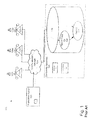
- Figure 1 depicts a system 100 for updating a database 110, according to the prior art.
- the database 110 stores a record 112, and is in communication with an application server 120 and at least one communications device 123-1, 123-2... 123-n (generically a communications device 123, and collectively communications devices 123) via a communications network 124.
- Each communications device 123-1, 123-2... 123-n can be respectively associated with a user 125-1, 125-2,...125-n (generically a user 125, and collectively users 125).
- at least one of the users 125 can be an administrator.
- the communications devices 123 comprise any desired combination of wired and/or wireless communications device, telephony device, computing device, laptop computer, personal computer, cell phone, PDA, and the like, enabled to communicate with each other and other communications devices 123, as well as the database 110, via the communications network 124.
- the communications network 124 comprises any desired combination of wired and/or wireless communications networks for enabling communication between the communications device 123, the database 110, and/or other communications devices.
- the communications network 124 further enables communication between the server 120 and the database 110.
- the communications network 124 can include, but is not limited to, analogue networks (e.g. the PSTN), packet based networks (e.g. the internet), wireless networks (e.g. cell-based networks, WiFi, WiMax), LANs, WANs and WLANs.
- the system 100 can comprise a communications system, with the applications server 120 comprising at least one application 121 for assisting communications to and from the communications devices 123, and the record 112 comprising settings (i.e. data) associated with call processing/feature functionality available at a communications device 123.
- each communications device 123 corresponds to a separate record 112, in a one-to-one relationship; however the number of records 112 is not to be considered particularly limiting.
- the system 100 comprises an operational layer, which is enabled as an interface between the communications device 123 (and/or the application server 120) and the record 112 (and/or any copies of the record 112, as described below) such that a view of the record 112 is provided to the communications device 123 (and/or the application server 120) which can comprise data from the record 112, and any other records stored at the database 110 that is relevant to the view.
- the manipulation of data occurs within the layer (i.e. within the view), and the record 112 is updated accordingly.
- the layer can comprise a pointer to the record 112 and/or a pointer(s) to specific data within the record 112, and/or pointer(s) to specific data within the any other records stored at the database 110 that is relevant to the view.
- Table 1 comprises a non-limiting example of the record 112: Table 1: A non-limiting embodiment of the record 112 Communications Device 123 Identifier 613-555-1212 (123-1) Call Forwarding Off Call Forward Number 613-555-1313 SpeedDial 1 613-555-1414 SpeedDial 1 613-555-1515
- the data stored in the record 112 comprises a plurality of fields arranged in rows and columns, with each row corresponding to a different setting for the communications device 123 identified in the first row, the first field in the first column identifying the name of a setting and the second field in the second column comprising the value of the setting.
- the format of the record 112 is not particularly limiting and other suitable formats are within the scope of present embodiments.
- the first row comprises an identifier of the communications device 123-1, in this instance the phone number of the communications device 123-1 (613-555-1212).
- the second row comprises an on/off setting for call forwarding ("off") and the third row comprises the number that calls are to be forwarded to if the call forwarding setting is "on".
- the remaining rows comprise settings for speed dial buttons at the communications device 123-1 (i.e. numbers that are to be called should a corresponding button at the communications device 123-1 be actuated).
- Other settings can occur to a person of skill in the art and are within the scope of present embodiments.
- the record 112 does not directly store numbers such as the call forward number or the speed dial numbers, but rather references to system resources, such as a digit string pool (i.e. a pool of numbers that can be allocated).
- the application 121 at the applications server 120 can be enabled to automatically change these settings for at least one of the communications devices 123 according to given criteria.
- the application 121 can be enabled to change call forwarding settings according to criteria based on time of day (e.g. forwarding calls to voicemail, an answering service, a call centre, or a given number outside of business hours) and/or presence information (e.g. forwarding calls to voicemail, an answering service, a call centre, or a given number based on the presence of a user 125).
- time of day e.g. forwarding calls to voicemail, an answering service, a call centre, or a given number outside of business hours
- presence information e.g. forwarding calls to voicemail, an answering service, a call centre, or a given number based on the presence of a user 125.
- an exclusive copy 150 of the record 112 is created in the database 110.
- Proposed changes to the record 112 e.g. a change in the forwarding number
- Table 2 comprises a non-limiting example of the exclusive copy 150 of the record 112 when the call forwarding number is to be changed to 613-555-1234:
- the field comprising the call forwarding on/off setting is to be changed to "on", and the field comprising the call forwarding number is to be changed to 613-555-1234, which can be the number of voicemail or an after hours answering service. Further, the field comprising the first speed dial number is to be changed to 204-555-8765.
- the exclusive copy 150 will also store references to the system resource, and furthermore when changes occur, the change will comprise updating a reference.
- the contents of the record 112 are replaced with the contents of the exclusive copy 150.
- the exclusive copy 150 becomes the record 112, and Table 2 replaces Table 1, while in embodiments that include the layer, the relevant data is updated via pointers. While doing so, the system 100 is generally locked from making a potentially conflicting second exclusive copy (e.g. by another application and/or another applications server) to prevent changes until the proposed changes in the exclusive copy 150 are stored in the record 112.
- the applications server 120 is representative of a first class of entities which do not require high availability access to the database 110.
- the process is flawed in situations where the system 100 comprises a second class of entities which do require concurrent high accessibility access to the database 110, such as the communications devices 123.
- the communications devices 123 are generally enabled to make changes to the record 112, for example via any suitable combination of buttons, applications, GUIs (graphic user interfaces), menu items, etc. available at the communications devices 123.
- Such changes can be generally initiated via the receipt of input data at a communications device 123 (e.g. via user actuation of a button, and/or meeting given criteria such as time of day and/or presence).
- changes to the record 112 that occur via the communications devices 123 should occur with minimal latency as the users 125 are generally initiating such changes via the communications devices 123.
- Such latency is achieved by enabling the communications devices 123 to make changes directly to the record 112.
- changes to the record 112 can be lost if made after the exclusive copy is created and before the exclusive copy 150 is saved as the contents of the record 112 are generally replaced by the contents of the exclusive copy 150.
- a communications device 123 can store a call forward number in the record 112 (e.g. according to input received from a user 125), after the exclusive copy 150 is created, but before the contents of the exclusive copy 150 replaces the contents of the record 112. For example, after the exclusive copy 150 as presented in Table 2 is created, the communications device 123 can change the call forward number to 613-555-5678 (e.g. a cell phone number of a user 125). However, when the contents of the exclusive copy 150 replaces the contents of the record 112, the call forward number that had been stored in the record 112 by the communications device 123 is in turn replaced by whatever call forward number, if any, is stored in the exclusive copy 150 (e.g. an old call forward number, a new call forward number as determined by the applications server 120). The user 125 is oblivious to this process, believing that the call forward number stored via the communications device 123 is in effect. Thus important calls can be forwarded to an incorrect number.
- 613-555-5678 e.g. a
- the record 112 stores references to a system resource, such as a digit string pool
- a reference is overwritten, then the underlying resource is lost: the resource is still sitting in the system unlinked. Hence, the database 110 becomes corrupt.
- rollback of the changes made to the exclusive copy 150 can occur after the contents of the record 112 is replaced by the contents of the exclusive copy 150 and after changes to the record 112 are subsequently made by a communications device 123. In this case, rollback will again result in the loss of changes to the record 112 by the communications device 123.
- the database 110 is an element of a computing apparatus 160, the computing apparatus 160 comprising a communications interface 162 enabled to communicate with the database 110, and/or the applications server 120 and/or the communications devices 123, via any desired wireless or wired protocol.
- the computing apparatus 160 further comprises a processing unit 164 enabled for creating the exclusive copy 150 and updating the database 110.
- the computing apparatus 160 can be a separate element from the database 110.
- FIG. 2 depicts a system 200 for concurrently updating the database 110, according to a non-limiting embodiment.
- the system 200 is substantially similar to the system 100, with like elements depicted with like numbers.
- the system 200 comprises a computing apparatus 260 similar to the computing apparatus 160, which comprises a communications interface 262, similar to the communications interface 162, and a processing unit 264, similar to the processing unit 164.
- a communications device 123 attempts to make a change to the record 112
- a non-exclusive copy 250 of the record 112 is created for non-exclusive use by the communications devices 123, such that each communications device 123 can post changes to the non-exclusive copy 250.
- the contents of the non-exclusive copy 250 can then replace the contents of the record 112 in order to update the database 110.
- Such an update process can occur periodically and/or triggered when pre-configured criteria are met and/or when a change occurs to the non-exclusive copy 250.
- Table 3 comprises a non-limiting example of the non-exclusive copy 250 of the record 112 when the call forwarding number is to be changed to 613-555-5678 by the communications device 123:
- Table 3 A non-limiting embodiment of the non-exclusive copy 250.
- Communications Device 123 Identifier 613-555-1212 (123-1) Call Forwarding On Call Forward Number 613-555-5678 SpeedDial 1 613-555-1414 SpeedDial 1 613-555-1515
- the field comprising the call forwarding on/off setting is to be turned "on", and the field comprising the call forwarding number is to be changed to 613-555-5678, which can be, for example, a cell phone number of a user 125.
- the non-exclusive copy 250 will also store references to the system resource, and furthermore when changes occur, the change will comprise updating a reference.
- a database update comprises a sequence of operations similar to the following: Start Session; Read Record(s); Start Transaction on Record(s); Modify Record(s); Commit Transaction; End Session.
- the start transaction operation only succeeds if allowed by the database locking mechanism (and interdependent records are locked for access).
- a test can be made for any existing non-exclusive copies (similar to the non-exclusive copy 250) during the start transaction and changes from any existing non-exclusive copies are saved to the record 112 prior to locking interdependent records for access.
- locking occurs during the start transaction before the exclusive copy 150 is created, and any changes that have occurred in existing non-exclusive copies 250 are saved to the record 112 to avoid conflict.
- Changes during the transaction are applied to the exclusive copy 150 and not applied to the database until the Commit Transaction operation is received. If there is a non-exclusive copy 250 when the Commit Transaction operation is processed (i.e. the non-exclusive copy 250 was created after the creation of the exclusive copy 150), conflict detection is applied between the exclusive copy 150 and the non-exclusive copy 250 to determine if changes to the non-exclusive copy 250 conflict with changes to the exclusive copy 150. If so, a conflict resolution mechanism can be implemented to resolve the conflict. Otherwise, the exclusive copy 150 is discarded and the Commit Transaction operation fails.
- the conflict resolution mechanism modifies the contents of record 112 to reflect the combined changes of the exclusive copy 150 and the non-exclusive copy 250.
- a log of the conflict/and or changes can be generated.
- the log can be transmitted to at least one of the communications devices 123, for example a communications device 123 associated with an administrator and/or the communications device 123 which originated the conflicting change to the non-exclusive copy 250.
- rollback occurs only via the exclusive copy 150. In other words, if changes to the exclusive copy 150 are rolled back, then the exclusive copy 150 is discarded. If the changes to the exclusive copy 150 are committed, then the contents of the records 112 are replaced by the contents of the exclusive copy 150, in conjunction with the conflict resolution mechanism.
- Figure 3 depicts a method 300 for concurrently updating a database.
- the method 300 is performed using the system 200.
- the following discussion of the method 300 will lead to a further understanding of the system 200 and its various components.
- the system 200 and/or the method 300 can be varied, and need not work exactly as discussed herein in conjunction with each other, and that such variations are within the scope of present embodiments.
- a transaction at the database 110 is initiated by a first entity of a first class.
- the first entity comprises the applications server 120, however it is understood that in other embodiments, the system 200 can comprise other entities of the first class.
- Entities of the first class are generally entities that are satisfied with low availability to the database 110, and relatively high latency for changes to the database 110 (e.g. latency above a given threshold) initiated by the entities of the first class is sufficient for the operation of these entities.
- Such a transaction can be initiated by the applications server 120 transmitting a record update command 275 to the database 110 via the communications network 124, the record update command 275 comprising the data for updating the record 112 (e.g. Table 1) and hence the database 110.
- the record update command 275 comprises a sequence of database operations that can include: Start Transaction; Modify Record(s); Commit Transaction; End Transaction.
- the sequence of database operations can comprise a plurality of Modify Record(s) commands that can include add commands, delete commands, read commands, and the like. These operations can be done individually or in combination (e.g. a single Modify Transaction Record(s) can be used in place of Start Transaction; Modify Record(s); Commit Transaction etc.). Any suitable variation is within the scope of present embodiments.
- an exclusive copy of the record is created, if not created previously.
- status indications are tested for each existing non-exclusive copy that can be involved/affected in the transaction, according to the database locking mechanism. If any involved/affected non-exclusive copy is being modified/reserved for modification, a potential conflict is detected and the transaction start request is denied (failed to lock the database). Otherwise, the database locking mechanism is applied and any non-exclusive copy involved/affected for which changes are complete is applied to the database (subject to conflict detection handling described below) before the transaction is allowed to start in step 344, described in more detail below.
- the exclusive copy 150 of the record 112 is created (e.g. the exclusive copy 150 initially comprising the contents of Table 1), the exclusive copy 150 for exclusive use by the first entity of the first class, such as the applications server 120.
- the exclusive copy 150 is generally protected by the same table locks on interdependent records that are established during the Start Transaction operation.
- the database locking mechanism prevents more than one exclusive copy of the record 112 from being created, but not the creation of the non-exclusive record 250.
- first proposed changes to the record 112 from the first entity are posted to the exclusive copy 150 (e.g. the exclusive copy 150 now comprising the contents of Table 2), as though accessing the record 112 in the database 110 directly (which in some embodiments is performed via the layer).
- the data within the record update command 275 can be posted to the exclusive copy 150.
- the posting of the first proposed changes can be time stamped such that a time that the change occurred can be later determined.
- step 325 it is determined whether the changes to the exclusive copy 150 are to be committed (i.e. stored in the record 112) with a Commit Transaction operation request or rolled back (i.e. abandoned) with a Cancel Transaction operation request.
- roll-back can occur automatically via a timeout process. For example, if a commitment command is not received during a given time period, roll-back occurs automatically.
- step 330 the exclusive copy 150 is discarded and the record 112 is un-locked if the record 112 has been previously locked.
- the exclusive copy 150 is to be committed, at step 340 it is determined if the non-exclusive copy 250 exists. For example, before during or after the creation of the exclusive copy 150 at step 315, a parallel process can occur to create the non-exclusive copy 250. For a non-limiting embodiment of creating the non-exclusive copy 250, attention is briefly directed to steps 341-344.
- a transaction can be initiated by a second entity of a second class.
- the system 200 comprises a plurality of second entities of a second class, and specifically the communications devices 123.
- the system 200 can comprise other entities of the second class.
- Entities of the second class are generally entities that prefer high availability to the database 110, and relatively low latency (e.g. latency below a given threshold) for changes to the database 110 initiated by the entities of the second class is preferred for the operation of these entities.
- Such a transaction can be initiated by a communications device 123 transmitting a record update command 276 to the database 110 via the communications network 124, the record update command 276 comprising the data for updating the record 112 and hence the database 110.
- each of the communications devices 123-1, 123-2,...123-n can transmit a record update command 276-1, 276-2,...276-n, respectively (generically a record update command 276 and collectively record update commands 276).
- the record update command 276 directly modifies the content of the database 110 by requesting and obtaining a pointer to the record 112.
- the non-exclusive copy 250 of the record 112 is created (e.g. the non-exclusive copy 250 initially comprising the contents of Table 1) by copying the record 112, the non-exclusive copy 250 for exclusive use by the plurality of second entities of the second class, such as the communications devices 123.
- the database 110 is enabled to distinguish between whether to create an exclusive copy or a non-exclusive copy of the record 112 based on whether an external device (e.g. a communications device 123 and/or the applications server 120) that is attempting to access the database 110 is a low availability device or a high availability device, respectively.
- the database 110 is enabled to distinguish between high availability and low availability devices based on the mode of operation of how the external device is attempting to access the database 110.
- a low availability device such as the application server 120, attempts to access the database 110 via a start transaction command, as described above.
- a high availability device attempts to access the database 110 by requesting a direct pointer to the record 112 (i.e. bypassing the start transaction operations).
- the non-exclusive copy 250 can be made available to the communications devices 123 by providing a pointer to the non-exclusive copy 250 for use on behalf of the communications devices 123.
- Other processes for making the non-exclusive copy 250 available to the communications devices 123 will occur to a person of skill in the art and are within the scope of present embodiments.
- creation of the non-exclusive copy 250 may not be accompanied by a lock on the record 112.
- second proposed changes to the record 112 from the second entities are posted to the non-exclusive copy 250 (e.g. the non-exclusive copy 250 now comprising the contents of Table 3), as though accessing the record 112 in the database 110 directly.
- the data within the record update commands 276 can be posted to the non-exclusive copy 250.
- the posting of the second proposed changes can be time stamped such that a time that the change occurred can be later determined.
- call processing/feature functionality of the communications device 123 and/or the system 200 updates status indications associated with the non-exclusive copy 250 appropriately and/or with the record 112 in the database. These status indications are used to identify:
- Step 344 the second proposed changes are posted to the record 112 (e.g. contents of the non-exclusive copy 250 can then replace the contents of the record 112 at step 344: i.e., the contents of Table 1 are replaced by the contents of Table 3) unless a conflict resolution process occurs, as described below.
- Step 344 can occur periodically and/or upon receipt of a trigger (e.g. from one or more communication devices 123) and/or whenever any change occurs.
- a determination that the non-exclusive copy 250 exists is indicative that at least one entity of the second class is attempting to make changes to the record 112 at the same time that the first entity is attempting to make changes to the record 112 and provides an indication that a conflict can exist between the two processes.
- Such a determination can occur by querying the database 110 for the existence of copies of the record 112 associated with the exclusive copy 150 and/or by testing the status indications associated with the non-exclusive copy 250 of the record 112. If the non-exclusive copy 250 does not exist (i.e. there is inherently no conflict), then at step 345 the first proposed changes are posted to the record 112 (e.g. the contents of the record 112 can be replaced by the contents of the exclusive copy 150: i.e. the contents of Table 1 are replaced by the contents of Table 2). The exclusive copy 150 can then be discarded. Further, the record 112 is un-locked if the record 112 had been previously locked.
- step 350 it is determined if the exclusive copy 150 conflicts with the non-exclusive copy 250.
- the exclusive copy 150 and the non-exclusive copy 250 can be processed (e.g. by the processing unit 164), to determine differences between them. If the differences exist, there is potential for conflict. In general, a conflict occurs if the entities associated with the exclusive record 150 and the non-exclusive record 250, are each attempting to change a given field in the record 112 (for example the call forwarding number).
- only fields that are associated with changes to each of the exclusive copy 150 and the non-exclusive copy 250 are compared to determine differences. For example, comparing Tables 1, 2 and 3, in one embodiment a field for storing a first speed dial number can be different in the exclusive copy 150 and the non-exclusive copy 250. However, the first speed dial number in the non-exclusive copy 250 can be the same as the first speed dial number in the record 112, indicating that the communications device 123 was not attempting to change a call forwarding number. In this instance, only the applications server 120 is attempting to change the first speed dial number and no conflict can exist. Alternatively, such a difference can be viewed as a conflict, but is associated with criteria for resolving the conflict (i.e. a field changed in one copy but not in another copy is to be changed in the record 112).
- the exclusive copy 150 comprises the contents of Table 2 (i.e. the applications server 120 is attempting to change the call forwarding number to 613-555-1234) and the non-exclusive copy 250 comprises the contents of Table 3 (i.e. the communications device 123 is attempting to change the call forwarding number to 613-555-5678), then a conflict exists.
- conflicts can also be determined by comparing the difference to pre-configured given criteria.
- the first proposed changes are posted to the record 112 (e.g. the contents of the record 112 can be replaced by the contents of the exclusive copy 150 at step 345; alternatively, the contents of the record 112 can be replaced by the contents of the non-exclusive copy 250 as each of the applications server 120 and the communications device 123 is attempting to make the same change to the record 112).
- the system 200 can be provisioned with pre-determined criteria for resolving conflicts.
- One pre-determined criteria can be to always defer to changes in the non-exclusive copy 250 (i.e. changes initiated via the communications device 123 are always preferred over changes initiated via the administration server 120).
- Another pre-determined criterion can be to always defer to the change which occurred last, for example in embodiments where the changes are time stamped.
- such pre-determined criteria can be specific to a given field/feature.
- such pre-determined criteria can be time sensitive.
- such pre-determined criteria can be overridden by an administrator of the system 200: for example, the users 125 can be employees of an organization, and the organization can prefer to have final say over call control features in the system 200.
- the conflict is resolved (i.e. criteria exist for resolving the conflict(s))
- the conflict is resolved, the conflict resulting in third proposed changes which can comprise a blend of the first data and the second data.
- the third data can comprise the call forward number of the communications device 123 and the speed dial number of the applications server 120. The call forward number of the applications server 120 is discarded.
- Table 4 comprises a non-limiting example of the third proposed changes, a blend of Tables 2 and 3 with conflicts between them resolved: Table 4: A non-limiting embodiment of the third proposed changes.
- Communications Device 123 Identifier 613-555-1212 (123-1) Call Forwarding On Call Forward Number 613-555-5678 SpeedDial 1 204-555-8765 SpeedDial 1 613-555-1515
- the field comprising the call forwarding on/off setting is to be turned "on", and the field comprising the call forwarding number is to be changed to 613-555-5678, as in Table 3, hence resolving the conflict between Tables 2 and 3.
- the field comprising the first speed dial number comprises 204-555-8765, as in Table 2, as no conflict exists (or alternatively as the criteria for resolving the conflict has been applied).
- the third proposed changes are posted to the record 112 (e.g. the contents of Table 1 are replaced by the contents of Table 4).
- the method then ends at step 380, while in other embodiments a log of the conflict and resolution is generated at step 370 and optionally transmitted, at step 375, to an administrator of the system 100 and/or a user of a communication device 123.
- a log of the conflict can be generated, and step 375 the log can optionally be transmitted, for example to an administrator and/or the communications device 123 which initiated the change which resulted in the conflict.
- the log can be used to determine further criteria for conflict resolution. Otherwise, at step 380, the method 300 ends.
- call processing/feature functionality continues to create and reference non-exclusive copies (directly from the record 112 in the database 110, which is unaffected while the transaction is in progress).
- Call processing/feature functionality optionally checks/sets indications on a non-exclusive copy 250 (and/or with the record 112 in the database) to serialize changes and/or detect conflicts that previously would involve simultaneous access to the database table (and prevent potential but highly unlikely database corruption).
- a periodic task checks for any non-exclusive copy 250 for which changes are complete. It then applies the database locking mechanism prior to applying the changes to the database 110 (subject to conflict detection handling described above). This ensures non-exclusive changes are applied to the record 112 in the database 110 (without requiring transactions involving the affected records).
- the non-exclusive copy 250 can be stored with the record 112 or in separate tables/structures.
- memory management schemes can be applied to the creation/management/release of the non-exclusive copy 250 and the exclusive copy 150 (e.g. optimizing for ram usage, performance, simplicity or a combination thereof).
- the method 300 can be applied more generally to the problem of ensuring data integrity where more than one data change can be applied simultaneously with a risk of conflicting changes (even without a database in the implementation).
- the method 300 can be applied to any data repository where a locking mechanism is not desirable/respected by the associated functionality.
- the functionality of the database 110, the applications server 120, the communications devices 123, and the computing apparatus 160 can be implemented using pre-programmed hardware or firmware elements (e.g., application specific integrated circuits (ASICs), electrically erasable programmable read-only memories (EEPROMs), etc.), or other related components.
- the functionality of the database 110, the applications server 120, the communications devices 123, and the computing apparatus 160 can be achieved using a computing apparatus that has access to a code memory (not shown) which stores computer-readable program code for operation of the computing apparatus.
- the computer-readable program code could be stored on a medium which is fixed, tangible and readable directly by these components, (e.g., removable diskette, CD-ROM, ROM, fixed disk, USB drive), or the computer-readable program code could be stored remotely but transmittable to these components via a modem or other interface device connected to a network (including, without limitation, the Internet) over a transmission medium.
- the transmission medium can be either a non-wireless medium (e.g., optical or analogue communications lines) or a wireless medium (e.g., microwave, infrared, free-space optical or other transmission schemes) or a combination thereof.
Landscapes
- Engineering & Computer Science (AREA)
- Theoretical Computer Science (AREA)
- Data Mining & Analysis (AREA)
- Databases & Information Systems (AREA)
- Physics & Mathematics (AREA)
- General Engineering & Computer Science (AREA)
- General Physics & Mathematics (AREA)
- Information Retrieval, Db Structures And Fs Structures Therefor (AREA)
Applications Claiming Priority (1)
| Application Number | Priority Date | Filing Date | Title |
|---|---|---|---|
| US12/220,587 US20100023560A1 (en) | 2008-07-25 | 2008-07-25 | Method and apparatus for concurrently updating a database |
Publications (1)
| Publication Number | Publication Date |
|---|---|
| EP2148282A1 true EP2148282A1 (de) | 2010-01-27 |
Family
ID=40600050
Family Applications (1)
| Application Number | Title | Priority Date | Filing Date |
|---|---|---|---|
| EP09153225A Withdrawn EP2148282A1 (de) | 2008-07-25 | 2009-02-19 | Aktualisierung einer Datenbank |
Country Status (3)
| Country | Link |
|---|---|
| US (1) | US20100023560A1 (de) |
| EP (1) | EP2148282A1 (de) |
| CN (1) | CN101634990A (de) |
Families Citing this family (6)
| Publication number | Priority date | Publication date | Assignee | Title |
|---|---|---|---|---|
| US8073778B2 (en) | 2008-09-11 | 2011-12-06 | Linden Research, Inc. | Scalable distributed transaction manager for multi-host transactions |
| EP2356563B1 (de) * | 2008-10-24 | 2018-06-27 | Citrix Systems, Inc. | Verfahren und systeme zur bereitstellung eines modifizierbaren maschinenbasisbildes mit einer personalisierten desktop-umgebung in einer kombinierten datenverarbeitungsumgebung |
| US8645544B2 (en) * | 2010-10-15 | 2014-02-04 | Cox Communications, Inc. | Cross product/service management |
| WO2015183750A1 (en) * | 2014-05-29 | 2015-12-03 | Splice Machine, Inc. | Transaction execution commitment without updating of data row transaction status |
| US10338906B2 (en) * | 2015-09-29 | 2019-07-02 | Facebook, Inc. | Controlling feature release using gates |
| US10489378B2 (en) * | 2015-12-08 | 2019-11-26 | Sap Se | Detection and resolution of conflicts in data synchronization |
Citations (4)
| Publication number | Priority date | Publication date | Assignee | Title |
|---|---|---|---|---|
| EP0549140A2 (de) * | 1991-12-23 | 1993-06-30 | International Business Machines Corporation | Datenaktualisierungsverfahren |
| US6360219B1 (en) * | 1998-12-16 | 2002-03-19 | Gemstone Systems, Inc. | Object queues with concurrent updating |
| US20020116403A1 (en) * | 2000-12-14 | 2002-08-22 | Weedon Jonathan K. | Intelligent, optimistic concurrency database access scheme |
| US20020138483A1 (en) * | 2001-01-30 | 2002-09-26 | Bretl Robert F. | Selective pessimistic locking for a concurrently updateable database |
Family Cites Families (7)
| Publication number | Priority date | Publication date | Assignee | Title |
|---|---|---|---|---|
| US5745904A (en) * | 1996-01-12 | 1998-04-28 | Microsoft Corporation | Buffered table user index |
| US6457021B1 (en) * | 1998-08-18 | 2002-09-24 | Microsoft Corporation | In-memory database system |
| US6363387B1 (en) * | 1998-10-20 | 2002-03-26 | Sybase, Inc. | Database system providing methodology for enhancing concurrency using row update bit and deferred locking |
| US7917628B2 (en) * | 1999-12-02 | 2011-03-29 | Western Digital Technologies, Inc. | Managed peer-to-peer applications, systems and methods for distributed data access and storage |
| US6990503B1 (en) * | 2002-04-12 | 2006-01-24 | Ncr Corporation | Rescheduling transactions in a database system |
| US7403945B2 (en) * | 2004-11-01 | 2008-07-22 | Sybase, Inc. | Distributed database system providing data and space management methodology |
| US7765186B1 (en) * | 2005-04-13 | 2010-07-27 | Progress Software Corporation | Update-anywhere replication of distributed systems |
-
2008
- 2008-07-25 US US12/220,587 patent/US20100023560A1/en not_active Abandoned
-
2009
- 2009-02-19 EP EP09153225A patent/EP2148282A1/de not_active Withdrawn
- 2009-02-19 CN CN200910005699A patent/CN101634990A/zh active Pending
Patent Citations (4)
| Publication number | Priority date | Publication date | Assignee | Title |
|---|---|---|---|---|
| EP0549140A2 (de) * | 1991-12-23 | 1993-06-30 | International Business Machines Corporation | Datenaktualisierungsverfahren |
| US6360219B1 (en) * | 1998-12-16 | 2002-03-19 | Gemstone Systems, Inc. | Object queues with concurrent updating |
| US20020116403A1 (en) * | 2000-12-14 | 2002-08-22 | Weedon Jonathan K. | Intelligent, optimistic concurrency database access scheme |
| US20020138483A1 (en) * | 2001-01-30 | 2002-09-26 | Bretl Robert F. | Selective pessimistic locking for a concurrently updateable database |
Also Published As
| Publication number | Publication date |
|---|---|
| US20100023560A1 (en) | 2010-01-28 |
| CN101634990A (zh) | 2010-01-27 |
Similar Documents
| Publication | Publication Date | Title |
|---|---|---|
| US20250307213A1 (en) | System and method for content synchronization | |
| JP7038710B2 (ja) | データ管理方法及びシステム | |
| EP2148282A1 (de) | Aktualisierung einer Datenbank | |
| US20190340166A1 (en) | Conflict resolution for multi-master distributed databases | |
| JP4770921B2 (ja) | ゲートウェイサーバ、ファイル管理システム、ファイル管理方法とプログラム | |
| US8255360B1 (en) | Synchronization of database changes among multiple devices | |
| US20110213756A1 (en) | Concurrency control for extraction, transform, load processes | |
| CN108021338B (zh) | 用于实现两层提交协议的系统和方法 | |
| US11934983B2 (en) | Issue and trigger rebalancing in a ranked issue management system | |
| US11061889B2 (en) | Systems and methods of managing manifest refresh in a database | |
| US20180349432A1 (en) | Database system, transaction management node, method, and medium | |
| US7836357B2 (en) | Error handling process | |
| CN111182014B (zh) | 一种数据同步方法和装置 | |
| US7171410B1 (en) | Fault tolerant network element | |
| US10896103B2 (en) | Information processing system | |
| US9443206B2 (en) | Reconciling addresses | |
| US20170308562A1 (en) | System and Method for Multi-Master Synchronous Replication Optimization | |
| JP5467032B2 (ja) | 情報管理システムとそのデータ更新操作方法 | |
| US9846695B2 (en) | Information processing apparatus, control method, and storage medium storing program | |
| CN118802434B (zh) | 数据稽核方法、装置 | |
| US20170235771A1 (en) | Systems and methods for electronic mail communication based data management | |
| CN109582288B (zh) | 一种生产配置回流的方法、系统和存储介质 | |
| JP6583076B2 (ja) | データベースクライアント、データベースクライアントプログラム、データベースクライアント制御方法及びデータベースシステム | |
| KR101935374B1 (ko) | 데이터베이스 기반의 데이터 연계 방법 및 데이터베이스 기반의 데이터 연계 시스템 그리고 데이터베이스 기반의 데이터 연계 방법을 수행하기 위한 프로그램을 기록하여 컴퓨터가 읽을 수 있는 기록 매체 | |
| CN117076571A (zh) | 交易数据同步方法、装置、设备及存储介质 |
Legal Events
| Date | Code | Title | Description |
|---|---|---|---|
| PUAI | Public reference made under article 153(3) epc to a published international application that has entered the european phase |
Free format text: ORIGINAL CODE: 0009012 |
|
| AK | Designated contracting states |
Kind code of ref document: A1 Designated state(s): AT BE BG CH CY CZ DE DK EE ES FI FR GB GR HR HU IE IS IT LI LT LU LV MC MK MT NL NO PL PT RO SE SI SK TR |
|
| AX | Request for extension of the european patent |
Extension state: AL BA RS |
|
| 17P | Request for examination filed |
Effective date: 20100319 |
|
| 17Q | First examination report despatched |
Effective date: 20100420 |
|
| AKX | Designation fees paid |
Designated state(s): DE FR GB |
|
| STAA | Information on the status of an ep patent application or granted ep patent |
Free format text: STATUS: THE APPLICATION IS DEEMED TO BE WITHDRAWN |
|
| 18D | Application deemed to be withdrawn |
Effective date: 20120914 |