EP2145497B1 - Handover bei der drahtlosen kommunikation - Google Patents
Handover bei der drahtlosen kommunikation Download PDFInfo
- Publication number
- EP2145497B1 EP2145497B1 EP08732384.6A EP08732384A EP2145497B1 EP 2145497 B1 EP2145497 B1 EP 2145497B1 EP 08732384 A EP08732384 A EP 08732384A EP 2145497 B1 EP2145497 B1 EP 2145497B1
- Authority
- EP
- European Patent Office
- Prior art keywords
- base station
- target base
- information
- base stations
- wireless communications
- Prior art date
- Legal status (The legal status is an assumption and is not a legal conclusion. Google has not performed a legal analysis and makes no representation as to the accuracy of the status listed.)
- Active
Links
Images



Classifications
-
- H—ELECTRICITY
- H04—ELECTRIC COMMUNICATION TECHNIQUE
- H04W—WIRELESS COMMUNICATION NETWORKS
- H04W36/00—Hand-off or reselection arrangements
- H04W36/0005—Control or signalling for completing the hand-off
- H04W36/0055—Transmission or use of information for re-establishing the radio link
- H04W36/0072—Transmission or use of information for re-establishing the radio link of resource information of target access point
-
- H—ELECTRICITY
- H04—ELECTRIC COMMUNICATION TECHNIQUE
- H04W—WIRELESS COMMUNICATION NETWORKS
- H04W56/00—Synchronisation arrangements
- H04W56/004—Synchronisation arrangements compensating for timing error of reception due to propagation delay
- H04W56/0045—Synchronisation arrangements compensating for timing error of reception due to propagation delay compensating for timing error by altering transmission time
-
- H—ELECTRICITY
- H04—ELECTRIC COMMUNICATION TECHNIQUE
- H04L—TRANSMISSION OF DIGITAL INFORMATION, e.g. TELEGRAPHIC COMMUNICATION
- H04L5/00—Arrangements affording multiple use of the transmission path
- H04L5/003—Arrangements for allocating sub-channels of the transmission path
- H04L5/0048—Allocation of pilot signals, i.e. of signals known to the receiver
-
- H—ELECTRICITY
- H04—ELECTRIC COMMUNICATION TECHNIQUE
- H04W—WIRELESS COMMUNICATION NETWORKS
- H04W36/00—Hand-off or reselection arrangements
- H04W36/08—Reselecting an access point
-
- H—ELECTRICITY
- H04—ELECTRIC COMMUNICATION TECHNIQUE
- H04W—WIRELESS COMMUNICATION NETWORKS
- H04W72/00—Local resource management
- H04W72/04—Wireless resource allocation
- H04W72/044—Wireless resource allocation based on the type of the allocated resource
- H04W72/0446—Resources in time domain, e.g. slots or frames
-
- H—ELECTRICITY
- H04—ELECTRIC COMMUNICATION TECHNIQUE
- H04W—WIRELESS COMMUNICATION NETWORKS
- H04W72/00—Local resource management
- H04W72/20—Control channels or signalling for resource management
- H04W72/21—Control channels or signalling for resource management in the uplink direction of a wireless link, i.e. towards the network
Definitions
- the following description relates generally to wireless communications, and more particularly to handover in wireless communications networks.
- Wireless communication systems are widely deployed to provide various types of communication content such as, for example, voice, data, and so on.
- Typical wireless communication systems may be multiple-access systems capable of supporting communication with multiple users by sharing available system resources (e.g., bandwidth, transmit power, ).
- multiple-access systems may include code division multiple access (CDMA) systems, time division multiple access (TDMA) systems, frequency division multiple access (FDMA) systems, orthogonal frequency division multiple access (OFDMA) systems, and the like.
- CDMA code division multiple access
- TDMA time division multiple access
- FDMA frequency division multiple access
- OFDMA orthogonal frequency division multiple access
- the systems can conform to specifications such as third generation partnership project (3GPP), 3GPP long term evolution (LTE), etc.
- 3GPP third generation partnership project
- LTE long term evolution
- wireless multiple-access communication systems may simultaneously support communication for multiple mobile devices.
- Each mobile device may communicate with one or more base stations via transmissions on forward and reverse links.
- the forward link (or downlink) refers to the communication link from base stations to mobile devices
- the reverse link (or uplink) refers to the communication link from mobile devices to base stations.
- communications between mobile devices and base stations may be established via single-input single-output (SISO) systems, multiple-input single-output (MISO) systems, multiple-input multiple-output (MIMO) systems, and so forth.
- SISO single-input single-output
- MISO multiple-input single-output
- MIMO multiple-input multiple-output
- mobile devices can communicate with other mobile devices (and/or base stations with other base stations) in peer-to-peer wireless network configurations.
- MIMO systems commonly employ multiple ( N T ) transmit antennas and multiple ( N R ) receive antennas for data transmission.
- the antennae can relate to both base stations and mobile devices, in one example, allowing bi-directional communication between the devices on the wireless network.
- communication for the devices can be handed over between one or more base stations.
- an available base station can offer a better signal or service than a base station currently communicating with the mobile device
- the device can be handed over to the available base station. This is typically accomplished by using a random access channel (RACH) to request and schedule resources; however, the RACH can become over-utilized in active communications networks.
- RACH random access channel
- Document 3GPP TR 25.912 V0.2.0 is technical report for the study item "Evolved UTRA and UTRAN".
- the objective of the study item is to develop a framework for the evolution of the 3GPP radio-access technology towards a high-data-rate, low-latency and packet-optimized radio access technology.
- Document 3GPP TR 25.814 V7.1.0 is related to the technical report for physical layer aspect of the study item "Evolved UTRA and UTRAN".
- the purpose of this document is to help TSG RAN WGi to define and describe the potential physical layer evolution under consideration and compare the benefits of each evolution techniques, along with the complexity evaluation of each technique.
- various aspects are described in connection with facilitating handing-over communications in a wireless communications network at least in part by requesting or otherwise obtaining information from one or more target access points, such as a scheduling request channel, cell radio network temporary identifier (C-RNTI), channel quality indicator (CQI) resources, and/or the like.
- target access points such as a scheduling request channel, cell radio network temporary identifier (C-RNTI), channel quality indicator (CQI) resources, and/or the like.
- C-RNTI cell radio network temporary identifier
- CQI channel quality indicator
- an access terminal can find a desirable access point for handing-over communications and perform the handover when advantageous to do so. Additionally, the access terminal can receive indication of a timing advance (TA) or other synchronization information regarding the access points to allow the access terminal to handover without using a random access channel (RACH).
- TA timing advance
- RACH random access channel
- a method for handing over communications in a wireless network can include receiving wireless communications service from a source base station and receiving multiple assigned uplink control channels for transmitting schedule request signals to a plurality of target base stations.
- the method can further include transmitting a scheduling request to a selected target base station of the plurality of target base stations over at least one of the assigned uplink control channels.
- the wireless communications apparatus can include at least one processor configured to monitor timing of a plurality of base stations and select a target base station in the plurality of base stations for handover of communications based at least in part on the monitored timing.
- the wireless communications apparatus can also include a memory coupled to the at least one processor.
- the wireless communications apparatus can include means for receiving wireless communications service from a source base station and means for receiving multiple assigned uplink control channels for transmitting schedule request signals to a plurality of target base stations.
- the wireless communications apparatus can additionally include means for transmitting a scheduling request to a selected target base station of the plurality of target base stations over at least one of the assigned uplink control channels.
- Still another aspect relates to a computer program product, which can have a computer-readable medium including code for causing at least one computer to receive wireless communications service from a source base station.
- the computer-readable medium can further comprise code for causing the at least one computer to receive multiple assigned uplink control channels for transmitting schedule request signals to a plurality of target base stations.
- the computer-readable medium can include code for causing the at least one computer to scheduling request to a selected target base station of the plurality of target base stations over at least one of the assigned uplink control channels.
- the one or more embodiments comprise the features hereinafter fully described and particularly pointed out in the claims.
- the following description and the annexed drawings set forth in detail certain illustrative aspects of the one or more embodiments. These aspects are indicative, however, of but a few of the various ways in which the principles of various embodiments may be employed and the described embodiments are intended to include all such aspects and their equivalents.
- a component can be, but is not limited to being, a process running on a processor, a processor, an object, an executable, a thread of execution, a program, and/or a computer.
- an application running on a computing device and the computing device can be a component.
- One or more components can reside within a process and/or thread of execution and a component can be localized on one computer and/or distributed between two or more computers.
- these components can execute from various computer readable media having various data structures stored thereon.
- the components can communicate by way of local and/or remote processes such as in accordance with a signal having one or more data packets (e.g., data from one component interacting with another component in a local system, distributed system, and/or across a network such as the Internet with other systems by way of the signal).
- a signal having one or more data packets (e.g., data from one component interacting with another component in a local system, distributed system, and/or across a network such as the Internet with other systems by way of the signal).
- a mobile device can also be called a system, subscriber unit, subscriber station, mobile station, mobile, remote station, remote terminal, access terminal, user terminal, terminal, wireless communication device, user agent, user device, or user equipment (UE).
- a mobile device can be a cellular telephone, a cordless telephone, a Session Initiation Protocol (SIP) phone, a wireless local loop (WLL) station, a personal digital assistant (PDA), a handheld device having wireless connection capability, computing device, or other processing device connected to a wireless modem.
- SIP Session Initiation Protocol
- WLL wireless local loop
- PDA personal digital assistant
- a base station can be utilized for communicating with mobile device(s) and can also be referred to as an access point, Node B, evolved Node B (eNode B or eNB), base transceiver station (BTS) or some other terminology.
- various aspects or features described herein can be implemented as a method, apparatus, or article of manufacture using standard programming and/or engineering techniques.
- article of manufacture as used herein is intended to encompass a computer program accessible from any computer-readable device, carrier, or media.
- computer-readable media can include but are not limited to magnetic storage devices (e.g ., hard disk, floppy disk, magnetic strips, etc .), optical disks (e.g., compact disk (CD), digital versatile disk (DVD), etc .), smart cards, and flash memory devices (e.g., EPROM, card, stick, key drive, etc .).
- various storage media described herein can represent one or more devices and/or other machine-readable media for storing information.
- the term "machine-readable medium” can include, without being limited to, wireless channels and various other media capable of storing, containing, and/or carrying instruction(s) and/or data.
- CDMA code division multiple access
- TDMA time division multiple access
- FDMA frequency division multiple access
- OFDMA orthogonal frequency division multiple access
- SC-FDMA single carrier frequency domain multiplexing
- a CDMA system may implement a radio technology such as Universal Terrestrial Radio Access (UTRA), CDMA2000, etc.
- UTRA includes Wideband-CDMA (W-CDMA) and other variants of CDMA.
- CDMA2000 covers IS-2000, IS-95 and IS-856 standards.
- a TDMA system may implement a radio technology such as Global System for Mobile Communications (GSM).
- GSM Global System for Mobile Communications
- An OFDMA system may implement a radio technology such as Evolved UTRA (E-UTRA), Ultra Mobile Broadband (UMB), IEEE 802.11 (Wi-Fi), IEEE 802.16 (WiMAX), IEEE 802.20, Flash-OFDM, etc.
- E-UTRA Evolved UTRA
- UMB Ultra Mobile Broadband
- IEEE 802.11 Wi-Fi
- WiMAX IEEE 802.16
- Flash-OFDM Flash-OFDM
- UTRA and E-UTRA are part of Universal Mobile Telecommunication System (UMTS).
- 3GPP Long Term Evolution (LTE) is an upcoming release of UMTS that uses E-UTRA, which employs OFDMA on the downlink and SC-FDMA on the uplink.
- UTRA, E-UTRA, UMTS, LTE and GSM are described in documents from an organization named " 3rd Generation Partnership Project” (3GPP ).
- CDMA2000 and UMB are described in documents from an organization named " 3rd Generation Partnership Project 2" (3GPP
- System 100 comprises a base station 102 that can include multiple antenna groups.
- one antenna group can include antennas 104 and 106, another group can comprise antennas 108 and 110, and an additional group can include antennas 112 and 114.
- Two antennas are illustrated for each antenna group; however, more or fewer antennas can be utilized for each group.
- Base station 102 can additionally include a transmitter chain and a receiver chain, each of which can in turn comprise a plurality of components associated with signal transmission and reception (e.g. , processors, modulators, multiplexers, demodulators, demultiplexers, antennas, etc .), as will be appreciated by one skilled in the art.
- Base station 102 can communicate with one or more mobile devices such as mobile device 116 and mobile device 122; however, it is to be appreciated that base station 102 can communicate with substantially any number of mobile devices similar to mobile devices 116 and 122.
- Mobile devices 116 and 122 can be, for example, cellular phones, smart phones, laptops, handheld communication devices, handheld computing devices, satellite radios, global positioning systems, PDAs, and/or any other suitable device for communicating over wireless communication system 100.
- mobile device 116 is in communication with antennas 112 and 114, where antennas 112 and 114 transmit information to mobile device 116 over a forward link 118 and receive information from mobile device 116 over a reverse link 120.
- mobile device 122 is in communication with antennas 104 and 106, where antennas 104 and 106 transmit information to mobile device 122 over a forward link 124 and receive information from mobile device 122 over a reverse link 126.
- forward link 118 can utilize a different frequency band than that used by reverse link 120
- forward link 124 can employ a different frequency band than that employed by reverse link 126, for example.
- forward link 118 and reverse link 120 can utilize a common frequency band and forward link 124 and reverse link 126 can utilize a common frequency band.
- Each group of antennas and/or the area in which they are designated to communicate can be referred to as a sector of base station 102.
- antenna groups can be designed to communicate to mobile devices in a sector of the areas covered by base station 102.
- the transmitting antennas of base station 102 can utilize beamforming to improve signal-to-noise ratio of forward links 118 and 124 for mobile devices 116 and 122.
- base station 102 utilizes beamforming to transmit to mobile devices 116 and 122 scattered randomly through an associated coverage
- mobile devices in neighboring cells can be subject to less interference as compared to a base station transmitting through a single antenna to all its mobile devices.
- mobile devices 116 and 122 can communicate directly with one another using a peer-to-peer or ad hoc technology as depicted.
- system 100 can be a multiple-input multiple-output (MIMO) communication system. Further, system 100 can utilize substantially any type of duplexing technique to divide communication channels (e.g ., forward link, reverse link, ...) such as FDD, TDD, and the like.
- the communication channels can comprise one or more logical channels. Such logical channels can be provided for transmitting different types of data between the mobile devices 116 and 122 and the base station 102 (or from mobile device 116 to mobile device 122 in a peer-to-peer configuration, for example). Such channels can exist for transmitting control data, regular shared data (e.g. , communication data), random access data, beacon/pilot data, broadcast data, and/or the like.
- the base station 102 can establish a shared data channel utilized by the mobile devices 116 and 122 to access resources of the base station; additionally, the base station 102 can have a dedicated control channel for transmitting control information related to the shared data channel, for example.
- Communications over the channels can be orthogonal (e.g ., using OFDM, SC-FDM, and/or the like) such that mobile devices 116 and 122 transmit at different times on a given channel to prevent collision; to facilitate orthogonal communicating, the mobile devices 116 and 122 can be given a timing advance (TA) with respect to transmitting over the channels.
- TA timing advance
- the timing advance can specify a waiting period before the given mobile device can communicate or the period during which the device is to communicate on the channel, etc.
- data can be communicated with a cyclic prefix adjusting for error in timing of transmitting the data.
- the cyclic prefix can be a portion of one or more symbols transmitted on a channel that can be re-transmitted at the beginning or end of the symbol transmission in the event that a portion of the symbol is not received due to the timing error.
- the cyclic prefix can vary to tolerate additional timing error (this can depend on the type, demand, and/or method of connection for the channel, for example).
- a channel utilized to acquire channel resources from a new device can have a larger cyclic prefix since the timing of the channel is not certain to the device.
- the random access channel RACH
- the subject matter described herein can handover devices from one base station to another by allowing the device being handed over to obtain data resources from the target base station prior to initiating the handover.
- this can be facilitated by requesting semi-static information from target base station(s), such as a TA, cell radio network temporary identifier (C-RNTI), channel quality indicator (CQI) information, and the like by transmitting a sounding reference signal (SRS) and/or the like to monitor resources on the target base station(s).
- SRS sounding reference signal
- the device can determine timing information, such as a timing advance utilized by the target base station(s), for handing-over communications to the target base station(s).
- the device can request data resources from the at least one target base station over a scheduling request channel using the timing adjustment. Subsequently, communications can be handed over upon receiving the data resources.
- TTI transmit time intervals
- CP cyclic prefixes
- TTI transmit time intervals
- substantially all CP can be sufficiently long to account for timing error.
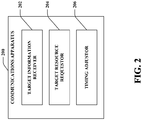
- the communications apparatus 200 can be a base station or a portion thereof, a mobile device or a portion thereof, or substantially any communications apparatus that receives data transmitted in a wireless communications environment.
- the communications apparatus 200 can include a target information receiver 202 that can acquire data regarding disparate communications apparatuses, a target resource requestor 204 that can request resources from a target communications apparatus to handover communication from a disparate device, and a timing adjustor 206 that can correct timing for communicating with the target communications apparatus.
- the target information receiver 202 can receive requested data regarding one or more disparate communications apparatuses (not shown).
- the communications apparatus 200 can be a mobile device and the disparate communications apparatuses can provide data access to the mobile device such that the device can be handed over between the disparate communications apparatuses.
- the handing over can be based at least in part on signal quality, services offered by the apparatuses, and/or the like, for example.
- the received information can be related to semi-static information regarding the disparate communications apparatuses, such as a TA, C-RNTI, CQI information, etc. and can be received in response to transmitting an SRS to the apparatuses.
- the communications apparatus 200 can determine a better suited communications apparatus for handing-over communications based at least in part on the information. It is to be appreciated that the communications apparatus 200 can maintain and monitor this information with respect to the candidate target communications apparatuses. In one example, the information can be received over a downlink control or data channel from the target communications apparatuses or through the source communications apparatus. In addition, schedule request channels for the target communications apparatuses can be assigned to the communications apparatus 200 by the target communications apparatuses over the air or through the source communication apparatus ( e.g., via backhaul link).
- Handover of the communications for the communications apparatus 200 can occur, in one example, where the signal strength of a target communication apparatus exceeds or is sufficiently close to that of a source communications apparatus (not shown) to which the communications apparatus 200 is currently communicating.
- the communications apparatus 200 can detect one or more of the target communications apparatuses having a substantially similar (or a most similar) TA as the source communications apparatus using the information received (as described above) and can utilize the target resources requestor 204 to directly request uplink (UL) resources on the UL schedule request channel of the target communications apparatus using the known TA.
- a RACH can be avoided as the communications apparatus 200 knows the TA from received information.
- the timing adjustor 206 can be utilized to make minor adjustments to the timing utilized by the communications apparatus 200 in communicating with the target communications apparatus where necessary.
- the communications apparatus 200 can strategically choose to handover communications to the target communications apparatus in a TTI where a longer CP can be utilized.
- the target communications apparatus can offer such TTIs periodically, according to a pattern, based on desired handover, and/or the like.
- the longer CP can account for initial error; upon receiving a subsequent communication from the target communications apparatus, the timing adjustor 206 can synchronize timing with the target communications apparatus. It is to be appreciated that additional or alternative mechanisms can be used to account for error in communication.
- the communications apparatus 200 can use a hybrid automatic repeat-request (HARQ) communication for initially handing over.
- HARQ hybrid automatic repeat-request
- the communications apparatus 200 can transmit reference signals to the target communications apparatus to initially receive information related thereto by the target information receiver 202.
- the communications apparatus 200 (or a component thereof which is not shown) can request communication gaps from the source communications apparatus where the source communications apparatus can expect not to receive communications from the communications apparatus 200. During these gaps, the communications apparatus 200 can send references signals and/or receive resources from the target communications apparatus that can subsequently be used in handover as described above.
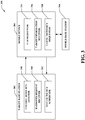
- the system 300 includes a target base station 302 that can communicate with a mobile device 304 (and/or any number of disparate mobile devices (not shown)) to facilitate handing-over wireless communication service.
- the mobile device 304 can also be communicating with a source base station 306 for current wireless communication service.
- Base stations 302 and 306 can transmit information to mobile device 304 over a forward link channel; further base stations 302 and 306 can receive information from mobile device 304 over a reverse link or uplink channel.
- the mobile device 304 can desire to handover communications to the target base station 302 from the source base station 306 at a particular point in time.
- system 300 can be a MIMO system. Additionally, the system 300 can operate in an OFDMA or SC-FDMA wireless network (such as 3GPP, 3GPP LTE, and the like, for example). Also, the components and functionalities shown and described below in the base stations 302 and 306 can be present each other and/or in the mobile device 304 as well and vice versa, in one example; the configuration depicted excludes these components for ease of explanation.
- OFDMA OFDMA
- SC-FDMA wireless network such as 3GPP, 3GPP LTE, and the like, for example.
- the components and functionalities shown and described below in the base stations 302 and 306 can be present each other and/or in the mobile device 304 as well and vice versa, in one example; the configuration depicted excludes these components for ease of explanation.
- Target base station 302 includes a control resource assignor 308 that can provide control resources to one or more mobile devices seeking communication handover, a handover request receiver 310 that can obtain a request for handing over communications from the one or more mobile devices, and a data resource scheduler 312 that can provide data channel access to the one or more mobile devices to complete the handover procedure.
- a mobile device such as mobile device 304 can request control resources or timing information, such as by transmitting an SRS and/or the like, for maintaining timing of the target base station 302, and the control resource assignor 308 can assign scheduling request resources for the target base station 302 to the mobile device 304.
- the device can desire handover, and the handover request receiver 310 can receive the request for handing-over communications.
- the request can be sent without completely accurate timing and measures can be used to account for the error as described previously (e.g ., longer CP TTIs, HARQ transmissions, etc. ).
- the data resource scheduler 312 can schedule and provide data communications channels to the device for completing handover of the wireless communications without using a RACH.
- Mobile device 304 includes a gap requestor 314 that can provide a base station with time intervals over which the mobile device 304 will not be transmitting communication to the base station and a target information receiver 316 that can request/receive information related to a target base station, which can include semi-static information utilized to monitor timing of the base station.
- the mobile device can also include a target resource requestor 318 that can request handover with the target base station when an optimal handover time is determined.
- the mobile device 304 can be connected to a source base station 306 to facilitate wireless communication services.
- the mobile device 304 can be moving throughout a sector hosted by the source base station 306.
- the mobile device 304 can begin to detect additional base stations in proximity and can desire to request information from the base stations for subsequent handing-over thereto.
- the mobile device 304 can utilize the gap requestor 314 to request communication gaps with the source base station 306 over which the mobile device 304 expects to transmit and receive data from one or more disparate base stations, such as the target base station 302.
- the mobile device 304 can transmit an SRS to obtain information from the one or more base stations regarding timing and the like. It is to be appreciated that the gaps and request of such are not required; this is just one possible example of obtaining information from the target base station 302.
- the target base station 302 can utilize the control resource assignor 308 to establish the schedule request UL channel with the target base station 302. Additionally, the mobile device 304 can transmit an SRS to the target base station 302, and the target information receiver 316 can obtain the transmitted information and continually monitor the target base station 302 to synchronize timing of the target base station 302. In one example, the target information receiver 316 can obtain a response to a transmitted SRS to determine information regarding a TA or other timing information. Additionally, the mobile device 304 can synchronize with the base station 302 based at least in part on the receiving information or resources to facilitate subsequent handing over.
- the network can be synchronized and maintaining uplink timing towards multiple base stations such that the cyclic prefix can accommodate timing difference due to difference in propagation time between the serving and target base stations.
- the timing can be substantially the same for the target and source base stations such that timing detection is not needed. It is to be appreciated that this can occur on the one or more base stations such that the mobile device 304 can have an array of base station information that can be utilized to determine a most desirable base station for handing over communications.
- the base station chosen for handover can be based on a TA that is closest to the TA of the source base station 306, such that communications can be significantly synchronized for handover.
- the TA can be determined and compared by discerning a scrambling code for the resource sent by the target base station 302 and comparing that code to a scrambling code for the source base station 306.
- the target resource requestor 318 can transmit an initial handover message to the target base station 302 over the assigned schedule request resources using timing parameters (or TA) deduced from monitoring the target base station 302.
- timing parameters or TA
- RACH is not required for adjusting timing before requesting resources.
- additional mechanisms can be utilized (e.g., TTIs with strategically longer CPs, HARQ transmissions, and the like) with the initial handover message to account for minor timing error.
- the target base station 302 can utilize different sized cyclic prefixes in given time intervals to compensate for greater error in timing of the initial handover transmission from the mobile device 304; this can be a network specification, specific to the target base station 302, etc.
- information regarding the cyclic prefix size can be transmitted to mobile device 304 including broadcasting such ( e.g., on a broadcast channel) and the like.
- the information can be formatted such as a list of frames or TTIs having short and/or long cyclic prefixes.
- the information can comprise an offset from a current or initial frame to the first long cyclic prefix TTI.
- the target base station 302 can dynamically configure the cyclic prefix specifically for the handover. Using this information, the mobile device 304 can handover to the target base station 302 and transmit initial data during a long cyclic prefix TTI to attain a greater possibility of successful communication (and therefore a successful handover). Once the initial communication is transmitted, the data resource scheduler 312 can schedule and return shared data channel access to the mobile device 304 to facilitate wireless communication service and complete handover from the source base station 306. At this point, the timing utilized for transmitting data to the target base station 302 can be more accurately synchronized.
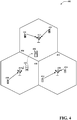
- the network 400 includes multiple communications cells 402, 404, and 406 each having a respective base station 408, 410, and 412 with multiple antennae to support communications from a variety of devices.
- devices 414 and 416 in cell sector 402 can communicate with base station 408, devices 418 and 420 initially in sector 404 can communicate with base station 410, and devices 422 and 424 in sector 406 can communicate with base station 412.
- device 420 can be moving throughout the network 400. As the device 420 moves away from the base station 410, the signal can fade and resources required to communicate with the base station 410 can increase. As the device 420 moves toward base station 412, at some point it may be advantageous to communicate instead with base station 412 in sector 406; thus, the device 420 can be handed over from sector 404 to sector 406 (and hence from base station 410 to base station 412).
- the mobile device 420 can maintain and monitor a list of cells (e.g., cells 408 and 412) to which it can perform handover. For example, the mobile device 420 can initially transmit an SRS to the cells to obtain TA information and/or the like from the cells. In another example, this can be determined by analyzing a scrambling code for the cell 408 and/or 412 and comparing it to that of the current cell 410. In another example, the mobile device 420 can calculate a timing difference between the current cell 410 and cell 408 and/or 412 based at least in part on the monitored cell information received as part of the SRS. Additionally or alternatively, the mobile device 420 can maintain synchronized timing with the cells 408 and 412 over granted resources.
- a list of cells e.g., cells 408 and 412
- the mobile device 420 When the mobile device 420 is sufficiently in range of the disparate cell, 412, it can transmit request for data resources over an assigned schedule request channel using the TA to adjust any timing difference. Though the timing may not be precise, in some examples, it can be generally close enough such that technologies can be utilized to appropriately decode the transmission.
- the base station 412 can utilize TTIs with extended cyclic prefixes, and the mobile device 420 can leverage these TTIs to transmit initial handover information.
- TTIs having extended cyclic prefix can be specially ( e.g ., dynamically) implemented upon learning of the handover, in one example.
- HARQ transmission can be used to improve the reliability of the initial (and/or subsequent) handover communications. It is to be appreciated that following initial communications, more precise timing information can be received and utilized by the mobile device 420 to ensure reliable subsequent communication with the base station 412. In this regard, handover is effectuated without using a RACH.
- FIGs. 5-6 methodologies relating to handing over communications by monitoring resources of a target (e.g ., instead of a RACH) are illustrated. While, for purposes of simplicity of explanation, the methodologies are shown and described as a series of acts, it is to be understood and appreciated that the methodologies are not limited by the order of acts, as some acts may, in accordance with one or more embodiments, occur in different orders and/or concurrently with other acts from that shown and described herein. For example, those skilled in the art will understand and appreciate that a methodology could alternatively be represented as a series of interrelated states or events, such as in a state diagram. Moreover, not all illustrated acts may be required to implement a methodology in accordance with one or more embodiments.
- a methodology 500 that facilitates requesting handover via a time synchronized request based on received target resources or other information.
- semi-static information is received from the target. For example, this can relate to a response from transmitting an SRS that can be analyzed to determine a TA or difference between TA of target and source as described above.
- the information can additionally or alternatively include C-RNTI; using this information, connected entry into a cell related to the target can occur.
- the TA is determined for the target as mentioned.
- the TA can help synchronize communications with the target by comparing the TA of the target to that of the source, or calculating a distance therebetween and using the difference to synchronize an initial handover message.
- handover can be requested to the target based on the TA. This can be done using the aforementioned mechanisms to determine a timing difference or choosing a target that has a similar TA as the source. In addition, as the comparison or calculation may not produce a completely accurate synchronization with the target, measures can be taken to increase likelihood of successful communication. This includes using TTIs with longer cyclic prefixes, HARQ transmissions, etc., as described supra.
- the handover or scheduling request can be transmitted over an assigned schedule request channel or other control channels related to the target base station, in one example,.
- the data resource assignment is received allowing communications services to transpire with the target. It is to be appreciated that once this assignment is received, more accurate timing information is received such to allow synchronized communication with the target.
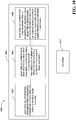
- a methodology 600 that facilitates handing over communications between a source and target access point using target resources acquired before the handover is illustrated.
- communication gaps are requested from a source. For example, when communicating with the source, gaps can be requested so that no communication with the source will occur in the gap.
- a schedule request channel can be established with a target during the gaps. Thus, as communication is not taking place with the source, the target can be contacted for establishing the channel.
- a sounding reference signal can be sent, in a gap, to the target to establish the schedule request channel during the gaps.
- SRS information can be received on the target base station.
- the target base stations can provide TA to the UE over the air and/or via the source base station, etc.
- the SRS information can be utilized to determine a TA difference or comparison of the target with the source, etc.
- C-RNTI can be received such that having the C-RNTI and timing of the target, communications can be initially handed over without using a RACH at 608. It is to be appreciated that once handover occurs, more accurate timing information can be received.
- inferences can be made regarding handing over communications from a source base station to a target base station for a mobile device as described.
- the term to "infer” or “inference” refers generally to the process of reasoning about or inferring states of the system, environment, and/or user from a set of observations as captured via events and/or data. Inference can be employed to identify a specific context or action, or can generate a probability distribution over states, for example. The inference can be probabilistic-that is, the computation of a probability distribution over states of interest based on a consideration of data and events. Inference can also refer to techniques employed for composing higher-level events from a set of events and/or data. Such inference results in the construction of new events or actions from a set of observed events and/or stored event data, whether or not the events are correlated in close temporal proximity, and whether the events and data come from one or several event and data sources.
- one or more methods presented above can include making inferences pertaining to from which devices to request semi-static data, determining communications gaps to request from a source base station, choosing a target base station for handing over communications, etc. Inferences can also be made pertaining to calculating the timing difference between a source and target base station, as well as determining a TTI using extended cyclic prefixes to strategically transmit initial handover data within, and/or the like.
- Fig. 7 is an illustration of a mobile device 700 that facilitates handing over communications utilizing requested information from a target to transmit initial handover data.
- Mobile device 700 comprises a receiver 702 that receives a signal from, for instance, a receive antenna (not shown), performs typical actions on (e.g., filters, amplifies, downconverts, etc. ) the received signal, and digitizes the conditioned signal to obtain samples.
- Receiver 702 can comprise a demodulator 704 that can demodulate received symbols and provide them to a processor 706 for channel estimation.
- Processor 706 can be a processor dedicated to analyzing information received by receiver 702 and/or generating information for transmission by a transmitter 718, a processor that controls one or more components of mobile device 700, and/or a processor that both analyzes information received by receiver 702, generates information for transmission by transmitter 718, and controls one or more components of mobile device 700.
- Mobile device 700 can additionally comprise memory 708 that is operatively coupled to processor 706 and that can store data to be transmitted, received data, information related to available channels, data associated with analyzed signal and/or interference strength, information related to an assigned channel, power, rate, or the like, and any other suitable information for estimating a channel and communicating via the channel.
- Memory 708 can additionally store protocols and/or algorithms associated with estimating and/or utilizing a channel ( e.g. , performance based, capacity based, etc. ).
- nonvolatile memory can include read only memory (ROM), programmable ROM (PROM), electrically programmable ROM (EPROM), electrically erasable PROM (EEPROM), or flash memory.
- Volatile memory can include random access memory (RAM), which acts as external cache memory.
- RAM is available in many forms such as synchronous RAM (SRAM), dynamic RAM (DRAM), synchronous DRAM (SDRAM), double data rate SDRAM (DDR SDRAM), enhanced SDRAM (ESDRAM), Synchlink DRAM (SLDRAM), and direct Rambus RAM (DRRAM).
- SRAM synchronous RAM
- DRAM dynamic RAM
- SDRAM synchronous DRAM
- DDR SDRAM double data rate SDRAM
- ESDRAM enhanced SDRAM
- SLDRAM Synchlink DRAM
- DRRAM direct Rambus RAM
- the memory 708 of the subject systems and methods is intended to comprise, without being limited to, these and any other suitable types of memory.
- Processor 706 can further be operatively coupled to a schedule requestor 710 that can request scheduling resources from a target base station as well as a target monitor 712 that can evaluate communication with one or more targets to ensure correct timing, etc.
- the mobile device can move throughout a service area and evaluate base stations for handing over communications. This can begin by using the schedule requestor 710 to establish an uplink schedule request channel with the base station over which the mobile device 700 can receive grants for resources, such as CQI resources, resources for data transmission and reception, etc.
- the mobile device 700 can transmit a SRS to obtain a TA for a target base station, which can be subsequently utilized to request data resources over the scheduling request channel; additionally, the mobile device 700 request communication gaps from a source base station over which to sound the signal and receive establishment.
- the target monitor 712 can continually monitor the schedule request channel and/or resources received in relation to the channel to have current timing information for the target base station(s).
- a target can be chosen from the target monitor 712 based at least in part on a timing difference between the current source base station and the target.
- a timing adjuster 714 coupled to the processor 706 can be utilized to determine a generally correct timing for the target base station based at least in part on a difference in time between the source and target base stations ( e.g ., by evaluating their respective synchronization channels or scrambling codes). The timing adjustor 714 can utilized the determined adjustment to transmit an initial handover message.
- Mobile device 700 still further comprises a modulator 716 and transmitter 718 that respectively modulate and transmit signals to, for instance, a base station, another mobile device, etc. Although depicted as being separate from the processor 706, it is to be appreciated that the schedule requestor 710, target monitor 712, timing adjustor 714, demodulator 704, and/or modulator 716 can be part of the processor 706 or multiple processors (not shown).
- Fig. 8 is an illustration of a system 800 that facilitates granting resources and extended CP TTIs for mobile device handover.
- the system 800 comprises a base station 802 (e.g., access point, ...) with a receiver 810 that receives signal(s) from one or more mobile devices 804 through a plurality of receive antennas 806, and a transmitter 824 that transmits to the one or more mobile devices 804 through a transmit antenna 808.
- Receiver 810 can receive information from receive antennas 806 and is operatively associated with a demodulator 812 that demodulates received information. Demodulated symbols are analyzed by a processor 814 that can be similar to the processor described above with regard to Fig.
- Processor 814 is further coupled to a schedule request responder 818 that can establish a schedule request channel with one or more mobile devices 804 for possible subsequent handover and a cyclic prefix selector 820 that can specify longer CPs for certain TTIs to facilitate accounting for minor timing errors during handover.
- a schedule request responder 818 can establish a schedule request channel with one or more mobile devices 804 for possible subsequent handover and a cyclic prefix selector 820 that can specify longer CPs for certain TTIs to facilitate accounting for minor timing errors during handover.
- one or more mobile devices 804 can be in range for handover and can request establishment of an uplink schedule request channel.
- the schedule request responder 818 can establish the channel with the mobile device 804.
- the mobile device 804 can additionally transmit SRSs to the base station 802, and the base station 802 can transmit information regarding certain resources (e.g ., TA, C-RNTI, etc. ) over the channel.
- the cyclic prefix selector 820 can establish one or more TTIs to have longer CP to account for timing error in an initial handover communication from the mobile device 804 based on the schedule request channel and/or information received over the channel.
- the cyclic prefix selector 820 can specify longer CP for periodic TTIs, requested TTIs, inferred TTIs based on a likelihood of handover, for example, and/or the like.
- the schedule request responder 818, cyclic prefix selector 820, demodulator 812, and/or modulator 822 can be part of the processor 814 or multiple processors (not shown).
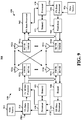
- Fig. 9 shows an example wireless communication system 900.
- the wireless communication system 900 depicts one base station 910 and one mobile device 950 for sake of brevity.
- system 900 can include more than one base station and/or more than one mobile device, wherein additional base stations and/or mobile devices can be substantially similar or different from example base station 910 and mobile device 950 described below.
- base station 910 and/or mobile device 950 can employ the systems ( Figs. 1-4 and 7-8 ) and/or methods ( Figs. 5-6 ) described herein to facilitate wireless communication there between.
- traffic data for a number of data streams is provided from a data source 912 to a transmit (TX) data processor 914.
- TX data processor 914 formats, codes, and interleaves the traffic data stream based on a particular coding scheme selected for that data stream to provide coded data.
- the coded data for each data stream can be multiplexed with pilot data using orthogonal frequency division multiplexing (OFDM) techniques. Additionally or alternatively, the pilot symbols can be frequency division multiplexed (FDM), time division multiplexed (TDM), or code division multiplexed (CDM).
- the pilot data is typically a known data pattern that is processed in a known manner and can be used at mobile device 950 to estimate channel response.
- the multiplexed pilot and coded data for each data stream can be modulated (e.g ., symbol mapped) based on a particular modulation scheme (e.g ., binary phase-shift keying (BPSK), quadrature phase-shift keying (QPSK), M-phase-shift keying (M-PSK), M-quadrature amplitude modulation (M-QAM), etc .) selected for that data stream to provide modulation symbols.
- BPSK binary phase-shift keying
- QPSK quadrature phase-shift keying
- M-PSK M-phase-shift keying
- M-QAM M-quadrature amplitude modulation
- the data rate, coding, and modulation for each data stream can be determined by instructions performed or provided by processor 930.
- the modulation symbols for the data streams can be provided to a TX MIMO processor 920, which can further process the modulation symbols (e.g ., for OFDM). TX MIMO processor 920 then provides N T modulation symbol streams to N T transmitters (TMTR) 922a through 922t. In various embodiments, TX MIMO processor 920 applies beamforming weights to the symbols of the data streams and to the antenna from which the symbol is being transmitted.
- TX MIMO processor 920 applies beamforming weights to the symbols of the data streams and to the antenna from which the symbol is being transmitted.
- Each transmitter 922 receives and processes a respective symbol stream to provide one or more analog signals, and further conditions (e.g ., amplifies, filters, and upconverts) the analog signals to provide a modulated signal suitable for transmission over the MIMO channel. Further, N T modulated signals from transmitters 922a through 922t are transmitted from N T antennas 924a through 924t, respectively.
- the transmitted modulated signals are received by N R antennas 952a through 952r and the received signal from each antenna 952 is provided to a respective receiver (RCVR) 954a through 954r.
- Each receiver 954 conditions (e.g ., filters, amplifies, and downconverts) a respective signal, digitizes the conditioned signal to provide samples, and further processes the samples to provide a corresponding "received" symbol stream.
- An RX data processor 960 can receive and process the N R received symbol streams from N R receivers 954 based on a particular receiver processing technique to provide N T "detected" symbol streams. RX data processor 960 can demodulate, deinterleave, and decode each detected symbol stream to recover the traffic data for the data stream. The processing by RX data processor 960 is complementary to that performed by TX MIMO processor 920 and TX data processor 914 at base station 910.
- a processor 970 can periodically determine which precoding matrix to utilize as discussed above. Further, processor 970 can formulate a reverse link message comprising a matrix index portion and a rank value portion.
- the reverse link message can comprise various types of information regarding the communication link and/or the received data stream.
- the reverse link message can be processed by a TX data processor 938, which also receives traffic data for a number of data streams from a data source 936, modulated by a modulator 980, conditioned by transmitters 954a through 954r, and transmitted back to base station 910.
- the modulated signals from mobile device 950 are received by antennas 924, conditioned by receivers 922, demodulated by a demodulator 940, and processed by a RX data processor 942 to extract the reverse link message transmitted by mobile device 950. Further, processor 930 can process the extracted message to determine which precoding matrix to use for determining the beamforming weights.
- Processors 930 and 970 can direct (e.g ., control, coordinate, manage, etc. ) operation at base station 910 and mobile device 950, respectively. Respective processors 930 and 970 can be associated with memory 932 and 972 that store program codes and data. Processors 930 and 970 can also perform computations to derive frequency and impulse response estimates for the uplink and downlink, respectively.
- the embodiments described herein can be implemented in hardware, software, firmware, middleware, microcode, or any combination thereof.
- the processing units can be implemented within one or more application specific integrated circuits (ASICs), digital signal processors (DSPs), digital signal processing devices (DSPDs), programmable logic devices (PLDs), field programmable gate arrays (FPGAs), processors, controllers, micro-controllers, microprocessors, other electronic units designed to perform the functions described herein, or a combination thereof.
- ASICs application specific integrated circuits
- DSPs digital signal processors
- DSPDs digital signal processing devices
- PLDs programmable logic devices
- FPGAs field programmable gate arrays
- processors controllers, micro-controllers, microprocessors, other electronic units designed to perform the functions described herein, or a combination thereof.
- a code segment can represent a procedure, a function, a subprogram, a program, a routine, a subroutine, a module, a software package, a class, or any combination of instructions, data structures, or program statements.
- a code segment can be coupled to another code segment or a hardware circuit by passing and/or receiving information, data, arguments, parameters, or memory contents. Information, arguments, parameters, data, etc. can be passed, forwarded, or transmitted using any suitable means including memory sharing, message passing, token passing, network transmission, etc.
- the techniques described herein can be implemented with modules (e.g ., procedures, functions, and so on) that perform the functions described herein.
- the software codes can be stored in memory units and executed by processors.
- the memory unit can be implemented within the processor or external to the processor, in which case it can be communicatively coupled to the processor via various means as is known in the art.
- system 1000 that facilitates handing over mobile communications in a wireless network without using a RACH.
- system 1000 can reside at least partially within a base station, mobile device, etc.
- system 1000 is represented as including functional blocks, which can be functional blocks that represent functions implemented by a processor, software, or combination thereof ( e.g ., firmware).
- System 1000 includes a logical grouping 1002 of electrical components that can act in conjunction.
- logical grouping 1002 can include an electrical component for receiving wireless communications service from a source base station 1004.
- the system 1000 can communicate with the base station over one or more channels, as described above, to effectuate wireless communication service.
- logical grouping 1002 can comprise an electrical component for receiving multiple assigned uplink control channels for transmitting schedule request signals to a plurality of target base stations 1006.
- the resources can relate to handing over communications to the target base station.
- other resources of the target base station can be monitored by transmitting SRS or determining TA information for the target base station, for example.
- logical grouping 1002 can comprise an electrical component for transmitting a scheduling request to a selected target base station of the plurality of target base stations over at least one of the assigned uplink control channels 1008.
- the TA of the target base station can be utilized in transmitting the scheduling request for more efficient handover.
- system 1000 can include a memory 1010 that retains instructions for executing functions associated with electrical components 1004, 1006, and 1008. While shown as being external to memory 1010, it is to be understood that one or more of electrical components 1004, 1006, and 1008 can exist within memory 1010.
Landscapes
- Engineering & Computer Science (AREA)
- Signal Processing (AREA)
- Computer Networks & Wireless Communication (AREA)
- Mobile Radio Communication Systems (AREA)
Claims (15)
- Verfahren zur Übergabe von Kommunikationen in einem drahtlosen Netzwerk (100), umfassend:Empfangen von drahtlosem Kommunikationsdienst von einer Ursprungsbasisstation (410);Empfangen mehrerer zugewiesenen Aufwärtsstrecke-Steuerkanäle zum Übermitteln von Zuteilungsanfragesignalen an eine Mehrzahl von Zielbasisstationen (408, 412);Empfangen von Zeitvorverschiebungs-, TA, Information von der Mehrzahl von Zielbasisstationen (408, 412), wobei die TA-Information in Antwort auf Tonreferenzsignale, die an die Mehrzahl von Zielbasisstationen (408, 412) versendet wurden, empfangen wird; undÜbermitteln einer Zuteilungsanfrage an eine ausgewählte Zielbasisstation (412) aus der Mehrzahl von Zielbasisstationen (408, 412) über wenigstens einen aus den zugewiesenen Aufwärtsstrecke-Steuerkanälen, wobei die TA-Information verwendet wird, um die Zuteilungsanfrage zu übermitteln.
- Verfahren gemäß Anspruch 1, wobei die TA-Information von zusätzlichen Kanälen der Mehrzahl von Basisstationen in einem asynchronen drahtlosen Kommunikationsnetzwerk abgeleitet wird.
- Verfahren gemäß Anspruch 1, weiterhin umfassend Aufrechterhalten von Synchronisation mit dem einen oder den mehreren zugewiesenen Aufwärtsstrecke-Steuerkanälen, unter Verwendung von TA, um nachfolgende Übergabe von Kommunikation an die ausgewählte Zielbasisstation zu erleichtern.
- Verfahren gemäß Anspruch 3, wobei die Zuteilungsanfrage an die ausgewählte Zielbasisstation basierend wenigstens teilweise auf einer geringen Zeitablaufdifferenz zwischen der Zielbasisstation und der Ursprungsbasisstation im Vergleich zu den anderen Zielbasisstationen übermittelt wird.
- Verfahren gemäß Anspruch 1, wobei die Ursprungsbasisstation und die Zielbasisstation zeitlich synchronisiert sind, und wobei der Zeitablauf für die Ursprungsbasisstation verwendet wird, um die Zuteilungsanfrage zu übermitteln.
- Verfahren gemäß Anspruch 1, weiterhin umfassend Auswählen eines Übermittlungszeitintervalls, TTI, mit einem längeren zyklischen Präfix gegenüber der ausgewählten Zielbasisstation zum Übermitteln der Übergabekommunikation.
- Verfahren gemäß Anspruch 1, weiterhin umfassend Empfangen von drahtlosem Kommunikationsdienst von der ausgewählten Zielbasisstation folgend auf Übermitteln der initialen Übergabekommunikation.
- Drahtlose Kommunikationsvorrichtung (420, 1000) zur Übergabe von Kommunikationen in einem drahtlosen Netzwerk (100), aufweisend:Mittel (1004) zum Empfangen von drahtlosem Kommunikationsdienst von einer Ursprungsbasisstation (410);Mittel (1006) zum Empfangen von mehrerer zugewiesenen Aufwärtsstrecke-Steuerkanäle zum Übermitteln von Zuteilungsanfragesignalen an eine Mehrzahl von Zielbasisstationen (408, 412);Mittel zum Empfangen von Zeitvorverschiebungs-, TA, Information von der Mehrzahl von Zielbasisstationen, wobei die TA-Information in Antwort auf Tonreferenzsignale,die an die Mehrzahl von Zielbasisstationen (408, 412) versendet wurden, empfangen wird;Mittel (1008) zum Übermitteln einer Zuteilungsanfrage an eine ausgewählte Zielbasisstation (412) aus der Mehrzahl von Zielbasisstationen (408, 412) über wenigstens einen aus den zugewiesenen Aufwärtsstrecke-Steuerkanälen, wobei die TA-Information verwendet wird, um die Zuteilungsanfrage zu übermitteln.
- Drahtlose Kommunikationsvorrichtung gemäß Anspruch 8, wobei die TA-Information von zusätzlichen Kanälen der Mehrzahl von Basisstationen in einem asynchronen drahtlosen Kommunikationsnetzwerk abgeleitet wird.
- Drahtlose Kommunikationsvorrichtung gemäß Anspruch 8, weiterhin aufweisend Mittel zum Aufrechterhalten von Synchronisation mit dem einen oder den mehreren zugewiesenen Aufwärtsstrecke-Steuerkanälen, unter Verwendung von TA, um nachfolgende Übergabe von Kommunikation an die ausgewählte Zielbasisstation zu erleichtern.
- Drahtlose Kommunikationsvorrichtung gemäß Anspruch 10, wobei die Zuteilungsanfrage an die ausgewählte Zielbasisstation basierend wenigstens teilweise auf einer geringen Zeitablaufdifferenz zwischen der Zielbasisstation und der Ursprungsbasisstation im Vergleich zu den anderen Zielbasisstationen übermittelt wird.
- Drahtlose Kommunikationsvorrichtung gemäß Anspruch 8, wobei die Ursprungsbasisstation und die Zielbasisstation zeitlich synchronisiert sind, und wobei der Zeitablauf für die Ursprungsbasisstation verwendet wird, um die Zuteilungsanfrage zu übermitteln.
- Drahtlose Kommunikationsvorrichtung gemäß Anspruch 8, weiterhin umfassend Auswählen eines Übermittlungszeitintervalls, TTI, mit einem längeren zyklischen Präfix gegenüber der ausgewählten Zielbasisstation zum Übermitteln der Übergabekommunikation.
- Drahtlose Kommunikationsvorrichtung gemäß Anspruch 8, weiterhin umfassend Empfangen von drahtlosem Kommunikationsdienst von der ausgewählten Zielbasisstation folgend auf Übermitteln der initialen Übergabekommunikation.
- Computerprogram aufweisend ausführbare Anweisungen zum Veranlassen zumindest eines Computers, um ein Verfahren nach einem der Ansprüche 1 bis 7 durchzuführen, wenn das Computerprogramm ausgeführt wird.
Applications Claiming Priority (3)
| Application Number | Priority Date | Filing Date | Title |
|---|---|---|---|
| US89544907P | 2007-03-17 | 2007-03-17 | |
| US12/048,913 US20080225796A1 (en) | 2007-03-17 | 2008-03-14 | Handover in wireless communications |
| PCT/US2008/057288 WO2008115896A2 (en) | 2007-03-17 | 2008-03-17 | Handover in wireless communications |
Publications (2)
| Publication Number | Publication Date |
|---|---|
| EP2145497A2 EP2145497A2 (de) | 2010-01-20 |
| EP2145497B1 true EP2145497B1 (de) | 2018-01-17 |
Family
ID=39762576
Family Applications (1)
| Application Number | Title | Priority Date | Filing Date |
|---|---|---|---|
| EP08732384.6A Active EP2145497B1 (de) | 2007-03-17 | 2008-03-17 | Handover bei der drahtlosen kommunikation |
Country Status (10)
| Country | Link |
|---|---|
| US (2) | US20080225796A1 (de) |
| EP (1) | EP2145497B1 (de) |
| JP (2) | JP5437084B2 (de) |
| KR (1) | KR101128232B1 (de) |
| CN (1) | CN101641982B (de) |
| BR (1) | BRPI0808992A2 (de) |
| CA (1) | CA2679228C (de) |
| RU (1) | RU2439843C2 (de) |
| TW (1) | TWI382775B (de) |
| WO (1) | WO2008115896A2 (de) |
Families Citing this family (35)
| Publication number | Priority date | Publication date | Assignee | Title |
|---|---|---|---|---|
| US20080225796A1 (en) | 2007-03-17 | 2008-09-18 | Qualcomm Incorporated | Handover in wireless communications |
| US20080232326A1 (en) * | 2007-03-19 | 2008-09-25 | Bengt Lindoff | Method and Apparatus for Reducing Interference in Wireless Communication Networks by Enabling More Opportune Handover |
| EP2160860A4 (de) * | 2007-06-25 | 2014-01-08 | Ericsson Telefon Ab L M | Zeitsynchronisation beim handover |
| CN101848541B (zh) * | 2009-03-27 | 2013-03-13 | 电信科学技术研究院 | 一种探测参考信号发送的方法及设备 |
| CN102077627B (zh) * | 2009-04-30 | 2013-03-27 | 华为技术有限公司 | 一种上行信号的处理方法、基站和用户终端 |
| JP5454123B2 (ja) * | 2009-12-16 | 2014-03-26 | ソニー株式会社 | ハンドオーバのための方法、端末装置及び無線通信システム |
| WO2011098298A2 (en) * | 2010-02-15 | 2011-08-18 | Lantiq Deutschland Gmbh | Overlapped frequency bands for multicarrier arrangements |
| US8774847B2 (en) | 2011-07-27 | 2014-07-08 | Broadcom Corporation | Cellular radio path measurement and reporting |
| GB2493183B (en) * | 2011-07-27 | 2014-01-08 | Renesas Mobile Corp | Cellular radio path measurement and reporting |
| US10004022B2 (en) * | 2011-11-15 | 2018-06-19 | Kyocera Corporation | Handover signaling using an MBSFN channel in a cellular communication system |
| WO2013074460A1 (en) | 2011-11-15 | 2013-05-23 | Kyocera Corporation | Inter-cell messaging using mbsfn subframe |
| US9706369B2 (en) | 2011-11-15 | 2017-07-11 | Kyocera Corporation | Handover management using a broadcast channel in a network having synchronized base stations |
| US9107056B2 (en) * | 2012-04-18 | 2015-08-11 | Qualcomm Incorporated | Small cell activation procedure |
| US9973923B2 (en) * | 2012-04-18 | 2018-05-15 | Qualcomm Incorporated | Small cell activation procedure |
| WO2014029092A1 (zh) * | 2012-08-22 | 2014-02-27 | 华为技术有限公司 | 接入的方法、设备和基站 |
| WO2014059606A1 (zh) * | 2012-10-16 | 2014-04-24 | 华为技术有限公司 | 传输调度请求的方法和装置、用户设备以及基站 |
| US9204412B2 (en) * | 2012-10-26 | 2015-12-01 | Cellco Partnership | User device timing advance determination |
| CN105264978B (zh) * | 2013-06-04 | 2019-09-03 | Lg电子株式会社 | 由基站发送用于用户设备同步的信息的方法及其设备 |
| US9337908B2 (en) * | 2013-06-13 | 2016-05-10 | Nokia Technologies Oy | Space-time channel sounding in wireless network |
| CN103874153A (zh) * | 2014-03-06 | 2014-06-18 | 华为技术有限公司 | 一种控制方法和基站 |
| CN104093173B (zh) * | 2014-07-30 | 2017-11-28 | 常州和仕达电子科技有限公司 | 一种基于mesh网络的无线信道分配方法 |
| JP6442200B2 (ja) * | 2014-09-05 | 2018-12-19 | 株式会社Nttドコモ | 基地局及びユーザ装置 |
| US10462713B2 (en) * | 2014-10-30 | 2019-10-29 | Qualcomm Incorporated | Techniques for handover procedure management |
| KR101621878B1 (ko) * | 2015-01-21 | 2016-05-17 | 현대자동차주식회사 | 차량용 avn 통신 시스템 및 그의 무선 통신 방법 |
| US10602440B2 (en) | 2016-03-07 | 2020-03-24 | Telefonaktiebolabet Lm Ericsson (Publ) | Method and access node for supporting UE as well as a UE and corresponding method carried out by the UE in a wireless communication system |
| US10244490B2 (en) * | 2016-04-05 | 2019-03-26 | Qualcomm Incorporated | Scheduling request transmission to request resources for a buffer status report |
| AU2017246410B2 (en) * | 2016-04-05 | 2021-05-06 | Qualcomm Incorporated | Scheduling request transmission to request resources for a buffer status report |
| JP2019096920A (ja) * | 2016-04-07 | 2019-06-20 | シャープ株式会社 | 受信装置および送信装置 |
| CN107889174B (zh) * | 2016-09-30 | 2021-01-12 | 中国移动通信有限公司研究院 | 一种切换方法、终端设备、基站及系统 |
| CN115765919A (zh) * | 2017-03-24 | 2023-03-07 | 瑞典爱立信有限公司 | 利用多个配置的tti的调度请求处置的方法、设备和介质 |
| JP6930849B2 (ja) * | 2017-04-03 | 2021-09-01 | Kddi株式会社 | 端末装置、基地局装置、制御方法、及びプログラム |
| US10624015B2 (en) * | 2018-03-27 | 2020-04-14 | Qualcomm Incorporated | Timing advance assisted measurement report for improved handover performance |
| US10791533B2 (en) * | 2018-07-19 | 2020-09-29 | Huawei Technologies Co., Ltd. | Methods and systems for generalized RACH-less mobility |
| CN111106917B (zh) | 2019-11-04 | 2023-06-16 | 中兴通讯股份有限公司 | 指示方法、指示信息接收方法、装置、通信节点及介质 |
| CN113518418B (zh) * | 2020-04-09 | 2024-12-03 | 华为技术有限公司 | 一种通信方法和装置 |
Family Cites Families (15)
| Publication number | Priority date | Publication date | Assignee | Title |
|---|---|---|---|---|
| TW223721B (de) | 1992-06-18 | 1994-05-11 | Telefonaktiebolager Lm Ericsson | |
| US5722072A (en) * | 1994-03-21 | 1998-02-24 | Motorola, Inc. | Handover based on measured time of signals received from neighboring cells |
| CN1090876C (zh) * | 1995-07-12 | 2002-09-11 | 艾利森电话股份有限公司 | 提供固定蜂窝功能的方法和设备 |
| JP4841780B2 (ja) * | 1999-11-12 | 2011-12-21 | モトローラ モビリティ インコーポレイテッド | パケット交換通信ネットワークにおけるネットワーク制御ハンドオーバのための方法と装置 |
| JP2003087842A (ja) * | 2001-09-13 | 2003-03-20 | Nec Corp | 符号分割多元接続通信システムにおけるハンドオーバ方法、及びそのシステム |
| KR100559925B1 (ko) | 2002-07-05 | 2006-03-13 | 지멘스 악티엔게젤샤프트 | 이동무선시스템에서 데이터 패킷들을 전송하기 위한 방법및 대응 이동무선시스템 |
| JP2004088522A (ja) * | 2002-08-28 | 2004-03-18 | Nec Corp | 移動通信システム、その周波数間ho方法、移動局、基地局、基地局制御装置及びプログラム |
| WO2006062445A1 (en) | 2004-12-06 | 2006-06-15 | Telefonaktiebolaget Lm Ericsson (Publ) | Access selection in wireless networks |
| JP2006174279A (ja) * | 2004-12-17 | 2006-06-29 | Fujitsu Ltd | 無線基地局、移動局 |
| US20070002724A1 (en) * | 2005-06-15 | 2007-01-04 | Samsung Electronics Co., Ltd. | Apparatus and method for broadcast superposition and cancellation in a multi-carrier wireless network |
| US8243653B2 (en) | 2005-08-23 | 2012-08-14 | Nec Corporation | Synchronization system and synchronizing method for plurality of base stations and mobile station in a forward link wireless transmission |
| JP4677490B2 (ja) | 2005-10-31 | 2011-04-27 | エルジー エレクトロニクス インコーポレイティド | 無線移動通信システムにおける無線接続情報送受信方法 |
| WO2007075559A2 (en) * | 2005-12-22 | 2007-07-05 | Interdigital Technology Corporation | Method and system for adjusting uplink transmission timing for long term evolution handover |
| US8743825B2 (en) * | 2006-08-17 | 2014-06-03 | Nokia Corporation | Handovers in a communication system |
| US20080225796A1 (en) | 2007-03-17 | 2008-09-18 | Qualcomm Incorporated | Handover in wireless communications |
-
2008
- 2008-03-14 US US12/048,913 patent/US20080225796A1/en not_active Abandoned
- 2008-03-17 JP JP2009554686A patent/JP5437084B2/ja active Active
- 2008-03-17 CA CA2679228A patent/CA2679228C/en not_active Expired - Fee Related
- 2008-03-17 BR BRPI0808992-2A patent/BRPI0808992A2/pt not_active Application Discontinuation
- 2008-03-17 RU RU2009138332/07A patent/RU2439843C2/ru not_active IP Right Cessation
- 2008-03-17 EP EP08732384.6A patent/EP2145497B1/de active Active
- 2008-03-17 CN CN2008800087718A patent/CN101641982B/zh active Active
- 2008-03-17 WO PCT/US2008/057288 patent/WO2008115896A2/en not_active Ceased
- 2008-03-17 TW TW097109410A patent/TWI382775B/zh not_active IP Right Cessation
- 2008-03-17 KR KR1020097021782A patent/KR101128232B1/ko active Active
-
2012
- 2012-01-04 JP JP2012000202A patent/JP5453463B2/ja active Active
-
2016
- 2016-12-12 US US15/376,454 patent/US10045320B2/en active Active
Also Published As
| Publication number | Publication date |
|---|---|
| KR101128232B1 (ko) | 2012-03-27 |
| JP2010521934A (ja) | 2010-06-24 |
| JP5453463B2 (ja) | 2014-03-26 |
| US20170094627A1 (en) | 2017-03-30 |
| US20080225796A1 (en) | 2008-09-18 |
| RU2009138332A (ru) | 2011-04-27 |
| CN101641982A (zh) | 2010-02-03 |
| US10045320B2 (en) | 2018-08-07 |
| JP2012110005A (ja) | 2012-06-07 |
| EP2145497A2 (de) | 2010-01-20 |
| WO2008115896A3 (en) | 2009-01-22 |
| CA2679228C (en) | 2016-09-13 |
| KR20090132604A (ko) | 2009-12-30 |
| TWI382775B (zh) | 2013-01-11 |
| CN101641982B (zh) | 2013-04-24 |
| CA2679228A1 (en) | 2008-09-25 |
| RU2439843C2 (ru) | 2012-01-10 |
| TW200847822A (en) | 2008-12-01 |
| BRPI0808992A2 (pt) | 2014-09-09 |
| JP5437084B2 (ja) | 2014-03-12 |
| WO2008115896A2 (en) | 2008-09-25 |
Similar Documents
| Publication | Publication Date | Title |
|---|---|---|
| EP2145497B1 (de) | Handover bei der drahtlosen kommunikation | |
| US8509791B2 (en) | Handover in wireless communications | |
| EP2351444B1 (de) | Prach-übertragung in einem mehrträgerbetrieb | |
| JP2023514583A (ja) | Hstシナリオにおけるマルチtrp送信のための方法及び装置 | |
| EP2047703B1 (de) | Vorrichtung und verfahren für schnellen zugang zu einem drahtlosen kommunikationssystem | |
| AU2008321245B2 (en) | Wireless communication channel blanking | |
| US7978656B2 (en) | Sequence numbering for distributed wireless networks | |
| US8761032B2 (en) | Random reuse based control channels | |
| WO2009137647A1 (en) | Bsr prohibit timer | |
| KR20100127874A (ko) | E―aich를 이용하여 동적 로드를 밸런싱하기 위한 방법들 및 장치 | |
| EP2604007B1 (de) | Methode und vorrichtung zum deaktivieren von trägern in drahtloser kommunikation | |
| HK1151145A (en) | Random reuse based control channels |
Legal Events
| Date | Code | Title | Description |
|---|---|---|---|
| PUAI | Public reference made under article 153(3) epc to a published international application that has entered the european phase |
Free format text: ORIGINAL CODE: 0009012 |
|
| 17P | Request for examination filed |
Effective date: 20091013 |
|
| AK | Designated contracting states |
Kind code of ref document: A2 Designated state(s): AT BE BG CH CY CZ DE DK EE ES FI FR GB GR HR HU IE IS IT LI LT LU LV MC MT NL NO PL PT RO SE SI SK TR |
|
| AX | Request for extension of the european patent |
Extension state: AL BA MK RS |
|
| RIC1 | Information provided on ipc code assigned before grant |
Ipc: H04W 4/00 20090101AFI20100107BHEP |
|
| DAX | Request for extension of the european patent (deleted) | ||
| 17Q | First examination report despatched |
Effective date: 20170117 |
|
| REG | Reference to a national code |
Ref country code: DE Ref legal event code: R079 Ref document number: 602008053774 Country of ref document: DE Free format text: PREVIOUS MAIN CLASS: H04W0004000000 Ipc: H04W0036080000 |
|
| GRAP | Despatch of communication of intention to grant a patent |
Free format text: ORIGINAL CODE: EPIDOSNIGR1 |
|
| RIC1 | Information provided on ipc code assigned before grant |
Ipc: H04W 36/08 20090101AFI20170711BHEP |
|
| INTG | Intention to grant announced |
Effective date: 20170726 |
|
| GRAS | Grant fee paid |
Free format text: ORIGINAL CODE: EPIDOSNIGR3 |
|
| GRAA | (expected) grant |
Free format text: ORIGINAL CODE: 0009210 |
|
| AK | Designated contracting states |
Kind code of ref document: B1 Designated state(s): AT BE BG CH CY CZ DE DK EE ES FI FR GB GR HR HU IE IS IT LI LT LU LV MC MT NL NO PL PT RO SE SI SK TR |
|
| REG | Reference to a national code |
Ref country code: GB Ref legal event code: FG4D |
|
| REG | Reference to a national code |
Ref country code: CH Ref legal event code: EP |
|
| REG | Reference to a national code |
Ref country code: IE Ref legal event code: FG4D |
|
| REG | Reference to a national code |
Ref country code: AT Ref legal event code: REF Ref document number: 965195 Country of ref document: AT Kind code of ref document: T Effective date: 20180215 |
|
| REG | Reference to a national code |
Ref country code: DE Ref legal event code: R096 Ref document number: 602008053774 Country of ref document: DE |
|
| REG | Reference to a national code |
Ref country code: FR Ref legal event code: PLFP Year of fee payment: 11 |
|
| REG | Reference to a national code |
Ref country code: NL Ref legal event code: MP Effective date: 20180117 |
|
| PGFP | Annual fee paid to national office [announced via postgrant information from national office to epo] |
Ref country code: FR Payment date: 20180315 Year of fee payment: 11 |
|
| REG | Reference to a national code |
Ref country code: LT Ref legal event code: MG4D |
|
| REG | Reference to a national code |
Ref country code: AT Ref legal event code: MK05 Ref document number: 965195 Country of ref document: AT Kind code of ref document: T Effective date: 20180117 |
|
| PG25 | Lapsed in a contracting state [announced via postgrant information from national office to epo] |
Ref country code: NL Free format text: LAPSE BECAUSE OF FAILURE TO SUBMIT A TRANSLATION OF THE DESCRIPTION OR TO PAY THE FEE WITHIN THE PRESCRIBED TIME-LIMIT Effective date: 20180117 |
|
| PG25 | Lapsed in a contracting state [announced via postgrant information from national office to epo] |
Ref country code: FI Free format text: LAPSE BECAUSE OF FAILURE TO SUBMIT A TRANSLATION OF THE DESCRIPTION OR TO PAY THE FEE WITHIN THE PRESCRIBED TIME-LIMIT Effective date: 20180117 Ref country code: CY Free format text: LAPSE BECAUSE OF FAILURE TO SUBMIT A TRANSLATION OF THE DESCRIPTION OR TO PAY THE FEE WITHIN THE PRESCRIBED TIME-LIMIT Effective date: 20180117 Ref country code: HR Free format text: LAPSE BECAUSE OF FAILURE TO SUBMIT A TRANSLATION OF THE DESCRIPTION OR TO PAY THE FEE WITHIN THE PRESCRIBED TIME-LIMIT Effective date: 20180117 Ref country code: LT Free format text: LAPSE BECAUSE OF FAILURE TO SUBMIT A TRANSLATION OF THE DESCRIPTION OR TO PAY THE FEE WITHIN THE PRESCRIBED TIME-LIMIT Effective date: 20180117 Ref country code: ES Free format text: LAPSE BECAUSE OF FAILURE TO SUBMIT A TRANSLATION OF THE DESCRIPTION OR TO PAY THE FEE WITHIN THE PRESCRIBED TIME-LIMIT Effective date: 20180117 Ref country code: NO Free format text: LAPSE BECAUSE OF FAILURE TO SUBMIT A TRANSLATION OF THE DESCRIPTION OR TO PAY THE FEE WITHIN THE PRESCRIBED TIME-LIMIT Effective date: 20180417 |
|
| PG25 | Lapsed in a contracting state [announced via postgrant information from national office to epo] |
Ref country code: IS Free format text: LAPSE BECAUSE OF FAILURE TO SUBMIT A TRANSLATION OF THE DESCRIPTION OR TO PAY THE FEE WITHIN THE PRESCRIBED TIME-LIMIT Effective date: 20180517 Ref country code: BG Free format text: LAPSE BECAUSE OF FAILURE TO SUBMIT A TRANSLATION OF THE DESCRIPTION OR TO PAY THE FEE WITHIN THE PRESCRIBED TIME-LIMIT Effective date: 20180417 Ref country code: LV Free format text: LAPSE BECAUSE OF FAILURE TO SUBMIT A TRANSLATION OF THE DESCRIPTION OR TO PAY THE FEE WITHIN THE PRESCRIBED TIME-LIMIT Effective date: 20180117 Ref country code: SE Free format text: LAPSE BECAUSE OF FAILURE TO SUBMIT A TRANSLATION OF THE DESCRIPTION OR TO PAY THE FEE WITHIN THE PRESCRIBED TIME-LIMIT Effective date: 20180117 Ref country code: AT Free format text: LAPSE BECAUSE OF FAILURE TO SUBMIT A TRANSLATION OF THE DESCRIPTION OR TO PAY THE FEE WITHIN THE PRESCRIBED TIME-LIMIT Effective date: 20180117 Ref country code: PL Free format text: LAPSE BECAUSE OF FAILURE TO SUBMIT A TRANSLATION OF THE DESCRIPTION OR TO PAY THE FEE WITHIN THE PRESCRIBED TIME-LIMIT Effective date: 20180117 Ref country code: GR Free format text: LAPSE BECAUSE OF FAILURE TO SUBMIT A TRANSLATION OF THE DESCRIPTION OR TO PAY THE FEE WITHIN THE PRESCRIBED TIME-LIMIT Effective date: 20180418 |
|
| REG | Reference to a national code |
Ref country code: DE Ref legal event code: R097 Ref document number: 602008053774 Country of ref document: DE |
|
| PG25 | Lapsed in a contracting state [announced via postgrant information from national office to epo] |
Ref country code: EE Free format text: LAPSE BECAUSE OF FAILURE TO SUBMIT A TRANSLATION OF THE DESCRIPTION OR TO PAY THE FEE WITHIN THE PRESCRIBED TIME-LIMIT Effective date: 20180117 Ref country code: RO Free format text: LAPSE BECAUSE OF FAILURE TO SUBMIT A TRANSLATION OF THE DESCRIPTION OR TO PAY THE FEE WITHIN THE PRESCRIBED TIME-LIMIT Effective date: 20180117 Ref country code: IT Free format text: LAPSE BECAUSE OF FAILURE TO SUBMIT A TRANSLATION OF THE DESCRIPTION OR TO PAY THE FEE WITHIN THE PRESCRIBED TIME-LIMIT Effective date: 20180117 |
|
| REG | Reference to a national code |
Ref country code: CH Ref legal event code: PL |
|
| PLBE | No opposition filed within time limit |
Free format text: ORIGINAL CODE: 0009261 |
|
| STAA | Information on the status of an ep patent application or granted ep patent |
Free format text: STATUS: NO OPPOSITION FILED WITHIN TIME LIMIT |
|
| PG25 | Lapsed in a contracting state [announced via postgrant information from national office to epo] |
Ref country code: MC Free format text: LAPSE BECAUSE OF FAILURE TO SUBMIT A TRANSLATION OF THE DESCRIPTION OR TO PAY THE FEE WITHIN THE PRESCRIBED TIME-LIMIT Effective date: 20180117 Ref country code: DK Free format text: LAPSE BECAUSE OF FAILURE TO SUBMIT A TRANSLATION OF THE DESCRIPTION OR TO PAY THE FEE WITHIN THE PRESCRIBED TIME-LIMIT Effective date: 20180117 Ref country code: SK Free format text: LAPSE BECAUSE OF FAILURE TO SUBMIT A TRANSLATION OF THE DESCRIPTION OR TO PAY THE FEE WITHIN THE PRESCRIBED TIME-LIMIT Effective date: 20180117 Ref country code: CZ Free format text: LAPSE BECAUSE OF FAILURE TO SUBMIT A TRANSLATION OF THE DESCRIPTION OR TO PAY THE FEE WITHIN THE PRESCRIBED TIME-LIMIT Effective date: 20180117 |
|
| REG | Reference to a national code |
Ref country code: BE Ref legal event code: MM Effective date: 20180331 |
|
| 26N | No opposition filed |
Effective date: 20181018 |
|
| REG | Reference to a national code |
Ref country code: IE Ref legal event code: MM4A |
|
| PG25 | Lapsed in a contracting state [announced via postgrant information from national office to epo] |
Ref country code: LU Free format text: LAPSE BECAUSE OF NON-PAYMENT OF DUE FEES Effective date: 20180317 |
|
| PG25 | Lapsed in a contracting state [announced via postgrant information from national office to epo] |
Ref country code: IE Free format text: LAPSE BECAUSE OF NON-PAYMENT OF DUE FEES Effective date: 20180317 |
|
| PG25 | Lapsed in a contracting state [announced via postgrant information from national office to epo] |
Ref country code: CH Free format text: LAPSE BECAUSE OF NON-PAYMENT OF DUE FEES Effective date: 20180331 Ref country code: SI Free format text: LAPSE BECAUSE OF FAILURE TO SUBMIT A TRANSLATION OF THE DESCRIPTION OR TO PAY THE FEE WITHIN THE PRESCRIBED TIME-LIMIT Effective date: 20180117 Ref country code: LI Free format text: LAPSE BECAUSE OF NON-PAYMENT OF DUE FEES Effective date: 20180331 Ref country code: BE Free format text: LAPSE BECAUSE OF NON-PAYMENT OF DUE FEES Effective date: 20180331 |
|
| PG25 | Lapsed in a contracting state [announced via postgrant information from national office to epo] |
Ref country code: MT Free format text: LAPSE BECAUSE OF NON-PAYMENT OF DUE FEES Effective date: 20180317 |
|
| PG25 | Lapsed in a contracting state [announced via postgrant information from national office to epo] |
Ref country code: FR Free format text: LAPSE BECAUSE OF NON-PAYMENT OF DUE FEES Effective date: 20190331 |
|
| PG25 | Lapsed in a contracting state [announced via postgrant information from national office to epo] |
Ref country code: TR Free format text: LAPSE BECAUSE OF FAILURE TO SUBMIT A TRANSLATION OF THE DESCRIPTION OR TO PAY THE FEE WITHIN THE PRESCRIBED TIME-LIMIT Effective date: 20180117 |
|
| PG25 | Lapsed in a contracting state [announced via postgrant information from national office to epo] |
Ref country code: PT Free format text: LAPSE BECAUSE OF FAILURE TO SUBMIT A TRANSLATION OF THE DESCRIPTION OR TO PAY THE FEE WITHIN THE PRESCRIBED TIME-LIMIT Effective date: 20180117 Ref country code: HU Free format text: LAPSE BECAUSE OF FAILURE TO SUBMIT A TRANSLATION OF THE DESCRIPTION OR TO PAY THE FEE WITHIN THE PRESCRIBED TIME-LIMIT; INVALID AB INITIO Effective date: 20080317 |
|
| PGFP | Annual fee paid to national office [announced via postgrant information from national office to epo] |
Ref country code: GB Payment date: 20260211 Year of fee payment: 19 |
|
| PGFP | Annual fee paid to national office [announced via postgrant information from national office to epo] |
Ref country code: DE Payment date: 20260213 Year of fee payment: 19 |