EP2144177A2 - System und Verfahren für eine logbuchbasierte Datenspeicherung - Google Patents
System und Verfahren für eine logbuchbasierte Datenspeicherung Download PDFInfo
- Publication number
- EP2144177A2 EP2144177A2 EP09165166A EP09165166A EP2144177A2 EP 2144177 A2 EP2144177 A2 EP 2144177A2 EP 09165166 A EP09165166 A EP 09165166A EP 09165166 A EP09165166 A EP 09165166A EP 2144177 A2 EP2144177 A2 EP 2144177A2
- Authority
- EP
- European Patent Office
- Prior art keywords
- index
- data
- entry
- target
- node identifier
- Prior art date
- Legal status (The legal status is an assumption and is not a legal conclusion. Google has not performed a legal analysis and makes no representation as to the accuracy of the status listed.)
- Granted
Links
Images





Classifications
-
- G—PHYSICS
- G06—COMPUTING OR CALCULATING; COUNTING
- G06F—ELECTRIC DIGITAL DATA PROCESSING
- G06F16/00—Information retrieval; Database structures therefor; File system structures therefor
- G06F16/20—Information retrieval; Database structures therefor; File system structures therefor of structured data, e.g. relational data
- G06F16/28—Databases characterised by their database models, e.g. relational or object models
Definitions
- This disclosure relates to a system and method for implementing a computer data structure, and in particular a content management system implemented in a log-based data storage.
- CMS Content management system
- CMS is a type of computer software that is frequently used for editing, storing, controlling, versioning, and publishing content such as web sites, news articles, operators' manuals, technical manuals, sales guides, and marketing brochures.
- Examples of common CMS software include Documentum by EMC Corporation, Alfresco by Alfresco Corporation, SharePoint by Microsoft Corporation, and FileNet by IBM.
- the type of files managed by CMS software may vary greatly, and may include text files, source codes, image media, audio files, and other electronic documents.
- CMS's are usually implemented in relationship databases.
- a relational database is a common form of data storage that is usually implemented with data tables and associated indices.
- many relational databases keep track of data operations in transaction logs to allow for recovery and rollback in case of failures.
- these standard database components may suffer from poor performance due to their inherent inefficiencies.
- the B-tree data structure that is commonly used as the lookup index is known to waste space (some implementations require up to 30% empty space).
- a search in a B-tree-based index can sometimes require logarithmic time.
- write functions in these databases usually require many disk seek operations to overwrite existing data. As such, time consuming searches may need to be performed for both write and read operations.
- almost all relational databases use proprietary file formats, making tasks such as backup, integration and maintenance difficult and expensive.
- the log-based data storage is a high-performance persistent storage mechanism that offers marked improvements over existing systems in several ways.
- the log-based data storage supports append-based write operations that are consistently performed at the end of the log files where data is stored, the write operations require no disk seeks and searching of the data structure before data is written.
- delete operations are handled in the same manner as updates by appending an indicator such as an entry of zero data length, and such as also do not require disk seek operations.
- the log-based data storage in some embodiments includes an index that enables searches to be accomplished in O(1) (constant) time, as compared to conventional databases that often require searches that take O(log n) (logarithmic) time.
- data entries are referenced by randomly generated identifiers with a relatively even distribution and the associated index entries for the data entries are sorted by the randomly generated identifiers. Therefore, an index referencing a data entry by an identifier can be located directly with an instruction to read a calculated location. The calculated position takes into account a calculated offset that represents the difference between the actual and the expected distribution of the identifiers.
- append-based operations enable time-intensive data operations to be executed separately as background processes that can be scheduled when volume of data operations is low.
- the log-based data storage is implemented in data structures that leverage existing file storage standards (e.g. UNIX's tar format). As such, the data can be easily viewed, extracted, and manipulated via known tools. This helps speed the development and maintenance of the log-based data storage. Also, the data format used is platform-independent and not tied to any specific database vendor format.
- the files of the log-based storage may also be compressed using a data compression format (e.g., gzip and zip) that supports blockwise compression, so that each entry (or a number of entries) is compressed individually.
- a data compression format e.g., gzip and zip
- Some embodiments provide a highly flexible logical data tree structure that is implemented on top of the log-based data storage.
- the tree is node-based, and can be adapted to store data content for a CMS, as well as any transactional data, e.g., data of a relational database.
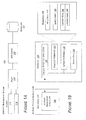
- FIGURE 1A is a block diagram of an illustrative content management system according to one embodiment
- FIGURE 1B is a block diagram of an illustrative storage system architecture according to one embodiment
- FIGURE 2A is a block diagram of a logical data tree structure according to one embodiment
- FIGURE 2B is a block diagram showing example applications of the logical data tree structure according to various embodiments.
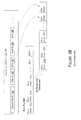
- FIGURE 3A is a block diagram depicting an illustrative file set data structure according to one embodiment
- FIGURE 3B is a block diagram depicting example data operations according to one embodiment
- FIGURE 3C is a block diagram illustrating the relationship between the index and the data files according to one embodiment
- FIGURE 3D is a graph showing the difference between the expected and actual distributions of randomly generated numbers as used in various embodiments
- FIGURE 3E is a chart illustrating an example offset calculation in accordance with one embodiment
- FIGURE 3F is a flow diagram showing the process of locating an index entry in accordance with one embodiment
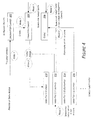
- FIGURE 4 is a diagram showing example data access operations with index files according to one embodiment
- FIGURE 5 is a diagram illustrating an example data optimization process according to one embodiment.
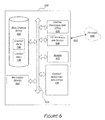
- FIGURE 6 is a block diagram illustrating an example hardware architecture for implementing the content management system according to one embodiment.
- FIGURES 1A and 1B depict a context in which the log-based data storage may be used in accordance with one embodiment of the invention.
- FIGURE 1A shows a content management system (CMS) 100 that includes a plurality of events 116, an optional proxy 120, a web server 122, and a repository 124.
- CMS content management system
- the clients 116 access the web server 122 in order to access content stored on the repository 124. The access may be conducted via the proxy 120.
- FIGURE 1B shows in more details the various components of the web server 122 and the repository 124.
- a content management application 126 is configured to run on the web server 122.
- the content management application 126 is configured to receive requests from clients 116. Such requests may include requests to read, write, manage, or manipulate data stored in the repository 124.
- a content repository application 128 is executed on the repository 124, and it is in communication with the content management application 126 to facilitate data access on the repository 124.
- the content repository application 128 manages one or more workspaces and one or more shared data areas.
- the content repository application 128 stores its data in a publish workspace 130, an author workspace 132, and shared data area 134.
- the shared data area 134 can be configured to store a variety of data, including, for example, large files that are referenced by data entities in the author workspace 132, the publish workspace 130 and/or any other workspace in the repository 124.
- Workspaces are used to partition data.
- workspaces are used to store different versions or states of what is logically the same content.
- the content in the author workspace 132 is edited by content authors, and after reviewing the changes made by the authors in this workspace, portions of the changes are copied to the publish workspace 132.
- the author workspace 132 may be used as the working area, while the publish workspace 130 may contain data intended to be published to the public.
- one workspace may contain an older version of a product while another workspace may contain a newer version of a product.
- two workspaces are shown, any number of workspaces can be used to accommodate various applications.
- workspace 140 is intended to be an example generic workspace that can be used in any part of the repository 124, e.g., as the published workspace 130 or any other workspace.
- the workspace 140 includes meta data 142, a search index 144, and a content portion including a content data storage 146 and a content index 148. These components will be further described in detail below.
- FIGURE 2A and 2B show the logical data structure of the log-based data storage in accordance with one embodiment.
- the content data storage 146 is implemented in a logical data tree structure with at least one root node 150 and one or more child nodes (152, 154, or 156). Each child node can have one or more child nodes. For example, as shown in FIGURE 2A , child node 154 has a child node 156.
- a node may include a unique identifier 162 and a list of properties 164.
- the unique identifier 162 is a randomly generated universally unique identifier (UUID) in one embodiment.
- UUID also described as a node ID in the latter part of the specification, is generated in one embodiment by the SHA-1 (Secured Hash Algorithm) random number generation process.
- the list of properties 164 may include one or more property name-value pairs for storing data for the node. Each pair may have a property name 166 and a value 168. A property typically has one value, but in some cases it can have a list of values.
- property name 166B has a list of three values 168B-1, 168B-2, and 168B-3.
- Data relating to how the node fits into the tree structure, e.g. references to parent/child nodes, list of child nodes, may also be stored in the list of properties 164.
- the node based logical data tree structure can accommodate a variety of data applications.
- FIGURE 2B demonstrates the versatility of the logical data tree structure. Because of its hierarchical nature, the data tree is well suited to store content with a hierarchical structure. For example, web site content is often stored in a directory structure, with media assets such as graphic and video files stored along with web page files stored in a hierarchical structure.
- example content data storage 268 stores a company's external and internal web sites.
- Node 272 is a directory node that denotes the directory for the company's external site. Stored within the external site directory are web pages and other related data files for the company's external site.
- node 274 which is a child node of node 272. stores the HTML code for the main page of the external site.
- the actual HTML code may be stored as a property name-value pair as shown in FIGURE 2B .
- a property name-value pair within node 272 may reference an external location at which the HTML code may be stored.
- some pairs may be used to store actual code while others may reference HTML codes obtained from external sources. This arrangement may be useful in situations where portions of the HTML codes may be dynamically generated by other applications.
- nodes 276 and 278, which are child nodes of node 274, are used to store media assets that are associated with the main page.
- node 276 is configured to store a reference to a graphic file containing the company logo.
- the property name-value pair in node 276 indicates the name of the graphic file.
- another property name-value pair (not shown) may indicate the location of the file.
- files such as graphic files, video files, audio files, or any other larger files may be stored in the shared data area 134 previously shown in FIGURE 1A .
- node 278 is configured to store a reference to a product video file associated with the main page. While nodes 276 and 278 are references in the example shown in FIGURE 2B , in some embodiments the nodes themselves may contain the actual file data.
- directory node 282 denotes a directory for files related to the company's internal site. Because directory node 282 is set apart from directory node 272 (the external site), an administrator may, for example, be able to create access restrictions as property name-value pairs within directory node 282 to restrict access to the child nodes under node 282.
- the node-based data tree structure can be adapted to store any type of file and directory system.
- the node-based data tree can be configured to store a version-controlled software repository, as well as a version-controlled document management system.
- Node 284 denotes an employee directory database. Within the example employee database are two database “tables,” an employees “table,” denoted by node 352, and a jobs “table,” denoted by node 356. As shown, three employee entries are within the employees "table,” and the three entries are denoted by nodes 352-A, 352-B, and 352-C.
- the data stored in node 352-A is equivalent to a record or a row within a relational database table.
- data is stored in property name-value pairs.
- a relationship database table may have two columns, "Employee Name" and "Job," they are implemented as property names in the nodes.
- a value may be a reference to another node, and by these references the various tables in the data tree may be joined.
- each employee node (352-A, 352-B, and 352-C) contains a reference to the "Jobs" "table.”
- the value of Mary's "Job” property is a reference to node 356-A.
- the references keep the process of updating straightforward. For example, should Mary receive a promotion to the job of "Engineer," the reference in her "Job” property can simply be updated to point to node 356-C.
- the flexibility of the node-based data tree offers a dynamic and powerful system for storing and managing a wide variety of data in a single application.
- the employee directory 284, a relational database application can be placed in the same data tree as the one storing the company's external and internal sites. Practically speaking, this allows data from one or more relational databases to be stored along with web pages, video files, or other files in a single logical as well as physical data structure.
- the storage of a variety of data applications in a uniform environment greatly reduces maintenance and development costs, as tools such as adaptors, connectors, and drivers that are needed to integrate disparate systems are not needed.
- FIGURE 3A shows a primary data architecture for storing the node-based data tree depicted in FIGURE 2A .
- the nodes of the data tree are stored as data entries (e.g., 252) in one or more log-based data files within a file set.
- a file set 228 includes a number of files, which are optionally stored together in a directory in some embodiments.
- these content data and index files may be stored as part of a file system of a standard operating system or as part of a custom-made application.
- the files may be stored in one or more magnetic disks such as hard drives, as well as in non-volatile memory such as flash drives. Some or all of the files may be stored in memory.
- multiple older versions of the same data may exist in the data files and the index files help speed up the process of locating the most updated version of content data.
- Data change operations will be described in further detail in conjunction with FIGURE 3B .
- multiple data files may be in use, but in general new data reflecting additions, updates, and deletes to data are appended to the newest data file.
- a data file grows larger than a certain configurable size threshold, a new data file is created.
- data files that do not contain active data are periodically deleted. A data file may grow obsolete when all its data has been indicated as updated or deleted by new data entries in a more recent data file.
- the data files may contain numerous types of data entries.
- the data files may include entries for storing file headers.
- the data files may include entries for such markers.
- the tar file format requires two empty blocks of 512 bytes each at the end of file.
- each data entry can be a:
- the data file is implemented in a UNIX tar format. In another embodiment, it is implemented in a gzip format.
- a UNIX tar format In another embodiment, it is implemented in a gzip format.
- a gzip format Those skilled in the art will appreciate that other standard formats may be used.
- non-standard formats may also be used in order to optimize performance.
- the tar format has a minimum read size of 1k, which may not be suitable for all applications.
- a custom format may be created to accommodate a different minimum read size to increase performance.
- FIGURE 3B shows how data can be updated in accordance with one embodiment.
- Data operations are node-based, so that read and write operations are targeted to individual nodes.
- each node is represented by a data entry in the data file.
- Data operations are typically accomplished in the form of a "change set.” which is also known as a transaction.
- FIGURE 3B shows an example transaction 170.
- the transaction 170 includes a unique transaction ID 180, and a list of one or more nodes to be changed. Each entry on the list includes a node ID (e.g., 182. 186) and new data for each node (e.g., 184, 188).
- the unique transaction ID 180 is the time of the transaction in milliseconds (where the transaction ID is incremented if the previous transaction occurred within the same millisecond to ensure that the transaction ID unique), though those skilled in the art will recognize that various other types of randomly and/or consecutively generated identifiers may be used.
- Data write operations are accomplished in an append-based fashion. As shown in FIGURE 3B . the nodes on the list in the transaction 170 are written to the end of the data file "002.” After the transaction is completed, i.e., the changes are deeded committed, data 184 and data 188 are written into previously empty slots at the end of the data file "002.” This basic data write operation is used both for revising and deleting data. For revision, the data entry representing of the node that is the target of the revision is not revised. Rather, the updated information is written as a new data entry as described above, and an associated index, if implemented, is revised, to point to the newly added data entry. As there may be any number of data files, and the changes are preferably appended to the latest data file.
- Node deletion is accomplished in much of the same way as revision, i.e., by storing a new data entry containing data indicative of a deletion (e.g., a data length of 0 or null value), and updating the index for the node to be deleted to point to the newly written data entry.
- a deletion e.g., a data length of 0 or null value
- all write operations including deletions are appended to the end of the data files only.
- the append-based data revision and deletion operations offer marked improvement in efficiency in several ways.
- Third, the data files can be backed up at any time, including at runtime when write operations are on-going. The only restriction is that the files need to be copied in the order of creation, and that the files must not be deleted as part of the optimization process while the backup process is running.
- a content index may be used to speed up the process of locating, within the data files, the most updated data entry for a particular node.
- An example content index 148 is shown in FIGURE 3C .
- the content index 148 may include a list of entries that reference data entries within the data files. In one embodiment, the index entries are of the same format and same size, for example, 64 byte.
- Each entry 190 may include a node ID 192, a number of reference information items including a data length entry 194, a data file reference entry 196, and a position entry 198.
- a data length of 0 indicates that the data in the corresponding node has been deleted.
- the position entry 198 indicates the absolute position of the data entry location within the file referenced in the data file reference entry 196.
- the data storage system e.g., the content repository application 128, can locale the data entry 252A referenced by the index entry 190A as follows. First, the data storage system uses the data file reference entry 196A to identify the particular data file in which to locate the referenced data entry.
- the data file reference entry 196A indicates that the system should look in the "data file 002.” Then, the data storage system can use position entry 198A to determine where in the "data file 0002" to look for the referenced data entry. As shown, since the data entry 252A is the first entry, the position is "0000.” Then the length entry 194A can be used to instruct the underlying operating system to read 128Kb of data to access this data entry 252A.
- index file 212 has a major version number of 2 and a minor version of 1, as denoted by the marking "2.1.”
- Index 214 is marked as version 2.0 and index 216 is marked as version 1.6.
- index file 212 version 2.1
- index file 214 version 2.0
- index 216 version 1.6
- a lookup is made in the index file with the highest major version number. If the target data entry is found to be referenced in that index file, it is returned. Returning to the example, a lookup process would begin with the index file 212 since it has the highest version number (version 2.1) among active index files. If the index file 212 does not contain an index entry that references the target data entry, a lookup attempt is next made in the next lower major version index file. In the example, the next index file that is searched in the lookup process would be the index file 216 (version 1.6). This process repeats either until an index entry that references the target entry is located, or until there is no index file with a lower major version number
- an index file includes a list of index entries 262 and a list of index properties 264.
- An example list of index entries has been described above in conjunction with the example index 194 in FIGURE 3C .
- the index entries are sorted in an ascending order by the node IDs.
- the index properties 264 may include:
- the offset is desirable for improving search efficiency of the index entries since the entries are sorted by node IDs.
- node IDs are generated using a commonly known secure pseudo random number generator such as SHA-1. Many other commonly known random number generation processes may be used, as they process the property of generating numbers with a relatively even distribution. Although the randomly generated numbers are expected to be evenly distributed, statistical analysis has shown that this is not always the case.
- FIGURE 3D illustrates the difference between the expected and actual distributions of randomly generated numbers. As shown, the amount of randomly generated numbers may be above the expected amount for certain numerical value ranges and below the expected amount for other numerical value ranges.
- An offset 402 is the difference between the expected amount and the actual amount. An offset may be calculated for each group of value ranges to determine the difference between the actual and the expected number of node IDs generated within the value range.
- FIGURE 3E illustrates an example offset calculation for node IDs within an index file.
- the value range of the randomly generated node IDs is 0 to 9,999, and 5,600 of such node IDs have been generated in this value range. If the range is divided into 100 groups (one for each percent), 56 node IDs would be expected in each group.
- the data storage system e.g., the content repository application 128, proceeds to calculate the offsets as follows. For each group, the system looks at how many actual node IDs were generated. For example, in the 1st group 49 node IDs within range were actually generated. The offset is then calculated as the difference between 56 (the expected number of node IDs) and 49 (the actual number of node IDs), which equals to 7.
- the process is repeated for all groups, and at the end of the process an offset value is calculated for each group.
- the list of offsets which in this example includes 100 offsets, is stored in the index file as previously described.
- the offset value that is stored in the offset is multiplied by the data size of each index entry.
- the position of the target entry in an index file is calculated by dividing the difference between the base node ID (the lowest valued node ID within the range) and the target node ID by the difference between the base node ID and the highest node ID with the value range for the node IDs for the index file. Then at state 412, the result from state 410 is multiplied by the index data size. The result is the expected position of the target entry in the index file. Then at state 414.
- the corresponding offset may then be determined by locating the group to which the target node ID belongs and looking up the corresponding offset as shown in FIGURE 3E .
- the offset may then be used to adjust the expected position. For example, an offset may compensate for the fact that the target node ID is within a sparsely distributed group but moving the expected position where the target node ID may be found.
- the offset can be added to or subtracted from the expected position to estimate the position of the target entry.
- the data storage system e.g., the content repository application 128, may instruct the underlying operating system to read at that estimated location.
- an operating system read usually provides a minimum read size, it is likely that the target entry will fall within the minimum read size window and be obtained in state 420.
- the UNIX operation system and other common operating systems have a standard minimum read size of 4 Kb.
- the index entry of the various embodiments is preferably implemented in 64 byte data size, a minimum read size of 4 Kb would encompass a large number of index entries and the target entry is likely located therein. Even if the read window misses the target entry, because the index entries are sorted by node IDs the system will be able to determine which direction to shift the next data read at state 422. It is very likely the next additional read will locate the target entry. The process repeats until the index entry is found.
- index entries can be quickly located without any searching.
- a target index can be located in O(1) (constant) time, while binary-tree based indices for conventional databases often require O(log n) (logarithmic) time searches. This process greatly enhances the speed of all data operations that are assisted by index lookups.
- FIGURE 4 is a block diagram showing the process of updating data when an index is implemented.
- the changes which include new data (updates, additions, deletions) that is about to be stored into the data files, are first put in an uncommitted changes map 202.
- the new data includes the actual data to be appended to the data files, as well as new index entries that will reference the new data. The data stays there until it is committed or rolled back. If it is rolled back, the new data is removed and no change is made to either the index or data file.
- the new data is added to a "committed changes" map 204.
- the changed data is written immediately to the data files without waiting for the commit entry, but the index changes or deletions are kept in the uncommitted index changes map until the transaction is committed, In this embodiment, a transaction rollback operation will result in a transaction rollback entry in the data file, and will cause the rolled back entries to be removed from the uncommitted index changes map.
- the "committed changes” map 204 grows overtime as more new data is stored there. Once the "committed changes” map 204 reaches a configurable pre-defined threshold, a new index file is created (as denoted by the state label "Write 3"). In the example shown in FIGURE 4 , an index file 210 has been newly created and marked as version 2.2. The newly created index file is marked as temporary until its creation process is completed, i.e., until all committed changes have been merged with version 2.1.
- the process of creating a. new index file involves merging together new entries from the committed changes map 204 with those from the highest version numbered index file.
- a merge sort algorithm is used in one embodiment.
- entries from the index file 212 (version 2.1, currently the highest version) are merged together with entries in the "committed changes" map 204 to form the new index file 210 (version 2.2).
- new data entries are appended to the log-based data files for delete and update operations.
- an incoming new index entry represents a delete or an update
- the new index entry referencing the newly appended data entry is chosen over the current entry referencing the old entry. For example, if index version 2.1 contains an index entry with a node ID of "2,345" and the committed changes map 204 contains a new index entry with the same node ID (representing an update to that node), during the merge process only the new index entry is written to the new index file version 2.2.
- the "committed changes" map 204 is cleared. As data from the committed changes overwrites data in the old data files, entries in some index files may become obsolete and the index files may be eventually deleted. For example, the index file 214 (version 2.0) is deleted when the data entries referenced by its index entries have been overwritten, i.e., when the index entries of the index file 214 are no longer used.
- the merge process is repeated until the current highest version numbered index file grows to a size that exceeds a pre-delined threshold. If the new merged file exceeds the threshold, a new index file with a new major version is added. In that case, only the entries in the "committed changes" map are stored in the new index file.
- the committed changes map 204 has a size threshold of 100 entries and the index file has a size threshold of 1 ,000 entries. With these thresholds, the index file 214 (version 2.0) would have 100 entries, since it is a new major version and it simply has all the entries of the current committed changes map.
- Each successive minor version e.g.
- index file 216 version 1.6
- 212 version 2.1
- a merge sort algorithm is used to combine the data from two active index files, and entries that have the same node IDs are detected and only the newest entry of those entries are retained.
- the process of locating a target index entry may be performed as follows. First, the "committed changes" map 204 is checked (as denoted by the state label "Read 1"). If the target entry is not found, the cache is checked next (as denoted, by the state label "Read 2"). If the target entry is also not found in the cache, a lookup is made in the active index files (as denoted by the state label "Read 3"), starting with the newest major version, in a process previously described in conjunction with FIGURE 3C . If a target entry is found, it is added to the cache (as denoted by the state label "Read 4").
- the newly found entry may replace an old entry in the cache if the cache is full.
- a least recently used (LRU) policy is used to manage the replacement of entries in the cache.
- one or more of the uncommitted changes map 202, the committed changes map 204, and the cache 206 may be in-memory objects to boost the performance of the data storage system.
- embodiments of the invention limit the size of the data files by periodically performing an optimization process on the data files. In brief, the process of optimization copies the most current data that is still used into new files and deletes old files that contain old or redundant data.
- FIGURE 5 provides an example of the optimization process.
- two example files, data files "1" and "2,” are about to undergo the optimization process.
- the format of the data files has been simplified for the purpose of illustration.
- Each example data file is shown to as having a node ID-value pair in each entry, and the entries are arranged from left to right in the order added (the rightmost entries are the most recent ones).
- the first entry in data file 1 has a node ID of "1" and a value of "A.” It may be observed that there are multiple entries with a node ID of "1,” which means that the node has been updated multiple times and there are several obsolete versions of the data for that node.
- the data entry may additionally include a "creation time” and/or a "last modified time.” Because newer data tends to be accessed more frequently, after the separation data files containing newer data may be specially optimized for faster access, e.g., by moving some or all of them into cache memory.
- optimization process is an intensive and time-consuming process, it is advantageously scheduled for execution as a background process during times when the volume of normal data operations is low (e.g., at midnight or during the weekends).
- One advantage for this embodiment is that each data access is optimized by separating out the time-consuming data operations for execution at later scheduled times when normal data read and write operation volume is low.
- the data files may be advantageously configured to hold 50-100 Gb of data content.
- the size of a data file could be between 512-1,024 Mb.
- the index file size is preferably set between 64-128 Mb, with the size of each index entry set at 64 byte each. As such, for approximately 50 Gb of data, approximate 3 index files with 1.0-1.5 million index entries would be needed.
- the data file size is set to be large in some embodiments because certain operating systems limit the number of files that may be concurrently opened.
- embodiments may store larger objects outside of the data files in a separate content addressed storage system. Because embodiments employ an append-based data architecture, modifications and updates to larger data objects would result in disproportionally large data files that cannot be efficiently accessed. If the data files are stored on a hard drive, this could result in inefficient disk space usage. Therefore, in some embodiments, such large data objects are stored externally in a content addressed storage system. In such cases, instead of the objects themselves, the addresses of the data objects are stored in the data files.
- the list of data files is first read and opened.
- the index files if implemented, are also opened at this time as well.
- the system then reads the active index file with the highest major version number, which contains the data file ID and position of the last persisted index data.
- the last persisted index data indicates the data file number and position of the index entry that was inserted last.
- the data files are then scanned from this point on so that the index is updated.
- the data storage system may encounter a checksum error (or the end-of-file could be reached unexpectedly). This can occur, for example, if a power outage occurred while writing to the data file.
- the data files are truncated to the last valid position, and index files with a checksum error are deleted as they can be re-created from scratch. Index files can be recreated from scratch by completely scanning all data files.
- random writes to the file are supported to clean or truncate uncommitted or incorrectly written data. Incorrectly written data can be detected by comparing the checksums in the file with the stored checksum. Uncommitted data may be a data entry that contains a transaction ID, but has no corresponding commit entry for that given transaction ID.
- FIGURE 6 is a block diagram illustrating how the content management system may be implemented in computer hardware in accordance with one embodiment.
- the depicted computing system includes, for example, a computer that is IBM, Macintosh, or Linux/Unix compatible. In one embodiment, it comprises a server, a desktop computer, a laptop computer, a personal digital assistant, a kiosk, or a mobile device, for example.
- the sample computing system 630 includes a central processing unit (“CPU") 690, which may include one or more conventional microprocessors.
- CPU central processing unit
- the computing system 630 further includes a memory 672, such as random access memory (“RAM”) for temporary storage of information and a read only memory (“ROM”) for permanent storage of information, and a mass storage device 682, such as a hard drive, diskette, optical media storage device, non-volatile storage such as a flash memory drive, or other similar storage devices.
- a memory 672 such as random access memory (“RAM”) for temporary storage of information and a read only memory (“ROM”) for permanent storage of information
- ROM read only memory
- mass storage device 682 such as a hard drive, diskette, optical media storage device, non-volatile storage such as a flash memory drive, or other similar storage devices.
- the content data 146 and content index 148 may be stored as standard files of an operating system executed by the computer and the files may be stored in mass storage device 682.
- the components and modules of the computing system 630 are connected to the computer using a standard based bus system 632.
- the standard based bus system 632 could be Peripheral Component Interconnect (“PCI”), Microchannel, Small Computer System Interface (“SCSI”), Industrial Standard Architecture (“ISA”) and Extended ISA (“EISA”) architectures, for example.
- PCI Peripheral Component Interconnect
- SCSI Microchannel, Small Computer System Interface
- ISA Industrial Standard Architecture
- EISA Extended ISA
- the functionality provided for in the components and modules of the computing system 630 may be combined into fewer components and modules or further separated into additional components and modules.
- the computing system 630 is generally controlled and coordinated by operating system software, such as Windows Server, Linux Server, Windows 98, Windows NT, Windows 2000, Windows XP, Windows Vista, Unix, Linux, SunOS, Solaris, or other compatible server or desktop operating systems.
- operating system software such as Windows Server, Linux Server, Windows 98, Windows NT, Windows 2000, Windows XP, Windows Vista, Unix, Linux, SunOS, Solaris, or other compatible server or desktop operating systems.
- the operating system may be any available operating system, such as MAC OS X.
- the computing system 630 may be controlled by a proprietary operating system.
- Conventional operating systems control and schedule computer processes for execution, perform memory management, provide file system, networking, I/O services, and provide a user interface, such as a graphical user interface ("GUI”), among other things.
- GUI graphical user interface
- the sample computing system 630 includes one or more commonly available input/output (I/O) devices and interfaces 668, such as a keyboard, mouse, touchpad, and printer.
- the I/O devices and interfaces 668 include one or more display device, such as a monitor, that allows the visual presentation of data to a user. More particularly, a display device provides for the presentation of GUIs, application software data, and multimedia presentations, for example.
- the computing system 630 may also include one or more multimedia devices 662, such as speakers, video cards, graphics accelerators, and microphones, for example. In other embodiments, such as when the computing system 630 comprises a network server, for example, the computing system may not include any of the above-noted man-machine I/O devices.
- the I/O devices and interfaces 668 provide a communication interface to various external devices.
- the computing system 630 is electronically coupled to a network 640, which may comprise one or more of a LAN, WAN, or the Internet, for example, via a wired, wireless, or combination of wired and wireless, communication link 663.
- the network 640 facilitates communications among various computing devices and/or other electronic devices via wired or wireless communication links.
- data access requests are sent to the computing system 630 over the network 140.
- results are returned over the network 140.
- the computing system 630 may communicate with other data sources or other computing devices.
- the computing system 630 also includes a content repository application 128 that may be executed by the CPU 190.
- the content repository application 128 may be implemented as one or more modules, which may include, by way of example, components, such as software components, object-oriented software components, class components and task components, processes, functions, attributes, procedures, subroutines, segments of program code, drivers, firmware, microcode, circuitry, data, databases, data structures, tables, arrays, and variables.
- the content repository application 128 may be implemented as separate a hardware device.
- module refers to logic embodied in hardware or firmware, or to a collection of software instructions, possibly having entry and exit points, written in a programming language, such as, for example, Java, Lua, C or C++.
- a software module may be compiled and linked into an executable program, installed in a dynamic link library, or may be written in an interpreted programming language such as, for example, BASIC, Perl, or Python. It will be appreciated that software modules may be callable from other modules or from themselves, and/or may be invoked in response to detected events or interrupts.
- Software instructions may be embedded in firmware, such as an EPROM.
- hardware modules may be comprised of connected logic units, such as gates and flip-flops, and/or may be comprised of programmable units, such as programmable gate arrays or processors.
- the modules described herein are preferably implemented as software modules, but may be represented in hardware or firmware. Generally, the modules described herein refer to logical modules that may be combined with other modules or divided into sub-modules despite their physical organization or storage.
- All of the methods and processes described above may be embodied in, and fully automated via, software code modules executed by one or more general purpose computers or processors.
- the code modules may be stored in any type of computer-readable medium or other computer storage device. Some or all of the methods may alternatively be embodied in specialized computer hardware.
- the components referred to herein may be implemented in hardware, software, firmware, or a combination thereof.
Landscapes
- Engineering & Computer Science (AREA)
- Databases & Information Systems (AREA)
- Theoretical Computer Science (AREA)
- Data Mining & Analysis (AREA)
- Physics & Mathematics (AREA)
- General Engineering & Computer Science (AREA)
- General Physics & Mathematics (AREA)
- Information Retrieval, Db Structures And Fs Structures Therefor (AREA)
- Debugging And Monitoring (AREA)
Applications Claiming Priority (2)
| Application Number | Priority Date | Filing Date | Title |
|---|---|---|---|
| US8022308P | 2008-07-11 | 2008-07-11 | |
| US12/172,971 US7917494B2 (en) | 2008-07-11 | 2008-07-14 | System and method for a log-based data storage |
Publications (3)
| Publication Number | Publication Date |
|---|---|
| EP2144177A2 true EP2144177A2 (de) | 2010-01-13 |
| EP2144177A3 EP2144177A3 (de) | 2010-06-02 |
| EP2144177B1 EP2144177B1 (de) | 2012-10-17 |
Family
ID=41227540
Family Applications (1)
| Application Number | Title | Priority Date | Filing Date |
|---|---|---|---|
| EP09165166A Active EP2144177B1 (de) | 2008-07-11 | 2009-07-10 | System und Verfahren für eine logbuchbasierte Datenspeicherung |
Country Status (2)
| Country | Link |
|---|---|
| US (1) | US7917494B2 (de) |
| EP (1) | EP2144177B1 (de) |
Cited By (20)
| Publication number | Priority date | Publication date | Assignee | Title |
|---|---|---|---|---|
| US9229969B2 (en) | 2013-03-11 | 2016-01-05 | International Business Machines Corporation | Management of searches in a database system |
| US9229960B2 (en) | 2013-02-11 | 2016-01-05 | International Business Machines Corporation | Database management delete efficiency |
| WO2016014368A1 (en) * | 2014-07-20 | 2016-01-28 | Microsoft Technology Licensing, Llc | High throughput data modifications using blind update operations |
| US9304235B2 (en) | 2014-07-30 | 2016-04-05 | Microsoft Technology Licensing, Llc | Microfabrication |
| US9378235B2 (en) | 2013-03-11 | 2016-06-28 | International Business Machines Corporation | Management of updates in a database system |
| US9414417B2 (en) | 2014-08-07 | 2016-08-09 | Microsoft Technology Licensing, Llc | Propagating communication awareness over a cellular network |
| CN106649461A (zh) * | 2016-09-26 | 2017-05-10 | 浪潮电子信息产业股份有限公司 | 一种自动化清理维护ElasticSearch日志索引文件的方法 |
| US9787576B2 (en) | 2014-07-31 | 2017-10-10 | Microsoft Technology Licensing, Llc | Propagating routing awareness for autonomous networks |
| EP2669804A4 (de) * | 2011-01-28 | 2017-10-18 | Nec Corporation | Speichersystem |
| US9827209B2 (en) | 2015-02-09 | 2017-11-28 | Microsoft Technology Licensing, Llc | Display system |
| US10018844B2 (en) | 2015-02-09 | 2018-07-10 | Microsoft Technology Licensing, Llc | Wearable image display system |
| CN108280726A (zh) * | 2017-01-06 | 2018-07-13 | 中兴通讯股份有限公司 | 购物数据迁移方法及装置 |
| US10254942B2 (en) | 2014-07-31 | 2019-04-09 | Microsoft Technology Licensing, Llc | Adaptive sizing and positioning of application windows |
| US10317677B2 (en) | 2015-02-09 | 2019-06-11 | Microsoft Technology Licensing, Llc | Display system |
| US10324733B2 (en) | 2014-07-30 | 2019-06-18 | Microsoft Technology Licensing, Llc | Shutdown notifications |
| US10592080B2 (en) | 2014-07-31 | 2020-03-17 | Microsoft Technology Licensing, Llc | Assisted presentation of application windows |
| US10678412B2 (en) | 2014-07-31 | 2020-06-09 | Microsoft Technology Licensing, Llc | Dynamic joint dividers for application windows |
| US11086216B2 (en) | 2015-02-09 | 2021-08-10 | Microsoft Technology Licensing, Llc | Generating electronic components |
| CN119226332A (zh) * | 2024-12-02 | 2024-12-31 | 天津南大通用数据技术股份有限公司 | 数据处理方法、装置、设备及存储介质 |
| CN120723724A (zh) * | 2025-09-01 | 2025-09-30 | 武汉盛帆电子股份有限公司 | 电能表冻结数据存储方法、装置及智能电能表 |
Families Citing this family (61)
| Publication number | Priority date | Publication date | Assignee | Title |
|---|---|---|---|---|
| US8209305B2 (en) * | 2006-04-19 | 2012-06-26 | Microsoft Corporation | Incremental update scheme for hyperlink database |
| JP4702962B2 (ja) * | 2008-11-12 | 2011-06-15 | インターナショナル・ビジネス・マシーンズ・コーポレーション | メモリ制御装置、プログラム及び方法 |
| US8347050B2 (en) * | 2009-01-27 | 2013-01-01 | Microsoft Corporation | Append-based shared persistent storage |
| US8799572B2 (en) | 2009-04-20 | 2014-08-05 | Microsoft Corporation | Sliding-window multi-class striping |
| US9569319B2 (en) * | 2009-09-18 | 2017-02-14 | Alcatel Lucent | Methods for improved server redundancy in dynamic networks |
| US10198463B2 (en) * | 2010-04-16 | 2019-02-05 | Salesforce.Com, Inc. | Methods and systems for appending data to large data volumes in a multi-tenant store |
| US8370316B2 (en) * | 2010-07-12 | 2013-02-05 | Sap Ag | Hash-join in parallel computation environments |
| US10127281B2 (en) | 2010-12-23 | 2018-11-13 | Sap Se | Dynamic hash table size estimation during database aggregation processing |
| US8949294B2 (en) | 2011-03-23 | 2015-02-03 | Red Hat, Inc. | Data grid supporting multiple protocols |
| US9208211B2 (en) * | 2011-03-23 | 2015-12-08 | Red Hat, Inc. | Performing object relational mapping for a data grid |
| US8849929B2 (en) * | 2011-04-27 | 2014-09-30 | Microsoft Corporation | Applying actions to item sets within a constraint |
| US8671111B2 (en) * | 2011-05-31 | 2014-03-11 | International Business Machines Corporation | Determination of rules by providing data records in columnar data structures |
| US8375012B1 (en) * | 2011-08-10 | 2013-02-12 | Hewlett-Packard Development Company, L.P. | Computer indexes with multiple representations |
| WO2013114125A2 (en) * | 2012-02-03 | 2013-08-08 | David Sallis | A method and database system for secure storage and communication of information |
| US11487707B2 (en) * | 2012-04-30 | 2022-11-01 | International Business Machines Corporation | Efficient file path indexing for a content repository |
| US10078677B2 (en) | 2012-06-18 | 2018-09-18 | ServiceSource International, Inc. | Inbound and outbound data handling for recurring revenue asset management |
| US9652776B2 (en) | 2012-06-18 | 2017-05-16 | Greg Olsen | Visual representations of recurring revenue management system data and predictions |
| US20130339088A1 (en) * | 2012-06-18 | 2013-12-19 | ServiceSource International, Inc. | Recurring revenue management benchmarking |
| US20140071135A1 (en) * | 2012-09-07 | 2014-03-13 | Magnet Systems Inc. | Managing activities over time in an activity graph |
| US9104708B2 (en) | 2012-09-07 | 2015-08-11 | Magnet Systems, Inc. | Managing activities over time in an activity graph |
| CA2790479C (en) * | 2012-09-24 | 2020-12-15 | Ibm Canada Limited - Ibm Canada Limitee | Partitioning a search space for distributed crawling |
| US10057726B2 (en) | 2012-10-02 | 2018-08-21 | Razer (Asia-Pacific) Pte. Ltd. | Managing user data on an electronic device |
| US9106721B2 (en) * | 2012-10-02 | 2015-08-11 | Nextbit Systems | Application state synchronization across multiple devices |
| US8914356B2 (en) | 2012-11-01 | 2014-12-16 | International Business Machines Corporation | Optimized queries for file path indexing in a content repository |
| US9323761B2 (en) | 2012-12-07 | 2016-04-26 | International Business Machines Corporation | Optimized query ordering for file path indexing in a content repository |
| US9436561B2 (en) * | 2013-03-28 | 2016-09-06 | Microsoft Technology Licensing, Llc | Recovery processing using torn write detection |
| CN103259737B (zh) * | 2013-04-18 | 2016-01-13 | 西安交通大学 | 一种并行存储高速网络流量的快速定位方法 |
| US9473732B2 (en) * | 2013-05-31 | 2016-10-18 | Arris Enterprises, Inc. | Self correcting record pipeline |
| EP2849092A1 (de) * | 2013-09-17 | 2015-03-18 | Siemens Aktiengesellschaft | Verfahren und System zur Archivierung von Daten aus einer Quelldatenbank in einer Zieldatenbank |
| US9639548B2 (en) | 2013-10-28 | 2017-05-02 | Pivotal Software, Inc. | Selecting files for compaction |
| US9639544B1 (en) | 2013-10-28 | 2017-05-02 | Pivotal Software, Inc. | Table data persistence |
| US10382549B1 (en) | 2013-10-28 | 2019-08-13 | Pivotal Software, Inc. | Data management platform |
| US10769711B2 (en) | 2013-11-18 | 2020-09-08 | ServiceSource International, Inc. | User task focus and guidance for recurring revenue asset management |
| JP6264872B2 (ja) * | 2013-12-17 | 2018-01-24 | 日本電気株式会社 | トランザクション処理システム |
| US9965505B2 (en) * | 2014-03-19 | 2018-05-08 | Red Hat, Inc. | Identifying files in change logs using file content location identifiers |
| US10105593B2 (en) | 2014-04-08 | 2018-10-23 | Razer (Asia-Pacific) Pte. Ltd. | File prefetching for gaming applications accessed by electronic devices |
| US9355111B2 (en) | 2014-04-30 | 2016-05-31 | Microsoft Technology Licensing, Llc | Hierarchical index based compression |
| US20150339314A1 (en) * | 2014-05-25 | 2015-11-26 | Brian James Collins | Compaction mechanism for file system |
| US11488086B2 (en) | 2014-10-13 | 2022-11-01 | ServiceSource International, Inc. | User interface and underlying data analytics for customer success management |
| US11113237B1 (en) * | 2014-12-30 | 2021-09-07 | EMC IP Holding Company LLC | Solid state cache index for a deduplicate storage system |
| US9429692B1 (en) | 2015-02-09 | 2016-08-30 | Microsoft Technology Licensing, Llc | Optical components |
| US9372347B1 (en) | 2015-02-09 | 2016-06-21 | Microsoft Technology Licensing, Llc | Display system |
| US9535253B2 (en) | 2015-02-09 | 2017-01-03 | Microsoft Technology Licensing, Llc | Display system |
| US9513480B2 (en) | 2015-02-09 | 2016-12-06 | Microsoft Technology Licensing, Llc | Waveguide |
| US9423360B1 (en) | 2015-02-09 | 2016-08-23 | Microsoft Technology Licensing, Llc | Optical components |
| US11449549B2 (en) * | 2015-02-26 | 2022-09-20 | Red Hat, Inc. | Storing entries as ordered linked lists |
| JP6418400B2 (ja) * | 2015-12-17 | 2018-11-07 | 京セラドキュメントソリューションズ株式会社 | 電子機器および情報処理プログラム |
| US10296250B2 (en) * | 2016-06-08 | 2019-05-21 | Intel Corporation | Method and apparatus for improving performance of sequential logging in a storage device |
| US10496618B2 (en) * | 2017-02-07 | 2019-12-03 | Red Hat, Inc. | Managing data replication in a data grid |
| WO2018233820A1 (en) | 2017-06-21 | 2018-12-27 | Huawei Technologies Co., Ltd. | Systems and methods for management of a log-structure |
| US20190114082A1 (en) * | 2017-10-17 | 2019-04-18 | HoneycombData Inc. | Coordination Of Compaction In A Distributed Storage System |
| US10817472B2 (en) | 2017-10-23 | 2020-10-27 | Dropbox, Inc. | Storage organization system with associated storage utilization values |
| US10866963B2 (en) | 2017-12-28 | 2020-12-15 | Dropbox, Inc. | File system authentication |
| EP3834153A1 (de) | 2018-08-10 | 2021-06-16 | NVIDIA Corporation | Plattform und verfahren zur kollaborativen erzeugung von inhalten |
| US10725911B2 (en) | 2018-12-10 | 2020-07-28 | Sap Se | Non-Uniform pagination of columnar data |
| CN110032549B (zh) * | 2019-01-28 | 2023-10-20 | 北京奥星贝斯科技有限公司 | 分区分裂方法、装置、电子设备及可读存储介质 |
| GB201903141D0 (en) * | 2019-03-08 | 2019-04-24 | Univ Cape Town | System and associated method for ensuring data privacy |
| FR3103664B1 (fr) * | 2019-11-27 | 2023-04-07 | Amadeus Sas | Système de stockage distribué pour stocker des données contextuelles |
| US20220134222A1 (en) * | 2020-11-03 | 2022-05-05 | Nvidia Corporation | Delta propagation in cloud-centric platforms for collaboration and connectivity |
| CN112579607B (zh) * | 2020-12-24 | 2023-05-16 | 网易(杭州)网络有限公司 | 数据访问方法和装置、存储介质、电子设备 |
| US20250181563A1 (en) * | 2023-12-01 | 2025-06-05 | Xetdata Inc. | Scalable data structure for binary file deduplication |
Family Cites Families (4)
| Publication number | Priority date | Publication date | Assignee | Title |
|---|---|---|---|---|
| US6353834B1 (en) | 1996-11-14 | 2002-03-05 | Mitsubishi Electric Research Laboratories, Inc. | Log based data architecture for a transactional message queuing system |
| US6999966B2 (en) * | 2002-04-23 | 2006-02-14 | International Business Machines Corporation | Content management system and methodology for implementing a complex object using nested/recursive structures |
| US8566326B2 (en) * | 2004-11-05 | 2013-10-22 | Oracle International Corporation | High-performance log-based processing |
| JP2007265384A (ja) | 2006-01-31 | 2007-10-11 | Victor Co Of Japan Ltd | 構造化データ格納装置、構造化データ格納プログラム、及び構造化データ格納方法 |
-
2008
- 2008-07-14 US US12/172,971 patent/US7917494B2/en active Active
-
2009
- 2009-07-10 EP EP09165166A patent/EP2144177B1/de active Active
Non-Patent Citations (1)
| Title |
|---|
| ROSENBLUM, M. ET AL.: "The Design and Implementation of a Log-Structured File System", OPERATING SYSTEMS REVIEW, ACM, NEW YORK, NY, US, vol. 25, no. 5, 1 January 1991 (1991-01-01), pages 1 - 15 |
Cited By (26)
| Publication number | Priority date | Publication date | Assignee | Title |
|---|---|---|---|---|
| EP2669804A4 (de) * | 2011-01-28 | 2017-10-18 | Nec Corporation | Speichersystem |
| US9858287B2 (en) | 2011-01-28 | 2018-01-02 | Nec Corporation | Storage system |
| US9229960B2 (en) | 2013-02-11 | 2016-01-05 | International Business Machines Corporation | Database management delete efficiency |
| US9229961B2 (en) | 2013-02-11 | 2016-01-05 | International Business Machines Corporation | Database management delete efficiency |
| US9378235B2 (en) | 2013-03-11 | 2016-06-28 | International Business Machines Corporation | Management of updates in a database system |
| US9229969B2 (en) | 2013-03-11 | 2016-01-05 | International Business Machines Corporation | Management of searches in a database system |
| US9378234B2 (en) | 2013-03-11 | 2016-06-28 | International Business Machines Corporation | Management of updates in a database system |
| US9229968B2 (en) | 2013-03-11 | 2016-01-05 | Intenational Business Machines Corporation | Management of searches in a database system |
| US9514211B2 (en) | 2014-07-20 | 2016-12-06 | Microsoft Technology Licensing, Llc | High throughput data modifications using blind update operations |
| WO2016014368A1 (en) * | 2014-07-20 | 2016-01-28 | Microsoft Technology Licensing, Llc | High throughput data modifications using blind update operations |
| US10324733B2 (en) | 2014-07-30 | 2019-06-18 | Microsoft Technology Licensing, Llc | Shutdown notifications |
| US9304235B2 (en) | 2014-07-30 | 2016-04-05 | Microsoft Technology Licensing, Llc | Microfabrication |
| US10254942B2 (en) | 2014-07-31 | 2019-04-09 | Microsoft Technology Licensing, Llc | Adaptive sizing and positioning of application windows |
| US10678412B2 (en) | 2014-07-31 | 2020-06-09 | Microsoft Technology Licensing, Llc | Dynamic joint dividers for application windows |
| US10592080B2 (en) | 2014-07-31 | 2020-03-17 | Microsoft Technology Licensing, Llc | Assisted presentation of application windows |
| US9787576B2 (en) | 2014-07-31 | 2017-10-10 | Microsoft Technology Licensing, Llc | Propagating routing awareness for autonomous networks |
| US9860321B2 (en) | 2014-08-07 | 2018-01-02 | Microsoft Technology Licensing, Llc | Propagating communication awareness over a cellular network |
| US9414417B2 (en) | 2014-08-07 | 2016-08-09 | Microsoft Technology Licensing, Llc | Propagating communication awareness over a cellular network |
| US10018844B2 (en) | 2015-02-09 | 2018-07-10 | Microsoft Technology Licensing, Llc | Wearable image display system |
| US10317677B2 (en) | 2015-02-09 | 2019-06-11 | Microsoft Technology Licensing, Llc | Display system |
| US9827209B2 (en) | 2015-02-09 | 2017-11-28 | Microsoft Technology Licensing, Llc | Display system |
| US11086216B2 (en) | 2015-02-09 | 2021-08-10 | Microsoft Technology Licensing, Llc | Generating electronic components |
| CN106649461A (zh) * | 2016-09-26 | 2017-05-10 | 浪潮电子信息产业股份有限公司 | 一种自动化清理维护ElasticSearch日志索引文件的方法 |
| CN108280726A (zh) * | 2017-01-06 | 2018-07-13 | 中兴通讯股份有限公司 | 购物数据迁移方法及装置 |
| CN119226332A (zh) * | 2024-12-02 | 2024-12-31 | 天津南大通用数据技术股份有限公司 | 数据处理方法、装置、设备及存储介质 |
| CN120723724A (zh) * | 2025-09-01 | 2025-09-30 | 武汉盛帆电子股份有限公司 | 电能表冻结数据存储方法、装置及智能电能表 |
Also Published As
| Publication number | Publication date |
|---|---|
| US7917494B2 (en) | 2011-03-29 |
| EP2144177A3 (de) | 2010-06-02 |
| US20100010967A1 (en) | 2010-01-14 |
| EP2144177B1 (de) | 2012-10-17 |
Similar Documents
| Publication | Publication Date | Title |
|---|---|---|
| EP2144177B1 (de) | System und Verfahren für eine logbuchbasierte Datenspeicherung | |
| CN104040481B (zh) | 用于融合、存储和检索增量式备份数据的方法和系统 | |
| US6023710A (en) | System and method for long-term administration of archival storage | |
| US7480643B2 (en) | System and method for migrating databases | |
| US8103621B2 (en) | HSM two-way orphan reconciliation for extremely large file systems | |
| US9852145B2 (en) | Creation of synthetic backups within deduplication storage system by a backup application | |
| CN107835983B (zh) | 使用一致的数据库快照在分布式数据库中进行备份和还原 | |
| CN103902623B (zh) | 用于在存储系统上存取文件的方法和系统 | |
| CA2705379C (en) | Systems and methods for creating copies of data, such as archive copies | |
| US8918400B2 (en) | Data set index record preservation | |
| US8015155B2 (en) | Non-disruptive backup copy in a database online reorganization environment | |
| EP2562657B1 (de) | Verwaltung von Aktualisierungstransaktionen und Crash-Behebung für Spaltendatenbank | |
| US20120078859A1 (en) | Systems and methods to update a content store associated with a search index | |
| US9002800B1 (en) | Archive and backup virtualization | |
| US20090300013A1 (en) | Optimized Reverse Key Indexes | |
| KR20110032343A (ko) | 비휘발성 메모리를 이용한 로깅 최적화 장치 및 방법 | |
| US9223811B2 (en) | Creation and expiration of backup objects in block-level incremental-forever backup systems | |
| KR20060044692A (ko) | 타임라인 기반의 컴퓨팅 환경을 이용하여 데이터를복구하기 위한 방법, 매체 및 시스템 | |
| US11860873B2 (en) | Dashboard loading using a filtering query from a cloud-based data warehouse cache | |
| SE525128C2 (sv) | En anordning för att återställa åtminstone en av filer, mappar och applikationsassocierade filer i en dator till ett tidigare tillstånd | |
| US20130006940A1 (en) | Methods and apparatus related to completion of large objects within a db2 database environment | |
| CN1900928A (zh) | 用于访问文件系统快照和文件系统的方法 | |
| CN114610537B (zh) | 版本化记录管理计算系统、方法和计算机可读介质 | |
| JP4952119B2 (ja) | ファイルサーバを用いたコンテンツ管理システムと方法およびプログラム | |
| Taranin | Deduplication in the backup system with information storage in a database |
Legal Events
| Date | Code | Title | Description |
|---|---|---|---|
| PUAI | Public reference made under article 153(3) epc to a published international application that has entered the european phase |
Free format text: ORIGINAL CODE: 0009012 |
|
| AK | Designated contracting states |
Kind code of ref document: A2 Designated state(s): AT BE BG CH CY CZ DE DK EE ES FI FR GB GR HR HU IE IS IT LI LT LU LV MC MK MT NL NO PL PT RO SE SI SK SM TR |
|
| PUAL | Search report despatched |
Free format text: ORIGINAL CODE: 0009013 |
|
| AK | Designated contracting states |
Kind code of ref document: A3 Designated state(s): AT BE BG CH CY CZ DE DK EE ES FI FR GB GR HR HU IE IS IT LI LT LU LV MC MK MT NL NO PL PT RO SE SI SK SM TR |
|
| AX | Request for extension of the european patent |
Extension state: AL BA RS |
|
| 17P | Request for examination filed |
Effective date: 20101201 |
|
| RAP1 | Party data changed (applicant data changed or rights of an application transferred) |
Owner name: ADOBE SOFTWARE TRADING COMPANY LIMITED |
|
| GRAP | Despatch of communication of intention to grant a patent |
Free format text: ORIGINAL CODE: EPIDOSNIGR1 |
|
| GRAS | Grant fee paid |
Free format text: ORIGINAL CODE: EPIDOSNIGR3 |
|
| GRAA | (expected) grant |
Free format text: ORIGINAL CODE: 0009210 |
|
| AK | Designated contracting states |
Kind code of ref document: B1 Designated state(s): AT BE BG CH CY CZ DE DK EE ES FI FR GB GR HR HU IE IS IT LI LT LU LV MC MK MT NL NO PL PT RO SE SI SK SM TR |
|
| REG | Reference to a national code |
Ref country code: GB Ref legal event code: FG4D |
|
| REG | Reference to a national code |
Ref country code: CH Ref legal event code: EP |
|
| REG | Reference to a national code |
Ref country code: IE Ref legal event code: FG4D |
|
| REG | Reference to a national code |
Ref country code: AT Ref legal event code: REF Ref document number: 580177 Country of ref document: AT Kind code of ref document: T Effective date: 20121115 |
|
| REG | Reference to a national code |
Ref country code: DE Ref legal event code: R096 Ref document number: 602009010438 Country of ref document: DE Effective date: 20121213 |
|
| REG | Reference to a national code |
Ref country code: AT Ref legal event code: MK05 Ref document number: 580177 Country of ref document: AT Kind code of ref document: T Effective date: 20121017 |
|
| REG | Reference to a national code |
Ref country code: NL Ref legal event code: VDEP Effective date: 20121017 |
|
| REG | Reference to a national code |
Ref country code: LT Ref legal event code: MG4D |
|
| PG25 | Lapsed in a contracting state [announced via postgrant information from national office to epo] |
Ref country code: HR Free format text: LAPSE BECAUSE OF FAILURE TO SUBMIT A TRANSLATION OF THE DESCRIPTION OR TO PAY THE FEE WITHIN THE PRESCRIBED TIME-LIMIT Effective date: 20121017 Ref country code: NL Free format text: LAPSE BECAUSE OF FAILURE TO SUBMIT A TRANSLATION OF THE DESCRIPTION OR TO PAY THE FEE WITHIN THE PRESCRIBED TIME-LIMIT Effective date: 20121017 Ref country code: ES Free format text: LAPSE BECAUSE OF FAILURE TO SUBMIT A TRANSLATION OF THE DESCRIPTION OR TO PAY THE FEE WITHIN THE PRESCRIBED TIME-LIMIT Effective date: 20130128 Ref country code: SE Free format text: LAPSE BECAUSE OF FAILURE TO SUBMIT A TRANSLATION OF THE DESCRIPTION OR TO PAY THE FEE WITHIN THE PRESCRIBED TIME-LIMIT Effective date: 20121017 Ref country code: FI Free format text: LAPSE BECAUSE OF FAILURE TO SUBMIT A TRANSLATION OF THE DESCRIPTION OR TO PAY THE FEE WITHIN THE PRESCRIBED TIME-LIMIT Effective date: 20121017 Ref country code: IS Free format text: LAPSE BECAUSE OF FAILURE TO SUBMIT A TRANSLATION OF THE DESCRIPTION OR TO PAY THE FEE WITHIN THE PRESCRIBED TIME-LIMIT Effective date: 20130217 Ref country code: LT Free format text: LAPSE BECAUSE OF FAILURE TO SUBMIT A TRANSLATION OF THE DESCRIPTION OR TO PAY THE FEE WITHIN THE PRESCRIBED TIME-LIMIT Effective date: 20121017 Ref country code: NO Free format text: LAPSE BECAUSE OF FAILURE TO SUBMIT A TRANSLATION OF THE DESCRIPTION OR TO PAY THE FEE WITHIN THE PRESCRIBED TIME-LIMIT Effective date: 20130117 |
|
| PG25 | Lapsed in a contracting state [announced via postgrant information from national office to epo] |
Ref country code: GR Free format text: LAPSE BECAUSE OF FAILURE TO SUBMIT A TRANSLATION OF THE DESCRIPTION OR TO PAY THE FEE WITHIN THE PRESCRIBED TIME-LIMIT Effective date: 20130118 Ref country code: SI Free format text: LAPSE BECAUSE OF FAILURE TO SUBMIT A TRANSLATION OF THE DESCRIPTION OR TO PAY THE FEE WITHIN THE PRESCRIBED TIME-LIMIT Effective date: 20121017 Ref country code: PL Free format text: LAPSE BECAUSE OF FAILURE TO SUBMIT A TRANSLATION OF THE DESCRIPTION OR TO PAY THE FEE WITHIN THE PRESCRIBED TIME-LIMIT Effective date: 20121017 Ref country code: LV Free format text: LAPSE BECAUSE OF FAILURE TO SUBMIT A TRANSLATION OF THE DESCRIPTION OR TO PAY THE FEE WITHIN THE PRESCRIBED TIME-LIMIT Effective date: 20121017 Ref country code: CY Free format text: LAPSE BECAUSE OF FAILURE TO SUBMIT A TRANSLATION OF THE DESCRIPTION OR TO PAY THE FEE WITHIN THE PRESCRIBED TIME-LIMIT Effective date: 20121017 Ref country code: PT Free format text: LAPSE BECAUSE OF FAILURE TO SUBMIT A TRANSLATION OF THE DESCRIPTION OR TO PAY THE FEE WITHIN THE PRESCRIBED TIME-LIMIT Effective date: 20130218 Ref country code: BE Free format text: LAPSE BECAUSE OF FAILURE TO SUBMIT A TRANSLATION OF THE DESCRIPTION OR TO PAY THE FEE WITHIN THE PRESCRIBED TIME-LIMIT Effective date: 20121017 |
|
| PG25 | Lapsed in a contracting state [announced via postgrant information from national office to epo] |
Ref country code: AT Free format text: LAPSE BECAUSE OF FAILURE TO SUBMIT A TRANSLATION OF THE DESCRIPTION OR TO PAY THE FEE WITHIN THE PRESCRIBED TIME-LIMIT Effective date: 20121017 |
|
| PG25 | Lapsed in a contracting state [announced via postgrant information from national office to epo] |
Ref country code: EE Free format text: LAPSE BECAUSE OF FAILURE TO SUBMIT A TRANSLATION OF THE DESCRIPTION OR TO PAY THE FEE WITHIN THE PRESCRIBED TIME-LIMIT Effective date: 20121017 Ref country code: SK Free format text: LAPSE BECAUSE OF FAILURE TO SUBMIT A TRANSLATION OF THE DESCRIPTION OR TO PAY THE FEE WITHIN THE PRESCRIBED TIME-LIMIT Effective date: 20121017 Ref country code: BG Free format text: LAPSE BECAUSE OF FAILURE TO SUBMIT A TRANSLATION OF THE DESCRIPTION OR TO PAY THE FEE WITHIN THE PRESCRIBED TIME-LIMIT Effective date: 20130117 Ref country code: CZ Free format text: LAPSE BECAUSE OF FAILURE TO SUBMIT A TRANSLATION OF THE DESCRIPTION OR TO PAY THE FEE WITHIN THE PRESCRIBED TIME-LIMIT Effective date: 20121017 Ref country code: DK Free format text: LAPSE BECAUSE OF FAILURE TO SUBMIT A TRANSLATION OF THE DESCRIPTION OR TO PAY THE FEE WITHIN THE PRESCRIBED TIME-LIMIT Effective date: 20121017 |
|
| PLBE | No opposition filed within time limit |
Free format text: ORIGINAL CODE: 0009261 |
|
| STAA | Information on the status of an ep patent application or granted ep patent |
Free format text: STATUS: NO OPPOSITION FILED WITHIN TIME LIMIT |
|
| PG25 | Lapsed in a contracting state [announced via postgrant information from national office to epo] |
Ref country code: RO Free format text: LAPSE BECAUSE OF FAILURE TO SUBMIT A TRANSLATION OF THE DESCRIPTION OR TO PAY THE FEE WITHIN THE PRESCRIBED TIME-LIMIT Effective date: 20121017 Ref country code: IT Free format text: LAPSE BECAUSE OF FAILURE TO SUBMIT A TRANSLATION OF THE DESCRIPTION OR TO PAY THE FEE WITHIN THE PRESCRIBED TIME-LIMIT Effective date: 20121017 |
|
| 26N | No opposition filed |
Effective date: 20130718 |
|
| REG | Reference to a national code |
Ref country code: DE Ref legal event code: R097 Ref document number: 602009010438 Country of ref document: DE Effective date: 20130718 |
|
| PG25 | Lapsed in a contracting state [announced via postgrant information from national office to epo] |
Ref country code: MC Free format text: LAPSE BECAUSE OF FAILURE TO SUBMIT A TRANSLATION OF THE DESCRIPTION OR TO PAY THE FEE WITHIN THE PRESCRIBED TIME-LIMIT Effective date: 20121017 |
|
| REG | Reference to a national code |
Ref country code: CH Ref legal event code: PL |
|
| REG | Reference to a national code |
Ref country code: IE Ref legal event code: MM4A |
|
| REG | Reference to a national code |
Ref country code: FR Ref legal event code: ST Effective date: 20140331 |
|
| PG25 | Lapsed in a contracting state [announced via postgrant information from national office to epo] |
Ref country code: CH Free format text: LAPSE BECAUSE OF NON-PAYMENT OF DUE FEES Effective date: 20130731 Ref country code: LI Free format text: LAPSE BECAUSE OF NON-PAYMENT OF DUE FEES Effective date: 20130731 |
|
| PG25 | Lapsed in a contracting state [announced via postgrant information from national office to epo] |
Ref country code: FR Free format text: LAPSE BECAUSE OF NON-PAYMENT OF DUE FEES Effective date: 20130731 |
|
| PG25 | Lapsed in a contracting state [announced via postgrant information from national office to epo] |
Ref country code: IE Free format text: LAPSE BECAUSE OF NON-PAYMENT OF DUE FEES Effective date: 20130710 |
|
| PG25 | Lapsed in a contracting state [announced via postgrant information from national office to epo] |
Ref country code: SM Free format text: LAPSE BECAUSE OF FAILURE TO SUBMIT A TRANSLATION OF THE DESCRIPTION OR TO PAY THE FEE WITHIN THE PRESCRIBED TIME-LIMIT Effective date: 20121017 |
|
| PG25 | Lapsed in a contracting state [announced via postgrant information from national office to epo] |
Ref country code: MT Free format text: LAPSE BECAUSE OF FAILURE TO SUBMIT A TRANSLATION OF THE DESCRIPTION OR TO PAY THE FEE WITHIN THE PRESCRIBED TIME-LIMIT Effective date: 20121017 Ref country code: TR Free format text: LAPSE BECAUSE OF FAILURE TO SUBMIT A TRANSLATION OF THE DESCRIPTION OR TO PAY THE FEE WITHIN THE PRESCRIBED TIME-LIMIT Effective date: 20121017 |
|
| PG25 | Lapsed in a contracting state [announced via postgrant information from national office to epo] |
Ref country code: LU Free format text: LAPSE BECAUSE OF NON-PAYMENT OF DUE FEES Effective date: 20130710 Ref country code: HU Free format text: LAPSE BECAUSE OF FAILURE TO SUBMIT A TRANSLATION OF THE DESCRIPTION OR TO PAY THE FEE WITHIN THE PRESCRIBED TIME-LIMIT; INVALID AB INITIO Effective date: 20090710 Ref country code: MK Free format text: LAPSE BECAUSE OF FAILURE TO SUBMIT A TRANSLATION OF THE DESCRIPTION OR TO PAY THE FEE WITHIN THE PRESCRIBED TIME-LIMIT Effective date: 20121017 |
|
| REG | Reference to a national code |
Ref country code: DE Ref legal event code: R079 Ref document number: 602009010438 Country of ref document: DE Free format text: PREVIOUS MAIN CLASS: G06F0017300000 Ipc: G06F0016000000 |
|
| REG | Reference to a national code |
Ref country code: DE Ref legal event code: R082 Ref document number: 602009010438 Country of ref document: DE Representative=s name: D YOUNG & CO LLP, DE |
|
| P01 | Opt-out of the competence of the unified patent court (upc) registered |
Effective date: 20230525 |
|
| PGFP | Annual fee paid to national office [announced via postgrant information from national office to epo] |
Ref country code: DE Payment date: 20250729 Year of fee payment: 17 |
|
| PGFP | Annual fee paid to national office [announced via postgrant information from national office to epo] |
Ref country code: GB Payment date: 20250728 Year of fee payment: 17 |